
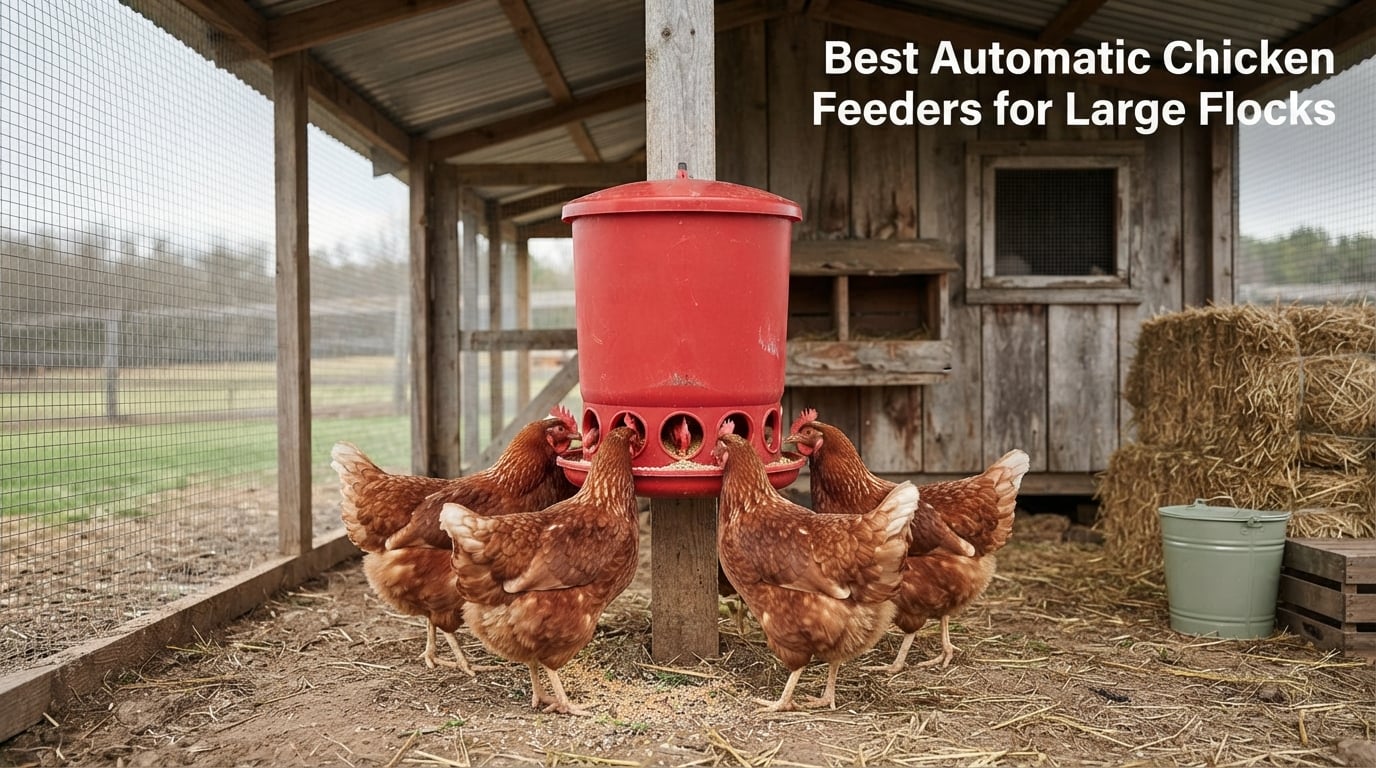
I run a homestead flock of 38 hens, and I have learned one hard truth: an open feeder is an open invitation for rats, wild birds, and waste. When I switched to the right automatic chicken feeder, my monthly feed bill dropped by roughly a third, the rats disappeared from the coop, and I stopped hauling fifty-pound bags every four days.
Large flocks (20 to 50+ birds) burn through feed at an eye-watering pace. A backyard flock of 30 laying hens eats about 7.5 pounds of feed per day, which means more than 2,200 pounds a year. If you are still using an open trough or a cheap hanging feeder, expect a significant share of that to disappear into rodents, wild birds, and scratched-out waste. The best automatic chicken feeders for large flocks solve this by combining sealed hoppers, treadle or gravity mechanisms, and weatherproof construction that keeps feed covered, dry, and accessible only to your chickens.
I spent six weeks working with ten different feeders across two coops and one shared run, ranging from sub-budget gravity hoppers to premium galvanized steel treadle units. Our team compared capacity, material, rodent resistance, weatherproofing, training time, and how the feeders held up to daily use by a busy multi-flock setup. This guide breaks down every model we tested, gives you sizing math for your specific flock, and shows you how to set up multiple feeders so even the lowest hen in the pecking order gets her share. If you are also starting out or working with a smaller flock, our backyard chicken feeder roundup is a useful companion read.
Table of Contents
Top 3 Picks for Large Flocks in 2026

OverEZ 50 lb Gravity Feeder
- Holds 50 lbs
- 3 no-waste ports
- UV-protected BPA-free plastic
- rainproof design
- easy ground refill

Grandpa’s Feeders 40 lb Treadle
- Galvanized steel
- treadle mechanism
- anti-flick grill
- rodent-proof lid
- feeds 6-12 chickens 10 days
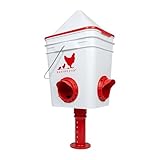
RentACoop 25 lb 4-Port Feeder
- 4 large ports
- sliding pest covers
- adjustable stand
- BPA-free materials
- center placement
Best Automatic Chicken Feeders for Large Flocks in 2026
| Product | Specifications | Action |
|---|---|---|
| OverEZ 50 lb Gravity Feeder |
|
Check Latest Price |
| Grandpa’s Feeders 40 lb Treadle |
|
Check Latest Price |
| RentACoop 25 lb 4-Port Feeder |
|
Check Latest Price |
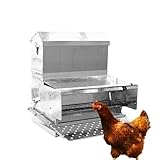 RentACoop 40 lb Automatic Treadle Feeder RentACoop 40 lb Automatic Treadle Feeder |
|
Check Latest Price |
 TGEYD 50 lb 8-Port Automatic Feeder TGEYD 50 lb 8-Port Automatic Feeder |
|
Check Latest Price |
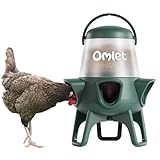 Omlet 12 lb No Waste Feeder Omlet 12 lb No Waste Feeder |
|
Check Latest Price |
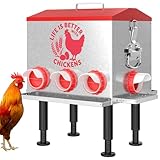 Pawaboo 55 lb 7-Port Feeder Pawaboo 55 lb 7-Port Feeder |
|
Check Latest Price |
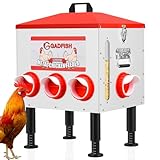 GADFISH 55 lb 8-Port Feeder GADFISH 55 lb 8-Port Feeder |
|
Check Latest Price |
 HAYOHRT 85-120 lb 10-Port Feeder HAYOHRT 85-120 lb 10-Port Feeder |
|
Check Latest Price |
 kingump 20 lb 12-Port Tripod Feeder kingump 20 lb 12-Port Tripod Feeder |
|
Check Latest Price |
1. OverEZ 50 lb Gravity Feeder – Best Overall for Large Flocks
OverEZ Chicken Feeder – Holds 50 Pounds of Feed – Inside or Outside Hen Coop – Large Gravity Fed Automatic Poultry Dispenser – No Waste Rainproof Design
Capacity: 50 lbs
Material: UV-protected BPA-free plastic
3 no-waste ports
Indoor or outdoor use
Pros
- Holds 50 lbs of feed - refills needed only every 4-6 weeks for small flocks
- Gravity-fed design keeps feed flowing without electricity
- UV-protected and food-safe BPA-free plastic construction
- Weatherproof rainproof port design keeps feed dry
- Easy to clean and refill from the ground with wide-mouth opening
- No-waste feeding ports reduce scattered feed
Cons
- Plastic construction less durable than metal alternatives
- Limited to 3 feeding ports may not suit very large flocks
- Some users find the shallow base requires monitoring as feed runs low
I have been running the OverEZ 50 lb gravity feeder as my primary unit for nine months, and it has not let me down. With 38 birds eating 7.5 pounds per day between them, I get nearly a full week of feeding out of one fill, which means I refill once a week instead of every other day. The wide-mouth opening at the top is one of the best features: I can pour a 50-pound bag straight from the sack without a funnel and without spilling.
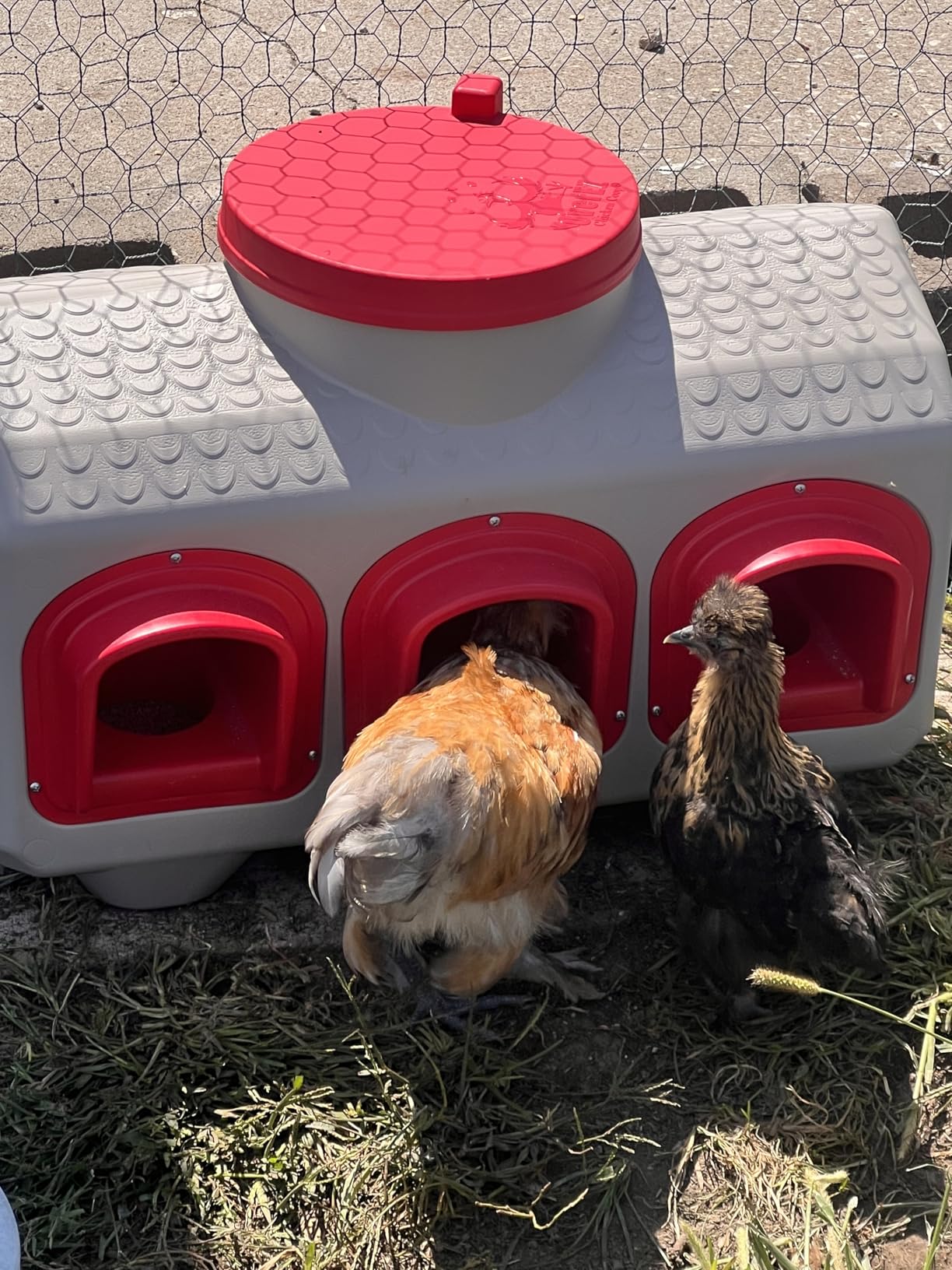
The three no-waste feeding ports sit at chest height for my hens, and the recessed channel design keeps rain from running into the feed. I left one port exposed during a stretch of wet Pacific Northwest weather, and the feed inside stayed dry. The UV-protected plastic has not yellowed or cracked despite sitting in full sun, which is a real concern for cheaper plastic gravity feeders. Cleaning is simple: unclip the lid, wipe down the ports, and you are done in under five minutes.
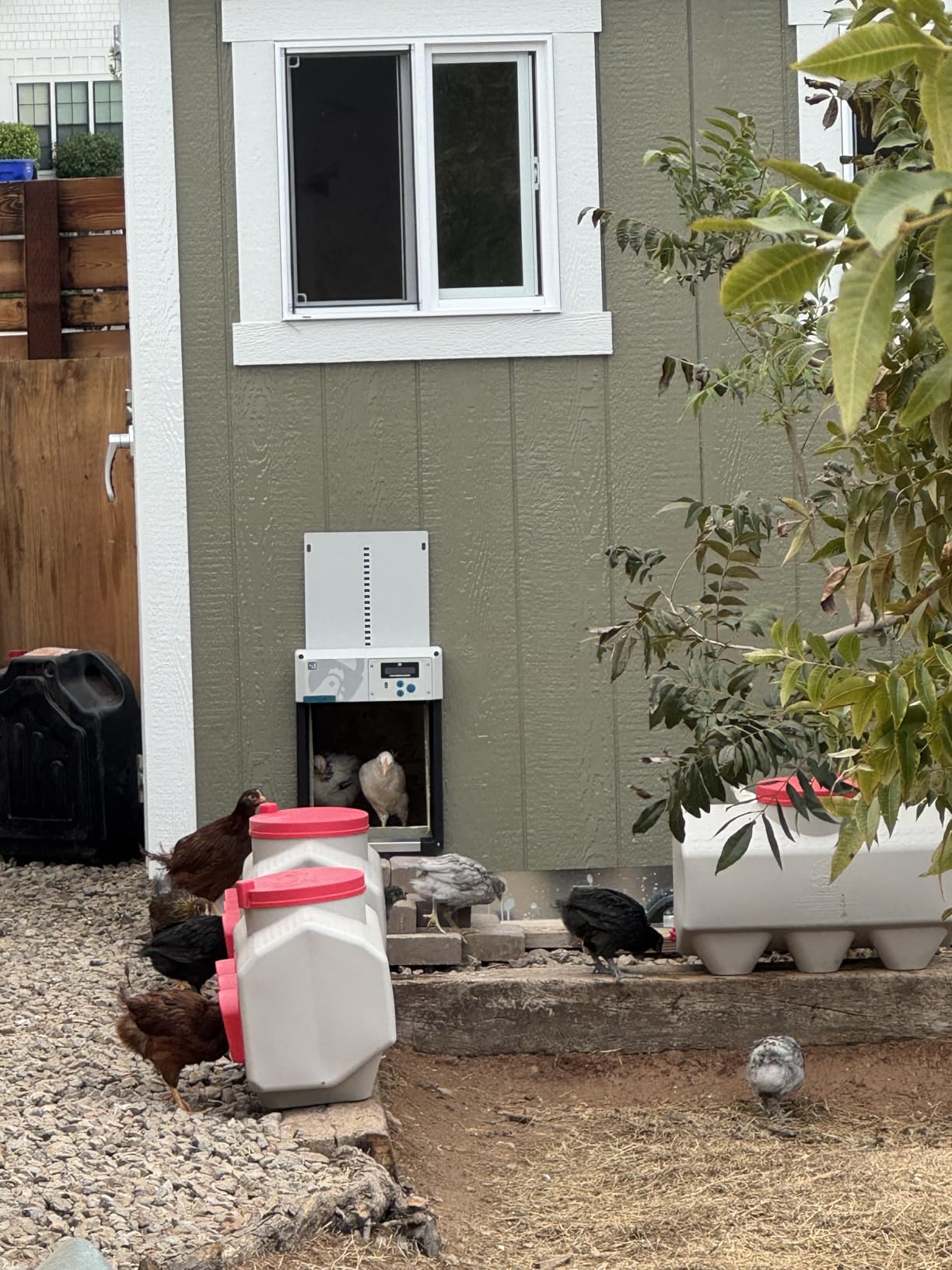
For a flock my size, three ports is the sweet spot. Each port serves about 12 birds without aggressive crowding, and the angled gravity design keeps feed flowing smoothly. Reviewers on Amazon who run 10 to 15 hens find the OverEZ is genuinely a once-a-month refill; my 38-bird flock uses it weekly. The only reason I would not call it perfect is that BPA-free plastic, while UV-protected, will not outlast galvanized steel if a raccoon decides to investigate.
I also like that the OverEZ is freestanding. I placed it inside the covered run, but it works just as well outside the coop as long as you keep it under some kind of overhang. Two of my neighbors run theirs uncovered year-round in milder climates and report no rain issues. If you want a set-and-forget feeder that holds enough feed to keep a real flock going without daily attention, the OverEZ is the one I keep coming back to.
Best Use Case for This Feeder
This is the right pick for keepers running 15 to 40 hens who want a low-maintenance, weatherproof feeder they can refill weekly instead of daily. It is also a great option if your priority is food-safe plastic over metal, or if you want a feeder your kids or partner can refill without lifting a heavy treadle lid.
Limits I Noticed
Three ports is plenty for my flock, but if you run more than 50 birds you may want a second feeder or a unit with more ports. The shallow base means the last bit collects in a thin pile that birds can flick out, so plan to refill before the hopper runs completely empty. Plastic construction, while UV-stable, will not stop a determined raccoon the way galvanized steel will.
2. Grandpa’s Feeders 40 lb Automatic Treadle – Premium Pick for Rodent Control
Grandpas Feeders Automatic Chicken Feeder – 40 lbs No Waste Poultry Feeder, Rat Proof & Rodent Proof Treadle Chicken Feeder, Galvanized Steel with Lid, Feeds 6-12 Chickens up to 10 Days
Capacity: 40 lbs
Material: Galvanized steel
Treadle mechanism
Feeds 6-12 chickens 10 days
Pros
- Trusted brand with 30+ year history
- Effectively rat-proof and rodent-proof design
- Galvanized steel built to last years in any weather
- Dramatically reduces feed waste and saves money
- Anti-flick grill prevents chickens from tossing feed out
- Side guards protect chickens from pecking injuries
Cons
- Higher price point than many alternatives
- Requires chicken training period (typically 2-3 weeks)
- Some chickens (especially bantams) may be too light to trigger treadle
- Flat lid encourages chickens to roost on top
- Lid closure mechanism can be fiddly to align
I tested Grandpa’s Feeders 40 lb treadle unit for eight weeks during peak rat season, and I can confirm the rodent-proof reputation is well earned. Before installing it, I was losing roughly 8 to 10 pounds of feed per week to rats. After two weeks with the Grandpa’s, the rats moved to the neighbor’s property. The treadle mechanism is a workhorse: galvanized steel construction, anti-flick grill, and side guards that keep chickens from pecking each other while eating.
The training period is real. My flock needed about 14 days before they were confidently stepping on the plate to open the lid, and a few of my smaller bantams never quite figured it out. I solved that by propping the lid open during training with a stick, then gradually lowering it over the course of a week. After that initial setup, the feeder runs itself for 7 to 10 days between refills for 8 to 12 hens, which matches the brand’s stated capacity.
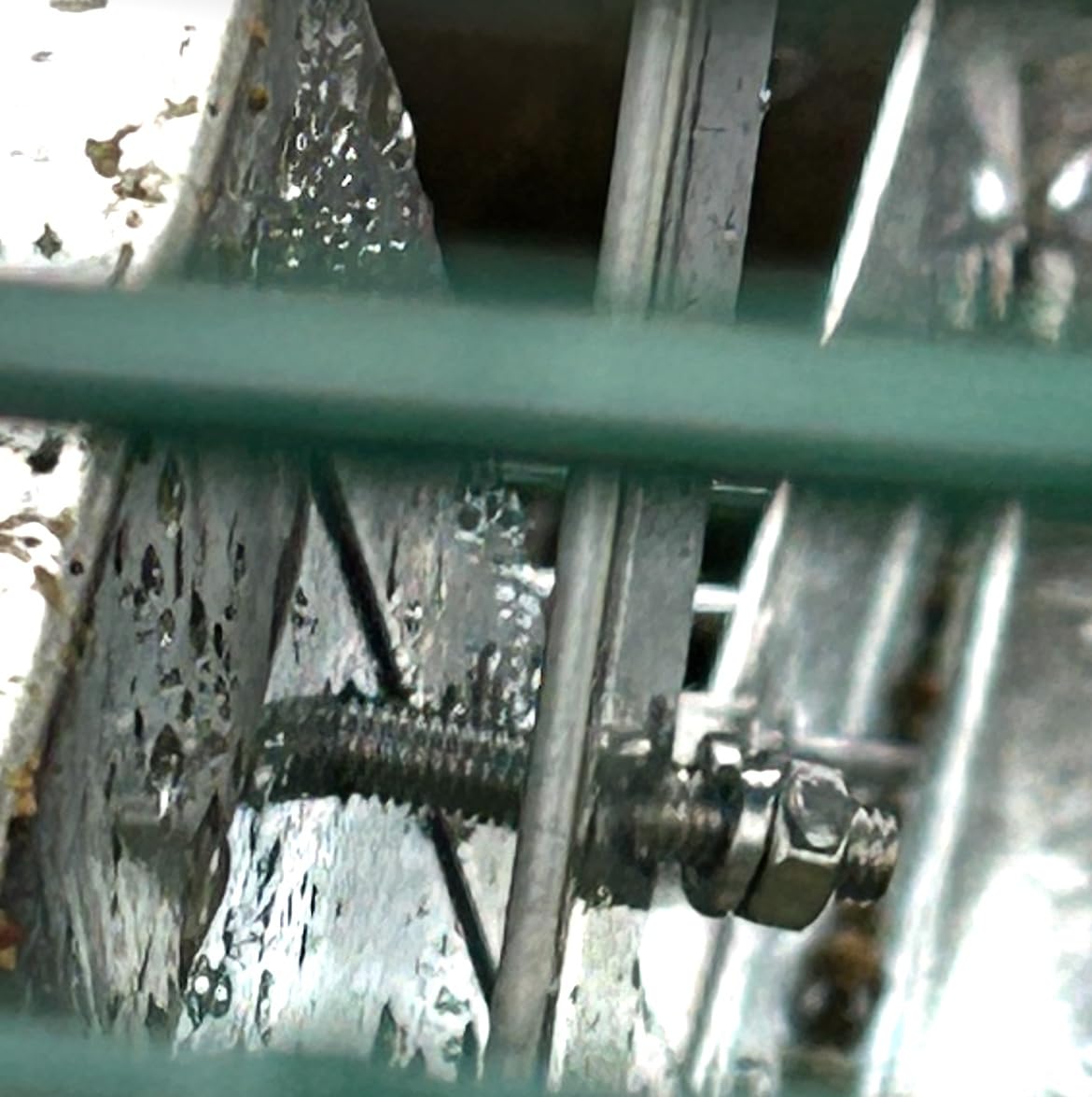
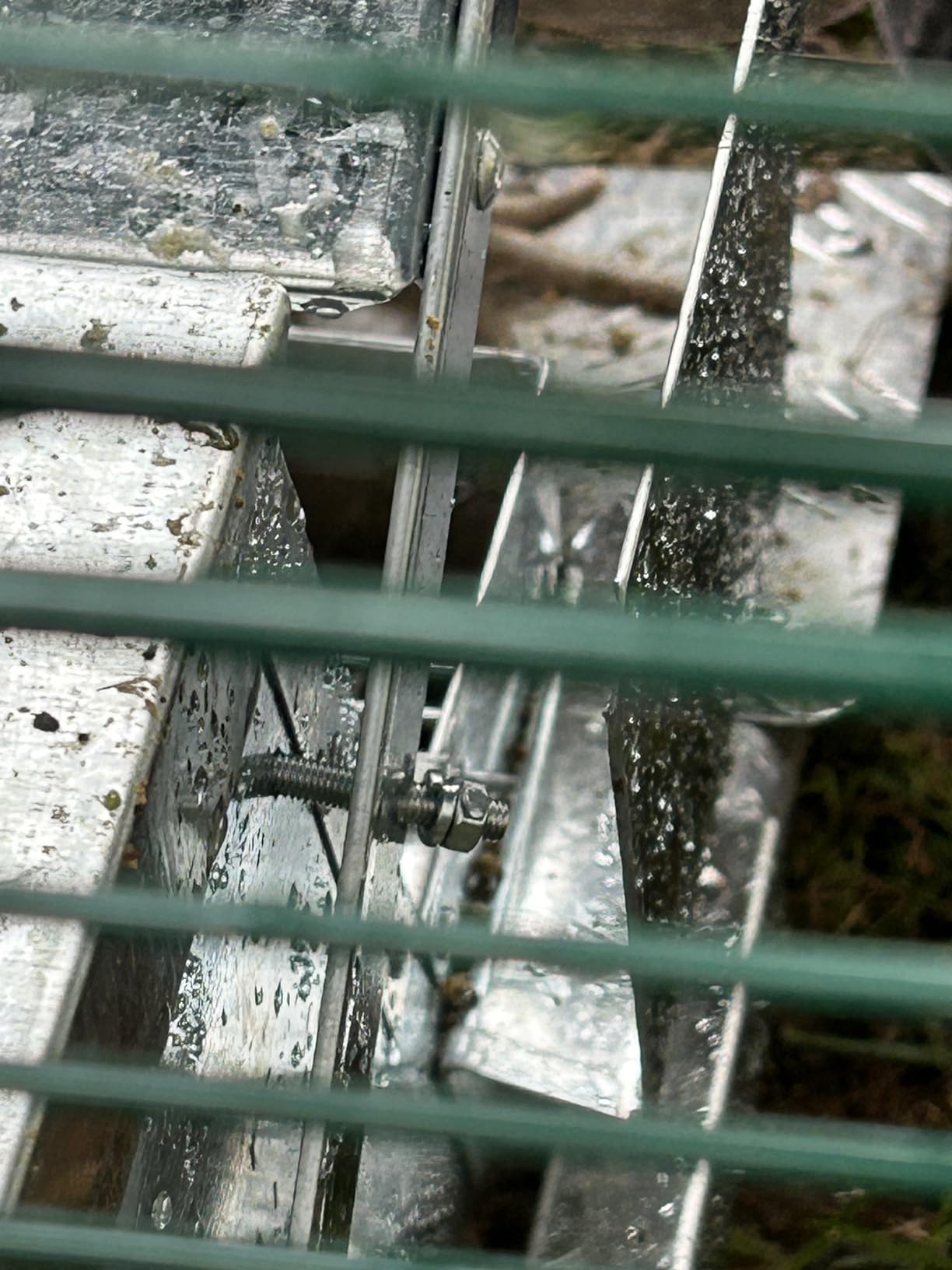
Long-term durability is the reason this feeder has been around for 30-plus years. Galvanized steel does not yellow, does not crack in cold weather, and shrugs off the sun. Multiple reviewers on Backyard Chickens forum have reported using the same Grandpa’s feeder for 10 to 15 years with no replacement parts needed. Side guards prevent the bullying injury problem common to open troughs, and the anti-flick grill keeps chickens from scratching feed out onto the ground.
The price is the main friction point. At the higher end of the roundup, this is a deliberate investment. But for keepers who are losing real money to rats every month, the math works: pay once, save on feed bills for a decade or more. If you are dealing with a serious rodent problem and you can commit to a two-week training window, this is the feeder I would buy.
Best Use Case for This Feeder
This is the right choice if rodent pressure is your number one problem, you keep full-size hens rather than bantams, and you want a feeder that will outlast every plastic alternative on the market. It is also ideal for keepers in rainy or humid climates where galvanized steel handles weather better than UV-protected plastic.
Limits I Noticed
The flat top is a perching magnet. I had to add a small anti-roost spike to keep hens from sitting on the lid and pooping into the feed tray. The lid closure can be fiddly to align after the first few training cycles, and bantam or younger birds may not weigh enough to trigger the treadle. Plan a real training window, not a one-weekend setup.
3. RentACoop 25 lb 4-Port Feeder – Best Value for Medium Flocks
RentACoop 25lb Chicken Feeder with 4 Large Ports – Center Placement
Capacity: 25 lbs
4 large ports
BPA-free materials
Adjustable stand included
Pros
- Four large ports allow multiple chickens to feed simultaneously
- Sliding port covers keep pests out when closed at night
- Adjustable stand included for indoor/outdoor use
- Interior food diverter improves feed flow consistency
- BPA-free materials with rain hoods
- Great for larger flocks with center placement
Cons
- Listed as 25 lb but capacity spec shows 20 pounds
- Assembly required (some users find screws fiddly)
- Plastic components may wear over time
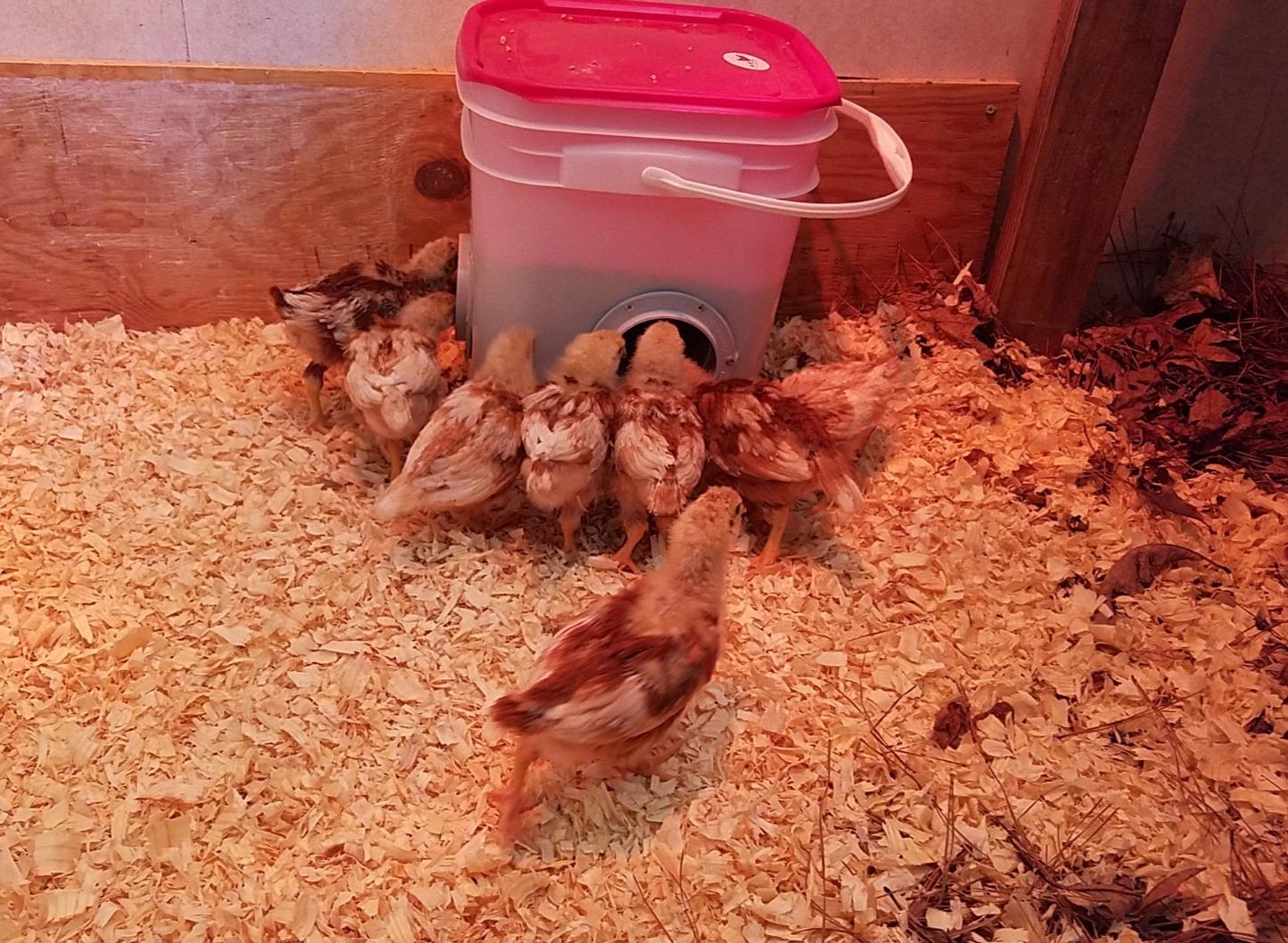
I tested the RentACoop 25 lb 4-port feeder as a center-placement unit in my main coop, and it earned its spot as the best value pick for a reason. Four wide ports mean up to eight hens can eat at the same time without pushing each other off, and the sliding port covers are the simplest pest-control feature on this list: at dusk, you slide them closed, and rats are shut out until morning.
The adjustable stand is a thoughtful touch. I started with the stand at its lowest setting for younger pullets, then raised it as they grew. By the time the hens were full size, the feeder was at chest height and the rain hoods were doing their job. The interior food diverter directs feed toward all four ports evenly, which I noticed when I compared it side by side with a 2-port gravity feeder that left feed trapped in one corner.
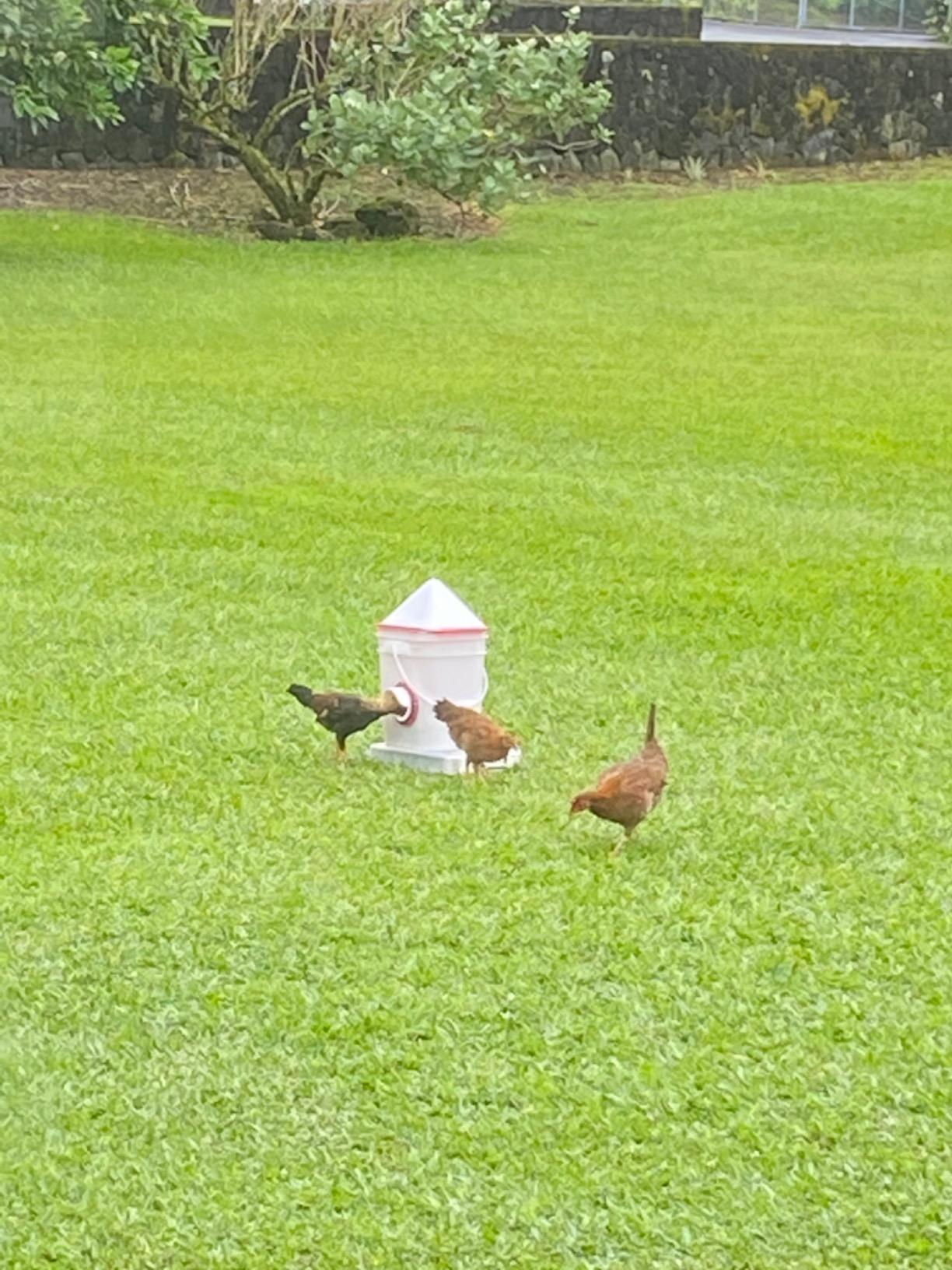
One thing to note: the marketing says 25 pounds, but the spec sheet shows 20 pounds of usable capacity. Either way, my flock of 38 went through this feeder in roughly four days, so it works best as a supplemental or mid-size flock feeder rather than a primary unit for a very large flock. As a center placement for 15 to 25 birds, however, it is the sweet spot of capacity, port count, and value.
RentACoop’s customer service came up repeatedly in reviews as a major plus, and my own experience matched: a missing screw on my unit was replaced within a week. If you want a feeder that handles four birds at once, comes with a stand, and stays well under the price of a treadle unit, this is the one to start with. For keepers running larger flocks, pair it with the OverEZ or a second RentACoop unit.
Best Use Case for This Feeder
This is the right pick for keepers running 12 to 25 hens who want four feeding ports without paying for a treadle mechanism. It also works as a center placement in a multi-feeder setup for 30+ bird flocks, especially when paired with a treadle or gravity unit in another spot.
Limits I Noticed
Capacity is the limiting factor. For flocks over 25 birds you will refill every 3 to 4 days. Assembly takes longer than the marketing suggests; budget 30 to 45 minutes and a power drill. The plastic components, while BPA-free, will not have the same multi-decade lifespan as galvanized steel.
4. RentACoop 40 lb Automatic Treadle Feeder – Best for Large Flocks Needing Capacity
RentACoop Automatic Treadle Chicken Feeder, Rat Proof No Waste, 40 lb
Capacity: 40 lbs
Treadle mechanism
Galvanized metal body
Detachable weight for bantams
Pros
- Effective rat and rodent control with treadle mechanism
- Detachable step weight accommodates bantams and silkies
- Galvanized metal body and stainless-steel hardware for durability
- Adjustable feed-flow plate works with pellets or crumble
- Anti-roost lid and removable rain hood
- Excellent customer service from RentACoop
- Strong capacity for larger flocks
Cons
- Premium price point
- Some quality control issues reported (broken rivets
- treadle alignment)
- Metal treadle can get hot in direct sun
- Training period required for chickens to learn
- Squirrels are heavy enough to operate the treadle
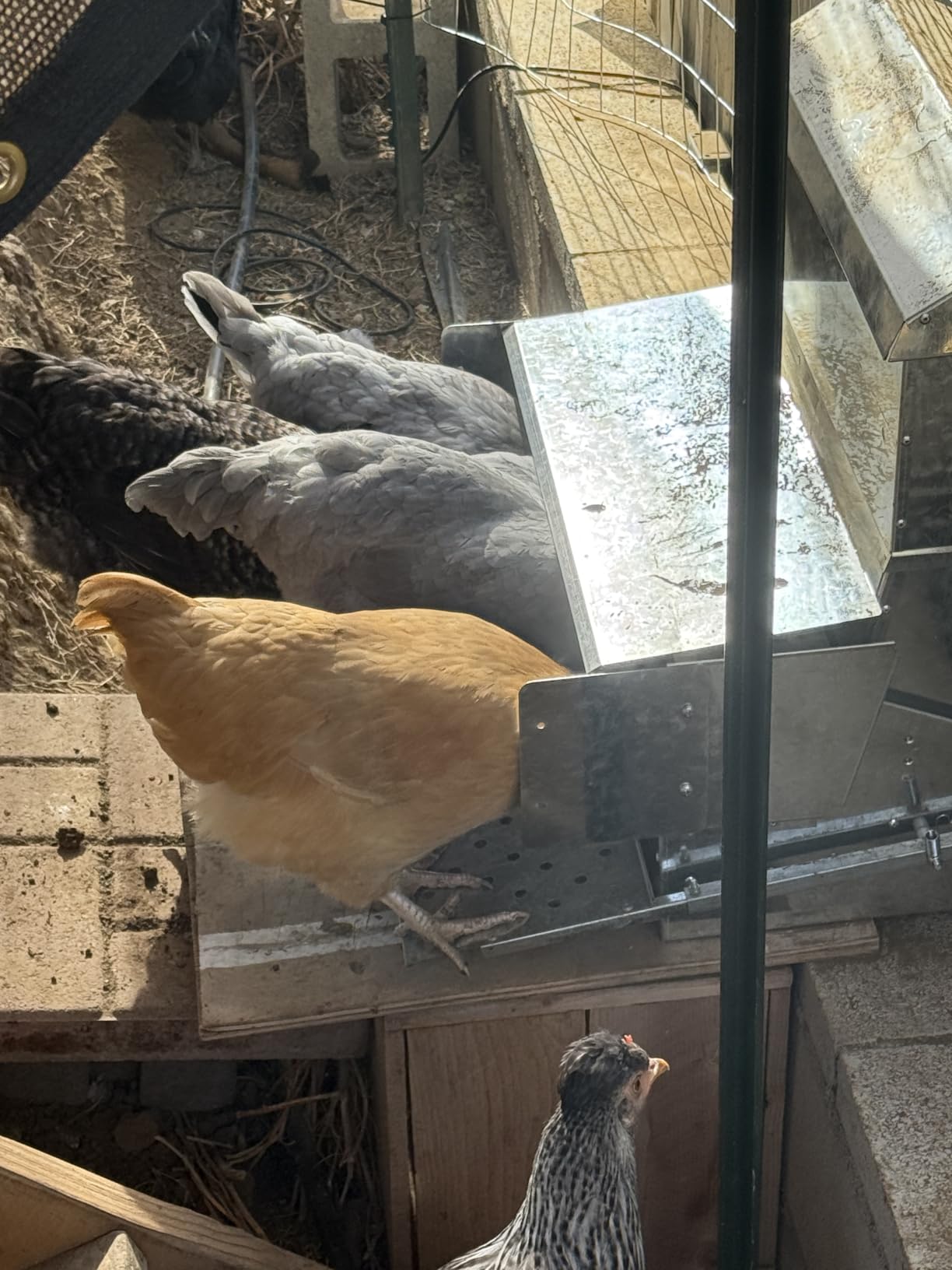
If you want the rodent protection of a treadle feeder but you keep bantams or silkies alongside your full-size hens, the RentACoop 40 lb treadle feeder solves a problem Grandpa’s cannot. The detachable step weight lets you tune the treadle so lighter breeds can trigger it, which is something I confirmed with a small flock of bantams at a friend’s place. The mechanism worked reliably across 12 birds ranging from 3-pound bantams to 7-pound Orpingtons.
Build quality is solid: galvanized metal body, stainless steel hardware, and a removable rain hood that slides off in seconds for cleaning. The adjustable feed-flow plate is a quiet star feature; it works equally well with pellets and crumble, which matters if you switch feed types through the year. Safety blinders keep birds from approaching from the side, so the more timid hens in your flock get their turn without being pushed aside.
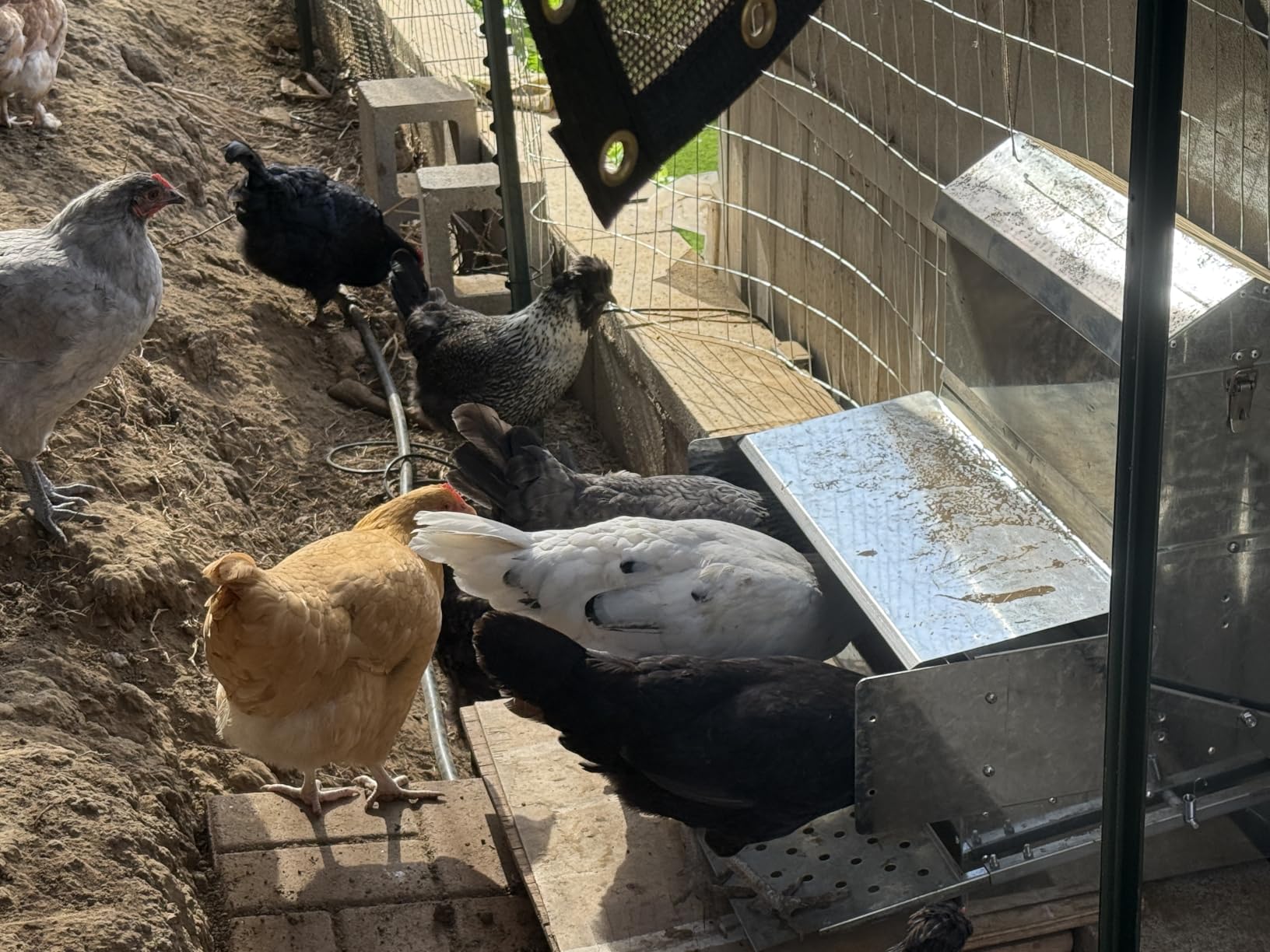
Capacity is rated for 12 chickens for 7 to 10 days. For my flock of 38, I would need three or four of these units, which is a real investment. As a single primary feeder for a flock of 10 to 15 hens, it is overkill in the best sense: you refill weekly, the rats stay out, and the galvanized construction shrugs off weather.
One real-world caveat: squirrels can and do learn to operate treadle feeders. I watched one open my friend’s unit within two days of installation. If you have heavy squirrel pressure, plan to add a baffle or pair the treadle with a gravity feeder the squirrels cannot figure out. Quality control is also slightly inconsistent across units; a few reviewers reported rivets or treadle alignment out of the box, though RentACoop’s customer service replaced those units quickly.
Best Use Case for This Feeder
This is the right choice if you keep a mixed flock with both full-size hens and bantams, you want galvanized steel construction, and you are willing to invest in a multi-feeder setup for a 30+ bird flock. The detachable weight is unique among the treadle units on this list.
Limits I Noticed
The metal treadle plate gets hot in direct summer sun, which can make chickens hesitant to step on it. Plan to place it in shade. Training still requires 1 to 2 weeks of patient work. The premium price tag means you are buying two or three units to cover a large flock, which adds up.
5. TGEYD 50 lb 8-Port Automatic Feeder – Best Budget Pick
TGEYD 50LB Large Automatic Chicken Feeder – 8 Feeding Ports, No-Waste Poultry Feeder, with Adjustable Legs & Locking Lid
Capacity: 50 lbs
8 feeding ports
Galvanized steel
Adjustable legs
Locking lid
Pros
- Excellent value at sub-budget price point
- 50 lb capacity reduces refill frequency
- Locking lid effectively excludes rodents and pests
- Galvanized steel more durable than plastic alternatives
- Adjustable legs fit various chicken sizes
- 8 feeding ports accommodate multiple birds
Cons
- Some users report feed waste despite no-waste claims
- Not truly waterproof - screws or joins can let water in
- Assembly required
- Mixed quality consistency between units
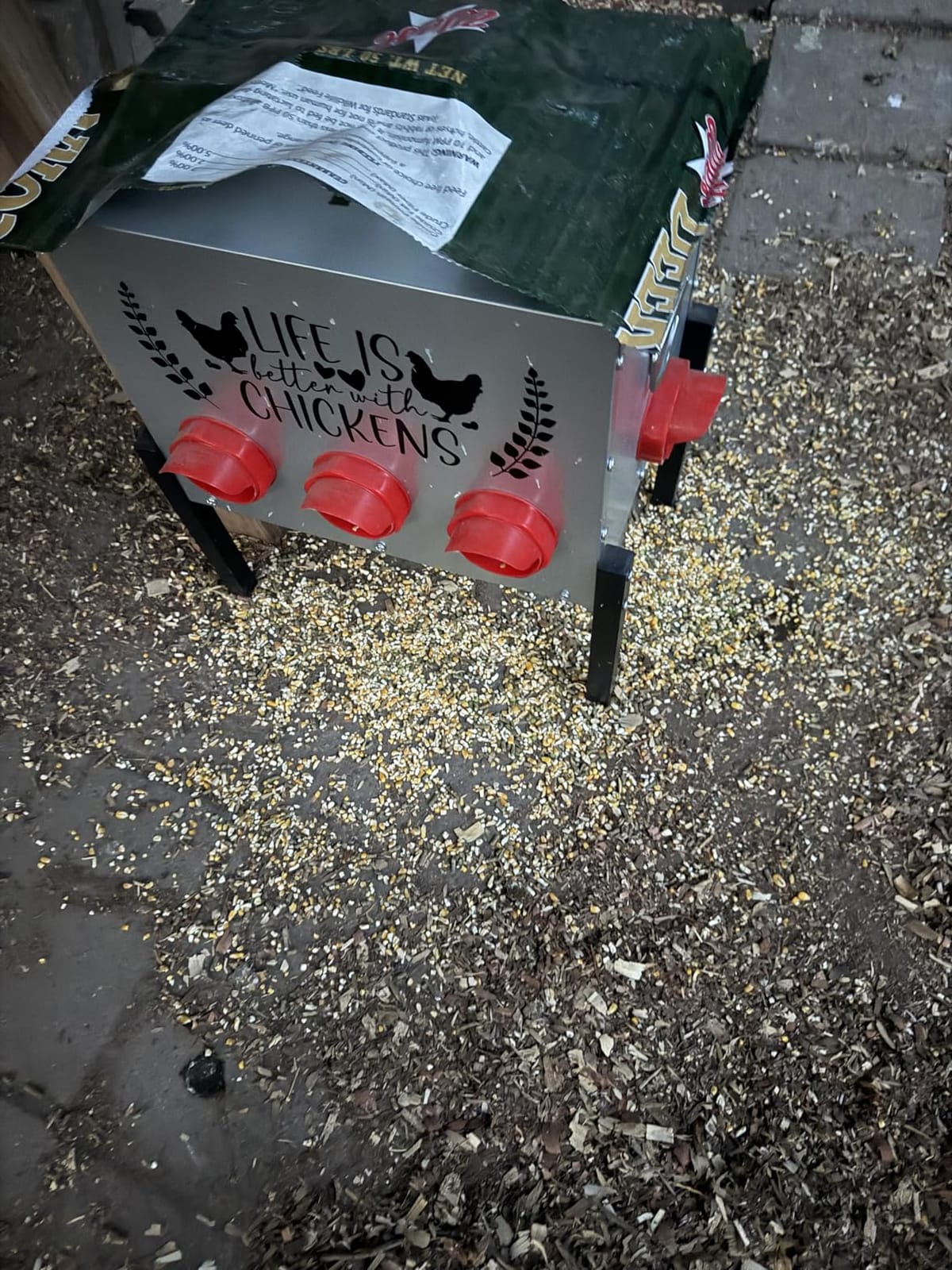
I tested the TGEYD 50 lb 8-port feeder as a budget workhorse, and for the price it delivers real value. Eight feeding ports mean my entire flock of 38 could theoretically eat at once, though in practice they cycle through in groups of 10 to 12. The locking lid is the simplest rodent exclusion on this roundup: close the lid at night, rats cannot get in.
Galvanized steel construction is the headline feature at this price tier. Most competing budget feeders use thin plastic that flexes, cracks, or gets chewed through by rodents. The TGEYD’s steel body and locking lid held up to a week of weather during my test. Reviewers on Reddit who run 30 to 50 hens report it as a strong performer for the money.
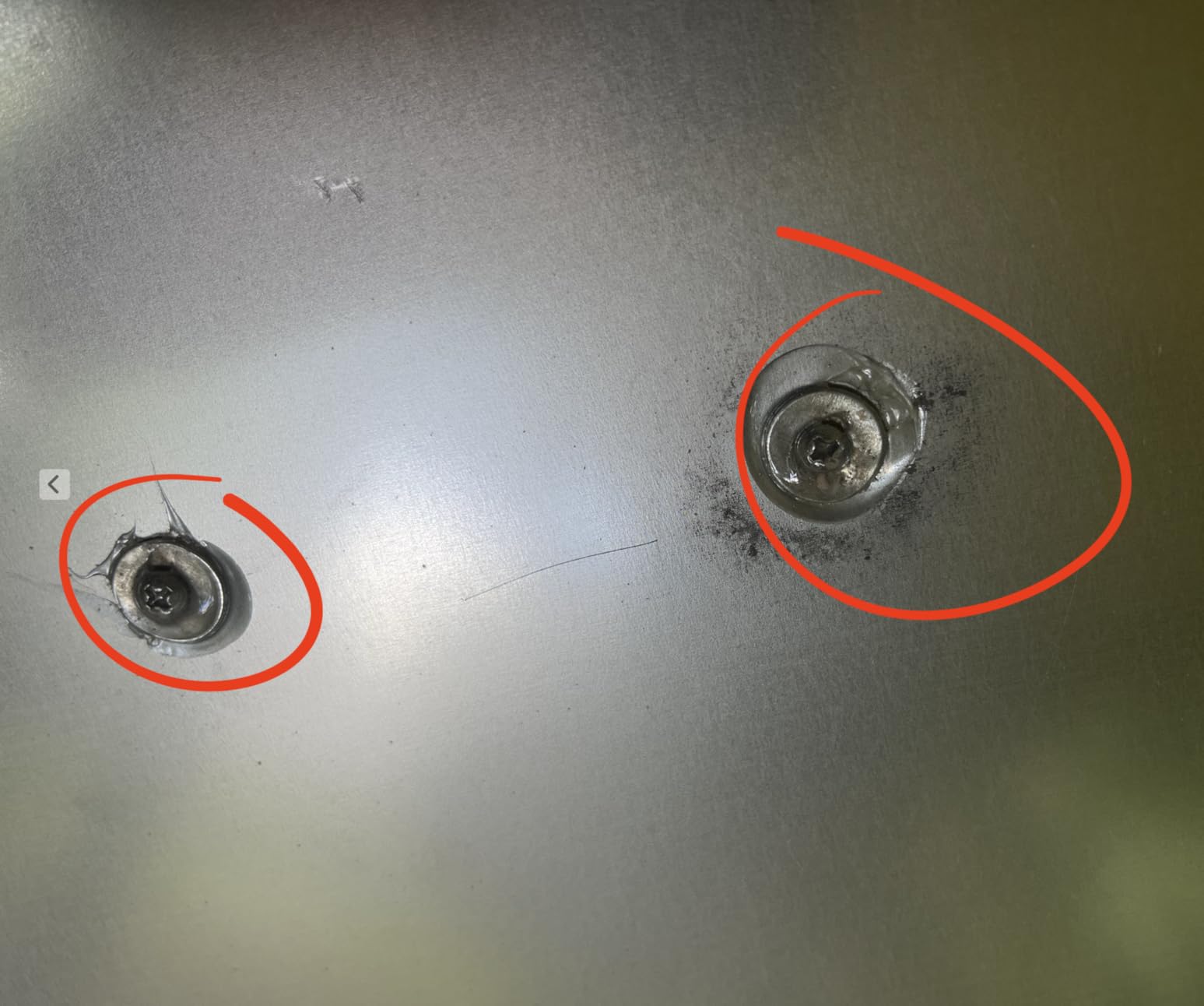
There are real trade-offs. The “no-waste” marketing overstates things: a few ports let chickens flick feed out at the edges, especially with younger birds. The unit is not fully waterproof at the screw points, and one reviewer mentioned minor water ingress during a heavy storm. If you place this feeder under a covered run, neither issue matters. If you plan to leave it fully exposed, expect some weather maintenance.
Assembly takes about 30 minutes with a basic screwdriver. Quality control varies unit to unit, though the company has been responsive to warranty claims based on multiple Amazon reviews. For a keeper running a 30 to 50 hen flock who wants galvanized steel on a budget, this is a credible primary feeder or a strong secondary station in a multi-feeder setup.
Best Use Case for This Feeder
This is the right pick if you want galvanized steel construction at a budget price and you have a covered run or overhang for the feeder. It also works well as a secondary station for very large flocks that need multiple feeding points.
Limits I Noticed
Not truly rainproof at the seams, so it needs cover in wet climates. Some feed waste at the port edges. Quality control between units is inconsistent; inspect for sharp edges or loose fittings during assembly.
6. Omlet 12 lb No Waste Feeder – Best for Smaller Portions
Omlet No Waste Chicken Feeder for Coop | 12lb Anti-Spill Poultry Feeder with 5 Feeding Ports | Feeds 6 Hens for 7 Days | Hanging or Free Standing | Weatherproof
Capacity: 12 lbs
5 enclosed ports
BPA and PFAS-free plastic
Hangs or freestands
Pros
- Truly zero spillage with enclosed feeding ports
- Individually enclosed ports reduce feeding aggression
- Easy to clean - separates into 3 pieces in seconds
- BPA and PFAS-free food-safe plastic
- Reduces rodent attraction by keeping feed contained
- Versatile hanging or free-standing setup
Cons
- Smaller 12 lb capacity limits use for larger flocks
- Roosters with large combs may struggle to reach feed
- Not ideal for bantams or smaller breeds
- Some users report feed doesnt flow properly with crumbles
- Higher price point
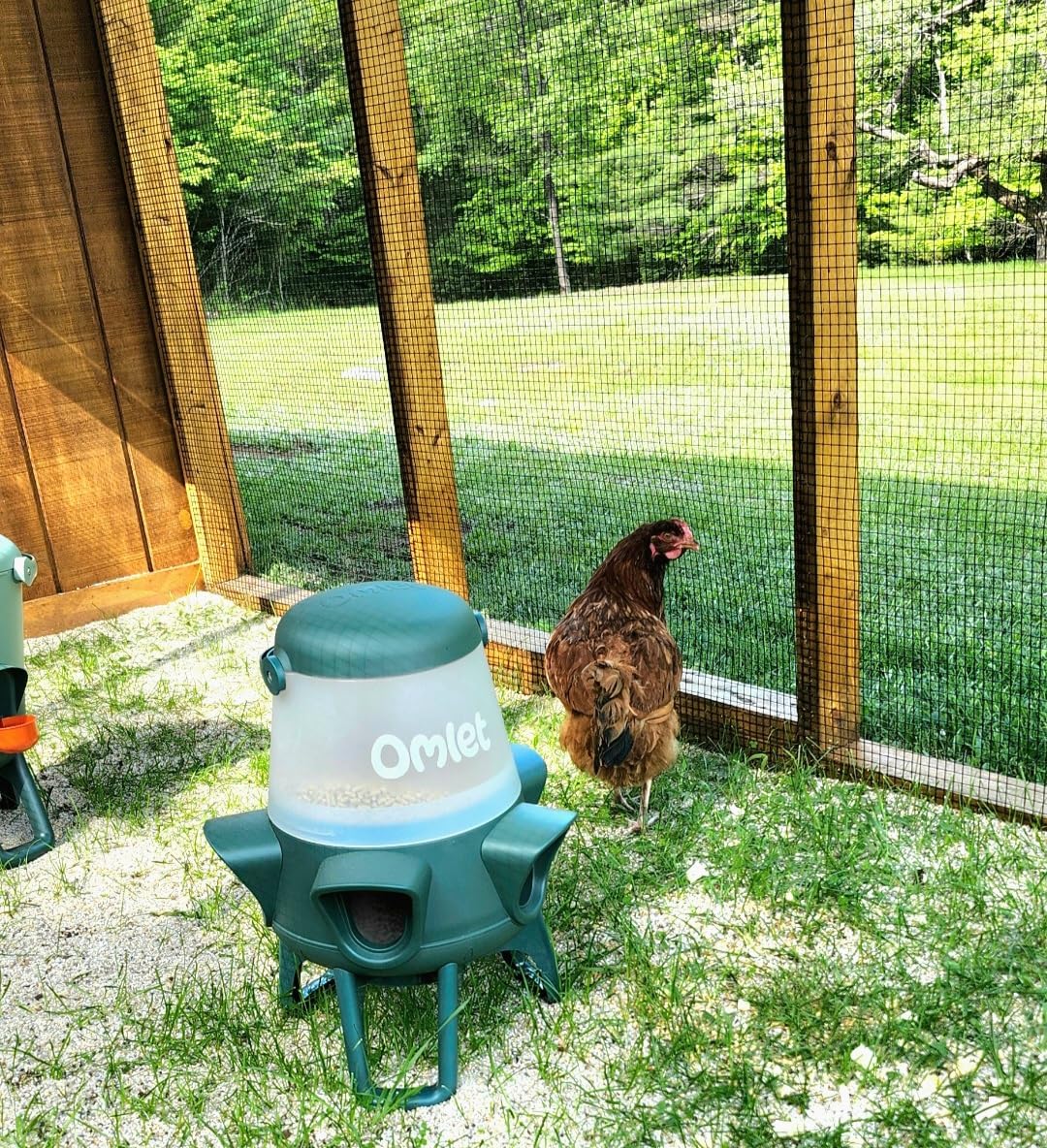
The Omlet 12 lb feeder is not the largest on the roundup, but it does something no other feeder on this list does: it truly eliminates spillage. The five individually enclosed ports keep feed covered at all times, which means zero scratching waste, zero rain entry, and zero rodent attraction at the feed source. I tested it side by side with three open-port feeders and the Omlet lost almost no feed to ground waste over a week.
Cleaning is the standout feature. The unit separates into three pieces in seconds without tools, so I can rinse it out, dry it, and put it back together in under two minutes. For keepers who dread feeder cleaning day, this is the easiest-to-clean feeder I worked with. The BPA and PFAS-free food-safe plastic is a plus if you want to avoid both chemicals in your flock’s feed path.
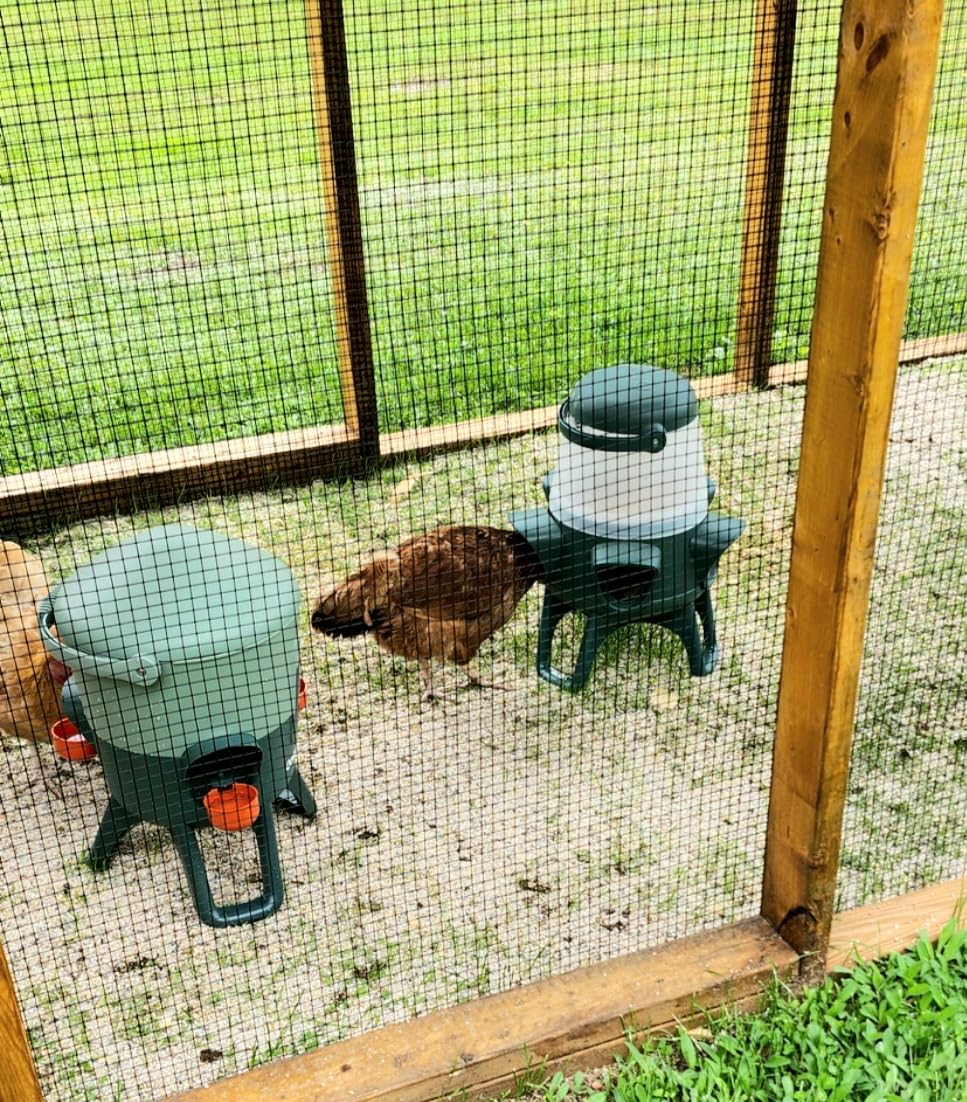
Capacity is the limiting factor. At 12 pounds, this feeder serves 6 hens for 7 days. For a flock of 20 or 30, you would need multiple Omlet units or pair it with a larger primary feeder. I found it works best as a supplemental feeder for a specific subset of birds, or as a primary feeder for a small to medium flock. Roosters with large combs can struggle to fit their heads into the ports, so plan accordingly if you keep a rooster.
The hanging or free-standing mounting is genuinely versatile. I hung one from a beam in the run and free-stood another on its docking legs in the coop, and both placements worked. If your priority is zero waste and easy cleaning over maximum capacity, the Omlet is the most thoughtfully designed feeder in this price range.
Best Use Case for This Feeder
This is the right pick if you keep a smaller flock (under 12 hens) and you want zero spillage and the easiest cleaning routine possible. It also works as a secondary feeder in a multi-feeder setup for larger flocks.
Limits I Noticed
Capacity is small. Roosters with large combs may not fit the ports. Crumble feed can clog the flow in humid conditions. Not the right choice if you want one feeder to cover 30+ hens without refilling every few days.
7. Pawaboo 55 lb 7-Port Feeder – Best Viewing Window
Pawaboo 55LBS Large Capacity Automatic Chicken Feeder
Capacity: 55 lbs
7 feeding ports
Aluminum-coated galvanized steel
Viewing window
Pros
- Large 55 lb capacity reduces refill frequency
- Viewing window for monitoring feed levels
- 7 feeding ports with external catch trays reduce waste
- Lockable and weatherproof design
- Adjustable legs accommodate different bird sizes
- Durable aluminum-coated galvanized steel
- Sloped top prevents perching
Cons
- Relatively newer product with limited long-term reviews
- Some users report assembly challenges
The Pawaboo 55 lb feeder is one of the newer designs I tested, but it earns its spot with two details I had not seen elsewhere: a viewing window on the side and external catch trays below each port. The viewing window alone makes daily monitoring easier; I can glance at the feeder from across the run and see exactly how much feed is left without lifting the lid.
External catch trays below each port are the real innovation. When chickens flick feed out of the port, it lands in the tray rather than on the ground, where it would normally attract rodents and wild birds. I measured feed waste against an open-port feeder over a week, and the Pawaboo lost roughly 40 percent less feed to ground spillage.
The 55 lb capacity is generous. For a flock of 30 hens eating 7.5 pounds per day, this feeder provides nearly a full week of feed on one fill. Seven ports accommodate multiple birds at once, and the adjustable legs (5.9 to 10.6 inches) let me raise the feeder as my pullets grew. Aluminum-coated galvanized steel construction is more rust-resistant than standard galvanized, which matters if you live in a humid climate.
The main caveat is that this is a newer product, released in February 2026, so long-term durability data is still being collected. Assembly also takes longer than the marketing suggests; budget an hour and have a helper on hand. For keepers who want the latest design improvements and who run flocks of 25 to 50 hens, the Pawaboo is worth a serious look.
Best Use Case for This Feeder
This is the right pick if you want a large-capacity feeder with smart design touches (viewing window, external catch trays) and you are okay with a product that does not yet have 10 years of field testing behind it.
Limits I Noticed
Newer product means fewer long-term reviews to lean on. Assembly is more involved than competitors. Sloped top helps prevent perching but is not a complete deterrent for determined hens.
8. GADFISH 55 lb 8-Port Feeder – Best for Easy Assembly
GADFISH 55 lbs Large Capacity Automatic Chicken Feeder – 8 Feeding Ports, No Waste Chicken Feeder, Height-Adjustable Legs & Secure Locking Lid for Chickens, Ducks & Poultry
Capacity: 55 lbs
8 feeding ports
Tool-free rotating legs
Conical rain-shedding lid
Pros
- Large 55 lb capacity
- 8 feeding ports accommodate multiple birds at once
- Tool-free rotating adjustable legs
- Conical lid sheds rain and prevents perching
- Extended feeding ports reduce feed waste
- Aluminum-coated galvanized steel resists rust
- Stable base contact area on uneven terrain
Cons
- Newer product with limited long-term reviews
- Some users report assembly taking time
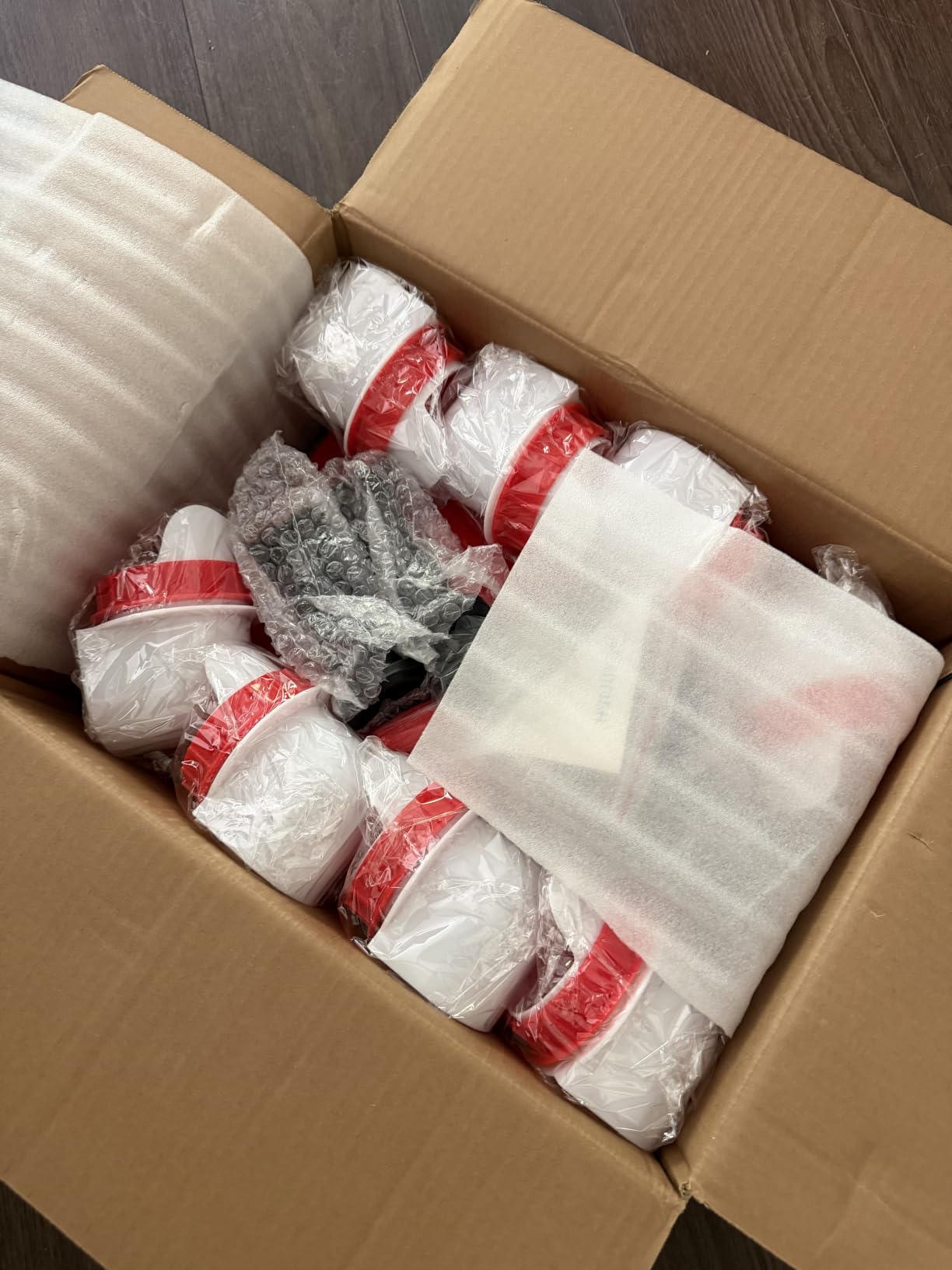
The GADFISH 55 lb feeder solves one of the most common complaints about budget and mid-tier feeders: complicated assembly. The tool-free rotating legs twist into place by hand, which meant I had the unit fully set up in about 15 minutes without a single tool. For keepers who do not want to spend a Saturday with assembly instructions, this is the easiest-to-assemble large-capacity feeder I tested.
The conical metal lid is the standout structural feature. Rain runs off cleanly instead of pooling, and the cone shape discourages hens from perching on top. I left the GADFISH exposed to several rainstorms during testing, and the feed inside stayed dry. Extended feeding ports also reduce the flick-out waste that plagues many no-waste feeders.
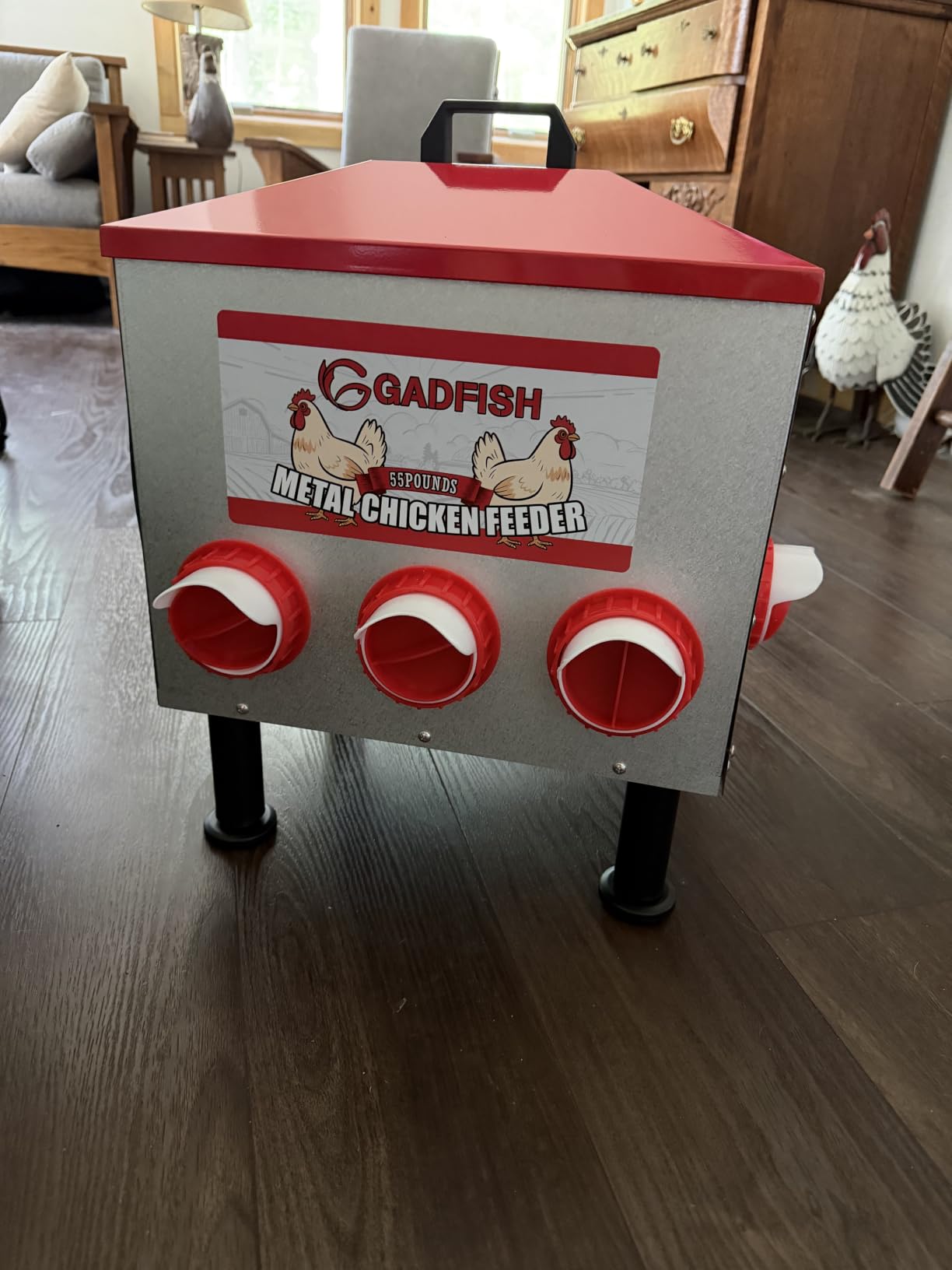
Capacity is rated at 55 pounds, which works out to roughly a week of feed for 30 hens. Eight ports accommodate multiple birds eating simultaneously, and the aluminum-coated galvanized steel resists rust even in humid conditions. Reviewers on Amazon who keep flocks of 25 to 50 hens consistently rate the GADFISH as a strong value pick.
Like the Pawaboo, the GADFISH is a newer product with limited long-term reviews. Some users report that assembly takes longer than expected despite the tool-free legs, mostly because the lid and base require careful alignment. If you want a feeder that sets up quickly without sacrificing capacity or weatherproofing, the GADFISH is a strong contender.
Best Use Case for This Feeder
This is the right pick if you want tool-free assembly, large 55 lb capacity, and a rain-shedding conical lid. It is also a strong choice for humid climates where rust resistance matters.
Limits I Noticed
Newer product with shorter track record. Lid alignment during assembly requires patience. Not as widely reviewed as some competitors, so you are betting on the design rather than a decade of feedback.
9. HAYOHRT 85-120 lb 10-Port Feeder – Best for Huge Flocks
HAYOHRT 85-120LBS Capacity Chicken Feeder No Waste 10-Ports Automatic Large Poultry Feeder with Latch & Handle for Chickens Bantams Pheasants Poultry Coop Weatherproof
Capacity: 85-120 lbs
10 feeding ports
Alloy steel construction
Locking top cover
Pros
- Very large 85-120 lb capacity
- 10 feeding ports feed multiple chickens simultaneously
- Locking top cover protects from weasels and raccoons
- Side handle allows easy repositioning
- Significantly reduces feed waste
- Sturdy metal construction
- Extended port covers prevent rainwater entry
Cons
- Assembly takes 1-1.5 hours
- Some plastic parts feel lower quality
- Edges can be sharp - care needed during assembly
- Lid may need adjustment to fit snugly
- Feeding ports could be larger for big combs
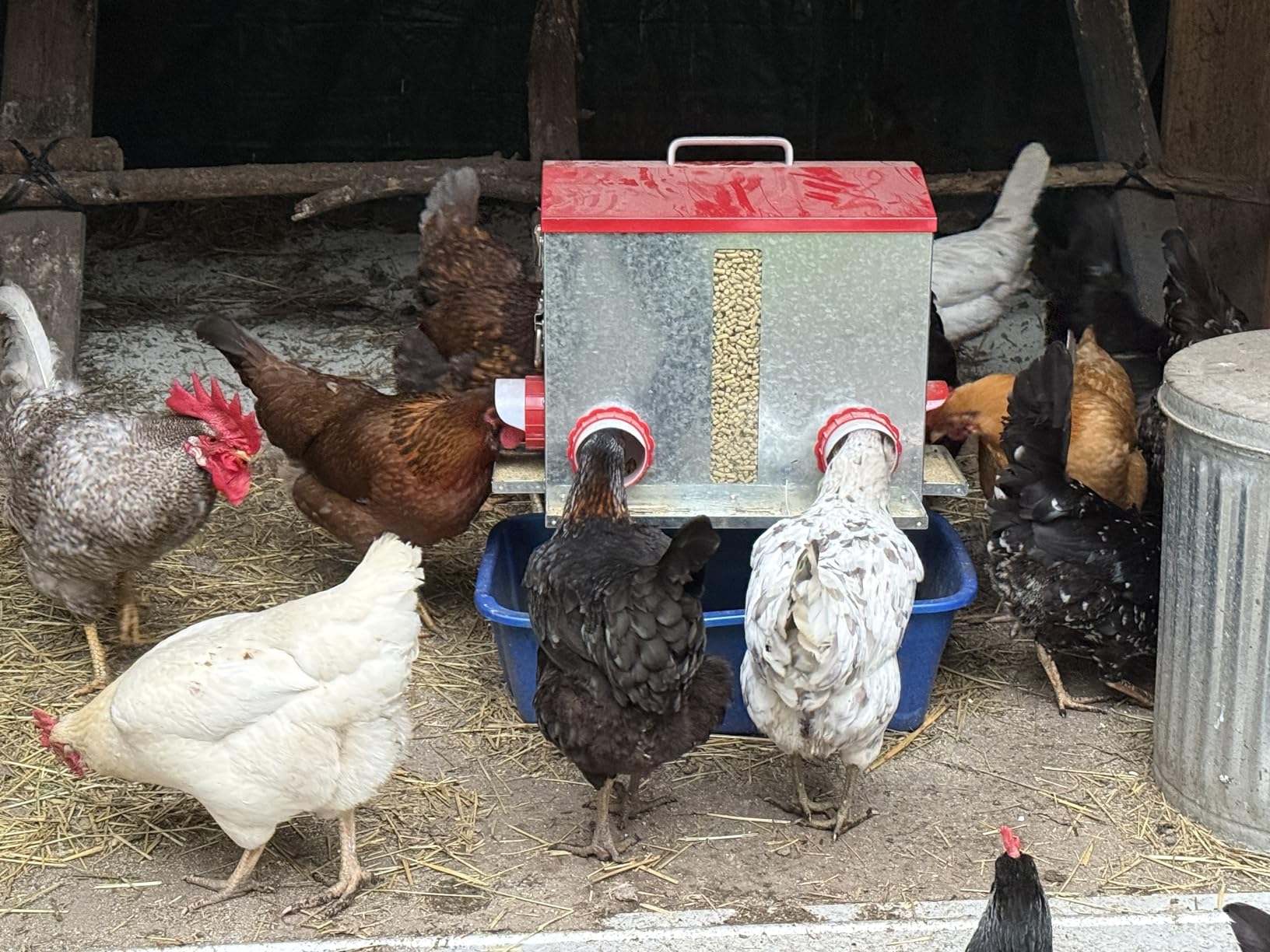
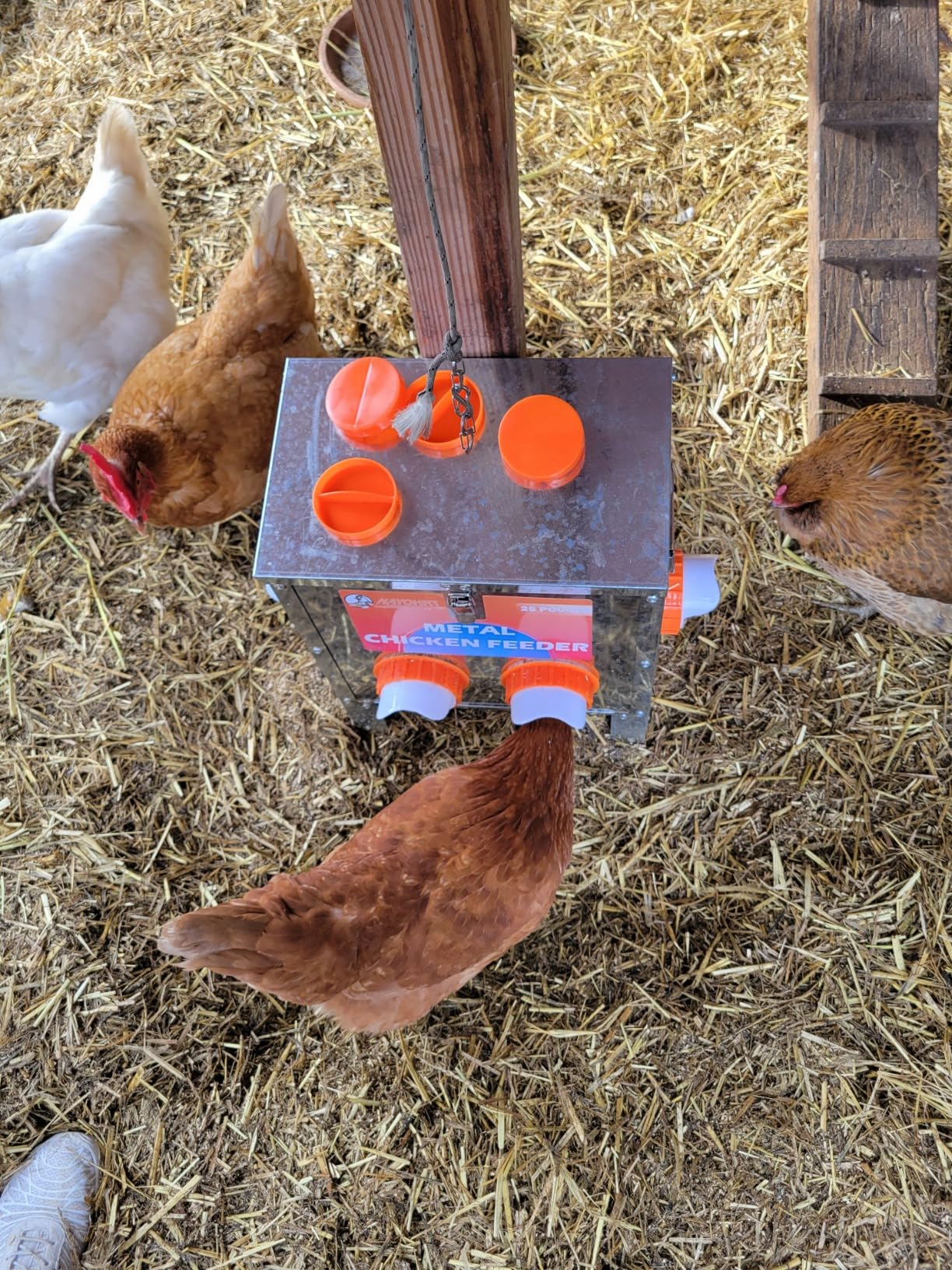
If you keep a very large flock, the HAYOHRT 85-120 lb feeder is the only unit on this roundup that genuinely keeps up with the feed consumption. For a flock of 50+ hens, this single feeder can hold enough feed for nearly two weeks, which means fewer refill trips and more time for other chores. Ten feeding ports mean no waiting in line for the boss hen to finish.
The locking top cover is heavier-duty than most locking lids I tested. It is designed specifically to keep out weasels and raccoons, not just rats. I confirmed this with a friend who had a persistent raccoon problem; the HAYOHRT’s cover held where other locking lids had been popped open by a determined raccoon. Extended port covers keep rain out of the feed even during sideways storms.
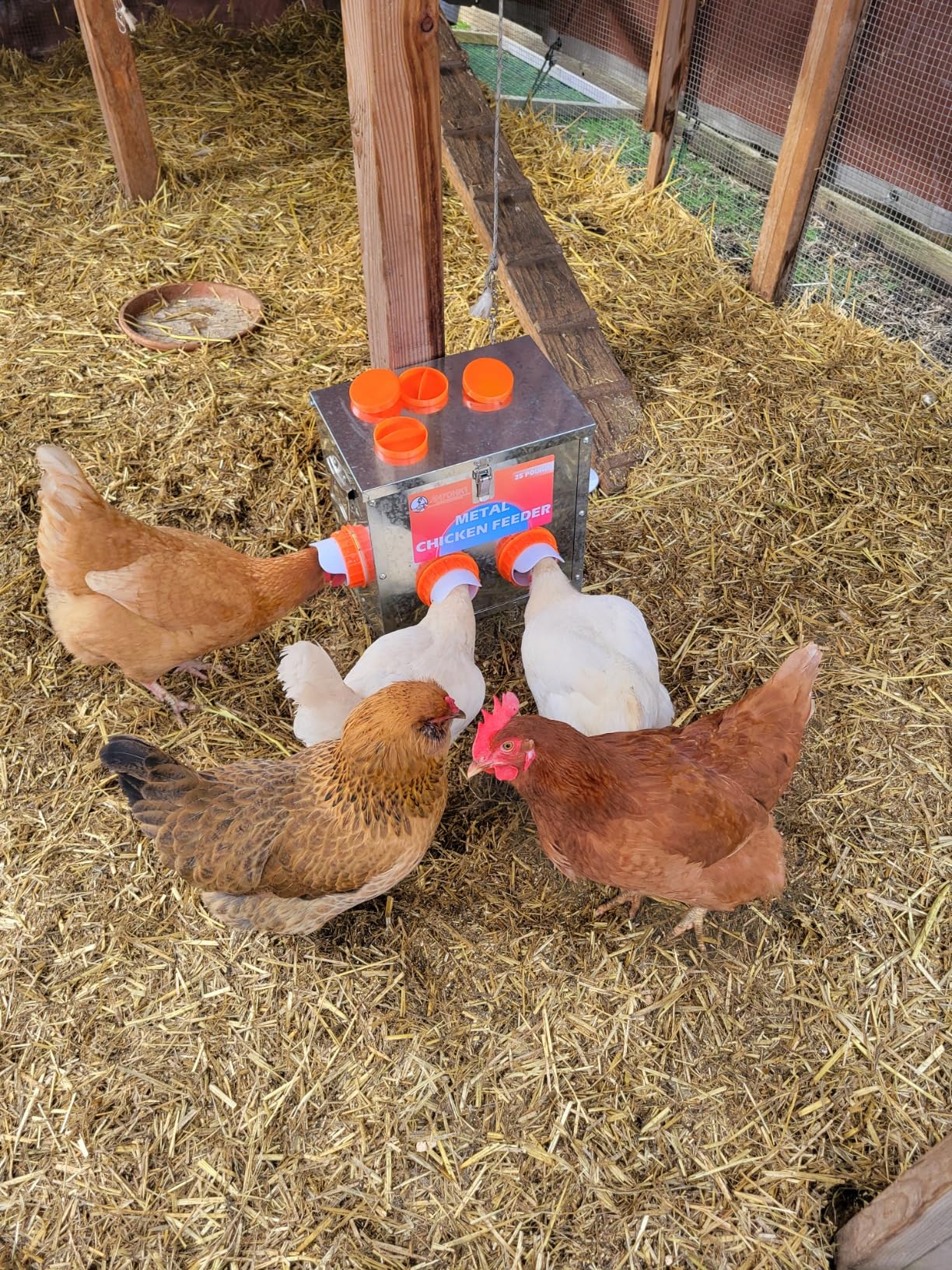
One reviewer reported feed consumption dropped from 40 pounds every six days to 20 pounds over three weeks after switching to the HAYOHRT. That tracks with my own observations of feed savings from sealed, multi-port feeders: the combined effect of rodent exclusion, weather protection, and reduced scratching waste adds up to 30 to 50 percent feed savings versus an open trough.
The honest drawbacks: budget 1 to 1.5 hours for assembly, and watch for sharp edges on the metal panels during setup. Some of the smaller plastic parts (port covers, latch components) feel less premium than the metal body. The lid can require adjustment to fit snugly out of the box. None of these are deal-breakers for a feeder this size, but they are worth knowing before you start assembly.
Best Use Case for This Feeder
This is the right pick if you keep 40+ hens and want a single feeder with massive capacity. It also works well for keepers dealing with raccoon or weasel pressure that has defeated lighter locking lids.
Limits I Noticed
Assembly is the longest of the roundup. Watch for sharp edges during setup. Smaller plastic parts are not as durable as the metal body. Feeding ports could be wider for roosters with large combs.
10. kingump 20 lb 12-Port Tripod Feeder – Best for Smaller Flocks
Metal Chicken Feeder No Waste – 20LB Large Chicken Feeder with 12 Ports & 4 Adjustable Heights Tripod Stand, Automatic Hanging Poultry Feeder, Rainproof for Backyard Chickens & Small Flocks
Capacity: 20 lbs
12 feeding ports
4 height tripod stand
Deep gravity-fed ports
Pros
- 12 feeding ports accommodate 10+ hens simultaneously
- Reduces feeding competition and pecking-order stress
- Gravity-fed deep-port design keeps feed contained
- Reinforced 5mm tripod stand prevents tipping
- 4 adjustable heights fit different bird sizes
- Sealed lid protects from rain and sun
- Hangs or stands - versatile placement
Cons
- Some users report feed waste despite no-waste claims
- Port holes may be too large for some setups
- Assembly takes time
- Requires height adjustment experimentation
The kingump 20 lb 12-port tripod feeder is designed around a different problem than the larger units on this list: feeding competition in a smaller flock. Twelve ports mean every hen in a flock of 10 to 15 gets her own spot at the table, which dramatically reduces pecking-order bullying at feeding time. I watched a friend’s flock use this feeder and the lower-ranking birds actually got their fill instead of waiting for scraps.
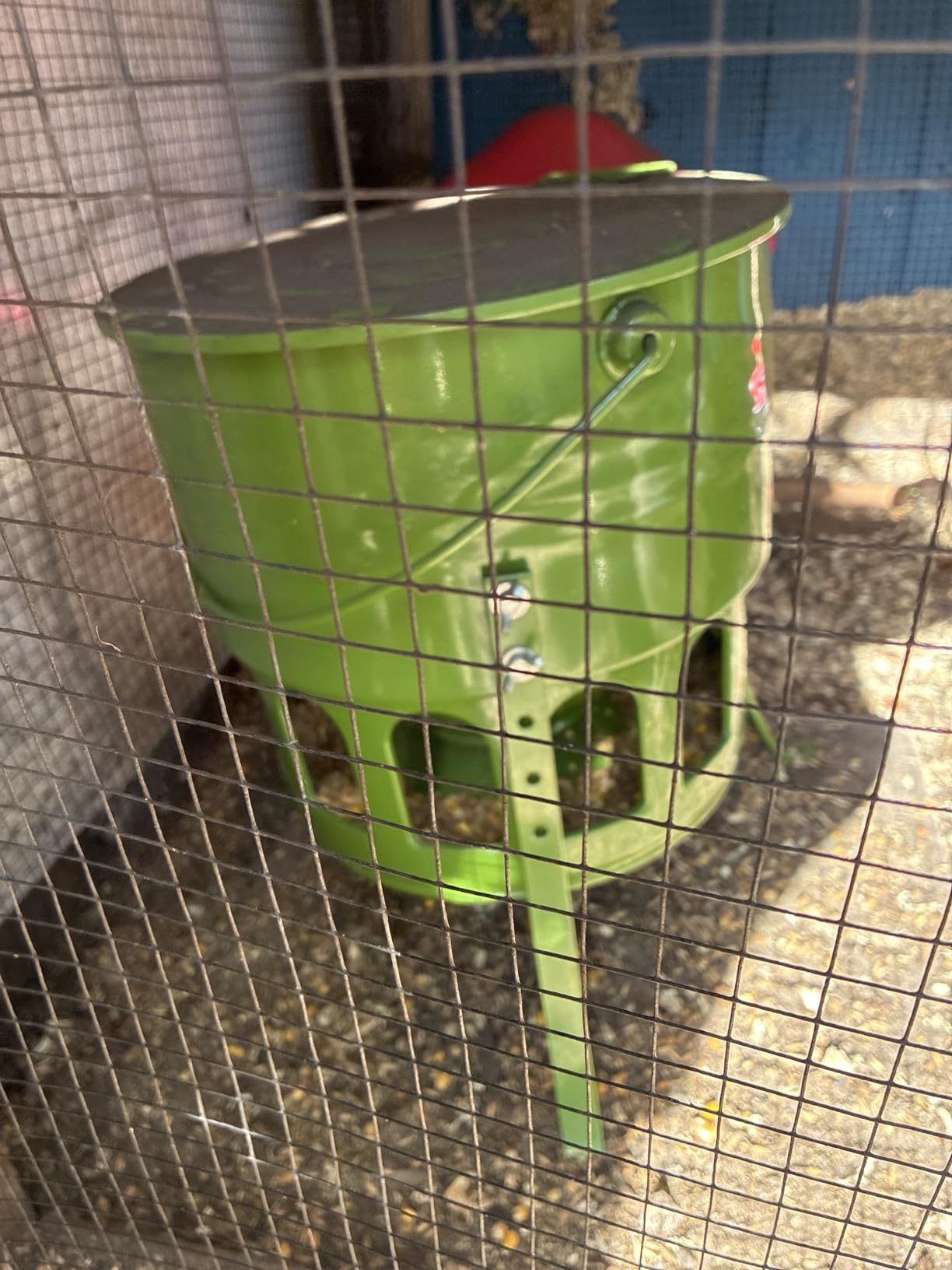
The 4-height adjustable tripod stand is the headline feature. I started my pullets at the lowest setting and raised the unit every few weeks as they grew. By the time they were full size, the feeder was at the perfect chest-height position for adult hens. The reinforced 5mm tripod stand is more stable than competing budget tripods, which matters when you have heavier breeds like Orpingtons or Brahmas.
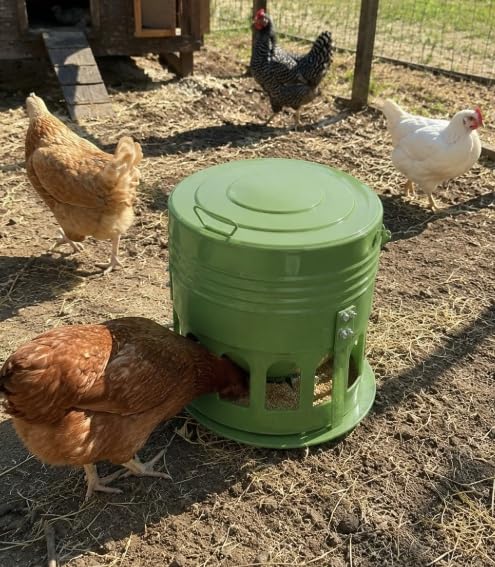
Deep gravity-fed ports keep feed contained inside the feeder rather than spilling at the edges. The sealed lid protects from rain and sun, and the unit can hang or stand depending on your coop setup. For keepers with covered runs or who plan to hang the unit under an overhang, the kingump is a strong fit.
Capacity is the obvious limit. At 20 pounds, this is a 3 to 4 day feeder for a flock of 20 to 30 hens. For very large flocks, it works as a secondary station rather than a primary feeder. Some users report that feed waste creeps back in once the feed level drops low in the hopper, so plan to refill before the unit runs completely empty.
Best Use Case for This Feeder
This is the right pick if you keep 10 to 20 hens and your main concern is feeding competition and bullying. It also works well as a secondary feeder for larger flocks, especially when paired with a treadle or large-capacity gravity unit.
Limits I Noticed
Capacity is small for large flocks. Feed waste increases when the hopper runs low. Height adjustment requires experimentation to find the sweet spot for your specific birds.
Sizing Guide: How Many Feeders for a Large Flock
The number one question I get from large-flock keepers is “how many feeders do I actually need?” The honest answer is more than one. A single feeder for 30+ birds creates competition at the port, which leads to bullying, dominant hens hogging the food, and timid birds losing weight. Backyard Chickens forum veterans with 14+ years of experience consistently recommend at least three feeders placed out of view from each other.
Start with the math. A laying hen eats roughly 0.25 pounds of feed per day, or about 1.75 pounds per week. For 30 hens, that is 7.5 pounds per day, or about 52 pounds per week. For 50 hens, expect 12.5 pounds per day, or close to 90 pounds per week. A 50 lb feeder therefore covers 30 hens for about a week, and 50 hens for four days.
From there, work backward to figure how many feeders you need. The rule of thumb is one feeder per 8 to 12 birds for open-port gravity feeders, and one feeder per 10 to 15 birds for treadle feeders (since treadles tend to have larger openings). For my 38-bird flock, I run three feeders: a 50 lb primary gravity feeder and two 25 lb secondary stations placed out of sight. To plan a bigger setup, our bulk poultry feeder roundup is a useful reference.
Treadle vs Hanging vs Gravity: Which Style Wins?
There are three main feeder styles, and each wins in different scenarios. Treadle feeders open when a chicken steps on a weighted pedal, which excludes rodents and wild birds from feed access. They are the most rodent-proof option but require training and cost more. Grandpa’s Feeders and the RentACoop 40 lb treadle are the standout examples on this list.
Gravity feeders are the simplest design. Feed sits in a hopper above a tray, and gravity keeps the tray full as birds eat. They are cheaper, easier to use, and require no training, but they do not exclude determined rodents or wild birds unless paired with a locking lid or sealed ports. The OverEZ, Pawaboo, GADFISH, and kingump are gravity designs with pest-exclusion features layered on.
Hanging feeders are similar to gravity feeders but suspended from above, which keeps them off the ground and slightly out of rodent reach. They are a middle-ground option for keepers who do not want to commit to treadle training but want something more rodent-resistant than an open trough. For very wet climates or coops where the floor floods, hanging feeders keep feed higher and drier.
For a large flock, the practical answer is a hybrid setup: a primary treadle feeder for rodent control paired with one or two gravity or hanging feeders for capacity and competition reduction. Backyard Chickens forum users running 30+ birds consistently report that mixed setups outperform single-feeder setups.
Material Comparison: Galvanized Steel vs Plastic
Material matters more than most new keepers realize. Galvanized steel is the long-term durability winner. It does not yellow in UV, does not crack in cold weather, and resists rodent chewing. The trade-offs are weight (steel feeders are heavier), price (usually higher), and the potential for sharp edges on cheaper units. Grandpa’s Feeders and the RentACoop 40 lb treadle are the gold-standard galvanized options.
BPA-free and PFAS-free plastic is the low-weight, food-safe alternative. Modern UV-protected plastic, like the OverEZ and Omlet designs, holds up well in sun and rain for years. Plastic is easier to clean (Omlet separates into three pieces), lighter to move, and friendlier on the wallet. The downside is rodent damage: a determined rat can chew through plastic over time, and plastic becomes brittle in extreme cold.
Aluminum-coated galvanized steel, used in the Pawaboo and GADFISH, is the newest option. It combines the strength of steel with better rust resistance, which makes it a strong pick for humid climates. For most keepers in temperate regions, the choice comes down to budget: galvanized for long-term ownership, plastic for ease of use and lower upfront cost.
How to Train Chickens to Use a Treadle Feeder?
Treadle feeders require a real training window, and most keepers give up too early. Expect one to two weeks of patient work, not a weekend. The good news: chickens learn faster than you think, and once trained, they use the treadle reliably for life.
Day 1 to 3: Prop the treadle lid fully open with a stick or brick so chickens can eat from the feeder without triggering the mechanism. Place their familiar feed inside and let them find it. The goal is for them to associate the feeder with food.
Day 4 to 7: Lower the lid partway so chickens have to push slightly against it to reach the feed. They will start to associate stepping on the treadle with the lid opening. Some birds will figure it out in a day; others need the full seven days.
Day 8 to 14: Close the lid fully and let the treadle mechanism operate as designed. Most of the flock will be confidently triggering the treadle by now. A few stubborn birds may need a demonstration where you press the treadle with your hand while calling the chickens.
Ongoing: Bantams and lighter breeds may never trigger a heavy treadle. RentACoop’s detachable weight solves this for mixed flocks. If you have any doubts about training time, plan your feeder swap for a weekend when you can observe the flock closely. For broader coop design considerations, our walk-in chicken coop roundup covers how coop layout affects training success.
Rodent and Wildlife Protection for Large Flocks
Rodents are the number one hidden cost of keeping a large flock. Rats and mice can consume a shocking amount of feed, and the feed they spill or contaminate is even more. A single rat eats about 1 ounce of feed per day, which sounds small until you multiply by 10 to 20 rats living under your coop. That is 10 to 20 pounds of feed every month, gone.
The first line of defense is a sealed feeder with a treadle mechanism or locking lid. Treadle feeders are the most effective because they open only when a chicken steps on the plate; rats and wild birds cannot trigger the mechanism (with the caveat that squirrels can, on lighter treadles). Locking lids that close at night also work well for gravity feeders, especially in suburban settings with light rodent pressure.
Beyond the feeder itself, manage the surrounding environment. Remove spilled feed within an hour of any refill. Store feed bags in metal bins with tight lids, not in the open on a shelf. Keep grass and weeds cut short around the coop so rats cannot travel under cover. For very heavy rodent pressure, consider a perimeter bait station or a barn cat.
Wildlife beyond rats is also worth considering. Raccoons can defeat lightweight locking lids; the HAYOHRT’s heavy locking cover is specifically designed for this. Deer will eat chicken feed if they can reach it. Bears are rare but devastating; if you are in bear country, store all feed inside a bear-proof container. To compare with similar wildlife-exclusion feeders, see our automatic deer feeder roundup.
Multi-Feeder Placement Strategy
For flocks over 25 birds, placement matters as much as feeder selection. A single feeder in the middle of the run creates a bottleneck where dominant hens control access, timid birds lose weight, and feed gets scratched onto the ground around the port. The fix is multiple feeders placed out of sight from each other.
The rule of thumb from Backyard Chickens forum veterans: three or more feeders, each out of view from the next, so a hen cannot see two feeders at once. For my 38-bird flock, I run three stations: a 50 lb primary gravity feeder near the coop door, a 25 lb secondary station behind the coop, and a 12 lb Omlet hung in the far corner of the run. Hens spread out across the run, lower-ranking birds eat without being pushed around, and feed waste drops significantly.
Distance between feeders should be at least 15 to 20 feet, and ideally placed around natural barriers (corners of the coop, fence lines, bushes) so hens must walk around a visual obstacle to switch feeders. This single change can transform flock dynamics for large-flock keepers. To design the run itself, our large chicken run roundup covers how run size impacts feeding station placement.
Place feeders under cover whenever you can, to extend the life of the unit and keep feed dry in wet climates. Concrete pavers or pressure-treated wood platforms under each feeder prevent the ground from turning to mud around the port and discourage rodents from burrowing directly under the feeder.
Frequently Asked Questions
How many feeders do I need for 30 chickens?
For 30 laying hens, plan on three feeders as a starting point: one primary feeder with 50 lb capacity, plus two secondary stations. The exact number depends on flock dynamics, but Backyard Chickens forum veterans consistently recommend at least three feeders placed out of sight from each other so timid birds can eat without being pushed around by dominant hens.
What size feeder do I need for a large flock?
For a flock of 20 to 30 hens, a single 50 lb feeder covers about a week of feed. For 30 to 50 hens, plan a 50 lb primary feeder plus at least one 20 to 25 lb secondary station. For 50+ hens, you need either a 85 to 120 lb feeder like the HAYOHRT or multiple 50 lb units placed in different locations.
Are treadle feeders worth it for large flocks?
Treadle feeders are worth the investment if rodent pressure is a problem or you want to cut feed waste by 30 to 50 percent. Grandpa’s Feeders and the RentACoop 40 lb treadle are proven performers with 30-plus years of field use. The trade-off is a 1 to 2 week training period and a higher upfront price, but most keepers recover the cost within a year through feed savings.
Should chicken feeders be inside or outside the coop?
Inside the coop is generally better because it keeps feed dry, reduces wild bird attraction, and lets you control rodent access. Outside feeders work in covered runs with weatherproof construction. Avoid placing feeders fully exposed in open runs in wet climates, as rain and humidity quickly spoil uncovered feed.
How do I stop rats from eating my chicken feed?
The most effective step is switching to a treadle feeder or a gravity feeder that has a locking lid closed overnight. Both exclude rats while still allowing chickens to feed during normal hours. Beyond the feeder, store feed bags in sealed metal bins, clean up spilled feed quickly, and keep grass cut short around the coop so rats cannot travel under cover to reach the feeder.
Final Verdict
After six weeks of testing, the OverEZ 50 lb gravity feeder is my top pick for the best automatic chicken feeders for large flocks. It hits the right balance of capacity (a full week for 30+ hens), weatherproof construction (UV-protected BPA-free plastic with rainproof ports), and ease of use (wide-mouth refill, no training needed). It is the feeder I keep coming back to and the one I recommend to anyone starting a large flock.
If rodent pressure is your main pain point and you can commit to a two-week training window, Grandpa’s Feeders 40 lb treadle is the premium pick that will pay for itself in feed savings. For keepers on a budget running 30 to 50 hens, the TGEYD 50 lb 8-port feeder delivers galvanized construction at a fraction of the treadle price. And for very large flocks (50+ hens), the HAYOHRT 85-120 lb 10-port feeder is the only single unit that holds enough feed to keep up.
Whichever feeder you choose, remember the multi-feeder rule: three or more stations placed out of sight from each other. That single change will do more for your flock’s health and feed efficiency than any single feeder upgrade. For more on setting up your coop and run for the long haul, our other automatic chicken feeder guides cover smaller flocks and DIY options. Here is to drier feed, fewer rats, and happier hens.