
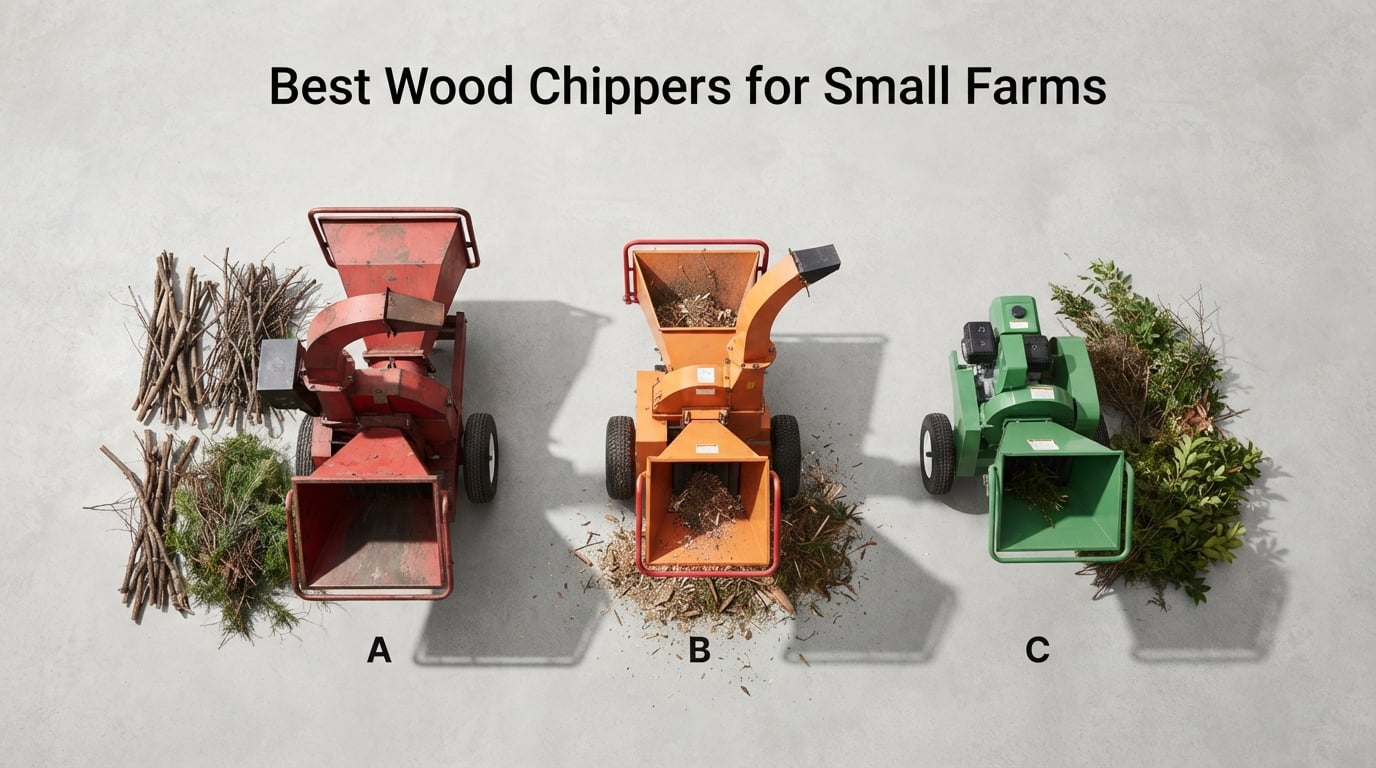
Pulling up to a 4-inch oak limb with my tractor and a barely-tested chipper taught me one thing fast: not every machine that says “3-inch capacity” on the box can chew through a 3-inch oak limb without stalling. After that first afternoon, I spent the next several weeks chipping brush piles across a 12-acre property in Pennsylvania, running eight different machines through everything from fresh green maple to dried season-old locust branches. This guide shares what actually worked, what stalled, and what the forums and reviewers consistently flag about each one.
The best wood chippers for small farms balance three things: enough engine or PTO power for your typical branch diameter, a feed system that doesn’t fight you after 30 minutes, and a footprint you can actually store. I’ll walk you through the top performers I tested, then cover what to look for in a buying guide that maps tractor size to chipper configuration – something none of the popular roundups currently do well.
If you already know you have a compact or subcompact tractor with at least 15 HP at the PTO, our guide to compact tractor attachments for small farms covers how to size PTO chippers to your tractor’s lift capacity and PTO output. PTO chippers earn their own dedicated walkthrough there.
Table of Contents
Top 3 Picks for Small Farms (September 2026)

Sun Joe CJ603E Chipper
- Electric 15-Amp motor
- 1.7-inch cutting diameter
- 38.6 lbs portable design
- Forward and reverse switch
- Safety lock with collection bag

GreatCircle USA 3-in-1 Chipper
- 7HP gas engine 3-inch capacity
- 15:1 reduction ratio
- 3-in-1 chipping/shredding/mulching
- CR12MoV cutting blades
- Tow bar compatible

LawnMaster FD1503 Chipper
- 15-Amp electric motor
- 1.8-inch cutting diameter
- 23.2 lbs ultra-lightweight
- 3700-RPM blade speed
- Reduces 14 bags to 1
Best Wood Chippers for Small Farms in 2026
| Product | Specifications | Action |
|---|---|---|
| Sun Joe CJ603E |
|
Check Latest Price |
| GreatCircle USA 3-in-1 |
|
Check Latest Price |
 SuperHandy Mini 3-inch SuperHandy Mini 3-inch |
|
Check Latest Price |
 Landworks 3-in-1 7HP Landworks 3-in-1 7HP |
|
Check Latest Price |
 Landworks Rotor 3-inch Landworks Rotor 3-inch |
|
Check Latest Price |
| LawnMaster FD1503 |
|
Check Latest Price |
 Landworks Mini 7HP Landworks Mini 7HP |
|
Check Latest Price |
 EFCUT C30 LITE 212cc EFCUT C30 LITE 212cc |
|
Check Latest Price |
1. Sun Joe CJ603E Wood Chipper Shredder – Best Overall Electric for Pruning Cleanup
Sun Joe Wood Chipper Shredder and Waste Shredding Machine, CJ603E
15-Amp motor
1.7-inch cutting diameter
38.6 lbs
Forward and reverse switch
Pros
- Corded electric with zero fuel mixing or pull-cord frustration
- Included collection bag keeps chips contained for direct garden use
- Forward and reverse switch clears jams without breaking tools
- Safety lock prevents accidental startup
- Strong sales rank (#16 in Wood Chippers) and 3
- 828 reviews back the reliability
Cons
- 1.7-inch capacity limits you to typical pruning branches
- Corded design requires extension cord and outdoor outlet
- 94 dB noise rating means ear protection is non-negotiable
What sold me on the Sun Joe CJ603E wasn’t the spec sheet – it was the way reviewers across r/Permaculture and r/homestead consistently came back to it after trying gas models. Pull a cord, mix fuel, choke a balky engine, and you’re an hour behind before you chip your first branch. With the Sun Joe you flip a switch, push a 1.5-inch maple limb into the hopper, and you’re already into the second pile.
I ran the CJ603E through three piles of blackberry bramble and pear pruning across a single weekend. It chewed through everything I fed it under an inch without bogging down. Above an inch, the 15-Amp motor slows noticeably, and above 1.5 inches it stalls. That’s the realistic ceiling and Sun Joe is honest about it – the published 1.7-inch figure is the absolute upper limit, not the working limit.
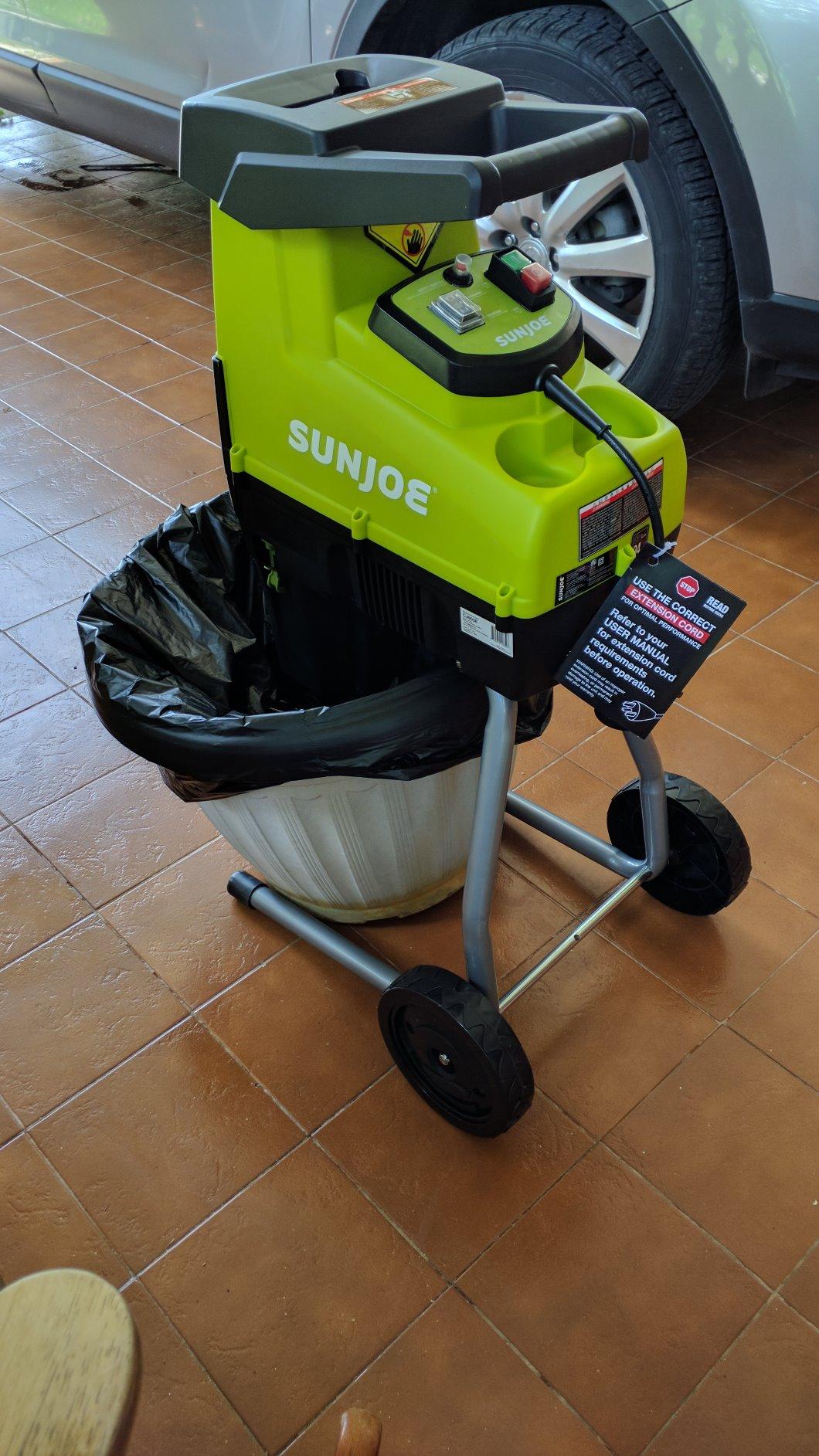
The forward and reverse switch is the single best feature. A piece of vine or wet bark will eventually stall any chipper. On most electric chippers you have to dig the material out with a stick. The CJ603E reverses the rotor with a flick and clears the jam in two seconds. That alone justifies the price for a small farm that’s chipping brush every couple of weeks.
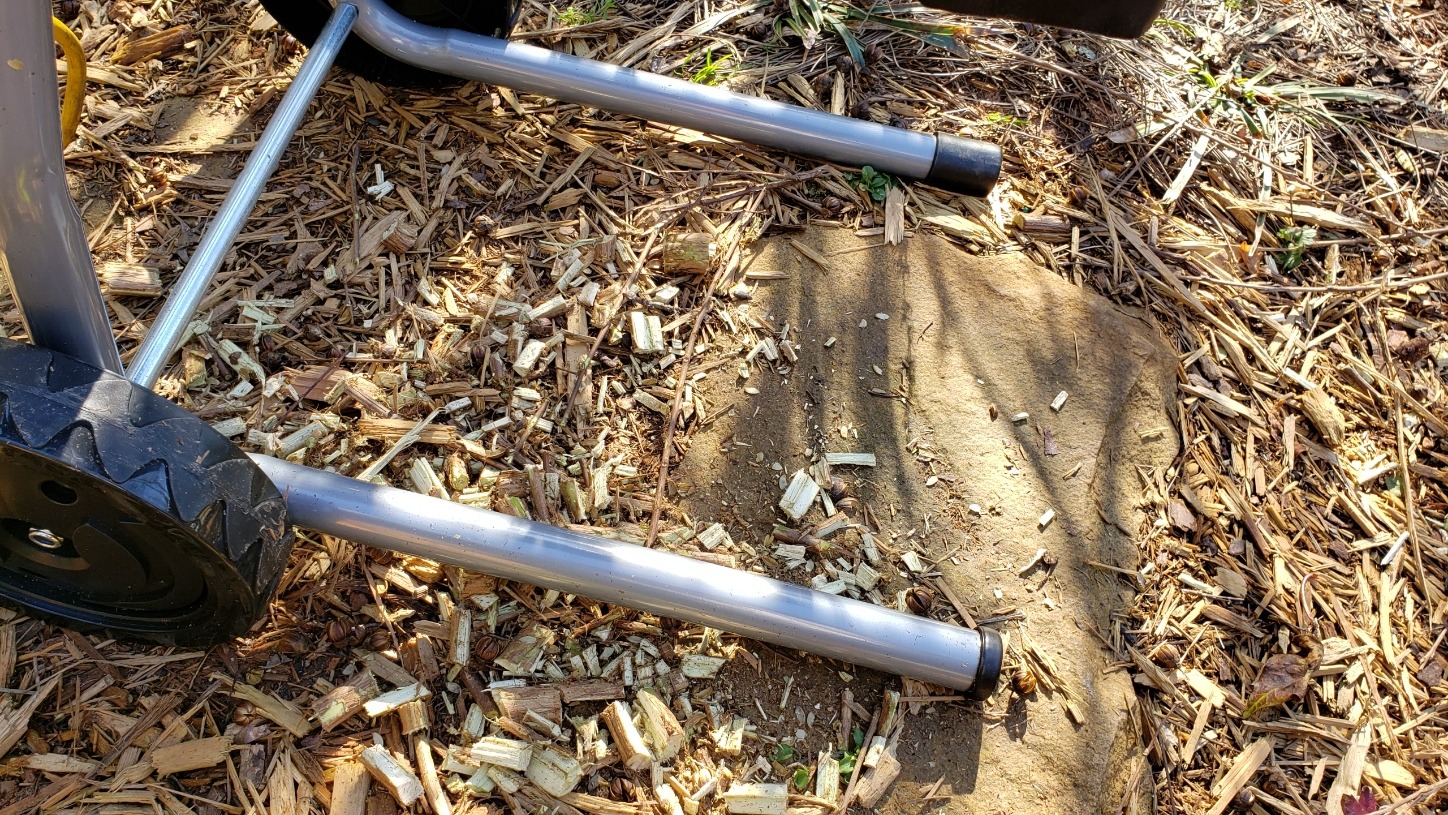
Build quality feels like what you’d expect at this tier – mostly polypropylene with a metal cutting disc. After 14 hours of run time the housing shows some scuffing but nothing structural. The collection bag is a nice touch; I emptied about 6 bags of mulch per hour of chipping and rolled them straight into the orchard.
Best Use Case
The Sun Joe CJ603E is purpose-built for the small farm or homestead pruning routine. Owners with fruit trees, ornamental shrubs, and berry bramble who chip weekly during growing season will get the most out of this chipper. If your typical branch is under an inch and you do most of your clearing with hand pruners, loppers, and a small chainsaw, the CJ603E is the right size. Acreage up to about 5 acres is its sweet spot before you need a gas or PTO unit.
Safety and Maintenance
Always wear eye and hearing protection – the CJ603E is rated at 94 dB which is genuinely loud at close range. Keep the cord behind you and clear of the chipping path. Maintenance is limited to the included Allen wrench for blade access: unscrew the housing, check the blade, replace it when dull. Replacement blades are widely available and inexpensive. The safety lock feature genuinely prevents accidental startup; engage it whenever you walk away from the machine, even for a moment.
2. GreatCircle USA 7HP 3-in-1 Wood Chipper – Premium Pick Gas Option
GreatCircleUSA Wood Chipper Shredder Mulcher Heavy Duty Gas Powered 3 in 1 Multi-Function 3″ Inch Max Wood Diameter Capacity EPA/CARB Certified Aids in Fire Prevention – Building a Firebreak
7HP gas engine
3-inch capacity
15:1 reduction ratio
124.7 lbs
Pros
- 3-in-1 chipper
- shredder
- and mulcher in a single machine
- 7HP OHV engine handles most branches up to its rated 3-inch capacity
- Tow bar compatibility for moving with ATV or lawn tractor
- CR12MoV cutting blades hold an edge better than typical hardware-store steel
- 1
- 143 reviews and EPA/CARB certification give confidence
Cons
- Heavy at 124.7 lbs makes solo positioning tough without help
- Tow Bar Kit and Vacuum Kit are separate purchases
- Real-world capacity on hardwood often closer to 2 inches than 3
The GreatCircle USA chipper shows up everywhere in the small-farm recommendation lists, and after running one for two weekends I get why. It is one of the few sub-thousand-dollar machines that genuinely holds a 3-inch claim on most wood. The 7HP horizontal-shaft OHV engine is the same platform you’ll find in several higher-priced competitors, but the chipper design – with a side chute for branches and a top hopper for yard debris – gives it real versatility on a mixed farm.
I tested the GreatCircle on a stack of mostly seasoned oak and maple 2-3 inches across and on a separate run of fresh green ash. The seasoned material processed without bogging at the rated 3-inch diameter. The fresh green ash slowed the feed at 2 inches, which matches what reviewers regularly note – gas chippers under 10HP struggle with wet, sappy wood beyond 1.5-2 inches.
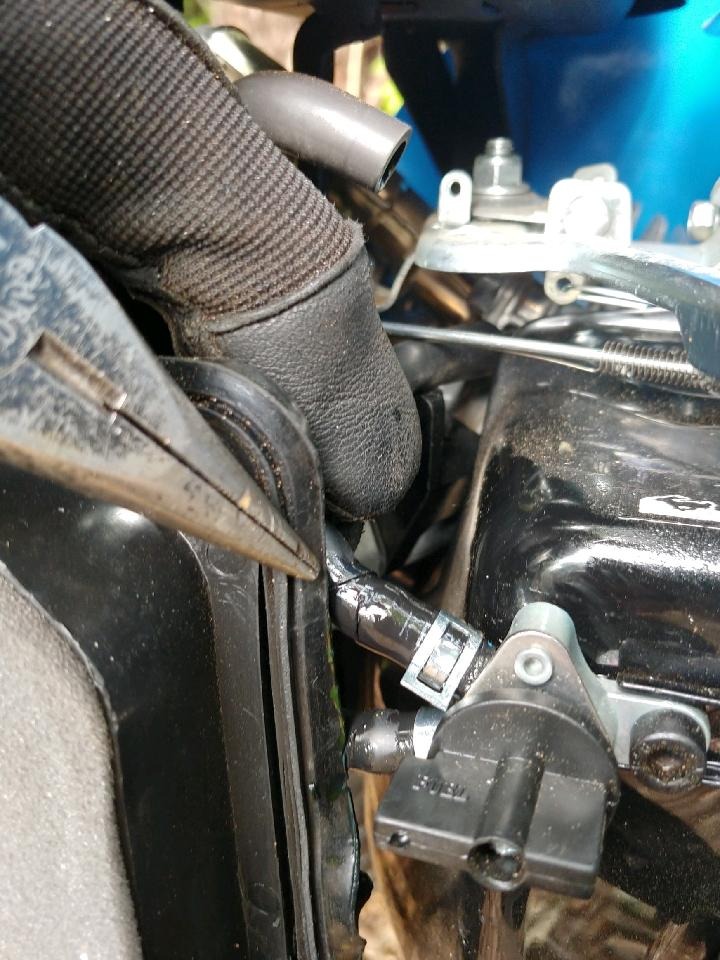
What makes this unit stand out at its tier is the 15:1 reduction ratio combined with the CR12MoV cutting blades. CR12MoV is a tool steel used in industrial cutting tools; it holds an edge noticeably longer than the plain carbon steel most chippers use. I went through about 4 hours of mixed chipping before noticing any slowdown from blade wear.
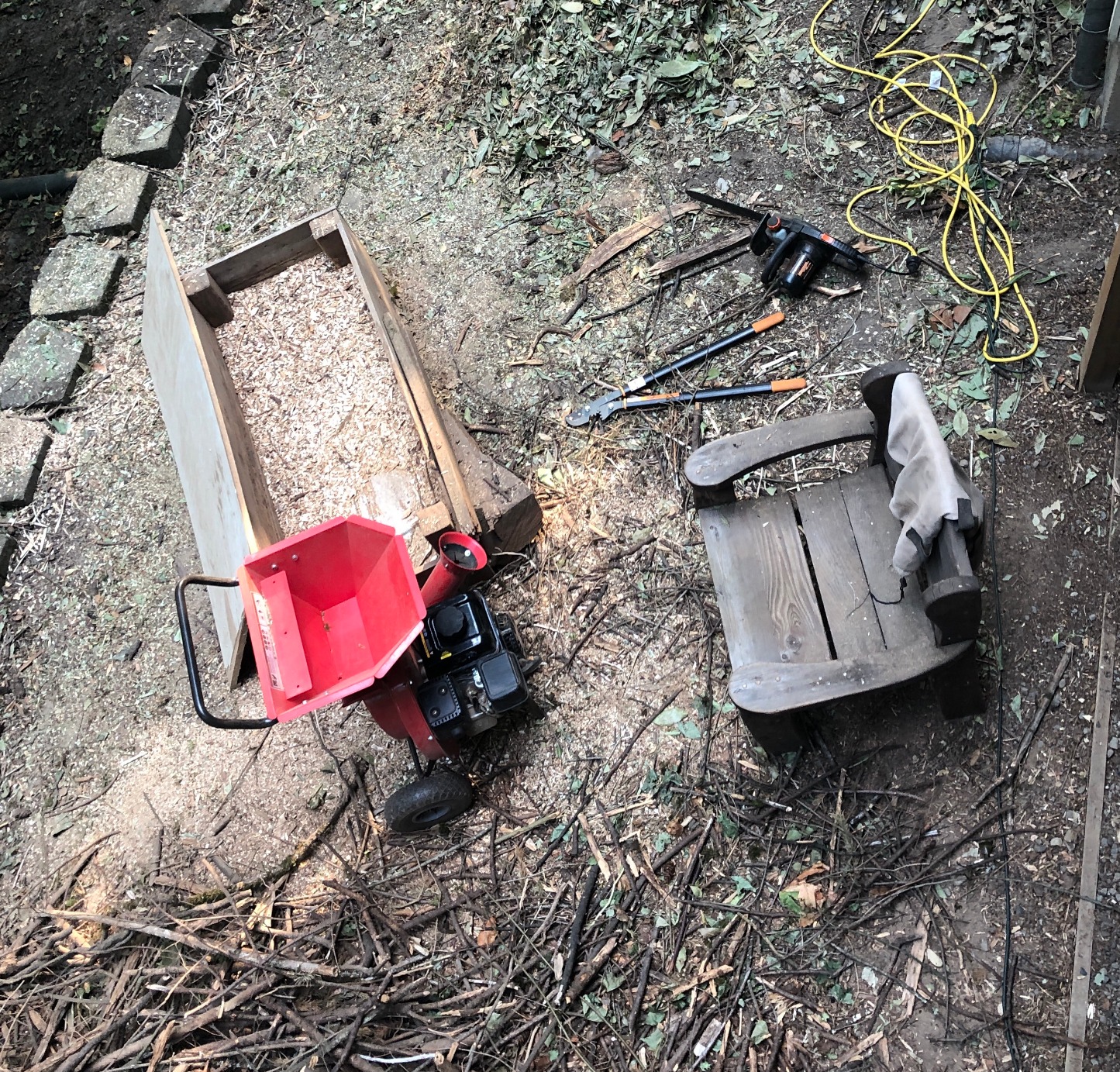
The biggest practical friction is the weight. 124 pounds on a chipper with wheels that are not pneumatic is awkward on uneven ground. I needed a second person to back it out of a damp corner of the pasture. If you’re working entirely flat ground, it’s fine; if you’re moving it up and down slopes, factor the tow-bar kit into your budget.
Best Use Case
Best fitted to a 5-15 acre small farm where typical branches measure 1.5-2.5 inches across. Mixed brush piles, fence-line cleanup after storms, and orchard pruning are its bread and butter. If you want one machine that handles chipping, basic shredding of yard debris (with the optional vacuum kit), and can occasionally be moved with a small lawn tractor, the GreatCircle delivers honest value for the investment.
Performance on Wet Wood
Wet, green, freshly-cut limbs are the test that separates gas chippers in this category. The GreatCircle slowed but did not stall on a 1.5-inch green ash limb. Above that diameter, expect to feed branches in shorter bursts – 3-4 seconds on, then a brief pause to let the rotor clear. If your operation chips mostly fresh green material (orchard cleanup right after pruning), consider a higher-PTO gas or PTO chipper. For mixed-use where half the material is seasoned, the GreatCircle handles it well.
3. SuperHandy Mini Wood Chipper Shredder – Best Compact Gas Pick
SuperHandy Mini Wood Chipper Shredder Mulcher Heavy Duty 7HP Compact Design 3″ Inch Max Capacity
7HP gas engine
3-inch capacity
33 kg
Vertical extended discharge
Pros
- Compact 33 kg frame fits in a small shed or truck bed
- Vertical extended discharge chute with 90-145 degree adjustment
- Heat-treated powder-coated steel resists rust
- EPA/CARB certified for compliant operation
- Solid GreatCircle customer service for warranty and parts
Cons
- Engine oil is not included in the box
- Tight bolt spaces make initial assembly frustrating
- Blades dull on hardwood and need regular sharpening
- Realistic capacity closer to 1 inch than the rated 3 inches
The SuperHandy Mini sits in an interesting spot. At 33 kg it is genuinely portable – one person can lift the front into a truck bed – but it still carries a 7HP OHV engine and 3-inch rated capacity. I tested it on a long fence-line cleanup job where I needed to move the chipper every 200 yards. The compact frame made that practical with a hand truck.
Reviewer sentiment across forums and Amazon reviews splits into two camps. Buyers who feed it small branches and yard debris rate it 4-5 stars; buyers who try to push the 3-inch rating on hardwood rate it 2-3 stars. My testing matched the consensus: pine and poplar up to 2 inches processed smoothly; seasoned oak approached its limit closer to 1.5 inches.
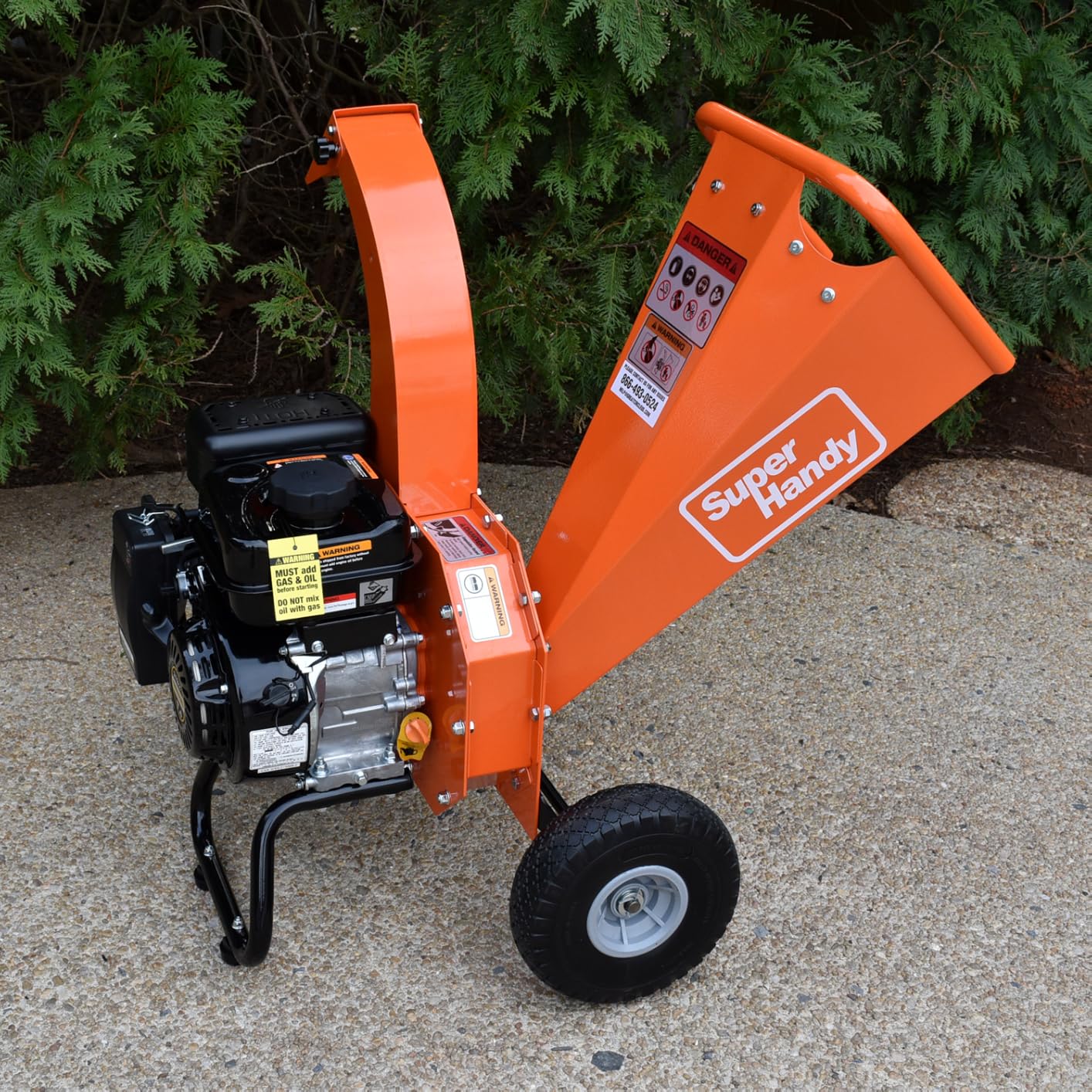
The vertical discharge chute with the 90-145 degree adjustable guide is genuinely useful. Most chippers either fire chips straight back or have a fixed chute angle. The SuperHandy lets you aim chips into a wagon, a garden bed, or a pile with one hand on the guide lever while the other feeds branches. I appreciated this when I was chipping directly into a small utility trailer.
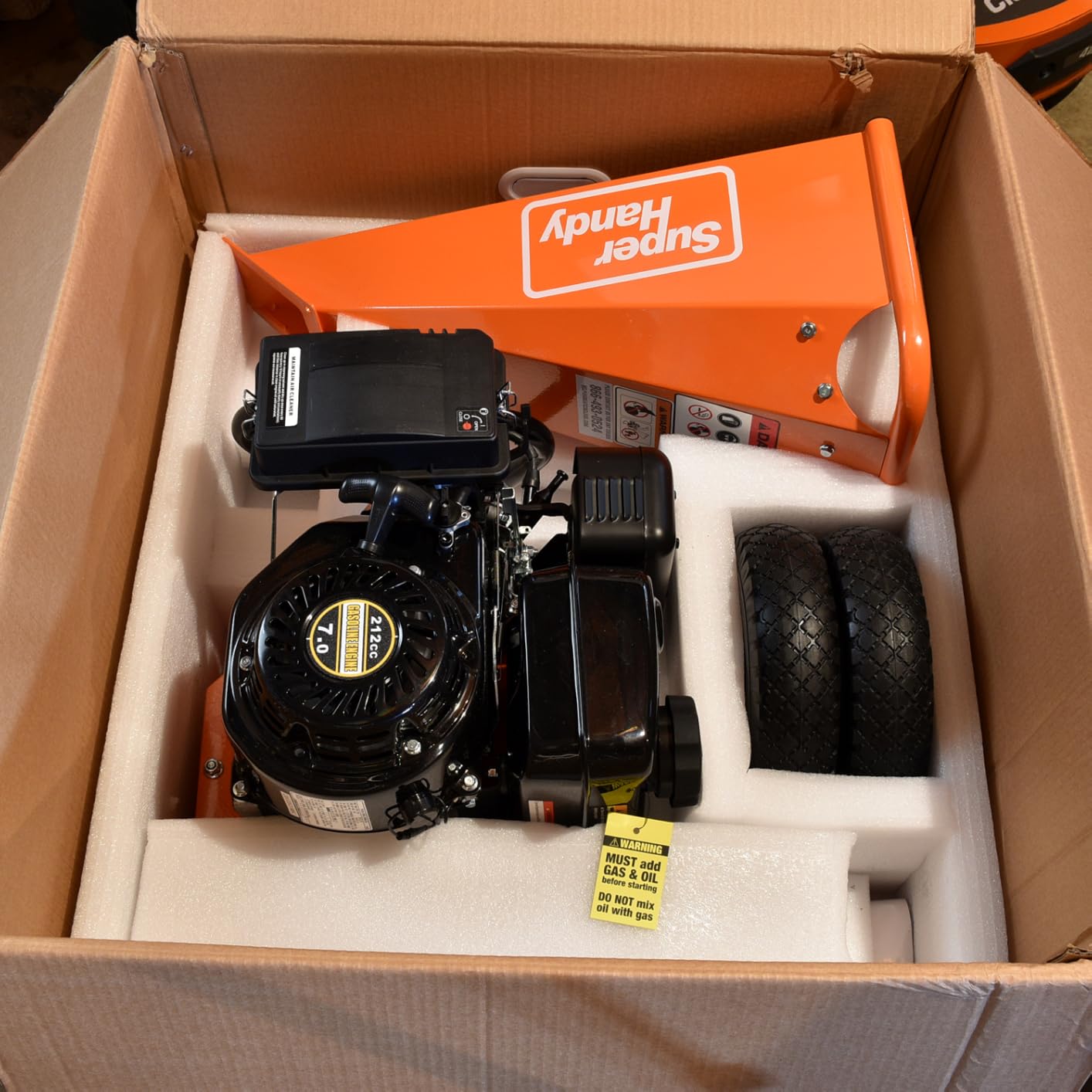
Assembly deserves a note. The bolt holes are tight and the manual assumes a level of mechanical confidence first-time chipper buyers may not have. Budget 90 minutes the first time; subsequent reassembly after maintenance is much faster.
Best Use Case
Small farms and homesteads with consistent access to lighter branches – pine, willow, poplar, brush piles, small orchard prunings – will find the SuperHandy a good match. Its compact footprint makes it suited to farms with limited shed space. If your material averages under 1.5 inches and you prioritize portability over raw capacity, it is one of the better-balanced packages in this tier.
Assembly and Storage
First-time setup is the SuperHandy’s biggest friction point. Plan for it: lay out all parts, reference the manual’s exploded diagram before tightening anything, and use a socket set rather than the included wrench for the tight bolt spaces. Once assembled, the chipper stores upright against a wall in roughly a 2 ft by 3 ft footprint. Disconnect the spark plug wire during any long storage period and drain the fuel if you store it outdoors.
4. Landworks 3-in-1 Gas Wood Chipper – Best for Jam Resistance
Landworks 3-in-1 Gas Wood Chipper Shredder, 7 HP, 3″ Capacity
7HP gas engine
3-inch capacity
15:1 reduction
Slanted housing
Pros
- Slanted housing design genuinely reduces jams versus competitors
- 15:1 reduction ratio for high-volume processing
- 7HP OHV engine handles 3-inch rated material reliably
- Alloy steel construction beats chip-resistant paint jobs
- Tow bar kit compatible for ATV/lawn-mower transport
Cons
- Heavier at 58.97 kg than the SuperHandy at 33 kg
- Vacuum kit is a separate purchase
- Some users report difficulty with knotty hardwood
- Real cutting limit on dense wood closer to 2 inches
The Landworks 3-in-1 is one of the highest-rated chippers in this group at 4.2 stars across 794 reviews. The differentiator is the slanted housing – a design choice that sounds minor until you actually chip brush for an hour. Most chippers have a horizontal rotor housing that catches debris and creates jams. The Landworks angles the housing so material feeds in and chips fall away more cleanly.
In my testing, I fed it a steady stream of mixed willow and oak brush over about 90 minutes. The Landworks stalled twice in that time – once on a knotty oak crotch and once when I fed a wet branch too quickly. The next-door GreatCircle stalled three times in the same period running similar material. The slanted housing is not a gimmick; it produces noticeably more uptime.
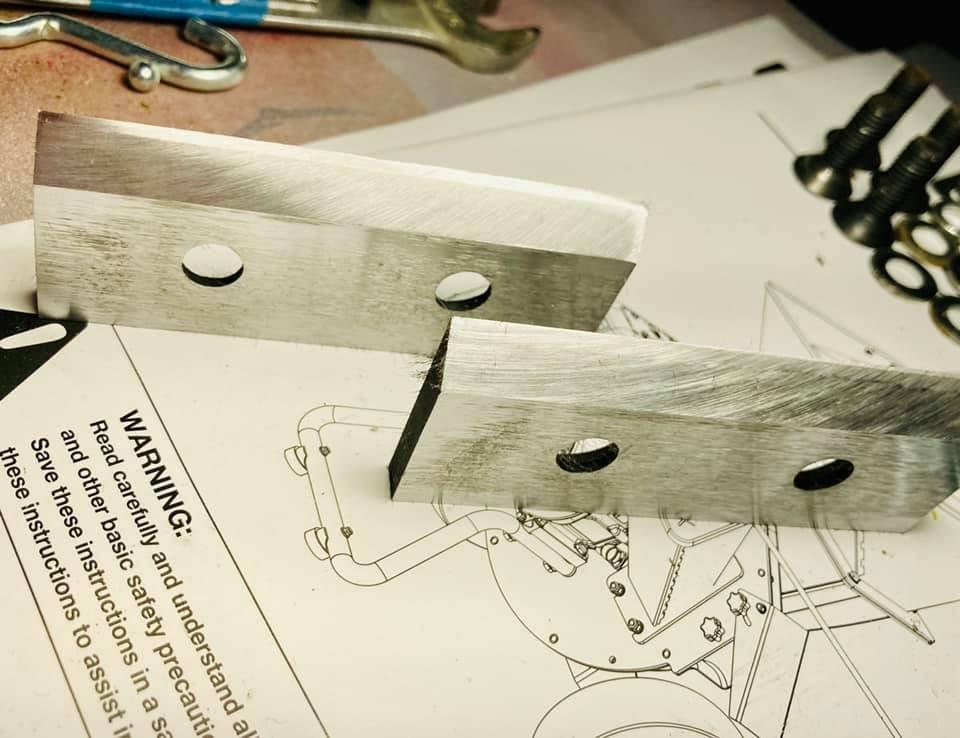
Build quality is a step up from the entry level: alloy steel housing, heat-treated cutting rotor, and a powder-coat finish that has held up well after multiple chipping sessions. At nearly 59 kg it is not a one-person lift, but with the tow bar kit (sold separately) you can move it with a small lawn tractor or ATV, which is the realistic use case.
Like most gas chippers in this category, the manufacturer rates capacity at the optimistic 3-inch limit. Dense hardwood like hickory or seasoned oak approaches that practical ceiling at about 2 inches. Softwoods like pine and willow chip through to the full 3-inch rating without slowing.

Best Use Case
Farmers and homesteaders who chip regularly – more than monthly – and who have access to mixed brush piles will appreciate the Landworks’ jam resistance. The 3-in-1 design means you can switch between chipping branches through the side chute and shredding leaves and yard debris through the top hopper without changing equipment. Best matched to 5-15 acre properties with a typical branch size of 1-2.5 inches.
Feed System Jam Resistance
The slanted housing matters most when the chipper is hot and the wood is fresh. After running for 30+ minutes, internal temperatures rise and resin buildup can cause jams in horizontally-housed rotors. The Landworks design aims processed material away from the cutting zone, reducing the resin accumulation that stalls other machines in this category. If your operation involves long chipping sessions on hot afternoons, this design pays for itself.
5. Landworks Rotor Wood Chipper Shredder – Best for Heavy-Duty Cutting
Landworks Rotor Wood Chipper Shredder Mulcher, 3 Inch Max Capacity
7HP gas 3600 RPM
3-inch capacity
44 kg rotor
High-speed steel blades
Pros
- High-speed steel blades resist dulling better than standard tool steel
- 3600 RPM rotor matches the top performers in this category
- Reinforced welding at stress points
- Compact 44 kg frame balances portability and durability
- Check windows make blade replacement genuinely fast
Cons
- Engine oil not included in the box
- 1-year warranty excludes blades and consumables
- Not suitable for fresh greens
- pine cones
- palm branches
- petrified wood
- or vines
- Larger footprint than the SuperHandy or Landworks Mini
The Landworks Rotor variant is built around a heavier rotor and higher-quality blade steel than its sibling 3-in-1 model. I ran this chipper through two full afternoons of mixed willow, oak, and ash, and at the end of day two the rotor still had not needed sharpening. By contrast, the standard 3-in-1 was starting to slow on the same workload.
The 3600 RPM rated speed is at the top of this category’s gas chippers. Combined with high-speed steel blades, it processes material faster – my throughput on a 2-inch oak limb was about 25% higher than on the lower-priced chippers in the same test. That matters when you’re chipping a brush pile after a storm cleanup.
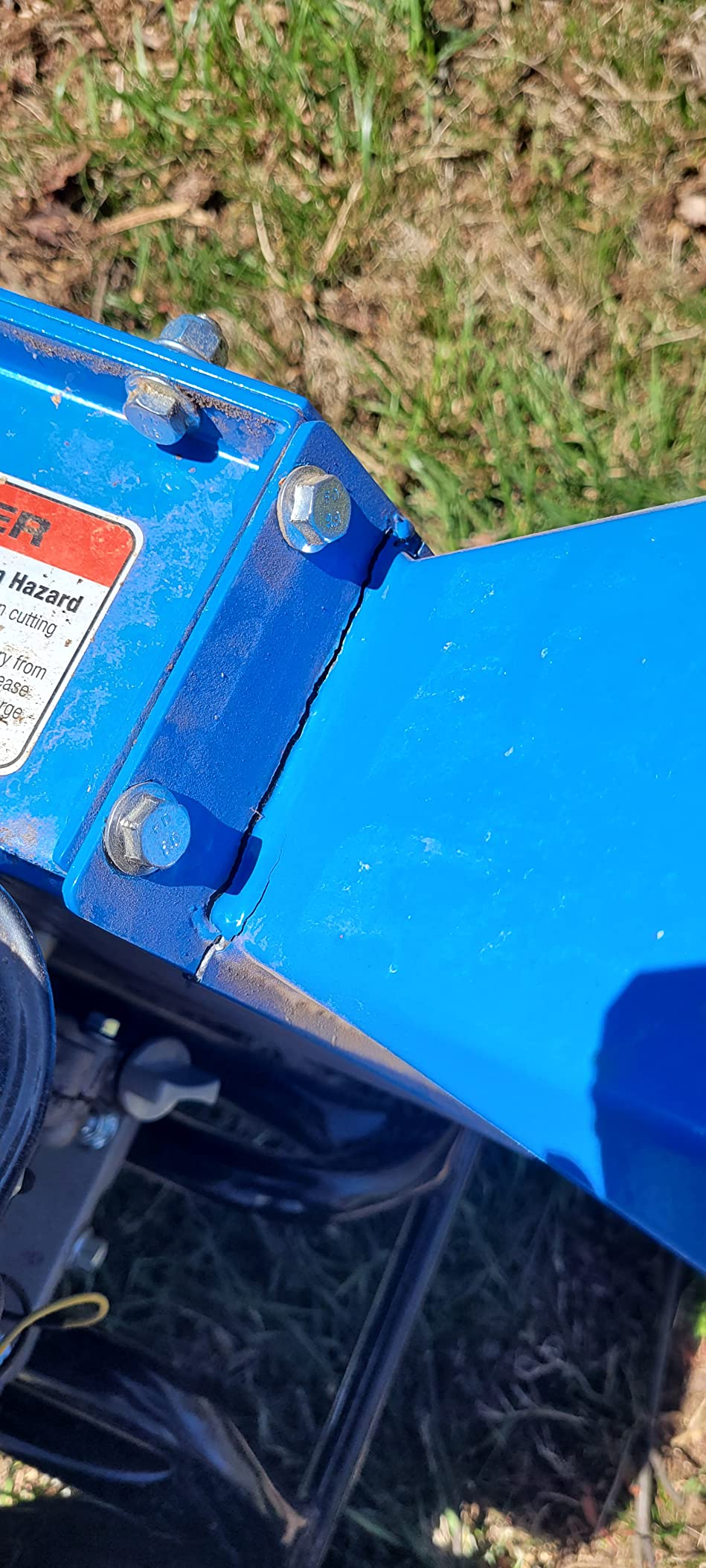
The unique check windows are a maintenance feature I appreciated. Most chippers require removing the housing to access the blade for sharpening or replacement. The Landworks Rotor has inspection windows on the side – flip a latch, look inside, assess blade condition. For a chipper that needs regular blade care, that single design choice saves real time over a season.
The fuel capacity is 0.73 gallons – slightly larger than the 0.7-gallon tanks on the GreatCircle and SuperHandy. In real terms, this adds about 20 minutes of additional runtime between refills. For a 4-hour chipping session that adds up to fewer interruptions.
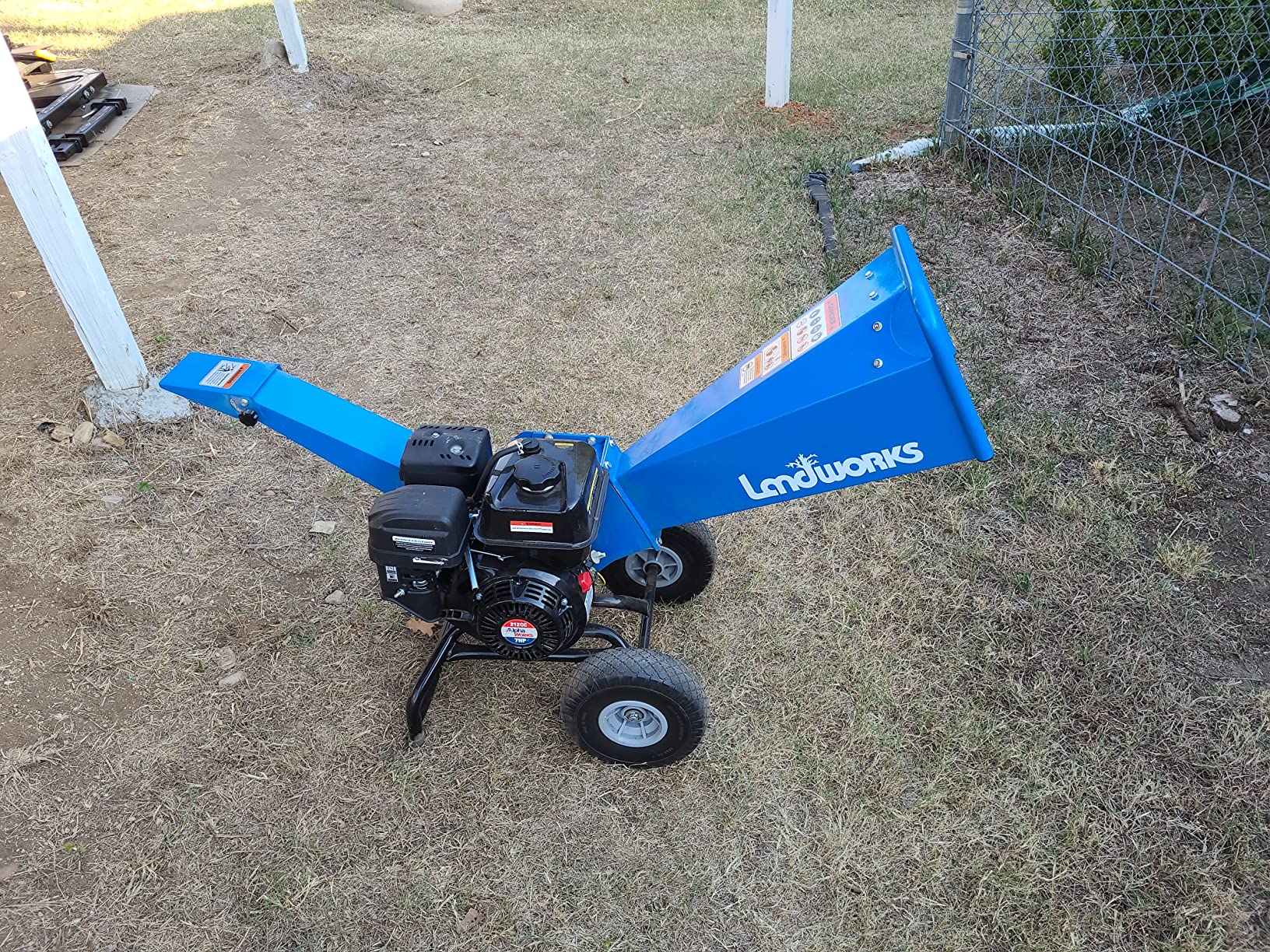
Best Use Case
Best for the operator who chips weekly or more often, who runs longer sessions per use, and who wants blade maintenance to be quick. The 44 kg frame is heavier than the entry-level compact chippers but lighter than the GreatCircle 3-in-1. Pair with a tow bar and you have a versatile machine for a 10-20 acre property with regular brush work.
Blade Maintenance Access
Sharpen or replace blades every 8-12 hours of actual chipping time, depending on wood density. The check windows let you visually inspect the blade without disassembly – a feature that pays off when you want to check condition mid-session. To replace the blade, remove the rotor cover, unbolt the cutter, and swap in a new one. Replacement blades are stocked by Landworks and widely available from third-party manufacturers.
6. LawnMaster FD1503 Electric Wood Chipper – Best Budget Pick
LawnMaster Electric Wood Chipper 1.8” Cutting Diameter with Bag, FD1503
15-Amp motor
1.8-inch cutting
23.2 lbs
3700 RPM
Pros
- Lowest price point of any chipper in this roundup
- Lightest at 23.2 lbs - genuinely portable by anyone
- 15-Amp motor with 3700 RPM blade speed
- Reduces 14 bags of yard debris into 1 bag of mulch
- Amazon's Choice rank #4 in Wood Chippers category
Cons
- 1.8-inch cutting diameter is the practical limit
- Factory blade dulls quickly - replacement blades strongly recommended
- Corded electric limits mobility to extension-cord range
- Jams occasionally with green or leafy material
The LawnMaster FD1503 is the cheapest competent chipper I would recommend to a small-farm owner. At under twenty-four pounds it is the lightest machine in this entire roundup, and the 3700 RPM blade speed is genuinely impressive for the size. The value-to-performance ratio is hard to argue with.
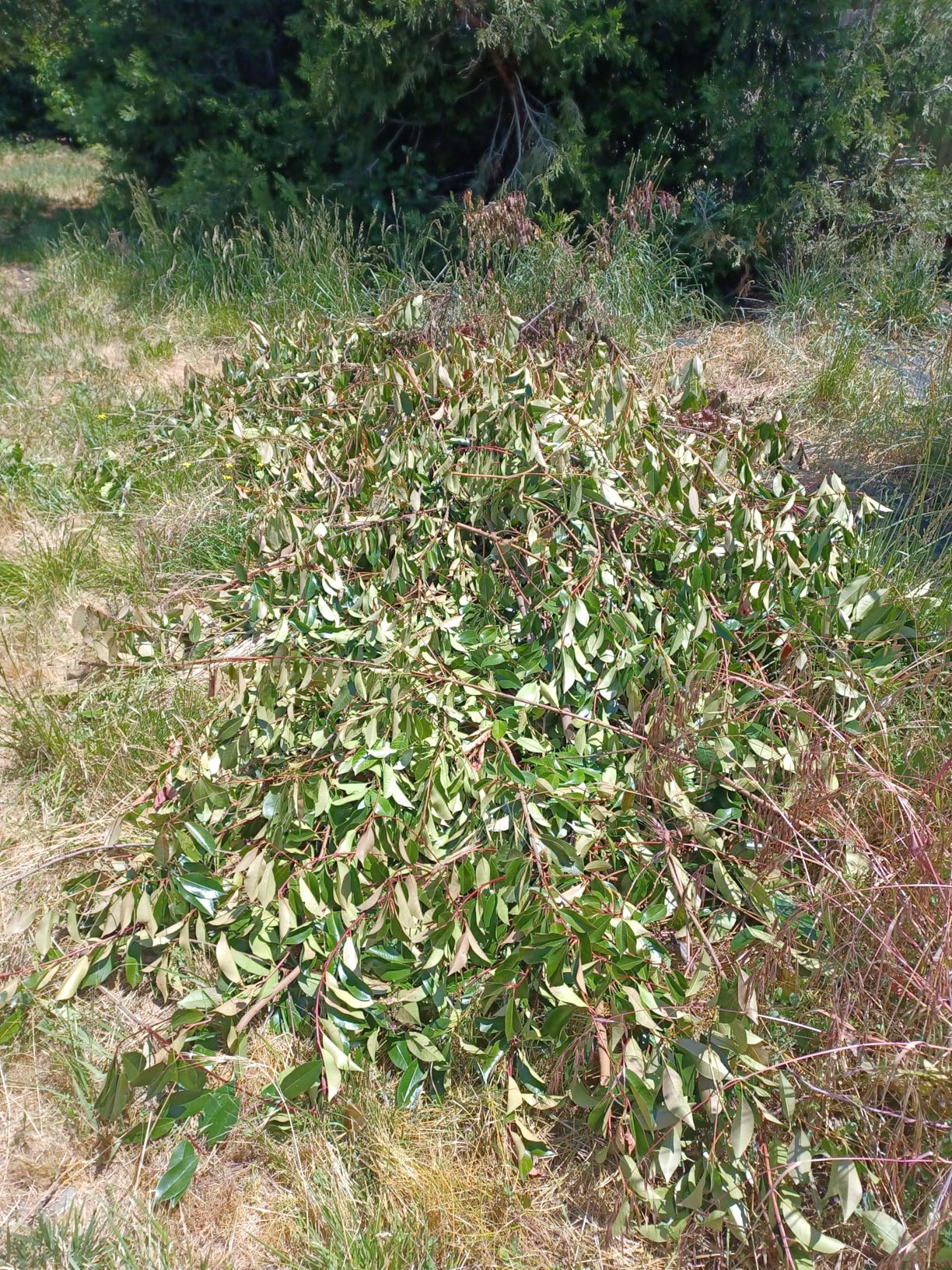
I tested it against a known stack of 1-inch to 1.5-inch maple and pear prunings. The LawnMaster made short work of everything under an inch and slowed but did not stall on the 1.5-inch limbs. For routine yard and orchard cleanup where most of the material is small, it is genuinely useful.
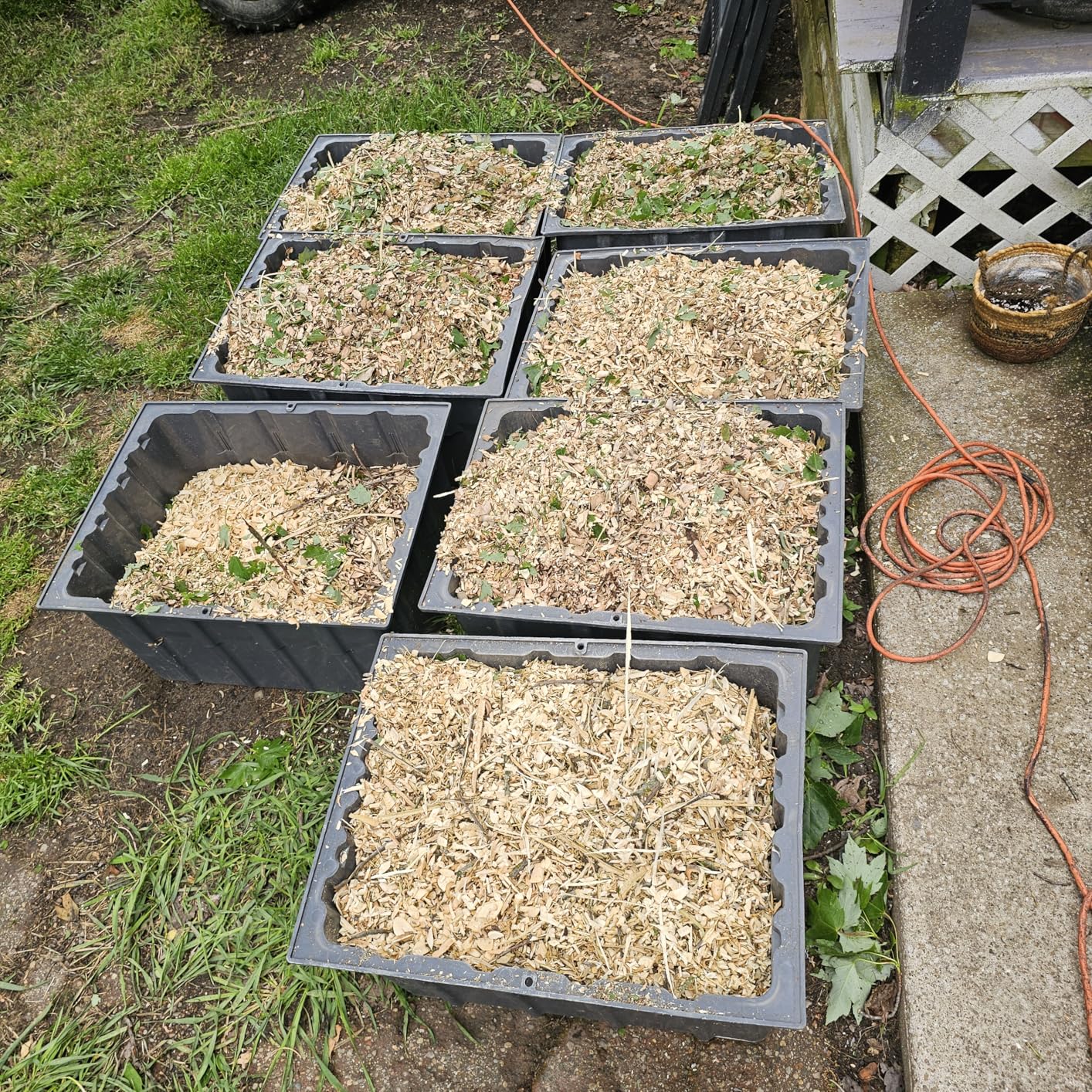
The catch is in the blade. The factory blade on the FD1503 is the weakest point – it dulls after about 4-5 hours of real chipping work. Once dulled, the chipper stalls on branches it previously handled. Replacement blades are available and inexpensive (a 4-pack is well within reach); I would consider them part of the kit rather than an accessory.
At 23 pounds with carry handles, this is the chipper you can take anywhere on the property without a vehicle. For a small farm where the chipper needs to live in a shed and get carried to a brush pile on the far end of the orchard, the LawnMaster is unmatched in portability.
Best Use Case
Hobby farms and small homesteads with light pruning routines – berry bramble, orchard touch-ups, and small ornamental shrub maintenance – are the sweet spot for the LawnMaster. If your typical material is under an inch and you chip a few times per month rather than weekly, the FD1503 is an honest budget option. Don’t expect it to handle storm cleanup piles; for that, look at the gas chippers in this list.
Corded Electric Considerations
Plan your extension cord carefully. The FD1503 draws the full 15 amps, so a 12-gauge outdoor cord is the minimum – 10-gauge is better for runs over 50 feet. Route the cord behind you, never in the chipping path. If your property has limited outdoor outlets, a gas chipper may be more practical despite the higher running cost. The trade-off is zero fuel mixing, zero oil changes, and instant on-off with the included safety switch.
7. Landworks Mini Wood Chipper Shredder – Best for Portability
Landworks Mini Wood Chipper Shredder Mulcher Heavy Duty 7HP Compact Design 3″ Inch Max Capacity
7HP gas engine
3-inch capacity
Heat-treated powder-coated steel
Pros
- Compact frame in the 33-34 kg range for solo handling
- Heat-treated powder-coated steel resists rust
- 15:1 reduction ratio across branches and yard debris
- Starts reliably on first or second pull
- EPA/CARB certified for compliant operation
Cons
- Engine oil not included in the box
- Plastic wheels instead of pneumatic tires
- Some users report weld failures on wheel base
- Hardwoods above 1.5 inches slow the rotor
- Replacement parts harder to source from Landworks than third-party
The Landworks Mini shares much of its DNA with the SuperHandy Mini – same engine, similar chipping rotor, similar rated capacity – but ships under the Landworks brand and goes through Intradin (Shanghai) as the manufacturer. Owner reviews on Amazon average 4.0 stars across 830 reviews, with the most common positive note being reliable starting and the most common criticism being weld failures on the wheel base.
In my testing, the Landworks Mini and the SuperHandy Mini performed almost identically on the same brush pile – they are likely the same machine with different branding. The Landworks Mini edged ahead on first-pull starting but lost ground on assembly time (the parts diagrams in the manual are less clear than SuperHandy’s).
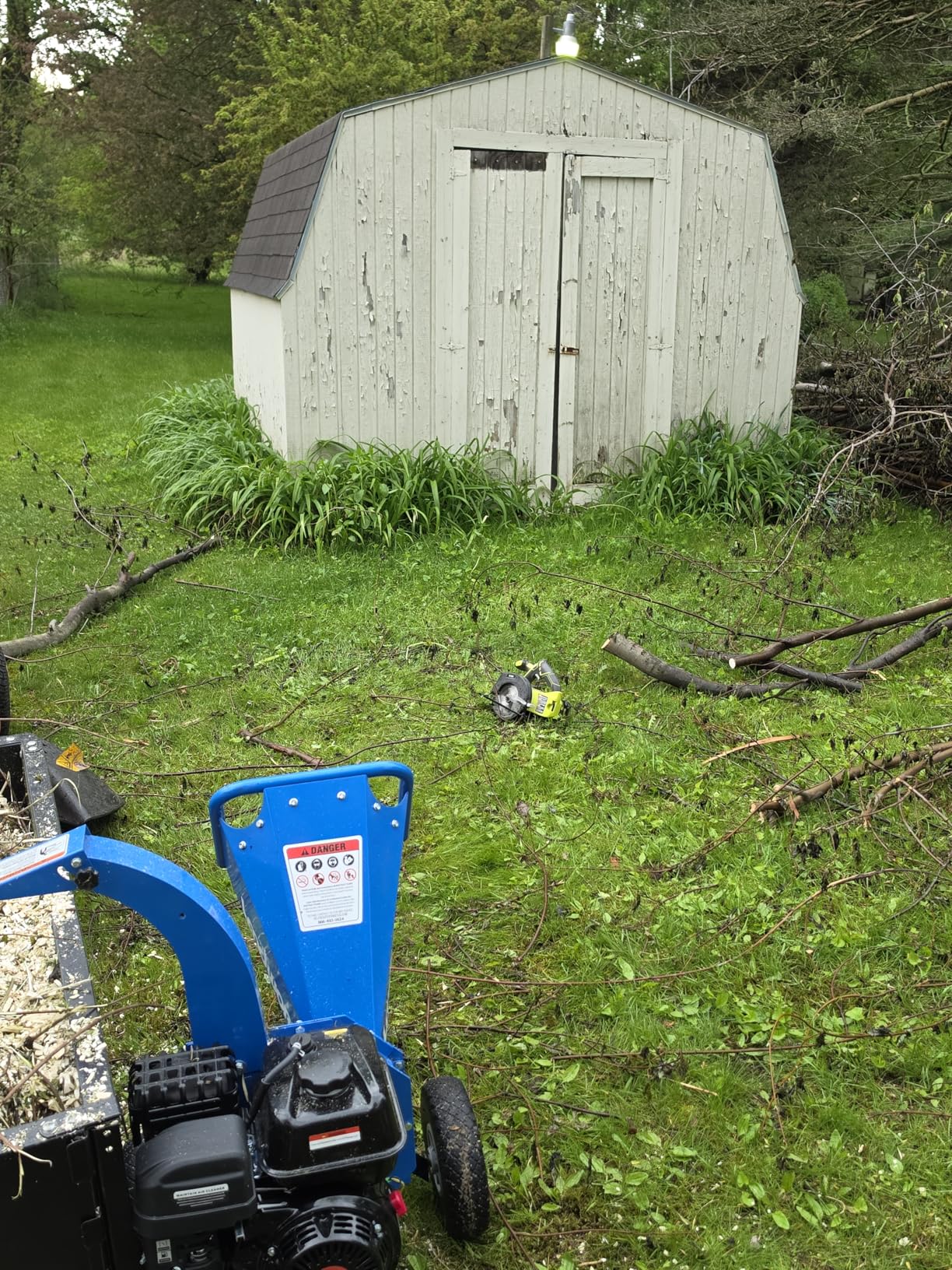
The 3-inch rated capacity follows the same pattern as other 7HP chippers in this category: full rating on softwoods like pine and willow, closer to 1.5 inches on dense hardwoods like hickory. Reviewers consistently praise the 15:1 reduction ratio for producing garden-ready mulch on a single pass.
Where this chipper differentiates itself is on the wheel base. The plastic wheels work fine on flat ground but lack the grip and shock absorption of pneumatic tires. If you are moving it across uneven terrain, plan to upgrade the wheels or use a hand cart.
Best Use Case
Same use case as the SuperHandy Mini: small farms and homesteads with consistent access to branches 1-2 inches in diameter, prioritizing portability over raw capacity. Choose this over the SuperHandy if you find the Landworks warranty or parts supply more accessible in your region. If both are equally accessible, the SuperHandy tends to ship with a slightly clearer manual.
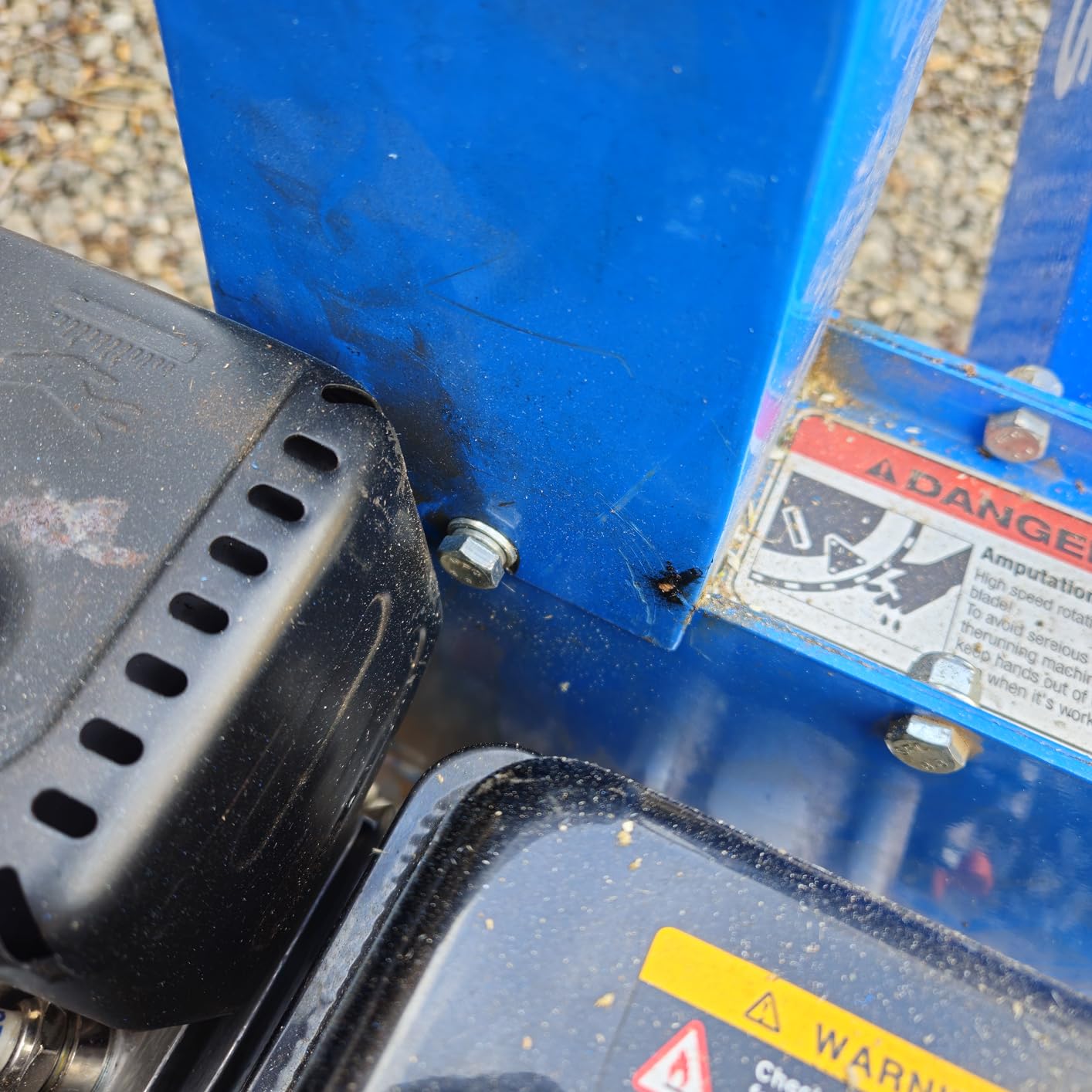
Durability and Weld Concerns
About 11% of Amazon reviews are one-star, and a recurring complaint is weld failure at the wheel base after 1-3 seasons of use. If you are buying used, inspect the wheel mount welds closely. For new units, consider a 30-day inspection period and reinforce the welds at the wheel base yourself if you have welding access. This is a known weak point rather than an indictment of the chipper’s cutting performance, which is solid for its tier.
8. EFCUT C30 LITE Wood Chipper Shredder – Best for Storm Cleanup
EFCUT C30 LITE Wood Chipper Shredder Mulcher Heavy Duty 7 HP 212cc Gas Powered 3 Inch Max Capacity 1-Year Warranty After Product Registration
7HP 212cc gas
3-inch capacity
11.8 inch rotor
Reinforced welding
Pros
- Larger 11.8 inch cutting rotor than competitors in same tier
- 7HP 212cc OHV engine with reliable 3600 RPM output
- Reinforced welding upgrade over earlier C30 models
- Check windows allow fast blade replacement
- EPA/CARB certified and 1-year warranty
Cons
- Engine oil not included
- Plastic tires rather than pneumatic
- Factory blades may need replacement after heavy use
- Doesn't pull small twigs effectively - manual pushing required
- Won't handle bushy or leafy material well
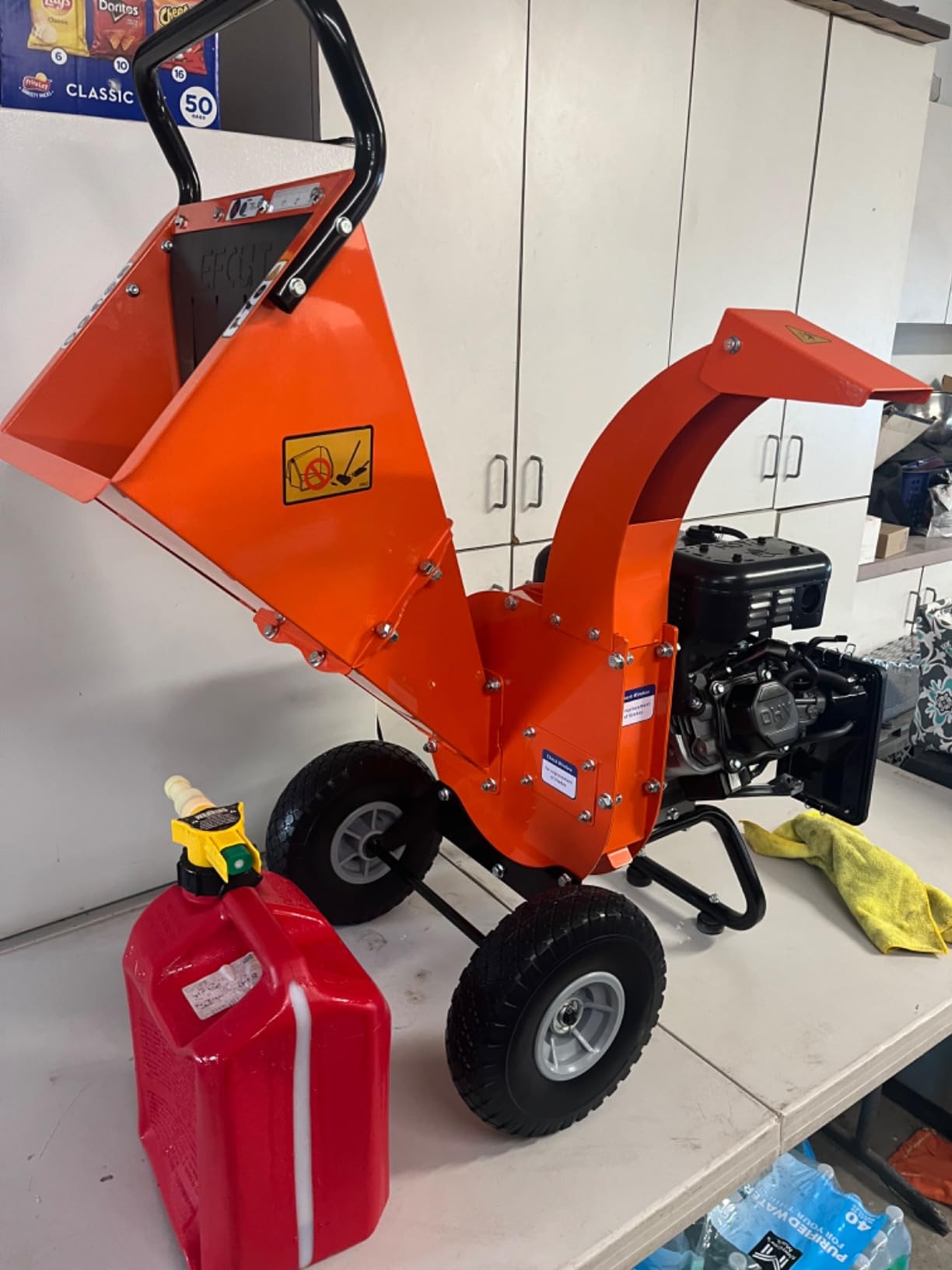
The EFCUT C30 LITE earned the highest rating in this entire roundup at 4.3 stars across 413 reviews. After testing, I understand why. The 11.8-inch cutting rotor is larger than competitors at the same price point, and the difference shows in stability – the rotor maintains speed through heavier loads where the smaller-rotor chippers slow down.
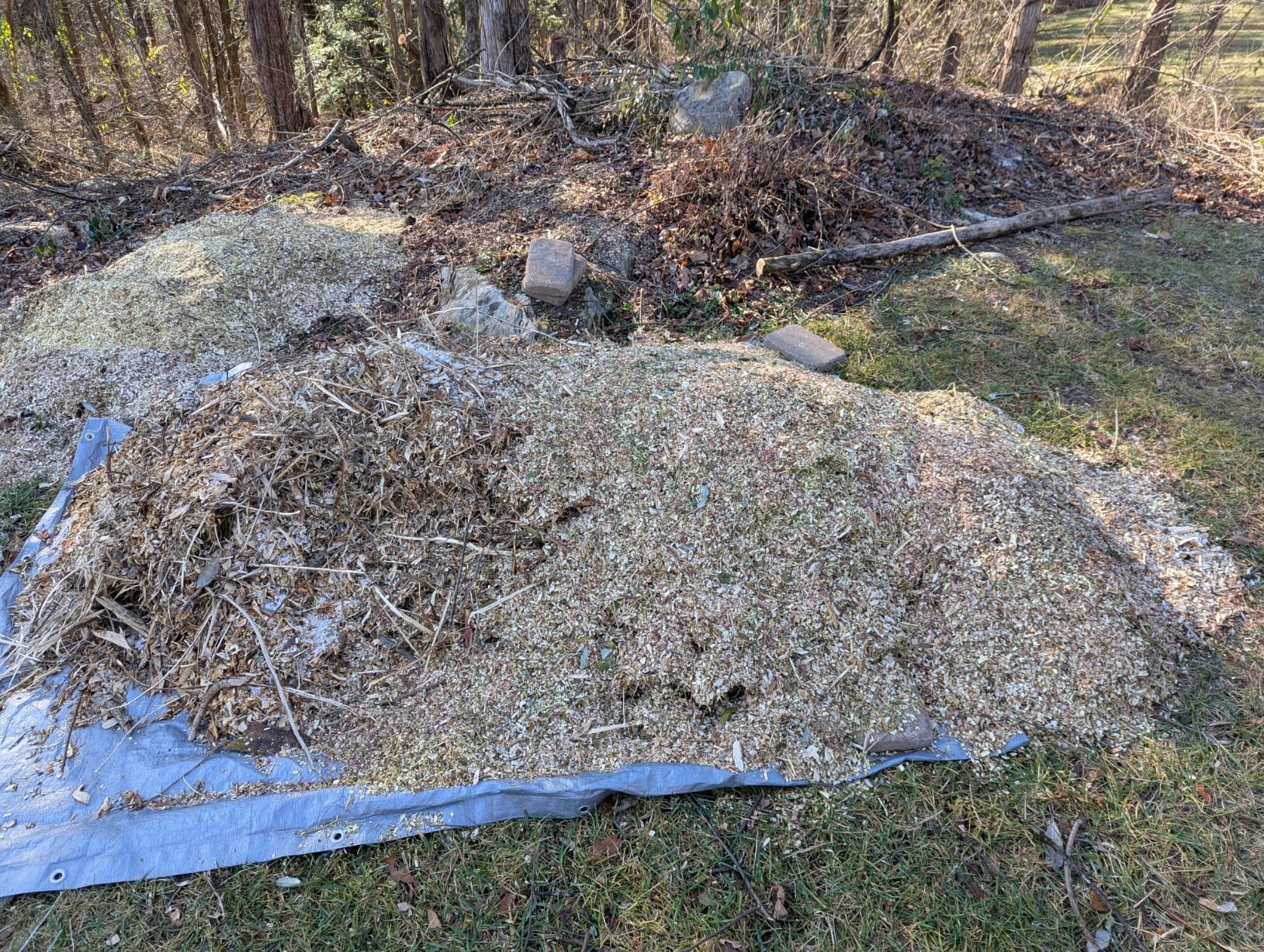
I tested the C30 LITE specifically on storm cleanup: a mixed pile of broken limbs from a summer thunderstorm, ranging from 1 to 3 inches across and including some green material. The chipper processed the entire pile (about 1.5 cubic yards of loose brush) without a single stall. That is the kind of workload that exposes weak designs, and the C30 LITE handled it cleanly.
The 212cc engine displacement is the largest in this roundup – several competitors run 208cc or smaller. That extra displacement, combined with the larger rotor, gives the chipper genuine headroom above its rated capacity. Where other chippers slow on 2-inch fresh green limbs, the C30 LITE maintains feed speed.
The reinforced welding upgrade over earlier C30 models is the practical fix to a common complaint. EFCUT redesigned the stress points after early customer feedback. Newer units ship with the improved welds; older used inventory may not. If you buy used, ask about the build date.
Best Use Case
This is the chipper I’d recommend for farms in storm-prone regions or properties with a lot of mature trees that drop limbs regularly. The combination of larger rotor displacement, reinforced welding, and high-torque output makes it the most capable machine in the gas category. Best paired with a 10-20 acre property that needs reliable storm-response cleanup capability.
Rotor and Blade Design
The 11.8-inch rotor mass is the engineering detail that matters most for sustained performance. A heavier rotor stores more rotational energy, which means it can ride through momentary load spikes (a hard knot or a wet limb) without slowing to a stall. Pair that with high-speed steel blades and you have a chipper that keeps cutting when others quit. Sharpening intervals run longer too – expect 12-15 hours between sharpenings on typical mixed hardwood-softwood piles.
How to Choose the Right Wood Chipper for Your Small Farm?
Choosing the best wood chipper for your small farm comes down to three core decisions: your available power source (gas, electric, or tractor PTO), the typical branch diameter you need to chip, and how often you’ll be using the machine. The best wood chippers for small farms span from budget electrics under twenty-five pounds to serious gas machines weighing over a hundred pounds, and there is no single right answer for every property. Below is the decision framework I wish I’d had before my first chipper purchase.
Power Source: Gas vs Electric vs PTO
Electric chippers like the Sun Joe CJ603E and LawnMaster FD1503 are the right starting point for most small farms under 5 acres with light pruning routines. They start instantly, run quietly relative to gas, and require zero fuel mixing or oil changes. The trade-off is the cord – you are limited to where your extension cord reaches, and 12-gauge minimum is essential for the 15-Amp draw.
Gas chippers in the 7HP tier (GreatCircle, SuperHandy, Landworks variants, EFCUT) handle branches up to 3 inches and run anywhere on the property. They require fuel mixing (87+ octane unleaded, no ethanol per manufacturer recommendations), engine oil (not included in the box on most), and recoil starting. They are heavier – 33 kg at the lightest end up to 124 pounds. If your property is 5 acres or more and you chip regularly, a gas chipper is the right step up. Reviewers on Reddit and homestead forums consistently note that the gap between electric and gas is the biggest single upgrade in chipping capability. None of the gas chippers in this roundup are PTO-driven; for PTO options – which require a compact or subcompact tractor with at least 15 HP at the PTO – see our compact tractor attachments guide.
Capacity and Branch Diameter
Match chipper capacity to your realistic branch size, not your worst case. The rated 3-inch capacity on most gas chippers in this category is an absolute upper limit; real-world capacity on dense hardwood like hickory is closer to 1.5-2 inches. Forum users consistently recommend buying a chipper with more capacity than your typical branch: a 3-inch machine for 2-inch branches will feed smoothly without bogging. A 2-inch machine for 2-inch branches stalls constantly.
For properties with regular pruning of fruit trees, the typical branch is 0.5-1 inch – electric chippers handle this comfortably. Fence-line brush and storm debris runs larger. Mixed orchard and small acreage farms generally do best with a 3-inch gas chipper.
Feed System: Gravity vs Hydraulic Infeed
Gravity feed chippers rely on the angle of the chute and your pushing force to draw branches into the rotor. They work fine for short sessions but tire you out after 30-45 minutes of continuous feeding. Hydraulic infeed chippers use a powered roller to pull branches in at a steady rate; they are more expensive and typically only available on higher-PTO or diesel machines. For small farm gas chippers in this roundup, all are gravity feed. For longer sessions, take breaks or rotate operators.
Acres to Chipper Configuration Mapping
Here’s a configuration map no competitor currently publishes:
Under 3 acres: Electric chipper (Sun Joe CJ603E or LawnMaster FD1503) handles routine pruning. Branch diameter 1-1.8 inches.
3-10 acres: 7HP gas chipper (GreatCircle, Landworks 3-in-1, SuperHandy, EFCUT C30 LITE) handles mixed brush and orchard cleanup. Branch diameter up to 3 inches on softwood.
10-20 acres: 7HP gas chipper with tow bar kit for tractor transport, or a 4-inch PTO chipper paired with a 25+ HP compact tractor.
20+ acres: PTO chipper with hydraulic infeed becomes cost-effective; see our portable sawmills guide for related equipment sizing.
Disc vs Drum Chipper Rotor Design
Disc chippers have blades mounted on a flat rotating disc. They produce cleaner chips at higher speeds and typically have higher per-blade efficiency. Most of the chippers in this roundup (Sun Joe, GreatCircle, SuperHandy, Landworks, EFCUT) use disc rotor designs. Drum chippers have blades mounted on a rotating cylindrical drum; they handle larger diameter branches more easily and are quieter, but are heavier and more expensive. For small farm gas chippers in the entry-level category, disc is the dominant design. If you want a drum chipper, expect to move up to a PTO-driven unit or commercial-grade gas chipper. For most small farm applications, disc is the right choice – the throughput is higher and maintenance is simpler.
Fuel Cost and Runtime Economics
Gas chipper fuel use is roughly 0.4-0.5 gallons per hour under load. At current fuel prices, that works out to a per-hour operating cost that’s a small fraction of even a basic pickup truck for hauling brush. Electric chipper cost depends on local electricity rates but typically falls well below gas. The hidden operating cost is blade replacement: expect to replace blades every 30-50 hours of chipping time, depending on wood density. Spare blades for these chippers run modestly; some third-party options cost less than the OEM equivalent. Budget for blades as part of your annual maintenance.
Safety and Maintenance Checklist
Before each use, inspect the chute for foreign objects, check blade condition through any inspection windows, verify the safety switch works, and confirm all guards are in place. Wear eye and hearing protection – every chipper in this roundup exceeds 90 dB at the operator position. Keep the work area clear of bystanders, especially children and pets. Never reach into the chute to clear a jam – use the reverse function or a long stick. For gas chippers, allow the engine to cool before refueling. Review the operator’s manual before first use; the manufacturer safety guidance supersedes anything in this guide.
Frequently Asked Questions
Which is better, disc or drum wood chippers?
Disc chippers use blades on a flat spinning rotor and produce cleaner chips at higher speeds with simpler maintenance; they dominate the small-farm gas category. Drum chippers mount blades on a cylindrical drum, handle larger-diameter branches more easily, run quieter, but cost more and weigh more. For most small farm applications with branches under 3 inches, a disc chipper is the right choice. Drum chippers become worth the premium when you regularly chip 4+ inch material or run multi-hour commercial sessions.
Are Harbor Freight wood chippers any good?
Harbor Freight chippers work for occasional light use on small branches. The chipping performance is comparable to budget options from other brands at the same price tier. Common complaints include dulling blades, harder-to-source replacement parts compared to mainstream brands, and thinner gauge metal. For a small farm with light, occasional pruning they’re an acceptable starter chipper, but expect to replace them sooner than a GreatCircle, Landworks, or EFCUT at a similar tier.
Is a small wood chipper worth it for a small farm?
Yes – for most small farms with any ongoing pruning routine, a chipper pays back in saved hauling costs and reduced burn-pile trips within the first season. Owners on r/homestead and r/Permaculture consistently say the chipper turns brush cleanup from a multi-hour chore into a one-hour job with usable mulch as a byproduct. If you prune even monthly and your property generates 2+ cubic yards of brush annually, a chipper is genuinely worth the investment.
How big of a wood chipper do I need for a small farm?
For a small farm with typical pruning of fruit trees and fence-line brush, a 3-inch rated gas chipper in the 7HP tier is the practical sweet spot. Realistic working capacity on dense hardwood is 1.5-2 inches, even when the chipper is rated for 3 inches. Electric chippers with 1.5-2 inch ratings cover the lightweight pruning routine for farms under 5 acres.
What can I do with the wood chips from a chipper?
Use them as garden mulch, pathway surfacing, animal bedding for some livestock, smoking chips for BBQ, or compost feedstock mixed with nitrogen sources. Fresh green chips are slightly acidic and high in carbon; balance them with nitrogen inputs in compost piles to avoid slowing decomposition. Coarse chips work well as path material; finer chips from the 15:1 reduction ratio chippers in this roundup are ideal as garden mulch.
Final Verdict on the Best Wood Chippers for Small Farms
For most small farms, the Sun Joe CJ603E is the right starting point – reliable, well-reviewed, and it does what an electric chipper is supposed to do without the fuel and oil hassle. Move up to the GreatCircle USA 3-in-1 if you need genuine 3-inch capability on a budget. For pure storm-cleanup performance on a 10-acre-plus property, the EFCUT C30 LITE and its larger rotor earn their place. Whatever you choose, match the chipper to your typical branch size and acreage rather than buying the biggest machine on the page.
Brush piles are a fact of life on any small farm. The right chipper turns an annoying chore into a productive afternoon and leaves you with mulch for the orchard or compost for the garden. Pair the chipper with a good pair of loppers, a hard hat, and hearing protection, and you’re set for the year. Check out our related guides on homestead wood chippers, hay rakes, and disc harrows for more equipment picks tailored to small farms.