
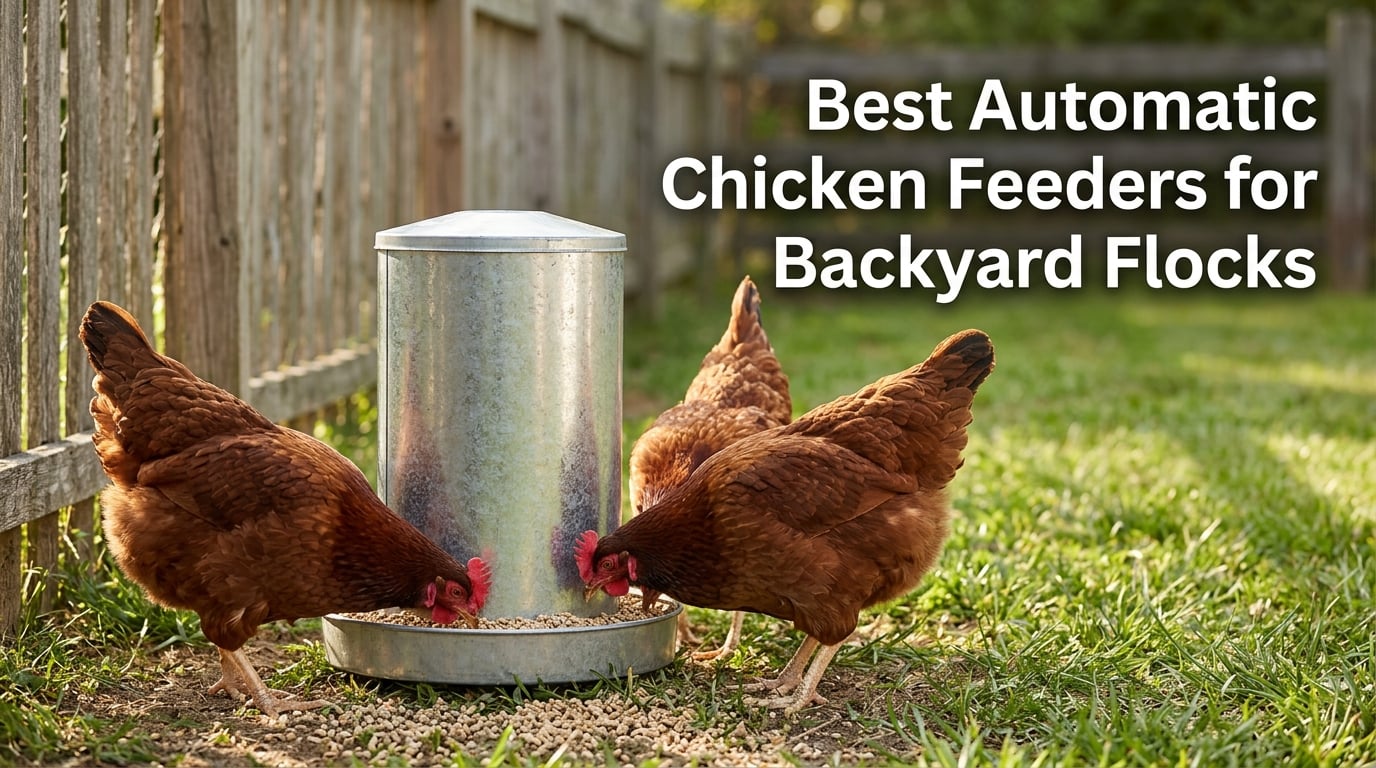
Running a backyard flock should feel rewarding, not like a second job refilling feeders twice a day. When I switched to an automatic chicken feeder three years ago, my weekend chores dropped from an hour to about ten minutes. The right feeder keeps feed dry, stops wild birds and rats from stealing dinner, and lets you leave town for a long weekend without bribing a neighbor.
The problem is that the market is flooded with options ranging from $25 DIY port kits to $280 galvanized treadle feeders. Some of the cheap models clog, leak, or fall apart within a season. Others work beautifully for years. Our team spent weeks comparing specs, reading thousands of verified reviews, and digging through Reddit threads on r/BackYardChickens to separate the keepers from the junk.
This guide covers the best automatic chicken feeders for backyard flocks available right now in 2026. Whether you have three pampered Silkies or a dozen hardworking Rhode Island Reds, you will find a feeder here that fits your coop, your flock size, and your budget. We included gravity feeders, treadle feeders, timed dispensers, and even a WiFi-connected smart model. Let us help you stop wasting feed and start enjoying your chickens.
Table of Contents
Top 3 Picks for Automatic Chicken Feeders (September 2026)
Before we get into the full lineup, here are the three feeders our team keeps recommending above all the rest. These earned their spots through a combination of review volume, ratings, real-world durability, and value for money.


Best Automatic Chicken Feeders for Backyard Flocks in 2026
Here is the complete comparison of all 12 feeders we reviewed. Use this table to scan capacities, materials, and key features at a glance before diving into the individual reviews below.
| Product | Specifications | Action |
|---|---|---|
| OverEZ 50 lb Chicken Feeder |
|
Check Latest Price |
 ZenxyHoC 8-Port DIY Feeder ZenxyHoC 8-Port DIY Feeder |
|
Check Latest Price |
| Grandpas Feeders Treadle Feeder |
|
Check Latest Price |
 RentACoop 40 lb Treadle Feeder RentACoop 40 lb Treadle Feeder |
|
Check Latest Price |
 CoopWorx 80 lb Poultry Feeder CoopWorx 80 lb Poultry Feeder |
|
Check Latest Price |
 Pawaboo 55 lb Chicken Feeder Pawaboo 55 lb Chicken Feeder |
|
Check Latest Price |
 GADFISH 55 lb Chicken Feeder GADFISH 55 lb Chicken Feeder |
|
Check Latest Price |
 Fawlium Smart App Chicken Feeder Fawlium Smart App Chicken Feeder |
|
Check Latest Price |
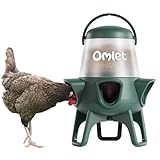 Omlet No Waste Chicken Feeder Omlet No Waste Chicken Feeder |
|
Check Latest Price |
 kingump 20 lb Metal Feeder kingump 20 lb Metal Feeder |
|
Check Latest Price |
 PAUQRWIE Timed Chicken Feeder PAUQRWIE Timed Chicken Feeder |
|
Check Latest Price |
 ZINZINULER Feeder and Waterer Set ZINZINULER Feeder and Waterer Set |
|
Check Latest Price |
1. OverEZ Chicken Feeder – 50 lb Gravity-Fed Workhorse
OverEZ Chicken Feeder – Holds 50 Pounds of Feed – Inside or Outside Hen Coop – Large Gravity Fed Automatic Poultry Dispenser – No Waste Rainproof Design
50 lb Capacity
3 Feeding Ports
UV-Protected BPA-Free Plastic
Freestanding
Pros
- Holds 50 lbs refill monthly for small flocks
- UV-protected food-safe BPA-free plastic
- No-waste rainproof feeding ports
- Easy-clean wide-mouth opening
- Gravity-fed continuous food flow
Cons
- Plastic may lack metal durability
- Initial assembly can be tricky
The OverEZ feeder is the model I recommend most often to friends starting their first flock. With 1,770 verified reviews and a 4.5-star average, it has the kind of track record that comes from years of real coop use. The 50-pound capacity means I fill it once and forget about it for weeks at a time.
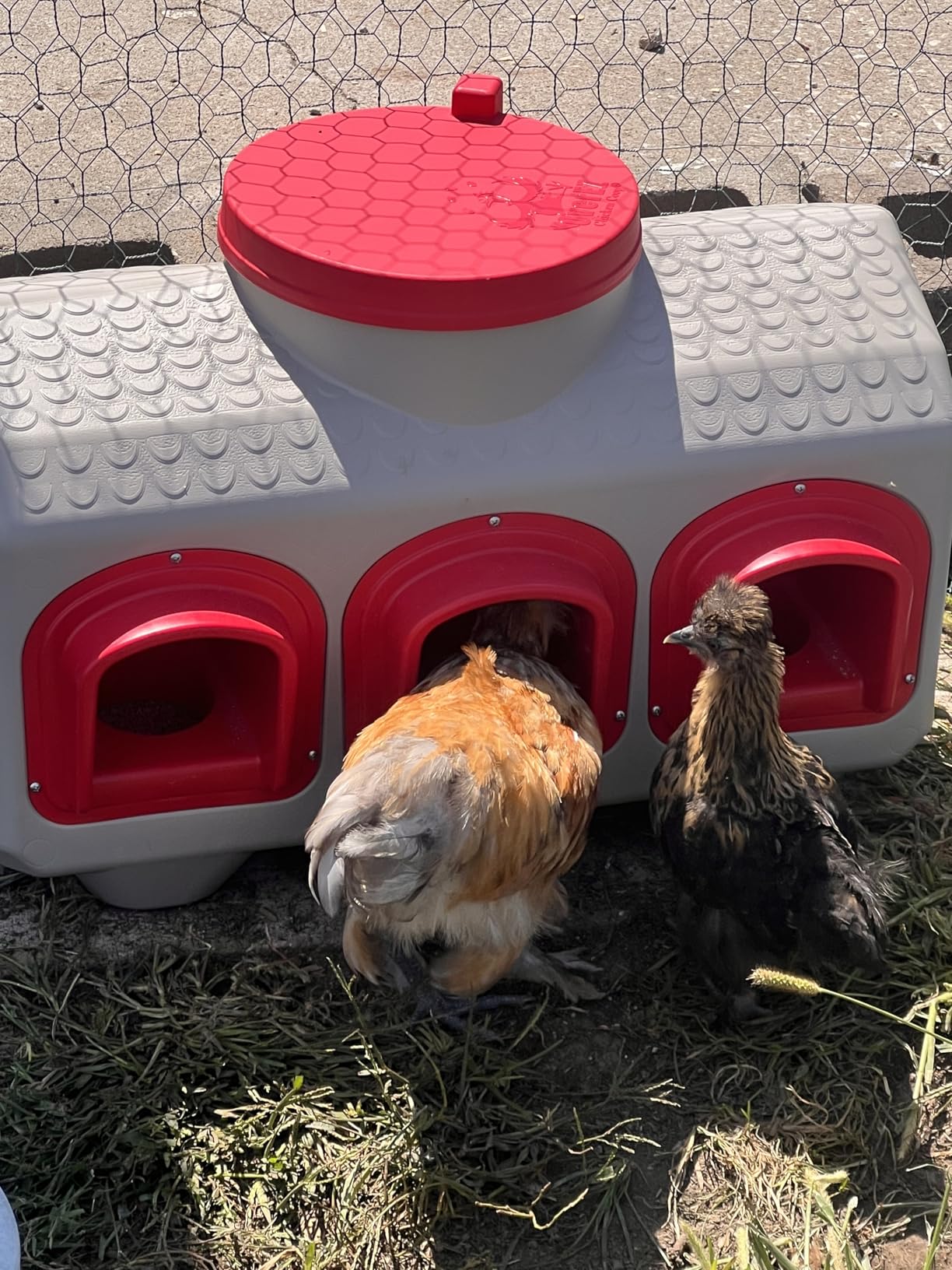
What sold me is the gravity-fed design with three no-waste feeding ports. The chickens walk up, eat what they need, and the angled flow keeps feed moving down without bridging or clogging. OverEZ says a flock of 3 to 5 hens only needs a refill every 4 to 6 weeks. For 6 to 11 hens, plan on every 2 to 3 weeks.
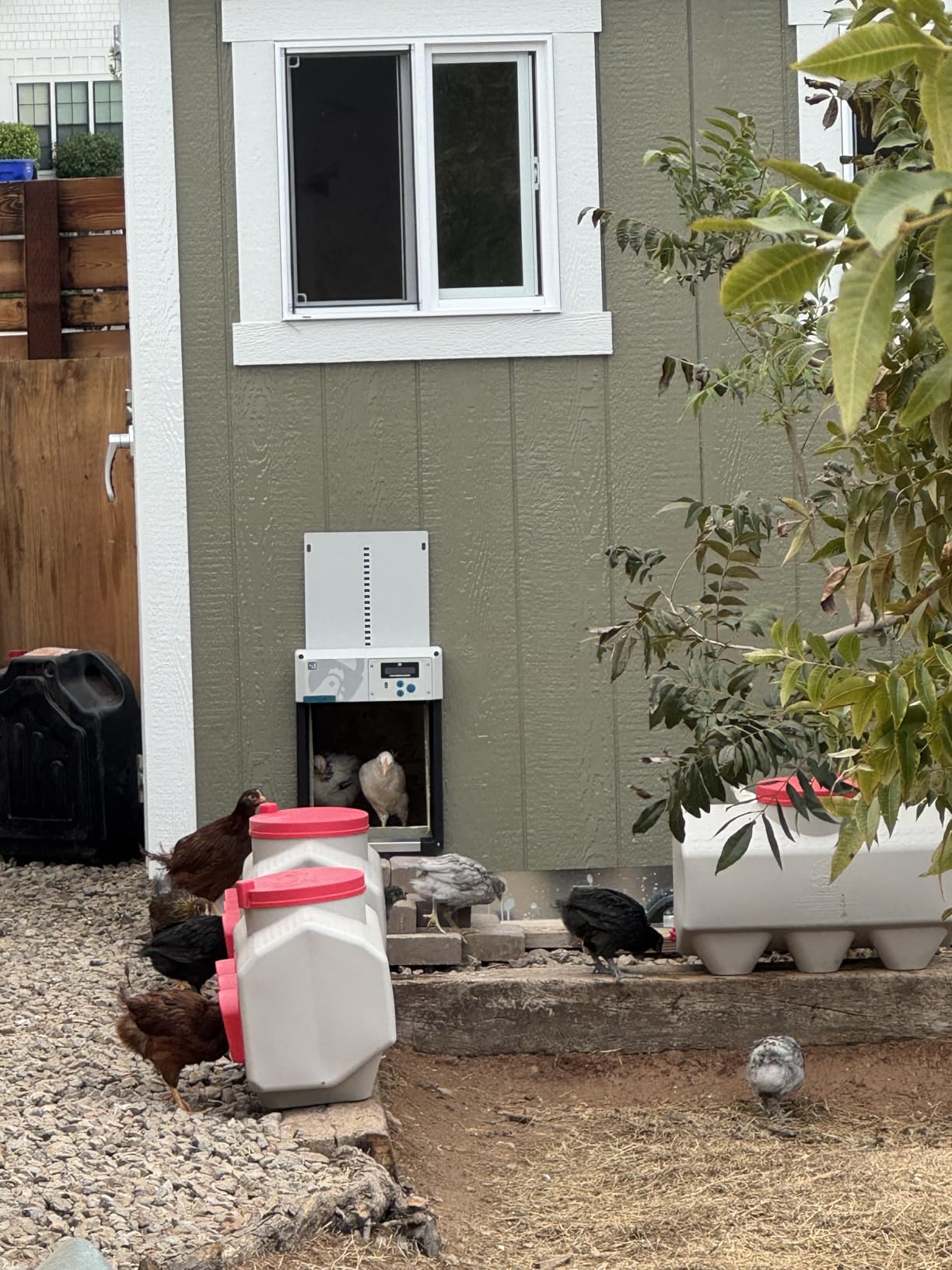
The build quality surprised me for a plastic feeder. OverEZ uses UV-protected, food-safe, BPA-free recyclable plastic that has held up through two full winters in my run without cracking or fading. The port overhang and hidden recessed channel do a genuinely good job keeping rainwater out, even during sideways coastal storms.
The wide-mouth opening at the top makes filling effortless. I just open the lid and pour straight from the feed bag, no funnel needed. Cleaning is just as easy because the smooth interior rinses out with a hose in about two minutes. The only complaint I have heard repeatedly is that the initial snap-together assembly takes some patience the first time.
Best Flock Size for the OverEZ Feeder
This feeder shines for flocks of 3 to 12 chickens. The three feeding ports mean three birds eat at once, which works fine for smaller backyard flocks. If you have more than 12 hens, you may want a second unit or a model with more ports to prevent feeding-line bullying.
Indoor Versus Outdoor Placement
The OverEZ is rated for both indoor coop use and outdoor run placement. The rainproof design handles exposure well, though I recommend placing it under partial cover in areas with heavy snow or driving rain. The freestanding base keeps it stable on uneven ground without any mounting hardware.
2. ZenxyHoC 8-Port DIY Feeder – Best Value Under $30
Chicken Feeders No Waste, DIY Automatic Poultry Feeder – 8 Ports Red
8 Feeding Ports
DIY Mountable on Buckets or Barrels
BPA-Free Plastic
Hole Saw Included
Pros
- No-waste gravity-fed port design
- Rainproof cover with rubber gasket
- BPA-free safe materials
- Attractive red color chickens love
- Hole saw included for easy install
Cons
- Requires DIY installation
- Container not included
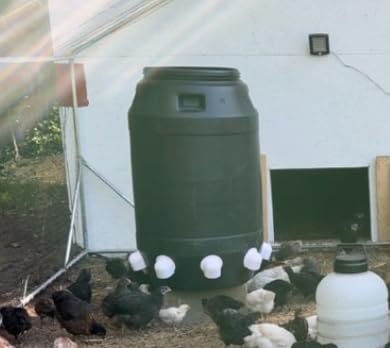
If you want maximum bang for your buck, the ZenxyHoC 8-port kit is hard to beat. It carries a 4.7-star rating across 426 reviews, which is the highest average score in this entire lineup. The kit gives you eight BPA-free feeding ports and a matching hole saw, and you attach them to your own bucket, barrel, or bin.
I love this approach because it lets you choose your own capacity. Snap the ports onto a 5-gallon bucket for a small flock, or drill them into a 30-gallon trash can for a bigger setup. The gravity-fed design means feed flows down to each port as chickens eat, and the red color naturally attracts chickens to the openings.
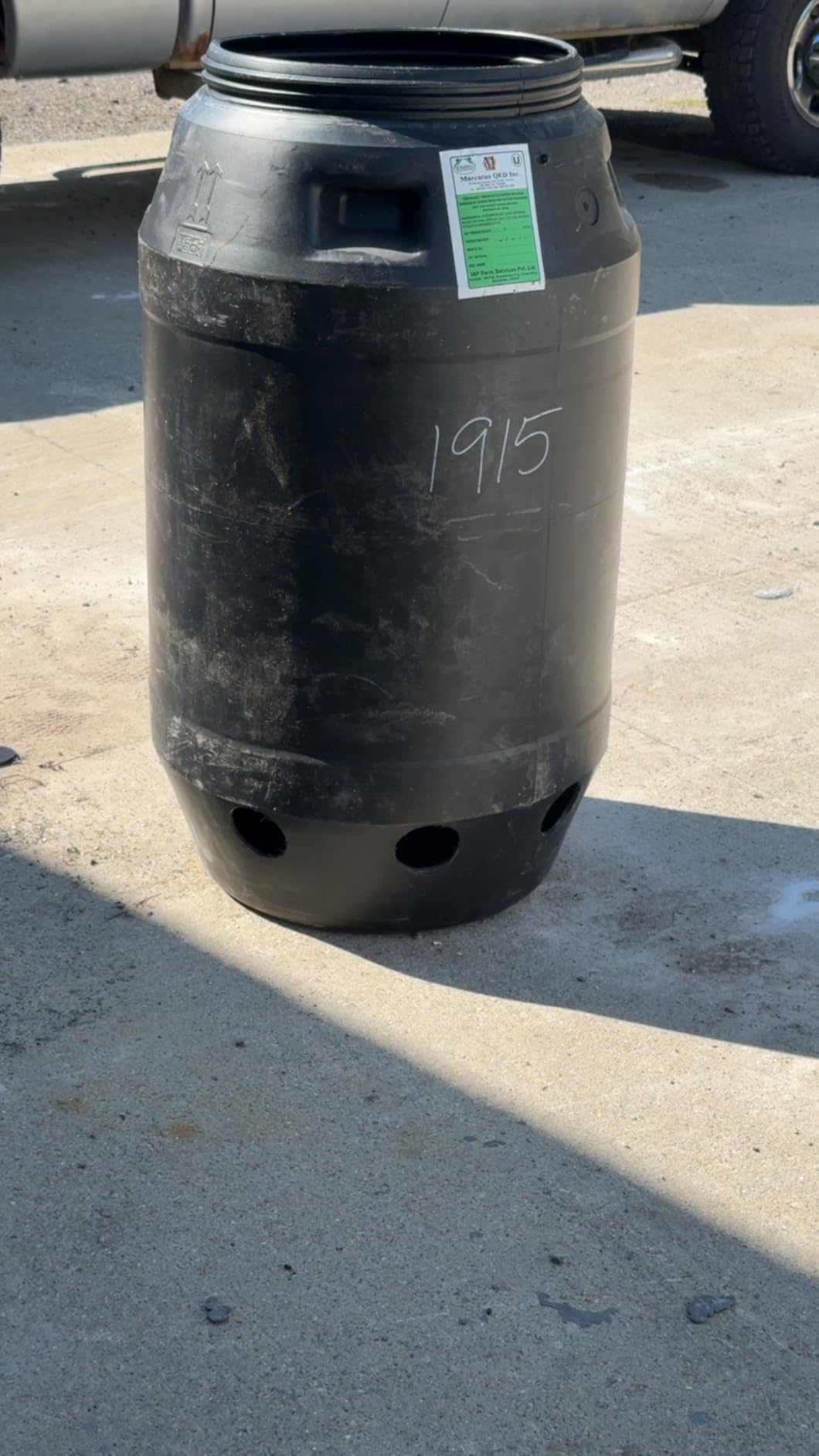
The rainproof cover with rubber gasket is a thoughtful touch that cheaper DIY kits skip. It keeps moisture out when the feeder sits outside, which prevents moldy feed and saves you money. The BPA-free plastic is food-safe, so you do not have to worry about chemicals leaching into your flock’s dinner.
The catch is that you supply the container yourself. Some buyers expect a complete feeder in the box and are surprised when only the ports arrive. You also need basic DIY skills to drill clean holes with the included saw. If you are comfortable with a drill, this takes about 20 minutes to assemble.
What Container Works Best With This Kit
A standard 5-gallon bucket holds about 25 pounds of layer pellets and works well for flocks up to 8 chickens. For larger flocks, a 20-gallon tote or trash bin extends your refill interval significantly. Make sure the container walls are thick enough to hold the port threads securely.
How Many Ports Do You Actually Need
The 8-port kit serves flocks of up to about 12 chickens comfortably. Each port accommodates one bird at a time. If you have a smaller flock of 3 to 4 hens, ZenxyHoC also sells a 4-port version that costs even less and avoids having unused ports where feed can sit and go stale.
3. Grandpas Feeders Treadle Feeder – The 30-Year Legend
Grandpas Feeders Automatic Chicken Feeder – 20 lbs No Waste Poultry Feeder, Rat Proof & Rodent Proof Treadle Chicken Feeder, Galvanized Steel with Lid, Feeds 6 Chickens up to 10 Days
20 lb Treadle Feeder
Galvanized Steel
Anti-Flick Grill
Feeds 6 Chickens 10 Days
Pros
- 30-year trusted brand worldwide
- Anti-flick grill prevents feed tossing
- Full coverage rat-proof lid
- Built-in side guards prevent injury
- Feed on demand for up to 10 days
Cons
- Limited stock available often sells out
- Chickens may need training period
Grandpa’s Feeders is the name that comes up in every forum thread about automatic chicken feeders for backyard flocks. Reddit users on r/BackYardChickens regularly report these feeders lasting 15-plus years, and one long-term reviewer on raising-happy-chickens.com documented nearly 15 years of daily use with zero issues. This is the original treadle feeder, trusted for over 30 years.
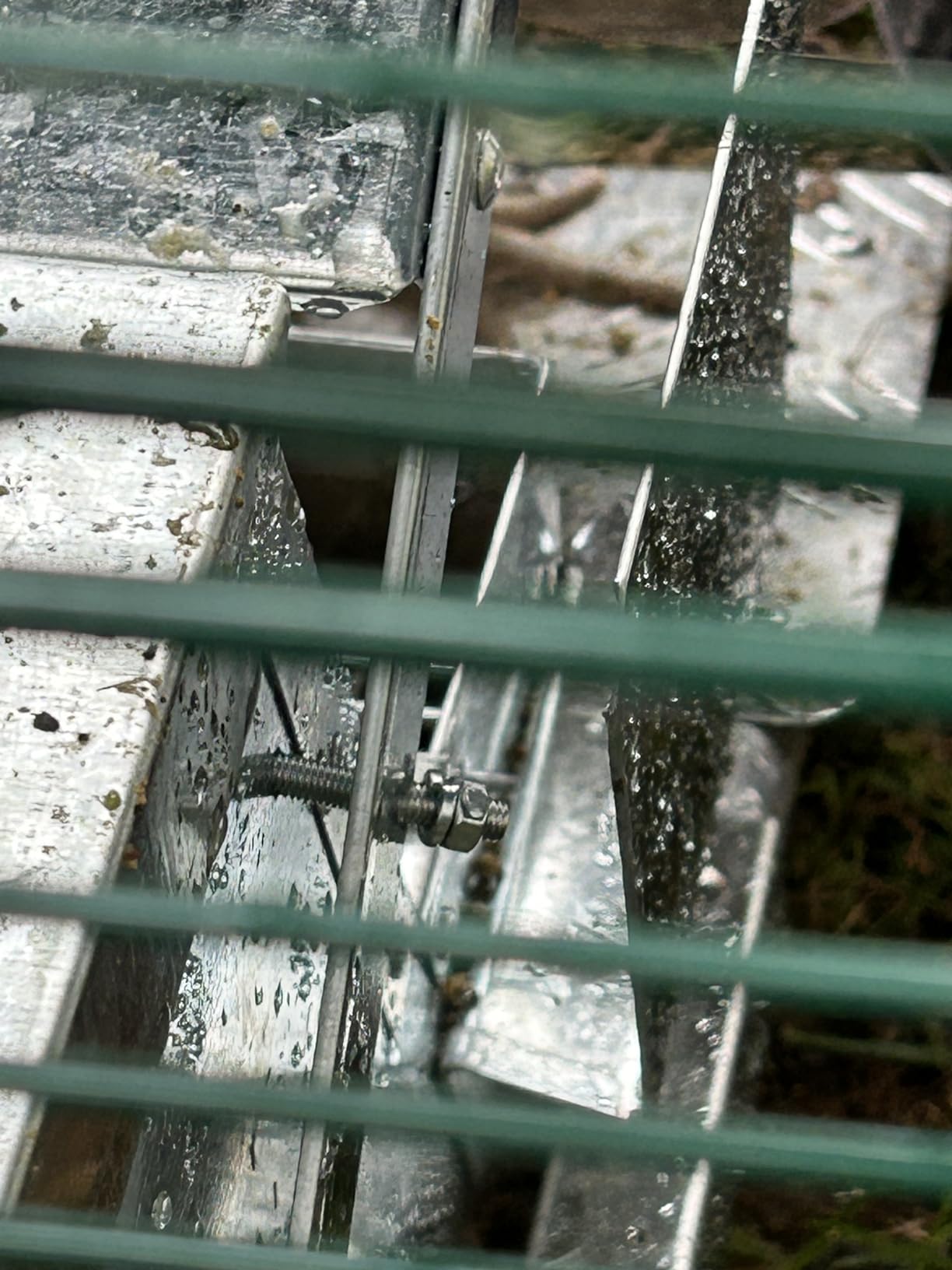
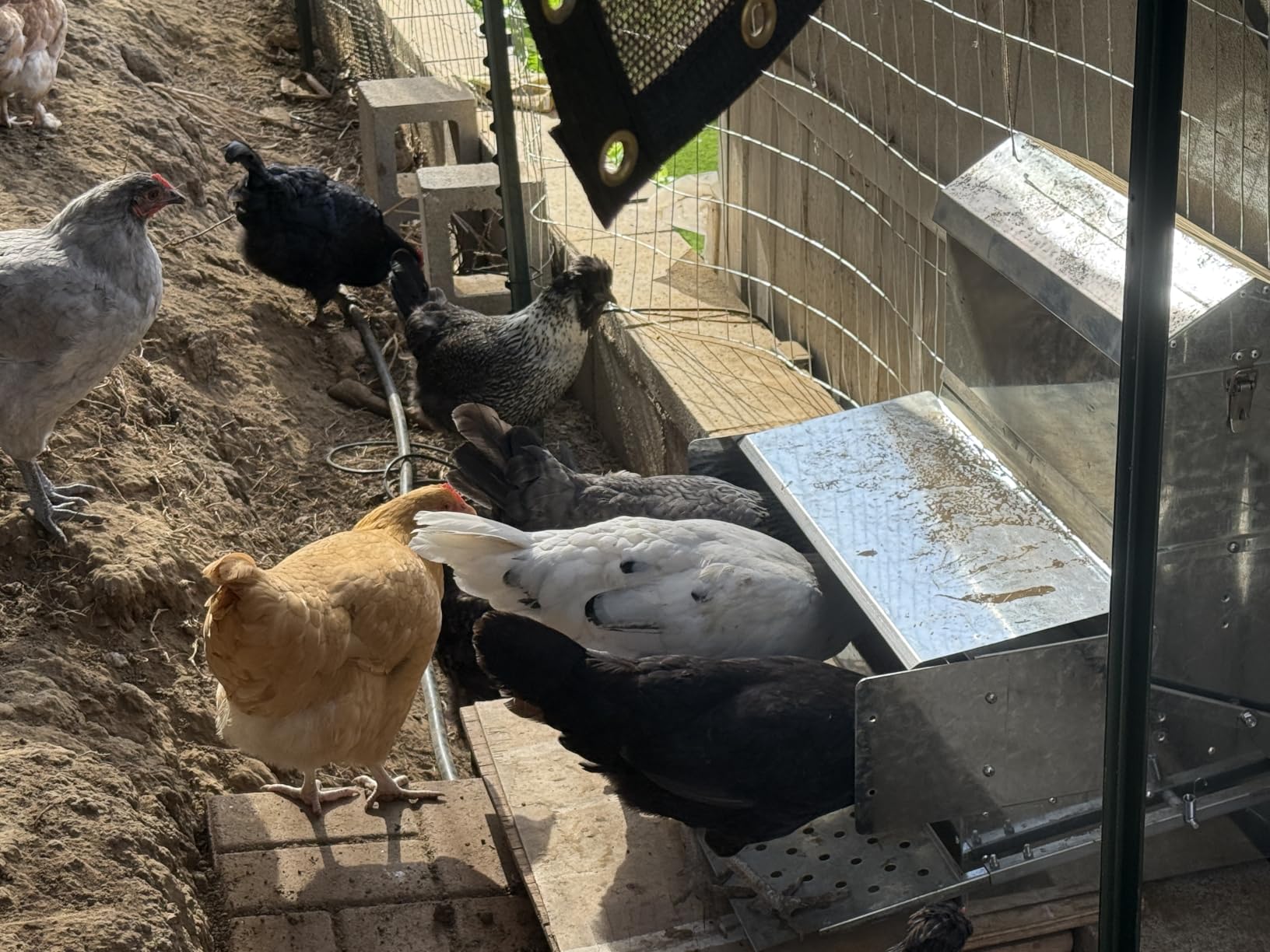
The magic is in the treadle mechanism. A chicken steps on the pedal and her weight opens the feed lid. When she walks away, the lid closes. Rats, mice, squirrels, and wild birds are not heavy enough to trigger it, so your feed stays locked away from pests. The 20-pound capacity feeds about 6 chickens for up to 10 days.
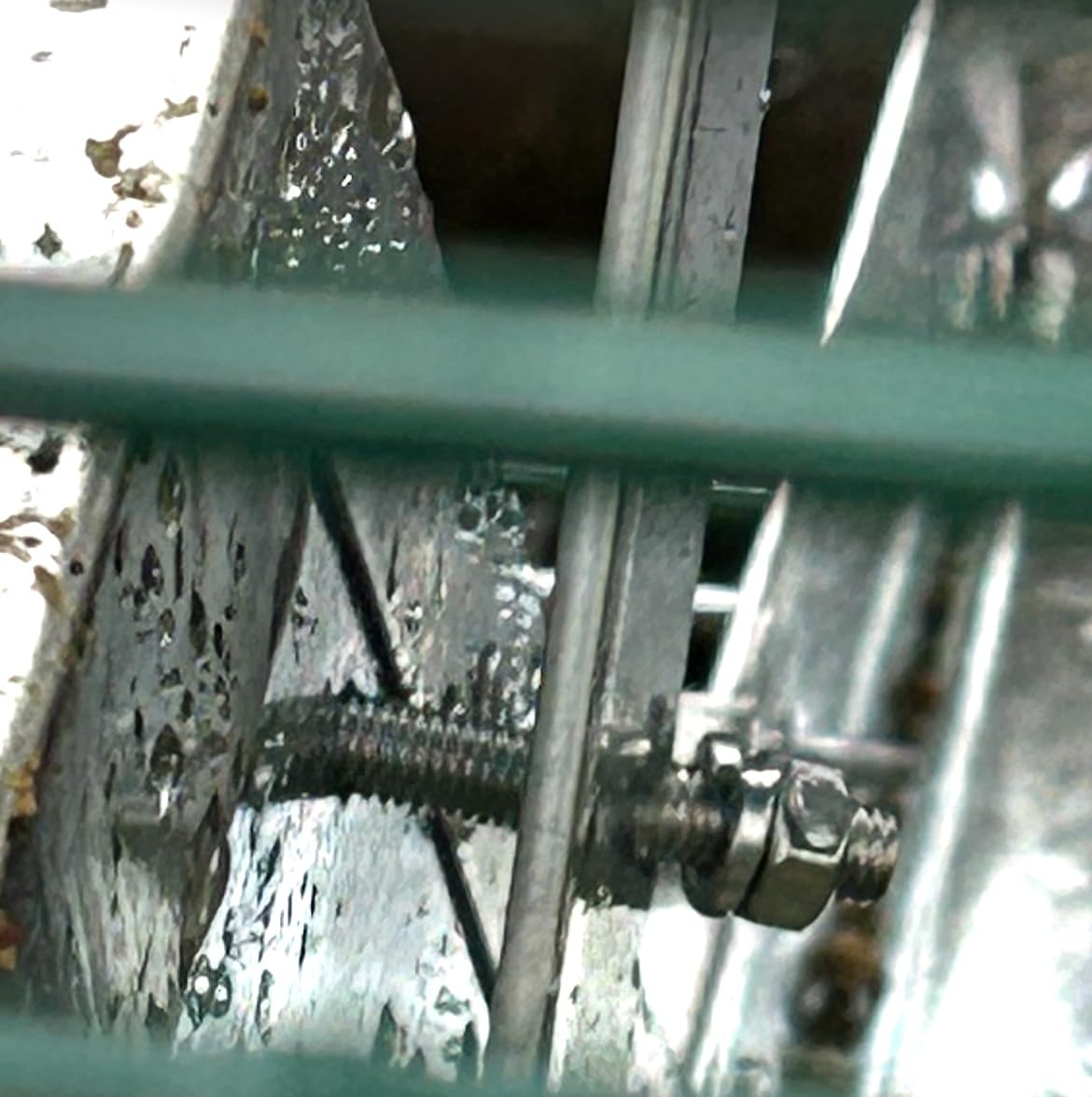
The galvanized steel construction is what gives this feeder its legendary durability. Unlike plastic models that crack in freezing weather or degrade under UV, galvanized steel shrugs off rain, snow, and sun. The full-coverage lid is rat-proof, rodent-proof, and weather-proof, protecting feed from everything nature throws at it.
The built-in anti-flick grill is a detail I appreciate after watching hens toss half their feed on the ground with cheaper troughs. The grill prevents chickens from billing feed out the sides, which directly saves you money on feed costs. Side guards stop birds from feeding at angles that cause pecking and injury.
Training Chickens to Use the Treadle
Plan on a 3 to 7 day training period. Prop the lid open with a stick for the first two days so chickens learn food lives inside. Then remove the prop and place scratch grain on the treadle. Most flocks figure it out within a week, though smaller bantams may need a lighter treadle spring adjustment.
Is the Premium Price Worth It
At roughly $220, this is a serious investment. But if it lasts 15 years like many owners report, that works out to under $15 per year. When you factor in the feed savings from pest prevention and waste reduction, many flock owners find the treadle feeder pays for itself within the first year.
4. RentACoop 40 lb Treadle Feeder – Rat-Resistant Powerhouse
RentACoop Automatic Treadle Chicken Feeder, Rat Proof No Waste, 40 lb
40 lb Treadle Design
Galvanized Metal
Stainless Steel Hardware
Feeds 12 Hens 10 Days
Pros
- Treadle blocks rats mice squirrels and birds
- Durable galvanized metal construction
- 40 lb capacity feeds 12 hens 10 days
- Rainproof design keeps feed dry
- Reduces feed waste significantly
Cons
- Highest price tier
- Heavy at 27.6 lbs hard to move
- Chickens need training period
The RentACoop treadle feeder takes the pest-proof concept and scales it up with a 40-pound capacity. That is enough to feed about 12 adult hens for up to 10 days, making this the best treadle option for medium to large backyard flocks. With 850 reviews and a 4.3-star average, it has proven itself in real coops across the country.
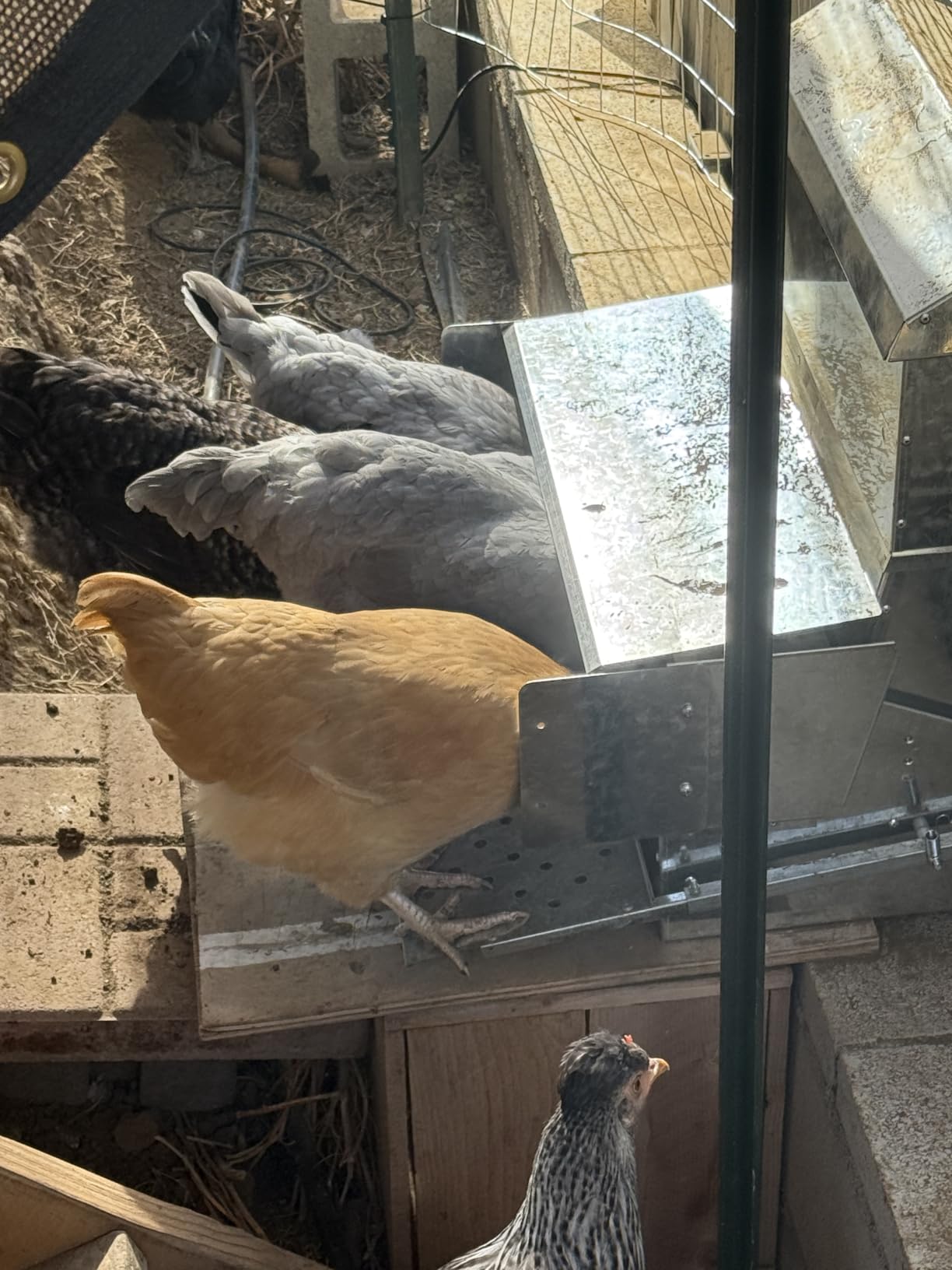
The treadle step design is what sets this feeder apart. When a chicken steps on the perforated pedal, the feed compartment opens. RentACoop added blinders that prevent side feeding and a flush treadle design that protects bird feet from pinching. The perforated surface gives chickens a confident grip even in wet conditions.
The galvanized metal body with stainless-steel hardware means this feeder is built for the long haul. RentACoop uses food-grade, BPA-free materials throughout, matching the standards that made their smaller feeders popular. The rain-ready design channels water away from the feed compartment, keeping pellets dry through storm season.
One thing to know is that this feeder weighs 27.6 pounds empty. Once loaded with 40 pounds of feed, you are moving nearly 70 pounds. Plan your placement carefully because you will not want to relocate it frequently. Some users also noted recent production changes with sheet metal panels, so inspect yours on arrival.
Which Feed Types Work in the Treadle
The RentACoop treadle handles pellets, crumble, and scratch grain without clogging. Pellets flow best and produce the least waste. Crumble can bridge in humid climates, so give the feeder a shake during muggy weather. Avoid putting whole oats or large seeds in the hopper, as they can jam the mechanism.
How It Compares to Grandpa’s Feeders
Both treadle feeders cost about $220. Grandpa’s holds 20 pounds for 6 chickens over 10 days, while RentACoop holds 40 pounds for 12 chickens over the same period. If you have a larger flock, RentACoop is the better fit. For smaller flocks wanting a 30-year heritage brand, Grandpa’s wins on reputation.
5. CoopWorx 80 lb Poultry Feeder – Maximum Capacity King
CoopWorx Poultry Feeder – 80 lb Capacity – Adjustable Height – UV Stable – Weather Resistant – 8 Feed Ports – Silo Shaped Design – Rust-Proof – Intended for Chickens/Ducks/Turkeys – Made in USA
80 lb Capacity
8 Feed Ports
Silo Design
Adjustable Height
Made in USA
Pros
- 80 lb largest capacity available
- Patented funnel design uses 100 percent of feed
- 8 ports for simultaneous feeding
- Roost-resistant hinged lid
- Adjustable legs from 9 to 18 inches
Cons
- Not Prime eligible
- Highest price in the lineup
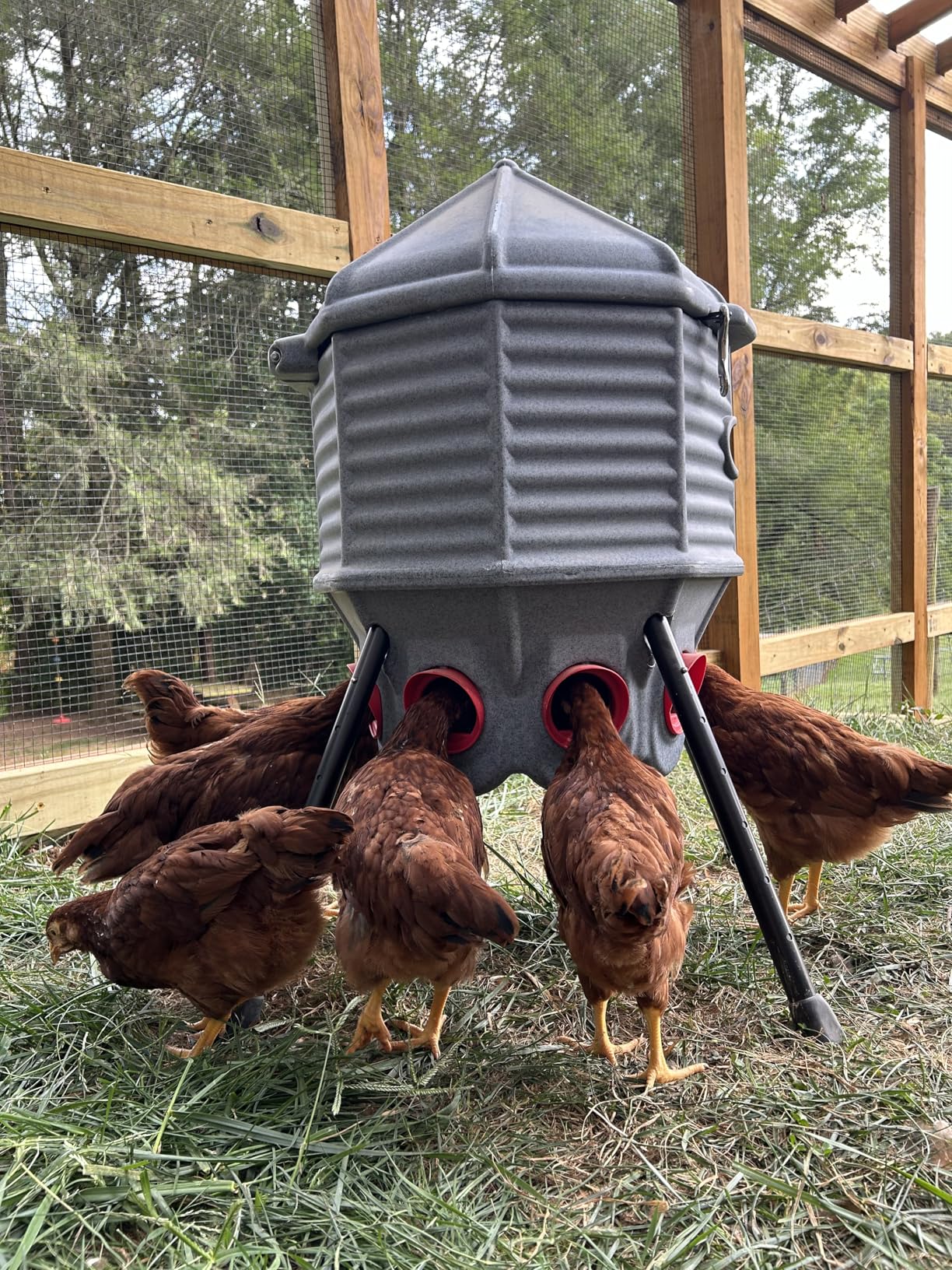
The CoopWorx feeder solves the refill problem once and for all. With an 80-pound capacity, this is the largest feeder in our lineup by a wide margin. If you hate refilling feeders, this silo-shaped unit lets you load up and walk away for weeks. It holds enough feed for a flock of 15 to 20 chickens for roughly two weeks between fills.
The patented funnel design is the standout feature here. It angles feed toward the ports so that 100 percent of the contents get eaten. Many gravity feeders leave a dead zone at the bottom where feed sits and goes stale. CoopWorx eliminated that problem, which means no wasted feed and no moldy surprises.
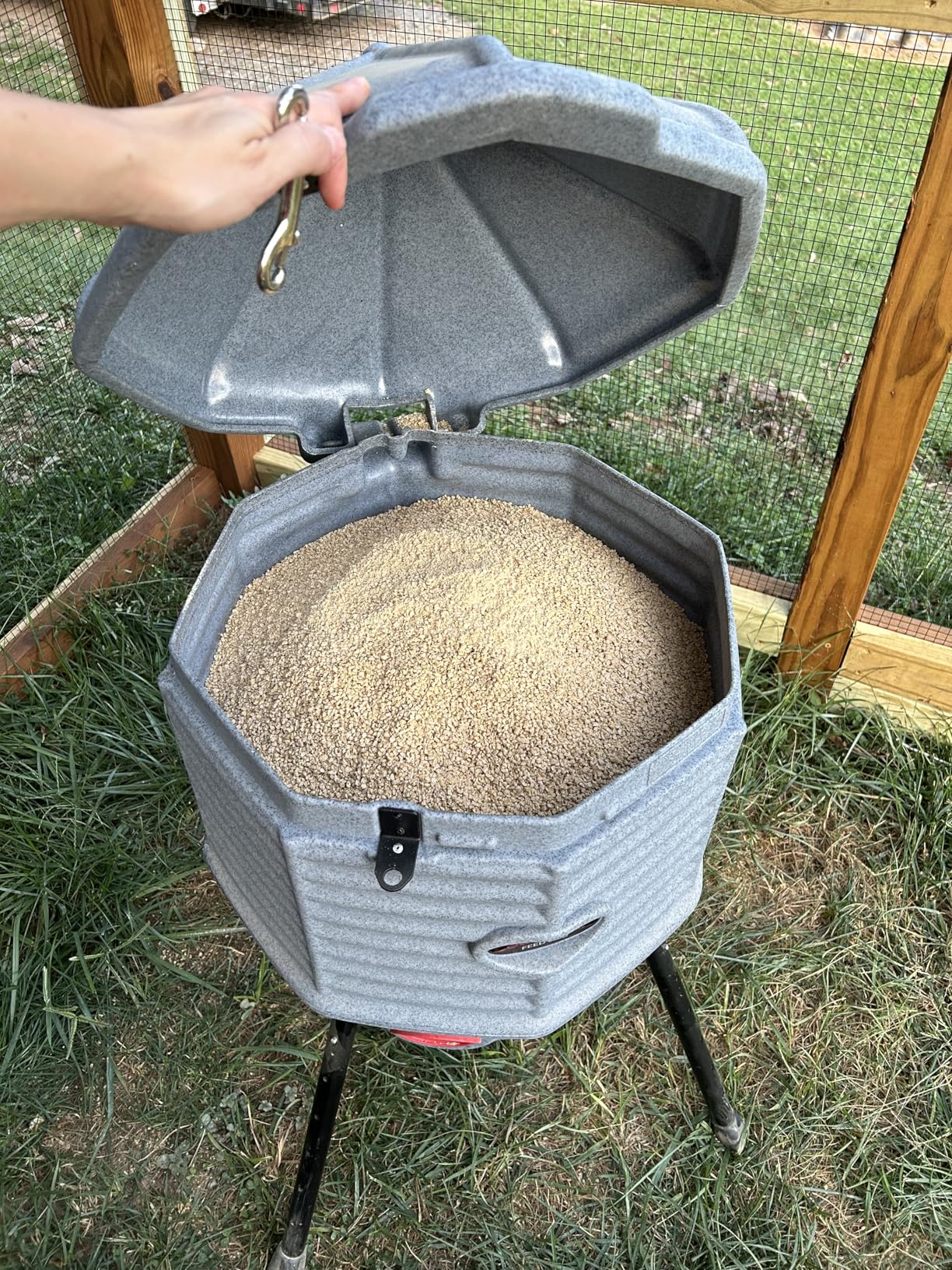
Eight feed ports allow multiple chickens to eat at the same time, which reduces bullying and feeding-line stress. The silo shape also discourages chickens from roosting on top and soiling the feeder. The hinged lid stays attached to the unit while you fill or clean, so you never have to set a dirty lid on the ground.
The adjustable legs let you set the port height anywhere from 9 to 18 inches off the ground. That range works for everything from small bantams to full-size turkeys. Made in the USA with UV stabilizers molded into the plastic, this feeder is designed to be the last one you ever buy.
Is 80 Pounds Overkill for Your Flock
For flocks under 8 chickens, 80 pounds of feed sitting for weeks risks staleness in humid climates. This feeder makes the most sense for flocks of 12 or more, or for owners who travel frequently and want maximum time between refills. In dry climates, even smaller flocks benefit from the extended interval.
Weather Resistance and Outdoor Use
The UV-stabilized construction handles full sun exposure without degrading. The silo design sheds rain naturally, and the covered ports minimize water intrusion. Owners in rainy Pacific Northwest climates report the feed stays dry even in uncovered runs. For extreme weather, partial cover is still recommended.
6. Pawaboo 55 lb Feeder – Best for Growing Flocks
Pawaboo 55LBS Large Capacity Automatic Chicken Feeder
55 lb Capacity
7 Feeding Ports
Galvanized Steel
Viewable Feed Window
Adjustable Legs
Pros
- 55 lb capacity reduces refill frequency
- Viewable feed level window
- 7 ports for simultaneous feeding
- External trays catch spilled feed
- Lockable lid prevents rodent access
Cons
- Higher price point
- Heavier unit at 14.77 lbs
The Pawaboo 55-pound feeder sits in the sweet spot between capacity and price. It gives you more than double the feed storage of a 20-pound model without jumping to premium pricing. With 216 reviews and a 4.4-star average, it has built a solid reputation among backyard flock owners in 2026.
The viewable feed-level window is the feature I did not know I needed until I had one. Instead of opening the lid to check how much feed remains, I just glance at the side panel. The aluminum-coated galvanized steel construction feels sturdy and resists rust through wet seasons.
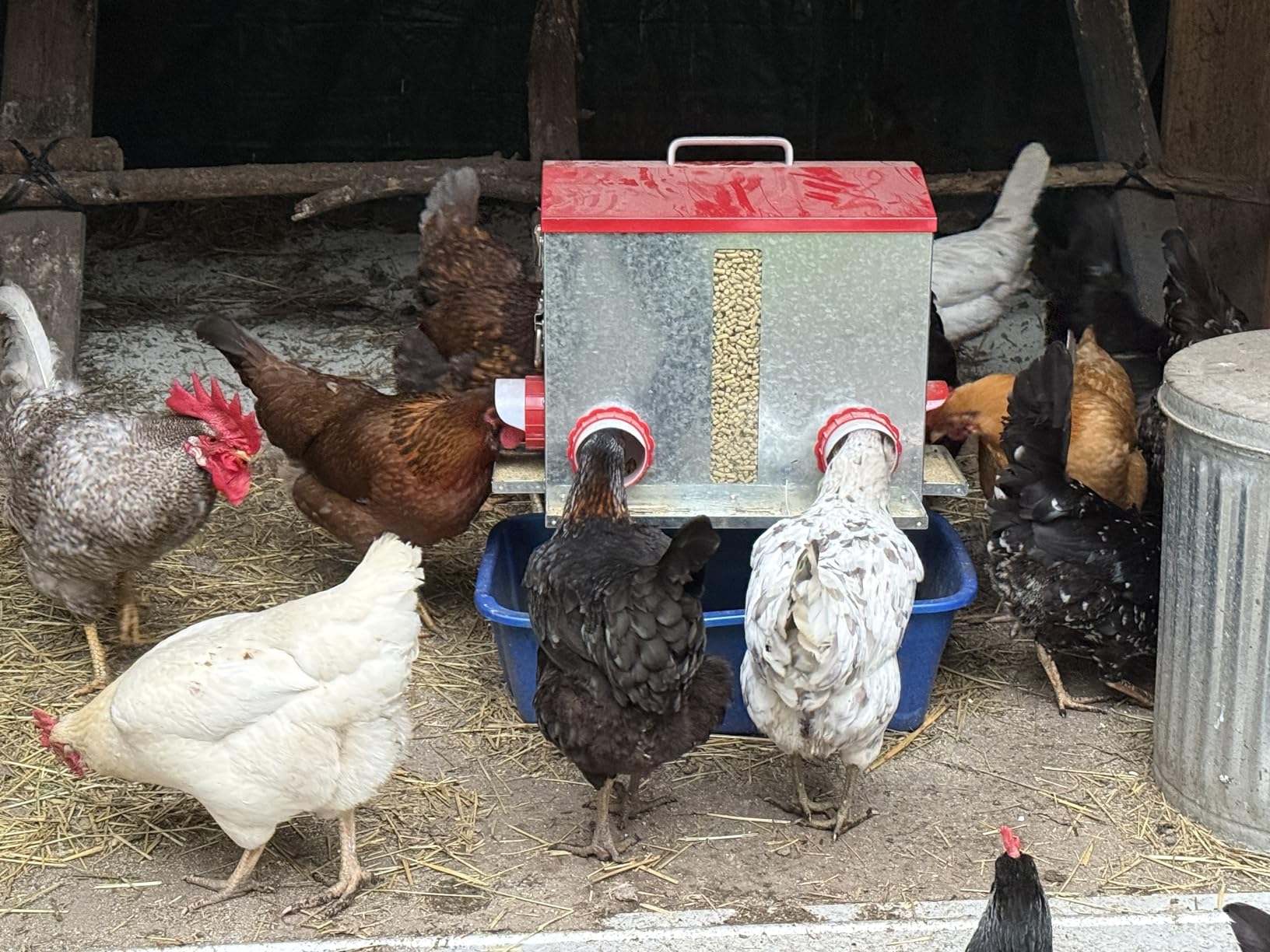
Seven feeding ports let multiple chickens eat at once, and the external catch trays beneath each port collect spilled feed before it hits the ground. This design dramatically reduces waste from chickens billing feed out. The height-adjustable legs range from 5.9 to 10.6 inches, accommodating growing pullets and full-size hens alike.
The lockable lid is a welcome security feature. It keeps determined raccoons and rodents from prying the top open, which is a common failure point on cheaper metal feeders. The weatherproof design with sealed lid keeps rain and snow out of the feed compartment through all four seasons.
How Easy Is Assembly
The Pawaboo arrives mostly assembled. You attach the legs and secure the catch trays, which takes about 15 minutes with basic hand tools. The instructions are clear, and most owners report having it ready for the coop in under half an hour. No special tools are required.
Best Flock Size and Feed Type
The 55-pound capacity suits flocks of 8 to 15 chickens, giving you roughly a week to 10 days between refills. Layer pellets flow best through the gravity ports. If you feed crumble, expect slightly more residue in the catch trays, which the chickens will usually clean up on their own.
7. GADFISH 55 lb Feeder – Eight Ports for Busy Coops
GADFISH 55 lbs Large Capacity Automatic Chicken Feeder – 8 Feeding Ports, No Waste Chicken Feeder, Height-Adjustable Legs & Secure Locking Lid for Chickens, Ducks & Poultry
55 lb Capacity
8 Feeding Ports
Galvanized Sheet Steel
Conical Lid
Adjustable Legs
Pros
- 55 lb large capacity holds plenty of feed
- 8 ports allow multiple birds to eat at once
- Height-adjustable legs for different sizes
- Metal conical lid prevents rainwater pooling
- Galvanized sheet construction for durability
Cons
- Some assembly can be challenging
- Higher price than basic models
The GADFISH 55-pound feeder competes directly with the Pawaboo, and the main differentiator is the extra feeding port. With 8 ports instead of 7, it reduces wait times in larger flocks where feeding-line competition causes stress. The conical metal lid is a smart design choice that prevents rainwater from pooling and stops chickens from roosting on top.
I appreciate the upgraded feeding ports that reduce feed waste compared to older gravity designs. The aluminum-coated galvanized sheet construction matches what you find on more expensive feeders, giving you metal durability without the treadle price tag. At 16.1 pounds, it is substantial enough to resist tipping but manageable when empty.
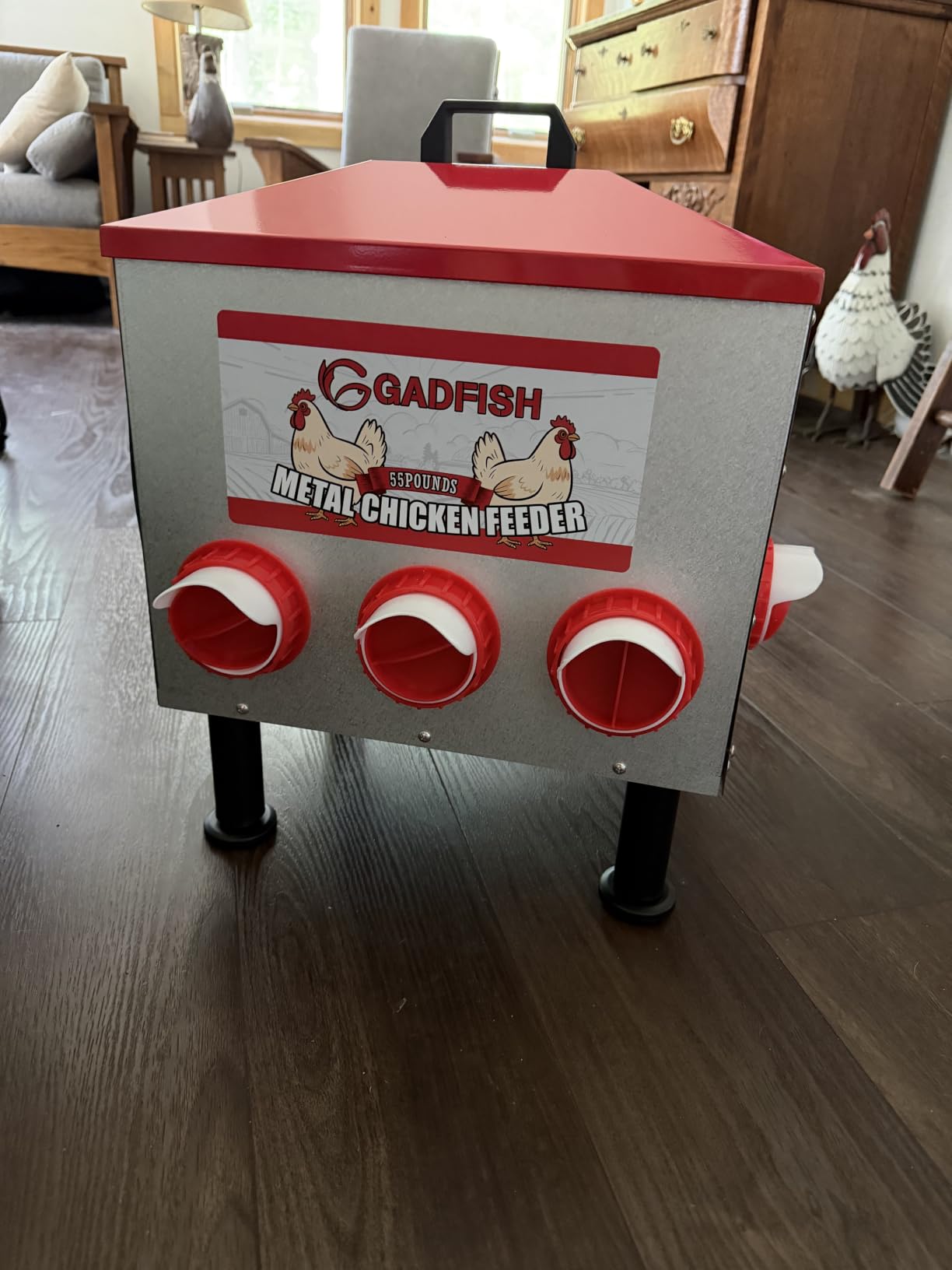
The height-adjustable support legs let you customize the port height for your specific birds. Lower the ports for bantams and Silkies, or raise them for standard breeds. This flexibility is especially valuable if you keep a mixed flock of different-sized chickens, ducks, or other poultry.
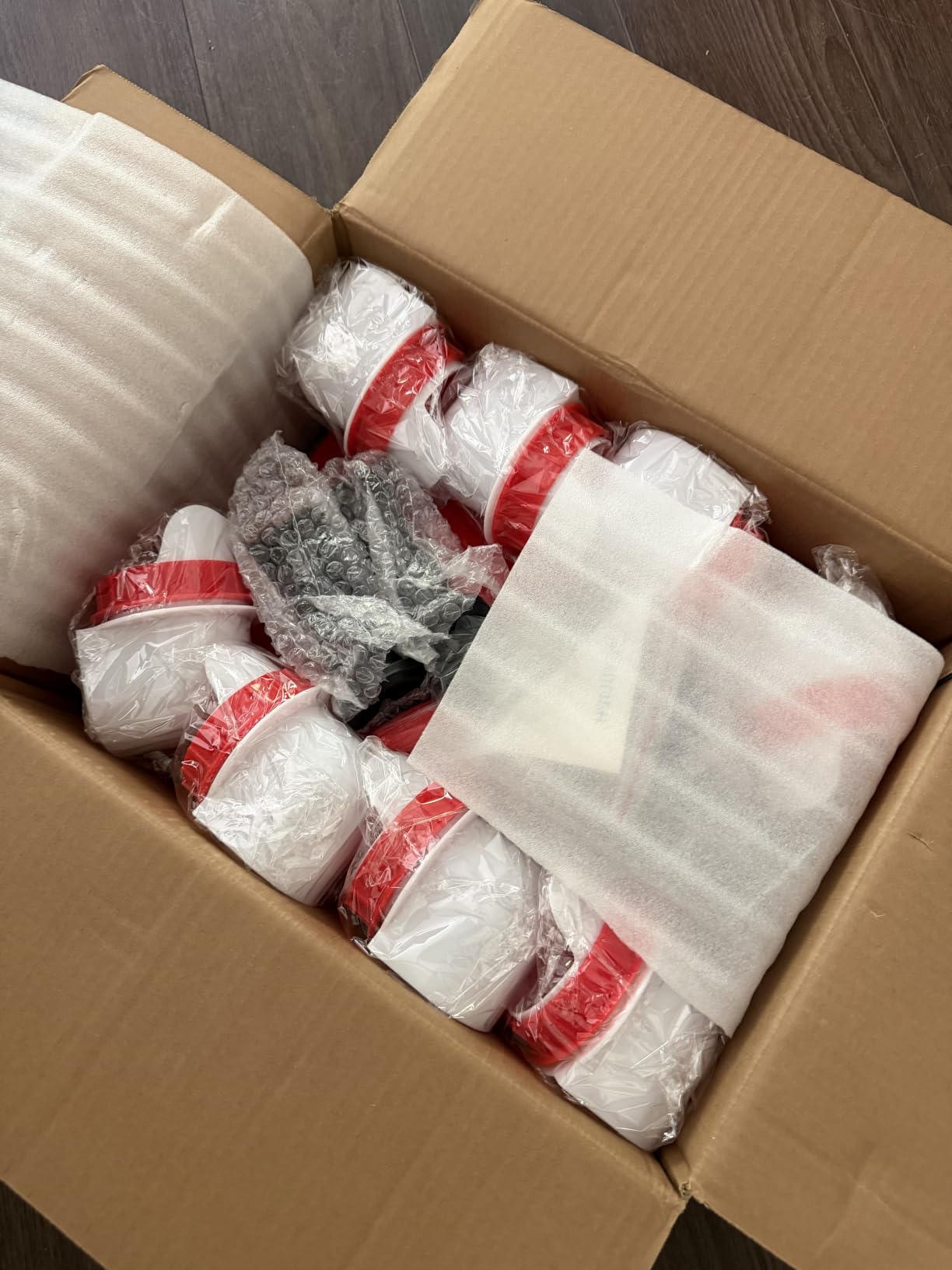
Assembly is the most common complaint in reviews. Some owners found the instructions unclear and the panel alignment finicky on the first attempt. Once assembled correctly, though, the feeder performs reliably. Take your time during setup and the results are worth the effort.
GADFISH Versus Pawaboo Head to Head
Both hold 55 pounds and use galvanized steel construction. GADFISH offers 8 ports versus Pawaboo’s 7, plus the conical rain-shedding lid. Pawaboo counters with the viewable feed window and external catch trays. If port count matters more, go GADFISH. If you value the feed-level window, choose Pawaboo.
Durability Over Multiple Seasons
The galvanized sheet steel resists rust and corrosion through rain and humidity. Owners in southern climates report the finish holding up well after a full year outdoors. In northern areas with road salt exposure, a wipe-down at season change keeps the metal in top condition.
8. Fawlium Smart App Feeder – WiFi-Controlled Feeding
Automatic Chicken Feeder, Smart Chicken Coop Accessories, APP Smart Remote Control Chicken Feeders No Waste, Preset Feeder Schedule, 9 Chicken Feeder Port, Professional Poultry Feeding Equipment
WiFi Smart App Control
9 Feeding Ports
3.5L Capacity
Timed and Quantitative Feeding
Low Feed Alert
Pros
- Smart app enables remote control from anywhere
- Precise timed and quantitative feeding
- Intelligent low feed alert notifications
- Real-time feeding data recording
- Pest-proof raccoons cannot access
Cons
- WiFi signal may be weak in some coops
- Requires app to function no manual override
- Smaller capacity than traditional feeders
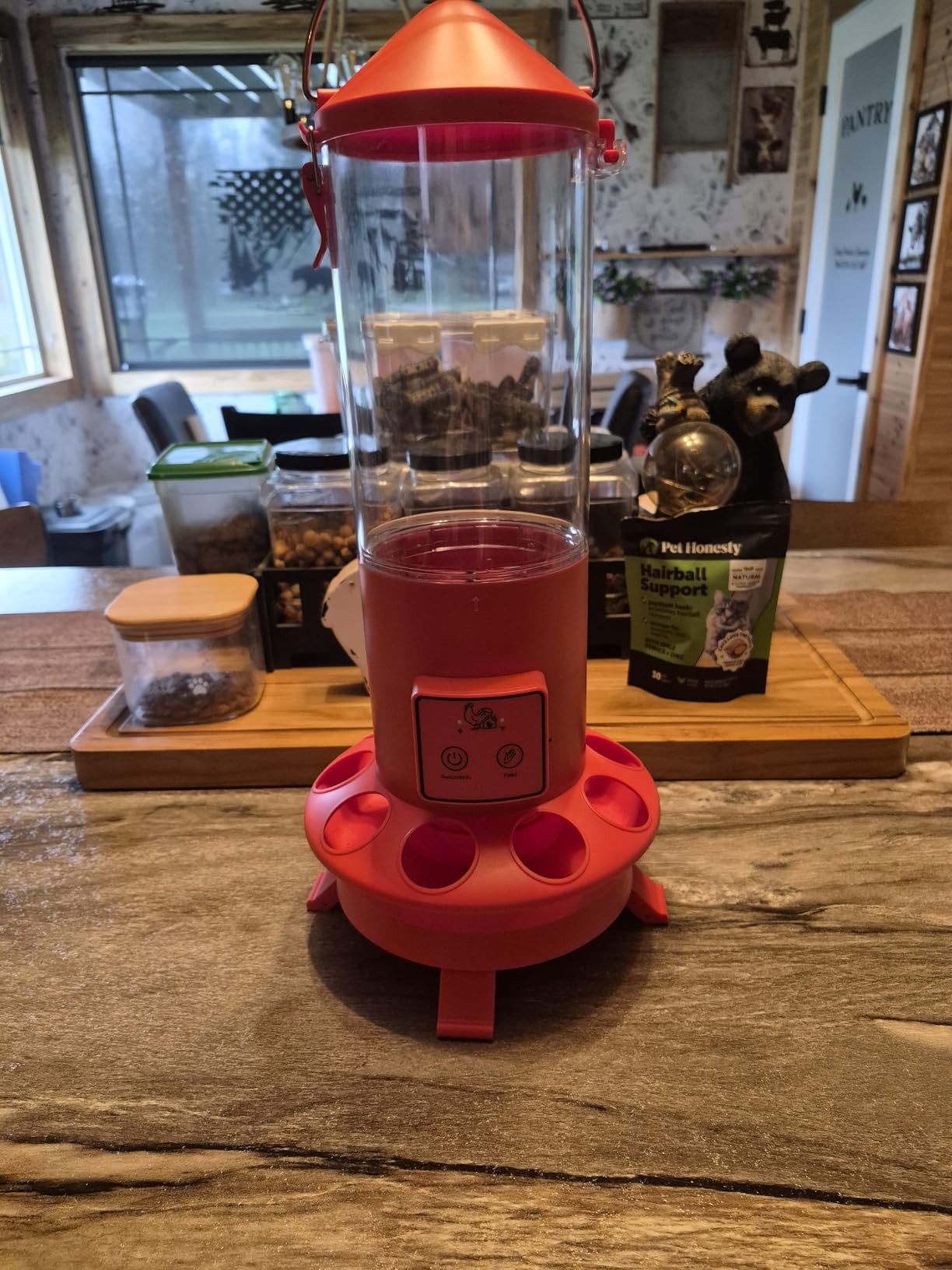
The Fawlium smart feeder brings chicken keeping into the connected-home era. Using a WiFi connection and a mobile app, you can set feeding schedules, control portion sizes, and receive low-feed alerts from anywhere. If you travel for work or just want to monitor your flock from your couch, this is the most advanced automatic chicken feeder for backyard flocks on the market.
The nine feeding ports accommodate multiple chickens at once, and the 3.5-liter capacity bin dispenses precise amounts on your schedule. The real-time feeding data recording lets you track exactly how much your flock consumes, which helps you spot health changes early. One reviewer noted it is fully pest-proof, with raccoons unable to access the feed.
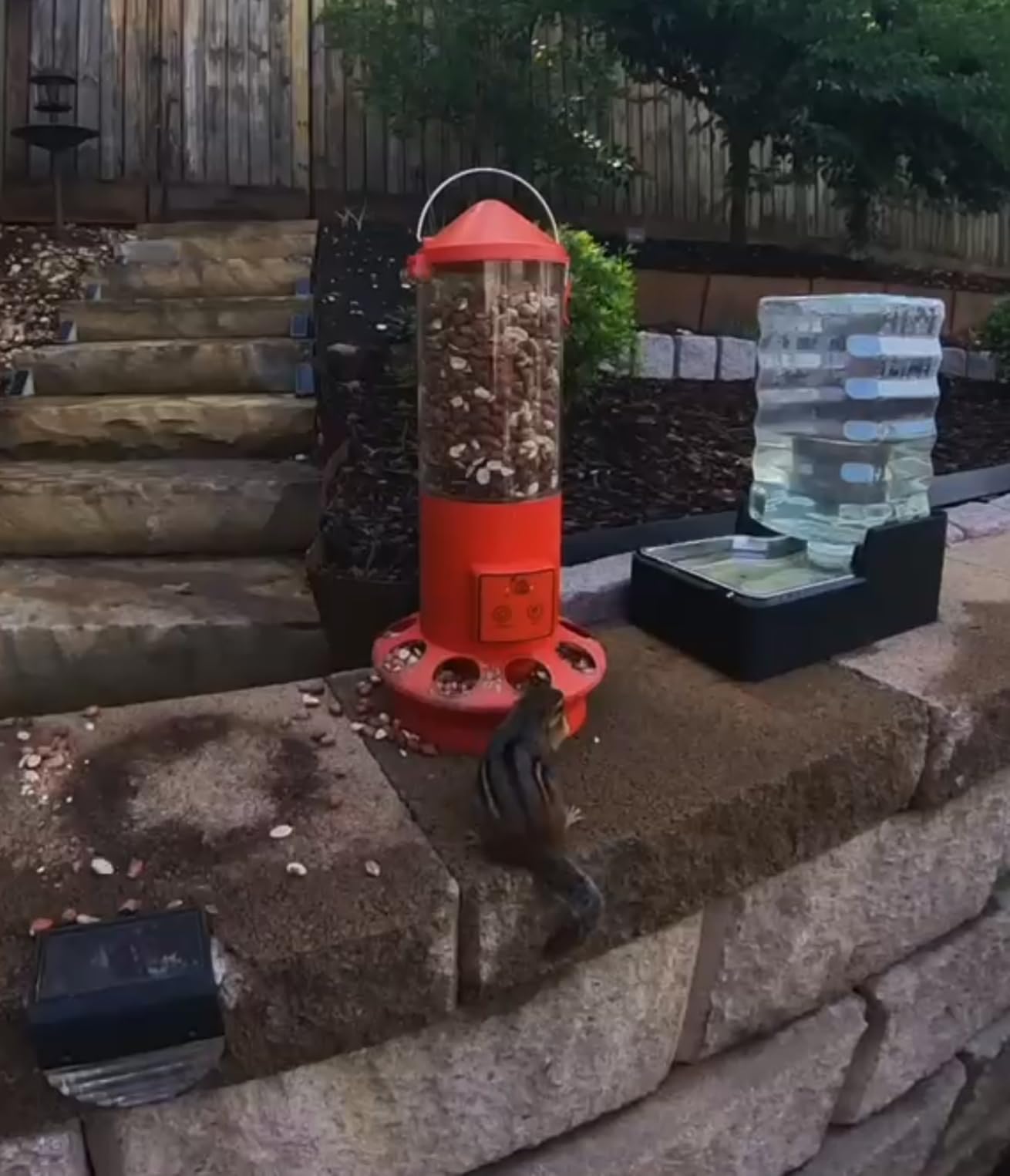
The adjustable legs and locking top add physical security on top of the smart features. The feeder integrates with a broader smart chicken coop ecosystem, including exhaust fans, lights, and automatic doors. If you are building a fully connected coop, the Fawlium fits right into that vision.
The main limitation is the 3.5-liter capacity, which is smaller than traditional gravity feeders. You will refill more often unless you pair it with a larger hopper. WiFi reliability depends on your coop’s distance from your router, so consider a WiFi extender if your coop is far from the house.
WiFi Range and Connectivity Tips
Most home routers reach a coop within 50 feet. If your coop is farther out, a WiFi range extender placed in a weatherproof box solves the signal issue. The feeder uses standard 2.4 GHz WiFi, which has better range than 5 GHz but slower data rates, which is fine for feeder commands.
Is a Smart Feeder Worth the Investment
For tech-savvy owners who travel frequently, the remote monitoring and scheduling are genuinely useful. For keepers who visit the coop daily anyway, a simpler gravity feeder does the job at a fraction of the cost. The Fawlium makes the most sense if you already use or plan to add other smart coop devices.
9. Omlet No Waste Feeder – Clean Design for Small Flocks
Omlet No Waste Chicken Feeder for Coop | 12lb Anti-Spill Poultry Feeder with 5 Feeding Ports | Feeds 6 Hens for 7 Days | Hanging or Free Standing | Weatherproof
12 lb Capacity
5 Feeding Ports
BPA and PFAS-Free
Anti-Spill Design
Hanging or Freestanding
Pros
- No spill design prevents feed waste
- Individual ports prevent dominant hens monopolizing
- Feeds 6 hens for 7 days on one fill
- Easy clean separates into 3 pieces
- BPA and PFAS-free food-safe material
Cons
- Smaller 12 lb capacity compared to competitors
- Not Prime eligible
- Higher price point for the capacity
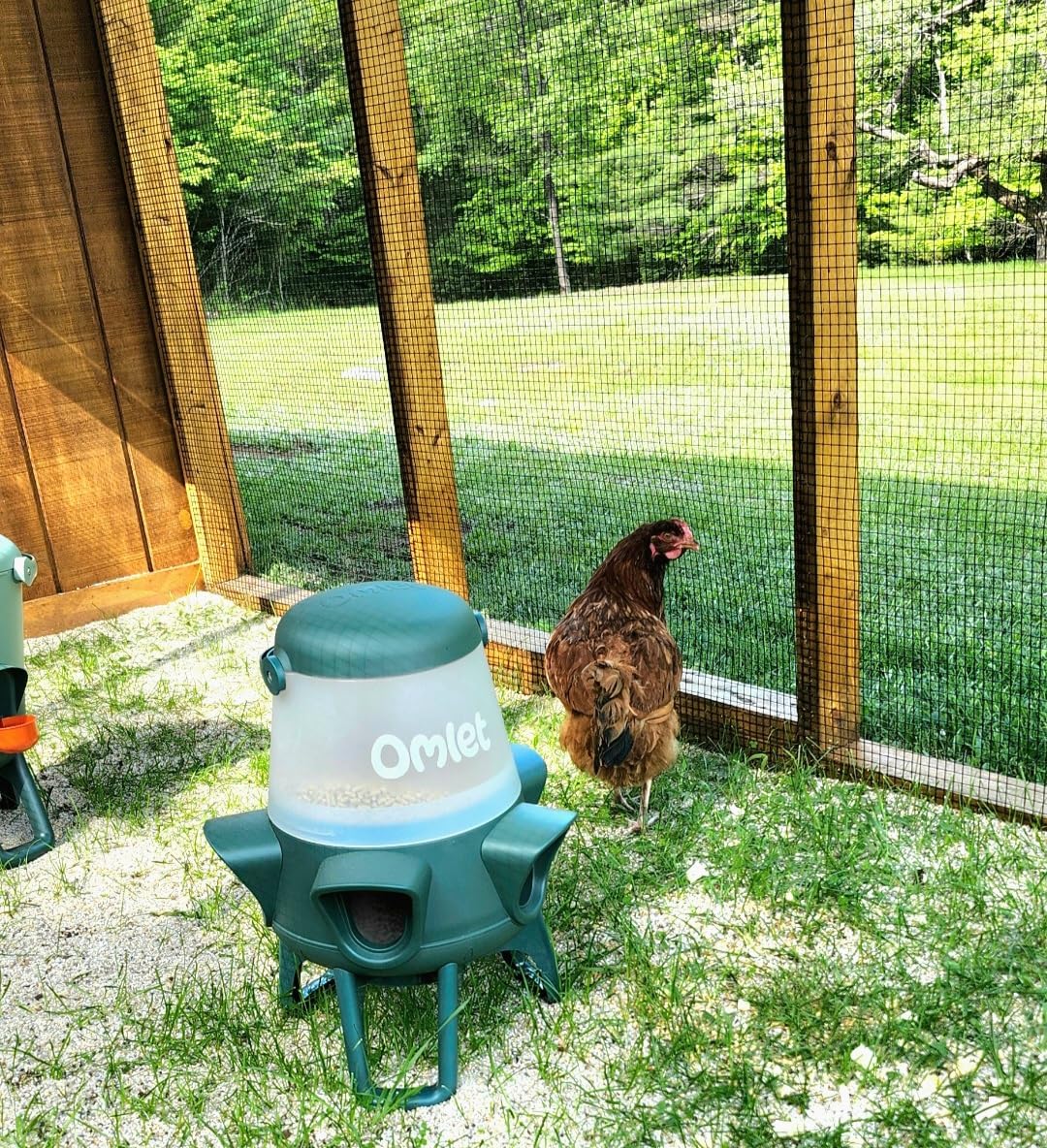
Omlet is a respected name in poultry products, and their no-waste feeder brings the brand’s signature clean design to the gravity feeder category. The 12-pound capacity is smaller than most on this list, but that is intentional. This feeder targets small flocks of up to 6 hens, feeding them for a full week on a single fill.
The enclosed feeding ports are the star feature. Unlike open troughs where dominant hens hog the food, each of the five ports serves one bird at a time. This prevents bullying and ensures every hen gets her share. The anti-spill design means virtually no feed ends up on the coop floor.
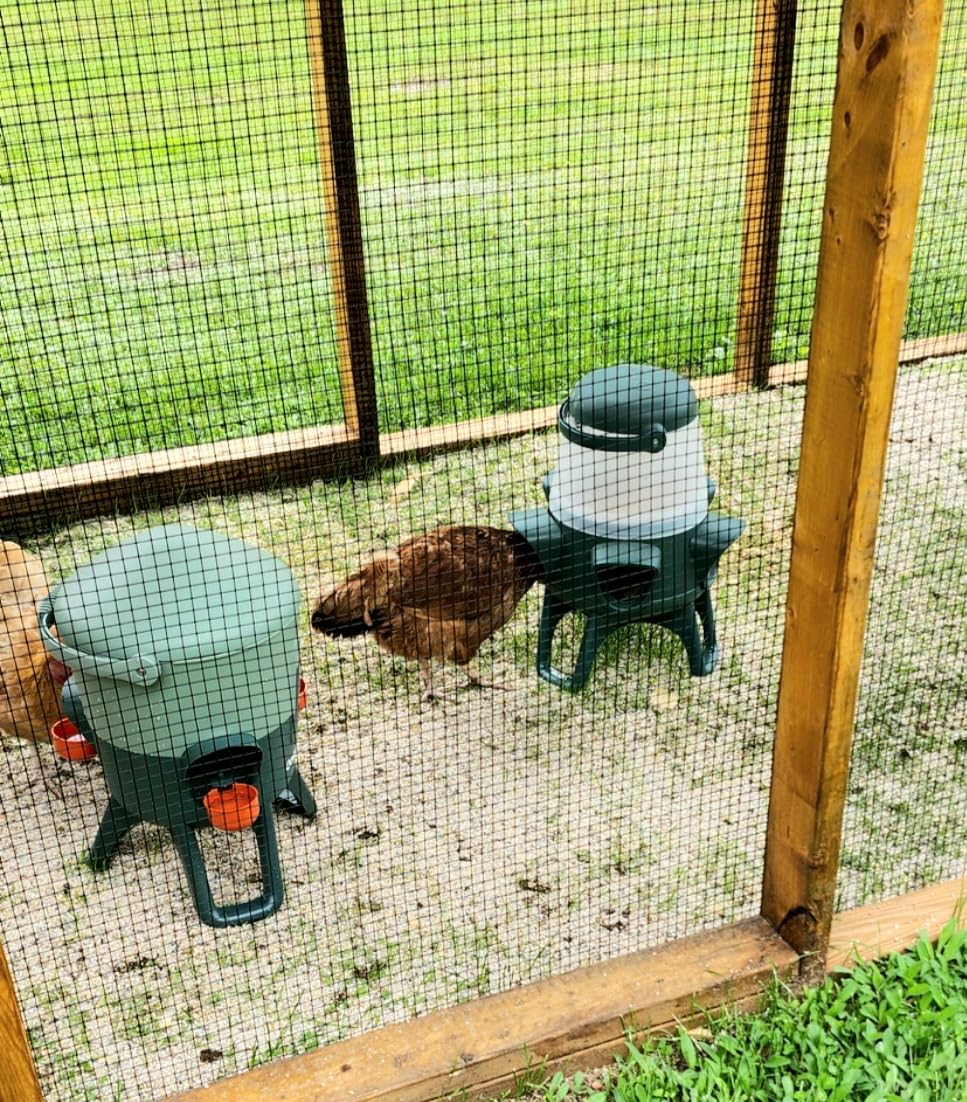
The BPA- and PFAS-free material is a step above standard plastic feeders. Omlet uses food-safe, weatherproof, UV-resistant plastic that will not leach chemicals into your flock’s feed. The feeder separates into three pieces without tools for thorough cleaning, which takes about five minutes.
You can use the Omlet feeder hanging from a chain or standing freestanding on the ground. Both options work well, and the hanging option keeps feed off dirty bedding. The main drawback is the price relative to capacity. You pay a premium for the Omlet brand and the anti-bullying port design.
Who Benefits Most From Port-Based Feeding
Flocks with a clear pecking order benefit most from individual ports. If you have a boss hen who guards the trough and intimidates smaller or younger birds, the Omlet’s enclosed ports level the playing field. Every hen eats in peace without being rushed or pecked.
Hanging Versus Freestanding Setup
Hanging keeps the feeder off soiled bedding and away from mice that travel along the floor. Freestanding works if your coop has clean, dry flooring and you want easy access for refilling. Omlet includes hardware for both configurations, so you can switch later if one approach is not working.
10. kingump 20 lb Metal Feeder – Twelve Ports for Active Flocks
Metal Chicken Feeder No Waste – 20LB Large Chicken Feeder with 12 Ports & 4 Adjustable Heights Tripod Stand, Automatic Hanging Poultry Feeder, Rainproof for Backyard Chickens & Small Flocks
20 lb Capacity
12 Feeding Ports
Metal Tripod Stand
4 Adjustable Heights
Rainproof Lid
Pros
- 12 ports reduce competition
- No-waste gravity-fed design
- Heavy-duty 5mm metal tripod stand
- 20 lb capacity lasts for days
- Rainproof sealed lid
Cons
- Manual operation no smart features
- Higher price tier for the category
The kingump feeder stands out for one number: 12 feeding ports. That is the most ports of any feeder in this lineup, making it ideal for flocks where multiple birds need to eat simultaneously without waiting. The deep-port, gravity-fed design minimizes waste while serving up to a dozen chickens at once.
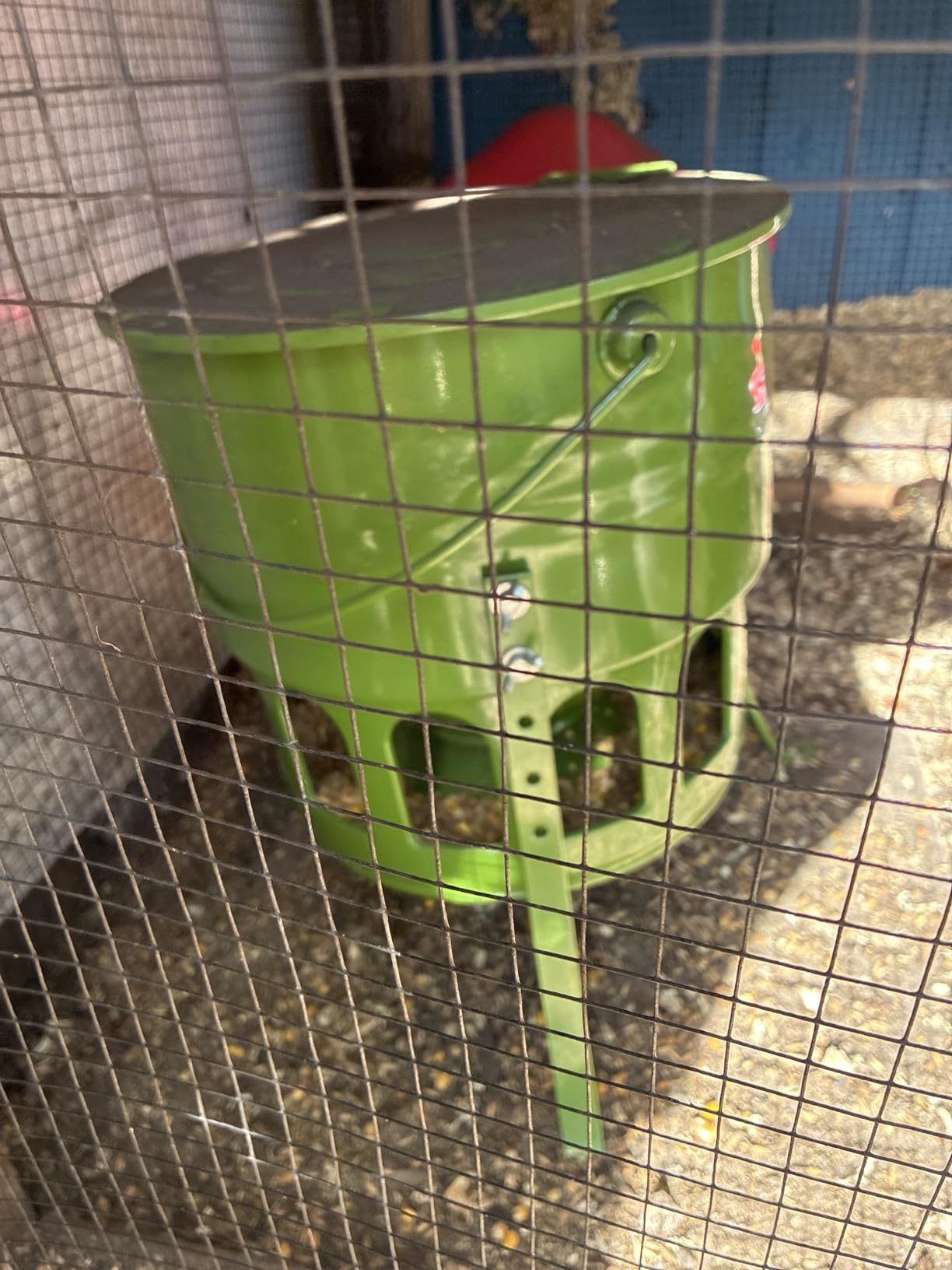
The heavy-duty 5mm metal tripod stand is a nice upgrade from plastic bases that wobble and tip. The four adjustable heights accommodate different poultry sizes, from small bantams to standard breeds. You set the port height once based on your flock and leave it, or adjust as growing pullets mature.
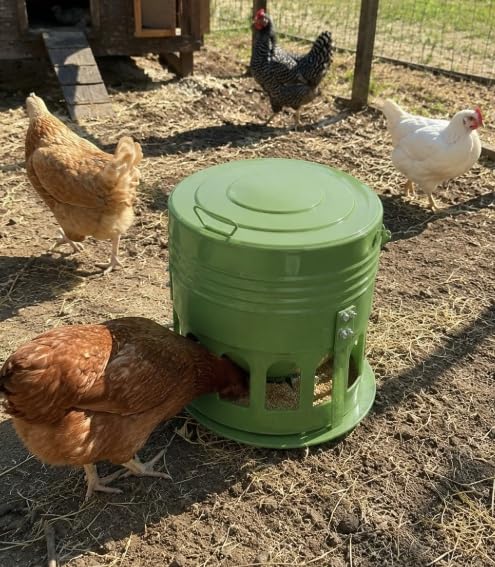
The 20-pound capacity is moderate, suited to flocks of 8 to 12 chickens that you refill every few days. The rainproof sealed lid does a capable job keeping moisture out during normal weather. The green metal finish blends into outdoor run environments without looking industrial.
With 74 reviews and a 4.5-star average, the kingump is newer to the market but earning strong marks. The deep-port design prevents chickens from billing feed out the sides. Assembly is straightforward, and the tripod base provides stability on uneven ground that freestanding tubular feeders sometimes lack.
How Twelve Ports Changes Feeding Dynamics
More ports mean less competition and calmer meal times. In flocks of 10 or more, limited feeding access creates stress and can lead to feather picking. Twelve ports let nearly the entire flock eat together, which mimics natural foraging behavior and reduces anxiety during feeding.
Tripod Stability Versus Hanging Designs
The tripod base offers better stability than hanging feeders in windy or active coop environments. Hanging feeders swing when chickens land on them, which can spill feed. The kingump’s grounded tripod stays put, though you should place it on level ground for best results.
11. PAUQRWIE Timed Feeder – Programmable Precision Feeding
PAUQRWIE Timed Automatic Chicken Feeder 16 Groups of Timer & Quantitative
16 Timer Groups
12V 50W Motor
Quantitative Feeding
Transparent Shell
DIY Install
Pros
- 16 timer groups for flexible scheduling
- Quantitative feeding reduces waste
- Powerful 50W motor prevents jamming
- Transparent shell for easy monitoring
- 12V safe voltage for coop use
Cons
- Bucket with stand not included
- Requires DIY drilling and installation
- Timer documentation reported confusing
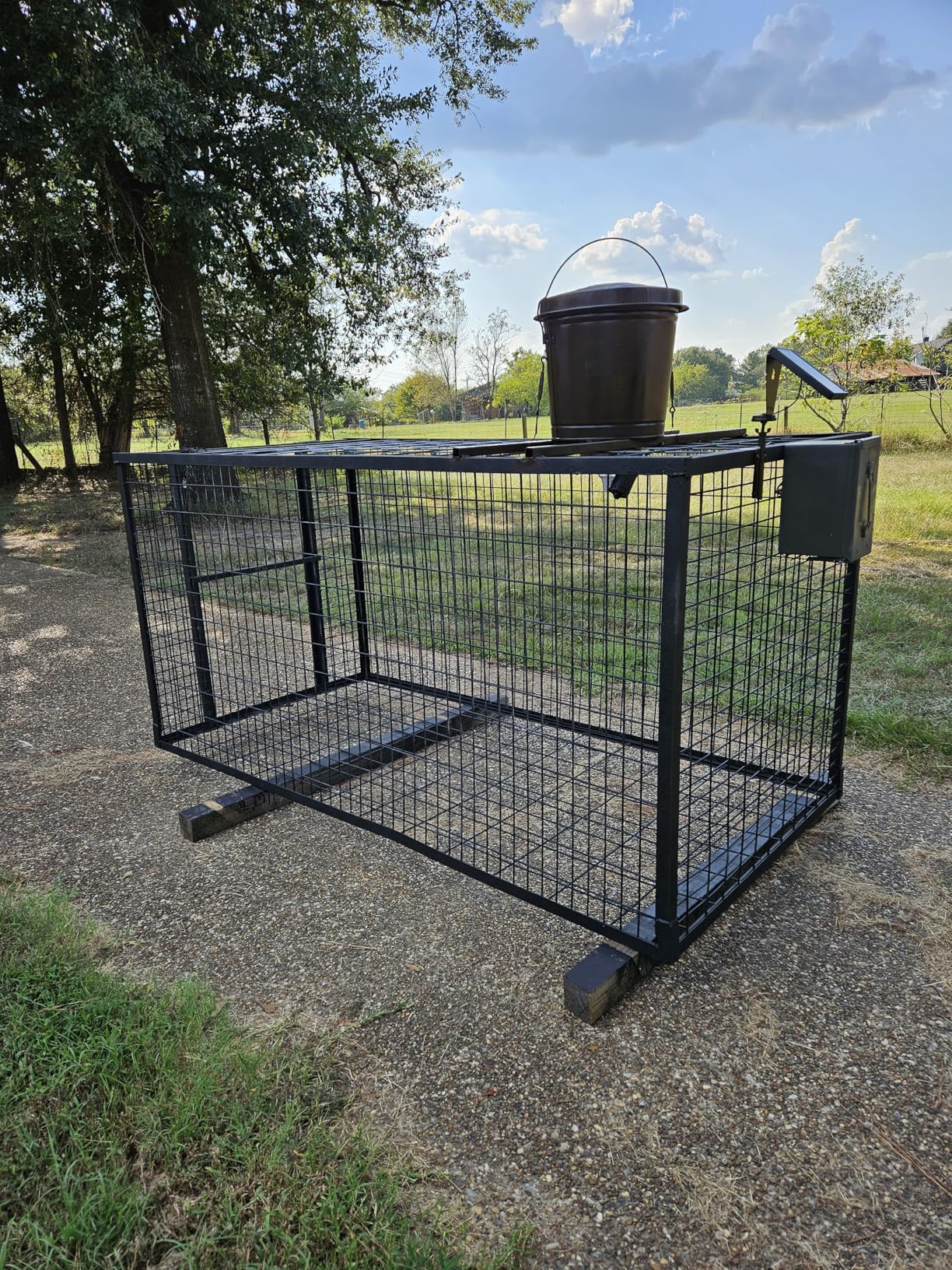
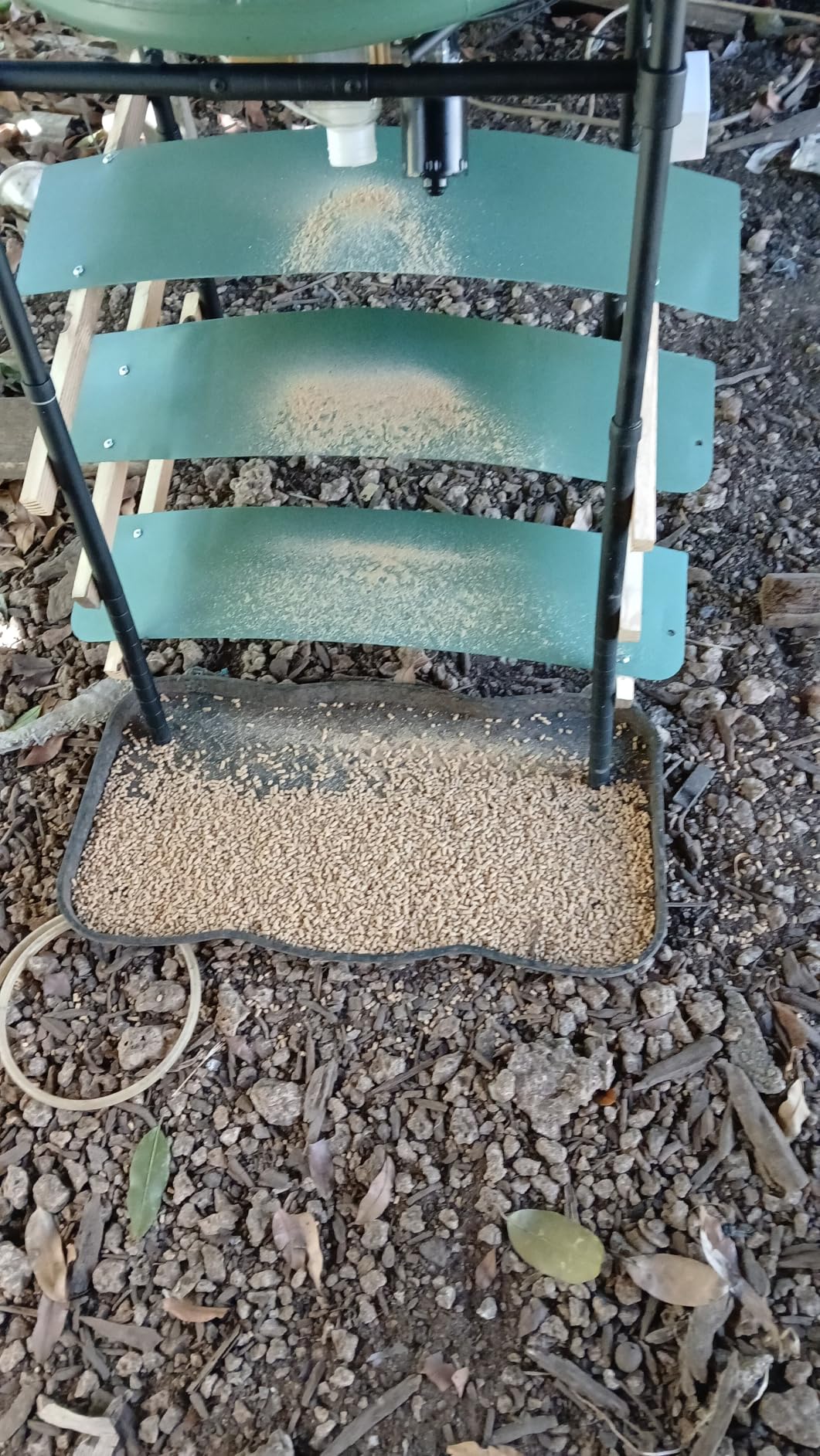
The PAUQRWIE timed feeder takes a different approach to automation. Instead of gravity or treadle mechanisms, it uses a 12V motor and 16 programmable timer groups to dispense precise amounts of feed at set times. This is the closest thing to a true scheduled feeding system in this price range.
The 50W motor is powerful enough to handle pellet feed without jamming, which is the most common complaint with cheaper motorized feeders. The transparent shell lets you see the feed level at a glance. The quantitative feeding feature means you control exactly how much dispenses at each scheduled time.
This feeder works with corn, rice, paddy, peanuts, and standard pellet feeds. It is also versatile enough for chickens, ducks, dogs, cats, and other animals, which makes it appealing if you keep multiple species. The 12V safe voltage means no risk of electric shock in wet coop conditions.
The main catch is that this is a DIY kit. The bucket and stand are not included, so you need to provide a container and mount the dispensing unit yourself. Several reviewers mentioned the timer documentation is confusing, so plan to spend time experimenting with the programming on your first setup.
Setting Up Your First Timer Schedule
Start with two feeding times per day, morning and late afternoon. Dispense enough for each hen to eat her daily ration split across both times. The 16 timer groups let you create complex schedules, but most flocks do well with simple twice-daily feeding once you dial in the right portion size.
Power Requirements and Setup
The 12V motor requires a 12V power supply or battery. If your coop has no electricity, a 12V deep-cycle battery or small solar panel setup powers the feeder. Factor this additional cost into your budget. The low voltage keeps operating costs minimal once everything is connected.
12. ZINZINULER Feeder and Waterer Set – Budget Two-in-One
Automatic Port Chicken Feeder and Cup Waterer Set
16 lb Feeder
3 Gallon Waterer
Port Design
Hanging or Wall Mount
Accessories Included
Pros
- Holds up to 16 pounds of feed
- Reduces waste with port feeder design
- 3 gallon water capacity included
- Hanging or wall-mounted design
- Easy indoor and outdoor install
Cons
- Not smart home compatible
- Manual water refills needed
The ZINZINULER set is the most affordable complete feeding and watering solution in this lineup. For one low price, you get a 16-pound capacity port feeder and a 3-gallon cup waterer, plus a bundle of coop accessories. With 1,539 reviews and a 4.2-star average, it ranks at number 2 in the Poultry Feeding Equipment category on Amazon.
This is the kit I recommend to first-time flock owners who need everything at once. The port feeder design reduces waste by giving chickens access to feed through controlled openings rather than an open trough. The cup waterer provides fresh drinking water on demand through a nipple-and-cup system.
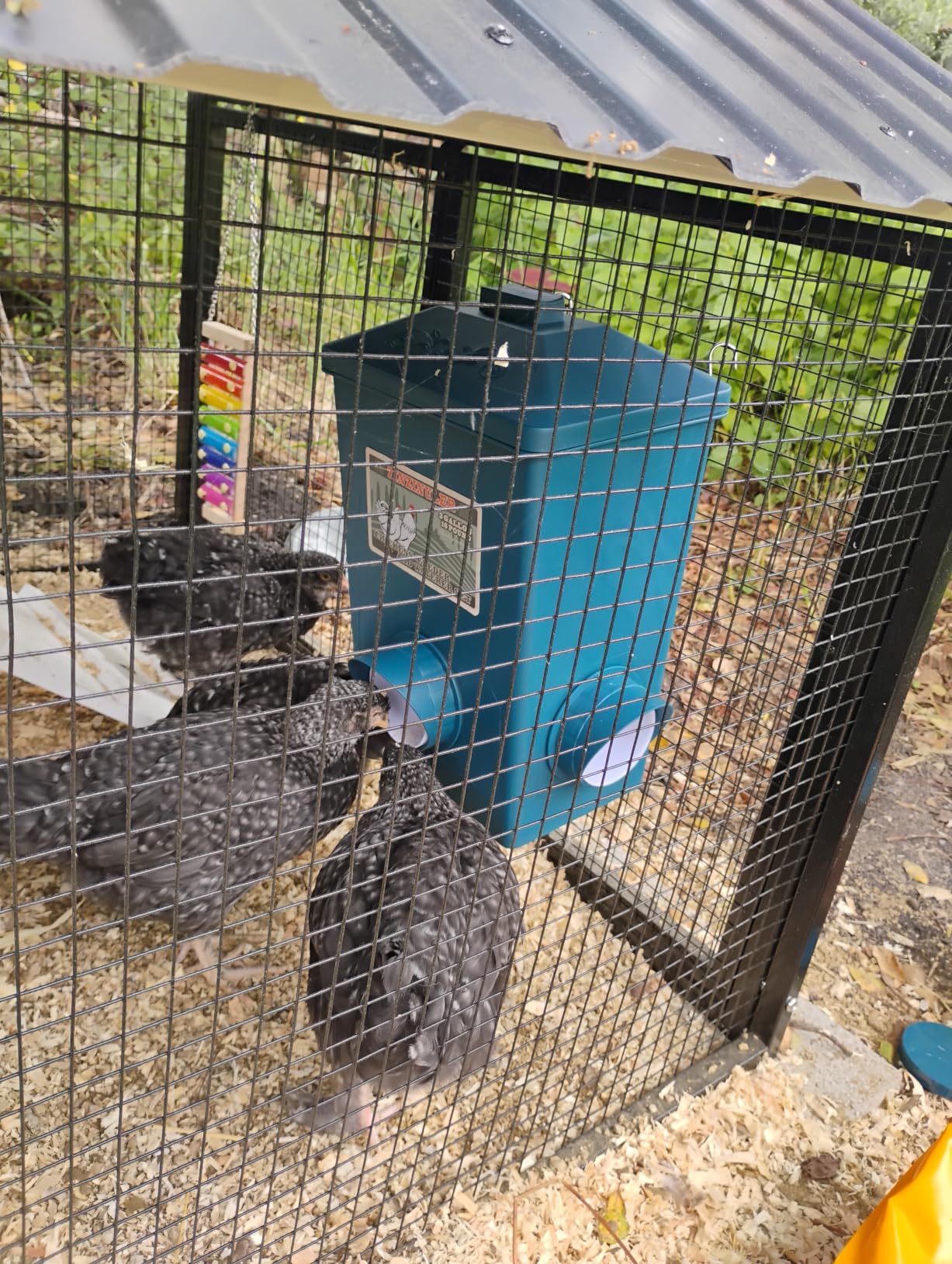
You can hang the feeder from a chain or wall-mount it with included hardware. The hanging option keeps feed off the ground and away from rodents. The easy-refill top means you pour feed straight in without removing the unit from its mount, which saves time during daily chores.
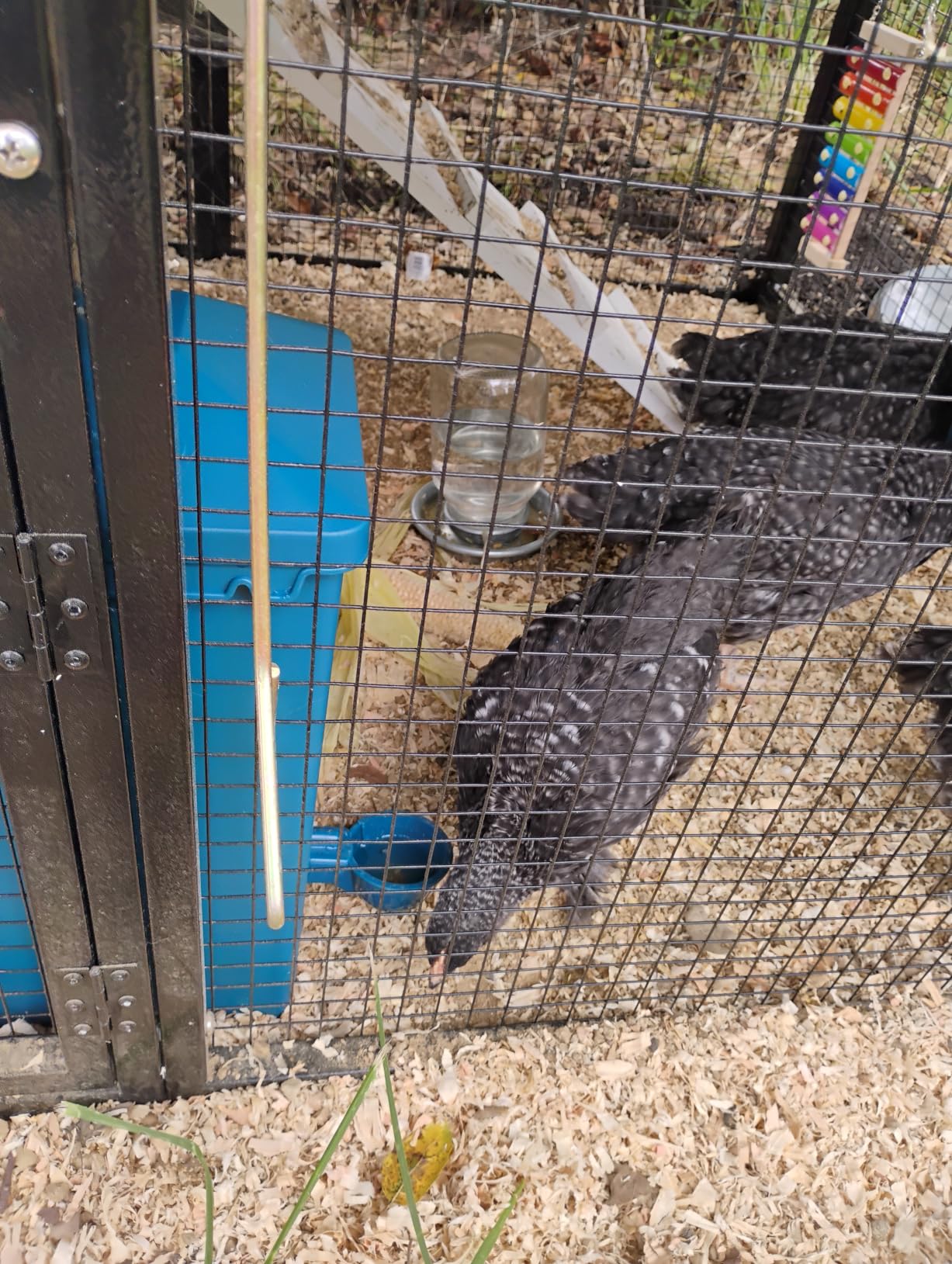
The included accessories are a nice bonus for new flock owners. The set comes with a chicken coop metal poster, chicken leg rings for identification, a veggies string bag for hanging treats, and a music stand. These extras add value that a standalone feeder does not provide.
What Size Flock Does This Set Serve
The 16-pound feeder capacity works for flocks of 4 to 8 chickens, requiring refills every 3 to 5 days depending on consumption. The 3-gallon waterer needs manual refills, so check it daily. For larger flocks, you will want to add a second waterer or upgrade to a higher-capacity model.
Port Feeder Versus Open Trough for Beginners
Port feeders waste significantly less feed than open troughs because chickens cannot scratch or bill feed out. For beginners learning flock management, less waste means lower feed bills and a cleaner coop. The trade-off is that port feeders can clog with dusty feed, so periodic cleaning is necessary.
Buying Guide: How to Choose an Automatic Chicken Feeder?
Choosing the right automatic chicken feeder for backyard flocks comes down to five key decisions. Get these right and you will save feed, reduce pests, and spend less time on coop chores. Here is what our team looks for when evaluating any feeder.
Feeder Type: Gravity, Treadle, Timed, or Smart
Gravity feeders are the simplest and most common. Feed flows down to ports as chickens eat, requiring no power or training. They work great for most backyard flocks but do not keep pests out on their own.
Treadle feeders use a weight-activated pedal. A chicken steps on it and the lid opens, then closes when she leaves. This is the best design for rodent control because rats and wild birds are too light to trigger the mechanism. The trade-off is a training period and higher cost.
Timed and smart feeders use motors and timers or WiFi apps to dispense feed on a schedule. These offer the most control but require power and some technical setup. They are ideal for owners who travel or want precise feeding management.
Capacity and Flock Size Matching
Match your feeder capacity to your flock size to avoid constant refilling or feed going stale. A good rule of thumb is that each adult hen eats about 0.25 pounds of feed per day. Here is a quick reference based on our testing.
For 3 to 6 chickens, a 12 to 20 pound feeder lasts 7 to 10 days. For 6 to 12 chickens, look for 40 to 55 pounds for a similar interval. For 12 or more chickens, the 80-pound CoopWorx or a dual-feeder setup keeps everyone fed without daily refills.
Rodent and Pest Control
Rodent control is the number one reason backyard flock owners upgrade to automatic feeders, according to forum discussions on r/BackYardChickens. Open troughs attract rats, mice, and wild birds that eat your feed and spread disease.
Treadle feeders are the gold standard for pest prevention. The RentACoop and Grandpa’s Feeders models block rats, mice, squirrels, and wild birds completely. Lockable-lid gravity feeders like the Pawaboo and GADFISH deter raccoons and larger pests. DIY port kits on sealed containers keep out most pests when installed correctly.
Weather Resistance and Material Durability
Your feeder will face rain, snow, UV exposure, and temperature swings. Galvanized steel construction, like the RentACoop and Grandpa’s Feeders, offers the longest lifespan in harsh weather. UV-stabilized plastic, like the OverEZ and CoopWorx, resists sun damage and cracking for years.
Look for rainproof lids, sealed ports, and overhang designs that channel water away from feed. In freezing climates, avoid feeders with narrow dispensing gaps that ice over. Metal feeders can get hot in direct summer sun, so place them in shaded run areas when possible.
Budget and Long-Term Value
Prices in this lineup range from about $25 for the ZenxyHoC DIY kit to $280 for the CoopWorx 80-pound silo. The cheapest option is not always the best value. Forum users consistently report that cheap imported feeders fail within months, costing more in replacements.
The sweet spot for most backyard flock owners is the $50 to $90 range, where you get durable construction, adequate capacity, and proven reliability. The OverEZ at roughly $80 is our top value pick because it balances price, capacity, and long-term durability better than anything else we tested.
Training Your Chickens to Use a Treadle Feeder
Treadle feeders require a short training period, usually 3 to 7 days. Here is the method that works best based on our experience and forum recommendations.
Days 1 and 2: Prop the lid fully open with a stick or wire. Let chickens discover the feed and eat freely. This teaches them that food lives inside the feeder.
Days 3 and 4: Remove the prop but place a small amount of scratch grain or mealworms directly on the treadle pedal. The chickens step on the pedal to reach the treat, and the lid opens. Repeat this twice daily.
Days 5 to 7: Fill the feeder with regular layer feed. Most chickens will have learned the treadle mechanism by now. Watch for any hens that are hesitant and place treats on the pedal to encourage them.
Frequently Asked Questions?
How to get chickens to use an automatic feeder?
Most chickens learn gravity and port feeders immediately with no training. Treadle feeders require 3 to 7 days of training. Prop the lid open for the first two days so chickens find the food, then place scratch grain on the treadle pedal to teach them that stepping on it opens the lid. Most flocks figure it out within a week.
Can chickens overeat if food is always available?
No. Chickens self-regulate their feed intake and will not overeat when feed is constantly available. Free-choice feeding is actually the recommended method for laying hens. Each hen eats roughly 0.25 pounds of feed per day and stops when she is full.
What are the disadvantages of automatic feeders?
The main disadvantages are upfront cost, especially for treadle models, and the training period needed for weight-activated feeders. Some motorized feeders require power and can fail during outages. Cheap plastic models may crack in freezing weather, and poorly designed ports can clog with dusty or crumble feed.
Should chickens be fed in the morning or afternoon?
Chickens do best with free-choice feed available all day. If you feed on a schedule, morning feeding is ideal because hens eat most actively at dawn after roosting overnight. A second smaller feeding in late afternoon ensures they go to roost with full crops, which supports egg production.
Final Thoughts on the Best Automatic Chicken Feeders
After testing and comparing 12 feeders across every category, three models rise to the top for backyard flock owners in 2026. The OverEZ 50-pound feeder is our editor’s choice for its unbeatable combination of capacity, durability, and 1,770-review track record. The ZenxyHoC 8-port DIY kit takes best value with the highest rating in the lineup at a price anyone can afford.
For pest-plagued flocks, the Grandpa’s Feeders treadle and the RentACoop treadle are the only true rat-proof solutions. And if capacity is your priority, the CoopWorx 80-pound silo feeds large flocks for weeks without a refill. Whatever your flock size and budget, the best automatic chicken feeders for backyard flocks pay for themselves in saved feed, fewer pests, and more free time to actually enjoy your chickens.