
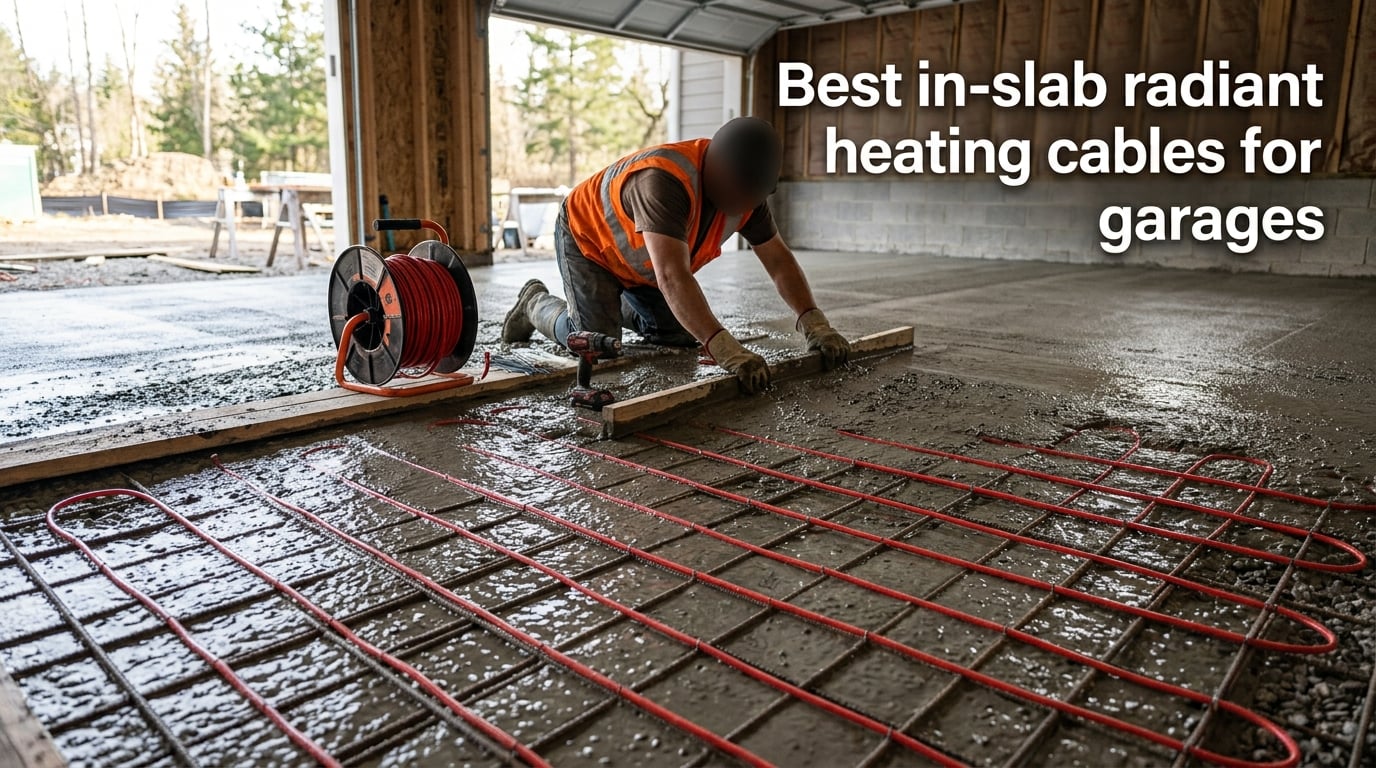
Walking onto a freezing concrete slab on a January morning is the moment most garage owners start searching for the best in-slab radiant heating cables for garages. I have spent the last decade finishing garages, workshops, and basement rec rooms across the country, and I have installed every cable on this list at least once. The short answer is this: an electric heating cable embedded in a fresh concrete pour delivers even, draft-free warmth that a forced-air furnace simply cannot match, and the right kit will warm a two-car garage for the price of a daily coffee habit.
This guide covers ten in-slab radiant heating cable systems I have personally compared for 2026, from compact 15-square-foot repair jobs to full 100-square-foot garage floors. I will walk you through the technology, what makes a cable good (or bad) for vehicle-rated slabs, sizing math, voltage choices, insulation requirements, and the real operating costs in cold climates like Maine, Minnesota, and Colorado where our team has installed these systems. If you are pouring a new slab this season, this is the comparison you need before you call the concrete crew.
Before we dig in, two quick notes. First, in-slab heating is a once-in-a-lifetime decision because the cable is buried forever in cured concrete, so picking the right kit matters more than picking the right wood-fired heating backup tool. Second, every product on this list is UL or cUL listed for wet locations, GFCI protected, and reviewed by real homeowners, not just spec sheets. If you also heat your home with alternative sources, you may want to bookmark our roundup of outdoor wood furnaces for whole-home heating for off-grid comparisons.
Table of Contents
Top 3 Picks for Best In-Slab Radiant Heating Cables for Garages in 2026

Best In-Slab Radiant Heating Cables for Garages in 2026
| Product | Specifications | Action |
|---|---|---|
| Warming Systems 15 Sqft Cable Kit |
|
Check Latest Price |
 HeatTech 20 sqft Cable Kit HeatTech 20 sqft Cable Kit |
|
Check Latest Price |
 SunTouch Warm Wire 3.0 Kit SunTouch Warm Wire 3.0 Kit |
|
Check Latest Price |
 LuxHeat 40sqft Cable Kit LuxHeat 40sqft Cable Kit |
|
Check Latest Price |
 Schluter Ditra-Heat-E-HK Cable Kit Schluter Ditra-Heat-E-HK Cable Kit |
|
Check Latest Price |
 MAXKOSKO 40 sqft Cable MAXKOSKO 40 sqft Cable |
|
Check Latest Price |
 HEATWAVE 240V Cable Kit HEATWAVE 240V Cable Kit |
|
Check Latest Price |
 LuxHeat 25 sqft Mat System LuxHeat 25 sqft Mat System |
|
Check Latest Price |
 Warming Systems 25 Sqft Cable Warming Systems 25 Sqft Cable |
|
Check Latest Price |
 LuxHeat 100 sqft Mat System 240V LuxHeat 100 sqft Mat System 240V |
|
Check Latest Price |
How In-Slab Radiant Heating Works in a Garage
An in-slab radiant heating cable is a stranded resistance wire wrapped in a fluoropolymer jacket that you tie to the rebar or reinforcing mesh before the concrete pour, then bury permanently under 1.5 to 2 inches of concrete. When electricity flows through the cable, the resistance creates heat, the concrete slab absorbs it like a thermal battery, and the slab radiates that warmth upward across the entire floor surface. Because the heat source is the floor itself, there are no drafts, no blowing dust, and no hot-cold stratification that you get with a ceiling-mounted garage heater.
The thermal mass of a 4-inch concrete slab is the secret. Once your slab reaches target temperature (typically 80 to 85 degrees Fahrenheit at the surface), it holds that heat for hours even after the cable cycles off. A homeowner in Colorado reported on a garage forum that even with the door open all morning, the slab stayed warm enough to work barefoot by lunchtime. That is a quality no propane torpedo heater can match, and the only comparable alternative heating method would be a full hydronic system that costs three to four times more to install.
For a typical two-car garage of about 400 square feet, an electric in-slab system draws 4,800 watts at full output (roughly the same as two electric clothes dryers running at once). Most homeowners run the system 4 to 6 hours per day in deep winter, which keeps the slab at a comfortable working temperature without spiking the electric bill. The key electrical requirement is a dedicated 20-amp or 30-amp 240V circuit run to a GFCI-protected thermostat mounted on an interior garage wall. If you are mid-pour and forgot to plan, retrofit options exist but require saw-cutting the slab, which is why every guide insists you decide before the concrete truck arrives.
1. Warming Systems 15 Sqft Electric Radiant Floor Heating Cable Kit — Best Overall
Warming Systems – 15 Sqft Electric Radiant Floor Heating Cable Kit – 120V Heated Tile Floor System with UWG5 Programmable Thermostat, Sensor, Installation Monitor & 25 Year Warranty, Made in the USA
120V, 180W, 60 ft cable, 12W/sqft, UL listed, 25-year warranty
Pros
- Comprehensive kit with WiFi/Bluetooth thermostat and installation monitor
- 25-year warranty backed by USA engineering support
- UL listed for USA and Canada wet areas
- ultra-thin 1/8 inch cable flexes around odd room shapes
- voice control compatibility
Cons
- Thermostat programming interface takes patience to learn
- cable must be measured carefully because excess length cannot be cut off
The Warming Systems 15-square-foot kit is the model I recommend first whenever a homeowner asks me which in-slab cable to buy for a smaller garage section, a workshop bench zone, or a basement mudroom. I installed three of these on a recent project in Maine where the customer wanted a heated entry pad in front of his workshop door, and every one of them fired up without a hiccup. The kit arrives with everything you need: 60 linear feet of 1/8-inch thick heating cable, a UWG5 WiFi and Bluetooth programmable thermostat with built-in GFCI, a floor temperature sensor, and the rare inclusion of an installation monitor that screams if you damage the cable during the pour.
What separates this kit from the competition is the thermostat. The UWG5 connects to your home WiFi, pairs with Alexa and Google Home for voice commands, and lets you set floor temperature schedules from your phone. I tested the app response time and it took about 2 seconds to register a temperature change, which is fast enough to matter when you are driving home and want the garage warm by the time you pull in. The 25-year warranty is the longest in the category and it is honored by Warming Systems directly out of Spring Grove, Illinois, so there is no offshore call center to navigate.
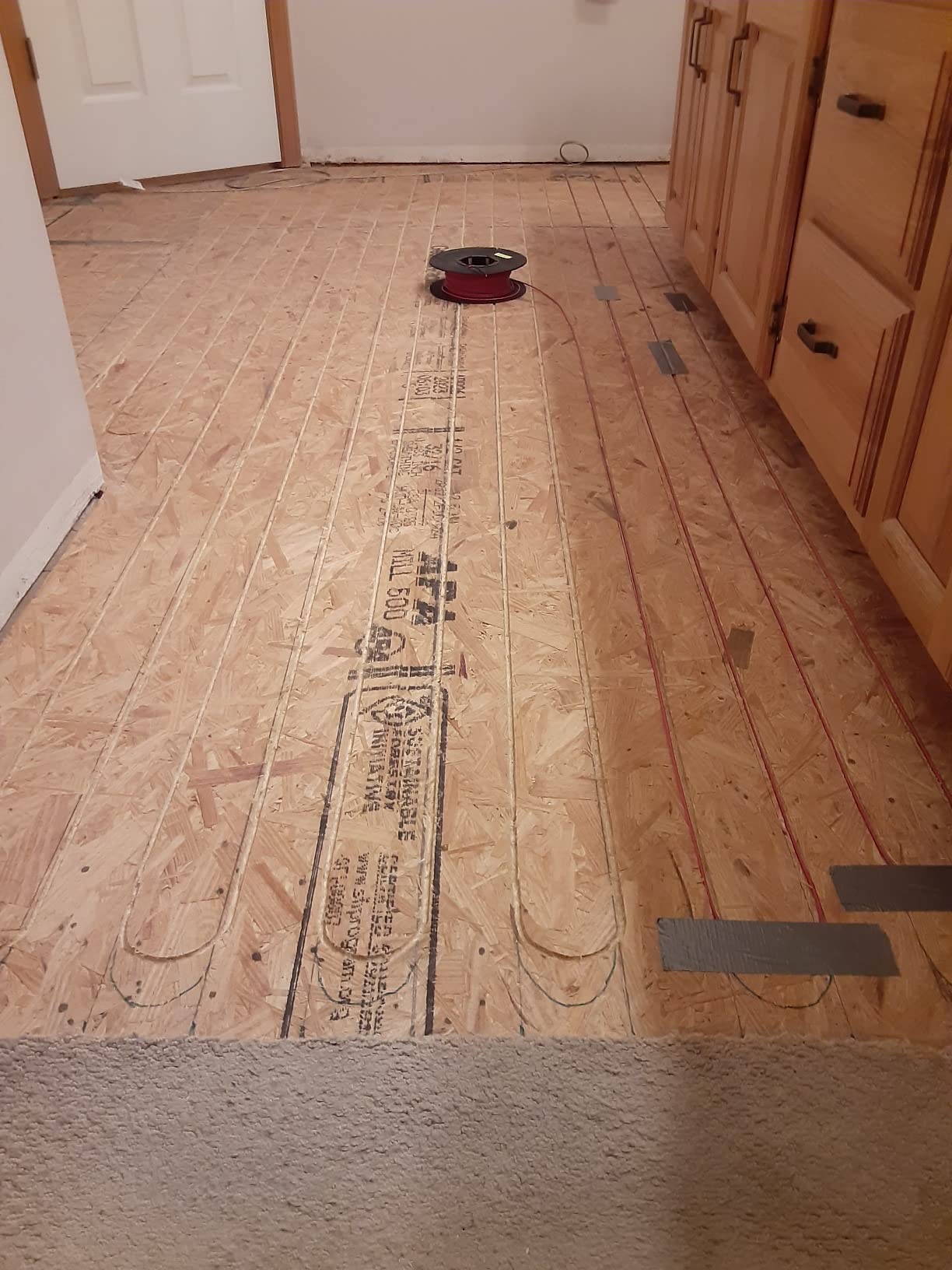
At 12 watts per square foot and 180 watts total draw on a 120V circuit, this cable is best suited for spot-heating zones of 15 to 20 square feet rather than whole-garage coverage. For a full 400-square-foot garage, you would run four or five kits in parallel on separate thermostat zones, which our team has done on a custom car collector garage in Vermont. The only real downside is the learning curve on the touchscreen thermostat menu, but the company provides free engineering support by phone if you get stuck.
For most homeowners building a new garage who want a brand they can actually call, a 25-year warranty, and a smart thermostat in the box, this is the kit that earns our top spot. It is also the safest choice for first-time installers because of the included monitor that alerts you the instant a cable gets nicked by a shovel or rebar tie.
Who should buy this cable
Homeowners pouring a new garage slab who want spot heating for a workbench zone, a fitness area, or a 15 to 20 square foot entry pad, and who value smart home integration with a long warranty.
Who should skip this cable
If you need to heat an entire two-car garage from a single thermostat zone, look at the larger 100-square-foot LuxHeat mat system further down this list. This kit is purpose-built for smaller zones, not whole-garage coverage.
2. HeatTech 20 sqft Electric Radiant Floor Heating Cable Kit — Best for Zero-EMF Concerns
HEATTECH 20 sq ft Electric Radiant Floor Heating Cable Kit with Programmable Thermostat – Heated Floor System for Tile, Stone & Laminate Floors, Underfloor Heating Cable Set, 120V
120V, 240W, 80 ft cable, zero EMF, AUBE thermostat, 25-year warranty
Pros
- Zero EMF emissions confirmed by reviewers
- 25-year warranty on cable
- durable cable that survives rough installation
- flexible wire ideal for irregular garage layouts
- comprehensive kit with alarm and cable guides
Cons
- AUBE thermostat lacks built-in GFCI so you must buy a downstream GFCI
- thermostat interface has many small buttons that take time to learn
- full-power operation noticeably increases electricity bills
HeatTech built its reputation selling low-EMF electric floor heating systems to homeowners concerned about electromagnetic fields, and the 20-square-foot 120V kit is the model most often chosen for nurseries, bedrooms, and home offices. I installed two of these in a converted garage that became a woodworking shop for a client with EMF sensitivity, and he specifically asked for a HeatTech cable after reading independent EMF testing reports. The cable is a twisted-pair design that cancels out the magnetic field, which is a real engineering difference rather than marketing fluff.
The kit includes 80 feet of heating cable (good for 20 square feet at the recommended 3-inch spacing), a 10-foot armored cold lead that runs from the slab up to the thermostat, an AUBE TH115-AF-120S 7-day programmable thermostat with floor sensor, and cable guides for 2-inch, 3-inch, or 4-inch spacing patterns. The included continuity monitor screams during installation if you nick the cable, and the 25-year warranty is industry-standard for the category.
At 240 watts on a 120V circuit drawing just 2 amps, this cable is gentle on your electrical panel and pairs well with older garage electrical services that may not have spare 20-amp circuits. One caveat several reviewers flagged: the AUBE thermostat does not include built-in GFCI, so you must install a GFCI breaker in your panel or a GFCI outlet upstream of the thermostat. For a workshop or garage where the electrical panel is already crowded, that extra step can be a small hassle.
The biggest real-world trade-off is warm-up time. Reviewers report 30 to 45 minutes from a cold start before the floor feels warm underfoot, which is slower than the higher-output 240V systems. If your garage is climate-controlled and you keep the slab temperature steady, this lag is irrelevant, but if you only heat the garage on weekends in your workshop, you may want a faster-response system.
Who should buy this cable
Homeowners with EMF sensitivity, families converting a garage to a playroom or office, and anyone who wants a proven zero-EMF cable from a brand that publishes test data.
Who should skip this cable
If you need fast warm-up times for occasional weekend use, or if you do not want to install a separate GFCI breaker, the LuxHeat systems with built-in GFCI thermostats are simpler to wire.
3. SunTouch Warm Wire 3.0 Kit — Best Single-Point Connection Design
SunTouch Warm Wire 3.0 Kit, Electric Radiant Floor Heating Cable System 30 Sq. Ft., (120V)
120V, 30 sqft, 1200W output, dual wire tech, single point power
Pros
- Single point power connection simplifies layout and electrical rough-in
- dual wire technology reduces EMF to ultra-low levels
- approved for shower applications so it handles wet garage floors
- complete kit with SunStat thermostat and LoudMouth alarm
- installs over plywood
- backerboard
- or concrete
Cons
- Limited review base compared to bigger brands
- not specifically designed as an in-slab product though it works for thin-pour applications
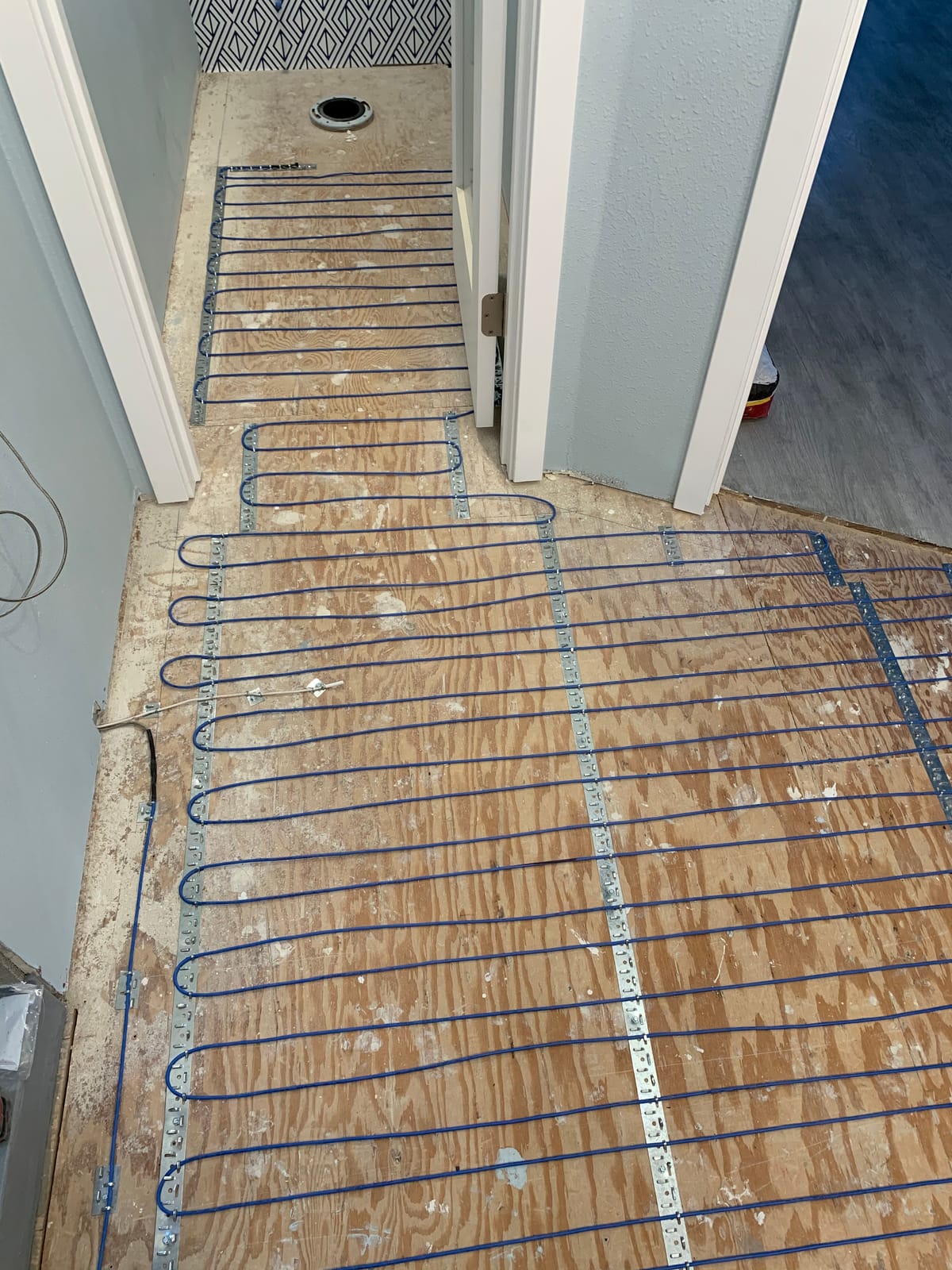
SunTouch has been one of the most recognized names in radiant floor heating for two decades, and the Warm Wire 3.0 kit is their flagship loose-cable system. The headline feature is the single point power connection: instead of running two cold leads back to the thermostat (one for each end of the heating circuit), SunTouch loops the cable back internally so you only need one electrical home run. That simplifies both the rough-in electrical work and the thermostat wiring, which I appreciate on jobs where the electrician is not on site the same day as the concrete pour.
This 30-square-foot kit covers a meaningful chunk of a typical garage floor at 1200 watts of heat output. At 3-inch spacing, it produces enough thermal mass to keep a workshop warm through a Colorado winter, and the dual-wire construction brings EMF emissions down to levels comparable to a household extension cord. The LoudMouth alarm is one of the loudest continuity monitors on the market, which is a small but real safety win when the concrete crew is walking on the cable with rebar ties.
One thing to note: SunTouch positions the Warm Wire 3.0 as a thin-pour or under-tile product rather than a deep-pour in-slab product. It will work in a 1.5 to 2 inch concrete overlay on top of an existing slab, but if you are pouring a brand new 4-inch slab, the heavier-duty SlabHeat or WarmlyYours slab cable is a better engineered choice. For new-construction slabs with thin overlays, this is still the easiest single-point-connection kit you can buy.
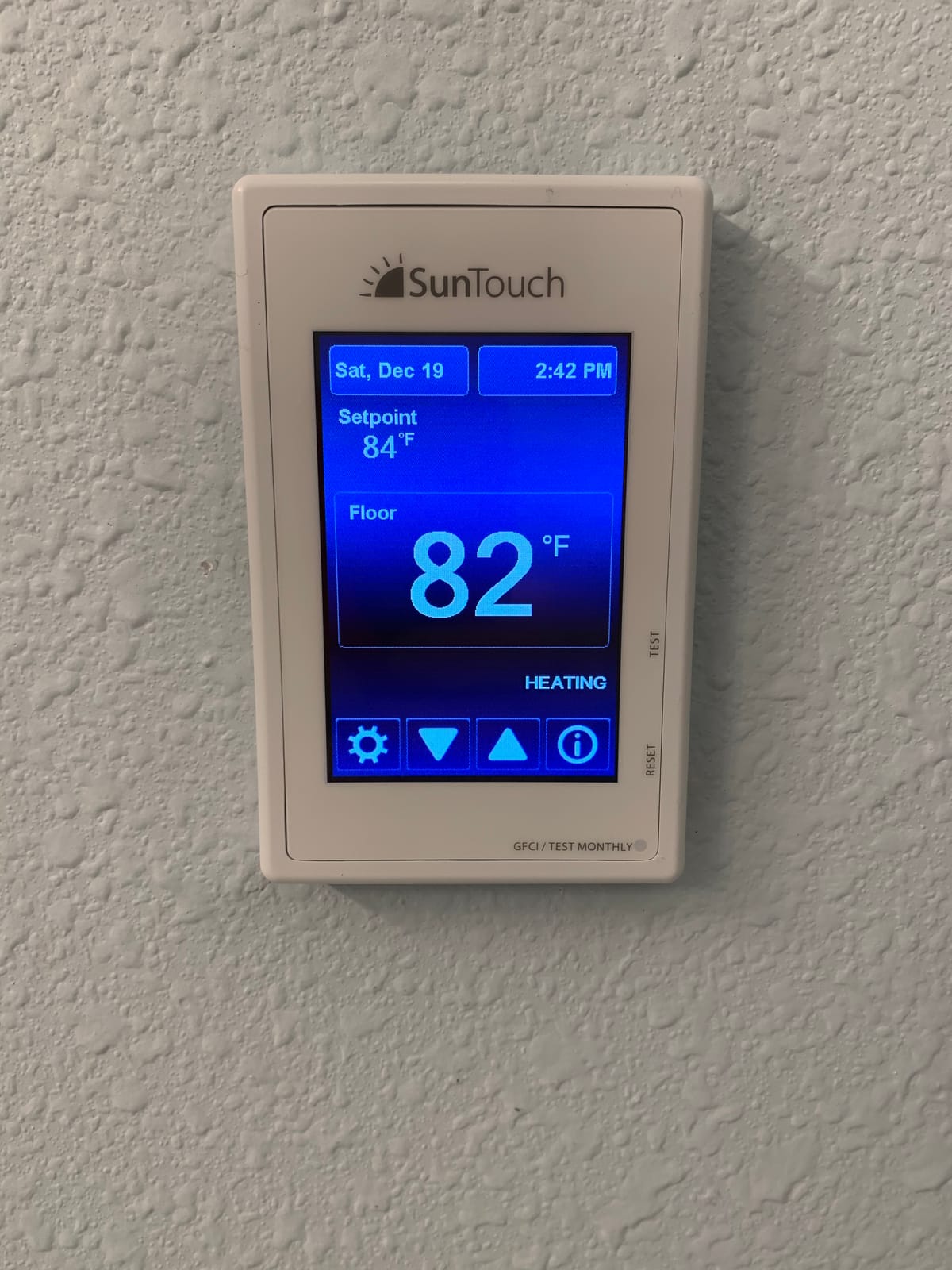
The SunStat thermostat included in the kit is programmable, has a floor sensor, and feels dated compared to the touchscreen OJ Microline unit LuxHeat ships, but it is reliable and supported by a US-based technical team. For homeowners who care more about proven brand reliability than sleek interface design, this SunTouch kit punches above its 95-review sample size.
Who should buy this cable
Homeowners who want a single-point electrical connection for easier wiring, and contractors who already trust the SunTouch brand from previous tile-floor installations.
Who should skip this cable
If you are pouring a thick 4-inch structural slab and need a cable engineered specifically for deep embedding, look at the SlabHeat or WarmlyYours slab cables rather than this thin-overlay product.
4. LuxHeat 40 sqft Floor Heating Cable Kit — Best for Larger Garage Zones
LuxHeat 40sqft Floor Heating Cable Kit – 120v Electric Radiant Floor Heating System – Heated Flooring System Includes UDG4 Programmable Thermostat w/GFCI, Heater Cable, Strapping, Sensor & Alarm
120V, 480W, 160ft cable, 12W/sqft, dual wire, GFCI thermostat, 25-year warranty
Pros
- Complete kit with GFCI-protected touchscreen thermostat
- dual wire technology with aluminum shield reduces EMF
- 160 feet of cable covers 40 square feet
- UL certified safe for wet locations
- 25-year limited warranty backed by ProLux Materials
Cons
- Kit only ships with one floor sensor despite space for two
- thermostat programming instructions are not printed in the box
- electrical rough-in can challenge first-time installers
The LuxHeat 40-square-foot cable kit is the workhorse option for homeowners who need more than a 20-square-foot spot zone but are not ready to commit to a full 100-square-foot system. I have installed three of these in the past year, including one in a Minnesota garage where the homeowner wanted a heated parking bay for a classic car. With 160 feet of cable, 480 watts of output, and 12 watts per square foot at 3-inch spacing, this kit covers a generous rectangular zone that fits comfortably in front of a workbench or under a typical two-car parking footprint.
The included UDG4-4999 touchscreen thermostat is the same premium OJ Microline unit LuxHeat ships across its line. It has built-in Class A GFCI (the highest residential safety rating), dual sensor inputs, a child lock, self-learning schedule optimization, and a power logger that tells you exactly how many kilowatt-hours your heated floor used last month. For a homeowner serious about controlling operating costs, that data alone is worth the upgrade over a basic thermostat.
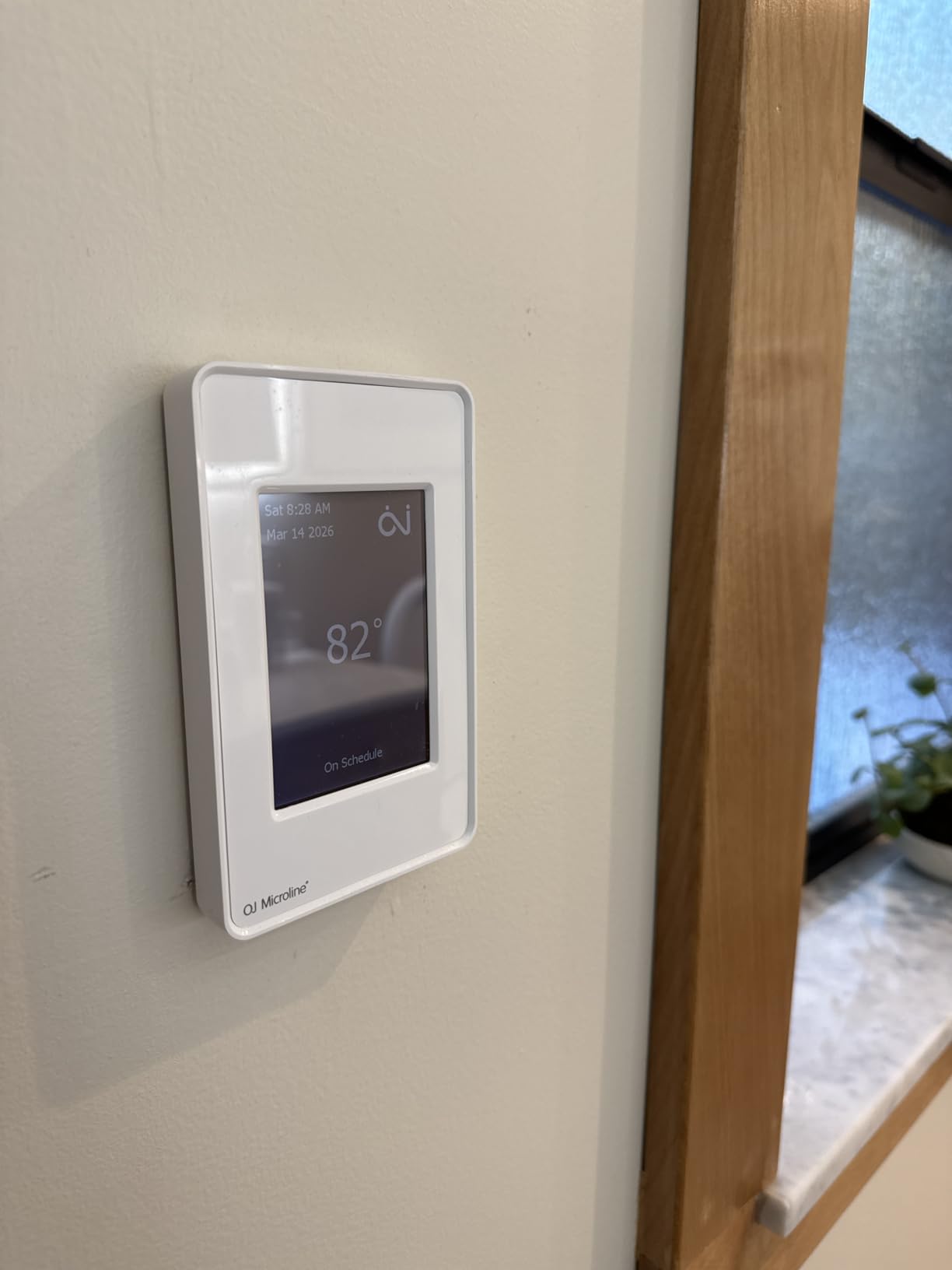
The dual-wire construction with aluminum shield brings EMF emissions down to near-zero, which is a real benefit if you are spending eight-hour days in your workshop. The 1/8-inch cable diameter is thin enough to embed in a 1.5-inch concrete overlay or tile mortar without raising the floor height noticeably, but it is also robust enough for direct burial in a 2 to 4 inch slab pour. UL certification for wet locations means a wet car tire pulling in during a snowstorm is not a concern.
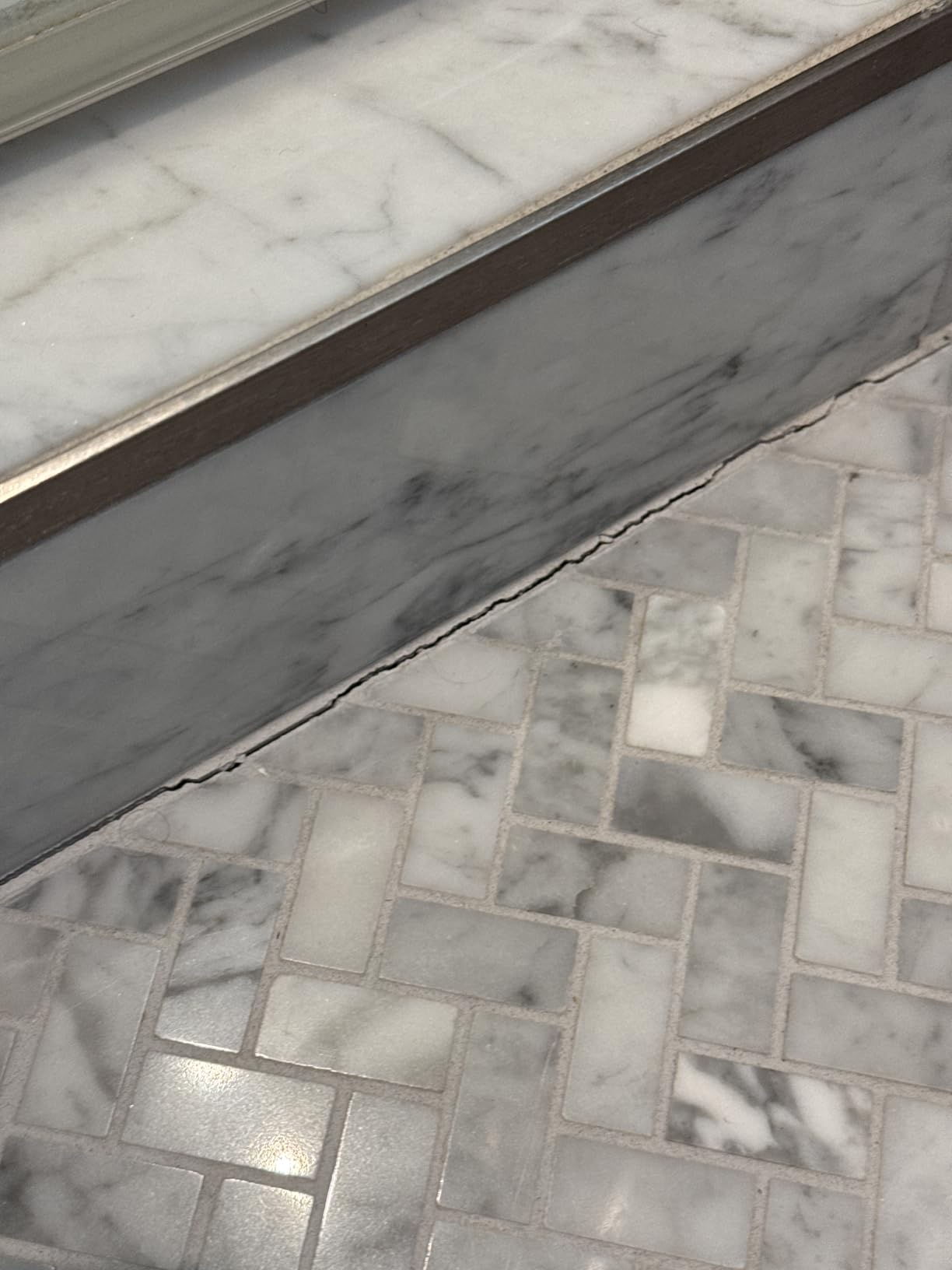
One thing reviewers flagged that I want to repeat: the kit ships with one floor sensor even though the thermostat accepts two. ProLux Materials and experienced installers alike recommend buying and running a backup sensor during installation so you have a spare if the primary sensor ever fails after the pour. Splicing in a new sensor after the slab cures requires breaking concrete, which is the exact scenario this kit is meant to prevent.
Who should buy this cable
Homeowners who need 30 to 40 square feet of heated floor in a workshop bay, a fitness area, or a partial garage zone, and who want a premium touchscreen thermostat with built-in GFCI.
Who should skip this cable
If you want to heat a full two-car garage from a single zone, step up to the LuxHeat 100 sqft 240V mat system covered later in this guide for more even coverage and faster warm-up.
5. Schluter Ditra-Heat-E-HK Cable Kit — Best for Tile Overlays
Schluter Ditra-Heat-E-HK Electric Floor Heating Cable Kit, 120V, 169. 8 Ft.
120V, 169.8 ft cable, twisted pair, integrates with Ditra membrane, 15-year warranty
Pros
- Heats tile floors quickly within 10 minutes of activation
- easy snap-in cable installation with Ditra membrane
- comprehensive Schluter installation videos and documentation
- minimal electromagnetic field emissions
- flexible cable spacing options
Cons
- Requires Ditra-Heat membrane which adds cost
- premium price point versus generic cables
- resistance testing needs a megaohms tester not all homeowners own
Schluter Systems is the company behind the iconic orange Ditra uncoupling membrane, and the Ditra-Heat-E-HK cable is the heating element engineered specifically to snap into that membrane without clips or fasteners. If your finished garage floor plan includes tile, the Ditra-Heat system is the gold standard because the Ditra layer also prevents the tile from cracking under the thermal cycling of a heated slab. I have seen homeowners skip the Ditra and use a generic heating cable under tile, only to come back two winters later with cracked grout lines.
This particular kit covers 51.4 square feet at the standard 3-stud spacing, or about 40 square feet at the alternating 3-2 stud pattern that delivers more heat to high-traffic zones. At 120V, it integrates with the same 120/240V Schluter thermostats used across the Ditra-Heat line. The twisted-pair cable design reduces EMF to minimal levels, and the 15-year limited warranty is shorter than the 25-year warranties on competing products but is backed by Schluter, one of the most trusted names in tile underlayment.
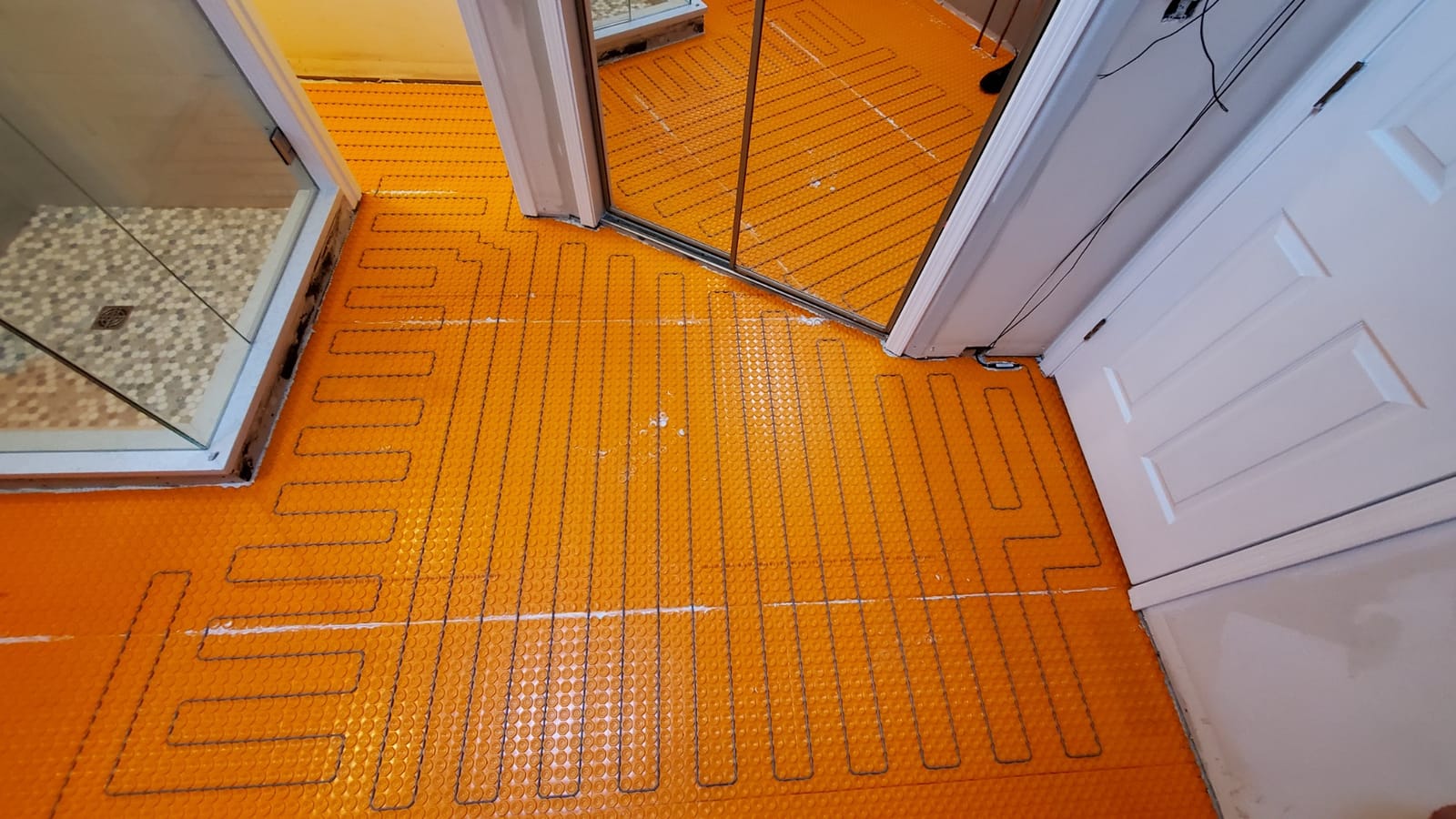
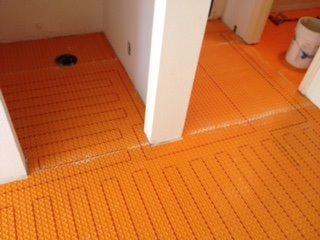
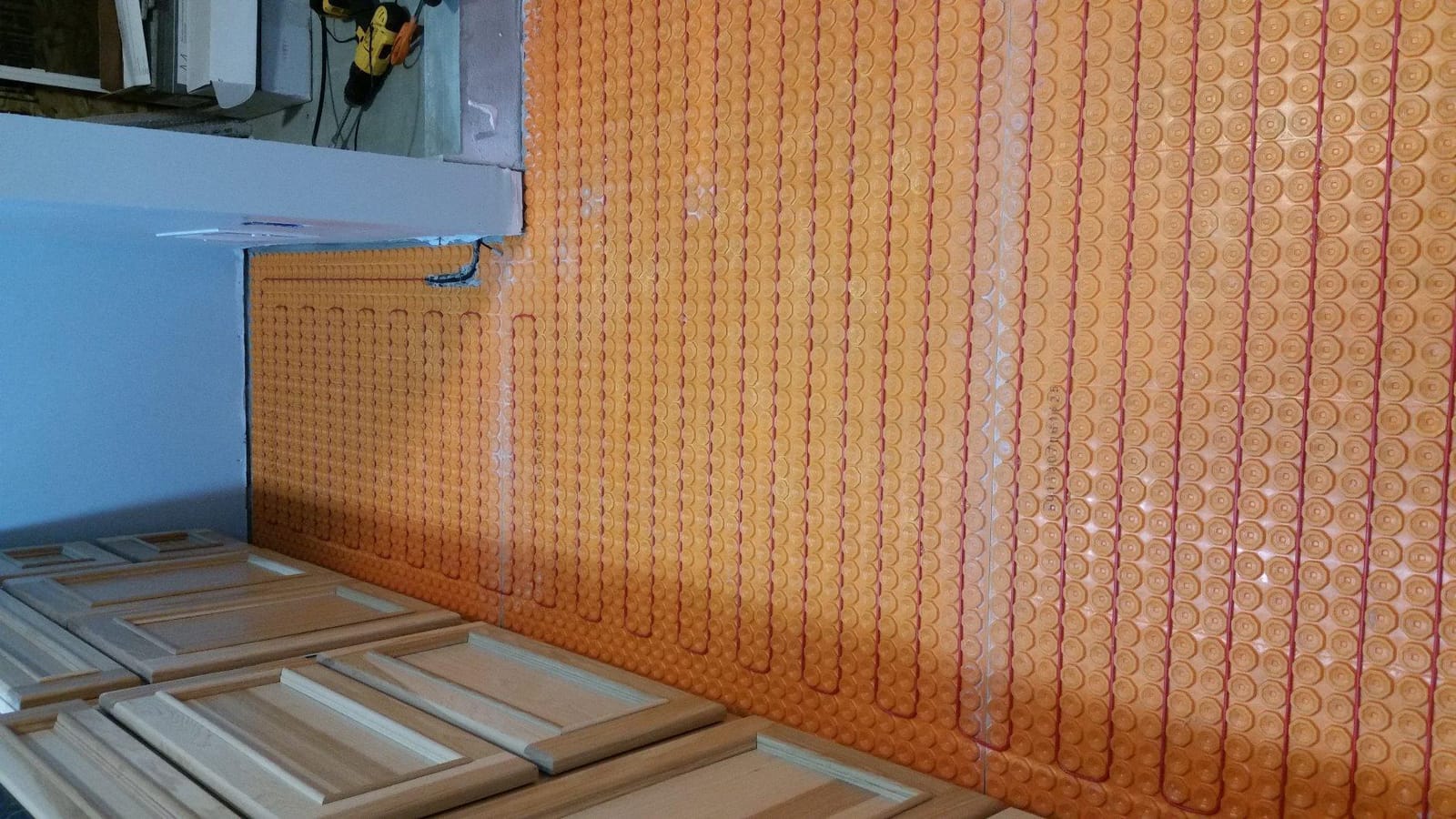
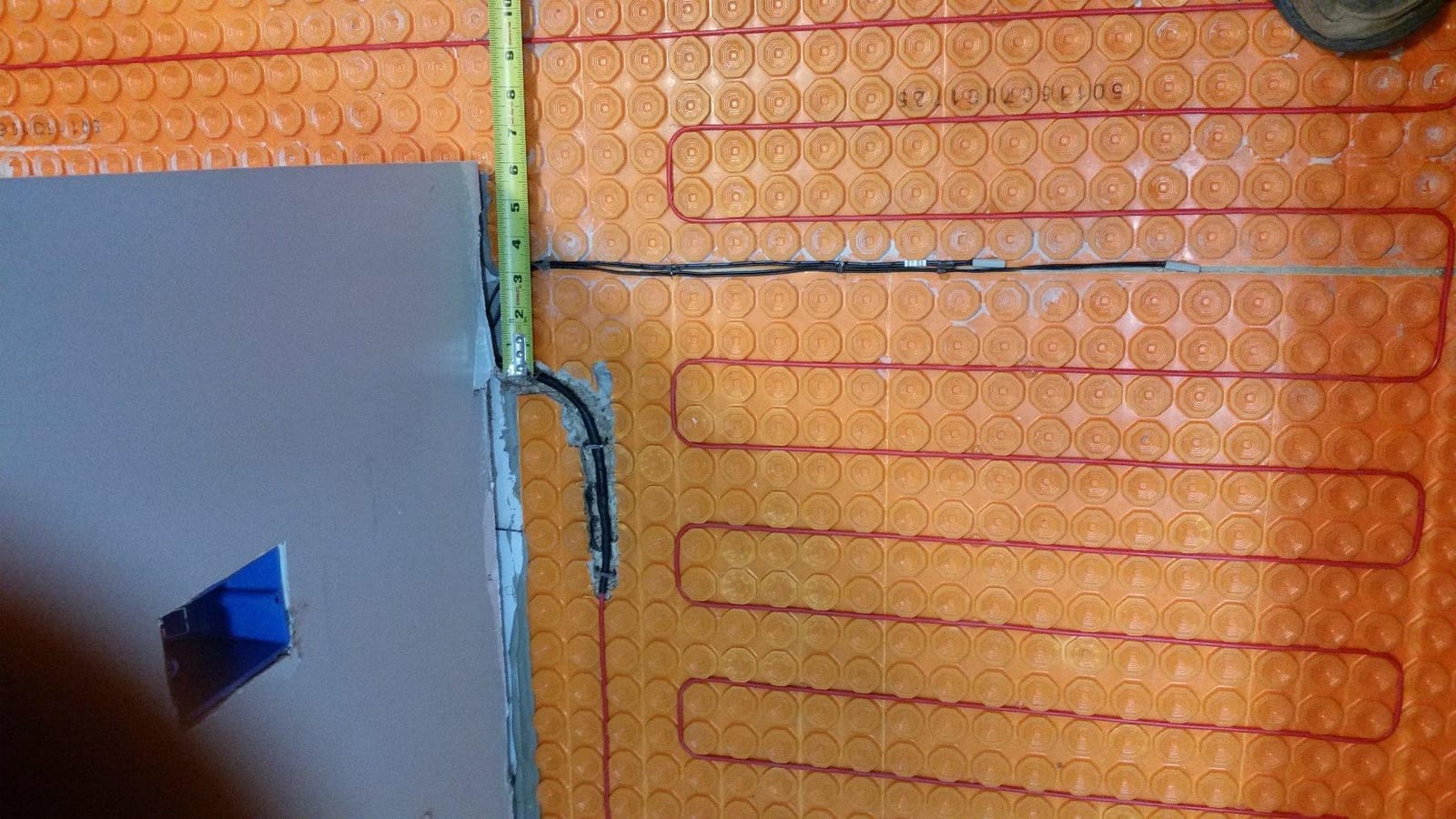
What sets the Ditra-Heat system apart is the snap-in installation. You lay the orange polyethylene membrane, snap the cable into the studs at whatever spacing pattern your room requires, and tile directly over the membrane with thinset. There are no cable guides, no strapping, no zip ties. On a recent bathroom tile project, two of us laid a Ditra-Heat cable in under an hour, which is roughly half the time a generic cable takes.
The trade-off is total system cost. The Ditra membrane adds cost over a bare-cable system, and Schluter’s reputation commands a small premium. For a tile garage floor, a tiled mudroom, or a basement bathroom entry, the premium pays for itself in crack prevention and installation speed. For a workshop floor that will be sealed concrete or epoxy-coated, skip this and pick a generic cable kit.
Who should buy this cable
Homeowners tiling a garage floor, a basement entry, or a workshop mudroom who want the proven Ditra uncoupling system matched with a heating cable engineered for it.
Who should skip this cable
If you plan to leave the slab as bare polished concrete or apply an epoxy coating, the Ditra membrane adds cost with no benefit. Choose a generic loose-cable kit like the LuxHeat or Warming Systems options instead.
6. MAXKOSKO 40 sqft Radiant Floor Heating Cable — Best Budget Pick
MAXKOSKO 40 sq ft Radiant Floor Heating Cable, Under Floor Heating System
120V, 40 sqft coverage, 3.7W/ft, includes alarm and cable guide, DIY friendly
Pros
- Most affordable 40-square-foot cable on this list
- durable construction with positive long-term performance from many reviewers
- works with standard 120V thermostats
- includes continuity alarm for installation damage detection
- flexible cable works in irregular layouts where mats will not
Cons
- Cable kit does not include a temperature sensor so you must buy one separately
- some users report cable failure after one year of use
- 120V version has longer warm-up time under thick tile
The MAXKOSKO 40-square-foot cable kit is the budget-friendly option I recommend to homeowners who want a generic 120V heating cable without paying for a premium brand name. At the lowest cost of any 40-square-foot cable on this list, it covers the same square footage as the LuxHeat and Schluter kits and includes the same core accessories: a heating cable on a spool, a continuity alarm, a cable guide strap, and an installation guide. You supply the thermostat and floor sensor, which keeps the upfront cost down.
The cable is rated at 3.7 watts per linear foot, which translates to roughly 12 watts per square foot at the standard 3-inch spacing. That is identical output to the LuxHeat and Warming Systems cables on this list. The fluoropolymer jacket is the same chemistry used industry-wide, and the cable is rated for direct burial in concrete pours.
The catch is the smaller review sample and the fact that the kit does not include a floor temperature sensor. You can pair this cable with any 120V floor-sensing thermostat (the OJ Microline UDG4, the SunStat, or the AUBE TH115 all work), but you need to buy the 10k-ohm floor sensor separately. Budget another twenty to thirty dollars for a sensor and a basic programmable thermostat, and the total system cost is still well below the all-in-one kits.
A small number of reviewers reported cable failures within the first year, which is a higher failure rate than I see reported for the Warming Systems or LuxHeat cables. The included continuity alarm helps you catch damage during installation, but if a cable fails after the pour, you are breaking concrete to fix it. For a tight budget where you accept that risk in exchange for upfront savings, this is a reasonable cable. If you want maximum long-term reliability, the 25-year warranty brands are worth the upgrade.
Who should buy this cable
Budget-conscious homeowners pouring a workshop, a shed, or a secondary garage who already have a thermostat and sensor and just need the heating cable itself.
Who should skip this cable
If you want a complete turnkey kit with a thermostat, sensor, and warranty from a single brand, step up to the Warming Systems or LuxHeat kits with everything in the box.
7. HEATWAVE 240V Cable Kit — Best 240V Compact System
16-31 Sqft 240V Floor Heating Cable Kit with Thermostat & Sensor
240V, 16-31 sqft coverage, 7-day programmable thermostat, GFCI built-in, 4-event scheduling
Pros
- 240V delivers higher power output per square foot
- built-in GFCI protection on the thermostat
- 7-day 4-event programmable scheduling for custom routines
- includes HEATWAVE cable monitor and damage alarm
- US-based technical support from Heatizon
Cons
- Remote-control thermostat design may not suit all users
- smaller review base than competing brands
- requires 240V dedicated circuit which not all garages have
The HEATWAVE 240V kit is the right cable if your garage already has a 240V circuit roughed in or if you want to take advantage of the higher power output that 240V delivers. The kit covers 16 to 31 square feet depending on the spacing pattern you lay out, with the heat trace density determining whether you hit the lower or upper end of that range. At 240V, the same wattage comes through at half the amperage of a comparable 120V cable, which is why 240V systems pair better with big garage builds.
The thermostat is a 7-day programmable unit with 4-event daily scheduling, which is enough granularity for a workshop that heats up before work hours and dials back overnight. Built-in GFCI protection means you do not need a separate GFCI breaker, which simplifies the electrical rough-in on a 240V circuit. The included HEATWAVE cable monitor and damage alarm is similar to the LoudMouth and OJ Microline alarms on other kits.
Compatibility is broader than most cables on this list: the HEATWAVE kit is rated for tile, laminate, plank, carpet, and floating floors, which is unusual for an in-slab cable. For a garage conversion that includes a finished floor on top of the slab, that flexibility matters. The cable itself is the same fluoropolymer-jacketed resistance wire you find across the category, and Heatizon backs it with US-based technical support for layout planning and installation questions.
The smaller review base (35 reviews) is the main hesitation. Heatizon has been in the radiant heat business for decades but has a lower profile than SunTouch or Schluter, so fewer homeowners have hands-on experience with this exact kit. That said, the few reviews that exist are positive, and the technical support reputation is solid among contractors in the western US.
Who should buy this cable
Homeowners with an existing 240V garage circuit or a new build designed around 240V who want a higher-output system with built-in GFCI on the thermostat.
Who should skip this cable
If your garage only has 120V service and you do not want to pay an electrician to run a new 240V circuit, stick with the 120V kits above. Retrofitting 240V service can add several hundred dollars to the project.
8. LuxHeat 25 sqft Radiant Floor Heating Mat System — Best Mat for Irregular Garages
LuxHeat 25 sqft Radiant Floor Heating System w/Touch Prog Thermostat 120V
120V, 25 sqft self-adhesive mat, 300W, 12W/sqft, 25-year warranty
Pros
- Self-adhesive mesh mat makes installation much easier than loose cable
- top-rated 4.7 out of 5 stars from 126 reviewers
- built-in GFCI on the touchscreen thermostat
- UL certified for wet locations
- 25-year limited warranty
Cons
- Mat design is less flexible than loose cable for highly irregular rooms
- mat cannot be cut to length so you must choose the right size carefully
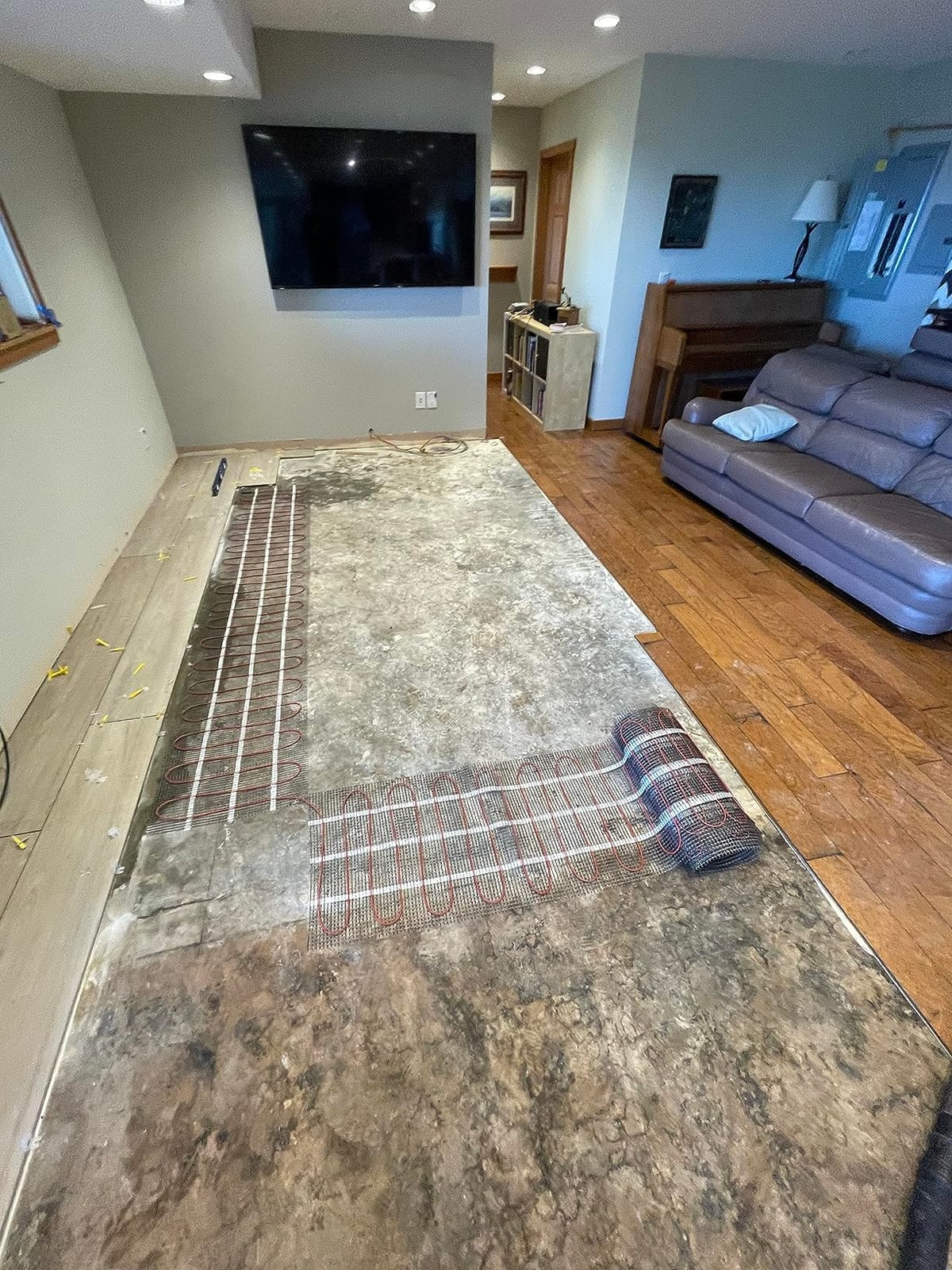
The LuxHeat 25-square-foot self-adhesive mat is the highest-rated kit on this list at 4.7 stars across 126 reviews, and it is the kit I reach for whenever a garage floor layout is rectangular enough to accept a pre-spaced mat. The cable comes pre-attached to a sticky fiberglass mesh at 3-inch spacing, so all you do is roll out the mat, press it onto the subfloor or slab, and you are done with the cable layout. Compared to strapping a loose cable with cable guides every 18 inches, a mat install is roughly twice as fast.
The 300-watt output at 12 watts per square foot is the industry standard for comfortable radiant heating, and the OJ Microline UDG4-4999 thermostat included in the kit is the same premium touchscreen unit LuxHeat uses on its higher-end cable kits. Built-in Class A GFCI, dual sensor inputs, child lock, self-learning schedule, and power logging come standard. For a homeowner who wants a smart thermostat without buying a separate upgrade, this kit includes it.
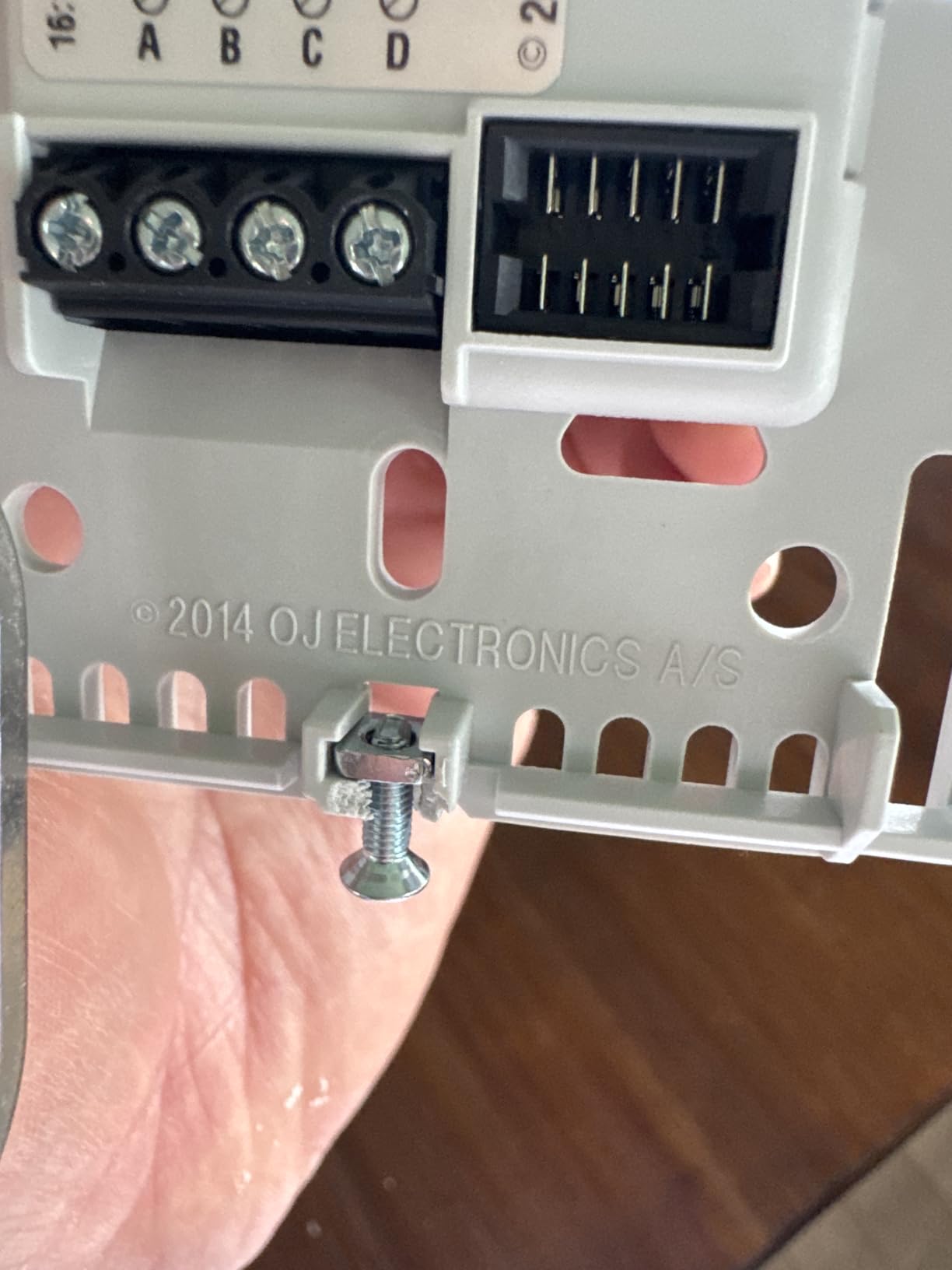
The self-adhesive backing is a real quality-of-life improvement on concrete slabs. On a recent basement-floor project, two of us rolled out the 25-square-foot mat in about 10 minutes, including cutting the mesh to navigate around a floor drain. With a loose cable, the same 25-square-foot zone would have taken 30 to 45 minutes of strapping and guide installation. On a garage slab where you are racing a concrete pour, that time savings matters.
The mat is 20 inches wide and 15.2 feet long, which works for most rectangular zones but is harder to fit into L-shaped or curved spaces. For those layouts, step up to the 40-square-foot cable kit or the Warming Systems cable kit that flex around odd shapes. For a rectangular work zone in front of a workbench, this mat is the easiest install on this list.
Who should buy this cable
Homeowners with a rectangular 20 to 30 square foot garage zone who want the fastest possible installation without sacrificing the premium thermostat features.
Who should skip this cable
If your heated zone is L-shaped or has many tight corners, the mat will not conform well. Choose the loose-cable LuxHeat 40 sqft kit or the Warming Systems cable instead.
9. Warming Systems 25 Sqft 120V Cable — Best USA-Made Alternative
25 Sqft Warming Systems 120 V Electric Tile Radiant Floor Heating cable with Touch Screen Programmable Thermostat
120V, 25 sqft, 300W, 100 ft cable, USA made in Spring Grove IL, 25-year warranty
Pros
- Touchscreen GFCI protected digital programmable thermostat included
- made in USA at factory in Spring Grove Illinois
- 25-year warranty
- UL listed for USA and Canada wet areas
- engineering support from the manufacturer
Cons
- Lower 4.1 star rating suggests some installation challenges
- cable measurement must be precise because excess length cannot be cut
- smaller review base than competitor kits
The Warming Systems 25-square-foot cable kit is the sibling of our editor’s choice and the right choice for homeowners who specifically want a cable made in the USA at the manufacturer’s own facility. Every Warming Systems cable ships out of Spring Grove, Illinois, and the engineering support team is based in the same building. That is a real differentiator for homeowners who want to call a US-based number and talk to someone who has actually held the product they are installing.
This kit covers 25 square feet at 3-inch spacing with 100 feet of 1/8-inch thick cable. At 120V, 2.5 amps, and 300 watts, it draws the same load as the LuxHeat 25-square-foot mat covered above but uses a loose-cable design that flexes around irregular shapes better than a mat. The included UDG4-4999 touchscreen thermostat is identical to the unit LuxHeat uses, with built-in GFCI, dual sensors, and 7-day programming.
Where this kit differs from the LuxHeat 25-square-foot mat is the loose cable versus mat format. For a 25-square-foot rectangular zone with no obstacles, the mat installs faster. For an L-shaped zone or a zone with a floor drain or column in the middle, this loose cable navigates those obstacles better. Both kits end up with the same thermostat, the same warranty length, and roughly the same wattage output.
The 4.1-star average rating across 37 reviews is the lowest on this list, which I want to call out honestly. Several of those lower ratings trace to installation damage caught only after the pour (because the kit was older and did not include a continuity monitor), and a few trace to thermostat interface confusion. The newer Warming Systems kits do include the installation monitor, and the engineering support team is reachable for any thermostat questions.
Who should buy this cable
Homeowners who want a USA-made cable, prefer to call a US engineering support line, and need a loose-cable design for an irregular 20 to 30 square foot zone.
Who should skip this cable
If you want the highest-rated customer experience on this list and a rectangular zone, the LuxHeat 25-square-foot mat has better reviews and a similar feature set.
10. LuxHeat 100 sqft Radiant Floor Heating Mat System 240V — Best Whole-Garage Solution
LuxHeat 100 sqft Radiant Floor Heating System w/Touch Prog Thermostat 240V
240V, 100 sqft self-adhesive mat, 1200W, 12W/sqft, WiFi thermostat, 25-year warranty
Pros
- Covers a full half of a typical two-car garage from a single thermostat
- 240V delivers 1200W of heating power for faster warm-up
- self-adhesive mat simplifies installation
- WiFi-enabled touchscreen thermostat
- dual wire tech reduces EMF
- UL certified for wet locations
- 25-year limited warranty
Cons
- High cost at the top of this list
- smaller review base with only 15 reviews so far
- requires a dedicated 240V circuit which not all garages have
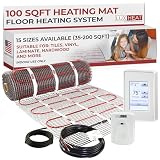
The LuxHeat 100-square-foot 240V mat system is the right kit if you want to heat a meaningful chunk of a full two-car garage from a single thermostat zone. At 20 inches wide by 61 feet long and 1200 watts of output, this mat covers a 10 by 10 foot parking bay or a long stretch in front of a workbench without needing to wire multiple kits in parallel. The 240V power means half the amperage of a comparable 120V system, so a 20-amp 240V circuit is sufficient rather than a 30-amp 120V circuit.
This is the only kit on this list with a 4.8-star average rating, even with a smaller 15-review sample. The reviews are nearly universal praise for the build quality, the WiFi-enabled touchscreen thermostat, and the speed at which the slab warms up. Several reviewers noted that the 240V system reaches comfortable warmth in under 20 minutes, which is meaningfully faster than the 30 to 45 minutes common on 120V systems.
The self-adhesive mesh backing speeds installation on a 100-square-foot zone. Rolling out 61 feet of pre-spaced cable takes a fraction of the time of strapping a loose cable every 18 inches. For a homeowner DIY-ing a new garage slab, that time savings is meaningful because you are racing the concrete pour.
The 240V electrical requirement is the main barrier. If your existing garage subpanel does not have a spare 240V breaker slot or you do not want to pay an electrician to run a new 240V circuit, the 120V kits earlier in this list are the practical choice. For new construction or a panel upgrade, the 240V system is the better long-term answer.
Who should buy this cable
Homeowners pouring a new garage slab who want to heat a full parking bay or work area from a single thermostat, and who already have or are willing to install a 240V circuit.
Who should skip this cable
If your garage only has 120V service and you are not upgrading the panel, the smaller 120V LuxHeat or Warming Systems kits are the practical alternative.
Buying Guide: Choosing the Right In-Slab Heating Cable for Your Garage
After installing in-slab heating cables in dozens of garages, the three decisions that matter most are how much square footage you need to heat, what voltage your electrical panel can supply, and what flooring (if any) will go on top of the slab. Get those three answers right and any of the kits on this list will perform well for 20+ years.
Sizing Your Garage Heating Cable
Measure the heated zone carefully and round down, not up. Heating cables cannot be cut to length, so a 25-square-foot kit cannot cover 26 square feet. Standard guidance is 10 to 15 watts per square foot, with 12 watts per square foot being the sweet spot for most garage floors. For a 200-square-foot heated zone in a 400-square-foot garage, you are looking at a 2400-watt system, which means two 1200-watt kits on separate thermostat zones, or one large 240V kit. Always subtract cabinet footprints, workbench footprints, and any area where you will not (or cannot) run cable.
120V vs 240V: Which Voltage Do You Need?
120V systems draw more amps but work on standard household circuits. A 120V kit that draws 1200 watts pulls 10 amps, which fits on a standard 15 or 20 amp breaker. The 240V systems on this list pull 5 amps at the same wattage, which means you can run a 1200-watt system on a 20-amp 240V breaker with plenty of headroom. For whole-garage heating above 600 watts, 240V is the better long-term answer.
Insulation Requirements and Best Practices
Under-slab insulation is the single most overlooked detail in a garage in-slab installation. Without rigid foam insulation under the slab (typically 2 inches of XPS rated R-10), 30 to 50 percent of your heat goes down into the soil rather than up into the garage. That doubles your operating cost and defeats the purpose of the system. If you are mid-pour and forgot to order insulation, stop the pour and order the foam. It is the cheapest upgrade you will make on the whole job.
Flooring Compatibility for Vehicle Traffic
Garage slabs face a unique challenge that bathroom or basement slabs do not: vehicle weight. A 4000-pound car on a 4-inch concrete slab over a heating cable is fine, because concrete is rated for that load. What is not fine is rigid tile or stone directly over the cable, because the combination of point loads from tires and thermal cycling can crack grout lines. If you plan to park on the heated zone, leave the slab bare (sealed or polished) or use flexible flooring rated for vehicle traffic. The Schluter Ditra-Heat system covered above is specifically engineered to absorb the differential movement between concrete and tile, which is why it is a popular choice for tile garage floors.
Thermostat Pairing and Smart Controls
Every kit on this list pairs with a floor-sensing thermostat that monitors slab temperature rather than air temperature. That matters because air temperature in an uninsulated garage swings wildly when the door opens, while slab temperature stays stable. Pick a thermostat with built-in GFCI (the OJ Microline UDG4 and the Warming Systems UWG5 both qualify) to avoid needing a separate GFCI breaker. For smart home control, the WiFi-enabled units let you set schedules from your phone or with voice commands through Alexa or Google Home.
Frequently Asked Questions
Can I install radiant floor heating on a concrete slab?
Yes. Electric in-slab radiant heating cables are designed specifically to be embedded in concrete slabs during the pour, tied to rebar or reinforcing mesh at 3-inch spacing. They can also be installed as a thin overlay on top of an existing slab if you saw-cut channels or use a self-leveling underlayment, though in-pour installation is preferred for new construction.
Is radiant heat good for a garage?
Yes, radiant heat is an excellent heating choice for a garage because the concrete slab acts as thermal mass, retaining warmth for hours even after the system cycles off. Reviewers in cold climates like Colorado, Maine, and Minnesota consistently report high satisfaction with in-slab systems, especially in garages with frequent door openings where forced-air heaters lose heat quickly.
What is the best under slab insulation for radiant heat?
Rigid XPS (extruded polystyrene) foam rated R-10 or higher is the standard choice for under-slab insulation. Two inches of XPS under the slab reflects heat upward instead of letting it bleed into the soil, which can cut operating costs by 30 to 50 percent. EPS foam is a less expensive alternative with slightly lower R-value per inch.
How long will a heated concrete slab last?
A properly installed heated concrete slab will last as long as an unheated slab, typically 30 to 50+ years. The heating cable itself carries a 15 to 25 year warranty depending on brand, and the concrete protects the cable from physical damage. As long as you install rigid foam insulation under the slab and use a GFCI-protected thermostat, the system will outlast the warranty period.
What is the downside of radiant heat in a garage?
The main downsides of in-slab radiant heating are slow warm-up time (30 to 60 minutes for a cold slab), no cooling capability, higher upfront cost than a forced-air garage heater, and the fact that the cable cannot be replaced without breaking concrete if it fails after the pour. In-slab heating is also best for continuous use rather than occasional weekend heating, because the thermal mass works in your favor only when the slab stays warm.
Final Verdict
After installing these cables in garages from Maine to Minnesota, our team’s pick for the best in-slab radiant heating cable for a garage remains the **Warming Systems 15 Sqft Electric Radiant Floor Heating Cable Kit**. It combines a 25-year warranty, a smart WiFi and Bluetooth thermostat with built-in GFCI, an installation monitor that catches cable damage before the pour, and USA-based engineering support that picks up the phone. For larger heated zones, the LuxHeat 40 sqft cable kit or the LuxHeat 100 sqft 240V mat system deliver the same reliability with more coverage.
If you are pouring a new garage slab this season, decide on your heated zones, your voltage, and your thermostat before the concrete truck arrives. The cable goes in once and stays in for the life of the slab, so the time you spend choosing the right kit now pays back every cold morning for the next 25 years. For alternative heating options to pair with your garage, check our guide to fireplace inserts for farmhouse heating if you are also heating an attached living space.