
If you have ever tried hand-plucking a chicken without scalding first, you already know why poultry scalders exist. Spending 10 to 25 minutes yanking feathers from a single bird is exhausting and discouraging. The right poultry scalder turns that ordeal into a 30-second dunk followed by a few seconds in a plucker.
We spent weeks researching and comparing poultry scalders for meat processing, digging into specs, customer reviews, and homesteading forums. Our team looked at everything from compact quail units to full commercial processing kits to find the models that actually deliver consistent results on processing day.
This guide covers the best poultry scalders available in 2026, organized by flock size, bird type, and budget. Whether you process 20 broilers a season or run a small commercial operation, you will find a unit here that fits your workflow. We also break down temperature settings, electrical requirements, and what to watch for before you buy.
Table of Contents
Top 3 Picks for Best Poultry Scalders (September 2026)
These three scalders stood out across our research for different reasons. The Roots and Harvest 13-gallon model earned our Editor’s Choice for its proven track record and double-walled build. The Rite Farm quail scalder is the budget pick for small-bird processors. And the Hatching Time kit takes the premium spot as a complete processing system.

Roots and Harvest 13 Gallon Scalder
- Double-walled stainless steel
- 13-gallon capacity
- Thermostat with indicator light

Rite Farm Pro Texas Quail Scalder
- 4-gallon capacity
- 1000W heating
- Welded aluminum with skimmer
Best Poultry Scalders in 2026
Here is a side-by-side look at all eight scalders we reviewed. This comparison table covers the key specs so you can quickly narrow down your options before reading the full reviews.
| Product | Specifications | Action |
|---|---|---|
| Roots and Harvest 13 Gallon Scalder |
|
Check Latest Price |
 Rite Farm PRO 15 Gallon Scalder Rite Farm PRO 15 Gallon Scalder |
|
Check Latest Price |
| Rite Farm Quail Scalder 4 Gallon |
|
Check Latest Price |
 MEUBLLY Commercial Scalder MEUBLLY Commercial Scalder |
|
Check Latest Price |
 MEUBLLY Poultry Scalding Tank MEUBLLY Poultry Scalding Tank |
|
Check Latest Price |
 Commercial Scalder 70L Commercial Scalder 70L |
|
Check Latest Price |
 Rite Farm Quail Combo Plucker and Scalder Rite Farm Quail Combo Plucker and Scalder |
|
Check Latest Price |
| Hatching Time Processing Kit |
|
Check Latest Price |
1. Roots and Harvest 13 Gallon Stainless Steel Scalder — Editor’s Choice
Poultry Scalder, 13 Gallon Stainless Steel Double Walled Tub, Thermostat, indicator light, large water spigot
13-gallon capacity
Double-walled stainless steel
Thermostat with indicator light
Large drain spigot
46 lbs
Pros
- Efficient scalding for 1-2 chickens per batch
- Durable double-walled stainless steel construction
- Quick draining with large spigot
- Temperature indicator light
- Doubles as shrink-wrap bath
Cons
- Long preheat time of 1.5+ hours
- Temperature gauge placed too low for easy reading
- Some units arrived defective
When our team set out to find the best poultry scalder for homesteaders, the Roots and Harvest 13-gallon model kept coming up in forums and reviews. It is double-walled stainless steel, which means it holds heat far better than single-wall designs. That insulation matters when you are trying to maintain a steady 145 degrees Fahrenheit across multiple birds.
I like that this scalder handles one to two chickens at a time comfortably. For a homesteader processing 25 to 50 broilers per season, that throughput feels about right. The indicator light tells you when the water hits your target temperature, so you are not constantly checking with a thermometer.
The drain spigot is a feature you will appreciate the moment processing day is over. Instead of tipping a heavy tank of dirty water, you just open the valve and let it empty. Several reviewers also mentioned using it for shrink-wrapping birds after processing, which adds to its versatility.
On the downside, the preheat time is a real pain point. Multiple users report waiting 90 minutes or more to reach 150 degrees. You need to plan ahead and start heating well before you plan to process. The temperature gauge also sits low on the unit, making it awkward to read while standing.
How Many Birds Can You Process Per Batch?
This scalder fits one to two standard broiler chickens per dunk. With a properly heated tank and good timing, you can cycle through a batch of 25 birds in about two hours including plucking time. The key is maintaining water temperature between birds, which the double-wall construction helps with significantly.
If you are processing turkeys, plan on one bird at a time. The 13-gallon capacity works for a single medium turkey but gets crowded with anything larger. For quail or smaller game birds, you could fit several at once.
Preheat Time and Energy Considerations
The 1.5-hour preheat time is the biggest complaint across reviews. Set it up first thing in the morning if your processing starts mid-day. The double-wall insulation does reduce heat loss during use, so once it is hot it stays hot longer than cheaper single-wall models.
You will want a dedicated outlet for this unit. Several homesteaders on Reddit noted that running it on a shared circuit caused breaker trips. A GFCI-protected outlet on its own circuit is the safe way to go.
2. Rite Farm Products PRO 15 Gallon Scalder — High Power, Mixed Reviews
Rite Farm Products 15 Gallon 120 Volt, 2,000-Watt PRO Scalder SCALDING Chicken Poultry Quail
15-gallon capacity
2000W heating element
120V on dedicated 20 amp circuit
30 lbs
24 x 19.5 x 32 inches
Pros
- Powerful 2000-watt heating element
- Large 15-gallon capacity for multiple birds
- Suitable for chicken poultry and quail
Cons
- Quality control issues with dented units
- Switch melted on second use for some
- Plug melted on second use for some
- Poor construction quality reported
The Rite Farm PRO 15-gallon scalder brings serious heating power to the table with its 2,000-watt element. On paper, that wattage should translate to faster preheat times and better temperature recovery between birds. The 15-gallon capacity also means you can fit more chickens per batch compared to 13-gallon competitors.
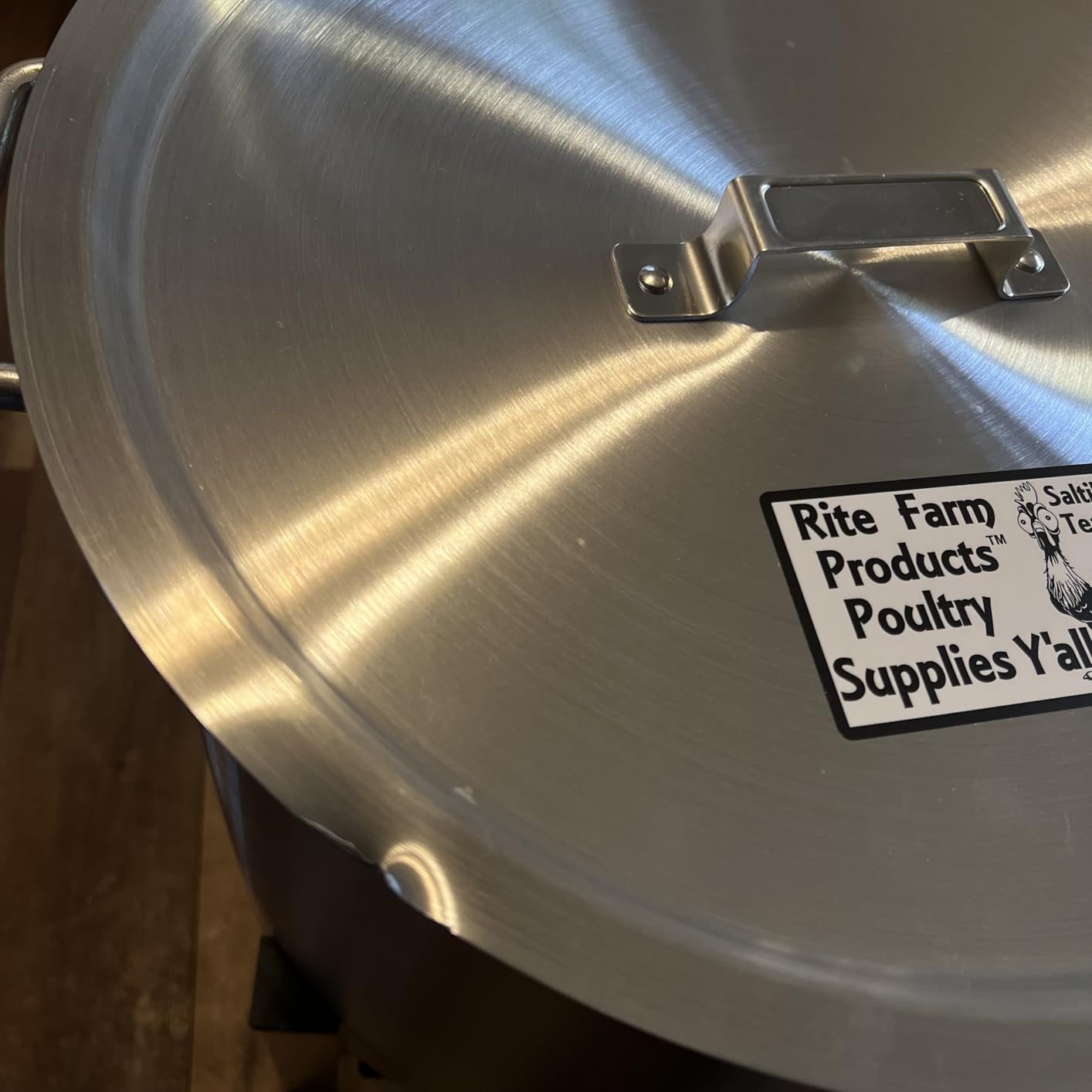
However, the real-world experience has been mixed based on customer feedback. Multiple users reported serious safety concerns, including melted switches and plugs after just a couple of uses. These are not minor complaints. A melting electrical component near hot water is dangerous.
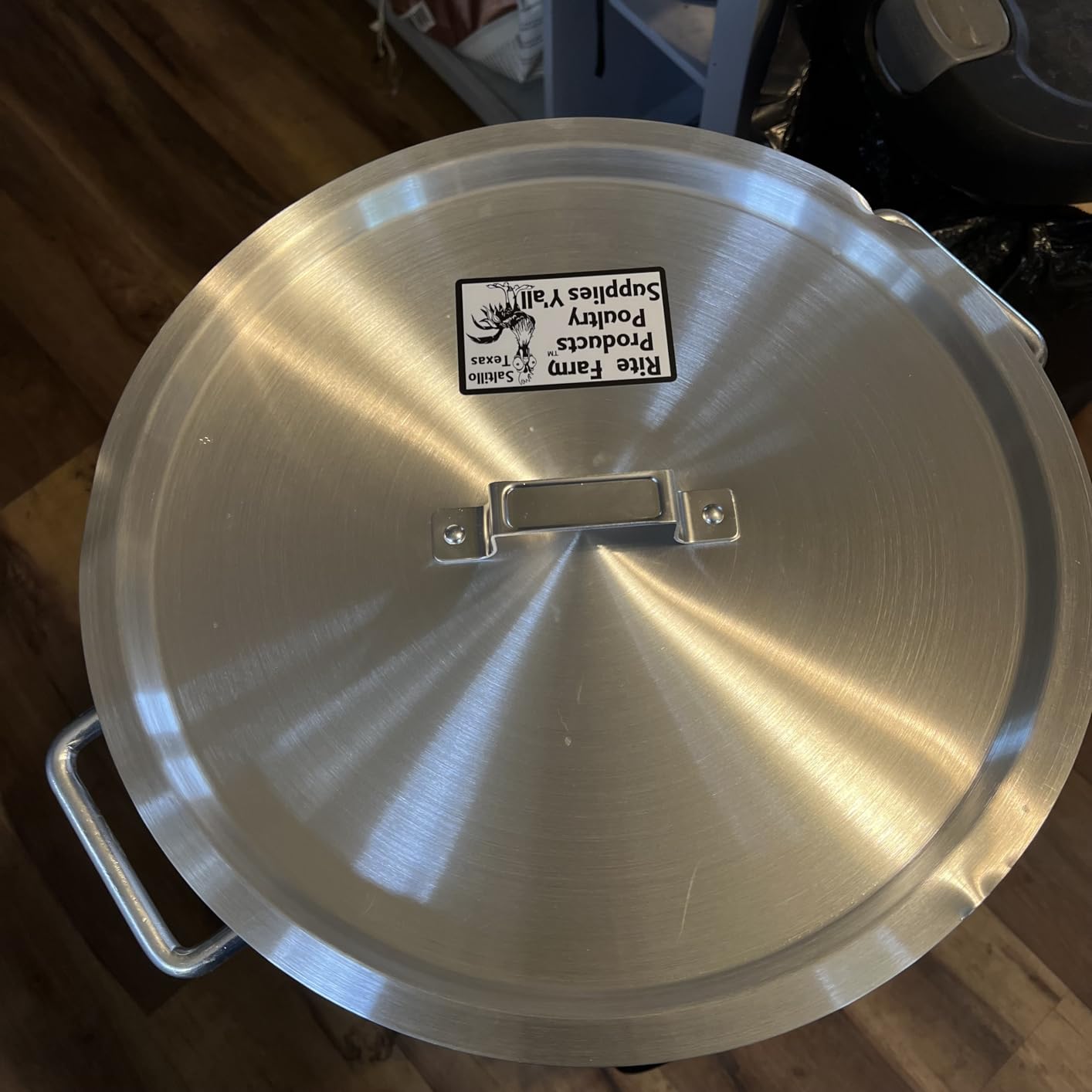
I want to be straightforward about what the reviews show. Out of five ratings, the distribution is fairly spread across the spectrum, with several one-star and two-star reviews citing quality control problems. Units arriving dented was another common theme, which suggests shipping and packaging issues.
That said, the users who got a properly functioning unit praised the heating speed and capacity. The 2,000-watt element does heat water faster than the Roots and Harvest model. If Rite Farm can address their quality control, this could be a strong contender in the mid-range category.
Electrical Requirements and Safety
This scalder requires a dedicated 20-amp circuit. That is not a suggestion. Running it on a standard 15-amp household circuit will trip breakers and could damage the unit. The melted switch and plug reports make electrical safety even more critical with this model.
Check your outlet and breaker rating before purchasing. If your processing area only has 15-amp circuits, you will need an electrician to add a 20-amp line, or you should look at a lower-wattage alternative.
Durability and Quality Control Concerns
The quality control issues are hard to ignore. Dented units on arrival, melting components, and inconsistent construction all appear in the review history. If you buy this model, inspect it thoroughly upon delivery and test it with water only before processing day.
Running an empty test cycle lets you catch electrical problems before you have birds ready to process. If the switch or plug gets unusually hot during testing, contact the seller immediately for a replacement.
3. Rite Farm Pro Texas USA Quail Scalder — Budget Pick for Small Birds
Rite Farm Products Pro Texas USA 4 Gallon 120 Volt 1,000-Watt Quail Scalder Dove
4-gallon capacity
1000W heating
120V standard plug
Welded aluminum
Includes quail skimmer
9 lbs
Pros
- Compact 4-gallon size ideal for quail
- Heavy duty welded aluminum construction
- Includes quail skimmer
- Lightweight at just 9 pounds
Cons
- Limited to small birds only
- No temperature gauge visible
- New product with no reviews yet
- Aluminum not as durable as stainless steel
Not everyone needs a massive scalder for full-size chickens. If your operation focuses on quail, dove, or other small game birds, the Rite Farm Pro Texas USA quail scalder is built specifically for that purpose. The 4-gallon capacity and 1,000-watt element are perfectly sized for smaller birds.
At just 9 pounds, this is the most portable scalder on our list. You can move it from a shed to an outdoor processing station without straining your back. The included quail skimmer is a thoughtful addition that makes retrieving small birds from hot water much easier.
The welded aluminum construction keeps the weight down and the price accessible. Aluminum does conduct heat well, so the water heats reasonably fast with 1,000 watts pushing a smaller volume. However, aluminum is softer than stainless steel and will dent more easily over time.
Being a newer product with no reviews yet, there is some uncertainty about long-term durability. The Rite Farm brand is known in the poultry processing space, which adds some confidence, but the lack of user feedback means you are buying on spec alone.
Is This Scalder Right for Your Operation Size?
This unit is purpose-built for quail and similarly sized birds. If you raise quail commercially or as a hobby, this is one of the few scalders designed specifically for that scale. Trying to use it for chickens would be frustrating due to the limited 4-gallon capacity.
For someone processing 50 to 100 quail per session, the compact size is actually an advantage. You use less water, less electricity, and the tank heats faster. The trade-off is that you are locked into small-bird processing only.
What Birds Work Best in a 4-Gallon Tank?
Quail are the obvious fit, but this scalder also works for dove, squab, and Cornish game hens. The skimmer accessory handles multiple small birds at once, which speeds up your processing rhythm. For anything larger than a game hen, you will want a bigger unit.
The 120-volt standard plug means you can run this from any household outlet. No dedicated circuit required, which makes it the most electrically flexible option on our list.
4. MEUBLLY Commercial Poultry Scalding Machine — Adjustable Temperature Control
MEUBLLY Commercial Poultry Scalding Machine, Stainless Steel Chicken Scalder, Adjustable Temperature Control 30-100℃, Large Capacity Feather Removal Equipment, for Poultry Processing Farms
Stainless steel construction
30-100C adjustable
Removable protective grille
Heavy duty heating
44 lbs
Pros
- Consistent water temperature maintenance
- Wide adjustable range 30-100C
- Efficient batch processing for larger loads
- Easy maintenance with removable grille
- Works for chickens ducks geese quails
Cons
- No customer reviews yet
- Commercial pricing may exceed homestead needs
- Specs lack wattage and capacity details
The MEUBLLY commercial poultry scalding machine is aimed at operations that need precise temperature control across different bird types. The adjustable range of 30 to 100 degrees Celsius covers everything from a gentle quail scald to a hard scald for tough waterfowl feathers.
I appreciate the removable protective grille over the heating elements. That feature makes cleaning significantly easier after a long processing day. Stainless steel construction throughout means this unit should resist corrosion even with heavy use.
The wide application range is a selling point for diverse operations. If you process chickens one week, ducks the next, and geese for holiday orders, having a single scalder that adapts to each bird type is convenient. The adjustable thermostat lets you dial in the exact temperature each species needs.
The main drawback is the lack of real-world feedback. With zero reviews, you are relying entirely on manufacturer claims. The 44-pound weight suggests solid construction, but we cannot verify heating speed, temperature accuracy, or long-term reliability without user data.
Temperature Precision for Different Poultry Types
Different birds need different scalding temperatures. Chickens typically scald at 145 to 150 degrees Fahrenheit, while ducks and geese benefit from slightly higher temperatures to break through waterproof feather coatings. The 30 to 100 degree Celsius range on this unit covers all of those needs.
Having a continuous adjustable thermostat rather than fixed settings gives you fine control. For operations processing multiple bird types, this flexibility eliminates the need for separate scalding setups.
Cleaning and Maintenance Routine
The removable grille is the standout maintenance feature. Feather debris and fat residue accumulate around heating elements during processing. Being able to remove the guard and scrub the components directly saves significant time compared to fixed-element designs.
Stainless steel surfaces wipe down easily with hot water and a food-safe sanitizer. Plan to drain and clean the tank immediately after each processing session to prevent mineral buildup on the heating components.
5. MEUBLLY Poultry Scalding Tank — Large Capacity Batch Processing
MEUBLLY Poultry Scalding Tank, Stainless Steel Poultry Processing Machine, Temperature Adjustable Scalder, Large Capacity Batch Processing Equipment, for Chicken, Duck, Goose, and Quail
Stainless steel tank
30-100C adjustable
Removable heating cover
High-power heating tubes
44 lbs
Pros
- Adjustable temperature control 30-100C
- Large capacity for high-volume work
- Stainless steel for durability
- Removable heating cover for cleaning
- Versatile across poultry types
Cons
- No customer reviews available
- Higher price point
- Sister model with similar specs may cause confusion
The MEUBLLY Poultry Scalding Tank is the companion product to the previous model, offering similar specifications with a focus on high-volume continuous processing. The high-power heating tubes are designed to recover temperature quickly between batches.
What sets this tank apart is its emphasis on continuous operation. If you are running a processing line where birds come through one after another, the heating system needs to keep up. Losing temperature mid-batch means feathers will not release properly and you will have to re-scald.
The removable heating component cover is identical in concept to the grille on the other MEUBLLY model. It provides the same cleaning advantage, which becomes critical when you are processing dozens of birds in a single session and fat buildup accelerates.
Choosing between the two MEUBLLY models is tricky without reviews to compare. They share the same dimensions, weight, and temperature range. The differences appear to be in the heating tube configuration and the cover design rather than fundamental capacity differences.
How Does This Compare to Smaller Home Units?
At 44 pounds and with commercial-grade heating components, this tank is overkill for a homesteader processing 20 birds a season. It makes sense for small farms or community processing setups where multiple families share equipment and process larger batches together.
The continuous processing capability means you can move birds through quickly once the tank is up to temperature. For a home unit, you typically wait for temperature recovery between every two birds. A commercial tank minimizes that downtime.
What to Expect with First Setup
Since this is a commercial-grade unit, expect a more involved setup than a plug-and-play home scalder. You will need to verify your electrical supply meets the heating requirements. Read the included documentation carefully before the first power-on.
Run a water-only test cycle before processing day. This lets you verify temperature accuracy, check for leaks, and confirm the heating tubes are functioning properly without the pressure of birds waiting to be processed.
6. Commercial Poultry Chicken Scalding Machine 70L — High-Volume Heavy Duty
Commercial Poultry Chicken Scalding Machine,70L/125L Stainless Steel Plucker Machine Accessories Chicken Scalder, 30-110℃ Temperature Adjustment, for Chicken Duck Goose Poultry Quails(70L)
70L capacity
30-110C adjustable
24kW heating tubes
2mm tank walls
12r/min roller system
Pros
- Precise 30-110C temperature range
- Large 100kg batch capacity
- Commercial-grade 24kW heating
- Thick 2mm stainless walls
- 40 percent more efficient than gas burners
Cons
- Highest price point on our list
- No customer reviews
- No technical details from manufacturer
- Heavy duty electrical requirements likely
This 70-liter commercial scalder is the most powerful unit on our list. The 24kW heating system and 2-millimeter thick tank walls signal a machine built for continuous, heavy-duty processing rather than occasional homestead use.
The temperature range extends to 110 degrees Celsius, higher than any other model here. That upper range matters for operations that need to process waterfowl with stubborn, waterproof feathers. The manufacturer claims it maintains a steady 65 to 67 degree range for standard feather removal.
I found the efficiency claim interesting. The manufacturer states this unit is 40 percent more efficient than traditional gas burners. For a commercial operation running through hundreds of birds, that energy savings compounds significantly over a processing season.
The 12-revolution-per-minute roller system is a unique feature not found on other models in this roundup. That gentle agitation helps loosen feathers more thoroughly during the scald, which can reduce plucking time downstream. However, the complete absence of customer reviews and limited technical documentation make it difficult to verify these claims.
Who Should Consider a 70-Liter Scalder?
A 70-liter capacity is designed for processing operations handling large volumes. If you are processing 100 or more birds in a session, this size eliminates the bottleneck of waiting for temperature recovery between small batches. The tank can handle multiple birds simultaneously.
For context, most homestead scalders are 13 to 15 gallons, which is roughly 50 to 57 liters. This 70-liter unit gives you about 25 percent more capacity than those models. The trade-off is a higher price tag and more demanding electrical requirements.
Batch Processing Workflow
The design supports continuous 10-kilogram batch processing, meaning you load roughly 10 kilograms of birds at a time, scald, remove, and reload without waiting for the tank to reheat. That workflow is what separates commercial equipment from home units.
The removable grille-covered heating elements keep feathers away from the heat source during processing. This prevents the burnt-feather smell and residue buildup that can affect water quality over a long processing session.
7. Rite Farm Quail Plucker and Scalder Combo — Two-in-One Value
Combo Rite Farm Products Pro USA Quail Plucker & 4 Gallon 120 Volt, 1,000-Watt Quail Scalder
4-gallon scalder
72-finger plucker
Both 120V standard
Welded aluminum
20 lbs total
Pros
- Complete plucking and scalding solution
- 72 specially designed small plucker fingers
- Both units run on standard 120V
- Heavy duty welded aluminum construction
Cons
- No customer reviews yet
- Limited to small birds
- Combo price higher than buying separately
- Same brand quality concerns as PRO model
If you process quail and do not already own a plucker, this combo package from Rite Farm gives you both pieces in one purchase. The scalder is the same 4-gallon, 1,000-watt unit we reviewed above, paired with a plucker featuring 72 small fingers designed specifically for quail-sized birds.
The value proposition here is getting a matched set. When your scalder and plucker are from the same manufacturer and designed to work together, the transition between scalding and plucking tends to be smoother. The finger size and drum speed are calibrated for birds that fit in a 4-gallon scalder.
Both units run on standard 120-volt plugs, which means no special electrical work is needed. You can set this up in a garage or backyard processing area using existing outlets. At 20 pounds total weight, the whole setup is genuinely portable.
The obvious limitation is that this combo only makes sense if you are exclusively processing small birds. If you ever plan to scale up to chickens or turkeys, you will outgrow this equipment quickly. Buying a larger-capacity scalder now might save you money in the long run.
What the Combo Package Includes
You get the 4-gallon quail scalder with its included skimmer, plus the plucker with 72 small fingers. Both units share the welded aluminum construction and 120-volt power requirement. The plucker uses standard tubular fingers that are replaceable when they wear down.
The total weight of 20 pounds means you can carry both pieces to your processing location in a single trip. For someone processing at a community garden or shared facility, that portability is genuinely useful.
Is the Plucker Worth the Extra Investment?
Hand-plucking quail is tedious work. Even though quail are small, the feather density relative to body size makes manual plucking slow. A dedicated plucker with appropriately sized fingers can reduce plucking time from minutes per bird to seconds.
If you already own a large chicken plucker with standard-sized fingers, it may not handle quail well. The gaps between large fingers let small birds slip through or get battered. The 72 small fingers on this unit are sized correctly for quail, which is why the combo makes sense.
8. Hatching Time Large Chicken Processing Kit — Premium Complete System
Hatching Time Chicken Plucker Machine & Poultry Processing Equipment Kit
26-gallon stainless scalder
XL chicken plucker
3 killing cones
Manual dunker
135 lbs
Process 8-10 chickens per cycle
Pros
- Complete processing system in one purchase
- 26-gallon scalder handles large batches
- XL plucker processes 8-10 chickens per cycle
- Comfort-fit killing cones for humane processing
- Commercial-style manual dunker included
Cons
- Highest total price at over two thousand dollars
- Very heavy at 135 pounds
- Large footprint requires dedicated space
- No customer reviews yet
The Hatching Time Large Chicken Processing Kit is the most complete system on our list. Instead of buying a scalder, plucker, and cones separately, this bundle includes everything you need to set up a full processing station. The 26-gallon scalder is the largest tank in this roundup.
For a homesteader or small farm that processes 50 to 100 chickens per season and wants professional-grade equipment, this kit eliminates the guesswork of matching components. The XL plucker can handle 8 to 10 chickens per cycle, which means you can keep pace with the larger scalder capacity.
The three killing cones are designed with comfort-fit geometry to hold birds securely and humanely. Having three cones means you can stage multiple birds during the processing workflow, keeping your line moving without bottlenecks. The manual dunker on the scalder lets you submerge and agitate birds without reaching into hot water by hand.
The investment is significant. This is the most expensive option by a wide margin. However, if you factor in the cost of buying a scalder, a plucker, and killing cones separately, the bundled price becomes more reasonable. You are paying for integration and quality components that work together.
What Comes in the Complete Processing Kit?
The kit includes the 26-gallon stainless steel scalder with manual dunker, the XL chicken plucker rated for 8 to 10 birds per cycle, and three comfort-fit killing cones. Everything arrives together, which means you can set up your processing station in one unboxing session.
The commercial-style scalder features the largest tank capacity on our list. A 26-gallon tank can handle multiple chickens simultaneously and provides enough depth for dunking larger birds. The manual dunker mechanism saves your arms from repeated hot-water immersion.
Processing Capacity for a Full Day
With a 26-gallon scalder and an XL plucker handling 8 to 10 birds per cycle, this kit is designed for serious processing days. A team of two to three people working together could realistically process 50 to 80 chickens in a single session with this equipment.
The bottleneck shifts from equipment capacity to human labor. With smaller scalders, the tank temperature recovery limits your throughput. With this kit, your plucking speed and cone availability become the limiting factors, which is a much better problem to have.
Buying Guide: Choosing the Right Poultry Scalder
Choosing the right poultry scalder comes down to understanding your processing volume, bird types, and available power supply. Let us break down the factors that matter most so you can make a confident decision.
Capacity and Flock Size Matching
Capacity is the single most important factor when choosing a scalder. A unit that is too small will have you standing around waiting for temperature recovery between every bird. A unit that is too large wastes water and electricity for modest processing needs.
For 20 to 30 birds per season, a 13 to 15 gallon scalder is adequate. You will process one to two chickens at a time, which is fine for occasional use. The Roots and Harvest 13-gallon model fits this category perfectly.
For 50 to 100 birds per season, consider stepping up to a 26-gallon or larger tank. The Hatching Time kit with its 26-gallon scalder handles this volume well. You can fit more birds per batch and reduce the total processing time significantly.
For quail and small game birds exclusively, a 4-gallon unit like the Rite Farm quail scalder is the right call. Using a large tank for small birds wastes energy and water. Match the tank to the bird.
Electric vs Propane Scalders
This is one of the most common questions on homesteading forums. Electric scalders offer precise temperature control and consistent heating. They plug into a standard or dedicated outlet and require no fuel. The trade-off is slower heating and dependence on electrical infrastructure.
Propane scalders heat water much faster than electric models. A turkey fryer burner can bring water to scalding temperature in 30 minutes or less. However, maintaining a consistent temperature is harder with open flame. You are constantly adjusting the gas flow to hold 145 degrees.
Electric models in our roundup range from 1,000 watts for quail units to 2,000 watts for the Rite Farm PRO. Higher wattage means faster heating but also demands on your electrical system. Always check your circuit rating before plugging in a high-wattage electric scalder.
For consistent results and ease of use, electric wins. For speed and off-grid capability, propane is the answer. Most homesteaders we found in forum discussions prefer electric for its set-and-forget convenience.
Temperature Control and Consistency
The ideal scalding temperature for chickens is between 145 and 150 degrees Fahrenheit. Too cold and feathers will not release. Too hot and you risk cooking the skin, which tears during plucking. Temperature consistency is what separates good scalders from frustrating ones.
Double-walled construction, like on the Roots and Harvest model, helps maintain temperature by insulating the tank. Heat loss between batches is minimized, which means less waiting for recovery. Single-wall tanks lose heat faster and require more energy to maintain temperature.
Adjustable thermostats with indicator lights are worth the premium. Knowing exactly when your water is ready eliminates guesswork. The MEUBLLY models offer the widest temperature range at 30 to 100 degrees Celsius, which covers every bird type from quail to geese.
Build Quality and Material
Stainless steel is the gold standard for scalder construction. It resists corrosion, cleans easily, and conducts heat well. Every commercial-grade model on our list uses stainless steel. Aluminum, as used in the Rite Farm quail scalder, is lighter and cheaper but dents more easily.
Pay attention to weld quality and wall thickness. The commercial 70-liter model specifies 2-millimeter thick walls, which is significantly more durable than typical home-unit construction. Thicker walls mean better heat retention and longer equipment life.
Drain valves are an underrated feature. Models without drains require tipping the entire tank to empty dirty water. A spigot or drain valve, like on the Roots and Harvest unit, makes cleanup dramatically easier and safer.
Safety Considerations and Electrical Requirements
Water and electricity demand respect. Every electric scalder should be plugged into a GFCI-protected outlet. The Rite Farm PRO model specifically requires a dedicated 20-amp circuit, and the reports of melting components underscore why electrical safety cannot be overlooked.
Never operate a scalder near children or pets. The water temperature that loosens feathers will cause serious burns on contact. Keep a first aid kit nearby and process in a controlled area with non-slip surfaces.
Always run a water-only test cycle before processing day. This catches leaks, verifies temperature accuracy, and identifies any electrical issues before you have birds ready to process. It is the single most important safety step we recommend.
Frequently Asked Questions
What is the best poultry scalder for homestead use?
For most homesteaders processing 20 to 50 birds per season, the Roots and Harvest 13-gallon double-walled stainless steel scalder is the best choice. It holds 1 to 2 chickens at a time, maintains temperature well, and includes a convenient drain spigot. Its 4.1-star rating from verified buyers confirms reliable real-world performance.
How long do you scald a chicken for plucking?
Dunk a chicken in 145 to 150 degree Fahrenheit water for 30 to 60 seconds, agitating gently for even heating. Test feather release by pulling a few wing feathers. If they slide out easily, the bird is ready for plucking. Over-scalding cooks the skin and causes tearing.
What temperature should poultry scalding water be?
Chicken scalding water should be 145 to 150 degrees Fahrenheit for effective feather removal. Ducks and geese require slightly higher temperatures around 150 to 155 degrees to penetrate their waterproof feather coating. Use a thermometer to verify, as too-hot water damages skin and too-cold water leaves feathers stuck.
Electric vs propane poultry scalder – which is better?
Electric scalders offer precise temperature control and convenience but heat slowly and require adequate circuits. Propane scalders heat water faster and work off-grid but require constant temperature monitoring. Most homesteaders prefer electric for consistency, while off-grid processors choose propane for speed and independence from electrical infrastructure.
Conclusion
Finding the best poultry scalder for your meat processing operation comes down to matching capacity to your flock size and choosing a build that will last. The Roots and Harvest 13-gallon scalder earned our Editor’s Choice for its proven double-walled construction and positive user feedback. For quail processors on a budget, the Rite Farm 4-gallon unit delivers purpose-built performance at an accessible price.
If you want a complete system and have the budget for it, the Hatching Time processing kit gives you everything in one purchase. Whatever you choose, prioritize safety, verify your electrical capacity, and always run a test cycle before processing day. Your future self on processing morning will thank you.
We will keep updating this guide as new poultry scalders hit the market in 2026. If you have experience with any of these models or questions about your specific setup, the homesteading community is a great resource for real-world advice.