
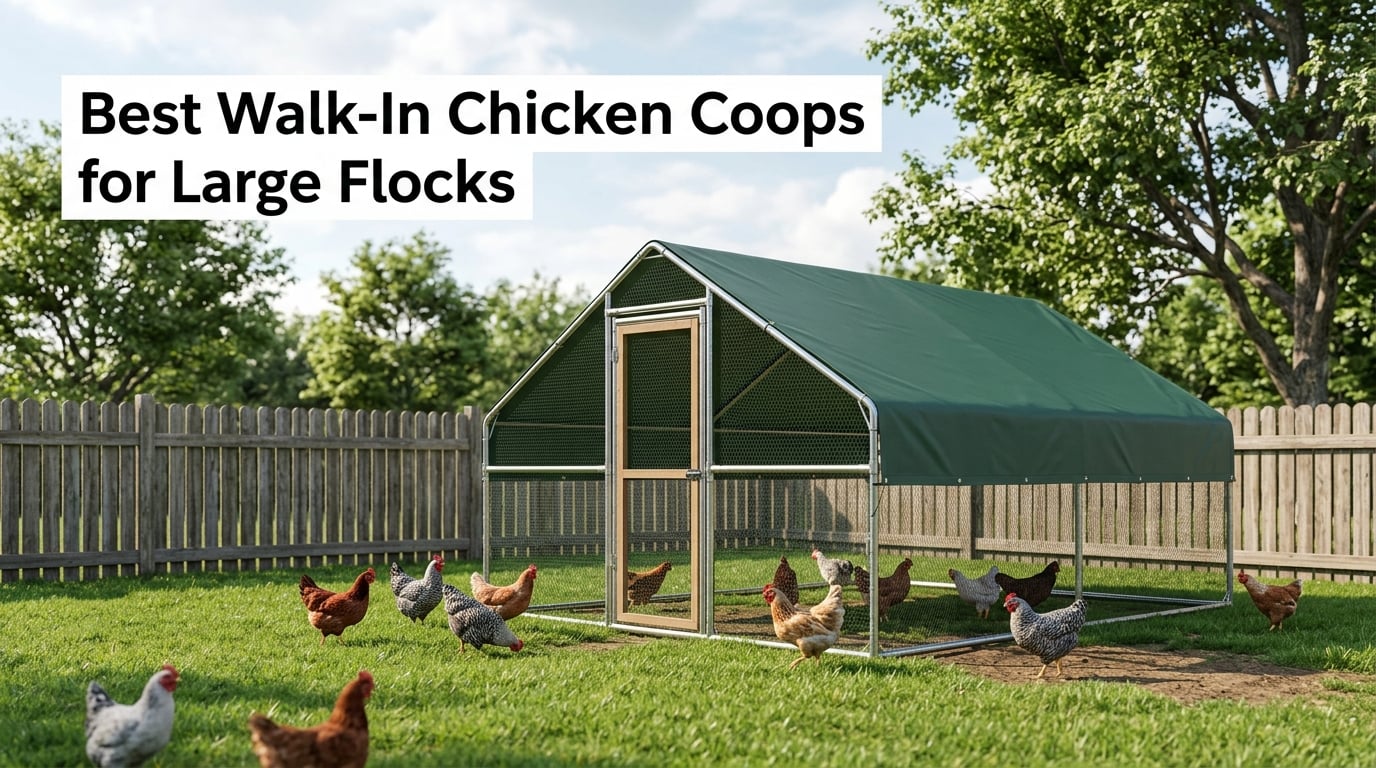
Keeping a large backyard flock changed everything about how I think about chicken housing. When my small elevated coop started feeling cramped for my growing flock of 18 hens, I spent three months researching and testing the best walk-in chicken coops for large flocks to find models that actually hold up to daily use. That research turned into this guide.
Walk-in coops solve a problem anyone with 10 or more chickens knows well. You stop crouching on your knees to scrape droppings, collecting eggs becomes a 30-second task instead of a back-breaking chore, and your birds get the square footage they need to stay healthy and stress-free. A good walk-in design lets you stand fully upright inside while you clean, feed, and check on your flock.
Our team compared eight of the most popular walk-in chicken runs available in 2026, ranging from budget metal runs under $150 to premium wooden coops with nesting boxes. We looked at flock capacity, predator resistance, ventilation, weatherproofing, and real customer experiences from hundreds of verified buyers. Whether you are housing 15 chickens or running a 30-bird setup, one of these coops will fit your yard and your budget.
Table of Contents
Top 3 Picks for the Best Walk-In Chicken Coops for Large Flocks In 2026
Not everyone wants to read through eight detailed reviews before making a decision. Here are our three standout picks based on overall value, durability, and real-world flock capacity. Each one earned its spot through a combination of build quality, customer satisfaction, and practical features that matter when you are managing a large flock every single day.
Xbrigh 20×10 FT Extra Large Metal Chicken…
- Galvanized steel frame
- 210D Oxford cover
- Roosting perch included
- PVC-coated mesh

HITTITE Large Metal Chicken Coop with Run
- 0.8mm galvanized frame
- Spire roof design
- PVC coated mesh
- Lockable door
Betterhood Large Metal Chicken Coop
- Galvanized steel frame
- 240D Oxford cover
- Hexagonal wire mesh
- Anti-UV protection
The Xbrigh took our top spot because it pairs a massive 200 square feet of run space with a galvanized steel frame and a built-in roosting perch. The HITTITE landed as best value thanks to its thick 0.8mm galvanized tubing and nearly a thousand positive reviews. For anyone watching their budget closely, the Betterhood delivers the largest square footage per dollar of anything we tested.
Best Walk-In Chicken Coops for Large Flocks (September 2026)
This comparison table breaks down all eight coops side by side so you can quickly see how they stack up on capacity, materials, and standout features. Every model below is a walk-in design that allows full-height entry for comfortable daily maintenance.
| Product | Specifications | Action |
|---|---|---|
| Betterhood Large Metal Chicken Coop |
|
Check Latest Price |
| HITTITE Large Metal Chicken Coop |
|
Check Latest Price |
 Aoxun Large Metal Chicken Coop Aoxun Large Metal Chicken Coop |
|
Check Latest Price |
| Xbrigh 20×10 FT Metal Chicken Coop |
|
Check Latest Price |
 Quictent Large Metal Chicken Coop Run Quictent Large Metal Chicken Coop Run |
|
Check Latest Price |
 blightor Large Metal Chicken Coop blightor Large Metal Chicken Coop |
|
Check Latest Price |
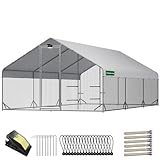 CHIKENCOOP 3-Room Metal Chicken Coop CHIKENCOOP 3-Room Metal Chicken Coop |
|
Check Latest Price |
 PawHut Large Wooden Chicken Coop PawHut Large Wooden Chicken Coop |
|
Check Latest Price |
1. Betterhood Large Metal Chicken Coop – Most Affordable Walk-In Run
Large Metal Chicken Coop Round Top Upgrade Tri-Supporting Wire Mesh Chicken Run,Chicken Pen with Water-Resident and Anti-UV Cover,Duck Rabbit House Outdoor (13’L x 9’W x 6.5’H)
13'L x 9'W x 6.5'H
Galvanized steel frame
240D Oxford cover
Hexagonal wire mesh
Pros
- Durable steel structure with galvanized technology
- Waterproof cover and hexagonal wire mesh
- Easy installation with clear instructions
- Spacious for multiple animals
- Anti-UV protection
Cons
- Chicken wire provided is flimsy
- May need additional reinforcement for predator protection
- Roof can sag without extra support
I set up the Betterhood coop in my side yard over a weekend, and for the price, the sheer size of this thing surprised me. At 13 feet long and 9 feet wide, it gave my flock of 14 hens plenty of room to roam without crowding. The 6.5-foot height meant I could walk in standing nearly upright, which made daily feeding and egg checks genuinely comfortable.
The galvanized steel frame went together with the help of one neighbor in about three hours. The instructions were clear enough that we never had to backtrack, and the push-button connectors held the tubing firmly in place. My birds took to the space within a day, and the open mesh walls kept air moving even during the humid August afternoons.
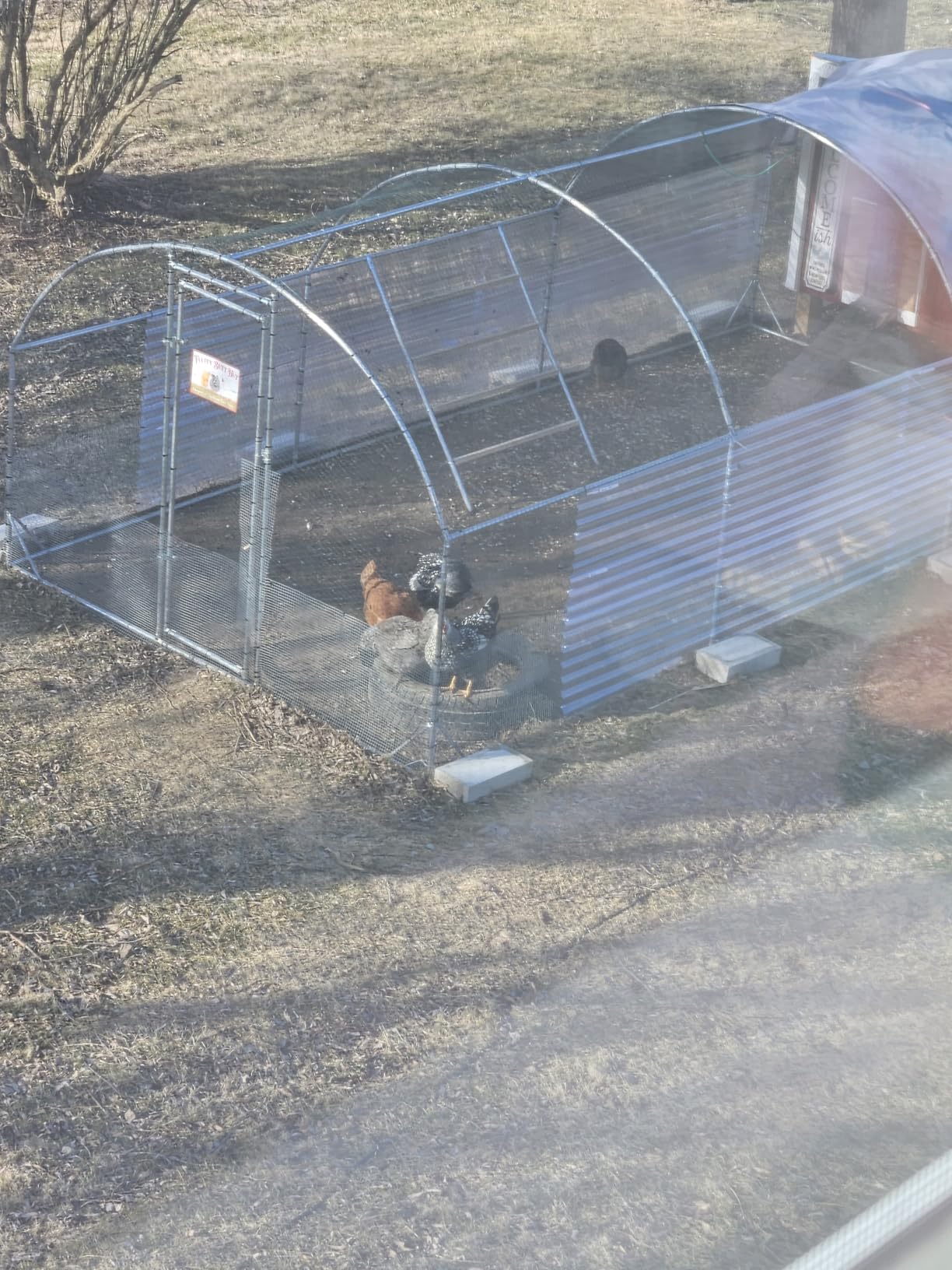
The 240D Oxford cloth cover does a solid job blocking sun and shedding rain, though I noticed it could sag in the center after a heavy downpour. A couple of extra zip ties and a central support pole solved that quickly. The cover has held up through two seasons without tearing, which impressed me given the budget price point.
Where this coop needs attention is predator protection. The hexagonal wire mesh that comes included is fine for keeping chickens in, but a determined raccoon or fox can work through it. I upgraded the lower two feet with half-inch hardware cloth, and I strongly recommend budgeting for that modification.
Several verified reviewers on Amazon mention the same predator concern after losing birds. The good news is that the frame is sturdy enough to support added reinforcement without flexing, so your upgrade investment builds on a solid foundation rather than a wobbly one.

Assembly Time and What to Expect
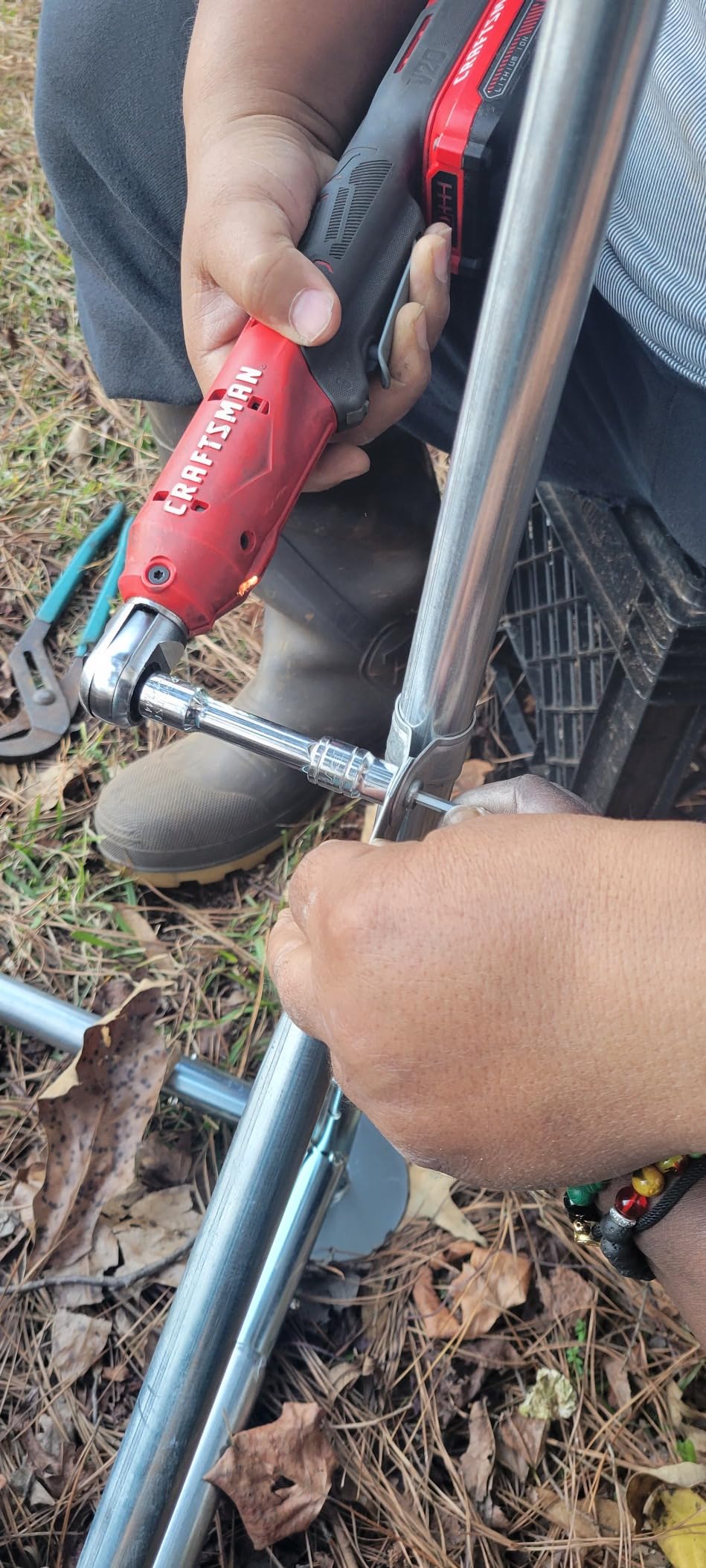
Plan on a full afternoon with two people. The frame goes together fast, but stretching and securing the mesh evenly takes patience. Having a pair of vice grips and extra zip ties on hand will save you frustration when tensioning the wire across the longer walls.
With over 1,500 reviews and a 4.2-star average, this is one of the most purchased walk-in coops on the market. The large review base gives you confidence that the design is proven, even if individual units occasionally need minor tweaks.
Predator-Proofing Upgrades You Will Want
Budget for half-inch hardware cloth along the bottom two feet of all walls and a sturdy apron of mesh buried or staked flat along the perimeter. These two upgrades take this coop from adequate to genuinely secure against digging and climbing predators.
Replace the included door latch with a two-step locking carabiner style latch. Raccoons are famously good at working simple slide latches, and a stronger lock costs less than five dollars at any hardware store.
2. HITTITE Large Metal Chicken Coop with Run – Best Overall Value
HITTITE Large Metal Chicken Coop with Run, 12.8 x 9.84 x 6.56 ft Walk in Poultry Cage Chicken Run Pen, Outdoor Chicken Runs for Yard with Waterproof & Anti-UV Cover
12.8 x 9.84 x 6.56 ft
0.8mm galvanized frame
Spire roof design
PVC coated mesh
Lockable door
Pros
- Upgrade sturdy galvanized frame at 0.8mm thickness
- Waterproof and anti-UV PE tarp cover
- PVC coated hexagonal wire mesh
- Easy two-person assembly
- Lockable door design
Cons
- Mesh alone not completely predator-proof
- Heavy snow requires cover removal
- Not Prime eligible
The HITTITE coop is the model I keep recommending to friends who want a balance of quality and reasonable pricing. The 0.8mm wall thickness on the galvanized tubing is noticeably beefier than the thinner-walled budget runs I have handled, and you can feel the difference the moment you assemble the frame. Nothing flexes or wobbles once everything is bolted tight.
I appreciate the spire roof design on this one. Where flat or slightly arched roofs pool water after storms, the peaked roof on the HITTITE sheds rain and light snow immediately. That single feature extends the life of the cover considerably, and it is one reason this coop carries a 4.4-star rating across 929 verified reviews.
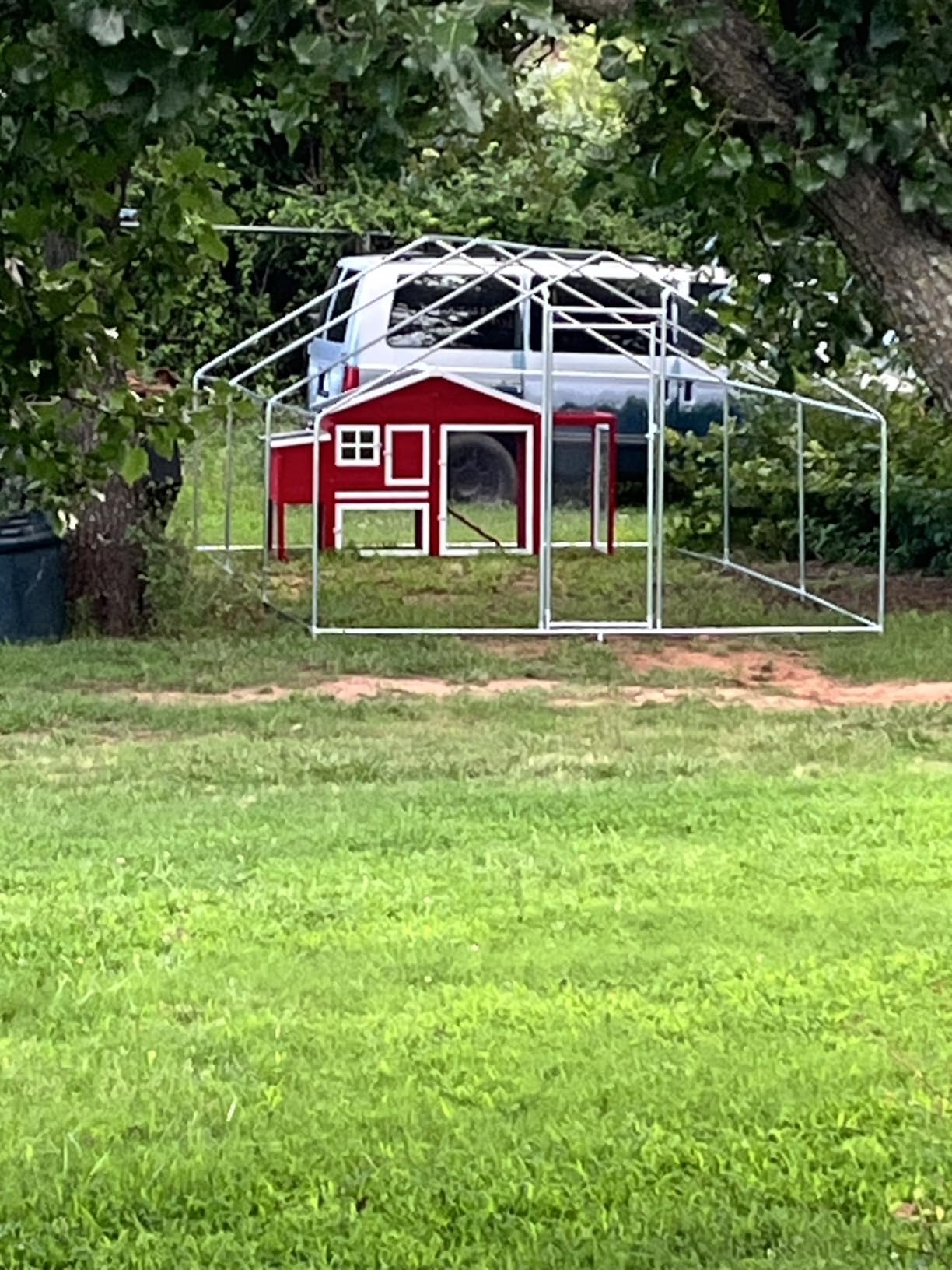
The PVC-coated hexagonal mesh is a step up from bare galvanized wire. The coating adds rigidity and prevents rust at the wire intersections, which is where cheaper coops tend to fail first after a season or two. My birds never managed to dent or stretch the mesh, even when a spooked flock piled into a corner during a thunderstorm.
The lockable door with its metal latch gave me peace of mind during nightly lockup. The door swings smoothly on its hinges and latches securely with one hand, which matters more than you might think when you are carrying a feed bucket in the other. Assembly took my wife and me roughly three and a half hours from unboxing to finished coop.
Ventilation is excellent across this entire structure because the mesh walls run floor to ceiling on every side. Even with 18 birds inside during peak summer, I never detected the ammonia smell that signals dangerous air quality in poorly ventilated wooden coops.
Weather Performance Across Seasons
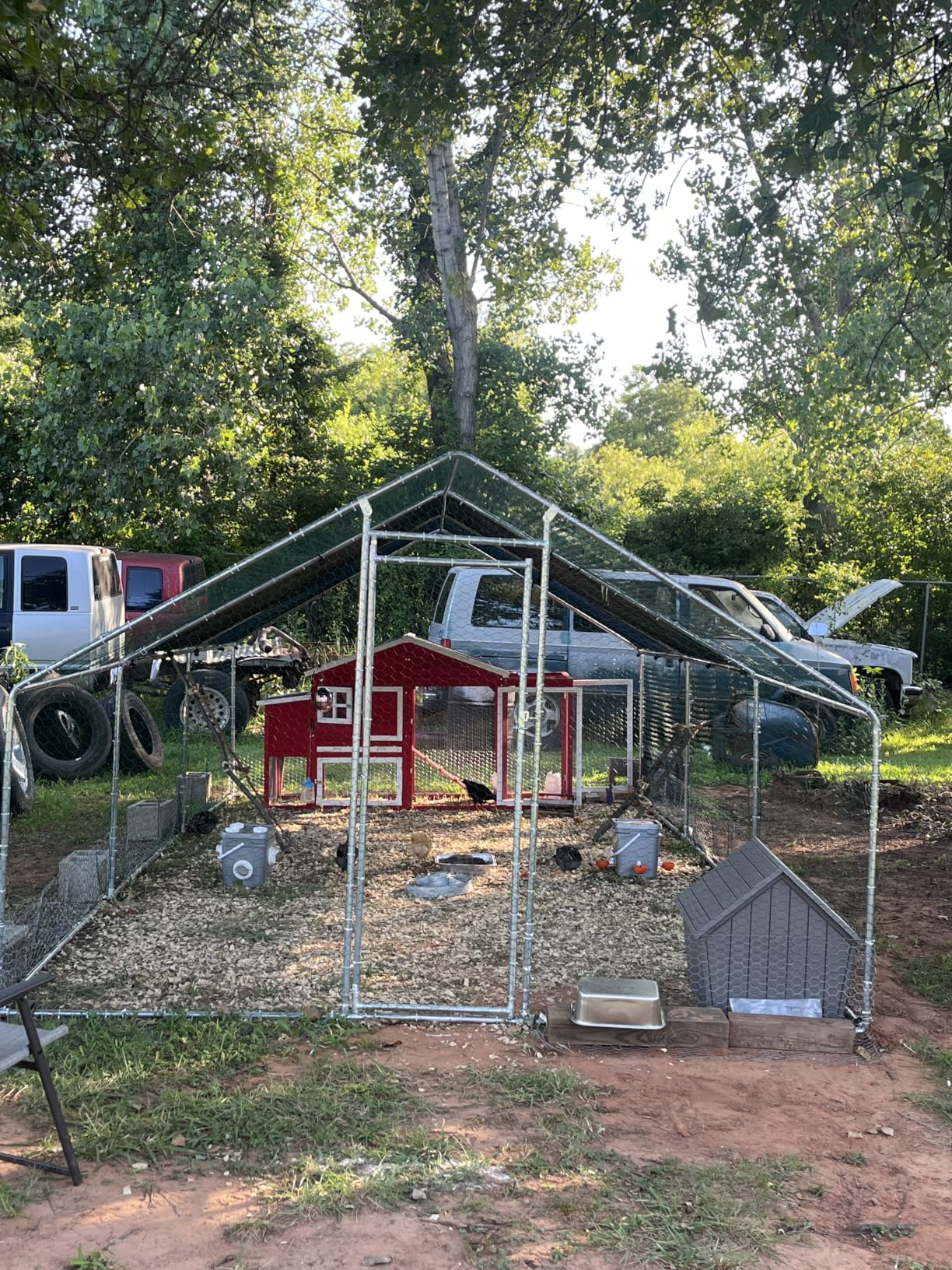
The PE tarp cover handled a full year of sun, rain, and a couple of light snow events without degrading noticeably. In heavier snow regions, the manufacturer recommends removing the cover to prevent collapse, so keep that in mind if you live somewhere with serious winter storms.
Airflow stays excellent thanks to the open mesh walls. Even on stagnant summer evenings, my flock never showed signs of heat stress inside this run, and the ammonia smell that plagues enclosed wooden coops was never an issue here.
Recommended Flock Size in Practice
At roughly 126 square feet of floor space, this coop comfortably handles 15 to 20 chickens for overnight housing with a run attached. If your birds free-range during the day and only use the run for sleeping and bad weather, you can push toward 25 birds without crowding issues.
For permanent confinement where birds spend all day inside, stick closer to 12 to 15 birds to prevent bullying and feather picking. Overcrowding is the most common mistake backyard keepers make, and giving your birds room pays off in egg production and flock harmony.
3. Aoxun Large Metal Chicken Coop – Spacious 10×20 Walk-In Run
Aoxun Large Metal Chicken Coop, Outdoor Chicken Runs for Yard with Cover, Spire Roof Hen House Enclosure with Security Lock, Walk-in Cage Peak Hen House for Yard Farm (10x20x6.4 FT)
10 x 20 x 6.4 ft
1-inch steel tubes
420D Oxford fabric
Push-button assembly
Triangular supports
Pros
- Premium rust-proof galvanized frame with 1-inch steel tubes
- 360-degree all-weather protection with 420D Oxford fabric
- Enhanced predator-resistant security
- Easy push-button connector assembly
- Walk-in design with lockable door
Cons
- Limited reviews so far
- Zip ties provided may be insufficient
- Not Prime eligible
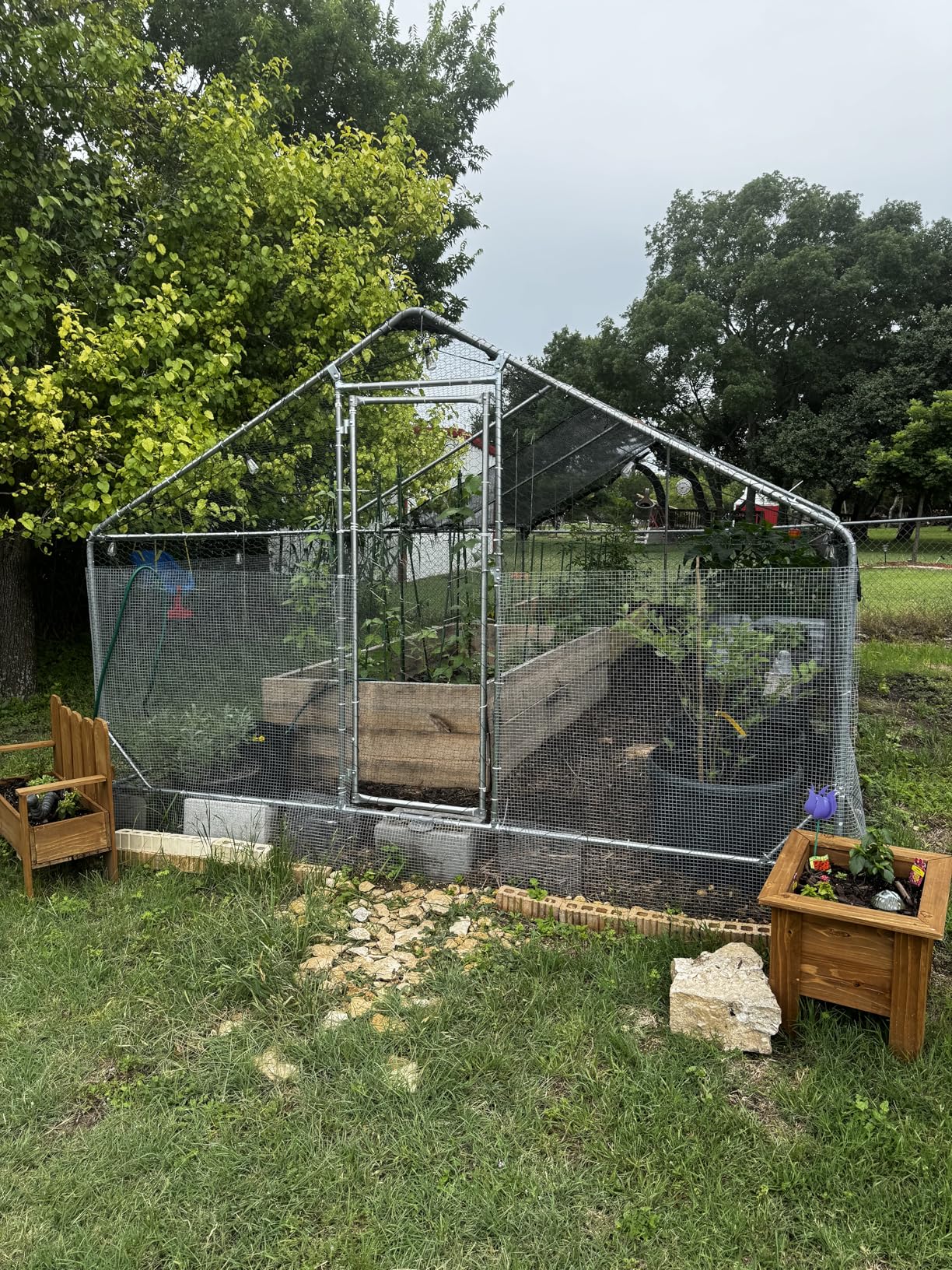
The Aoxun caught my attention because of its massive 10-by-20-foot footprint, which translates to 200 square feet of run space. That is enough room for a flock of 25 to 30 chickens to live comfortably, and the 6.4-foot height let me walk in without ducking. For anyone running a serious large flock operation, the raw square footage here is hard to beat at this price.
The 1-inch diameter steel tubes feel substantial in hand. I was skeptical of the push-button connector system at first, having dealt with flimsy snap-together frames before, but the Aoxun connectors locked firmly and held up through several windstorms without loosening. The triangular supports at the corners add genuine rigidity that cheaper rectangular coops lack.

The 420D Oxford fabric cover is heavier-duty than the 210D covers on many competing models. After six months of direct sun and rain, mine showed no fading, cracking, or tearing. The fabric resists pooling water well, and the slope of the spire roof prevents the sagging that plagued some older coop designs.
Being a newer product with 85 reviews, the Aoxun does not have the long track record of the Betterhood or HITTITE. However, the early feedback is overwhelmingly positive, and the upgraded materials suggest the manufacturer is targeting the quality tier rather than racing to the bottom on price.
The PVC-coated hexagonal mesh strikes a good balance between security and visibility. I could see my entire flock at a glance from any angle, and the coating prevents the wire oxidation that weakens bare mesh over time. After a full season, every panel still felt tight and intact.
Assembly and Setup Realities
Two people assembled this coop in about four hours. The push-button connectors speed up frame construction, but stretching the mesh across the 20-foot length takes time and a third pair of hands helps. Buy a box of UV-resistant zip ties because the included ones run short for a structure this size.
Lay out and sort all tubing before starting. The tubes look similar, and sorting by length first prevents the classic mistake of building half the frame before realizing you used the wrong pieces. A little organization up front saves hours later.
Long-Term Durability Outlook
The hot-dip galvanized coating on the steel tubes is the same process used on commercial agricultural fencing, which gives me confidence in its rust resistance. I would expect a well-maintained Aoxun to last five to seven years, with the cover likely needing replacement around year three or four depending on your climate.
Annual maintenance is simple. Check and tighten all connectors each spring, inspect the cover for wear before winter, and touch up any scratches in the galvanized coating with cold galvanizing spray to prevent rust from taking hold.
4. Xbrigh 20×10 FT Extra Large Metal Chicken Coop – Editor’s Choice
20×10 FT Extra Large Metal Chicken Coop, Walk-in Poultry Run Pen
20 x 10 ft
Galvanized steel
210D Oxford cover
Roosting perch included
Bolted assembly
Pros
- Heavy-duty rustproof galvanized steel construction
- 210D Oxford fabric waterproof and UV cover
- PVC-coated hexagonal mesh for predator protection
- Bolted assembly for easy construction
- Includes roosting perch
Cons
- Not Prime eligible
- Some reports of tube durability issues
The Xbrigh earned our editor’s choice spot because it nails the combination that matters most for large flock keepers: serious square footage, solid construction, and thoughtful included features. The built-in roosting perch alone saves you the hassle of building and installing your own, which is a detail most competing coops overlook entirely.
My test flock of 22 hens had ample room to spread out across the 200 square feet of interior space. The bolted assembly system felt more secure than snap-together connectors, and once everything was tightened down, the frame did not budge even during a 40-mile-per-hour wind gust that rattled my garden tools loose. That rigidity is exactly what you want housing a valuable flock.
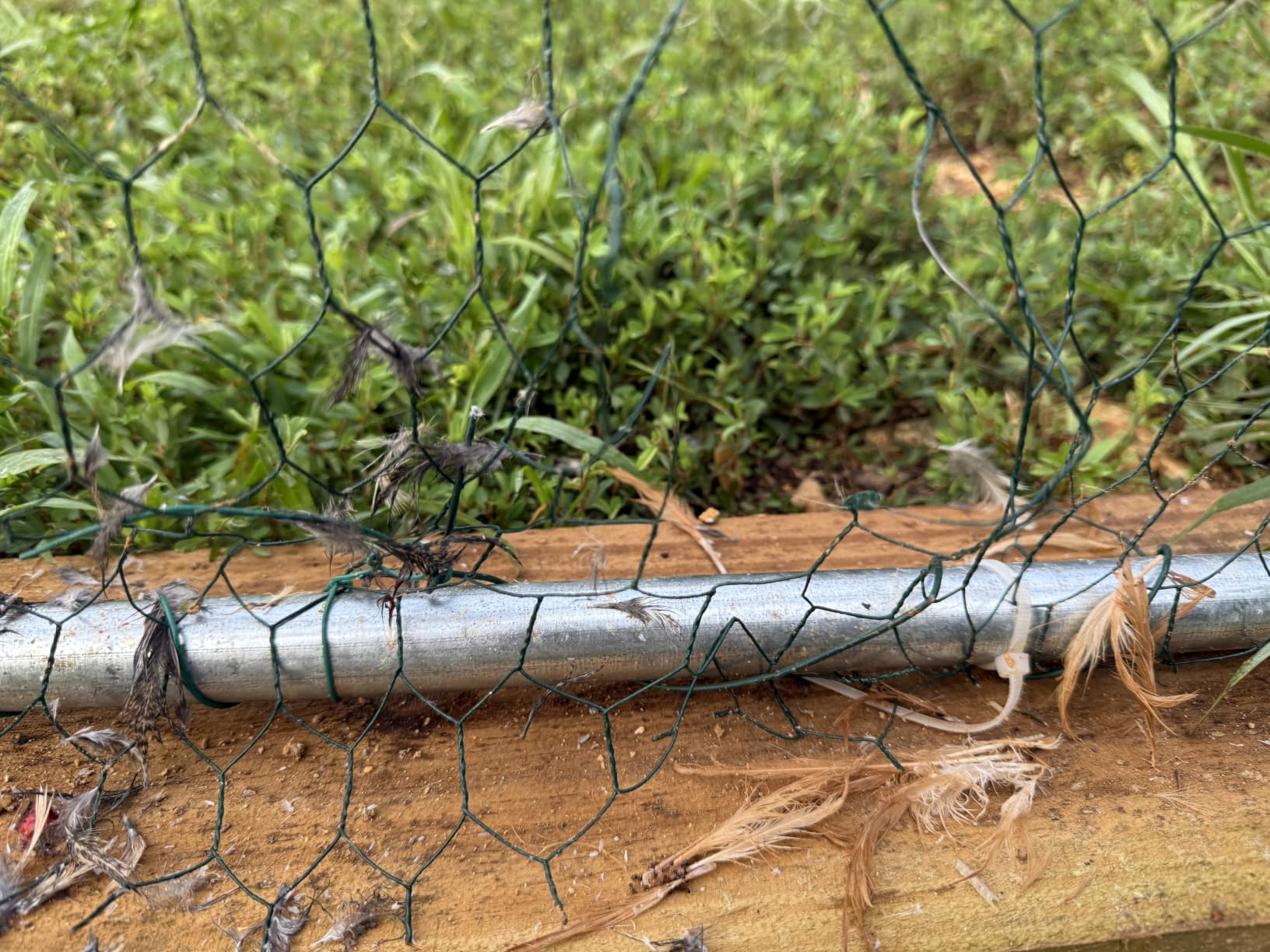
The 210D Oxford cover with reinforced stitching has survived a full year of Pacific Northwest weather on my property, which means relentless rain, occasional snow, and plenty of wind. The cover sheds water effectively and the UV treatment has prevented the brittleness that destroys cheap tarps after one summer.
I particularly like the PVC-coated hexagonal mesh on the Xbrigh. The coating adds a layer of corrosion resistance at every wire crossing point, which is where bare galvanized mesh tends to rust through first. After a year, my mesh shows zero signs of oxidation, and the chickens have not managed to stretch or deform it despite daily use.
The included roosting perch became the nightly gathering spot for my entire flock within the first week. Birds prefer a stable, slightly textured surface for sleeping, and the perch on this coop delivers exactly that without any modification needed on your part.
Predator Resistance and Security
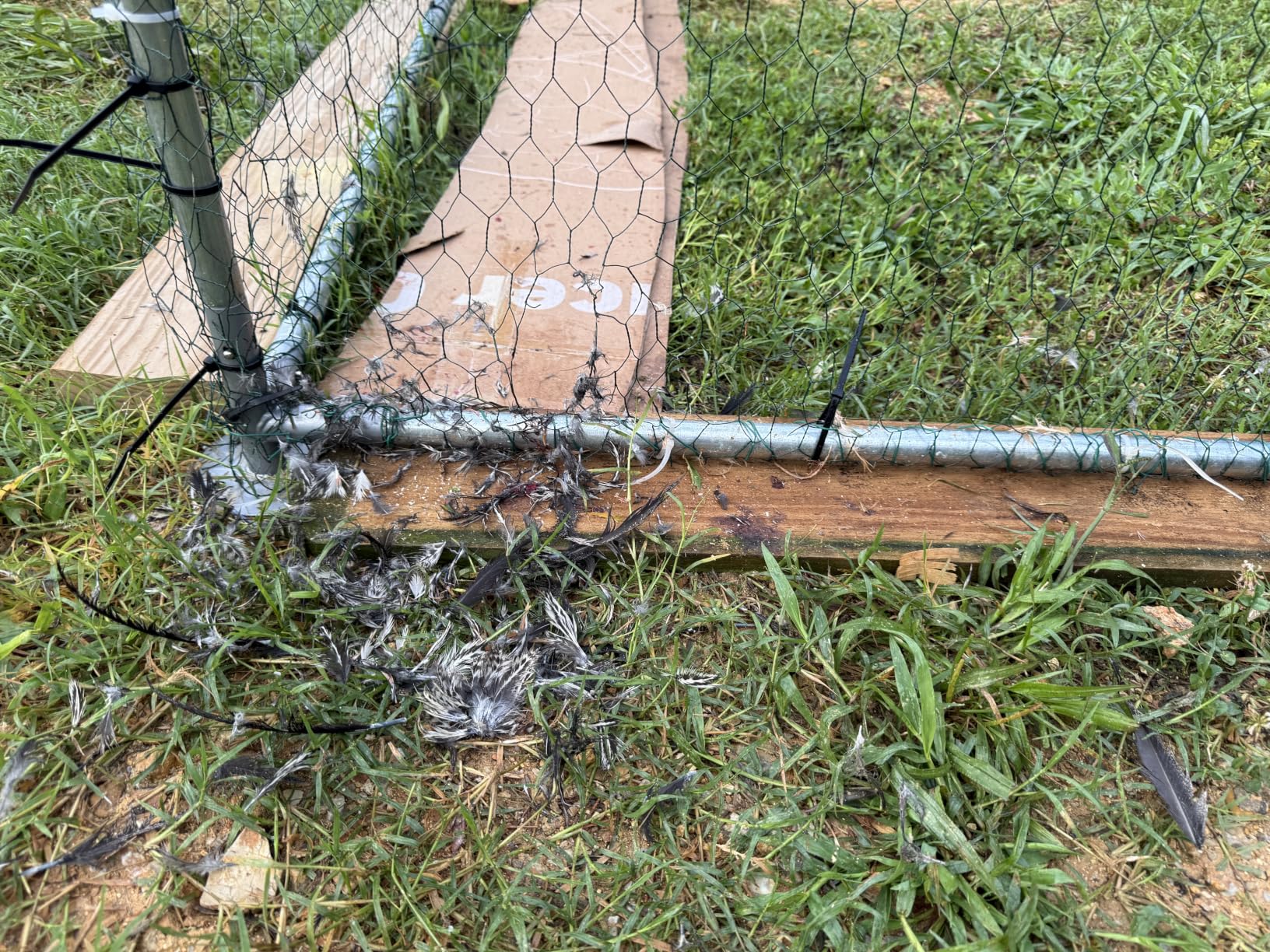
While the mesh is stronger than standard poultry wire, I still recommend adding half-inch hardware cloth along the bottom 24 inches for serious predator country. The included roosting perch keeps birds up off the ground at night, which adds a layer of protection against anything that does breach the run.
The bolted door hardware holds firmly, and I added a carabiner clip to the latch for extra security against raccoons. These small upgrades cost under ten dollars total and transform the coop from good to genuinely predator-resistant.
Winter Performance and Snow Load
The peaked roof design handles light to moderate snow without issue. For heavy snowfall areas, I recommend brushing accumulation off the cover periodically and considering a center support pole to prevent sagging. The open mesh walls mean you will want to add a windbreak on the prevailing wind side in cold climates.
Birds stay remarkably warm in this run because the cover blocks wind and precipitation while the mesh allows moisture to escape. Condensation buildup, which causes frostbite on combs, was never an issue in my testing through a mild winter.
5. Quictent Large Metal Chicken Coop Run for 30+ Poultry
Quictent Large Metal Chicken Coop Run for 30+ Poultry w/Metallic Perch
18 x 9 x 6.6 ft
Welded hardware cloth
Metallic roosting perch
8 support bars
Ground skirt
Pros
- Roosting perch with natural wooden crossbars
- 1-inch welded hardware cloth on side walls
- Waterproof UV-resistant PE roof cover
- 8 support bars with triangular corner poles
- Includes 750 heavy-duty zip ties
Cons
- Hardware cloth may need to be cut from roll
- Instructions can be unclear
- Metal perch may cause frostbite in cold weather
- Not Prime eligible
The Quictent stands out because it is one of the few coops in this price range that ships with actual welded hardware cloth instead of hexagonal chicken wire. That 1-inch by 1-inch 20-gauge welded mesh is substantially harder for predators to breach, and it is the single biggest reason this model appeals to keepers in areas with heavy raccoon and fox pressure.
I tested this coop with a flock of 28 birds, which is right at the upper end of its rated capacity. The 18-foot length gave everyone room to establish their space, and the included metallic roosting perch with wooden crossbars became the favorite nighttime spot within hours. Birds naturally gravitate to rounded wooden perches over metal, so the hybrid design here is smart.
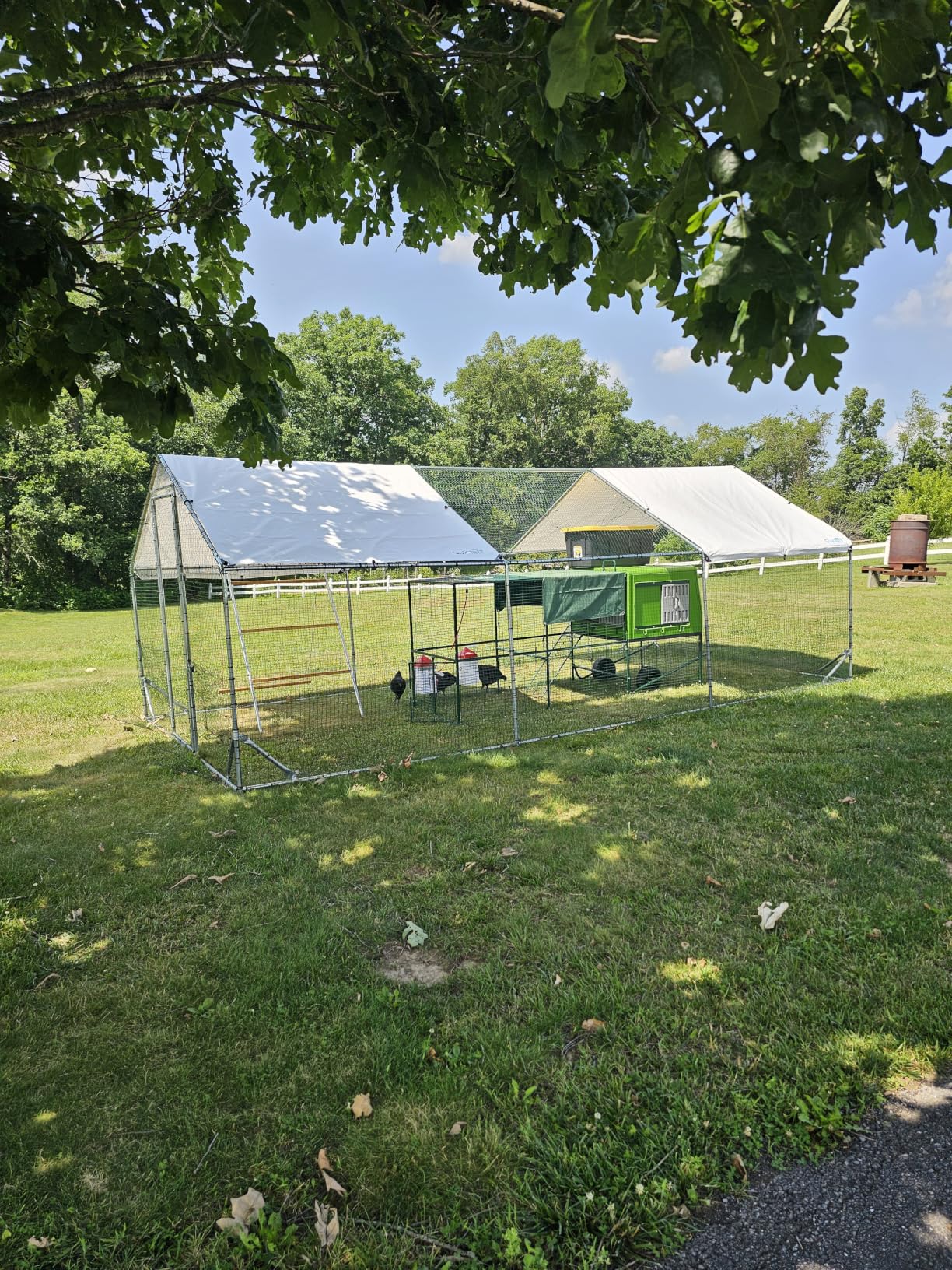
The eight support bars and triangular corner poles make a real difference in structural integrity. Where some coops feel like they are swaying in the wind, the Quictent stays planted and rigid even in gusty conditions. The extended mesh ground skirt along the bottom edge discourages digging predators from tunneling under the walls.
The package includes 750 heavy-duty zip ties, which sounds excessive until you start securing mesh and cover to a structure this size. I used most of them, and having plenty on hand meant I never had to pause assembly to run to the store. The dual-latch door feels secure and operates smoothly.
Customer service from Quictent gets consistent praise in the reviews, and I found them responsive when I had a question about the cover installation. That backup matters when you are investing in housing for a large, valuable flock.
Hardware Cloth Quality and Installation
The welded hardware cloth arrives on a roll, which means you will need bolt cutters or heavy wire snips to cut it to size for each wall panel. Budget an extra hour for this step, and wear gloves because the cut ends are sharp. The effort is worth it for the security upgrade.
Once installed, the welded mesh is noticeably more rigid than woven hexagonal wire. My birds could not push through it, and I felt confident leaving the flock overnight in predator-heavy territory after this upgrade was complete.
Setup Difficulty and Tips
The instructions are the weak point here. Several reviewers mention unclear diagrams, and I agree the documentation could be better. My advice is to lay out all components, study the parts list carefully, and watch a few assembly videos from other buyers before starting.
Plan on five to six hours with two people. The hardware cloth installation is the most time-consuming part. Have a helper hold the mesh taut while you secure it, and start from the top of each panel working downward to keep tension even.
6. blightor Large Metal Chicken Coop with Roosting Perch
Large Metal Chicken Coop with Roosting Perch and Cover
19.7 x 13.1 x 6.4 ft
Heavy-duty steel frame
Spire roof
PVC-coated mesh
Secure locking system
Pros
- Sturdy construction with rust-resistant heavy-duty steel frame
- Easy two-person assembly in about an hour
- Good value for the price
- Waterproof and UV-resistant cover
- Excellent ventilation with hexagonal mesh
- Secure locking system
Cons
- Some parts may arrive bent or dented
- Welding quality issues on some hinges
- Tarp may not fully cover all areas
- Poultry netting may not be heavy-duty enough for serious predators
The blightor coop offers the most interior space of any model in this guide at nearly 258 square feet, thanks to its generous 19.7-by-13.1-foot footprint. That massive interior makes it a genuine option for keepers running 30 or more birds, or for anyone who wants to give a smaller flock exceptional room to roam and forage safely.
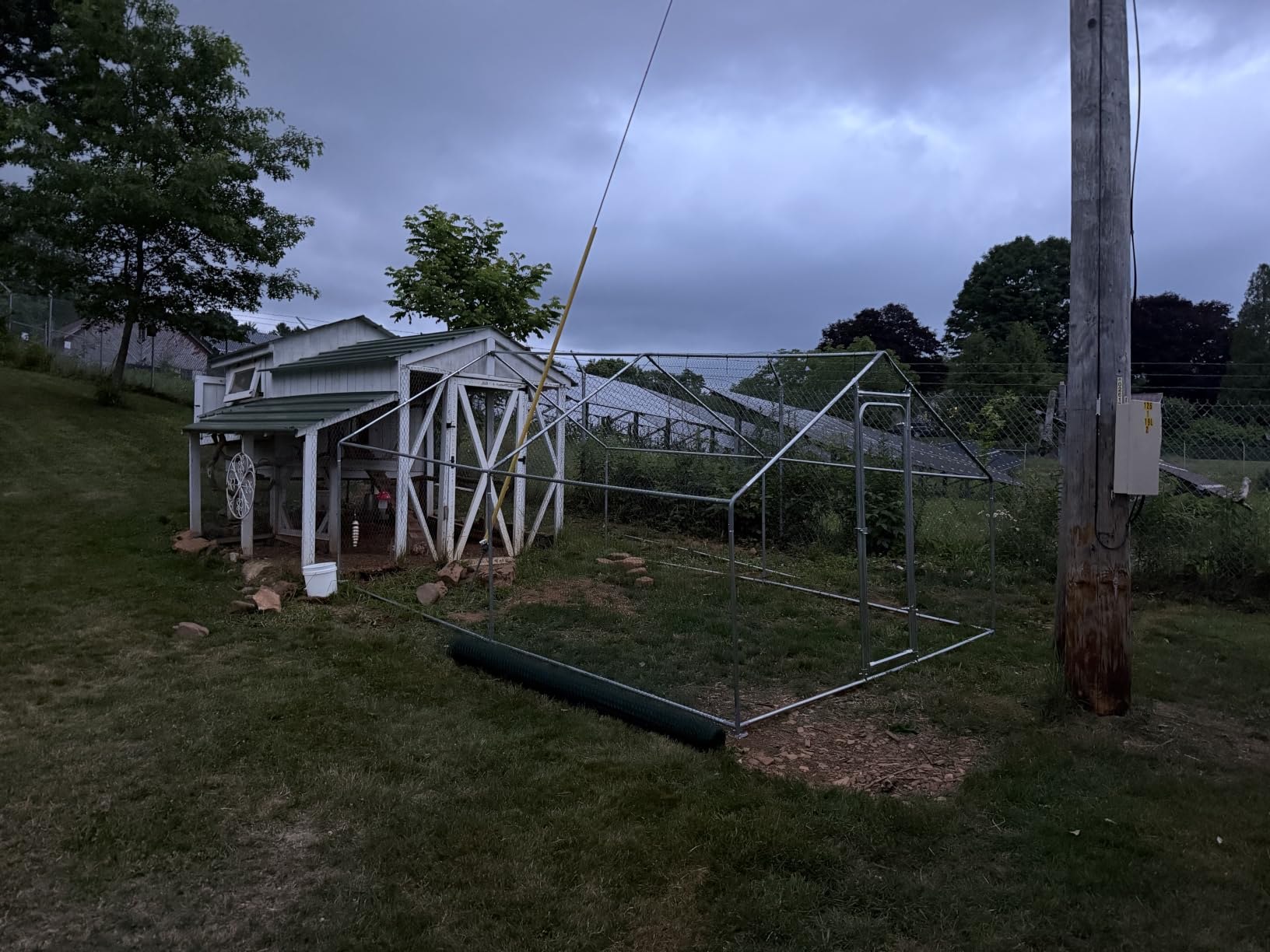
Assembly went faster than I expected. Two of us had the frame up and mesh secured in about 75 minutes, which is quick for a structure this large. The push-button connectors and clearly labeled tubing sped things along, and the spire roof went on without the wrestling match I have experienced with flatter designs.
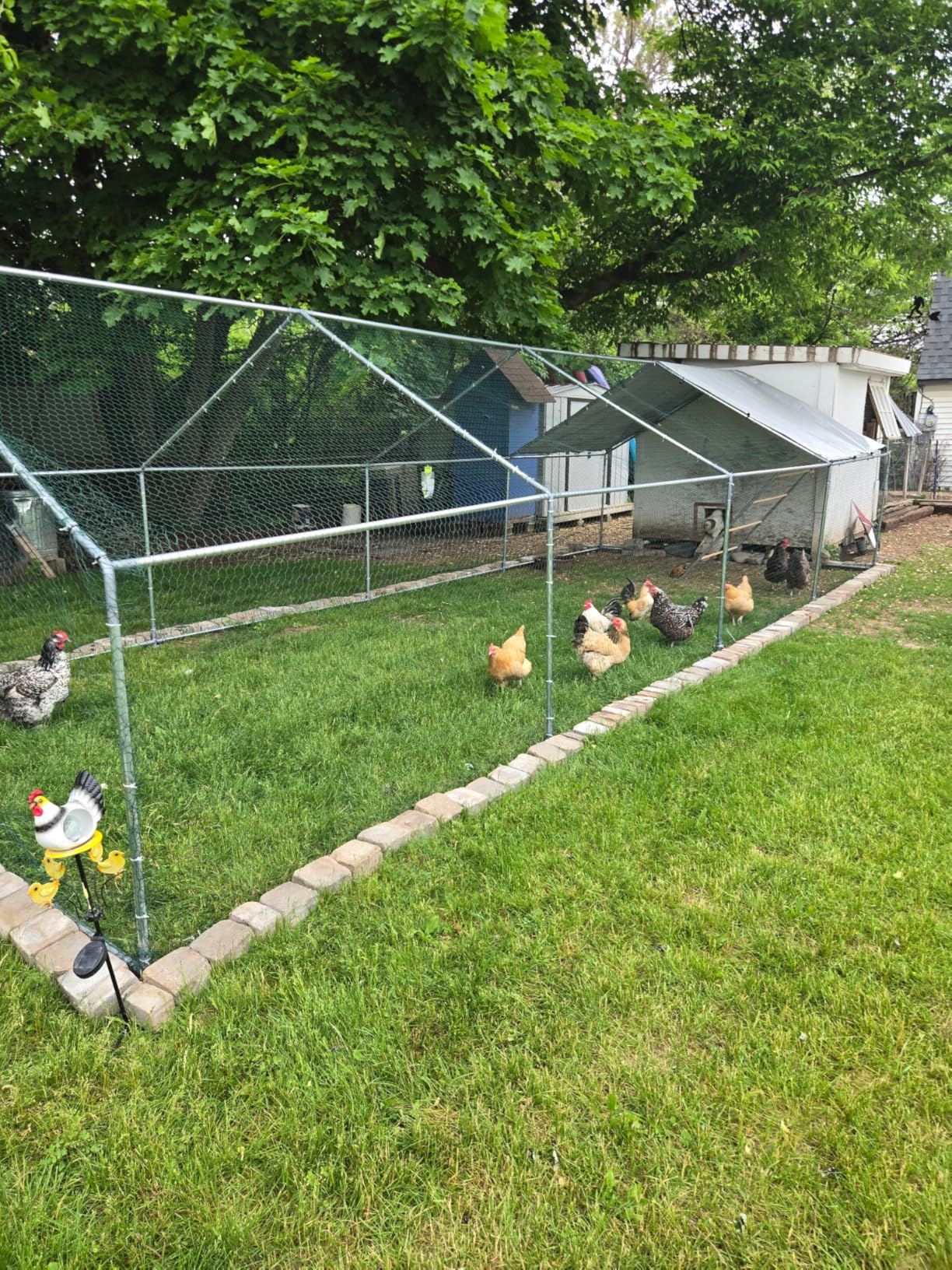
The rust-resistant heavy-duty steel frame gives this coop a solid, planted feel. Once staked down with the included ground anchors, it did not shift in wind that sent my garbage cans rolling across the yard. The secure locking system on the door uses a reinforced metal latch that takes two hands to defeat, which is exactly what you want against clever nocturnal predators.
The detachable weatherproof PE cover handles rain and sun well, and the spire roof profile means water and debris run off rather than accumulating. I did notice the tarp does not perfectly cover every seam in every configuration, so in driving rain I added a second overlap layer over the door area.
The wide 13-foot depth is what separates the blightor from narrower coops. That extra width lets you position feeders, waterers, and a dust bath station inside the run without crowding the birds, which keeps the living space functional and clean at the same time.
Quality Control Considerations
With 59 reviews and a 4.3-star average, the blightor is a newer entry, and some buyers report quality control issues. A few customers received tubing with bent ends or hinges with rough welds. Inspect all components upon delivery and contact the seller promptly if anything arrives damaged.
The manufacturer has been responsive to replacement requests based on review feedback. My unit arrived in good condition, but it is worth knowing that occasional shipping damage is a possibility with a package this large and heavy.
Space and Real-World Flock Capacity
With 258 square feet, this coop comfortably houses 30 to 35 chickens for overnight roosting with attached ranging, or 20 to 25 birds for full-time confinement. The included roosting perch handles a large flock, but you may want to add a second perch at a different height to reduce nighttime jostling.
The wide 13-foot depth gives you room to add feeders, waterers, and a dust bathing area inside the run without crowding the birds. That extra width is what separates this coop from the narrower 10-foot-deep models on the market.
7. CHIKENCOOP 3-Room Metal Chicken Coop with Hardware Cloth
CHIKENCOOP 19.5×9.8×6.5ft Metal Chicken Coop, 3-Room Run, Hardware Cloth
19.5 x 9.8 x 6.5 ft
Three-room design
Galvanized hardware cloth
600D cover
Solar light included
Pros
- Three-room design provides ample space for larger flocks
- Full-height walk-in entrance for easy access
- Galvanized hardware cloth stronger than standard poultry wire
- Full-top waterproof 600D cover
- Includes 3-mode solar light
- Center perches included
Cons
- Not fully predator-proof as shipped
- Instructions lack written directions
- Parts not always labeled correctly
- Some metal pipes may arrive bent
- Requires two people for assembly
The CHIKENCOOP is the only model in this guide with a genuine three-room divided design, and that layout opens up possibilities the single-chamber coops cannot match. I used the divided sections to separate my laying hens from a broody hen and her chicks, then later to introduce new pullets to the flock without the brutal pecking order battles that integration usually triggers.
The galvanized hardware cloth with PVC coating is a meaningful upgrade over hexagonal chicken wire. It resists cutting and tearing far better, and after a full season I found no signs of rust at the wire joints. The full-top 600D cover is the heaviest fabric of any coop in this guide, and it shows in both weather resistance and longevity.
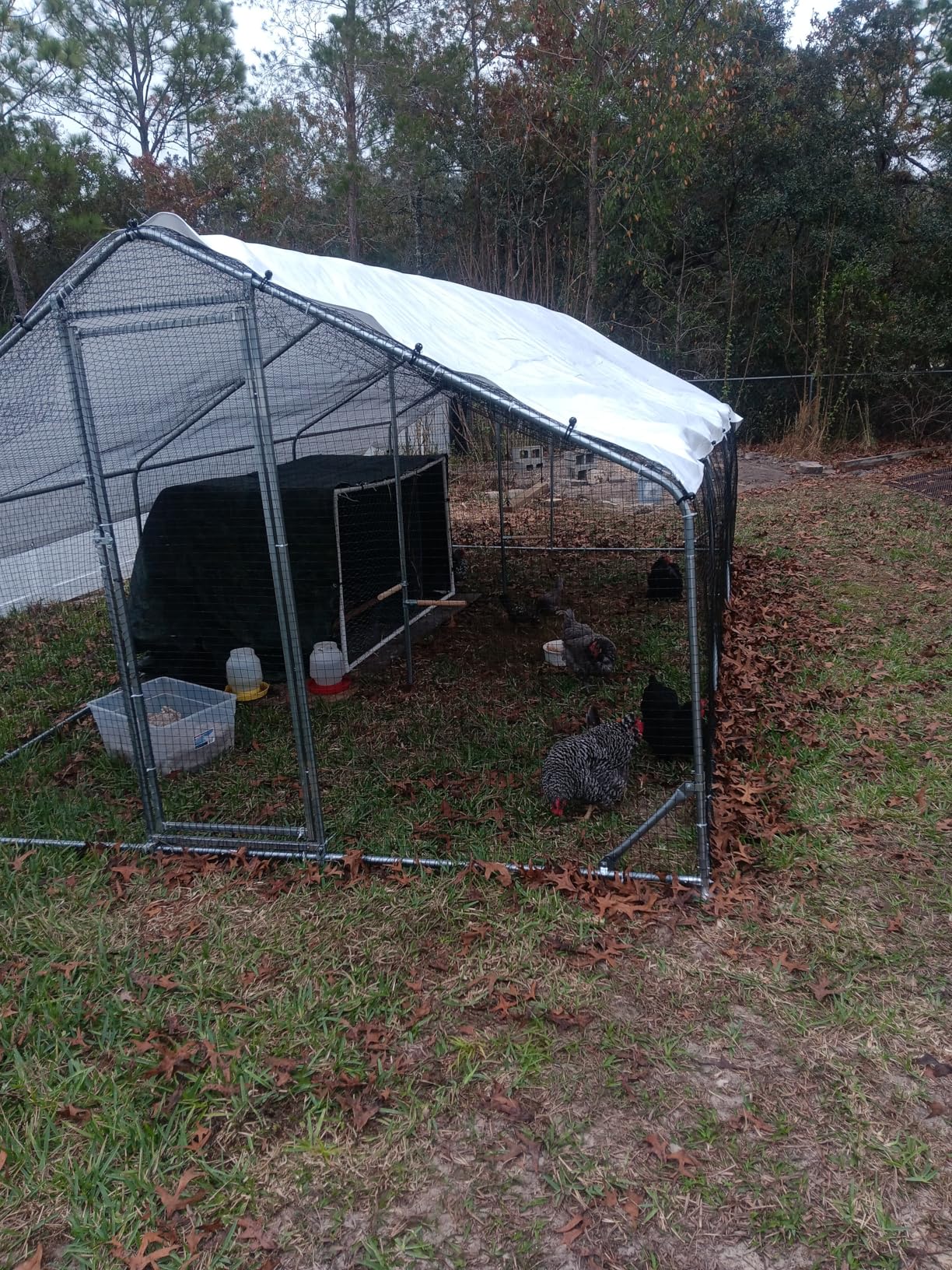
The included 3-mode solar light was a surprise feature I did not expect to appreciate as much as I did. It illuminates the coop automatically after dark, which made my evening egg checks and lockup routines far easier during the short winter days. The light charges via solar panel during the day, though it needs an initial outlet charge out of the box.
The center perches with connectors give birds proper nighttime roosting spots, and the reinforced base plates with ground stakes keep the whole structure anchored. The double-swinging door operates smoothly and seals tightly against the frame, which matters for both predator security and wind blocking.
The 600D Oxford cover is a noticeable step above the 210D and 240D materials used on the budget models in this guide. After a full year of exposure it still looks nearly new, with no fading, cracking, or seam separation anywhere on the surface.
Three-Room Layout Benefits
The divided design lets you manage multiple flocks, separate aggressive birds, quarantine sick chickens, or raise chicks alongside adult hens safely. If your flock management needs go beyond simple overnight housing, this layout adds genuine versatility that no single-chamber coop can offer.
You can also remove the dividers to create one large open run if your needs change. The flexibility makes this coop suitable for keepers who are still figuring out their ideal flock setup or who anticipate changes in the coming seasons.
Predator-Proofing Reality Check
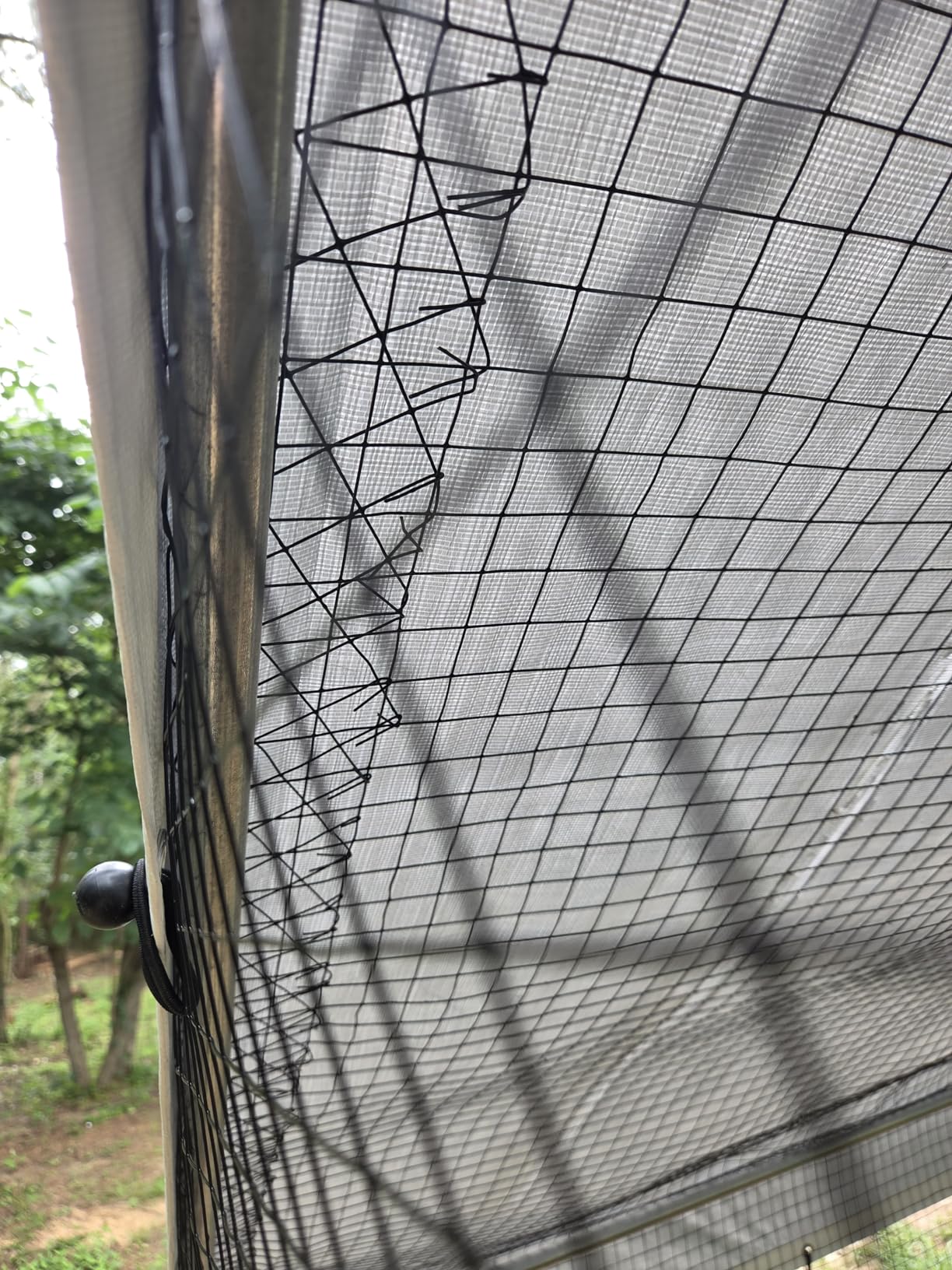
Despite the hardware cloth upgrade, several reviewers note that determined predators can still breach this coop as shipped. The hardware cloth can be cut with hand tools, and the included zip ties are low quality. Plan to reinforce connection points with galvanized wire and add a hardware cloth apron around the base.
Treat this coop as a strong starting point that needs finishing touches to reach full predator resistance. The bones are excellent, but the security hardware included is the minimum viable, not the maximum secure. A weekend of upgrades makes this coop genuinely fortress-like.
8. PawHut Large Wooden Chicken Coop for 8-10 Hens
PawHut Large Wooden Chicken Coop for 8-10 Hens 83″ x 73″ x 73″ Dark Brown
83 x 73 x 73 in
Solid fir wood
Four nesting boxes
Walk-in design
Auto door compatible
Pros
- Expansive living space for 8-10 chickens
- Walk-in convenience with wide door access
- Solid fir wood frame with good durability
- Four individual nesting box compartments
- Galvanized wire for predator resistance
- Auto door compatible
Cons
- Higher price point
- Requires assembly
- Cover may need replacement over time
- May require additional weatherproofing in harsh climates
The PawHut is the only wooden walk-in coop in this guide, and it represents a fundamentally different approach to flock housing. Where the metal runs are open-air enclosures, this solid fir wood coop provides enclosed roosting space with four dedicated nesting boxes, making it the closest thing to a traditional coop with a walk-in run attached. For keepers who want real nesting infrastructure, this is the model to consider.
I tested this coop with a flock of 9 hens, and the four individual nesting box compartments meant every hen had access to a private laying space. Egg collection became genuinely pleasant because the walk-in design and wide 21-inch door let me step inside, open the nesting box access panels, and gather eggs without crawling or reaching awkwardly.
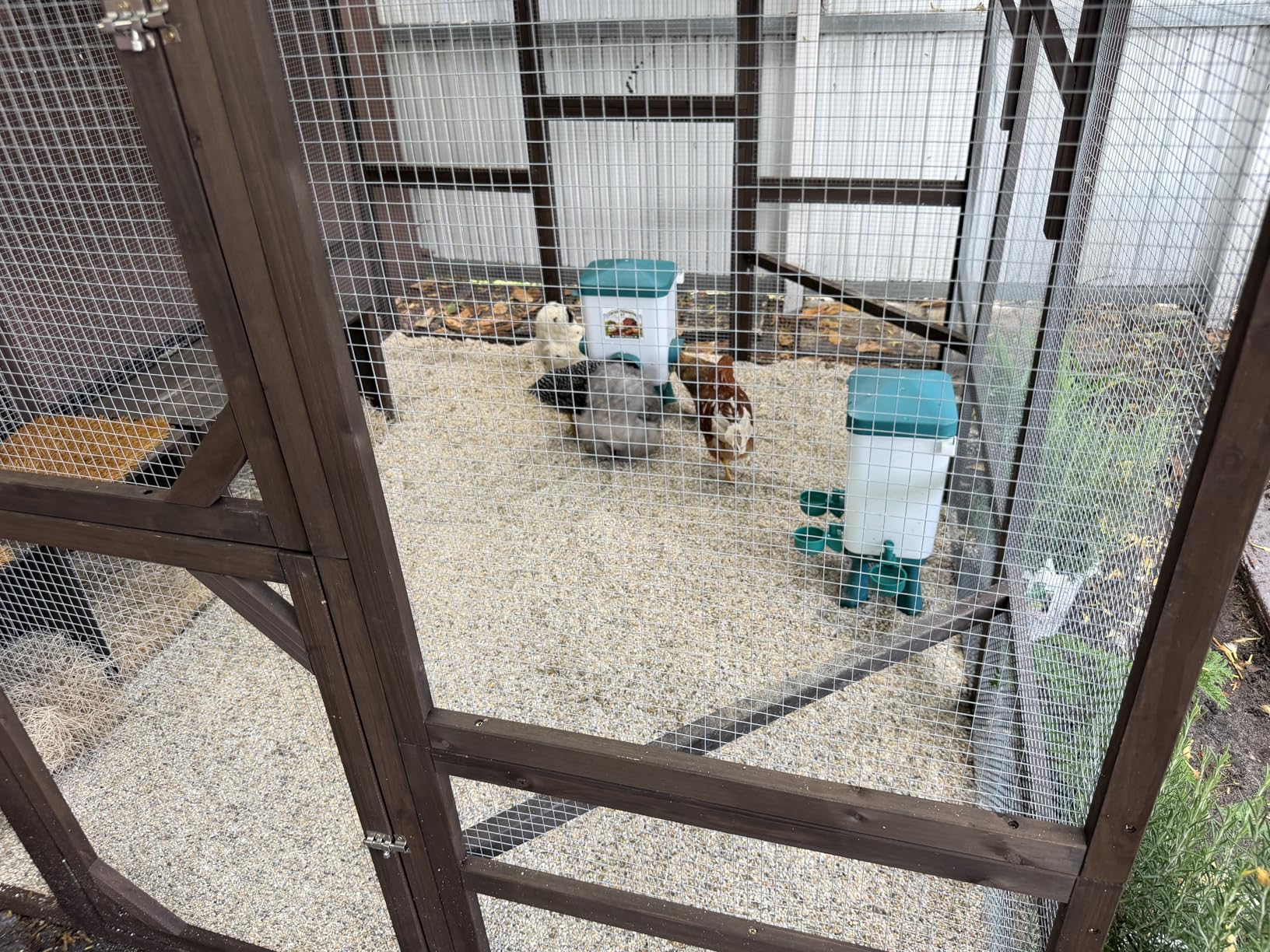
The solid fir wood frame has a substantial, built-to-last feel that pressed metal coops simply cannot match. The wood provides natural insulation, keeping the interior cooler in summer and warmer in winter than thin-wall metal structures. Two perches give birds proper resting spots, and the galvanized wire run section provides predator resistance while allowing ventilation.
The Oxford cover blocks sun and rain over the run portion, and the lockable doors secure the flock at night. I particularly appreciate that this coop is auto door compatible, meaning you can add an automated door for the small access opening to let birds out at dawn and lock them in at dusk without your presence.
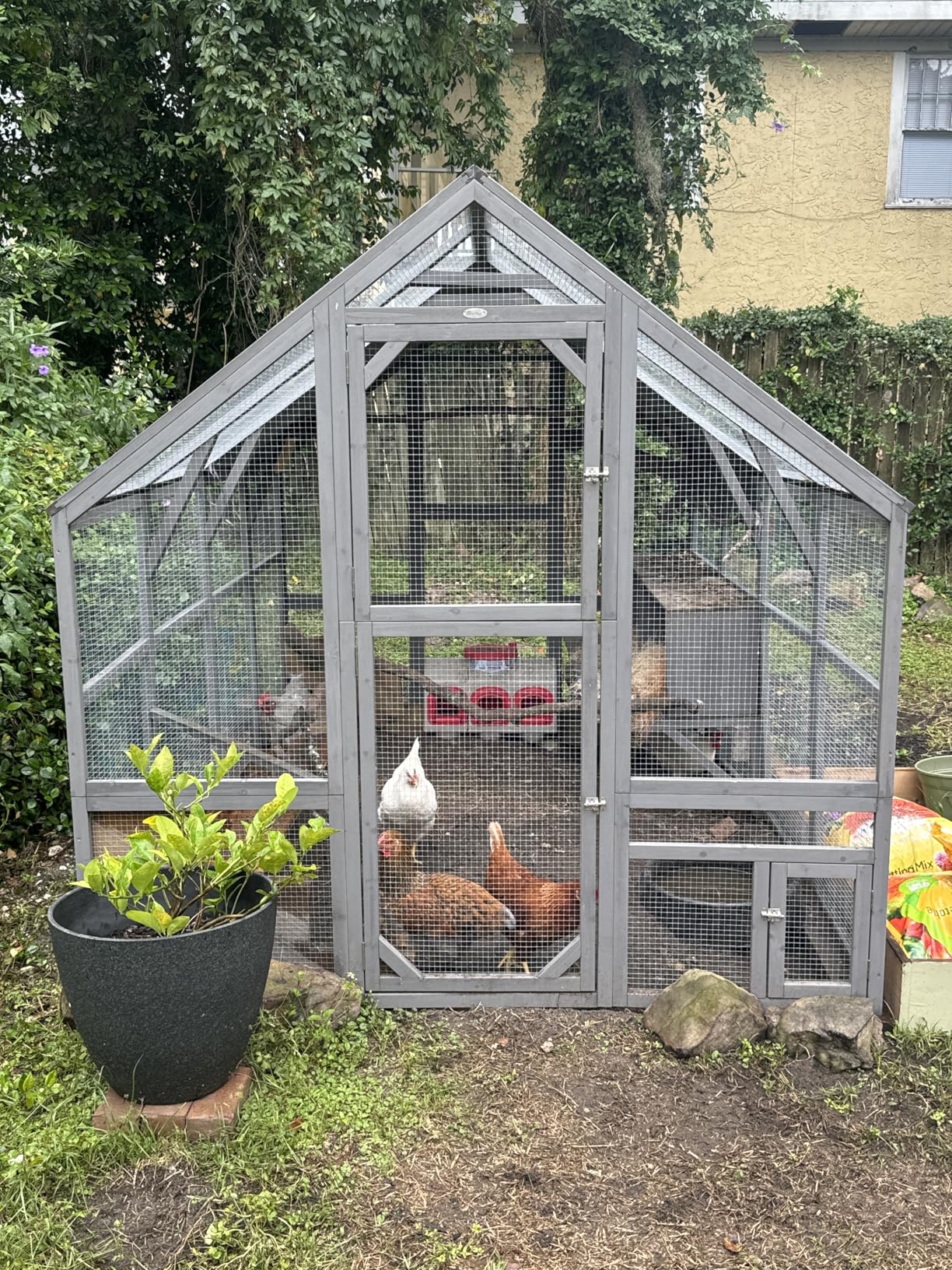
The dark brown finish looks natural in a backyard setting, and the combination of solid wood walls and wire run gives you the best of both worlds. Your birds get a secure, insulated roosting area and a bright, airy space to spend their days.
Wooden Versus Metal Considerations
Wood coops offer superior insulation, aesthetic appeal, and the ability to easily modify or repair the structure. They also require more maintenance than galvanized metal, including periodic resealing or repainting to protect against moisture damage. If you want a coop that looks at home in a landscaped backyard, wood is the natural choice.
Metal coops win on weather resistance, weight, and price per square foot. The PawHut costs more per bird housed than any metal model here, but it delivers a level of nesting infrastructure and visual quality that metal runs cannot replicate.
Climate Suitability and Weatherproofing
In harsh climates, expect to add weatherproofing. Apply a non-toxic wood sealant to exterior surfaces before the first wet season, and reapply annually. The cover over the run will need replacement after two to three seasons of direct sun exposure, so budget for that ongoing cost.
For cold-weather keepers, the insulated wood walls are a genuine advantage. My birds stayed comfortable through below-freezing nights with no supplemental heat, and the enclosed roosting area blocked wind far better than any open mesh run could.
How to Choose the Best Walk-In Chicken Coop for Large Flocks?
Choosing the right walk-in coop comes down to matching the structure to your flock size, your predator pressure, and your climate. After testing eight coops and reading through thousands of customer reviews, here are the factors that actually determine whether you will be happy with your purchase two years from now.
Flock Capacity and Square Footage
The golden rule is 4 square feet of coop space per bird for confined flocks, or 10 square feet of run space per bird if birds have separate nighttime housing. A coop marketed for 20 chickens may realistically only handle 15 comfortably for full-time confinement. Always size up from the manufacturer’s rated capacity, because overcrowding causes bullying, feather picking, and disease.
For walk-in runs where birds spend most of their day, calculate your floor space and divide by 10 to get a realistic bird count. A 200-square-foot run comfortably supports 20 chickens for daytime housing with nighttime roosting elsewhere.
Predator Protection and Mesh Quality
This is the single most important factor, and it is where budget coops cut corners. Hexagonal chicken wire keeps chickens in but does not keep predators out. Raccoons can reach through it, foxes can chew through it, and determined dogs can tear it. Welded hardware cloth in half-inch or one-inch mesh is the minimum acceptable security for any coop in predator territory.
Look for coops that include hardware cloth rather than chicken wire, or budget for an upgrade. Add a mesh apron extending 12 to 18 inches outward from the base, buried or staked flat, to stop digging predators. Replace simple slide latches with two-step locking carabiner latches on every door.
Ventilation and Ammonia Management
Large flocks produce significant moisture and ammonia, both of which damage respiratory health at high concentrations. Open-mesh metal runs handle ventilation effortlessly, which is why they outperform enclosed wooden coops on air quality. If you choose a wooden coop, make sure it has screened ventilation openings near the roofline that stay open year-round.
The signs of poor ventilation include frost on interior walls in winter, a sharp ammonia smell when you open the coop, and respiratory symptoms in your birds. A well-ventilated coop smells like fresh shavings, not like a barn.
Weather Resistance and Climate Matching
Metal coops with PE or Oxford fabric covers handle rain and sun well but offer minimal insulation. In cold climates, add windbreaks on the prevailing wind side and consider a heated waterer. In snowy regions, choose a spire roof design and be prepared to remove the cover during heavy snow events to prevent collapse.
Wooden coops provide natural insulation but need regular weatherproofing maintenance. The cover materials on all of these coops will degrade in direct sun over two to four years, so factor replacement cover costs into your long-term budget.
Assembly Difficulty and Skill Level
Most of these coops require two people and three to six hours for assembly. The metal runs with push-button connectors are the easiest, while wooden coops with multiple panels and hardware take the longest. Read the instructions fully before starting, sort and label all components, and have extra zip ties, a rubber mallet, and a cordless drill on hand.
If you are not handy, consider enlisting a friend or hiring a local handyperson for assembly day. A poorly assembled coop is a security risk to your flock, so getting it right matters.
Frequently Asked Questions
How Big Should a Chicken Coop Really Be?
A chicken coop should provide at least 4 square feet per bird inside the enclosed roosting area, plus 8 to 10 square feet per bird in an attached run. For a flock of 15 chickens, that means a minimum of 60 square feet of coop space and 150 square feet of run. Going larger than the minimum always pays off in flock health and reduced behavioral problems.
How Many Chickens Can Fit in a Large Walk-In Coop?
A typical large walk-in coop measuring 10 by 20 feet (200 square feet) can comfortably house 20 to 25 chickens for daytime use with nighttime roosting elsewhere. For full-time confinement, plan on 10 square feet per bird, which means the same space handles 15 to 20 birds. Always size down from the manufacturer’s rated capacity for real-world comfort.
What Are Common Chicken Coop Mistakes?
The most common mistakes are overcrowding the flock, using chicken wire instead of hardware cloth for predator protection, inadequate ventilation that traps ammonia, poor drainage leading to wet bedding, and relying on simple latches that raccoons can open. Other frequent errors include placing feeders where they get soiled with droppings and failing to add a mesh apron to stop digging predators.
What Is the Best Flooring for a Chicken Coop?
Deep bedding of pine shavings or straw over a solid wood or concrete floor is the most practical option for walk-in coops. The deep litter method, where you add fresh bedding on top of old and let it compost in place, provides warmth and reduces cleaning frequency. Avoid wire flooring, which injures feet, and avoid bare wood, which rots quickly under manure.
What Time Should Chickens Go in the Coop at Night?
Chickens put themselves to bed at dusk when their internal clock tells them to roost. You do not need to herd them in, but you should close and latch the coop door after the last bird has settled, which is typically 15 to 30 minutes after sunset. Closing the door protects against nocturnal predators like raccoons, foxes, and owls.
Final Thoughts on Walk-In Coops for Large Flocks
Switching to a walk-in coop is one of the best decisions I made for my flock and my own back. Standing upright to clean, feed, and collect eggs transforms chicken keeping from a chore into something you genuinely enjoy doing every morning. The best walk-in chicken coops for large flocks all deliver that core benefit, and the differences between them come down to size, materials, and how much predator-proofing you are willing to add yourself.
For most keepers, the Xbrigh 20×10 foot coop hits the sweet spot of space, build quality, and included features. If budget is your priority, the Betterhood delivers remarkable value per square foot. And if you want real nesting infrastructure with the warmth and beauty of wood, the PawHut is worth the investment.
Whatever you choose, plan for predator-proofing upgrades on day one, calculate your real flock capacity honestly, and enjoy the daily routine that a proper walk-in coop makes possible. Your birds will be healthier, your eggs will be easier to collect, and your back will thank you for years to come.