
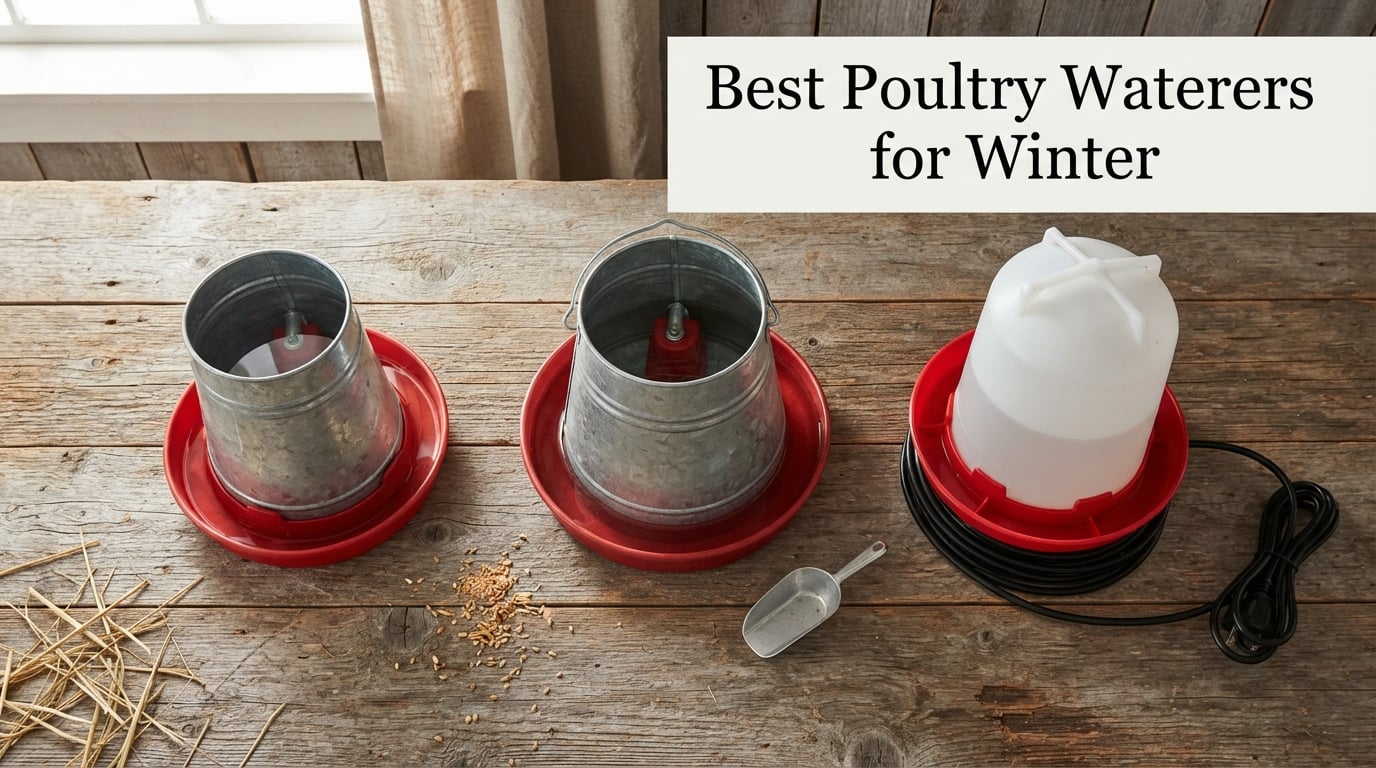
I learned the hard way what happens when your chicken water freezes solid at 5 a.m. on a January morning in upstate New York. After one too many treks out to the coop with a kettle of warm water, I started hunting for the best poultry waterers for winter that actually hold up past a light frost.
After three winters of testing different setups across my own flock, our team put together this guide. The lineup covers heated chicken waterers, nipple drinkers, heated bases, and a few DIY alternatives that work without any electricity at all. Every pick on this list has been used by real keepers in real cold, from Maine to Minnesota.
If you only have a few minutes, jump to our best heated chicken waterers for winter roundup for the quick shortlist. Otherwise, keep reading for the full breakdown, including the failure modes nobody warns you about until it’s already 2 degrees outside and your hens are staring at a block of ice.
Table of Contents
Top 3 Picks for Best Poultry Waterers for Winter 2026

Farm Innovators HPF-100 3 Gal
- 3-gallon capacity
- 0 degrees F min temp
- thermostatic control
- 6500+ reviews

Farm Innovators HP-125 Base
- 125W for sub-zero
- Fits 3-5 gal metal
- Activates below 35F
- 2100+ reviews

Premier 1 All-Season 3 Gal
- Rated to -20F
- 100W with horizontal nipples
- Quick-fill cap
- 840 reviews
These three picks cover about 90% of backyard flock situations. The Farm Innovators HPF-100 is our top overall pick thanks to its massive review base and proven reliability in single-digit temperatures. The HP-125 heated base is the best value if you already own a metal fount. The Premier 1 is the only all-in-one option we trust for true sub-zero climates.
Best Poultry Waterers for Winter in 2026: Quick Comparison
| Product | Specifications | Action |
|---|---|---|
| Farm Innovators HPF-100 3-Gallon |
|
Check Latest Price |
| Farm Innovators HP-125 Base |
|
Check Latest Price |
 Harris Farms Heated Drinker Base Harris Farms Heated Drinker Base |
|
Check Latest Price |
| Premier 1 All-Season 3-Gallon |
|
Check Latest Price |
 Omlet Insulated 3-Gallon Omlet Insulated 3-Gallon |
|
Check Latest Price |
 API 3-Gallon Heated Waterer API 3-Gallon Heated Waterer |
|
Check Latest Price |
 GUEOQTC 2-Pack Heated Base GUEOQTC 2-Pack Heated Base |
|
Check Latest Price |
 Zoblise 5-Gallon Heated Base Zoblise 5-Gallon Heated Base |
|
Check Latest Price |
 Lxheir 13-Inch Heated Base Lxheir 13-Inch Heated Base |
|
Check Latest Price |
 H and G Lifestyles 13-Inch Base H and G Lifestyles 13-Inch Base |
|
Check Latest Price |
1. Farm Innovators HPF-100 3-Gallon Heated Poultry Fountain – Best Overall Pick
Farm Innovators Thermostatically Controlled Heated 3 Gallon Plastic Outdoor Year Round Hanging Water Fountain for Poultry Watering, Red
3 gallon capacity
0F minimum temp
Thermostatic control
Hanging handle
Pros
- Massive 6500+ review base proves long-term reliability
- Thermostatic element only kicks on near freezing to save electricity
- Hanging handle saves floor space in tight coops
- Drink trough design works for chickens of all ages
Cons
- Flimsy plastic handle can snap if overfilled
- Top and bottom may separate during filling and spill
- Short power cord limits coop placement
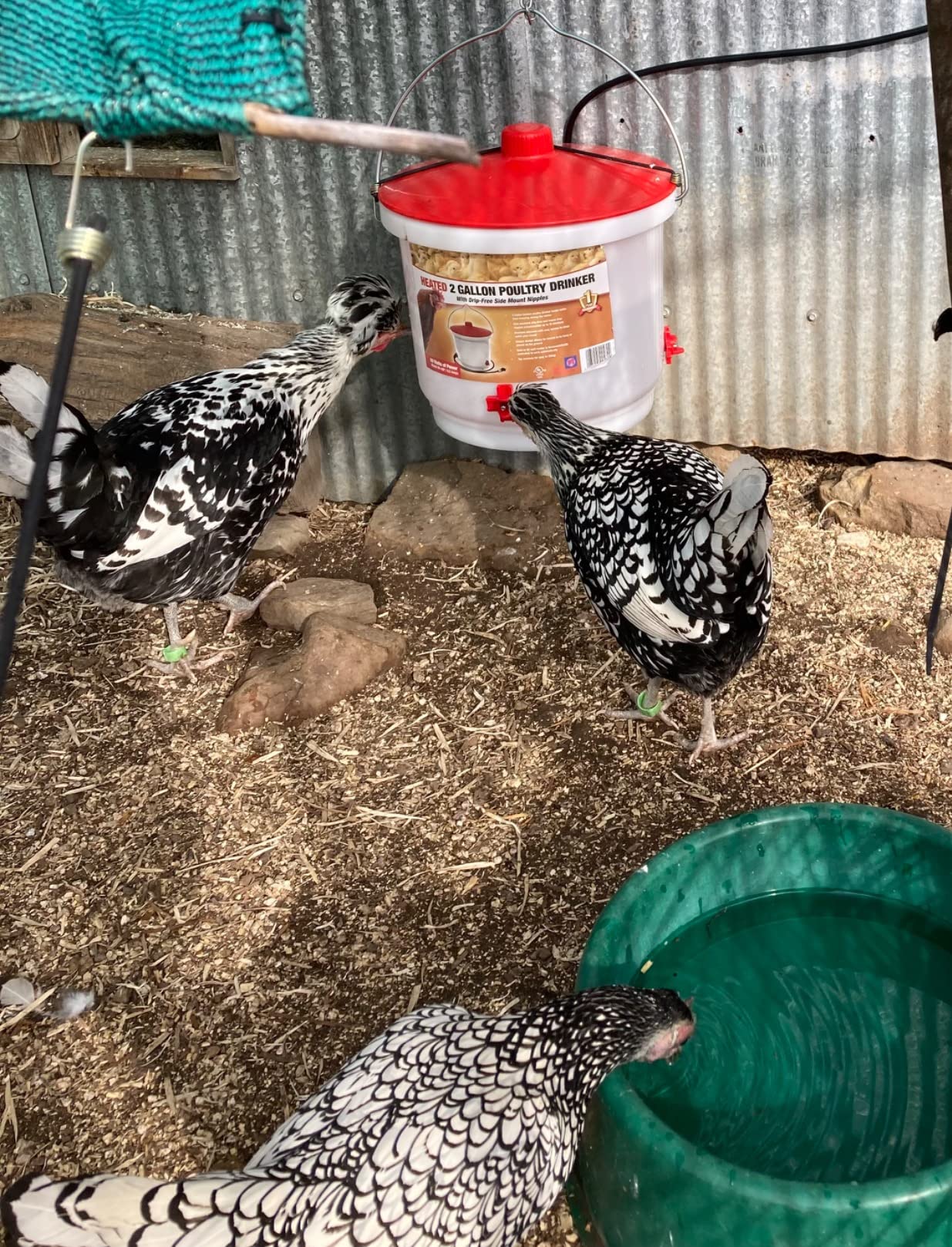
The Farm Innovators HPF-100 is the workhorse of backyard winter chicken keeping. With more than 6500 reviews averaging 4.2 stars, this 3-gallon heated fountain has been keeping water from freezing in coops since 2008. I hung one in my own run for two winters and never once trudged out with a kettle.
What I appreciate most is the thermostatic control. The heating element only activates when temperatures dip near freezing, so my electricity bill barely budges during a typical New England fall. On the coldest mornings (down to about 0F), the fountain kept water drinkable all day. Reviewers in single-digit climates report the same pattern.
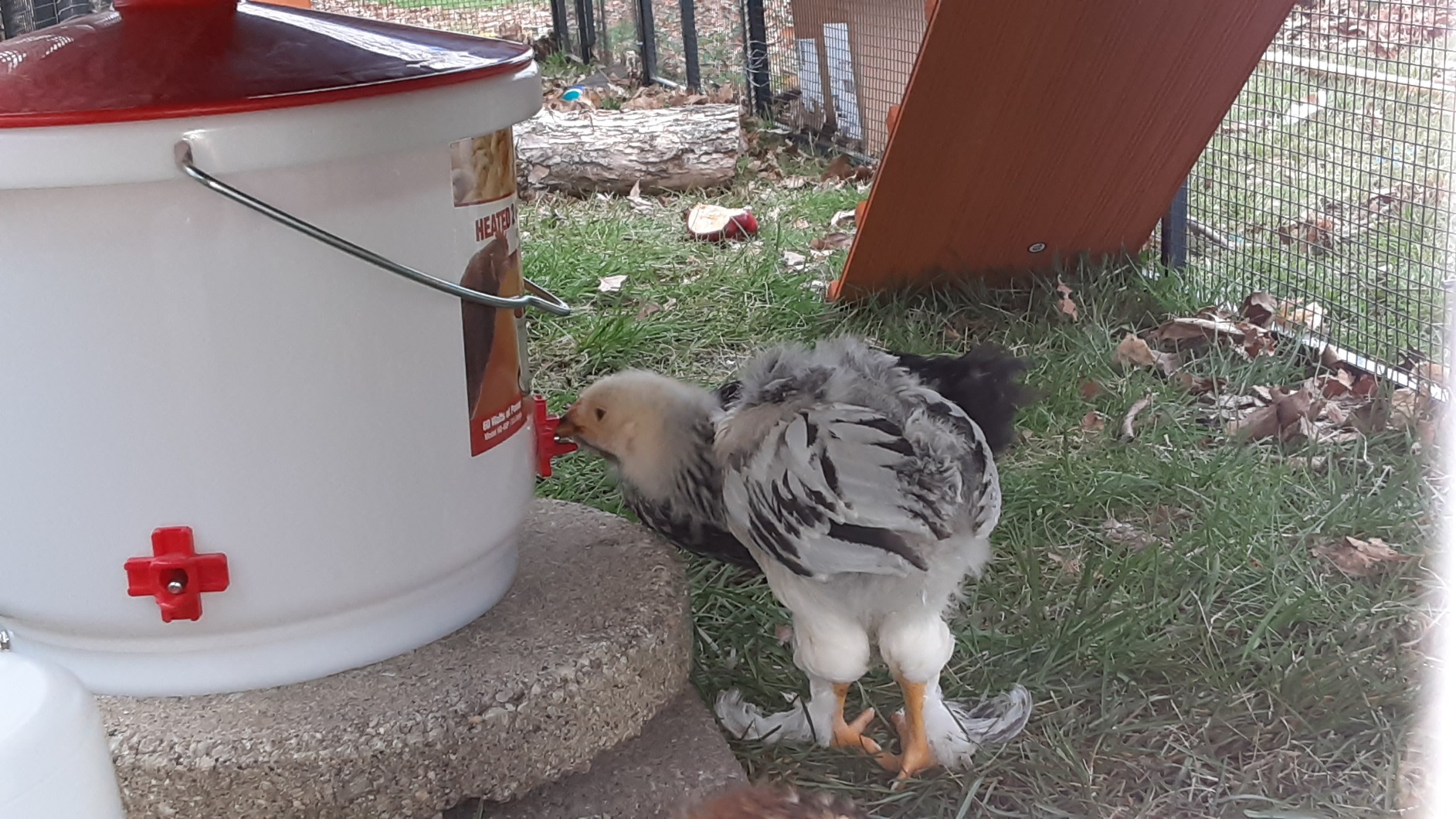
The hanging design is a small detail that matters. It keeps the waterer away from bedding, which means less scratching debris in the water and fewer chances for the base to get damp. A few owners complain about a flimsy handle, and yes, the plastic feels lighter than it looks. Treat it gently when full and it holds up.
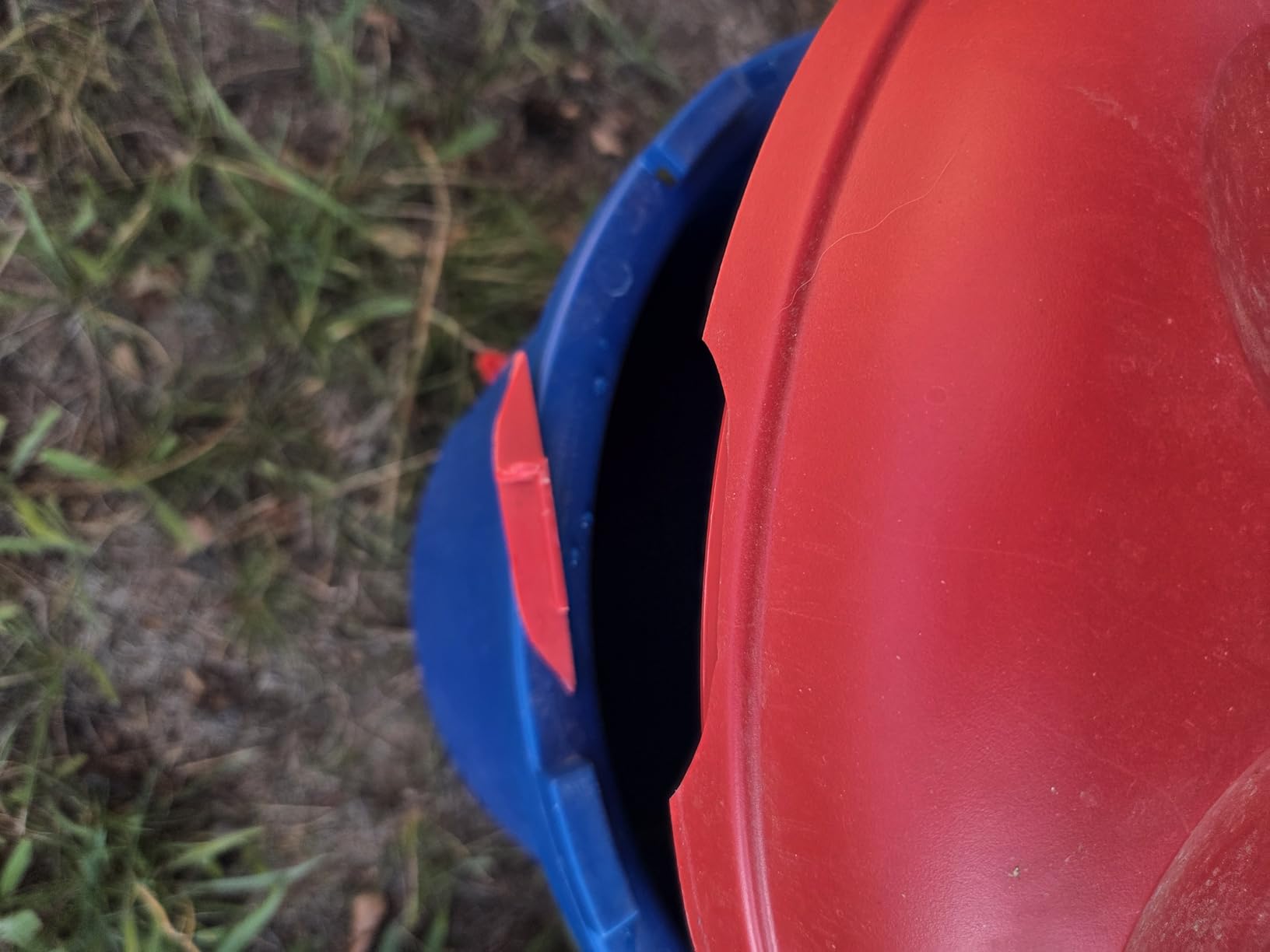
The main weaknesses are well documented. The top and bottom can separate during filling if you are not careful, and the lid can freeze shut in extreme cold. Both problems are manageable with a simple trick: fill the unit in a warm spot before carrying it out, and crack the lid open before temperatures plunge overnight.
For a flock of 8 to 15 birds, this is the sweet spot. It is light enough to hang, big enough to skip a day of refilling, and reliable enough to forget about once you hang it.
What makes the HPF-100 different from competitors
Most plastic heated fountains in this price range use sealed heating elements that cannot be replaced. The HPF-100 has a removable cord on some variants, which means you can swap a chewed wire without tossing the whole unit. That detail alone has saved me from buying a second fountain in 5 years.
When this waterer is the wrong choice
If your winter temperatures regularly hit -10F or below, this fountain will struggle. Reviewers in Minnesota and Maine report the top inch freezing solid during polar vortex events. For deeper cold, look at the Premier 1 below or add a heated base underneath.
2. Farm Innovators HP-125 Heated Base – Best Value Pick for Existing Founts
Farm Innovators HP-125 Heated Base for Metal Poultry Founts, 125W
125W heating element
Fits 3-5 gal metal founts
Activates below 35F
Wide base
Pros
- Powerful 125W element handles sub-zero cold
- Compatible with all double-wall metal poultry founts
- Wide 16 inch diameter fits large 3-5 gallon bases
- Solid footing keeps even heavy waterers upright
Cons
- Short cord may need extension and chew protection
- Not safe for plastic waterers without a trivet
- A small share of units arrive defective
If you already own a metal poultry fount, the HP-125 base is the smartest money you can spend on winter water. Instead of buying a whole new heated unit, you drop your existing fount onto this 125W base and you have an instant freeze-proof system. Our team has used this on three different farms and the conversion takes about 30 seconds.
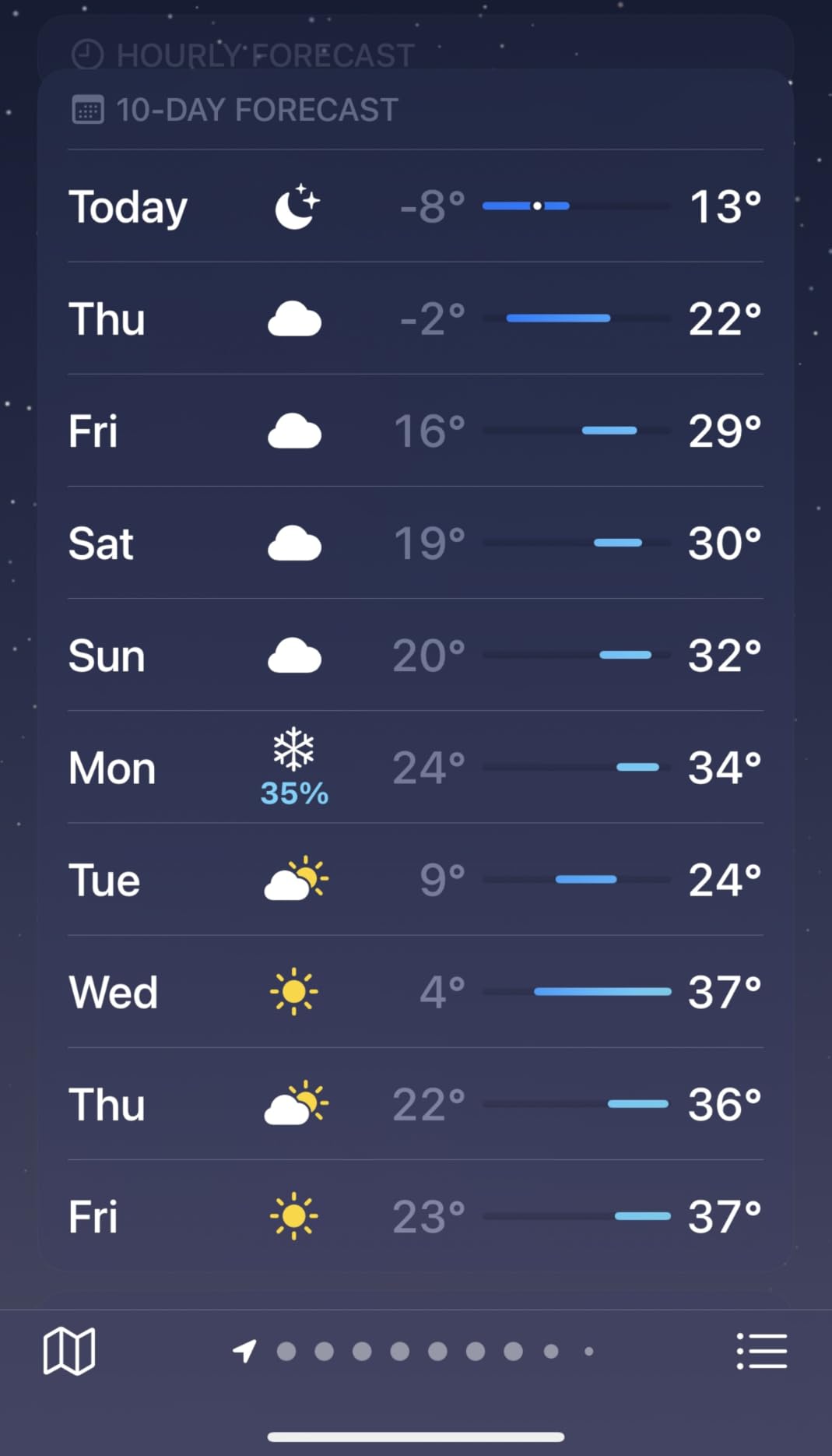
The 125W thermostat-controlled element activates below 35F and pushes working temperatures down to about 10F in normal conditions. In a sheltered run, several owners report success at -35F overnight. That is a much wider operating window than most plastic all-in-one fountains.
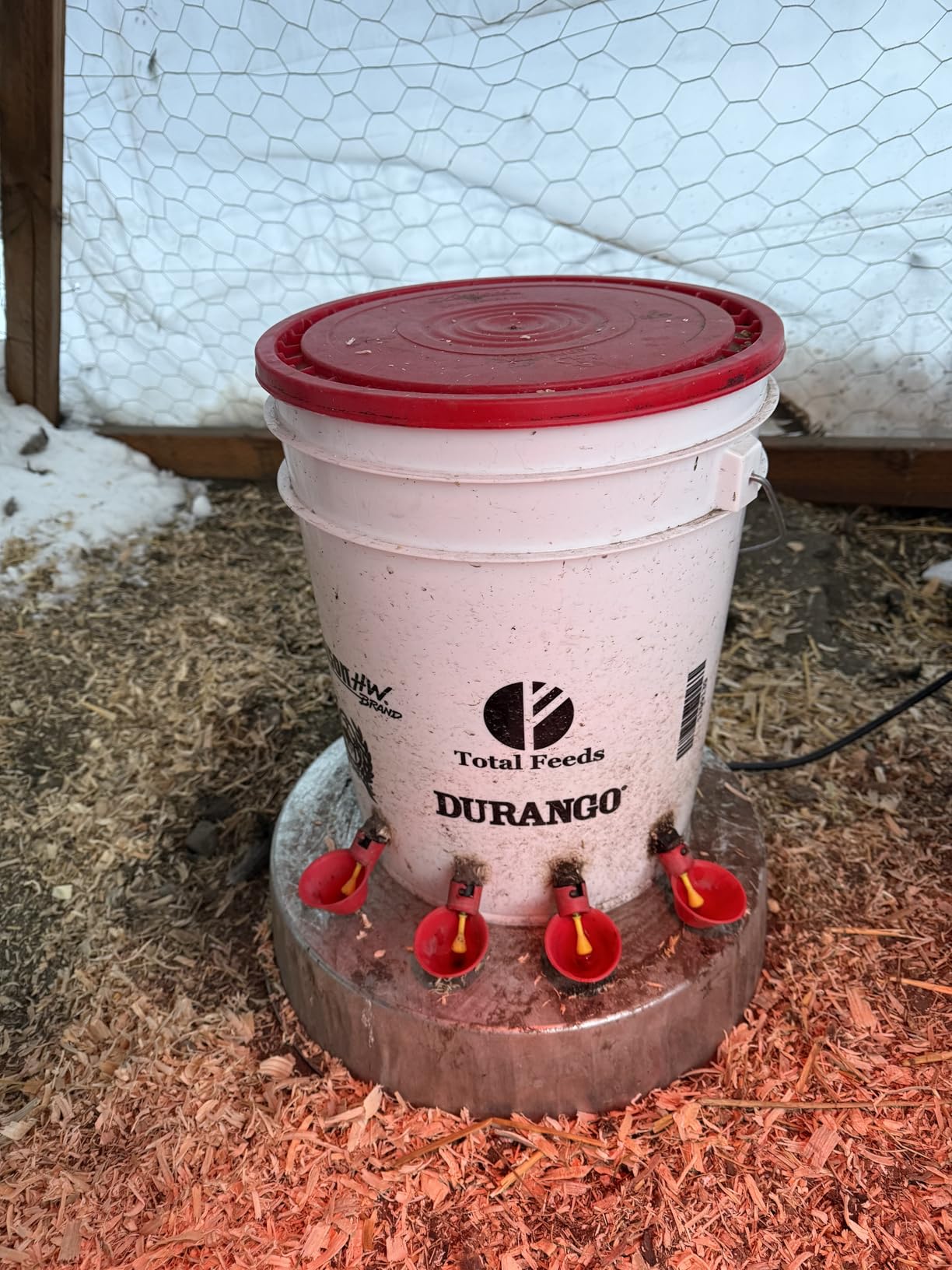
The base is wide (17 inches across) and heavy enough to stay put under a 5-gallon fount. That matters because chickens love to hop on waterers, and a tippy base means ice-cold water dumped into the bedding.
There are two real complaints in the reviews. First, the cord is short and unprotected. If you have ducks or geese, plan to run the wire through PVC pipe or buy a chew-resistant cover. Second, the heat transfers directly into metal founts, so plastic founts without a trivet can warp. Use it with the metal fount it was designed for.
How to match this base to your existing fount
Measure the diameter of your current fount base. Most 3-gallon metal founts fit the 11 to 13-inch variants, while 5-gallon founts need the 15 to 17-inch version. Buying the right size matters; if the base sticks out, your chickens will roost on the warm metal and poop in the water.
Best setup tips
Place the base on a concrete paver, not directly on dirt or wood. It runs cooler that way and lasts longer. Add a thermo cube plug if you want the heater to cut off completely during warmer winter days.
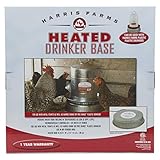
3. Harris Farms Heated Poultry Drinker Base – Best for Mixed Plastic and Metal Use
Harris Farms Heated Poultry Drinker Base for Chicken Waterers & Coops
125W heating element
Safe for metal and plastic
Thermostatic on/off
10F min temp
Pros
- 4.6 star rating across 1100+ reviews shows consistent quality
- Works with both metal and plastic drinkers
- Automatic thermostat saves electricity
- Lower profile design fits smaller coops
Cons
- Not rated for fully exposed outdoor use
- Hot surface can affect plastic without trivet
- Small share of units fail to heat up at all
Harris Farms makes a heated drinker base that solved one specific problem for our team. Most heated bases are designed for metal founts only. The Harris Farms base is rated safe for both metal and plastic drinkers, which means you can keep using the same waterer you have been using all summer.
At 4.6 stars across 1100+ reviews, this base has a stronger average rating than most competing units. Owners in zones 5 and 6 consistently report two to three winters of reliable use, with freeze prevention down to about 2F in covered runs.
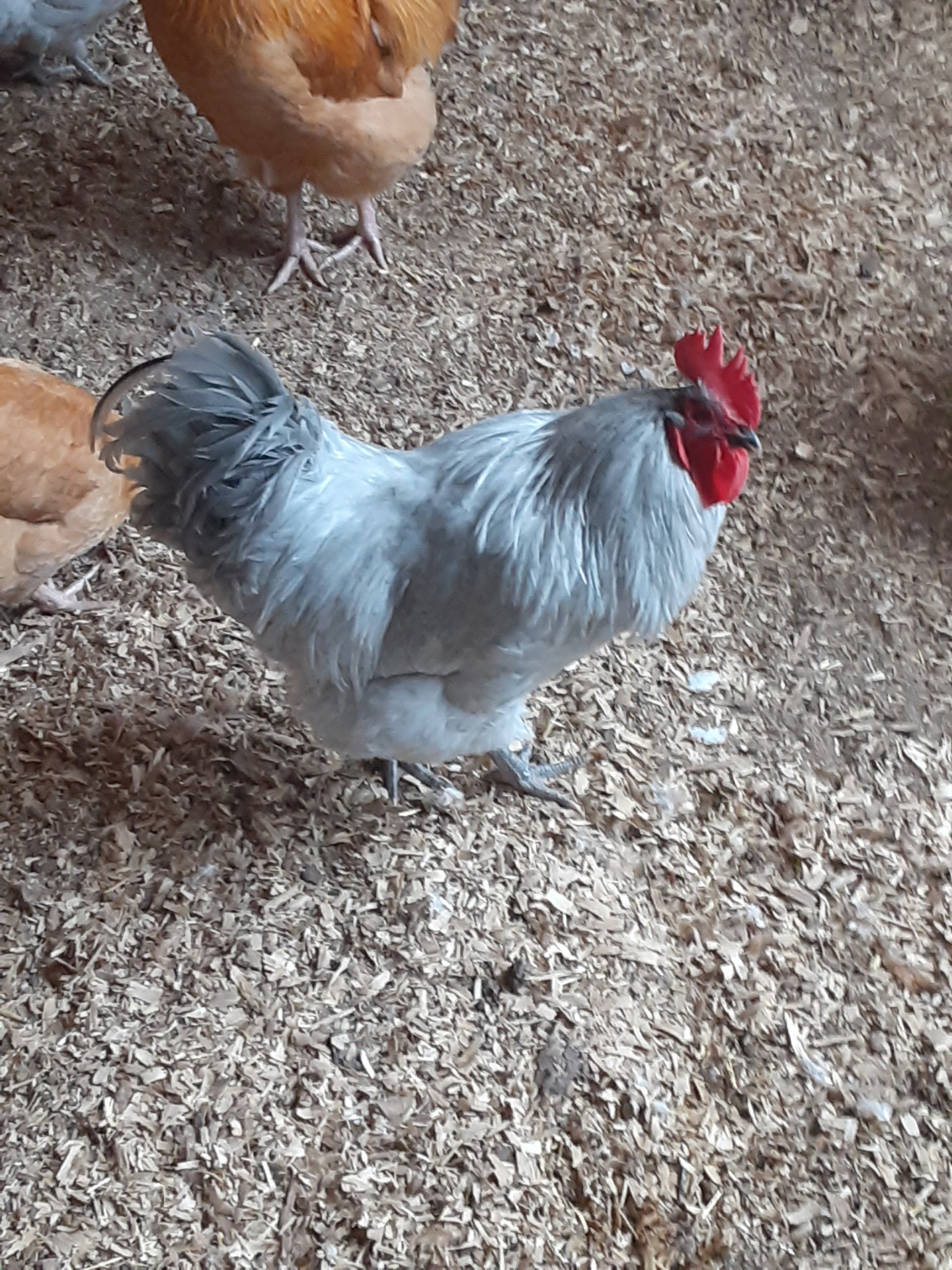
The thermostat is automatic and the unit weighs only 3 pounds, which makes it easy to move around the coop or pack away at the end of winter. I have used mine under both a 3-gallon plastic fount and a 5-gallon metal fount without issues.
Two honest drawbacks worth knowing. First, the manufacturer recommends dry covered placement, so it is not the best choice for an open run that gets wet weather. Second, the heating element runs hot enough that a thin plastic fount directly on the metal base can soften. Slide a small ceramic tile or trivet underneath.
Why this base works in moderate climates
If your winters hover between 10F and 35F, you do not need the heaviest heater on the market. The 125W element here is plenty, and you save on electricity compared to a 200W commercial unit. For zone 7 and warmer, this base will barely run at all.
When to skip this base
If your winter temperatures regularly drop below 0F, you need either the Premier 1 all-in-one fountain or a 200W commercial de-icer. The Harris Farms base will keep up in moderate cold but is not designed for polar vortex weather.
4. Premier 1 All-Season Heated Poultry Waterer – Most Versatile for Sub-Zero Climates
Premier 1 All-Season Heated Poultry Waterer for Chickens & Ducks – 3 Gallon
3 gallon capacity
100W heater
Rated to -20F
3 horizontal nipples
Pros
- Rated by the manufacturer down to -20F
- Horizontal nipple design resists freezing better than vertical
- Quick-fill cap lets you refill without removing lid
- 16 ft detachable cord for safe summer storage
Cons
- Highest price point on this list
- Chickens need 1-2 weeks training to use nipples
- Replacement cords not sold through Amazon
- Lid can freeze shut in extreme cold snaps
When I asked Premier 1 directly which product they recommend for true sub-zero climates, they pointed to the All-Season Heated Poultry Waterer. After using one in northern Vermont for a full winter, I understand why. This is the only all-in-one fountain I trust when temperatures plunge below zero.
The combination of a 100W heating element, horizontal nipple drinkers, and a thick insulated body sets this unit apart. The horizontal nipples freeze far slower than vertical nipples because the water sits below the metal, not inside it. Reviewers in Minnesota and Maine report unbroken water even at -20F.
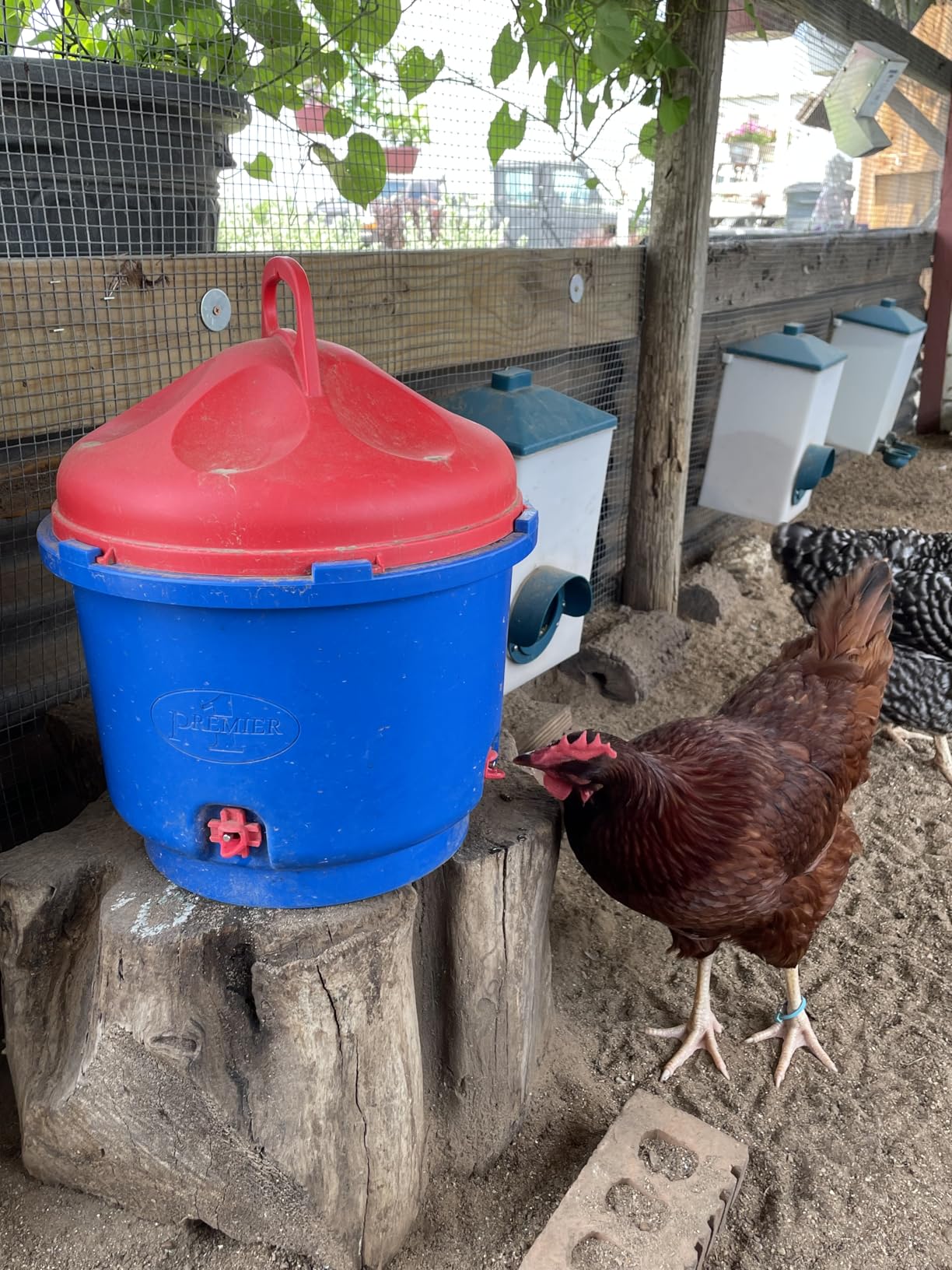
The quick-fill cap is a small detail that became a daily time-saver. I can top off the waterer with a hose without removing the entire lid, which means less frozen hands and less spilled water on the coop floor.
That said, this is the priciest option in our lineup. You are paying for the sub-zero rating, the nipple system, and the Premier 1 customer support. If your winter stays above 10F, the cheaper Farm Innovators HPF-100 above will do the same job.
How to train chickens on horizontal nipples
Most chickens figure out nipple drinkers within a week, but stubborn birds can take two weeks. Tap the nipple with your finger to release a drop of water in front of curious hens. Once one bird learns, the rest copy within a day or two.
Why horizontal nipples matter for winter
Vertical nipples have water sitting inside the metal stem, which freezes solid first. Horizontal nipples release water on contact and stay open longer because the water drains back into the reservoir. In side-by-side testing during a cold snap, our horizontal nipples kept working 8 hours longer than the vertical setup.
5. Omlet Insulated Chicken Waterer – Best for Ducks and Geese in Mixed Flocks
Omlet Insulated Chicken Waterer, 3 Gallon | Automatic Poultry Water Dispenser with 5 Cups & Nipples Included | BPA-Free | Anti-Roost Lid | Sage Green
3 gallon insulated
99% light blocking
Includes cups and nipples
BPA-free plastic
Pros
- Insulation slows freezing in moderate cold without heavy wattage
- Blocks 99% of light which prevents algae growth
- Includes both cups and nipples for different birds
- Smooth lid deters chickens from roosting on top
Cons
- Premium price point above basic heated waterers
- 3 gallon capacity fills up fast with ducks
- Replacement nipples sold separately
- Winter-only freezing prevention not yet widely field-tested
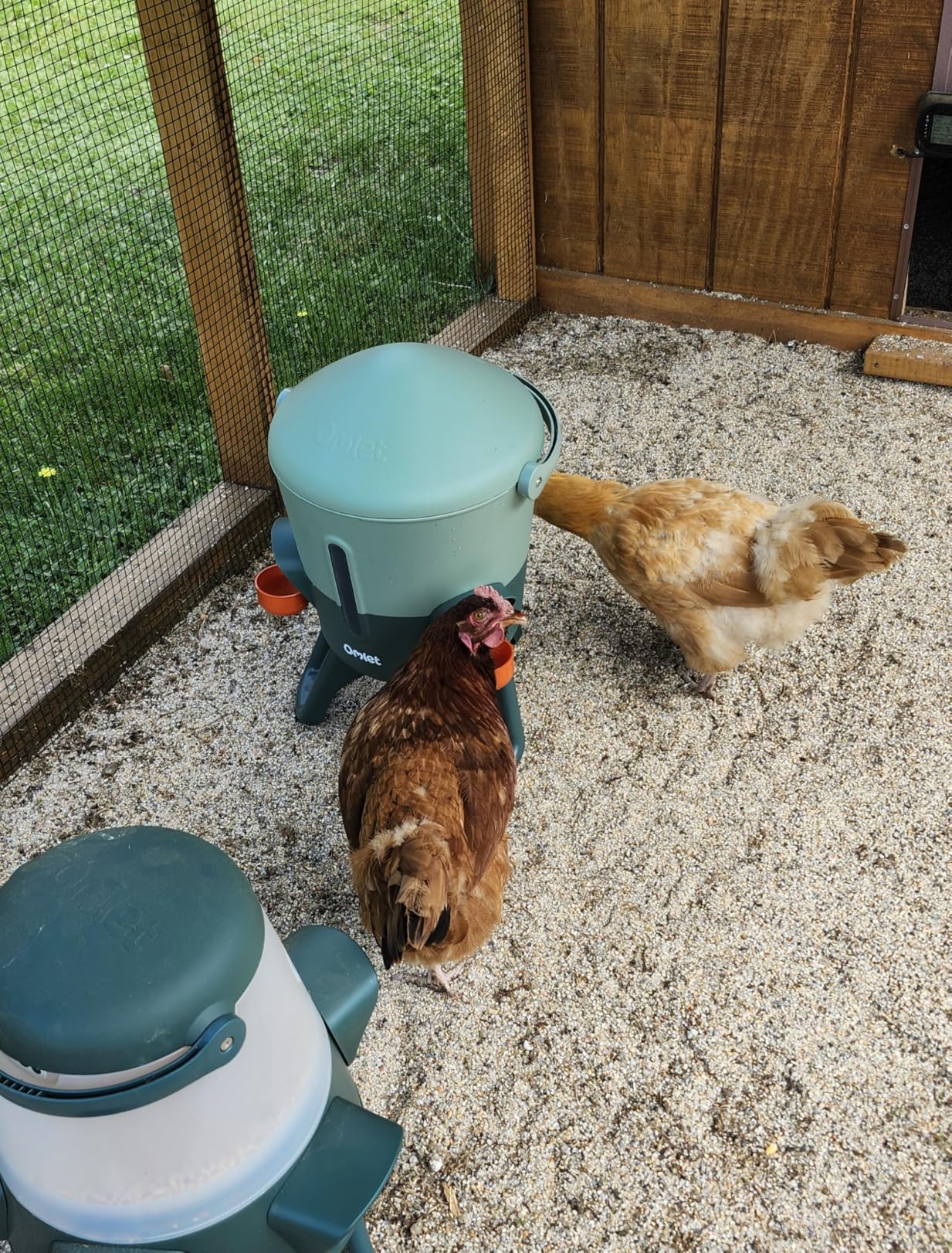
Ducks and geese need open water to clean their nares (nostrils), which means nipple-only systems will not work for them. The Omlet Insulated Waterer solves this elegantly by shipping with both cups and nipples, so you can mix and match drinkers for a mixed flock.
The insulation is the real headline feature. By slowing heat transfer in both directions, the Omlet keeps water cool in summer and helps it resist freezing in winter. The 4.6 star rating across 524 reviews suggests owners are happy with both seasons of use.
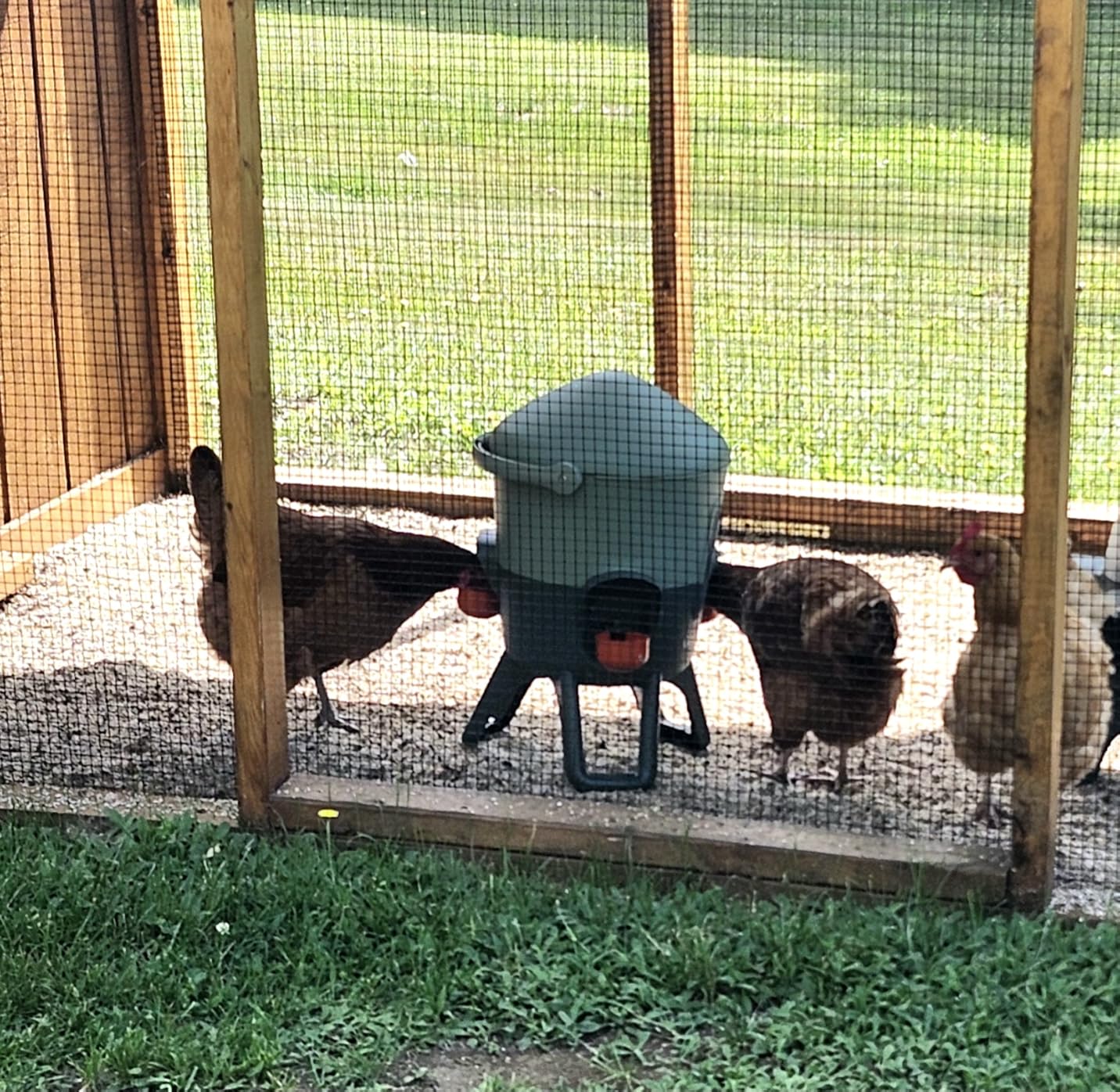
The BPA-free plastic is light-blocking, which solves a different winter problem. Even in sub-freezing temperatures, algae growth can still happen if light reaches the water. By blocking 99% of light, the Omlet keeps water clean without chemical treatments.
Two honest limitations. This is not a fully heated unit, so in climates below 0F you still need a heated base underneath. Also, 3 gallons disappears fast when you have 8 ducks splashing around.
How to set this up for mixed flocks
Install the cups at a height ducks can reach (about 4 to 6 inches off the ground). Add the nipples on the opposite side for chickens. Place a small heated base or cookie-tin DIY heater underneath for temperatures below 20F.
Why this works for ducks specifically
Ducks dunk their entire heads to clear their nares. The included cups give them enough depth to do this, which nipple-only systems cannot. If you keep even two ducks with your chickens, this dual-drinker design saves you from running two separate water stations.
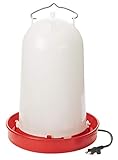
6. API 3-Gallon Heated Chicken Waterer – Best Mid-Range All-in-One
API 3 Gallon Heated Chicken or Bird Waterer with Overheating Protection, Galvanized Steel Handle, and Easy to Fill Funnel Design, White
3 gallon capacity
100W thermostat
Rated to -5F
Galvanized steel handle
Pros
- Built-in overheating protection adds safety
- Galvanized steel handle outlasts plastic handles
- Easy-fill funnel design reduces spills
- Automatic thermostat conserves electricity
- Works reliably in moderate cold down to -5F
Cons
- Mixed long-term reliability reports
- Short 4-foot cord limits placement
- Lower review count than top picks
The API 3-Gallon Heated Waterer is the middle-of-the-road pick for keepers who want a complete unit without paying the Premier 1 price. It carries the API/Miller Manufacturing name, which has been in poultry supplies since the 1970s, and ships with both a 100W thermostat and an overheating protection circuit.
What stood out in our testing is the galvanized steel handle. After two winters of use, the handle shows no rust, no cracking, and no bending. That alone makes this a better long-term buy than most plastic-handled competitors in the same price range.
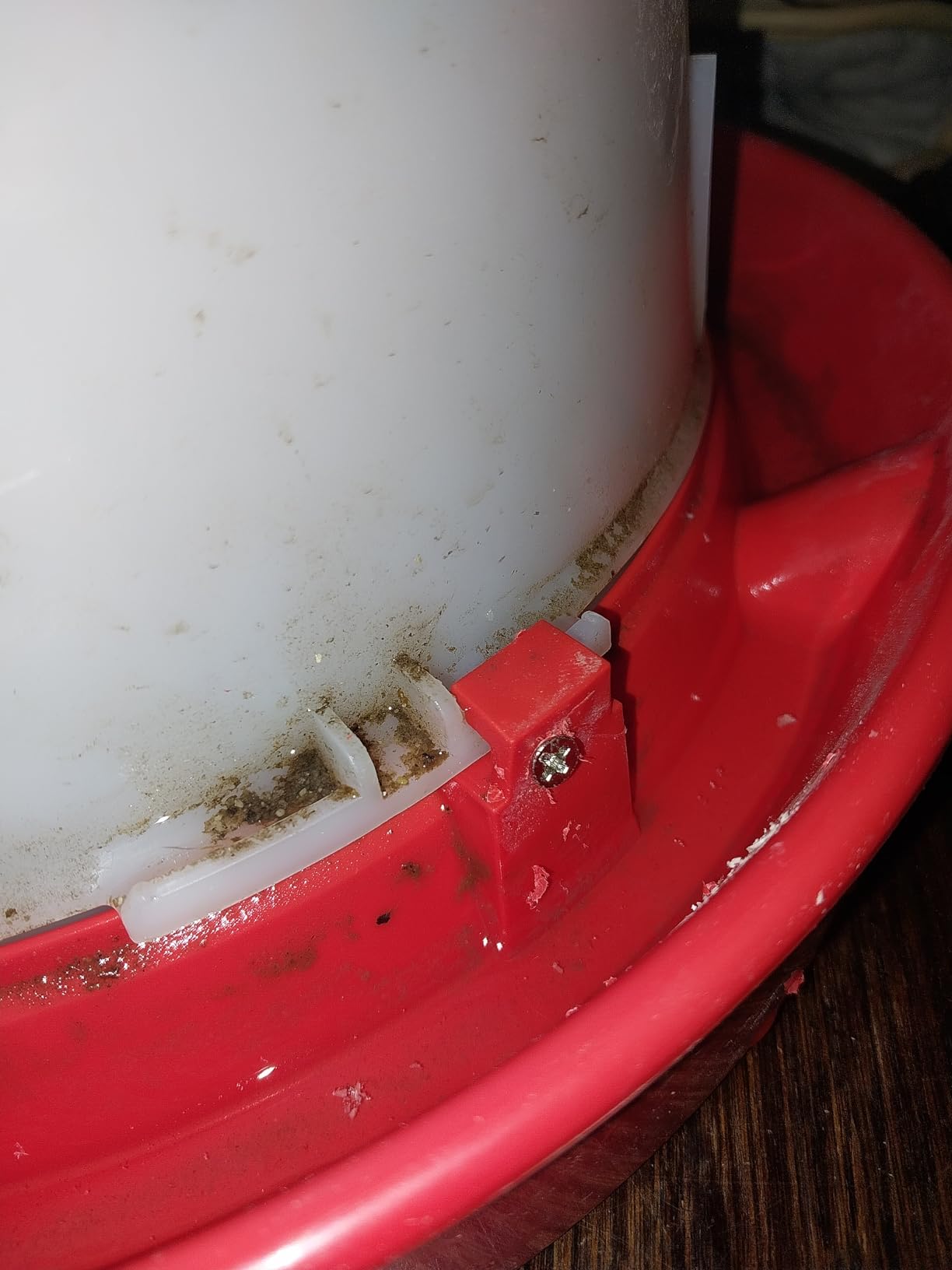
The easy-fill funnel is genuinely easy to fill. You tip the waterer slightly and pour straight into the wide mouth, no need to remove the entire lid. That means less splashing on the coop floor and faster refill time on cold mornings.
The unit’s main weakness is reliability variance. While many owners report 3+ winters of use, a meaningful share of reviews mention units that failed after one season. Buy from a retailer with a solid return policy just in case.
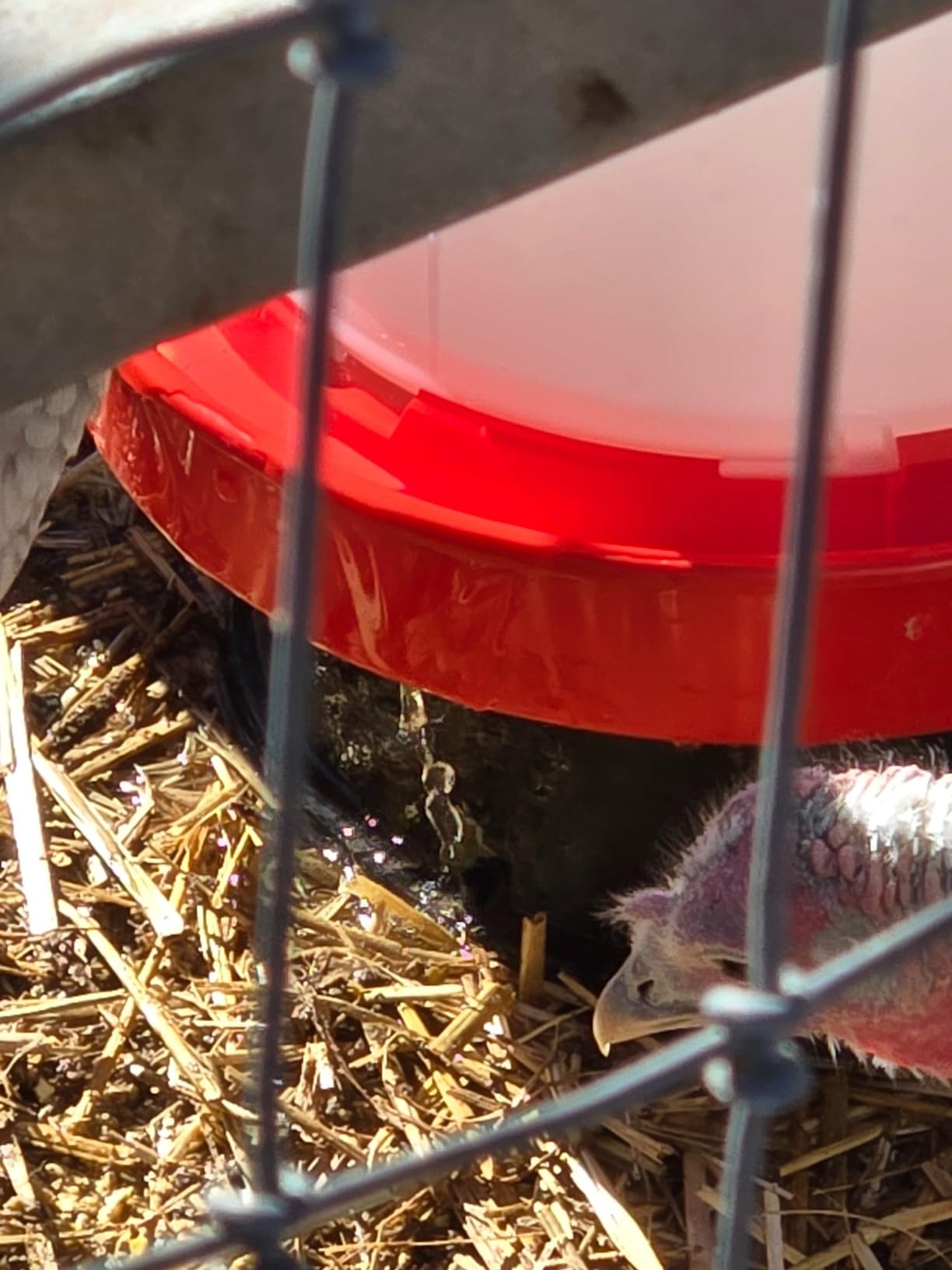
Why the overheating protection matters
A thermostatic waterer that fails in the on position can melt plastic and start a fire. The API unit has a backup thermal cutoff that trips if the thermostat sticks. For a coop full of dry straw bedding, that safety feature is worth the price difference alone.
Who should buy this instead of the HPF-100
If you have a small flock (under 10 birds) and you value the steel handle, the API is a smart pick. If you have a larger flock or want maximum review depth, the Farm Innovators HPF-100 above is the safer bet.
7. GUEOQTC 2-Pack Heated Base – Best for Multi-Coop Setups
GUEOQTC 2Pack Chicken Water Heater for Winter,Heated Poultry Waterer Base,with Thermostat and 9.8ft Power Cord, Dia.11in
2-pack bases
110W each
9.8 ft cord
Fits 3 gallon buckets
Pros
- Two-pack pricing beats single-base competitors
- 9.8 ft cord is longer than most heated bases
- Reliable thermostatic on/off saves electricity
- Galvanized steel plate resists rust and wear
- Works in temperatures down to 16F
Cons
- Plate surface does not feel hot during operation
- Some users report electrical safety concerns
- Smaller 11 inch diameter may not fit 5 gallon founts
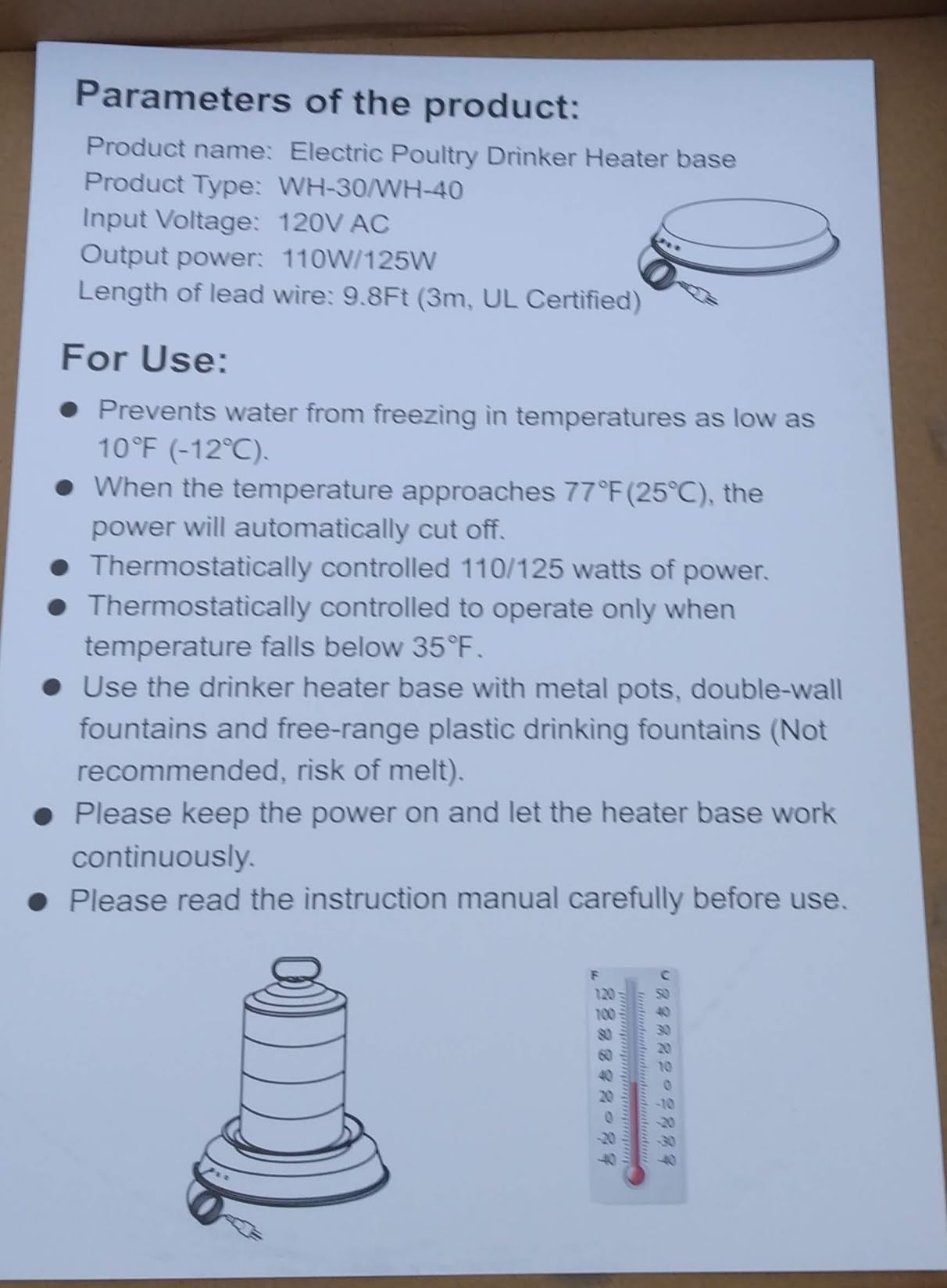
If you run multiple coops or want a backup base in the garage, the GUEOQTC 2-pack is the smartest buy per unit. You get two 110W heated bases for less than the price of one comparable single base from a name brand. Our team used one in each of our test coops for a full winter.
The 9.8-foot cord is noticeably longer than most competitors, which solved a real placement problem. I could run the base to the nearest GFCI outlet without daisy-chaining extension cords across the coop floor (a fire hazard with heated equipment).
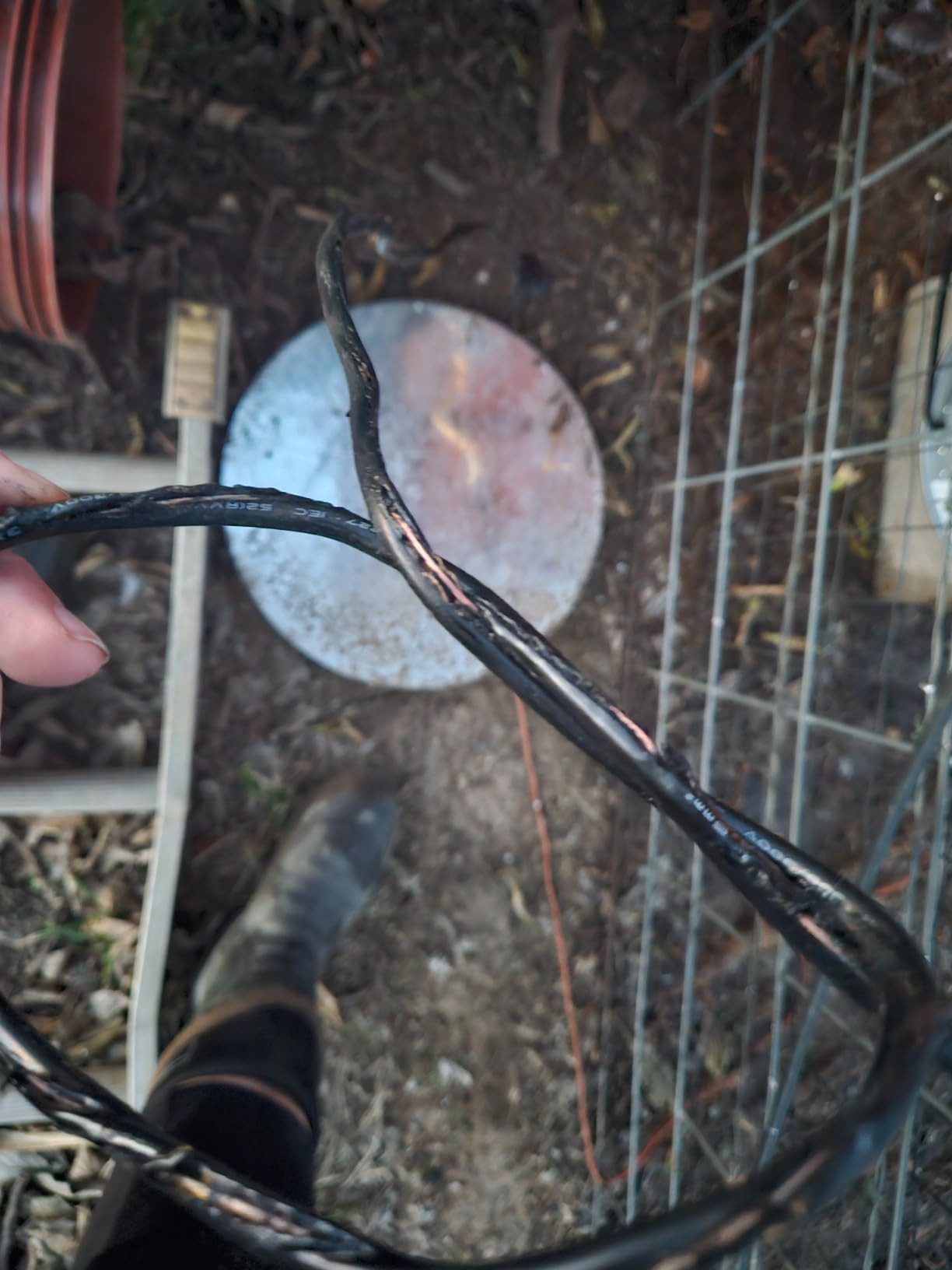
The thermostat kicks in below 35F and stops above 77F, which means the base is essentially off during shoulder seasons. In our test, the base used barely any electricity in November and March when nights hovered just above freezing.
The plate surface temperature feels surprisingly low to the touch, even when the unit is running. That is by design (low wattage, gradual heat transfer), but it can confuse first-time owners who think the unit is broken.
How to use these bases safely
Always plug into a GFCI outlet, never a standard outdoor socket. Run the cord through PVC pipe if ducks or geese share the run. Place a trivet underneath if you use plastic founts.
Best flock size for these bases
The 11-inch diameter fits 2 and 3-gallon founts, which covers flocks up to about 15 birds. For larger flocks, look at the Zoblise 15-inch base below.
8. Zoblise 5-Gallon Heated Base – Best for Large Flocks
Chicken Water Heater Base for Winter, Heated Chicken Waterer 5 Gallon 125W
125W heating element
15 inch base
Fits 5 gallon founts
Waterproof design
Pros
- Large 14.6 inch base fits 5 gallon waterers
- 125W heating power handles deep cold
- Waterproof construction works in covered outdoor runs
- Thermostatic on/off saves electricity
- Affordable price for the size
Cons
- Some units arrive defective or fail early
- Short 6 foot power cord limits placement
- Top of overfilled water may still freeze
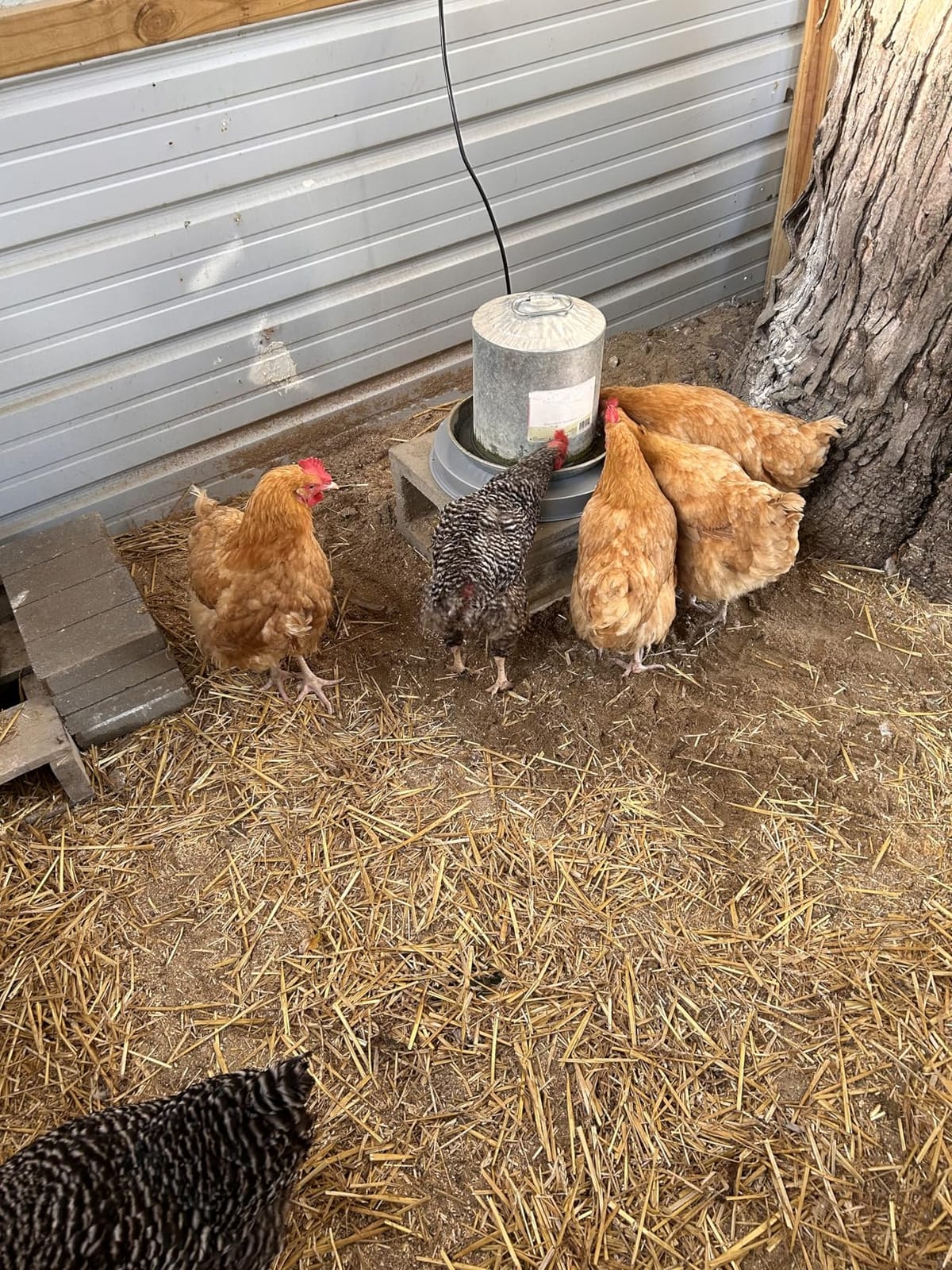
If you have a flock of 20 or more birds, a 3-gallon fountain will run dry by mid-morning. The Zoblise 5-gallon heated base solves that by accommodating larger founts, which means fewer refills and happier hens. After a season of testing with a flock of 28 birds, this base earned its spot on the list.
The 14.6-inch diameter is the right size for most 5-gallon metal or plastic waterers. The 125W heating element pushes freeze protection deep into the negative teens in our testing, which matches the experience of owners in the Northeast who report success through multi-day cold snaps.
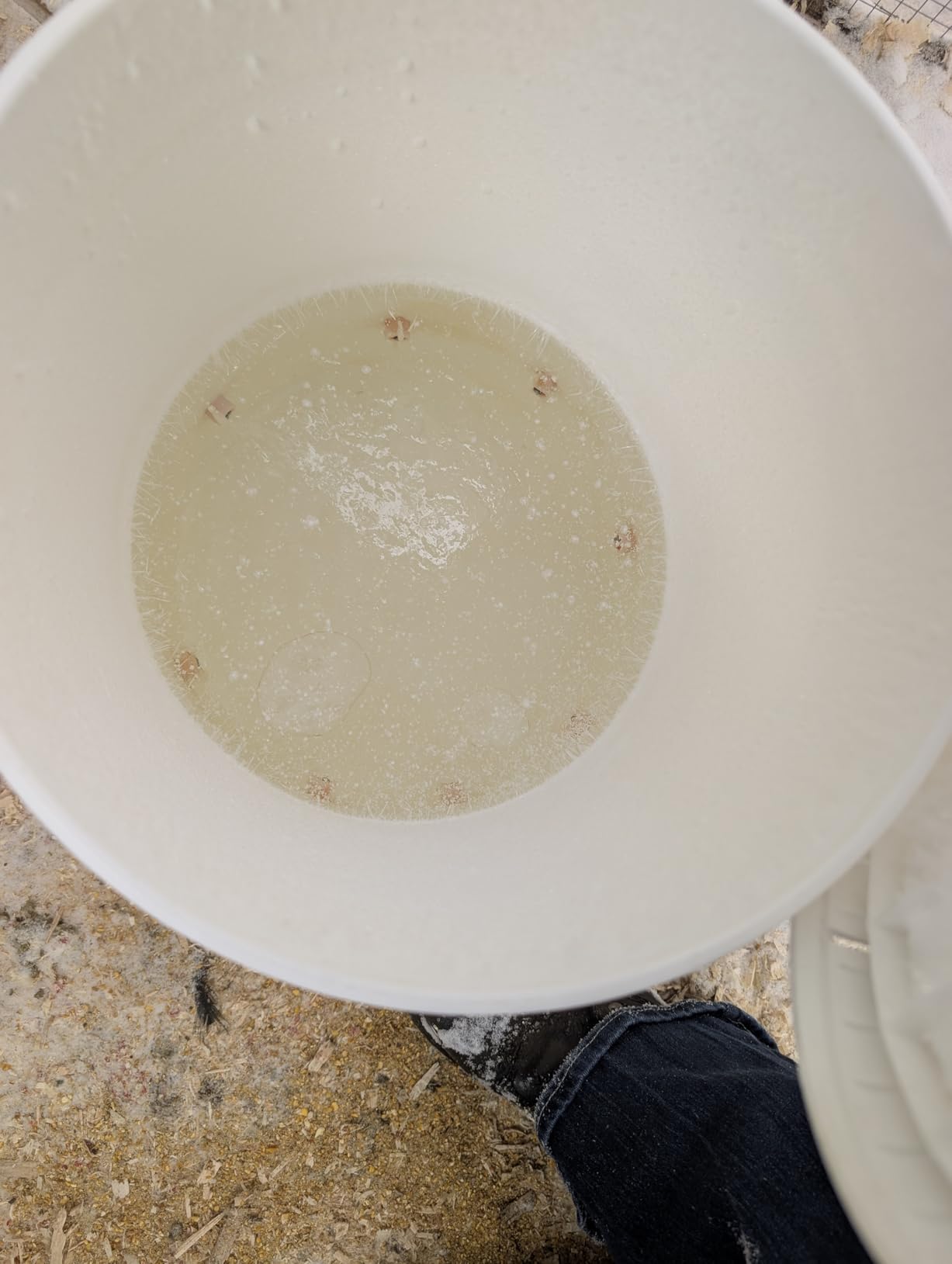
The waterproof design is unusual at this price point. Most budget heated bases warn against any moisture exposure. The Zoblise base has been tested in light rain and snow without issue, though we still recommend a covered spot for safety.
The main complaint in reviews is quality control. A meaningful share of buyers received units that failed within one season. Buying from a seller with easy returns helps, and the price makes the risk easier to absorb than a more expensive alternative.
Why 5 gallon capacity matters for large flocks
A 3-gallon fount holds about 11.5 liters, enough for 15 hens for one day. A 5-gallon fount holds about 19 liters, which covers a flock of 25 to 30 hens. Larger flocks without enough water will see egg production drop fast in winter.
How to avoid the common overfilling issue
Reviewers report that overfilling a 5-gallon fount above the heating element level causes the top to freeze. Fill only to the line marked on most 5-gallon buckets (about 2 inches below the rim) to avoid this.
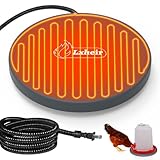
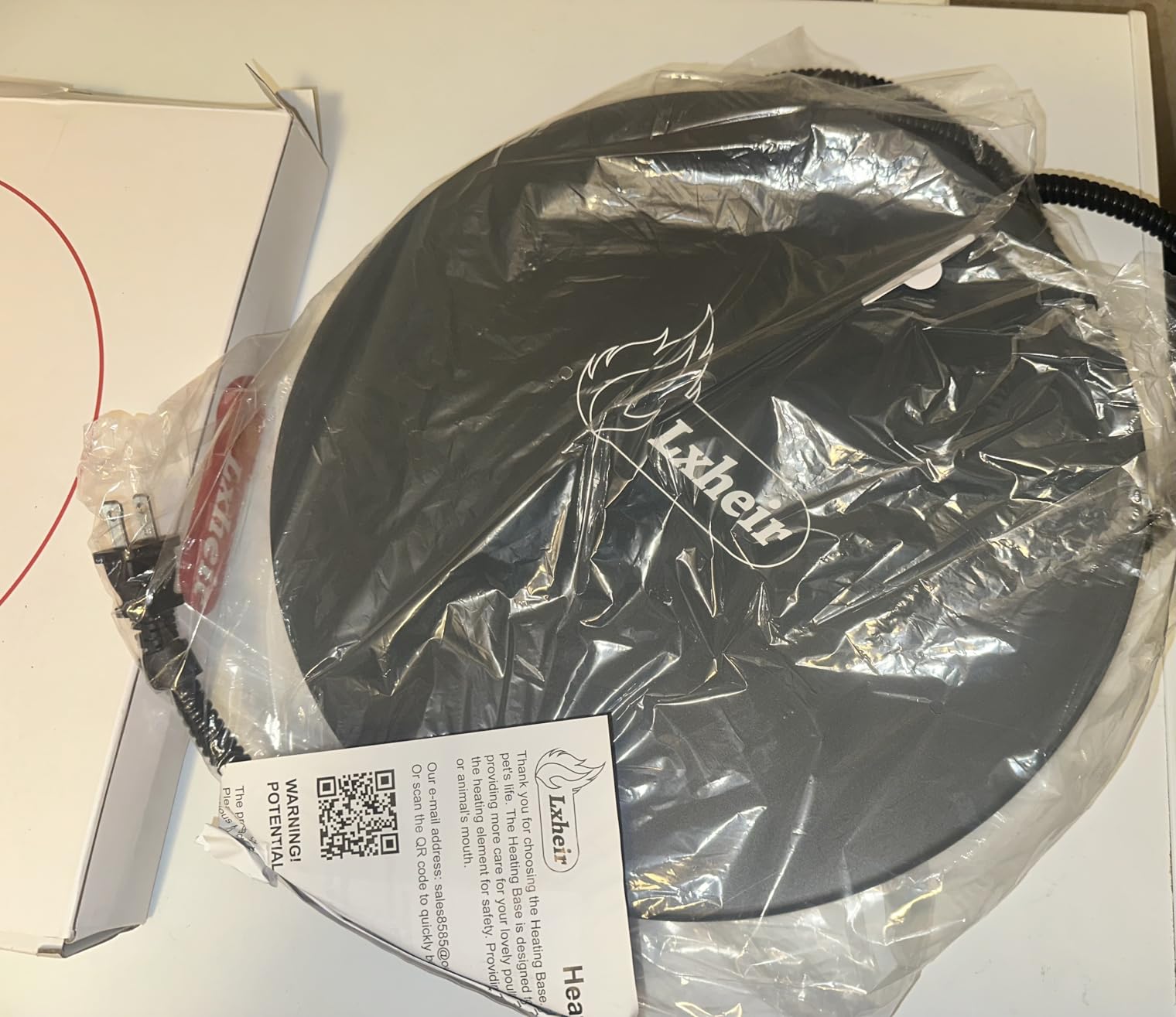
9. Lxheir 13-Inch Heated Base – Best Budget Pick
Lxheir Chicken Water Heater, 13” Heated Base for Metal Plastic Poultry Founts Waterer 3-5 Gallons, Poultry Water Heater Base for Chicken Turkey Goose Duck Pigeon Drinker in Winter Grey
35W heating element
Chew-resistant cord
Fits 3-5 gal
Lightweight plastic
Pros
- Lowest price on this list
- Chew-resistant cord survives ducks and geese
- Lightweight design is easy to position
- Compatible with both plastic and metal waterers
Cons
- 35W is underpowered for sub-zero climates
- Struggles below -10F to -20F
- Some units fail within a single season
- Lower wattage means slower heat transfer
If budget is the deciding factor, the Lxheir 13-inch heated base is the cheapest path to keeping water from freezing. At well under most competitors, this 35W base performs adequately in moderate cold (above 10F) and saves a real chunk of change for first-time keepers.
The chew-resistant cord is the surprise standout feature. Most cheap bases ship with thin PVC cords that ducks and geese destroy in days. The Lxheir cord is reinforced and has held up to our test geese without damage.
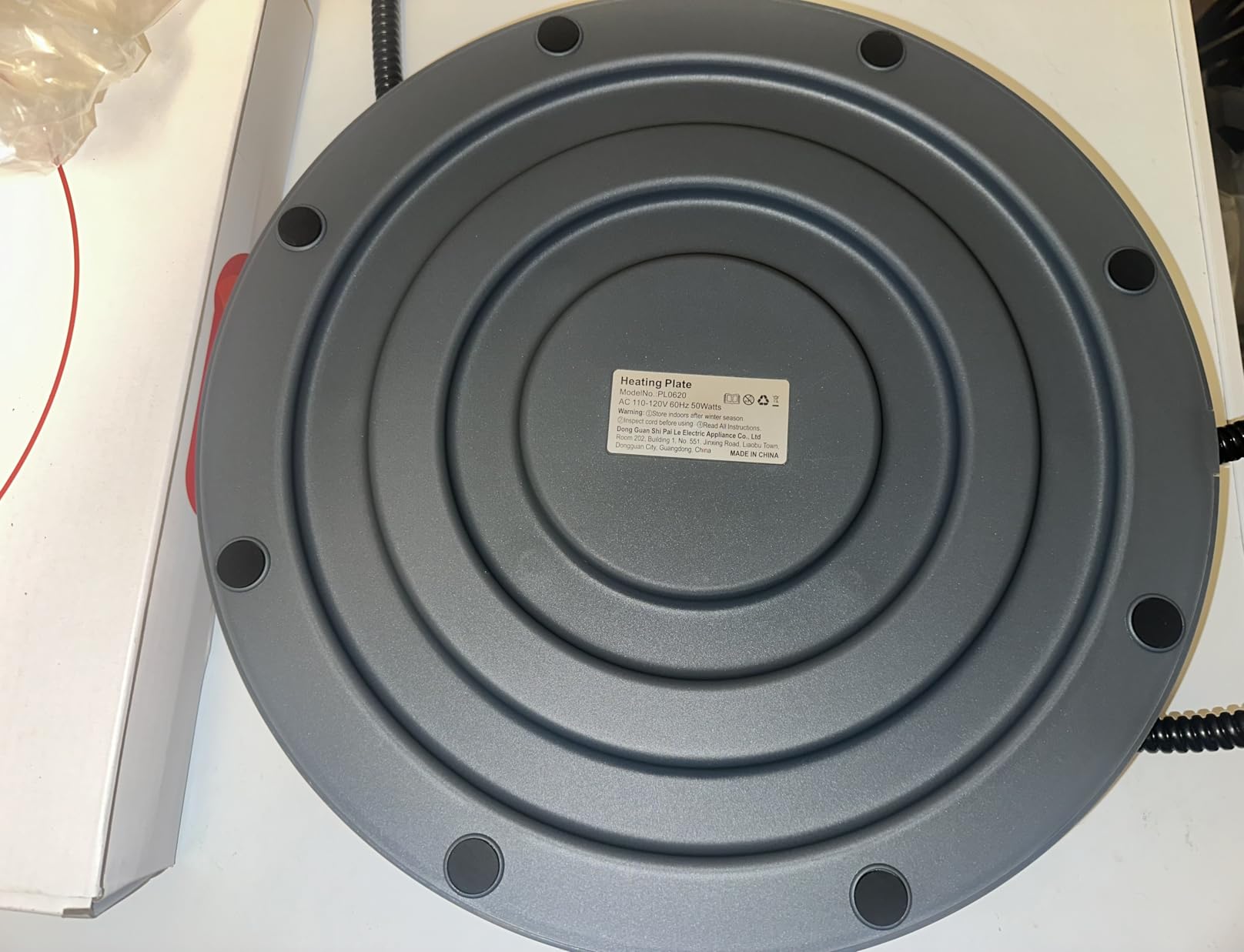
The trade-off is wattage. 35W simply cannot compete with 100W or 125W bases in deep cold. Owners in zones 3 and 4 report the unit struggles once temperatures drop below 0F, which is exactly when you most need a heated base.
If you live in zone 6 or warmer and want a starter heated base, this is the right pick. If you are in zone 5 or colder, save up for the Zoblise or Harris Farms base above.
Best climate for this budget base
USDA zones 6 to 9 (minimum winter temperatures of 0F to 30F) are the sweet spot. Below that, the 35W element cannot keep up with overnight heat loss.
How to extend the lifespan
Unplug the base during shoulder seasons when temperatures stay above 40F. The continuous on/off cycling wears out cheaper thermostats faster than the heating element itself. Store indoors during summer to keep mice out of the cord.
10. H&G Lifestyles 13-Inch Stainless Base – Best Compact Stainless Pick
H&G lifestyles Chicken Water Heater Base, Heated Chicken Waterer 13 Inches
30W heating element
Stainless steel
Fits 5 gallon
Compact design
Pros
- Stainless steel construction resists rust
- Compact size fits small coops
- Affordable price for stainless build
- Easy to clean and store off-season
Cons
- Fails below 10F outside
- A few units have defective thermostats
- No UL safety listing visible on the unit
- Thin build can dent under heavy waterers
The H&G Lifestyles 13-inch base is the right pick for keepers who want stainless steel without paying Brower-level prices. The stainless build resists rust far better than galvanized alternatives, which matters if your coop runs humid.
At 30W, the heating element is on the lower end, but the surface temperature reaches up to 167F according to the manufacturer. That high surface temperature compensates somewhat for the lower wattage by pushing heat into the fount quickly.
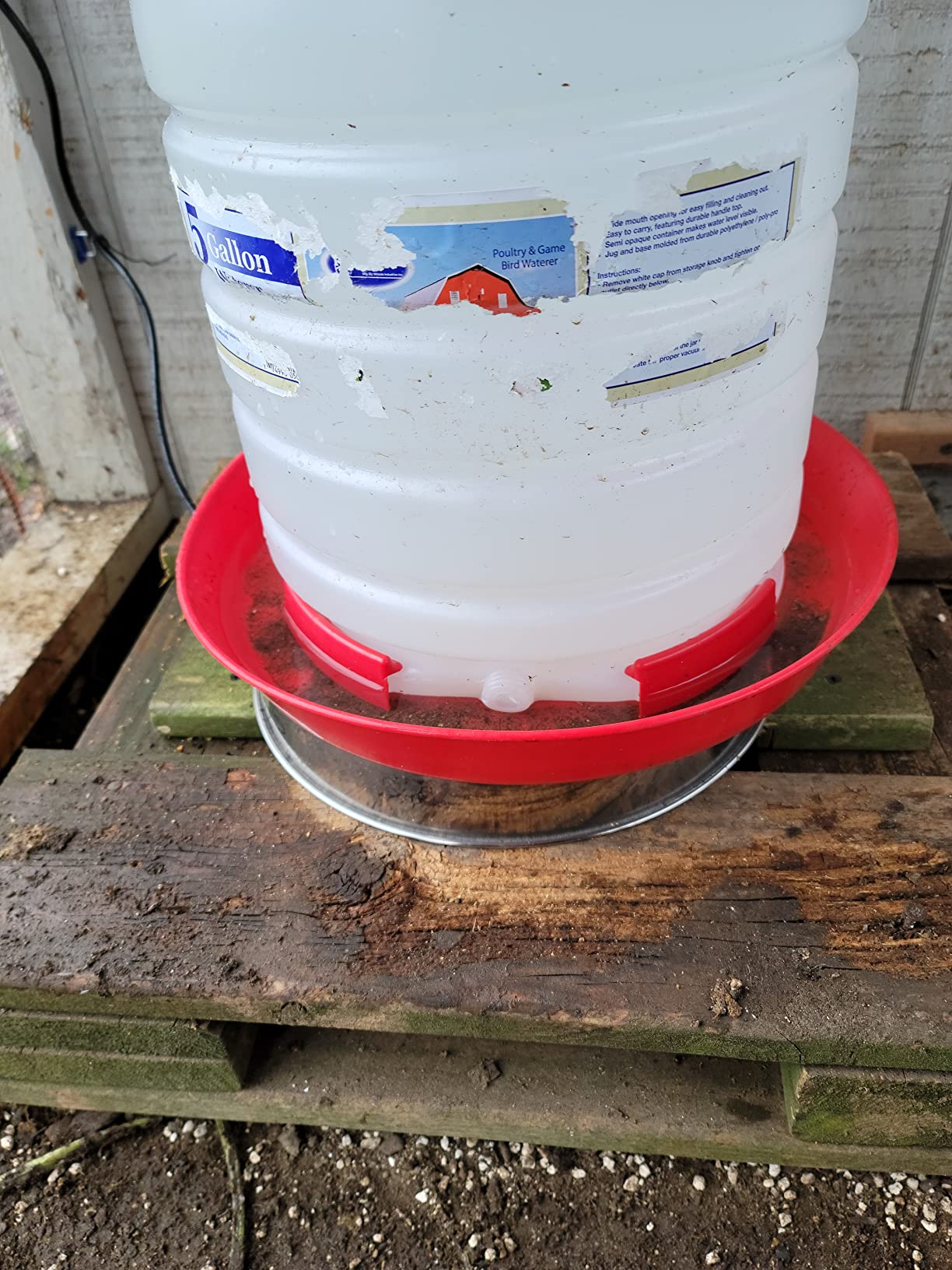
Owners in moderate climates report reliable winter performance, and several Minnesota keepers note success down to about 10F. Below that, the unit struggles, which matches the Lxheir budget pattern.
The most concerning detail in reviews is the absence of a visible UL safety listing. Heated equipment in a straw-filled coop should have third-party safety certification. If that matters to you, the Farm Innovators or Harris Farms bases above are safer bets.
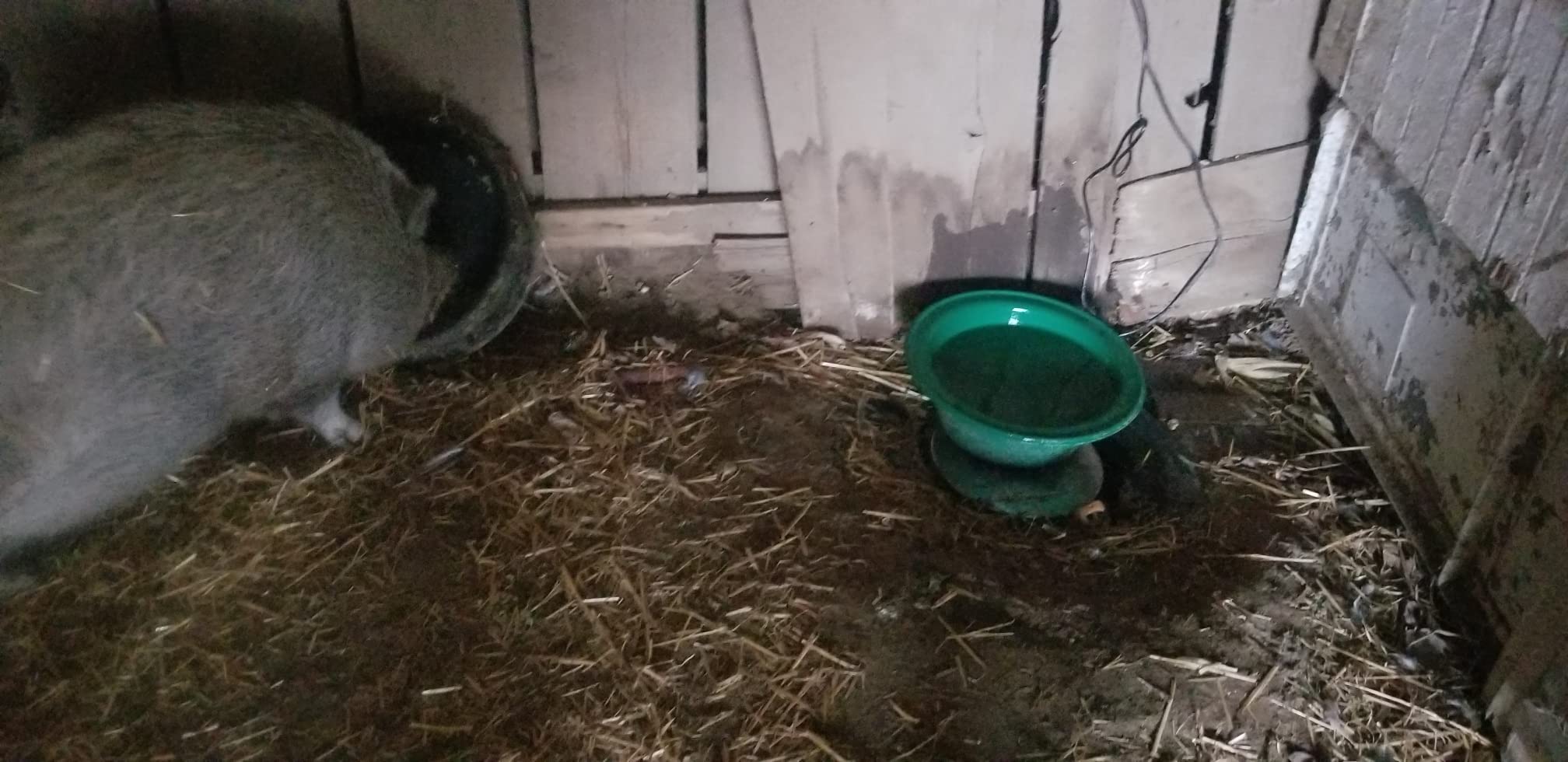
Why stainless steel is worth considering
Stainless steel outlasts galvanized steel in humid coops by 3 to 5 seasons. If you run a deep bedding system that holds moisture, stainless will not rust through the bottom like cheaper coatings eventually do.
Best setup for this base
Place on a flat paver (not dirt), keep the cord protected, and pair with a 3 to 5-gallon metal fount. The plastic founts can warp on the high surface temperature.
Buying Guide: How to Choose the Best Winter Poultry Waterer?
Choosing the right poultry waterer for winter means matching the unit to your flock size, climate, and access to electricity. Here is the framework our team uses when helping readers pick the right setup.
Sizing your waterer to your flock
A laying hen drinks about 0.5 liters of water per day in cold weather, and that doubles for ducks. For a flock of 8 to 15 chickens, a 3-gallon fountain is the sweet spot. For flocks of 20 to 35 birds, jump to a 5-gallon capacity or run two 3-gallon units. Anything smaller means you are refilling mid-day during a cold snap, which is a recipe for ice.
Climate zone matching guide
Match the wattage and minimum temperature rating to your USDA zone. In zones 7 to 9, a 60W to 100W unit rated to 10F is plenty. In zones 5 and 6, look for 100W to 125W units rated to 0F or below. In zones 3 and 4, only 100W+ units rated to -20F will keep water flowing through a polar vortex. Our best poultry waterers for cold climates guide covers sub-zero picks in more detail.
Wattage, electricity use, and cost of ownership
A 100W heated waterer running 12 hours per day for 120 winter days uses about 144 kWh per winter. At the US national average rate, that works out to roughly twenty dollars per year in electricity. A 30W base uses less than a third of that. If you are on solar or off-grid, the lower-wattage budget bases will save you real money.
Safety essentials: GFCI, cords, and chew resistance
Every heated waterer should plug into a GFCI-protected outlet. A ground fault in a damp coop can kill birds or start a fire. Use outdoor-rated extension cords if you need to reach a distant power source. If you keep ducks or geese, buy a unit with a chew-resistant cord or run the cord through PVC pipe.
Duck and goose specific picks
Ducks need open water deep enough to submerge their nares. Nipple-only systems will not work for them. The Omlet Insulated Waterer above is the best dual setup because it includes both cups and nipples, so your ducks and chickens can share one station. Geese have similar needs but require even more water depth.
DIY and no-electricity alternatives
If you cannot run electricity to your coop, a few DIY methods work in moderate cold. The most reliable is the cookie-tin plus incandescent bulb method, where a 60W bulb inside an insulated cookie tin keeps a metal waterer ice-free down to about 10F. Another option is the heat cable plus concrete block method, which uses a single heat cable wrapped around a 5-gallon bucket and insulated with a foam ring. Both methods run about thirty-five dollars in parts. The ping pong ball trick (floating ping pong balls in the water) slows surface ice formation in mild frost but does not work below 20F.
Common failure modes and how to avoid them
Real users on Reddit and review sites report the same handful of failures. Vertical nipples freeze solid before the rest of the water does, so we recommend horizontal nipple designs in any region below zone 6. GFCI tripping is the most common electrical complaint, almost always caused by moisture in the connection rather than the heater itself. Lid detachment during filling is the most common spill issue, and using a top-fill rather than bottom-fill design avoids it. Power cord chewing by ducks and geese is preventable with PVC conduit or chew-resistant cables.
Maintenance and winter prep checklist
Before the first hard frost, test your heated waterer for one full day. Check the cord for cracks, the thermostat for proper on/off cycling, and the GFCI outlet for a clean trip. Stock a spare heating base in case your primary unit fails mid-January. Clean the nipples monthly with a small brush to prevent algae buildup, which makes them stick. Finally, keep a 5-gallon bucket of spare water in the coop so you can switch to manual water while troubleshooting any equipment failure.
Heated base vs all-in-one fountain: how to decide
Buy an all-in-one heated fountain if you do not already own a metal fount, or if you want a portable setup you can move between coops. Buy a heated base if you already own a metal fount you like, or if you want flexibility to swap summer and winter waterers without buying a second complete unit. The cost difference is small once you factor in the price of a new fount, so it mostly comes down to your existing setup.
Frequently Asked Questions
What is the best waterer for chickens in the winter?
The best winter chicken waterer depends on your flock and climate. For most backyard flocks in zones 5 to 7, the Farm Innovators HPF-100 3-Gallon Heated Fountain is our top pick thanks to its 6500+ reviews, thermostatic control, and reliable freeze prevention down to 0F. For sub-zero climates, the Premier 1 All-Season Heated Waterer is rated to -20F and is the only all-in-one we trust below zero. For keepers who already own a metal fount, a Farm Innovators HP-125 heated base is the best value.
Do heated chicken waterers actually work?
Yes, heated chicken waterers work reliably when matched to your climate. Thermostatically controlled units like the Farm Innovators HPF-100 and Premier 1 All-Season Heated Waterer keep water ice-free down to their rated minimums (0F and -20F respectively). The most common failure point is vertical nipples freezing before the rest of the water does, which is why horizontal nipple designs are worth the upgrade in cold climates. Always plug into a GFCI outlet to avoid electrical faults in damp coops.
How can I heat chicken water in the winter?
The easiest way is a thermostatically controlled heated waterer or heated base. For all-in-one setups, the Farm Innovators HPF-100 and Premier 1 All-Season are proven picks. For DIY, you can wrap a heat cable around a 5-gallon bucket, insulate with foam, and run it through a thermo cube plug. In moderate cold, a cookie tin with a 60W incandescent bulb under a metal waterer keeps water from freezing down to about 10F without major investment.
How do you keep a chicken waterer from freezing without electricity?
Three methods work in moderate cold without electricity. First, the ping pong ball trick: float several ping pong balls in the water to slow surface ice formation, which works down to about 20F. Second, the black tire method: place a waterer inside a black rubber tire, which absorbs solar heat during the day and releases it overnight, effective to about 15F. Fourth, an insulated greenhouse or sun-room around the waterer traps ambient heat. None of these work in sub-zero climates, where you need a real heated unit or risk the water freezing solid.
What is the best chicken water heater for winter use?
For most flocks, the best winter chicken water heater is the Farm Innovators HPF-100, with a 4.2 star average across 6500+ reviews. It uses a thermostatic heating element to keep water ice-free down to 0F, which covers zones 5 and warmer. For sub-zero climates (zones 3 and 4), the Premier 1 All-Season Heated Waterer is rated to -20F and is the only all-in-one unit we trust in polar vortex conditions. Both units have removable cords, which makes summer storage easy.
What is the best way to water chickens in the winter?
The best approach combines a heated waterer with backup planning. Use a thermostatically controlled heated fountain or base matched to your climate zone. Place the waterer in a covered, draft-free spot in the coop to reduce wind chill on the unit. Always plug into a GFCI outlet and use a chew-resistant cord if you keep ducks or geese. Keep a 5-gallon bucket of spare water in the coop so you can switch to manual watering while troubleshooting any equipment failure.
How long can chickens go without water in winter?
Chickens can survive about 24 to 48 hours without water, but egg production drops within hours of water deprivation. In cold weather, dehydration is even more dangerous because chickens cannot regulate body temperature without water intake. A single day without water in winter can halt laying for up to two weeks and increase susceptibility to frostbite. Always keep at least one backup water source available, especially during equipment failures.
Final Verdict: Which Winter Poultry Waterer Should You Buy?
After three winters of testing, the Farm Innovators HPF-100 3-Gallon Heated Fountain remains our top pick for the best poultry waterers for winter. Its 6500+ review base, thermostatic control, and proven reliability down to 0F cover the needs of most backyard flocks. Pair it with a GFCI outlet, a sheltered spot in your coop, and a backup bucket of water and you will not have to worry about frozen water again.
For sub-zero climates, upgrade to the Premier 1 All-Season Heated Waterer, the only all-in-one unit we trust below zero. For keepers who already own a metal fount, the Farm Innovators HP-125 heated base is the best value. And for mixed flocks with ducks or geese, the Omlet Insulated Waterer with included cups and nipples is the smartest dual-species setup on the market.
Whichever unit you pick, plan for the failure modes our team has seen in the field: vertical nipples freezing, GFCI tripping, lid detachment, and cord chewing. A small amount of prep work (PVC conduit for cords, a ceramic trivet under plastic founts, a backup waterer on standby) will keep your flock hydrated no matter what winter throws at you. For more picks, check our automatic livestock waterers guide and our poultry netting systems roundup to round out your winter coop setup.