
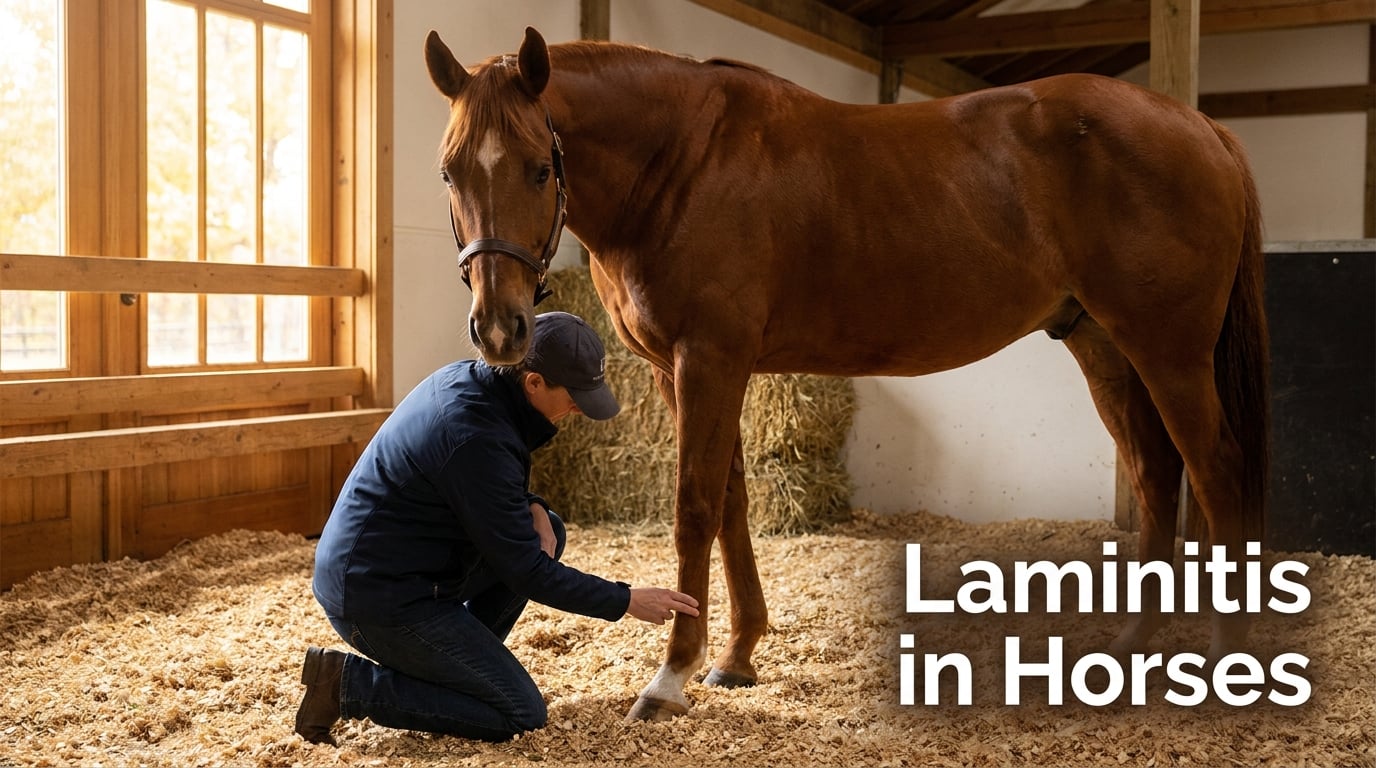
Laminitis in horses is a painful condition where the sensitive tissues — called laminae — inside the hoof become inflamed and begin to break down, potentially causing the coffin bone to rotate or sink through the sole. It affects roughly 1 in 10 horses and ponies every year, making it one of the most common yet devastating conditions in equine care. If you suspect your horse has laminitis right now, call your vet immediately — this is a genuine emergency.
I’ve spent years working around horses with this condition, and the thing that strikes me most is how many owners miss the early signs until it’s too late to prevent serious damage. The good news is that with the right knowledge, you can spot laminitis early, act fast, and give your horse a real chance at recovery.
In this guide, I’ll walk you through everything you need to know: what laminitis is, what causes it, how to recognise the warning signs, and what treatment and prevention looks like in practice. By the end, you’ll have the knowledge to protect your horse and know exactly what to do if the worst happens.
Table of Contents
What Is Laminitis in Horses?
Laminitis is an inflammation of the sensitive laminae — the soft, interlocking tissues that connect the inner hoof wall to the coffin bone (also called the pedal bone or distal phalanx). Think of these laminae as the “velcro” holding the internal structures of the hoof to the outer hoof wall. When they become inflamed, that bond weakens significantly.
Inside a healthy hoof, thousands of microscopic laminar leaves interlock to provide extraordinary strength. The sensitive laminae are loaded with blood vessels and nerve endings, which is why laminitis causes such severe pain. When blood flow to these tissues is disrupted or the tissues become inflamed, the laminae begin to fail.
In severe cases, the weight of the horse pressing down on a weakened laminar connection causes the coffin bone to rotate downward, tip forward, or — in the worst cases — sink vertically within the hoof capsule. A horse where the coffin bone has sunk is described as a “sinker,” and this is one of the most serious presentations of the disease.
Laminitis vs Founder: Are They the Same Thing?
Many horse owners use the terms “laminitis” and “founder” interchangeably, but there is a difference. Laminitis technically refers to the inflammation itself, while “founder” describes the result of that inflammation — specifically the rotation or sinking of the coffin bone. A horse can have laminitis without becoming a founder, but once the coffin bone has displaced, the horse has foundered.
In everyday conversation, both terms are used to describe the same condition, and you’ll hear vets and experienced owners use either word. The important thing to know is that not every laminitic episode leads to permanent bone displacement — early intervention is the key to preventing that outcome.
Which Horses Are Most at Risk?
While any horse can develop laminitis, certain horses face a much higher risk. Native breeds and ponies — such as Welsh ponies, Dartmoor ponies, and Shetlands — are particularly susceptible, likely due to a genetic tendency toward insulin resistance. Overweight or obese horses, older horses with Cushing’s disease (PPID), and those with equine metabolic syndrome (EMS) are all at elevated risk.
Horses in heavy work who experience sudden trauma, illness, or grain overload are also vulnerable. Spring and autumn grazing seasons bring increased risk due to elevated sugar levels in growing grass, and this is when many vets see a spike in cases.
What Causes Laminitis in Horses?
Laminitis doesn’t have a single cause — it’s a condition that can be triggered by several different pathways. Understanding the specific cause in your horse matters enormously, because it shapes the treatment and prevention plan. There are three recognised pathways to laminitis.
1. Endocrinopathic (Hormonal) Laminitis
This is the most common cause of laminitis in horses today, accounting for the majority of cases. It’s driven by insulin dysregulation — either through equine metabolic syndrome (EMS) or pituitary pars intermedia dysfunction (PPID, commonly known as Cushing’s disease). When blood insulin levels are persistently elevated, it directly damages the lamellar tissue in the hoof.
Horses with EMS tend to be overweight or “easy keepers” — horses that gain weight on very little food. PPID affects older horses (typically over 15 years) and involves a tumour-like growth on the pituitary gland that disrupts hormone regulation. Both conditions lead to hyperinsulinaemia (chronically high insulin), which is now recognised as the primary driver behind most laminitis episodes.
The most common trigger within this pathway is pasture grass. Growing grass — particularly in spring, autumn, and after rainfall following dry spells — is high in non-structural carbohydrates (NSC), including fructans and sugars. When a susceptible horse eats large amounts of this grass, insulin spikes dramatically, and laminitis can follow within hours to days.
2. Inflammatory (Sepsis-Related) Laminitis
The second pathway is triggered by systemic inflammation or infection elsewhere in the body. This type of laminitis can develop when a horse has severe colic, retained placenta after foaling, grain overload (where a horse breaks into the feed store and gorges), or any serious infection that leads to endotoxaemia (toxins entering the bloodstream).
The exact mechanism here involves inflammatory mediators and toxins disrupting blood flow to the hoof. The laminae are exquisitely sensitive to changes in blood supply, and widespread systemic inflammation can cause a cascade that results in lamellar failure even when the hooves themselves aren’t the primary site of disease.
This type of laminitis can appear very suddenly and progress extremely fast. A mare who retains her placenta for more than a few hours is at serious laminitis risk — this is why vets act urgently in those situations.
3. Mechanical (Load-Related) Laminitis
The third pathway is more mechanical in nature. It occurs when excessive or abnormal load is placed on one or more limbs. The most common scenario is “support limb laminitis,” which develops in the opposite leg when a horse is bearing all its weight on that limb due to injury or lameness in another leg.
Barbarically hard surfaces, very long toe conformation, and repeated concussive trauma can also contribute to mechanical laminitis, though this is less common than the hormonal form. Horses who are kept standing on very hard ground without appropriate hoof care are at increased risk.
Road founder — laminitis from excessive roadwork on hard surfaces — was historically more common but is still seen today, particularly in horses whose feet aren’t properly conditioned for the work they’re being asked to do.
Early Signs and Symptoms of Laminitis
Catching laminitis early can make the difference between a full recovery and permanent hoof damage. The challenge is that some of the earliest signs are subtle and easy to dismiss — many owners have described looking back after a diagnosis and realising the signs had been there for days.
The Classic Warning Signs
The most recognisable sign of laminitis is the characteristic stance — the horse rocks back onto its hind legs, shifting weight off its front feet. The front feet are typically affected more severely (around 80% of cases), and the horse tries to relieve pressure on the painful toe area by loading the heels instead. This distinctive posture is sometimes called the “laminitic stance.”
Heat in the hooves is another key sign. Run your hand down your horse’s leg and feel the hoof wall — a laminitic hoof is noticeably warmer than usual. This is most obvious when you compare it to other hooves on the same horse, as ambient temperature affects all feet somewhat.
Increased digital pulse is one of the most reliable early indicators. Feel just above and behind the fetlock, where the digital arteries run over the sesamoid bones. In a laminitic horse, this pulse is bounding and easy to detect — in a healthy horse, you may struggle to feel it at all. Learning to check digital pulses as part of your regular health routine is genuinely valuable.
Subtle Signs That Often Get Missed
Before the classic signs appear, some horses show much more subtle changes. Reluctance to walk on hard ground, shortened stride length, or slight stiffness that owners attribute to “just being a bit stiff” can all be early indicators. A horse that suddenly seems unwilling to pick up and hold a front hoof — because balancing on the other painful foot is too difficult — may be in early laminitis.
Shifting weight from foot to foot while standing, lying down more than usual, or being slow to come in from the field are all signs worth taking seriously, particularly in horses already known to be at risk. Some horses show unusual behaviour — increased anxiety or an unwillingness to be caught — due to discomfort they can’t otherwise communicate.
Rings in the hoof wall (called laminitic rings or growth rings) that are wider at the heel than the toe indicate previous laminitic episodes. These rings don’t indicate current active laminitis, but they’re a clear signal that the horse has been through this before and is likely to be vulnerable again.
The Three Stages of Laminitis
Vets and researchers categorise laminitis into three distinct phases. Understanding these stages helps you understand how the condition progresses and what treatment looks like at each point.
Stage 1: The Developmental Phase
The developmental phase begins the moment the trigger occurs — whether that’s a bout of grazing on rich grass, a grain overload, or the onset of systemic illness. During this phase, the damage to the laminae is already beginning, but clinical signs may not yet be apparent. This stage can last anywhere from a few hours to several days depending on the cause.
This is the window where intervention would be most effective — if you know a trigger has occurred (for example, your horse broke into the feed store overnight), calling your vet before symptoms appear gives you the best chance of preventing or minimising laminitis. Some vets will advise cold water hydrotherapy on the feet as a preventive measure in these circumstances.
Stage 2: The Acute Phase
The acute phase is when the horse becomes visibly laminitic. Pain is often severe at this point, and the classic signs — laminitic stance, heat in hooves, bounding digital pulse, reluctance to move — are all present. The laminae are actively breaking down during this phase, and depending on severity, coffin bone movement may begin to occur.
This is a true veterinary emergency. Pain management must begin immediately, and the horse’s environment needs to be modified to minimise load on the affected feet. The acute phase can last days to weeks, and the decisions made during this period largely determine the long-term outcome for the horse.
Stage 3: The Chronic Phase
Once a horse has had laminitis and there has been some degree of coffin bone rotation or displacement, it moves into what’s called the chronic phase. Chronic laminitis doesn’t necessarily mean the horse is in constant severe pain — it means the hoof structure has been permanently altered and ongoing management is required.
Horses in the chronic phase often have distorted hooves: flared hoof walls, dished toe profiles, and the characteristic laminitic rings. The sole may be dropped (flat or convex rather than concave), making the horse uncomfortable on hard or uneven ground. With consistent farriery, dietary management, and appropriate pain relief, many horses in the chronic phase live comfortable, even active lives.
What to Do If You Suspect Laminitis: Emergency Steps
Suspected laminitis needs to be treated as an emergency. The sooner you act, the better the outcome for your horse. Here is exactly what to do.
Step 1: Call your vet immediately. Don’t wait to see if it improves. Don’t manage it yourself first. Laminitis can progress from mild to severe very quickly, and the window for the most effective treatment is narrow. Describe the signs you’re seeing and let your vet assess urgency.
Step 2: Do not force the horse to walk. This is critically important. Walking a laminitic horse increases load on the damaged laminae and can cause or worsen coffin bone rotation. Bring the vet to the horse — don’t walk or trailer the horse to the vet unless they specifically instruct you to and provide pain relief first.
Step 3: Move the horse to a stable or barn with deep, supportive bedding. Sand is ideal because it conforms to the shape of the foot and distributes weight evenly across the entire sole rather than concentrating load on the toe. If sand isn’t available, deep shavings or a thick rubber mat provide some support. Remove the horse from any pasture immediately.
Step 4: Do not give pain relief before calling the vet. It sounds counterintuitive, but if you give your horse bute (phenylbutazone) before the vet arrives, it can mask pain signs that help the vet assess severity and stage. Wait for vet advice on pain management.
Step 5: Remove all feed except small amounts of safe hay. Eliminate pasture access completely. If the laminitis may be diet-related, soaked hay (soaked for at least an hour to leach out sugars) is the safest feed option while you wait for the vet.
How Is Laminitis Diagnosed?
Your vet will diagnose laminitis based on a combination of clinical examination and diagnostic tests. The clinical signs — stance, digital pulse, heat, and response to hoof testers — are usually sufficient for an initial diagnosis. Hoof testers are a tool vets use to apply pressure to specific areas of the hoof to identify pain response; a laminitic horse will typically react to pressure over the toe area.
Radiographs (X-rays) are essential for assessing the severity of any coffin bone displacement and for planning the correct hoof support. X-rays taken from the side show the angle of the coffin bone relative to the hoof capsule and can reveal rotation or sinking. This information is critical for the farrier, who will use it to trim and shoe the foot in a way that reduces load on the toe and supports the back of the foot.
Blood tests are important when hormonal or metabolic causes are suspected. Testing for resting insulin levels, glucose, and ACTH (a marker for PPID) helps identify whether EMS or Cushing’s disease is contributing to the laminitis. These tests directly shape long-term management — a horse with PPID, for example, may need medication (pergolide) as part of their treatment plan.
Your vet may also assess body condition score and fat deposits, including the characteristic “cresty neck” associated with insulin resistance and EMS. All of this information feeds into a complete picture of why this horse developed laminitis and how to prevent recurrence.
How to Treat Laminitis in Horses?
There is no single “cure” for laminitis — treatment is multi-pronged and must be led by your vet. The goals are to relieve pain, limit further laminar damage, provide appropriate hoof support, and address the underlying cause.
Pain Management
NSAIDs (non-steroidal anti-inflammatory drugs) are the mainstay of acute laminitis pain management. Phenylbutazone (bute) and flunixin meglumine (Finadyne) are commonly used, often in combination in severe cases. Your vet will prescribe the appropriate dose and duration — it’s important not to give these drugs at higher doses or for longer periods than recommended, as they carry their own risks (gastric ulcers, kidney issues).
In severe cases, additional pain management may be needed, including opioids or nerve blocks administered by the vet. Some cases require hospitalisation for intensive pain control and monitoring.
Hoof Support and Therapeutic Farriery
Good hoof support is one of the most important interventions in laminitis treatment. Deep sand bedding (as mentioned above) distributes load evenly across the entire sole. Frog support pads — foam or rubber pads placed under the frog — transfer weight away from the painful toe laminae to the frog and digital cushion.
Once the acute phase has stabilised, your farrier becomes central to the treatment team. Therapeutic trimming and shoeing — based on the radiograph findings — aims to reduce breakover (the effort needed to lift the toe), support the coffin bone, and realign the hoof-pastern axis. This may involve heart-bar shoes, egg-bar shoes, or specialised glue-on clog shoes in severe cases.
Work closely with your farrier and vet together on this — the radiographs should go to your farrier so they know exactly what they’re working with. Regular trims every 4-6 weeks are essential during recovery to manage hoof growth and maintain correct angles.
Dietary Management During Treatment
Food is both a cause and a treatment lever in laminitis. During the acute phase, the horse should have no access to pasture and should be fed only low-sugar hay. Soaking hay for 30-60 minutes in cold water reduces its sugar content by around 30%, making it safer for insulin-dysregulated horses.
Total starch and sugar content in the diet (NSC) should ideally be below 10% dry matter in laminitis-prone horses. Forage analysis from a laboratory can tell you exactly what’s in your hay, allowing you to make informed feeding decisions rather than guessing. Your vet or an equine nutritionist can help you formulate a safe ration.
Recovery Timeline
One of the most common questions I hear from horse owners is: how long does this take? The honest answer is that it varies considerably. A mild acute episode in a horse without underlying metabolic disease may resolve in 2-6 weeks with appropriate management. More severe cases — especially those with significant coffin bone rotation — can take 6-12 months or longer.
Many horses never fully “recover” in the sense of returning to their previous level of work. However, with proper ongoing management, the majority can live comfortable, pain-free lives. Setting realistic expectations from the start helps owners make good decisions and avoid pushing horses back into work too quickly, which risks relapse.
Laminitis and Metabolic Conditions: EMS and PPID
Because hormonal laminitis is the most common form, understanding the metabolic conditions that cause it is essential for any horse owner dealing with a laminitic horse — or trying to prevent one.
Equine Metabolic Syndrome (EMS)
Equine metabolic syndrome is a condition characterised by obesity (or regional adiposity, particularly the cresty neck), insulin dysregulation, and predisposition to laminitis. Horses with EMS produce more insulin than normal in response to sugar intake, and their tissues are resistant to insulin’s normal effects — a situation similar to type 2 diabetes in humans.
EMS typically affects middle-aged horses and ponies, particularly native breeds. A horse with EMS may look “healthy” — even just slightly overweight — but their metabolic system is functioning abnormally. Blood testing to measure resting insulin and glucose is the most reliable way to diagnose EMS, though dynamic testing (where insulin is measured after a controlled sugar challenge) can identify cases that resting tests miss.
Management of EMS centres on strict diet control and weight reduction. The goal is to reduce insulin levels by limiting sugar and starch intake. Exercise, where safe and possible given the horse’s current laminitis status, also plays an important role in improving insulin sensitivity.
PPID (Cushing’s Disease)
Pituitary pars intermedia dysfunction (PPID), commonly known as Cushing’s disease, is a condition of older horses (typically over 15 years) caused by dysfunction of the pituitary gland. It results in abnormally high levels of ACTH and other hormones, leading to a range of clinical signs including a long, curly coat that fails to shed, muscle wasting, increased drinking and urination, and — crucially — insulin dysregulation and laminitis.
PPID is diagnosed via a blood test measuring ACTH levels. Seasonal variation in ACTH means testing during autumn (when ACTH is naturally elevated) requires adjusted reference ranges. Treatment with pergolide (a dopamine agonist) is effective at controlling clinical signs in most horses, often resulting in significant improvement in laminitis frequency when combined with dietary management.
If your horse is older and has laminitis, testing for PPID should be high on the list. Many owners find that once PPID is diagnosed and treated, their horse’s laminitis becomes much easier to manage.
How to Prevent Laminitis in Horses?
Prevention is far kinder and cheaper than treatment. Many cases of laminitis are preventable with consistent management, particularly for horses already known to be at risk.
Weight Management
Keeping your horse at a healthy weight is the single most important step you can take. Use body condition scoring (the Henneke scale from 1-9) to assess your horse regularly — a score of 4-5 is ideal for most horses, and anything above 6 suggests the horse is too heavy. Weigh tapes, while not perfectly accurate, are useful for tracking trends over time.
Weight loss in overweight horses should be gradual — crash dieting is not appropriate and comes with its own risks (including hyperlipaemia in ponies). Work with your vet to create a safe calorie restriction plan that achieves weight loss without compromising overall health.
Dietary Control and Low-NSC Feeding
For horses at risk of laminitis, limiting non-structural carbohydrates is essential. This means restricting or eliminating access to rich pasture grass, especially during spring and autumn growth flushes. It also means choosing hay that has been tested for NSC content (aim for below 10% NSC on a dry matter basis).
Avoid feeding large amounts of grain or hard feed, and be cautious with treats — apples, carrots, and commercial treats all contain sugars. If your horse needs a balanced diet beyond hay, a low-calorie, low-NSC balancer pellet or a vitamin and mineral supplement may be a better option than a traditional compound feed.
Grazing Muzzles and Pasture Management
A grazing muzzle reduces grass intake by around 80% while still allowing the horse to move freely in the field. Many horses initially resent them, but most adapt within a few days. Introduce them gradually and check regularly that the horse can drink while wearing the muzzle.
Pasture management reduces the sugar load in your grass. Strip grazing limits how much grass is available at once. Avoiding turnout during peak sugar accumulation times — bright sunny days with cool nights, or the first few hours of morning when overnight temperature drops have caused sugar to accumulate — significantly reduces risk. Bare or sparse paddocks (sacrifice paddocks) give horses outdoor time and movement without the calorie load of lush grass.
Regular Farriery
Good hoof balance and regular trimming every 4-8 weeks reduces mechanical stress on the laminae. A horse with long, overgrown hooves puts more leverage through the toe, increasing load on the laminar connection. Your farrier is a key partner in laminitis prevention — let them know if your horse is at risk so they can monitor hoof balance and spot early warning signs in the hoof itself (such as early laminitic rings or sole bruising).
Seasonal Vigilance
Spring is the highest-risk season for pasture-related laminitis, particularly March through May in the Northern Hemisphere. Autumn is a close second. During these periods, turn at-risk horses out at night (when grass sugar content is lower) rather than during the day, or restrict turnout entirely and provide hay instead. Keep a close eye on weight and digital pulses during these periods, and have a clear plan agreed with your vet in advance for what to do if problems arise.
Can a Horse Recover from Laminitis?
Yes — many horses recover from laminitis, and some go on to live completely normal, active lives. But the honest answer is more nuanced than a simple yes or no. Recovery depends heavily on the severity of the episode, how quickly treatment was started, whether there has been coffin bone rotation, and whether the underlying cause has been identified and managed.
Horses that had a mild to moderate acute episode with no or minimal coffin bone rotation, and whose underlying cause (such as a one-time grain overload) has been addressed, have an excellent prognosis. With a few weeks of appropriate management, many of these horses return to full work.
Horses with significant coffin bone rotation or sinking have a more guarded prognosis. Some do return to light work and live comfortable lives, but it requires intensive, long-term management — strict diet, regular farriery, appropriate footing, and often long-term pain management. For horses with severe displacement, particularly sinkers, the prognosis for a pain-free life is poor.
Living with Chronic Laminitis
Living with a horse that has chronic laminitis is demanding. It requires constant vigilance around diet, consistent farriery appointments, and ongoing vet involvement. Forum communities of horse owners managing laminitic horses consistently emphasise that the condition can be controlled, but it requires a complete lifestyle change for the horse — and often for the owner too.
Horses can have long, comfortable lives even after serious laminitic episodes. Many horse owners report that their laminitic horses are still happy, engaged animals despite their condition — they just need a different approach to management. The key is consistency: slipping back into old feeding habits, even briefly, can trigger a relapse.
When Euthanasia Becomes the Kindest Option
This is the question nobody wants to face, but it’s one that owners of severely laminitic horses sometimes must. When a horse’s pain cannot be adequately controlled despite maximum medical and farriery treatment, when X-rays show catastrophic coffin bone position with little hope of resolution, or when the quality of life is clearly poor despite ongoing management, euthanasia may be the kindest choice.
This is one of the most emotionally difficult decisions in horse ownership, and it’s one that should be made with your vet, based on honest assessment of the horse’s pain levels and prognosis. Online forums show that many owners struggle with guilt around this decision. The most important thing to understand is that choosing euthanasia to end severe, unmanageable pain is an act of compassion, not failure.
If you’re facing this decision, ask your vet to walk through the clinical picture with you honestly — not just the hopeful scenario, but the realistic one. Most vets who work with horses can guide you through this difficult conversation with both expertise and empathy.
Frequently Asked Questions
Can a horse recover from laminitis?
Yes, many horses recover from laminitis, particularly those with mild to moderate cases treated early. Horses without significant coffin bone rotation often return to full work within weeks to months. Horses with severe rotation or sinking have a more guarded prognosis but can still live comfortable lives with strict, consistent management. Recovery depends on the severity of the episode, how quickly treatment began, and whether the underlying cause — such as EMS or PPID — has been identified and addressed.
Why did Secretariat get laminitis?
Secretariat, the legendary racehorse, developed laminitis in 1989 at the age of 19. His laminitis is believed to have been connected to a painful hoof abscess, which led to support limb laminitis as he shifted weight off the affected foot. Despite treatment, the condition progressed severely and he was euthanised in October 1989. His case brought widespread public attention to laminitis and highlighted how devastating the condition can be even in otherwise healthy horses.
Should you put a horse down with laminitis?
Not necessarily — many horses with laminitis recover or can be managed long-term and live comfortable, pain-free lives. However, euthanasia is the kindest option when pain cannot be adequately controlled despite all treatment, when X-rays show catastrophic coffin bone position with no realistic hope of resolution, or when quality of life is clearly very poor. This decision should be made with your vet based on an honest clinical assessment of the horse’s pain levels and prognosis. It is never an easy decision, but it can be the most compassionate one.
How quickly can laminitis develop?
Laminitis can develop remarkably fast — in some cases within hours of a triggering event. A horse that grazes on a large amount of rich spring grass in the morning may show laminitic signs by that evening. In cases of grain overload or retained placenta, laminitis can appear within 24-48 hours. Endocrinopathic laminitis (from EMS or PPID) tends to develop more gradually over days to weeks as insulin levels remain elevated. This unpredictable speed is one reason why suspected triggers should be taken seriously and a vet contacted promptly.
Final Thoughts on Laminitis in Horses
Laminitis in horses is a serious, often recurring condition that requires owners to be educated, observant, and proactive. The key takeaways are straightforward: know your horse’s risk factors, check digital pulses and hooves regularly, act immediately if you see warning signs, and work closely with your vet and farrier as a team.
The condition affects 1 in 10 horses every year in 2026, but the majority of those horses can recover and go on to live good lives when the right support is in place. Whether you’re managing a horse through an acute episode or preventing recurrence in a chronically at-risk animal, the principles remain the same: limit sugar intake, maintain healthy weight, ensure regular farriery, and never ignore the early warning signs.
If you’re unsure whether your horse might be showing early signs of laminitis, trust your instincts and call your vet. It’s always better to make that call and be told everything is fine than to wait and face a much more serious situation a few days later.