
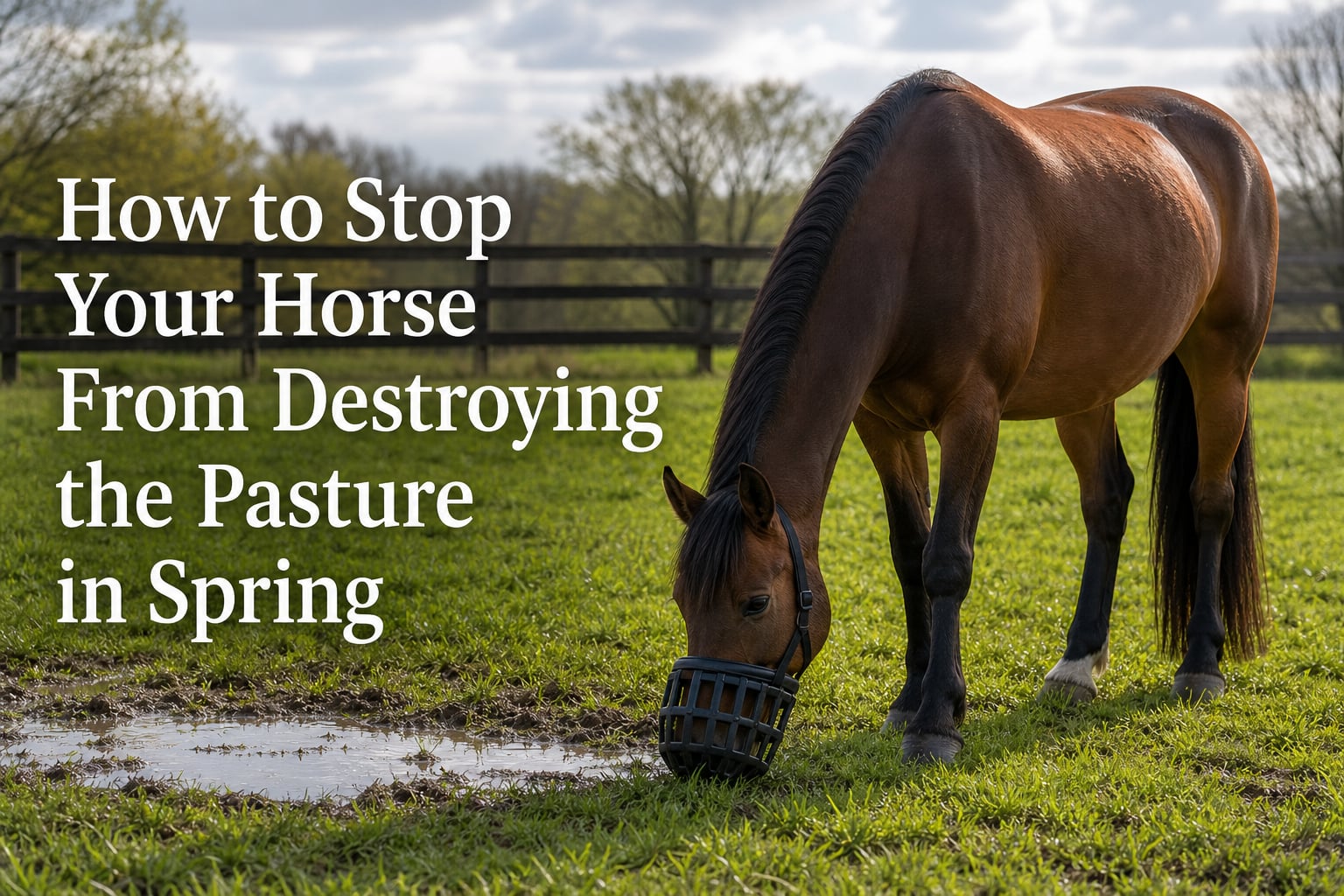
Spring is the season every horse owner looks forward to after a long winter of hauling hay and chipping frozen water troughs. But those first warm days also bring a frustrating problem that catches many of us off guard. When the snow melts and the ground thaws, horses can trample, overgraze, and literally tear apart the pastures we have spent years building.
If you are wondering how to stop your horse from destroying the pasture in spring, you are not alone. Horse owners across Reddit’s equestrian communities and local boarding barns deal with the same muddy, overgrazed messes every year. The good news is that with the right timing, a gradual transition plan, and some simple infrastructure changes, you can protect both your pasture and your horse’s health through the trickiest season of the year.
In this guide, I will walk you through exactly why spring grass is so destructive, how to transition your horse safely, and the pasture management practices that keep your fields productive for years to come.
Table of Contents
Why Spring Grass Is So Dangerous for Horses?
Spring grass is not just lush and green. It is packed with high levels of non-structural carbohydrates (NSC), sugars, and fructans that build up in the plant during cool nights and sunny days. When a horse that has been eating dry hay all winter suddenly gorges on this rich forage, the digestive system simply cannot handle the shift.
The result is a rapid change in the hindgut microbiome. Fermentation patterns shift dramatically, and harmful bacteria can overproduce, releasing toxins that enter the bloodstream. This process triggers laminitis, which is inflammation of the sensitive laminae inside the hoof. In severe cases, laminitis progresses to founder, where the coffin bone rotates or sinks within the hoof capsule.
Colic is another serious risk. The sudden intake of rich, wet grass can cause gas buildup, impaction, or even displacement of the colon. Horses coming off a dry lot onto spring pasture are especially vulnerable because their gut bacteria have not adapted to the new feed profile.
According to veterinary sources cited in AI overviews from institutions like the University of Illinois College of Veterinary Medicine, spring pasture is one of the leading triggers for laminitis in horses nationwide. The danger is real, and every horse owner needs a plan before turning horses out.
How to Stop Your Horse From Destroying the Pasture in Spring: The Gradual Transition Method
The single most important thing you can do is introduce spring grass slowly. Think of it like reintroducing a friend to running after a winter on the couch. You would not send them out for a marathon on day one.
The gradual transition method takes about two to three weeks. Here is a day-by-day schedule that our team has used successfully with horses of all types, from easy keepers to hard-working sport horses.
Days 1 to 3: The 15-Minute Introduction
Start with just 15 minutes of grazing per day. Turn your horse out after feeding hay so they are not ravenously hungry. Choose a time when the grass sugar levels are lowest, which is typically early morning before the sun has been up long. Avoid late afternoon and evening turnout, as sugar levels peak after a full day of photosynthesis.
Stay with your horse during these short sessions if possible. Some horses get excited and run rather than graze, which defeats the purpose of controlled introduction and risks injury on soft ground.
Days 4 to 7: Build to 30 Minutes
Increase turnout time to 30 minutes daily. Continue feeding hay before each session. Watch your horse’s manure closely during this phase. Any change in consistency, from firm apples to loose piles, tells you the gut is struggling to adapt.
If you see loose manure or signs of digestive upset, hold at the current turnout time for an extra two days before increasing again. There is no rush. Pushing too fast is how horses end up with veterinary emergencies.
Week 2: One Hour per Day
By the second week, your horse can handle about 60 minutes of grazing per day. Split this into two 30-minute sessions if your schedule allows, one in the early morning and one mid-morning. This mimics natural grazing patterns and gives the gut time to process between sessions.
Increase by one hour every two to three days from this point forward. By the end of week two, most healthy horses tolerate two to three hours of turnout without issue.
Week 3 and Beyond: Full Turnout
By week three, continue increasing turnout time until your horse is out full-time, assuming the ground conditions allow it. Keep monitoring body condition, manure quality, and hoof health throughout the process.
For horses that are overweight, prone to laminitis, or diagnosed with metabolic conditions like equine metabolic syndrome or Cushing’s disease (PPID), the transition should take four to six weeks. These horses may also need a grazing muzzle even after full transition.
Keeping Horses Off Wet Ground
Even the best transition schedule means nothing if your horse is standing in a swamp. Spring thaw creates mud and standing water that destroy pasture roots and put horses at risk for injury.
One horse owner on Reddit shared that their mare sprained a fetlock from running on muddy spring ground, a story that resonated with many in the equestrian community. Mud injuries are one of the most common spring problems, and they are entirely preventable.
How to Tell If Your Ground Is Ready
Walk your pasture before turning horses out. Step firmly in several spots, especially around gate areas, run-in sheds, and water troughs where traffic concentrates. If water squeezes up around your boots or your heel sinks more than an inch, the ground is too wet.
Look for these signs that your pasture is ready for horses:
The soil feels firm underfoot with no standing water in low spots. Grass has started actively growing and reaches at least 6 to 8 inches tall. Frost heave has settled and the ground no longer feels spongy when walked on.
Keep horses off pastures until the ground firms up completely. This might mean waiting until late April or even May depending on your region and climate. Patience here saves months of pasture repair later.
Sacrifice Areas and Dry Lots
A sacrifice area is a small paddock where you keep horses when pastures need rest. This is typically a bare or thinly grassed area near the barn with good drainage. The idea is that you sacrifice this one area to protect the rest of your pasture.
Every horse property needs at least one sacrifice area. Use it during spring thaw, heavy rain periods, and winter. Cover high-traffic zones like gate areas and trough approaches with gravel, sand, or hogfuel (wood chips) to prevent mud from forming in the first place.
Health Risks: Laminitis, Colic, and Founder
Understanding the warning signs of spring-related health issues can save your horse’s life. The transition from winter hay to spring grass is the highest-risk period of the entire year for metabolic and digestive emergencies.
Laminitis Warning Signs
Laminitis can develop within hours of a horse consuming too much rich grass. Watch for these symptoms:
Your horse shifts weight frequently from one front foot to the other. The hooves feel warm to the touch, especially at the coronary band. Your horse is reluctant to move, turns in a tight circle rather than walking normally, or stands with the front feet stretched forward and hind legs tucked under the body.
If you see any of these signs, call your veterinarian immediately. Laminitis is a medical emergency, and early intervention makes the difference between recovery and permanent damage.
Colic Warning Signs
Spring grass can trigger several types of colic, from mild gas to life-threatening displacement. Look for your horse pawing at the ground, looking at their flank, rolling, refusing to eat, or producing less manure than normal.
Again, call your vet right away. Colic related to dietary changes can escalate quickly, especially when the gut microbiome is already stressed from forage shifts.
Pasture Rotation and Stocking Rate Strategies
Most horse farms do not have enough animals to keep up with spring grass growth. A forum user pointed out that typical horse properties are understocked relative to grass production in spring, which means the pasture grows faster than horses can eat it. The grass then becomes tall, stemmy, and less nutritious, while certain areas get trampled bare.
Pasture rotation solves this problem by dividing your grazing area into smaller sections and moving horses between them regularly. Here is how to set it up.
Divide Into Paddocks
Use temporary electric fencing to split your pasture into three to five smaller paddocks. Each paddock should be sized so horses graze it down to about 3 to 4 inches within 5 to 7 days. After that, move them to the next section and let the grazed paddock rest.
Rest periods in spring are typically 21 to 30 days, depending on rainfall and temperature. The grass uses this recovery time to rebuild root reserves and regrow to grazing height.
The Benefits of Rotation
Rotational grazing prevents overgrazing, which happens when horses bite grass down below 3 inches and weaken the root system. It also encourages more even grazing, since horses cannot pick and choose their favorite spots as easily. Manure gets distributed more naturally across the pasture rather than concentrating in favorite resting areas.
Most importantly, rotation prevents the bare, muddy patches that form when horses are left on the same ground continuously through spring.
Supplemental Feeding During Transition
Hay should remain the foundation of your horse’s diet throughout the spring transition. Feed hay before turnout so the horse arrives at pasture with a full stomach and less urgency to gorge on grass.
The fiber in hay also buffers the hindgut against the rapid fermentation caused by high-sugar spring grass. Feeding one to two flakes of mature grass hay about 30 minutes before turnout gives the digestive system a head start on processing the richer forage to come.
Continue providing free-choice hay in the stall or dry lot between turnout sessions. Do not reduce hay intake just because the horse is getting grass. The transition period is about adding spring grass to the diet, not replacing hay with it.
Monitor your horse’s body condition score weekly during the transition. Spring grass can cause rapid weight gain, especially in easy keepers. If you notice your horse filling out faster than expected, slow the transition and consider using a grazing muzzle.
Managing Easy Keepers and Metabolic Horses
Some horses need extra precautions during spring turnout. Easy keepers, overweight horses, ponies, and those with metabolic conditions face the highest risk of laminitis from spring grass.
Horses with equine metabolic syndrome (EMS), insulin resistance, or PPID (Cushing’s disease) may need to stay off spring pasture entirely. For these horses, a dry lot with tested low-NSC hay is the safest spring management strategy.
Using Grazing Muzzles
A grazing muzzle allows a horse to be on pasture while reducing grass intake by 30 to 80 percent. The muzzle limits how much grass the horse can bite off with each mouthful, slowing consumption without preventing social interaction and exercise.
Introduce the muzzle gradually, just like you would introduce pasture. Let the horse wear it in the stall for short periods with a treat inside so they associate it with something positive. Check that it fits properly and does not rub.
Never leave a muzzled horse unattended on pasture for long periods without checking on them. Muzzles can catch on fences or water troughs, and some horses figure out how to remove them.
Dry Lot Management for High-Risk Horses
For horses that cannot safely graze spring grass at all, a well-maintained dry lot is essential. The lot should have good drainage, a clean water source, shade or shelter, and companion animals nearby for mental well-being.
Provide tested hay in small-holed slow-feed nets to mimic natural grazing behavior. Horses need mental stimulation from foraging, and a bare dry lot without enrichment can lead to stress and behavioral issues.
Pasture Maintenance: Mowing, Dragging, and Soil Testing
Preventing pasture destruction is not just about managing horses. The pasture itself needs active maintenance to stay healthy and productive through spring and beyond.
When and How to Mow
Mow your pasture when grass reaches 8 to 10 inches tall, cutting it back to about 4 to 5 inches. This encourages tillering, which is the growth of side shoots that make the grass denser and more resilient. Mowing also clips weeds before they go to seed and removes the less palatable stemmy growth that horses leave behind.
Wait until the ground is dry enough to support mower equipment without creating ruts. Mowing wet ground does more damage than good and creates the kind of bare patches you are trying to prevent.
Dragging Pastures
Dragging spreads manure piles so they break down faster and fertilize the field evenly. It also breaks up areas where horses have stamped manure into the ground around feeding or resting spots. Drag when the ground is dry and the weather is warm enough for manure to dry and decompose quickly.
A chain harrow or drag mat behind an ATV or tractor works well for most horse properties. Drag after removing horses from a paddock during rotation, giving the field time to recover before they return.
Soil Testing and Fertilization
Soil testing is the foundation of smart pasture management. Take samples from several locations across your pasture and send them to a lab for analysis. The results tell you exactly what nutrients your soil needs and in what quantities.
Apply fertilizer based on soil test recommendations, not guesswork. Most horse pastures benefit from nitrogen application in early spring to jump-start grass growth, but applying too much or the wrong type can actually increase sugar levels in the grass, making it more dangerous for horses.
Avoid applying fertilizer when heavy rain is forecast, as runoff wastes money and pollutes waterways. Split applications into two or three smaller doses throughout the growing season rather than one large application.
Overseeding Bare Spots
Spring is a good time to overseed bare or thin areas, especially around gates, troughs, and run-in areas where horse traffic is heaviest. Use a no-till drill if possible, or broadcast seed and lightly drag the area to improve seed-to-soil contact.
Choose grass species suited to your climate and intended use. For horse pastures, cool-season grasses like orchardgrass, timothy, and Kentucky bluegrass work well in most of North America. Keep horses off newly seeded areas for at least 6 to 8 weeks to allow establishment.
Signs Your Pasture Is Ready for Turnout
Before you start the gradual transition process, make sure the pasture itself is ready. Here is a quick checklist to run through before opening the gate.
Grass height is between 6 and 8 inches, indicating enough leaf area to support grazing without damaging roots. The soil is firm underfoot with no standing water or muddy areas in the turnout zone. Frost heave has settled and the ground no longer feels spongy. Frost is fully out of the ground in your region.
If any of these conditions are not met, keep horses in their sacrifice area and wait. A few extra days of patience prevents weeks of pasture repair.
Frequently Asked Questions
How do you manage horse pasture in spring?
Spring pasture management involves keeping horses off wet ground until it firms up, transitioning them to spring grass gradually over 2 to 3 weeks, feeding hay before turnout, rotating paddocks to prevent overgrazing, and maintaining the pasture through mowing, dragging, and soil testing. Start with 15 minutes of grazing and increase by one hour every two to three days.
How long should a horse graze on spring grass?
Start with 15 minutes per day and gradually increase turnout time by one hour every two to three days. Most healthy horses reach full-time turnout within 2 to 3 weeks. Horses prone to laminitis, easy keepers, and metabolic horses may need 4 to 6 weeks or restricted turnout with a grazing muzzle.
Can horses colic on spring grass?
Yes. Spring grass is high in water content, sugars, and non-structural carbohydrates. A sudden dietary shift from dry winter hay to lush spring grass disrupts the hindgut microbiome and can cause gas colic, impaction, or displacement. Feeding hay before turnout and transitioning gradually prevents most spring grass colic episodes.
Should I fertilize my pasture in the spring?
Fertilize based on a soil test, not guesswork. Most horse pastures benefit from a light nitrogen application in early spring to stimulate growth. Avoid over-fertilizing, as excess nitrogen can increase sugar levels in grass and raise laminitis risk. Split fertilizer into smaller applications throughout the growing season and never apply before heavy rain.
When to overseed pasture in spring?
Overseed bare spots in early spring once the ground has dried enough to work, typically when soil temperatures reach 40 to 50 degrees Fahrenheit. Use a no-till drill for best seed-to-soil contact. Keep horses off newly seeded areas for 6 to 8 weeks to allow grass to establish strong roots before grazing.
How to prevent laminitis in spring?
Prevent spring laminitis by transitioning horses to pasture gradually over 2 to 3 weeks, feeding hay before turnout, avoiding turnout during peak sugar times like late afternoon and sunny cold nights, using grazing muzzles on high-risk horses, and keeping easy keepers and metabolic horses in a dry lot until grass sugar levels stabilize.
Conclusion
Learning how to stop your horse from destroying the pasture in spring comes down to three core principles: patience, gradual transition, and active pasture management. Start with 15-minute grazing sessions and build slowly. Keep horses off wet ground until the soil firms up completely. Rotate paddocks, feed hay before turnout, and maintain your fields with regular mowing, dragging, and soil testing.
The horses that get into trouble in spring are almost always the ones turned out too early, too long, or on ground that is not ready. Take the time to do it right, and you will have a healthy pasture and healthy horses all season long.