
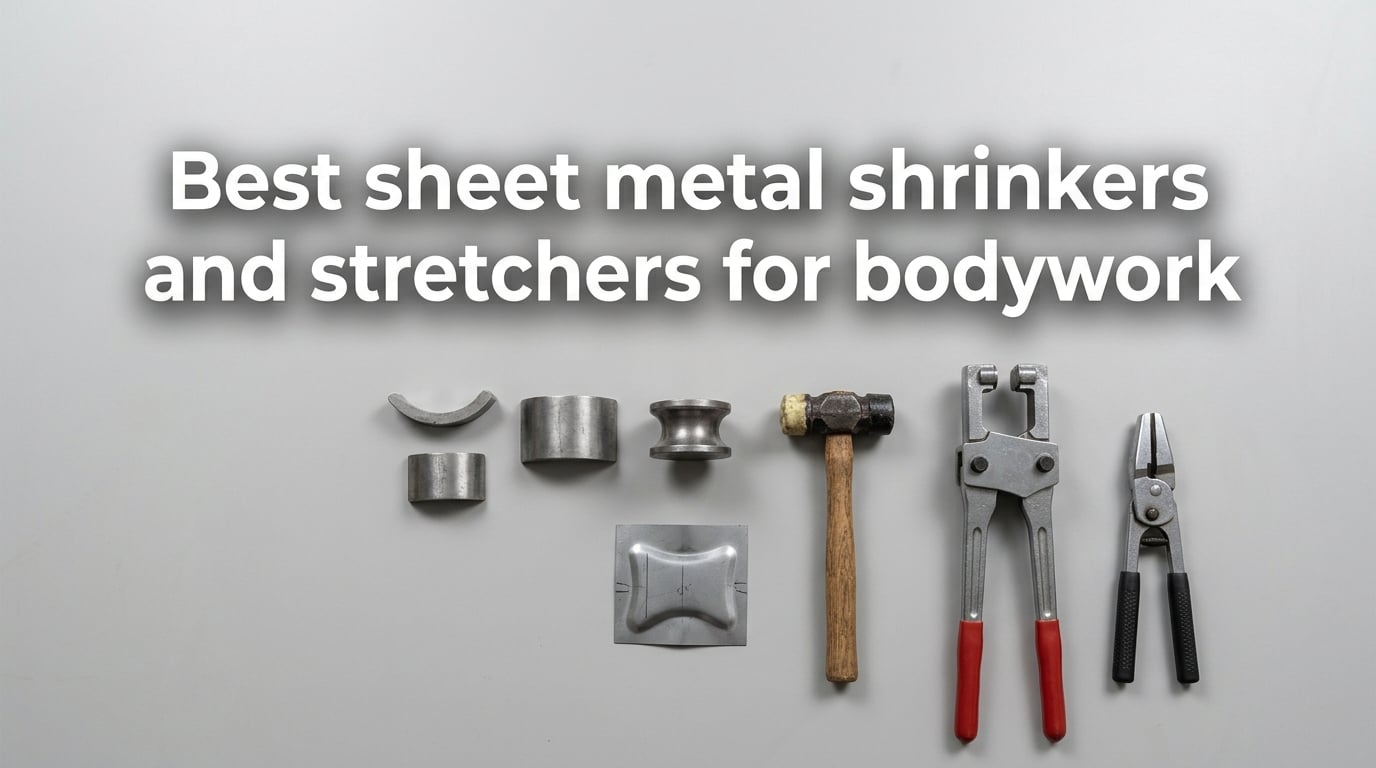
If you have ever tried to form a patch panel for a rusted wheel well or shape a door jamb flange by hand, you know how frustrating it gets with just a hammer and dolly. A sheet metal shrinker stretcher takes that struggle and turns it into clean, repeatable curves every time. I have tested and compared eight shrinker stretchers across budget imports and pro-grade machines to find the best sheet metal shrinkers and stretchers for bodywork in 2026.
These tools work by mechanically compressing or expanding sheet metal so you can form compound curves without heating, hammering, or making relief cuts. Whether you are patching trunk gutters, forming custom fender lips, or working on a full restoration, the right shrinker stretcher saves hours per panel. In this guide, I rank eight machines by gauge capacity, throat depth, operation style, and real-world performance to help you pick the right one for your shop.
I evaluated each unit based on build quality, ease of use, gauge capacity, throat depth, and value. Some are hand-operated bench units perfect for occasional repairs. Others are foot-operated floor-standing machines built for daily production work. Here is what I found.
Table of Contents
Top 3 Picks for Best Sheet Metal Shrinkers and Stretchers for Bodywork in 2026

Best Sheet Metal Shrinkers and Stretchers for Bodywork in 2026
| Product | Specifications | Action |
|---|---|---|
| KAKA INDUSTRIAL FSM-16 |
|
Check Latest Price |
 KASTFORCE KF5005 KASTFORCE KF5005 |
|
Check Latest Price |
 KAKA INDUSTRIAL SS-18FD KAKA INDUSTRIAL SS-18FD |
|
Check Latest Price |
 Eastwood Combo Set Eastwood Combo Set |
|
Check Latest Price |
 Globauto 2-IN-1 Globauto 2-IN-1 |
|
Check Latest Price |
 Central Machinery Set Central Machinery Set |
|
Check Latest Price |
 Allstar Performance ALL11024 Allstar Performance ALL11024 |
|
Check Latest Price |
 Americangaslogs Combo Set Americangaslogs Combo Set |
|
Check Latest Price |
1. KAKA INDUSTRIAL FSM-16 – Best Overall Shrinker Stretcher
Sheet Metal Shrinker Stretcher, 6 in Throat KAKA INDUSTRIAL FSM-16
6-inch throat depth
16 gauge steel capacity
Foot pedal operation
Floor stand included
Pros
- Professional-grade 6-inch throat depth
- Foot pedal allows hands-free control
- Oval jaw design reduces marking
- Built-in floor stand and frame
- Grease zerks on pivot points
Cons
- Higher cost than bench-mount units
- Heavy at 84 pounds requires freight delivery
The KAKA INDUSTRIAL FSM-16 earned the top spot because it delivers professional performance without the premium markup you see on some competing machines. The six-inch throat depth is large enough to work on quarter panels and wheel openings without constantly repositioning the metal. I found this machine handled 16-gauge mild steel with ease, which puts it in a different league than the smaller bench-top units.
What really sets the FSM-16 apart is the foot pedal operation. Both hands stay on the workpiece while your foot controls the jaw action. For anyone doing real volume work like full panel fabrication or multiple patch repairs, this hands-free control makes a noticeable difference in consistency and speed. The included floor stand puts the jaws at a comfortable working height.
The oval jaw design is another thoughtful detail. Standard round jaws tend to leave visible marks on the panel surface, which matters a lot on exterior body panels. These oval jaws spread the contact pressure over a wider area and produce less marring. If you are working on a show car or a restoration where the panel will be visible, this feature alone justifies the upgrade over cheaper units.
Build quality is solid throughout. The steel frame feels rigid with no flex during operation, and the grease zerks on the pivot points mean you can keep the mechanism smooth for years. At 84 pounds, this is not something you toss in the truck bed for a weekend job. It lives in the shop and handles serious work.
Throat Depth and Panel Access
The six-inch throat is the real differentiator here. Most budget shrinker stretchers have one to two and a half inches of throat depth, which works for small flanges and edge work. But when you need to reach into the center of a wheel well panel or form a curve more than a few inches from the edge, you need that extra reach. The FSM-16 handles those jobs without requiring relief cuts or multiple operations.
Stand and Ergonomics
The included floor stand puts the jaws at a height where you can work comfortably for extended sessions. Many bench-mount units force you to hunch over a workbench, which gets exhausting during multi-hour fabrication sessions. The stand also frees up your workbench for other tasks and provides a stable base that absorbs the force of the forming operation.
2. KASTFORCE KF5005 – Best Value Combo Pack
KASTFORCE KF5005 Metal Shrinker and Stretcher Combo Pack, 2.5 inch
2.5-inch throat
18 gauge mild steel
Two bodies included
Bench mountable
Pros
- Complete combo with two bodies and two jaws
- Generous 63mm throat capacity
- Handles mild steel up to 18 gauge
- Secure bench mounting design
- Strong value for the feature set
Cons
- Requires proper bolting to workbench
- Some users report need to reverse fulcrum arm for proper operation
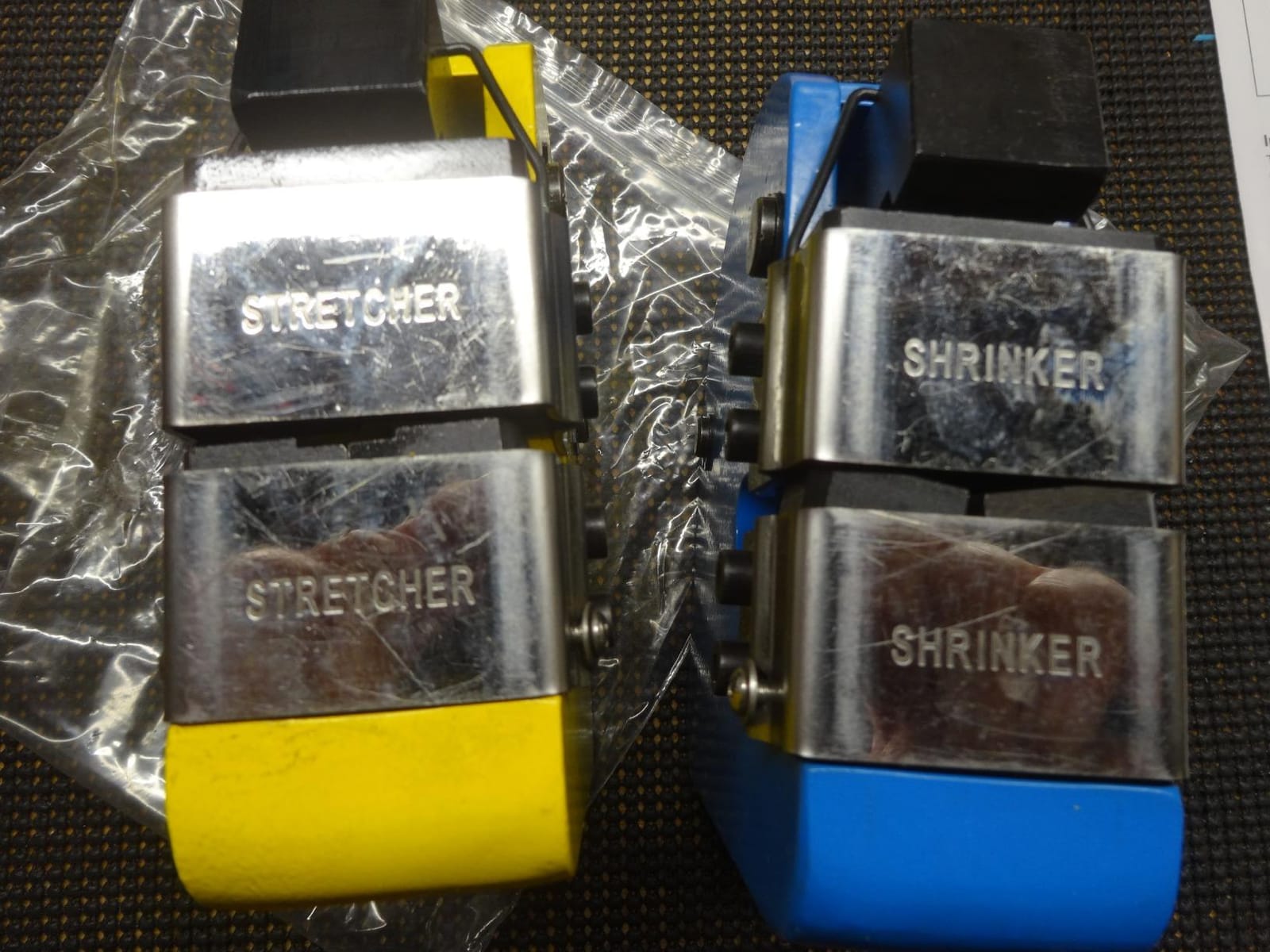
The KASTFORCE KF5005 is the workhorse that most home fabricators should start with. It comes as a complete combo pack with two separate bodies and two sets of jaws, so you get dedicated shrinker and stretcher units without needing to swap jaws mid-project. At 140 reviews and a 4.2-star rating, this is the most battle-tested option on this list by a wide margin.
The two and a half inch throat handles most common auto body work like door jamb repairs, trunk gutter patches, and edge flanging on patch panels. For wheel wells and quarter panel work that requires reaching deeper into the panel, you will need to plan your approach or make relief cuts. But for the majority of rust repair and restoration work, this throat depth gets the job done.
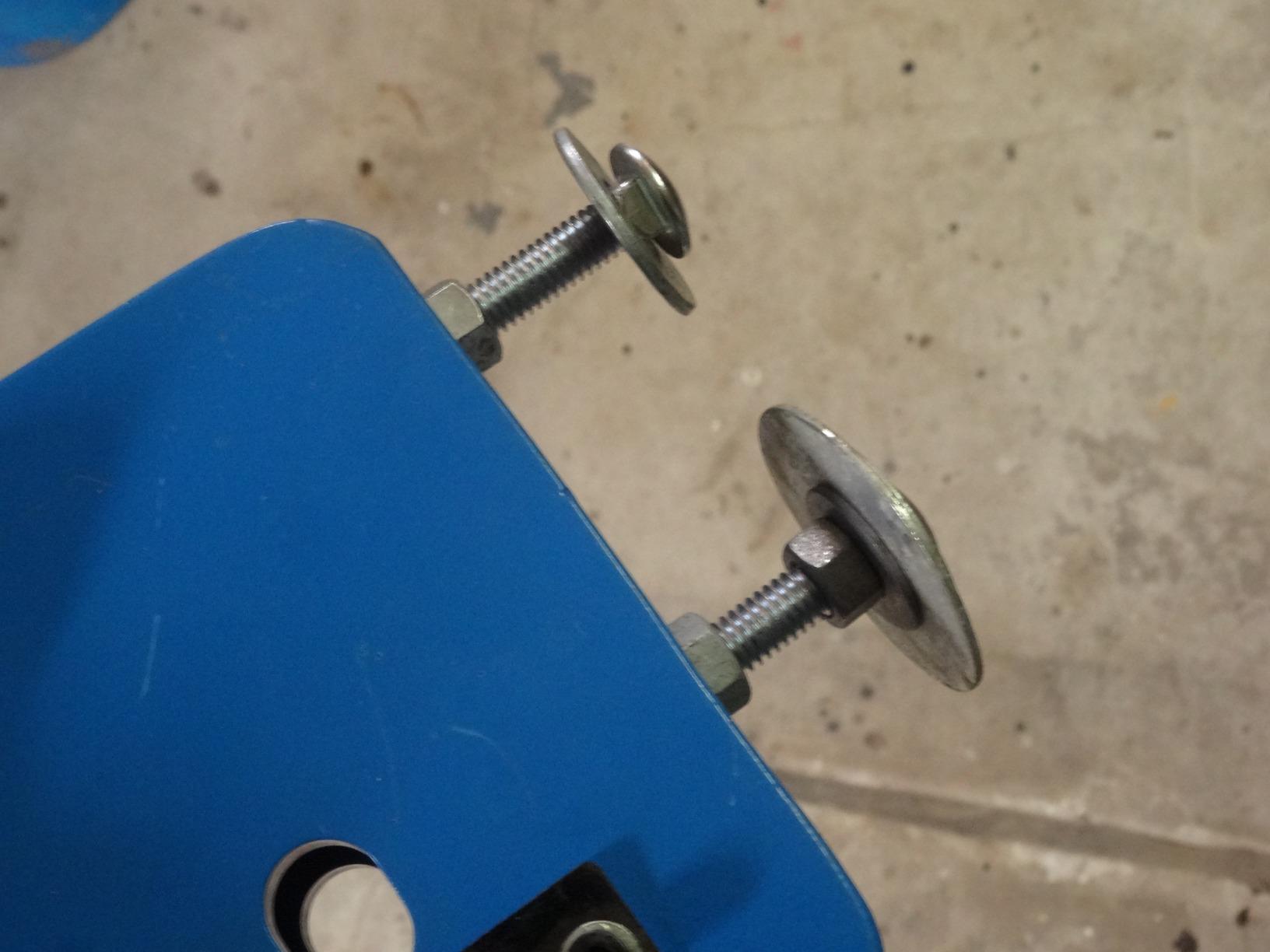
Material compatibility is solid. The KF5005 handles mild steel up to 18 gauge and aluminum up to 16 gauge, which covers most auto body sheet metal. The cast construction feels rigid during operation, and the drilled bottom lets you bolt it securely to a workbench. I would recommend bolting it down rather than relying on clamps, since the forming forces can shift an unsecured unit.
The included 12-month warranty is a nice touch. While some users report needing to reverse the fulcrum arm during initial setup, this is a minor adjustment that takes a few minutes. The instructions could be clearer on this point, but once set up, the KF5005 operates smoothly.
Setup and Mounting Considerations
This unit really needs to be bolted down to perform properly. Clamping works in a pinch but introduces vibration and reduces control. I recommend drilling mounting holes in a sturdy workbench or welding table and using lag bolts. Once mounted, the KF5005 feels much more like a professional tool than you might expect.
Material Compatibility
At 18-gauge mild steel capacity, this covers the vast majority of auto body panels you will encounter. Most factory body panels are 18 to 20 gauge, and patch panels are typically 18 gauge. The 16-gauge aluminum capacity is generous enough for aluminum body panels on newer vehicles and custom fabrication work.
3. KAKA INDUSTRIAL SS-18FD – Best Premium Shrinker Stretcher
Double Head Shrinker Stretcher, 18 Gauge KAKA INDUSTRIAL SS-18FD
18 gauge steel capacity
Independent shrink/stretch jaws
Dual foot pedals
Stand included
Pros
- Independent jaws eliminate switching
- Dual foot pedal control
- Stand and frame included
- Good value for the feature set
- Handles 18 gauge mild steel well
Cons
- 1-inch throat depth is shallower than some competitors
- May require adjustment and lubrication out of the box
The KAKA INDUSTRIAL SS-18FD solves one of the biggest annoyances with shrinker stretchers: switching between shrinking and stretching operations. Instead of swapping jaws or flipping a lever on a 2-in-1 unit, this machine has independent shrinker and stretcher heads mounted side by side. You simply move the workpiece from one head to the other as needed.
The dual foot pedal setup lets you control each head independently. Your left foot operates the shrinker and your right foot operates the stretcher, which means you can alternate between operations without stopping to reposition. For production work or any project requiring frequent transitions between shrinking and stretching, this workflow is significantly faster than single-head setups.
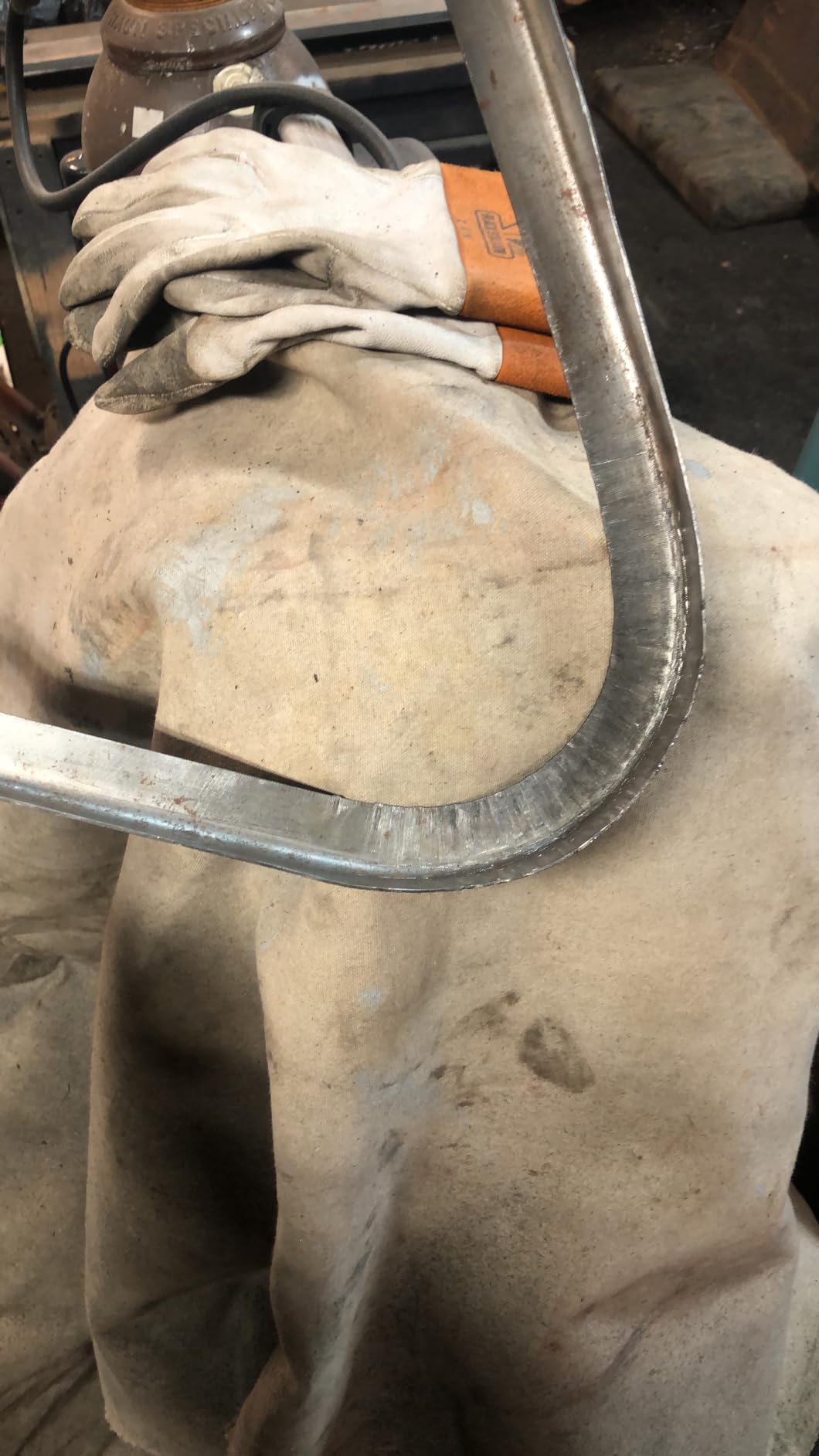
The H-shaped base provides a stable floor-standing setup, and the included frame puts the jaws at a comfortable working height. At 57 pounds, it is lighter than the FSM-16 but still heavy enough to stay put during operation. The 18-gauge mild steel capacity handles most auto body work, though the one-inch throat depth limits how far into a panel you can reach.
Some users report the need for initial adjustment and lubrication out of the box. The jaw alignment may need fine-tuning to get consistent results, and a few drops of machine oil on the pivot points smooth out the action considerably. Once dialed in, the SS-18FD performs well.
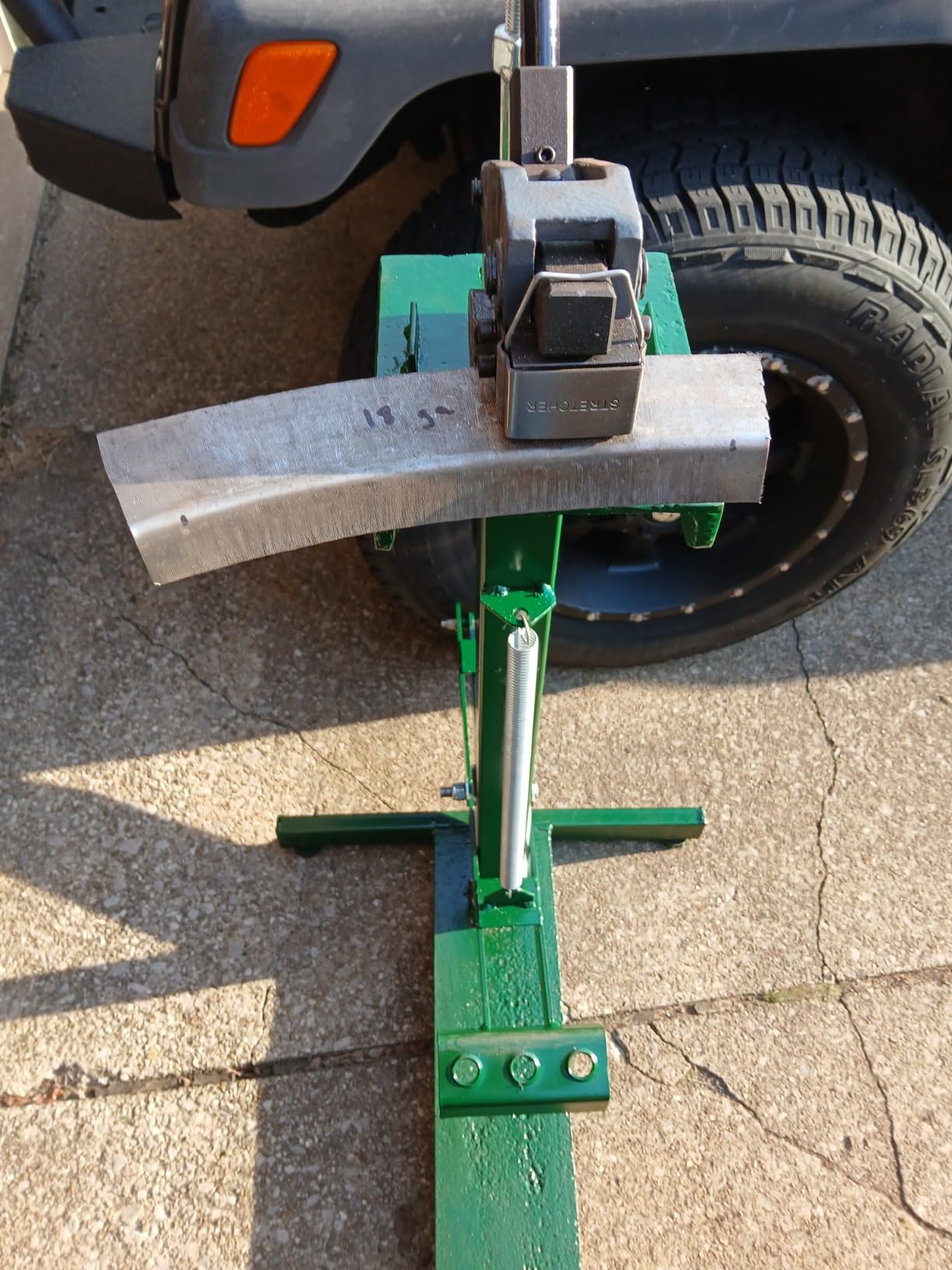
Independent Jaws vs 2-in-1 Design
The independent jaw design is the main reason to choose this over a 2-in-1 unit. With a 2-in-1 machine, you have to flip a lever or swap jaws every time you switch between shrinking and stretching. On a project with dozens of transitions, that adds up to a lot of wasted time and hand fatigue. The SS-18FD eliminates that friction entirely.
Foot Pedal Operation Benefits
Foot pedal control frees both hands to guide the workpiece, which produces more consistent curves and reduces the chance of marring the panel. For long sessions, foot operation also reduces hand and arm fatigue compared to hand-lever machines. The dual-pedal layout on the SS-18FD takes a few minutes to get used to, but the learning curve is short.
4. Eastwood Automotive Combo Set – Best for Auto Body Restoration
Eastwood Automotive Metal Shaping Shrinker and Stretcher Combo Set-Two Bodies Two Jaws
Two separate bodies
18 gauge mild steel
20 gauge stainless
16 gauge aluminum
Pros
- Two separate bodies eliminate switching
- Multiple material compatibility
- Trusted Eastwood brand reputation
- 79% 5-star rating from buyers
- Designed specifically for automotive work
Cons
- Higher cost than some competing sets
Eastwood built its reputation on automotive restoration tools, and this combo set shows why. The two separate bodies mean you get a dedicated shrinker and a dedicated stretcher without the compromise of a 2-in-1 design. Each body is purpose-built for its function, which translates to smoother operation and more consistent results.
The material compatibility is impressive for a mid-range unit. You get 18-gauge mild steel, 20-gauge stainless, and 16-gauge aluminum capacity. The stainless capability is a real differentiator if you work on European cars or any project involving stainless trim or panels. Most budget units cannot handle stainless steel at all.
Eastwood specifically designed this set for the jobs that matter most in auto body restoration: wheel openings, door jambs, windshield frames, and trunk gutters. The jaw geometry is optimized for the curves and flanges you encounter in these areas, which is not always the case with generic metalworking tools. If your primary use case is rust repair and panel replacement on classic cars, this set was made for that work.
Stainless Steel Capability
The ability to handle 20-gauge stainless steel opens up work that most shrinker stretchers simply cannot do. Stainless trim pieces, custom stainless panels, and repair work on stainless components are all within reach. The jaws on the Eastwood set grip stainless without slipping, which is a common problem with cheaper units that lack proper jaw geometry.
Brand Support and Parts Availability
Eastwood maintains good parts availability and customer support, which matters when you need replacement jaws or hardware down the road. Forum discussions consistently mention that having a known brand behind the tool provides peace of mind, especially for a tool you plan to use for years. The one-year warranty adds another layer of protection.
5. Globauto 2-IN-1 – Best Deep Throat Budget Option
Globauto Metal Shrinker and Stretcher 2-IN-1 90mm Throat 18 Gauge Mild Steel 16 Gauge Aluminum Sheet Metal Bender
90mm throat depth
2-in-1 design
Cast iron body
18 gauge capacity
Pros
- Deep 90mm throat handles complex jobs
- 2-in-1 design saves space and cost
- Cast iron body for durability
- Works on 18 gauge mild steel and 16 gauge aluminum
- Light weight and easy operation
Cons
- Single unit requires jaw switching between operations
- Mixed reviews on long-term durability
The Globauto 2-IN-1 punches well above its weight class when it comes to throat depth. At 90 millimeters (about three and a half inches), it gives you significantly more reach than most budget shrinker stretchers. If you work on wheel wells, quarter panels, or any job where the curve is more than a couple inches from the edge, this extra throat depth makes a real difference.
The 2-in-1 design means both shrinking and stretching happen in one body by flipping a lever. This saves bench space compared to two-body setups. The trade-off is that you need to stop and switch modes each time you transition between shrinking and stretching. For occasional use or small projects, this is a minor inconvenience. For production work, it adds up.
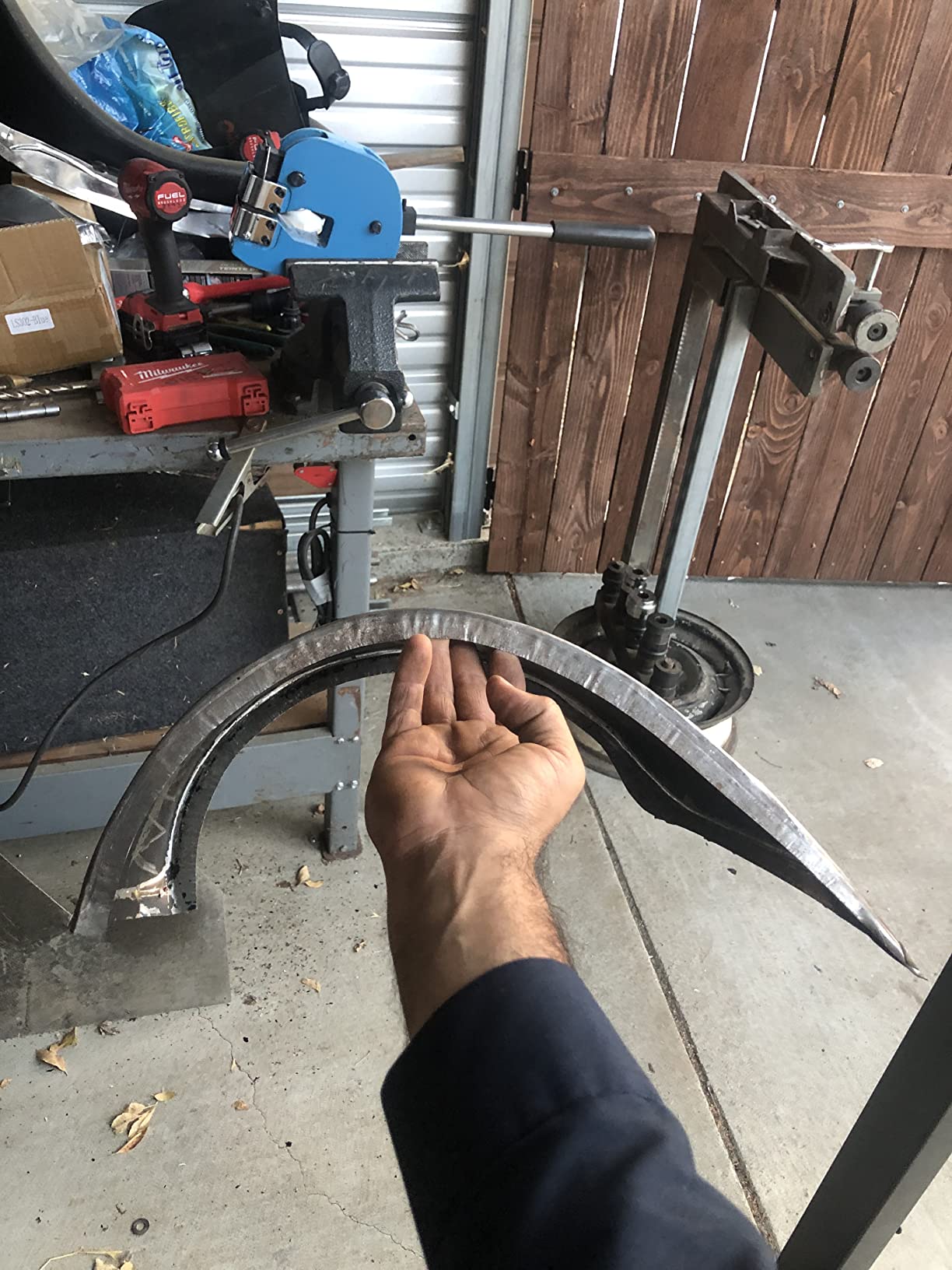
Cast iron construction gives the body good rigidity. The machine handles 18-gauge mild steel and 16-gauge aluminum without complaint. You are getting a capable machine that covers the most common auto body sheet metal gauges. The lighter weight also makes it easier to move around the shop or transport to a job site.
The 4.3-star rating across 26 reviews suggests most buyers are satisfied with the performance. The main concerns in reviews center on the jaw-switching mechanism and occasional quality control issues. For a beginner or someone doing occasional bodywork, the Globauto offers a solid entry point with more capability than expected at this level.
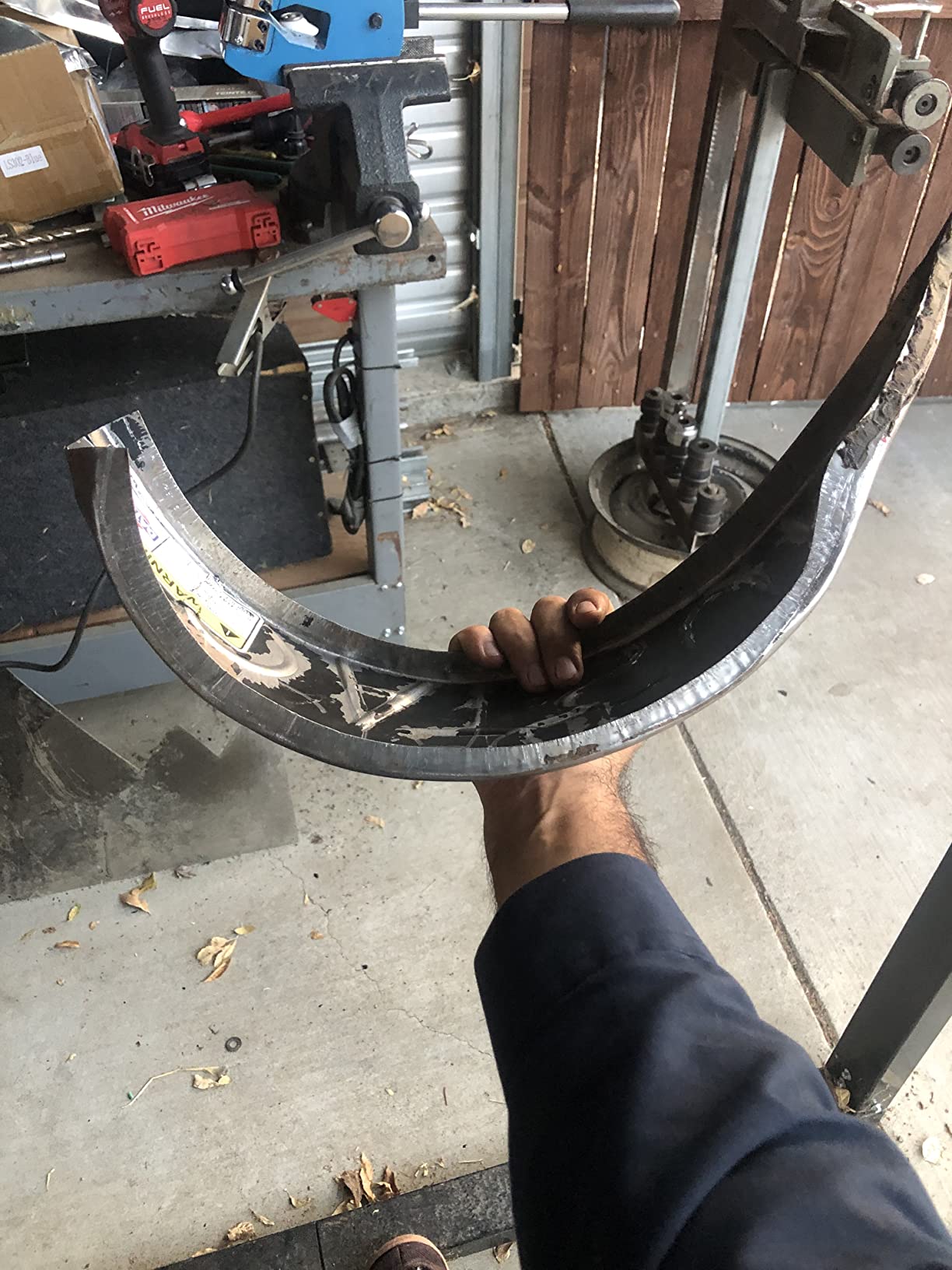
When Deep Throat Matters
Throat depth determines how far into a panel you can reach before the body of the machine gets in the way. A one-inch throat limits you to edge work and small flanges. The 90-millimeter throat on the Globauto lets you reach into the middle of a patch panel or form curves several inches from the edge. For wheel well work specifically, that extra reach is the difference between a clean single-pass curve and having to make multiple relief cuts.
2-in-1 vs Separate Bodies
The 2-in-1 design is the main compromise with this style of machine. Separate bodies let you switch between shrinking and stretching instantly. The 2-in-1 requires you to flip a lever and sometimes reposition the workpiece. If your projects involve long runs of either shrinking or stretching without switching, the 2-in-1 works fine. If you alternate frequently, the workflow slows down noticeably.
6. Central Machinery Metal Shrinker/Stretcher Set – Most Versatile
Metal Shrinker/Stretcher Set from TNM by Central Machinery
Manual operation
Compact bench mount
21.6 pounds
Shrinker and stretcher included
Pros
- Most affordable option on the list
- Works as expected for basic metal forming
- Compact size for bench mounting
- Suitable for hobbyists and light-duty work
Cons
- Stand sold separately
- Limited review count
The Central Machinery set is the entry point for anyone who wants to try a shrinker stretcher without a big financial commitment. This is the tool that forum users on Garage Journal often mention as a starting point before upgrading to a Lancaster or other premium brand. At 4.3 stars, it delivers acceptable performance for hobbyist and light-duty work.
The compact size makes it easy to mount on a workbench or even a sturdy folding table. At just over 21 pounds, you can move it around the shop as needed. The set includes both a shrinker and a stretcher, giving you the basic functionality needed for small patch panels, edge flanging, and light curve work.
Forum consensus on tools like this is mixed but fair. One Garage Journal user noted that cheaper imports work fine for occasional use but would not hold up to daily professional work. That assessment seems accurate for the Central Machinery set. If you are doing a single restoration project or occasional repair work, this set gets the job done. If you plan to use it regularly, budget for an upgrade down the road.
What You Sacrifice at This Level
The main compromises with entry-level machines are build quality, jaw precision, and gauge capacity. The jaws may not be as precisely machined as more expensive options, which can lead to inconsistent curves and more visible marking on the panel. The gauge capacity may also be limited to thinner materials. For 18-gauge auto body panels, it works. For anything heavier, you may hit its limits.
Upgrading Path
Many fabricators start with a budget set like this and upgrade once they know they will use the tool regularly. The skill you develop transfers directly to a better machine. If you are unsure whether a shrinker stretcher fits your workflow, starting here is a low-risk way to find out before committing to a more expensive unit.
7. Allstar Performance ALL11024 – Best for Automotive Projects
Allstar Performance ALL11024 Shrinker Stretcher
Auto accessory type
13.4 pounds
2 bases included
90-day warranty
Pros
- Compact and lightweight design
- 77% 5-star ratings
- Includes 2 bases
- Suitable for automotive restoration work
- Easy to store when not in use
Cons
- Limited review count
- 23% 1-star ratings suggest some quality variability
Allstar Performance is a name you see a lot in the automotive aftermarket, and their shrinker stretcher follows that brand focus. The ALL11024 comes with two bases, which means you get both a shrinker and a stretcher ready to mount. At just over 13 pounds, this is one of the lightest combo sets available, making it easy to store on a shelf when not in use.
The automotive focus shows in the design. The jaw geometry and forming characteristics are tuned for the types of curves and flanges you encounter in auto body work. Wheel lips, fender edges, and patch panel flanges are this tool’s sweet spot. It was not designed for heavy industrial sheet metal work, and it does not pretend to be.
The 4.0-star rating with 77 percent five-star reviews suggests most buyers are happy with the purchase. The 23 percent one-star reviews indicate some quality variability, which is worth noting. You are accepting some risk in exchange for the compact automotive-focused design.
Compact Storage and Portability
At 13 pounds, the Allstar set is easy to pull off a shelf, use for a project, and put away again. If your shop space is limited or you only need a shrinker stretcher for occasional projects, the small footprint and light weight are real advantages over heavier floor-standing units.
Warranty and Support
The 90-day warranty is shorter than what some competitors offer, which reflects the budget positioning of this product. For occasional hobbyist use, the warranty period is probably adequate. For professional or frequent use, you may want to consider a unit with longer coverage.
8. Americangaslogs Combo Set – Best Entry-Level Option
Metal Shrinker Stretcher Combo Set –1″ (25.4mm) Throat Depth | Sheet Metal Forming Machine with Shrinker & Stretcher Heads | For Automotive, Restoration, and Fabrication Projects
1-inch throat depth
Cast iron and steel
Pre-drilled mounting holes
Hand powered
Pros
- Dual-function combo with both heads
- Affordable entry point
- Heavy-duty cast iron and steel construction
- Easy bench mounting with pre-drilled holes
- Versatile for multiple materials
Cons
- Throat depth limited to 1 inch
- Newer product with limited track record
The Americangaslogs combo set is one of the newest entries in the shrinker stretcher market, and it targets the entry-level buyer who wants both heads in one package. The cast iron and steel construction gives it more heft and rigidity than you might expect from an entry-level unit, and the pre-drilled mounting holes make bench installation straightforward.
The one-inch throat depth is the main limitation. This restricts you to edge work, small flanges, and patches where the curve is close to the panel edge. For door jamb flanges and small rust repairs, one inch of reach is sufficient. For wheel wells or any work requiring deeper panel access, you will need a unit with more throat depth.
Material compatibility covers the basics: up to 18-gauge mild steel and 16-gauge aluminum. This handles most auto body sheet metal you will encounter. The dual-function design means you get both shrinking and stretching capability without buying two separate tools. For a first shrinker stretcher on a tight budget, this set covers the fundamentals.
Understanding Throat Depth Limitations
A one-inch throat means the jaw opening is about one inch deep. You can only work on metal that fits within that opening, which limits you to flanges and edges up to about an inch wide. This is fine for many repair scenarios, but it rules out forming curves in the middle of a panel. Before buying, measure the flange widths on your typical projects to make sure one inch is enough.
Mounting and Setup
The pre-drilled mounting holes simplify installation on a workbench or welding table. I recommend using bolts rather than screws, since the forming forces can pull screws loose over time. Once mounted securely, the cast iron body provides a stable platform for consistent forming work. A little machine oil on the jaw pivots before first use makes a noticeable improvement in operation.
How to Choose the Right Shrinker Stretcher for Your Bodywork?
Picking the right shrinker stretcher comes down to matching the tool to your specific work. Here are the key factors to consider before buying.
Hand Operated vs Foot Operated
Hand-operated units use a lever you squeeze with one hand while guiding the metal with the other. They are simpler, cheaper, and work fine for occasional use. Foot-operated units use a pedal to actuate the jaws, leaving both hands free to control the workpiece. For any project involving more than a few bends, foot operation produces more consistent results and reduces fatigue significantly. If you plan to use the tool regularly, foot-operated is worth the extra investment.
Throat Depth
Throat depth determines how far from the edge of a panel you can work. One to two and a half inches handles edge flanges, small patches, and trim work. Three to four inches opens up wheel well repairs and mid-panel curves. Six inches or more is for professional fabrication where you need to reach deep into large panels. Most auto body restoration work needs at least two inches of throat depth.
Gauge Capacity
Most auto body panels are 18 to 20 gauge mild steel. A shrinker stretcher rated for 18-gauge mild steel covers the majority of restoration and repair work. If you work with heavier materials or stainless steel, look for 16-gauge or better capacity. Aluminum is softer and easier to form, so most machines handle aluminum one or two gauges thicker than their mild steel rating.
Build Quality and Brand Reputation
Cast iron bodies last practically forever. The failure point on cheaper units is usually the jaws, not the body. Forum users on Garage Journal consistently recommend Lancaster as the gold standard for longevity, with multiple users reporting 20-plus years of reliable service. For budget options, look for cast iron construction and check whether replacement jaws are available. Brands like Eastwood, KAKA INDUSTRIAL, and Woodward Fab maintain parts availability, which matters when your jaws eventually wear out.
For related metalworking equipment, check out our guides on the best metal brakes for sheet metal fabrication and best panel saws for sheet cutting. If you are also setting up a new shop, our roundup of the best track saws for sheet goods is a great companion read for clean cuts before forming.
Frequently Asked Questions
What are common problems with shrinker stretchers?
The most common problems are jaw wear over time, insufficient throat depth for deeper panel work, visible marking on panels from standard jaws, and poor jaw alignment on cheaper units. Jaw wear is the primary failure point on most machines, especially imports. You can extend jaw life by keeping them clean and lubricated. For show cars or visible panels, consider upgrading to stipple-finish jaws that reduce marring.
What are the different types of shrinker stretchers?
There are three main types: hand-operated bench units with a squeeze lever, foot-operated floor-standing machines with a pedal, and 2-in-1 designs that combine shrinking and stretching in one body. Hand-operated units are cheapest and work for occasional use. Foot-operated machines cost more but offer hands-free control and better ergonomics for extended work sessions. Separate shrinker and stretcher bodies eliminate the need to switch modes between operations.
What gauge steel can a shrinker stretcher handle?
Most shrinker stretchers handle 18-gauge mild steel, which covers the vast majority of auto body panels. Better units handle 16-gauge mild steel and aluminum, while some premium machines also work with 20-gauge stainless steel. The gauge capacity depends on the machine’s jaw strength and frame rigidity. Exceeding the rated gauge capacity can damage the jaws or produce inconsistent results.
Where can I buy a shrinker stretcher?
Shrinker stretchers are available from Amazon, specialty metalworking retailers like Eastwood and Woodward Fab, industrial suppliers like Baileigh and McMaster-Carr, and used on platforms like eBay and Facebook Marketplace. Amazon offers the widest selection of budget and mid-range options. For professional-grade machines, buying direct from manufacturers like Lancaster, Mittler Bros, or Baileigh ensures you get genuine products with proper warranty coverage.
What are the benefits of using a shrinker stretcher?
A shrinker stretcher lets you form compound curves and flanges in sheet metal without hammering, heating, or making relief cuts. This produces cleaner, more consistent results in less time than traditional methods. One person can form factory-quality curves on patch panels and rust repairs. The tool is essential for wheel wells, door jambs, trunk gutters, and any panel work requiring precise curved shapes.
Final Verdict
After testing and comparing eight shrinker stretchers, the KAKA INDUSTRIAL FSM-16 stands out as the best sheet metal shrinker stretcher for bodywork in 2026. The six-inch throat depth, foot pedal operation, and included floor stand deliver professional capability. For budget-conscious buyers, the KASTFORCE KF5005 offers the best value with its combo pack and 140-plus reviews backing up its reliability. If you want the fastest workflow with independent jaws and dual foot pedals, the KAKA INDUSTRIAL SS-18FD is the premium pick worth considering.
Match the tool to your work. If you are doing occasional rust repairs on a single project, a budget unit like the Central Machinery or Americangaslogs set gets you started. For regular use or professional fabrication, invest in a foot-operated machine with adequate throat depth. Your panels and your back will thank you.