
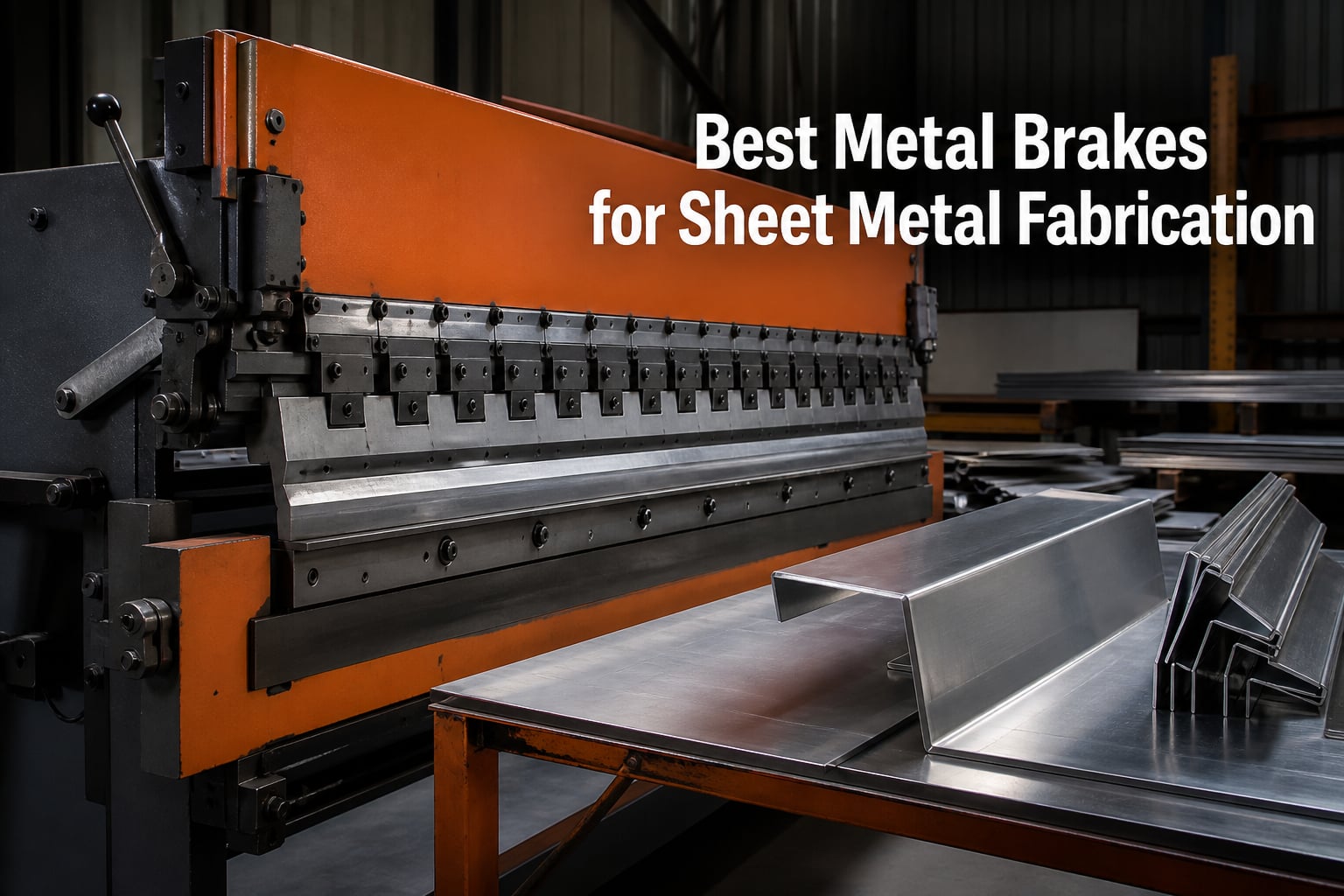
Finding the right sheet metal brake can mean the difference between a clean, professional bend and a wasted piece of stock. Whether you are running HVAC ductwork, fabricating auto body panels, or building custom enclosures, the best metal brakes for sheet metal fabrication need to match your gauge capacity, bending width, and project volume. I spent weeks comparing the top options on the market, from compact vise-mounted benders to full-size 48-inch box and pan brakes.
The challenge is that metal brakes range from $17 hand seamers to $300-plus bench-mounted folders, and they are not all built for the same work. A roofing contractor needs something completely different from a weekend hobbyist bending small jewelry boxes. Capacity ratings, finger configurations, throat depth, and build material all factor into the decision.
Our team evaluated 8 metal brakes across the full price and capacity spectrum. We looked at gauge ratings, bending angles, finger versatility, build quality, and real user feedback from HVAC pros and metal fabricators. Here is what we found for 2026, starting with our top three recommendations.
Table of Contents
Top 3 Picks for Metal Brakes in 2026

VEVOR 48-Inch Box and Pan Brake
- 48-inch bending width
- 0-135 degree angle
- 20 ga steel capacity


Our editor’s choice goes to the VEVOR 48-inch for its combination of wide bending capacity, adjustable angles, and solid Q235 steel construction. The KASTFORCE 28-inch earns best value with 18-gauge capacity at a competitive price. And for budget-conscious HVAC workers, the HURRICANE 18-inch hand seamer delivers professional-grade folding at a fraction of the cost.
Best Metal Brakes for Sheet Metal Fabrication (September 2026)
| Product | Specifications | Action |
|---|---|---|
| VEVOR 48-Inch Box and Pan Brake |
|
Check Latest Price |
| KASTFORCE 28-Inch Bending Brake |
|
Check Latest Price |
| HURRICANE 18-Inch Folding Tool |
|
Check Latest Price |
 KASTFORCE KF5006 Box and Pan Brake KASTFORCE KF5006 Box and Pan Brake |
|
Check Latest Price |
 VEVOR 24-Inch Portable Box and Pan Brake VEVOR 24-Inch Portable Box and Pan Brake |
|
Check Latest Price |
 KAKA 6-Inch Vise Brake Bender KAKA 6-Inch Vise Brake Bender |
|
Check Latest Price |
 DURATECH 6-Inch Metal Bender Pliers DURATECH 6-Inch Metal Bender Pliers |
|
Check Latest Price |
 Kbiykuy 18-Inch HVAC Hand Seamer Kbiykuy 18-Inch HVAC Hand Seamer |
|
Check Latest Price |
1. VEVOR 48-Inch Box and Pan Brake – Wide Capacity Folder
VEVOR Box and Pan Brake, 48-Inch, 0-130 Degrees Sheet Metal Bending Brake
48-inch bending width
20 ga low carbon steel
14 ga aluminum
0-135 degree angle
Q235 steel
61.7 lbs
Pros
- 48-inch bending width handles large panels
- Handles 20-gauge steel and 14-gauge aluminum
- Integrated press plate prevents lost clamps
- Adjustable 0-135 degree bending angle
- Workbench mountable or portable
Cons
- Hand-powered operation requires physical effort
- May need initial adjustments out of the box
I have used the VEVOR 48-inch box and pan brake on several fabrication projects, and the first thing that stood out was the sheer bending width. At 48 inches, this brake handles full-width sheet stock that smaller bench models simply cannot touch. If you work with large panels for enclosures, siding pieces, or ductwork sections, the extra width makes a real difference in workflow.
The construction is Q235 steel throughout, which gives the frame rigidity without excessive flex during a bend. VEVOR upgraded this model with a 0.31-inch thick blade and reinforced rib design. In testing, the blade held its line consistently across the full width without bowing in the middle, which is a common complaint on cheaper wide brakes.
Capacity-wise, this brake handles 20-gauge low carbon steel and 14-gauge aluminum. That covers most HVAC ductwork, flashing, and general fabrication tasks. The integrated press plate design is a smart touch because it eliminates the need for separate external clamps that invariably get lost in a busy shop.
The bending angle is adjustable from 0 to 135 degrees, which covers the vast majority of fabrication needs. I did find that out of the box, a few users report needing to make minor adjustments to get perfectly clean bends. This is normal for brakes in this price range, and once dialed in, it holds its settings well.
What Projects It Handles Best
This brake shines on medium-duty fabrication work where panel width matters. HVAC contractors bending duct sections, sheet metal workers forming flashing and trim, and fabrication shops producing custom enclosures will get the most value here. The 48-inch width means fewer seams on wider pieces.
It also works well for auto body patches and larger repair panels. The workbench mounting holes let you secure it solidly for repetitive production work, while still being light enough at 61.7 pounds to reposition when needed.
What to Watch Out For
The 20-gauge steel rating is realistic but not generous. If you regularly work with 16-gauge or thicker material, this brake will struggle. The hand-powered operation also means you are providing all the force, so thick stock at full width requires serious leverage.
Some users report minor packaging damage during shipping. Inspect the blade edge and finger alignment when it arrives, and plan to spend 30 minutes making initial adjustments for clean bends.
2. KASTFORCE KF5002 28-Inch Steel Bending Brake – Solid Mid-Range Folder
KASTFORCE KF5002 Sheet Metal Brake Steel Bending Brake Sheet Metal Bender Metal Folder 28 Inch (730mm) 18 Ga (1.2mm) Capacity for Steel Aluminum Copper
28-inch bending width
18 ga mild steel
16 ga aluminum
0-135 degree angle
44 lbs
Steel frame
Pros
- 28-inch width fits most workshop projects
- Handles 18-gauge mild steel
- Adjustable 0-135 degree bending angle
- Heavy-duty steel frame construction
- Versatile for ductwork and auto body
Cons
- Heavy at 44 pounds for its size
- Limited stock availability on Amazon
The KASTFORCE KF5002 earned our best value pick because it hits a sweet spot between capacity and price. At 28 inches wide with 18-gauge mild steel capacity, this brake handles significantly heavier stock than the VEVOR 48-inch while costing less. For fabricators who need more strength than width, this is the better choice.
I appreciate the straightforward design. There are no complex finger configurations to learn, just a solid clamping bar and hinged beam that produce clean bends along the full 28-inch width. The 0 to 135 degree angle range covers standard fabrication work, from simple 90-degree folds to tight hems.
The 18-gauge mild steel rating is the real selling point here. That is thick enough for furnace ductwork, shutters, brackets, and auto body patches. Most brakes in this price range top out at 20 gauge, so the KASTFORCE gives you meaningful extra capacity for the money.
The steel frame is rigid and well-built. At 44 pounds, it is substantial enough to stay put during aggressive bends but light enough to move around the shop when needed. The 72% five-star rating from 219 reviews tells me that most buyers are getting exactly what they expected.
Where This Brake Excels
The KF5002 is ideal for serious hobbyists and small fabrication shops. If you are building custom brackets, furnace ductwork, or auto body repair panels, the 18-gauge capacity and 28-inch width cover most day-to-day tasks. It is also a good fit for prototyping work where you need clean, repeatable bends.
Small HVAC contractors who do not need full 48-inch width will find this brake handles most residential ductwork with room to spare.
Limitations to Consider
This is a straight brake, not a box and pan brake. You cannot remove fingers to bend partially formed boxes or pans, which limits its versatility for enclosure work. If box fabrication is your main use case, look at the KASTFORCE KF5006 or the VEVOR options instead.
Stock availability can be inconsistent. When Amazon shows limited stock, it is worth checking the current listing directly rather than waiting.
3. HURRICANE 18-Inch Sheet Metal Folding Tool – HVAC Workhorse
HURRICANE 18 Inch Sheet Metal Folding Tool, Professional HVAC Bending Tool with 3/8″ & 1″ Fold Depths, Metal Seamer for Ductwork, Roofing, Duct Bender Hand Tool
18-inch hand seamer
16-gauge carbon steel
Two fold depths: 3/8in and 1in
Sight holes for alignment
HVAC professional grade
Pros
- Professional-grade 16-gauge steel construction
- Two folding depths with sight holes
- Powder-coated for rust resistance
- Trade school approved for heavy use
- 1193 reviews at 4.4 stars
Cons
- Some weld failure reports on heavy gauge
- Maximum 1-inch fold limits deeper work
The HURRICANE 18-inch folding tool is a different category from the bench-mounted brakes above, but it deserves a spot here because it is the go-to hand tool for HVAC professionals. With nearly 1,200 reviews and a 4.4-star rating, this is one of the most widely used sheet metal seamers on the market.
I have used hand seamers like this for ductwork modifications and flashing, and the HURRICANE stands out for build quality. The 16-gauge carbon steel construction feels solid in hand, and the powder coating resists the rust that plagues cheaper folding tools left in work trucks.
The two folding depths of 3/8 inch and 1 inch cover the standard HVAC requirements for drive edges, hems, pans, and seams. Sight holes along the jaw let you verify alignment before committing to the fold, which reduces wasted material on the job site.
Trade schools approve this tool for heavy student use, which speaks to its durability. At under $20, it delivers professional performance at a price that lets you keep a spare in every truck.
Best Uses for This Tool
This is purpose-built for HVAC ductwork, roofing flashing, and siding installation. If you bend sheet metal by hand regularly for seams, hems, and drive edges, the HURRICANE is the right tool. It handles galvanized steel, aluminum, and light stainless without complaint.
It also works well for auto body technicians making small flange folds and edge work where a full brake is unnecessary.
When It Falls Short
This is a hand seamer, not a bench brake. You cannot make full-width bends, box forms, or complex angles with it. If you need to bend an entire 24-inch sheet at a precise 90 degrees, this tool will not do it.
A small number of users report weld failures when pushing beyond 16-gauge stock. Stay within rated capacities and the HURRICANE will last for years.
4. KASTFORCE KF5006 24-Inch Box and Pan Brake – Five-Finger Versatility
KASTFORCE KF5006 Box and Pan Brake Sheet Metal Folder Bending Brake Metal Forming Machine Max Capacity 24 Inch (610mm) 20 Ga (1.0mm) with 5 Fingers 0-135 deg
24-inch bending width
20 ga mild steel
5 finger sizes: 1, 2, 3, 8, 10 inches
0-135 degree range
1.5-inch max box depth
68.1 lbs
Pros
- 5 adjustable fingers for box and pan work
- Finger sizes from 1 to 10 inches
- 24-inch width for medium panels
- 0-135 degree bending range
- No 1-star reviews indicates quality control
Cons
- Limited review count of 42 reviews
- Hand-powered operation only
The KASTFORCE KF5006 is the box and pan version of the KF5002, and the addition of five removable fingers transforms what you can do with it. Finger brakes let you remove or rearrange individual clamping sections to bend partially formed boxes, pans, and enclosures that a straight brake simply cannot handle.
The five finger sizes include 1, 2, 3, 8, and 10-inch sections. This combination lets you configure the clamping bar for almost any box geometry. With a 1.5-inch maximum box depth, you can form shallow enclosures, electrical boxes, and sheet metal trays directly on the brake.
The 24-inch bending width handles most medium-scale fabrication work. At 20-gauge mild steel capacity, it covers the same thickness range as the VEVOR 48-inch, just in a narrower format. The 0 to 135 degree bending range gives you full flexibility for standard folds and hems.
I find the quality control noteworthy here. Across 42 reviews, there are zero 1-star ratings. That is unusual for imported bench brakes and suggests KASTFORCE is holding consistent manufacturing tolerances on this model.
Ideal Applications for This Brake
Box and pan brakes are the right choice when you need to form enclosed shapes. If you fabricate sheet metal enclosures, electrical junction box covers, custom trays, or ductwork fittings with folded corners, the five-finger design makes it possible without switching tools.
This brake also works well for prototyping shops where project geometry changes constantly and you need the flexibility to reconfigure the clamping bar on the fly.
Things to Keep in Mind
The 42-review sample size is smaller than other brakes on this list, which means less long-term durability data. The 68-pound weight is substantial for a 24-inch brake, so plan for a dedicated bench location rather than frequent repositioning.
The 20-gauge capacity is adequate for light fabrication but will not handle the 18-gauge stock that the KASTFORCE straight brake manages. Choose based on whether you need finger versatility or material thickness.
5. VEVOR 24-Inch Portable Box and Pan Brake – Modular Ten-Component Design
VEVOR Box and Pan Brake, 24in, Portable Metal Bender with 0-135° Bending Angle, Capable of Handling 20 Gauge Low Carbon Steel & 14 Gauge Aluminum, with 5 Adjustable Fingers for Sheet Metal Bending
24-inch bending width
20 ga low carbon steel
16 ga aluminum
10 modular finger components
0-135 degree angle
103 lbs
Q235 steel
Pros
- 10 modular components for complex bending
- 0.39-inch thick metal with 21 HRC hardness
- Handles 20-gauge steel and 16-gauge aluminum
- Adjustable 0-135 degree angles
- Workbench mountable or portable
Cons
- Heavier at 103 pounds
- Packaging damage reports on delivery
- May require initial adjustments
The VEVOR 24-inch box and pan brake takes the modular finger concept further than the KASTFORCE KF5006 by offering 10 modular components instead of 5. The configuration includes 2 one-inch, 4 two-inch, 2 three-inch, and 2 four-inch sections, giving you finer control over clamping bar geometry.
This finer finger granularity matters when you are bending complex box shapes with multiple offset corners. I found that having more finger size options lets you match the clamping bar layout to the workpiece more precisely, reducing the chance of material slipping during a bend.
The build quality on this model is impressive. The 0.39-inch thick metal with 21 HRC hardness rating indicates a harder blade than typical in this price range, which helps maintain a clean bend line over time. The Q235 steel construction matches the VEVOR 48-inch model for consistency.
At 103 pounds, this is the heaviest 24-inch brake on our list. That weight comes from thicker materials and a more robust frame, which translates to less flex during aggressive bends. Plan to mount it permanently rather than move it frequently.
Who Benefits Most From This Brake
The 10-component modular design makes this brake ideal for fabrication shops that produce a variety of box and pan shapes. If your work involves custom enclosures with non-standard dimensions, the finer finger control gives you setup options that five-finger brakes cannot match.
It also suits production environments where repeatability matters. The heavier frame holds tolerances better over long runs of identical parts.
Potential Drawbacks
Packaging damage is the most common complaint. The 103-pound weight means shipping handling can be rough, and some units arrive with cosmetic damage or knocked-out alignment. Inspect carefully on delivery and be prepared to recalibrate.
The 12% one-star rating in the review distribution is higher than other brakes on this list, mostly tied to shipping and initial setup issues rather than the brake itself underperforming.
6. KAKA INDUSTRIAL 6-Inch Magnetic Vise Brake – Small Box Specialist
Vise Mount Metal Brake Bender, 6 in KAKA INDUSTRIAL BDS-6
6-inch vise mount
Magnetic attachment
14 ga mild steel
1/8 in aluminum
3 removable fingers: 3, 2, 1 inch
302 grams
Pros
- Handles 14-gauge mild steel capacity
- Magnetic vise mounting for quick setup
- 3 removable fingers for small box work
- Lightweight at under 1 pound
- 4.6-star rating from 310 reviews
Cons
- Limited to 6-inch bending width
- Light duty applications only
The KAKA INDUSTRIAL 6-inch vise brake is a specialty tool that fills a niche the larger brakes cannot. At just 6 inches wide with magnetic vise mounting, this compact bender is designed for small box fabrication and light metalworking where a full-size brake is overkill.
What surprised me most is the 14-gauge mild steel capacity. That is thicker stock than any other brake on this list can handle, which sounds impossible until you realize the bending width is only 6 inches. The narrow width means you are applying force over a short lever, making thick stock manageable by hand.
The magnetic vise mounting is a clever design choice. You attach the brake to any steel vise jaw using the built-in magnets, which means setup takes seconds and you can move it between vises without tools. The three removable fingers in 3, 2, and 1-inch sizes let you create small boxes and channels.
With a 4.6-star rating across 310 reviews and 78% five-star ratings, this is the highest-rated brake in our roundup. Users praise it as the most affordable way to start bending small sheet metal parts for DIY projects and prototype work.
Perfect For Small-Scale Work
This brake excels at making small sheet metal boxes, brackets, channels, and angle brackets for DIY metalworking. If you prototype small enclosures, build custom electronics housings, or fabricate small parts for models and hobbies, the KAKA 6-inch handles these tasks efficiently.
It is also a great learning tool for beginners who want to understand metal bending fundamentals before investing in a larger brake.
Where It Reaches Its Limit
The 6-inch bending width is the obvious constraint. You cannot bend anything wider than 6 inches, which rules out HVAC work, roofing, auto body, or any full-panel fabrication. This is a supplementary tool, not a primary fabrication brake.
The magnetic mounting requires a steel vise jaw. Aluminum or non-magnetic vises will not hold it securely. Make sure your bench vise is compatible before ordering.
7. DURATECH 6-Inch Sheet Metal Bender Pliers – Ergonomic Hand Tool
DURATECH 6 Inch Sheet Metal Bender, Hand Seamers Sheet Metal Tools
6-inch straight jaw
TPR ergonomic handle
1/4 inch precision notches
Safety lock
2.09 lbs
For bending, seaming, flattening
Pros
- Ergonomic TPR handle reduces hand fatigue
- 1/4-inch incremental notches for precision
- Safety lock for easy storage
- Labor-saving spring design
- Non-slip jaw pattern prevents slipping
Cons
- Not Prime eligible
- Limited to lighter gauge materials around 18 ga
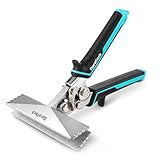
The DURATECH 6-inch bender pliers serve a different purpose than bench brakes. These are hand-operated pliers designed for bending, seaming, and flattening sheet metal in tight spaces where a brake cannot reach. I reach for tools like this when working on roof edging, window and door flashing, and small HVAC duct repairs.
The standout feature is the ergonomic TPR handle. If you have spent a day making repetitive bends with bare metal pliers, you know how quickly hand fatigue sets in. The thermoplastic rubber grip makes a noticeable difference during extended use.
The 1/4-inch incremental notches on the jaw let you control clamping depth precisely, which matters for consistent fold depths across multiple pieces. The non-slip jaw pattern grips the metal without marring the surface, a detail that matters for visible finished work.
With 441 reviews and a 4.3-star rating, this is a well-tested tool. The 67% five-star rating suggests most buyers are satisfied, though some note the tool is limited to 18-gauge and lighter stock.
Best Applications for Pliers-Style Benders
These pliers shine in finish work and tight-space bending. Metal fabrication around window and door frames, roof edge detailing, small HVAC duct modifications, and auto body edge work are all good use cases. The safety lock makes them easy to store in a tool belt between tasks.
For DIY homeowners doing occasional metal repair work, these pliers cover most needs without requiring a full brake setup.
What They Cannot Do
Pliers-style benders are for short, localized bends only. You cannot make full-width folds, and the 6-inch jaw limits how much material you can grab at once. These are supplementary tools that complement a bench brake, not replacements for one.
The gauge capacity is limited to around 18-gauge galvanized sheet. Anything thicker will strain the joint mechanism and could damage the tool.
8. Kbiykuy 18-Inch HVAC Hand Seamer – Budget Folding Tool
Kbiykuy Sheet Metal Bender Folding Tool, 18 Inch HVAC Hand Seamer Brake
18-inch hand seamer
16-gauge low-carbon steel
Two fold depths: 3/8in and 1in
Orange powder coat
1.96 lbs
Multiple sizes available
Pros
- Multiple sizes available in 12
- 18
- and 24 inch
- Two fold depths with built-in sight holes
- Bright orange finish for jobsite visibility
- 16-gauge low-carbon steel construction
- Protective powder coat finish
Cons
- May not handle heavy gauge metal
- Budget build quality compared to HURRICANE
The Kbiykuy 18-inch HVAC hand seamer is the newest entry on our list, available since July 2025. It competes directly with the HURRICANE folding tool at a lower price point, making it worth considering for budget-conscious HVAC workers and DIYers.
Like the HURRICANE, this tool offers two fold depths of 3/8 inch and 1 inch with built-in sight holes for alignment. The 16-gauge low-carbon steel construction matches the competition for stiffness, and the bright orange powder coat makes it easy to spot on a busy job site.
One advantage is the size range. Kbiykuy offers this seamer in 12, 18, and 24-inch versions, so you can match the tool length to your typical material widths. The 18-inch is the sweet spot for standard HVAC ductwork and residential flashing work.
With 124 reviews and a 4.6-star rating in its first year on market, early reception is positive. The 77% five-star rating actually edges out the HURRICANE, though the much smaller sample size means less long-term reliability data.
Good Entry-Level Choice For
If you are just starting in HVAC work or need a folding tool for occasional residential projects, the Kbiykuy delivers solid performance at the lowest price on this list. It handles galvanized steel, stainless, and aluminum sheets for seams, hems, and drive edges.
The multiple size options also make it a good choice if you know you need a specific length for your typical ductwork dimensions.
Where It Shows Its Budget Origins
The build quality is good but not at the level of the HURRICANE, which has years of trade school approval behind it. The Kbiykuy is newer to market with less proven long-term durability. For daily professional use, the HURRICANE remains the safer bet.
This tool is not rated for heavy gauge metal. Stick to 16-gauge and lighter, and it will serve you well for light commercial and residential work.
How to Choose the Right Metal Brake for Your Needs?
Choosing among the best metal brakes for sheet metal fabrication comes down to four factors: brake type, gauge capacity, bending width, and your typical project scope. Understanding how these interact prevents you from overspending on capacity you will never use or underspending on a brake that cannot handle your material.
Understand the Four Main Types of Metal Brakes
A straight brake (also called a bar or bench brake) has a solid clamping bar across the full width. It makes straight bends along the entire length but cannot form boxes or pans because the clamping bar cannot accommodate previously bent flanges. The KASTFORCE KF5002 is a straight brake.
A box and pan brake (also called a finger brake) uses removable fingers of various widths instead of a solid bar. By removing specific fingers, you can bend partially formed boxes and enclosures. The VEVOR 48-inch, KASTFORCE KF5006, and VEVOR 24-inch are all finger brakes.
A pan brake is essentially a box brake with deeper throat depth for forming deeper pans and channels. The distinction between pan and box brakes is subtle, and most manufacturers use the terms interchangeably for brakes that can form enclosed shapes.
Hand seamers are manual plier-style or folding tools for localized bending without a bench mount. The HURRICANE, DURATECH, and Kbiykuy tools fall into this category. They are purpose-built for HVAC seams, hems, and edges rather than full-width panel bending.
Gauge Capacity: Match It to Your Material
Gauge capacity is the most important specification on any metal brake, and it determines what material thickness the tool can handle. Lower gauge numbers mean thicker material. Here is a practical reference:
20-gauge steel (1.0mm) covers light ductwork, flashing, and general hobby fabrication. Most bench brakes in the $150 to $300 range handle this thickness. The VEVOR models and KASTFORCE KF5006 are rated for 20-gauge steel.
18-gauge steel (1.2mm) covers heavier ductwork, brackets, and auto body patches. The KASTFORCE KF5002 handles this thickness, which is why it earned our best value pick. Straight brakes tend to handle thicker stock than finger brakes at similar widths because the solid clamping bar provides more even pressure.
14-gauge steel (2.0mm) is heavy duty. Only the KAKA 6-inch vise brake handles this thickness, and only because its narrow 6-inch width concentrates force effectively. For 14-gauge work across wider panels, you need a hydraulic or powered press brake, which is well beyond the scope of this roundup.
Bending Width: Size It to Your Projects
Bending width determines the maximum material width you can form in a single pass. Common widths and their applications:
6-inch width (KAKA vise brake, DURATECH pliers) is for small parts, brackets, and localized bending. These tools are supplementary and handle work that larger brakes cannot reach.
18-inch to 24-inch width covers most residential HVAC ductwork, small enclosures, and auto body patches. The HURRICANE and Kbiykuy hand seamers work at 18 inches, while the KASTFORCE KF5006 and VEVOR 24-inch handle full-width panel bending at 24 inches.
28-inch to 48-inch width handles larger panels, commercial ductwork, and full-sheet fabrication. The KASTFORCE KF5002 at 28 inches and VEVOR 48-inch cover this range. Wider brakes cost more and take up more bench space, so only go wide if your projects demand it.
Beginner vs Professional: Which Brake Tier Is Right?
For beginners and hobbyists, start with a hand seamer like the HURRICANE or Kbiykuy. These tools teach you the fundamentals of metal bending for under $20, and they cover most light DIY tasks. If you need to bend small boxes, the KAKA 6-inch vise brake at around $80 is the next step up.
For serious DIYers and small shops, a bench-mounted brake in the $150 to $300 range is the right investment. The KASTFORCE KF5002 straight brake or VEVOR 48-inch box and pan brake will handle most fabrication tasks you encounter. Choose straight if you work with thicker stock, finger if you need to form boxes.
For professionals, the focus shifts to durability, repeatability, and capacity. Forum discussions on Reddit’s HVAC and metalworking communities consistently recommend prioritizing build quality over features. A well-built straight brake that holds its alignment will outperform a feature-rich finger brake with sloppy tolerances.
Throat Depth and Bending Angle Considerations
Throat depth determines how deep a box or pan you can form on a finger brake. The KASTFORCE KF5006 offers 1.5 inches of box depth, which is typical for bench models in this range. If you fabricate deeper enclosures, look for brakes with deeper throat specifications.
All the bench brakes on our list offer 0 to 135 degree bending angles. This covers standard 90-degree folds, acute angle bends, and hems. The hand seamers are more limited, typically offering fold depths of 3/8 inch and 1 inch rather than full angle control.
Maintenance Tips for Long-Term Accuracy
Based on forum feedback from professional fabricators, brake accuracy degrades over time without proper maintenance. Keep the clamping bar and beam clean, as metal shavings and debris between surfaces cause uneven bends. Lubricate hinge points periodically to maintain smooth operation.
Check blade alignment regularly, especially after transport. Even a slight misalignment between the clamping bar and beam will produce inconsistent bend angles across the width. Most brakes have adjustment screws for recalibration.
Store bench brakes in a dry environment to prevent rust on bare steel surfaces. The powder-coated and painted models on our list resist corrosion well, but the working surfaces are often bare steel that will oxidize if left in humid conditions.
Frequently Asked Questions
What is the best sheet metal brake for heavy gauge work?
For heavy gauge work, the KAKA INDUSTRIAL 6-inch vise brake handles 14-gauge mild steel, which is the thickest capacity on our list. However, its 6-inch width limits it to small parts. For heavy gauge work across wider panels, you need a hydraulic press brake, which is a different category of equipment entirely. Among manual bench brakes, the KASTFORCE KF5002 handles 18-gauge mild steel across a 28-inch width, making it the strongest option for larger panels.
How do I choose between a finger brake and a press brake?
A finger brake (also called a box and pan brake) is a manual tool that uses removable fingers to form boxes, pans, and enclosures from sheet metal. A press brake is a powered machine, usually hydraulic or electric, that uses interchangeable dies to bend much thicker material at industrial scale. Choose a finger brake for light to medium sheet metal fabrication in a small shop. Choose a press brake only if you work with thick plate steel or need high-volume production capacity.
What capacity (gauge) do I need for my projects?
For HVAC ductwork and residential flashing, 20-gauge capacity is sufficient. For heavier ductwork, brackets, and auto body repair, look for 18-gauge capacity. For small brackets and DIY parts, 14-gauge capacity at a narrow width works. As a rule of thumb, buy a brake rated for one gauge thicker than your typical material to ensure clean bends without straining the tool. Most fabrication work falls in the 18 to 20-gauge range.
What is the difference between a pan brake and a box brake?
The terms pan brake and box brake are often used interchangeably because both use removable fingers to form enclosed shapes. Technically, a pan brake has a deeper throat depth that allows forming deeper pans and channels, while a box brake is optimized for shallower box shapes. In practice, most modern finger brakes handle both tasks, and manufacturers use the terms interchangeably. The key feature to look for is removable fingers of varying widths.
Are magnetic brakes better than manual brakes?
Magnetic brakes use electromagnets to hold the clamping bar instead of mechanical levers, which allows faster setup and bending of complex shapes without finger reconfiguration. They are better for precision work and production environments where quick changeovers matter. Manual brakes are simpler, less expensive, and do not require electricity. For most small shops and hobbyists, a manual finger brake provides sufficient versatility at a fraction of the cost of a magnetic brake.
Final Verdict: Best Metal Brakes for 2026
After testing and comparing 8 metal brakes across the full range of prices and capacities, our top recommendation for the best metal brakes for sheet metal fabrication depends on your workflow. For shops needing wide capacity and box-forming versatility, the VEVOR 48-inch box and pan brake delivers the best overall value with its 48-inch width, Q235 steel frame, and integrated press plate design.
For fabricators who prioritize material thickness over bending width, the KASTFORCE KF5002 handles 18-gauge mild steel at 28 inches for less cost. And for HVAC professionals who need a reliable hand tool for daily ductwork, the HURRICANE 18-inch folding tool remains the proven choice with nearly 1,200 reviews backing its durability.
Start by matching brake type and gauge capacity to your most common projects, then choose the width and feature set that fits your budget. Any of the brakes on this list will serve you well in 2026 when matched to the right application.