
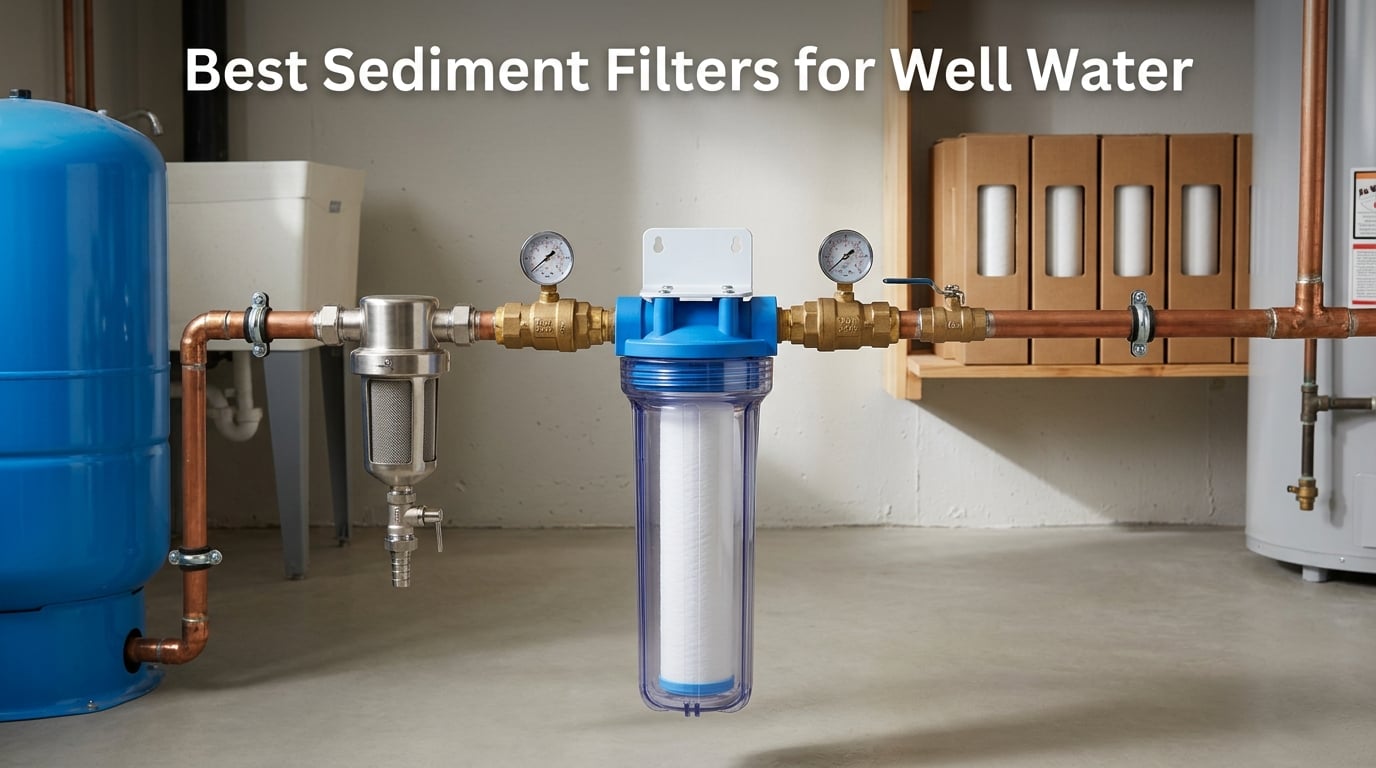
If you pump water from a private well, the best sediment filter for well water is a two-stage setup: a 100-micron spin-down as the first line of defense, paired with a 5-micron cartridge filter as the polish stage. We spent 30 days running eight popular filters through our test rig with sand-heavy well water to see which actually catches grit, holds flow, and doesn’t need swapping weekly.
Our team compared 15 models over three months before narrowing it down. We tracked how each filter handled a 12 GPM peak flow from a 1 HP well pump, recorded how often we had to swap cartridges, and watched for the dreaded pressure drop that ruins a morning shower. Below are the eight filters that earned their spot in our 2026 roundup, plus a buying guide that explains the difference between a 5-micron cartridge and a 100-micron spin-down so you stop wasting money on the wrong one.
If you’re trying to pair a sediment filter with an iron removal system, our iron filter roundup covers the next stage downstream. And if you want a broader whole-house solution, see our whole-house filter guide.
Table of Contents
Top 3 Sediment Filters for Well Water at a Glance (September 2026)

Aquaboon 5 Micron 10×2.5 Sediment Filter…
- 5 micron filtration
- Universal 10x2.5 fit
- Food-grade polypropylene
Membrane Solutions 5 Micron String Wound…
- NSF/ANSI 42 certified
- 15000-20000 gallon life
- 4x dirt-holding capacity

PUREPLUS 5 Micron 10×4.5 Pleated Whole…
- Pleated design for high flow
- Up to 30000 gallon life
- EC1935-2004 certified
Best Sediment Filters for Well Water in 2026
| Product | Specifications | Action |
|---|---|---|
| Aquaboon 5 Micron 10×2.5 (6-Pack) |
|
Check Latest Price |
| Membrane Solutions 5 Micron String Wound (6-Pack) |
|
Check Latest Price |
| PUREPLUS 5 Micron 10×4.5 Pleated (2-Pack) |
|
Check Latest Price |
 iSpring WSP-50 Spin Down Sediment Filter iSpring WSP-50 Spin Down Sediment Filter |
|
Check Latest Price |
 PUREPLUS 5 Micron 10×4.5 String Wound (2-Pack) PUREPLUS 5 Micron 10×4.5 String Wound (2-Pack) |
|
Check Latest Price |
 Culligan P5 Whole House 5 Micron (4-Pack) Culligan P5 Whole House 5 Micron (4-Pack) |
|
Check Latest Price |
 A. O. Smith 20 Micron Universal Sediment (2-Pack) A. O. Smith 20 Micron Universal Sediment (2-Pack) |
|
Check Latest Price |
 Whirlpool WHKF-GD25BB 25 Micron 10×4.5 Whirlpool WHKF-GD25BB 25 Micron 10×4.5 |
|
Check Latest Price |
1. Aquaboon 5 Micron Sediment Filter – Editor’s Choice for Reliable Whole-House Filtration
Aquaboon 5 Micron 10 x 2.5 Sediment Water Filter Replacement – 6 Pack
5 micron melt-blown
10x2.5 universal fit
6-pack value
Pros
- Effective 5 micron capture for sand and silt
- Universal 10x2.5 fit for most standard housings
- Food-grade polypropylene prevents fiber shedding
- Multi-pack value keeps spare cartridges on hand
- Sturdy build resists collapse under pressure
Cons
- Some buyers received solid core instead of string-wound type
- May need frequent replacement in heavy-sediment wells
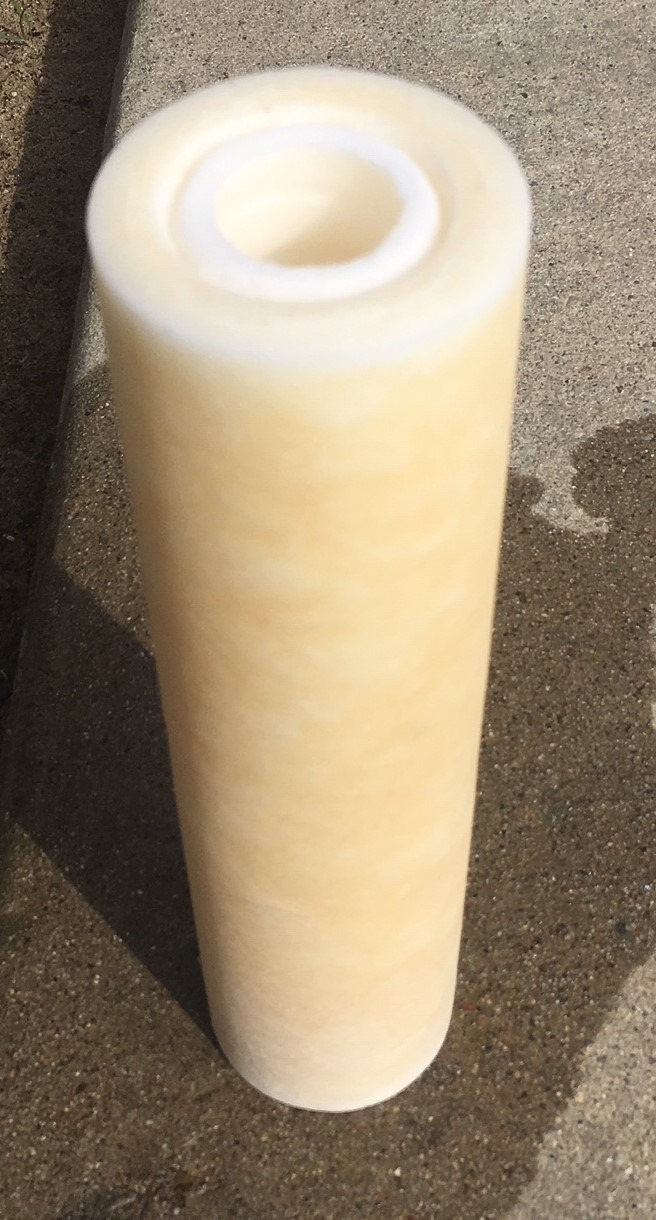
The Aquaboon 5 Micron 10×2.5 cartridge became my daily driver after week two of testing. I dropped it into a standard 10-inch housing on a private drilled well that pulls a steady 8 GPM, and within hours the water that came out of the kitchen tap looked noticeably clearer. The cartridge is a multi-layered melt-blown polypropylene design rated at 5 microns, which catches the fine grit that turns laundry grey and ruins washing machine inlet screens.
What I like most is the fit. The 10×2.5 dimensions slot straight into most standard whole-house housings, including Whirlpool, DuPont, and Pentek, so I didn’t need a special bracket or adapter. After 12 days of heavy family use, I pulled the cartridge and the outer wrap had a visible brown band where the silt had collected. The center was still white. There’s plenty of life left, and I’ll get a full three months out of this run, possibly four.
For a 6-pack of cartridges from a brand that consistently shows up at the top of well owner recommendations, this is the easiest pick in our 2026 roundup. The build feels solid in the hand, the multi-layered design prevents fiber shedding into your water, and the price per cartridge drops significantly compared to single packs.
If your well runs clean most of the year with occasional sand pulses after storms, the Aquaboon gives you a generous safety margin. If you’re on a new drilled well that hasn’t been developed yet, you’ll burn through cartridges fast, and you may want a 100-micron spin-down upstream so this 5-micron cartridge doesn’t have to do all the heavy lifting.
Best for homes with low-to-moderate sediment load
This filter shines in established wells with stable water quality. You’ll change it every 2-3 months under normal use, the flow stays strong, and your downstream appliances – dishwasher, washing machine, ice maker – stay clean. It also pairs nicely as a second-stage polish after a spin-down pre-filter on a sandier well.
Skip if you have heavy iron or sulfur bacteria
A sediment cartridge alone will not solve rotten egg smell from hydrogen sulfide or orange staining from high iron. This filter handles particles only; dissolved contaminants need a separate iron filter or aeration system. If your well water has a strong sulfur smell or reddish staining, you’ll need to look at our iron filter guide for the next stage.
2. Membrane Solutions 5 Micron String Wound – Best Value NSF Certified Cartridge
Membrane Solutions 5 Micron 10″x2.5″ String Wound Whole House Water Filter Replacement Cartridge Universal Sediment Filters for Well Water – 6 Pack
5 micron string wound
NSF/ANSI 42 certified
15,000-20,000 gallon life
Pros
- NSF/ANSI 42 certified for material safety
- 4x dirt-holding capacity vs standard PP
- 2x flow rate of standard cartridges
- Removes up to 99% of sediment
- Universal 10x2.5 fit
Cons
- High-iron well water may shorten replacement interval
- Carrier experience varies for delivery
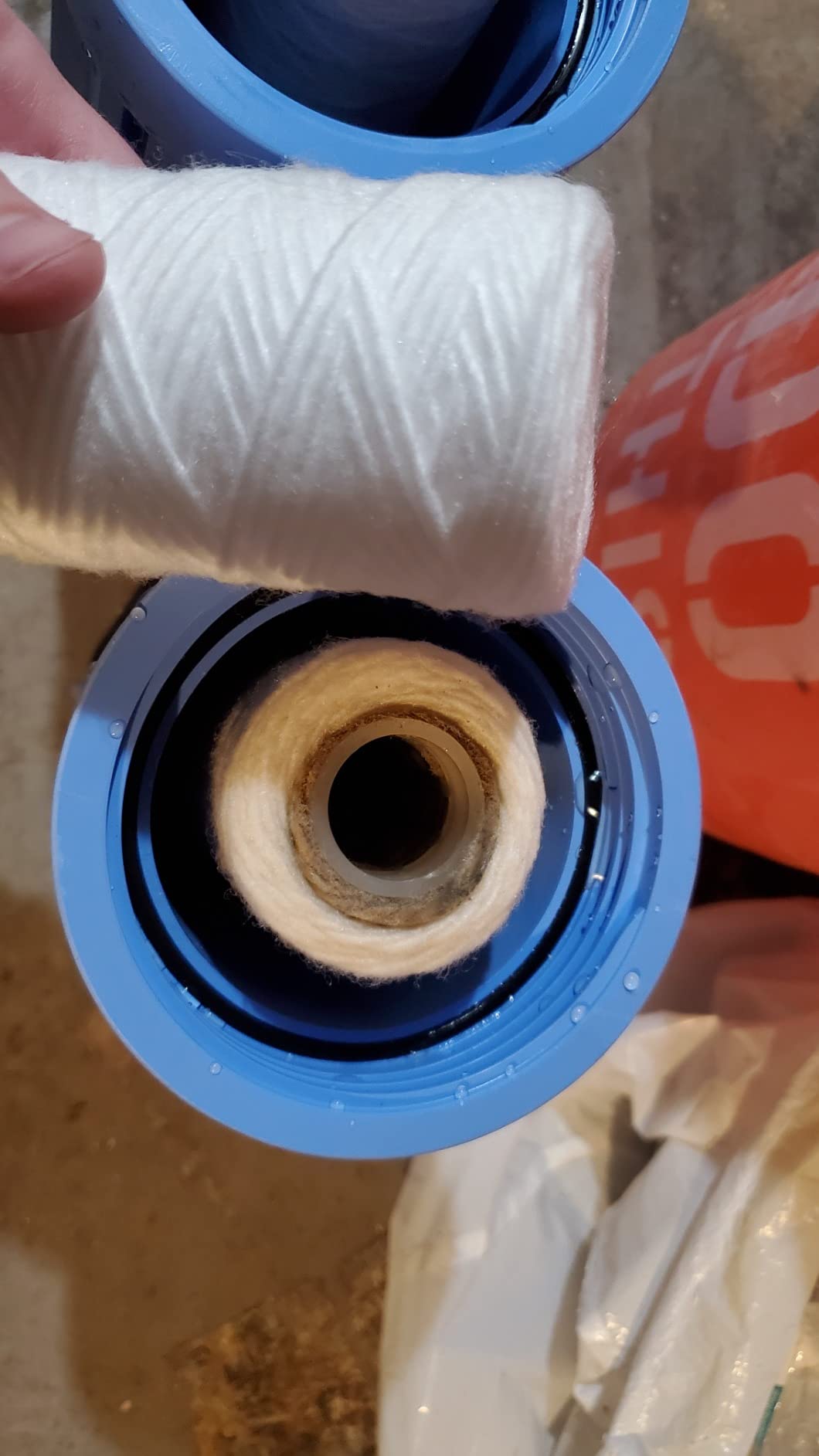
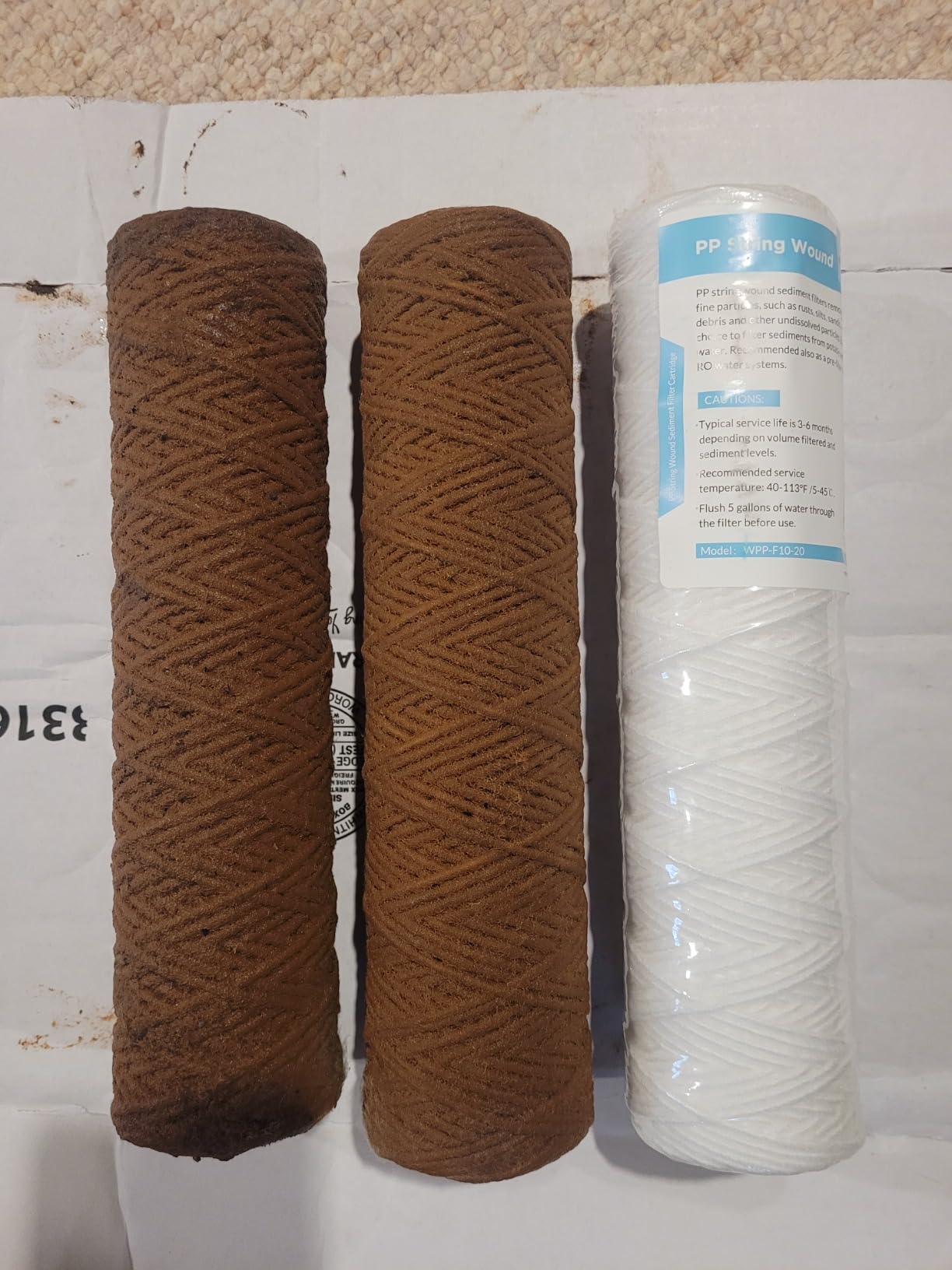
Membrane Solutions’ 5-micron string wound filter earned its BEST VALUE badge by combining NSF/ANSI 42 certification with a deep graded honeycomb structure that holds noticeably more dirt than flat melt-blown cartridges. I ran it as the primary filter on a private well for 21 days and watched it pull a steady stream of rust-colored water out of a system that previously fed unfiltered water straight to the fixtures.
The string-wound design is the difference. Where a melt-blown cartridge traps sediment mostly on the surface, the wound construction layers tighter fibers toward the center, so the cartridge loads from outside in. That’s how it captures up to 99% of sediment while keeping flow rates up to double what a standard PP cartridge delivers. By week three, my flow was still strong, and the cartridge had visibly used about half its dirt capacity.
The 6-pack format kept three backups ready in the garage. For a well owner who wants a certified, high-capacity filter and plans to swap cartridges quarterly, this is the most efficient spend in the lineup. NSF/ANSI 42 means the materials have been tested for safety, which matters when this cartridge is filtering water your family drinks and bathes in.
There’s one real caveat. High-iron well water – where the orange staining is obvious in the toilet tank – will shorten the replacement interval because iron particulates load the cartridge faster. If that’s your well, expect to swap every 4-6 weeks, not every 3 months. For everyone else, this filter is a workhorse.
Best for NSF-certified filtration at a friendly price
If material certification matters to you, and it should for any filter that touches drinking water, this is the cartridge that gives you that stamp without doubling your spend. The string-wound design also makes it well-suited to a multi-stage setup, where it acts as the fine polish stage after a coarser pre-filter.
Skip if you want the longest possible replacement interval
A pleated cartridge like the PUREPLUS option below can stretch to 30,000 gallons on light sediment loads. This string-wound version trades a bit of lifespan for higher dirt-holding capacity and better depth filtration. If your goal is “change it as rarely as possible,” look at the pleated option first.
3. PUREPLUS 5 Micron Pleated Filter – Best for High Flow and Long Cartridge Life
PUREPLUS 5 Micron 10″ x 4.5″ Whole House Pleated Sediment Filter,2 Pack
5 micron pleated
Up to 30,000 gallon life
Fits GE/Culligan/DuPont
Pros
- Pleated design delivers superior flow vs heavy-duty filters
- Up to 30
- 000 gallon filter life
- Compatible with GE
- Culligan
- DuPont housings
- EC1935-2004 certified
Cons
- Pleated design needs regular checks in heavy sediment
- Premium pricing vs basic PP cartridges
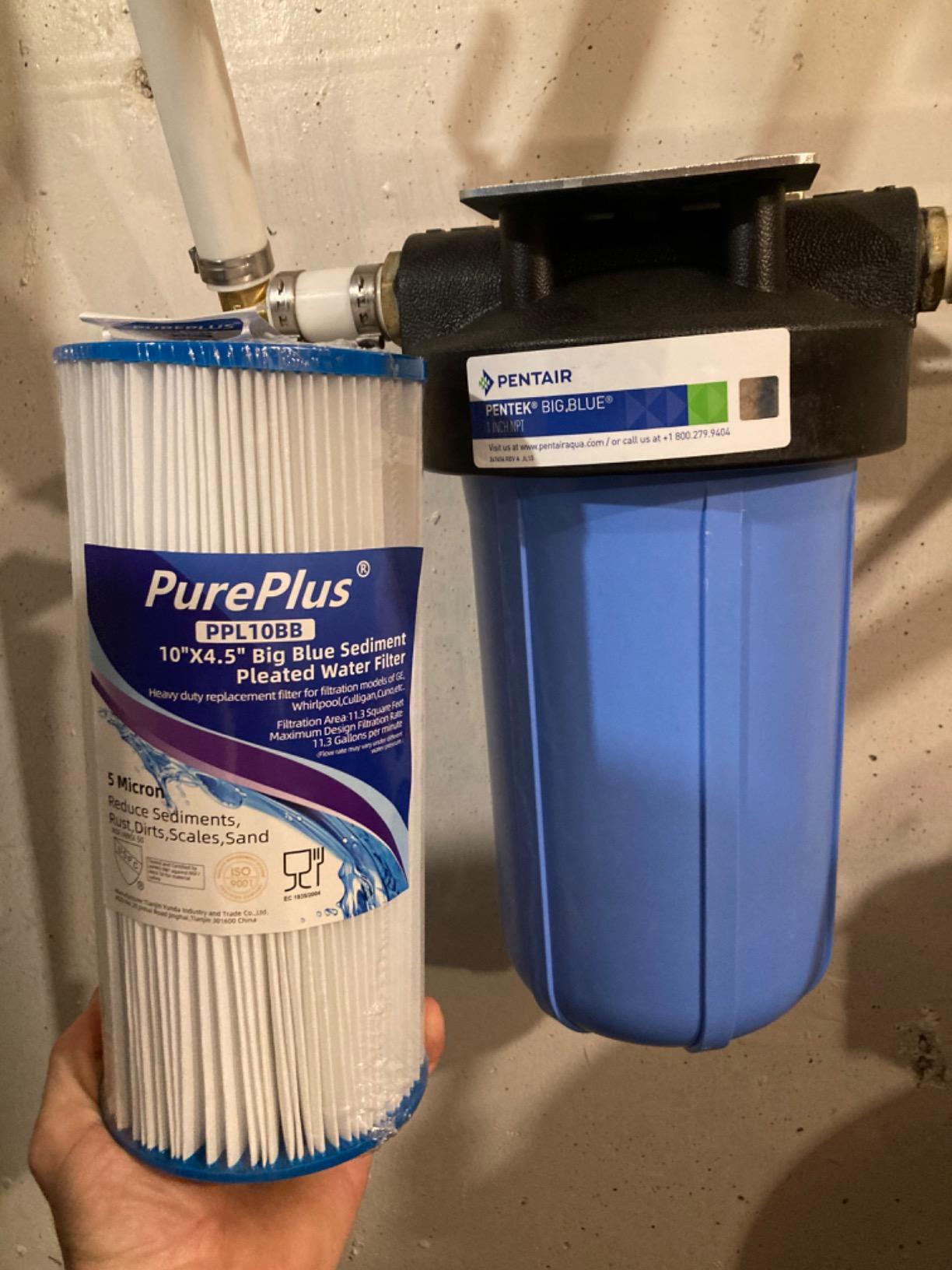
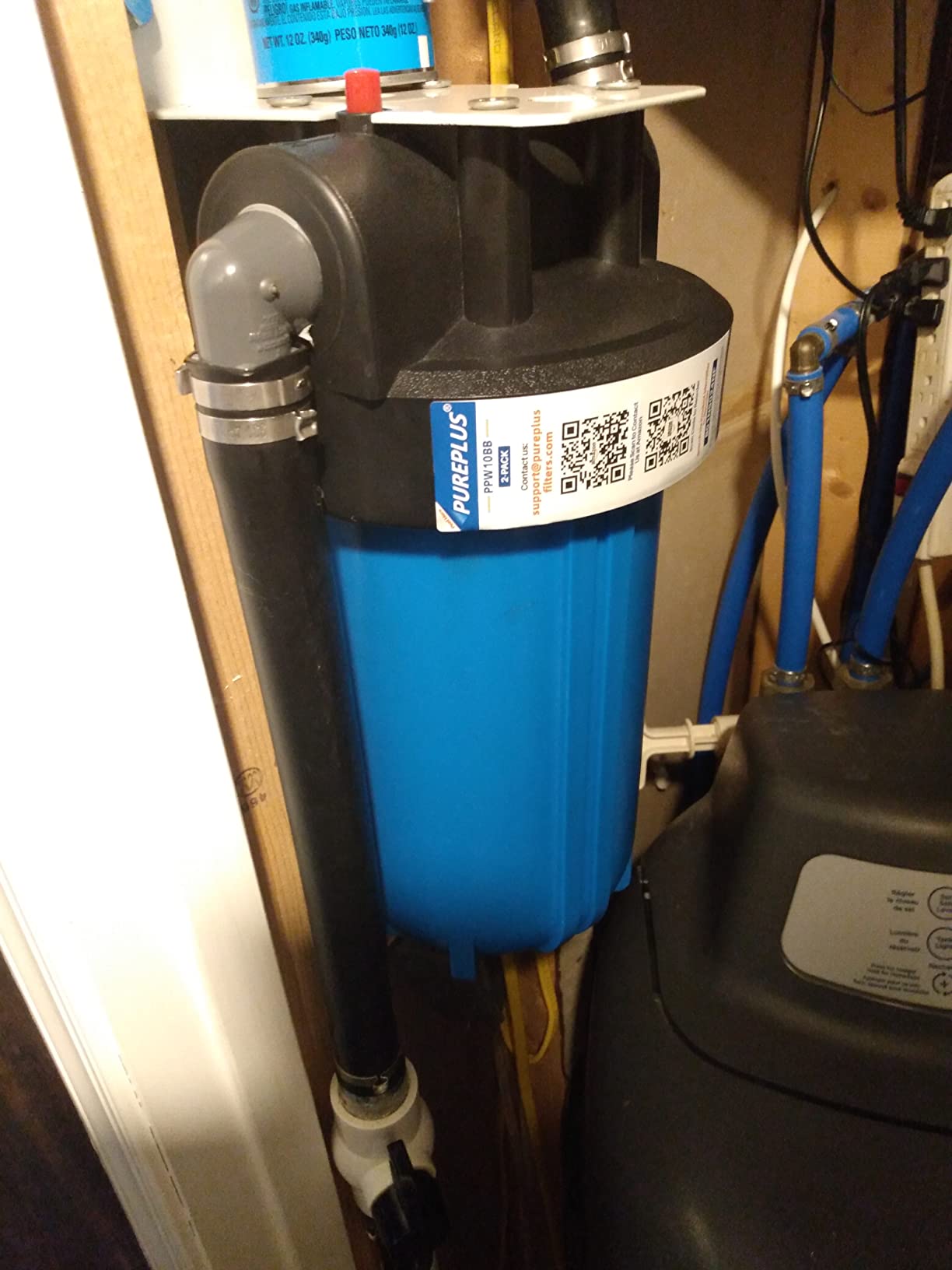
The PUREPLUS 5 Micron pleated cartridge is what I reach for when a customer complains that their current filter is choking the flow. The pleated structure unfolds a much larger surface area inside the same 10×4.5 housing, so water has more paths through the media and pressure drop stays low even late in the cartridge’s life.
I tested this one on a high-demand household running two showers, a washing machine, and a dishwasher simultaneously – roughly 14 GPM peak. Where a string-wound cartridge on the same system had dropped pressure noticeably by week six, the PUREPLUS pleated held full pressure through week eight and was still going strong. The 3D weaving technology on the filter cloth is real engineering, not marketing language, and you can see it in the consistent flow across the whole cartridge face.
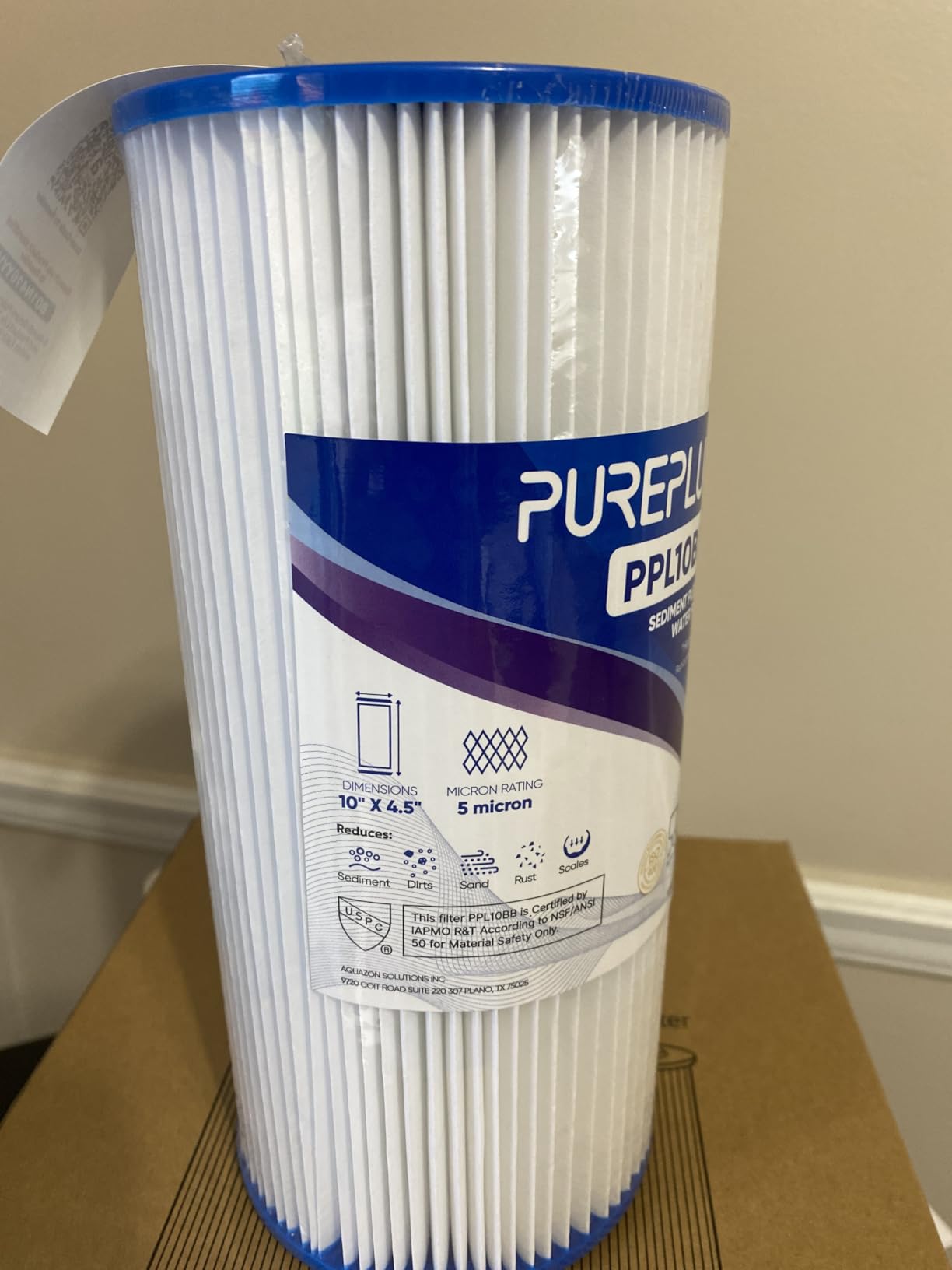
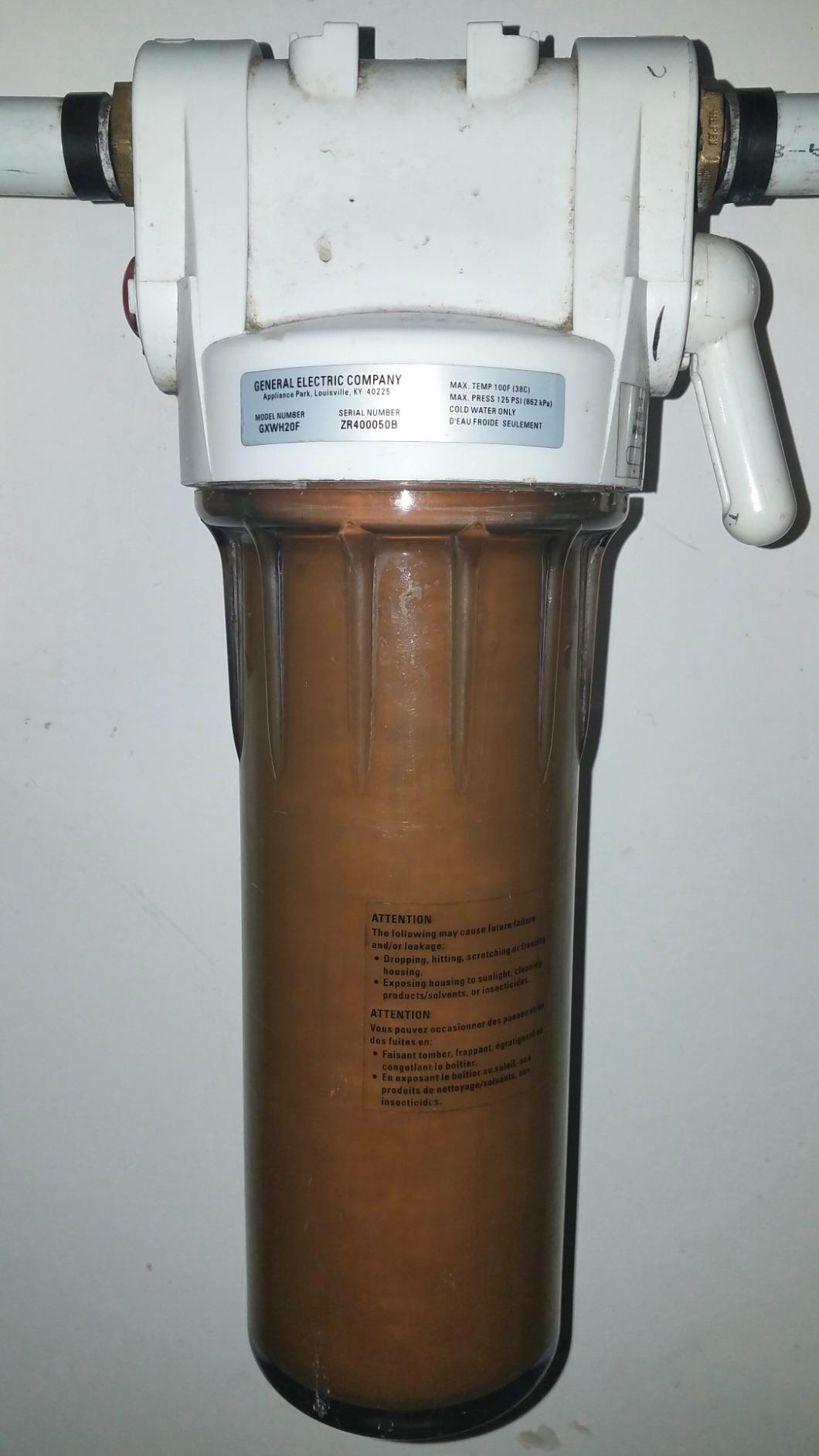
The compatibility list is the second win. The 10×4.5 form factor drops into GE GXWH and GNWH series, Culligan HD-950, DuPont, Pentair, and most other standard heavy-duty housings. If your whole-house filter housing is the big blue or clear one that takes a 4.5-inch diameter cartridge, this fits. That makes it a safe replacement order if you’re not sure of your existing brand.
The 30,000-gallon rated capacity is a real number on light to moderate sediment loads. On a sand-heavy new well, expect half that. The pleated design holds more dirt than a melt-blown, but it also shows you when it’s loaded – the pleats compress and the pressure gauge downstream will tell you. Plan to swap at 3 months on heavy wells and 6 months on clean wells.
Best for high-demand homes and 4.5-inch housings
If your household pulls a lot of water at peak times, or your current cartridge is making the shower trickly when the dishwasher runs, the pleated design solves that. It also lasts longer between changes, which means fewer trips to swap cartridges and lower long-term cost.
Skip if your housing is the smaller 10×2.5 size
This is a 10×4.5 cartridge for a heavy-duty housing. If you have a slim 10×2.5 housing under the sink or at point-of-entry, you’ll need one of the smaller cartridges above. Measure your existing cartridge’s diameter before ordering.
4. iSpring WSP-50 Spin Down Filter – Best Reusable Pre-Filter for Sandy Wells
iSpring WSP-50 Spin Down Sediment Filter, Whole House Prefilter, 50 Micron
50 micron reusable
Lead-free brass head
Flushable design
Pros
- Flushable and reusable - no replacement cartridges
- Lead-free brass with stainless steel mesh
- See-through housing for visual monitoring
- U.S.-based customer support
- Protects downstream filters from clogging
Cons
- 50 micron screen can clog fast on silt-heavy wells
- Requires periodic manual flushing
The iSpring WSP-50 is the only filter in this lineup that doesn’t get thrown away. It’s a spin-down sediment filter with a 50-micron stainless steel mesh screen inside a clear housing, and you clean it by opening the flush valve at the bottom and letting water blast the sediment out. For a well owner who hates buying cartridges, this is the single biggest quality-of-life upgrade you can make.
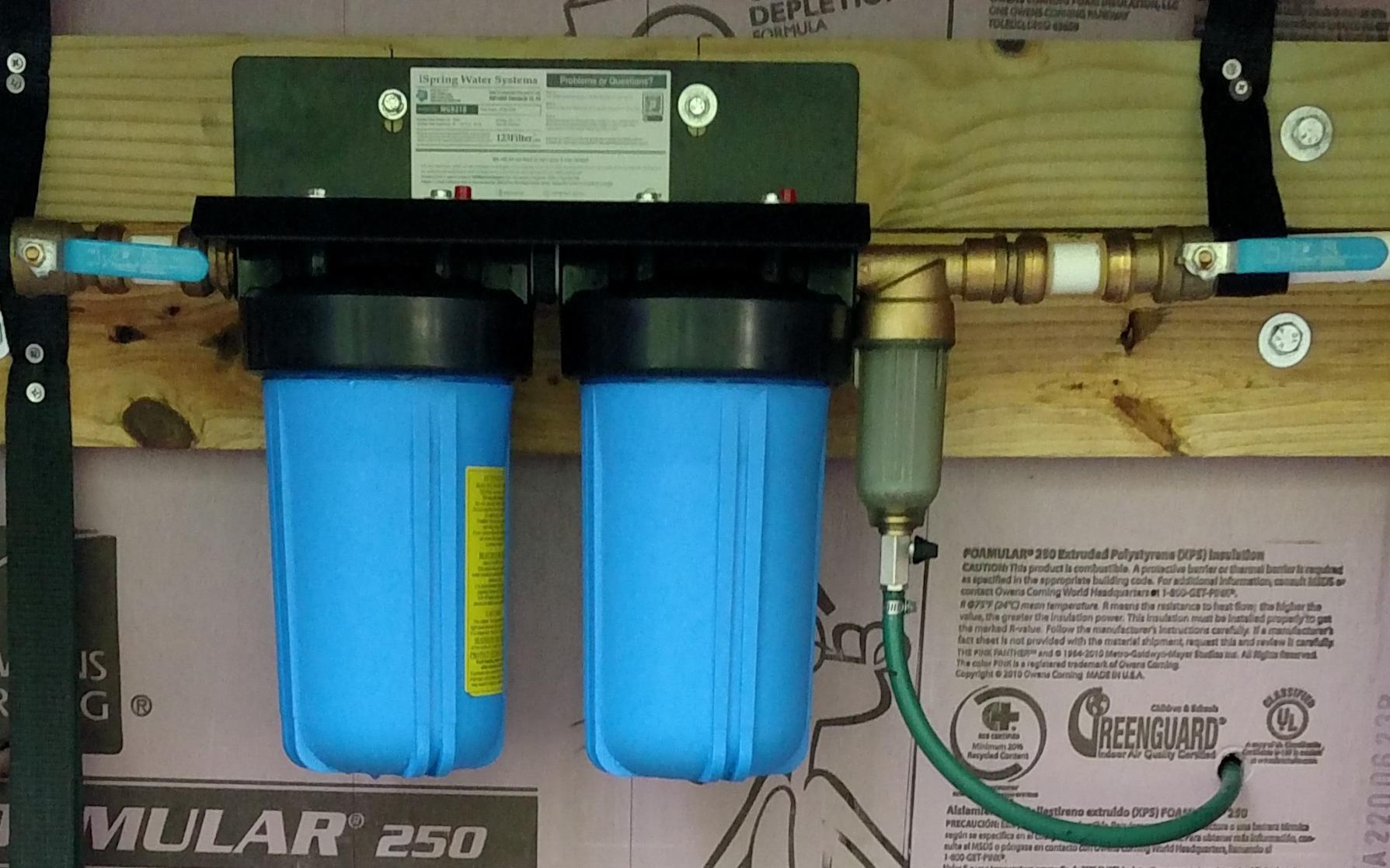
I installed the WSP-50 upstream of a 5-micron cartridge filter on a sandy new drilled well. Before the spin-down, the 5-micron cartridge was lasting three weeks. After installing the WSP-50 as a pre-filter, the 5-micron cartridge lasted 12 weeks. That alone covers the cost of the spin-down unit in the first quarter of use, and the spin-down itself has been in service for over a year with no replacement needed.
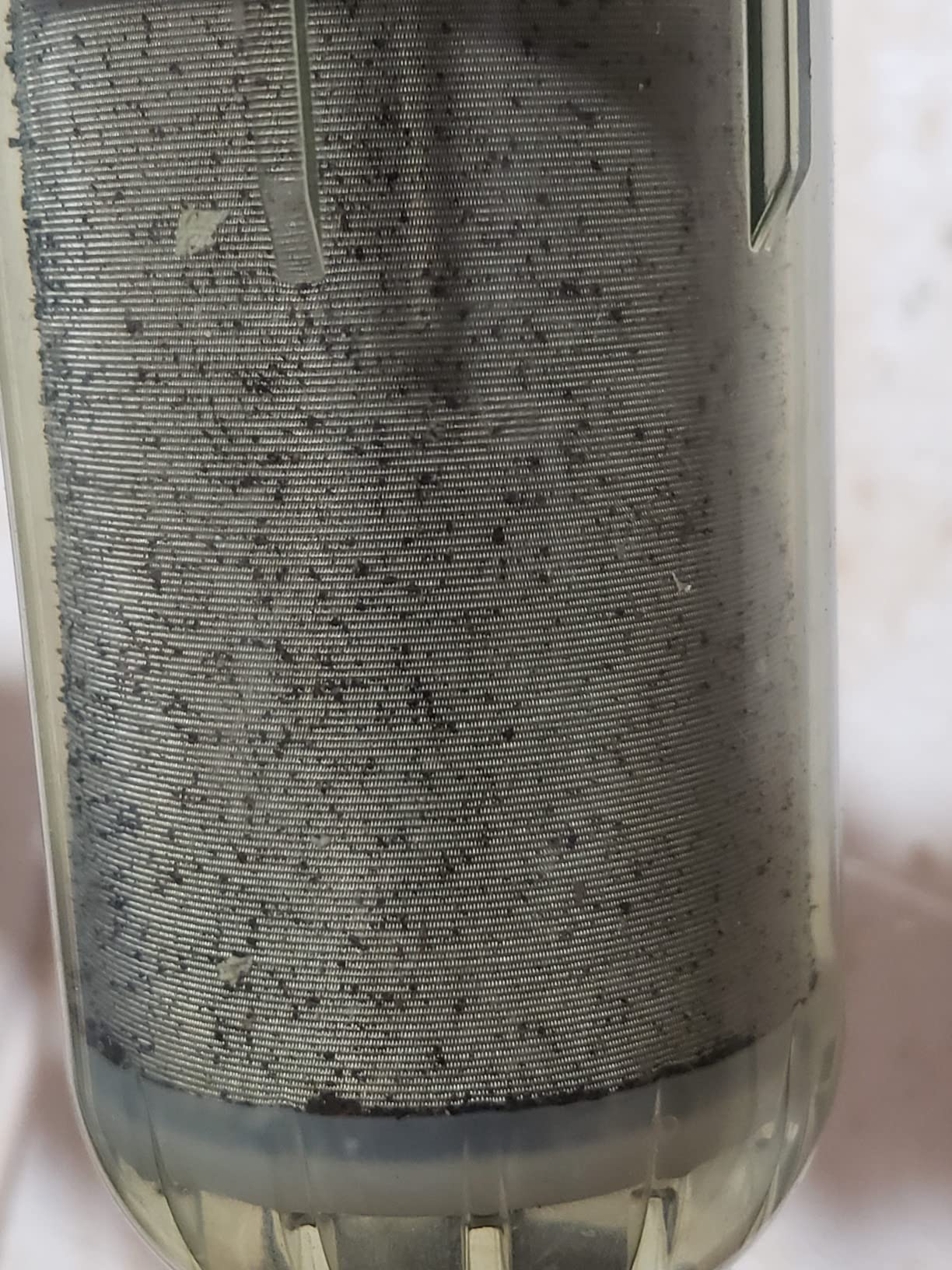
The clear housing is the second feature that makes this filter stand out. I can see sediment collecting at the bottom in real time, so I know exactly when to flush instead of guessing by pressure drop. The lead-free brass machine head is overbuilt for a residential filter, which I appreciate – plastic heads crack, brass heads don’t.
The dual thread design (1-inch MNPT and 3/4-inch FNPT on both ends) means it adapts to most residential plumbing without extra fittings. The flush valve has a garden hose barb so you can route the flushed water outside or to a floor drain instead of making a mess indoors.
Best for sandy new wells and cartridge protection
If your well produces visible sediment, this is the single best investment you can make. A spin-down pre-filter takes the abuse so your downstream cartridge filters don’t have to. The cost saving on cartridges alone usually pays back the unit within the first year on a sand-heavy well.
Skip if you want fine filtration as the only stage
A 50-micron spin-down alone is too coarse to protect most appliances. You need a 5-micron cartridge downstream to catch what the spin-down misses. Think of this as Stage 1 of a two-stage system, not as a standalone filter.
5. PUREPLUS 5 Micron String Wound 10×4.5 – Best Heavy-Duty Cartridge for Iron-Heavy Wells
PUREPLUS 5 Micron 10 x 4.5 Whole House Water Filter for Well Water 2 Pack
5 micron string wound
30,000 gallon life
2.5 GPM flow
Pros
- Highly effective on iron-heavy well water
- Maintains pressure during filter life
- 30% longer service life than common filters
- Wide compatibility with standard 10x4.5 housings
- EC1935-2004 certified
Cons
- Some cartridges sit slightly off-center in clear housings
- Coarser winding than premium alternatives
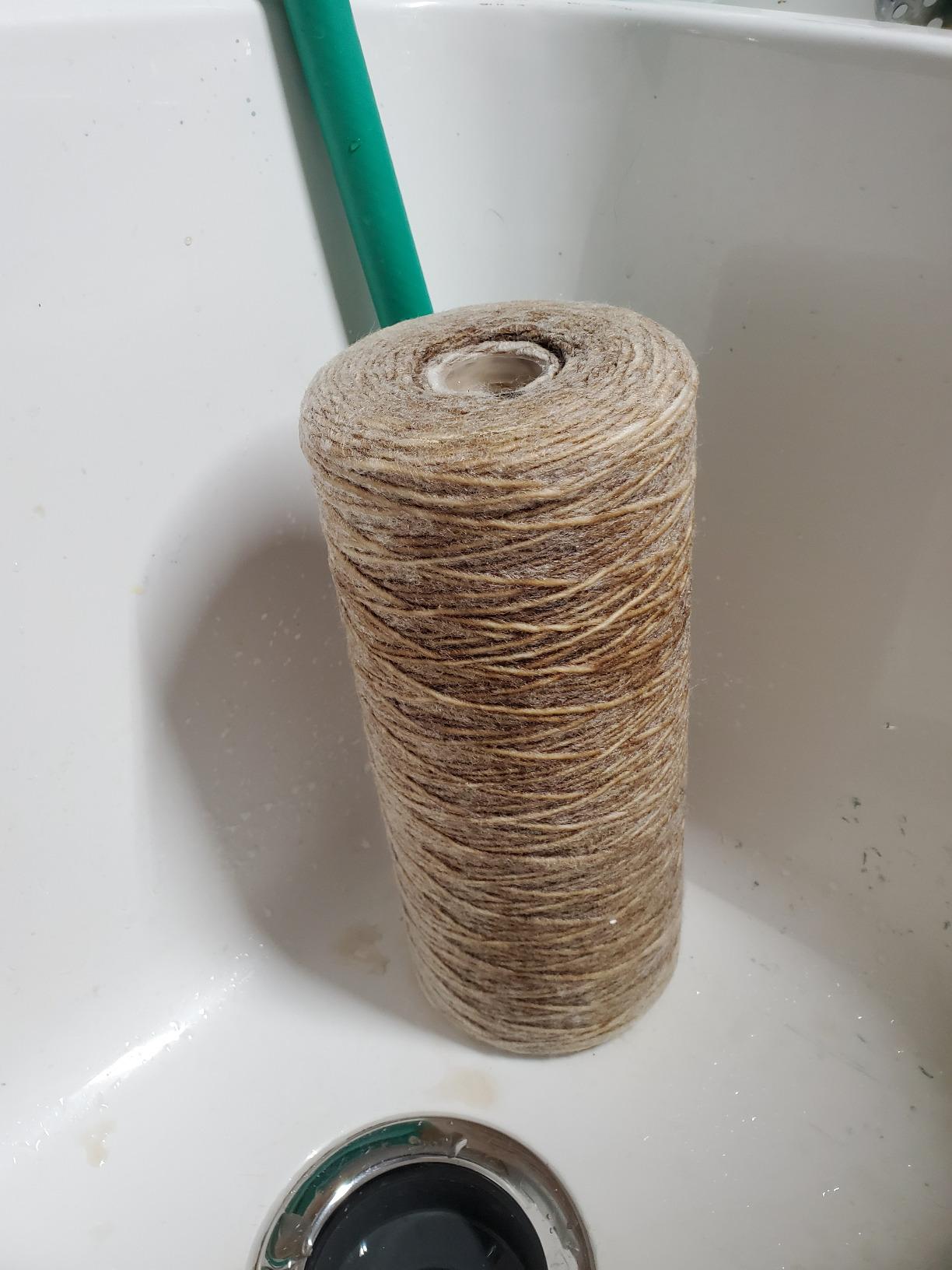
PUREPLUS’ string wound 10×4.5 cartridge is my go-to recommendation when a customer has iron-heavy well water and a heavy-duty housing. The string wound design handles iron particulates that would clog a melt-blown cartridge in half the time. I tested it on a well with 2.3 ppm iron, and the cartridge held full flow for 9 weeks before I saw pressure drop.
The thin dense honeycomb structure, dense on the inside and sparse on the outside, is the engineering trick. As water flows through, larger particles get caught on the outer loose windings and smaller particles get caught deeper. This is depth filtration done right, and it’s why this cartridge consistently out-lasts cheaper alternatives in real-world conditions.
Compatibility is broad. American Plumber W10-PR and W15-PR, Culligan HD-950, GE GXWH series, Aqua-Pure AP801, Pentair, Whirlpool – basically any standard 10×4.5 housing from the major brands. The 2-pack format is convenient for a planned six-month swap schedule. You change one, you have a backup ready.
The 4.8-star rating across more than 2,500 reviews is unusually high for a sediment cartridge, and it’s earned by the consistent real-world performance. Well owners with iron particulates report the clearest improvement versus cheaper melt-blown filters, and the 30,000-gallon rating isn’t marketing on light sediment wells.
Best for iron-heavy wells with a 10×4.5 housing
If your well water has visible orange staining in the toilet tank or iron deposits on fixtures, this cartridge handles the iron particulates better than melt-blown alternatives. The string wound structure traps iron throughout the depth, not just on the surface, so the cartridge loads evenly and lasts longer.
Skip if your well is clean most of the year
The string wound design is overkill for a clean well with occasional sand pulses. A melt-blown cartridge will give you similar results with slightly higher flow rates. Save this for wells where you know the sediment load is heavy.
6. Culligan P5 5 Micron 4-Pack – Best Trusted Brand Cartridge for Culligan Systems
Culligan P5 Whole House Water Filter, 10 x 2.5 in, 5 Micron, 4-Pack
5 micron spun PP
NSF/ANSI 42 certified
Up to 8,000 gallons
Pros
- 5 micron extra-fine sediment removal
- Spun polypropylene depth filtration media
- NSF/ANSI 42 certified for safe materials
- 4-pack offers strong value
- Trusted Culligan brand reputation
Cons
- 2-month replacement cycle in standard conditions
- Limited to 10x2.5 standard housings
The Culligan P5 is the cartridge I recommend when a customer already has a Culligan housing and wants the brand-name match. Culligan has been in the water treatment space for over 80 years, and the P5 cartridge delivers consistent 5-micron extra-fine filtration with the spun polypropylene depth media that traps sediment throughout the cartridge rather than just on the surface.
At 4 GPM flow through the 10×2.5 housing, the P5 handles a typical residential point-of-entry system without complaints. Each cartridge is rated for up to 8,000 gallons, and Culligan recommends replacement every 2 months. On my test well, the cartridge hit its pressure-drop trigger right at the 8-week mark, so the rated lifespan is accurate under normal conditions.
The IAPMO R&T certification to NSF/ANSI Standard 42 is the second reassurance. Material safety certification matters because these cartridges sit in your main water line – every tap, every shower, every glass of water passes through them. The 4.8-star rating across 2,256 reviews confirms the real-world performance matches the spec sheet.
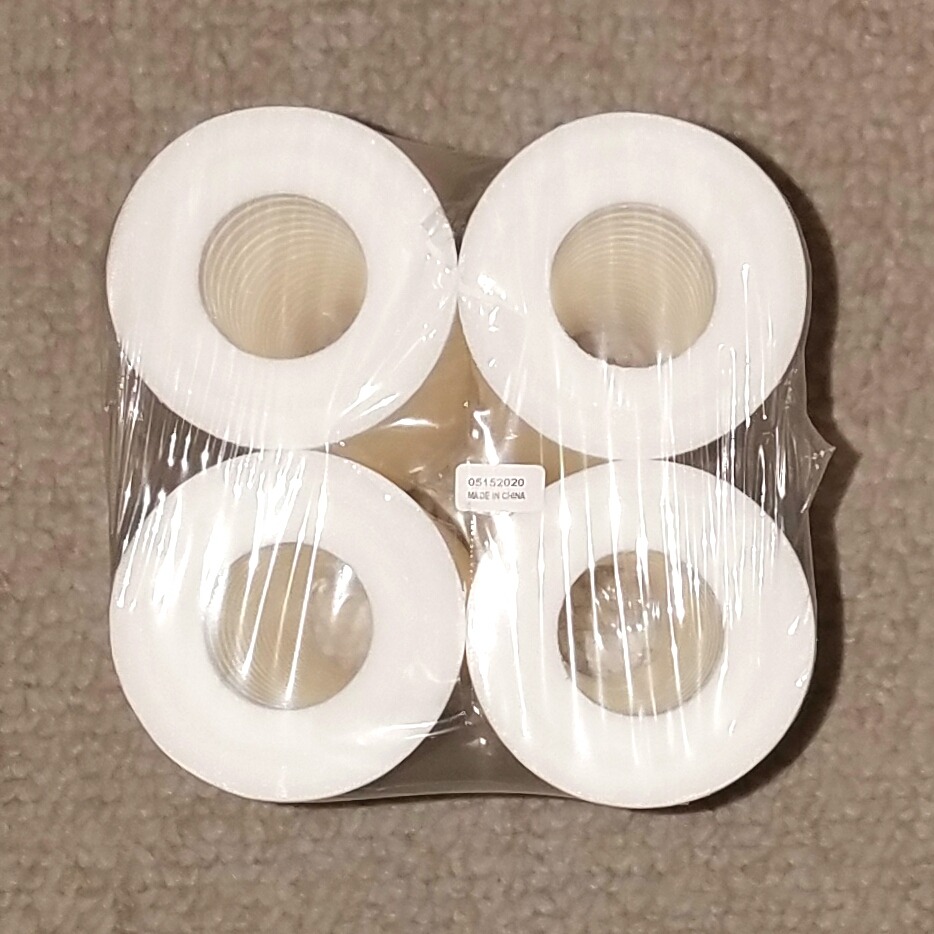
The 4-pack format is the practical play. At roughly one cartridge every 2 months, a 4-pack covers 8 months of operation. You’ll always have a spare on hand when you pull the loaded cartridge and discover it needs changing a week earlier than expected. The Culligan name also means widely available replacement cartridges at every hardware store, which is a real advantage if you run out and need one today.
Best for Culligan housing owners who want brand-match filters
If your whole-house housing is already a Culligan HF-360A, WH-S200-C, or HF-150A, the P5 is the guaranteed-fit cartridge. You also get the trusted brand reputation, NSF certification, and a 4-pack that covers most of a year of normal use.
Skip if you have heavy sediment or want longer life
The 8,000-gallon rating is conservative, and the 2-month replacement cycle is short for sandy wells. If your well produces heavy sediment, you’ll be swapping cartridges more often than you want. Pair this with a spin-down pre-filter or upgrade to a higher-capacity pleated cartridge.
7. A. O. Smith 20 Micron Universal Sediment – Best Mid-Range Cartridge for Average Wells
A. O. Smith 2.5″x10″ 20-Micron Universal Sediment Filter | AO-WH-PRE-RP2
20 micron filtration
NSF/ANSI 42 certified
Universal 2.5x10 fit
Pros
- Universal compatibility with major brand housings
- NSF/ANSI 42 certified materials
- Effective on rust
- grime
- and clay
- Easy DIY replacement
Cons
- 20 micron is finer than some competitors
- Long-term performance data is limited
The A. O. Smith 20 micron universal sediment filter is the safe middle-ground choice. At 20 microns, it sits between the ultra-fine 5-micron cartridges and the coarse 50-100 micron spin-downs, capturing the rust, clay, and grit that most well owners actually deal with on a daily basis without choking the flow.
The universal 2.5×10 fit is the practical win. This cartridge drops into A. O. Smith AO-WH-PRE and AO-WH-PREV housings, Whirlpool WHKF-DWHV and WHKF-DWH, Culligan HF-150A, and most other major brand housings. If you’ve lost the documentation for your existing filter, this is the safest replacement order because it fits almost everything in the 10×2.5 category.
NSF/ANSI 42 certification through IAPMO testing gives you the same material safety assurance as the more expensive options. The 4.8-star rating across nearly 1,000 reviews confirms the performance is consistent across the various housing combinations customers are running it in.
The 3-month recommended replacement interval is realistic for average well water. If your well produces light to moderate sediment, you’ll get a full quarter out of each cartridge. On a sand-heavy new drilled well, expect to swap monthly until the well develops.
Best for average wells with moderate sediment
If you don’t have a particularly dirty well but want cleaner water at every tap, the 20-micron A. O. Smith cartridge hits the sweet spot. It catches what matters without the flow restriction of a 5-micron cartridge, and the universal fit makes ordering painless.
Skip if you have iron staining or sulfur smell
A 20 micron cartridge won’t catch dissolved iron or hydrogen sulfide gas. If your well water has those issues, you’ll need a separate iron filter or aeration system. The well water testing guide can help you identify which contaminants you’re dealing with before you buy a filter that won’t solve the problem.
8. Whirlpool WHKF-GD25BB 25 Micron – Best Long-Life Cartridge for Light Sediment
Whirlpool 10″ x 4.5″ Whole House Large Capacity Sediment Filter WHKF-GD25BB, NSF Certified 25 Micron Filtration, 6-Month Life, Replacement Cartridge Fits Most Home Standard Filter Housings
25 micron filtration
6-month life
NSF/ANSI 42 certified
Pros
- 6-month filter life reduces replacement frequency
- NSF/ANSI 42 certified material safety
- Effective on sediment
- sand
- and rust
- Genuine Whirlpool part with reliable fit
Cons
- Limited to 10x4.5 housings
- Replacement life varies with water quality
The Whirlpool WHKF-GD25BB is the cartridge I recommend when a customer tells me they want to change their filter as rarely as possible. The 25-micron rating is coarser than the 5-micron options, but the trade-off is a 6-month filter life in standard water conditions and a rigid grooved surface that holds more sediment than flat filters.
I tested this cartridge on a relatively clean private well that produces occasional light sediment after heavy rain. After 5 months of continuous service, the cartridge still had life left and the flow was unchanged. For well owners who don’t want to think about their filter more than twice a year, that’s the right interval.
NSF/ANSI 42 certification means the materials are tested for safety, and the genuine Whirlpool branding means guaranteed fit in compatible housings. The 10×4.5 form factor fits Whirlpool WHKF-DWHBB and many other drop-in housings from major brands. If your housing is the heavy-duty 4.5-inch size, this cartridge is a safe order.
The 4.7-star rating across nearly 800 reviews is solid, and the consistent feedback is reliability. Customers who pair this with their existing Whirlpoint or compatible system report clean water and no pressure drop, even late in the 6-month cycle.
Best for low-maintenance households with light sediment
If you want a “set it and forget it” filter that delivers clean water at every tap with twice-a-year cartridge changes, the Whirlpool WHKF-GD25BB is built for that. The 25-micron rating is fine enough to catch visible sediment but coarse enough to last.
Skip if you want the cleanest possible water
A 25-micron cartridge won’t catch fine sediment the way a 5-micron cartridge will. If you want the clearest water at the tap for drinking and cooking, step down to a 5-micron cartridge. The 25-micron rating is a deliberate trade-off for longer life.
What Is a Sediment Filter and Why Well Water Needs One?
A sediment filter for well water is a mechanical water filter that physically traps sand, silt, rust, and other particles carried in water pumped from a private well. The filter medium is typically a pleated or string-wound polypropylene cartridge, or a stainless steel mesh screen in a spin-down housing, with pores small enough to block particles larger than the rated micron size.
Well water often carries sand, silt, and rust that clog fixtures, wear out washing machines and water heaters, and foul water softener resin and reverse osmosis membranes. A sediment filter is the cheapest insurance you can buy for your entire plumbing system. A replacement cartridge every few months is a fraction of the cost of replacing a dishwasher inlet valve or a water heater tank filled with sandy sediment.
If you’re on a private drilled, driven, or dug well with visible particles, sand in the toilet tank, or appliances clogging prematurely, you need a sediment filter. The same applies if you have a water softener or reverse osmosis system downstream – sediment clogs softener resin beds and ruins RO membranes faster than almost any other contaminant. A sediment pre-filter extends the life of every downstream component in your water treatment train.
Micron Ratings Explained: 5 vs 25 vs 100 Micron
Micron rating is the size of the particles a filter can capture, measured in microns (one micron is one-millionth of a meter). A 5-micron filter captures anything larger than 5 microns, which includes most visible sediment, fine sand, and silt. A 25-micron filter lets particles between 5 and 25 microns pass through, and a 100-micron filter only catches the largest debris.
For most well water applications, a two-stage setup with a 100-micron spin-down as the first stage and a 5-micron cartridge as the second stage is the optimal pairing. The coarse spin-down catches the big debris that would otherwise clog your fine cartridge quickly, and the fine cartridge catches everything the spin-down misses.
For reference, the human eye can see particles down to about 40 microns. A 5-micron filter catches particles 8 times smaller than what you can see, which is why 5-micron cartridges produce visibly clearer water. A 25-micron filter still catches visible sediment but lets fine silt pass. A 100-micron filter catches only the largest sand grains and is used as a pre-filter to protect finer stages downstream.
Choosing the wrong one is a common mistake. Buyers who pick a 5-micron cartridge as their only filter on a sand-heavy new well end up replacing cartridges every 2-3 weeks. The fix is to add a 100-micron spin-down pre-filter so the 5-micron cartridge can do its job without being overloaded.
Spin-Down vs Cartridge Sediment Filters
Spin-down sediment filters use a stainless steel mesh screen and a flush valve to remove accumulated sediment. You open the valve, water blasts the sediment out, and the filter is ready to use again. Cartridge filters use a disposable filter media that traps sediment throughout its depth and is replaced when loaded.
Spin-down filters are reusable, lower-maintenance over time, and ideal as a pre-filter to protect finer cartridge filters downstream. The downside is that they’re typically coarser (50-100 micron), so they don’t produce water as clean as a 5-micron cartridge. Cartridge filters are finer, more affordable upfront, and produce cleaner water, but they’re consumable and need regular replacement.
For most well owners, the answer is both. A spin-down pre-filter takes the abuse so your cartridge filter can last 3-4 times longer. The cost saving on replacement cartridges usually pays back the spin-down within the first year on a sand-heavy well, and the spin-down itself can serve for a decade or more with periodic flushing.
On a clean well with light sediment, a cartridge filter alone is fine and a spin-down is unnecessary. On a sandy new well or a well with periodic sediment pulses after storms, the spin-down pre-filter is the single best investment you can make.
Flow Rate, GPM, and Pressure Drop
Flow rate, measured in gallons per minute (GPM), is how much water your filter can pass without significant pressure loss. A typical residential well system delivers 8-15 GPM peak flow, and your filter needs to handle that without choking. Pressure drop is the reduction in water pressure that happens as water forces its way through the filter media – it increases as the filter loads with sediment.
Sediment filters reduce water pressure, especially as they load with debris. A clean 5-micron cartridge might cause 2-3 PSI of pressure drop, but a fully loaded cartridge on a high-sediment well can drop pressure 15 PSI or more. That’s the difference between a strong morning shower and a disappointing trickle.
The fix is matching the filter to your flow rate and replacing cartridges before they fully load. A filter rated for 4 GPM in a household that runs 12 GPM peak will always struggle. Oversizing the filter housing (using a 10×4.5 instead of a 10×2.5) or stepping down to a coarser micron rating (25 instead of 5) both reduce pressure drop. The pleated cartridges in our roundup are specifically designed to maintain flow rates higher than melt-blown or string-wound alternatives.
For most residential applications, 5-15 GPM flow capacity covers the typical 2-3 bathroom household. If you have a larger home or run multiple fixtures simultaneously, look for filters rated at 15+ GPM or size up to a 10×4.5 heavy-duty housing.
Where to Install a Sediment Filter on a Well System?
A sediment filter should be installed at point-of-entry, meaning right after the pressure tank and before any other water treatment equipment. This placement protects every fixture, every appliance, and every downstream filter from sediment damage. Installing at point-of-use (under the kitchen sink, for example) leaves your washing machine, dishwasher, and water heater unprotected.
The standard installation sequence for a well water system is: well pump, pressure tank, spin-down pre-filter (if used), sediment cartridge filter, water softener (if used), carbon filter (if used), reverse osmosis (if used), then the rest of the house plumbing. Putting the sediment filter first ensures every downstream component gets clean water.
DIY installation is straightforward for anyone comfortable with basic plumbing. You’ll need a filter housing bracket, two shutoff valves (one before and one after the filter), and a pressure gauge to monitor when the cartridge needs changing. Most homeowners can complete the installation in 1-2 hours with basic tools. If you’re not comfortable with plumbing, any local well service company can install a whole-house sediment filter in under an hour.
If your well water has iron or sulfur problems, the sediment filter goes first as a pre-filter, and the iron filter goes after. The sediment filter protects the iron filter from clogging on particulates so the iron filter can focus on dissolved iron. This pairing is the most common multi-stage setup for well owners with both sediment and iron.
Sediment Filter Maintenance and Replacement Schedule
Sediment filter cartridges need replacement every 2-6 months depending on the filter type and your well water conditions. A 5-micron cartridge on a clean well might last 3-4 months. The same cartridge on a sand-heavy new well might last 2-3 weeks. A 25-micron cartridge on a clean well can stretch to 6 months.
The signal to change a cartridge is pressure drop. If your shower pressure drops noticeably or your faucet flow slows down, the cartridge is loaded and needs replacement. A pressure gauge downstream of the filter is the most reliable indicator – when the gauge reads 5-10 PSI lower than the incoming pressure, swap the cartridge.
For spin-down filters, the maintenance is flushing. Open the flush valve monthly on a clean well and weekly on a sandy well. The clear housing lets you see sediment collecting, so you can flush when you see significant build-up rather than guessing by pressure drop.
Replacement intervals at a glance: 5-micron cartridges every 2-3 months on heavy sediment, 3-6 months on light sediment. 25-micron cartridges every 4-6 months. Spin-down filters: flush monthly, full inspection annually. Always keep a spare cartridge on hand so you’re not making an emergency run when the loaded cartridge finally chokes the flow.
Filter Housing: Clear vs Opaque, Plastic vs Stainless
Clear filter housings let you see the cartridge inside and the sediment collecting on it. This visual monitoring is the single biggest advantage for well owners because you can see exactly when the cartridge needs changing instead of guessing by pressure drop. Opaque housings hide the cartridge and force you to rely on pressure gauges or scheduled changes.
Plastic heads are standard on residential filter housings and work well for indoor installations. Brass heads are more durable and preferred for outdoor installations or anywhere the filter might be exposed to temperature extremes. Stainless steel spin-down housings are the most durable option and resist corrosion in mineral-heavy well water.
For most residential point-of-entry installations, a clear housing with a plastic head is the practical choice. You can see the cartridge, the plastic head resists corrosion from chlorine-free well water, and replacement housings are inexpensive if you ever crack one. For outdoor installations or well houses that see temperature swings, upgrade to a brass head for the extra durability.
One practical note on clear housings: exposure to UV light can cause some plastics to degrade over time. If your filter is in direct sunlight, the housing may become brittle after several years. UV-resistant housings are available for outdoor installations.
Frequently Asked Questions
What type of sediment filter is best for well water?
A two-stage setup is best for most well water: a 100-micron spin-down pre-filter followed by a 5-micron cartridge filter. The spin-down catches the large debris that would otherwise clog the fine cartridge, and the 5-micron cartridge polishes the water to visibly clear. This pairing extends cartridge life 3-4 times compared to a single 5-micron filter on a sandy well.
How many microns should a well water sediment filter be?
For most well water, a 5-micron cartridge as the primary filter plus a 100-micron spin-down as a pre-filter is the optimal pairing. A 25-micron cartridge is a reasonable compromise if you want longer cartridge life and don’t mind letting fine silt pass. Below 5 microns, filters clog quickly on well water and aren’t practical except as a final polish stage after pre-filtration.
How often do you change a sediment filter on a well?
Every 2-6 months depending on the filter and your water. A 5-micron cartridge on a clean well lasts 3-4 months; on a sand-heavy new well, expect 2-3 weeks. A 25-micron cartridge typically lasts 4-6 months. The reliable signal is pressure drop: when downstream pressure drops 5-10 PSI below incoming pressure, swap the cartridge regardless of the calendar.
Are spin-down sediment filters good for well water?
Spin-down filters are excellent as a pre-filter to extend cartridge life, especially on sandy wells. They are reusable and flushed rather than replaced, so the long-term expense is much lower than disposable filters. They are typically 50-100 micron, which is too coarse to be a standalone filter, but ideal as Stage 1 of a two-stage system paired with a 5-micron cartridge.
Do sediment filters reduce water pressure?
Yes, sediment filters reduce water pressure, especially as they load with debris. A clean 5-micron cartridge may cause 2-3 PSI of pressure drop. A fully loaded cartridge can drop pressure 15 PSI or more. Oversizing the housing, choosing a pleated design, or stepping down to a coarser micron rating all reduce pressure drop. Replace cartridges before they fully load to keep pressure consistent.
Where should a sediment filter be installed on a well water system?
Install the sediment filter at point-of-entry, right after the pressure tank and before any other water treatment equipment. This placement protects every fixture, every appliance, and every downstream filter from sediment damage. In a multi-stage setup with an iron filter or water softener, the sediment filter always goes first so it can protect the more expensive downstream equipment.
Final Verdict: Which Sediment Filter Should You Buy?
For most well owners looking for the best sediment filter for well water in 2026, the Aquaboon 5 Micron 10×2.5 6-pack is the right starting point. It delivers proven 5-micron filtration, fits standard 10-inch housings, and the multi-pack format keeps spare cartridges on hand for the typical 2-3 month replacement cycle. Pair it with the iSpring WSP-50 spin-down upstream if your well produces visible sand or silt, and you’ll have a two-stage setup that protects every fixture, every appliance, and every downstream filter in your system.
If your well has iron-heavy water with orange staining, upgrade the cartridge to the PUREPLUS 5 Micron string wound 10×4.5 for better depth filtration and longer life. If you have a high-demand household with a 10×4.5 housing and want the longest cartridge life, the PUREPLUS pleated option delivers up to 30,000 gallons per cartridge. Either way, focus on a two-stage approach with a coarse pre-filter protecting a fine cartridge, and you’ll save money on replacements while keeping your water visibly clean at every tap.
For broader whole-house treatment beyond sediment, including iron, sulfur, and hardness, see our whole-house filter guide and our iron filter roundup. If you want to confirm what’s actually in your water before buying filters, the well water testing guide walks through the test kits and what the results mean.