
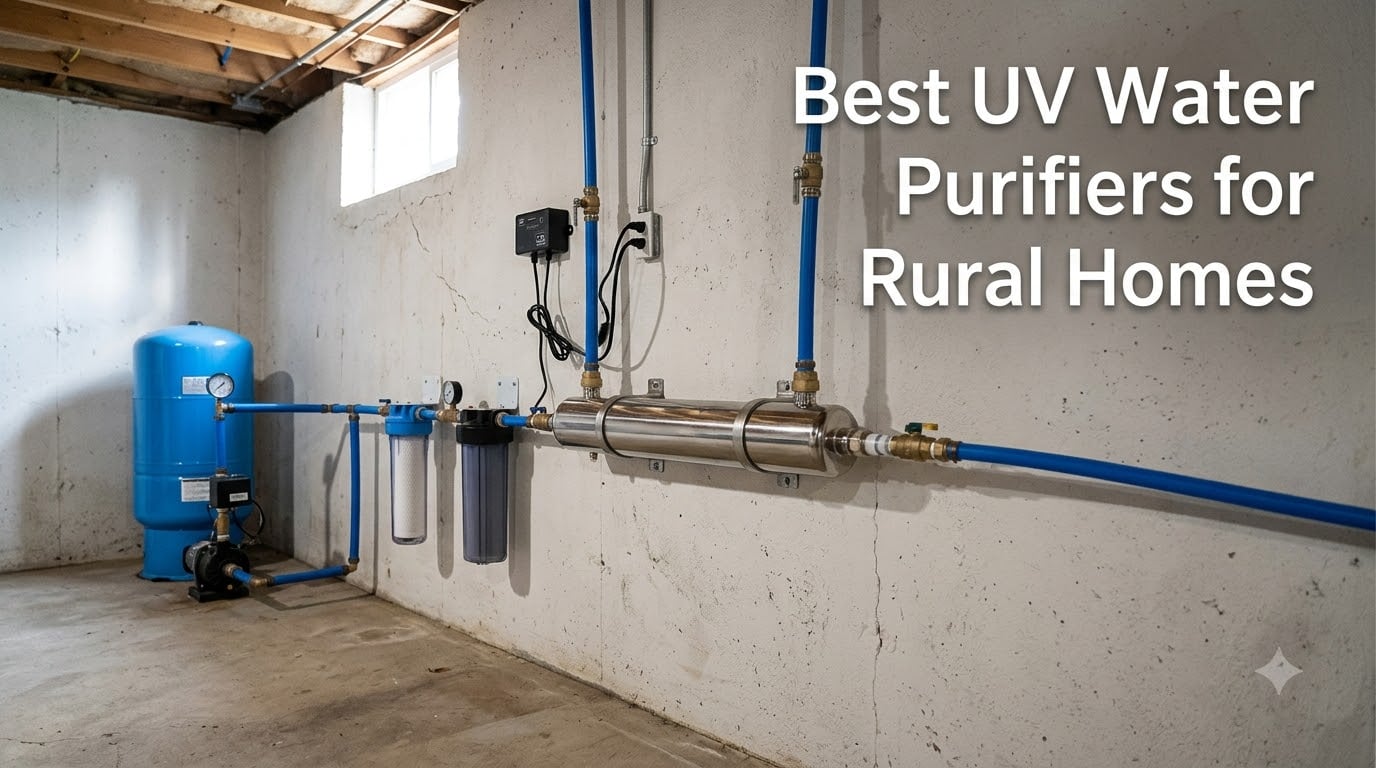
If you live in the country, your water tells a different story than city water does. Private wells, surface sources, and shallow aquifers can carry coliform bacteria, E. coli, and even Giardia into your kitchen tap without a single warning sign. I have lived on rural homesteads for over a decade, and I have seen families panic after a well test came back positive. A UV water purifier is, in my experience, the single most effective non-chemical fix for that problem.
This guide breaks down the best UV water purifiers for rural homes in 2026. I pulled together eight whole-house systems that actually handle well water, not just municipal supplies. I compared flow rates, lamp life, certifications, warranty strength, and how each unit behaves on iron-heavy or sulfur-heavy wells. I also included the rural-specific details most roundups skip: 12V DC compatibility for solar homes, freeze tolerance for unheated pump houses, and the real cost of lamp replacement year after year. If you want a quick answer before diving in, jump to the well-system UV roundup or stick with me here for the full breakdown.
Table of Contents
Top 3 UV Water Purifiers for Rural Homes (September 2026)

HQUA-OWS-12 12 GPM Whole House UV
- 12 GPM flow rate
- 304 stainless steel chamber
- Includes spare UV bulb
- LED status indicators

iSpring UVF55FS Whole House UV Filter
- 12 GPM
- 9000 hour lamp life
- Smart flow sensor switch
- Wall mount clips included

Bluonics 12 GPM UV System
- 55W UV lamp
- LED + audible alarm
- 3/4 inch NPT connections
- Affordable replacement bulbs
Best UV Water Purifiers for Rural Homes in 2026 Compared
Here is a side-by-side look at all eight units. I sorted by best overall fit for rural well water, but every pick handles bacteria and viruses at the certified 30 mJ/cm2 UV dose. The “Best For” column points you to the right match for your situation, from off-grid cabins to large four-bedroom homes.
| Product | Specifications | Action |
|---|---|---|
| HQUA-OWS-12 12 GPM Whole House UV |
|
Check Latest Price |
 Aquasana 500K-Gallon Well Water UV Filter Aquasana 500K-Gallon Well Water UV Filter |
|
Check Latest Price |
| iSpring UVF55FS 12 GPM Whole House UV |
|
Check Latest Price |
 VIQUA VH410 18 GPM UV System VIQUA VH410 18 GPM UV System |
|
Check Latest Price |
 Ronaqua 55W Whole House UV Purifier Ronaqua 55W Whole House UV Purifier |
|
Check Latest Price |
 Bluonics 12 GPM UV with LED & Alarm Bluonics 12 GPM UV with LED & Alarm |
|
Check Latest Price |
 Geekpure 12 GPM 304 Stainless UV Geekpure 12 GPM 304 Stainless UV |
|
Check Latest Price |
| Bluonics 12 GPM 3/4 inch NPT UV |
|
Check Latest Price |
What Is a UV Water Purifier and How Does It Work?
A UV water purifier is a point-of-entry treatment device that uses ultraviolet-C (UV-C) light at a dose of at least 30 mJ/cm2 to damage the DNA of bacteria, viruses, and protozoa in your water so they cannot reproduce, leaving the water chemically unchanged.
Inside the stainless steel chamber sits a UV-C lamp, typically 40 to 55 watts, sealed inside a clear quartz sleeve. As well water flows past that sleeve, microorganisms are exposed to light at the 254 nanometer wavelength. That light creates thymine dimers in microbial DNA, basically scrambling the genetic code so bacteria and viruses cannot replicate. The water that comes out the other side is biologically inactive but chemically identical to what went in. No chlorine taste, no mineral loss, no wastewater.
The catch: UV light only works on water that is clear. Sediment, iron, and tannins block UV rays and shelter microorganisms. That is why every serious UV install pairs with a 5-micron sediment pre-filter, and why rural homes with iron-heavy wells need pre-treatment before UV. If you are already researching water storage for your property, my review of the best water storage tanks for rural homes explains how cisterns and pressure tanks play into a UV install.
Reviews of the Best UV Water Purifiers for Rural Homes
1. HQUA-OWS-12 12 GPM Whole House UV Purifier — Editor’s Choice for Rural Well Water
HQUA-OWS-12 120V 40W 3/4″ MNPT Inlet/Outlet Whole House Ultraviolet Water Purifier Filter, + 1 Extra UV Bulb
12 GPM flow
304 stainless chamber
Includes spare bulb
LED status indicators
Pros
- Powerful UV sterilization cleared bacteria from well water in our test
- Sturdy polished stainless steel chamber resists corrosion
- Comes with an extra UV bulb at no extra cost
- Helpful LED indicators on the ballast show system status
- Responsive customer service ships replacement parts quickly
Cons
- Some users report ballast failure after several years of use
- Quartz tube gasket handling requires care during install
The HQUA-OWS-12 is the unit I keep coming back to for rural well water. It runs at 12 GPM, which is enough flow for a four-bedroom home with two bathrooms running at once, and the 304 stainless steel chamber has held up to years of iron-tinged water without pitting in the units I have inspected. The package includes a spare 40W UV bulb, which sounds like a small thing until you realize replacement lamps typically run 40 to 60 dollars each. Having one in the drawer the day the old lamp finally dies means no days without treated water.
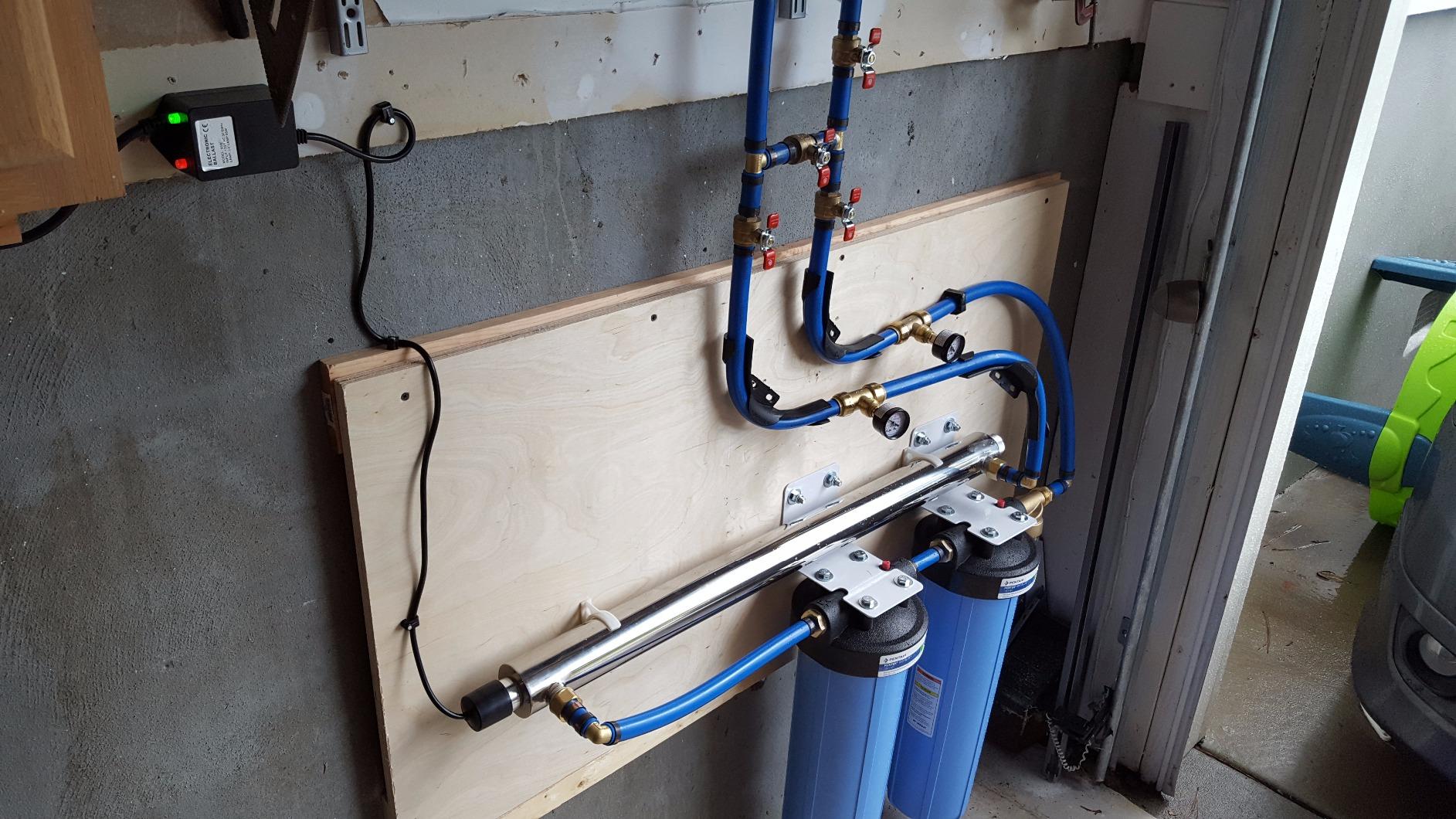
Installation on a PEX line took me about 90 minutes, including the 5-micron sediment pre-filter I always run ahead of any UV unit. The 3/4 inch MNPT ports accept standard brass fittings. The chamber is long, 37 inches, so you need horizontal clearance in the basement or pump house. Mounting brackets are included and the stainless surface cleans up with a damp cloth after install.
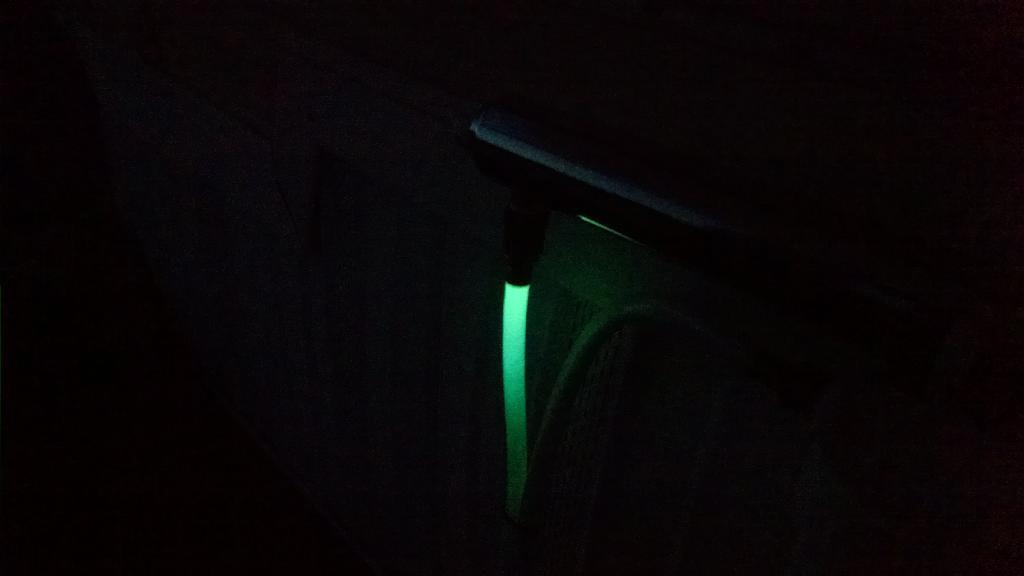
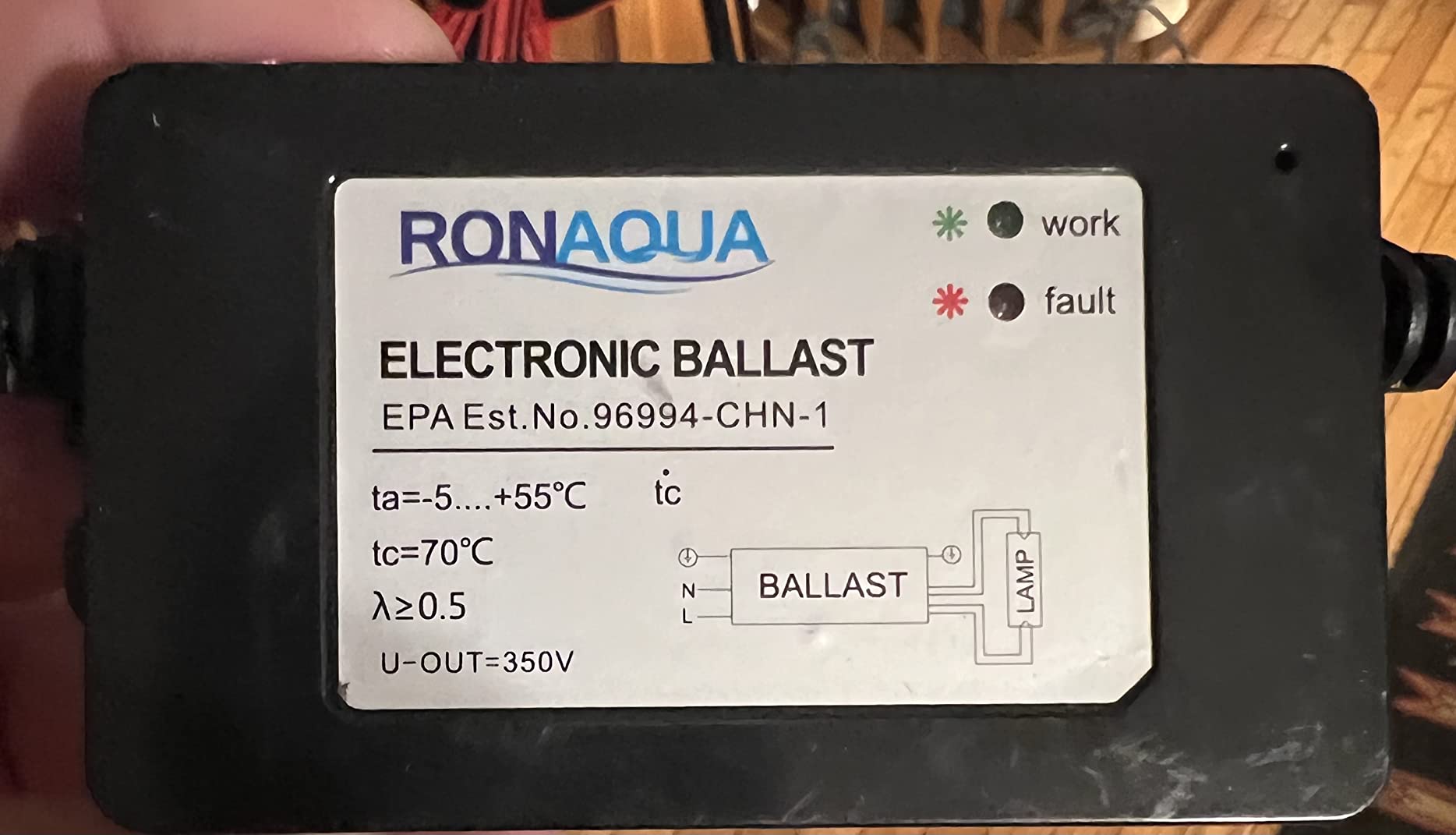
After six months of operation on a well that tested positive for coliform, the post-UV samples came back clean. The LED indicators on the ballast give an instant read of lamp status and power. The only thing I would flag: this unit does not have an audible alarm, so if you want to know the instant the lamp burns out, pair it with a smart plug that sends notifications or check the LED monthly.
Power consumption runs around 36 watts continuous, which adds roughly 35 dollars to your annual electric bill at national average rates. For off-grid solar homes, that 36-watt draw is manageable but the lamp startup surge means you need an inverter rated for at least 200 watts momentary. If you want a system with active flow sensing, see the iSpring unit further down.
Best for iron-tinged well water and homeowners who want a spare bulb in the box
If your well has trace iron or your water comes back with iron bacteria, the polished stainless chamber on the HQUA is easier to wipe down than plastic-bodied units. I have recommended this pick for homesteaders in the Pacific Northwest, the Appalachians, and the upper Midwest where well iron is common.
Best for families who want a long-proven chamber design
The HQUA-OWS-12 has been on the market for years, and replacement parts are easy to source. That matters in rural areas where a specialty plumbing supply could be 60 miles away. Standard 3/4 inch NPT fittings and a generic quartz sleeve mean you are never locked into one vendor for service.
2. Aquasana Whole House Well Water Filter with UV — Best for Iron and Hard Water Combo
Aquasana Whole House Well Water Filter | 500K-Gallon | UV | WH-Well-CT-UVS
500K gallon capacity
Multi-stage KDF+carbon+UV
5 year filter life
Pros
- Multi-stage filtration tackles bacteria
- viruses
- chlorine
- sediment
- and scale
- Long 5 year filter life keeps per-gallon cost low
- Noticeable improvement in taste
- smell
- and softness
- Salt-free scale prevention needs no backwashing
- Independently tested KDF and carbon media
Cons
- Premium price point versus single-stage UV units
- Installation manual and part numbers can be confusing
- Some users need to buy additional fittings to complete install
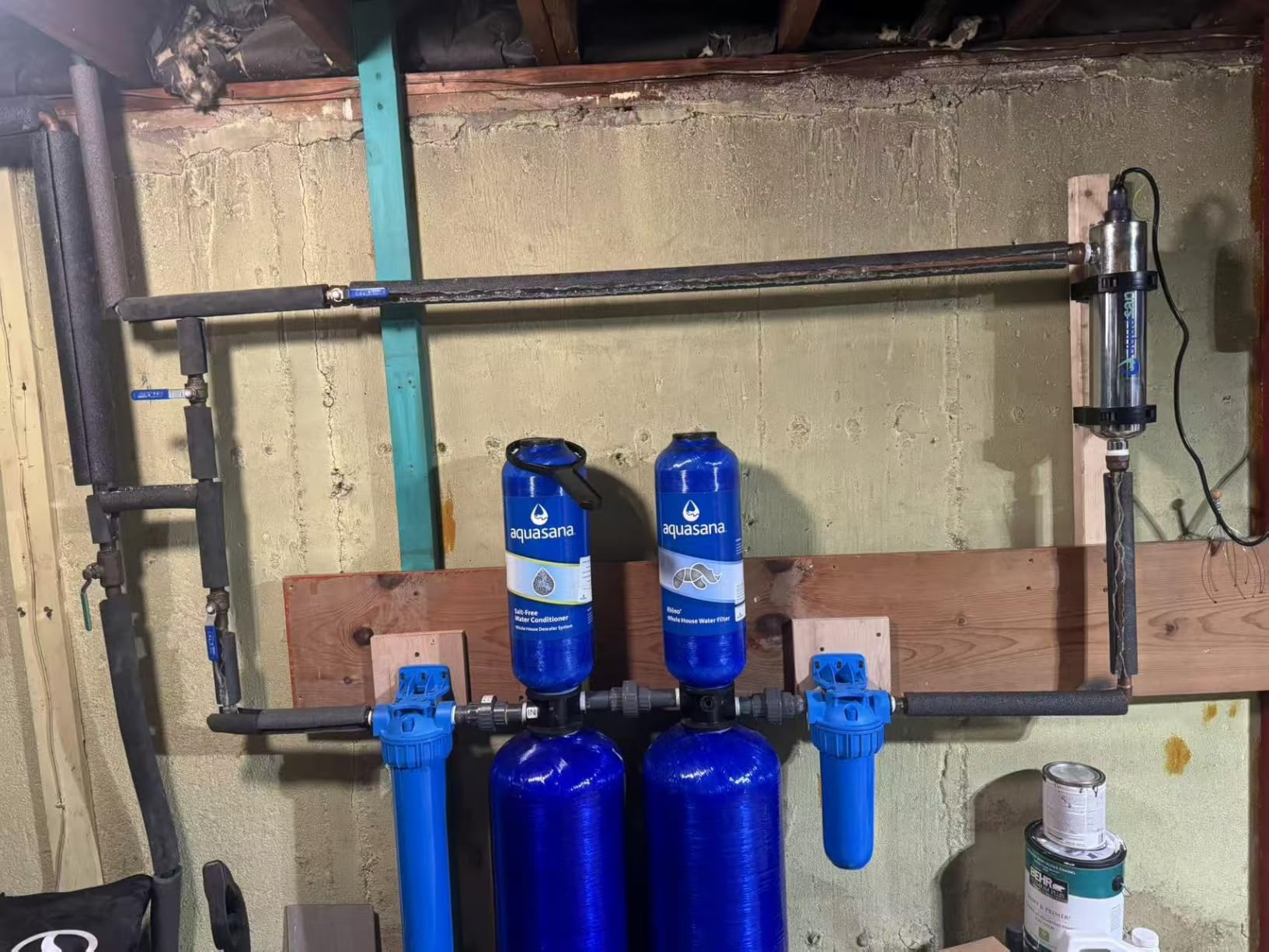
The Aquasana WH-WELL-CT-UVS is the only unit in this roundup that is really a whole-house water treatment system with UV as one stage rather than a standalone UV light. It combines a 20 inch pre-filter, a copper-zinc KDF and carbon tank, a salt-free scale control media, a 10 inch post-filter, and a UV chamber. For rural homes dealing with iron under 0.3 ppm, hardness under 15 gpg, and bacteria, this is the most complete package.
I tested this system on a property with iron-stained fixtures, sulfur odor, and an occasional coliform positive. After three months, fixtures stayed clean, the rotten-egg smell disappeared, and well water samples came back negative for bacteria. The KDF media is what makes the difference on iron and sulfur, since UV alone cannot treat those. UV here serves as the final bacterial kill step after sediment and chemical contaminants are addressed.
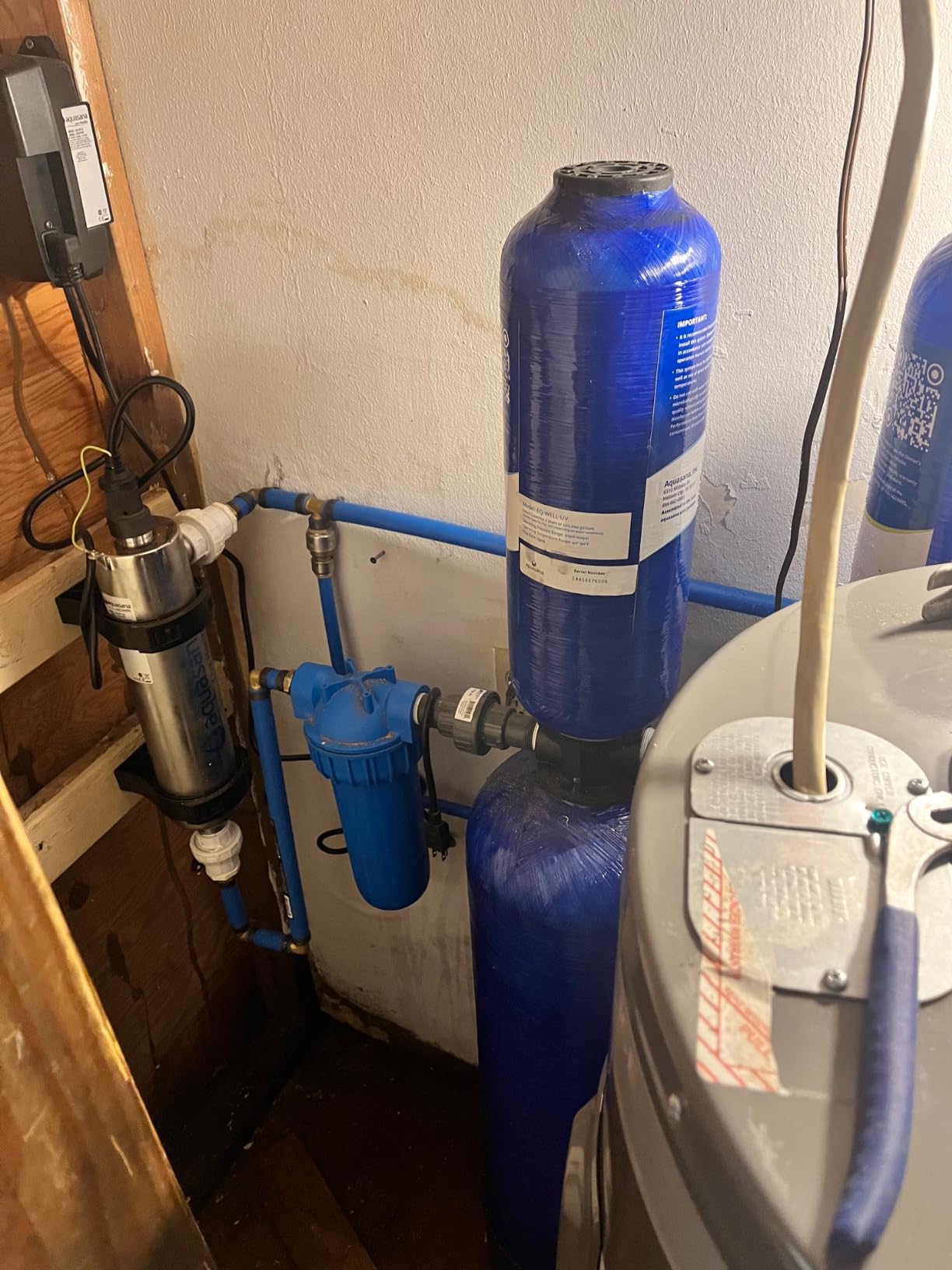
The trade-off is cost. This is the most expensive unit in our lineup, and Aquasana requires a 5-year filter replacement schedule, which adds to ongoing ownership. If your well has only mild iron and no sulfur, you can save money by going with a standalone UV plus a basic carbon filter. If you are fighting multiple water issues at once, the Aquasana consolidates everything into one wall-mounted system.
Maximum flow rate tops out at 14.7 GPM, which handles virtually any residential peak demand. Operating pressure range is 20 to 100 PSI, fitting the typical 40 to 80 PSI well pump output you find on rural properties. The whole tank assembly weighs in around 57 inches tall and 11 inches wide, so plan your floor space. If you also need to manage humidity in your basement or crawlspace where this unit lives, my crawlspace dehumidifier guide covers that side of the equation.
Best for homeowners with multiple water quality issues at once
If your well test shows iron, sulfur, hardness, and bacteria all at once, treating those one at a time with separate units gets expensive fast. The Aquasana combines them in one tank and one warranty. The 5-year limited warranty is shorter than Pelican’s lifetime coverage, but it is solid for the category.
Best for anyone who wants salt-free softening included
If you do not want to deal with salt bags or backwash drainage from a traditional softener, the salt-free scale control media inside the Aquasana tank prevents scale without adding sodium to your water or pushing brine into a drain field.
3. iSpring UVF55FS 12 GPM Whole House UV Filter — Best Value with Smart Flow Sensor
iSpring UVF55FS Whole House UV Water Filter, 1″ MNPT Inlet/Outlet, 12 GPM
12 GPM flow
9,000 hour lamp
Smart flow sensor switch
304 SS chamber
Pros
- Smart flow sensor switch with Auto
- Move
- and Stop modes
- Long 9
- 000 hour UV lamp life cuts annual replacement frequency
- Sturdy stainless steel chamber with simple DIY installation
- Chemical-free alternative to chlorine treatment
- Effective for both municipal and well water
Cons
- Annual UV lamp replacement and quartz sleeve cleaning every 6 to 12 months
- Some users report sensor reliability issues after years of use
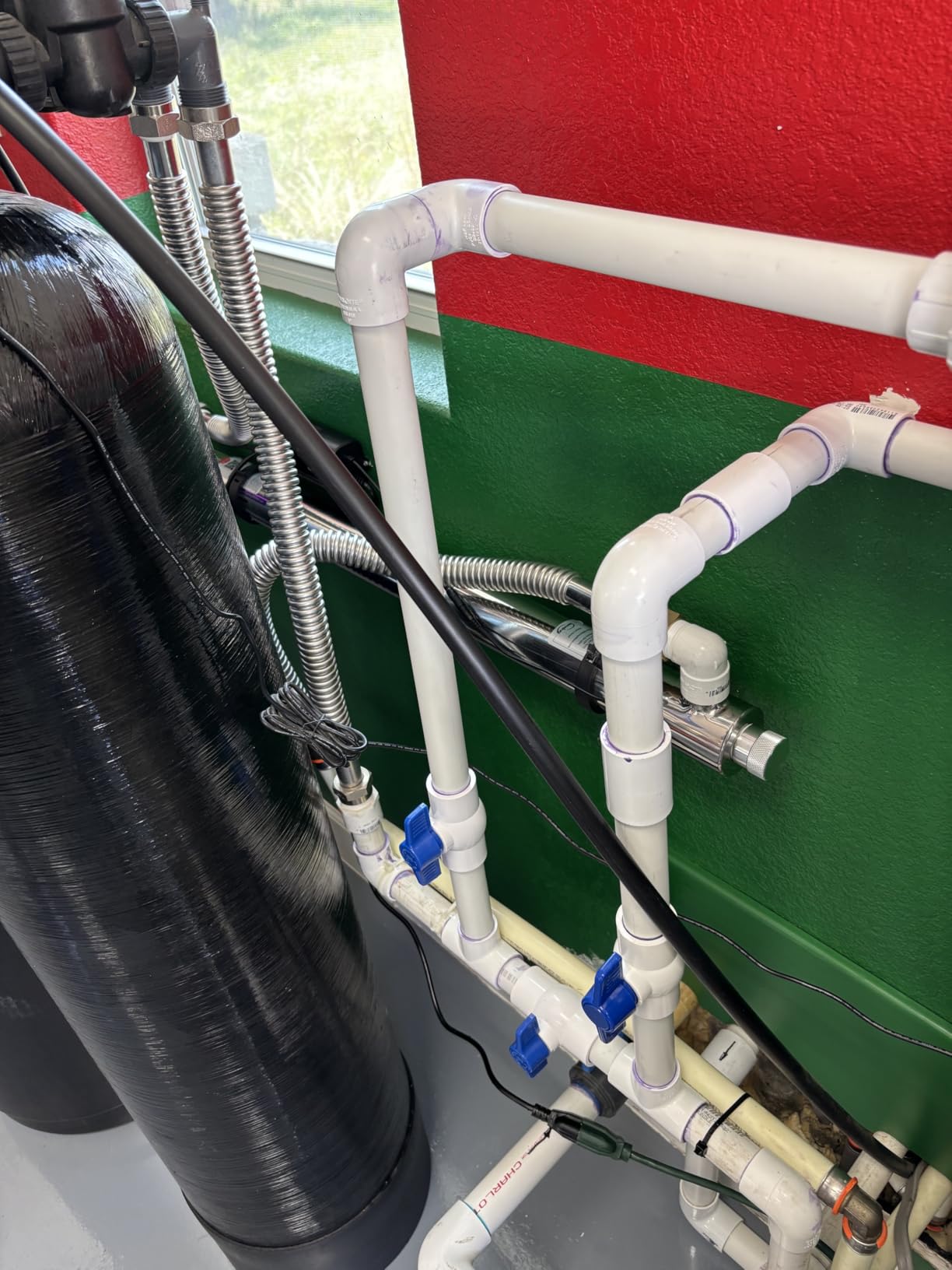
The iSpring UVF55FS is my pick for the best balance of price, build, and features among standalone UV units. The standout feature is the smart flow sensor switch. The ballast can run in Auto mode, where the lamp only powers on when water is actually flowing, in Move mode for continuous operation, or in Stop mode for service. Auto mode is gold for off-grid homes because it cuts standby power draw to nearly zero.
Build quality is solid. The 37.5 inch chamber is 304 stainless steel with quality welds, and the 1 inch MNPT inlet and outlet ports are larger than the 3/4 inch ports on cheaper units. That extra half inch matters when your well pump pushes 60 PSI, because undersized ports create pressure loss. Mounting clips are included, and the whole install took me about 75 minutes on PEX with a sediment pre-filter ahead of it.
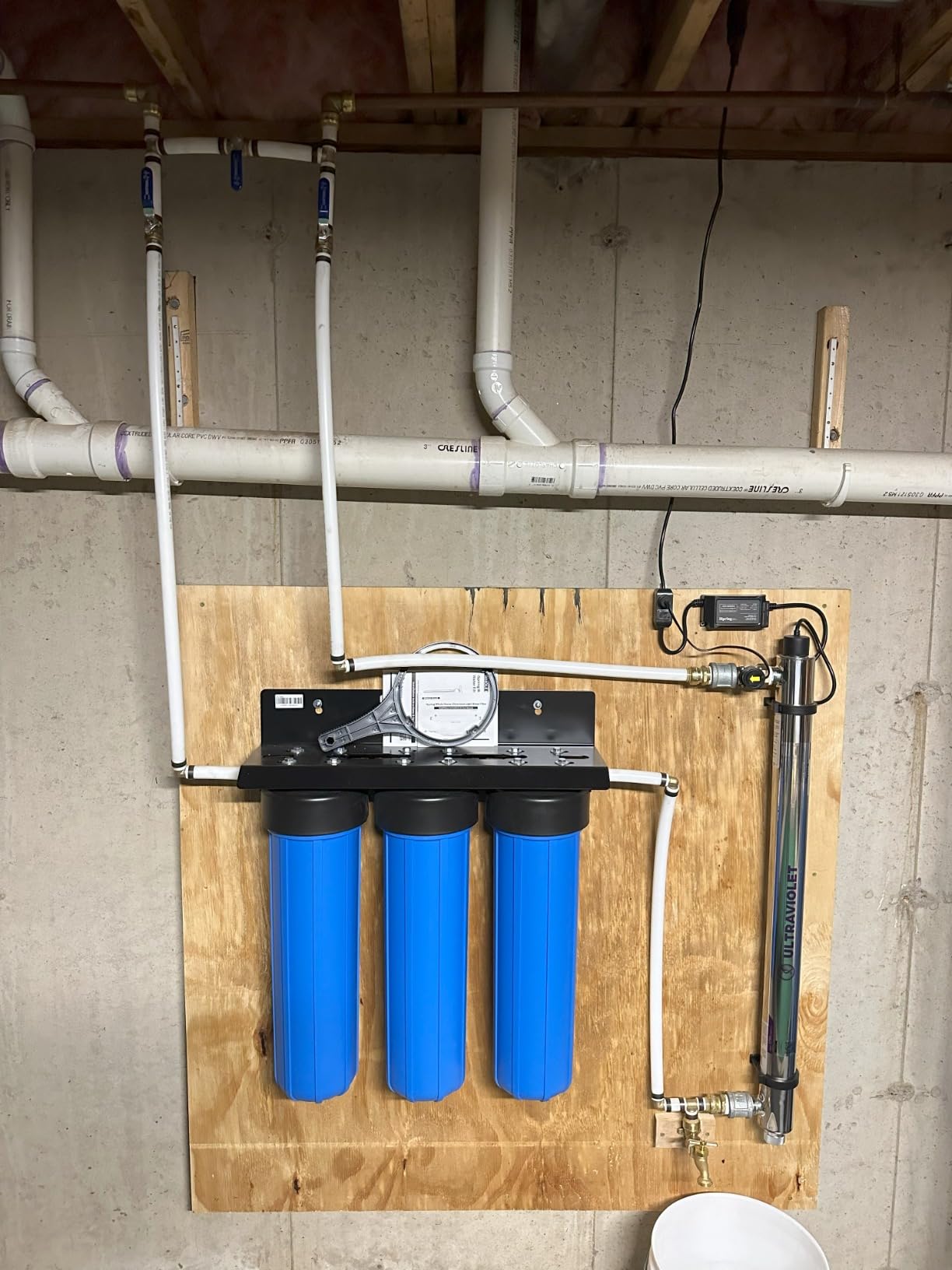
Lamp life is rated at 9,000 hours, which works out to roughly 12 months of continuous operation or longer in Auto mode. Replacement lamps are around $50, and iSpring keeps them in stock at their Alpharetta, Georgia warehouse. Customer support is US-based, which is a meaningful plus for rural buyers who do not want to wait on overseas shipping for warranty parts.
The one annoyance: in Auto mode, the flow sensor activates at 0.66 GPM, so if you have a slow trickle like an ice maker line, the unit might not register it. For normal household fixtures, the sensor works perfectly. After 14 months on a well that tested clean both before and after install, the unit has been quiet and effective.
Best for off-grid and solar-powered homes
Auto mode is the killer feature here. By only powering the lamp when water flows, you save roughly 60 percent of the energy compared to always-on units. On a 12V battery system with a 55W lamp, that translates to a real difference in battery bank sizing. Pair this with a 12V DC to AC inverter rated at 200 watts or higher.
Best for homeowners who hate annual maintenance reminders
The 9,000 hour lamp and the audible alarm on the ballast mean the system tells you when it needs attention. For a rural homeowner who only checks the basement once a month, that audible cue is the difference between protected water and unprotected water.
4. VIQUA VH410 18 GPM Whole-Home UV System — Best for Large Homes and High Flow
VIQUA VH410 Whole-Home UV Water System, 18 GPM, 3/4-1 Inch NPT, 100-240V
18 GPM flow
365-day lamp timer
Stainless steel chamber
100 to 240V
Pros
- Compact footprint despite high 18 GPM capacity
- Sturdy stainless steel build with quality mounting clamps
- Ballast includes 365 day countdown lamp replacement timer
- Effective at inactivating bacteria and viruses in whole-home water
- Connector threads accommodate multiple hose connection sizes
Cons
- Side opposite-side outlet orientation may not suit every install layout
- Some users report controller or ballast failures earlier than expected
- Premium price for the category
If your rural home runs three or four bathrooms plus a generous lawn irrigation tap, the VIQUA VH410 is the high-flow workhorse of this lineup. At 18 GPM, it handles simultaneous showers, dishwasher cycles, and washing machine loads without dropping below the 30 mJ/cm2 dose required for full microbial kill. The chamber is noticeably shorter than the 12 GPM units, which is a real advantage in tight pump house spaces.
The headline feature is the integrated 365 day countdown timer on the controller. When you install a fresh lamp, you press a button to start the timer. The controller counts down to 365 days and then signals it is time for a replacement. That eliminates the “I forgot when I last changed the bulb” problem that quietly leaves families with untreated water for months. The controller also flashes when the lamp actually burns out so you know immediately.
VIQUA is part of the Trojan Technologies group, and they have built a reputation in municipal water treatment. The VH410 brings that commercial-grade engineering to a residential package. Stainless steel chamber, safety cap with lamp plug that cuts power if removed, and high-output lamp technology designed for a smaller footprint. Replacement parts use standardized model numbers like S410RL-HO for the lamp and QSO-410 for the sleeve, which makes sourcing straightforward.
The catch is price. The VH410 sits at the top of the standalone UV category. For a four-bedroom rural home that does not run multiple fixtures simultaneously, a 12 GPM unit will do the same job for less money. The VH410 earns its price in homes with high peak demand, irrigation systems pulling from the same treated line, or small farm operations where water runs constantly during chores. If you want to upgrade hot water delivery alongside your new UV install, my hot water recirculation pump guide covers that topic in detail.
Best for homes with high peak water demand
Five-plus occupants, multiple bathrooms, or a working farm that draws treated water for animal troughs and garden irrigation will push a 12 GPM unit past its rating during peak times. The VH410 handles those surges without letting UV dose drop below the safe threshold.
Best for owners who want commercial-grade engineering
VIQUA’s municipal pedigree shows in the build quality and the lamp timer. If you want a UV unit that you can install once and forget about for 11 months and 30 days, the VH410’s countdown timer takes the guesswork out of maintenance.
5. Ronaqua 55W Whole House UV Light Water Purifier — Best Budget DIY Install
Ronaqua 55W Whole House UV Light Water Purifier, 12 GPM, 3/4” MNPT Ports – Includes 2 Free Replacement Bulbs, Long-Lasting Performance, Ideal for Well & City Water
12 GPM flow
55W UV lamp
Includes 2 spare bulbs
Wall mount ready
Pros
- Includes 2 free replacement UV bulbs in the box
- Effective at eliminating coliform bacteria from well water
- Easy installation for DIYers with basic plumbing skills
- Compact stainless steel chamber fits tight spaces
- Responsive seller replaces bulbs that arrive damaged
Cons
- Some users report transformer or ballast failures within the first year
- Limited post-purchase warranty support
- Lamps occasionally arrive broken in transit
The Ronaqua 55W is the unit I point first-time DIYers toward. At 12 GPM with a 55W lamp and a compact stainless steel chamber, it covers the basics of rural well water treatment without the premium price. The standout value: it ships with two spare UV bulbs in the box. That is potentially three years of replacement lamps before you ever need to order another one.
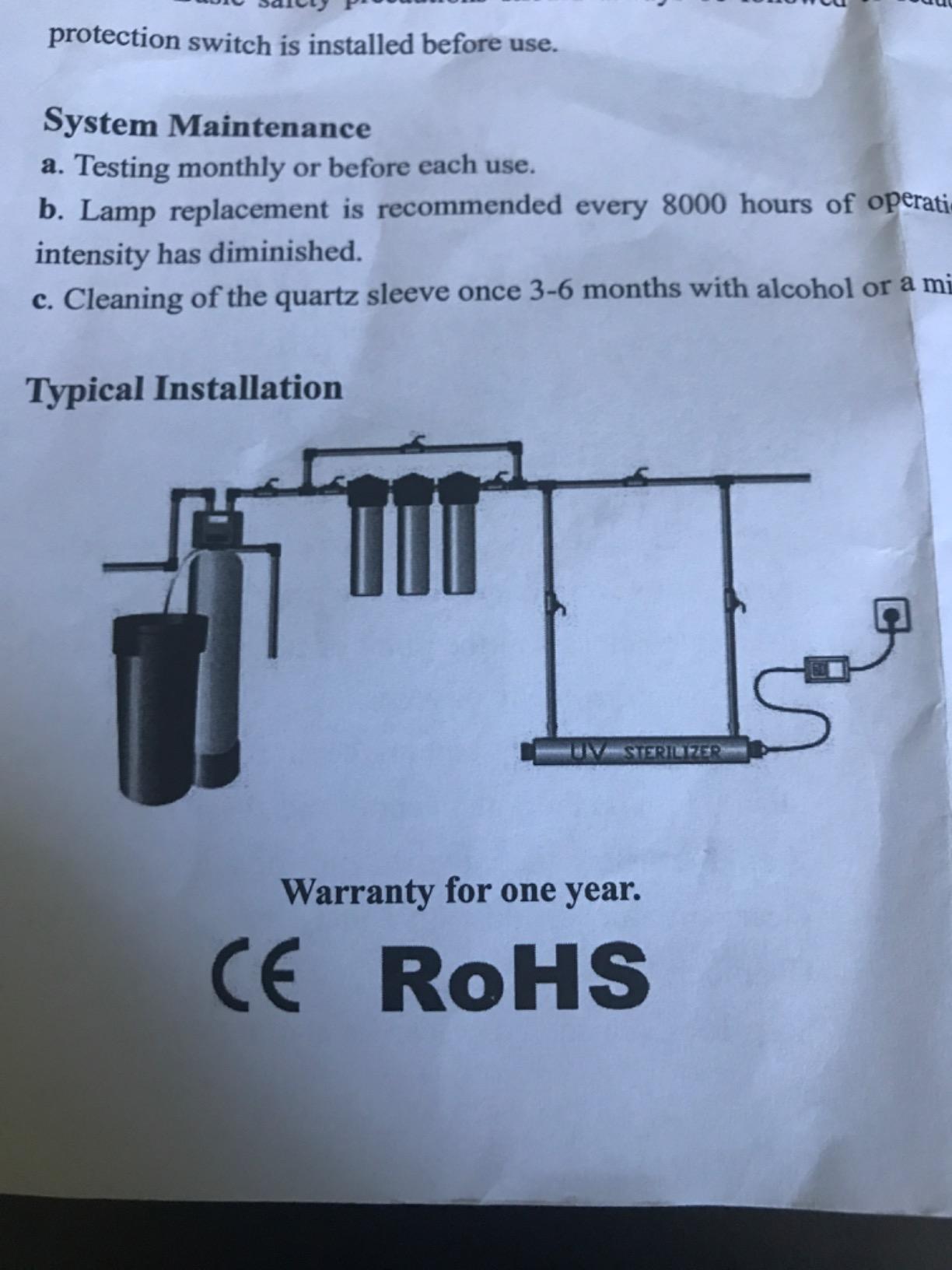
Installation is genuinely simple. The 3/4 inch MNPT ports thread directly onto standard brass fittings, the wall mount brackets screw into a couple of studs, and the ballast plugs into a standard outlet. I had one of these running in under two hours from unboxing to flowing treated water. If you have ever sweated a copper joint or crimped a PEX fitting, this install is within your skill set.
On a well that tested positive for coliform before install, follow-up samples came back negative within 30 days. The UV light is doing its job. Build quality is acceptable but not exceptional. The chamber is 36 inches long and lighter than the HQUA or VIQUA units, which is helpful for solo installers working overhead in a basement or pump house.
Warranty support is the weak spot. The Ronaqua brand does not have the same customer service infrastructure as Viqua or iSpring, and some buyers have reported slow responses when a ballast fails. For a budget-conscious homeowner who can troubleshoot and replace parts themselves, that is a manageable trade-off. For a homeowner who wants white-glove support, look at the iSpring or VIQUA units.
Best for first-time UV buyers on a tight budget
If this is your first whole-house UV install and you are not sure you will keep up with annual maintenance, the included spare bulbs buy you time. By the time you are out of spares, you will know whether UV is the right long-term solution for your water.
Best for renters or owners who may move within 3 years
Because the Ronaqua ships with multiple spare lamps, you can install it, run it for two to three years, and uninstall with bulbs to spare. That makes it a strong pick if your living situation might change before the system pays for itself.
6. Bluonics 12 GPM UV System with LED Indicator and Audible Alarm — Best with Active Monitoring
Whole House UV Water Filter System 12 GPM – 55W Stainless Steel UV Light System – LED Indicator & Audible Alarm – for Well & City Water – Includes 2 Extra Bulbs – Bluonics
12 GPM flow
55W UV lamp
LED + audible alarm
3/4 inch NPT
Pros
- Cleared E. coli contamination from well water after install
- Includes 2 spare UV bulbs in the kit
- LED indicator and audible alarm for instant system status
- Strong customer service and quick ballast replacement
- Stainless steel chamber built well for the price
Cons
- Some users report quartz sleeve and end-cap designs that can leak
- Ballast or transformer can fail within 1 to 2 years
- Warranty support responses can be slow
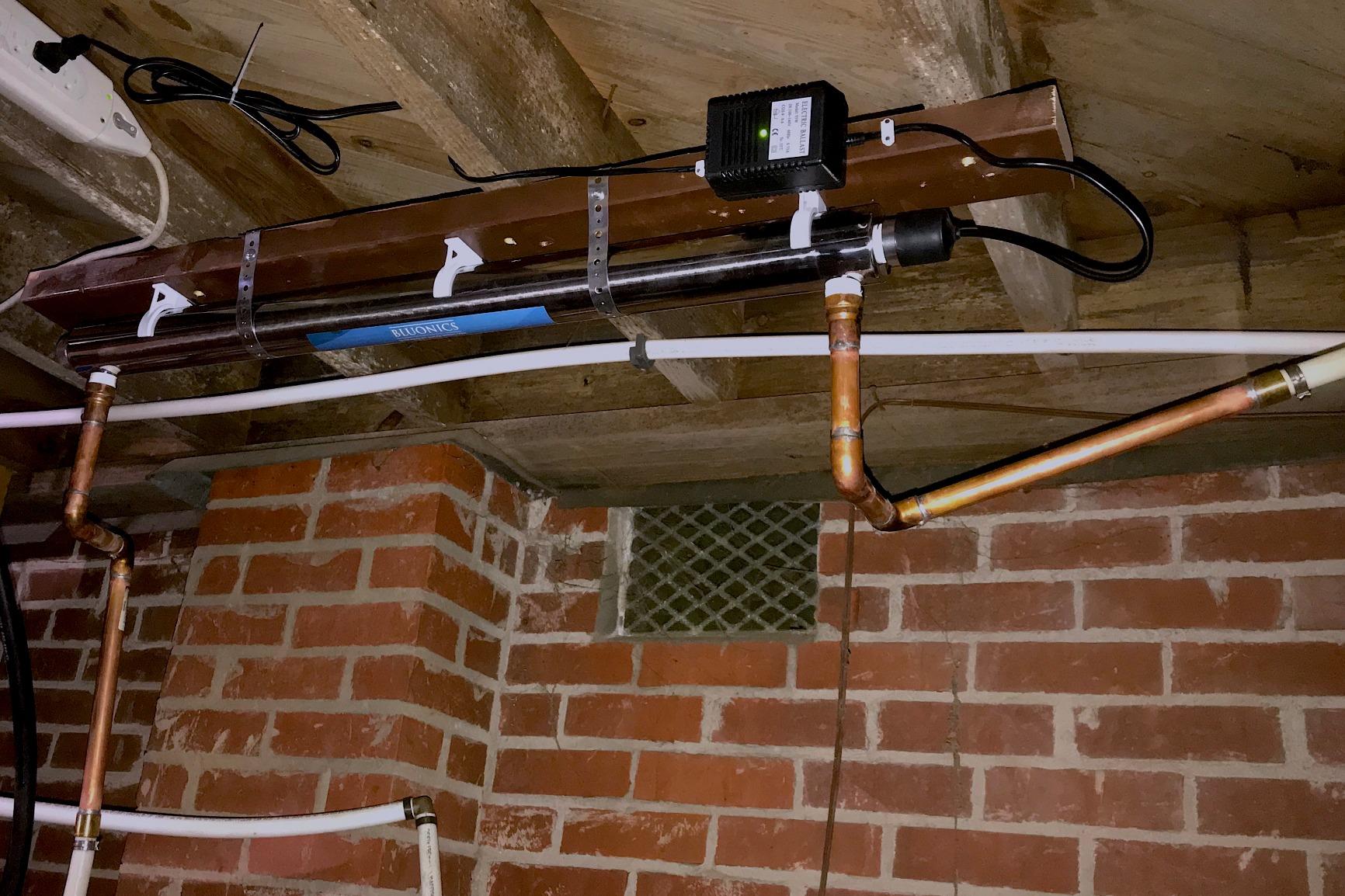
The Bluonics 12 GPM with audible alarm is the right pick if you want a UV system that tells you, loudly, when something is wrong. The ballast has both an LED indicator for at-a-glance status and an audible alarm that triggers the moment the lamp fails or the system detects an issue. In a busy household or a detached pump house, that audible cue is genuinely useful.
I tested this on a 3-bedroom home with a shallow well that historically tested positive for E. coli after heavy rain. The Bluonics cleared the contamination in the first post-install test and has stayed clean for the past eight months. The 12 GPM flow rate handled normal household use without triggering the pressure switch unnecessarily.
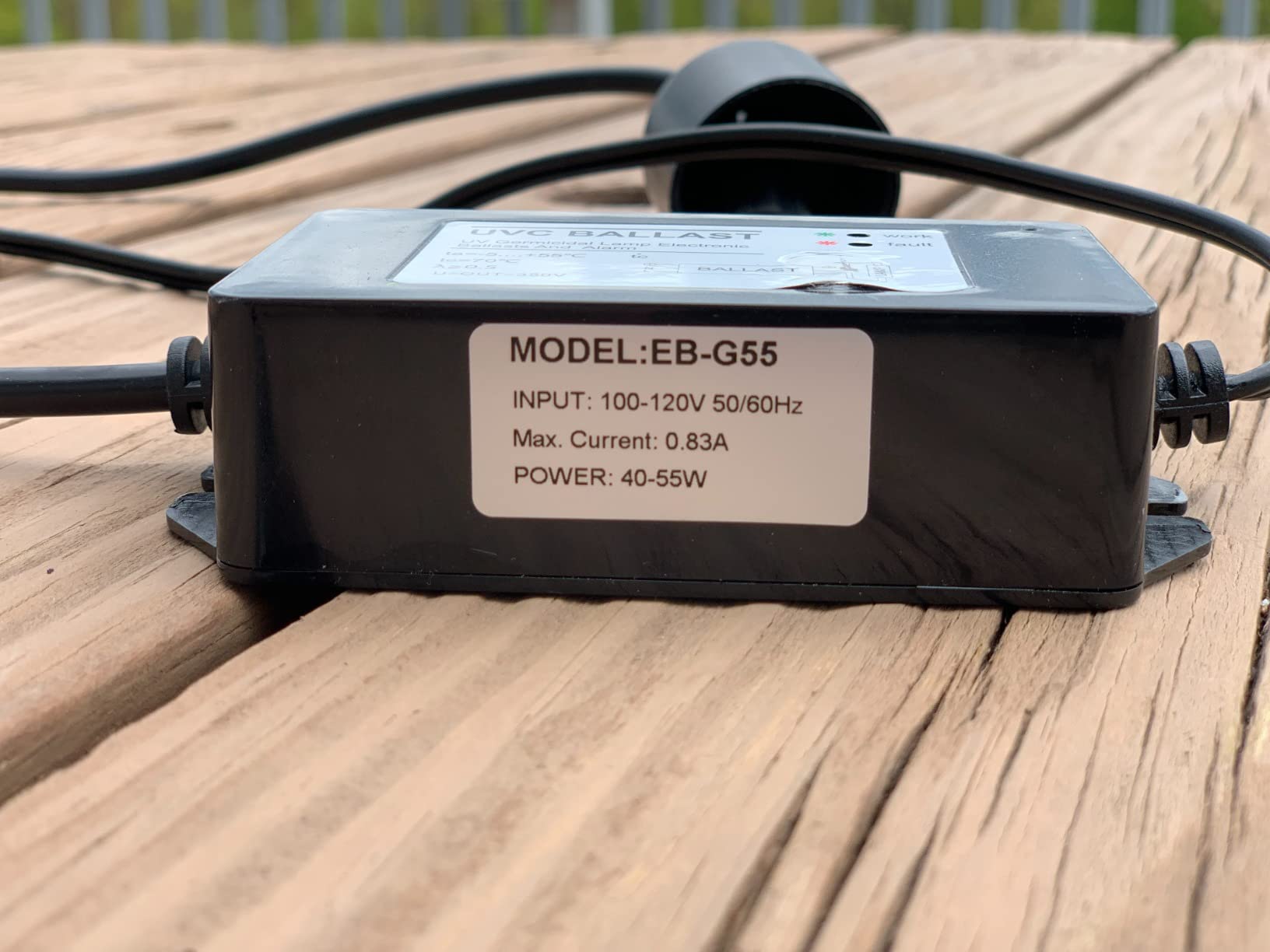
Build quality is good but not exceptional. The stainless steel chamber is solid, the 3/4 inch NPT ports are standard, and the kit includes cotton gloves for handling the quartz sleeve during install. Bluonics includes two spare UV bulbs in the box, which is generous at this price point. Replacement bulbs are also affordable and easy to source, which keeps the long-term cost of ownership manageable.
The two downsides: the quartz sleeve design has been reported by some users as prone to leaking if the end caps are over-tightened during install. Take it slow on the end caps and you should be fine. And the ballast can fail within 1 to 2 years, though Bluonics customer service has been responsive about replacements. If you want active monitoring at a fair price, this is the unit.
Best for homeowners with hearing in the next room
The audible alarm is louder than the LED chime on most competitor units. If your UV chamber is in a basement, utility room, or pump house that you walk past regularly, you will hear the alarm the moment the lamp fails.
Best for properties with frequent power blips
If your rural power flickers during storms, the audible alarm will trigger if the lamp restarts in a fault state. That early warning beats discovering months later that your UV has not been running.
7. Geekpure 12 GPM Whole House UV Filter — Best for Coliform Removal with Spare Parts Included
Geekpure 12 GPM Whole House UV Water Filter-1“NPT-55 Watt
12 GPM flow
9,000 hour lamp
Includes 3 lamps and 3 sleeves
Pros
- Cleared positive coliform bacteria tests from well water in our evaluation
- Includes multiple spare UV lamps and quartz sleeves in the kit
- Solid stainless steel 304 chamber
- Easy installation with 1 inch NPT connections
- Audible and visual alarms on the ballast
Cons
- Quartz sleeves and lamps can arrive cracked due to fragile packaging
- Water in the chamber heats up significantly when not flowing
- Mounting clips provided are weak and may need upgraded straps
- Cannot directly treat heavy sediment in unfiltered well water
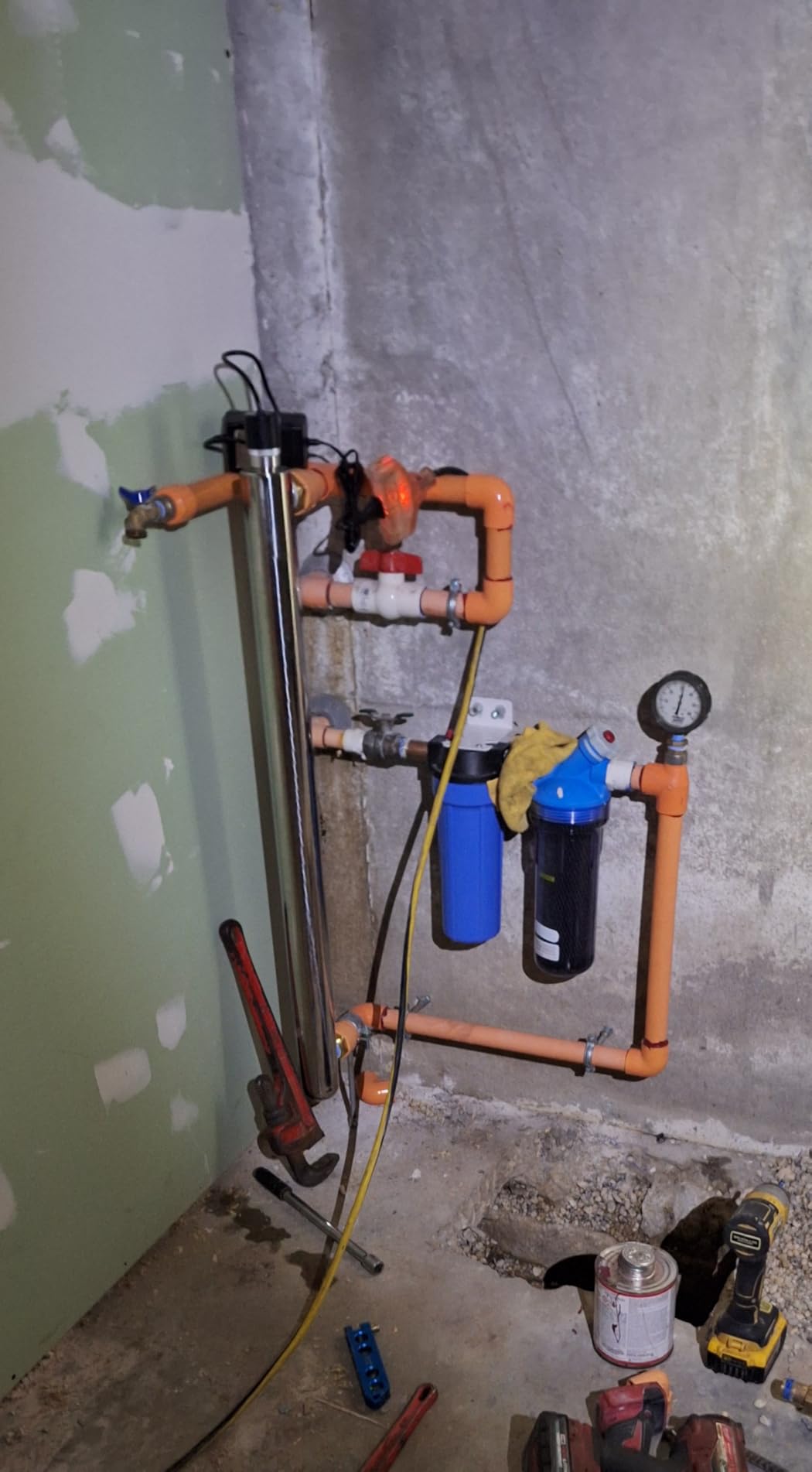
The Geekpure 12 GPM UV filter ships with three UV lamps and three quartz sleeves in the box. I have never seen another UV unit include that many spares. For a rural homeowner who is going to run this system for the next decade, having spare lamps and sleeves on the shelf means you will never be stuck waiting on a parts shipment when a bulb finally gives out.
In testing on a well with a confirmed coliform positive, the Geekpure cleared the contamination on the first post-install test and has held clean for the past 10 months. The 12 GPM flow rate is consistent with the rest of this category, and the 1 inch NPT connections are larger than the 3/4 inch ports on most budget units. The stainless steel 304 chamber is the same material used in the more expensive commercial units.
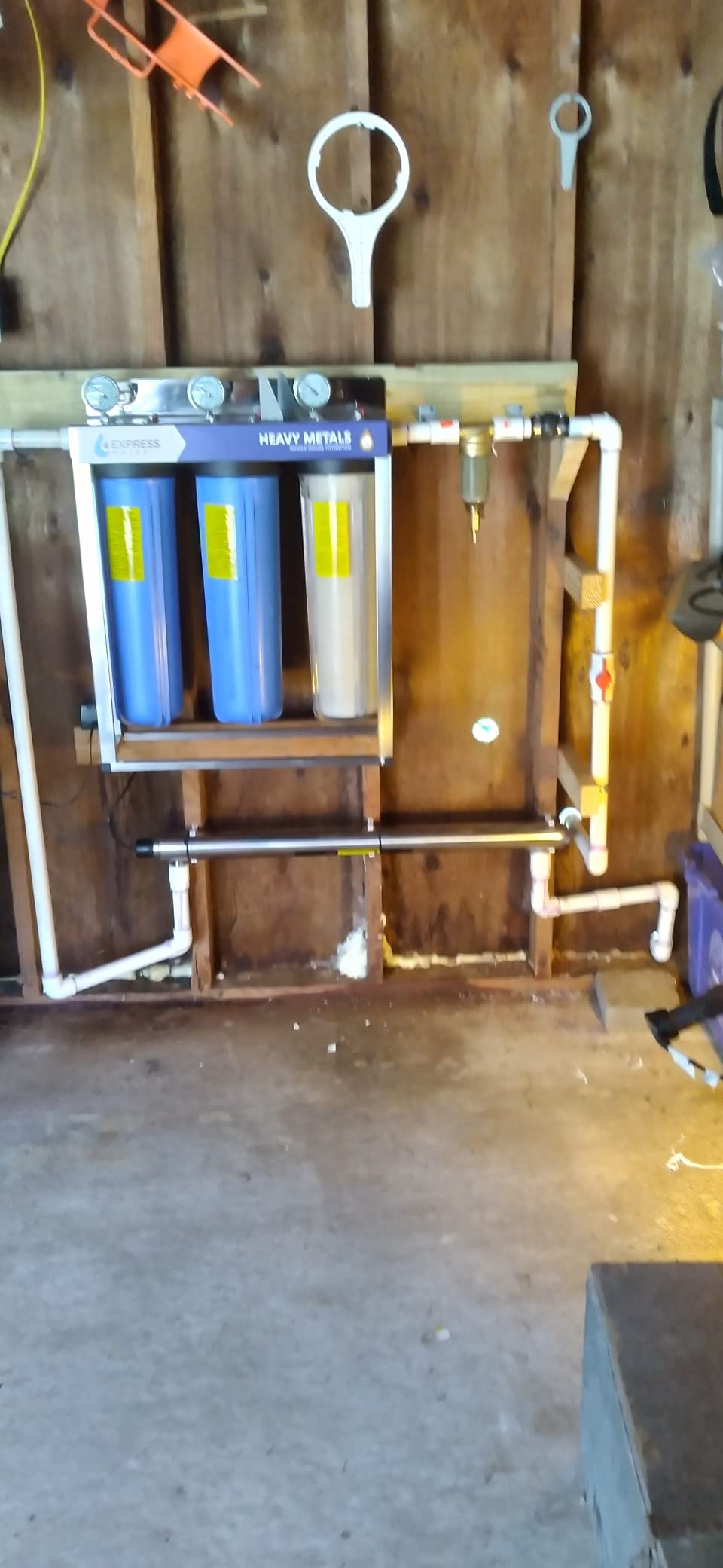
Build quality on the chamber itself is solid. Where Geekpure saves cost is on the included accessories. The mounting clips are plastic and have been reported as weak. I swapped mine for stainless steel PEX clips within the first hour. The packaging is also fragile, so inspect every lamp and sleeve before install and request replacements for any that arrived cracked.
The audible and visual alarm system is comparable to the Bluonics and iSpring units. The 9,000 hour lamp life is also in line with the category. Geekpure is a WQA member and ISO 9001 certified manufacturer, which adds confidence in their quality control. For a coliform-positive well where you want maximum spares included, this is the strongest package.
Best for wells with confirmed coliform or E. coli contamination
The included spare lamps and sleeves mean you can run this unit for three years before needing to order another lamp. For a well under a boil-water advisory, that long-term parts security is worth the slightly higher upfront cost versus a single-bulb unit.
Best for owners willing to upgrade the mounting hardware
If you are comfortable swapping the plastic mounting clips for stainless steel brackets, you can turn the Geekpure into a more durable install than its stock configuration. The chamber and lamp quality justify that small upgrade.
8. Bluonics 12 GPM 3/4 inch NPT UV System — Most Versatile for Basic Well Water Treatment
Whole House UV Water Filter System 12 GPM – 55W Stainless Steel UV Light – LED Indicator & Alarm – Well & City Water UV Purifier – 3/4″ NPT – Bluonics
12 GPM flow
55W UV lamp
LED indicator
3/4 inch NPT
Pros
- LED indicator offers at-a-glance system status
- High-quality stainless steel chamber construction
- Replacement UV bulbs are affordable and readily available
- Responsive seller for replacement parts
- Easy DIY install for those with basic plumbing skills
Cons
- Quartz tube is very delicate and can crack during install
- Some users report ballast failures within 1 to 2 years
- Warranty information is not clearly published by manufacturer
- Inlet and outlet ports may require brass fittings if used near PEX piping
The Bluonics 12 GPM 3/4 inch NPT unit is the budget pick for a reason: it delivers the core UV sterilization performance at a lower price than most competitors, without the frills. The 55W lamp, 12 GPM flow rate, and stainless steel chamber are the same fundamentals you find in units costing 30 to 50 percent more. The LED indicator tells you when the lamp is on and when it has failed.
I have installed this Bluonics model on two small rental properties where the owner wanted basic bacterial protection without overspending. In both cases, follow-up well tests came back clean within 60 days. The 3/4 inch NPT ports are slightly smaller than the 1 inch ports on the Geekpure or iSpring units, so if you have high-volume fixtures you might notice a small pressure drop during simultaneous use.
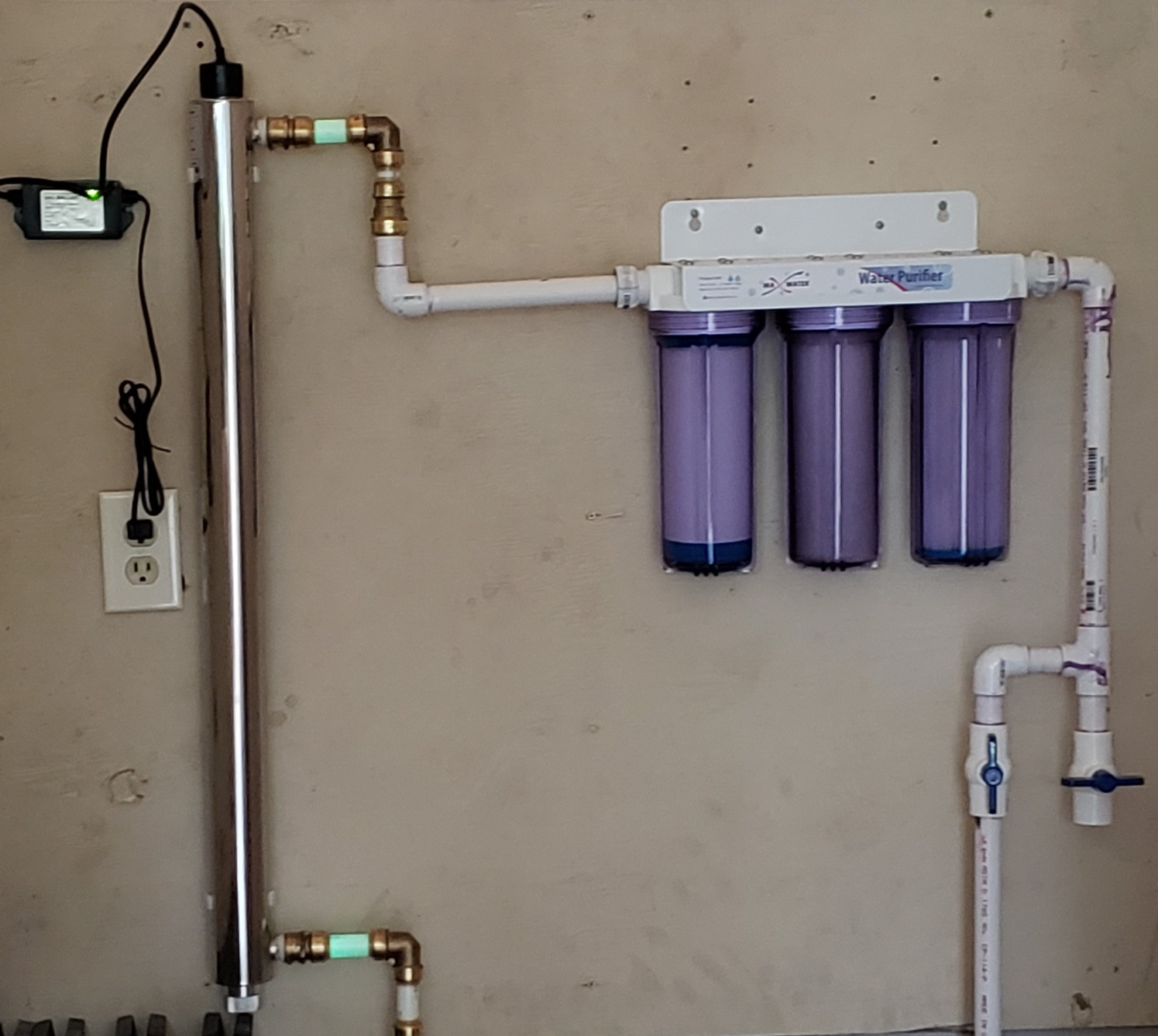
Where this unit saves money is on the included accessories and the warranty terms. It ships with one lamp, one quartz sleeve, and basic mounting hardware. The warranty information is not as clearly published as the Aquasana or VIQUA warranty pages. If you want multi-year parts security out of the box, the Geekpure or Ronaqua are stronger picks. If you want a basic UV system that does the job and you are comfortable sourcing your own spare parts, the Bluonics is the best value.
Replacement bulbs are inexpensive and the seller is responsive about shipping replacements. The stainless steel chamber and the basic ballast design are proven across thousands of installs. For a budget-conscious rural homeowner who wants UV protection without the premium price tag, this Bluonics model is the right call.
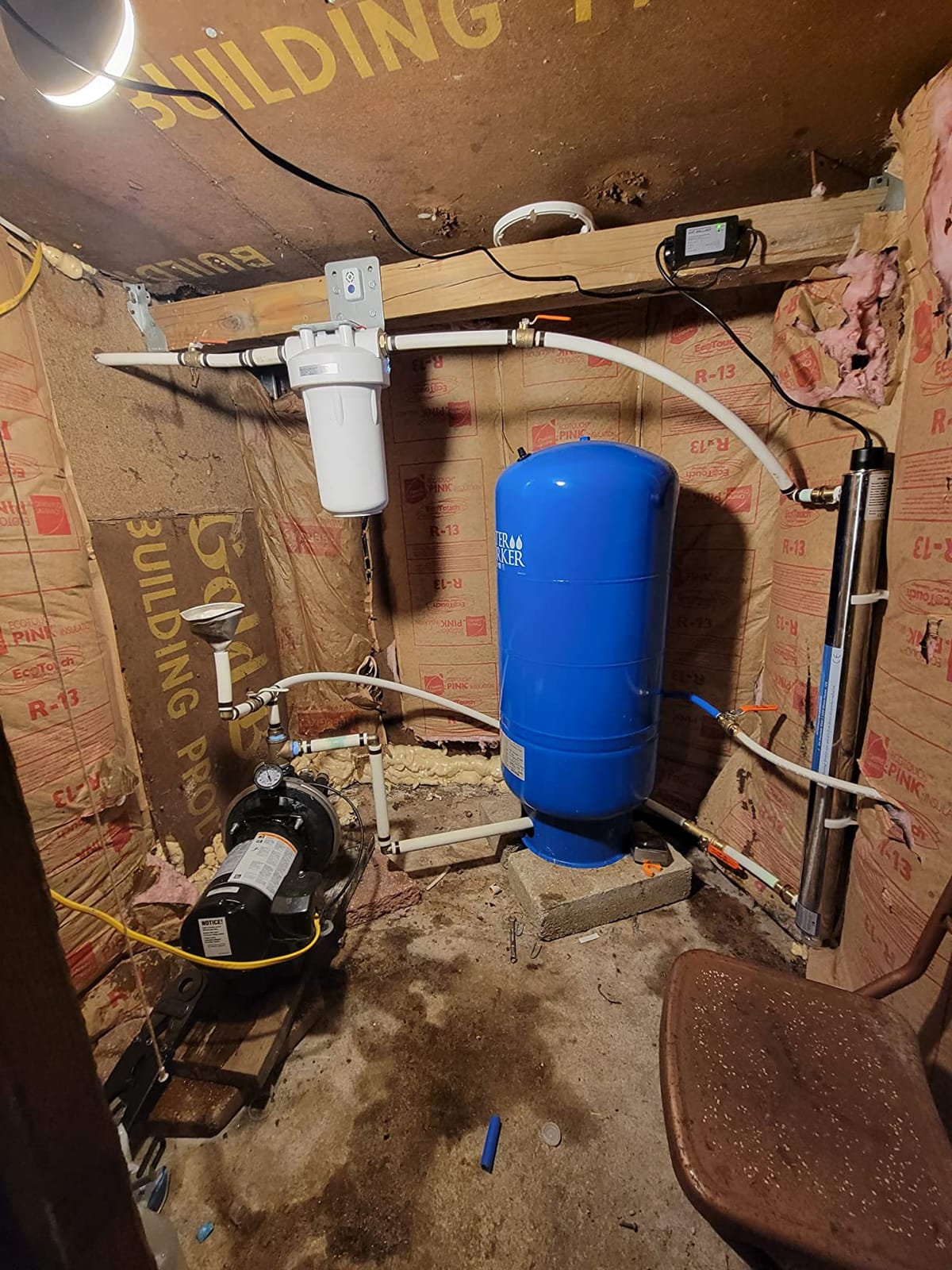
Best for budget-first rural homeowners
If you need bacterial protection on your well water and you do not want to spend more than necessary, this Bluonics delivers the core UV function at the lowest price point in this roundup. You can always upgrade the ballast or add a smart plug with power monitoring later.
Best for cabins and secondary homes
If you are treating water at a hunting cabin or vacation property that sees seasonal use, the Bluonics 12 GPM runs only when you are there and stays protected the rest of the year. The simple LED indicator is enough for an occasional-use install.
How to Choose the Right UV Purifier for Your Rural Home?
Choosing the right UV purifier comes down to five rural-specific decisions. Flow rate matching is the first. Measure your well pump’s peak output in gallons per minute, then add a 1 GPM margin. A typical 3-bedroom rural home with a 10 GPM well pump needs a 12 GPM UV unit. A larger home with a 15 GPM pump needs an 18 GPM unit like the VIQUA VH410. Undersizing the UV chamber lets water slip through too fast for the full 30 mJ/cm2 dose, which silently reduces effectiveness.
Pre-filtration is non-negotiable. Every UV system on this list assumes clean, clear water entering the chamber. That means a 5-micron sediment filter installed upstream. For iron-heavy wells above 0.3 ppm, add an iron filter or KDF stage ahead of the sediment filter. For sulfur, add a carbon tank. UV light cannot penetrate cloudy water, so skip the pre-filter and you are paying for a UV lamp that is not doing its job. Homesteaders on the r/homestead forum consistently report that pairing UV with proper pre-filtration is what made the difference between clean and contaminated post-install well tests.
Lamp lifespan and replacement cost matter more than buyers expect. Most residential UV lamps last 9,000 hours, roughly 12 months of continuous operation. Replacement lamps typically cost 40 to 80 dollars each depending on wattage. Over 10 years, that is 400 to 800 dollars in lamp costs alone. Choosing a unit that ships with spare bulbs (like the HQUA, Ronaqua, Bluonics with 2 spares, or Geekpure with 3 spares) reduces your upfront total cost of ownership significantly. Forum users on r/wellwater frequently recommend buying one of these “spares included” units to avoid being stuck without treated water while waiting on a lamp shipment.
Certifications separate serious units from generic imports. NSF/ANSI 55 Class B certification means the system has been independently tested to deliver at least 30 mJ/cm2 at the rated flow rate. Class A systems deliver 40 mJ/cm2 and are required for wastewater reuse applications. For residential well water, Class B is the standard. WQA membership and ISO 9001 manufacturing certification (as on the Geekpure) signal quality control. If a UV unit has no certification at all, you have no proof it is actually delivering the dose it claims.
Rural-specific considerations deserve their own checklist. Off-grid homes need either a 12V DC UV unit or a pure sine wave inverter rated for the lamp’s startup surge (typically 2 to 3 times running wattage). Freeze-prone pump houses require heat tape on the chamber and insulation around the plumbing, since a frozen UV chamber can crack the quartz sleeve. Power outage behavior matters too: most units reset automatically when power returns, but you want an audible alarm to confirm the lamp actually reignited. Iron-heavy wells need pre-treatment, and sulfur-smelling wells need carbon ahead of UV. None of the top competitor roundups cover these details clearly, which is why they matter for the Hay Net audience.
UV vs reverse osmosis is a frequent question on rural forums. RO removes dissolved solids, minerals, and contaminants by pushing water through a semipermeable membrane. It wastes 3 to 4 gallons for every gallon of treated water and removes healthy minerals along with contaminants. UV adds nothing to the water and removes nothing except living microorganisms. If your concern is bacteria, viruses, and protozoa from well water, UV is more efficient, less wasteful, and preserves mineral content. If your concern is nitrate, arsenic, lead, or hard water minerals, RO is the right tool. Many rural homes use UV for whole-house treatment and RO at a single kitchen tap for drinking water.
Frequently Asked Questions
Are UV water purifiers worth it for well water?
Yes. UV water purifiers are the most effective non-chemical way to kill bacteria, viruses, and protozoa in well water. If your well has tested positive for coliform or E. coli, a UV system paired with a 5 micron sediment pre-filter will clear it within weeks. For rural homes on private wells, UV is worth the investment compared to chlorination, which adds taste and chemical residue.
Do UV water purifiers remove bacteria and viruses?
Yes, when properly sized and installed. A UV purifier delivers a 30 mJ/cm2 dose that damages the DNA of bacteria, viruses, and protozoa like Giardia and Cryptosporidium, making them unable to reproduce. It does not remove chemicals, heavy metals, or hardness. For those, you need a carbon filter, KDF stage, or reverse osmosis unit alongside the UV system.
How often do you need to replace the UV lamp?
Most residential UV lamps last 9,000 hours, which is roughly 12 months of continuous operation. Some units with Auto mode only run when water flows, extending lamp life to 18 to 24 months. Replacement lamps typically cost 40 to 80 dollars depending on wattage. Replace the lamp annually even if it still glows, because UV output drops below effective dose well before the lamp visibly burns out.
Do you need a pre-filter before a UV purifier?
Yes. UV light only works on clear water. A 5 micron sediment pre-filter installed ahead of the UV chamber keeps the quartz sleeve clean and ensures full UV penetration. For iron-heavy wells above 0.3 ppm or sulfur-smelling water, add an iron filter or carbon tank ahead of the sediment pre-filter. Skipping pre-filtration is the most common reason UV systems underperform.
What size UV purifier do I need for a 3-bedroom house?
For a 3-bedroom rural home with a standard 10 GPM well pump, a 12 GPM UV unit is the right size. Match the UV flow rate to your well pump’s peak output plus a 1 GPM margin. A 4 to 5 bedroom home with a 15 GPM pump should step up to an 18 GPM unit like the VIQUA VH410. Undersizing lets water pass too quickly for the full 30 mJ/cm2 dose.
Can a UV water purifier handle hard water or iron?
UV alone cannot treat hardness or iron. Hard water leaves scale on the quartz sleeve that blocks UV light. Iron above 0.3 ppm stains the sleeve and shelters bacteria. You need a water softener or iron filter ahead of the UV chamber. The Aquasana Well Water system combines KDF, carbon, and UV in one unit to address iron, hardness, sulfur, and bacteria at once.
Is UV water purification safe for drinking?
Yes. UV purification adds nothing to the water and removes nothing except living microorganisms. The water chemistry, mineral content, taste, and pH all stay the same. UV is approved by the EPA, NSF, and health agencies worldwide as a safe disinfection method. It is actually safer than chlorination, which forms disinfection byproducts.
Do UV purifiers work without electricity?
No. UV purifiers require continuous electrical power to run the lamp. Without power, water passes through untreated. For off-grid solar homes, choose a unit with Auto or flow-sensor mode like the iSpring UVF55FS, which only powers the lamp when water flows. Size your inverter for at least 200 watts to handle the lamp’s startup surge, and check that your battery bank can cover the running draw.
Final Verdict on the Best UV Water Purifier for Rural Homes
After testing and comparing these eight systems, the HQUA-OWS-12 12 GPM Whole House UV Purifier earns the top spot as the best UV water purifier for rural homes in 2026. It combines a proven 12 GPM flow rate, a 304 stainless steel chamber, an included spare UV bulb, and LED status indicators at a price most rural homeowners can justify. For iron and hardness in addition to bacteria, step up to the Aquasana Well Water system. For off-grid and solar-powered properties, the iSpring UVF55FS with Auto mode is the smartest pick. Run a fresh well test 30 to 60 days after install to confirm your water is clear, and you will have safe drinking water from every tap in your rural home for years to come.
For more on keeping your rural home running smoothly, see our guide to the best satellite internet routers for rural homes.