
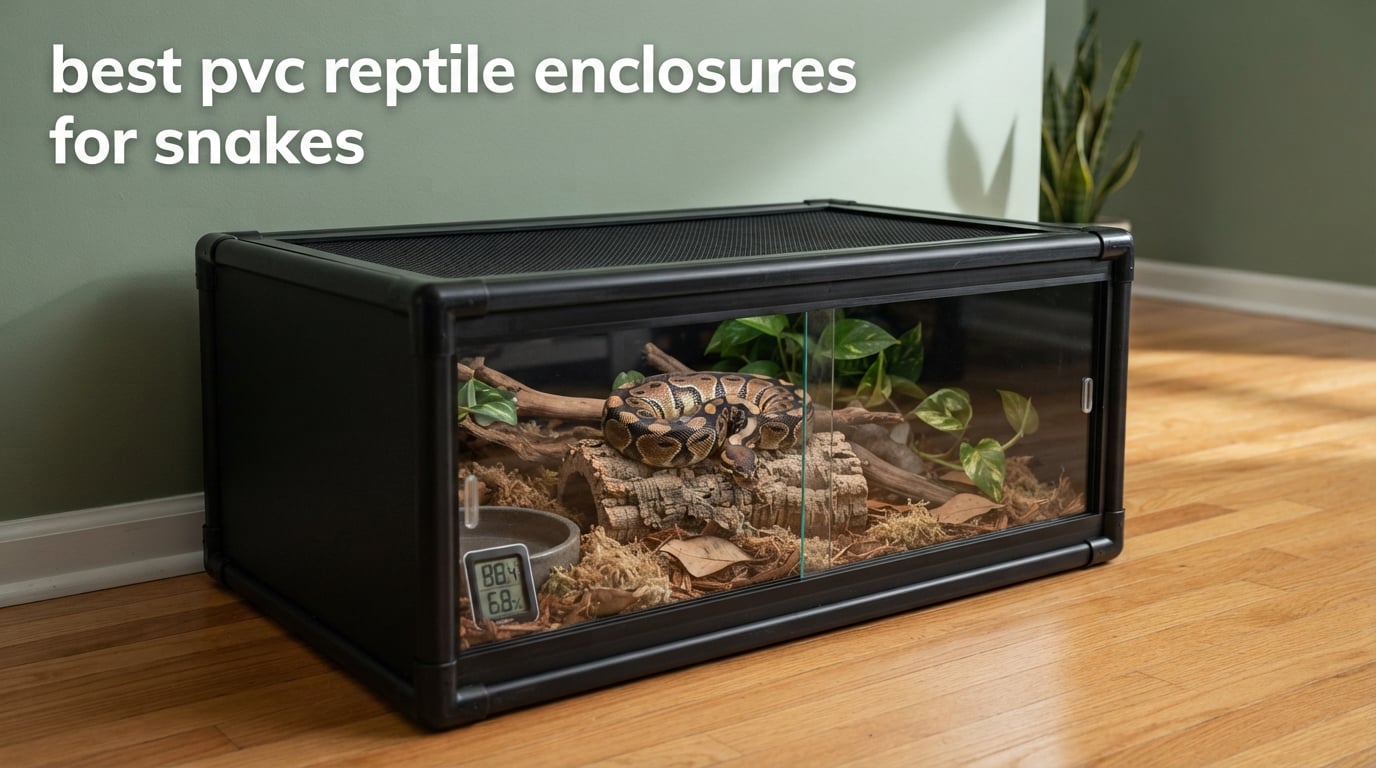
If you keep a ball python, a boa, a corn snake or any other colubrid, the enclosure is the single piece of equipment that decides whether humidity stays steady, heat holds, and your snake sheds clean. The best PVC reptile enclosures for snakes solve all three problems at once, and most keepers move to them within a year or two of buying a starter glass tank.
We went through the specs, the owner reviews and the hands-on complaints on the enclosures that actually clear a quality bar, then ranked them by the things you feel every single day: how the panels hold heat, whether the seams leak, whether the doors lock, and whether the unit can grow with your collection. The Reptile Habitats 4x2x2 V3 is the one we would put in front of most people, the REPTI ZOO 120 Gallon is the stronger value buy, and the REPTI ZOO 67 Gallon tall build is the pick if floor space is what you are short of.
Two things shape the whole roundup. First, board thickness. The enthusiast standard is 1/2 inch (12mm) expanded PVC, and even the entry tier uses around 6mm boards with a metal frame for support. Second, the water problem. Almost none of these cages leave the factory watertight, so if you plan to run a bioactive or drainage-layer setup, plan on silicone-sealing the bottom seam yourself. Every pick below notes where that matters.
We also flagged the honest negatives. Keepers on r/ballpython specifically advise against several mass-market brands for design problems, while keepers on other boards report loving the same cages. We think that contradiction is about specific lines and generations rather than whole brands, and the generator enclosure guide on this site uses the same approach of grading what a build actually protects you from rather than what its label claims. Our UTV cab enclosure guide applies the same rule to vehicle cabs.
Table of Contents
Top 3 Best Pvc Reptile Enclosures For Snakes (October 2026)

Reptile Habitats 4x2x2 V3
- 48x24x24 PVC panels
- Aluminum frame with glass doors
- Heavy duty screen top

REPTI ZOO 120 Gallon PVC
- Thick PVC panels
- Removable tempered glass sliding door with lock
- Detachable mesh screen top

REPTI ZOO 67 Gallon Tall
- 24x18x36 vertical footprint
- Non-absorbent PVC panels recover humidity fast
- Top screen ventilation
The Best PVC Reptile Enclosures for Snakes in 2026: Quick Overview
All eight enclosures below are PVC builds for snakes or similarly sized reptiles. The comparison table lists the core build facts first, because those drive everything else you will notice in daily use.
| Product | Specifications | Action |
|---|---|---|
| Reptile Habitats 4x2x2 V3 |
|
Check Latest Price |
| REPTI ZOO 120 Gallon PVC |
|
Check Latest Price |
| REPTI ZOO 67 Gallon Tall |
|
Check Latest Price |
 ToxiRium 44x20x20 Stackable Pair ToxiRium 44x20x20 Stackable Pair |
|
Check Latest Price |
 REPWILD 4x2x2 PVC REPWILD 4x2x2 PVC |
|
Check Latest Price |
 Reptiz 120 Gallon PVC Reptiz 120 Gallon PVC |
|
Check Latest Price |
 Reptile Habitats 5x2x2 V3 Reptile Habitats 5x2x2 V3 |
|
Check Latest Price |
 ToxiRium 8x2x2 240 Gallon ToxiRium 8x2x2 240 Gallon |
|
Check Latest Price |
Are PVC Reptile Enclosures Safe for Snakes?
Yes, PVC reptile enclosures are safe for snakes as long as the boards are extruded, non-phthalate PVC rather than a thin recycled product, and the enclosure is vented properly and cleaned on a routine. The material itself is inert and does not off-gas at the temperatures snakes are kept at, and it does not absorb moisture, so it will not hold dampness in the panel the way a foam core can. The real risk is not toxicity. It is heat and humidity management.
Because PVC walls are dense and insulate well, an enclosure with a solid or lightly vented top can climb in temperature faster than a glass tank in the same room. Pair it with a thermostat, keep the vents clear, and check the gradient with an infrared thermometer rather than trusting the ambient room reading.
Two more conditions matter. Never run a heat source directly against a panel with no recess, because concentrated radiant or mat heat can warp a panel over time, and avoid ammonia-based cleaners on any enclosure lining, PVC or not. Do a full wipe-down and a day of running the heat source empty before you introduce a snake.
Owners of the picks in this roundup consistently report that these cages hold humidity without any special effort, which is the practical proof that the material behaves. The complaints that do surface are about assembly details, not safety: missing printed instructions, screws that strip if you overtighten them, and base seams that need silicone before you can run a drainage layer.
1. Reptile Habitats 4x2x2 V3 Review: the balanced all-rounder
Reptile Habitats 4x2x2 (120 Gallon) Reptile Enclosure V3 PVC Panels, Glass Doors, Lightweight, Easy to Assemble, Heavy Duty Screen, Aluminum Frame
48 x 24 x 24 inches
PVC panels, aluminum frame
Glass doors, heavy duty screen
36 pounds listed weight
Pros
- Assembles in about 30 minutes for most owners
- Durable PVC panels that resist high humidity
- Lightweight and easy to move for its size
- Removable glass doors make cleaning simple
Cons
- Printed directions missing from the box
- Bottom seam needs silicone sealing
- Some units arrive with stripped or broken screws
This is the enclosure we keep coming back to. The Reptile Habitats 4x2x2 V3 is a 48 x 24 x 24 inch PVC panel build with an aluminum frame, glass doors and a heavy duty screen top, and at 36 pounds it is light enough to reposition on your own when you need to clean behind it.
Owners put the assembly at about half an hour for most people, which is a genuine advantage in a category where the standard complaint is a two-hour build with unclear instructions. The panels resist high humidity without softening or staining, and the removable glass doors mean you can lift the whole front out and wipe the whole interior in a fraction of the time.
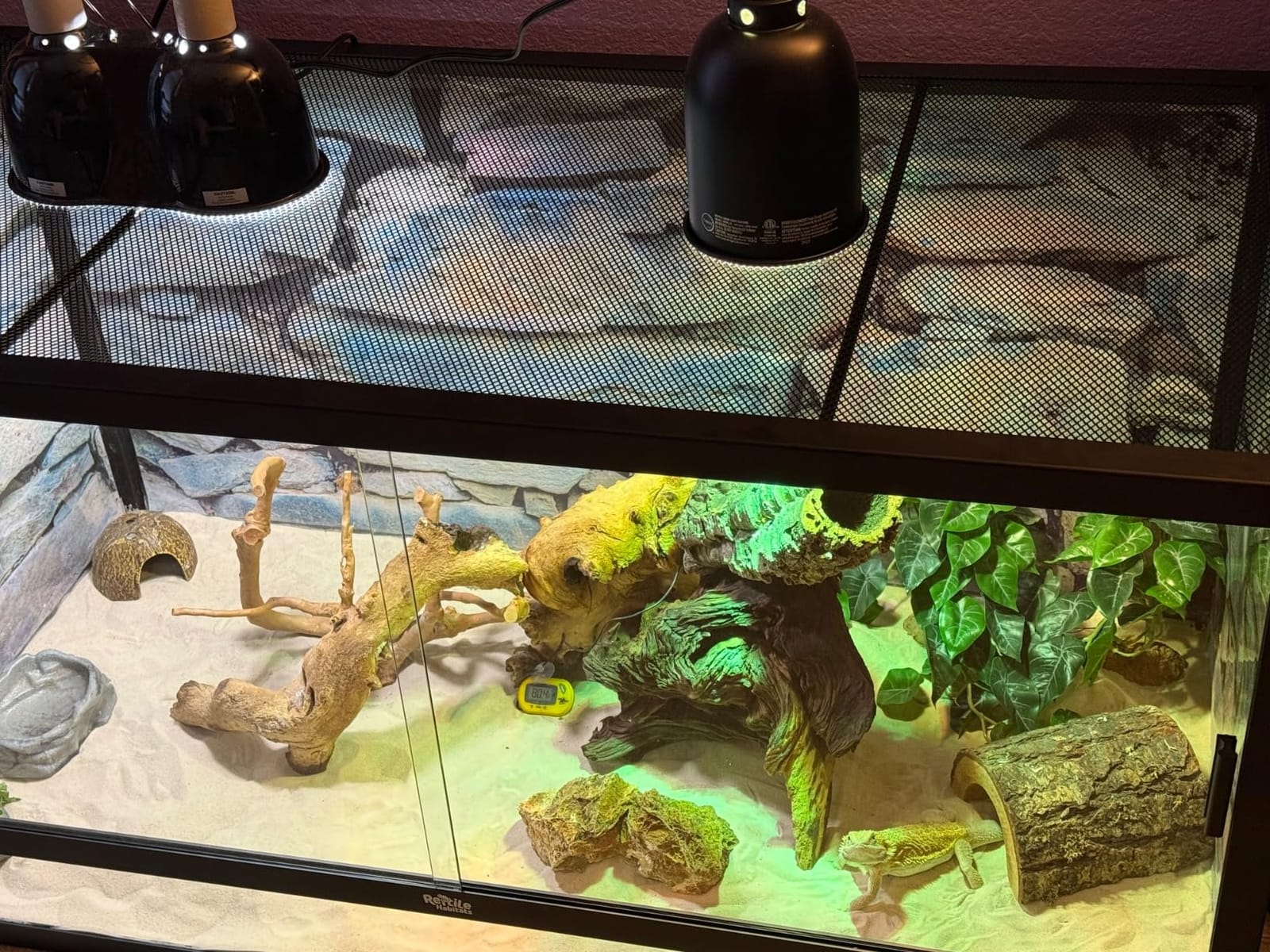
Details worth knowing before you commit. The listing carries a 4.6 rating across 350 reviews, the largest review pool of any cage in this roundup, and that volume matters because it means the reported quirks are consistent rather than anecdotal. Owners also note that cords pass through the provided side holes for lighting, which saves you from drilling your own ports on day one.
The three recurring friction points are all fixable. Printed directions are missing from the box, so expect to rely on a QR code or a video walkthrough. The bottom seam is not watertight as delivered and needs a silicone bead if you intend to run a bioactive layer. And a minority of owners report stripped or broken screws arriving in the kit, so check the hardware bag before you start and have a spare on hand.
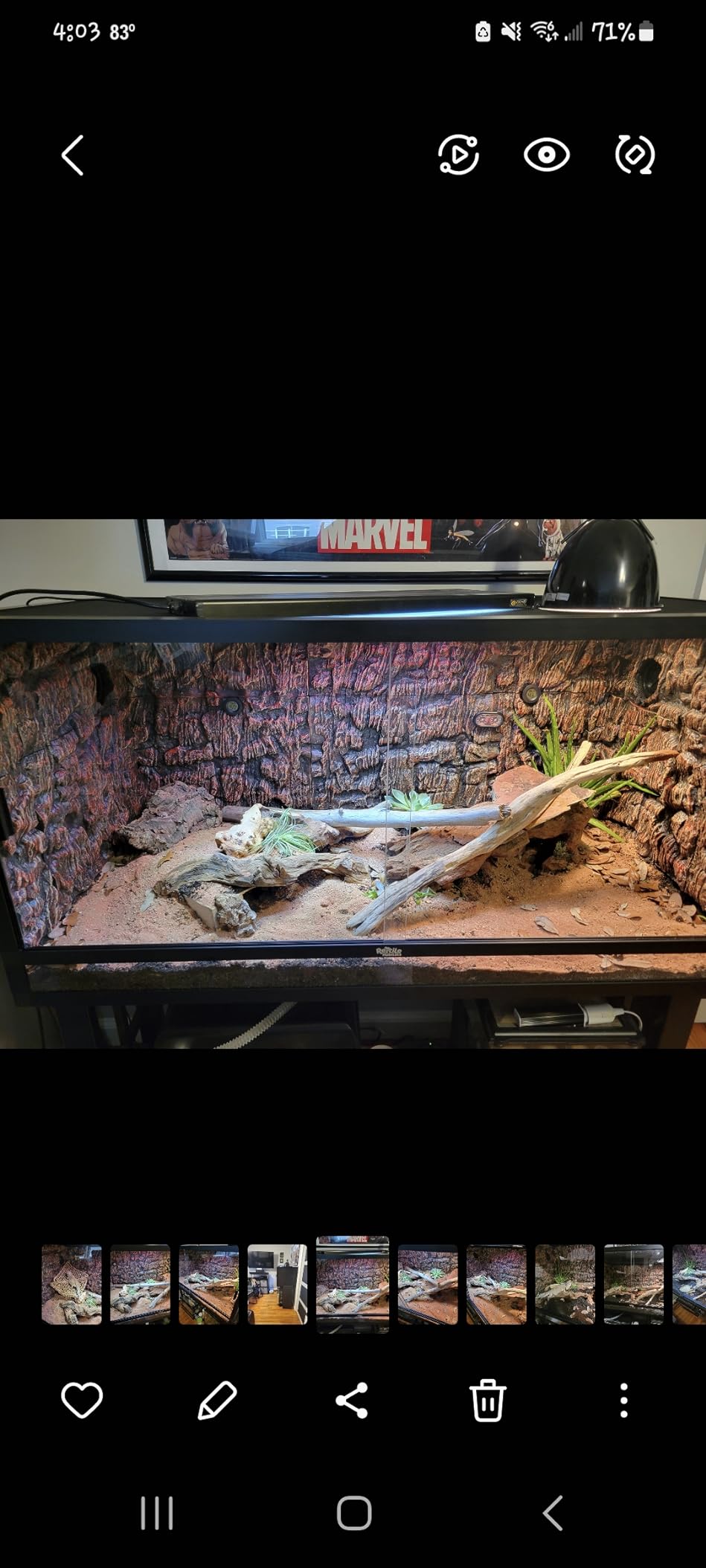
Who the Reptile Habitats 4x2x2 V3 suits?
This is the pick for an adult ball python, a juvenile to subadult boa, a corn snake or a kingsnake, and for anyone whose first serious enclosure has to do two jobs. The 4x2x2 footprint is the standard recommendation for a full-grown ball python, and the low 24 inch height still gives a solid python enough vertical clearance to stretch out along the length of the cage.
It also suits keepers who want glass doors for viewing without paying for a full glass tank. That matters more than most buyers expect, because many snakes are calmer when they cannot see movement happening outside the enclosure, and the screen top gives you a mounting point for a dome lamp or a low-wattage fixture.
Who should skip the Reptile Habitats 4x2x2 V3?
Skip it if you plan a drainage-layer bioactive setup and do not want to do any sealing work yourself, because the base seam arrives unfinished. If you need a footprint bigger than 4x2x2 on day one, this is not the size, and moving up later means a new purchase rather than an expansion.
It is also the wrong choice for a very heavy collection, since one standalone cage gives you no stacking path. Keepers building a rack-style room usually look at a stackable design with spacers instead, and for a multi-animal room that is a better long-term purchase than a second identical standalone cage.
2. REPTI ZOO 120 Gallon PVC Review: the stronger value build
REPTI ZOO 120 Gallon PVC Reptile Tank Terrarium, 48x24x24 Reptile Terrarium for Ball Python Snake Bearded Dragon Gecko, Large Reptile Glass Tank with Sliding Door & Screen Ventilation
48 x 24 x 24 inches
High-grade PVC panels
Tempered glass sliding door with lock
Detachable mesh top
Pros
- Thicker PVC than most competing enclosures
- Holds heat and humidity far better than glass
- Sliding glass doors with a working lock
- Simple and straightforward assembly
Cons
- Not watertight without silicone sealing
- Light visible through some panel seams
- Screws can crack or strip if overtightened
The REPTI ZOO 120 Gallon is the same 48 x 24 x 24 footprint as our top pick, and in several ways the more interesting box. Reviewers consistently describe the PVC as thicker than most competing enclosures at this size, and the build is noticeably heavier at 66.14 pounds, which is a fair proxy for how much material is actually in the panels.
Where it beats the field is hardware. The front is a removable tempered glass sliding door with a safety lock that actually functions, and the top screen is detachable, so you can remove the entire screen for a solid-top humidity setup in a couple of minutes if your species needs it. That reversibility is the feature owners praise most once they have owned a few enclosures.
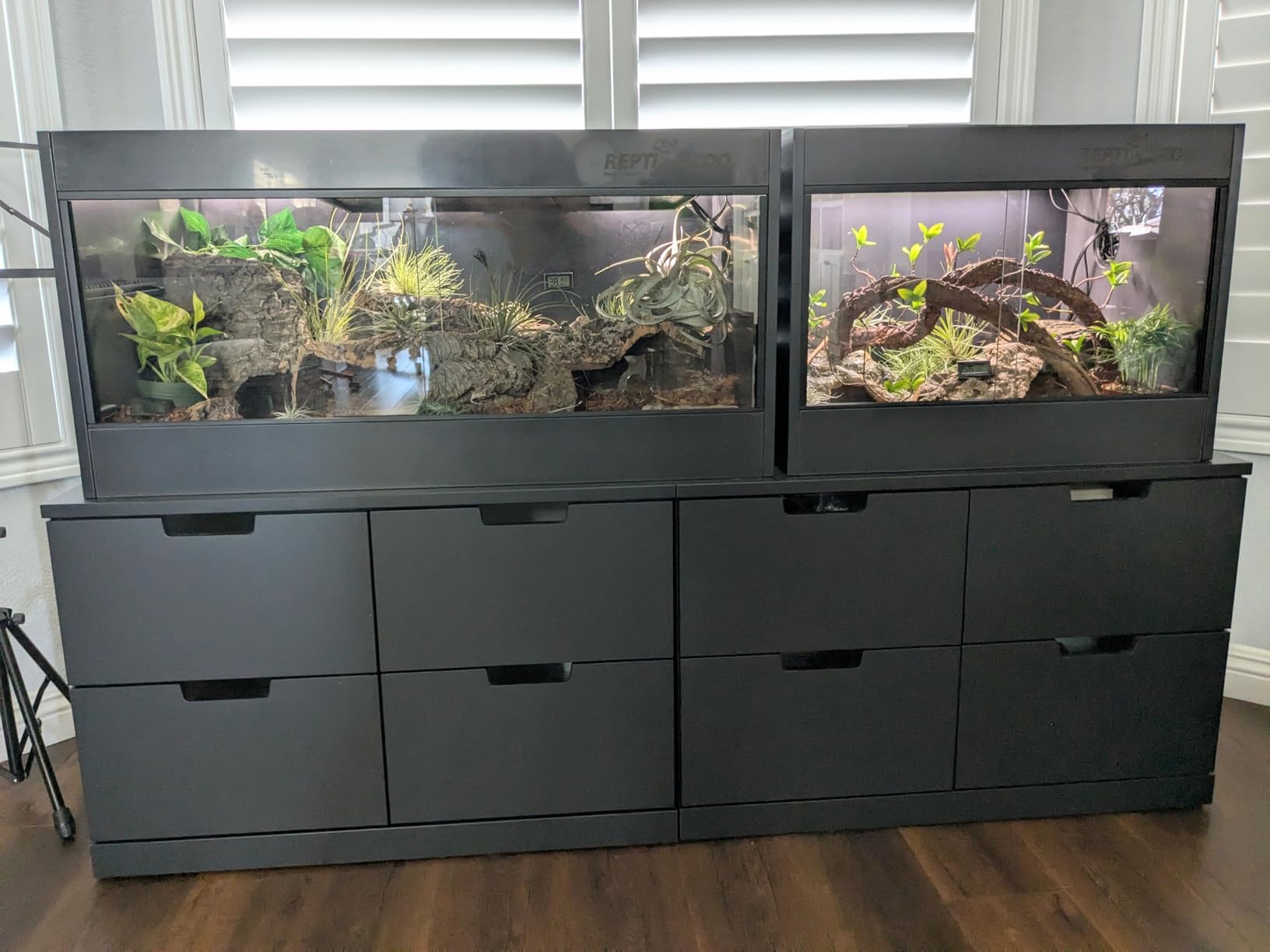
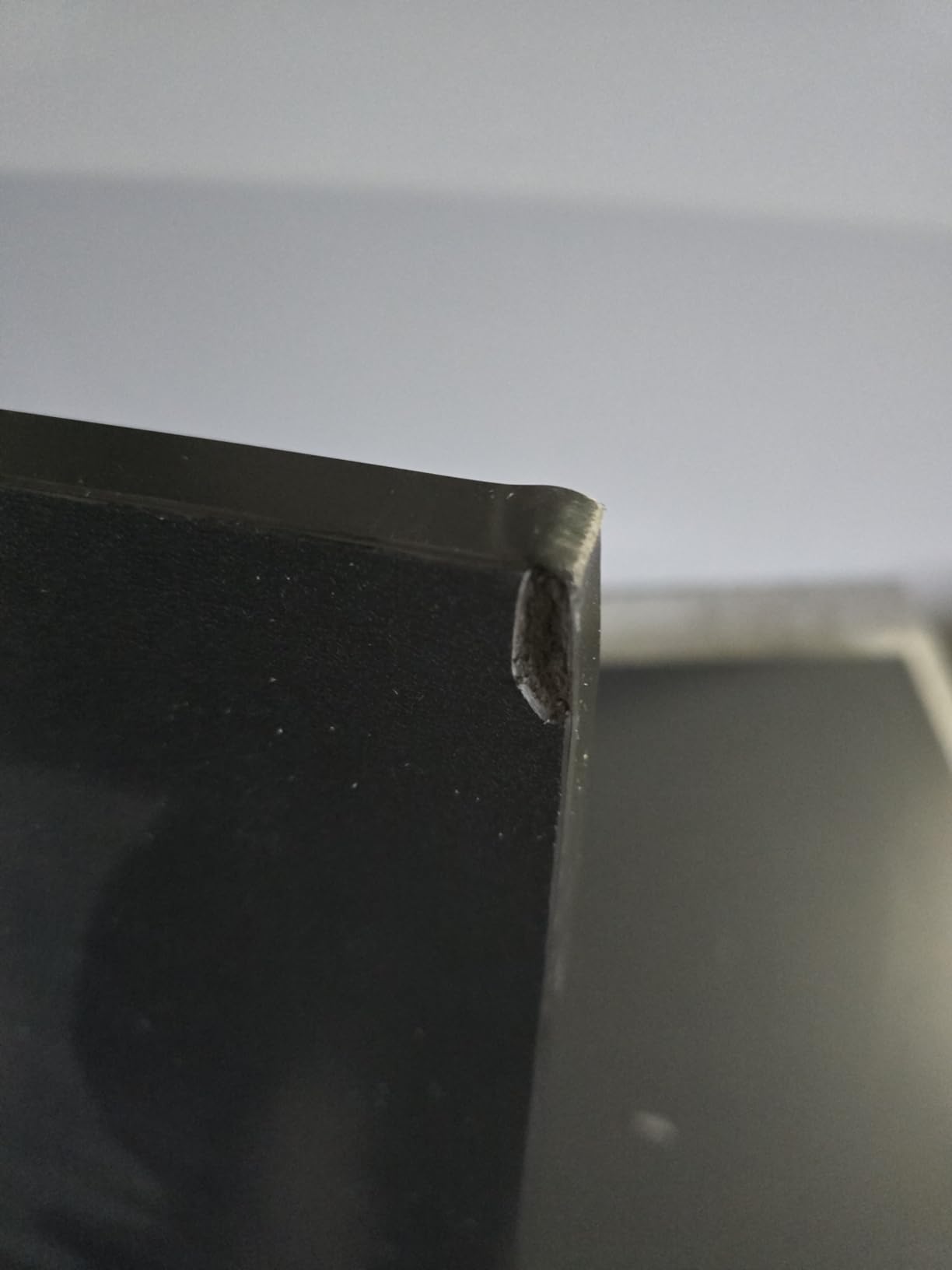
The honest part of the review record is a 4.1 rating across 163 reviews, which sits a little below the leader. Most of the gap comes from assembly and finishing rather than core quality. Light can be seen through some panel seams, the base is not watertight until you add silicone, and screws can crack or strip if you drive them with too much torque.
Buyers upgrading from glass aquariums report the humidity and heat difference as immediate and dramatic. In a glass tank the same setup can demand a humidifier running constantly, while this build holds the range with the door closed and the room doing its normal thing.
Who the REPTI ZOO 120 Gallon suits?
It suits the same species list as our top pick, with one addition: it is the better buy for a first-time PVC keeper who is nervous about online purchases. The feature set is more complete out of the box, with a lock and a detachable top, and the review pool is large enough that you can read a real pattern of owner experience before you commit.
It also works for anyone running a quarantine or a short-term rehoming setup where you need something that holds heat overnight without a heater cycling constantly. The thermal mass of the thicker panels is genuinely useful in a drafty room.
Who should skip the REPTI ZOO 120 Gallon?
Skip it if you are sensitive to see-through seams. The reported light gaps are common enough that owners who want a visually seamless cage notice them immediately, and if that bothers you, a build with tighter joint tolerances is the better spend.
Skip it if you intend to run a bioactive setup with zero modifications, for the same base-seam reason as the leader. And skip it if the assembled weight is a problem in your space: 66 pounds is very manageable in place, but awkward to carry between rooms without two people.
3. REPTI ZOO 67 Gallon Tall Review: vertical housing in a small footprint
REPTI ZOO 67 Gallon PVC Tall Reptile Tank, 24 x18x36 inch Large Reptile Terrarium for Gecko Lizard Chameleon Frog Snake, Enclosure Habitat with Sliding Door & Top Screen Ventilation
24 x 18 x 36 inch vertical
Non-absorbent PVC panels
Tempered glass sliding door with lock
Top screen ventilation
Pros
- Vertical format makes excellent use of floor space
- Non-absorbent panels recover humidity quickly after heating stops
- Sturdy build that holds humidity well
- Easy to build and easy to clean
Cons
- Must be silicone-sealed to be bioactive-ready
- Gap at the glass door tracks can catch slender snakes
- Two-piece back panel adds another seam to seal
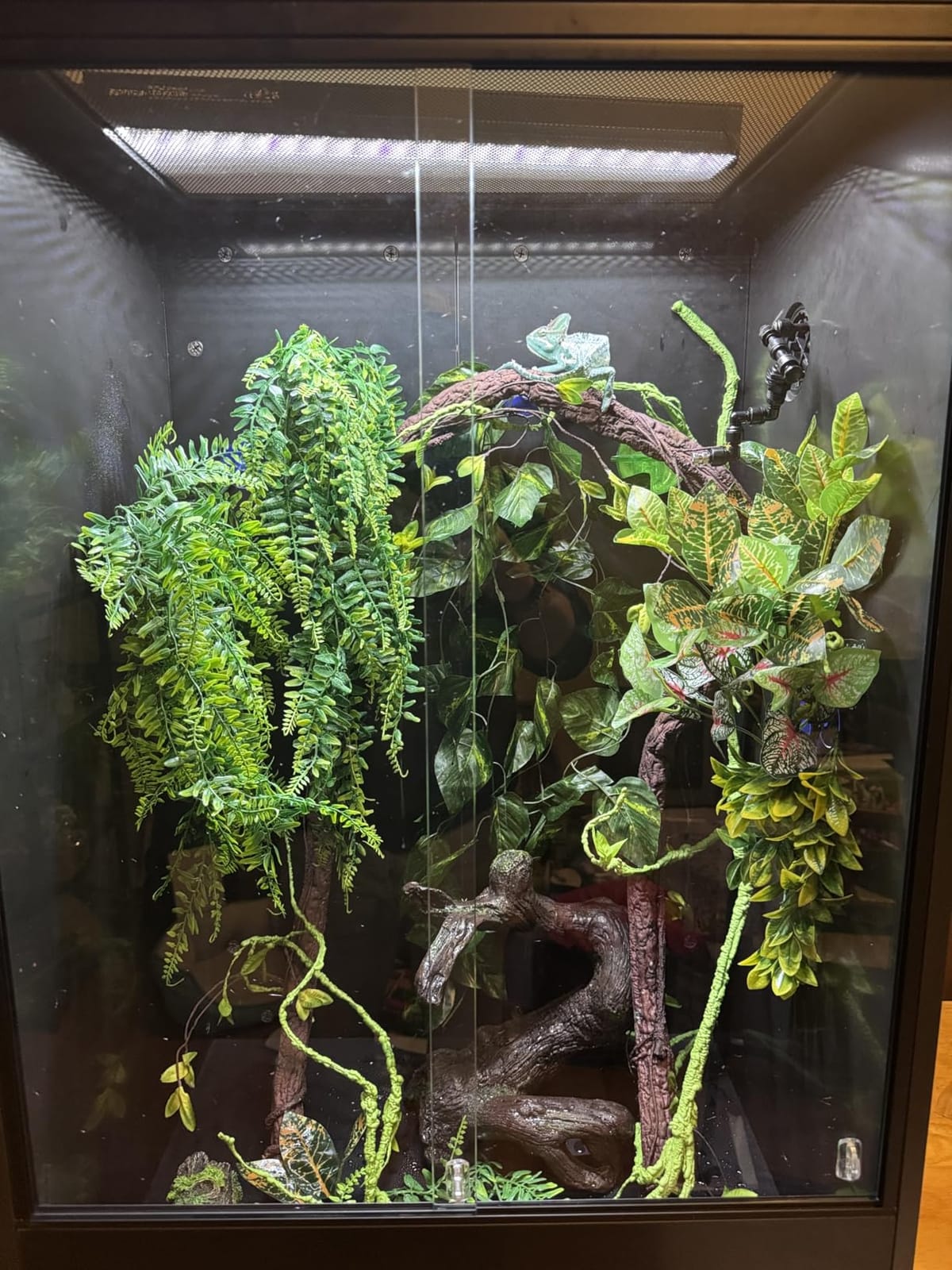
Most snake cages are horizontal, which makes sense for ground-dwelling species. When your room cannot give you four feet of length, this 24 x 18 x 36 inch vertical build is the answer, and it weighs in at 50 pounds, lighter than the 120 gallon horizontal from the same brand.
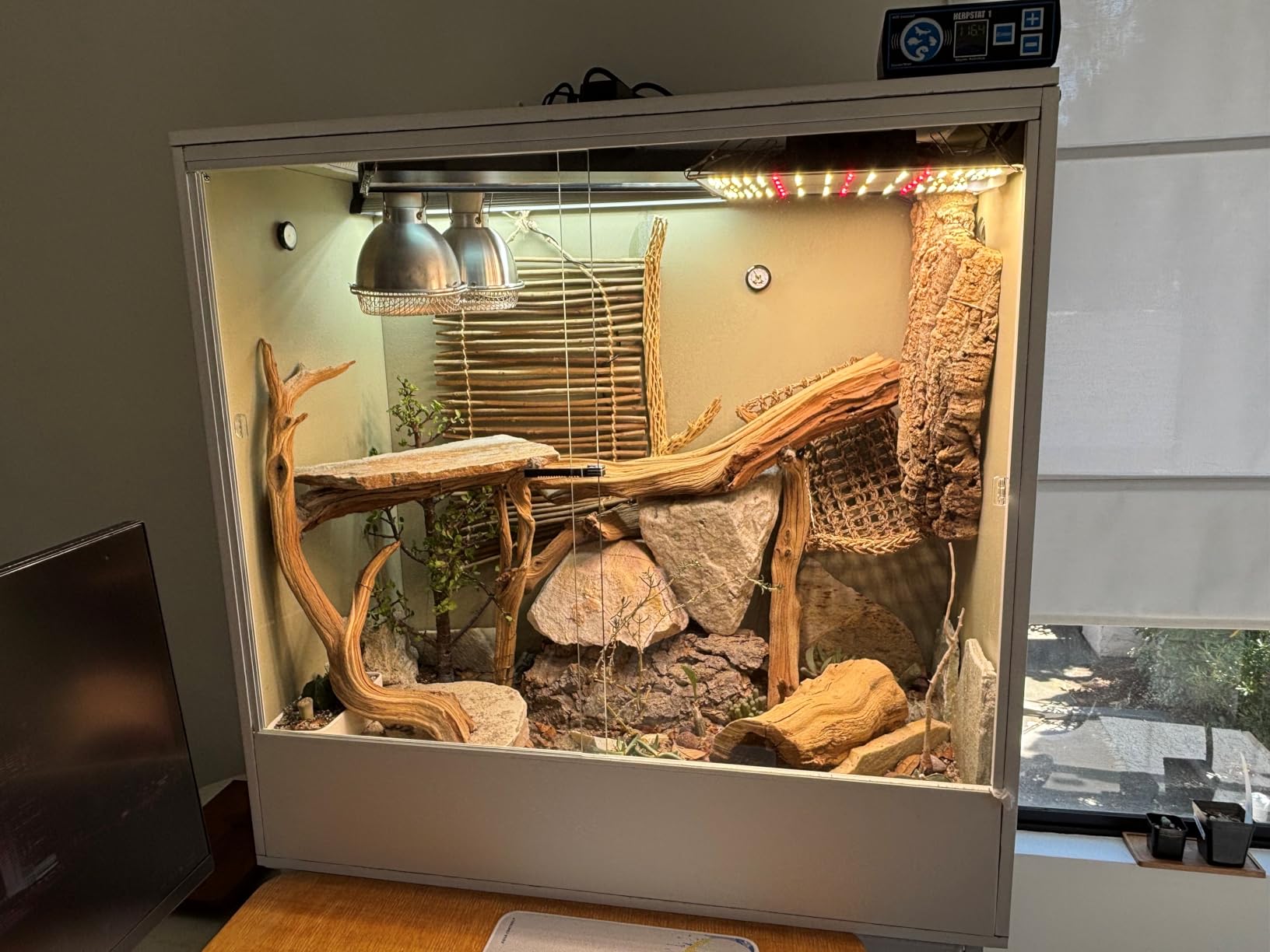
The technical detail that matters most here is the non-absorbent panel surface. Reviewers point out that these panels recover humidity quickly once heating stops, which means a warmup cycle does not leave you with a fogged or water-marked interior the next morning. That property also makes the wipe-down routine faster because grime sits on the surface instead of soaking in.
The 4.1 rating across 137 reviews comes with a specific warning that any owner of small species should read carefully: there is a gap at the glass door tracks that can let a slender snake wedge its head. That is a design feature of the sliding track rather than a defect in individual units, so it does not resolve with a different box of the same model.
The other structural note is that the back is a two-piece panel, which means one more seam to seal. If you go the bioactive route, budget time for that seam specifically, since it sits in a corner where drainage tends to find every gap.
Who the REPTI ZOO 67 Gallon Tall suits?
It suits keepers in small apartments, in rooms where a 48 inch footprint does not fit, and anyone keeping a juvenile boa, a young python or a colubrid that climbs to use vertical space. The 36 inch height also makes a workable permanent enclosure for a juvenile that you will later need to move up from, rather than a short-term grow-out box.
It is a good match for a room with a single suitable wall or corner, since the footprint is small enough to slide into a space a 4x2x2 can never reach. The same product line also comes in taller and shorter variants, which is useful if you want matching units in a vertical column.
Who should skip the REPTI ZOO 67 Gallon Tall?
Skip it for small, slender-bodied species such as young corn snakes or juvenile kingsnakes unless you plan to modify the door track. Owners who keep chunkier pythons and boas do not report the problem, but the risk is not worth taking on a snake that is eight inches long.
Skip it for desert setups where you need a wide basking area. A narrow vertical cage forces the animal to climb for warmth, which works for a climbing species and works badly for one that basks. Some gecko and chameleon owners have also raised questions about the fiberglass content in the panels, which matters for those species and not for the snakes this roundup covers.
4. ToxiRium 44x20x20 Stackable Pair Review: the multi-animal room pick
PVC Reptile Enclosure Space Efficient 44”x20”x20” Stackable ToxiRium Large Reptile Terrarium 76 Gallons for Bearded Dragon Lizard Snake, Breeding Vivarium with Sliding Doors Lock-2pcs with spacers
44 x 20 x 20 inches each
Support bars on screen and base
Stackable with included spacers
Pair of sliding doors with locks
Pros
- Space-efficient 44 inch footprint offers good floor space
- Support bars hold lighting and heavy decor securely
- PVC construction reduces heat loss and running costs
- Stackable so multiple units fit one room
Cons
- Two enclosures arrive in one oversized carton
- Wide deep footprint is awkward through doorways once assembled
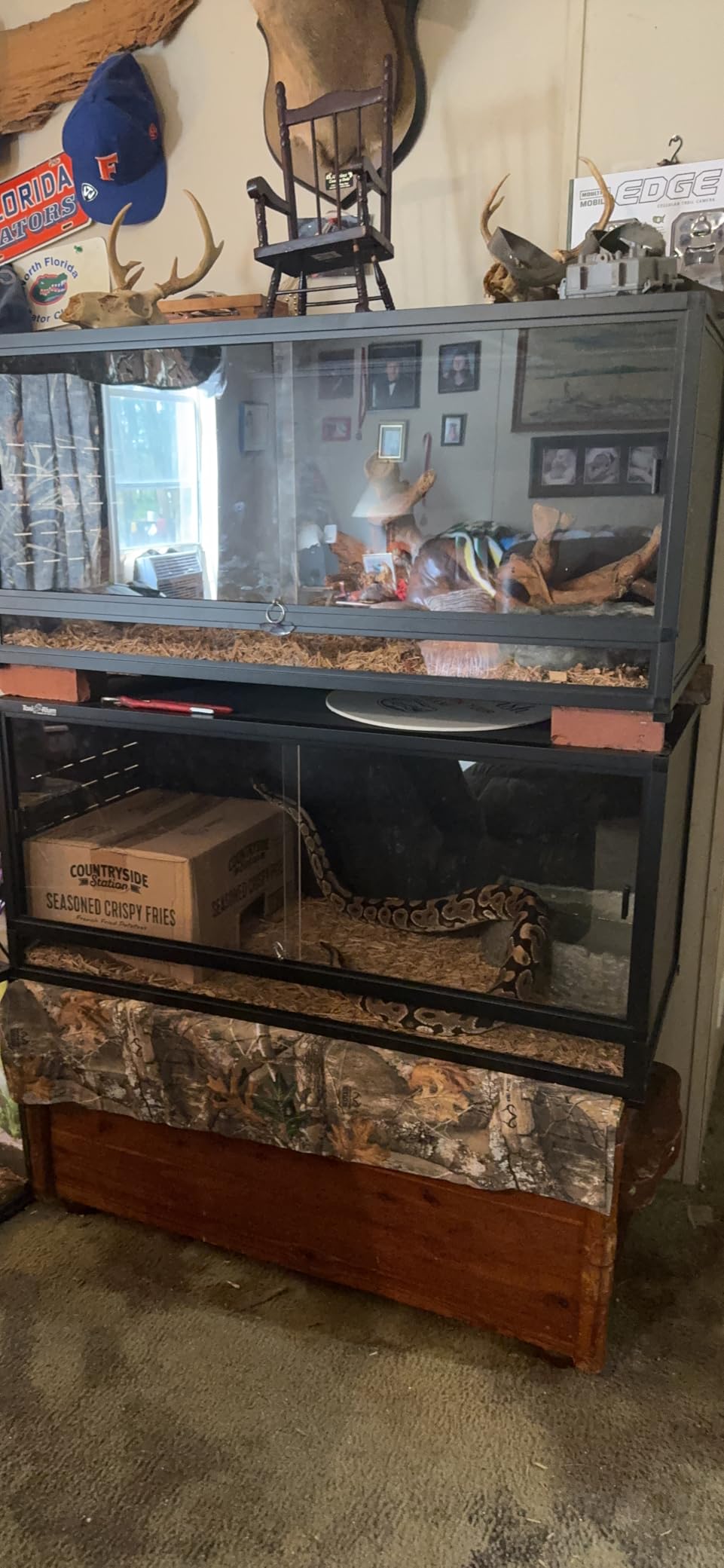
Buy two and you have the beginning of a rack. The ToxiRium 44x20x20 configuration ships as a pair with spacers included, and 44 x 20 x 20 inches works out to a 76 gallon footprint per unit. For a breeder, a rescue, or a keeper with three or more animals, that stacking path is the argument for the whole package.
The detail that separates this from a generic two-pack is the support structure. Bars run across the top screen and along the bottom panel, and the bottom is rated for decorations up to 105 pounds. In practice that means you can build a proper elevated water feature or a heavy background wall without worrying that the panel will bow.
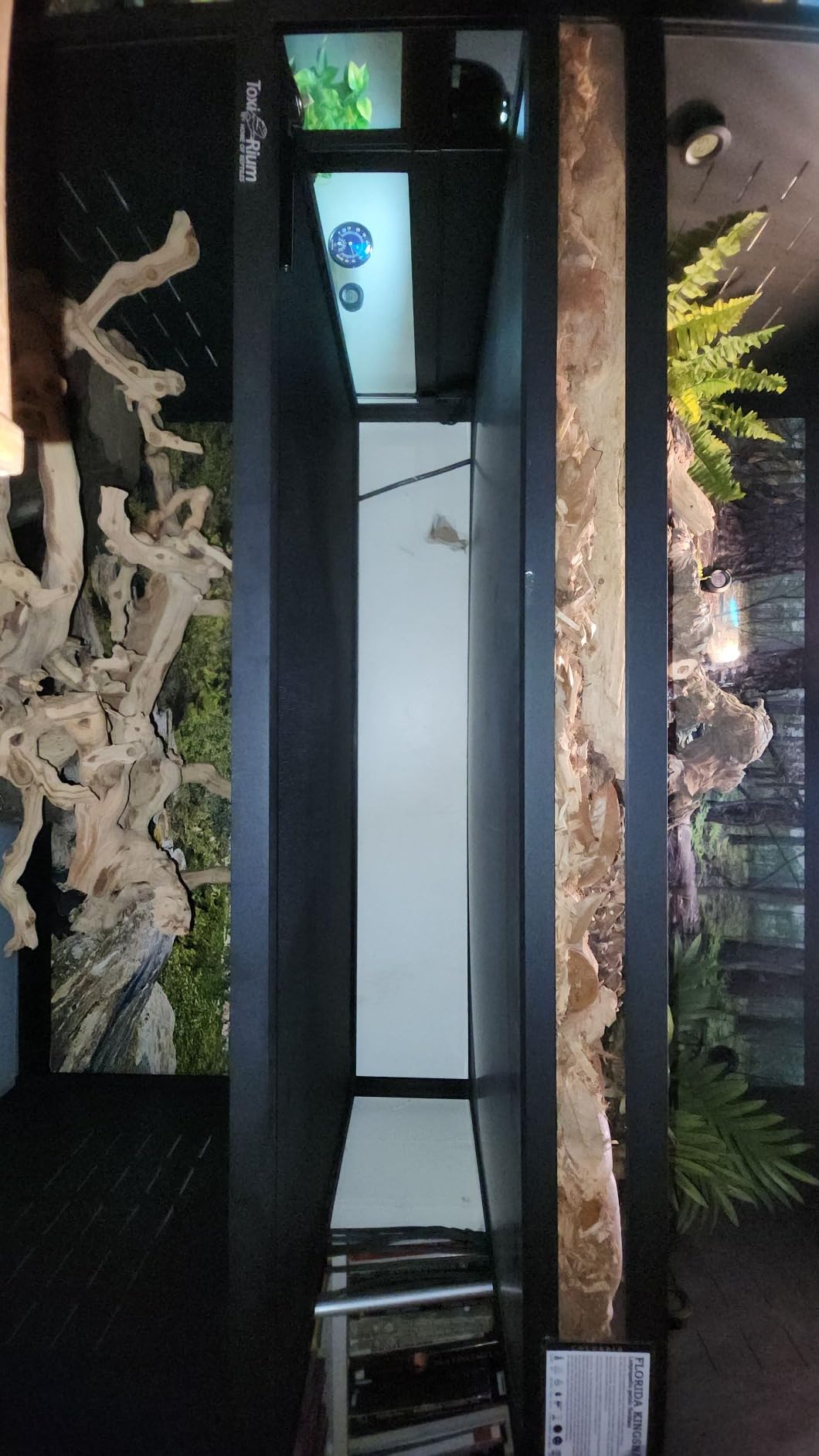
At 39 pounds per enclosure, these are among the lighter large-format PVC builds, and owners point to the reduced heat loss as a direct running-cost benefit. A PVC cage holds a set ambient without the heater working as hard, and in a room running multiple units that compounds quickly over a year.
The 4.2 rating across 89 reviews is a solid, well-sampled score. The one complaint that shows up repeatedly is packaging: two enclosures arrive in a single oversized carton, so you need a clear path from the front door to the final location before you open the box, and a second person helps.
Who the ToxiRium stackable pair suits?
It suits breeders, rescues and anyone running a room of three or more enclosures, because stacking with the supplied spacers is the whole point. It also suits a keeper who wants one large adult enclosure now and a second identical enclosure later, since both halves of the pair are the same 44x20x20 footprint.
The bottom panel rating makes it a good fit for bioactive-style enrichment too, since heavy substrate, water features and deep background work are all supported rather than improvised. The product is also listed for ball pythons, bearded dragons, leopard geckos and sand boas, so it covers a range of adult animals.
Who should skip the ToxiRium stackable pair?
Skip it if you need one enclosure today and are not ready to place a second. The oversized carton is genuinely awkward to bring in and move, and a buyer who only wanted a single cage has no use for half the contents.
Skip it if your space is a standard closet or a narrow shelf unit, because the 20 inch depth plus a spacer stack needs more vertical clearance than most furniture provides. Measure the finished height of a stacked pair with spacers, not one enclosure, before you commit.
5. REPWILD 4x2x2 PVC Review: the thickest panels in the roundup
4x2x2 (120 Gallon) PVC Reptile Enclosure, RepWild Terrarium/Tank with Heavy-Duty Screen Top, Glass Sliding Doors & Lock for Bearded Dragons, Ball Python, Geckos, Lizards
48 x 24 x 24 inches
3/5 inch thick PVC panels
Tempered glass door with lock and handle
Durable mesh top
Pros
- Thickened panels resist warping in humid setups
- Near-invisible joints when assembled correctly
- Illustrated step-by-step manual for first-time builders
- Multiple sizes available
Cons
- Silicone still recommended for bioactive setups
- Flat-pack carton is large and awkward to handle
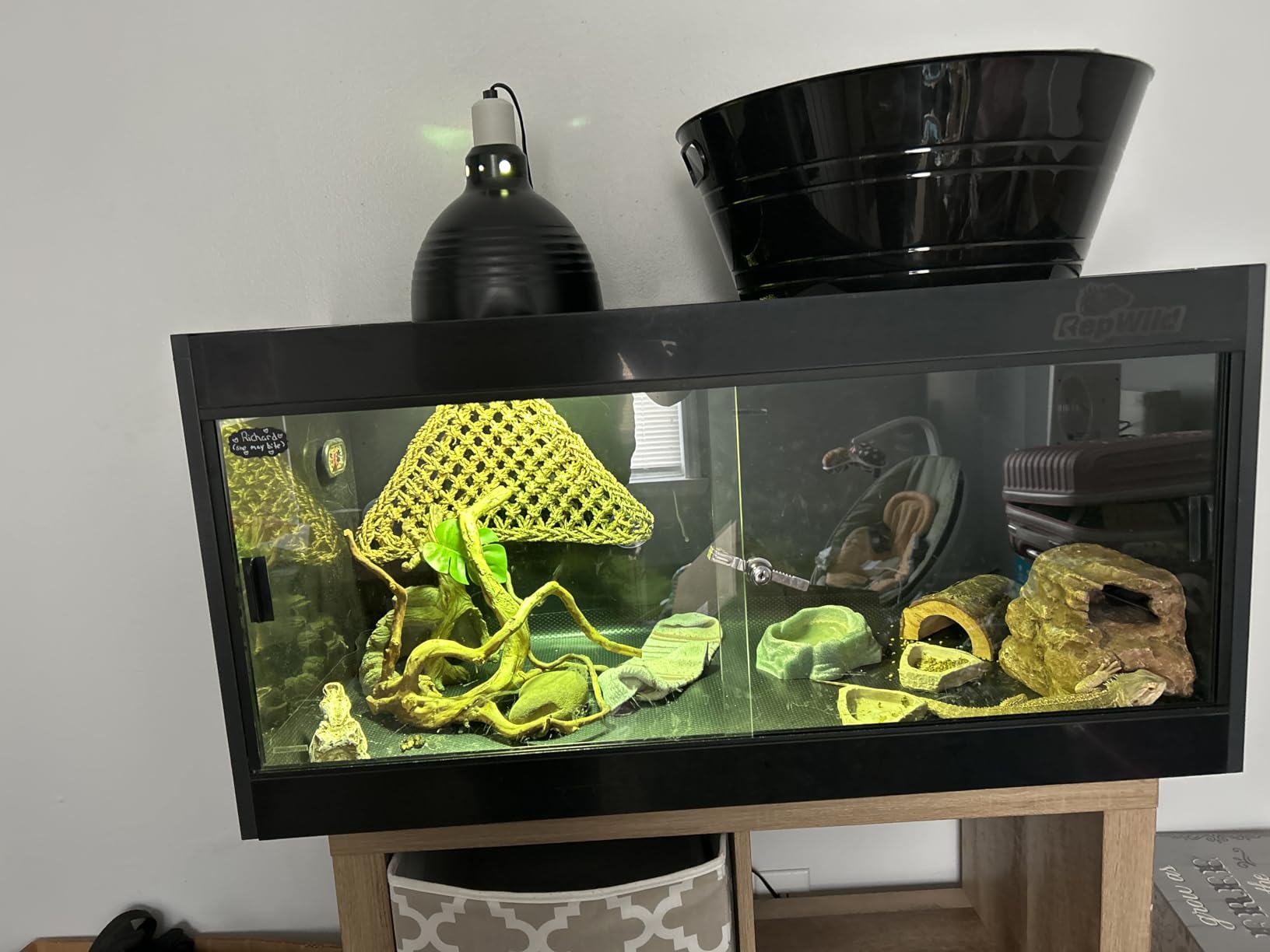
The REPWILD 4x2x2 is the spec outlier here. Its panels are listed at 3/5 inch thick, which is the thickest board in this roundup by a clear margin, and the difference shows where it matters: owners report that the panels resist warping in humid setups and that the joints close tight enough to be nearly invisible when assembled correctly.
The other thing that stands out is documentation. This is the only build in the group where reviewers specifically praise an illustrated step-by-step manual with visual guides. For anyone who has never assembled a flat-pack enclosure before, that removes the single biggest source of frustration in this category.
The front is a tempered glass door with a lock and a handle, and the top is a durable mesh panel sized for UVB and heat penetration. The line also comes in several footprints, so a keeper starting with a juvenile can step up within the same brand and the same door and vent layout rather than relearning a new system.
At 4.1 across 61 reviews, the score sits mid-pack but the sample is meaningful and the complaints are narrow: add silicone if you are going bioactive, and plan for a large flat-pack carton. The package is listed at 53 x 27.5 x 5.5 inches and 63 pounds.
Who the REPWILD 4x2x2 suits?
It suits first-time enclosure builders and anyone who has had a bad experience with unclear instructions. The manual plus the near-invisible joints means a clean-looking result without a second attempt, which matters if the cage is going in a visible part of your home.
It also suits keepers in humid climates who have seen panels bow in thinner builds. The 3/5 inch board is the honest answer to heat and humidity warping, and it is the reason this cage earns its place despite a mid-pack review score.
Who should skip the REPWILD 4x2x2?
Skip it if the review volume matters to you. At 61 reviews it has the least evidence behind it of the mainstream options, and if you are spending this much on a build you want a longer track record of owner results.
Skip it if you want a lockable door as a standard feature for a known escape-prone species, and check the hardware carefully on arrival. It is also not the choice for anyone who needs an unusual footprint, since the size range here covers common rectangles rather than custom dimensions.
6. Reptiz 120 Gallon PVC Review: non-reflective panels for nervous snakes
ToxiRium Reptile Terrarium 120 Gallon Large, PVC Enclosure Breeding Tank for Bearded Dragon Gecko Lizard Snake, Wide Breeding Lounge Vivarium Area with Ventilation, Suit for Juvenile to Adult Reptiles
48 x 24 x 24 inches
Non-reflective PVC panels
Side vents plus top mesh screen
Stackable, cable management built in
Pros
- Non-reflective panels reduce stress when approaching the animal
- Well-priced for a 120 gallon PVC build
- Built-in cable management for lighting and heat devices
- Stackable and disassembles easily
Cons
- Not waterproof
- best suited to dry setups
- Slim frame profile feels less rigid than heavier competitors
The Reptiz 120 Gallon is the one in this group built specifically around a behavioural problem. Its non-reflective PVC panels remove the mirror effect that happens when a snake sees its own reflection, and owners report that the animal is noticeably less reactive when you approach the front of the cage to feed or handle.
At 35.15 pounds it is also the lightest full-size 4x2x2 here, which makes it the easiest to move for cleaning or repositioning. The panels still insulate well, and the additional side vents plus the top mesh screen give you a more freely ventilated box than the fully sealed builds.
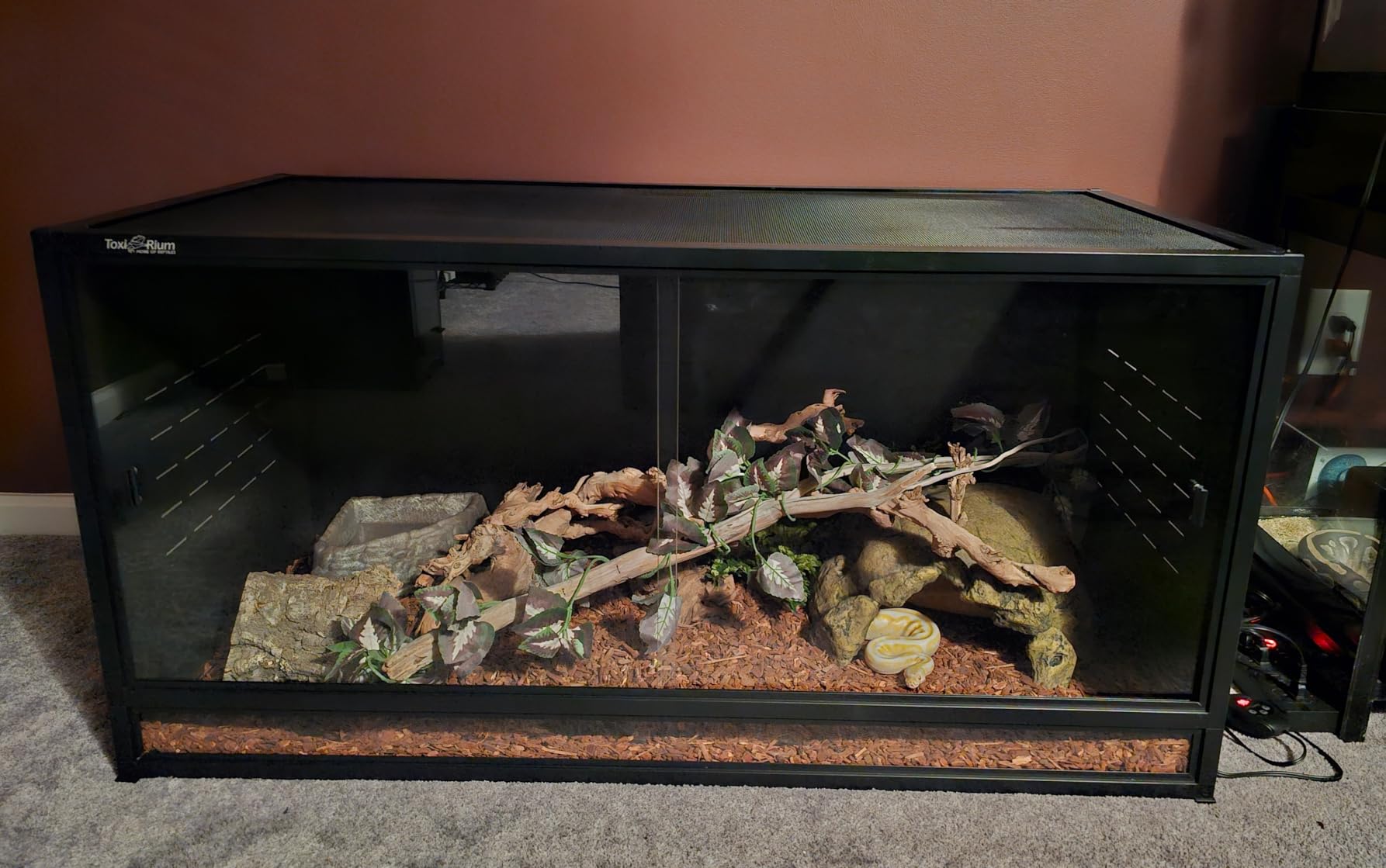
What makes it distinct in daily use is the cable management organizer built into the frame. Lighting, timers and heat devices all have somewhere to sit without tape or clamps on the outside of the cage, which is a small thing that becomes a large thing once you reconfigure a setup four or five times.
Stacking works either directly or through aquarium spacer stands, and the whole thing disassembles for storage. The 4.2 rating across 41 reviews is a good score on a modest sample, and the reviews are consistent rather than split.
Who the Reptiz 120 Gallon suits?
It suits keepers of shy or defensive species, including ball pythons that strike at the front glass and colubrids that startle at reflections. If your snake has a history of repeatedly hitting the front pane, a non-reflective panel is a genuine welfare improvement rather than a cosmetic one.
It also suits anyone in a dry or temperate room who is not chasing high humidity, because the extra side venting keeps air moving without a humidifier. And it suits keepers who move cages often, since at 35 pounds it is the one you can carry alone without planning for a second pair of hands.
Who should skip the Reptiz 120 Gallon?
Skip it for tropical species and any bioactive setup. Owners are clear that the panels are not waterproof and that the best fit is a dry, desert-style habitat, so a ball python that needs sustained high humidity is the wrong resident.
Skip it if you prefer a heavy, rigid frame. The slim frame profile reads as less solid to owners than the aluminum-framed builds, and if you intend to hang heavy lighting from the top rails, check the load rating for your specific fixture before you drill anything.
7. Reptile Habitats 5x2x2 V3 Review: the step-up footprint
Reptile Habitats 5x2x2 (150 Gallon) Reptile Enclosure V3, Features PVC Panels, Glass Doors, Lightweight, Easy to Assemble, Heavy Duty Screen, Aluminum Frame
150 gallon 5x2x2 advertised footprint
PVC panels with aluminum frame
Heavy duty screen top
Glass doors
Pros
- Largest floor space in this roundup at 5x2x2
- Durable PVC panels unaffected by humidity
- Lightweight and easy to move
- Aluminum frame and screen feel sturdy
Cons
- Published dimensions do not clearly match the 5x2x2 footprint
- Build time runs longer than the common sizes
The 5x2x2 footprint is the answer when 4x2x2 has stopped being enough. This build pairs the same PVC panel and aluminum frame approach as the smaller unit with a floor area that is roughly a quarter larger, and reviewers consistently single out the floor space as the reason they are happy with it.
At a 4.5 rating, this is the second-highest score in the roundup, and it is worth understanding why before you read it as a stronger result than the top pick. The review pool is 28, which is small. A small pool can produce a high average, so the score tells you the buyers who did respond were satisfied, not that the product is proven across thousands of builds.
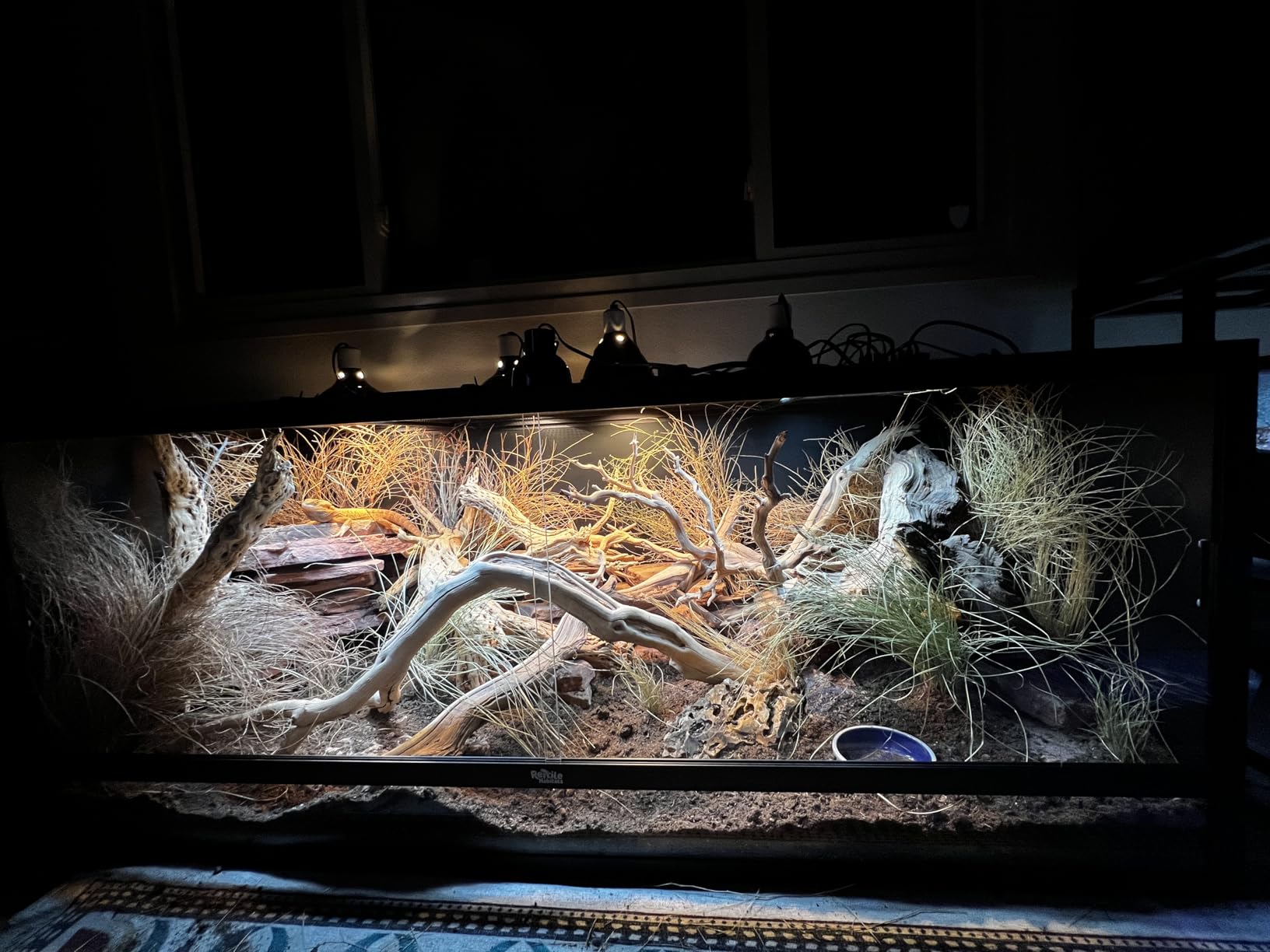
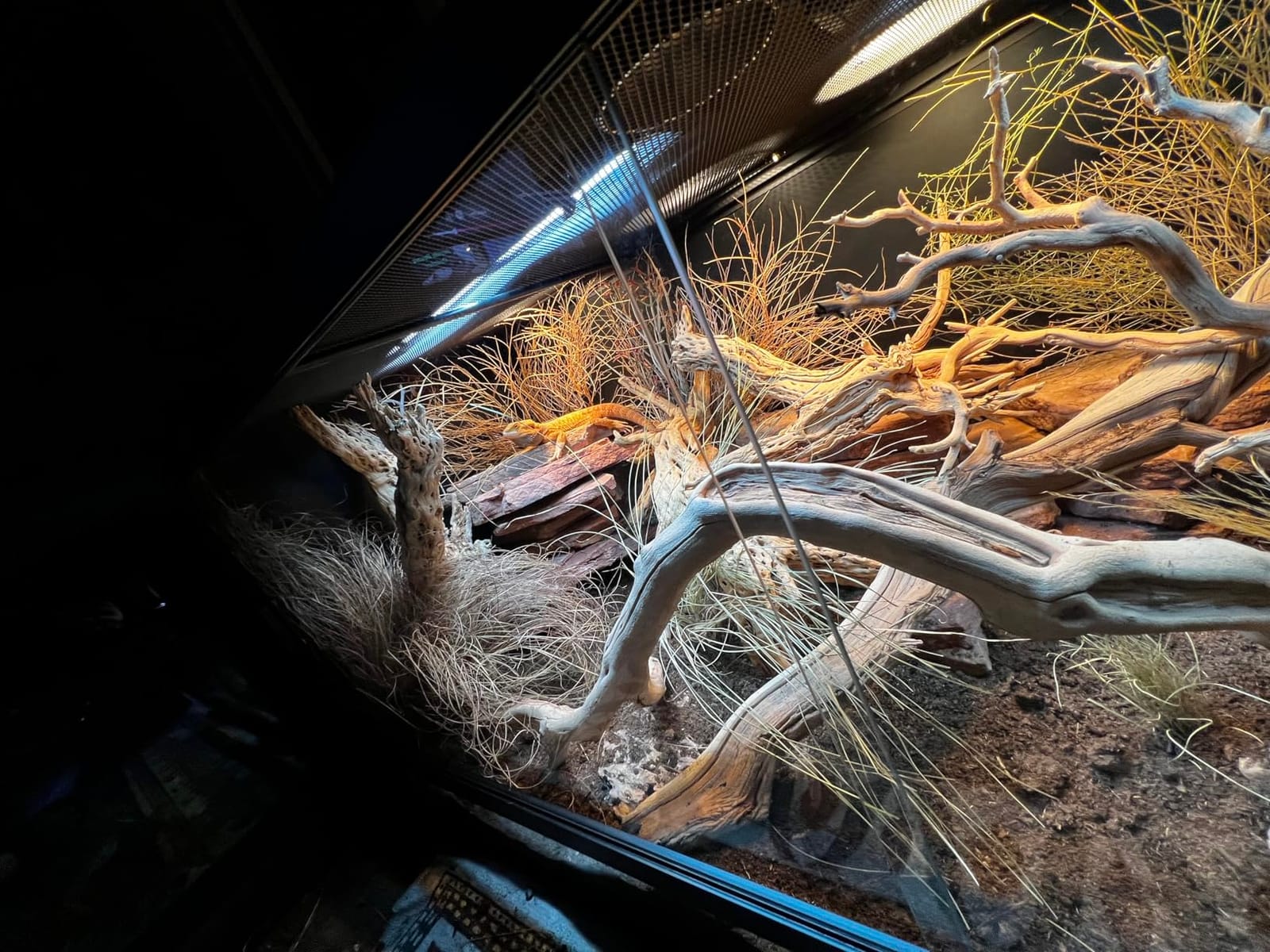
The durability profile is the same selling point it has always been: PVC panels that are unaffected by humidity, a heavy duty screen top, and a frame that owners describe as sturdy. Buyers also call it lightweight and easy to move, which is a pleasant surprise at 150 gallons of footprint.
One caution is worth the space it takes. The published package dimensions of 60 x 60 x 24 inches do not clearly line up with a 5x2x2 enclosure footprint, and some owners question the match. Measure your intended space against the actual interior rather than trusting the size label, and allow more time than usual before ordering a build this size if housing is urgent.
Who the Reptile Habitats 5x2x2 V3 suits?
It suits a keeper whose snake has outgrown 4x2x2, especially a large female ball python, a sand boa or a young boa that wants more lateral room. It also suits anyone who wants the maximum usable floor area without moving up to a six foot or eight foot enclosure, which are a step change in weight and handling.
Because the panels and frame match the smaller 4x2x2 line, it suits a keeper who already owns that build and wants their enclosures to look identical across a collection. The glass doors and screen top also mean the same heating and lighting setup transfers without adapters.
Who should skip the Reptile Habitats 5x2x2 V3?
Skip it if you need the enclosure quickly. This format is listed outside the standard expedited programme, so if you have just adopted a snake that needs housing now, one of the common sizes is the safer buy.
Skip it if you are furnishing from scratch, because the 150 gallon footprint takes considerably more substrate, more decor and more stable temperature control than a 120 gallon, and a smaller cage with a smaller animal is easier to keep in range on day one.
8. ToxiRium 8x2x2 240 Gallon Review: for big boas and pythons
8FT PVC Reptile Enclosure 8x2x2FT, 240 Gallon Modular Expandable Terrarium with Tempered Glass Front Opening Sliding Doors, Lockable Habitat for Bearded Dragon Gecko Lizard Snake, Black
96 x 24 x 24 inches
Non-reflective PVC panels
Two tempered glass sliding doors with lock
Side vents and top mesh screen
Pros
- True 240 gallon footprint for large adult boas and pythons
- Non-reflective panels keep animals calmer
- Modular and expandable construction for multi-animal rooms
- Two sliding doors with a secure lock for feeding access
Cons
- Not watertight
- suits desert-style habitats only
- Very large footprint needs two people and planned layout
At 96 x 24 x 24 inches, this is the largest enclosure in the roundup, and it is the correct answer for an adult boa, a reticulated python or a large Burmese python that has genuinely outgrown a six foot cage. The two front sliding tempered glass doors give you the full length of the enclosure as an opening, which matters for feeding a large animal that will not track a small door.
The build shares the non-reflective panel treatment from the smaller ToxiRium model, and owners report that it keeps animals calmer. The doors carry a lock, which is not a minor point for a snake of this size: a large python pushing on a sliding panel is a different problem from a small ball python doing the same.
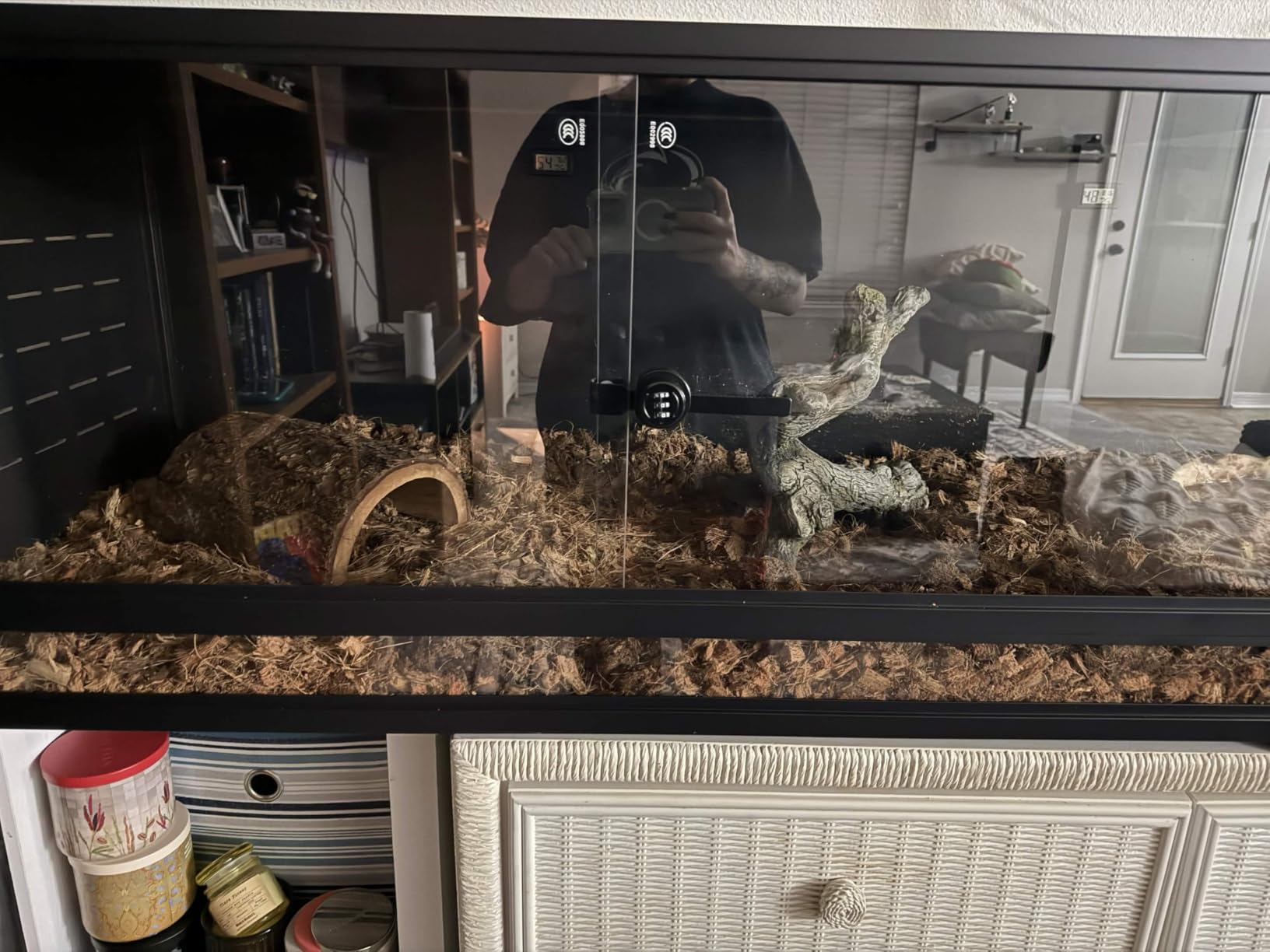
Modular and expandable construction is the other headline. In a room of large enclosures, being able to install or disassemble a unit and reconfigure the run is worth more than any single spec, and the same product family includes 120 gallon, 76 gallon and 44 gallon formats so a mixed room can still read as one system.
The 4.0 rating across 26 reviews is the smallest sample in the roundup, and the two drawbacks owners name are physical. It is not watertight, so it suits desert-style habitats only, and a 96 inch footprint needs two people and a planned room layout, since you cannot correct the position once it is against the wall.
Who the ToxiRium 8x2x2 suits?
It suits keepers of large adult constrictors who need length over height, and anyone building a dedicated reptile room where a single 8 foot run is the plan. The lockable double doors and non-reflective panels also make it a reasonable quarantine or rehoming cage for larger snakes.
It suits a keeper with a plan rather than a hope. The modular construction means the room can grow later, and the shared footprint range across the family means a mixed collection still lines up along one wall instead of looking assembled from unrelated purchases.
Who should skip the ToxiRium 8x2x2?
Skip it unless you have a snake that needs it. At this size the humidity question becomes the deciding factor, and the build is not watertight, so a tropical or bioactive setup means sealing the entire base and every seam before you start.
Skip it for a first enclosure, and skip it if your space cannot be measured to a 96 inch run with clearance for the door swing. Owners consistently note that a footprint this large needs two people to move and a room layout decided before the first panel goes up.
Which Enclosure Type Is Right for Your Snake?
PVC wins for most snake keepers, but it is not the right answer in every case, and the honest comparison is about what you give up rather than what you gain. Glass gives you the best visibility and usually the lowest entry cost, at the price of weight, shatter risk and constant heat loss. Screen is cheap and light and effectively unusable for a humidity-sensitive species. ABS sits between the two and is lighter than PVC, but it scratches more visibly and softens sooner under heat.
HDPE is the one most buyers have not considered and the one worth knowing. The premium builds sold by Toad Ranch, for example, are HDPE and PVC rather than pure PVC. HDPE is a harder-wearing plastic that resists scratching better than PVC and does not yellow, at the cost of being harder to cut and machine yourself. It is a sensible premium choice, and it is why brand names on a listing page do not always tell you what the panels are made of. Our swim spa enclosure guide covers the same tradeoff in a different context, where holding a stable climate over years is the whole job.
Read across the materials and the pattern is consistent. PVC and HDPE lead on humidity retention and heat retention, glass sits in the middle, and screen is worst of all. Glass is the heaviest and the best for visibility, screen is the lightest, and PVC sits between them while weighing far less than the eye expects at a given size.
One more point on material safety. Expanded PVC is a rigid foam-core sheet and is what most quality builds use. Solid PVC sheet, which some budget cages use, is heavier, more brittle and more prone to showing every scratch. When a listing does not state a thickness, ask before you buy.
Enclosure Size Chart: How Big Should a Snake Cage Be?
Rule one: the enclosure should be at least as long as the snake is, and preferably one and a half to twice that length, with enough height for the species to make a choice about where to be. Rule two, and this is the rule that ends most arguments: a bigger cage is not a better cage if you cannot hold the temperature and humidity inside it. Many owners do better with a 4x2x2 they can control than a 6x2x3 they cannot.
For an adult ball python, 4x2x2 is the standard recommendation and the size class most of this roundup covers. A corn snake or a kingsnake is more active and does better with length, so 4x2x3 or a 6x2x2 gives them somewhere to move. A boa constrictor moves more and grows for years, so 6x2x3 is the better starting point for a subadult and 8x2x2 for an adult.
For arboreal colubrids such as emerald tree boas or anacondas that climb, height matters as much as length, and that is the case for a vertical 24x18x36 unit rather than a long low one. For a juvenile, buy the size the animal will be in a year, not the one it is today, because resizing a cage is far more disruptive than a slightly oversized new enclosure.
Finally, count the climb. A snake that can only ever be at the same height in the cage will sit in the warm spot all day and use only part of the enclosure. Two or three stable horizontal surfaces at different heights, plus a hide that is not the warm spot, is the minimum for a healthy setup in any of the cages above.
PVC Board Thickness: The Spec That Matters Most
If you read one spec before you buy, read the board thickness. The enthusiast DIY benchmark is 1/2 inch (12mm) expanded PVC, and the consensus on keeper boards is that even entry-level builds with a metal frame use boards around 6mm thick. Those two numbers are how most experienced keepers grade a cage they have never seen in person.
Why thickness matters so much in this one product category: thicker panels hold heat better, resist warping in a humid enclosure, take a hanging fixture without flexing, and make the difference between a frame that feels solid and one that feels hollow when you close the doors. Thinner panels are not unsafe, they just make the enclosure noisier, cooler and flimsier than you expected.
Read the listing language carefully. Enclosures described as using expanded PVC with a 1/2 inch board are in the top tier. Framed panels described as around 6mm are the entry tier and are perfectly fine for a first adult ball python. Anything that does not state a thickness at all deserves a question before you commit.
The other half of the material question is what the panel is bonded to. A well-built cage solvent-welds the seams so the panels and the frame become one rigid body, which is why a welded build feels quiet and a screwed-together build from thin board rattles. That difference is audible the first time you close the doors, and it is a better quality signal than most listings bother to mention.
Venting, Doors and Locks: What Actually Changes Day to Day?
Solid top, full mesh top, or vents only along the back. This is the single most debated decision in the hobby, and the honest answer is that it depends on your species. Solid tops are much easier to maintain humidity levels, which is why most ball python and boa keepers end up with one, sometimes by covering a mesh panel with a glass or acrylic sheet as the forum consensus recommends. Full mesh tops give you easier placement of UVB and heating, which is what a gecko or an arboreal species needs.
Whatever you choose, buy the top that lets you change your mind. The REPTI ZOO 120 Gallon in this roundup has a detachable mesh screen top, which means it can be a ventilated cage this year and a solid-top humidity cage next year without replacing the enclosure.
Doors are the second decision. Sliding glass with a working lock is the best option for escape prevention, and it is worth insisting on for any species that pushes on doors. Acrylic doors are lighter and cheaper but scratch visibly, and one owner described acrylic as the only thing they disliked about an otherwise good PVC tank. Hinged doors are convenient for access and are the most common failure point over years, because the hinge alignment is what eventually lets a determined snake out.
Third, ports and the belly heat recess. If you use an under-tank heater, a recess cut into the bottom panel means the mat sits flush instead of raising the enclosure off the surface and letting heat escape underneath. If you use a radiant heat panel mounted inside the top, you want a cable port positioned where the panel cable can reach without a connector sitting in a pool of condensation.
Finally, think about stacking. If more than one animal is in your future, check whether the unit stacks directly or needs branded spacers, and check the total height of a stacked pair against your shelf clearance. Cross-brand stacking is rarely guaranteed even when the footprints match, because the frame profiles differ.
Durability, Cleaning and Lifespan of a PVC Snake Enclosure
A properly assembled PVC enclosure outlasts both glass and ABS cages, and the panels themselves are rarely what fails. The realistic failure modes are seam failure from repeated thermal cycling over many years, and yellowing from direct UV exposure, both of which are gradual and both of which are avoidable. Keep the cage out of direct sunlight through a window and you will not see either.
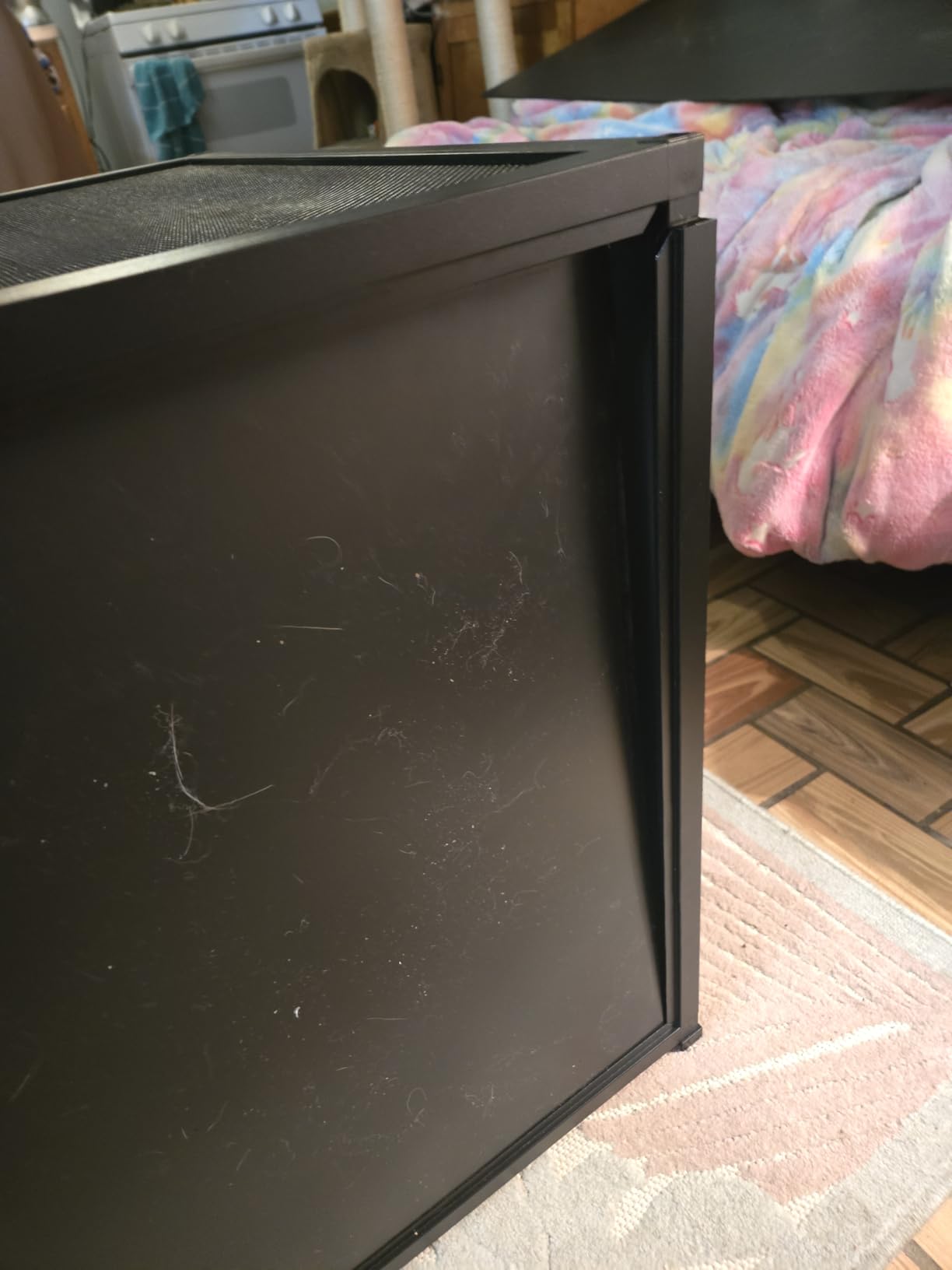
The maintenance complaint specific to this material is static. PVC attracts animal hair and dust more than glass does, and this is the one thing every keeper mentions once they have owned one. A damp microfiber cloth, a soft-bristled brush for the vents, and a monthly wipe-down of the panels and the door tracks keep it under control. Abrasive pads and ammonia-based sprays are the two things to avoid, because the first scratches the surface permanently and the second is a poor choice in any animal enclosure.
For bioactive setups, seal the bottom seam and every panel junction with a mould-inhibiting silicone rated for reptile use, let it cure fully before adding water, and remember that the two-piece vertical back on the tall build is the seam most often forgotten.
Expect a decade of service from a well-built cage used normally, with the door hardware and the stack spacers more likely to need replacing than the panels. That longevity is a large part of why experienced keepers accept the higher upfront cost.
Known Complaints and Brand Reputation: What Keepers Say?
We are not going to pretend the brands in this category have unanimous reputations, because they do not. A widely repeated post on r/ballpython advises against vision cages and several mass-market PVC brands for design problems, while other keepers on other boards report loving the same enclosures. Both statements are true, and the reason is usually the specific line and generation rather than the badge on the front.
What to inspect on arrival, whatever the brand: run a flashlight along every seam to check for gaps wide enough to push a fingernail through, test the door lock with the door fully closed, check the door track for a gap a slender snake could wedge a head into, confirm the screws in the hardware bag are not stripped, and measure the interior against the advertised footprint before you build out decor.
For custom and oversized builds, the honest trade is lead time. Forum owners consistently accept longer waits and higher cost for fully custom work in exchange for choosing vent placement, port placement and overall dimensions. For standard sizes, the mainstream cages in this roundup have a much better evidence base and none of the custom wait.
One last trust note. Buyers report being nervous about purchasing large flat-pack enclosures online, and that anxiety is reasonable. Read the return terms before you order, inspect everything before you assemble it, and do not discard the packaging until the cage is fully built and running.
Frequently Asked Questions
Are PVC enclosures safe for snakes?
Yes. Extruded, non-phthalate PVC is inert at snake-keeping temperatures and does not off-gas, and because the panels are non-absorbent they will not hold dampness inside the board. The real risk is heat and humidity management rather than toxicity. Use a thermostat, keep vents clear, verify the gradient with an infrared thermometer, and avoid running a heat source flush against a panel with no recess.
What type of PVC is best for a snake enclosure?
One-half inch (12mm) expanded PVC is the enthusiast standard and the best all-round choice for humidity retention, rigidity and mounting heavy fixtures. Framed panels using boards around 6mm thick are the entry tier and suit a first adult ball python, but they lose heat faster and flex more. Always check the stated thickness, because plenty of listings do not publish it.
How long do PVC snake enclosures last?
A properly assembled PVC enclosure commonly gives a decade or more of normal service, outlasting glass and ABS builds. The panels themselves rarely fail. The realistic failure modes are seam degradation from repeated thermal cycling and yellowing from direct UV exposure, so keep the cage out of direct sunlight. Door hardware and stack spacers are more likely to need replacing than the boards.
What type of enclosure is best for a snake?
PVC is the best all-around choice for ball pythons, boas and colubrids because it holds heat and humidity, does not shatter and weighs far less than glass. Glass wins on visibility and entry cost. Screen tops are unsuitable for humidity-sensitive species. HDPE and PVC premium builds resist scratching better than PVC. Pick the enclosure whose climate you can control, not simply the biggest one.
What is the best brand of PVC enclosure for snakes?
Kages is the most frequently recommended name overall, Toad Ranch leads for fully custom premium builds, Blackbox Cages is cited for service and short lead times, and Animal Plastics is valued for flat-pack shipping and easy assembly. Dubia and Zen Habitats get mixed owner reports, so judge the specific line and check the unit on arrival rather than the brand alone.
What PVC board should I use to build a reptile enclosure?
For a DIY build, use one-half inch (12mm) expanded PVC panels and solvent-weld the seams so the panels and frame become one rigid body. Six millimetre framed board is workable for smaller enclosures but flexes and conducts heat poorly. Seal the bottom seam with reptile-rated silicone if you plan a bioactive setup, and cut ports for lighting and heat cables before assembly rather than drilling a finished cage.
Final Verdict: The Best PVC Reptile Enclosures for Snakes in 2026
After weighing build quality, humidity performance, hardware and the volume of real owner feedback, the Reptile Habitats 4x2x2 V3 remains our pick for the best PVC reptile enclosure for most snake keepers in 2026. It has the strongest review record in the group at 4.6 across 350 reviews, an aluminum frame that stays rigid, removable glass doors, and a 30-minute build that does not require a second person.
Buy the REPTI ZOO 120 Gallon instead if the lockable sliding door and the detachable mesh top matter more to you than the lighter weight. Buy the REPTI ZOO 67 Gallon tall build if floor space is your constraint. Buy the ToxiRium stackable pair if you are building a multi-animal room, and the ToxiRium 8x2x2 if you have an adult boa or python that has simply outgrown everything smaller.
Whatever you choose, buy the enclosure you can control the climate inside rather than the largest one you can fit. Check the seams with a flashlight before you build it out, and add silicone to the base before the first water hits it.