
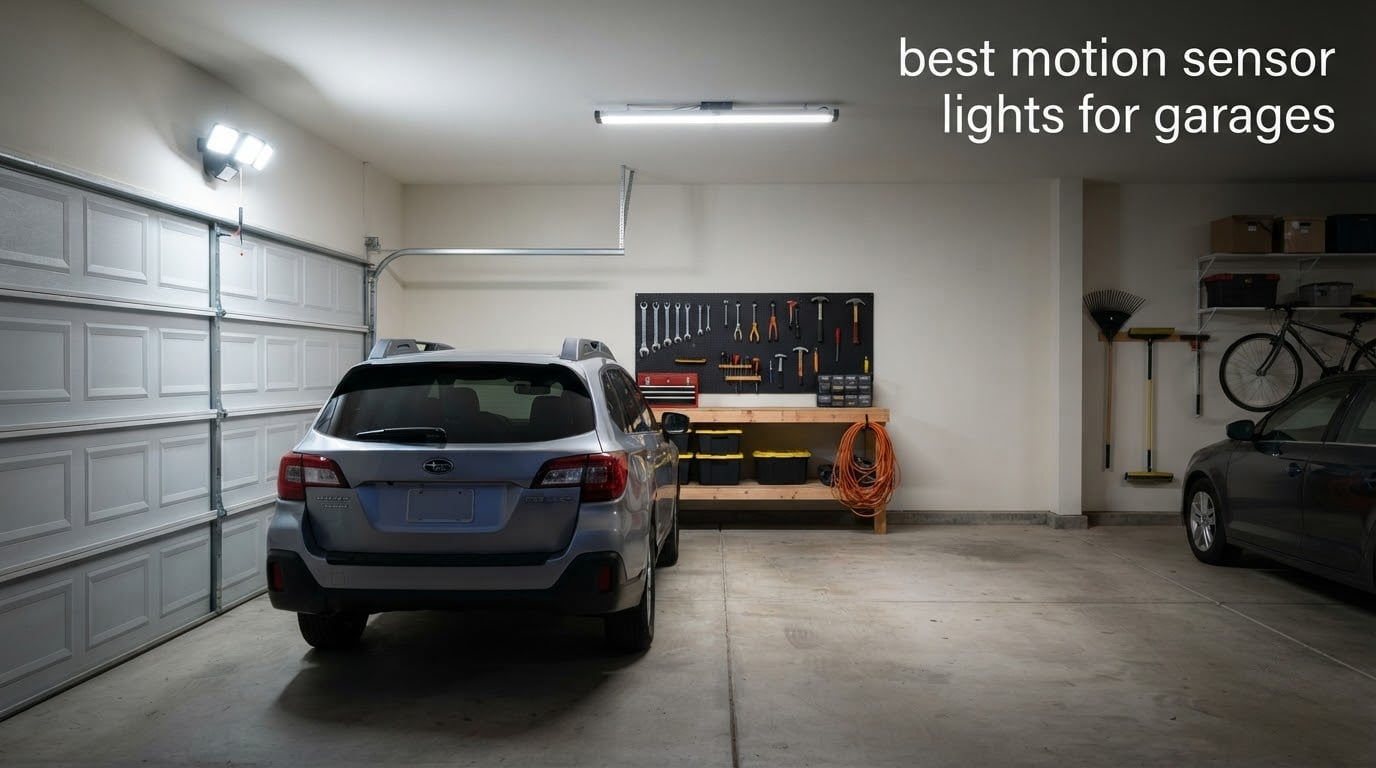
Motion-activated light is the fastest fix for a garage you have to walk into in the dark, and the best motion sensor lights for garages fall into three install styles: screw-in bulbs, plug-in fixtures, and hardwired floodlights. Our single best overall pick is the LEPOWER 7000-lumen three-head security light, a hardwired fixture with a 72-foot detection range and adjustable heads that cover a two-car bay from a single mount point.
We spent weeks reading the spec sheets, ratings, and owner complaints across a dozen fixtures, bulbs, and shop lights, then sorted them by what actually matters in a garage: how much light lands on the work area, how quickly the sensor fires, and whether you can force the light on when you need it. This list covers indoor workshops, open bays, carports, and driveway-facing walls, and it flags the units that cut out mid-task or trigger on a passing car.
Three questions decide most purchases: how the light gets its power, how bright the space needs to be, and whether you can override the sensor. Answer those first and the list below narrows fast. If you want a second opinion on the outdoor side, our picks for the best outdoor motion lights for driveways cover the same detection questions from a security angle.
Table of Contents
Top 3 Best Motion Sensor Lights For Garages (October 2026)

LEPOWER 7000lm 3-Head Light
- 7000 lumens at 58W
- Three adjustable heads
- 72 ft detection at 180 degrees
- IP65 aluminum body

LEPOWER 4000lm 2-Head Light
- 4000 lumens at 40W
- 72 ft adjustable sensitivity
- 1-5-10 minute timer
- ETL and FCC listed

LUTEC 3500lm Floodlight
- 3500 lumens at 32W
- Four lighting modes
- 69 ft at 180 degrees
- 3-year warranty
Quick Picks: Best Motion Sensor Lights for Garages in 2026
Every fixture below is listed with the spec that matters most for a garage. Use the install column to narrow the field first, since that decision rules out half the list before brightness even enters the picture.
| Product | Specifications | Action |
|---|---|---|
| LEPOWER 7000lm Three-Head Security Light |
|
Check Latest Price |
 MIHANI 2500lm Solar Three-Head Flood Light MIHANI 2500lm Solar Three-Head Flood Light |
|
Check Latest Price |
| LEPOWER 40W 4000lm Two-Head Security Light |
|
Check Latest Price |
 Onforu 75W 7000lm Three-Head Flood Light Onforu 75W 7000lm Three-Head Flood Light |
|
Check Latest Price |
| LUTEC 32W 3500lm Four-Mode Security Light |
|
Check Latest Price |
 UME 19W 2000lm Two-Head Flood Light UME 19W 2000lm Two-Head Flood Light |
|
Check Latest Price |
 GE LED+ 15W PAR38 Motion Bulb 2-Pack GE LED+ 15W PAR38 Motion Bulb 2-Pack |
|
Check Latest Price |
 GE Ultra Brite 40-Lumen Plug-In Light GE Ultra Brite 40-Lumen Plug-In Light |
|
Check Latest Price |
 LUTEC 72W 7500lm Three-Head Security Light LUTEC 72W 7500lm Three-Head Security Light |
|
Check Latest Price |
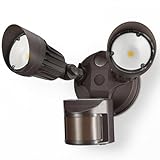 LEONLITE 25W 2500lm Bronze Security Light LEONLITE 25W 2500lm Bronze Security Light |
|
Check Latest Price |
 ProPOW Radar A19 12W Motion Bulb 2-Pack ProPOW Radar A19 12W Motion Bulb 2-Pack |
|
Check Latest Price |
 LEONLITE 4-Foot 4000lm Motion Shop Light LEONLITE 4-Foot 4000lm Motion Shop Light |
|
Check Latest Price |
Best Motion Sensor Light Styles for Garages
There are only three install styles worth shopping, and each trades wiring work against output and reach.
Screw-in motion sensor bulbs — Design: an A19 or PAR38 bulb with the sensor built into the base. Brightness: 1100 to 1200 lumens per bulb. Installation: screws into any existing E26 medium-base fixture with no wiring and no hub.
Plug-in fixtures — Design: a compact plug-in unit that sits in a wall outlet. Brightness: low, around 40 lumens, enough for a path or a stair. Installation: wall outlet only, no wiring, indoor rated.
Hardwired floodlights and shop lights — Design: a multi-head wall fixture or a 4-foot linkable shop light. Brightness: 2000 to 7500 lumens per fixture. Installation: wired to a junction box, which is real electrical work if you do not already have a box in place.
The pattern holds across every spec sheet we reviewed. Screw-in wins on installation and loses on brightness. Plug-in wins on convenience for entry paths and loses on everything else. Hardwired wins on coverage, which is why nine of our twelve picks are hardwired.
1. LEPOWER 7000-Lumen Three-Head Security Light — Best Overall
LEPOWER LED Security Light Motion Sensor Outdoor Lights, Easy to Install
7000 lm at 58W
5700K
IP65
72 ft at 180 degrees
Hardwired
Pros
- 7000 lumens from one fixture
- Three adjustable heads plus a swiveling sensor head
- 72-foot detection range
- IP65 aluminum body
- ETL and FCC listed
Cons
- Hardwired install needs an existing box
- Best fit is a 4-inch junction box
- Small sensor dials are fiddly at night
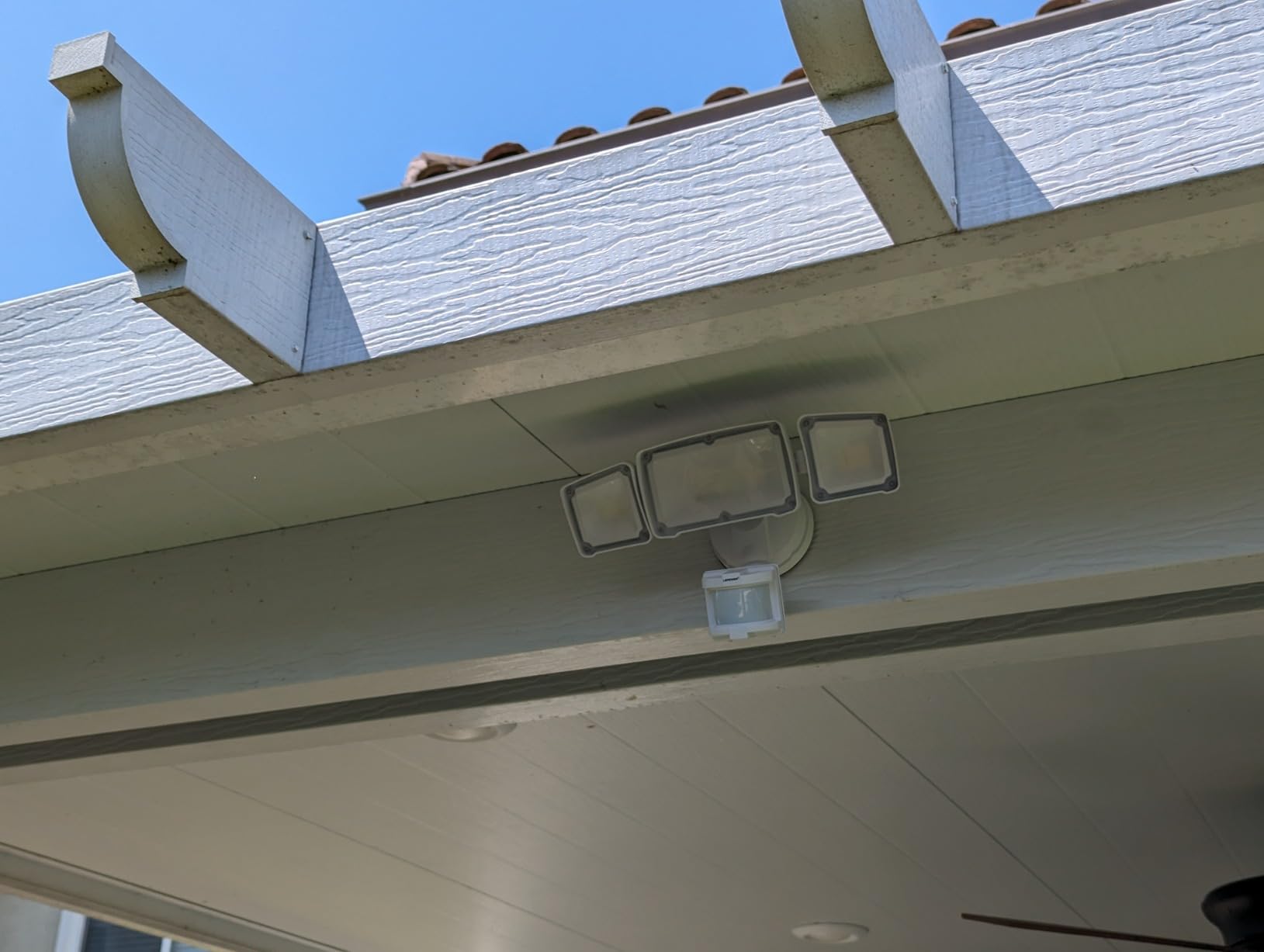
This is the fixture we keep coming back to for a two-car bay. At 58 watts it pushes 7000 lumens, which is more than enough to light the floor of a standard two-car garage and a good chunk of the drive behind it when you walk in from a dark evening.
The three light heads and the separate sensor head all pivot independently, so you can aim the light down at the work area and point the sensor back toward the door rather than trying to make one compromise angle do both jobs. Detection runs to 72 feet at 180 degrees, with sensitivity selectable at 10, 20, 50, or 72 feet.
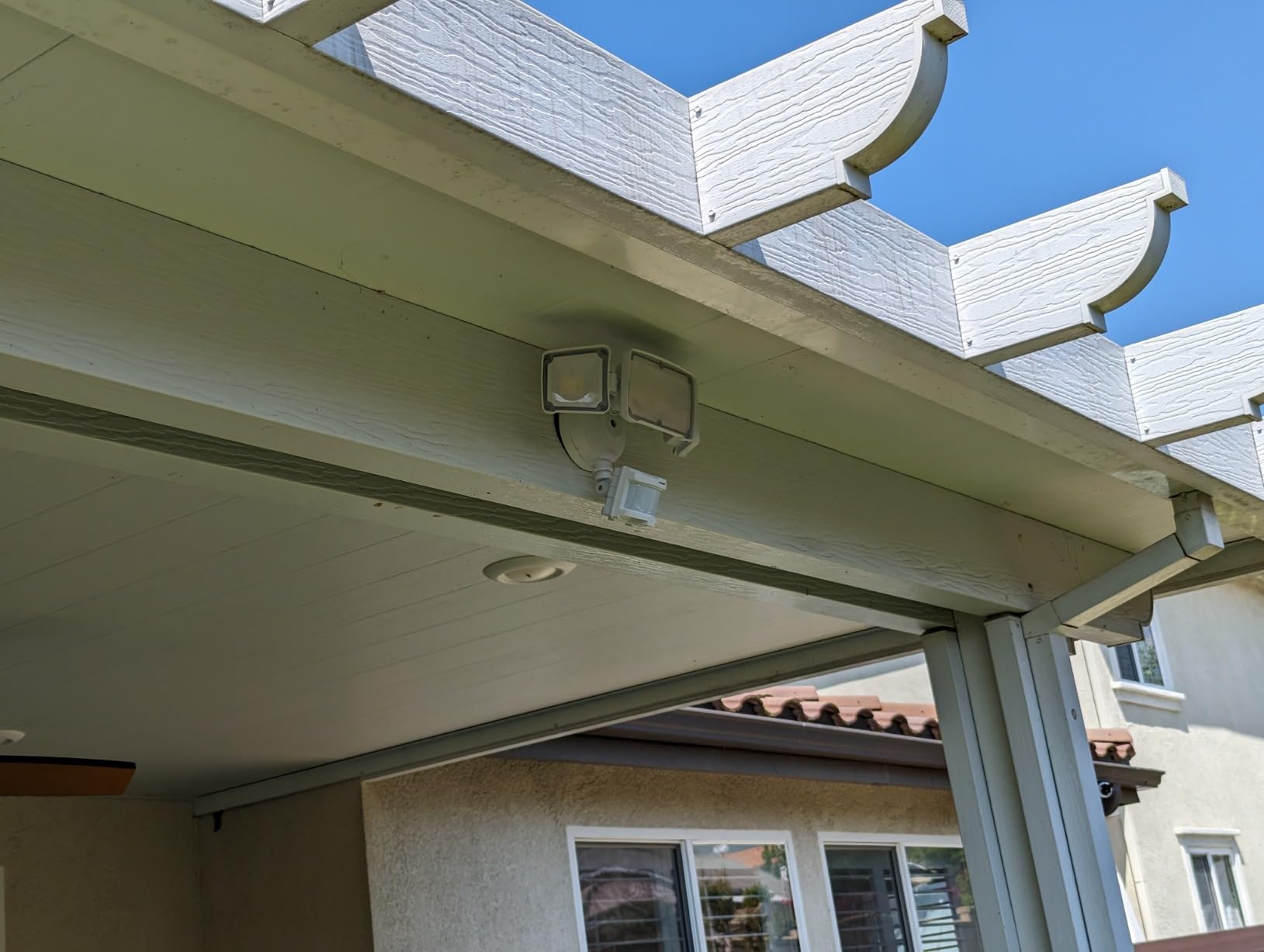
Owners consistently call it one of the brightest fixtures they have owned, and the aluminum body handles heat better than plastic housings do over a long night of repeated triggering. It is also dual-listed to FCC and ETL standards, which matters more than it sounds if you are mounting it on an exterior wall near a driveway.
The one friction point that shows up again and again is installation hardware sizing. The crossbar and mounting kit are designed around a 4-inch junction box, and owners with older or undersized boxes report needing extra care to get the fit right. The rotary sensor dials are also small enough that dialling them in takes a couple of attempts after dark.
Is 7000 lumens too much for a garage?
For a one-car bay it is more than you need, and a 3500-lumen fixture will feel less blinding at close range. For a two-car garage, a workshop bay, or a wall that also lights a driveway approach, this output is the sweet spot, and the adjustable heads are what let you aim the excess at the floor rather than into your eyes.
Who should skip it?
Skip it if you have no existing junction box and no appetite for running new cable. It is a hardwired unit with no plug-in path and no battery option, so a first-time install in a detached garage means new wiring, conduit, and a permit in most jurisdictions.
2. MIHANI 2500-Lumen Solar Three-Head Flood Light — Best No-Wiring Option
MIHANI Solar Flood Lights Outdoor, 2500LM Motion Sensor Security Lights with 270° Wide Angle, IP65 Waterproof, 3 Heads Solar Outdoor Lights for Patio, Yard, House, Garage (Non-Remote, 2 Pack)
2500 lm
6500K
Solar powered
30 ft PIR range
IP65
2-pack
Pros
- No wiring or electrician needed
- 270 degree three-head coverage
- Three lighting modes including permanent on
- Two lights per purchase
Cons
- Output depends on solar charging
- Mode button is awkward once mounted high
- Dimmer than hardwired floodlights
When there is no box, no outlet within reach, and no interest in opening a wall, this solar unit is the honest answer. It mounts with the included screws and anchors and puts 2500 lumens of 6500K light across a 270-degree spread from three adjustable heads.
The PIR sensor picks up movement within 30 feet at 180 degrees, which covers a door approach or a carport bay but not a long driveway. Three lighting modes let you choose bright full output, permanent on, or a dimmed smart-brightness standby that draws less after the first few seconds.
Buyers like the wiring-free install and the coverage spread more than anything else. The recurring caveats are brightness relative to hardwired fixtures and the honest fact that output depends on where the panel sits and how much sun it gets through the week.
One practical annoyance shows up in the reviews: this is the non-remote version, so changing modes means reaching a button on the unit after it is mounted high on a wall. Plan your mounting height around that before you drill.
Do solar motion lights work well in a garage?
They work well for the wall or bay where you enter rather than for the workspace itself. A solar unit gives you a door, a side path, and a carport covered in about an afternoon with a drill and a screwdriver, and it keeps working through a power cut because the panel and battery are independent of the wiring in the building.
The limit is the battery. In a garage with a shaded wall or a north-facing panel, output drops noticeably in winter, and after a run of cloudy days the light may be noticeably dimmer at the moment you need it. Mount the panel where it gets direct sun for most of the day.
Is 2500 lumens enough for a carport or bay?
Enough for a carport roof edge, a side door, or a one-car bay approached from outside, and not enough to work under a vehicle or fill a workshop floor. If the space needs task light, pair it with an interior fixture such as a shop light rather than expecting the solar head to do both jobs.
3. LEPOWER 40-Watt 4000-Lumen Two-Head Security Light — Top Rated
LEPOWER Hardwired LED Security Lights Motion Sensor Outdoor, 40W 4000LM
4000 lm at 40W
5500K
IP65
72 ft at 180 degrees
Hardwired
Pros
- Highest average rating in the roundup
- 4000 lumens of even output
- Sensitivity dial from 10 to 72 feet
- Aluminum body rated to 50000 hours
- Remote control included
Cons
- Only two heads so coverage is narrower
- Hardwired install requires electrical work
This is the highest-rated fixture in the group at 4.6 stars across more than 9000 reviews, and the rating is easy to understand once you see the hardware. Forty watts for 4000 lumens is a comfortable ratio, and the 5500K output sits close to neutral without the clinical edge that 6500K bulbs have.
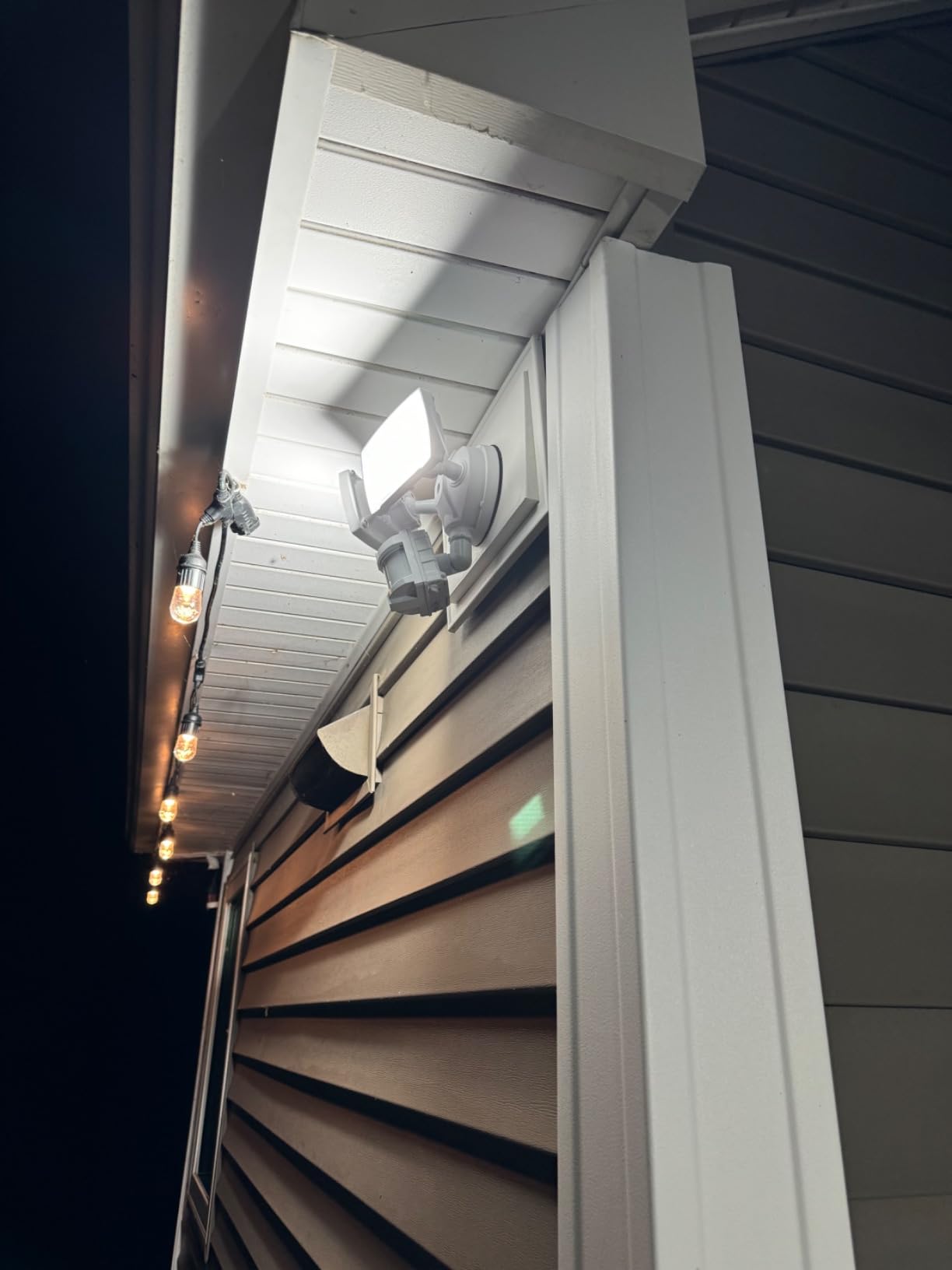
Two adjustable LED heads plus a swiveling sensor head cover a smaller area than a three-head design, so this suits a one-car garage, a side wall, or a workshop entrance where you want targeted light rather than a flood. The range dial covers short to long distances and the on-time selector offers 1, 5, or 10 minutes.
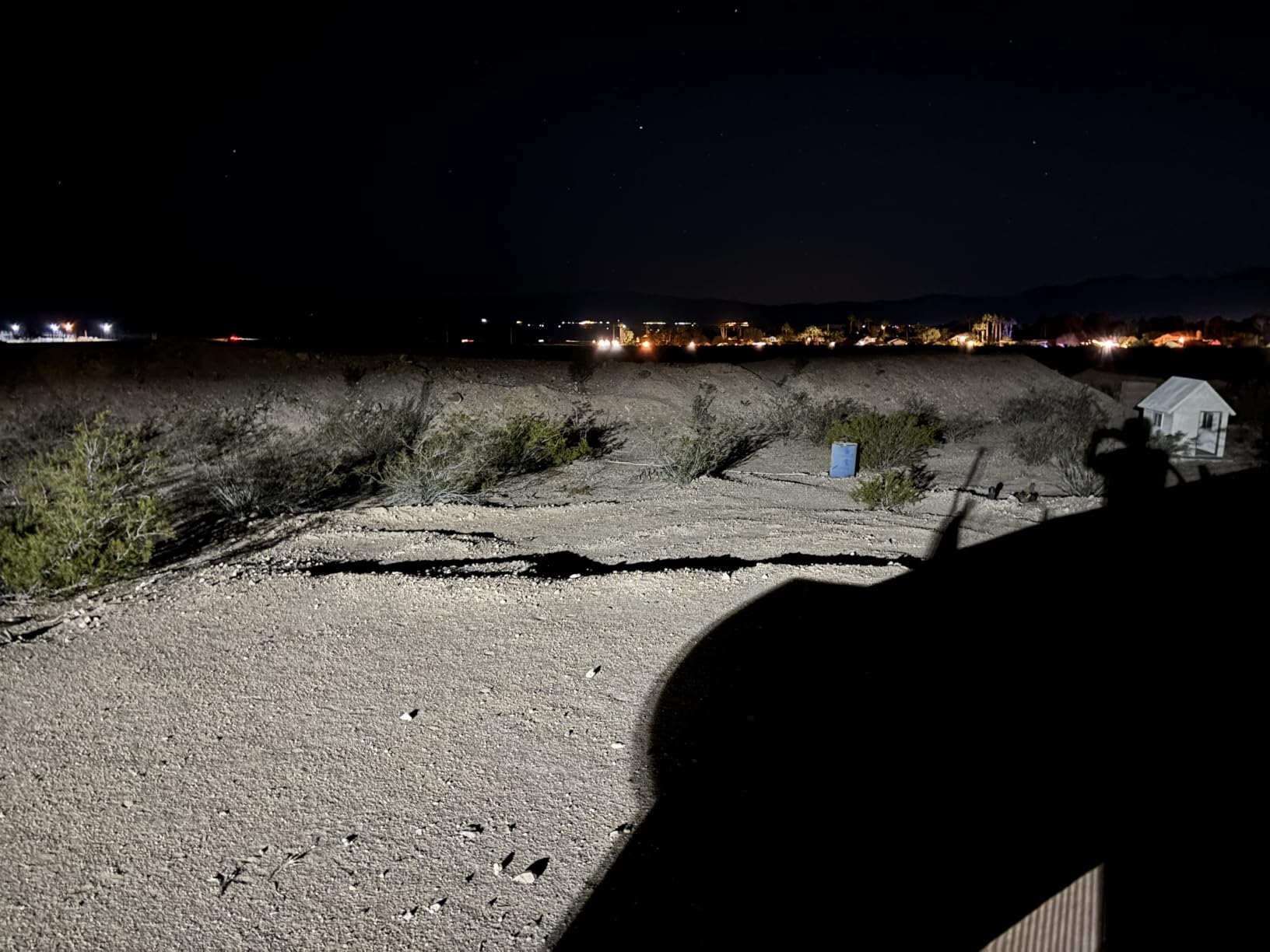
Reviewers praise the straightforward install over an existing box and dependable detection once the dials are set. A minority note that the two-head layout covers less ground than a three-head fixture and that the small sensitivity dial picks up minor movement when set to maximum range.
Backlighting and drifting car fans are the usual culprits there. Dial sensitivity down to 20 or 50 feet and the fixture settles quickly, which is one of the reasons it has held its rating better than the flashier 7000-lumen units.
Is 4000 lumens enough for a two-car garage?
It is enough for a two-car garage if you are lighting the work area and the doors rather than trying to flood the whole floor evenly. As a second fixture on the far wall, paired with a wider unit over the bay, it does a lot of work for a modest wattage draw.
How does it compare to the three-head model?
The trade is coverage for calm. Two heads give tighter, more deliberate light and a lower chance of glare in your eyes when you pull in, while three heads give you reach at the cost of aiming three beams carefully. Pick two heads if your wall is close to what you want lit, and three if it is not.
4. Onforu 75-Watt 7000-Lumen Three-Head Flood Light — Best for All-Night Use
Onforu 75W LED Flood Light Motion Sensor Outdoor, 7000lm Dusk to Dawn Flood Light, Security Light with Three Head, IP65 Waterproof Exterior Floodlight, 6500k Wall Light for Entryway Stairs Yard Garage
7000 lm at 75W
6500K
IP65
72 ft at 180 degrees
Hardwired
Pros
- 7000 lumens from three heads
- Hidden dusk-to-dawn mode runs all night
- Low-profile housing suits modern siding
- Wide 180 degree sensor with timer
Cons
- Dial layout does not match the printed manual
- Sensitive rotary dials need several night adjustments
- Occasionally a unit has a failed LED panel
The 7000-lumen output and the hidden dusk-to-dawn mode are the two things buyers single out on this one. Dusk-to-dawn mode bypasses motion detection entirely and keeps the light running after dark, which turns a security fixture into a steady exterior light without rewiring anything.
On detection, the 180-degree sensor reaches 72 feet and three adjustable heads cover a 270-degree zone. The on-time is adjustable from 1 to 10 minutes, and the fin-style aluminum heat sink is there to keep the 112 LED beads from cooking themselves over years of nightly triggering.
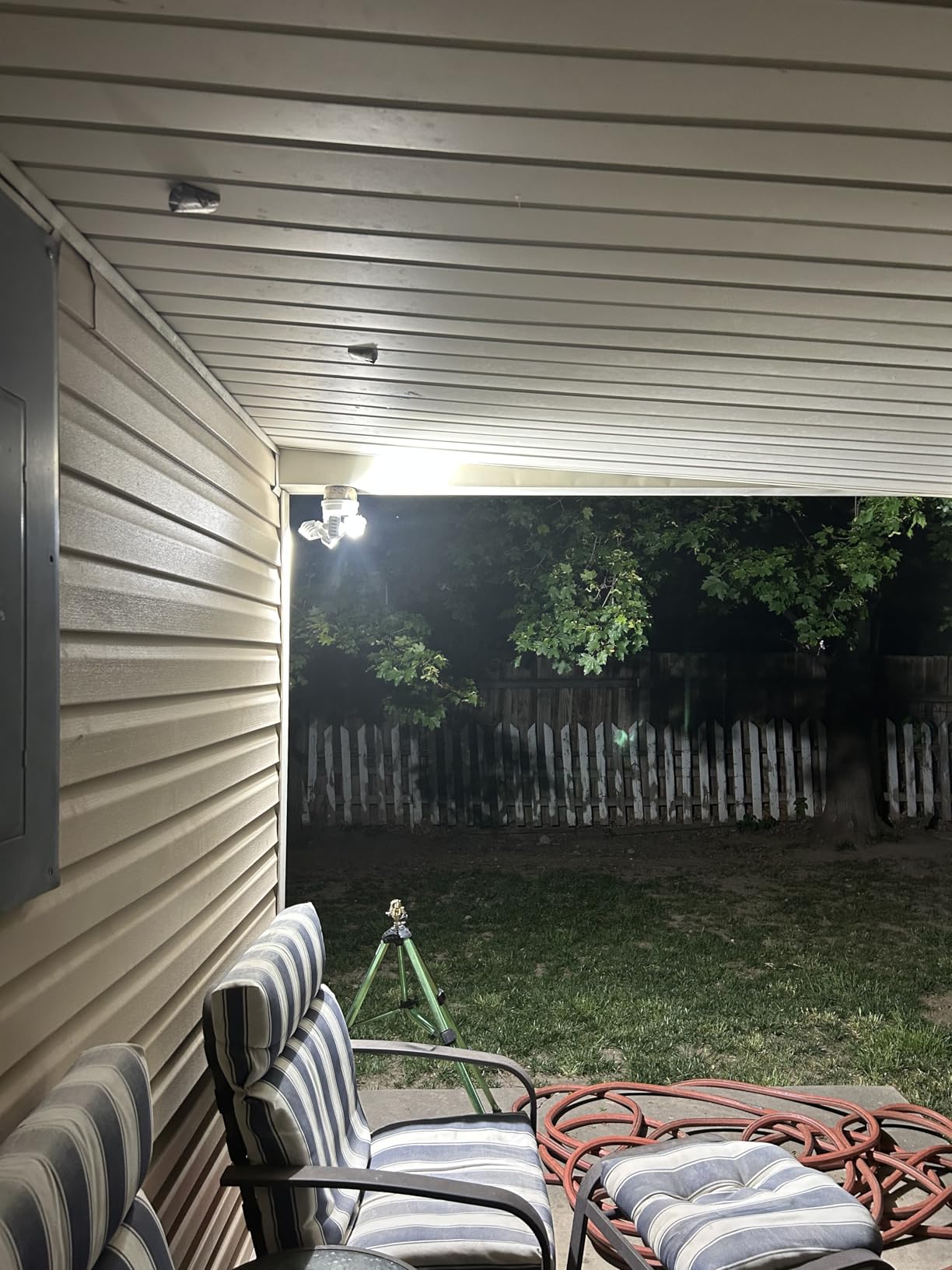
The most common complaint is documentation rather than hardware: the printed manual misdescribes the physical order of the sensor dials, so first-time setup goes sideways. A small number of buyers also report dead side panels or a residual glow after shutdown on the unit they received.
Expect to spend a few evening adjustments getting the dials right, and test every head before you walk away from the ladder. Once configured, the low-profile housing blends into siding better than the bulkier three-head designs on the market.
What is dusk-to-dawn mode good for?
It is good for anyone who wants reliable exterior light without depending on a detection event, such as a driveway, a side gate, or a carport where you park without walking past the sensor. It is less good for anyone trying to cut electricity use, since the light runs every night until the photocell switches it off.
Is 6500K too blue for a garage wall?
At 6500K this reads cool and clinical, which is excellent for task visibility on a workbench and harsher in a residential setting. If the fixture lights a wall you look at from a window or a neighbouring property, a 5000K option suits most homes better.
5. LUTEC 3500-Lumen Four-Mode Security Light — Best Value
LUTEC 32W 3500 Lumen LED Security Lights Motion Sensor Light Outdoor, 5000K Daylight, IP65 Waterproof, Dusk to Dawn, Motion Detector Flood Light for Garage, Yard, Porch-Black
3500 lm at 32W
5000K
IP65
69 ft at 180 degrees
4 modes
Pros
- Four modes including Manual Override
- 3-year warranty with fast replacement
- 3500 lumens from only 32W
- Installs onto an existing box
Cons
- Shallow housing can crowd deep wire nuts
- Default on-time feels short
- Non-standard leads complicate some wiring
This is the one we recommend when a person works under a car and the fear of the light switching off is the thing stopping them. Four modes cover Test, Security, Dusk to Dawn, and Manual Override, and the override is triggered by flipping the wall switch off-on-off-on within three seconds.
That override answers the single most common complaint we found in garage lighting forums, where owners want motion activation for arrivals and a steady light for the hours they are lying under a car with a creeper and a work light. Thirty-two watts for 3500 lumens at 5000K is also a good output for the draw, roughly equivalent to a 150W halogen.
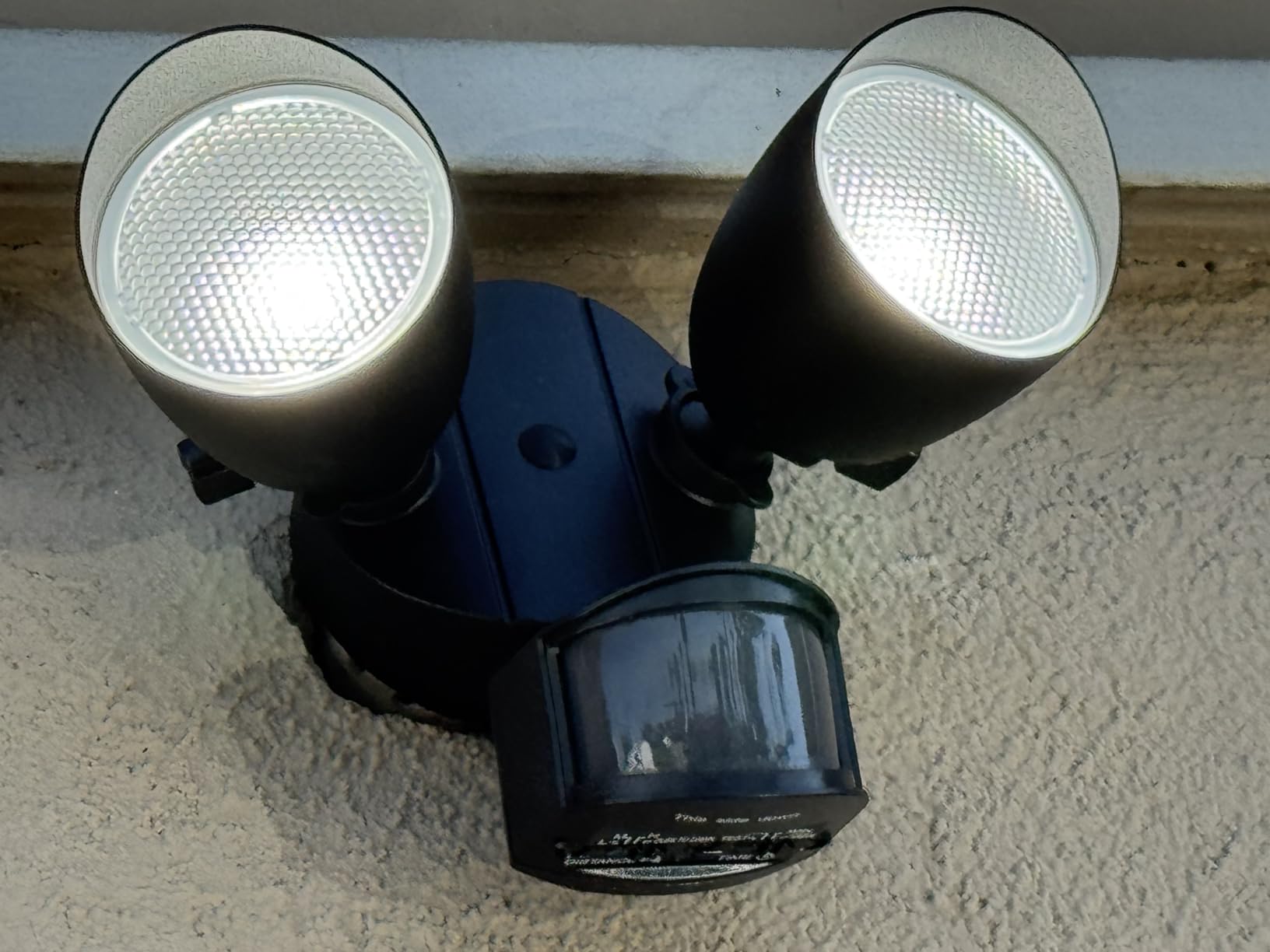
Buyers rate the brightness, the quick install over an existing box, and the mode flexibility. Several reviews single out LUTEC customer service for quickly replacing a unit whose motion sensor failed, which matters when the unit is mounted on the only exterior wall you have.
The recurring criticisms are physical. The housing is shallow, so boxes with deep wire nuts can be tight and occasionally need extra space cut, and the default on-time is short enough that you may want to step it up before relying on it for a long job.
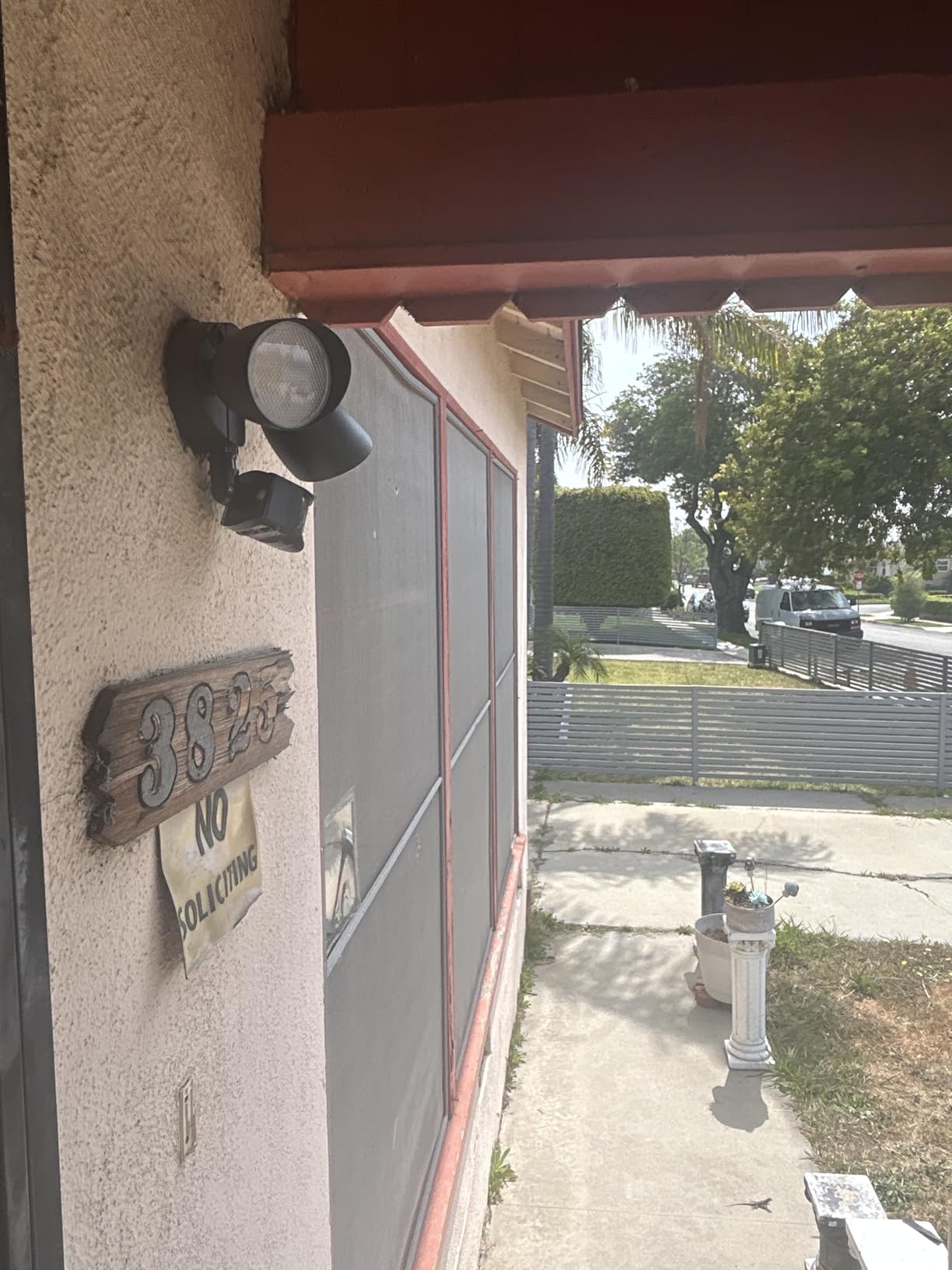
How do I turn a motion sensor light on permanently?
On this fixture, flip the wall switch off, then on, then off, then on again within about three seconds, and the sensor is bypassed until you repeat the sequence to hand control back. The same trick runs the other way in reverse on most competing hardwired units, so check the manual before you assume a dead sensor.
Is 69 feet enough for a large driveway?
For a two-car garage wall or a front approach, yes. For a long drive that ends well back from the house, 69 feet at a 180-degree angle is tight, and a higher-lumen three-head unit gives you both reach and a wider spread. Detection range and lumen output are separate problems, and this one solves the first well.
6. UME 2000-Lumen Two-Head Flood Light — Best for Low Wattage
UME 19W LED Flood Light Motion Sensor Outdoor, 2 Adjustable Head, 2000LM, 5000K, IP65 Waterproof, Dusk to Dawn Security Light with Photocell for Exterior,Outside,Garage,House(Black)
2000 lm at 19W
5000K
IP65
50 ft PIR range
Hardwired
Pros
- Bright for only 19W
- Quick drop-in swap onto an existing box
- Heads and sensor fully adjustable
- Mounting gasket included
Cons
- No sensitivity or light-level adjustment
- Quick wall-switch flip does not force it on
- A rare sensor failure outside test mode
Nineteen watts producing 2000 lumens is over 90 percent less energy than the halogen fixture it replaces, and owners consistently remark on how bright it feels for the draw. The 5000K output is a neutral white that suits most garages without the blue cast of 6500K.
This is the fastest swap in the list for anyone replacing an existing hardwired light. Reviewers describe a roughly ten-minute install onto a box already in place, and the included gasket keeps water out of the mounting surface, which is where cheaper fixtures tend to fail first.
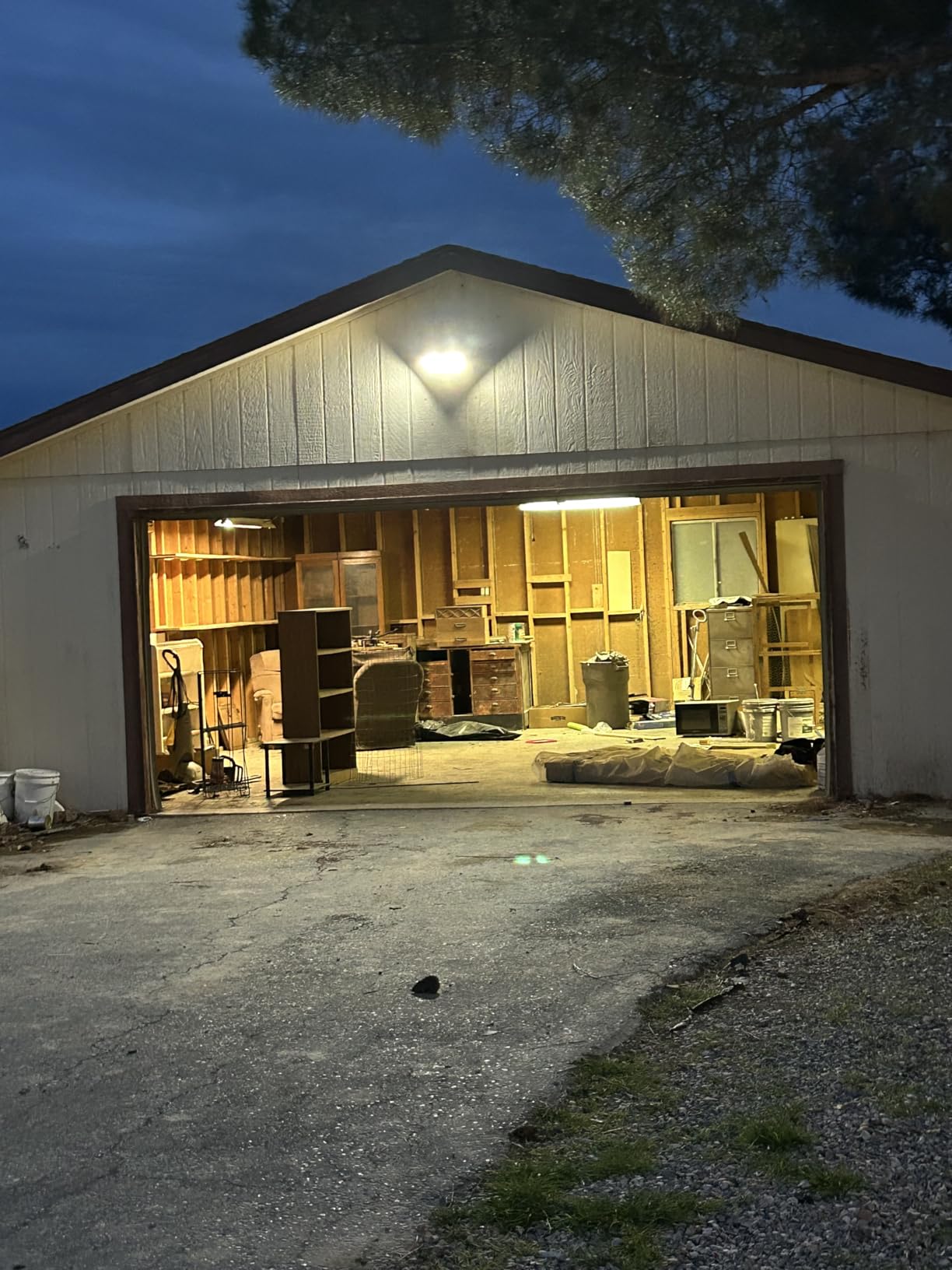
Two dual light heads and the sensor head all pivot, so a single fixture aimed carefully can cover a driveway width or a side yard. The built-in photocell handles dusk-to-dawn gating, and on-time choices are 1, 3, or 10 minutes.
The trade-off is control. There is no sensitivity dial and no light-level adjustment, so the detection range is fixed at up to 50 feet, and the quick wall-switch flip that forces other fixtures on does not work here. Plan the mounting position rather than expecting to tune it later.
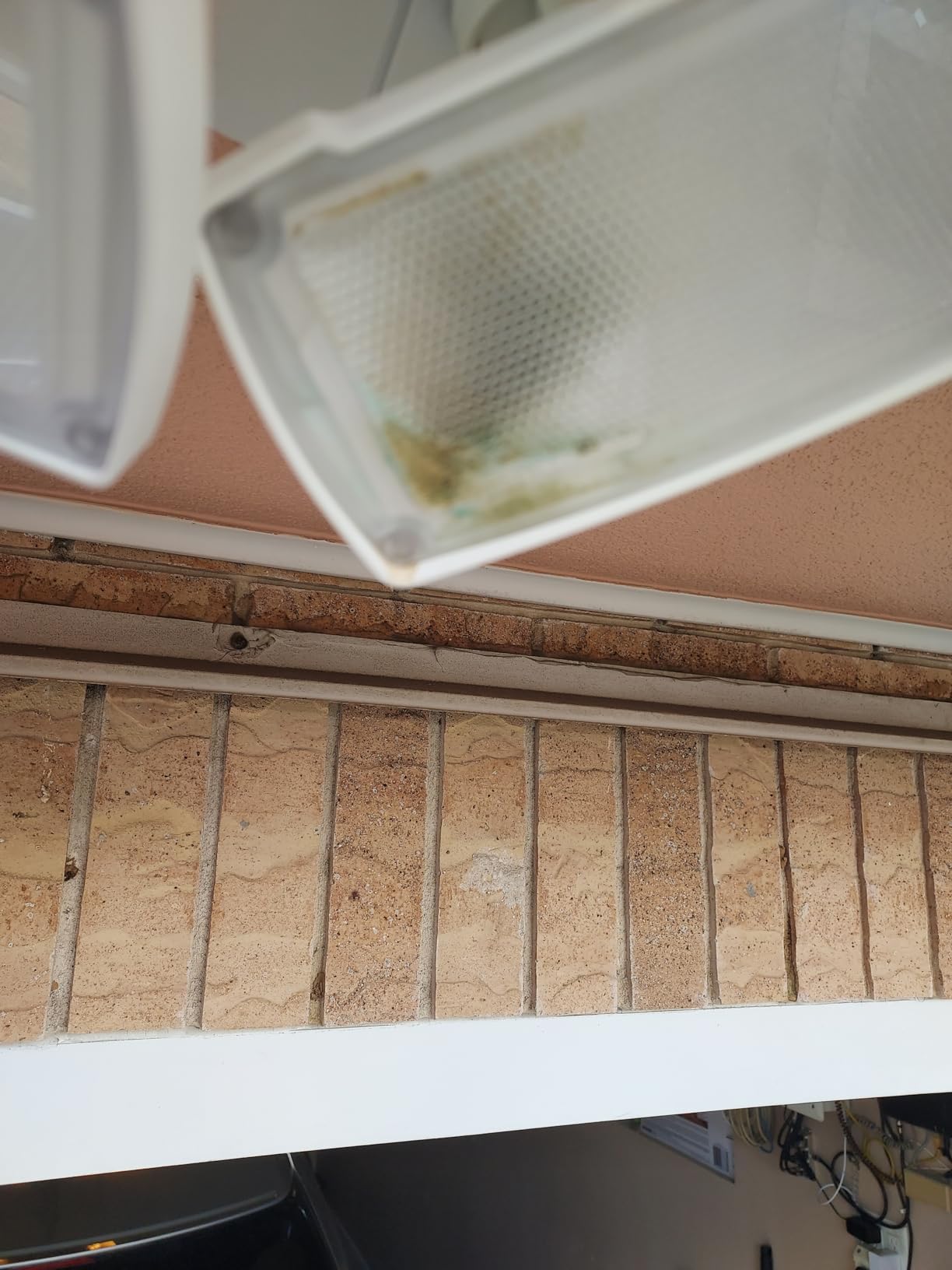
Is 2000 lumens enough to work under a car?
It is enough for a work area, a tool bench, or stepping into a one-car garage at night. It is not enough to light a full two-car bay floor, where shadows under the vehicle stay dark and you end up holding a flashlight in your teeth.
Why does it matter that the sensor has no sensitivity dial?
A fixed range means you cannot shorten detection, so a wall-mounted unit near a sidewalk or a street-facing corner can fire on pedestrians and passing cars all night. Mounting it high on a side or back wall, away from traffic, solves most of that. On a front wall, a fixture with a range dial is the better buy.
7. GE LED+ 15-Watt PAR38 Motion Bulbs — Best for Warm White and No Wiring
GE LED+ Motion Sensor LED Light Bulbs, 15W, PAR38 Outdoor Security Floodlight, Warm White (2 Pack)
1200 lm per bulb
3000K
CRI 80
E26 base
24 ft range
2-pack
Pros
- Screws into any E26 fixture with no wiring
- Warm 3000K light
- 24-foot 90-degree detection
- Works offline with no app or hub
- Motion can be disabled with a switch toggle
Cons
- 1200 lumens is modest for a whole garage
- Needs a fixture with an E26 medium base
Warm 3000K light is the distinguishing feature here. Most of the hardwired fixtures on this list run 5000K to 6500K, which is brighter-feeling and harsher over a long evening, and owners who prefer softer light in a garage or porch appreciate that this one delivers it from a standard bulb.
It is also the easiest possible upgrade. The bulbs screw into any E26 medium-base fixture, the motion sensor works from a 24-foot, 90-degree cone, and there is no app, hub, or Wi-Fi requirement at all, which is a genuine advantage if you are not building a smart home.
Motion sensing can be switched off with two toggle flips, so the fixture still works as a plain bulb when you want it. Fifteen watts draws about a 90W incandescent equivalent, the bulbs are cULus listed, and each carries a 5-year warranty.
The limitation buyers mention most is brightness. At 1200 lumens per bulb this is entry-area lighting, not garage illumination, and it needs a fixture with an E26 medium base, so a PAR38-style fixture is the match. For a workbench in a basement or laundry room, it does the job well.
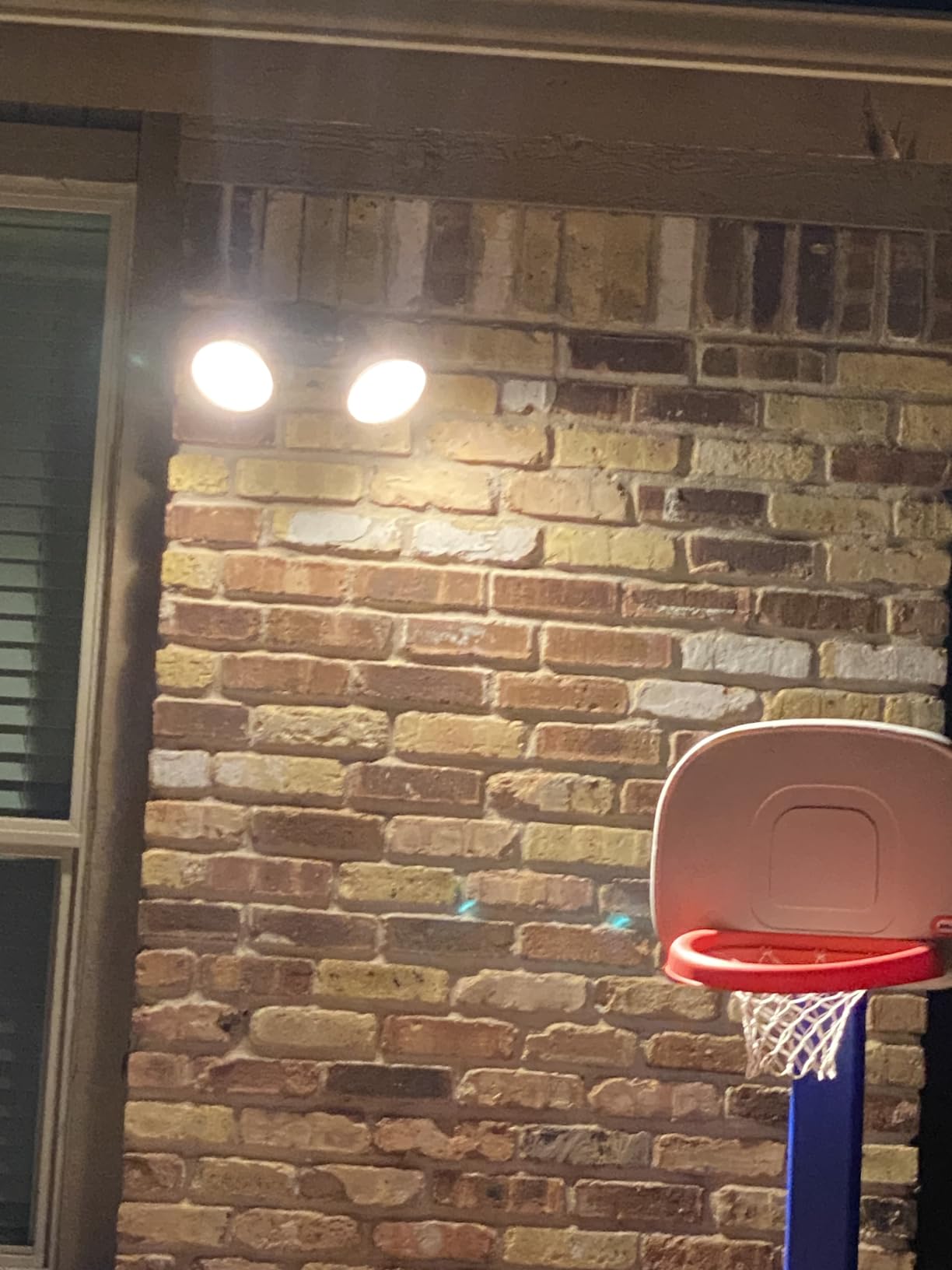
Is 3000K bright enough for detailed work?
For reading a manual, finding a tool, or walking to the freezer, yes. For colour-accurate work such as paint matching or wiring inspection, a 4000K or 5000K fixture is the better choice, and most of the hardwired units here fall in that range.
Can these bulbs work in a smart home system?
No. These bulbs are standalone, and switching them off disables the sensor entirely rather than handing control to an automation hub. If you want app control, a wall relay driven by a door contact sensor is the more flexible route for a screw-in bulb.
8. GE Ultra Brite 40-Lumen Plug-In Light — Best for Stairs and Entry Paths
GE Ultra Brite Motion-Activated LED Light, 40 Lumens, Soft White, Night Light, Energy Efficient, Ideal for Hallway, Stairs, Kitchen, Garage, Utility Room, Laundry Room, White, 12201
40 lumens at 1.5W
25 ft range
90-second auto-off
Plug-in
Indoor
Pros
- Plug-in install with no wiring
- Five-plus-year track record in owner reports
- Compact body leaves the second outlet free
- Dusk-to-dawn sensor limits daytime operation
Cons
- Only 40 lumens so it lights a path not a workspace
- Indoor rated only
- Fixed 90-second timeout with no adjustment
At 40 lumens this is not a garage light in the brightness sense. It is a path light, and it earns a place on this list because the most common garage complaint we found is not about lumens at all. It is about the walk from the door to the light switch in the dark.
It plugs into any outlet, senses motion up to 25 feet, and shuts off after 90 seconds. The dusk-to-dawn sensor keeps it dark during the day, and the compact body leaves the adjacent outlet usable, which matters in a garage wall with two sockets.
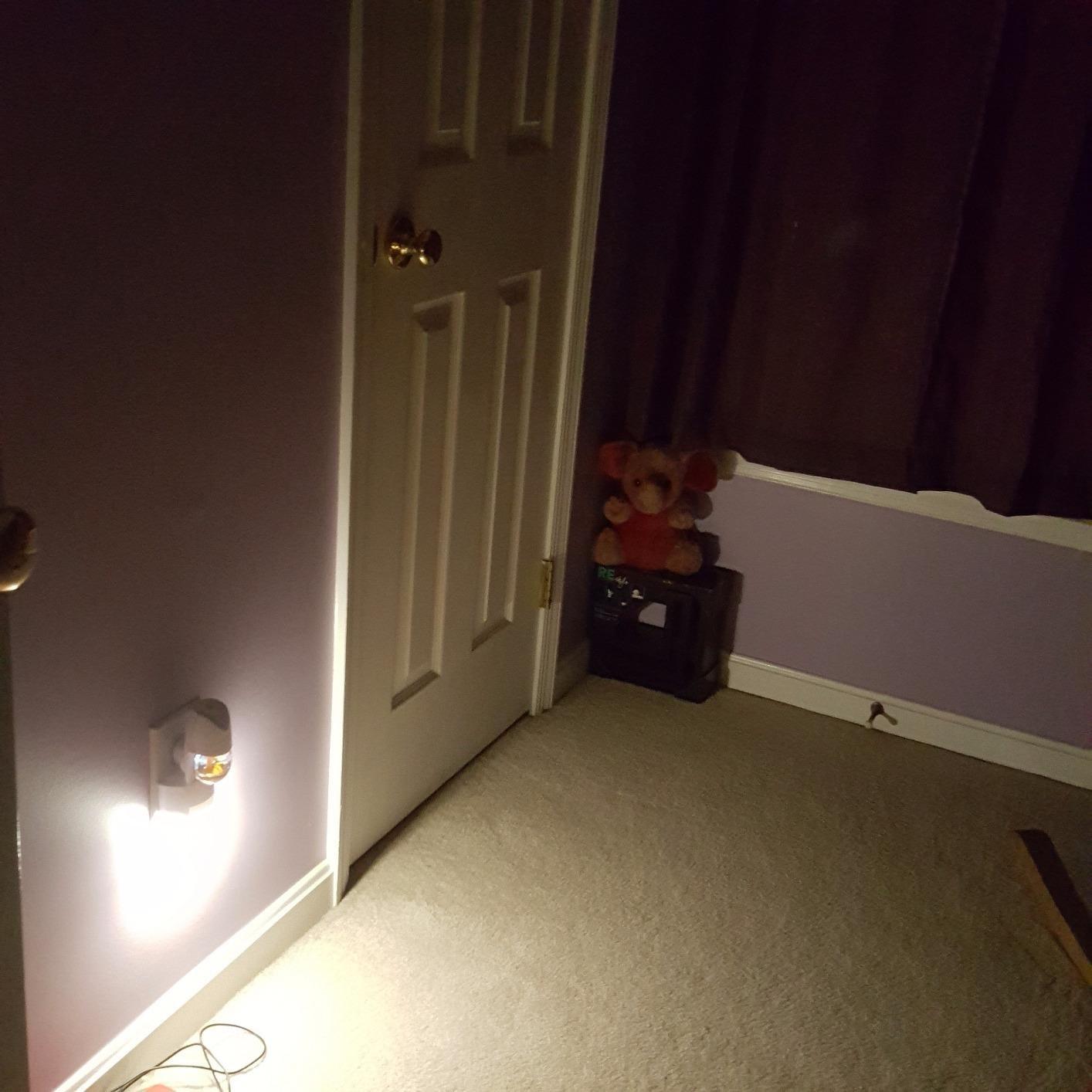
Reviewers report five-plus years of reliable service from these units, and the UL listing with a limited-lifetime replacement plan backs that up. For a hallway, a stair run, a laundry room, or the three steps between a side door and the garage, it is genuinely the easiest fix there is.
Two constraints are worth knowing before you buy. It is indoor rated and not suitable for damp or exposed locations, and the 90-second timeout cannot be adjusted, so a fixed light on a timer or a smart plug suits long tasks better. Some owners also note units backing out of loose outlets.
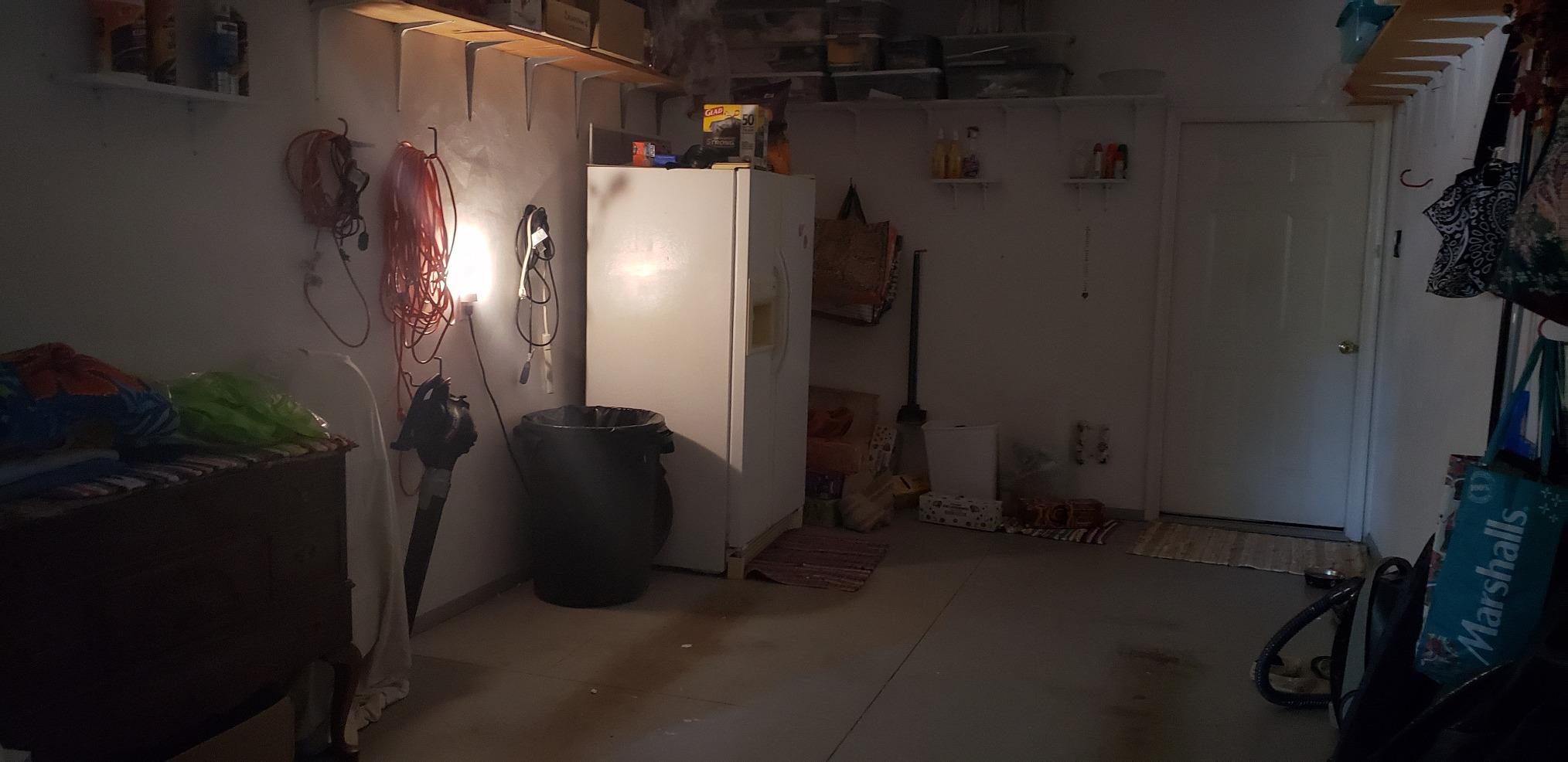
Will a 40-lumen light work in a garage?
It will light a walkway, a set of stairs, and the floor immediately inside a door. It will not let you work under a car or find a dropped bolt in a corner. Treat it as a safety light that removes the stumbling, not as a replacement for a real fixture.
Where should it actually go?
Hallways, stair runs, laundry rooms, closets, the path from a side door, and low-traffic corners of a garage. Anywhere the question is a small dark gap rather than a dark room. Our picks for the best work lights for garages cover the other half of the problem.
9. LUTEC 7500-Lumen Three-Head Security Light — Best for Maximum Coverage
LUTEC 72W 7500LM LED Security Lights Motion Sensor Light Outdoor, 5000K Daylight, IP65 Waterproof, Dusk to Dawn, 3-Head Motion Detected Flood Light for Garage, Yard, Porch(Black)
7500 lm at 72W
5000K
IP65
69 ft at 180 degrees
3 heads
Pros
- Highest lumen output in the roundup
- Three independently aimable heads
- All mounting hardware included
- 3-year warranty with responsive service
Cons
- Dusk-to-dawn standby is bright and not adjustable
- Mounting base is plastic while housing is aluminum
- Wire placement can conflict with shallow boxes
This is the brightest fixture in the group at 7500 lumens, and reviewers describe it in unusually direct terms: enough to turn a driveway into daylight. Seventy-two watts at 5000K is roughly equivalent to a 720W incandescent bulb, so it is a serious fixture for a large bay, a wide drive, or a workshop that is not attached to the house.
Three independently aimable heads give you the flexibility to split output between the bay, the side yard, and the approach rather than pointing all of it at one spot. The 180-degree sensor reaches 69 feet and the timer steps through 1, 3, or 10 minutes, and the mode set again includes Manual Override.
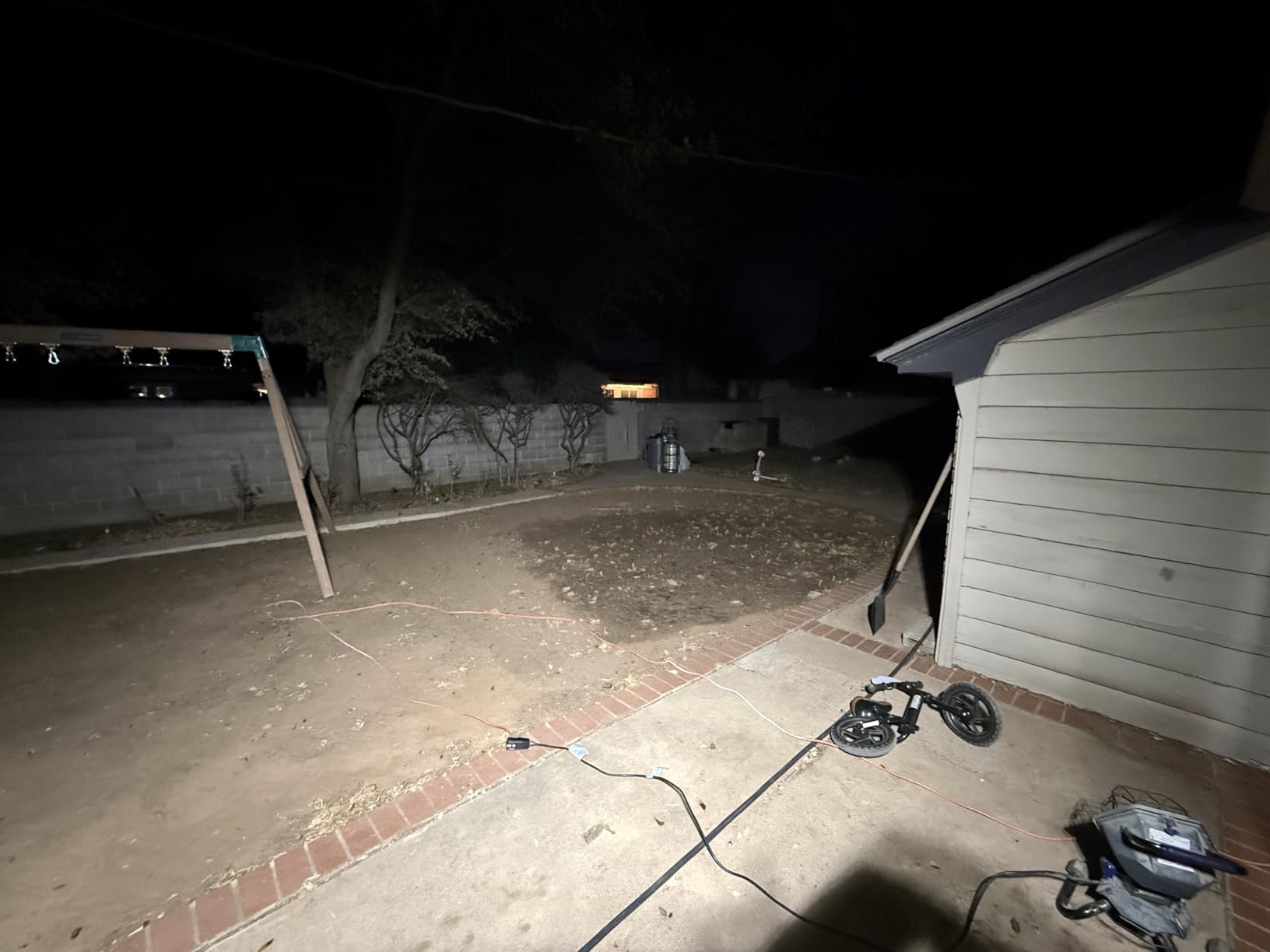
All mounting hardware is included, so hardwiring is the only real work involved. The aluminum housing is rated to 50,000 hours and carries IP65 sealing, and multiple reviews mention LUTEC customer service quickly replacing a unit whose motion sensor failed.
The complaints cluster on details. The dusk-to-dawn standby level is brighter than a true night light and cannot be dimmed, the mounting base is plastic while the housing is aluminum, and the wire placement can fight a shallow outlet box or bracket. Check your box depth first.
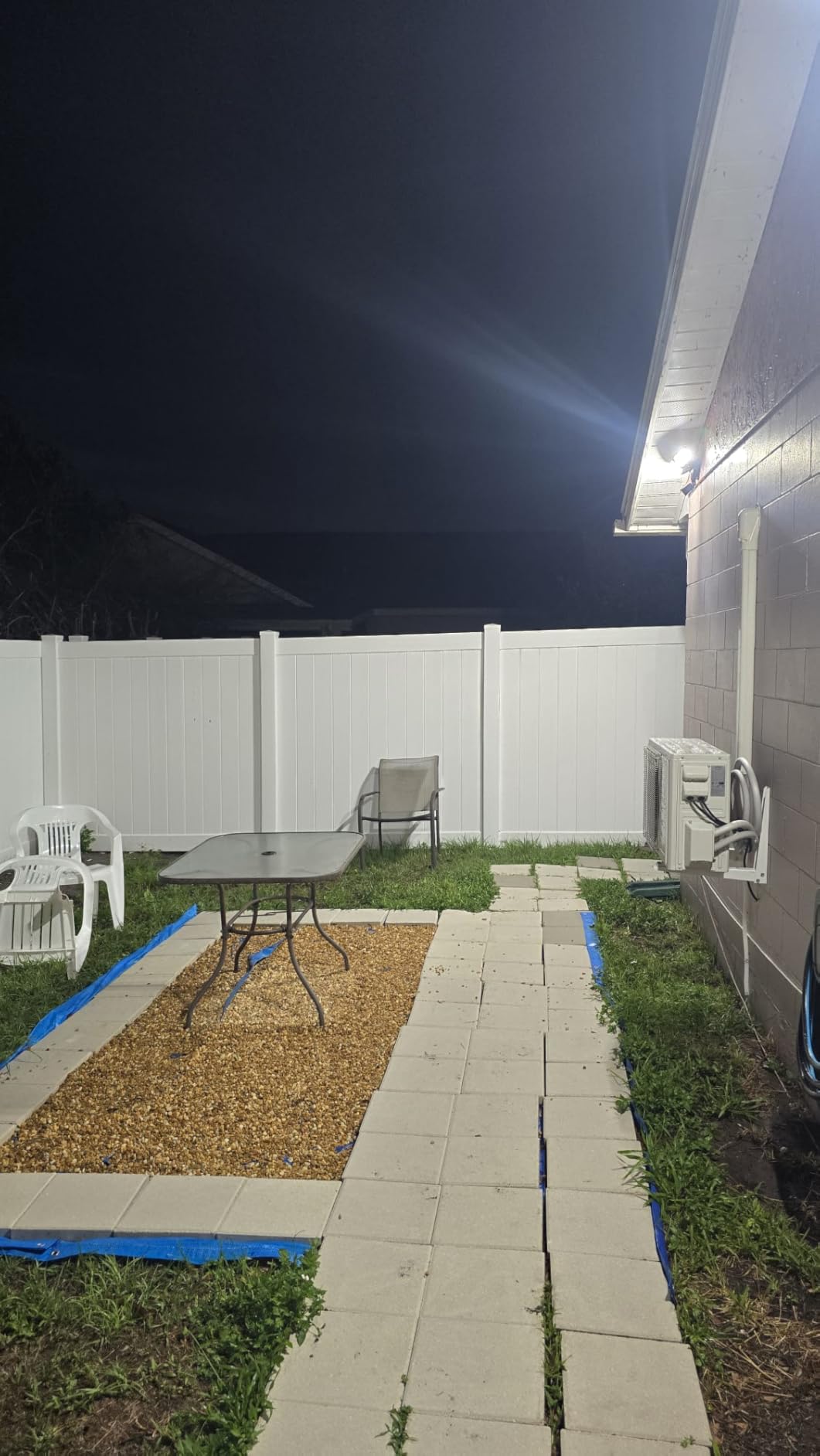
When is 7500 lumens the wrong amount?
When the light is close to where you stand. At this output a small one-car bay or a side wall becomes harshly bright, and the glare off a bare garage floor is genuinely uncomfortable at night. It is the right number for a two-car bay, an open drive, or a workshop with high ceilings.
Should I pick this or the 7000-lumen three-head alternative?
Compare the sensor controls, not the lumens. Both cover a similar area with three adjustable heads at a similar reach. The difference is that this one has a manual override mode and a 3-year warranty, while the other carries ETL and FCC listing and a 1-year warranty. For extended work under a vehicle, the override is the deciding feature.
10. LEONLITE 2500-Lumen Bronze Security Light — Best for Wide Voltage
LEONLITE Motion Sensor Security Lights Dusk to Dawn IP65 5000K Bronze
2500 lm at 25W
5000K
100-277V
IP65
59 ft at 180 degrees
Pros
- 100-277V input works on residential and commercial circuits
- Three operating modes including dusk-to-dawn
- Bronze finish suits traditional exterior trim
- ETL and FCC certified with 3-year warranty
Cons
- 2500 lumens is modest next to 7000-lumen fixtures
- Effective reach depends on mounting height
The 100-277V input range is the reason this one is worth a look outside a single-family garage. It will run on a 120V household circuit and a 240V commercial panel without a transformer, which makes it a straightforward option for a detached workshop, a small business bay, or a shared outbuilding.
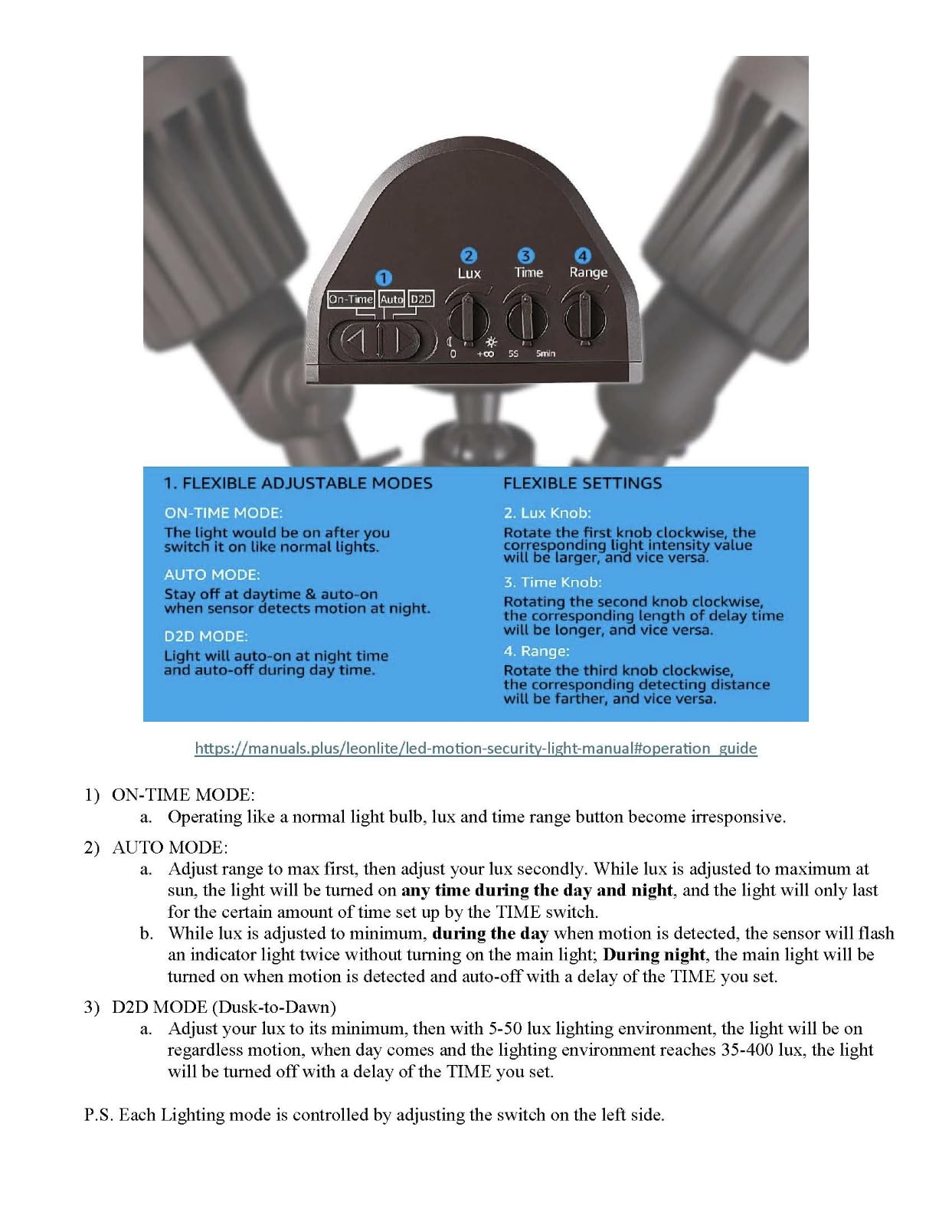
Three operating modes cover On-Time, Auto, and Dusk-to-Dawn, detection runs to 59 feet at 180 degrees, and the adjustable heads let you aim output at a door and a path at the same time. At 25W and 2500 lumens the efficiency works out to about 72 lumens per watt.
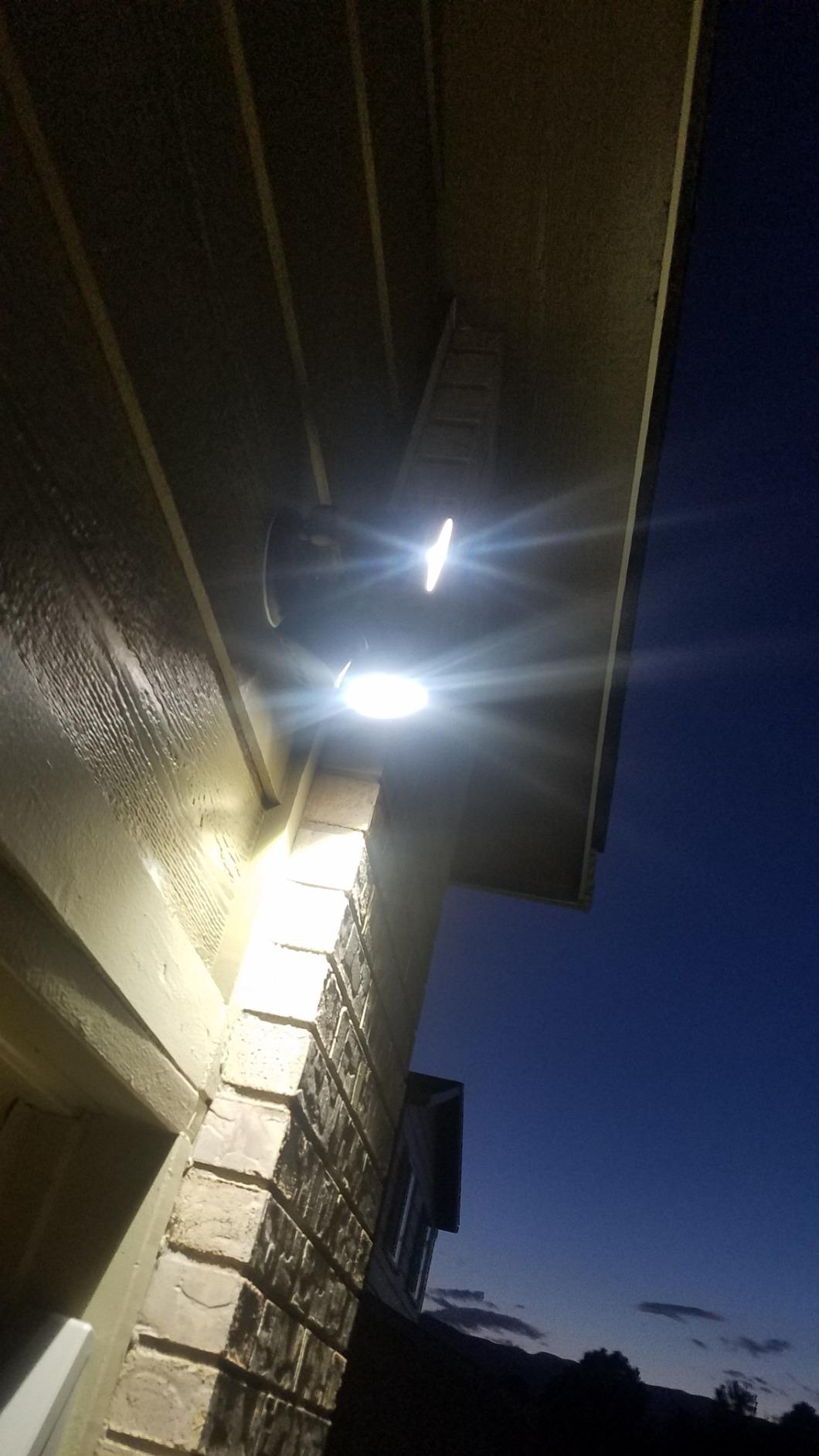
The bronze finish is the quiet advantage. Most fixtures in this category are white or black, and a bronze body blends into traditional exterior trim and brick without looking like an addition bolted on this year.
Buyers like the styling, the mode choice, and the voltage tolerance. The main limitation is output: 2500 lumens sits in the middle of this list, so it lights a doorway or a yard corner well and struggles to fill a large bay floor on its own.
Does a wide voltage range matter in a home garage?
Not usually, since household circuits in the US run at 120V. It matters if you are wiring a detached shop, converting a commercial bay, or running the fixture off a panel where voltage varies. On a standard home circuit it makes no difference to how the light performs.
How high should I mount it?
As high as the wall allows while keeping the aimed heads clear of obstructions. Detection reach shortens as height increases, so a fixture mounted near the roofline on a tall wall will cover less ground than the same fixture at eye level, and the 59-foot figure assumes a typical mounting height rather than a maximum.
11. ProPOW Radar A19 Motion Bulbs — Best for Detection Through Glass
ProPOW Radar Motion Sensor Light Bulbs, A19 12W (100 Watt Equivalent) Daylight E26 Outdoor Auto on/Off Motion Detector Lights for Outside, Porch, Garage, Driveway, Patio,(1100LM, 2-Pack)
1100 lm per bulb
5000K
360 degree radar
16-32 ft range
E26
Pros
- Radar detection reaches through glass and acrylic
- Screw-in install with no wiring
- Built-in dusk-to-dawn photosensor
- Very low false-alarm rate
Cons
- 1100 lumens suits accent and path lighting only
- Performs poorly near other light sources
- Not dimmable
These bulbs use Doppler radar rather than passive infrared, and that single change fixes the most common PIR complaint in a garage: an infrared sensor cannot see through a glass or acrylic fixture cover, so a covered porch light or a polycarbonate bulkhead may as well be switched off. Radar detects through non-metallic material, which means a covered fixture still triggers.
The coverage is 360 degrees with a 16 to 32 foot detection diameter, and the built-in photosensor activates below 15 LUX and switches off above 40 LUX, so daytime false triggering is handled without a separate timer.
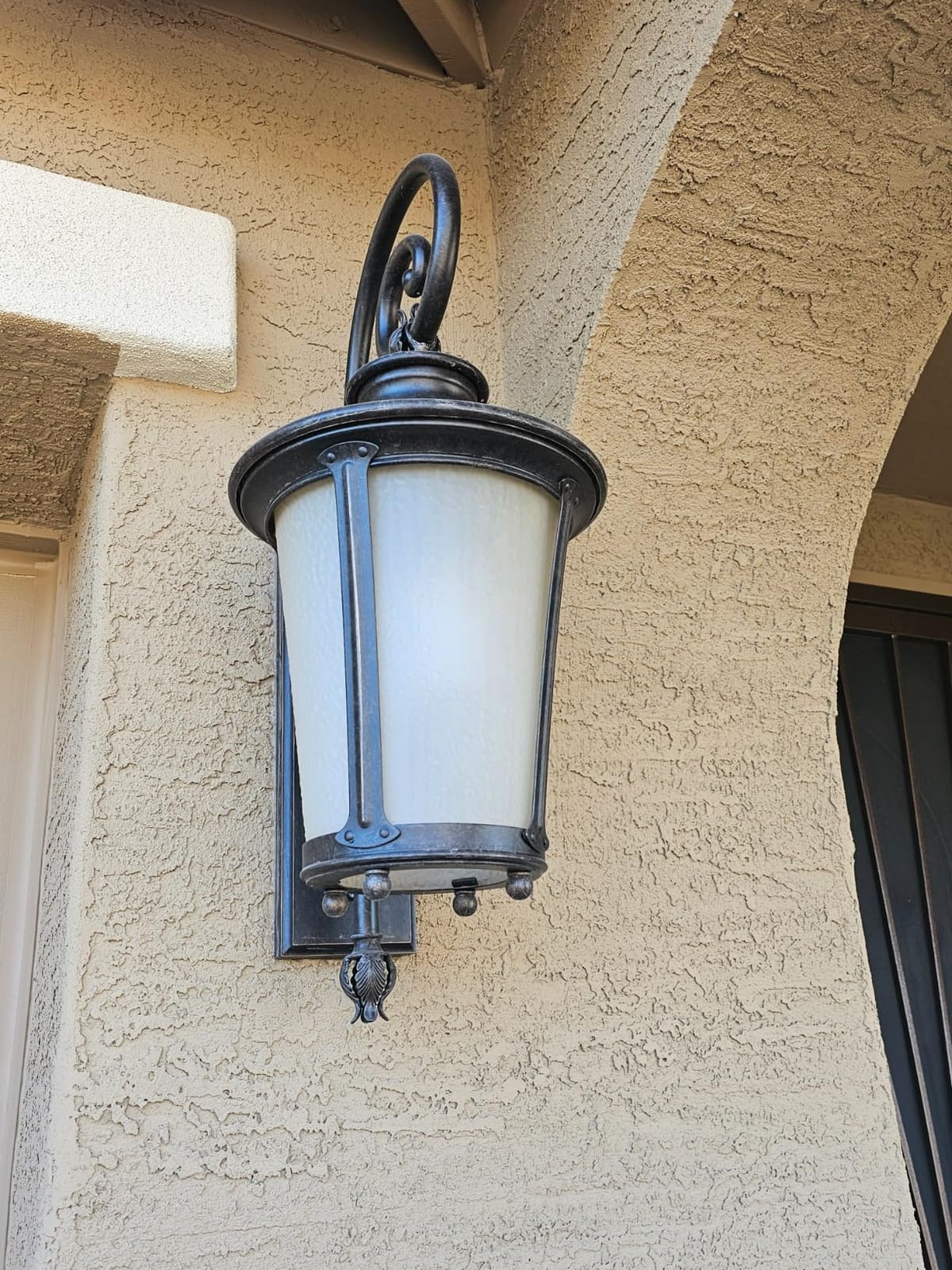
Owners who want retrofit motion sensing without any wiring rate these well, and the two-radar-detection benefit matters most on a covered porch light or a fully enclosed exterior fixture where an infrared bulb would sit dead in the housing.
Brightness is the limit. At 1100 lumens per bulb these are accent and path lights, and the bulb is not dimmable, so you either accept the output or you do not. It also performs poorly when another light source is close to the sensor, and it should be installed facing downward.
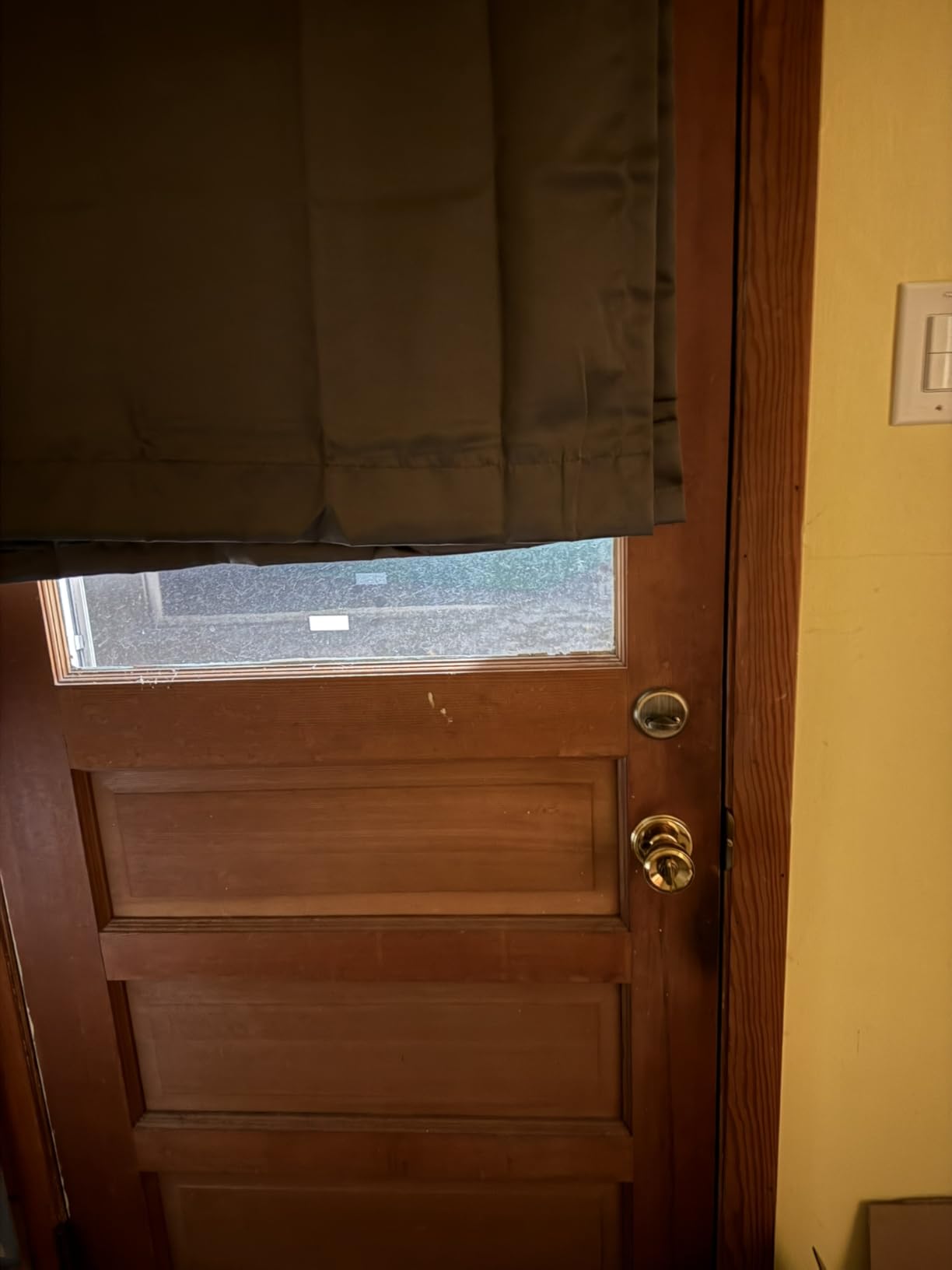
Radar or PIR for a garage?
Radar if the light is behind glass or acrylic, or if you want the lowest false-trigger rate. PIR if you want a slightly tighter cone and lower power draw, and if the sensor has a clear line of sight. In an open garage ceiling or a bare bulb, both work and PIR is cheaper.
Can I dim these bulbs?
No. The bulb is a fixed output with no dimming range, and the photosensor steps it on and off rather than dimming it. If you need dimming for a task area, use a dimmable hardwired fixture and treat the motion sensor as a separate switch.
12. LEONLITE 4-Foot 4000-Lumen Motion Sensor Shop Light
LEONLITE 2-Pack 4FT Motion Sensor LED Utility Shop Light, 40W, 5000K
4000 lm per fixture
5000K
16.4 ft sensor radius
Linkable
2-pack
Pros
- Best whole-room coverage in the roundup
- Ten-minute hands-free on-time
- Two fixtures link together with no extra wiring
- Even output from 240 LED chips
Cons
- Indoor rated only
- Fixed 10-minute on-time with no adjustment
- Heaviest option in the list at 5 pounds each
This is the indoor counterpart to everything else on the list, and it solves a different problem. A security floodlight lights the door and the drive; a 4-foot shop light lights the workbench and the floor you are standing on while you work.
Each fixture delivers 4000 lumens at 40W across 240 integrated LED chips for even, glare-free output, with motion detection in a 16.4-foot radius. Two fixtures come in the pack, and the linkable plug-n-play design lets up to four run from a single connection without extra wiring.
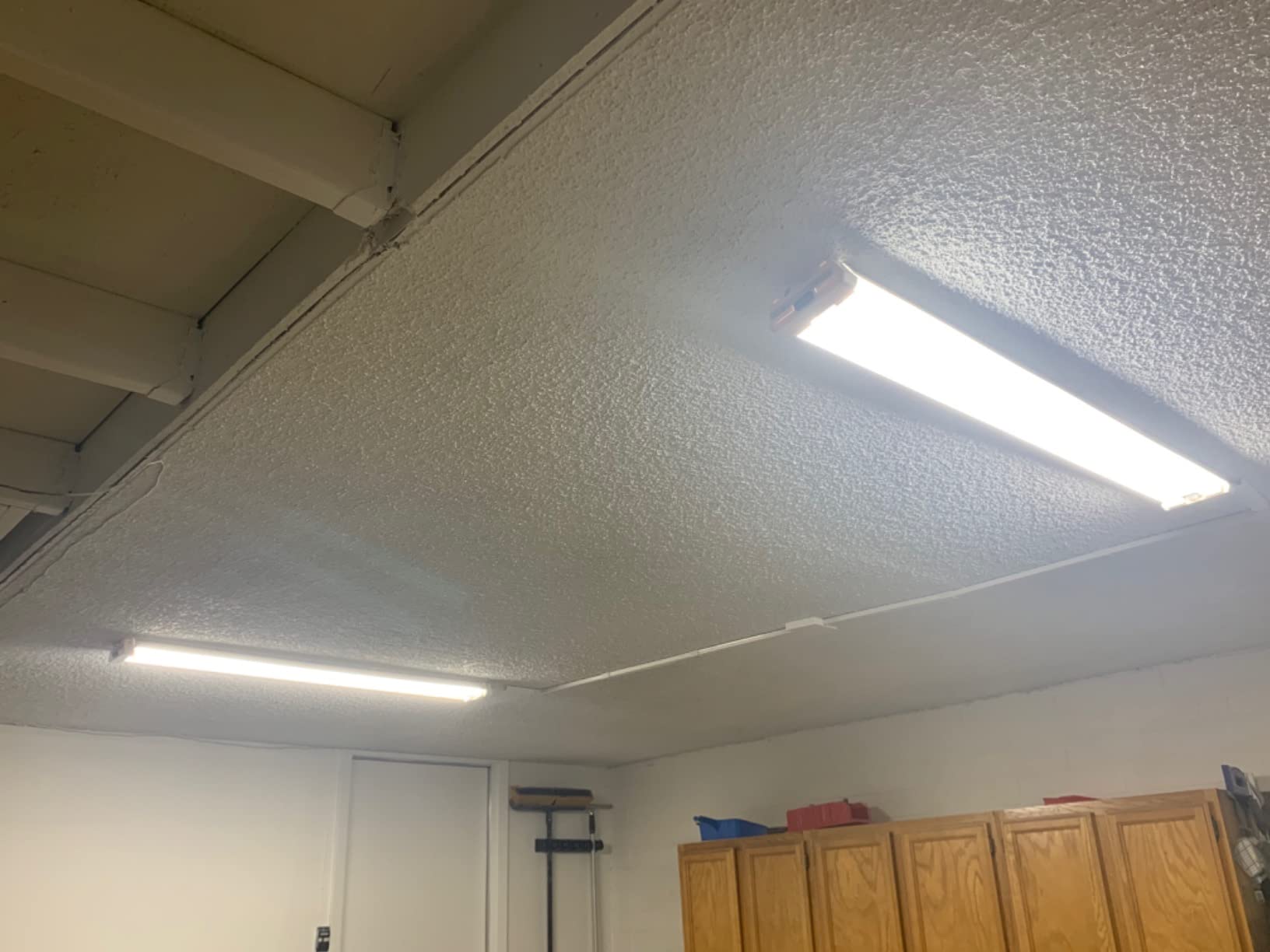
For a two-car garage with a workbench along the back wall, two of these fixtures hanging in parallel cover the whole floor, and the ten-minute on-time means you are not reaching for a switch in the dark every time you move. Mounting is surface or suspended.
The constraint is rating. These are indoor fixtures and not suitable for an uncovered exterior wall or a damp location, and the 10-minute timeout is fixed with no dial to extend it for a long job. Our guide to the best LED shop lights for garages covers indoor bay lighting in more detail.
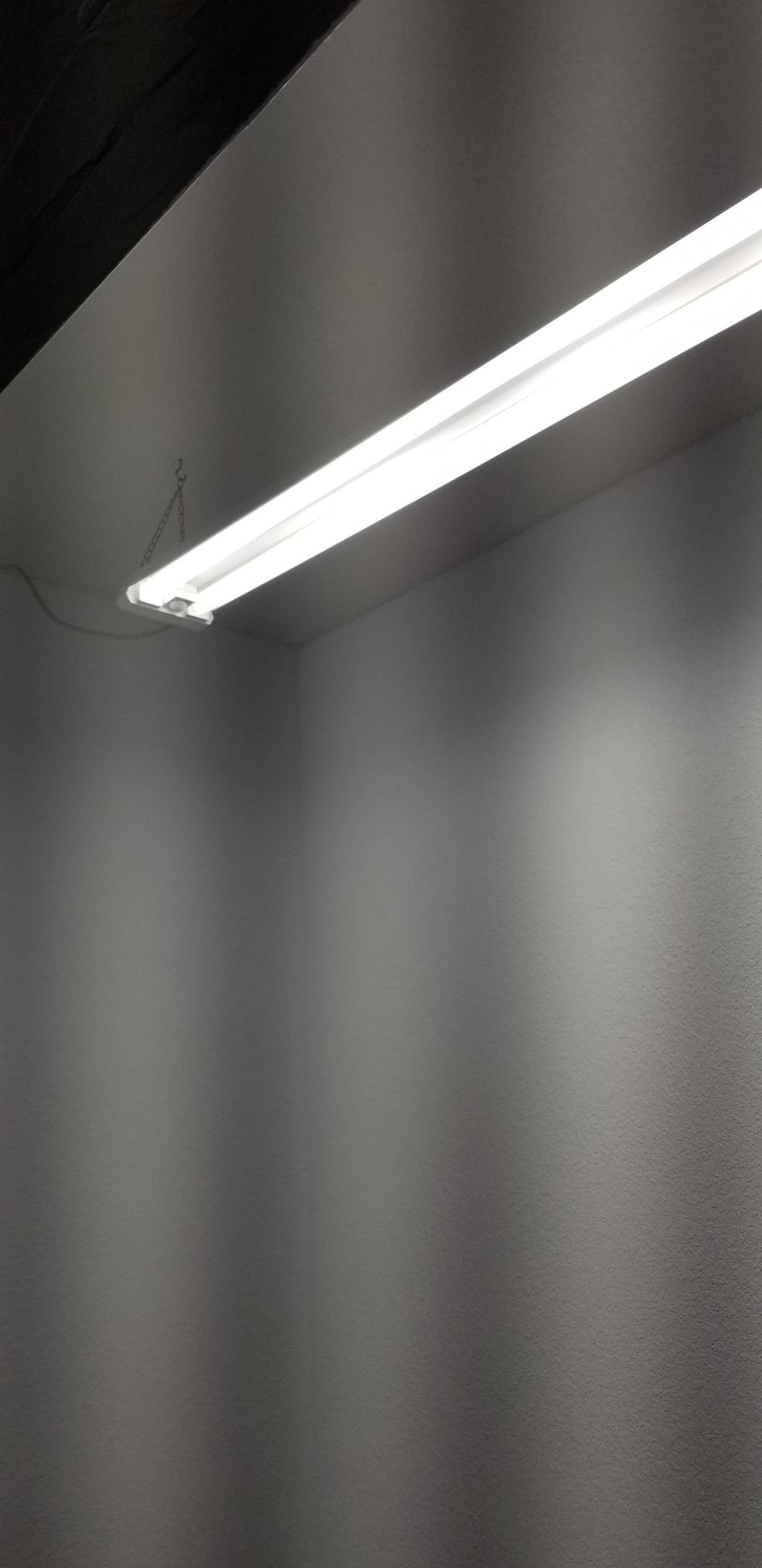
How many 4-foot shop lights does a two-car garage need?
Two, mounted in parallel along the length of the bay, is the standard answer for a two-car garage with a work area. One covers a one-car bay or a narrow workbench wall. Three or four only make sense in a three-car bay or a workshop with separate task zones.
Do shop lights and floodlights solve the same problem?
No, and buying the wrong one is the most common mistake we see. A shop light is for interior floor and bench coverage. A floodlight is for the door, the drive, and the perimeter. Many garages want both, and mixing the two types is often better than trying to make one fixture stretch across both jobs.
How Many Lumens Does a Garage Need?
A garage typically needs 50 lumens per square foot for general storage and parking, 75 lumens per square foot for a bay where you also work on vehicles, and 100 lumens per square foot for a bench-level workshop where you need to read small parts and see colour.
Here is how that translates in practice. A one-car garage at about 200 square feet wants 10000 lumens for workshop use, which usually means two fixtures rather than one enormous one. A two-car garage at about 400 square feet wants 20000 lumens at the 50 lumens per square foot mark or 30000 lumens at the workshop mark.
A three-car or workshop bay at roughly 600 square feet lands at 30000 lumens for parking and storage, or 60000 lumens for full workshop brightness. Those numbers are the total across every fixture in the room, and spreading them over two or three fixtures gives more even light than one very bright unit in the centre.
For entry-only lighting where you just want to see the door handle and the floor, the numbers drop sharply. In that case one 2000 to 3500 lumen fixture covers a one-car garage comfortably, and a bulb-style unit in the 1100 to 1200 lumen range is enough for the path itself.
How to Choose a Motion Sensor Light for a Garage?
Start with installation, because it eliminates options faster than any other spec. A screw-in bulb needs an existing E26 medium-base fixture. A plug-in unit needs a reachable outlet and an indoor location. A hardwired fixture needs a junction box, and if you do not have one, that is a wiring project before it is a lighting purchase.
Next, decide where detection happens. PIR sensors read body heat and need a clear line of sight, so a covered or enclosed fixture can defeat them. Radar sensors detect through glass, acrylic, and other non-metallic material, at the cost of a slightly higher power draw and less directional control.
Then treat manual override as a required feature rather than a bonus. The most consistent complaint in garage lighting discussions is a light that cuts out mid-job, and the fix is either a fixture with a dedicated override mode, a wall switch you flip twice, or a smart relay that lets you force the circuit on.
For colour temperature, 4000K to 5000K suits most garages. 5000K reads neutral and shows detail well, 4000K is warmer and easier on the eyes for long sessions, and 6500K is the brightest-feeling and most clinical. If you are matching an existing garage, check what is already installed before you mix.
Weather rating matters only if the unit is outside or in a damp bay. IP65 covers a wet location and an exposed exterior wall, IP44 suits a covered porch, and an indoor-rated fixture should never go on an uncovered wall. Note that the shop lights and plug-in lights in this roundup are indoor-rated by design.
Warranty length is a fair tiebreaker. The LUTEC fixtures carry 3 years, the GE bulbs carry 5 years with a limited-lifetime option on the plug-in model, and the solar fixture carries 1 year. On a unit mounted 10 feet up, faster replacement service is worth real money.
Troubleshooting: Why Garage Motion Sensor Lights Misbehave?
If a light stays on continuously, the usual cause is a photocell that is not seeing daylight, often because a second fixture is shining on its sensor all night. Block the sensor with opaque tape for a test, and if the light switches off, the photocell is the problem rather than the motion sensor.
If a light triggers constantly, the detection range is set too wide or a hot air vent, a car, or a tree branch is inside the cone. Step the sensitivity down to a shorter range first, then aim the sensor away from the moving object before replacing anything.
If a light goes dead after a power outage, many motion fixtures ship in a test mode designed for installers and assume on-time testing during the day. A wall-switch toggle usually restores normal operation. If the light will not respond after a toggle and a breaker reset, the sensor module is the likely failure point and warranty service is the fix.
If motion sensing seems delayed, check whether the sensor has a line of sight to the approach path. A sensor pointed at a wall rather than the open bay will feel slow because the person has already crossed its detection zone. Repositioning usually beats waiting out any electronic delay.
Frequently Asked Questions
What is the best motion sensor light for a garage?
The best motion sensor light for a garage is a hardwired three-head LED floodlight with adjustable heads and at least 69-foot detection. Our top pick delivers 7000 lumens from 58W with a 72-foot range at 180 degrees, and it covers a two-car bay and the drive behind it from a single mount. If you cannot wire anything, a screw-in motion bulb adds detection to an existing fixture instead.
What is the best brand of motion sensor lights?
Brand is a weak signal in this category and specifications dominate the decision. What matters is lumen output, detection range, whether a manual override mode exists, IP rating, and warranty length. Compare those five numbers across fixtures and the brand name rarely changes the outcome, which is also what we found in forum discussions about garage lighting.
What is the best floodlight for a garage?
The best floodlight for a garage is a hardwired LED fixture with adjustable heads, a manual override mode, and IP65 sealing for exterior walls. Aim the heads at the door and the walk rather than the street, set the range dial to the shortest distance that covers your approach, and choose 5000K for task visibility or 4000K for a softer evening tone.
What are the downsides of using motion sensor lights?
The main downsides are dead zones at the edges of the detection cone, false triggers from cars, pets, or moving hot air, and lights that switch off mid-task. Fixed detection range on some models means you cannot tune out a sidewalk, shallow housing can crowd a deep electrical box, and an indoor-rated fixture installed outdoors will fail faster than any spec sheet suggests.
Is 5000K or 6000K better for a garage?
5000K is the better default for a garage because it reads neutral and shows detail without the blue cast that 6000K gives off. Choose 4000K if you work under a car for long stretches and want softer light, and 6500K or 6000K only when maximum perceived brightness matters more than comfort. Matching the colour temperature already in the garage is usually the most comfortable result.
How many lumens do I need for a 2-car garage?
A two-car garage of about 400 square feet needs 20000 lumens for parking and storage at 50 lumens per square foot, or 30000 lumens for a workshop at 75 lumens per square foot. Spread that across two or three fixtures rather than one very bright unit, since even coverage removes the shadow pockets under a vehicle where work actually happens.
Why does my motion sensor light stay on?
A light that stays on usually has a photocell that is not detecting daylight, often because another fixture is shining on its sensor after dark. Cover the sensor with opaque tape for a test. If the light switches off, the photocell is at fault and you should reposition the unit or shield the sensor. A stuck relay or failed sensor module is the other cause and is covered by warranty.
Can motion sensor garage lights be turned on manually?
Yes, on most hardwired fixtures. Flipping the wall switch off, on, off, on within about three seconds bypasses the sensor and forces the light on until you repeat the sequence. Several models also have a dedicated manual override mode or a test mode. Screw-in bulbs often let you disable motion sensing entirely so the bulb behaves like a normal bulb, which is useful when you are working for hours.
Conclusion
The best motion sensor lights for garages split cleanly by install style, and picking the wrong one is the expensive mistake. The LEPOWER 7000-lumen three-head fixture is our pick for most two-car garages because it covers the bay and the approach from one hardwired mount, with a 72-foot detection cone and heads you can aim.
For a one-car garage or a smaller budget, the LEPOWER 4000-lumen two-head model rated highest in this roundup and covers a wall or a workshop entrance well. If you cannot wire anything, the GE PAR38 bulbs add motion sensing in minutes, and the MIHANI solar unit covers an outbuilding or a carport with no wiring at all.
Whichever route you take, check for a manual override before you buy, size the lumen total to your floor area rather than to a single fixture, and keep indoor-rated shop lights inside. Our picks for the best motion-activated floodlights for rural properties go deeper on coverage across larger outdoor areas, and our solar motion light picks cover off-grid locations in more detail.