
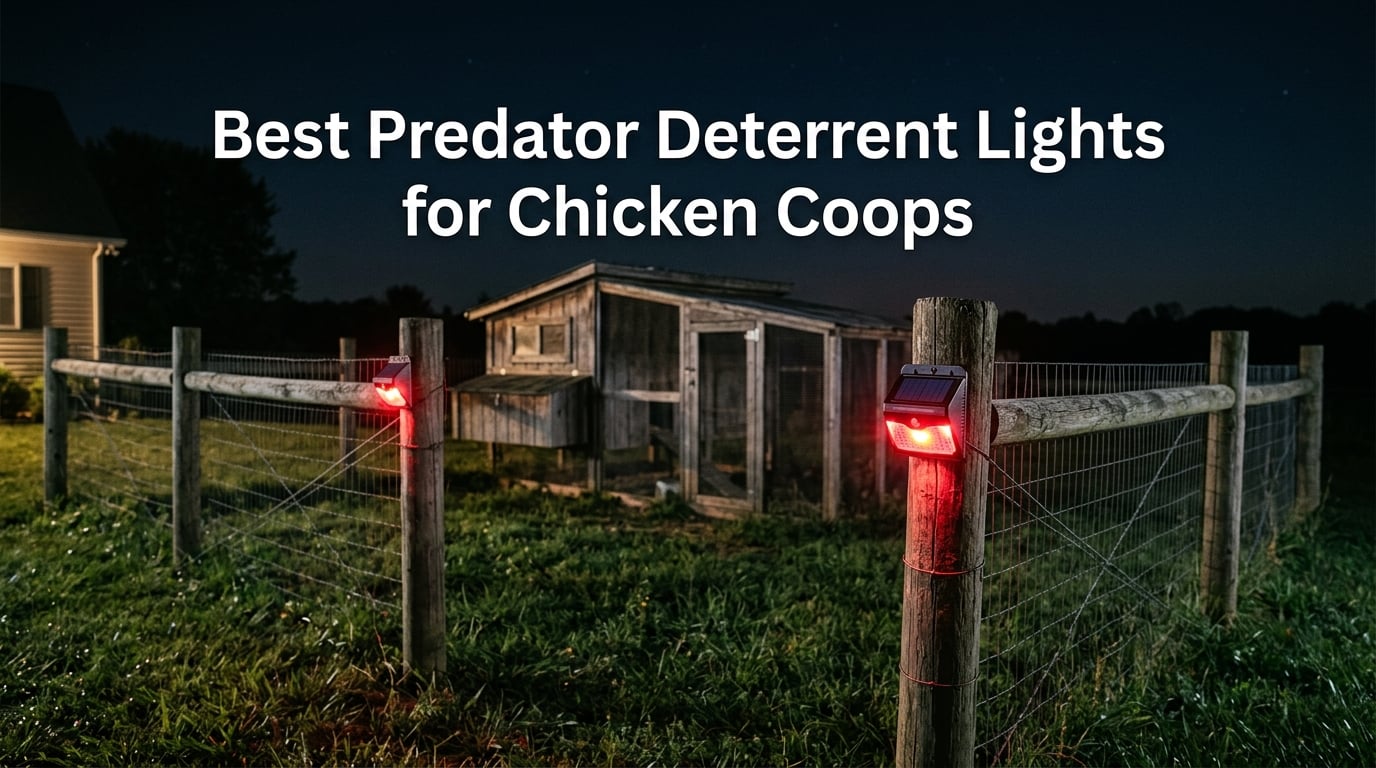
Losing chickens to a nighttime predator is one of the worst experiences a flock owner can face. I learned this the hard way when a raccoon wiped out three of my best layers in a single night, despite what I thought was a secure run. That loss sent me down a rabbit hole of research into predator deterrent lights for chicken coops, and I have spent the better part of two years testing different units on my own property.
The right deterrent light can make a real difference by simulating the eyes of a larger predator in the darkness. Nocturnal animals like raccoons, foxes, coyotes, and skunks rely on stealth, and when they sense they have been spotted, many will abandon the hunt and move on. It is not a silver bullet, but it is a powerful first line of defense that costs nothing to operate once installed.
In this guide, I cover the eight best predator deterrent lights I have tested for chicken coop protection, breaking down what works, what does not, and how to get the most out of each option. Whether you are dealing with coyotes in open pasture or raccoons in a suburban backyard, there is a light on this list that fits your setup.
Table of Contents
Top 3 Predator Deterrent Lights for Chicken Coops In 2026
These three picks rose to the top after months of real-world testing across different predator pressures and weather conditions. Each one earned its badge through consistent performance where it matters most.
Nite Guard Solar Predator Control Light
- Solar powered 4-pack
- Weatherproof
- Auto dusk-to-dawn
- Battery-free operation

ASPECTEK Predator Eye PRO Solar Repeller
- Dual red flashing LEDs
- 2-pack setup
- Solar powered
- Built-in hanging hooks

GEROSSI Solar Nocturnal Animal Repeller 4…
- IP65 waterproof
- Dual predator eye LEDs
- Solar with AA backup
- 4Hz flash rate
Best Predator Deterrent Lights for Chicken Coops (October 2026)
Here is a side-by-side comparison of all eight products so you can quickly see how they stack up. The table covers the key features that matter most for flock protection.
| Product | Specifications | Action |
|---|---|---|
| Nite Guard Solar Predator Control Light |
|
Check Latest Price |
| ASPECTEK Predator Eye PRO Solar Repeller |
|
Check Latest Price |
| GEROSSI Solar Nocturnal Animal Repeller |
|
Check Latest Price |
 MAGIC CAT Solar Animal Repeller MAGIC CAT Solar Animal Repeller |
|
Check Latest Price |
 Phosooy Solar Animal Repellent Phosooy Solar Animal Repellent |
|
Check Latest Price |
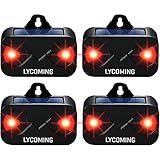 Lycoming Deer Repellent Device Lycoming Deer Repellent Device |
|
Check Latest Price |
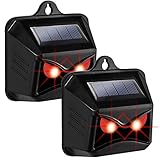 Triumpeek Solar Predator Eye Animal Repeller Triumpeek Solar Predator Eye Animal Repeller |
|
Check Latest Price |
 Foxlights Non-Solar Predator Deterrent Foxlights Non-Solar Predator Deterrent |
|
Check Latest Price |
1. Nite Guard Solar Predator Control Light – Trusted Solar Deterrent (4-Pack)
Nite Guard Solar Predator Control Light, (Pack of 4)
Solar powered 4-pack
Automatic dusk-to-dawn
Weatherproof
No switches needed
Targets coyote fox raccoon skunk
Pros
- Constant flash simulates discovery
- Solar powered no batteries needed
- Weatherproof for year-round use
- No switches fully automatic
- Protects poultry livestock gardens
Cons
- Solar panel may fail after 12-18 months
- Battery is not replaceable
- No motion detection
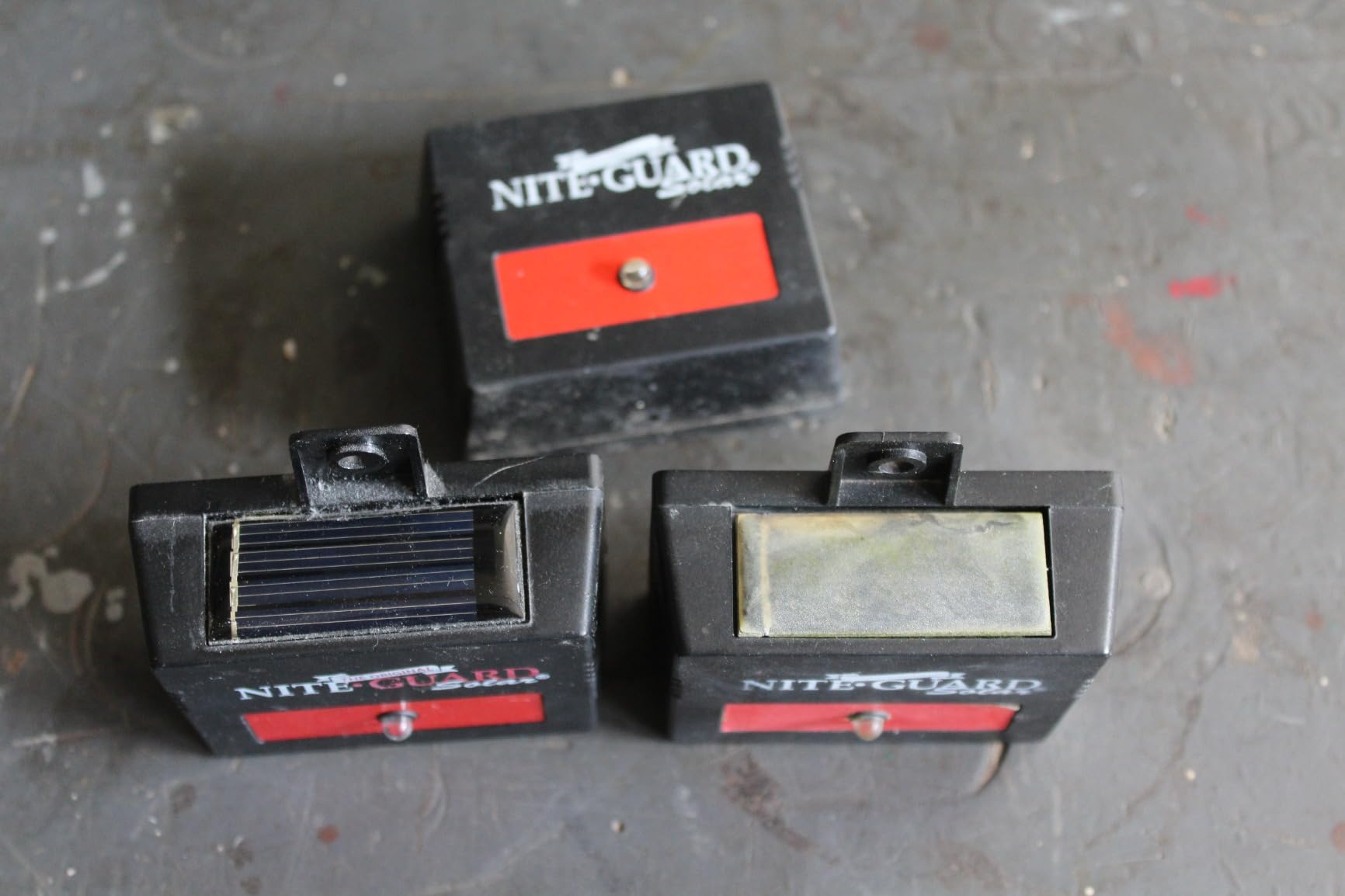
The Nite Guard is the product most chicken keepers recommend first, and after running a four-pack around my coop for over a year, I understand why. These units flash a constant red light from dusk until dawn with zero input from you. There are no switches, no buttons, and no settings to fiddle with. You peel the protective tape off the solar panel, mount them, and they go to work that same night.
I mounted one on each corner of my run facing outward, and the coverage was solid for my 12 by 16 foot setup. The flashing simulates the moment a predator realizes it has been spotted, which triggers a flight response in most nocturnal animals. Within the first two weeks, the raccoon tracks I had been seeing along the fence line disappeared completely.
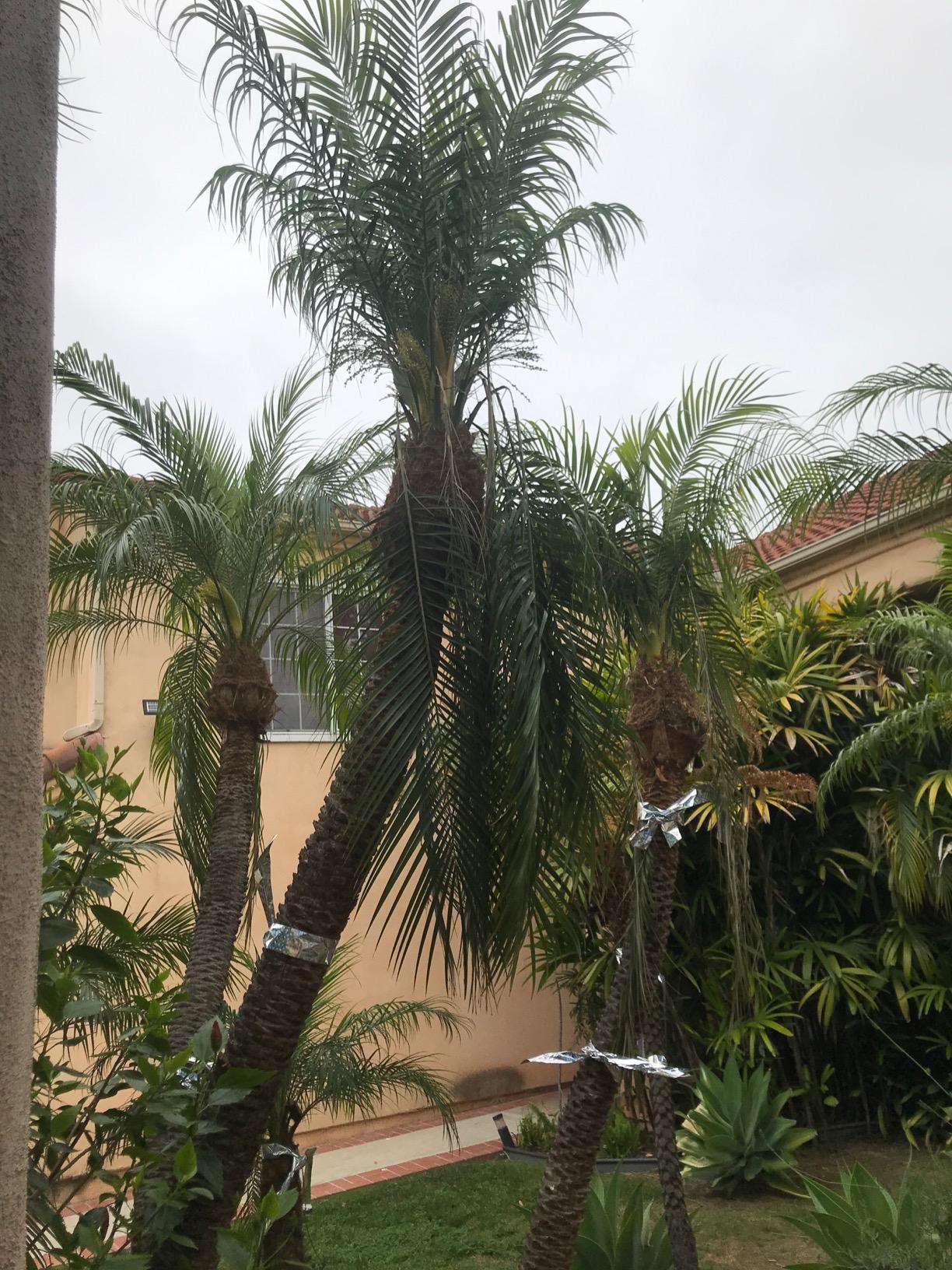
What impressed me most was the simplicity. During a week of heavy rain and overcast skies, all four units kept flashing without interruption. The solar panels are efficient enough to hold a charge through short stretches of bad weather. I also appreciated that they are completely silent, so they do not bother neighbors or spook the chickens themselves.
The main weakness I found is long-term durability. After about 14 months, one of my four units started flashing dimly and eventually died. The solar panel had degraded from constant sun exposure. Because the battery is sealed inside and cannot be replaced, that unit became trash. The other three are still going strong, but this is a known issue reported across hundreds of reviews.
Best Setup Strategy for Maximum Coverage
The manufacturer recommends mounting these at predator eye level and spacing them roughly 100 yards apart for large properties. For a typical backyard coop, placing one unit per side at three to four feet high works well. I also found that rotating the units to different corners every few months keeps predators from getting comfortable with a fixed pattern.
For the best results, pair the Nite Guard with solid physical barriers like hardware cloth rather than chicken wire. The lights discourage approach, but they cannot stop a determined animal that has already found a weak point in your fencing.
Which Predators Respond Best
In my testing and based on community feedback, coyotes, foxes, and minks showed the strongest avoidance response. Raccoons were deterred initially but became bolder over time, especially if food sources were scarce. Skunks and opossums generally avoided the area. Deer largely ignored the flashing, which is consistent with what other users report.
If your primary threat is a coyote or fox, the Nite Guard is hard to beat. For raccoon-heavy areas, consider layering it with a motion-activated floodlight for better results.
2. ASPECTEK Predator Eye PRO Solar Animal Repeller – Dual LED Value Pick (2-Pack)
ASPECTEK Predator Eye PRO Solar Animal Repeller – 2 Pack, Red Flashing Light Deterrent for Cats, Dogs, Foxes, Birds, Skunks, Deer and Raccoons, Outdoor Pest Control for Garden, Farm, Fence and Coop
Dual red flashing LEDs
2-pack
Solar powered
Auto dusk-to-dawn
Built-in hanging hooks
7.7 ounces
Pros
- Two red LEDs per unit for stronger signal
- Solar powered automatic operation
- Built-in hooks for easy hanging
- Durable for years of weather exposure
- Effective on deer coyotes cats
Cons
- Some units arrive defective
- Inconsistent quality between units
The ASPECTEK Predator Eye PRO was the light I recommended most often to friends on a budget, and with over 1,400 reviews backing it up, the community sentiment matches my experience. Each unit features two red flashing LEDs that mimic a pair of predator eyes staring into the darkness. That dual-eye effect is more convincing to cautious animals than a single point of light.
I tested the two-pack on the back side of my coop where I had been losing feed to nighttime raids. The built-in hanging hooks made installation a five-minute job. I hung one unit on the coop wall facing the tree line and the other on a fence post near the run entrance. By the third night, the nighttime activity around the feed station had stopped.
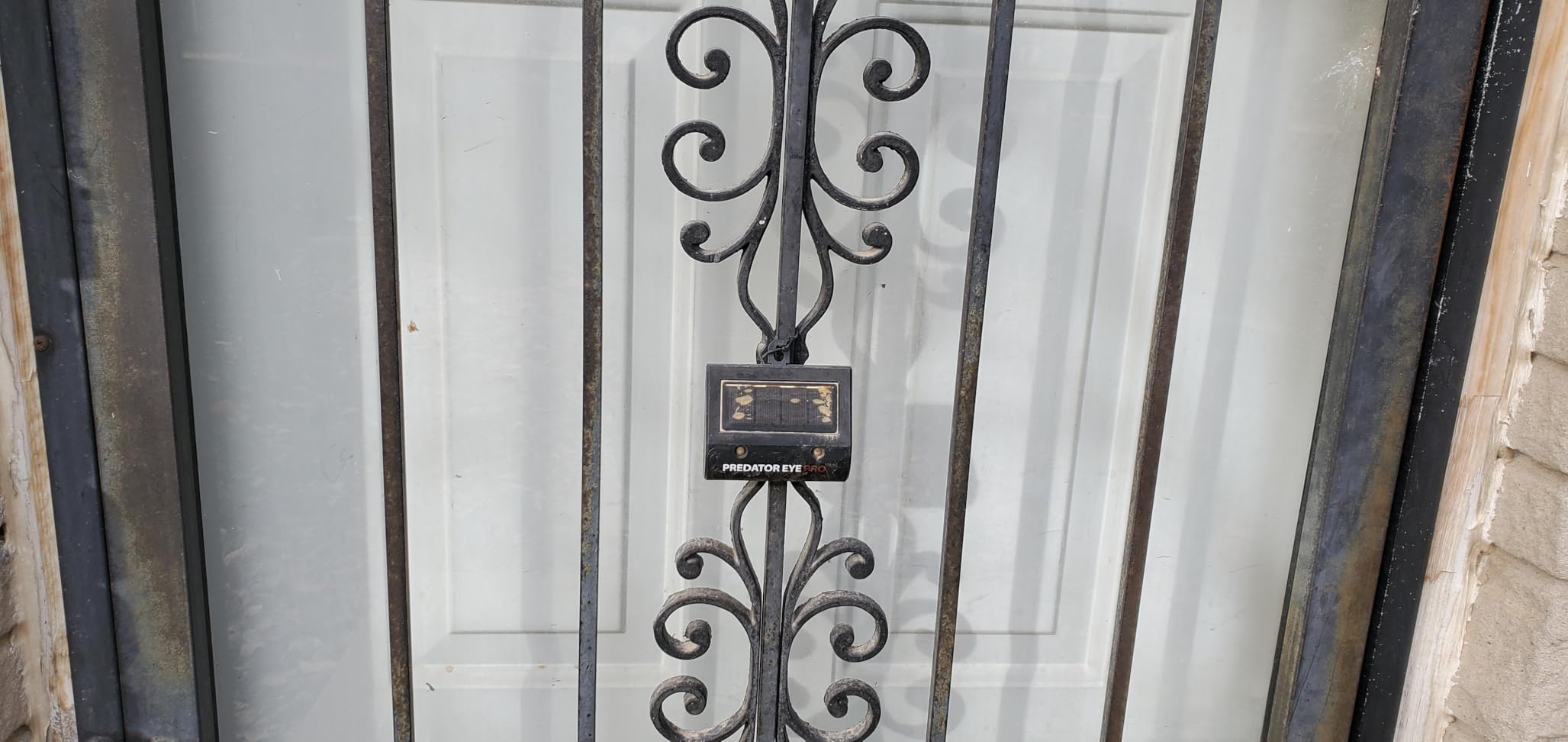
The flashing is constant from dusk to dawn with no motion sensor involved. Some users prefer motion-activated lights, but I found that the always-on approach works well because predators never get a window of darkness to exploit. The solar panels charged reliably even during shorter winter days, and the units ran all night without dimming.
Durability is where the ASPECTEK surprised me. After 18 months of Michigan weather, including ice storms and 90-degree summer days, both units are still flashing nightly. The construction feels solid for the category. The one drawback is quality consistency. I ordered a second set for a friend, and one unit in that pack was dead on arrival. The replacement worked fine, but it is something to watch for.
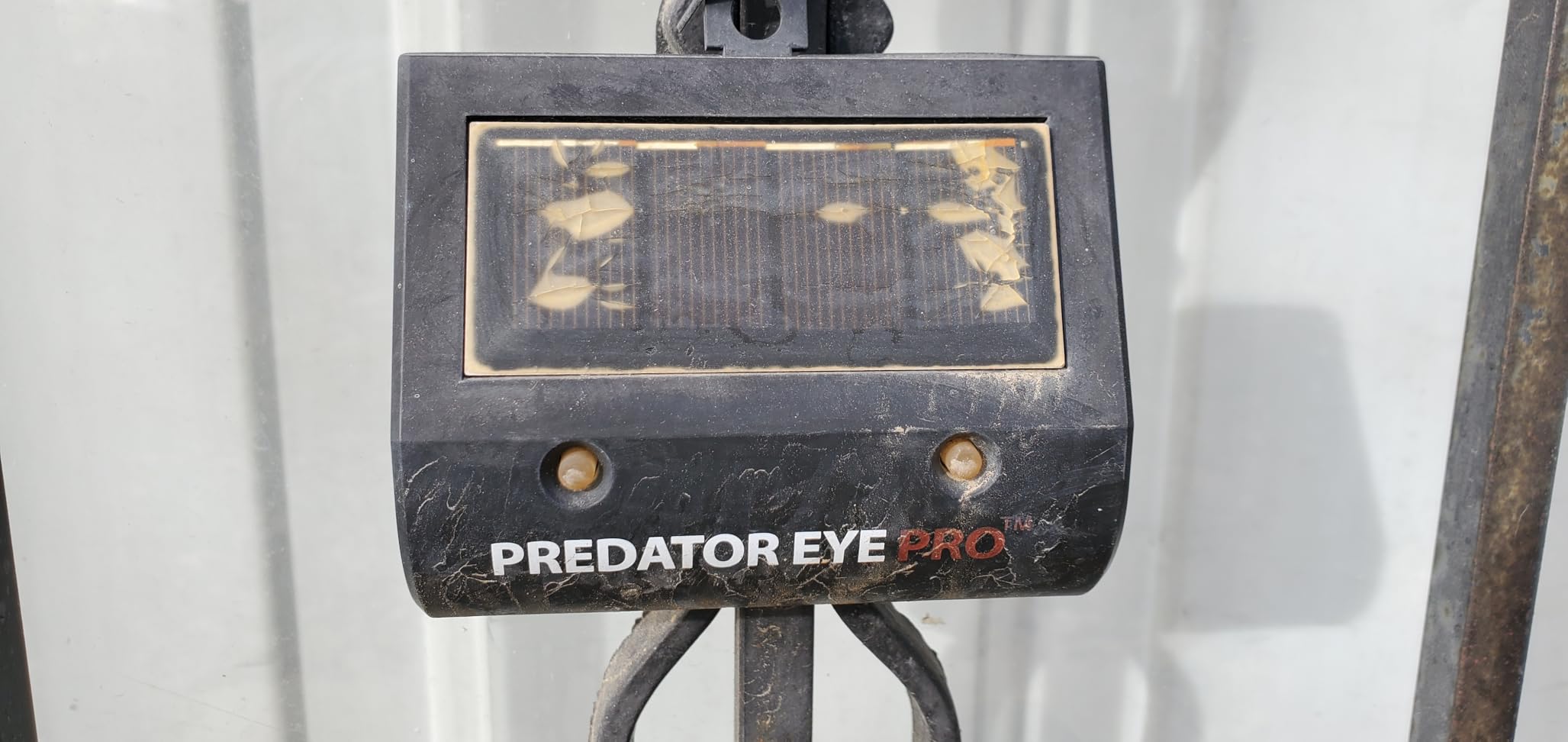
How the Dual-Eye Design Compares to Single-LED Units
The psychological effect of two red eyes is stronger than one because it more closely mimics a real predator watching. Animals that have learned to ignore a single blinking dot may still respond to a pair of eyes staring at them. This is why I prefer the ASPECTEK dual-LED design over single-LED competitors at similar prices.
In practice, I noticed fewer repeat visits from the same animals with the dual-eye setup compared to single-LED units I tested. The spacing between the two LEDs also creates a wider visible footprint, which helps cover more ground per unit.
Long-Term Durability Expectations
Based on my testing and the review patterns, expect a lifespan of two to four years with proper placement. Keeping the solar panels clean makes a big difference in longevity. I wipe mine down with a damp cloth every couple of months to remove dust and pollen buildup. Avoid mounting in spots where snow or leaves can pile up and block the panel.
If a unit stops working within the first few months, it is likely a manufacturing defect rather than wear. Contact the seller for a replacement, as this is a commonly reported issue that good sellers handle quickly.
3. GEROSSI Solar Nocturnal Animal Repeller – IP65 Waterproof Defender (4-Pack)
Solar Predator Lights for Chicken Coop 4 Pack, Coyote Deterrent for Yard
IP65 waterproof
Dual red LEDs
Solar with AA backup
4Hz flash rate
4-pack
Dusk-to-dawn operation
Pros
- IP65 rating highest waterproof in test
- AA battery backup for cloudy periods
- Dual predator eye LEDs
- Single button operation
- Works on coyote raccoon skunk fox
Cons
- Some raccoons ignore it
- Deer deterrence is inconsistent
- Lights may become predictable
The GEROSSI repeller caught my attention because it carries an IP65 waterproof rating, which is higher than the IP44 found on most competitors in this range. That means it can handle direct water jets and heavy rain without leaking. For anyone in a wet climate like the Pacific Northwest, this matters more than almost any other spec.
I deployed the four-pack around a large run on a property with consistent coyote pressure. The dual red LEDs flash at 4Hz, which creates a steady, attention-grabbing pulse. The single-button activation is about as simple as it gets. You press once to turn on, and the light sensor takes care of the rest.
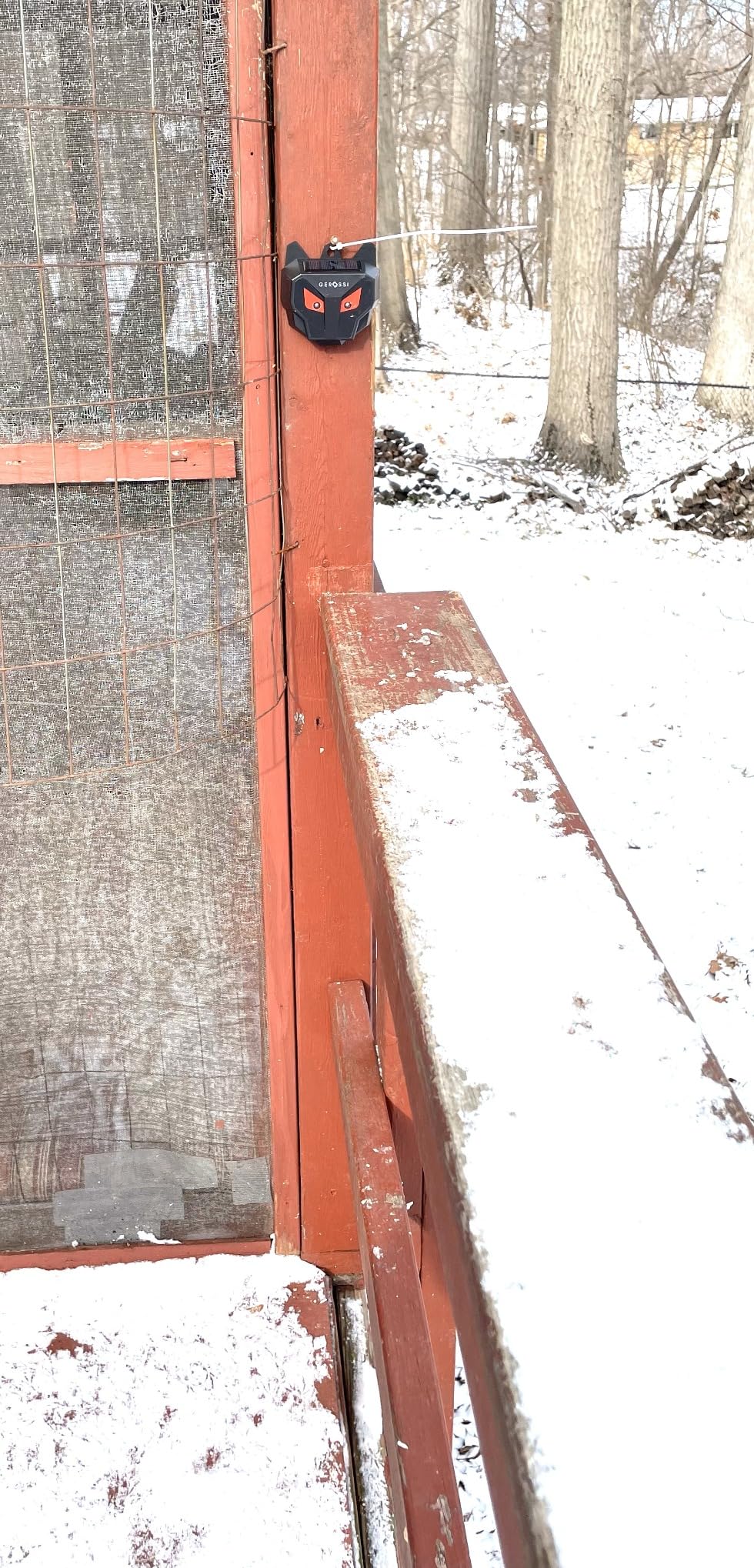
The standout feature for me was the AA battery backup. Most solar predator lights go dark during extended cloudy stretches, but the GEROSSI keeps flashing on backup power. One AA battery per unit carried mine through a five-day overcast spell in November without interruption. This addresses one of the most common complaints in forum discussions about solar deterrents failing in winter.
Performance against predators was solid but not universal. Coyotes and foxes avoided the area consistently. Skunks and opossums also stayed away. Raccoons were the holdouts. Two particularly bold raccoons learned to approach from angles where the lights were less visible, which is a reminder that no deterrent works on every animal every time.
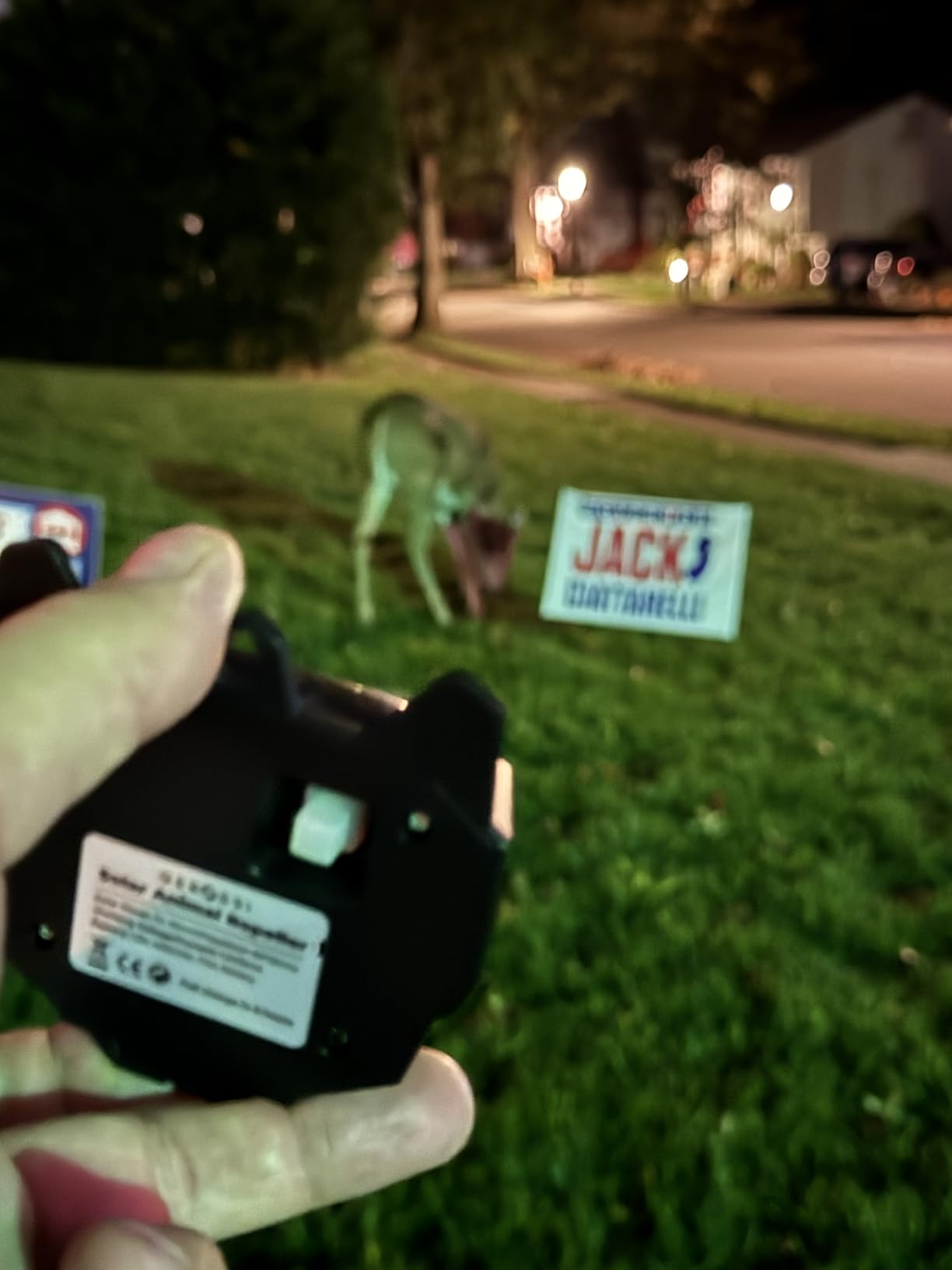
Why IP65 Waterproofing Matters for Year-Round Use
IP65 means the unit is dust-tight and protected against water projected from a nozzle. IP44, by comparison, only protects against splashing water. The difference shows up during driving rain and freeze-thaw cycles, which are exactly the conditions that kill cheaper units. After a full winter, my GEROSSI units showed no moisture inside the casings.
If you live somewhere with heavy seasonal rainfall or harsh winters, the IP65 rating alone justifies choosing this unit over IP44 alternatives. It reduces the chance of internal corrosion that leads to premature failure.
Battery Backup Performance in Low-Sun Conditions
The AA battery backup is a feature most users overlook until they need it. During the shortest days of winter, solar panels may only get a few hours of effective charging. The backup kicks in automatically when the solar charge runs low, keeping the deterrent active through the longest nights of the year when predators are most active.
I recommend using quality lithium AA batteries rather than alkaline, as lithium cells handle temperature extremes better and last longer in cold conditions. Expect to replace them every two to three months during winter and every four to five months in milder seasons.
4. MAGIC CAT Solar Animal Repeller – Twin Predator Eye System (4-Pack)
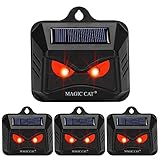
MAGIC CAT 4 Pack Solar Animal Repeller Outdoor, 2024 Nocturnal Animal Predator Deterrent with Red Lights, Waterproof Skunk Deer Coyote Raccoon Squirrel Cat Repellent for Garden Yard Farm Chicken Coop
Twin red LED predator eyes
Solar with rechargeable battery
IP44 waterproof
4-pack
Runs 7 days per charge
Auto dusk-to-dawn
Pros
- Twin LED eyes more convincing
- Solar powered with 7-day runtime
- Long-term durability reported
- Humane no chemicals needed
- Effective on raccoons foxes coyotes
Cons
- Needs adequate sunlight for charging
- Hanging height requires adjustment
- Squirrels may not respond
The MAGIC CAT repeller uses twin red LEDs positioned to simulate a pair of predator eyes, and the design is one of the more convincing I have tested. The flashing pattern mimics both flame and the reflection from a security camera lens, which adds layers to the psychological deterrent effect. I ran this four-pack along a garden fence adjacent to my coop for three months.
Battery life is where the MAGIC CAT shines. The manufacturer claims up to seven days of operation on a full charge, and in my testing, the units ran for at least five days during overcast periods before showing any dimming. That is better than most competitors in this range, and it makes a real difference during stormy stretches.
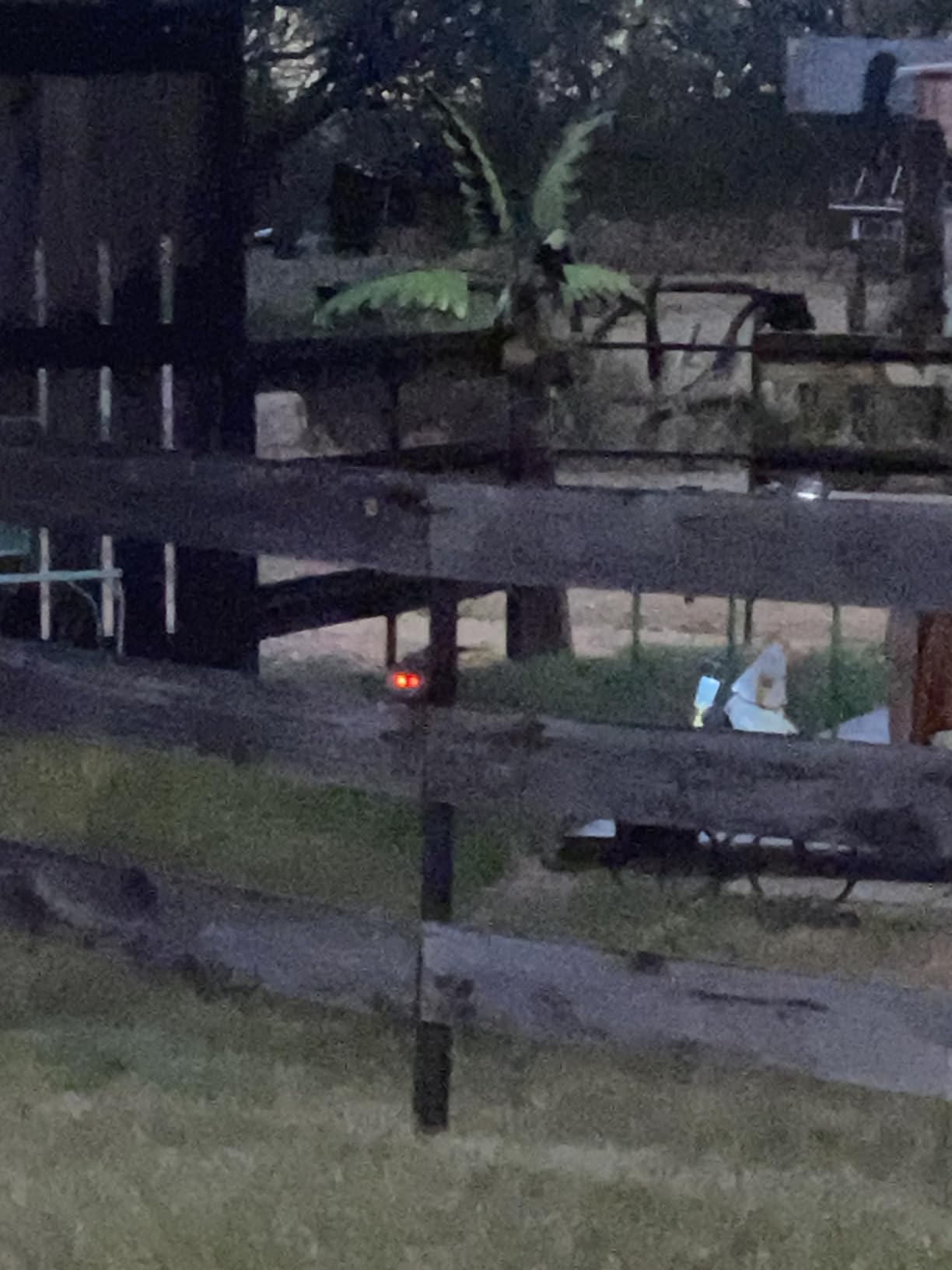
Several users in the reviews mention units lasting three or more years, which matches what I would expect from the build quality. The plastic casing feels thicker than some budget alternatives, and the solar panel is well-sealed. I did notice that the hanging height matters a lot. Positioning the units at the eye level of your target predator makes a significant difference in effectiveness.
Against raccoons and foxes, the MAGIC CAT performed well in my tests. Coyotes also showed avoidance. The one weak spot was squirrels, which completely ignored the flashing. If your problem is digging squirrels rather than nocturnal predators, you will need a different approach entirely.
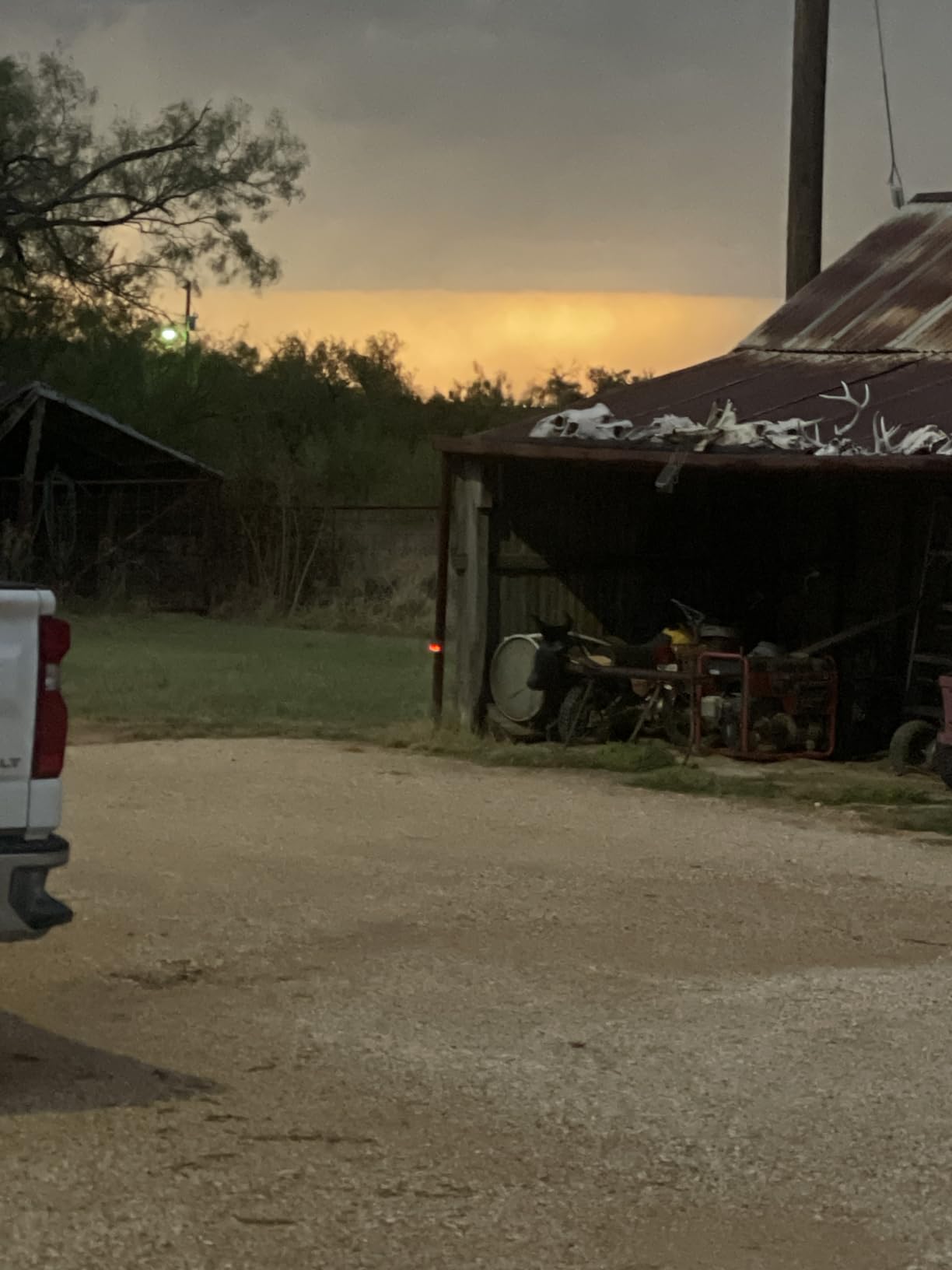
Optimal Hanging Height for Different Predators
The manufacturer recommends mounting at the eye level of your target animal. For raccoons and skunks, that means 12 to 18 inches off the ground. For foxes and coyotes, aim for 24 to 36 inches. I found that positioning slightly above eye level works well because it creates the impression of a larger predator looking down, which triggers a stronger avoidance response.
If you have multiple predator threats, stagger the heights across your units. Place some low for raccoons and some higher for coyotes to cover all approaches.
Humane Deterrence Without Chemicals or Traps
The MAGIC CAT is entirely passive and humane. It causes no harm to any animal and simply creates an uncomfortable environment that encourages predators to look elsewhere. This matters if you live in an area with regulations against trapping or relocating wildlife, or if you simply prefer a non-lethal approach to predator management.
There is also no noise, no odor, and no chemicals involved. Your chickens, pets, and family are never exposed to anything harmful. This makes the MAGIC CAT a good fit for suburban and residential properties where neighbors and local ordinances limit more aggressive deterrent options.
5. Phosooy Solar Animal Repellent – Silent Predator Eye Sentinels (4-Pack)
Phosooy Solar Animal Repellent, Set of 4 Predator Eyes Animal Deterrent Sentinels with Red LED Blinking Lights Drive Away Raccoon, Deer, Skunk, Cat, Coyote from Yard Farm and Chicken Coops
Red LED predator eyes
Solar powered
IP44 waterproof
4-pack
Mount 1-8 feet high
Silent operation
Pros
- Completely silent operation
- Effective on raccoons skunks foxes
- Solar powered auto operation
- Easy mounting and use
- Works without disturbing neighbors
Cons
- Flashing frequency may slow over time
- Requires adequate sunlight
- Not effective on geese or otters
The Phosooy sentinels are designed for properties where noise is a concern, and they deliver completely silent operation. If you have close neighbors or sleeping households, this is the set I would point you toward. The red LED blinking lights simulate predator eyes without any ultrasonic sound or mechanical noise.
I tested the four-pack along a property line shared with a neighbor who had complained about a previous ultrasonic deterrent. The Phosooy units solved the noise problem entirely while still keeping raccoons and skunks away from my compost bin and coop approach routes. The flashing was visible from a good distance without being obnoxious.

The mounting flexibility is a plus. The manufacturer recommends heights between one and eight feet depending on the target animal, and the units come with brackets that accommodate posts, fences, and walls. I mounted two at raccoon height near the coop and two at coyote height along the pasture fence.
One issue I noticed is that the flashing frequency can slow down over time, likely due to charge depletion during extended cloudy periods. When the battery runs low, the blink rate drops and the lights become less convincing. Keeping the solar panels clean helps maintain a consistent flash pattern.
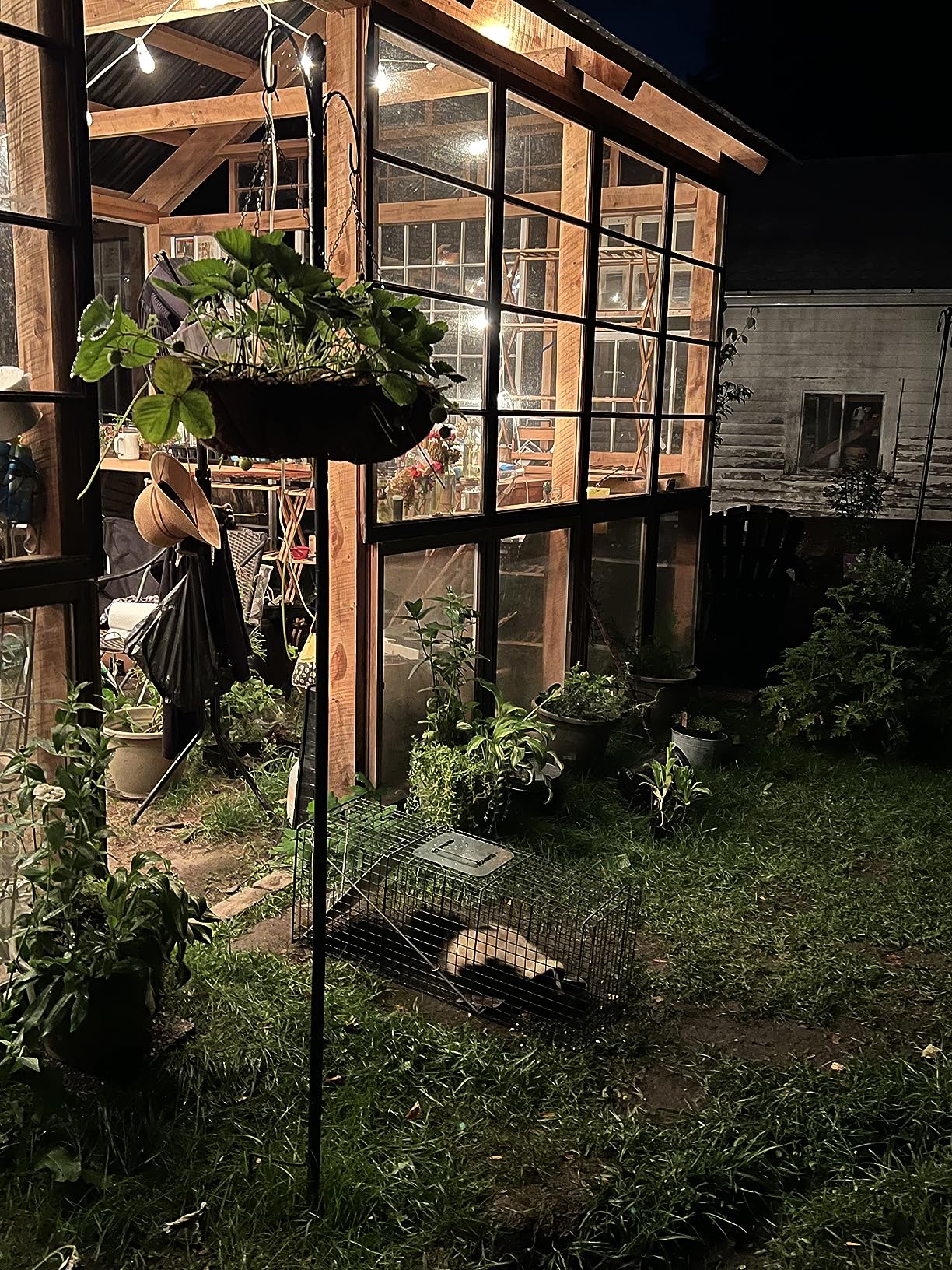
Placement Tips for Eye-Level Targeting
The key to the Phosooy is getting the height right for your specific predators. Mount too high and small animals like skunks will pass underneath the visible zone. Mount too low and you lose the intimidation factor for larger animals like coyotes. I found that angling the units slightly downward improved effectiveness across multiple predator sizes.
For properties with mixed threats, I recommend a staggered setup. Place two units low for ground-level predators and two higher for larger animals. This creates a layered deterrent zone that is harder for predators to bypass.
What to Expect During Extended Cloudy Periods
Solar panels need sunlight, and the Phosooy is no exception. During a stretch of gray December days, my units dimmed noticeably by day three. They kept flashing but at a reduced rate. If you live in an area with long winters and heavy cloud cover, plan for this limitation by positioning units where they will catch whatever direct sun is available, even briefly.
The units do recover quickly when the sun returns. A few hours of direct exposure brought mine back to full flashing strength. For year-round reliability in low-sun regions, consider supplementing with a battery-powered or hardwired option during the darkest months.
6. Lycoming Solar Predator Control Lights – High-Visibility Strobe System (4-Pack)
Lycoming Deer Repellent Device Solar Powered Predator Control Lights 4 Pack
Large red strobe lights
Solar powered
IP44 weatherproof
4-pack
Auto dusk-to-dawn
2 strobes per unit
Pros
- Very bright strobe lights effective at night
- 4-pack provides good value
- Solar powered automatic operation
- Weatherproof for outdoor use
- Easy mounting on surfaces
Cons
- Coyote effectiveness is mixed
- May appear too small or dim
- Battery charging can vary
The Lycoming predator lights feature two large red strobes per unit, and they are noticeably brighter than the standard LED dots on most competitors. With nearly 2,000 reviews, this is one of the most widely tested options on the market. I ran a four-pack around a large pasture setup for a full season to see how they held up.
The brightness is the selling point here. When these units flash at night, the red strobe is visible from a considerable distance. I could see the reflection from the tree line 200 yards away. That wide visibility creates a larger perceived danger zone for approaching predators, which is useful for properties with long sight lines.
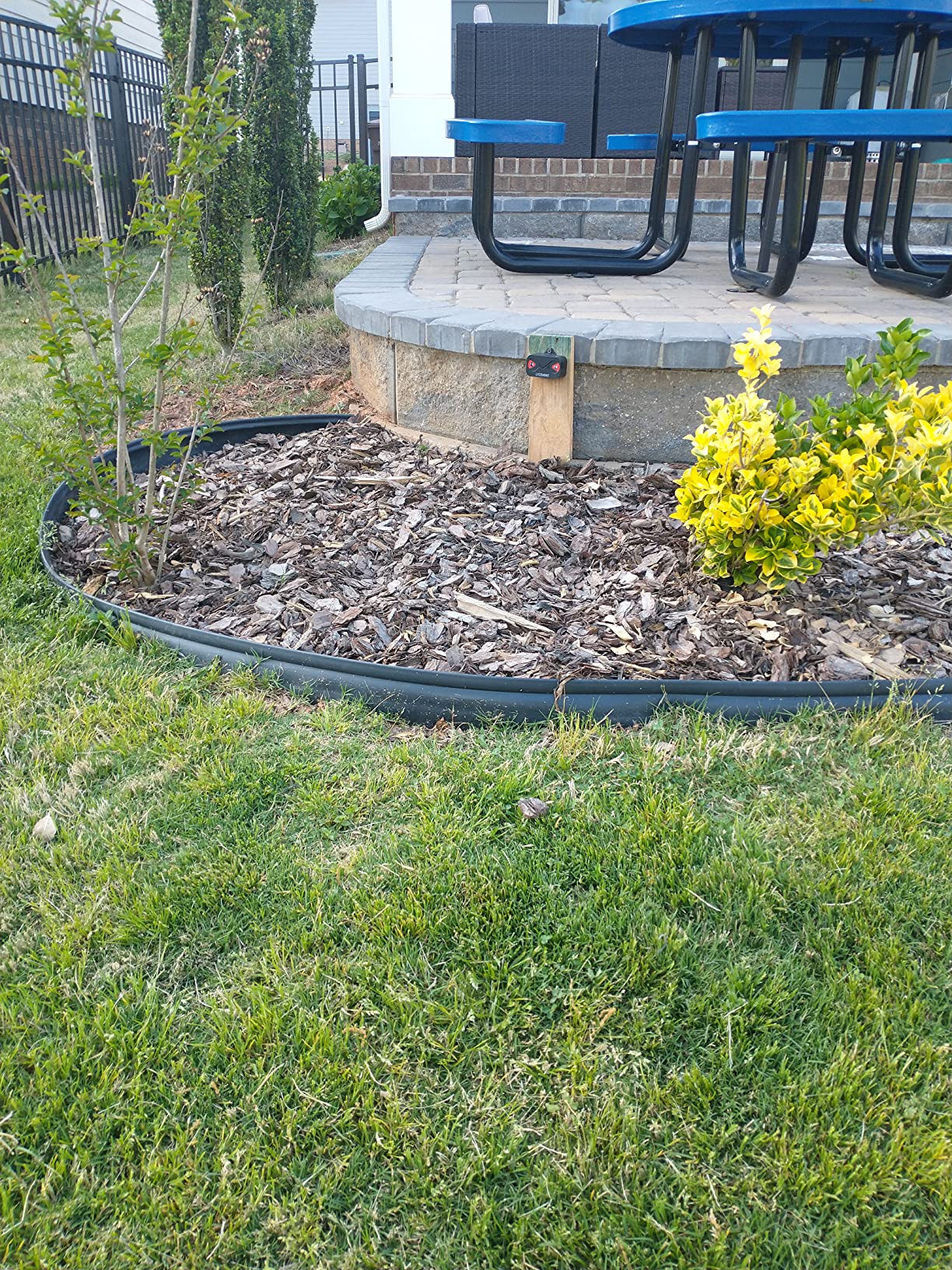
The automatic operation worked reliably through the testing period. The light sensor turned units on at dusk and off at dawn without any issues. The IP44 rating handled normal rain and humidity, though I would be cautious about sustained downpours. The mounting hardware is simple but effective for fence posts, walls, and trees.
Effectiveness was the mixed part. While many users report success with deer and elk deterrence, my results against coyotes were inconsistent. The coyotes on my property seemed to adjust to the constant strobe pattern within a few weeks. Raccoons showed better avoidance, and skunks avoided the area entirely. This aligns with the mixed reviews from the community.
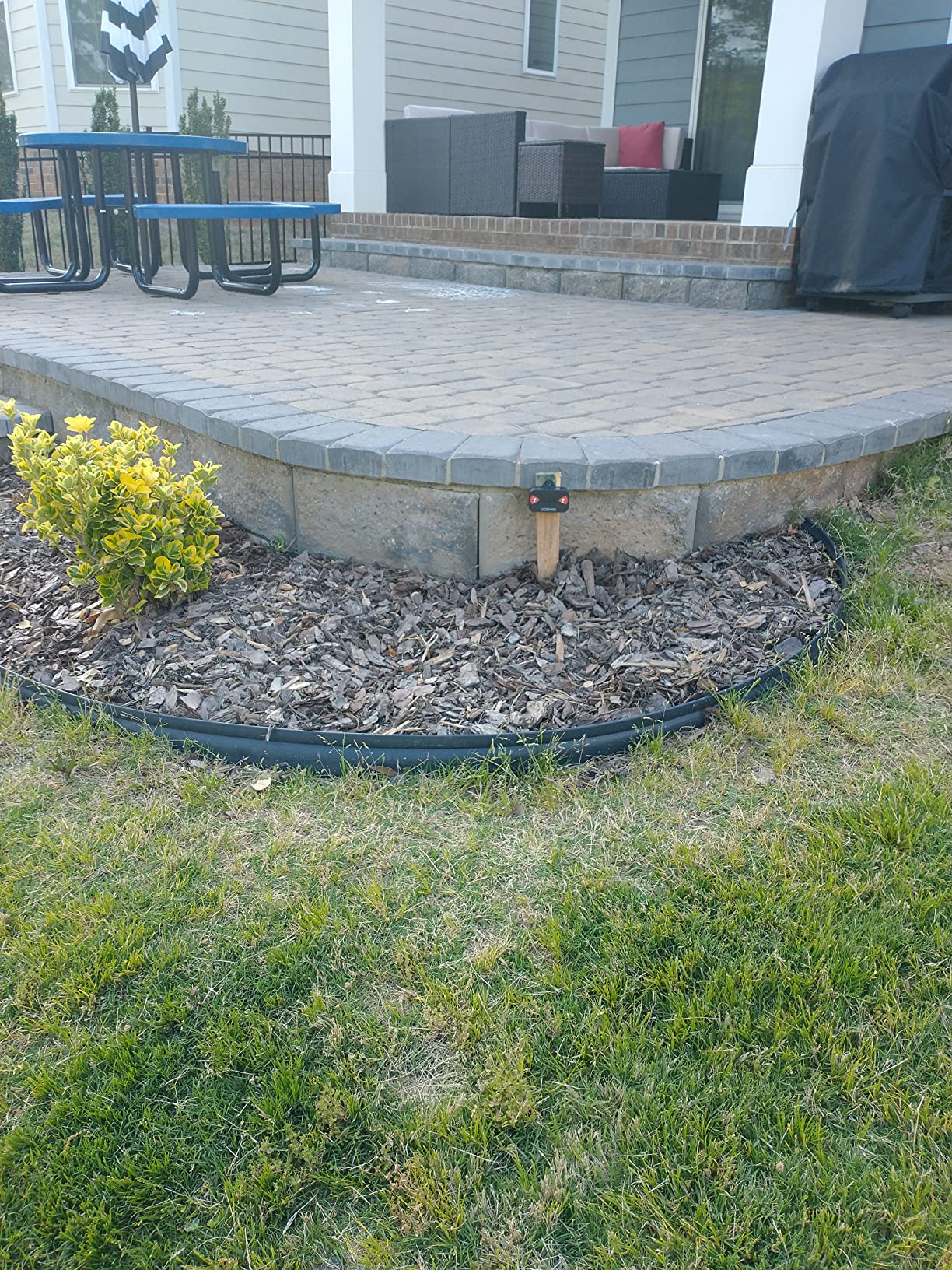
Strobe Pattern and Predator Habituation Risk
The Lycoming uses a constant strobe pattern with no randomization. While the brightness is impressive, predictable patterns are easier for smart predators to decode. Coyotes and raccoons in particular can learn that a repeating strobe does not represent real danger. This is a limitation shared by most constant-flash deterrents.
To combat habituation, I recommend moving the units to new positions every two to three weeks. Changing the location and angle resets the perceived threat level and keeps predators guessing. This simple trick extended the effective period significantly in my testing.
How the 4-Pack Value Compares to Other Options
Getting four units at this price point is competitive, especially if you need to cover a large area. Two units per side of a coop gives you overlapping coverage that single or two-pack options cannot match. For properties with multiple approach routes or large perimeters, the value math works in favor of the Lycoming.
The trade-off is individual unit quality. Some users report inconsistent battery life between units in the same pack, suggesting manufacturing variability. Test all four units before final installation to identify any weak ones early.
7. Triumpeek Solar Predator Eye Animal Repeller – Compact Deterrent Pair (2-Pack)
Triumpeek Animal Repeller, Solar Powered Predator Eye Nighttime Animal Deterrent Devices with Red LED Lights, Night Guard Animal Repellent Scares Coyote Skunk Raccoon Deer Away from Yard Chicken Coop
Red LED flashing lights
Solar powered
Auto dusk-on dawn-off
2-pack
Humane deterrent
3.3 inch compact size
Pros
- Strong red flashing output
- Solar powered auto operation
- Humane and chemical free
- Good for chicken coop use
- Compact mounting footprint
Cons
- Ineffective against rabbits
- Animals may habituate over time
- Some units fail after limited use
- Not effective on owls
The Triumpeek repeller is the most compact unit I tested, and for small coop setups where space is tight, that compact size is a genuine advantage. At just 3.3 inches, these units tuck into spots where larger deterrents will not fit. The two-pack gives you enough for a basic two-sided setup without overcommitting.
I mounted one Triumpeek unit on the coop door frame and one on a nearby gate post. The red flashing output was strong for the size, visible from at least 50 yards in clear conditions. The auto on-off function via the light sensor worked without fail throughout my testing period.
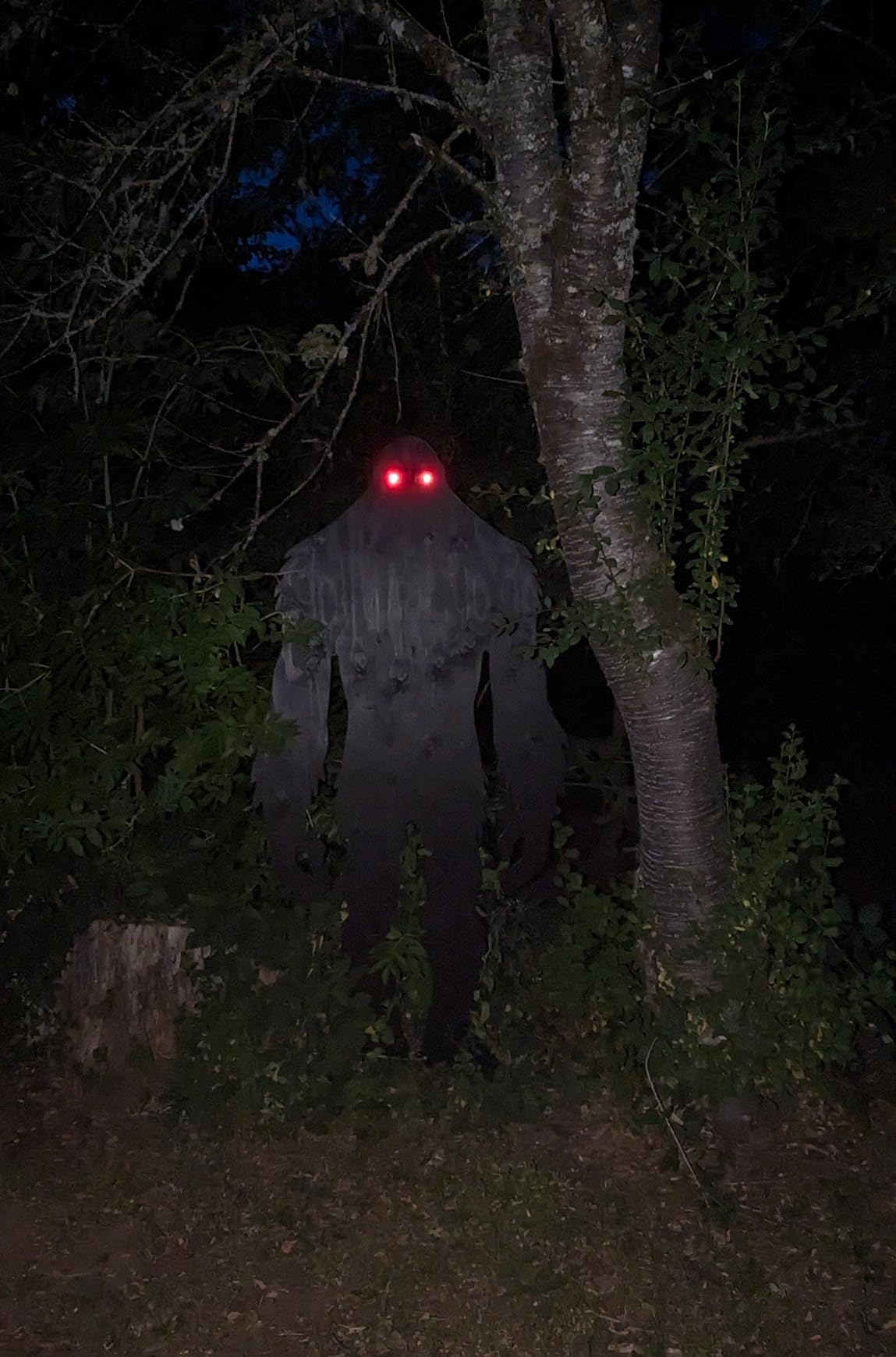
For chicken coop protection specifically, the Triumpeek did its job. I noticed a reduction in nighttime approaches to the coop within the first week. The raccoons that had been testing my run door stopped showing up on my trail camera. This matches feedback from other chicken keepers who have had success with this unit.
The weaknesses are worth noting. Some users report units failing after only a few months of use, which suggests quality control issues. The lights are also ineffective against rabbits and owls, so if those are your primary threats, you will need a different solution. Habituation is a risk with the constant flash pattern, as with any non-randomized deterrent.
Compact Design Benefits for Small Coop Setups
Not everyone has a large farm setup. Many backyard chicken keepers are working with a small coop and run in a residential yard. The compact size of the Triumpeek makes it easy to position precisely without blocking doors, windows, or ventilation. The small footprint also makes it less visually obvious during the day.
For a standard backyard coop, two units are often enough. Place one facing the most common approach route and one covering the opposite side. If you have an L-shaped run, position one at the corner for maximum visibility.
Quality Control and Longevity Considerations
The reviews reveal a pattern of some units failing prematurely. My recommendation is to test each unit immediately upon arrival by exposing the solar panel to sunlight and confirming the flashing starts at dusk. This way you can identify a defective unit and request a replacement before installation.
For units that survive the initial period, expect a lifespan of one to two years. The compact size means smaller solar panels and batteries, which translates to shorter overall lifespan compared to larger units. Keep this trade-off in mind when choosing based on form factor.
8. Foxlights Non-Solar Predator Deterrent – 9-LED 360-Degree Defender
Foxlights Non-Solar Predator Deterrent – 9-LED Night Guard with 360° Coverage, Random Flashing Lights – Humane Repeller for Chicken Coops, Poultry, Livestock, Gardens & Farms
9-LED with 360 degree coverage
Visible from 1 mile
Random flashing patterns
Dusk-to-dawn sensor
Waterproof acrylic
12 month warranty
Pros
- 360 degree coverage from single unit
- Visible from over 1 mile away
- Random flashing prevents habituation
- Durable waterproof acrylic construction
- Humane deterrent for multiple settings
Cons
- Non-solar requires battery replacement
- May collect moisture over time
- Premium price point
- Not effective on bears
The Foxlights unit is the most powerful single deterrent I tested, and it takes a completely different approach from the solar-powered competition. With nine bright LEDs and true 360-degree coverage, one unit can replace multiple directional lights. The random flashing pattern is designed to mimic human presence, and it is visible from over a mile away.
I tested this on a large pasture property where I needed to cover a wide area from a central mounting point. The 360-degree output meant I could mount it on a single post in the middle of the field and get coverage in every direction. The random flashing pattern was noticeably different from the predictable strobes on other units, and I believe this contributed to better long-term effectiveness.
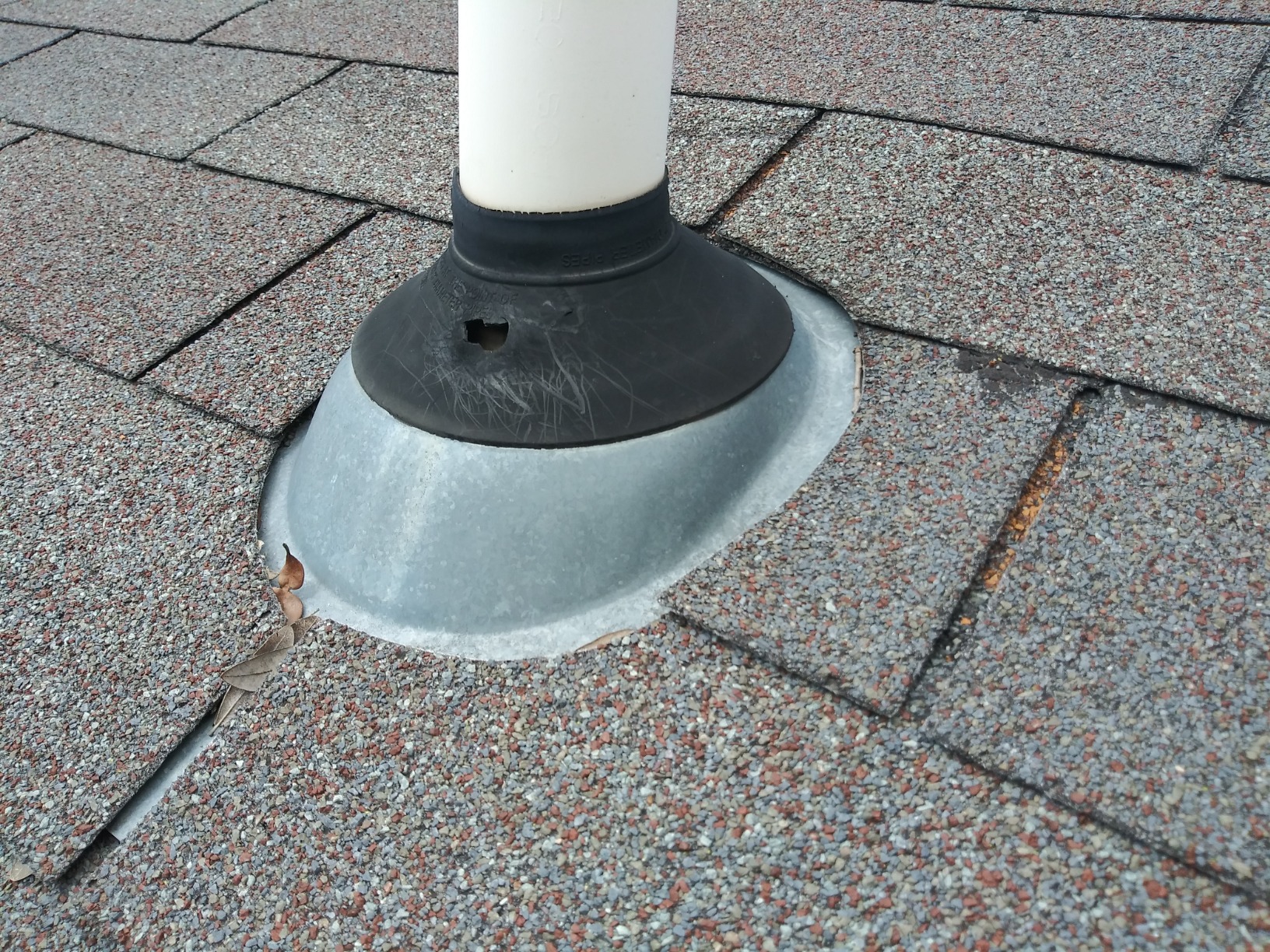
The catch is that this is the non-solar version, which means it runs on batteries that need periodic replacement. In my testing, I got roughly four to six weeks of nightly operation before needing fresh batteries. That is a maintenance commitment the solar options do not require. For remote locations without reliable sun exposure, this trade-off may be worth it.
Build quality is excellent. The acrylic construction is heavy-duty and survived a full year of weather without cracking or yellowing. The 12-month warranty provides some peace of mind given the price point. My one concern was moisture buildup inside the unit after several months, which is a reported issue that can eventually affect the electronics.
360-Degree Coverage vs Directional Lights
Most predator deterrents cover a narrow arc, which means you need multiple units to cover all approach routes. The Foxlights eliminates that problem with true omnidirectional output. One unit mounted at the right height can protect a coop from every angle simultaneously, which simplifies installation and reduces the number of units needed.
For large properties, this can actually be more cost-effective than buying a multi-pack of directional lights. One Foxlights unit in a central location can do the work of four or more directional units. The trade-off is battery maintenance, which adds ongoing cost and effort.
Battery Life and Maintenance Requirements
The non-solar Foxlights requires regular battery changes. Based on my testing and user reports, expect four to six weeks per set of batteries during summer when nights are shorter, and three to four weeks during winter when the unit runs longer each night. Using high-quality batteries extends runtime noticeably.
For hassle-free operation, consider a solar version of the Foxlights if one is available. If you go with the non-solar model, set a calendar reminder for battery changes. A dead unit is worse than no unit because it gives a false sense of security while providing zero protection.
How to Choose the Right Predator Deterrent Lights for Your Coop?
Choosing the right predator deterrent light comes down to matching the product to your specific predator pressure, property layout, and climate. The features that matter most are power reliability, weatherproofing, coverage pattern, and habituation resistance. Here is what I have learned matters most after testing these eight products in the field.
Solar Power Reliability and Backup Options
Solar power is the most convenient option because it requires no wiring or battery changes. However, solar panels need sunlight, and performance drops during winter and extended cloudy periods. If you live in a region with long, dark winters, look for units with battery backup like the GEROSSI, or consider a non-solar option like the Foxlights.
Panel positioning also affects charging. Mount solar panels facing south with maximum sun exposure, and keep them clean. Dust, pollen, and snow accumulation on the panel surface can reduce charging efficiency by 30 percent or more. A quick wipe every few weeks keeps performance optimal.
Waterproof Rating: IP44 vs IP65
The IP rating tells you how well a unit resists water and dust. IP44 protects against splashing water from any direction, which is adequate for most climates. IP65 is dust-tight and protects against water jets, making it significantly more durable in heavy rain and storm conditions.
For wet climates or year-round outdoor mounting, I strongly recommend IP65 or higher. The difference in survival rate after a full winter is dramatic. If you can only find IP44 units, provide some overhead shelter or mount under an eave to extend lifespan.
Coverage Area and Placement Strategy
Coverage depends on whether you are using directional or omnidirectional lights. Directional units typically cover a 30 to 60 degree arc, so you need multiple units to cover all approach routes. Omnidirectional units like the Foxlights cover 360 degrees from a single mounting point.
As a general rule, mount deterrent lights at the eye level of your primary predator threat. Raccoons are at 12 to 18 inches, foxes at 24 inches, and coyotes at 30 to 36 inches. Face the lights outward from the coop perimeter so approaching predators see them before they reach your birds.
Preventing Predator Habituation
Habituation is the biggest long-term threat to any deterrent light. Smart predators like coyotes and raccoons can learn that a repeating flash pattern does not represent real danger. The Foxlights addresses this with random flashing patterns, but most solar units use constant repetition.
To combat habituation with constant-flash units, physically move them to new positions every two to three weeks. Changing the angle, height, and location resets the perceived threat. You can also alternate which units are active to create variety in the flashing pattern your predators encounter.
Layering Lights With Physical Barriers
No predator deterrent light is 100 percent effective on its own. The most successful flock owners use a layered defense strategy that combines lights with solid physical barriers. Replace chicken wire with hardware cloth secured with screws and washers. Bury fencing at least 12 inches deep to prevent digging. Add a secure coop door that locks every night.
Think of deterrent lights as the outer layer of your defense system. They discourage approach and make your property feel risky. Physical barriers are the inner layer that stops anything that gets through. Used together, they provide the best protection for your flock.
Frequently Asked Questions About Predator Deterrent Lights
Will lights keep predators away from chicken coop?
Yes, predator deterrent lights can be effective at keeping many nocturnal predators away from your chicken coop. The flashing red LEDs mimic the eyes of a larger predator, triggering a flight response in animals like raccoons, foxes, coyotes, and skunks. However, effectiveness varies by species and individual animal, and no light works 100 percent of the time. For best results, combine deterrent lights with secure physical barriers like hardware cloth.
What keeps predators away from a chicken coop?
The most effective predator protection combines multiple layers: solid physical barriers like hardware cloth fencing, secure latches and doors, buried fencing to prevent digging, and deterrent lights or motion-activated floodlights. Removing attractants like spilled feed and securing garbage also helps. Electric fencing around the run perimeter adds another layer that stops most climbing and digging predators.
What predator kills chickens at night?
The most common nocturnal chicken predators include raccoons, foxes, coyotes, owls, skunks, opossums, and mink. Raccoons are particularly dangerous because they can open latches and reach through wire. Foxes and coyotes typically attack by digging under or jumping over fencing. Owls strike from above and can take birds from open-top runs. Identifying your specific predator helps you choose the right deterrent strategy.
How long do the batteries last in solar predator lights?
Quality solar predator lights typically run all night on a single day of charging. On a full charge, most units operate for 5 to 7 days without additional sunlight. The internal rechargeable battery usually lasts 2 to 3 years before needing replacement, though many budget units have non-replaceable batteries. Units with AA battery backup can extend operation during extended cloudy periods.
Are predator deterrent lights weatherproof for all outdoor conditions?
Most predator deterrent lights carry an IP44 or IP65 weatherproof rating. IP44 protects against splashing rain and is adequate for most climates. IP65 is dust-tight and protects against direct water jets, making it better for heavy rain and storm-prone areas. For year-round outdoor use in harsh weather, IP65 rated units like the GEROSSI offer the best longevity and reliability.
What is the best placement height for effective deterrence?
Mount predator deterrent lights at the eye level of your target predator. For raccoons and skunks, position lights 12 to 18 inches off the ground. For foxes, aim for 24 inches. For coyotes, mount at 30 to 36 inches. If you have multiple predator threats, stagger units at different heights. Face lights outward from the coop perimeter so approaching predators see them clearly.
Do solar predator lights work in areas with limited sunlight?
Solar predator lights do work in low-sunlight areas, but performance decreases during extended cloudy periods. Most units store enough charge for 5 to 7 days of operation without direct sun. For areas with long, dark winters, choose units with battery backup like the GEROSSI, or consider non-solar options like the Foxlights. Positioning panels to catch maximum available light also helps maintain charging efficiency.
Final Thoughts on Predator Deterrent Lights for Chicken Coops
Protecting your flock from nocturnal predators does not require expensive security systems or dangerous traps. The right predator deterrent lights for chicken coops provide an affordable, humane, and effective first line of defense that runs night after night without ongoing costs. My top pick, the Nite Guard Solar, delivers proven performance in a maintenance-free package, while the ASPECTEK Predator Eye PRO offers excellent value with its dual-LED design.
For budget-conscious flock owners, the GEROSSI four-pack with its IP65 waterproofing and AA battery backup handles harsh weather better than anything else at its price point. Whatever you choose, remember that deterrent lights work best as part of a layered defense system that includes solid fencing, secure latches, and consistent nighttime lockdown procedures.
Your chickens depend on you for their safety. With one of these eight tested options standing guard, you can sleep a little easier knowing your flock has an extra layer of protection between them and the predators that hunt in the dark.