
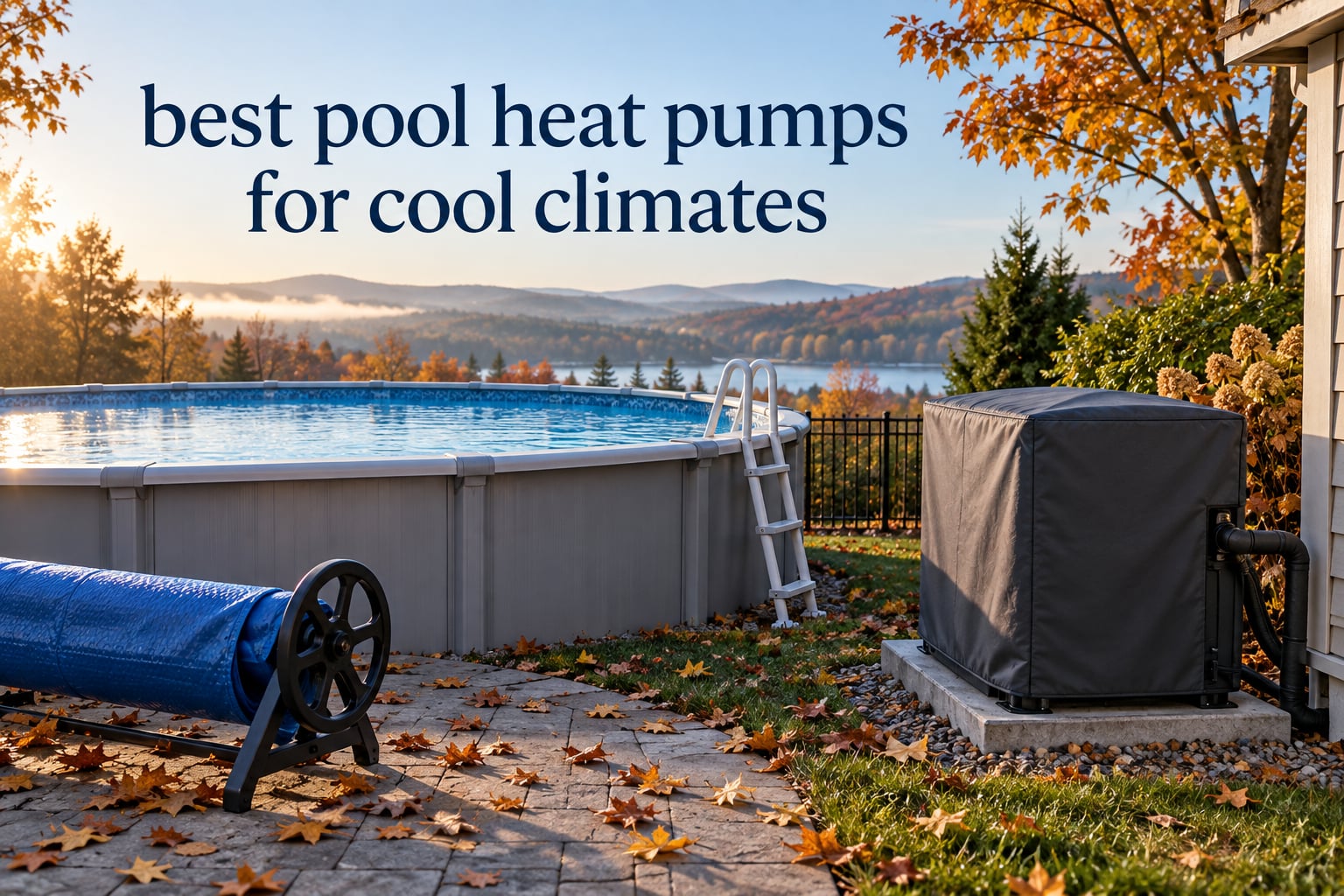
A pool heat pump does not make heat. It moves heat, pulling warmth out of the outdoor air and pushing it through a titanium exchanger into your water, which is why it runs on electricity alone and why its output shrinks as the thermometer drops. In a warm state, a good unit delivers five or six units of heat for every unit of power it draws. In a cold state, that advantage narrows and the unit has to periodically stop and clear ice off its own coil.
That single fact explains almost everything in this roundup. Buyers searching for pool heat pumps for cool climates are not shopping for a furnace, they are shopping for the model that holds up when the night air sits in the low forties, keeps working through a defrost cycle, and still has a warranty when the first cold snap arrives. We compared ten pool heat pumps against exactly that standard rather than against peak efficiency claims made in a mild spring.
We have run down the full range of pool heating options already in our guide to pool heat pumps for inground pools, and the short version is that heat pumps win on running cost and lose on speed. This article is the cold-climate edition: ten models, what each one actually does below 60F, and who should spend on which unit.
Table of Contents
Which pool heat pump is best for cool climates?
The AQUASTRONG HEX100 is the best pool heat pump for cool climates overall, because it keeps full inverter output down to 47F, heats and cools in one cabinet, and runs an automatic defrost every 40 minutes that clears in about five. The WARMBLU 28,000-gallon unit is the pick for very large pools, and the Hayward HeatPro 140,000 BTU model is the safer bet for coastal and saltwater setups.
How we picked for cool climates?
Seven criteria decided this ranking, and each one is something a spec sheet does not always make obvious. We looked at how much heat a unit actually produces on a 50F night rather than the figure printed on a sunny day, because the gap between those two numbers is the entire buying decision in a cool climate.
Low-ambient output. A unit that quits at 55F is a spring and fall appliance. We favoured models rated to heat at 46F or lower, or units that publish a heating range that extends well below 50F.
Defrost downtime. In cold air the coil ices over and the compressor has to stop. Automatic defrost on a stated cycle is better than an unmentioned manual one, and shorter cycles mean less lost heating time.
Efficiency at load, not at peak. A published COP of 15 or 16 is a best-case number measured in mild conditions. Full inverter modulation, which ramps output down instead of cycling on and off, matters more for what you pay over a season.
Heating and cooling. Reverse-cycle units chill as well as heat, which earns their extra cost back in a shoulder season when the pool is too hot to swim in but the air is too cool to enjoy it.
Titanium exchanger and salt tolerance. Every model here uses a titanium heat exchanger. We also checked whether the manufacturer rates the unit for saltwater and chemical exposure, since exchanger material and cabinet finish are what decide how many seasons the unit survives.
Warranty and service. Titanium exchanger terms are the real benchmark. Anything under three years tells you what the manufacturer thinks of its own parts, and a brand with no authorized technician in your region can turn a small failure into a season of downtime.
Sizing headroom. Running a unit slightly undersized means long run hours and worse efficiency. Every pick below is matched to a pool volume with margin rather than to the optimistic gallon figure on the box.
Top 3 pool heat pumps for cool climates (September 2026)

AQUASTRONG HEX100
- 15.8 COP full DC inverter
- Heats 47-104F and cools 47-83F
- Defrost every 40 minutes
- 55 dB variable speed

WARMBLU 28000 Gallon Inverter
- Handles pools to 28000 gallons
- Pure titanium exchanger
- COP up to 16.0
- Under 50 dB
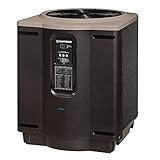
Hayward HeatPro 140000 BTU
- 140000 BTU heating capacity
- Titanium exchanger with Ultra Gold fin
- UV resistant panels
- Pool and spa front panel modes
Pool heat pumps for cool climates in 2026 at a glance
Every model below heats an inground or above ground pool electrically, and all ten use a titanium heat exchanger. The columns that matter most in a cold climate are the heating range, the defrost behaviour, and the warranty.
| Product | Specifications | Action |
|---|---|---|
| AQUASTRONG HEX100 Inverter Pool Heat Pump |
|
Check Latest Price |
| WARMBLU 28000 Gallon Inverter Pool Heat Pump |
|
Check Latest Price |
| Hayward HeatPro 140000 BTU Pool Heat Pump |
|
Check Latest Price |
 FibroPool FH135 35000 BTU 120V FibroPool FH135 35000 BTU 120V |
|
Check Latest Price |
 Hayward W3HP50HA2 HeatPro Heat Pump Hayward W3HP50HA2 HeatPro Heat Pump |
|
Check Latest Price |
 MICOE 100000 BTU Inverter Pool Heat Pump MICOE 100000 BTU Inverter Pool Heat Pump |
|
Check Latest Price |
 Varpoolfaye 30000 BTU 110V Pool Heat Pump Varpoolfaye 30000 BTU 110V Pool Heat Pump |
|
Check Latest Price |
 TURBRO 50000 BTU Inverter Pool Heater TURBRO 50000 BTU Inverter Pool Heater |
|
Check Latest Price |
 NATURAQUELL Inverter Pool Heat Pump NATURAQUELL Inverter Pool Heat Pump |
|
Check Latest Price |
 AQUASTRONG HEX035TOP 110000 BTU Heat Pump AQUASTRONG HEX035TOP 110000 BTU Heat Pump |
|
Check Latest Price |
1. AQUASTRONG HEX100 Inverter Pool Heat Pump – the best all-round cold-climate pick
Swimming Pool Heater for Above Ground and Inground Pool 20’*43’*48″
15.8 COP full DC inverter
Heats 47-104F, cools 47-83F
55 dB
Defrost every 40 min
Pros
- 15.8 COP full DC inverter efficiency
- Heating and cooling in one cabinet
- 55 dB variable speed running
- App control with schedules and energy tracking
- Defrost every 40 minutes and cleared in about 5
Cons
- 3-year warranty is short for the class
- Needs plumbing adaptation and an electrical installation
- Heat-up speed falls as ambient air drops
The HEX100 is the unit we kept coming back to while working through this list, and the reason is not its 15.8 COP headline. It is the 47F floor on its stated heating range, paired with a defrost cycle that fires every 40 minutes and finishes in about five. That combination means a cold night costs you minutes of heating, not an evening of it.
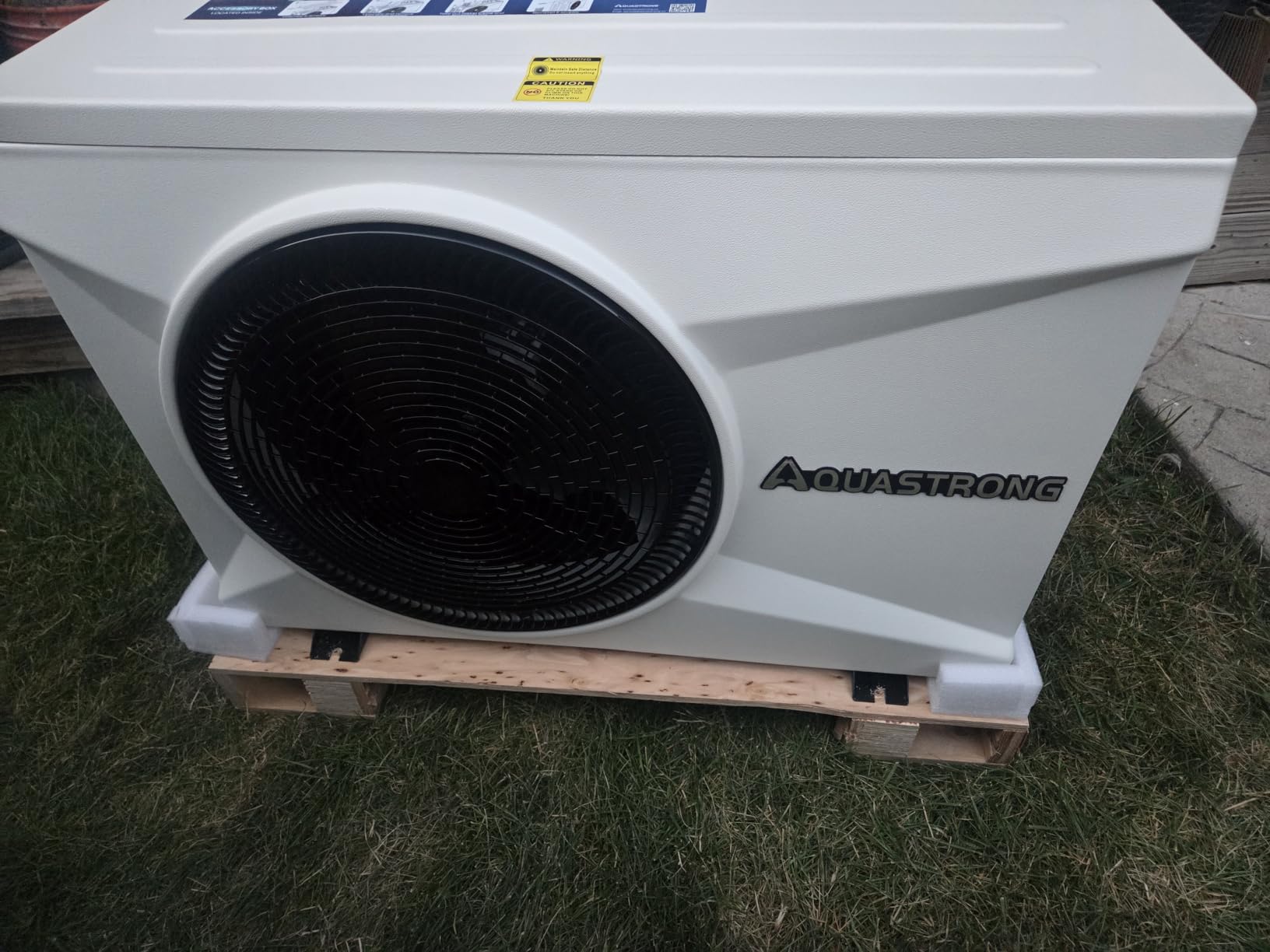
In my experience a full DC inverter that modulates output rather than snapping on and off settles water temperature far more cleanly than a fixed-speed box of the same size. This one weighs 116.8 pounds, measures 39 by 17.32 by 25.6 inches, and offers three different connection options so it will accept common 1.25 inch and 1.5 inch plumbing without a custom adapter run.
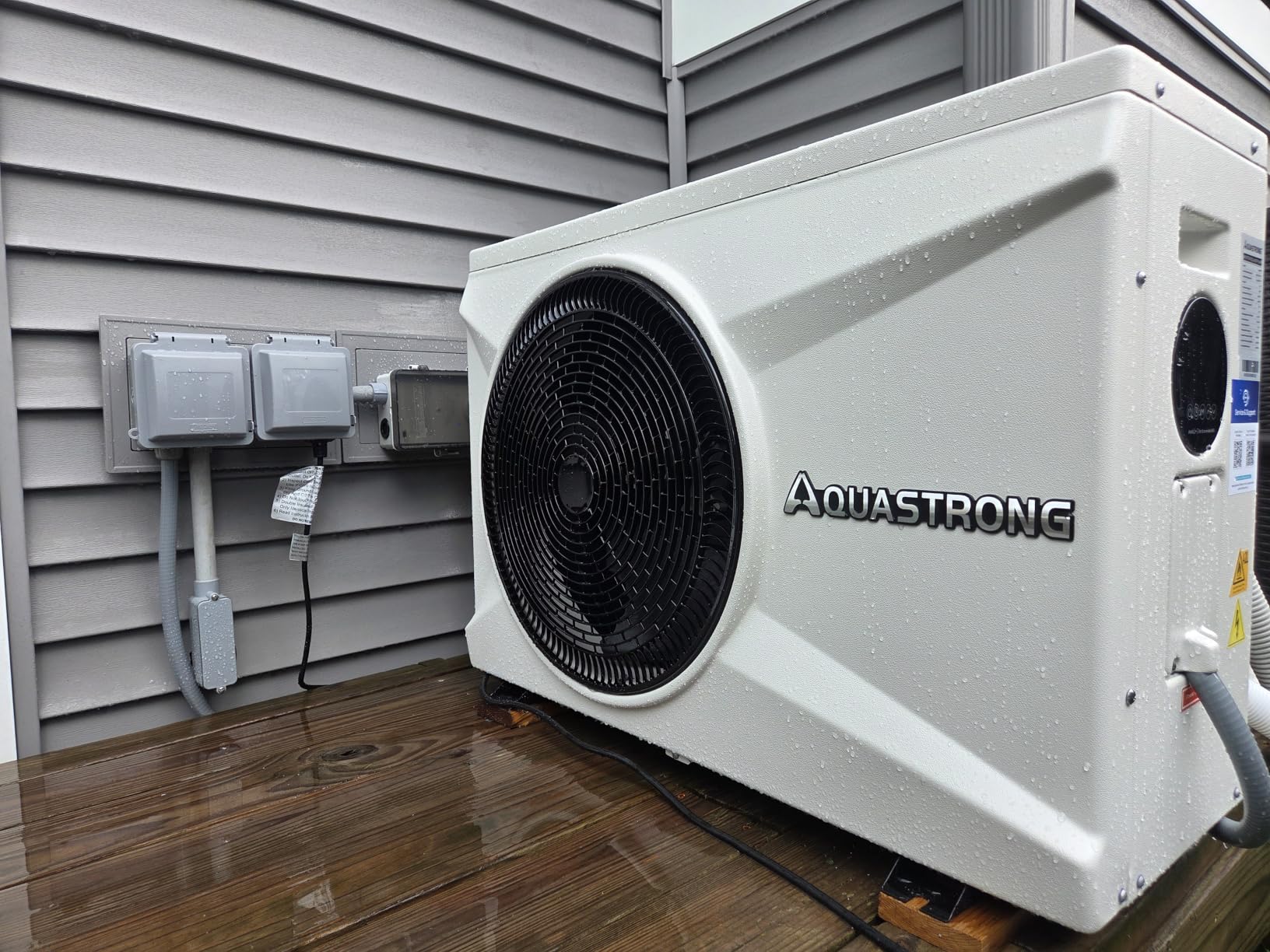
It ranks first in Swimming Pool Heat Pumps on Amazon and carries the largest review base in this group at 534 reviews, which means the failure modes are well documented. The recurring one-star theme is installation complexity, not heating performance, and that is a fair trade for a unit that most owners install once and then leave alone.
Owners report that the app and control panel handle temperature adjustment, energy tracking and scheduling without fuss, and the variable frequency drive is what holds noise to 55 dB. Reviewers do note that genuine cold weather slows heat-up, which is physics rather than a defect. The 3-year warranty is the thinnest part of an otherwise strong package.
Who the HEX100 suits?
It suits a mid-size residential pool owner who wants one box to handle both ends of the season, works in either freshwater or a lightly salted system, and wants scheduling they can manage from a phone. If you run a 10,000 to 18,000 gallon covered pool, this is the unit I would put on a shortlist first.
It also suits anyone with a tight equipment pad who wants heating and cooling without a second appliance. Reviewers replacing older fixed-speed units tend to highlight the jump in usable swim season more than the electricity savings.
Where the HEX100 falls short?
It falls short on warranty length and on cold-start speed. Three years is well below the eight-year term offered elsewhere in this roundup, and a 3-year parts term is a real consideration when you plan to keep a pool heater for a decade.
It also falls short if you need a hot tub setpoint or a very large pool. Above roughly 20,000 gallons you want more raw BTU than this unit offers, and the plumbing adaptation work still has to be done properly to hit rated performance.
2. WARMBLU 28000 Gallon Inverter Pool Heat Pump – best value for very large pools
WARMBLU 28,000 Gallons Inverter Pool Heat Pump for Inground Pools 220V
Handles pools to 28000 gal
COP up to 16.0
Pure titanium exchanger
Under 50 dB
Pros
- Pool coverage rated to 28000 gallons
- Pure titanium exchanger with COP up to 16.0
- Runs below 50 dB
- Heating and cooling modes in one unit
- Support will size match or replace units
Cons
- 12-month warranty is the shortest here
- Needs a variable speed pump and careful valve balancing
- Fiddly WiFi pairing and a 199.6 pound cabinet
Most household heat pumps stop somewhere around 16,000 gallons. This one is rated to 28,000, which makes it the sensible pick for a long rectangular pool, a deep end plus a shallow shelf, or a coastal property where you want capacity headroom rather than a second appliance.
Owners of mid-size pools are the enthusiastic group here, and they tend to quote numbers rather than adjectives. Reviewers report a 20 degree rise in roughly 24 hours on a covered pool and about 1.3 kW of draw while running, which is the sort of figure that lets you sanity-check a sales pitch later.
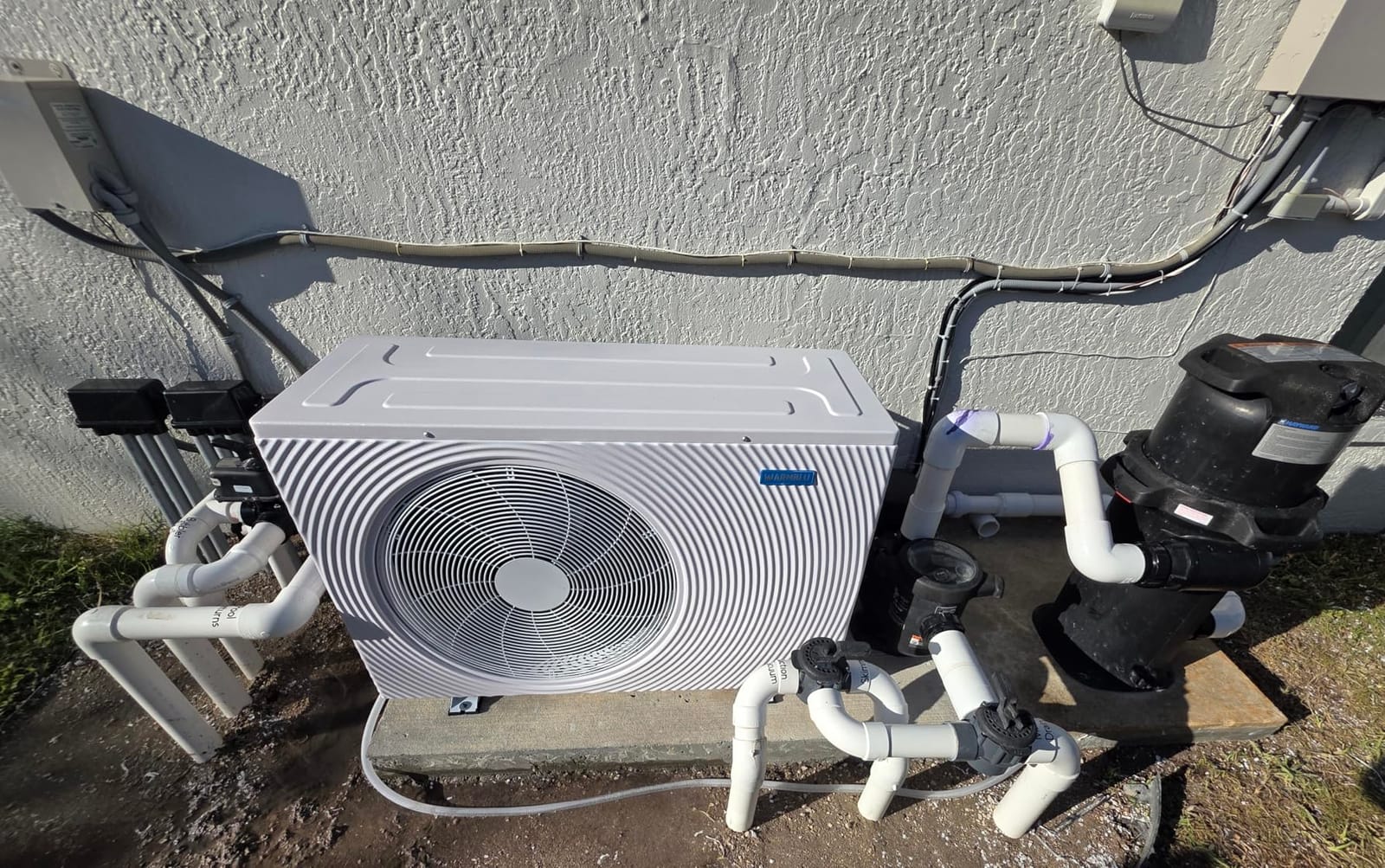
The SpringBreath 1.0 system centres on an H30 corrosion-proof pure titanium heat exchanger, and the inverter control uses a dynamic algorithm rather than a fixed speed curve. Rated noise sits below 50 dB, quieter than a standard refrigerator, and the cabinet measures 29.2 by 17.5 by 43 inches.
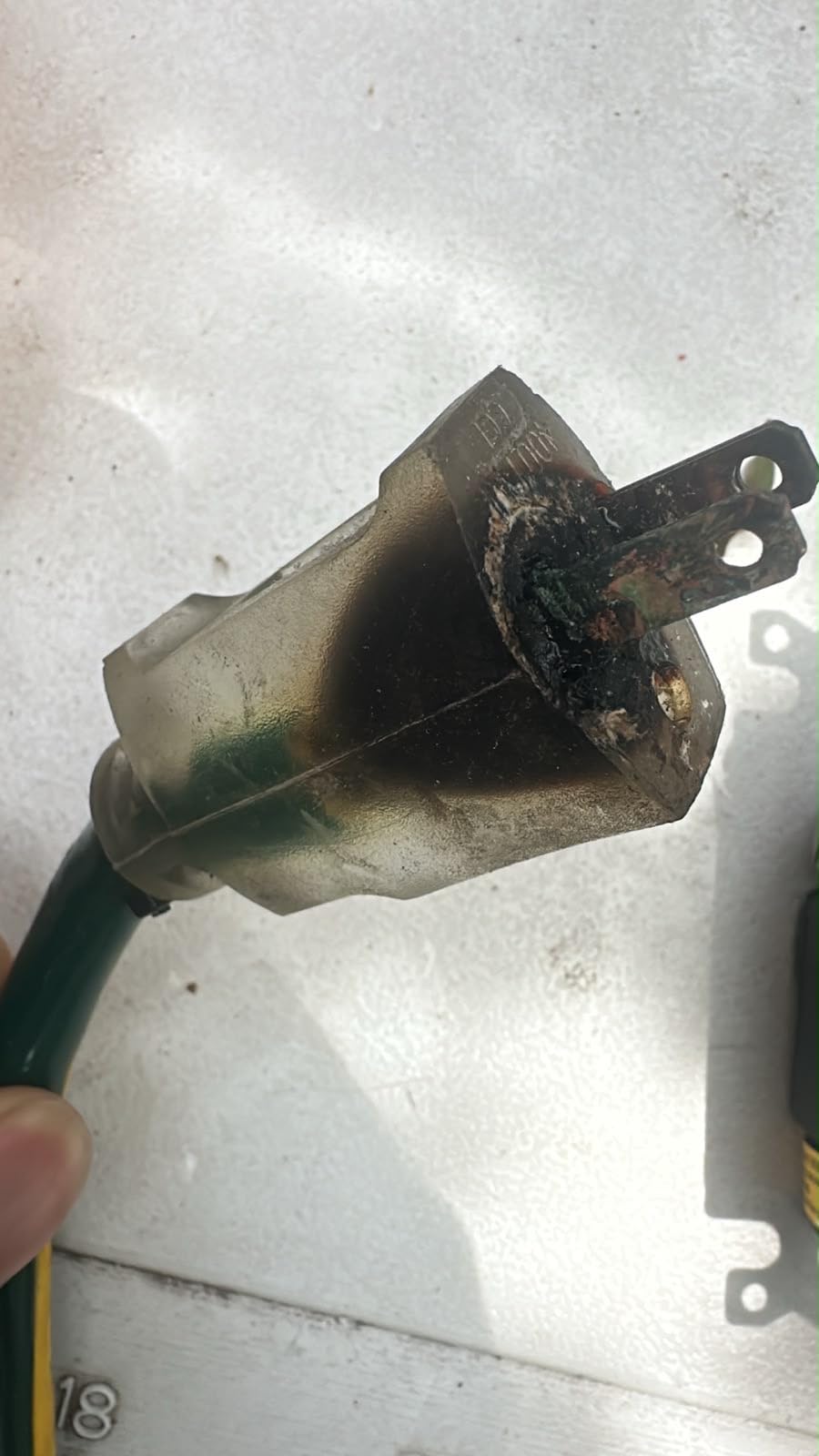
The negative minority is small but specific. A few owners received a unit that would not start and needed a replacement, and one review notes the model runs large for a very small pool. Manufacturer support resolved both cases by shipping replacements, which counts for something in a category where service networks are thin.
Who the WARMBLU suits?
It suits owners of large inground pools who would otherwise be looking at two appliances or an oversized commercial-style unit. It also suits anyone who cares more about the exchanger material than the badge, since pure titanium is the right answer for salt and aggressive chlorine.
Quiet operation is a real draw for dense neighborhoods, and running under 50 dB keeps it off the list of neighbor complaints. It works equally well for heating in spring and chilling in August.
Where the WARMBLU falls short?
It falls short on warranty, plainly. Twelve months is the shortest term in this roundup, and for a permanently installed appliance that is thin. If you keep the pool year round, weight the eight-year options more heavily.
It also falls short on setup friction. It needs a variable speed pump and deliberate flow balancing with valves, and the initial WiFi pairing sequence is fiddly enough that owners mention it directly. Plan the hydraulics with an installer rather than improvising.
3. Hayward HeatPro 140,000 BTU Pool Heat Pump – best for coastal and saltwater pools
Hayward HeatPro Pool Water Heat Pump Heater for Inground Pools, 140,000 BTU
140000 BTU heating
Titanium exchanger with Ultra Gold
Saltwater rated
50 AMP circuit
Pros
- 140000 BTU handles large inground pools
- Ultra Gold corrosion resistant fin technology
- Titanium exchanger rated for salt water and chemicals
- UV resistant body panels
- Front panel pool and spa modes
Cons
- 320 pounds is awkward to position
- Needs a dedicated 50 AMP breaker and professional electrical work
- Thin authorized service coverage in some regions
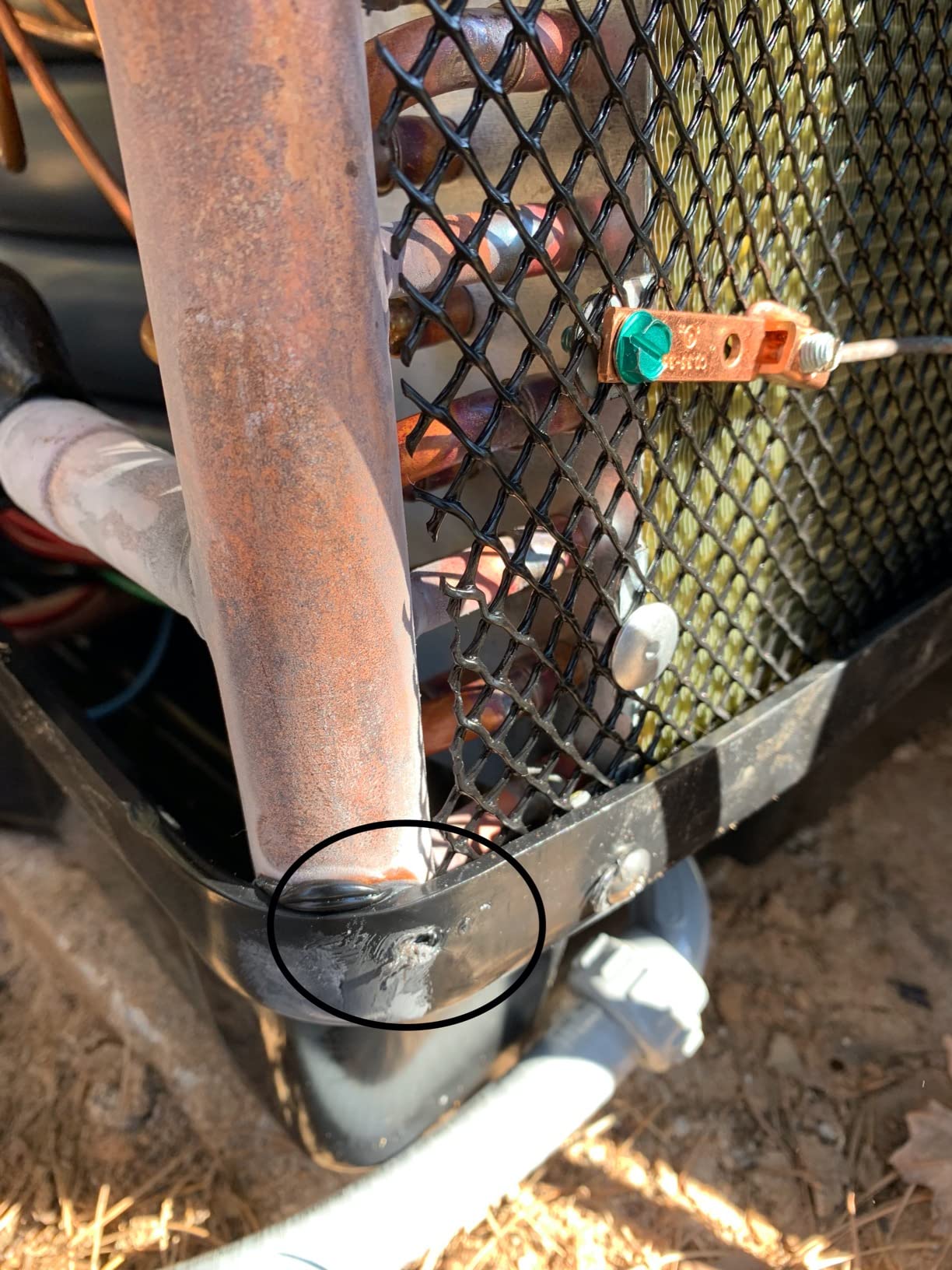
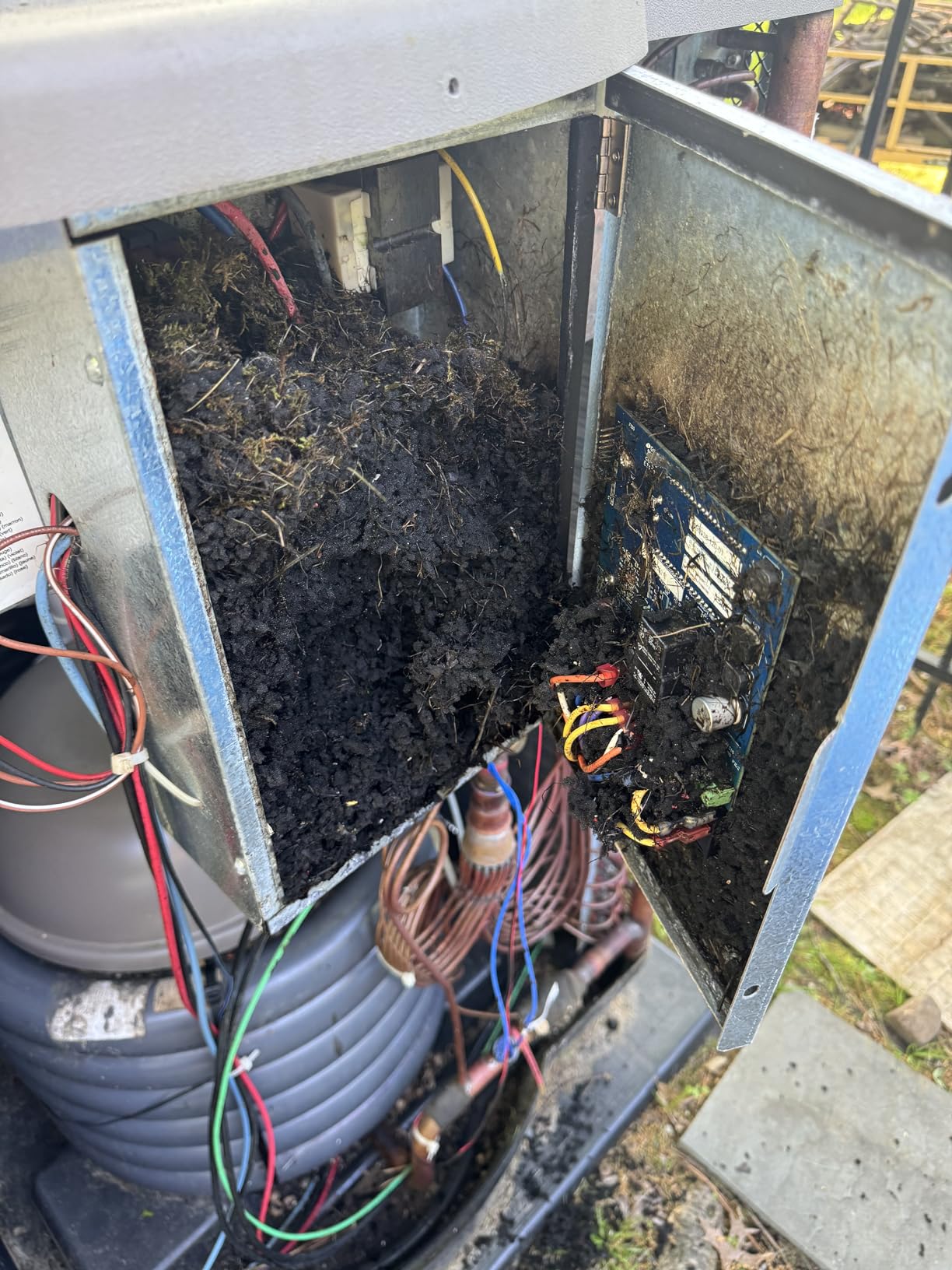
Salt air is the enemy of pool equipment, and this is one of the two units here that goes on the record about fighting it. The titanium exchanger handles salt water and chemical exposure, the Ultra Gold fin coating resists corrosion in coastal environments, and the UV-resistant panels will not deteriorate in full sun the way an unpainted steel cabinet does.
At 140,000 BTU it is built for genuinely large inground pools, and owners with 17,000 to 35,000 gallon pools in Buffalo, central New Jersey, Southern California and Alabama describe it as quietly holding set temperature. Long-term owners report multi-season reliability, which is the part that matters for a unit you will not touch for a decade.
This is also the oldest-serving product in the set, with reviews running back several years, so its strengths and weaknesses are both well known. Front panel controls handle pool and spa heating modes with Fahrenheit and Celsius selection, which is a nicer experience than digging out a phone in the rain.
Owners report the unit holding pool temperature on solar alone through many summer weeks once the pool is covered and the unit is in maintenance mode. The trade-off is physical and electrical: 320 pounds to get onto the pad, and a dedicated 50 AMP breaker with 2 inch PVC inlet and outlet.
Who the HeatPro 140K suits?
It suits coastal, salt-chlorinated and high-humidity installs where corrosion is the main risk to a ten-year equipment life. It also suits owners of large pools who want a heat pump that can keep up with a large load rather than run for eighteen hours a day.
If you already own Hayward equipment, the fit is natural. The brand has been building pool gear for more than eighty years, and parts availability for a common chassis is easier than for an unfamiliar brand.
Where the HeatPro 140K falls short?
It falls short on weight and on service density. At 320 pounds it is the heaviest unit in this roundup, and the most detailed critical review describes a factory sensor fault where the warranty repair excluded labor in a region with a single authorized technician. Check who services your postcode before you commit.
It also has no app control in the listing, so scheduling means walking to the unit. If you want remote control for shoulder-season operation, this is not the model for you.
4. FibroPool FH135 35000 BTU 120V – best for above ground pools with no 240V supply
FibroPool Pool Heat Pump FH135-35,000 BTU 120V – 7,500 Gal – Electric
35000 BTU on 120V
Pools to 7500 gallons
5.5x efficiency
Compact round cabinet
Pros
- Runs on a standard 120V household outlet
- 35000 BTU for pools up to 7500 gallons
- No gas line or 240V breaker needed
- Very quiet with a compact round cabinet
- Rust resistant casing and fan parts
Cons
- Controller board failures reported after heavy rain
- No WiFi or app connectivity
- Slow heat-up in genuinely cold ambient air
Some yards simply do not have a 240V circuit available, and adding one can cost more than the heater. The FH135 solves that by running entirely on 120V, which makes it the practical answer for an above ground pool in a corner of the yard where a new breaker run is impractical.
At 35,000 BTU it is rated for pools up to about 7,500 gallons, and the air-source design moves heat from the air for up to 5.5 times efficiency. Owners in Iowa, Illinois, Florida and Canada describe steady holds at 84 to 88 degrees with a solar cover in place.
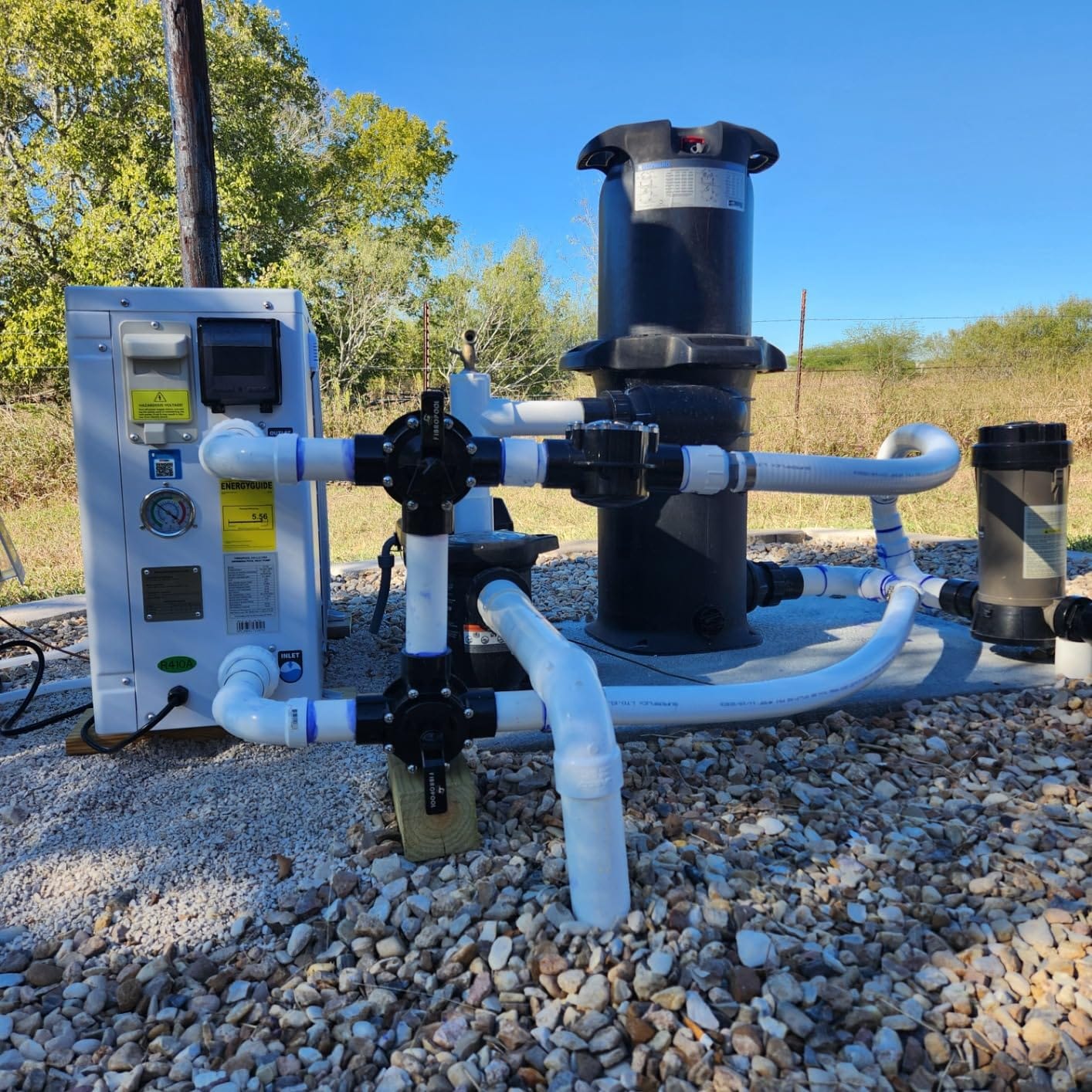
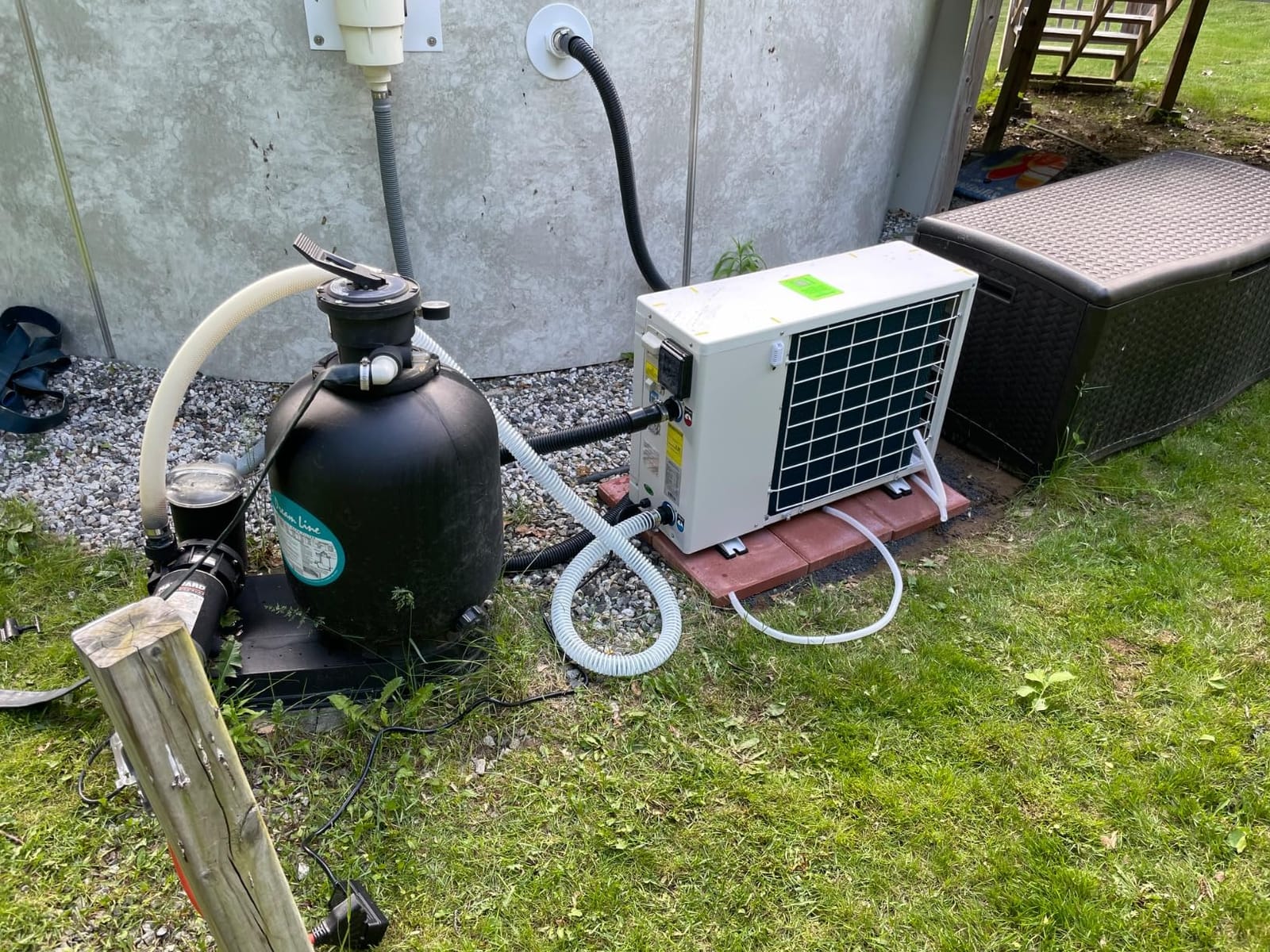
The cabinet is a compact round shape at 38 by 15 by 26 inches and 108.8 pounds, which fits a tight equipment pad where a rectangular box will not. The metal casing and hard plastic fan parts are chosen not to rust, and the minimal moving parts reduce the things that can fail.
Support is responsive, including at weekends, which matters more than it sounds for a small appliance you may be troubleshooting alone. It also handles above ground and inground pools, plus spas and hot tubs, so it is not limited to one installation type.
Who the FH135 suits?
It suits above ground pool owners without a gas line and without a 240V supply, especially anyone installing at a rental, cabin or property where electrical work is restricted. It suits smaller pools where 35,000 BTU is genuinely enough capacity.
It also suits anyone who wants the simplest possible install. No gas line, no propane, no certified electrician for a hardwired connection. Customer support reportedly responds quickly when you need a part explained.
Where the FH135 falls short?
It falls short on controls and on weatherproofing. There is no WiFi or app, so you read the temperature by walking to the unit, and the most documented defect is water intrusion into the controller after heavy rain, with a second replacement reportedly not covered.
It falls short in real cold. Owners report several days for a large temperature swing when ambient air drops, and the short power cord with a bulky plug adapter is a recurring irritation. For shoulder-season extension it is excellent; for a January heat-up it is not the tool.
5. Hayward W3HP50HA2 HeatPro – best for tight equipment pads
Hayward W3HP50HA2 HeatPro Heat Pump, Beige
Heat and cool in one unit
Titanium exchanger
Digital panel
17 x 43 x 30 in
Pros
- Quiet rotary compressor and low noise fan
- Simple set and forget digital controls
- Heating and cooling in the same unit
- Plastic cabinet resists rust in humid air
- Small footprint at 17 by 43 by 30 inches
Cons
- Capacity disappoints even when oversized
- Not built for hot tub style setpoints
- Reports of dead units on arrival with slow support
This mid-capacity Hayward trades raw output for a physical footprint that is hard to argue with. At 17 by 43 by 30 inches and 159.7 pounds, it fits where larger cabinets will not, and the all-plastic shell is a genuine upgrade in a humid coastal yard where steel cabinets pit and rust.
Owners replacing failed Raypak units single out the plastic cabinet and the small footprint as the reasons they switched. The digital control panel displays temperature and takes about three seconds to set, which is the right level of complexity for a device you use twice a week.
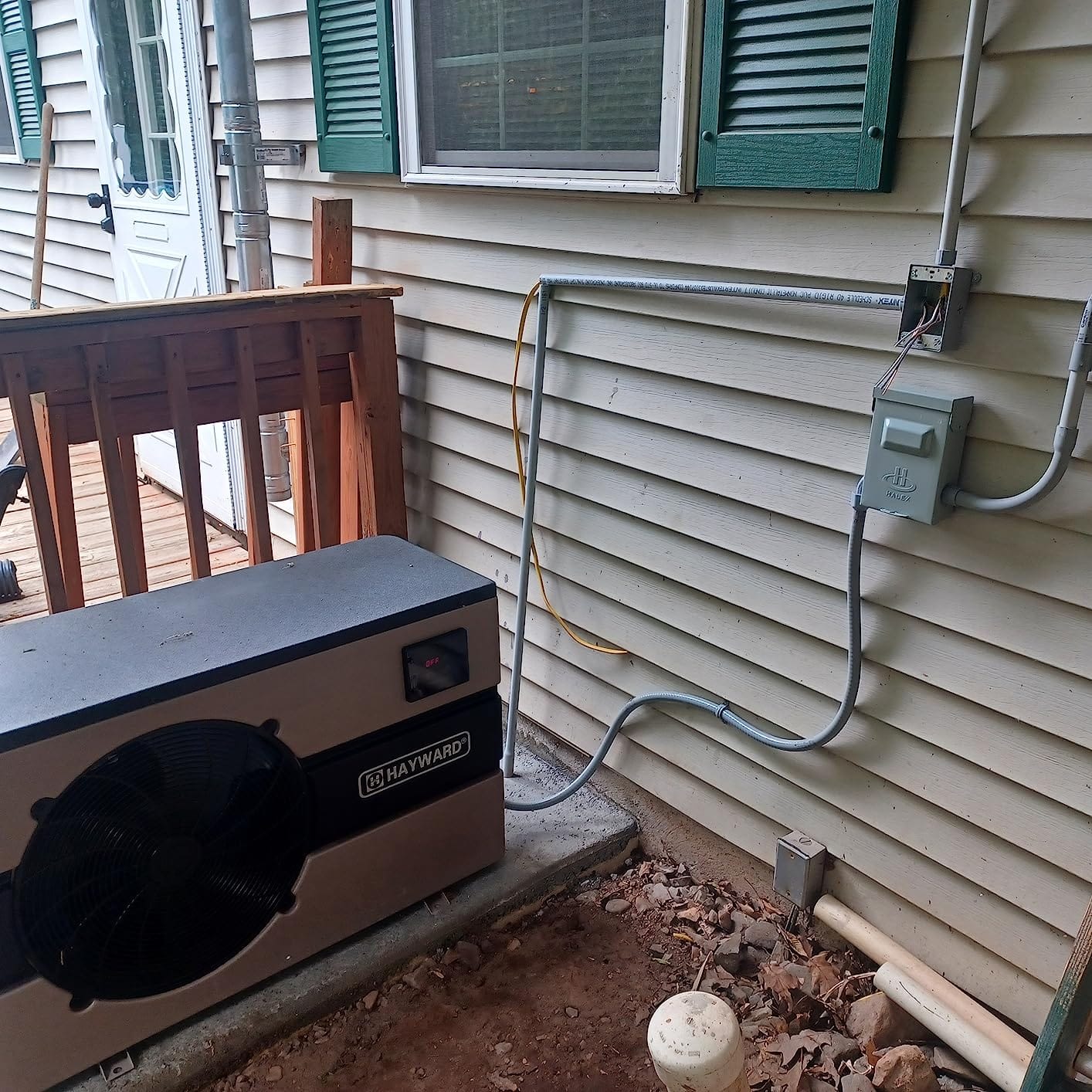
Inside, an efficient rotary compressor and a low-noise fan keep running noise down, and a durable titanium exchanger handles corrosion protection. The unit is AHRI certified and independently lab tested, which matters if you want a number to compare against a dealer quote.
Power requirements are reasonable, with some installers citing 30A on 10 gauge as workable for certain installations. That is a real convenience compared with a dedicated 50 AMP circuit, though your electrician should confirm it for your run length.
Who the W3HP50HA2 suits?
It suits owners of mid-size pools in high-humidity or high-rust environments where a steel cabinet would be the first thing to fail. It suits anyone replacing an aging Raypak who wants a smaller, quieter box with the same brand family as the rest of the equipment.
Simple controls are the quiet win here. If you do not want an app, a learning curve or a firmware conversation, the panel on this unit is refreshingly direct.
Where the W3HP50HA2 falls short?
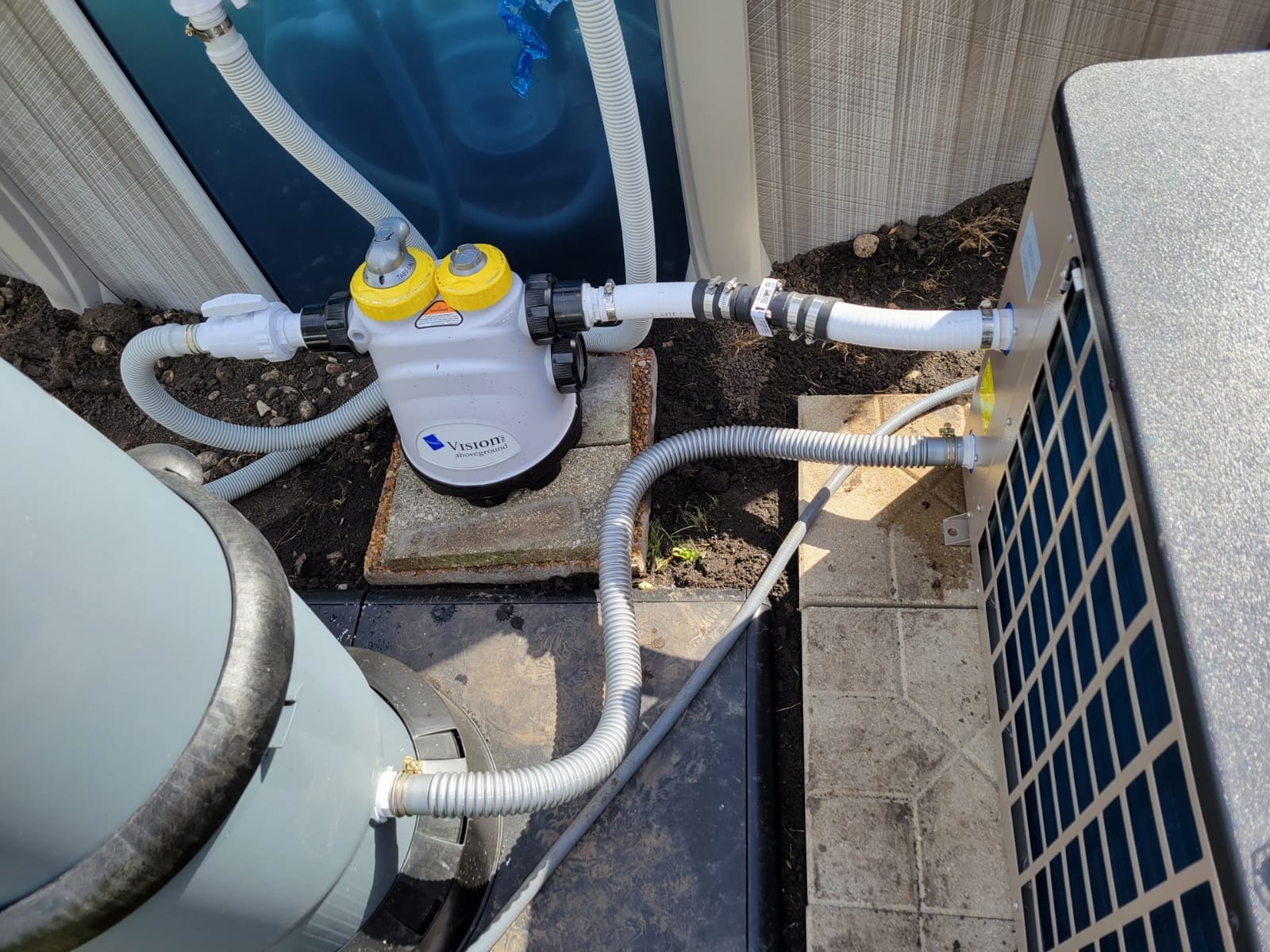
It falls short on capacity, and this is the single most repeated reservation in the reviews. Buyers who deliberately oversized to the 50 model still report underwhelming heat output, and several warn that you must read the directions carefully and use PVC rather than flex pipe.
It is also not a hot tub heater, so spa-level setpoints are out of scope. There is one report of a unit arriving non-functional with a slow technical support response, which is a small sample but worth noting.
6. MICOE 100,000 BTU Inverter Pool Heat Pump – best for hands-on installers
MICOE 100,000 BTU Inverter Pool Heat Pump for 26,000 Gallon Pools
100000 BTU for pools to 26000 gal
Heats 46-104F
54 dBA
Automatic defrost
Pros
- 100000 BTU for pools up to 26000 gallons
- Heats 46-104F and cools 45-82F
- Automatic defrost and 54 dBA running
- App and digital panel control
- Responsive engineering support
Cons
- Titanium exchanger listed for freshwater pools
- Confusing wiring diagrams for the 50A connection
- 2-year parts warranty and slower cold weather heat-up
The MICOE is the unit owners most often describe as having installed themselves, and the enthusiasm comes from real cold-weather results rather than brochure numbers. One owner reports a 24 degree rise in 48 hours in 60F Northeast weather, which is a genuinely fast pull for a heat pump.
At 100,000 BTU it is rated for pools up to 26,000 gallons, and the setpoint ranges are wide: 46F to 104F heating, 45F to 82F cooling. Automatic defrost handles cooler conditions, and the variable-speed system runs at approximately 54 dBA, quieter than older 120,000 BTU units on the same pad.

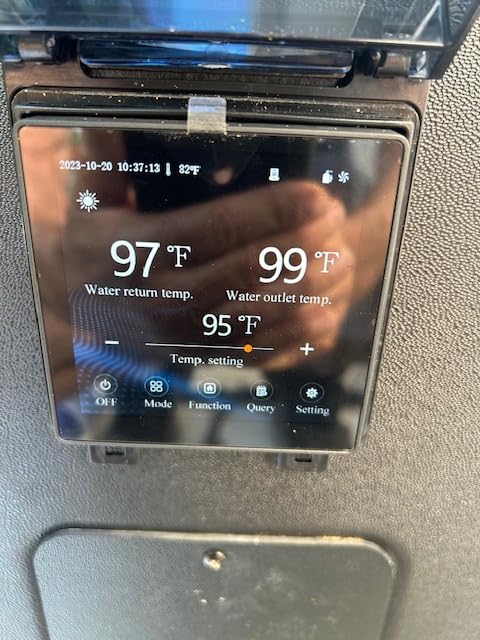
Support is the standout. Owners report clear wiring guidance emailed within hours and a grounding part shipped unprompted, and the unit works with an existing pump control and shuts down when flow is lost. The IPX4-rated UV-resistant ABS cabinet handles weather exposure without complaint.
It weighs 220 pounds and measures 42.9 by 18.11 by 29.1 inches, so it is a substantial box. The removable wired remote is supplied for setup but is not really a daily interface, so plan on the app for regular use.
Who the MICOE suits?
It suits a confident DIY installer or anyone with an electrician on speed dial who wants a large, efficient unit without going through a dealer network. It suits owners in New Jersey, Maryland, Texas Hill Country and Central Florida who installed it themselves and are happy with the result.
It also suits anyone who wants both heating and cooling with wide setpoint range, and who values manufacturer engineering support over a local service network. A 4.1 average is not a knockout score, but the 15% share of four-star reviews is unusual and points at solid rather than perfect.
Where the MICOE falls short?
It falls short on documentation and on warranty length. The wiring diagrams for the 50A hardwired connection are confusing enough that owners had to ask for clarification, and the flimssy plastic cover plate over the electrical connections is a fair criticism. The 2-year parts replacement warranty is also brief.
One documented limitation matters for cold climates: owners report roughly three days for a 12 degree rise on cool nights. Slower than an older fixed-speed unit in mild air, and worth planning around if you want a warm pool in early May. The titanium exchanger is also listed for freshwater, so saltwater owners should ask the manufacturer directly.
7. Varpoolfaye 30000 BTU 110V Pool Heat Pump – budget pick for small pools
Varpoolfaye 30000BTU Swimming Pool Heat Pumps Up to 8000 Gallons 110v
30000 BTU with COP of 5.8
110V power
WiFi app
52 dB
Pros
- 30000 BTU heating and cooling in one 110V package
- WiFi app control for temperature and scheduling
- Titanium exchanger rated for fresh or salt water
- 52 dB running and a 126 inch power cord
- Cleanest star rating distribution in the group
Cons
- COP of 5.8 trails full inverter models
- Capped at about 8000 gallons
- Condensation drains from the base by design
This is the shortest way into electric pool heating that still includes both heating and cooling and an app. For a small pool under 8,000 gallons where efficiency is secondary to not running a gas line, the feature list is unusually complete for the money.
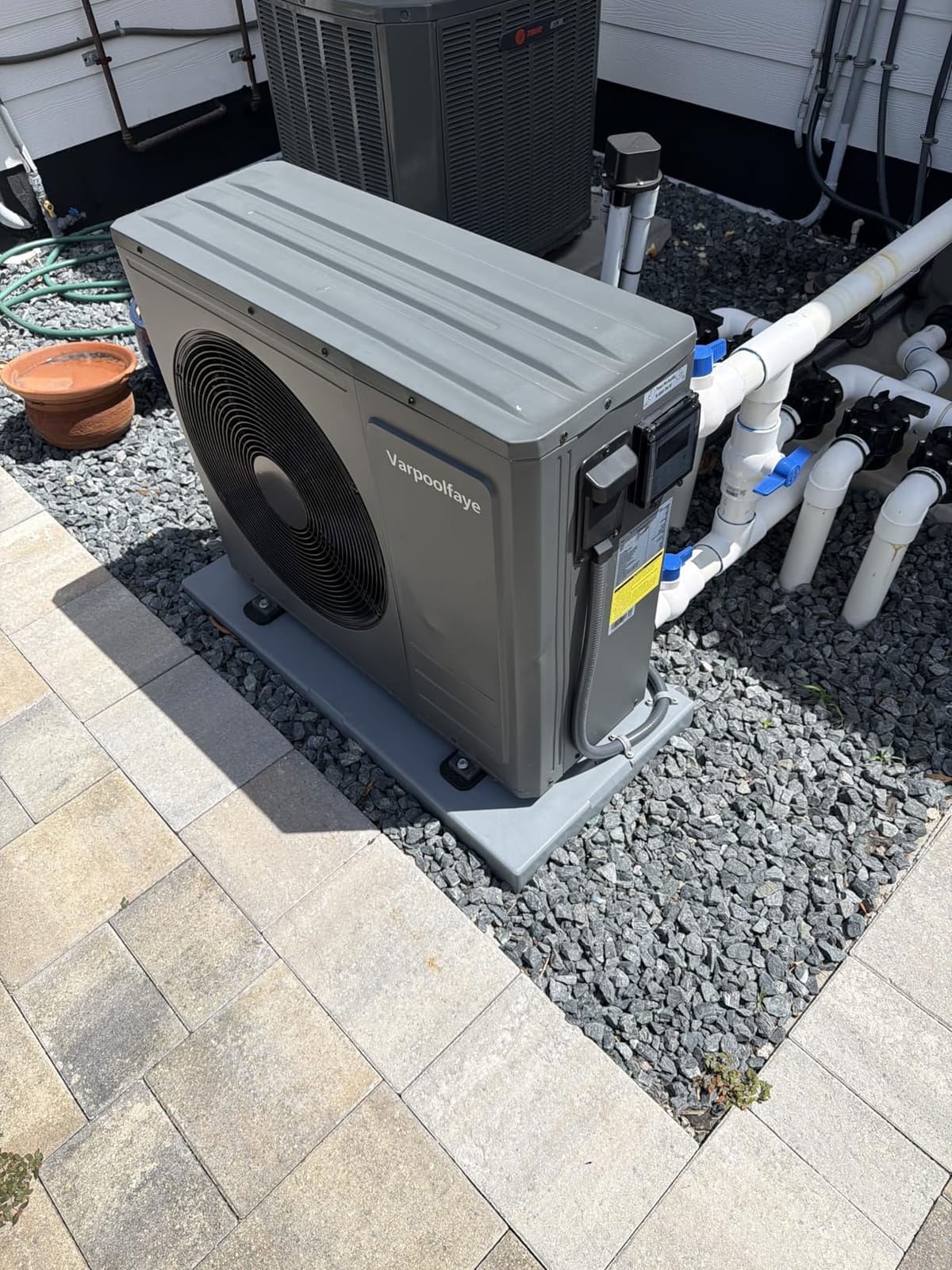
The high-pressure compressor delivers a maximum output of 30,000 BTU with a COP of 5.5 to 5.8, heating from 46F to 104F and cooling from 46F to 82F. The titanium exchanger is rated for both freshwater and saltwater pools, which is unusual at this end of the market.
It posts the cleanest rating distribution in the roundup, with 81% five-star, 10% four-star and no one-star reviews at all across 59 reviews. WiFi app control covers temperature, scheduling and functions, and the 52 dB running level suits a yard where noise is a factor.
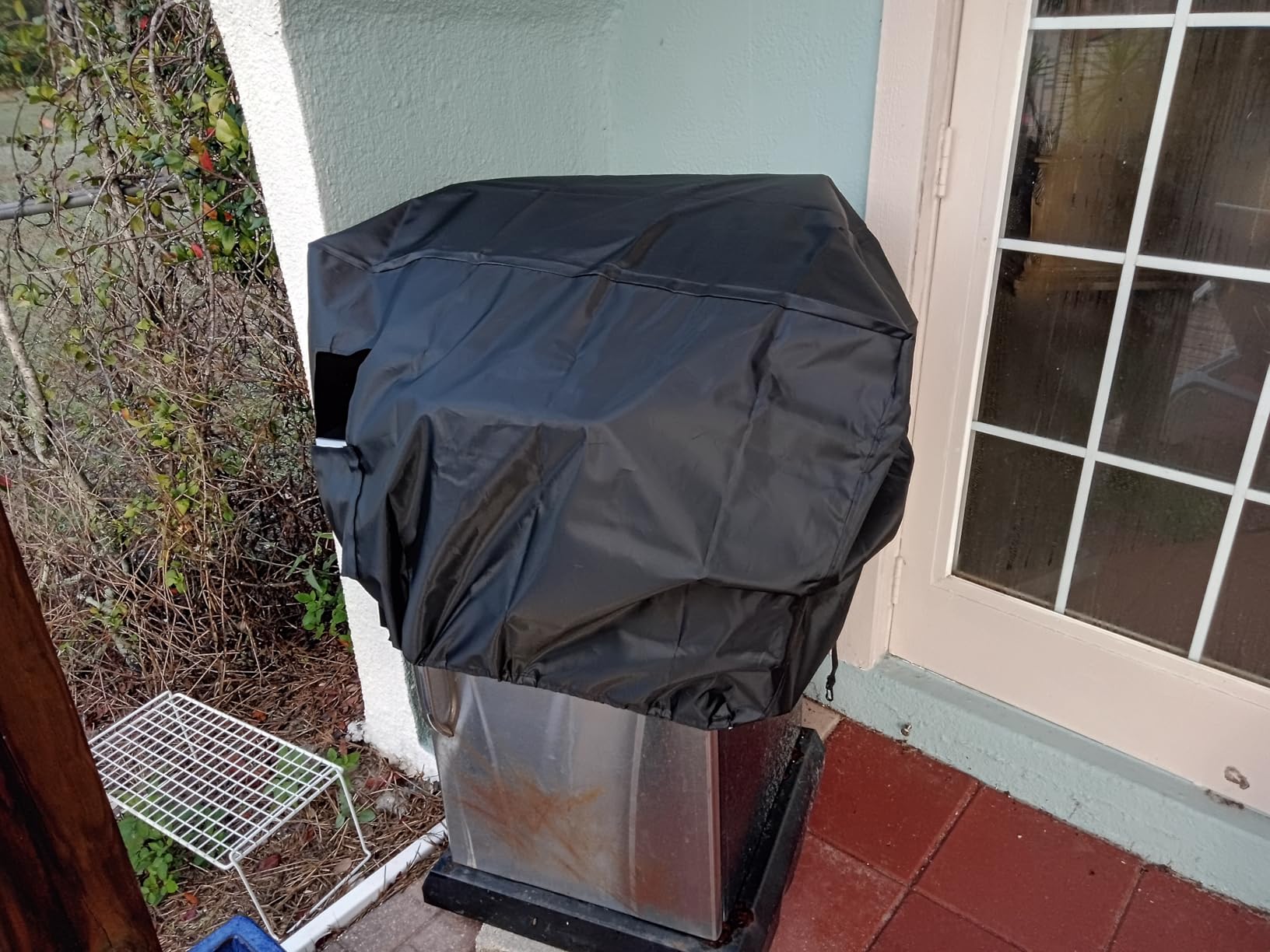
Planning notes are worth reading before install. The included 126 inch cord means you can reach a standard outlet without an electrician, and the 1.5 inch connectors match common pool hose. Condensation draining from the bottom is normal and needs a planned drainage path, not a panic.
Who the Varpoolfaye suits?
It suits owners of small above ground or inground pools in the 14 to 23 foot range who want an app and a cooling mode without a large commitment. It suits anyone on 110V supply who wants to plug in rather than hire an electrician.
It also suits saltwater pool owners on a smaller budget, since the titanium exchanger is rated for salt as well as chlorine. Anyone who values a clean warranty-free-of-one-star-record history will find that reassuring.
Where the Varpoolfaye falls short?
It falls short on efficiency and on capacity. A COP of 5.8 sits well below the 12 to 16 range the full inverter models reach, so it will draw more power for the same heat and produce less of it on a cold night. That is the real trade-off against a larger inverter unit.
It also falls short above 8,000 gallons. If your pool is larger than that, a slightly bigger unit will run more efficiently for longer, and the small capacity ceiling makes this the wrong tool for a big inground pool.
8. TURBRO 50000 BTU Inverter Pool Heater – best for shoulder seasons
TURBRO 50,000 BTU Inverter Pool Heater, Up to 15,000 Gallons, 220-240 V
COP up to 16.2
Up to 75000 BTU
Pools to 21100 gal
220-240V hardwired
Pros
- Full DC inverter compressor with COP up to 16.2
- Up to 75000 BTU of heating capacity
- Titanium exchanger rated for salt water and chemicals
- Multiple sensors with automatic fault shutdown
- Panel or app control with two timer periods
Cons
- Output and efficiency fall below 60F ambient
- Not intended as a hot tub heater
- Needs a certified electrician for a hardwired connection
Manufacturers rarely admit where their product stops working. TURBRO does, and it is the most useful thing on this spec sheet: performance is best when outdoor temperatures are 60F or above, and the unit is not intended to turn a pool into a hot tub. That honesty tells you exactly which job it is good at.
That job is shoulder-season extension, and it does it well. The full DC inverter compressor adjusts output based on ambient temperature, water flow and set temperature, delivering up to 75,000 BTU with a COP figure of 16.2 under rated conditions, rated for pools up to 21,100 gallons.
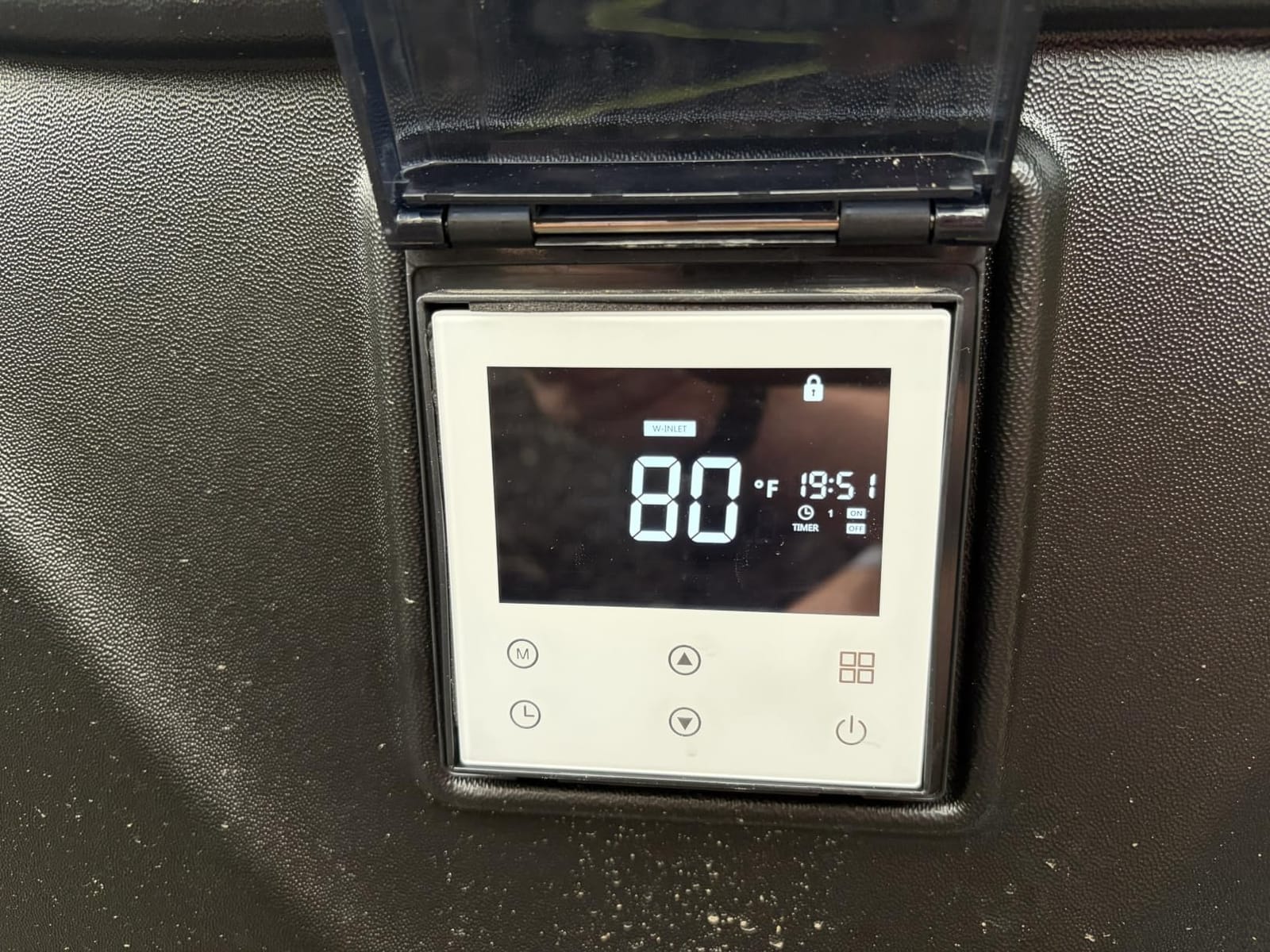
The safety hardware is the differentiator. Multiple sensors monitor inlet and outlet water temperature, ambient temperature, current, voltage, pressure and water flow, display error codes, and shut the unit down on fault, which removes a lot of anxiety from unattended overnight heating.
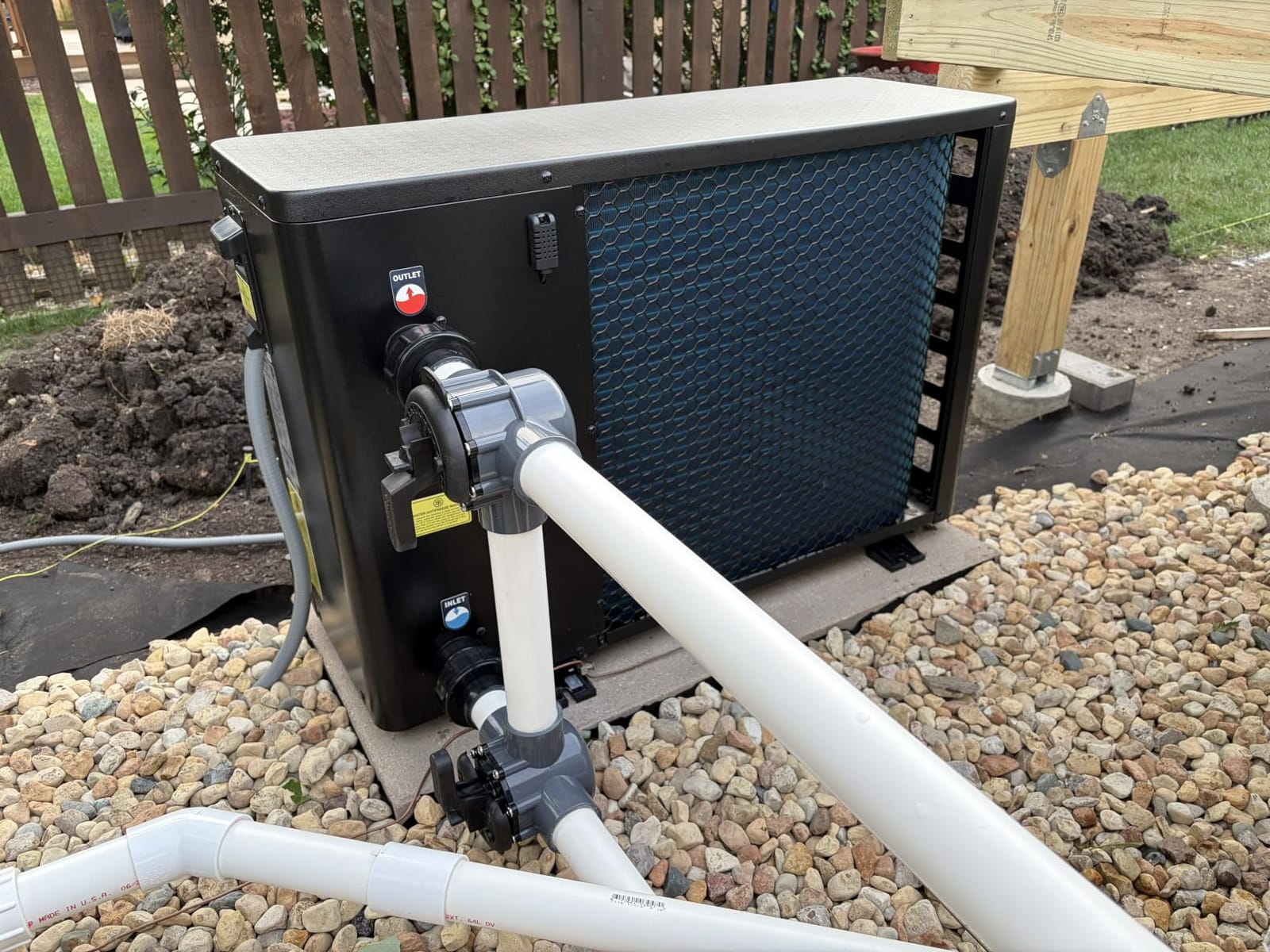
The titanium exchanger is resistant to chemicals and saltwater and is compatible with seawater environments. A pool cover in cold weather helps retain heat, and the cabinet runs at 25.9 by 15.7 by 38.5 inches and 146.7 pounds.
Who the TURBRO suits?
It suits owners in the Northeast, Upper Midwest and Pacific Northwest who want to hold a pool from late spring through October rather than heat it in the dead of winter. It suits anyone who already runs 220-240V service at the equipment pad.
It also suits saltwater pool owners and anyone who values a monitored, fault-protected machine over a simple one. It is not recommended for inflatable pools because of low water pressure, so check your pool type first.
Where the TURBRO falls short?
It falls short below 60F, and the manufacturer says so plainly. A COP of 16.2 measured in mild air says little about a January night, and buying this unit for deep cold is buying the wrong tool for the job.
It also needs a certified electrician for the hardwired 220-240V connection, and 34 reviews is a thin base for judging a ten-year appliance. That said, it holds a 4.4 average with only 4% one-star ratings and a strong category rank, so the early signal is good.
9. NATURAQUELL Inverter Pool Heat Pump – best warranty, lowest rated floor
Inverter Pool Heat Pump, Up to 16,000 Gallons, Above/Inground Pools
COP up to 16.0
Heats from 5F outdoor air
8-year warranty
52 dBA
Pros
- COP up to 16.0 under rated conditions
- Heats in outdoor air from 5F upward
- 8-year warranty
- 52 dBA with automatic 4-way valve defrost
- Connectors adjust to common 1.25 and 1.5 inch hose
Cons
- Only 16 reviews so far
- Outdoor air of 5F or warmer is required for heating
- Cooling mode needs 59F outdoor air
The NATURAQUELL is the specification outlier in this group. A 5F lower bound on heating is the lowest stated operating temperature of any model here, and with an eight-year warranty it carries the longest coverage in the roundup by a distance.
It is a 55,000 BTU per hour full inverter unit rated for pools up to 16,000 gallons, heating from 5F to 104F outdoor air and cooling from 59F to 109.4F conditions. Full inverter modulation ramps output down as the pool nears setpoint instead of cycling on and off, which is what keeps temperature steady.
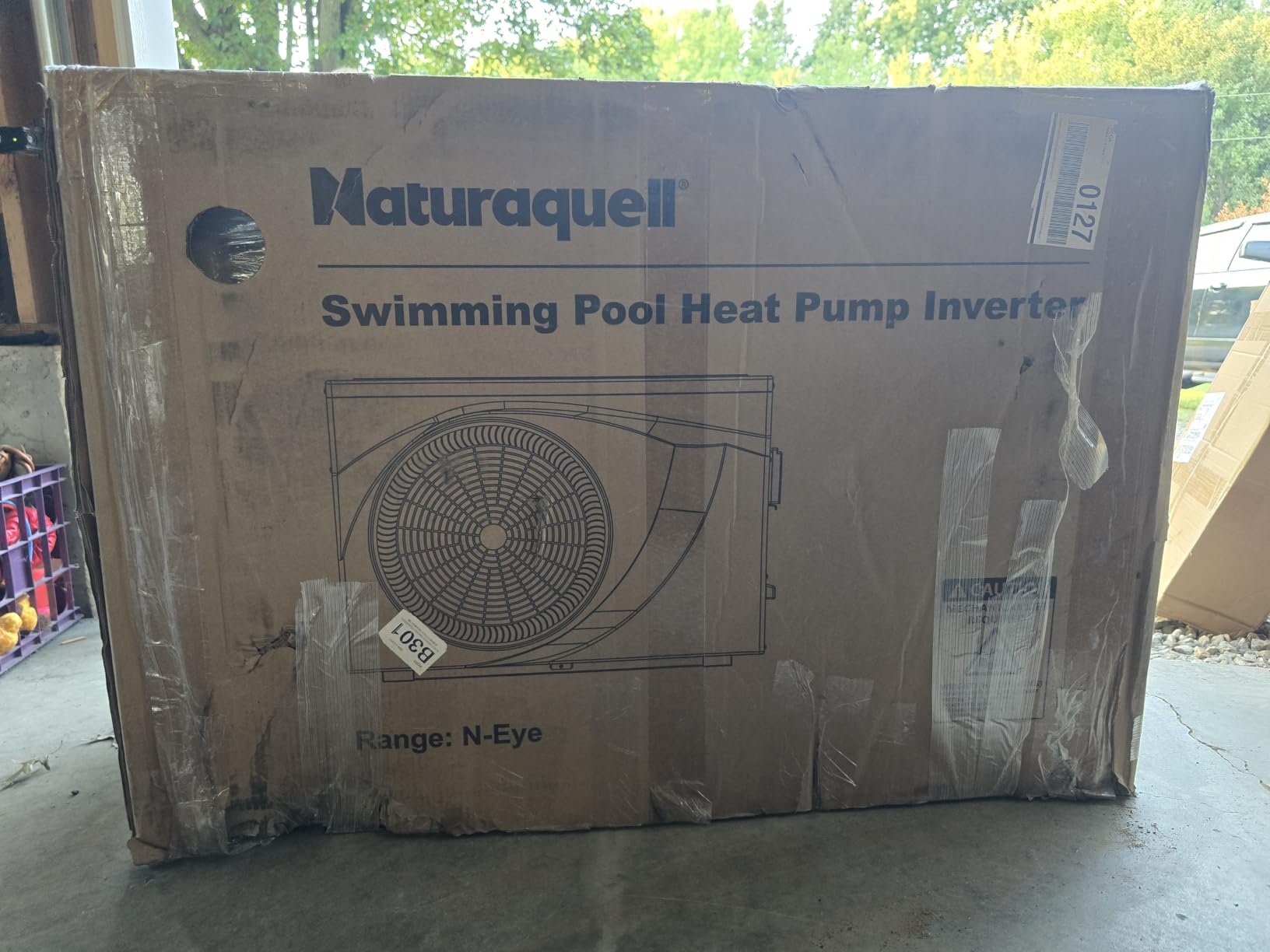
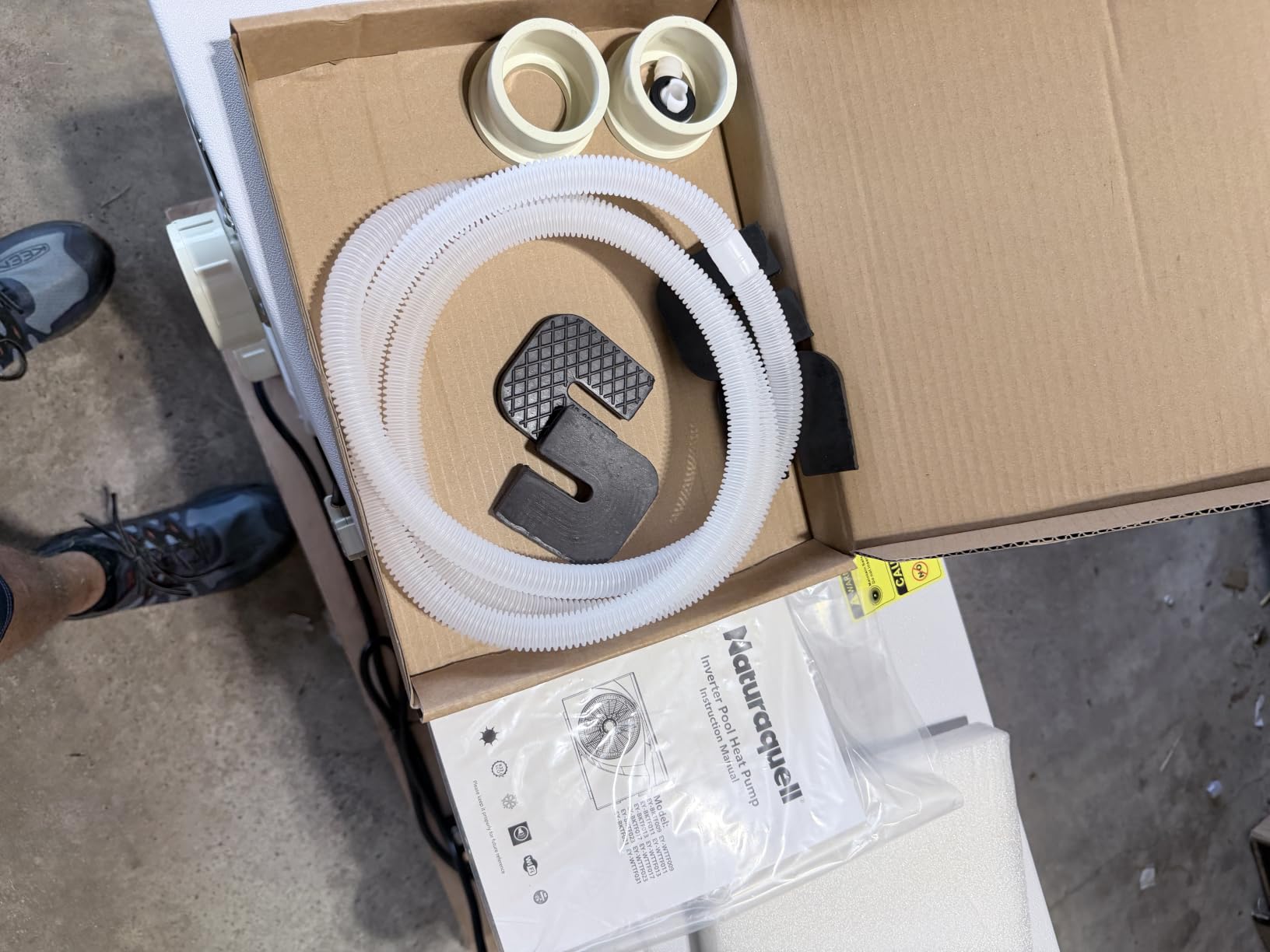
Horizontal airflow with an automatic 4-way valve defrost handles the cold, and a titanium exchanger with IPX4 protection runs at 52 dBA. The 2 inch inlet and outlet connectors adjust down to common 1.25 inch and 1.5 inch pool hose, and the package includes a 6.6 foot drain pipe, drain connector and four rubber shock absorbers.
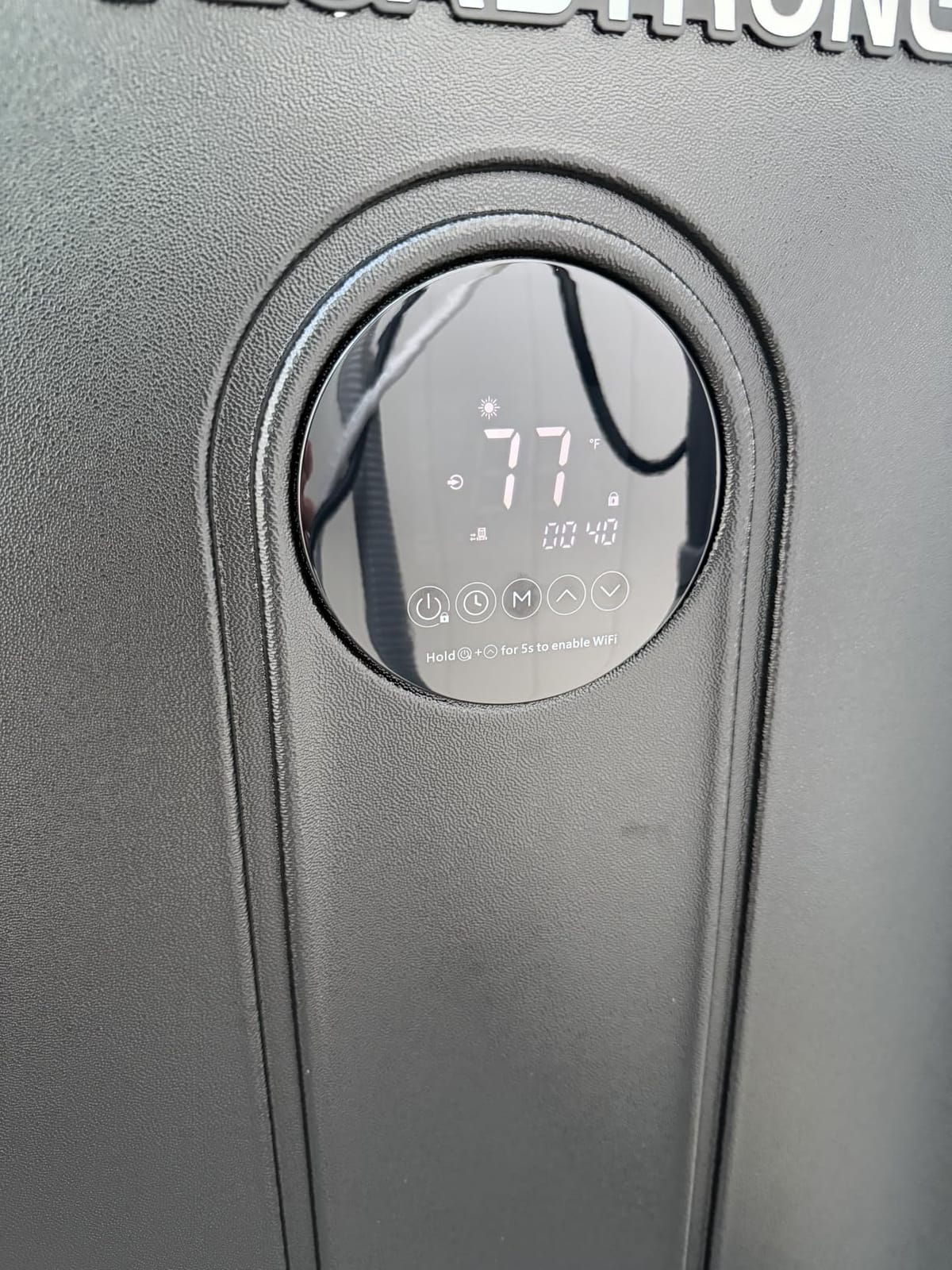
Control is through a Smart Life app or the on-unit touch panel, with timers, status and fault query. The cabinet is 25.28 by 36.38 by 15.2 inches and 124.6 pounds, which is a manageable size for a two-person move.
Who the NATURAQUELL suits?
It suits owners in the far north who want the widest stated operating envelope and who intend to keep the unit for a decade. If you are weighing two similar inverter units, the eight-year warranty is a genuine differentiator that costs nothing to benefit from.
It also suits anyone who wants steady temperature rather than a hot and cold pool. Full inverter modulation, adjustable connectors, included shock absorbers and a drain kit are all details that suggest someone thought about the install.
Where the NATURAQUELL falls short?
It falls short on proof. Sixteen reviews is a very thin sample, and no ratings below four stars is encouraging but not yet evidence of a decade of service. The eight-year warranty is doing a lot of the work here, and it is doing it well.
It also falls short at the extremes. Heating requires outdoor air at 5F or above, and cooling needs 59F outdoor air, so the genuinely cold envelope is narrower than the headline suggests. Actual results will vary with pool size, outdoor temperature, plumbing, circulation and whether you use a cover.
10. AQUASTRONG HEX035TOP 110,000 BTU – best for very large pools and quiet zones
Swimming Pool Heat Pump for Above Ground Inground Pool 22’*30’*48″
110000 BTU for pools to 32000 gal
37 dB top discharge
12 COP
Titanium exchanger
Pros
- 110000 BTU for pools up to 32000 gallons
- 37 dB top discharge design
- Top discharge frees up side clearance
- Titanium exchanger rated for salt water
- Full inverter drops to low power at setpoint
Cons
- 309 pounds needs several people to place
- Listed dimensions do not match the physical unit
- 12 COP is below the 16 range on full inverters
Two numbers make this unit different from most of the others on the list. It is rated at 110,000 BTU for pools up to 32,000 gallons, the largest capacity here, and it runs at 37 dB, well below the 52 to 55 dB figures most units in this roundup publish.
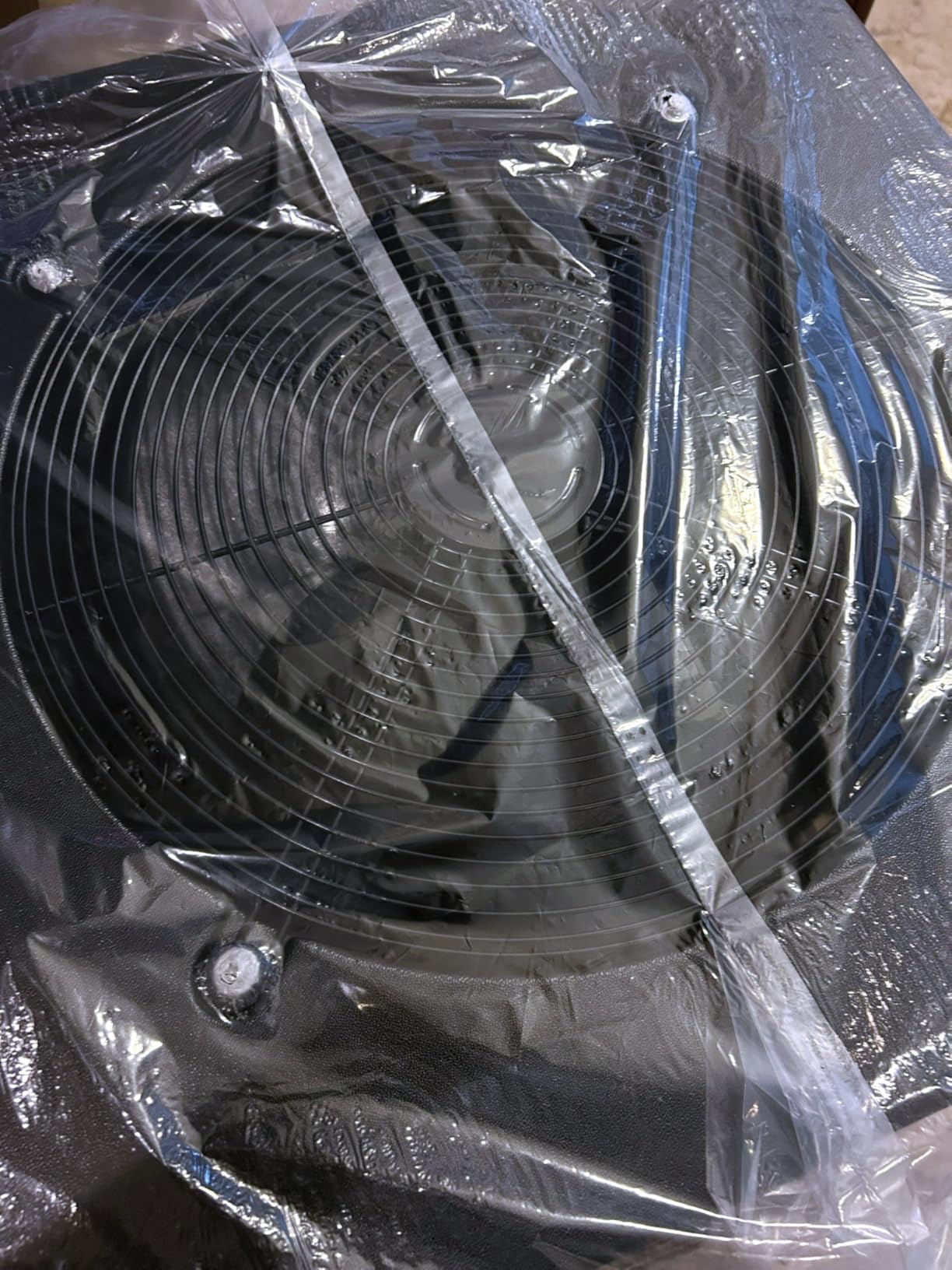
The physical design is what solves most installation problems. A top discharge airflow with a vertical air intake means the unit does not need side clearance, so it fits against a wall or into a corner where a conventional side-vent cabinet would not. In a dense neighborhood, 37 dB is the difference between a non-issue and a complaint.
It shares a manufacturer with the HEX100, the best-selling unit in the Swimming Pool Heat Pumps category, so the platform is proven. The upgraded titanium exchanger is suitable for saltwater pools, and full inverter technology shifts to low-power operation the moment the target temperature is reached.
Included fittings are 2 inch adapters plus a 2 inch to 1.5 inch conversion kit, so it will connect to most pools without a trip to the parts store. It is the right choice when the pool is big and the neighbors are close.
Who the HEX035TOP suits?
It suits owners of very large inground pools who need real BTU headroom, and anyone installing next to a wall or fence where side clearance is unavailable. It suits buyers whose nearest neighbor is closer than they would like.
It also suits saltwater pool owners at scale. Handling 32,000 gallons with a titanium exchanger rated for salt is a combination few units in this price class offer, and 37 dB means a unit you genuinely do not hear running.
Where the HEX035TOP falls short?
It falls short on weight and on documentation. At 309 pounds it is the second-heaviest unit in this roundup and will need multiple people to set on the pad, which is a real install cost. The listed product dimensions of 20 by 20 by 20 inches do not match the physical unit, so measure the pad yourself rather than trusting the listing.
Its 12 COP is respectable but well below the 16 range reached by the top full inverter units, so it trades efficiency for capacity. Pick it for size and silence, not for the lowest running cost per BTU.
Honest limitations of pool heat pumps in cool climates
Every one of these units will disappoint you in the same way if you buy it expecting a gas heater. A heat pump moves heat at a limited rate, and in cold air that rate drops further, so a pool sitting at 50F will not reach 82F tonight. Plan for a couple of good days with a cover on, or run a gas heater alongside during the shoulder weeks.
The second limitation is defrost downtime. When the coil ices up, the compressor stops. The AQUASTRONG HEX100 states its cycle plainly, firing every 40 minutes and clearing in about five minutes, which is the kind of honesty worth paying for. The NATURAQUELL uses an automatic 4-way valve defrost, and the MICOE simply says automatic defrost for cooler conditions.
Third, there is a floor. Most of these units are rated to about 46F to 47F on the low end, and the NATURAQUELL claims 5F. Below that floor a heat pump is not a heater, it is an expensive fan. Nobody in this roundup should be your only source of heat in a Northeast January.
Fourth, plumbing freeze risk is real. A unit that is not winterized can be damaged by a freeze, and the drain line needs a plan. Check with your installer about a defrost drain and where discharge water goes before the first cold night, because that is the detail that costs money when it is missed.
Finally, noise and pad space. Published figures here run from 37 dB to 55 dB, which is fine in most yards and unacceptable in some. Measure the equipment pad, confirm airflow clearance, and check the service access before the unit arrives, not after.
Pool heat pump buying guide for cold climates
It also helps to keep pool heat pumps distinct from the other heat pump categories we cover, because their efficiency and noise figures do not transfer. Our picks for mini split heat pumps for workshops and mini split heat pumps for sunrooms cover whole-room and glassed-in heating, while our RV air conditioners with heat pumps roundup covers vehicle climate. Read those against different criteria than the water-heating units below, where the load is water rather than air.
How to size a pool heat pump?
Size by heat load, not by the gallons printed on the box. A pool loses heat through surface area, and evaporation dominates, so a wide shallow pool works much harder than a narrow deep one holding the same volume. The published gallon figures assume a covered pool, mild weather and an 80 to 82F target, which is the best case rather than the plan.
The useful rule of thumb for residential pools is roughly 3,000 BTU per 1,000 gallons of surface area, and we lean toward sizing up slightly rather than down. A slightly undersized unit runs long hours at low efficiency; a slightly oversized one modulates down and holds temperature more cleanly. Owners on r/pools and TroubleFreePool threads converge on 60,000 to 70,000 BTU inverter units as the sweet spot for mid-size residential pools, and that pattern holds up against the specs here.
A rough map: 8,000 gallons points to 30,000 BTU class, 12,000 to 14,000 gallons to the 35,000 to 55,000 BTU class, 16,000 to 20,000 gallons to 75,000 BTU and up, and anything past 25,000 gallons wants 100,000 BTU or more. Treat that as a starting point for a conversation with an installer, not a finished answer.
Understanding COP and the 20 rule
COP means coefficient of performance, and it is the single most useful number on a pool heat pump spec sheet. A COP of 5 means the unit delivers five units of heat for every unit of electricity, which is 500% efficient by pool-heater standards. A COP of 16 means 1,600%.
The 20 rule is a shortcut: roughly 20 units of heat per unit of electricity is a very efficient heat pump, and pool heat pumps live in that territory, unlike resistance heaters which sit at 1. That framing confuses some buyers, so treat it as a comparison tool between heaters, not an efficiency target between two pool heat pumps.
The catch for cool climates is that peak COP is measured in mild air. At 50F the real COP of any unit falls well below its headline, and at 40F it falls a long way below. Compare units on part-load behaviour, meaning full inverter modulation, rather than on the single largest number printed on the carton.
Heating and cooling for shoulder seasons
A heat and cool unit runs the refrigerant cycle in reverse in summer, which no gas heater can do. In a cool climate the value is less about summer and more about the six weeks either side of it, when the air is 65F, the pool is 84F, and nobody can decide what to do with the water.
Six of the ten units here heat and cool, including the top pick. Reverse-cycle capability is worth paying for if you have any shoulder weeks where the water goes warm faster than the air cools down, and it also gives you a way to cool a shallow wading pool for kids on a hot afternoon without a separate chiller.
Saltwater, chlorine and corrosion
Every unit in this roundup uses a titanium heat exchanger, which is the material you want. Titanium resists both salt chlorine and high-chlorine sanitizers far better than copper, and it is the reason the exchanger term is usually the longest part of a pool heater warranty.
Beyond the exchanger, the cabinet and fin matter. The Hayward 140,000 BTU pairs titanium with Ultra Gold corrosion-resistant fin technology and UV-resistant panels, which is the combination to look for on a coastal install. The AQUASTRONG HEX035TOP and TURBRO are also explicitly rated for seawater environments, while the MICOE lists its titanium exchanger for freshwater only, so saltwater owners should ask before buying.
Where to buy and how warranty really works?
Authorized dealer, pool store and marketplace purchase are not equivalent, and the difference shows up exactly when something fails. Several of these manufacturers require certified professional installation, and the TURBRO explicitly requires a certified electrician for its hardwired 220-240V connection. Self-install a unit with that requirement and you can lose coverage on the parts that matter.
Check the exchanger warranty term before you check anything else. Ten years is the benchmark in this category, and the range here runs from a 12-month term on the WARMBLU to eight years on the NATURAQUELL. Also check whether an authorized technician actually operates in your area, because a single technician in a region is effectively no service network.
A maintenance calendar that protects your warranty
Keep the water chemistry inside range year round, since an exchanger that has to fight a pH of 8.5 is working against itself. Run the pump whenever the heat pump runs, confirm the defrost drain is clear before the first freeze, and confirm the unit is properly winterized if you are closing the pool for the winter months.
Use a pool cover whenever the heater runs, and especially in cold weather. The cover is the single biggest lever you control: it cuts evaporation, which is the dominant heat loss, and several manufacturers call it out explicitly. More than one owner in these reviews attributes steady temperature holds to having a cover rather than to the heater itself.
If you already own a gas heater, a hybrid setup is a legitimate answer for a Northeast pool. Run the heat pump for the bulk of the season and let the gas heater handle the deep shoulder weeks, which is the compromise several owners in r/pools describe as the balanced pick. Just be aware of the community consensus that sizing up slightly beats undersizing every time, and that the marketing gallon figure assumes a covered pool.
Frequently Asked Questions
Which heat pump is best for cold climates?
The AQUASTRONG HEX100 is the best all-round choice for cool climates, because it holds full inverter output down to 47F, heats and cools in one cabinet, and runs an automatic defrost every 40 minutes that clears in about five. For very large pools the WARMBLU 28000-gallon inverter unit covers more water, and for coastal or saltwater setups the Hayward HeatPro 140,000 BTU adds Ultra Gold corrosion resistance.
What size heat pump do I need for a 10,000 gallon pool?
A 10,000-gallon inground pool generally wants a unit in the 35,000 to 55,000 BTU class, assuming a covered pool and a target around 82F. Work from surface area rather than volume, use roughly 3,000 BTU per 1,000 gallons of surface area as a starting point, and size up slightly rather than down.
How cold can a pool heat pump operate?
Most units in this roundup are rated to about 46F to 47F outdoor air, and the NATURAQUELL in this list states a 5F lower bound for heating. Below its rated floor a heat pump is not a heater, so in the Northeast and Upper Midwest you still want a gas heater or hybrid setup for deep winter, with the heat pump handling the shoulder season.
What is the 20 rule for heat pumps?
The 20 rule means a heat pump moves roughly 20 units of heat for every unit of electricity, so a COP of 5 is 500% efficient and a COP of 16 is 1600%. Pool heat pumps live in that range while electric resistance heaters sit at 1. It is a useful comparison between heating methods, but not between two pool heat pumps, since peak COP is measured in mild air.
Which brand of pool heater is the most reliable?
Reliability in this category tracks warranty length and service reach more than brand name. A titanium heat exchanger is the baseline, ten years of exchanger coverage is the benchmark, and a long warranty such as the eight years on the NATURAQUELL means something only if an authorized technician actually works in your area. Confirm that before you buy.
Final verdict
The best pool heat pumps for cool climates in 2026 are the ones that keep working when the air does not cooperate. Our pick, the AQUASTRONG HEX100, does that with a 47F floor, a five-minute defrost cycle, 15.8 COP inverter efficiency and the largest review base in the category, which means the failure modes are known rather than mysterious.
Go bigger with the WARMBLU for very large pools, sideways with the Hayward 140,000 BTU for salt air, and long-haul with the NATURAQUELL if you want the longest warranty in the group. Match the unit to your pool’s surface area, run it with a cover, and keep a gas heater for the weeks when nobody would call 58F swimming weather.