
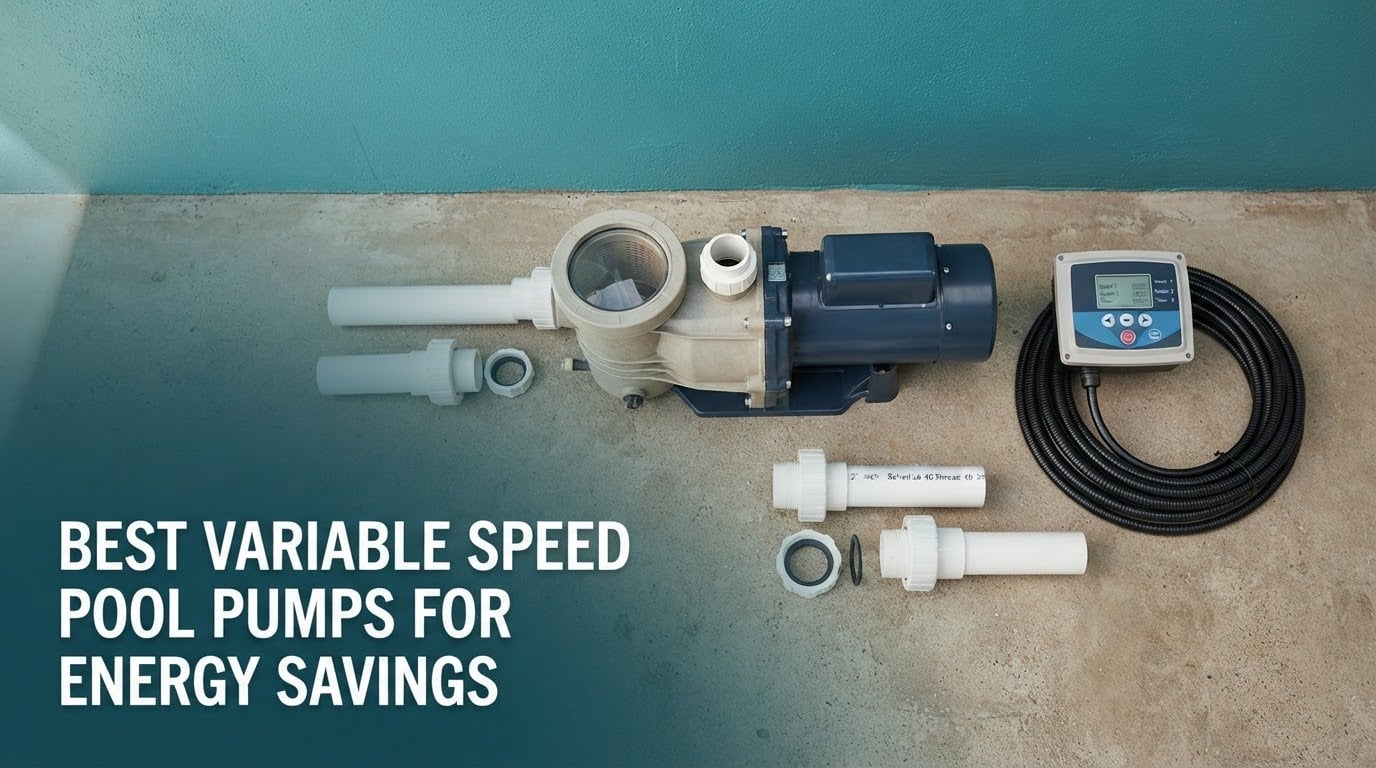
A pool pump is the second-largest electricity draw in most homes, right behind air conditioning, and a single-speed unit has exactly one setting: full bore at 3,450 RPM, all day, every day. A variable speed pool pump replaces that with an inverter-driven permanent magnet motor you can dial anywhere from roughly 600 RPM to full speed, so the same pump that blasts water for a water feature at 3,000 RPM can trickle through your filter all night at a fraction of the wattage. That single change is why the best variable speed pool pumps for energy savings routinely cut pump energy costs by 50-80% and pay back the higher purchase price within one to two years.
We spent weeks comparing ten of them, and the differences turned out to be less about horsepower than about control panel options, warranty length and how honestly each manufacturer quotes the savings. We looked at the permanent magnet motor, the programmable speed presets, the voltage, the flow rating against your filter, and the failure reports owners actually filed. If your pool is above ground and small, start with our above-ground pool pump picks instead, because the variable speed options in this niche are thin there.
If you already know your plumbing runs to a Pentair or Hayward setup, our companion guide to the best variable speed pool pumps for inground pools goes deeper on drop-in fit. Otherwise, read on. Everything below works for 2026, and the ordering reflects what we would actually put in our own pad, not just star averages.
Table of Contents
Top 3 Variable Speed Pool Pump Picks (September 2026)


Hayward TriStar VS 1.85 HP
- Permanent magnet TEFC motor
- Live wattage display
- Replaces up to 2.0 max-rate HP

Pentair IntelliFlo VS
- Variable speed and variable flow
- On-pump digital control
- Drop-in Pentair fit
All 10 Variable Speed Pool Pumps at a Glance in 2026
No competitor roundup we reviewed publishes a straight spec comparison across their picks, which is odd when the buying decision is almost entirely a spec decision. Here is every pump in this guide on one page, with the numbers that actually change your energy bill and your install.
| Product | Specifications | Action |
|---|---|---|
| Pentair SuperFlo VS 1.5 HP |
|
Check Latest Price |
| Hayward TriStar VS 1.85 HP |
|
Check Latest Price |
| Pentair IntelliFlo VS |
|
Check Latest Price |
 VARMINPOOL 1.8 HP Inverter Pump VARMINPOOL 1.8 HP Inverter Pump |
|
Check Latest Price |
 Hayward MaxFlo VS 1.65 HP Hayward MaxFlo VS 1.65 HP |
|
Check Latest Price |
 Hayward Super Pump VS 1.65 HP Hayward Super Pump VS 1.65 HP |
|
Check Latest Price |
 Pentair IntelliFlo VS with SVRS 3 HP Pentair IntelliFlo VS with SVRS 3 HP |
|
Check Latest Price |
 LINGXIAO Smart 2 HP Pump LINGXIAO Smart 2 HP Pump |
|
Check Latest Price |
 CIPU 3 HP Smart Pump CIPU 3 HP Smart Pump |
|
Check Latest Price |
 choosmo 1.5 HP Dual Voltage Pump choosmo 1.5 HP Dual Voltage Pump |
|
Check Latest Price |
What Is a Variable Speed Pool Pump?
A variable speed pool pump is a circulation pump driven by a permanent magnet motor that lets you set the RPM anywhere from roughly 600 to 3,450, so you can run it low for everyday filtration and high for vacuuming, heating or water features. Because pump power falls steeply with speed, most of your daily filtering happens at a small fraction of full-speed wattage.
The three types you will run into on a sales page look similar but behave very differently. A single-speed pool pump runs at its full rated horsepower, which on most residential motors means 3,450 RPM with no adjustment at all. A dual-speed pool pump has exactly two settings, usually full speed and a low speed around 1,200 RPM, which saves some money but leaves you with a binary choice. A variable speed pool pump gives you continuous control, and the TEFC motor design in most of the units below keeps the electronics cool enough to survive a wet equipment pad.
That middle option matters more than it sounds. If your pool needs 20 GPM to turn the filter over, a single-speed pump delivers 100 GPM and burns the difference as heat and noise. A variable speed unit gets you the flow you actually need and stops there.
Are Variable Speed Pool Pumps Worth the Money?
Yes, for most in-ground pools, and the reason is arithmetic rather than marketing. Forum owners running these pumps report the honest version of the savings claim: r/pools threads are full of people who switched and could not find a single number, and others posting real utility data report a 1.5 HP single-speed pump costing roughly 41 dollars a month for eight hours of running against roughly 28 dollars for a 1 HP efficient replacement, and much lower still once the replacement is a true variable speed unit. Owners in North Florida report running their pumps as low as 60% for only three hours a day and keeping the water clear with no algae at all.
The physics behind that is the pump affinity law, and it is worth ten seconds of attention. The power a pump draws scales with the cube of its speed, which means dropping to half speed cuts the power requirement to roughly an eighth. A pump that pulls 1,500 W at full speed pulls on the order of 190 W at half speed. The flow falls too, so the trade is always lower flow for lower watts, and your job is to find the slowest speed that still turns the water over properly.
Two free levers sit alongside the hardware. Running the pump overnight during off-peak hours costs some utilities a quarter of the daytime rate, and users on the r/pools forum consistently identify time-of-use scheduling as the cheapest saving available. The second is running longer at a lower speed instead of shorter at full speed, because the affinity law rewards both changes at once. If you also run a heat pump, cutting circulation cost feeds straight into the pool heater side of the bill too, since a heater works harder when the water arrives cold.
1. Pentair SuperFlo VS 1.5 HP – Best Overall Pick for Energy Savings
Pentair EC-342001 – SuperFlo VS Variable Speed Pool Pump, 1.5 HP
1.5 HP
112 GPM
230V
TEFC motor
Three programmable speeds
Pros
- Very quiet at low RPM
- Large measurable energy savings over single-speed pumps
- Simple three-speed programming with quick-clean cycle
- Easy DIY installation with straightforward PVC and wiring
Cons
- Higher pitched whine at 3000 RPM than older single-speed pumps
- Limited warranty unless professionally installed
- Housing bolts can loosen from vibration
This is the pump we ended up recommending to almost everyone we asked. Owners consistently report cutting power draw from roughly 1,700 W down to about 350 W once they program the low speed, and the 1,836-review history is far larger than anything else in this guide, which means parts and troubleshooting advice are easy to find. The three programmable speeds and the 24-hour clock on the keypad are enough for almost every residential setup without extra hardware.
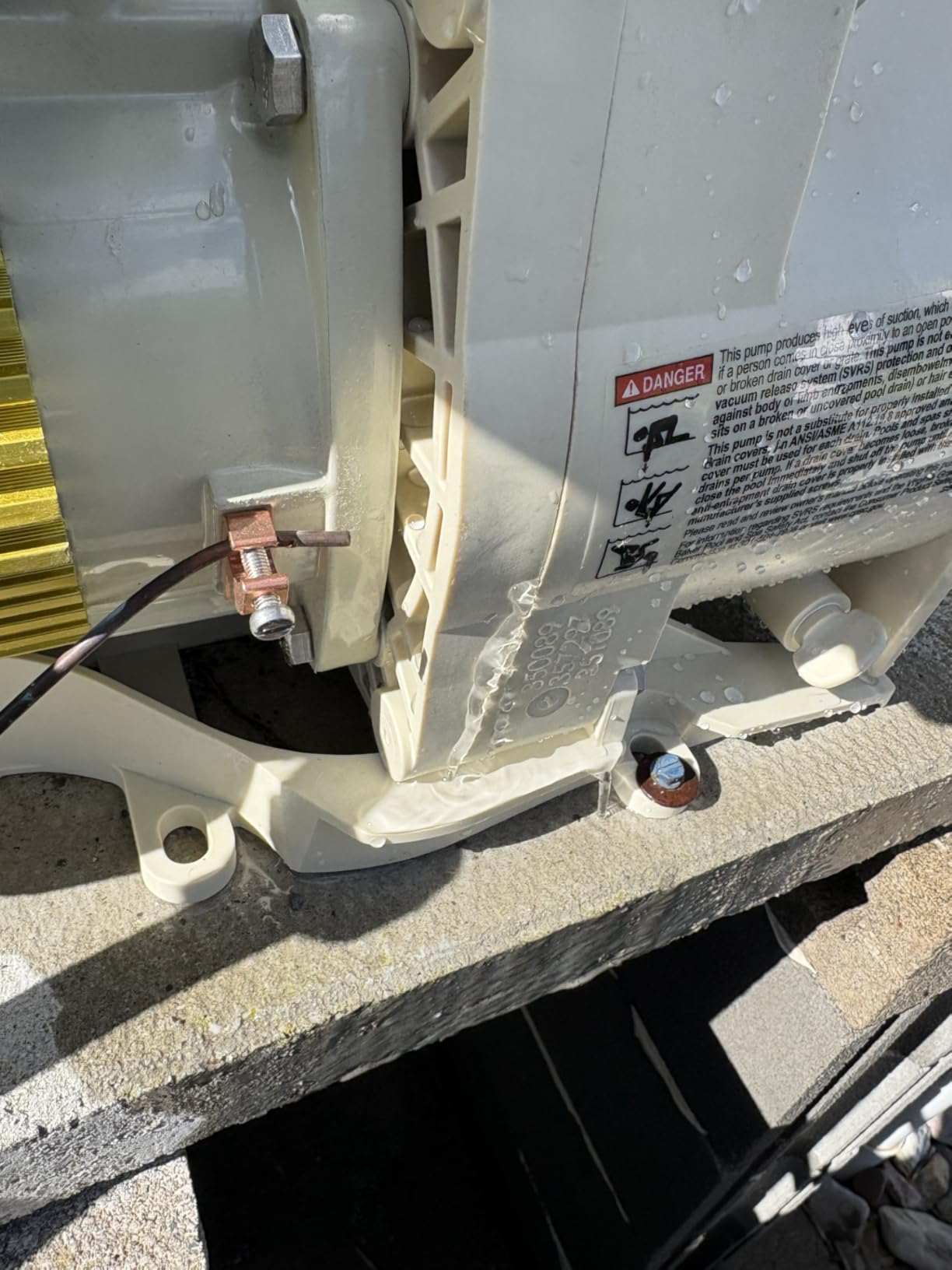
Installation came up repeatedly as the easy part. Reviewers describe straightforward PVC work and wiring that most handy homeowners handled in an afternoon, and the improved mechanical seal design is a genuine upgrade over the single-speed SuperFlo it usually replaces. The unit is 25.8 pounds and roughly 12.5 by 12.5 by 15.5 inches, so it fits in a standard pad cavity without moving your plumbing.
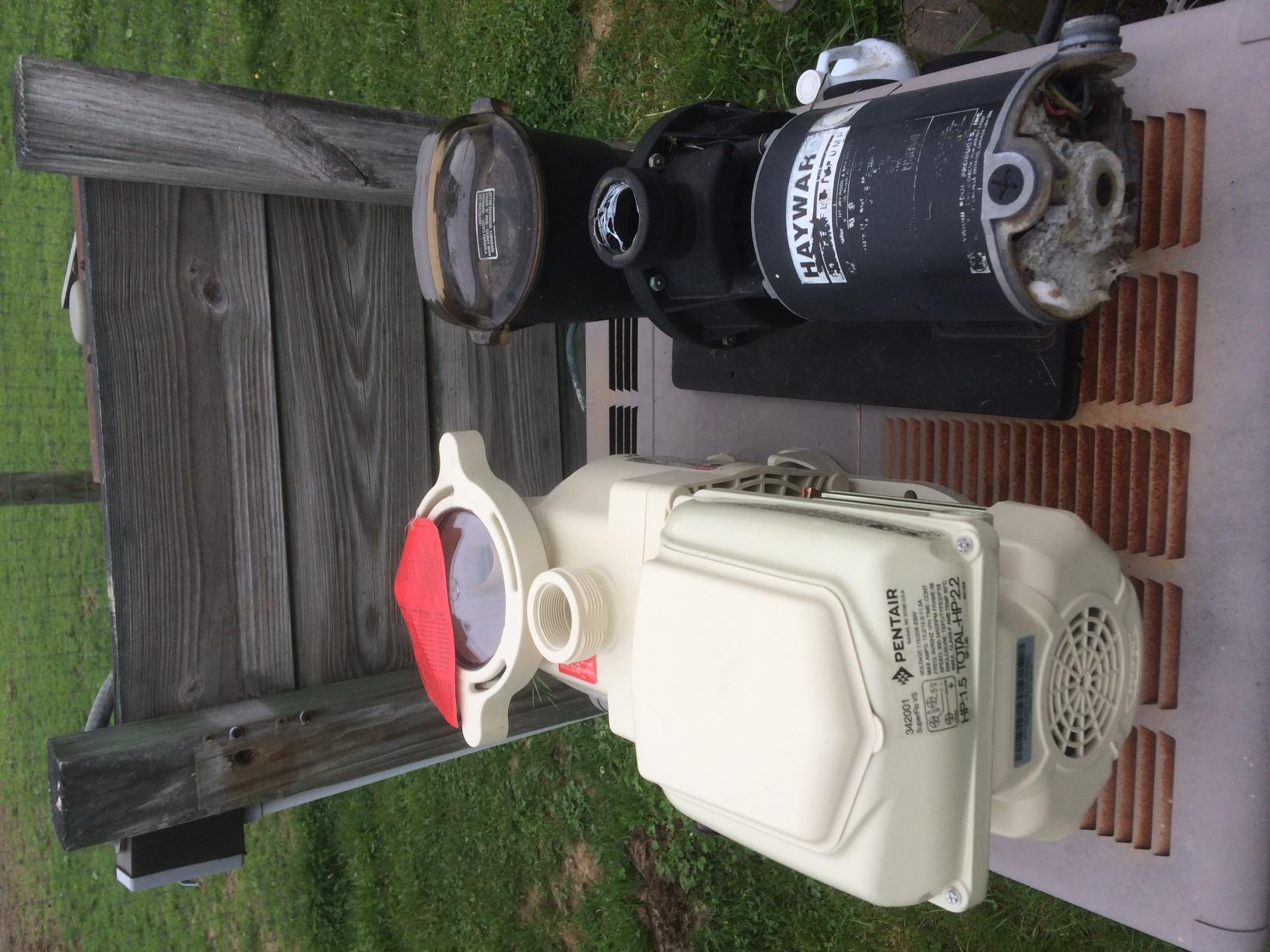
The catch is warranty math. Coverage is limited unless a pool professional installs it, and that condition alone pushes some owners toward competitors. Owners also mention a thin, easily punctured shipping carton, so inspect the housing before you plumb anything in.
Check RS485 Compatibility Before You Buy This Model
The SuperFlo VS carries RS-485 connectivity for automation systems and IoT devices, but several owners report it is not directly compatible with older Pentair EasyTouch control panels without rewiring. If your existing panel is a decade-old EasyTouch, budget for a new panel or run the pump standalone on its own keypad.
How It Handles High Speed and Salt Water?
At the top of its range this pump develops a higher-pitched mechanical whine around 3,000 RPM that some owners find less pleasant than the lower rumble of an older single-speed motor. It is a 230-volt unit at 1.5 HP, so plan on a dedicated circuit rather than a 115-volt drop-in. For saltwater pools it works fine, but you still need to respect the minimum flow your salt chlorine generator needs.
2. Hayward TriStar VS 1.85 HP – Top Rated for Quiet Running
Hayward TriStar VS Variable Speed Pool Pump for In-Ground Pools, 1.85 HP
1.85 HP
40 GPM
230V
Permanent magnet TEFC
Live wattage display
Pros
- Highest average rating in this group
- Exceptionally quiet running
- Straightforward retrofit installation
- On-board display reports live wattage
Cons
- Display wall mount and CAT5 cable sold separately
- Hayward OnCommand green 4-pin connector is hard to source
- Programming takes owners a few days to dial in
At 4.7 stars across 310 reviews, this is the highest-rated pump we evaluated, and the quietness comes up in nearly every positive review. It is the pick we would trust in a neighborhood where a humming pump at night is going to be a recurring complaint. The permanent magnet, totally enclosed fan-cooled motor is the same architecture Hayward uses across its premium line.
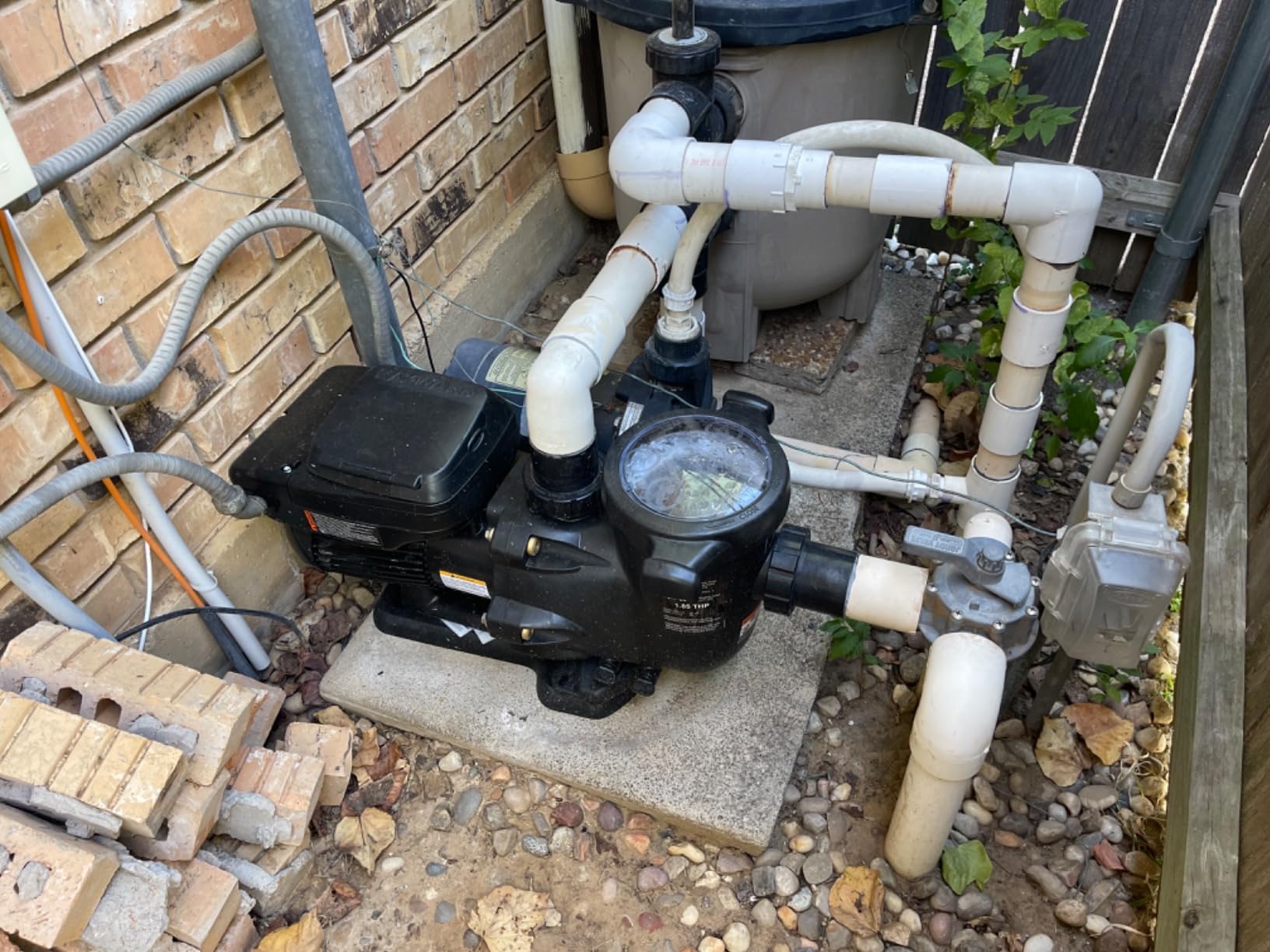
The genuinely useful feature here is the on-board display, which reports live wattage while the pump runs. Owners say they tuned their entire schedule by watching that number, which turns a guess about savings into a measurement. Hayward also rates it as eligible for many local utility rebates, and at 52 pounds it is a substantial unit that feels properly built once it is on the pad.
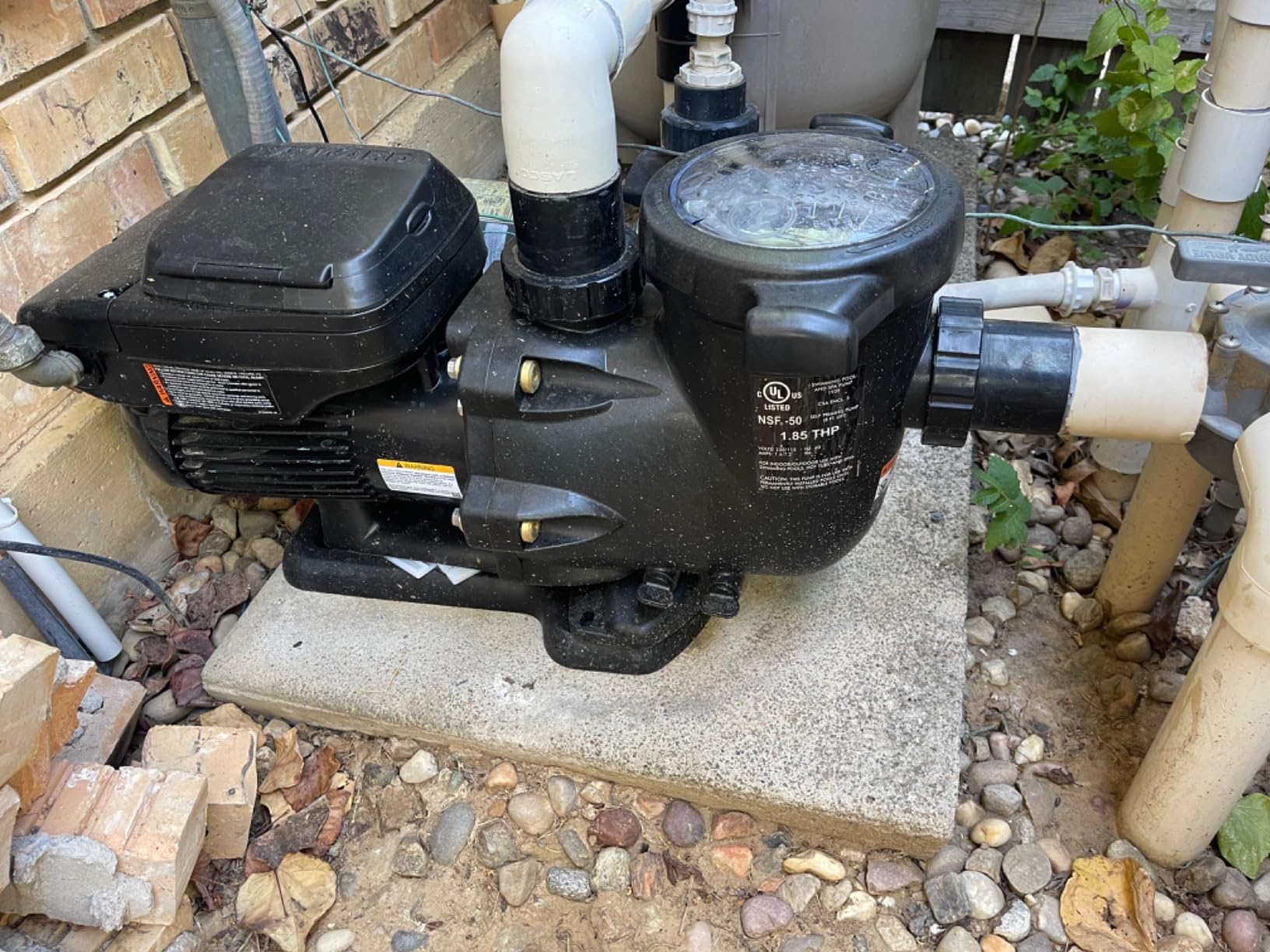
Two practical wrinkles. The display wall mount and its CAT5 cable are separate items, so budget for them if you want the readout somewhere other than the pump itself, and the Hayward OnCommand green 4-pin connector that ties into automation is notoriously hard to source locally. One buyer also reported finding a foreign object in the impeller on arrival, so open the housing before you plumb it in.
Whether It Replaces Your Existing Hayward Pump
Hayward rates this model as replacing most full-rate pumps up to 1.5 full-rate or 2.0 max-rate horsepower, so most owners swapping a standard Hayward find a retrofit rather than a rebuild. The no-rib extra-large filter basket is a real quality-of-life improvement when you are pulling leaves in the fall.
How to Read That 40 GPM Flow Figure?
The listed flow rate of 40 GPM is at a specific head pressure, not a maximum, so do not read it as the ceiling of what this pump moves. It is also a 230-volt unit. If your electrical service is 115-volt, this is not a candidate and you should be looking at the dual-voltage options further down instead.
3. Pentair IntelliFlo VS – Premium Pick for Large Pools
Pentair 011028 IntelliFlo VS Pool Pump, Almond
220 volts
Aluminum housing
Variable speed and flow
On-pump digital control
Pros
- Large documented energy savings
- Much quieter than the single-speed pumps it replaced
- Drop-in fit into existing Pentair fittings
- Simple programming module
Cons
- Warranty coverage requires professional installation
- Accessory unions and couplers may need separate purchase
- Programming module is basic next to app-controlled pumps
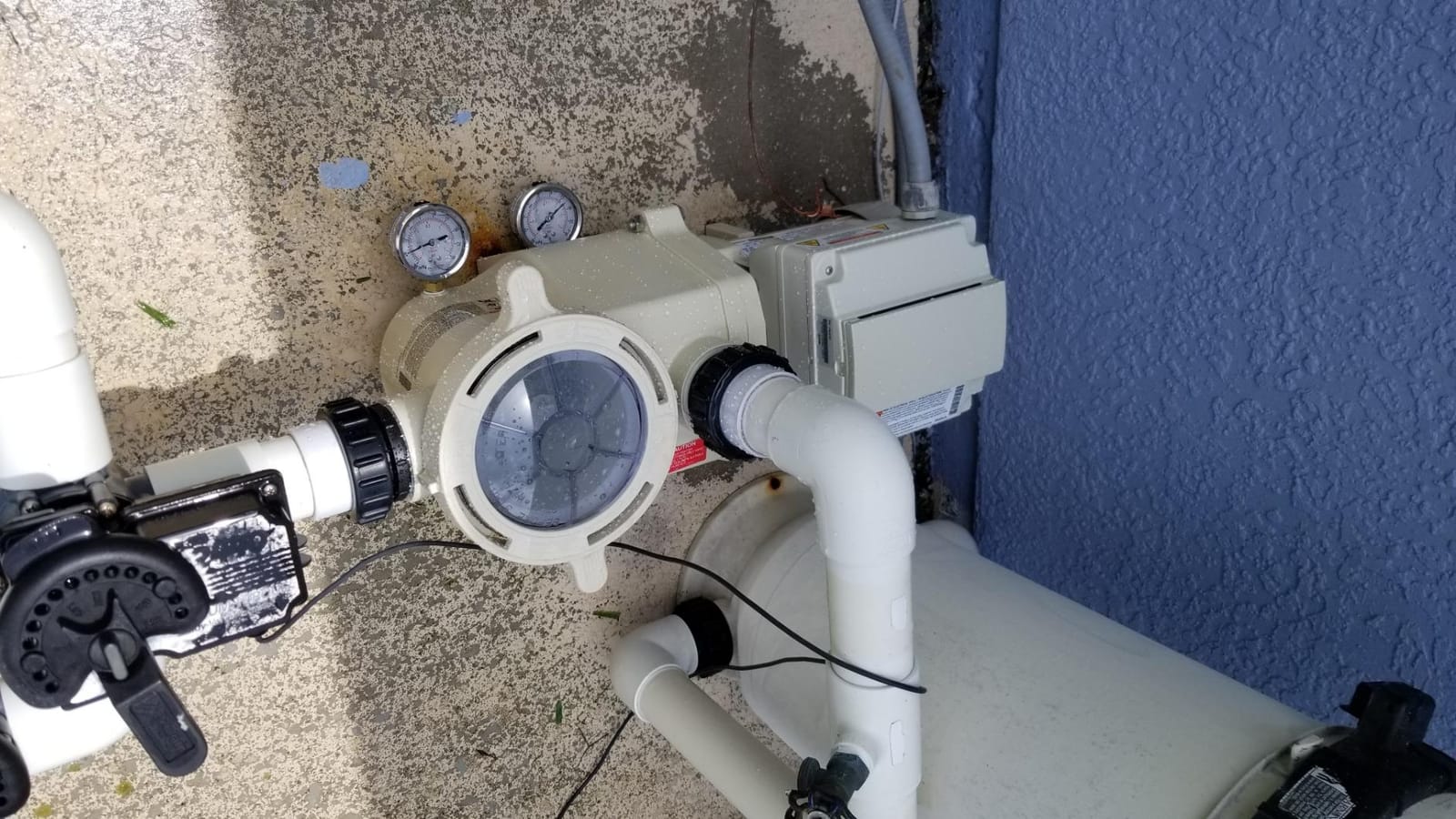
The IntelliFlo VS platform is the one most service technicians already know, and that familiarity is worth something when a drive board needs diagnosing. Owners report dramatic reductions in electricity use after replacing single-speed Pentair pumps, with individual measurements landing anywhere from 25% to 90% depending on how low the pump is set. Water clarity is also frequently reported as noticeably better, which makes sense because the pump can actually be run long enough to matter.
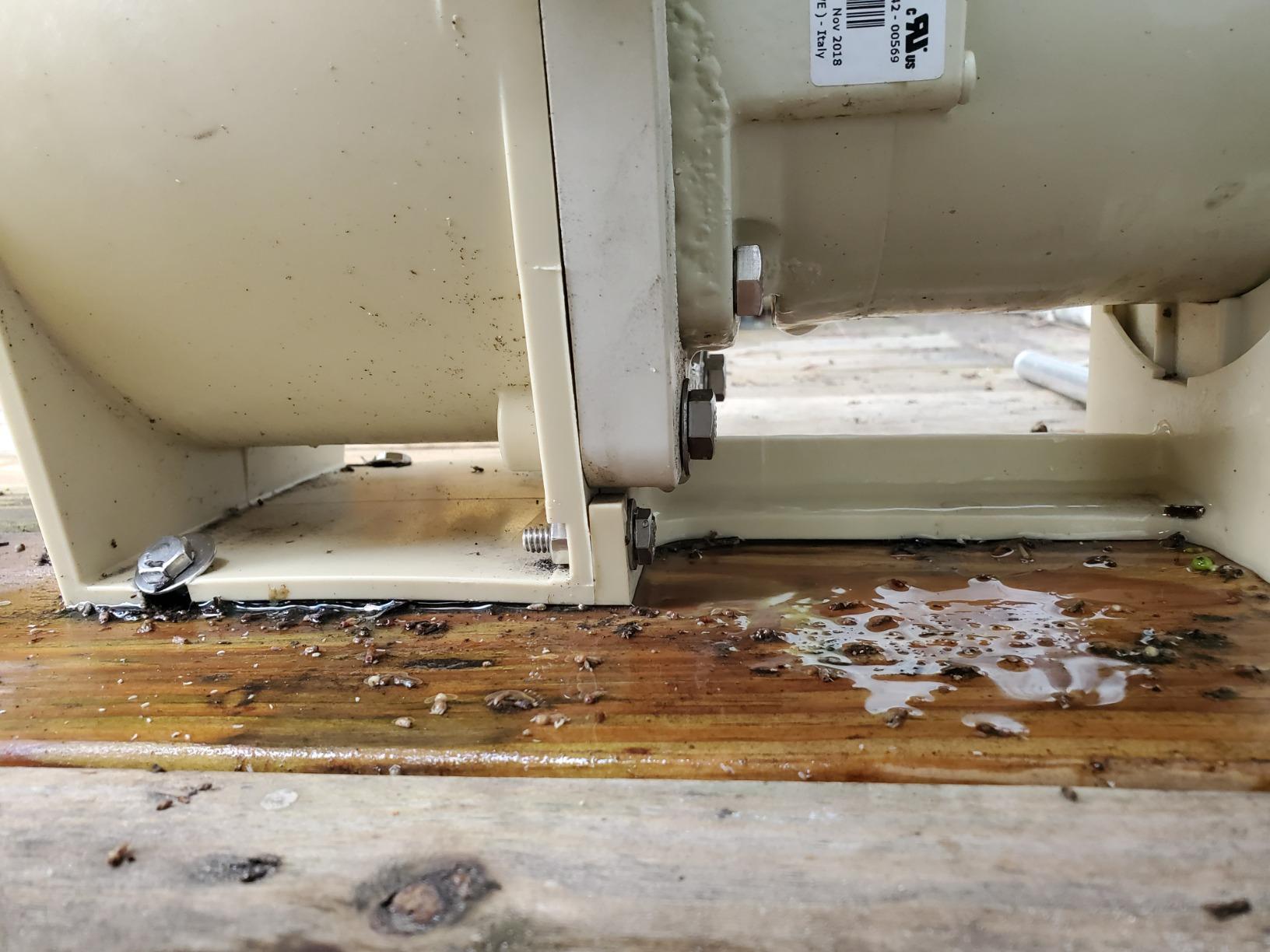
The aluminum housing is a departure from the plastic bodies most competitors use, and at roughly 28 by 12 by 12 inches it matches the footprint of older Pentair installations closely enough that several owners completed the swap without relocating plumbing. Variable speed and variable flow means the pump can also respond to a reading rather than sitting at a fixed RPM, which is the feature Pentair built this platform around.
Warranty coverage here is two years and conditional on professional installation, which is the single biggest complaint in the reviews. Accessory unions and couplers may need to be purchased separately, so get those in the same order or you will be stuck mid-install. This is the model to buy when you already run Pentair gear and want the quietest daily operation money allows.
Who This Model Fits Best?
If you are replacing a Pentair pump installed within the last decade, the drop-in dimension match is the deciding factor. It removes the most expensive part of any pump swap, which is re-plumbing, and it keeps your existing unions and flange in place.
What the Premium Tier Buys You?
The honest answer is metal and brand depth rather than headline efficiency. The 80% savings class is available across this whole category, and the premium spend here buys quieter operation, a more durable housing and an ecosystem of technicians who have seen the platform before. Owners do describe the programming module as simple, which is generous but not feature-rich.
4. VARMINPOOL 1.8 HP Inverter Pump – Best for Saltwater Pools
VARMINPOOL 1.8 HP Variable Speed Pool Pump for Above & Inground Pools, Up to 9114 GPH, 220V Inverter Pool Pump with Permanent Magnet Motor, Energy Efficient, Saltwater Compatible
1.8 HP
9114 GPH max
220V
1200-4000 RPM
IPX5 rated
Pros
- Described by owners as the quietest pump they have run
- Strong flow even at low RPM
- Conversion couplings included for fast install
- Reinforced polymer chamber resists salt and chemicals
Cons
- One owner reported control panel buttons stopped responding after five months
- Schedule cannot be overridden without first disabling it
- Included display shield does not fit with top-routed conduit
This is the pump that surprised us most. Recent reviews are heavily positive on installation ease, low noise and energy savings, and several owners specifically say it outperformed the established-brand variable speed pumps it replaced. The inverter speed range of 1,200 to 4,000 RPM is wider than most competitors offer, and owners report pulling about 1,100 W at full speed, which is a good number for 1.8 HP of output.
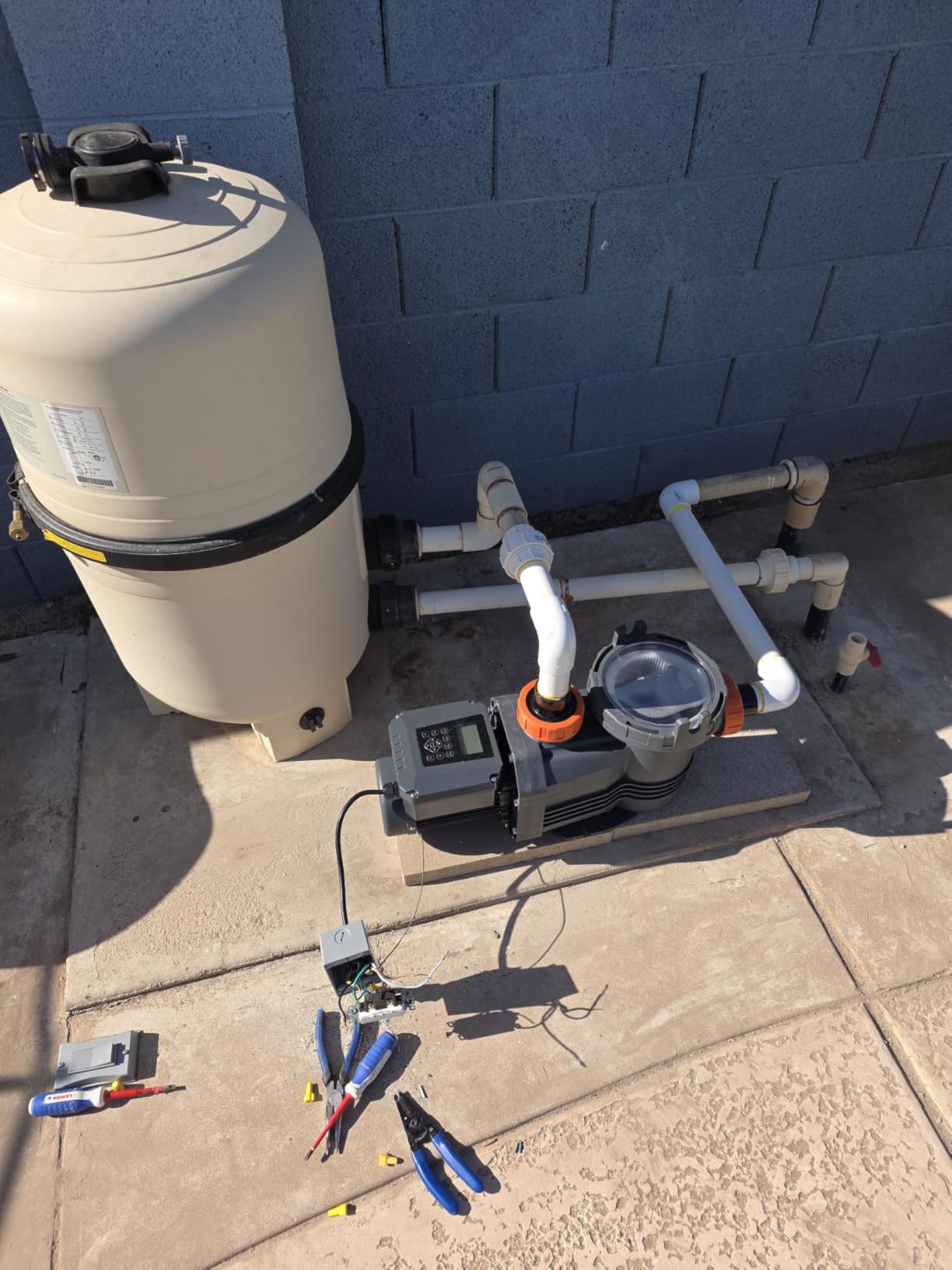
For saltwater setups the details are right where they need to be. The reinforced polymer flow chamber is described as resistant to salt and chemical attack, the IPX5 waterproof rating suits a wet equipment pad, and the maximum lifting height of 64 feet is the highest in this group. The built-in timer and four preset speeds on the LED control panel mean it works standalone with no extra controller.
Owners consistently call out the included conversion couplings and the display screen shield as thoughtful touches, and at 28.2 pounds it is one of the lighter units here. The reported defect to plan around is the control panel, where one owner found the buttons unresponsive after about five months. A second usability gripe is that a running schedule cannot be overridden without first disabling the schedule entirely, which is annoying when you need high speed for a quick backwash.
Why the IPX5 Rating Matters for Salt Pools?
Salt environments attack electrical connections faster than chlorine does, and a pump sitting in a wet pad with a salt system feeding the cell is the worst-case setup. IPX5 means protected against water jets from any direction, which is a meaningful step up from an unsealed housing. That is why we rate this the saltwater pick rather than simply the quietest one.
Where the Low End of the Speed Range Helps?
Because the range bottoms out at 1,200 RPM, this pump covers a lower absolute speed than a 1,000-RPM floor model while still reaching 4,000 RPM for high-demand work. That spread is what makes it a genuine two-tools-in-one unit: slow enough for overnight filtration, fast enough to drive a water feature or move water through a heater.
5. Hayward MaxFlo VS 1.65 HP – Best for Efficiency Certification
Hayward W3SP2303VSP MaxFlo VS Variable-Speed Pool Pump, Black
1.65 HP
160 GPM
230V
ENERGY STAR certified
Permanent magnet TEFC
Pros
- ENERGY STAR certified as the most efficient pump of its kind
- Up to 80% claimed energy cost savings
- Advanced hydraulic design for quiet running
- Standalone or automation system compatible
Cons
- 80% savings figure is a manufacturer claim rather than a measured result
- Warranty length is not stated in the product data
- No live wattage readout in the listed features
Hayward rates the MaxFlo VS as the most efficient pump of its kind under EPA ENERGY STAR third-party testing, which makes it the pick if your utility offers rebates and you want the certification behind the claim. The advanced hydraulic design is credited with low noise particularly at reduced speeds, and at 45 pounds it is a solidly built unit that drops into existing Hayward setups.

The listed flow rate of 160 GPM is the highest rated figure in this guide, which matters if you run an in-floor cleaner or a large sand filter that needs turnover. The permanent magnet, totally enclosed fan-cooled motor is the same proven architecture as the TriStar VS, and the pump runs standalone or ties into an automation system.
The one caveat is honesty about the numbers. The 80% savings figure is a manufacturer claim, and we did not find measured owner data in our data run to back it at the pump level. Unlike the TriStar VS, there is no live wattage readout in the listed features, so you will be programming blind unless you add a clamp meter. The product data also does not state a warranty length, which is worth confirming with the seller before you commit.
Rebate Eligibility Is the Real Argument Here
Energy Star certification is the mechanism most utilities key their rebates off, and this pump carries it explicitly. If a local program would offset a meaningful share of the purchase, a certified model can be the cheapest long-term option even against cheaper hardware, and Hayward notes the pump may qualify for local utility rebates.
How It Compares With the Hayward TriStar VS?
The TriStar VS gives you a live wattage display and a higher owner rating, while the MaxFlo VS lists a higher flow figure and the Energy Star certification. If your priority is tuning and verification, take the TriStar. If your priority is documented efficiency for a rebate application, this is the one to buy.
6. Hayward Super Pump VS 1.65 HP – Best for Automation Integration
Hayward Super Pump VS Variable Speed Pool Pump for In-Ground Pools, 1.65 HP
1.65 HP
75 GPM
230V
3-year warranty
Rotating wall-mount touchpad
Pros
- Up to 80% energy cost savings over single-speed pumps
- Rotating programmable touchpad that wall-mounts or repositions
- Very quiet at lower energy-saving speeds
- Drop-in upgrade with automation compatibility
Cons
- Lowest average rating of the premium brand models in this guide
- 14% of reviews are one star
- Warranty is shorter than the coverage some rivals offer
The rotating touchpad is the feature that separates this from its siblings. It physically repositions so you can set the pump from the deck instead of crouching at the pad, or wall-mount it near your automation panel. Owners like the physicality of it, and the three-year manufacturer warranty is the longest stated warranty in this group.
It also runs standalone or connects to any automation system via relays, which makes it a straightforward fit if you already run a Hayward control setup. The industry-leading hydraulic design is credited with very quiet running at the lower energy-saving speeds, and at 44 pounds the unit is substantial without being unmanageable at 28.6 by 11.3 by 15.6 inches.
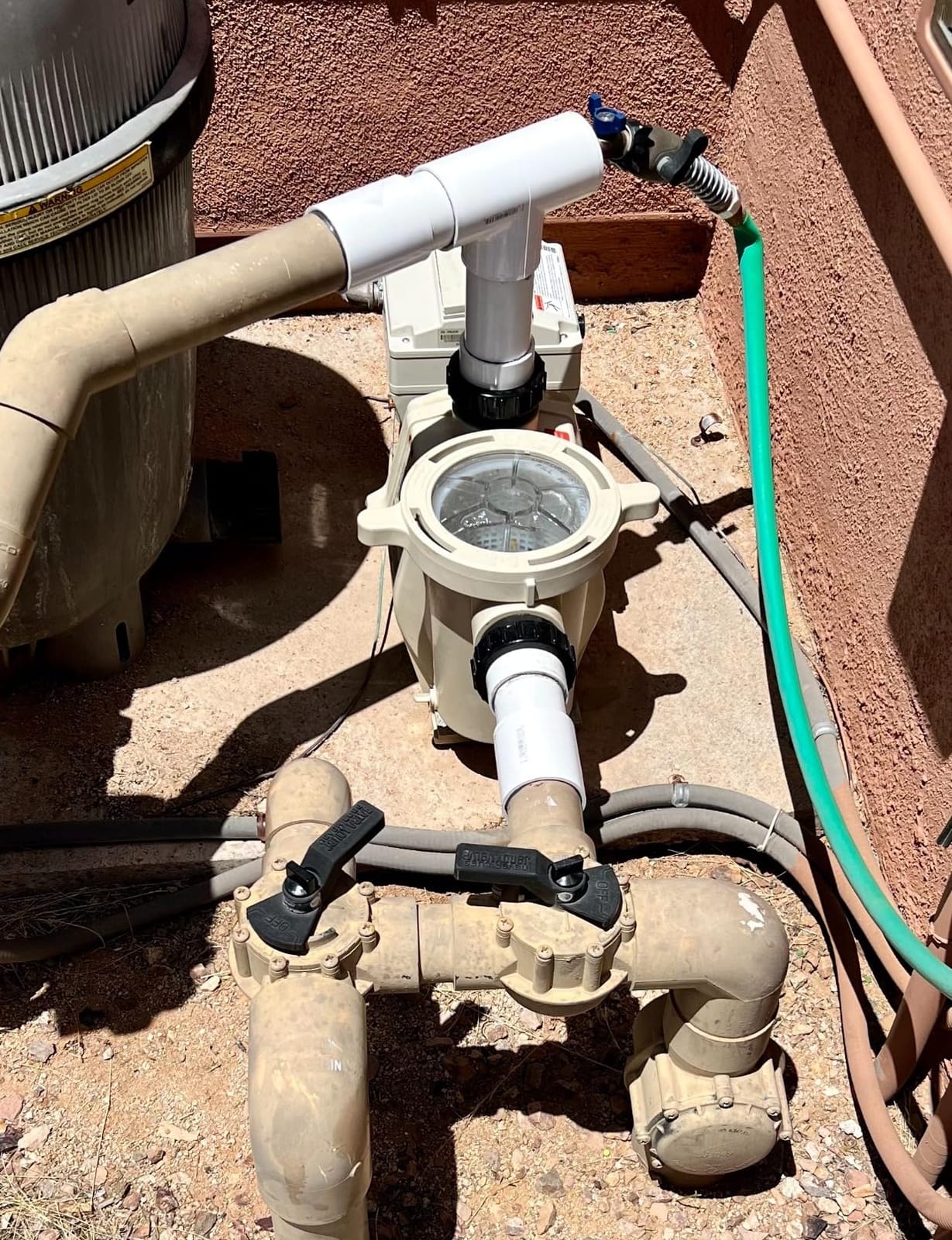
The rating is the concern. At 4.2 stars with 14% of reviews at one star, this is the weakest score among the Hayward and Pentair models in this guide, and our data run turned up no individual review text to tell you which complaints drive that number. Treat the 80% savings claim as a manufacturer figure and expect some variance in owner experience at this tier.
Why the Rotating Touchpad Is Worth More Than It Sounds?
Most pump keypads live at the bottom of a wet equipment pad where you need a flashlight and free hands. Being able to reposition or wall-mount the control changes how often you actually touch the programming, and owners who tune schedules report clearer water as a direct result.
When to Choose the TriStar VS Instead?
If your priority is the highest rating and a live wattage readout, the TriStar VS wins on both counts and carries a stronger review history. The Super Pump VS earns its place through the three-year warranty and the flexible control placement, which matter if automation is already part of your setup.
7. Pentair IntelliFlo VS with SVRS 3 HP – Best for Very Large Pools
Pentair EC-011057 – IntelliFlo VS+SVRS Variable Speed Pool Pump 3HP
3 HP
230V
ENERGY STAR certified
Safety Vacuum Release System
Cam and Ramp lid
Pros
- Programmable speeds with set and forget scheduling
- Safety Vacuum Release System for entrapment protection
- On-board control system simplifies wiring
- Cam and Ramp lid makes inspection easier
Cons
- Short 90-day warranty reported as expiring before failures surface
- Two owners reported units failing within a year
- Poor documentation for Hayward automation integration
This is the horsepower end of the guide, and it exists for a specific reason. An 18,000 gallon pool or a commercial setup can genuinely use three horsepower to turn the volume over in a reasonable number of hours, which is the counterargument owners raise on forums when someone claims a bigger pump is always wasteful. The Safety Vacuum Release System is the safety feature that justifies the size, releasing entrapment pressure before a drain cover can pull water.
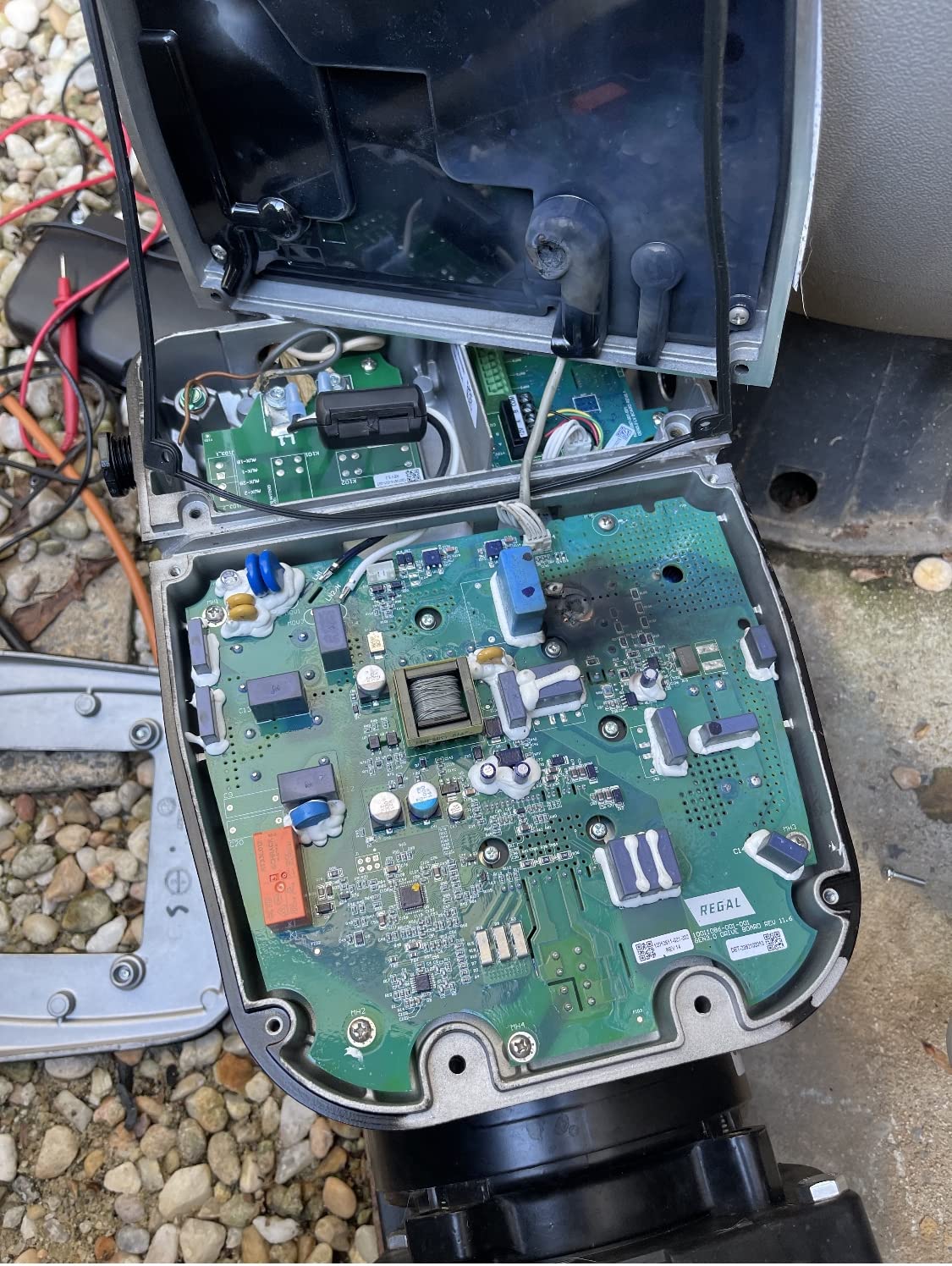
Satisfied owners highlight reliability in normal use, the added safety from the SVRS, a straightforward drop-in exchange and the convenience of the on-board control panel that reduces wiring. The Cam and Ramp lid is a nice piece of practical engineering, since it opens for inspection and cleaning without removing fasteners. It is also VGB compliant and Energy Star certified at 230 volts, 52 pounds and 28 by 12 by 17 inches.
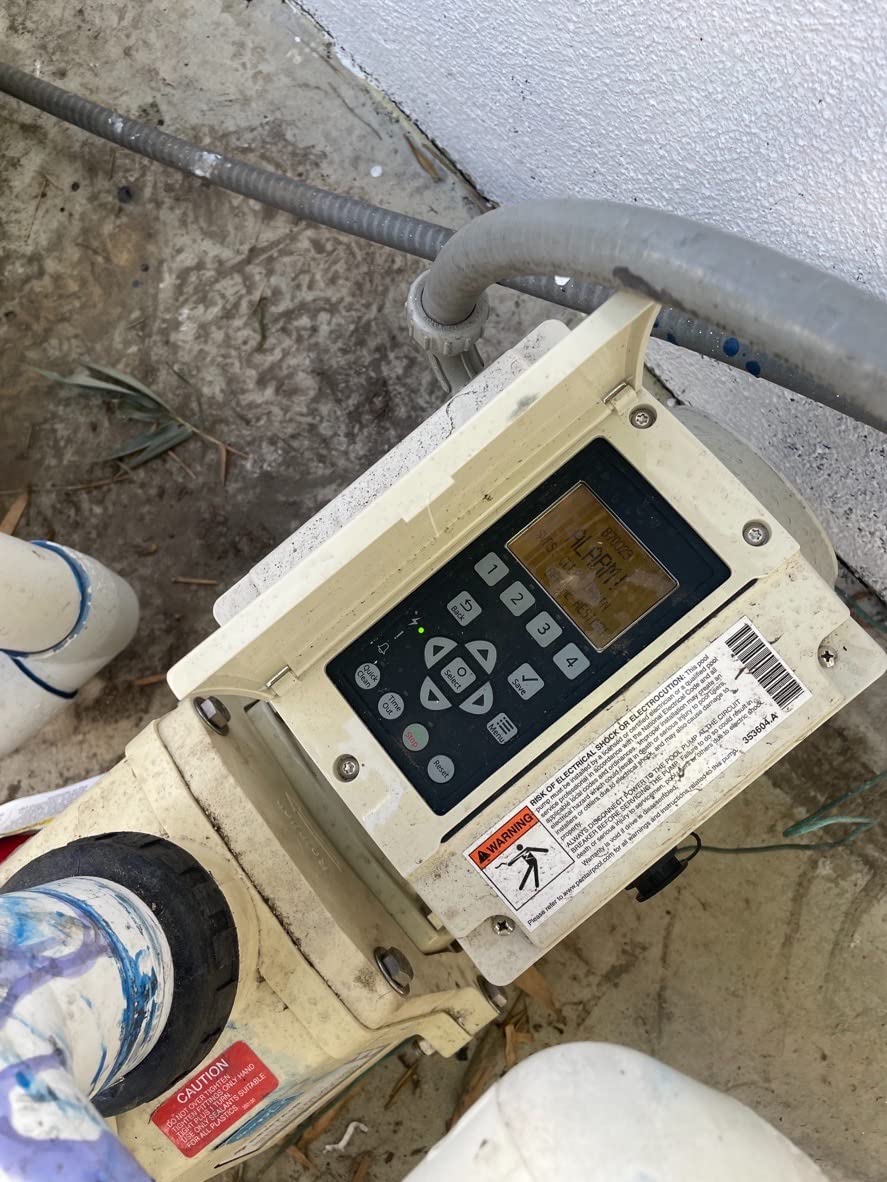
The critical reviews are about durability, and they are specific. Multiple owners report alarms or outright failure within the first year, often just after the 90-day warranty expired, which is a rough pairing with the failure timing. There is also documented frustration at the lack of documentation for use with Hayward pool automation systems, so if you run Hayward controls, ask a technician to confirm compatibility before you buy.
Who Actually Needs Three Horsepower?
Pools in the 18,000 gallon range, commercial applications and setups with in-floor cleaning systems are the realistic candidates. For a typical residential pool in the 10,000 to 15,000 gallon range, a 1.5 to 2 HP unit turns the water over fine and costs less to run.
Why the Warranty Term Matters More Than the Horsepower?
Ninety days is short in a category where a drive board is the most likely failure point and where the most common owner complaint across this whole guide is warranty length. If you are buying at this horsepower, get a written statement of coverage from the seller, and ask whether professional installation extends it as it does on the SuperFlo VS.
8. LINGXIAO Smart 2 HP Pump – Best for App Controlled Setups
LINGXIAO Smart Variable Speed Pool Pump 2 HP, 115/208-230V, In/Above Pool Pump With Smart Life APP Control, Energy Star Certificate, High Flow & Self Priming – (2025 New Upgrade)
2 HP
135 GPM
115V or 208-230V
Smart Life app
8100 GPH
Pros
- App-based scheduling with speed
- flow and quick clean control
- CEC and DOE compliant for rebate eligibility
- Dual voltage avoids rewiring
- Two-year full replacement warranty
Cons
- RS485 signal cable for OEM systems is not included
- Lower review volume than the nameplate brands
- 2 HP ceiling on flow for larger pools
If you want to change your pump speed from a phone, this is the pump. The Smart Life app handles schedules, RPM, GPM and a Quick Clean mode, and at 63 reviews with a 4.4 rating it holds up well despite the shorter history. The body is listed as compatible with SuperFlo series dimensions, so it can fill the same cavity as a Pentair SuperFlo without moving the pad.
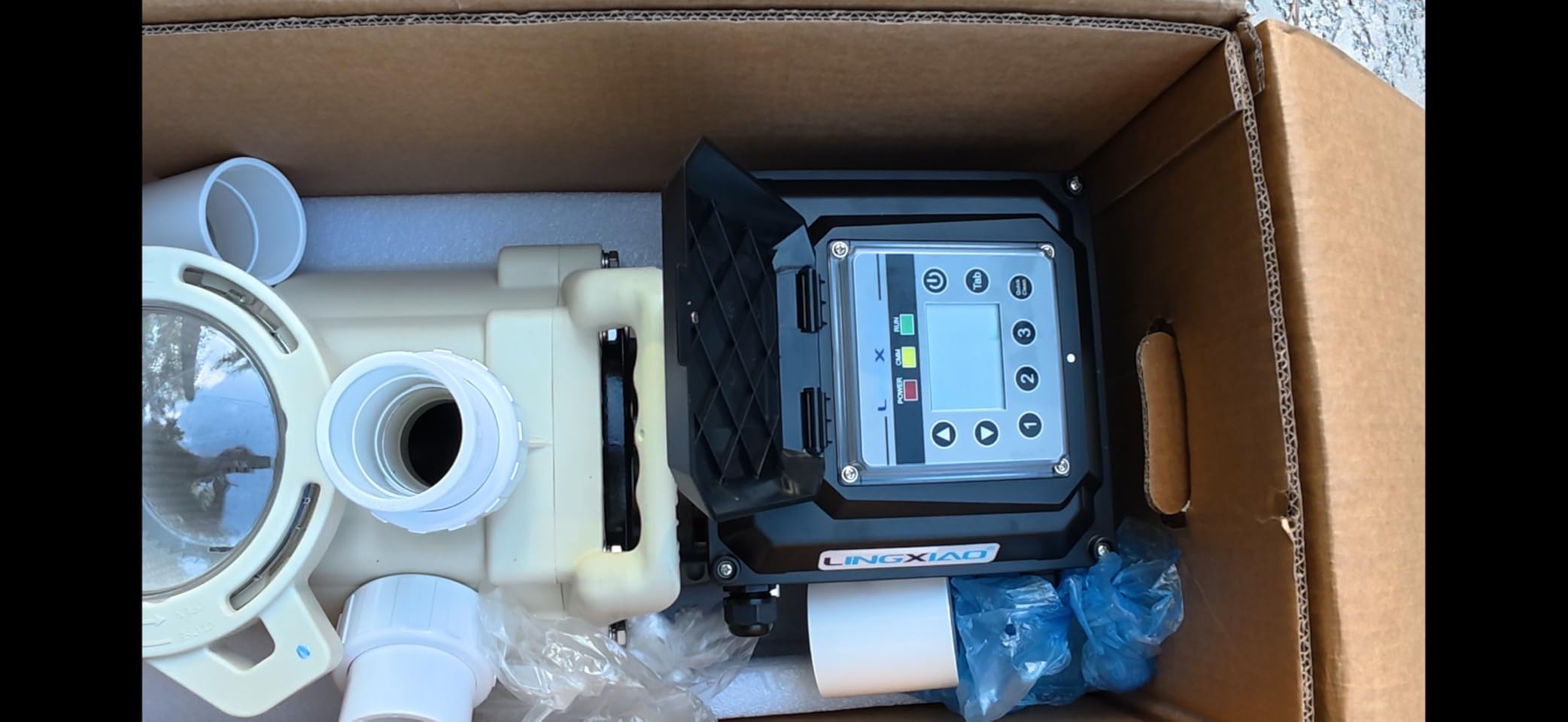
Two details make it practical rather than a toy. The unit runs on 115V or 208-230V, so you can avoid an electrical upgrade entirely and still have a variable speed pump, and it complies with CEC and DOE energy efficiency regulations, which is what makes it rebate-eligible in many areas. Both 1.5-inch and 2-inch connectors are in the box, along with a two-year full replacement warranty and responsive technical support.
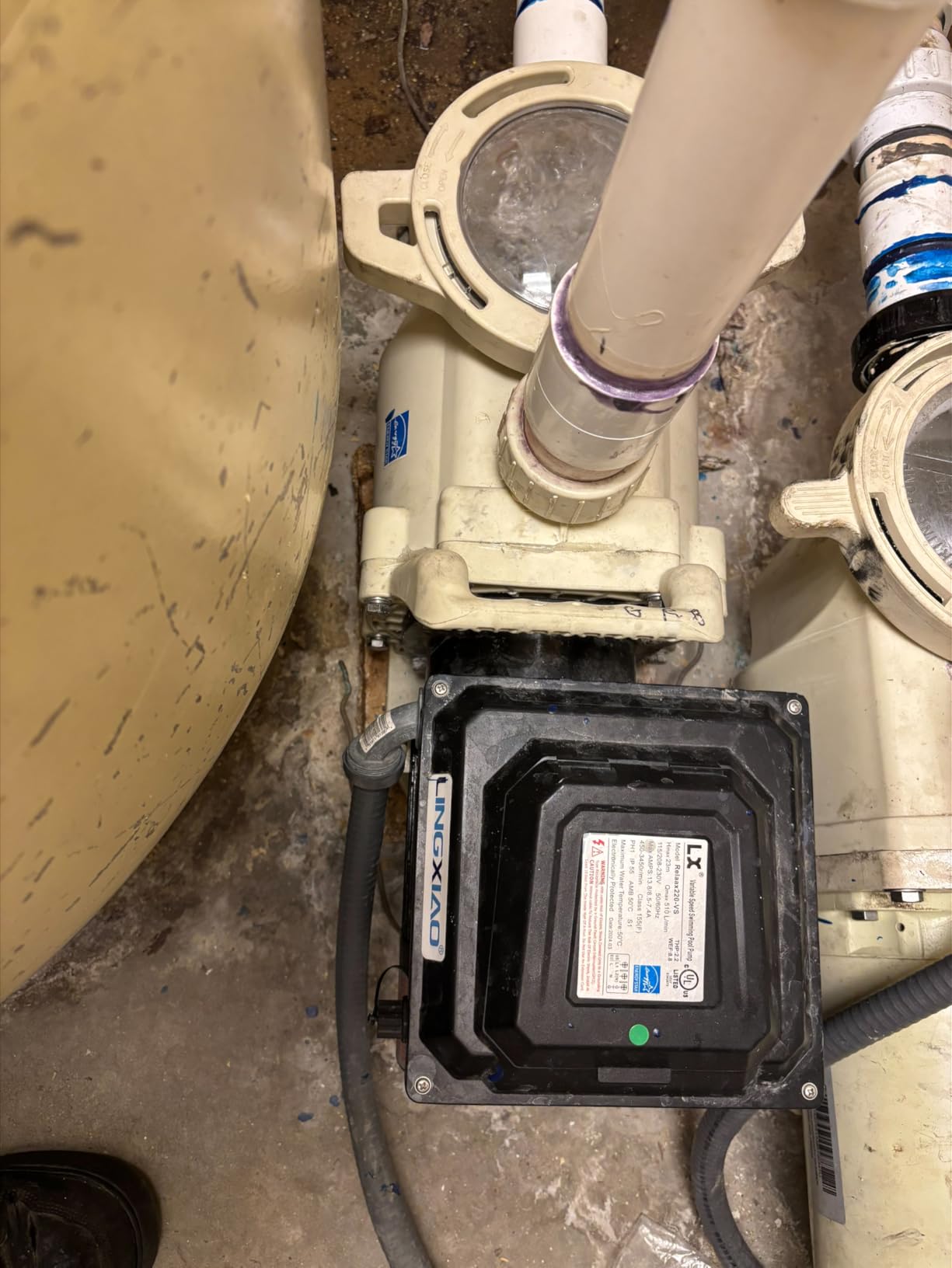
The limitations are real and you should plan around them. The RS485 signal cable needed to talk to existing OEM pool control systems is not included, so an integration project has a parts step. At 37.7 pounds and 22.5 by 8.7 by 10.8 inches it is compact, and it is listed as tested for outdoor heavy rain and sun exposure, which is the right spec for an exposed pad. With 2.2 total horsepower and 8,100 GPH, it is not sized for a very large pool.
Is App Control Worth It for Your Setup?
App control earns its keep if you change speeds often, if you want off-peak scheduling without touching a timer, or if you already own a Smart Life ecosystem. If you set a schedule once and forget it, the physical panel on the pump is enough and the app becomes a novelty.
What the Two-Year Warranty Covers?
Two-year full replacement is more generous than several premium models in this guide, which matters because replacement parts for a less common brand are harder to source. The catch is that warranty service means shipping the pump rather than grabbing a local motor, so check how the seller handles return shipping before you commit.
9. CIPU 3 HP Smart Pump – Best for High Flow on a Budget
CIPU 3 HP Smart Variable Speed Pool Pump, 230V, Intelligent Control, Khaki
3 HP
162 GPM
230V
1000-3450 RPM
Pure copper winding
9720 GPH
Pros
- 9720 GPH max flow in a 3 HP package
- Runs cool with 20% lower temperature rise
- Display shows live wattage and remaining duration
- Dry-run protection has saved the pump for one owner
Cons
- Non-standard unions require replacing existing plumbing unions
- Higher rear connection port can mean re-plumbing
- App does not show whether the pump is running
The 9,720 GPH maximum flow is the highest output figure in this guide, achieved in a 3 HP package with a pure copper winding permanent magnet motor. Owners consistently report strong flow, low running temperatures and very low wattage draw at minimum speed, and one long-term owner called it the clearest water he had seen in five years. The heat dissipation coating is claimed to produce a 20% lower temperature rise, and the 1000 to 3,450 RPM range covers daily filtration through high-demand work.
The control panel is genuinely more informative than most. It displays speed, remaining duration, start time and live watt usage, and the Tuya-based app adds remote control. Dry-run protection has actually saved the pump for at least one owner, and one warranty claim was resolved with a whole new pump inside a week, which is faster service than most buyers report from the big brands.
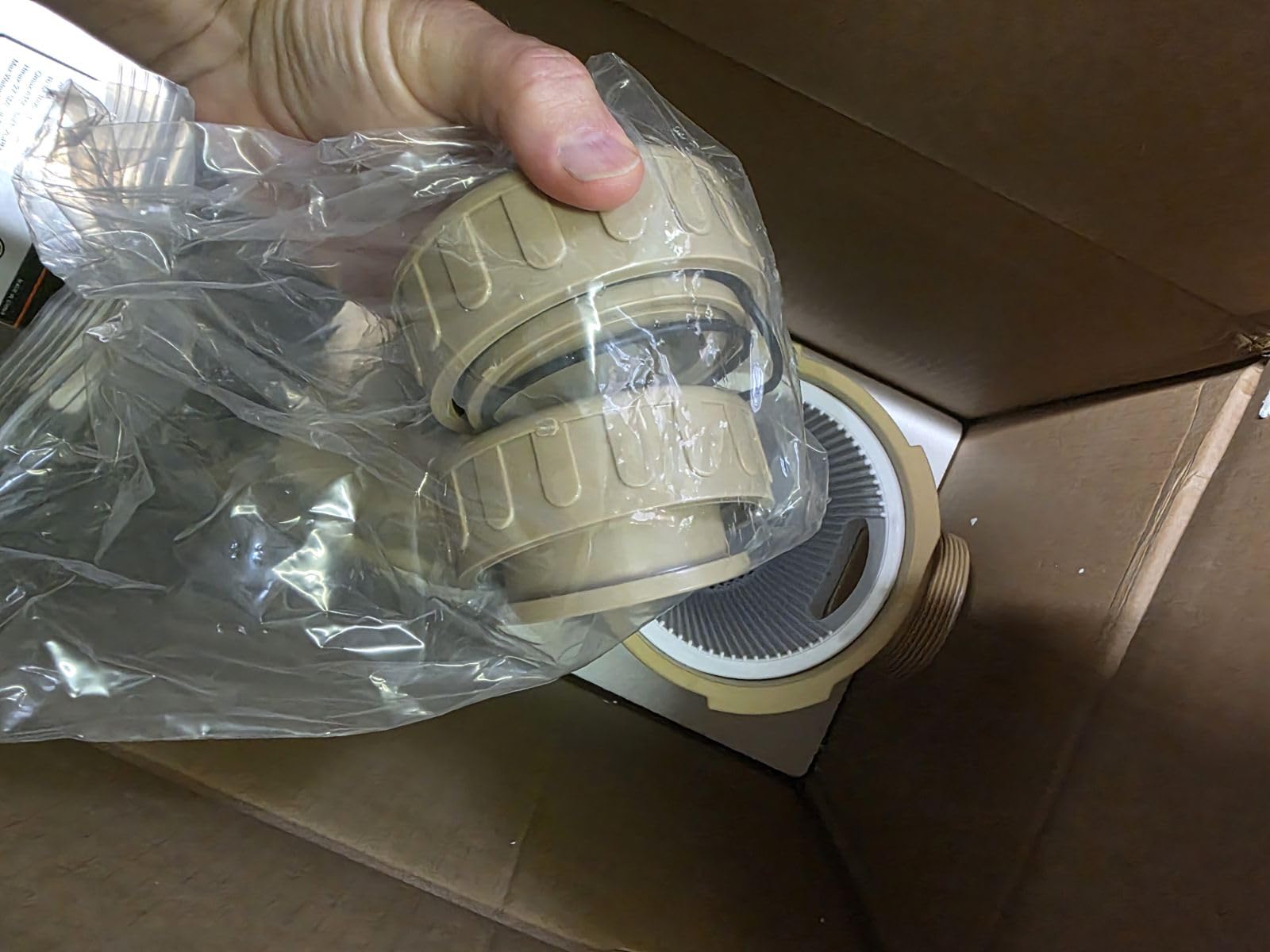
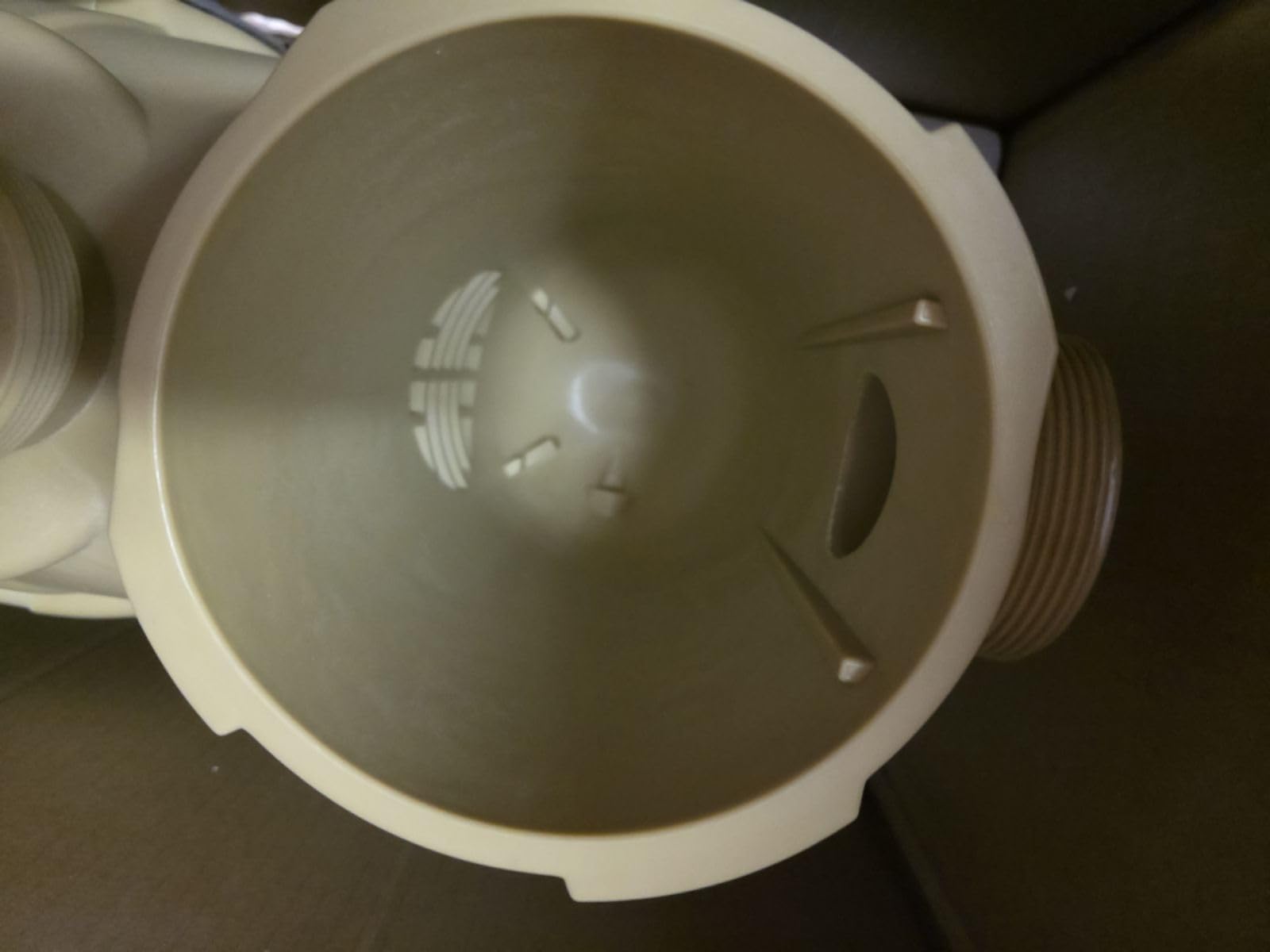
Installation is where the budget shows. The unions are non-standard, so your existing plumbing unions have to be replaced, and the rear connection sits higher than on many previous pumps, which can mean re-plumbing. The app experience is also confusing and does not show whether the pump is currently running, and schedules sometimes will not start until the breaker is power-cycled. At 44 pounds and 25.2 by 8.9 by 13.9 inches, the unit itself is unremarkable in size.
Why the Heat Design Matters for Long Run Times?
Every argument for running your pump longer at low speed depends on the motor surviving that schedule. A cooler-running motor tolerates extended low-speed operation better, and this is where the copper winding and the coated housing earn their place, particularly on a pool that runs overnight year-round.
Plan the Plumbing Before Ordering This One
The non-standard unions and the higher rear port are the deciding factor for most buyers. Measure your existing connection height and confirm you are willing to replace the unions before this pump leaves your hands, and budget for a plumber if the pad is tight, because the maximum input of 2,500 W means a dedicated 230-volt circuit.
10. choosmo 1.5 HP Dual Voltage Pump – Budget Pick
CHOOSMO 1.5 HP Variable Speed Pool Pump for Inground and Above Ground Pools, 5070 GPH Self-Priming Pump with App&Digital Control Panel, Dual Voltage 115V/230V, Programmable 1000-3450 RPM
1.5 HP
85 GPM
115V or 230V
1000-3450 RPM
950W motor
Pros
- Lowest cost entry into a 1000-3450 RPM variable speed pump
- Dual voltage supports 115V and 230V installs
- App plus onboard panel with presets and quick clean mode
- Self-priming with clear-lid extra-large strainer basket
Cons
- One-year manufacturer warranty is the shortest here
- 85 GPM ceiling is the lowest capacity in this guide
- Weakest rating distribution among the budget picks
If the gap between a single-speed pump and a variable speed one is the only thing standing between you and the savings, this is the cheapest way across it. It offers the same 1,000 to 3,450 RPM variable speed range as pumps costing several times as much, and at 4.3 stars across 42 reviews with 62% five-star it is not a token listing. At 19.8 pounds it is also the lightest pump here, which matters on a cramped pad.
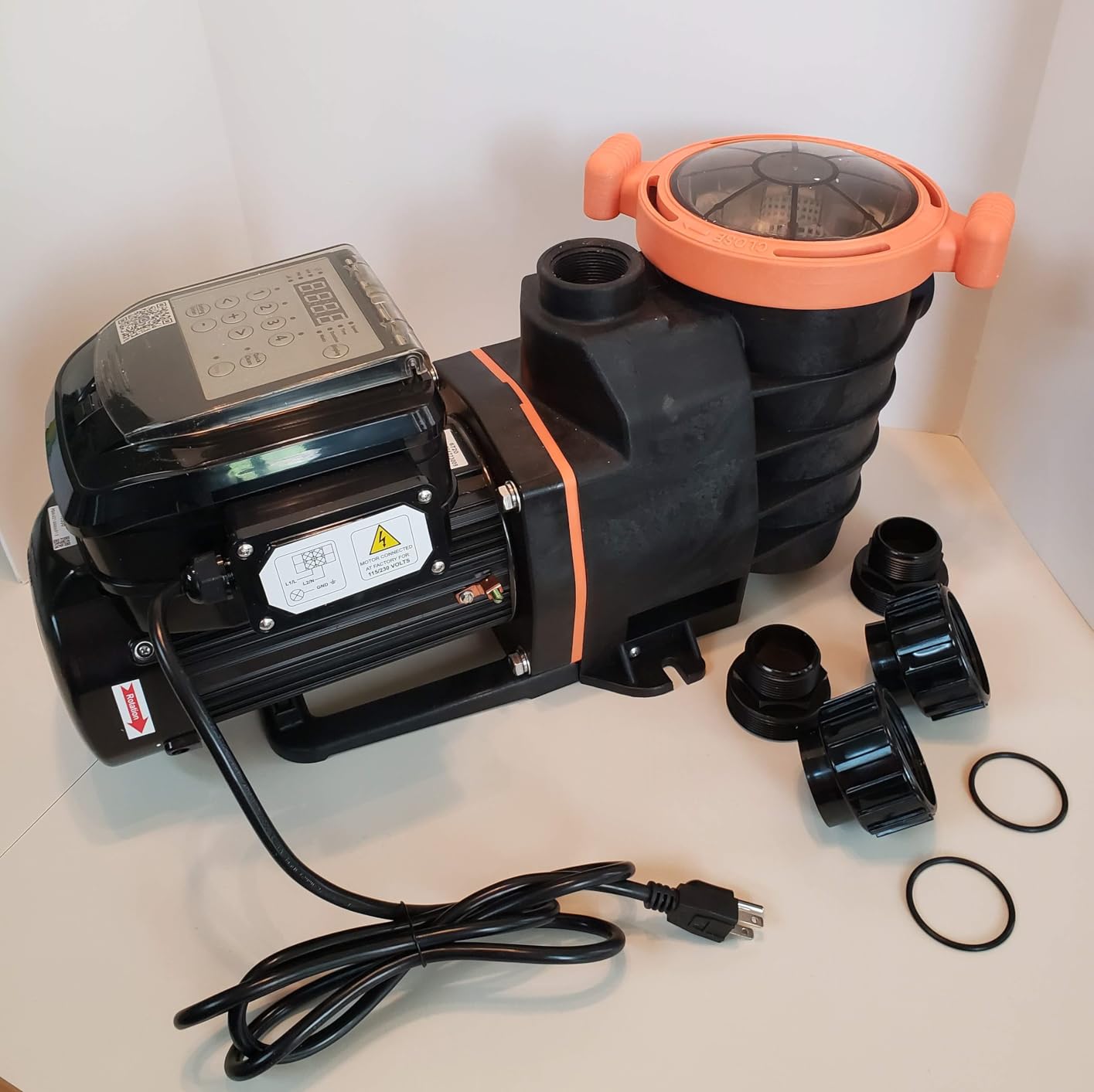
Dual voltage at 115V or 230V removes the most common install blocker, and two 2-inch adapters come in the box. The self-priming design with an extra-large clear-lid strainer basket works with sand or cartridge filters, and the app plus onboard digital panel gives you presets and a Quick Clean mode without a separate controller. The 950W motor and 49-foot maximum head cover small to medium pools comfortably.
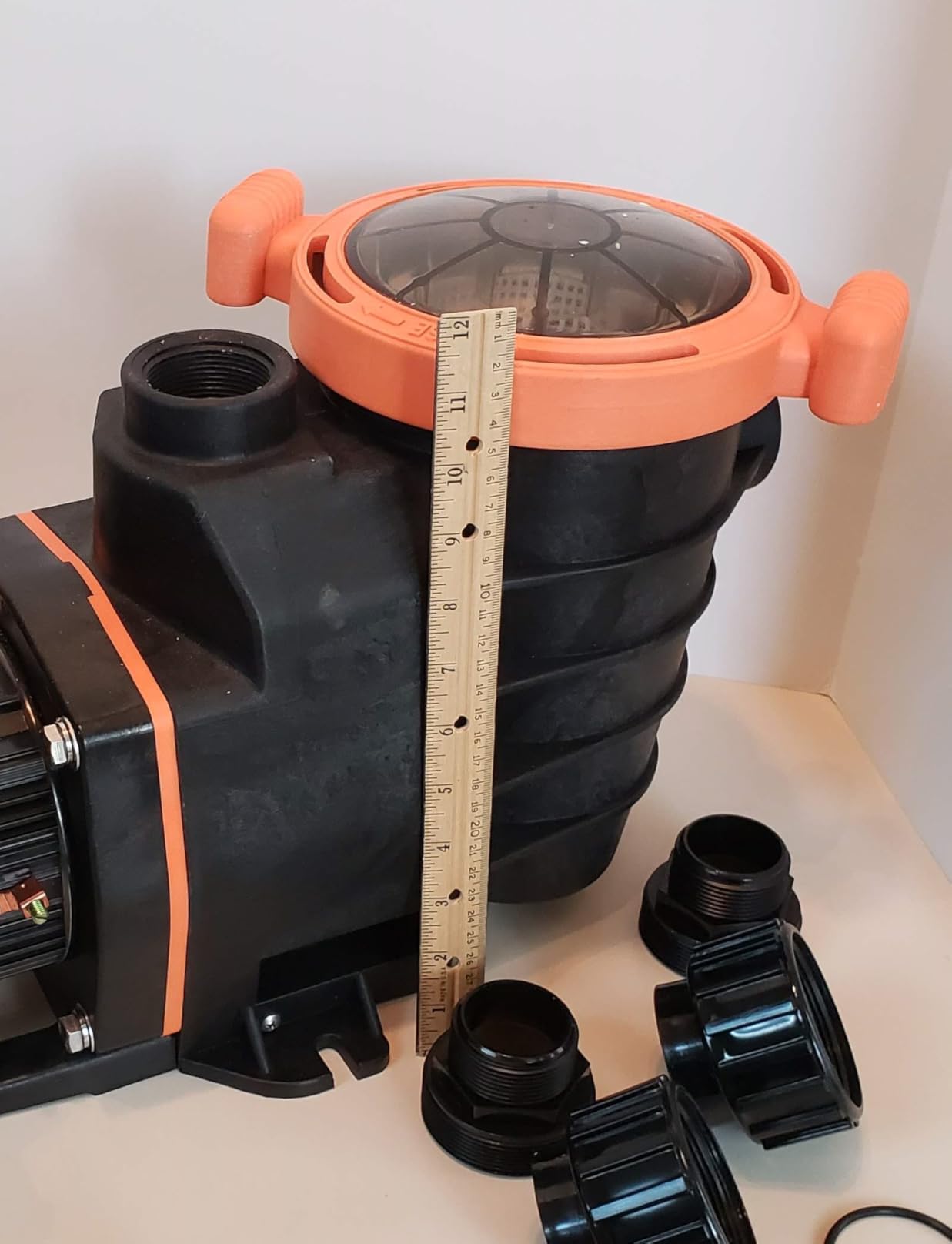
The trade-offs are all about the ceiling and the safety net. The 1-year manufacturer warranty is the shortest in this guide, and 13% of reviews are three-star with 7% at two-star, the weakest distribution among the picks here. At 85 GPM the flow capacity is the lowest of the ten, so it is sized for smaller pools and lighter filtration demands rather than large sand filters or in-floor cleaning.
Which Pools This One Actually Fits?
Think of it as an above-ground-adjacent answer for in-ground pools too: pools up to roughly 12,000 gallons with a cartridge or small sand filter, no in-floor cleaning system and no water features demanding high flow. It also works for above-ground setups, where the big-brand variable speed options are basically nonexistent.
Why One Year of Warranty Changes the Math?
A one-year warranty on an electronic drive board is the real cost of the entry price, because that board is the most likely thing to fail. If you buy this unit, do two things: keep the packaging and proof of purchase, and put a surge protector or properly rated disconnect on the circuit so a power event does not take the electronics with it.
How to Size a Variable Speed Pool Pump Without Undersizing It?
Undersizing is the most common mistake we see, and it is easy to make because a smaller pump sounds like a cheaper way to save energy. The variable speed category makes the mistake more forgiving, but only if you work through the numbers first.
Start with pool volume. Multiply length times width times average depth in feet, then multiply by 7.5 to get gallons. A typical 16 by 32 foot pool averaging 8 feet deep is about 30,720 cubic feet, or roughly 230,000 gallons, so most residential pools land between 10,000 and 20,000 gallons. Then check the filter, because the filter has a flow rating on its label and the pump should not exceed it. Oversizing a pump beyond the filter rating pushes water straight through the sand instead of through the media, and you lose filtration while still paying the wattage.
Next, total dynamic head. This is the sum of vertical lift from water surface to the highest outlet plus friction loss through the pipes, and it is why a spa spillway or a second floor outlet changes your answer. Pipe diameter is the variable people forget, because restrictive 1.5-inch plumbing on a long run can halve the flow a pump delivers in practice. Finally, match voltage and mount type: 115V and 230V are not interchangeable, and side-mount and top-mount bodies do not fit the same cavities.
The result most homeowners land on is 1.5 HP for pools up to about 15,000 gallons, 2 HP for 15,000 to 20,000 gallons, and 3 HP only for larger volumes, in-floor systems or commercial applications. If your pool has a heater, a salt chlorine generator or water features, size to the highest demand on that list rather than to the average day.
Salt Chlorine Generators and Minimum Flow: Avoiding the Low Flow Fault
Salt chlorine generators need water moving past the cell at a minimum rate, and this is the single issue that no competing roundup we read addresses, even though it is a recurring source of frustration in pool owner forums. Drop a variable speed pump too low, or program a schedule that runs at a trickle, and the generator throws a low-flow fault, stops making chlorine, and your pool chemistry drifts until you notice it.
Most cell manufacturers publish a minimum flow requirement in gallons per minute, and your job is to find the lowest pump speed that still exceeds it. The practical method is to read the cell label, then set your filtration speed and confirm the pump is still moving enough water, using the flow at your actual head pressure rather than the maximum on the sheet. If you want to be certain, many owners run the pump at full speed for a short boost period each day, which gives the cell the throughput it needs while the rest of the day runs cheaply.
This is also the strongest practical argument against reducing your schedule to the bare minimum. A pump that runs for a few hours at high speed daily is often a better outcome for water quality than one that runs twenty hours at the lowest possible speed, and the cost difference is far smaller than the difference in clarity. Owners running pumps at 60% for a few hours in warm climates report clear water with no algae, which tells you the balance is achievable, but it is climate dependent.
Programming Your Run-Time Schedule for Maximum Savings
Yes, leaving a variable speed pool pump running all the time is fine, and it is the point of the category. A typical residential schedule splits into low-speed overnight filtration during off-peak hours, a higher-speed boost block during the day when the heater or water features need flow, and short high-speed runs for vacuuming and backwashing.
When you compare control panels, look for three things: the number of programmable speed presets, whether a built-in 24-hour clock is included or whether you need to keep an old external timer, and whether the pump can be overridden during a running schedule. That last one is where owners get frustrated, because some panels require you to disable the schedule before you can manually boost for a backwash.
For automation integration, check the communication method. RS485 is the common standard and appears on the Pentair SuperFlo VS and the LINGXIAO pump, while other units connect to automation systems through relays. Whichever route you take, the useful question is whether you can read live wattage from the display, because that turns schedule tuning from guesswork into measurement. If you want a free saving while you are deciding, moving your runtime into off-peak hours costs nothing and forum users consistently rate it as the best value lever available.
Reliability, Electronics and What Actually Fails
The most common complaint in pool owner forums about variable speed pumps is not the motor, it is the electronics. Permanent magnet motors are robust, but the inverter drive board, the display and the keypad are exposed parts sitting on a wet pad next to a motor that generates heat and pulls large inrush current. Power surges and lightning are the leading cause of failure, and that is why a properly rated disconnect and surge protection are worth the small cost on any of the units in this guide.
On lifespan, owners report variable speed pumps running for many years when the electronics survive, and the failure pattern is consistent: a drive board or a keypad that stops responding, sometimes with an alarm, sometimes silently. Reported failures in this group include a Pentair IntelliFlo VS unit whose 90-day warranty expired before a first-year failure, control panel buttons that stopped responding after about five months on the VARMINPOOL, and reports of 3 HP units stopping between six and ten months, balanced by a same-week warranty replacement elsewhere in that review set.
Warranty length is the best proxy for confidence, and it varies enormously here. The Super Pump VS states three years, the IntelliFlo VS states two years conditional on professional installation, the SuperFlo VS warranty is limited unless professionally installed, the LINGXIAO offers two-year full replacement, and the budget choosmo pump carries one year. On reliability specifically, Pentair, Hayward and Jandy are the names owners consistently call reliable, and the longer review histories of the Pentair and Hayward models make troubleshooting far easier when something does go wrong.
Frequently Asked Questions
Is it worth getting a variable speed pool pump?
For most in-ground pools, yes. Running a variable speed unit at a low RPM for longer cuts pump energy costs by 50-80% versus a single-speed pump at full speed, and the higher purchase price typically pays back in one to two years. Forum utility data puts a 1.5 HP single-speed pump around 41 dollars a month for eight hours of running against roughly 28 dollars for a 1 HP efficient replacement.
What does a variable speed pool pump do?
A variable speed pool pump uses a permanent magnet motor and an inverter-driven control board that lets you set the RPM anywhere from roughly 600 to 3,450. You run it low for everyday filtration and high for vacuuming, heating or water features, and because pump power falls steeply with speed, most daily filtering happens at a fraction of full-speed wattage.
Should I leave my variable speed pool pump on all the time?
Yes. Continuous low-speed operation is how the savings work, because power drops with the cube of speed. A common schedule is low-speed overnight filtration during off-peak hours, a daytime high-speed boost block for the heater or water features, and short high-speed runs for vacuuming and backwashing.
What size variable speed pool pump do I need?
Most residential pools need 1.5 HP up to about 15,000 gallons, 2 HP for 15,000 to 20,000 gallons, and 3 HP only for larger volumes, in-floor cleaning systems or commercial use. Size to the highest demand from your heater, salt chlorine generator or water features, and never exceed the flow rating printed on your filter.
Which variable speed pool pump is the most reliable?
Reliability in this category is judged mostly by warranty length and brand service depth rather than by the motor itself. The Hayward Super Pump VS states a three-year warranty, the Pentair IntelliFlo VS states two years conditional on professional installation, and Pentair, Hayward and Jandy are the names owners most often call reliable. Add a surge protector, since drive boards are the most common failure point.
The Best Variable Speed Pool Pumps for Energy Savings in 2026
After comparing all ten, the Pentair SuperFlo VS 1.5 HP is our pick for the best variable speed pool pumps for energy savings. It carries the largest review history in the group at 1,836 ratings, owners consistently report cutting from roughly 1,700 W to about 350 W, and the three-speed keypad does everything most residential setups need without extra hardware. The Hayward TriStar VS takes quietness and the live wattage readout, the Pentair IntelliFlo VS takes drop-in fit and service availability, and the VARMINPOOL inverter unit is the saltwater pick thanks to its IPX5 rating and reinforced polymer chamber.
Before you order anything, measure your pool volume, check the flow rating on your filter, confirm 115V or 230V and whether you need a side-mount or top-mount body, and check your salt chlorine generator’s minimum flow. Shift your run time to off-peak hours this week and start tracking the difference on your own bill. That number, not a percentage claim, is what tells you whether the switch was worth it for your pool.