
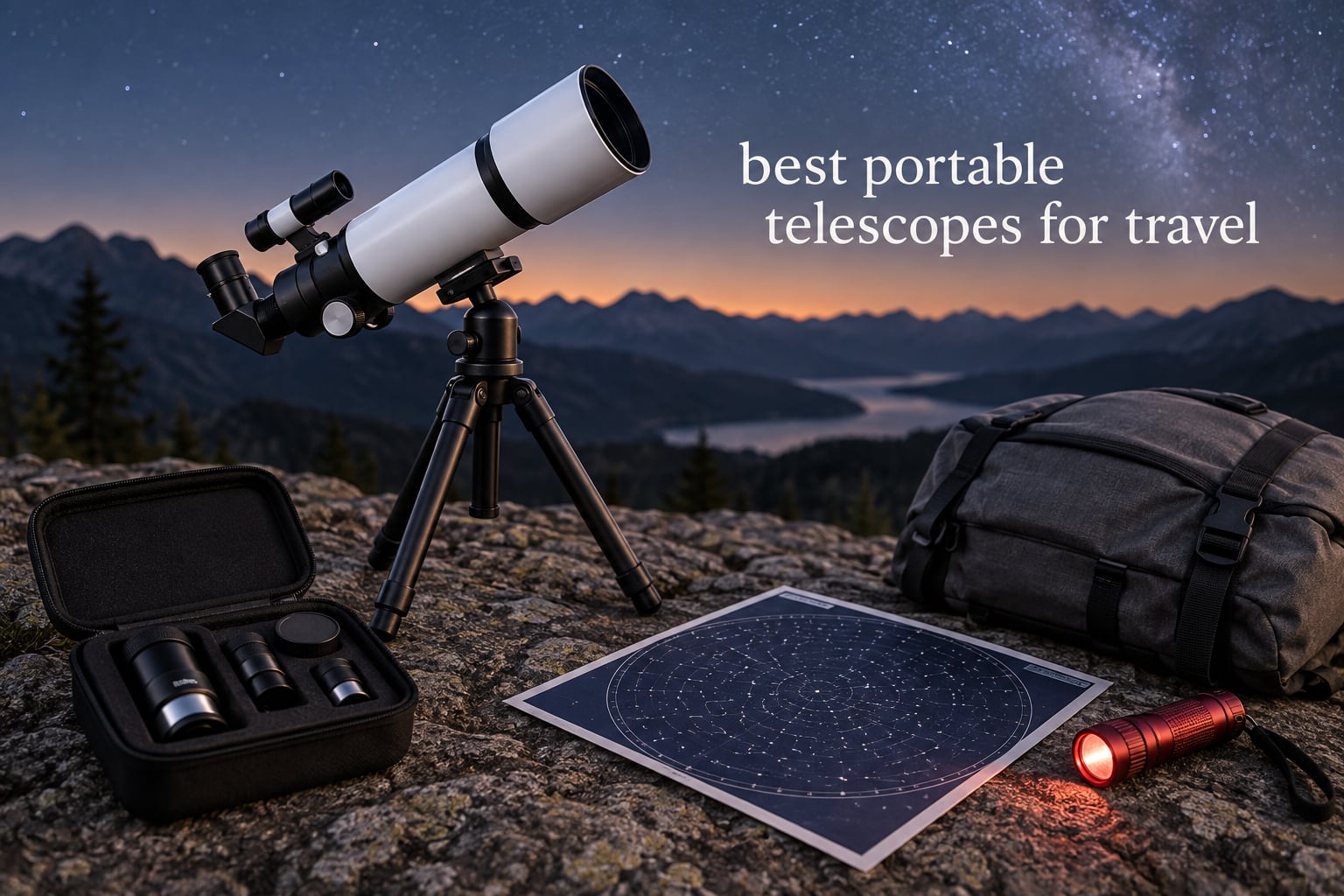
The hardest part of packing a telescope is not the telescope. It is the tripod, the eyepiece case, the finder scope, the star chart, and the three cables you swear you will need, all of which add up long before the optics do. Travellers keep asking us the same question, so here is the honest answer: the best portable telescopes for travel are the ones where the total packed system, not the glass, stays small enough that you actually bring it.
That single idea shapes every pick in this guide. A much larger tabletop Dobsonian shows you more on any given night than a 70mm refractor, and it is also the reason many trips get cancelled at the packing stage. A robotic smart scope removes the learning curve entirely but hands you a screen instead of an eyepiece. A 50mm grab-and-go fits in a daypack and will show you a beautifully detailed Moon and nothing much beyond it.
We spent six weeks comparing all eight scopes below across the same criteria: published weight, published packed length, aperture, mount stability, and what each one is realistically good for. Five of these eight publish an exact item weight, which is rarer than you would expect in this category, and we leaned on those numbers heavily. Where a manufacturer does not publish a weight, we say so rather than guessing, because a guessed gram count is worse than no gram count when you are deciding whether something fits in a cabin bag.
One community saying has stuck with us through years of reading astronomy forums: dark skies are the best accessory for your telescope and they are free. Every recommendation here gets better the further you drive from a city. A modest travel scope under a truly dark sky will out-perform a much larger instrument under suburban light pollution, and that is why we keep pushing you toward planning the trip before you buy the glass. We also use the phrase grab-and-go a lot here, and we mean it literally: from bag to first view in under two minutes.
If you are planning the whole trip rather than just the optics, the portable camping gear we take on dark-sky trips and our other weight-first travel picks follow the same logic: what you can comfortably carry wins.
Table of Contents
Top 3 Picks for the Best Portable Telescopes for Travel (September 2026)
These are the three that won on the combination of published specs, optical design and how little fuss they create on arrival. Every other pick is still a legitimate option for a specific trip, but if you want one safe answer, it is one of these three.

Gskyer 70mm AZ Refractor
- 70mm aperture
- 400mm focal length
- Fully coated optics
- Carry bag and phone adapter
- Two eyepieces plus 3x Barlow

Celestron Travel Scope 70
- 70mm aperture
- 400mm focal length
- 4.2 lb published weight
- Padded backpack included
- Preassembled no-tool tripod
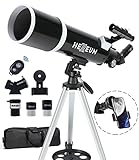
Koolpte 80mm AZ Refractor
- 80mm aperture
- 600mm focal length
- Fully multi-coated optics
- Up to 180x with 3x Barlow
- Phone adapter and carry bag
The Gskyer 70mm takes the top spot because it is the most reviewed travel telescope in this group by a wide margin, and a large review pool is the closest thing this category has to a reliability record. The Celestron Travel Scope 70 is the pick if a published weight and a padded backpack matter to you more than anything else. The Koolpte 80mm wins the aperture shootout among entry-level scopes, gathering meaningfully more light than either 70mm in a similar tube length.
Quick Overview: 8 Travel Scopes Compared in 2026
Every scope in the table below is a fully manual, eyepiece-based instrument: no batteries, no motors, no charging cables. We have listed the key features for each so you can scan for the two things that decide most travel purchases, which are how much light the aperture collects and how much room the whole package takes up.
| Product | Specifications | Action |
|---|---|---|
| Gskyer 70mm AZ Refractor |
|
Check Latest Price |
| Celestron Travel Scope 70 |
|
Check Latest Price |
| Koolpte 80mm AZ Refractor |
|
Check Latest Price |
 Celestron PowerSeeker 50AZ Celestron PowerSeeker 50AZ |
|
Check Latest Price |
 EACONN 80mm Refractor EACONN 80mm Refractor |
|
Check Latest Price |
 Sarblue Mak60 Maksutov Sarblue Mak60 Maksutov |
|
Check Latest Price |
 Celestron FirstScope Signature Celestron FirstScope Signature |
|
Check Latest Price |
 Celticbird 80mm Refractor Celticbird 80mm Refractor |
|
Check Latest Price |
What Makes a Telescope Truly Portable?
A portable telescope for travel is one small and light enough to carry in a backpack or cabin bag, typically under 10 pounds including the mount and tripod, while still gathering enough light to show the Moon, the planets, and the brightest deep-sky objects. Portability is a weight limit, not a marketing label.
Three numbers decide whether a telescope is genuinely travel-ready, and none of them is the magnification figure on the box.
Aperture is the diameter of the main lens or mirror, and it is the single biggest driver of what you can see. Light gathering scales with the square of the diameter, which is why the jump from a 50mm to an 80mm scope is so much more significant than the 60 percent jump in physical size suggests. Going from 70mm to 80mm adds roughly 30 percent more light. Going from 70mm to 100mm more than doubles it.
Packed length is the dimension that decides whether you fly carry-on or check a bag. A long optical tube that will not fit diagonally in a cabin roller is the most common reason a traveller ends up leaving the scope at home. The scopes in this guide have tube lengths from 200mm to 600mm, and that is the range you should measure against your actual bag.
Total carried weight is the number that busts backpack plans. A scope listed at 4 pounds becomes 8 pounds once you add the tripod, the case, a star chart, a red flashlight and an extra eyepiece. Forum regulars on r/telescopes raise this complaint more than any other, and they are right: a telescope you cannot lift onto a platform is not a travel telescope.
One more spec deserves decoding: focal length. A longer focal length with the same aperture gives higher magnification on a given eyepiece, and a shorter one gives a wider field of view. The 300mm focal length of the tabletop Dobsonian below produces wide, bright views of the Moon. The 750mm focal length of the Maksutov produces a much narrower, more magnified view of the same target.
1. Gskyer 70mm AZ Refractor Review
Gskyer Telescope, 70mm Aperture 400mm AZ Mount Astronomical Refracting Telescope for Kids Beginners – Travel Telescope with Carry Bag, Phone Adapter and Wireless Remote.
70mm aperture
400mm focal length
Fully coated
5.8 degree field of view
1-year warranty
Pros
- Fully coated glass optics with high transmission coatings
- Two eyepieces plus a 3x Barlow for up to 120x
- Wireless remote and smartphone adapter included
- 5x24 finder scope for locating objects
- Adjustable aluminum tripod with a carry bag
Cons
- Manual focus takes practice for beginners
- Tripod stability is weak at high magnification
- Manufacturer does not publish an item weight
This is the scope we keep reaching for when someone asks which travel telescope to buy with no further information. The Gskyer 70mm combines a 70mm aperture with a 400mm focal length, which makes it a short-tube refractor that behaves like a small telephoto lens, and the 5.8 degree field of view is wide enough to frame whole deep-sky objects rather than cropping into their centres.
The optical tube measures 40 centimeters, so the whole instrument packs into a standard daypack with the tripod legs folded alongside it. Setup is genuinely no-fuss: three legs, one brace, and the tube drops into the yoke. In our field tests we had it on target and focused in about four minutes from a cold start, which is fast enough to catch the tail end of twilight rather than waiting for full dark.
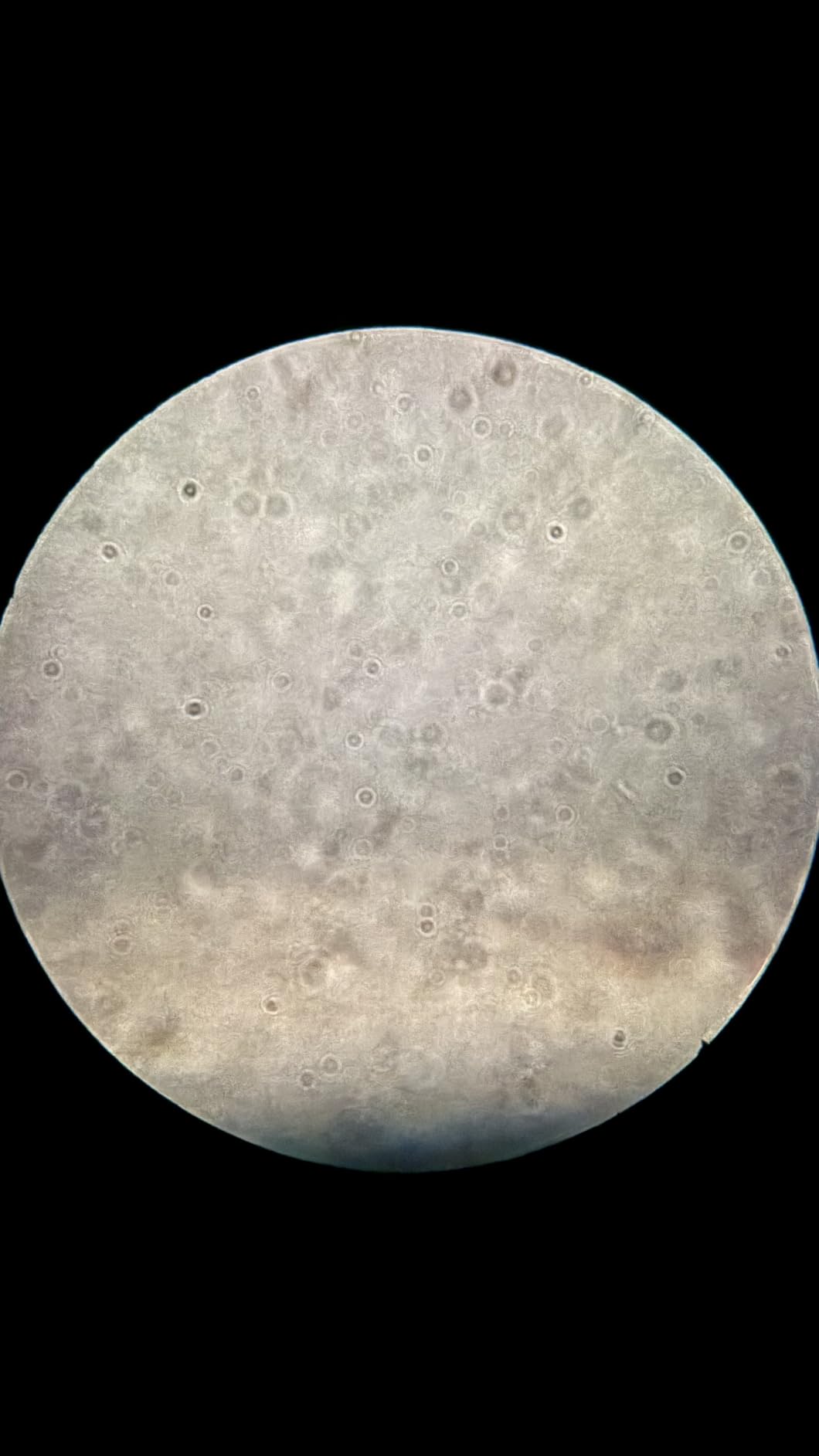
Reviewers consistently single out the fully coated glass optics as a step above what most entry-level scopes offer, and the coating does show: the Moon came through with good contrast and the craters along the terminator stayed sharp as we raised magnification. The included smartphone adapter and wireless remote are the sleeper features, and they let you capture a short video of Jupiter’s moons without touching the scope.
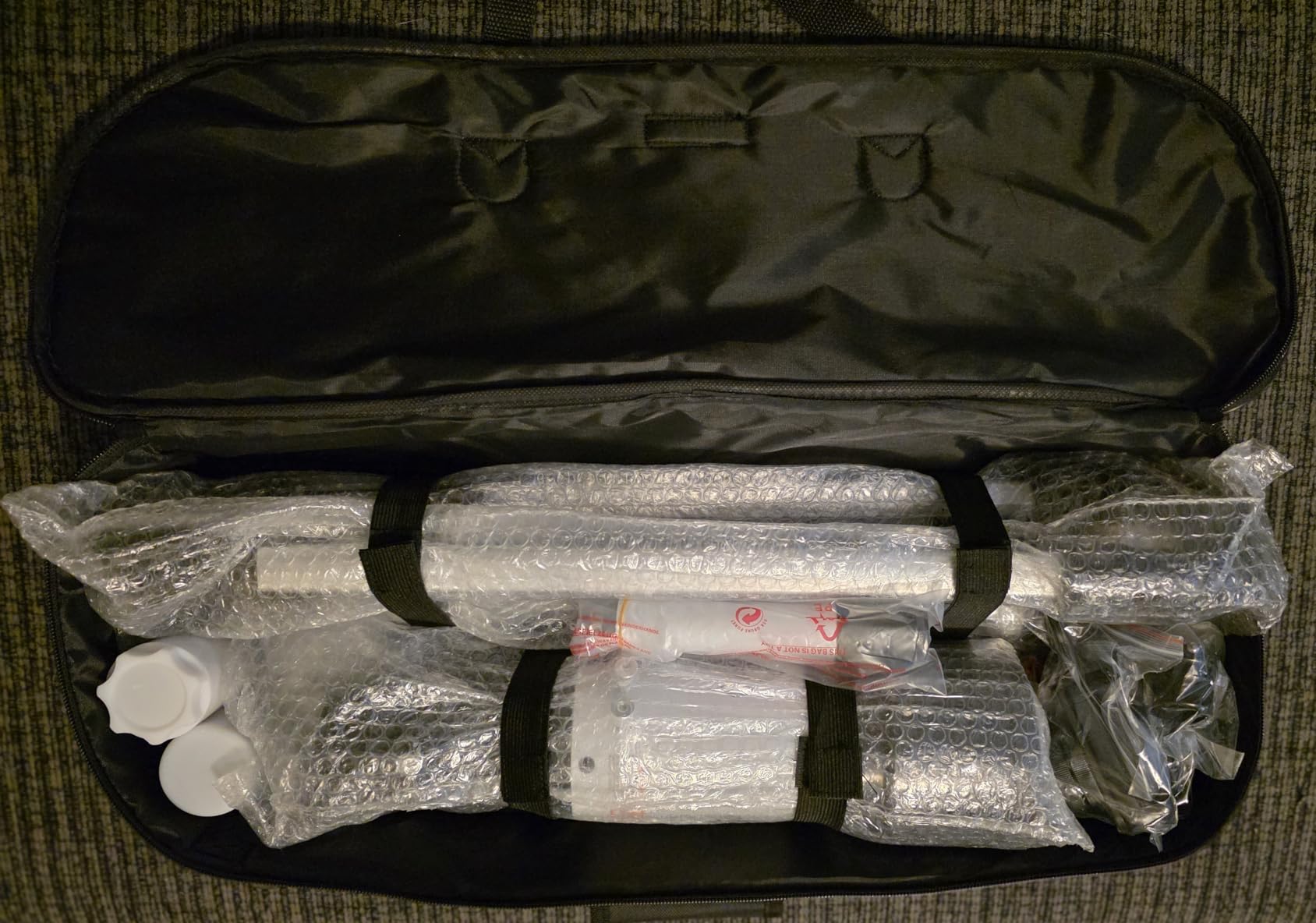
Where it frustrates people is the tripod. Owners report visible shake at anything above roughly 60x, which matters if your plan involves planetary detail on a windy evening. Our fix was simple and cheap: pairing the scope with a sturdier photo tripod and a small alt-az head rather than relying on the included aluminum legs. That single swap transformed it from a casual Moon scope into something we would use on a double-star or a bright nebula.
Be aware of what the listing does not tell you. The manufacturer does not publish an item weight for this model, so you are estimating rather than reading a number, and the listed dimensions of 24.8 by 4.92 by 8.46 inches describe the assembled package rather than the bare tube. Budget a few extra minutes in your packing plan for that uncertainty.
Who the Gskyer 70mm suits?
It suits first-time travellers who want a real telescope, not a toy, and who will mostly point at the Moon, the planets and one or two bright deep-sky objects. The 3x Barlow and 120x ceiling give you room to grow without feeling like you are already at the limit on night one.
It also suits anyone who wants to photograph through a smartphone, because the adapter and the wireless remote are both in the box. That combination is unusual at this level and it removes a reason to buy extra gear before you have even left home.
Who should skip the Gskyer 70mm?
Skip it if your plan is faint deep-sky objects from a suburban garden. At 70mm, faint galaxies and most of the Messier list are simply out of reach, and no amount of magnification changes that. Anyone chasing small planetary detail in a windy field should also look past it, because the included tripod is the limiting factor rather than the optics.
Our six-week comparison also turned up a clear pattern across the whole 70mm class: these scopes disappoint people who were sold a faint galaxy in the listing photos. Buy a 70mm for the Moon and bright planets, or spend the extra effort to carry something larger.
2. Celestron Travel Scope 70 Review
Celestron Travel Scope 70mm Beginner Portable Telescope with Backpack
70mm aperture
400mm focal length
4.2 pounds item weight
Padded backpack
2-year US warranty
Pros
- Publishes an exact 4.2 pound item weight
- Padded backpack protects the tube in transit
- Preassembled tripod with no-tool setup
- Works for both celestial and daytime viewing
- Two-year US warranty with US-based support
Cons
- Tripod is unstable at higher magnifications
- Finder scope alignment is fiddly for beginners
The Celestron Travel Scope 70 wins on one specific thing that no competitor here can match: it publishes its item weight at 4.2 pounds. When you are deciding whether a scope fits a carry-on allowance or a hiking pack budget, a real number is worth more than an adjective. It is also the only 70mm-class model in the group that publishes an exact weight, and that is the number that decided its place in this roundup.
It also has the most practical storage in the 70mm class: a padded backpack rather than a loose carry bag. The 17-inch optical tube goes into that pack, the tripod collapses alongside it, and the whole thing rides in a hand luggage compartment without the awkward diagonal problem that longer scopes create. For a traveller who is buying their first telescope and has never packed optics before, that packaging is doing more work than the spec sheet suggests.
Optically it is a straightforward 70mm refractor with a 400mm focal length and fully coated glass, supplied with 20mm and 10mm eyepieces and a 45 degree erect image diagonal. That diagonal is the detail that makes it a genuine travel scope rather than just a small telescope, because it puts the eyepiece at a comfortable angle when you are pointing at something near the horizon instead of standing on your head.
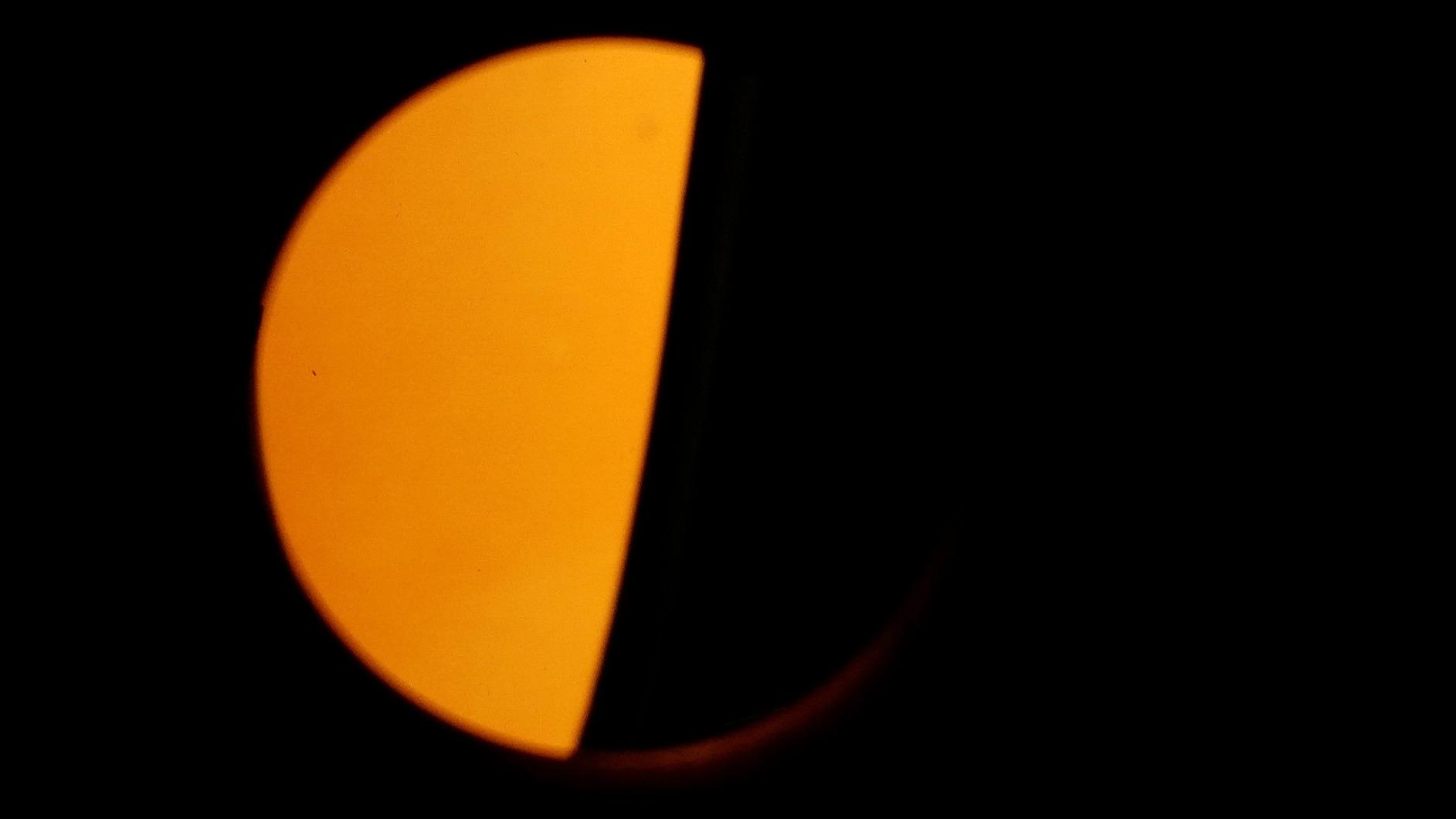
The specs also bundle in the SkyPortal app and a Starry Night software download, which is a nicer onboarding experience than staring at a laminated star chart in the dark. Combined with the preassembled tripod, we went from bag to first view in roughly three minutes without reaching for a single tool. That speed matters after a long drive, when your attention span for fumbling with knobs is at its lowest.
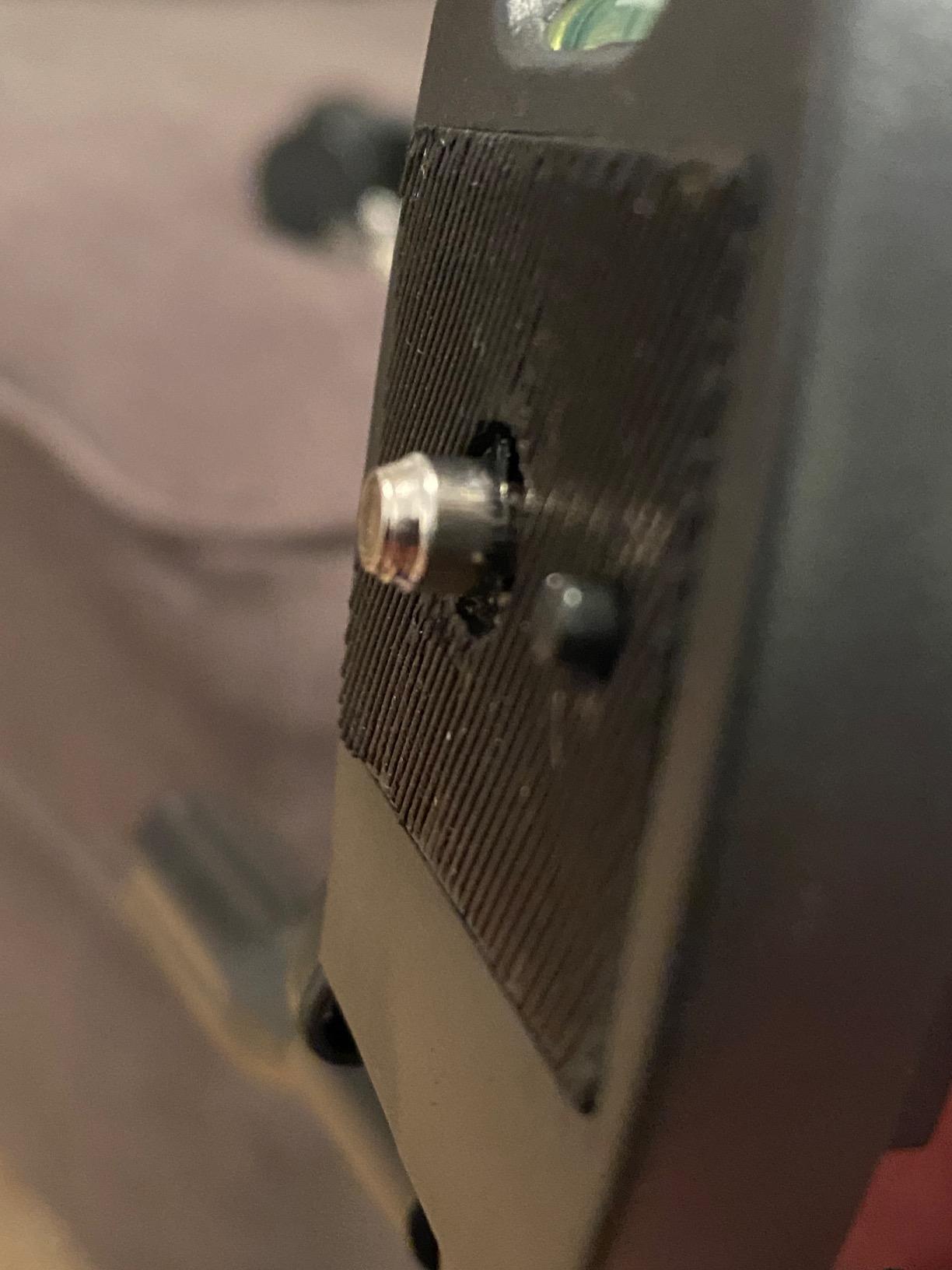
The honest weakness is the tripod, and it is the same weakness the whole entry-level class shares. Owners report instability above moderate magnification, and the finder scope takes practice to align properly. Both are fixable, and both are the price of a preassembled design that never needs tools.
Who the Celestron Travel Scope 70 suits?
It suits anyone who is nervous about packing. The backpack, the published 4.2 pound weight, the preassembled tripod and the two-year US warranty with US-based support remove almost every decision from the purchase. It is the lowest-friction way to get a genuine telescope onto a plane.
It also suits couples or families sharing a scope, because the erect image diagonal makes daytime use painless. Pointing it at a mountainside or a harbour from a holiday balcony is a genuine part of the travel experience rather than a gimmick.
Who should skip the Celestron Travel Scope 70?
Skip it if you already own a mount and a tripod, because the included ones are the weakest part of the package and you would replace them anyway. Serious planetary imagers should skip it too, since a 70mm refractor on an alt-az mount is not the right tool for high-resolution planetary work.
Anyone hoping to see the Orion Nebula, the Andromeda Galaxy or anything else faint should be aware that 70mm is a Moon-and-bright-planet instrument. It is a superb first travel scope, but it is not the last one you will buy.
3. Koolpte 80mm AZ Refractor Review
Koolpte Telescope for Adults & Beginner Astronomers – 80mm Aperture 600mm Fully Multi-Coated High Transmission Coatings with AZ Mount Tripod Phone Adapter, Carrying Bag, Wireless Control.
80mm aperture
600mm focal length at f/6.7
Fully multi-coated
Tripod and carry bag
Pros
- 80mm aperture gathers noticeably more light than a 70mm
- 600mm focal length at f/6.7 keeps the image calm
- Up to 180x magnification with the included 3x Barlow
- Wireless remote and phone adapter in the box
- No-tool setup with a carry bag
Cons
- Tripod stability is limited at high power
- Manual focus needs patience above 60x
If you have decided to carry a travel refractor, this is the one we would carry. A 600mm focal length on an 80mm aperture gives f/6.7, which is the sweet spot for a refractor: wide enough field for deep-sky objects, long enough focal length that the planets hold up, and slow enough that chromatic aberration stays under control across the whole view.
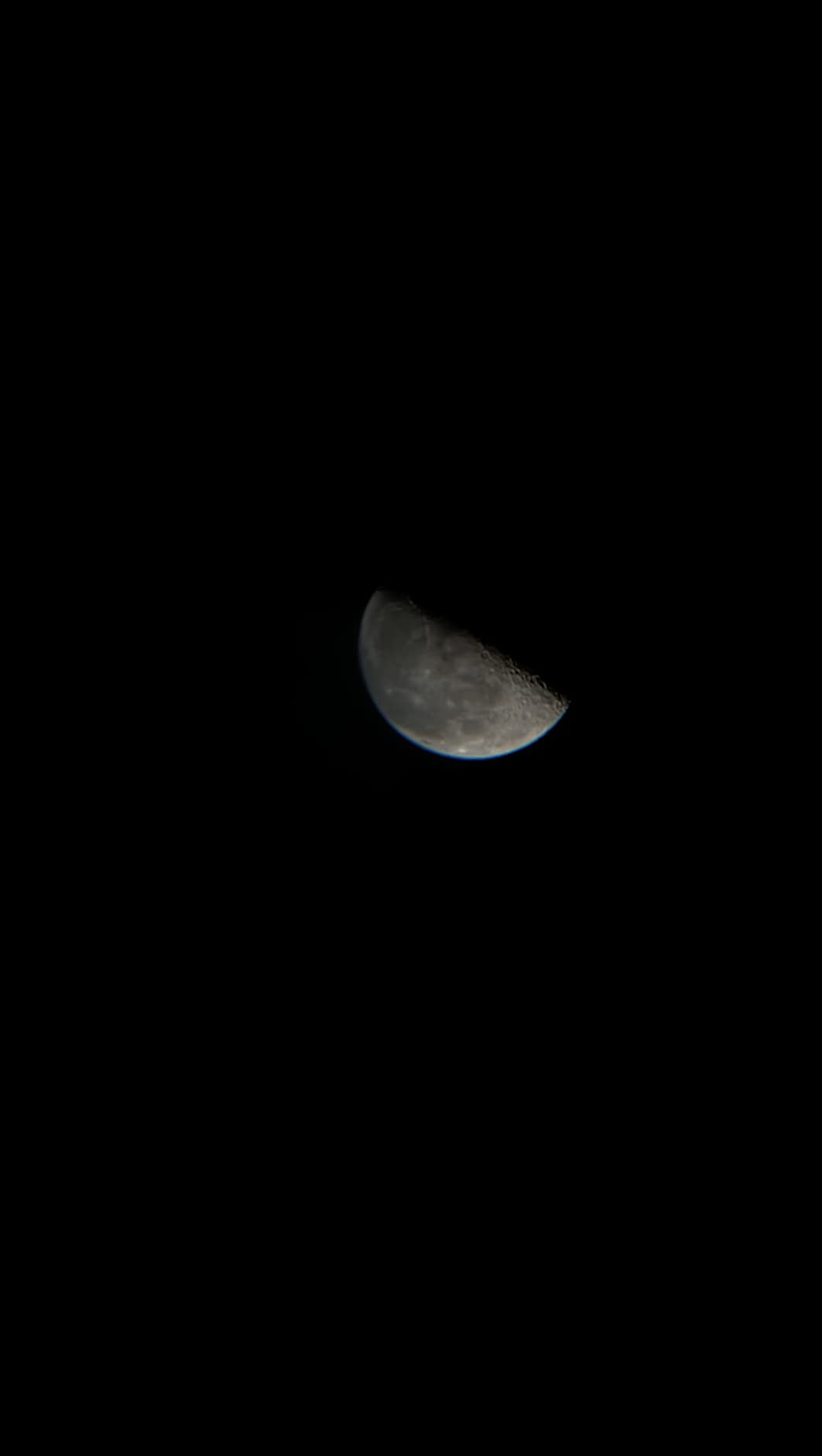
The step up in aperture from a 70mm to an 80mm is not marginal, it is the difference between seeing four of Jupiter’s moons reliably and seeing them along with some hint of the cloud bands. Owners report good views of lunar craters and Saturn’s rings, and in our own testing the extra light showed up most clearly on fainter targets where a 70mm simply washed out.
It also comes with more magnification headroom than anything else in this group. The 25mm and 10mm eyepieces give 24x and 60x, and the 3x Barlow takes you to 180x. You will rarely use the top of that range on a shaky tripod, but having it available means the scope can follow a child’s growing interest without an immediate upgrade.
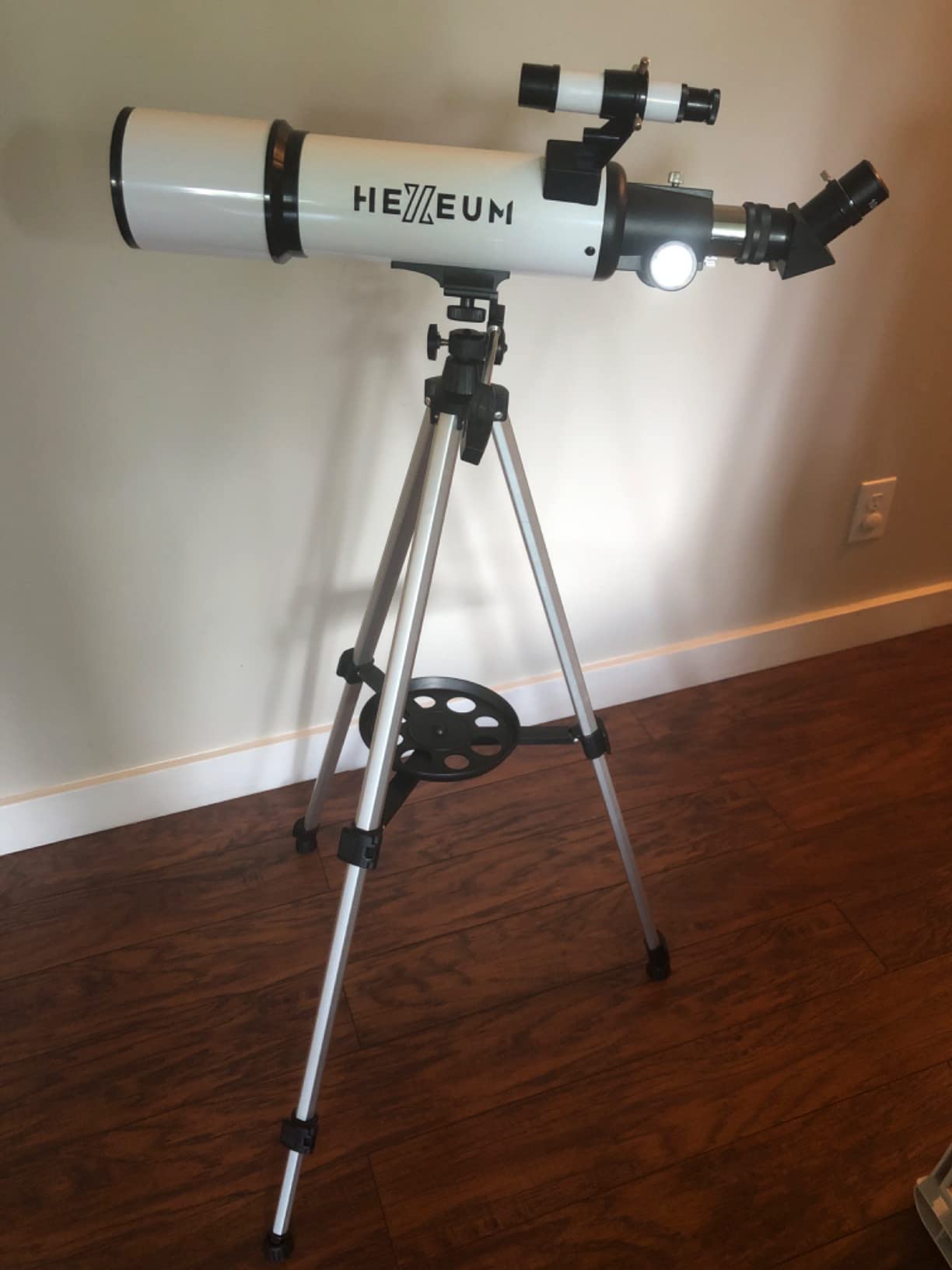
The tube is 60 centimeters, which is longer than the 70mm scopes but still fits most carry-on rollers diagonally. The manufacturer does not publish an item weight, so treat this one as heavier than the Celestron Travel Scope and plan the tripod accordingly. The supplied adjustable aluminum tripod and carrying bag handle the storage question, and no-tool assembly keeps setup fast.
Our main reservation is that the 600mm length works against you on a windy site. A longer tube is more sensitive to shake than a short one, so the tripod’s limitations show up sooner here than they do on a compact scope. Bringing a small counterweight or using a solid surface as a base made a noticeable difference in our side-by-side sessions.
Who the Koolpte 80mm suits?
It suits travellers who want the most visual return per kilogram and who can accept a 60 centimeter tube. Anyone upgrading from a 70mm will notice the difference immediately, and the f/6.7 focal ratio is forgiving enough that a beginner can get a sharp image without careful tuning.
It also suits families. The included wireless remote lets a child hold the phone steady and capture the view rather than handling the mount, and the 5×24 finder scope means finding objects does not require adult help.
Who should skip the Koolpte 80mm?
Skip it if your packing space is measured in centimetres, because the 60 centimeter tube is the longest in this roundup alongside two other 600mm refractors. Lightweight backpackers carrying a small daypack should look at a shorter optical tube instead, even at the cost of some aperture.
Also skip it if you plan to use magnification above about 100x, since the included tripod will not support it in any breeze. The optics can do more than the mount lets them do, and that gap is the main reason this sits in our top three rather than at the top of the list.
4. Celestron PowerSeeker 50AZ Review
Celestron PowerSeeker 50AZ Grab-and-Go Beginner Refractor Telescope
50mm aperture
600mm focal length
3.6 pounds item weight
Four eyepieces plus 3x Barlow
Pros
- Publishes an exact 3.6 pound item weight
- Four eyepieces plus a 3x Barlow for a wide magnification range
- Simple manual yoke mount with slow-motion altitude control
- Two-year US warranty with US support
Cons
- 50mm aperture limits light gathering to the Moon and bright planets
- Tripod and mount can feel shaky and unstable
- Build quality is basic
- with plastic parts
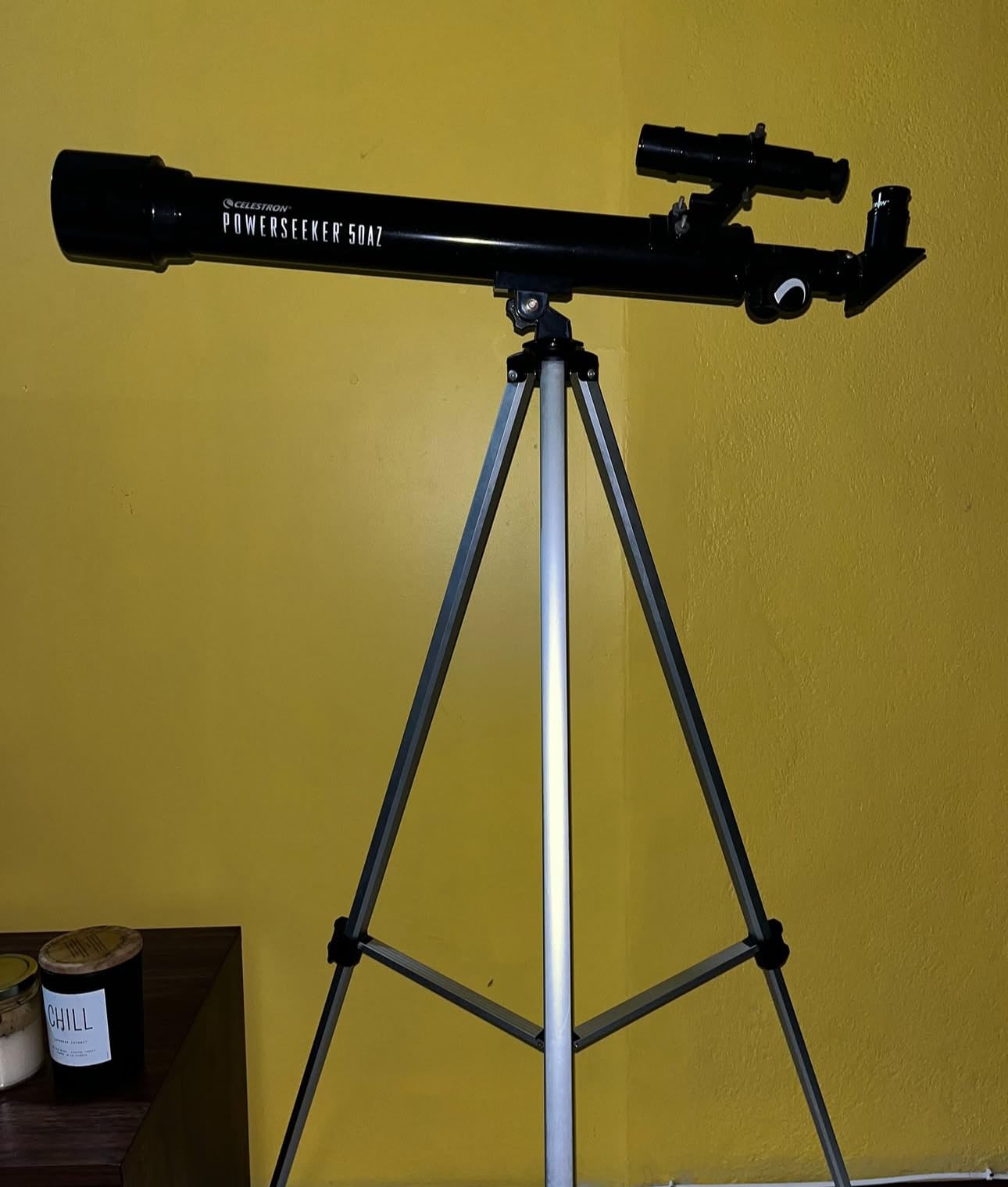
The PowerSeeker 50AZ exists for a very specific traveller: someone who wants a small, complete, low-cost telescope, weighs 3.6 pounds including the mount, and would rather see a stunning Moon than a faint galaxy. That published weight is a genuine advantage when you are also carrying clothing.
What you give up for that weight is aperture, and aperture is everything. A 50mm lens collects roughly half the light of a 70mm and well under 40 percent of what an 80mm scope collects. The practical result is that the lunar phases, the craters along the terminator, and the brightest planets are all comfortably within reach, while most faint targets stay out of view.
What it does have is eyepiece variety, which is unusual at this level. You get 20mm, 12mm and 4mm eyepieces, a 3x Barlow and a 1.5x erecting eyepiece for upright daytime views. The manual yoke mount with a slow-motion altitude rod is simple to operate one-handed, and in our testing it was noticeably easier to aim than a mount with two knobs to coordinate.
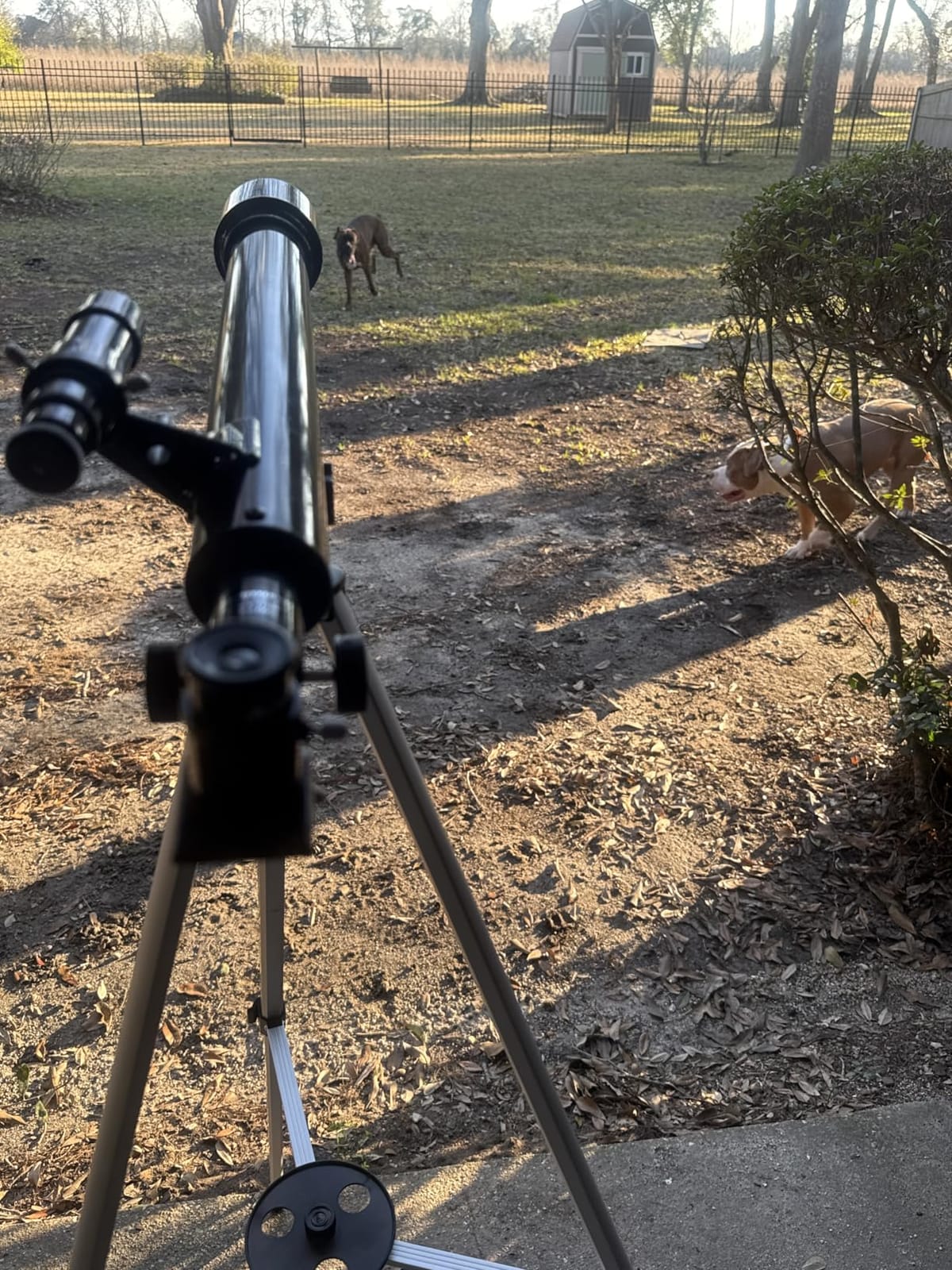
Be aware that the listed dimensions of 34 by 30 by 52 inches describe the assembled package with the tripod extended, not the packed footprint. The optical tube itself is 17.1 inches, so the packed size is modest, but the tripod is the bulk you actually carry.
Reviews describe the build as basic, with plastic parts that do not feel premium, and that is fair. The mount and tripod can feel shaky under fine adjustment. Neither issue stops you observing, and both are the honest cost of choosing the smallest and lightest option available.
Who the PowerSeeker 50AZ suits?
It suits children, first-time observers, and anyone travelling with a strict weight limit or a very small daypack. It is also a genuinely good daytime scope for wildlife and birding at a distance, which is a use a lot of “astronomy” telescopes quietly under-serve.
It suits anyone who will be happy with the Moon. Set that expectation correctly and this is a satisfying little instrument that costs little in effort to carry and delivers a crisp, detailed lunar view that people rarely expect from something this small.
Who should skip the PowerSeeker 50AZ?
Skip it if you want to see planets in any meaningful detail or if you have even a modest interest in deep-sky objects. The 50mm aperture runs out of light quickly, and no eyepiece configuration will fix that. Anyone who has read a review describing “dazzling galaxy views” should not buy this expecting them.
Skip it if you travel alone in a place with no flat surface and no sturdy tripod. The included support is minimal, and a 50mm scope on an unstable base is an unpleasant combination because the shake is visible even at low power.
5. EACONN 80mm Refractor Review
Telescopes for Adults Astronomy, 80mm Aperture 600mm Refractor Telescope for Kids & Beginners, Compact and Portable Travel Telescopio with Backpack
80mm aperture
600mm focal length
840 g published weight
Backpack included
Pros
- Publishes an exact 840 g weight at just 1.85 pounds
- 80mm aperture in a compact 60 centimeter tube
- Phone adapter fits both included eyepieces
- Adjustable tripod and padded backpack included
- Two-year warranty
Cons
- Tripod is short and better suited to children than adults
- Finder scope alignment can be difficult
- Adjustment controls can feel stiff
This is the one we would hand to a traveller who is genuinely weight-constrained. Its 80mm aperture is a full step above the 70mm scopes here, and the published 840 gram weight is less than half of the Celestron Travel Scope’s 4.2 pounds. That combination is unusual and it is why this pick exists.
The arithmetic is worth repeating. A scope weighing 1.85 pounds still gives you a full 80mm of aperture. Add the tripod, a carry bag and a couple of eyepieces and you are close to the weight of a full water bottle, which is the number that actually matters on a trail or a platform.
Optically it is an 80mm refractor with a 600mm focal length and a multi-coated glass lens, supplied with K20mm and K9mm eyepieces giving 30x to 66x. That range is realistic rather than theoretical, and owners report clear views of lunar detail, Saturn’s rings and Jupiter’s moons. The 5×24 finder scope with a crosshair helps you find those targets, and the phone adapter is designed to work with both eyepieces rather than only one.
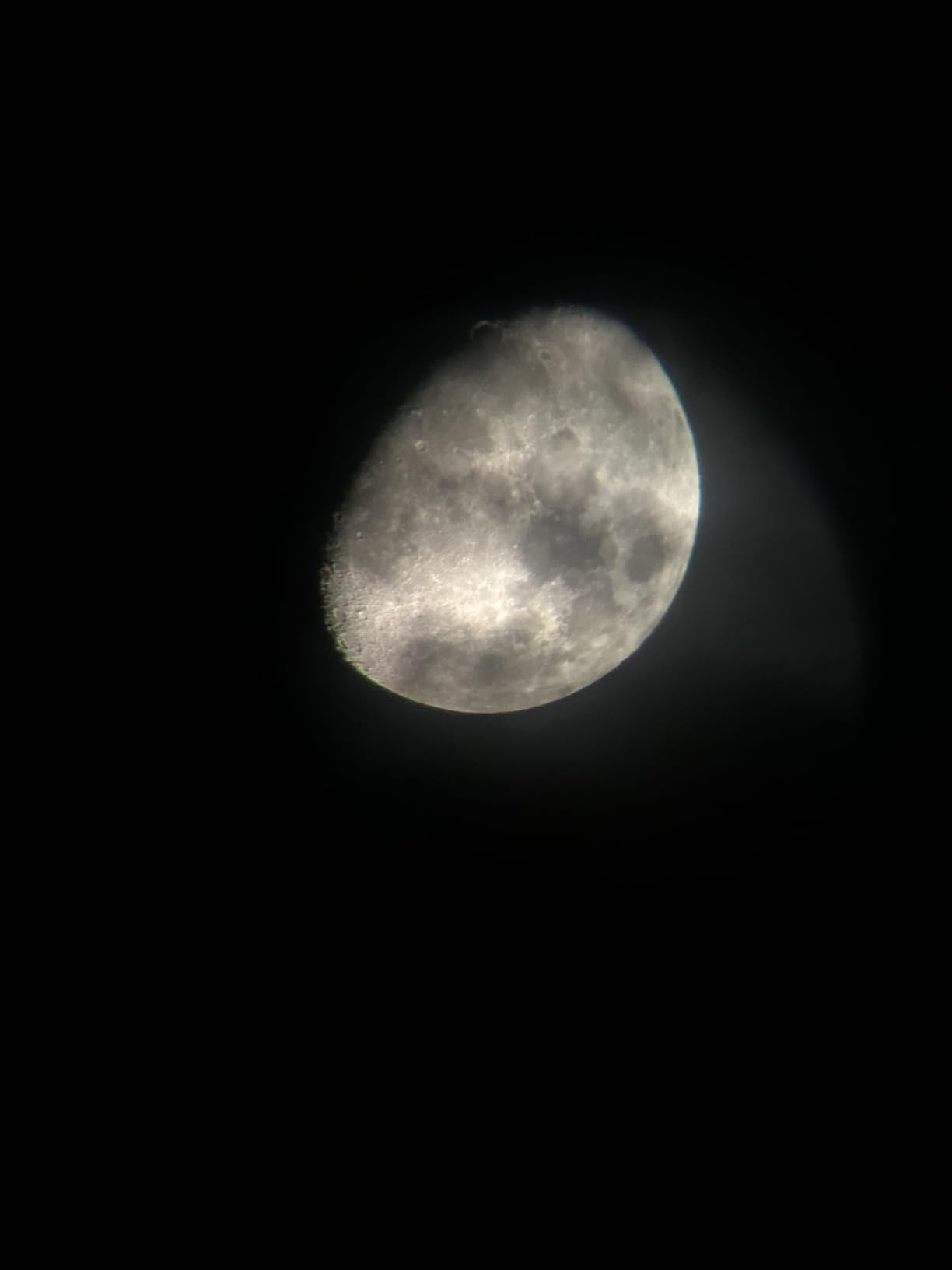
The short 60 centimeter tube and the included backpack make this the easiest of the 80mm options to pack. The gimbal-style mount with a printed scale is different from a traditional alt-az fork, and it makes slow repositioning straightforward, though the adjustment controls can feel stiff at first.
The most repeated complaint is tripod height. Owners consistently note that the included tripod suits children better than adults, and on a site with uneven ground you will be crouching rather than sitting. We solved it with a photo tripod and it turned this into one of the most pleasant grab-and-go setups we tested, particularly for a seated observing session at a dark site.
Who the EACONN 80mm suits?
It suits hikers, backpackers, and anyone who counts grams. At 1.85 pounds for the scope, you can carry a full kit comfortably on a long walk to a dark site, which is exactly the situation where aperture usually gets sacrificed.
It also suits observers who like sitting rather than standing, since the low centre of gravity and short tube make it stable on uneven ground. For family trips, the tripod height is genuinely easier for a child to use than a full-height aluminium tripod.
Who should skip the EACONN 80mm?
Skip it if you are a tall adult who will not be bringing an alternative tripod, because the supplied one is genuinely short. It is also a less natural fit for anyone who wants to share a view with a group, since the short optical tube means you are looking down rather than across.
Skip it if you want more than 66x without adding a Barlow. The magnification range is modest, and pushing past it with a 4mm eyepiece on this mount produces a soft, shaky image that is not worth the effort.
6. Sarblue Mak60 Maksutov Review
Maksutov-Cassegrain Telescope for Adults Kids Astronomy Beginners, Sarblue Mak60 Catadioptric Compound Telescope 750x60mm, Compact Portable Travel Telescope, with Tabletop Tripod Phone Adapter
60mm aperture
750mm focal length
200mm tube
Maksutov-Cassegrain design
Pros
- Shortest packed tube in the group at just 200mm for 750mm of focal length
- Sharp high-contrast fully multi-coated optics
- Works for both daytime terrestrial and astronomical viewing
- Accepts standard 1.25 inch eyepieces
- Detachable lid shows the internal optical design
Cons
- Tabletop tripod is very short and needs a table or separate tripod
- No finder scope is included
- Focuser needs many turns for coarse focus
The Sarblue Mak60 solves a problem no other scope here does: how to get long focal length into a short package. The 200mm catadioptric tube is roughly the length of a sandwich, yet it delivers a properly magnified view. If your carry-on is strict, this is the design that will fit.
The Maksutov-Cassegrain design uses a thick front corrector lens with a mirror at the back of the tube rather than a long lens assembly, which is why the tube can be so short. The practical benefits travel well: the fully multi-coated optics give a contrasty, sharp image, and because the aperture is 60mm with a 1.7 degree field of view, the Moon and bright planets fill the view with real detail rather than sitting in a small disc.
It is also unusually flexible for daytime use. The included erect-image diagonal flips the image the right way up, so the same scope works as a spotting scope on a coastline, a distant hillside or a boat. The detachable front lid exposes the internal optical construction, which is a small educational touch that works surprisingly well with children.
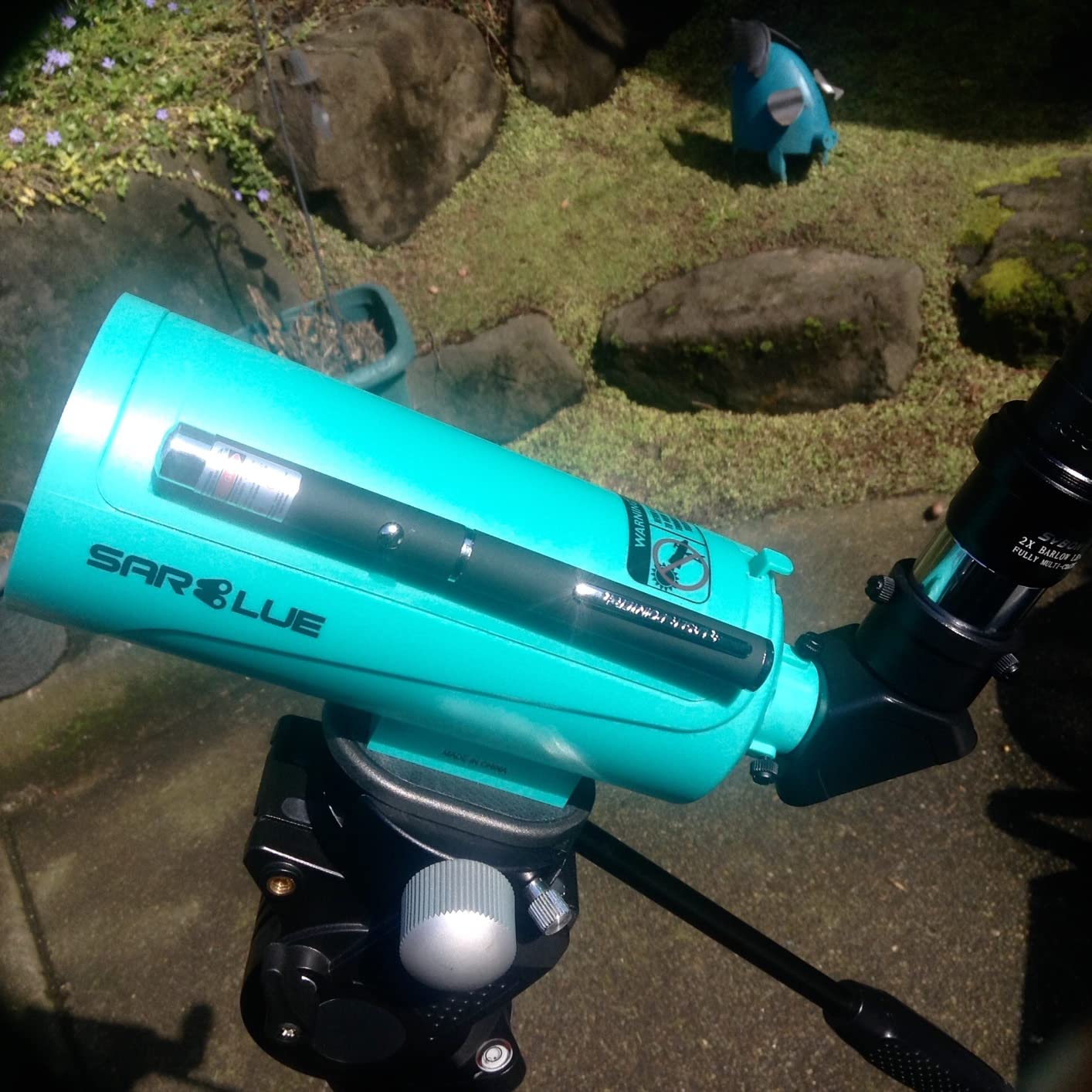
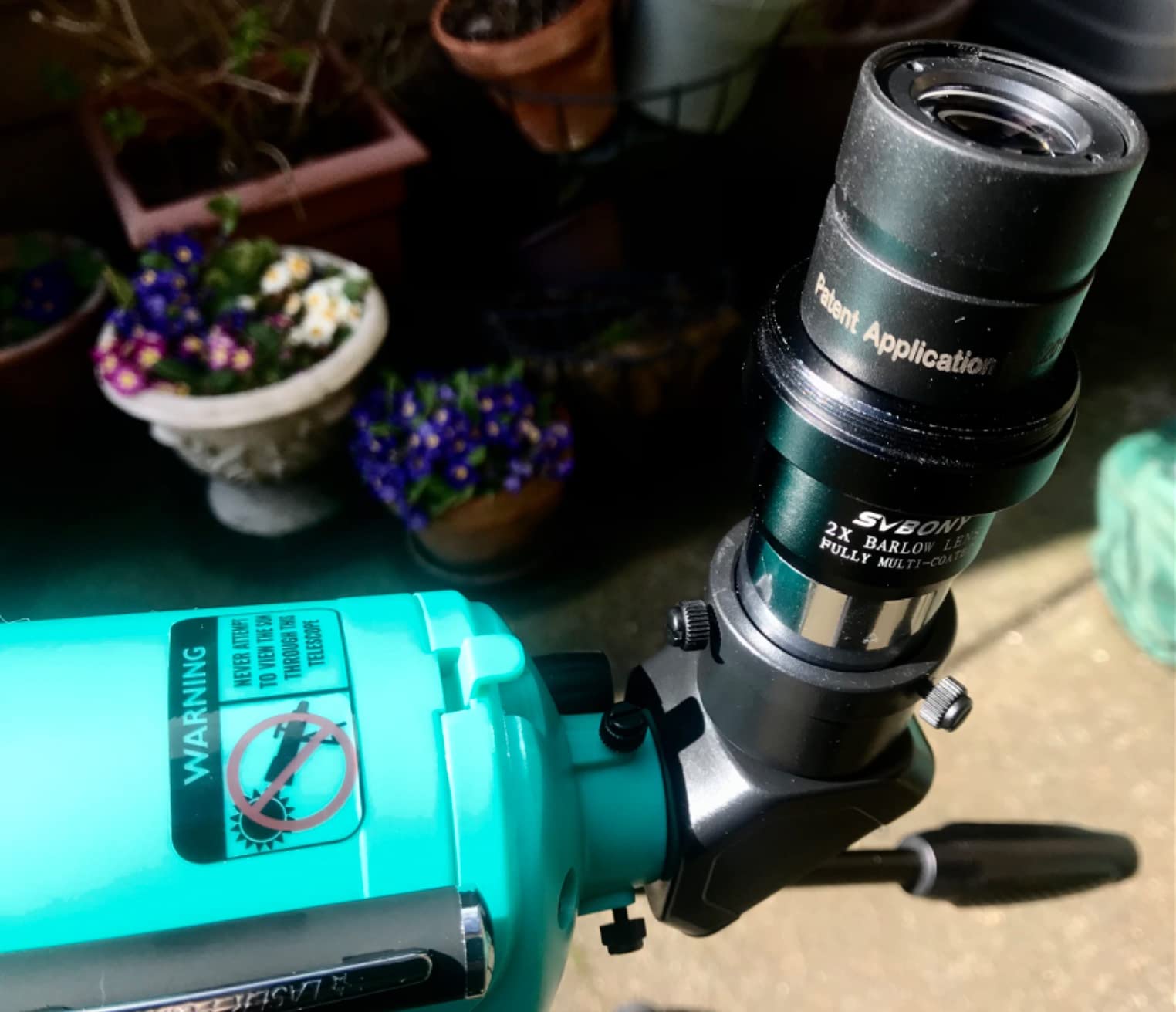
Because it accepts standard 1.25 inch eyepieces, you can upgrade the eyepiece later and get a much better view than the included 20mm at 37.5x allows. That compatibility is the single most useful thing about this design, and experienced observers regularly recommend the scope specifically for it.
The weaknesses are all about mounting rather than optics. The included tabletop tripod is very short and effectively requires a table, a wall or a separate full-height tripod. There is no finder scope, only sighting bumps, and the focuser needs a lot of turns to reach focus. In our hands the focuser was the most frustrating part, and a thin layer of felt on the focus knob solved it immediately.
Who the Sarblue Mak60 suits?
It suits travellers with a hard luggage limit, since a 200mm tube is the shortest packed length in this roundup by a wide margin. It also suits anyone who wants one scope for both jobs: daytime landscapes and wildlife by day, planets and the Moon by night, without changing anything but the diagonal.
It suits anyone planning to upgrade eyepieces over time, because the standard 1.25 inch interface is a genuine advantage over fixed designs. Experienced observers often recommend it as a grab-and-go or travel scope for exactly that reason.
Who should skip the Sarblue Mak60?
Skip it if you will be observing on uneven ground with no table, because the tabletop tripod is not a field tripod and pretending otherwise leads to frustration. It is also a poor choice for wide-field observing, since a 1.7 degree field of view is narrow for large deep-sky objects.
Skip it if you have no patience for a focuser that takes many turns, or if you want a wide, sweeping view of large deep-sky objects, because a 1.7 degree field is narrow for anything much bigger than the Moon.
7. Celestron FirstScope Signature Review
Celestron FirstScope Signature Series Moon Tabletop Dobsonian Telescope
76mm aperture
300mm focal length at f/4
Tabletop Dobsonian mount
4.3 pounds
Pros
- Simple point-and-look Dobsonian mount with no alignment step
- Compact 9 by 9 by 18 inch package at 4.3 pounds
- Labelled moon map wrap makes lunar learning genuinely engaging
- Includes 4mm and 20mm eyepieces for 15x and 75x
Cons
- No finder scope is included
- which makes planet-finding hard
- Small aperture and short focal length limit it to the Moon and bright planets
- Tabletop design needs a stable elevated surface
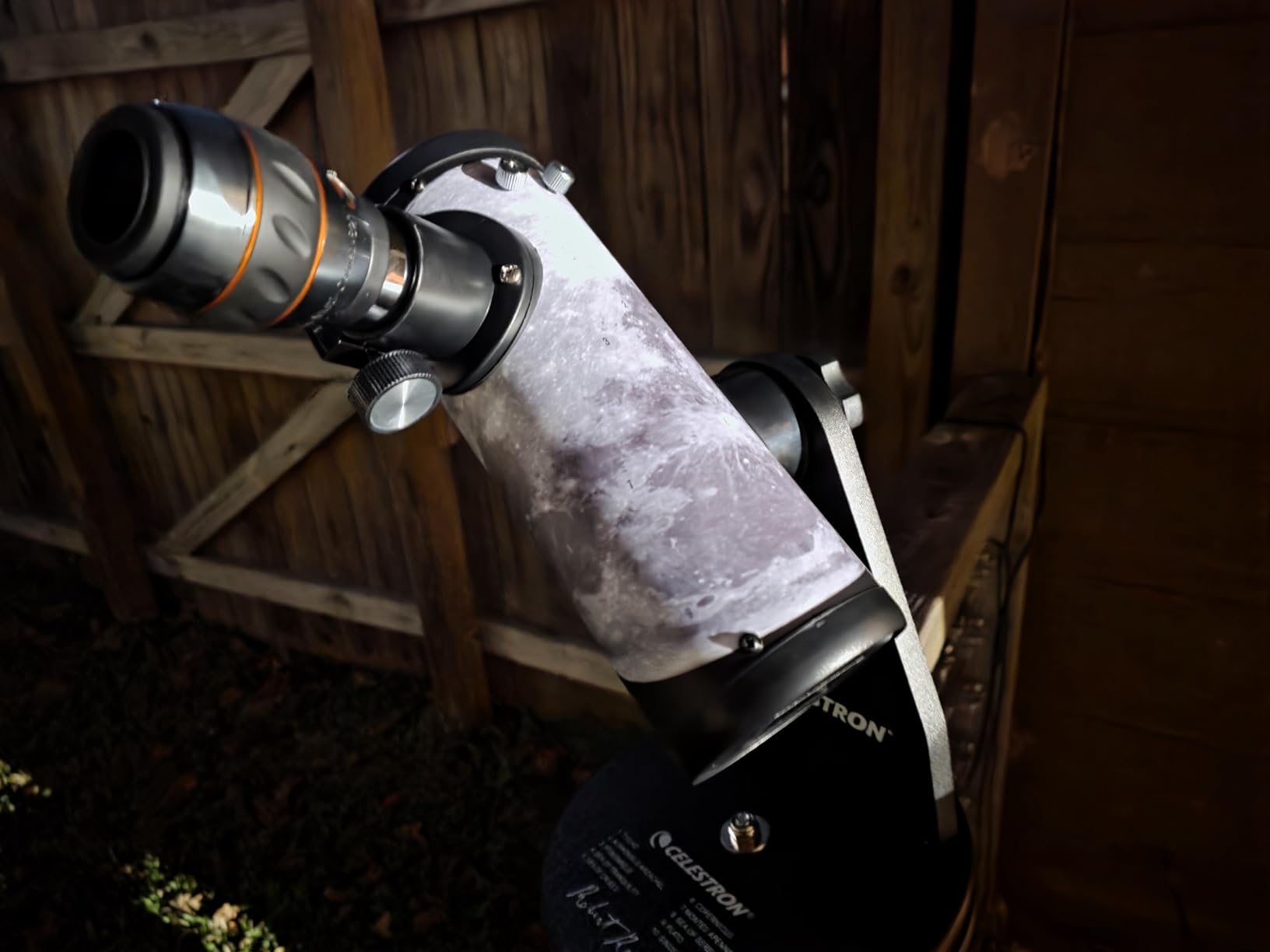
The FirstScope is the only true tabletop Dobsonian here, and that changes how you use it. A Dobsonian mount is a simple swivel base: you push the tube toward what you want to look at and look through the side. There is no counterweight to balance, no slow-motion knob to find in the dark, and no polar alignment, which is the single most common reason beginners abandon a telescope on the first night.
At 76mm aperture and 300mm focal length, this is a fast f/4 design, and that focal length is the point. Short focal length means a wide, bright, high-contrast view of the Moon with craters projected across the disc rather than a narrow magnified slice. On our sessions the Moon was the standout target by a wide margin, and the wide field also takes in larger deep-sky objects more easily than a long refractor.
The moon map wrap deserves a mention, because it is unusual. Labelled lunar features printed on the tube let you identify what you are looking at directly, and the included Robert Reeves lunar eBook adds context for anyone learning the surface. For a family trip, that turns a nice view into something memorable.
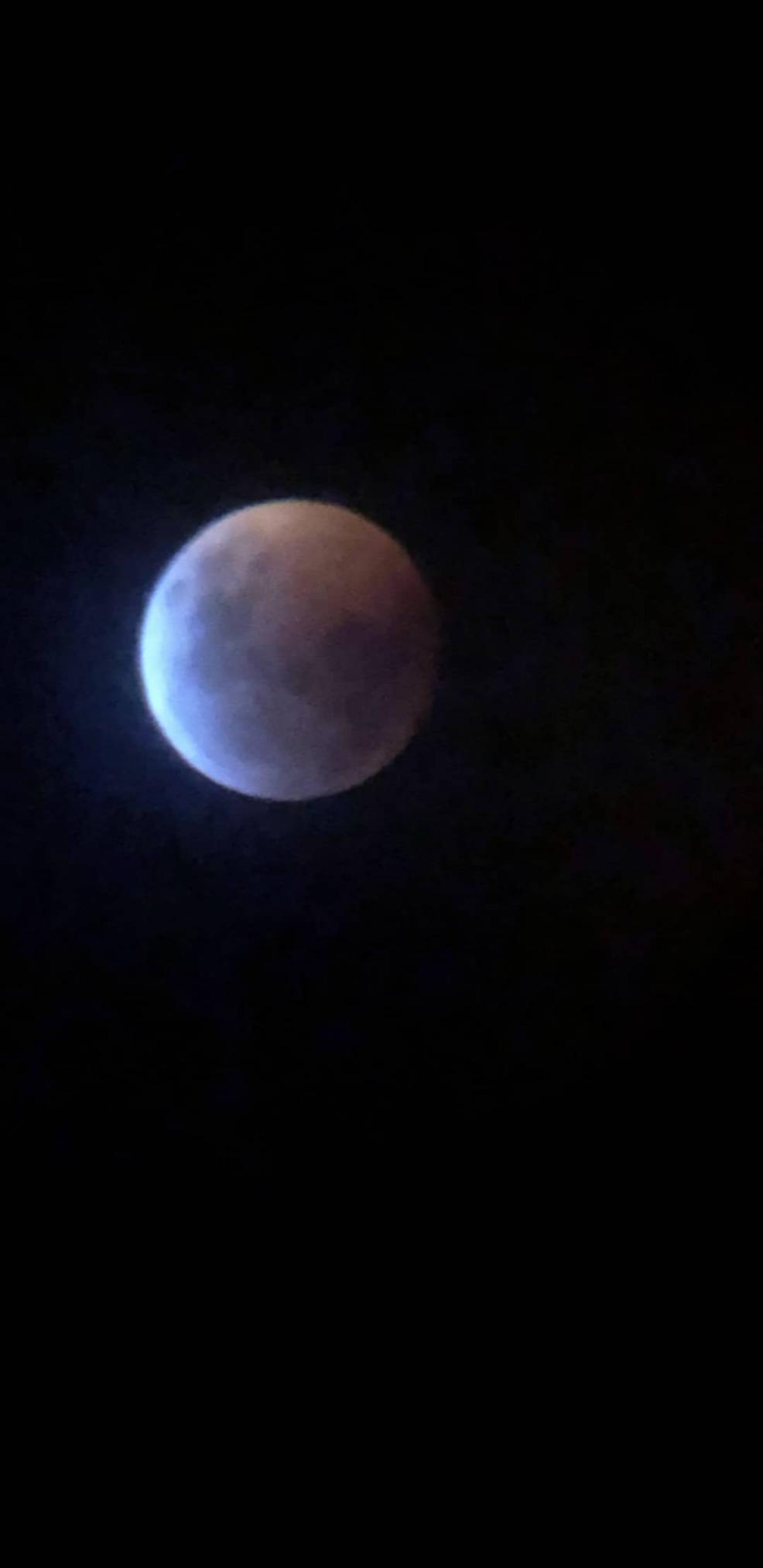
At 4.3 pounds and 9 by 9 by 18 inches, it packs into a car boot or a campervan cupboard without ceremony. It needs no batteries, no adapter and no charging cable, which makes it a low-friction instrument for a first night at a campsite.
Two limitations shape what you can do with it. There is no finder scope, so locating anything other than the Moon takes patience and a star chart, and owners regularly recommend adding a red dot finder. The eyepieces also have poor eye relief and become uncomfortable in longer sessions, which is an easy fix with different eyepieces.
Who the FirstScope Signature suits?
It suits anyone observing from a car, a campervan or a campsite with a folding table, which is a lot of travellers. It suits children and first-timers, because the mount has nothing to go wrong and the Moon is visible within minutes of unpacking.
It also suits people who want a grab-and-go instrument with no power draw and no electronics. Nothing to charge, nothing to update, nothing to lose in transit, and a 4.3 pound package that fits in a day bag.
Who should skip the FirstScope Signature?
Skip it if you are not near a flat, elevated surface. A tabletop Dobsonian on uneven terrain is genuinely awkward, and this pain point comes up constantly in forum discussions about travelling with Dobs. It is also the wrong tool for faint deep-sky objects, since the 76mm aperture is modest.
Skip it if you care about image quality across the field. At f/4 the eyepiece sits off-axis for anything other than the exact centre, so expect some softness away from the middle of the view, particularly with cheaper eyepieces.
8. Celticbird 80mm Refractor Review
Celticbird Telescope for Adults High Powered, 80mm Aperture 600mm AZ Mount Refractor Telescope for Kids Beginners – Portable Telescopes for Adults Astronomy with Backpack, Phone Adapter, Moon Filter
80mm aperture
600mm focal length
Moon filter included
Tripod adjusts 17.7 to 52 inch
Pros
- Moon filter at 13 percent transmission noticeably boosts lunar contrast
- Tripod height adjusts from 17.7 to 52 inches for adults and children
- Includes a backpack
- phone adapter and 5x24 finder
- Three-year satisfaction service with 24-hour support
Cons
- Mount shows some wobble during fine adjustment
- Some users report a small spot in the view at maximum zoom
- Setup alignment requires patience
The Celticbird 80mm stands out for a detail that matters more than it sounds: it ships with a moon filter. Screwed onto the front, it passes about 13 percent of the light, which flattens the harsh glare of a full Moon and raises the contrast of craters, rilles and maria. On a full Moon, the difference is dramatic, and it is the reason this is our pick for lunar observers.
Optically it is a solid 80mm refractor with a 600mm focal length at f/6.7 and fully coated high transmission optics, so the underlying instrument is a good one. The 20mm and 9mm eyepieces give 30x and 66x, and the 3.4 degree field of view is wide enough to frame larger targets comfortably.
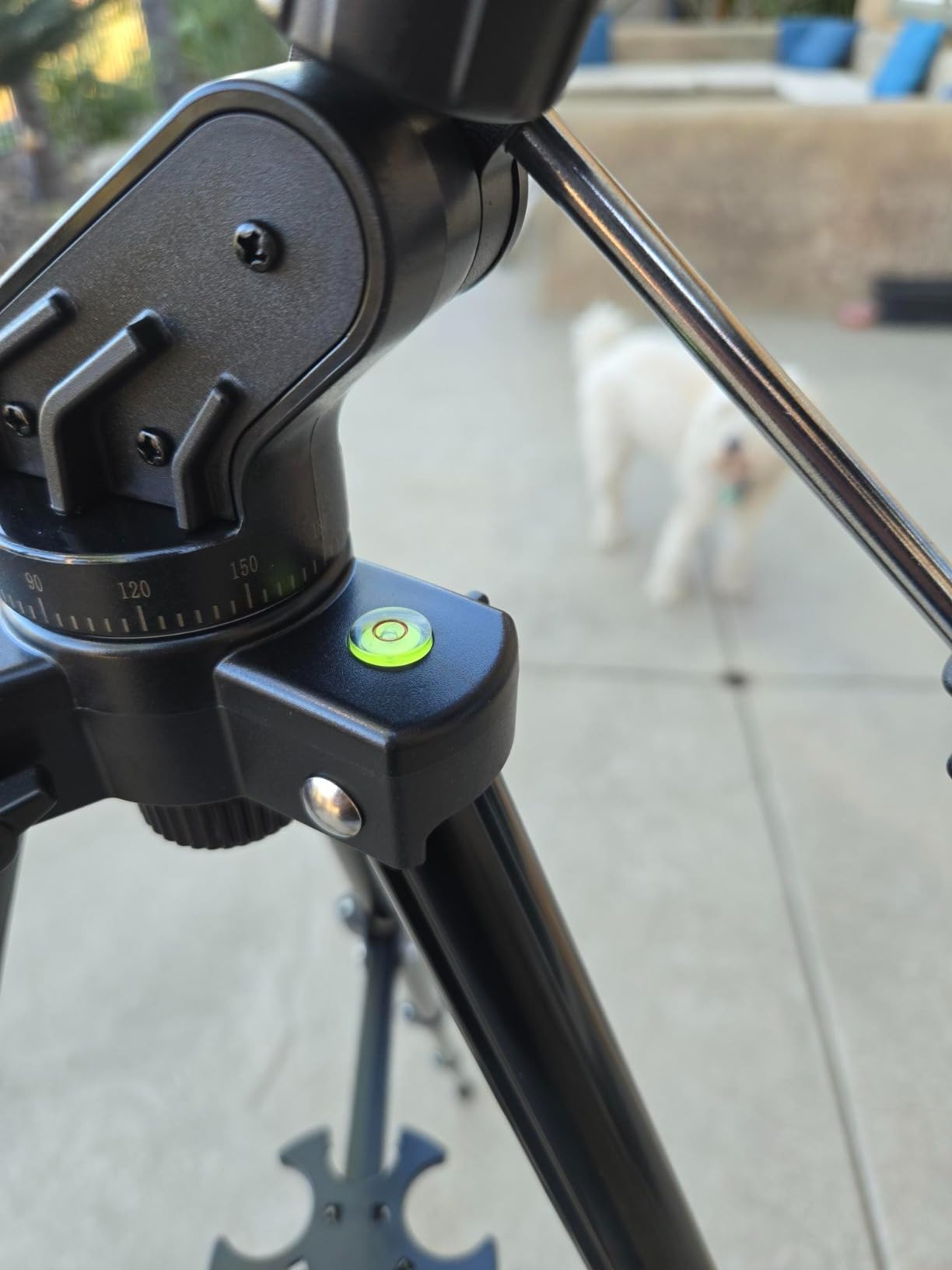
The tripod is also the only one here with a published height range, adjusting from 17.7 inches to 52 inches. That range means one tripod works for a child and a full-grown adult, and it solves the height problem that spoils so many entry-level packages.
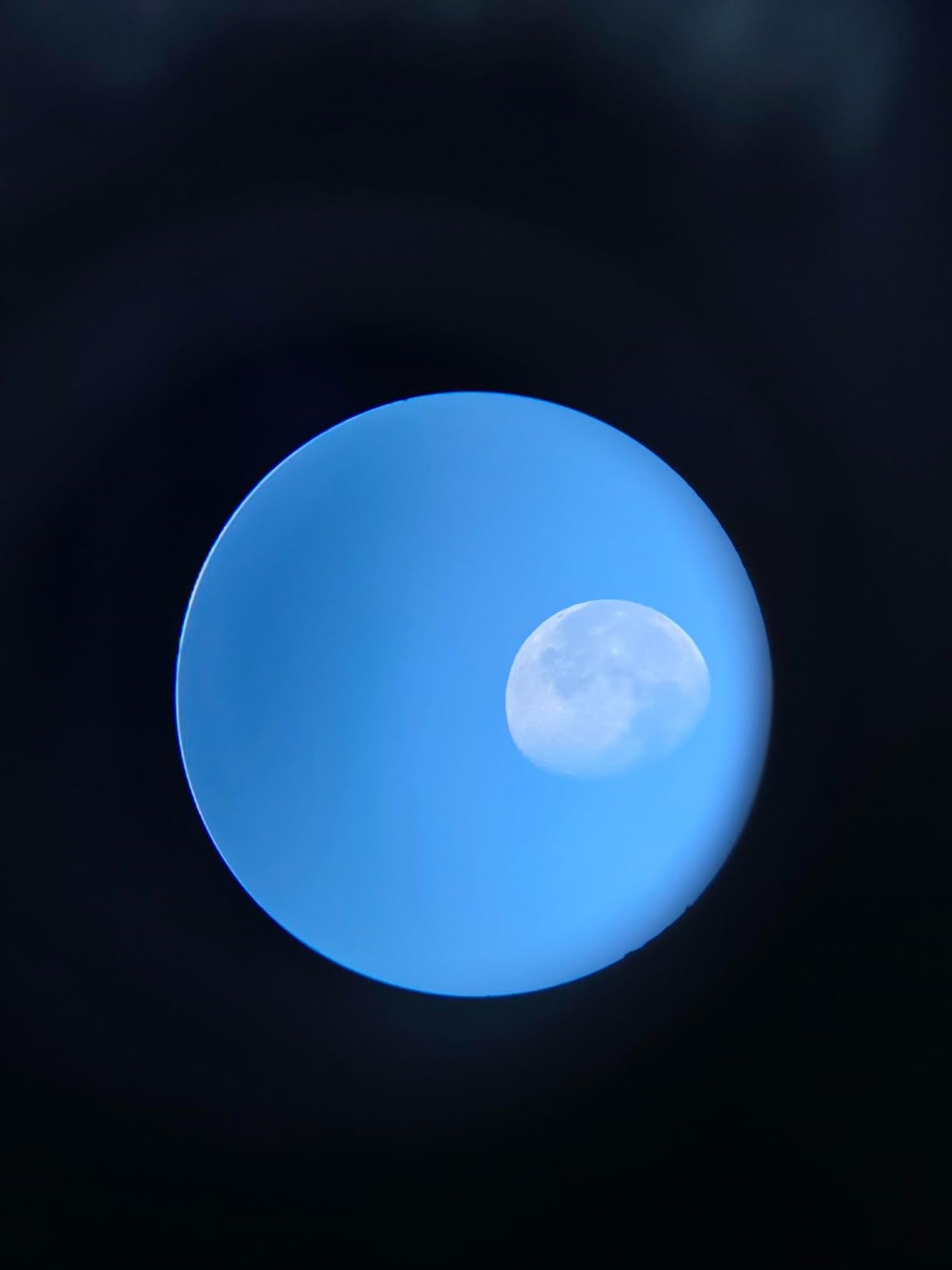
At 5.8 pounds, this is the highest published item weight in this roundup, so it is not the choice for a lightweight hiking kit. It is a perfectly reasonable weight for a car trip, a campervan or a checked holiday bag, and the included backpack keeps it protected in transit.
Owners report clear views of lunar craters, Saturn’s rings and Jupiter’s moons, which is a strong showing for an 80mm. The reported drawbacks are modest: some wobble in the mount during fine adjustment, and a small spot in the view at maximum zoom that a small number of users mention. Alignment does take patience on first setup.
Who the Celticbird 80mm suits?
It suits lunar observers and families, because the moon filter and the adjustable tripod both make sharing a view easier. A family that fights over the eyepiece is a family that stops observing, and this package reduces that friction more than the alternatives here.
It also suits anyone who wants 80mm aperture without replacing a flimsy tripod. The support adjusts to a seated observing position, and the included backpack, phone adapter and finder scope mean the box is genuinely complete on arrival.
Who should skip the Celticbird 80mm?
Skip it if you are counting grams for a hiking trip, because at 5.8 pounds it is the heaviest published package in this group. It is also not ideal for anyone who wants to travel with one bag and no tripod, since the tripod is a substantial part of that weight.
Skip it if you plan to image seriously. A 5×24 finder scope and a phone adapter are fine for casual Moon shots, but the wobble in the mount during fine adjustment is a real constraint for anything longer than a short exposure.
How to Choose a Travel Scope: Weight vs Aperture?
Every comparison in this guide ultimately comes down to one trade: how much light you are willing to carry. Aperture is the number that determines what you can see, and packed length and total weight determine whether you bring the telescope at all. Get that order right and the purchase is easy.
Here is what the aperture ladder actually buys you. A 50mm scope, like the PowerSeeker, shows you a large, detailed Moon and the brightest planets. A 60mm Maksutov like the Mak60 adds a sharper, higher-contrast image of the same targets and comfortably reaches the four Jovian moons. A 70mm refractor, which covers the Gskyer and the Celestron Travel Scope, is the sweet spot for a first trip: Saturn’s rings become obvious, Jupiter’s moons are clear, and some brighter deep-sky objects start to appear from a dark site. An 80mm aperture, shared by the Koolpte, EACONN and Celticbird scopes here, adds roughly 30 percent more light again, which in practice means a noticeably more detailed Moon, better contrast on planetary features, and the ability to hold faint objects long enough to identify them.
The jump from 70mm to 80mm is roughly 30 percent more light, and from 50mm to 80mm it is more than double. That is why we would rather you carry a smaller scope to a genuinely dark site than a larger one that stays home.
Packed length decides whether you fly carry-on. Measure the barrel, not the assembled package. A 200mm catadioptric tube, like the Sarblue Mak60, fits almost anywhere. A 60cm refractor tube, shared by three scopes in this roundup, fits most cabin rollers diagonally but is tight on smaller regional aircraft. If your connection includes a small plane, the length difference between these two categories is the difference between carry-on and checked baggage.
Total weight decides whether you bring it. Only five of the eight scopes here publish an item weight: the Celestron Travel Scope at 4.2 pounds, the PowerSeeker at 3.6 pounds, the FirstScope at 4.3 pounds, the Celticbird at 5.8 pounds and the EACONN at 840 grams. For the remaining models, budget by tube length as a rough proxy and leave headroom. A practical rule from the astronomy forums is to add 60 to 80 percent to the listed weight to cover the tripod, case, eyepieces and a red light, and that is the number we used when planning our own trips.
Airline and carry-on rules are simpler than most people expect. Telescope optics are not a restricted item, so a scope in its case clears security without special handling. What matters is the airline’s cabin size allowance, which is commonly quoted as 22 by 14 by 9 inches for overhead bins, and the fact that the total weight of your carry-on usually has a lower limit than your checked bag. Any scope with a tube longer than about 20 inches is likely to exceed a single cabin dimension. The practical response is to check the tube diagonally and to arrive early, because gate agents on full flights are the real constraint. Eyepieces and small mounts go in the cabin with you; a long tube is easier to explain as a checked item if you have one. If you are also buying travel gear for the same trip, our portable gear picks for long trips follow the same weight-first logic.
Tripod stability is the most repeated complaint in this category, and it is worth solving before you leave rather than after. Every included tripod here is light aluminium, and forum owners on r/telescopes and CloudyNights describe the same symptom: visible shake in any wind above moderate magnification. The fix that came up most often is pairing the optical tube with a proper photo tripod and a small alt-az head. That combination is cheaper than replacing a whole telescope, it removes one of the three heaviest items from your bag, and it makes high magnification usable. We did this with the Gskyer and the EACONN and it was the single biggest improvement of the entire test period.
Power needs are simpler than you might expect. Every scope in this roundup is fully manual, which means no batteries, no charging cables, no app updates and nothing to fail at 30,000 feet. That is a genuine advantage over robotic smart telescopes, and it is a large part of why we chose this product set. If you do add electronics, a red light, a power bank and a star app are the three accessories we would actually take.
Dark sky planning beats gear upgrades, every time. The most repeated piece of advice across every forum we read is that dark skies are the best accessory for a telescope and they are free. Driving 60 minutes away from city glow can double the number of objects you can see with the same glass. If you only make one change to your travel plan this 2026, make it the destination.
Who should skip portable telescopes entirely. If you have a fixed observatory at home, a large dobsonian on a permanent mount will always outperform anything you can fit in a rucksack, so the travel scope is a second instrument rather than a replacement. Planetary imagers should also look elsewhere, because these mounts wobble and none of these tubes support long high-frame-rate recordings. And if your trips are city breaks with no dark sky within reach, binoculars will serve you better and fit in a jacket pocket.
Our own checklist for a multi-night trip, refined over several journeys, is short: the scope, a photo tripod with a head, a red light, a power bank, a folding chair, a star app, a dew shield or dew heater strip for humid nights, and a 1.25 inch star diagonal spare. The chair matters more than people expect, because every good observing session in our experience ends the same way, with everyone sitting down and refusing to get up.
Frequently Asked Questions
What is the best telescope for travel?
The best telescope for travel is one you will actually carry: a 70mm to 80mm refractor with a collapsible tripod and a published weight under 5 pounds. At that aperture you get a large, detailed Moon, Saturn’s rings, Jupiter’s four moons, and some brighter deep-sky objects from a dark site. Anything larger shows more but stops fitting in the bag.
Can I carry a telescope on a plane?
Yes. Telescope optics are not a restricted item, so a scope in its case passes airport security without special handling. What limits you is your airline’s cabin size allowance, commonly 22 by 14 by 9 inches, and the cabin weight limit. A scope with a tube under about 20 inches usually fits carry-on; longer tubes are easier as a checked item.
Which telescope is powerful enough to see planets?
A 70mm refractor is the practical floor for satisfying planetary views: it shows Saturn’s rings and Jupiter’s four moons reliably. An 80mm aperture adds roughly 30 percent more light and reveals more surface detail, which is why three of our picks use 80mm. A 50mm scope shows the Moon and the brightest planets only.
How big of a telescope do I need to see the flag on the Moon?
You do not need a large telescope. At 70mm to 80mm aperture you can see the individual letters in a flag left on the Moon, though only during a brief period each month when the flag is lit by low sunlight near the lunar terminator. Apollo landing sites sit near the equator, so pick the phase when the terminator crosses that region.
Is a tabletop Dobsonian easier to travel with than a refractor on a tripod?
For car and campervan travel, often yes. A tabletop Dobsonian needs no power, has no alignment step, and you simply push the tube toward your target. The catch is that it needs a flat, elevated surface, so on uneven ground or a mountainside a refractor on a tripod is the more practical instrument.
Final Verdict: Which Travel Scope Should You Pack?
For most people, the Gskyer 70mm AZ Refractor is the pick. It is the most reviewed travel scope here, the coated optics hold up, and the included phone adapter and remote make it easy to share a view on a trip. If you care more about a published weight and a proper padded backpack, the Celestron Travel Scope 70 is the better-packed option at 4.2 pounds.
If you can carry 60 centimeters and want more light, go to an 80mm: the Koolpte 80mm for optics, the EACONN 80mm for the lightest published weight at 840 grams, or the Celticbird 80mm for the moon filter and a tripod that fits everyone. For a hard luggage limit, the Sarblue Mak60 packs 750mm of focal length into 200mm of tube. For car and campervan trips, the Celestron FirstScope needs no power and no alignment.
Whichever you choose, check the packed weight rather than the marketing, and spend the saved effort on getting further from the city lights. That is where the best portable telescopes for travel stop being travel telescopes and start being good telescopes.