
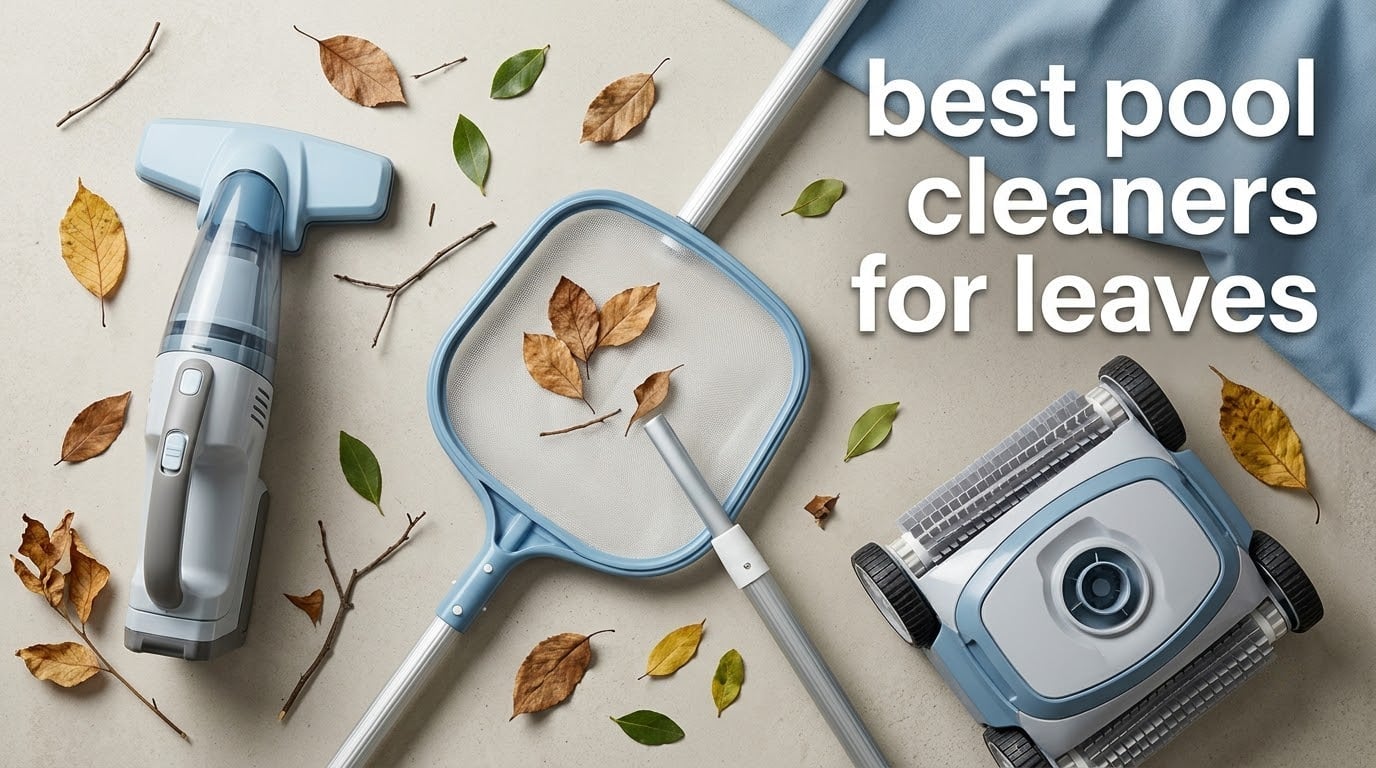
Most pool owners buy a cleaner for summer sand and only realize the mistake when the first real leaf drop arrives. Leaves are bulky, wet, and they mat together on the pool floor, and that changes what a cleaner has to do. Finding the best pool cleaners for leaves comes down to intake width and bag volume, not filtration finesse or app features.
We spent weeks going through owner feedback on ten cleaners across the four types that actually work on leaf debris: robotic cleaners with a top-load basket, pressure-side style self-contained units, hose-attached manual leaf vacs, and cordless handheld spot vacs. Two of those four categories are completely missing from most roundups you will find on this topic, which is exactly why so many owners end up frustrated.
Above all, this guide answers the question that drives every search on this topic: no, a standard pool vacuum will not handle a leaf-choked floor on its own, and the reason is mechanical. Once you understand how each type fails, the buying decision takes about five minutes.
Table of Contents
Will a Pool Vacuum Pick Up Leaves?
Yes, but only if the intake is wide enough and the collection bag is large enough. Large wet leaves mat into a layer on the floor that narrow intake ports cannot lift, and standard fine-mesh baskets plug solid within minutes. For heavy leaf loads, you want a wide intake, a deep bag or oversized basket, and coarse mesh in the 150 to 250 micron range. Fine filter media is for pollen and silt, not leaves.
One more thing matters more than any spec sheet: a robot run on a floor already covered in matted leaves will push that layer around instead of sucking it in. Pre-clear the surface with a net or a hose vac first, then run the robot for the fine debris that is underneath.
Top 3 Pool Cleaners for Leaves (September 2026)

Dolphin Nautilus CC Plus
- Top-load filter basket
- Active scrubbing brush
- Wall climbing to 40 ft pools
- About 2 hour cleaning cycle

Poolmaster Big Sucker Leaf Vac
- Hose-powered 8 jets
- Reusable mesh leaf bag
- 1.8 lb head
- Works with any 1-1/4 inch pole

POOLWHALE Leaf Rake Net
- 17 inch fine mesh rake
- 14 inch deep nylon bag
- Weighted base tab
- Vinyl liner safe frame
Best Pool Cleaners for Leaves in 2026 at a Glance
Every pick below earned its place for a different reason, and the type matters as much as the model. Read the type column first, then narrow by pool surface and leaf volume.
| Product | Specifications | Action |
|---|---|---|
| Dolphin Nautilus CC Plus Robotic |
|
Check Latest Price |
| Poolmaster Big Sucker Leaf Vac |
|
Check Latest Price |
| POOLWHALE Leaf Rake Net |
|
Check Latest Price |
 POOL BLASTER Cordless Leaf Vac POOL BLASTER Cordless Leaf Vac |
|
Check Latest Price |
 Enhulk Cordless Pool Vacuum PC10 Enhulk Cordless Pool Vacuum PC10 |
|
Check Latest Price |
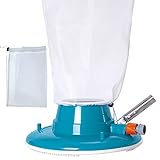 U.S. Pool Supply Leaf Terminator 15 inch U.S. Pool Supply Leaf Terminator 15 inch |
|
Check Latest Price |
 Teguy Cordless Pool Vacuum 18.5 GPM Teguy Cordless Pool Vacuum 18.5 GPM |
|
Check Latest Price |
 KOKIDO XV910 Rechargeable Leaf Vac KOKIDO XV910 Rechargeable Leaf Vac |
|
Check Latest Price |
 WYBOT C1 Cordless Robotic Pool Vacuum WYBOT C1 Cordless Robotic Pool Vacuum |
|
Check Latest Price |
 POOLAZA Manual Vacuum with 56 inch Pole POOLAZA Manual Vacuum with 56 inch Pole |
|
Check Latest Price |
1. Dolphin Nautilus CC Plus Robotic: Best Overall Robot for Leaf Load
Dolphin Automatic Robotic Pool Vacuum Cleaner, Wall Climbing Scrubber Brush, Smart Navigation, Ideal for In-Ground Pools up to 40FT in Length – Nautilus CC Plus
Top-load filter basket
Wall climbing to 40 ft
Active scrubbing brush
About 2 hour cycle
Pros
- Wall climbing and scrubbing in one automated cycle
- Top-load basket lifts straight out for rinsing
- Set-and-forget plug-and-play operation
- 13k+ owner reviews to draw on
Cons
- Corded design needs a GFCI outlet and cable handling
- Basket needs frequent emptying in heavy leaf weeks
- Basket is smaller than larger-capacity robots
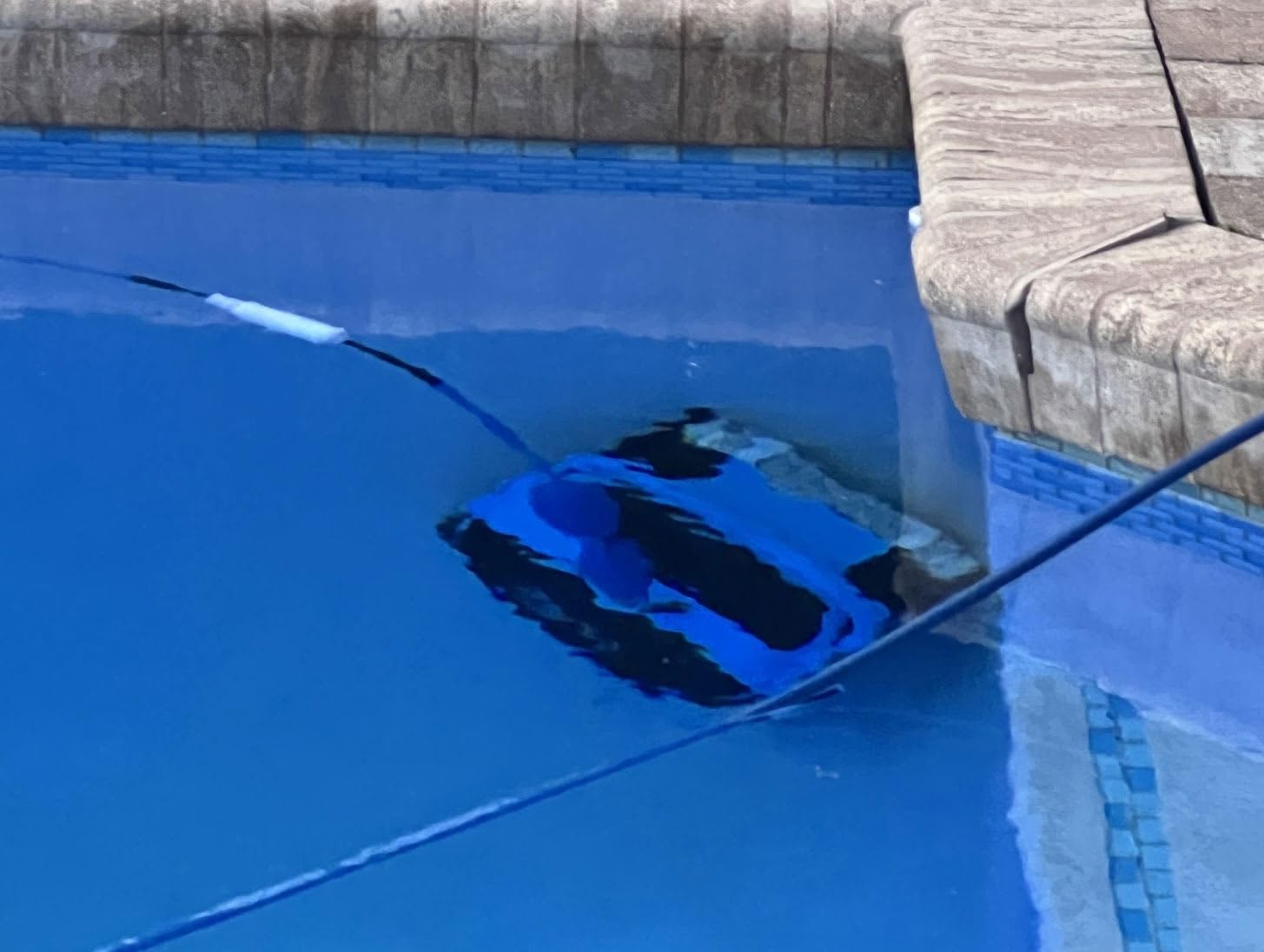
This is the robot we keep coming back to for a pool under tree cover. It climbs the walls, works the floor with an active scrubbing brush, and finishes a cycle in roughly two hours without any programming. The floor coverage is what earns its place here, because leaves settle on the bottom before they settle anywhere else.
Owner feedback on this listing is unusually deep at 13k+ reviews, and the pattern is consistent. People rely on the wall climbing and the simple top-load basket, and the same complaints recur: cord management, and a basket that needs emptying more than once during a bad week of leaf fall.

One important caveat for leaf duty. This basket is on the smaller side for the job, and a thin bottom filter will plug with leaves long before the cycle ends. If your pool sits under oaks or maples, plan on a basket check mid-cycle rather than at the end of it.
It weighs 9.45 kg and measures 22.2 by 17.6 by 12.9 inches, which is standard for a mid-size robot but worth checking if your pool is under a deck or slide. Measure your lowest clearance before you order anything robotic.
What you need to know before buying?
The top-load basket is the single most important feature here, and it is a genuine advantage over front-load designs. You pull the basket straight up, hose it off, put it back, and the robot keeps going. No unscrewing, no tools.
The cord is the trade-off. You need a GFCI-protected outlet within reach of the pool, and the cable has to be routed so the robot does not wrap it around itself during long leaf-season schedules. Owners who complained about convenience were almost all talking about the cable, not the cleaning.
Who should skip it?
Skip this if your leaf load is catastrophic rather than seasonal. A basket that fills in forty minutes under a storm dump means you are hauling debris out by hand several times a day, and at that point a dedicated leaf vac is cheaper and faster.
Also skip it for above-ground pools. The wall-climbing and navigation assume a rectangular in-ground shell, and the dimensions tell you it is built for in-ground pools up to 40 ft in length. For above-ground leaf work, look at the cordless handheld picks further down.
2. Poolmaster Big Sucker Leaf Vac: Best Value Hose-Attached Vac
Poolmaster 28300 Big Sucker Manual Swimming Pool Leaf Vacuum Head, Blue
15 inch hose-powered head
8 high-pressure jets
4 rotating wheels
Reusable mesh bag
Pros
- Clears leaves
- pine needles and sticks in one pass
- No motor or battery to maintain
- Light at 1.8 lb for full-pool sweeps
- Works with any 1-1/4 inch pole
Cons
- Bag ring can release and spill debris back into the pool
- Fine debris passes through the standard mesh
- Pole not included
- Empty brush channels reduce suction on vinyl
This is the tool we recommend for a first serious leaf season, and the reason is simplicity. Eight high-pressure water jets create a vortex that pulls leaves into a mesh bag while you guide the head with a pole. There is no motor, no battery, no charging and no electronics to fail in the water.
Owner feedback on this listing runs past 13k reviews, and a recurring theme is owners replacing far more expensive robotic cleaners with it once leaf volume got heavy. The suction from a standard hose is enough for leaves, pine needles and small sticks in a single pass.
The head is 15 inches across and weighs 1.8 pounds, so a full pool sweep is a workout but not an exhausting one. Four multi-direction rotating wheels handle vinyl slopes and the transition at the walls better than fixed skimmers do.
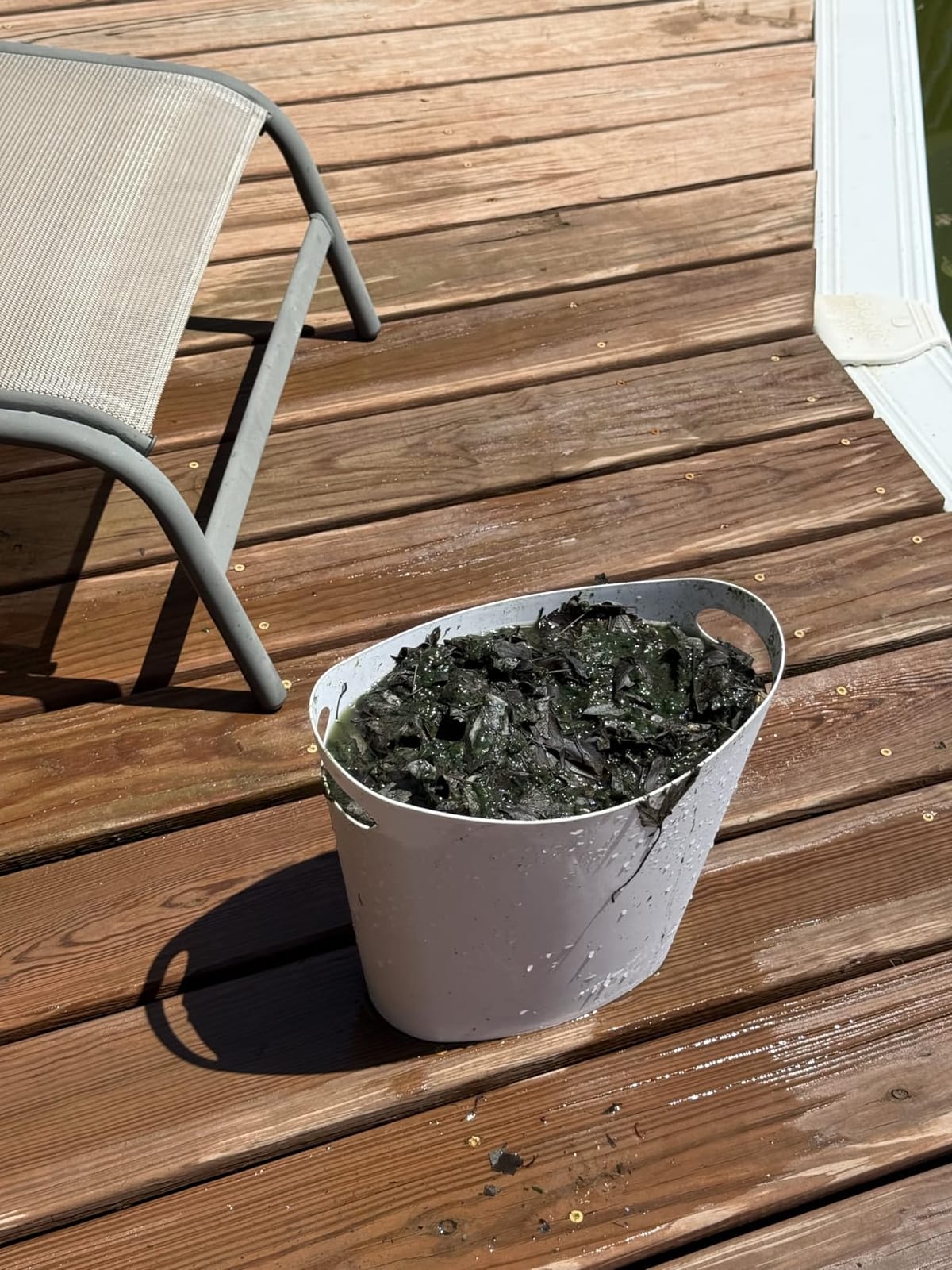
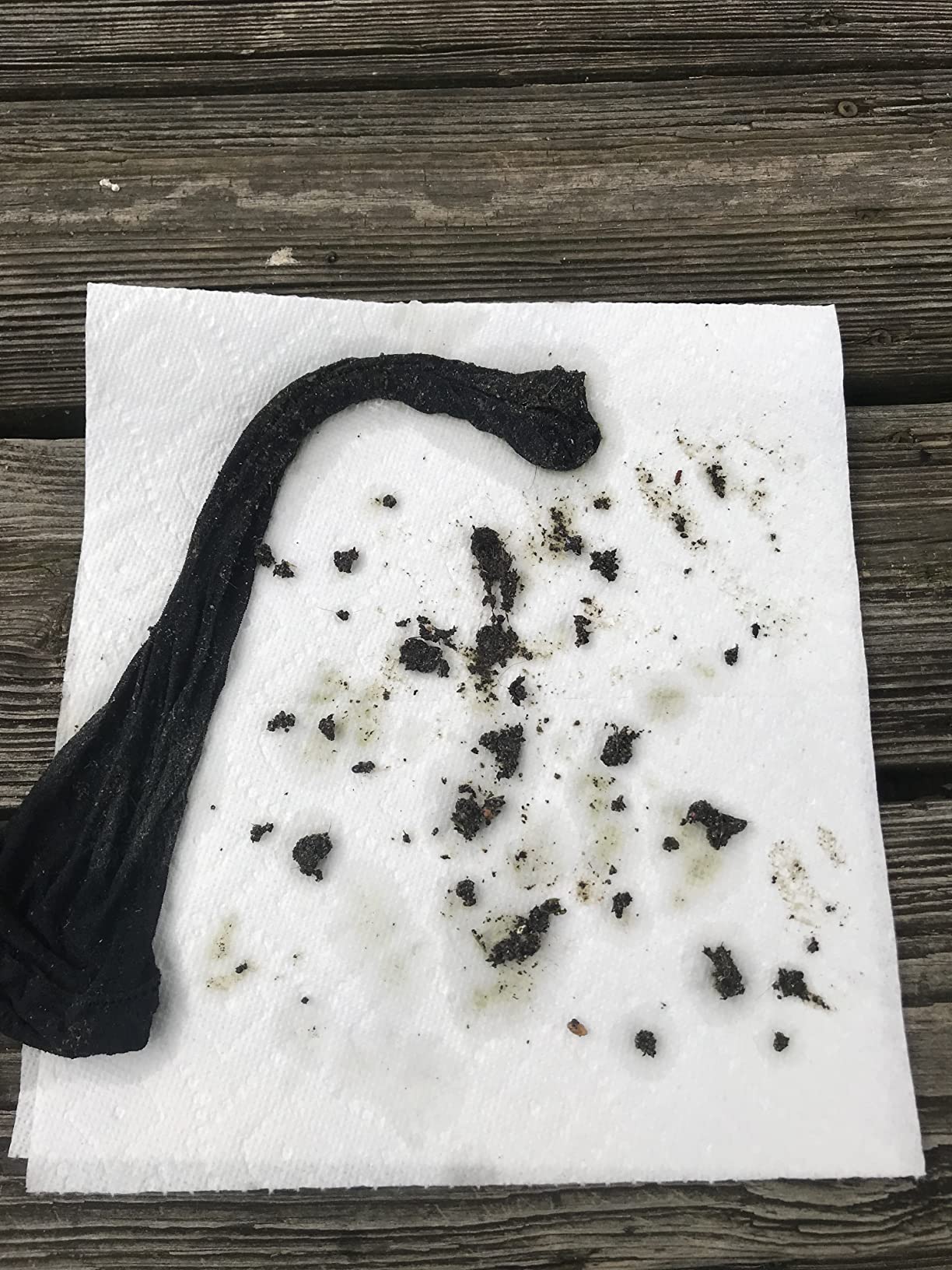
Expect to empty the bag often. A single reusable all-purpose mesh bag is included, and its capacity is realistic rather than generous, so plan on bringing debris to the edge every few passes during peak fall.
What you need to know before buying?
A pool pole is not included, so budget for a standard 1-1/4 inch pole and an ABS swivel handle with a quick-connect adapter. This is a normal extra cost shared by nearly every hose-attached leaf vac, and it is worth buying a decent one because a cheap pole makes a good head feel bad.
The bag ring is the part to watch. Owners report it releasing when lifting a full head out of the pool, which dumps your collected leaves straight back into the water. Lift slowly and keep the head level, and treat the ring as a consumable to check each season.
Who should skip it?
Skip it if fine silt and pollen are the problem. The standard mesh bag lets fine debris through, and you would need a finer bag or a liner to catch it. This is a leaf tool, not a filtration tool.
Skip it if you refuse to do manual work. There is no automatic mode here, and the entire value of this pick is the labor you save on driving a robot. If you want a set-and-forget cycle, the robotic picks are the better route even with a smaller basket.
3. POOLWHALE Leaf Rake Net: Best Pre-Treatment Skimmer
POOLWHALE Pool Skimmer Leaf Rake Net, Fine Mesh Deep Nylon Bag (No Pole)
17 inch fine mesh rake
14 inch deep nylon bag
Weighted base tab
Rounded liner-safe frame
Pros
- Highest rated pick in this roundup at 4.6
- Deep bag holds far more than a flat net
- Weighted base keeps the frame on the floor
- Light enough to sweep a whole pool
Cons
- Fine mesh develops holes on a 9 to 12 month cycle
- Metal pin clips can rust and stain
- Pole not included
- Bag fills fast after big storms
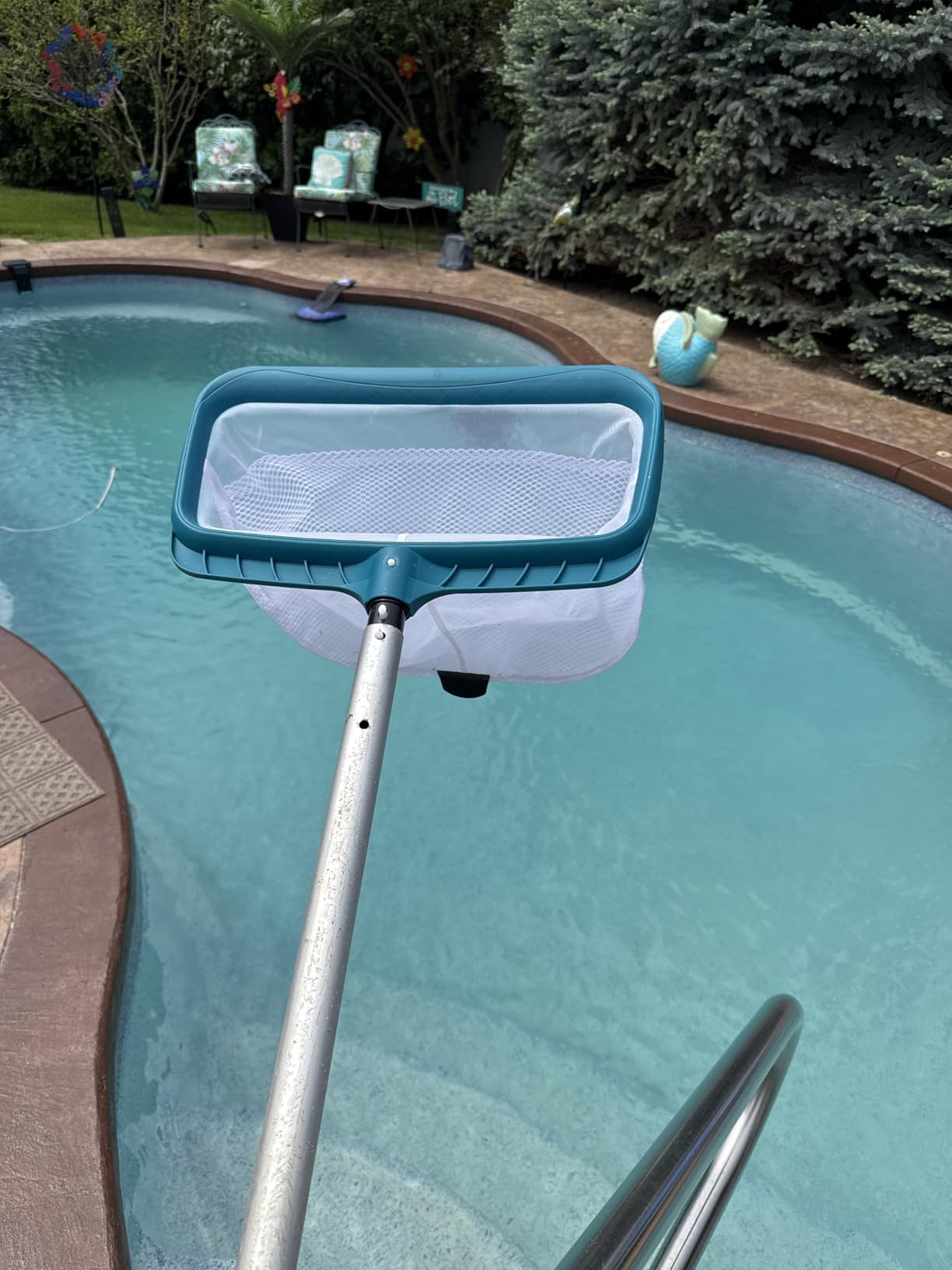
Before any robot or vac goes in the water, this is the tool that decides how the rest of the job goes. A 17 inch fine mesh rake with a 14 inch deep nylon bag sits flat on the pool floor and pulls the loose surface layer off before it can mat down. It is the cheapest intervention in this entire guide and it prevents most robot clogs.
It is also the highest-rated product here at 4.6 across 8250 reviews, with 80 percent five-star feedback. Owners consistently praise the mesh fineness and the depth of the bag compared with flat nets, and several describe repurchasing it after a year of heavy seasonal use.
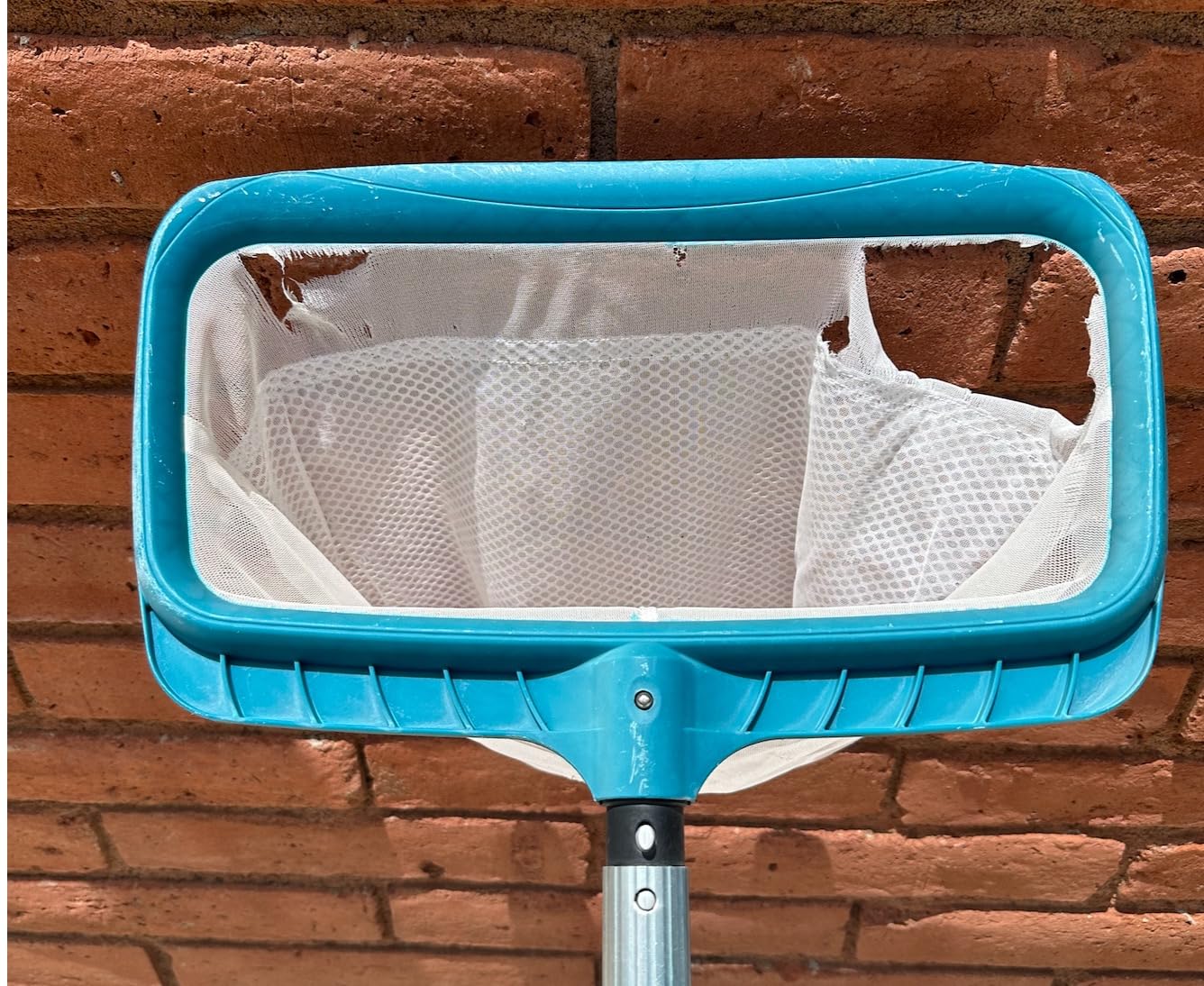
The weighted plastic tab matters more than it sounds. Most cheap nets pop up toward the surface mid-pass and stop collecting. This one holds the frame down while you work, which is the difference between a fast sweep and a frustrating one. Rounded frame edges will not mar a vinyl liner.
At 1 pound and 17.22 by 10.71 by 1.52 inches packaged, it stores in a closet and fits on any standard 1-1/4 inch pole. It works in hot tubs and spas too, which is where stray leaves usually end up first.
What you need to know before buying?
Budget for a pole, and expect a bag replacement roughly every 9 to 12 months under heavy Florida-style use. Fine mesh gives up first at the seams, and a degraded bag quietly starts returning debris to the pool.
Watch the hardware. Owners report the original metal pin clips rusting and staining nearby surfaces. A quick rinse and dry after each use, plus a swap to coated clips, keeps that from becoming a liner problem.
Who should skip it?
Skip it as your only cleaner. A rake lifts the surface layer, but it does not stir settled silt, scrub walls or reach the deep end floor on its own. Think of it as stage one in a two-stage plan, not a replacement for a vacuum or robot.
Also skip it if you have no pole and no intention of buying one. Everything here is manual, and owners with large wooded lots usually pair this with a powered vac for the actual haul rather than using the rake alone.
4. POOL BLASTER Cordless Leaf Vac: Best Cordless Spot Vac
POOL BLASTER Leaf Vac Cordless Hoseless Pool Leaf Vacuum & Skimmer, Battery-Powered Swimming Pool Leaf Catcher with Heavy Duty Mesh Bag, for Inground and Above Ground Pools, by Water Tech
Cordless and hoseless
Up to 3 hour runtime
Extra-large leaf bag
1.8 lb unit
Pros
- No hose and no link to the filtration system
- Wide-mouth spiral inlet grabs most leaves in one pass
- Large bag reduces emptying stops
- Leaves pH and chemistry untouched
Cons
- Battery compartment seal is the weak point over time
- Eats 8 AA batteries every few sessions
- Weak on acorns and small rocks
- Long stems can jam the intake
The reason this category exists is convenience. A hose-attached leaf vac needs a garden hose reaching the pool, and a cordless one does not. This unit is cordless and hoseless, runs on 8 AA batteries for up to 3 hours, and adds no water to the pool, so your chemistry stays exactly where you left it.
Owners frequently report draining pools holding thousands of leaves in minutes when this works as intended. The extra-large all-purpose bag is the reason, since it cuts down on the emptying stops that make manual leaf work miserable.
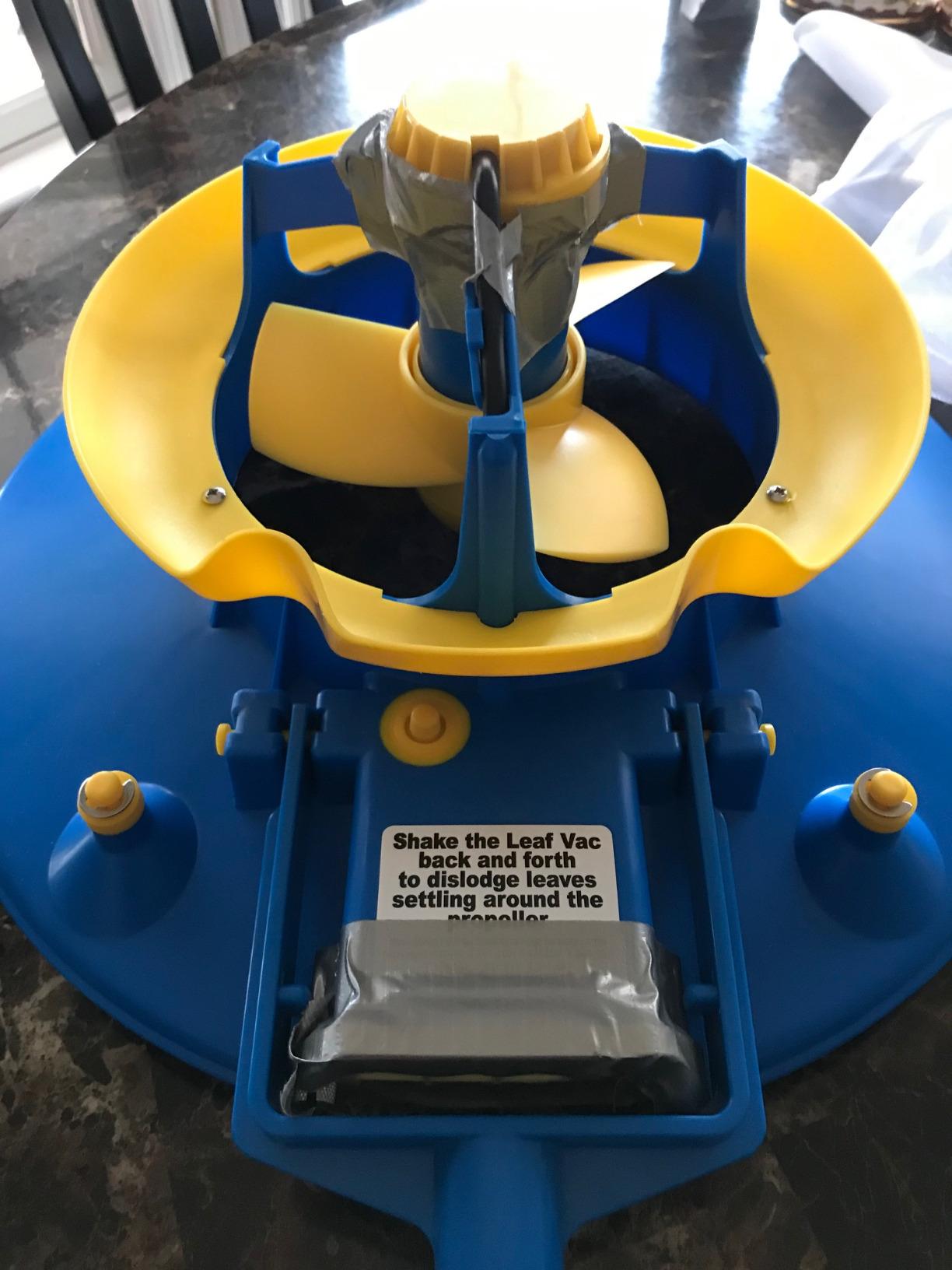
At 1.8 pounds and 21.25 by 15 by 7 inches, it can be used by hand or on any standard telescopic pole, which makes it usable by a non-swimmer working from the deck. That is a real advantage over the hose models.
The wide-mouth spiral inlet design is what separates it from a skimmer net. It takes most leaves in a single pass instead of requiring repeated sweeps, and the rollers and propeller keep debris moving toward the bag rather than settling in the throat.
What you need to know before buying?
The failure mode to understand is water in the battery compartment. The 13 percent one-star share of reviews concentrates here, with long-term owners describing motor failure after roughly 12 to 18 months. Keep the compartment dry, and treat any corrosion early rather than hoping through a second season.
Also know the battery math. Eight AA batteries cover roughly two cleaning sessions, so AA consumption becomes a real line item across a fall. The battery type is alkaline, and replacements are easy to find, but you will go through them.
Who should skip it?
Skip it for hard debris. Suction is not strong enough for acorns or small rocks, and long-stemmed oak leaves can catch on the internal motor stabilizers and jam the intake mid-pass, which means opening the unit up on the pool edge.
Skip it if you already have a booster pump and a working hose vac. You would be duplicating capability for a spot job, when the hose model covers leaves for a fraction of the cost and never needs batteries.
5. Enhulk Cordless Pool Vacuum PC10: Best for Above-Ground Pools
Pool Vacuum for Above Ground Pool with a Telescopic Pole, Running time up to 1H, Handheld Rechargeable Pool Cleaner with Powerful Suction up to 18.5 gallons/min, Ideal for Leaves & Debris, PC10
20V 40W cordless motor
Up to 18.5 GPM suction
60 minute runtime
7.3 ft telescopic pole
Pros
- Strong cordless suction for leaves
- twigs and sand
- About 60 minutes covers a typical residential pool
- Recharges fully in about 1.5 hours
- Two mesh grades included
- No crouching at the pool edge
Cons
- About 60 minutes of runtime only
- Filter bags are small at 1.5 liters
- Must be dried after every use
- Will not lift rocks
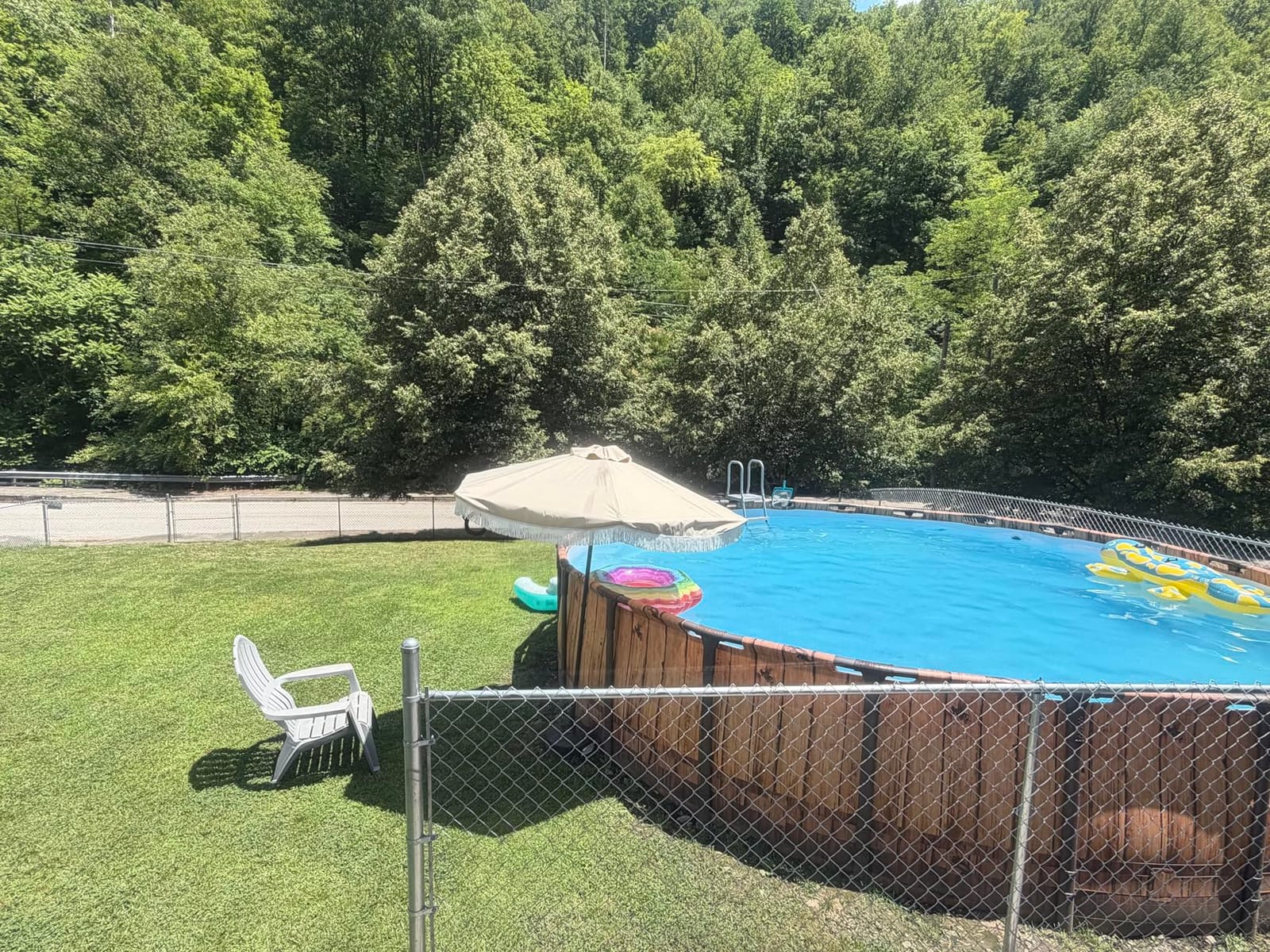
Above-ground pools get skipped by most robotic recommendations because wall climbing and navigation are irrelevant on a flat liner floor. This cordless unit sidesteps the whole problem. You push the head across the bottom yourself, and the 7.3 ft telescopic pole means you never have to crouch at the edge.
The motor is 20V and 40W with flow up to 4200 L/h, roughly 18.5 gallons per minute. That is genuine suction rather than a trickle, and it lifts leaves, twigs and sand off the liner without any hose or power connection at the poolside.
Runs about 60 minutes on five 2000mAh lithium cells and recharges in around 1.5 hours, which reviewers single out as among the faster cycles in this category. The 2-year manufacturer warranty is also longer than most handheld competitors carry.
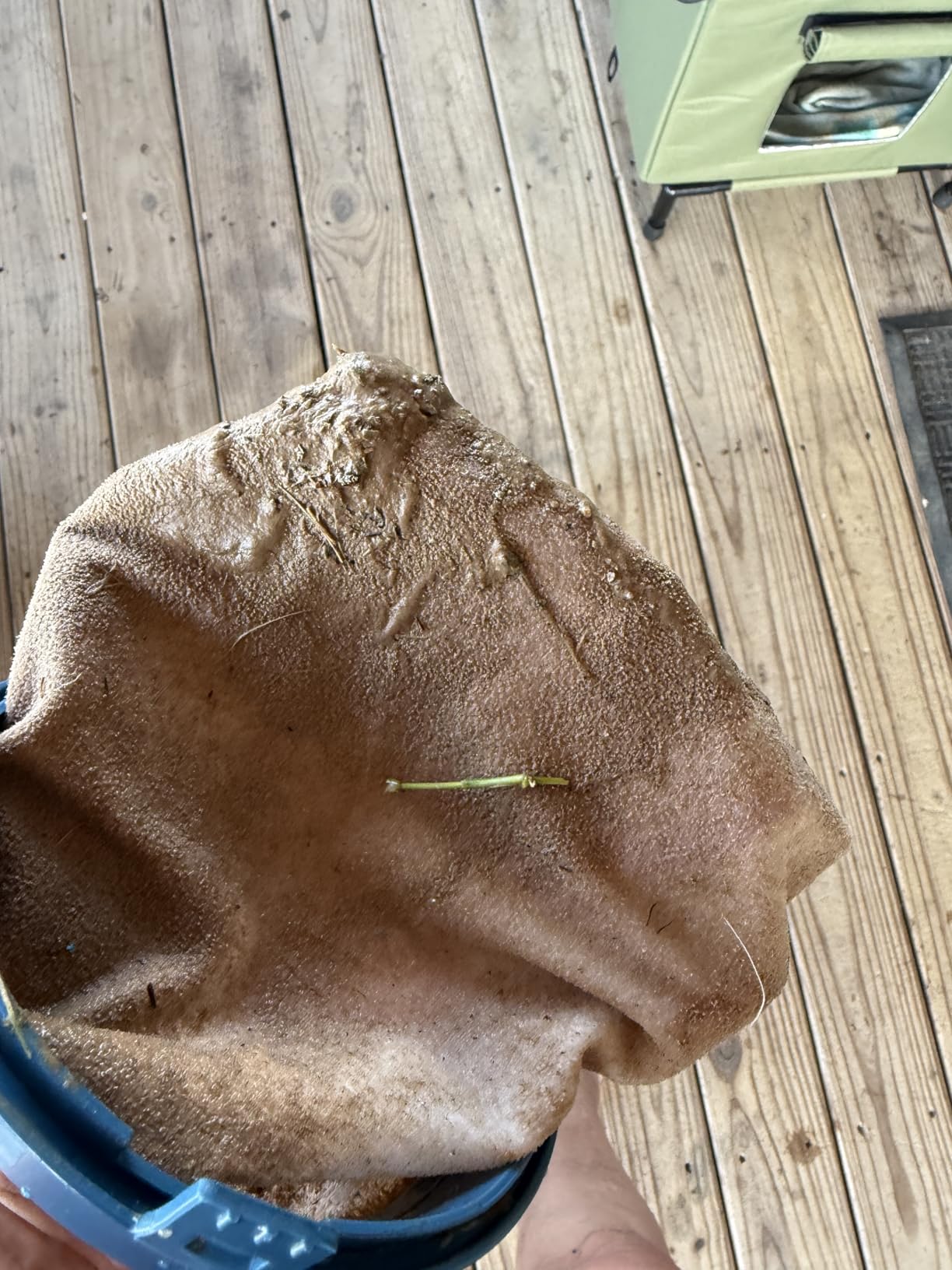
Four reusable filter bags ship in the box, two 180 mesh and two 500 mesh. Run coarse for leaf day and fine for the sand that settles on an above-ground liner through summer.
What you need to know before buying?
Runtime is the constraint. At about 60 minutes per charge, larger pools need a mid-session recharge, so plan the route and park a charging spot near the pool rather than discovering the dead battery in the deep end.
Drying after every use is not optional with any cordless pool vacuum, and this one carries 36 watt-hours of lithium plus exposed electronics. A damp cloth wipe and a dry bag prevent the corrosion that shortens cordless vac lifespans.
Who should skip it?
Skip it if you need to pick up rocks or heavy debris. This is a leaf and sand tool, and reviewers are consistent that hard objects are out of scope.
Skip it for very large above-ground pools with big leaf loads. The 1.5 liter bags need frequent rinsing, and the runtime is the shortest in the cordless group. Larger setups are better served by a bigger-capacity cordless unit with a longer charge.
6. U.S. Pool Supply Leaf Terminator 15 inch: Best Hose Vac for Big Pools
U.S. Pool Supply Professional Swimming Pool Leaf Terminator Vacuum – 15″
15 inch ABS body
8 pressure jets
3 perimeter brushes
Two leaf bags included
Pros
- Perimeter brushes are actually installed and help suction
- 15 inch body covers a lot of ground per pass
- Two bags so one is always dry
- Hose-driven with nothing to maintain
- Mar-proof bumper protects vinyl
Cons
- No pool pole included
- Suction drops if hose pressure is low
- Head can flip on large pools
- No shutoff at the head
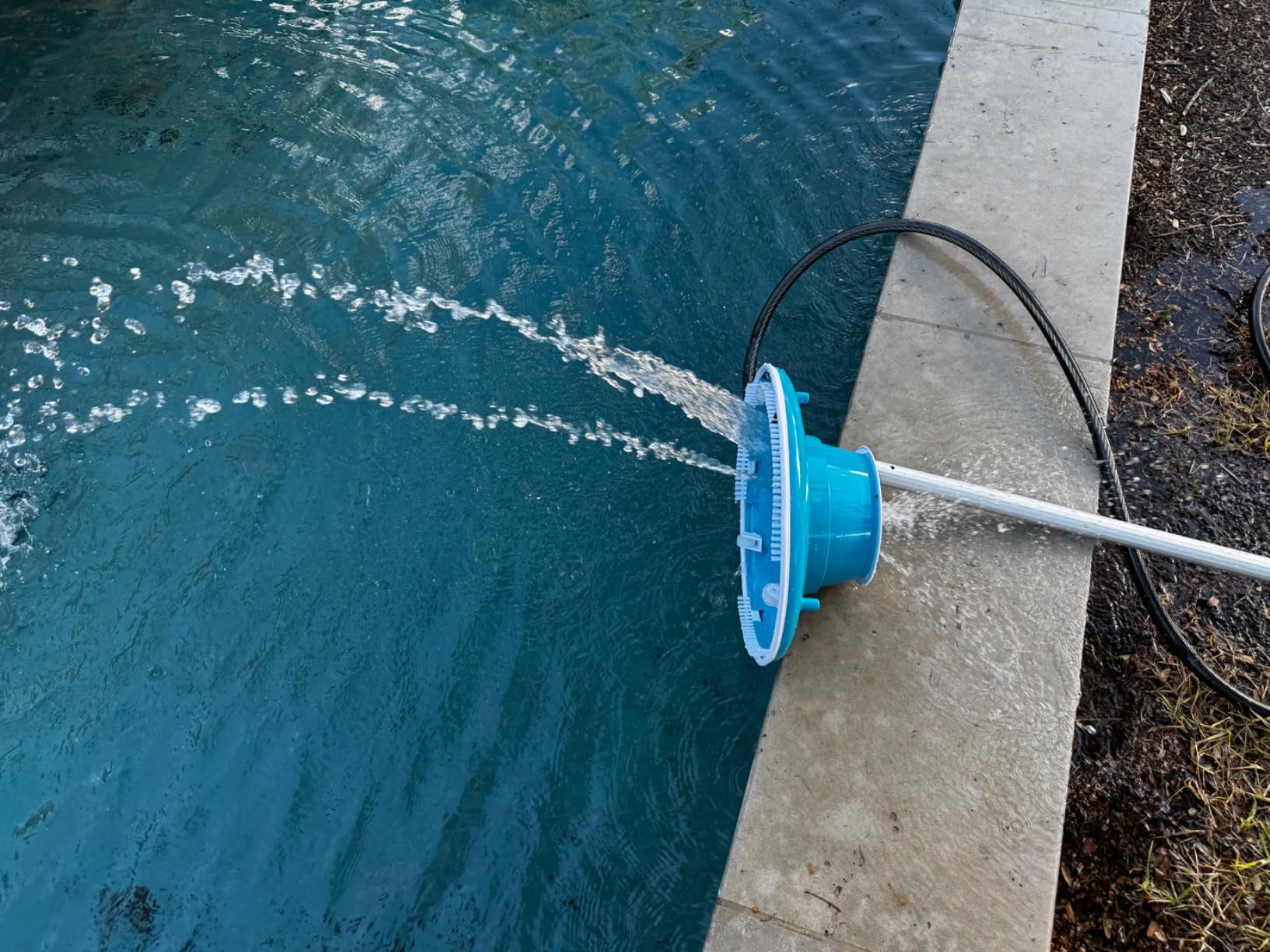
Coverage per pass is the reason this one earns a spot over the smaller hose heads. At 15 inches across, it moves a lot of pool floor in a single sweep, and the 8 integrated pressure jets pull leaves into the bag as you go. On a large in-ground pool, fewer passes means less time standing in the water.
The detail that separates it from cheaper heads is the perimeter brushes. Three are installed along the rim, and they loosen debris from the floor and liner rather than just sealing against it. Reviewers specifically credit that difference in suction over the pool floor.
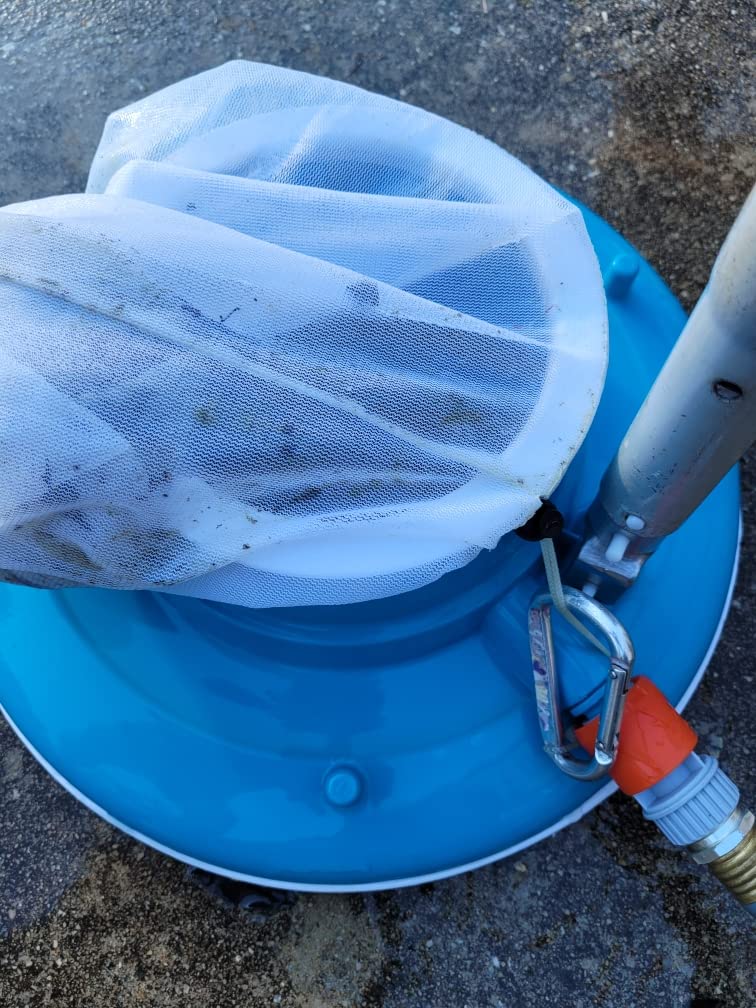
Two reusable large all-purpose leaf bags are included, which sounds minor until you are emptying debris at the pool edge. Having a dry bag ready removes the most annoying stop in the whole process. Load capacity is listed at 5 pounds.
The 1-year warranty and the durable aluminum handle that fits any standard pool pole keep this in the practical tier. There is nothing electronic here to fail, which is why this style keeps working for a decade.
What you need to know before buying?
Suction is entirely dependent on your hose pressure. Owners running a garden hose with restricted flow report weak performance, so test the head before a leaf event rather than during one. A dedicated hose section with full pressure makes a measurable difference.
Two smaller gripes come up: the head can flip or float when reaching the far side of a large pool without enough hose in the water, and there is no water shutoff at the head, so you walk back to the spigot to stop the flow.
Who should skip it?
Skip it if you want zero manual effort. Every pass needs you, and on a large pool that is real physical work. If your goal is to avoid touching the pool, a robotic cleaner covers the floor even if the basket is smaller.
Skip it for fine debris work. These are all-purpose mesh bags built for leaves, and finer particles will pass through. Pair it with a rake net for pre-clearing and a fine filter in the robot for the finish.
7. Teguy Cordless Pool Vacuum 18.5 GPM: Best for Sand and Fine Debris
Cordless Pool Vacuum with Telescopic Pole, 18.5 GPM Powerful Suction, 1.5H Supercharge Technology, Handheld Pool Vacuum Cleaner for Above Ground/Inground Pools, Hot Tubs, Blue
Cordless 40W motor
Up to 18.5 GPM suction
IPX8 waterproof
Auto shut-off when dry
Pros
- Strong suction for sand
- pebbles and small leaves
- Fully cordless with no hose across the patio
- One charge covers a full pool cleaning
- Filter bags pull and rinse easily
- Quiet enough for older users
Cons
- Included pole is too short for deep ends
- Better suited to small debris
- All bags are 500 mesh with no coarse option
Where the previous cordless pick is built around leaf volume, this one leans into fine debris. The 40W motor delivers up to 18.5 gallons per minute, and the 500 mesh filter bags hold sand, small pebbles and grit that a coarse leaf mesh would push straight back into the water.
Reviewers report it replacing hose-and-skimmer setups for routine cleaning entirely. The cordless design means nothing is snaked across the pool or patio, and the IPX8 waterproofing with automatic shut-off after one minute out of water addresses the water-damage risk that haunts this category.
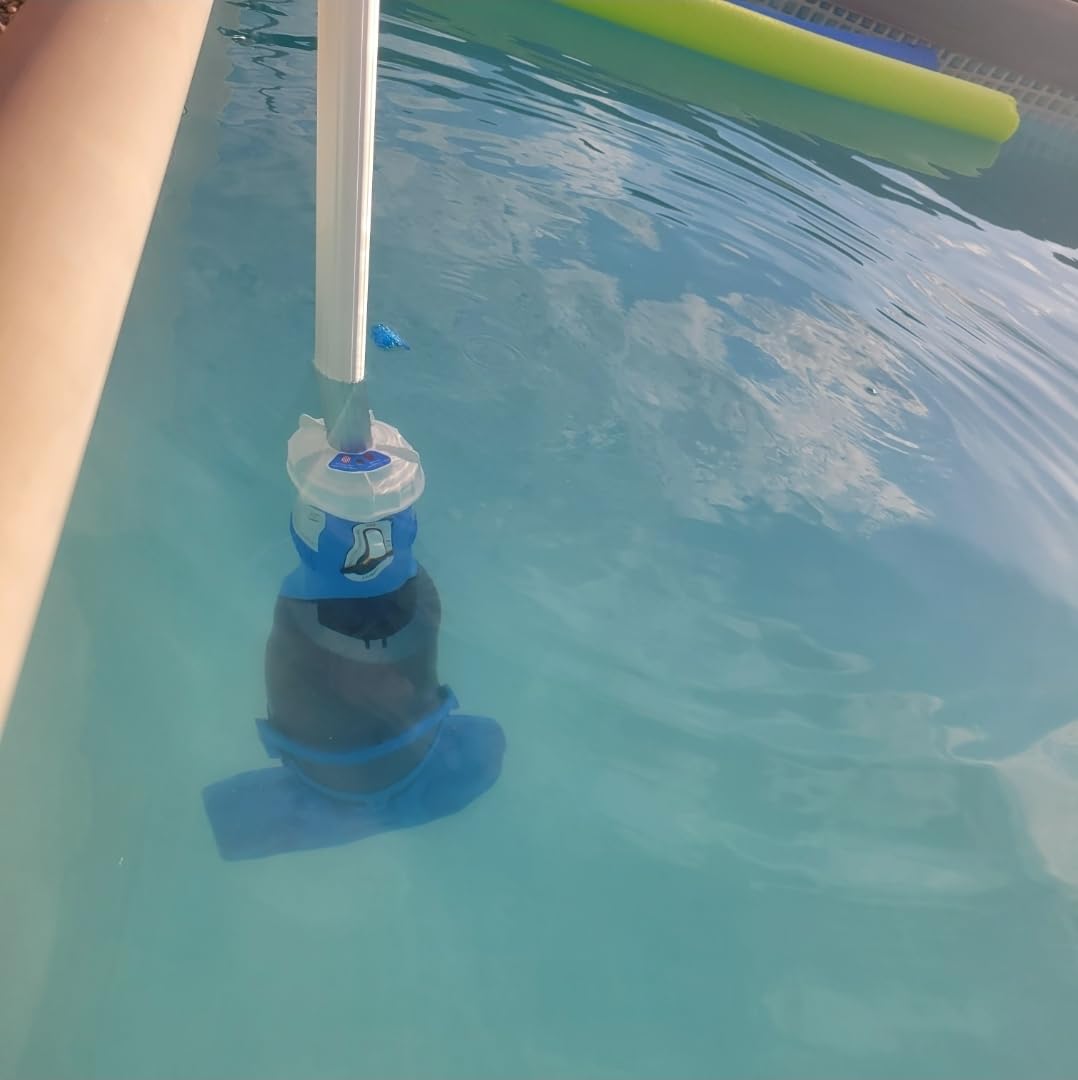
Battery performance is the sleeper feature: five 2000mAh lithium cells give about 60 minutes of continuous runtime with a full charge in 1.5 hours. Assembly takes about 3 minutes, and the unit runs quietly, which matters if you are cleaning at night.
It weighs 6 pounds and measures 28.35 by 9.17 by 5.91 inches, and it works with any standard pool pole in addition to the included 7 ft telescopic one. The 1-year warranty is the shortest guarantee among the cordless picks here.
What you need to know before buying?
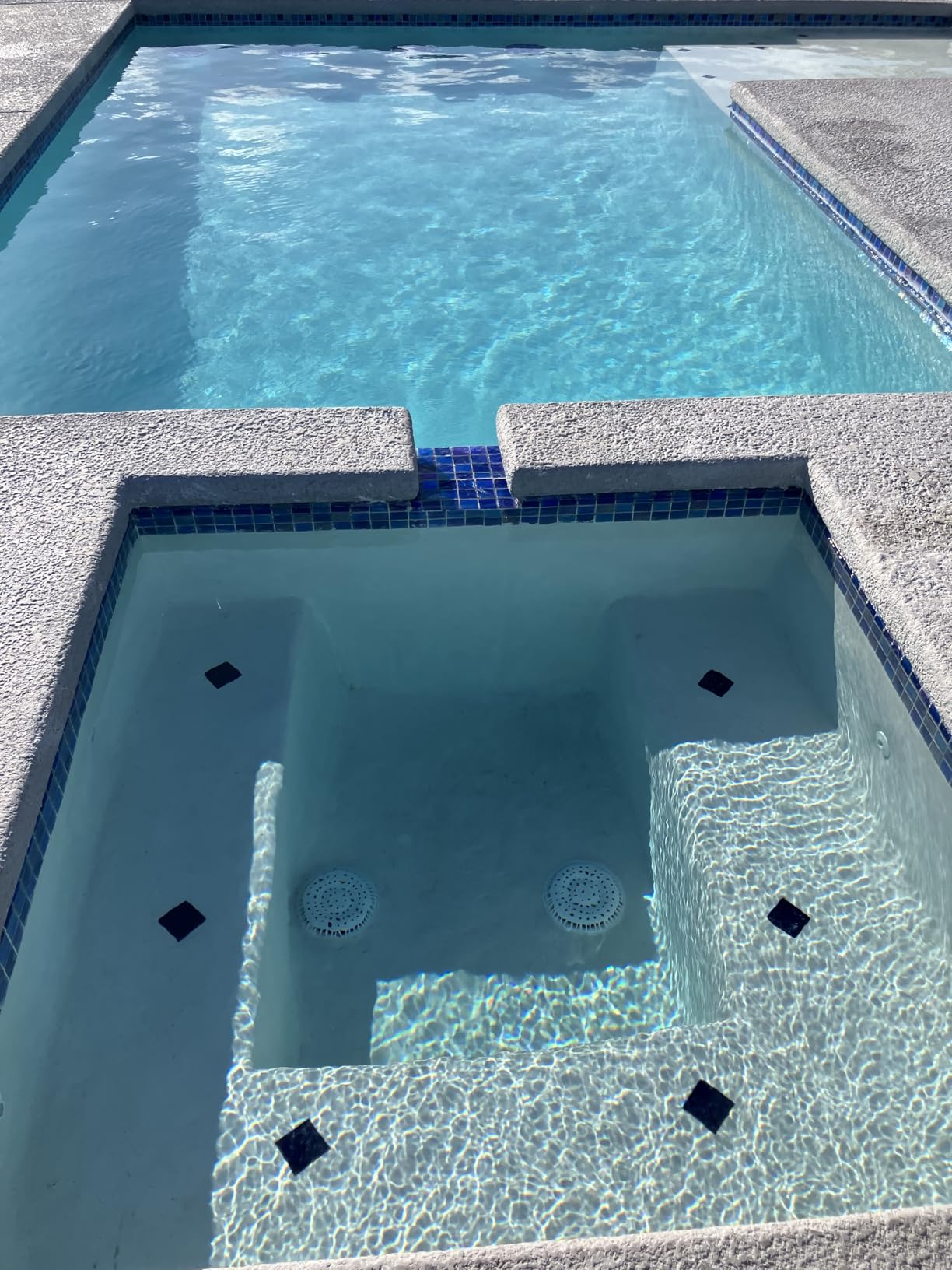
Measure your deep end before ordering. Owners report the included telescopic pole running too short for deep sections, and it can slide down under suction pressure. Buying a longer compatible pole is a five-minute fix that removes the most common complaint.
All four included bags are 500 mesh. There is no coarser option in the box, so if your load is bulky leaves, you need a separate leaf catcher net. This is a fine-debris machine that happens to handle small leaves, not a leaf specialist.
Who should skip it?
Skip it if large leaves are your main problem. Big wet leaves defeat fine mesh by sealing against it, and you will spend the session bagging leaves while the sand stays where it was.
Skip it for very large pools. One charge covers a typical residential pool, and a bigger installation means planning recharge breaks into the middle of the work rather than finishing in one session.
8. KOKIDO XV910 Rechargeable Leaf Vac: Best for Pool Opening Cleanups
KOKIDO Rechargeable Heavy Duty Pool Leaf Vacuum Cleaner, Commercial Power Suction for Pool Opening, Standard and Fine Filter Bags, for Larger Leaves and Debris, Inground and Above Ground Pools XV910
62 GPM Powerblade flow
1.72 gallon debris bag
250 and 75 micron bags
5 inch inlet
Pros
- Highest flow rate in this group at 62 GPM
- 1.72 gallon bag is the largest here
- Switchable coarse and fine filter bags
- IPX8 sealing and auto shut-off
- Cleans about 200 sq ft in 5 minutes
Cons
- 5 hour charging time is the longest here
- Inlet clogs on debris longer than 7 inches
- Fine bag is not for algae or silt
- Not suited to very large above-ground leaf loads
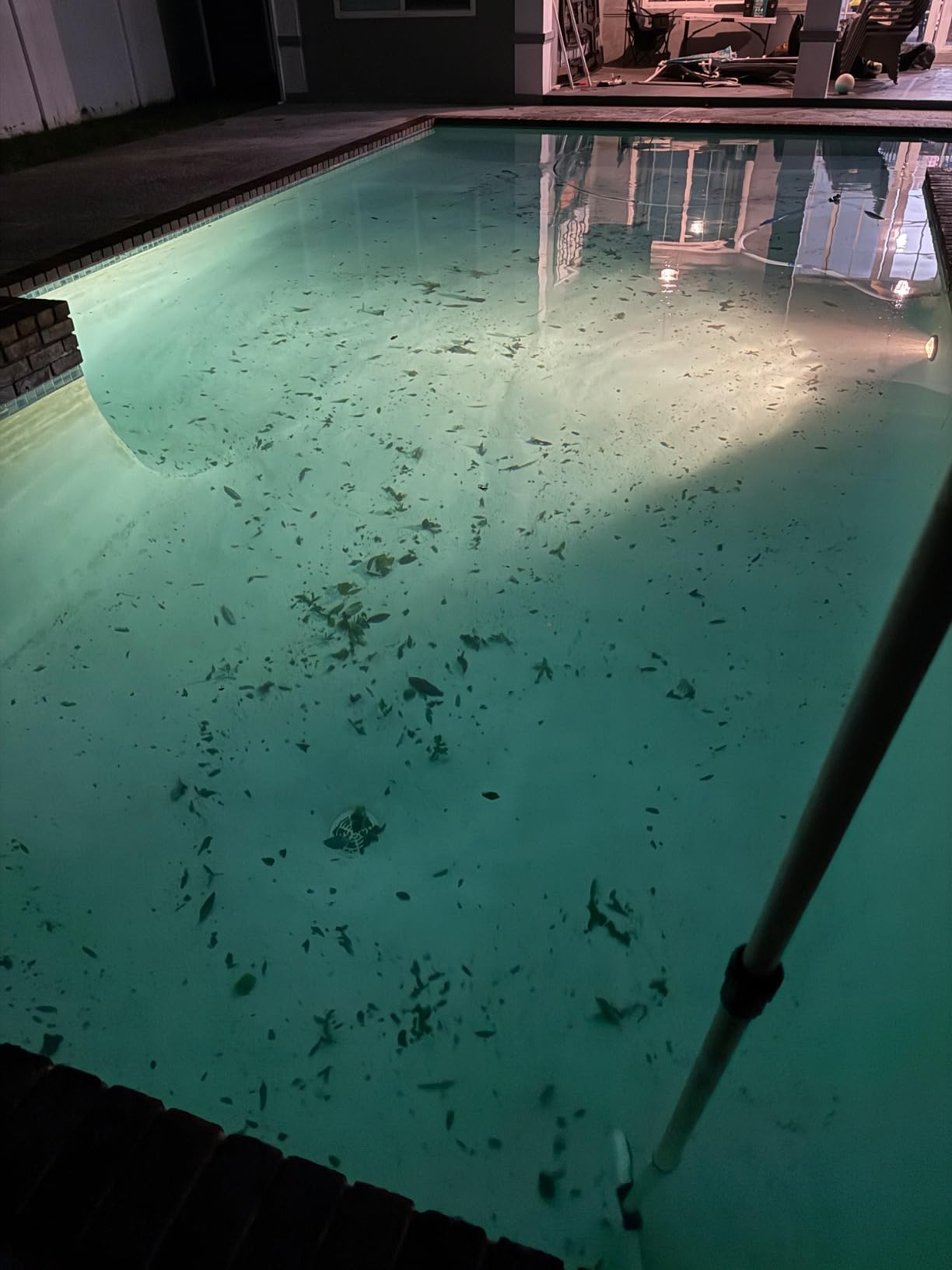
Pool opening is a different problem from weekly leaf maintenance. You are pulling a winter of settled debris out of a pool that has sat covered, and you want raw flow with the biggest bag you can get. This is the pick for that job, with 62 GPM of Powerblade flow and a 1.72 gallon mesh bag that is the largest in this group.
The 5 inch inlet is sized for large leaves, and scrubbing bristles around the intake loosen what is stuck to the floor. Rated performance is roughly 200 square feet in about 5 minutes, which is what makes an opening-day timeline realistic.
Two filter bag grades are included, 250 micron standard and 75 micron fine, so you can switch between coarse leaf collection and finer sand without buying a second tool. IPX8 waterproofing and an auto shut-off when not submerged reduce the water damage risk common to cordless pool vacs.
Runtime is 75 minutes per charge, and it works with standard telescopic poles, though one is not included. At 280 g of battery weight and 16.73 by 6.69 by 12.6 inches, it stays manageable in one hand.
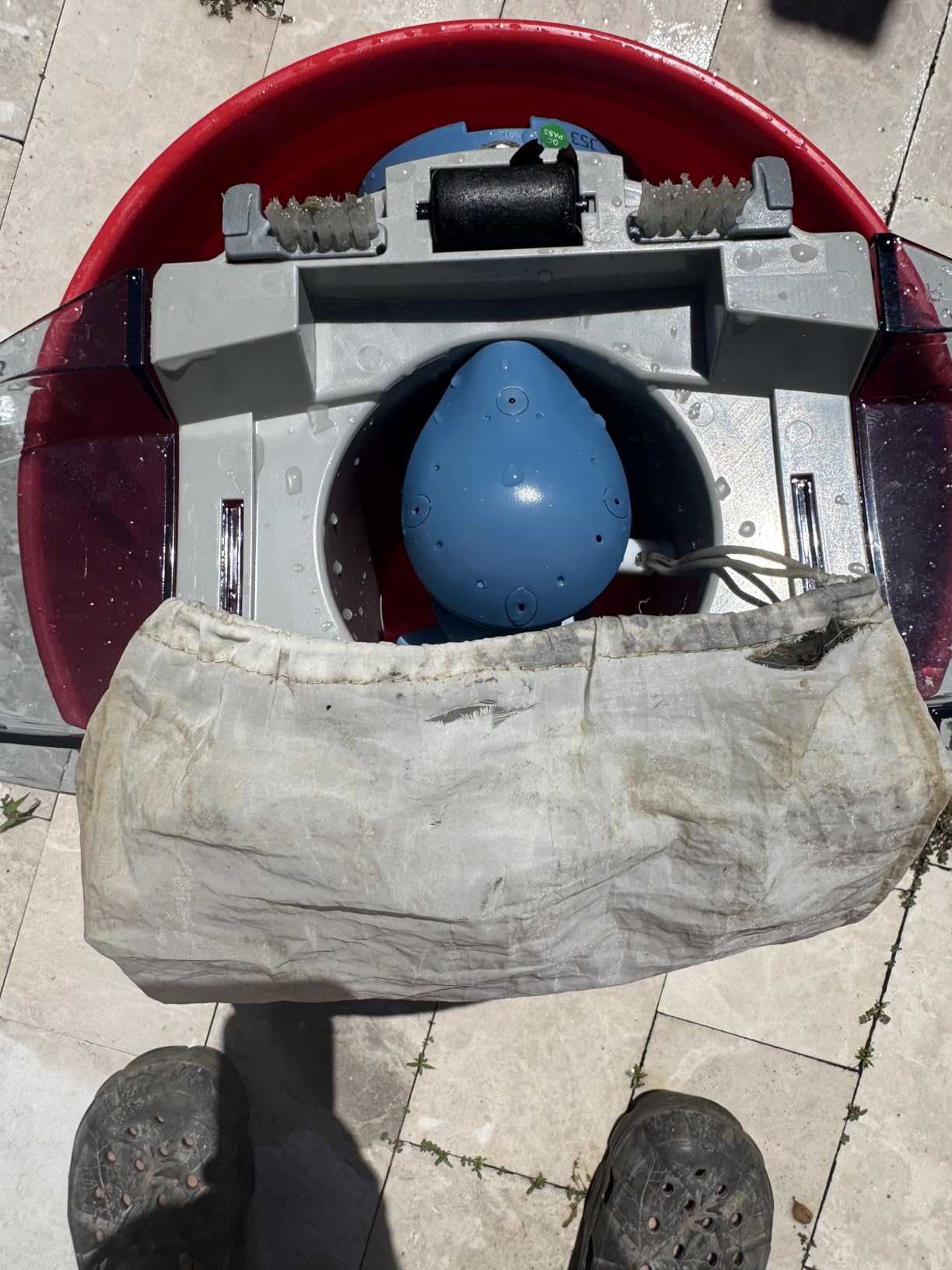
What you need to know before buying?
The 5 hour charge time is the longest in this roundup by a wide margin. Treat it as an overnight tool, not a grab-and-go. If you want a same-day second session, the shorter-cycle cordless units are the better fit even with a smaller bag.
There is a hard 7 inch debris ceiling. Leaves or hair longer than that will clog the inlet, which is fine for most yards and a real limit if you have large maple or pecan debris. The 75 micron bag is for fine grit, not algae or silt.
Who should skip it?
Skip it if your pool is above-ground with heavy leaf volume. Reviewers flag it as a poor fit for that combination, since the design targets in-ground opening debris and a shallow liner pool fills the bag faster than the inlet can clear it.
Skip it if you already own a good hose leaf vac. The added capability here is speed and bag size for large debris events, and on a small pool a hose head does the same work with no charging at all.
9. WYBOT C1 Cordless Robotic Pool Vacuum: Best for Full Automation
WYBOT C1 Cordless Robotic Pool Vacuum for Inground Pools
Floor, walls, waterline, stairs
App route mapping
180 micron basket
120-150 min runtime
Pros
- Cleans floor
- walls
- waterline and stairs in one unit
- Smart navigation rarely sticks on complex shapes
- Basket lifts out and rinses under a hose
- Runtime covers a full cycle with wall work
Cons
- Weighs about 10 kg and is awkward to lift out
- 3 hour recharge needs planning
- Proprietary power connector
- Filter basket feels flimsy
If the deciding factor is that you do not want to touch the pool at all, this is the cordless robot that covers the most surfaces. Floor, walls, waterline and stairs in a single unit, driven by triple motors that climb 45 degree slopes with obstacle avoidance, and route mapping you can adjust from the app.
The 180 micron top-load filter basket is coarse enough for leaves and acorns while still catching the hair, calcium and fine debris that skimmers leave behind. It lifts out and rinses under a hose, which is the feature most owners mention first.
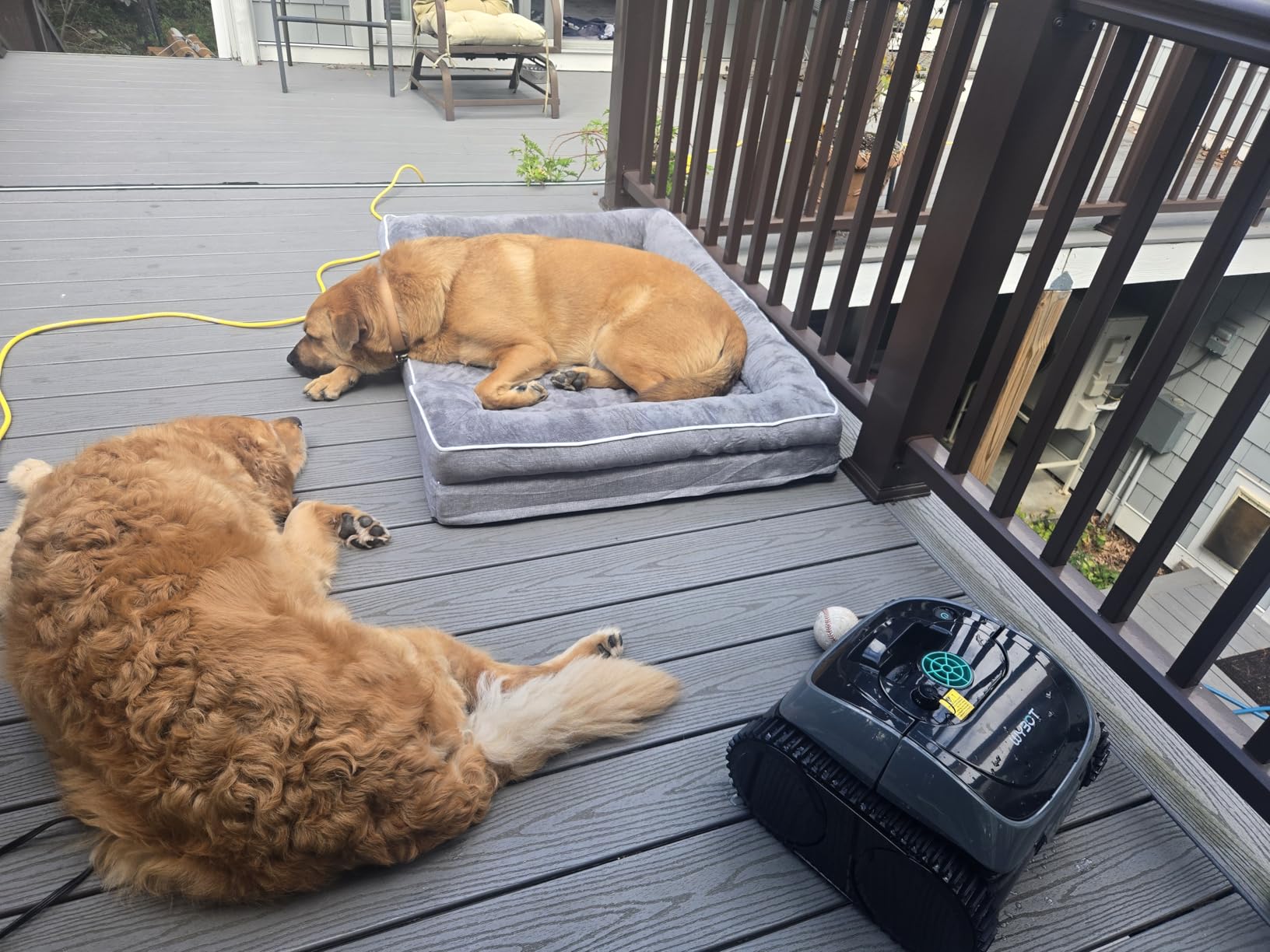
Capacity is where it separates from smaller cordless robots: pools up to 1,614 sq ft and 9.8 ft depth, with 120 to 150 minutes of runtime and a 3 hour recharge. The 2-year warranty with lifetime technical support is the longest coverage among the cordless options here.
An independent water pump motor delivers roughly double the suction of a standard pump setup, which is the mechanical reason it handles sand and debris as well as it does on this list.
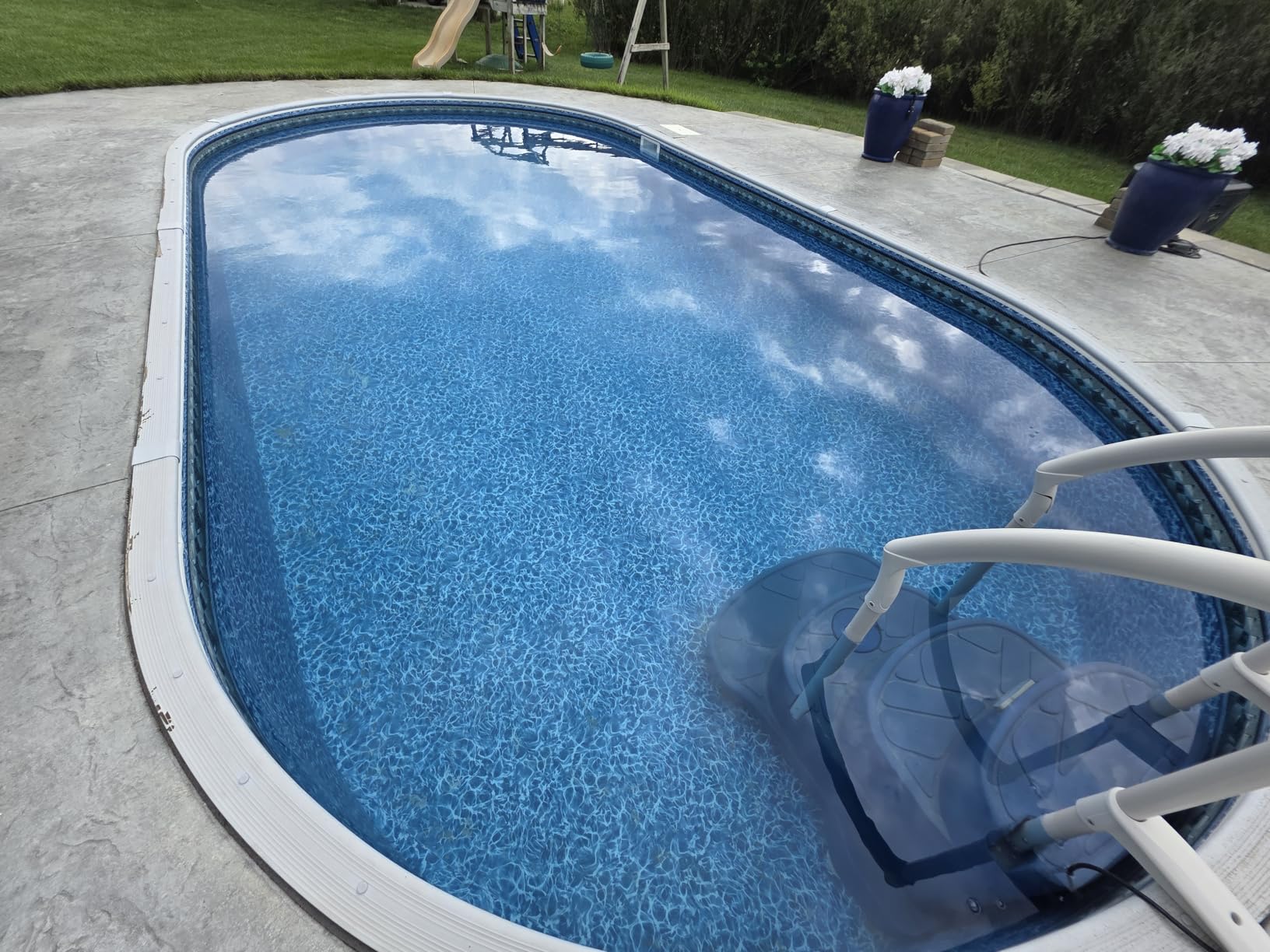
What you need to know before buying?
Weight is the practical issue. At 10.32 kg and 17 by 13 by 18 inches, lifting it out of the pool is a two-person job for some owners, and every empty-filter cycle means doing that again. Plan your filter location close to the pool edge.
Check clearance before buying. At 18 inches tall, it will not fit under a typical pool deck overhang or a low slide, and owners on shaped pools should confirm the geometry works with the app route mapping.
Who should skip it?
Skip it if leaf volume is your only concern. The 180 micron basket is a coarse mesh by design, and on a heavy autumn load you will still be emptying it mid-cycle. The Nautilus is cheaper for the same job, and a dedicated leaf vac handles the volume better.
Skip it if you dislike proprietary hardware. The power connector is not a standard plug, and one owner reported a battery that stopped charging with slow support on the exchange. Keep that risk in mind before committing during peak season.
10. POOLAZA Manual Vacuum with 56 inch Pole: Budget Pick for Small Pools
POOLAZA Manual Pool Vacuum with Double Fine Mesh Bags & 56″ Aluminum Pole
Hose-powered suction
56 inch pole included
Double mesh bag set
Smooth liner-safe edges
Pros
- Lowest all-in cost since the pole is included
- Two mesh grades in the box
- Light at 1.1 lb and stores compactly
- No batteries or charging
- Rinses clean between cycles
Cons
- Plastic fittings feel cheap and can come apart
- Both bags let fine silt back through
- Will not pick up pebbles or rocks
- Hose fitting can strip during assembly
This is the pick for a small above-ground pool, a kiddie pool or a spa where leaves accumulate in a shallow pocket. The 56 inch six-section aluminum pole is included, which is what separates it from the other hose-attached options that require a separate pole purchase, and it makes the all-in cost the lowest here.
It is rated at 3.9 across 1001 reviews, the lowest score in this roundup, and the reason is straightforward. This is a basic tool. It does the job on a small pool, and it does not pretend to be more than that.
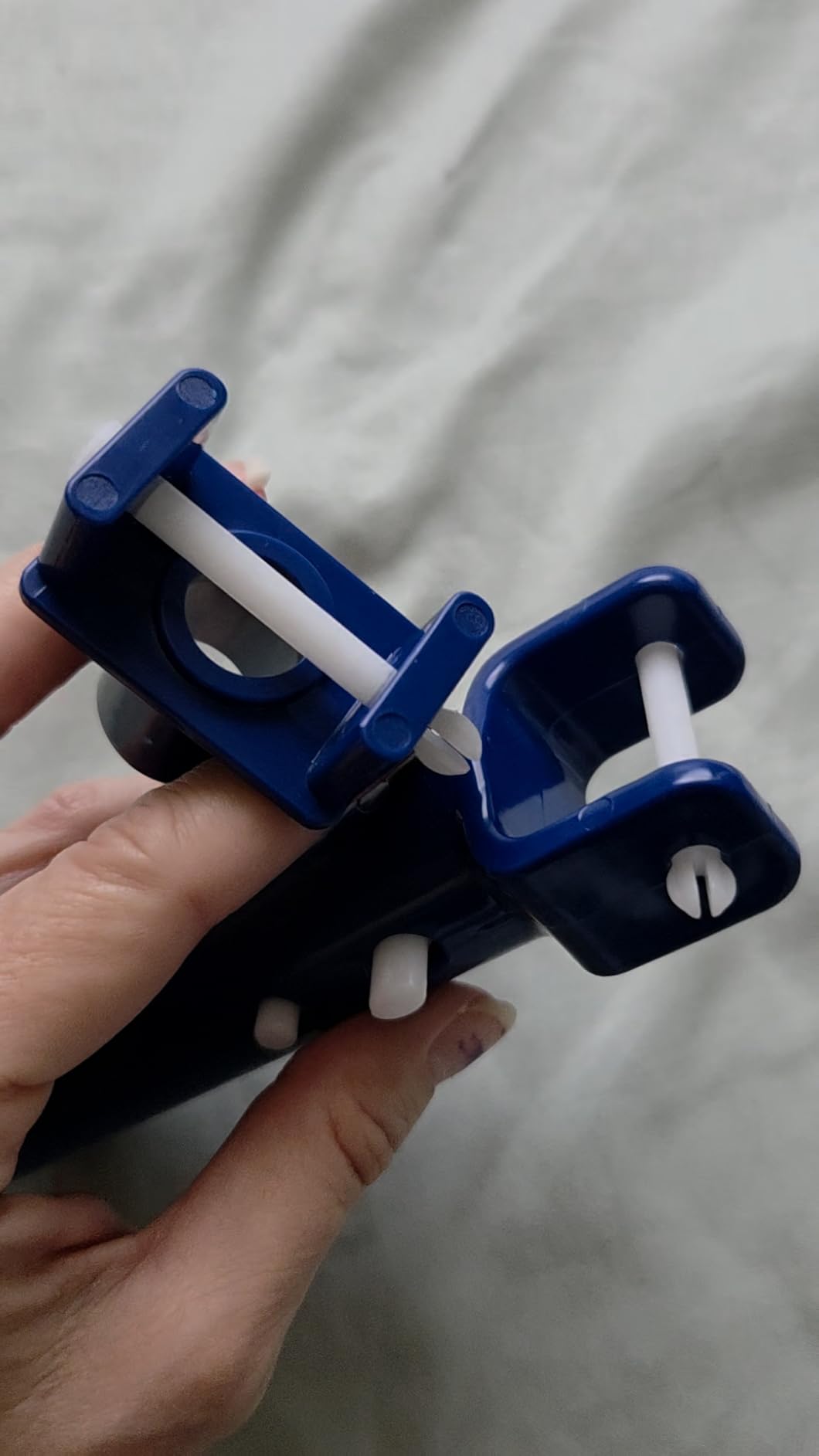
The double mesh bag system gives you a standard mesh bag and an ultra-fine one, with twist-lock attachment for a tighter seal. Load capacity is 2.2 pounds, it weighs 1.1 pounds, and smooth edges are designed to protect vinyl liners.
It ships with a garden hose adaptor and a spare EZ Clip pole adapter, so assembly is straightforward. The whole unit is 7.3 by 2.55 by 56 inches, which means it stores in a closet between seasons.
What you need to know before buying?
Fit and finish are the weak points. Owners note the plastic body and fittings feel cheap and can come apart if pushed hard, and the hose fitting can strip during assembly. Tighten by hand and check it before submerging rather than forcing it.
Know that neither bag truly filters fine particles. Reviewers describe it displacing silt rather than capturing it, which can cloud the water. If your pool sits under trees that shed fine debris as well as leaves, you will want a finer solution for the finish pass.
Who should skip it?
Skip it for a full-size in-ground pool. At 2.2 pounds of capacity, the emptying stops will outnumber the cleaning passes, and the light plastic build will show it over time.
Skip it if you have rocks or pebbles on the pool floor. It will not pick them up at all, and repeated passes just push them around the liner until you have to fish them out by hand.
How to Clear a Leaf-Choked Pool Before You Run Any Robot?
This is the step that decides whether an automatic cleaner succeeds or stalls, and it is the one most roundups skip. A robot with a narrow intake that meets a matted leaf layer will push that layer to the walls and stop, then sit there while you assume it is working.
Before you run anything automated, do all four of these steps in order:
1. Skim first. Run a surface skimmer or net through the pool until the surface is clear. Floating leaves are the easiest debris to remove and they are the ones that turn into a mat if they sit for two days.
2. Rake the floor. Use a deep-bag rake like the POOLWHALE pick on a standard pole. Work systematically from the deep end to the shallow end so you are not pushing leaves into an area you already cleaned.
3. Make one manual pass with a hose leaf vac. This is the step that removes the mat. Anything left behind is loose enough for a robot or cordless unit to pick up without clogging.
4. Then run the robot. Its job is now the fine layer of fragments, sand and silt underneath, which is exactly the job its filter is designed for.
During heavy fall, repeat steps 2 and 3 every few days rather than once a week. Wet leaves decompose into sludge fast, and sludge on a vinyl liner is a staining problem that no cleaner reverses.
For a one-off deep cleanout after a neglected winter or a storm dump, vacuuming to waste is worth considering. It bypasses your filter and sends debris straight out through the return, so you can keep cleaning without stopping to empty anything. You will need to refill the water level afterward and expect a heavier backwash or drain-and-hose session afterward.
What Actually Matters When You Buy a Pool Cleaner for Leaves?
Intake width beats filtration finesse for this job. A wide intake port lifts whole leaves off the floor, while a narrow one either passes them or seals against them. Mesh micron rating matters in the other direction: coarse media around 150 to 250 micron for leaves, acorns and twigs, and fine media in the 10 to 50 micron range only when you are chasing silt, pollen and calcium.
Bag volume decides how many stops you make. We saw owners with the same cleaner and very different experiences purely based on how often they emptied the bag. The larger the debris bag, the fewer times you are lifting heavy, wet debris out of the water and dumping it on the deck.
Top-load beats front-load for leaf duty, and the reason is practical rather than technical. A top-load basket lifts straight out and rinses under a hose without tools. That is the design that turns bag emptying from a chore into a five-second job, and it is why we rate the Nautilus CC Plus first overall.
Match the cleaner to your pool and your constraints. Above-ground pools need handheld or cordless tools because robotic navigation assumes an in-ground shell. Low pool clearance under a deck or slide rules out tall robots, and the WYBOT C1 at 18 inches is a common return. Homes without a booster pump installed rule out pressure-side cleaners entirely, which is why hose and cordless options dominate this list.
Finally, price one unit that lasts over two cheap ones. Forum consensus is consistent on this point: one heavy-duty tool that handles the full leaf season beats a robot with a small basket plus a manual vac, because you end up running both anyway. The running costs diverge too, since cordless and robotic units need charging time planned into your day while a hose vac needs only water pressure.
One related habit worth adopting from our other coverage is the same philosophy applied to a different problem, which is why we wrote about paddock cleaners for horse pastures and carpet cleaners for area rugs. The indoor side of the same match-the-tool-to-the-debris rule is covered in our steam cleaners for tile and grout and steam cleaners for upholstery guides. Match the tool to the debris, and match the debris to the season.
Frequently Asked Questions
Will a pool vacuum pick up leaves?
Yes, provided the intake is wide enough and the bag is large enough. Large wet leaves mat together on the floor, and narrow intake ports cannot lift that mat. Look for a wide intake port, a deep or oversized debris bag, and coarse mesh in the 150 to 250 micron range. Fine filter media is designed for pollen and silt, not leaves.
Will a pool robot pick up leaves, or just push them around?
On a leaf-matted floor, most pool robots push leaves rather than pick them up. A mat seals against the intake and the unit stalls or circles it. Clear the surface with a skimmer, rake the loose layer off the floor, make one manual hose-vac pass, and only then run the robot on the fine debris underneath.
What is the best way to get leaves out of your pool?
Work in four steps. Skim the surface first, rake the floor with a deep-bag net, run one manual pass with a hose-attached leaf vac to remove the mat, and then run a robot for the fragments underneath. Repeat the rake and manual pass every few days during heavy fall, because wet leaves break down into sludge that stains liners and feeds algae.
What is the best pool vacuum for cleaning a lot of leaves?
For high leaf volume, a hose-attached vac with a wide head and a deep bag, such as the 15 inch Poolmaster Big Sucker or the U.S. Pool Supply Leaf Terminator, handles far more debris per pass than a robot with a small basket. For pool opening cleanouts, a high-flow cordless unit with a 1.72 gallon bag cuts the number of emptying stops dramatically.
Is a leaf bag better than a large basket for a pool robot?
It depends on the debris. A bag is easier to lift out and empty without spilling, and a deep bag holds more before you stop. A large top-load basket is more durable and can be rinsed under a hose. For leaves specifically, a top-load basket that lifts straight out is the most convenient option, since emptying is the step that causes the most frustration.
Final Verdict
The best pool cleaners for leaves in 2026 come down to matching the tool to the volume of debris, not to the spec sheet. The Dolphin Nautilus CC Plus is our top pick for a reason: 13k+ reviews, dependable wall climbing and a top-load basket that empties in seconds without tools.
Pair it with the POOLWHALE rake for pre-treatment and you will avoid almost every clog complaint we saw in owner feedback. If you would rather skip automation entirely, the Poolmaster Big Sucker handles the same leaf load with no power source to fail. And for pool opening season, the KOKIDO XV910 offers the highest flow rate and the largest bag in this group.
Whichever route you take, run the pre-treatment steps before any automatic cycle, and empty the bag or basket after every single run. That habit alone prevents more leaf-related headaches than any model choice on this list.