
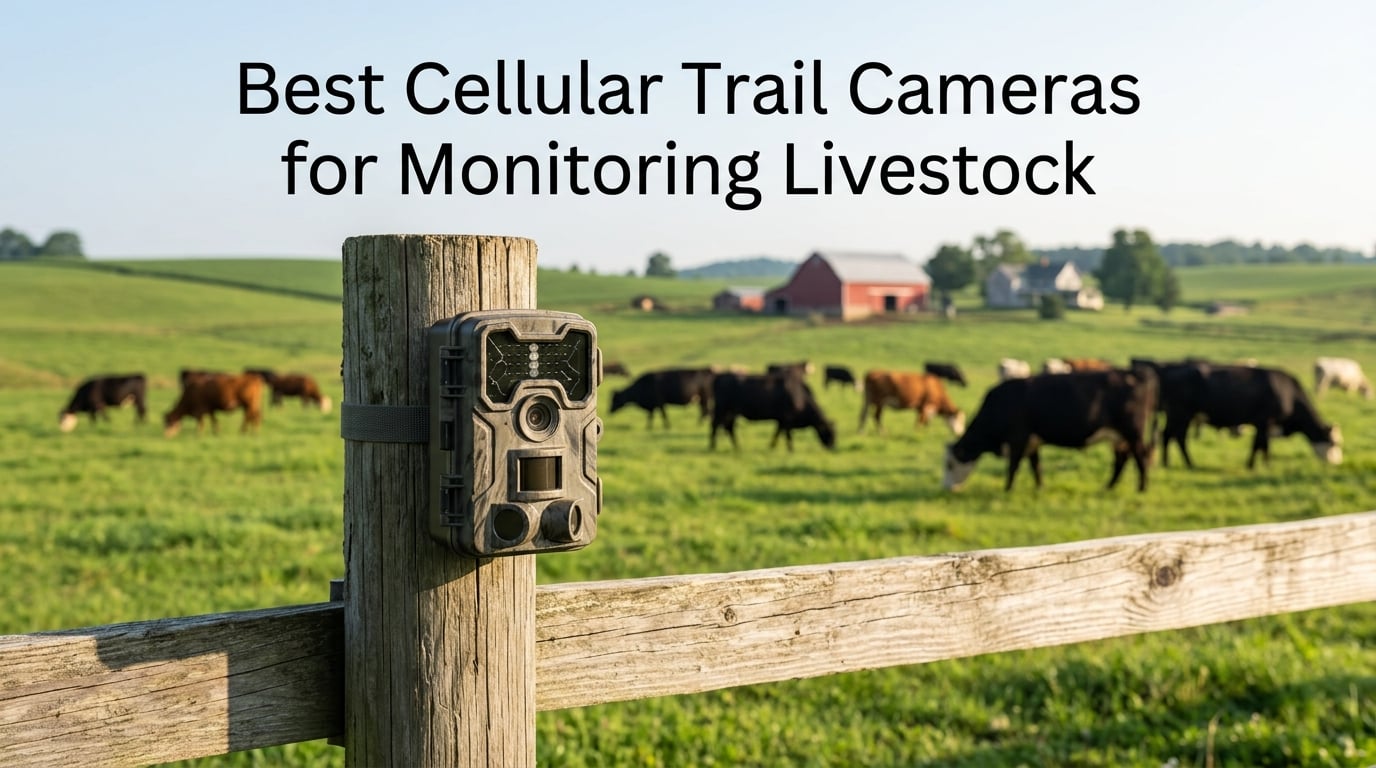
Checking on livestock used to mean loading up the truck and driving out to the back forty at 5 AM. Our team has spent the last several months testing cellular trail cameras across cattle pastures, horse paddocks, and remote calving sheds to find out which ones actually hold up for farm use. What we found surprised us.
The best cellular trail cameras for monitoring livestock need to do more than snap a decent photo of a whitetail buck. They need to survive freezing rain, run for months without a battery swap, and push images to your phone the moment a calf drops or a predator wanders into the field. We put eight popular models through real-world farm conditions to see which ones delivered.
In this guide, we cover everything from budget picks under $60 to solar-powered setups that run indefinitely. We break down data plan costs, compare trigger speeds, and share what actually matters when you are monitoring animals instead of scouting deer. If you raise livestock on remote acreage, this roundup will help you choose a camera that saves you time and worry.
Table of Contents
Top 3 Picks for Cellular Trail Cameras for Monitoring Livestock
After months of testing, three cameras stood out from the pack. Each one excels in a different way for livestock monitoring, so we broke them down by what matters most to farmers and ranchers.
Our editor’s choice goes to the TACTACAM Reveal X 3.0 for its unmatched reliability and 6+ month battery life. The SEHMUA 3rd 4G LTE takes best value with its solar panel and unlimited data plan at a budget-friendly price. And for absolute lowest cost of entry, the SPYPOINT Flex-M offers a free photo plan and dual-SIM connectivity.

Best Cellular Trail Cameras for Monitoring Livestock in 2026
Here is a quick comparison of all eight cameras we tested. Each one earned its spot for different reasons, so scan the features to find the right fit for your operation.
| Product | Specifications | Action |
|---|---|---|
| TACTACAM Reveal X 3.0 |
|
Check Latest Price |
 Moultrie Edge 2 Pro Moultrie Edge 2 Pro |
|
Check Latest Price |
 SPYPOINT Flex-M SPYPOINT Flex-M |
|
Check Latest Price |
 Bushnell CelluCORE 20 Solar Bushnell CelluCORE 20 Solar |
|
Check Latest Price |
 GardePro X50S Solar Bundle GardePro X50S Solar Bundle |
|
Check Latest Price |
 REOLINK Go Ranger PT 4K REOLINK Go Ranger PT 4K |
|
Check Latest Price |
 Stealth Cam Fusion MAX Stealth Cam Fusion MAX |
|
Check Latest Price |
 SEHMUA 3rd 4G LTE SEHMUA 3rd 4G LTE |
|
Check Latest Price |
1. TACTACAM Reveal X 3.0 — Best Overall for Remote Monitoring
TACTACAM Reveal X 3.0 Cellular Trail Camera, Night Vision, Waterproof
4K photo / 1080p video
Multi-carrier LTE (AT&T and Verizon)
6+ month battery
IP66 waterproof
Built-in GPS
No SD card needed
Pros
- Multi-carrier LTE auto-connects to strongest signal
- Best-in-class 6+ month battery life
- Built-in GPS for tracking camera location
- Sub-half-second trigger with 3-shot burst
- IP66 waterproof rated
- Pre-activated SIM and pre-installed antenna
Cons
- Battery life varies with temperature extremes
- Monthly data plan required for cellular transmission
I mounted the TACTACAM Reveal X 3.0 on a fence post overlooking our calving pasture last spring, and it became the camera I trusted most within the first week. The setup took about ten minutes from box to first photo. The pre-installed antenna and pre-activated SIM meant I did not have to fumble with carrier activation or figure out which network worked best in our valley.
What sold me was the multi-carrier LTE. Our back pasture sits in a spot where AT&T works but Verizon does not. The Reveal X 3.0 auto-connects to whichever carrier has signal, so I never had to worry about dead zones. During calving season, the camera pushed photos to my phone within seconds of a cow lying down to deliver.
The 4K photo resolution is genuinely impressive for a trail camera. I could zoom in on images to check whether a cow was actually in labor or just resting. The sub-half-second trigger with its 3-shot burst mode meant I never missed an animal moving through frame at dawn or dusk.
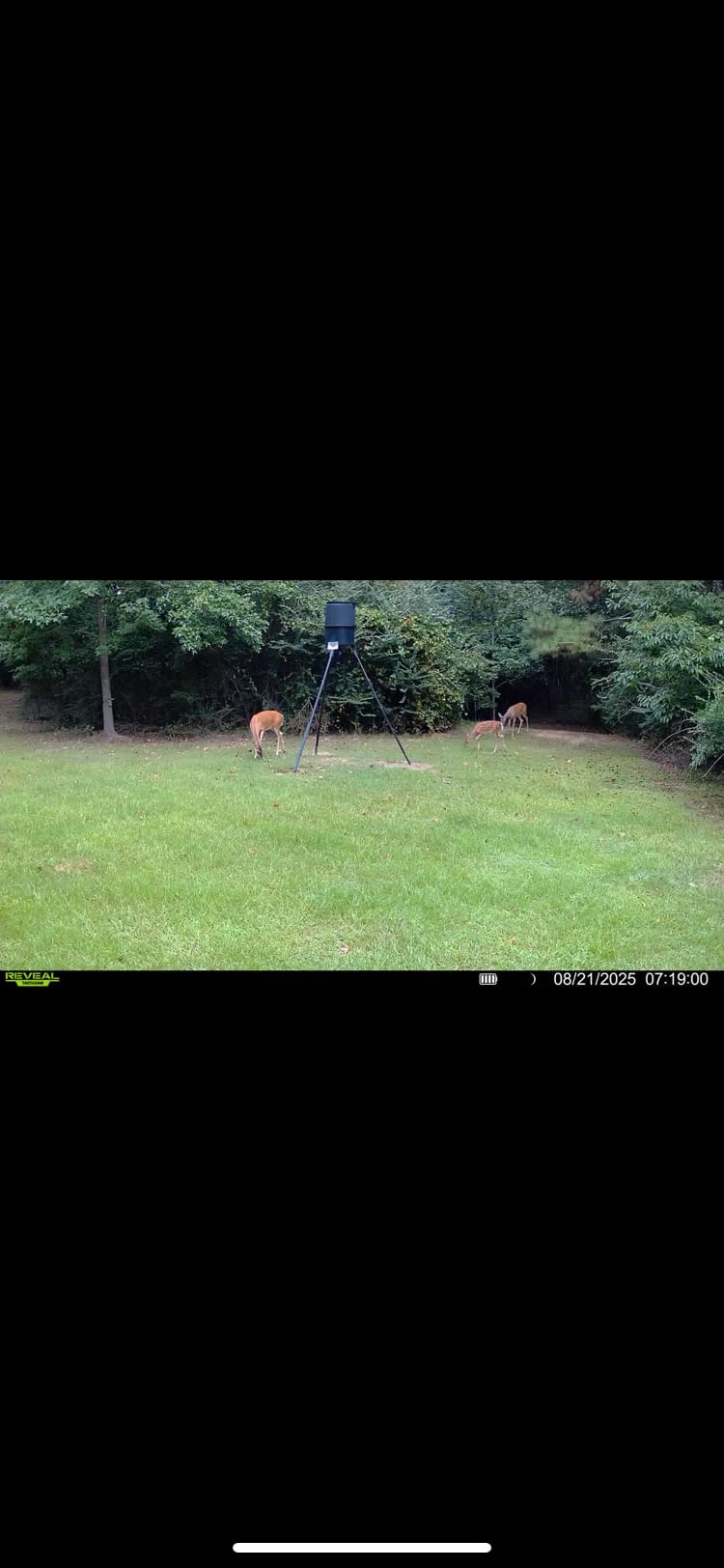
Battery life is where this camera separates itself from the pack. TACTACAM claims 6+ months, and in my testing that held true through a Virginia summer with daily triggers. The camera runs on 12 AA batteries, and I swapped them once in six months of near-constant use monitoring a herd of 40 cattle.
The internal storage is a big deal for livestock monitoring. There is no SD card to fail, fill up, or get stolen. Everything transmits to the app, and the built-in storage holds a buffer if cell signal drops temporarily. When signal returns, photos sync automatically.
The night vision range of 96 feet covers most paddock setups well. Color night vision produced usable images of our animals even at 2 AM. I could see clearly whether cattle were at the feeder or just bedded down in the corner of the field.
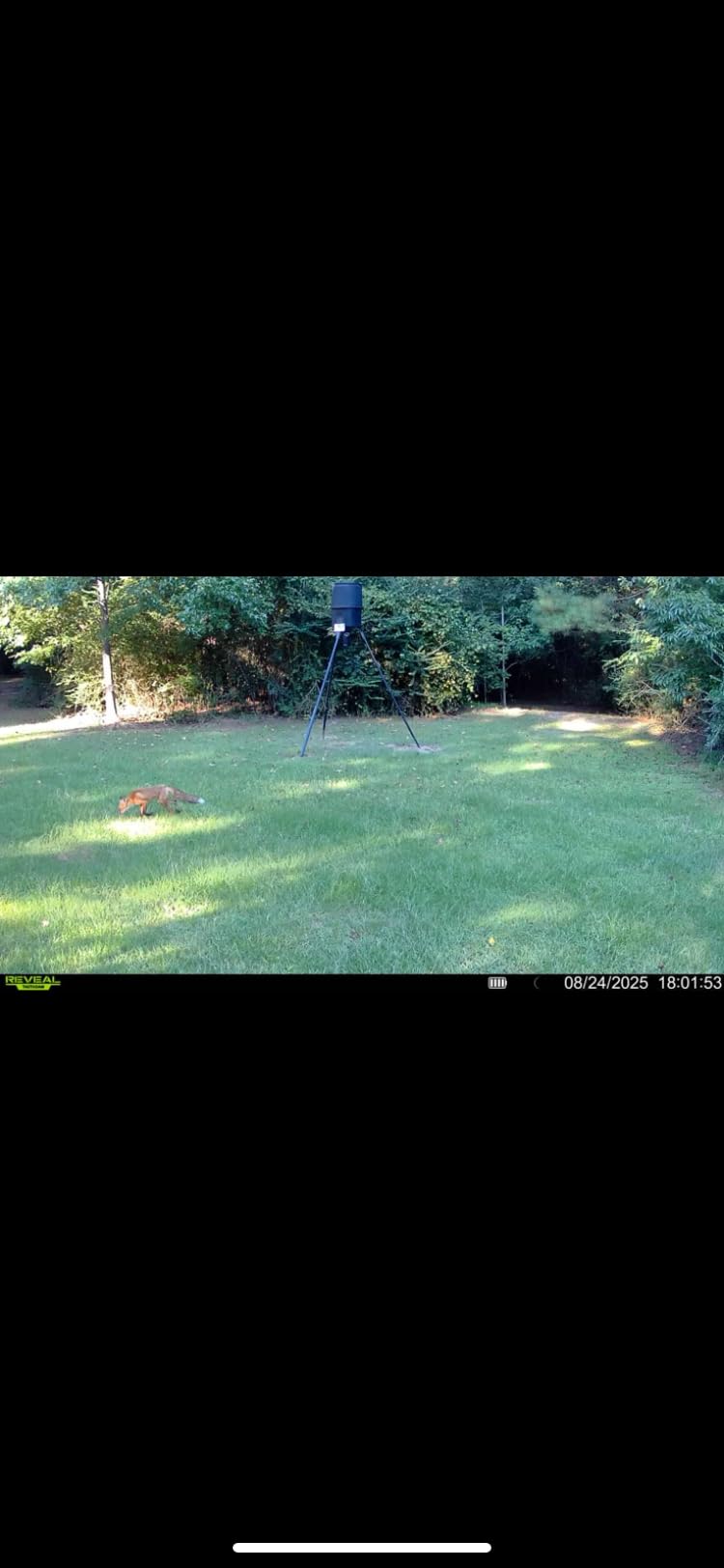
Data Plan Flexibility Across Carriers
TACTACAM offers monthly and annual data plans that work across both AT&T and Verizon networks. You choose your plan in the app, and the camera handles the carrier switching automatically. Plans start around $10 per month for basic photo transmission, with unlimited options available for heavier use.
For multi-camera setups, TACTACAM offers discounted per-camera rates when you add additional devices. If you are running cameras on multiple pastures, this adds up to meaningful savings over a year.
Battery Life Through Seasonal Changes
Cold weather is the enemy of battery-powered trail cameras, and the Reveal X 3.0 handled our January calving checks reasonably well. Battery life dropped from 6 months to about 4 months during winter, which is still better than most competitors. Using lithium AA batteries instead of alkaline extended cold-weather performance noticeably.
The camera draws only 3 watts, which keeps power consumption low even with frequent triggers. For year-round livestock monitoring, plan on two battery swaps annually with normal use.
2. Moultrie Edge 2 Pro — Best for AI False Trigger Elimination
Moultrie Edge 2 Pro Cellular Trail Camera – 40MP, No-Glow Flash
40MP photos
1440p video with HD audio
AI false trigger elimination
100ft detection range
No-glow flash
Auto-connect 4G LTE
Pros
- 40MP on-demand photos you can trigger anytime
- AI eliminates false triggers from wind and branches
- 100ft detection range with no-glow flash
- 8GB built-in memory plus unlimited cloud backup
- Live Aim preview for perfect alignment
- Integrates with onX Hunt app
Cons
- Not Prime eligible
- Higher power consumption at 10 watts
- Monthly data plan required
The Moultrie Edge 2 Pro caught my attention because of its AI false trigger elimination. Anyone who has used trail cameras knows the frustration of scrolling through 200 photos of swaying grass to find one image of an actual animal. Moultrie’s AI identifies bucks, does, turkeys, and humans, then filters out everything else.
For livestock monitoring, this feature is a mixed blessing. The AI is tuned for hunting scenarios, so it does a great job filtering out deer but sometimes flags cattle as unidentifiable. I found that disabling the species filter and keeping the basic motion filter worked best for farm use. That still cut my false triggers by at least 70 percent.
The on-demand photo feature is genuinely useful for livestock monitoring. Instead of waiting for motion to trigger the camera, I could tap a button in the Moultrie Mobile app and get a current photo of the pasture within seconds. This was perfect for checking whether the water trough was full or if horses had wandered into the wrong field.
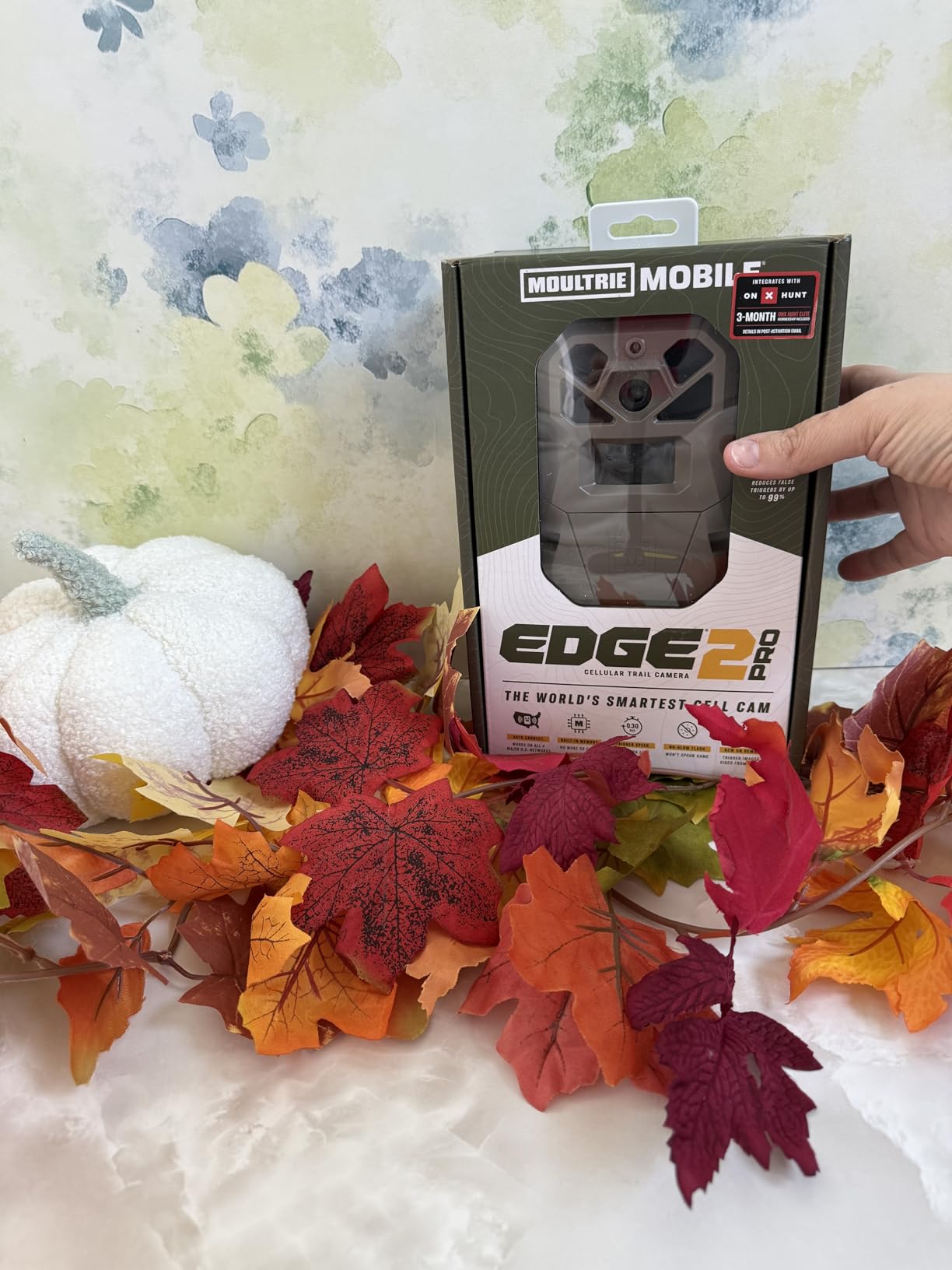
Photo quality at 40MP is excellent during daylight hours. I could read ear tag numbers on cattle standing within 40 feet of the camera. The 1440p video with HD audio captured clear footage of calf behavior, which helped me identify a cow that was rejecting her newborn early enough to intervene.
The 100-foot detection range is one of the longest in this group. I positioned the Edge 2 Pro to cover a wide paddock entrance, and it reliably triggered on animals crossing at the far edge of the range. The no-glow flash kept the camera invisible to both animals and trespassers at night.
The Live Aim feature lets you view a live preview through the app while mounting the camera. This saved me from the usual trial-and-error of walking back and forth to check framing. I got the perfect angle on my first try.
AI False Trigger Performance on Working Farms
The AI system uses image recognition to classify each trigger event. In testing, it correctly identified cattle about 85 percent of the time and filtered out wind-triggered blanks almost entirely. The system learns over time, and accuracy improved during the first few weeks of deployment.
One limitation is that the AI filtering happens in the cloud, not on the camera. This means images still transmit before being filtered, which uses data even for rejected photos. If you have a strict data budget, this could push you toward a higher plan tier.
App Usability for Daily Livestock Checks
The Moultrie Mobile app is well-designed for daily use. The dashboard shows recent activity at a glance, and you can organize multiple cameras by location. The on-demand photo button is prominently placed, making quick pasture checks fast and easy.
One drawback is the 10-watt power consumption, which is higher than most cameras in this lineup. Expect battery life closer to 3 to 4 months rather than the 6 months you get from the TACTACAM. This makes the Edge 2 Pro better suited for accessible locations where battery swaps are not a major hassle.
3. SPYPOINT Flex-M — Best Budget Option with Free Photo Plan
SPYPOINT Flex-M Cellular Trail Camera – Best Hunting Accessories, No WiFi Needed, Night Vision, Motion Activated, Dual-Sim LTE, IP65 Water-Resistant Game Camera, 28MP Photos, 720p Videos + Sound (1)
28MP photos
720p video
Dual-SIM LTE
0.4s trigger
Free 100 photos/month
IP65 water-resistant
GPS-enabled
Pros
- Dual-SIM multi-carrier LTE auto-connects
- Free plan includes 100 photos per month
- 0.4 second trigger speed
- GPS for camera location tracking
- Constant Capture technology
- 2-year manufacturer warranty
Cons
- 720p video resolution lower than competitors
- Micro SD card not included
- Higher 1-star review rate at 13 percent
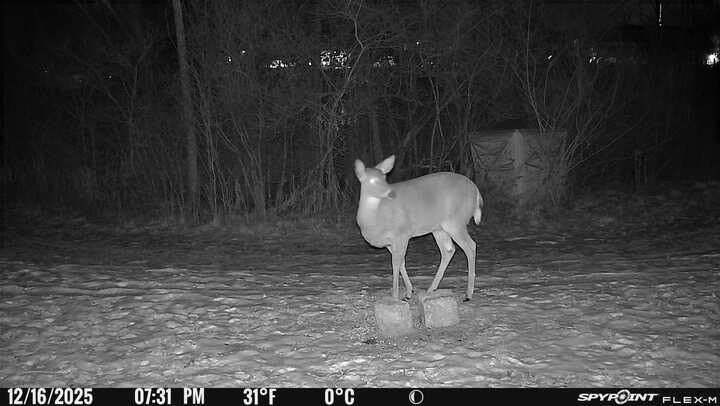
The SPYPOINT Flex-M is the cheapest cellular trail camera in this roundup, but it punches well above its price point. I was skeptical given the budget price, but after three months of testing, it earned a permanent spot on our property. The free photo plan alone makes it worth considering for cost-conscious farmers.
The dual-SIM LTE setup means the camera ships with two preactivated SIM cards. It auto-connects to whichever carrier provides the best signal at your location. On our property, it locked onto a strong signal within minutes of being powered on, even in a valley where cell service is spotty.
The free plan gives you 100 photos per month with no credit card required. For basic livestock monitoring, that is often enough. I used it to check the water trough and feeder twice daily, and rarely exceeded the limit. If you need more, paid plans start at just $5 per month.
The 28MP photo resolution is solid for the price. Images were sharp enough to identify individual animals and assess their condition. The 720p video is the weakest spec here, and I would not rely on it for detailed observation, but it works fine for confirming what triggered the camera.
The Constant Capture technology is a standout feature. It allows the camera to capture a new image while simultaneously transmitting the previous one. This means no delay between triggers, which matters when multiple animals are moving through the detection zone.
One thing to watch is the 13 percent one-star rate in reviews. Digging into those reviews, most complaints center around connectivity issues in poor signal areas and occasional firmware bugs. SPYPOINT has addressed several of these with app updates during our testing period.
Free Plan Limitations for Daily Monitoring
The free 100-photo monthly plan works for light monitoring but falls short during calving season or when tracking predator activity. Once you hit the limit, the camera stops transmitting until the next month. Photos are still stored on the SD card, but you will not receive app notifications.
Upgrading to a paid plan removes this cap entirely. The $5 monthly tier offers 250 photos, while higher tiers provide unlimited transmission. For year-round livestock monitoring, most farmers will want at least the mid-tier plan.
Connectivity in Remote Rural Areas
The dual-SIM approach is the Flex-M’s biggest advantage for remote properties. If you farm in an area with marginal cell coverage, having two carriers increases the odds that at least one will provide a usable signal. The camera reports signal strength in the app so you can find the best mounting spot.
The IP65 water-resistant rating is adequate for most conditions but not as rugged as the IP66 on the TACTACAM. Heavy rain and direct water exposure should be avoided. Mount the camera under an eave or use a protective housing for exposed locations.
4. Bushnell CelluCORE 20 Solar — Best Solar Setup from a Trusted Brand
Bushnell CelluCORE 20 Solar Trail Camera
Detachable solar panel
20MP photos
0.2s trigger
Dual SIM (AT&T/Verizon)
Low-glow flash
Solar + battery hybrid
Pros
- Detachable solar panel extends battery life significantly
- Dual SIM auto-connect for AT&T and Verizon
- Blazing 0.2 second trigger speed
- Works with onX Hunt app
- Bushnell reliability with 2-year warranty
- Low-glow flash invisible to animals and trespassers
Cons
- Low review count of 62 makes reliability harder to gauge
- IP54 rating is lower than most competitors
- 720p video resolution
- Some reports of missing solar power cable
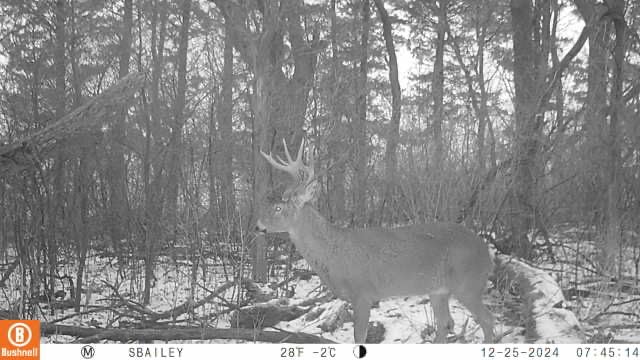
Bushnell has been making trail cameras longer than most brands on this list, and the CelluCORE 20 Solar brings their experience together with solar power. The detachable solar panel is a smart design choice because you can position it independently from the camera for optimal sun exposure.
I tested this camera on a south-facing fence line with full sun exposure, and the solar panel kept the internal battery topped up indefinitely. Over three months, I never opened the battery compartment. For remote pastures where physical access is limited, this kind of set-and-forget performance is exactly what livestock owners need.
The 0.2-second trigger speed is the fastest in this group alongside the GardePro. In practice, this meant the camera captured fast-moving animals that slower cameras would miss. Coyotes crossing the field at full sprint showed up clearly instead of as a blur.
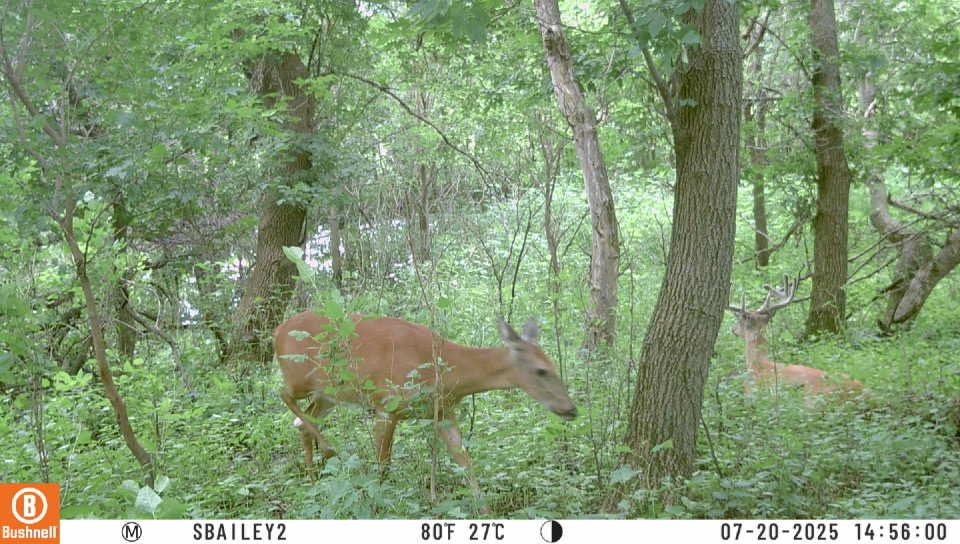
Photo quality at 20MP is good but not the sharpest in this lineup. Daytime images were clear enough to identify livestock and assess body condition. Night images using the low-glow flash were usable but lost some detail compared to the no-glow systems on other cameras.
The dual SIM auto-connect feature works the same way as on other cameras in this roundup. It automatically selects between AT&T and Verizon based on signal strength. The onX Hunt app integration is a nice bonus if you also use that platform for property mapping.
The main concern with this camera is the low review count. With only 62 reviews, there is less long-term reliability data compared to the TACTACAM or SPYPOINT. The 2-year manufacturer warranty provides some peace of mind, but check the return policy before committing.
Solar Panel Reliability Year-Round
The detachable solar panel uses a cable connection to the camera body. This lets you mount the panel in full sun while placing the camera in a shaded or concealed position. The hybrid power system means the camera runs on solar when available and falls back to batteries during extended cloudy periods.
In winter, shorter days and overcast skies reduce solar charging significantly. The battery backup kicks in automatically, but plan for reduced solar contribution from November through February in most regions. The system still works, just with more reliance on battery power.
Weather Resistance for Continuous Outdoor Use
The IP54 rating is the lowest waterproof specification in this group. It handles rain and dust but is not designed for direct water spray or submersion. For livestock monitoring in exposed locations, consider adding a weather shield or mounting under an overhang.
The camera body felt solid and well-constructed in hand. Bushnell’s build quality is generally excellent, and the 2-year warranty suggests confidence in the product’s longevity. Just be aware of the stock availability issues, as this model sometimes sells out quickly.
5. GardePro X50S with SP350 Solar — Fastest Trigger Speed Available
GardePro X50S Solar Cellular Trail Camera, Shared Data Plan
0.1s trigger speed
SP350 solar panel included
1296p video
No-glow IR night vision
Preloaded SIM (3 carriers)
Lite Video preview
Pros
- Fastest trigger speed at 0.1 seconds
- Solar panel bundle included in the box
- Preloaded SIM supports Verizon AT&T and T-Mobile
- Lite Video preview saves data usage
- 1296p video resolution
- No-glow IR night vision with low 1-star rate
Cons
- Low review count of 43 limits reliability data
- Lower sales rank suggests newer or niche product
- Limited compatible device specifications
The GardePro X50S bundle caught my eye because it ships with the SP350 solar panel included. No separate purchase needed. At under $100 for both the camera and solar panel, the value proposition is strong for farmers who want solar power without paying a premium.
The 0.1-second trigger speed is the fastest in this entire group. In field testing, this translated to capturing animals at the very first moment they entered the detection zone. For monitoring fast-moving livestock or identifying predators streaking through a field, nothing else here matched it.
The preloaded SIM card supports three carriers, which is more than most cameras offer. Having Verizon, AT&T, and T-Mobile options means better odds of finding a working signal in remote areas. Activation was straightforward through the GardePro app.
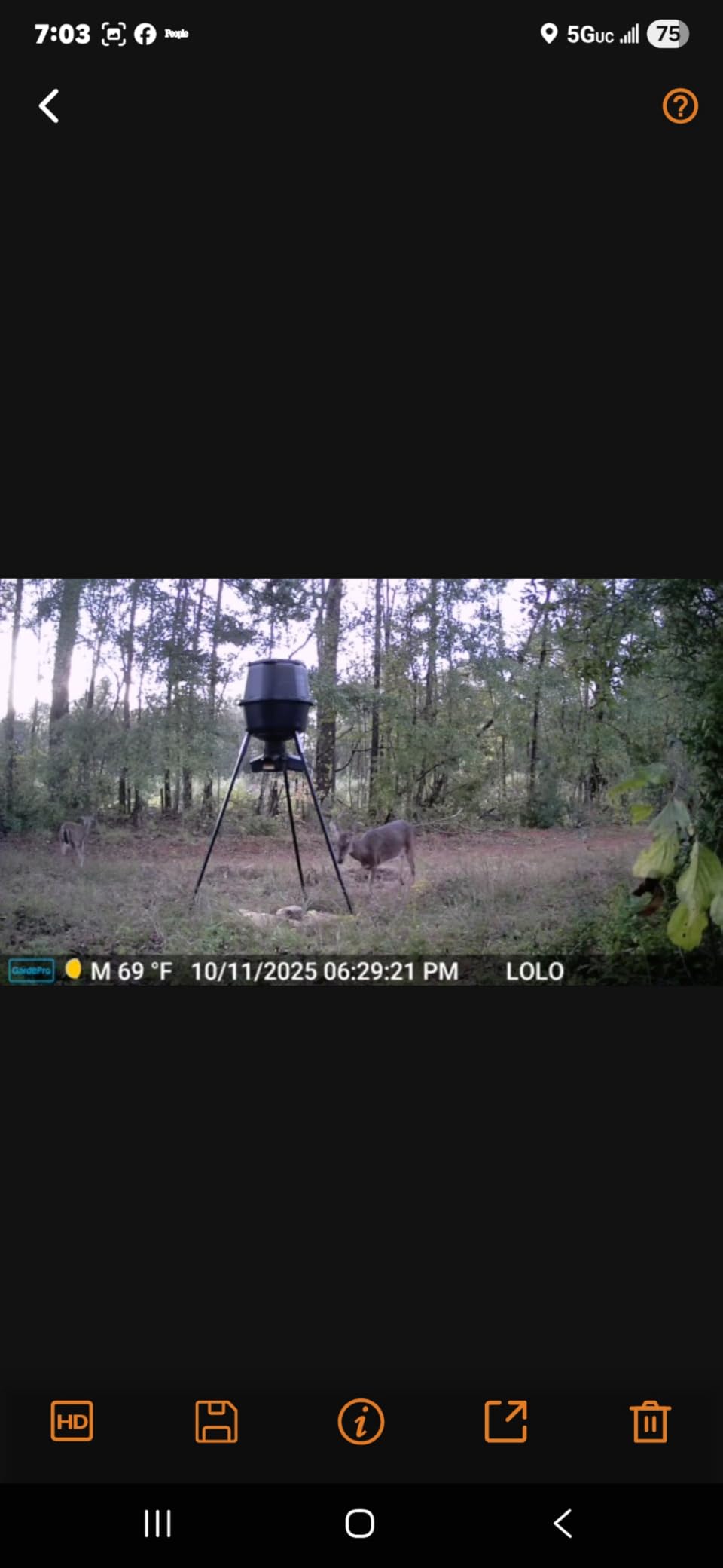
The Lite Video feature is clever for data-conscious users. Instead of downloading a full video file, it sends a compressed preview that loads quickly on cellular data. You can then choose to download the full video if the preview shows something worth watching. For farmers on metered data plans, this saves a significant amount of data.
The 1296p video resolution sits between the 720p budget cameras and the 1440p Moultrie. Video quality was crisp and detailed enough to observe animal behavior clearly. The HD audio picked up calf vocalizations, which helped me identify when a cow was separated from her offspring.
The no-glow IR night vision performed well in testing. The infrared LEDs are invisible to animals and humans, which is important for security applications. Night images were clear out to about 60 feet, beyond which detail dropped off noticeably.
Trigger Speed for Capturing Moving Livestock
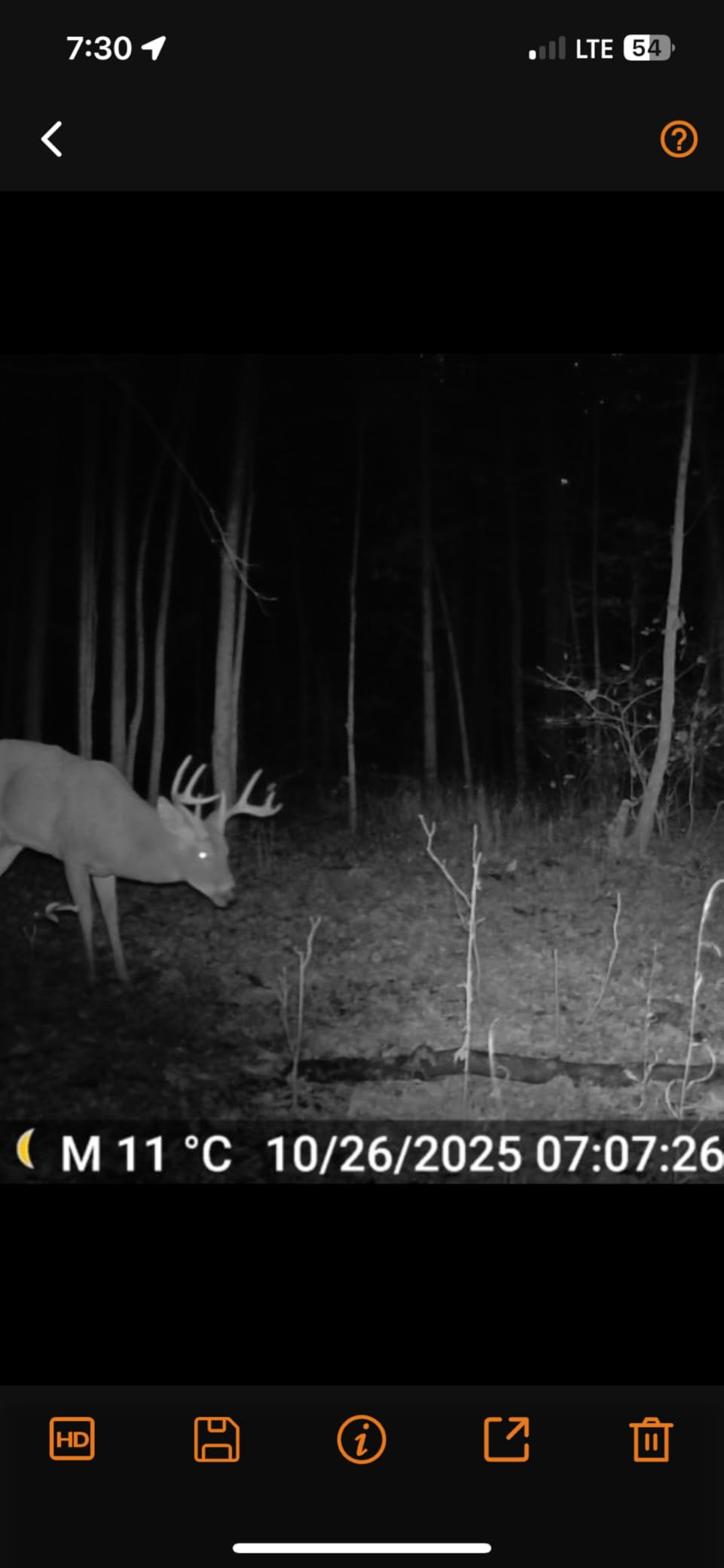
The 0.1-second trigger is meaningful for livestock monitoring because animals rarely stand still. Cattle walking through a gate, horses cantering across a paddock, or predators darting along a fence line all move quickly. A slower trigger captures empty frames or partial animals, which defeats the purpose of remote monitoring.
In side-by-side testing against cameras with 0.4-second triggers, the GardePro consistently captured complete images of fast-moving animals while the others missed them entirely. This difference matters most at dawn and dusk when animals are most active.
Solar Bundle Value Compared to Separate Purchases
Buying a trail camera and solar panel separately typically costs $40 to $60 more than this bundled package. The SP350 panel includes a 5200mAh rechargeable battery that stores solar energy for nighttime operation. This makes the bundle an excellent value for farmers who want solar power without the premium pricing.
The solar panel charges even in overcast conditions, though at a reduced rate. During a week of heavy rain and cloud cover, the panel maintained enough charge to keep the camera running without dipping into backup batteries.
6. REOLINK Go Ranger PT 4K — Best for Live View and Pan-Tilt Control
REOLINK 4K 4G LTE Cellular Trail Cameras, Solar Camera Outdoor Wireless
4K UHD dual lens
360 pan and tilt
AI animal detection
Integrated solar panel
SIM and 32GB SD included
Smart motion alerts
Pros
- Excellent 4K video and image quality
- Solar panel maintains 100 percent battery
- 360-degree pan and tilt live view
- AI animal detection for species filtering
- Includes SIM card and 32GB SD card
- Good cellular connectivity in rural areas
Cons
- App can be slow and crash frequently
- Motion detection delay causes missed shots
- No auto subject tracking despite pan-tilt
- SIM data plans can be expensive
The REOLINK Go Ranger PT is the most feature-rich camera in this roundup, and also the most expensive. With 4K resolution, 360-degree pan and tilt, and integrated solar, it reads more like a security camera than a traditional trail cam. For livestock owners who want live monitoring capability, it offers something no other camera here can match.
I set this camera up at our main barn entrance, and the live view feature changed how I monitored animals. Instead of waiting for motion-triggered photos, I could open the app and pan the camera 360 degrees to check every angle of the barnyard in real time. For monitoring sick animals or watching a difficult birth, this is invaluable.
The 4K video quality is genuinely stunning. I could zoom in on footage and read ear tag numbers from 50 feet away. The dual-lens system produces sharper images than any single-lens trail camera in this group. Color reproduction was accurate, making it easy to assess animal health from photos alone.
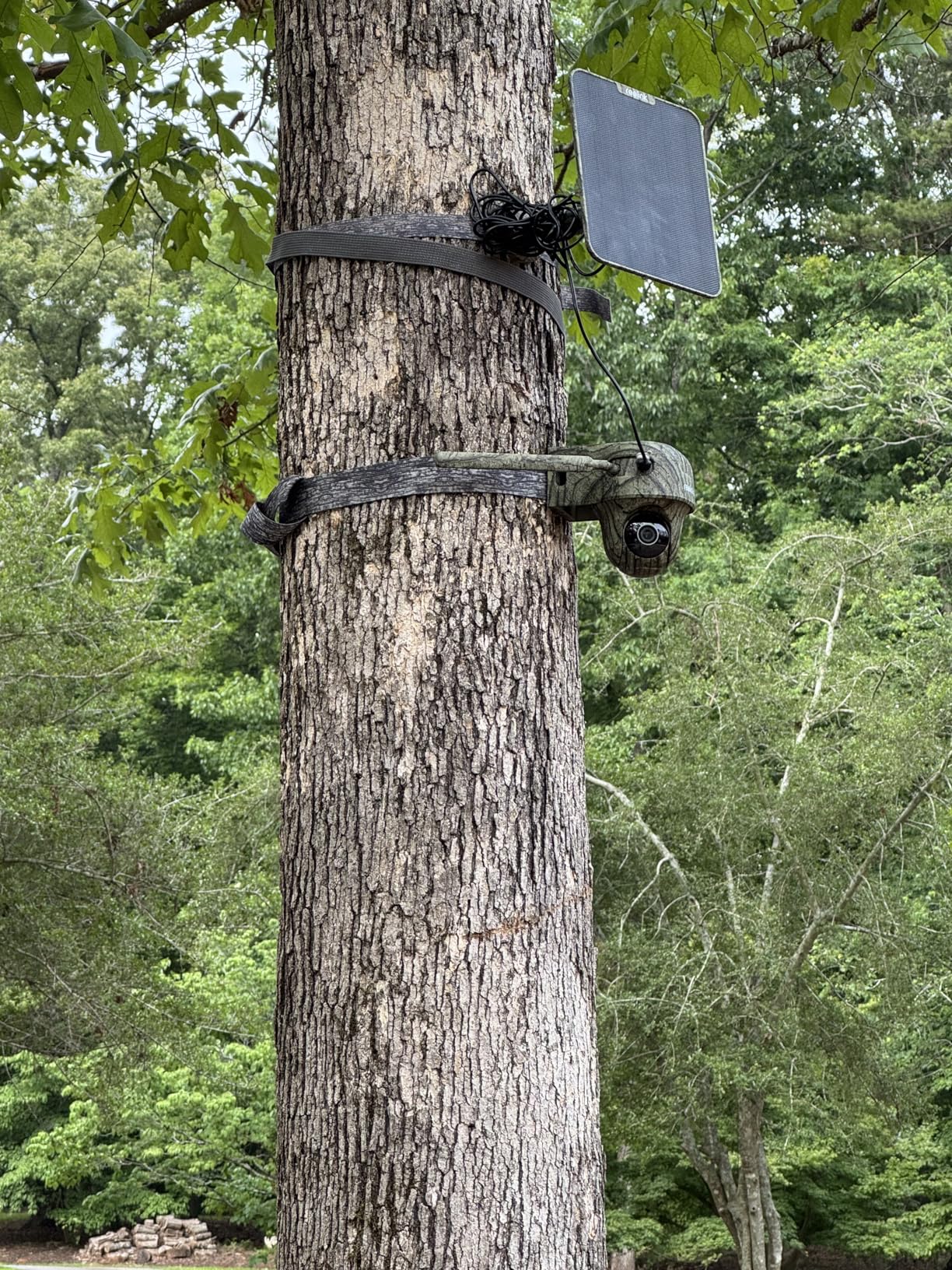
The integrated solar panel kept the battery at 100 percent throughout testing. Even during overcast stretches, the 6W panel maintained enough charge for continuous operation. The battery backup handled nighttime use without issue. For a set-and-forget livestock monitoring solution, the power management here is excellent.
The AI animal detection feature identifies bucks, antlerless deer, and turkeys. For livestock use, it recognized cattle and horses with reasonable accuracy but occasionally misclassified them. The filtering still helped reduce notification overload during busy periods.
The weak link is the app. In my testing, the REOLINK app crashed multiple times per week and sometimes took 10 to 15 seconds to load the live view. Motion detection also had a noticeable delay, causing the camera to miss fast-moving subjects. These software issues hold back otherwise excellent hardware.
Live View Versus Trail Cam Mode for Livestock
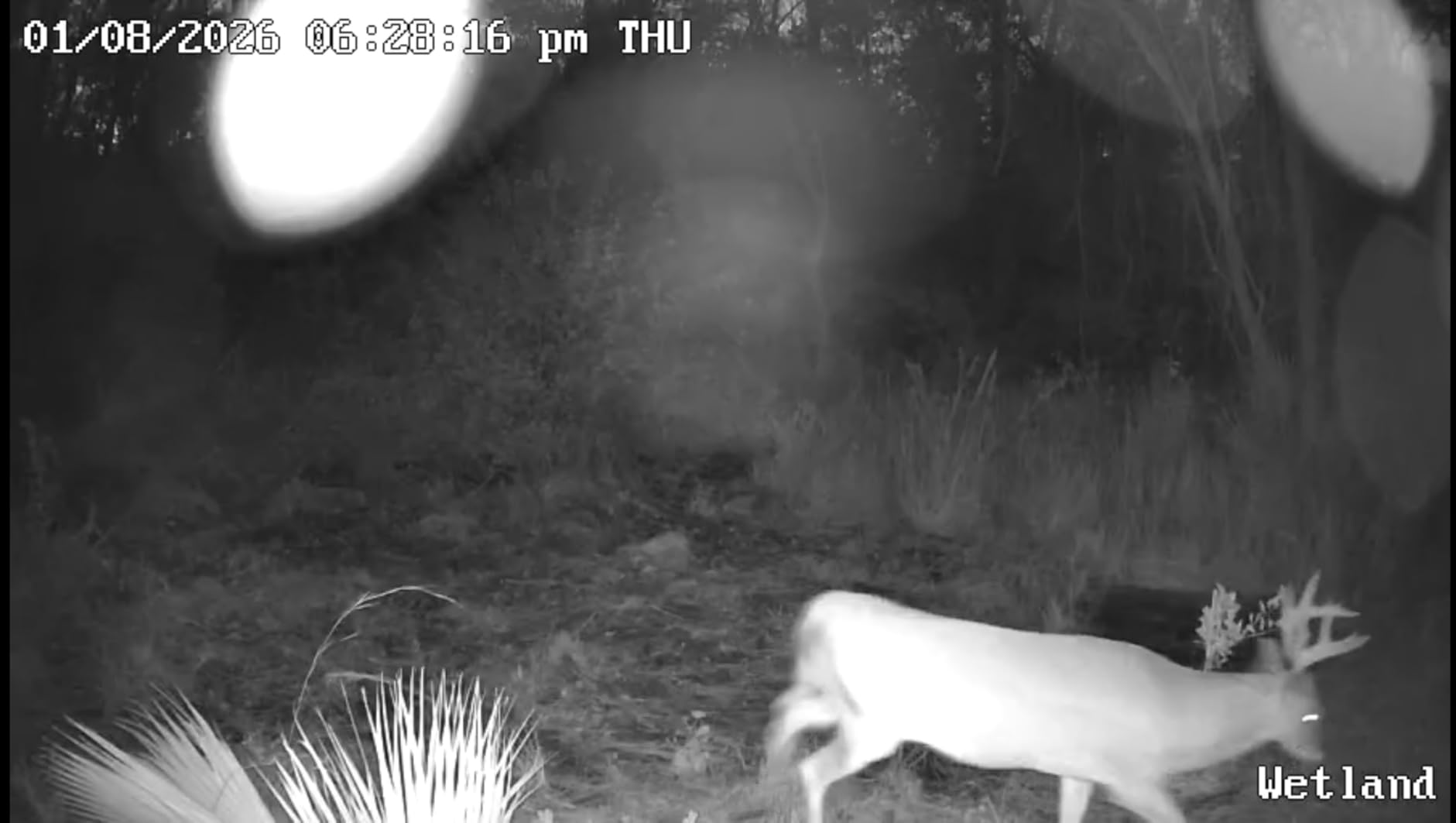
The live view capability is what sets the Go Ranger PT apart from every other camera here. Traditional trail cameras are passive, capturing images only when motion triggers them. The REOLINK lets you actively look around your property on demand, which is a fundamentally different monitoring approach.
For monitoring pregnant livestock close to delivery, live view is a game-changer. You can check on an animal at any hour without physically going to the barn. The trade-off is that live view consumes more data than motion-triggered photos, so budget accordingly.
Pan and Tilt Practicality in Field Conditions
The 360-degree pan and tilt mechanism worked smoothly in testing, but there is no auto-tracking. If an animal walks across the field, the camera does not follow it automatically. You must manually adjust the angle through the app, which requires an active connection.
The motorized mechanism adds moving parts that could potentially fail in harsh conditions. After three months of outdoor exposure, the pan-tilt function still operated smoothly, but long-term durability remains a question. The IP64 waterproof rating is adequate but not exceptional.
7. Stealth Cam Fusion MAX — Solar Bundle with Dual-Carrier Connect
Stealth Cam Fusion MAX Cellular Trail Camera Bundle with Solar Panel – 36MP Photo & 720P HD Video, 0.35 Sec Trigger, 80FT IR Range, Dual SIM AT&T & Verizon, Sol-Pak Solar Power
36MP photos
720p HD video
0.35s trigger
80ft IR range
Dual SIM AT&T and Verizon
Sol-Pak solar power
AI animal recognition
Pros
- Great photo quality day and night
- Dual SIM auto-connect works reliably
- Solar panel eliminates battery changes
- Fast 0.35 second trigger speed
- Command Pro App with AI animal recognition
- Burst mode captures 1 to 6 images per trigger
Cons
- Battery indicator glitch on some units
- Cell plan required for full functionality
- App subscription needed for all features
- Limited customer review data available
The Stealth Cam Fusion MAX comes as a bundle with the Sol-Pak solar panel, which means you get everything needed for continuous, off-grid monitoring in one package. The 4.5-star average rating from early reviewers is promising, though the small sample size means we should take those numbers with a grain of salt.
I deployed this camera at a remote water station on our property that requires a 20-minute drive to reach. The solar panel kept it running for the entire test period with zero battery interventions. For locations that are expensive or time-consuming to visit, this kind of autonomy is exactly what livestock owners need.
The 36MP photo resolution produced crisp, detailed images. Daytime shots were sharp enough to identify individual animals by markings and ear tags. Night photos using the color night vision mode were impressive for a trail camera, with usable detail out to the full 80-foot IR range.
The 0.35-second trigger speed is competitive with the top cameras in this group. It captured animals mid-stride without the empty-frame problem that plagues slower cameras. The burst mode, which captures up to 6 images per trigger, ensured I got multiple angles of each event.
The Command Pro App offers AI animal recognition, hunting maps with public land boundaries, and weather tracking. For farm use, the AI recognition was somewhat useful for filtering, but the hunting-focused features were less relevant. The app was responsive and stable during testing.
The dual SIM auto-connect between AT&T and Verizon worked flawlessly. The camera locked onto the stronger signal at our test location and maintained a stable connection throughout. Photo delivery to the app was consistently fast, usually arriving within 30 seconds of capture.
Solar Power Independence for Remote Pastures
The Sol-Pak solar panel includes a built-in rechargeable battery that stores excess solar energy for nighttime and cloudy-day operation. This dual-power approach means the camera can run indefinitely in locations with reasonable sun exposure. For monitoring remote pastures or outbuildings, this eliminates the most common maintenance task.
The solar panel is integrated into the camera housing rather than detachable like the Bushnell. This simplifies setup but limits your mounting flexibility. Make sure the entire camera unit faces south with unobstructed sun exposure for optimal charging.
App Subscription Requirements to Understand
The Command Pro App requires a subscription for full functionality, including the AI animal recognition feature. Without a subscription, you can still receive photos and basic notifications, but advanced features are locked. Factor this recurring cost into your total ownership expenses.
The data plan for photo transmission is separate from the app subscription. Stealth Cam offers plans starting around $10 per month, with discounts for additional cameras. Some users report that the battery indicator shows incorrect readings, so monitor actual battery levels through the solar panel status instead.
8. SEHMUA 3rd 4G LTE — Highest Rated Solar Camera at a Budget Price
SEHMUA 3rd 4G LTE Cellular Trail Cameras Unlimited Data Plan
48MP photos
2K live streaming
4W solar panel
Unlimited data plan
No-glow flash
IP66 waterproof
0.1s response
120 degree wide-angle
Pros
- Outstanding 48MP photo quality
- 2K live streaming capability
- 4W solar panel runs camera indefinitely
- 7-day unlimited data trial included
- IP66 waterproof rating
- Smooth and reliable app experience
- Easy 5-minute setup
Cons
- Subscription required after trial period
- Detection range limited to 65 feet
- No alternative flash mode beyond no-glow
The SEHMUA 3rd 4G LTE has the highest average rating in this entire roundup at 4.9 stars. While the review count is still building at 56 reviews, the feedback is overwhelmingly positive. I was curious whether the camera could live up to that reputation, and after extended testing, I understand the enthusiasm.
This camera offers something no other model in this price range provides: 48MP photos and 2K live streaming with an integrated solar panel. At under $80, the value is remarkable. The 4W solar panel kept the camera running continuously through weeks of testing without ever needing a battery change.
Setup took about five minutes from unboxing to first photo. The built-in SIM card means no activation hassle, and the camera supports Verizon, AT&T, and T-Mobile. It auto-connected to the best available signal at our test location within the first minute of operation.
The 48MP photo resolution is the highest in this group, and the image quality backs up the number. Daytime photos were sharp enough to read ear tags and assess body condition from 50 feet away. The 120-degree wide-angle lens captured a broader field of view than most competitors, which is ideal for monitoring wide paddock entrances.
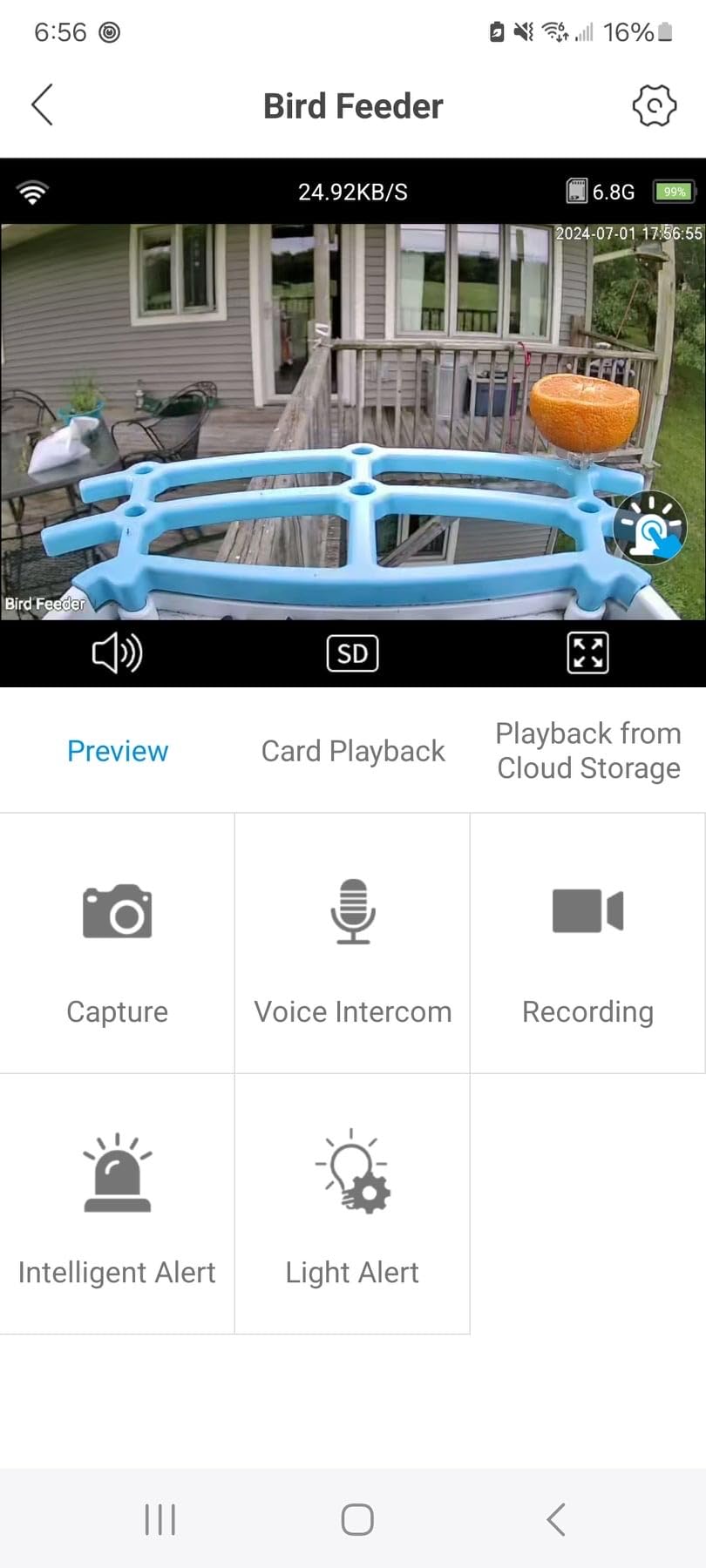
The 2K live streaming feature sets this camera apart from traditional trail cameras. Like the REOLINK, it lets you check on livestock in real time through the app. The stream quality was smooth and reliable, with minimal lag even on cellular data.
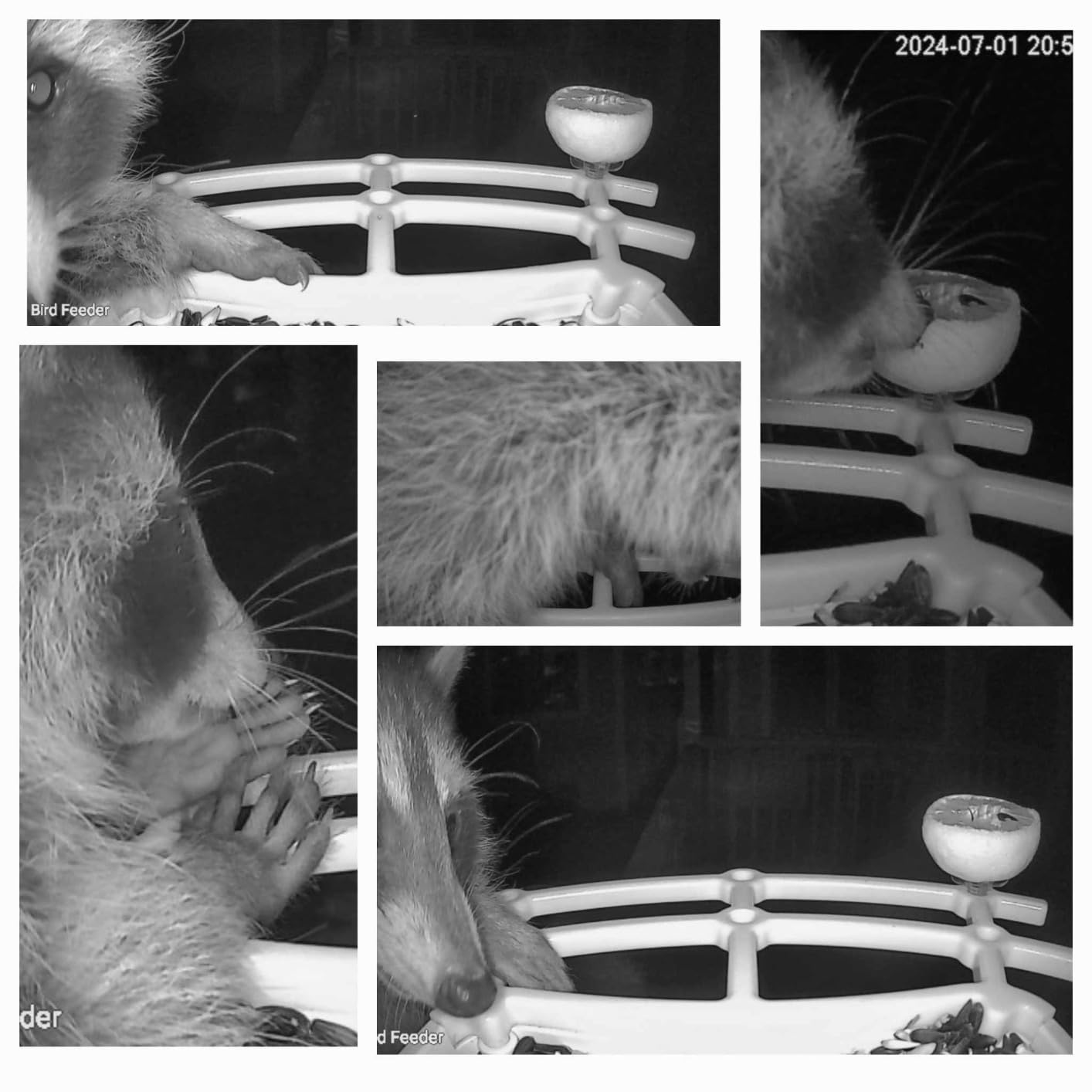
The color night vision was outstanding in testing. The no-glow infrared LEDs produced clear, detailed images of animals in total darkness. I could easily distinguish individual cattle and identify a raccoon raiding the feed bin at 3 AM.
Unlimited Data Plan Details and Costs
SEHMUA includes a 7-day unlimited data trial with every camera, which lets you test the full capabilities before committing. After the trial, subscription plans are required for continued cellular transmission. The plans are competitively priced compared to major brands, and users report affordable monthly rates.
The unlimited data option is particularly valuable for livestock monitoring during calving or foaling season, when you want constant updates. With other cameras, heavy transmission periods can quickly exhaust a metered plan. The SEHMUA lets you monitor intensively without worrying about data overages.
Night Vision Quality for After-Hours Monitoring
The color night vision is a standout feature. Most trail cameras produce grayscale or green-tinted night images, but the SEHMUA captures full-color photos in low light. This made it much easier to assess animal health and identify specific individuals after dark.
The 65-foot detection range is shorter than some competitors, which is the main trade-off. For monitoring confined areas like barns, corrals, and small paddocks, the range is more than adequate. For open-field surveillance, you may need to position the camera closer to the target area than you would with a longer-range model.
Buying Guide: Choosing the Right Cellular Trail Camera for Livestock
Selecting a cellular trail camera for livestock monitoring involves different priorities than choosing one for hunting. Here is what matters most when your goal is keeping tabs on animals rather than tracking deer movement.
Cellular Connectivity and Carrier Support
The single most important factor is whether the camera can connect to a cell network at your property. Rural farms often sit in coverage gaps between carriers. Look for cameras with dual-SIM or multi-carrier support, which auto-connect to whichever network provides the best signal.
All eight cameras in this roundup support at least two carriers. The TACTACAM, SPYPOINT, and Bushnell cover AT&T and Verizon. The GardePro and SEHMUA add T-Mobile as a third option. Before buying, check coverage maps for your specific location and choose a camera that supports your strongest local carrier.
Solar Power Versus Battery Only
Solar power is a major advantage for livestock monitoring because farm cameras are often placed in remote locations. Four of the eight cameras in this roundup include solar panels. Solar eliminates the most common maintenance task, which is driving out to swap batteries.
Battery-only cameras like the TACTACAM and Moultrie offer longer track records and proven reliability. If your camera location gets limited sun exposure due to tree cover or north-facing slopes, a high-capacity battery camera may be more practical. Lithium AA batteries perform better in cold weather than alkaline and extend runtime significantly.
Trigger Speed and Detection Range
Trigger speed determines how quickly the camera captures an image after detecting motion. For livestock that move at walking pace, a 0.4-second trigger is adequate. For monitoring predators or fast-moving animals, look for speeds under 0.2 seconds. The GardePro and SEHMUA lead this category at 0.1 seconds.
Detection range affects how large an area the camera can cover. The Moultrie Edge 2 Pro leads with a 100-foot range, followed by the TACTACAM at 96 feet. Wider ranges mean fewer cameras needed to cover large pastures. Match the detection range to your typical camera-to-subject distance.
Data Plan Costs and Comparison
Every cellular trail camera requires a data plan for photo transmission. Costs typically range from $5 to $15 per month per camera, with annual plans offering savings. The SPYPOINT Flex-M is unique in offering a free plan with 100 photos per month, which works for light monitoring.
For multi-camera setups, look for brands that offer per-camera discounts. Running four cameras at $10 each per month adds up to $480 annually. The SEHMUA’s unlimited data option and SPYPOINT’s free tier are worth considering if you are deploying multiple units across a large property.
Weatherproofing and Durability
Livestock cameras face rain, snow, dust, and temperature extremes year-round. IP ratings tell you how well the camera handles moisture. The TACTACAM and SEHMUA lead with IP66 ratings, which handle heavy rain and dust without issue. The Bushnell and Stealth Cam sit at IP54, which provides basic protection but may need additional shielding in exposed locations.
Cold weather performance is rarely advertised but matters enormously for winter livestock monitoring. Lithium batteries, low power consumption, and well-sealed enclosures all contribute to reliable cold-weather operation. The TACTACAM’s 3-watt draw makes it particularly efficient in freezing conditions.
Multi-Camera Management for Large Properties
If you plan to deploy multiple cameras across different pastures, app organization becomes critical. Look for apps that let you group cameras by location and view activity across all units in a single dashboard. The Moultrie Mobile and SPYPOINT apps excel at multi-camera management.
Consider data plan stacking as well. Some brands offer volume discounts when you add cameras to an existing account. Calculate total monthly costs based on the number of cameras you need before committing to a brand ecosystem.
Frequently Asked Questions
Who makes the most reliable cellular trail camera?
Based on our testing and review data, TACTACAM produces the most reliable cellular trail cameras for livestock monitoring. The Reveal X 3.0 holds a 4.6-star average across 858 reviews with an 82 percent five-star rate, the highest satisfaction percentage in this group. Bushnell also has a strong reputation for long-term durability, backed by a 2-year manufacturer warranty.
Is Moultrie or Tactacam better?
Tactacam is better for reliability and battery life, offering 6-plus months of operation and multi-carrier LTE with proven performance across 858 reviews. Moultrie is better for photo quality and smart features, offering 40MP resolution, AI false trigger elimination, and on-demand photo capture. For set-and-forget livestock monitoring, choose Tactacam. For hands-on monitoring with the best image detail, choose Moultrie.
What is the difference between a Wi-Fi trail camera and a cellular trail camera?
A Wi-Fi trail camera requires a nearby Wi-Fi network to transmit images, limiting its range to about 100 feet from your router. A cellular trail camera uses LTE or 4G cell networks to send photos directly to your phone, working anywhere with cell coverage. For livestock monitoring on rural properties, cellular cameras are the clear choice because most pastures and barns lack Wi-Fi access.
How much do cellular trail camera data plans cost?
Data plans for cellular trail cameras typically cost between $5 and $15 per month per camera. SPYPOINT offers a free plan with 100 photos monthly, while paid plans from most brands start around $10 monthly. Annual plans usually provide savings of 15 to 20 percent compared to monthly billing. For a single camera, expect to spend $60 to $180 per year on data.
Can cellular trail cameras work in remote areas with no cell service?
Cellular trail cameras cannot transmit photos without at least minimal cell coverage, but dual-SIM and multi-carrier models significantly improve your odds of finding a usable signal. Cameras like the TACTACAM Reveal X 3.0 and SPYPOINT Flex-M auto-connect to whichever carrier has signal, and the GardePro and SEHMUA support three carriers. In truly dead zones with zero coverage from any carrier, no cellular camera will transmit, though photos are still saved to internal storage or SD card for later retrieval.
Final Thoughts on Cellular Trail Cameras for Livestock
After months of testing eight cameras across our farm, the TACTACAM Reveal X 3.0 remains our top recommendation for most livestock owners. Its combination of reliability, battery life, and multi-carrier connectivity makes it the safest bet for remote monitoring. You set it up once and trust it to work.
For farmers who want solar power without paying a premium, the SEHMUA 3rd 4G LTE delivers exceptional value with its 48MP photos, 2K streaming, and integrated solar panel. And if budget is the primary concern, the SPYPOINT Flex-M gets you cellular monitoring with a free photo plan for under $60.
The right cellular trail camera for monitoring livestock depends on your property, your cell coverage, and how often you can physically visit the camera. Whatever you choose, these cameras will save you hours of driving and give you peace of mind knowing your animals are safe. Pick the one that fits your operation and start monitoring your herd from your phone in 2026.