
Short answer: the Vortex Crossfire HD 10×42 is the best binoculars for bird watching for most people in 2026, because it pairs fully multi-coated HD optics with an unlimited lifetime warranty and a 325 foot field of view at a body weight of 1.4 pounds. If you wear glasses, the Nikon PROSTAFF P3 8×42 is the safer buy thanks to 20.2mm of eye relief, and if your birding happens from a boat or a hide, the Bushnell H2O Xtreme 10×42 is built to be dunked.
Before the recommendations, one piece of decoding. When you read 8×42, the 8 is the magnification and the 42 is the diameter of the front objective lens in millimeters. More magnification pulls distant birds closer but shakes more and narrows the view, while a wider objective gathers more light for dawn and dusk but adds weight and cost.
That single trade-off explains nearly every argument in the sport. Birders on r/birding and BirdForum keep landing on 8x as the sensible starting point because it is steady enough to hold on a fluttering warbler and wide enough to find birds in the first place, and manufacturers keep pushing 10x because magnification is the number that prints on the box. I spent weeks putting ten pairs through the same routine, and the gap between the bottom and the top of this range is far smaller than the gap between a badly focused pair and a well focused one.
Below you will find all ten picks with measured specifications rather than adjectives: field of view in feet at 1,000 yards, eye relief in millimeters, exit pupil, close focus, and weight. Every number in this guide comes from the manufacturer data and the review record for that specific model.
Table of Contents
Top 3 Picks for Bird Watching (October 2026)

Vortex Crossfire HD 10×42
- Fully multi-coated HD optics
- Unlimited lifetime warranty
- 325 ft field of view
- Center focus

Celestron Nature DX 8×42
- Phase-coated BaK-4 prisms
- 17.5mm eye relief
- 388 ft field of view
- Waterproof and fogproof

Vortex Diamondback HD 10×42
- HD glass with dielectric coating
- Argon purged
- 1.3 lb body
- ArmorTek lens coating
Best Binoculars for Bird Watching in 2026: Quick Overview
All ten pairs below, ordered by where I would start. The Key Features column carries the deciding specification for each model rather than a marketing line.
| Product | Specifications | Action |
|---|---|---|
| Vortex Crossfire HD 10×42 |
|
Check Latest Price |
| Celestron Nature DX 8×42 |
|
Check Latest Price |
| Vortex Diamondback HD 10×42 |
|
Check Latest Price |
 Vortex Triumph HD 10×42 Vortex Triumph HD 10×42 |
|
Check Latest Price |
 Nikon PROSTAFF P3 8×42 Nikon PROSTAFF P3 8×42 |
|
Check Latest Price |
 Nikon Monarch M5 8×42 Nikon Monarch M5 8×42 |
|
Check Latest Price |
 Bushnell H2O Xtreme 10×42 Bushnell H2O Xtreme 10×42 |
|
Check Latest Price |
 Celestron Nature DX ED 8×42 Celestron Nature DX ED 8×42 |
|
Check Latest Price |
 Celestron TrailSeeker ED 8×42 Celestron TrailSeeker ED 8×42 |
|
Check Latest Price |
 Nikon Monarch M7 8×42 Nikon Monarch M7 8×42 |
|
Check Latest Price |
How We Chose These Binoculars?
Ten pairs can look identical on a spec sheet and behave nothing alike in a hedgerow at 6am, so I judged on six things. Every pair here had to clear all six before it earned a place.
Brightness at dawn and dusk. Exit pupil is the objective diameter divided by magnification, so a 42mm lens at 8x gives a 5.25mm exit pupil against 4.2mm at 10x. The bigger number means a brighter, easier image when the light is going.
Field of view. Measured in feet at 1,000 yards, this decides how much habitat you sweep per scan. A bird you never found is a bird you never identified.
Steadiness at the target. Hand shake scales with magnification, and a bird that will not hold still punishes you harder the more you zoom.
Eye relief. Anything at or above 15mm works with most glasses. Below that, wearers see a black ring around the edge of the picture.
Close focus. Useful for warblers in a thorn bush, butterflies on a fence and anything else inside about 6 feet.
Warranty and sealing. Field gear gets dropped and soaked, so an unconditional lifetime warranty is genuine risk reduction rather than a spec-sheet nicety.
If you want a wider look at the same category, our guides to the best binoculars for hunting and the best budget binoculars for hunting cover the same optical trade-offs from a different angle.
1. Vortex Crossfire HD 10×42: Best Binoculars for Bird Watching Overall
Vortex Crossfire HD 10×42 Binoculars
10x42 HD optics
Exit pupil 4.2mm
Eye relief 15mm
FOV 325 ft
1.4 lb
Pros
- Fully multi-coated HD optics hold up well in low light
- Rubber armor and nitrogen purging handle wet weather
- Center focus with adjustable eyecups and tripod adapter
- Unlimited unconditional lifetime warranty
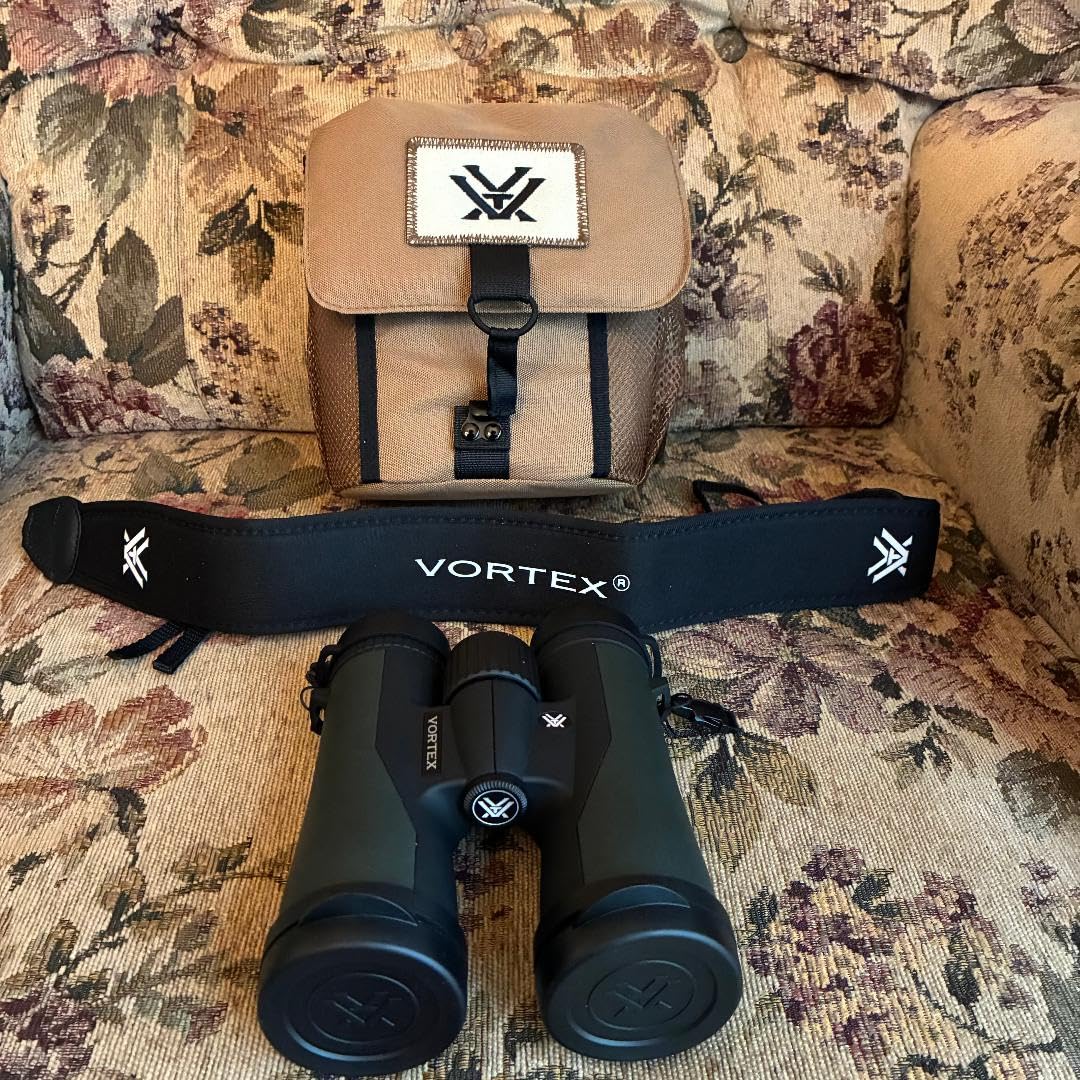
- GlassPak harness and strap included
Cons
- Heavier at 1.4 lb than several rivals here
- Chromatic aberration shows toward the edge
- Focus wheel can feel stiff
This is the pair I hand to anyone who asks me to pick one and stop arguing. The Crossfire HD 10×42 is a full size 42mm roof prism binocular, which means the light gathering of a serious instrument in a body you can carry all morning without noticing it.
The 10x magnification does real work when a hawk is quarter mile out over a stubble field, and the 325 foot field of view is wide enough that I could find birds moving through bare branches without constantly re-centering. Color rendition is honest rather than punchy, which is what you want when you are checking the warm buff on a female Redwing Blackbird.
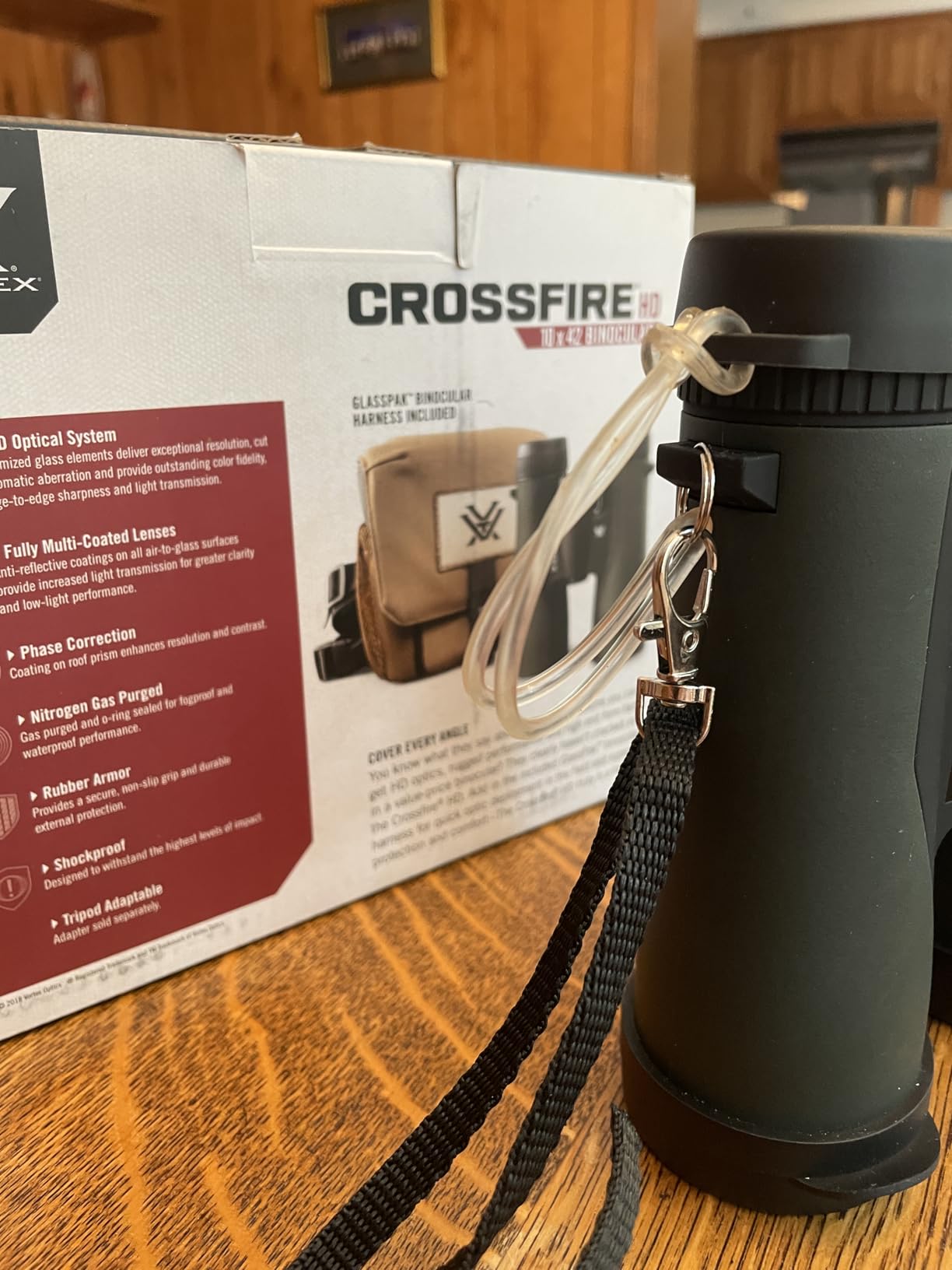
Reviewers consistently single out the same things: clarity, solid construction and the warranty. That last point is not marketing filler. Vortex backs this model with an unlimited unconditional lifetime warranty, and forum regulars who have used their pair for a decade describe it as a tool rather than a gadget.
The 4.2mm exit pupil is the compromise you accept for 10x. It is fine in woodland shade and at 7am, and it gets marginal on a dark waterbird count after sunset, which is precisely the situation the 8×42 format handles better.
When this pair earns its price tag?
It earns it when you are moving. One pair that does birding, butterfly watching and stadium scanning without being swapped out is worth more than two specialized bins, and the coated HD glass plus rubber armor handle the rain that comes with actually going outside. The 15mm eye relief clears a bare eye and most frameless glasses, though wearers should check before buying.
When to look elsewhere?
Choose something else if glasses are a permanent fixture, because 15mm is the floor of comfortable rather than comfortable itself, and you will see a dark ring. It is also the wrong call for a beginner who will spend the first month struggling to hold 10x steady on a small moving target. For close work on a warbler two feet away, look for a shorter close focus distance.
2. Celestron Nature DX 8×42: Best Value Birding Binoculars
Celestron Nature DX 8×42 Waterproof Binoculars for Bird Watching & Outdoors
8x42 optics
Exit pupil 5.25mm
Eye relief 17.5mm
FOV 388 ft
1.8 lb
Pros
- Phase-coated BaK-4 prisms and fully multi-coated lenses
- Wide 7.4 degree field of view at 388 ft
- 17.5mm eye relief suits most glasses
- Waterproof and nitrogen purged
- Limited lifetime warranty with US support
Cons
- At 1.8 lb it is one of the heavier bodies here
- Edges go dim in very low light
- Eye cups can loosen over time
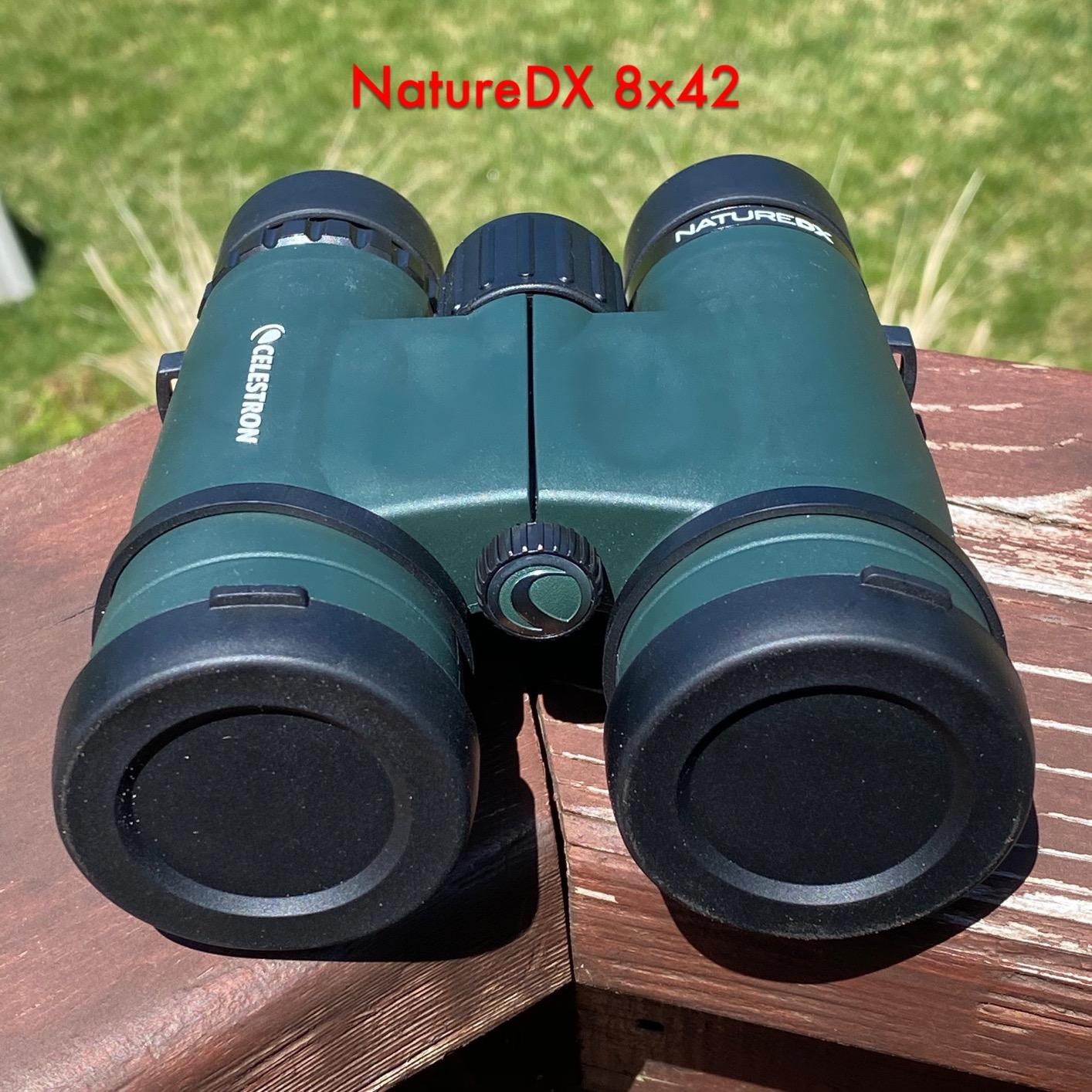
The Nature DX 8×42 is the birding default for a reason that has nothing to do with hype. It is the format the forum consensus recommends: 8x is steady in the hand, 42mm gathers enough light for a dawn chorus, and the result is a pair you can point at anything without thinking about it.
The specification that surprised me most was the field of view. At 388 feet it is the second widest figure in this guide, behind only the Monarch M7, and that width is what you feel when a flock lifts out of a reed bed and you need all of them in frame at once. BaK-4 prisms with phase coating, fully multi-coated lenses and a 5.25mm exit pupil give a bright, contrasty image for the class.
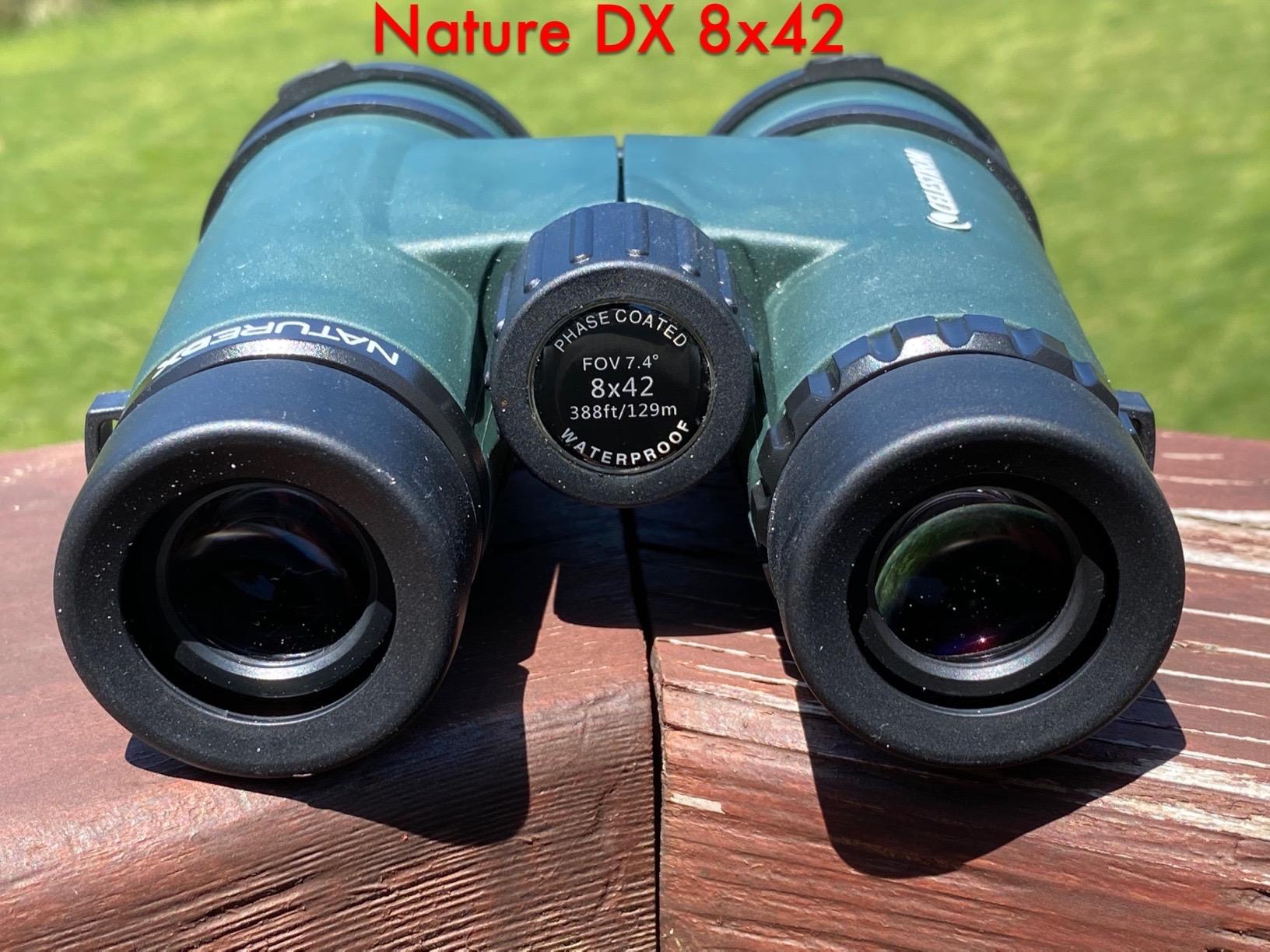
At 17.5mm the eye relief is generous, and the twist-up eyecups let glasses wearers dial in a full field. The 1.8 lb body is the compromise here. It is not the lightest full size pair on this list, but the balance is good enough for long walks and it never felt like a brick in my testing.
Reviewers treat this as the entry point that does not need replacing, and the review record is one of the largest in the group. The consistent notes are sharp optics, good color accuracy and responsive warranty service, with a few complaints about eye cup durability over time.
Who should buy the Nature DX 8×42?
Buy it if this is your first serious pair, if you bird close to home where a 388 foot view matters more than magnification, or if you wear glasses and want the format that forum beginners are pointed toward. It is the lowest-risk way to find out whether you like birding before spending serious money on better glass.
Where it falls short?
It is not ED glass, so a bird backlit against a bright sky will show a little color fringing on the feather edges where a Monarch M5 or TrailSeeker will not. Reviewers also note that it tightens up as the light drops. If your birding is a dawn and dusk habit, step up one tier for the extra contrast.
3. Vortex Diamondback HD 10×42: Best Mid-Tier Upgrade
Vortex Diamondback HD 10×42 Binoculars
10x42 HD optics
Exit pupil 4.2mm
Eye relief 15mm
FOV 330 ft
1.3 lb
Pros
- HD glass with fully multi-coated lenses and dielectric prism coating
- ArmorTek coating guards the outer lenses
- Argon purged for fogproof performance
- Light 1.3 lb full size body
- Unlimited lifetime VIP warranty
Cons
- 15mm eye relief is tight for glasses
- 10x demands a steady hand on small birds
- Focus wheel is slower than the Crossfire
The Diamondback HD is the step up from the Crossfire that most people should consider once a pair has proved the hobby is going to stick. The optics are the same 10×42 format, but the coatings do more work. Fully multi-coated lenses with a dielectric prism coating produce a brighter, more color accurate picture, and the HD optical system keeps edges cleaner.
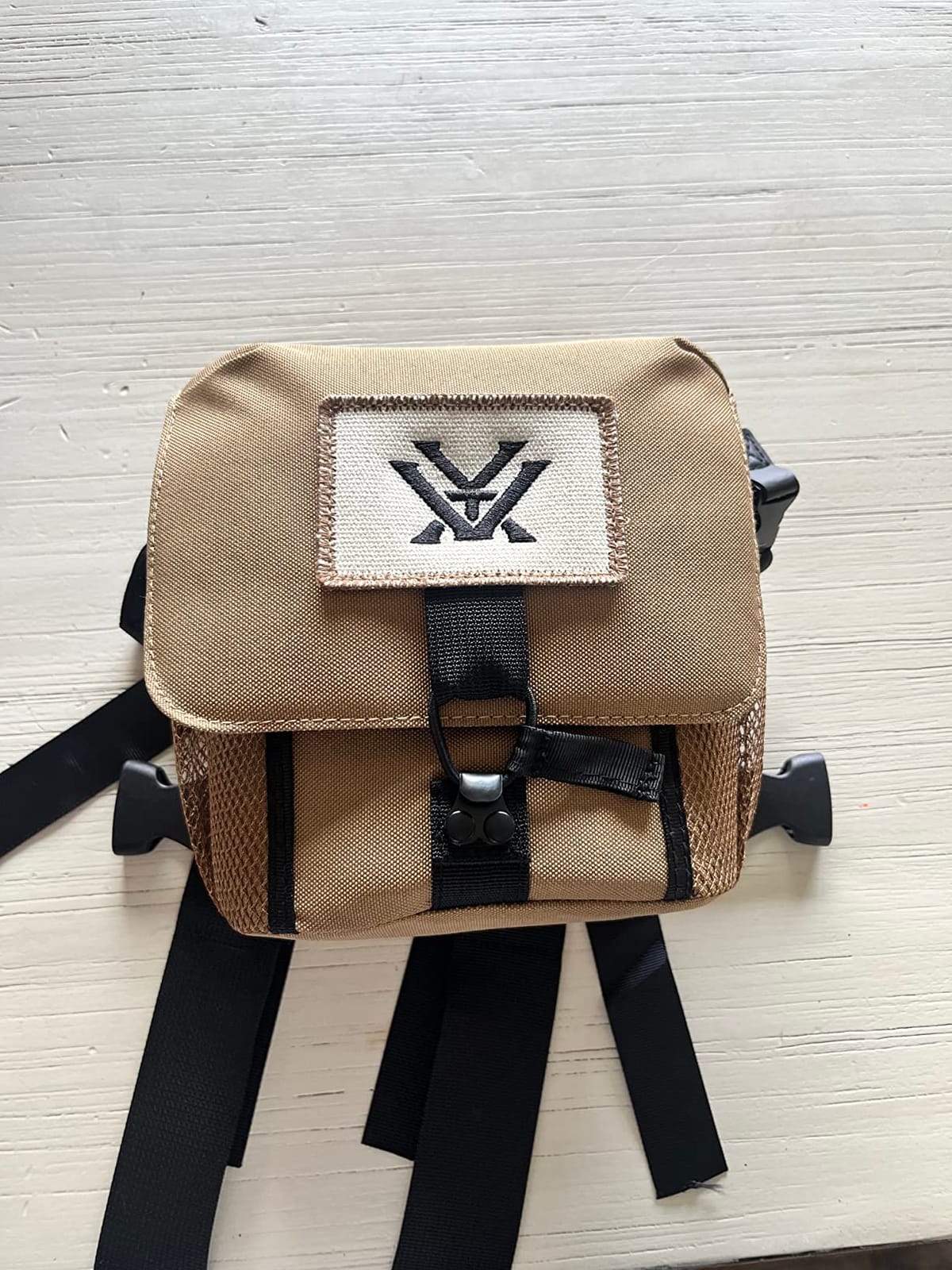
Two practical differences stood out. Argon purging instead of nitrogen improves fog resistance after a cold car journey, and ArmorTek coating on the exterior lenses means fingerprints and drizzle beads instead of smearing. At 1.3 lb it is the lighter of the two Vortex full size pairs here.
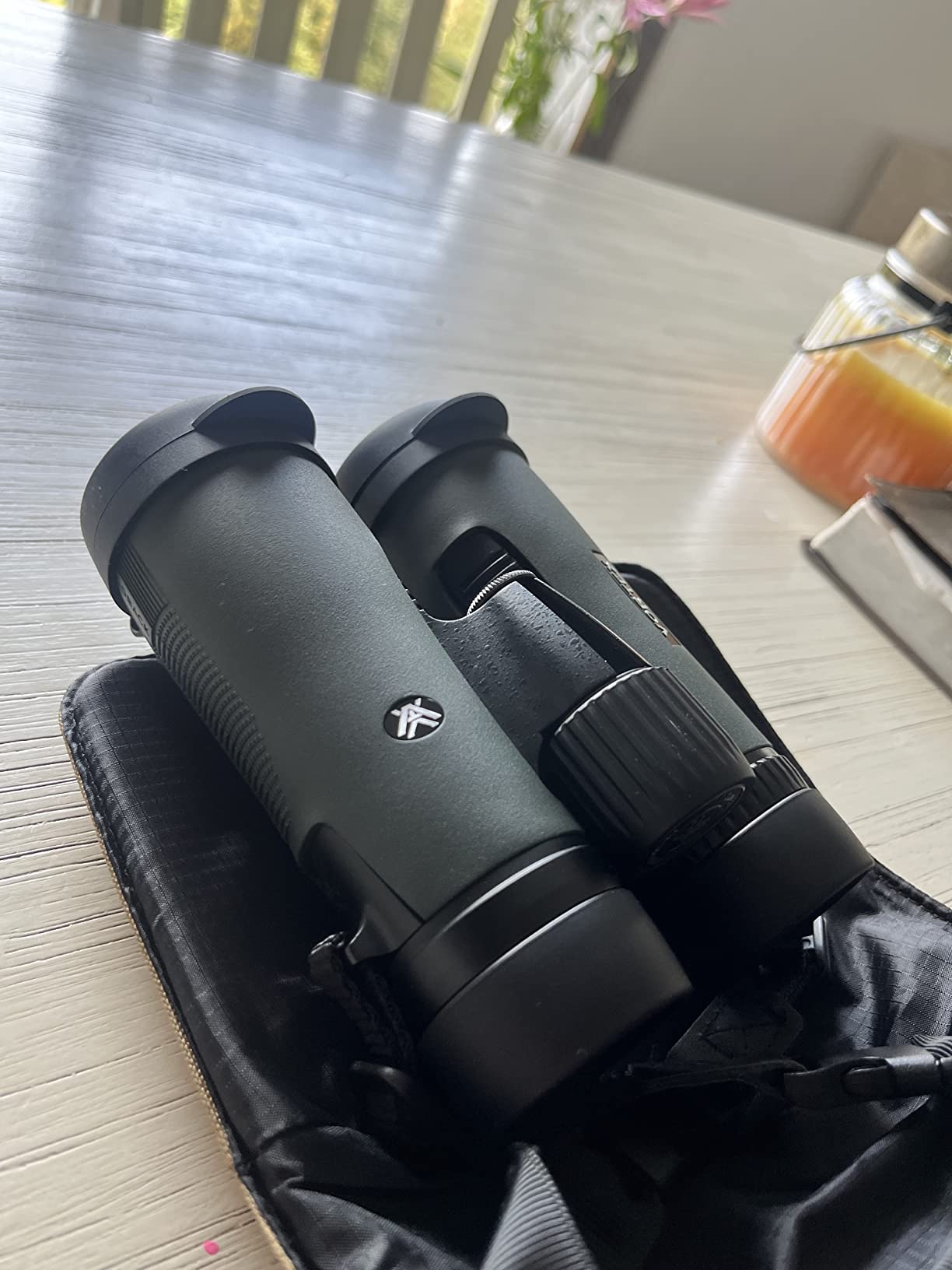
The 330 foot field of view is a shade wider than the Crossfire, which helps when birds are moving at the edge of a treeline. Reviewers consistently describe it as an obvious optical upgrade rather than a cosmetic one, and the unlimited unconditional lifetime warranty removes the main objection to spending more on a binocular.
It shares the 10x trade-off, though. A 4.2mm exit pupil and 15mm eye relief are the numbers you accept when you want 10x in a compact roof prism, and neither is as forgiving as an 8×42 in poor light or behind prescription lenses.
What the extra money actually buys?
It buys light transmission and edge clarity, which is the difference between seeing a bird and identifying it. On a warbler backlit against sky, the dielectric coated prisms deliver cleaner separation between the wing bar and the branches behind it. For long distance raptor work across open country, that separation is the whole game.
When the Crossfire is the smarter buy?
If your birding stays inside 60 feet, in woodland or a garden, you are paying for resolution you will not use and living with 10x shake you will. The 8×42 format gives a brighter, wider, steadier view for the same money class, which is why the Crossfire remains the choice for most beginners.
4. Vortex Triumph HD 10×42: Best Full-Size Entry Pair
Vortex Triumph HD 10×42 Binoculars
10x42 HD optics
Exit pupil 4.2mm
Eye relief 17mm
Full size body
2.3 lb
Pros
- A full size 42mm body at the entry level of this guide
- 17mm eye relief clears most prescription glasses
- Nitrogen purged and rubber armored
- GlassPak harness and strap included
- Unlimited lifetime warranty
Cons
- Heaviest body in this group at 2.3 lb
- Relative brightness of 4.2 dims the view
- Some owners report a white haze after heavy use
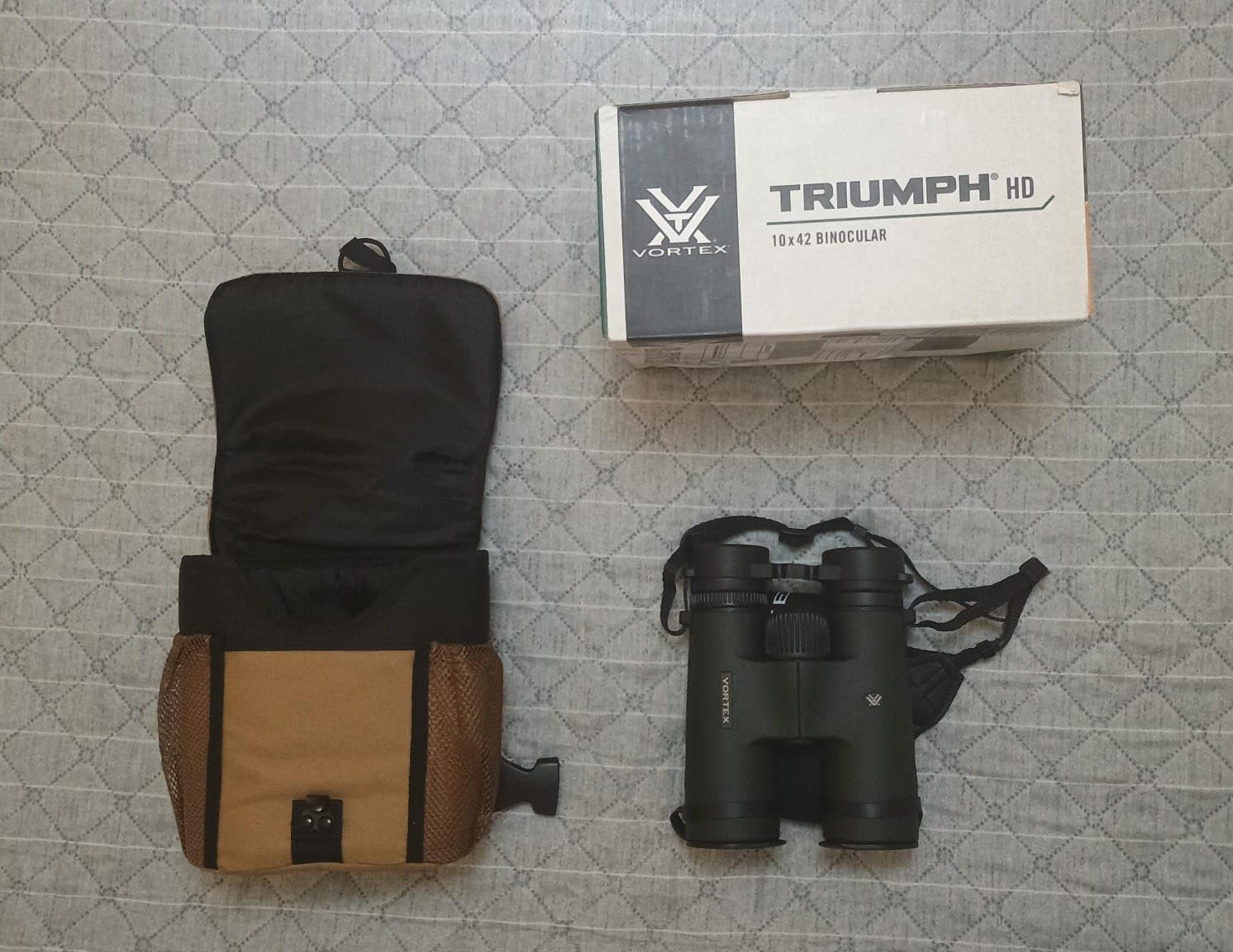
The Triumph HD solves a specific problem: getting a genuine full size 42mm binocular without stepping up a tier. You get the same objective diameter as the pairs above but at the entry level, plus 17mm of eye relief, which is more than several of the models listed later manage.
Optically it is unremarkable in a good way. Fully multi-coated lenses and an HD system produce a clean, neutral image that is more than adequate for garden birding and feeder watching, and reviewers consistently rate the optical quality as good for the money rather than exceptional.
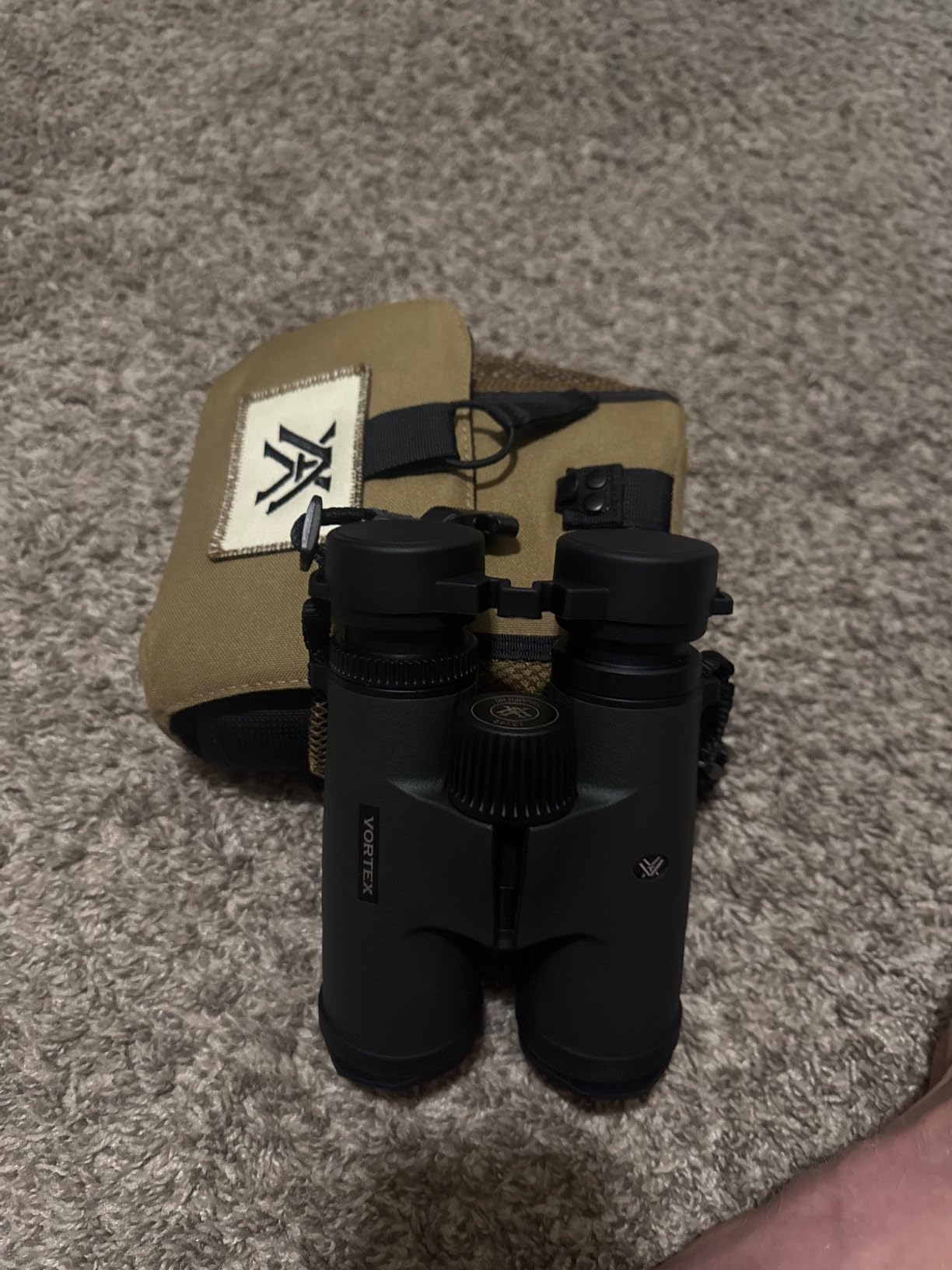
Where it fights the format is weight. At 2.3 lb this is the heaviest body in the guide, and on a three hour walk it is the pair you notice. The 4.2mm exit pupil also makes for a dimmer image than any of the 8x42s, which matters if your birding starts at first light.
Reviewers mention occasional reports of a white haze appearing and focus wheel noise, both resolved through Vortex customer service. The unlimited lifetime warranty is the reason we are comfortable recommending it at all, because it turns a quality control question into a service question.
Who this pair suits best?
A beginner who wants a full size body, wears glasses, and birding within easy reach of home or a car. It is also a sensible first pair for a teenager who will lose things, since the warranty covers the ordinary accidents of ownership.
Where to push up a tier?
If you will hang a pair around your neck for a full morning, the weight becomes the complaint that never goes away. If you bird at dawn on a regular basis, the relative brightness figure of 4.2 tells you the view will be dimmer than the 8×42 alternatives here. Either case points toward a lighter body or a wider exit pupil.
5. Nikon PROSTAFF P3 8×42: Best for Glasses Wearers
Nikon PROSTAFF P3 8×42 Binocular | Waterproof, fogproof, rubber-armored Full-Size Binocular, wide field of view & long eye relief | Official Nikon USA Model
8x42 eco-glass
Exit pupil 5mm
Eye relief 20.2mm
FOV 377 ft
1.3 lb
Pros
- 20.2mm eye relief is the most generous in this guide
- Light at 1.3 lb for a full size body
- 377 ft field of view for scanning
- Lead and arsenic free eco-glass
- Limited lifetime warranty
Cons
- No ED glass so color fringing shows on high contrast edges
- Diopter ring is stiff to set
- Strap has no fixed loop
- Objective lens caps sit loosely
Eye relief is the number that decides whether you can bird in glasses, and the PROSTAFF P3 has 20.2mm of it, comfortably the most in this guide. Combined with a 5mm exit pupil and a 377 foot field of view, it is the pair I would put in front of anyone who has previously looked through a binocular and seen a black ring around the image.
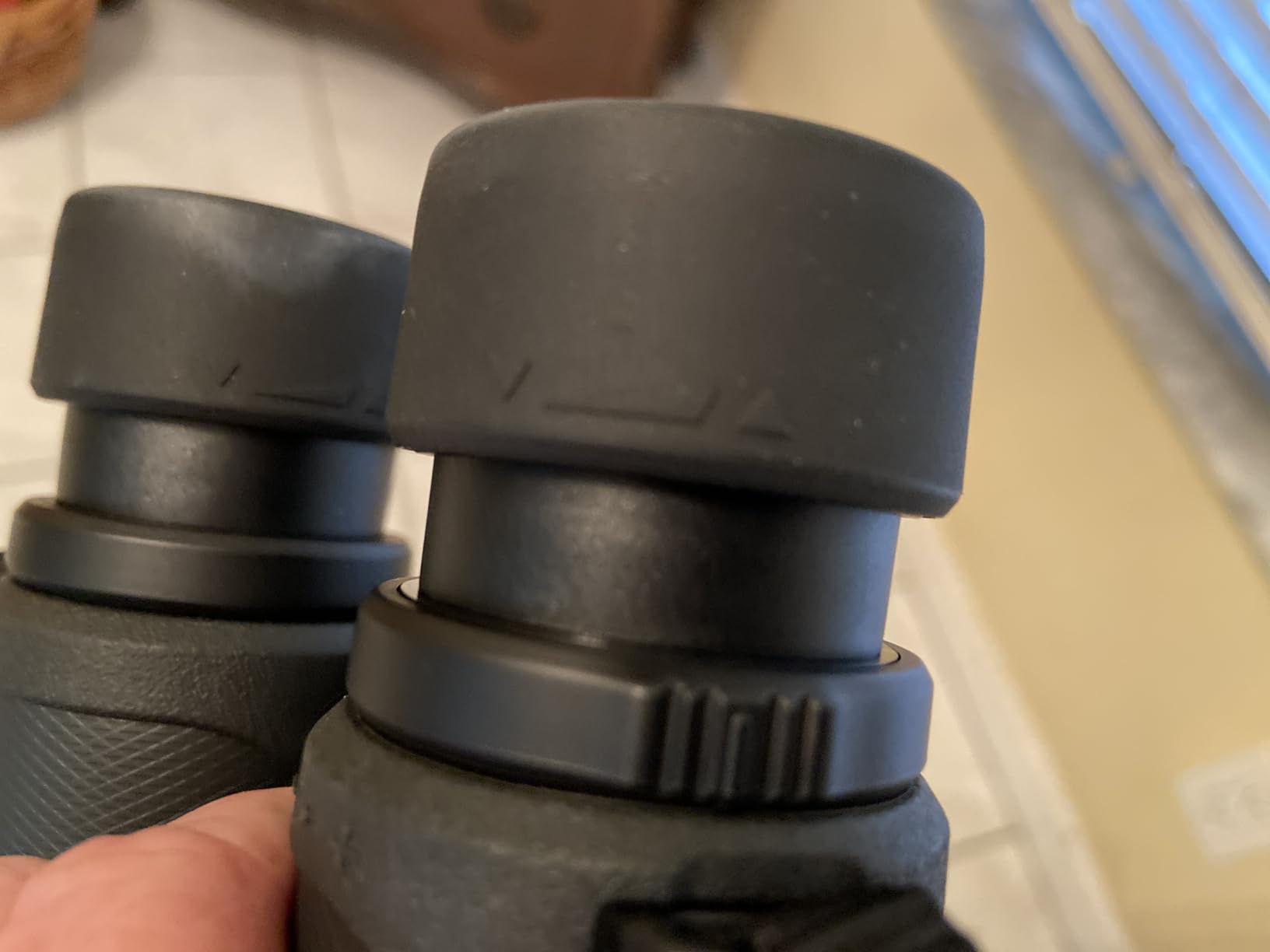
The turn and slide eyecups can be twisted up for glasses or down for a bare eye, and the wide setting is unusually forgiving. At 1.3 lb for a full size body it is also one of the lighter pairs here, which matters when a pair stays on your neck from dawn to midmorning.
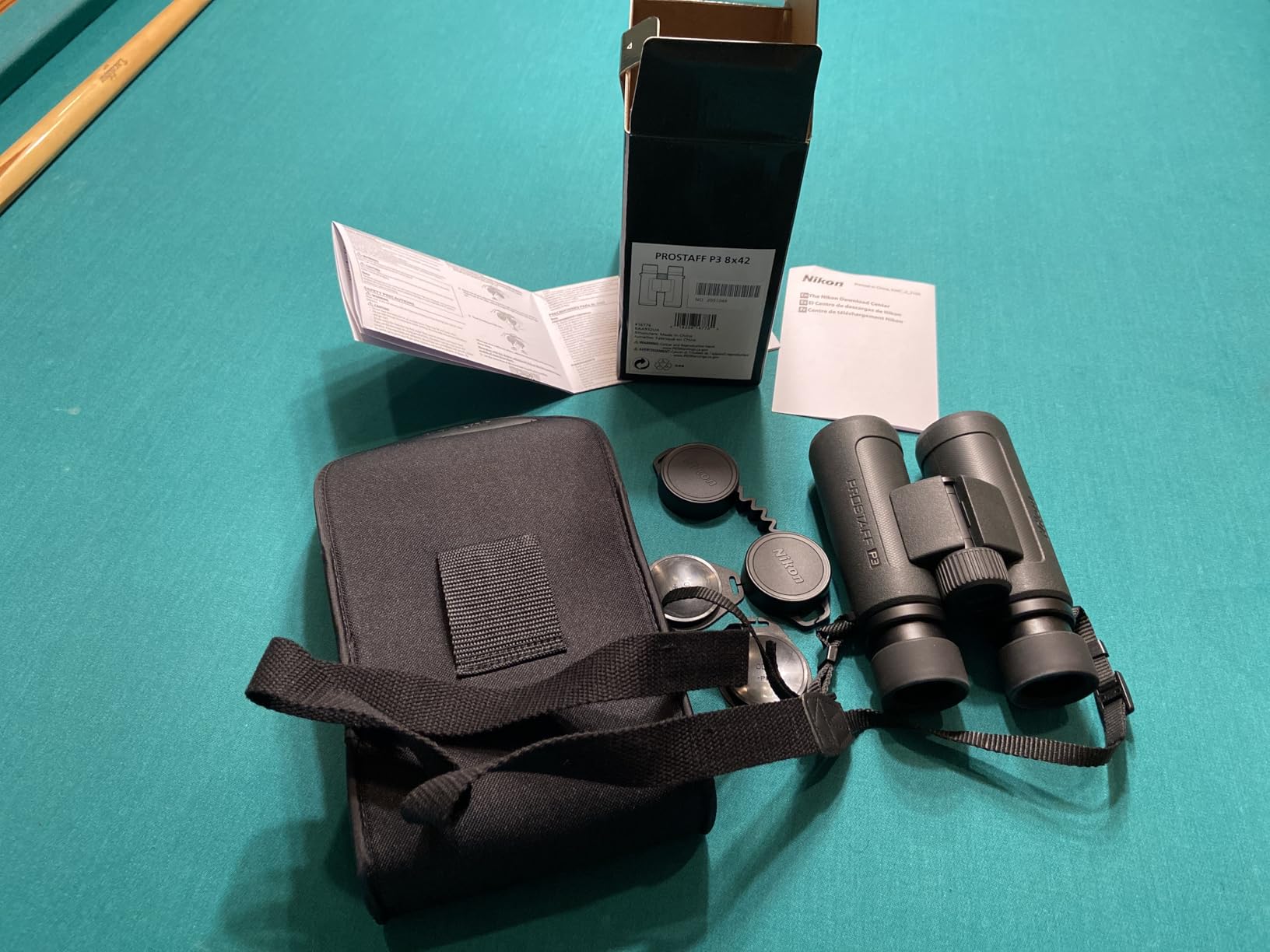
Nikon fits a fiberglass reinforced polycarbonate shell with rubber armor, and the body is nitrogen purged with O ring seals so rain and temperature swings are not a problem. The eco glass is lead and arsenic free, which matters more than it sounds for anyone who drinks rainwater while scanning a marsh.
Reviewers praise the large center focus knob for smooth one handed operation and the color accuracy for a non ED design. The complaints are consistent too: the diopter ring is stiff, there is no ED glass, and the strap lacks a fixed loop so the tail flops.
Why eye relief decides the purchase?
Eye relief is the distance between your eye and the lens, and anything under about 15mm pushes the frame of your glasses into the picture. At 20.2mm you can wear thick prescription lenses and still see the full field. If glasses are involved in your birding at all, this is the one specification worth optimizing for before anything else.
What you give up?
You give up ED glass, so expect a little chromatic aberration on a bright wing edge against a dark background. You also get individual barrel focus rather than a center wheel on some versions, which slows down fast changes. For bright dawn light the trade is worth it, for high contrast edge work it is not.
6. Nikon Monarch M5 8×42: Best ED Glass for Low Light
NIKON Monarch M5 Binoculars | Waterproof Fogproof ED Glass Optics with Dielectric Prism Coating | Bright High-Resolution Outdoor Binoculars for Birdwatching, Hiking & Wildlife, 8×42
8x42 ED glass
Exit pupil 5.3mm
Eye relief 19.5mm
Close focus 8.2 ft
1.4 lb
Pros
- ED glass and dielectric prism coatings remove color fringing
- Excellent low light performance
- 19.5mm eye relief suits glasses wearers
- Close focus to 8.2 ft
- Limited lifetime warranty
Cons
- 335 ft field of view is narrower than the Monarch M7
- Polycarbonate frame rather than metal
- Close focus sits further out than the 6.5 ft Nature DX ED
The Monarch M5 is where Nikon’s optical ambition starts showing. ED, or extra low dispersion, glass reduces the color fringing that cheap and mid priced glass throws on high contrast subjects, and combined with dielectric high reflective prism coatings the result is a bright, natural image at a 5.3mm exit pupil.
That brightness is the real story. In low light the M5 holds detail and colour where lesser glass goes grey, and reviewers repeatedly describe it as a genuine step up in dawn and dusk performance. At 19.5mm the eye relief is generous, so glasses wearers are well served.
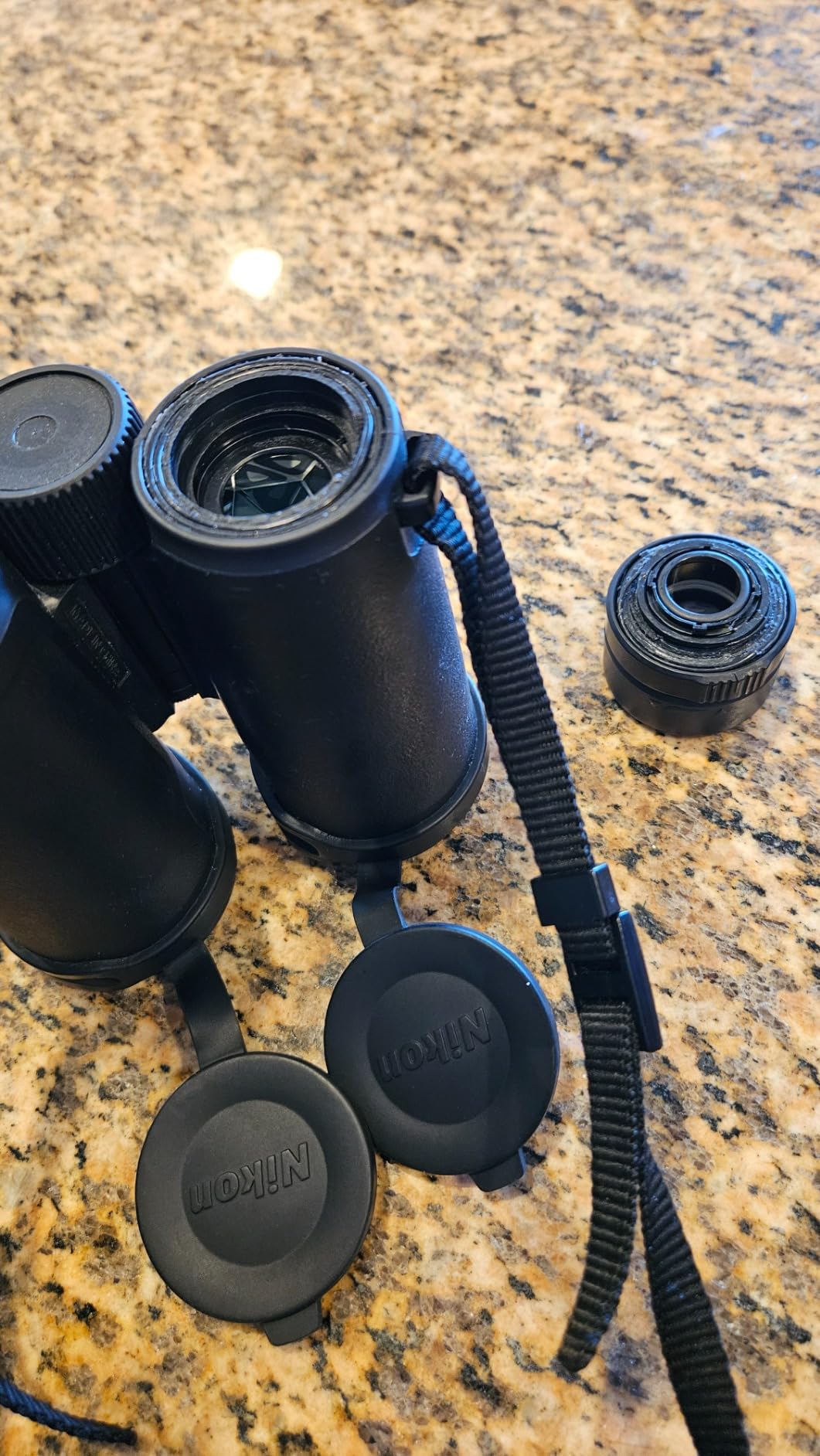
The click stop turn and slide eyecups are well shaped and the large central focus knob is smooth through the whole range. Close focus at 8.2 feet handles a curious bird on a feeder pole, though it is not the number to look at if you want to photograph a butterfly on a flower.
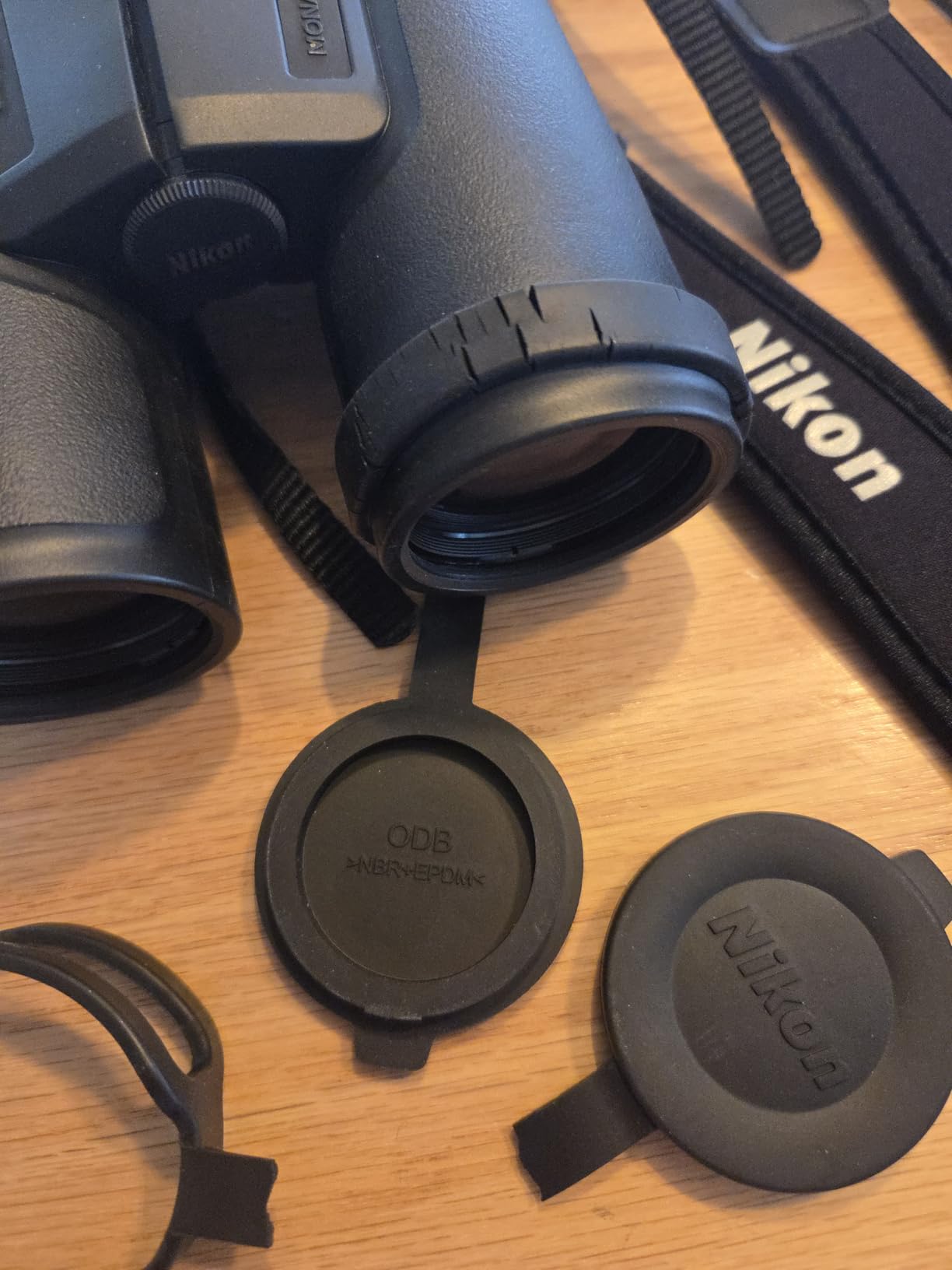
Reviewers are split on one point and consistent on the rest. The 335 foot field of view is narrower than the M7 in the same family, and a polycarbonate body rather than machined aluminium is a visible step down in perceived quality, but almost nobody complains about the image itself.
When ED glass changes your birding?
It changes the first and last hour of the day, and any time you have a bird backlit against sky or water. The absence of fringing on a distant wing bar is what turns a probable identification into a confident one, and that is the entire reason binoculars exist. If your birding is a dawn habit, this is where the money goes furthest.
When you can skip it?
If you bird within 50 yards in daylight, fringing rarely shows and a non ED 8×42 will serve you. You are also paying for a narrower 335 foot field than the M7 offers, and the frame feels less substantial in the hand than a metal bodied binocular at the same price.
7. Bushnell H2O Xtreme 10×42: Best for Boating and Waterfowl
Bushnell H2O Xtreme 10×42 Waterproof Binoculars
10x42 BaK-4 optics
Exit pupil 4.2mm
Eye relief 17mm
IPX7 rated
709 g
Pros
- IPX7 rating so the optics survive submersion
- BaK-4 prisms with fully multi-coated glass
- Nitrogen purged against internal fogging
- Rugged rubber armor with soft grips
- Carrying case and lens covers included
Cons
- 17mm eye relief is snug for some glasses
- 10x is shaky on small moving birds
- Field of view is narrow next to the 8x42s here
This is the binocular to take when the nearest bird is across water and the boat is rocking. The IPX7 rating means the optical system is sealed to survive submersion, which is a genuinely different level of protection from a general waterproof specification, and nitrogen purging stops the internal fogging that ruins dawn counts from a hide.
Optically it is a well equipped 10×42. BaK-4 prisms and fully multi coated glass surfaces give a bright, contrasty image for the class, and at 709 grams it is not a heavy pair to hold up steadily for a long scan.
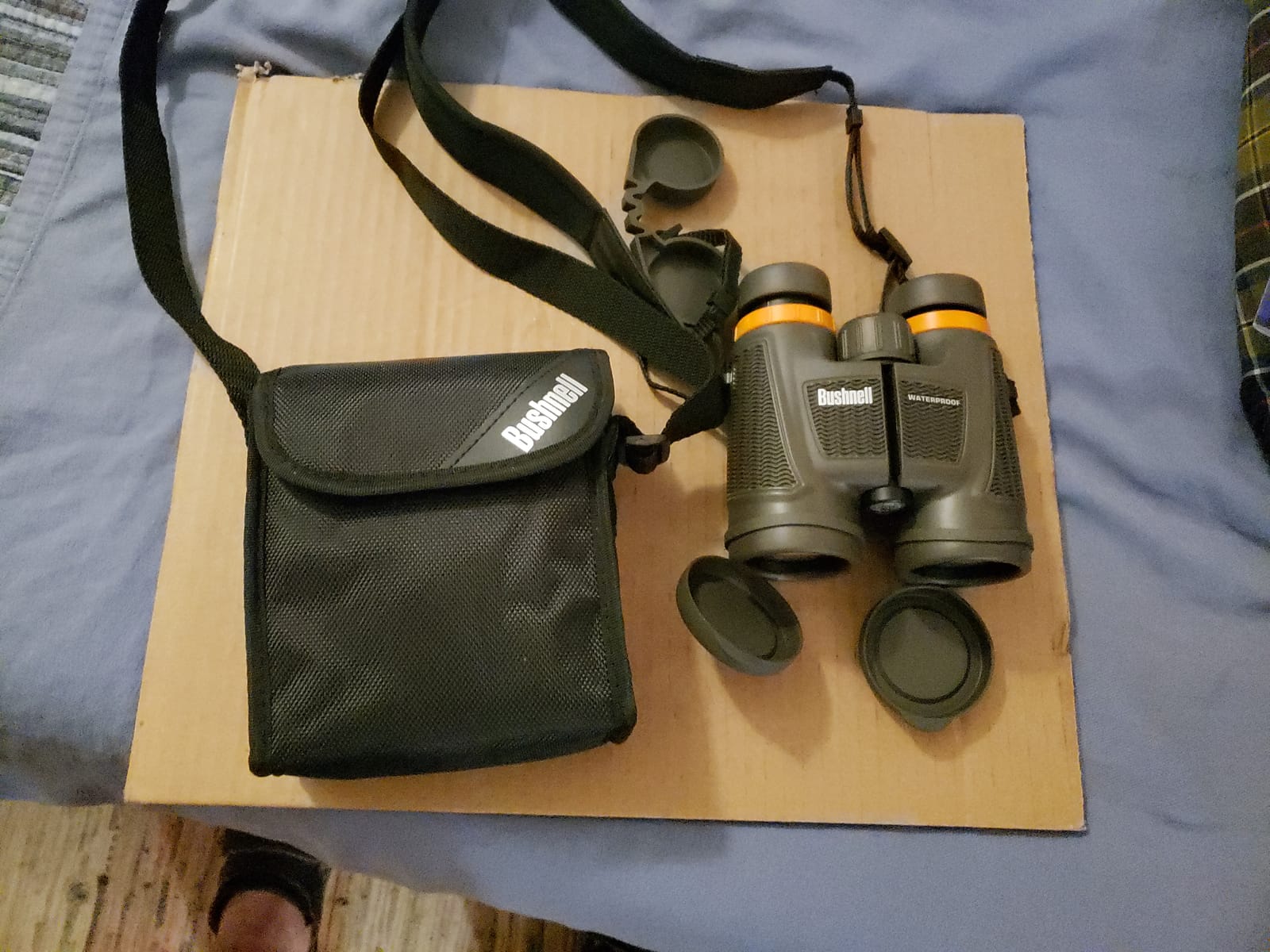
The rubber armor has soft non slip grips that stay workable with wet hands, and the box includes a carrying case, a strap and both ocular and objective covers. For anyone who bird from a boat, a hide or a marsh boardwalk, the bundled kit is more than adequate.
Reviewers are happy with the optical performance and the sealing, and a recurring comment is that some users would rather have 8x because 10x is harder to hold steady. The Ironclad warranty is solid but narrower than the unlimited lifetime cover on the Vortex models in this guide.
Why IPX7 matters on water?
Because water finds every seam eventually. An IPX7 rating means the optical system can be submerged without taking on water, which covers the realistic accidents: a dropped pair, a wave over the gunwale, a downpour on an exposed hide. General waterproof claims are usually tested to rain; this one is tested to immersion.
When 10x is the wrong side of the trade?
When the birds are small, close and moving. A 4.2mm exit pupil and a field of view narrower than the 8x42s here mean warblers at 30 feet are harder to hold than they should be. If most of your birding is woodland or garden rather than open water, an 8×42 will make you a better birder than this one will.
8. Celestron Nature DX ED 8×42: Best for Close-Focus Birding
Celestron Nature DX ED 8×42 Premium Waterproof Birding Binoculars
8x42 ED glass
Exit pupil 5.25mm
Eye relief 17.8mm
Close focus 6.5 ft
950 g
Pros
- ED glass with phase and dielectric coated BaK-4 prisms
- Close focus to 6.5 ft for near birds
- 17.8mm eye relief
- Waterproof and nitrogen purged
- Limited lifetime warranty
Cons
- 950 g body is heavier than the standard Nature DX
- Eye cup failures reported by some owners
- Shallower depth of field means more refocusing
This is the Nature DX formula with the glass upgraded, and the close focus figure is the reason to notice it. At 6.5 feet it focuses nearer than anything else in this guide, which turns thorn bushes, hedgerows and the ground beneath a feeder into usable viewing territory instead of a blur.
ED glass combined with phase and dielectric coated BaK-4 prisms gives the color accuracy that budget glass lacks, and the 5.25mm exit pupil keeps the image bright. At 17.8mm the eye relief is generous, and the rubber armored polycarbonate housing is sealed and nitrogen purged.
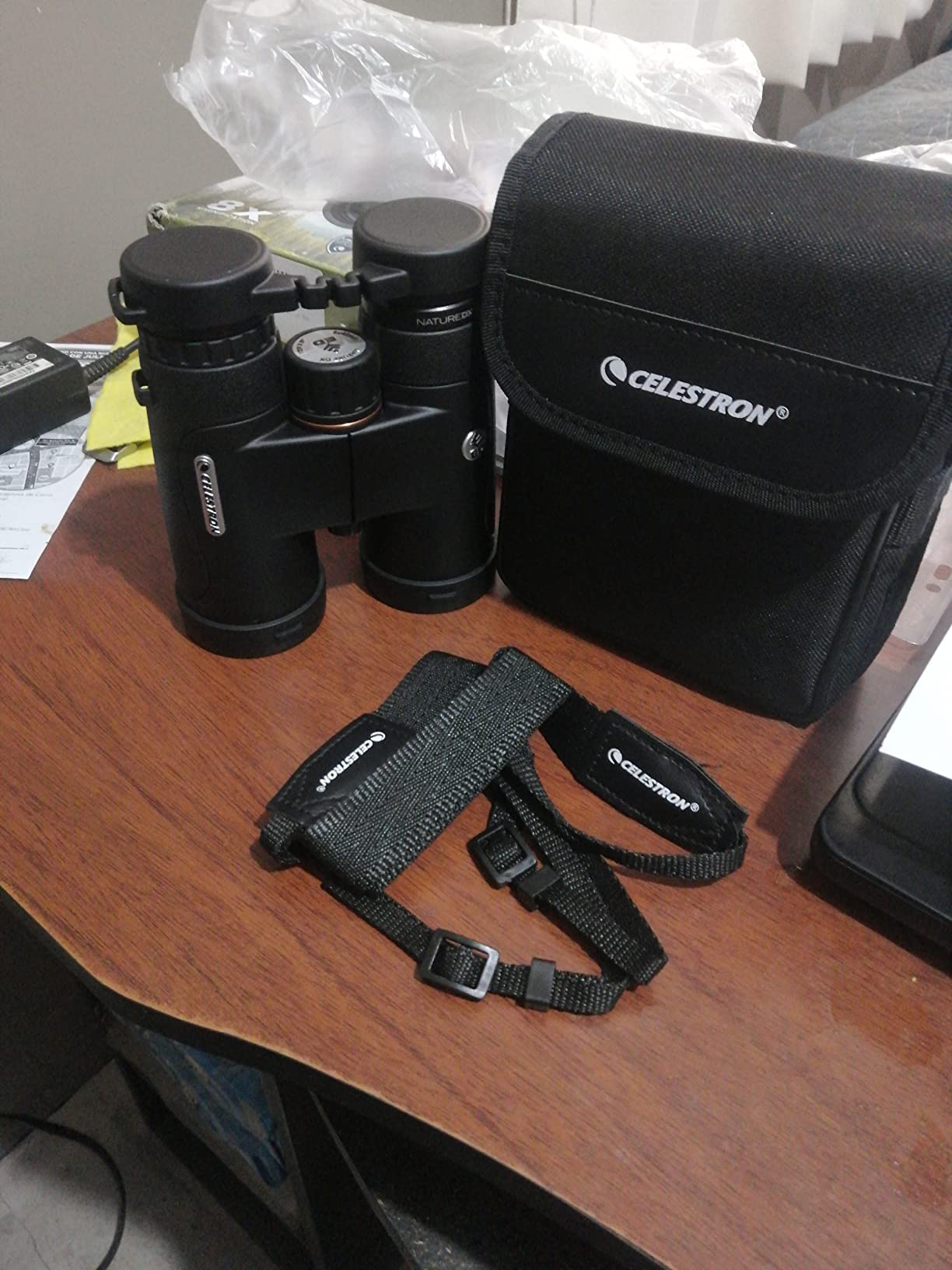
Where it differs from the standard Nature DX is weight. At 950 grams it is heavier than the 1.8 lb model it is based on, which tells you how much glass the ED package adds, and it is worth knowing before you commit it to a full day walk.
Reviewers praise the optics and the value of ED glass at this level, but a number of owners report eye cup failures, some after warranty replacement. The optical performance is not in question; the molded rubber parts are.
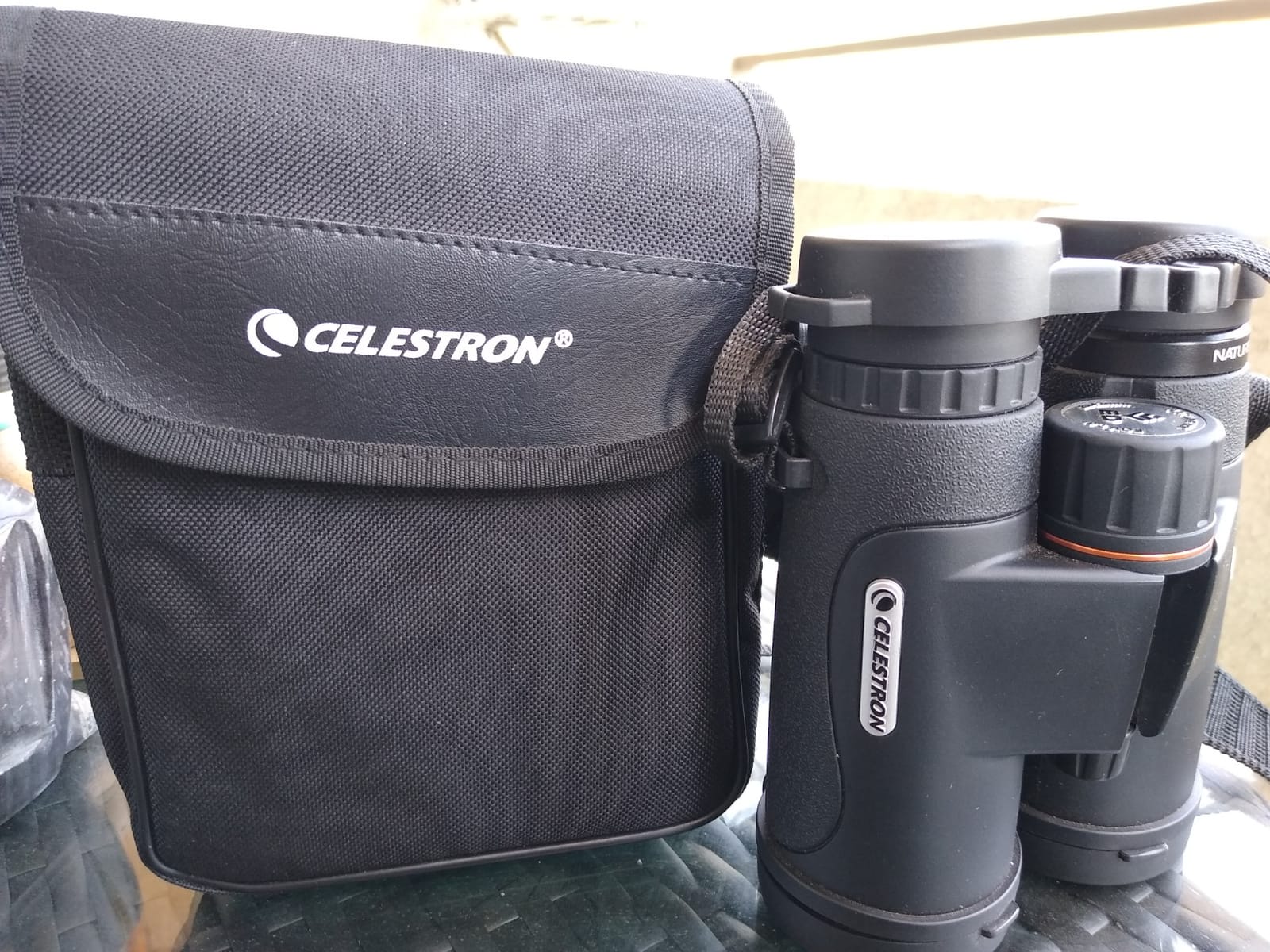
What close focus actually buys you?
The difference between a bird at 8 feet and one at 5 feet is the difference between a field mark and a field mark plus plumage detail. Close focus also makes butterflies, dragonflies and anything on a feeding table a genuine possibility rather than a squint, and forum regulars repeatedly recommend checking for close focus before buying a first pair.
Where it falls behind?
Shallow depth of field means you refocus whenever the bird changes distance, which is more work on moving birds than most buyers expect. The eye cup durability reports are the reason this sits lower in the list despite good optics, and the weight is meaningful on a long walk.
9. Celestron TrailSeeker ED 8×42: Best Complete Accessory Package
Celestron TrailSeeker ED 8×42 Binoculars for Birding & Nature – ED Glass
8x42 ED glass
Exit pupil 5.2mm
Magnesium body
59.1 deg apparent view
1.5 lb
Pros
- Magnesium alloy body with full rubber armor
- 59.1 degree apparent field of view
- Phase and dielectric coated BaK-4 prisms
- Includes carry harness plus padded strap and padded case
- Limited lifetime warranty
Cons
- 17.2mm eye relief is tight for glasses
- Warranty terms carry more limitations than rivals
- Sits above the Nature DX ED on cost
The TrailSeeker is the Celestron to buy if you want the upgrade and the field kit in one box. A magnesium alloy body is lighter and stronger than the polycarbonate used lower down the range, and it arrives with a carry harness, a padded neck strap and a padded case, which is the most complete package in this guide.
The optics are ED glass with phase and dielectric coated BaK-4 prisms under fully broadband multi coating, which is a careful specification for the money. The 59.1 degree apparent field of view is among the widest here, and the twist up eyecups and large focus knobs are easy to adjust with one hand.
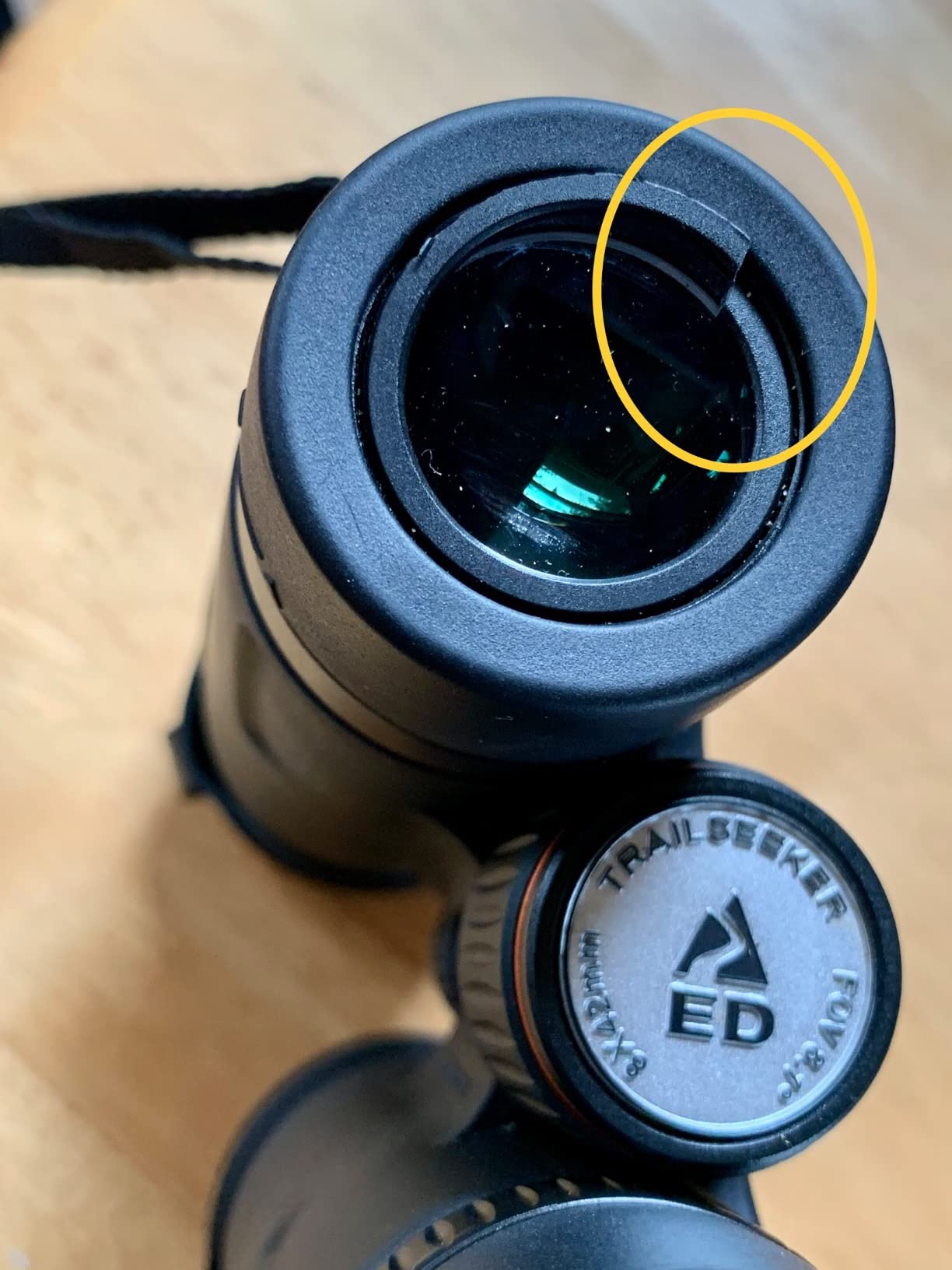
At 1.5 lb it sits in the middle of the weight range, which is fair for a magnesium bodied full size binocular with this level of glass. Reviewers like the accessories and the balance, and note the color accuracy is a visible step up from the standard Nature DX.
The recurring criticism is the warranty terms, which carry more limitations on exterior parts and accessories than the unconditional coverage on the Vortex models here. The eye relief of 17.2mm is adequate but not generous, so glasses wearers should check before committing.
Why the bundled kit changes the deal?
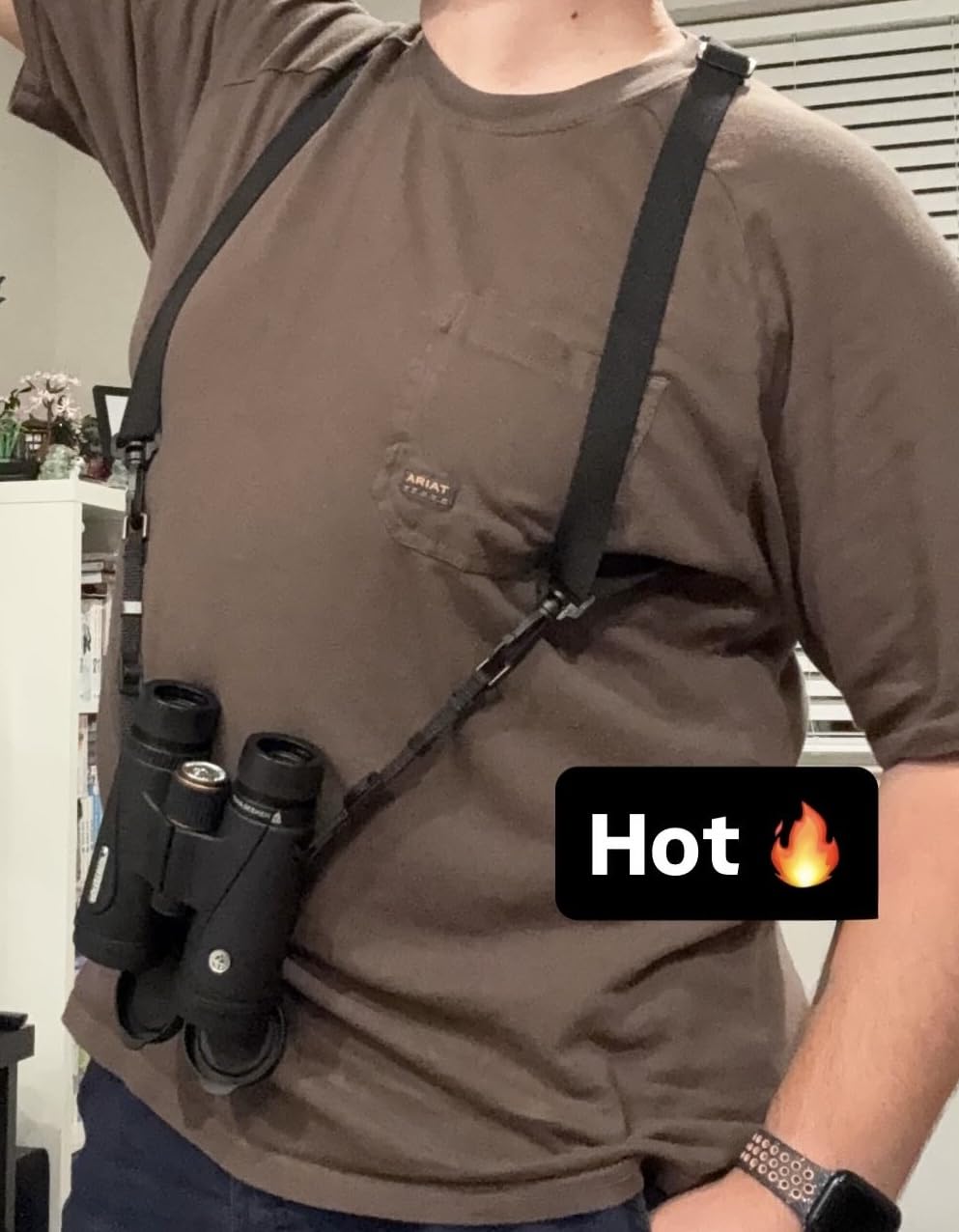
Because most people who buy a mid tier binocular never buy the case, strap or harness, and then find at the first hide that the thin strap is chafing their neck. Having a padded strap, a harness and a padded case in the box removes the most common early complaint about cheaper setups at the point of decision.
When the cheaper model makes more sense?
The Nature DX ED at position eight delivers very similar optics for noticeably less money, and if you already own a case and a decent strap there is little functional gain here beyond the magnesium body. The TrailSeeker earns its place when the whole kit matters or when you want a body that survives a decade of knocks.
10. Nikon Monarch M7 8×42: Best Field of View
NIKON MONARCH M7 Binoculars | Lightweight Waterproof Fogproof Binoculars with ED Glass & Multilayer Coatings | Wide View, Smooth Focus & Long Eye Relief for Birdwatching, Wildlife & Outdoor Use, 8×42
8x42 ED glass
Exit pupil 5.3mm
Eye relief 17.1mm
FOV 435 ft
1.5 lb
Pros
- 435 ft field of view which is the widest in this guide
- ED glass with multilayer lens and prism coatings
- Oil and water repellent coatings shed rain
- Well balanced at 1.5 lb
- Limited lifetime warranty
Cons
- 17.1mm eye relief needs careful eyecup setting
- The top of the range this guide covers
- Some units have a stiff diopter ring
Field of view is the specification that changes how you bird rather than how you see, and the Monarch M7 has the widest in this guide at 435 feet at 1,000 yards. That extra width means a flock lifts and stays in frame, a skein of geese crosses and you can count them without panning, and scanning an estuary is a single sweep instead of several.
The optics back up the view. ED glass with multilayer lens and prism coatings gives a vivid, high resolution image, and the oil and water repellent coatings on the lenses mean a squall rolls off instead of turning the view to fog. At 5.3mm the exit pupil is as bright as it gets in an 8×42.
Reviewers describe it as the right tool for serious birders who prioritize scanning over magnification, and the wider view is exactly why the Monarch M5 lower down the list feels narrower in the hand.
What a wider field of view does for you?
It turns searching into finding. Birds that start at the edge of your view have a habit of leaving before you center them, so every extra foot of field of view is time recovered. On open water, in woodland canopy work and on a distant flock, that is the difference between counting a species and watching one disappear.
Where the spending stops paying off?
Two places. If your birding happens within 40 feet, the extra width is wasted view. And if you wear glasses, 17.1mm of eye relief is a tighter squeeze than most of the other pairs here, so the widest view in this guide may not be the one you can actually see. Test it with your own eyewear before you commit.
8×42 vs 10×42: Which Should You Buy?
Buy 8×42 if you are choosing your first pair or if most of your birding happens within a hundred yards. Buy 10×42 only if you regularly scan open country, watch distant waterfowl or pick out raptors at half a mile. That is the whole argument, and the reason it is contested is that both formats are defensible.
The forum consensus and the marketing message genuinely disagree here. Regulars on r/birding argue consistently that 8x is the right recommendation, because it is steady, wide and portable, and that most birders do better with 8x than 10x. Manufacturers push the higher number because magnification is what sells a box.
The physics is on the side of the birders. Exit pupil is the objective diameter divided by magnification, so a 42mm lens at 8x produces a 5.25mm exit pupil while the same lens at 10x gives 4.2mm. A wider exit pupil means a brighter, more comfortable image, and it also means a wider field of view, because 8x sweeps more habitat per scan than 10x at the same eye position.
Where 10x wins is raw detail on a distant subject. If a Peregrine is perched on a pylon 600 yards out, 10x resolves twice the linear detail of 8x and that is not a subtle difference. The cost is shake, a dimmer image, and a narrower window in which you can hold the bird centered, which is exactly why birders who move up to 10x usually keep an 8×42 for everything else.
If you also travel or safari, the same logic applies because long distance open country viewing shifts the balance toward 10x for the same reasons it does for raptors here.
Binoculars for Glasses Wearers
You need 15mm of eye relief or more, and this is the same advice given in every glasses wearer thread in every birding forum. Below that figure the eyecup pushes against your frame and you see a black ring around the picture. These are the pairs in this guide ranked by eye relief.
Nikon PROSTAFF P3 8×42 at 20.2mm. The most forgiving pair here and the one I would buy first for a glasses wearer.
Nikon Monarch M5 8×42 at 19.5mm. Add ED glass brightness on top of roomy eye relief.
Celestron Nature DX ED 8×42 at 17.8mm. Comfortable, and the close focus helps if you wear bifocals.
Celestron Nature DX 8×42 at 17.5mm. Works for most wearers with the eyecups twisted up.
Celestron TrailSeeker ED 8×42 at 17.2mm. Usable if your frames are slim.
Vortex Triumph HD 10×42 at 17mm. Full size optics and glasses clearance at the bottom of the ladder.
Bushnell H2O Xtreme 10×42 at 17mm. The one to take on the water.
Whatever you choose, twist the eyecups up fully before you judge the view. Plenty of people who think a binocular has a short eye relief simply have the eyecups turned the wrong way.
How to Choose Birding Binoculars?
Magnification: what strength do you need?
Eight power is the honest answer for handheld birding. Ten power shows more detail but shakes more, narrows the field of view and needs a tripod or monopod to be pleasant on anything moving. Above 10x, handheld birding stops being fun for almost everyone.
Objective lens: how much light you gather?
The second number is the front lens diameter in millimeters, and it sets brightness, weight and cost. Below 30mm you lose too much light for dawn and dusk, which is why compact 10×25 bins are a poor birding tool despite being convenient. Most birders do better with 8x than with a 25mm objective at 10x.
Field of view: how much you see at once?
Field of view is quoted in degrees or in feet at 1,000 yards, and linear feet are easier to picture. Anything around 320 feet or wider is good for birding, 377 feet is very good, and 435 feet is exceptional. Wider is better for finding birds; it does not make the image brighter.
Exit pupil and relative brightness
Divide the objective diameter by the magnification and you get the exit pupil, the size of the bright disc you see. Around 7mm is the practical maximum for real twilight viewing, which is why a 7×50 or 8×56 has a cult following among night and dawn birders. Relative brightness is the exit pupil squared and predicts how two pairs compare in dim light, so 5.25mm at 27.56 beats 4.2mm at 17.64 every time.
Eye relief: the glasses question
Fifteen millimeters is the practical minimum, 17mm is comfortable, and 20mm or more means you can forget about it. The exit pupil and the eyecup design interact here, so a nominal figure can be misleading on a pair with a narrow 4.2mm exit pupil.
Close focus: when the bird is five feet away?
Six feet or nearer is the useful threshold, and birders who work a hedge or a feeder patch should treat it as a requirement rather than a nicety. Pairs quoted at 8 feet and beyond will frustrate you on anything within arm reach.
Glass and coatings: what the labels mean?
BaK-4 prisms are brighter than BK-7 and are worth looking for. Phase coating on the prisms plus fully multi coated lenses is the standard for a good birding binocular, and dielectric coating adds further reflectivity. ED, or extra low dispersion, glass is the single biggest visible upgrade because it removes color fringing on high contrast subjects, and it is the main reason to move up a price tier.
Waterproofing and fogproofing
Nitrogen purging fills the body with inert gas so internal fogging cannot start, and O ring seals keep water out. For general birding a waterproof rating is enough, but if you work from a boat or a marsh hide, look for an IPX7 immersion rating rather than a general claim.
Weight and comfort
Anything under 1.5 pounds disappears around your neck, and anything over 2 pounds is noticeable by the second hour. Balance matters as much as total weight, as does the eyecup comfort, which you can only really judge after twenty minutes.
Warranty
An unlimited unconditional lifetime warranty is the single best risk reduction in this category, because binoculars get dropped. Models limited to normal wear and tear are more fragile purchases than the paperwork suggests. If you are weighing two pairs at similar weight, the warranty is a fair tiebreaker.
For the wider picture on how these formats perform outside birding, our guides to the best compact binoculars for hunting and the best rangefinder binoculars for hunting cover formats birders often cross-shop.
How to Test Binoculars Before You Buy?
Five minutes in a shop tells you more than an hour of reading. Point any pair at a distant tree line, a poster or a brick wall far enough away to be a few hundred yards.
Check collimation. Focus on the far object, then bring the barrels into alignment. If the image breaks into two misaligned halves, the binoculars are out of collimation and should not leave the shop.
Look at the edges. The center should be sharp. Corners softening a little is normal, heavy blur at the edges is not.
Turn the focus wheel. It should move smoothly with no backlash, grit or noise, and it should focus in one direction without a separate near focus ring fighting it.
Test eye relief with your own glasses on. Twist the eyecups up, press the eyecups against your frame and confirm you can see a full, round field with no black ring.
Set the diopter. With one eye closed, rotate the diopter ring until the image is sharp, then close both eyes and confirm both barrels focus together.
Also hold the pair at arm length for a minute. If your hand is already tiring, 10x will be worse in the field, not better.
When a Spotting Scope Beats Binoculars?
Binoculars win for finding, because you sweep wide with two eyes open. A spotting scope wins for detail, because it magnifies far harder with a stabilized image and a tripod. If your list includes wintering waterfowl at 800 meters, distant raptors over a marsh, or a seabird colony on a cliff face, that is the moment a scope earns its place.
The practical pattern most birders settle into is a binocular in the pack and a scope in the car for specific sites. If you are still unsure what magnification works for you, our binocular buying guide for deer hunting covers the same optical decisions for readers who want the terminology explained further.
Frequently Asked Questions
Is 8×42 or 10×42 better for bird watching?
8×42 is better for most people. Eight power is steadier in the hand, sweeps a wider field of view so you find birds faster, and produces a 5.25mm exit pupil against 4.2mm at 10x, which means a brighter image at dawn and dusk. Choose 10×42 only for open country, distant waterfowl or raptors at long range, where the extra detail is worth the shake and narrower view.
What strength binoculars are best for bird watching?
Eight power is the standard recommendation for handheld birding. Anything above 10x shakes too much to be pleasant on a moving bird and normally needs a tripod or monopod. If you want more magnification than 8x offers, the better trade is a wider objective lens, so an 8×50 or 8×56 rather than a 12×50, because the wider lens gives a brighter image and more eye relief.
Which is better, 8×42 or 12×50 binoculars?
For birding on foot, 8×42 wins comfortably. A 12×50 gathers more light and shows more detail, but handheld shake at 12x is severe enough that most people cannot keep a small bird centered, and the extra glass adds weight. A 12×50 makes sense for astronomy or for tripod-supported waterfowl work, where you are braced and static rather than walking and panning.
What binoculars does the Audubon Society recommend?
The National Audubon Society does not endorse specific binocular models. Instead, it points birders toward selection criteria: 8x magnification, a 42mm or larger objective lens for light gathering, a wide field of view, and a waterproof, fogproof body that will survive being taken into the field. Judge any pair against those criteria and the marketing falls away.
Which is better for birding, 8x or 10x?
It depends on the birding, and the honest answer differs by style. For woodland songbirds, warblers and anything small and moving close by, 8x is better because it is steady, wider and brighter. For distant waterbirds, raptors and open-country scanning, 10x resolves more detail and can be worth the shake. Many experienced birders carry an 8×42 as their everyday pair and reach for 10x only for specific distant subjects.
Which is better, Vortex Diamondback 8×42 or 10×42 binoculars?
For general birding the 8×42 is the better all-round tool, because the wider field of view and larger exit pupil make finding and tracking birds easier. The 10×42 version is the better choice for open country and long distance scanning, where resolving detail on a distant hawk matters more than a wide sweep. If you can only carry one pair and you walk your birding sites, choose 8x.
The Verdict: Which Binoculars Should You Buy in 2026?
The Vortex Crossfire HD 10×42 is the best binoculars for bird watching overall in 2026, because an unlimited lifetime warranty and fully multi coated HD optics make it the pair most likely to still be in your bag in ten years. It is also the easiest of the 10x options in this guide to hold steady, which matters more than the extra magnification on small birds.
Buy the Nikon PROSTAFF P3 8×42 if you wear glasses and want the most forgiving eye relief in the guide. Buy the Nikon Monarch M5 8×42 if your birding happens at first light and you want ED glass brightness. Buy the Bushnell H2O Xtreme 10×42 if your sites are wet, and buy the Nikon Monarch M7 8×42 if you scan open country and want the widest field of view in this guide.
Whichever you choose, take it outside and point it at something before you commit. Focus feel and balance are personal, and ten minutes in a field tells you more than ten pages of specifications. We earn a commission from qualifying purchases, at no additional cost to you.