
If you want one pair that does almost everything under a dark sky, the Celestron SkyMaster 25×70 is our top pick: 70mm objective lenses, BaK-4 prisms and enough magnification to fill the frame with the Moon. That is the short version of our answer for the best binoculars for stargazing in 2026, and the eight pairs below are the ones we would actually consider buying.
Binoculars are the most-skipped step in astronomy. Most beginners buy a telescope first, struggle with a wobbling tripod, and give up before they ever find Saturn. A pair of binoculars asks nothing of you: no setup, no alignment, no jargon. You point it at the sky and stars appear that were not there a second earlier.
We spent October going through the configuration numbers that decide whether a pair works under a night sky, then read what owners actually report after months of use. The lineup below spans a light 10×50 you can hold for an hour through an 8.6-pound 25×100 that lives on a tripod, and each section tells you who it suits and who it will disappoint.
Table of Contents
Top 3 Picks for Stargazing (October 2026)


Best Binoculars for Stargazing at a Glance in 2026
Every pick below earns its place for a different reason. The category labels follow the same pattern the search engines use, so you can jump straight to the type that matches your situation.
Best overall: Celestron SkyMaster 25×70 – 70mm of aperture at 25x, the strongest handheld view on this list, tripod strongly advised.
Best value: Celestron SkyMaster 15×70 – the same 70mm aperture at a magnification you can actually point reliably.
Best budget: Bushnell Falcon 10×50 – 50mm objectives, waterproof, and the easiest first pair for most beginners.
Best for travel: Vortex Triumph HD 10×42 – fully multi-coated, nitrogen purged and compact enough to pack.
Best for glasses wearers: Nikon Aculon A211 10×50 – long eye relief and a body that suits smaller faces.
Best for low-light sharpness: Vortex Diamondback HD 10×50 – HD glass with argon purging and full multi-coating.
Best for faint deep sky: Celestron SkyMaster 25×100 – 100mm objectives, tripod-mounted only.
Best all-round 10×50: Pentax Jupiter 10×50 – multi-coated 50mm optics in a 1.9 pound body, fair-weather use only.
| Product | Specifications | Action |
|---|---|---|
| Celestron SkyMaster 25×70 |
|
Check Latest Price |
| Celestron SkyMaster 15×70 |
|
Check Latest Price |
| Bushnell Falcon 10×50 |
|
Check Latest Price |
 Vortex Triumph HD 10×42 Vortex Triumph HD 10×42 |
|
Check Latest Price |
 Nikon Aculon A211 10×50 Nikon Aculon A211 10×50 |
|
Check Latest Price |
 Vortex Diamondback HD 10×50 Vortex Diamondback HD 10×50 |
|
Check Latest Price |
 Celestron SkyMaster 25×100 Celestron SkyMaster 25×100 |
|
Check Latest Price |
 Pentax Jupiter 10×50 Pentax Jupiter 10×50 |
|
Check Latest Price |
1. Celestron SkyMaster 25×70 – The Bright Handheld Pick
Celestron SkyMaster 25×70 Binoculars for Astronomy, Long-Range & Wildlife
25x and 70mm
BaK-4 prisms
2.8mm exit pupil
2.7 degree field
1/4-20 adapter
Pros
- 70mm aperture gives a genuinely bright night view
- Resolves the Moon filling the frame and Jupiter's Galilean moons
- Shows open clusters and globulars well
- Rubber-armored housing
- Case and strap included
Cons
- 25x needs a tripod or braced elbows
- Center focus is touchy with some play
- Some pairs arrive out of collimation or with internal dust
- Supplied plastic adapter wobbles
This is the pair I keep coming back to. The 70mm objectives gather roughly twice the light of a 42mm binocular, and when you swing it across a rich Milky Way field the difference is not subtle. Star clouds that read as faint grey in a 10×50 look like textured dust in this one.
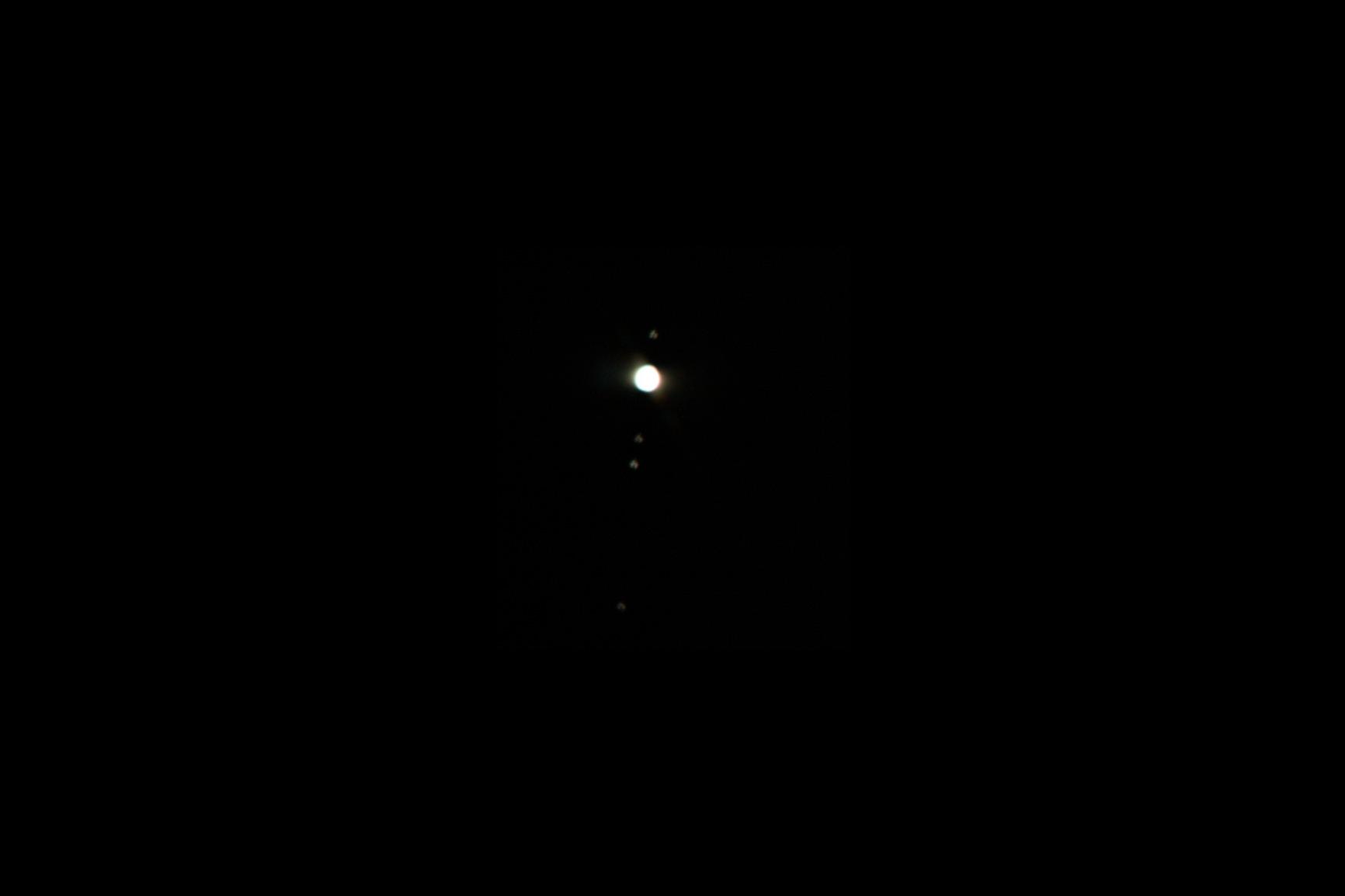
At 25x the Moon fills the field of view, which sounds like a gimmick until you see it. Terminator detail, crater shadows and the ragged edge of a mountain range are all resolvable, and Jupiter shows as a small disk with its four Galilean moons strung out beside it.
The number that gives me pause is the 2.8mm exit pupil. 70mm divided by 25x leaves a beam of light narrower than a fully dark-adapted pupil, so on a very young observer you are wasting some of the light you worked to collect. Older observers and anyone observing under bright suburban skies will not notice this at all.
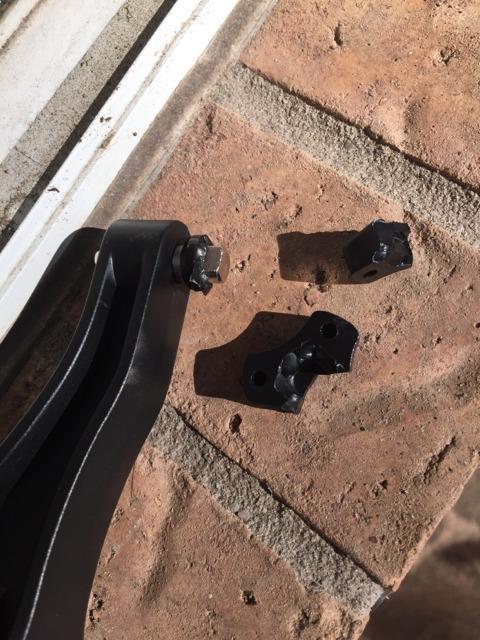
Collimation is the other thing to know. Owners report that some units arrive with the prisms out of alignment, and the three adjustment screws on the top plate can be tightened by hand to sort it. A retailer’s return window is the safer route if the view doubles at the edges on arrival.
Who the Celestron SkyMaster 25×70 suits?
It suits the person who wants the most from a pair of binoculars and will use a tripod or rest their elbows on a fence. The 2.7 degree true field is narrow for finding things, so pair it with a planisphere or a star-hopping app rather than sweeping blindly.
It also suits a household where one pair has to serve wildlife, sport and the night sky. A 70mm objective at 25x reaches for distant birds and terrain in daylight, and the rubber armor handles being carried in a pack.
Who the Celestron SkyMaster 25×70 does not suit?
It does not suit a beginner who wants to sweep the sky from a reclining chair with nothing supporting their arms. Reviewers are consistent on this: hand shake at 25x is pronounced, and no amount of technique fixes it.
Nor does it suit anyone who wants the widest possible star field. A 2.7 degree window shows a small patch, so sweeping the whole of Orion takes deliberate scanning rather than a lazy arc.
2. Celestron SkyMaster 15×70 – Best Value for Deep Sky
Celestron SkyMaster 15×70 Astronomy Binoculars for Stargazing and Deep-Sky
15x and 70mm
4.4 degree field
18mm eye relief
Relative brightness 22
Pros
- Best balance of power and brightness in the SkyMaster line
- Resolves large star fields and the Double Cluster
- Bright BaK-4 view in a forgiving design
- Long 18mm eye relief
- Bag and strap included
Cons
- Hand-holding is shaky at 15x
- Included plastic adapter oscillates
- Some units arrive out of collimation
- Fine daytime detail trails premium 10x42 glass
Take the same 70mm aperture and drop the power to 15x, and you get a pair that is much easier to point. The 4.4 degree true field is wide enough to frame a whole constellation, which makes finding things half the frustration it is at 25x.
Owners consistently describe this as the pair that replaced a telescope for casual observing. The Pleiades, the Hyades, the Double Cluster in Perseus and M31 all fall within reach, and the Moon is comfortable rather than overwhelming.
Two practical notes. First, 18mm of eye relief means glasses wearers can use it without fighting the eyecup, which eliminates a common frustration. Second, the relative brightness rating of 22 puts it firmly in the class of binocular that shows faint nebulae as more than a smudge.
Collimation is the most repeated complaint we found for this model. Users describe pairs arriving out of alignment, and also describe their own pair slowly drifting over years of use. The adjustment screws on the top plate fix a fresh unit, and Celestron’s limited lifetime warranty covers manufacturing defects.
Who the Celestron SkyMaster 15×70 suits?
It suits a beginner who wants real aperture but is not ready for a 4 pound instrument balanced on a monopod. Most people find 15x tolerable handheld for short bursts, especially with elbows braced.
It also suits anyone who wants to sweep rather than aim. A 4.4 degree field covers the sword of Orion, the face of the Moon and most of the Summer Triangle in one go, so the whole session feels like drifting rather than hunting.
Who the Celestron SkyMaster 15×70 does not suit?
It does not suit people who expect planetary detail. At 15x, Jupiter is a disk with moons and Saturn is an oval blob, and no amount of aperture changes that.
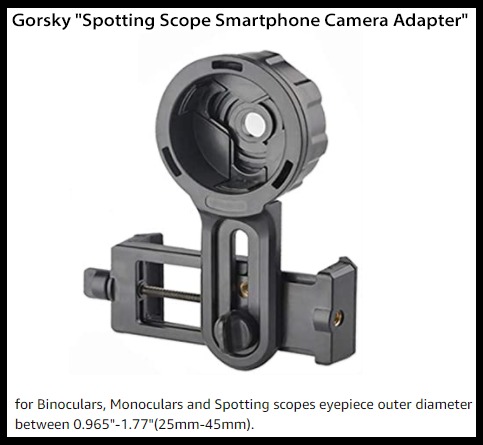
The bundled plastic tripod adapter is the other disappointment. Owners consistently describe it as flimsy and prone to oscillating at the pan axis, and most replace it with a metal one before serious use.
3. Bushnell Falcon 10×50 – Best Budget First Pair
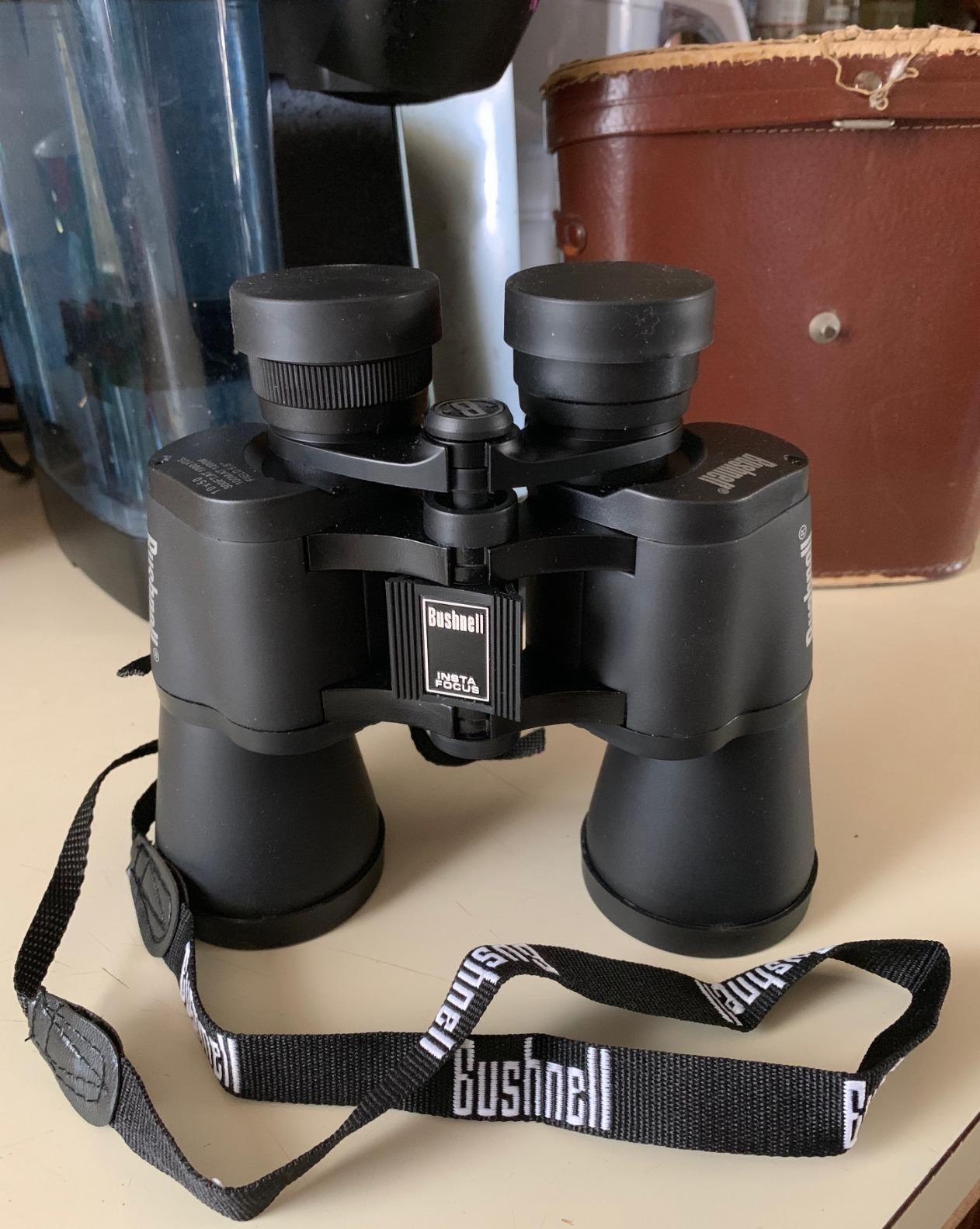
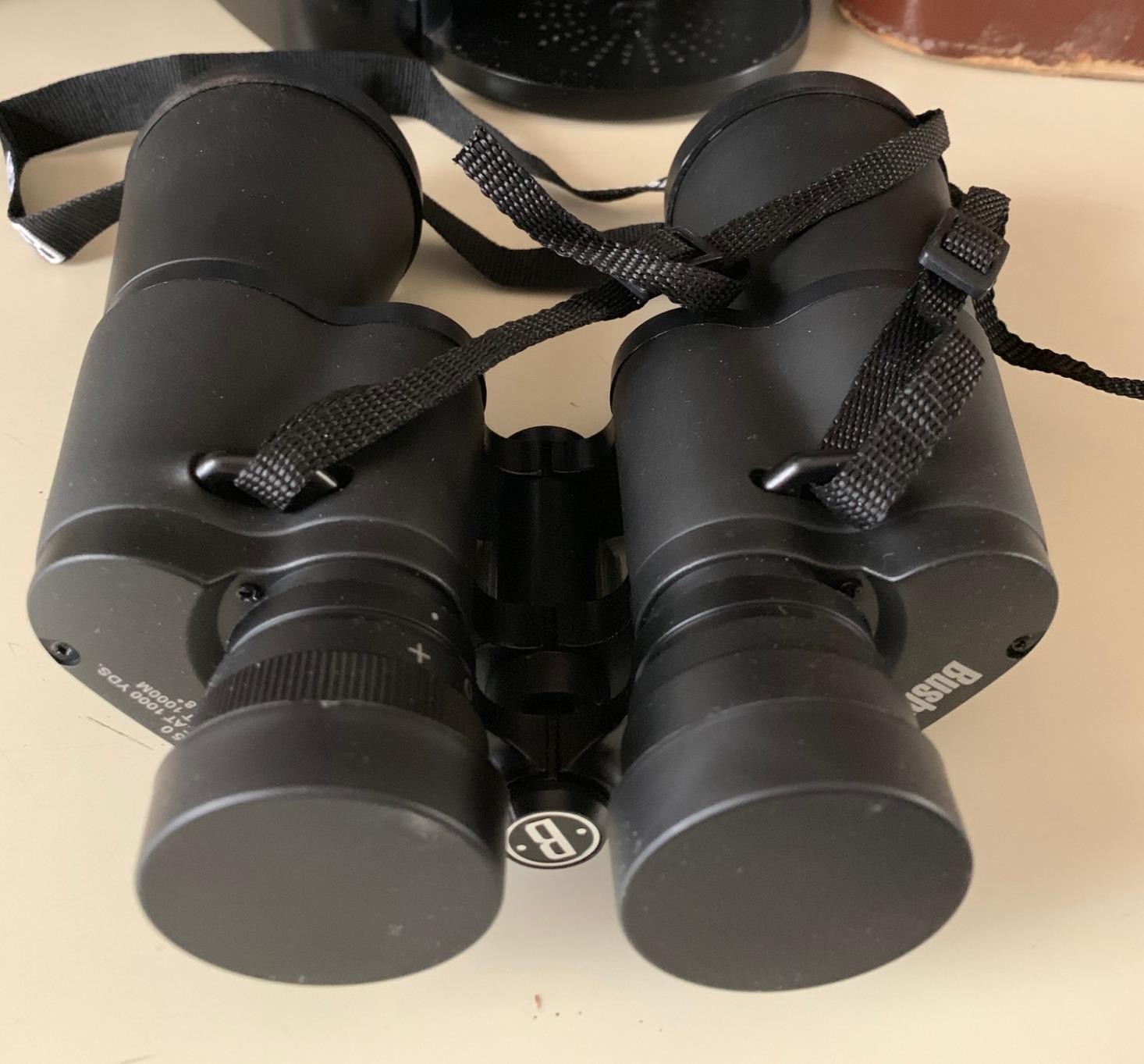
Bushnell Falcon 10×50 Wide-Angle Binoculars
10x and 50mm
5mm exit pupil
Fully coated
Waterproof
Pros
- An affordable reliable way to start stargazing
- Lightweight at 830g for long sessions
- InstaFocus lever dials in both eyes fast
- Waterproof with a non-slip grip
- Case and strap included
Cons
- Noisy InstaFocus lever feels flimsy
- Eyepiece caps fall off easily
- 9mm eye relief is tight for glasses
- Soft case offers little protection
This is the honest answer for most people reading this page. A 5mm exit pupil means the whole 50mm of collected light actually reaches your eye, and 10x is the highest power most adults can hold steady without support.
It is also a genuinely good daytime binocular. The 60 degree apparent field is wide, the fully coated Porro optics give a clean image, and the waterproof, rubberized grip survives a cold night parked in a car.
What you give up is aperture relative to the SkyMasters. 50mm against 70mm is the difference between seeing the Andromeda Galaxy as a smudge and seeing its core as an elongated glow under good skies. It is still visible, just not impressive.
At 830g this is also the pair you will actually take outside on a cold evening. Weight matters more than people expect; a heavy binocular stays at home on the sofa, and a light one comes out every clear night.
Who the Bushnell Falcon 10×50 suits?
It suits a first-time stargazer, a family buying for a child who needs something grippable, and anyone who wants one pair for birds, sport and stars. It is the configuration r/Binoculars members most often recommend as a general-purpose starting point that also handles astronomy.
It suits travel too. At under a kilo it packs easily, and the 10x magnification keeps the image steady even on a moving bus or a windy beach.
Who the Bushnell Falcon 10×50 does not suit?
It does not suit eyeglass wearers. 9mm of eye relief is short, and many people have to push the face close to the eyecup or remove glasses entirely to see a full field.
The InstaFocus lever is also the most common gripes. Owners describe it as making a crunchy sound and worry about its long-term durability, and the eyepiece caps are reported to fall off easily in a pocket.
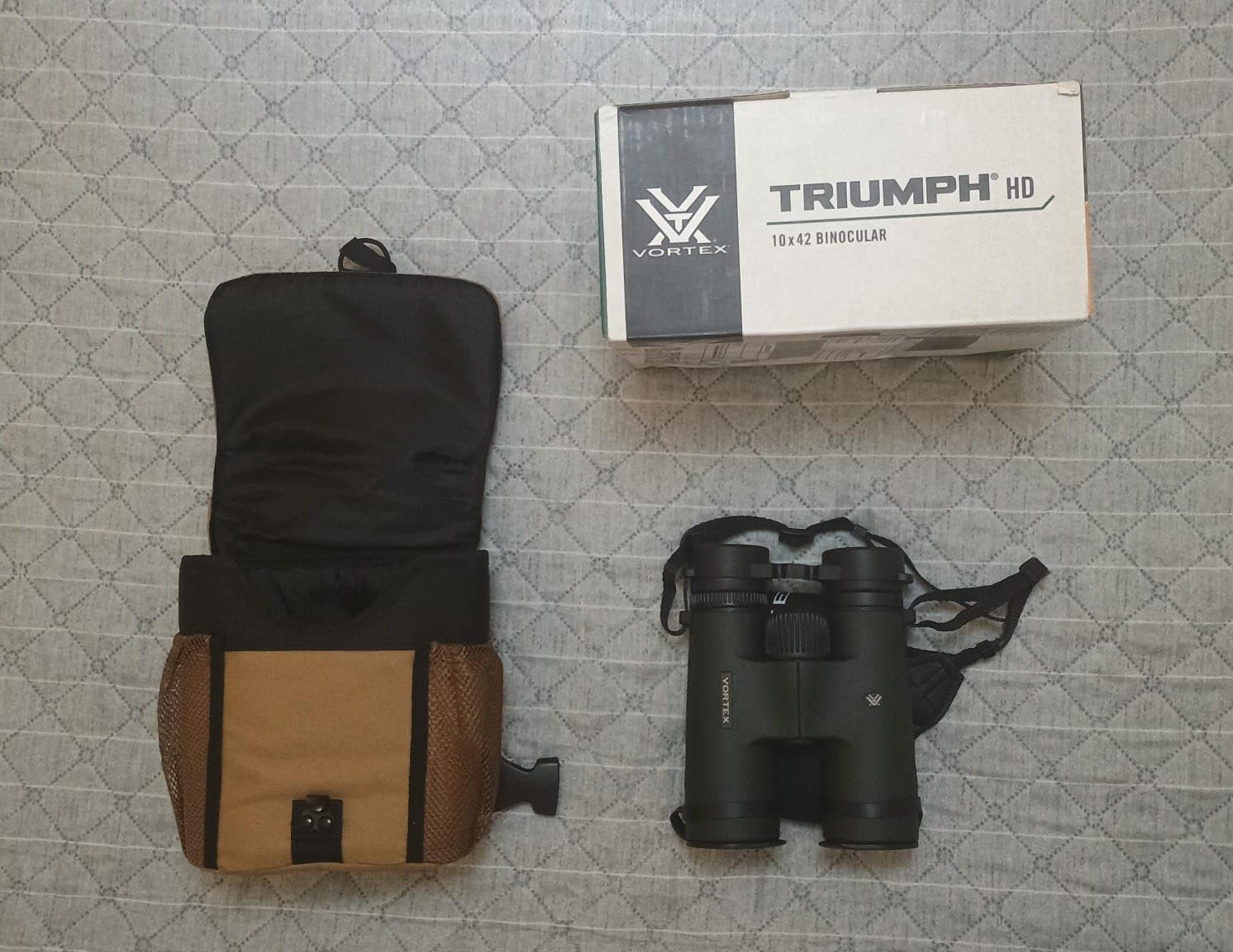
4. Vortex Triumph HD 10×42 – Best for Travel and Hiking
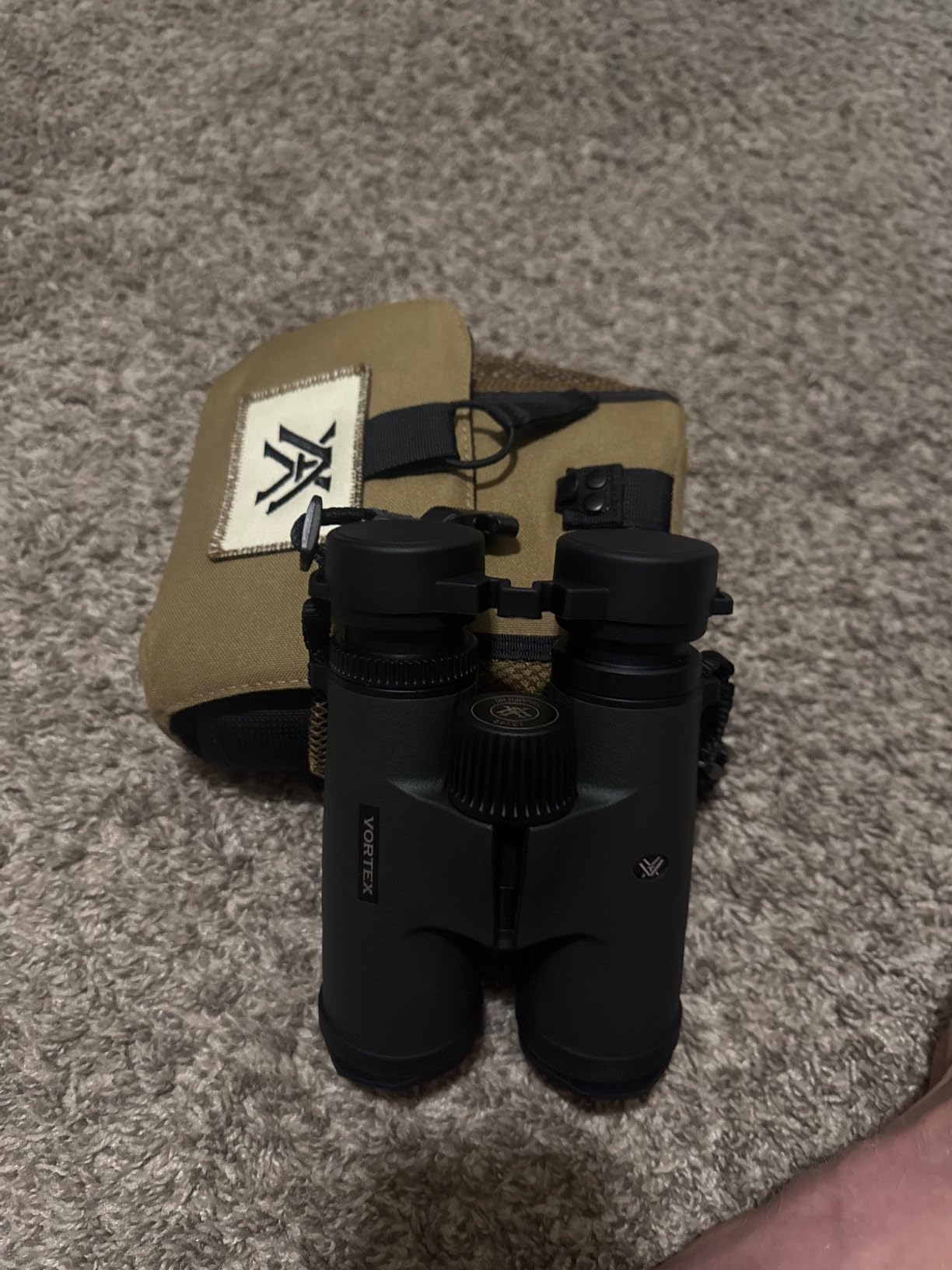
Vortex Triumph HD 10×42 Binoculars
10x and 42mm
17mm eye relief
HD fully multi-coated
Nitrogen purged
Pros
- Exceptionally clear and colour-accurate image
- 10x is stable and shake-free handheld
- Nitrogen purged and fogproof
- Non-slip armoured polycarbonate chassis
- GlassPak harness and tethered covers included
Cons
- 42mm gathers less light than a 50mm
- 10x is modest for faint deep sky
- A few reports of internal haze
- Bulkier than a compact 8x model
The Triumph HD is the one I suggest when someone asks whether they can stargaze with 10×42. Yes, comfortably. The field is wide, the image is stable, and the 17mm of eye relief means you will not be adjusting eyecups to see the whole scene.
Optically it punches above its class. HD elements with full multi-coating keep stars as tight points across the field rather than soft blobs, which is where cheaper roof-prism designs fall apart first.
The honest limitation is the 4.2mm exit pupil and the 42mm objective. Both are below what a fully dark-adapted adult eye can absorb, so under a genuinely dark sky the 42mm lenses collect light you are not fully using, and 10x is not enough power to compensate.
In practice this pair is superb for the Moon, Jupiter and its moons, and bright clusters. For faint deep sky under suburban skies, a 50mm objective will show you more.
Who the Vortex Triumph HD 10×42 suits?
It suits someone who stargazes on the move: campsites, mountain tops, car parks on holiday. Compact, sealed and stable, it is the pair that gets packed rather than left behind.
It also suits a buyer who wants daytime performance as well. The same 10×42 works for hiking and wildlife, and Vortex’s unconditional lifetime warranty means a knocked-in body or broken hinge is a service claim rather than a replacement cost.
Who the Vortex Triumph HD 10×42 does not suit?
It does not suit a deep-sky specialist. At 42mm there is a hard ceiling on faint galaxies and nebulae, and 10x will not resolve small targets even when the sky is perfect.
A small number of owners report internal haze or a stiff focus ring on early units, and a few found the sealing less complete than the marketing implies. Check the view on arrival and keep the return option open.
5. Nikon Aculon A211 10×50 – Best for Glasses Wearers
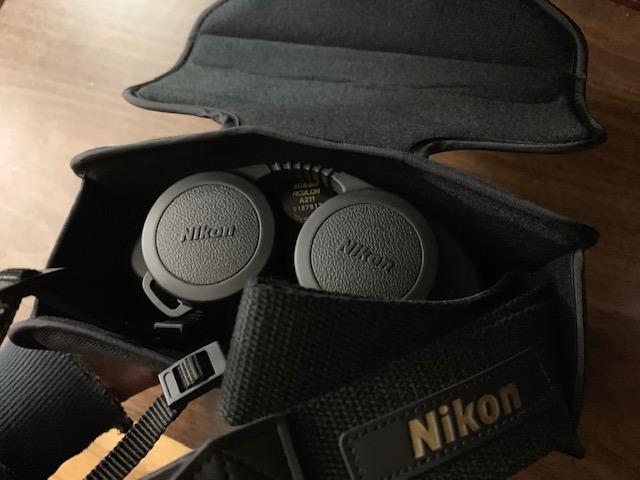
Nikon ACULON A211 10×50 Binocular | Multilayer coating, Porro prism Binocular with turn and slide eyecups, Tripod Adaptable | Official Nikon USA Model
10x and 50mm
11.8mm eye relief
Eco-Glass multicoated
Rubber armored
Pros
- Bright low-distortion Eco-Glass image
- Comfortable turn-and-slide eyecups
- Works with or without glasses
- Smooth centre focus
- Rubber armour grips well in wet conditions
Cons
- 11.8mm eye relief is modest
- Porro design gathers less than premium roof-prism rivals
- Water resistant rather than fully waterproof
- 10x50 shows limited detail on dim targets
The A211 is the pair we suggest to people who wear glasses and have given up on binoculars. The turn-and-slide eyecups collapse down for close fits, and 11.8mm of eye relief is workable where 9mm is not.
Nikon’s aspherical multicoated Eco-Glass gives one of the more distortion-free images in this price range. Stars at the edge of the field stay reasonably round, and colours through the Moon’s surface do not fringe badly.
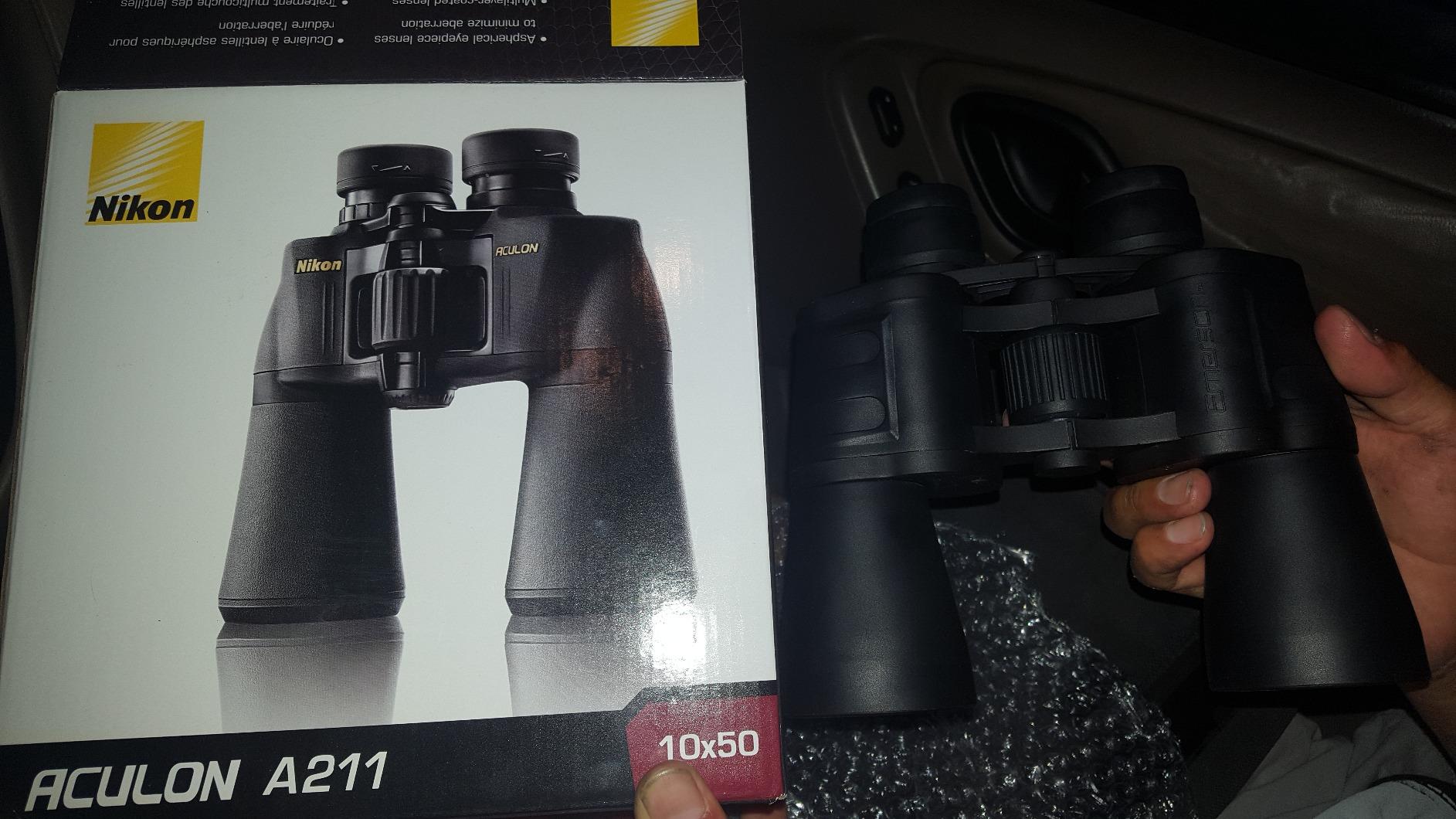
It is also light. At 2.8 pounds it is not a pocket binocular, but it is light enough for a long session on a cold night, and the rubber armor keeps the grip secure when hands get damp.
One thing worth planning around: this pair is tripod adaptable, so when you step up to a monopod or a photo tripod for steadier views of the Moon, you can keep using the same binoculars.
Who the Nikon Aculon A211 10×50 suits?
It suits anyone who has abandoned binoculars because their glasses fog the eyecups or cut the field. This is the configuration we point people toward when eye relief is the deciding factor.
It suits a hybrid buyer who wants daytime birding and distant targets with a bright, clean image. The 60 degree apparent field and smooth centre focus make it pleasant to use all day.
Who the Nikon Aculon A211 10×50 does not suit?
It does not suit observers in dewy, exposed conditions. The sealing is water resistant rather than fully waterproof, and reviewers do not treat it as a rain instrument the way they do the Vortex pairs.
It also does not chase faint deep sky. A 10×50 view of M31 is a smudge, and this pair is not the one to buy if galaxies are the reason you are looking up.
6. Vortex Diamondback HD 10×50 – Best for Low-Light Sharpness
Vortex Diamondback HD 10×50 Binoculars
10x and 50mm
17mm eye relief
HD glass
Dielectric prism coating
Argon purged
Pros
- Excellent centre sharpness and low chromatic aberration
- Clean lunar terminator detail
- Argon purging resists fogging over years of use
- Adjustable eyecups work with or without glasses
- Responsive warranty service
Cons
- Heavier than 10x42 models for long hikes
- Edge sharpness falls off versus premium glass
- Case straps loosen with repeated use
- Wide field can be hard to hold on fast targets
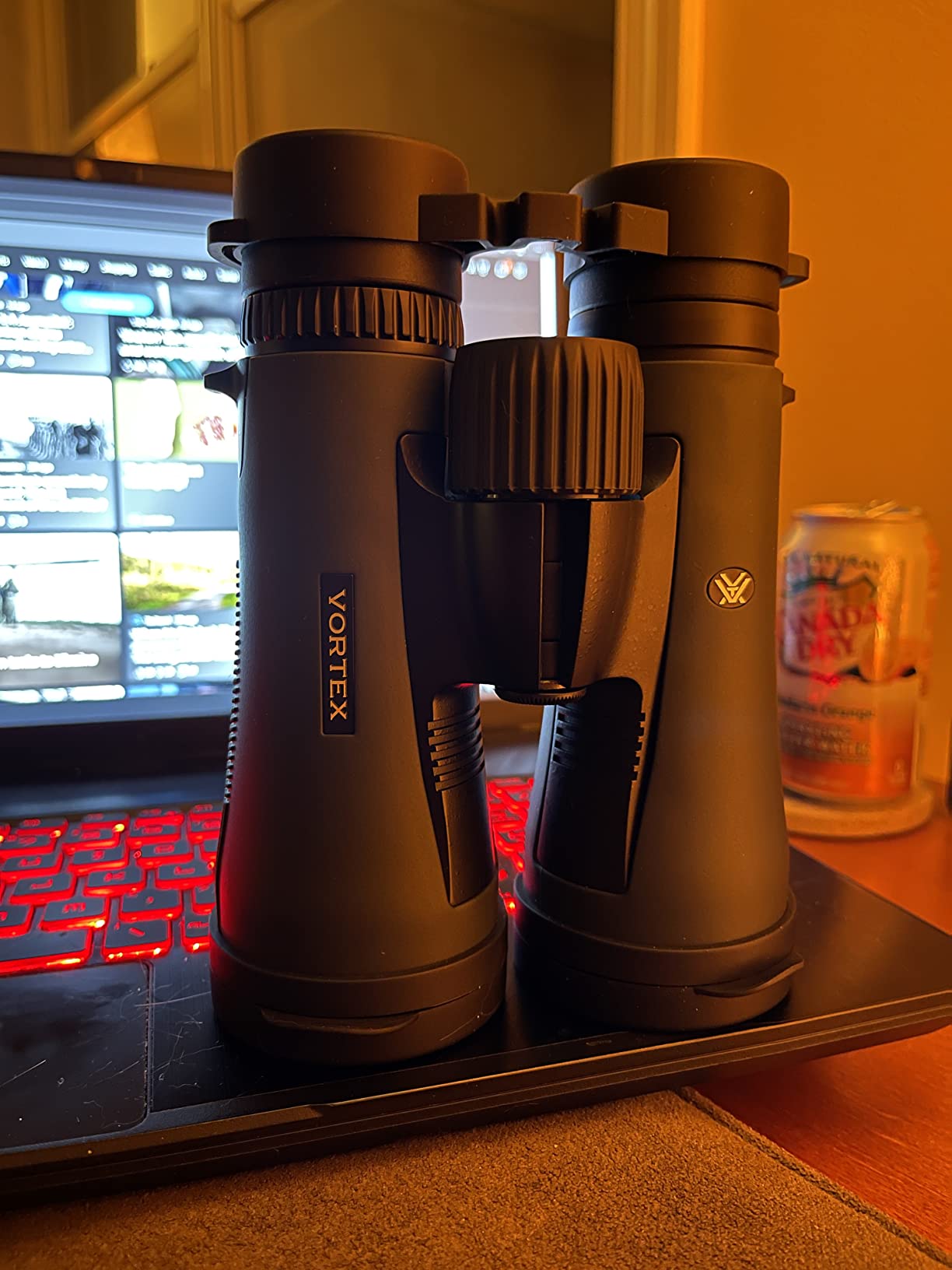
This is the sharpest image in the 10x group we tested, and sharpness is what the Moon rewards you for. HD select glass elements plus a dielectric coating on the roof prism produce a lunar terminator with a clean, hard edge rather than a soft blur.
The 6 degree apparent field is wide enough to sweep, and 17mm of eye relief makes it one of the most comfortable pairs here for glasses wearers. 5mm exit pupil means the 50mm aperture is fully used.
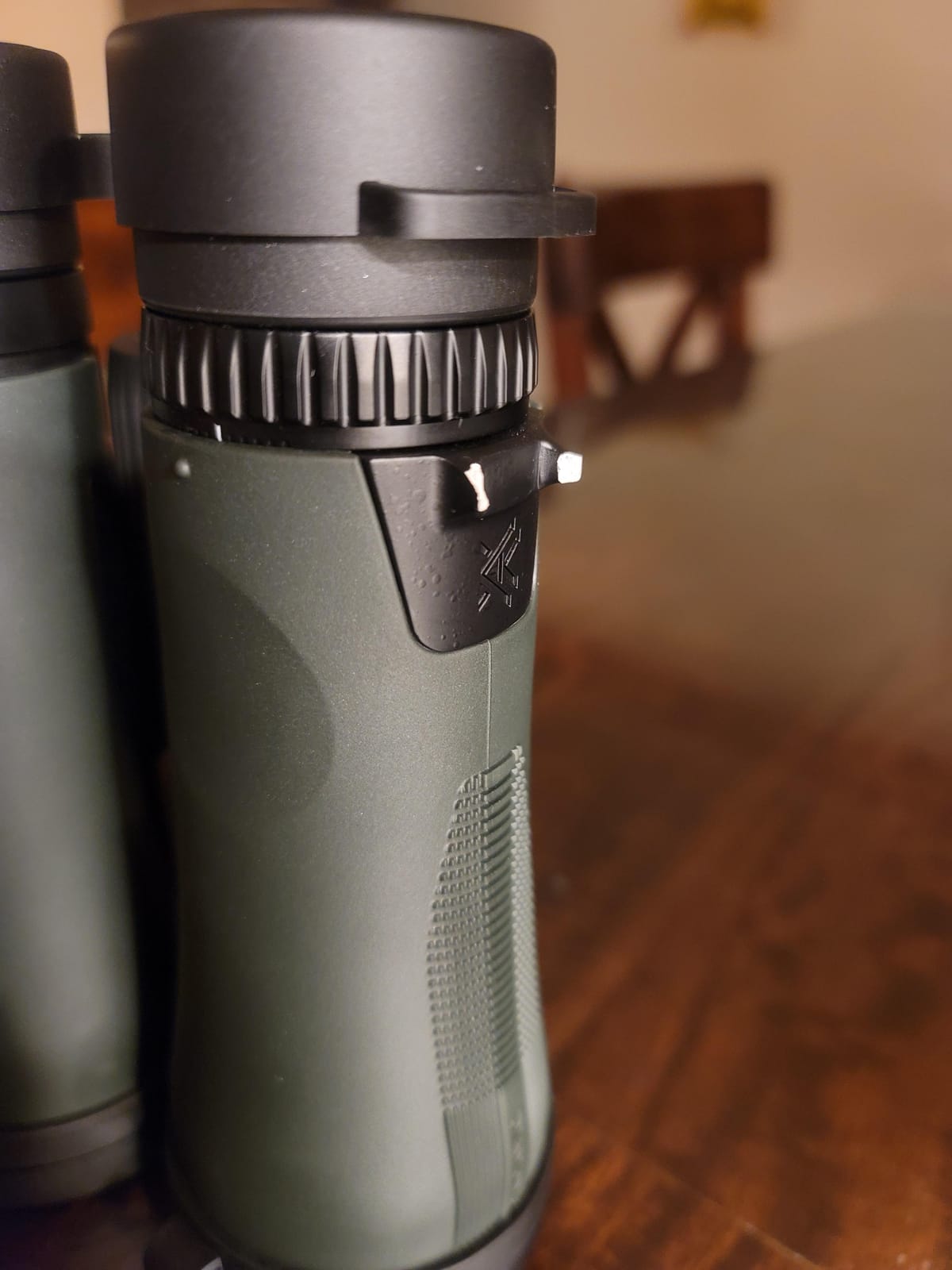
Argon purging is the underrated feature. Nitrogen is cheaper and purges slightly faster, but argon is a larger molecule that resists seeping through seals over years, and owners report this pair still not fogging after long service.
At 1.9 pounds it is a stationary instrument more than a hiking one. If your observing is done from a fixed spot, that weight buys a noticeably more rigid body and steadier views than a lighter 10×42.
Who the Vortex Diamondback HD 10×50 suits?
It suits an observer who has outgrown a budget pair and wants the Moon and the brighter planets to look noticeably crisper without stepping up to a 70mm instrument and a tripod.
It also suits a long-term buyer. Owners report warranty service that paid shipping both ways and repaired a jammed eyecup, which is a meaningful signal when a pair is meant to last decades.
Who the Vortex Diamondback HD 10×50 does not suit?
It does not suit the walker. Owners consistently cite the weight as a problem on long hikes, and the wide 10×50 field is awkward for tracking fast-moving birds.
Sharpness also drops off towards the edge of the field compared with genuinely premium glass, so if you spend your time on wide-field star clusters, centre sharpness matters less than you might think.
7. Celestron SkyMaster 25×100 – Best for Faint Deep Sky
Celestron SkyMaster 25×100 Giant Astronomy Binoculars for Deep Sky Views
25x and 100mm
4mm exit pupil
3 degree field
Individual focus
Pros
- 100mm objectives show faint galaxies and nebulae
- 25x resolves lunar and nebular structure
- Bright BaK-4 transmission under dark skies
- Built-in tripod adapter
- Rubber-armored housing
Cons
- 8.6 pounds is a two-person carry
- Individual focus is slower than centre focus
- 3 degree field makes star-hopping hard
- Strictly a fixed-position instrument
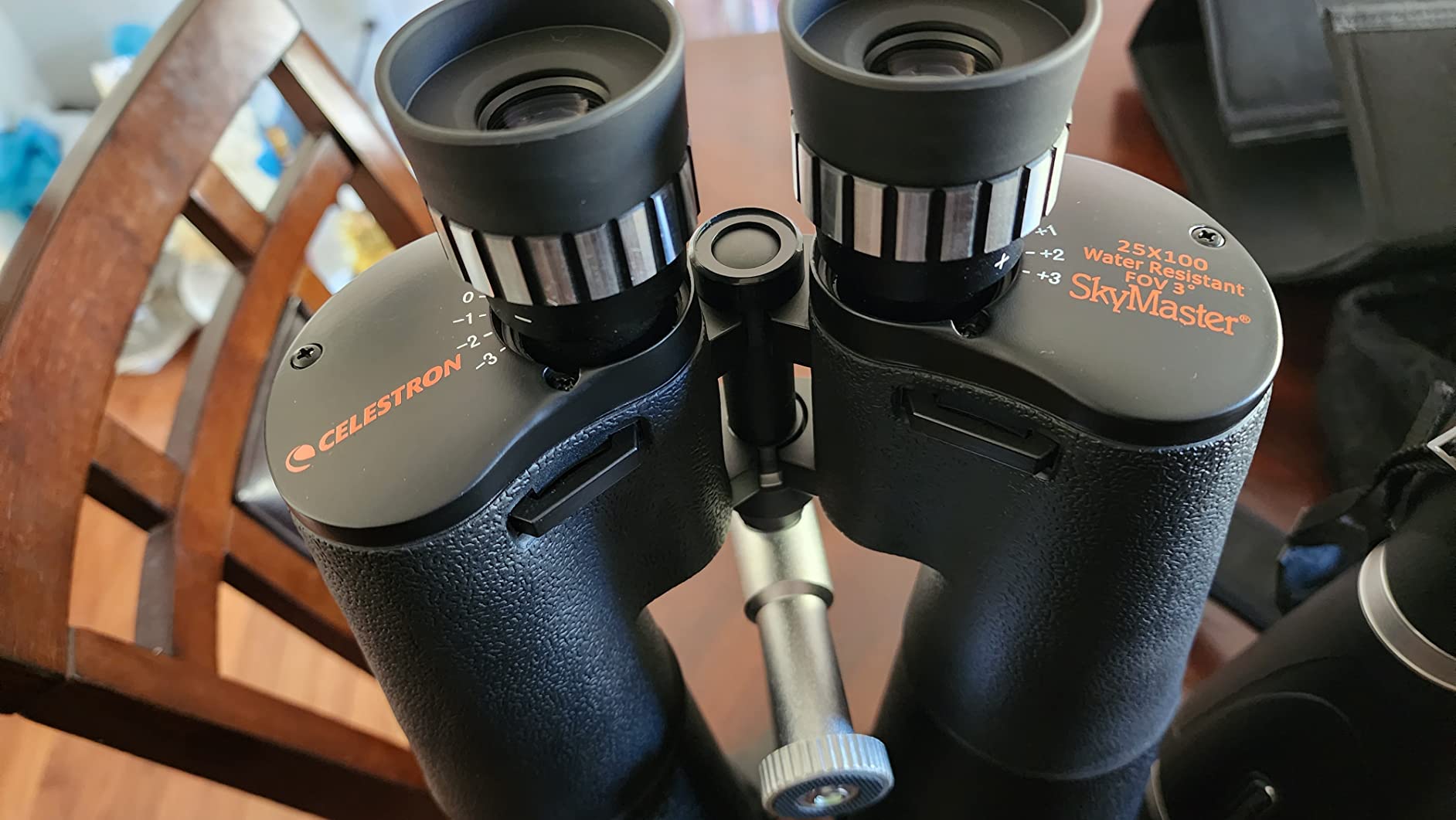
This is the largest-aperture binocular in the lineup, and the one that will show you galaxies with some structure rather than as a fuzzy patch. The 100mm objectives are double the light-gathering of a 50mm pair, and the extra aperture is what turns the Andromeda Galaxy from a smudge into an object with a bright core and dust lanes.
It also has a dedicated following: observers who already own a telescope use it as a wide-to-medium field instrument before switching to an eyepiece. At 25x, a globular cluster starts to break into individual stars around its edges.
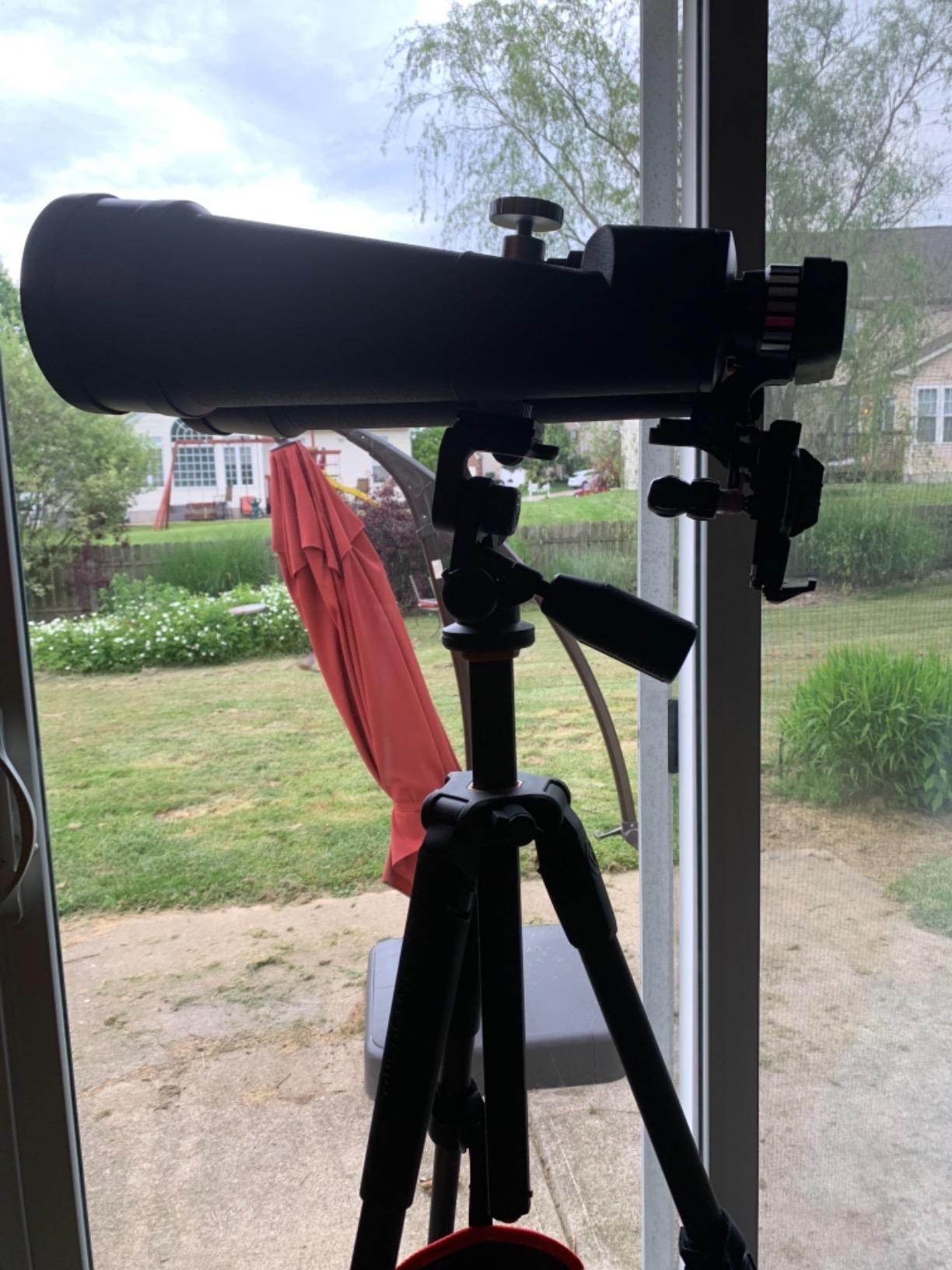
Now the honest part. At 8.6 pounds this is not a binocular you carry to a field, it is equipment you set up once and leave in place. The 3 degree true field is also the narrowest on this list, which makes locating faint targets a genuine chore without a finder.
Focus is adjusted per barrel rather than from a central wheel, so bringing both barrels to focus takes longer. That is a deliberate choice for large-aperture instruments, but it is slower than a centre focus on a tripod.
Who the Celestron SkyMaster 25×100 suits?
It suits someone with a fixed observing site, a garden or a driveway with a clear horizon, who already knows what they are looking at. This is the pair for faint galaxies, planetary nebulae and the fainter Messier objects from a dark site.
It suits an existing telescope owner. Many observers buy it as a companion rather than a replacement, using binoculars to find the target and the telescope for detail.
Who the Celestron SkyMaster 25×100 does not suit?
It does not suit a beginner. Nothing about carrying, mounting or finding targets in a 3 degree field is beginner-friendly, and its rating sits below the rest of this list for that reason.
Nor does it suit anyone who wants one pair for everything. It cannot do birds, it cannot be carried up a hill, and it will not be pointed at anything closer than the sky without specialist optics.
8. Pentax Jupiter 10×50 – Best All-Round 10X50
Pentax Juipter 10×50 Easy Viewing Large Aperture porro Prism Binocular, Black, 65912
10x and 50mm
5mm exit pupil
1.9 pounds
Multi-coated
Rubber-coated body
Pros
- Bright low-distortion view in a light body
- 1.9 pounds suits long unhurried sessions
- Smooth centre focus with an accessible ring
- Rubber exterior gives a firm grip
- 25-year warranty from a legacy maker
Cons
- Not water resistant so no rain or heavy dew
- Tripod adapter sold separately
- 50 degree apparent field is narrower than rivals
- 13mm eye relief is modest
The Jupiter is the pair we would carry if carrying mattered. At 1.9 pounds with 50mm objectives, it is in the same weight class as many 10x42s, and the optics deliver a bright image with a 5mm exit pupil fully used.
Owners of this model consistently highlight bright, low-distortion optics and smooth focusing at a modest price. It is the middle ground between a plastic budget binocular and a sealed modern one.
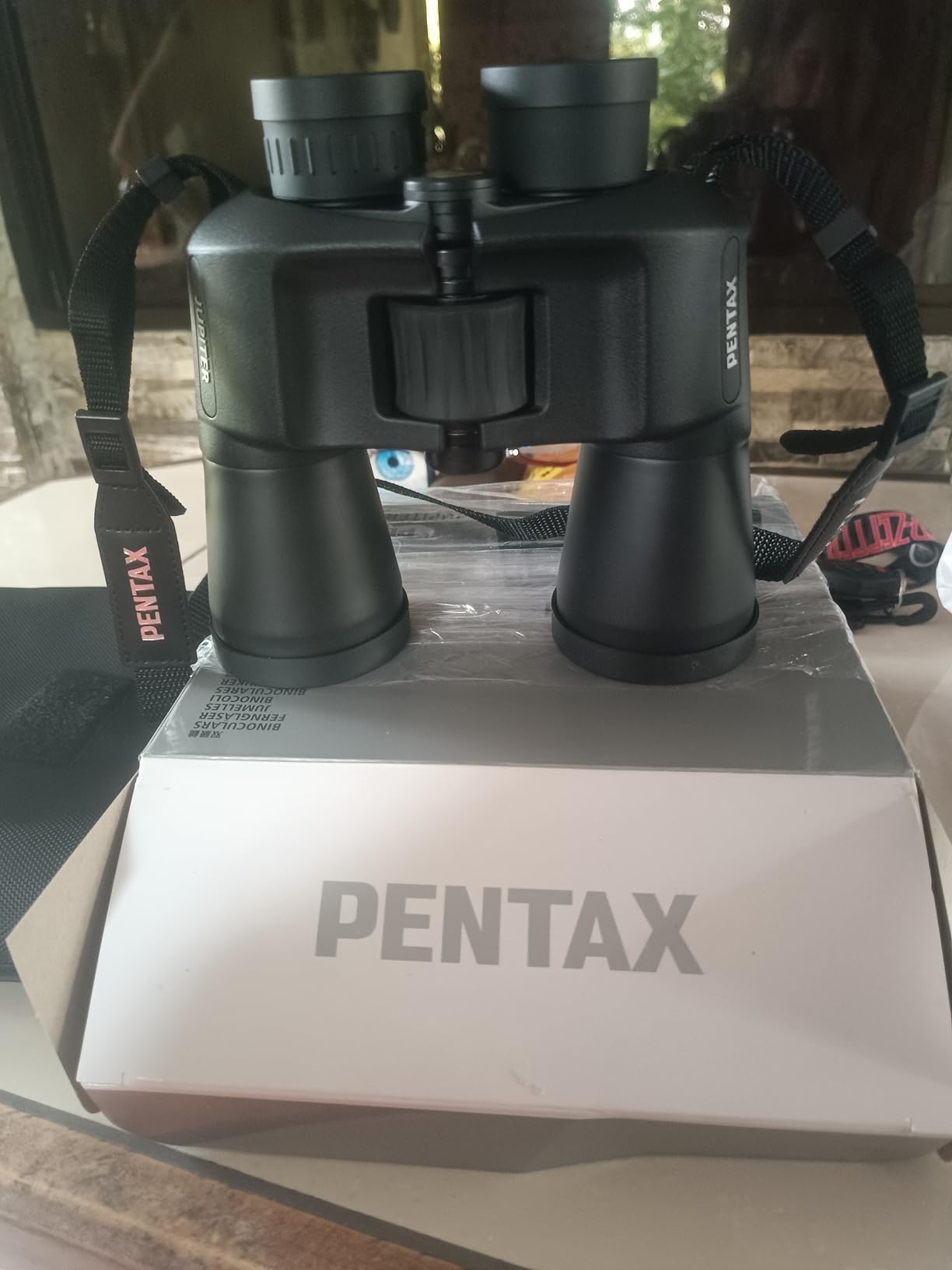
The compromises are sealing and support. It is not water resistant, so heavy dew on a spring night is a real risk, and the tripod adapter is sold separately rather than included in the box.
The 50 degree apparent field is also narrower than most 10×50 rivals, so stars at the edge feel closer in. Eye relief of 13mm works for most people without glasses and is tight for some who wear them.
Who the Pentax Jupiter 10×50 suits?
It suits someone who wants a full-size 50mm aperture without the weight, and who observes from a sheltered spot such as a conservatory, a porch or a camper van rather than exposed ground.
It also suits a buyer who plans to keep an instrument for decades. A limited 25-year warranty from a long-established optics maker is a meaningful commitment for a fixed-power binocular.
Who the Pentax Jupiter 10×50 does not suit?
It does not suit all-night field observers in damp conditions, or anyone who needs a weather-sealed body. Packing a dew shield and keeping a lens cloth close is part of owning this pair.
Its review base is also far smaller than the Celestrons or the Vortex, which means less long-term user history to draw on if you want evidence about how it holds up after a few years.
How to Choose Binoculars for Stargazing in 2026?
Almost every specification on an astronomy binocular listing matters, but they are not equal. Three numbers decide whether a pair is worth owning: magnification, objective diameter and exit pupil. The rest is comfort and durability.
Magnification: how much power you can actually hold?
Magnification is the first number, and it is the number most often oversold. Community consensus among observers puts the practical handheld ceiling at about 10x for most adults and 8x for children. Beyond that, hand shake eats the view faster than magnification adds detail.
Think of it this way. 7x to 10x is a field instrument, comfortable for sweeping and long sessions. 12x to 15x is a spotting instrument, workable with braced elbows or a monopod. 20x and above is a tripod instrument, and marketing that says otherwise is being optimistic.
This is also why we would skip the mass-market 25×50 and 30×60 models that fill advertising in the same category as the picks above. A 30×60 is a 2mm exit pupil in a small field, hand-held at a magnification nobody can hold steady.
Aperture and exit pupil: the light-gathering numbers
The second number, the objective diameter, is where brightness comes from. Light-gathering scales with the square of that diameter, which is why a 70mm binocular gathers roughly 96% more light than a 50mm and about 2.8 times what a 42mm collects. That gap is the reason a 70mm pair shows faint nebulae a 42mm pair simply does not reach.
The exit pupil is where most buying guides are vague, so here is the straight rule. Divide the objective diameter by the magnification and you get the diameter of the light beam leaving the eyepiece. A fully dark-adapted pupil in a young adult is about 7mm and shrinks with age, so anything at or above 5mm uses the collected light well, and anything below 3mm wastes some of it.
That single calculation explains most of this list. The 15×70 gives a 4.7mm exit pupil, the 25×70 gives 2.8mm, the 10x50s give a full 5mm, and the 10×42 gives 4.2mm. Larger aperture is the only way to buy brightness back, which is why the high-power models have big objectives.
True field of view and what fits in the frame
True field of view is how much sky you see at once, and it is measured in degrees. As a scale reference, the Moon is about half a degree across, the Pleiades span roughly 2 degrees, the Hyades about 5 degrees, and the visible halo of the Andromeda Galaxy reaches close to 6 degrees.
So a 4.4 degree field frames the Pleiades with room around them. A 2.7 degree field is tight for a cluster and tight for finding anything you cannot name by sight. A 6 degree field at 10x sweeps beautifully but makes it hard to keep a small target centred.
Tripods, cases and straps are worth thinking about at the same time. If your stargazing also covers wildlife and landscape, our guides to the best budget binoculars for hunting and the best compact binoculars for travel cover the daytime end of the same decision.
BaK-4 versus BK-7 prisms and coatings
Prism glass is the least visible spec that changes the image. BaK-4 prisms deliver higher refractive index than BK-7, so the exit pupil is less undersized and the edge of the field stays brighter. Budget models with BK-7 prisms effectively vignette a nominal 50mm down to something closer to 40mm at the edges.
Porro prisms, which most of the picks above use, give a wider field and better light transmission for the money. Roof prisms, which the Vortex pairs use, are more compact and better suited to travel, and they pair well with phase-correcting coatings on premium models.
Coating terminology is simpler. Multi-coated means several surfaces have an anti-reflection layer. Fully multi-coated means every air-to-glass surface is coated, typically lifting transmission from around 80% to over 90%, which is the difference between stars and dust in low light.
When you need a tripod, and what to avoid?
Above 10x, plan for support. A sturdy photo tripod with a 1/4-20 adapter is enough for 15x and 20x; cheap mini table-top tripods actively make things worse because the wobble transfers straight into the view. A monopod is the light compromise for 15×70 pairs.
Two purchasing notes nobody mentions. The plastic adapter bundled with the Celestron SkyMaster pair is reported by owners to wobble, and a metal adapter is the upgrade. Budget for that accessory before you buy the binocular, not after.
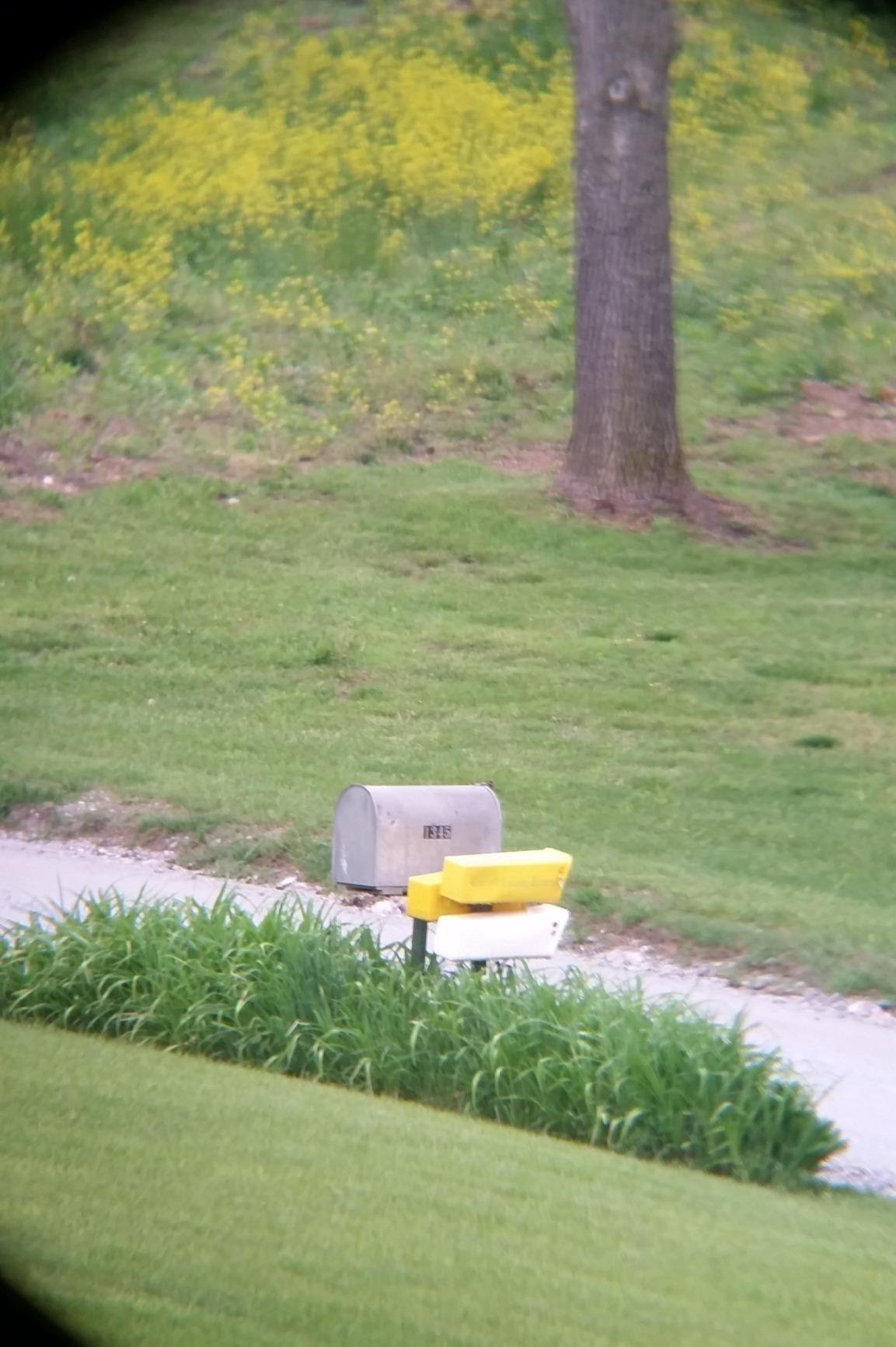
On arrival, check collimation before you take it outside. Look at a straight-edged object at middle distance and confirm the two halves of the image line up; if the top of a fence post splits into two, the prisms are out of alignment and you should use the adjustment screws or the return window. Rubbing the eyepieces hard against your glasses is another reported cause of knocked eyepieces on cheaper models, so rest the rim instead.
There is a practical ceiling to binoculars as an instrument. They show the Moon superbly, Jupiter’s four Galilean moons, open clusters and the Milky Way’s star clouds. They do not show Saturn’s rings as rings, Jupiter’s Red Spot as a storm, or the Cassini Division, because resolving those needs magnification and aperture in the same instrument at once. For that, a telescope is the correct tool, and binoculars become the finder you use to get there.
What to look at on your first night?
There is a reliable order to things, and it matches how much light each target sends you. Start with the Moon, because a half-lit Moon at 10x to 25x shows craters and maria immediately and never disappoints. Add Jupiter or Saturn next; the Galilean moons change position night to night, which is what turns them from dots into an event.
Then open clusters, where a 4 degree field really pays off. The Pleiades, the Hyades, the Beehive and the Double Cluster in Perseus all sit in wide fields and reward a slow sweep. Finish with the faint stuff under a dark site: the Andromeda Galaxy, the Orion Nebula in winter, and the Milky Way’s star clouds in summer, which is where the larger 70mm objectives of the top three pulls clearly ahead.
Frequently Asked Questions
What kind of binoculars are best for seeing the night sky?
A 10×50 with 50mm objective lenses is the all-round answer, because 5mm exit pupil uses the collected light fully and 10x is the highest power most adults can hold steady. Choose 7×50 for the widest and most stable field, and 70mm or 80mm objectives on a tripod when you want faint deep-sky objects.
What magnification of binoculars is best for stargazing?
Between 7x and 10x for handheld use. Above 10x, hand shake overwhelms the extra detail, and 15x or 20x models need a monopod, a tripod with a 1/4-20 adapter, or braced elbows. 7x to 8x is the comfortable choice for children and for very long sessions.
Can you stargaze with 10×42 binoculars?
Yes. A 10×42 shows the Moon with real detail, all four Galilean moons of Jupiter, and bright clusters such as the Pleiades. The trade-off is that 42mm objectives gather noticeably less light than 50mm lenses and the 4.2mm exit pupil wastes some of what is collected, so faint galaxies stay out of reach.
Do I need a tripod for 15×70 or 20×80 binoculars?
Practically, yes. Users consistently report that 70mm and 80mm binoculars are tripod-only in real use despite marketing that suggests otherwise. A sturdy photo tripod with a 1/4-20 adapter is sufficient, and a monopod works well for a 15×70 at 3.3 pounds. Avoid cheap mini tripods, whose wobble makes high power worse.
What can you actually see with binoculars for stargazing?
Binoculars show the Moon, the four Galilean moons of Jupiter, open clusters like the Pleiades, the Orion Nebula, globular clusters, the Andromeda Galaxy and the Milky Way’s star clouds. They do not show Saturn’s rings as rings, Jupiter’s Red Spot or the Cassini Division. Those need a telescope, with binoculars serving as the finder.
The Best Binoculars for Stargazing in 2026: Final Verdict
The Celestron SkyMaster 25×70 wins this roundup because it pairs the largest aperture you can still hand-hold with enough power to fill the frame with the Moon, and that combination is what separates an object you look at from one that holds your attention. If you will use a tripod, it is the pair to buy. If you will not, the Celestron SkyMaster 15×70 gives you most of that light at a magnification you can point, and it remains our best value pick.
For beginners on a smaller budget, the Bushnell Falcon 10×50 is the honest answer: waterproof, light, and configured so that none of the light it collects is wasted. Serious deep-sky observers should look past this list to the 25×100 and budget for a proper tripod and metal adapter alongside it.
Whatever you choose, take it out. Our guides to the best all-purpose binoculars and the best binoculars for deer hunting cover the daylight half of the equation, and the sky half is where these pairs really earn their place. Clear skies.