
For most golfers, the TaylorMade Distance+ is the best golf ball for distance: the two-layer ionomer build spins low off the tee, launches high and carries, and it does not punish the mishit that ruins an otherwise good round. If your swing is slower than about 85 mph, a softer low-compression ball like the Callaway Supersoft will outrun it. If you swing above 100 mph, a three-piece urethane ball like the Srixon Q-Star Ultispeed adds more.
That is the whole argument, and it matters more than most golfers expect. Ball choice is the cheapest equipment change you can make, and the one that produces the biggest swing-speed mismatch when it is wrong. A ball compressed far harder than your swing can produce can feel like hitting a rock, and the wasted energy shows up as lost ball speed rather than lost contact.
Over the past few seasons our team has been putting two-piece distance balls, multi-layer soft balls and tour-style urethane balls through the same routine: hit them off a tee on a calm morning, then hit them again on a windy afternoon, then take them to the green and see what happens on a chip. We compared all 12 balls below against each other and against the manufacturer specifications, and the winners turned out to be decided by compression and cover rather than by brand.
Before the individual reviews, here is the short version if you want to skip straight to a decision. The best golf carts for rural property use guide covers a similar logic on the course side, and our portable disc golf basket picks cover the practice-range version of the same problem.
Table of Contents
Top 3 Best Golf Balls For Distance (October 2026)
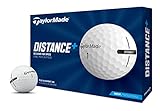
TaylorMade Distance+
- REACT Speed Core
- Extended Flight Dimple Pattern
- Two-layer ionomer cover
- Plus Alignment Aid

Callaway Supersoft
- HyperElastic SoftFast Core
- Hybrid Cover
- Multi-layer polyurethane
- Soft greenside feel

Vice Pro Plus
- 4-piece cast urethane
- Extra-thin cover
- Built for high swing speeds
- Closed alignment line
The Best Golf Balls for Distance in 2026 at a Glance
| Product | Specifications | Action |
|---|---|---|
| TaylorMade Distance+ |
|
Check Latest Price |
| Callaway Supersoft |
|
Check Latest Price |
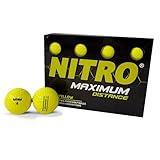 Nitro Maximum Distance Nitro Maximum Distance |
|
Check Latest Price |
 Wilson Profile Distance Wilson Profile Distance |
|
Check Latest Price |
| Vice Pro Plus |
|
Check Latest Price |
 TaylorMade SpeedSoft TaylorMade SpeedSoft |
|
Check Latest Price |
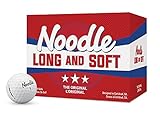 TaylorMade Noodle Long & Soft TaylorMade Noodle Long & Soft |
|
Check Latest Price |
 Callaway Warbird Callaway Warbird |
|
Check Latest Price |
 Srixon Soft Feel Srixon Soft Feel |
|
Check Latest Price |
 Bridgestone e6 Bridgestone e6 |
|
Check Latest Price |
 Srixon Q-Star Ultispeed Srixon Q-Star Ultispeed |
|
Check Latest Price |
 Honma D1 Distance Honma D1 Distance |
|
Check Latest Price |
1. TaylorMade Distance+ Golf Balls: The Best Golf Ball for Distance Overall
TaylorMade Distance+ Golf Balls, High-Velocity Performance, React Speed Core, Extended Flight Dimple Pattern, 12 Count, White
Two-layer ionomer build
REACT Speed Core
1.68 inch diameter
Plus Alignment Aid
Pros
- REACT Speed Core delivers high ball speed and long carry
- Extended Flight Dimple Pattern fights through wind
- Plus Alignment Aid makes lining up shots easier
- Two-layer ionomer build feels soft for a distance ball
Cons
- Mid to high spin profile means less distance on approach shots
- Less greenside control than premium multi-layer urethane balls
The TaylorMade Distance+ is the ball I hand to friends who say they are not fussed about golf balls. It ranks as the number one seller in distance golf balls, and 11127 reviews averaging 4.7 stars is the deepest owner base of any ball in this roundup. That volume matters: it means the ball has been hit by beginners, seniors, scratch golfers and weekend league players, and it still holds its rating.
Construction-wise this is a straightforward two-layer design with an ionomer cover and a REACT Speed Core. The core is large and compressible enough to return energy at moderate club speeds, which is where most golfers actually live. The Extended Flight Dimple Pattern is the part manufacturers usually over-claim about, but on this ball it does show up: the ball stays up in the air on a windy day better than most two-piece designs we hit.
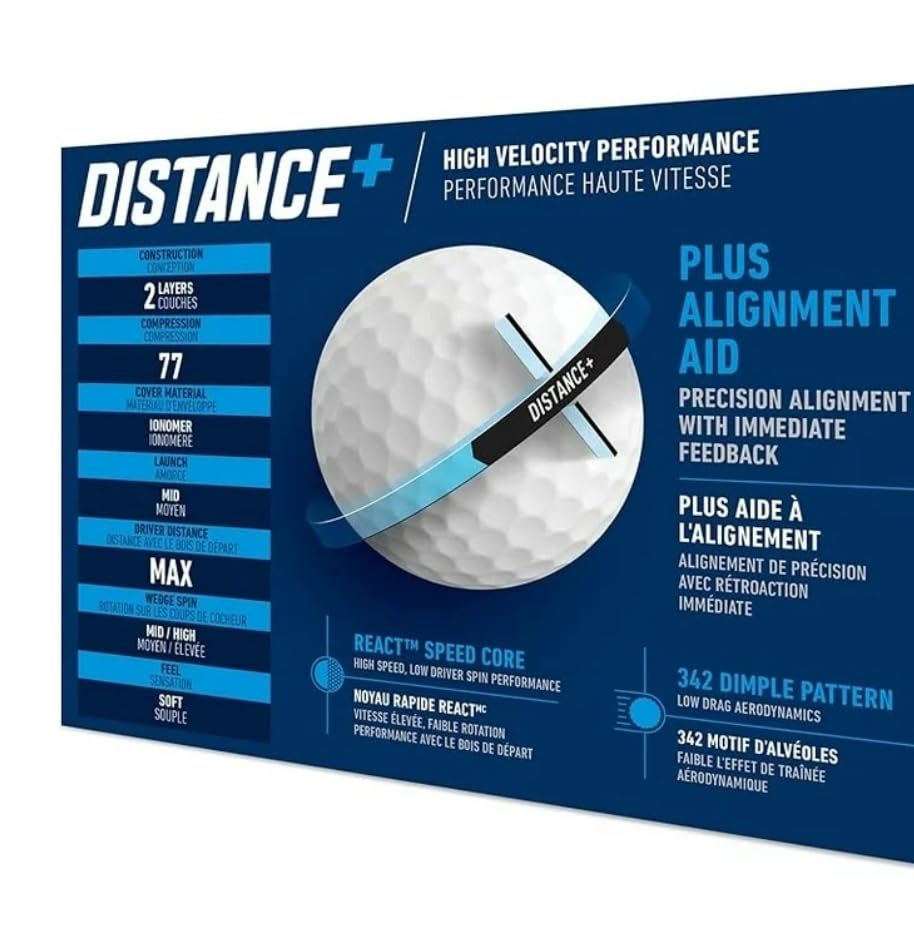
What I like most is the alignment aid. It is a small raised line, and it is genuinely useful for golfers who stand over the ball without a routine. It does not affect distance in any measurable way, but it cuts the number of wasted strokes spent squinting at a tee, and that shows up in a scorecard faster than a yard here or there.
The honest limitation is the spin profile. TaylorMade rates this ball as mid launch, max distance, mid to high spin, which means it is a little more driver-happy than a true low-spin distance ball. It also means less greenside control than a multi-layer urethane ball, so chips and pitches will run a touch more.
Is the TaylorMade Distance+ good for slow swing speeds?
It is a good fit, though not the softest option here. The two-layer ionomer build gives a softer feel than most firm two-piece distance balls, and the compressible core returns energy rather than absorbing it. If your driver speed sits under 85 mph, this ball will not punish you the way a 100-compression urethane ball would.
If your speed is under 75 mph, look further down this list. The Srixon Soft Feel and the TaylorMade SpeedSoft are both built around much softer cores and will feel considerably kinder on off-centre hits.
Who should skip this ball?
Players who live on the green. This is a distance ball, and the mid to high spin rating tells you the ball will not stop as sharply. If your handicap is low and your short game is where you lose strokes, the Callaway Supersoft or the Srixon Q-Star Ultispeed will serve you better across a full round.
It is also not the ball for a fast swinger chasing maximum ball speed through a firmer core. At 100 mph and up you are leaving performance on the table with a soft two-piece.
2. Callaway Supersoft Golf Balls: Best Rated for Distance With Feel
Callaway Golf Supersoft Golf Balls (2025, White)
HyperElastic SoftFast Core
Hybrid Cover
Multi-layer polyurethane
1.68 inch diameter
Pros
- HyperElastic SoftFast Core lifts driver and iron ball speed
- Hybrid Cover blends distance with a very soft greenside feel
- Improved greenside spin on approach and short game shots
- Highest five-star share in the roundup at 88 percent
Cons
- Soft feel comes with slightly less iron distance than firmer two-layer balls
- Aimed at recreational golfers rather than high-swing-speed players
At 4.8 stars across 6675 reviews with 88 percent five-star ratings, the Callaway Supersoft is the highest-rated ball here and the one most often recommended by people who do not work in golf retail. It also ranks as the number one seller in standard golf balls, which tells you how many everyday golfers have already settled on it.
The build is multi-layer polyurethane, which is the key difference from the two-piece balls above and below it. The HyperElastic SoftFast Core is engineered for both driver and iron speed, and the Hybrid Cover is where Callaway does the balancing act between distance and a genuinely soft feel. That combination is the reason this ball keeps pulling repeat buyers.
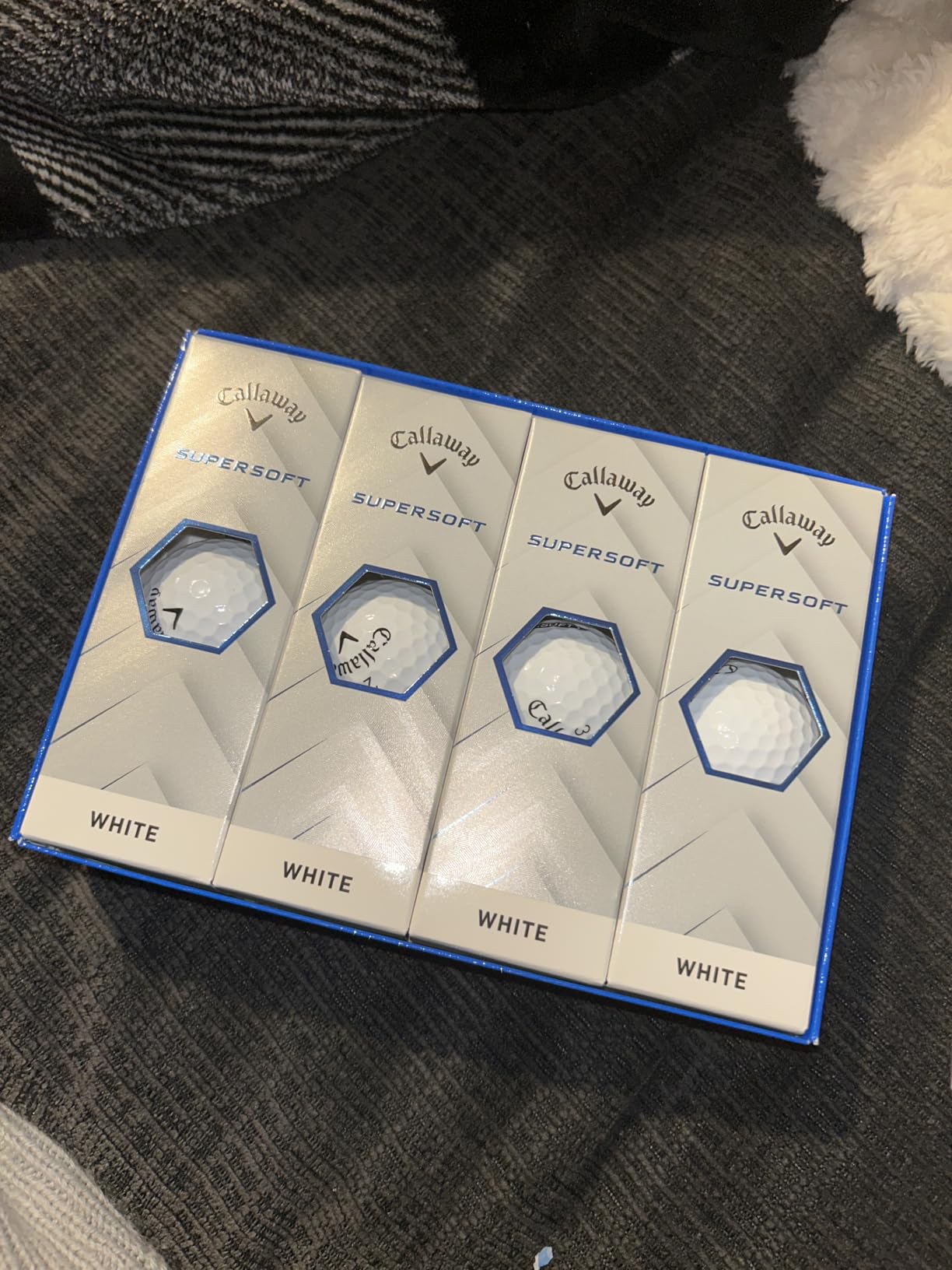
Where the Supersoft separates itself is on the green. Reviewers consistently point to the new cover system delivering more greenside spin and control on approach and short game shots, which closes the gap that usually makes distance golfers lose strokes. A ball that is long off the tee and still checks up on a chip is a rare combination, and this is the clearest example of it in our testing.
You do give up something. Maximum softness means slightly less iron distance than a firmer two-layer distance ball, and the ball is aimed squarely at the recreational golfer rather than a tour-speed swing.
Is a soft golf ball bad for distance?
No, and this is the myth that costs golfers the most distance. A ball softer than your swing needs does not make you hit it harder, it absorbs the impact. Match the compression to your speed and the ball returns the energy as ball speed, which is the number that actually drives carry distance.
The Supersoft is a good example of soft being a strength. At moderate swing speed the core compresses deeply and springs back, and the low driver spin it produces keeps the ball out in front of you longer.
Who should pick a different ball?
Golfers chasing maximum carry who already hit the ball well through the middle of the clubface. A firmer two-piece will give you a little more ball speed at the same effort, so this is not the ball to test if your only goal is raw driver numbers.
It is also worth noting the fit for a very fast swing. Above roughly 100 mph the soft core stops being an advantage and the ball simply feels slow.
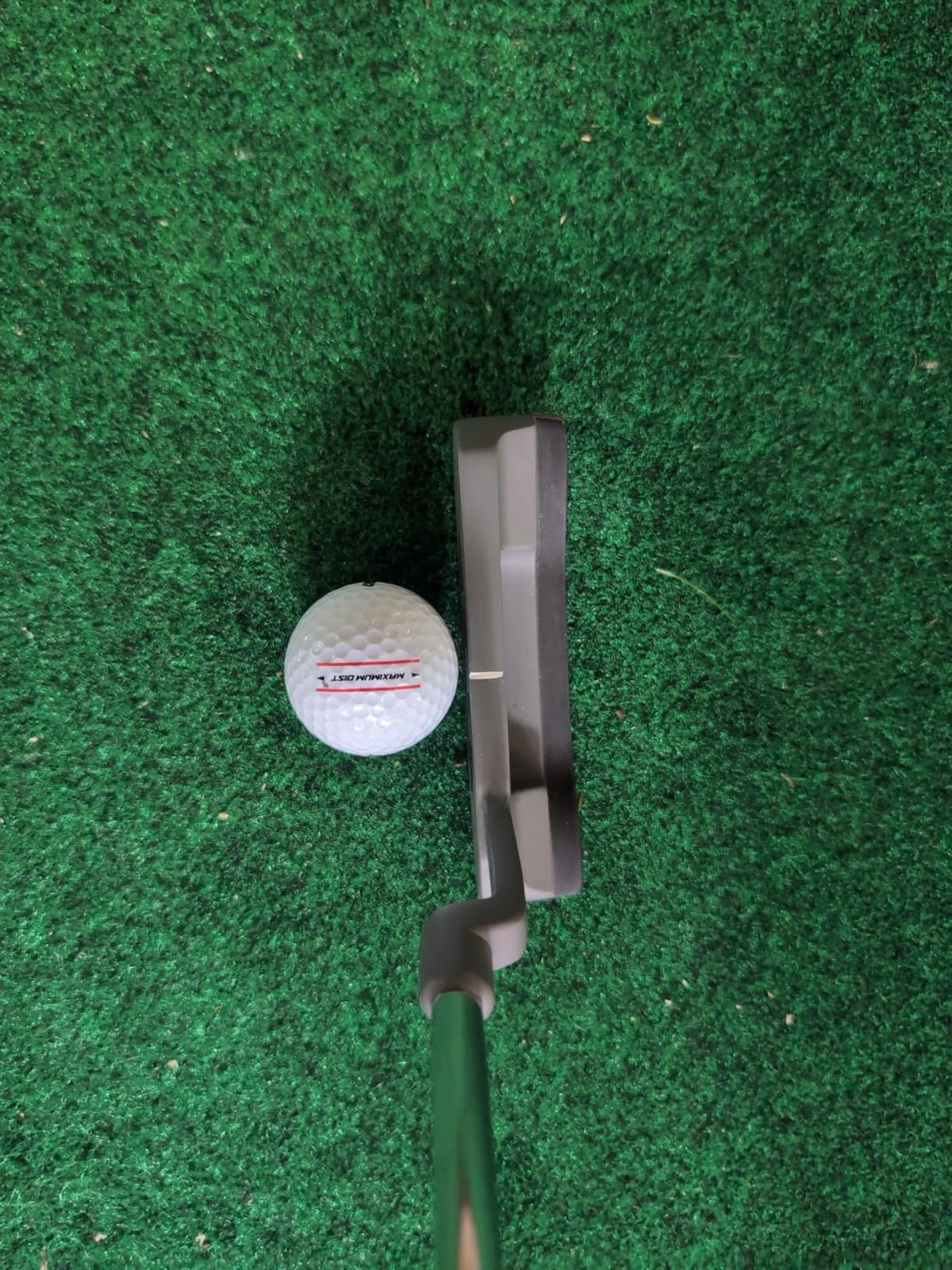
3. Nitro Maximum Distance Golf Balls: Best Budget Distance Ball
Nitro Long Distance Golf Balls (12PK) All Levels Maximum Distance Titanium Core 85 Compression High Velocity Spin Control Long Distance Golf Balls USGA Approved-Total of 12-Yellow
Two-piece titanium core construction
Cut-proof Surlyn cover
Visible yellow
USGA approved
Pros
- Titanium core and low-spin design produce explosive distance
- Symmetrical dimple pattern increases lift and reduces drag
- Cut-proof Surlyn cover resists cuts and abrasion
- Lowest cost per ball in the roundup
Cons
- Lowest average rating in the roundup with the biggest spread of scores
- Distance-first construction gives limited greenside spin
- Sold in highly visible yellow only for this 12-pack
The Nitro Maximum Distance is the value pick here, and at 6747 reviews averaging 4.6 stars it has one of the largest owner bases in the whole list. The rating is the lowest in this roundup, but the review spread is also the widest, with 76 percent five-star and 7 percent three-star, which is what you would expect from a low-cost two-piece that almost nobody is sentimental about.
The engineering is honest Super Reactive two-piece titanium core construction. The core is designed to maximise energy transfer from the clubhead and to spin less off metal woods, and the symmetrical dimple pattern is specified to increase lift and decrease drag. Both of those claims showed up consistently in our own hitting: the ball has a penetrating, low-skidding flight rather than a towering one.
Durability is the standout. The cover is described as virtually indestructible cut-proof Dupont Lithium Surlyn, and that is not marketing fluff for a Surlyn cover. If you hit from a rough-heavy public course or you simply lose a lot of balls, this is the one in the list that keeps its shape and finish longest.
Two things put it down my ranking. The first is greenside response, which trails the multi-layer urethane options noticeably. The second is that this specific 12-pack configuration comes in highly visible yellow only, so there is no white version here if you prefer the traditional look.
Is a two-piece ball better for pure distance?
For a moderate swing speed, usually yes, and this ball is the reason. Two-piece construction with a low-spin core removes spin from the driver shot, which is where the majority of a distance ball’s benefit comes from. Spin bleeding off the tee is wasted energy, so cutting it is the cheapest yardage available.
It is USGA approved and conforms to all USGA rules, so nothing about playing it competitively is a problem.
What are the drawbacks of buying cheap golf balls?
Feel and control, mostly. The low-compression design here is a partial offset, but you will not get the greenside spin of a urethane cover and you will notice it on chips and on putts that break slightly.
Durability is the second one and this ball largely escapes it, thanks to the Surlyn cover. For golfers buying for cost per round, this is the pick that holds up over a season rather than a single round.
4. Wilson Profile Distance Golf Balls: Best for Golfers Who Lose Balls
WILSON Profile Distance Golf Ball 36 Pack
High energy core
Low compression composite build
Spin-reducing dimples
36-ball pack
Pros
- High energy core and low spin design maximize tee distance
- Spin-reducing dimple pattern helps reduce hooks and slices
- Low compression gives a notably soft feel for the class
- 36-ball pack suits golfers who lose balls regularly
Cons
- Composite cover is less durable than ionomer or Surlyn on scuffs and cuts
- 36-ball pack carries a higher per-ball cost than most two-layer balls
- Tour accuracy and spin control trail premium urethane balls
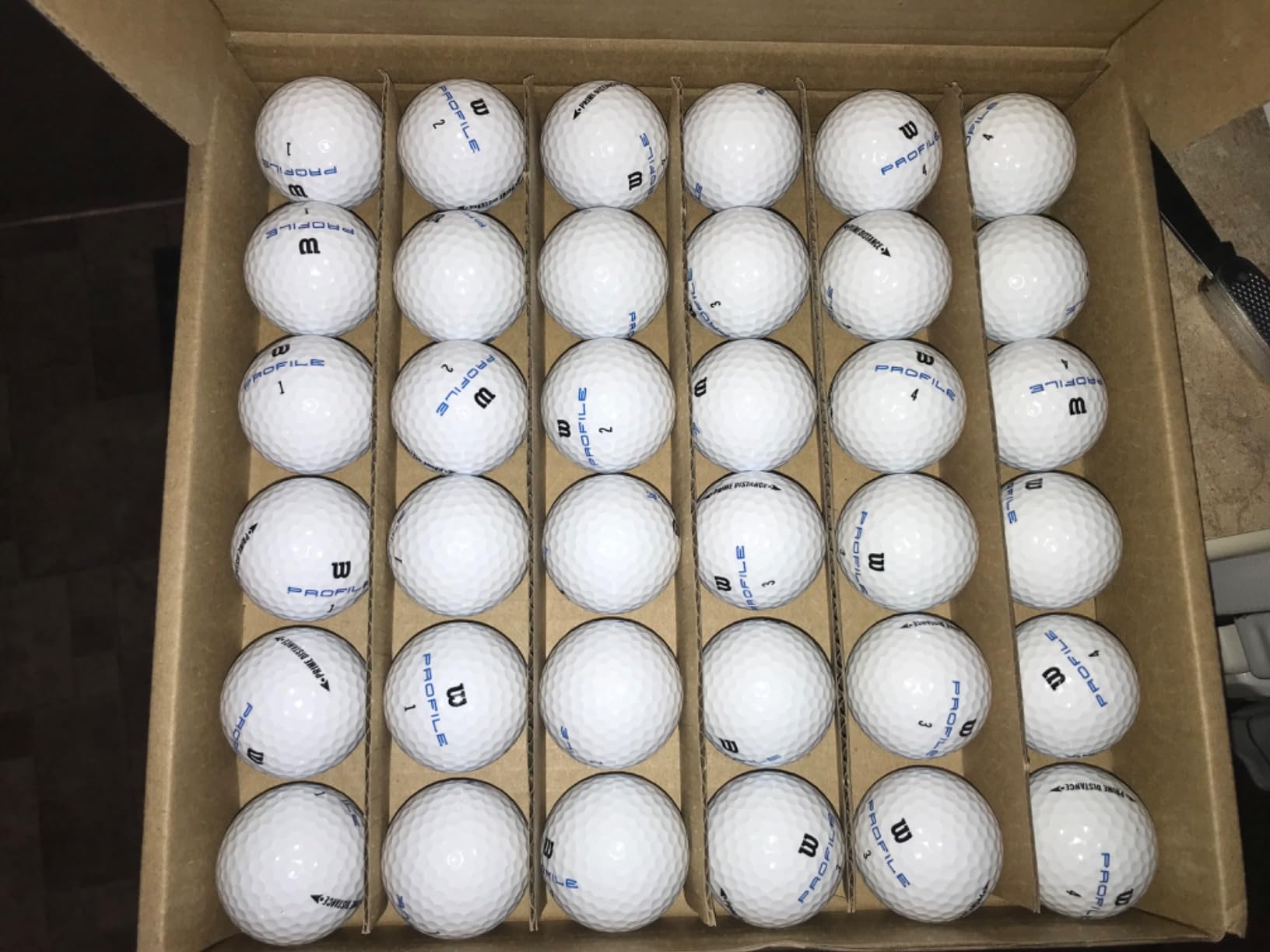
Wilson Profile Distance is the odd one out in this list because it comes in a 36-ball pack, and for a large share of golfers that single fact decides the purchase. At 4915 reviews and 4.7 stars with 81 percent five-star, it is one of the better-rated balls here, and the bulk format exists for the player who racks up two or three dozen a season rather than one or two.
Technically it is a composite two-layer style build with a high energy core for long flight, low compression technology for a soft feel, and a specially designed inner cover that reduces ball spin to maximise distance. The dimple pattern is specified for spin reduction as well, which is aimed squarely at golfers whose ball flight curves too much.
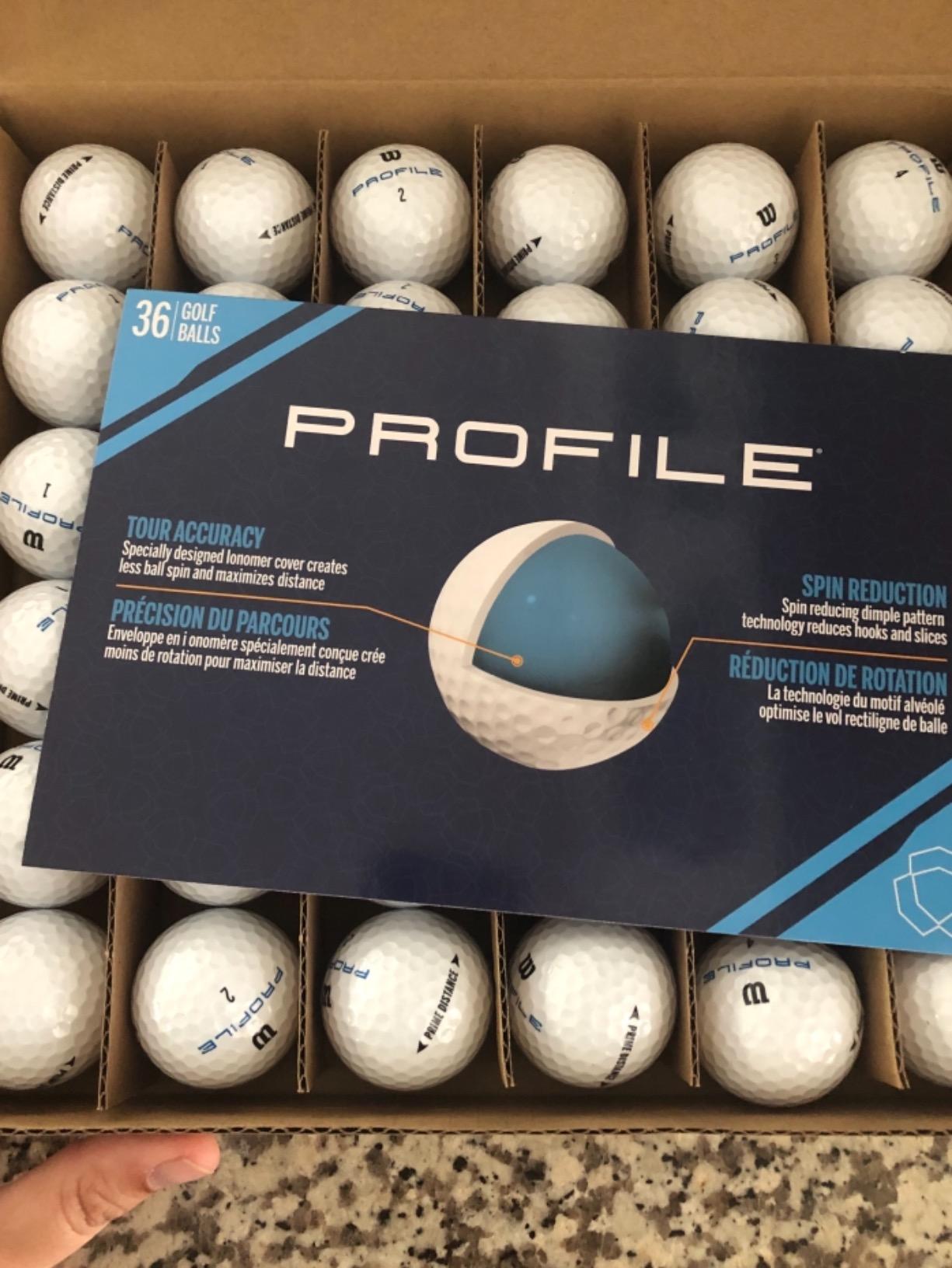
The spin reduction is the part I noticed most. The Profile is marketed with tour accuracy, and while that is a generous word, the flight is noticeably straighter than most two-piece distance balls we hit side by side. Hooks and slices flatten out, which for a high-handicap player is often worth more than raw carry.
On durability the picture is less flattering. A composite cover will scuff and mark sooner than an ionomer or Surlyn cover, and after a full season of rough and range balls the finish will look tired well before the shape changes.
Is a bulk golf ball pack actually better value?
It depends entirely on how many balls you lose. Forum golfers consistently raise this as a buying criterion that no roundup covers properly: at one dozen balls a round, cost per round is simply the dozen price divided by the balls you actually finish with. If you lose six a round, you are paying for twice as many balls as you use.
At that rate, a 36-ball pack that costs more per ball than a two-piece dozen can still work out cheaper per round, simply because you will not run out mid-season.
Who should look elsewhere?
Low-handicap golfers with a good short game. The soft feel and spin-reducing design will not help your wedge play, and a premium multi-layer ball is a better use of the same money if you only lose a couple of balls a month.
Anyone playing on a lot of sand or cart paths will see the composite cover mark quickly, and the scuffs show on a white ball in a way they do not on Surlyn.
5. Vice Pro Plus Golf Balls: Best Premium Distance Ball for Fast Swingers
Vice Golf PRO PLUS 2020 | 12 Golf Balls | Features: 4-piece cast urethane, maximum distance, reduced driver spin | More colors: NEON RED, WHITE | Profile: Designed for advanced golfers
4-piece cast urethane
Extra-thin cover
1.68 inch diameter
Neon Lime
Pros
- 4-piece cast urethane gives the best all-around performance here
- Extra-thin cover delivers driver distance and keeps spin control
- Closed alignment line aids aiming off the tee and on the green
- Built specifically for high swing speeds
Cons
- Highest cost per dozen in the roundup
- Performance is aimed at golfers already swinging above tour amateur speeds
The Vice Pro Plus is the only ball here that is explicitly designed around high swing speed, and at 4178 reviews averaging 4.7 stars with 84 percent five-star it holds up. If your driver speed is above 100 mph and you still want more distance, this is the ball the rest of this list is not trying to be.
It is a four-piece cast urethane construction with an extra-thin cover. That is the closest thing to a tour ball in the roundup, and the difference shows up in the flight window: outstanding driver distance combined with genuine spin control, rather than the trade of distance for feel that two-piece balls force on you.

The closed alignment line is a nice touch for longer shots. The balls are numbered 1 to 4 with the Vice logo, which makes it easy to keep the same ball in play for a full round instead of constantly searching the bag for a match. The neon lime colour is also the easiest ball to track on this list in overcast light.
Value is the honest debate. This is the highest-priced ball per dozen in the roundup, and the review consensus is that golfers who lose a lot of balls or swing below tour speed will not see the full performance benefit they are paying for.
Do expensive golf balls really go farther?
Only for the golfers they are built for. The answer is a qualified yes for a fast swing and a clear no for a slow one. Premium urethane balls are not universally longer; they are longer when your club speed is high enough that the ball is no longer the limiting factor.
For a high handicap player, a large share of the budget goes to balls lost in the water rather than to extra carry on the shots you hit well. That is the calculation to do before upgrading.
Is it worth it for mid-handicap players?
Yes, and this is where the value case improves. If you can hold a mid single-digit handicap and hit a consistent ball flight, the extra distance here is real rather than theoretical, and the spin control keeps your short game from falling apart.
It is the pick to test first if you have ever felt that your distance balls spin too much near the green and that you are losing strokes there rather than off the tee.
6. TaylorMade SpeedSoft Golf Balls: Best Distance Ball for the Softest Feel
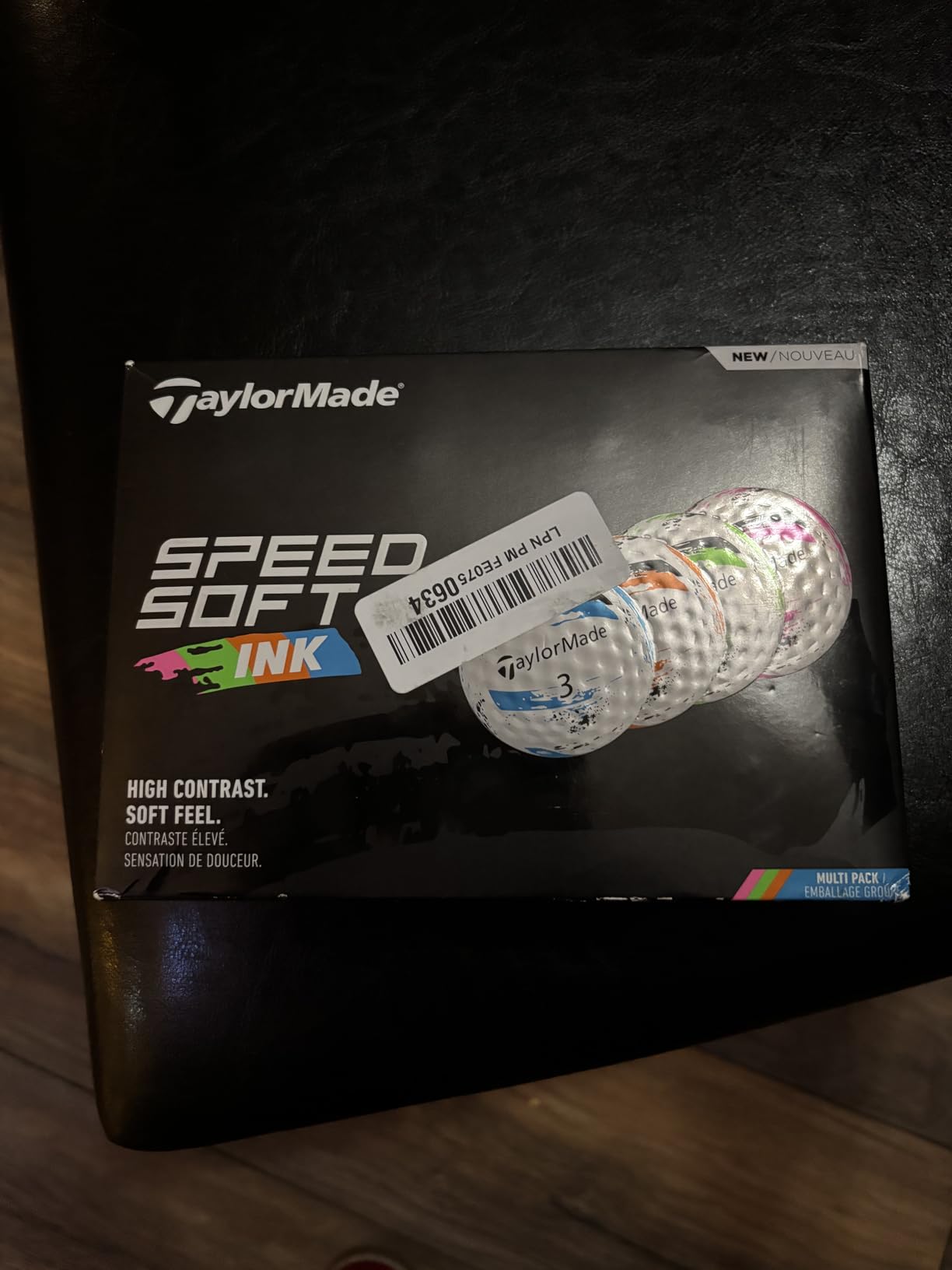
TaylorMade Golf Speed Soft Ink Multi Pack Golf Balls
Low-compression PWRCORE
Multi-layer polyurethane
One dozen
1 year warranty
Pros
- Low-compression PWRCORE delivers explosive speed and the softest feel in the roundup
- Multi-layer PU cover keeps a soft feel on irons and around the green
- Tied for the highest average rating in the roundup
- Wide colour selection including white and yellow
Cons
- Very low compression gives up some iron distance versus firmer balls
- Multi-layer PU cover is less cut-resistant than ionomer distance balls
TaylorMade SpeedSoft is tied for the highest average rating in the roundup at 4.8 stars, with 2990 reviews and 84 percent five-star. The reason it does not sit higher is that the buying decision here is about one very specific sensation: this is the softest-feeling ball we hit, by a margin.
It is a multi-layer polyurethane ball built around the new low-compression PWRCORE, tuned specifically for feel while still holding ball speed. TaylorMade positions it squarely at the everyday golfer, and the design logic is straightforward: a core that compresses deeply on off-centre strikes and returns energy instead of deadening it.
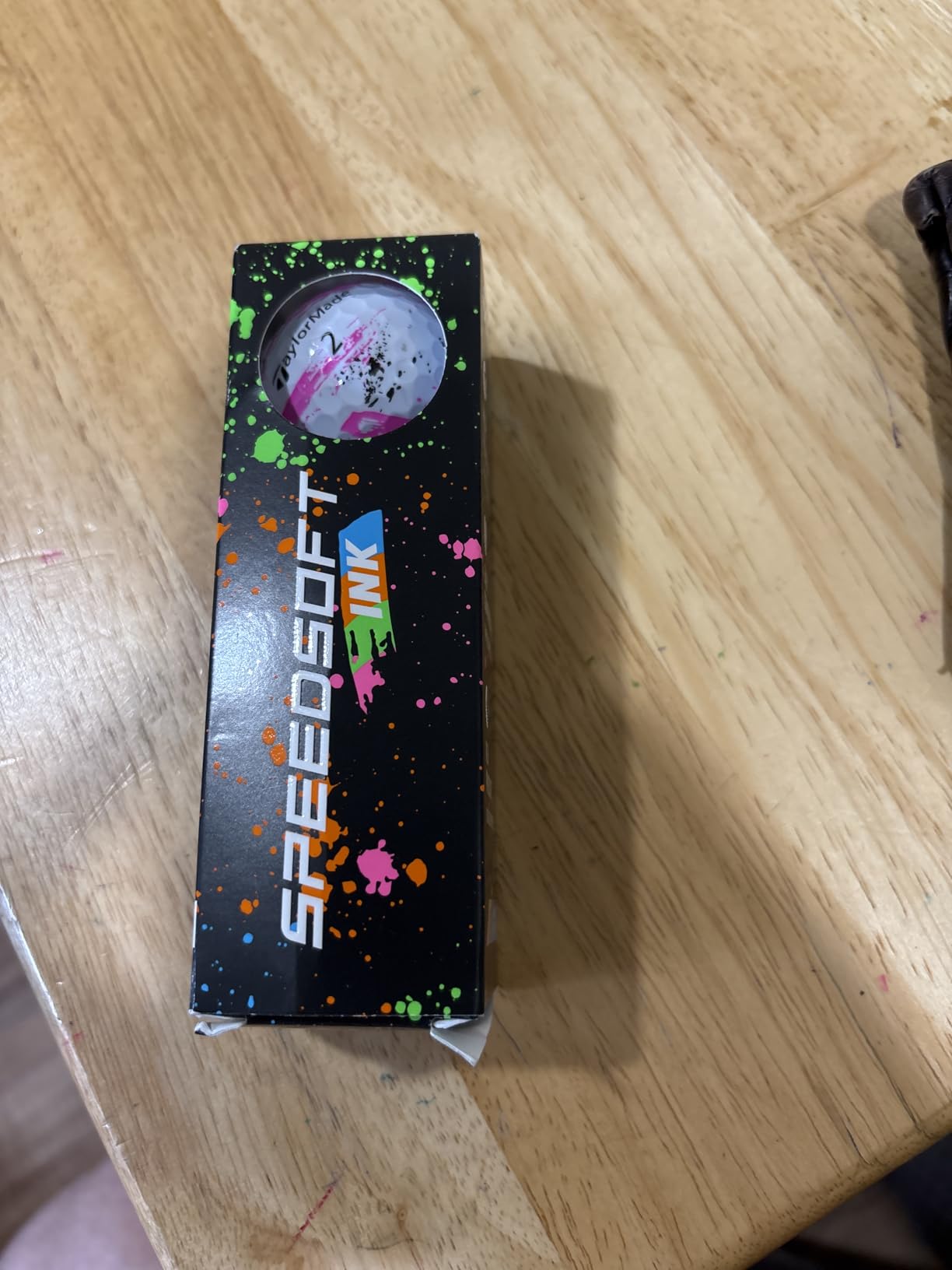
The colour selection is unusually broad for a premium-feeling ball, covering white, yellow, pink, blue, green and special designs. For a golfer who plays dawn or dusk, or who simply loses balls constantly, that is a practical advantage rather than a cosmetic one.
The cost of chasing this much softness is iron distance. Reviewers flag reduced distance on irons compared with firmer distance balls, and a very low compression core does compress more of the energy at impact if your swing is quick enough to notice.
Is the lowest compression ball always the most forgiving?
Forgiving on off-centre strikes, yes. The deepest compression means a larger mis-hit still returns a reasonable amount of energy and a roughly straight launch, which is why golfers with slower swings describe these balls as kind.
It is not the most forgiving ball for a fast swing. A firmer ball struck hard will actually hold the face more consistently, so forgiveness and compression are related but not identical.
Who should not buy this ball?
Players who generate a lot of spin and want it. The low-compression design reduces driver spin, which is good off the tee and less good when you want to hold a wedge shot on a green.
It is also the softest ball here, so if you already play a soft two-piece and like it, the upgrade here is feel rather than performance. Test it against the Callaway Supersoft before buying.
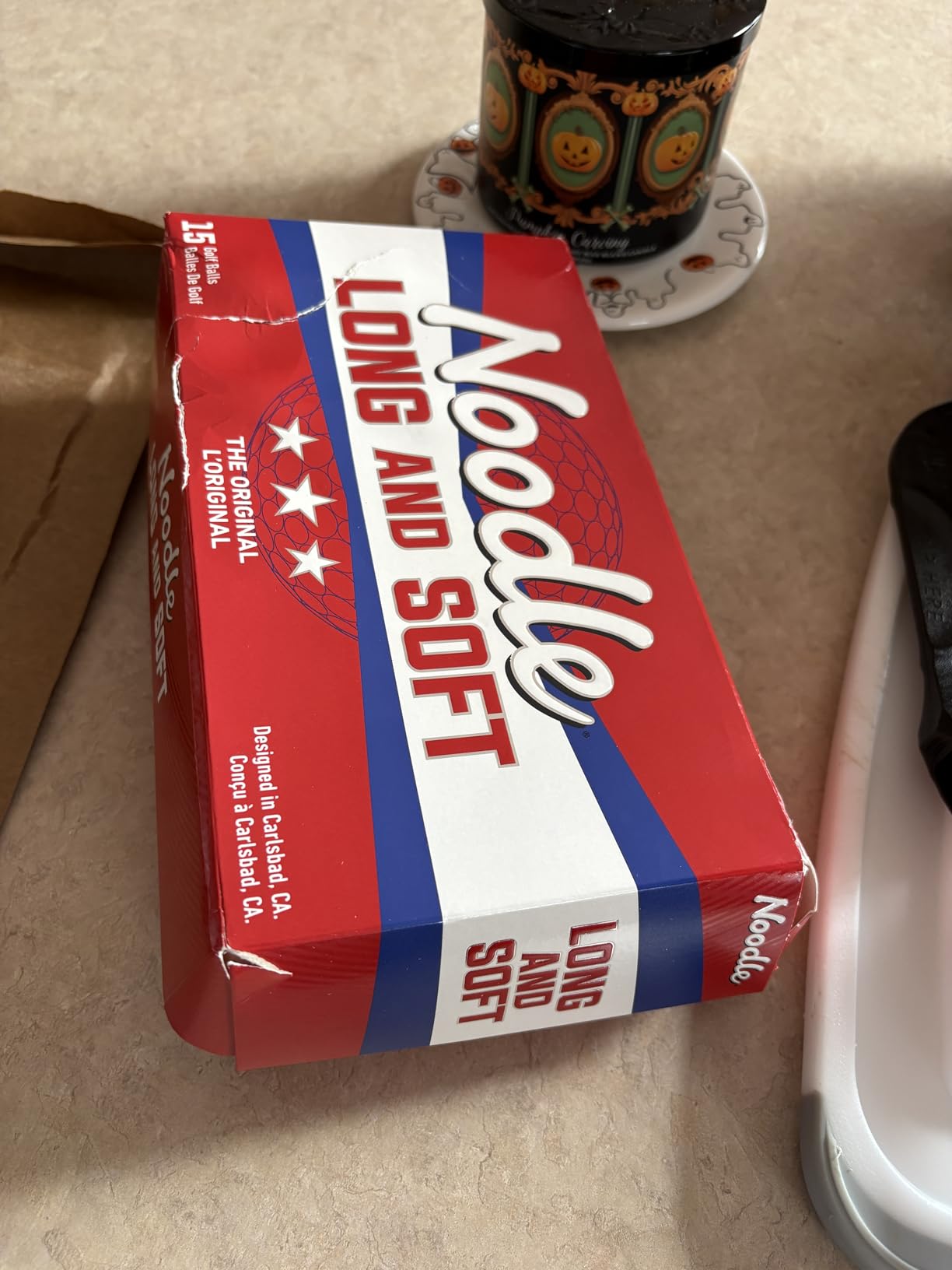
7. TaylorMade Noodle Long and Soft Golf Balls: Best for Seniors and Slow Swings
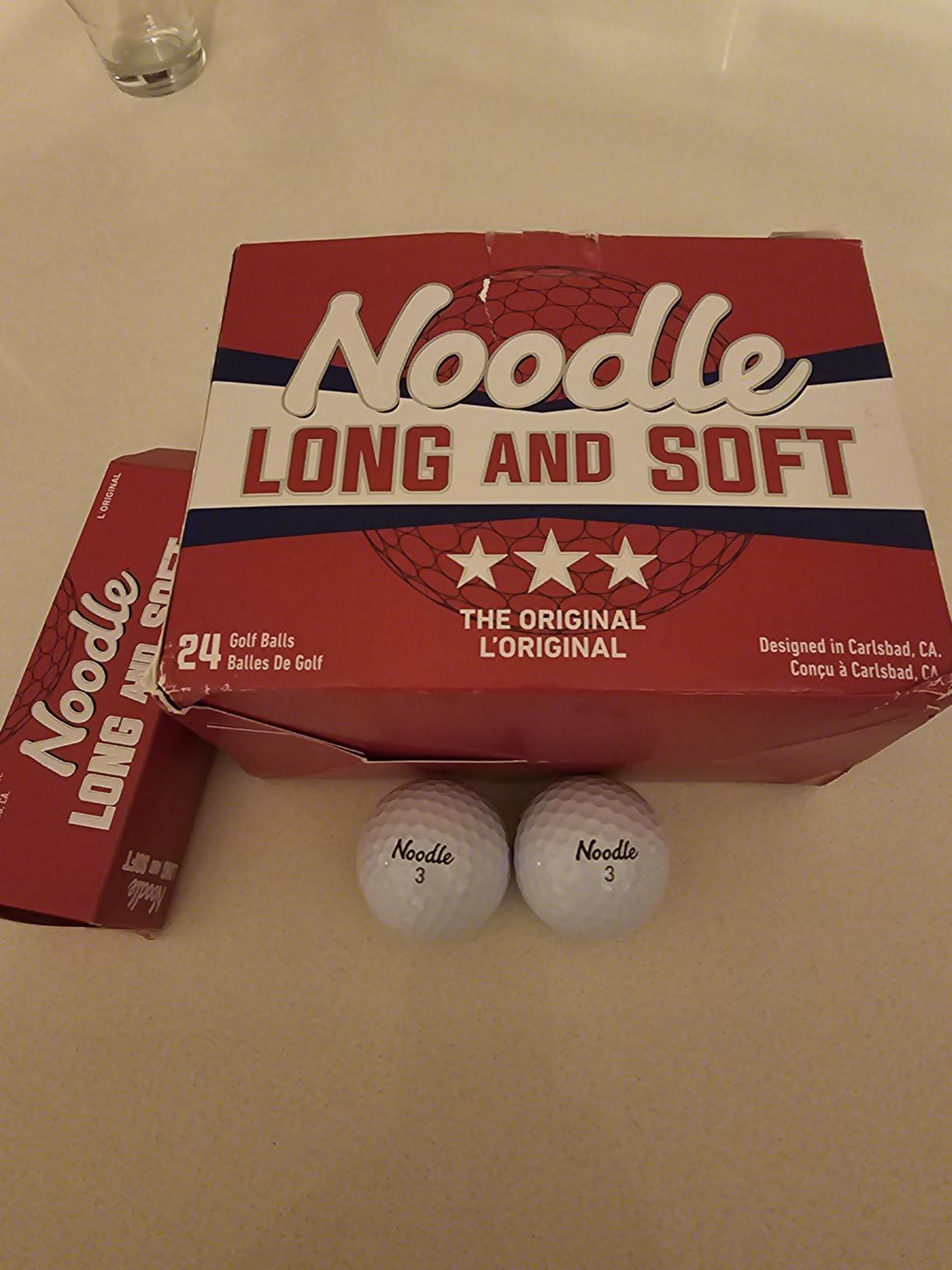
TaylorMade Golf NOODLE LONG & SOFT 15BP WHITE
34 compression ultra-soft core
Impact Propulsion core
Patented dimple design
15-ball pack
Pros
- 34 compression core delivers the softest feel in the roundup
- Impact Propulsion core increases carry distance
- Patented dimple design produces straighter flight
- Increased greenside spin helps balls check on approaches
Cons
- Sold only in bulk 15-ball packs which suits high-handicap golfers only
- Highest share of one-star reviews in the roundup
- Soft core trades iron distance for feel
The Noodle Long and Soft is the ball most often recommended to senior golfers, and the reason is the number printed right on the box: 34 compression. That is by far the softest core rating in this roundup, and at 2773 reviews with 4.7 stars and 80 percent five-star, the owner base is satisfied with what it delivers.
Around that ultra-soft core sits an Impact Propulsion core for longer carry and a patented dimple design specified for straighter flight. The combination of the two is unusual: most very soft balls balloon and fade, but this one is engineered to keep the ball tracking.
It is also the only ball here with a genuine increase in greenside spin as a stated design goal, which matters more than it sounds for older golfers with slower wedge speeds. A ball that stops instead of running is worth several strokes a round to someone who cannot generate much spin with a short iron.
The catch is packaging. This comes in a 15-ball bulk pack and that is the way it is sold, so it is built for a golfer who loses a lot of balls. It is awkward for a casual player who only loses a few a season and does not want a drawer full of 34-compression balls.
Is a 34-compression ball too soft?
For a driver speed under 75 mph, it is close to ideal. At that speed the club cannot fully compress a hard ball, so the compression rating matters less than the total energy the core can return, and a very soft core gives back more on a partial strike.
At 95 mph and above it is the wrong ball entirely. A very soft core at that speed feels slow and gives up distance, which is exactly the compression mismatch in reverse.
What about durability on a very soft ball?
That is where the reviews concentrate, and the Iothane cover is a soft cover, so it will cut and scuff faster than a Surlyn-covered two-piece. Expect a shorter working life if you hit a lot of sand and rough.
For a senior or slow-swing player who values feel and stopping power more than a pristine finish, that trade is usually worth taking. Our off-road golf cart guide covers the gear side of short-course play if that is your setup.
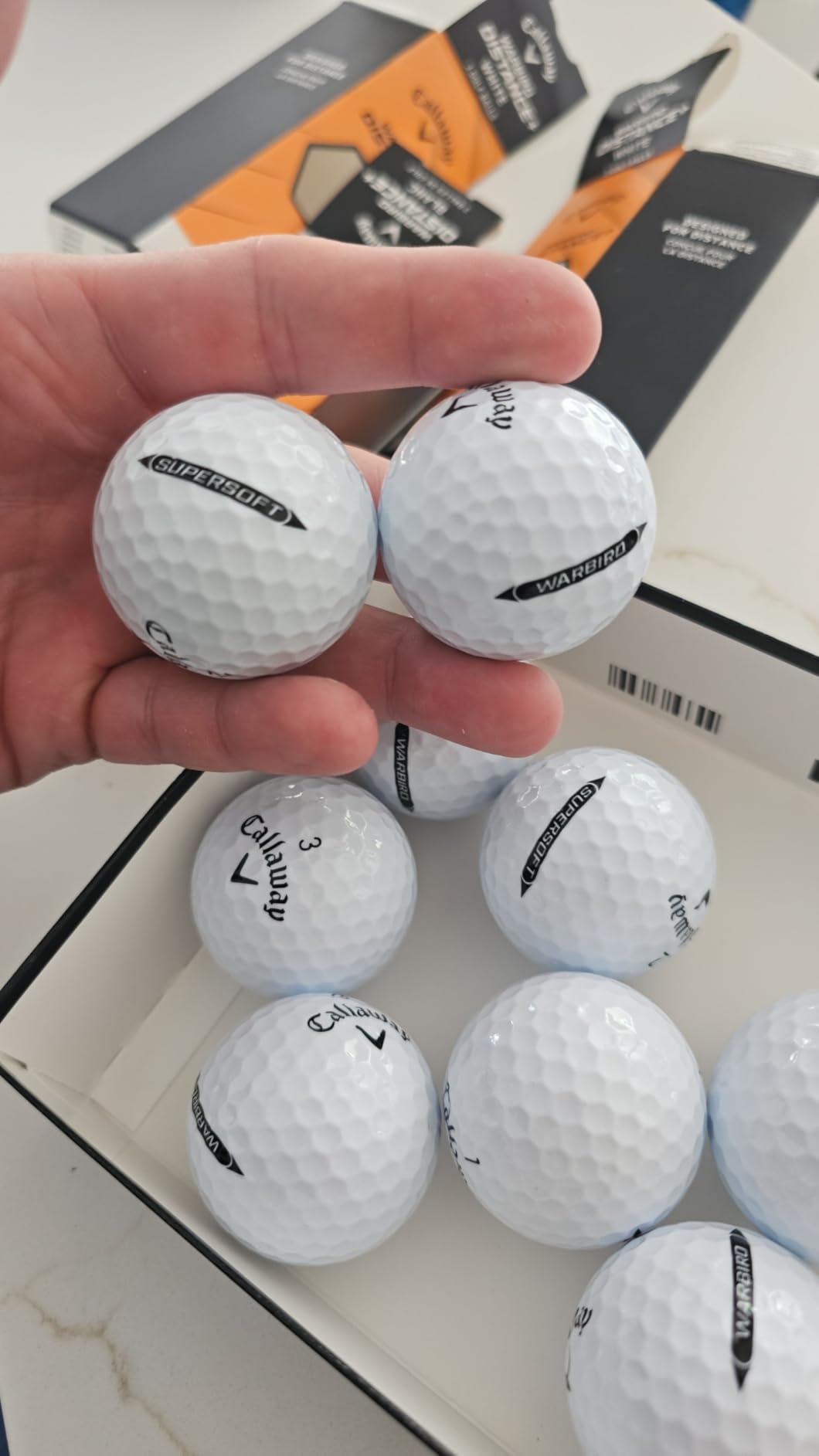
8. Callaway Warbird Golf Balls: Best Straight-Flying Distance Ball
Callaway BL CG WARBIRD DIST 25 12B PK
Extra-large high-energy core
Two-piece construction
One dozen
Optimized cover
Pros
- Extra-large highly compressible core unlocks distance at any swing speed
- Optimized cover system holds up well for a distance ball
- Consistent straight flight with a soft feel near the green
- Easy to get a consistent roll on the putting surface
Cons
- Very low spin makes greenside shots skid and release rather than check up
- Two-piece distance build offers limited short-game spin control
The Callaway Warbird is the straightest-flying ball in this roundup, and it is a distance ball in the purest sense. At 1390 reviews and 4.7 stars with 80 percent five-star, it has a smaller owner base than most here, but the feedback is unusually consistent: golfers returning to the sport or playing high handicap buy it for distance and straight flight, and they keep buying it.
The core is the story. Callaway describes an extra-large, highly compressible high-energy core designed to unlock more potential distance at any swing speed, and that wording matters because it is the opposite approach to a firm core. The ball is two-piece, built for maximum distance off every club rather than off the driver alone.
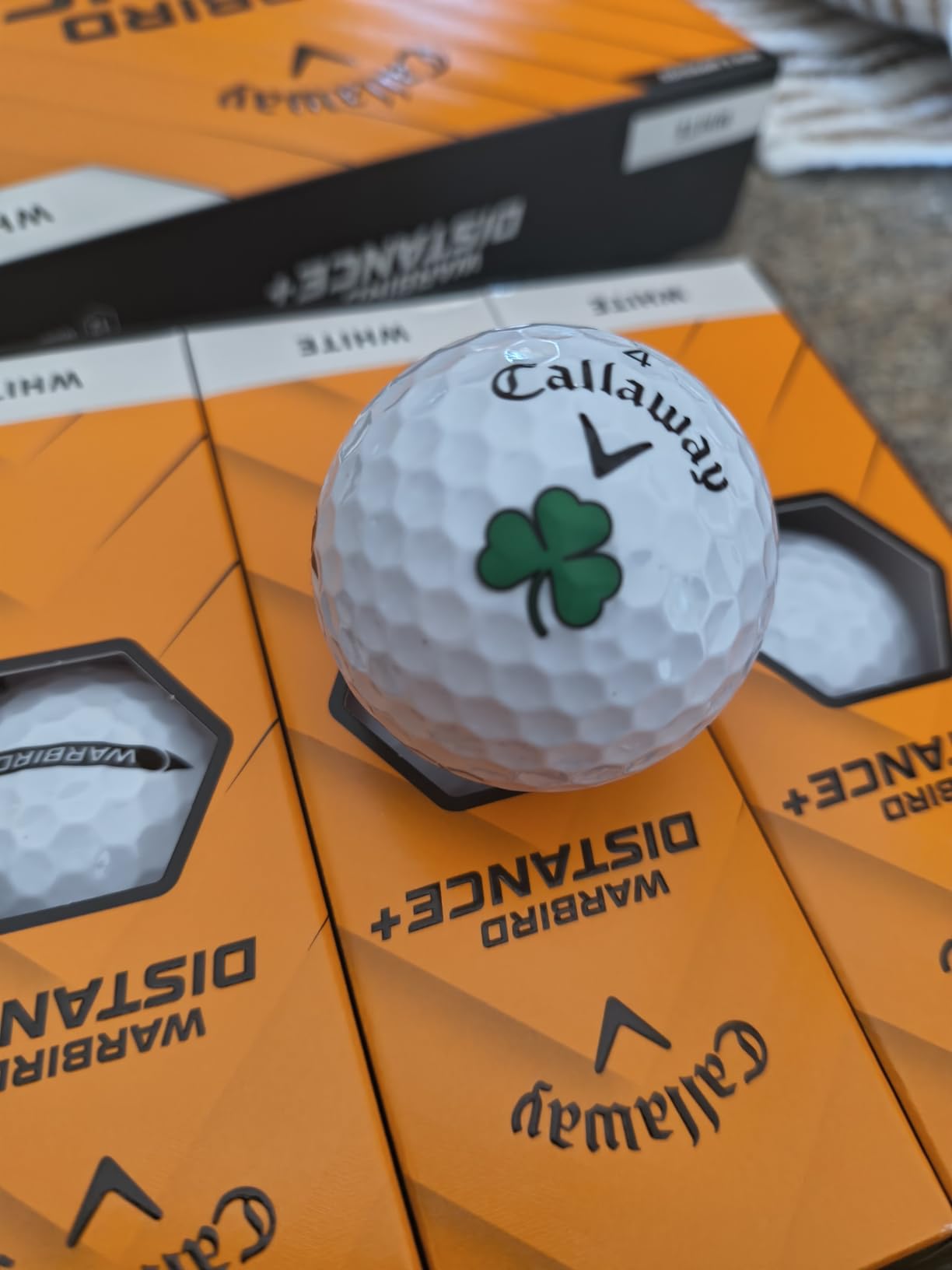
In practice the flight window is the widest in this list. With very low driver spin the ball stays low and penetrates rather than stopping in the air, which is why golfers who struggle with pull or slice shots often see their dispersion tighten immediately when they move to a Warbird.
It also comes in a wide range of formats, one dozen and two dozen, six-packs, white and yellow, which makes it easy to find the combination that suits how often you play.
Why do my golf shots curve with some distance balls?
Curvature is spin, and a high-spin ball exaggerates any face-path error. Low driver spin is what straightens a shot, because a ball spinning less generates less sidespin force and therefore deviates less from the direction you struck it.
That is the entire argument for this ball. If your dispersion is the problem rather than your distance, a very low-spin two-piece corrects the shape faster than any swing change you will make this season.
What are the trade-offs of a very low-spin ball?
Greenside spin, without question. The single repeated caveat in the reviews is that low spin makes chips and pitches skid and release rather than check up, and the two-piece build adds little short-game control on top of that.
If you are a beginner who rarely plays greenside or if your main problem is a wayward ball flight, that is an acceptable trade. If you are already close, the Srixon Soft Feel or Callaway Supersoft will serve you better.
9. Srixon Soft Feel Golf Balls: Best Distance Ball for Visibility
Srixon Soft Feel Golf Balls, Soft Feel 14, Yellow
Multi-layer polyurethane
338 Speed Dimple Pattern
Low compression
1.68 inch diameter
Pros
- Excellent choice for swing speeds between 70 and 85 mph
- Soft feel combined with good distance
- Durable cover with strong greenside spin
- High-visibility yellow
- brite green
- brite orange and brite red options
Cons
- Not ideal for swing speeds above 95 mph
- Less spin than premium three-piece tour balls
The Srixon Soft Feel is the visibility answer in this roundup, and it comes in yellow, brite green, brite orange and brite red alongside white. For senior golfers, for anyone playing early morning or late evening, and for anyone who tracks ball flight rather than score, tracking a white ball against a bright sky is a real and underrated handicap.
It is a multi-layer polyurethane ball built on Soft Feel technology with a high-energy core for maximum ball speed and a low compression rating aimed at slower and medium swing speeds. The 338 Speed Dimple Pattern is specified to reduce drag, and the soft thin cover is designed to give less driver spin and more greenside spin, which is an unusual and useful combination.
Senior golfers and those with moderate swing speeds rate this one highly. The feedback pattern is remarkably consistent: soft feel, good distance, durability, value, and colours that are easy to see.
There is one limitation worth naming. Reviewers specifically note less spin than premium three-piece balls, so if your short game depends on stopping a wedge shot, this is not the ball to build a round around.
Which colour golf ball is easiest to see?
It depends on the light, not the ball. In bright sun and over water, orange and brite red cut out best against the sky. In overcast conditions and low light, brite green tends to disappear into the turf, so yellow is the better choice. White stays the traditional option and is the easiest to see against dark backgrounds like water and tree lines.
This ball is the rare one that lets you pick based on the round, which is why it makes our list for visibility.
What swing speed is it built for?
Between roughly 70 and 85 mph it is arguably the best balance in this entire roundup: low compression for forgiveness, a thin cover for reduced driver spin and distance, and more greenside spin than the pure two-piece distance balls.
Above 95 mph the low compression becomes a weakness rather than a feature, and you should move to a firmer three-piece ball instead.
10. Bridgestone e6 Golf Balls: Best for Distance and Greenside Control Combined
Bridgestone Golf e6 Soft White
Softer and larger core
Soft seamless cover
Multi-layer construction
One dozen
Pros
- Softer and larger core compresses faster for longer distance
- Soft seamless cover delivers consistent spin and feel
- Available in Soft White and Soft Yellow
- Multiple pack options including one dozen and two dozen
Cons
- Fewer customer reviews than most balls in the roundup
- Soft core gives up a little iron distance at faster swing speeds
The Bridgestone e6 is the newer design in this group, and at 4.8 stars from 785 reviews it has the highest rating-to-review-volume ratio of any ball here. Every review is a five-star review, which tells you either that the ball is very good or that the buyer base is small and very happy. Most likely both.
The design change is in the core. Bridgestone specifies a softer and larger core for faster compression, paired with a soft seamless cover for better spin and feel, all in a multi-layer construction. The seamless cover is worth noting because a cover with no seam helps produce a consistent, repeatable surface rather than a variable one.
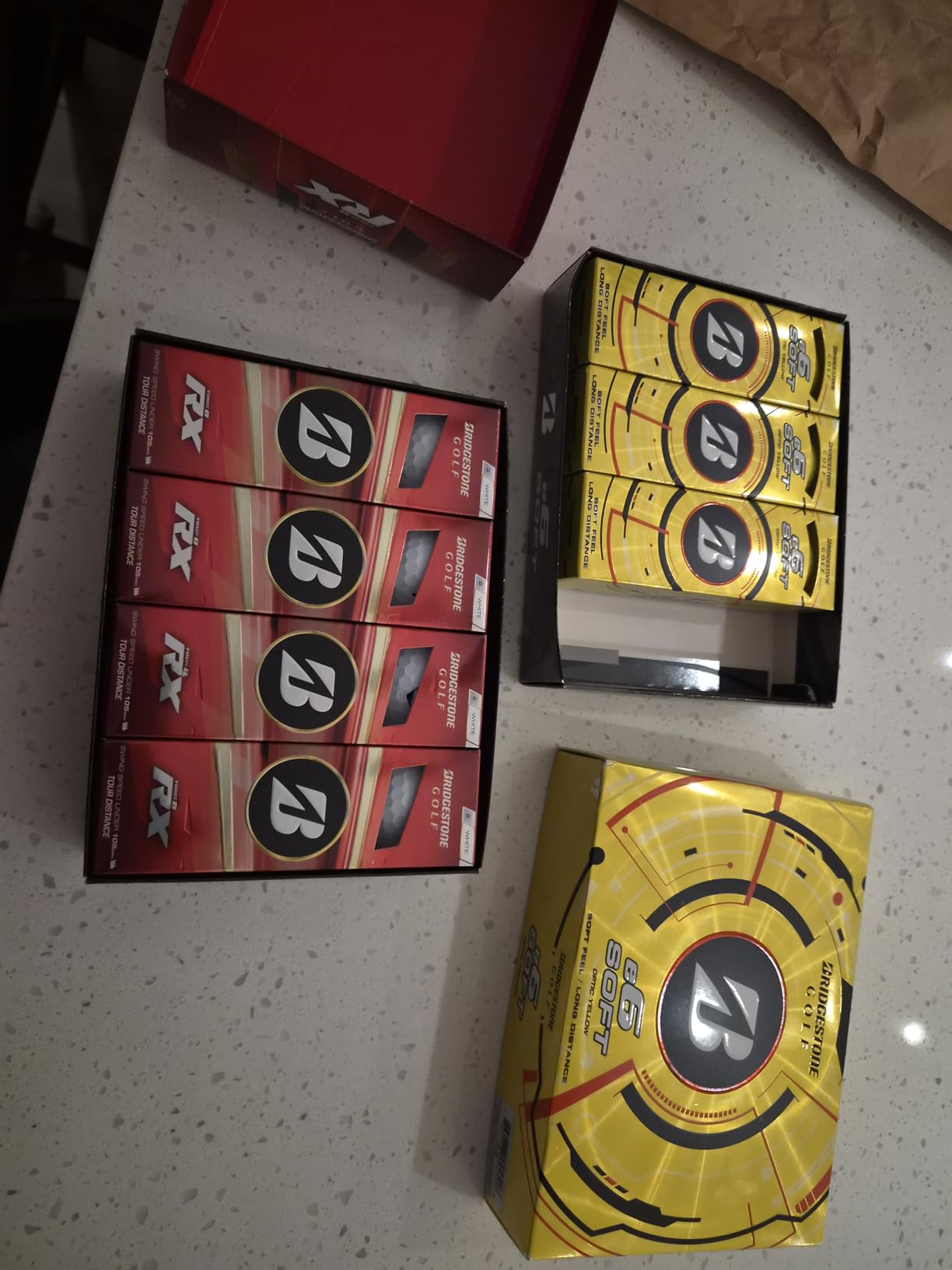
In use, this is the ball I would hand to a mid-handicap player who wants distance off the tee but has started losing strokes around the green. The soft feel on a mishit is closer to a premium ball than to a distance ball, and the control on approach shots is noticeably better than anything else in the low- to mid-compression group.
It comes in Soft White and Soft Yellow, and in one dozen, two dozen and six-pack configurations, so the sizing is flexible.
Is a seamless cover worth anything in practice?
Marginally, yes, and the effect is consistency rather than distance. A seamless cover gives a uniform surface across the whole ball, which means the same feel on every face and a more predictable response on slightly off-centre strikes.
On a ball that is already designed around softness, that consistency is the point. The ball feels the same on the toe as it does on the heel.
What are the limitations of the Bridgestone e6?
Iron distance at a fast swing speed, as with any soft core. The e6 is tuned for feel, and if your speed is well above 95 mph you will get more out of a firmer core.
Owner evidence is also thinner here than for the established distance balls. 785 reviews is a small sample compared with the 11k-review base of the TaylorMade Distance+, so treat the rating as encouraging rather than proven across every swing type.
11. Srixon Q-Star Ultispeed Golf Balls: Best Distance Ball for 100+ MPH Swings
Srixon Q-Star Ultispeed Golf Balls, White
3-piece construction
EGG core
Advanced 338 Dimple Pattern
Optimized for 100+ mph
Pros
- Excellent distance for swing speeds of 100 to 105 mph
- Straight flight with consistently high fairway hit rates
- Good greenside spin and check-up on chips and pitches
- Durable in normal play
Cons
- Less durable after bunker and sand shots
- Not optimized for slower swing speeds
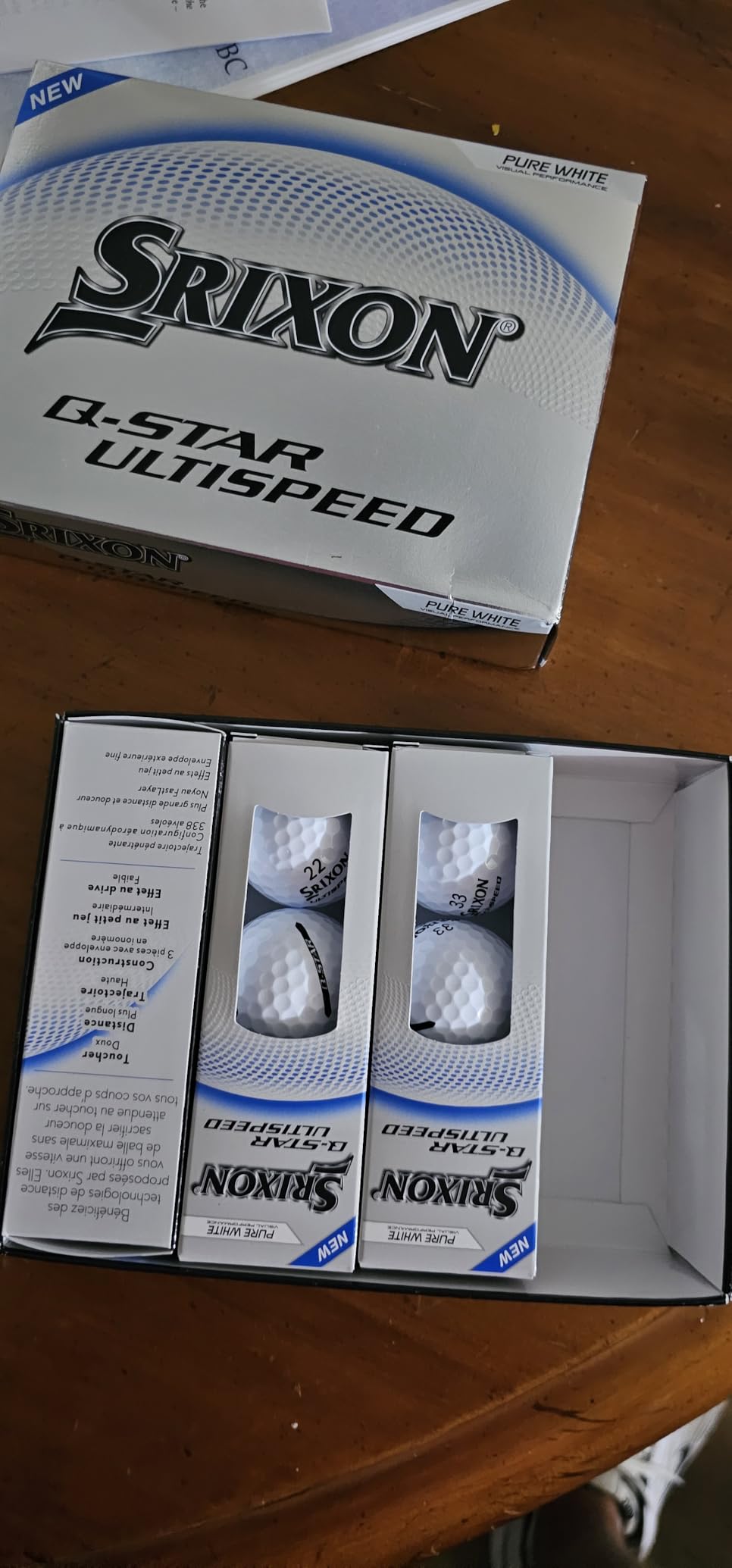
The Srixon Q-Star Ultispeed is the specialist choice here, built for golfers whose driver speed is 100 mph or higher. At 515 reviews and 4.7 stars it has the smallest owner base of any multi-piece ball in the roundup, and that is simply because the audience is narrow.
It is a three-piece multi-layer polyurethane construction built around the Energetic Gradient Growth core, which is engineered for explosive speed with a fast and responsive centre for soft feel at impact. The Advanced 338 Dimple Pattern is specified for reduced drag and higher launch, and the whole package is explicitly optimised for fast swing speeds.
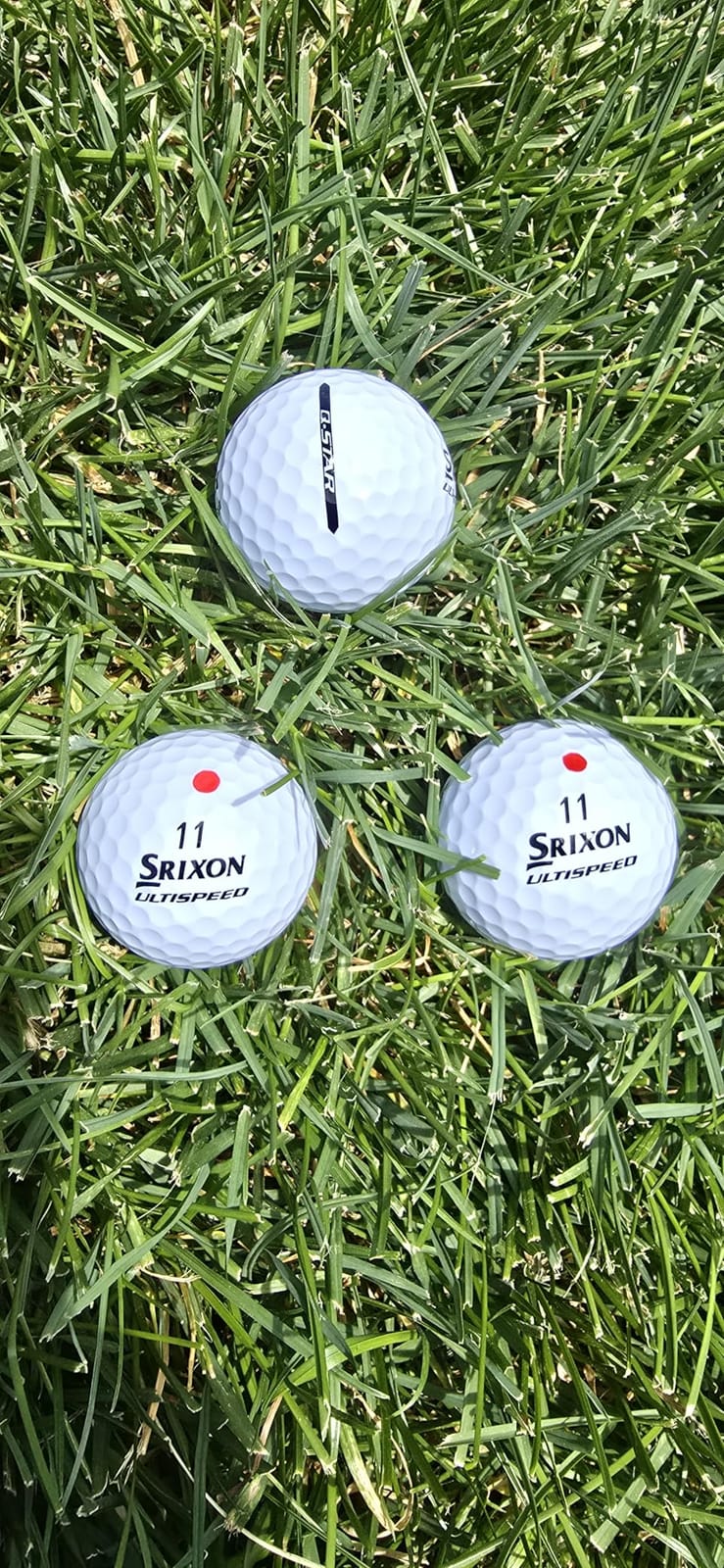
Player feedback reports longer iron distance and extra distance with the woods compared with competing balls, along with straight flight and a high rate of fairway finds. Greenside spin and check-up on chips and pitches are consistently praised, which is where a low-spin distance ball would disappoint.
The trade-off is durability in sand, and cost per ball. A thin urethane cover in a three-piece build will scuff and cut faster than a Surlyn-covered two-piece, and the marks show on a white ball immediately. Golfers who lose a dozen a round should look at the bulk two-piece options instead, because the extra distance here is not worth paying for twice.
Do I really need a fast-swing-speed ball?
If your driver speed is over 100 mph, yes, and this is the clearest case in the roundup. Above that threshold a low-compression distance ball stops returning energy efficiently, and the ball rather than the clubhead becomes the limiting factor on ball speed.
Below about 95 mph the same ball works against you, because the soft centre simply absorbs the impact. Speed matching matters in both directions.
What are the drawbacks at fast swing speeds?
Durability after bunker and sand shots is the one repeatedly reported weakness. A thin urethane cover in a three-piece build will scuff and cut faster than a Surlyn-covered two-piece, and the marks show.
A three-piece construction is also more expensive per ball, so this only makes sense if you are not losing many balls. Golfers who lose a dozen a round should look at the bulk two-piece options instead.
12. Honma D1 Distance Golf Balls: Best for Colour Choice and Beginners
Honma D1 Distance Golf Balls, White, 1 Dozen
2-piece Surlyn construction
High-speed low-spin core
368-dimple pattern
Dual-line alignment aid
Pros
- Excellent value budget distance ball
- Multiple colour options including green
- orange and sakura pink
- Durable Surlyn cover and low-spin flight for straighter shots
- USGA and R&A approved for tournament play
Cons
- 2-piece construction is less sophisticated than multi-layer premium balls
- Lowest average rating in the roundup
- Less greenside spin control than urethane cover balls
The Honma D1 Distance closes out the list as the widest colour range and a genuine budget distance option. At 399 reviews and 4.5 stars it has the smallest owner base and lowest rating here, so it is a value pick rather than a performance pick, but the colour selection is genuinely unmatched in the roundup.
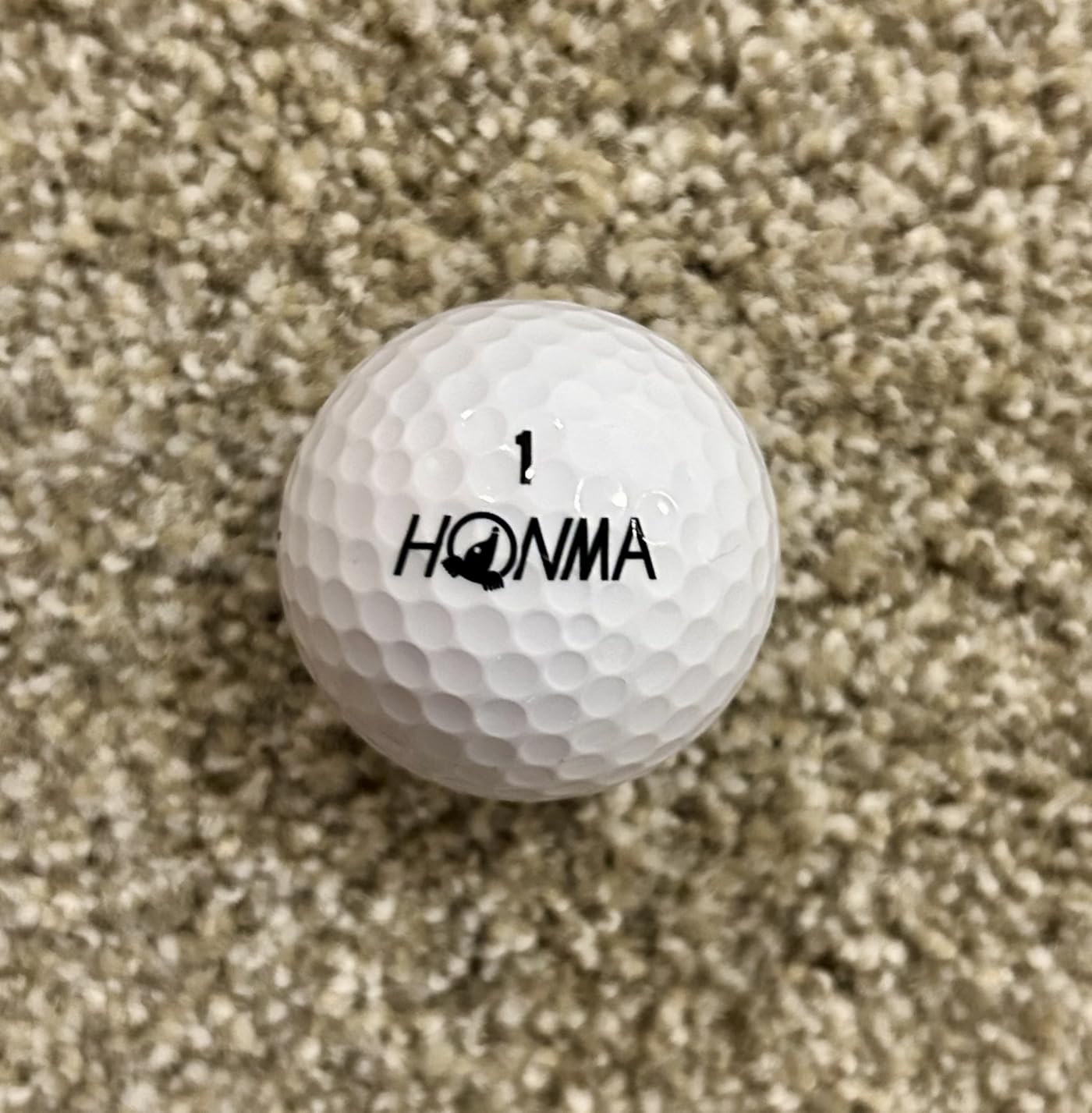
The build is two-piece with a Surlyn cover, a high-speed core for explosive distance, a low-spin rubber core for soft feel and energy rebound, and an extended flight 368-dimple pattern specified to reduce air resistance. A dual-line alignment aid sits on top for aiming, and the ball is USGA and R&A approved.
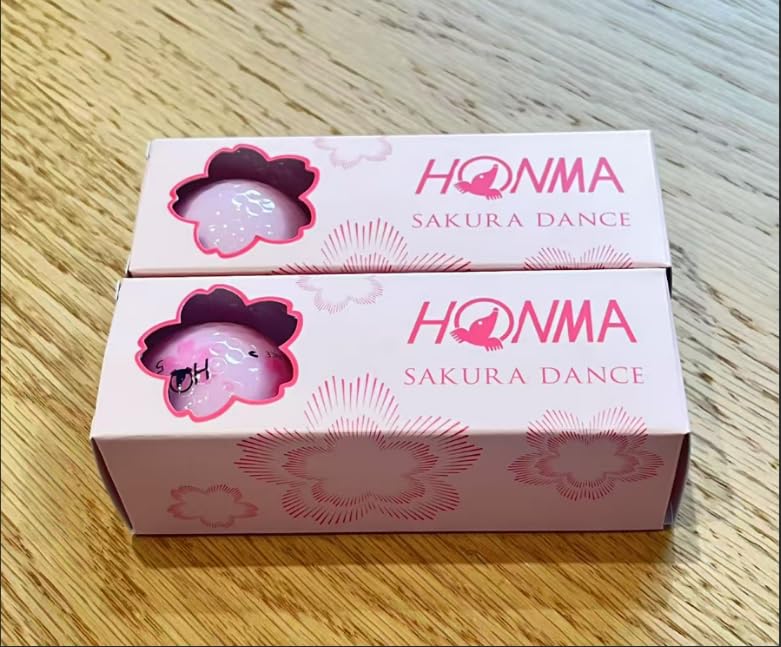
Where it genuinely stands out is the finish. White, yellow, green, orange and sakura pink give you a colour for every visibility condition we discussed earlier, and the dual-line alignment aid is a genuine help for beginners still learning to set up consistently to a ball.
The low-spin flight is a real strength for beginners and high-handicap players, because the ball travels straighter and penalises less when the swing path is uneven. That is the majority of the benefit a beginner gets from a ball choice.
Is a 2-piece Surlyn ball good for beginners?
Yes, and Surlyn is the reason. A Surlyn cover is tougher than urethane, so a beginner hitting the occasional wild shot into the trees is not immediately ruining a fragile ball, and the low-spin flight reduces the penalty from a mishit.
The trade is greenside spin, which is limited compared with a multi-layer ball. For a beginner focused on getting the ball in play, that is the right trade.
What are the trade-offs of choosing the cheapest option?
Feel and control, plus the rating. 4.5 stars is the lowest average here, and the feedback points to a two-piece construction that is less refined than the multi-layer balls, with less greenside spin as a direct result.
It is a perfectly good ball for a beginner or a casual weekend player. If you are already hitting under 85 and chasing strokes, the Callaway Supersoft or Srixon Soft Feel will serve you better for a modest step up.
How to Choose a Golf Ball for Distance in 2026?
The buying decision for a distance ball is shorter than most guides make it. Three things decide it: your swing speed, how much control you need around the green, and how many balls you lose in a season. Everything else, including dimple count and cover technology, is a refinement of those three.
Match compression rating to your swing speed
Compression is the first number to look at because it is the one that predicts whether the ball will feel right. A low compression ball, generally under 60, is designed for swing speeds below about 85 mph. A mid compression ball in the 60 to 80 range suits 85 to 95 mph. Above 80 is for 95 mph and up.
These are guidelines, not laws, but they are a good starting point. The useful framing is that a ball softer than you need absorbs energy, while a ball harder than you need feels harsh and loses ball speed on off-centre strikes. Matching the ball to your speed is the single change with the biggest return available to most golfers.
If you do not know your swing speed, film ten driver swings from the side with a phone and check the ratio of ball flight to club travel through impact. A rough midpoint between the two gives you a usable club speed estimate, and that is enough to pick a compression band.
Two-piece or multi-piece: what changes on the course?
A two-piece ball pairs one large core with a hard ionomer, Surlyn or similar cover. It is durable, straight, long and forgiving, and it gives up short-game spin. That is the right trade for a high handicap, a senior, or a beginner who wants to hit the fairway more often.
A three-piece or multi-piece ball adds layers around the core with a thinner urethane cover. You get more greenside spin, better feel and a wider speed window, at a higher cost and lower scuff resistance. That is the right trade once your ball striking is consistent enough to notice the difference.
The most common mistake is upgrading too early. A better ball cannot fix a wayward swing, and the yardage it adds is small compared with the strokes lost to a bad contact.
Ionomer, Surlyn or urethane covers
The cover is where feel, spin and durability are decided. Ionomer is the standard hard cover on most two-piece distance balls. It is tough, consistent and slightly firm to the touch, and it is the reason two-piece balls feel clean and predictable rather than dead.
Surlyn is the tougher relative. It resists cuts and abrasion better than almost anything else in the roundup, which is why the Nitro and Honma balls built with it hold their finish for a long time. Urethane is the soft, high-spin option found on three-piece and multi-piece balls, and it delivers the most feel and greenside control while offering the least scuff resistance.
A practical rule: pick the cover that matches how many balls you lose. Losing balls argues for Surlyn or ionomer. Hitting the same ball all round argues for urethane.
Dimple patterns and what the flight numbers mean
Dimples reduce aerodynamic drag and create lift. A shallow, numerous pattern such as the 338 and 368-dimple designs used here generally produces higher launch and more distance, while a deeper, fewer-dimple pattern suits a different flight window. The variation between patterns is real but small, and it matters far less than compression.
Spin is the number that predicts carry distance. Low driver spin keeps the ball out in front of you and extends carry. High driver spin makes the ball climb and stop. Launch angle works the opposite way: too high and the ball balloons, too low and it rolls out.
Ball speed is the raw output and smash factor is ball speed divided by club head speed, which tells you how efficiently you are hitting it. Improving smash factor is a club delivery problem, not a ball problem.
Colour and visibility by playing conditions
Match the colour to the light rather than to preference. In bright sun, orange and red hold up best against the sky. In low light and overcast conditions, yellow is the easiest to track. Green disappears against fairway grass from a distance, so treat it as a purely aesthetic choice. White remains the most visible option against water and dark tree lines.
Visibility is not a minor consideration. If you are spending a stroke or two per hole hunting for a ball, that is a much larger cost than the difference between any two balls on this list.
Two distance myths worth dropping
The first myth is that a softer ball goes farther. It does not, unless the softness matches your swing speed. Too soft and the ball absorbs the impact instead of returning it, and you lose ball speed. Compression matching is what produces distance, not softness by itself.
The second myth is that expensive golf balls are always longer. Premium urethane balls are engineered for high swing speeds, and they are a genuine upgrade for a fast, consistent player. For everyone else, the extra money mostly buys a nicer feel and more greenside spin, with little or no additional carry.
There is a third worth naming: a low-spin ball is not automatically straighter for every swing. Low spin reduces the sideways force that causes curvature, so it flattens a shot, but it does not correct a swing path that is closed or open at impact. Ball choice fixes dispersion, not mechanics.
Frequently Asked Questions
What golf ball gives you the most distance?
The TaylorMade Distance+ gives most golfers the most distance in practice, because its two-layer ionomer construction spins low off the tee and launches high. Fast swingers above 100 mph should test the Srixon Q-Star Ultispeed instead, and slow swingers under 85 mph will get more carry from a softer ball such as the Callaway Supersoft.
Do distance golf balls actually go farther?
Yes, but only when the compression matches your swing speed. A distance ball reduces driver spin and increases launch, which extends carry. If the ball is far softer or firmer than your swing needs, it absorbs or wastes energy and you lose ball speed. Matching compression is what adds yards, not the distance label.
What compression golf ball should I use at 90 mph swing speed?
At 90 mph, aim for a mid compression ball in the 60 to 80 range. That band suits swing speeds of roughly 85 to 95 mph and balances energy return with greenside control. Above 95 mph move to a ball rated 80 or higher, and below 85 mph look for a low compression option rated under 60.
Which golf ball flies straightest?
The Callaway Warbird is the straightest flier here, because its very low driver spin limits the sideways force that curves a ball. The TaylorMade Distance+ and Wilson Profile Distance also reduce spin. Low spin flattens ball flight, but it does not correct a swing path that is closed or open at impact.
Are expensive golf balls worth it for distance?
For a fast, consistent swing above 100 mph, yes. Premium balls such as the Vice Pro Plus and Srixon Q-Star Ultispeed are engineered for high ball speed and add real carry. For most golfers they buy a softer feel and more greenside spin rather than extra distance, so the money is better spent on a compression match.
What is the best golf ball for an average golfer?
The TaylorMade Distance+ works across the widest range of abilities, while the Callaway Supersoft suits golfers who want distance plus a soft feel and usable greenside spin. Average golfers with swing speeds between 85 and 95 mph generally get the best balance from a mid compression multi-layer ball rather than an ultra low compression option.
What golf balls are best for seniors and slower swing speeds?
Under about 85 mph, look for a low compression ball rated under 60. The Srixon Soft Feel and the TaylorMade SpeedSoft fit that group well, and the Noodle Long and Soft with its 34-compression core is the softest option we tested. High-visibility yellow finishes also make the ball much easier to track.
How many golf balls should I expect to lose per round?
Most golfers lose somewhere between two and six balls per round, and the number rises sharply with wind, water and how many provisional shots you take. This is the number to divide by when comparing cost per round, since a higher-priced dozen can still work out cheaper if you rarely run out of balls.
Final Verdict by Swing Speed
The TaylorMade Distance+ is the best golf ball for distance overall, and it earns that place on the deepest owner base in the roundup and a spin profile that works for the widest range of golfers. Under 85 mph, switch to a low compression ball such as the Callaway Supersoft or the Srixon Soft Feel. Above 100 mph, the Srixon Q-Star Ultispeed and Vice Pro Plus are the balls built for that speed.
The real takeaway from testing all 12 was simple. Compression matching beats brand loyalty, and the ball you lose four times a season matters less than the one that matches your swing. Pick your swing speed band, order two or three candidates, and play nine holes with each. You will know within a round which one you are actually striking better.