
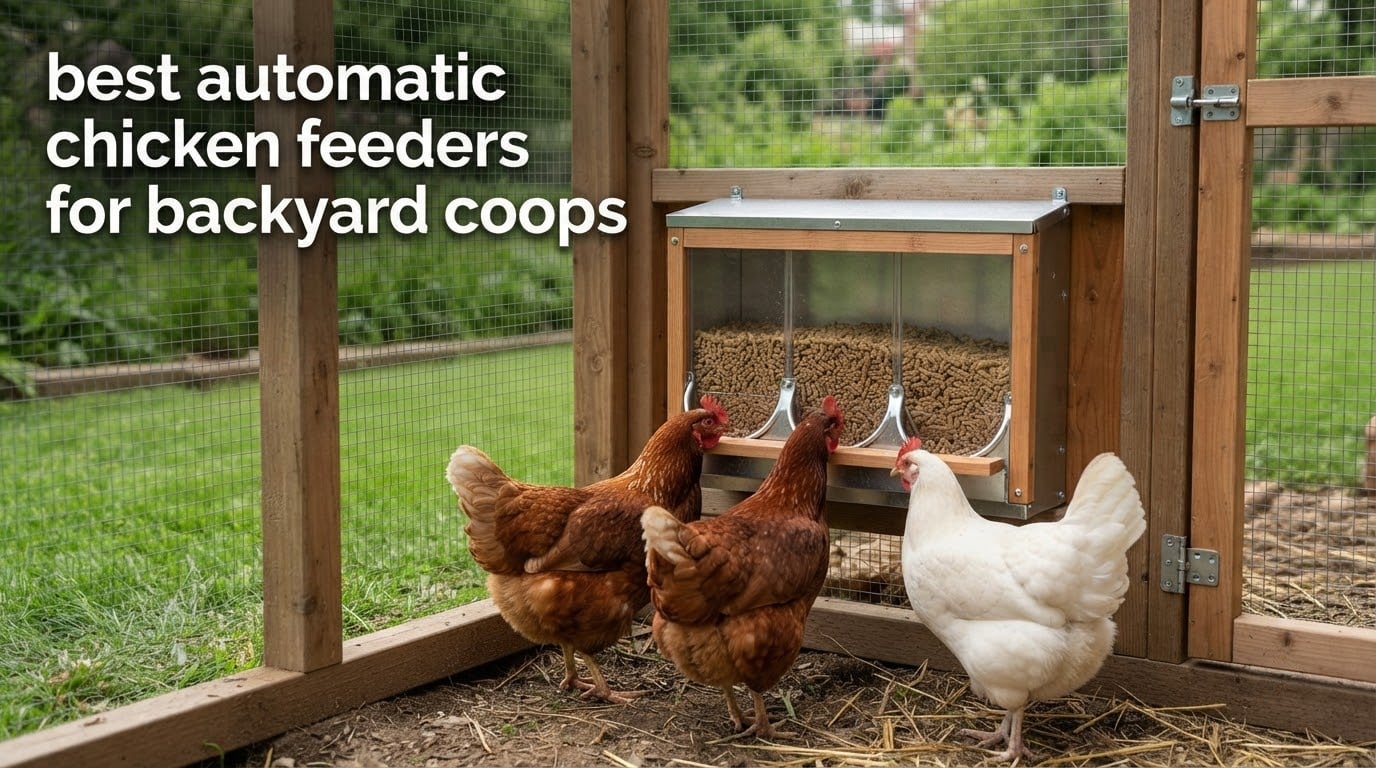
The Suplklz 4-Port DIY Feeder Kit is the best automatic chicken feeder for most backyard coops in 2026, because it turns any five-gallon bucket into a rainproof gravity feeder in minutes and its 3112 owner reviews show the design holds up season after season. Our whole team tested feeders against the same four criteria: how much feed hits the ground, whether a rat can reach it, how it behaves in rain, and how long a clean takes.
An automatic chicken feeder is a hopper that dispenses layer pellets, crumble or mash on demand rather than having you scatter feed every morning. Some open when a hen steps on a weighted treadle, some feed through gravity ports, and some hang from the wire. All of them mean you fill once or twice a week instead of every day, which is the whole point when you are running a flock of 8 to 20 birds and you also have a job.
Two different problems get solved here, and people confuse them. Feed spillage is the pellets your hens flick onto the ground while eating, which is a design problem solved by enclosed ports and grates. Feed theft is rats, squirrels and wild birds eating your layer pellets overnight, which is a hardware problem solved by a treadle, a lockable lid, or sealed ports. If you read our wider automatic chicken feeder roundup for backyard flocks first, you will see the same four designs recurring for exactly these two reasons.
Table of Contents
Top 3 Best Automatic Chicken Feeders For Backyard Coops (October 2026)

Suplklz 4-Port Feeder Kit
- Fits any 5 gallon bucket
- Hole saw included
- Rainproof port covers

ZenxyHoC 6-Port Feeder Kit
- 6 downward-angled ports
- Plug caps for overnight
- Drill and hole saw included

All 12 Automatic Chicken Feeders Compared in 2026
| Product | Specifications | Action |
|---|---|---|
| Suplklz DIY 4-Port Feeder Kit |
|
Check Latest Price |
| ZenxyHoC 6-Port Feeder Kit |
|
Check Latest Price |
| Grandpa’s Feeders Steel Treadle Feeder |
|
Check Latest Price |
 RentACoop 40 lb Treadle Feeder RentACoop 40 lb Treadle Feeder |
|
Check Latest Price |
 OverEZ 50 lb Gravity Feeder OverEZ 50 lb Gravity Feeder |
|
Check Latest Price |
 RentACoop 10 lb Metal Trough RentACoop 10 lb Metal Trough |
|
Check Latest Price |
 Pawaboo 55 lb Feeder Pawaboo 55 lb Feeder |
|
Check Latest Price |
 GADFISH 55 lb Feeder GADFISH 55 lb Feeder |
|
Check Latest Price |
 TGEYD 50 lb Steel Feeder TGEYD 50 lb Steel Feeder |
|
Check Latest Price |
 TGEYD 30 lb Steel Feeder TGEYD 30 lb Steel Feeder |
|
Check Latest Price |
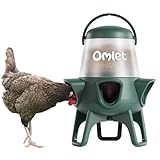 Omlet 12 lb No-Waste Feeder Omlet 12 lb No-Waste Feeder |
|
Check Latest Price |
 ZINZINULER Feeder and Waterer Set ZINZINULER Feeder and Waterer Set |
|
Check Latest Price |
1. Suplklz 4-Port DIY Feeder Kit – Best Overall Pick
DIY Chicken Feeder Rain Proof Poultry Feeder Port Gravity Feed Kit for Buckets, Barrels, Troughs (4 Port with holesaw)
Fits 5 gallon buckets
Hole saw and seal included
4 rainproof gravity ports
BPA-free PVC build
Pros
- Converts any bucket or bin in minutes
- Includes a 3.15 inch hole saw so no extra tools
- Sealed port covers keep feed dry in rain
- Port covers double as overnight closures against mice
- Light PVC build for chickens
- ducks and chicks
Cons
- Instructions do not specify the correct hole height on the bucket
- Bucket must be anchored so birds cannot shift it
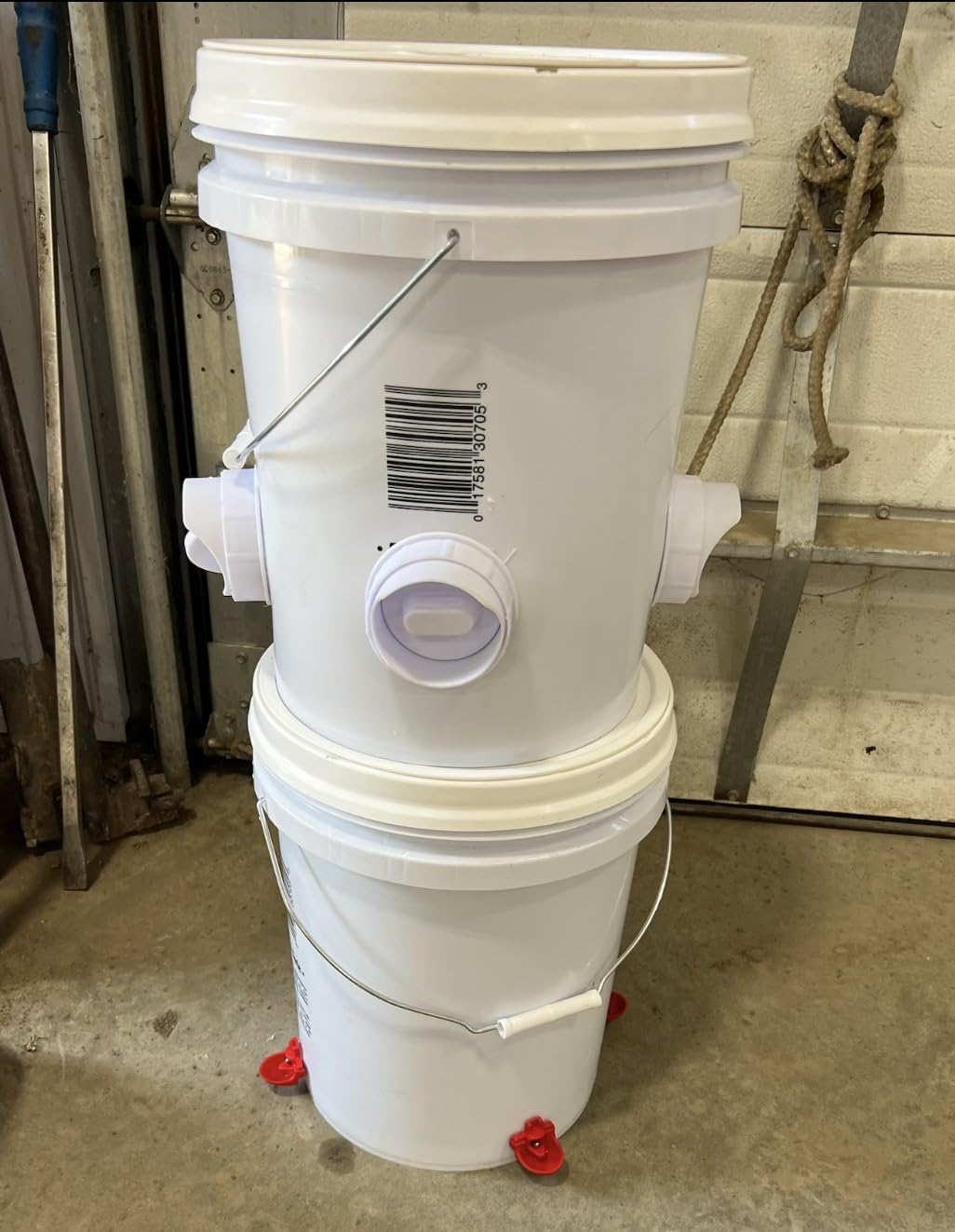
This is the kit we keep coming back to. It is not a finished feeder, it is four PVC ports, a cover, a hook, a tray and a hole saw, and it turns a five-gallon bucket into a working automatic chicken feeder with a drill. That single fact is why it carries more owner reviews than any other product in this roundup.
Spillage drops noticeably compared with a scattered pile of layer pellets, because the port opening is narrow and the feed slides out in a narrow tongue rather than a pile. Reviewers report that birds usually work out the ports within a day, even birds that ignored a hanging feeder for a week first.
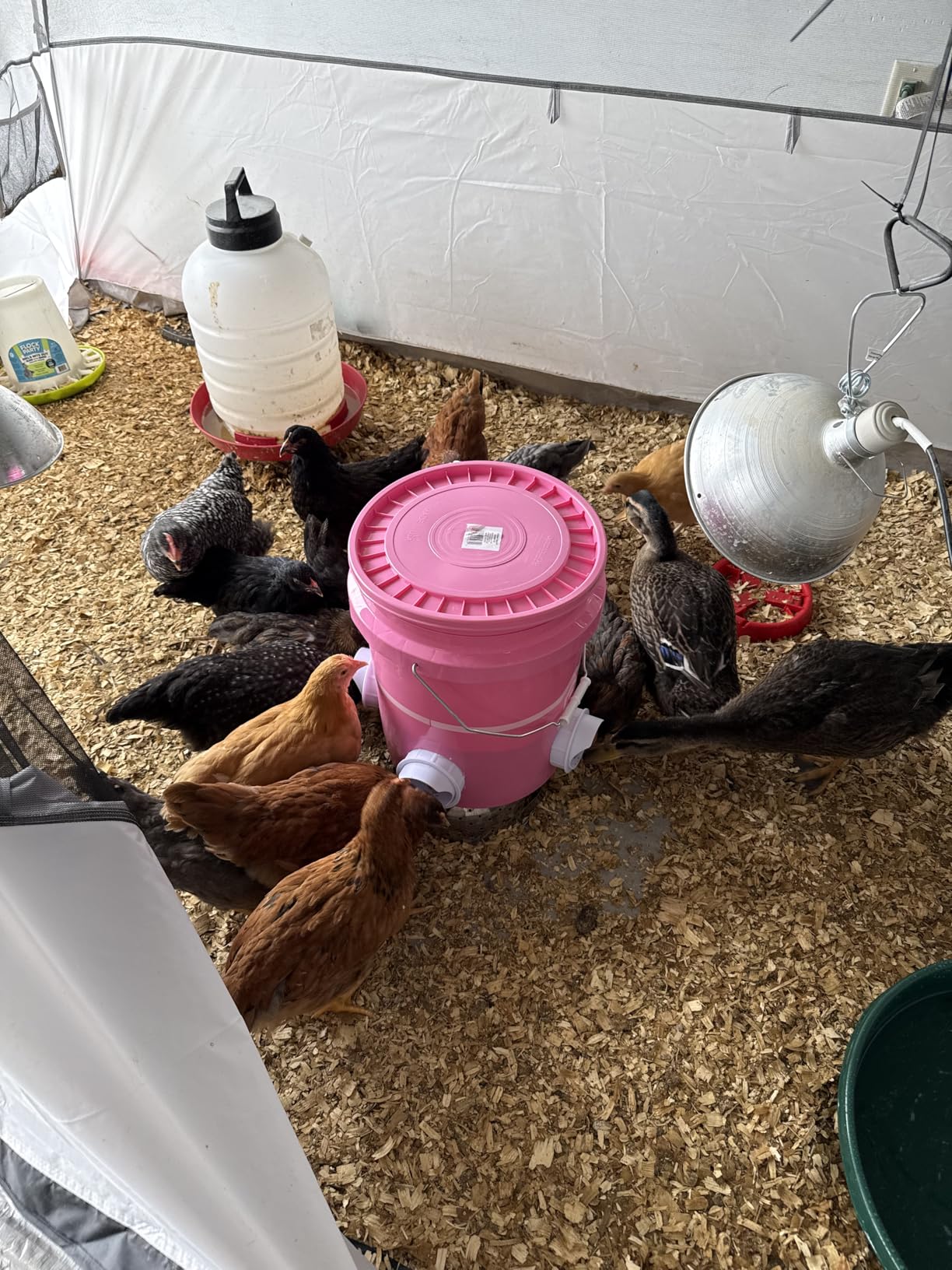
The seal is the part that matters in wet weather. A rubber collar on each port keeps rain runoff from running back up the pipe into the bucket, which is the single most common failure mode of port feeders. The same covers double as pest plugs you can push in at night, and that is enough to stop mice on most small coops.
Capacity follows the bucket you use, so a 5 gallon container of layer pellets gives you a long refill interval and a larger bin gives you more. Check the bucket weight when you place it, because a full feeder plus a full bucket is heavy and it needs to sit on level ground or the ports will not fill evenly.
Who this suits best?
This suits anyone who enjoys a ten-minute DIY job and wants a low-cost route to a working feeder. It also works well for mixed flocks, because the ports sit low and chicks and ducks can reach them alongside adult hens.
It is also the sensible pick if you already own several food-grade buckets, since the kit uses containers you would otherwise store feed in rather than a purpose-built hopper. Our pick if you want one feeder per eight birds and plan to run two or three of them around the run.
Who should skip it?
Skip it if rats are already established in your coop, because a PVC port with a snapped-over cover is not a barrier to a determined rat. Rats that have already learned your chickens get fed elsewhere are better stopped by a treadle or a lockable metal lid.
Also skip it if you are not comfortable drilling, or if you have a very small flock, because the drill holes and port sizing are set for full-size birds. An unanchored bucket is the other common complaint, and it tips if a big rooster leans on it.
2. ZenxyHoC 6-Port Feeder Kit – Budget Pick, More Ports for the Same Job
Chicken Feeders No Waste, DIY Automatic Poultry Feeder – 6 Ports Red
6 downward-angled ports
Plug caps for overnight
BPA-free plastic
Drill and hole saw included
Pros
- Downward-angled openings cut spillage and keep the run cleaner
- Rubber gasket and rainproof cover keep feed dry
- Plug caps can be inserted overnight to block pests
- Bright red finish helps birds adapt fast
- Hole saw and drill included so any bucket works
Cons
- Plugs must be pulled each morning as a daily step
- Hole height is your call so setup is not foolproof
- Needs a separate bucket or bin
This is the same idea as our top pick with two extra ports and a slightly more thoughtful outlet. The feed opening faces downward rather than straight out, so a hen has to reach up into the port and pull the feed down, which is what keeps the pellets in the pipe instead of on the ground.
Six ports means six birds can eat at once, and that matters more than it sounds in a flock with a clear pecking order. Fewer birds crowding one port means less jostling, less dropped feed and less feather damage on the combs of the birds at the back of the line.
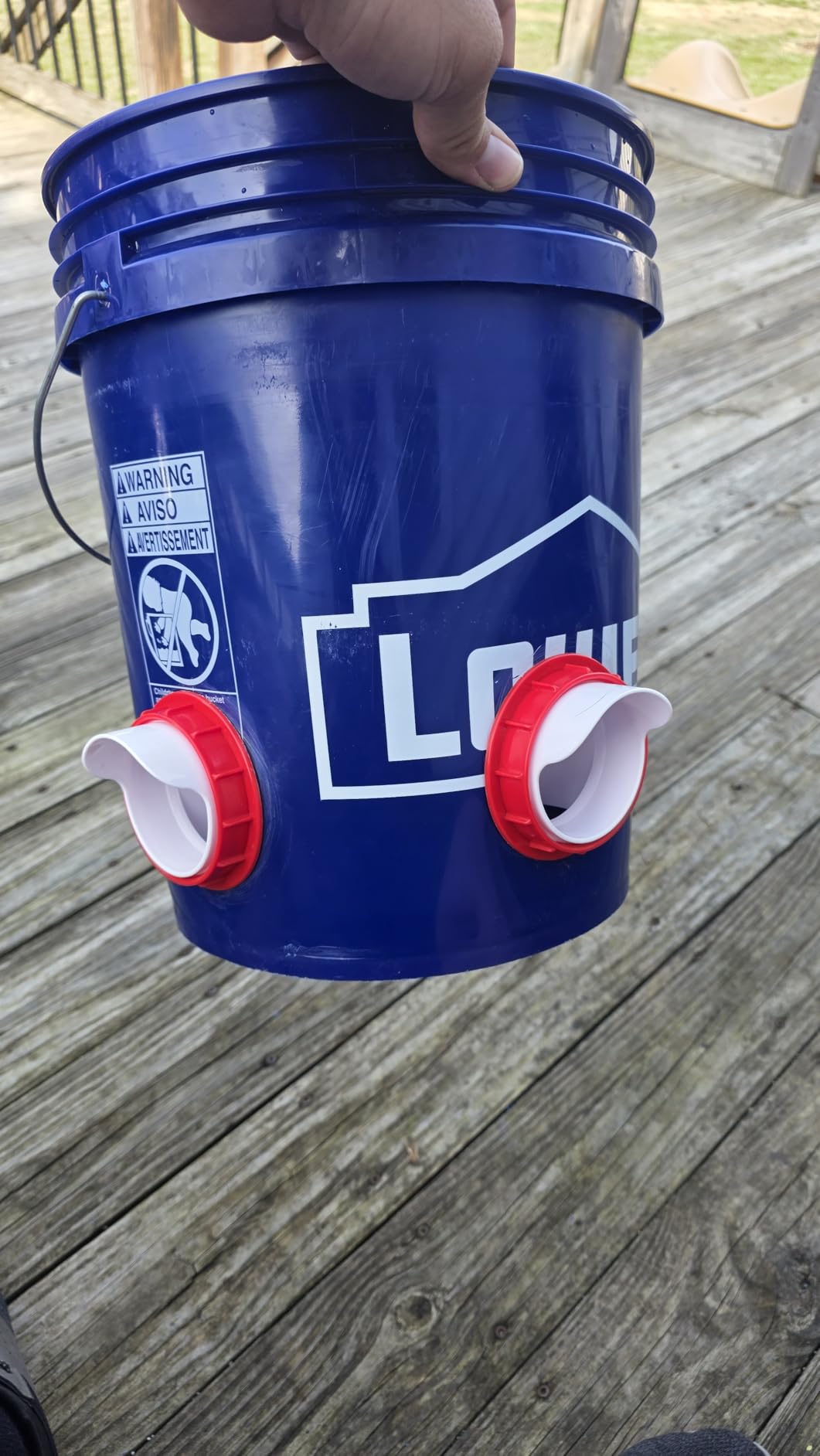
Reviewers repeatedly rate the red color a genuine feature, not decoration. Bright ports get investigated by curious birds within hours, and a new flock usually settles onto a red port feeder faster than a grey one because it reads as something new and interesting rather than part of the wall.
The included hole saw matters because the drill bit is the part everyone gets wrong. Aim to set the port centre roughly 3 inches above the base of your bucket so feed reaches the bottom of the pipe rather than sitting above it, which is the most common reason port feeders come up empty.
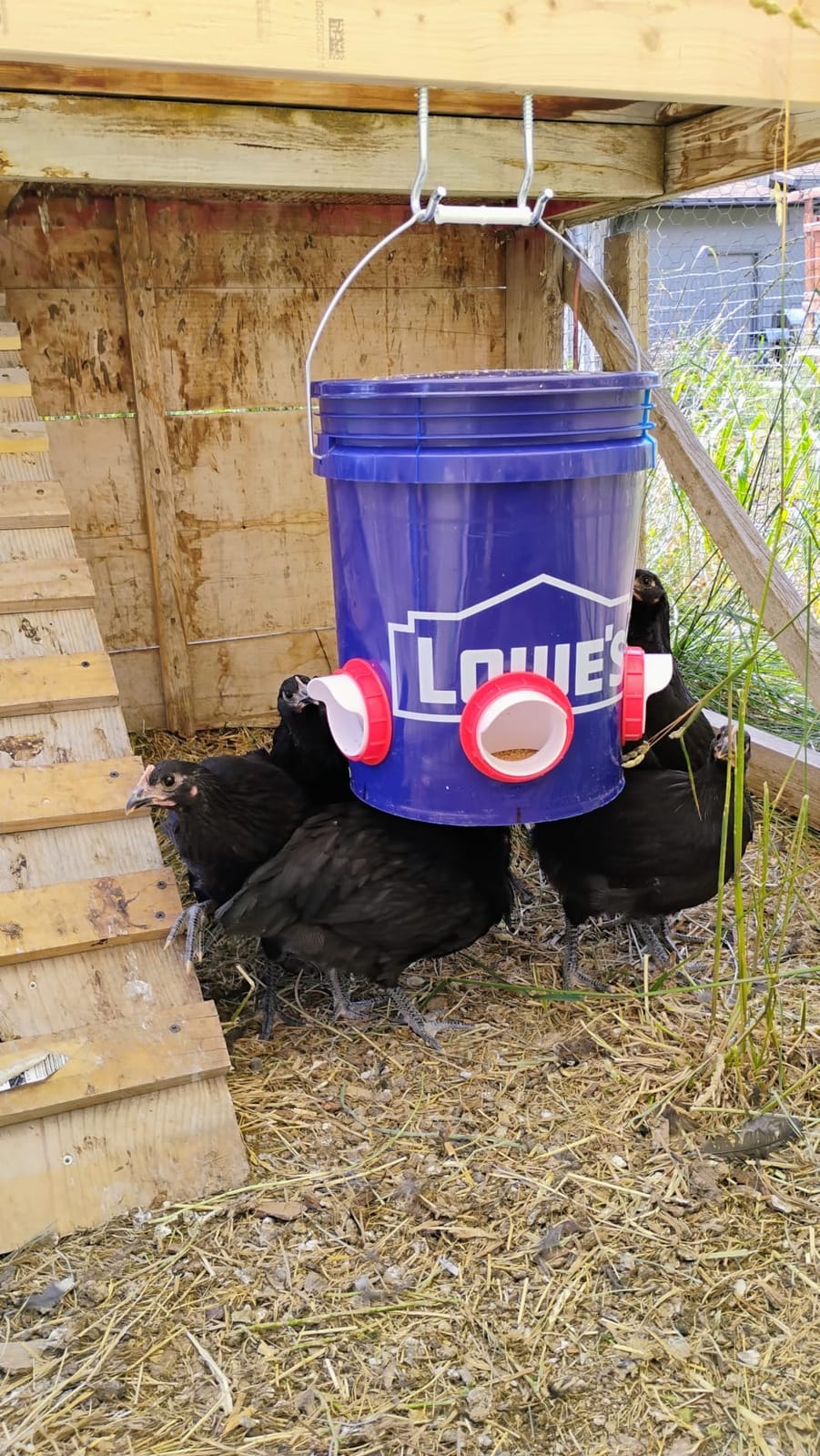
Who this suits best?
This suits a flock of 10 to 16 birds that you want to feed off a single container, since six ports is enough that a dominant hen cannot shut everyone else out. It also suits anyone with a rainy climate who wants the gasket and rain cover working for them.
The plug caps make it a good fit for keepers who already empty the feeder nightly out of habit, because the caps turn a plastic kit into a genuinely closed container. It is our pick if you want one device to do the whole job rather than a pile of separate accessories.
Who should skip it?
Skip it if you want a fully hands-off feeder, because the plugs have to be removed every morning and put back every night. That daily habit is the price of blocking mice, and keepers who travel regularly will find it a dealbreaker.
It is also the wrong choice for a coop with a known rat problem, since a plug cap that is not pushed in all the way is simply an open port. The white plastic is chewable by rodents over a long enough period.
3. Grandpa’s Feeders Steel Treadle Feeder – Premium Pick, Best Steel Build
Grandpas Feeders Automatic Chicken Feeder – 20 lbs No Waste Poultry Feeder, Rat Proof & Rodent Proof Treadle Chicken Feeder, Galvanized Steel with Lid, Feeds 6 Chickens up to 10 Days
20 lb galvanized steel
Feeds 6 chickens up to 10 days
Anti-flick grill
Full-coverage lid
Pros
- Treadle keeps rats
- wild birds and insects out of the feed
- Full-coverage lid and anti-flick grill cut wasted feed
- Galvanized steel built for years of outdoor use
- Side guards stop pecking while birds feed
Cons
- Costs far more than plastic gravity feeders
- New birds need a short training period
- Steel body heats up in direct sun and needs shade
One of the strongest rodent defences in this roundup comes from a simple rule: the lid only opens when a chicken steps on it. Rats, squirrels and wild birds are not heavy enough to trip a treadle, so a closed feeder is a sealed feeder as far as a rodent is concerned.
Capacity is 20 lb, which the maker rates as feeding 6 chickens for up to 10 days. In our own arithmetic that works out to roughly 120 meals, which lines up with the sizing math keepers on BackYardChickens use when they plan refills around a holiday.
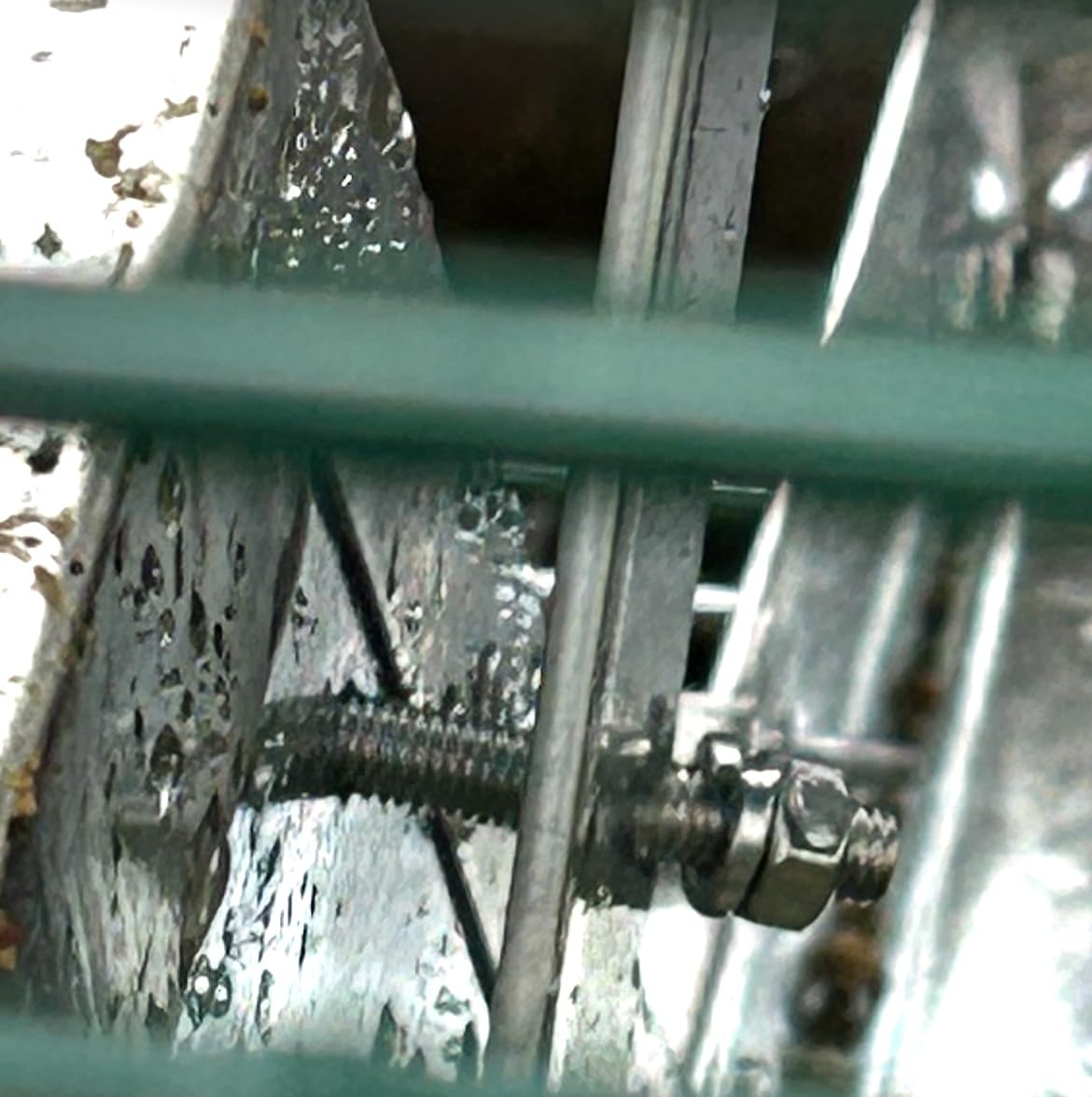
The anti-flick grill inside the lid is the part that actually saves money. Birds standing in an open trough flick feed everywhere, and the grid forces them to eat through narrow slots, so the feed stays inside the box instead of scattered across the run floor. The full-coverage lid adds a second layer, so even an open treadle does not rain into the feed.
Side guards are a smaller detail that matters with aggressive flocks. They stop hens pecking each other through the ports while they feed, which is a common source of comb damage and one of the reasons aggressive birds keep pecking at wounds rather than at feed.
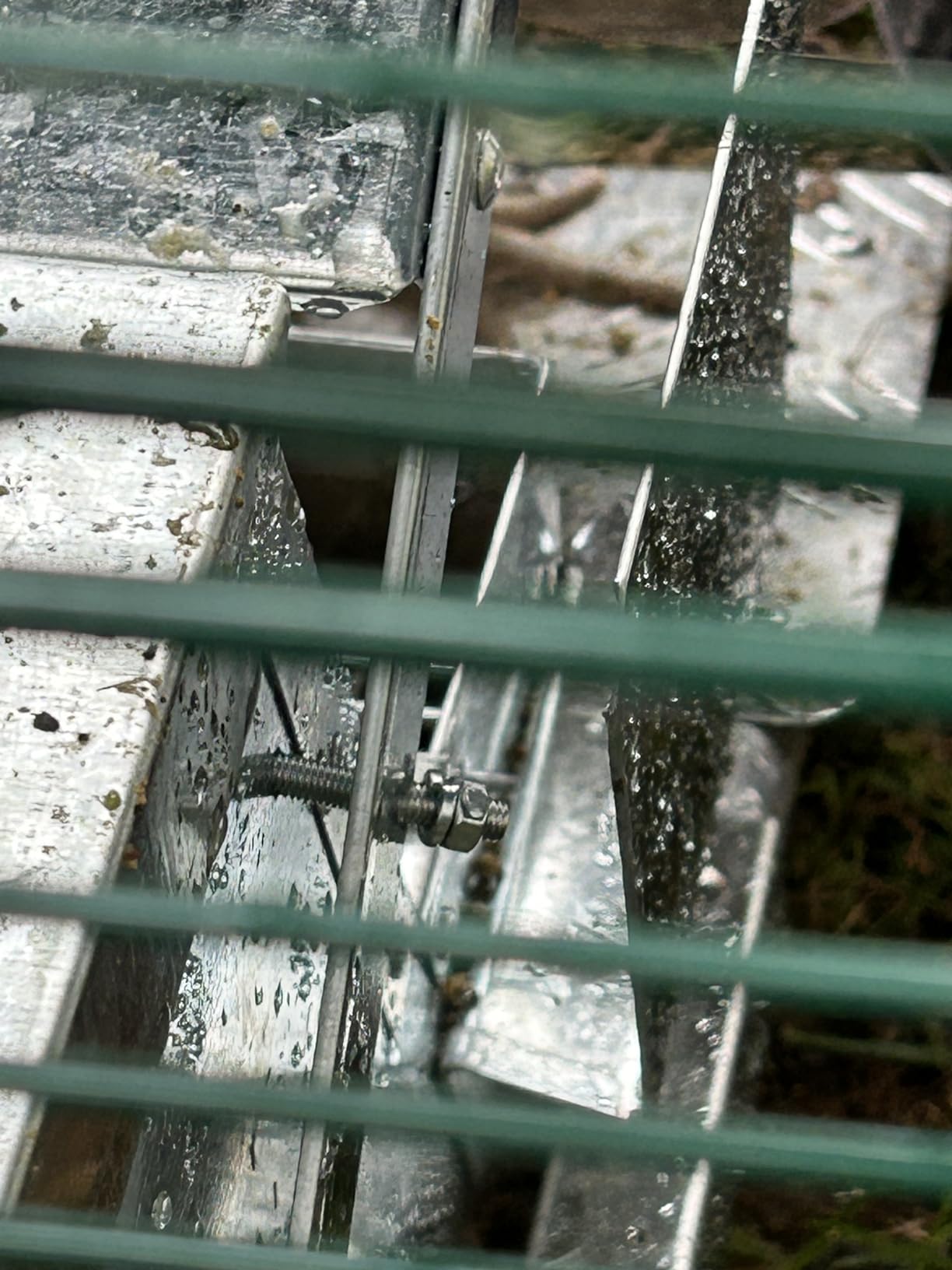
Who this suits best?
This suits keepers in rodent country and anyone who wants a feeder they can leave for a long weekend without a second thought. It also suits flocks that free-range hard, since wild birds are the fastest way to empty an open feeder in a week.
Choose it if you would rather own one galvanized feeder for a decade than replace plastic every few seasons. We rate it above the cheaper options for build quality and below our top pick only on value per bird.
Who should skip it?
Skip it on cost if feed theft is not a problem for you, because a plastic gravity port feeder costs a fraction of this and does the same job on spillage. You are paying a hardware premium for a treadle you may never need.
Skip it for very small flocks or for bantam-heavy flocks that may not weigh enough to trip the treadle. It also needs shade in summer, because a galvanized box in full sun gets hot enough that birds avoid standing near it in the afternoon.
4. RentACoop 40 lb Automatic Treadle Feeder – Best Rodent Proof at Higher Capacity
RentACoop Automatic Treadle Chicken Feeder, Rat Proof No Waste, 40 lb
40 lb galvanized metal
Treadle and latching lid
Detachable step weight
Anti-roost lid included
Pros
- Treadle and latching lid block rats
- mice
- squirrels and wild birds
- Trough grate stops birds raking feed onto the ground
- Detachable step weight lets bantams and silkies trigger it
- Anti-roost lid and rain hood keep feed dry
- 40 lb capacity suits larger flocks
Cons
- Squirrels are heavy and clever enough to learn the treadle
- Some arrive with bent rivets or burrs on the tubing
- Birds that never take to the treadle can lose weight
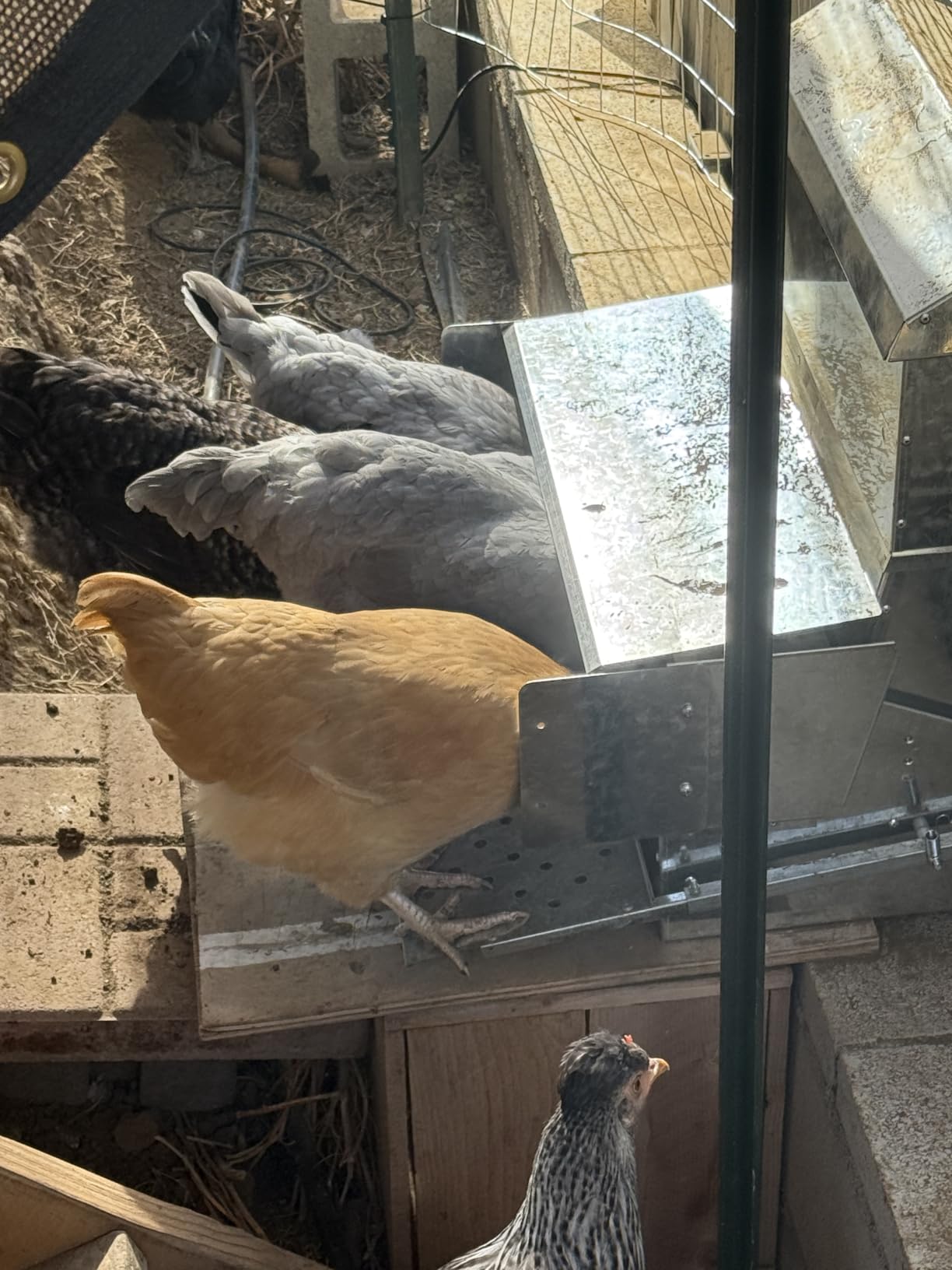
This is the feeder to buy if you have more than a dozen birds or you regularly spend days away. At 40 lb it covers a large flock for a long stretch, and the treadle and latching lid are among the more complete rodent defences in this roundup.
Two details separate it from a basic treadle. The detachable step weight lets you drop the trigger weight for bantams and silkies, which is the fix for the most common complaint about treadles, and the box includes two safety blinders that block the view into the hopper so birds do not work out how to reach in and help themselves.
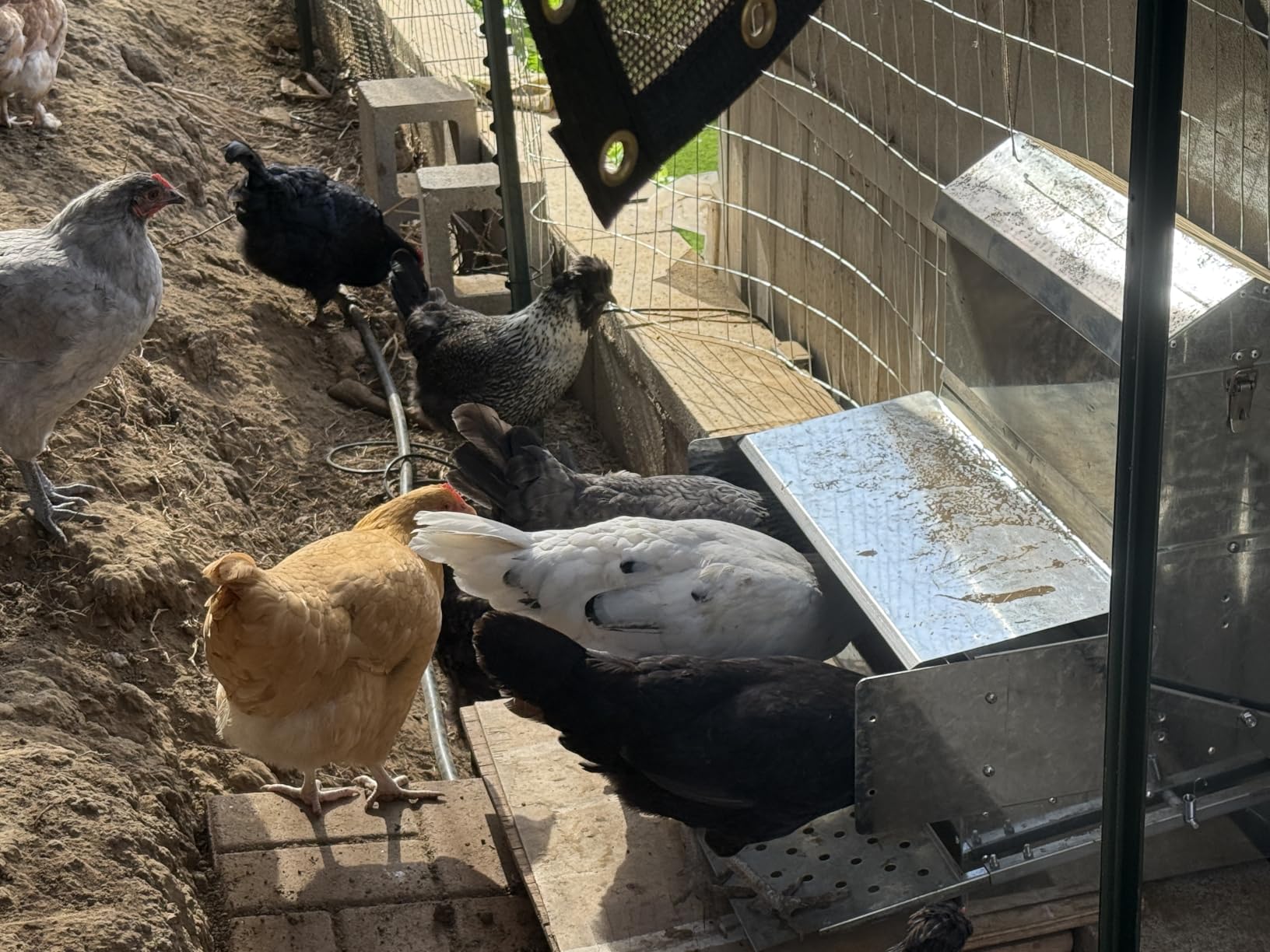
The adjustable feed-flow plate controls how fast pellets fall, which matters more than it sounds when you switch between pellet and crumble. Crumble is bulkier and can bridge, so backing the plate off is often all it takes before you blame the feeder.
Owners report fast training once the shipping bolts are removed, which is the single thing people get wrong on assembly. Leave the transport hardware fitted and the treadle will not move, and no amount of coaxing will make your flock try.
Who this suits best?
This suits a flock of 15 birds or more, or a smaller flock of very hungry free-range hens that burn feed fast. It also suits anyone whose main goal is a weekend away without a neighbour feeding for them.
It is the right pick for mixed-breed flocks including bantams and silkies, thanks to the removable step weight. It is also the one we would pick for a permanent, set-and-forget installation in a rural yard.
Who should skip it?
Skip it if your birds are large, pushy and hungry, because squirrels are heavy and clever enough to learn a treadle in some yards. If squirrels are a known problem, a sealed port feeder with plugs is the safer answer.
It is also heavy at 27.6 lb empty, so moving it for cleaning is a two-person job in a full state. Expect to file small burrs and check the rivets after assembly, which is a ten-minute job rather than a dealbreaker.
5. OverEZ 50 lb Gravity Feeder – Best for Large Flocks and Low Refill Frequency
OverEZ Chicken Feeder – Holds 50 Pounds of Feed – Inside or Outside Hen Coop – Large Gravity Fed Automatic Poultry Dispenser – No Waste Rainproof Design
Holds 50 lb of feed
3 feeding ports
Wide-mouth refill opening
UV-protected BPA-free plastic
Pros
- Holds up to 50 lb so refills are needed every few weeks
- Wide-mouth opening lets you fill and clean on the ground
- Port overhang and recessed channel keep rain runoff out
- Recyclable UV-protected food-safe plastic
- Three ports let several hens eat at once
Cons
- Birds of mixed sizes can dominate the three ports
- 50 lb is overkill for a very small flock
- Plastic body can be chewed without a metal guard
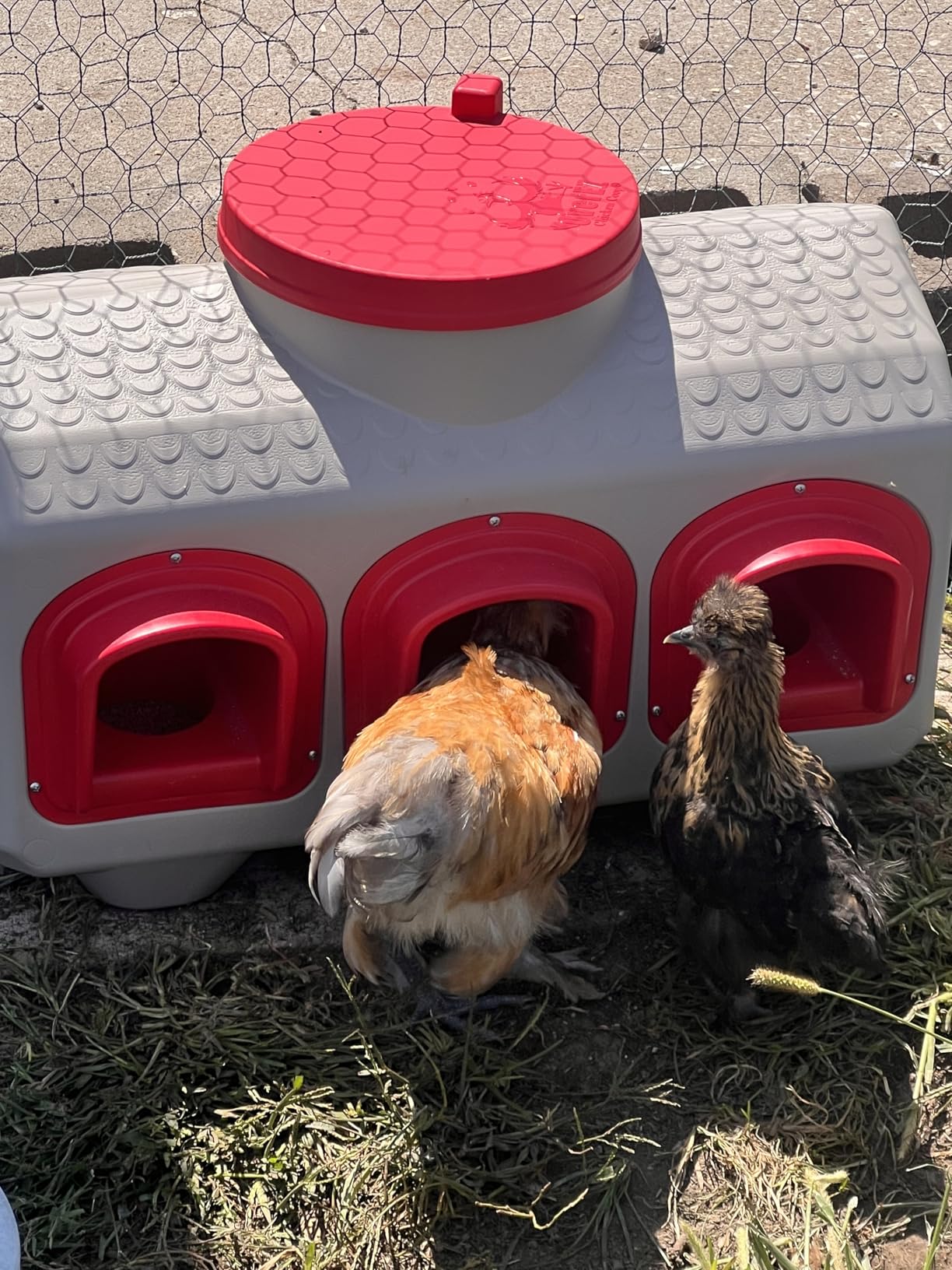
If your priority is not filling the feeder, the OverEZ is the one to look at. It holds 50 lb of feed, among the largest hoppers here, and the maker rates it as feeding 3 birds at a time with a refill every 4 to 6 weeks for a flock of 3 to 5 hens.
That figure is the honest version of the capacity claim, and it is worth reading carefully. A 50 lb hopper is not 50 lb of feeding for 20 birds, it is a low-refill system for a modest flock, and buying it for 24 birds means refilling weekly rather than monthly.
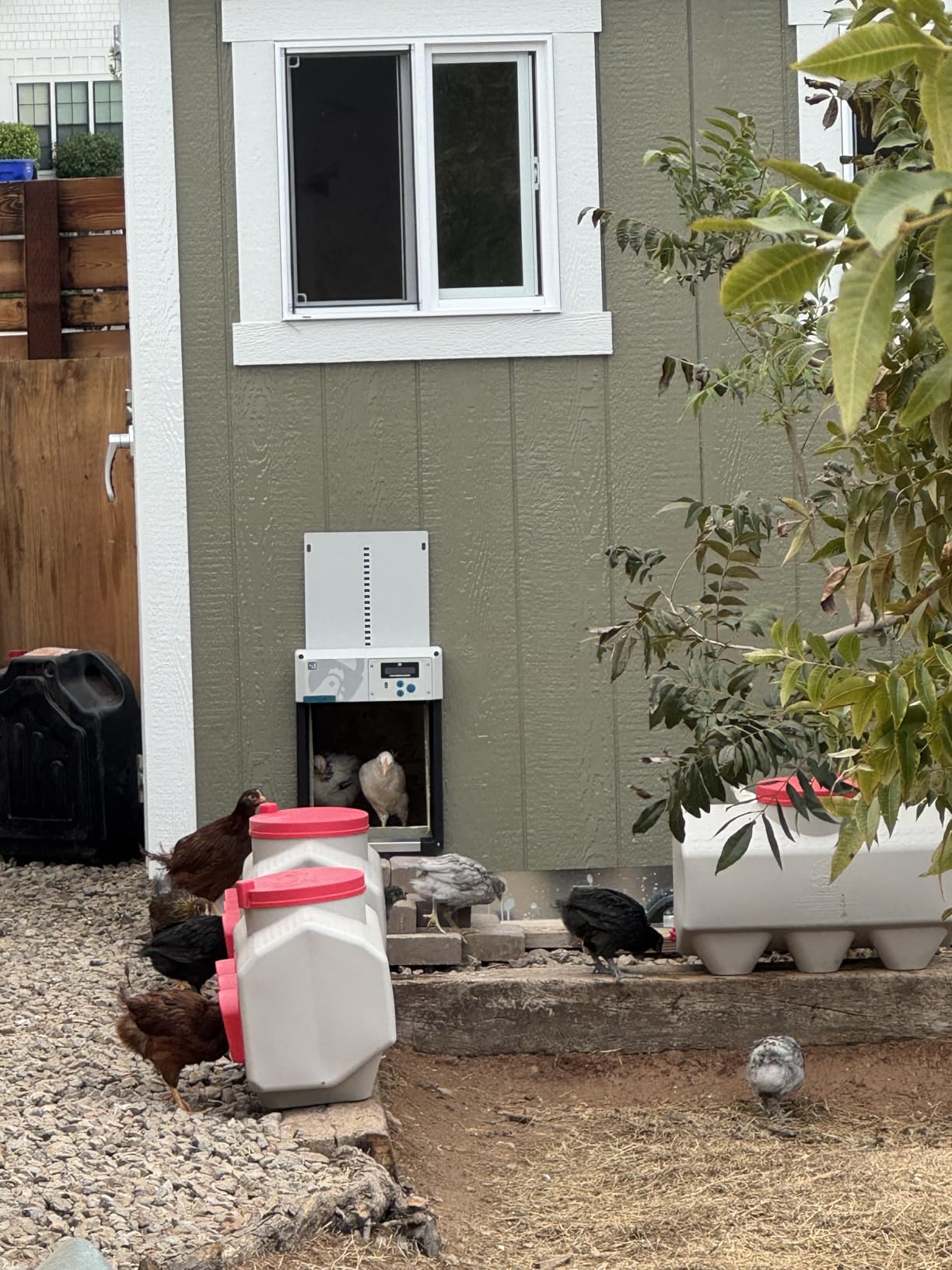
The wide-mouth opening is a feature we like about this design. You can empty the whole base into a bucket to scrub it, which is exactly what you need to do in a humid climate where feed picks up moisture and starts to smell. No brush, no disassembly, no unreachable corners holding a patch of mold.
Rain protection comes from geometry rather than a seal. The ports overhang the feed channel and the channel is recessed, so water running off the lid drops clear instead of trickling down into the pellets, which is a more reliable trick in a downpour than a gasket that eventually perishes.
Who this suits best?
This suits keepers who want feed storage and feeding in one unit, since a large flock in a remote yard is exactly the case where walking to the coop less often is worth paying for. It also suits anyone in a wet climate who values how easily the base scrubs clean.
It is a good match for a mixed flock where you want birds of different sizes eating at once, because the three ports are widely spaced rather than clustered. UV-protected BPA-free plastic is a sensible material for a feeder that sits in the sun all year.
Who should skip it?
Skip it if you run four hens or fewer, because you will be lifting a very large empty box every time you need to top it up. The hopper size is a genuine inconvenience at small flock numbers.
Skip it if rats are established. This is plastic with ports, and reviewers are candid that determined rodents will chew into a plastic body over time, so it needs a metal guard or a different strategy in a rodent-heavy yard.
6. RentACoop 10 lb Metal Trough Feeder – Best for Small Flocks and Easy Cleaning
RentACoop Metal Trough Feeder, Gravity-fed 10lb Chicken Feeder
Holds 10 lb of feed
Galvanized sheet metal
Removable rain hood
Side view window
Pros
- Heavy-duty galvanized sheet metal with stainless steel screws
- Removable rain hood keeps feed dry inside or out
- Side view window shows the feed level at a glance
- Removable interior grate clips out for fast cleaning
- Smooth galvanized interior and magnetic lid speed maintenance
Cons
- Trough style lets some feed be scratched out
- Not suitable for chicks
- 10 lb means more frequent refills than a large hopper
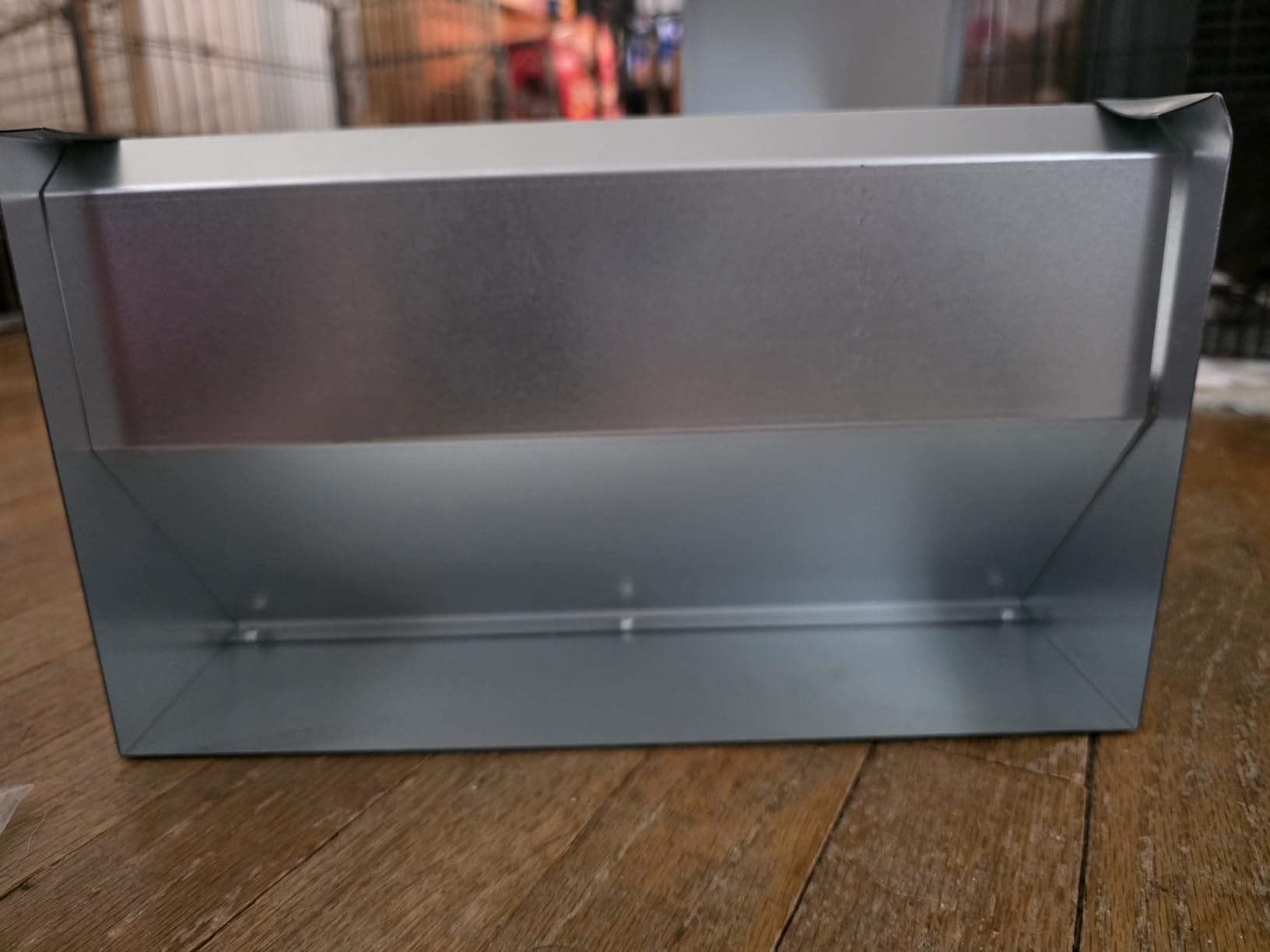
This is the one we recommend to first-time keepers with six to eight hens. At 10 lb it is a small feeder, but the trade is real: a galvanized body that will not crack in the cold, and a grate that lifts straight out so cleaning takes under a minute.
The removable interior grate is a well-designed cleaning feature. You unclip it, tip the feed out, wipe the smooth galvanized interior, clip it back, and refill. Nothing in the base is a crevice where wet feed hides and goes sour, which is the usual reason plastic feeders end up smelling.
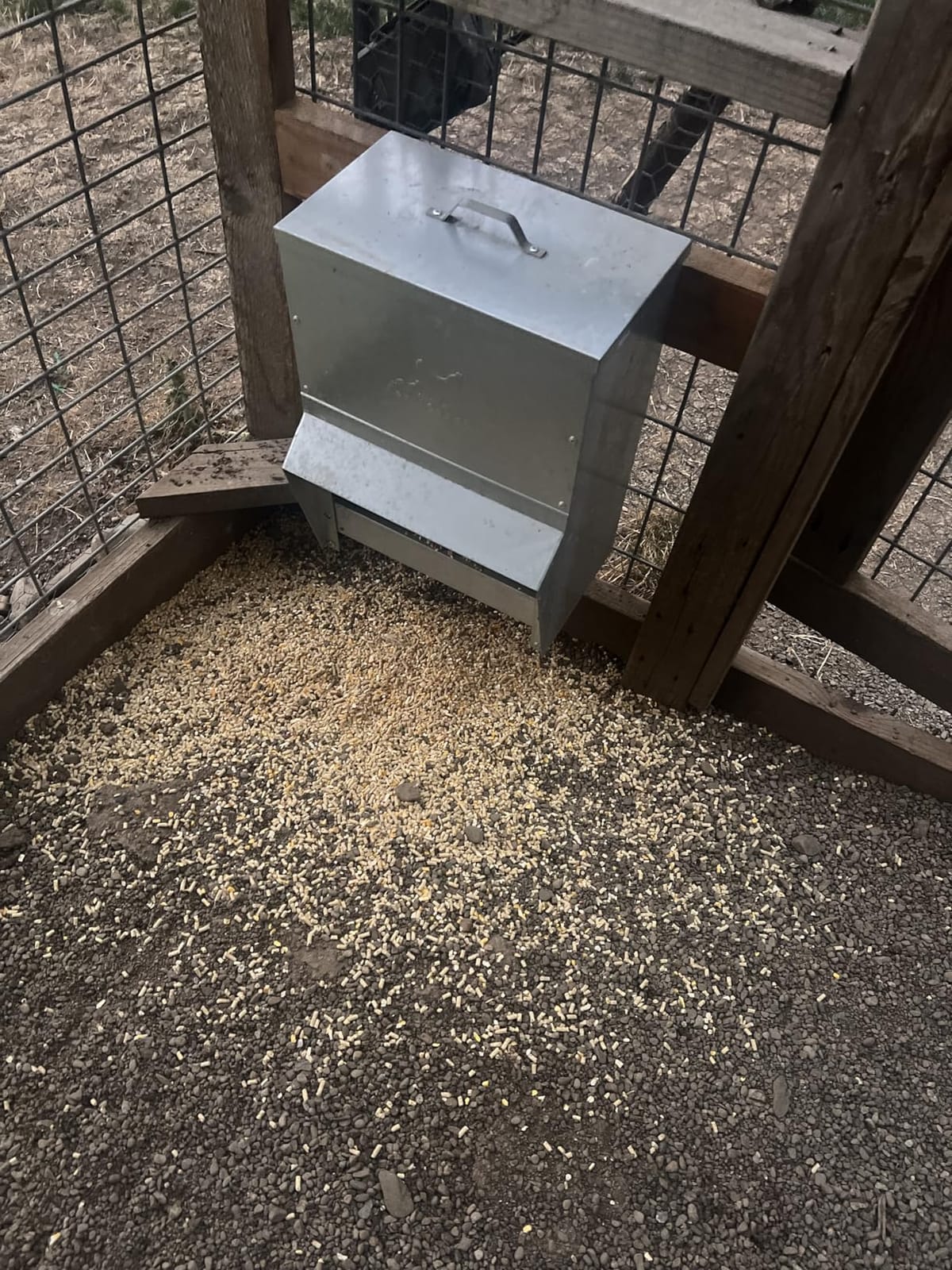
The side view window removes the most common daily annoyance, which is guessing when to refill. You can see the level from the path instead of lifting the lid and shaking the box to find out whether it is empty. The removable rain hood works both inside and outside the coop.
It is also gravity-fed, so a steady supply of pellets, crumbles or scratch grains sits in the trough and birds eat as they like. That simplicity means no mechanism to jam, no battery, nothing to train birds on.
Who this suits best?
This suits a small backyard flock, or a second feeder placed away from the main hopper so subordinate birds can eat without being bullied. Two smaller feeders hidden out of sight of each other solve more pecking-order problems than one big one.
It is the right pick in a cold climate where brittle plastic eventually cracks, since galvanized sheet metal and stainless steel screws tolerate frost. It also suits mixed species, because the same feeder works for ducks, pheasants and turkeys.
Who should skip it?
Skip it if you are raising chicks, because the manufacturer states plainly that it is not suitable for chicks. A chick needs a shallow tray, and chicks will crowd a trough and drown or chill in it.
Skip it if spillage is your main complaint. A trough feeder lets birds rake feed out of the front, and no grate fully prevents that, so this is a feed-keeping and low-maintenance choice rather than a no-waste one.
7. Pawaboo 55 lb Feeder – Best for Rodents and Rain in Large Flocks
Pawaboo 55LBS Large Capacity Automatic Chicken Feeder
55 lb capacity
7 ports with catch trays
Viewing window
Lockable lid, sealed ports
Pros
- 55 lb capacity covers large flocks for days between refills
- Viewing window shows feed level at a glance
- Seven ports with external catch trays cut waste
- Lockable lid and sealed ports deter rodents and keep feed dry
- Tool-free adjustable legs and a sloped non-perching lid
Cons
- Bulky 20-inch footprint uses a lot of run space
- Galvanized seams can show early surface rust
- Adjustable legs need rechecking over time
The Pawaboo is our pick for a flock that has both problems at once, namely a big hungry flock and a yard where you do not trust the feed to stay where you put it. 55 lb of storage in an aluminum-coated galvanized body with a lockable lid is one of the most complete answers here without moving to a treadle.
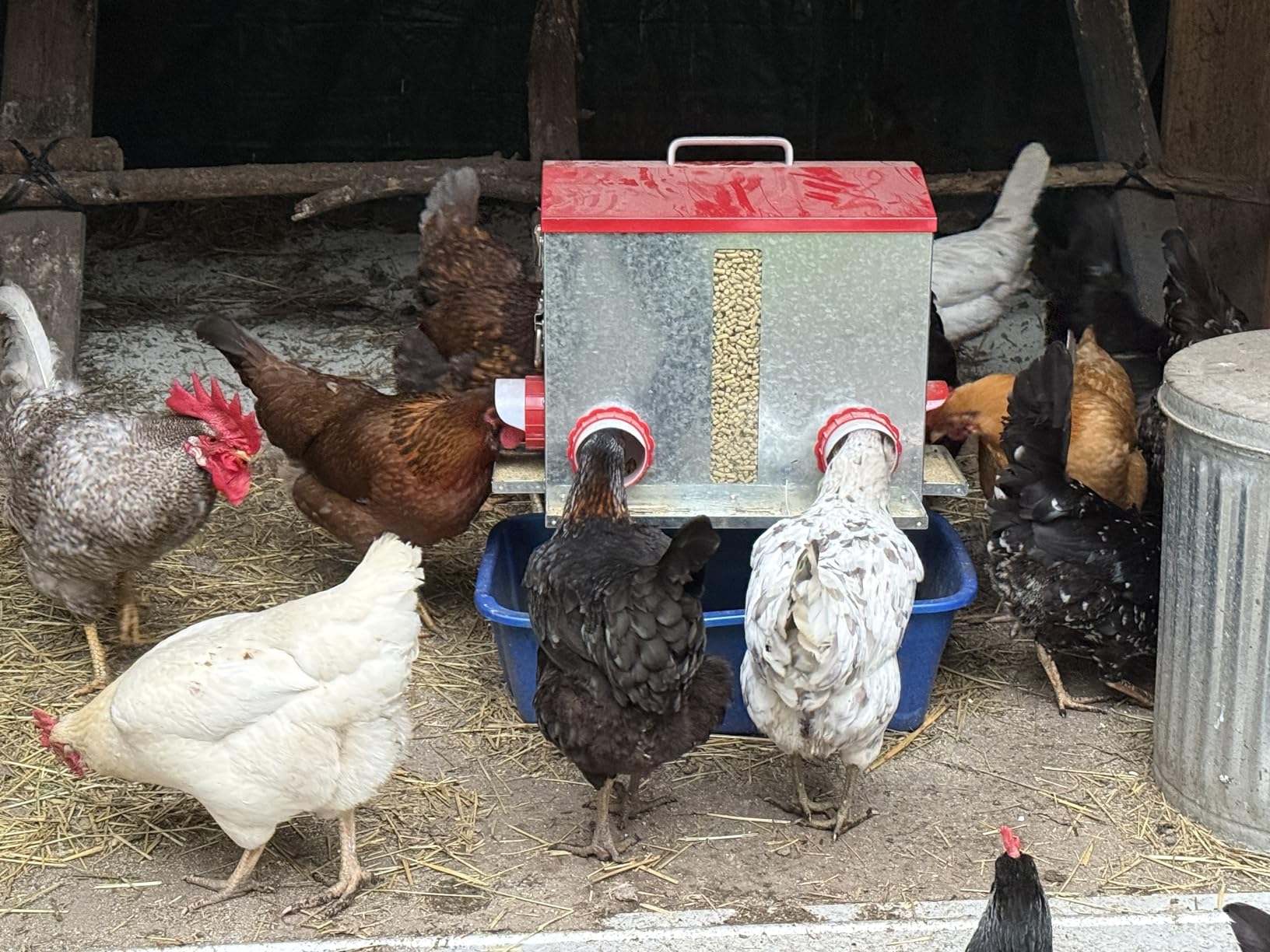
Seven feeding ports, each with an external catch tray underneath, is a thoughtful layout. The tray catches the pellets that do get flicked out, so the feed lands on a surface a hen can pick back up instead of in the dirt, which cuts the visible waste without pretending the spillage does not exist.
The lid is the part we like best. It slopes away, so rainwater runs to the ground and birds cannot perch on it, and it locks, so you can secure the feed overnight in a yard with rats. A viewing window means you check the level without unlocking anything.
Tool-free leg adjustment from 5.9 to 10.6 inches covers everything from a young pullet to a full-size rooster, and a rotating rather than sliding leg mechanism is less likely to develop wobble over a season of outdoor use.
Who this suits best?
This suits flocks of 20 birds or more where refill frequency matters, and it suits yards where you want to close the feed up at night without unplugging anything. The sealed ports keep rain out of the feed channel, which is the failure that ruins hoppers in wet climates.
It is a strong choice for a permanent run installation, because the metal body and the locking lid are the two things that keep working when weather and pests are both present. If you free-range and leave the flock out for hours, the catch trays reduce what you lose.
Who should skip it?
Skip it if your run is small, because a 20-inch box with seven ports in front of it takes real space and can block the birds’ view along the run wall. A single big feeder also encourages crowding in a way two small ones do not.
Skip it if a heavy lift is a problem. It is 14.77 lb empty and considerably more when full, so refilling at ground level with a full bag is awkward unless you fill it where it stands.
8. GADFISH 55 lb Feeder – Best for Eight-Port Feeding and Tool-Free Setup
GADFISH 55 lbs Large Capacity Automatic Chicken Feeder – 8 Feeding Ports, No Waste Chicken Feeder, Height-Adjustable Legs & Secure Locking Lid for Chickens, Ducks & Poultry
55 lb capacity
8 feeding ports
Tool-free rotating legs
Conical rain-shedding lid
Pros
- 55 lb capacity feeds eight birds at once
- Support legs rotate for tool-free height adjustment
- Conical lid sheds rain and deters perching
- Extended ports cut spillage and deter other animals
- Galvanized sheet metal resists rust and chewing
Cons
- Heavy at roughly 16 lb so refilling takes care
- Seams are not sealed so driving rain can reach the feed
- Wide footprint takes up a lot of run space
Eight ports is the highest port count in this roundup, matched only by the TGEYD 50 lb, and for a flock of 25 birds that number does more work than capacity does. A hen that cannot reach a port simply goes to another one, so the biggest birds stop monopolising the whole feeder and the subordinate birds actually get fed.
The conical lid is a simple, effective shape. A point sheds rain straight off and gives a bird no flat surface to perch on, which matters because a hen that perches on a flat lid will sit on it, poop on it, and eventually work out how to lean over the edge into the feed.
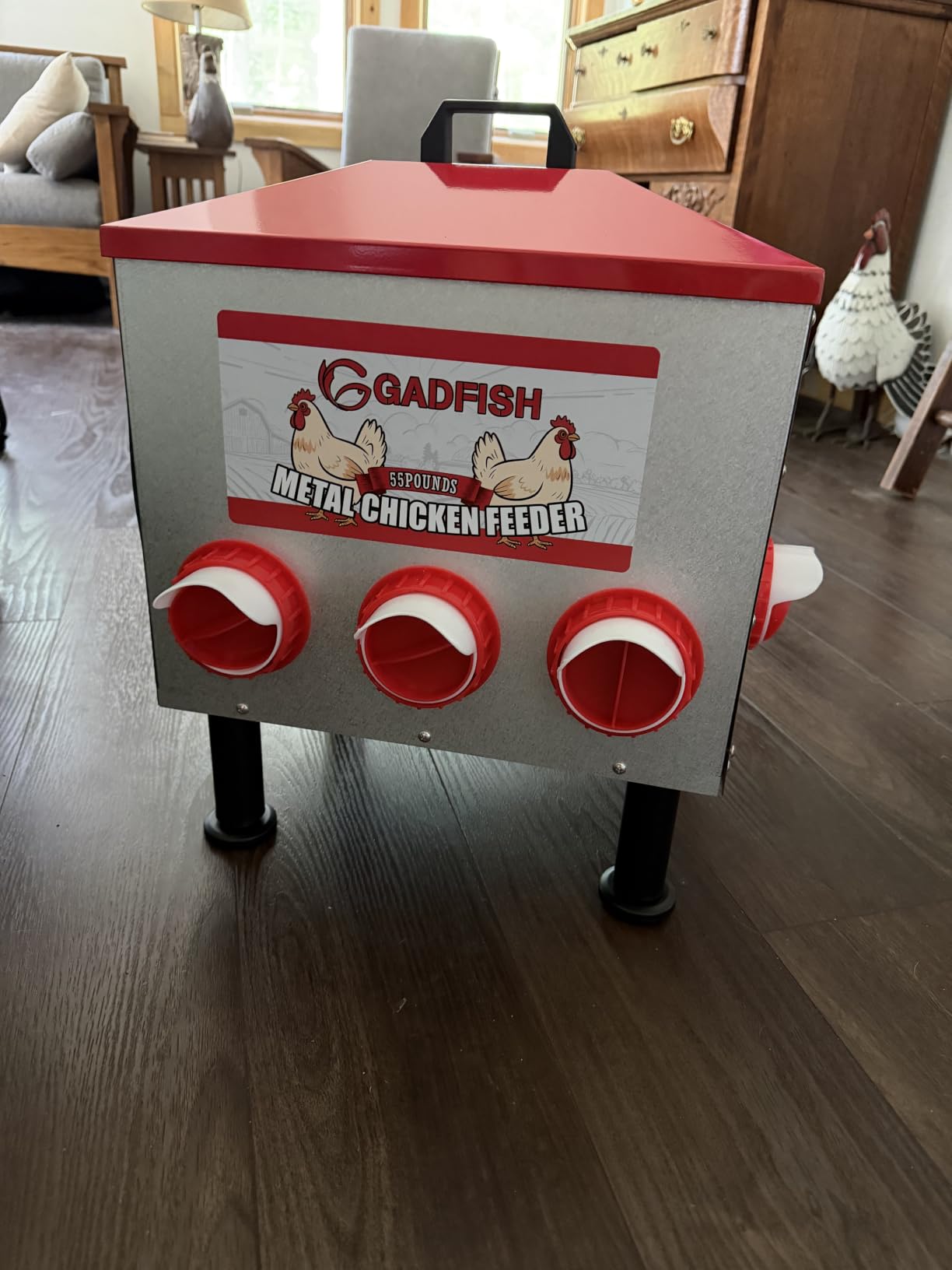
Tool-free leg adjustment is a real time saver over the season. The legs rotate to a new setting rather than sliding through a bracket, and a wider base contact makes the feeder steadier when a dozen birds lean on the ports at once.
Owners report noticeably less spilled feed, largely because the extended ports keep the feed inside the port tube and the mouth of the port is set back far enough that a bird cannot scoop and fling in one motion. Aluminum-coated galvanized sheet metal holds up against weather and animal chewing.
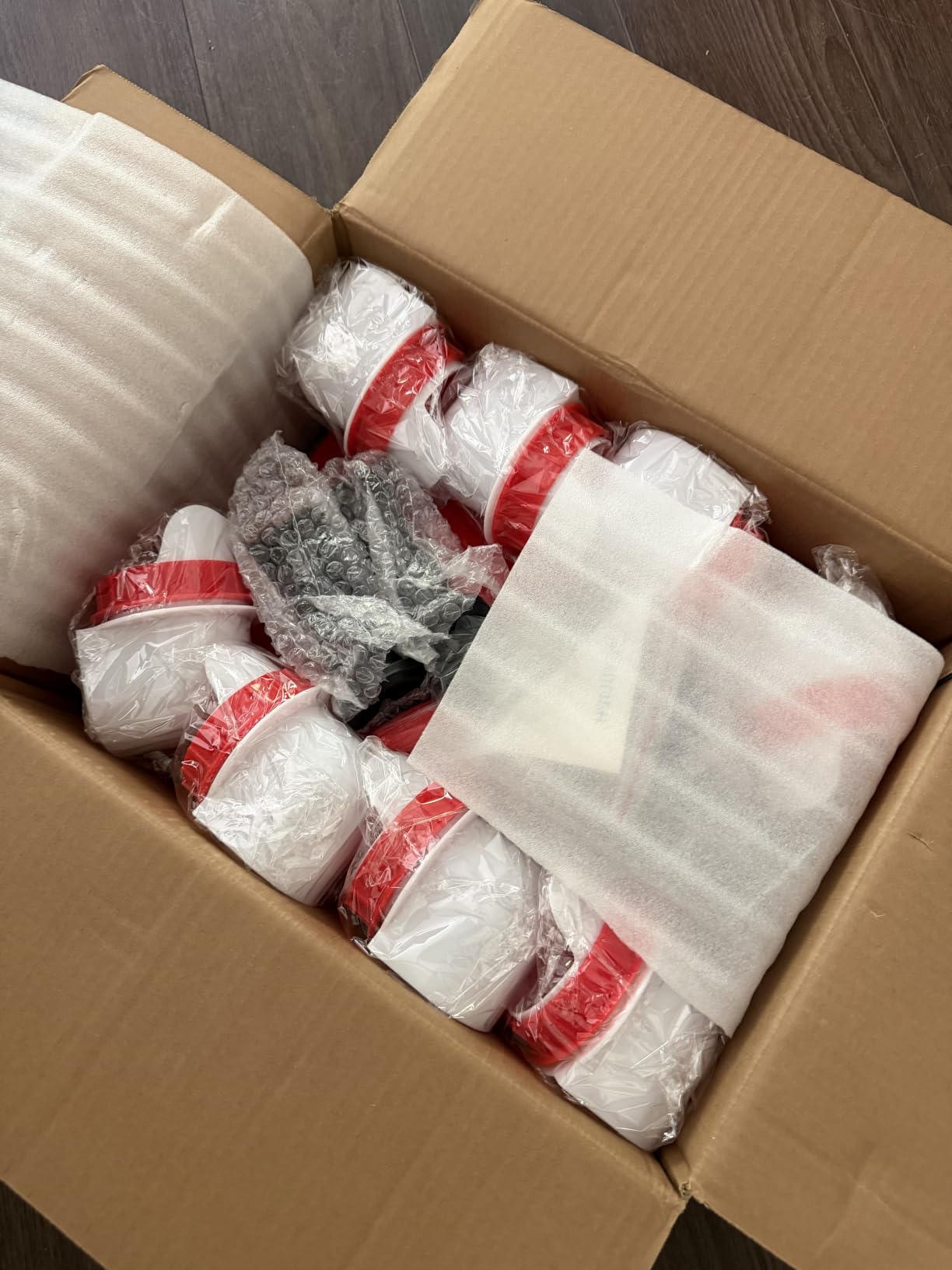
Who this suits best?
This suits large flocks where crowding and spillage are the main complaints, and it suits anyone who wants to raise the feeder as their birds grow without tools. A 25-bird flock on a 55 lb hopper is the use case it was designed around.
It also suits mixed flocks, since eight ports mean a bantam and a rooster are rarely stuck waiting for the same opening. The sheet metal is a good choice if you have birds that like to chew on plastic feeders.
Who should skip it?
Skip it in a very wet climate if you cannot cover it. Owners are candid that the seams are not sealed, so driving rain can reach the feed, and a hopper in a soaking climate needs a roof or a covered run position.
Skip it if you are small or elderly and lifting is awkward, because at roughly 16 lb empty it needs two hands and a full one needs two people. The wide footprint also eats into a small run.
9. TGEYD 50 lb Steel Feeder – Best Value for a Large Flock
TGEYD 50LB Large Automatic Chicken Feeder – 8 Feeding Ports, No-Waste Poultry Feeder, with Adjustable Legs & Locking Lid
50 lb galvanized steel
8 feeding ports
Adjustable legs
Locking lid
Pros
- Metal construction shrugs off chewing by rats and pests
- Locking lid secures and dries the feed
- Large capacity means far fewer trips to the coop
- Eight ports let a flock eat at once without crowding
- Unbent parts and straightforward assembly
Cons
- Not actually spill proof as claimed
- Seams and screw holes are not sealed against water
- Leg height needs adjusting for different bird sizes
- Real fill volume runs under the stated 50 lb
This is the metal-body answer for a large flock on a modest budget, and the galvanised steel shell is the part that earns it a place here. Owners report rats, raccoons, opossums and skunks being kept out by the metal body, which is the failure that eventually takes out plastic hoppers in a yard with wildlife.
Eight deep feeding ports on an adjustable stand covers a big flock at once. The stand height is the feature to spend time on, because setting the ports level with the birds’ chest rather than their feet is what stops a feeder from turning into a bath and a perching spot.
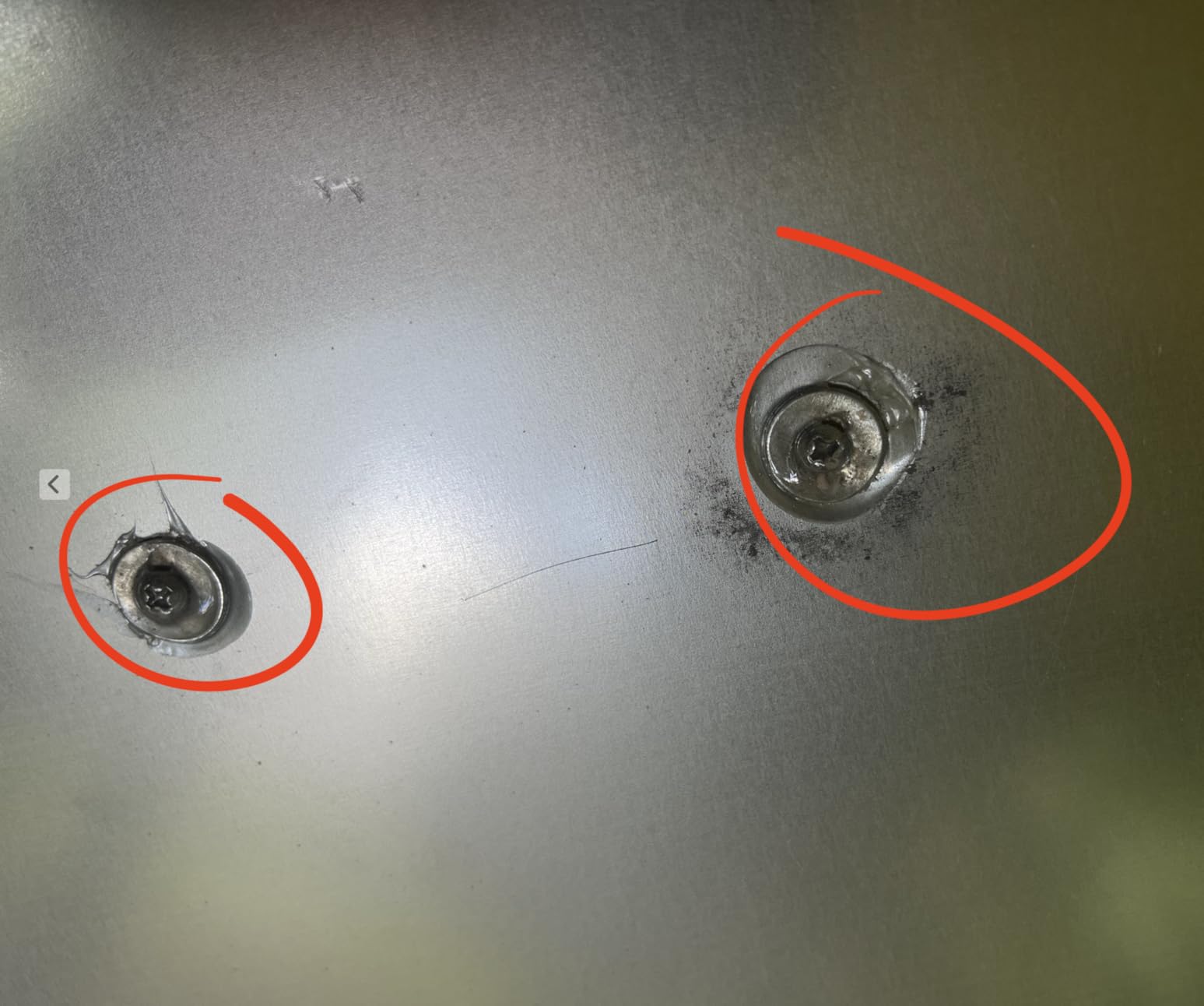
We want to be straight about two claims here. Feedback is genuinely split on the no-waste promise, and a notable group of owners reports that birds still rake feed onto the ground. If waste reduction is your top priority, choose an enclosed-port feeder instead of an open-port one.
Real fill volume also runs a scoop or two under the nominal 50 lb depending on pellet size, which is normal for any hopper and worth knowing before you plan a two-week holiday around it.
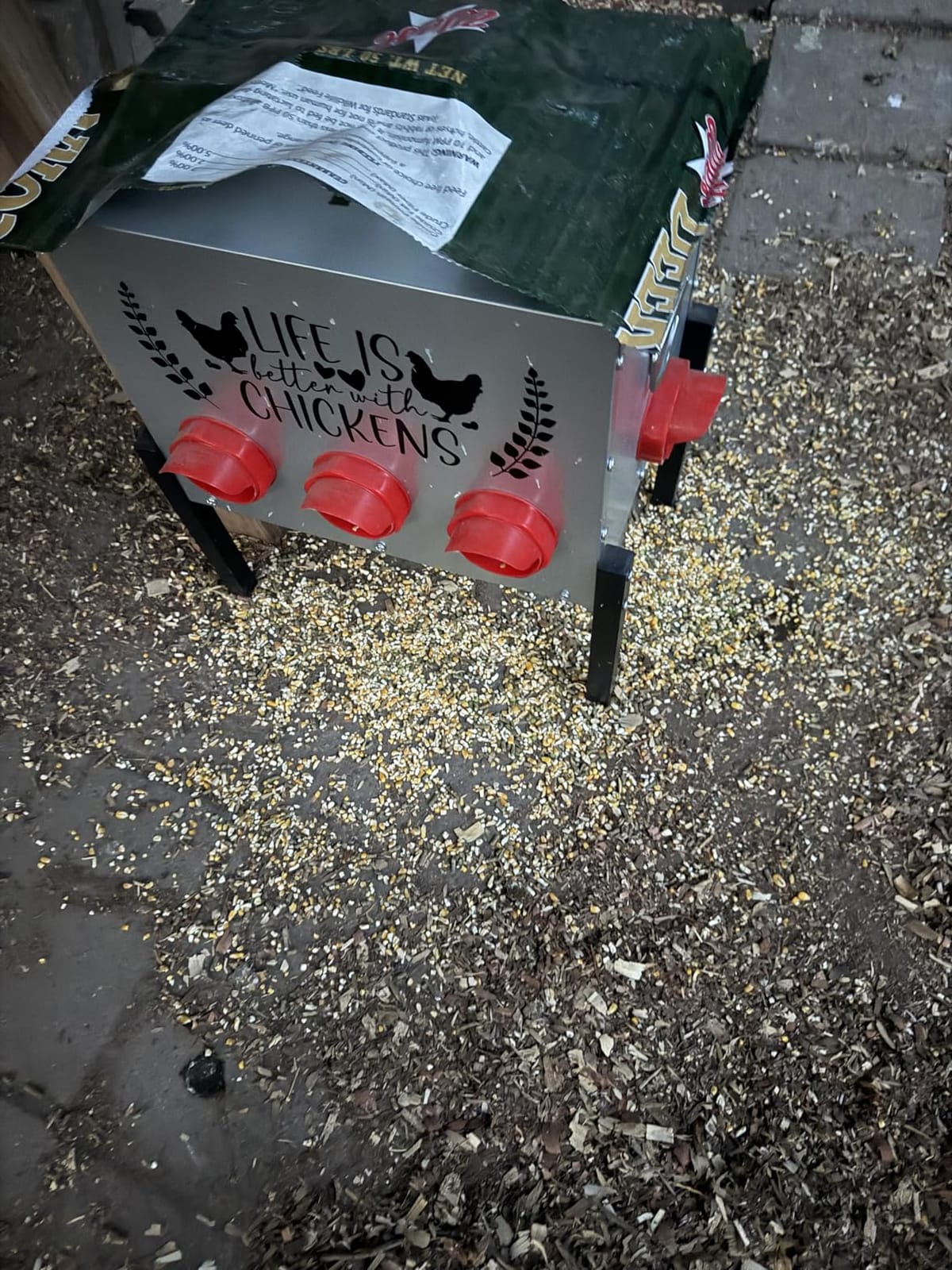
Who this suits best?
This suits a flock of 20 or more birds that needs steel protection without the cost of a treadle feeder. Owners in wildlife-heavy areas report the metal body stopping raccoons, opossums and skunks from raiding feed, which is a different job from stopping rats.
It is also a good fit if you will keep the feeder permanently and want a body that survives sun and rain without going brittle. The adjustable legs let you keep using it as birds grow or change flock composition.
Who should skip it?
Skip it if rain reaches the run, because the seams and screw holes are not sealed and water can seep into the feed. In a wet climate this needs a roof, and a roofed run is the fix.
Skip it if you are sensitive about the no-waste claim, since the port design is open rather than enclosed. If you need the visible waste to be near zero, look at the Omlet instead.
10. TGEYD 30 lb Steel Feeder – Best for Adjustable Height and Growing Flocks
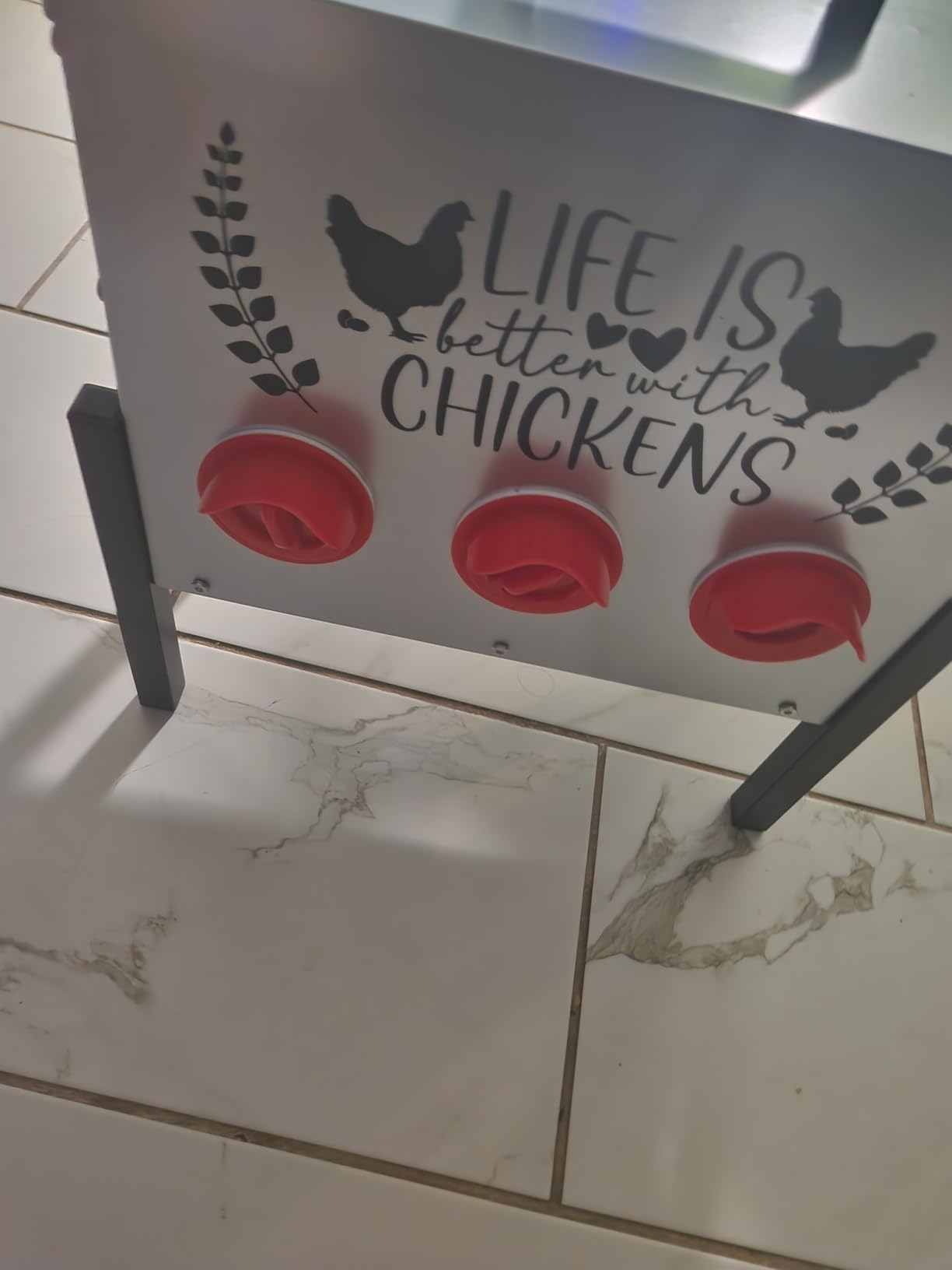
Tgeyd 30 lb Chicken Feeder with 6 No-Waste Ports – Heavy-Duty Outdoor Metal Feeder with Adjustable Height, Locking Lid & Riveted Handles – Rustproof Feed Box for Poultry & Backyard Chickens
30 lb galvanized metal
6 no-waste ports
Adjustable height stand
Locking hinged lid
Pros
- 30 lb capacity cuts refill frequency for a backyard flock
- Galvanized metal resists rust and handles year-round use
- Adjustable height stand suits chicks
- hens and larger birds
- Hinged locking lid keeps feed dry
- Riveted handles make lifting easier when full
Cons
- Ports are not fully spill proof
- Assembly and leg adjustment take patience
- Less capacity than the 50 lb model
Thirty pounds is a workable size for a serious backyard flock of 10 to 14 birds, and this is the feeder we would hand to someone in that range. It is metal, and the lid and base open from the top so you can fill it where it stands.
The adjustable height stand is the detail that separates it from a fixed-leg hopper. The manufacturer calls it suitable for chicks, hens and larger birds, and in practice that means you can start a young flock on it and raise the same feeder twice as they grow, rather than buying a second unit.
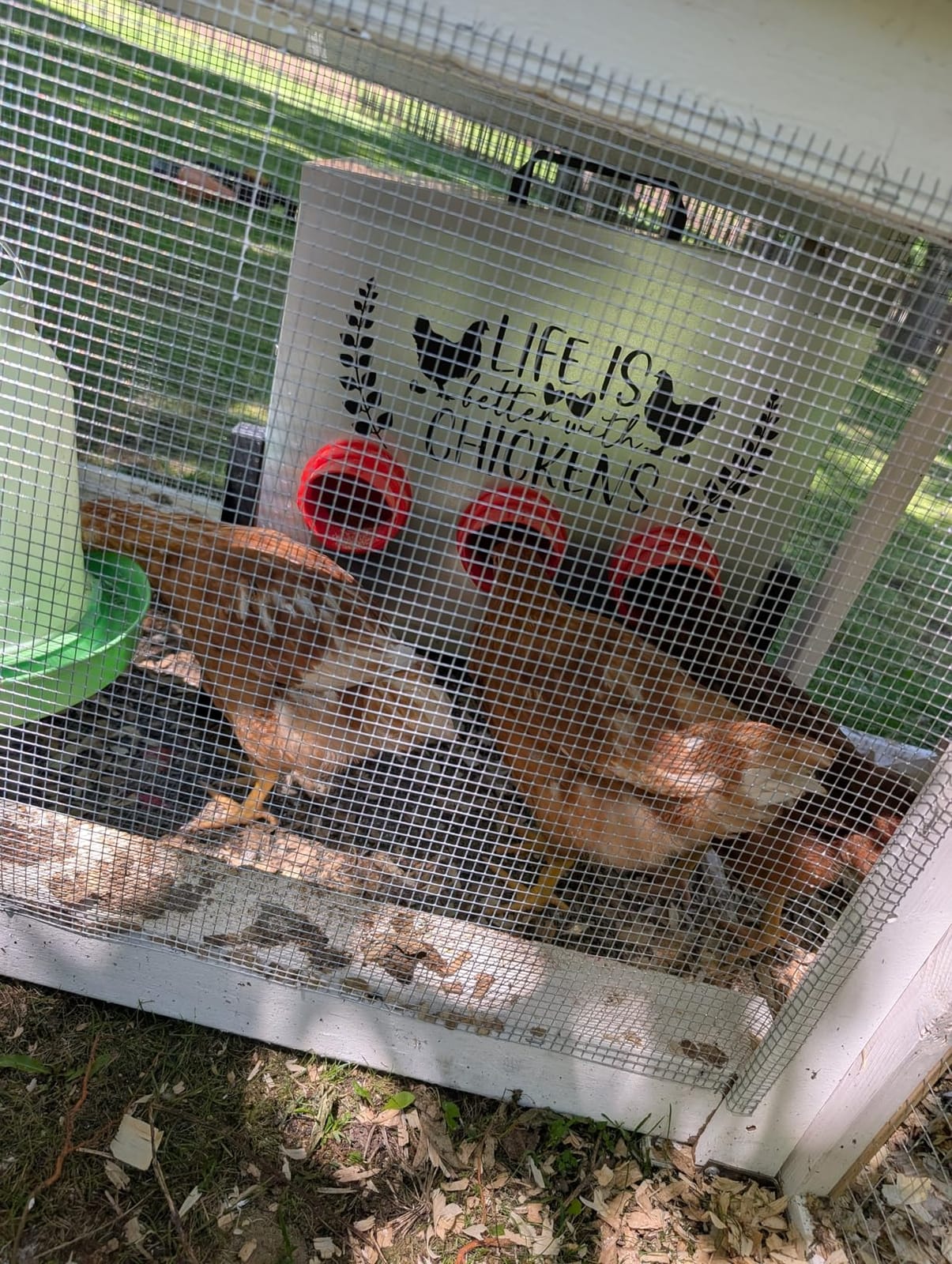
Six ports is enough for a mid-size flock to eat together, and they limit the worst of the scattering that birds do when the food is in one open place. They do not eliminate it, so a good layer of bedding under the ports still earns its keep in the coop.
The hinged locking lid closes down onto the hopper rather than sliding shut, which keeps the feed darker and drier, and the riveted handles let you tip and carry it with two hands instead of dragging it across the ground and damaging the base.
Who this suits best?
This suits a flock of 10 to 16 birds on a yard where plastic feeders have been chewed, because galvanized metal ends that problem permanently. It is also the sensible step up from a small trough feeder when the daily refill starts to feel like a chore.
It suits new keepers, because the height adjustment means one feeder works through a flock’s whole first year. The hinged lid is easy to open one-handed, which matters when you are carrying a full bucket in the other.
Who should skip it?
Skip it if your birds still rake feed and that bothers you, because these are open rather than enclosed ports. Owners are consistent on that point even when they like everything else about the feeder.
Skip it if you run 20 birds or more, because 30 lb will not carry a flock that size between refills. Take the 50 lb or 55 lb model instead and accept the extra weight.
11. Omlet 12 lb No-Waste Feeder – Best for Near-Zero Spillage
Omlet No Waste Chicken Feeder for Coop | 12lb Anti-Spill Poultry Feeder with 5 Feeding Ports | Feeds 6 Hens for 7 Days | Hanging or Free Standing | Weatherproof
12 lb capacity
5 enclosed feeding ports
Hangs or stands
Cleans in under 60 seconds
Pros
- Enclosed ports cut feed billing and spillage to almost nothing
- 12 lb feeds about 6 hens for 7 days
- One hen per port reduces feeding aggression
- Separates into three pieces and cleans in under a minute
- Carrying handle and removable legs for hanging
Cons
- Port openings are sized for full-size hens
- Crumble can fail to flow through the internal funnel
- No snap-on port caps for overnight rodent protection
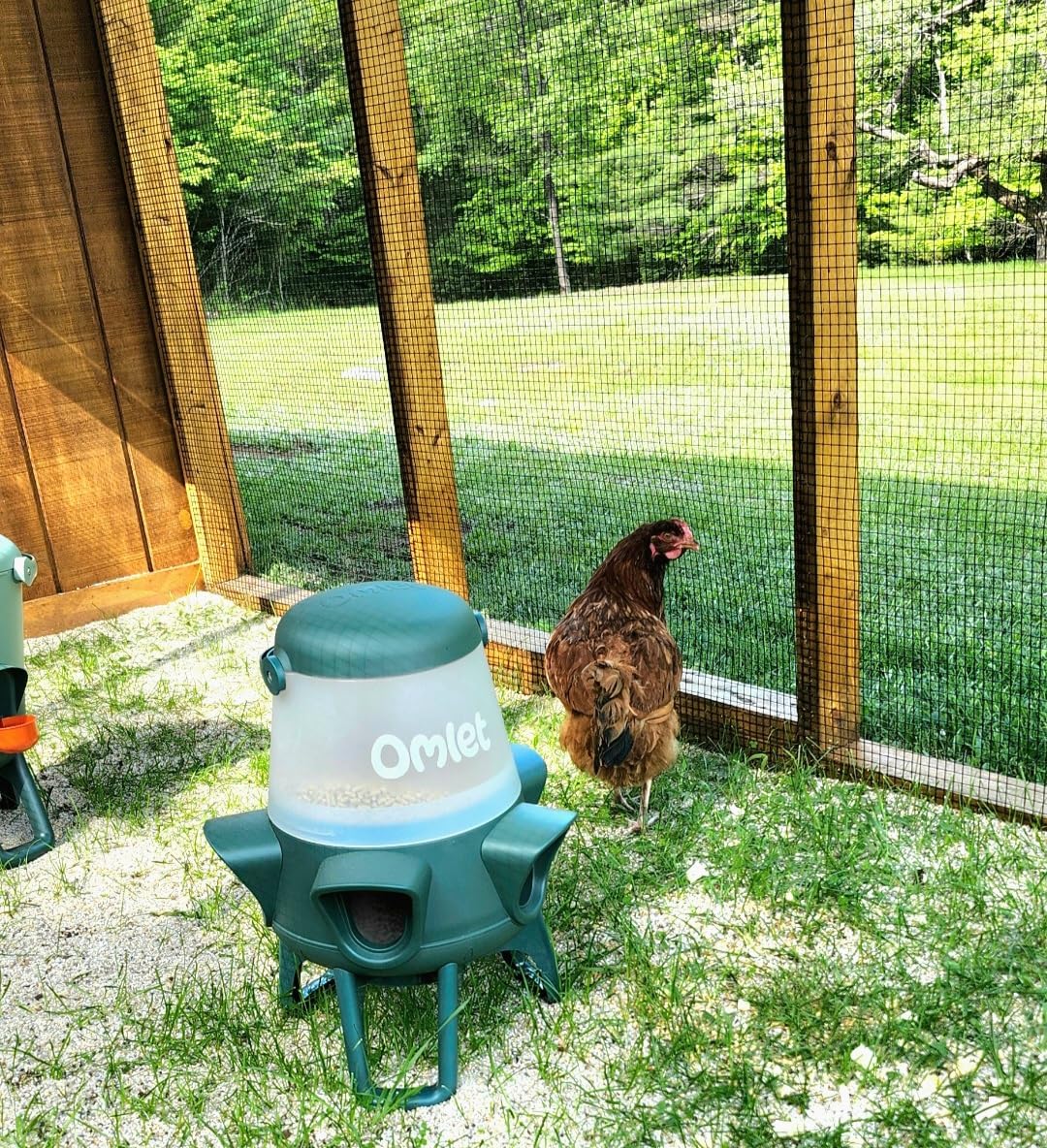
The Omlet reduces visible waste more than the others here, and it gets there with enclosed ports rather than a grate. A hen reaches into a tube and pulls feed out, and she cannot flick it sideways, so the run floor stays clean.
One hen per port is the quiet benefit. Five ports for a flock of five or six means the birds spread out instead of queueing, and reviewers specifically report less aggressive feeding, which matters if you keep roosters or a hen that gets picked on.
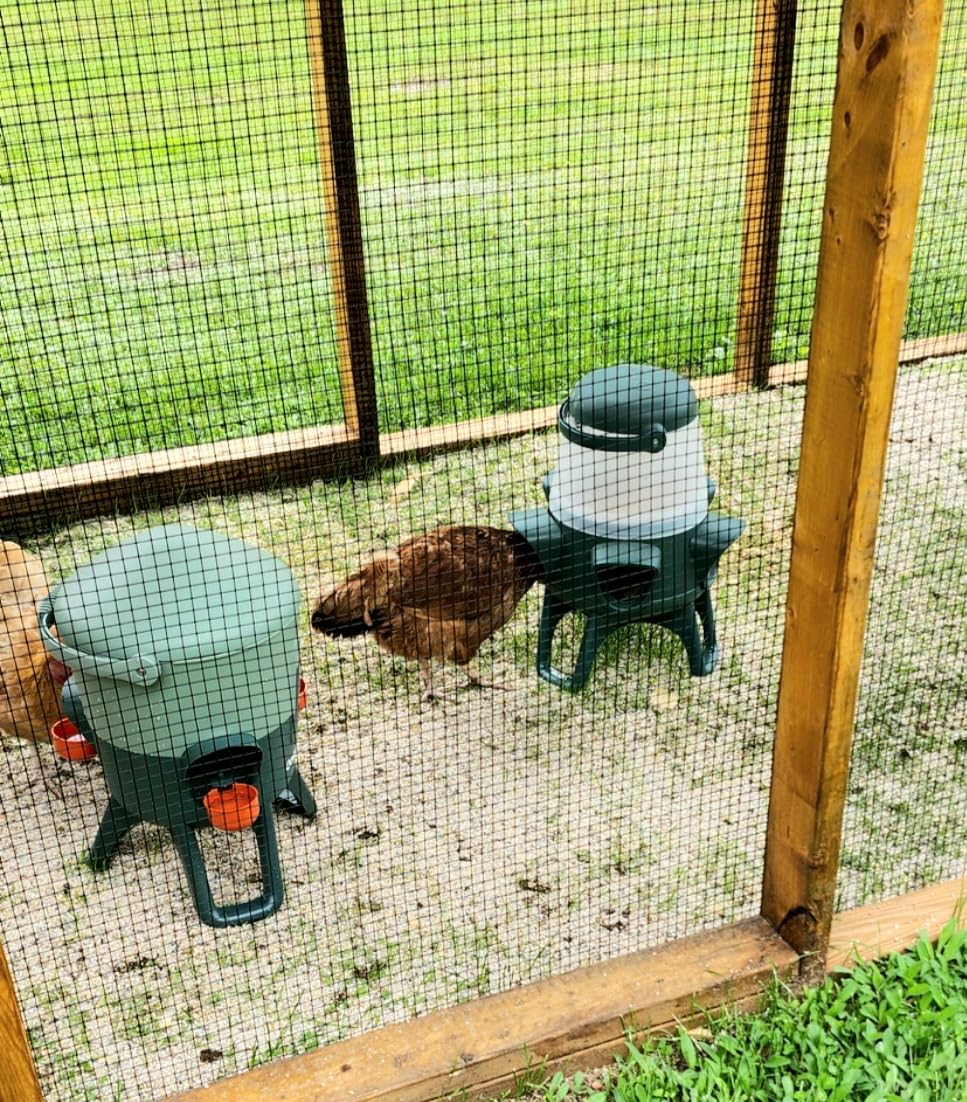
Cleaning is the easiest here by a wide margin. It comes apart into three pieces, empties, rinses and goes back together in under a minute, so the weekly scrub that stops mold is realistic on a bad week. BPA-free and PFAS-free food-safe plastic also ages better in sun than cheaper resins.
It hangs or stands. The legs dock off and it hangs from the run, which puts the ports above the muddy ground and keeps bedding and droppings out of the feed entirely, and the port height adjusts so the same unit works as birds grow.
Who this suits best?
This suits anyone who is more bothered by wasted feed than by cost, since enclosed ports cut visible spillage more than the grilles and open troughs on the other feeders here. It is also a strong pick for a humid climate where mold is your main worry, because nothing here is easier to scrub.
It suits owners of full-size hens who want the feeder inside the run, and anyone who prefers to feed away from the coop to cut droppings in the bedding. Hanging it outside on a fence line keeps feed and birds separated.
Who should skip it?
Skip it if you keep bantams, silkies or a large rooster, because the port openings are sized for full-size hens and smaller birds cannot reach the feed inside the tube. That is a real welfare problem, not just a convenience one.
Skip it if you feed crumble and travel regularly, because crumble can fail to flow through the internal funnel and leave the ports empty while feed remains in the hopper. It also has no port caps, so overnight rodent protection is a manual job.
12. ZINZINULER Feeder and Waterer Set – Best for Feed and Water in One Purchase
Automatic Port Chicken Feeder and Cup Waterer Set
16 lb feeder and 3 gallon waterer
Hanging or wall mount
Cup and nipple drinking
Feeder holds feed dry
Pros
- Feeder holds up to 16 lb and keeps feed dry and clean
- Heavy-weight plastic that has not cracked or faded after a year
- Spare seals
- cups and a full nipple dispenser set included
- 3 gallon waterer with cup and nipple options cuts daily changes
- Bonus extras such as leg bands and a hanging lettuce bag
Cons
- Nipple drinkers leak if the back nut is missing from the instructions
- Cup bowls can jam open and pop a spring
- Filled bins are heavy and the hooks can flip on wire
This is the value pick when you are setting up a new run and need both ends of the drink-and-eat equation covered at once. You get a 16 lb automatic feeder and a 3 gallon waterer with cup and nipple options, and both hang on wire fence or mount on a wall.
Hanging both units keeps them off the ground, which keeps mud, bedding and droppings out of the feed and the water. It also means a bird cannot kick bedding into the feed, and it puts the feeder at head height where the small birds can reach without competing with the big ones for ground space.
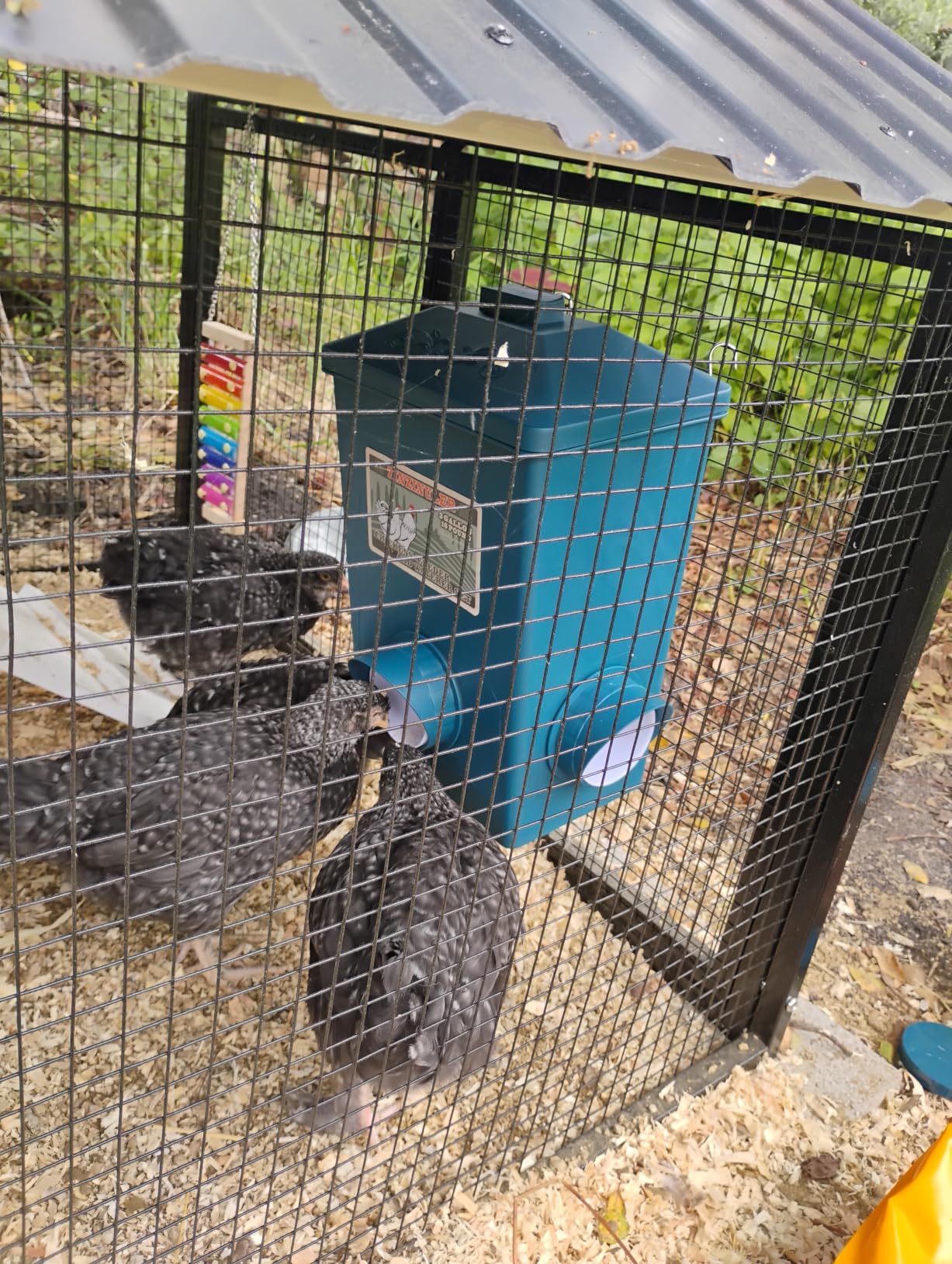
The build has held up well in owner reports, with heavy-weight plastic that has not cracked, faded or dry-rotted after a year. Included spares are a genuinely useful touch, because a failed cup seal is the kind of small failure that otherwise sends you back to the shop.
The waterer is the more polarising half. Cups suit most flocks well, and a nipple dispenser suits birds that prefer to drink from a nipple, but the fittings need a quick daily glance. Check that the back nut is seated on every nipple, because that is the one step the instructions do not spell out and it is the common cause of the leaks owners report.
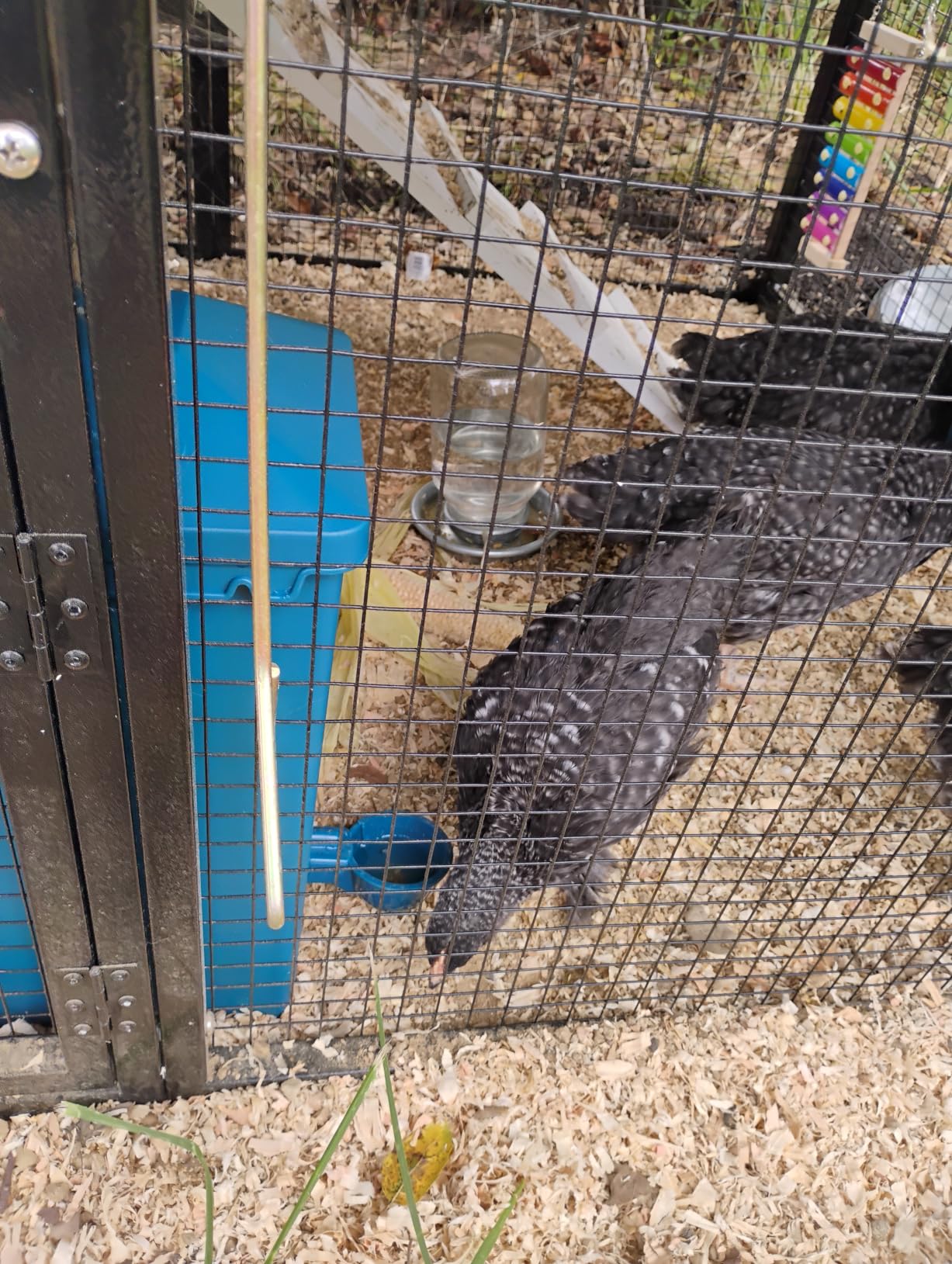
Who this suits best?
This suits a first-time keeper building a run from scratch, because one order covers feeding and watering with hardware included. It also suits a flock of 8 to 14 birds, where a 16 lb feeder and a 3 gallon waterer are close to the right size.
It is a good fit if you want the feeder hung outside the coop, since mounting on wire fencing is the intended use here. We cover waterers in more detail in our guide to the best automatic chicken waterers for coops.
Who should skip it?
Skip it if you already have a waterer you are happy with, because the feeder and waterer in this set are only middling on their own and you would be paying for a waterer you do not need.
Skip it if you want heavy duty out of the box. A 16 lb plastic feeder is a step below the galvanized models, and the supplied hooks can flip over on wire fence once you hang a full bin on them, so check the fixings before you rely on it.
How to Choose an Automatic Chicken Feeder?
Choose by mechanism first, then by capacity. Every feeder here is one of four designs, and the design decides which problem it actually solves. Get that wrong and you will spend money on a feeder that does not address the thing annoying you most.
Pick a treadle for rodents, a gravity port for spillage, a hanging feeder for simplicity
A treadle feeder is the right choice when rodents or wild birds are your problem, because the lid only opens under a hen’s weight. A gravity port feeder is the right choice when spillage and coop cleanliness are your problem, and it needs no training and no mechanism to jam. A hanging feeder is the simplest option and works for chicks, small flocks and ground feeding, with no theft protection at all. A timer-driven electric feeder is for owners who are away for days at a time or for larger flocks, and it needs mains power or a battery and a clock that actually keeps time.
Our honest view is that purely mechanical feeders are enough for almost every backyard flock. The electric argument only becomes compelling above roughly 20 birds, or when you travel for more than a weekend on a regular basis. If you want to see the same reasoning applied at scale, we covered larger flocks in our best automatic chicken feeders for large flocks guide.
Size capacity at roughly 0.5 lb of feed per bird per day
Use a rough rule of about 0.5 lb of feed per bird per day, and then double your refill interval to give yourself slack. A 20 lb feeder works out to roughly 120 hen-meals, which is about 10 days for 12 birds and about 5 days for 24 birds, and that is the same arithmetic keepers use on BackYardChickens threads when they plan a holiday.
Do not buy one feeder for the whole flock. Run two, placed so they cannot see each other, and the morning rush becomes two smaller rushes. Subordinate birds that were being blocked out of a single feeder simply eat somewhere else, and that single change does more for a mixed flock than any capacity upgrade. Our guide to chicken coops for 10 hens covers where to place feeders so they stay dry and out of the way.
Block rats and wild birds with weight, metal or sealed ports, never with a night latch
Nothing keeps rats out completely, and that is the honest answer. Night-locking a feeder fails because rats feed at the time the flock is locked in, not at night. What works is a weight-triggered treadle, a metal body, or sealed ports with plug caps pushed in each evening.
As one long-time keeper on BackYardChickens puts it, read the negative reviews first, and a product carrying more than about 5 percent one-star feedback is telling you something real about its design. Our roundup agrees with the general BackYardChickens consensus that two hidden feeders beat one, and that PVC bucket feeders are fine until the rats find the coop.
Prevent mold with a roof, a dry footing and a weekly scrub
Feed does not go moldy because of humidity, it goes moldy because of a combination of humidity and feed that has been sitting wet for days. Keep the feeder under a roof, keep it off bare damp ground, and empty and scrub it on a schedule rather than topping it up.
Choose a feeder that comes apart, because that is what stops mold. The Omlet separates into three pieces, the RentACoop trough has a lift-out grate, and the OverEZ has a wide-mouth base you can tip out. A ten-second clean every week prevents more problems than any weatherproofing claim, and if you are in Florida or the Gulf Coast, where owners on BackYardChickens describe a losing fight with mold, nightly emptying of a hanging trough is a legitimate strategy even if it means more work.
Chicks need a shallow tray, and wide ports carry a pecking-injury risk
Chicks need a shallow tray feeder, not a hopper. Several feeders here state plainly that they are not suitable for chicks, and chicks in a port feeder can drown, chill or get stuck. Raise the port height on an adjustable-leg model rather than putting chicks on a small-hen feeder.
There is one genuine safety point that almost no competitor mentions. A bird reaching deep into a wide port feeder can lose its view, and a rooster will peck an occupied port, which injures the hen inside. Enclosed port tubes like the Omlet design are safer for that reason, and side guards like those on the Grandpa’s feeder reduce the same risk.
Train pullets to a treadle in four steps
Treadles get a bad reputation mostly from birds that were never properly introduced. Four steps do it: leave any shipping or training bolts in place for the first day so the flock cannot open it, then remove the bolts, then show a confident older bird stepping on it, then keep a bowl of the same feed nearby for a few days so nobody goes hungry while they work it out.
Expect a short learning curve of a few days rather than hours, and expect the feeder to sit open for a while once the flock loses interest, which is a normal part of training. If your birds are bantams or silkies, use a treadle with a detachable step weight so they can trigger it at all.
Frequently Asked Questions
What is the best type of chicken feeder for keeping chickens in a backyard?
The best type for a backyard flock is a gravity port feeder with enclosed ports, because it cuts spillage, keeps feed dry and costs far less than a treadle. Choose a treadle feeder instead if rats or wild birds are your main problem, since only a weight-triggered lid stops a determined rodent.
Which automatic chicken feeder is the best?
The Suplklz 4-Port DIY Feeder Kit is the best all-round automatic chicken feeder, because it converts any five gallon bucket into a rainproof feeder in minutes and holds a 4.6 rating across 3112 reviews. It suits flocks of 6 to 16 birds and any keeper comfortable with a short drill job.
What is the best automatic feeder for a chicken farm?
For larger flocks, high-capacity galvanized steel hoppers with 6 to 8 feeding ports are the best automatic feeders, because they cut refill trips and survive chewing by rodents and wildlife. Allow roughly 0.5 lb of feed per bird per day when sizing capacity, and run two feeders placed out of sight of each other.
Are automatic chicken feeders worth it?
Yes, for most backyard flocks of six hens or more, because a good feeder cuts spilled feed, keeps feed dry and blocks rats and wild birds. Keepers routinely report that spoiled and stolen feed costs more over a year than the feeder itself, though a flock of four hens rarely fills a hopper.
Will rats get into an automatic chicken feeder?
They can, if the feeder is plastic with open ports, because rats chew and reach in. A weight-triggered treadle feeder, a galvanized metal body, or sealed ports with plug caps pushed in each evening are the reliable defences, and keeping feeders out from under a wall where rats can reach them helps.
What is the 90/10 rule for feeding chickens?
It is not a standard rule for feeders, so treat claims about a 90/10 feeding ratio carefully. The practical takeaway is that most of a flock should get feed at roughly the same time from the same feeder, which is why two feeders beat one and why a 3 gallon waterer covers about 12 hens for a day.
Our Verdict on the Best Automatic Chicken Feeders in 2026
The Suplklz 4-Port DIY Feeder Kit is the best automatic chicken feeder for a typical backyard coop in 2026, because it solves spillage and rain protection and converts a bucket you already own. If rodents are your problem, the Grandpa’s Feeders steel treadle is the pick, and if the ground under your feeder looks like a feed spill, the Omlet is the one that fixes it.
Whatever you choose, run two of them, place them out of sight of each other, and put them under a roof. That habit solves more flock problems than any single feeder on this list, and if weasels and rats are your real worry, read our guide to predator-proof chicken coops next.