
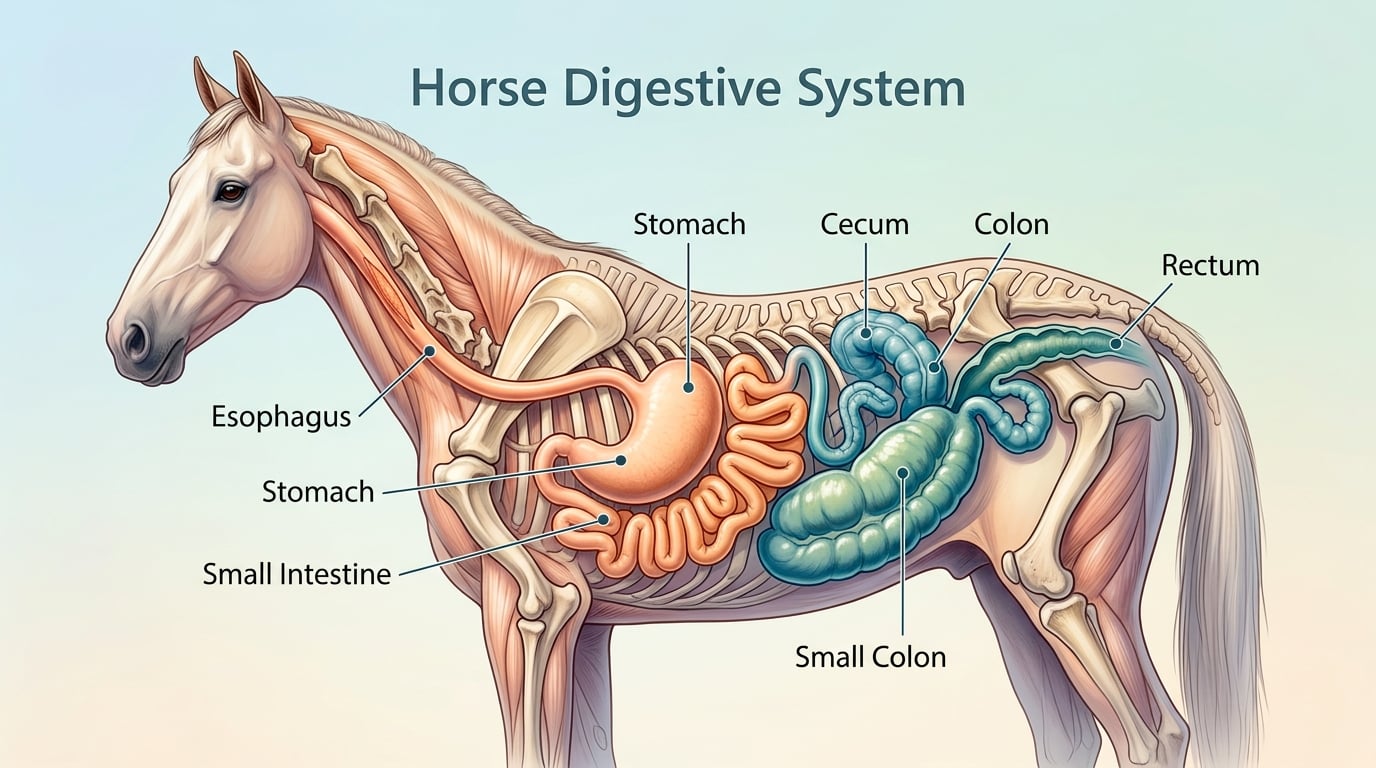
The horse digestive system is a one-way, finely tuned tract that turns grass and forage into the energy a 1,000-pound athlete needs to run, work, and stay healthy. It runs continuously, depends on billions of microbes, and leaves very little room for error.
I have spent the last decade around horses, from backyard ponies to sport horses in active training. The single biggest lesson I have learned is this: most equine health problems start in the gut. When the digestive system is healthy, the whole horse thrives. When it isn’t, colic, ulcers, and weight loss are never far behind.
This guide walks you through every part of the horse digestive system. You will learn how food moves from the lips to the rectum, why horses cannot vomit, what makes the hindgut so unique, and how to feed in a way that protects long-term gut health.
Table of Contents
What Makes the Horse Digestive System Unique?
The horse digestive system is built for continuous, small meals of fibrous plant material. Horses are non-ruminant herbivores, often called hindgut fermenters. That means they break down fiber using billions of microbes living in the cecum and colon, not in a multi-chambered stomach like a cow.
Three features set the equine digestive tract apart from most other animals:
One stomach, small capacity. A horse’s stomach holds only 2 to 4 gallons, roughly the size of a rugby ball. Cows, by comparison, hold 25 to 50 gallons across four chambers.
No vomiting reflex. The angle of the cardiac sphincter at the stomach entrance, combined with a strong esophageal muscle, makes it physically impossible for a horse to throw up. Anything that goes down stays down.
Continuous acid production. The stomach secretes hydrochloric acid around the clock, even when the horse is not eating. Without a steady supply of forage to buffer it, the stomach lining is at constant risk of damage.
These traits evolved over millions of years as horses adapted to grazing up to 18 hours a day on sparse grasslands. Modern management – two large meals, long gaps between feedings, and high-grain diets – works against those adaptations. That mismatch is the root cause of most digestive problems we see in stables today.
Hindgut Fermenter Explained
A hindgut fermenter digests fiber in the large intestine rather than the stomach. Microbes in the cecum and colon break down cellulose and hemicellulose into volatile fatty acids, which the horse absorbs for energy. This process is slower and less efficient than the cow’s rumen-based fermentation, but it allows horses to extract nutrients from grass, hay, and other coarse forage that monogastric animals like humans cannot digest at all.
The Foregut: Mouth to Small Intestine
The foregut includes the mouth, esophagus, stomach, and small intestine. It handles the first stage of digestion: mechanical breakdown by chewing, lubrication with saliva, and enzymatic breakdown of starches, proteins, and fats.
Mouth, Teeth, and Saliva
Digestion begins the moment a horse’s lips touch grass. The lips are prehensile and sensitive, helping the horse sort feed and pick up tiny seeds. The incisors clip forage, while the molars grind it sideways in a circular chewing motion.
An average horse produces 10 gallons of saliva every day. Saliva contains bicarbonate, a natural buffer that protects the stomach from its own acid. Chewing also slows the horse down enough to encourage proper grinding, which is why long, stemmy hay is actually better for the digestive system than finely chopped grain.
Esophagus and Peristalsis
The esophagus is a muscular tube about 4 to 5 feet long that runs down the neck into the stomach. Food moves through it by peristalsis, a wave-like contraction of smooth muscle. Peristalsis works in one direction only, which is one of the reasons horses cannot vomit.
A loose bolus of chewed food normally takes less than a minute to reach the stomach. The horse can actually hear it hit the stomach lining on the left side, a sound trainers sometimes use to confirm a horse is eating well.
Stomach: Small but Active
The horse stomach is divided into two main regions:
Squamous mucosa at the top, where food sits before mixing with acid. This region has no protective mucus layer.
Glandular mucosa at the bottom, where hydrochloric acid and pepsin are secreted. This region is protected by a thick mucus coating.
Because the squamous region is unprotected, it is the first place to suffer damage when stomach acid splashes upward without food to cover it. That splashing is the main cause of equine gastric ulcer syndrome, which studies show affects 60 to 90 percent of adult horses depending on discipline.
Food typically spends only 15 to 60 minutes in the stomach before moving on. Anything the horse eats passes through quickly, which is why large grain meals overwhelm the small intestine and end up fermenting in the hindgut.
Small Intestine
The small intestine is roughly 70 feet long in an average 1,000-pound horse. It is divided into three parts:
Duodenum – the first short section where bile from the liver and enzymes from the pancreas enter to start fat and protein digestion.
Jejunum – the middle section, where most nutrient absorption occurs through tiny finger-like projections called villi.
Ileum – the final section, which connects to the cecum through the ileocecal valve.
Food moves through the small intestine in about 30 to 90 minutes. Enzymes here break down starches into simple sugars, proteins into amino acids, and fats into fatty acids. Any nutrient not absorbed here cannot be absorbed later, so a healthy small intestine is essential for body condition and topline.
The Hindgut: Cecum, Colon, and Rectum
The hindgut is where the horse’s digestive system really sets itself apart. It includes the cecum, large colon, small colon, and rectum. Together they hold about 100 liters of ingesta and trillions of microbes.
Cecum: The Fermentation Vat
The cecum is a 4-foot-long muscular sac holding 7 to 8 gallons. It sits high in the right flank and acts as the horse’s primary fermentation chamber. Microbes here – bacteria, protozoa, fungi, and yeast – break down fibrous material the small intestine could not touch.
Through fermentation, microbes produce volatile fatty acids (acetate, propionate, and butyrate) that the horse absorbs as its main energy source. They also synthesize B vitamins and vitamin K. A stable cecal environment is essential for these processes, which is why sudden feed changes can trigger colic and diarrhea.
Large Colon
From the cecum, ingesta flows into the large colon, a 10- to 12-foot-long tube with several sharp bends and changes in diameter. These bends are unfortunately common sites for impactions and gas buildups, which is one anatomical reason colic is so common in horses.
The large colon absorbs water, electrolytes, and the volatile fatty acids produced in the cecum. By the time ingesta reaches the end of the large colon, most of the usable nutrients have been extracted.
Small Colon and Rectum
The small colon is roughly 10 feet long and acts mainly as a water-absorbing passage that forms fecal balls. The rectum stores manure until it is passed. A healthy horse produces 35 to 50 pounds of manure per day, and manure consistency is one of the easiest visual indicators of digestive health.
How Long Digestion Takes in a Horse
Total transit time from mouth to manure is roughly 36 to 72 hours in a healthy horse, depending on diet. Hay takes longer than grain, and high-fiber forage slows things down to allow more fermentation.
Here is a rough timeline of how food moves through the horse digestive system:
Mouth and chewing: 15 to 20 minutes per pound of hay
Esophagus: Less than 1 minute
Stomach: 15 minutes to 2 hours
Small intestine: 30 to 90 minutes
Cecum: 2 to 5 hours
Large colon: 12 to 24 hours
Small colon and rectum: 12 to 24 hours
Any major change in this timeline is a red flag. Slow transit can lead to impaction colic; fast transit can cause undigested starch to reach the hindgut and trigger acidosis.
Horse vs Cow vs Human Digestion
Comparing the horse digestive system with other species helps clarify what makes it special. The table below summarizes the key differences:
| Feature | Horse | Cow | Human |
|---|---|---|---|
| Type of herbivore | Hindgut fermenter | Ruminant (foregut fermenter) | Omnivore |
| Stomach chambers | 1 (2-4 gallons) | 4 (25-50 gallons total) | 1 (about 1 gallon) |
| Fermentation site | Cecum and colon | Rumen | None in fiber digestion |
| Can vomit? | No | Yes | Yes |
| Daily eating time | 16-18 hours grazing | 8-12 hours ruminating | 1-2 hours |
| Can digest grass fiber? | Yes (hindgut) | Yes (rumen) | No |
| Best diet | Forage-first, small frequent meals | Forage-heavy, can handle large grain meals | Varied, balanced |
Cows chew their cud and ferment fiber before it ever reaches the true stomach, which gives them a head start on tough plants. Horses do their fermenting later in the tract, which is less efficient but allows them to eat more selectively and move faster across open ground. Humans simply lack the microbes and the gut length to break down grass fiber at all.
Common Digestive Problems in Horses
Because the horse digestive system is so sensitive to management choices, several conditions show up again and again. Understanding the cause of each one is the first step toward prevention.
Colic
Colic is a general term for abdominal pain and remains the number one cause of death in horses. Almost every case has a digestive origin. Common types include:
Gas colic – painful buildup from fermentable feeds
Impaction colic – dry, stuck feed material, often in the large colon
Spasmodic colic – intestinal cramps from stress or sudden feed changes
Strangulating colic – twisted or displaced intestine, a surgical emergency
Warning signs include pawing, looking at the flank, rolling, sweating, decreased manure, and a heart rate above 60 beats per minute. Any suspected colic is a true emergency and warrants an immediate call to your veterinarian.
Gastric Ulcers
Equine gastric ulcer syndrome (EGUS) affects up to 90 percent of racehorses and roughly 60 percent of show horses. The squamous mucosa is damaged by repeated exposure to stomach acid without food to buffer it. Stress, fasting, NSAIDs, and high-grain diets all raise the risk.
Symptoms range from subtle (poor appetite, dull coat, mild weight loss) to obvious (girthiness, teeth grinding, poor performance). Treatment involves omeprazole, but prevention through feeding management is far more effective than any drug.
Hindgut Acidosis
When large grain meals reach the cecum, the microbes there ferment starch into lactic acid. This drops the hindgut pH, kills fiber-digesting bacteria, and releases endotoxins. Hindgut acidosis is a leading contributor to laminitis, colic, and poor nutrient absorption.
The fix is simple in theory: keep starch below 2 grams per kilogram of body weight per meal and make sure at least 70 percent of the diet comes from forage.
Other Issues to Watch For
Parasite damage: Strongyles and other worms can inflame the gut lining. Routine deworming based on fecal egg counts helps protect digestive health.
Sand accumulation: Horses grazing on sandy soil can ingest sand that builds up in the colon. Psyllium supplementation and feeding off the ground can help.
Dental problems: Sharp points or missing teeth reduce chewing efficiency and force the stomach to handle poorly ground food.
Feeding Best Practices for Gut Health
The single most powerful thing you can do for your horse’s digestive system is feed it the way the anatomy expects to be fed. These five principles are non-negotiable in our barn.
1. Prioritize Forage
The horse digestive system evolved on a forage-only diet. Aim for at least 1.5 to 2 percent of body weight in hay or pasture per day. For a 1,000-pound horse, that is 15 to 20 pounds of dry matter.
Forage keeps the cecum full, buffers stomach acid, and provides the fiber microbes need to thrive. Without enough forage, even the best grain mix cannot keep the hindgut healthy.
2. Feed Small, Frequent Meals
Because the stomach is so small, large grain meals overflow into the small intestine before starch can be properly digested. Split grain into multiple small meals – never more than 5 pounds per meal for an average horse.
This is the core idea behind trickle feeding: mimicking the horse’s natural pattern of nearly continuous intake. Slow-feed hay nets, automatic feeders, and multiple feedings throughout the day all help.
3. Make Feed Changes Slowly
Cecal microbes take 14 to 21 days to adjust to a new feed. Sudden changes in hay, grain, or pasture can throw the population out of balance and trigger colic or laminitis.
When switching anything – even a new bag of the same grain from a different lot – blend old and new feed over 7 to 10 days. Gradually increase the new feed while decreasing the old.
4. Provide Constant Access to Water
Water is essential for every part of digestion. A horse drinks 5 to 15 gallons per day depending on work, weather, and diet. Dehydration concentrates gut contents and dramatically raises the risk of impaction colic.
Keep water sources clean, unfrozen in winter, and slightly warmed in freezing weather. Some horses drink more from large troughs than from buckets.
5. Support with Prebiotics and Probiotics
A targeted yeast or bacterial supplement can help maintain microbial balance during stress, travel, or antibiotic use. Look for products with documented strains such as Saccharomyces cerevisiae or Lactobacillus species. Quality matters more than quantity here.
Seasonal Considerations
Horses on spring pasture are at higher risk of gas colic and laminitis because the sugar content of fresh grass rises sharply. Introduce pasture gradually over 2 to 3 weeks, starting with 15-minute grazing sessions and increasing daily.
In winter, dry hay and cold water both slow gut motility. Adding warm water, increasing forage, and reducing grain concentrates all help the digestive system stay on track when temperatures drop.
Frequently Asked Questions
Why do horses not have four stomachs like cows?
Horses are non-ruminant herbivores, so they evolved a single-chambered stomach paired with a large hindgut for fermentation. Cows are ruminants and ferment fiber in a four-chambered stomach before it reaches the true glandular stomach. Horses extract energy from fiber later in the digestive tract, in the cecum and colon, using billions of microbes.
What is unique about a horse’s digestive system?
The horse digestive system is unique because it combines a small, single stomach with a large hindgut where microbial fermentation breaks down fibrous plant material. Horses also cannot vomit because of the angle of the cardiac sphincter, and they produce stomach acid continuously even when they are not eating.
What are the most common digestive problems in horses?
The most common digestive problems in horses are colic (gas, impaction, spasmodic, and strangulating types), gastric ulcers, hindgut acidosis, sand accumulation, and parasite damage. Colic alone is the leading cause of death in horses and is always considered an emergency.
How long does it take for food to pass through a horse?
Total digestion time in a horse is roughly 36 to 72 hours from mouth to manure. Food spends only 15 minutes to 2 hours in the stomach, 30 to 90 minutes in the small intestine, and the majority of its time fermenting in the cecum and large colon.
What is the best food for a horse’s digestive system?
The best food for a horse’s digestive system is high-quality forage, including grass pasture and hay, offered free-choice or at a minimum of 1.5 percent of body weight per day. Concentrates should be limited to small, frequent meals, and any feed changes should be made gradually over 7 to 10 days.
How can I help a horse with digestive issues?
Help a horse with digestive issues by offering free-choice forage, splitting grain into multiple small meals, ensuring constant access to clean water, making all feed changes gradually, and consulting your veterinarian for diagnosis and treatment. Reducing stress, supporting the microbiome with targeted supplements, and addressing dental problems are also essential.
Why are horses so prone to colic?
Horses are prone to colic because of their long, mobile intestine with several sharp bends and narrow points, the inability to vomit, continuous stomach acid production, and sensitivity to sudden feed changes. Management mistakes such as large grain meals, limited forage, dehydration, and stress all raise the risk.
Final Thoughts
The horse digestive system is a remarkable piece of biology, finely tuned over millions of years to turn sparse grassland into steady energy. When we respect that design – plenty of forage, small frequent meals, slow feed changes, and constant water – horses thrive. When we push against it with high-grain diets and long fasting windows, the system breaks down.
If you take one thing from this guide, let it be this: protect the hindgut. The microbes in the cecum and colon are doing more work than any supplement or feed additive can replace. Feed the horse in front of you, not the bag on the shelf, and the rest of the puzzle tends to fall into place.
Have a horse with chronic digestive challenges, or a question I did not cover? Drop a comment below or reach out through our contact page. Our team reviews every message and we will do our best to help.