
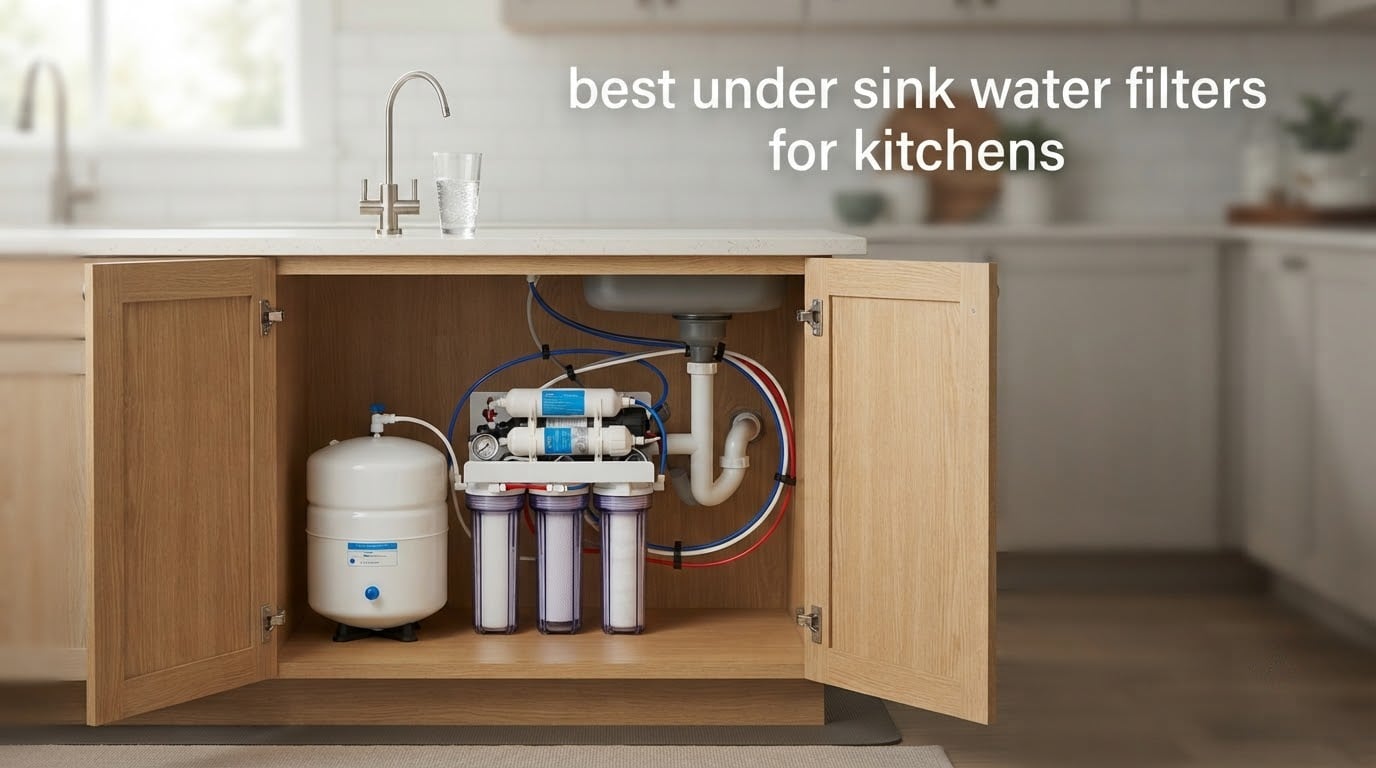
Last updated: October 2026. We may earn a commission from qualifying purchases on this page.
The best under sink water filter for most kitchens is the iSpring RCC7AK-BN, a six-stage reverse osmosis system rated at 75 gallons per day and certified to NSF/ANSI 58 for the whole system. It strips dissolved solids, fluoride, lead, chlorine and PFAS while a built-in alkaline stage puts some minerals back, and it needs no electricity to run.
That is the answer if your water is city water and your cabinet has room. If you rent, if drilling your sink deck is off the table, or if you only want chlorine taste and odor gone, a different filter is the better buy, and we cover eight systems so you can find your match.
Here is how we picked. We compared the eight systems below on certified contaminant reduction, the certification codes attached to them, filter life and replacement cost, cabinet footprint, installation path and flow rate. We did not install these units in our own kitchens, so treat this as research and review analysis rather than a lab report.
One honest warning before the picks. The sticker price of an under sink filter is the smallest part of what it costs you, and a six-month RO cartridge set can add up faster than the system did. We cover that math in the buying guide rather than burying it.
If your sink is a farmhouse or apron style, the drilling rules below change completely, and we have a separate guide on farmhouse sink water filters worth reading first. If you are on a private well, start with our whole house well water filter guide, because under sink units treat the symptom and not the source.
Table of Contents
Top 3 Under Sink Water Filter (October 2026)

iSpring RCC7AK-BN 6-Stage RO
- 75 GPD output
- NSF/ANSI 58 certified
- Alkaline remineralization
- No power needed
Waterdrop 10UA Inline Filter
- No drilling
- 0.75 gpm tested flow
- 12 month cartridge
- Keeps minerals

APEC ROES-50 5-Stage RO
- 50 GPD output
- NSF/ANSI 58 and 372
- Color coded install kit
- Filter-Max-ES50 set
All 8 Under Sink Water Filters Compared in 2026
| Product | Specifications | Action |
|---|---|---|
| iSpring RCC7AK-BN 6-Stage RO |
|
Check Latest Price |
| Waterdrop 10UA Inline Ultrafilter |
|
Check Latest Price |
| APEC ROES-50 5-Stage RO |
|
Check Latest Price |
 iSpring CU-A4 4-Stage Ultrafilter iSpring CU-A4 4-Stage Ultrafilter |
|
Check Latest Price |
 CuZn UC-200 Inline Filter CuZn UC-200 Inline Filter |
|
Check Latest Price |
 Frizzlife SK99 8-Layer Carbon Frizzlife SK99 8-Layer Carbon |
|
Check Latest Price |
 ICEPURE WFS5300A Carbon Block ICEPURE WFS5300A Carbon Block |
|
Check Latest Price |
 Aquasana Claryum AQ-6300M-BN Aquasana Claryum AQ-6300M-BN |
|
Check Latest Price |
1. iSpring RCC7AK-BN Review: Best Overall Under Sink Filter for Kitchens
iSpring RCC7AK-BN NSF Certified, 75 GPD, Alkaline 6-Stage Reverse Osmosis System, pH+ Remineralization RO Water Filter System Under Sink Patented Top-Mounted Faucet Design for Easy Installation
Type: 6-stage RO
Output: 75 GPD
Certified: NSF/ANSI 58
Filter life: 6 months
Pros
- Certified to NSF/ANSI 58 as a complete system
- Rated 75 GPD which suits a family kitchen
- Top-mounted faucet installs entirely from above the counter
- Transparent first housing shows sediment loading
- US-based technical support
Cons
- RO rejects water at roughly a 2:1 to 3:1 brine ratio
- Needs about 45-70 psi line pressure
- Alkaline post filter needs roughly 30 minutes of flushing
- Large cabinet footprint at 15.5 by 16 by 18 inches
This is the system we point most people toward, and the reason is certification rather than marketing copy. The manufacturer publishes contaminant reduction figures for the entire assembly, not just one cartridge, which is the distinction that trips up most buyers comparing listings.
The numbers are specific. Total dissolved solids drop by 93-98 percent, PFAS by 96-99 percent, chlorine by 95-99 percent, lead by more than 98.9 percent, and the system handles feed water up to 750 ppm.
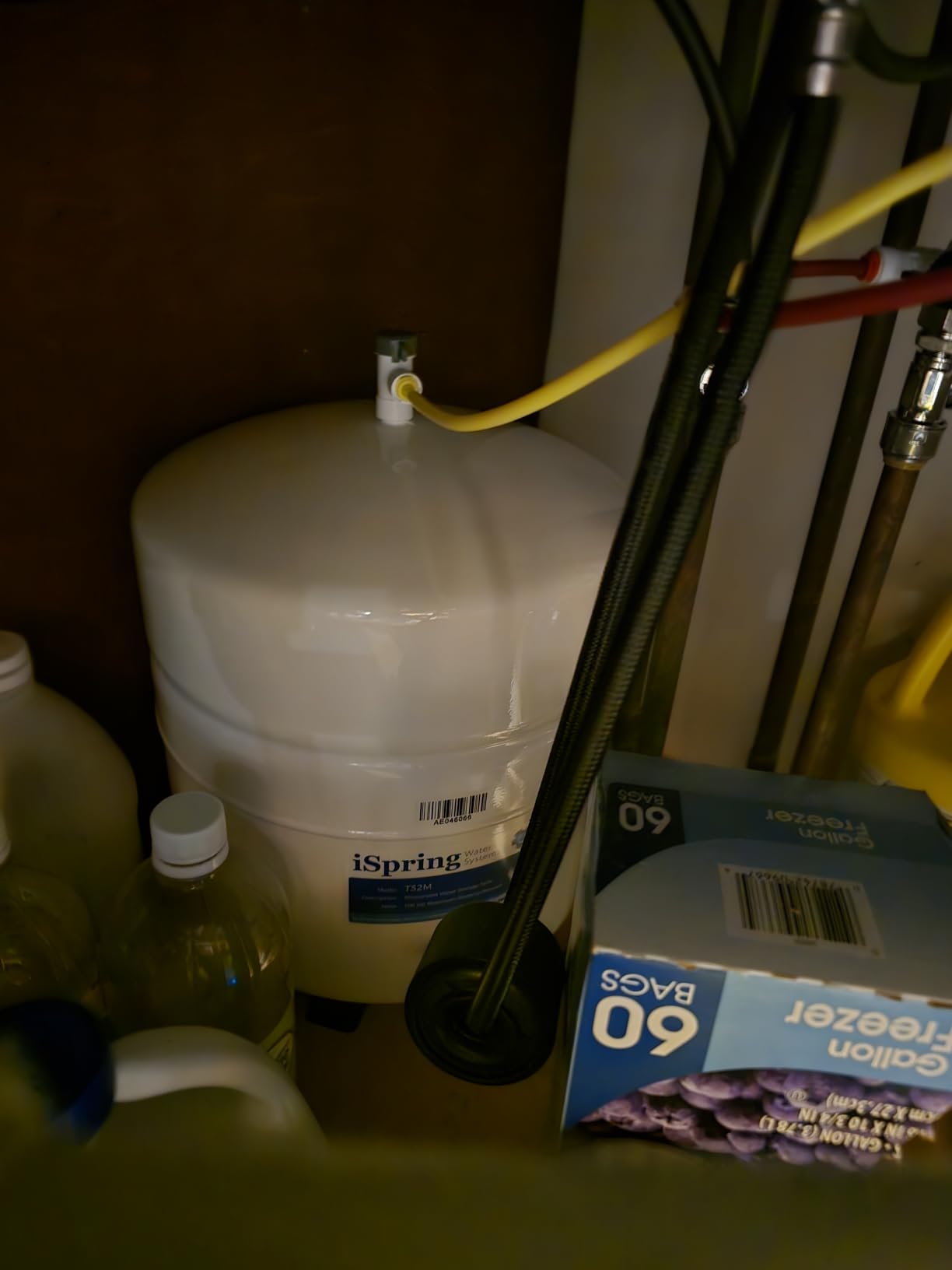
Owners consistently report the same result: tap water measuring around 100 ppm on a TDS meter comes out of this membrane in single digits, and the flat taste that makes people reach for a pitcher afterwards largely disappears. The alkaline pH plus stage is what does that, reintroducing a little magnesium and calcium, and reviewers describe the result as tasting like spring water.
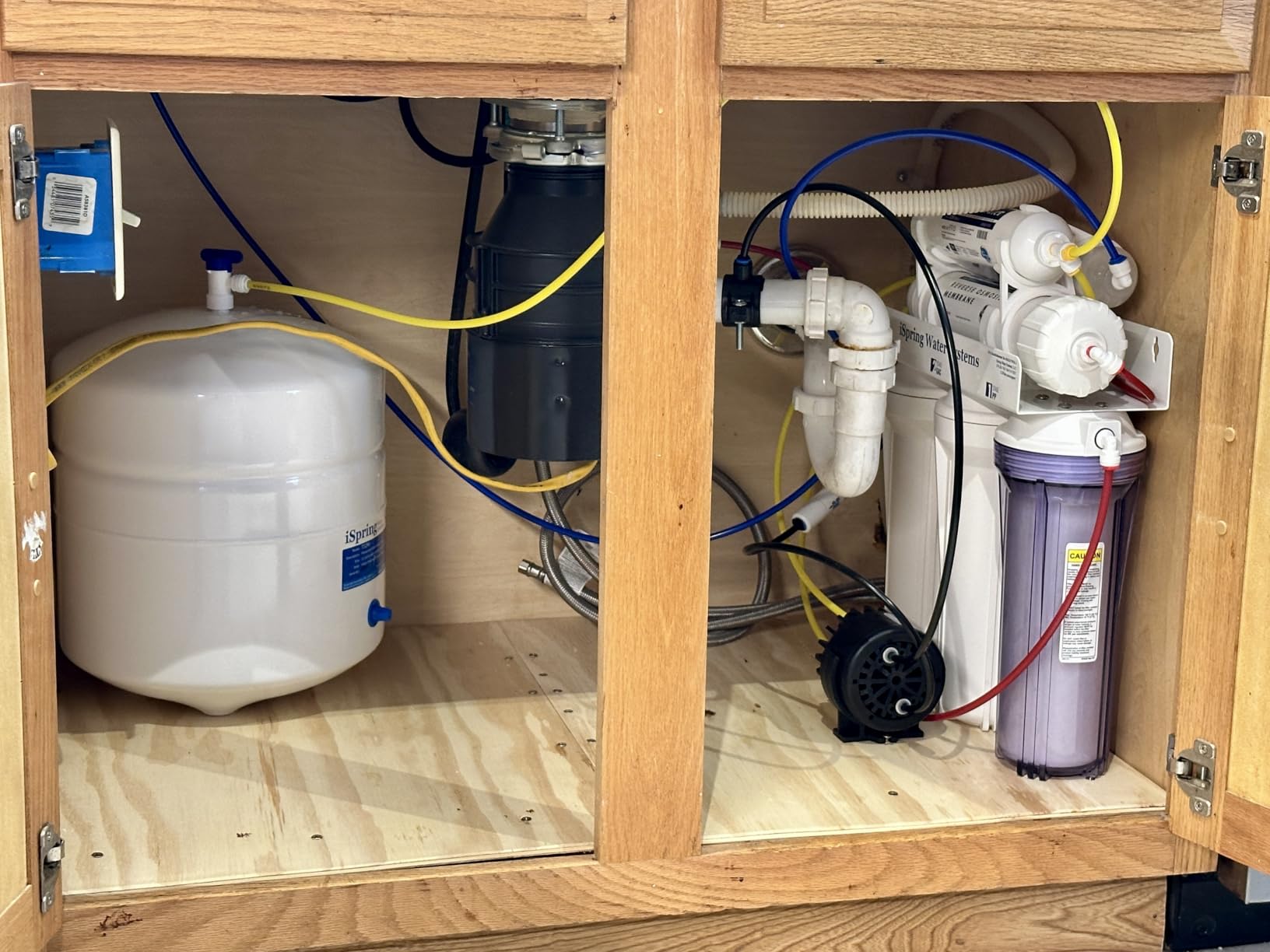
The physical design is what stands out. The faucet mounts from above the counter, so you are not lying under the sink tightening a nut in the dark on a Saturday morning. For a first install, that removes more friction than any spec sheet.
What you should check before buying?
Measure the cabinet first. At 15.5 inches long, 16 inches wide and 18 inches high, plus the storage tank, this is the largest unit in the group.
Check your line pressure too. The system wants roughly 45 to 70 psi at the cold line, and below that the tank fills slowly and the faucet can sputter.
Finally, budget for the drain. RO sends two to three litres of water to the drain for every litre you drink, and that line has to reach a drain stub.
Where it is the wrong choice?
Skip this if you rent, because a dedicated drilled faucet and a tank mounted to your cabinet are a lot to remove at move-out. Skip it if you dislike the idea of drinking water with almost no dissolved minerals and would rather keep them.
Skip this if your household drinks far under 20 gallons a day, since a 75 GPD tank will sit full most of the time. And skip it if you are on a well, where the problems are usually iron, sulfur or bacteria rather than dissolved solids.
2. Waterdrop 10UA Review: Top Rated Inline Filter With No Drilling
Waterdrop 10UA Under Sink Water Filter System, NSF/ANSI 42 Certified 1 Year
Type: Ultrafiltration inline
Output: 0.75 gpm at 60 psi
Certified: NSF/ANSI 42 and 372
Life: 12 months
Pros
- Twist and lock install with push-to-connect fittings
- Connects to standard 3/8 inch sink feed valves
- Low ongoing cartridge cost
- Compact at 3.9 by 3.6 by 12.3 inches
- No drilling and no faucet hole
Cons
- Does not lower dissolved solids
- Reduces cold line pressure by roughly 15 percent for some households
- Only fits 1/2 inch or 3/8 inch female thread faucets
- Stiff and overly long supplied tubing
The 10UA is the answer for renters. It screws into the cold water line under the sink and returns to the existing faucet, so there is no countertop hole, no new tap and nothing to undo at move-out. That single constraint rules out most of the RO systems on this list.
It is also among the cheapest systems here to keep running, and that gap widens every year. Its 12-month replacement cartridge keeps ongoing cost low, which the manufacturer claims cuts running cost by more than half against typical six-month filter sets.
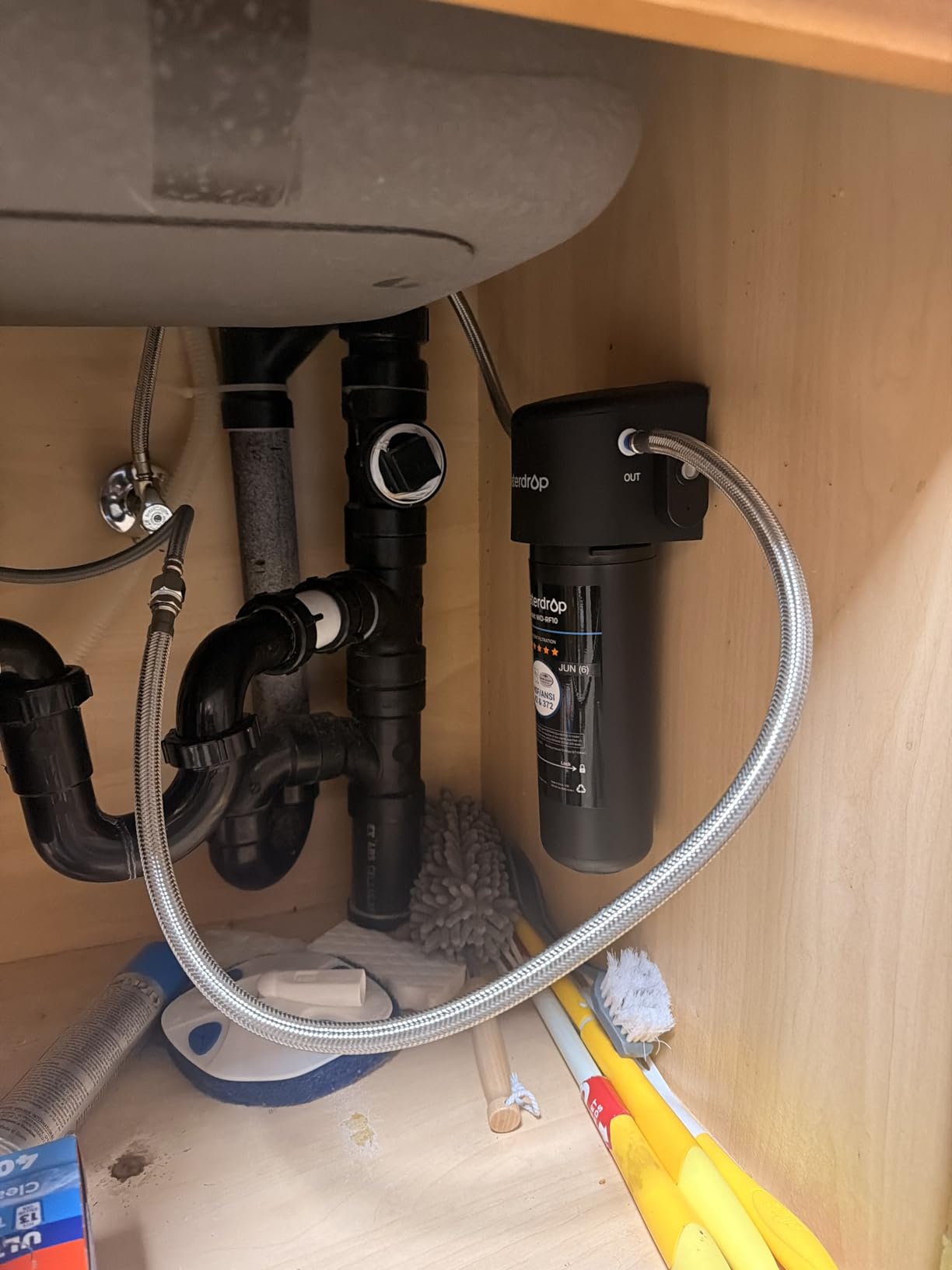
Capacity is listed at 11,000 gallons and maximum flow at 2.5 gpm, with a tested full flow of 0.75 gpm at 60 psi rising to 1.33 gpm through the upgraded 3/8 inch outlet. The manufacturer attributes that to a 20-fold increase in dirt adhesion area, meant to keep sediment from choking the cartridge early.
Owners upgrading from a pitcher describe it as a straight swap with better convenience and no more refills. Taste and chlorine odor improvement shows up immediately.
What you should check before buying?
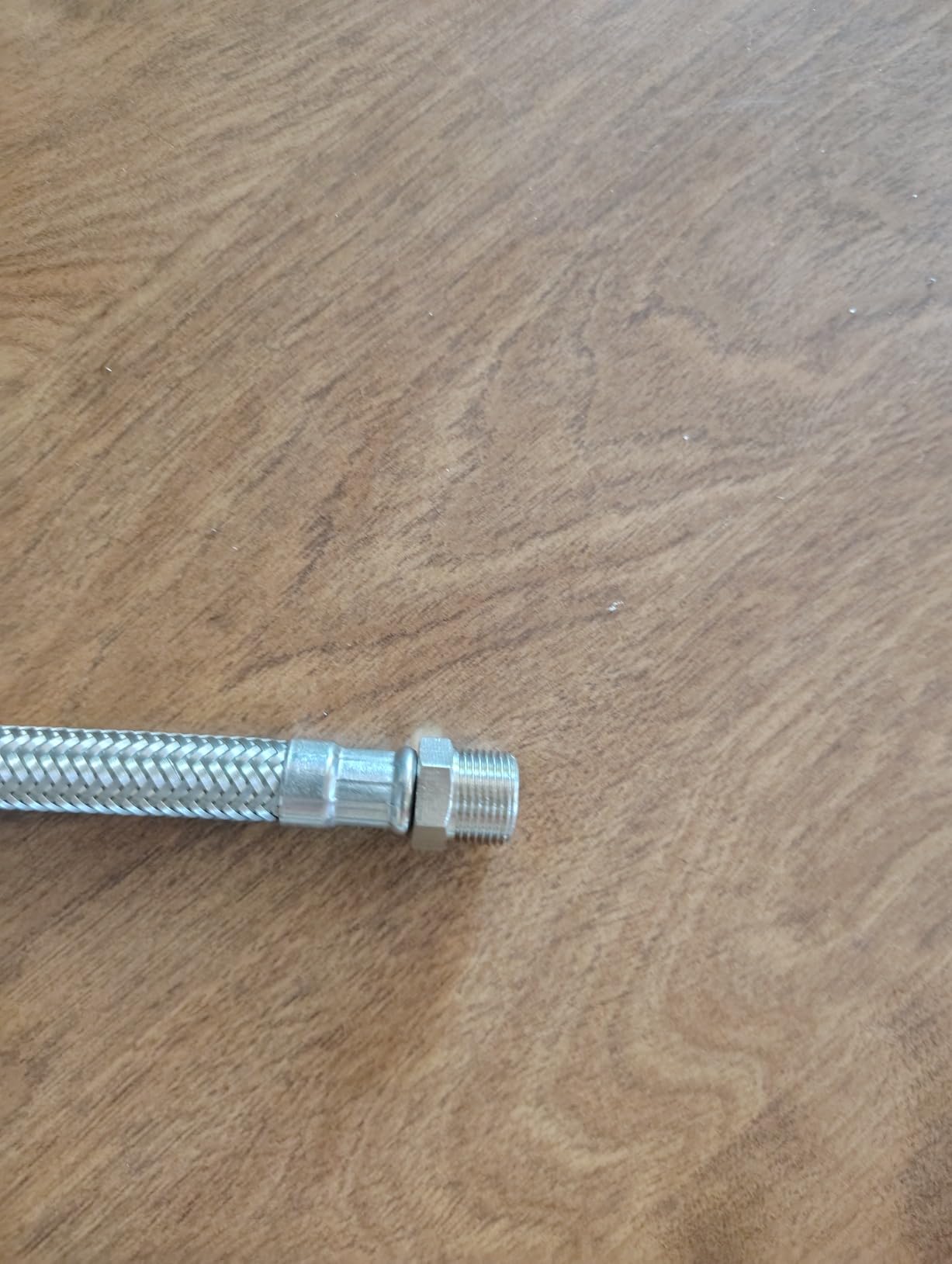
Measure your cold line. This filter only fits 1/2 inch or 3/8 inch female thread connections, and a converter set is included for the 3/8 inch feed valves standard on most US sinks.
Understand what ultrafiltration does and does not do. It keeps dissolved minerals in the water, so your TDS reading will not drop, and a minority of owners with their own meters question what is being removed. The honest answer is that the design targets taste, odor, particles and certified contaminant reduction, not desalination.
Expect a five-minute initial flush with visible carbon particles in the first bowl or two. That is normal.
Where it is the wrong choice?
Skip it if your water report shows high dissolved solids, nitrates or confirmed PFAS and you want those numbers to actually move. Skip it if you cook heavily and notice any slowing at the tap, since the roughly 15 percent pressure reduction some households report is more noticeable when filling a large pot.
And skip it on well water entirely. It is built for municipal cold water, and putting it on a well leaves iron, sulfur and bacteria untouched.
3. APEC ROES-50 Review: Best Certified RO for Mid-Size Households
APEC Water ROES-50, 5-Stage Under Sink Reverse Osmosis System, 50 GPD
Type: 5-stage RO
Output: 50 GPD
Certified: NSF/ANSI 58 and 372
Life: 6 to 24 months
Pros
- Certified to both NSF/ANSI 372 and 58
- Color coded tubing makes servicing simple
- Handles feed water up to 2000 ppm
- Tank and faucet included in the kit
- Over 20 years of manufacturer filtration experience
Cons
- 50 GPD is slower than higher output systems
- Filters replaced every 6 to 24 months depending on feed water
- Brine waste at a 2:1 to 3:1 ratio
- Proprietary filter sets rather than standard cartridges
The APEC ROES-50 is the middle of the road in the best sense. It carries dual certification to NSF/ANSI 372 and 58, meaning it is held to both the lead-free material standard and the reverse osmosis reduction standard, and the company designs, builds and tests the system in-house.
Where it separates from budget RO units is feed water tolerance. Maximum supported TDS is listed at 2000 ppm, more than double what the iSpring handles.
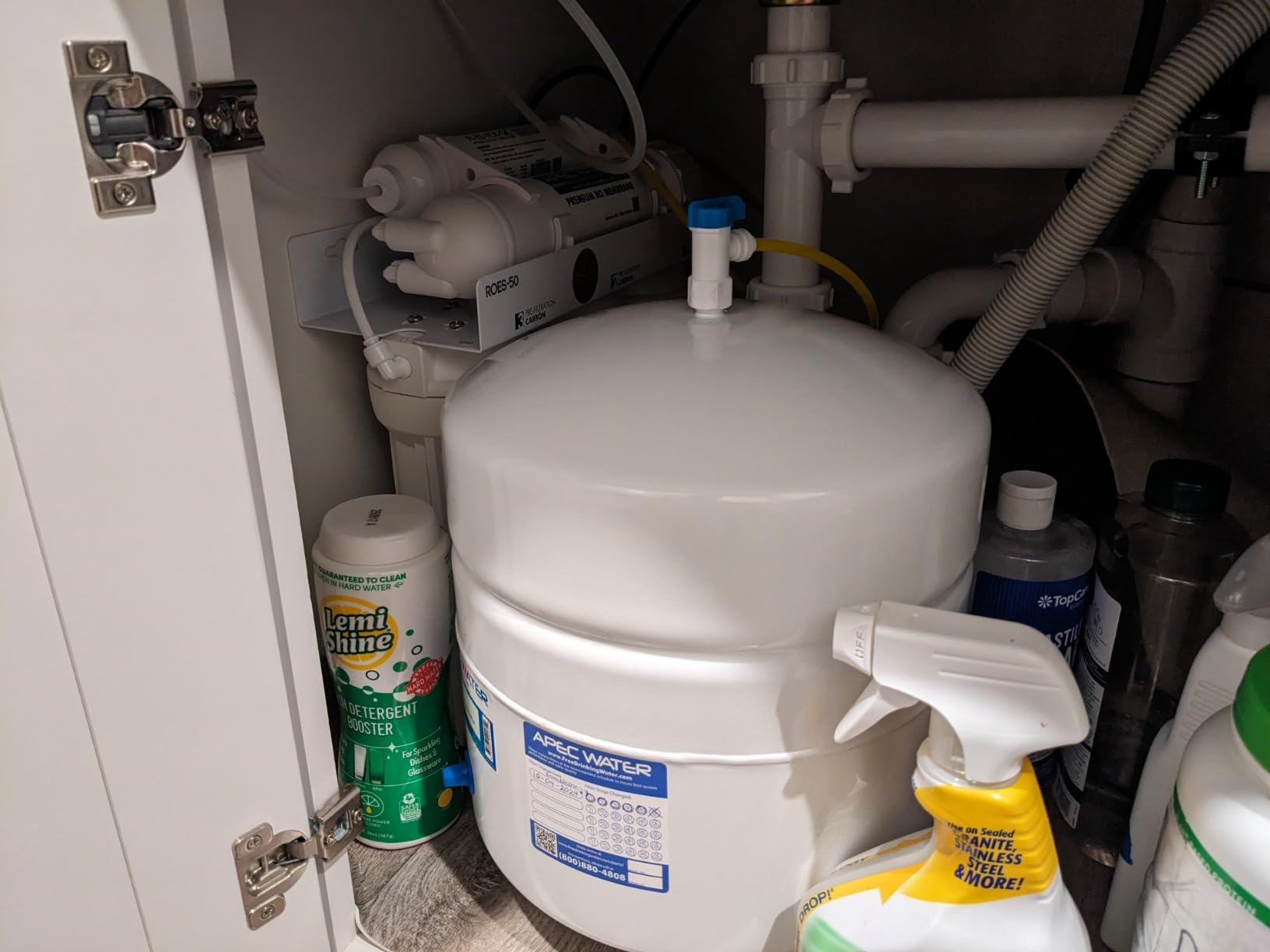
Owners with long ownership histories describe it as a balanced choice: smaller and cheaper than the 75 GPD premium systems, but with real TDS reduction rather than taste-only filtering. The color-coded quick-connect tubing is singled out as the feature that makes filter changes painless two years in.
The kit ships with the Filter-Max-ES50 set, a brushed nickel faucet, a storage tank and a full installation kit, so nothing else needs buying.
What you should check before buying?
50 gallons per day is roughly two-thirds of the output of the top pick here. For a couple or a small family that is plenty; for four adults cooking daily, you will feel the difference between a full glass and a full stockpot.
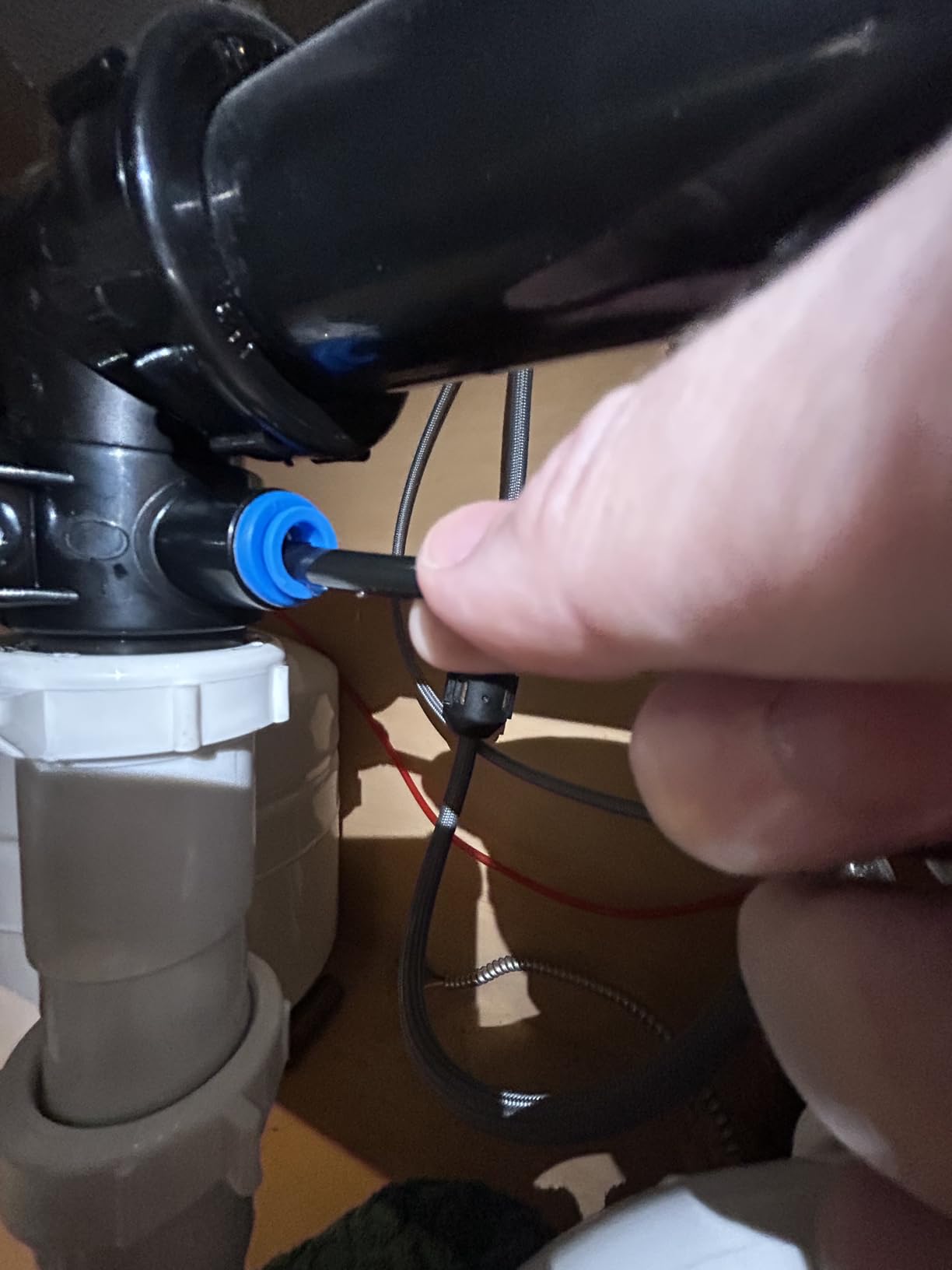
Confirm the drain line route before you commit. This system needs a reject water line to a drain stub, and in a tight cabinet that routing often decides whether the install is easy or a Sunday project.
Look up the cost of the Filter-Max-ES50 set before you buy. The cartridges are proprietary to APEC, and reviewers consistently name ongoing filter cost as the recurring drawback of an otherwise well-regarded system.
Where it is the wrong choice?
Skip it if your household runs high daily water volume, because 50 GPD will feel slow. Skip it if you rent or cannot drill, since the faucet and tank are permanent fixtures in the cabinet.
Skip it if you want to avoid reverse osmosis entirely. If minerals in your tap water are a feature rather than a problem, an RO membrane removes something you would rather keep, and a carbon or ultrafiltration system is the better instrument.
4. iSpring CU-A4 Review: Best Tankless Filter for Small Cabinets
iSpring CU-A4 4-Stage Ultra Filtration Under Sink Water Filter System
Type: 4-stage ultrafiltration
Membrane: 0.01 micron
Faucet: brushed nickel included
Life: 6-12 months
Pros
- No wastewater and no storage tank
- Four stage design keeps healthy minerals
- 0.01 micron hollow fiber membrane
- Push-to-connect fittings and twist on cartridges
- Compact 4.33 inch wide body
Cons
- Printed installation manual is widely criticized as inaccurate
- Faucet needs a 1-1/8 inch hole drilled in the sink deck
- Short red tubing and undocumented line colors
- Sediment in output for the first days
- Mounting bracket suits sink mounting only
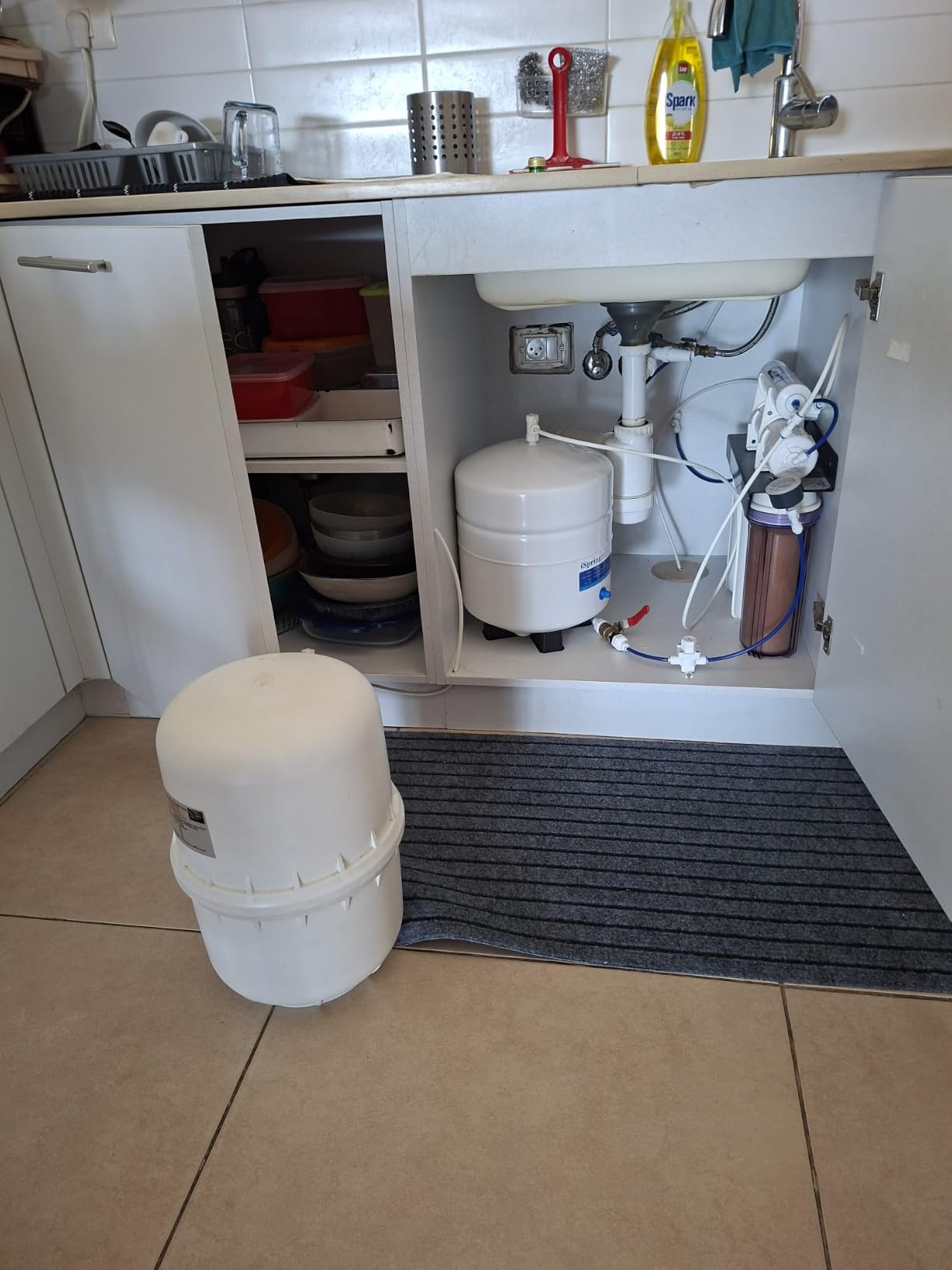
The CU-A4 exists for one reason: owners who had a reverse osmosis unit and decided they did not want the water waste or the tank taking up half the cabinet. It filters in line with no storage tank and no drain line, and at 4.33 inches wide it tucks into space that would never hold an RO system.
Filtration runs a 5 micron polypropylene sediment filter, then a 0.01 micron hollow fiber ultrafiltration membrane, backed by KDF and granular activated carbon stages for chloramine, hydrogen sulfide and heavy metals. The manufacturer states removal of up to 99 percent of chlorine, chlorine treatment by-products and lead, while retaining minerals.
Like the Waterdrop 10UA, it is not a TDS reducer. If your concern is dissolved solids rather than particles and taste, this will not solve it, but it does solve cabinet footprint, water waste and the pressure drop that comes with a fine membrane and a tank.
Filter changes are described as nearly instant, with push-to-connect fittings and twist-on, twist-off cartridges. Replacement life is 6 to 12 months depending on source water and usage.
What you should check before buying?
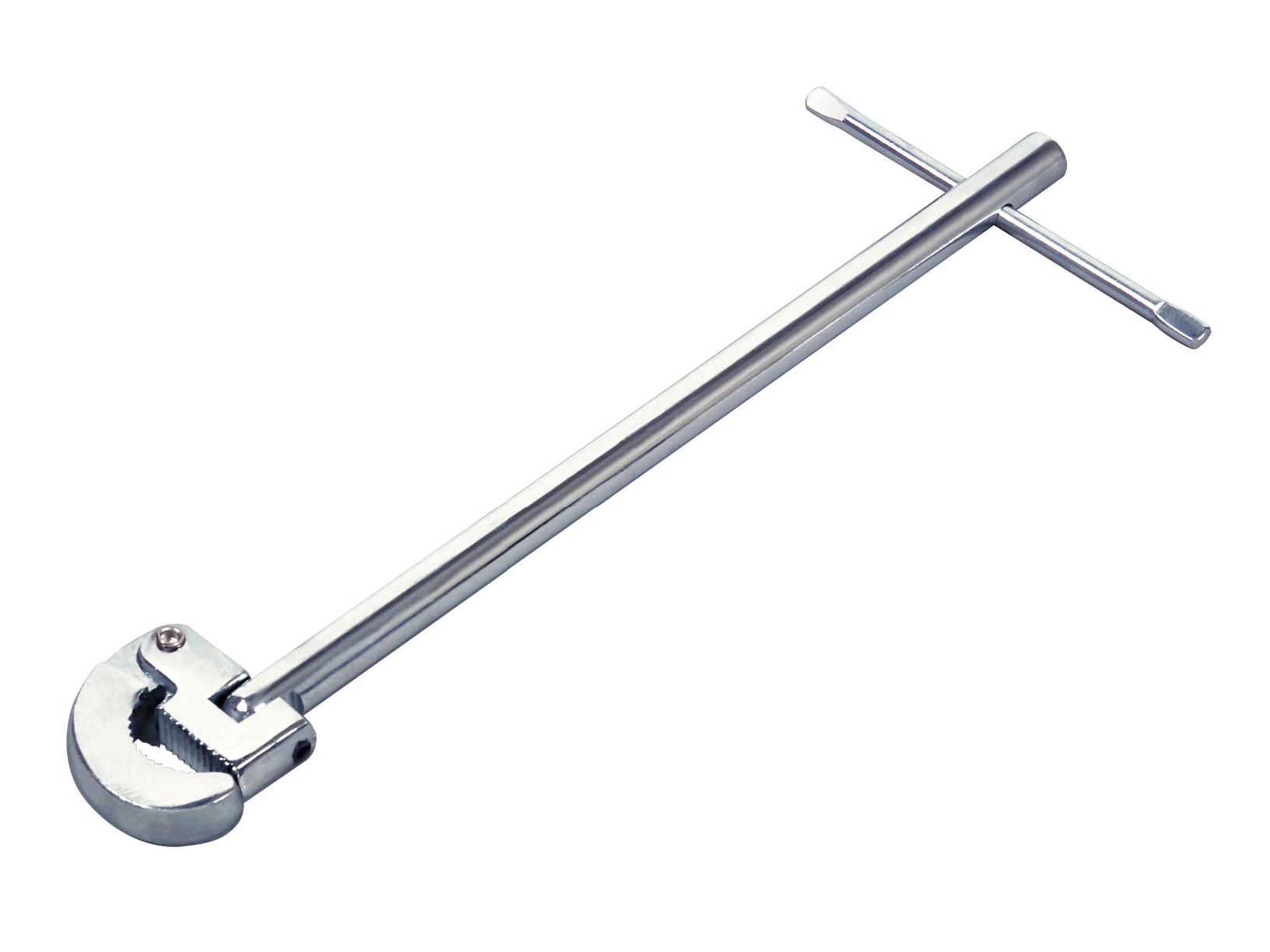
You are going to drill. The included brushed nickel faucet requires a 1-1/8 inch hole in the sink deck or countertop, a permanent change to the counter, so if you rent or love your current faucet, this is the wrong box.
Read your installation guide alongside the printed manual. Owners report the included manual is frequently inaccurate and sometimes describes a different unit, so budget time for a hardware store visit for extra fittings.
Plan for an extended initial flush of roughly 15 gallons. Sandy sediment in the first output is expected and clears if you let it run.
Where it is the wrong choice?
Skip it if you are a renter or your sink deck is a no-drill zone, and skip it if you are on well water with iron or sulfur, since a 0.01 micron membrane clogs quickly without addressing the underlying chemistry.
Skip it if you want minerals gone. And skip it if the included faucet finish is not one you like, because the lever is described by some owners as feeling slightly flimsy and you are stuck with it.
5. CuZn UC-200 Review: Best Filter for the Lowest Long-Run Cost
CuZn UC-200 Under Sink Water Filter, NSF/ANSI 42 & 372, 5-Year Filter Life
Type: 3-stage inline
Build: steel and brass
Certified: NSF/ANSI 42 and 372
Life: 5 years
Pros
- Five year service life against a typical 6 months
- Stainless steel and brass construction
- Direct-connect inline install with no drilling
- Negligible flow rate drop
- Made in the USA
Cons
- Does not reduce dissolved solids
- Entire unit is discarded at end of service life
- Tastes heavy for the first several days
- Larger inline body needs cabinet clearance
- Stainless hoses may not match non-US plumbing
Total cost of ownership is where this filter wins, and by a wide margin. Every other cartridge-based system on this list asks you to buy replacements every 6 to 12 months, while the UC-200 runs five years on municipal water, which spreads the cost of the unit so thin that owners describe the effective annual figure as trivial.
The construction is the other differentiator. It is a solid stainless steel and brass body rather than a plastic canister, and the 3-stage path runs micro sediment membranes, KDF-55 media and coconut shell carbon around NSF/ANSI 42 and 372 certified components.
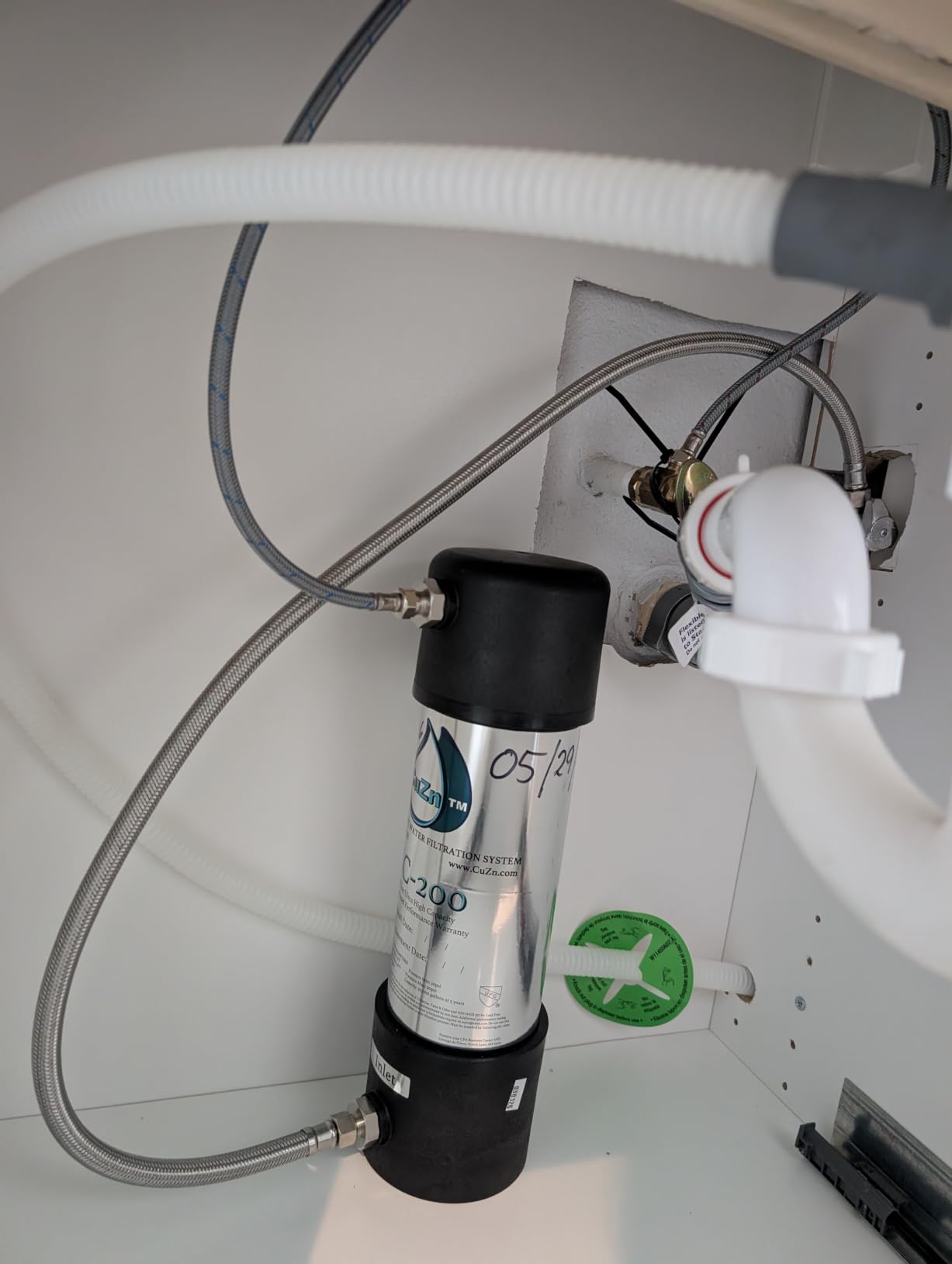
Installation is a direct connect with no drilling, and the housing includes a faucet mount point that keeps the cabinet uncluttered. Flow rate drop is barely noticeable, which matters if you fill pots at this sink rather than just glasses.
Company support comes up repeatedly in reviews, including free pre-filters, fittings and no-charge model exchanges.
What you should check before buying?
Understand the five-year model. At the end of service life you replace the entire unit, not a cartridge, which is a larger single outlay every five years but far fewer of them.
Give it time. Owners report that newly installed water can taste heavy for the first several days until the media is conditioned, so drink other water for a week before deciding you dislike it.
Check your plumbing standard. The supplied 3/8 inch stainless hoses may not match non-US fittings, and some international buyers report needing local adapters. Also allow for a body measuring 5.5 inches in diameter and 14 inches wide, larger than the other inline filters here.
Where it is the wrong choice?
Skip it if you want dissolved solids or hardness removed, because it explicitly does not reduce TDS and hard water will still be hard. Skip it if you would rather not replace a whole five-year-old unit in one go.
Skip it if you want a certified lead reduction figure. The unit is independently tested for PFAS, PFOA, PFOS, lead and chlorine reduction, but it carries the aesthetic and material standards rather than a health-contaminant certification, so do not treat it as a lead-certified purchase.
6. Frizzlife SK99 Review: Best for Lead and Chloramine at 0.5 Micron
Frizzlife Under Sink Water Filter System, NSF/ANSI 53&42&372 Certified, 8 Layer 0.5 Micron Water Filtration Reduce Chloramine, PFOA/PFOS, Lead, Chlorine, Bad Taste & Odor, Under Counter, SK99-NEW
Type: 8-layer carbon block
Accuracy: 0.5 micron
Certified: NSF/ANSI 42, 53 and 372
Flow: 2.5 gpm rated
Pros
- IAPMO certified to NSF/ANSI 42
- 53 and 372
- 0.5 micron accuracy across 8 media layers
- Twist-in cores replace without discarding the housing
- Installs in 15 to 45 minutes with no plumber
- Built-in pressure regulator
- Optional version connects to the main tap
Cons
- Does not reduce dissolved solids
- 10 minute initial flush leaves sediment first
- Included faucet spout described as wobbly
- No filter change indicator
Among the non-RO filters here, this is the one carrying a health-contaminant certification. IAPMO certification to NSF/ANSI 53 is the standard covering lead reduction, and it sits alongside 42 and 372 in the same listing. If your utility report flags lead and you want carbon rather than a membrane, this is the pick.
Filtration accuracy is 0.5 micron across eight compounded layers, finer than most competing carbon blocks. It runs from 20 to 80 psi, handles water from 39 to 100 degrees Fahrenheit, and is rated at 2.5 gpm maximum flow with real installs landing near 1.3 gpm.
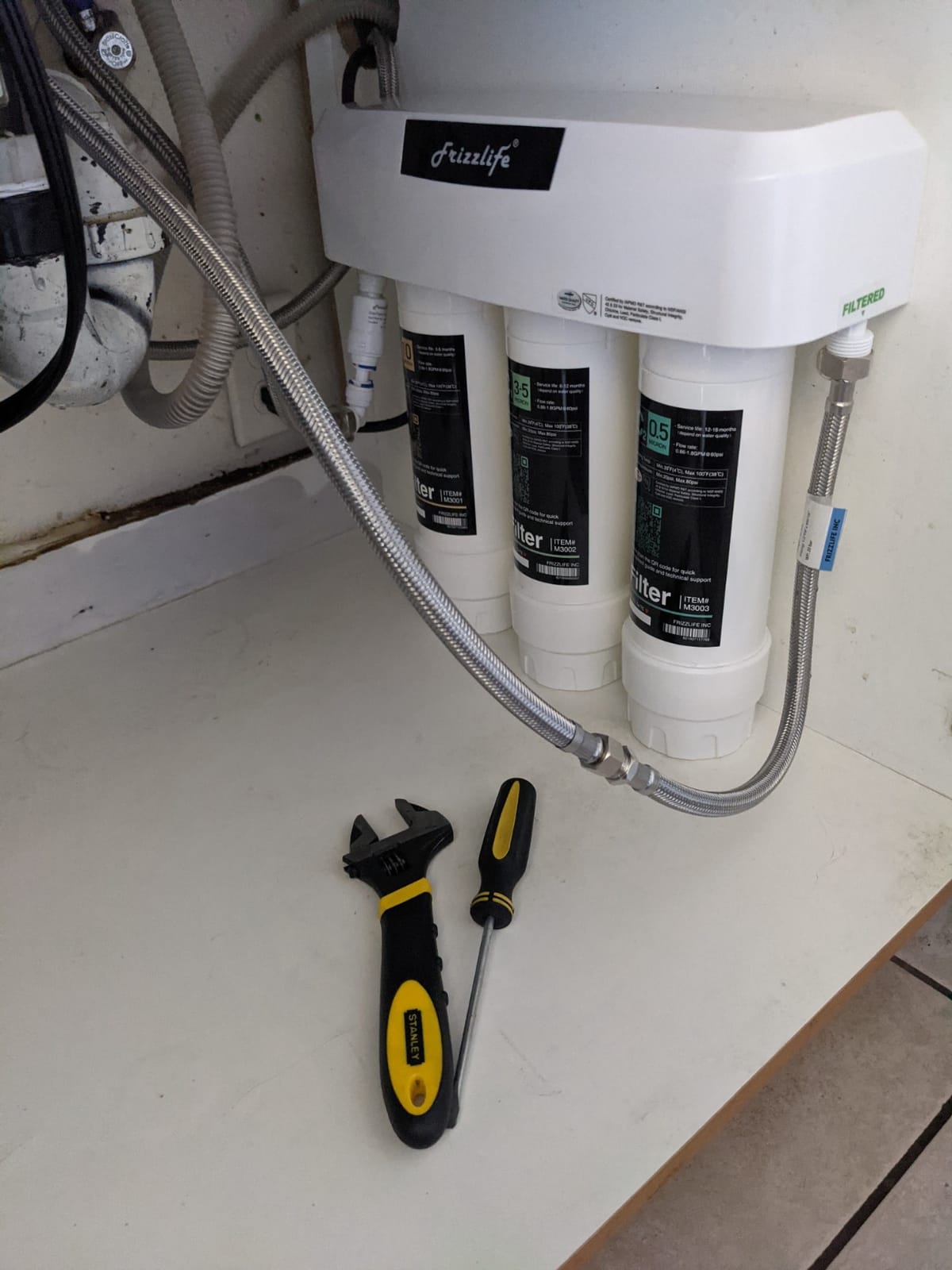
The twist-in cartridge design is worth pausing on. You replace the filter core and keep the plastic housing rather than discarding a complete canister every time, with media available as M3001, M3002, M3003 or the M3005 set.
Owners like that it preserves the main faucet flow, which is the point when you want filtered water without a second tap. An optional IMC-2 ice maker kit will feed a refrigerator, and a version is available without the dedicated faucet if you would rather stay drill-free.
What you should check before buying?
Decide on the faucet question before you order. The kit includes filter, faucet and Teflon tape, and the drill-free version changes the install entirely. Both paths work, but they are not interchangeable after the fact.
Plan the 10-minute flush. Loose carbon fines come out at the start and the water is visibly sediment-filled until it clears, and skipping that step is how people conclude the filter is faulty when it is not.
Set your own change reminder. There is no indicator on the housing and replacement cores are sold separately, so nothing will prompt you.
Where it is the wrong choice?
Skip it if your problem is dissolved solids rather than particle-bound contaminants, since the listing states plainly that it does not reduce TDS. Skip it if you want PFAS removal certified to a specific standard rather than reduced as part of a general carbon media claim.
Skip it if you want a built-in faucet and are sensitive to hardware quality, since owners describe the included spout as thin-feeling and wobbly. The connection also uses a three-way shut-off valve, and owners who overtighten it report O-ring distortion.
7. ICEPURE WFS5300A Review: Best Value for the Cheapest Entry Point
ICEPURE Under Sink Water Filter System, 3 Years or 22000 Gallons Ultra High Life NSF/ANSI 42 Certified, Removes Heavy Metals,Chlorine,Direct Connect Under Counter Drinking Water System, USA Tech
Type: carbon block inline
Capacity: 22000 gallons
Certified: NSF/ANSI 42 and 372
Life: 3 years claimed
Pros
- Very low entry and ongoing cost
- Plug and play install in under 3 minutes
- Direct connect uses the existing faucet
- 2.5 gpm tested flow with no pressure loss
- BPA-free food grade coconut shell carbon
Cons
- Does not reduce dissolved solids
- Several owners report carbon saturating before 3 years
- Replacement filters hard to source outside the US
- Only fits 1/2 inch or 3/8 inch female NPT lines
- Filter life not stated clearly in the printed instructions
For a lot of households this is the entire requirement: stop refilling pitchers. It is a 0.5 micron outer carbon block of BPA-free food-grade coconut shell carbon, direct connected to the existing faucet with no countertop hole, and it holds full 2.5 gpm flow at 60 psi.
The stated capacity is 22,000 gallons or roughly three years on municipal water, certified to NSF/ANSI 42 and 372, where 372 covers the lead-free material requirement.
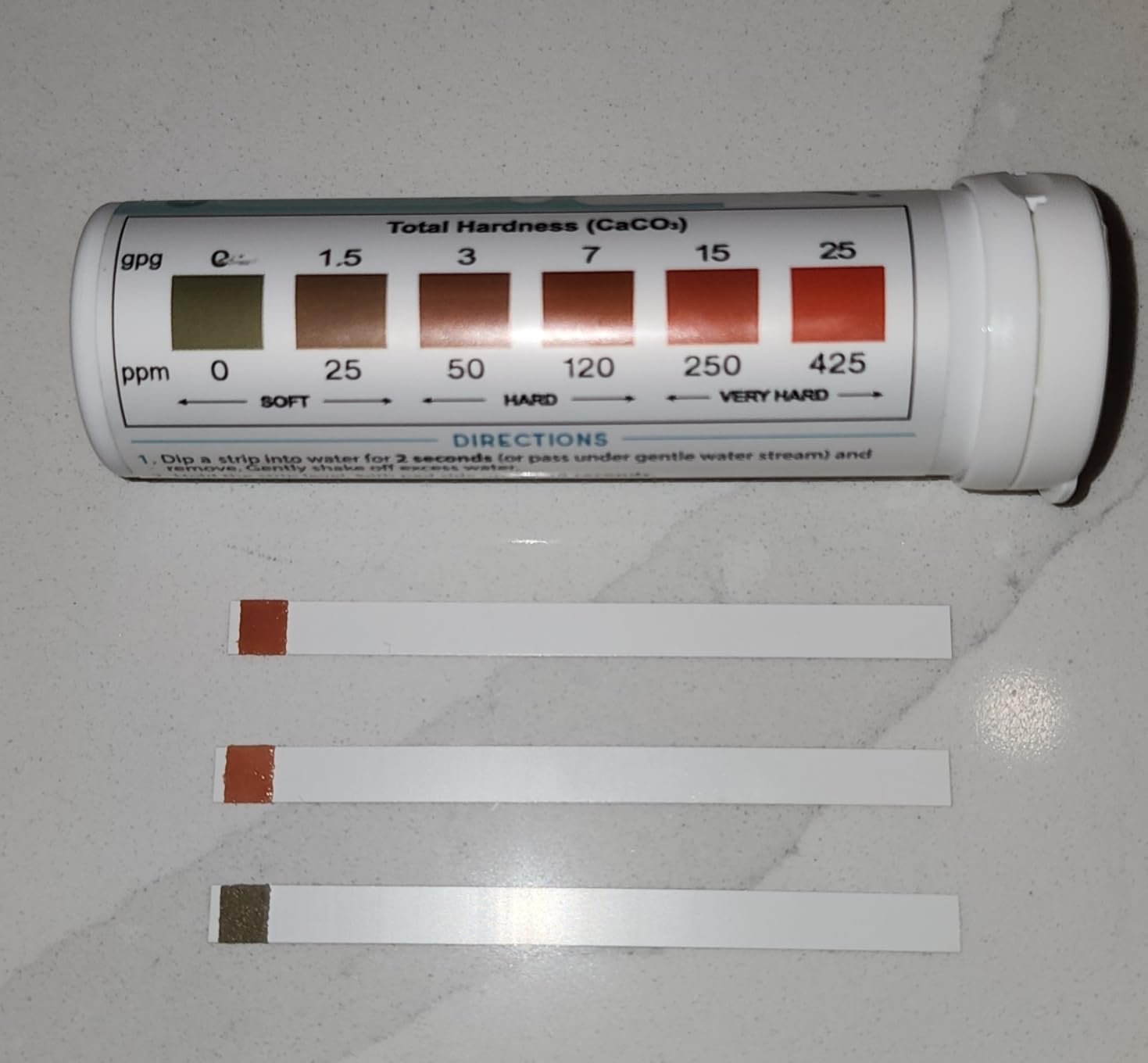
Owners compare the output favorably to pitcher systems and bottled water, and plumbers buying it for their own homes describe the install as easy. It is also listed for bathrooms, bars, RVs and offices, which is useful if you want a second drinking point without a second full system.
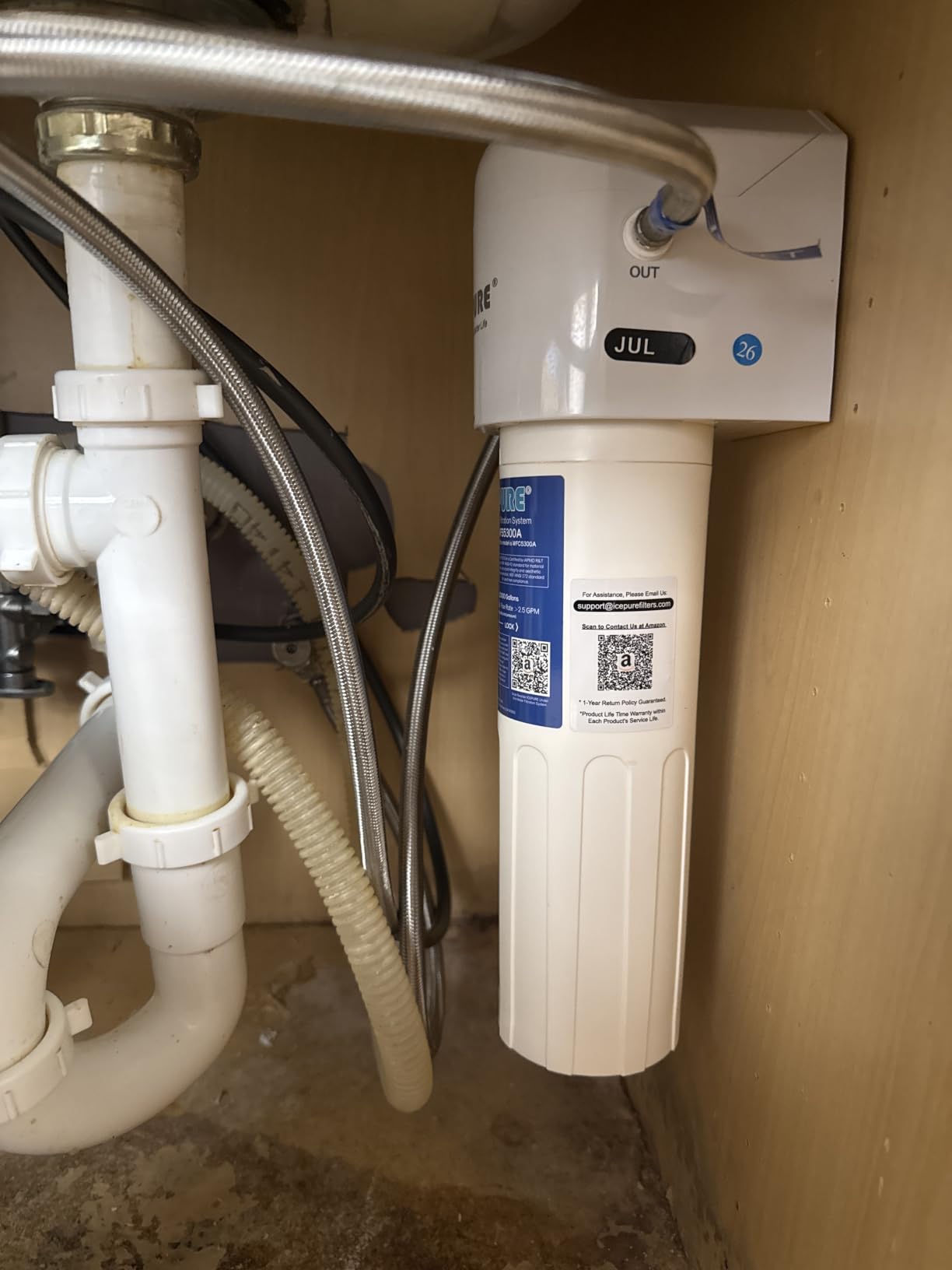
What you should check before buying?
Read the filter life claim skeptically. The most common complaint is carbon saturating well before the advertised three years, particularly on hard or high-pH municipal water, so set a calendar based on your water rather than trusting the box.
Check your thread size before ordering. It fits 1/2 inch or 3/8 inch female NPT cold water lines only, and getting this wrong means returning the unit.
Look up replacement cartridge availability in your country first. International buyers report difficulty sourcing filters, and in a filter purchase the cartridge is the part you keep buying forever.
Where it is the wrong choice?
Skip it if you have hard water, because carbon saturates faster there and dissolved solids stay put. Skip it if you need a health-contaminant certification, since NSF/ANSI 42 is an aesthetic standard covering taste, odor and chlorine rather than lead.
8. Aquasana Claryum AQ-6300M-BN Review: Best PFAS-Focused Filter Without Reverse Osmosis
Aquasana Under Sink Water Filter | Claryum 3-Stage Max Flow | AQ-6300M-BN
Type: 3-stage carbon and UF
Output: 0.72 gpm max flow
Certified: WQA, 78 contaminants
Life: 6 months or 800 gallons
Pros
- WQA certified to reduce up to 99.99 percent of 78 contaminants
- 0.72 gpm max flow
- the highest rated among max flow carbon units
- Retains healthy minerals in the water
- Stated at under 10 cents per gallon filtered
- Complete kit with faucet and first filter set
Cons
- Does not reduce dissolved solids
- 6 month or 800 gallon life adds up quickly
- Needs 15.85 inches of clearance under the sink
- Only 173 reviews so far
- Higher upfront cost than most carbon blocks in this group
The Aquasana is the pick when you want PFAS addressed without committing to reverse osmosis and its water waste. It is a 3-stage carbon block and ultrafiltration system WQA tested to reduce up to 99.99 percent of 78 contaminants, including chlorine, lead, PFAS and microplastics, with minerals left in.
Flow is the headline number. At 0.72 gpm maximum, it is positioned as roughly seven times faster than a leading pitcher filter, and the manufacturer rates it well above pitcher output. For a kitchen where someone is filling a pot or a water pitcher, the difference is obvious.
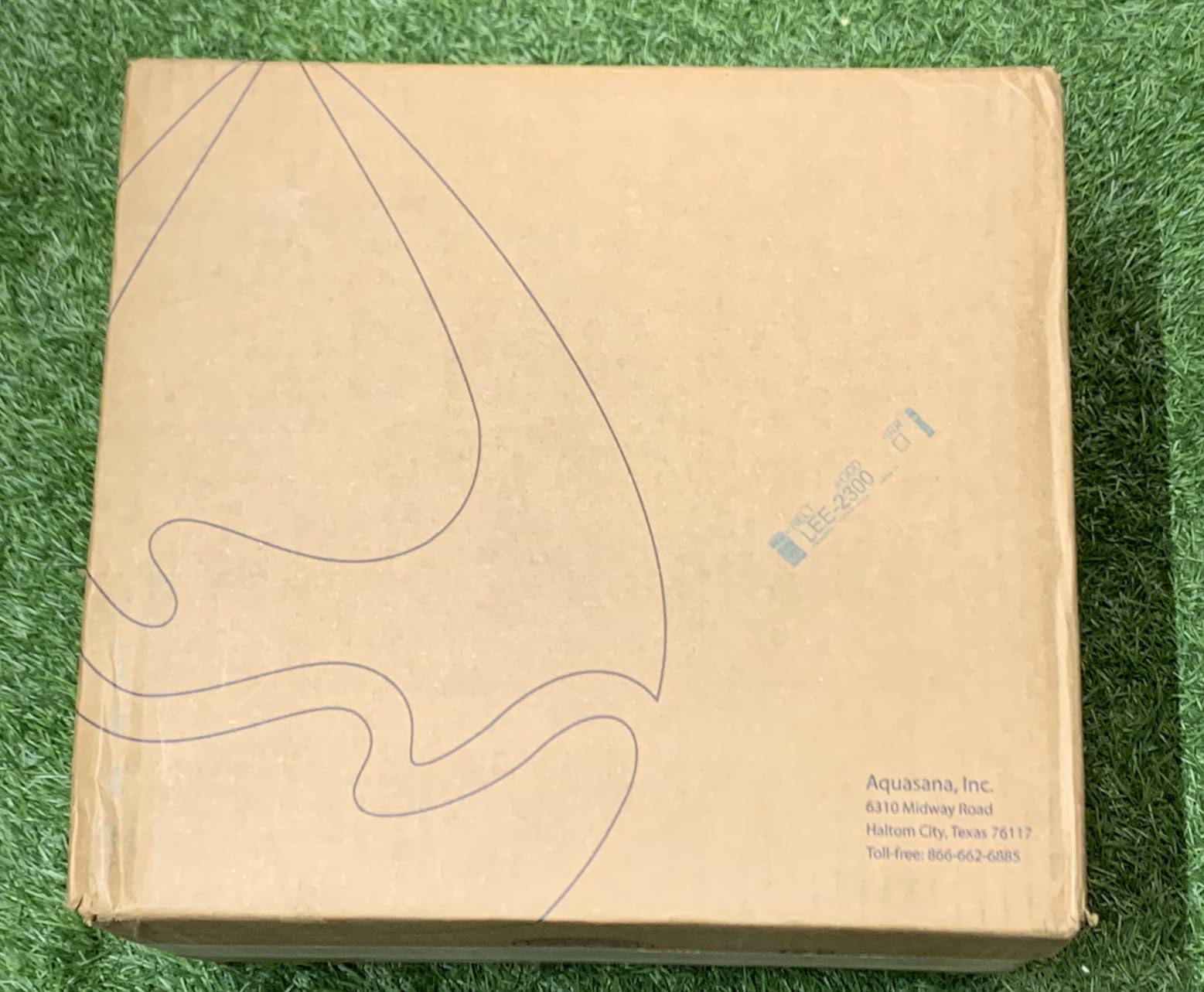
Owners who have had it report a clean, mineral-retaining taste and treat the WQA certification as a credibility signal rather than marketing. The manufacturer also puts running cost at under 10 cents per gallon filtered, which stays competitive at this flow rate.
Be aware of one structural difference from the rest of this list. This listing carries 173 reviews against the 5,000 to 21,000 behind the other seven, so you are buying on specification and certification rather than a decade of field reports.
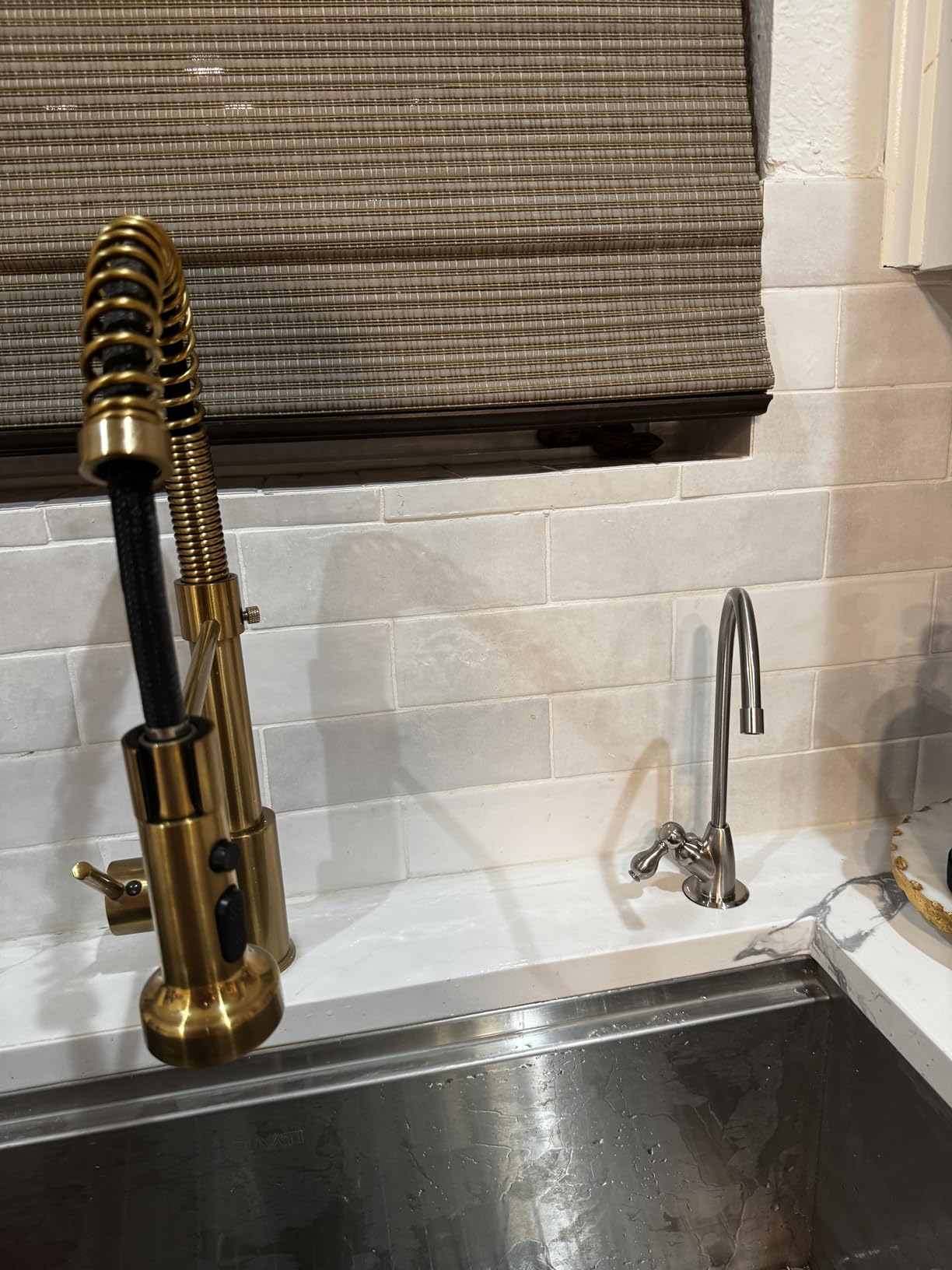
What you should check before buying?
Check the clearance requirement. The unit needs 15.85 inches of vertical space under the sink, the tightest constraint of any filter here. Measure before you order, including room for the faucet and the tubing.
Do the six-month math. Filter life is 6 months or 800 gallons, and owners most often cite that interval as the drawback. At high flow rates you will reach the gallon limit well inside six months on a busy kitchen.
Note the operating range. It is rated 40 to 90 degrees Fahrenheit, narrower at the top than most competitors here, and the twist-off housing does not need tools for a change.
Where it is the wrong choice?
Skip it if you want dissolved solids removed, because it explicitly does not reduce TDS. Skip it if you are on well water with iron, since carbon and ultrafiltration is not the right treatment for a private well.
Skip it if you want the deepest body of independent owner feedback in the category, and skip it if cabinet clearance is tight or you want dissolved solids removed.
How to Choose an Under Sink Water Filter in 2026?
Step 1: read your water report before you read any listing
Your municipal utility publishes an annual water quality report, and it is the only document that tells you what you are actually filtering. Match the contaminants listed there to a filter type. Chlorine and taste complaints call for carbon. High TDS, nitrates, fluoride or confirmed PFAS call for reverse osmosis.
Owners on r/WaterTreatment ask this question constantly: how do you choose a filter when you do not know what is in your water? The answer is that you start with the report, not with a brand. A cheap carbon filter cannot lower a TDS reading no matter what its listing claims, and no reverse osmosis system removes bacteria or iron from a well.
Step 2: decode the NSF/ANSI standards
This is the most useful thing a buyer can learn, and the one thing most competitor pages mention without explaining. Every certification code answers a different question about what a filter was independently tested to remove.
NSF/ANSI 42 is an aesthetic standard covering chlorine taste, odor and sediment, and it says nothing about lead, nitrates or PFAS. The ICEPURE and CuZn units carry it. NSF/ANSI 53 is the health-contaminant standard, and it is the one to look for if lead is your concern; only the Frizzlife SK99 in this group carries it. A listing that says it reduces lead without 53 certification is a marketing claim, not a tested claim.
NSF/ANSI 58 is the reverse osmosis standard and applies to the whole system rather than one part, which the iSpring RCC7AK-BN and APEC ROES-50 both carry. NSF/ANSI 372 covers lead-free materials and component safety, so it tells you what a filter is made of rather than what it removes; it appears alongside 42 on the Waterdrop 10UA and the CuZn UC-200.
NSF/ANSI 401 covers emerging contaminants, a category built around compounds with no established health limit. NSF/ANSI 473 is the specific PFAS reduction standard, and none of the eight systems here publishes it. If PFAS is your primary concern, buy a system with that number on it.
Step 3: decide between reverse osmosis and carbon
Reverse osmosis forces water through a semi-permeable membrane and rejects dissolved salts, fluoride, nitrates, PFAS and metals. It gives the widest reduction of anything in this roundup, and it is the only category here that measurably lowers a TDS reading. The costs are a storage tank, cabinet space, a drain line, and two to three litres of wastewater per litre you drink.
Carbon block and ultrafiltration systems adsorb chlorine, taste, odor, sediment and, when certified to 53, lead. They use no water, need no tank and keep minerals in the glass, but they cannot lower TDS, remove nitrates or meaningfully cut hardness.
Forum owners on r/WaterFilters and r/WaterTreatment consistently ask whether one filter can handle both chlorine and lead. It can, if and only if it carries a 53 certification alongside 42, which in this group means the Frizzlife SK99. Everything else on that list is taste only.
Step 4: plan the installation before you buy
Inline filters such as the Waterdrop 10UA, CuZn UC-200, ICEPURE and the no-faucet version of the Frizzlife return to your existing faucet and need no countertop hole, which is the only path that works in a rental.
Systems with a dedicated faucet need a 1-1/8 inch hole drilled in the sink deck, which is a permanent counter modification. On a stainless apron sink that hole can also weaken the surface and show a visible seam. Our farmhouse sink filter guide covers the drilling issue specifically.
RO systems need a drain line plumbed to a waste stub and real cabinet volume for a tank. None of the eight need a power outlet, which is worth knowing if your cabinet has no socket.
Step 5: compare five-year cost, not sticker price
Most competing guides publish year-one filter cost. Year five is where the real difference shows. A 12-month cartridge at a modest annual figure and a six-month RO filter set look similar in year one and are nowhere near each other by year five, which is how the CuZn UC-200 earns its place on a lifetime-cost basis despite a higher upfront number.
Also price in cartridge availability. Owners treat proprietary locked-in cartridges as a deal breaker, because the filter has to keep buying forever.
Step 6: check the constraints nobody publishes
If you rent: inline only, no drilling, no cabinet-anchored tank. That is the Waterdrop 10UA, the CuZn UC-200, the ICEPURE or the Frizzlife without the faucet. A renter who replaced a landlord-supplied inline filter and could not reattach it after a faucet swap is a recurring thread on r/WaterTreatment, so measure your thread size before ordering.
If you are on a well: none of these. Under sink filters treat symptoms, not source. Iron, sulfur, bacteria and hardness all need treatment upstream, which is what our whole house well water filter guide is for.
If you have a small cabinet: the iSpring CU-A4 at 4.33 inches wide, or any inline filter. Avoid the RCC7AK-BN unless you can free up real volume.
If your usage is infrequent: a vacation home is the hardest case. Owners report that RO systems left sitting unused need cartridge changes after roughly two weeks of stagnation, and bacteria can grow in an unused membrane housing. If you will not drink from it more than once a month, a low-cost inline carbon filter you can flush before use beats a membrane system, and our portable water filter guide covers the seasonal-use alternative.
If you inherited an old system with a house: a three-stage housing with no readable date is probably well past its service life, and there is no reliable way to date a canister after the fact. Treat it as spent and budget for a full replacement.
If the real problem is hard water: stop shopping for filters. Filters do not soften water. White scale on glassware, low soap suds and spotty dishes are mineral problems, and the correct purchase is a softener or a descale system. An RO system in front of hard water will strip the minerals but will not stop scale elsewhere in the house.
Frequently Asked Questions
What is the best under sink water filter overall?
The iSpring RCC7AK-BN is our best overall pick for a kitchen. It is a six-stage reverse osmosis system rated at 75 gallons per day, certified to NSF/ANSI 58 as a complete system, and it reduces total dissolved solids by 93-98 percent while an alkaline stage adds back some minerals. It needs no electricity and installs without a plumber.
Do under sink water filters remove PFAS?
Only some of them, and only if they carry the right certification. PFAS reduction can be claimed under NSF/ANSI 473, and none of the eight systems we reviewed publishes that certification. The Aquasana Claryum is WQA certified to reduce up to 99.99 percent of 78 contaminants including PFAS, and the two RO systems here are certified to NSF/ANSI 58. Verify the certification number before buying, not the percentage in the listing.
Can renters install an under sink water filter?
Yes, if you choose an inline filter that connects to the existing faucet and needs no countertop hole. The Waterdrop 10UA, CuZn UC-200, ICEPURE and the Frizzlife SK99 in its no-faucet configuration all fit that definition. Anything with a dedicated faucet, a storage tank bolted to the cabinet or a drilled sink deck is a landlord conversation first.
How often should I change under sink filters?
It depends on the cartridge and your water. Most carbon and ultrafiltration cartridges in this group are rated at 6 to 12 months, RO filter sets at 6 months, and the CuZn UC-200 is rated at five years. Treat the gallon rating as the real limit. On high-flow kitchen use you can hit a gallon ceiling well before the calendar date, so track gallons rather than months.
Does an under sink filter reduce water pressure?
Inline carbon filters reduce it slightly, and owners of the Waterdrop 10UA report roughly a 15 percent drop at some flow settings. Reverse osmosis reduces it more noticeably because the membrane and storage tank work against your line pressure, and the iSpring RCC7AK-BN needs about 45 to 70 psi to perform. Below that, add a pressure regulator or a booster pump.
Is reverse osmosis water healthy to drink?
Yes. The membrane removes dissolved salts, fluoride, nitrates, metals and PFAS, and the resulting water is low in minerals, which is why it tastes flat to some people. Remineralization stages such as the pH plus alkaline filter on the iSpring RCC7AK-BN add magnesium and calcium back. If you dislike the taste, choose a system with that stage or drink it with food rather than on its own.
Is an under sink filter better than a pitcher?
For taste, chlorine and certified contaminant reduction, yes, and the convenience difference is what converts most people. A pitcher needs refilling every few days and a new cartridge on the same schedule. An under sink unit plumbed to the tap never has to be refilled, which is the reason owners on home improvement forums describe giving them up entirely.
What certification should an under sink water filter have?
Look for NSF/ANSI 42 for taste and odor, NSF/ANSI 53 if lead is your concern, NSF/ANSI 58 for a reverse osmosis system and NSF/ANSI 473 for PFAS. NSF/ANSI 372 covers lead-free materials and says nothing about what a filter removes. A listing claiming lead or PFAS reduction without the matching health-contaminant number is a marketing claim, not a tested one.
The Bottom Line: Which Under Sink Water Filter Should You Buy in 2026?
The iSpring RCC7AK-BN is the best under sink water filter for most kitchens in 2026. It is the only system here certified to NSF/ANSI 58 as a complete assembly with published reduction figures, it produces 75 gallons a day, it needs no electricity, and its top-mounted faucet removes the hardest part of a DIY install.
Buy the inline route instead if you rent, cannot drill, or simply want chlorine and lead handled without the tank, the drain line and the water waste. The Waterdrop 10UA is the strongest of those on flow and cartridge cost, the CuZn UC-200 wins on five-year cost by a distance, and the Frizzlife SK99 is the one carrying a real NSF/ANSI 53 lead certification.
Read your utility’s water quality report before you order any of them. Ten minutes with that document will tell you whether you need a membrane or a carbon block, and it will save you from paying twice for the wrong one. If you want a second perspective on a different treatment path, our guides to iron filters for well water and gravity water filters for emergency prep cover the cases an under sink unit cannot reach.