
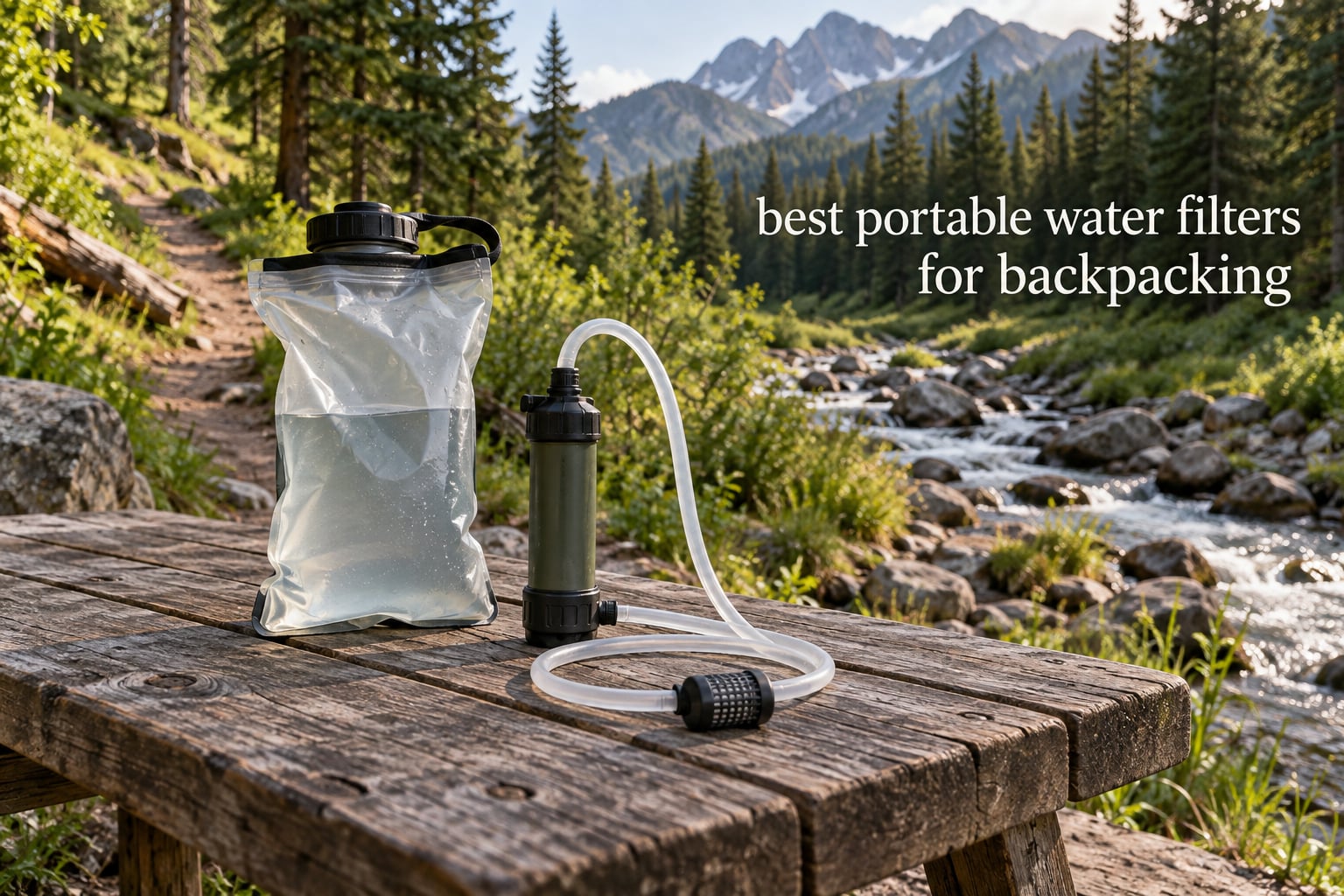
A portable water filter for backpacking is one of the few pieces of kit that decides whether a trip is comfortable or miserable. The right filter lets you drink straight from a stream instead of hauling every litre you will need from the trailhead, and it removes the bacteria, Giardia and Cryptosporidium that sit invisible in water that looks perfectly clear. After comparing 12 backpacking water filters across weights, pore sizes, flow rates and service life, the LifeStraw Personal Water Filter is our top overall pick for most hikers, the Sawyer Squeeze is the best value for anyone filtering real volume, and the Survivor Filter PRO is the pick when you want the finest filtration and virus coverage in a pump format.
Those three cover most people, but the right answer changes fast with your trip. A solo thru-hiker cares about grams, a family of four at a desert camp cares about gallons per day, and anyone crossing a border where sanitation is uncertain needs a purifier rather than a plain microfilter. Weight and throughput are the primary decision axes, with virus coverage as the third.
We spent several weeks working through this category, reading manufacturer specs against the customer reviews that come with each unit, and weighing the failure modes hikers actually hit: freeze damage, silt clogging, gaskets crushed by over-tightening, and filters that cannot keep up with a group. This guide for the 2026 season covers all 12 of the filters we analysed, explains what a hollow fiber membrane can and cannot remove, and tells you how to pick one for your specific trip.
Table of Contents
Top 3 Portable Water Filters For Backpacking (October 2026)

LifeStraw Personal Water Filter
- Removes 99.999999% bacteria
- 99.999% parasites
- 4000 litre capacity
- 0.04 kg

Sawyer Squeeze Water Filter
- 0.1 micron hollow fiber
- 1.7 L per minute flow
- two 32 oz pouches included

Survivor Filter PRO
- 0.01 micron ultra filter
- three replaceable stages
- 500 ml per minute pump
All 12 Filters Compared in 2026
| Product | Specifications | Action |
|---|---|---|
| LifeStraw Personal Water Filter |
|
Check Latest Price |
 Sawyer SP128 Mini Sawyer SP128 Mini |
|
Check Latest Price |
 Membrane Solutions Straw S1 Membrane Solutions Straw S1 |
|
Check Latest Price |
| Sawyer Squeeze SP129 |
|
Check Latest Price |
 LifeStraw Peak Series LifeStraw Peak Series |
|
Check Latest Price |
| Survivor Filter PRO |
|
Check Latest Price |
 Katadyn BeFree 1L Katadyn BeFree 1L |
|
Check Latest Price |
 Waterdrop Gravity Filter Waterdrop Gravity Filter |
|
Check Latest Price |
 Sawyer Micro Squeeze Sawyer Micro Squeeze |
|
Check Latest Price |
 Survivor Filter Squeeze Kit Survivor Filter Squeeze Kit |
|
Check Latest Price |
 Katadyn Hiker Pro Katadyn Hiker Pro |
|
Check Latest Price |
 Katadyn Vario Katadyn Vario |
|
Check Latest Price |
1. LifeStraw Personal Water Filter – Best Overall for Everyday Carry
LifeStraw Personal Water Filter for Hiking, Travel and Emergency, Blue, 1PK
0.04 kg
4000 litre capacity
Bacteria and protozoa removal
BPA-free plastic
Pros
- Extremely lightweight and pocket sized
- no pumping batteries or chemicals required
- 4000 litre rated capacity
- removes bacteria parasites and microplastics
- independently tested to EPA NSF and ASTM protocols
Cons
- Not suitable for viruses or chemically contaminated water
- requires slow steady sipping to draw water
- best suited to relatively clear water sources
This is the filter I hand to friends who are nervous about backcountry water for the first time. It weighs 0.04 kg, runs on nothing but sucking, and needs no reservoir, hose or bottle adapter to work. You dip the end in a stream and drink, which sounds too simple to be serious until you realise how many trip-end failures come down to a user fighting a complicated setup at dusk.
Across 125k+ customer reviews the feedback is almost relentlessly positive. The common thread is that people buy it as a permanent addition to a day pack, a bug-out bag or a desk drawer, and then it just stays there doing nothing until the one trip it is actually needed.
What surprised me most was the spec sheet rather than the reviews. It removes 99.999999% of waterborne bacteria including E. coli and Salmonella, 99.999% of parasites including Giardia and Cryptosporidium, and microplastics down to 1 micron, with turbidity reduced to 0.2 microns. A 1 year warranty and a 4000 litre microbiological purification capacity put it in long-term-ownership territory rather than trip-to-trip territory.
The honest limit is volume. This is a personal drinking device, not a camp water system, and it works best on relatively clear sources. If you are filtering for a group, skip ahead to the Sawyer Squeeze or the Katadyn Hiker Pro.
Who this filter suits?
Day hikers, and anyone building an emergency kit who wants protection with close to zero pack weight penalty. It also works as a second layer of defence on trips where your main filter might get silt-clogged.
The 0.1 kg sibling model we cover later in this list adds bottle mounting and noticeably better flow, but the base model is still the one most people end up owning.
Where it falls short?
It will not touch viruses, and it does not treat chemically contaminated or heavily polluted water. Sipping straight from a source also means you cannot pre-filter, so a silty source will taste and perform poorly.
If you are heading somewhere with known agricultural runoff or human waste downstream, this is the wrong tool.
2. Sawyer SP128 Mini – Best Everyday-Carry Inline Filter
Sawyer Products SP128 Mini Water Filtration System, Single, Blue
41 g
0.1 micron hollow fiber
100000 gallon rating
28 mm inline fitting
Pros
- Weighs only 2 ounces and fits in the palm of the hand
- works with standard 28 mm bottles pouches and hydration packs
- rated for a very long 100000 gallon service life
- removes microplastics as well as bacteria and protozoa
Cons
- Slower flow than larger squeeze filters
- works best with relatively clear water as silt slows it down
- needs regular backflushing to maintain flow
The Mini is the version of the Sawyer that goes in the side pocket and stays there. At 41 g with a 0.1 micron absolute hollow fiber element, it gives you the same filtration standard as the full-size Squeeze in roughly half the bulk, and it accepts any 28 mm threaded bottle, hydration pack or the drinking straw in the box.
Buyers consistently treat it as the default for travel kits and hydration pack retrofits. The included 16 ounce pouch, drinking straw and cleaning plunger mean it works standalone, but most owners end up running it inline off a pack hose so they are not stopping every time they need a drink.
Technically this is a serious filter. It removes 99.99999% of bacteria including Salmonella, Cholera and E. coli, 99.9999% of protozoa including Giardia and Cryptosporidium, and 100% of microplastics, rated by the manufacturer to 100000 gallons. Every unit is individually tested three times before it leaves the factory.
It attaches to 28 mm bottles, hydration packs, or drinks directly from a source, which is the flexibility that makes it a permanent pack fixture rather than a trip-only item. The 41 g weight and 4 by 3 by 8 inch footprint disappear into a pack without a dedicated gear loop.
Where it struggles is throughput. It suits personal drinking volumes rather than producing litres of camp water at once, and reviewers regularly note that silt slows it noticeably. Backflush it regularly and pre-filter silty sources, and it stays honest for a very long time.
Because it is a filter rather than a purifier, it does nothing for viruses, and the 100000 gallon rating assumes reasonably clear sources.
Who should buy the Mini?
Thru-hikers and everyday-carry types who want inline capability without carrying a full squeeze kit. It also works well as a second filter, so a primary can clog while you keep drinking.
If your trips are one-person and mostly along flowing water, the Mini is more than enough.
Where it falls short?
Groups. At this flow rate, two people wanting litres of filtered water per day will be squeezing water all evening.
It also needs a decent pre-filter on silty sources, or the flow drops to a trickle and the backflush turns into a twice-daily job.
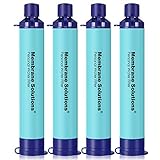
3. Membrane Solutions Personal Filter Straw S1 – Best for Taste
Membrane Solutions Personal Water Filter Straw S1 (Blue, 4 Pack)
2 ounces
5 stage filtration
500 ml per minute
1320 gallon capacity
Pros
- Compact straw fits any 28 mm bottle or pouch
- triple NSF certification including microplastic reduction
- activated carbon stage improves taste
- removable ends extend lifespan and allow backflushing
Cons
- Low flow output relative to pumped filters
- does not remove viruses or dissolved chemicals or TDS
- needs clear source water to avoid clogging
Almost every backcountry filter on this list leaves water tasting like the stream it came from. The Membrane Solutions S1 is the one that stands apart, because it stacks an activated carbon stage into a straw format to fix flavour rather than just clarity. That single stage makes a bigger difference to the drinking experience than any other spec on the sheet.
It is a 5 stage design: coarse filter, double PP cotton fiber, activated carbon, then a hollow fiber ultrafiltration core. Both ends unscrew, so you can backflush it and extend its life, and it screws onto any 28 mm threaded bottle, cup or glass. At 7.1 inches long and 2 ounces, it is a pack-lid item.
The certification is the standout detail. It is independently certified to NSF/ANSI 42, 372 and 401, and removes 99.9999% of total coliforms including E. coli at a 0.1 micron pore size with flow up to 500 ml per minute. Capacity is rated at 1320 gallons, or 5000 litres.
Because it does not lower TDS, the mineral balance of the water stays intact, which is a nice touch if you care about flat-tasting backcountry water. Reviewers treat this as a dependable hiking and emergency accessory, with the recurring note that it only delivers a thin stream.
That thin stream is the whole story. The S1 suits personal volumes, not camp water production, and it needs clear source water to avoid clogging.
Who should buy the S1?
Anyone whose main complaint about filtering is taste. If you have ever filtered a stream and grimaced, the carbon stage here is the reason to pick this one.
It is also a good second filter, because a straw in a pack lid is a cheap insurance policy against a failed main unit.
Where it falls short?
Low flow rules it out for groups or for making drinking water for camp cooking in quantity. It also does not remove viruses or dissolved contaminants.
The 1 year warranty is the shortest of the built-to-last options here.
4. Sawyer Squeeze SP129 – Best Value for Real Water Volume
Sawyer Products SP129 Squeeze Water Filtration System w/Two 32-Oz Squeeze Pouches, Straw, and Hydration Pack Adapter
71 g
1.7 L per minute
0.1 micron hollow fiber
Backflushable
Pros
- Fast 1.7 L per minute flow that works in gravity mode
- easy to backflush and restore flow after trips
- two 32 oz collapsible pouches roll down small
- accepts any 28 mm bottle with no proprietary lock-in
Cons
- Included pouches can wear or split with repeated folding
- must be kept from freezing to protect the membrane
- slower with silty or turbid water
This is the filter that shows up in the answer more than any other on backpacking forums. In r/hiking and r/CampingGear threads the Sawyer Squeeze is the most frequently recommended unit, praised for easy backflushing and inline versatility, and criticised mainly for freezing damage and the proprietary squeeze adapter. After working through the whole category, it is still the one I would hand most people.
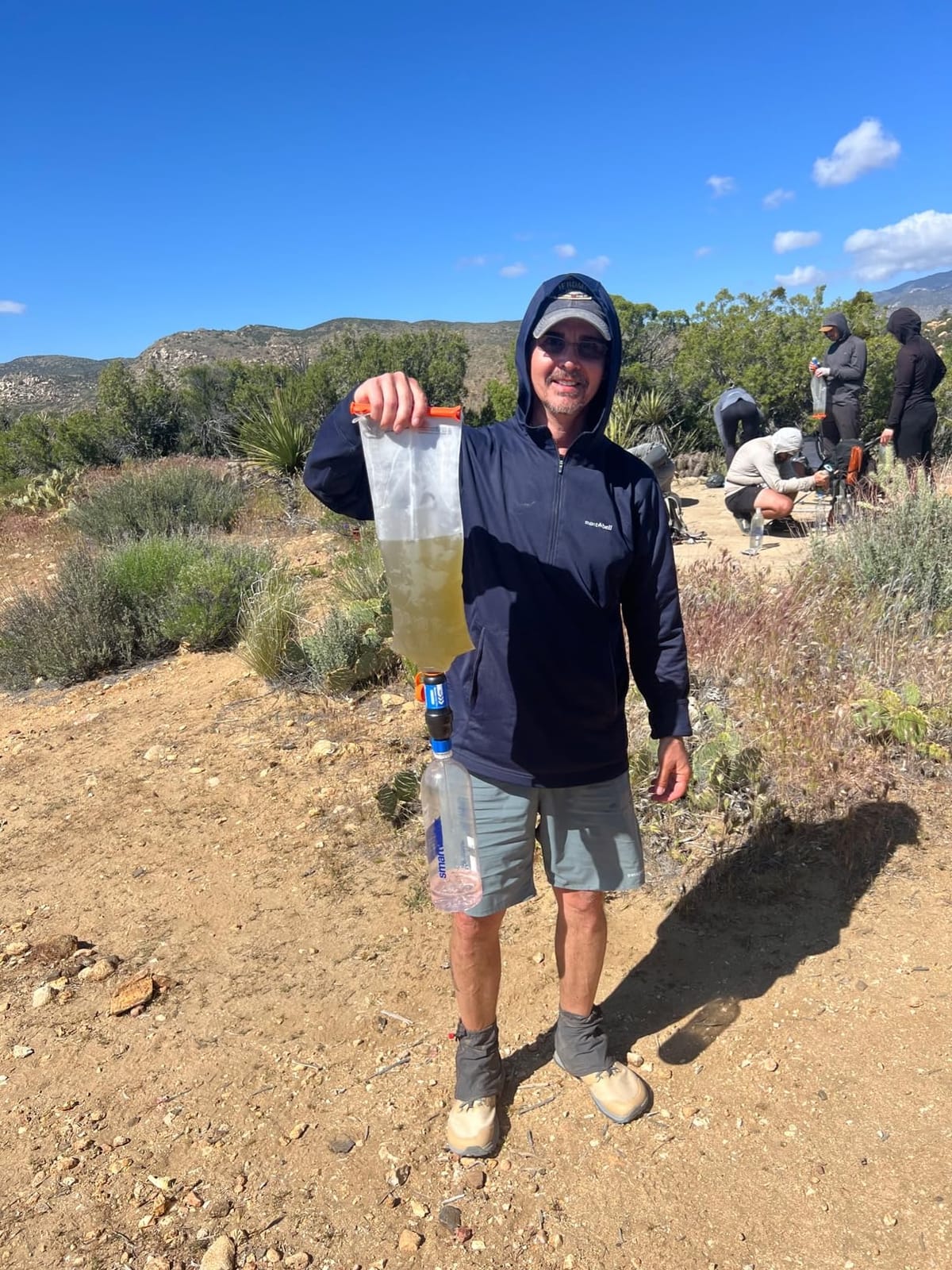
The reasoning is simple arithmetic. It moves 1.7 litres per minute, which is fast enough to fill a 32 ounce pouch in about half a minute, and it works in three ways: squeezed by hand, hung in gravity mode, or fitted inline to a 28 mm bottle or hydration pack hose. That third mode is the reason it is so popular on long trips, because you stop carrying dirty-water containers entirely.
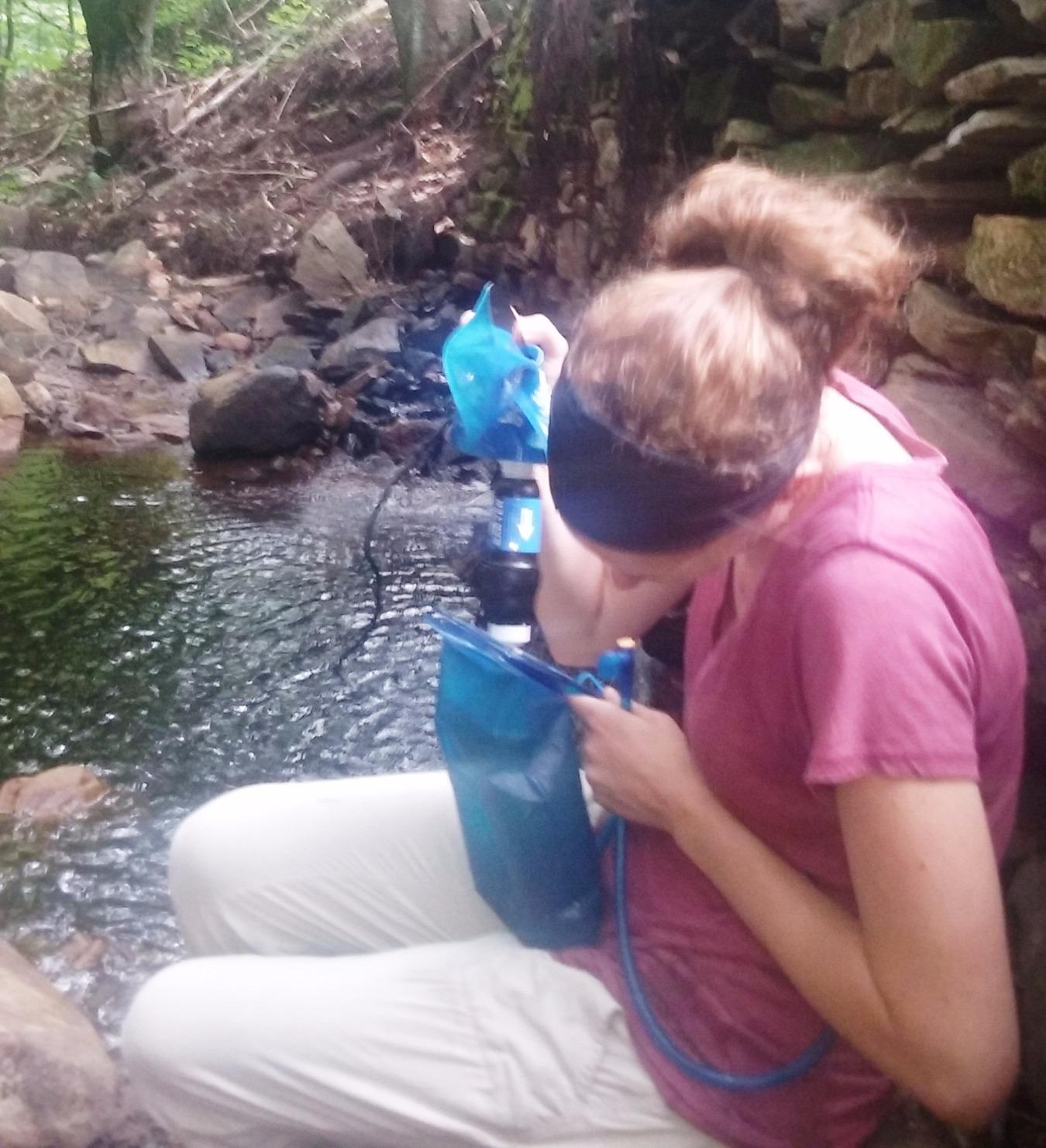
The element is a 0.1 micron absolute hollow fiber membrane rated at 2 ounces on its own. It removes 99.999999% of bacteria, 99.9999% of protozoa, plus cysts and sediment, and 100% of microplastics, with a manufacturer lifetime warranty against defects on the filter and a 100000 gallon capacity rating.
Every squeeze unit is individually tested three times by Sawyer before shipping. The kit ships with two reusable 32 oz collapsible pouches, a pop-up drinking straw, hydration pack adapters and a mesh storage bag, which is a genuinely complete package for the money you spend.
The catch is the same one that shows up in nearly every review: the pouches are the weak link, and they can wear or split with repeated folding. The membrane itself is not the fragile part, but it must be kept from freezing.
Silty water will slow it down noticeably, and a prefilter is the fix. Owners describe it as their primary trail filter, citing strong flow, easy backflushing and multi-day durability.
Who should buy the Squeeze?
Solo and pair backpackers who filter more than a few hundred millilitres a day, and anyone who wants one device that covers backflushing, gravity, squeeze and inline use. It is the best value on this list by a wide margin.
It also handles two people comfortably, which is where most straw filters stop working.
Where it falls short?
Freezing is the real deal-breaker. If your trip involves nights below freezing with the filter in a bottle, keep it in your jacket or sleep with it, and accept that freeze damage is not a warranty item.
It is also a filter, not a purifier, so viruses pass straight through it.
5. LifeStraw Peak Series – Budget Pick for a Bottle That Does More
LifeStraw Peak Series Personal Water Filter for Hiking, Camping, Travel, and Emergency Preparedness, 1 Pack, Mountain Blue
0.1 kg
2.5 L per minute
1000 gallon capacity
Removable threaded cap
Pros
- Lightweight and compact enough for pocket or pack lid
- drink straight from source or screw onto a standard bottle
- good flow from a re-engineered membrane that resists silt clogging
- long 1000 gallon service life
Cons
- Not suitable for viruses or chemical contaminants
- best performance with clear water as murky sources need pre-filtration
- does not reduce dissolved minerals or TDS
The Peak Series is the version of the classic straw that got the engineering right. Where the base model can only be sipped from, the Peak has a removable threaded bottom cap, so it screws onto a standard bottle or a gravity hose and filters a proper volume rather than a mouthful.
At 2.5 litres per minute it out-flows most straws on this list, which comes down to a re-engineered membrane designed to resist silt clogging. That single design change is what separates it from the cheaper straws, and it is the reason flow holds up when a source is a bit cloudy.
Filtration claims are the same family as the base model: 99.999999% of bacteria including E. coli and Salmonella, 99.999% of parasites including Giardia and Cryptosporidium, and 99.999% of microplastics. Membrane life is rated at 1000 gallons, or 4000 litres, roughly five years of daily use.
Construction is leak-proof and drop-resistant, and the whole thing is 0.1 kg and 10.4 inches long, which packs against a bottle without a dedicated pocket. A manufacturer warranty covers defects.
Users call it a peace-of-mind travel and go-bag companion, with the most common limitation being performance in murky water where pre-filtering is advisable. It does not reduce dissolved minerals or TDS, so it will not improve flat, hard municipal water.
It is a filter rather than a purifier, so viruses are not addressed.
Who should buy the Peak Series?
Anyone who wants one device for day hiking, travel and trail use without carrying a separate reservoir. The 1000 gallon rating means most people will never think about the replacement.
It is also a strong secondary filter for a group trip, since each person can carry one and filter independently.
Where it falls short?
It is a straw, so flow falls off once you are trying to fill bottles for a whole camp, and murky sources still need pre-filtering.
No virus coverage, no chemical treatment, no TDS reduction.
6. Survivor Filter PRO – Most Versatile for Virus Coverage
Survivor Filter PRO Portable Water Filter for Camping, Survival & Emergency
12.8 ounces
0.01 micron ultra filter
500 ml per minute
Three replaceable stages
Pros
- 0.01 micron ultra filtration offers unusually fine contaminant removal
- 500 ml per minute flow with no batteries or charging
- three separately replaceable filter elements reduce long-run cost
- easy to backflush with the included syringe
Cons
- Heavy at 12.8 ounces
- pump does not attach directly to a bottle which complicates two-handed use in streams
- carbon stage is the shortest-lived element and needs frequent replacement
The Survivor Filter PRO is the unit in this roundup that can be called a purifier rather than a filter. Its three stages are a 0.1 micron pre-filter, an activated carbon stage, and a 0.01 micron ultra filter, and the manufacturer states it removes 99.999% of tested virus, Staph, bacteria and protozoa while reducing heavy metals per NSF/ANSI standards.
That distinction matters in exactly one situation: where human or animal waste contamination is plausible, including international travel and high-traffic backcountry corridors in regions with poor sanitation. Everywhere else a hollow fiber filter is enough, and this unit’s extra capability is dead weight you may never need.
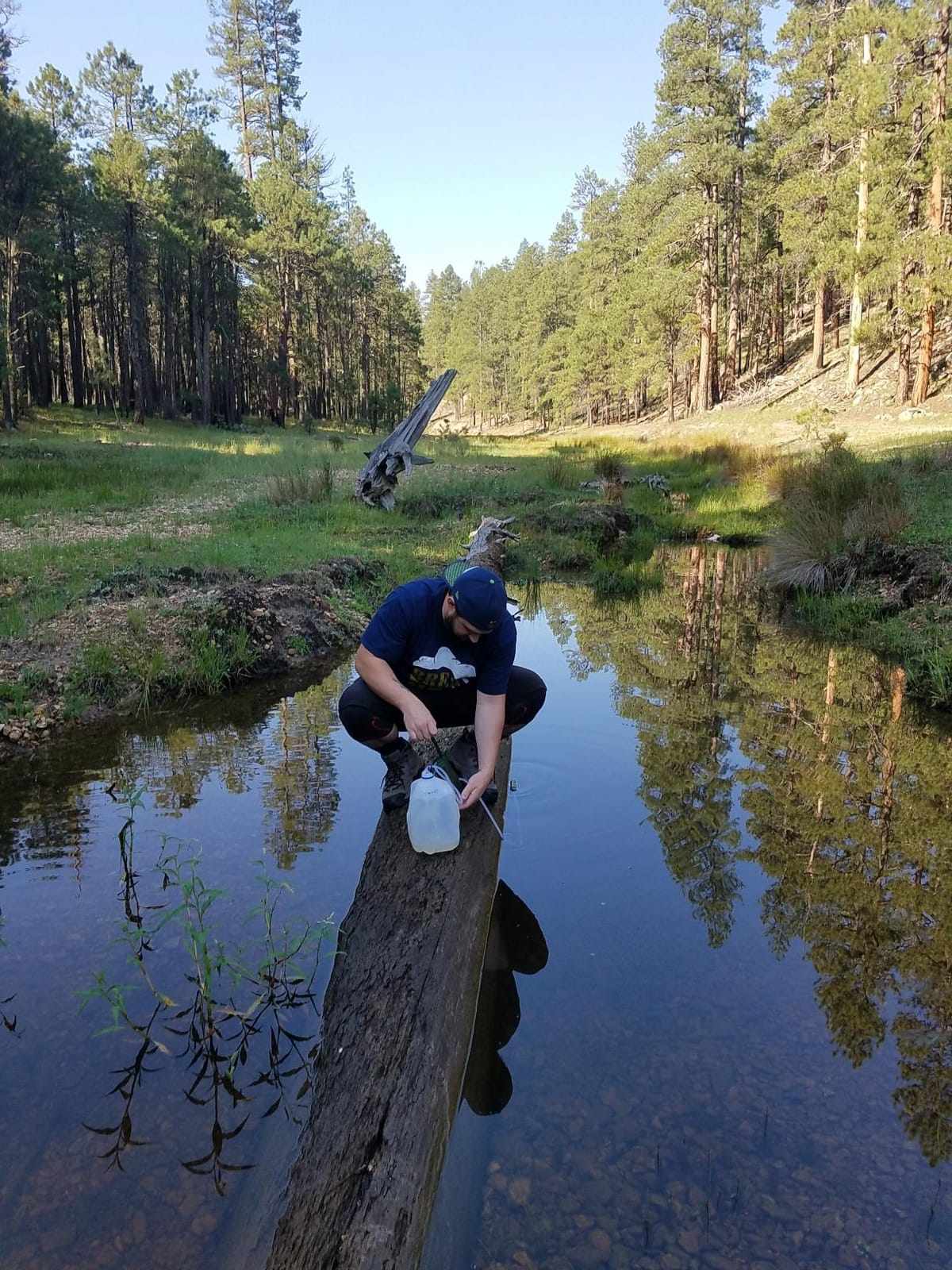
The design is genuinely well thought out for long-term ownership. Each of the three filter elements is independently replaceable and reusable, and the kit includes a back-washing syringe, an inlet hose, an outlet hose, a hose clip, a pre-filter, a carrying case, and a protective sleeve that doubles as a drinking cup. You get 100000 litres of rated capacity and a lifetime manufacturer defect warranty.
Flow is 500 ml per minute on a manual hand pump, with no batteries and no charging. That is slower than the squeeze filters here, but it is steady, and the pump action does not fatigue the way squeezing does after an hour of camp water production.
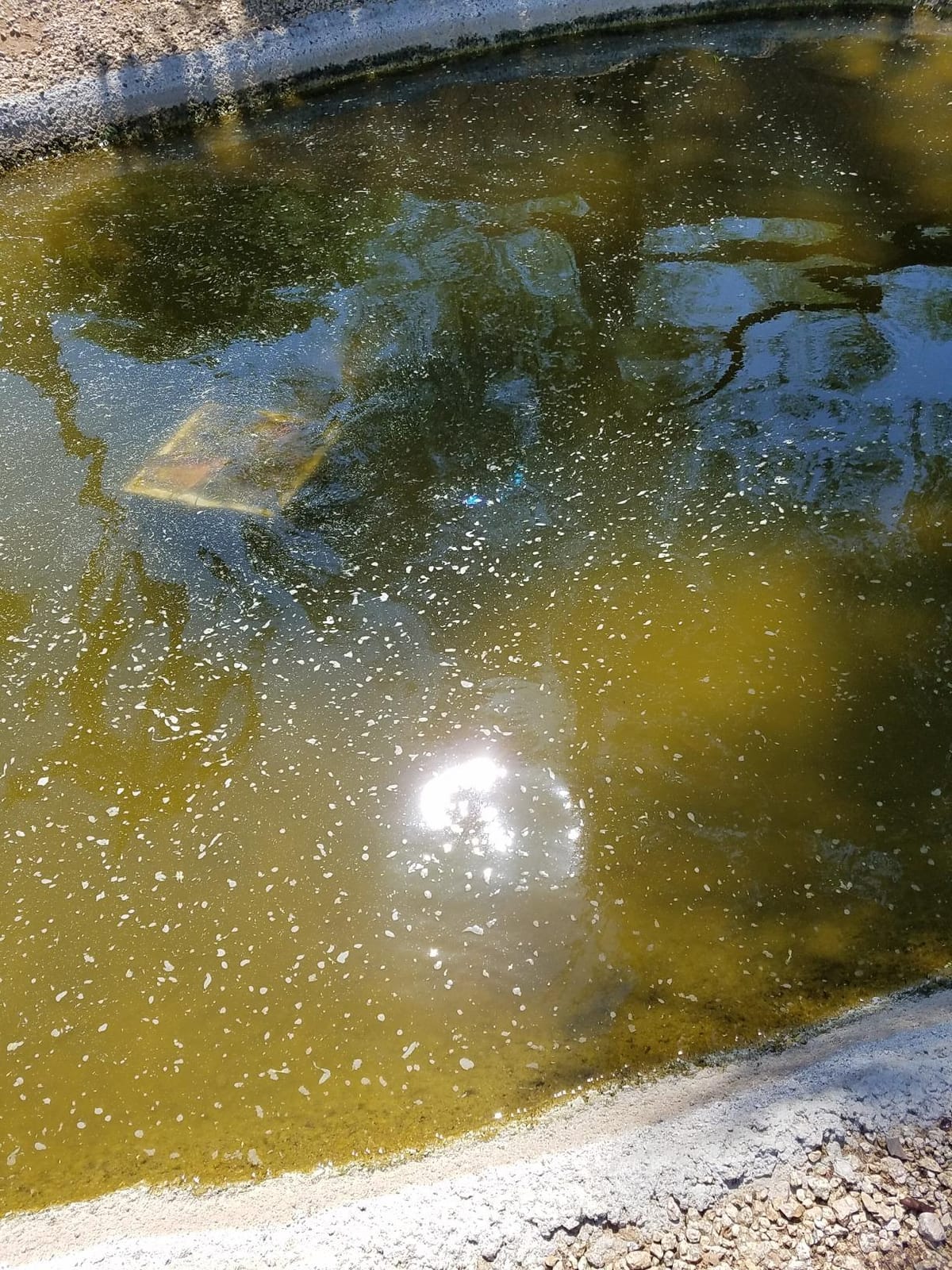
It also produces clear, good-tasting water even from algae-heavy sources, which the carbon stage handles. The operating range is 32 to 120 degrees F, so freezing is outside the spec sheet entirely.
Owners treat it as an emergency-prep and household backup. The recurring gripes are pump ergonomics in the field, the weight, and an internal outlet cap that some owners report detaching. The intake hose can also float on the surface in moving current, so hold it down.
Who should buy the PRO?
Travellers heading to regions with uncertain sanitation, households building a go-bag, and anyone who wants one device that covers both filtering and purifying without carrying tablets as a separate backup.
It is also a strong home or vehicle kit, where 12.8 ounces matters far less than it does at a trailhead.
Where it falls short?
At 12.8 ounces it is among the heavier units here, second only to a full pump setup, and it does not screw onto a bottle, so filling one takes two hands and a stream bank.
The carbon stage is the shortest-lived of the three and needs the most frequent replacement, which adds a real long-run cost.
7. Katadyn BeFree 1L – Best for Fast Flow in a Bottle
Katadyn BeFree AC 2-Stage Filter Collapsible Travel Water Bottle 1L, Clear
2.24 ounces
2 L per minute
0.1 micron hollow fiber
Collapsible bottle
Pros
- Collapses flat and packs down smaller than rigid bottles
- fills a 1 litre bottle quickly at roughly 2 L per minute
- no pump chemicals or setup required
- simple shake to clean maintenance in the field
Cons
- Hollow fiber membrane can clog in silty or turbid water
- filter cartridge is not field replaceable in many regions
- does not treat viruses or dissolved contaminants
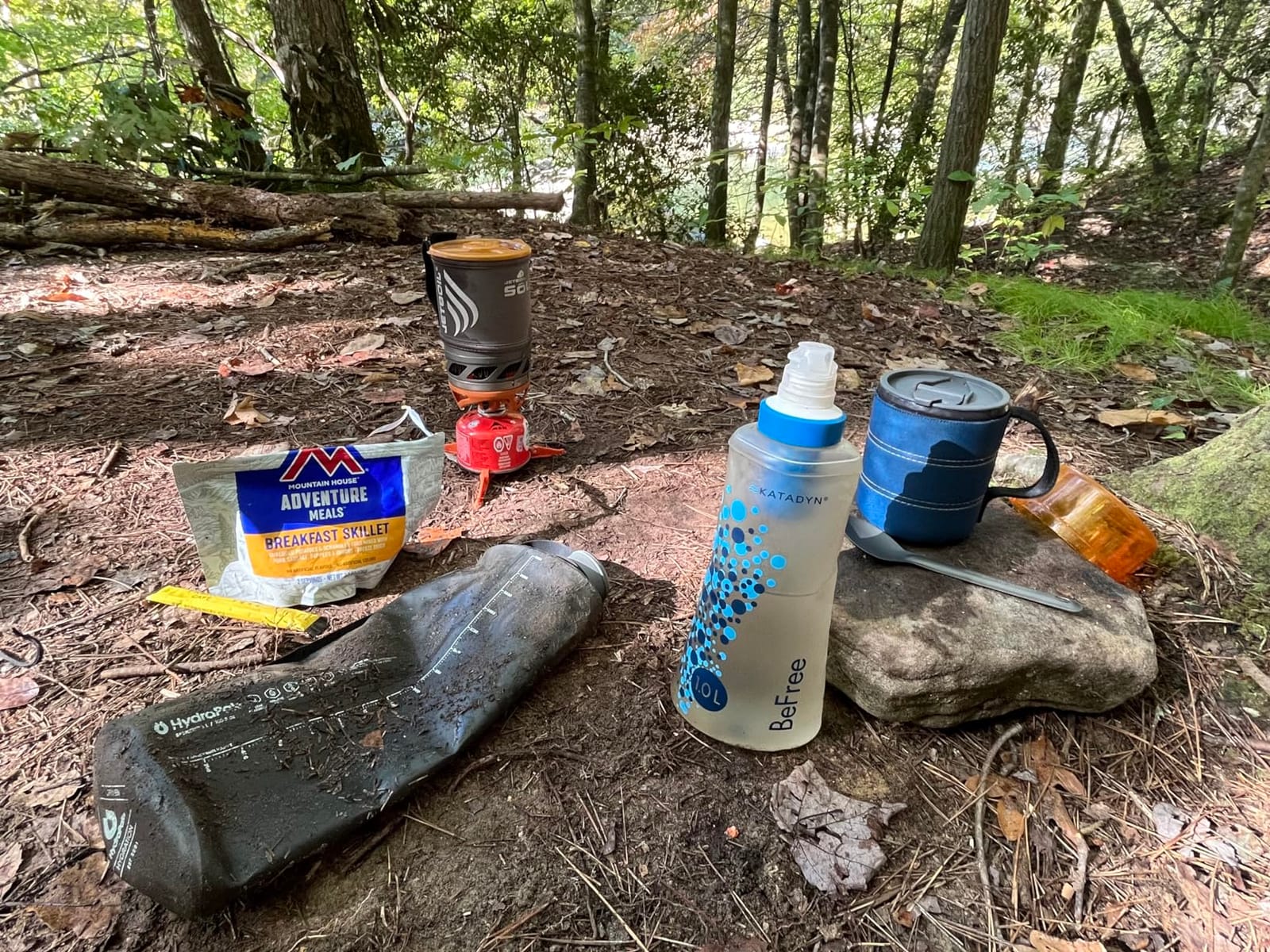
In r/backpacking threads the recurring comparison is Sawyer Squeeze versus Katadyn BeFree, and the honest answer is that the BeFree wins on flow while the Squeeze wins on flexibility. At 2 litres per minute the BeFree fills its own 1 litre bottle in about half a minute, which makes it one of the fastest complete bottle systems in this roundup.
The 1 litre bottle collapses flat for packing, so it takes up a fraction of the space of a rigid bottle when empty. At 2.24 ounces it is one of the lightest complete filtering systems on the list, and the whole thing is BPA-free throughout from a brand that has made water treatment gear since 1928.
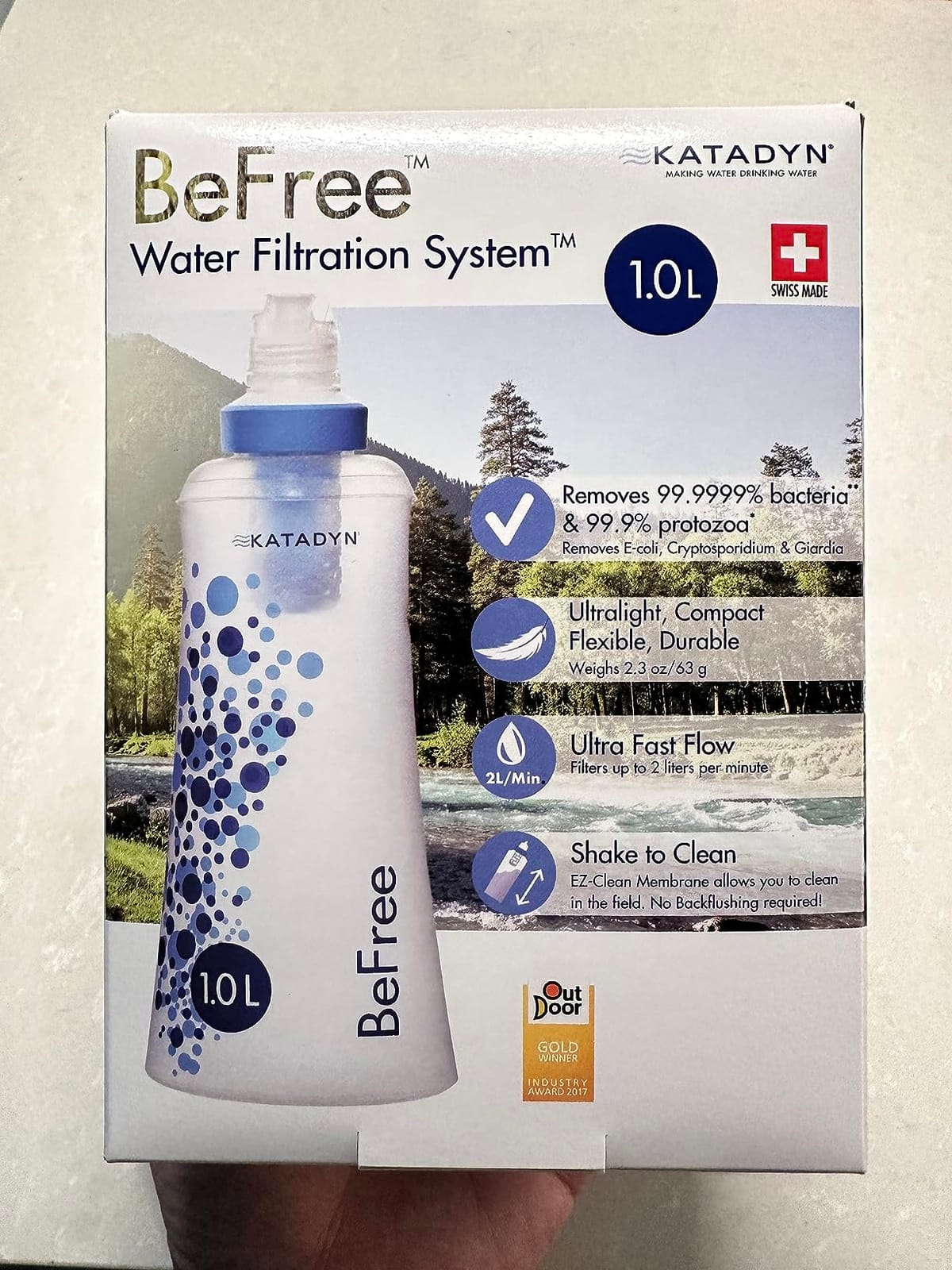
Filtration is a 0.1 micron hollow fiber membrane rated to 1000 litres, with a modular activated carbon filter included for taste improvement. The carbon module is a nice inclusion because most squeeze kits leave taste untreated.
Maintenance is unusually simple. Rather than a syringe or plunger, you clean it by shaking or swishing it in water, with no disassembly and no backflush tools to lose. That simplicity is genuinely useful on a trip where you will not remember the maintenance sequence.
The core weakness is the same one reviewers name most: the hollow fiber membrane clogs in silty or turbid water, and the cartridge is not field-replaceable in many regions. If a source is cloudy, pre-filter or move upstream.
It does not treat viruses or dissolved contaminants, so it is not a travel-purifying solution.
Who should buy the BeFree?
Hikers who prioritise flow and packability over anything else, and anyone who wants a bottle and a filter as one object rather than a filter plus separate containers.
The shake-to-clean method also suits people who will not do a proper backflush, which is most people most of the time.
Where it falls short?
A non-replaceable cartridge in a region where you cannot buy a spare is a genuine single point of failure on a long international trip.
No virus coverage, and the membrane will struggle with anything other than reasonably clear water.
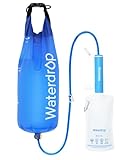
8. Waterdrop Gravity Water Filter Kit – Best Complete Gravity Setup
Waterdrop Gravity Water Filter Straw, Camping Water Filter, 0.1 Micron
4.64 ounces
0.1 micron membrane
700 ml per minute
1.5 gallon gravity bag
Pros
- Kit includes a 1.5 gallon gravity bag and a 16 oz pouch
- high 700 ml per minute flow for a straw format filter
- backflush function restores flow when it slows
- both ends disassemble for flexible bag or bottle hookup
Cons
- 30 day limited filter warranty is short for a backpacking tool
- hollow fiber slows noticeably in silty water
- does not remove viruses salt or dissolved TDS
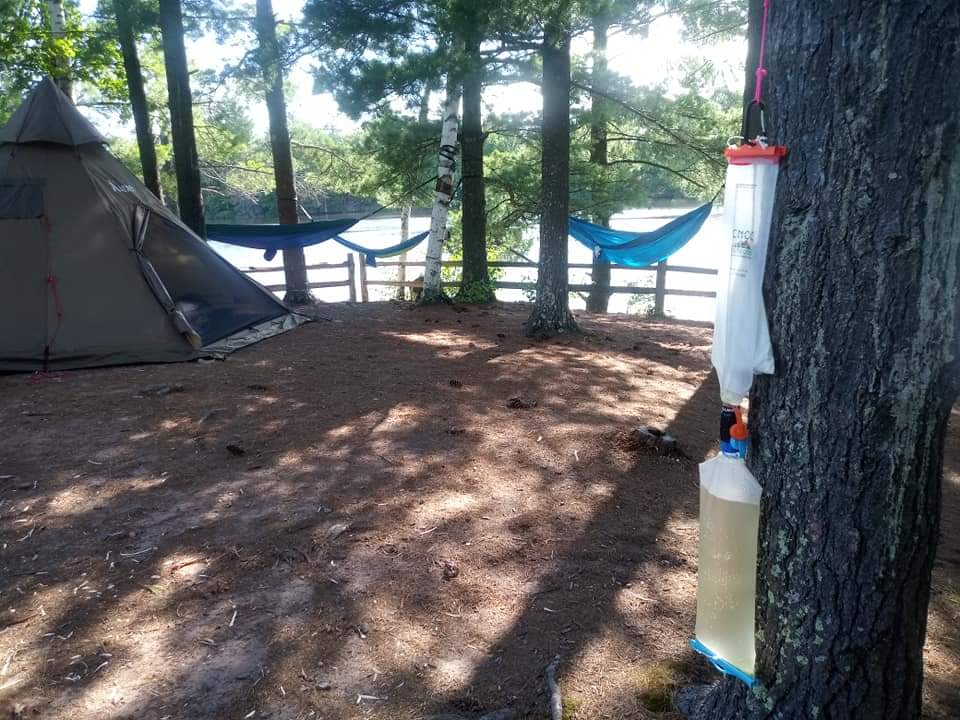
Most straw filters ship alone. This one ships as a system, with a 0.1 micron ultrafiltration membrane straw, a 1.5 gallon gravity-fed bag and a 16 oz squeeze pouch in the box, so you have a complete gravity setup on the first trip without buying anything else.
The bag is the reason this earns a spot on a group list. At 1.5 gallons it holds roughly eleven 500 ml bottles, which means you can hang it at camp, fill a run of bottles overnight, and stop each person from filtering their own drink one at a time. That is exactly the capacity problem hikers raise most often about small filters.
Flow is up to 700 ml per minute, which is higher than most straw-format units at this price point, and the membrane reduces chlorine, particulates, sediment, sand and dirt. Both ends disassemble, so you can connect the straw to the gravity bag, to bottles, or to 27.5 mm threaded pop bottles for backflushing.
Capacity is rated at 1400 gallons, or 5300 litres, and there is a backwash function that keeps the interior membrane clean and recyclable rather than disposable. Maximum supported TDS is 300 ppm.
The problem is the warranty. A 30 day limited filter warranty is short for a tool that is supposed to last years, and it is the one specification here that made me hesitate. Reviewers make the same point alongside reduced throughput in sediment-heavy water.
There is no virus removal, no salt water capability, and no dissolved TDS reduction.

Who should buy the Waterdrop kit?
Groups and families who want camp water production without each person squeezing their own. The bundled bag makes it a two-minute setup at a lake or slow-moving stream.
It also works well as a household or vehicle kit because the components are all standard sizes.
Where it falls short?
The 30 day warranty is the weak point, and hollow fiber flow still drops noticeably in silty water.
Viruses, salt water and dissolved solids all pass through, so this is not an international travel solution.
9. Sawyer Micro Squeeze SP2129 – Best Compact Full-Body System
Sawyer Products SP2129 Micro Squeeze Water Filtration System, 1 Pack, Black/Blue
53 g
1400 ml per minute
0.1 micron hollow fiber
10 year shelf life
Pros
- Very small 2 ounce filter with fast 1400 ml per minute flow
- backflush coupler and plunger included in the kit
- spare gasket included which is a common failure point for cheaper kits
- works with 28 mm bottles and standard pouches
Cons
- Slower than the full-size Squeeze in sustained high volume use
- hollow fiber clogs in turbid water without a prefilter
- must be protected from freezing
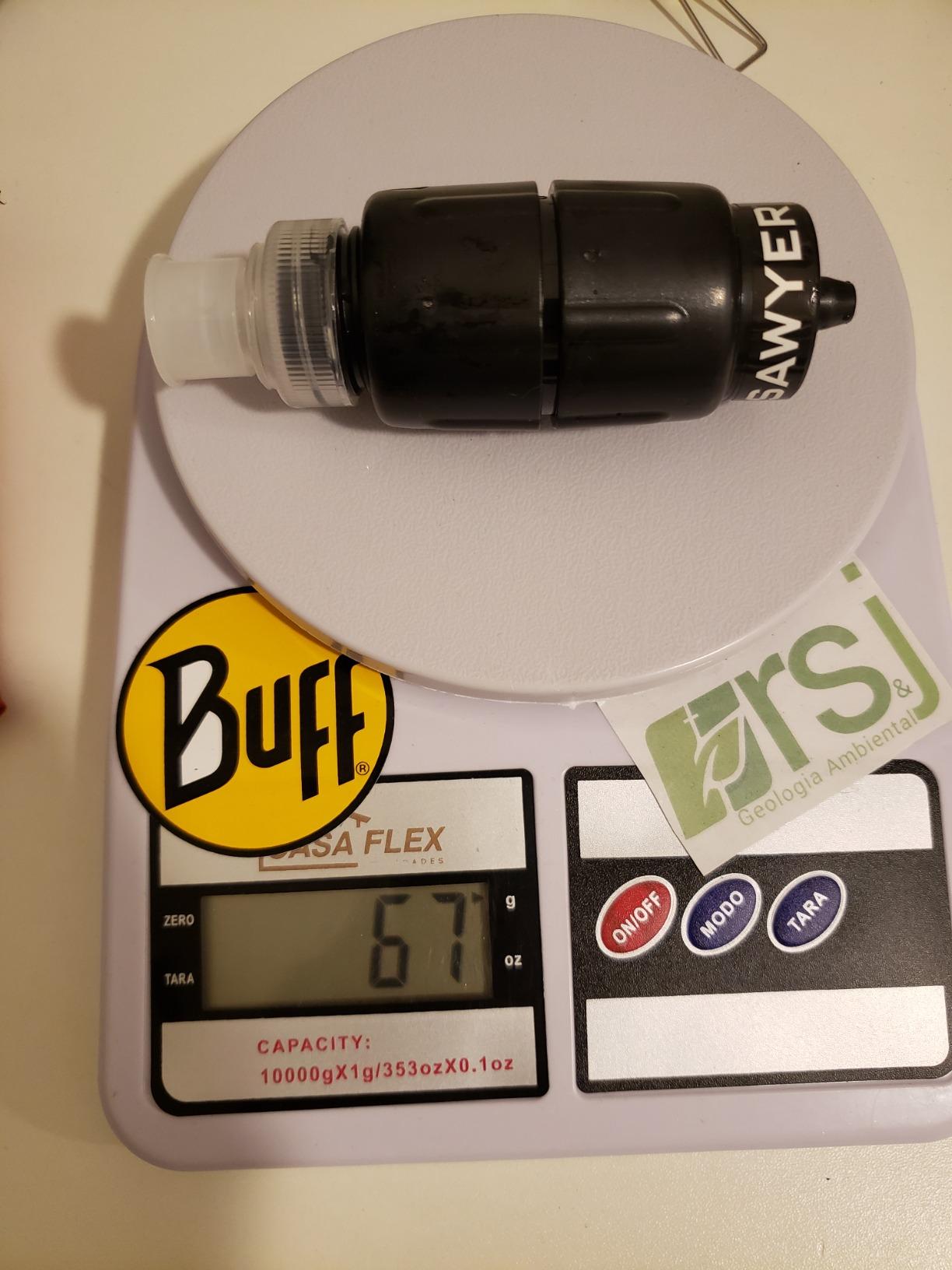
The Micro Squeeze sits between a straw and a full squeeze system, and that middle position turns out to be useful. At 53 g it gives you 1400 ml per minute of flow, which is fast enough to fill a 32 oz pouch in well under a minute, in a body small enough to sit in a shirt pocket.
What sets it apart from cheaper kits is the small parts. The box includes a squeeze filter, a 32 oz reusable pouch, a cleaning coupling, a backwash plunger, a drinking straw and a spare gasket. That spare gasket is the detail I notice, because gaskets are the most common failure point on inline setups and forum users specifically warn against over-tightening them into failure.
The element is a 0.1 micron absolute inline hollow fiber filter, removing 99.99999% of bacteria including Salmonella, Cholera and E. coli, 99.9999% of protozoa including Giardia and Cryptosporidium, and 100% of microplastics. Capacity is rated to 100000 gallons with a 10 year shelf life and a maximum supported TDS of 500 ppm.
Every filter is individually tested three times by Sawyer, and it works with 28 mm bottles and standard pouches, so you are not locked into one container system.
Owners position it as a compact middle ground and like that the cleaning kit is complete. The limitations are throughput relative to the SP129 in sustained high-volume use, clogging in turbid sources without a prefilter, and the same freeze sensitivity as every Sawyer hollow fiber in this list.
It is a filter, so viruses pass through.
Who should buy the Micro Squeeze?
Packable-trip hikers who want a real squeeze system rather than a straw, but whose trips are too short or too solo to justify the full-size kit. The included cleaning tools make it a good first filter.
It is also a solid backup to carry alongside a primary, given the small size.
Where it falls short?
Sustained camp water production for a group will outrun it, and turbid sources need a prefilter.
Protect it from freezing, and do not tighten inline fittings hard enough to crush the gasket.
10. Survivor Filter Squeeze Kit – Best for Emergency Storage
Survivor Filter Squeeze Kit Water Filter Straw & 2 Collapsible Bottles 32oz
3.5 ounces
0.05 micron three stage
100000 litre rating
No expiration
Pros
- Three stage 0.05 micron system improves both clarity and taste
- ultra filter lab tested to 100000 litres far beyond typical survival straws
- no expiration so it suits indefinite emergency kit storage
- includes two 32 oz collapsible canteens and six spare pre-filter pads
Cons
- Cotton pre-filter pads need replacing as they clog
- slower than a squeeze pouch in continuous high volume use
- cannot treat salt water
The defining feature here is no expiration. Disposable survival straws have a shelf life and lose potency; this one is designed to sit in a garage or a go-bag for years and still work, which is why it is the pick for anyone building an emergency kit rather than a backpacking kit.
It is a three stage system: a cotton pre-filter pad, a long-life ultra filter and an activated carbon mouthpiece, filtering at 0.05 micron. The listed claims cover viruses, bacteria, protozoa, chemicals, sediment, lead and mercury, and the unit is independently tested in the USA to NSF/ANSI 53, 307 and 401. The whole assembly is 3.5 ounces and 7 inches long.
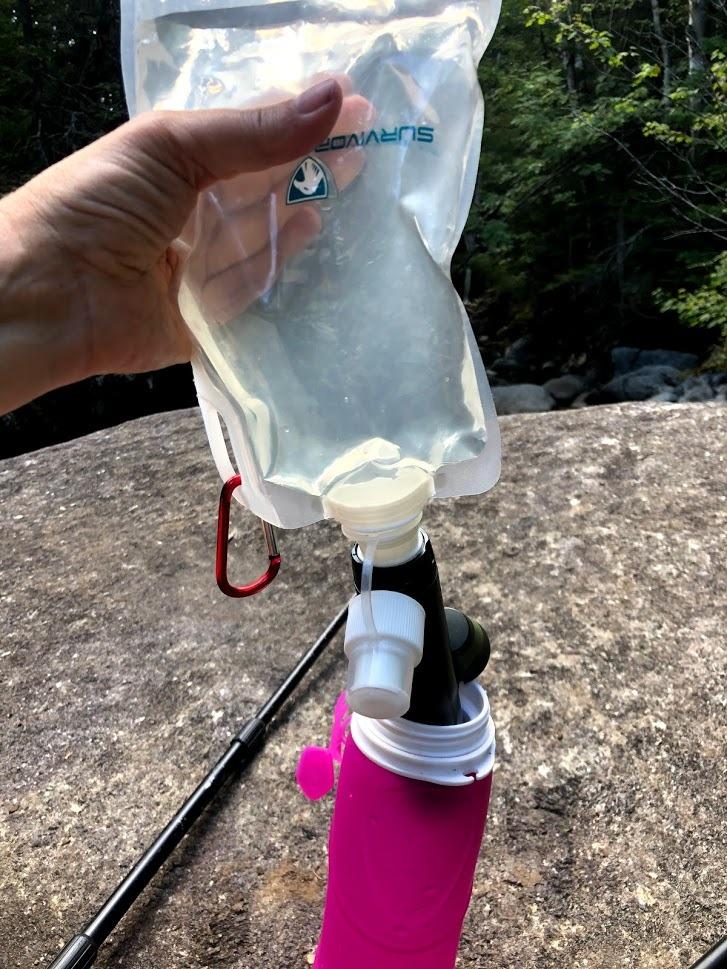
The kit includes two 32 oz collapsible canteens and six spare cotton pre-filter pads, so you have a full drink-and-store setup rather than a bare straw. Flow is 500 ml per minute and the ultra filter is lab tested to 100000 litres, or 26417 gallons.
It fits most 1.1 inch bottles as well as the included canteens, so the same straw works for trail water and for tap water at home, which is genuinely useful given the activated carbon mouthpiece improves taste.
Owners highlight the no-expiration design and three stage build as clear advantages over disposable survival straws. The recurring notes are that the cotton pads need swapping as they clog and that the flow rate is closer to a straw than a squeeze pouch, so it is not a camp water production tool.
It cannot treat salt water.
Who should buy the Squeeze Kit?
Households, drivers and campers building a kit that has to sit unused for years and still be there when needed. The included canteens make it usable for car camping and power outages, not just hiking.
It is also a good grab-and-go unit for travel where water sources are uncertain.
Where it falls short?
The cotton pre-filter pads are consumables and need replacing as they clog, so it is not a zero-maintenance device.
Flow is slow for continuous high-volume use, and salt water is out of scope entirely.
11. Katadyn Hiker Pro – Best for High-Volume Pump Filtering
Katadyn Hiker Pro Transparent Hand Pump Water Filter
11.2 ounces
1 L per minute pump
0.2 micron glass fiber
1150 litre rating
Pros
- Fast 1 litre per minute hand pump fills bottles quickly
- transparent housing shows exactly when the cartridge needs cleaning
- intake pre-filter keeps debris out and extends cartridge life
- smooth consistent pump action that multiple users can handle
Cons
- Replacement cartridges are expensive relative to the unit
- pleated glass fiber wears faster in harsh silty water
- hoses add bulk compared to straw style filters
The Hiker Pro is the pump answer to a squeeze filter’s limits. It delivers a full litre of clean water per minute on a hand crank, and the crank action does not fatigue your hands the way squeezing does after an hour of making camp water.
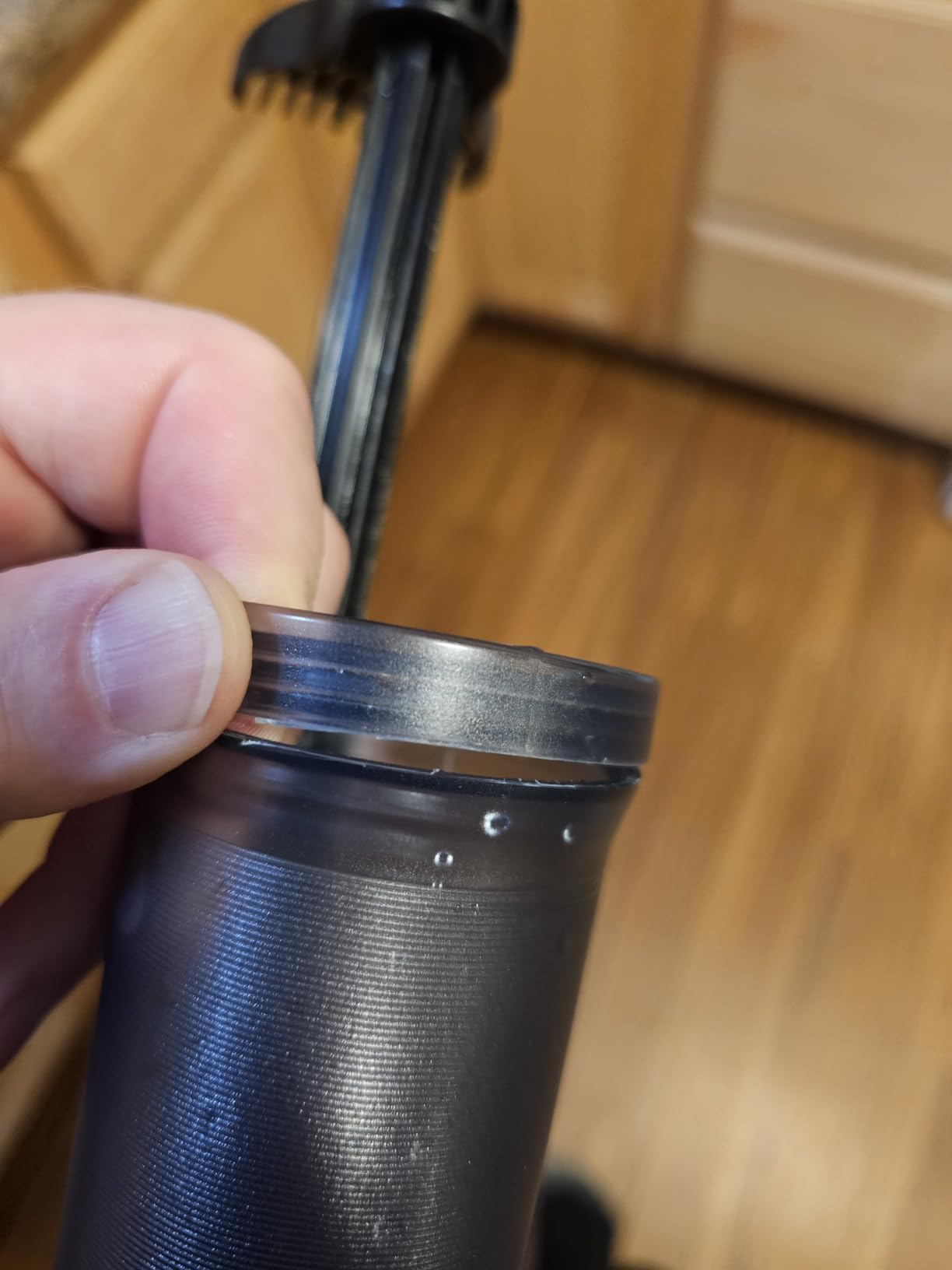
The design detail I like most is the transparent body. You can see the pleated glass fiber cartridge and know when it needs cleaning or replacing, rather than guessing from flow rate alone. That turns cartridge maintenance from guesswork into a two-second check.
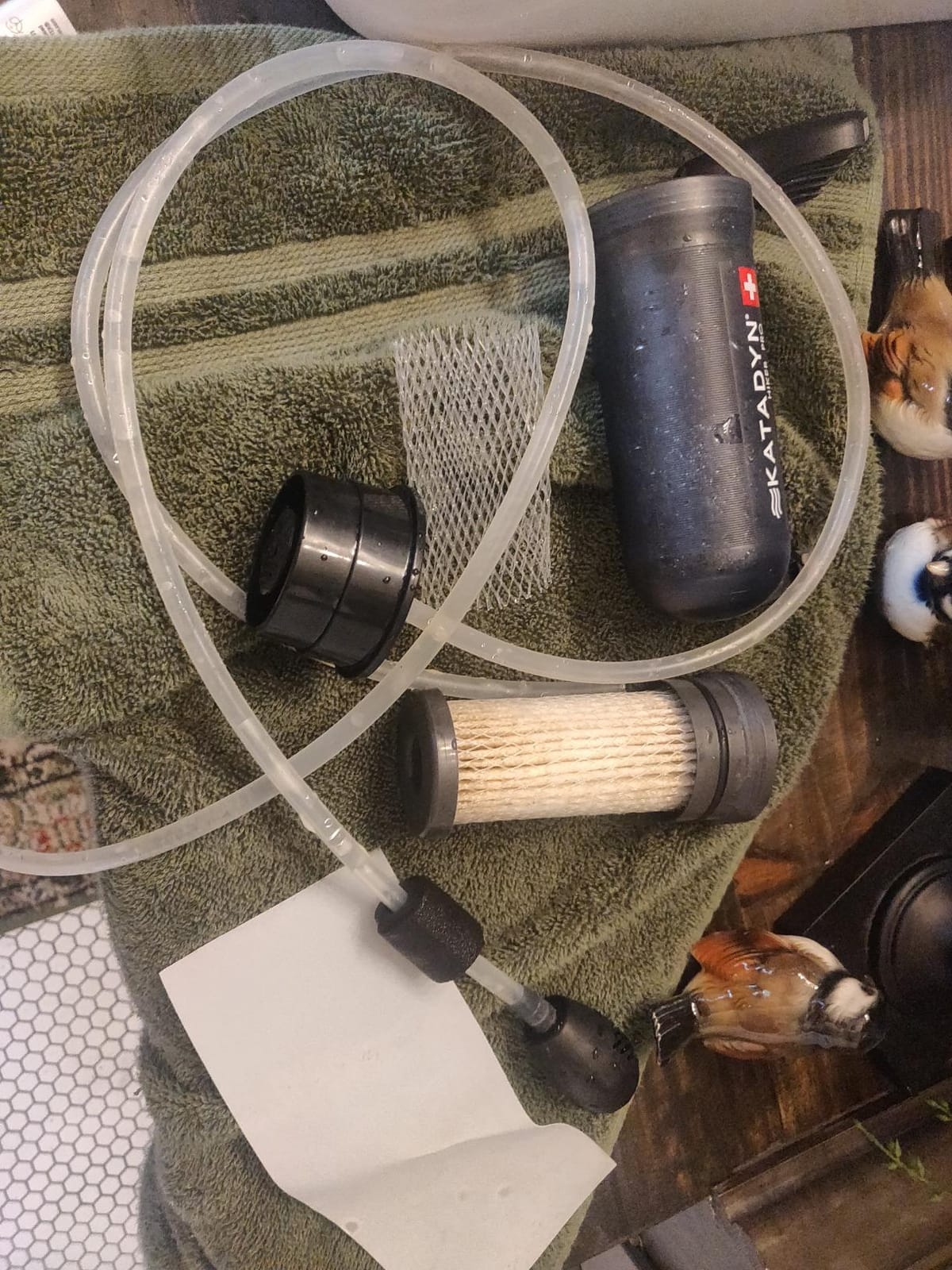
Filtration is a 0.2 micron pleated glass fiber cartridge with activated carbon granules for taste, rated to 1150 litres. The intake hose carries a modular pre-filter, and a cleanable filter protector sits downstream, both of which extend cartridge life by keeping debris away from the element.
Quick-connect fittings and an Easy Fill bottle adapter make it work with bottles and hydration packs, and a hydration system connector for quarter-inch ports is included. A carry bag and the cleanable filter protector come in the box. Total weight is 11.2 ounces.
Long-term users describe it as a durable, fast pump that survives years of trail use, with the transparent body and intake pre-filter singled out as practical wins. The dominant complaint is the cost of replacement cartridges relative to the unit price, which is the main long-run ownership consideration.
Pleated glass fiber also wears faster in harsh, silty water, and the hoses add bulk next to a straw.
Who should buy the Hiker Pro?
Groups, families and anyone filtering several litres a day who wants a pump that keeps going without a battery and without a sore hand. The Easy Fill adapter makes filling bottles at a source quick.
It also suits base camp setups where a heavier unit is irrelevant.
Where it falls short?
Replacement cartridges are among the most expensive ongoing consumables in this roundup, and the real cost of ownership only shows up after the first change.
It is a filter rather than a purifier, and the hoses make it a poor fit for ultralight packing.
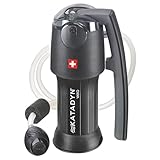
12. Katadyn Vario – Best for Dirty Water and Group Camp Production
Katadyn Vario Dual Mode Hand Pump Continuous Water Filter for Backcountry
Dual piston pump
2 L per minute
0.2 micron with ceramic pre-filter
530 gallon rating
Pros
- Pumps on both strokes so it moves water faster than single stroke pumps
- dual mode dial lets you trade flow for cartridge life in dirty water
- cleanable ceramic pre-filter protects the main element in silt
- screws directly onto Nalgene style bottles and hydration bladders
Cons
- Bulky and the heaviest unit in this roundup
- ceramic and carbon elements are expensive to replace
- takes several days to air dry after cleaning before storage
- occasional small leaks and reported pump or inlet port failures
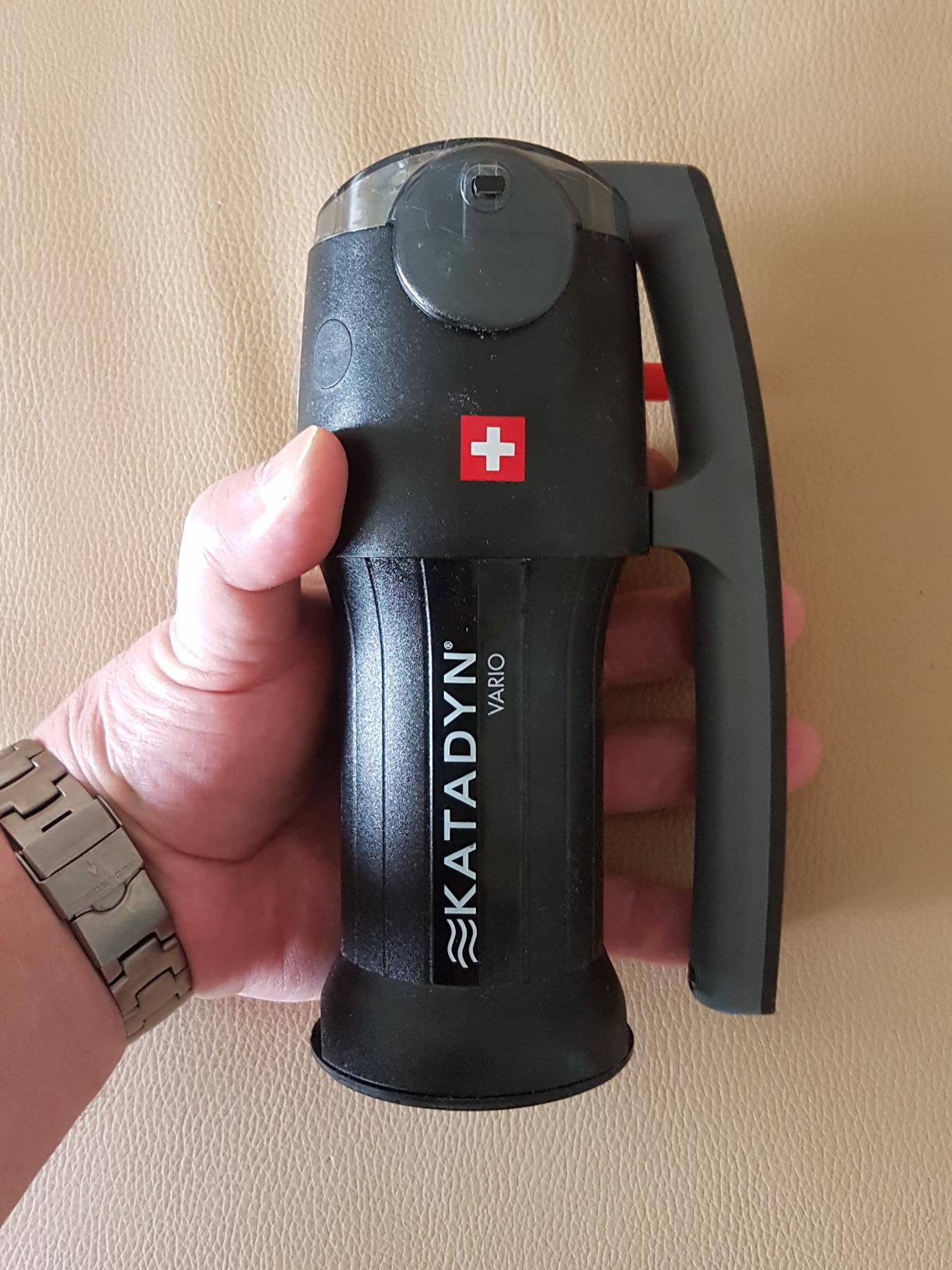
The Vario is the fastest pump in this roundup, and the reason is mechanical rather than marketing. It uses a dual piston design that pumps on both the push and the pull stroke, so it moves water continuously instead of filling on one stroke and idling on the other. Output is up to 2 litres per minute.
The second thing that makes it good in bad water is the dial. A single control switches between Longer Life mode, which routes water through a ceramic pre-filter, and Faster Flow mode, which skips some of that stage. When you are pulling from a silty source you trade speed for cartridge protection, and when you are filling bottles at a clear lake you go the other way.
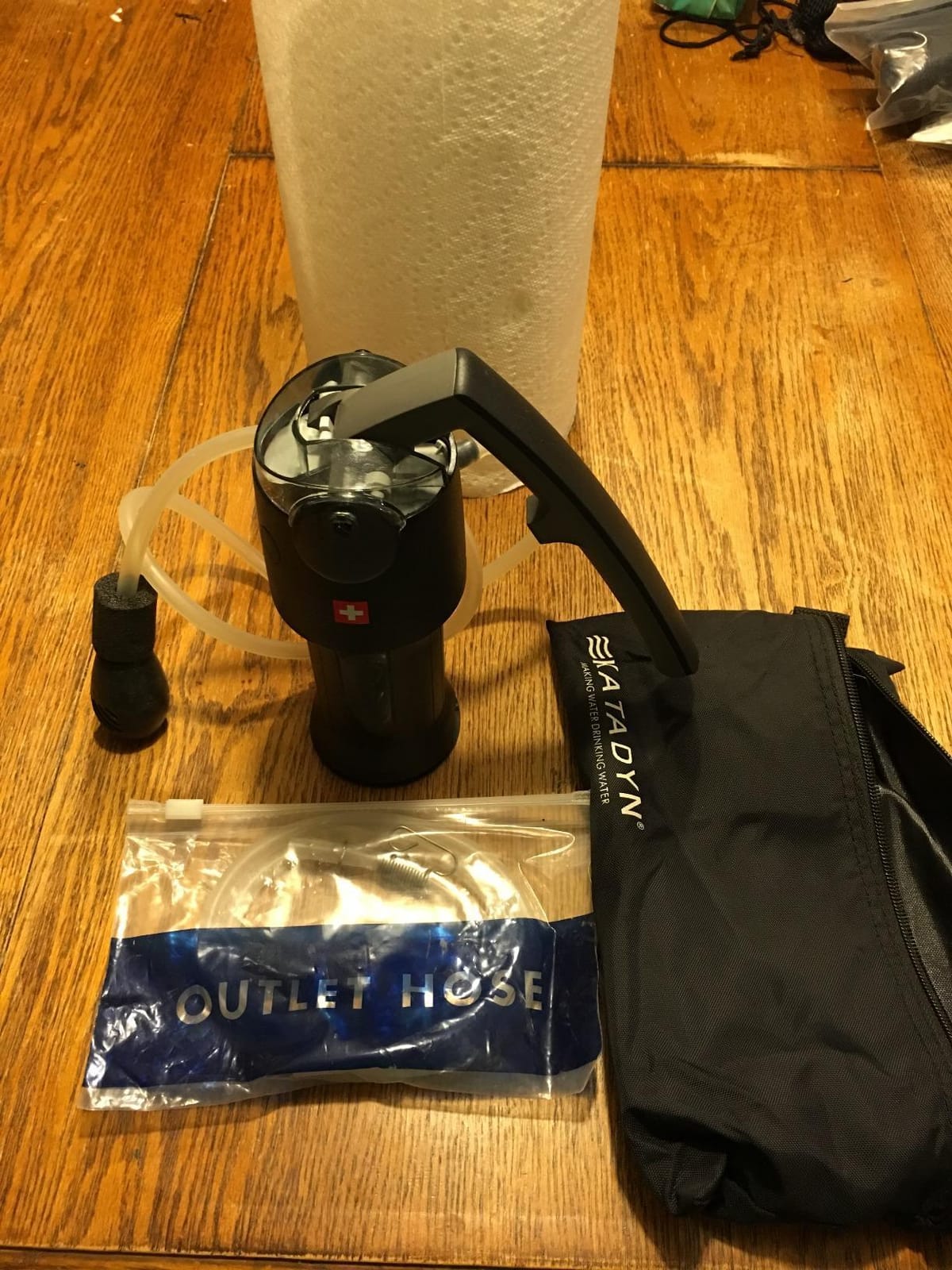
Under the hood it is a three stage 0.2 micron glass fiber system with a cleanable ceramic pre-filter and activated carbon granules, rated to 530 gallons or 2000 litres. The integrated Nalgene-compatible base screws directly onto bottles and bladders, which is a genuinely useful detail at camp.
The kit includes the filter unit, an intake hose with float, an output hose with clip, the integrated base, a cleanable ceramic disc, a cleaning pad and a carry bag. The intake hose float keeps the intake from sitting at the surface, which solves a real problem in moving current.
Reviewers who pump regularly for groups praise the dual piston speed and the ceramic pre-filter durability in cloudy water. The recurring trade-offs are bulk, pricey replacement ceramic and carbon elements, and the fact that the ceramic disc needs several days to air dry after cleaning before you put it away.
A few owners report small leaks and pump or inlet port failures over the long term. The manufacturer warranty runs 1 year from date of purchase.
Who should buy the Vario?
Group trips, base camps and desert or agricultural-land itineraries where the water is likely to be cloudy and volume is measured in litres per person per day. If you are filtering silty water, this is the pump built for it.
The Nalgene-compatible base also makes it fast at camp when you are filling bottles rather than drinking on the move.
Where it falls short?
It is the heaviest unit in this roundup, so it is a poor choice for solo fast-and-light travel, and the listed weight is 1.7 pounds.
Ceramic and carbon replacements are expensive, and the multi-day dry-out after cleaning is easy to forget in the field.
How Backpacking Water Filters Work?
Almost every filter in this roundup uses the same core technology, a hollow fiber membrane. A hollow fiber membrane is a bundle of tiny hollow tubes whose walls have microscopic pores, and the membrane works by physical size exclusion: anything larger than the pore is trapped on the outside while clean water passes through the wall into the tube.
0.1 micron absolute is the number that matters most, and the word absolute is doing real work. It means the filter removes 99.9% of particles 0.1 microns and larger with no larger escape holes anywhere in the element. A nominal or average pore rating, by contrast, allows some larger particles through, which is why 0.1 micron absolute is the figure we look for on every spec sheet.
Water reaches the membrane by one of four routes. A strainer or straw is drawn by suction from your mouth. A squeeze filter is compressed by hand inside a pouch. A pump filter is pushed through by a hand crank. A gravity filter is filled and then left to drain through the element, usually overnight at camp.
A backflush is the reverse operation: clean water is forced backwards through the element to dislodge trapped sediment and bacteria. A pre-filter is a coarse screen ahead of the main element that catches leaves, sand and silt before they can clog the membrane, and it is the single most effective thing you can do to extend filter life in dirty water.
Activated carbon deserves its own note, because it is a taste and chlorine treatment rather than a filtration one. It does not remove bacteria or protozoa. It makes water taste better by stripping chlorine and organic compounds, which is why filters that include a carbon stage, such as the Membrane Solutions S1 or the Katadyn Hiker Pro, are the ones that come closest to tasting like treated water.
Filter vs Purifier: What Each One Removes?
A microfilter and a purifier differ in exactly one respect, and it is viruses. A microfilter physically strains out bacteria and protozoa because those organisms are large enough to be caught by a 0.1 micron pore. Viruses are roughly 20 to 300 nanometres, well below a 0.1 micron pore, so they pass straight through a hollow fiber element.
That is why a filter is enough in most of North America and western Europe, where the pathogens of concern at a backcountry source are Giardia lamblia, Cryptosporidium and bacteria such as E. coli, Salmonella and Campylobacter. Those are all caught by every filter in this guide.
Purifiers add a second mechanism, chemical or ultraviolet, that inactivates what size exclusion cannot catch. In this roundup the strongest virus claim comes from the Survivor Filter PRO, with its 0.01 micron ultra filter, and the Survivor Filter Squeeze Kit, which is tested to NSF/ANSI 53 and 307 and claims virus reduction.
For international travel, treat a purifier as the baseline rather than the upgrade. When you do need one, our guide to the best gravity water filters for emergency prep covers the long-storage side of that decision, and the practical upgrade path for most hikers is a filter in the pack plus purification tablets as a backup.
One more distinction worth making: no mechanical filter removes chemicals, salt, fuel, pesticides or heavy metals. If a source is downstream of agriculture or industry, no amount of filtering makes that water safe, and the answer is to walk upstream or treat it chemically.
How Much Water Do You Actually Need Per Day?
Filtering enough water is the complaint that comes up most on forums, and it is usually a planning error rather than a filter failure. Solo backpackers generally need 2 to 4 litres a day in mild conditions, rising to 5 or more in desert heat. Groups need to multiply that, and the multiplier matters because the waste ratio climbs sharply with group size.
My rule of thumb for a multi-day trip is 4 litres per person per day of filtered output, which covers drinking, cooking and a margin. In desert or high-heat conditions plan on 6 to 8, and in cold weather you can drop closer to 2 to 3 because you are not sweating the same volume.
Now match that to a flow rate. A 1.7 L per minute Sawyer Squeeze produces about 10 litres an hour if you use it steadily. A 2 L per minute Katadyn BeFree is similar. A 500 ml per minute straw or the Survivor Filter PRO is roughly 5 litres an hour of active filtering, and much less once you factor in filling and handling time.
This is the number that decides the group question. Two people drinking 8 litres a day can do it with a squeeze filter in under ten minutes. Six people drinking 24 litres a day with straws would be filtering for most of the evening, which is why gravity bags and pumps exist.
Carry volume is the other half of the math. Carrying 4 litres per person per day for a five-day trip is 20 litres, or roughly 20 kg of water. Filtering on demand replaces that with the weight of a filter that is usually under 100 g, which is the entire argument for carrying one at all.
Cold Weather, Freeze Damage and Winter Limits
Yes, backpacking water filters freeze and break, and it is the most common way people end up without water mid-trip. Forum threads raise this constantly, and it is a deal-breaker in several reviews on this list. If a hollow fiber membrane freezes and then thaws, the fibers can crack, and a cracked membrane no longer holds a 0.1 micron rating.
The practical rule is to keep the filter, and the dirty water it is attached to, from freezing in the first place. In a cold-weather camp, carry the filter inside your jacket overnight, or drain it dry and store it in your sleeping bag. A filter in a frozen bottle in a tent is a filter you may be replacing at the trailhead.
Watch the published operating ranges. The Survivor Filter PRO is rated to operate between 32 and 120 degrees F, which means below freezing it is out of spec by definition. Most hollow fiber units are more tolerant if you keep them from actually freezing, but the difference between tolerating cold and surviving a freeze is the whole question.
In winter, cold water also slows flow, because viscosity rises as temperature drops. Expect noticeably slower filtering than the laboratory flow rate suggests, and prefer a pump or gravity bag over a straw so you are not fighting a thin stream with numb hands.
If a filter does fail mid-trip, the backup plan matters more than the brand. Carry purification tablets from the start as a mandatory second layer, which is the single most commonly repeated piece of advice across the hiking forums we reviewed.
Backflushing and Field Maintenance
Backflushing is the single highest-value habit for filter longevity, and it takes under a minute. Hollow fiber elements work by surface trapping, so contaminants build up on the outside of the fibers. Reverse flow lifts them off, and flow rate recovers immediately when it works.
The sequence is straightforward. Fill the clean side of the filter with clean water, then attach the backflush syringe, plunger or cleaning coupling to the clean-water end. Push or pull water backwards through the element for 30 to 60 seconds until what comes out runs clear, then stop.
How often depends entirely on the water. On clear alpine sources, once at the end of each trip is enough. On silty or algae-heavy water, backflush every day or two, because clogging is cumulative and a clogged element is the main reason filters get thrown away early.
Do not over-tighten inline filters onto bottles, pouches or hydration pack hoses. Forum users report crushed gaskets and persistent leaks as a direct result of forcing fittings tight, and it is a free repair if you simply stop doing it. Hand-tight is the correct torque.
For cartridges rather than hollow fiber, cleaning works differently. The Katadyn Vario needs several days to air dry after cleaning before storage, the Katadyn BeFree is cleaned by shaking or swishing with no disassembly, and the Survivor Filter Squeeze Kit uses replaceable cotton pads rather than a backflush.
Store everything drained and clean. A filter that has been rinsed with clean water, allowed to dry, and kept out of direct heat will outlast one that was put away wet in a stuff sack.
How to Choose a Backpacking Water Filter?
Start with volume, because it eliminates most options in under a minute. One person drinking from a straw is a different buying decision from four people making camp water, and the second question should be whether you need virus protection at all.
Second, weigh honesty. If you are under 100 g and filtering your own drinking water, a straw or mini inline filter is the right call. Between 100 g and 300 g gets you a squeeze system or a collapsible bottle. Above 300 g is pump territory and should only be justified by group volume or bad water.
Third, check the pore rating. Look for 0.1 micron absolute rather than a nominal figure, and treat vague 99.9% of contaminants claims as marketing. Named pathogens, named standards and a published absolute pore size are the details that tell you whether a manufacturer will stand behind the number.
Fourth, look at the consumables. A filter with a non-field-replaceable cartridge is a single point of failure on a long trip, and a filter with expensive replacement elements is an ongoing cost that should factor into your decision. The Sawyer Squeeze and Katadyn Vario are strong here for the opposite reasons: long life, and cleanable elements.
Fifth, match the filter to the trip conditions. Freeze risk, silty water, and pre-filtering needs are all decisive, and our winter notes above cover the first two in detail.
For comparison beyond portable filters, our guides to the best gravity water filters for camping and the best whole house water filters for well water cover the larger-volume and fixed-installation ends of the same problem.
One last piece of advice that costs almost nothing: whatever you buy, carry a purification tablet backup. Filters fail, sources get contaminated, and the people who have had a bad trip are the ones who had a second option in the pack.
Frequently Asked Questions
What is the best portable water filtration system for backpacking?
For most solo and pair backpackers, the LifeStraw Personal Water Filter is the best portable water filtration system for backpacking because it weighs 0.04 kg, needs no pump, batteries or chemicals, and carries the most customer feedback of any filter in this roundup. Choose the Sawyer Squeeze instead if you filter more than a few hundred millilitres a day, and choose the Survivor Filter PRO if you need virus protection on international travel.
Can you really drink any water with LifeStraw?
You can drink directly from a source with a LifeStraw, and the model we looked at removes 99.999999% of waterborne bacteria including E. coli and Salmonella, 99.999% of parasites including Giardia and Cryptosporidium, and microplastics down to 1 micron. The important limits are that it does not remove viruses, does not treat chemical contamination, and works best on relatively clear water, so it is the wrong tool for cloudy or contaminated sources.
Do I need a water filter or a water purifier for backpacking?
You need a filter for most of North America and western Europe, because the organisms of concern, including Giardia, Cryptosporidium, E. coli and Salmonella, are large enough to be caught by a 0.1 micron hollow fiber membrane. You need a purifier for international travel and for sources near human or animal waste, because viruses are smaller than the membrane pores and pass straight through a standard filter.
How much water do I need per day backpacking?
Plan on 2 to 4 litres per person per day in mild conditions, rising to 5 to 8 litres in desert heat, and drop to 2 to 3 litres in cold weather. A practical target for a multi-day trip is 4 litres of filtered output per person per day, which covers drinking, cooking and a margin. Above about 8 litres a day for a group, a pump or gravity bag is far more practical than individual straws.
How do I backflush a hollow fiber filter?
Fill the clean side of the filter with clean water, attach the backflush syringe, plunger or cleaning coupling to the clean-water end, then force water backwards through the element for 30 to 60 seconds until the output runs clear. Do this at the end of each trip on clear water, and daily or every two days on silty or algae-heavy sources. Backflushing is what restores flow rate and is the main reason filters reach their rated gallon capacity.
The Verdict
After working through all 12 of these filters, the LifeStraw Personal Water Filter is our pick for the best portable water filters for backpacking in 2026, because it protects you properly at 0.04 kg and never lets a complicated setup get in the way of drinking water. For anyone filtering real volume, the Sawyer Squeeze at 1.7 litres per minute is the better buy, and for virus protection the Survivor Filter PRO is the pick, with a dedicated 0.01 micron ultra filtration stage built for that job.
The rest of the list matters less than the three decisions behind it: how much water you actually need per day, whether your sources are clear or silty, and whether you need virus protection. Get those three right and the choice narrows to two or three units. Carry a purification tablet backup, backflush your filter when flow drops, and never let one freeze in a bottle overnight.
Pick your filter with the buttons below, and update your kit before your next trip rather than after.