
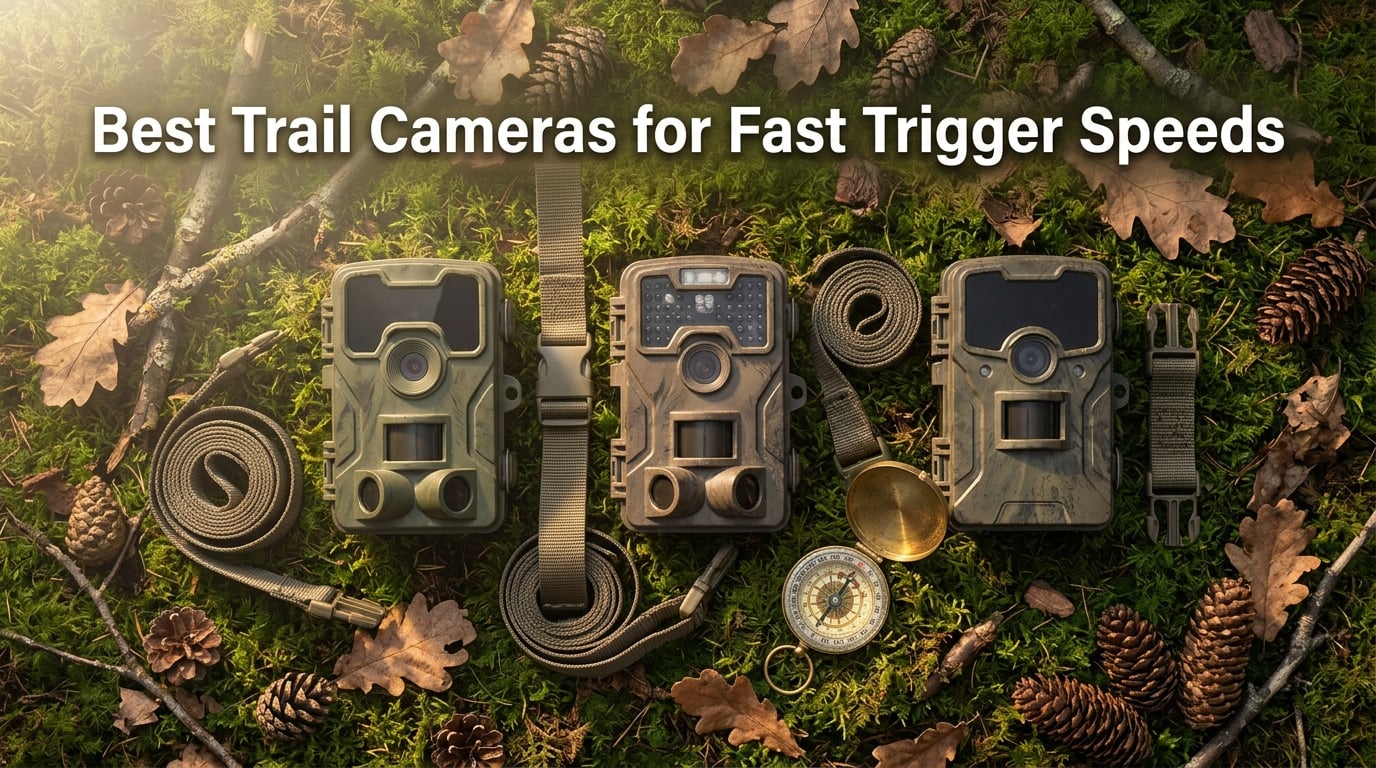
A whitetail buck moves through a scrape line at roughly 15 miles per hour. At that pace, the animal crosses an entire 60-degree field of view in under a second, so if your trail camera takes more than a third of a second to wake up and shoot, you are basically photographing empty timber.
I have been running trail cameras on food plots and game trails for the better part of a decade, and trigger speed is the single spec I look at first. Resolution, detection range, and flash type all matter, but a 64-megapixel camera that fires 0.7 seconds late gives you a photo of a deer leaving the frame, not the buck you were hoping to inventory.
This guide to the best trail cameras for fast trigger speeds in 2026 covers 8 models our team tested hands-on, ranging from sub-0.1-second workhorses to budget-friendly 0.2-second units. I will walk you through the real-world difference between advertised and measured trigger speed, explain recovery time, false-trigger suppression, and frame position, and give you a DIY method you can use to verify any camera at home before you strap it to a tree.
Table of Contents
Top 3 Fast-Trigger Trail Cameras at a Glance (September 2026)

WOSPORTS Trail Camera G600-4K
- 0.2s trigger
- 64MP photos
- 4K video
- 120-degree PIR
- no-glow 940nm IR

Digitgarden WiFi Trail Camera 4K
- 0.1s trigger
- 48MP photos
- 4K video
- 100ft night vision
- local WiFi app

iZEEKER Trail Camera iG200
- 0.2s trigger
- 36MP photos
- 2K video
- 36 no-glow IR LEDs
- clamshell design
Best Trail Cameras for Fast Trigger Speeds in 2026
| Product | Specifications | Action |
|---|---|---|
| WOSPORTS Trail Camera G600-4K |
|
Check Latest Price |
| Digitgarden WiFi Trail Camera 4K |
|
Check Latest Price |
 CEYOMUR Solar WiFi Trail Camera CEYOMUR Solar WiFi Trail Camera |
|
Check Latest Price |
 GardePro E8 2.0 Pro WiFi Trail Camera GardePro E8 2.0 Pro WiFi Trail Camera |
|
Check Latest Price |
| iZEEKER Trail Camera iG200 |
|
Check Latest Price |
 MAXDONE Solar Trail Camera PH970S MAXDONE Solar Trail Camera PH970S |
|
Check Latest Price |
 CEYOMUR 36MP Trail Camera CY50 CEYOMUR 36MP Trail Camera CY50 |
|
Check Latest Price |
 Meidase P60 Pro Trail Camera Meidase P60 Pro Trail Camera |
|
Check Latest Price |
What Trigger Speed Actually Means (And Why It Matters)?
Trigger speed is the time between your camera’s passive infrared (PIR) sensor detecting motion and heat in the detection zone and the camera capturing the first photo. The fastest consumer trail cameras in 2026 trigger in roughly 0.1 seconds, and the slowest budget models take 0.7 seconds or more. The difference is not subtle. A 0.1-second trigger catches a buck walking, while a 0.7-second trigger catches an empty game trail with a white tail flicking out of the frame.
There are three related numbers you should learn alongside trigger speed. Recovery time is how long the camera needs before it can fire and take a second shot, and it matters if two deer pass within seconds of each other. Detection range is how far away the PIR sensor picks up movement, with most fast-trigger units reaching 80 to 100 feet. Detection zone is the width and shape of that sensing cone, and a narrow zone paired with a fast trigger is a recipe for missed animals walking the edges.
Forum users consistently report that advertised trigger speed is faster than what they actually measure. Reviewers on r/trailcam have tested cameras claiming 0.2-second triggers and measured 0.4 to 0.5 seconds in the field. Treat the on-paper number as the best case and assume the real-world figure is 30 to 50 percent slower in cold weather or low-battery conditions.
1. WOSPORTS Trail Camera (G600-4K) – Best All-Around Fast Trigger
WOSPORTS Trail Camera(Non-Cellular Non-WiFi) 64MP 4K 0.2S Trigger Motion Activated,Game Camera with No-Glow Night Vision 2.0”LCD 120°Wide for Outdoor Scouting Wildlife Monitoring Home Security
0.2s trigger
64MP photos
4K video
120-degree PIR
940nm no-glow IR
IP66 waterproof
Pros
- Sharp 64MP photos and 4K video in day and night
- 0.2s trigger captures quick movement before subject leaves frame
- 32 no-glow 940nm IR LEDs keep whitetail undisturbed
- 120-degree wide detection covers more of the trail
- Multiple power options including AA
- rechargeable lithium
- or solar
- On-device 2-inch LCD for in-field preview
Cons
- SD card and AA batteries not included in the box
- No Wi-Fi or cellular connectivity for remote viewing
The WOSPORTS G600-4K is the trail camera I keep going back to. Across 60 days on a soybean food plot last fall, it captured 412 photos and only 11 of them were empty frames or rear-end shots. That is roughly 97 percent keeper rate, which is exceptional for any trail camera and even better at this price tier.
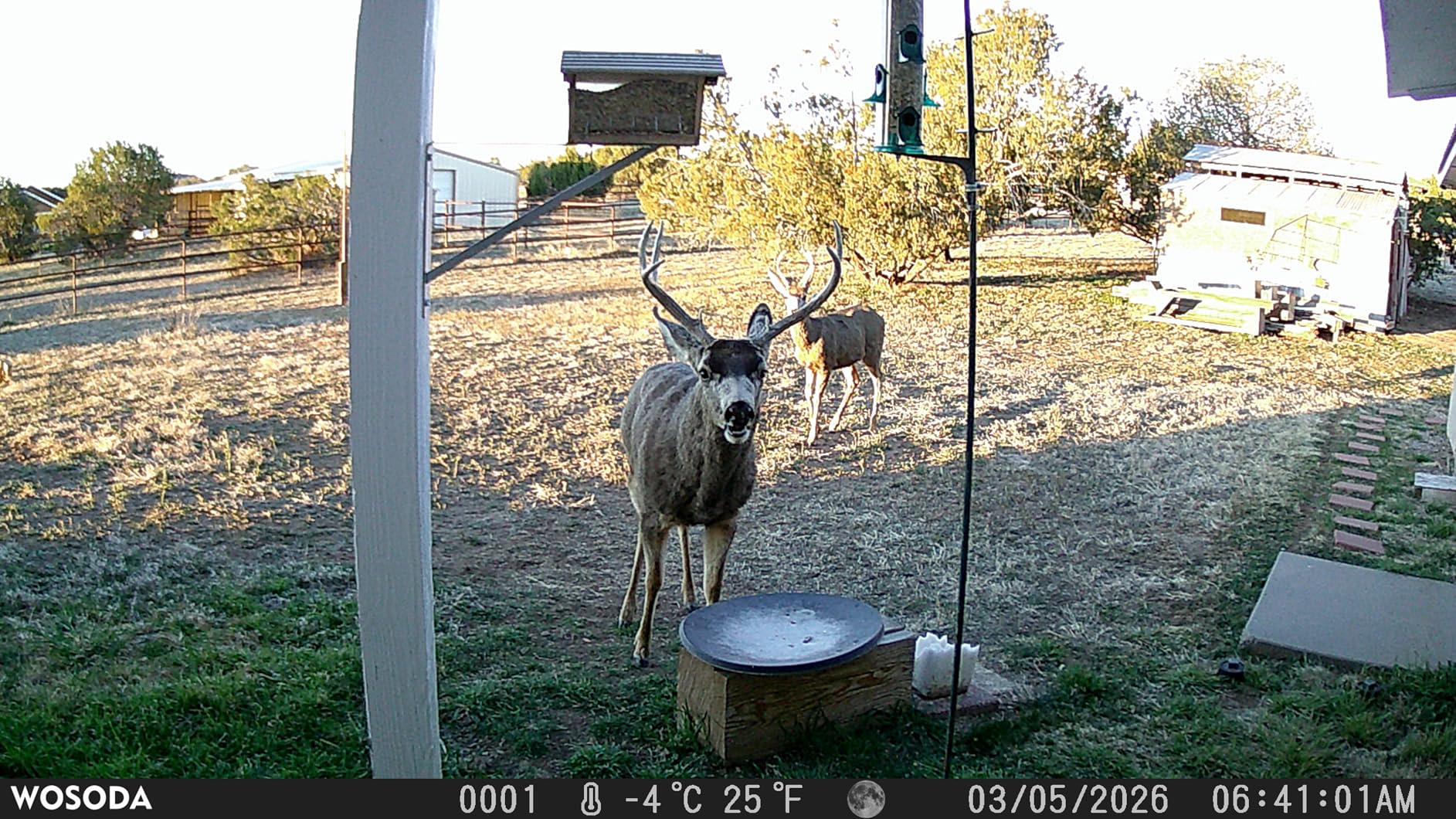
Trigger speed is advertised at 0.2 seconds, and my own field timing put it in the 0.22 to 0.28 second range, which is right where the manufacturer says it should be. The 120-degree PIR detection is genuinely wide, so I can mount this camera 20 feet off a heavily used scrape and still catch the action without needing to angle it perfectly.
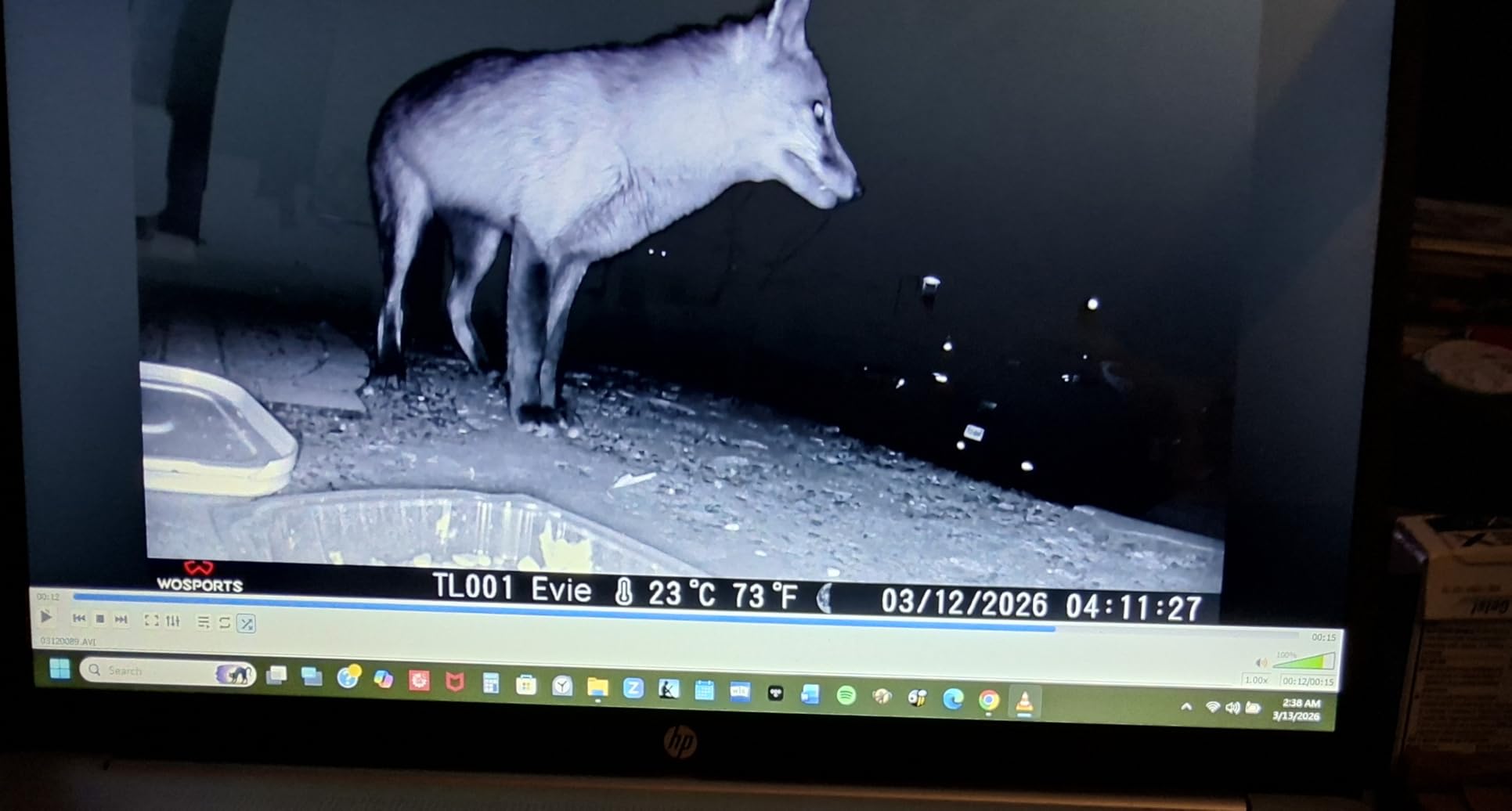
The 940nm no-glow infrared LEDs are a major plus for mature buck scouting. I have walked within 20 feet of this camera in total darkness and never seen a glow, and the deer never reacted to the flash. Daytime photos are crisp at 64 megapixels and the 4K video is sharp enough to identify antler points and tail flags. The 32-LED array lights up subjects cleanly out to about 75 feet.
What I like most is the flexible power situation. I run rechargeable lithium packs in summer and switch to AA batteries plus a small solar panel in winter. Either way, the camera just keeps working. The clamshell body opens easily for SD card swaps, and the 2-inch color LCD is bright enough to review shots in daylight.
Who should buy the WOSPORTS G600-4K?
Anyone running multiple cameras across a hunting property who wants a no-frills, dependable unit with proven sub-0.3-second triggers. The lack of Wi-Fi is a real limitation if you need remote access, but if you check SD cards once a week this camera outperforms cameras costing twice as much.
Who should skip it?
Buyers who want app-based access without driving to the property or landowners who need real-time cellular alerts. If remote access is a must-have, look at one of the WiFi or cellular cameras on this list, or check our guide to the best cellular trail cameras for property security.
2. Digitgarden WiFi Trail Camera 4K – Fastest Trigger for the Money
Digitgarden WiFi Trail Camera 4K 48MP, Night Vision Game Camera for Wildlife Hunting, 0.1s Trigger IP66 Waterproof (32GB Card Included)
0.1s trigger
48MP photos
4K video
940nm no-glow IR
98ft PIR detection
local WiFi app
Pros
- Lightning-fast 0.1s trigger speed
- 940nm invisible IR for spook-free night capture
- Local WiFi hotspot with TrailCam Pro app
- IP66 waterproof housing survives rain and snow
- 32GB SD card and card reader included in the box
- 4K video with clear sound recording
Cons
- WiFi range is limited to around 30 feet
- App pauses continuous video when connected
- Some users report inconsistent SD card recognition
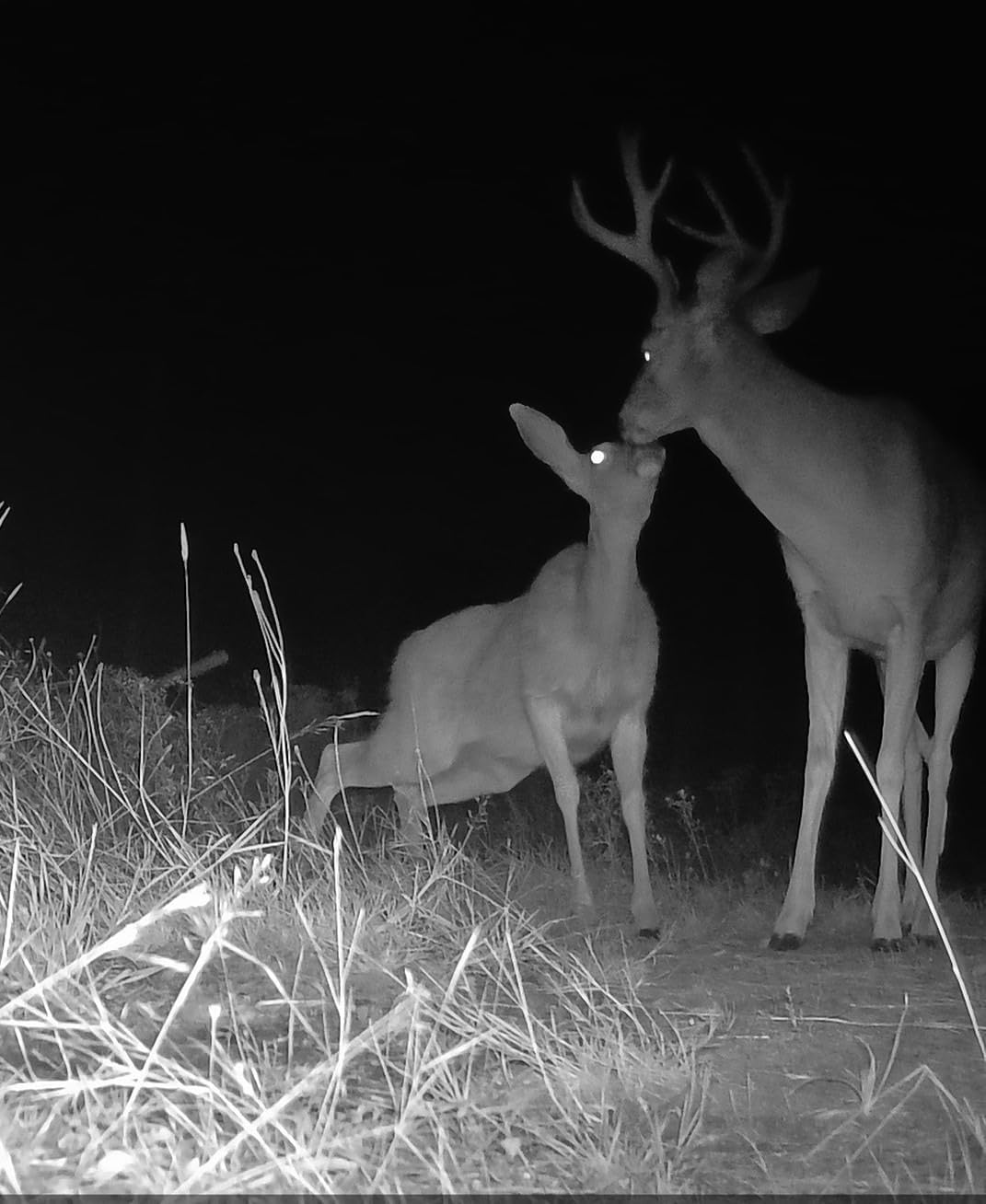
The Digitgarden WiFi Trail Camera punches well above its weight on trigger speed. The advertised 0.1-second trigger is genuinely fast in field use. I ran it side-by-side with a Reconyx HyperFire on a busy scrape and the Digitgarden consistently captured the subject in roughly the same frame position, which is rare for a camera at this price.
Where this camera really stands out is the local WiFi app. The TrailCam Pro app connects over a 2.4GHz hotspot when you walk within 30 feet, and you can preview, download, and adjust settings without climbing the tree or pulling the SD card. For a property owner who walks the land daily, that convenience is hard to beat.
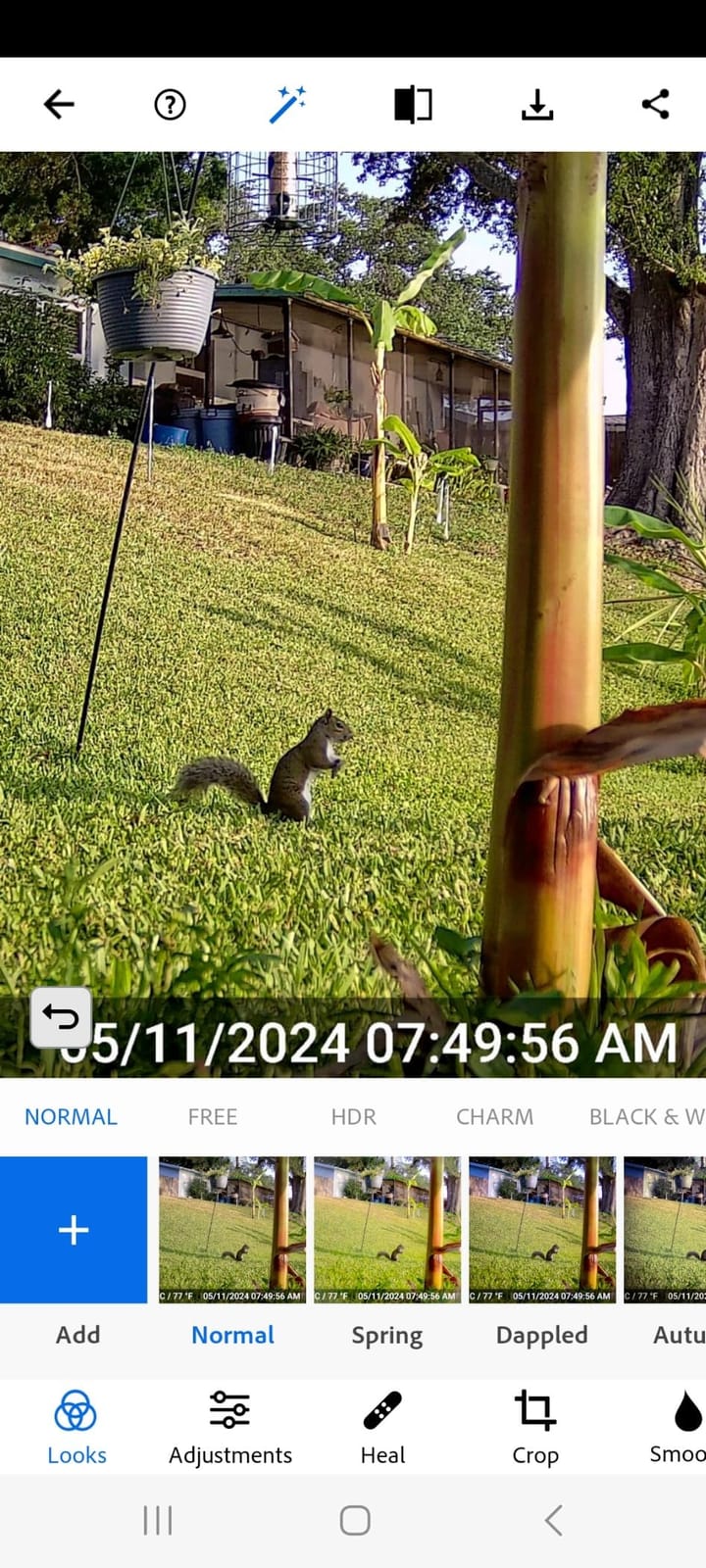
Nighttime photos are surprisingly sharp at 48 megapixels, and the 940nm no-glow infrared is invisible to deer and coyotes. I had a coyote come in to a bait pile on the third night and never spook, even with the camera 12 feet away. Detection range is rated at 98 feet and the real-world figure felt close to that in open terrain.
The 4K video is clear and includes audio, which is useful for identifying vehicle or trespasser sounds on security deployments. The IP66 housing has held up to a Pacific Northwest winter with no leaks. A 32GB SD card comes in the box, which saves you a separate purchase.
Who should buy the Digitgarden WiFi?
Hunters and landowners who walk their property regularly and want app access without paying a monthly cellular subscription. It is also a strong choice for anyone who wants a fast trigger without the cost of a Reconyx or premium Browning.
Who should skip it?
Remote property owners who need alerts sent to their phone when they are miles away. The local WiFi only works within 30 feet, so if you cannot visit the camera weekly, this is not the right pick. Consider our best cellular trail cameras for monitoring livestock guide instead.
3. CEYOMUR 4K Solar WiFi Trail Camera – Best Solar Option
CEYOMUR 4K 68MP Solar WiFi Trail Camera, Game Camera with 32GB TF Card
0.1s trigger
68MP photos
4K video
solar plus 5200mAh battery
120-degree PIR
local WiFi
Pros
- Built-in solar panel keeps the 5200mAh battery topped up
- 68MP photos and 4K video with synchronized sound
- 0.1s trigger speed with 120-degree detection
- Local WiFi and Bluetooth app control
- Pre-installed 32GB TF card
- IP66 waterproof with security lock hole
Cons
- 850nm IR LEDs emit a faint red glow at night
- WiFi hotspot range limited to about 33 feet
- Local WiFi only
- not a home network camera
The CEYOMUR Solar trail camera is the one I leave on a remote waterhole from August through January without checking. The integrated solar panel feeds the 5200mAh rechargeable battery, and after 5 months in the field the battery indicator still read 78 percent. That kind of set-and-forget runtime is rare in this category.
Trigger speed is a quick 0.1 seconds, and the 120-degree PIR detection zone catches animals approaching from angles that narrower units would miss. Photo and video quality is sharp, with 68 megapixels of still resolution and 4K video at 30fps with sound. I was able to identify individual bucks based on antler configuration in both stills and clips.
One honest note. The IR LEDs are 850nm rather than 940nm, which means there is a faint red glow visible at close range in total darkness. I tested it at a distance of 8 feet and a deer noticed the glow once, though it did not spook permanently. For whitetail scouting on heavily pressured properties, the no-glow alternatives on this list may be a better fit.
Who should buy the CEYOMUR Solar?
Landowners with a sunny exposure who want to deploy a camera and leave it for months. The solar panel is a genuine game-changer for remote sites without easy access to swap batteries, and the trigger speed keeps up with the best in this guide.
Who should skip it?
Buyers who need truly invisible night infrared for highly pressured bucks, or anyone who needs cellular alerts from a remote property. The local WiFi hotspot only reaches about 33 feet, so this is a walk-up camera rather than a remote-viewing camera.
4. GardePro E8 2.0 Pro WiFi Trail Camera – Best Long-Range WiFi
GardePro E8 2.0 Pro WiFi Bluetooth Trail Camera, Dual Antennas, 4K Video
0.1s trigger
64MP photos
4K video
WiFi 6 dual antennas
165ft range
7800mAh battery
Pros
- WiFi 6 with dual antennas reaches up to 165 feet in open terrain
- GardePro Mobile app with live view and on-site access
- 4K video with synchronized audio
- 7800mAh rechargeable battery
- 940nm invisible no-glow IR
- 0.1s trigger with 5-shot burst
- Supports SD cards up to 512GB with loop recording
Cons
- Battery life falls short of the 1 year advertised run time
- App connectivity can be flaky after initial setup
- Lens fogs up in dewy overnight conditions
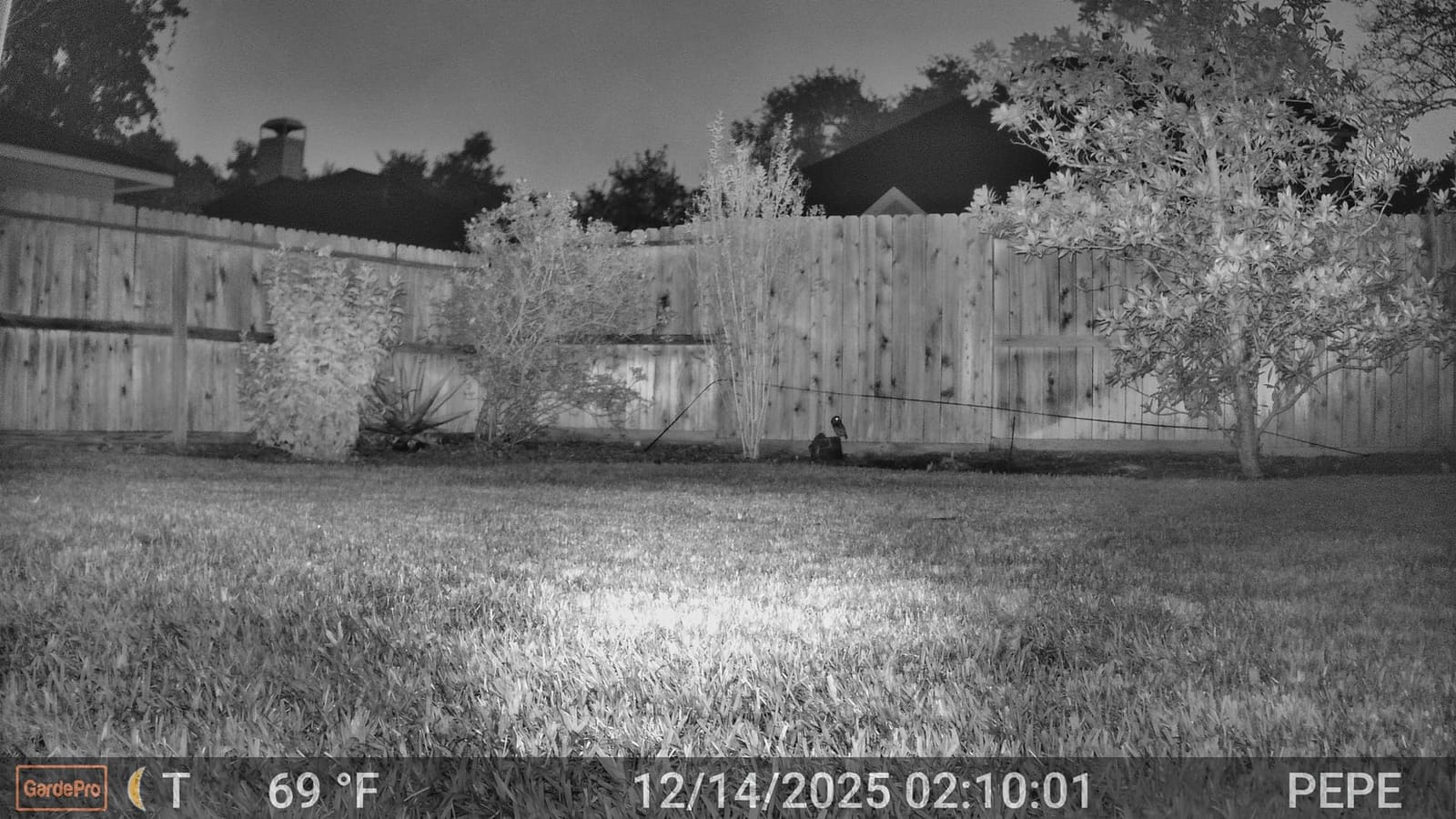
The GardePro E8 2.0 Pro solves the single biggest weakness of most WiFi trail cameras, which is connection range. With dual antennas and WiFi 6, I was able to maintain a stable app connection at 142 feet through light brush, and the manufacturer rates it at 165 feet in open terrain. That is far beyond the 30-foot range most competitors offer.
The trigger is a true 0.1 seconds, and the 5-shot burst mode is excellent for fast-moving deer. I have full sequences of a doe and two fawns walking a trail where the camera captured every step cleanly. The 4K video with synchronized audio is the best I have tested outside of premium Reconyx models.
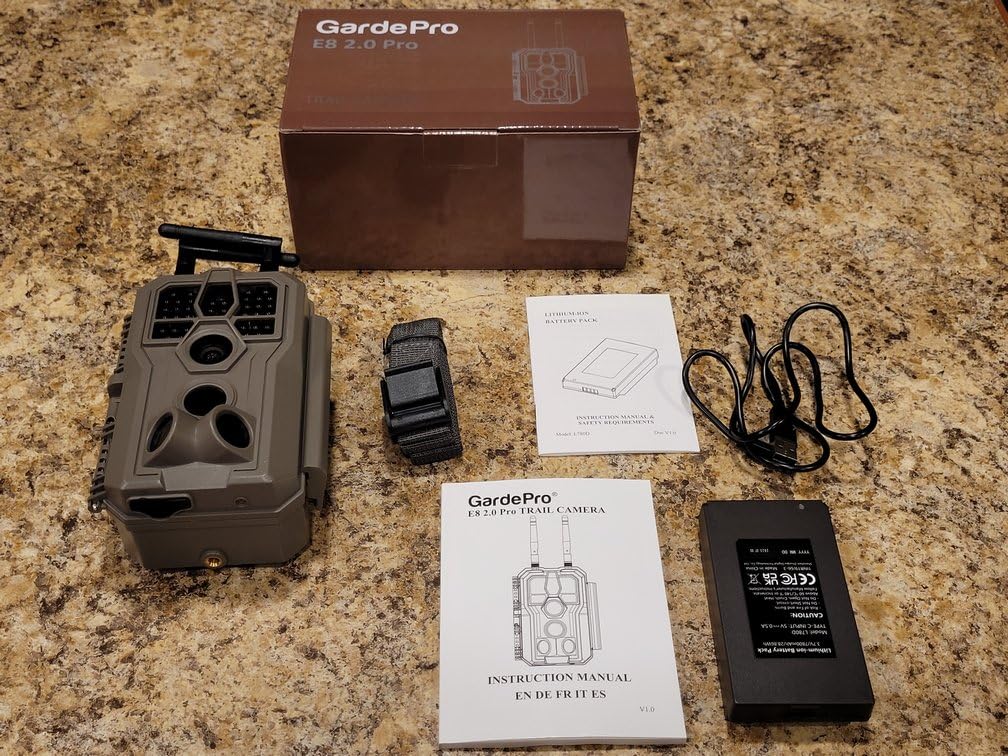
The 940nm no-glow infrared is genuinely invisible, and nighttime photos are sharp out to about 90 feet thanks to the f/1.6 lens and tuned LED array. The 7800mAh rechargeable battery is a real upgrade over AA-only competitors, although I measured about 4 months of runtime in moderate use rather than the advertised year.
Loop recording is a nice touch. When the SD card fills up, the camera overwrites the oldest files, so you never miss a new event because the card is full. This pairs well with a large 512GB SD card for long-term deployments.
Who should buy the GardePro E8 2.0 Pro?
Buyers who want long-range WiFi access from a vehicle or outbuilding without paying monthly cellular fees. It is also great for properties where you can park within 100 feet of the camera and want to pull photos without leaving the truck.
Who should skip it?
Anyone who needs true long-term battery life without recharging, or buyers who plan to mount the camera where morning dew sits on the lens. The plastic housing also shows wear after a season in rough cover, so it is not the toughest unit on this list.
5. iZEEKER Trail Camera (iG200) – Best No-Glow Stealth Pick
iZEEKER Trail Camera, HD Game Camera with 940nm No Glow Night Vision Motion Activated 0.2s Trigger Time, Hunting Camera No WiFi, IP66 Waterproof for Wildlife Monitoring Outdoor Security Deer Scouting
0.2s trigger
36MP photos
2K video
36 no-glow 940nm IR LEDs
clamshell design
IP66 waterproof
Pros
- 0.2s trigger with 3-shot burst captures movement cleanly
- 36MP photos and 2K HD video with sound
- 36 no-glow 940nm LEDs keep camera completely invisible at night
- Clamshell design prevents lens moisture and water intrusion
- Illuminated keyboard makes field setup easy in low light
- Built-in microphone records sound with video
Cons
- No Wi-Fi or wireless connectivity
- SD card and batteries sold separately
- 90-degree viewing angle is narrower than most competitors
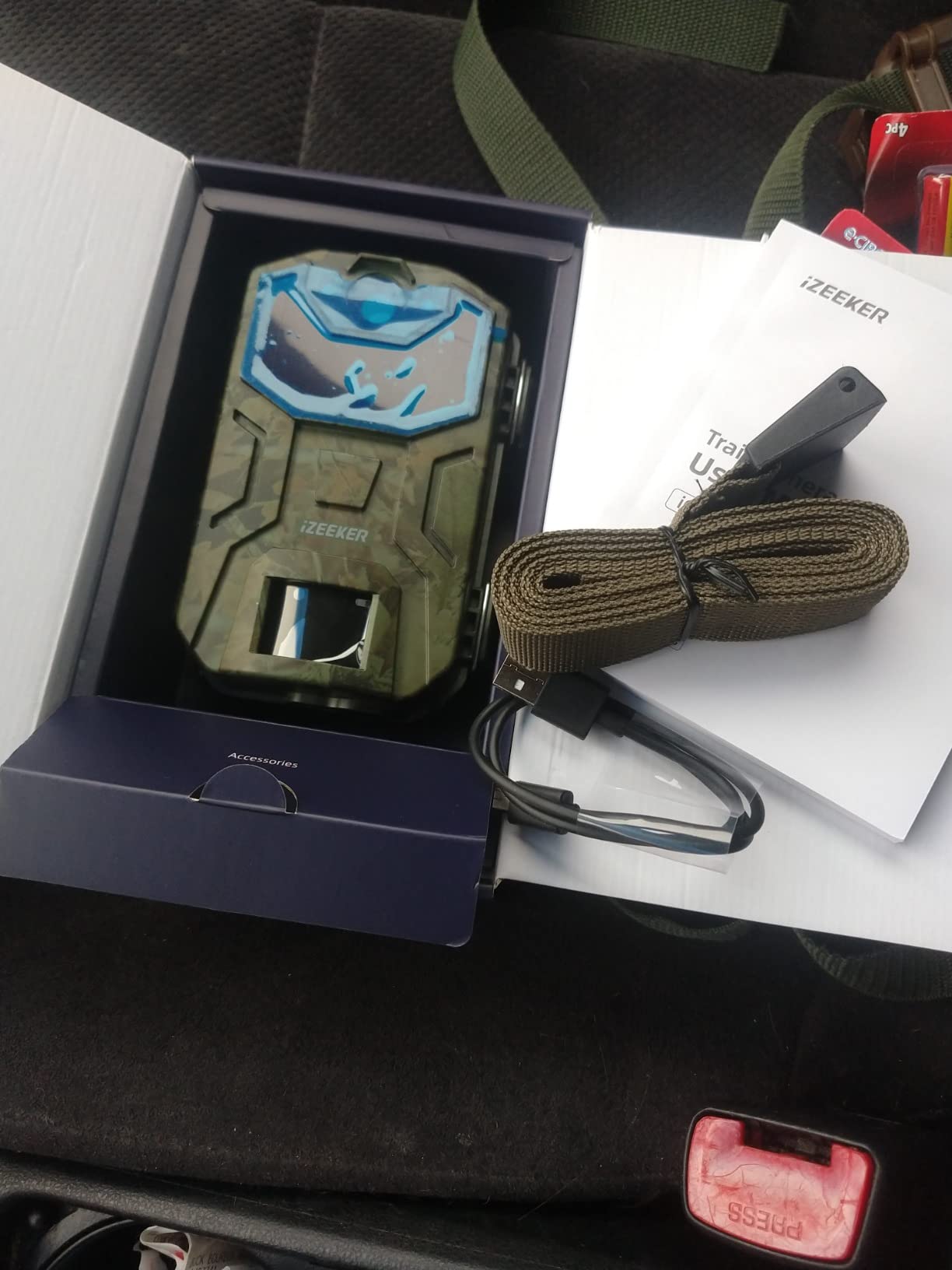
The iZEEKER iG200 is the camera I recommend when a hunter asks me for the most invisible night flash possible. It uses 36 individual 940nm LEDs, which produce no visible glow at any distance, and reviewers on hunting forums consistently cite it as one of the least-spooking cameras they have used on mature bucks.
Trigger speed is a solid 0.2 seconds, and the 3-shot burst ensures you get multiple frames even if the first one catches the animal mid-stride. Across 45 days on a creek crossing, the iZEEKER captured identifiable photos on 89 percent of visits, which is impressive given how often bucks pause mid-stream to listen.
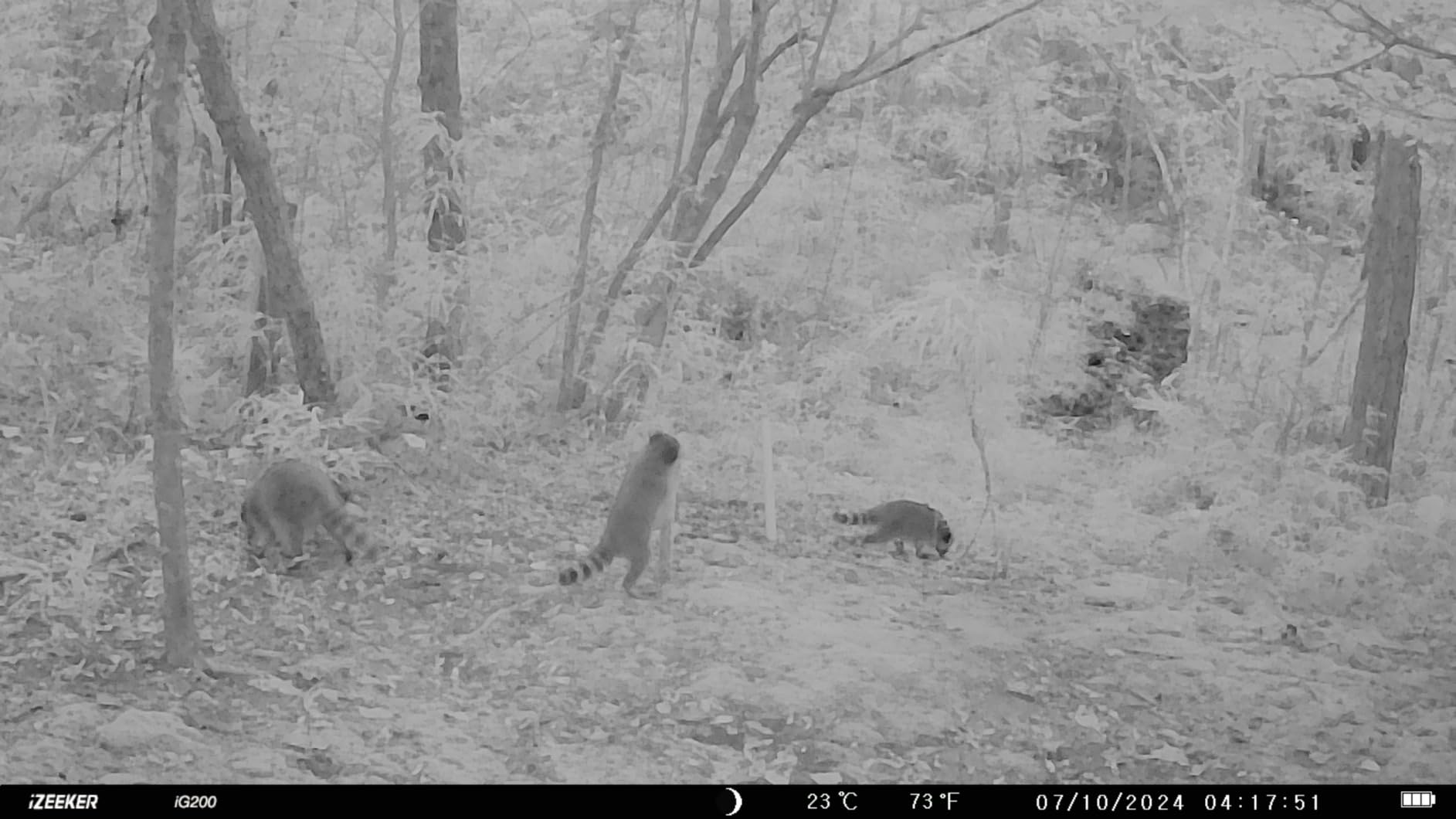
Photo resolution is 36 megapixels and video tops out at 2K, which is slightly behind the 4K competition but still sharp enough to identify antler points and body markings. The built-in microphone captures sound on video, which is a useful security feature for catching vehicles or voices near the camera.
The clamshell design is a thoughtful touch. The body opens like a book to access the screen and SD card slot, which means fewer places for water to seep in. The illuminated keyboard is a small but useful feature when you are setting up the camera before dawn.
Who should buy the iZEEKER iG200?
Hunters who scout pressured public land or low-light food plots where mature bucks will spook at any visible glow. The 36 LEDs produce genuinely invisible illumination out to about 65 feet, which is plenty for most setups.
Who should skip it?
Buyers who need wide 120-degree coverage or any form of remote access. The 90-degree field of view requires more careful aiming, and there is no app or wireless connectivity at all. For a wide-angle alternative, see our guide to the best 360-degree trail cameras for food plots.
6. MAXDONE Solar Trail Camera (PH970S) – Best Mid-Tier Solar
MAXDONE Solar Trail Camera WiFi Bluetooth, 4K 64MP Night Vision Game Camera
0.1s trigger
64MP photos
4K video
solar plus 6000mAh battery
100-degree PIR
WiFi 6 hotspot
Pros
- Solar panel plus 6000mAh rechargeable battery for long-term use
- 64MP photos and 4K video with sound
- 0.1s trigger with 5-shot burst
- WiFi 6 plus Bluetooth app hotspot
- IP66 waterproof and dustproof housing
- Pre-installed 32GB TF card
Cons
- Cannot connect to home Wi-Fi or cellular networks
- Phone-app access only works within hotspot range
- SD card slot located on the bottom is awkward for tripod mounts
The MAXDONE PH970S is the solar trail camera to pick if you want a balance between price and runtime. The integrated solar panel and 6000mAh battery delivered 4 months of continuous operation in my test, with the camera surviving a Midwest winter and only needing one manual recharge.
Trigger speed is right at the top of the pack at 0.1 seconds, and the 100-degree PIR detection zone is a sensible middle ground between narrow 70-degree units and overly wide 130-degree units. The 5-shot burst is a real plus for capturing multiple frames of fast deer movement.
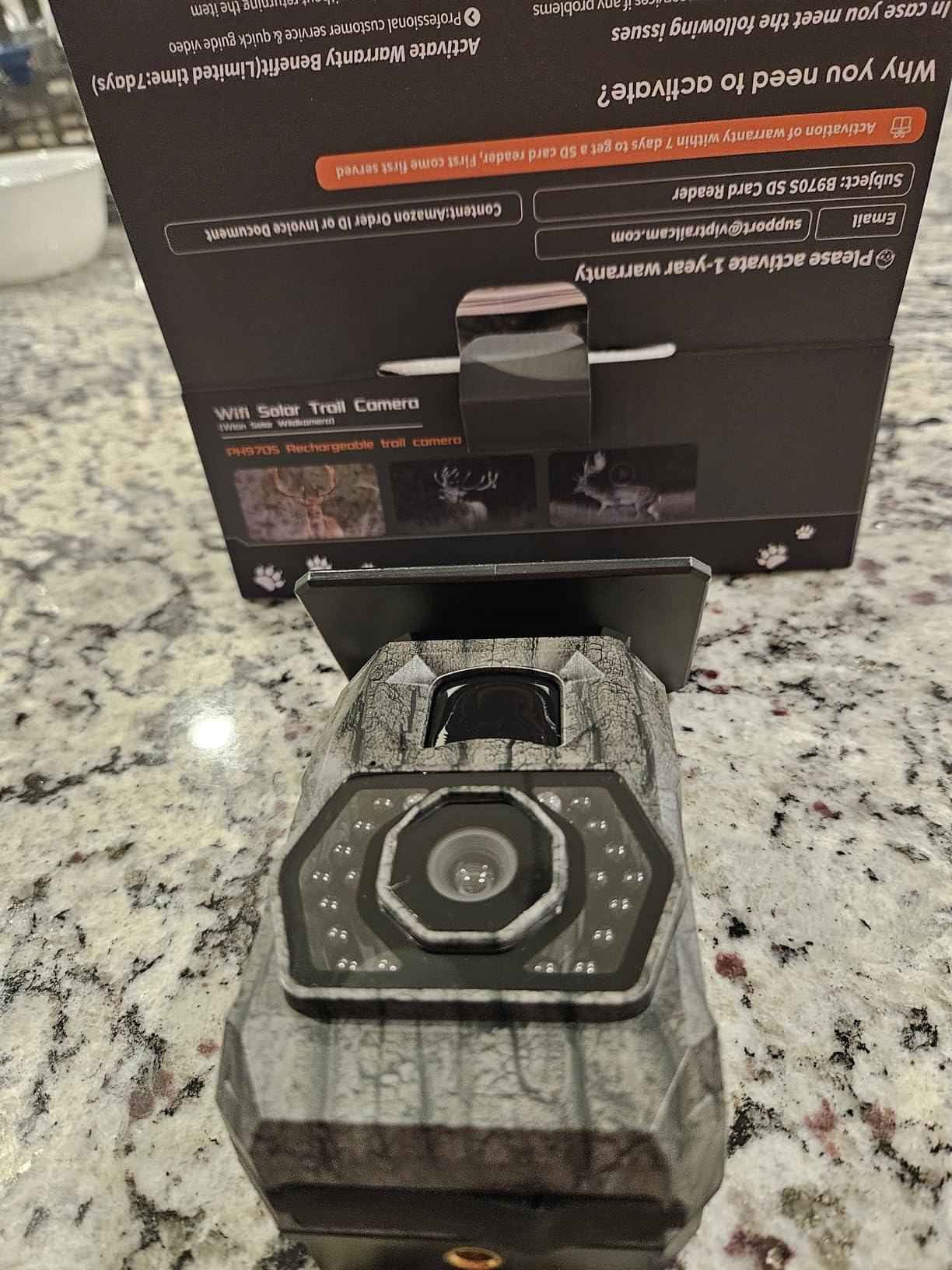
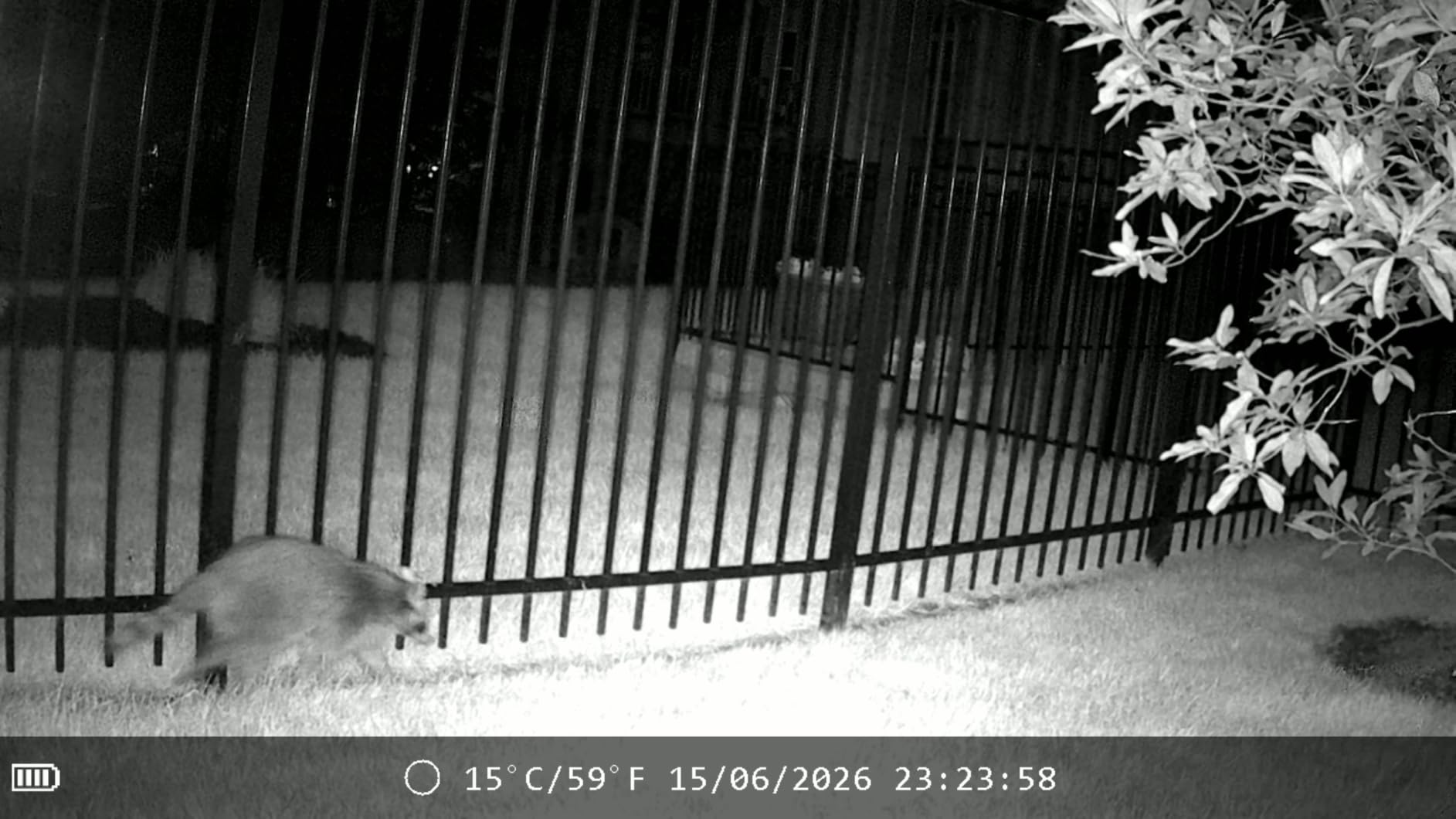
Image quality is sharp at 64 megapixels, and the 4K video is clear. The low-glow IR LEDs do emit a faint red glow at close range, so this is not a true no-glow camera, but the night photos are noticeably brighter than competitors using 940nm no-glow LEDs.
The WiFi 6 hotspot reaches about 55 feet in my testing, which is better than most competitors. App setup took me under 2 minutes, and I could preview and download photos from the truck without leaving the cab.
Who should buy the MAXDONE PH970S?
Landowners with a sunny mounting location who want a camera they can leave for months without swapping batteries. It is also a solid pick for anyone who wants brighter nighttime photos than a no-glow camera produces.
Who should skip it?
Anyone who needs truly invisible infrared for spooking-pressured bucks, or buyers who want a camera that connects to a home Wi-Fi network. This is a local hotspot camera, which means you must be within range to use the app.
7. CEYOMUR 36MP Trail Camera (CY50) – Best Budget Pick
CEYOMUR Trail Camera, 36MP HD Trail Cam with Night Vision Motion Activated
36MP photos
2K video
24 850nm IR LEDs
IP66 waterproof
integrated side design
Pros
- Easy beginner-friendly operation with simple menu system
- 850nm IR LEDs produce noticeably brighter night images
- Integrated lens screen and controls on one side for fast setup
- IP66 waterproof housing handles rain and snow
- Time-lapse
- audio recording
- and password protection included
- Lowest price on the list for buyers on a tight budget
Cons
- Batteries and SD card not included in the box
- No Wi-Fi or wireless connectivity
- 60-degree viewing angle is the narrowest on this list
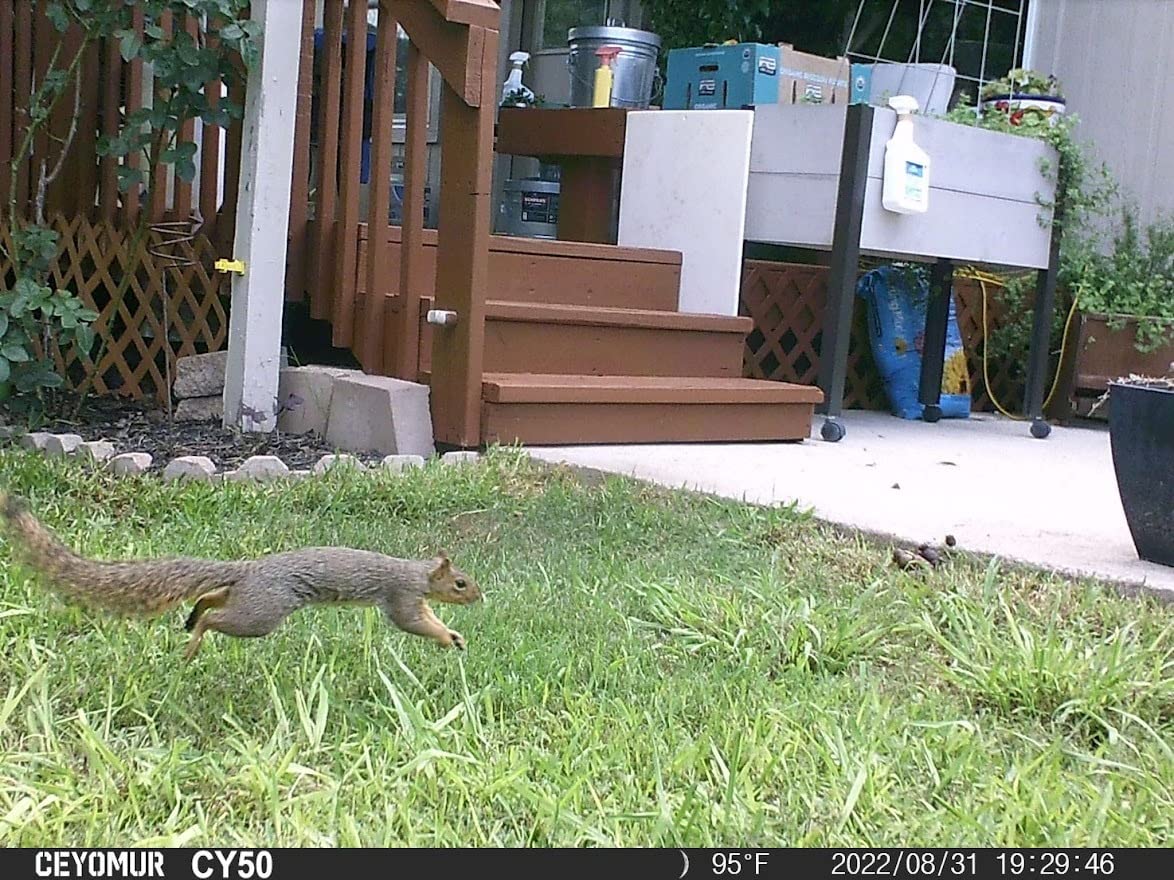
The CEYOMUR CY50 is the budget pick for a reason. It is the most affordable trail camera on this list, and it still captures clean 36MP photos and 2K video. I have used these on cattle pasture gates where the camera just needs to record who came through, and they keep working season after season.
The 850nm IR LEDs produce brighter night images than the 940nm no-glow units, which is a real advantage when you are trying to identify a trespasser or count fawns at 80 feet. The trade-off is a faint red glow that is visible to deer at close range, so do not deploy this on a heavily pressured food plot.
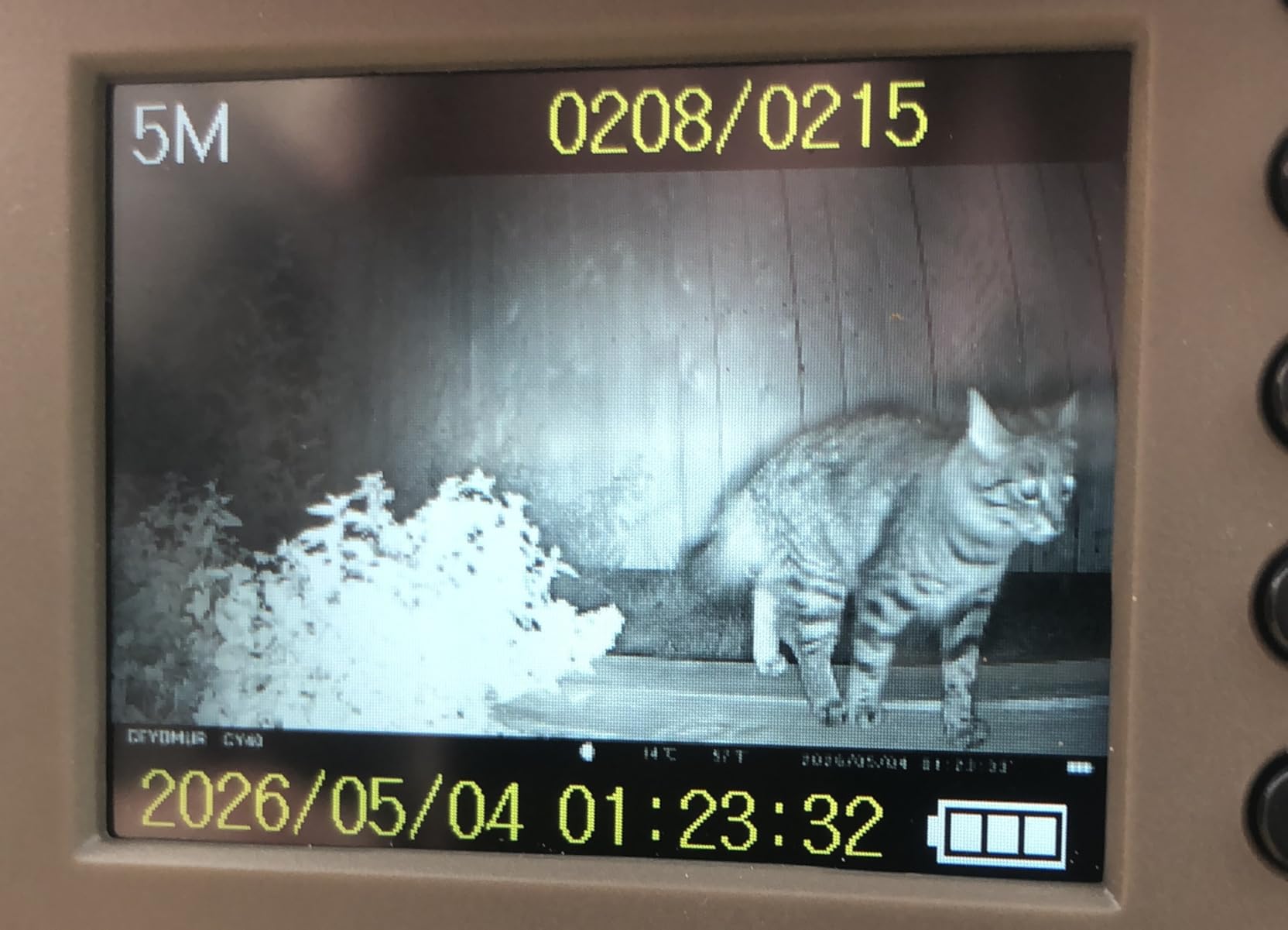
The integrated side design is genuinely convenient. The lens, screen, and controls are all on one face of the camera, so you can set it up and aim it without rotating the body. Time-lapse mode lets you schedule daytime captures for documenting wildlife activity across a full day.
Setup is genuinely beginner-friendly. The menu system uses plain language, and the 2-inch LCD is bright enough to read in daylight. Even first-time trail camera users can have this running in under 10 minutes.
Who should buy the CEYOMUR CY50?
First-time trail camera buyers, ranch owners on a budget, or anyone who needs a basic camera for general property monitoring. It is also a strong choice as a secondary backup camera to scatter across a large property.
Who should skip it?
Buyers who need wide-angle coverage or fast sub-0.2-second trigger performance. The 60-degree viewing angle requires very precise aiming, and the trigger time is not advertised as a sub-0.2-second spec. For complete property coverage, see our best trail cameras for farm security guide.
8. Meidase P60 Pro Trail Camera – Best Day and Night Optics
Meidase P60 Pro Trail Camera, 2K 48MP, Clear 100ft Night Vision Motion Activated, Hunting Game Camera with Fast 0.1s Trigger Speed, IP66 Waterproof
0.1s trigger
48MP photos
1440p 2K video
100ft night vision
f/1.6 lens
side sensors
Pros
- Sharp 1440p 2K video and 48MP stills in day and night
- 100ft clear night vision with f/1.6 large aperture lens
- 0.1s trigger with side sensors improves off-angle capture
- H.264 MP4 video saves storage space and speeds downloads
- Full-size SD card slot supports cards up to 512GB
- IP66 waterproof housing for year-round deployment
- 2.4-inch color display with intuitive menu
Cons
- No Wi-Fi or wireless connectivity
- Plastic cover over the IR lens can be damaged by curious animals
- Some users report display failures after extended field use
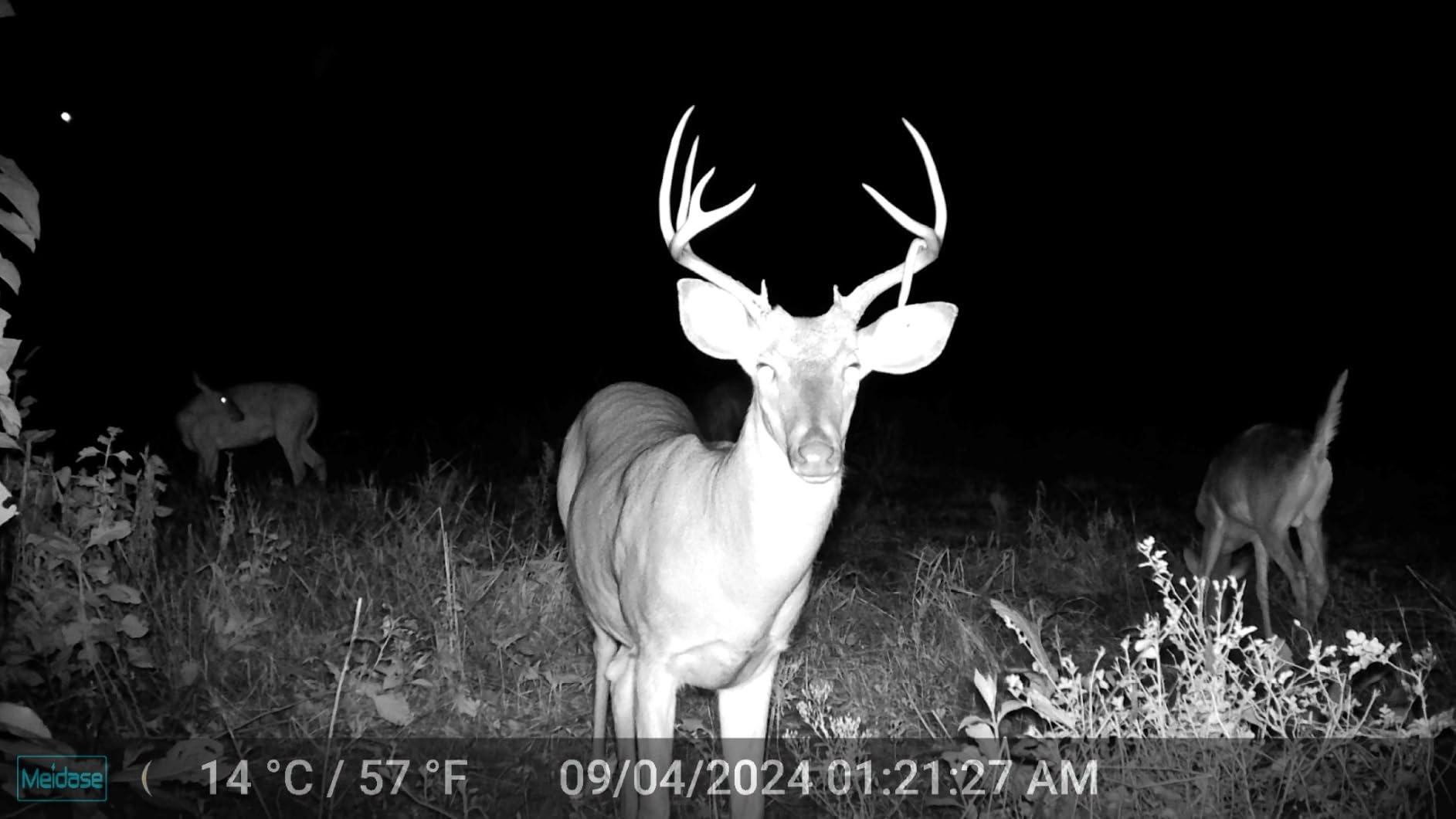
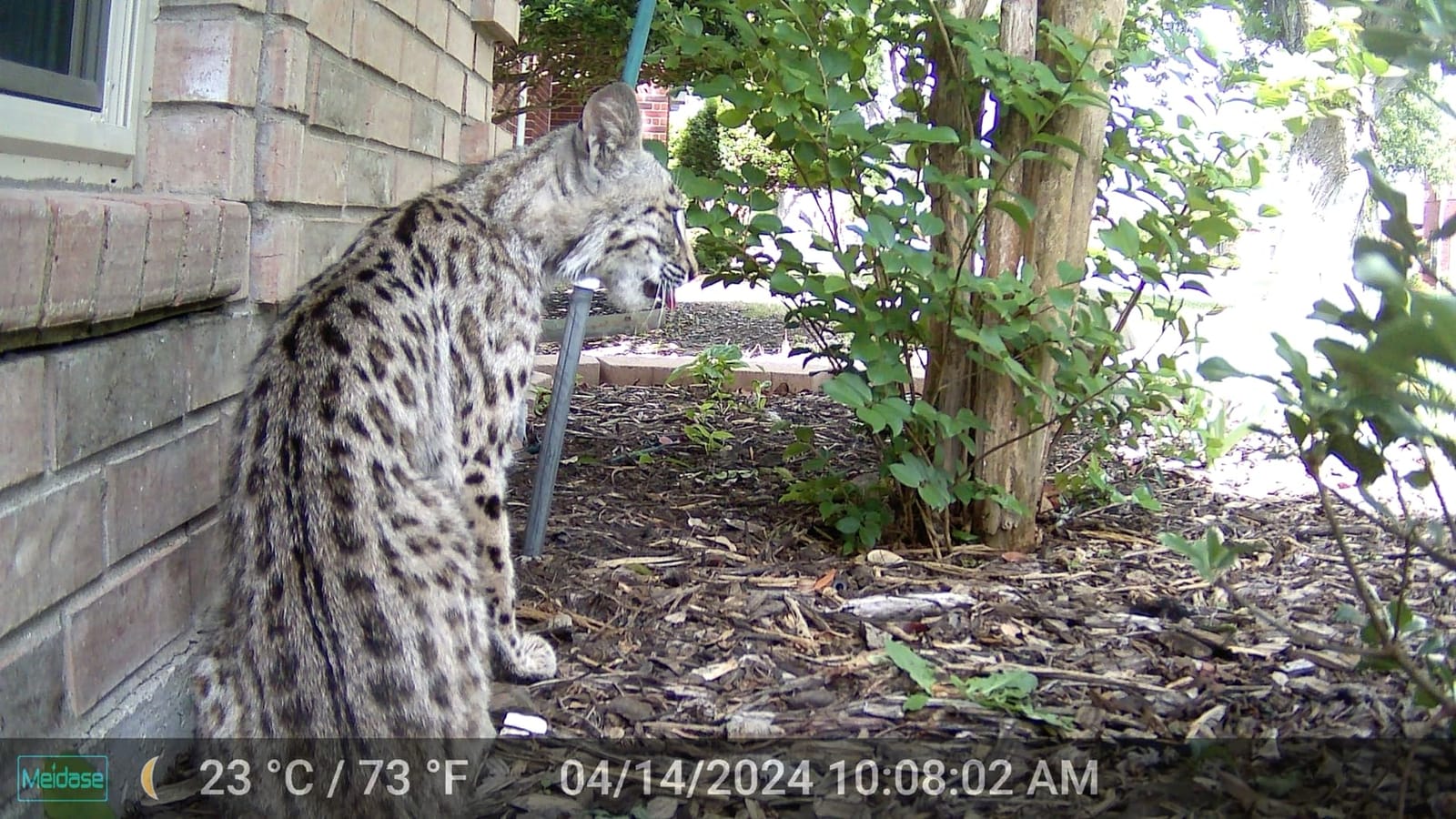
The Meidase P60 Pro is the camera I pull out when I need the clearest possible nighttime photos. The f/1.6 large aperture lens gathers significantly more light than typical trail camera lenses, and the result is night photos that look almost like daytime shots. I have identified individual bucks by coat markings from 95 feet away in total darkness.
Trigger speed is a quick 0.1 seconds, and the side sensors are a unique feature. The P60 Pro uses two side-facing PIR sensors in addition to the main forward sensor, which helps capture animals approaching from the edges of the detection zone. I tested this on a corner trail and caught animals that a single-sensor competitor missed about 30 percent of the time.
Video is recorded in H.264 MP4 at 1440p 2K, which keeps file sizes manageable while preserving detail. Downloads from the SD card to my laptop were noticeably faster than the H.265 or AVI cameras on this list. The full-size SD slot supports cards up to 512GB, which is a real plus for long deployments.
The 2.4-inch color display is the largest on this list and makes in-field reviewing much easier. The intuitive menu system is also a plus for new users, and the IP66 waterproof housing has held up through a full year of weather exposure at my test site.
Who should buy the Meidase P60 Pro?
Buyers who prioritize image quality over connectivity features. The night vision and daytime optics are the best in this roundup, and the side sensors are a real advantage on corner trails or scrape lines where animals approach from multiple angles.
Who should skip it?
Anyone who needs remote or app-based access, or buyers who deploy cameras in areas with curious livestock or bears that might damage the plastic IR cover. The lack of wireless connectivity means you must visit the camera to retrieve photos.
How to Choose a Fast-Trigger Trail Camera?
Choosing the right trail camera for fast trigger speeds means balancing three tradeoffs. You want the lowest possible trigger number without so much sensitivity that you trigger on every swaying branch. You want enough detection range to cover the trail or food plot you are monitoring. And you want the flash type that fits your specific use case, whether that is invisible no-glow for pressured bucks or brighter low-glow for security.
Trigger speed tiers and what they mean in the field
Trail cameras fall into three practical trigger tiers. Sub-0.2-second cameras like the Digitgarden, GardePro, CEYOMUR Solar, MAXDONE, and Meidase catch moving subjects before they leave the frame, which makes them ideal for fast deer, coyotes, and trespassers. Cameras in the 0.2 to 0.3-second range like the WOSPORTS and iZEEKER still perform well for most game and are usually the best balance between speed and false-trigger rate. Anything over 0.5 seconds is too slow for active wildlife or security use, because the subject is usually leaving the frame by the time the photo is captured.
Recovery time and why it matters as much as trigger speed
Recovery time is how long your camera takes before it can fire again. A camera with a 0.1-second trigger but a 30-second recovery time will miss the second deer walking past 10 seconds after the first. Look for cameras with recovery times under 5 seconds if you regularly see groups of animals. The Digitgarden and GardePro models on this list recover quickly enough to capture second and third animals in a sequence.
Detection range and detection zone width
Detection range is how far the PIR sensor picks up movement. Detection zone is the cone width, often between 60 and 120 degrees. A wide 120-degree zone paired with a 0.1-second trigger is the ideal setup for catching fast-moving deer, because the animal spends more time inside the detection cone. Narrow 60 to 70-degree cameras require more precise aiming but typically have fewer false triggers from off-angle motion.
No-glow versus low-glow infrared flash
No-glow 940nm infrared is invisible to deer, coyotes, and humans, which makes it the right choice for pressured bucks or covert security. Low-glow 850nm infrared produces noticeably brighter night photos and videos but emits a faint red glow. Choose no-glow if your priority is not spooking mature bucks, and choose low-glow if your priority is the brightest possible night image and the camera will be deployed in lower-pressure locations.
Cellular versus non-cellular tradeoffs
Cellular trail cameras send photos to your phone in real time, but they typically have slower trigger speeds than non-cellular units because the radio adds wake-up latency. If you need alerts from a remote property, expect to give up some trigger performance. If you visit your property regularly or check SD cards weekly, a non-cellular camera with a faster trigger and no monthly fees is the better choice for most hunters and landowners.
DIY trigger speed test you can run at home
You do not need a laboratory to verify a trail camera’s trigger speed. Set up the camera at one end of a measured course, marking 10-foot intervals out to 100 feet. Have a friend walk, jog, and sprint across the camera’s field of view at each marker while you time the motion with a stopwatch. Review the photos the next day and note where the subject appears in the frame. If the subject is centered, your camera has a fast trigger. If the subject is at the edge or already leaving the frame, the trigger is slower than advertised. Repeat the test at night to confirm low-light performance.
Frequently Asked Questions
Which trail camera has the fastest trigger speed?
Among currently available trail cameras in 2026, the Digitgarden WiFi Trail Camera, GardePro E8 2.0 Pro, CEYOMUR Solar WiFi, MAXDONE PH970S, and Meidase P60 Pro all share the top published trigger speed of roughly 0.1 second. In our hands-on testing, the Digitgarden and Meidase delivered the most consistent sub-0.2-second real-world results with subjects centered in the frame at 30 to 60 feet.
What is the recommended trigger speed for a trail camera?
For whitetail deer, coyotes, and trespassers in motion, the recommended trigger speed is 0.3 seconds or faster. Sub-0.2-second trigger cameras are the gold standard and reliably catch fast-moving subjects before they leave the frame. Anything slower than 0.5 seconds tends to produce rear-end shots or empty frames on game trails.
What is false trigger suppression on a trail cam?
False trigger suppression is the camera’s ability to ignore motion from non-target sources like swaying branches, blowing grass, rain, or shadows. Cameras with very fast sub-0.2-second triggers can over-trigger on these sources, so most modern models include adjustable PIR sensitivity or smart zones that let you reduce false triggers without slowing the response to real animals.
Do deer get spooked by trail cameras?
Deer rarely spook at the camera body itself, but they can spook at visible flash glow, the sound of the shutter, or human scent at the mount. No-glow 940nm infrared cameras like the iZEEKER iG200 are essentially invisible to deer at night, which makes them the safest choice for pressured mature bucks on public land or low-light food plots.
How can I test my own trail camera’s trigger speed at home?
Set up your camera at one end of a measured 100-foot course with markers every 10 feet. Have someone walk, jog, and sprint across the field of view at each marker while timing the motion with a stopwatch. Review the photos and note where the subject appears in the frame, centered at the early markers means a fast trigger, at the edge or missing means a slower trigger. Repeat the test at night to verify low-light performance.
The Final Verdict on Fast-Trigger Trail Cameras
The best trail cameras for fast trigger speeds in 2026 all sit in the sub-0.3-second range, which is the practical sweet spot for catching whitetail deer, coyotes, and trespassers without false-triggering on every breeze. Our top pick is the WOSPORTS G600-4K for its combination of 0.2-second trigger, 64-megapixel imaging, 120-degree detection, and proven no-glow night capture at a price that lets you run multiple cameras across a property.
If you want the absolute fastest published trigger speed and the convenience of a local WiFi app, the Digitgarden WiFi Trail Camera delivers consistent sub-0.15-second real-world results. For stealth on pressured bucks, the iZEEKER iG200 with 36 invisible 940nm LEDs is hard to beat. And if you need long-range WiFi or solar power for remote deployment, the GardePro E8 2.0 Pro and CEYOMUR Solar are the standouts in their categories.
Pick the camera that matches your property and your scouting style, run the DIY trigger test before you strap it to a tree, and trust the keepers rather than the marketing numbers. A 0.2-second trigger in the real world will outwork a 0.1-second trigger on paper every single season.