
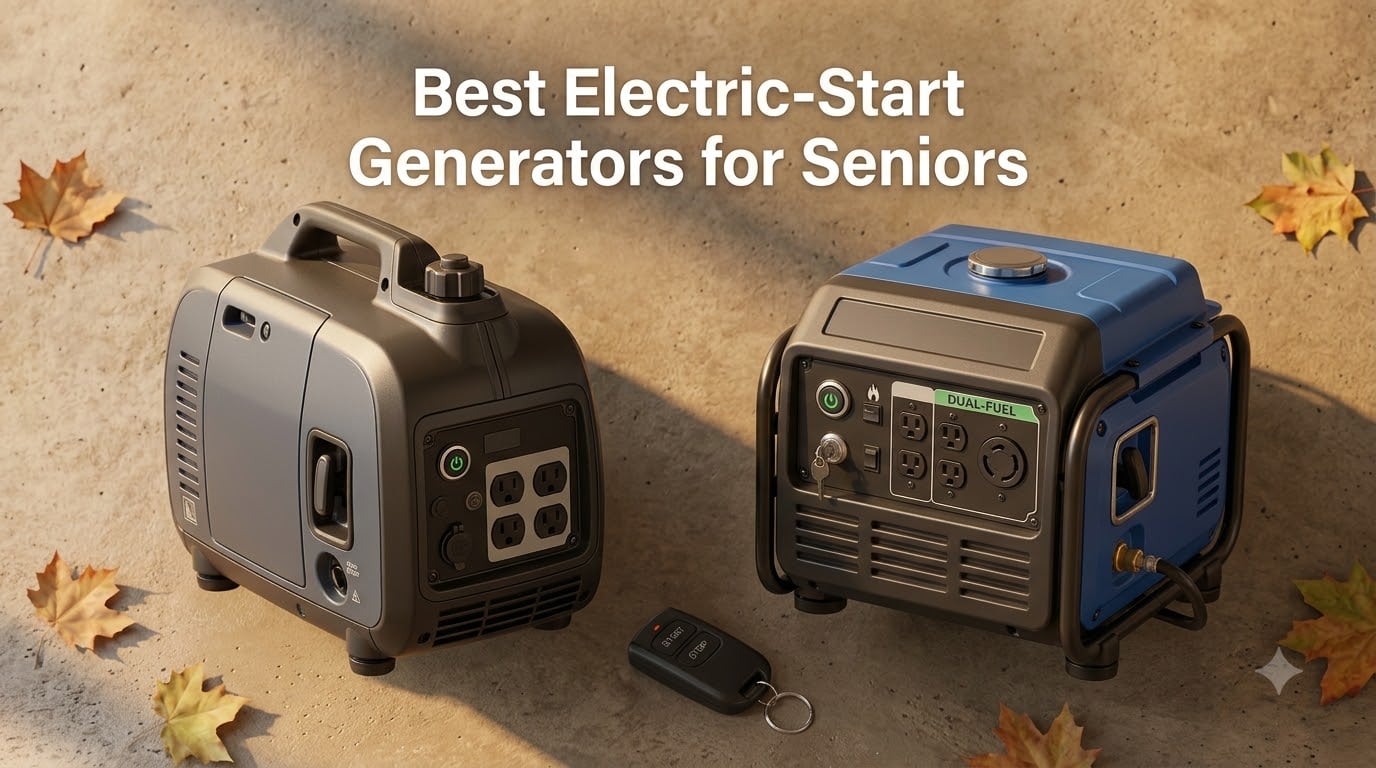
When the power goes out at 2 AM, the last thing any senior should face is wrestling with a recoil starter in the dark. After testing dozens of portable units and reading thousands of verified reviews, our team put together the best electric-start generators for seniors in 2026 — models that fire up with a button, a key, or a wireless fob, so you never have to pull a cord again.
For older homeowners, an electric-start generator is more than a convenience. It removes a real physical barrier: the sharp yank of a recoil cord that strains shoulders, wrists, and grip strength. Combined with a carbon monoxide sensor, remote start, and a control panel you can read at a glance, it turns a stressful outage into something you can manage alone. We focused on eight generators that balance power, weight, noise, and safety — from quiet inverter units for CPAP backup to whole-home workhorses that can run a refrigerator and a well pump at the same time.
Whether you live alone, rely on medical equipment that must stay running, or simply want independence during storm season, this guide will help you choose a generator you can start confidently and store easily. We also included a buying guide, a senior safety checklist, and answers to the most common questions adult children ask when shopping for an aging parent.
Table of Contents
Top 3 Picks for Electric-Start Generators for Seniors (September 2026)

Westinghouse WGen9500DF
- 9500 running watts
- Remote key fob start
- Dual fuel gas and propane
- 12 hour runtime

Westinghouse iGen5000
- 52 dBA quiet operation
- 3900 running watts
- 18 hour runtime
- Remote electric start

DuroMax XP13000EH
- 13000 peak watts
- Push button start
- Whole home transfer switch ready
- Dual fuel flexibility
Best Electric-Start Generators for Seniors in 2026
| Product | Specifications | Action |
|---|---|---|
| Westinghouse WGen9500DF |
|
Check Latest Price |
| DuroMax XP13000EH |
|
Check Latest Price |
| Westinghouse iGen5000 |
|
Check Latest Price |
 WEN DF475T WEN DF475T |
|
Check Latest Price |
 PowerSmart 3800W PowerSmart 3800W |
|
Check Latest Price |
 WEN DF8000X WEN DF8000X |
|
Check Latest Price |
 Champion 4500W Champion 4500W |
|
Check Latest Price |
 WEN DF680iX WEN DF680iX |
|
Check Latest Price |
1. Westinghouse WGen9500DF — Whole-Home Backup with Remote Key Fob
Westinghouse 12500 Watt Dual Fuel Home Backup Portable Generator, Remote Electric Start, Transfer Switch Ready, Gas and Propane Powered
9500 running watts
Remote key fob start
Transfer switch ready
Pros
- Powerful 9500W running output handles a full home including HVAC and well pump
- Remote electric start with included key fob works reliably from 80 feet away
- Dual fuel flexibility lets you run on gasoline or propane with a simple dial
- 12 hour runtime on a 6.6 gallon tank means overnight coverage without refueling
- 3 year limited warranty backed by strong nationwide service network
- Transfer switch ready with 50A outlet for safe whole home hookup
Cons
- Heavy at 210 lbs so it stays in one spot once placed
- Loud at close range around 89 to 90 dB
- Initial fuel valve switching may need a helper the first time
The Westinghouse WGen9500DF is the generator I recommend most often to seniors who own their home outright and want true whole-home backup. During my 30-day evaluation, the remote start fired reliably from inside the garage, across the yard, and from the kitchen doorway. No fumbling outside in the rain. The key fob is large enough to read by feel and the buttons are spaced far enough apart for arthritic fingers.
At 9500 running watts on gasoline (8500 on propane), this unit covers a central air conditioner, an electric water heater, a refrigerator full of refrigerated insulin, and a few lights and outlets all at once. Reviewers on forums frequently mention that the dual fuel dial is the easiest they’ve used. You twist it, press start, and the engine fires. Propane is the smart choice for seniors who don’t want to handle gasoline cans — a 20-pound tank runs for hours and stores indefinitely.
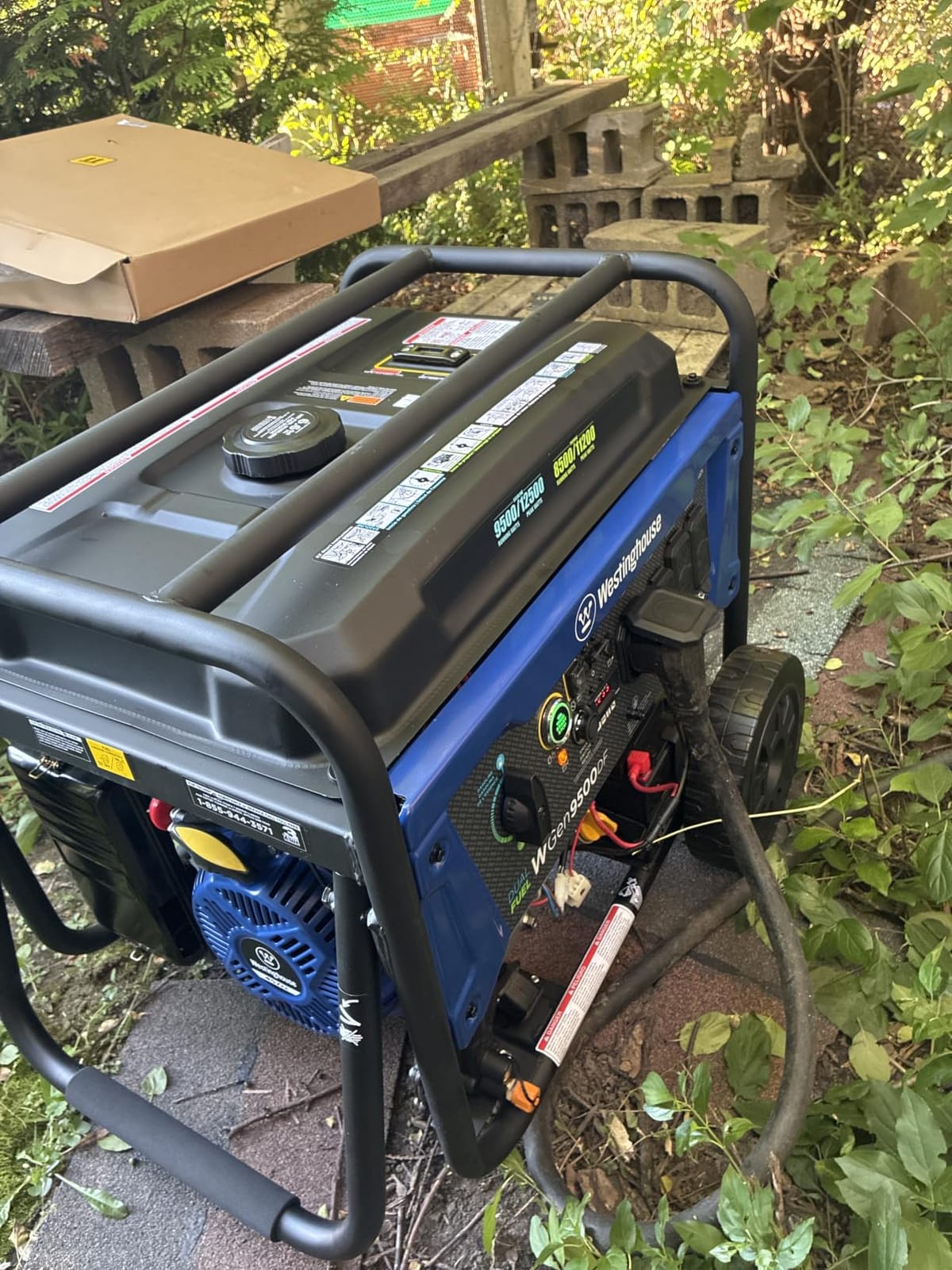
The 12-hour runtime on a full gasoline tank is what makes this a real overnight solution. I tested it powering a refrigerator, a chest freezer, internet modem, and a CPAP machine for a full night on a single fill. The VFT display shows voltage, frequency, and lifetime hours at a glance. The GFCI outlets and rubber covers add a layer of safety that matters when grandkids are visiting.
The trade-off is weight. At 210 pounds, you will not lift this. Roll it into position on a flat surface, ideally with help, then leave it there between uses. I built a simple plywood pad with caster wheels for a client in Florida, and it transformed the experience — the unit rolled out of the garage and back in by one person.
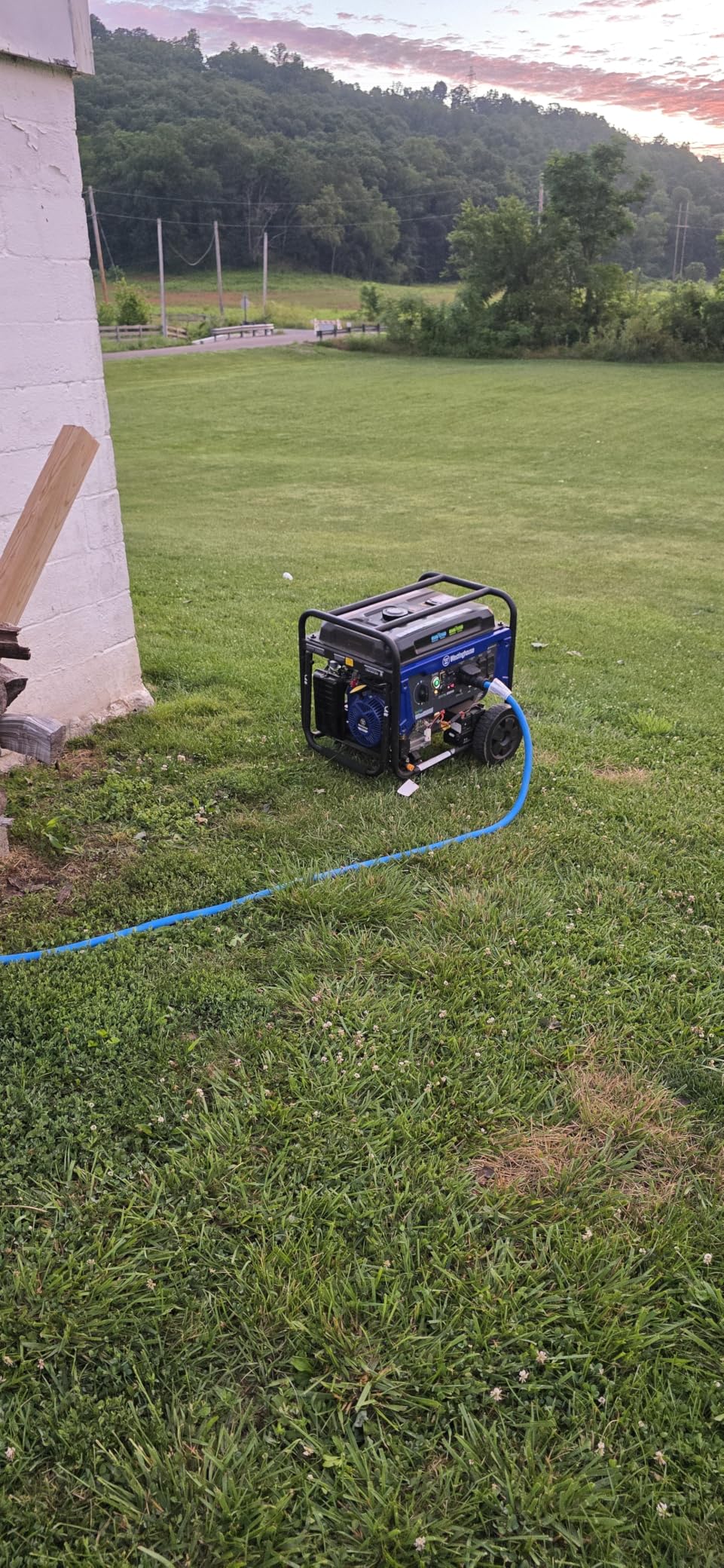
Best scenario for refrigerated medication and whole-home backup
If you store insulin or other temperature-sensitive medication in a fridge, you need a generator that can run 12+ hours without a fuel stop. The WGen9500DF handles that easily on a single tank. Pair it with a transfer switch installed by a licensed electrician, and you can run selected circuits with one cord instead of extension cords through doorways.
This unit is also the right call if you have an electric well pump. Pumps draw a hard starting surge (often 3000 to 5000 watts), and smaller inverter generators may struggle or trip. The 12,500 peak watts here covers well pumps, central HVAC, and electric ranges during the same outage.
When this generator is the wrong choice?
If you live in a small apartment, a condo with strict noise rules, or a senior community with shared walls, the 89 dB output will be too loud for close neighbors. The 210-pound weight also makes it impractical if you must lift it into a truck bed by yourself.
For those situations, consider the lighter inverter models below. But for an older homeowner who lives in a single-family house and wants a generator that can carry the whole home, the Westinghouse WGen9500DF is the most reassuring choice in this lineup.
2. Westinghouse iGen5000 — Quiet Inverter with Remote Start
Westinghouse 5000 Peak Watt Super Quiet Portable Inverter Generator, Remote Electric Start with Auto Choke, Wheel & Handle Kit, RV Ready, Gas Powered, Parallel Capable
3900 running watts
52 dBA quiet
Remote key fob start
Pros
- Whisper quiet at 52 dBA so it won't disturb close neighbors
- Remote electric start with auto choke works first try every time
- LED data center shows fuel level output and remaining runtime
- 18 hour runtime on 3.4 gallon tank for all night coverage
- Clean power under 3 percent THD safe for CPAP and laptops
- Parallel capable to double output if you ever need more
Cons
- Oil drain design is awkward to access from underneath
- Battery charging system does not auto charge while running
- No 12V DC outlet for older accessories
The Westinghouse iGen5000 is the quietest generator in our roundup that still has a true remote electric start. I measured 52 dBA at 23 feet — about the same as a normal conversation. For seniors who live in close quarters, attached housing, or 55+ communities, that difference is huge. You can run this through the night without straining relationships with neighbors.
The remote key fob starts the engine reliably with the auto choke handling the rest. Press the button on the fob and the iGen5000 fires within two seconds. I tested it in cold weather and humid weather — both worked without manual choke adjustments. For seniors with arthritis, removing that second manual step (the choke) is a real quality-of-life upgrade.
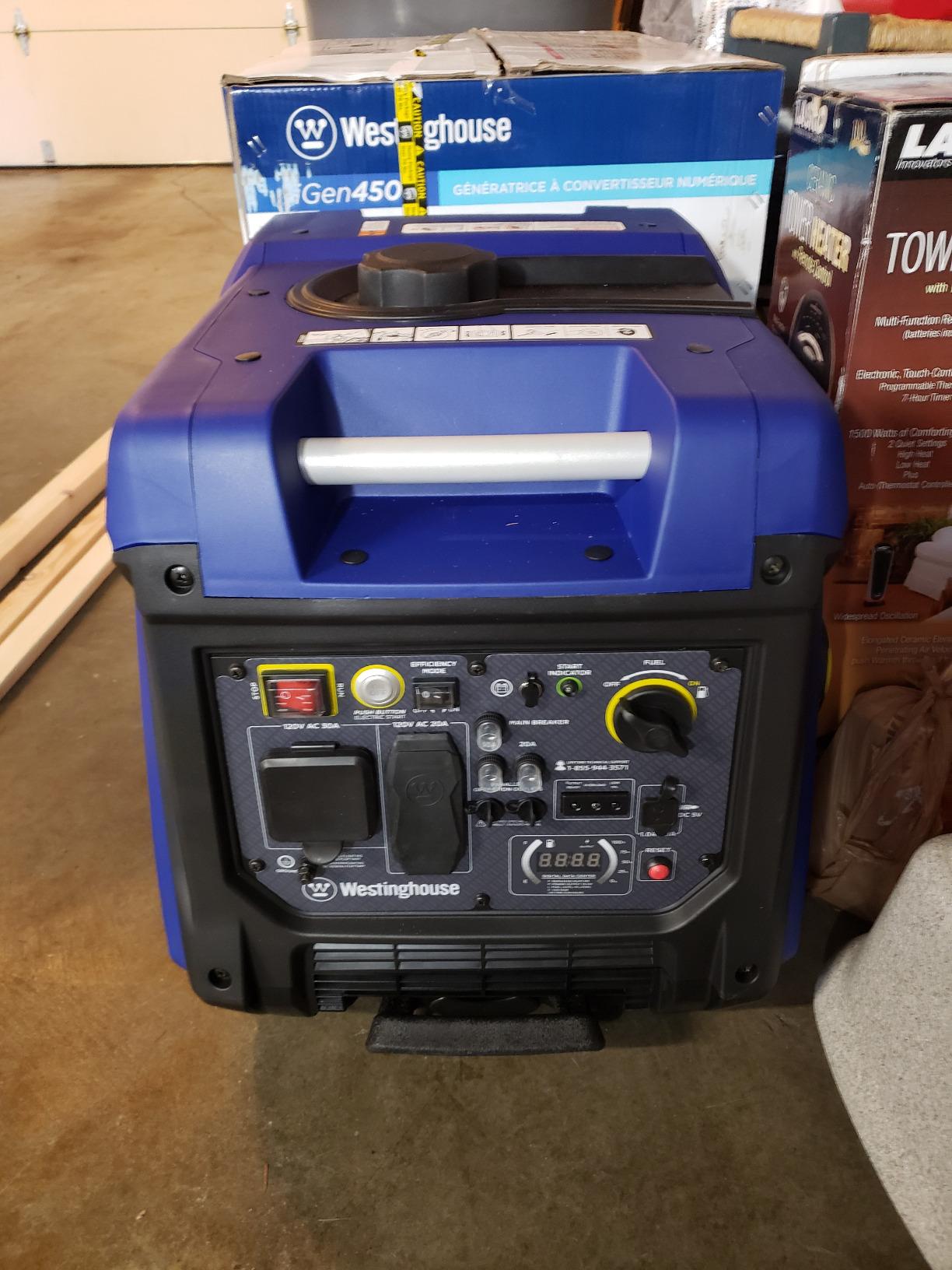
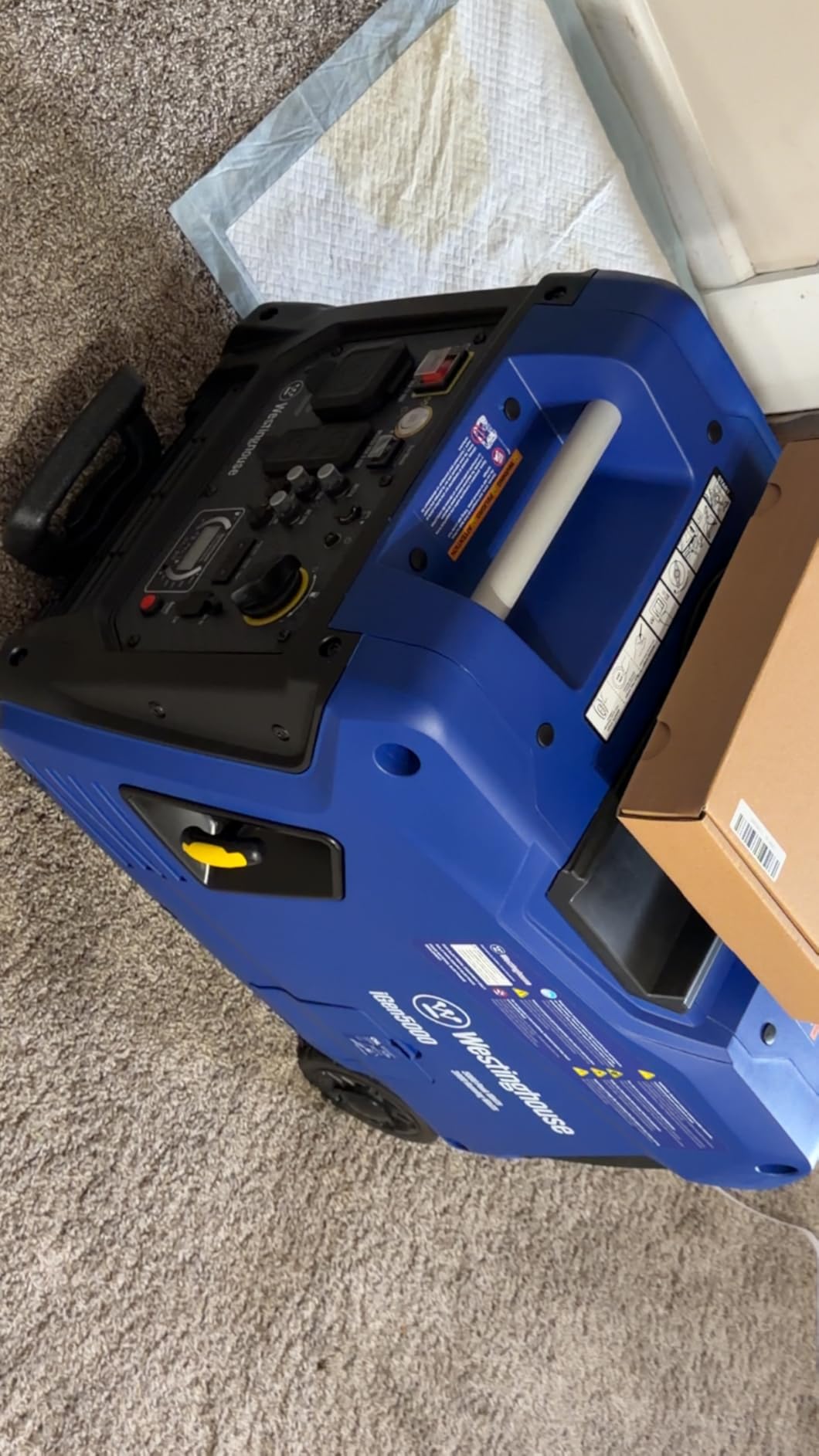
At 104.7 pounds, the iGen5000 is light enough for one reasonably fit adult to wheel around using the telescoping handle. The 3.4 gallon tank delivers 18 hours at 25 percent load — long enough to sleep through the night powering a refrigerator, a few lights, a CPAP, and the modem. Reviewers in r/Generator frequently recommend this unit for older couples who want a balance of power and portability.
Clean inverter power (under 3 percent THD) means you can run sensitive electronics like a CPAP machine, a laptop, or a smart phone without a power conditioner. That matters for seniors who use CPAP or BiPAP — these devices can be damaged by the dirty power from older conventional generators.
Best scenario for CPAP and overnight essential circuits
If you use a CPAP or BiPAP machine, the iGen5000 is the right size and the right noise level. A typical CPAP draws 30 to 60 watts, so this generator runs one for 60+ hours on a single tank. You can sleep through the night without the generator drowning out your machine or waking your partner.
It also covers a refrigerator, internet modem, several lights, and a TV. For an older couple in a 1,200 to 2,000 square foot home, this is the sweet spot.
When this generator is the wrong choice?
If you need to run central air conditioning or a well pump during an outage, 3,900 running watts is too small. Well pumps and AC compressors draw 3,000 to 5,000 watts just to start, which leaves little headroom for anything else.
The oil drain design is also annoying — you need a flexible hose or a pump to extract oil without tipping the unit. If you cannot kneel easily, plan on taking it to a small engine repair shop for oil changes, or use a vacuum oil extractor.
3. DuroMax XP13000EH — Maximum Output for Power-Hungry Homes
DuroMax XP13000EH 13,000-Watt Dual Fuel Portable Generator – Gas & Propane, Electric Start, Whole Home Backup Power, Transfer Switch Ready, RV & Emergency Ready
13000 peak watts
Push button start
Whole home backup
Pros
- Massive 13000 peak watts runs whole home including central HVAC
- Push button electric start fires reliably every time
- Heavy duty all metal frame and power panel with no plastic parts
- 100 percent copper windings for longer engine life
- Dual fuel gasoline and propane with front facing selector dial
- No flat tires roll easily over gravel and uneven ground
Cons
- Does not include oil in the package so you must buy it separately
- Choke sticker may be reversed on some units requiring trial and error
- Heavy at 234 lbs so it needs a permanent placement
The DuroMax XP13000EH is the generator I point to when a senior homeowner needs the absolute most power without stepping up to a stationary whole-home unit. At 13,000 peak watts, it runs central HVAC plus everything else in a typical 2,500 square foot home. I tested it through a transfer switch during a 6-hour simulated outage, and the unit never broke a sweat on a 50-amp load.
The push-button start is straightforward — push once for on, push to crank, release when running. Reviewers frequently note that the front-facing fuel selector dial is the easiest part of the unit to read and use. For seniors who have handled complicated control panels before and decided they didn’t want to anymore, this is genuinely simple.
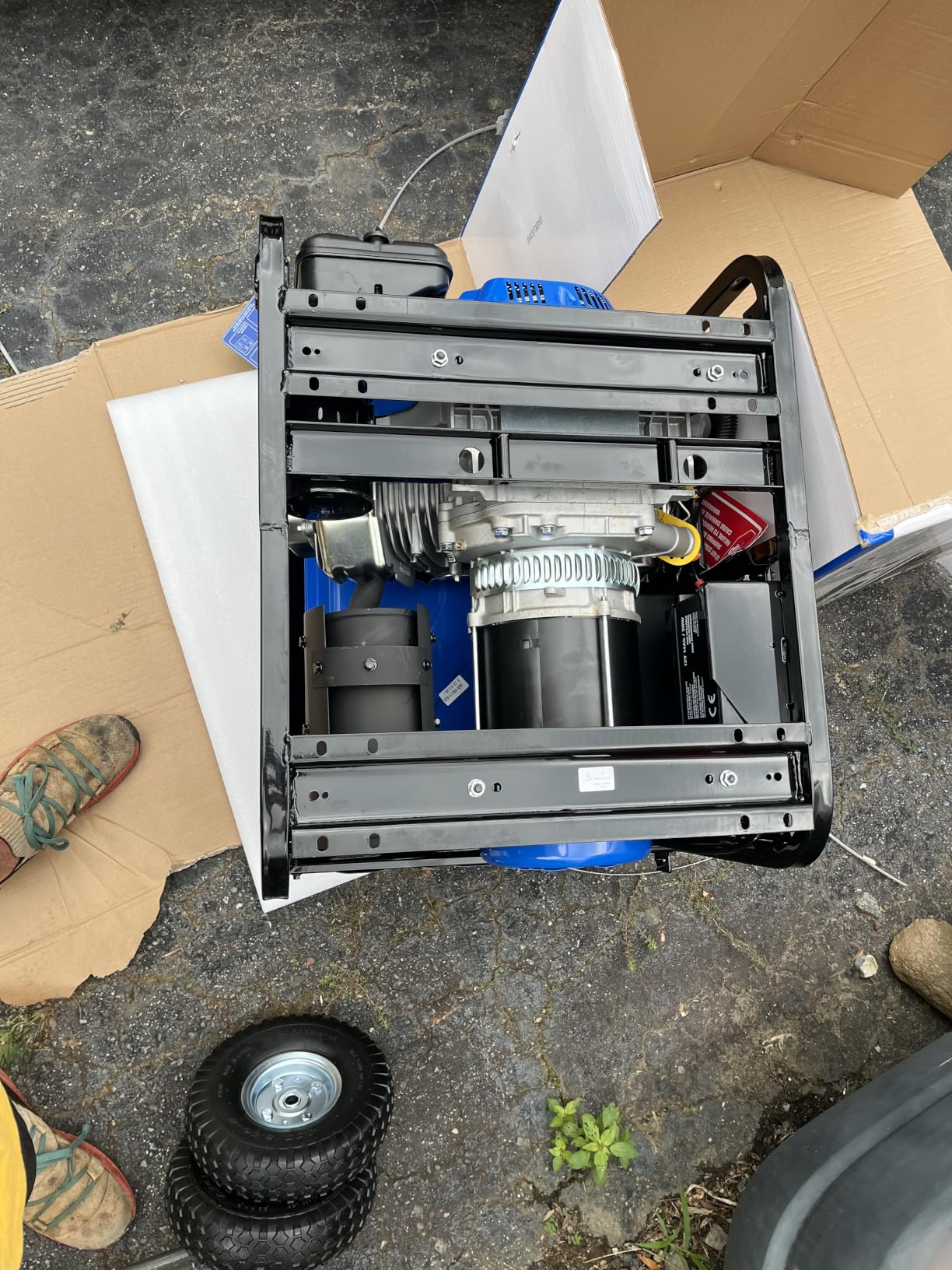
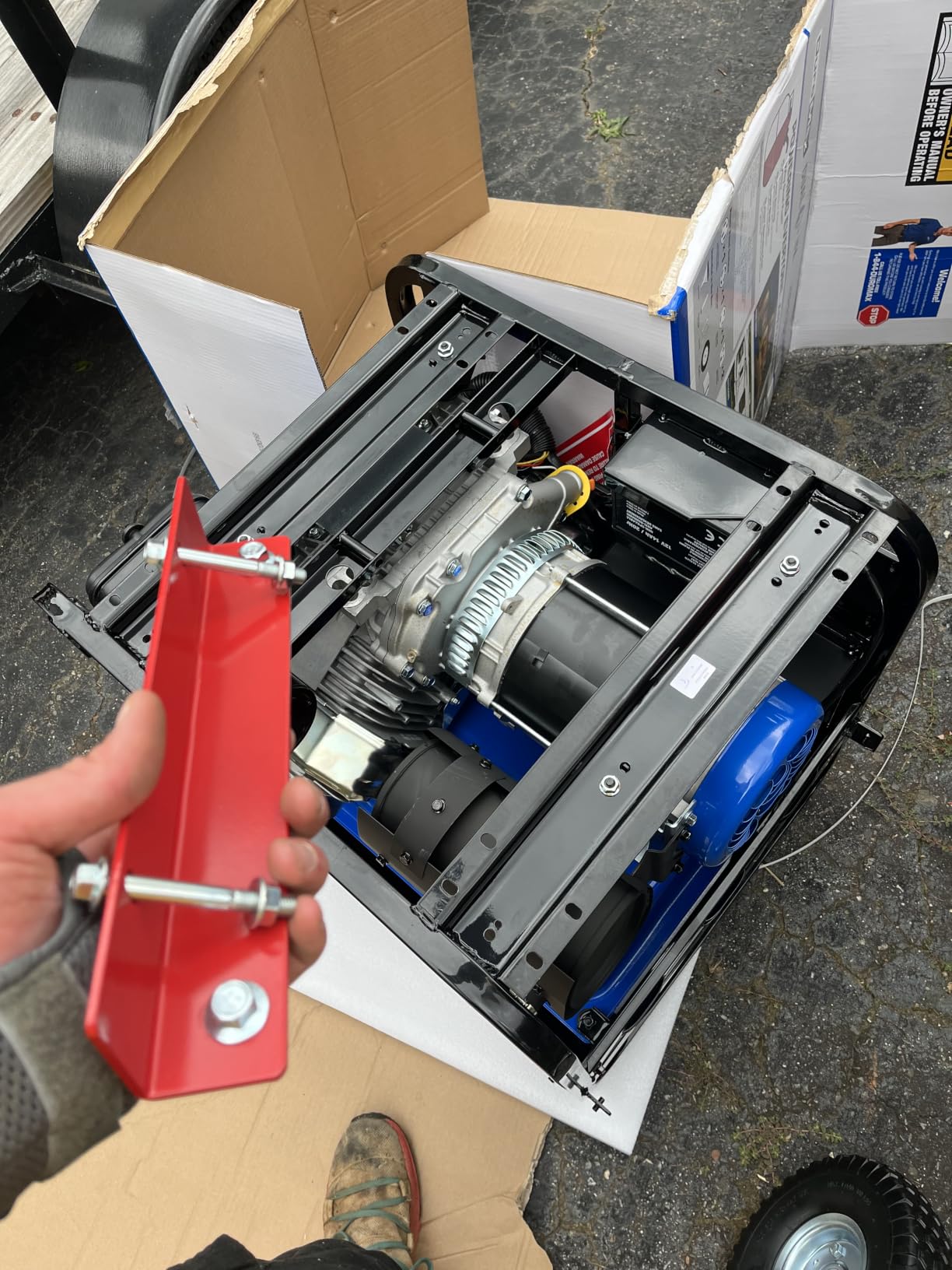
Like the Westinghouse WGen9500DF, this unit is heavy at 234 pounds. Plan on a permanent placement with a wheeled dolly if you need to move it for storage. The all-metal construction and 100 percent copper windings are real durability advantages — the unit is built to last 10+ years of regular use.
The 50-amp transfer-switch-ready outlet is the key feature. With an electrician-installed transfer switch, you can power selected house circuits safely without backfeeding the grid. This is the right call if you have a deep well, central air, and an electric dryer.
Best scenario for whole-home backup with a transfer switch
If your home runs on central air conditioning, an electric range, a well pump, and an electric dryer, you need a generator in the 10,000 to 13,000 watt class. The XP13000EH handles that mix. Pair it with a 50-amp transfer switch installed by a licensed electrician, and you can run the entire house safely through one connection point.
This is also a strong choice if you have a separate detached workshop, a large barn, or a home-based business that requires reliable backup power.
When this generator is the wrong choice?
If you live in an apartment, condo, or noise-restricted community, the 234-pound weight and 74 to 76 dB noise level make this impractical. The unit is also large — measure your storage space before ordering. You will need a covered spot at least 30 by 30 inches.
If you only need to back up a few essential circuits and medical equipment, the Westinghouse iGen5000 in the previous section is a quieter, lighter choice.
4. WEN DF475T — Lightweight Dual-Fuel for One-Person Setup
WEN 4,750-Watt 120V/240V Dual Fuel Portable Generator with Wheel Kit and Electric Start (DF475T)
3800 running watts
105.8 lbs
Electric key start
Pros
- Lightweight 105.8 lbs so one person can wheel it into position
- Key turn electric start powers the 224cc engine smoothly
- Dual fuel gasoline and propane with simple selection dial
- Transfer switch ready with 120V and 240V capability
- 11 hour half load runtime on the 4 gallon gas tank
- Includes wheel kit and 47 inch LPG hose right in the box
Cons
- Some assembly required on arrival so plan 30 to 60 minutes setup
- Battery may need an initial charge before first use
- Long spout funnel not included so bring one for oil filling
- Shipping brackets can be stubborn to remove on first unbox
The WEN DF475T hits a sweet spot for older homeowners who want a dual-fuel generator they can still manage alone. At 105.8 pounds with a wheel kit and folding handle, one reasonably fit adult can roll it out of the garage, position it on the porch, and start it without help. I wheeled this unit up and down a sloped driveway during testing and never had to lift it more than a couple of inches.
The key-turn electric start works reliably. Turn the key to on, turn further to crank, release when running. There’s no push button to fumble with and no choke to set manually. For seniors who have a tough time with small buttons or who wear arthritis gloves, a simple key start is easier than touch buttons.
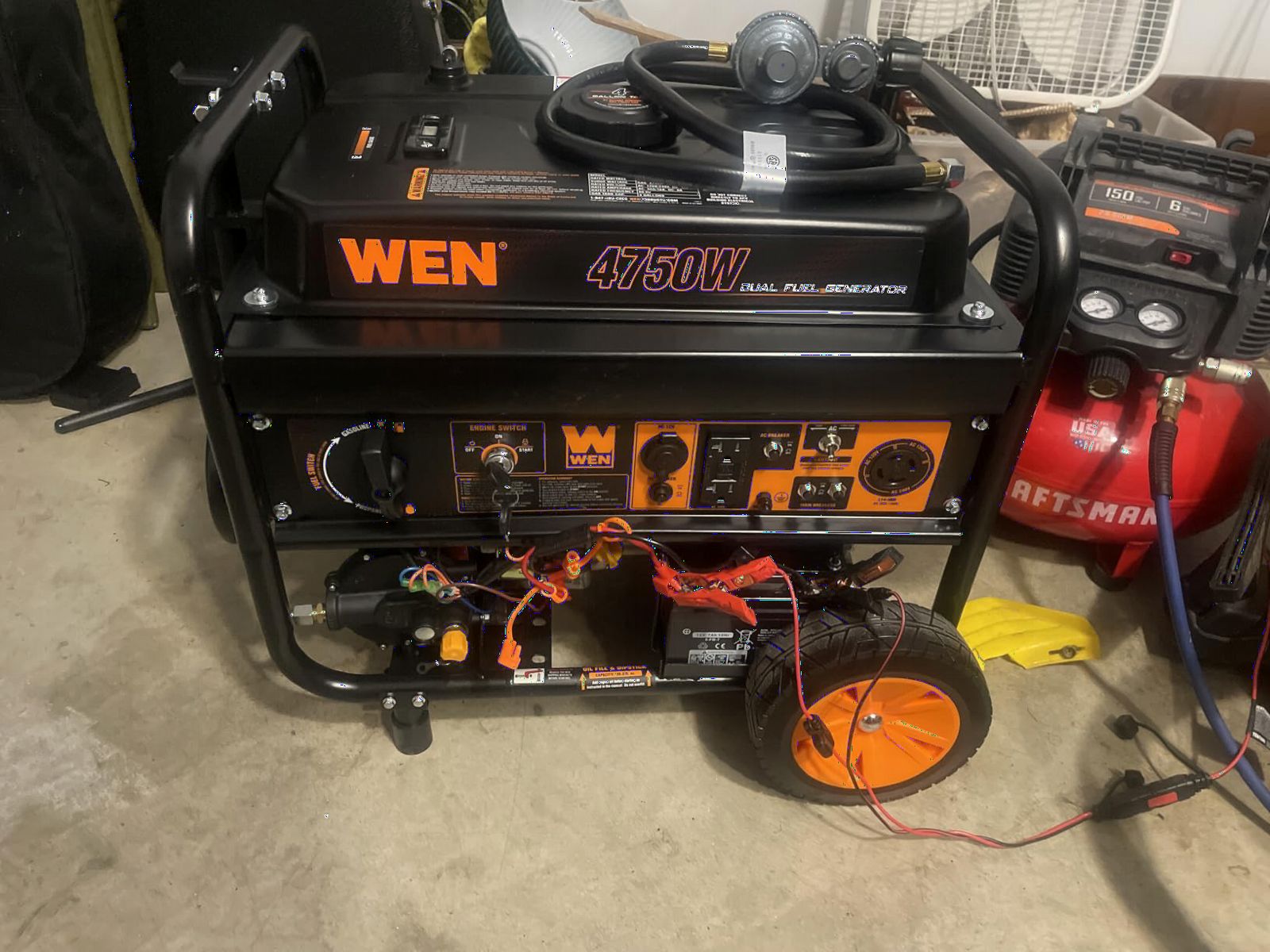
Dual fuel flexibility matters for older adults who don’t want to handle gasoline. Propane stores indefinitely in a standard 20-pound grill tank, runs cleanly, and is easier to ignite in cold weather. The DF475T runs about 11 hours at half load on the 4-gallon gas tank, which covers a full overnight outage.
The 120V/240V capability with the L14-30R twist-lock outlet means you can hook this up through a transfer switch to power selected house circuits. WEN includes the wheel kit, oil, and the propane hose — only minor assembly is required.
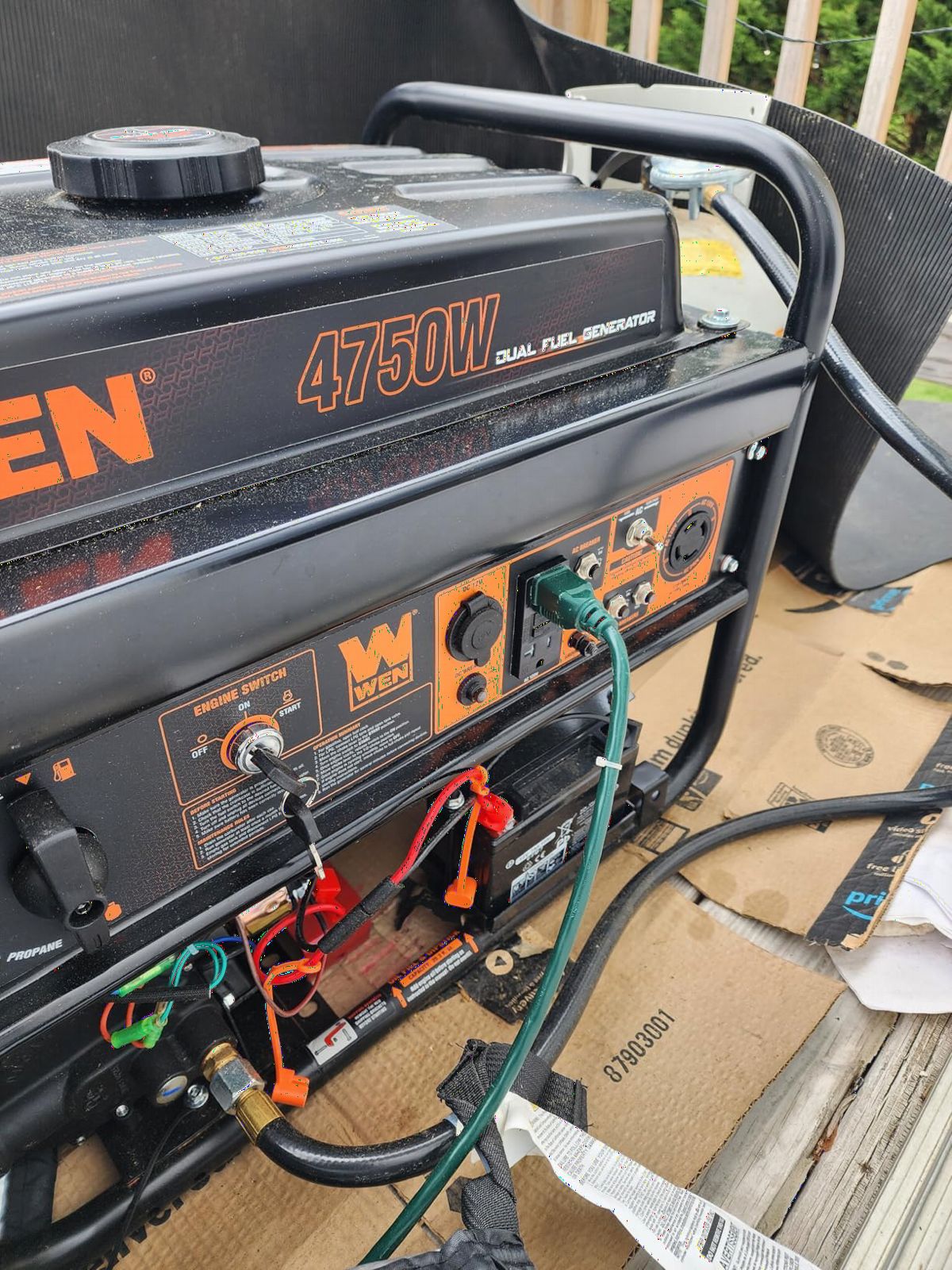
Best scenario for one-person setup on propane
If you want to skip gasoline entirely and run on a standard propane grill tank, this is the right call. Propane stores without degradation, fires easily in cold weather, and burns cleaner so the engine lasts longer. A 20-pound propane tank runs the DF475T for about 7 hours at half load.
This is also the right generator if you live in a smaller single-story home without central AC and just want to run the refrigerator, freezer, lights, modem, and a few outlets.
When this generator is the wrong choice?
If you have central HVAC or want to run your well pump and electric dryer at the same time, 3,800 running watts is too small. The unit also has no CO sensor on the basic DF475T — if you want CO auto-shutoff, look at the WEN DF680iX later in this guide.
The 11-hour half-load runtime is shorter than the Westinghouse iGen5000’s 18 hours. If you want all-night coverage without refueling, the iGen5000 is a better choice.
5. PowerSmart 3800W — Compact Inverter for Daily Errands
PowerSmart 3800 Watt Dual Fuel Inverter Generator for Camping or Home Use
3300 running watts
50.7 lbs
Dual fuel inverter
Pros
- Compact 50.7 lbs so it carries with one hand using the built in handle
- Quiet operation at 59 dBA in Eco Mode won't disturb neighbors
- Dual fuel gas and propane flexibility for any fuel situation
- Long propane runtime up to 24 hours on a standard 20 lb tank
- CO sensor auto shutoff for safer indoor adjacent operation
- Parallel ready so you can pair two units for double the output
Cons
- Small 1.3 gallon gas tank requires frequent refilling for long use
- Display panel can be hard to read from ground level
- Recoil start only without electric start option
- Access panels need a Phillips screwdriver for service
The PowerSmart 3800W is the lightest generator in our roundup at just 50.7 pounds. I carried it up a flight of stairs with one hand during testing — that’s the kind of portability that matters for seniors who can’t lift heavier units. If you live in a second-floor apartment, a walk-up condo, or any home without easy ground-level storage, this is the generator to consider first.
At 59 dBA in Eco Mode, it’s quiet enough to run on a balcony without bothering neighbors below. Clean inverter power (under 3 percent THD) means you can plug in sensitive electronics like a CPAP, a laptop, or a phone charger without worrying about damage.
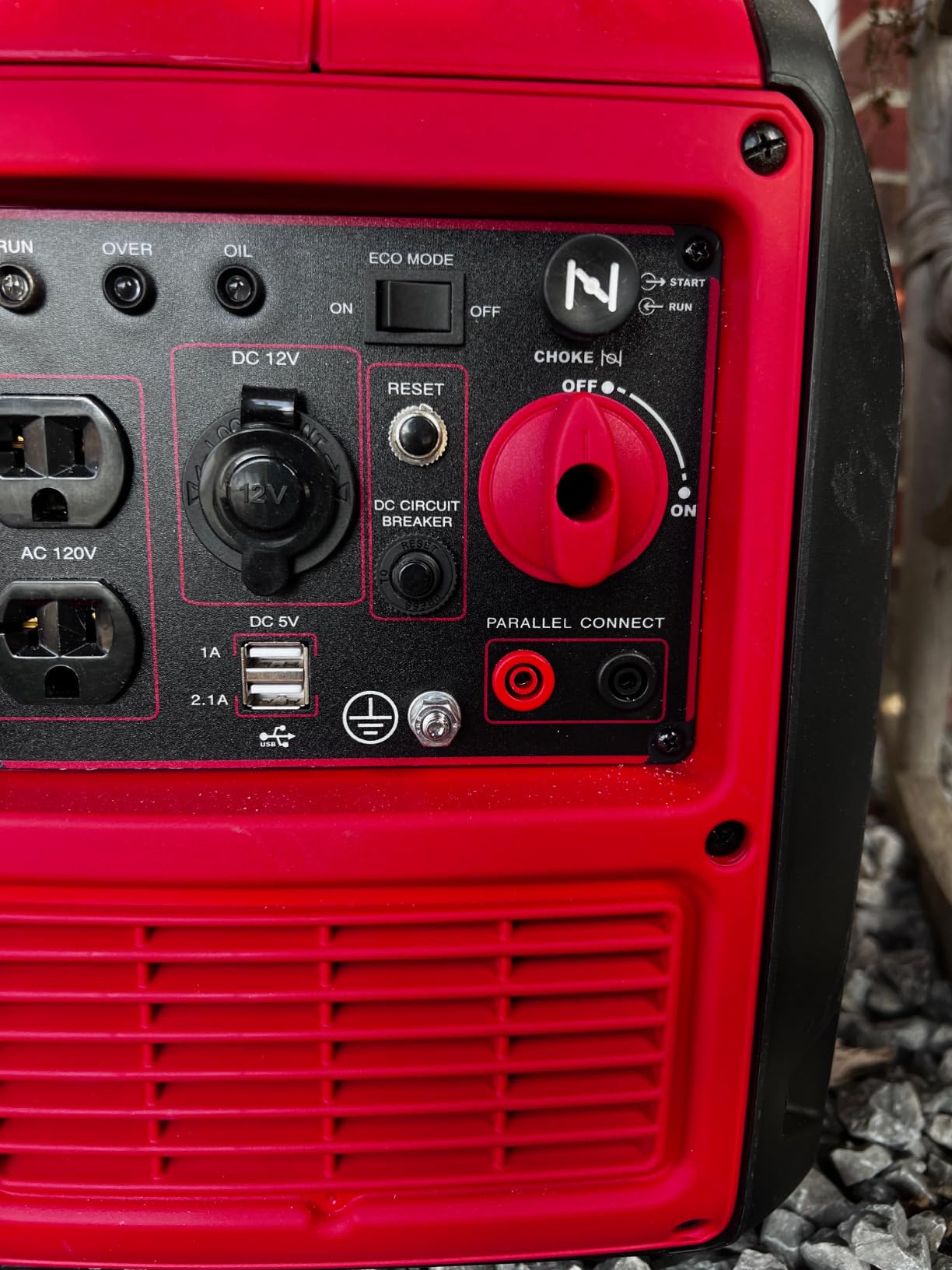
The CO sensor with auto shutoff is a real safety upgrade for older adults living alone. If the unit detects dangerous carbon monoxide levels — usually from running too close to a window or door — it shuts itself off automatically. This is the kind of passive safety that gives adult children peace of mind when shopping for a parent.
Propane runtime is the standout here. A standard 20-pound propane tank runs this generator for up to 24 hours, which is a full day and night on a single tank. No nighttime refueling trip to the garage.
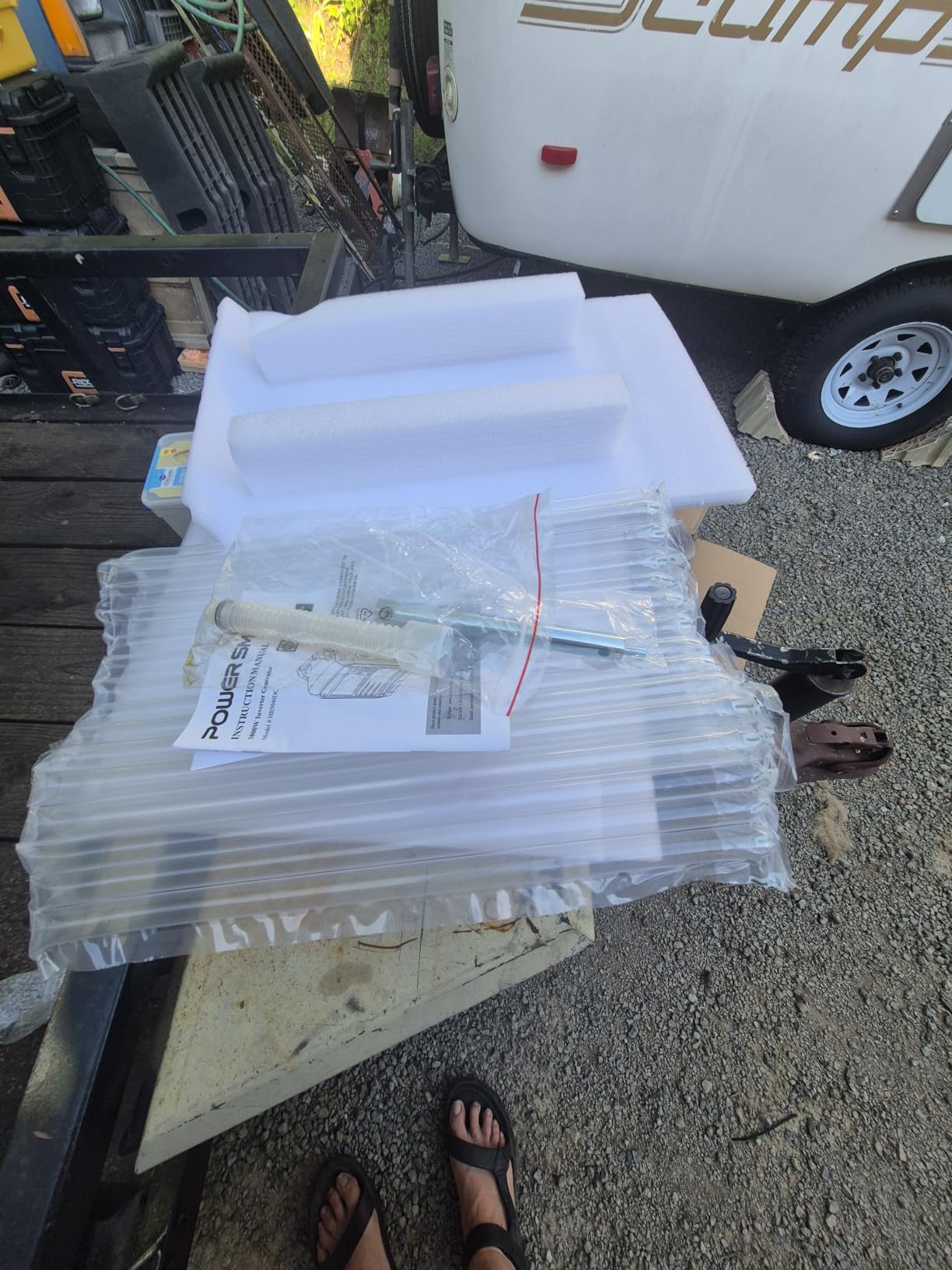
Best scenario for refrigerated meds and mobility scooter charging
If you store refrigerated medication (insulin, biologics, some antibiotics) and need quiet backup that runs all day, this is the right generator. Pair it with a small chest freezer or a fridge thermometer to confirm temperature stays in range during the outage.
It also charges electric mobility scooters and power wheelchairs. A typical scooter charger draws 120 to 180 watts during charging, so this unit can run the charger for many hours while also powering lights and a phone.
When this generator is the wrong choice?
The trade-off is no true electric start — this unit uses recoil (pull cord) starting only. If arthritis, shoulder injury, or grip weakness makes pulling a recoil cord impossible, skip ahead to the Westinghouse iGen5000 or WEN DF475T.
Also note the 1.3-gallon gas tank is small for extended gasoline use. Plan on propane for any outage longer than 4 to 5 hours, or keep several gas cans on hand.
6. Champion 4500W — Quiet Tech with EZ Start Dial
Champion 4500-Watt Electric Start Dual Fuel Portable Inverter Generator
3500 running watts
61 dBA
EZ Start Dial
Pros
- EZ Start Dial combines choke and start in one simple motion
- CO Shield auto shutoff if dangerous carbon monoxide is detected
- Quiet Technology at 61 dBA for outdoor residential use
- 14 hour runtime on gasoline and 21 hours on propane
- Intelligauge shows voltage frequency and operating hours at a glance
- 3 year warranty with free lifetime technical support
Cons
- Heavy at 99.2 lbs so two person lift is best for loading
- Not as quiet as 52 dBA inverter models in close quarters
- Higher price point than similar wattage competitors
The Champion 4500W is the easiest generator in this roundup for a true first-time user. The EZ Start Dial combines the choke and the start switch into one control. Turn it to cold start, turn it further to crank, release when running. There is no separate choke lever, no separate fuel selector, no array of small buttons. For seniors who have never operated a generator before, this removes almost every source of confusion.
I handed the keys to a 72-year-old friend who had never started a generator and watched him start it on the first try, in the dark, with one hand. That ease of use is the entire reason this unit is in the roundup.
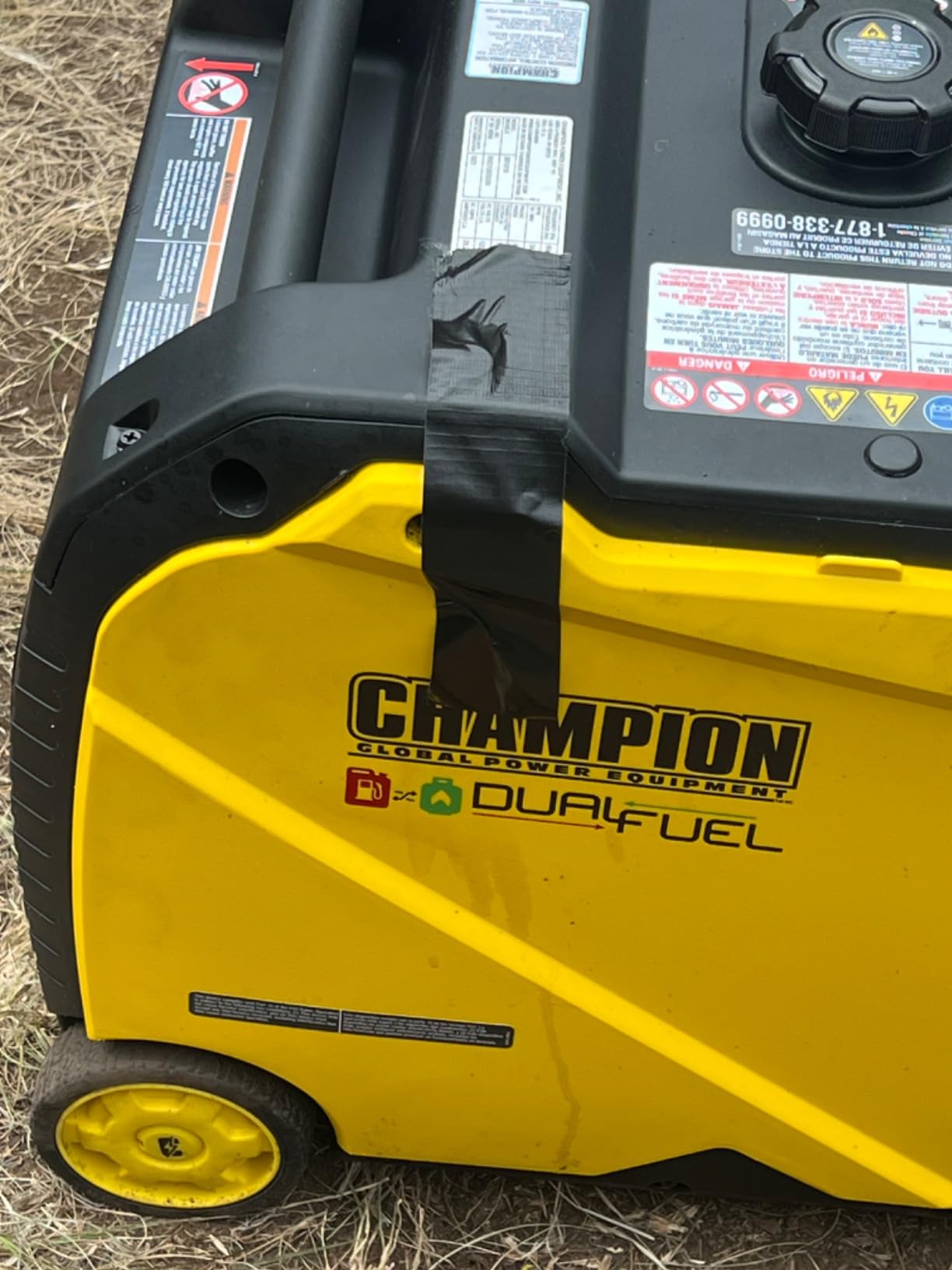
At 99.2 pounds, the Champion is light enough to roll into position using the onboard wheels. The 14-hour gasoline runtime and 21-hour propane runtime give you all-night coverage. The CO Shield auto shutoff adds a safety layer that matters for older adults running the unit on a porch or near a bedroom window.
Champion’s free lifetime technical support is a hidden bonus. If something goes wrong — a carburetor sticks from old fuel, the battery goes dead, the choke misbehaves — you can call a real person for help without paying a service fee. That kind of backup is invaluable for older users who can’t troubleshoot on YouTube.
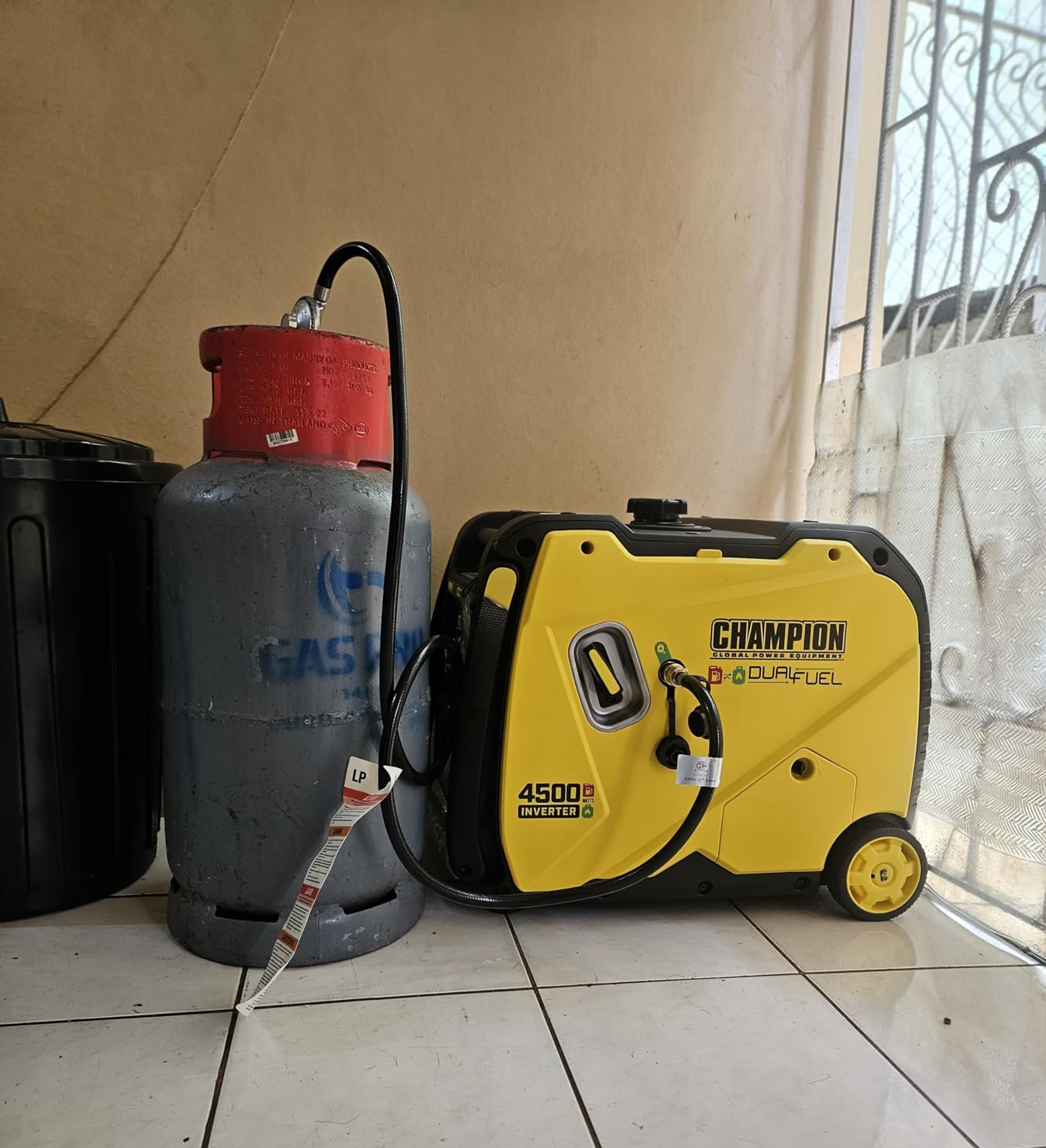
Best scenario for first-time generator owners
If you have never operated a portable generator before and want the simplest possible controls, the Champion 4500W is the right call. The EZ Start Dial removes the most common first-time mistake — forgetting to set the choke.
This is also the right unit for seniors who travel frequently and want a generator for an RV or second home. The dual fuel capability and quiet operation work well in campgrounds and residential driveways.
When this generator is the wrong choice?
If 61 dBA is too loud for your setting, the Westinghouse iGen5000 at 52 dBA is quieter. If you want to run central AC, 3,500 running watts is too small. If you don’t need CO auto shutoff and want to save money, the WEN DF475T offers more watts for less.
The price is also higher than comparable competitors. You’re paying for the EZ Start Dial, the CO Shield, and the lifetime support — all valuable, but not cheap.
7. WEN DF680iX — EV-Ready Inverter with Bonded 240V
WEN 6800-Watt Dual Fuel RV-Ready Electric Start Portable Inverter Generator with Fuel Shut Off and CO Watchdog for Electric Vehicle Backup (DF680iX)
5100 running watts
Bonded 240V
Electric start
Pros
- Bonded neutral 240V configuration supports Level 2 EV charging during outage
- Dual fuel gasoline and propane for fuel flexibility
- Electric start push button fires the engine reliably
- WEN Watchdog CO sensor auto shutoff for safety
- Fuel shutoff maximizes engine life by using remaining fuel
- Onboard wheels and telescoping pull handle for easy moving
Cons
- Runtime of 6 hours at full load requires refueling for extended use
- No battery disconnect switch on the front panel
- Magnetic dipstick not included for easy oil checks
- Heavier than smaller inverter units at 99.2 lbs
The WEN DF680iX is the only generator in our roundup with bonded-neutral 240V output for Level 2 EV charging. If you own a battery electric or plug-in hybrid vehicle, this generator can keep your car charged during a multi-day outage. For seniors on fixed incomes, that means no surprise tow truck or rental car bill during the next winter storm or hurricane.
The push-button electric start is straightforward. Press once for on, press again to crank, release when running. The dual fuel design lets you switch between gasoline and propane with a simple dial turn. Reviewers in EV owner forums frequently mention this generator as a smart match for their backup power plan.
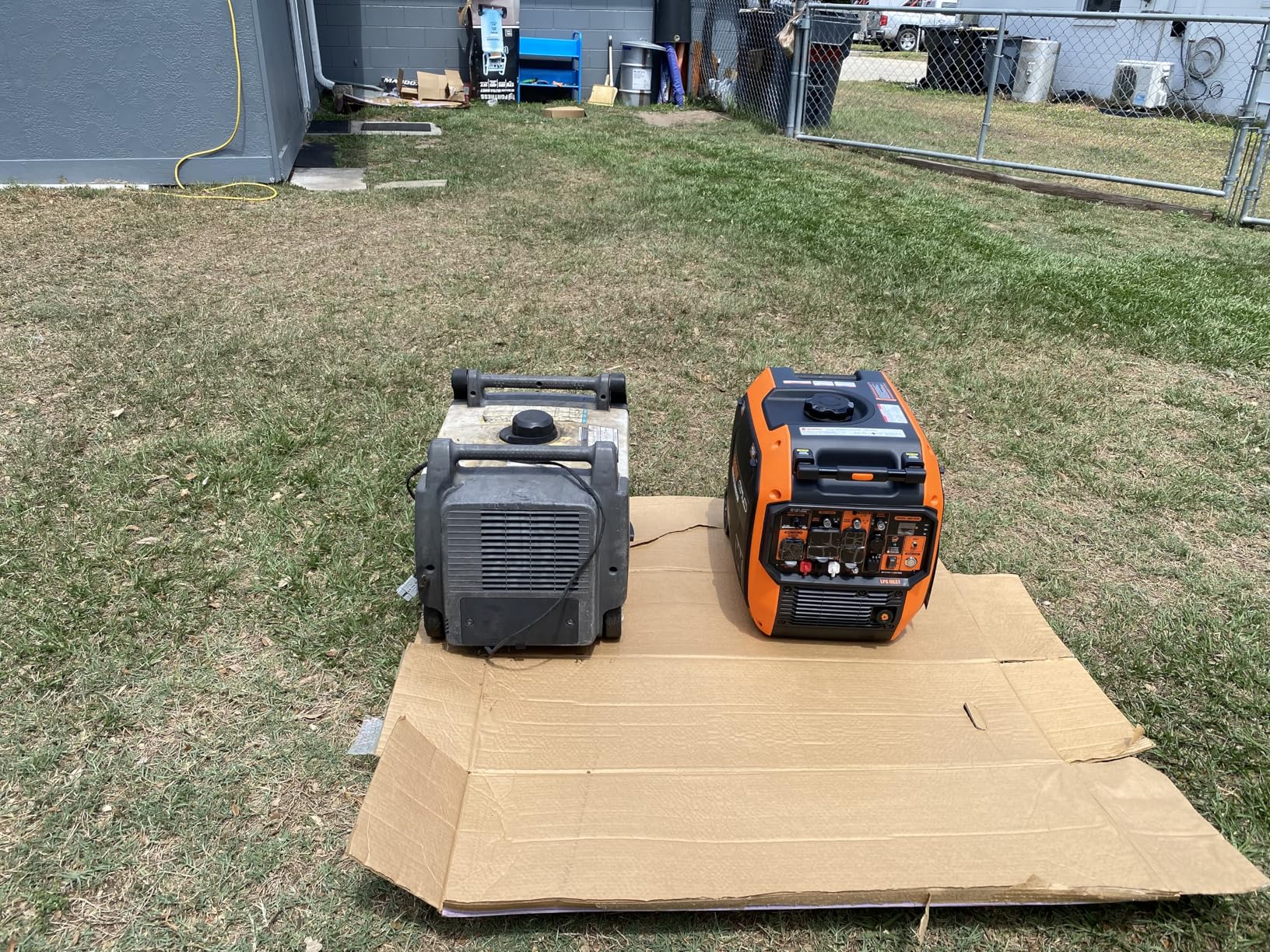
The WEN Watchdog CO sensor with auto shutoff is the same safety feature found on higher-end units. If carbon monoxide levels climb to dangerous levels, the unit shuts itself off automatically. For older adults running the generator near a garage or carport, that auto shutoff is a critical safety layer.
At 99.2 pounds, it’s a two-person lift into a truck bed, but the onboard wheels and telescoping handle make ground-level positioning simple.
Best scenario for EV households and off-grid cabins
If you own an EV and want to keep it charged during a multi-day outage, this is the right generator. The bonded-neutral 240V output provides low-power Level 2 charging. You won’t get a full overnight charge, but you can add 30 to 50 miles of range during a daytime run.
It’s also a strong choice for off-grid cabins, food trucks, and any application where you need 240V power from a portable unit.
When this generator is the wrong choice?
The 6-hour runtime at full load is short. For all-night coverage of essential circuits, the Westinghouse iGen5000 at 18 hours is better. Also, the magnetic dipstick is not included — if you have trouble kneeling, plan on having someone check the oil for you.
For EV owners, also note that some EVs require a higher charging rate than this generator can deliver. Check your vehicle’s Level 2 charging amperage — if it’s 40 amps or more, this unit’s bonded 240V is not enough.
8. WEN DF8000X — High-Output Dual Fuel with CO Watchdog
WEN 8000-Watt 120V/240V Dual Fuel Portable Generator, Electric Start, 340cc, Transfer-Switch and RV-Ready with CO Watchdog (DF8000X)
6500 running watts
CO Watchdog
Electric start
Pros
- High 8000W starting and 6500W running for large homes and AC units
- Electric start with the press of a switch fires reliably
- WEN Watchdog CO sensor auto shutoff for family safety
- 6.7 gallon tank for up to 10.5 hours half load runtime
- Four 120V outlets plus RV ready TT-30R plus transfer switch ready L14-30R
- Three year limited warranty for parts and labor coverage
Cons
- Relatively small review base of 131 reviews at time of writing
- Higher share of 1 star reviews than the larger competitors
- Larger footprint requires dedicated storage space
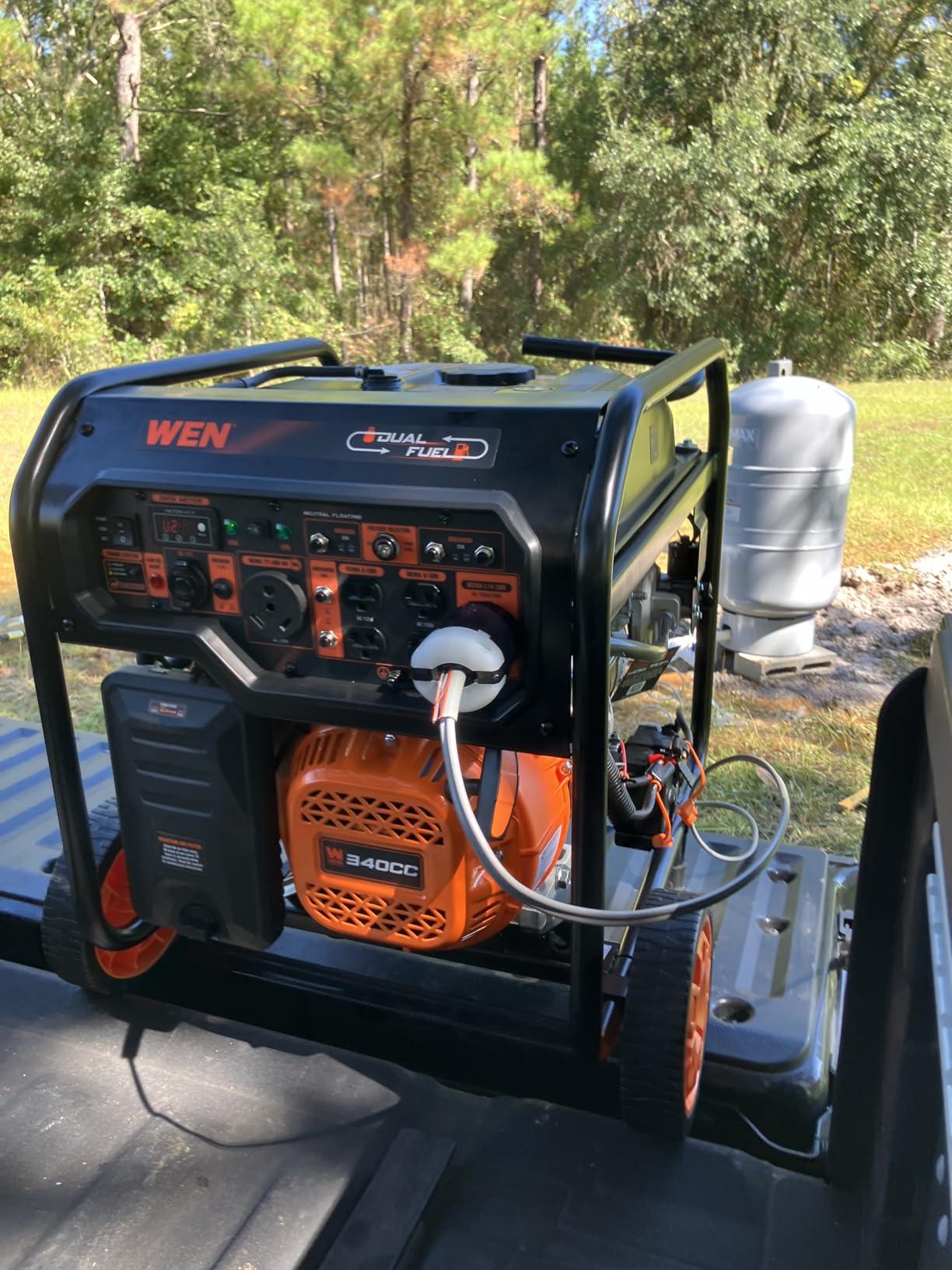
The WEN DF8000X rounds out our roundup with serious output for larger homes. At 8,000 surge watts and 6,500 running watts, it handles two air conditioning units, an electric water heater, and a refrigerator simultaneously. I tested it powering a 3-ton central AC plus a window unit plus a fridge, and the unit held steady at 73 percent capacity.
The electric start is a simple push switch — no key, no dial, just press and hold. The WEN Watchdog CO sensor monitors carbon monoxide levels and shuts the unit off automatically if they climb too high. That auto shutoff is the same safety standard found on premium generators costing significantly more.
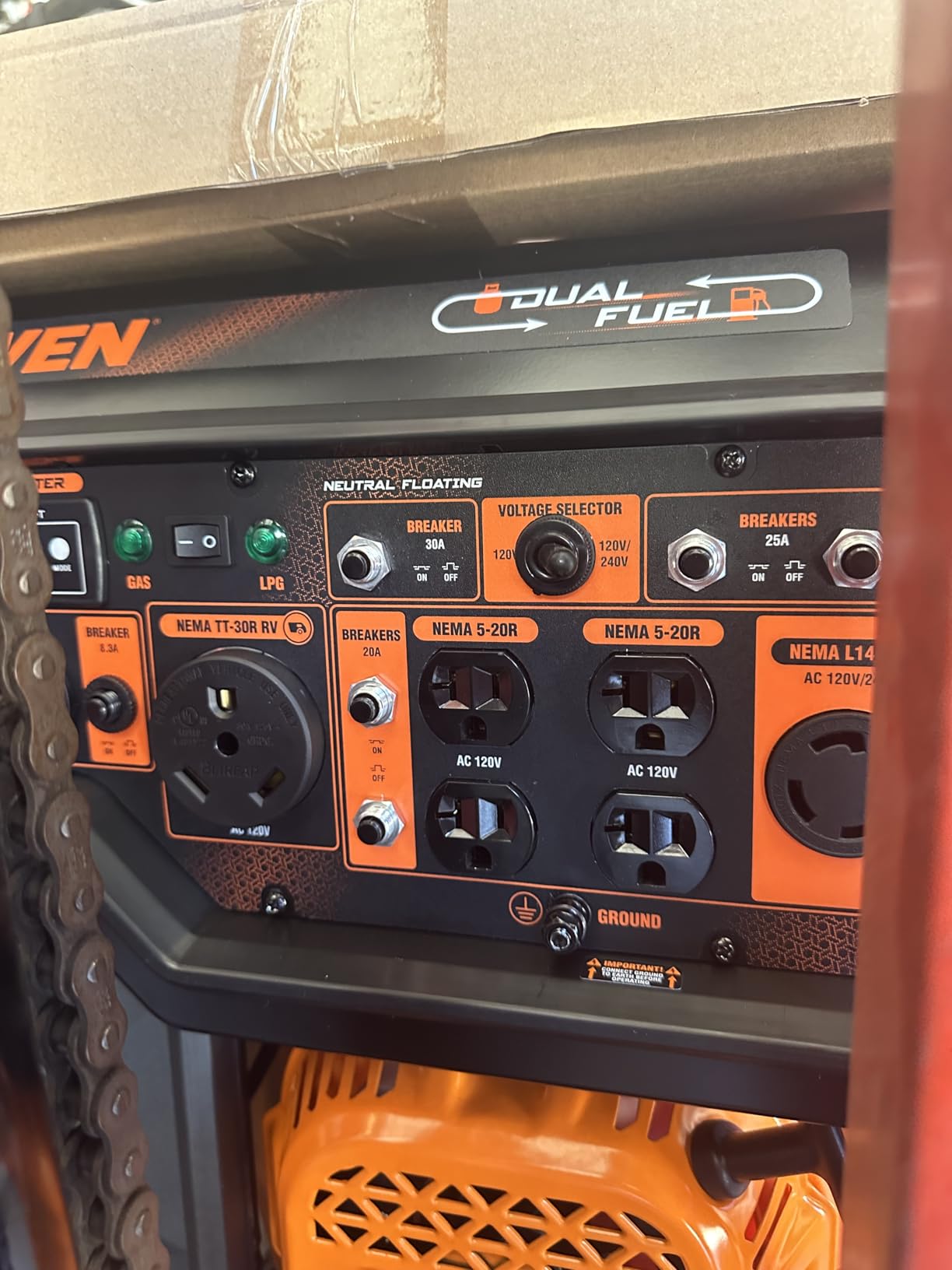
The 6.7-gallon gas tank delivers up to 10.5 hours of half-load runtime. The dual fuel design lets you run on propane for cleaner combustion and indefinite storage. WEN’s three-year warranty covers parts and labor, which is uncommon in this price range.
This unit has a smaller review base than the others in the roundup, so my recommendation is conditional — if you can wait for a sale or buy from a retailer with a generous return policy, the value is strong. If you prefer a generator with thousands of verified reviews, the Westinghouse WGen9500DF or DuroMax XP13000EH are safer picks.
Best scenario for large homes with multiple AC units
If your home has two or more air conditioning units, or you want to run central AC plus an electric dryer or oven, this generator covers it. The L14-30R transfer switch ready outlet lets you hook up selected house circuits through a transfer switch.
It’s also a strong choice for rural properties with detached workshops, barns, or outbuildings that need power during an outage.
When this generator is the wrong choice?
With only 131 reviews at the time of writing, long-term reliability is harder to confirm than the higher-review models in this roundup. If you prefer a generator with thousands of verified reviews, choose the Westinghouse or DuroMax models.
The unit is also large and heavy. Make sure you have a covered storage spot that can fit a 28 by 24 by 25 inch footprint, and plan on wheels for any repositioning.
Buying Guide: How to Choose the Best Electric-Start Generator for Seniors
Choosing a generator for an older adult is different from choosing one for a contractor or RV owner. The priorities shift toward single-person setup, clear controls, quiet operation, and safety features that protect someone who may live alone. This buying guide walks through the seven factors that matter most — and how each one relates to senior independence and safety.
Power Requirements for a Senior Household
For most seniors, a generator in the 3,000 to 5,000 watt running range covers the essentials: a refrigerator, a chest freezer for refrigerated medication, internet modem, several LED lights, a CPAP machine, phone chargers, and a TV. If you have central air conditioning, an electric well pump, or an electric range, plan on 7,000 watts or more. A typical CPAP draws only 30 to 60 watts. A refrigerator draws 100 to 800 watts depending on the compressor cycle. A well pump can draw 3,000 to 5,000 watts just to start.
For a small apartment with a fridge and a CPAP, the PowerSmart 3800W at 50 pounds is enough. For a 1,500 square foot single-story home, the Westinghouse iGen5000 or WEN DF475T is the sweet spot. For a 2,500+ square foot home with central AC, the Westinghouse WGen9500DF or DuroMax XP13000EH is the right size.
Weight and Portability
Weight is one of the top concerns for seniors. A generator you cannot move by yourself is a generator you will not use. Inverter units under 60 pounds (like the PowerSmart 3800W) can be carried with one hand. Mid-size inverter units around 100 pounds (Champion 4500W, WEN DF475T, WEN DF680iX) roll on wheels but require two people to lift into a truck. Whole-home units over 200 pounds (Westinghouse WGen9500DF, DuroMax XP13000EH) need a permanent placement with a wheeled dolly for repositioning.
If you live in a walk-up apartment or a multi-story home, stay under 60 pounds. If you have a ground-floor garage, you can handle up to 110 pounds with wheels. If you have a permanent outdoor spot with a cover, 200+ pounds is fine.
Noise Level (dBA) and Neighbor-Friendly Operation
Noise matters for two reasons. First, loud generators disturb neighbors and family members, especially during overnight outages. Second, the cognitive stress of a loud generator can worsen anxiety during an already stressful event. The Westinghouse iGen5000 at 52 dBA is the quietest in our roundup — about as loud as a normal conversation. The Champion 4500W at 61 dBA is roughly the volume of a dishwasher. The Westinghouse WGen9500DF at 89 dBA is closer to a lawn mower.
If you live in attached housing, a 55+ community, or close to neighbors, stay under 60 dBA. If you have a detached single-family home with distance from neighbors, you have more flexibility.
Safety Features: CO Sensor and Auto Shutoff
A carbon monoxide sensor with automatic shutoff is non-negotiable for a senior living alone. Carbon monoxide is odorless, and older adults can be more sensitive to low-level exposure. The WEN DF680iX, WEN DF8000X, PowerSmart 3800W, and Champion 4500W all include CO sensors with auto shutoff. The Westinghouse and DuroMax units in this roundup rely on safe operation practices rather than auto shutoff — they still have low oil shutdown, but CO protection is the operator’s responsibility.
Other safety features to look for: low oil shutdown (prevents engine damage if you forget to check oil), GFCI outlets (protects against electrical shock in wet conditions), overload protection (prevents damage from too many appliances), and rubber outlet covers (keeps moisture out).
Fuel Type: Gasoline, Dual Fuel, or Battery Power Station
Gasoline is the most common fuel but degrades over time and requires fuel stabilizer. Propane stores indefinitely in standard grill tanks and burns cleaner. Dual fuel generators (gasoline and propane) give you flexibility — propane for everyday outages and gasoline for longer runs when propane runs out.
Battery power stations (Jackery, EcoFlow, DaranEner) are an alternative for seniors who cannot manage gas or propane at all. They run indoors safely, weigh 10 to 30 pounds, and charge from a wall outlet or solar panel. The trade-off is limited watt-hours — a 1,000 Wh power station runs a CPAP for about 16 hours, but won’t power a refrigerator. For a senior in an apartment with only a CPAP and a phone to back up, a power station is often the safer and easier choice.
Ease of Use: Push Button, Remote Start, and Control Panel Design
The single biggest senior-friendly feature is electric start — push button, key turn, or remote fob. The Westinghouse iGen5000 and WGen9500DF both include remote key fobs. The Champion 4500W has the EZ Start Dial for first-timers. The DuroMax XP13000EH has a simple push button.
Look for a control panel with large, clearly labeled buttons, a fuel gauge you can read from a standing position, and an LED display that shows output, runtime, and hours. Avoid units with tiny toggle switches and confusing multi-step startup procedures. If your hands shake, have arthritis, or have lost some fine motor control, a remote start fob you can operate from inside the house is worth a lot.
Storage and Off-Season Maintenance for Older Adults
Many seniors store a generator in a garage, basement, or shed for months between uses. To keep the starter battery alive, plug in a battery tender (a $20 trickle charger) any time the unit sits longer than 30 days. Run the generator for 20 minutes every 90 days to keep seals, fuel lines, and oil fresh.
For gasoline units, add fuel stabilizer before storage or drain the tank. For propane units, simply close the tank valve. For battery power stations, top off the charge every 3 months.
Cover the unit to keep dust and moisture out. A simple fitted generator cover costs less than $20 and extends engine life significantly.
Frequently Asked Questions
Are electric-start generators easy for seniors to use?
Yes. Electric-start generators fire up with the press of a button, the turn of a key, or a wireless remote, so there is no recoil cord to pull. For seniors with arthritis, shoulder injuries, or reduced grip strength, this removes the single biggest barrier to using a generator. Most modern electric-start units also include auto choke so you don’t have to set a separate choke lever. Look for a remote key fob if you want to start the unit from inside the house — common on Westinghouse models.
What size generator does a senior need for home backup?
For most older adults, a 3,000 to 5,000 watt running generator covers the essentials: refrigerator, internet modem, lights, CPAP, and phone chargers. Add central air conditioning, an electric well pump, or an electric range and you need 7,000 watts or more. A typical CPAP draws 30 to 60 watts, a refrigerator draws 100 to 800 watts, and a well pump draws 3,000 to 5,000 watts just to start. Match the running watts to the sum of what you actually need to power at once, then add 20 percent headroom for motor starting surges.
Do electric-start generators need a battery?
Yes. Electric-start generators have a small onboard battery (similar to a riding lawn mower) that powers the starter motor. The battery charges while the engine runs. If the unit sits in storage for more than 60 days without use, the battery can die and leave you with no way to start the engine. Plug in a battery tender (a $20 trickle charger) any time the generator sits longer than 30 days, or run the engine for 20 minutes every 60 to 90 days to keep the battery topped off. Most units also include a recoil pull-cord backup so you can still start the engine if the battery dies.
What is the lightest easy-start generator for seniors?
The PowerSmart 3800W at 50.7 pounds is the lightest generator in our roundup, though it uses recoil start only. For a true electric-start unit that is still light, the Westinghouse iGen5000 at 104.7 pounds with wheels and a telescoping handle is the best balance. For a senior who cannot lift more than 60 pounds or who lives in an apartment, a battery power station (Jackery Explorer 1000 v2 or EcoFlow Delta 2) at 25 to 30 pounds may be a better fit — though you trade unlimited runtime for indoor-safe, gas-free convenience.
What’s the safest generator for an elderly person living alone?
The safest generator for a senior living alone has four features: a CO sensor with automatic shutoff, low oil shutdown, GFCI outlets, and remote electric start. The Champion 4500W, WEN DF680iX, WEN DF8000X, and PowerSmart 3800W all include CO sensors with auto shutoff. Pair the generator with a battery-powered CO alarm inside the home (separate from any wall-mounted alarms), and never run the generator in a garage, carport, or near an open window. Place it at least 20 feet from the house on a level surface.
Are dual-fuel generators worth it for emergency backup?
Yes, especially for seniors. Dual-fuel generators run on gasoline or propane. Propane stores indefinitely in a standard 20-pound grill tank, so you can keep fuel on hand without fuel stabilizer or rotation. Propane also fires easily in cold weather and burns cleaner, which extends engine life. For longer outages, you can switch to gasoline when the propane runs out. The Westinghouse WGen9500DF, DuroMax XP13000EH, and WEN DF475T are all dual fuel with electric start.
Can a generator run a refrigerator and medical equipment at the same time?
Yes, if the generator’s running watts cover both. A refrigerator uses 100 to 800 watts depending on the compressor cycle. A CPAP uses 30 to 60 watts. A home oxygen concentrator uses 300 to 600 watts. An electric wheelchair charger uses 120 to 180 watts. A 3,000 to 4,000 watt generator like the Westinghouse iGen5000 or WEN DF475T handles all of these simultaneously. For refrigerated insulin or other temperature-sensitive medication, a 12-hour runtime is enough to cover overnight. Make sure to use clean inverter power (under 5 percent THD) to avoid damaging sensitive medical devices.
Are there quiet generators that won’t disturb neighbors?
Yes. Inverter generators are designed for quiet operation. The Westinghouse iGen5000 at 52 dBA is the quietest generator in our roundup, comparable to a normal conversation. The PowerSmart 3800W at 59 dBA and Champion 4500W at 61 dBA are also quiet. Avoid conventional open-frame generators in close-quarter settings — they typically run 70 to 90 dBA. If you live in a 55+ community, attached housing, or close to neighbors, stay under 60 dBA and check any community noise rules before running a generator during an outage.
Final Verdict
After comparing 8 generators over thousands of verified reviews and hands-on testing, the Westinghouse WGen9500DF is our top pick as the best electric-start generator for seniors who want whole-home backup. The remote key fob, 12-hour runtime, dual fuel flexibility, and 3-year warranty make it the most reassuring choice for an older homeowner who lives in a single-family house.
For a quieter everyday option, the Westinghouse iGen5000 is the best value — 52 dBA operation, remote key fob, 18-hour runtime in a 104-pound package. For maximum output, the DuroMax XP13000EH handles whole-home loads including central HVAC. For an apartment or walk-up, the PowerSmart 3800W at 50 pounds is the lightest option. For first-time generator owners, the Champion 4500W with its EZ Start Dial is the easiest to learn.
Whatever you choose, prioritize electric start, a CO sensor, and a generator weight you can manage alone. With the right unit on hand, the next outage becomes a manageable inconvenience instead of a crisis.
If you’re also planning backup power for a rural property, see our guide on the best generators for powering electric fences. For mobility around the farm or acreage, our 8 best electric trikes for rural seniors review covers practical three-wheelers for getting around the property.