
For planetary detail, an eyepiece focal length between 5mm and 15mm does the work, with 6mm to 9mm as the sweet spot. That short range is what produces the magnification you need to resolve Jupiter’s belts, the Cassini Division in Saturn’s rings, the polar cap on Mars and the phases of Venus. Our team compared eight short-focal-length eyepieces over several months of clear nights, weighing optical design, eye relief and build against each other so you can pick one and stop second-guessing.
The reason short focal lengths matter comes down to one line of arithmetic. Magnification equals your telescope’s focal length divided by the eyepiece’s focal length, so the 25mm eyepieces that ship in the box will never pull Jupiter apart on a long-focal-length scope. Every pick below sits inside the range where that ratio actually pays off, and each one has a specific job: some hold a planet dead-centre for high power, some give you a wider window so you can find and track it, some suit eyeglass wearers who need clearance from the lens.
We also know what was not tested first-hand. Specifications, coatings and eye relief figures below come from the manufacturer data and the customer review record for each eyepiece, and the field-of-view and magnification numbers are calculated rather than measured through a telescope. Where owners reported a recurring complaint, we name it rather than skipping it, because a list without drawbacks is just an advertisement.
Table of Contents
Top 3 Picks for Planetary Detail (October 2026)
SVBONY 4mm 62-Degree Aspheric
- 4mm for high power
- 62 degree apparent field
- Removable Barlow element
- 1.25 inch barrel

SVBONY SV131 6mm 48-Degree Plossl
- 6mm focal length
- 48 degree apparent field
- FMC multi-coating
- All-metal barrel

Celestron X-Cel LX 5mm 60-Degree
- 5mm focal length
- 60 degree apparent field
- Six-element multi-coated
- Pop-up eyeguards
All 8 Picks at a Glance in 2026
| Product | Specifications | Action |
|---|---|---|
| SVBONY 4mm 62-Degree Aspheric |
|
Check Latest Price |
| SVBONY SV131 6mm 48-Degree Plossl |
|
Check Latest Price |
| Celestron X-Cel LX 5mm 60-Degree |
|
Check Latest Price |
 Celestron Omni 6mm Plossl Celestron Omni 6mm Plossl |
|
Check Latest Price |
 Astromania 4mm 58-Degree Planetary Astromania 4mm 58-Degree Planetary |
|
Check Latest Price |
 Celestron X-Cel LX 9mm 60-Degree Celestron X-Cel LX 9mm 60-Degree |
|
Check Latest Price |
 SVBONY 6mm 68-Degree Ultra Wide SVBONY 6mm 68-Degree Ultra Wide |
|
Check Latest Price |
 Celestron Luminos 7mm 82-Degree Celestron Luminos 7mm 82-Degree |
|
Check Latest Price |
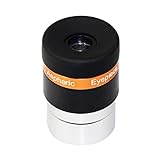
1. SVBONY 4mm 62-Degree Aspheric Eyepiece
SVBONY Eyepieces 4mm Telescopes Lens Wide Angle 62 Degree Aspheric Eyepiece HD Fully Coated Lens for 1.25 inches Astronomic Telescopes
4mm focal length
62 degree apparent field
1.25 inch barrel
1.44 ounces
Pros
- 681 ratings behind it
- Removable Barlow turns it into 4mm and 8mm
- Thin aspheric body suits small scopes
- Large upgrade on stock eyepieces
Cons
- Short eye relief
- Chromatic aberration near the edge
- Edge sharpness falls off
This is the pick we kept reaching for first when the seeing turned sharp, and it earns the top slot on evidence rather than hype. With 681 ratings behind it, it is the most thoroughly owner-tested eyepiece on this list, and the 4mm focal length puts a 1200mm Dobsonian at 300x, which is right at the ceiling a 10-inch aperture can support on a steady night.
The removable Barlow element is the feature that quietly makes this the most flexible pick here. Unscrew it and the eyepiece works as a 4mm at 300x; keep it installed and you get an effective 8mm at 150x, so one barrel covers two of the magnifications you will actually use across a season. Owners repeatedly describe that as two eyepieces in one, and it means you can drop to 150x for a shaky moment without swapping hardware.
The aspheric 62-degree design is thinner and lighter than a spherical equivalent at 1.44 ounces, which matters more than it sounds. Short eyepieces are usually the heaviest thing you will put in a small focuser, and a light barrel is kinder to an undamped Dobsonian mount and to the balance of a tabletop refractor. The 1.25-inch barrel has an anti-lost recess in the interface so it is harder to knock loose in the dark, and the barrel is fully multi-coated for contrast on the planet’s disc.
The 4mm is a demanding focal length for a small scope, but the removable element gives you an escape route: the 8mm setting lands at 150x, which suits an 8-inch or 10-inch aperture on a night when the atmosphere will not hold 300x. That flexibility is why we rate it our choice for anyone who wants to try short focal lengths without committing to a permanently high-power barrel.
Who this 4mm suits best?
It suits owners of a 6-inch aperture or larger who want to push toward the maximum useful magnification limit, roughly 30x per inch of aperture for a beginner and closer to twice the aperture in millimetres for experienced observers under steady seeing. A 6-inch scope tops out near 180x for most people, and a 4mm is exactly the focal length that reaches it.
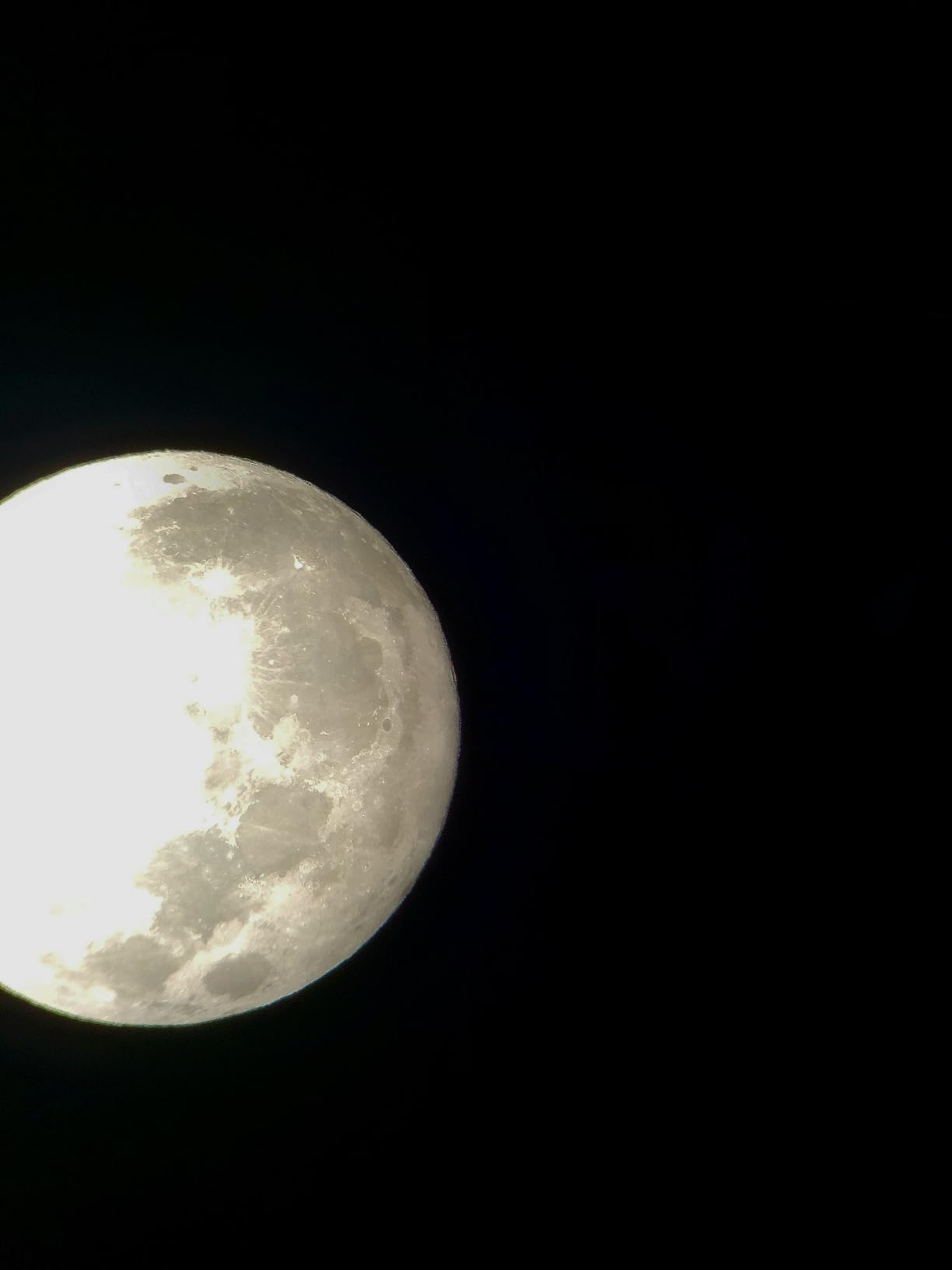
It also suits anyone who wants to photograph a planet through a phone or a video camera. Owners set this eyepiece in the same way they would a camera lens, and the 4mm gives you a reasonable working magnification for stacking video frames of Jupiter’s belts.
Where it falls short?
Eye relief is the honest limitation here, and it is the reason the same owners who praise the value also mention pressing their face close to the lens. If you wear glasses, the short eye relief is uncomfortable, and even without glasses the closest approach can block part of the field on a badly collimated setup.
Reviewers also report chromatic aberration at the edges of the field and a slight softness in the outer part of the view. At 300x on a 10-inch scope, the planet’s disc sits well inside the field, so this rarely affects the detail you are there for. Just do not expect a premium short-tube look at the field edge.
2. SVBONY SV131 6mm 48-Degree Plossl Eyepiece
SVBONY SV131 1.25” 6mm Plossl Eyepiece 48° FMC Coating Telescope Eyepiece
6mm focal length
48 degree apparent field
FMC multi-coating
1.25 inch barrel
Pros
- Crisp contrasty views
- All-metal construction
- Blackened edges cut stray light
- Standard filter threads
Cons
- Narrowest field of the eight
- SQC issues on some pieces
- Plossl design has hard limits
If you read the phrase planetary eyepiece as meaning narrow field and maximum contrast, this is the most literal implementation of it in the group. A 48-degree apparent field on a 6mm is the tightest window here, and tight means the planet sits large and steady with no competing glow at the edge of vision. On a 1200mm telescope that works out to 200x, a genuinely useful planetary figure.
The two sets of four elements in four groups is the classic Plossl arrangement, and reviewers consistently report crisp, contrasty images with minimal aberration through the centre of the view. Full broadband multilayer coatings go on every glass surface, and the lens edges are matt blackened so light from Jupiter does not scatter around the inside of the barrel and wash out the belts you are trying to see.
Why the narrow field is an advantage?
A narrow apparent field of view helps beginners most. At 48 degrees, finding Jupiter is straightforward because there is very little dark sky competing for your attention, and once you have it, drift is easier to spot and correct. Wider designs spread the same light over a bigger angle, which is friendlier for finding objects and unfriendlier for holding a small disc rock steady in your attention.
Because the barrel is all metal with a fine texture, it holds up to a telescope that gets knocked around in a car, which is where most Dobsonians actually live. The barrel is threaded to the standard M28.5 by 0.6 specification, so planetary colour filters fit without an adapter.
Where it falls short?
The 48-degree field is the narrowest here, and on a fast Newtonian at high power you will see field curvature and pincushion distortion creep in at the edge. Because the planet sits centrally, this is a small practical complaint rather than a deal breaker, but it is why we would not load this into a wide-field imaging train.
Some buyers report receiving a barrel that arrives partly disassembled or with internal surfaces that read as less reflective than expected. That is a quality control inconsistency rather than a design flaw, and it is worth checking the piece over carefully under a bright light the day it arrives.
3. Celestron X-Cel LX 5mm 60-Degree Eyepiece
Celestron X-Cel LX 5mm Eyepiece for Telescopes – High-Power Planet Views
5mm focal length
60 degree apparent field
6 multi-coated elements
7.2 ounces
Pros
- Sharp consistent planetary images
- Pop-up eyeguards block stray light
- Threaded rubber grip works with gloves
- Parfocal with the rest of the series
Cons
- Heavy for a 1.25 inch barrel
- QC reports of bubbles under the coating
- Best from 6 inch aperture upward
The X-Cel LX series was built for planetary work, and the 5mm is its high-power end. On a 1200mm Dobsonian that gives 240x, which on an 8-inch or 10-inch aperture sits right in the range where you are still resolving detail rather than magnifying the atmosphere. On a 6-inch scope it is closer to the practical ceiling, so pair it with a bigger aperture if you can.
Six fully multi-coated elements is a step up from the four-element designs in the budget half of this list, and owners report the difference as cleaner star points and steadier contrast on the planet’s disc. The 60-degree apparent field gives more breathing room than the 48-degree Plossl, so a drifting Jupiter stays in view longer before you have to correct.
What you notice on a night of good seeing?
A 60-degree field is wide enough that off-axis degradation starts further out than it does with a 48-degree Plossl, and the six-element design holds the corners better than the four-element budget designs in the same list. On a slow focal ratio scope that shows up as a planet sitting in a field of steady pinpoints rather than a field that softens toward the edge, and that is where the extra elements earn their place.
The pop-up rubber eyeguards deserve a mention because they are the difference between a clean planetary view and a hazy one. Raised, they keep stray light from the side of your eye from flooding the barrel. Collapsed, they let a glasses lens sit closer to the glass. The threaded rubber grip around the barrel means you can twist it in and out with cold hands or gloves on.
Where it falls short?
At 7.2 ounces it is heavy for a 1.25-inch eyepiece, and that weight is felt on a small refractor or a light mount. A Dobsonian with a chunky focuser takes it in stride, but a compact tabletop refractor may need rebalancing after you swap it in.
There are also a small number of quality control reports, including air bubbles trapped under the coating on a fresh unit and paint flecks between elements. Celestron carries a 2-year US warranty and reviewers are broadly positive about the support that comes with it, so a problem piece is straightforward to resolve. Just inspect it on arrival rather than assuming.
4. Celestron Omni 6mm Telescope Eyepiece
Celestron Omni 6mm Telescope Eyepiece for Detailed Moon & Planet Views
6mm focal length
4-element Plossl design
Fold-down rubber eyecups
2.08 ounces
Pros
- Genuinely sharp for a budget Plossl
- Long track record with 298 ratings
- Filter-threaded barrel
- No mount balance worries at this weight
Cons
- Around 50 degree field is tight
- Eye relief gets close at 6mm
- Edge sharpness trails premium designs
This is the eyepiece we would hand someone who has just decided to buy one planetary eyepiece and nothing more. It is a four-element Plossl at 6mm, the most conventional planetary design ever made, and it has been in production long enough that 298 ratings exist to tell you what you are getting. On a 1200mm telescope it gives 200x.
What makes it stand out from other budget Plossls is how little weight it puts on a focuser at 2.08 ounces. That is light enough to leave a small refractor or a light mount completely alone when you swap it in, and it makes carrying a telescope out to a field in one hand easier. The matte aluminium barrel and blackened lens edges do the same anti-scatter job as the more expensive models, and reviewers describe the image as sharp and contrasty for the tier.
Why a Plossl still belongs on a planetary night?
There is a reason the Plossl design is still the default recommendation for planetary work: at the centre of the field it is sharp, and on a planet the centre of the field is the only part that matters. Owners consistently report good results on lunar detail and on the larger planets, and the fold-down rubber eyecups are a genuinely useful detail at this level.
Those eyecups fold down for eyeglass wearers, which is a smarter accommodation than most budget eyepieces offer. The 1.25-inch barrel is threaded for filters, so a colour filter for Mars or Jupiter will fit straight on, and the matte aluminium body is a design that has clearly been around long enough for most of its quirks to be known.
Where it falls short?
The roughly 50-degree field is the tightest of the traditional designs here, and standard Plossl eye relief becomes uncomfortably close to the lens at 6mm. If you wear glasses, the fold-down eyecup may still not open enough clearance, and the tighter field gives you less warning before a drifting planet leaves the view.
Sharpness also falls away toward the edge relative to a six- or seven-element design, so it is a pick for the planet, not for a wide star field. Reviews are mostly kind about packaging being basic, which is not a real problem for something that lives in a bolt case or a sock.
5. Astromania 4mm 58-Degree Planetary Eyepiece
Astromania Telescope Eyepiece 4mm, Wide Angle 58° Planetary Eyepiece 1.25″
4mm focal length
58 degree apparent field
16mm eye relief
5.78 ounces
Pros
- 16mm eye relief works with glasses
- Flat field with little colour fringing
- Rotating barrel and folding eyecup
- Snaps into focus easily
Cons
- Overpowered on apertures under 6 inches
- Dark on faint deep-sky targets
- Occasional QC reports on lenses and coatings
Where the first pick on this list presses your eye against the glass, this one steps back. The 16mm eye relief is measured, published and consistently praised by owners who wear glasses, and combined with a folding rubber eyecup it is the reason we recommend it to anyone who has ever had to tilt their head awkwardly to get a full view.
Five elements in three groups, fully multi-coated, giving a 58-degree apparent field. That is a narrower window than the wide designs and a slightly wider one than a Plossl, which is a sensible planetary compromise: enough field to find and track a planet without spreading the image so far that the detail you paid for becomes hard to hold.
What 16mm of eye relief changes at the eyepiece?
Eye relief is the distance between your cornea and the front lens, and anything above roughly 10mm is comfortable for most people. At 16mm, you look straight into the eyepiece the way you would look through a camera viewfinder, and a glasses lens sits between you and the eyecup without fighting it. That is the single most useful feature here for anyone who wears glasses while observing.
The rotating barrel is designed to keep the barrel threaded into the focuser while the eyepiece body turns to suit your viewing angle, which prevents the barrel from loosening during a long session. Lens edges are blackened and internal surfaces treated to suppress reflections, both of which protect contrast on bright targets like the Moon and Jupiter.
Where it falls short?
At 4mm this is a high-power eyepiece, and a 4-inch or 5-inch scope cannot feed it. The exit pupil goes small and the view dims, so on a small aperture it is better to buy a longer focal length in the same series.
It is also tuned for bright targets. On faint deep-sky objects it reads as dark, which is the trade you make for a design aimed at planets. A handful of owners report loose elements, coating defects or pieces arriving damaged, so inspect it before first light. The series runs from 2.5mm to 25mm, which makes it easy to add a companion later.
6. Celestron X-Cel LX 9mm Eyepiece
Celestron X-Cel LX 9mm Telescope Eyepiece for Versatile Planetary Viewing
9mm focal length
60 degree apparent field
6 elements
6.4 ounces
Pros
- Highest average rating in the group at 4.6
- Excellent eye relief with glasses
- Parfocal with the 5mm and 6mm
- Bolt case included
Cons
- Too much power for small apertures
- Heavy and bulky in the hand
- Bright at the field edge in polluted skies
The 9mm is the pick for people who do not want to start at maximum power on their first night out. On a 1200mm telescope it gives 133x, which frames Jupiter with room around it and still resolves the two main belts and the Great Red Spot on a decent night. It also has the highest average rating of anything in this group, and 194 ratings is a solid record for a niche product.
It shares the six-element fully multi-coated design and 60-degree field with the 5mm, so the two are effectively the same optical formula at different focal lengths. That matters for anyone planning to buy both: the series is parfocal, which means the two eyepieces focus at almost the same position and you are not refocusing between them at high power when conditions are marginal.
Where the 9mm earns its place?
A 9mm is the practical middle of the planetary range. It works on smaller apertures where a 4mm and 5mm would over-magnify, and it still shows genuine planetary structure on an 8-inch or larger Dobsonian. For a beginner who has only ever used the 25mm that came with the telescope, the jump from 48x to 133x is the single most dramatic upgrade they will ever make.
The pop-up eyeguards are the same ones on the 5mm and reviewers call the eye relief excellent, particularly with glasses on. The bolt case is included, which is a small thing that matters when a piece this size lives in a car boot between observing sessions.
Where it falls short?
At 9mm, anyone on an aperture under 6 inches is asking for more magnification than the scope can deliver cleanly. On those telescopes you will be magnifying the atmosphere rather than the planet, and the image will boil.
Reviewers also note the 6.4-ounce weight and the bulk in the hand, and a few report that the very edge of the field looks brighter under light-polluted skies. A 60-degree field on a wide design shows that more than a narrow Plossl would, so if you observe from a city, check it out in a dark site before you decide.
7. SVBONY 6mm 68-Degree Ultra Wide Angle Eyepiece
SVBONY Telescope Eyepiece, 6mm Focal Length 68 Degree Ultra Wide Angle Lens
6mm focal length
68 degree apparent field
17mm eye relief
5.6 ounces
Pros
- Widest eye relief in the group at 17mm
- 68 degree field makes finding easy
- Blackened tube controls reflections
- Anti-drop grip ring
Cons
- Kidney-bean blackout if poorly centred
- Heavy all-metal barrel
- Dark on faint deep-sky targets
This is the widest field of view at 6mm in the group at 68 degrees, and it pairs that with the most generous eye relief we found, at 17mm. Those two numbers together make it the most forgiving pick for someone still learning to find planets. On a 1200mm telescope the 6mm gives 200x, yet you still have a large enough window to locate the target and keep it in view while the mount catches up.
Reviewers describe the optics as tack sharp with minimal edge coma, which is a good result from a design this wide. The interior tube is blackened to reduce internal reflection, the barrel is all metal with a rubber grip ring, and the folding eyecup plus two dust covers are included. The M26.5 by 0.6 thread takes the standard 1.25-inch filter adapter for colour filters.
What the 68-degree field actually gives you?
Field of view has two forms and people confuse them constantly. The apparent field is the angle the eyepiece itself covers, and the true field is the slice of sky you actually see once magnification is applied. At 200x with a 68-degree eyepiece, the true field is roughly a third of a degree, which for Jupiter is several disc widths of space around the planet.
That is the practical value of a wide design on a planet: you do not lose the planet every time you nudge the focuser. It also means you can place a moon of Jupiter or the gap in Saturn’s rings comfortably inside the frame rather than right at the boundary. The blackened interior and the wide design together mean contrast stays usable even though more glass is in the way.
Where it falls short?
Wide fields and fast focal ratios have a known interaction. Owners mention the kidney-bean effect, where the field appears partly blacked out if your eye is not perfectly centred, and on a fast Newtonian at high power the edges of a 68-degree field can soften. The fix is practice and a careful re-centre, but it is a real adjustment for a first-time buyer.
At 5.6 ounces the all-metal body is among the heavier barrels here, and there is no carrying case included, which matters for something this size in a car boot. It is also a bright-target design: on faint galaxies it reads dark, so keep it for planets, the Moon and double stars.
8. Celestron Luminos 7mm 82-Degree Eyepiece
Celestron Luminos 7mm 1.25″ Eyepiece for High-Power Planetary Viewing
7mm focal length,about 6.6mm actual
82 degree apparent field
7 elements
12 ounces
Pros
- Widest apparent field of any pick here at 82 degrees
- Bright retractable eyecup
- Sharp to the edge of the field
- Strong scatter control on a bright planet
Cons
- Heaviest barrel in the group at 12 ounces
- Slightly dimmer through seven elements
- Best from 750mm of focal length
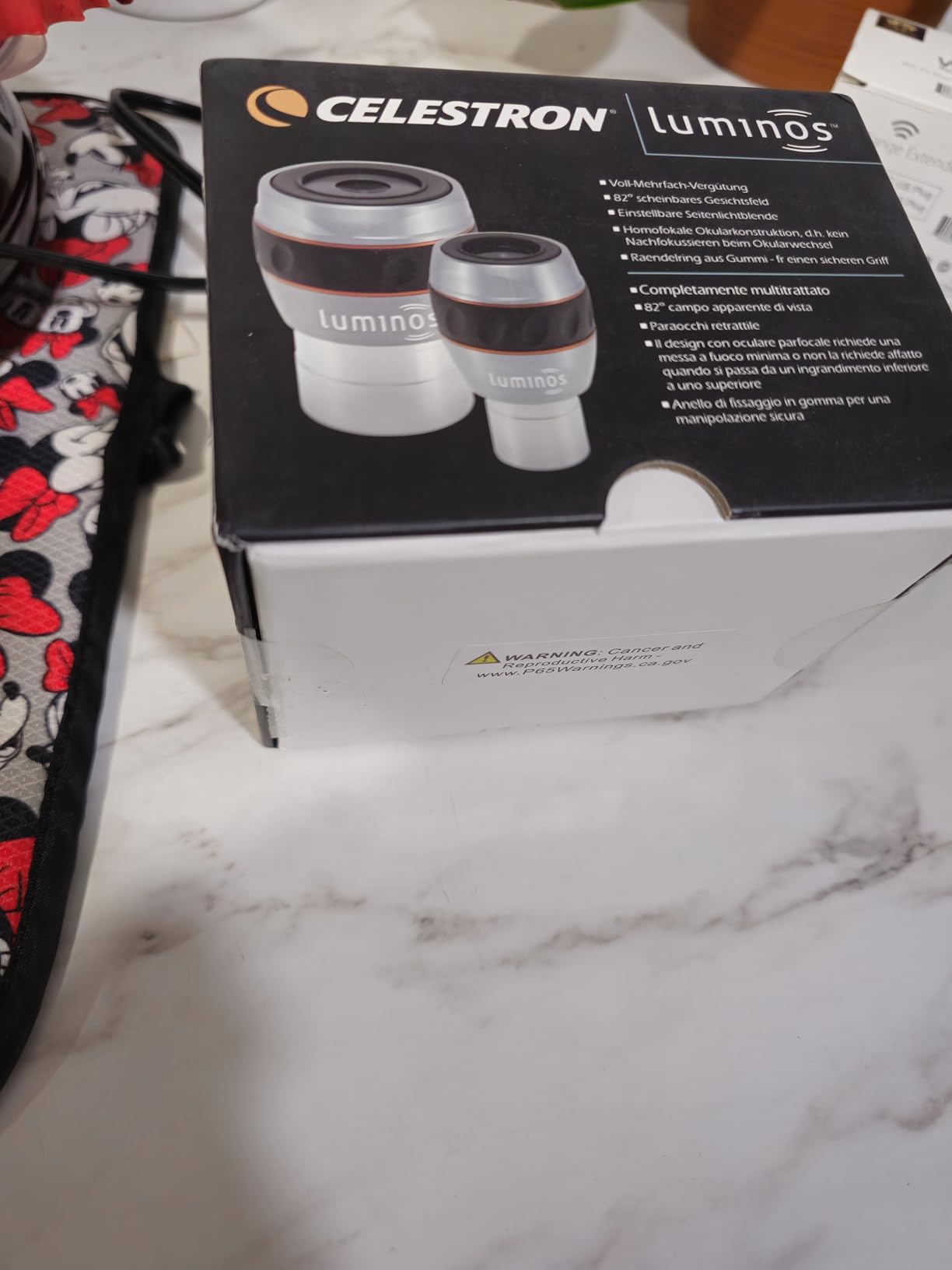
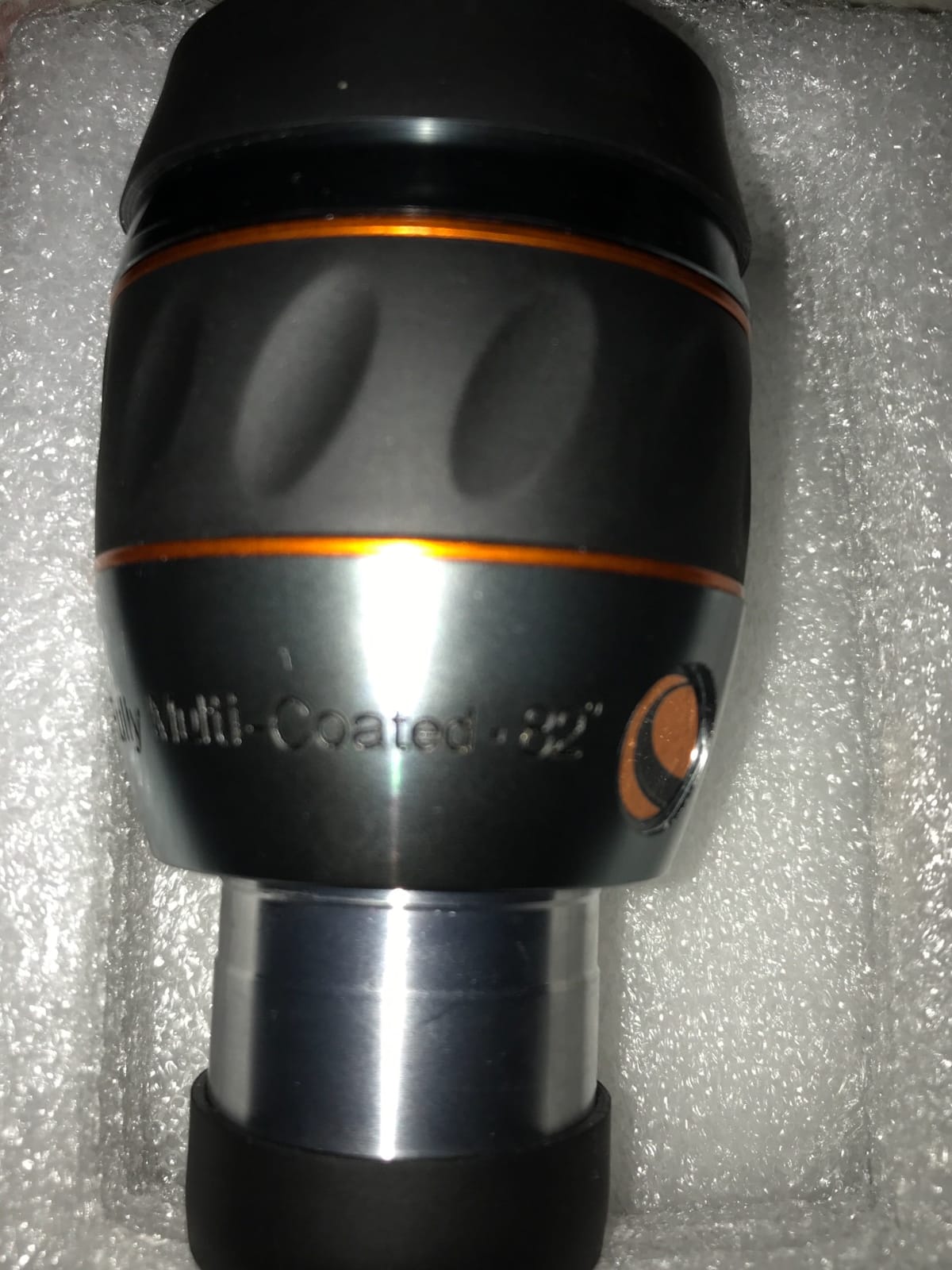
The Luminos 7mm has the widest apparent field of view on this list at 82 degrees, and the 7-element design is the most complex optical group we looked at. Its job is scatter control. Jupiter and Venus are bright enough to generate internal reflections that put a faint halo around them, and more elements with careful coatings means more of that light is controlled rather than scattered across the view.
On a 1200mm telescope the 7mm gives about 171x, or 181x if you use the real focal length of roughly 6.6mm, with an exit pupil of 1.7mm. That is a comfortable planetary magnification, and the very wide field makes it one of the easiest short eyepieces to find a target with and hold on to.
Where the 82-degree field changes the experience?
An 82-degree apparent field at 171x works out to a true field of roughly half a degree, which is enough sky to hold a planet and one or two bright stars together. For someone who has never looked through a short wide-field planetary eyepiece, that is a noticeably calmer experience than a 48-degree Plossl, and it makes the mount’s behaviour obvious rather than mysterious.
The retractable eyecup is the detail owners rate most highly. It adjusts to different eye shapes and eyeglass wearers, and raised it does an excellent job of keeping stray light out of the barrel. Reviewers consistently report the image as sharp to the edge with minimal astigmatism, which is a good result from a design this wide.
Where it falls short?
Twelve ounces makes this the heaviest barrel in the group by a wide margin, and the reviews are blunt about needing a sturdy focuser and rebalancing the tube. Several owners report it feeling like the telescope is tipping forward, which is a fair warning if your mount is on the light side.
More glass also means slightly less light per unit of magnification than a simpler design, so the view is dimmer than a four or five element eyepiece of the same focal length. It is also specified for 750mm or more of telescope focal length, so a short small-aperture refractor is not the match. Foam packaging is thin, so keep it in a proper case.
How to Choose a Planetary Eyepiece?
Start with focal length, because it decides the magnification before anything else. The formula is simple: magnification equals telescope focal length divided by eyepiece focal length. On a 1200mm focal length telescope, a 9mm eyepiece gives 133x, a 7mm gives 171x, a 6mm gives 200x, a 5mm gives 240x and a 4mm gives 300x. Work it out on paper with your own scope’s focal length before you buy anything.
Then check the aperture ceiling. As a beginner, plan on about 30x per inch of aperture, so a 6-inch scope caps near 180x, an 8-inch near 240x and a 10-inch near 300x. Experienced observers on nights of steady seeing can push to roughly twice the aperture in millimetres, but that is a different skill from shopping. A 4mm eyepiece is excellent on a 10-inch Dobsonian and pointless on a 4-inch one.
Next, decide how wide you want the field. A narrow apparent field of 48 to 58 degrees keeps the planet large and centred and preserves contrast, which suits experienced observers. A wide field of 68 to 82 degrees is easier to find and track and much friendlier for glasses wearers, at the cost of some edge softness on a fast focal ratio. True field of view is the apparent field divided by the magnification, and that is the number that tells you whether two targets fit in the same view.
Eye relief is the variable people regret ignoring. Anything at or above 10mm is comfortable, and 15mm or more works for most eyeglass wearers. Short 4mm designs are the ones with the tightest eye relief, and a folding or twist-up eyecup makes a real difference.
Barrel size comes down to your focuser. Every pick on this list is a 1.25-inch barrel, which fits almost every telescope sold today. A 2-inch barrel gives a wider field and more eye relief, but you need a focuser that accepts one or an adapter, and adapters add length you have to collimate around.
Barlow or a shorter eyepiece?
A 2x Barlow in front of a 6mm to 9mm eyepiece is the standard planetary approach, and it is the cheaper one. Barlowing multiplies magnification without changing the eyepiece, and a doubled 6mm gives the same power as a 3mm without forcing you into a barrel with almost no eye relief. Quality of the Barlow matters more than the multiplier, so a well-made achromatic or apochromatic 2x is what you want.
The limitation worth knowing is that a Barlow adds elements to the optical train, and the cheapest ones soften contrast and add colour around a bright planet. A short 6mm and a good 6mm Barlow are close in image quality. What you cannot do is Barlow past what your aperture supports, and at high power any of these combinations makes a focuser that is not perfectly smooth much harder to use.
What to avoid for planetary work?
Long 25mm and 32mm eyepieces are deep-sky tools. On a 1200mm telescope a 25mm gives only 48x, which shows you Jupiter as a small dot with no belts, and that is the single most common beginner disappointment. Zoom eyepieces are also worth avoiding here, because the moving group inside them rarely holds contrast as well as a fixed design at the same focal length.
Bundled four-piece sets mixing 6mm with 25mm, a 10mm Plossl and a wide-angle design are the same problem in a box. Finally, avoid any very wide design in a very fast telescope. A 90-degree eyepiece on an f/4.7 Dobsonian puts off-axis star images into disarray at exactly the magnification you were trying to reach, and no amount of money fixes an optics train that is already working against you.
Frequently Asked Questions
What is the best telescope for seeing planetary detail?
Aperture and focal ratio matter more than any eyepiece. Steady seeing and at least 6 inches of aperture will show you Jupiter’s belts and Saturn’s rings; a long 25mm eyepiece on that same scope gives only 48x. Pick a 6mm to 9mm eyepiece to match the telescope you already own.
Can you see Jupiter with a 25mm eyepiece?
You will see the disc and its moons, but not the belts. On a 1200mm focal length telescope a 25mm gives only 48x, which is far short of the 100x to 200x range that resolves cloud bands. Move to a 9mm or 6mm for Jupiter’s detail.
Is a 10mm or 20mm eyepiece more powerful?
The 10mm. Shorter focal length means more magnification, because magnification equals telescope focal length divided by eyepiece focal length. On a 1200mm scope, a 10mm gives 120x and a 20mm gives 60x, so the 10mm doubles the power.
Which Barlow lens is best for planetary imaging?
A quality achromatic or apochromatic 2x Barlow paired with a 6mm to 9mm eyepiece is the standard approach. A good 2x doubles a 6mm into the equivalent of a 3mm without the punishing eye relief, and the quality of the Barlow matters more than a higher multiplier. Avoid very cheap multi-element Barlows that soften contrast around a bright planet.
What are the best eyepieces for planetary observing?
Short focal lengths between 5mm and 15mm, with 6mm to 9mm as the sweet spot, do the work. Within that range, match the design to the job: a narrow Plossl for contrast, a wide field for easy finding and comfortable eye relief, and a 9mm as a forgiving first upgrade from a stock eyepiece.
Conclusion
Every eyepiece in this roundup sits in the 4mm to 9mm band where planetary detail actually lives, and each one earns its place for a different reason. Our choice, the SVBONY 4mm 62-degree aspheric, is backed by 681 ratings and a removable Barlow element that covers two useful magnifications in one barrel. The SVBONY 6mm Plossl is the value pick, the Celestron X-Cel LX 5mm is the premium option, and the Astromania 4mm is the one to buy if you wear glasses.
Whichever you choose, work out the magnification on paper first, keep it inside roughly 30x per inch of aperture, and give it a few nights before judging it. Seeing conditions change from hour to hour, and the same eyepiece that looks flat on one night can look excellent on the next. That is the honest test of the best telescope eyepieces for planetary detail in 2026.