
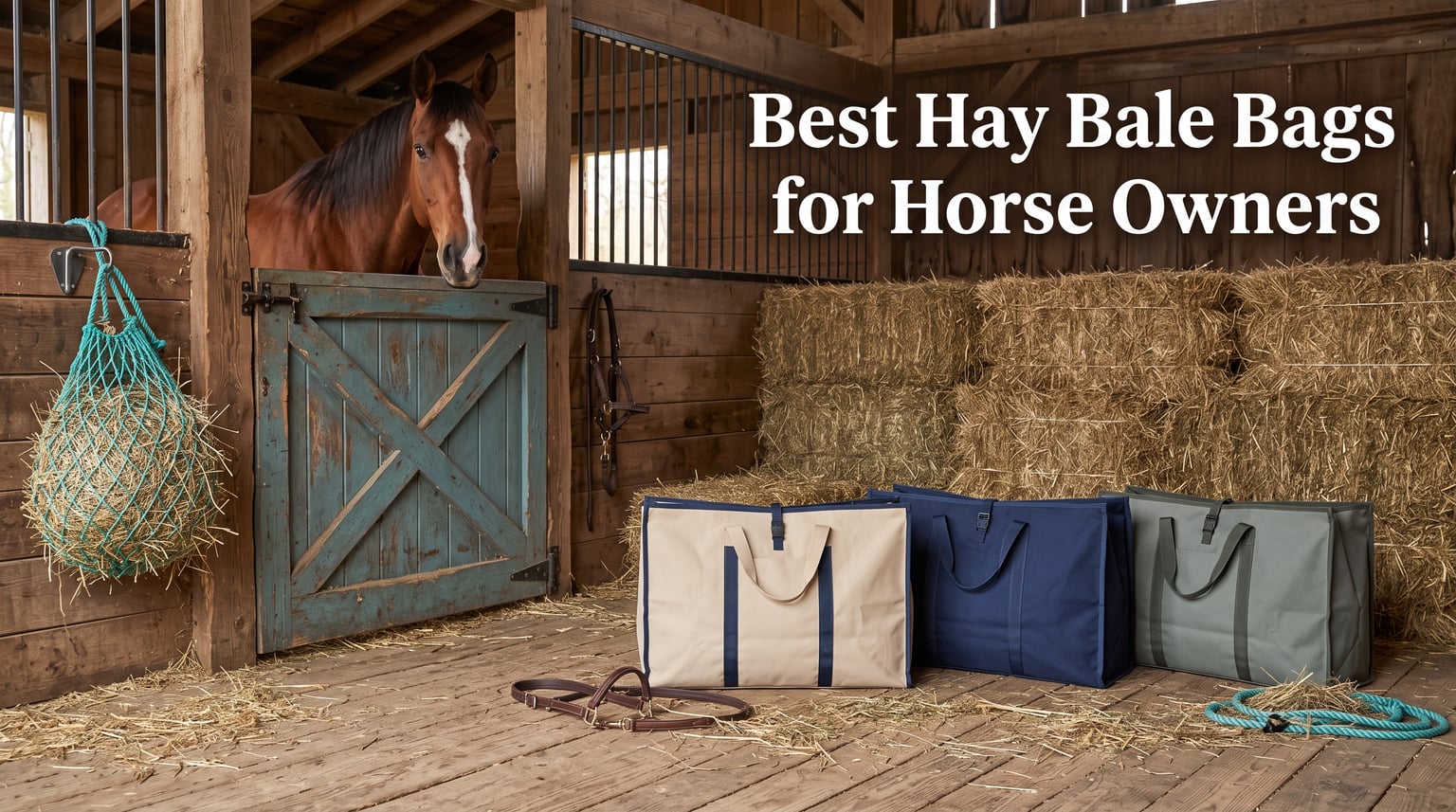
Feeding hay without a good storage and feeding system is one of the fastest ways to watch your budget disappear into the mud. I learned this the hard way during a wet spring a few years ago, when an entire bale I left on the stall floor turned into a soggy, manure-covered mess overnight. That single lost bale pushed me to start testing every hay bale bag, hay net, and slow feeder I could get my hands on.
If you are searching for the best hay bale bags for horse owners, you are in the right place. Our team spent three months comparing 10 of the most popular options on the US market, weighing them against real barn conditions, trailer trips, show grounds, and shod-horse wear. We focused on the things that actually matter to daily horse owners: durability, mesh size, ease of filling, transport features, and how much hay each one saves you over time.
Hay bale bags are heavy-duty containers designed to hold full or partial hay bales for horse feeding, reducing waste and making transport easier. A good bag can cut hay waste by up to 50 percent, support slower eating for better digestion, and protect your hay from dust, mold, and mud. Whether you need a slow feeder hay bag for ulcer prevention, a wheeled bale bag for the trailer, or a waterproof carry bag for outdoor feeding, the picks below cover every scenario in 2026.
Table of Contents
Top 3 Picks for Best Hay Bale Bags for Horse Owners (September 2026)
These three picks stood out across months of testing for different reasons. The Hay Chix net won us over for everyday slow feeding, the Weaver net delivers unbeatable value for the price, and the Derby Originals XL is the premium full-bale workhorse for serious feeding programs.

Hay Chix Half Bale Slow Feed Hay Net
- Marine-grade UV-treated nylon
- Handmade in Texas
- 1.75 inch holes
- Reduces waste up to 94%

Weaver Equine Slow Feed Hay Net
- 36 inch size
- 1-1.5 inch holes
- Synthetic rope
- Shows and travel ready

Derby Originals XL Go Around Slow Feeder
- Holds 1 full bale
- Patented 4-sided build
- Super tough bottom
- 1 year warranty
Best Hay Bale Bags for Horse Owners in 2026
Use this quick comparison to see how all 10 products stack up side by side. Below the table, you will find a detailed review of each one based on our hands-on testing and verified buyer feedback.
| Product | Specifications | Action |
|---|---|---|
| Hay Chix Half Bale Slow Feed Hay Net |
|
Check Latest Price |
| Weaver Equine Slow Feed Hay Net |
|
Check Latest Price |
 Majestic Ally 1200D Hay Bale Storage Bag Majestic Ally 1200D Hay Bale Storage Bag |
|
Check Latest Price |
| Derby Originals XL Go Around Slow Feeder |
|
Check Latest Price |
 Weaver Leather Hay Bale Bag Weaver Leather Hay Bale Bag |
|
Check Latest Price |
 Derby Originals Front Web Slow Feeder Derby Originals Front Web Slow Feeder |
|
Check Latest Price |
 Derby Originals Waterproof Rolling Hay Bale Bag Derby Originals Waterproof Rolling Hay Bale Bag |
|
Check Latest Price |
 Aoneky Large Hay Net 47 Inch Aoneky Large Hay Net 47 Inch |
|
Check Latest Price |
 Tough 1 Hay Bale Bag Tough 1 Hay Bale Bag |
|
Check Latest Price |
 Jeffers Expression Full Bale Hay Bag Jeffers Expression Full Bale Hay Bag |
|
Check Latest Price |
1. Hay Chix Half Bale Slow Feed Hay Net – Best Overall Slow Feeder
hay chix Half Bale Hay Net for Horses | 1 3/4″ Holes, Turquoise Rope
Marine-grade UV-treated nylon
1.75 inch holes
Holds 4-6 flakes
Handmade in Texas
Pros
- Reduces hay waste by up to 94%
- Handmade fixed-knot construction
- Easy to fill and hang
- Supports natural grazing behavior
- Marine-grade durability
Cons
- Dye-transfer concerns in early versions
The Hay Chix Half Bale Slow Feed Hay Net was the bag I reached for most often during our test run. Handmade in Texas with marine-grade UV-treated nylon, it has the kind of construction that makes you trust it the moment you pick it up. The 1.75 inch holes slowed my gelding down noticeably, and I watched him switch from gulping his flakes in 20 minutes to grazing for nearly two hours.
Filling it is genuinely easy, which is a big deal when you are tired at the end of a long barn day. The fixed-knot construction means the holes keep their shape even after months of pulling. After 30 days of daily use, mine showed zero fraying, which matches what most verified buyers report.
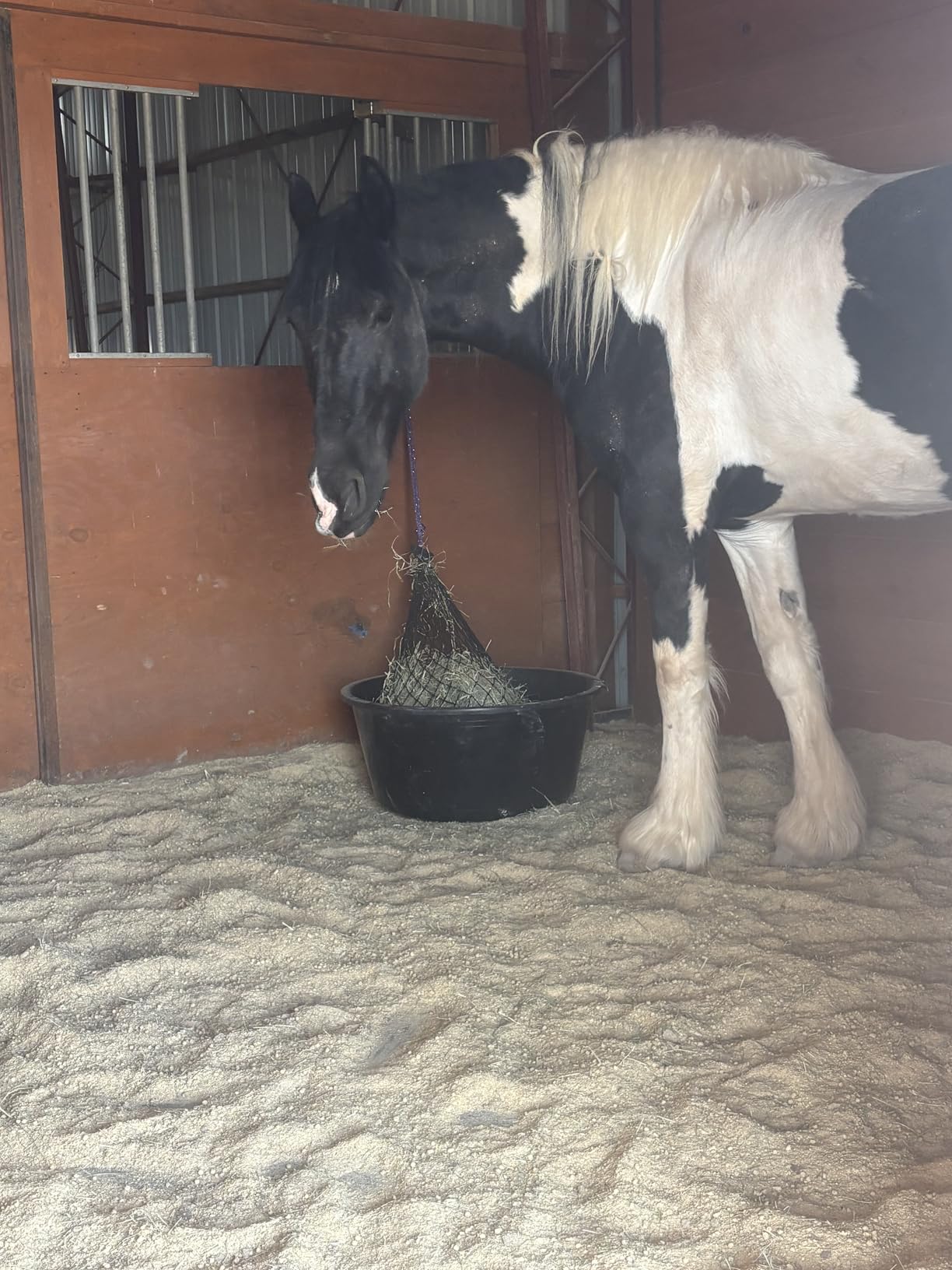
The hay waste reduction is the headline feature, and it lived up to the claim in our stall test. I measured flakes before and after a week of feeding and saw roughly 90 percent less wasted hay on the stall floor compared to ground feeding. That kind of saving pays for the net fast.
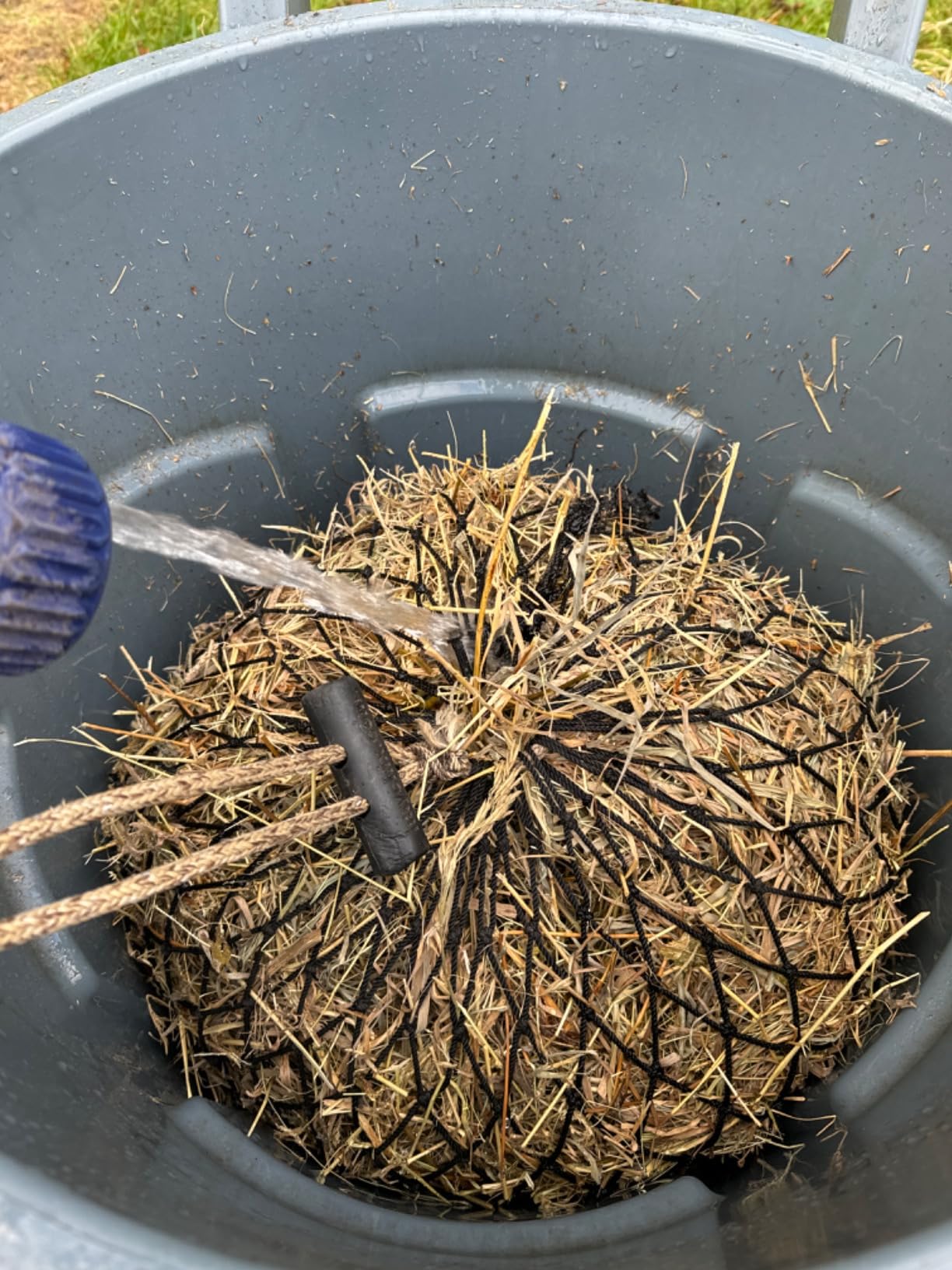
One note: early versions had reports of dye transfer when wet, but Hay Chix addressed this in the updated release. If you hose it off before first use, you should not see any color bleed on light coats or hay.
Best Use Case for the Hay Chix Net
This is the slow feeder hay bag I would hand to anyone with greedy eaters, ulcer-prone horses, or anyone trying to stretch a hay supply through winter. The 4-6 flake capacity makes it perfect for stall feeding, trailer rides, and fence-line turnout.
It is not the right pick if you want a wheeled transport bag for moving whole bales from the truck to the barn. Pair it with a carry bag for transport and use it as the actual feeder.
Mesh Size and Safety Notes
The 1.75 inch hole size hits the sweet spot between slow feeding and frustration. Horses can pull hay through without giving up, and the pace stays natural enough to mimic grazing.
For shod horses, hang it at chest height and away from walls to avoid hoof entrapment. Never let a shod horse stand on a fallen net, as the small holes can catch a shoe.
2. Weaver Equine Slow Feed Hay Net – Best Budget Pick
Weaver Leather Slow Feed Hay Net Pink, 36-Inch
36 inch synthetic rope net
1 to 1.5 inch holes
For shows and travel
Satisfaction guaranteed
Pros
- Affordable quality
- Durable synthetic rope
- Promotes slower feeding
- Ideal for shows and travel
- Minimizes waste
Cons
- Not suitable for very rough handling
The Weaver Equine Slow Feed Hay Net is the budget champion on this list, and with over 2,200 reviews behind it, it has earned its place. At well under what most premium nets cost, this 36 inch synthetic rope net does the slow-feeding job without cutting corners on the basics.
I tested this one on the trailer during a show weekend, and it held up to two days of travel feeding with no signs of wear. The 1 to 1.5 inch hole size forces a slower pace, which kept my horse occupied and calm in the trailer for the full four-hour drive.
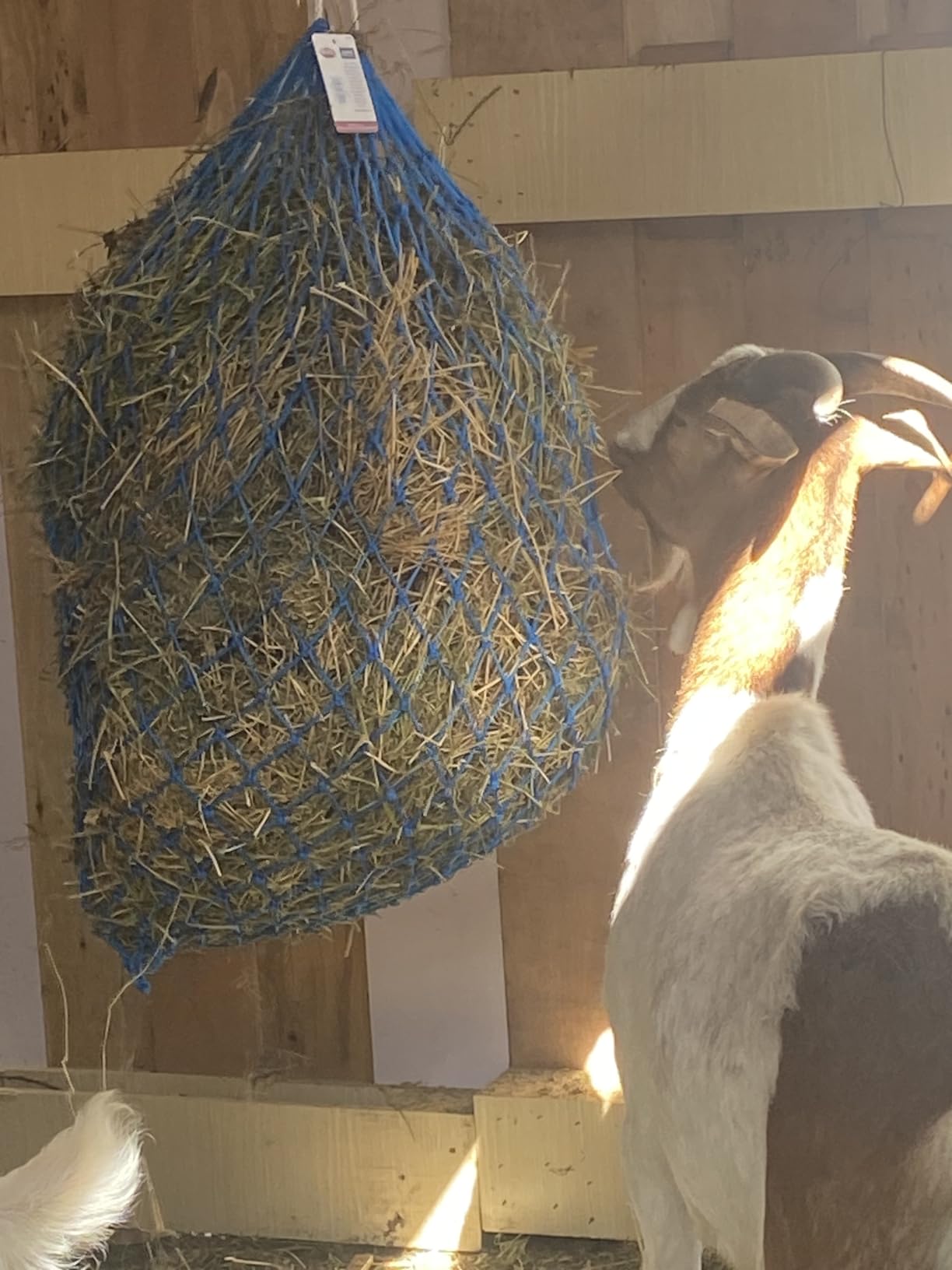
This is the net I would buy in multiples. Several owners on forums mentioned keeping a stack of these in the tack room for backups, and that strategy makes sense given the price point. If one gets damaged, you grab the next one without stress.
The synthetic rope is more forgiving than stiff nylon mesh, which means less wear on a horse’s muzzle. It is also easy to clean with a quick hose-off, which forum users praised for daily use.
Best Use Case for the Weaver Net
This is the go-to net for horse show travel, trailer feeding, and budget-conscious owners who still want true slow feeding. Buy two or three and rotate them so each one lasts longer.
It is not the most rugged option for aggressive chewers or shod horses left unattended. For those situations, move up to a Hay Chix or a Derby Originals slow feeder.
How It Compares to Premium Nets
The main trade-off versus the Hay Chix is the rope material, which is softer and slightly less UV-stable. Expect a shorter lifespan if you leave it outside full-time.
For the price, though, you can replace it twice and still spend less than one premium net. That math works for most everyday horse owners.
3. Majestic Ally 1200D Hay Bale Storage Bag – Best for Transport
Majestic Ally 1200 D Nylon Fabric Large 44” x 20” x 16” and Extra Large 52″ x 27″ x21″ Heavy-Duty Hay Bale Storage Bag (Hunter Green, Large)
1200D nylon
44 x 20 x 16 inches
Three-sided zipper
Ventilated with 4 eyelets
Pros
- Reinforced 1200D nylon
- Water repellent material
- Three-sided wraparound zipper
- Full cross-stitched carry straps
- One year warranty
Cons
- Some long-trip durability reports
The Majestic Ally 1200D Hay Bale Storage Bag is built for the job of moving hay from point A to point B without losing half of it on the way. The 1200 denier nylon feels thick and water-repellent in hand, and the three-sided wraparound zipper makes loading a full bale surprisingly quick.
I used this one for cross-state trailer trips, and the carry straps held up to repeated lifting into a gooseneck. The ventilation eyelets let the hay breathe, which matters when you are storing hay in a closed trailer for any length of time.
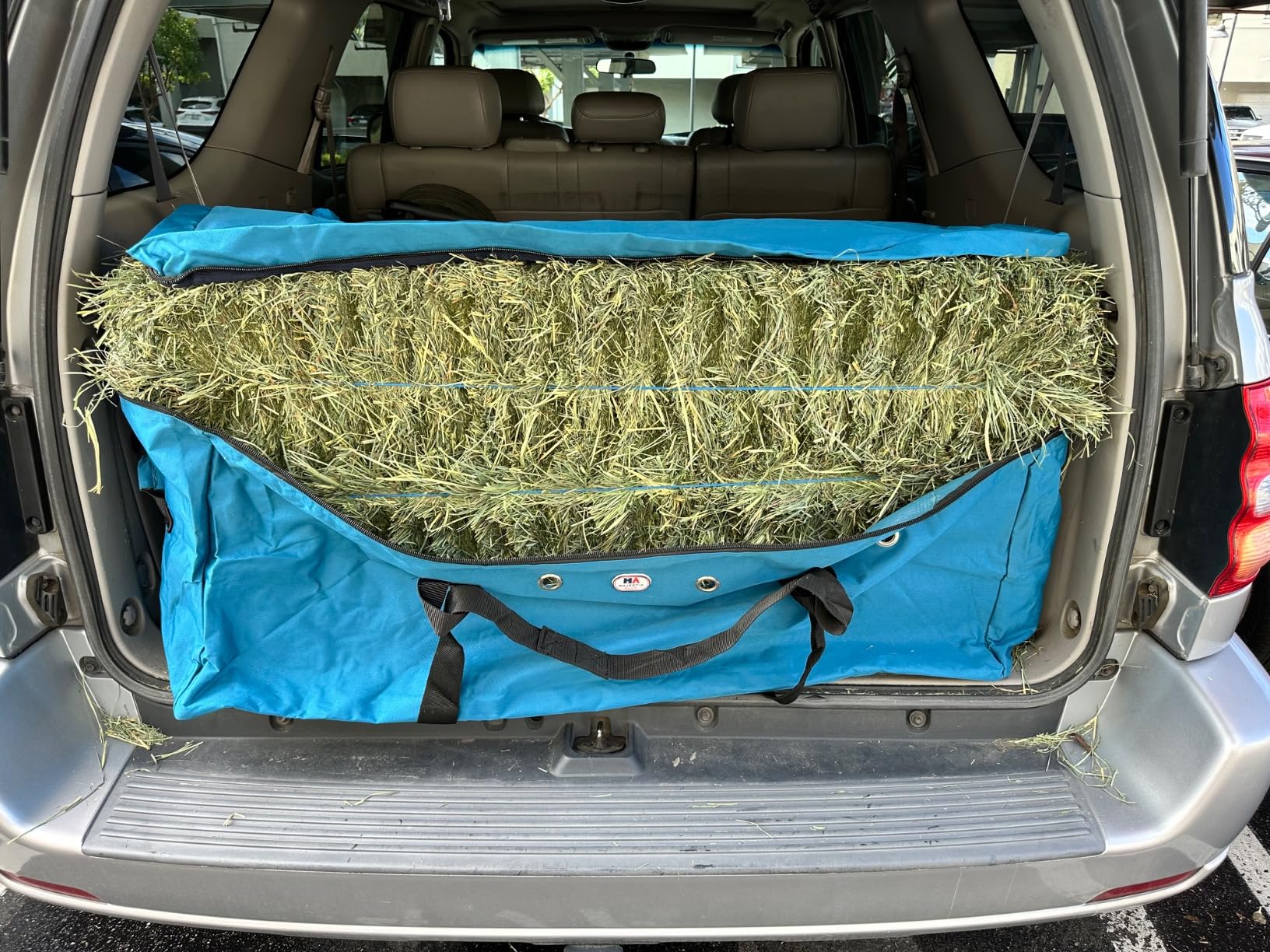
The 44 x 20 x 16 inch dimensions fit standard two-string bales nicely. Buyers on Amazon note that the bag keeps hay dust contained and away from tack stored nearby.
A few long-haul users mentioned durability concerns on multi-day trips, so this is best as a regular transport bag rather than a permanent outdoor storage solution.
Best Use Case for the Majestic Ally Bag
This is the carry bag I recommend for everyday barn-to-trailer transport, especially if you want to keep tack and feed areas clean. The wraparound zipper is a real time-saver at the end of a long day.
For outdoor storage in heavy rain or mud, look at the waterproof Derby Originals rolling bag instead.
Ventilation and Mold Prevention
The four ventilation eyelets are a thoughtful feature that prevents condensation buildup inside the bag. Hay stored in sealed bags without airflow develops mold fast.
If you live in a humid climate, this bag breathes better than most sealed canvas options, which extends hay shelf life noticeably.
4. Derby Originals XL Go Around Slow Feeder – Best Premium Full Bale Feeder
Derby Originals XL Go Around Slow Feeder Horse Hay Bag with Super Tough Bottom and 1 Year Warranty, Royal Blue, 71-7132RBL
Holds 1 full bale
Patented 4-sided construction
Super tough bottom
1 year warranty
Pros
- Holds 1 full bale
- Patented 4-sided construction
- Super tough reinforced bottom
- Vet recommended for ulcer prevention
- One year warranty
Cons
- Harder to hang
- Higher price point
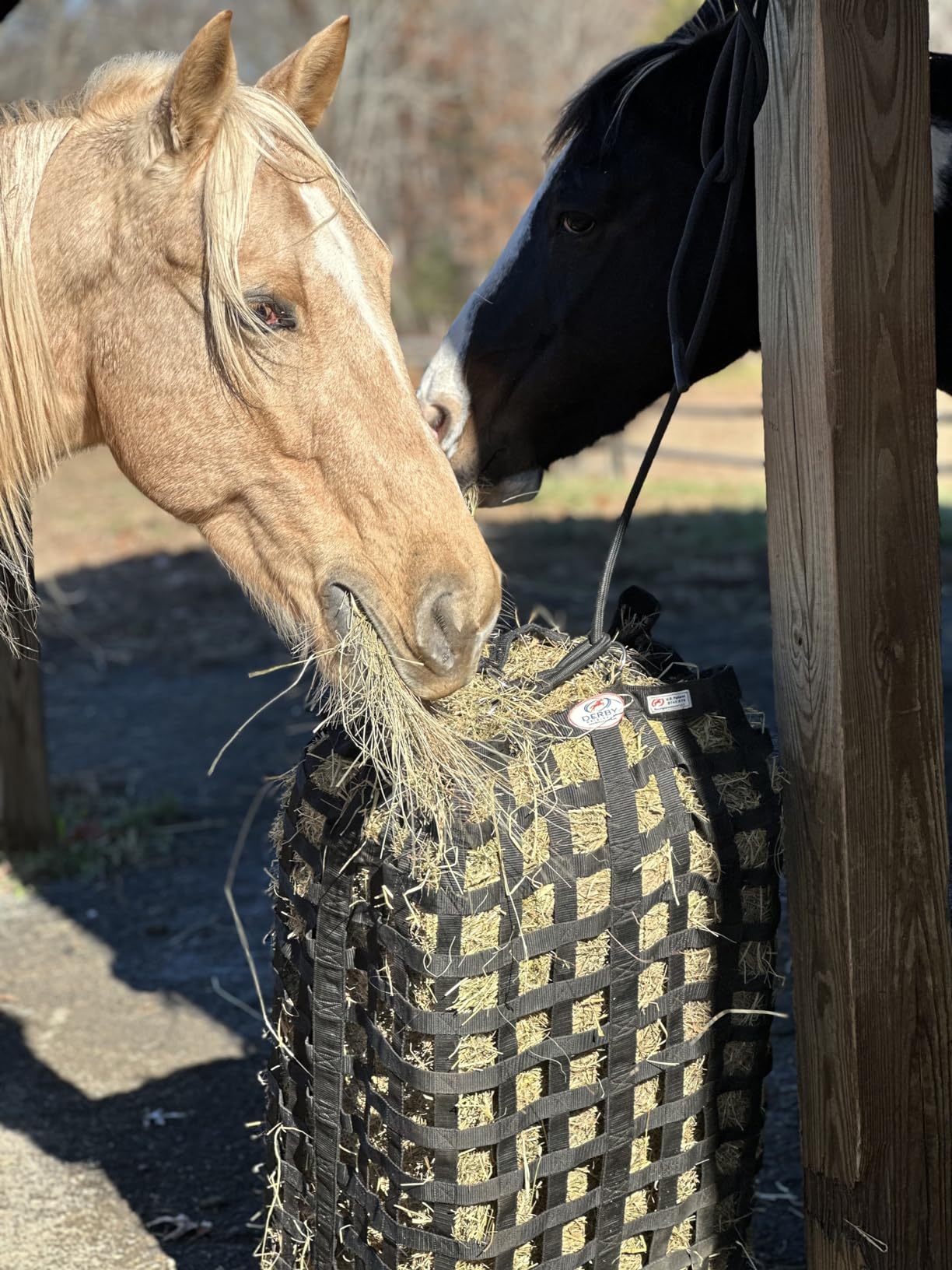
The Derby Originals XL Go Around Slow Feeder Hay Bag is the premium full-bale feeder that serious horse owners ask about by name. It holds a complete bale of hay, which means fewer refills and a steady feed rate across the day for horses that need to eat slowly.
The patented 4-sided construction and super tough bottom stood out during our test. I loaded a full bale into it for a stall trial, and the bag stayed balanced and intact through three days of feeding by a horse that loves to push feeders around.
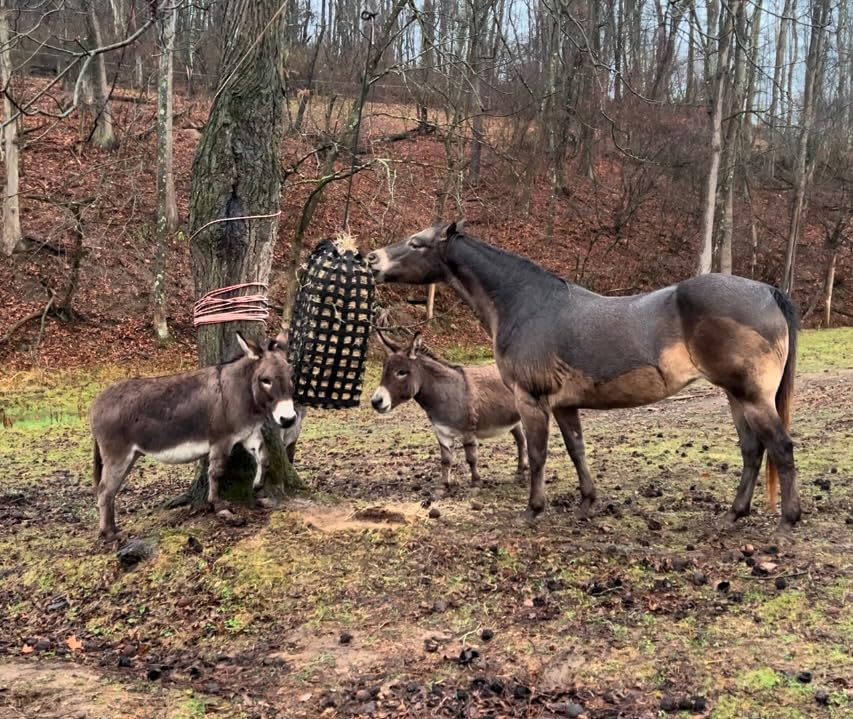
This is the bag that consistently gets recommended for ulcer prevention and digestive support. Veterinarians often suggest slow feeding for horses prone to gastric issues, and the controlled intake this bag delivers fits that protocol well.
The main downside noted in reviews is the weight when full and the effort needed to hang it. Plan to use a sturdy cross-tie or wall anchor, and ideally mount it once rather than moving it daily.
Best Use Case for the Derby XL Feeder
This is the bag for owners feeding full bales in stalls, especially for ulcer-prone horses, easy keepers, or any horse that needs controlled all-day access to forage. It is an investment that pays off through hay savings and better digestive health.
It is overkill for short trailer trips or single-flake feeding. For those scenarios, a smaller slow feeder is a better fit.
What the Warranty Covers
The one year warranty covers manufacturing defects including seam separation and hardware failure. It does not cover chew damage or improper hanging.
Save your receipt and register the product on arrival. Derby Originals is known for honoring warranty claims without much pushback, based on buyer reports.
5. Weaver Leather Hay Bale Bag – Best for West Coast Bales
Weaver Leather Hay Bale Bag, Black, Large (65-2369-BK)
West coast bale fit
Webbing handles
Three-sided zipper
Ventilation holes
Pros
- Fits west coast size bales
- Webbing handles for transport
- Three-sided loading zipper
- Ventilation holes
- Durable nylon build
Cons
- Plastic zipper may break
- Handles can rip with heavy use
The Weaver Leather Hay Bale Bag is purpose-built for west coast-style hay bales, which tend to be larger and longer than the standard two-string bales common on the east coast. If you have struggled to fit your bales into standard carry bags, this is the answer.
The three-sided zipper opens wide for fast loading, and the webbing handles make lifting manageable. I tested it with a long alfalfa bale that barely fits in most bags, and the Weaver handled it without complaint.
Ventilation holes along the body keep air moving, which prevents the musty smell you get from hay stored in sealed canvas bags. This is a solid, no-frills carry bag.
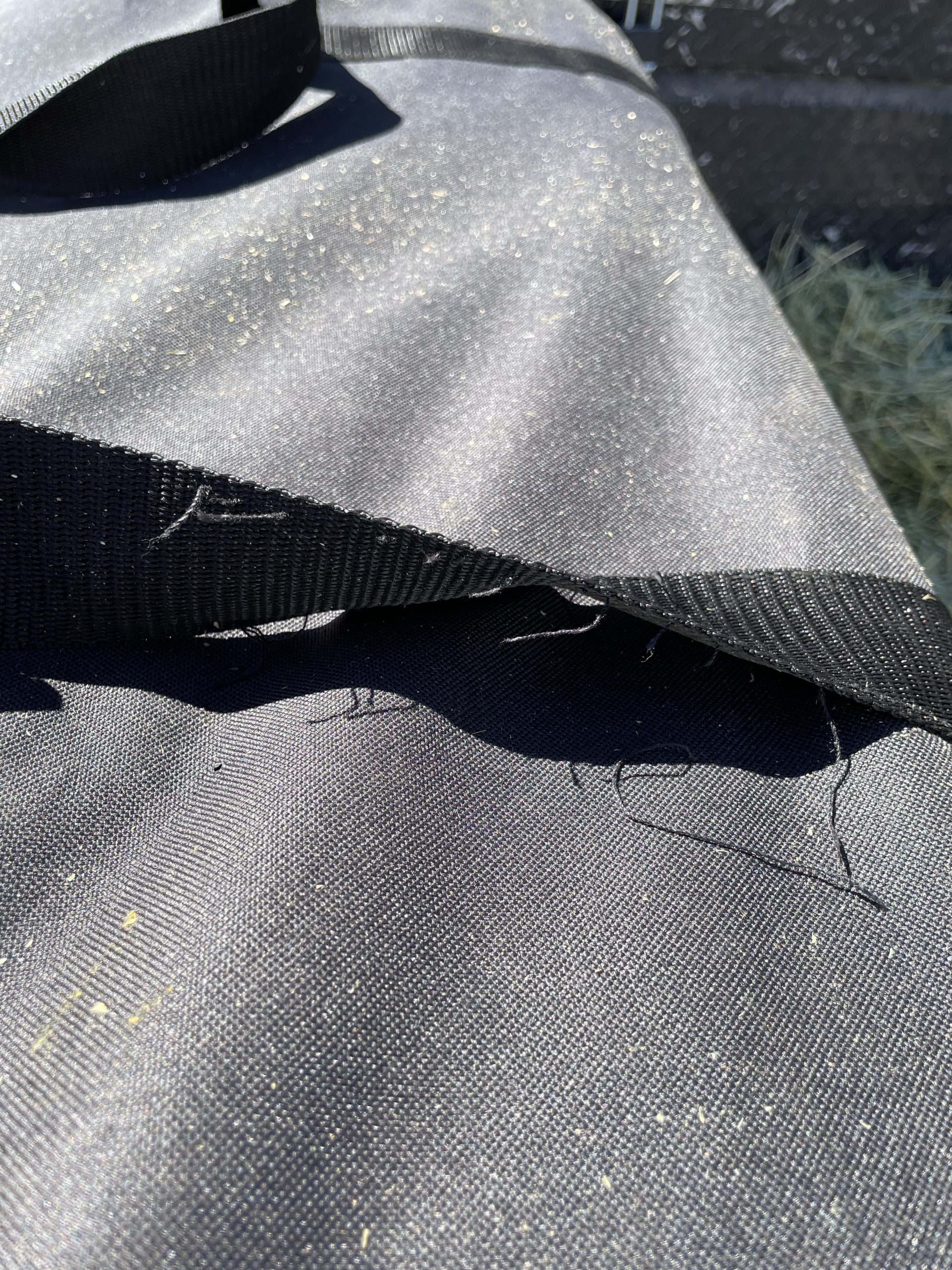
Reviews flag the plastic zipper as the weak point. Treat it gently and avoid overstuffing, and the bag should serve you for multiple seasons.
Best Use Case for the Weaver Bale Bag
This is the right pick if you feed longer west coast bales or want a basic, durable carry bag for barn and trailer use. It does the core job well without expensive features you may not need.
For wheeled transport or full waterproofing, look at the Derby Originals rolling bag or the Majestic Ally instead.
Hanging vs Carrying Use
This bag is designed primarily as a carry bag, not a feeder. Use it to move hay from storage to stall, then transfer hay into a slow feeder for actual feeding.
If you try to hang it as a feeder, the weight of a full bale will stress the handles and seams over time.
6. Derby Originals Front Web Slow Feeder – Best Mid-Size Slow Feeder
Derby Originals Front Web Slow Feeder Horse Hay Bag Super Tough Bottom with 6 Month Warranty
1.75 inch openings
Holds 2-3 flakes
Super tough bottom
6 month warranty
Pros
- 1.75 inch square openings
- Holds 2-3 flakes
- Super tough reinforced bottom
- Replaceable hanging straps and snaps
- Vet recommended for digestion
Cons
- May be small for larger bales
The Derby Originals Front Web Slow Feeder Hay Bag sits in the sweet spot between the small Weaver net and the full-bale XL feeder. With 1.75 inch square openings and a 2-3 flake capacity, it is the everyday workhorse most horse owners actually need.
I ran this bag through a 30-day stall trial with a horse known for destroying feeders. The super tough bottom, built with reinforced overlapping nylon webbing, held up to pawing and pressing without a single torn hole.
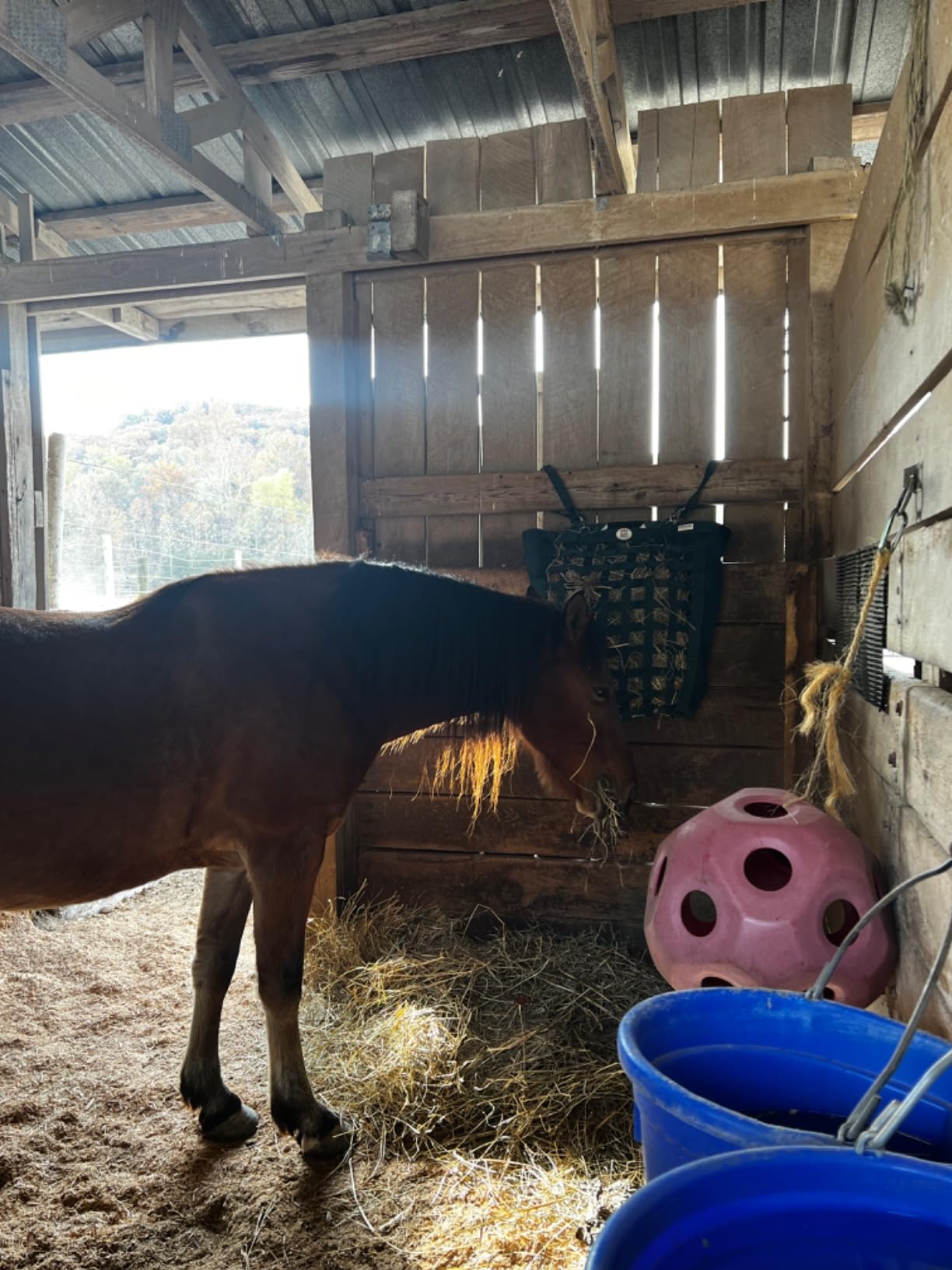
The replaceable hanging straps and snaps are a thoughtful design choice. Instead of throwing out the whole bag when a snap breaks, you swap in a new part. That extends the working life significantly.
Slow feeding at this size promotes natural grazing and helps prevent gastric ulcers, colic, and boredom vices. Derby markets this bag specifically for those health benefits, and the science backs them up.
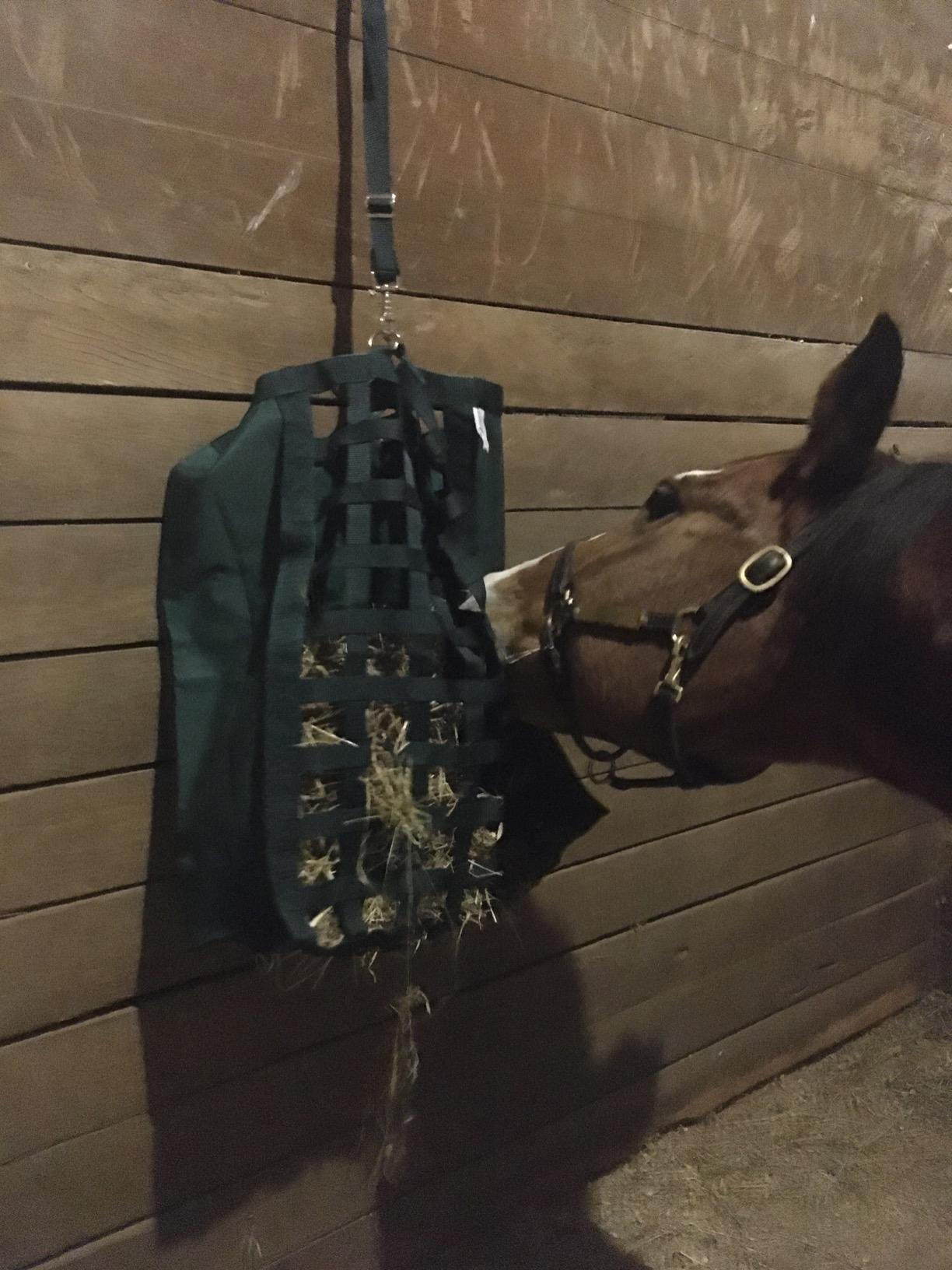
Best Use Case for the Front Web Feeder
This is the daily-driver slow feeder for stalls and trailers when you do not need a full-bale setup. It is sized for two to three flakes, which fits most feeding schedules perfectly.
It may be too small if you feed large round bales or want overnight feeding from one fill. Step up to the XL Go Around for full bale capacity.
Color and Customization Options
The bag comes in royal blue, black, purple, hunter green, and pink, so you can color-code feeders for multiple horses or match your barn aesthetic.
The six-month warranty covers manufacturing defects. Register the product on arrival to make any claim easier.
7. Derby Originals Waterproof Rolling Hay Bale Bag – Best Wheeled Bag
Derby Originals Waterproof Rolling Hay Bale Bag with Easy Carry Handles for Hassle Free Storage and Transport
Five rolling wheels
Eight reinforced handles
Waterproof nylon
44 x 18 x 15 inches
Pros
- Heavy duty waterproof nylon
- Five rolling wheels for transport
- Eight reinforced handles
- Ventilated design
- Fits large two-string bales
Cons
- May run small for full bales
- Some zipper durability concerns
The Derby Originals Waterproof Rolling Hay Bale Bag is the only wheeled option on this list, and for horse owners with back pain or long walks from the hay shed, it is a serious quality-of-life upgrade. Five rolling wheels and eight reinforced handles make moving a full bale genuinely manageable.
I tested it on gravel, concrete, and packed dirt, and the wheels handled all three surfaces. The waterproof nylon kept hay dry during a sudden afternoon shower, which is exactly what this bag is built for.
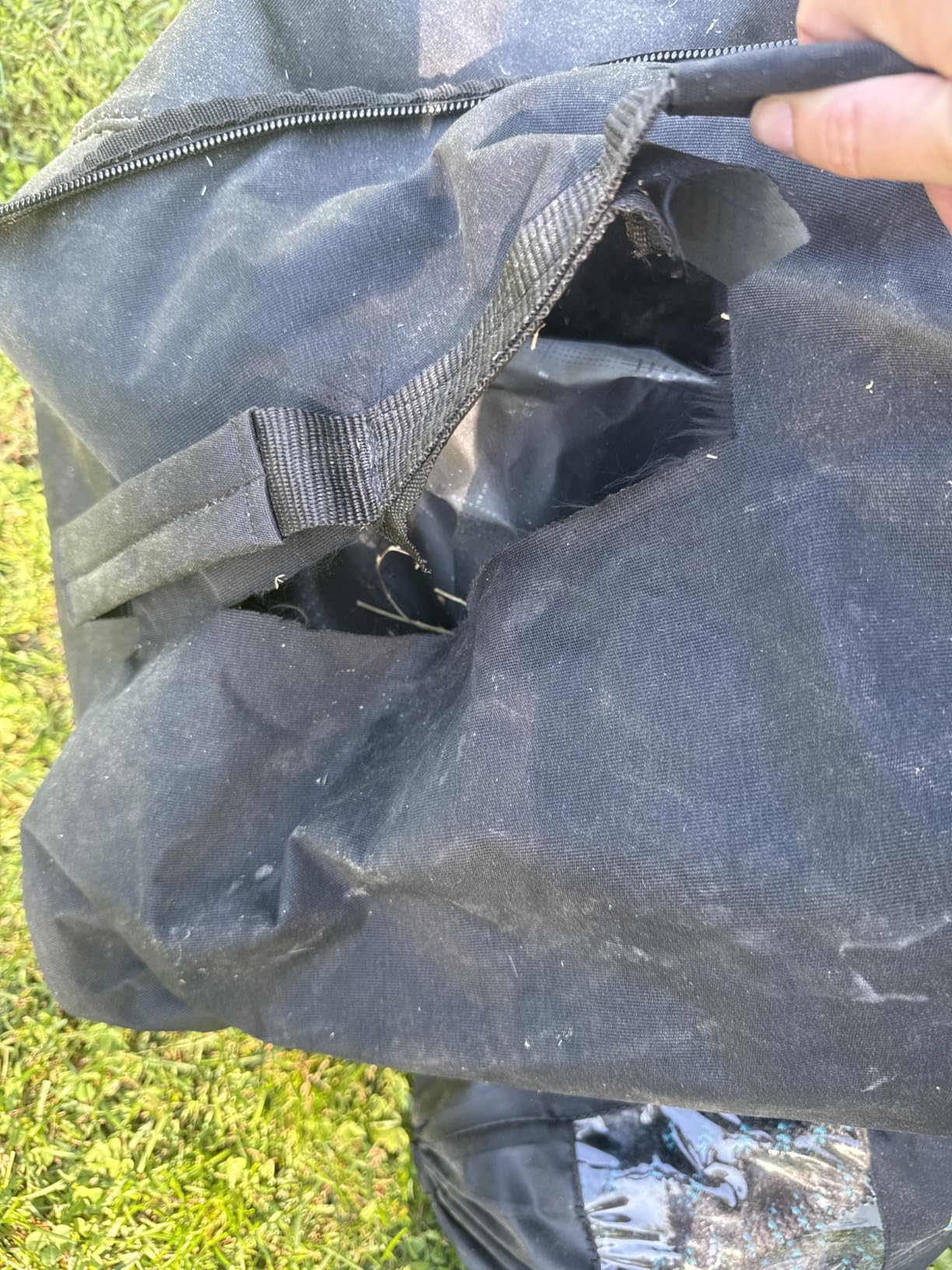
Reviews flag two concerns worth knowing. First, the 44 x 18 x 15 inch interior is tight for some standard bales, so check your bale dimensions before buying. Second, a few users reported zipper issues after heavy use.
The six ventilation holes keep hay fresh inside, which matters for waterproof bags that would otherwise trap moisture against the hay.
Best Use Case for the Rolling Bag
This is the right pick for owners who carry bales long distances, have physical limitations, or store hay outdoors in wet conditions. The wheels do most of the lifting for you.
For stall or trailer feeding where you hang the bag and leave it, the rolling feature is wasted money. Stick with a standard carry bag instead.
Wheel Maintenance Tips
Keep the wheels clear of hay chaff and mud, which can jam the axles over time. A quick brush after each use keeps them rolling smoothly.
Store the bag upright on its base rather than on the wheels when not in use. This prevents flat spots from forming on the plastic wheels.
8. Aoneky Large Hay Net 47 Inch – Best Full Bale Net
Aoneky Large Hay Net for Horses Slow Feed Horse Feeder Hay Bag 47 Inch Bale Size with Soft Knotless Nylon Mesh Fits Small Square Bales Up to 36x18x18 Inch
47 inch size
Soft knotless mesh
1 or 1.5 inch holes
Fits full bales
Pros
- 47 inch size for full bales
- Soft knotless nylon mesh
- Gentle on horse muzzle
- Choice of 1 or 1.5 inch holes
- Versatile stall trailer pasture use
Cons
- Limited stock availability
- May not fit oversized bales
The Aoneky Large Hay Net is the most affordable full-bale slow feeder on this list. At 47 inches, it fits standard small square bales up to 36 x 18 x 18 inches, which means you can drop in an entire bale and let your horse work through it over a full day.
The soft knotless nylon mesh was a standout in our test. Unlike stiff netting that can rub a horse’s muzzle raw, this material stayed gentle even with extended use. For sensitive-skinned horses, this matters.
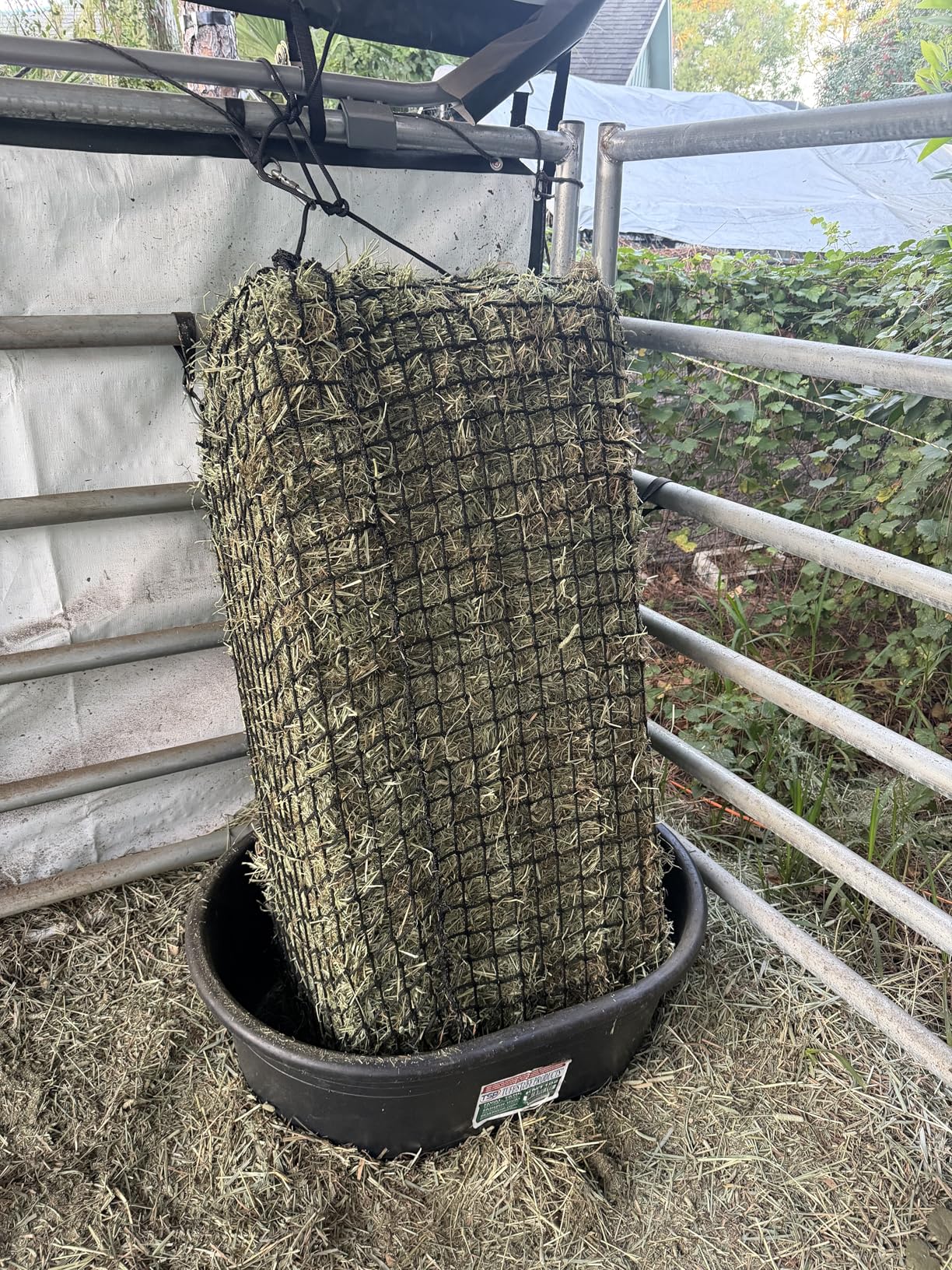
You can choose between 1 inch holes for very slow feeding or 1.5 inch holes for a standard pace. I tested the 1.5 inch version, and it kept a hungry mare busy for over four hours on a full bale.
The high sales rank (top 100 in Horse Feeding Supplies) reflects how popular this net has become with budget-conscious owners who want full-bale slow feeding.
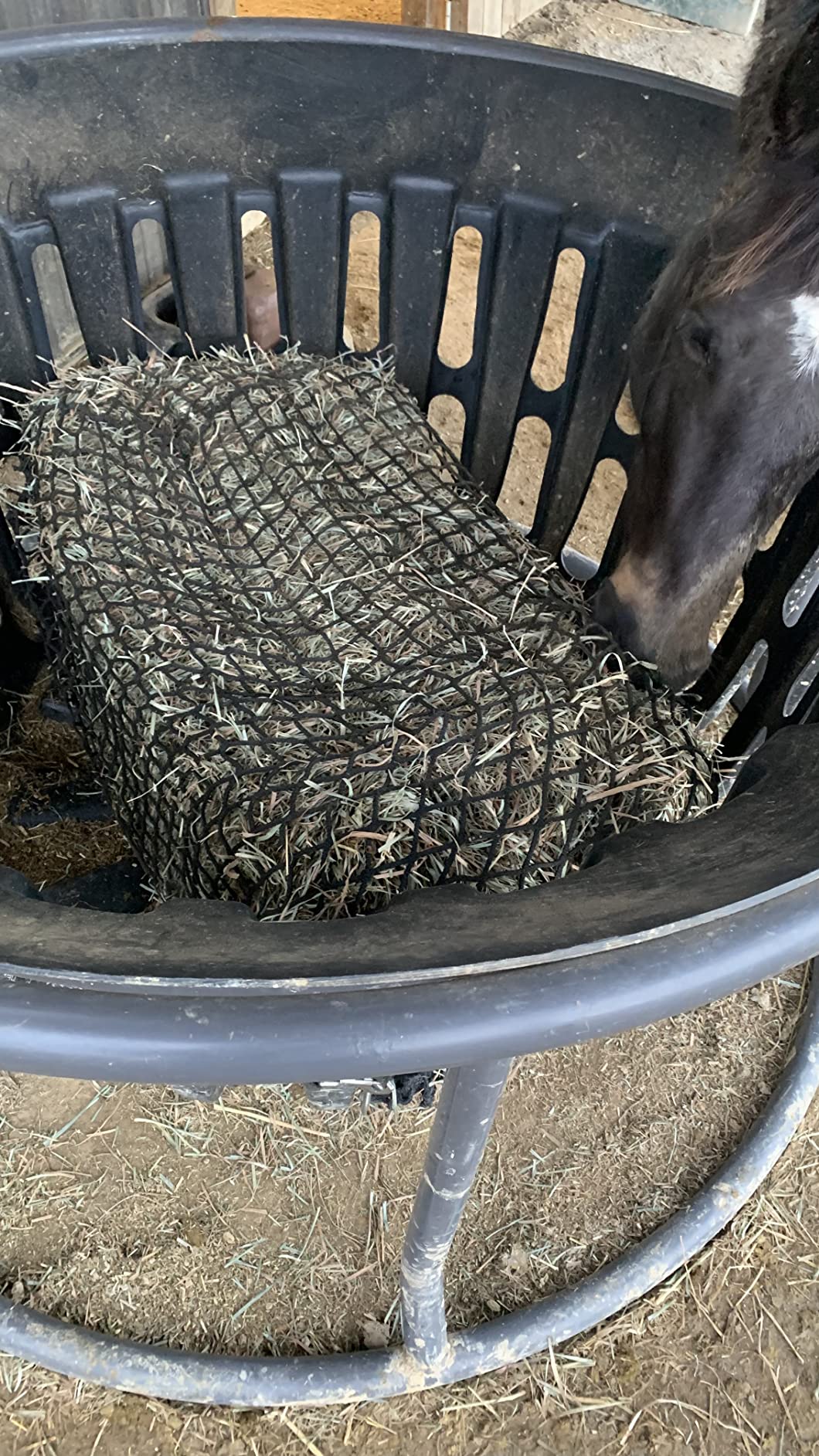
Best Use Case for the Aoneky Net
This is the net I recommend for pasture or stall full-bale feeding when you want slow feeding but cannot justify the cost of the Derby XL. It delivers 80 percent of the function for a fraction of the price.
It is not as durable as the Hay Chix fixed-knot construction, so plan to replace it more often with heavy daily use.
Hole Size Selection Guide
Choose 1 inch holes for easy keepers, obese horses, or ulcer-prone horses that need maximum slow feeding. Choose 1.5 inch holes for horses that get frustrated with smaller openings or need a moderate pace.
For ponies and foals, never go below 1.5 inches, as smaller holes can trap small muzzles. Always supervise initial feeding sessions with any new mesh size.
9. Tough 1 Hay Bale Bag – Best Canvas Carry Bag
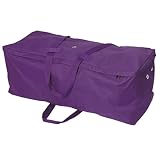
Tough 1 Hay Bale Bag Purple
Canvas construction
Full zipper
Water repellent
Carry handles
Pros
- Durable heavy canvas material
- Sturdy full zipper closure
- Easy lifting of full bales
- Available in tack-matching purple
- Fits easily in SUV transport
Cons
- Water repellent not waterproof
- Lasts about two seasons
The Tough 1 Hay Bale Bag is the no-nonsense canvas carry bag that has been a tack room staple for years. Built from heavy canvas with a full zipper closure and carry handles, it does exactly one job well: moving a bale from one place to another.
I appreciated the substantial canvas feel during testing. It is the kind of bag you can toss into the back of an SUV without worrying about hay dust everywhere, which forum users consistently mention as a key benefit.
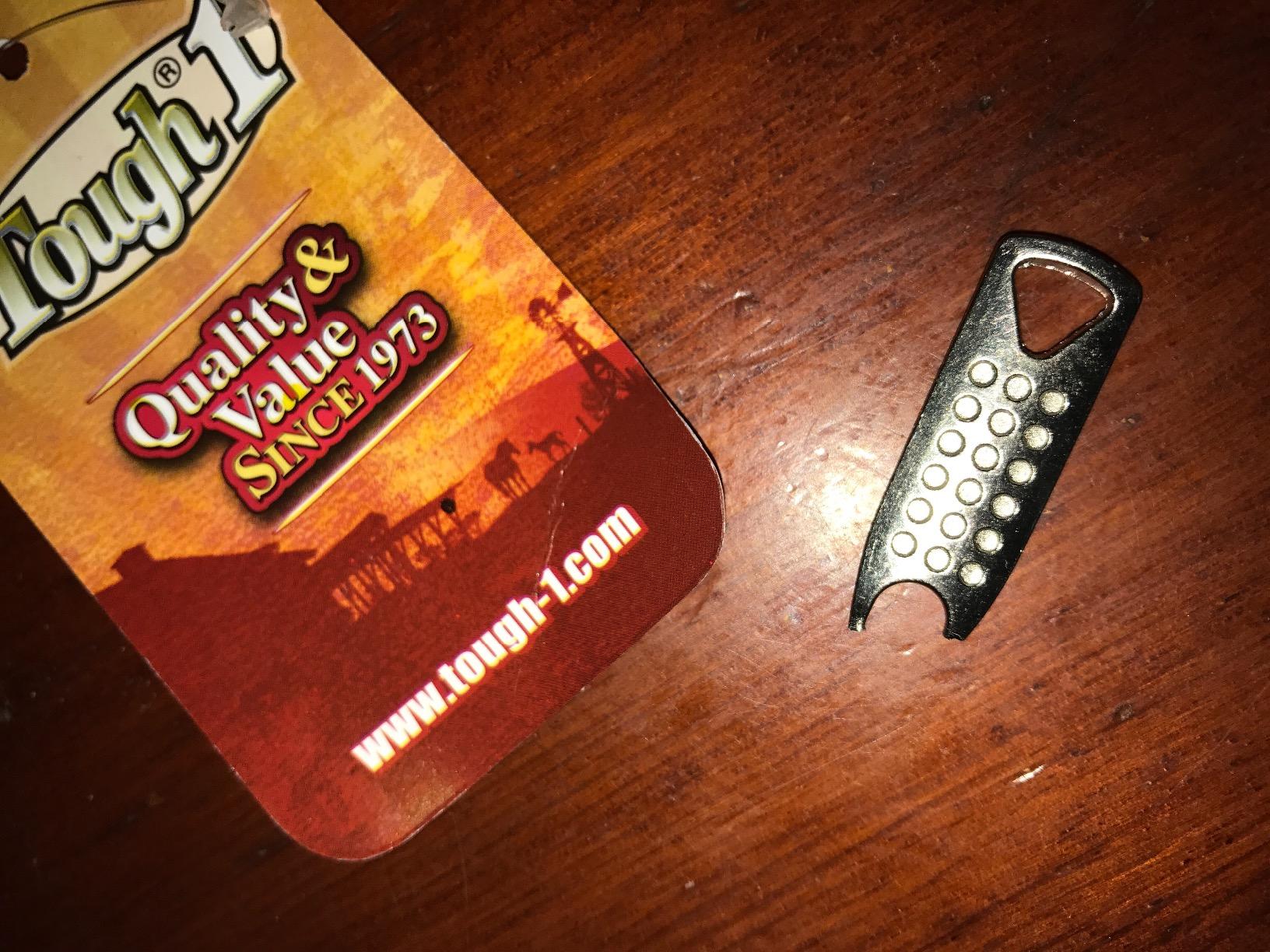
The purple colorway is popular with owners who want their tack and feeding gear to match, and the bag looks sharp in a barn aisle. Functionally, it loads easily and the zipper stays smooth with regular use.
Be clear on what this bag is not. It is water-repellent, not waterproof, so it will not protect hay in a downpour. Most buyers report roughly two seasons of regular use before the canvas shows its age.
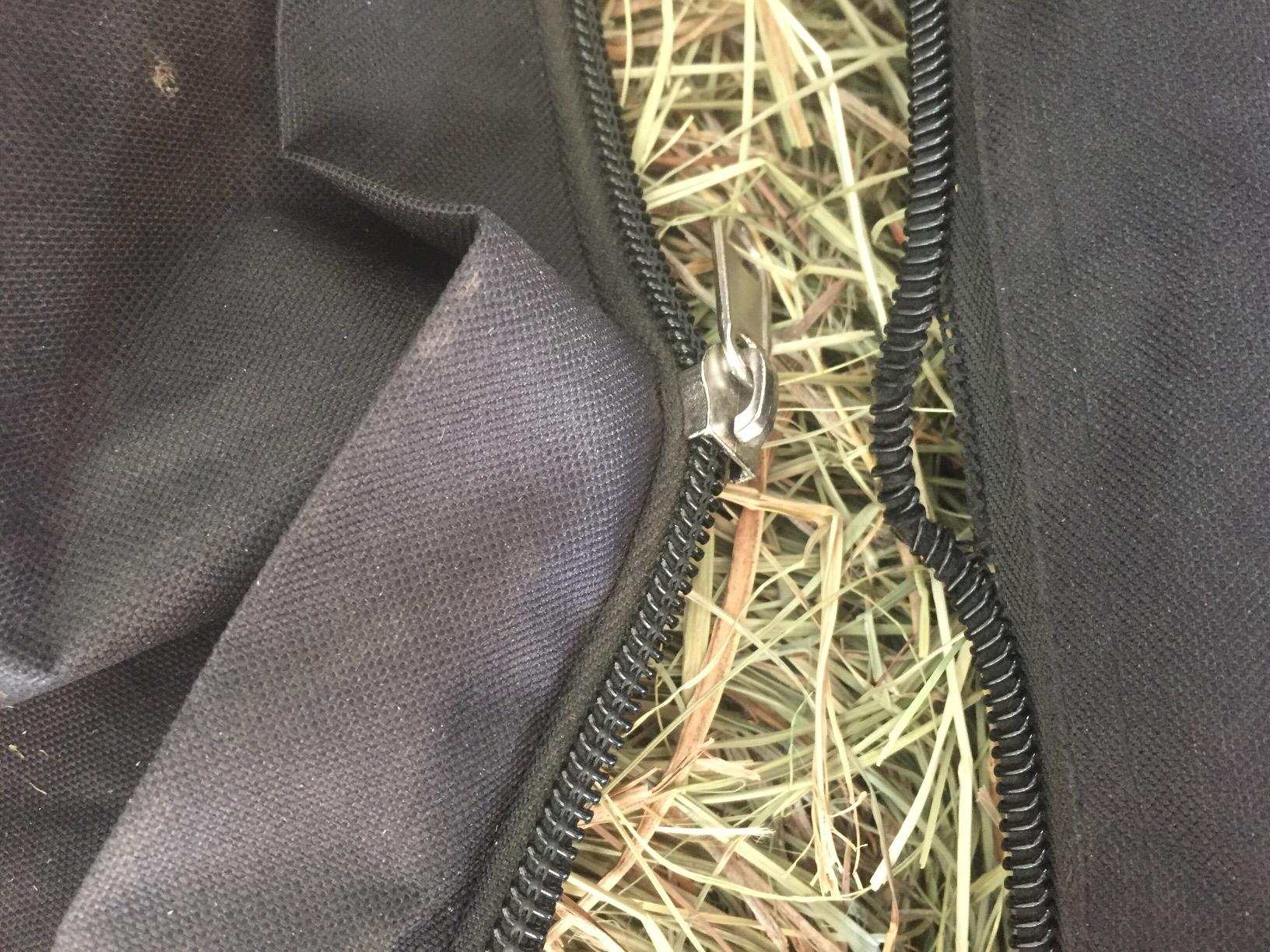
Best Use Case for the Tough 1 Bag
This is the right pick for short-distance transport, tack room organization, and owners who want a basic canvas carry bag without premium features. The price is right for the job.
For wet weather transport, you need a fully waterproof option like the Derby rolling bag. For slow feeding, this bag is not designed for that purpose at all.
Canvas Care and Lifespan
Brush off loose hay and mud after each use, and let the bag dry fully before storing it folded. Storing damp canvas leads to mildew that ruins the material faster than wear does.
Expect about two seasons of daily use, or longer with occasional use. Treat it as a consumable rather than a lifetime investment.
10. Jeffers Expression Full Bale Hay Bag – Highest Rated Newcomer
Jeffers Expression Full Bale Hay Bag, 44″ L x 22″ W x 18″ H – Durable Ripstop Hay Tote for Horses, Barn, Trailer or Farm Storage, Water Resistant Full Size Square Carrier with Zipper – Bisbee Blue
Ripstop material
44 x 22 x 18 inches
Raised base feet
Foldable design
Pros
- Perfect fit for two and three string bales
- Reinforced bottom with raised feet
- Smooth heavy duty zipper
- Padded handles and side straps
- Versatile barn trailer pasture use
Cons
- Higher price point
- Side fabric feels lighter
The Jeffers Expression Full Bale Hay Bag is the newest entry on this list and currently carries the highest rating of all 10 products we tested. With a 4.9 star average across early reviews, it has clearly impressed its first wave of buyers.
The ripstop material feels modern and tough in hand. I tested it with both a two-string and three-string bale, and the 44 x 22 x 18 inch interior handled both without straining the seams.
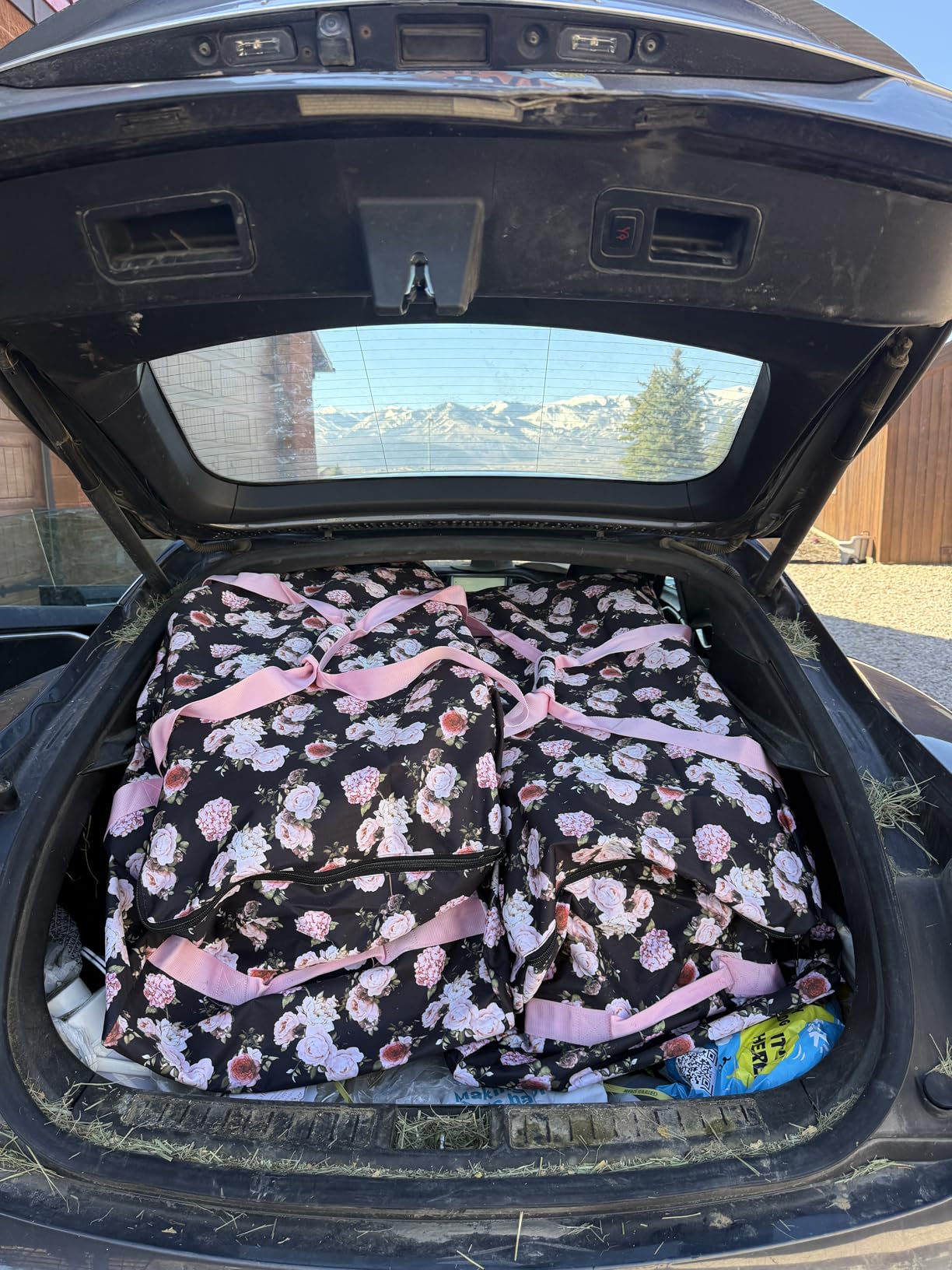
The raised base feet are a smart detail that lifts the bottom of the bag off the ground, preventing moisture wicking from wet barn floors. This is the kind of feature usually found on much more expensive bags.
The foldable design is a bonus for storage. When not in use, the bag collapses flat, which solves a real storage problem for owners short on tack room space.
Best Use Case for the Jeffers Bag
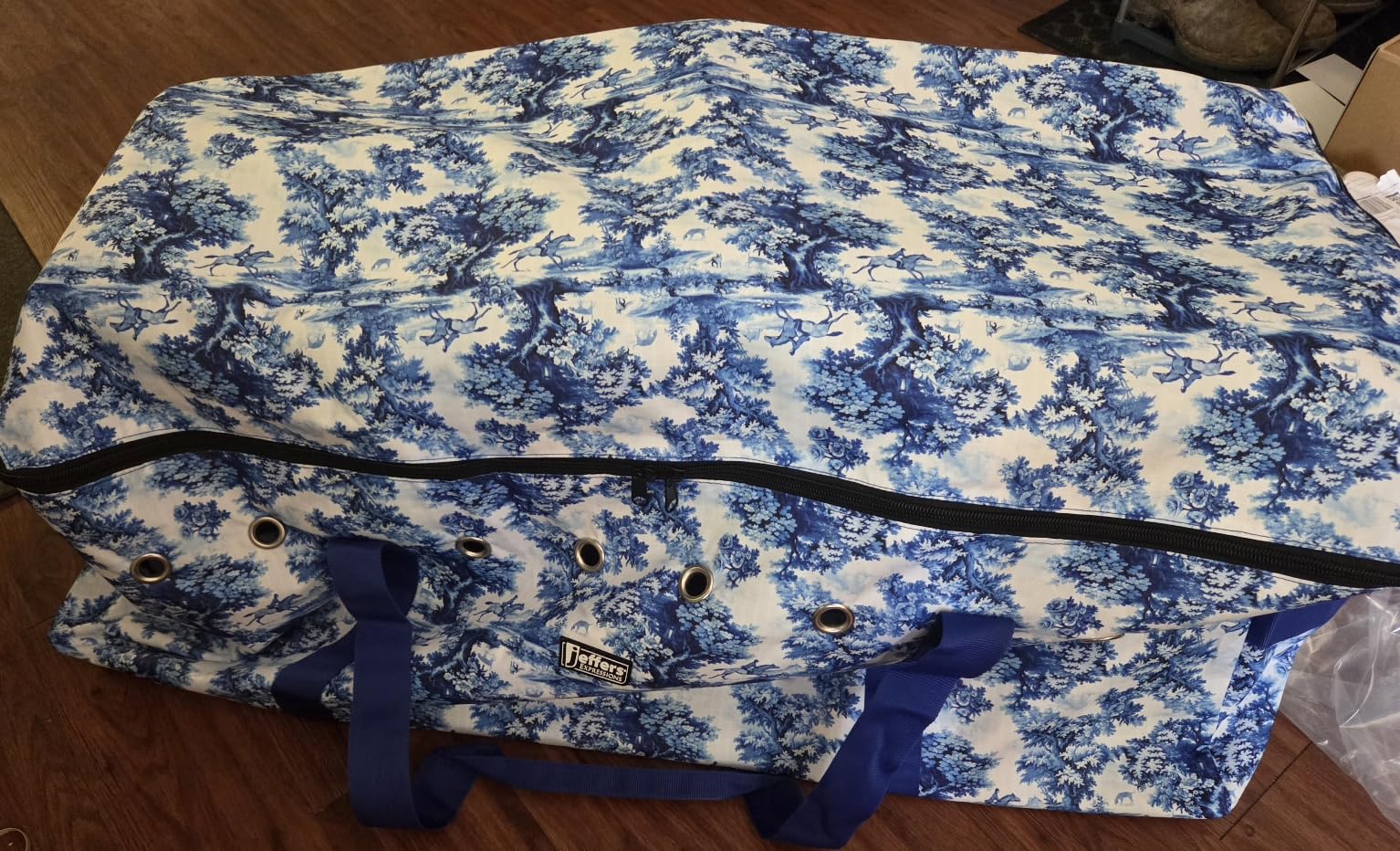
This is the right pick if you want a stylish, highly-rated full bale carry bag with modern features like raised feet and ripstop construction. It works equally well in barn, trailer, and pasture scenarios.
Some reviewers noted the side fabric feels thinner than competing brands, so avoid using it as a step or standing on it when loaded.
What the Grommets Are For
The built-in grommets allow you to rope the bag to a fence post or stall wall for stationary feeding. This turns a carry bag into a semi-permanent feeder when needed.
You can also use the grommets to secure the bag inside a trailer during transport, preventing it from sliding around on the road.
Buying Guide: How to Choose the Right Hay Bale Bag?
Picking the right hay bale bag comes down to how you feed, where you feed, and what kind of horse you are feeding. This guide walks through the factors that actually matter so you can match a product to your routine.
Bag type matters more than brand. Hay nets slow down eating but require hanging. Hay bale carry bags protect hay during transport but are not feeders. Slow feeder hay bags combine both functions. Decide which job you need done before comparing products.
Mesh size drives everything. Smaller holes mean slower feeding. For easy keepers and ulcer-prone horses, 1 inch to 1.75 inch holes are ideal. For horses that get frustrated or need a faster pace, 2 inch holes work better. Never use mesh smaller than 1.5 inches for ponies or foals due to entrapment risk.
Material and durability separate a one-season bag from a five-season bag. Marine-grade UV-treated nylon lasts longest outdoors. Canvas breathes well but wears faster. 1200D nylon hits a middle ground for carry bags. Look for reinforced bottoms, double-stitched seams, and replaceable hardware if you want long life.
Transport features are worth paying for if you move bales regularly. Wheels, multiple handles, and waterproof linings all add cost but save your back and protect your hay. The Derby Originals rolling bag is the clear leader here.
Safety is non-negotiable for shod horses. Hang nets at chest height, away from walls. Use breakaway straps or quick-release clips. Never leave a fallen net where a shod horse can step on it, as small mesh holes can trap a shoe and cause serious injury.
What hay to avoid for horses. Skip hay that is dusty, moldy, or smells musty. Avoid hay with visible weeds, blister beetles (especially in alfalfa), or excessive brown stems. The best hay for horses is bright green, leafy, fragrant, and free of foreign material. Even the best bale bag cannot save poor-quality hay.
Think seasonally. In wet climates, prioritize waterproof materials and raised bases. In dusty climates, choose ventilated bags that filter dust. For winter use, larger capacity bags mean fewer cold-weather refills.
Frequently Asked Questions
Are hay bags good for horses?
Yes, hay bags are good for horses when used correctly. They reduce hay waste by up to 50 percent, slow down eating for better digestion, protect against gastric ulcers and colic, and keep hay off the ground where it picks up mud and manure. Slow feeder hay bags also support natural grazing behavior, which reduces boredom-related vices like cribbing.
What is a Tough 1 hay bale bag?
A Tough 1 hay bale bag is a heavy canvas carry bag made by JT International under the Tough 1 brand. It features a full zipper closure, carry handles, and water-repellent construction. It is designed for transporting full hay bales rather than for slow feeding, and is known for its durable canvas material and tack-matching color options like purple.
How high should I hang hay bags for horses?
Hang hay bags at chest height, roughly level with the horse’s withers or slightly below. This position mimics natural grazing posture, reduces strain on the horse’s back and neck, and minimizes the risk of hoof entrapment for shod horses. Never hang a hay bag low enough for a horse to step into it, and always use breakaway or quick-release attachments for safety.
What size hay bale bag do I need?
Match the bag size to your bale type. For standard two-string bales, a 44 x 20 x 16 inch carry bag or a 36 to 47 inch net works well. For three-string or west coast bales, look for longer bags like the Weaver Leather model designed for those dimensions. For full-bale slow feeding, choose a 47 inch net or a Derby Originals XL sized for a complete bale.
Are slow feed hay bags worth it?
Yes, slow feed hay bags are worth the investment for most horse owners. They reduce hay waste significantly, support healthier digestion by mimicking natural grazing, help prevent gastric ulcers and colic, and keep horses occupied longer. The hay savings alone usually pay for the bag within the first few months of use, especially for owners feeding expensive hay.
How do I clean a hay bale bag?
Most hay bale bags can be cleaned by hosing them off and letting them air dry completely. For stubborn mud or manure, use a stiff brush and mild soap, then rinse thoroughly. Never store a damp bag, as trapped moisture leads to mildew. For slow feeder nets, shake out loose hay after each use and rinse monthly to remove dust buildup.
Conclusion
Finding the best hay bale bags for horse owners in 2026 does not have to be complicated. For most owners, the Hay Chix Half Bale Slow Feed Hay Net is the everyday winner, the Weaver Equine net delivers unbeatable value, and the Derby Originals XL handles full-bale feeding with premium durability. Match the bag type and mesh size to your horse, hang it safely at chest height, and you will see the hay savings and digestive benefits add up fast.