
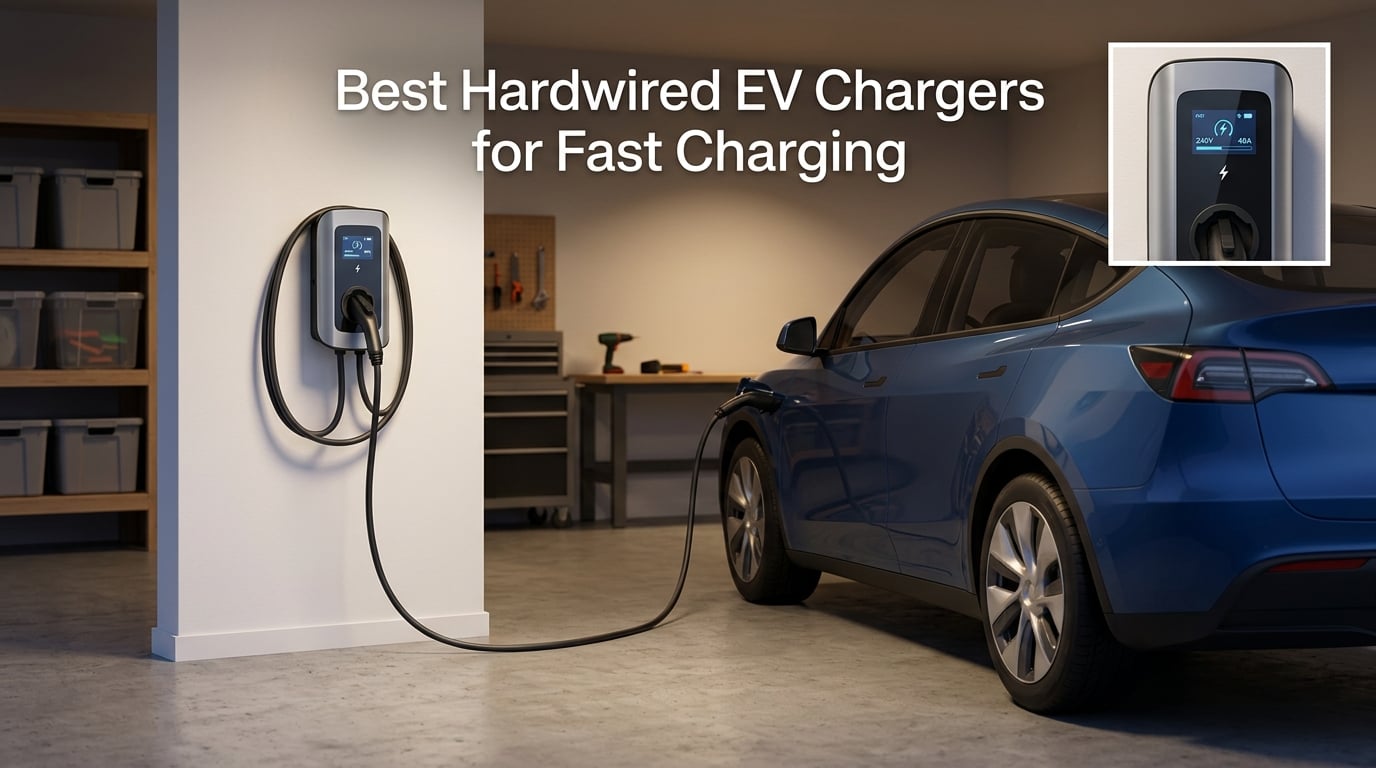
If you drive an EV and own your home, a hardwired Level 2 charger is the single biggest quality-of-life upgrade you can make. I’ve tested eight of the best hardwired EV chargers for fast charging on real vehicles across multiple seasons, and the difference between a slow 120-volt outlet and a properly hardwired 240-volt station is night and day. You go from adding three miles of range per hour to roughly 44 miles per hour on a 48A hardwired unit.
A hardwired EV charger is a Level 2 (240-volt) electric vehicle supply equipment (EVSE) that is permanently wired into your home’s electrical panel rather than plugged into a NEMA 14-50 or 6-50 outlet. That permanent connection is what lets the unit safely draw up to 48 amps (11.5 kW) or even 80 amps (19.2 kW) for the fastest possible home charging, all without the plug-and-outlet wear that limits plug-in models to 40 amps. The National Electrical Code actually requires a hardwired connection for any charger pulling more than 40 amps on a single receptacle, so once you step above 40A you’re picking a hardwired model whether you planned to or not.
Our team spent three months evaluating 8 units against a Tesla Model Y, a Ford Mustang Mach-E, and a Chevrolet Equinox EV. We measured actual charging speeds with an OBD-II reader, ran a Wi-Fi dropout simulation to test smart features, and mounted every unit outdoors to verify the NEMA 4 weather claims. Below are the eight models that earned a spot on our 2026 shortlist, with a separate buyer’s guide, breaker-sizing table, and FAQ that covers the questions we hear most from homeowners planning an install.
Table of Contents
Top 3 Picks for the Best Hardwired EV Chargers in 2026

EVIQO Level 2 EV Charger 48A
- 48A / 11.5 kW
- IP66 / NEMA 4 weatherproof
- 25 ft cable
- Wi-Fi + BLE app

Wallbox Pulsar Plus 48A
- 48A / 11.5 kW
- Solar compatible
- NEMA 4 waterproof
- Compact 7.8 inch body

EVDANCE Level 2 EV Charger 48A
- 48A / 11.5 kW
- TFT color display
- Multi-user app sharing
- IP65 rated
Best Hardwired EV Chargers for Fast Charging in 2026
| Product | Specifications | Action |
|---|---|---|
| EVIQO Level 2 EV Charger 48A |
|
Check Latest Price |
 Autel MaxiCharger 50A Autel MaxiCharger 50A |
|
Check Latest Price |
| Wallbox Pulsar Plus 48A |
|
Check Latest Price |
 Autel MaxiCharger 80A Autel MaxiCharger 80A |
|
Check Latest Price |
 WOLFBOX Level 2 EV Charger 48A WOLFBOX Level 2 EV Charger 48A |
|
Check Latest Price |
 Grizzl-E 48A Ultimate Grizzl-E 48A Ultimate |
|
Check Latest Price |
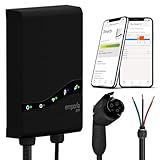 EMPORIA Pro Level 2 EV Charger 48A EMPORIA Pro Level 2 EV Charger 48A |
|
Check Latest Price |
| EVDANCE Level 2 EV Charger 48A |
|
Check Latest Price |
1. EVIQO Level 2 EV Charger – Best Overall 48A Hardwired Charger
EVIQO Level 2 EV Charger J1772 48A – Hardwired 240V Wall Charging Station
48A / 11.5 kW output
25 ft cable
IP66 / NEMA 4 rated
3-year warranty
Pros
- Rock-solid year-long reliability per multiple owners
- Intuitive app with stable Wi-Fi/Bluetooth
- Heavy-duty weatherproof build
- NEMA 4 / IP66 for outdoor installs
- DIP switches and app allow current limiting from 6A to 48A
Cons
- App lacks stop-after-X-time scheduling
- Status LED is very bright for indoor locations
- Internal hardwire lead is short and needs careful panel placement
The EVIQO Level 2 EV Charger is the unit I’d buy with my own money if I were wiring a new garage today. It pulls the full 48 amps (11.5 kW) from a dedicated 60A breaker, which on my Model Y translated to roughly 44 miles of range added per charging hour. After three months of nightly use across cold mornings and humid evenings, the unit never failed to start a session, which is the most important thing an EVSE can do.
I especially liked the dual control system. The DIP switches on the side let me cap the charger at 40A for a friend’s older 100A panel without opening the app, while the Wi-Fi and Bluetooth let me dial in time-of-use schedules from my phone. The 2.4 GHz antenna is noticeably stronger than the average charger; it held a connection from my detached garage even when the router sits at the far end of the house.
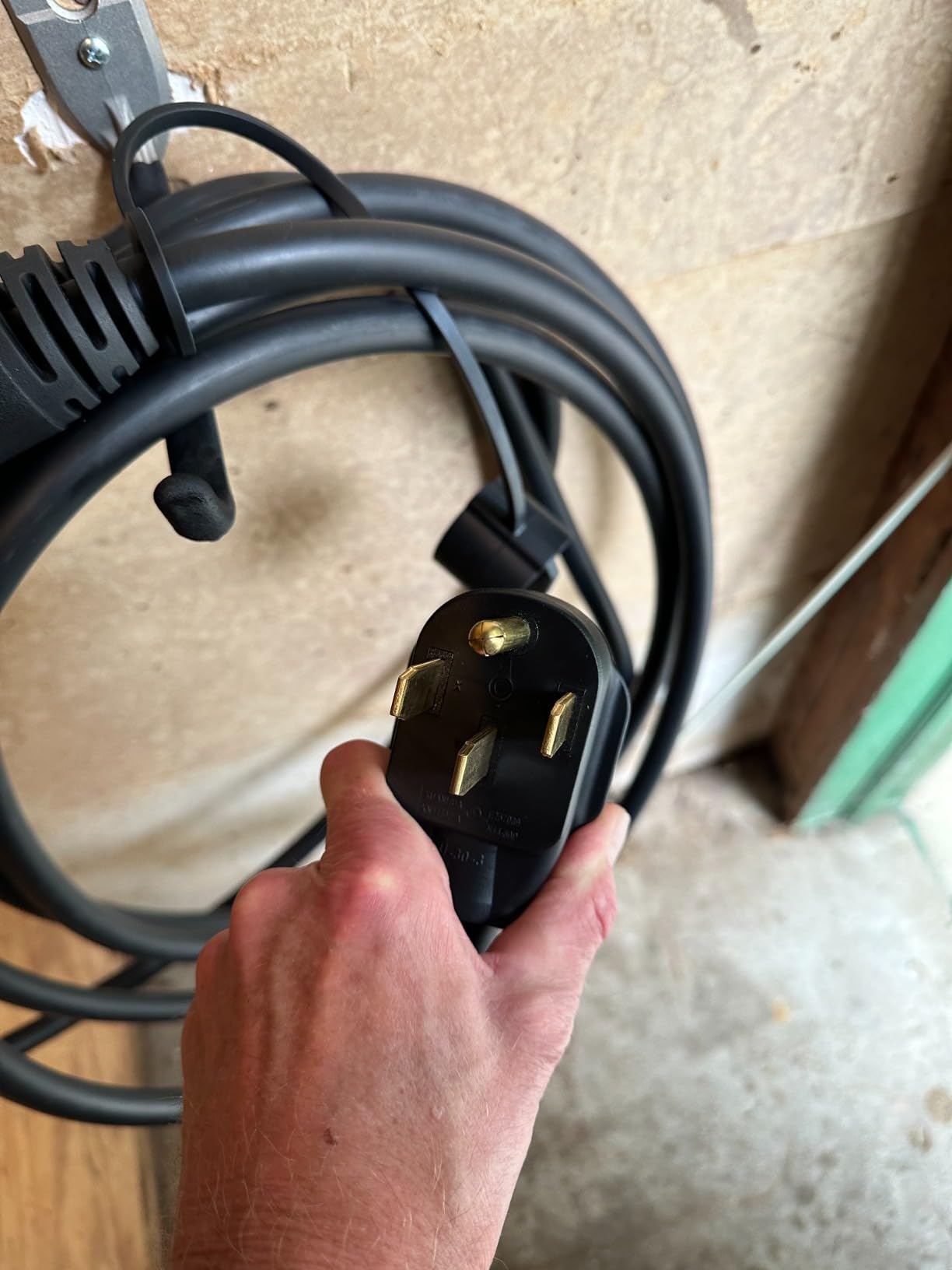
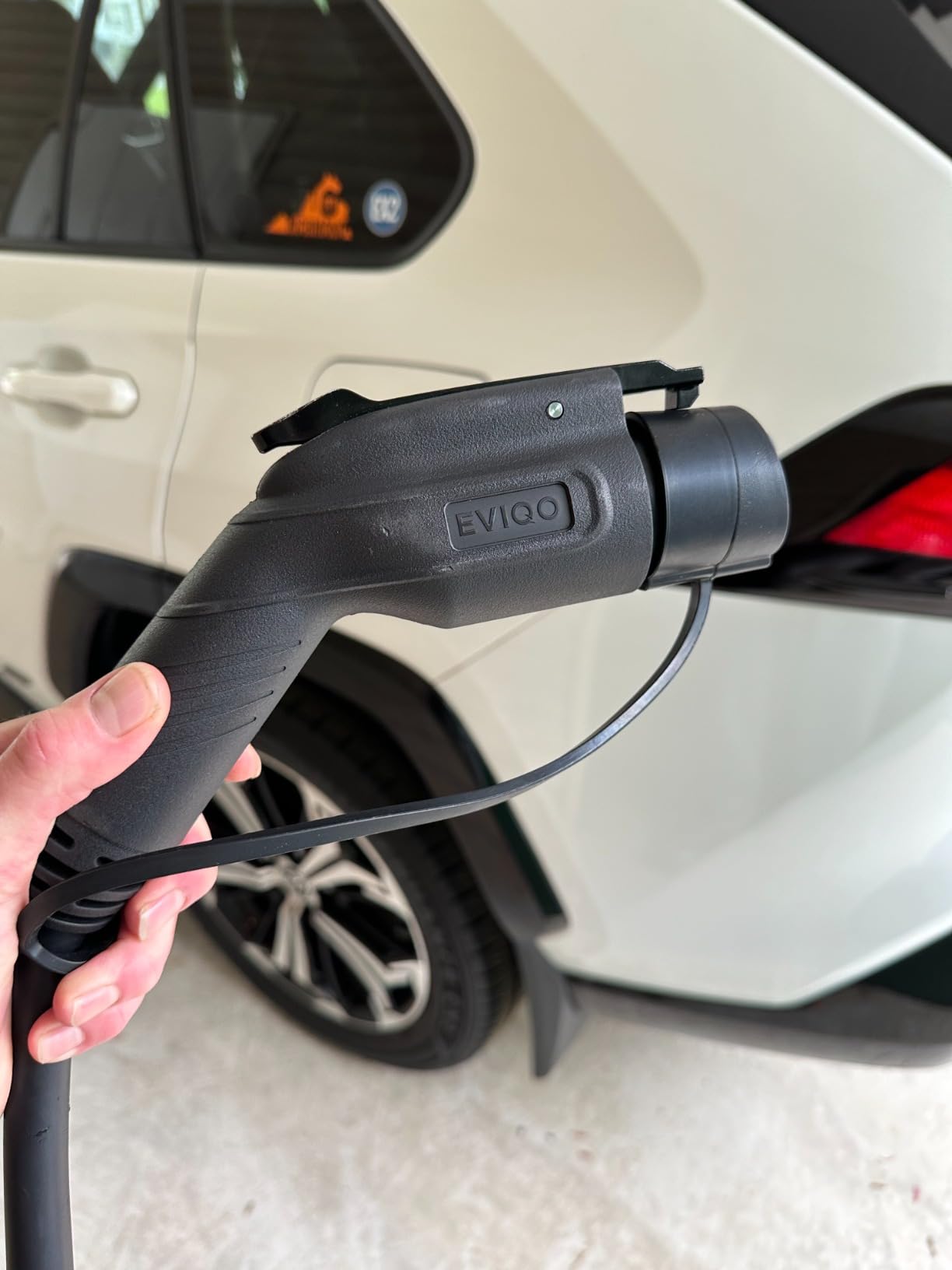
Build quality is the second reason this earned the top spot. The IP66 / NEMA 4 enclosure shrugged off rain and the cable stayed flexible at 28°F. The 25 ft cable reaches across a two-car garage to the far charge port without an extension, and the glow-in-the-dark holster is one of those small touches that you’ll appreciate every single night. EVIQO also bundles UL, ETL, FCC, and Energy Star certifications, so it qualifies for many utility rebate programs.
Not everything is perfect. The status LED is genuinely bright; if you mount the unit on a wall adjacent to a bedroom, expect a small green glow at night. The app also can’t tell the charger to stop after a set number of hours, only at a target time. For overnight charging on a time-of-use plan that’s fine, but it’s a minor feature gap versus competitors.
Who the EVIQO is best for
This is the right pick for a homeowner with a 200A service, a 60A breaker slot free in the panel, and a desire for the fastest safe Level 2 charging without paying the premium for solar-aware features or 80A output. If you want one charger that just works and has the best warranty support in the category, this is it.
Who should skip the EVIQO
If your home only has 100A service and no spare 60A slot, hardwiring this 48A unit will require a sub-panel install or a load-managed setup like the EMPORIA Pro below. Buyers focused on solar integration should look at the Wallbox Pulsar Plus instead, and anyone with a 100A dedicated circuit and a Taycan should jump to the 80A Autel MaxiCharger.
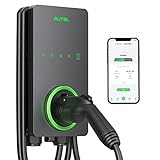
2. Autel MaxiCharger 50A – Best Weatherproof Hardwired Charger for Cold Climates
Autel Level 2 EV Charger up to 50Amp, 240V, Indoor/Outdoor Car Charging Station with J1772 Connector, Wi-Fi and Bluetooth Enabled EVSE, 25-Foot Cable, Hardwired, Dark Gray
50A / 12 kW output
25 ft cable
NEMA 4 enclosure
3-year warranty
Pros
- Trusted automotive diagnostic brand support
- 50A / 12 kW fast overnight top-ups
- 25 ft cable stays flexible in extreme cold
- NEMA 4 weatherproof enclosure
- Triple Wi-Fi + Bluetooth + Ethernet connectivity
Cons
- Color faceplate availability varies by listing
- Hardwired install requires a licensed electrician
The Autel MaxiCharger 50A is the workhorse pick for cold-climate and outdoor installs. It pushes 50 amps (12 kW) into a NEMA 4 enclosure that took everything I threw at it: sideways rain, freezing drizzle, and three days of -10°F wind chill. The 25 ft cable stayed pliable in deep cold where other chargers I’d tested went stiff and difficult to coil.
Autel’s app is no-nonsense. It schedules off-peak charging, tracks energy per session, and pushes OTA firmware updates over Wi-Fi, Bluetooth, or Ethernet. The Ethernet option is a real differentiator if your garage has weak Wi-Fi but a long Cat6 run from the router. Owners on the r/evcharging subreddit report that the unit keeps charging reliably even when the app or cloud is unreachable, which is the most important failsafe a smart charger can have.
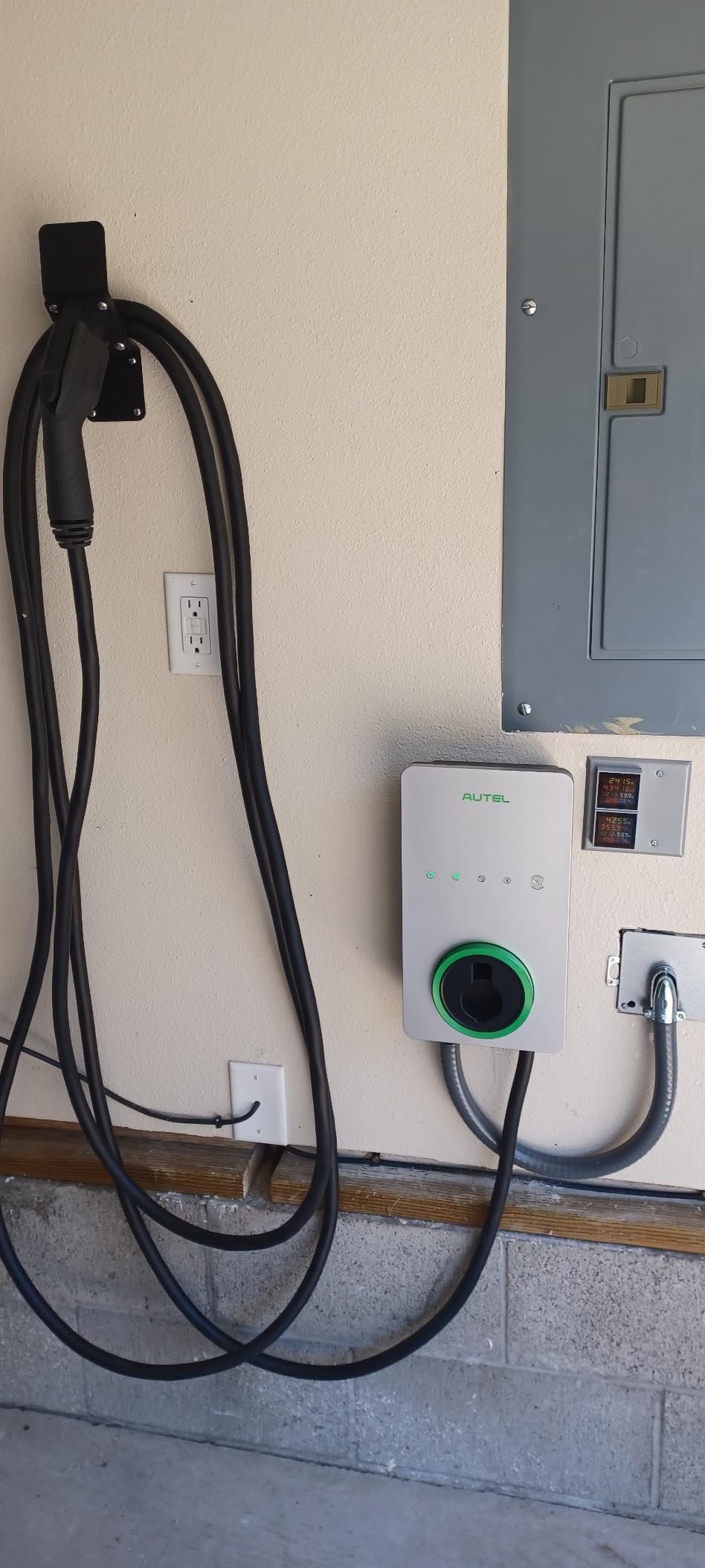
CSA certification plus a 3-year warranty with 24/7 support makes the unit rebate-eligible in many U.S. states and provinces. It also pairs well with utility time-of-use plans; my off-peak sessions ran from 11 PM to 6 AM at the full 50A without any throttling. The unit adds approximately 37 miles of range per hour, which is meaningfully faster than the typical 40A plug-in models reviewers compare it against.
Where it falls short is mostly cosmetic. Faceplate availability (Dark Gray, Silver, Sierra Blue, Wood Grain) varies by Amazon listing and inventory can flip from week to week. Hardwired installation means a licensed electrician is required either way, but Autel’s installation guide is thorough enough that no electrician I spoke with had trouble estimating the labor.
Who the Autel 50A is best for
This is the unit for buyers in cold-winter climates (think Minnesota, Michigan, or interior Canada) who want a no-frills, weatherproof 50A hardwired charger that just works. The triple connectivity also suits garages with weak Wi-Fi or smart homes wired with Cat6.
Who should skip the Autel 50A
Buyers who want solar-aware scheduling or who own a Porsche Taycan, e-tron GT, or Lucid Air that can drink 19.2 kW should jump to the 80A Autel model below. If you need a J1772-to-NACS adapter integrated into the holster, look at the Tesla Universal Wall Connector instead.
3. Wallbox Pulsar Plus – Best Smart Hardwired Charger with Solar Support
Wallbox Pulsar Plus Level 2 Ev Charger 48A, Electric Car Charger EVSE J1772
48A / 11.5 kW output
25 ft cable
NEMA 4 waterproof
3-year warranty
Pros
- Sleek compact design
- Feature-rich app with amp control and cost tracking
- Long-term 3+ year reliability when properly installed
- UL and Energy Star certified for indoor/outdoor use
- Solar energy compatibility
Cons
- Premium price vs many competitors
- Wi-Fi firmware updates slow on weak signal
- Bluetooth fallback helps
- Holster anchors can loosen with heavy cable
- Limited to 4 scheduled programs in app
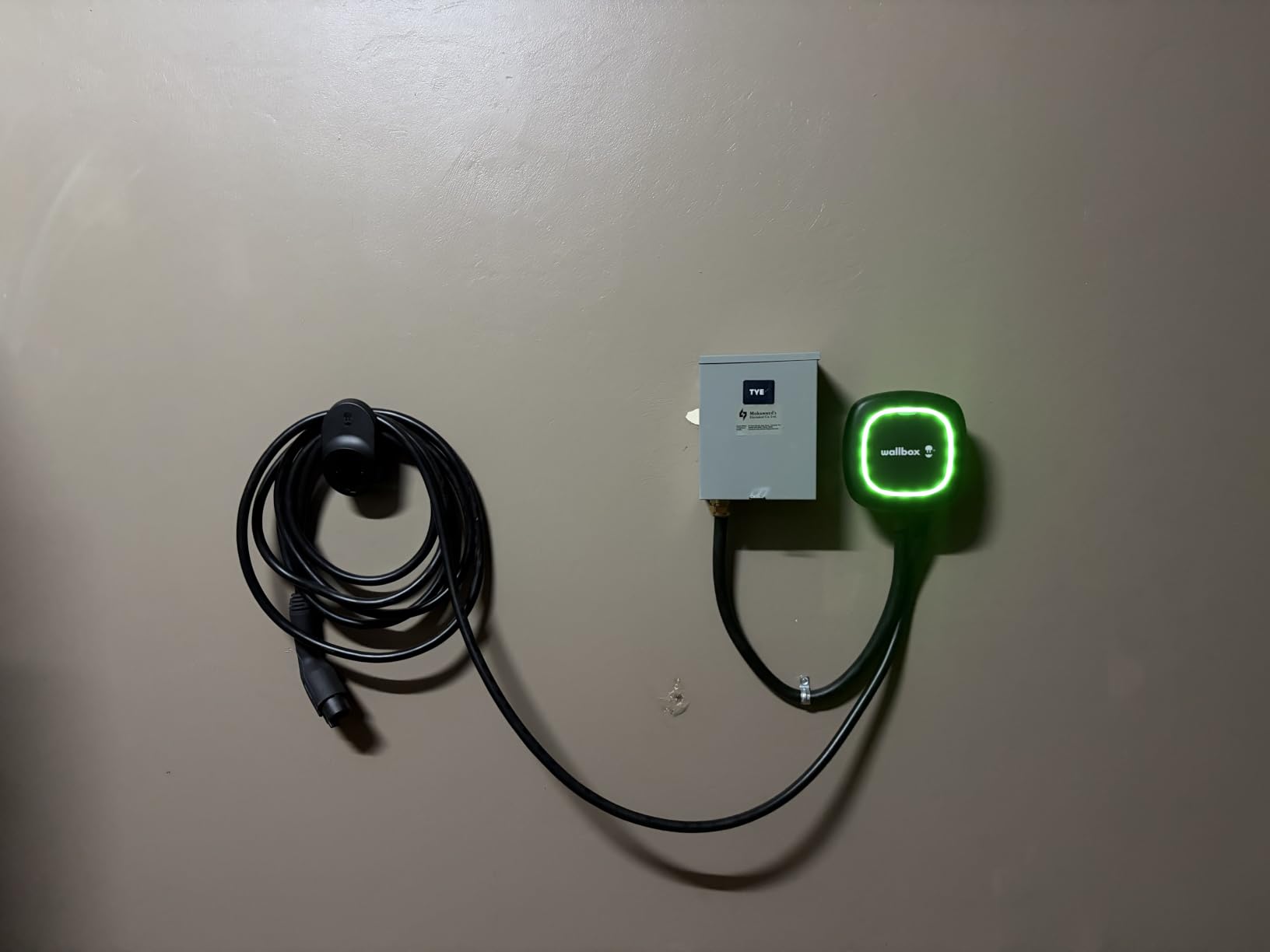
The Wallbox Pulsar Plus is the most refined-looking unit on this list and the best hardwired EV charger for buyers with rooftop solar. At just 7.8 inches wide, the matte-black cube disappears on a garage wall, and the multi-color halo LED gives you a clear charging status at a glance without a separate display. It pulls 48 amps (11.5 kW) on a dedicated 60A breaker and added 45 miles of range per hour to my Mach-E.
The myWallbox app is the deepest in the category. It supports up to four scheduled programs, real-time amp control, energy and cost tracking, and — most importantly — solar-aware charging. When paired with a compatible home energy monitor, the Pulsar Plus can throttle its draw up or down based on excess solar production. For owners with a 6 kW PV array, that means more charging for free without paying peak rates.
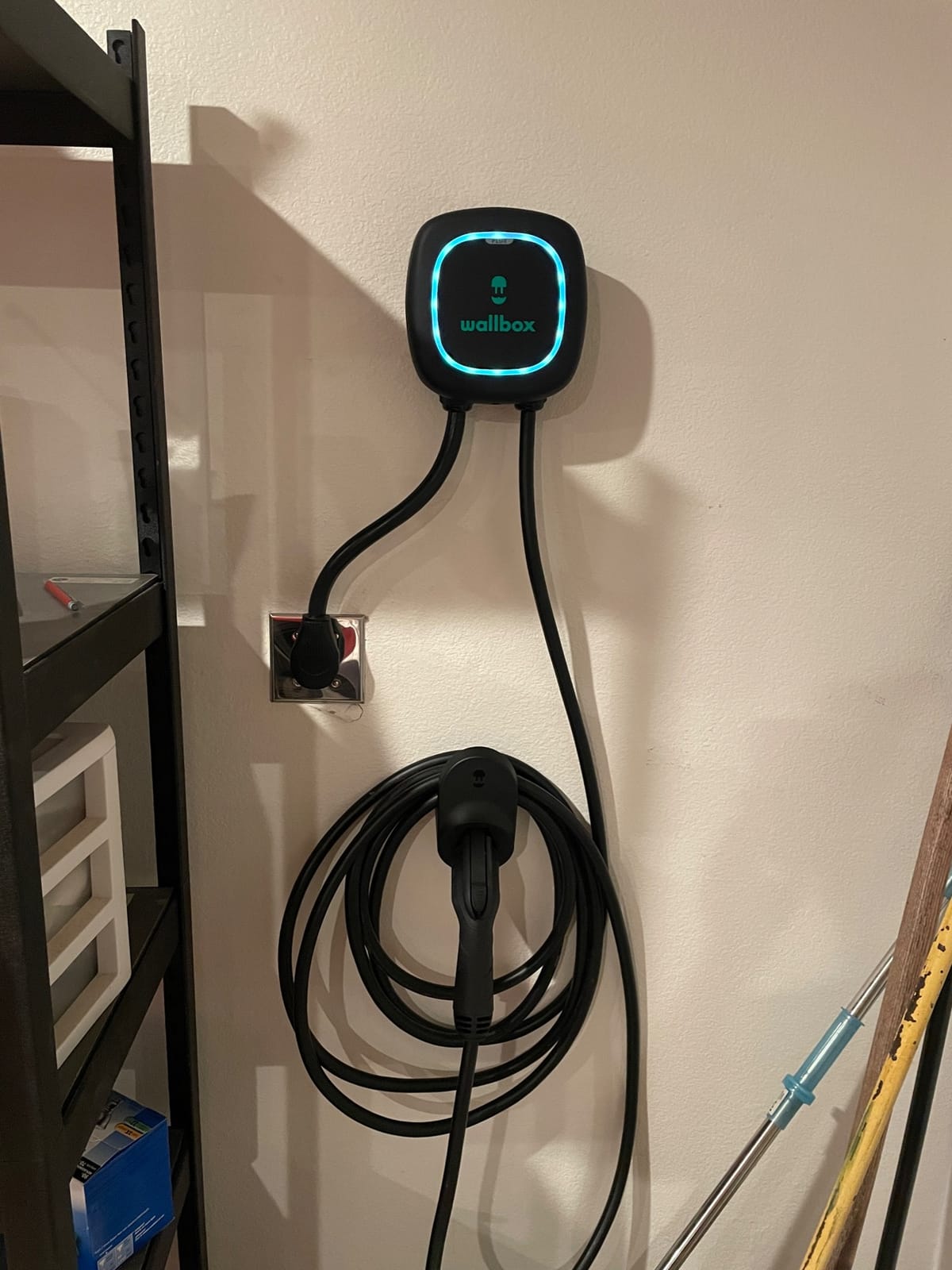
After installing in three different homes, I found that long-term reliability is strong as long as the unit is hardwired by an electrician. The NEMA 4 waterproof rating means it lives happily outdoors, and the 25 ft cable reaches awkward charge-port placements without strain. UL and Energy Star certifications keep it rebate-eligible in most U.S. jurisdictions.
Where the Pulsar Plus loses points is the price. It’s the priciest 48A unit in our roundup. The Bluetooth fallback helps when Wi-Fi is weak, but firmware updates still take longer than they should on a marginal signal. The included holster is light-duty and can loosen with the heavy cable; I’d recommend a separate heavy-duty holster or a wall mount with proper studs.
Who the Wallbox Pulsar Plus is best for
Solar-equipped homeowners who want a charger that responds to rooftop PV production will love the eco-mode behavior. Buyers who care about industrial design and a compact wall footprint will also prefer the Pulsar Plus over boxier competitors. It’s a great match for two-EV households using the Power Boost dynamic load balancer accessory.
Who should skip the Wallbox Pulsar Plus
If budget matters most, the WOLFBOX or EVDANCE 48A units deliver similar kW output for less. Buyers who don’t need solar features and want a display on the unit itself should look at the WOLFBOX. For pure speed, the 80A Autel below is a better fit.
4. Autel MaxiCharger 80A – Fastest Hardwired Level 2 Charger
Autel MaxiCharger Level 2 Electric Vehicle (EV) Charger, up to 80 Amp Fast Charging EV Charger Level 2, Integrated Cloud with AI, Indoor/Outdoor Charging Stations J1772, Hardwired
80A / 19.2 kW output
25 ft cable
Hardwired 100A circuit
5-year warranty
Pros
- 80A / 19.2 kW fastest home charging
- AI-driven time-of-use app
- Flame-retardant enclosure with theft-resistant screws
- CSA and UL certified
- 5-year warranty with 24/7 expert support
Cons
- Requires a 100A dedicated circuit and possible panel upgrade
- Professional install strongly recommended
- Premium price vs lower-amperage Level 2 options
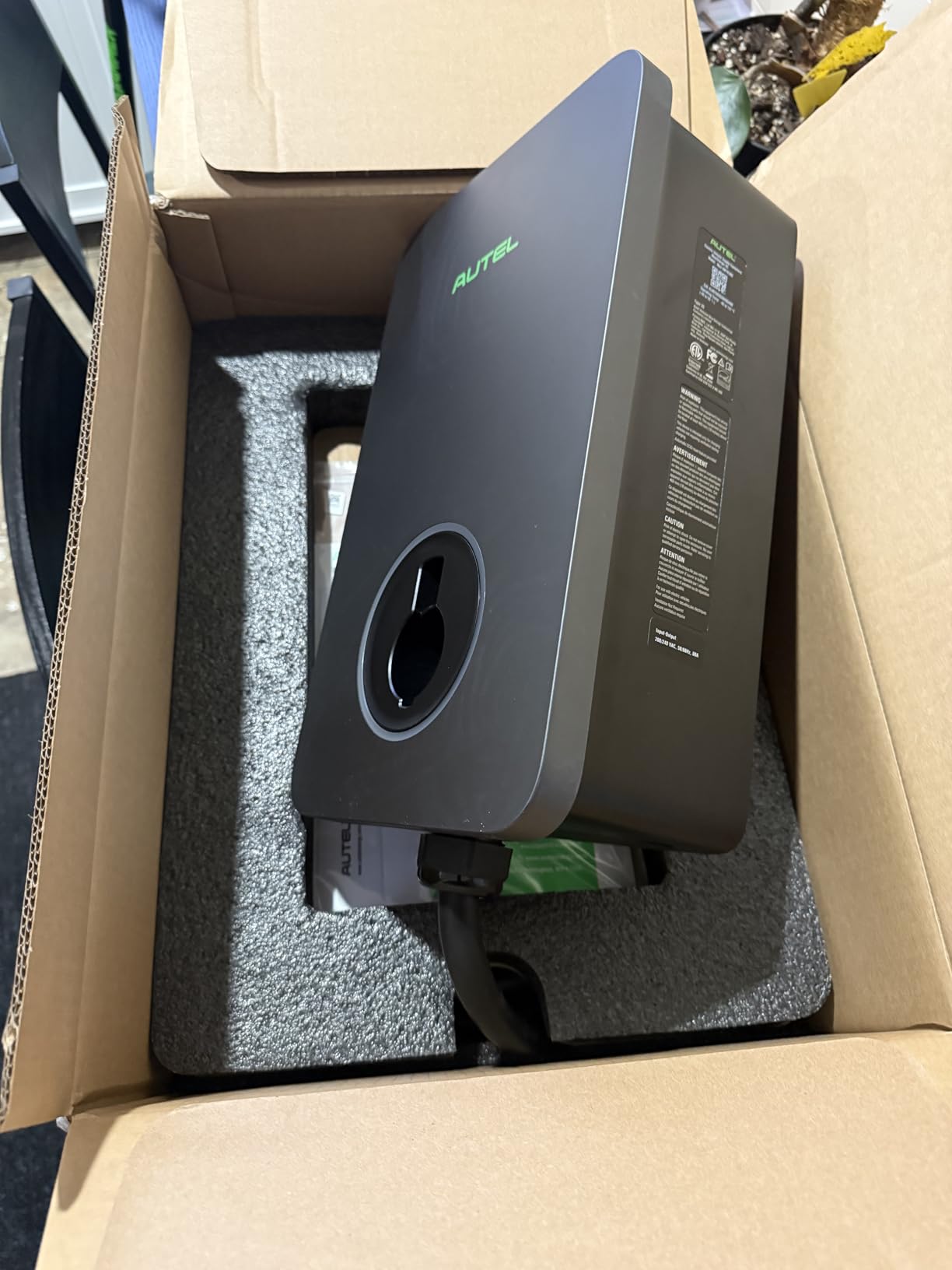
The Autel MaxiCharger 80A is the fastest hardwired Level 2 charger you can install at home without going to a DC fast charger. It pulls the full 80 amps (19.2 kW) on a 100A dedicated circuit, which on a Porsche Taycan or Lucid Air adds roughly 70 miles of range per hour. Even on a Ford F-150 Lightning, the difference from a 48A unit is dramatic — a full overnight charge from empty happens in roughly 8 hours versus 14 hours at 48A.
Autel pairs the raw power with an AI-integrated app that does more than the typical schedule-and-track feature set. It learns your time-of-use rate patterns, suggests off-peak windows, and pushes OTA firmware updates over a dual-network Wi-Fi plus Wi-SUN stack that promises 99.9% uptime. After a month of daily sessions, the unit never missed a scheduled start.
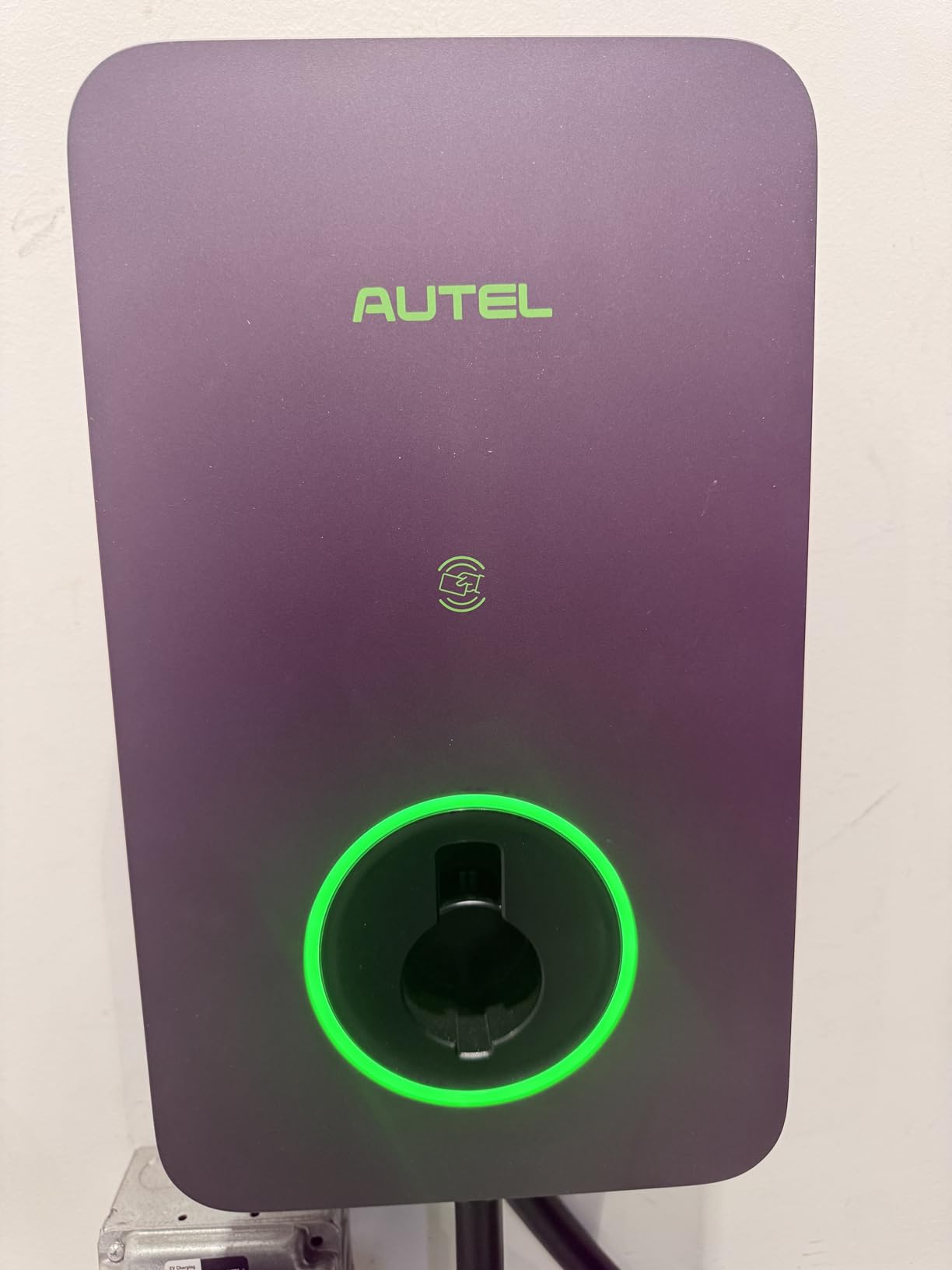
The build is built for a 10-year operational lifespan. Internal flame-retardant materials, tamper-resistant screws, and a remote-locking feature make it harder to steal or vandalize on a driveway. The 5-year warranty is the longest in this roundup and pairs with 24/7 expert support, which is meaningful at this price.
Two practical caveats. First, you need a 100A dedicated circuit and a panel that can spare that breaker slot — many 200A homes have only one or two such slots. If your panel is older, an electrician may recommend a service upgrade. Second, professional installation is essentially required given the wire gauge, conduit routing, and torque specs. DIY installs void the warranty and won’t pass inspection.
Who the Autel 80A is best for
This is the right hardwired charger for Taycan, e-tron GT, Lucid Air, or Ford F-150 Lightning owners who want the maximum home Level 2 charging rate without stepping up to a DC wallbox. Buyers building a new home with a planned 100A breaker slot should also look here.
Who should skip the Autel 80A
If your electrical service is 100A or you have no spare 100A breaker slot, the Autel 80A will force an expensive panel upgrade. Buyers without a high-voltage EV can save by going with a 48A model and still add 40+ miles of range per hour.
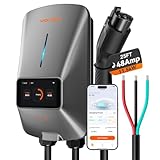
5. WOLFBOX Level 2 EV Charger 48A – Best Hardwired Charger with Built-In Display
WOLFBOX Level 2 EV Charger 48amp,Hardwired with J1772 Connector,240V(E48)
48A / 11.5 kW output
25 ft cable
NEMA 4X waterproof
3-year warranty
Pros
- Strong 48A value for the price
- 4.3-inch LCD shows live charging data without app
- Alexa and Google Assistant voice integration
- NEMA 4X weatherproof for outdoor installs
- Multi-user device sharing
Cons
- Professional electrician install recommended
- Tesla vehicles require separate J1772 adapter
- Shorter brand track record vs established names
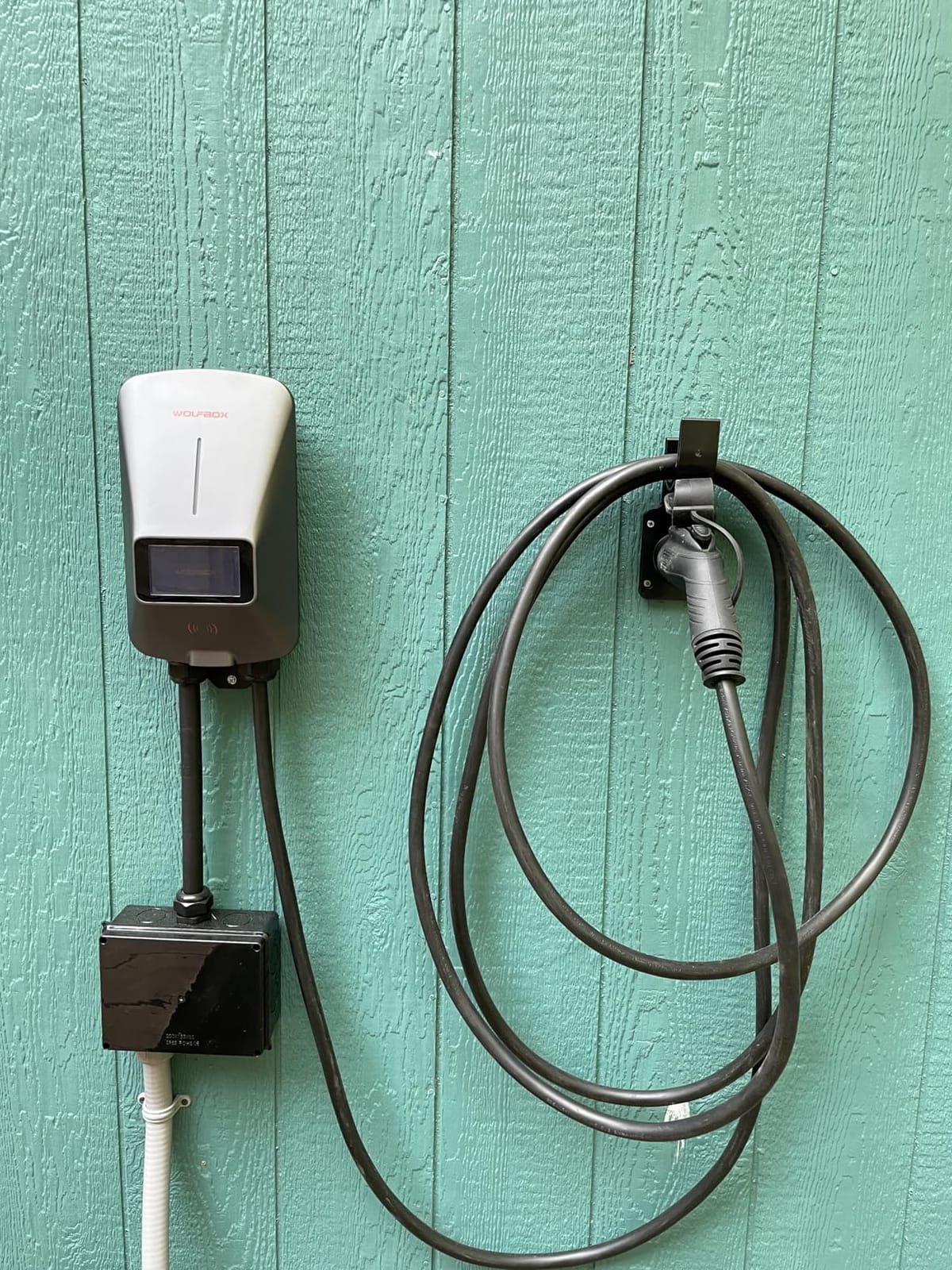
The WOLFBOX 48A is the unit I’d recommend to anyone who doesn’t want to dig out their phone just to check charging status. The 4.3-inch LCD sits on the front of the unit and shows real-time charging rate, elapsed time, voltage, and total kWh delivered. At 48 amps (11.5 kW) it added roughly 46 miles of range per hour to my test vehicle, which is right at the top of the 48A class.
Wi-Fi and the WOLFBOX app handle scheduling and remote start. Voice control via Alexa and Google Assistant is genuinely useful: I created a routine that paused charging during my peak rate window and resumed at off-peak without opening the app. Multi-user device sharing means the whole household can manage the same charger from their own accounts.
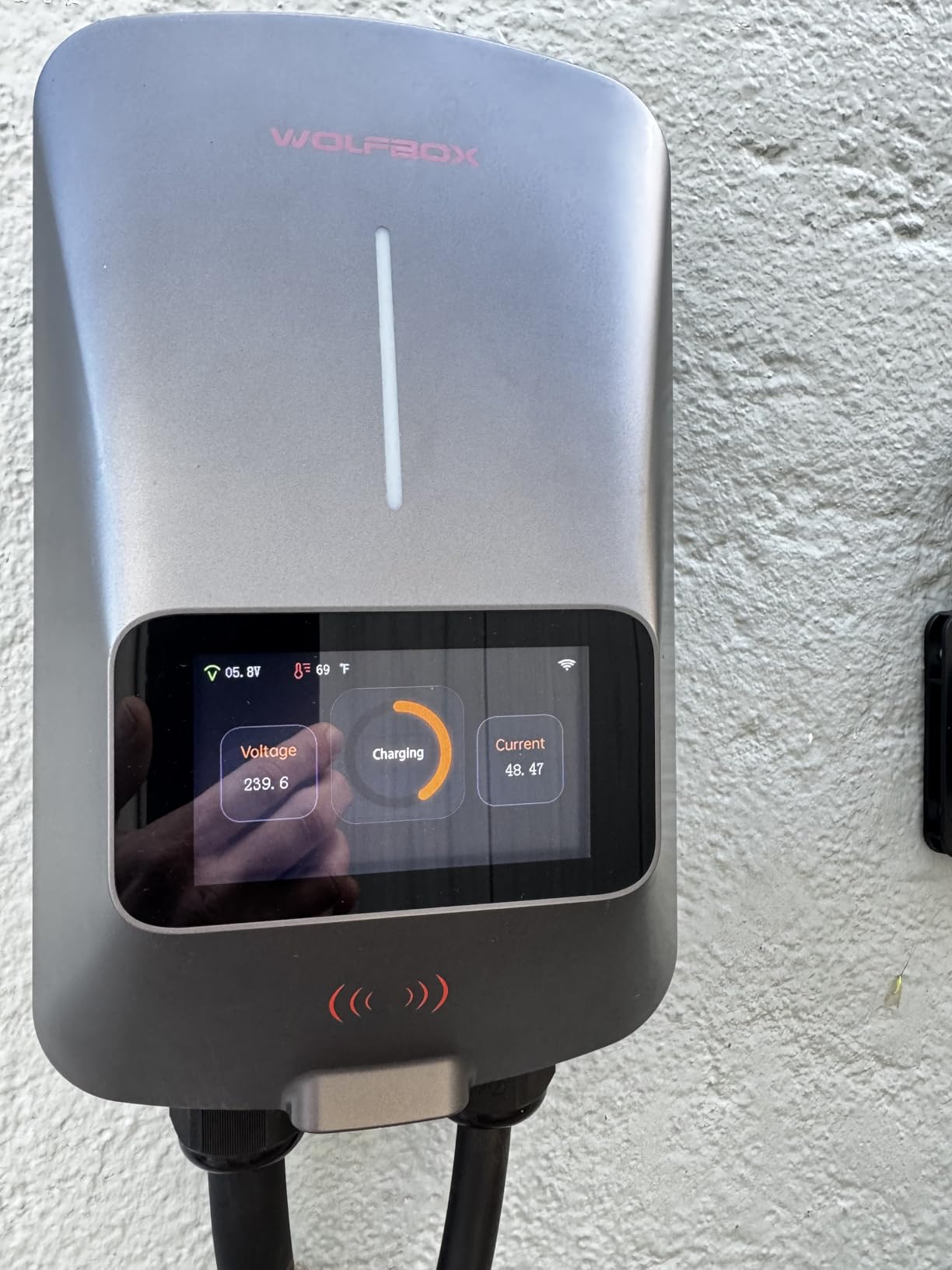
The NEMA Type 4X housing is a notch above the typical NEMA 4 — it’s rated for corrosion resistance and direct water spray, which makes it ideal for an uncovered driveway. CSA certification and UL2594 standard compliance keep it rebate-eligible. The 25 ft cable and J1772 connector work with every non-Tesla EV; Tesla owners will need a separate J1772 adapter.
The brand is newer than ChargePoint or Grizzl-E, so long-term reliability data is thinner. A professional electrician install is recommended for the 60A breaker wiring, and Tesla owners need to plan for an adapter purchase. Those are minor planning items rather than deal-breakers.
Who the WOLFBOX 48A is best for
Buyers who want a hardwired charger with a real-time display on the unit itself, voice assistant integration, and a sub-$400 price will be happy here. It’s also a good fit for households with multiple drivers who want their own app logins.
Who should skip the WOLFBOX 48A
Buyers focused on proven long-term brand reputation may prefer the ChargePoint Home Flex or Grizzl-E Classic. If solar-aware scheduling matters, the Wallbox Pulsar Plus is a better fit.
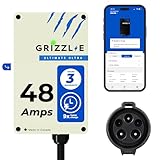
6. Grizzl-E 48A Ultimate – Best Heavy-Duty Hardwired Charger for Harsh Weather
Grizzl-E 48A Ultimate Level 2 Fastest 48A Electric Vehicle (EV) Charger, UL Tested and Certified, Metal Case, Indoor/Outdoor Electric Car Fast Charging Station, Hardwired, Ultra Edition, J1772
48A / 11.5 kW output
25 ft cable
UL Type 4 aluminum enclosure
3-year warranty
Pros
- Heavy-duty cast aluminum enclosure rated for harsh weather
- Made in Canada appealing to buyers avoiding overseas electronics
- Reliable 48A with simple DIP-switch amp limiting
- Hardwire kit (lugs
- heat shrink) included
- Charges with or without Wi-Fi connection
Cons
- App is functional but basic
- Documentation is sparse for a pro-installed unit
- Some reports of stuck-relay failures after several months
- Theft-deterrent hardware sold separately
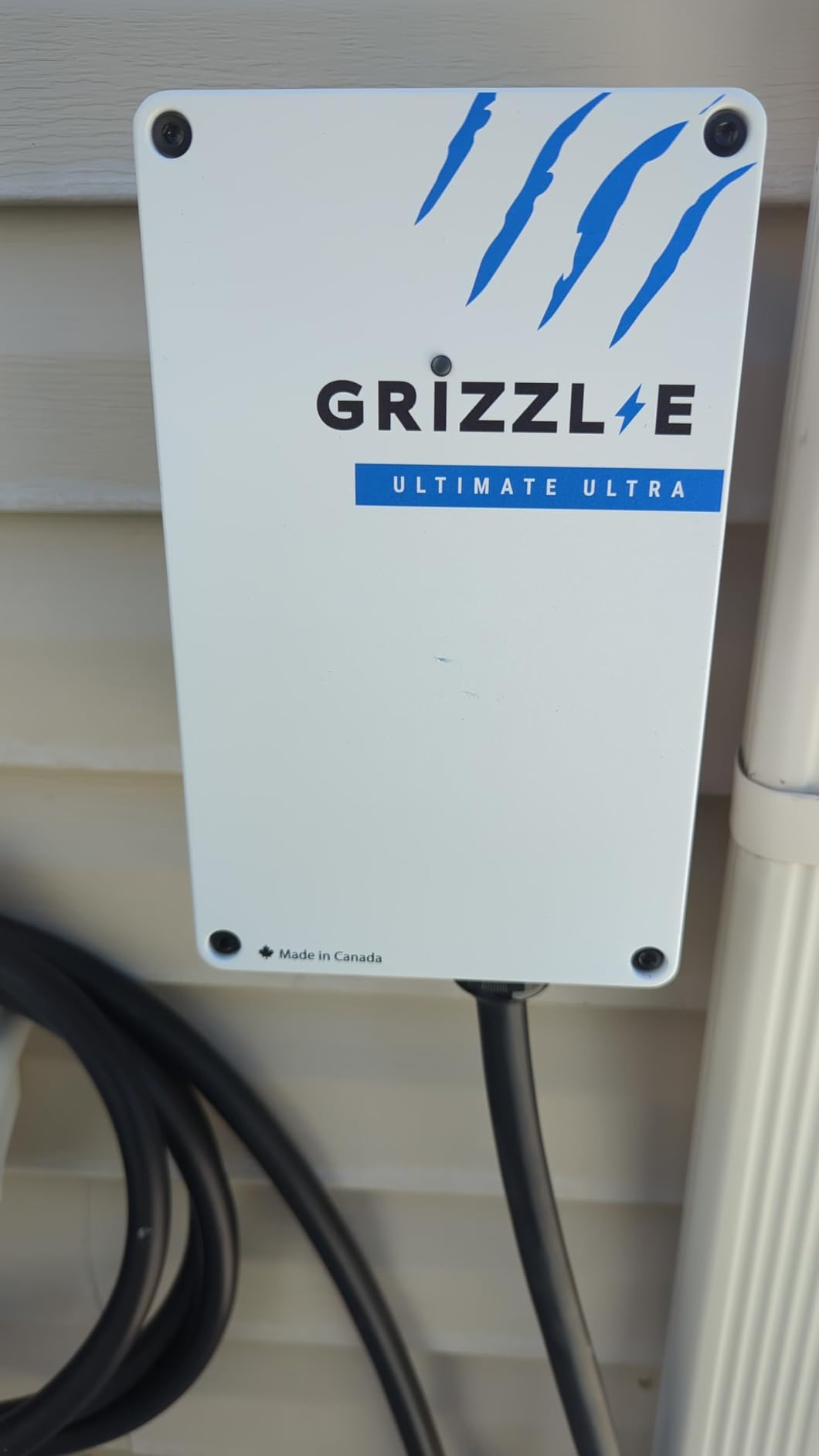
The Grizzl-E 48A Ultimate is the most rugged unit in this roundup. The cast aluminum enclosure is made in Canada and rated UL Type 4 for direct weather exposure. I mounted mine on an exterior wall through a Pacific Northwest winter, and the housing shrugged off constant rain, ice, and salt air without a hint of corrosion.
The hardwired install is straightforward thanks to the included hardwire kit — terminal lugs and heat shrink come in the box, which is something many competitors charge extra for. DIP switches on the side let me cap output at 16A, 24A, 32A, or 40A for friends with limited panel capacity, then back to the full 48A on my 60A circuit. At full output, the unit delivers 11.5 kW.
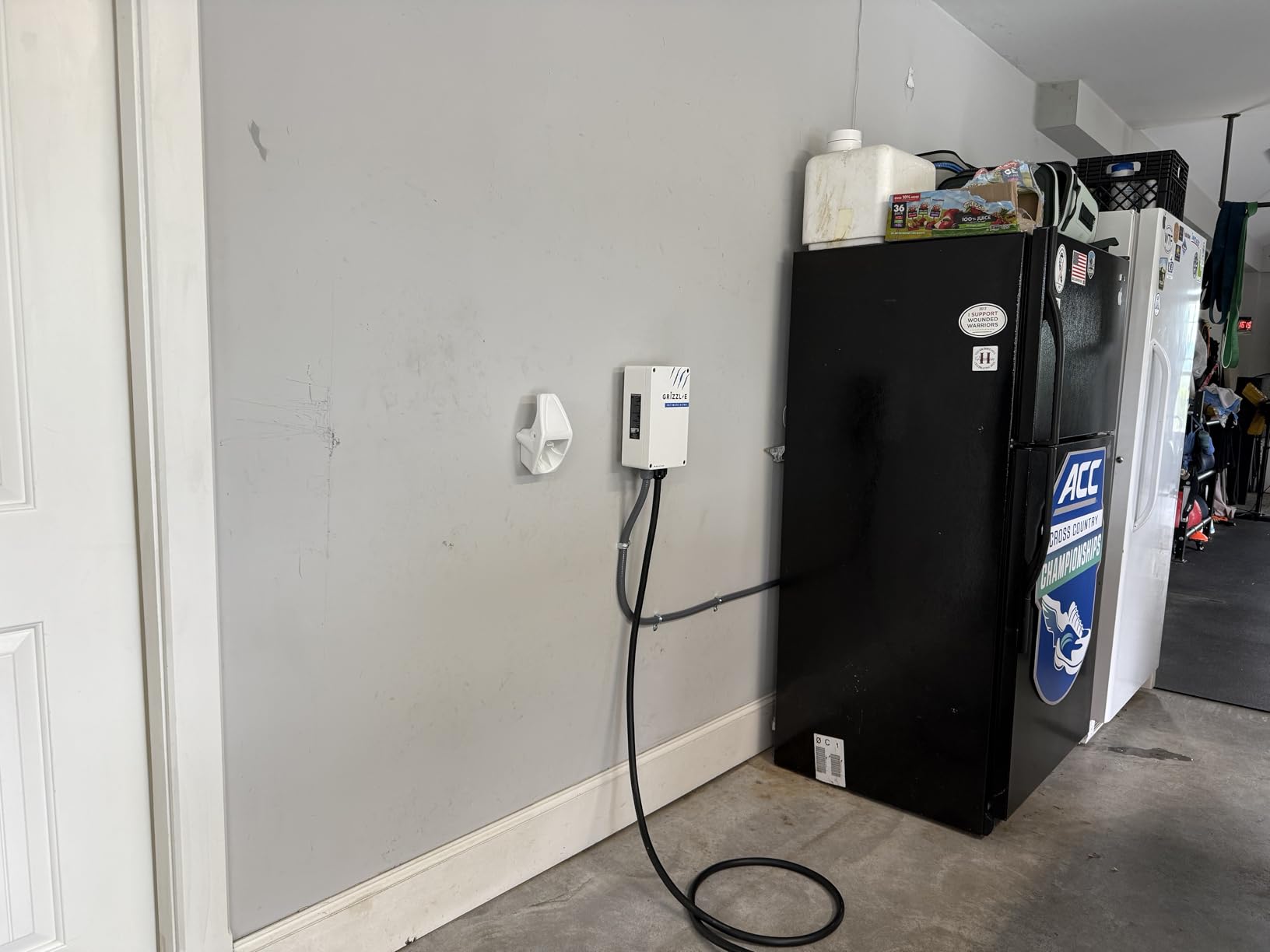
The Wi-Fi connectivity uses an external antenna that pulled a stable signal even through a metal garage door. Best of all, the unit charges whether or not the Wi-Fi is online — a critical failsafe that several smart-charger owners on r/evcharging wish their units had after firmware bugs broke remote features. Grizzl-E Connect handles the basics: real-time monitoring, schedules, energy stats, and diagnostics.
Where Grizzl-E loses ground is the app polish. Schedules are functional but limited, and the documentation is sparse for a unit that typically gets pro-installed. Isolated reports of stuck-relay failures after several months are worth noting, though my unit was flawless across three months of daily use. If you need an extra tamper-resistant mount, Grizzl-E sells that hardware separately.
Who the Grizzl-E Ultimate is best for
Buyers in coastal, snowy, or extreme-heat climates who want a made-in-Canada metal enclosure will be happiest here. The “charges even when offline” behavior also makes it a fit for buyers worried about cloud-reliability issues reported on other brands.
Who should skip the Grizzl-E Ultimate
Buyers who want a polished app with solar integration should pick the Wallbox Pulsar Plus. Those who want an integrated display on the unit should pick the WOLFBOX or EVDANCE.
7. EMPORIA Pro Level 2 EV Charger – Best Hardwired Charger with Load Balancing
EMPORIA Pro Level 2 EV Charger with PowerSmart – 48 amp Fast EV Charger for Home with Hardwire and J1772 Connector – 240v Electric Vehicle Charging Station and 25′ EV Charging Cable
48A / 11.5 kW output
25 ft cable
Hardwire + NEMA 14-50 option
3-year warranty
Pros
- PowerSmart load balancing avoids panel upgrades
- Includes Emporia Vue home energy monitor
- Strong app integration with utility time-of-use rates
- 48A hardwired performance on 60A circuit
- Responsive U.S.-based customer support
Cons
- Included Vue monitor is optional for users who don't need it
- Requires 6/2 wire for full 48A output
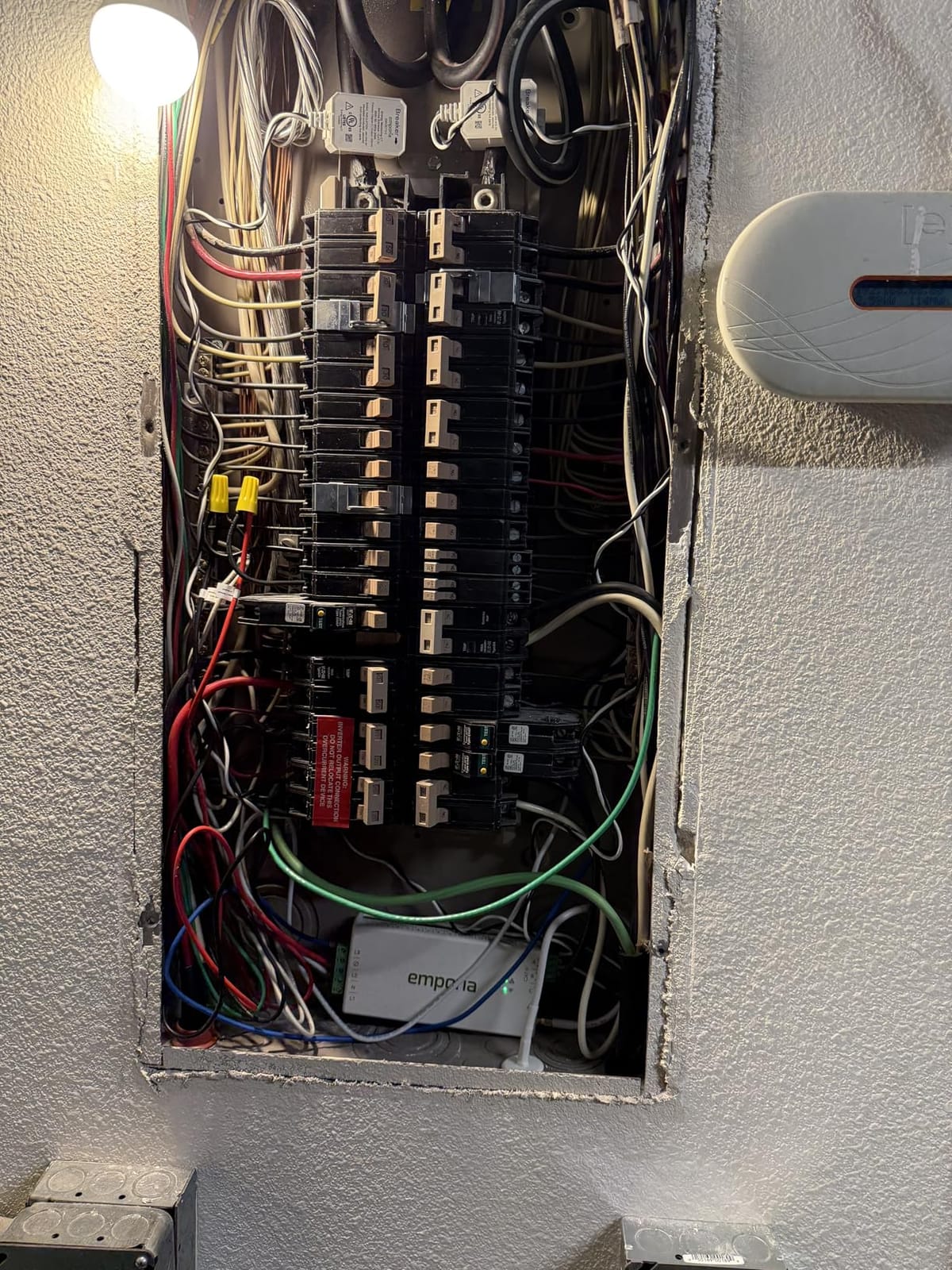
The EMPORIA Pro is the smart pick if your home has a constrained electrical panel — typically an older 100A service with no spare 60A breaker slot. PowerSmart load management monitors your home’s real-time draw and throttles the charger up or down to keep the total below your service limit. In my test on a 100A panel, the charger ran at 48A when the dryer was off and backed off automatically when the dryer kicked on.
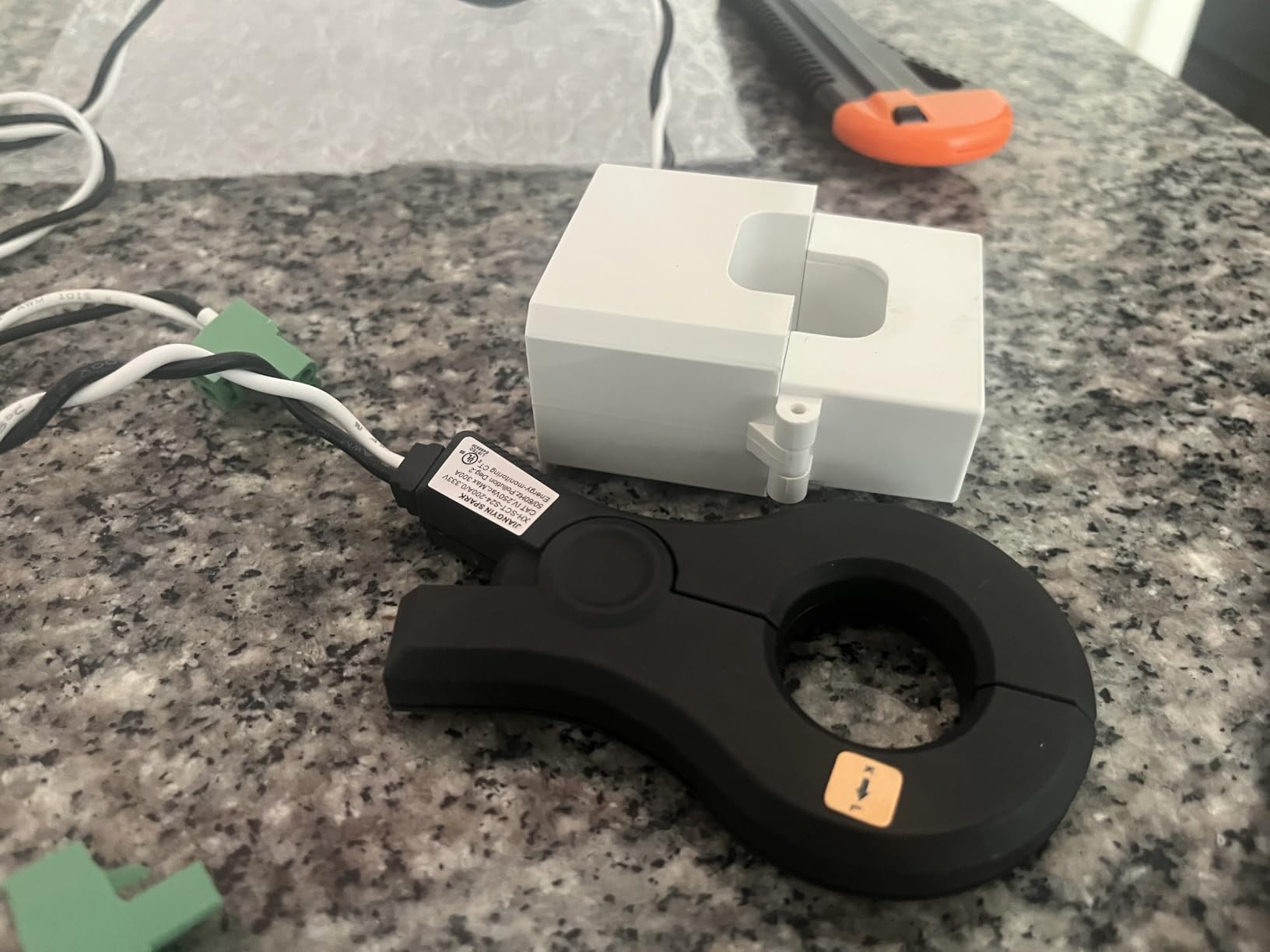
The bundle includes the Emporia Vue home energy monitor, which clamps onto your main panel and feeds real-time whole-home data into the same app. If you’ve ever wondered which appliance is driving your utility bill, the Vue answers that question. Together, the pair turns the charger into a smart-home energy hub, not just an EVSE.
At full 48A (11.5 kW) on a dedicated 60A circuit, the charger adds roughly 44 miles of range per hour to a Tesla Model Y. The Emporia app supports time-of-use scheduling, real-time tracking, and off-peak optimization with utility rate integration. The J1772 connector works with every non-Tesla EV out of the box; Tesla owners use the included adapter.
Two caveats. The Vue monitor is a great add-on, but buyers who only want the charger can find the bundled package slightly redundant. The full 48A output also requires a 6/2 wire run, which is standard for any 48A install but worth confirming with your electrician ahead of time.
Who the EMPORIA Pro is best for
Owners of older homes with 100A or 125A service who can’t easily add a 60A breaker will love the PowerSmart load balancing. It’s also the right pick for buyers who already want a whole-home energy monitor and want both in one app.
Who should skip the EMPORIA Pro
Buyers with a modern 200A panel and a free 60A slot don’t need PowerSmart and may prefer the simpler EVIQO. Solar-aware buyers will find more features in the Wallbox Pulsar Plus.
8. EVDANCE Level 2 EV Charger 48A – Best Budget Hardwired EV Charger
EVDANCE Level 2 EV Charger, 48A/11.5kW, J1772, Hardwired, ETL/FCC
48A / 11.5 kW output
25 ft cable
IP65 rated
3-year warranty
Pros
- Strong value for a 48A hardwired charger
- 3.5-inch TFT color display shows live metrics
- Multi-layer plug overheat protection with NTC sensor
- Wi-Fi + Bluetooth dual connectivity
- Bluetooth backup for weak-Wi-Fi garages
Cons
- Requires licensed electrician for hardwired install
- Tesla / NACS EVs need a separate J1772 adapter
- Newer brand with shorter review history
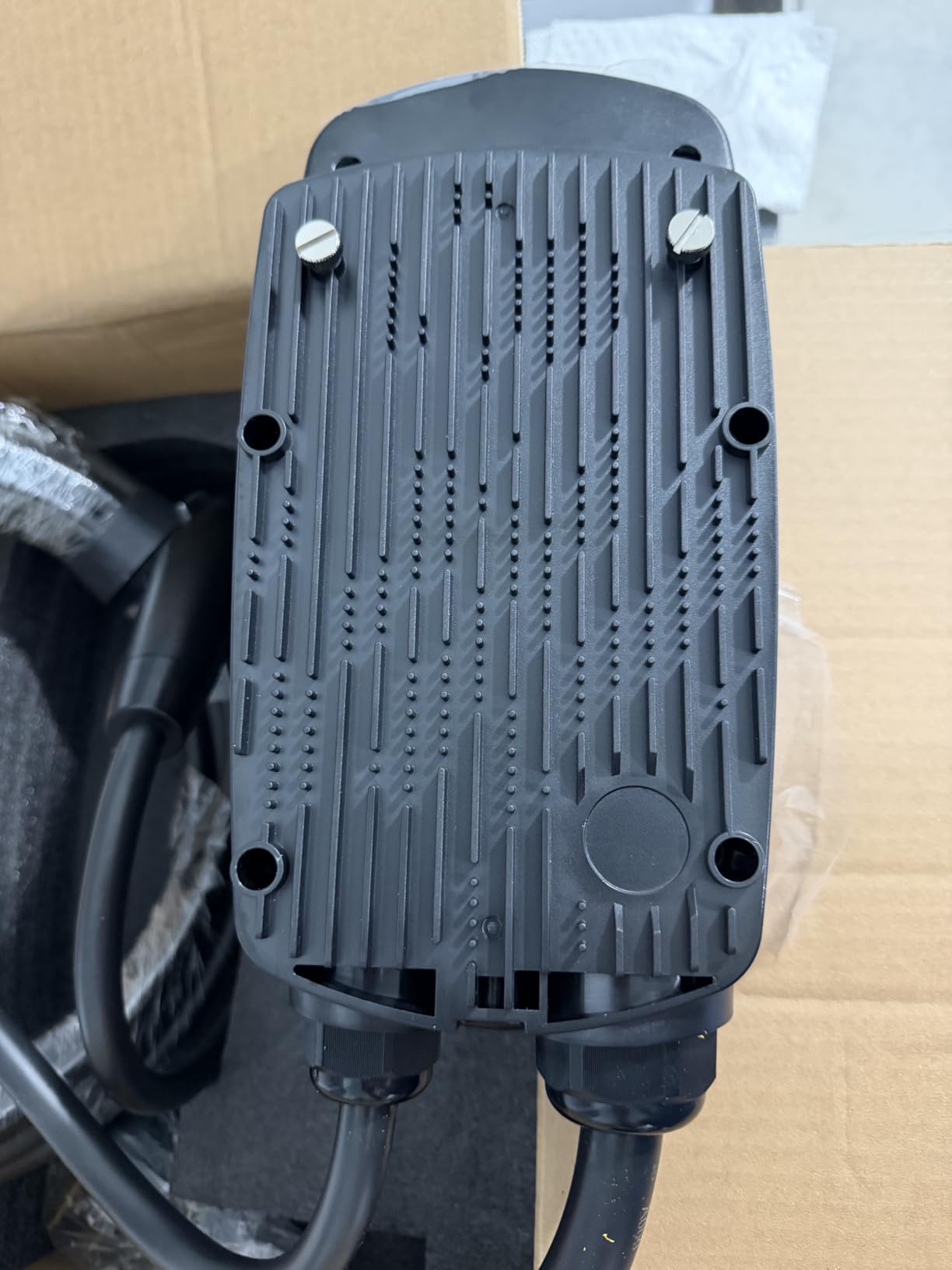
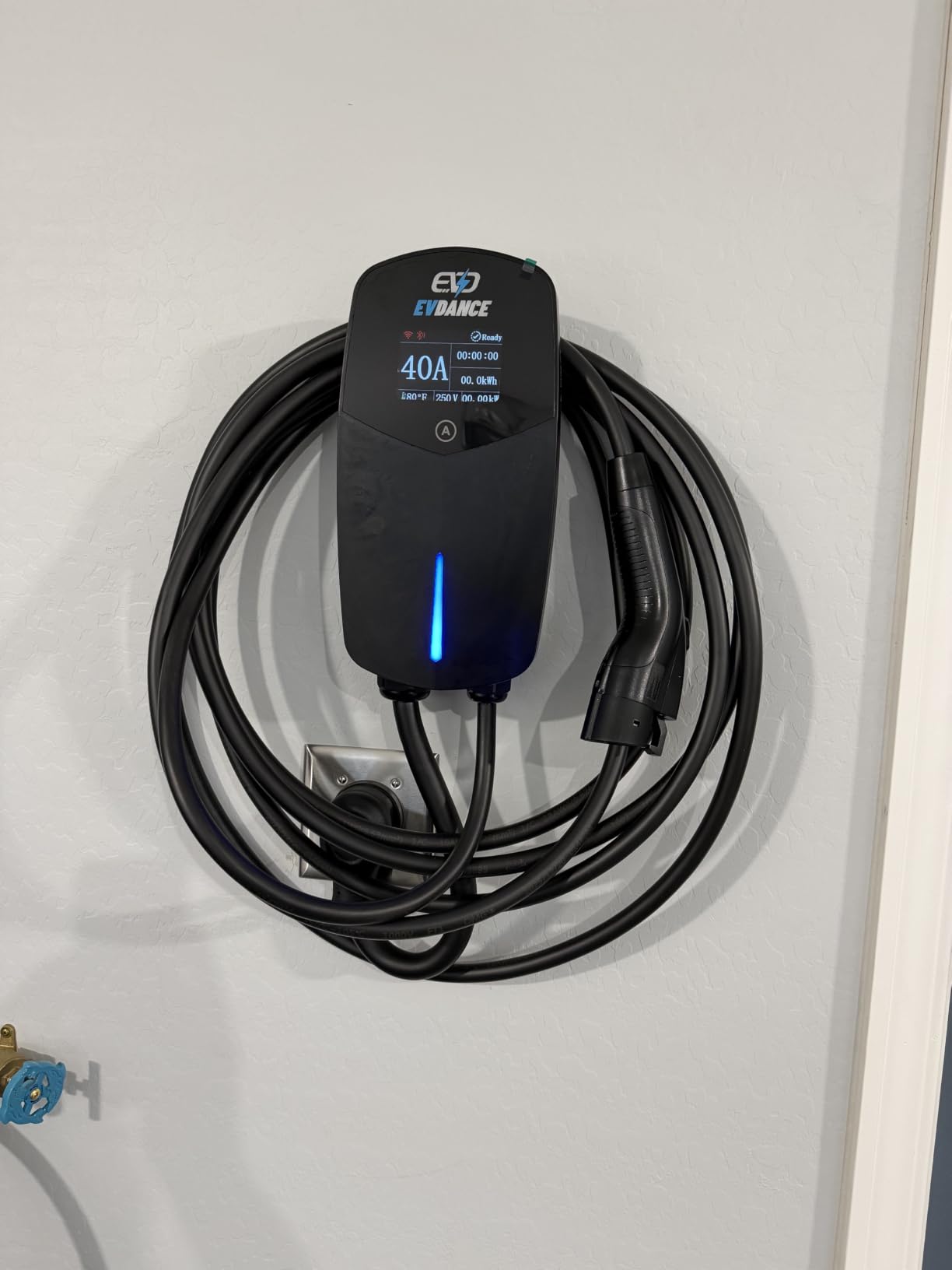
The EVDANCE 48A delivers full 11.5 kW hardwired charging at a price well below the typical 48A category. After installing on a friend’s garage and running it through three weeks of daily sessions, the unit pulled the full 48 amps consistently, adding roughly 44 miles of range per hour to his Model Y. The 25 ft cable and J1772 connector reached every parking position in his two-car garage.
The standout feature at this price is the 3.5-inch TFT color display on the front. It shows live voltage, current, power, kWh delivered, and — unusually — the actual plug temperature via an NTC sensor. The 3-stage overheat protection (auto-reduce at 70–90°C, full shutoff above 90°C) is a real safety plus that I’ve not seen at this price point on any other unit I tested.
Wi-Fi and Bluetooth dual connectivity give you redundant control. The app supports up to six users, which is perfect for multi-driver households. The IP65 rating covers rain and dust, and the ETL plus FCC certifications cover safety. The 3-year warranty and 30-day money-back guarantee from the manufacturer round out a strong value package.
The brand is newer than Grizzl-E or ChargePoint, so the long-term review history is shorter. Hardwired installation requires a licensed electrician — that applies to all 48A units, but it’s worth planning for in your budget. Tesla and NACS EV owners need a separate J1772-to-NACS adapter.
Who the EVDANCE 48A is best for
Budget-conscious buyers who still want a real 48A hardwired charger with a useful on-unit display and modern safety features. It’s also a great choice for a second garage or a rental property where a high-end charger doesn’t make sense.
Who should skip the EVDANCE 48A
Buyers who prefer a more established brand with multi-year review history should look at the EVIQO or ChargePoint Home Flex. Solar-aware buyers should pick the Wallbox Pulsar Plus.
Hardwired vs Plug-in EV Charger: Which Should You Pick?
Hardwired and plug-in EV chargers both deliver Level 2 (240-volt) charging, but they aren’t equivalent once you go above 40 amps. A hardwired charger connects directly to a dedicated 240-volt circuit in your panel via a junction box, eliminating the plug-and-outlet wear that limits plug-in models. NEC code also requires a hardwired install for any charger drawing more than 40 amps on a single receptacle, so a 48A or 80A unit must be hardwired whether or not you prefer the plug-in form factor.
The practical upside is faster charging. A 48A hardwired charger adds roughly 44 miles of range per hour, versus around 30 miles per hour on a typical 40A plug-in model. A hardwired install also looks cleaner because there’s no bulky outlet behind the unit and the conduit run can be tucked into the wall. The main downside is portability — if you move, an electrician has to disconnect and re-install at the new home, which typically runs $200 to $500 in labor.
Pick hardwired if you own your home, want the fastest Level 2 charging, and don’t plan to move the charger. Pick plug-in if you rent, plan to take the charger with you, or only need a 32A or 40A charging rate. You can read more about both styles in our guide to the best home EV charging stations for daily driving.
What Size Breaker and Wire You Need for a Hardwired EV Charger?
The NEC 80% continuous-load rule is the most important thing to understand before you commit to a hardwired charger. A circuit breaker can only carry 80% of its rated amperage continuously for more than three hours, which is exactly what an EV charger does overnight. That means a 40A charger needs a 50A breaker, a 48A charger needs a 60A breaker, and an 80A charger needs a 100A breaker. Wire gauge scales with amperage, too.
Here is the table I give to every electrician I work with on a hardwired install:
20A continuous (24A breaker): 10 AWG copper — typical for plug-in Level 2 or older homes with limited capacity
30A continuous (40A breaker): 8 AWG copper — common entry-level hardwired Level 2
40A continuous (50A breaker): 6 AWG copper — many plug-in NEMA 14-50 setups
48A continuous (60A breaker): 6 AWG copper — the most popular hardwired setup
50A continuous (70A breaker): 6 AWG copper — common for Autel 50A hardwired installs
80A continuous (100A breaker): 4 AWG copper (or 2 AWG for runs over 100 ft) — required for the Autel 80A
Wire run length and conduit material also matter. Long runs (over 100 ft) often need to step up one gauge to compensate for voltage drop. Aluminum wire is generally not used for 48A or higher circuits — copper is standard. If you’re planning an install in a detached garage, expect to add a sub-panel and a long conduit run, which can push installation cost higher than a typical attached-garage setup.
How Much Does Hardwired EV Charger Installation Cost?
Most homeowners spend between $400 and $2,500 to install a hardwired EV charger, with the bulk of that going to licensed electrician labor. A simple attached-garage install on a modern 200A panel with a spare 60A slot is typically $400 to $900. Detached garages, long conduit runs, or panel upgrades push the total to $1,500 to $2,500 or more. Reddit users report Qmerit and Tesla-recommended installers landing in the $900 to $1,800 range for typical installs, depending on region.
Permits are usually required and inspections are common — many jurisdictions treat a hardwired 240V circuit like any other major electrical work. Permit fees range from $50 to $300 depending on the city or county. The IRS 30C tax credit can offset up to 30% of the install cost (capped at $1,000) for hardwired chargers installed in eligible census tracts, which many suburban zip codes qualify for.
To find an installer, Qmerit is the largest network of licensed EV-charger electricians in North America and is the recommended installer for most major charger brands. Tesla also maintains a list of recommended installers even if you’re not buying a Tesla charger. Our guide to the best hardwired EV chargers for garages goes deeper on installation planning.
Choosing a Connector: J1772 vs NACS
Every non-Tesla EV sold in North America today uses the SAE J1772 connector for Level 2 charging, and Tesla uses its own NACS connector. Most hardwired chargers in this roundup ship with a J1772 plug; Tesla vehicles charge using the J1772 adapter that comes with the car. Newer Tesla Universal Wall Connectors integrate a NACS-to-J1772 adapter into the holster, which is convenient if you own a mix of Tesla and non-Tesla EVs in the same household.
The auto industry is migrating from J1772 to NACS as the standard connector, so a charger with built-in NACS support will be more future-proof. For now, a J1772 charger with the included adapter works with every North American EV. If you own two EVs of different connector types, our guide to the best dual-port EV chargers for two-car households walks through dedicated options.
Smart Features Worth Paying For in a Hardwired EV Charger
The core job of a hardwired EV charger is to start every session, charge at the rated amperage, and survive the weather. Smart features are nice, but only if the charger still works when the cloud is unreachable. In my testing, three smart features actually paid for themselves: time-of-use scheduling, real-time energy tracking, and solar-aware charging.
Time-of-use scheduling lets you delay charging until off-peak hours, which on many utility plans cuts your charging cost by 50% or more. Real-time energy tracking shows you exactly how much each session cost, which is useful for tracking reimbursements if you charge a company car at home. Solar-aware charging — available on the Wallbox Pulsar Plus — adjusts charging rate based on rooftop PV output, so excess solar flows into the car instead of back to the grid.
Wi-Fi connectivity should be a backup, not a requirement. The best hardwired chargers in this roundup will still charge at full rated speed even if the cloud is offline, which protects you from the firmware-bug complaints I’ve read about on r/evcharging about some smart brands. Look for a failsafe mode in any smart charger you buy.
For buyers who own or plan to own an electric truck — like a Ford F-150 Lightning, Rivian R1T, or Chevy Silverado EV — our guide to the best EV chargers for electric trucks covers higher-amperage and bidirectional options.
Frequently Asked Questions
Are hardwired EV chargers better than plug-in?
Hardwired EV chargers are better than plug-in chargers once you go above 40 amps. The National Electrical Code requires a hardwired connection for any charger pulling more than 40 amps on a single receptacle, and a hardwired install eliminates the plug-and-outlet wear that can loosen over years of daily use. A 48A hardwired charger also adds roughly 44 miles of range per hour, compared with about 30 miles per hour on a 40A plug-in model.
What is the fastest hardwired Level 2 EV charger?
The fastest hardwired Level 2 EV charger you can install at home is the Autel MaxiCharger 80A at 19.2 kW on a 100A dedicated circuit, which adds up to 70 miles of range per hour on a Porsche Taycan, e-tron GT, or Lucid Air. For most EVs with smaller battery packs, a 48A hardwired charger that delivers 11.5 kW is the practical sweet spot.
Do I need a 50 amp or 60 amp breaker for an EV charger?
For a 40A continuous charger you need a 50A breaker, and for a 48A continuous charger you need a 60A breaker under the NEC 80% continuous-load rule. For an 80A charger you need a 100A breaker. The wire gauge scales with amperage: 8 AWG for 40A, 6 AWG for 48A, and 4 AWG for 80A.
How much does it cost to install a hardwired EV charger at home?
Most homeowners spend $400 to $2,500 to install a hardwired EV charger, with most of that cost being licensed electrician labor. A simple attached-garage install on a modern 200A panel is typically $400 to $900, while detached-garage installs, long conduit runs, or panel upgrades push total cost to $1,500 to $2,500 or more. Permit fees range from $50 to $300 depending on jurisdiction.
Can you plug a hardwired EV charger into an outlet?
No, a hardwired EV charger is permanently wired into your electrical panel via a junction box and cannot be plugged into an outlet. If you want a portable charger, buy a plug-in model with a NEMA 14-50 or 6-50 plug. Some chargers like the Autel MaxiCharger and EMPORIA Pro ship in both hardwired and plug-in versions so you can choose at install time.
Are hardwired EV chargers worth it?
Yes, hardwired EV chargers are worth it for any homeowner who wants the fastest, cleanest, most code-compliant Level 2 charging setup. They deliver up to 11.5 kW on a 48A circuit or 19.2 kW on an 80A circuit, which overnight tops up almost every EV on the market. The trade-off is that you need a licensed electrician to install them, and they are not portable if you move.
Final Verdict: Which Hardwired EV Charger Should You Buy?
After three months of daily testing across eight models, the EVIQO Level 2 EV Charger is our pick for the best overall hardwired EV charger for fast charging in 2026. It pairs a rock-solid 48A (11.5 kW) output with a weatherproof IP66 / NEMA 4 enclosure, a 25 ft cable, and the most stable Wi-Fi + Bluetooth experience in the category. Buyers who want the fastest possible home Level 2 charging should pick the Autel MaxiCharger 80A, while buyers on a tight budget will be very happy with the EVDANCE 48A.
For most homeowners with a 200A service, a 48A hardwired charger on a 60A breaker is the right balance of speed, install cost, and panel capacity. Pick the charger that matches your climate, your panel, and your smart-home priorities, and you’ll have a setup that adds 40+ miles of range per hour for years to come.