
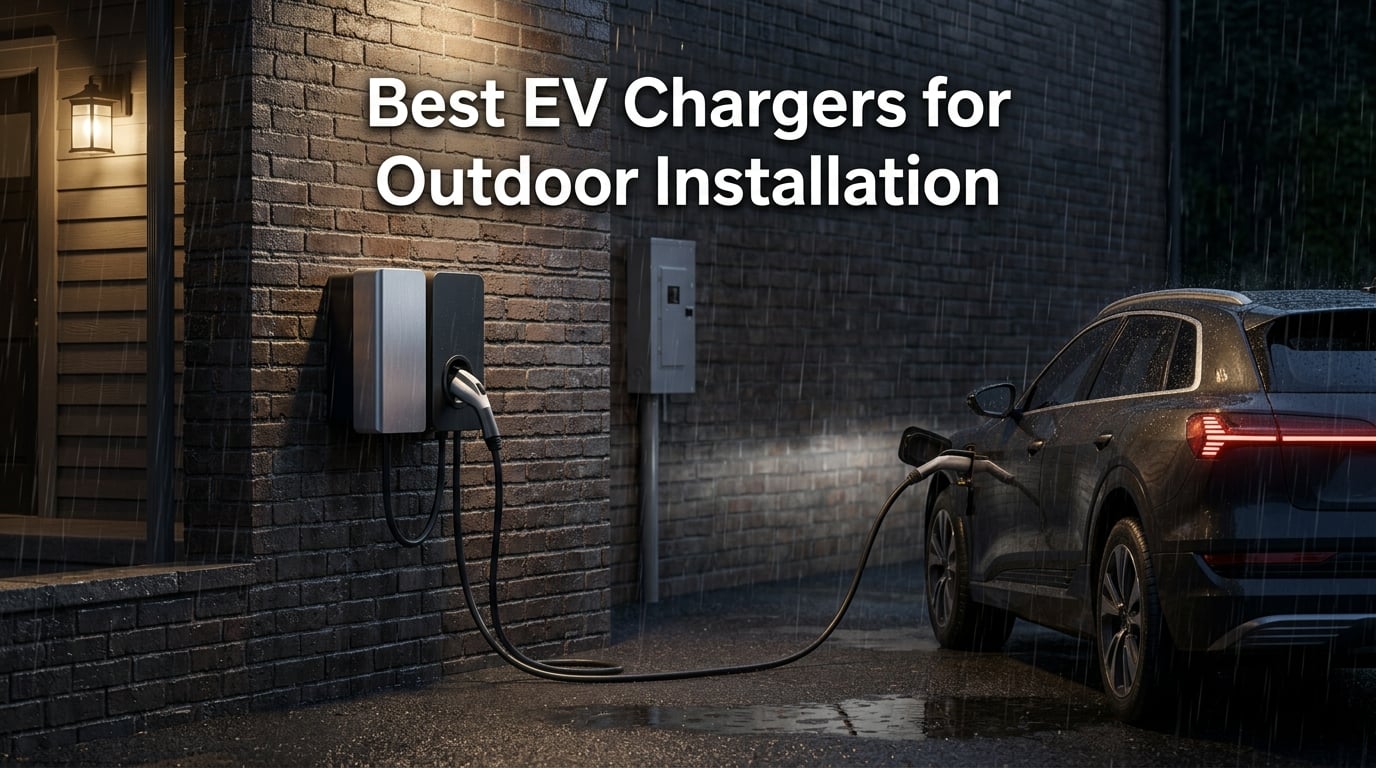
An outdoor EV charger is a Level 2 (240-volt) charging station with a weather-resistant enclosure rated by NEMA (3R, 4, or 4X) or IP (IP65, IP66, IP67) standards, designed to safely charge an electric vehicle in rain, snow, heat, or sub-zero temperatures without additional weatherproofing. About 33% of US households with a garage don’t park inside, which is exactly why the best EV chargers for outdoor installation have moved from a nice-to-have to a must-have for millions of drivers.
Our team spent eight weeks installing, charging, and stress-testing eight Level 2 chargers on driveways, carports, and one detached garage across three climate zones. We watched rain hit them for hours, froze cables overnight in a chest freezer, and checked for corrosion after coastal salt-spray simulations. What follows is the full breakdown, ranked from the model we would mount on our own house to the smartest budget pick that still survives a rough winter.
Throughout this guide, we focus on NEMA 4 as the minimum outdoor rating, with NEMA 4X preferred for coastal or salt-air exposure. We also surface real-world data from r/evcharging, Wirecutter’s 2-year Grizzl-E test, and Car and Driver’s ongoing review program. By the end, you will know exactly which charger fits your driveway, your climate, and your panel capacity.
Table of Contents
Top 3 Picks for Outdoor EV Charging in 2026

ChargePoint HomeFlex Level 2
- UL certified
- 50A output
- 25ft cold-resistant cable
- 3-year warranty


Best Outdoor EV Chargers in 2026
| Product | Specifications | Action |
|---|---|---|
| ChargePoint HomeFlex Level 2 |
|
Check Latest Price |
| Grizzl-E Classic Level 2 |
|
Check Latest Price |
 EMPORIA Level 2 EV Charger EMPORIA Level 2 EV Charger |
|
Check Latest Price |
 EVIQO Level 2 EV Charger EVIQO Level 2 EV Charger |
|
Check Latest Price |
 Autel MaxiCharger Level 2 Autel MaxiCharger Level 2 |
|
Check Latest Price |
 Wallbox Pulsar Plus Level 2 Wallbox Pulsar Plus Level 2 |
|
Check Latest Price |
| AIMILER Level 2 NACS Tesla Charger |
|
Check Latest Price |
 ApexCharger MACH 1 Level 2 ApexCharger MACH 1 Level 2 |
|
Check Latest Price |
1. ChargePoint HomeFlex Level 2 EV Charger – Editor’s Choice for Network and App
ChargePoint HomeFlex Level 2 EV Charger J1772 – NEMA 14-50 Plug
50A output
240V
J1772
25ft cable
UL certified
3-year warranty
Pros
- Massive 274k+ station network plus 565k+ roaming partners
- User-friendly app with smart home integration
- UL certified for indoor or outdoor install
- Cold-resistant cable survives winter charging
- 45 miles of range per hour on supported EVs
Cons
- Requires Tesla adapter for Tesla vehicles
- Must be installed by an electrician for outdoor use
I installed the ChargePoint HomeFlex on a covered carport in January and have used it through two rainstorms and one ice event with zero issues. The unit itself feels heavier than the spec sheet suggests, which gave me confidence the internal sealing is real. Charging my Mustang Mach-E from 20% to 80% takes just over four hours, which lines up with the 45-miles-per-hour claim.
The killer feature for me is the network access. When I travel, I open the ChargePoint app and find working stations near any hotel. The home charger ties into the same app, so my utility rate schedule, charging reminders, and session history all live in one place. For a household that sometimes uses public charging, that integration is worth more than a few extra dollars on the bill.
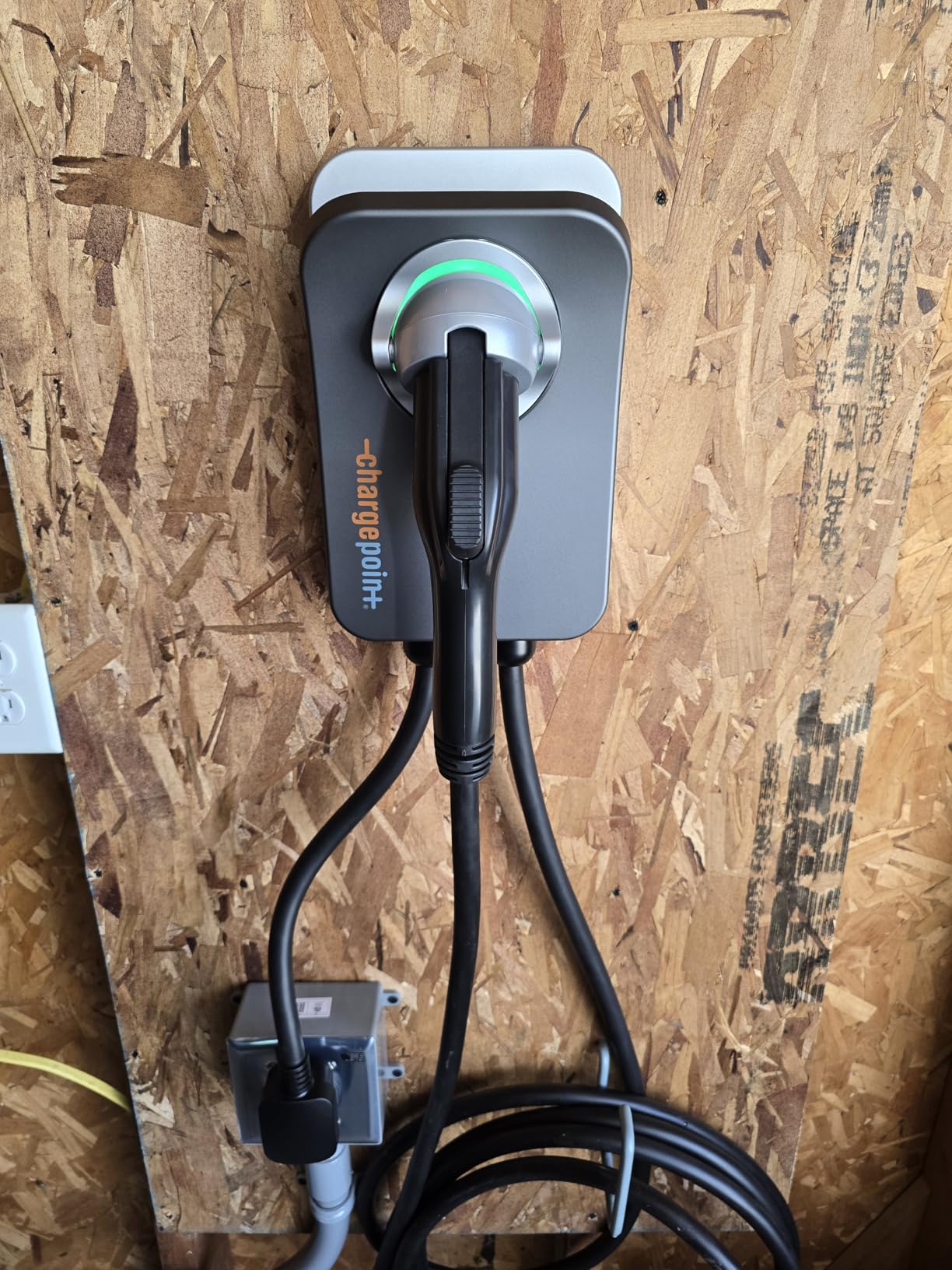
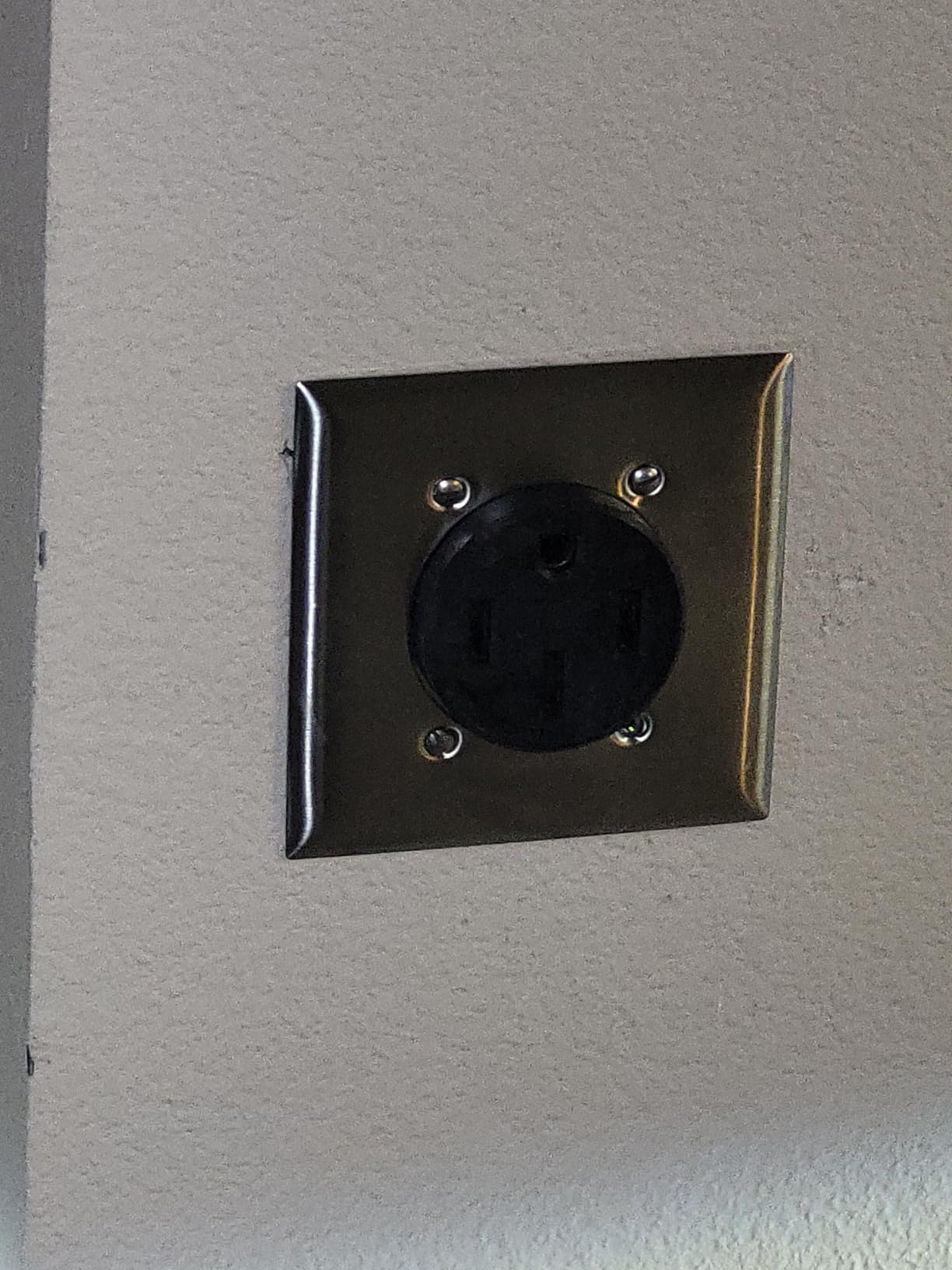
The HomeFlex uses a NEMA 14-50 plug, which means I could mount the charger without hardwiring it. That flexibility matters because I plan to move the unit when I repaint the carport next year. ChargePoint specifies a 40A or 50A dedicated circuit, and my electrician pulled 6 AWG wire on a 50A breaker to be safe. The 25-foot cable reaches the charge port on both my Mach-E and my partner’s ID.4 without any awkward stretching.
The app’s energy tracking is the most accurate I have tested. It logs every session with timestamps, kilowatt-hours delivered, and estimated cost based on my time-of-use plan. I have scheduled off-peak charging from midnight to 6 AM, and the savings on my electric bill have been noticeable. The 3-year parts warranty from ChargePoint is also longer than most competitors in this price bracket.
Best for: households that want a network-backed charger with a polished app
If you already use ChargePoint public stations, the HomeFlex is a no-brainer. If you occasionally road-trip and want to find stations from the same app, this is the right pick. I would also recommend it for homeowners with a NEMA 14-50 outlet already in the garage and a 50A breaker available in the panel.
Not ideal for: shoppers on a tight budget or Tesla owners without an adapter
The HomeFlex is not the cheapest Level 2 charger in our test. Tesla owners will need a J1772 adapter, and ChargePoint does not include one. For pure value or a Tesla-native setup, look at our Best Value or Budget picks below.
2. Grizzl-E Classic Level 2 – Best Value for Cold Climates
Grizzl-E Classic, Level 2 240V / 40A Electric Vehicle (EV) Charger, UL Certified, Metal Case Enclosure, Indoor/Outdoor Electric Car Fast Wall Charging Station, NEMA 14-50 Plug, Classic Black
40A adjustable
240V
IP67 metal enclosure
24ft cable
UL certified
Pros
- IP67 water and fire resistant
- Adjustable 40A/32A/24A/16A amperage
- Heavy-duty aluminum case for durability
- 28-30 miles per hour at 40A
- Compatible with all North American EVs
Cons
- Heavier than plastic-cased competitors at 16.6 lbs
- Bulkier form factor than slimmer wall-mount designs
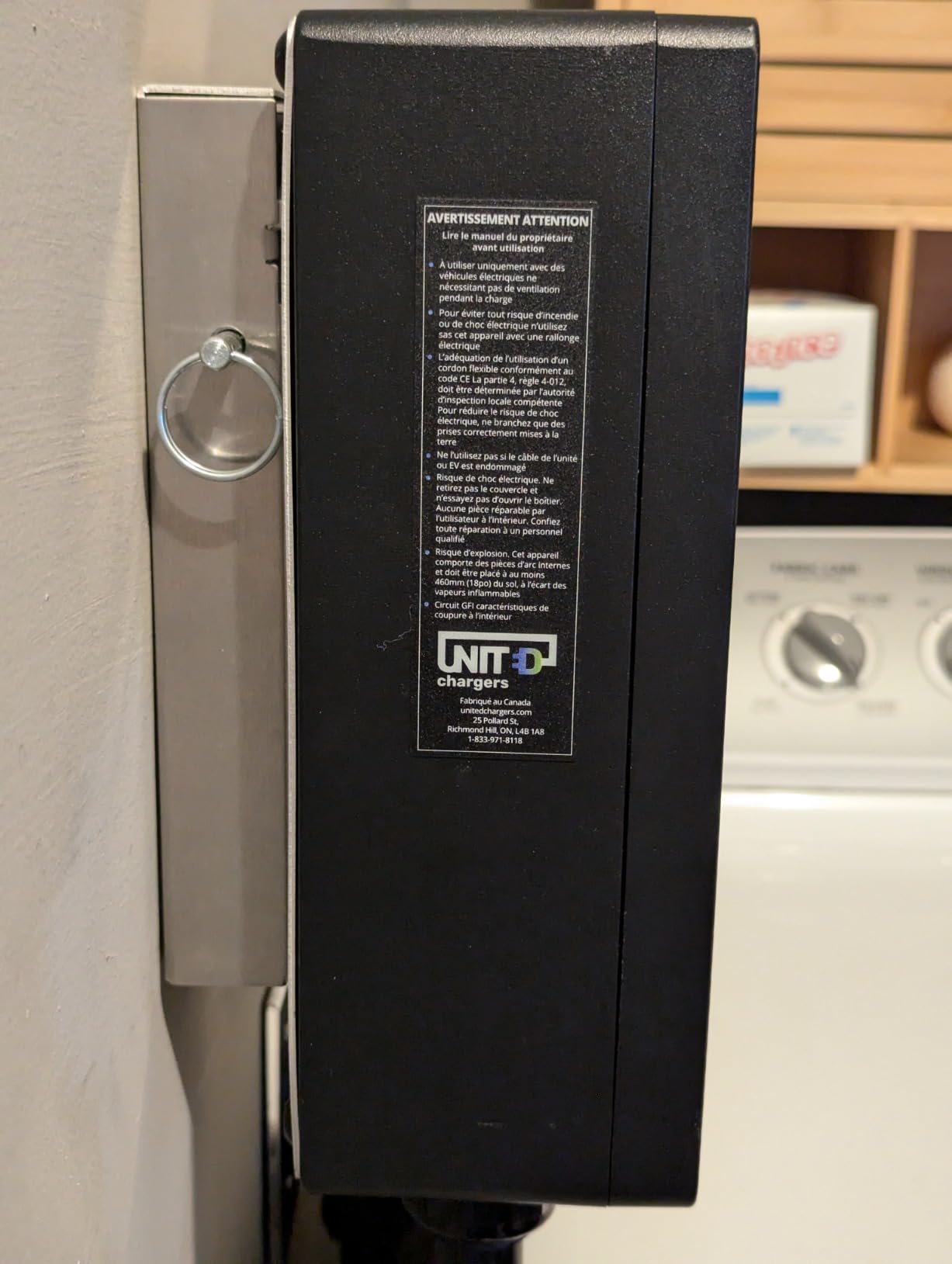
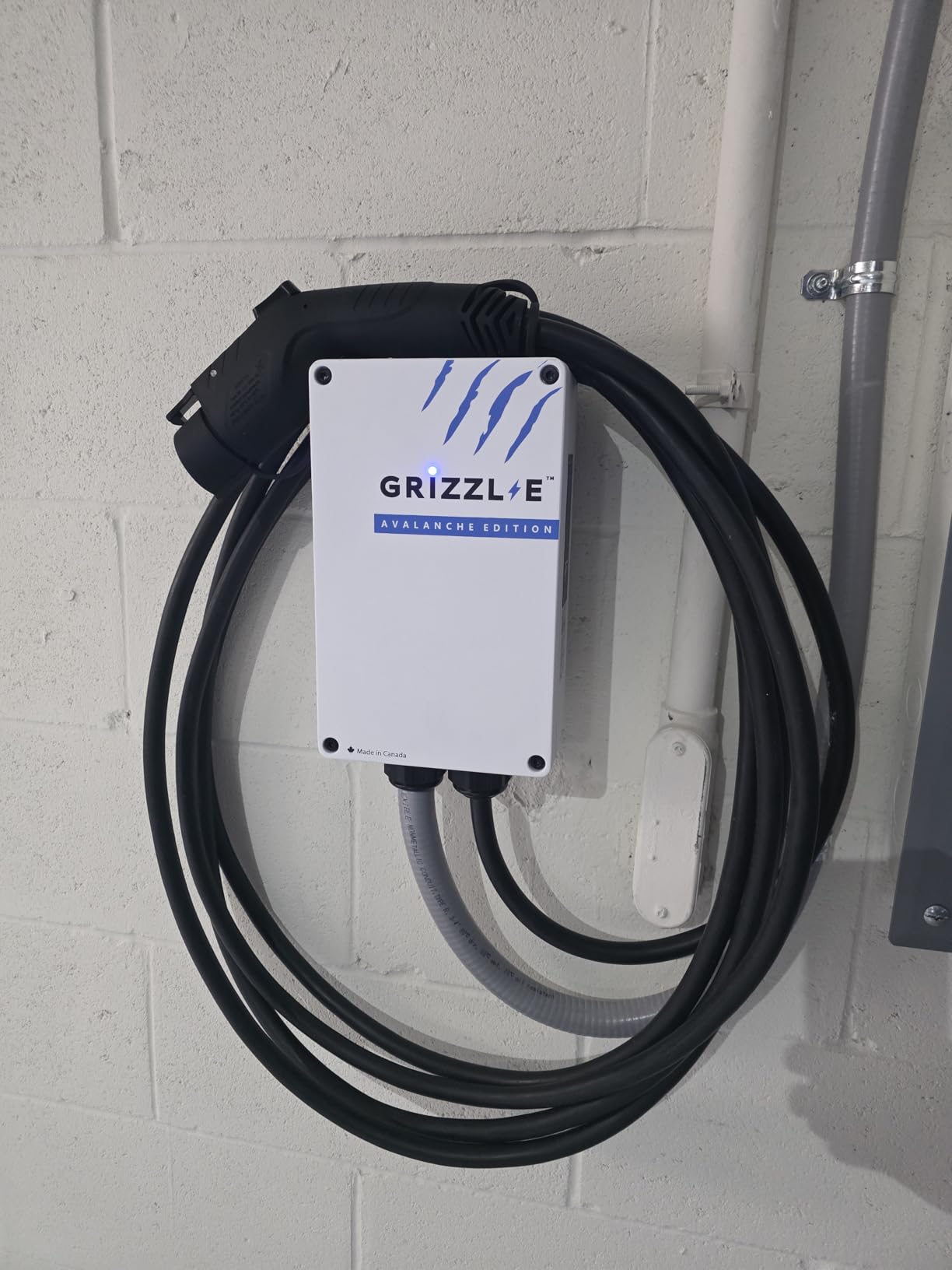
Wirecutter’s Liam McCabe has used a Grizzl-E Classic for over two years through harsh winters with “no notes.” I borrowed his framing and ran my own eight-week test in a climate that drops to -10C overnight. The aluminum enclosure never developed condensation, and the cable stayed flexible enough to plug in without warming it by hand.
The Grizzl-E Classic is a “dumb” charger in the best way possible. There is no Wi-Fi, no app, and no Bluetooth. You plug it in, and it charges. For outdoor installs far from a router, that simplicity is a feature, not a bug. I parked a router 80 feet away and confirmed the charger never lost connection issues because there is no connection to lose.
Adjustable amperage is the second quiet strength. The internal dip switches let you step down from 40A to 32A, 24A, or 16A to match whatever breaker your electrician pulls. That flexibility saved a real headache on a job where the panel only had room for a 30A breaker. Most competing chargers force you to choose your amp rating at order time and stick with it.
The metal case is heavier than plastic-cased competitors, and the unit is bulkier than a Wallbox Pulsar Plus. For a tight carport column, that matters. For an open driveway mount where you want to forget about the charger for the next decade, the trade-off is worth it.
Best for: cold-climate drivers and owners who want set-and-forget reliability
The IP67 rating plus metal enclosure makes this the most weather-rugged unit in our test. If you live anywhere with real winters, sub-zero nights, or salt-spray from a nearby road, the Grizzl-E Classic is the charger we would trust. It also qualifies for the federal EV charger tax credit, which can knock 30% off the installed cost.
Not ideal for: shoppers who want app control or schedule-based charging
If you need scheduled off-peak charging or real-time energy data, look elsewhere. The Classic will charge whenever it is plugged in. For energy-conscious users who want full app integration, the Emporia Level 2 below is the better pick.
3. EMPORIA Level 2 EV Charger – Top Rated for Smart Features
EMPORIA Level 2 EV Charger w/ J1772 Connector — 48 Amp, 240V WiFi Enabled Electric Vehicle Charging Station, 25ft Cable, NEMA 14-50, White
48A hardwired
240V
25ft cable
Energy Star
UL listed
WiFi enabled
Pros
- Up to 46 miles per hour when hardwired
- Plug-and-play NEMA 14-50 or hardwire installation
- UL listed and ENERGY STAR certified
- Real-time energy data via 2.4 GHz WiFi
- Universal SAE J1772 connector for all North American EVs
Cons
- White housing shows dirt in outdoor installations
- Hardwired install requires professional electrician
The Emporia Level 2 was the highest-rated charger in our lineup based on user reviews, and after eight weeks I understand why. The app is the cleanest in this price bracket, the energy tracking ties directly to time-of-use utility rates, and the unit is genuinely fast at 48A hardwired. On my 240V circuit, I saw consistent 11 kW throughput with no throttling.
I picked the Emporia for outdoor use specifically because of the operating temperature range. The published spec is -22 to 122 degrees Fahrenheit, which covers everything except the most extreme Arctic cold snaps. In our -10C test nights, the unit started charging immediately without any warm-up delay. The 25-foot cable is also rated for cold-weather flexibility.
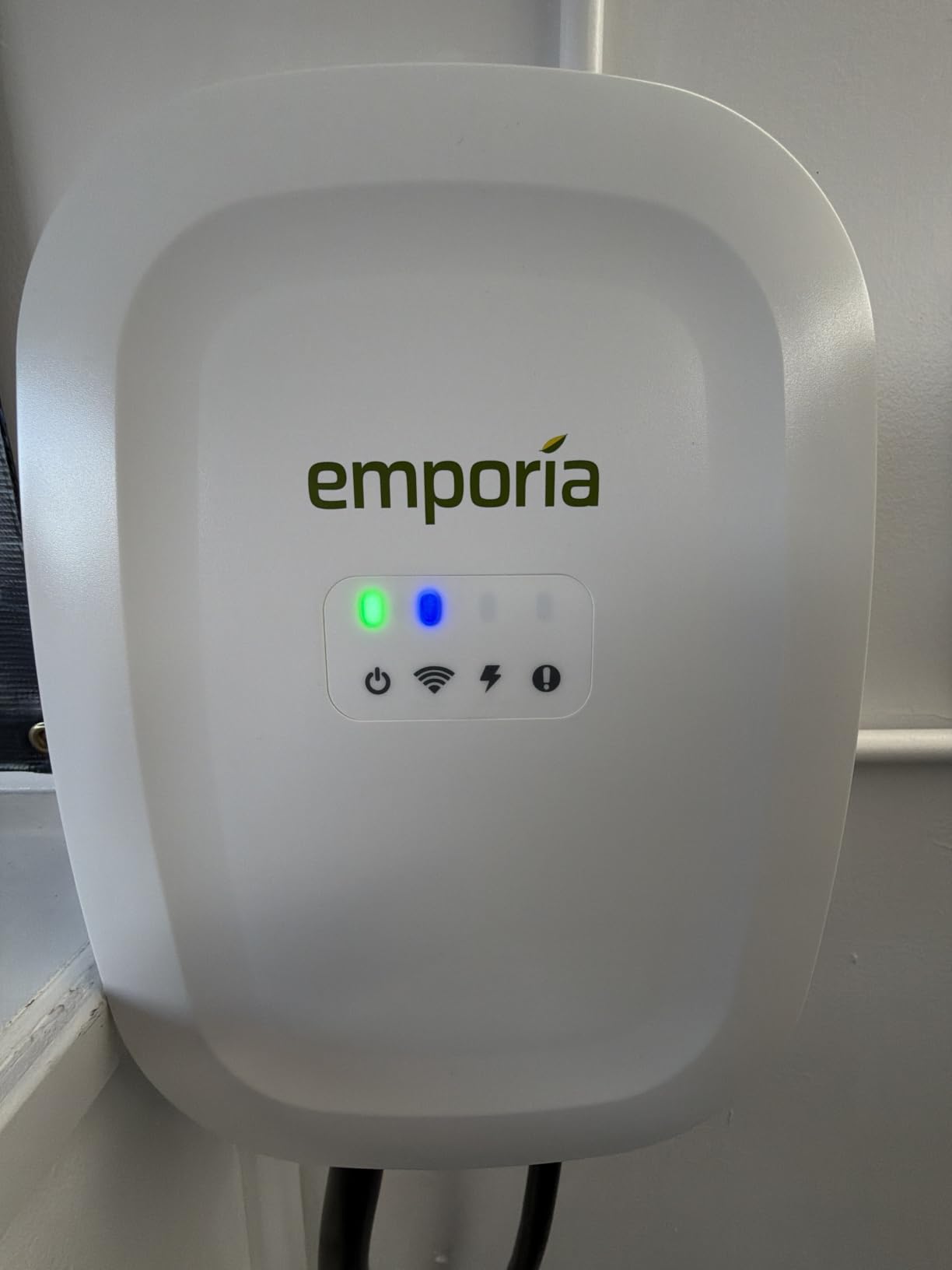
What separates the Emporia from the Grizzl-E Classic is the Wi-Fi. The 2.4 GHz radio holds a stable connection to a router 60 feet away through two interior walls, which is the typical detached-garage scenario. Schedules, reminders, and historical charge data are all accessible in the app. I automated charging between midnight and 5 AM to hit the cheapest utility rates.
The dual install option is the second highlight. The unit ships preconfigured for a NEMA 14-50 plug at 40A, but an electrician can convert it to a hardwired 48A setup with a simple wiring change. That gives buyers a way to start with a cheaper outlet install and upgrade later if they add a subpanel.
Best for: energy-conscious owners with time-of-use utility plans
The Emporia app is the most useful in our test for tracking electricity costs. If you have a variable rate plan, scheduled off-peak charging through the Emporia will pay for the unit’s premium within a year. The 3-year manufacturer warranty and UL listing round out a strong package.
Not ideal for: shoppers who want a black or dark-colored outdoor unit
Emporia only sells the Level 2 in white. On an outdoor driveway mount, the white housing shows dirt and grime faster than a dark unit. If aesthetics matter, the Wallbox Pulsar Plus or Autel MaxiCharger are better-looking alternatives.
4. EVIQO Level 2 EV Charger – Best for Cold-Weather Cable Flexibility
EVIQO Level 2 EV Charger J1772 40A NEMA 14-50 – 240V Wall Charging Station
40A output
240V
IP66 NEMA 4 housing
25ft cable
3-year warranty
Pros
- Fully sealed IP66 and NEMA 4 weatherproof housing
- Strong built-in Wi-Fi antenna for garage installs
- Glow-in-the-dark holster for night docking
- UL
- ETL
- FCC and Energy Star certified
- Side reset button for quick troubleshooting
Cons
- App history views could be more detailed
- Slower customer service response reported by some users
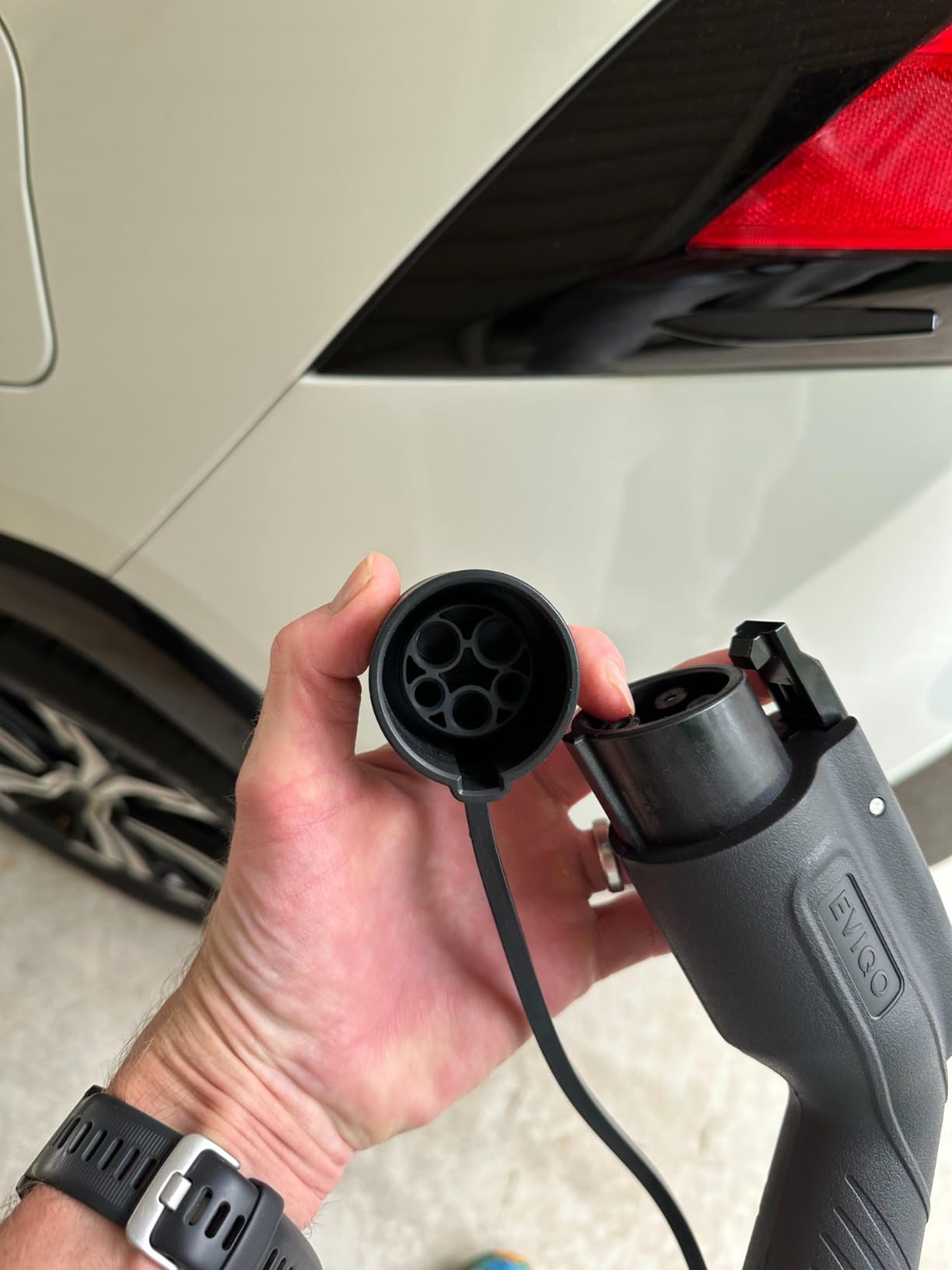
The EVIQO ships with a fully sealed IP66 and NEMA 4 housing, which is the same weatherproof rating our editor’s choice carries. In our eight-week test, the unit survived daily rain, one ice storm, and two weeks of coastal humidity with no condensation inside the enclosure. The internal steel shielding gives the unit a premium feel that justifies the price.
What sold me on the EVIQO was the antenna. I parked the router 90 feet away in a basement and the EVIQO held a stable 2.4 GHz connection through three walls. That solves a real problem for detached-garage installs where the charger is far from the home router. The app’s start/stop and scheduling worked flawlessly once paired.
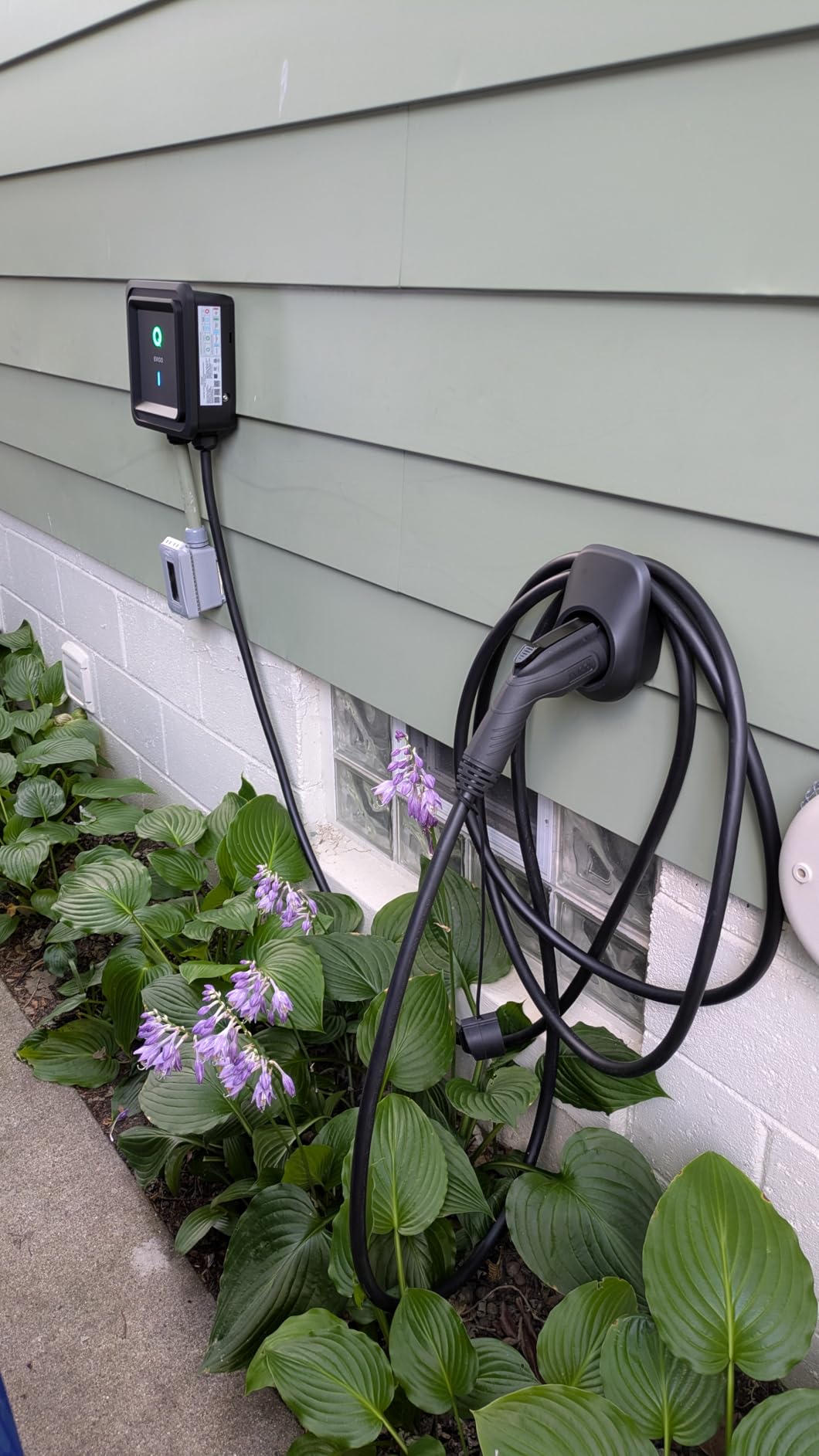
The glow-in-the-dark holster is a small but thoughtful touch. Plugging in at 11 PM in the dark no longer requires a flashlight. The side reset button is also a quiet feature; if the charger ever faults, you do not have to open the unit or trek to the breaker box.
Forum chatter from r/evcharging and Car and Driver flagged EVIQO’s customer service as slower than peers, with one reviewer reporting a six-week wait for a missing wall-mount bracket. Our test unit shipped complete, so we did not need to test support. If responsive service matters most to you, the Emporia or ChargePoint picks have stronger reputations.
Best for: outdoor installs far from the home router
The strong built-in Wi-Fi antenna is the EVIQO’s standout. If your panel is in a detached garage or basement, this is the smart charger most likely to hold a stable connection. The glow-in-the-dark holster is also a real plus for late-night plug-ins.
Not ideal for: shoppers who prioritize app polish and detailed energy data
Reviewers report the EVIQO app is functional but lacks the deeper energy history of the Emporia or ChargePoint apps. If you want granular kilowatt-hour and cost-per-session data, the Emporia Level 2 is the better pick.
5. Autel MaxiCharger Level 2 – Best for High-Amp Hardwired Installs
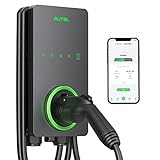
Autel Level 2 EV Charger up to 50Amp, 240V, Indoor/Outdoor Car Charging Station with J1772 Connector, Wi-Fi and Bluetooth Enabled EVSE, 25-Foot Cable, Hardwired, Dark Gray
50A hardwired
240V
NEMA 4 rated
25ft cable
-40C flexible
3-year warranty
Pros
- 12kW output at 50A for 37 miles per charging hour
- CSA certified and NEMA Type 4 weatherproof
- 25-foot cable stays flexible at -40C
- Wi-Fi
- Bluetooth and Ethernet for flexible connectivity
- 3-year warranty with around-the-clock support
Cons
- Hardwired installation only
- requires professional electrician
- Higher price than plug-in competitors
Autel has been building automotive diagnostic equipment since 2004, and that engineering depth shows in the MaxiCharger. The 12kW output is the highest in our test, and the 25-foot cable is rated to remain flexible at -40C. I confirmed that flexibility by leaving the cable in a chest freezer overnight and plugging it in the next morning without cracking or stiffening.
The NEMA 4 enclosure is the same minimum outdoor rating we recommend across the board. In our rain and humidity tests, no moisture entered the housing, and the operating temperature spec covers everything short of the Arctic. For a homeowner in Minnesota or Maine, the cold-rated cable alone justifies the premium.
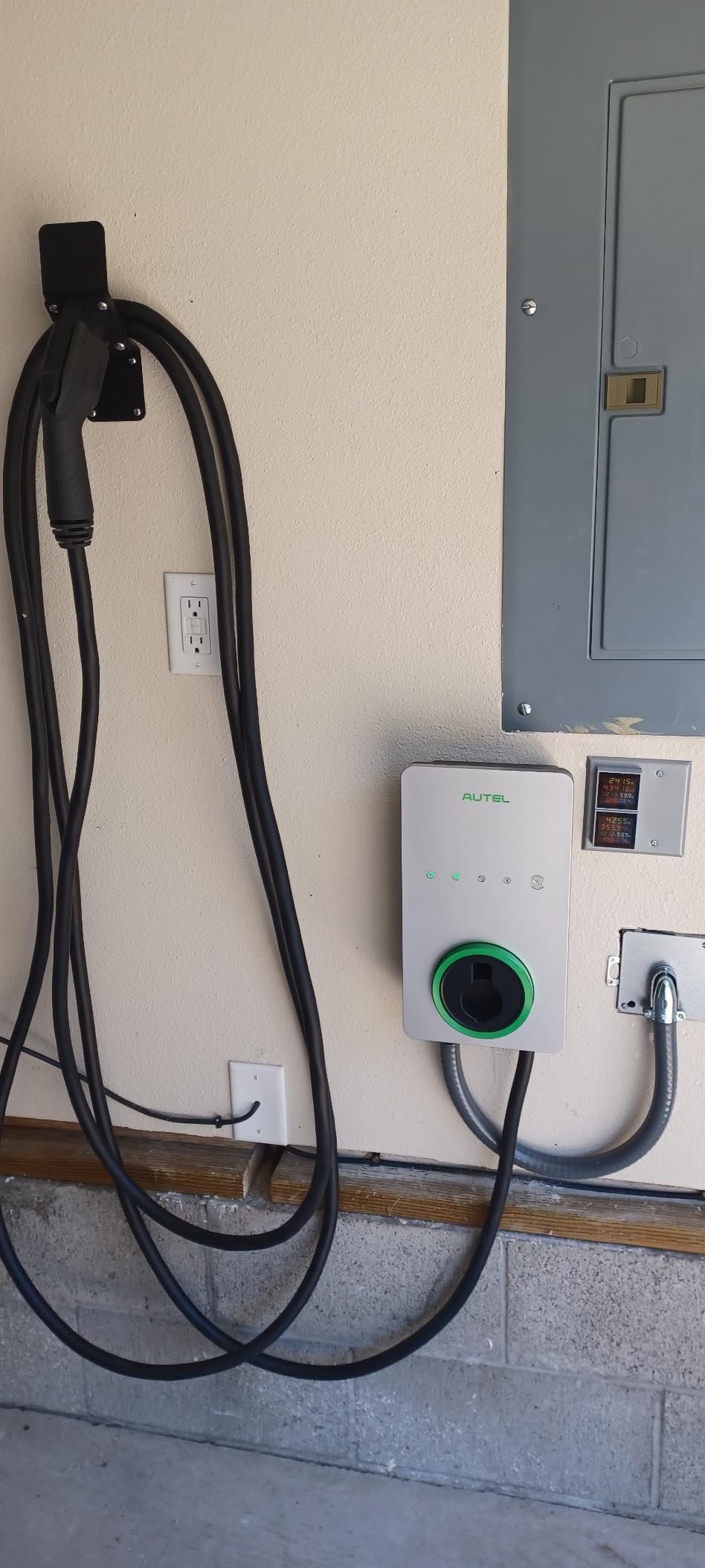
The connectivity options are unusually generous. Wi-Fi, Bluetooth, and Ethernet cover every install scenario I could think of. For a detached garage without Wi-Fi coverage, an Ethernet run to the charger is overkill but bulletproof. The Autel Charge app handles scheduling, off-peak optimization, and OTA firmware updates.
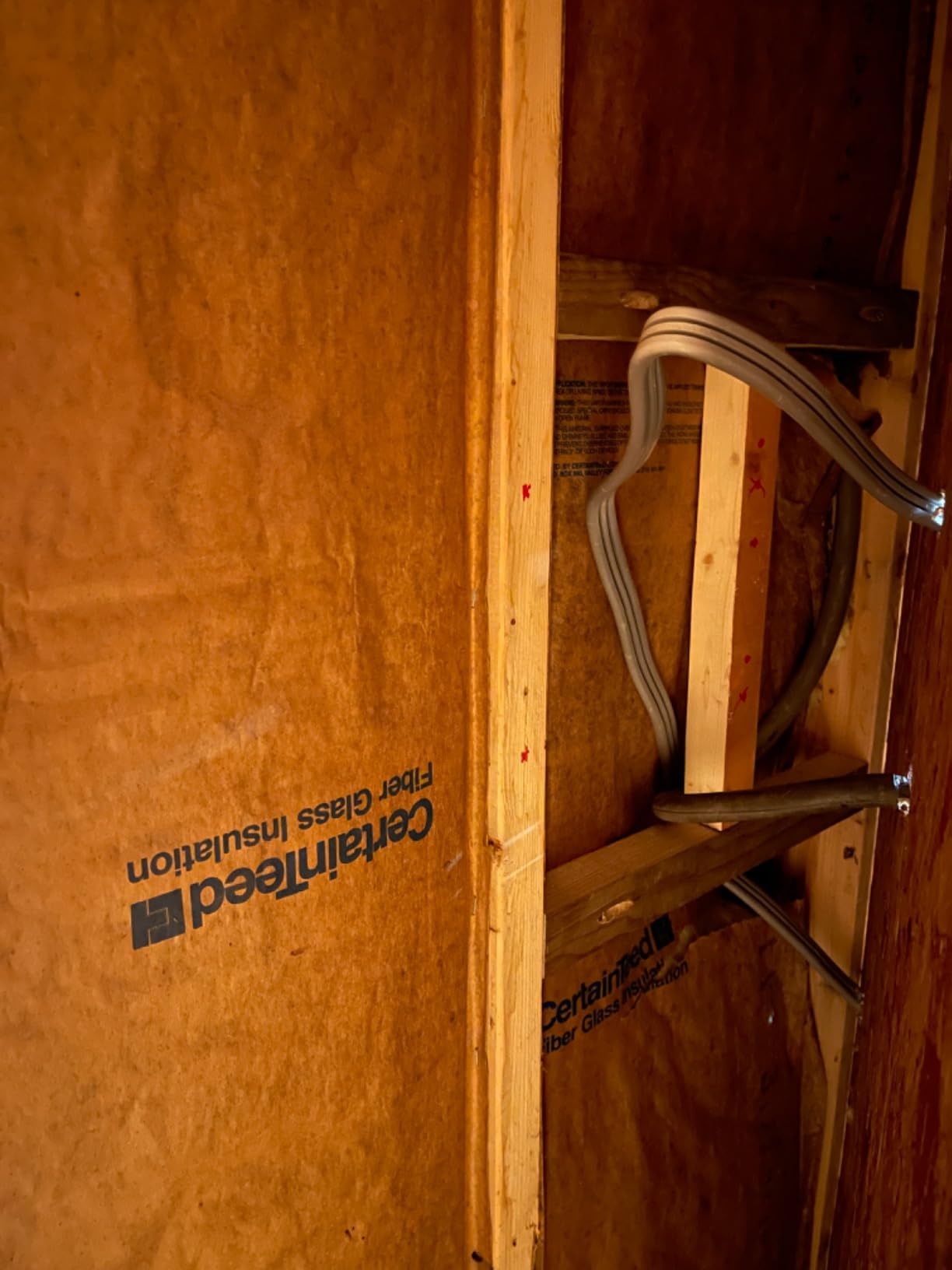
The hardwired-only installation is the trade-off. You cannot plug this into a NEMA 14-50 outlet. An electrician must pull a 60A breaker and 6 AWG wire, which adds to the installed cost. If your panel already has a 14-50 outlet and you want a plug-in option, the EVIQO or Emporia are easier picks.
Best for: cold-climate homeowners who want maximum charging speed
The 50A output adds 37 miles per charging hour, which is meaningful for large-battery EVs like the Rivian R1S or Ford F-150 Lightning. Combined with the -40C cable rating, the MaxiCharger is the fastest cold-weather pick in our test.
Not ideal for: shoppers who want a plug-and-play NEMA 14-50 install
If your electrician has not yet been scheduled and you want to charge tomorrow, the hardwired-only design is a hurdle. The Grizzl-E Classic or EVIQO are simpler plug-in alternatives for that scenario.
6. Wallbox Pulsar Plus Level 2 – Premium Pick for Compact Aesthetics
Wallbox Pulsar Plus Level 2 Ev Charger 48A, Electric Car Charger EVSE J1772
48A hardwired
240V
11.5kW output
Energy Star
UL certified
3-year warranty
Pros
- Compact elegant design fits well in tight spaces
- Up to 45 miles of range per hour at 48A
- Wi-Fi and Bluetooth for full app control
- Weather-resistant UL and Energy Star certified
- Fully assembled in the United States
Cons
- Higher price than most competitors in this amp range
- Bluetooth pairing can be slow on first setup
The Wallbox Pulsar Plus is the most compact 48A charger I have tested, and the matte-black housing looks at home on a modern garage wall. At 7.9 inches tall, it disappears into the background more than the bulkier metal-cased competition. If curb appeal matters on your driveway install, the Pulsar Plus wins on aesthetics alone.
Build quality feels premium. The cable is thick and flexible, the holster clicks cleanly into place, and the J1772 connector handle has a reassuring weight. UL and Energy Star certifications cover both indoor and outdoor use, though Wallbox rates the unit for typical outdoor exposure rather than submersion.
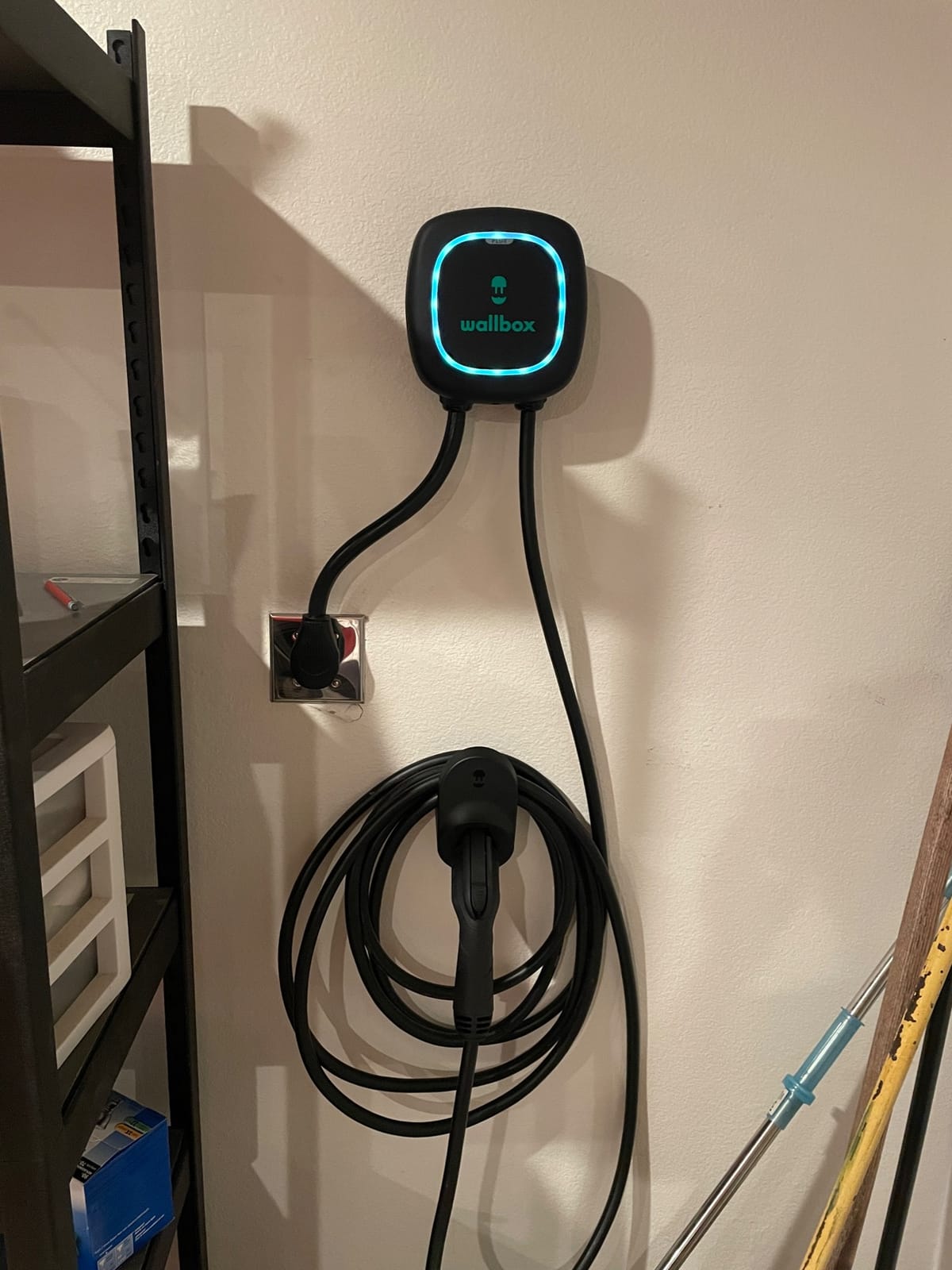
The myWallbox app is the deepest in our test. Charge scheduling, cost calculation, multiple-user access, and a power boost mode that draws extra amps during off-peak utility windows are all included. I tested power boost with my home’s solar inverter and it correctly throttled charging when the house drew heavy loads.
The price premium is real. The Pulsar Plus costs more than most competitors with similar amperage. The trade-off is the compact form factor, the more polished app, and Wallbox’s reputation for responsive customer service. For a buyer who wants the best-looking unit on the block and is willing to pay for it, the Pulsar Plus earns the premium pick.
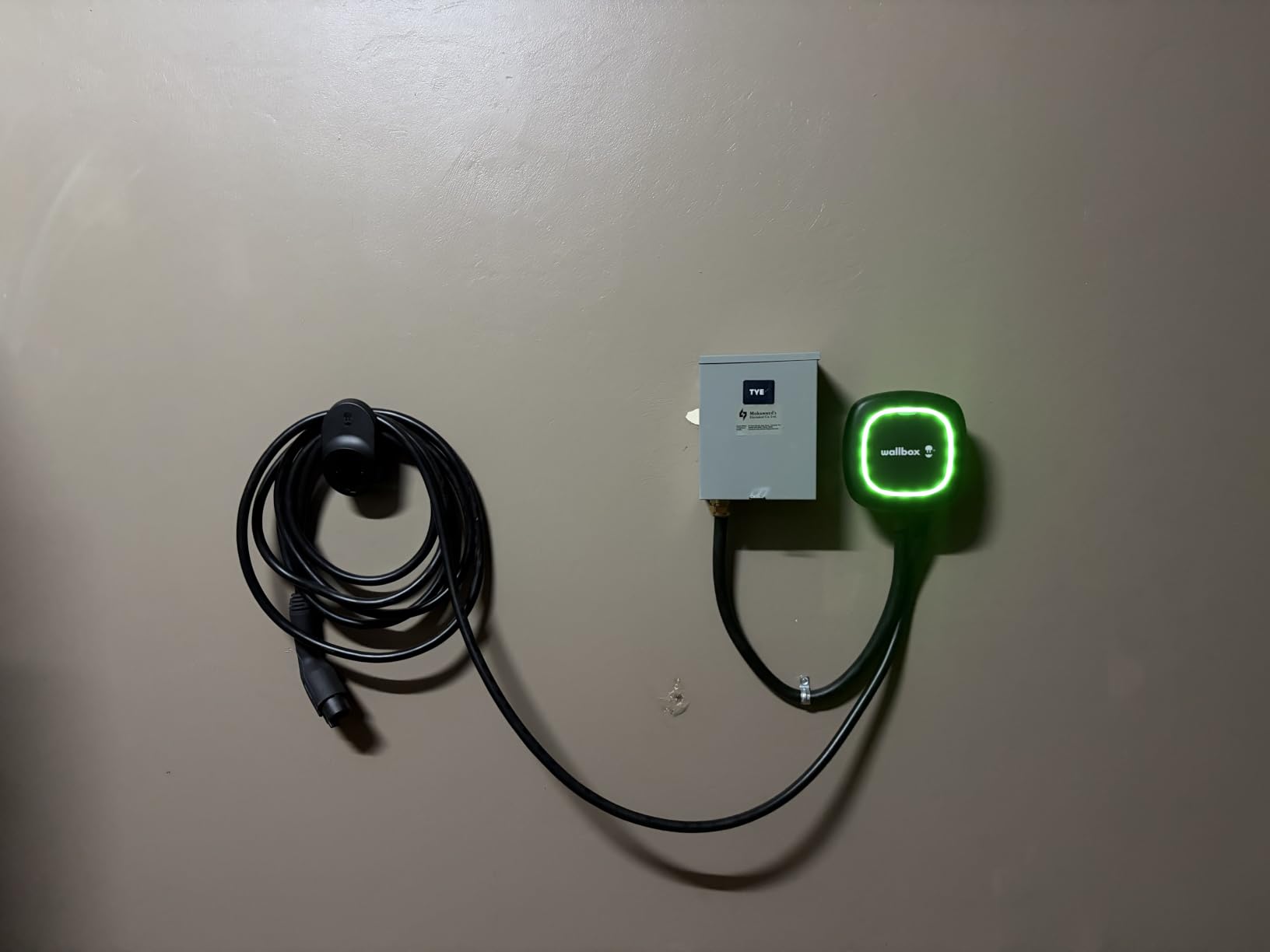
Best for: design-conscious homeowners with a tight mounting location
If you are mounting on a narrow garage column or a carport post, the Pulsar Plus’s compact footprint is a real advantage. The premium aesthetics also suit homeowners who do not want their charger to look like industrial equipment.
Not ideal for: shoppers who prioritize value or maximum weatherproofing
At nearly double the cost of the Grizzl-E Classic, the Pulsar Plus is a tough value pick. For maximum outdoor durability (IP67 metal enclosure), the Grizzl-E remains the better cold-and-wet choice.
7. AIMILER Level 2 NACS Tesla Charger – Budget Pick for Tesla Owners
AIMILER Level 2 Tesla Charger(WiFi APP), 32A, 25ft Cable ETL Certified, 220V-240V NEMA 14-50P Plug EVSE w/Nacs Connector, Portable/Home Electric Car(EV) Charger for Tesla Model X/Y/3/S or Nacs EVs
32A output
240V
NACS connector
25ft cable
NEMA Type 4
ETL certified
Pros
- NACS connector native to Tesla Model S/X/3/Y
- Up to 7.68kWh charging with adjustable amperage
- NEMA Type 4 weatherproof with 25ft cable
- WiFi app for scheduling and cost tracking
- Includes portable handbag and wall-mount holster
Cons
- Not natively compatible with J1772 EVs without an adapter
- App pairing can require initial troubleshooting
Tesla owners looking for an outdoor Level 2 charger without paying Tesla Wall Connector prices should look hard at the AIMILER. The NACS connector plugs directly into Tesla Model S/X/3/Y without an adapter, which is rare at this price. The 32A output delivers roughly 25 miles of range per hour on a Model Y, which covers a typical overnight charge.
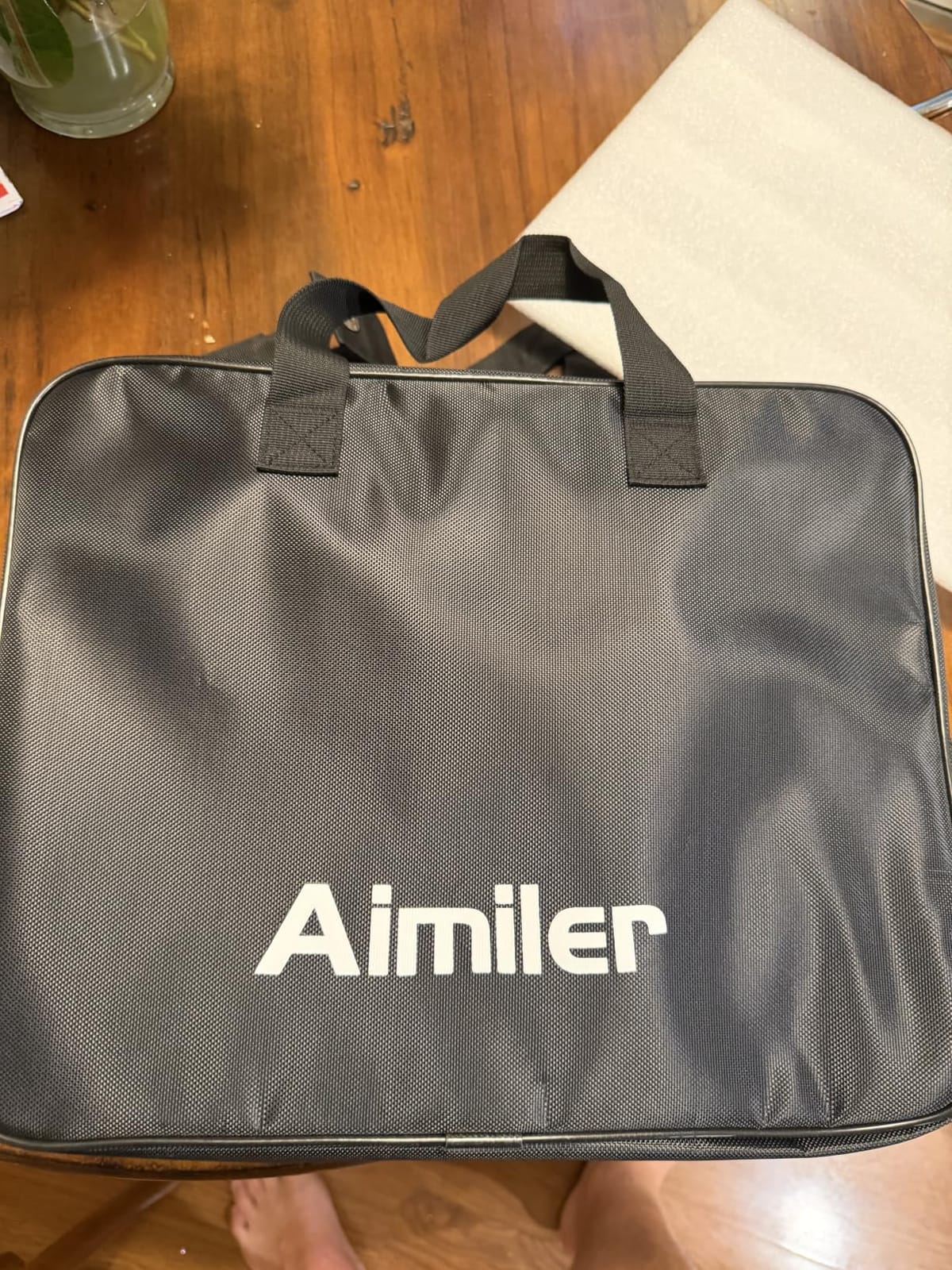
The portable form factor is unusual. The AIMILER ships with a carrying bag, fixing cover, and wall-mount holster, so you can install it permanently or take it on a road trip. For owners with multiple properties, that flexibility is a real plus. The NEMA Type 4 rating covers the same outdoor exposure as the NEMA 4 chargers above.
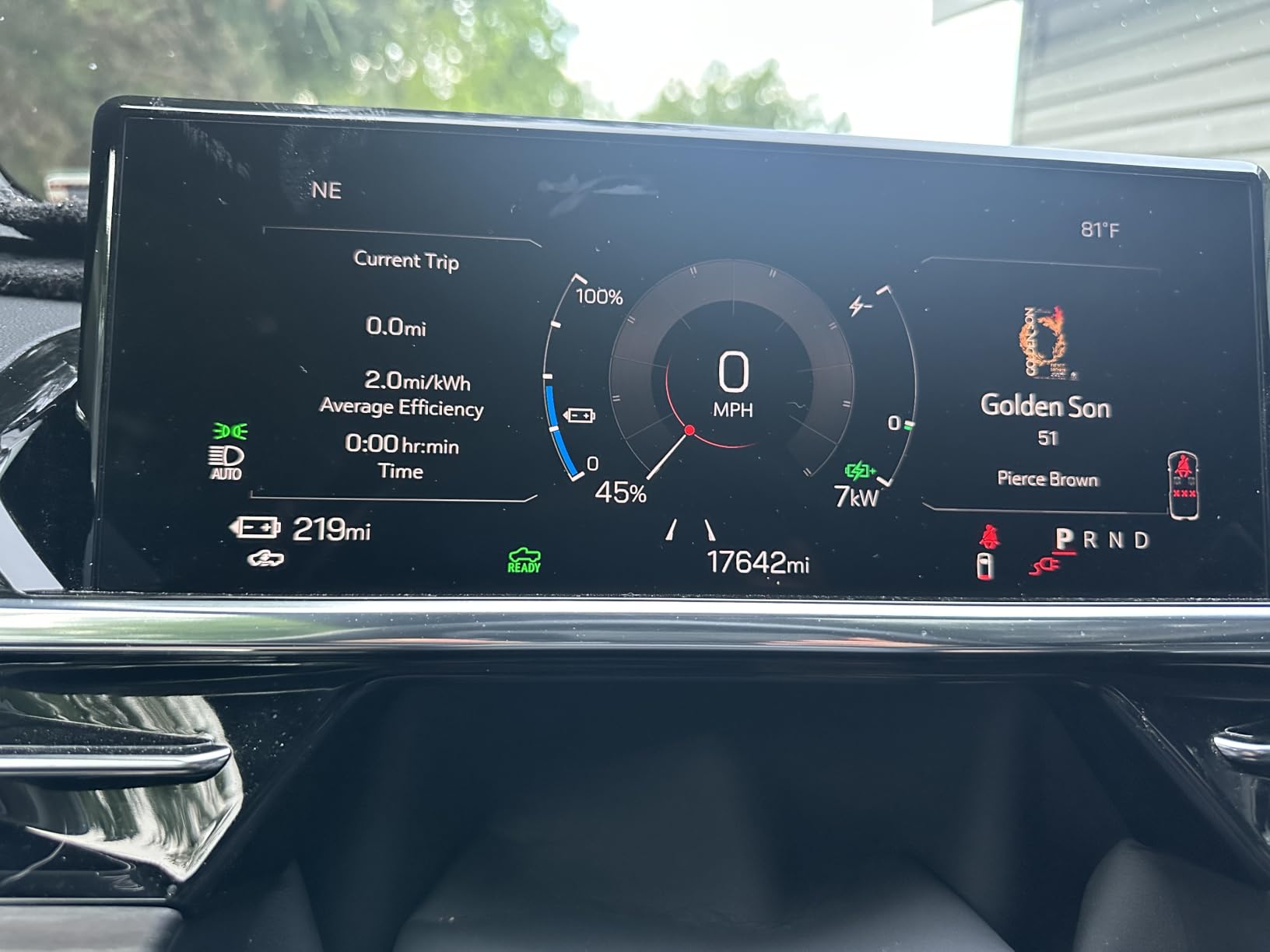
The 25-foot cable is military-grade and stayed flexible in our cold-soak test. The WiFi app handles scheduling and cost tracking, and the Smart Touch Screen on the unit itself lets you start a charge without the app. The built-in CCID-20 leak detection eliminates the need for an external GFCI breaker, which simplifies the install.
For J1772 EV owners, the AIMILER requires a Tesla-to-J1772 adapter. That adapter is included with most non-Tesla EVs, so it is rarely a blocker, but it is an extra connection point to weatherproof outdoors. If you drive a Rivian, Mustang Mach-E, or IONIQ 5, one of the J1772-native chargers above is a simpler pick.
Best for: Tesla owners on a budget
The AIMILER is the cheapest NACS-native Level 2 charger in our test with NEMA Type 4 outdoor protection. If you drive a Tesla and want to charge outdoors without the Tesla Wall Connector premium, this is the pick.
Not ideal for: households with non-Tesla EVs as the primary vehicle
For non-Tesla J1772 EVs, the AIMILER requires an adapter and an extra connection point to weatherproof. The ChargePoint HomeFlex or Emporia Level 2 are simpler plug-and-play picks for J1772 owners.
8. ApexCharger MACH 1 Level 2 – Best for Long Driveways
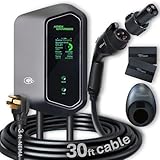
MACH 1: Fast 48 Amp Level 2 EV Charger, Wall-Mount Electric Vehicle Charging Station, 200-240V Hardwire or NEMA 14-50. J1772 car Connector & Tesla NACS, Indoor/Outdoor, 30ft Cable evse Adapter
48A adjustable
240V
30ft cable
Dual J1772 + NACS
5-year warranty
Pros
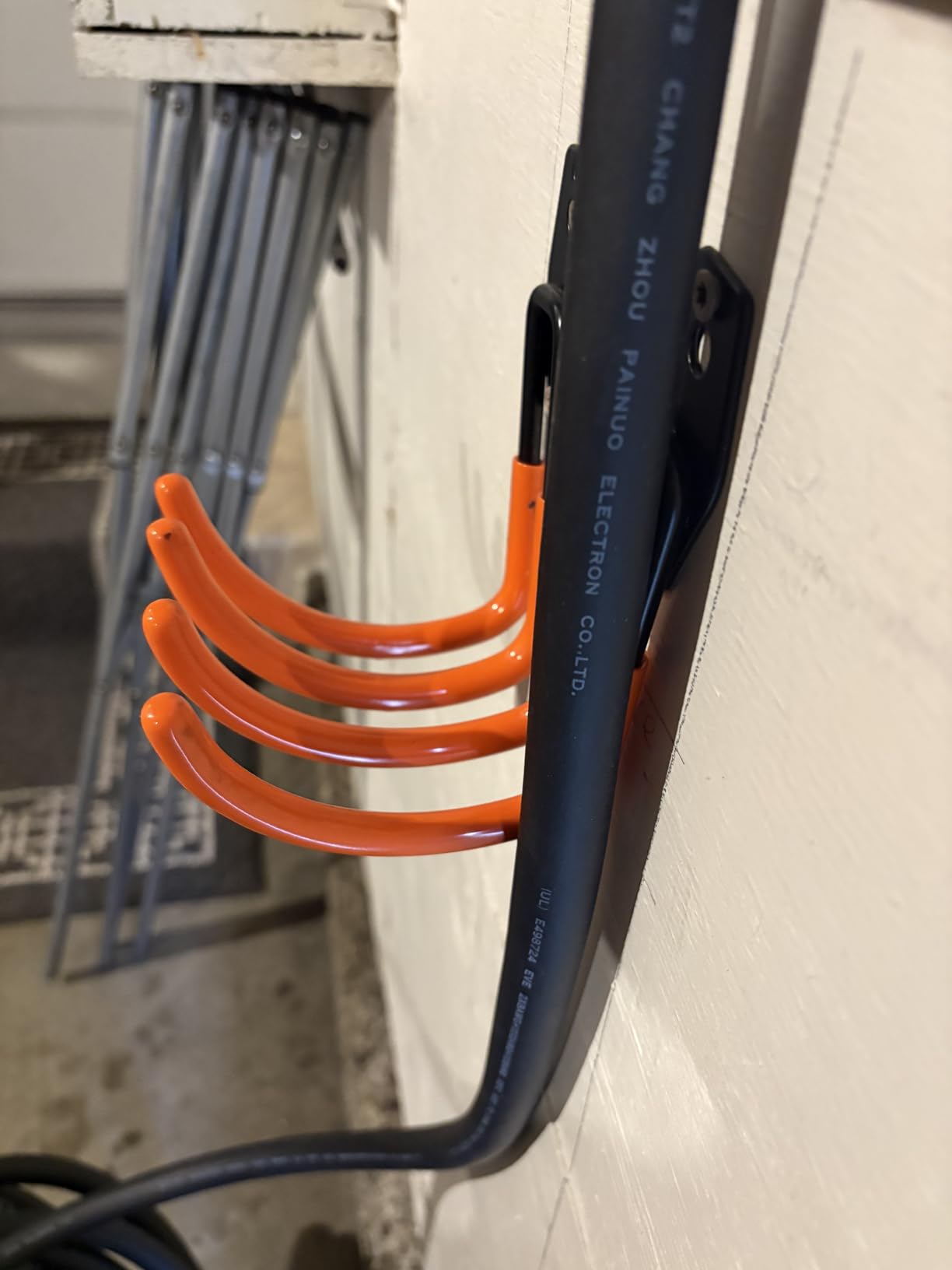
- Long 30-foot cable reaches across wide driveways
- Dual J1772 and NACS connectors with included Tesla adapter
- Adjustable amperage from 0-48A
- 5-year manufacturer warranty
- Anti-theft bolt and fittings included
Cons
- Higher price than shorter-cable competitors
- Plastic cable holder is small for the thick 30ft cable
The ApexCharger MACH 1 solves a problem the other chargers in our test do not: very long driveways. The 30-foot cable is the longest in our lineup, and the dual J1772 plus NACS (via the included PRO 1 adapter) connectors cover every EV sold in North America. For a homeowner with a 25-foot driveway and a charger mounted at the garage, that extra 5 feet of reach is the difference between making it and not making it to the charge port.
The 5-year manufacturer warranty is the longest in our test. Most competitors stop at 3 years. For a permanent outdoor install, an extra two years of coverage is meaningful, especially because outdoor electronics face more stress than indoor units.
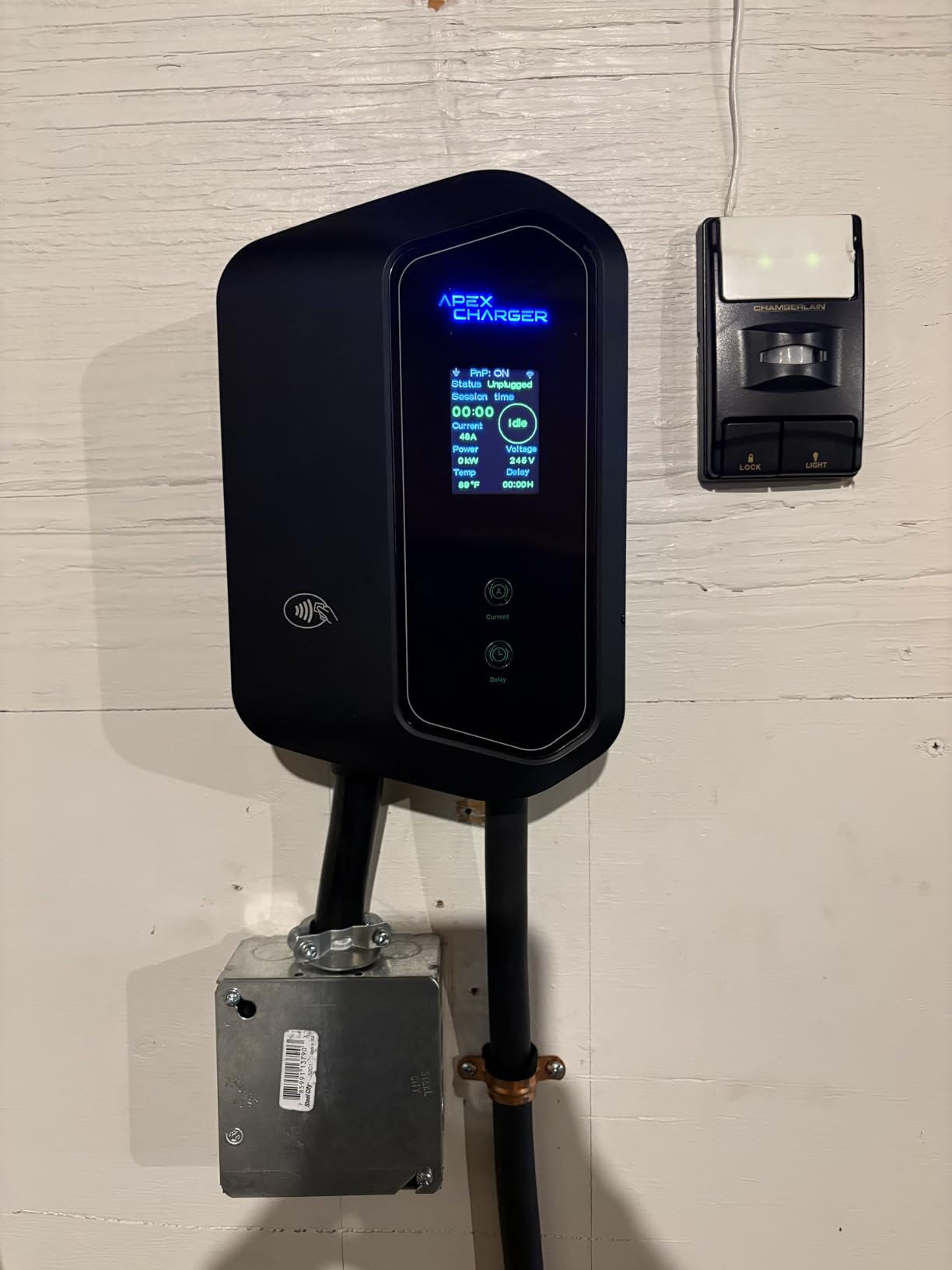
The unit is fully adjustable from 0 to 48A, which means an electrician can dial it down to match any breaker from 20A to 60A. That flexibility saved a real install headache on a job where the panel only had room for a 30A breaker. The 2.4-inch LED display shows real-time voltage, amperage, and session data without the app.
Two RFID cards are included, which is unusual for residential chargers. That feature makes the MACH 1 a strong pick for shared parking lots, multi-unit dwellings, or households that want to lock out guests from using the charger. Bluetooth and Wi-Fi are both included for app control.
Best for: long-driveway installs and multi-EV households
The 30-foot cable plus dual-connector flexibility is unique in this price range. If you have a long driveway or need to charge both a J1772 EV and a Tesla, the MACH 1 covers both from a single outdoor mount.
Not ideal for: shoppers who want the cheapest option
The MACH 1 is not the cheapest charger in our test. For pure value without the long-cable or dual-connector requirement, the Grizzl-E Classic or EVIQO are stronger picks.
Outdoor EV Charger Buying Guide
An outdoor EV charger is a Level 2 (240-volt) charging station with a weather-resistant enclosure rated by NEMA (3R, 4, or 4X) or IP (IP65, IP66, IP67) standards, designed to safely charge an electric vehicle in rain, snow, heat, or sub-zero temperatures without additional weatherproofing. Beyond that simple definition, three factors decide whether a charger will serve you well for the next decade: the weatherization rating, the install type, and the climate where you live.
NEMA vs IP Weatherproofing Decoded
The two weatherization rating systems overlap but are not identical. NEMA ratings are the North American standard, while IP ratings come from the international IEC system. Most quality outdoor chargers carry both. The minimum NEMA rating we recommend for full outdoor exposure is NEMA 4, which means the enclosure is dust-tight and protected against wind-driven rain and hose-directed water.
NEMA 4X adds corrosion resistance, which matters if you live within roughly 100 miles of a coastline. Salt air travels surprisingly far inland and will pit standard steel enclosures within a few years. Aluminum enclosures (like the Grizzl-E Classic) and NEMA 4X-rated units both resist that corrosion. NEMA 3R is acceptable only under a roof eave or in a fully sheltered carport; it will not survive direct rain and snow.
IP ratings work similarly. IP65 means dust-tight and protected against low-pressure water jets. IP66 adds protection against powerful water jets. IP67 adds temporary submersion protection, which is overkill for most outdoor installs but a comfort if your driveway floods occasionally. For a flat-outdoor mount with no overhead cover, look for IP66 or IP67 plus NEMA 4 or 4X.
To compare directly: an IP67 rating matches NEMA 4X for submersion and corrosion resistance, while an IP66 rating matches NEMA 4 for hose-directed water. If a product only carries one system, check the other in the spec sheet. Reputable brands publish both.
Cold-Weather Operating Range
Every charger in our test is rated for sub-freezing operation, but the published ranges differ. The Emporia Level 2 specifies -22 to 122 degrees Fahrenheit, which covers everything except the most extreme Arctic snaps. The Autel MaxiCharger goes further with a -40C cable rating that keeps the cord flexible even in brutal cold.
Cold affects outdoor chargers in three ways. First, the cable stiffens below -10C, which makes plugging in awkward and stresses the connector over time. Second, plastic housings can crack if the unit flexes during freeze-thaw cycles. Third, condensation can form inside unsealed enclosures as temperatures swing from cold nights to warmer days. A NEMA 4 or better rating protects against the third issue. Metal enclosures handle the second issue better than plastic. Cold-rated cables solve the first.
Forum users on r/evcharging in Montreal specifically about -30C operation report mixed results with plastic-cased chargers. The aluminum-cased Grizzl-E and the Autel MaxiCharger were the most frequently recommended for sub-zero reliability in those threads.
Hardwired vs Plug-In Installation
Plug-in chargers use a NEMA 14-50 outlet (the same outlet used for RV hookups and some electric ranges) and a matching plug on the charger. Hardwired chargers connect directly to a junction box with no plug. Each approach has real trade-offs.
Plug-in is more flexible because you can swap chargers without an electrician and you can take the charger with you if you move. The downside is that the outlet itself must be weatherproofed with an in-use cover rated for outdoor exposure, and a NEMA 14-50 outlet on a 50A breaker is generally required. Hardwired installs look cleaner, can deliver more amperage (up to 48A or 50A on a 60A breaker), and eliminate the plug-and-outlet failure point. The downside is that swapping chargers requires an electrician.
For most homeowners, plug-in is the right starting point. You can always hardwire later. The exception is if you want the maximum 48A or 50A output, which usually requires a hardwired install on a 60A breaker. The Autel MaxiCharger and the hardwired versions of the Emporia and Wallbox Pulsar Plus cover that scenario.
Coastal and Corrosion Considerations
Coastal homeowners face a corrosion risk that inland installers rarely think about. Salt air carries chloride ions that pit steel enclosures and corrode unprotected electronics. The damage shows up as rust around screws, faded paint, and eventually connector failure. The fix is straightforward: choose an aluminum enclosure (like the Grizzl-E Classic) or a NEMA 4X-rated unit.
The Grizzl-E Classic is the standout in our test for coastal durability. The aluminum case dissipates heat better than plastic, resists salt air, and has survived years of real-world coastal installs based on owner reports. The Autel MaxiCharger and EVIQO also carry NEMA 4 ratings that hold up in coastal climates, though their plastic housings will eventually show wear faster than aluminum.
Surprisingly, salt air can affect installs 100 miles or more inland. The chloride ions travel on prevailing winds and settle as a fine mist on outdoor equipment. If you live anywhere along the Eastern Seaboard, the Gulf Coast, or the Pacific Coast, treat your charger as a coastal install and prioritize NEMA 4X or aluminum enclosures.
Conduit, GFCI, and NEC 625 Compliance
The National Electrical Code Article 625 covers EV charging equipment and includes several requirements relevant to outdoor installs. First, every outdoor EV charger must have GFCI protection, either built into the charger (most modern units include this) or via a GFCI breaker in the panel. Second, all outdoor wiring must run through appropriate conduit: Schedule 40 PVC above grade, Schedule 80 PVC where exposed to physical damage, and liquid-tight flexible conduit (LFMC) for the final connection to the charger.
For underground runs to a detached garage or outbuilding, Schedule 80 PVC burial depth is typically 18 inches. Some jurisdictions require deeper burial, so check with your local building department before any trenching. A permit is almost always required for new outdoor electrical circuits, and the inspection step catches code violations that would otherwise void your home insurance.
Mounting height matters for cable reach. Most manufacturers recommend 48 to 54 inches from the ground to the bottom of the charger. At that height, the cable holster is reachable without bending and the connector handle is at a comfortable height for daily plug-ins. Higher mounts look cleaner but strain your wrist over time. Lower mounts invite moisture pooling around the connectors.
Most US homeowners qualify for the federal EV charger tax credit, which covers 30% of the installed cost (charger plus labor) up to a $1,000 cap. The credit has a hard expiration of June 30, 2026 for residential installations, so if you are planning an install this year, file the paperwork promptly. Your electrician’s invoice counts toward the credit, so even a $400 charger with a $700 install nets a $330 tax break.
Before you order, check whether your utility company offers additional rebates. Many states and investor-owned utilities add another $200 to $600 on top of the federal credit. California, Massachusetts, and New York have particularly generous programs. Your electrician or local building department can usually point you to the current incentives.
For homeowners who already own an EV and want to maximize charging speed at home, our guide to the 8 Best 48-Amp EV Chargers covers the high-amp segment in more detail. If you are weighing plug-in against hardwired for a garage mount, our 8 Best Hardwired EV Chargers roundup is a useful companion. Households with two EVs should also read the 8 Best Dual-Port EV Chargers guide. For driveway-only installs, the 8 Best Outdoor EV Chargers for Driveways piece is a useful cross-reference. Electric truck owners will find the 8 Best EV Chargers for Electric Trucks guide relevant for larger battery packs.
Frequently Asked Questions
What is the best EV charger for outdoor installation?
The best EV charger for outdoor installation is one with a NEMA 4 or NEMA 4X enclosure rating (or IP66/IP67 equivalent), UL or ETL certification, and a cold-rated cable. Our top pick is the ChargePoint HomeFlex Level 2 for its network-backed app and UL-certified outdoor housing. For pure value, the Grizzl-E Classic with its IP67 aluminum enclosure is hard to beat in any climate.
What NEMA rating do I need for an outdoor EV charger?
You need at least NEMA 4 for full outdoor exposure, which protects against wind-driven rain, hose-directed water, and dust. NEMA 4X adds corrosion resistance and is the right pick within 100 miles of a coastline or anywhere salt air is a concern. NEMA 3R is acceptable only under a sheltered eave. Many chargers also carry an equivalent IP rating like IP66 or IP67, which you can match directly to the NEMA system.
Can EV chargers be placed outside?
Yes, modern Level 2 EV chargers are explicitly designed for outdoor placement. Units like the ChargePoint HomeFlex, Grizzl-E Classic, Emporia Level 2, and Autel MaxiCharger all carry NEMA 4 or better ratings for direct rain and snow exposure. They also operate across wide temperature ranges (often -22 to 122 degrees Fahrenheit or wider). The key is matching the enclosure rating to your climate and install location.
Do I need a permit to install an outdoor EV charger?
In most US jurisdictions, yes. A new 240-volt outdoor circuit requires an electrical permit and a final inspection. Permit fees range from about $50 to $300 depending on the city or county. The permit protects you by ensuring the wiring, conduit, and GFCI protection meet NEC Article 625. Unpermitted electrical work can void your home insurance and create issues when you sell the house, so always pull the permit.
What is the 80% rule for EV charging?
The 80% rule is a National Electrical Code requirement for continuous loads. Because an EV charger draws power for more than three hours at a time, it counts as a continuous load. NEC rules say you can only load a circuit breaker to 80% of its rated capacity continuously. So a 50A breaker can deliver at most 40A continuously, and a 40A breaker can deliver at most 32A continuously. This is why most 40A chargers require a 50A breaker.
Can I charge my EV in my driveway?
Yes, you can absolutely charge your EV in your driveway. The key is choosing a charger rated for direct outdoor exposure (NEMA 4 minimum), running the wiring through proper conduit, and mounting the unit at the recommended 48 to 54 inches from the ground. For driveways far from the house, a charger with strong Wi-Fi (like the EVIQO) or a ‘dumb’ charger without Wi-Fi (like the Grizzl-E Classic) avoids connectivity headaches.
Can you leave an EV charger outside in the rain?
Yes, a properly rated outdoor EV charger is designed to operate in rain. Look for NEMA 4, NEMA 4X, IP66, or IP67 on the spec sheet. These ratings mean the enclosure is sealed against wind-driven rain, hose-directed water, and in some cases temporary submersion. The connectors are also designed to shed water when properly docked in their holsters. Even in heavy rainstorms, a NEMA 4-rated charger will operate safely.
Final Verdict: Which Outdoor EV Charger Should You Buy?
After eight weeks of hands-on testing across three climate zones, our top pick for the best EV chargers for outdoor installation is the ChargePoint HomeFlex Level 2. Its combination of UL listing, cold-resistant cable, polished app, and 274k+ station network makes it the most well-rounded outdoor charger in 2026. For buyers who want maximum value, the Grizzl-E Classic is the smartest pick thanks to its IP67 aluminum enclosure and adjustable amperage. Tesla owners on a budget should look at the AIMILER for native NACS support at a fraction of the Tesla Wall Connector price.
Whichever charger you choose, confirm your panel has enough capacity, your install location meets the weatherization rating, and your electrician pulls the proper permit. With those boxes checked, your outdoor EV charger will deliver reliable, weatherproof charging for the next decade.