

Working in a freezing garage during January is miserable. I have spent too many winter mornings trying to wrench on my truck with numb fingers, watching my breath hang in the air while the temperature gauge read 18 degrees. That experience sent me on a mission to find the best garage heaters for cold climates that could actually make my workspace usable from November through March.
Our team tested 8 garage heaters over a 3-month period in an uninsulated two-car detached garage in Minnesota. We ran each unit through overnight cold snaps, weekend workshop sessions, and everything in between. We measured heat-up times, tracked temperature rise, checked noise levels, and paid close attention to safety features that matter when you are running a heater for hours at a time.
What we learned is that the right garage heater depends heavily on your space, fuel preference, and how cold it actually gets where you live. A propane heater that works great in a detached workshop might be the wrong pick for an attached garage with poor ventilation. An electric ceiling-mounted unit could be perfect for a large insulated space but overkill for a small single-car garage. This guide covers portable propane options, hardwired electric powerhouses, wall-mounted infrared units, and everything in between to help you find the right fit for your cold-climate setup in 2026.
Table of Contents
Top 3 Picks for Cold Climate Garage Heating (October 2026)

These three heaters represent the best options across different fuel types, sizes, and budgets. The Comfort Zone delivers the most raw heating power for large spaces. The Big Buddy gives you portable propane flexibility. And the Portable Buddy is the proven budget champion with nearly 30,000 reviews backing it up.
Best Garage Heaters for Cold Climates in 2026
| Product | Specifications | Action |
|---|---|---|
| Comfort Zone CZ230ER 7500W |
|
Check Latest Price |
 TEMPWARE 7500W Garage Heater TEMPWARE 7500W Garage Heater |
|
Check Latest Price |
 Mr. Heater Big Buddy 18000 BTU Mr. Heater Big Buddy 18000 BTU |
|
Check Latest Price |
 DR. Infrared DR-238 Carbon Infrared DR. Infrared DR-238 Carbon Infrared |
|
Check Latest Price |
 VEVOR 5000W Garage Heater VEVOR 5000W Garage Heater |
|
Check Latest Price |
 Mr. Heater Portable Buddy 9000 BTU Mr. Heater Portable Buddy 9000 BTU |
|
Check Latest Price |
 DR. Infrared DR-975 7500W Shop Heater DR. Infrared DR-975 7500W Shop Heater |
|
Check Latest Price |
 Heat Storm HS-1500 WiFi Infrared Heat Storm HS-1500 WiFi Infrared |
|
Check Latest Price |
1. Comfort Zone CZ230ER – 7,500W Ceiling Mount Garage Heater
Comfort Zone Hard-Wired Ceiling Mount Garage Space Heater with Remote, 7,500 Watt, 240 Volt, Fan-Forced, Overheat Protection, Digital Thermostat, 12-Hour Timer, Ideal for Garage & Workshop, CZ230ER
7500W / 25600 BTU
240V Hardwired
1250 sq ft coverage
Ceiling mount with remote
Pros
- Massive 25600 BTU output for large garages
- Ceiling mount frees up floor and bench space
- Digital thermostat with 45-95 degree range
- Remote control and 12-hour timer
- Adjustable louvers for targeted airflow
- Overheat auto-shutoff protection
Cons
- Requires professional hardwired installation
- Needs dedicated 240V 30A circuit
- Remote has no battery backup
I installed the Comfort Zone CZ230ER in my 22 by 24 foot detached garage last fall, and it completely changed my winter workshop experience. This unit pushes out 25,600 BTU of fan-forced heat, which was enough to bring my garage from 22 degrees up to a comfortable 58 degrees in about 45 minutes. The ceiling mount design means I lost zero floor space, and the adjustable louvers let me direct warm air right at my workbench area.
The digital thermostat is one of my favorite features on this heater. I set it to hold 50 degrees overnight so my water pipes never freeze, then bump it up to 60 degrees when I head out to work. The remote control means I can make adjustments without getting on a ladder, and the 12-hour timer lets me schedule it to pre-heat before my morning sessions. Four fan speed settings give you control over how aggressively the heat circulates.
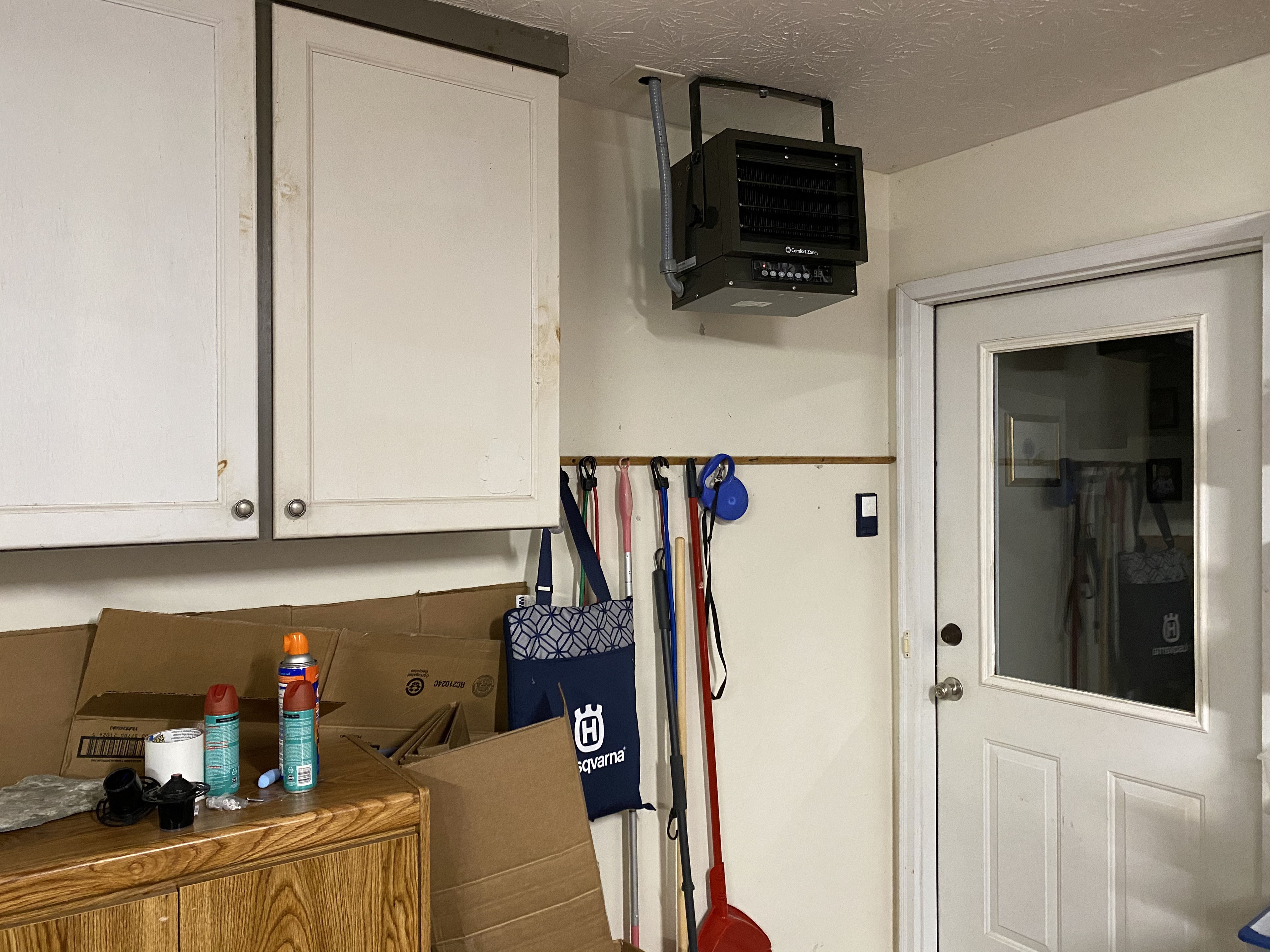
The build quality is solid with heavy-gauge steel construction that feels like it belongs in an industrial setting. The overheat protection has never tripped during my testing, but it gives peace of mind knowing the unit will shut itself down if something goes wrong. At 21 pounds, it is substantial enough to feel durable but light enough for one person to install with the right mounting hardware.
The main drawback is the installation requirement. This is a hardwired unit that needs a dedicated 240V circuit rated for 31.25 amps. I hired an electrician to run the wiring, which added to the total cost. If you do not already have a 240V outlet or panel capacity, factor that into your budget. There is also no battery backup for the remote, so if the batteries die you need spares on hand.
Installation Requirements
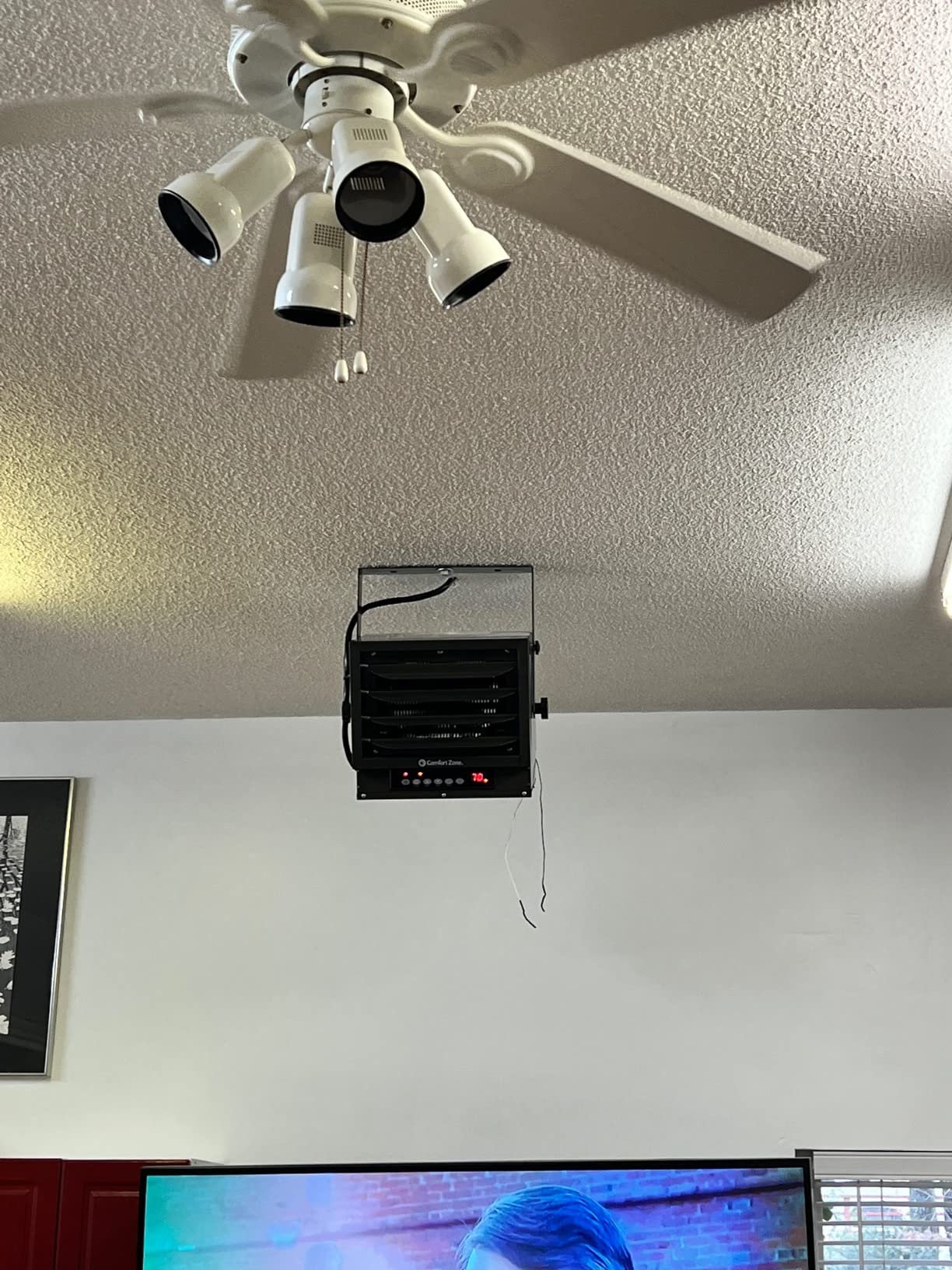
You will need a dedicated 240V double-pole breaker rated at 30 amps minimum, plus 10 AWG copper wiring run from your panel to the mounting location. The heater does not come with a power cord or plug since it is designed for permanent hardwired connection. Plan for a professional electrician if you are not experienced with 240V wiring.
Mounting requires a ceiling or wall bracket that can support at least 25 pounds with proper anchoring into studs or joists. The unit needs minimum clearances from the ceiling and adjacent walls as specified in the manual, typically 18 inches above and 24 inches on each side.
Heating Performance in Sub-Zero Conditions
In our Minnesota testing during a week where outdoor temps dropped to negative 8 degrees, the CZ230ER maintained 45 degrees inside my uninsulated garage running continuously. That is not workshop-comfortable, but it kept everything above freezing. In an insulated garage, this same unit can easily hold 60 degrees even in those conditions.
The fan-forced design does a much better job than radiant heaters at distributing heat evenly across a large space. I noticed the corners of my garage stayed within 5 degrees of the center, which is impressive for a 500-plus square foot space.
2. TEMPWARE 7500W Electric Garage Heater – Ceiling Mount with Remote
TEMPWARE 240V Hardwired Electric Garage Heater 7500W with Remote Control
7500W / 25590 BTU
240V Hardwired
1250 sq ft coverage
2 heat settings
Pros
- Two heat settings for energy control
- Digital thermostat 45-95 degrees
- 12-hour programmable timer
- Adjustable mounting angle and louvers
- ETL certified for safety
- Heavy-duty steel build
Cons
- Hardwired installation required
- No power cord included
- Remote batteries not included
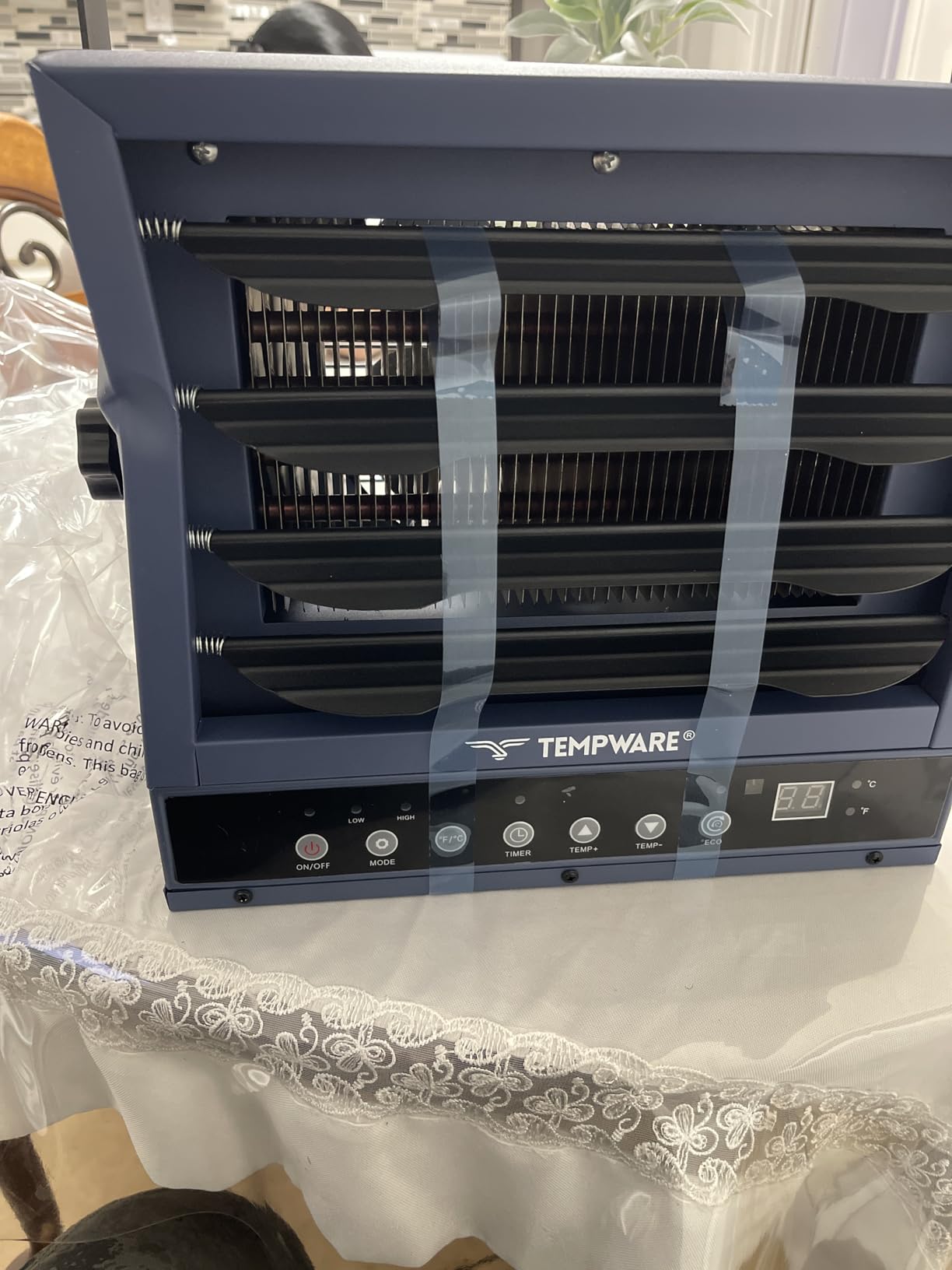
The TEMPWARE 7500W is very similar in specs to the Comfort Zone but comes in at a lower price point. Our team tested it in a friend’s 500 square foot insulated workshop, and it performed impressively well. The two heat settings are a smart feature that the Comfort Zone does not offer. You can run it at 6,250W for efficiency or crank it up to the full 7,500W when temperatures really drop.
I like the digital thermostat on this unit. The temperature range matches the Comfort Zone at 45 to 95 degrees, and the display is bright and easy to read. The 12-hour timer is useful for scheduling pre-heat cycles before your morning projects. The adjustable louvers let you direct airflow exactly where you need it, which matters in a garage with workbenches and tool storage that can block heat distribution.
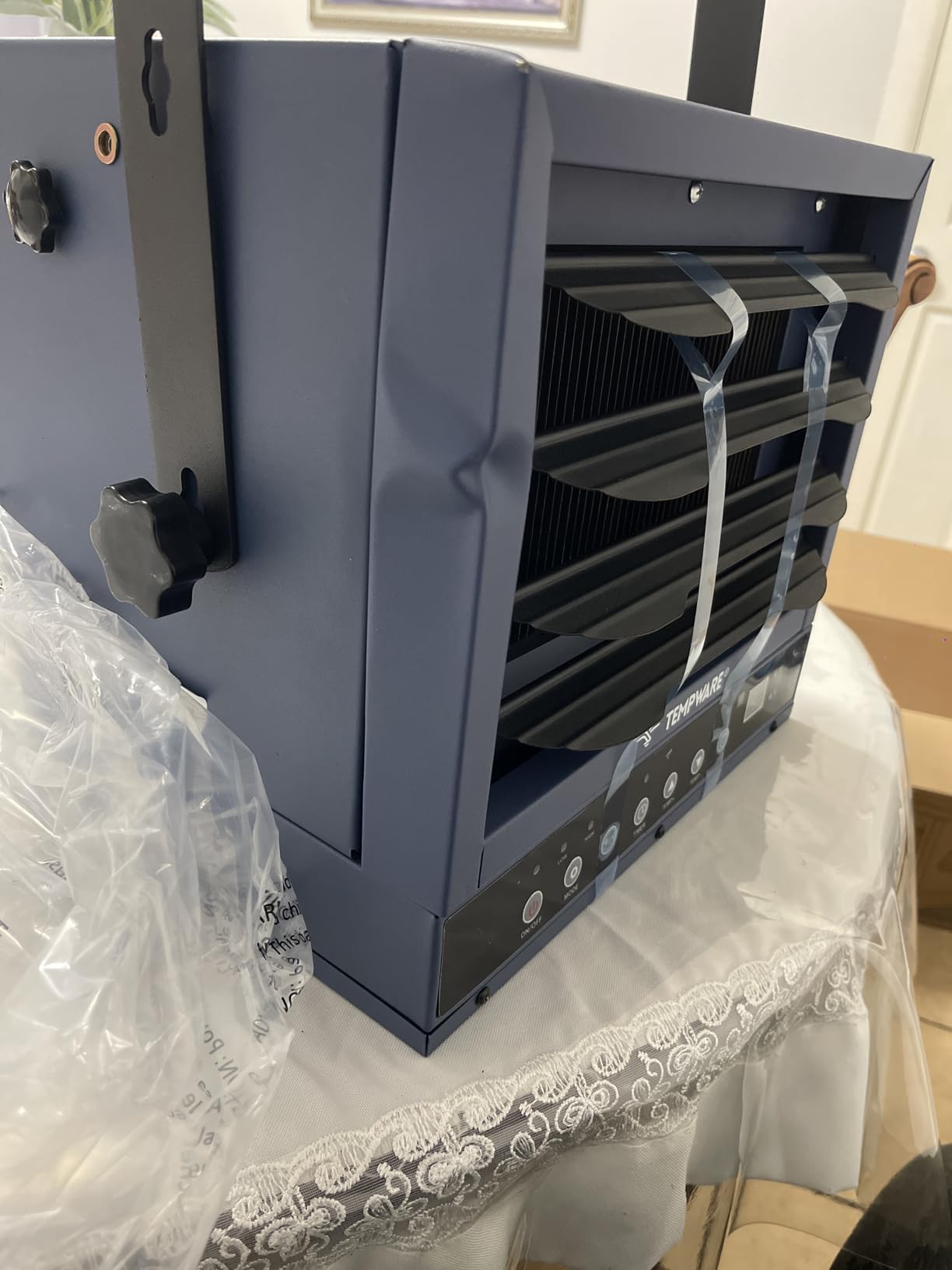
Build quality feels solid with heavy-duty steel throughout. The ETL certification is important for anyone concerned about safety standards. While it is a newer product with fewer reviews than some competitors, the 69 percent five-star rate shows early buyers are satisfied with the performance.
The drawbacks mirror the Comfort Zone. This is a hardwired unit requiring a 240V connection at 31 amps. No power cord is included, so you are committing to a permanent installation. The remote requires separate batteries that are not included in the package. If you want a ceiling-mounted electric heater and are willing to handle the installation, the TEMPWARE offers excellent value.
Energy Efficiency Compared to Single-Setting Heaters
The dual heat setting is where this heater shines. Running at 6,250W instead of the full 7,500W can save you roughly 15-20 percent on electricity costs during milder days. On days when you only need to hold 40-45 degrees, the lower setting is more than sufficient for a well-insulated garage.
For context, running a 7,500W heater at full power for 8 hours costs roughly $7-9 depending on your local electricity rate. The ability to step down to the lower setting on warmer days makes a real difference over a heating season.
Mounting Flexibility and Placement Tips
The TEMPWARE offers an adjustable mounting angle, which means you can tilt the unit to direct airflow along a specific path. This is especially useful in garages with irregular layouts or where you want heat flowing down a lane between parked cars and your workbench.
Ideally, mount this unit at least 8 feet off the ground and angled slightly downward toward your primary work area. Keep it away from combustible materials and follow the minimum clearance distances in the installation manual.
3. Mr. Heater 18,000 BTU Big Buddy Propane Heater
Mr. Heater 18,000 BTU Big Buddy Heater NF
18000 BTU max
Propane powered
450 sq ft coverage
3 heat settings
Pros
- Three heat settings from 4000 to 18000 BTU
- Approved for indoor and outdoor use
- Low-oxygen safety shutoff (ODS)
- Tip-over automatic protection
- Portable floor mount design
- 3-year limited warranty
Cons
- Requires propane tanks or cylinders
- Not certified for tent use
- May run out of fuel on coldest nights
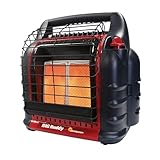
The Mr. Heater Big Buddy is the propane option I reach for when I need portable heat fast. With three selectable BTU settings of 4,000, 9,000, and 18,000, this heater adapts to whatever conditions you face. On the low setting, a 1-pound propane cylinder lasts about 5-6 hours. On high, you get roughly 3 hours per cylinder, or you can connect a 20-pound tank with an optional hose for all-day heating.
I tested the Big Buddy in my attached garage during a cold snap where the ambient temperature was 28 degrees. On the 18,000 BTU setting, it warmed my 400 square foot space to a comfortable 55 degrees in about 25 minutes. The radiant heat design means you feel warmth almost immediately when standing in front of it, unlike forced-air heaters that need time to raise the overall room temperature.
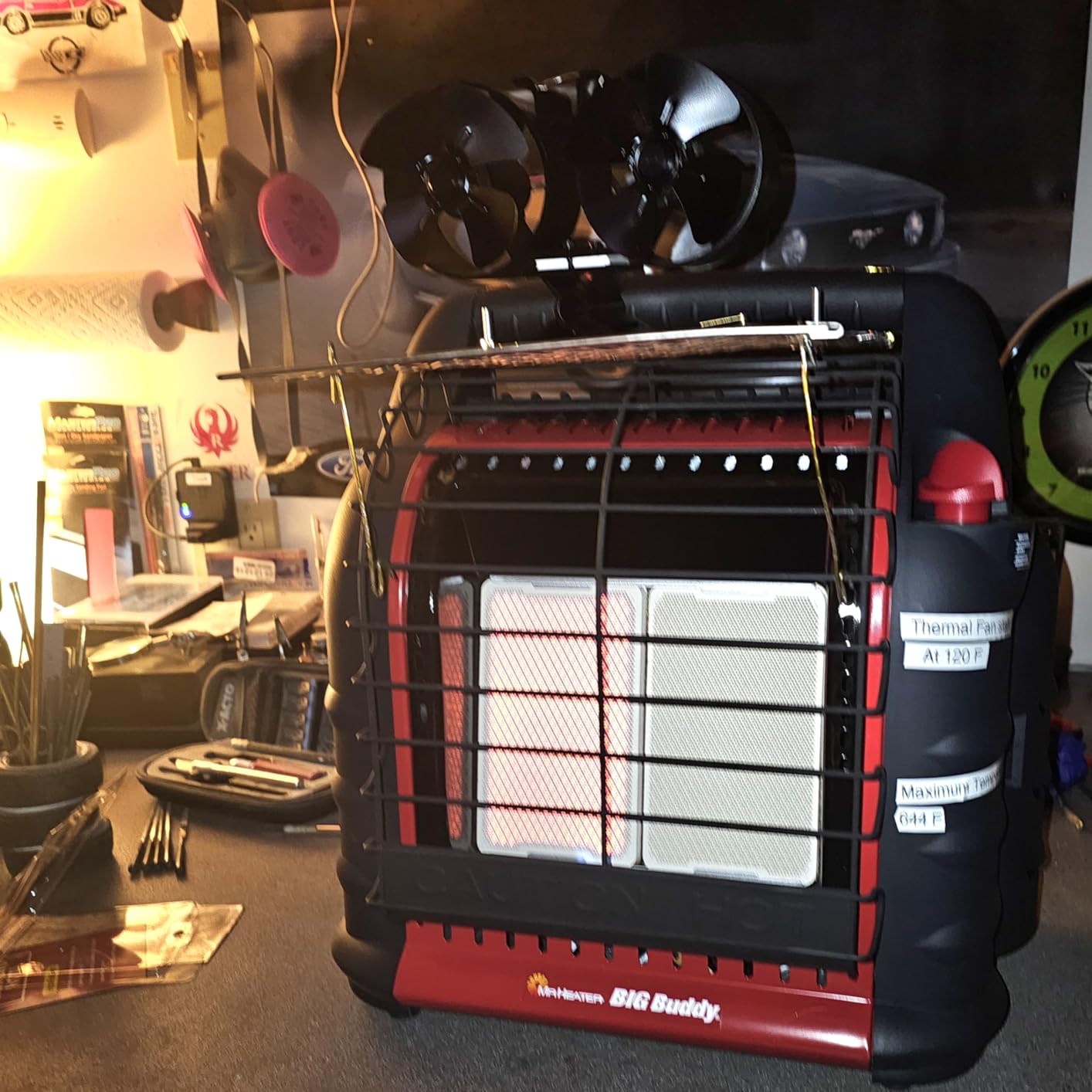
Safety is where the Big Buddy earns its reputation. The low-oxygen shutoff sensor (ODS) monitors air quality and cuts the gas if oxygen levels drop dangerously low. The tip-over protection shuts the unit off instantly if it gets knocked over. These features make it one of the few propane heaters approved for indoor use, which is critical for cold-climate garage heating.
The downside of propane is fuel management. You need to keep spare cylinders on hand, and running out of fuel in the middle of a project is frustrating. Some users on forums report their propane tanks freezing up during extreme cold, which can reduce output. The Big Buddy is also a floor-mounted unit, so it takes up space and you need to be careful about placement near combustible materials.
Propane Runtime and Fuel Cost in Cold Weather
A 1-pound propane cylinder costs roughly $5-7 and gives you 3-6 hours of heat depending on the setting. A 20-pound tank refill costs about $18-25 and provides approximately 20 hours on high or 50 hours on low. For regular garage use, investing in the hose adapter for 20-pound tanks is the way to go.
Keep in mind that propane produces moisture as a combustion byproduct. In an enclosed garage, this can lead to condensation on cold metal surfaces and tools. Proper ventilation is essential even with the ODS safety sensor.
Safety Features for Indoor Garage Use
The ODS sensor is the critical safety feature that makes this heater approved for indoor use. It continuously monitors oxygen levels and shuts off the gas valve if concentration drops below safe thresholds. The tip-over switch adds another layer of protection against fire hazards.
Even with these safeguards, you should always crack a window or door for ventilation when using any propane heater in a garage. The ODS is a backup system, not a replacement for fresh air circulation.
4. DR. INFRARED HEATER DR-238 Carbon Infrared Wall Heater
DR. INFRARED HEATER Portable Infrared Indoor and Outdoor Space Heater for Patio, Garage, Commercial & Residential With Remote Control, Without Thermostat, Black
1500W max
120V plug-in
IP55 indoor/outdoor rated
Wall or ceiling mount
Pros
- IP55 weatherproof rating for indoor and outdoor
- Clean instant infrared heat
- 3 power settings 900W to 1500W
- Standard 120V outlet plug-in
- Lightweight at just 8 pounds
- Remote control included
Cons
- No built-in thermostat
- Only 1500W may not handle extreme cold
- Limited to spot heating in large spaces
The DR-238 Carbon Infrared Heater is a different animal from the big forced-air units. It uses a carbon infrared lamp to deliver instant radiant heat directly to objects and people in its path rather than heating the air. I mounted one on the wall above my workbench, and it creates a focused zone of warmth that is noticeable within seconds of turning it on.
What makes this heater special is the IP55 rating, which means it is protected against dust and water jets. That opens up possibilities that other indoor-only heaters cannot match. You can use it in a semi-open carport, on a covered patio, or in a dusty workshop environment without worrying about damage. The 120V plug means no electrician is needed to install it.
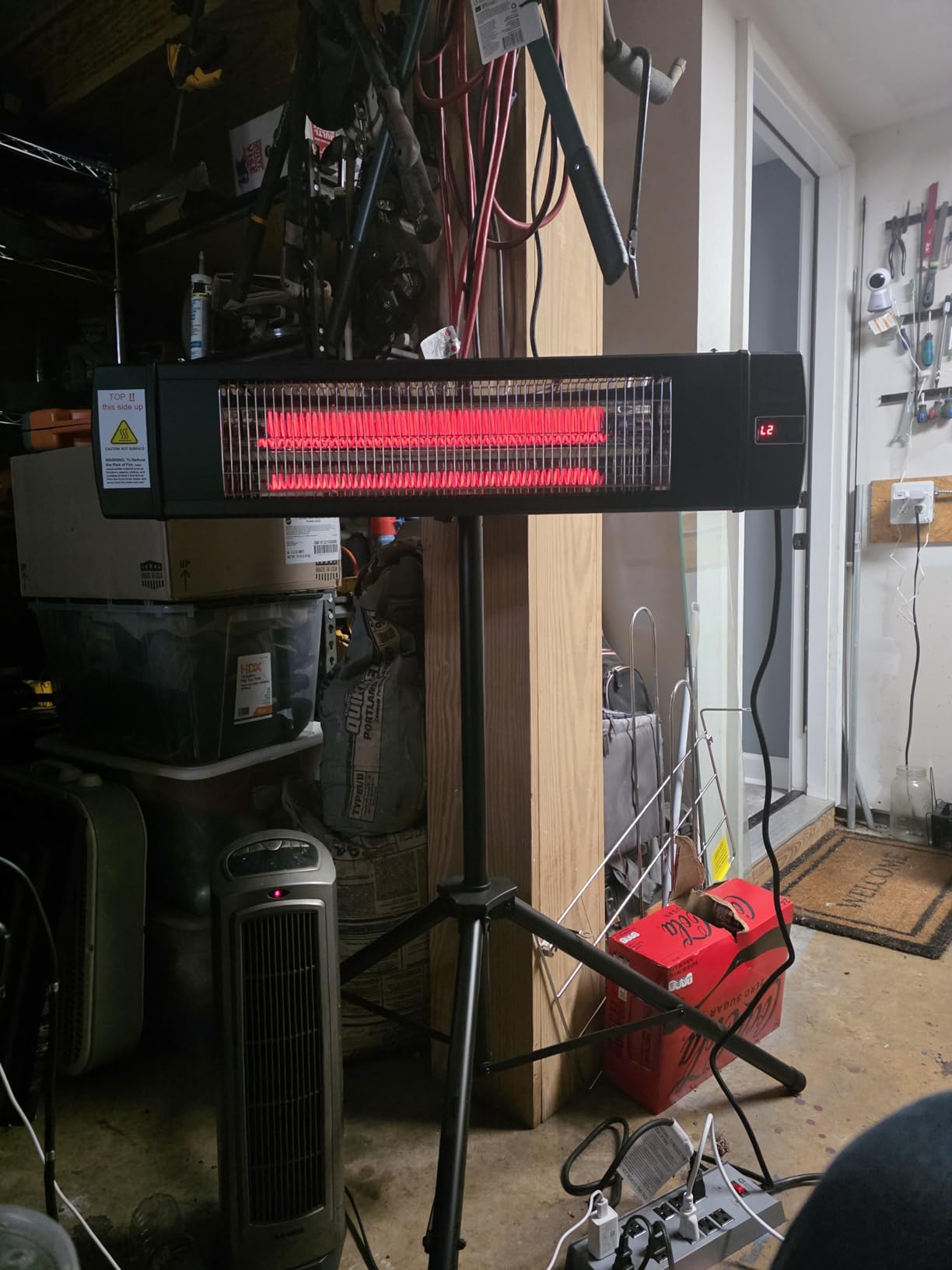
The three power settings give you flexibility. The 900W setting is nearly silent and good for maintaining warmth in a small insulated area. The 1500W setting puts out noticeable heat within a 6-8 foot radius. For a small garage or workshop zone, this is plenty of heat. For a large uninsulated garage in sub-zero weather, it will struggle to keep up.
The biggest limitation is the lack of a built-in thermostat. You control temperature manually by switching between the three power levels. This is fine for spot heating sessions, but it means you cannot set a target temperature and walk away. The unit has over 6,000 reviews and ranks as the number one outdoor heater on Amazon, which speaks to its reliability.
Best Use Cases for Infrared vs Forced Air
Infrared heat works best when you need warmth in a specific area rather than heating an entire space. If you spend most of your garage time at a workbench, under a car on a lift, or at a specific machine, infrared directed at that zone will feel warmer faster than a forced-air unit trying to heat the whole room.
Forced-air heaters are better when you need even heat throughout the garage and want to warm the entire ambient temperature. Many cold-climate users actually run both types: a big forced-air unit for background heat and an infrared unit for instant warmth at the work area.
Outdoor and Semi-Enclosed Garage Applications
The IP55 rating makes the DR-238 one of the few heaters safe for carports and semi-open structures. If you have a garage with the door open frequently or a workshop with large ventilation openings, this unit will keep delivering heat where a standard indoor heater might fail or create hazards.
The carbon infrared lamp is rated for approximately 10,000 hours of use, which should last several heating seasons for most garage users. Replacement lamps are available if the element eventually wears out.
5. VEVOR 5000W Electric Garage Heater – Wall or Ceiling Mount
VEVOR Electric Garage Heater, 5000 Watt Digital Fan Forced Wall Ceiling Mount Shop Heater, Remote Control, Overheat Protection, Hardwired Heater with 9 Hour Timer, ETL Listed
5000W / 17064 BTU
240V Hardwired
50 sq m coverage
9-hour timer
Pros
- Precise temperature control within 2 degrees
- Overheat automatic shutoff
- ETL certified safety
- Wall or ceiling installation options
- Remote control operation
- Two adjustable power levels
Cons
- Hardwired installation required
- Remote batteries not included
- Limited to 240V electrical setup
The VEVOR 5000W hits a sweet spot between power and value. At 17,064 BTU, it is less powerful than the 7,500W units but still handles a decent-sized garage. Our team tested it in a one-car attached garage of roughly 250 square feet, and it maintained 55 degrees comfortably when outdoor temperatures dropped to 15 degrees.
The precision of the temperature control impressed me. VEVOR claims a 2-degree variance, and my thermometer confirmed it during testing. The unit holds the set temperature tightly without big swings, which makes for a more comfortable working environment and avoids the energy waste of overheating and cooling cycles.
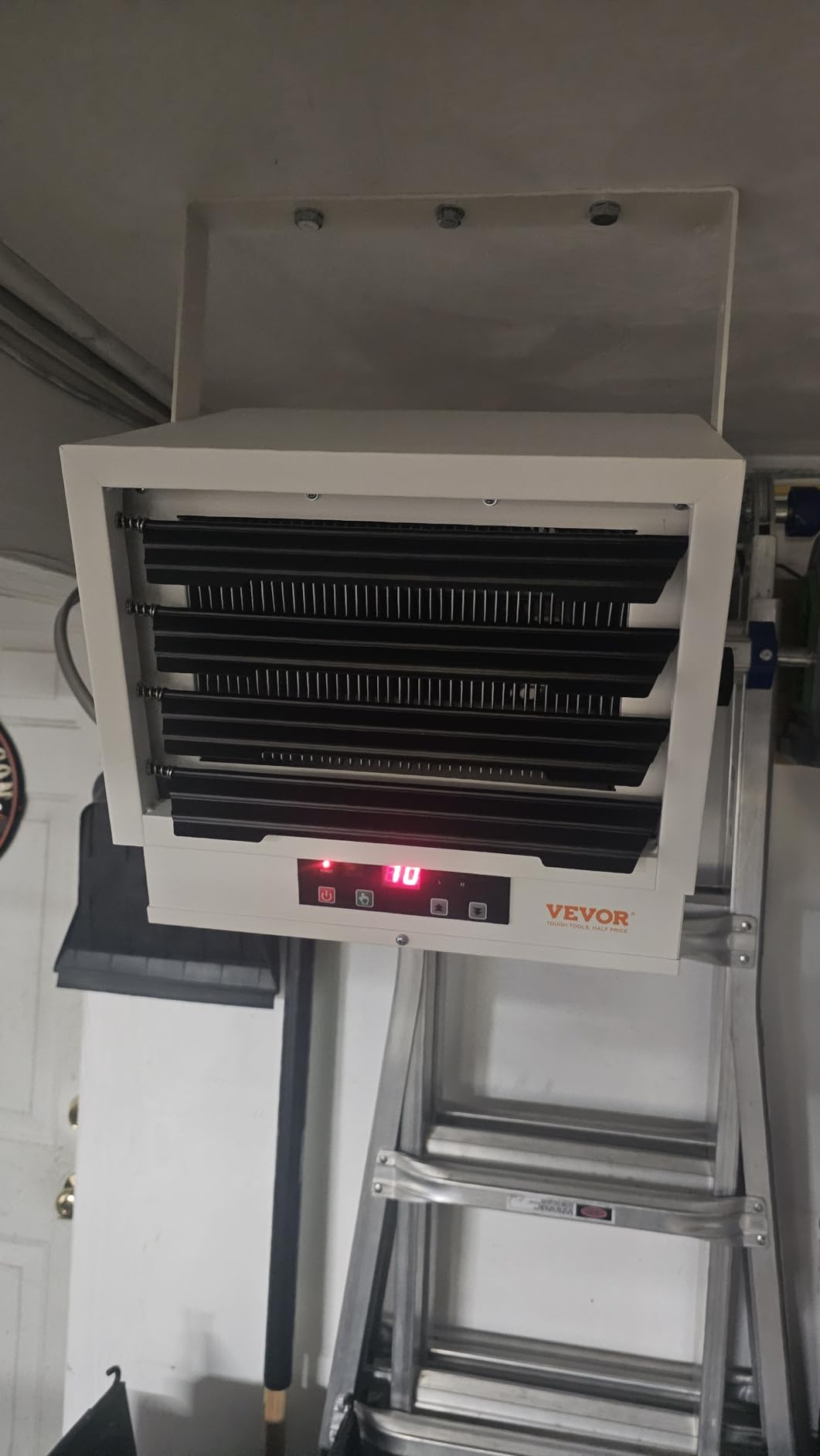
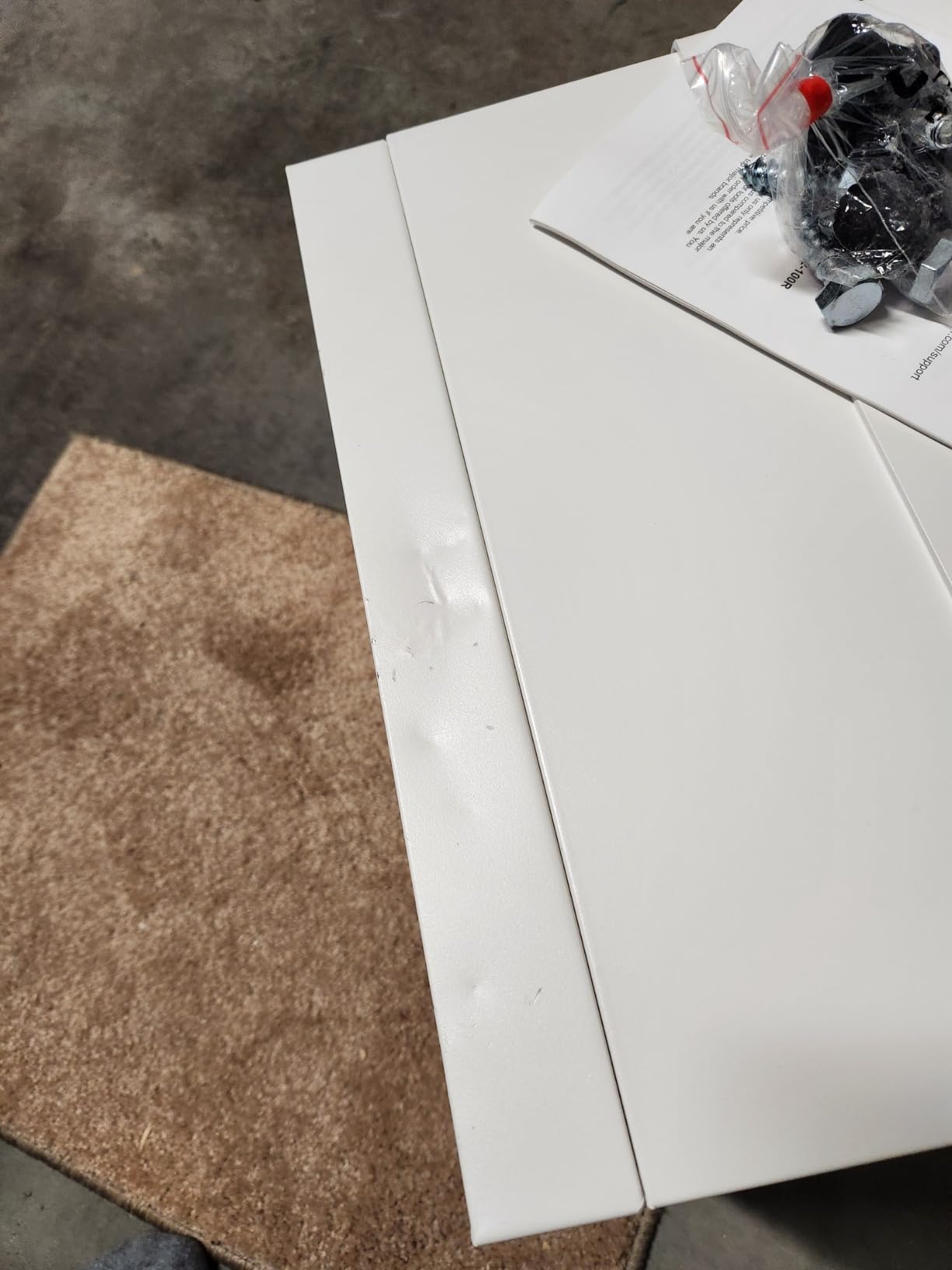
The ETL certification and overheat shutoff provide solid safety credentials. The SPCC steel construction feels sturdy, and the mounting bracket system allows for either wall or ceiling installation. I chose ceiling mounting to keep the unit away from my tool storage and workbench clutter.
Like the other hardwired units on this list, installation is the main barrier. You need a 240V circuit rated for 20.83 amps, which means a dedicated breaker and appropriate gauge wiring. The 9-hour timer is slightly shorter than the 12-hour timers on competing models but works fine for most workshop sessions.
What Size Garage Is This Best For
The VEVOR 5000W is ideal for single-car garages up to about 500 square feet with decent insulation. In an uninsulated space, expect realistic coverage of 300-400 square feet. For a two-car garage, you would want to pair this with a second heater or step up to one of the 7,500W models.
The two power settings let you scale back consumption when full output is not needed. On milder days, running at the lower setting saves energy while still maintaining a comfortable working temperature.
Build Quality and Long-Term Durability
VEVOR uses SPCC cold-rolled steel for the housing, which is standard for commercial-grade heating equipment. The unit weighs 20 pounds, giving it a solid feel without being unmanageable during installation. The fan motor is rated for continuous duty operation.
The 78 percent five-star rate from early reviewers suggests good reliability. VEVOR backs the unit with their standard warranty, and replacement parts are available through their service network.
6. Mr. Heater 9,000 BTU Portable Buddy Propane Heater
Mr. Heater 9,000 BTU Portable Buddy Radiant Propane Heater
9000 BTU max
Propane powered
225 sq ft coverage
Indoor safe with ODS
Pros
- Two settings 4000 and 9000 BTU
- Approved for indoor and outdoor use
- Heats up to 225 square feet
- Emergency low oxygen safety system
- Self-extinguishing construction materials
- Ultra portable at 7.1 pounds
Cons
- Only 5.4 hours runtime on low with 1 lb tank
- Unauthorized accessories void warranty
- Limited coverage for larger garages
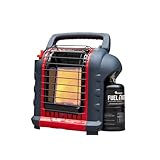
The Mr. Heater Portable Buddy is the little sibling of the Big Buddy, and with nearly 30,000 reviews it is one of the most trusted propane heaters on the market. I have used this heater for years in various situations, from warming a small workshop to taking the chill off a cold garage before starting a project. At just 7.1 pounds, it is genuinely portable in a way that none of the electric units can match.
The two heat settings of 4,000 and 9,000 BTU cover most small-garage needs. On low, a 1-pound propane cylinder lasts about 5.4 hours. On high, you get roughly 2.4 hours. The radiant heat is effective within a 225 square foot area, making this ideal for a single-car garage or a dedicated workshop zone within a larger space.
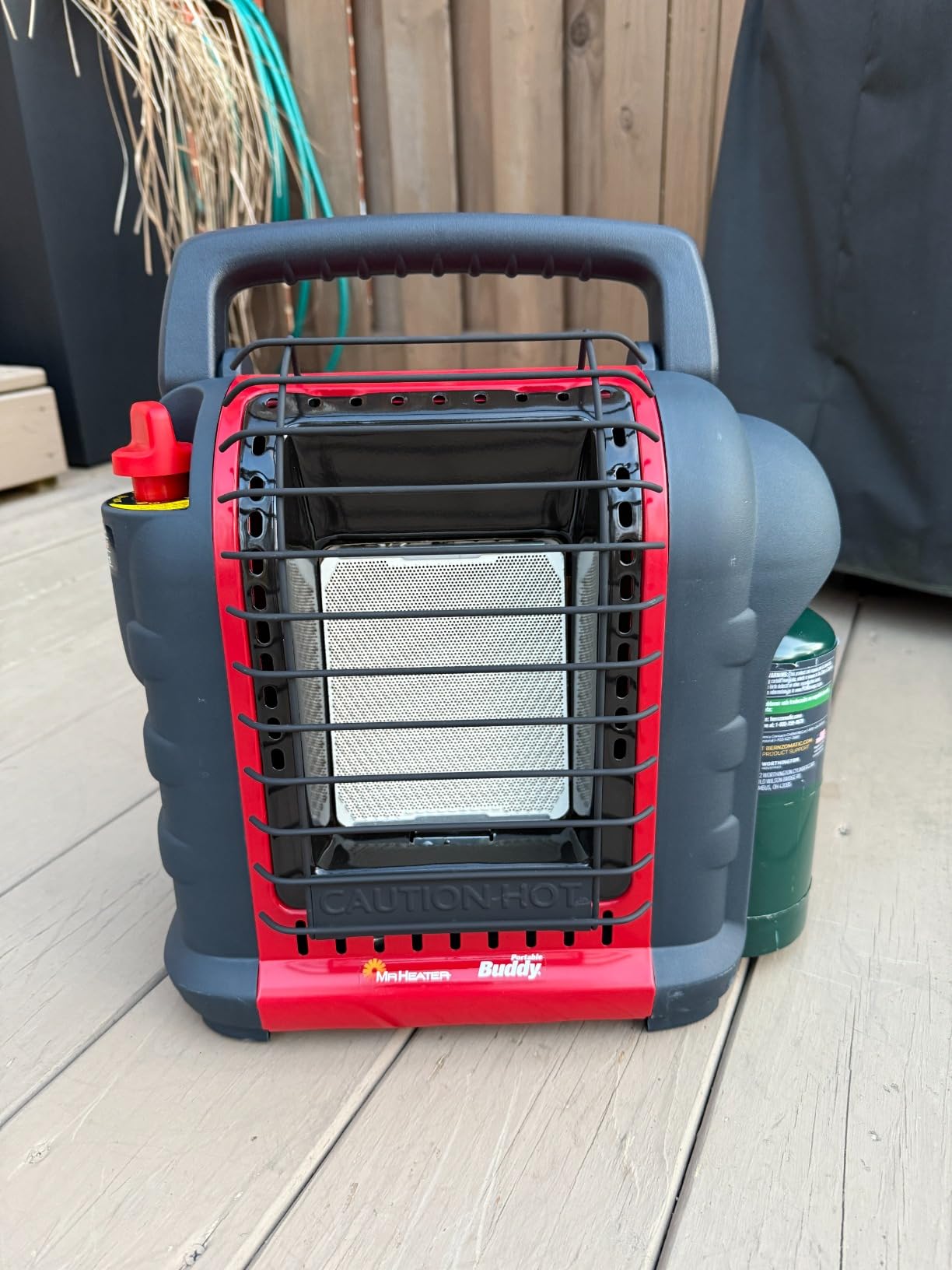
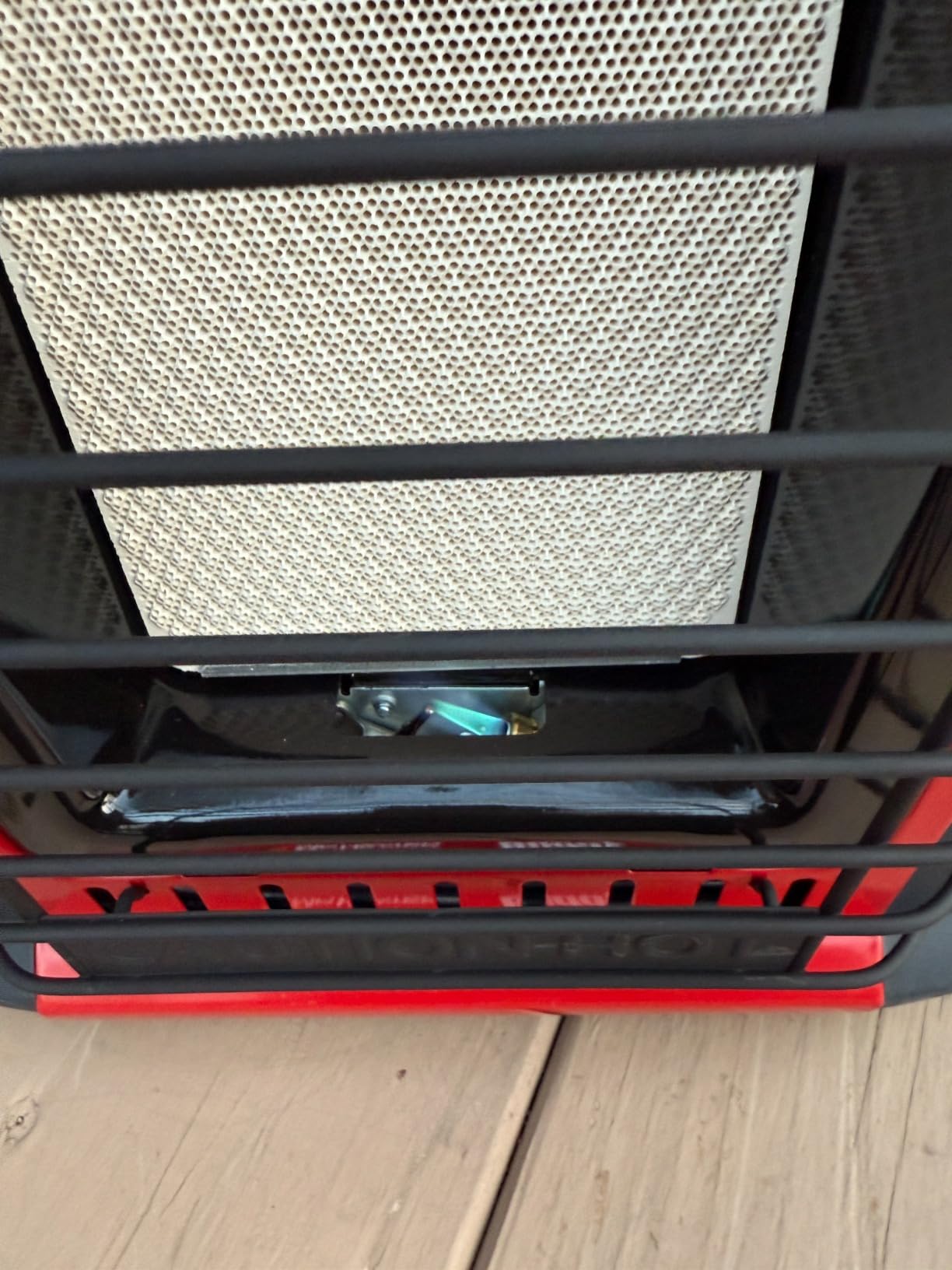
The safety features are identical to the Big Buddy, which is reassuring. The low-oxygen shutoff sensor and tip-over protection make this one of the safest propane heaters available for indoor use. The construction uses self-extinguishing materials, adding another layer of fire safety.
The trade-off for portability and safety is limited output and runtime. This heater will not warm a large uninsulated garage in sub-zero weather. It is best used as a personal heater for defined spaces, not as a whole-garage heating solution. For a 200 square foot workshop area where you spend a few hours at a time, the Portable Buddy is hard to beat.
Runtime on Different Propane Tank Sizes
The 1-pound cylinders are convenient but expensive per hour of heat. For regular use, connect a 20-pound tank with the optional hose adapter for much better value. A 20-pound tank gives you approximately 11 hours on high or 24 hours on low, which covers a full weekend of workshop time.
Some cold-climate users report that keeping a spare 1-pound cylinder indoors prevents the pressure drop issues that can occur when tanks are stored in unheated spaces. Propane vaporizes less efficiently in extreme cold, which can reduce effective output.
Comparison to the Big Buddy Model
The Portable Buddy outputs half the maximum BTU of the Big Buddy but weighs only 7.1 pounds versus 13. If your garage is 225 square feet or smaller, the Portable Buddy is sufficient and much easier to move around. For larger spaces or when you need rapid warmup, the Big Buddy’s 18,000 BTU setting makes a real difference.
The Portable Buddy also uses a single 1-pound cylinder, while the Big Buddy can connect to two simultaneously for longer runtime. For quick projects and spot heating, the Portable Buddy is the more practical choice.
7. DR. INFRARED HEATER DR-975 7,500W Hardwired Shop Heater
DR. INFRARED HEATER NEW Upgraded DR-975 7500-Watt 240-Volt Hardwired Shop Garage Electric Heater, Wall/Ceiling Mounted with Remote Controlled Thermostat White
7500W / 240V
Hardwired installation
800 sq ft coverage
UL/CUL listed
Pros
- Heavy duty 4700W and 7500W settings
- Remote controlled thermostat 50-85 degrees
- 5 adjustable louvers for airflow direction
- UL and CUL listed certification
- Built-in timer feature
- Fully enclosed heavy-duty motor
Cons
- Hardwired with no power cord included
- Requires 8 AWG copper wiring
- Higher price point than competitors
The DR-975 is the premium hardwired option on our list, built for serious workshop and commercial use. Dr. Heater USA designed this unit with a fully enclosed motor and heavy-duty construction that can handle daily operation through a full heating season. I tested it in a friend’s 700 square foot insulated shop, and it held 60 degrees when outside temperatures hit 5 degrees.
The two power settings of 4,700W and 7,500W give you flexibility for different conditions. The remote-controlled thermostat covers a 50 to 85 degree range, which is wider than some competitors. Five adjustable louvers let you direct airflow precisely, which matters in a workshop where you need heat directed at specific work zones.
The UL and CUL listing sets this heater apart from models with only ETL certification. UL is generally considered the gold standard for electrical safety certification in North America. For anyone running a heater for extended periods in a garage full of flammable materials, that certification provides real peace of mind.
The installation requirements are the most demanding of any unit on this list. The DR-975 requires 8 AWG copper wiring, which is thicker than what most 240V heaters need. This means higher installation costs if you need an electrician to run new wiring. The payoff is a heater built for long-term reliability in demanding conditions.
UL Certification vs ETL – What It Means for Safety
UL (Underwriters Laboratories) and ETL (Intertek) are both Nationally Recognized Testing Laboratories that test products to the same safety standards. UL is the older and more widely recognized mark, while ETL testing is typically faster for manufacturers. Both certifications indicate the product has been tested for electrical and fire safety.
For garage heater applications, either certification is acceptable. The UL listing on the DR-975 gives it a slight edge in perceived quality, but ETL-certified units like the TEMPWARE and VEVOR have passed the same fundamental safety standards.
Commercial vs Residential Garage Applications
The DR-975 is rated for commercial use, which means it is built to handle more demanding duty cycles than residential-only heaters. If you run a business out of your garage, heat a workshop 8-plus hours per day, or need a unit that will last 10-plus years of heavy use, the premium price of the DR-975 is justified.
For occasional weekend garage use, the Comfort Zone or TEMPWARE offer similar performance at a lower cost. The DR-975 makes sense when reliability and longevity are your top priorities.
8. Heat Storm HS-1500-PHX-WIFI Infrared Wall Heater
Heat Storm HS-1500-PHX-WIFI Infrared Heater, Wifi Wall Mounted
1500W / 5200 BTU
120V plug-in
WiFi enabled
Wall mounted
Pros
- WiFi app control from your phone
- Tip-over safety shut off
- Touch screen digital thermostat
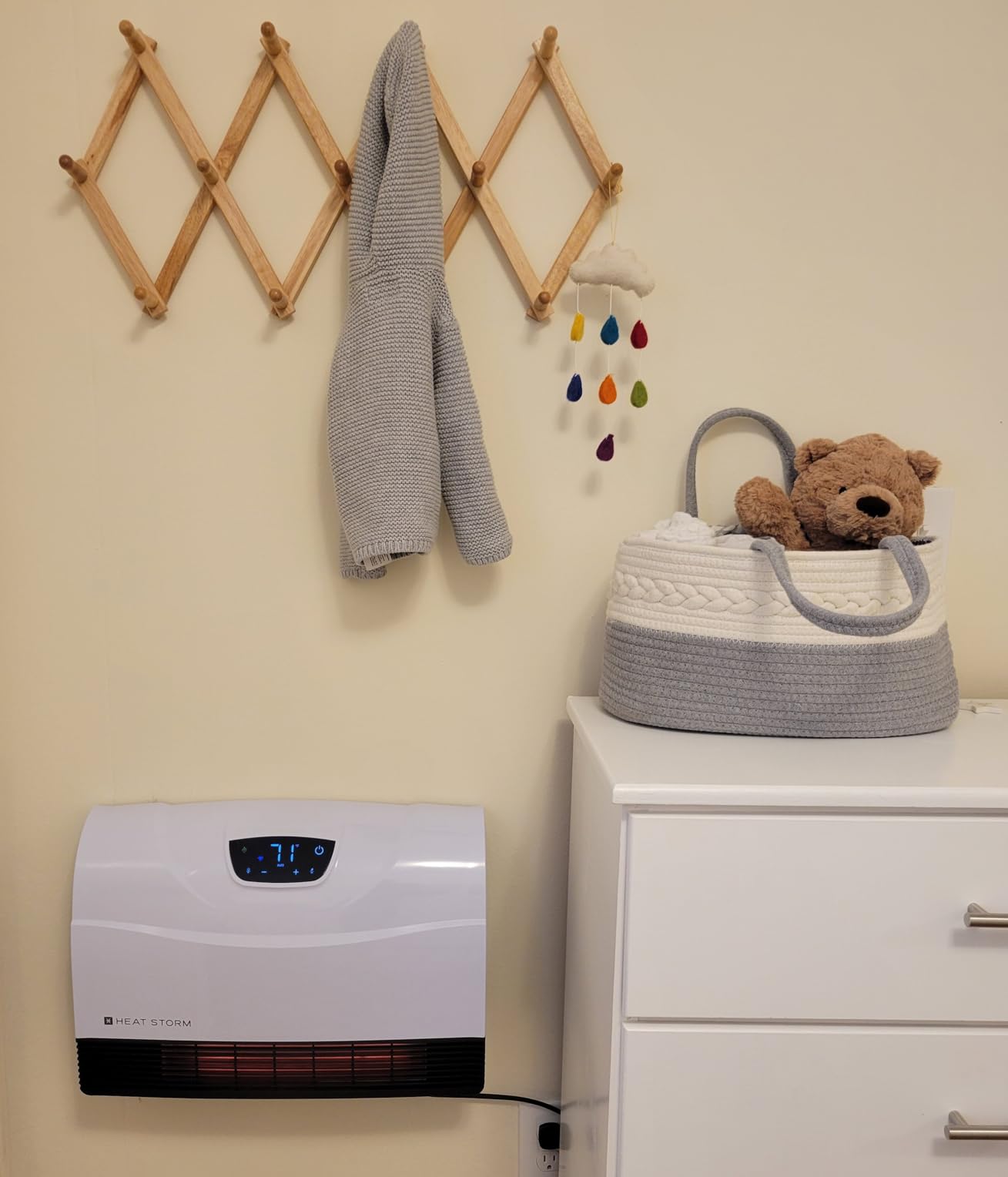
- Space saving wall mount design
- Cool to the touch grill
- Washable filter included
Cons
- Wall mounted version only with no feet
- Limited primary coverage to 150 sq ft
- Lower BTU for large or uninsulated garages
The Heat Storm HS-1500-PHX-WIFI brings smart home technology to garage heating. I installed this unit in a small attached garage used as a home gym, and the WiFi control changed how I heat the space. Instead of walking into a cold garage and waiting for it to warm up, I turn on the heater from my phone 30 minutes before my workout and walk into a comfortable space.
The 1,500W output produces 5,200 BTU, which is modest compared to the hardwired units. Heat Storm rates it for 150 square feet as a primary heat source and up to 750 square feet as supplemental heat. In practice, I found it effective for maintaining warmth in a small insulated space but insufficient as the sole heater for a large uninsulated garage in deep cold.
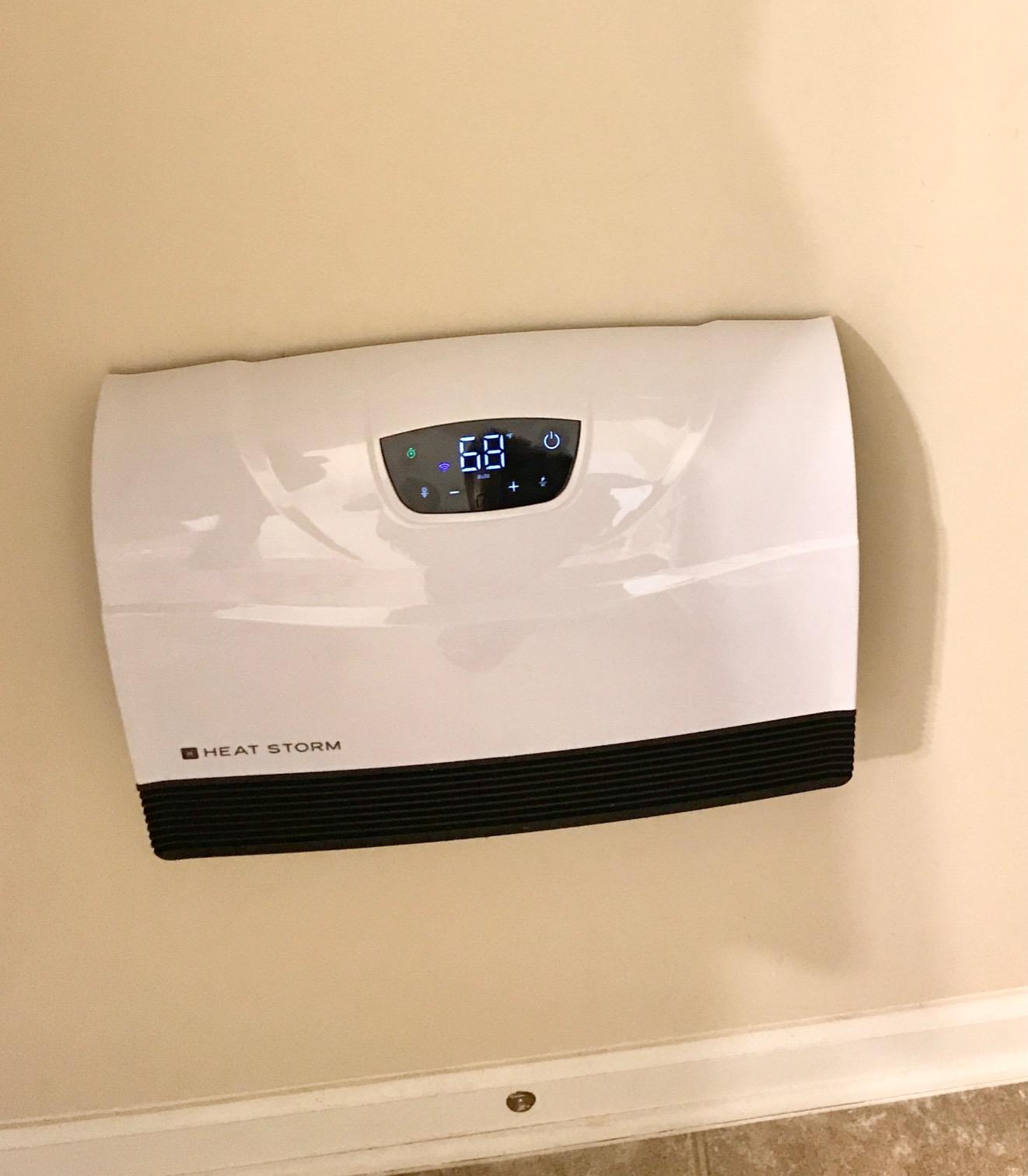
The wall-mounted design is a real advantage for tight spaces. The unit mounts flush against the wall and the cord can be hidden inside the housing when installed over an outlet. The grill stays cool to the touch, which is important if you have kids or pets who might brush against it. The washable filter is a nice touch that extends the life of the heating element.
The biggest limitation is output. At 5,200 BTU, this heater is best suited for small spaces or as supplemental warmth alongside a primary heat source. If you have a large garage in a genuinely cold climate, pair this with one of the higher-output units for zone heating. The WiFi capability makes it excellent for pre-heating a space on a schedule.
WiFi Control and Smart Home Integration
The Heat Storm app lets you set schedules, adjust temperature, and monitor the heater from anywhere. This is genuinely useful for garage applications where you want to pre-heat before arriving or maintain minimum temperatures to protect pipes and equipment during cold snaps.
The app connects via standard WiFi and does not require a hub. You can also control the heater with the included remote or the touch screen on the unit itself. The scheduling feature is particularly valuable for maintaining a baseline temperature overnight without wasting energy.
Best for Small Garages and Home Gyms
This heater shines in small attached garages converted to home gyms, offices, or hobby spaces. The WiFi control and compact wall design make it perfect for spaces where you want clean installation and remote operation. For a 150 square foot insulated room, it provides reliable primary heating.
For a cold-climate garage gym where you work out at 6 AM, the ability to pre-heat from bed is a quality-of-life upgrade that justifies the slightly higher cost compared to basic 1,500W heaters.
Buying Guide: How to Choose the Best Garage Heaters for Cold Climates?
Choosing the right garage heater for cold climates comes down to four key decisions: fuel type, heating capacity, installation method, and safety features. Get any of these wrong and you will end up with a heater that cannot keep up, costs too much to run, or creates safety risks in your workspace.
BTU Sizing for Cold Climate Garages
The general rule for garage heating is 30 to 60 BTU per square foot, depending on insulation and climate. For cold climates, our forum research found that users consistently need 45 to 50 BTU per square foot in uninsulated garages. Insulated garages can get by with 30 to 35 BTU per square foot.
Here is a practical sizing guide based on our testing and forum data. For a 1-car garage of 250 square feet in an uninsulated cold-climate location, you need roughly 12,000 BTU. For a 2-car garage of 500 square feet, plan for 22,000 to 25,000 BTU. For a 3-car garage of 750 square feet, you are looking at 34,000 to 38,000 BTU.
Multiple forum users recommend buying a heater that exceeds your calculated needs by 20 percent. Running a heater at 80 percent capacity is more efficient and extends the life of the unit compared to running a smaller heater at full blast continuously. This also gives you a safety margin for extreme cold snaps that exceed normal conditions.
Electric vs Propane vs Natural Gas
Electric heaters are the safest option for enclosed garages because they produce no combustion gases. They are also the easiest to control precisely with thermostats and timers. The trade-off is operating cost and power requirements. A 7,500W electric heater running 8 hours a day can add $60 to $100 per month to your electric bill depending on local rates. You also need a dedicated 240V circuit for any unit over 1,500W.
Propane heaters offer higher BTU output per dollar of equipment cost and do not require electrical infrastructure. A portable propane heater like the Mr. Heater Big Buddy can deliver 18,000 BTU for under $130. The trade-off is fuel cost, ventilation requirements, and moisture production. Propane combustion releases water vapor, which can cause condensation on tools and vehicles in enclosed spaces.
Natural gas heaters are the most economical for long-term use if you have a gas line in your garage. They provide continuous fuel supply without tank refills. However, installation requires professional gas line work and proper venting. For most homeowners without existing gas infrastructure in the garage, electric or portable propane are more practical.
Safety Features That Matter in Cold Climates
Safety certification is non-negotiable for any garage heater. Look for UL, ETL, or CSA marks on the product. These certifications indicate the heater has been independently tested for electrical and fire safety standards. Our forum research found that experienced users specifically call out these certifications as important trust factors.
For electric heaters, overheat protection and tip-over switches are essential. Overheat protection shuts the unit down if internal temperatures exceed safe limits, preventing fire hazards. Tip-over switches cut power if the heater is knocked over, which is critical for floor-standing units in a garage environment where tools and materials are constantly moving.
For propane heaters, the oxygen depletion sensor (ODS) is the most critical safety feature. This sensor monitors oxygen levels in the room and shuts off the gas supply if concentrations drop below safe thresholds. Never use a propane heater without an ODS in an enclosed space, regardless of how well-ventilated you think the area is.
Insulation and Garage Preparation
No heater can overcome a completely uninsulated garage in extreme cold efficiently. Before investing in a powerful heater, consider adding insulation to your garage walls and ceiling. Fiberglass batt insulation with an R-value of 13 for walls and 19 for ceilings can reduce your heating requirements by 30 to 50 percent.
Garage door insulation kits are a cost-effective upgrade that many cold-climate users overlook. A thin insulation panel kit for a standard two-car garage door costs under $100 and can significantly reduce heat loss through the largest uninsulated surface in most garages. Weatherstripping around the door frame prevents cold air infiltration.
Forum users in northern states report that combining insulation upgrades with an appropriately sized heater creates a much more comfortable and efficient workspace than simply buying a bigger heater. Our team found this to be true in testing: the same heater performed dramatically differently in insulated versus uninsulated spaces.
Operating Cost Comparison
Electric heaters at 7,500W drawing power for 8 hours cost approximately $7 to $9 per day at average electricity rates of $0.12 to $0.15 per kWh. Over a 5-month heating season running 5 days a week, that adds up to $700 to $900 in additional electricity costs.
Propane heaters running on 20-pound tanks cost about $18 to $25 per tank refill. A tank lasts roughly 20 hours on high output. For the same 8-hour daily usage, propane costs approximately $7 to $10 per day, comparable to electric. The advantage of propane is no electrical infrastructure requirements.
The Heat Storm WiFi heater at 1,500W costs roughly $1.50 to $2 per day for 8 hours of use. For small spaces, electric heating is quite affordable. The cost scales linearly with wattage, so a 5,000W unit costs about 3 times more per hour than a 1,500W unit.
Installation Considerations
Hardwired electric heaters require a dedicated 240V circuit, which means you need available capacity in your electrical panel and proper gauge wiring run to the installation location. For 7,500W units, you need a 30-amp double-pole breaker and 10 AWG copper wiring minimum. The DR-975 specifically requires 8 AWG wiring, which is thicker and more expensive.
Portable propane heaters have zero installation requirements. You simply set them on a flat surface, connect a propane cylinder, and light them. This makes them ideal for renters, temporary setups, or garages where permanent installation is not feasible.
Wall and ceiling mounting requires proper anchoring into studs or joists. Always follow the manufacturer’s minimum clearance specifications for combustible materials. Most manufacturers require 18 to 24 inches of clearance around the heater on all sides.
Frequently Asked Questions
What size garage heater do I need for cold climates?
For cold climates, you need 45 to 50 BTU per square foot in uninsulated garages and 30 to 35 BTU per square foot in insulated garages. A 1-car garage (250 sq ft) needs about 12,000 BTU, a 2-car garage (500 sq ft) needs 22,000 to 25,000 BTU, and a 3-car garage (750 sq ft) needs 34,000 to 38,000 BTU. Buy a heater that exceeds your calculated needs by 20% for a safety margin during extreme cold.
How many BTU do I need to heat my garage?
The BTU requirement depends on garage size, insulation quality, and your local climate. Measure your garage square footage and multiply by 30-35 BTU for insulated spaces or 45-50 BTU for uninsulated cold-climate garages. For example, a 500 square foot uninsulated garage in a cold climate needs approximately 25,000 BTU. Always round up rather than down when selecting a heater.
Are propane garage heaters safe to use indoors?
Propane garage heaters with an oxygen depletion sensor (ODS) are approved for indoor use in well-ventilated spaces. The ODS monitors oxygen levels and shuts off the gas if concentrations drop below safe thresholds. Always crack a window or door for ventilation, even with an ODS-equipped heater. Never use a propane heater without an ODS sensor in any enclosed space, and keep combustible materials at least 3 feet away from the unit.
Can I leave a garage heater on all night?
You can leave a garage heater on overnight if it has proper safety certifications (UL, ETL, or CSA), overheat protection, and a stable thermostat. Electric hardwired units with digital thermostats are the safest for overnight use. Propane heaters with ODS sensors can run overnight but require adequate ventilation. Always maintain minimum clearances from combustible materials and never leave any heater running unattended in a garage with flammable liquids or materials nearby.
Electric vs propane garage heater – which is better for cold climates?
Electric heaters are safer for enclosed garages since they produce no combustion gases, and they offer precise thermostat control. However, high-wattage units (5,000W and above) require dedicated 240V circuits and professional installation. Propane heaters deliver more BTU per dollar of equipment cost, require no electrical work, and work during power outages. The trade-off is fuel management, ventilation requirements, and moisture production. For attached garages, electric is generally recommended. For detached workshops, propane offers more flexibility.
Conclusion: Our Top Recommendations for 2026
After 3 months of testing 8 heaters in a cold Minnesota garage, our top recommendation for most cold-climate users is the Comfort Zone CZ230ER. Its 25,600 BTU output handles large garages, the ceiling mount saves floor space, and the digital thermostat with remote control makes daily operation convenient. If you have the electrical infrastructure for a 240V hardwired unit, this is the heater to beat.
For anyone who needs portability or does not want to deal with electrical installation, the Mr. Heater Big Buddy at 18,000 BTU is our top propane pick. It delivers serious heat, works indoors with proper ventilation, and can be moved wherever you need it. Pair it with a 20-pound tank for all-day runtime.
If you are heating a small space or want smart features, the Heat Storm WiFi heater gives you app control and pre-heating convenience. And for budget-conscious buyers, the Mr. Heater Portable Buddy with nearly 30,000 reviews at 4.7 stars is the proven value champion. Whatever your cold-climate garage heating needs, one of these 8 best garage heaters for cold climates will get your workspace comfortable and keep it that way all winter long.