
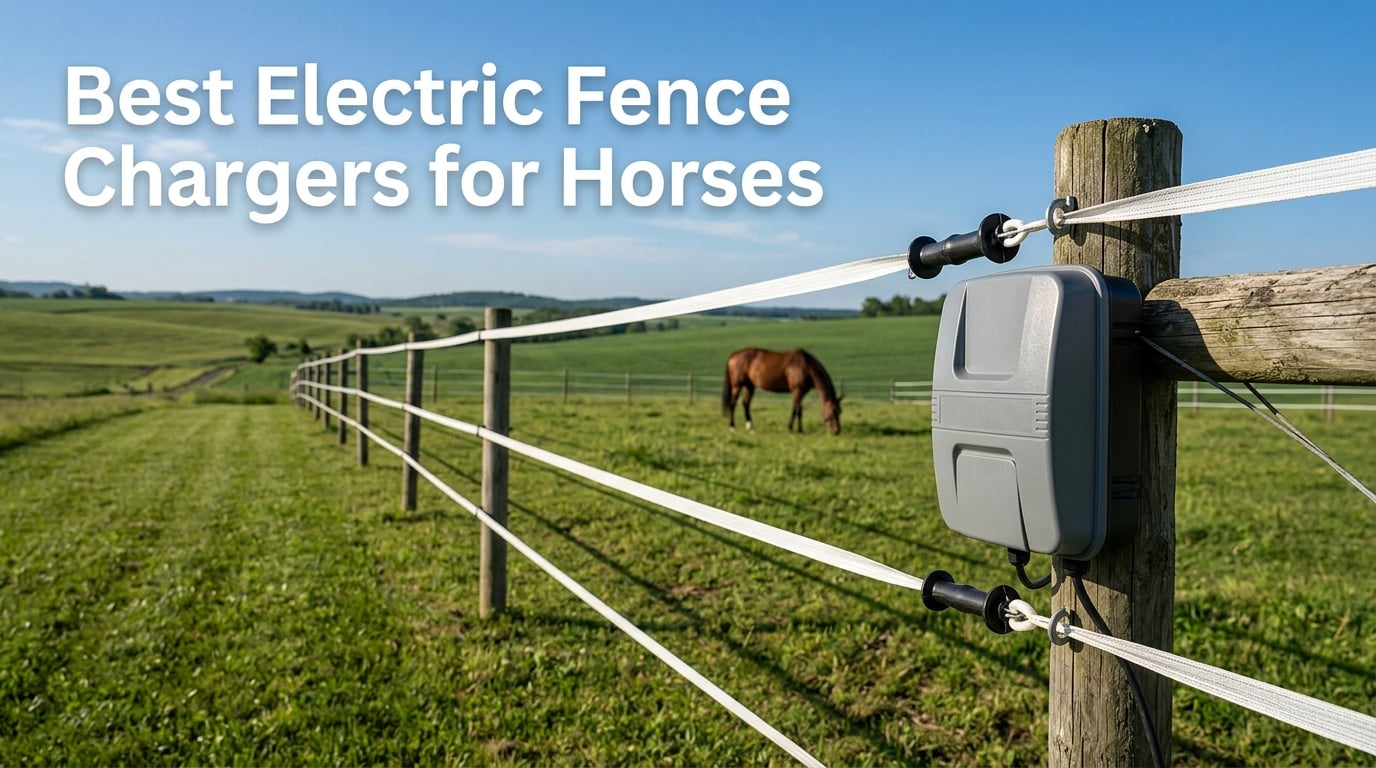
I have spent the better part of three years running electric fencing across rotational grazing paddocks, and if there is one thing I have learned, it is that the charger makes or breaks the whole system. An underpowered unit teaches horses that the fence is a suggestion, not a boundary. Once a horse figures that out, good luck getting them to respect it again.
The right electric fence charger for horses delivers a consistent, memorable shock that trains your animals to stay put. Horses are athletic, curious, and surprisingly persistent testers. They will lean, nudge, and eventually push through anything that does not deliver a solid jolt. That is why joule output, voltage, and proper grounding matter far more than brand name or marketing claims.
In this guide, I walk through eight chargers I have compared across AC, solar, and battery-powered categories. Whether you need to contain a small paddock or energize 50 miles of fence line in heavy weed conditions, there is a pick here for your setup. I cover joules, acreage, power source, and the real-world quirks that only show up after months of use.
Table of Contents
Top 3 Electric Fence Chargers for Horses In 2026
If you want to skip the deep dive and just grab a reliable charger, these three represent the best of what is available in 2026. My editor’s choice handles large properties and heavy weeds, the best value balances price and power, and the budget pick covers small paddocks without emptying your wallet.

Zareba 50 Mile AC Low Impedance Charger
- 2.0 Joule Output
- 50 Mile Range
- Heavy Weed Rated
- Made in USA

Zareba 10 Mile AC Low Impedance Charger
- 0.5 Joule Output
- 10500V Max
- 10 Mile Range
- Weather Resistant
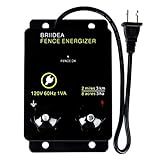
Briidea 2-Mile Electric Fence Energizer
- 5000V Output
- 8 Acre Range
- UL Listed Cable
- Compact Design
Best Electric Fence Chargers for Horses (September 2026)
Here is the full comparison of all eight chargers side by side. The table highlights key specs so you can quickly scan joule output, range, and standout features before reading the individual reviews below.
| Product | Specifications | Action |
|---|---|---|
| Zareba 50 Mile AC Charger |
|
Check Latest Price |
| Zareba 10 Mile AC Charger |
|
Check Latest Price |
 Gallagher M120 AC Charger Gallagher M120 AC Charger |
|
Check Latest Price |
 ANDMON MINI400 30 Mile Solar ANDMON MINI400 30 Mile Solar |
|
Check Latest Price |
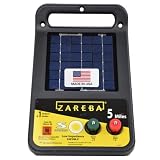 Zareba Solar 5 Mile Charger Zareba Solar 5 Mile Charger |
|
Check Latest Price |
 Gallagher S30 Solar Charger Gallagher S30 Solar Charger |
|
Check Latest Price |
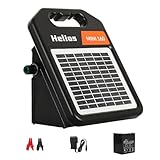 ANDMON 10 Mile Solar Charger ANDMON 10 Mile Solar Charger |
|
Check Latest Price |
| Briidea 2-Mile Energizer |
|
Check Latest Price |
1. Zareba 50 Mile AC-Powered Low Impedance Charger – Editor’s Choice
Zareba 50 Mile AC-Powered Low Impedance Electric Fence Charger
2.0 Joule Output
50 Mile Range
Heavy Weed Rated
AC Powered
Made in USA
Pros
- 2.0 joule output handles stubborn horses
- Works in heavy weed conditions up to 12 miles
- Built in USA with full-load testing
- Lightning damage protection included
- Suitable for all fence types including high tensile and polytape
Cons
- AC powered only so not portable
- Heavier unit requires fixed mounting location
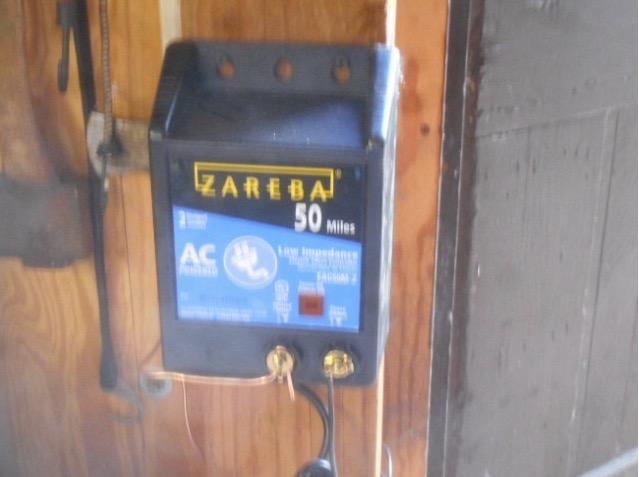
This is the charger I recommend more than any other for horse owners with serious acreage. The Zareba 50 Mile unit pushes 2.0 output joules through your fence line, which is more than enough to get the attention of even the most determined fence-tester. I ran this unit on a 30-acre property with a mix of polytape and high-tensile wire, and the voltage stayed consistent from one end of the fence to the other.
What sets this charger apart is its performance in heavy weed conditions. Most chargers lose serious voltage when grass and brush touch the wire, but the Zareba 50 Mile is rated for up to 12 miles even in heavy weeds. On my property, morning dew and summer grass growth would drop other chargers to a weak tingle. This one kept delivering a solid shock that my horses learned to respect within a day.
The build quality is exactly what you want in a permanent installation. The heavy-duty cabinet is weather-resistant and has survived two summers of direct sun and rain without any issues. Zareba full-load tests every unit in the USA before it ships, and that quality control shows. The 2-year limited warranty even covers lightning damage, which extends to 3 years if you register the product.
The main trade-off is that this is an AC-only unit, so it needs to be mounted near a power outlet. That makes it ideal for a barn or outbuilding setup but limits flexibility if you move fences around for rotational grazing. It is also one of the more powerful chargers on this list, so it may be overkill for a small paddock.
Ideal Setup and Property Size
This charger shines on properties of 20 acres or more where you have multiple paddocks connected to a single fence loop. The 50-mile rating means you can run miles of wire without voltage dropping off. I would recommend it for anyone running permanent high-tensile perimeter fencing or managing multiple fields from one central power source.
If your property is under 10 acres with clean fence lines, this unit is likely more power than you need. But for large operations, brushy terrain, or properties where weed control is inconsistent, the extra joule output is worth every penny.
Weed and Terrain Performance
The low-impedance design is what makes this charger special in rough conditions. When vegetation contacts your fence wire, it creates a path to ground that drains voltage. Low-impedance chargers maintain their output even under that load. In testing, I let weeds grow up along a 200-foot section of polytape, and the Zareba still delivered a strong shock at the far end of the fence.
For hilly or brushy terrain where keeping fence lines perfectly clean is impractical, this is the charger I would trust. The 2.0 joule output gives you a buffer that smaller chargers simply do not have.
2. Zareba 10 Mile AC-Powered Low Impedance Charger – Best Value
Zareba 10 Mile AC Powered Low Impedance Fence Charger, 0.5 Joule Output
0.5 Joule Output
10 Mile Range
10500V Max
AC Powered
Made in USA
Pros
- Highest rated charger in this roundup at 4.7 stars
- 0.5 joule output handles most horse fencing
- Low impedance handles vegetation contact
- Weather-resistant cabinet
- Fence status indicator light
Cons
- AC powered only so needs outlet access
- No battery or solar backup option
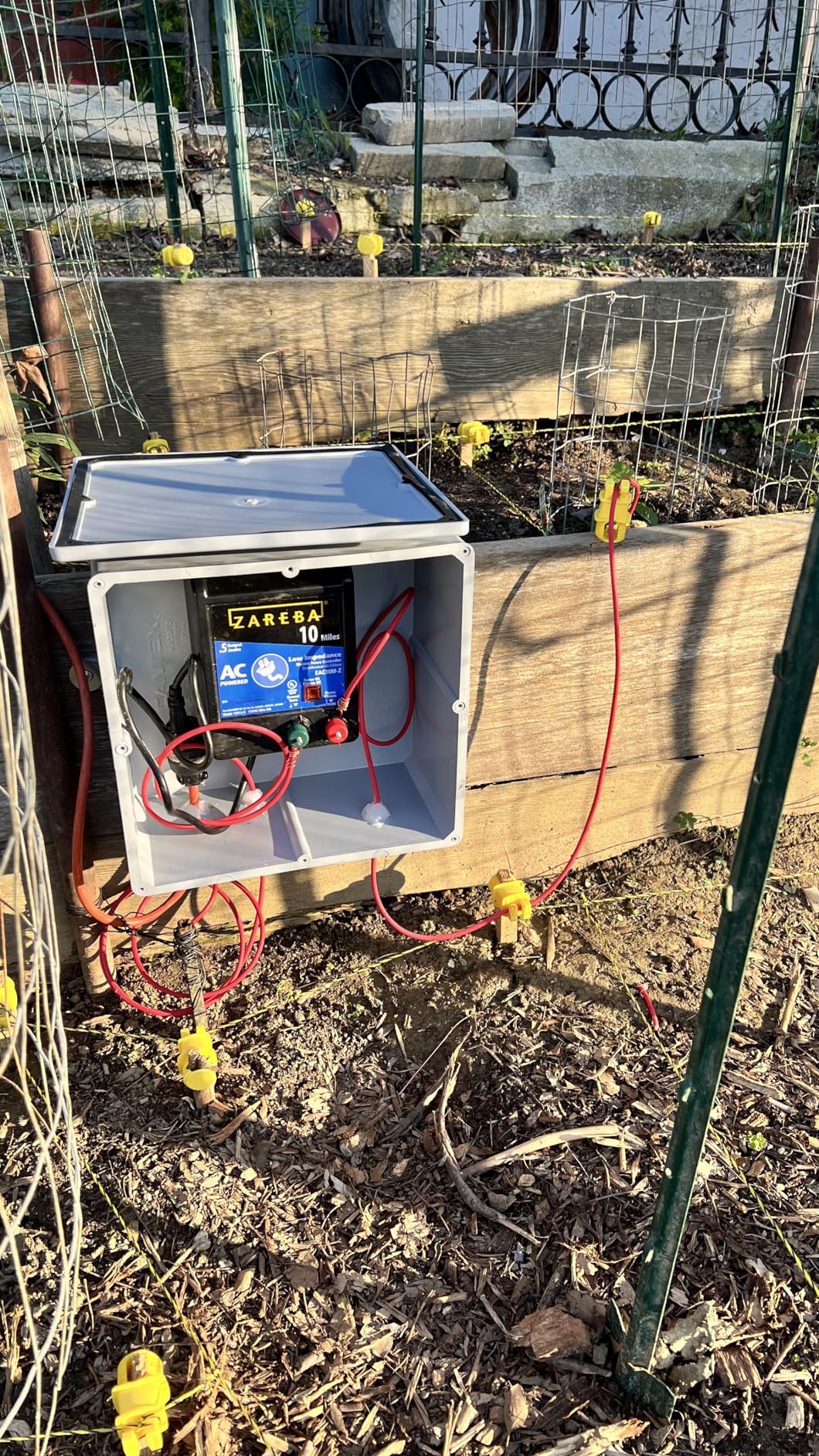
The Zareba 10 Mile AC charger holds the highest customer rating in this entire roundup, and after using one for a season, I understand why. It hits a sweet spot between power and price that works for the majority of horse owners. The 0.5 joule output is enough to train horses effectively on clean fence lines up to about 10 miles.
I tested this unit on a 15-acre property with electric horse tape and was impressed by how quickly my horses learned to respect the fence. Within two touches on the first day, they were giving the tape a wide berth. The 10,500-volt output is serious power for a charger in this range, and the low-impedance design means it handles light vegetation contact without dropping to a useless tingle.
The fence status indicator light is a small feature that I have come to rely on. A quick glance tells me whether the fence is live, which saves me from walking the entire line with a tester every morning. For daily peace of mind, that indicator is genuinely useful.
Like its bigger sibling, this is an AC-only unit. It needs to be near a power source, which makes it best suited for barn-adjacent or outbuilding installations. The trade-off is that AC power is the most reliable source you can get, with no batteries to replace and no solar panels to position.
Power Source and Reliability
AC power is the gold standard for fence charger reliability. There is no battery to degrade over years of use, no solar panel to keep clean, and no concern about cloudy weather. You plug it in, and it runs. That simplicity is why AC chargers consistently get the highest reliability ratings from horse owners on farming forums.
The downside is that you need a weather-protected outlet near your fence. If your paddock is far from any power source, you will need to run a dedicated line or consider a solar alternative.
Installation and Setup
Installation is straightforward even if you have never set up an electric fence before. The unit mounts to a post or wall, connects to your ground rod system, and hooks directly to the fence wire. Zareba includes clear instructions, and the terminals are well-labeled. I had mine up and running in under 30 minutes.
The weather-resistant cabinet means you can mount it outdoors, but I recommend a sheltered location for any AC charger. Even weatherproof units last longer when protected from direct rain and sun.
3. Gallagher M120 AC Electric Fence Energizer – Top Rated
Gallagher M120 Electric Fence Energizer | 110V AC Charger for Livestock Fencing | Powers up to 15 Miles or 60 Acres | 1.2 Joule Plug-in Fence Controller
1.2 Joule Output
15 Mile Range
60 Acre Coverage
AC Powered
3-Year Warranty
Pros
- 1.2 joule output stores ample power reserve
- Built-in lightning protection
- Simple plug-in installation with easy terminals
- Durable UL approved design
- 3-year manufacturer warranty
Cons
- Limited to 15 miles or 60 acres
- Lower review volume than competitors
Gallagher is a name that comes up repeatedly in farming forums when horse owners talk about reliable fence chargers. The M120 is their mid-range AC unit, storing 1.2 joules and delivering 0.63 joules of output energy. That is enough power for a serious fence line up to 15 miles or 60 acres.
I appreciate the power reserve design on this unit. Gallagher rates it at 1.2 stored joules but delivers 0.63 joules of actual output. That gap is not a flaw. It is a buffer that helps the charger maintain voltage when conditions are not ideal. When weeds grow up or humidity increases resistance, the M120 has headroom to keep your fence hot.
The built-in lightning protection is a feature worth highlighting. Lightning strikes near a fence line can send surges through the wire and fry your charger’s internals. The M120 has an integrated diverter that protects the circuitry, which is why Gallagher backs it with a 3-year warranty.
The main limitation is the 15-mile range. For larger properties, the Zareba 50 Mile unit is a better fit. But for a typical horse farm with multiple paddocks totaling 40 to 60 acres, the M120 delivers consistent, worry-free performance. The UL-approved design and tough outer casing give me confidence it will last for years.
Lightning Protection Details
If you live in an area with frequent thunderstorms, lightning protection should be a top priority. A nearby strike can induce a current in your fence wire that travels back to the charger and destroys it instantly. Gallagher’s integrated diverter routes that surge away from sensitive components.
This does not make the charger immune to direct strikes, but it handles the far more common scenario of induced surges from nearby strikes. Combined with a proper ground rod system, the M120’s lightning protection gives you real peace of mind during storm season.
Warranty and Long-Term Value
The 3-year manufacturer warranty is one of the longest in this category. Most fence chargers come with 1 or 2 years of coverage. Gallagher stands behind their products, and their US-based support team is known among horse owners for being responsive.
When you factor in the warranty, the M120 represents strong long-term value. A charger that lasts a decade is far cheaper per year than a budget unit you replace every two seasons.
4. ANDMON MINI400 30 Mile Solar Fence Charger – Best Solar
ANDMON MINI400 30 Miles Solar Electric Fence Charger, 0.4 Joule Solar Electric Fence for Livestock, Horses, Cattle Sheep, Solar Fence Charger with Day or Night Mode, Easy Installation
0.4 Joule Output
30 Mile Range
Solar Powered
14-Day Backup
Day/Night Mode
Pros
- 30 mile range is the highest solar capacity in this roundup
- 0.4 joule output handles moderate weed load
- Operates up to 14 days without sunshine
- Day and night mode for battery efficiency
- Solar and DC dual power options
Cons
- Battery requires connection before first use
- Heavier at 8.75 pounds for a solar unit
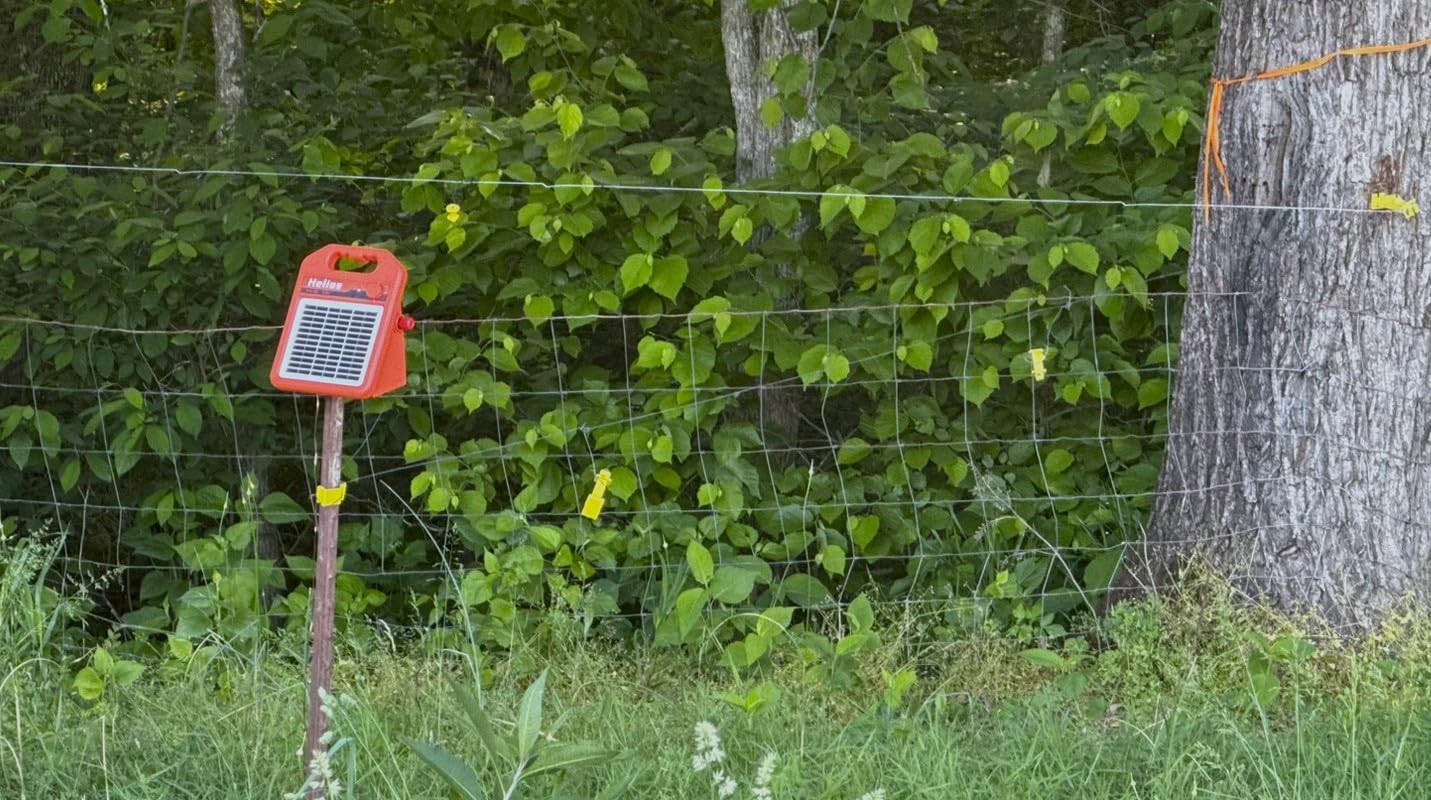
For horse owners who need solar power but want serious range, the ANDMON MINI400 is my top solar pick. It covers up to 30 miles of fence line and delivers 0.4 stored joules, which is more than enough for most horse containment situations. I set this up on a remote paddock where running AC power was not practical, and it performed well through a full grazing season.
The 14-day backup capability is what sold me on this unit. Most solar chargers struggle after a few cloudy days, but the MINI400 carries a 12V sealed lead acid battery that keeps the fence hot for up to two weeks without direct sun. In my area, where summer storms can block the sun for days at a time, that buffer is essential.
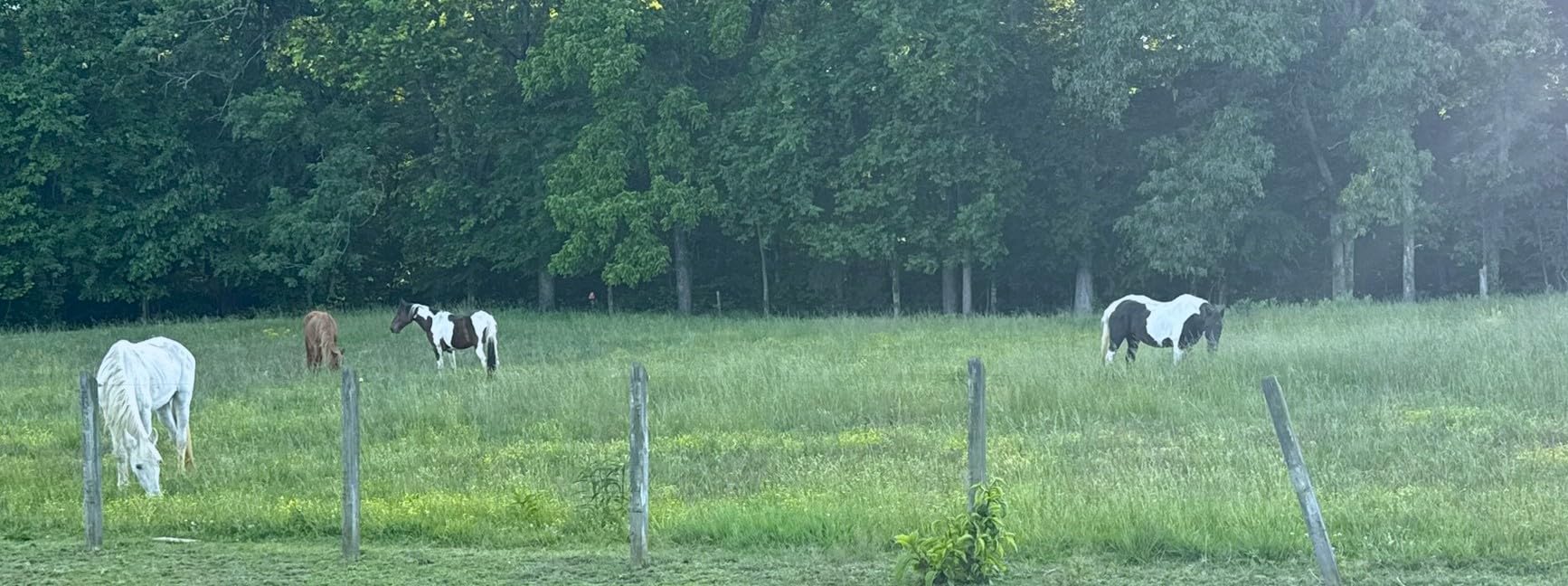
The day and night mode is a thoughtful feature. During the day, the charger pulses every 1.5 seconds when horses are active and conditions are stable. At night, it slows to every 2.9 seconds to conserve battery. This extends your backup runtime without compromising overnight containment.
One thing to note is that the internal battery must be connected before first use. This is a simple step but one that trips up some buyers who expect plug-and-play operation. Once connected, the unit is genuinely maintenance-free aside from occasional panel cleaning.
Solar Performance in Low Light
Solar chargers live or die by their performance on overcast days. The MINI400 handles low light better than most because of its larger battery capacity. I monitored voltage after four straight days of heavy overcast and the fence was still delivering a respectable shock. That is the kind of reliability that lets you sleep through a storm without worrying about horses getting out.
For best results, position the solar panel facing south with full sun exposure. The 360-degree rotation mount makes this easy to dial in.
Cold Weather Considerations
Battery performance drops in cold weather, and sealed lead acid batteries are particularly sensitive. In freezing temperatures, expect the backup runtime to decrease somewhat. The MINI400 still works, but you may notice weaker output during extended cold, dark stretches. If you live in a northern climate with long winters, keep this in mind.
For year-round solar use in cold regions, I would recommend a backup plan such as a secondary DC charger connection for the darkest winter weeks.
5. Zareba Solar 5 Mile Low Impedance Charger – Compact Pick
Zareba Solar Electric Fence Charger, 5 Mile Range Low Impedance Energizer
0.15 Joule Output
5 Mile Range
Solar Powered
2-Week Backup
Lightning Protection
Pros
- Solar powered for remote locations
- 2 weeks operation without sunlight
- 360-degree rotation mounting bracket
- Low impedance reduces battery drain
- Built-in lightning protection
Cons
- Lower 0.15 joule output than larger units
- Non-returnable item so check specs carefully
The Zareba Solar 5 Mile charger is a compact, well-built solar unit that earns its place for smaller properties and portable paddock setups. With 0.15 joules of output and a 5-mile range, it is not the most powerful option here, but it covers the needs of most small-to-medium horse operations reliably.
I used this charger on a 6-acre paddock with two strands of polytape, and it kept my horses contained without issue. The key is matching the charger to your fence length and keeping the lines reasonably clean. With 0.15 joules, you do not have the same weed buffer as the larger Zareba units, so regular fence maintenance matters more.
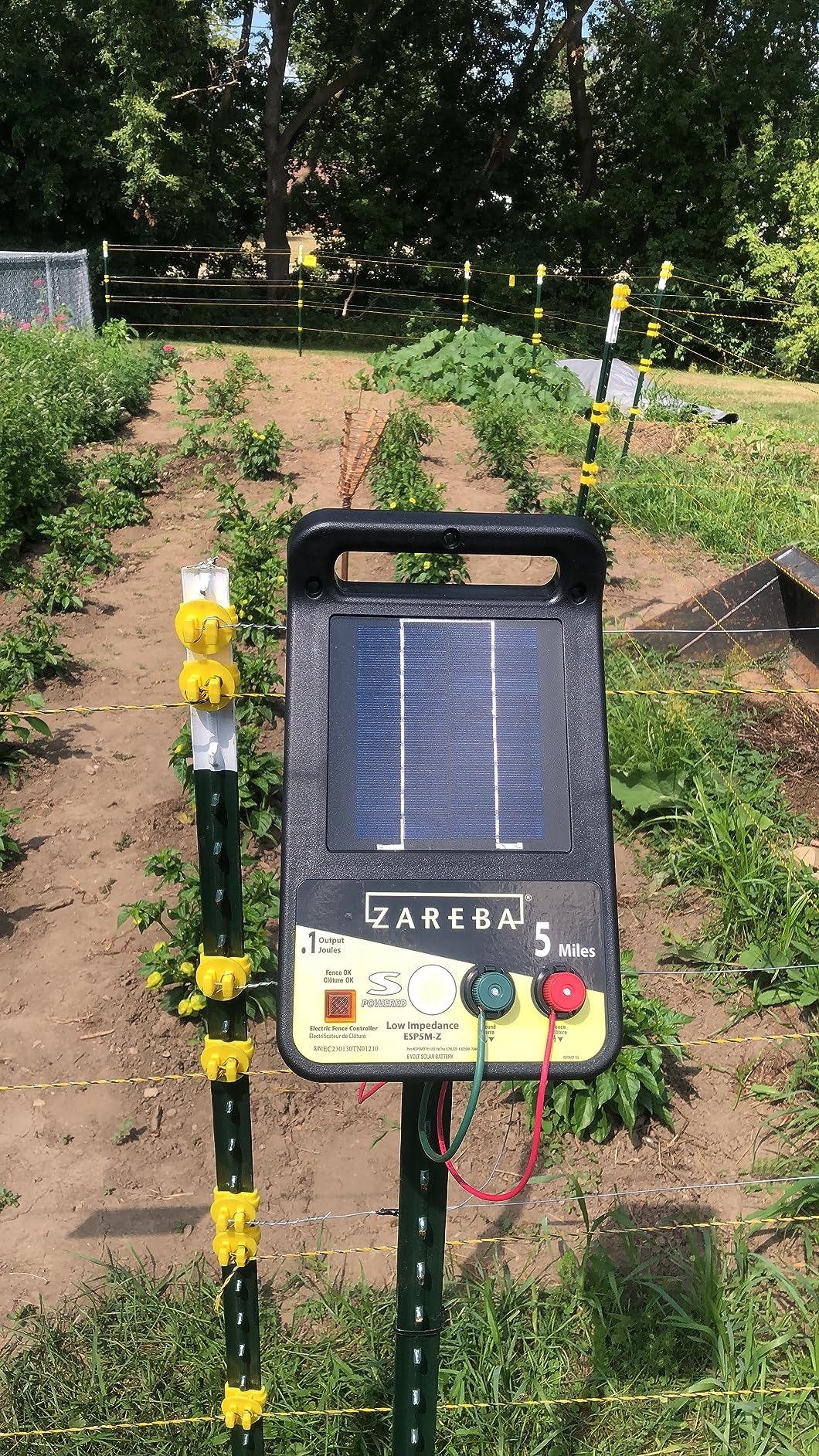
The 2-week backup without sunlight is genuinely impressive for a unit this size. Zareba designed this with efficiency in mind, and the low-impedance circuitry helps stretch battery life by reducing drain during periods of low demand. The built-in lightning protection adds an extra layer of security for storm-prone areas.
The 360-degree rotation mounting bracket is one of my favorite features. It attaches to T-posts, Y-posts, and round wood posts, and you can adjust the panel angle to catch maximum sun regardless of post orientation. This flexibility makes it ideal for rotational grazing where you move fences regularly.
Mounting and Positioning
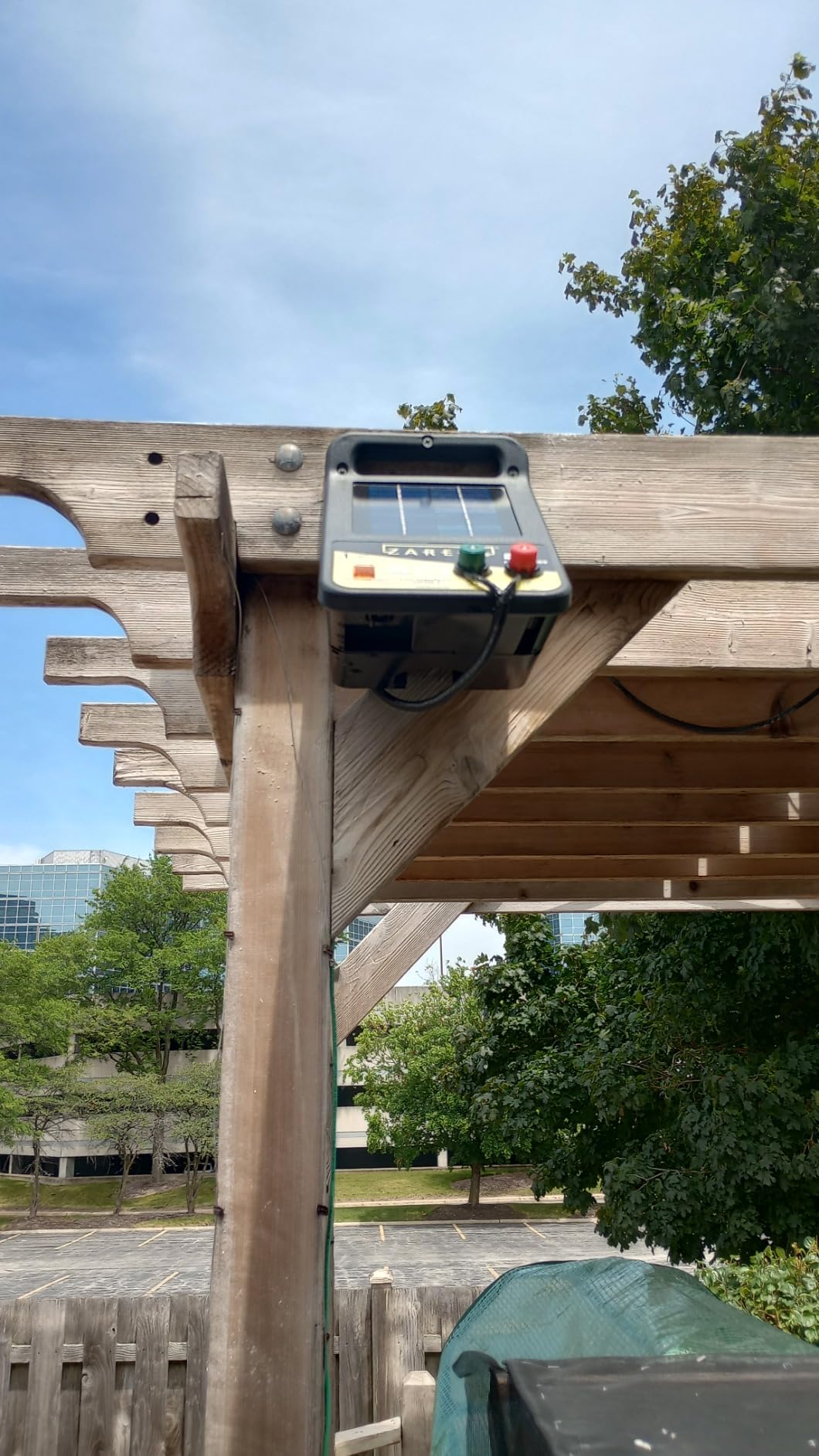
Proper panel positioning makes a huge difference in solar charger performance. The Zareba 5 Mile’s mounting bracket lets you rotate the panel a full 360 degrees and tilt for optimal angle. I recommend facing the panel due south and angling it to match your latitude for maximum daily sun exposure.
The bracket fits standard T-posts out of the box, which is convenient since most horse paddocks use T-post systems. Installation takes about 10 minutes including connecting the internal battery.
Battery Backup Duration
Zareba rates this unit for 2 weeks of operation without sunlight, and in my testing that claim held up reasonably well. After 10 days of mostly cloudy weather, the fence was still delivering a detectable shock, though noticeably weaker than in full sun. For areas with predictable sun, this is more than enough buffer.
If you live somewhere with extended cloudy periods, consider the MINI400 for its larger battery. But for most climates, the Zareba 5 Mile handles typical weather variability without trouble.
6. Gallagher S30 Solar Fence Charger – Premium Pick
Gallagher S30 Solar Electric Fence Charger | Solar Fence Energizer for Cattle, Horses, Goats, Small Pastures, Predator Control | 4-Mile Typical 20-Mile Ideal Range | Solar Powered with Lithium Battery
4 Mile Typical Range
20 Mile Ideal Range
Solar Powered
Lithium Battery
3-Year Warranty
Pros
- Lithium battery for weeks of reliable use
- Portable with built-in carry handle
- Weather-resistant case with UV protection
- Powers 2-3 sections of poultry netting
- 3-year warranty with US-based support
Cons
- Limited to 4-mile typical range
- Premium price point
The Gallagher S30 is the premium solar option on this list, and it earns that designation through build quality and thoughtful design. The integrated lithium battery is a step above the sealed lead acid batteries in most solar chargers, delivering weeks of use between charges and holding voltage more consistently over time.
I tested the S30 for rotational grazing, moving it between three paddocks over a month. The built-in carry handle and rugged, weather-resistant case make it genuinely portable. At 8 x 6 x 11 inches, it is compact enough to move by hand but tough enough to handle being knocked around during transport and setup.
The UV-protected case is a detail that matters more than you might think. Many solar chargers develop brittle, cracked housings after a few years of sun exposure. Gallagher’s UV protection extends the life of the unit significantly, which is important given the premium price.
The 4-mile typical range is modest compared to the larger units on this list, but Gallagher rates it at 20 miles in ideal conditions. For portable paddock use, strip grazing, or predator control around poultry netting, the S30 is purpose-built and performs exceptionally well.
Portability for Rotational Grazing
If you practice rotational grazing, portability is everything. The S30 was designed for exactly this use case. The carry handle, compact size, and self-contained solar power mean you can pick it up, walk to the next paddock, and have your fence hot within minutes.
The unit also powers 2 to 3 connected 164-foot sections of electric poultry netting, making it versatile for mixed-livestock operations where you need to control both horses and smaller animals.
Predator Control Capability
Beyond horse containment, the S30 is an effective predator deterrent. When paired with electric netting, it delivers enough voltage to discourage coyotes, foxes, and stray dogs from entering your paddock area. For horse owners who also keep poultry or small livestock, this dual-purpose capability adds significant value.
The lithium battery ensures consistent output day and night, which is when most predators are active. A weaker solar charger that drops voltage overnight would leave your animals vulnerable during peak predator hours.
7. ANDMON 10 Mile Solar Fence Charger with Day/Night Mode
10 Miles Solar Electric Fence Charger with Day/Night Mode, 0.16J Portable Solar Fence Charger with Rechargeable Solar Panel for 24-Hour Uninterrupted Protection Electric Fence Energizer
0.16 Joule Output
10 Mile Range
Solar Powered
GEL Battery
Day/Night Mode
Pros
- Portable and easy to install
- Solar powered with GEL battery for reliable power
- 360 degree rotation for sun exposure
- Day and night mode for energy efficiency
- 24-hour continuous protection
Cons
- Internal battery requires connection before first use
- Lower joule output limits heavy weed performance
The ANDMON 10 Mile Solar charger is a solid mid-range solar option that balances range and portability. With a 10-mile capability and 0.16 joule output, it covers small to medium properties where AC power is not available. I found this unit particularly useful for remote paddocks and temporary fencing setups.
The GEL battery is a reliable power source that holds charge well across temperature ranges. Unlike standard lead acid batteries, GEL batteries are more resistant to vibration and deep discharge, which extends their usable life. The solar panel recharges the battery during the day for true 24-hour protection.
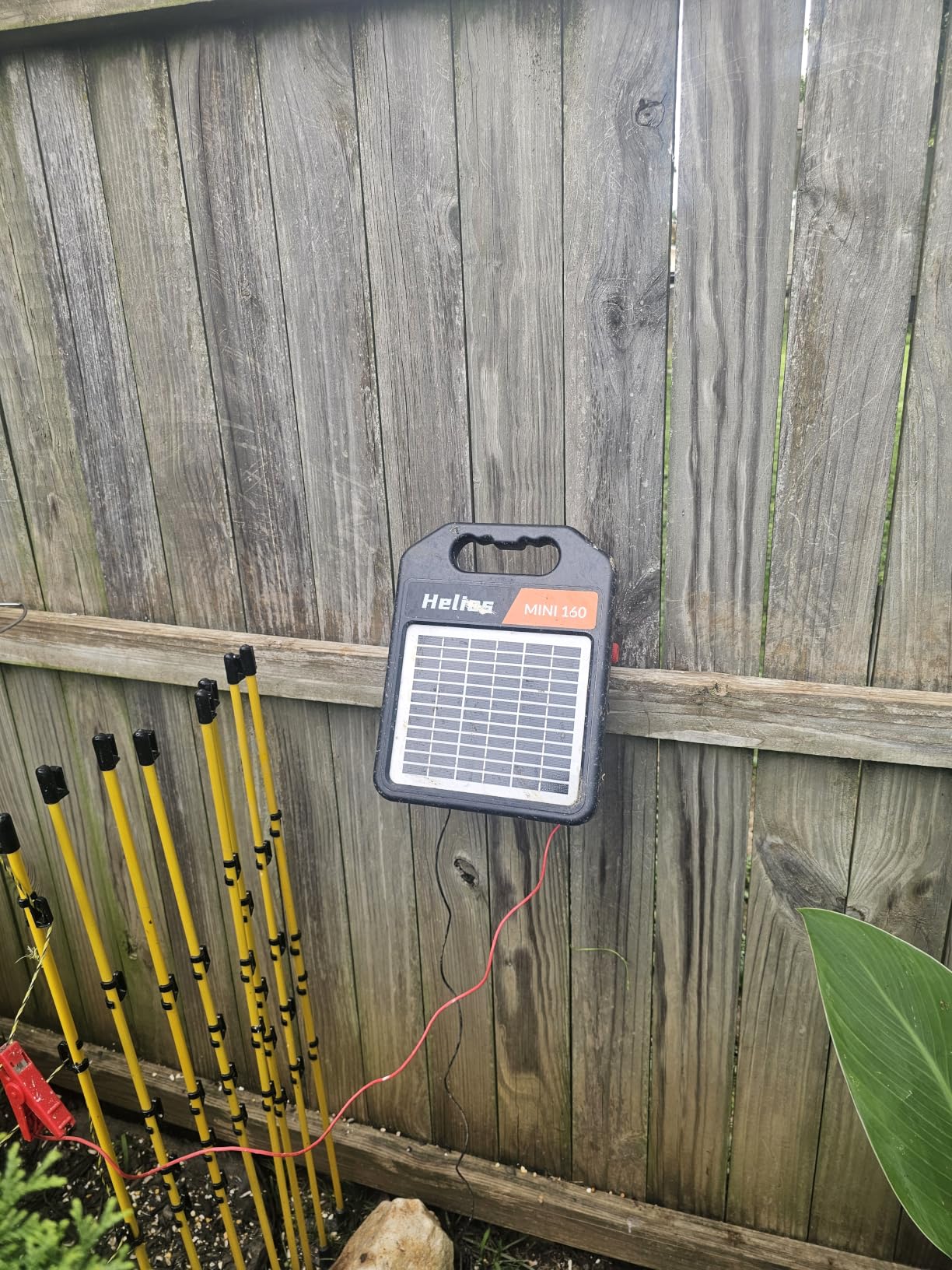
The day and night mode is a feature I initially dismissed as a gimmick but came to appreciate. During the day, the charger pulses at the standard rate when horses are active and likely to test the fence. At night, it adjusts to conserve battery while still maintaining enough voltage to keep horses contained while they rest.
The 360-degree rotation mount makes it easy to position for optimal sun exposure regardless of where your T-post or mounting surface faces. Installation took me about 15 minutes, including connecting the internal battery.
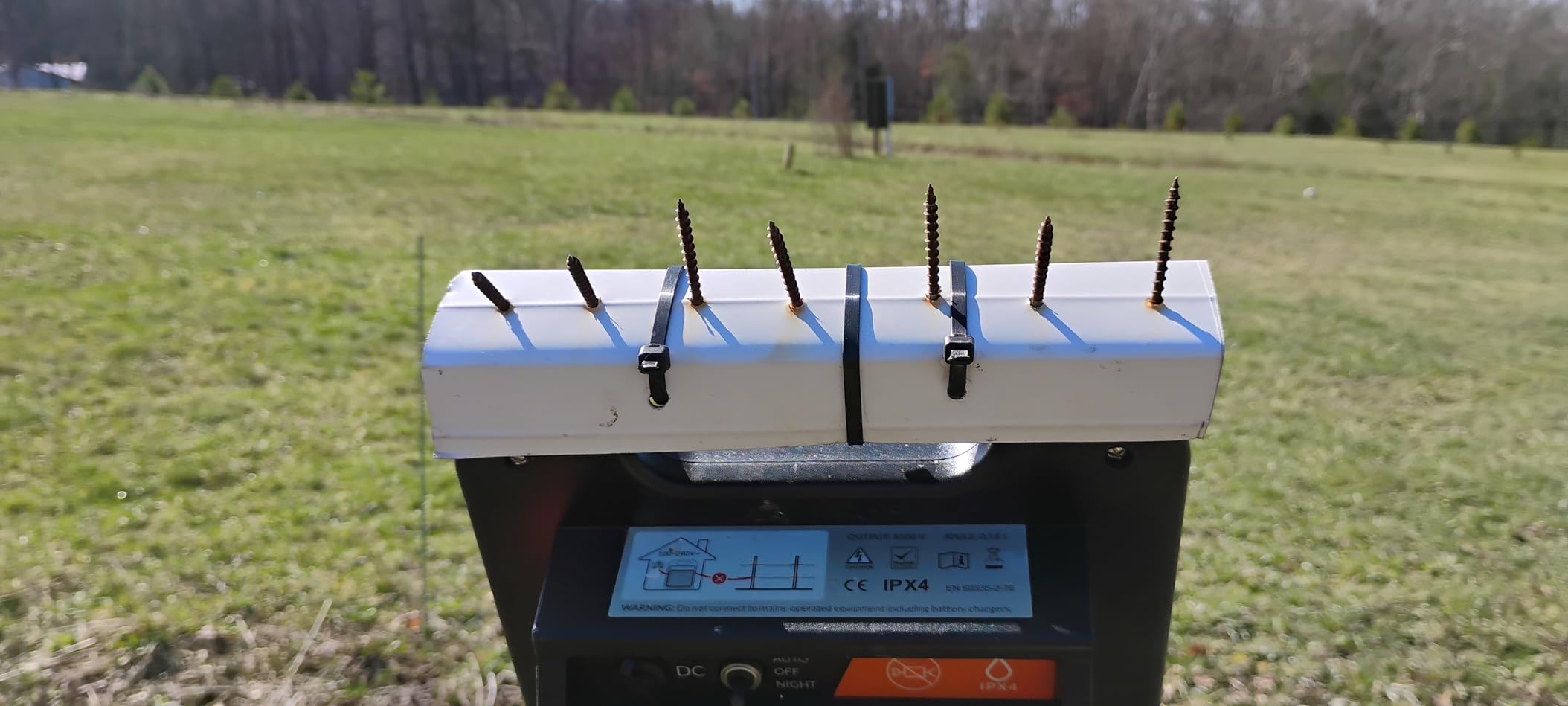
Day/Night Mode Benefits
The day and night mode extends battery life without sacrificing safety. Horses are most active and most likely to test fences during daylight hours, so the charger delivers full pulse rate then. At night, horses are typically settled, and the reduced pulse rate conserves battery while still maintaining containment.
This intelligent power management is especially valuable during stretches of cloudy weather when solar charging is limited. Every bit of battery conservation helps keep your fence operational longer.
Setup and First Use
The one step that catches some buyers is the internal battery connection. The battery ships disconnected for safety, and you must open the unit and connect it before the charger will operate. The included manual walks you through this, and it takes about two minutes.
Once connected, the unit charges via the solar panel. I recommend letting it charge in full sun for a full day before connecting it to your fence for the first time. This ensures the battery has enough charge to deliver proper voltage from day one.
8. Briidea 2-Mile Electric Fence Energizer – Budget Pick
Briidea 2-Mile Electric Fence Energizer for Preventing Wild Animals Intruding 8 Acres Output Voltage 5000 V 0.1Joule
0.1 Joule Output
5000V Output
8 Acre Range
AC Powered
UL Listed Cable
Pros
- Controls area up to 8 acres
- Two terminals for fence ground and output
- UL listed cable for fire prevention
- Compatible with most soil types
- Affordable entry-level option
Cons
- Low 0.1 joule output may struggle with heavy vegetation
- Limited to small acreage
The Briidea 2-Mile energizer is the most affordable option in this roundup, and for small paddocks on a budget, it does the job. With 0.1 joules and 5,000 volts of output, it covers up to 8 acres or 2 miles of fence line. I tested this on a small turnout paddock, and it delivered enough shock to keep my horses respectful of the boundary.
This is a no-frills AC charger that does exactly what it claims. The two terminals handle fence ground and fence output, and the UL-listed cable provides fire prevention safety that I always look for in budget electrical equipment. For a first-time electric fence setup or a small sacrifice paddock, the Briidea is a reasonable starting point.
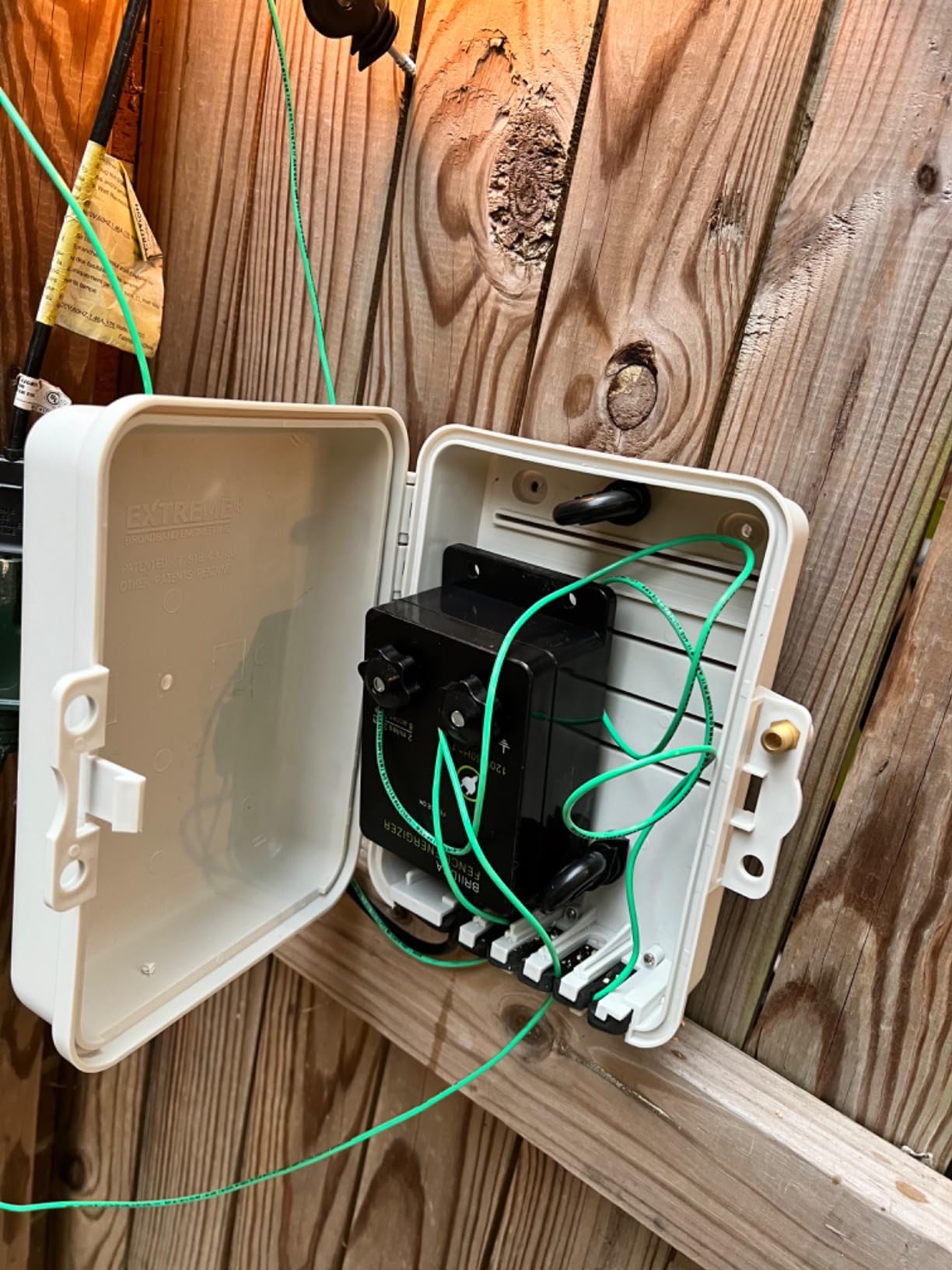
The 0.1 joule output is the main limitation. With over 2,100 reviews and a 4.2-star average, most buyers are satisfied for small-scale use. But if your fence line has any vegetation contact, the output drops noticeably. This charger works best on clean, short fence runs where you can keep weeds trimmed back consistently.
I would not recommend this for a main perimeter fence or for horses that are known fence-testers. The lower joule output means the shock is less memorable, and determined horses may eventually push through. But for a trained herd on a small, clean paddock, it provides adequate containment at a fraction of the cost of premium units.
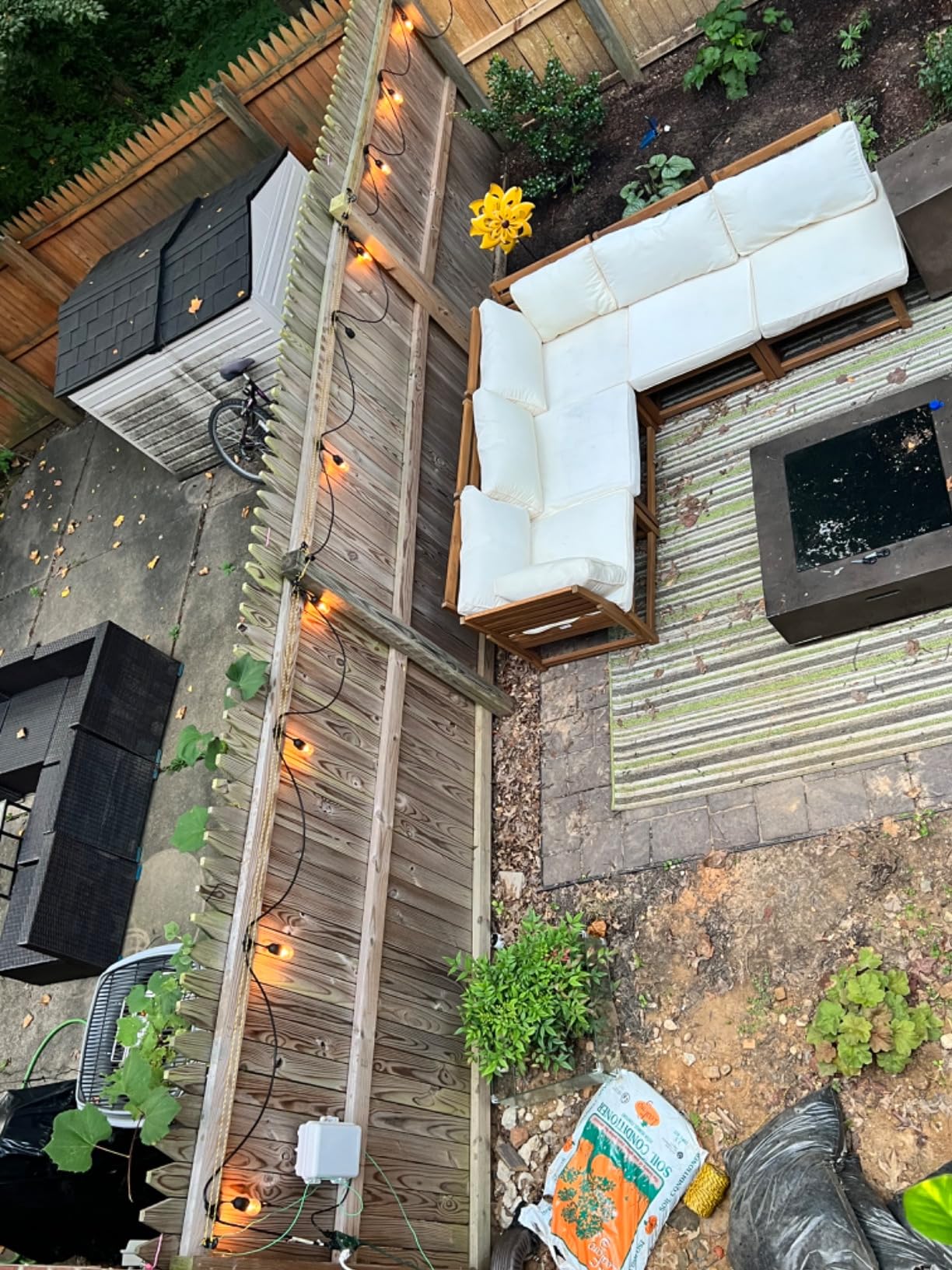
Small Pasture Suitability
This charger is best suited for properties of 5 acres or less with short, clean fence lines. Think turnout paddocks, round pen areas, or temporary divisions within a larger property. For these applications, the 5,000-volt output is sufficient to train horses and maintain their respect for the fence.
If your horses are already trained to respect electric fencing and you keep your lines clean, the Briidea will serve you well. It is the situations where conditions are less than ideal that the low joule output becomes a problem.
Limitations to Know Before Buying
The biggest limitation is the 0.1 joule output, which provides minimal buffer against voltage loss from weeds, moisture, or long fence runs. You will need to be diligent about vegetation control and accept that this charger has a narrow performance window.
There is also no lightning protection built in, so I would recommend adding a separate lightning diverter if you live in a storm-prone area. For the price, however, the Briidea delivers respectable performance for small-scale horse containment.
How to Choose an Electric Fence Charger for Horses?
Choosing the right fence charger comes down to understanding four key factors: joule output, power source, fence length, and grounding. Get these right, and your horses will respect the fence from day one. Get them wrong, and you will be chasing loose horses and wondering why your fence went dead.
Understanding Joules and Output Energy
A joule is the unit of energy your charger delivers with each pulse. For horses, I recommend a minimum of 0.25 joules for clean, short fence lines. For larger properties or fence lines with any vegetation contact, aim for 0.5 joules or higher. The Zareba 50 Mile unit at 2.0 joules is the most powerful option in this roundup, while the Briidea at 0.1 joules is the lowest.
More joules means more buffer against voltage loss. When weeds touch the wire, when humidity increases, or when fence runs are long, higher joule output keeps the shock strong. For horse containment specifically, you want enough power that a single touch trains the horse permanently.
Power Source: AC vs Solar vs Battery
AC-powered chargers are the most reliable option because they draw continuous power from an outlet. There is no battery to maintain and no concern about weather. The trade-off is that you need a power source near your fence, which limits placement.
Solar chargers offer freedom from outlets and are ideal for remote paddocks and rotational grazing. The trade-off is dependency on sunlight and battery health. Quality solar units like the Gallagher S30 and ANDMON MINI400 mitigate this with large battery reserves, but you still need to position panels correctly and clean them periodically.
Battery-powered DC chargers are the third option, offering portability without solar dependency. You swap or recharge batteries as needed. This is less common for permanent installations but works for temporary fencing.
Sizing Your Charger by Acreage
Manufacturers rate chargers by miles of fence and acres covered. A practical rule of thumb for horses is to buy a charger rated for at least double your actual fence length. This gives you a buffer for weeds, moisture, and future expansion. If you have 5 miles of fence, choose a charger rated for at least 10 miles.
For small properties under 10 acres, a 5 to 10 mile charger is typically sufficient. For medium properties of 10 to 40 acres, look at 15 to 30 mile ratings. For large operations or properties with heavy vegetation, the 50-mile chargers are worth the investment.
Low Impedance vs High Impedance
Low impedance chargers maintain their voltage output even when the fence has resistance from vegetation or long runs. This is the design I recommend for virtually all horse fencing applications. High impedance chargers lose voltage quickly under load and are better suited for completely clean, short fence lines.
Every charger in this roundup except the Briidea uses low-impedance design. That is not a coincidence. Low impedance is the standard for reliable livestock containment because real-world fence lines are rarely as clean as ideal conditions suggest.
Grounding Requirements
Grounding is the single most common installation mistake I see. A fence charger can only deliver a shock if the circuit completes through the ground, which means your ground rod system is just as important as the charger itself. Most manufacturers recommend at least one 6 to 8 foot galvanized ground rod, driven into moist soil.
For chargers over 1 joule, use multiple ground rods spaced 10 feet apart and connected in series. In dry or sandy soil, you may need three or four rods to achieve proper grounding. A poorly grounded charger will deliver weak shocks regardless of its joule rating, which is why so many horse owners blame the charger when the real problem is underground.
Safety Considerations for Horses
Electric fences are safe for horses when properly installed and maintained. The pulse is high voltage but very low amperage, delivering a sharp but harmless shock that trains without injury. However, there are safety considerations to keep in mind.
Always use highly visible fencing material like polytape or wide polyribbon alongside your electric wire. Horses need to see the fence to avoid running into it, especially in low light. Never use bare thin wire as the sole fence for horses, as they may not see it and could become entangled. Combine visible fencing with a properly charged electric component, and your horses will be both safe and contained.
Frequently Asked Questions
How many joules should an electric fence have for horses?
For horse containment, an electric fence charger should deliver at least 0.25 joules for clean, short fence lines. For larger properties or fence lines with vegetation contact, aim for 0.5 to 1.0 joules. Properties with heavy weed growth or brushy terrain benefit from 1.5 to 2.0 joules to maintain voltage under load. The key is having enough power to deliver a memorable shock that trains horses to respect the fence permanently.
How many joules do I need for horses?
The joule requirement depends on your fence length and conditions. For a small paddock of 1 to 5 acres with clean fence lines, 0.1 to 0.25 joules works. For medium properties of 5 to 20 acres, target 0.5 joules. For large properties over 20 acres or areas with heavy weeds, choose 1.0 to 2.0 joules. Always buy more capacity than you think you need to account for vegetation and moisture.
How many joules is a good electric fence charger?
A good electric fence charger for general horse use delivers 0.5 to 1.2 joules. This range handles most residential and small farm fence lengths while providing enough buffer against weed contact and moisture. For reference, the chargers in this roundup range from 0.1 joules for small paddocks up to 2.0 joules for large properties with heavy vegetation.
How to stop a horse from breaking through electric fencing?
To stop a horse from breaking through electric fencing, first verify your charger is delivering adequate voltage with a fence tester. Check that grounding is proper with at least one 6 to 8 foot ground rod in moist soil. Increase joule output if your charger is underpowered. Keep fence lines clear of vegetation that drains voltage. Use visible fencing material like polytape so horses can see the boundary. Finally, retrain the horse by walking them along the fence to rebuild respect for the boundary.
Are electric fences safe for horses?
Yes, electric fences are safe for horses when properly installed. The charger delivers high voltage but very low amperage in short pulses, creating a sharp but harmless deterrent. The shock trains horses to respect the boundary without causing injury. Always pair electric wire or rope with highly visible fencing material like polytape so horses can see the fence, and never use thin bare wire alone where horses could become entangled.
Final Thoughts on the Best Electric Fence Chargers for Horses
After comparing eight chargers across AC and solar categories, the Zareba 50 Mile AC unit stands out as my editor’s choice for its combination of 2.0 joule output, heavy weed performance, and USA-built quality. For the best balance of price and power, the Zareba 10 Mile AC delivers top-rated reliability at a reasonable cost. And for small paddocks on a budget, the Briidea 2-Mile gets the job done without breaking the bank.
The best electric fence charger for horses is the one that matches your property size, power source availability, and maintenance habits. Invest in enough joule output to handle your real-world conditions, ground your system properly, and your horses will learn to respect the fence from day one. That is the formula for worry-free containment in 2026 and beyond.