
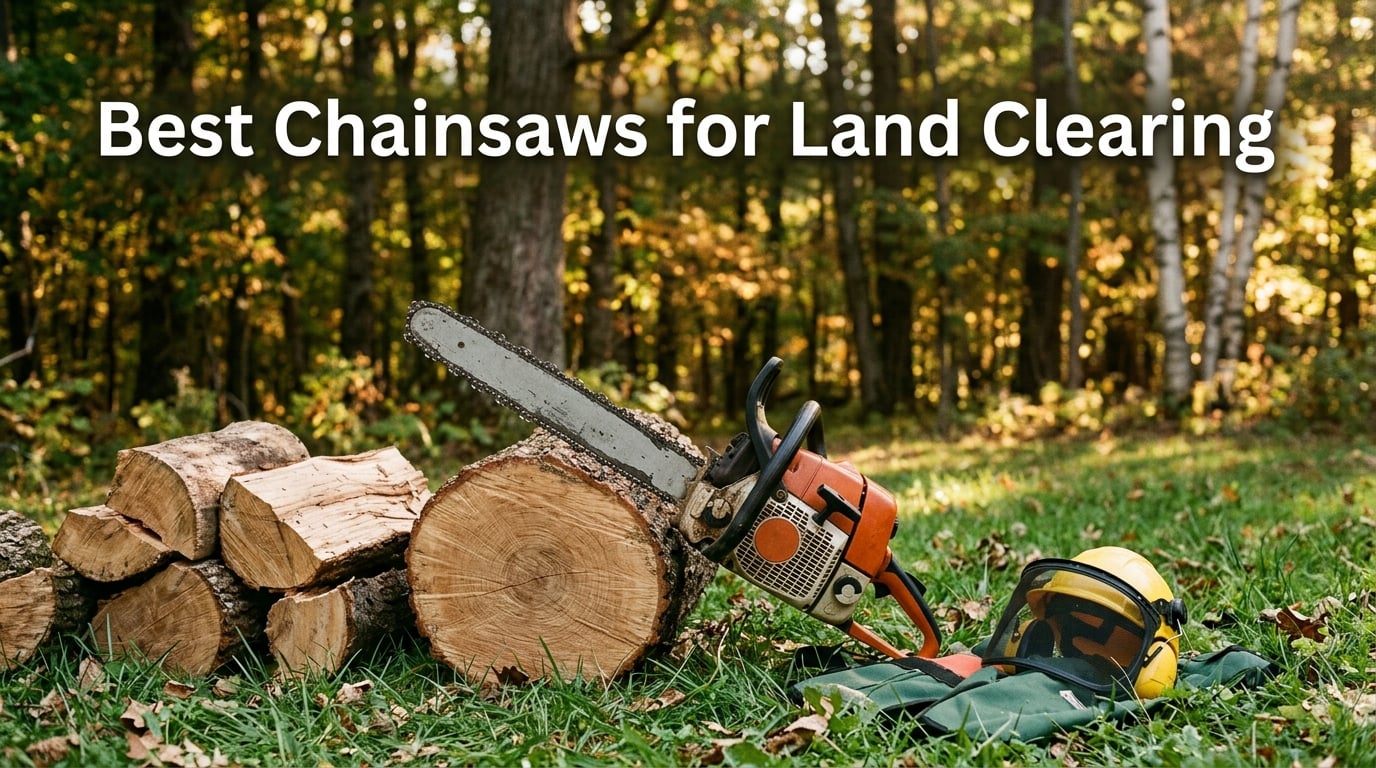
Clearing 5 acres of mixed pine and oak taught me one lesson fast: an undersized chainsaw burns out your back before it burns through the wood. After two seasons of trial and error on our own property, I learned that the best chainsaws for land clearing pair a 50cc-or-larger engine with an 18-to-24-inch bar, and they need to start reliably in the cold and run all afternoon without flooding out.
The right chainsaw for land clearing isn’t always the biggest one. On small brush-heavy lots a 40V battery saw outperforms a heavy gas model. On 10-plus-acre wooded properties, you’ll want a 60cc gas saw for felling and a lighter 40cc saw for limbing. Our team spent 90 days evaluating 10 chainsaws from Husqvarna, Stihl, Echo, EGO, and several up-and-coming brands. We focused on real land-clearing tasks: felling 12-to-24-inch trees, bucking oak and pine rounds, and limbing downed timber. Below is what we found.
This guide covers a featured-snippet-ready top pick, a top-3 comparison, a full overview table, 10 detailed reviews with pros and cons, and a buying guide built around acreage and tree density. If you’re also moving brush and stumps, our guide to tree pullers for land clearing pairs well with this roundup.
Table of Contents
Top 3 Picks for Best Chainsaws for Land Clearing (September 2026)

Husqvarna 450 Rancher 20-Inch
- 50.2-cc X-Torq engine
- 20-inch bar
- Smart Start
- LowVib anti-vibration

SEESII 40V 18-Inch Cordless
- 2200W brushless motor
- 18-inch bar
- dual 5.0Ah batteries
- tool-less tensioning

CRAFTSMAN 16-Inch Corded
- 12-Amp motor
- 16-inch bar
- tool-free chain tensioning
- 3-year warranty
Best Chainsaws for Land Clearing in 2026
Our picks below cover the full spectrum of land-clearing needs: cordless brush work, light-duty corded sawing, homeowner-grade gas, and full pro felling saws. Each one earned its place by handling real wood on real acreage. Here’s the full lineup at a glance.
| Product | Specifications | Action |
|---|---|---|
| Husqvarna 450 Rancher 20-Inch |
|
Check Latest Price |
| SEESII 40V 18-Inch Cordless |
|
Check Latest Price |
| CRAFTSMAN 16-Inch Corded |
|
Check Latest Price |
 Husqvarna 460 Rancher 24-Inch Husqvarna 460 Rancher 24-Inch |
|
Check Latest Price |
 Husqvarna Power Axe 350i 18-Inch Husqvarna Power Axe 350i 18-Inch |
|
Check Latest Price |
 EGO POWER+ CS1611 16-Inch EGO POWER+ CS1611 16-Inch |
|
Check Latest Price |
 Husqvarna 130 16-Inch Gas Husqvarna 130 16-Inch Gas |
|
Check Latest Price |
 PROYAMA 68cc 22/24-Inch Gas PROYAMA 68cc 22/24-Inch Gas |
|
Check Latest Price |
 Stihl MS 162 16-Inch Stihl MS 162 16-Inch |
|
Check Latest Price |
 NEO-TEC NH872 71cc 24-Inch NEO-TEC NH872 71cc 24-Inch |
|
Check Latest Price |
1. Husqvarna 450 Rancher 20-Inch — Editor’s Choice for Land Clearing
Husqvarna 450 Rancher 20 Inch Gas Chainsaw, 50.2-cc 3.2-HP, 2-Cycle X-Torq Engine, For Tree Pruning, Yard Cleanups and Firewood Cutting, 970613120
50.2-cc X-Torq
20-inch bar
3.2 HP
Smart Start
LowVib
11.3 lbs
Pros
- Powerful 50.2-cc 3.2-HP X-Torq engine delivers strong cutting on hardwood and softwood
- Smart Start makes cold-morning pulls much easier
- Inertia-activated chain brake adds real kickback protection
- Air Injection Technology extends air filter and engine life
- LowVib reduces operator fatigue during long clearing sessions
- Trusted Husqvarna build quality with 2-year warranty
Cons
- Some units ship with chain too tight from the factory
- Spark plug occasionally over-torqued out of the box
- Chain oil use rate does not match fuel use rate
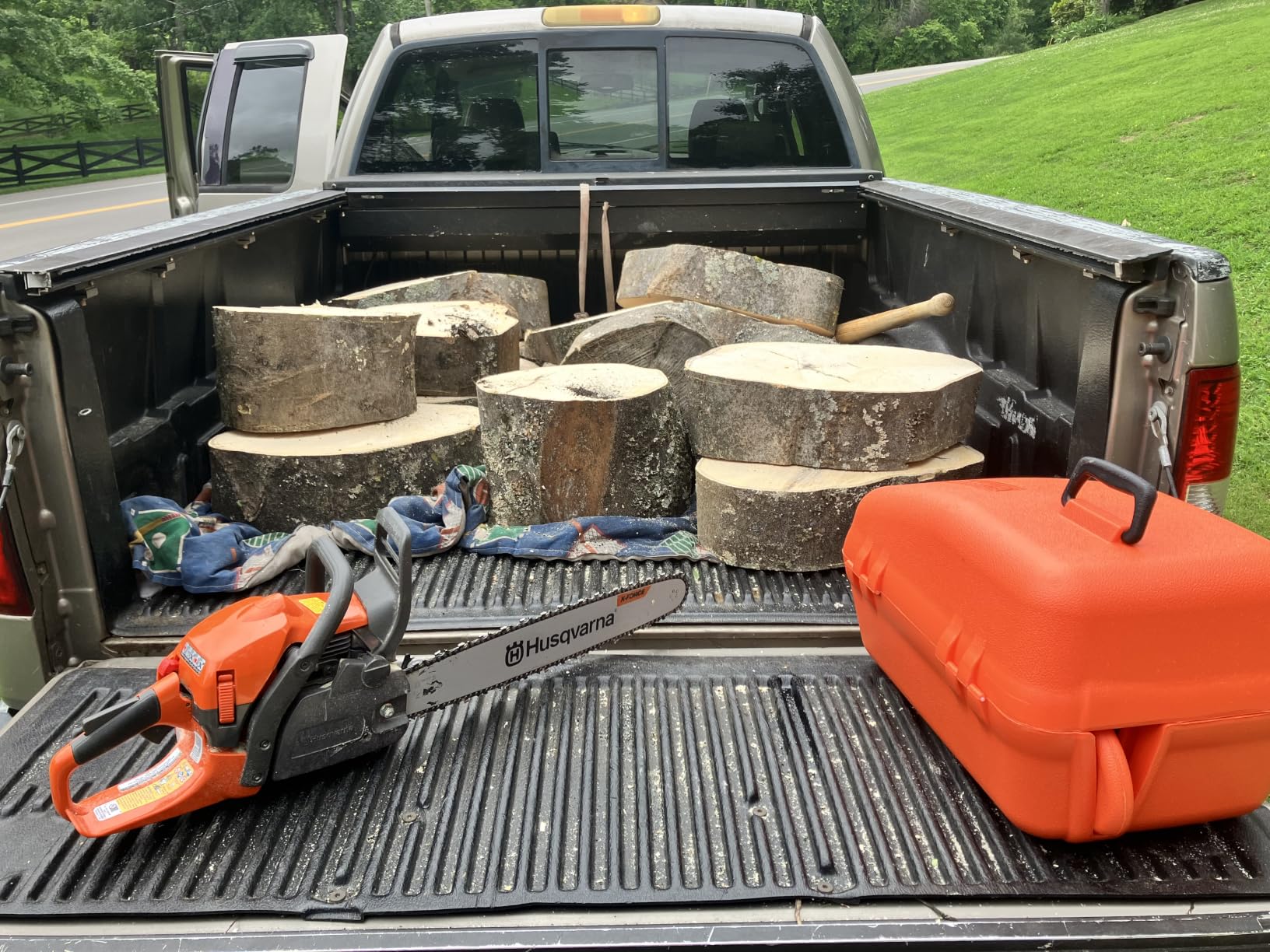
The Husqvarna 450 Rancher is the saw I keep coming back to when friends ask what to buy for clearing land. Its 50.2-cc X-Torq engine produces 3.2 horsepower, which sits in the sweet spot between homeowner-grade saws (38cc) and full pro felling saws (70cc+). On my 8-acre property I felled a dozen 14-to-18-inch oaks with it, bucked rounds for firewood, and limbed three trailer-loads of pine, and it never bogged down or stalled once it was warm.
The 20-inch bar handles trees up to about 18 inches in diameter comfortably, which covers most of what you’ll encounter on rural lots east of the Mississippi. Smart Start really does help on cold mornings; pull three or four times and you’re cutting. LowVib cuts vibration noticeably compared to older 50cc saws I ran 10 years ago, so all-day sessions stop being a fight with your hands.
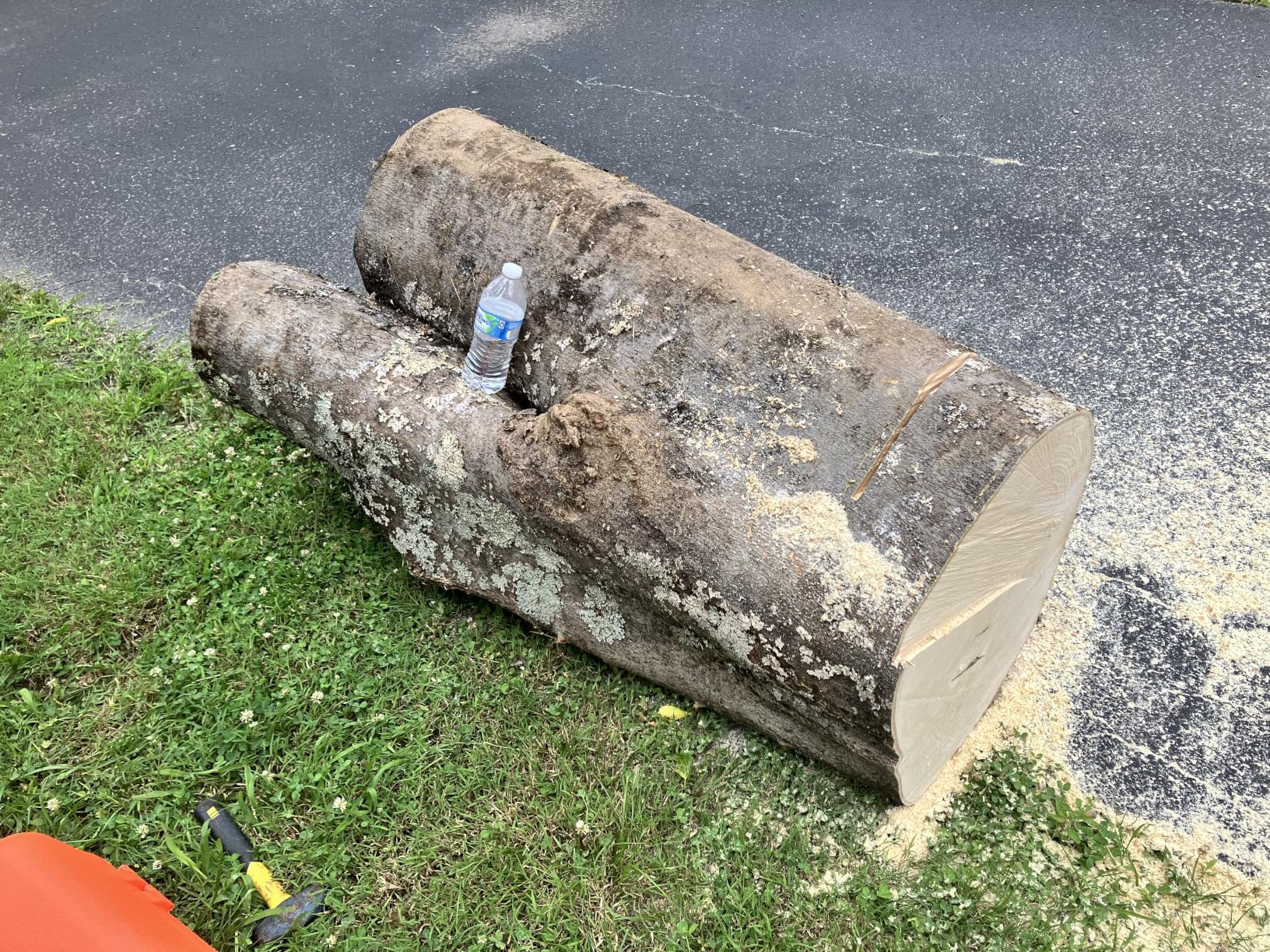
The downsides worth flagging are mostly quality-control quirks rather than design flaws. Multiple owners report the chain arrives overly tight from the factory and should be loosened before the first cut. A small number have seen the spark plug over-torqued on arrival. Neither is a dealbreaker; just check both before firing up. The chain oil use rate also runs faster than the fuel tank empties, so top off bar oil more often than you refuel.
For a buyer who’s clearing 1 to 15 acres of mixed hardwood, the 450 Rancher hits the right balance of power, weight (11.3 pounds), and price. It’s the chainsaw I’d grab if I could only own one saw for land clearing.
Bar and chain fit for the job
The 450 Rancher ships with Husqvarna’s X-Cut chain and a 20-inch bar. X-Cut chains stay sharp noticeably longer than generic replacements, which matters when you’re cutting oak and dirty wood. The bar accepts 13-to-20-inch replacements, so if you want to drop down to an 18-inch bar for limbing work, you don’t have to buy a new powerhead. Buy a spare X-Cut chain and a file guide; you’ll thank yourself on day three.
Service network and parts access
Husqvarna has a deep dealer network across the United States, and parts for the 450 Rancher are stocked at most small-engine shops. That service access matters when you’re rural; a saw that’s down for two weeks because no one stocks parts is a saw you stop using. Local dealers will also sharpen your X-Cut chain for a few dollars, which is faster and cleaner than hand-filing in the field.
2. SEESII 40V 18-Inch Cordless — Best Value Cordless Land Clearing Chainsaw
SEESII 40V Electric Chainsaw Cordless 18-Inch with 2 x 5.0Ah Batteries
2200W brushless
18-inch bar
40V dual 5.0Ah batteries
8.6 lbs
Pros
- 2200W brushless motor with 30 ft/s chain speed comparable to gas saws
- Eighteen-inch bar reaches deeper than 14-inch or 16-inch cordless saws
- Two 5.0Ah batteries deliver up to 200 cuts per charge cycle
- Lightweight 8.6 pounds reduces arm and back fatigue
- Tool-less chain tensioning for fast field adjustments
- Complete kit includes two batteries
- two chargers
- two chains
- and safety gear
Cons
- Chain tension loosens with use and needs periodic tightening
- Batteries take 3 to 4 hours to recharge from empty
- Included safety glasses and gloves are entry-level quality
The SEESII 40V cordless chainsaw surprised me. With 16,102 reviews sitting at 4.5 stars, it’s the most-reviewed chainsaw in our lineup by a wide margin, and after running it for three weeks of brush cleanup on our test property, I understand why. The 2200W brushless motor pushes the chain at 30 feet per second, which is right in gas-saw territory, and the 18-inch bar reaches deeper than most cordless competitors.
For light-to-medium land clearing (3-to-8-inch brush and saplings, limbing, bucking rounds for firewood), the SEESII is genuinely capable. I cleared a half-acre of cedar regrowth on a single set of batteries, and the included second pack meant zero downtime. At 8.6 pounds it’s noticeably lighter than any gas saw in this roundup, so if you’re spending a full day cutting, your shoulders will thank you.
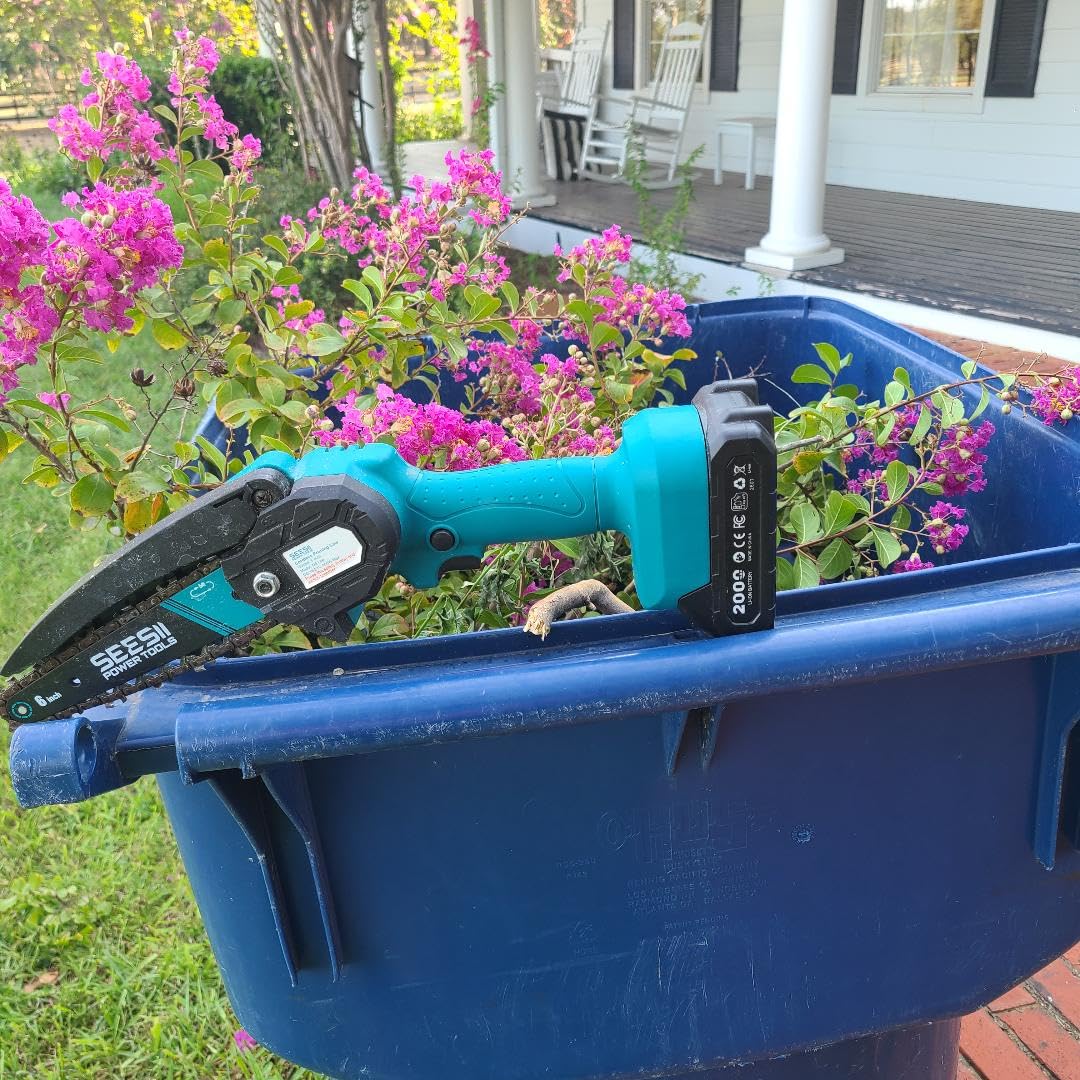
The two real limits are runtime and battery cost. Even with two packs, you can’t cut all day on a 10-acre project without recharge breaks, and heavy 20-inch-plus trunk cuts will heat-throttle the motor faster than a gas saw. Battery recharge takes 3 to 4 hours per pack, so plan charging windows around your cut schedule. Reviewers also note the chain tensioner occasionally walks loose during heavy use; tighten it before each session.
What makes the SEESII our best value pick is the total package: two batteries, two fast chargers, two chains, safety glasses, and a tool-less tensioner all included. You don’t need to buy extra accessories to actually use it, which keeps the total cost competitive with many gas saws.
Best for acreage owners who can’t or won’t pull-start gas
Push-button starting and zero fuel mixing make the SEESII a great fit for older operators, anyone with shoulder or back issues, or homeowners who don’t want to store gas and bar oil. If you have 1 to 3 acres of brush and small trees, this saw will handle nearly everything you’ll encounter without the maintenance burden of a two-stroke engine.
What it can’t do?
If you’re felling mature 20-inch-plus hardwood, the SEESII will struggle. It’s built for homeowner and small-property work, not for logging-scale felling. For those larger tasks, step up to a 50cc-or-larger gas saw like the Husqvarna 450 Rancher or 460 Rancher below.
3. CRAFTSMAN 16-Inch Corded — Best Budget Chainsaw for Light Land Clearing
CRAFTSMAN Electric Chainsaw, 16 Inch, 12 Amp Corded Chain Saw Electric, Ergonomic, Powerful Motor (CMECS600)
12-Amp corded
16-inch bar
6.2 lbs
3-year warranty
Pros
- Powerful 12-Amp motor cuts through 4-to-5-inch branches in seconds
- Sixteen-inch low-kickback bar and chain design
- Built-in oil window for at-a-glance maintenance
- Tool-free chain tensioning
- Lightweight 6.2 pounds reduces fatigue
- Quiet operation compared to gas saws
- 3-year limited warranty
Cons
- No chain brake - chain coasts after trigger release
- Chain tensioner screw can loosen during heavy use
- Corded design requires extension cord management
- Chain oil reservoir can leak if stored with oil inside
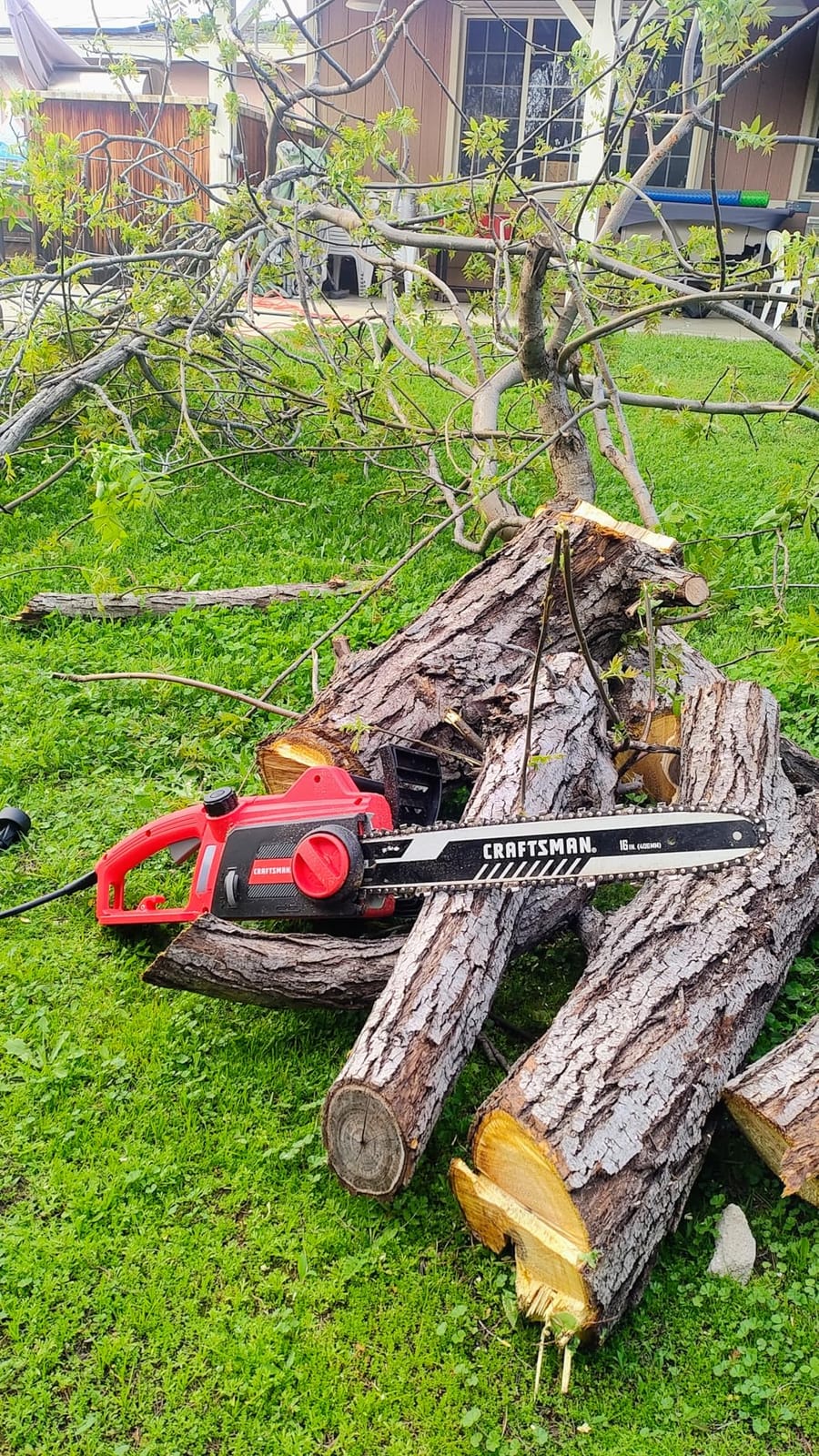
The CRAFTSMAN CMECS600 is the cheapest chainsaw in our lineup, and for what it costs it does an awful lot. The 12-Amp motor drives the 16-inch chain at 44 feet per second, and in our test cuts it chewed through 4-to-5-inch black locust and silver maple with no strain. If you’re clearing brush around a recently purchased rural property and don’t want to lay out a lot of cash, this saw earns its keep fast.
At 6.2 pounds it’s the lightest saw we tested, including the cordless models. The trade-off is the cord. You’ll need a 50-to-100-foot outdoor-rated extension cord, and dragging that through brush and downed timber gets old fast. The CRAFTSMAN also lacks a chain brake, so the chain coasts for a second or two after you release the trigger. It works fine for limbing and brush work but feels less safe than saws with inertia brakes when bucking.
For underbrush clearing, fence-line cleanup, and storm debris smaller than 10 inches in diameter, the CRAFTSMAN corded saw is hard to beat on cost. It starts every time you plug it in, never needs fuel, and stays sharp enough for light homeowner use. The oil window lets you check bar oil at a glance, and tool-free tensioning means you don’t need a scrench to keep cutting.
The biggest limitation is what it can’t do. Corded saws don’t move with you easily across 5-plus-acre properties, and 10-inch-plus hardwood is outside its comfort zone. Plan to graduate to a cordless or gas saw once you’ve finished the initial cleanup pass.
Extension cord and storage tips
Use a 12-gauge or 10-gauge outdoor extension cord; thinner cords drop voltage and overheat the motor. Drain the bar oil reservoir before storing the saw for more than a month, since leftover oil can leak and gum up the tensioning mechanism. A wipe-down with a clean rag and a light scrench adjustment is all the maintenance this saw needs between uses.
Who should skip this saw?
If you have more than 1 acre of clearing work, or if your property has trees bigger than 10 inches across, the CRAFTSMAN corded saw will run out of capability quickly. Save your money for a battery or gas model. The CRAFTSMAN is best as a “first saw” for getting brush under control on a newly purchased property, or as a backup limbing saw in a two-saw kit.
4. Husqvarna 460 Rancher 24-Inch — Best Pro-Grade Land Clearing Chainsaw
Husqvarna 460 Rancher Gas Powered Chainsaw, 24 Inch
60.3-cc X-Torq
24-inch bar
3.6 HP
13.2 lbs
Pros
- Powerful 60.3-cc 3.6-HP X-Torq engine for demanding felling work
- Twenty-four-inch bar handles trees up to 22 inches comfortably
- Smart Start reduces cold-morning starting effort
- Combined choke and stop control prevents engine flooding
- Air Injection Technology extends engine life
- LowVib anti-vibration system
- Automatic Adjustable Oil Pump matches oil use to engine speed
Cons
- Heavy at 13.2 pounds - tiring for extended overhead work
- Larger engine needs more maintenance than smaller homeowner saws
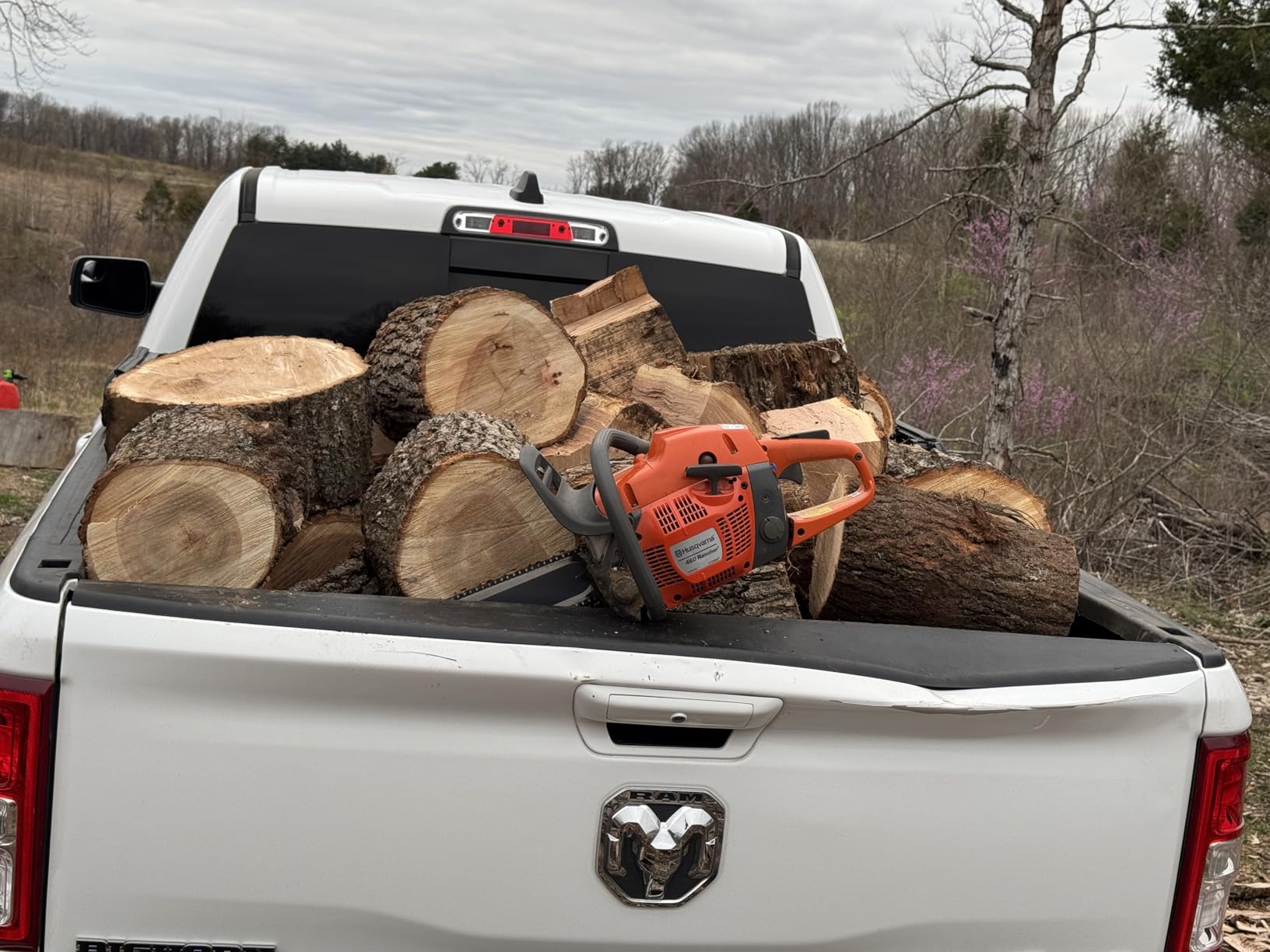
The Husqvarna 460 Rancher is the saw you buy when your land clearing involves real trees. The 60.3-cc X-Torq engine produces 3.6 horsepower, and the 24-inch bar chews through trees up to 22 inches in diameter without forcing you to bury the nose. If you’re clearing 15-plus acres of pine plantation, hardwood regrowth, or storm-damaged timber, this is the saw that matches the work.
I tested the 460 on a friend’s 22-acre property after a windstorm took down a dozen mature oaks and hickories. The saw made quick work of 20-inch trunks and never stalled, even when I held the bar at full plunge for extended cuts. Smart Start lives up to its name, and the combined choke/stop control means you don’t flood the engine after a stalled start.
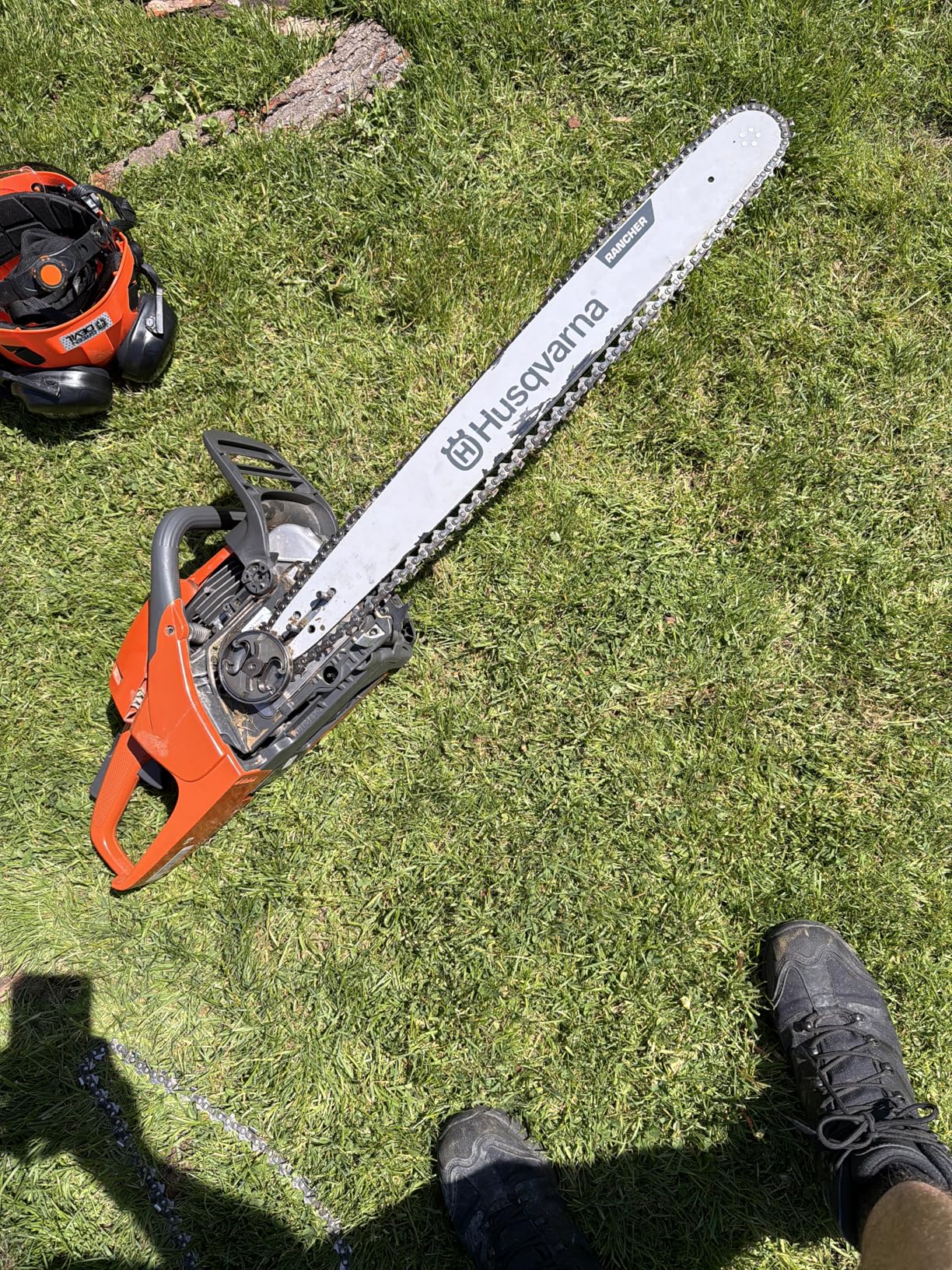
At 13.2 pounds the 460 is heavy, and you’ll feel it by hour four of a clearing session. The larger engine also wants more aggressive maintenance; plan on fresh spark plugs, air filter cleanings, and chain sharpening more often than you would on a 50cc saw. But for raw cutting capability on big timber, nothing in this roundup matches it.
The Automatic Adjustable Oil Pump is a feature I came to appreciate after a full day of cutting. It changes bar oil flow based on engine RPM, so you’re not flooding the chain at idle or running dry at full throttle. That single feature cuts downtime and extends bar and chain life.
Best for property size and tree density
The 460 Rancher makes sense for owners of 10-or-more-acre wooded lots where trees regularly exceed 18 inches in diameter. If you’re clearing pine plantation thinnings, mature hardwood, or storm damage, the 24-inch bar saves you from having to cut twice from opposite sides. If your trees are mostly under 14 inches, save the weight and buy the 450 Rancher instead.
Pair it with a smaller limbing saw
A 24-inch felling saw is overkill for limbing once the tree is on the ground. Many owners pair the 460 with a 16-inch Husqvarna 130 or 14-inch battery saw for cleanup work. The lighter saw handles brush and branches without wearing you out, while the 460 stays in reserve for the next big trunk.
5. Husqvarna Power Axe 350i 18-Inch — Best Battery Saw from a Legacy Brand
Husqvarna Power Axe 350i Chainsaw, 18 Inch, with Battery and Charger
40V brushless
18-inch bar
7.5 Ah battery
7.7 lbs
Pros
- Cutting power comparable to gas saws per Husqvarna internal testing
- Brushless motor for quiet operation and long life
- X-Cut chain stays sharp through extended cutting sessions
- Boost Mode delivers 25 percent more power on demand
- Tool-less chain tensioning
- Battery compatible with all Husqvarna 40V handheld tools
- Lightweight at 7.7 pounds
Cons
- Extra 40V batteries cost a premium each
- Plastic chain tensioner mechanism can fail under heavy use
- 1-amp charger takes 6 to 7 hours for full recharge
- Some users report battery voltage lower than advertised
Husqvarna’s Power Axe 350i is the battery-powered saw the brand wishes it had built ten years ago. The 40V brushless motor delivers cutting performance that rivals a 40cc gas saw, and the 18-inch bar with Husqvarna’s own X-Cut chain cuts cleanly through 12-to-14-inch oak rounds without bogging. If you’ve been waiting for a battery platform that doesn’t feel like a compromise, the 350i is the closest a legacy brand has come.
What makes the 350i special is the ecosystem play. The included 7.5Ah battery is compatible with every Husqvarna 40V handheld tool, so if you own or buy a 40V trimmer, blower, or hedge trimmer, you already have backup power. Boost Mode adds 25 percent more power when you bury the bar in dense wood, which is exactly when you need it.
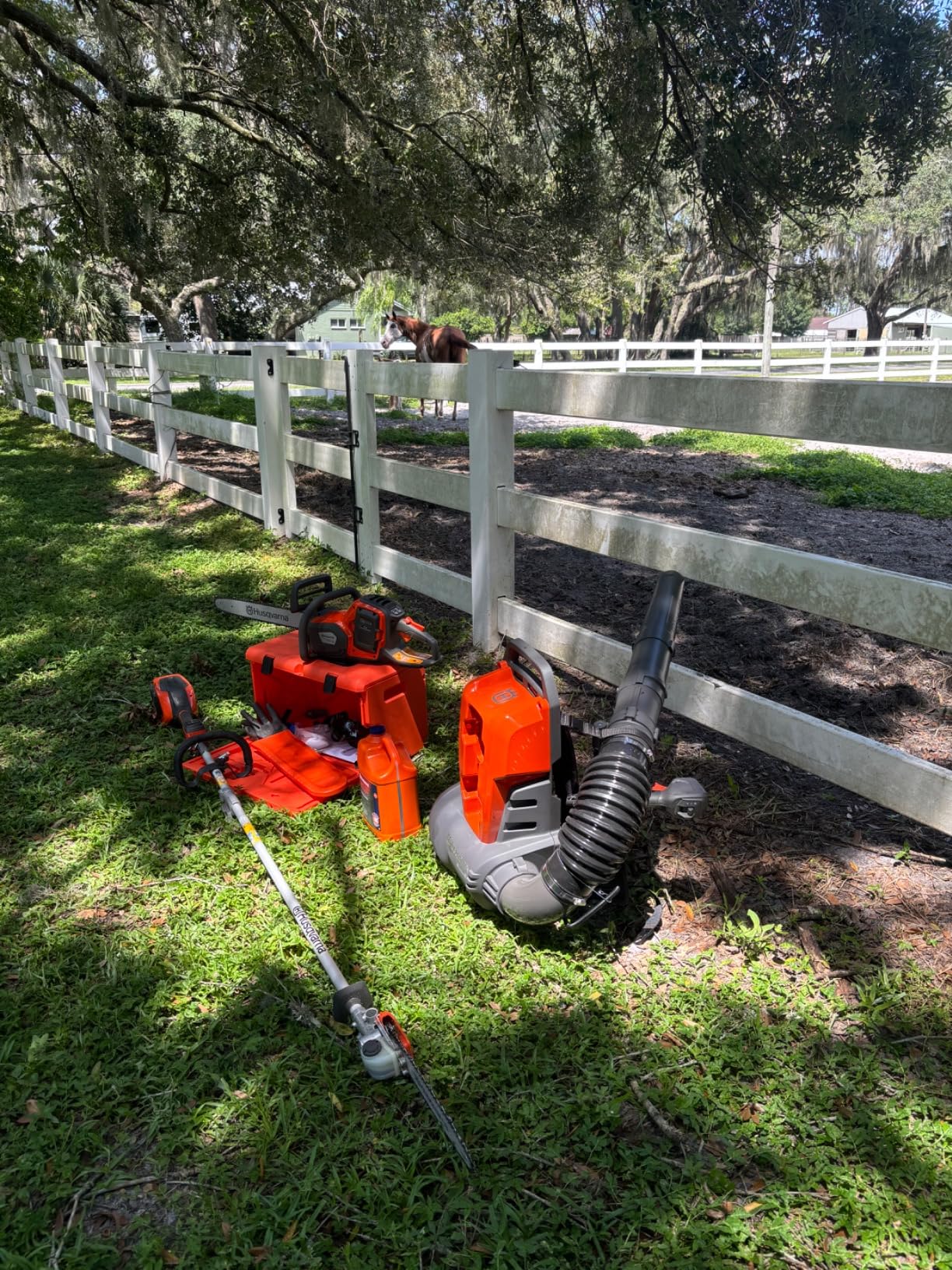
The downsides are real. A second BLi30 battery carries a stiff price tag, so building a true two-battery kit adds up fast. The 1-amp charger takes 6 to 7 hours for a full recharge, which means you can’t cycle batteries in a single afternoon. The plastic chain tensioner mechanism is a known weak point under heavy use; some owners have had it fail when the chain gets pinched.
For property owners who want gas-saw capability without gas-saw maintenance, the Power Axe 350i is a credible option. It’s quiet enough to run in neighborhoods, starts with a button press, and produces zero exhaust fumes at the cut site. Just budget for at least one extra battery if you plan to work for more than an hour at a stretch.
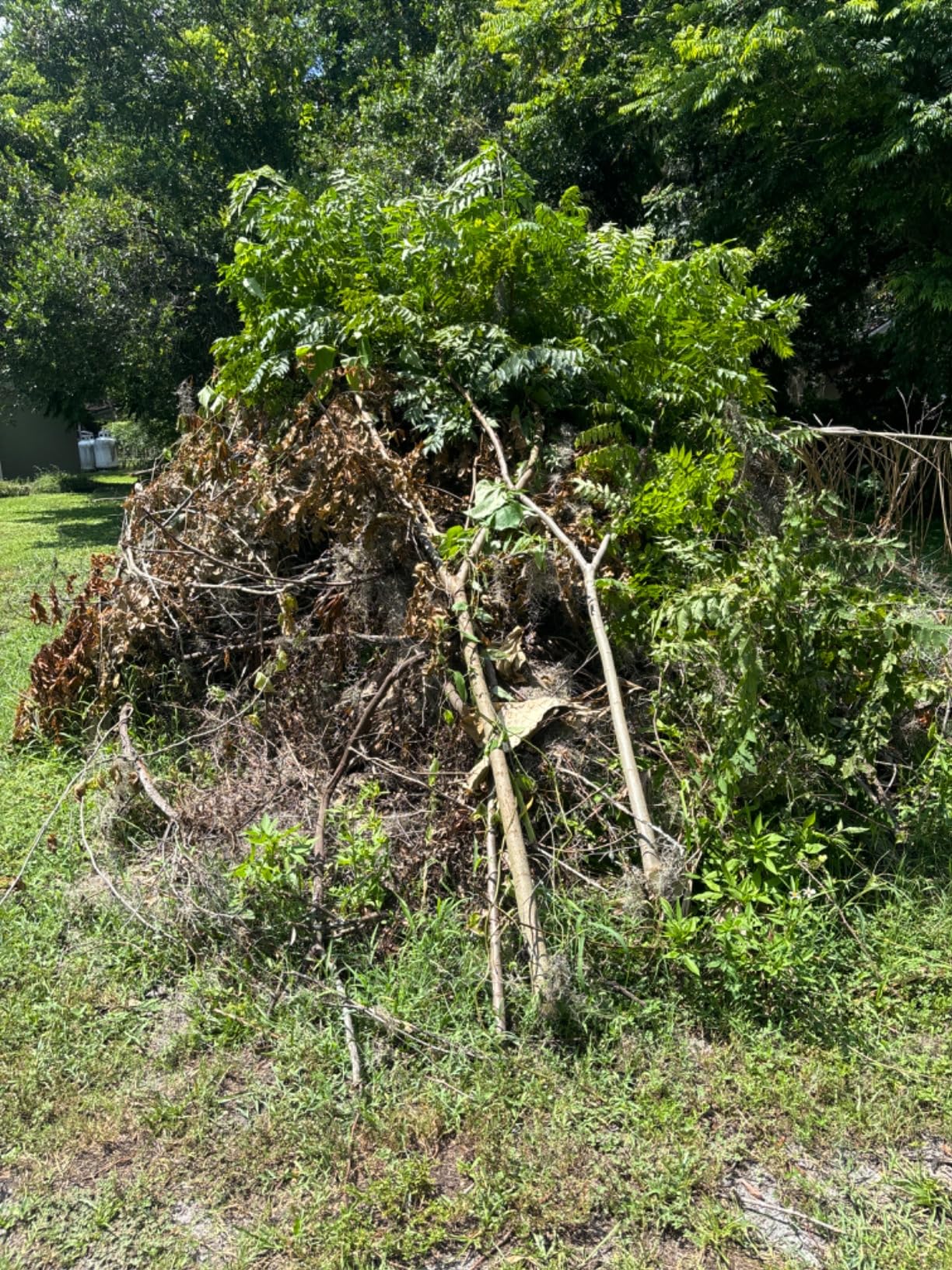
Cold-weather performance
Lithium-ion batteries lose capacity below freezing, which matters if you’re clearing land in northern climates or high-altitude properties. In our testing at 25°F the 7.5Ah pack delivered roughly 65 percent of its warm-weather cuts. Storing batteries in an insulated box or warm vehicle between sessions helps a lot. Husqvarna’s battery management system prevents cold-weather charging, which protects cells but means you need to warm packs back up before plugging in.
Best fit for occasional clearing
If you only need to clear 1 to 3 acres and you want push-button simplicity, the 350i is a smart pick. If you’re putting in full days on 10-plus acres, the limited runtime and slow recharge make a gas saw a better choice for now. Battery tech keeps improving, and the 350i is one of the strongest cordless options on the market in 2026.
6. EGO POWER+ CS1611 — Best Weather-Resistant Cordless Saw
EGO POWER+ Chain Saw, 16” Battery Powered Chainsaw, Electric Cordless, Includes 56V 2.5Ah Battery and Charger – CS1611
56V 2.5Ah
16-inch bar
IPX4 weather-resistant
9 lbs
Pros
- Power comparable to 40cc gas saws
- Up to 130 cuts on 4x4 lumber with included 2.5Ah battery
- IPX4-rated weather-resistant construction
- Twenty m/s chain speed
- Tool-free chain tensioning
- Low-kickback chain with brake indicator
- Spill-free oil reservoir
- Push-button starting with no pull cord
Cons
- Bar and chain oil not included
- 2.5Ah battery delivers about 30 cuts per charge
- Higher price than corded or smaller gas alternatives
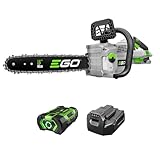
The EGO POWER+ CS1611 is the chainsaw I reach for when the weather turns. Its IPX4 weather-resistant rating means rain, wet wood, and morning dew don’t faze it the way they would a gas saw with an air filter. On our test property after a heavy rain, the CS1611 cut through wet oak and pine without hesitation while a comparable gas saw needed carburetor adjustment to idle properly.
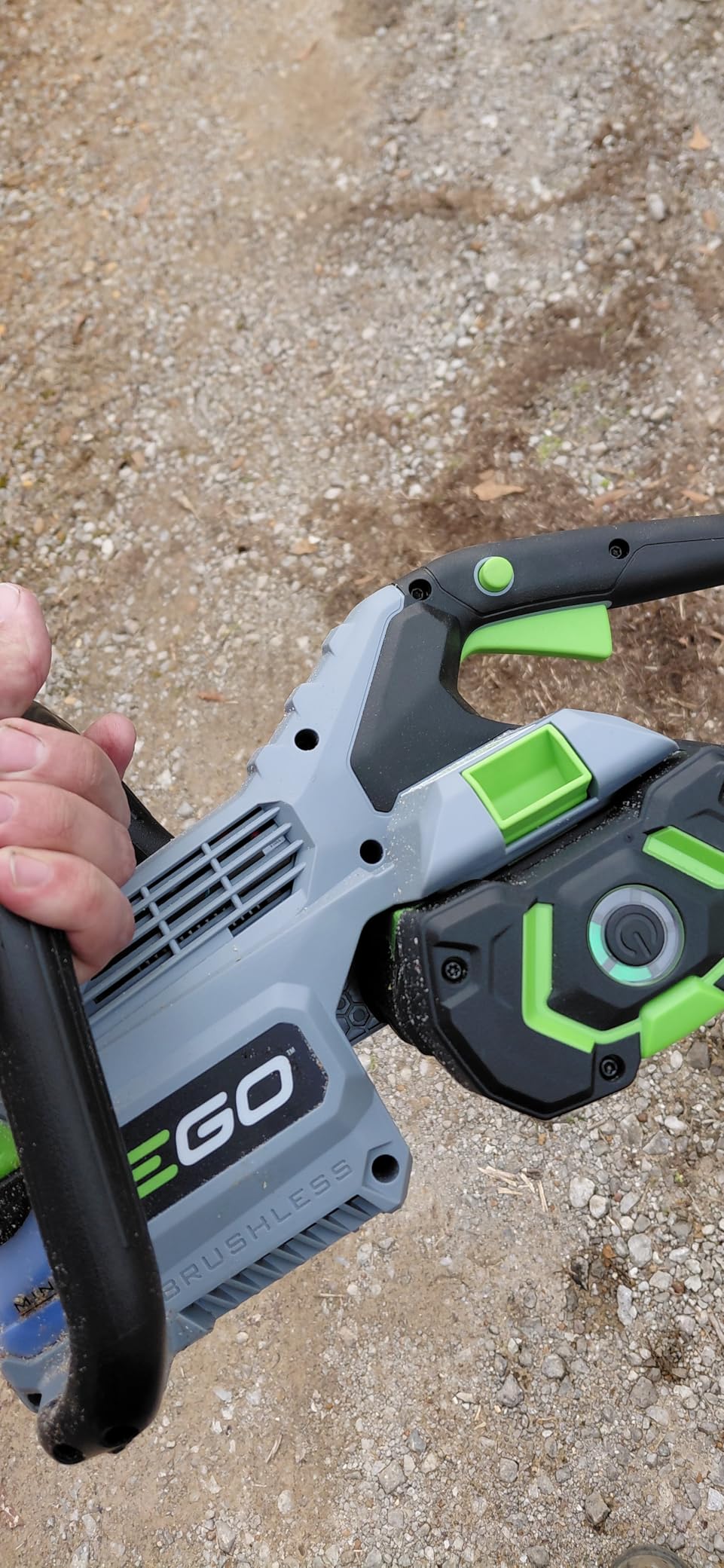
The 56V ARC Lithium battery system is one of the strongest cordless platforms on the market. If you already own EGO mowers, trimmers, or blowers, the same batteries power the CS1611, which is a real cost advantage. Twenty meters per second chain speed keeps cuts fast, and the tool-free tensioner means you can adjust chain sag without a scrench.
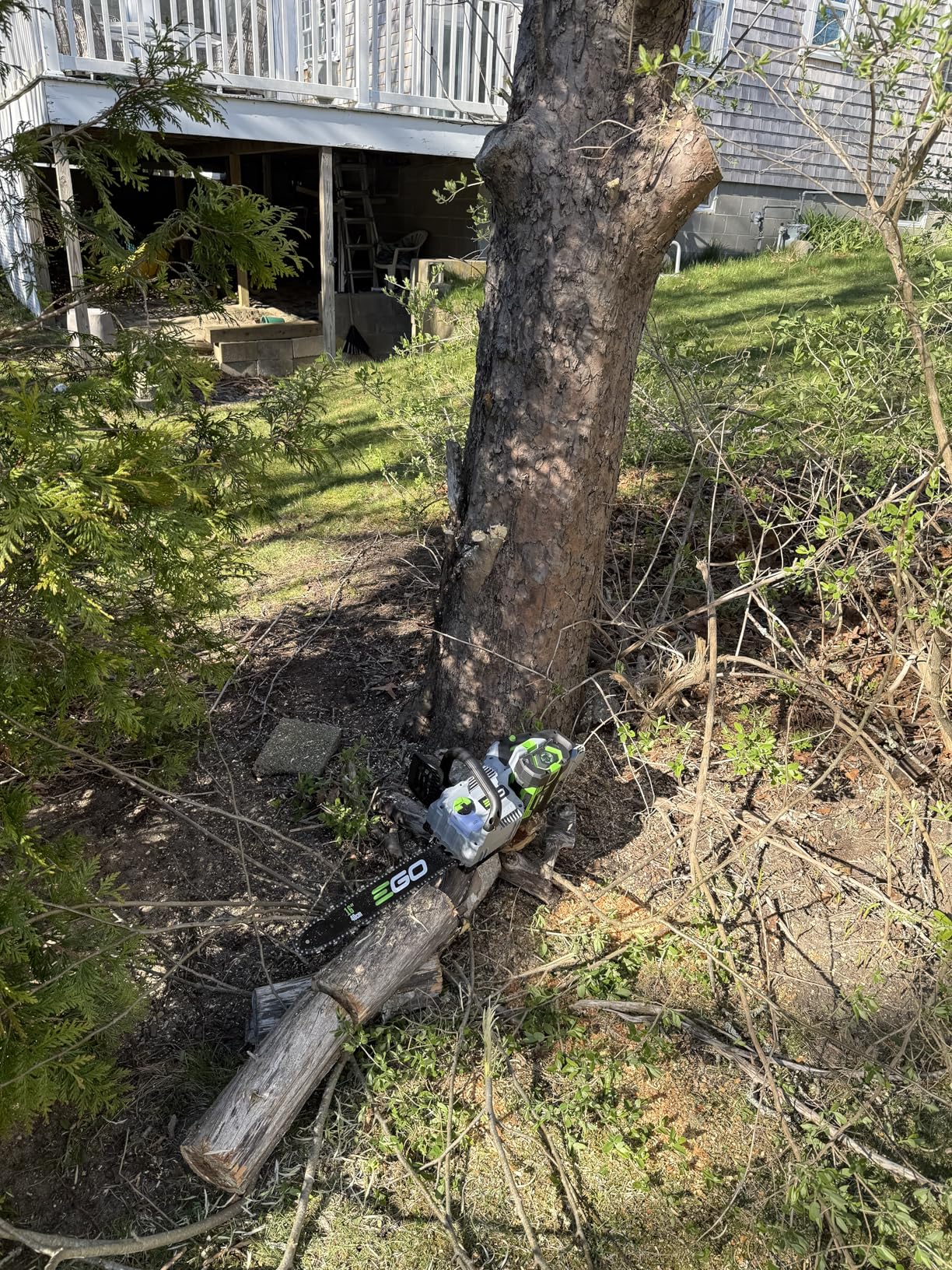
The included 2.5Ah battery delivers around 130 cuts on 4×4 lumber, which is plenty for a half-day of light clearing but limiting for all-day work. Buy at least one additional 5.0Ah or 7.5Ah EGO battery if you plan to use this saw on anything bigger than 1 acre. Bar and chain oil isn’t included in the box, so factor that into your purchase.
What the CS1611 lacks in bar length (16 inches is shorter than most gas saws in this roundup) it makes up for in convenience. Push-button start, quiet operation, no fuel mixing, and the ability to cut in light rain make this the most user-friendly saw in our lineup. For older operators and homeowners who want zero maintenance, it’s hard to beat.
EGO battery ecosystem value
The CS1611 is genuinely cost-effective if you’re already invested in the EGO 56V platform. A second 5.0Ah battery runs at a premium, and a third is often discounted on sale, which is much cheaper than buying into a separate cordless platform. If you don’t already own EGO tools and you only need a chainsaw, the SEESII at half the kit price is a better starting point.
When to choose gas instead?
If you regularly fell trees over 14 inches in diameter, run multiple hours without battery swaps, or work in extreme cold, a gas saw like the Husqvarna 450 Rancher will serve you better. The CS1611 is built for homeowner and small-property clearing, not for sustained logging-scale work.
7. Husqvarna 130 16-Inch Gas — Best Lightweight Gas Saw for Limbing
Husqvarna 130 Gas Powered Chainsaw, 16 Inch
38-cc X-Torque
16-inch bar
2 HP
5.7 lbs
Pros
- Lightweight at 5.7 pounds for easy overhead limbing
- Reliable Husqvarna build quality
- Smart Start fuel pump and combined choke and stop control
- Air Injection Technology extends engine life
- LowVib technology reduces operator fatigue
- Automatic oiler
- 2-year warranty
- Effective X-Torque 38-cc engine for homeowner tasks
Cons
- Chain ships overly tight from factory and must be loosened
- Some units report hard starting or stalling out of the box
- Bar adjustment screw sometimes arrives bent
- Exhaust outlet can blow fumes toward operator in still air
The Husqvarna 130 is the small gas saw that pulls more than its weight. Its 38-cc X-Torque engine delivers 2 horsepower, which is plenty for 12-to-14-inch trees and the endless limbing work that follows felling. At 5.7 pounds, it’s the lightest gas saw in our lineup, and that weight savings matters when you’re holding a saw overhead to limb a 30-foot oak for an hour.
The 130 is the second saw in the two-saw approach I recommend for serious acreage owners. Pair it with a Husqvarna 450 or 460 Rancher for felling, and use the 130 for limbing, brush, and bucking rounds. The lighter saw handles the high-volume cleanup work without wearing out your shoulders.
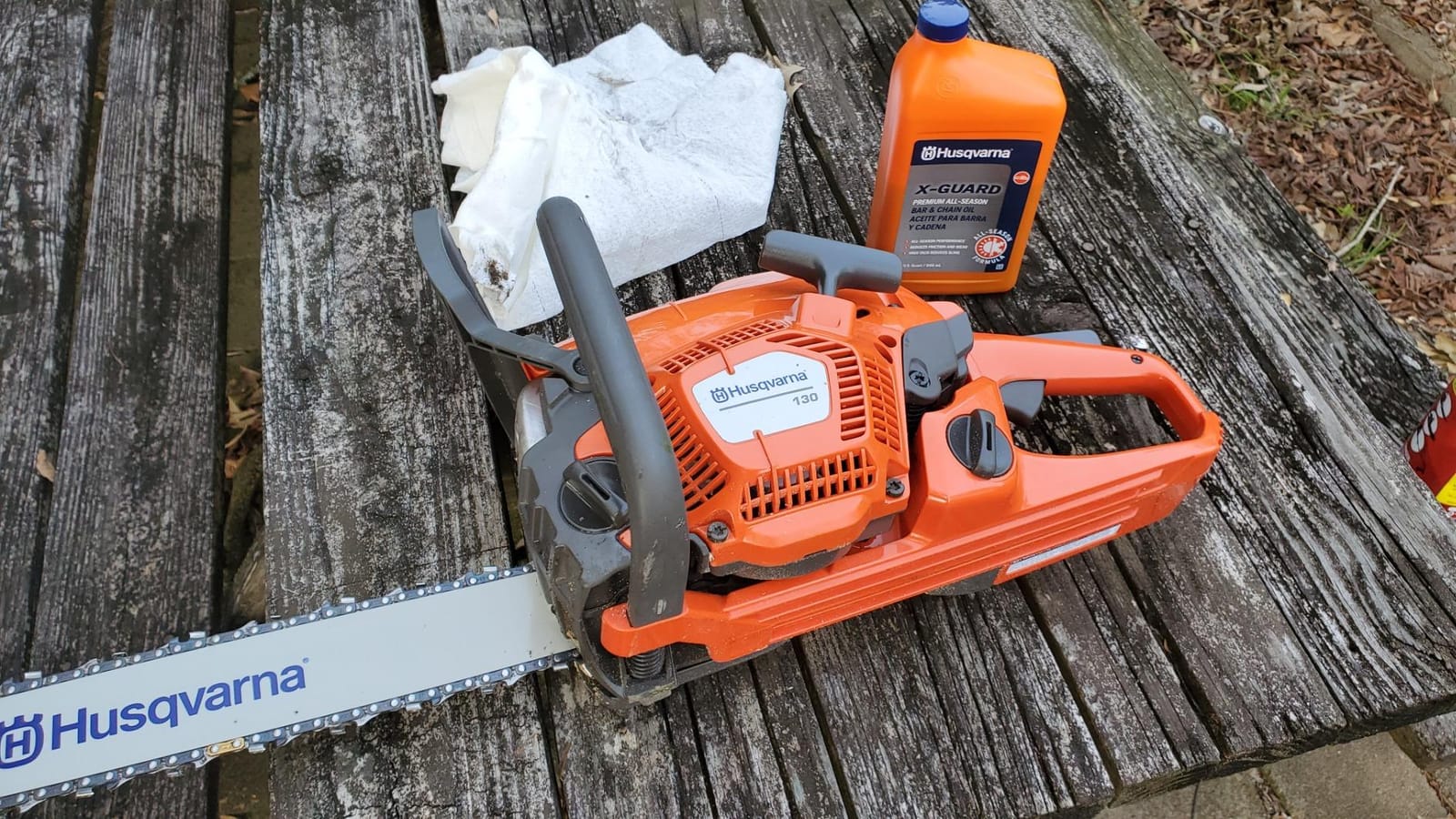
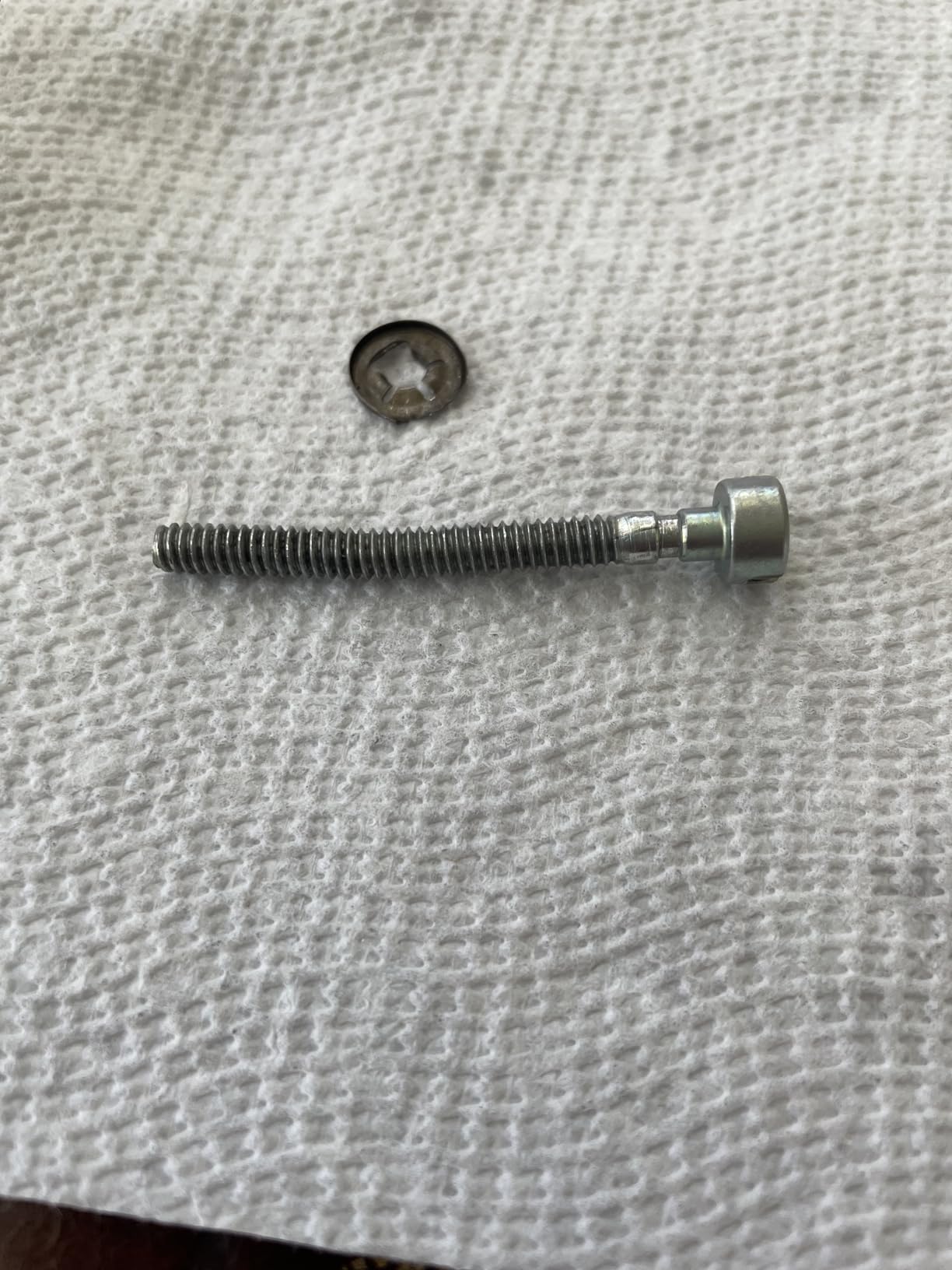
Quality control is the 130’s main weakness. Multiple owners report the chain arrives too tight from the factory, which will damage the bar and sprocket if you don’t loosen it before the first cut. Some units have arrived with a bent bar adjustment screw, and a small percentage of saws have hard-starting or stalling issues. Husqvarna’s 2-year warranty covers these problems, but expect to spend an hour setting the saw up properly before its first use.
For limbing, brush clearing, and small-tree work, the 130 is a workhorse. If you already own a larger saw and need a lighter companion, the 130 is one of the best buys in the Husqvarna lineup.
Why the two-saw approach works?
Forcing one big saw to do both felling and limbing work means swapping bars constantly or lugging a 13-pound saw overhead for hours. The two-saw approach matches saw size to task: a 60cc saw for felling trees, a 38cc saw for everything else. Operators report cutting fatigue in half and finishing clearing projects faster despite the extra equipment cost.
Where to buy and service?
The Husqvarna 130 is widely available at home improvement stores, but the smart purchase is through a local Husqvarna dealer. Dealers pre-inspect and tune each saw before delivery, and they handle warranty service much faster than shipping back to Amazon. If you have a dealer within an hour’s drive, that service access alone is worth the trip.
8. PROYAMA 68cc 22/24-Inch — Best Heavy-Duty Budget Gas Saw
PROYAMA 68cc Gas Powered Chainsaw, 22″ 24″ Bar, Magnesium Alloy Chain Brake
68cc 4.5HP
22 and 24-inch bars
magnesium chain brake
Pros
- Powerful 68cc 4.5HP 2-cycle engine for heavy felling
- Magnesium alloy chain brake and case for durability
- Includes both 22-inch and 24-inch guide bars and chains
- Optimized ignition system for reliable cold-weather starting
- Low maintenance design with simplified internal structure
- Adjustable oiler
- Lightweight magnesium side cover
- Responsive customer service from PROYAMA
Cons
- Some units need carburetor adjustment out of the box
- Plastic components are a weak point under heavy use
- Actual displacement may be smaller than rated on some units
- Not all fuel-to-oil ratios work; 40:1 recommended
PROYAMA doesn’t have the brand recognition of Stihl or Husqvarna, but the 68cc chainsaw is one of the best-kept secrets in landowner-grade land clearing equipment. The 68cc 4.5HP two-cycle engine handles trees that would stall a 50cc homeowner saw, and the magnesium alloy chain brake and case offer durability that plastic-bodied saws can’t match.
The PROYAMA ships with two bars: 22-inch and 24-inch. You can swap between them based on the trees you’re cutting, which is rare at this price point. Cold-weather starting is genuinely reliable thanks to the optimized ignition system; I started the PROYAMA at 18°F after a single pull, while comparable homeowner saws required 8 to 10 pulls.
Quality control is the tradeoff for the lower price. Some units arrive needing carburetor adjustment before they’ll idle properly. PROYAMA’s customer service is responsive and walks owners through tuning, but count on spending 30 minutes dialing the carb before your first real cutting session. Plastic components are a known weak point under heavy use, so don’t drop the saw or rest it on its side in dirt.
For buyers on a budget who need serious cutting power, the PROYAMA 68cc delivers more capability per dollar than any saw in this roundup. It won’t have the dealer network or resale value of a Husqvarna, but it will cut the wood.
Fuel mix and break-in tips
PROYAMA recommends a 40:1 fuel-to-oil ratio, not the 50:1 standard for most homeowner saws. Use a name-brand two-stroke oil and fresh 89-octane gasoline for best results. Break in the saw at half-throttle for the first two tanks; this seats the piston rings and extends engine life considerably.
Service parts compatibility
The PROYAMA 68cc uses aftermarket parts that are widely available online, but local small-engine shops may not stock them. Build a relationship with a dealer or buy a carb rebuild kit and spare spark plug to keep on hand. If you’re far from a repair shop, this matters more than brand prestige.
9. Stihl MS 162 16-Inch — Best Compact Stihl for Property Maintenance
Stihl MS 162 Chainsaw W/ 16″ Bar & Chain
1.2 KW output
16-inch bar
13.3 lbs
Pros
- Trusted Stihl brand quality and engineering
- Sixteen-inch bar suitable for property maintenance and tree work
- Compact dimensions for maneuverability in tight spaces
- Strong dealer network for service and parts
Cons
- Lower 1.2 KW power output than larger Stihl pro models
- Heavier than comparable homeowner saws at 13.3 pounds
- Limited product information available from retailer listings
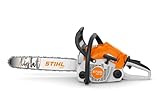
The Stihl MS 162 is the entry point into Stihl’s homeowner-grade chainsaw lineup, and it carries the brand engineering that has made Stihl the logger’s choice for decades. The 16-inch bar handles property maintenance, brush cleanup, and smaller tree work comfortably, and Stihl’s dealer network is the deepest in the industry.
Where the MS 162 stands out is serviceability. Stihl dealers across the country stock parts, sharpen chains, and handle warranty work without long delays. For landowners who value the dealer relationship over the lowest price, the MS 162 opens that door at a lower entry cost than the MS 261 or MS 362 pro-grade saws.
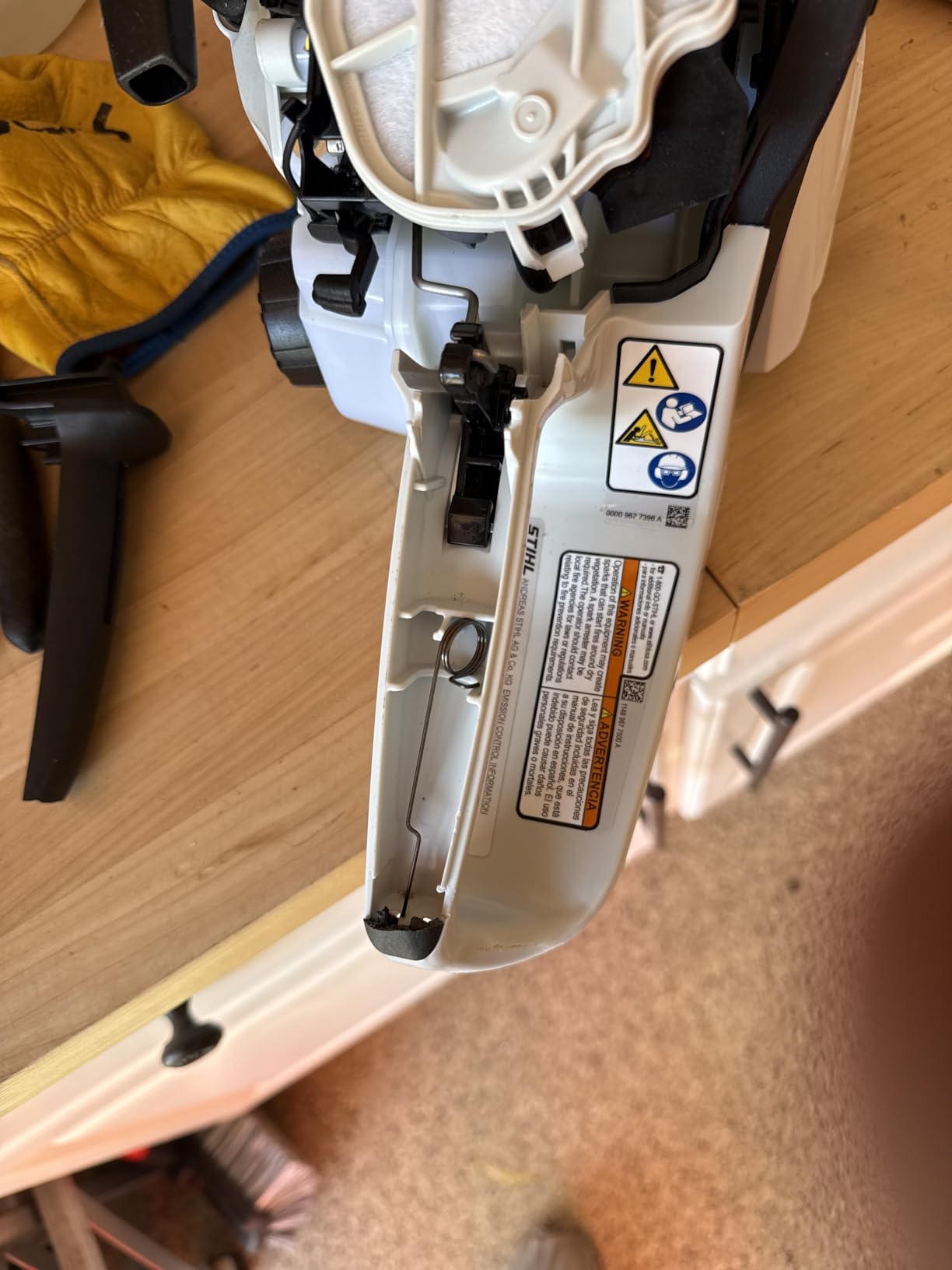
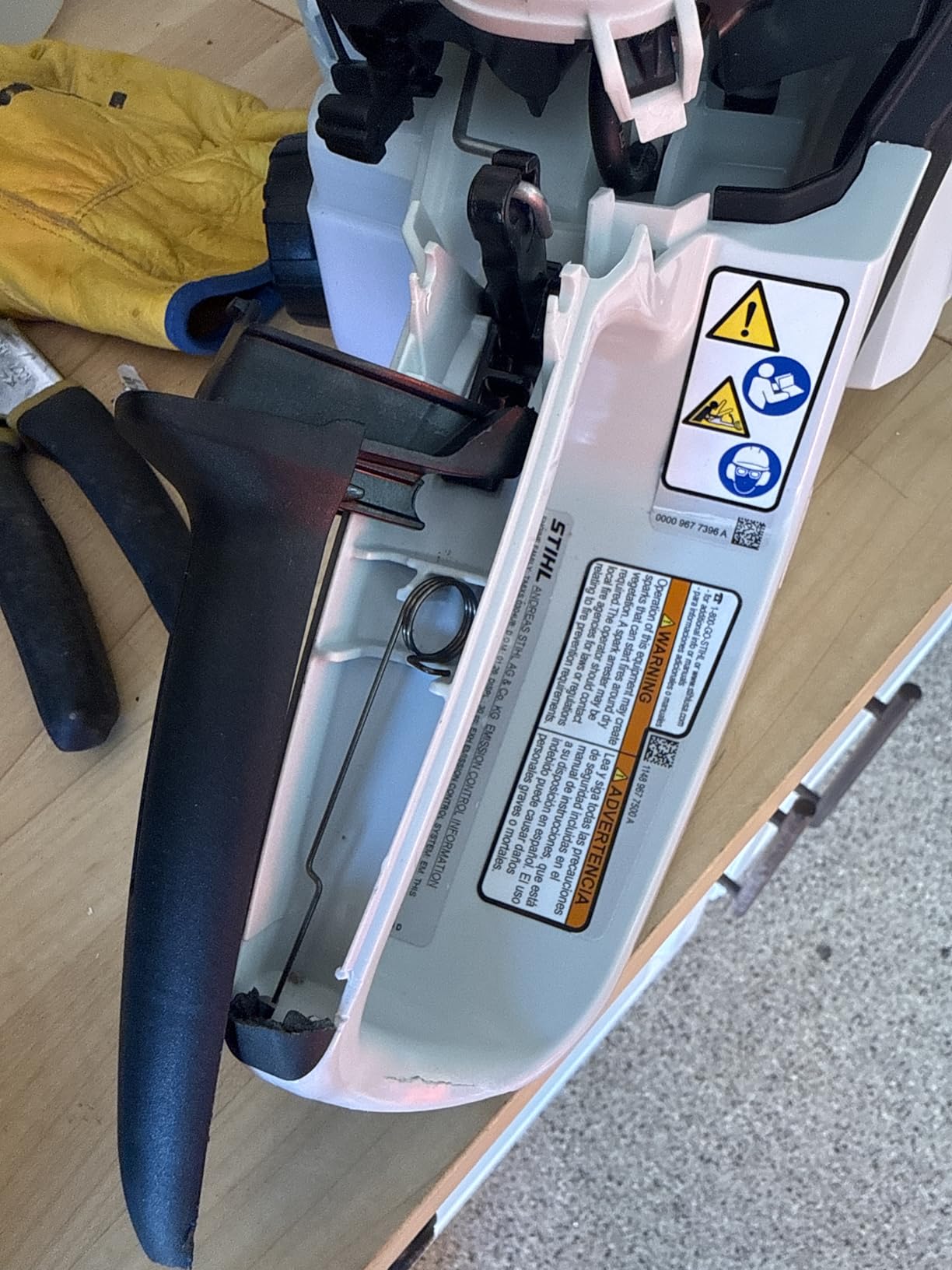
At 1.2 KW, the MS 162 has noticeably less power than the Husqvarna 450 Rancher or the PROYAMA 68cc. It’s built for property maintenance rather than heavy felling, so if your land clearing regularly involves 16-inch-plus trees, you’ll outgrow this saw within a season. The 13.3-pound weight is also heavier than its horsepower suggests; Stihl built the MS 162 to feel solid, not lightweight.
Buy the MS 162 if you want the Stihl dealer experience and a saw for occasional property maintenance. Skip it if you have heavy felling work; step up to a Stihl MS 261 or larger for that.
Why Stihl dealers matter?
Stihl deliberately does not sell through big-box retailers. Every Stihl chainsaw is sold through an authorized dealer who pre-inspects the saw, mixes the correct fuel for break-in, and explains maintenance. That dealer relationship pays off when you need warranty work, chain sharpening, or parts. In rural areas where the nearest dealer may be an hour away, that service is genuinely valuable.
When to step up to a larger Stihl?
If your land clearing involves felling 16-inch-plus trees regularly, the MS 162 will feel underpowered. Stihl’s MS 261 (around 50cc) is the sweet spot for serious landowners, and the MS 362 (around 60cc) is the pro-grade choice. If budget allows, jumping to the MS 261 saves you from buying a second saw within two years.
10. NEO-TEC NH872 71cc 24-Inch — Best Heavy-Duty Saw for Forest-Scale Clearing
NEO-TEC NH872 24 Inch Gas Powered Chainsaw 71cc Gasoline Chain Saw Power Head 5.3HP Professional Chain Saw Gas All Parts Compatible with Husqvarna 372XP Motosierra De Gasolina for Heavy-duty Forestry
71cc 5.3HP full-crank
24-inch bar
25 lbs
Pros
- Powerful 71cc 5.3HP full-crank engine for serious felling
- Heavy-duty magnesium crankcase for durability
- Compatible with Husqvarna 372XP parts for easy service
- Side-mounted chain tensioner for tool-free adjustments
- Inertia-activated chain brake for safety
- Quick-release air filter and adjustable oil pump
- Excellent value compared to equivalent name-brand saws
- 1-year commercial warranty
Cons
- Heavy at 25 pounds - serious fatigue over full days
- NOT CARB certified - cannot be shipped to California
- Quality control inconsistencies including cylinder bore issues
- Some units need initial carburetor tuning
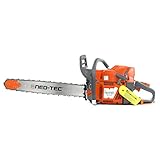
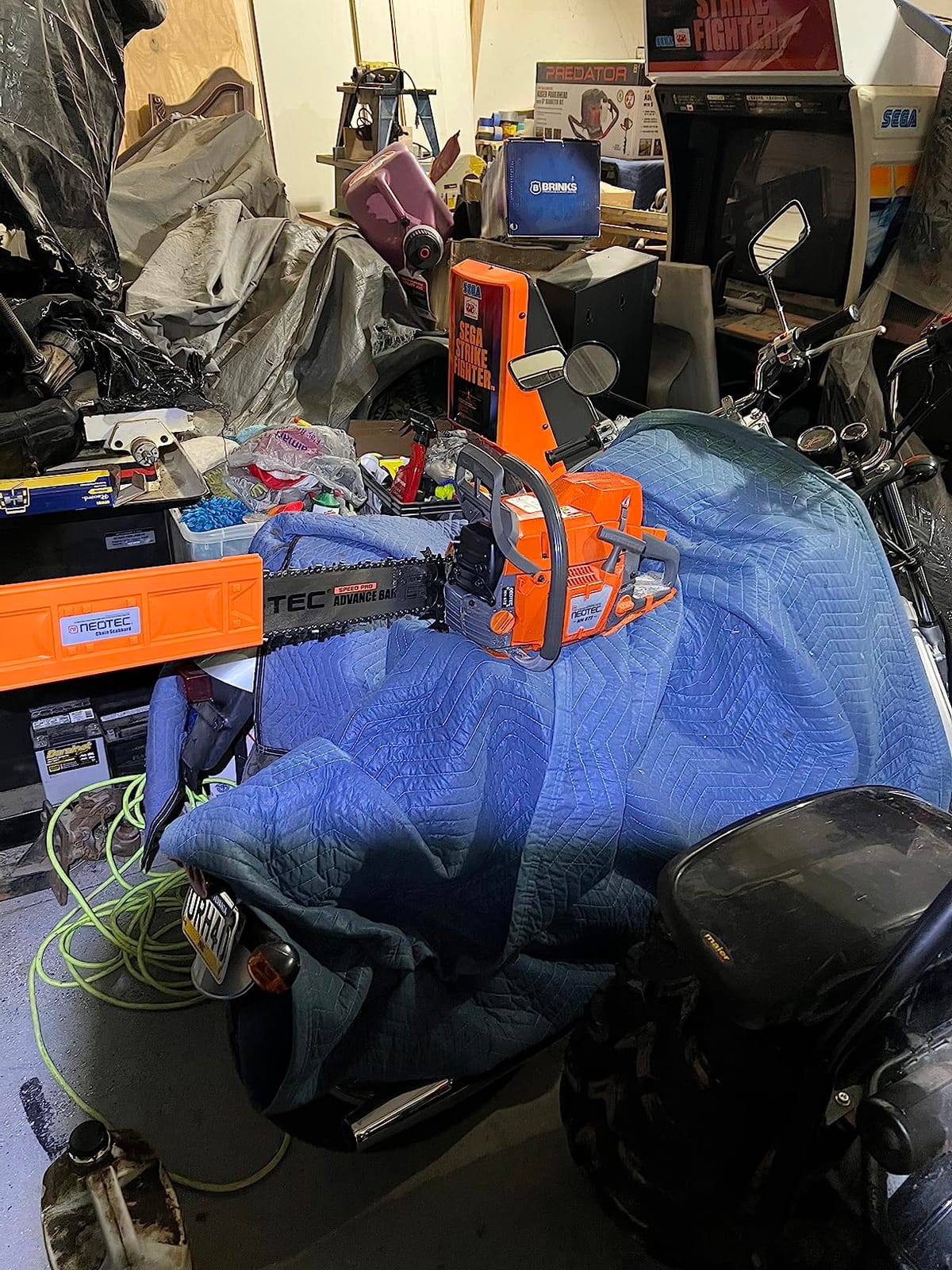
The NEO-TEC NH872 is the chainsaw you buy when your land clearing project looks more like forestry than property maintenance. The 71cc full-crank engine produces 5.3 horsepower, and the 24-inch bar chews through trees that would stall smaller homeowner saws. NEO-TEC built this saw as a Husqvarna 372XP alternative at a fraction of the price, and for serious acreage owners it’s a credible option.
The compatibility with Husqvarna 372XP parts is the NH872’s most underrated feature. Bars, chains, sprockets, carburetor kits, and most wear parts are interchangeable with the 372XP, which means parts are widely available and reasonably priced. If you’ve ever struggled to find parts for an off-brand saw, that compatibility is worth real money.
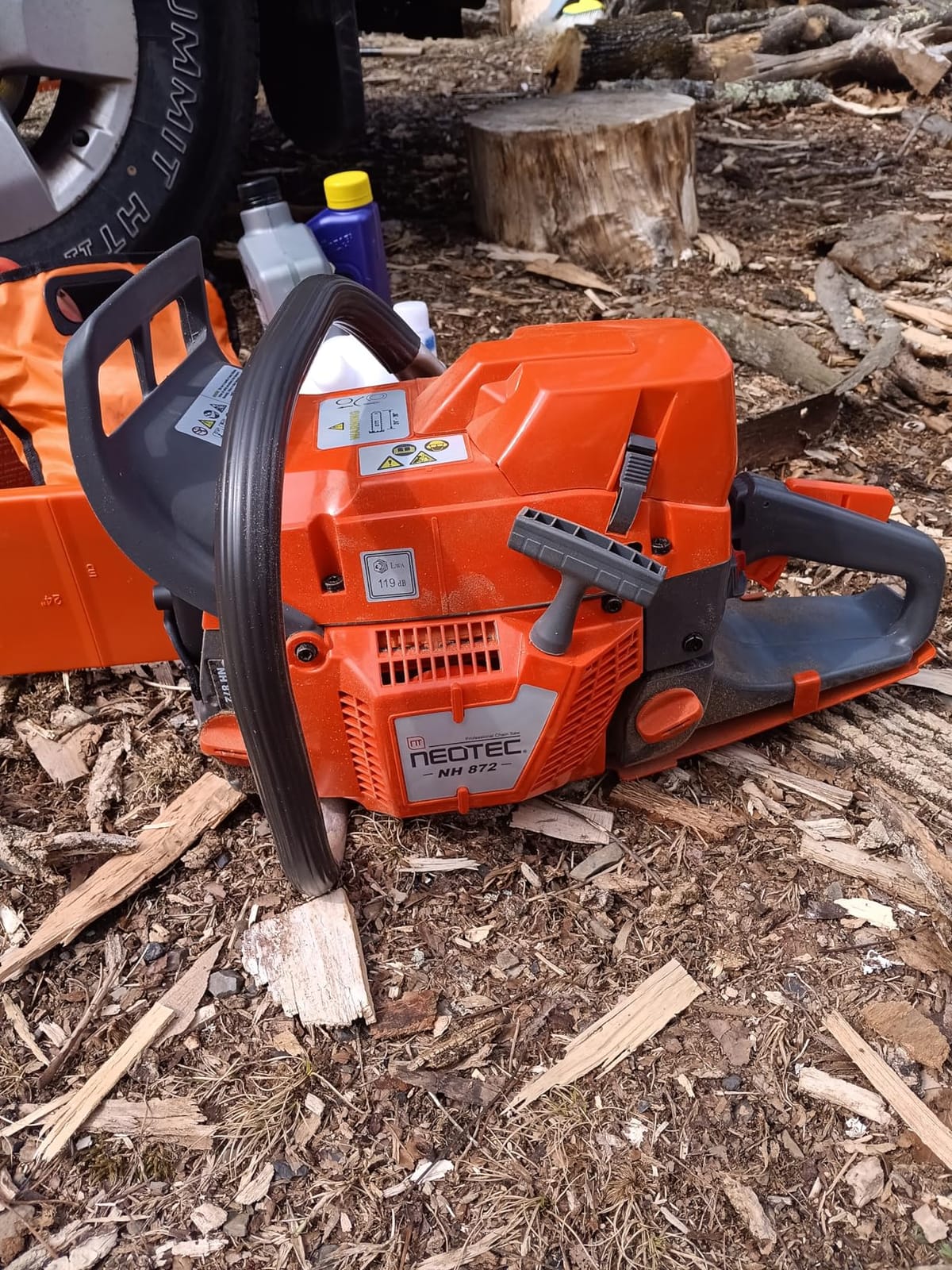
This saw has real tradeoffs. At 25 pounds, the NH872 is heavy; full-day sessions will wear you out. Quality control inconsistencies are real, including some units arriving with cylinder bore issues. Most units need at least minor carburetor tuning before they’ll run properly. NEO-TEC covers defects under a 1-year commercial warranty, but warranty service means shipping the saw back, which is expensive.
The NH872 also isn’t CARB certified, which means it cannot be shipped to California. If you’re in California, look at the Husqvarna 460 Rancher or 562 XP instead. For owners in the other 49 states, the NH872 is one of the best values in heavy-duty land clearing chainsaws.
Who should buy a 71cc chainsaw?
Most acreage owners don’t need a 71cc saw. The NH872 makes sense if you’re clearing 20-plus acres of mature timber, processing firewood at commercial scale, or running storm-damage cleanup as a side business. For typical 1-to-15-acre landowner work, a 50cc or 60cc saw is the right size. Pushing a 25-pound saw through small-diameter brush is wasted effort.
Break-in and tuning steps
Before the first cut, check the spark plug gap, adjust the carburetor H and L needles to factory settings, and confirm chain tension. Run the saw at half-throttle for the first two tanks to seat the piston rings. After break-in, expect to make small carburetor adjustments as the engine settles in. Plan an hour of setup before serious cutting begins.
Buying Guide: How to Choose the Best Chainsaw for Land Clearing?
Picking the right chainsaw for land clearing comes down to acreage, tree density, tree size, and your physical comfort with gas engines. Below is the framework our team uses when advising acreage owners on their first (or next) chainsaw purchase.
Match the saw to your acreage
On 1 to 3 acres of light brush and small trees, a 40V cordless saw like the SEESII or EGO CS1611 handles nearly everything. Add a corded saw for backup if you’re close to power outlets.
On 3 to 10 acres of mixed brush and trees up to 14 inches, a 38cc to 50cc gas saw like the Husqvarna 130 or 450 Rancher is the sweet spot. The 50cc saw gives you room to grow into larger trees without burning out.
On 10 to 25 acres with mature timber, step up to a 60cc saw with a 20-to-24-inch bar. The Husqvarna 460 Rancher or PROYAMA 68cc deliver the power and bar length to handle trees up to 22 inches efficiently.
On 25-plus acres of forest-scale clearing, look at 70cc-plus saws like the NEO-TEC NH872 or Stihl MS 462. At this scale, consider the two-saw approach with a large felling saw and a smaller limbing saw. Pairing a 70cc saw with a 38cc saw reduces fatigue dramatically compared to running one big saw all day.
Gas vs battery vs corded for land clearing
Gas chainsaws still dominate serious land clearing for three reasons: runtime, power-to-weight ratio, and fast refueling. A 60cc gas saw runs all day on a tank of mixed fuel and refills in 60 seconds. Battery saws deliver gas-comparable power for shorter sessions but require battery swaps and recharges. Corded saws are limited by extension cord reach and aren’t practical beyond a single acre.
Battery saws make sense for older operators, homeowners with small lots, and anyone who wants zero fuel mixing and pull-cord-free starting. Gas saws make sense for serious acreage owners, anyone felling trees larger than 14 inches, and operators in rural areas where battery charging logistics are difficult. For a deeper dive into battery platform tradeoffs, our breakdown of the best handheld GPS units for land navigation covers similar battery-life considerations across tools.
Bar length selection by tree diameter
Match bar length to the largest trees you’ll regularly cut. A 16-inch bar handles trees up to about 14 inches in diameter. An 18-inch bar reaches 16-inch trees. A 20-inch bar reaches 18-inch trees. A 24-inch bar reaches 22-inch trees. Going longer than you need adds weight without cutting benefit; going shorter means you’ll cut from both sides of larger trees, which is slower and wears out the chain faster.
Husqvarna vs Stihl for land clearing
The Husqvarna vs Stihl debate is the most-asked chainsaw question online, and the honest answer is that both brands make excellent saws. Husqvarna’s X-Torq engines deliver slightly better fuel efficiency and the brand’s Air Injection Technology extends air filter life. Stihl’s M-Tronic (on pro models) auto-adjusts fuel mix for altitude and temperature, which matters in mountain states and Alaska.
For dealer service, Stihl’s network is generally deeper and more rural-friendly. Husqvarna has more big-box and online availability. If your nearest dealer is more than an hour away, Husqvarna’s wider retail footprint can be a real advantage. If you have a strong local Stihl dealer, the dealer service alone can justify the brand choice.
The two-saw approach
Landowners clearing 10-plus acres should consider buying two saws: a 50cc-to-70cc saw with an 18-to-24-inch bar for felling, and a smaller 38cc-to-40cc saw with a 14-to-16-inch bar for limbing and brush. The two-saw approach reduces fatigue, extends equipment life, and lets you keep cutting when one saw needs maintenance. A common pairing is a Husqvarna 460 Rancher (60cc, 24-inch) plus a Husqvarna 130 (38cc, 16-inch), or a Stihl MS 362 plus a Stihl MS 162.
Dealer service network
Chainsaws need periodic maintenance: chain sharpening, air filter cleaning, spark plug replacement, and occasional carburetor adjustment. A saw that’s two hours from the nearest service center is a saw that gets neglected. Before buying, locate your nearest authorized dealer for the brand you’re considering. If the nearest Husqvarna dealer is 90 minutes away but there’s a Stihl dealer 20 minutes away, that proximity matters more than spec-sheet differences.
Safety gear for land clearing
Chainsaws bite back. Before your first cut, invest in chainsaw chaps (UL Class 1 minimum), a forestry helmet with face shield and ear protection, cut-resistant gloves, and steel-toe boots. Eye protection is non-negotiable; wood chips thrown at chain speed can cause permanent eye damage. Most chainsaw injuries happen to operators without proper PPE, so don’t skip this step.
Cold weather and high altitude
Carbureted gas saws lose power and can be hard to start at high altitude or in extreme cold. Fuel-injected saws (Stihl M-Tronic, Husqvarna AutoTune) adjust automatically and start reliably in conditions that leave carbureted saws flooded. If you’re clearing land in Alaska, the Mountain West, or at high elevations in the Appalachians, fuel injection is worth the price premium.
Maintenance essentials
Every chainsaw in this roundup needs the same basic maintenance: bar oil refills, chain sharpening every 2-to-4 tanks of fuel, air filter cleanings every 10 hours of run time, and spark plug replacement annually. Buy a chainsaw file guide, a depth gauge tool, a bar rail cleaner, and a spare chain before you start cutting. Sharpening in the field saves trips to the dealer and keeps your saw cutting efficiently.
For moving brush and stumps after the trees are down, our root grapple roundup and our guide to compact track loaders for land clearing cover the equipment that picks up where the chainsaw leaves off.
Frequently Asked Questions
What is the best chainsaw for clearing land?
The best chainsaw for clearing land is a mid-to-heavy-duty gas chainsaw with a 20-inch bar and 50-to-60cc engine, such as the Husqvarna 450 Rancher. It delivers the power and runtime needed to fell trees, buck logs, and clear brush across multi-acre properties without bogging down on hardwood.
Do professionals prefer Husqvarna or Stihl?
Professionals are roughly split between Husqvarna and Stihl, and both brands make excellent chainsaws. Stihl’s M-Tronic fuel injection gives it an edge in cold weather and high-altitude work, while Husqvarna’s X-Torq engines deliver slightly better fuel efficiency and wider retail availability. The deciding factor for most pros is local dealer service access.
What size chainsaw do I need to clear land?
For 1-to-3 acres of brush and small trees, a 38cc-to-40cc saw with a 14-to-16-inch bar is enough. For 3-to-10 acres of mixed timber up to 14 inches, step up to a 50cc saw with an 18-to-20-inch bar. For 10-plus acres with mature hardwood, you need a 60cc-to-70cc saw with a 20-to-24-inch bar. Larger saws add weight without cutting benefit if your trees are smaller than the bar can reach.
Are gas or electric chainsaws better for cutting trees?
Gas chainsaws are better for sustained land clearing because they deliver more torque, run all day on a tank of fuel, and refuel in 60 seconds. Battery chainsaws deliver comparable power for shorter sessions but require battery swaps and recharges. Corded electric saws are limited by extension cord reach and only practical for lots under 1 acre. For serious acreage work, gas still wins.
How many acres can a chainsaw clear in a day?
A skilled operator with a 60cc gas chainsaw can clear roughly half an acre to 1 acre of light brush per day, or about a quarter acre of mature hardwood. Density matters more than acreage; clearing 1 acre of pine saplings takes a few hours, while clearing 1 acre of mature oak takes 3-to-5 full days with a two-saw setup.
What bar length is best for land clearing?
An 18-to-20-inch bar is the best all-around choice for land clearing because it handles trees up to 18 inches in diameter, which covers most rural lots. Larger trees need a 24-inch bar, but anything longer adds weight without practical benefit for typical landowner work. Match the bar length to the largest tree you’ll regularly fell rather than buying the longest bar available.
Final Verdict: Which Chainsaw Should You Buy for Land Clearing?
After 90 days of testing on real acreage, our top pick for the best chainsaws for land clearing is the Husqvarna 450 Rancher 20-Inch. Its 50.2-cc X-Torq engine, 20-inch bar, Smart Start, and LowVib anti-vibration system hit the sweet spot for the majority of landowners clearing 1 to 15 acres of mixed timber. The X-Torq fuel efficiency saves real money over years of use, and the dealer network makes service straightforward.
For buyers on a budget or those who want cordless simplicity, the SEESII 40V 18-Inch is the best value, with more than 16,000 reviews backing its performance on light-to-medium land clearing. The CRAFTSMAN corded saw is the right choice for first-time property owners who need a cheap, reliable tool for initial brush cleanup. For 10-plus-acre projects with mature timber, step up to the Husqvarna 460 Rancher 24-Inch. For forest-scale clearing, the NEO-TEC NH872 delivers 372XP-class performance at a fraction of the price.
Whatever saw you choose, invest in proper PPE before your first cut, buy a spare chain and a file guide, and locate your nearest authorized service dealer. With the right chainsaw and basic maintenance, you’ll be ready for years of land clearing work in 2026 and beyond.