
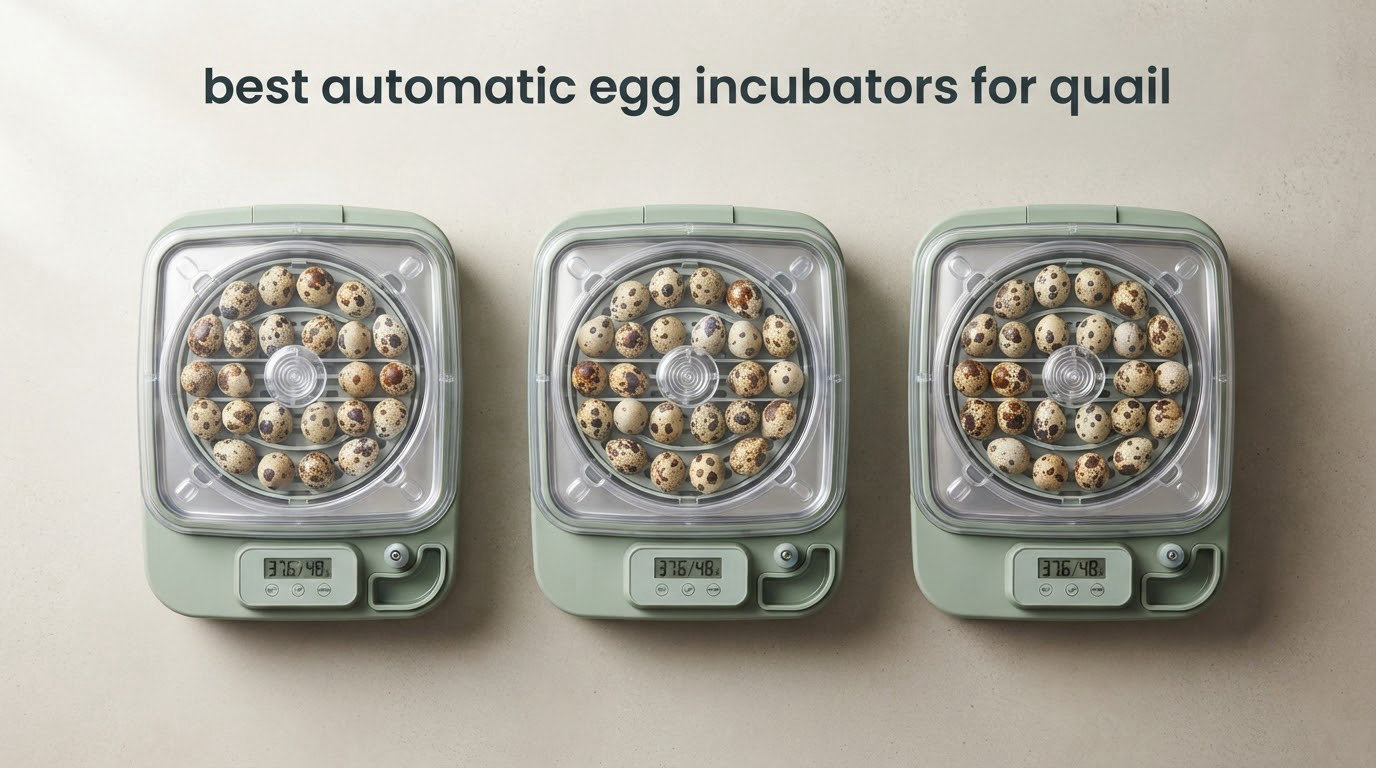
The best automatic egg incubators for quail are the ones that hold temperature steady, keep humidity on target without constant lid-opening, and have a tray that actually seats 1-inch Coturnix eggs. A quail egg is roughly the size of a large olive, so a unit advertised for a dozen chicken eggs may hold six quail eggs in practice unless the tray spacing adjusts. That single detail decides more hatches than any other feature on the machine.
We spent weeks reading owner reports, comparing rated accuracy, and checking which turners clear lockdown on their own. Ten machines made the list, and every one of them runs an automatic turner. What separates them is capacity honesty, whether humidity is pumped or bottled, and whether you can see the actual readings without opening the lid.
Two numbers frame every quail hatch. Coturnix quail need 17 to 18 days, and button quail need closer to 23 to 24, which changes your whole setting schedule. Temperature sits at 99.5°F (37.5°C) in a forced-air unit and 101 to 102°F at the top of the egg in a still-air unit. Humidity runs 45 to 50% through day 14, then 65 to 70% for the hatch window.
If you are still deciding between species or capacities, our general quail egg incubator guide covers the basics, and the automatic incubator picks for homesteaders looks at larger setups. This list stays focused on fully automatic quail incubation.
Table of Contents
Top 3 Automatic Egg Incubators For Quail (October 2026)

HBlife Digital Egg Incubator
- Fully automatic egg turning
- Digital temperature display
- 9-12 egg capacity
- Dishwasher-simple tray

APDOE 12 Egg Incubator
- Auto turn every 2 hours
- Dual external water bottles
- Built-in egg candler

Onsju 18 Egg Incubator
- 40 smaller eggs such as quail
- Sealed auto humidity
- Auto stop-turn before hatch
All 10 Automatic Quail Incubators Compared in 2026
| Product | Specifications | Action |
|---|---|---|
| HBlife Digital Egg Incubator |
|
Check Latest Price |
| APDOE 12 Egg Incubator |
|
Check Latest Price |
| Onsju 18 Egg Incubator |
|
Check Latest Price |
 IBKINXX 18 Egg Incubator IBKINXX 18 Egg Incubator |
|
Check Latest Price |
 TRIOCOTTAGE 12 Egg Incubator TRIOCOTTAGE 12 Egg Incubator |
|
Check Latest Price |
 CoInceptus 16 Egg Incubator CoInceptus 16 Egg Incubator |
|
Check Latest Price |
 ONKO 40 Quail Egg Incubator ONKO 40 Quail Egg Incubator |
|
Check Latest Price |
 innhom 59 Quail Egg Incubator innhom 59 Quail Egg Incubator |
|
Check Latest Price |
 CluckRun 25 Egg Incubator CluckRun 25 Egg Incubator |
|
Check Latest Price |
 VEVOR 12 Egg Incubator VEVOR 12 Egg Incubator |
|
Check Latest Price |
1. HBlife Digital Egg Incubator – the most proven small automatic unit
HBlife Digital Egg Incubator for Hatching 9-12 Chicken, Quail and Duck Eggs, with Fully Automatic Egg Turning and Temperature Display, Hatcher for Turkeys, Birds, Parrots and Poultry
9-12 egg capacity
Automatic turning
3.91 pounds
Digital display
Pros
- Over 1700 reviews from long-term owners
- Simple one-button temperature control
- Automatic turning removes daily hand work
- Bottom tray washes easily in hot soapy water
Cons
- Humidity managed by adding measured water by hand
- Small batch size caps you at about a dozen eggs
This is the unit we keep coming back to for a first automatic quail hatch. It has been on the market since 2017 and carries by far the largest review base in our set, which means the failure modes are well documented rather than a surprise. For a beginner learning the lockdown routine, that kind of history is worth more than a spec sheet.
Temperature control runs through a simple SET button with a digital display, and reviewers report the reading holds steady once the unit has warmed up. Eggs are turned automatically, so the daily hand-turning step disappears entirely. The bottom tray pulls out and washes with hot soapy water, which matters more in quail incubation than in chicken incubation because the shells carry more surface residue.
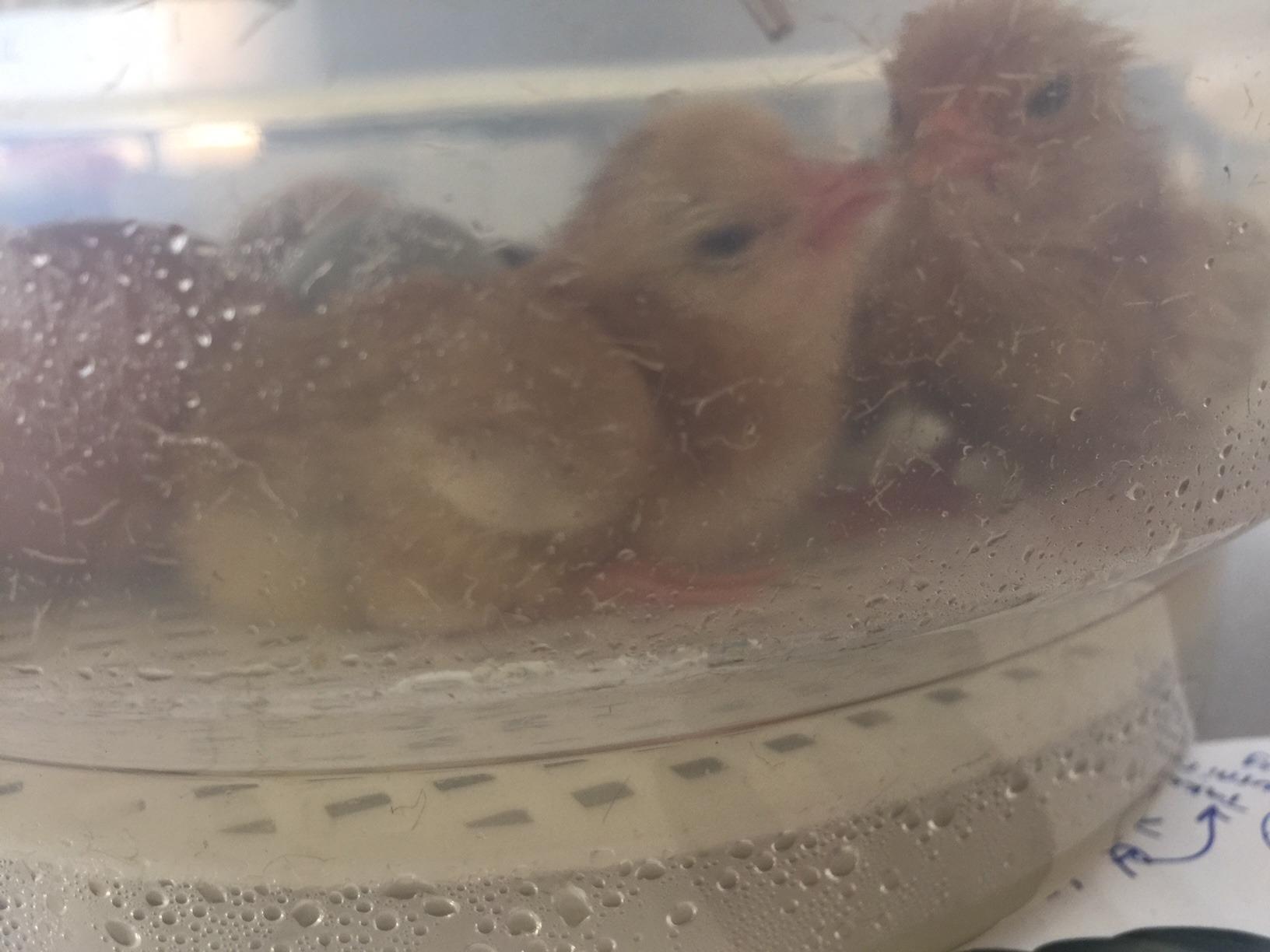
The honest limitation is humidity. Water goes in by hand, roughly a quarter cup every couple of days, and there is no reading to check against. Expect to add a separate hygrometer and to open the lid more often than you would on a pumped unit, which is exactly the habit that costs you points at lockdown. Capacity is also the box number: 9 to 12 eggs, and quail eggs use that space less efficiently than chicken eggs.
How it handles quail eggs specifically?
Quail eggs fit in the standard tray but do not roll reliably against the turning rails, so check that every egg is seated in its channel after the first rotation. Switch the rails off during the last three days so the tray can sit flat for hatching. At 3.91 pounds, this is also light enough to move between rooms for warming.
Where you will feel the limits?
So does the fact that the manual humidity cycle is the real cost. If your room is dry in winter, the reading you see on a separate hygrometer can fall well below target between water additions, and low humidity late in incubation is the leading cause of sticky and shrink-wrapped quail chicks. If you want set-and-forget humidity, step up to a unit with external bottles or a pumped tank.
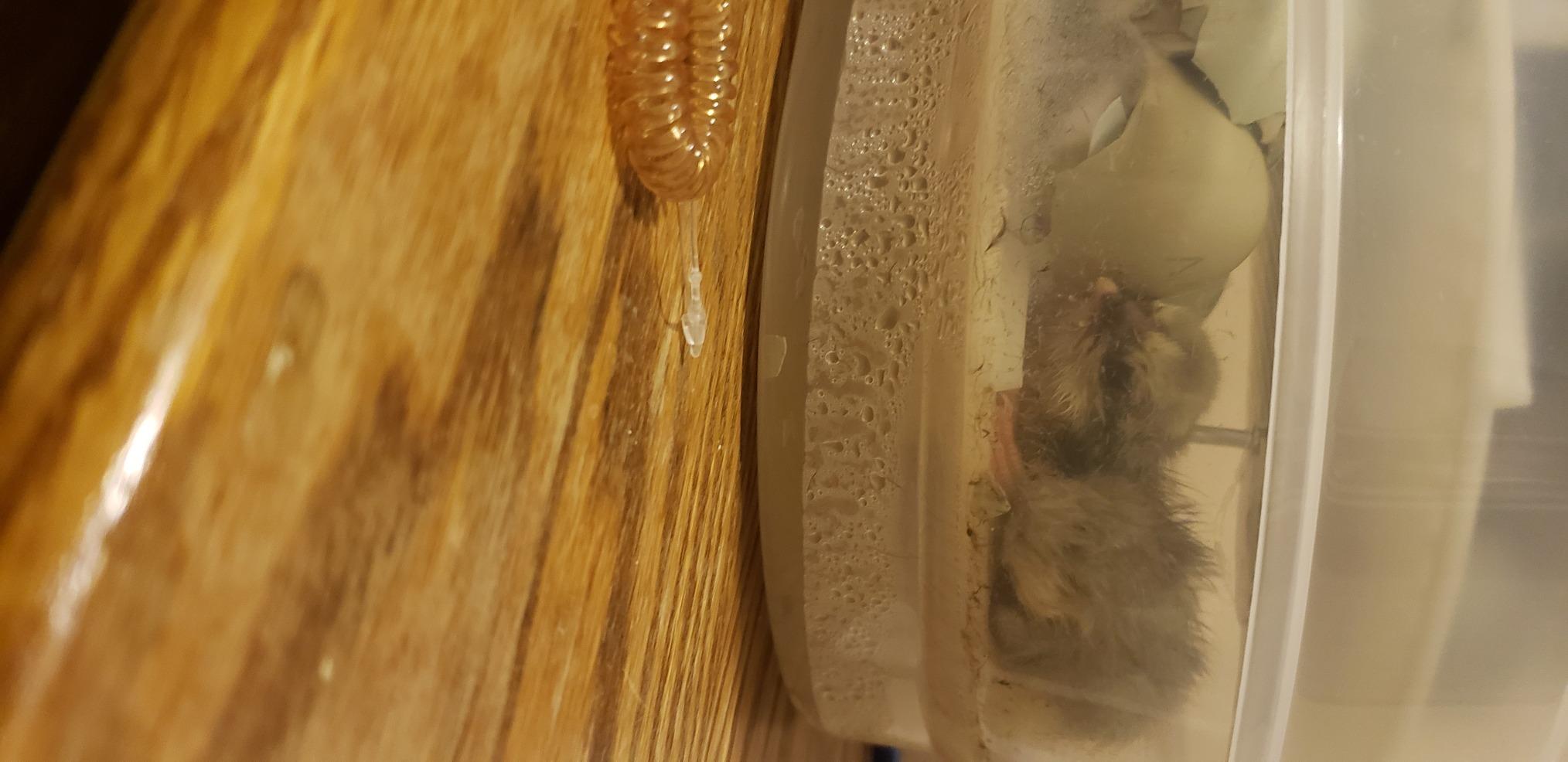
2. APDOE 12 Egg Incubator – best 2-hour auto turner with visible water level
APDOE Egg Incubators for Hatching Eggs, Temperature and Humidity Control, Automatic Egg Turning, Egg Candler, External Water Bottle, Air Vent, for Chicken, Duck & Quail Eggs, 12 Eggs
12 egg capacity
Turns every 2 hours
3.5 pounds
360 degree dome
Pros
- Automatic turning every 2 hours removed hand turning entirely
- External water bottles make humidity visible at a glance
- Removable tray with no electronics in the base
- Quiet enough for a countertop
Cons
- Humidity reading tracks room conditions and needs monitoring
- Dim built-in candler light
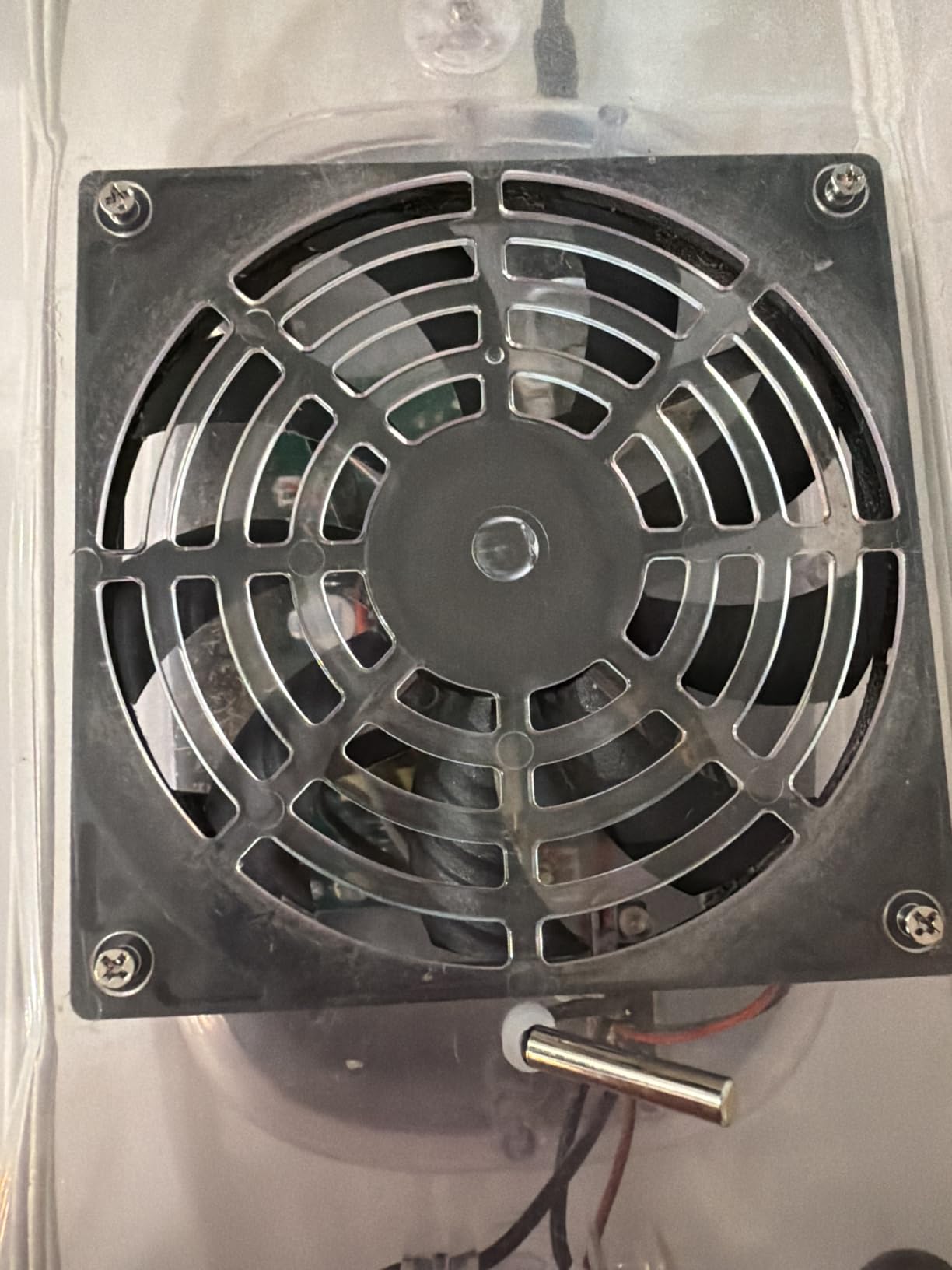
- Fan housing takes up hatch space
The HatchPro 12 digital control shows real-time temperature and humidity, and the tray rolls automatically every two hours. That interval is longer than the 60 or 90 minute cycles common on smaller machines, and it means the lid can stay shut for the whole run. One reviewer hatched 12 of 13 serama eggs from previously sat eggs, which tells you the turn geometry is gentle enough for very small eggs.
The 2-in-1 humidity tray with dual external water bottles is the design detail we like most. You can see how much water remains without lifting the dome, and most cycles need only one or two refills. Adjustable air vents let you trim humidity without emptying anything, and 360-degree circulation limits hot spots on such a small chamber.
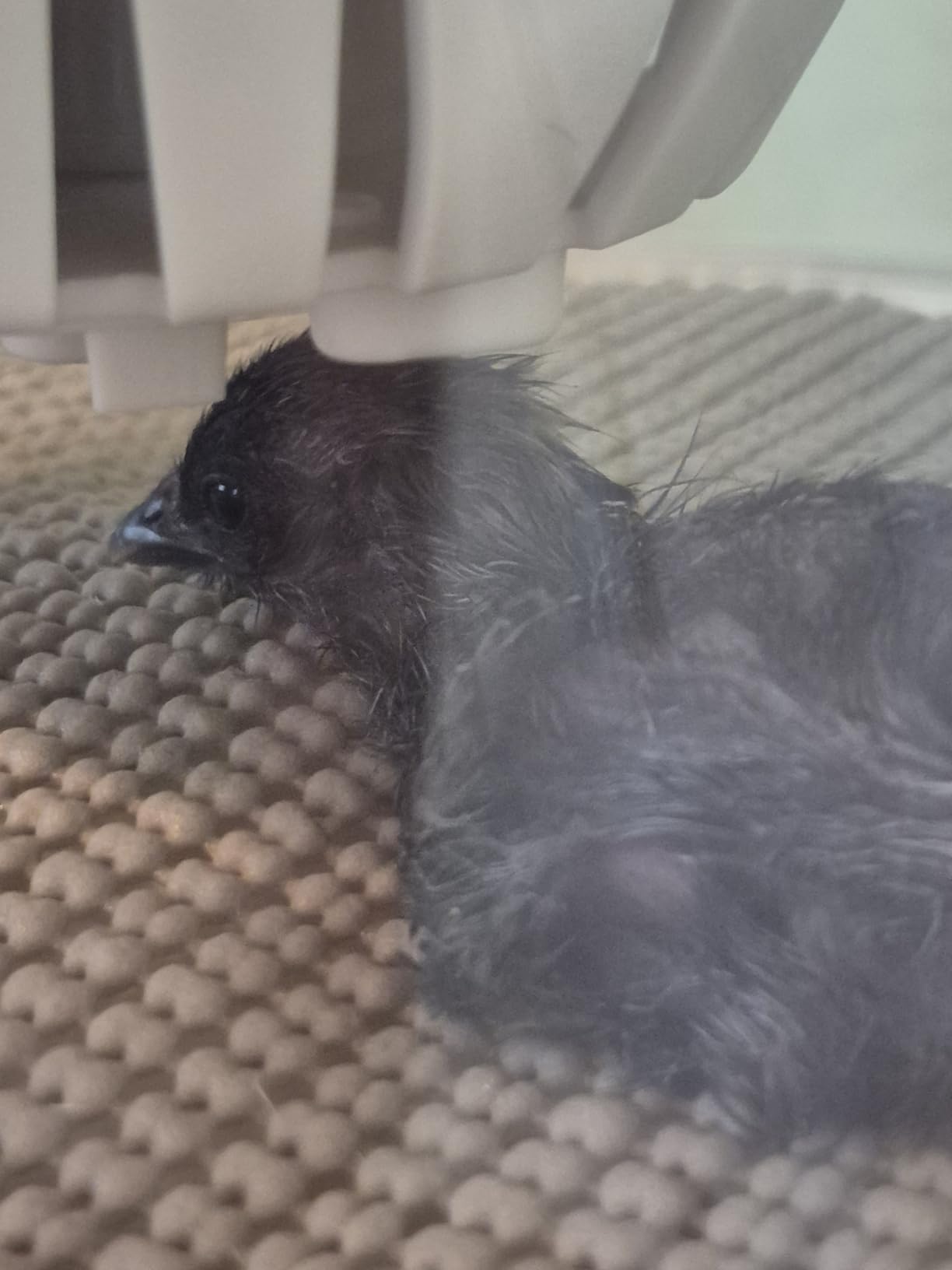
Where it slips is the humidity reading itself. Reviewers report it tracking ambient room humidity closely, so a dry winter room still means active monitoring on your part. The fan housing intrudes into the hatch area, leaving newly hatched chicks little floor space to stand and dry, and the built-in candler is dim enough that you will want a separate flashlight for quail eggs, which are small and speckled. Rare durability failures are reported but acknowledged as outliers.
Why quail keepers like it?
The two-hour turn and gentle rolling action suit quail eggs better than a flipper tray does, because tiny eggs get thrown rather than rotated on flipper arms. The external bottles also mean fewer lid openings, and every lid opening during days 1 to 14 is humidity you have to claw back. The removable tray with no electronics in the base makes a full wash between hatches straightforward.
Where it will disappoint you?
Below about 20 eggs per run it does everything you need. Above that, the chamber is simply too small. The water bottle lids fit snugly enough that pulling one free can jostle eggs in the tray, and a few units have arrived without instructions or the charging cord, so check the box before you set eggs.
3. Onsju 18 Egg Incubator – holds 40 quail eggs with sealed humidity
18 Egg Incubators for Hatching Eggs, Automatic Egg Turning and Humidity Control Incubator for Hatch Chicken Duck Quail Pigeon Pheasant Partridge Home Classroom Lab-
18 standard or 40 small eggs
5.43 pounds
360 degree clear dome
LED candler
Pros
- Holds 40 quail-sized eggs alongside 18 standard eggs
- Sealed humidity system replenishes itself
- Selectable 60/120/180 minute turning intervals
- Turning stops automatically 96 hours before hatch day
Cons
- Best results depend on following the manual configuration
- Digital controls take practice to set
Three machines in this roundup publish a verified quail count rather than only a chicken number, and this one is the first of them. It holds 18 standard eggs or 40 smaller eggs such as quail and parrot eggs, which makes it the honest choice when you want a real quail batch out of a compact shell. The 11.73 by 11.73 inch body stays counter-friendly.
The auto-regulated sealed humidity system with smart replenishment is the feature that changes daily life. You fill once and the unit manages the water level, then a silent fan and real-time monitoring alerts keep the chamber in range. Turning intervals are selectable at 60, 120, or 180 minutes, so you can slow the turn down for tiny eggs instead of guessing.
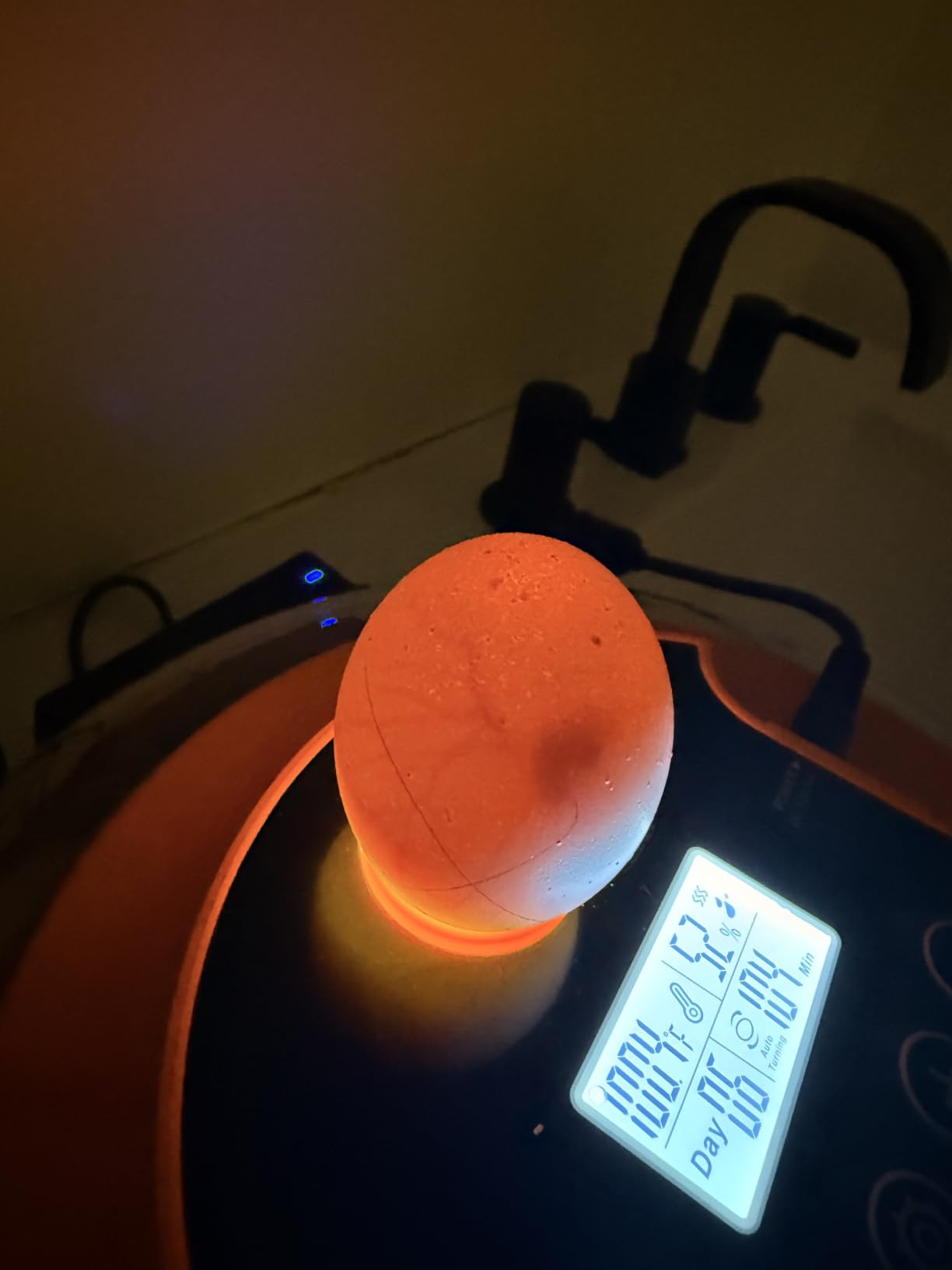
Better still, the auto-turn stops 96 hours before the set hatch day. That is earlier than the day 14 to 15 lockdown most keepers target, but for 17 to 18 day Coturnix incubation it lands the tray flat with time to spare, and it removes the single most common human error in automatic hatching. The high-intensity LED candling light and 360-degree dome make checking embryos without disturbing the cycle easy.
Capacity you can actually use
Forty quail eggs in a 5.43 pound body gives you a large batch from a compact shell. Reviewers who ran it on quail report good seating of the small eggs and a rotating tray that helps even out hot and cold spots. Set the interval to 180 minutes if your quail eggs are on the small side, and 60 minutes for larger round eggs.
Where it will disappoint you?
Owners are clear that the setup and cycle should be configured straight from the manual. On factory defaults, the sealed humidity system tends to run wetter than a quail cycle wants in the first two weeks, and 74% five-star share reflects people who read the directions. There is no day counter, so you track the cycle yourself.
4. IBKINXX 18 Egg Incubator – adjustable trays that seat quail eggs well
IBKINXX Incubator for Hatching Eggs-18 Egg Capacity, Newly Upgraded Automatic Egg Turner, Temperature & Humidity Control, 360° Viewing for Chicken, Duck and Quail Eggs (Black)
18 egg capacity
4 pounds
2 year manufacture warranty
External water fill
Pros
- Adjustable trays accommodate quail and pheasant eggs better than the round dome designs
- Holds temperature and humidity steady with little intervention
- Fully disassembles for a thorough wash
- Reported hatches include 12/12 and 8/8
Cons
- Tight hatch space for newly hatched chicks
- Fan sits close to the shroud with a reported blade safety gap
- Built-in candler is weak on quail eggs
The tray design is what separates this one from the round dome units. Flat adjustable rails hold quail and pheasant eggs upright and evenly spaced rather than letting them settle into the bottom of a curve, and that translates directly into even heat exposure. Automatic turning runs at 60, 120, or 180 minutes and stops three days before hatch.
An external water filling system means you top up humidity without lifting the lid, which is the habit that ruins more quail hatches than any setting error. The 360-degree transparent viewing design and built-in candling feature let you check the batch in place, and the whole unit disassembles for cleaning, with a washable lower tray and ventilated top cover.
The line covers a wide range: 12, 18, 20, 24, and 48 egg variants in different colors, all sharing the same core platform. A 2-year manufacture warranty is stated on the listing, which is more than most comparable machines offer. Reported hatch results include 12 out of 12 and 8 out of 8, and one owner got 10 chicks from 20 eggs.
Why the adjustable tray matters for quail?
Quail eggs are not spherical enough to roll reliably, so a curved dome tray leaves gaps. Flat rails with adjustable spacing keep every egg in the same air path, which matters more in a small still-air style chamber where stratification is steep. It also makes the eggs easier to load pointed-end-down and easier to remove at hatch.
Where it will disappoint you?
One reviewer reports chicks losing toes to a fan blade because the fan sits close to the shroud, so plan the brooder ready before pip. The two side water bottles draw down at different rates, which confuses the humidity picture until you learn the pattern, and the top vent needs manual adjustment to hold target humidity. The built-in candler is too weak to pick out quail embryos reliably.
5. TRIOCOTTAGE 12 Egg Incubator – compact, quiet, and accurate once calibrated
Incubators for Hatching Eggs 12 Egg Incubator with Automatic Egg Turning and Humidity Control,Egg Candler,Auto Water Replenishment,for Chicken Eggs and Quail Egg M12H
12 egg capacity
3.65 pounds
7.5 inch square body
Built-in candler
Pros
- Automatic water replenishment cuts daily hands-on work
- Compact 7.5 inch footprint suits small counters
- Bright candling light with auto shut-off
- Quiet fan held temperature across 28-day hatches
Cons
- Humidity display reads about 10% high and needs calibration
- Auto-turn works best with about 6 large eggs
- Humidity can climb fast depending on placement
This is one of the most compact footprints in the set at 7.5 by 7.5 by 6.6 inches, and the 4.4 rating reflects results rather than features. Owners report 6 out of 6 turkey hatches and 7 out of 7 ducklings after compensating for one specific quirk: the humidity display reads roughly 10% higher than reality. Run an independent hygrometer next to it and set the machine 10% lower and the readings align.
Automatic water replenishment reduces lid openings, and two water-surface zones plus a ventilation knob give you coarse humidity control without draining the unit. The external insulation layer helps in cooler rooms, the curved interior gives hatched chicks somewhere to stand, and the 360-degree transparent cover keeps observation easy. The built-in candling light with auto shut-off is described by one owner as the best they have used.
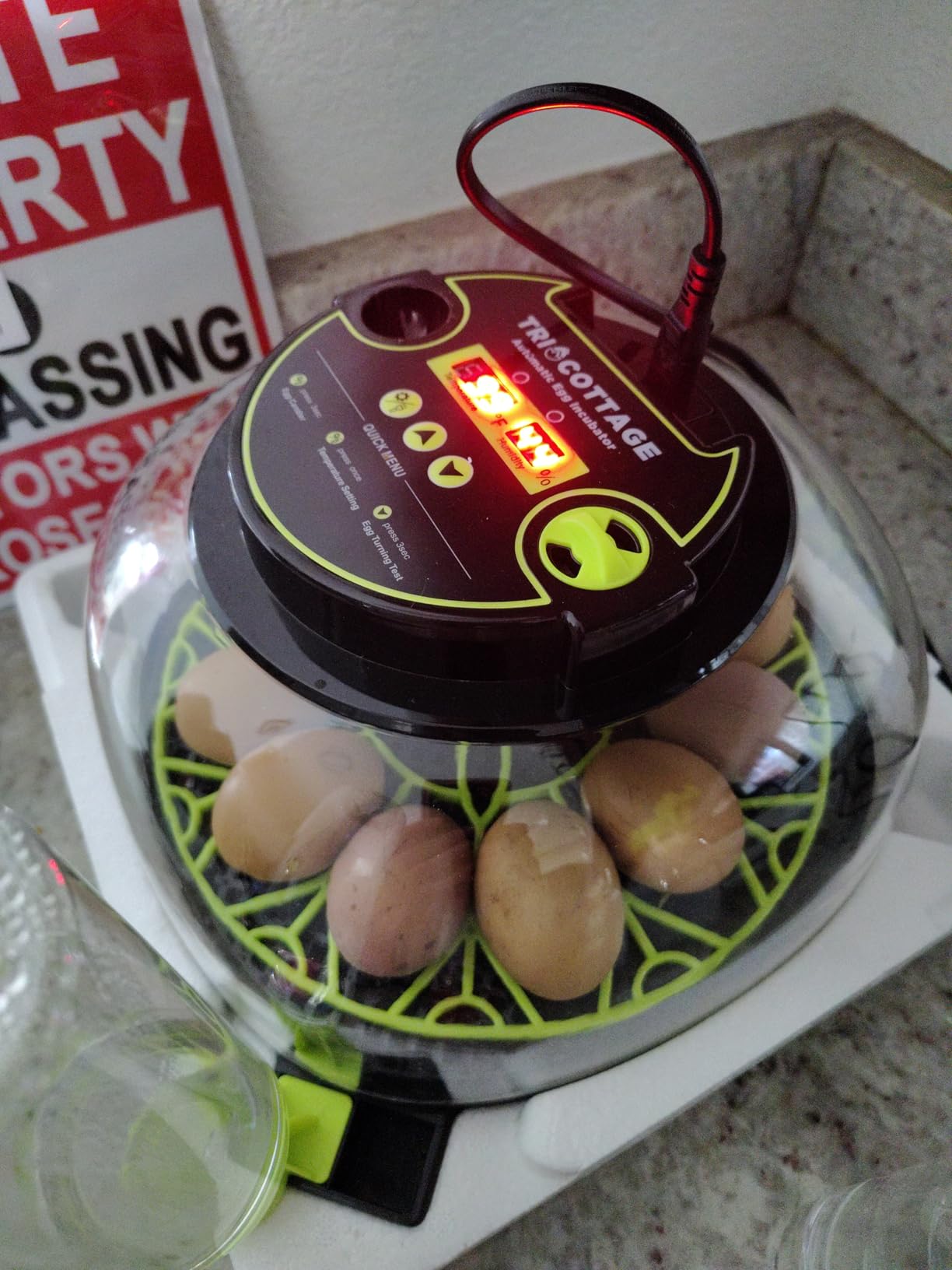
For quail, the automatic turning at regular intervals is well suited, with one caveat: it performs best when the tray holds about six large eggs. Overfill it and the eggs block each other’s rotation, which means uneven turning across the batch. With quail eggs you have plenty of headroom, but if you mix in larger eggs for the same run, keep the load modest.
What calibrating it actually involves?
Place a separate thermometer and hygrometer at egg height inside the chamber, let the unit run empty for 24 hours, then compare. Most owners find temperature accurate and humidity running about 10% high, so a simple mental offset is enough. Where you place the unit matters as much as the settings, since humidity can climb very quickly in a warm, enclosed spot.
Where it will disappoint you?
A 12-egg box will not take a serious quail batch, and the auto-turner geometry limits how many larger eggs you can add to a quail run. The thick plastic base is genuinely sturdy, which is a real plus for a machine that gets moved, but keep room temperature steady rather than swinging between a cold night and a warm afternoon.
6. CoInceptus 16 Egg Incubator – adjustable rollers and 12V backup power
CoInceptus 16 Eggs Incubators for Hatching Eggs, Egg Incubator with Automatic Egg Turning and Temperature Control, Chicken Egg Incubators with Egg Candler for Duck Goose Pigeon Quail
16 egg capacity
3.78 pounds
Turns every 90 minutes
12V backup clamp
Pros
- Adjustable roller spacing fits quail through goose eggs in one unit
- Dual 110V and 12V power clamp covers an outage
- Temperature reaches setpoint within an hour
- Audible alarm on temperature deviation
Cons
- No humidity reading on the display
- Water bottles not included with the package
- 4.1 rating with the thinnest feature set here
Many automatic quail incubators are built around chicken eggs and adapted for smaller ones after the fact. This one adjusts the roller spacing so quail, pigeon, duck, goose, and chicken eggs all fit the same 16 slots, which is a genuine advantage if your hatch plan changes between species. Automatic turning runs every 90 minutes, and built-in sensors hold anywhere from 68 to 104°F with an audible deviation alarm.
The dual 110V and 12V power clamp wire is the underrated part. You can move the unit to a 12V battery or vehicle supply when mains power drops, and since quail eggs are only 17 to 18 days from setting to hatch, a short outage handled this way is far less damaging than an unplanned cooldown. Temperature regulation itself is viewed as solid by owners.
There is a real gap here, though. The incubator does not display humidity, so you are managing that entirely blind or with a separate meter, and the external water bottle system works with a base that adds water automatically while the bottles themselves are not supplied. Budget for two bottles before your first set, and get a digital hygrometer.
Why adjustable spacing earns its place?
Most quail problems come from tray geometry rather than electronics. When the rollers are set wide for chicken eggs, quail eggs drop to the bottom of the channel and sit in a pocket of stagnant air. Narrowing the spacing seats every egg in the same lane, keeps them upright pointed-end-down, and lets the 90-minute rotation work the way it should. It is also what lets you run quail and pigeon in the same batch.
Where it will disappoint you?
The 4.1 rating reflects the missing humidity display and the bottles not being in the box, not broken performance. Without a reading you cannot catch a dry spell, and quail eggs in days 14 to 17 are extremely sensitive to humidity dropping. Buy a digital hygrometer before eggs go in, and treat this as a temperature-first machine you supervise on humidity.
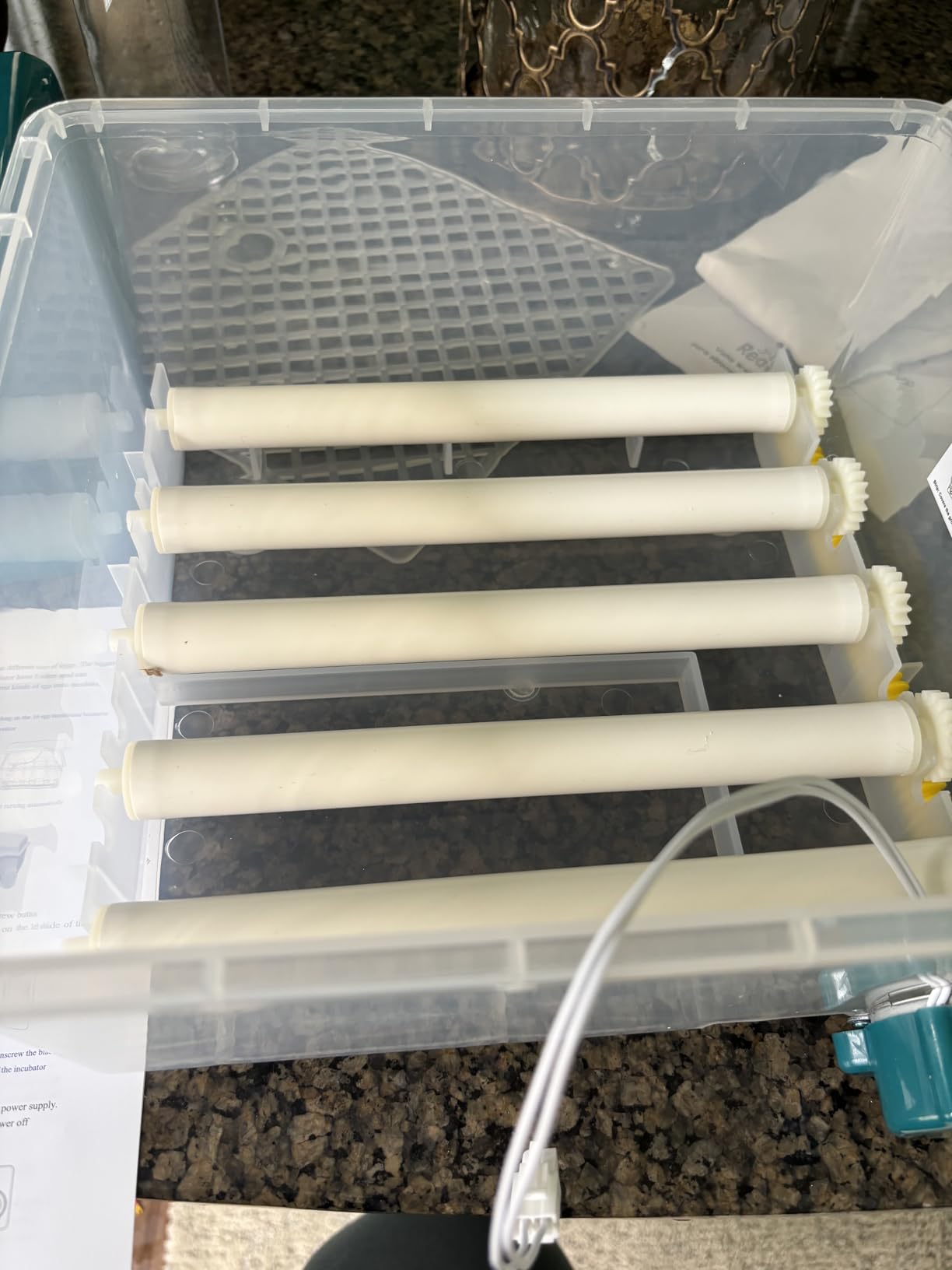
7. ONKO 40 Quail Egg Incubator – built specifically for quail eggs
40 Quail Egg Incubator with Automatic Egg Turning Humidity Control Eggs
40 quail egg capacity
4.2 pounds
Turns every 2 hours
Low-humidity alarm
Pros
- Purpose-built 40 egg quail tray layout
- Turning every 2 hours keeps the lid closed
- Real-time temperature and humidity readouts
- One owner reported a full first-batch quail hatch
Cons
- No day counter so you track the cycle manually
- Humidity takes practice with bottles and vents
- Built-in gauges need checking against an independent meter
Purpose-built for quail eggs rather than adapted to them, this is the machine we would start with if quail is all you hatch. Forty quail eggs in a 4.2 pound body is a large batch from a compact shell, and the tray geometry is built for eggs roughly an inch long. Start here instead of reworking a chicken tray.
Automatic heating and humidification adjust based on internal conditions, and the tray turns every 2 hours without opening the lid. You remove the egg tray on day 14 to stop turning, which puts you exactly on the standard Coturnix lockdown schedule. Two external water bottles need only one to two refills per cycle, adjustable ventilation holes in the top cover let you trim humidity, and a low-humidity alarm warns you before things go wrong.
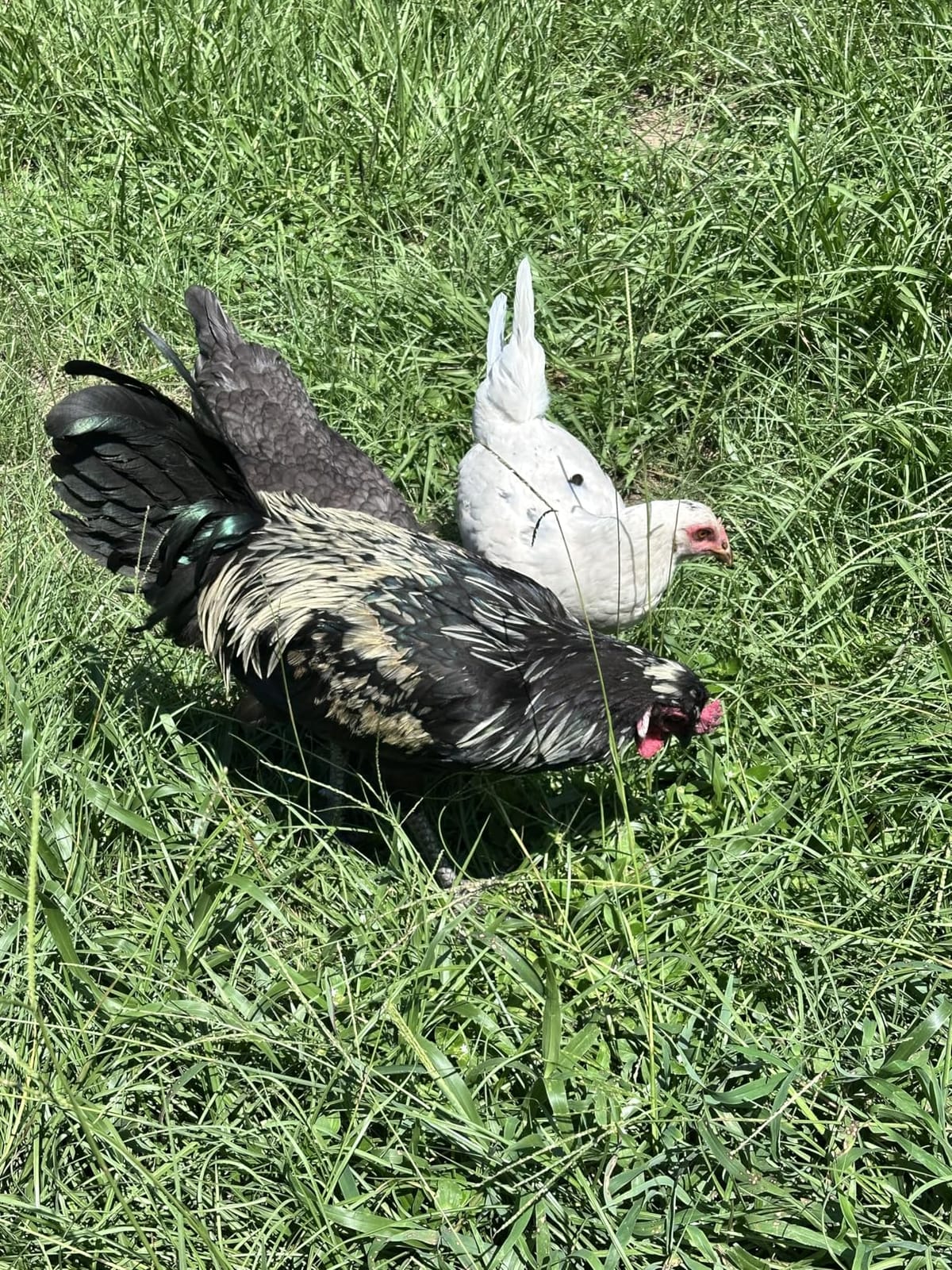
The rotating tray also helps even out hot and cold spots, and the 360-degree transparent ABS shell plus top-mounted candler mean you rarely need to open anything. One reviewer reported a 100% hatch on a first batch of quail eggs, which is not something we would promise, but it does show what the layout is capable of when conditions are right.
What quail-specific design gets you?
Three things. The rails hold quail eggs at a fixed spacing, so the 2-hour rotation moves every egg rather than a few loose ones. The 4 inch body height keeps the chamber compact, so the distance between the heat source and the eggs stays short. And the real-time humidity display means the lockdown increase is something you dial in rather than guess at.
Where it will disappoint you?
There is no day counter, so you track the 17 to 18 day window yourself. The built-in gauges are not perfectly accurate, which is true of every incubator here, so verify with an independent thermometer and hygrometer. Dialing in humidity takes a couple of cycles of experimenting with the bottle levels and the top vents, and button quail at 23 to 24 days needs a different schedule than Coturnix.
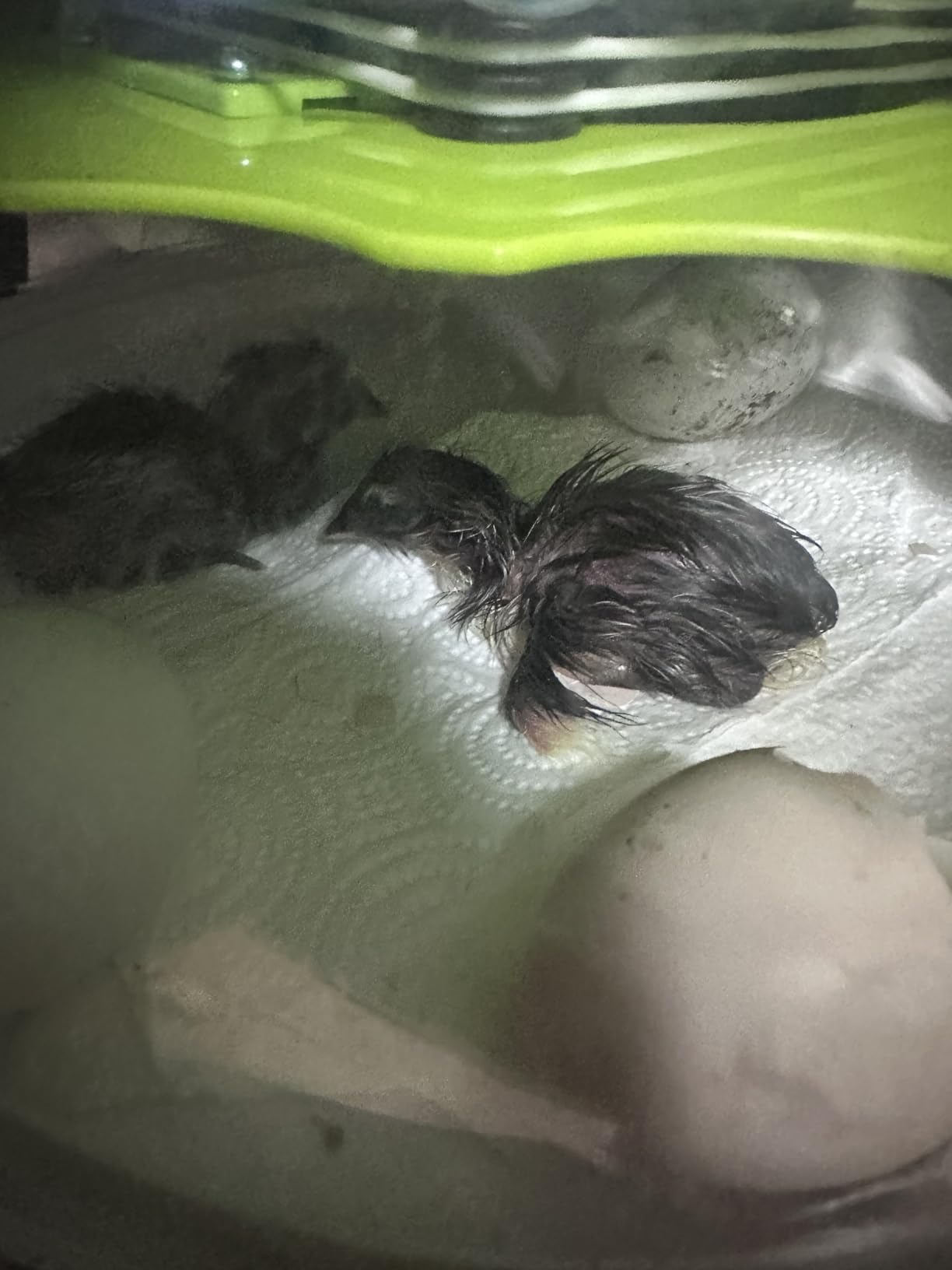
8. innhom 59 Quail Egg Incubator – largest verified quail capacity here
Egg Incubator, 26 Chicken/59 Quail Eggs Incubators for Hatching Eggs with Temp & Humidity Control, Auto Egg Turner, Adjustable Hatch Day & Air Vent, Egg Candler, Auto Water Refill, 360° Clear View
26 chicken or 59 quail eggs
7 pounds
1500ML tank
Automatic lockdown
Pros
- Largest verified quail capacity in the set at 59 eggs
- Motorised pump and hose give steadier humidity than gravity bottles
- Alerts fire on temperature and humidity deviation
- Set hatch date triggers automatic lockdown
Cons
- Larger and heavier than the compact dome machines
- Refill cup not included with the 1500ML tank
- Highest rates need confirmed-fertile eggs
Capacity is the headline: 26 chicken eggs or 59 quail eggs, more than any other machine in this roundup publishes. And the 16 by 15 by 8.3 inch body with a 7 pound weight is a serious batch for anyone hatching for restocking or a classroom program rather than a novelty.
The built-in motor and hose water control feeding a refillable 1500ML bottom tank is the feature that matters most. A pump delivers water on demand rather than relying on gravity evaporation from bottles, and owners call the humidity steadier and more repeatable as a result. Smart alarms warn on temperature deviation over 2°F or humidity deviation over 10%, so you get told before conditions drift.
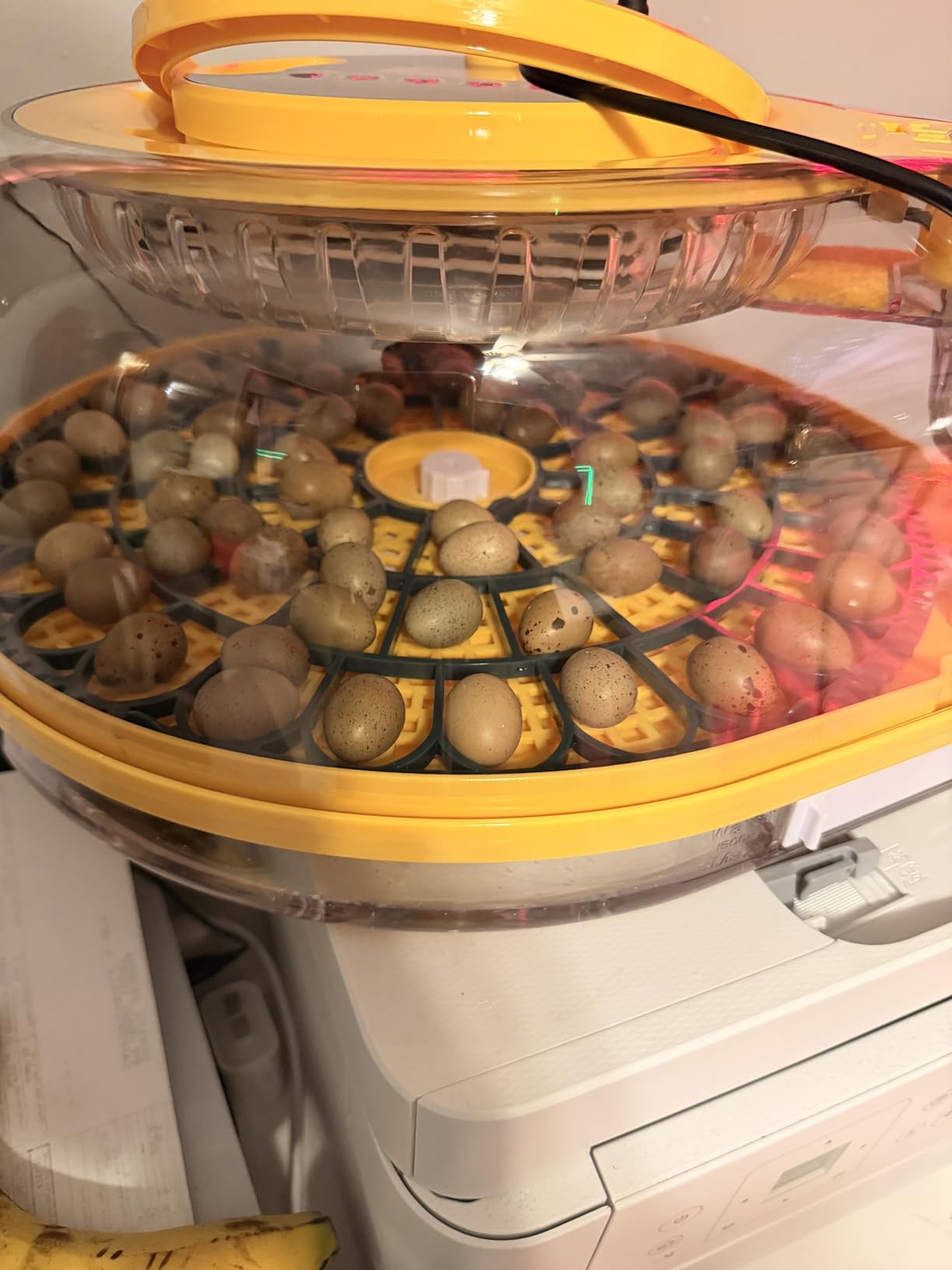
A recent update adds a settable hatch day, which means automatic rotation at 60, 90, 120, 150, or 180 minute intervals with a countdown display, and the turner stops on its own in the last 4 days. For a 17 to 18 day Coturnix cycle that means the tray flattens around day 13 to 14 without you touching a switch. One-touch Fahrenheit and Celsius switching, a 360-degree transparent lid, and a one-button built-in egg candler round out a well-loaded control panel.
Why pumped humidity beats bottles at this scale?
In a small machine, two bottles give you two coarse settings and a lot of guessing. In a 59-egg chamber, the water surface area needed to hold 65 to 70% through lockdown is beyond what bottles can deliver, and the manual humidity dial from S to O gives you the range. You are still setting a target by hand, but the pump holds it far more consistently than a passive reservoir.
Where it will disappoint you?
The 4.1 rating points at the bulkier design and a few missing pieces, including the refill cup for the 1500ML tank. Owners also note that the highest hatch rates come when eggs are candled and infertile ones removed before setting, which adds work at the start of a 59-egg run. The footprint also means it needs a real shelf, not a kitchen counter corner.
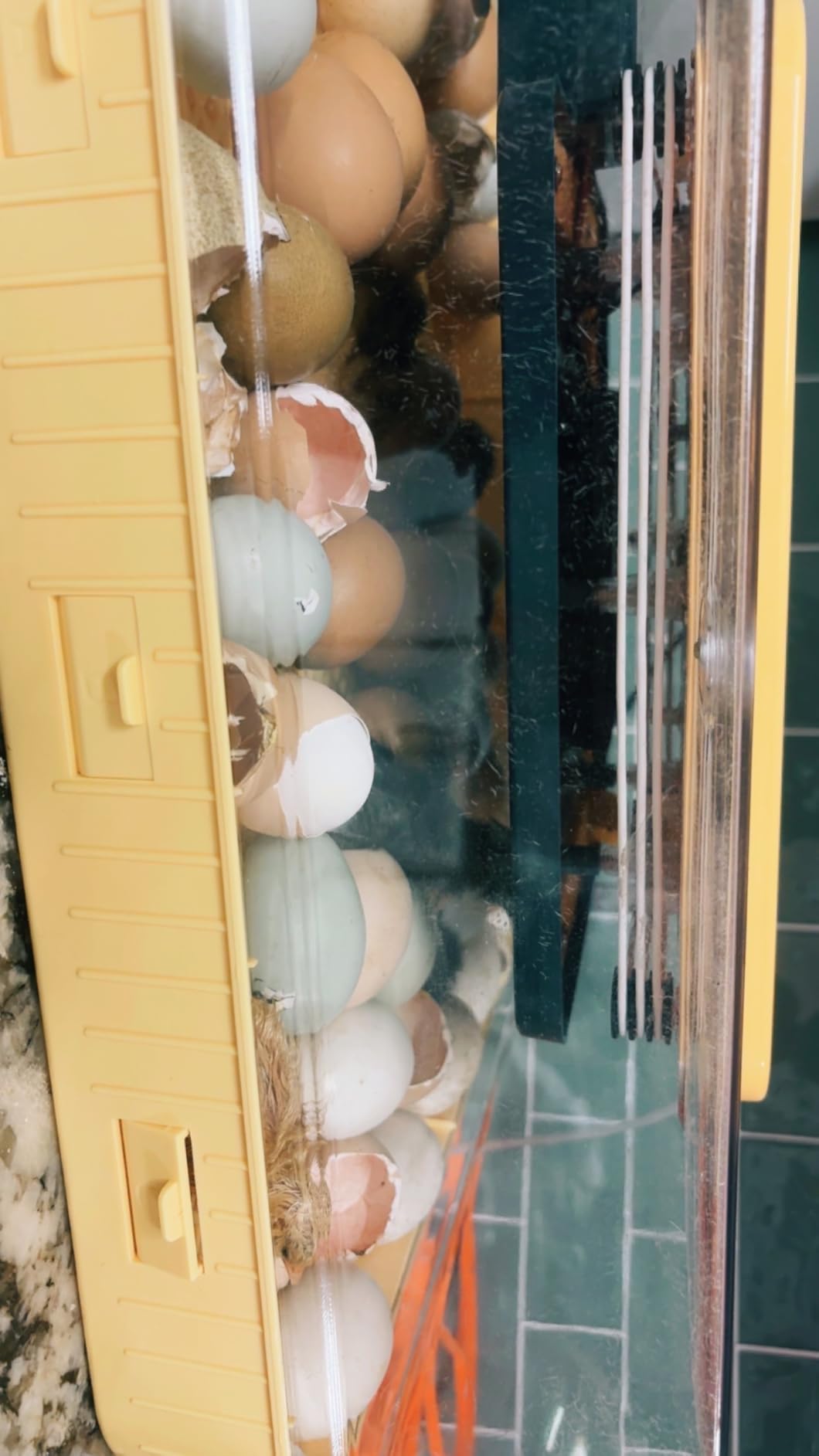
9. CluckRun 25 Egg Incubator – best rated, with programmable incubation days
25 Egg Incubators for Hatching Eggs, Auto Turning, Temp & Humidity Control
25 egg capacity
5.7 pounds
3 year warranty
Bright built-in candler
Pros
- Top rating in the set at 4.6
- Programmable incubation days so lockdown triggers itself
- Very bright built-in candling light
- Water bottles hold humidity without daily checks
Cons
- Humidity is the hardest value to dial in
- Some owners ran mostly dry with the vent open
- Display backlights brightly when using the candler
At 4.6 stars with an 82% five-star share, this machine earned the strongest score in the set. The feature that makes it beginner-friendly is programmable incubation days: you set the hatch date and the machine handles the rest, so the turner stops four days before hatching without you calculating anything. That single setting removes the most common mistake in a first quail cycle.
The multifunctional display shows incubation days, turning countdown, auto-turn and stop-turn status, temperature, and humidity, all in one place. Turning runs at 60, 120, or 180 minute intervals, high protective walls and a roomy hatch space give hatched quail room to stand, and the built-in egg candler is bright enough to pick out quail embryos. A 3-year warranty with lifetime after-sales support is stated on the listing.
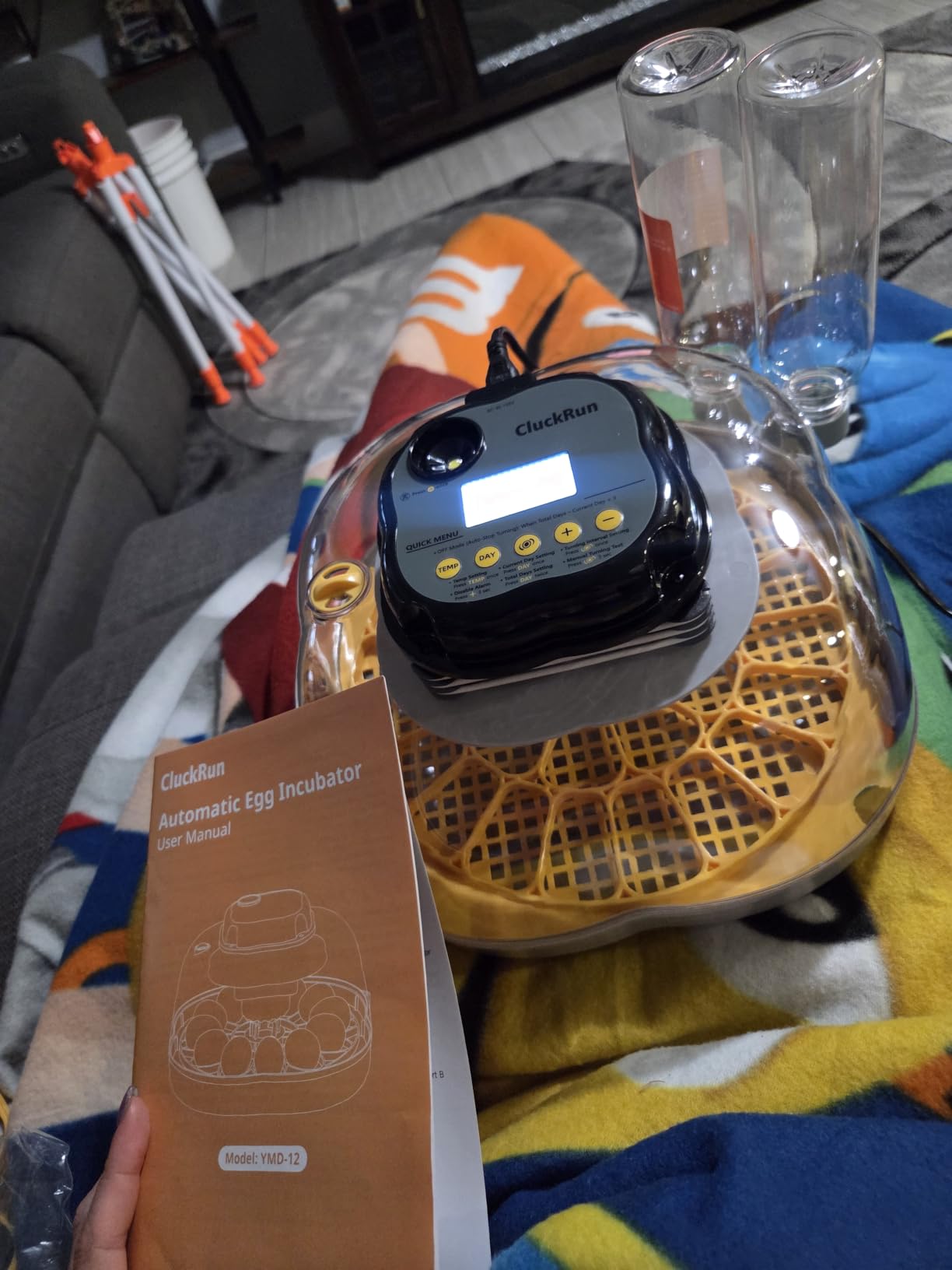
Owners also like that the water bottles hold humidity consistently enough to skip daily checks, and that the stainless steel body feels substantial on a counter. Clear instructions with troubleshooting guidance are included in the box, which is more than most comparable machines provide. Variants run from 12 to 25 eggs, so you are not locked into one capacity.
Why the hatch-date setting is worth paying for?
Automatic turning through lockdown is the quiet hatch killer. Quail embryos pip in the shell and then have to push against a tray that keeps rotating, which costs you chicks in the last two days. Setting the incubation day count lets the machine enter stop-turn on its own schedule, and it is the single easiest way to raise a hatch rate without changing anything else. For button quail at 23 to 24 days, the same setting simply takes a longer run.
Where it will disappoint you?
Humidity is the hardest value to dial in on this unit, and some owners ended up running mostly dry incubation with the vent wide open. Add an independent hygrometer rather than trusting the display alone, especially in a small or climate-controlled room. The smaller variants only fit about six duck eggs at a time, and the display backlights brightly when you use the candler, which is jarring in a dark room.
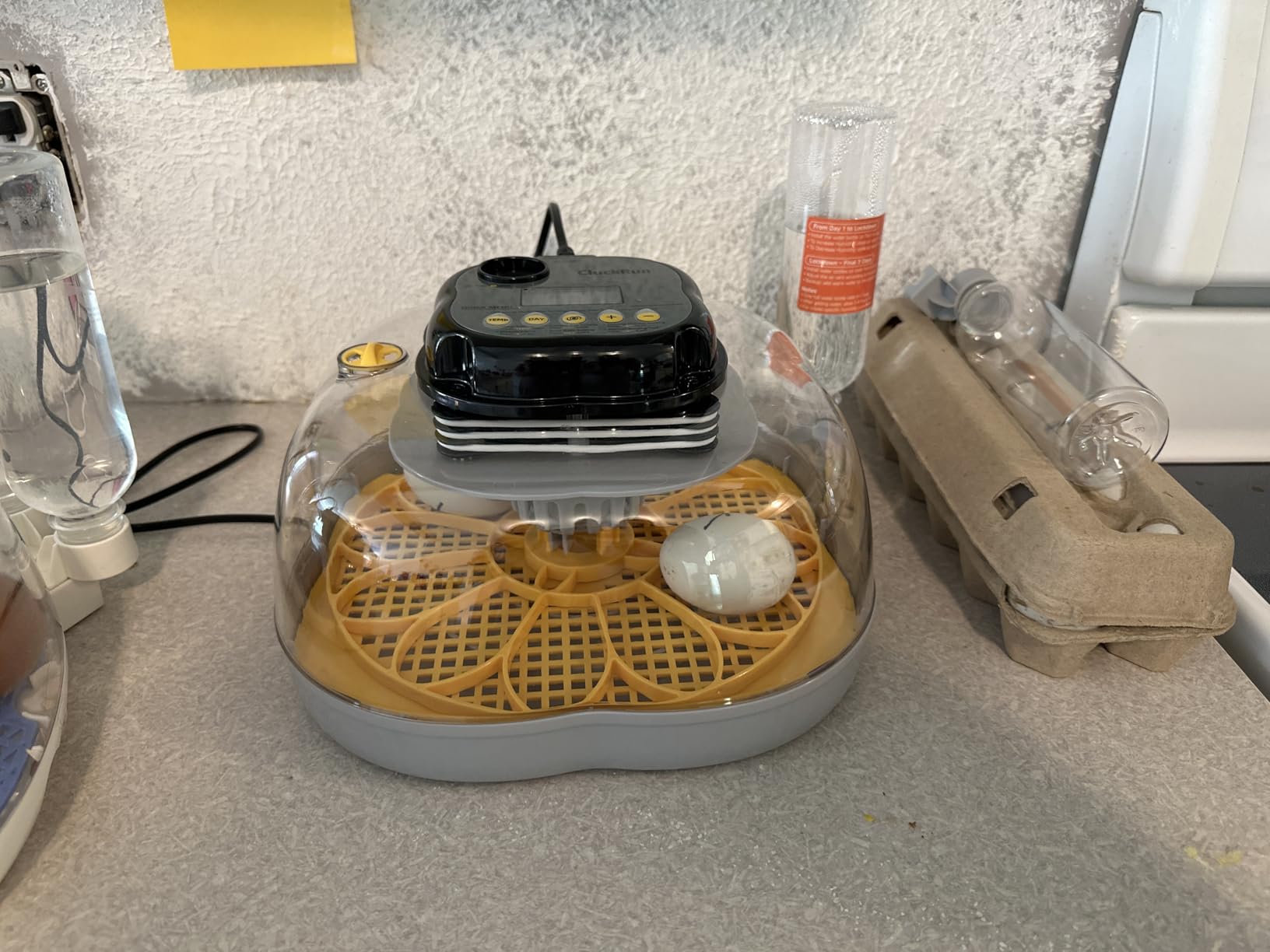
10. VEVOR 12 Egg Incubator – lightest build with battery switchover
VEVOR 12 Egg Incubator, Automatic Egg Turner with LED Candler, Temperature & Humidity Control, 360° View Clear Window, Poultry Eggs Incubator for Home Farm, Hatching Chicks Ducks Goose Quail
12 egg capacity
2.8 pounds
360 degree circulation
0.9F fluctuation
Pros
- Lightest unit here at 2.8 pounds with even 360 degree air circulation
- Integrated sensor tracks temperature and humidity live
- Manual switch to 12V battery backup
- Available in 12
- 18 and 24 egg sizes
Cons
- PP shell and light build feel flimsy next to heavier machines
- Smallest review base at 155 ratings
- Keep the styrofoam packing for cold rooms
At 2.8 pounds, this is the easiest machine here to carry between rooms, which matters if your garage or basement is the cold spot in winter. The integrated temperature and humidity sensor monitors conditions in real time, and 360-degree air circulation spreads heat and moisture evenly enough that the stated normal temperature fluctuation is about 0.9°F, which is tight for a unit this size.
Automatic 360-degree egg turning runs continuously, the transparent shell has built-in lighting so you can look without lifting the lid, and operation is on 110V with a manual switch to 12V battery backup. That switchover is the practical part. Quail eggs are only 17 to 18 days out, so covering a power cut for a day or two keeps the cycle alive when the alternative is a dead batch.
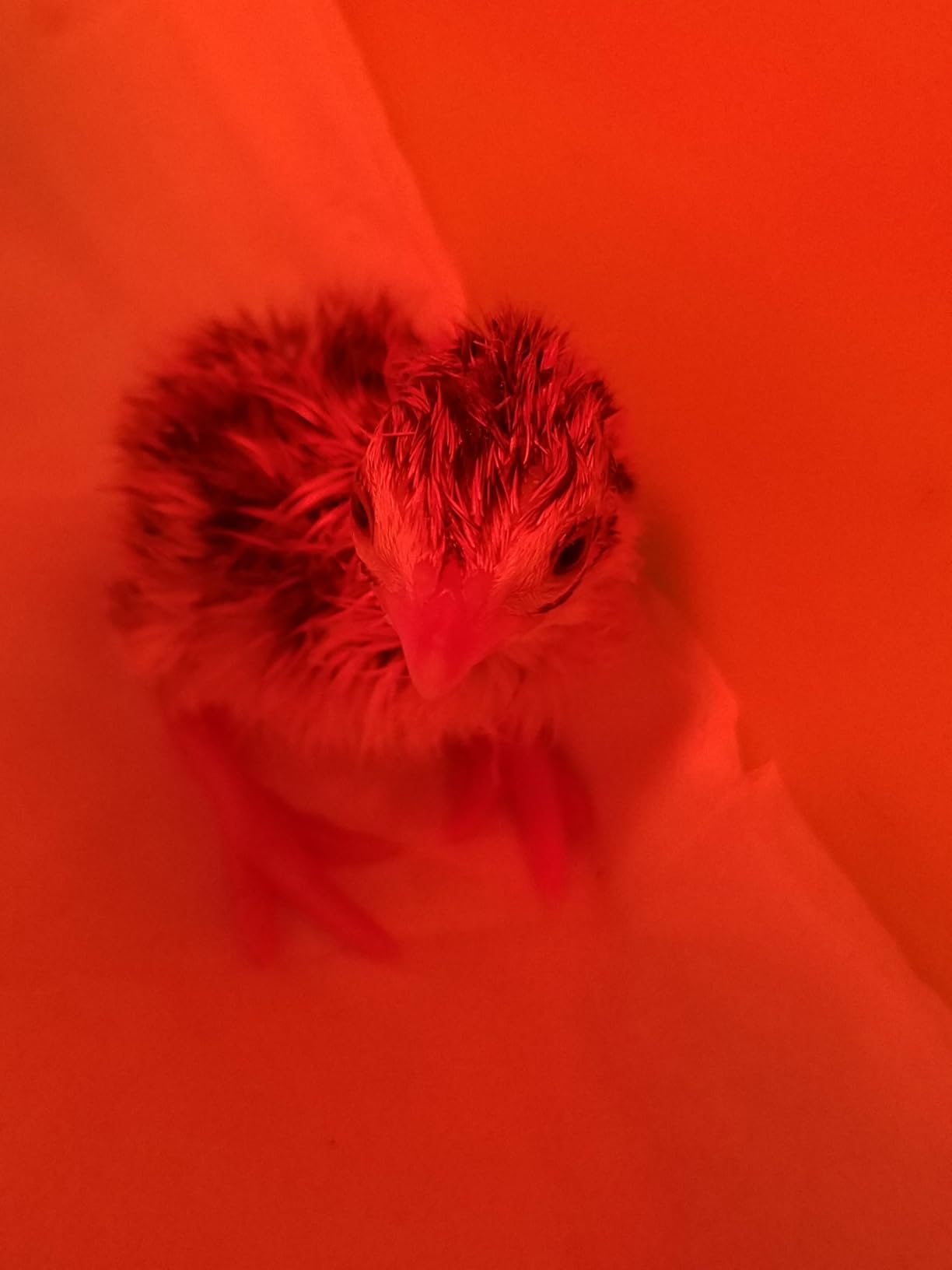
The box includes variants at 12, 18, and 24 eggs, and the transparent shell with integrated lighting means candling and observation happen in place. The PP shell is stable enough for indoor use and the sensor does the work of a separate thermometer in most rooms, so this is a clean first machine for someone who wants minimal equipment.
Why portability and backup power go together?
Where you put the unit is a temperature decision, and being able to move it is a real advantage. A small incubator in a cold garage will fight the room temperature all cycle, but you can relocate it on a mild morning rather than accept the swing. The 12V switchover covers the second problem, outages, which keeper discussions repeatedly describe as a common reason a cycle collapses.
Where it will disappoint you?
The PP shell and light build feel flimsy next to heavier machines, and 155 ratings is the smallest review base in this set, so long-term failure data is thinner. Keep the styrofoam packing, because owners use it as extra insulation in cold rooms. Twelve eggs is a hobby batch, and quail eggs small enough to shift in the channels need the tray adjusted before you trust the automatic rotation.
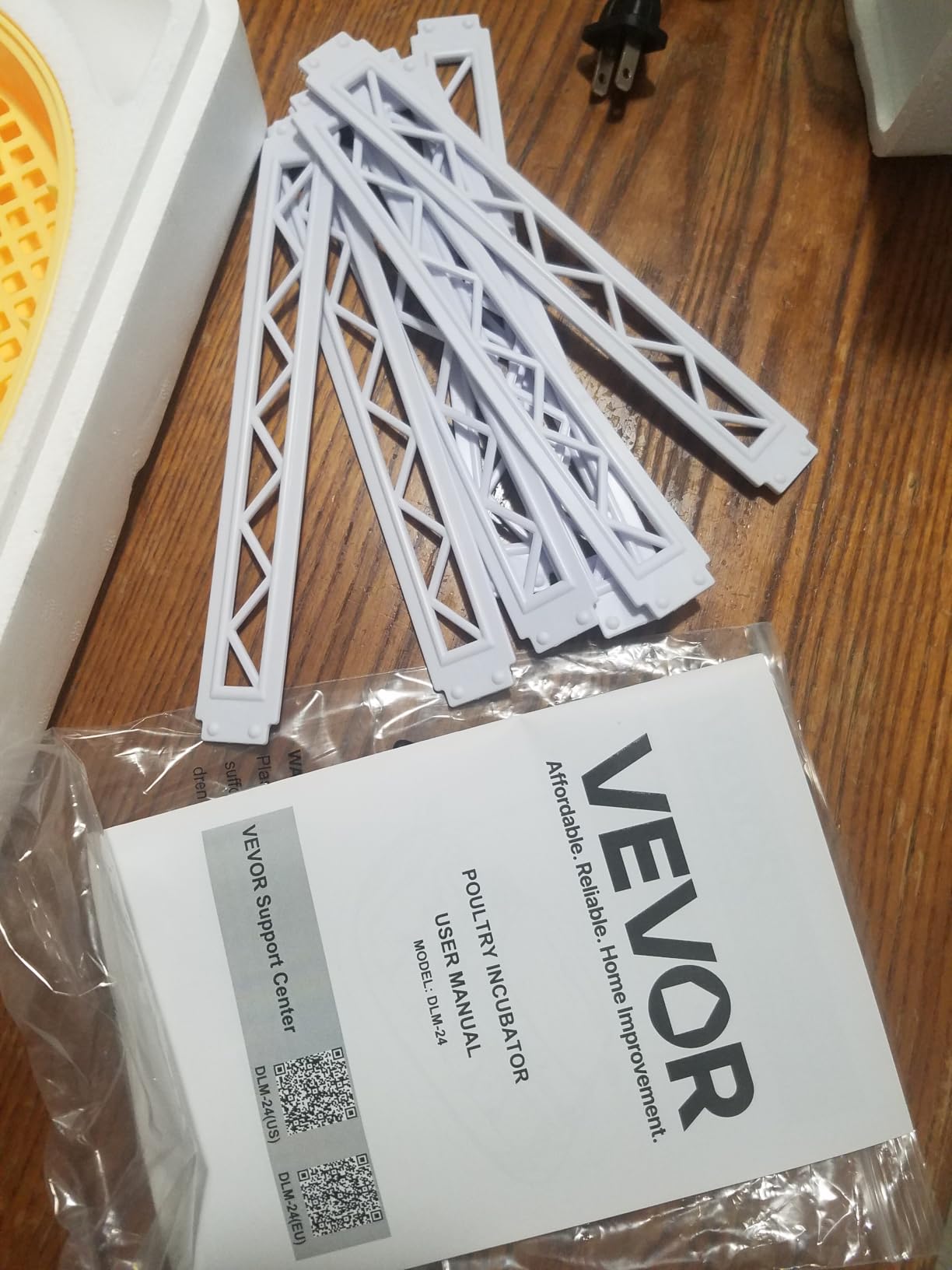
How to Choose an Automatic Quail Egg Incubator?
Start with verified quail capacity, not the number on the box. A verified quail tray still needs checking before you trust the box count. A 12-egg chicken rating becomes far fewer quail eggs if the tray channels are too wide. Three listings here publish a small-egg count, and that number is the one to plan your batch size around. If a unit gives you 40 quail eggs instead of 18 chicken eggs, that is a quail-specific tray and it changes the whole calculation.
Decide how much humidity automation you actually need. An automatic turner removes the daily hand work, but humidity is still manual on the cheapest units. External water bottles cut refills to one or two per cycle, a sealed auto-replenishing system removes them almost entirely, and a pumped tank with a bottom reservoir holds the highest humidity most consistently. For a genuine set-and-forget machine, that ladder matters more than the fan.
Check the turner clears lockdown. Some units stop automatically, some need a tray pulled at day 14, and some keep rotating. The best automatic egg incubators for quail are the ones that stop on their own, because quail chicks pip in the shell and then have to push against a moving tray. If your pick cannot be programmed, set a phone reminder for day 14 and do not skip it.
Look for power-outage behaviour. Two machines here offer a 12V battery connection or clamp, which lets you keep a 17 to 18 day cycle alive through a mains failure. For every other machine, know that a sudden loss of power starts a cooldown, and plan where the unit goes if you need to move it. If you are building toward larger batches, our guide to incubators for hatching chicks covers the scaling questions.
Check the extras you will have to buy. A separate digital hygrometer, extra water bottles, and a quail tray or rack are frequently not included. One machine in this list comes with a base designed for water bottles but no bottles, and another omits the refill cup for its 1500ML tank. Add those to your running total before you decide, and read our small-scale quail hutch picks to plan the other end of the cycle.
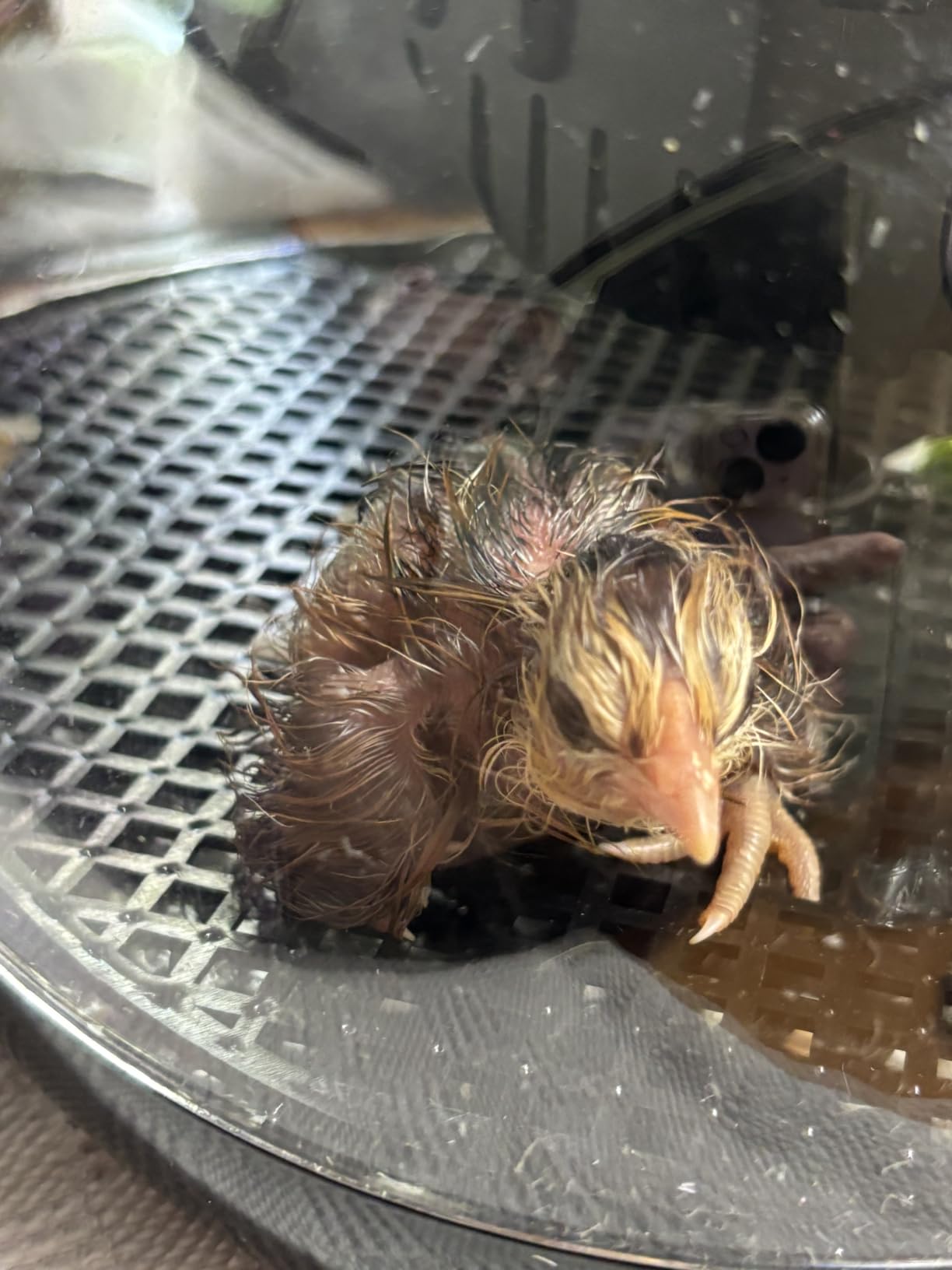
Think about where the chicks go. Small domes have very little hatch space once eggs pip, and reviewers on several units here describe chicks crowding against the fan housing. A 25 to 59 egg machine with high walls gives hatched quail room to stand and dry, which matters if you are not moving them to a brooder within hours. Our backyard quail cage picks cover the housing side.
Quail Egg Incubator Settings at a Glance
Coturnix quail run 17 to 18 days. Button quail run 23 to 24 days, so stretch the schedule and keep humidity a little higher in the first two weeks. The following applies to Coturnix in a forced-air unit; still-air machines need 101 to 102°F measured at the top of the egg rather than the air sensor.
Days 1 to 14: 99.5°F (37.5°C) in forced air, 45 to 50% relative humidity, turning on the machine’s interval, eggs pointed-end-down.
Days 14 to 15 (lockdown): Stop turning and lay the tray flat. Raise humidity to 65 to 70%. Do not open the lid for anything short of a genuine alarm.
Days 15 to 18: Hold temperature and humidity steady, keep the brooder warmed and ready, and move chicks within hours of hatching. Quail hatch over roughly 24 to 48 hours, so leave the batch alone until the down has dried.
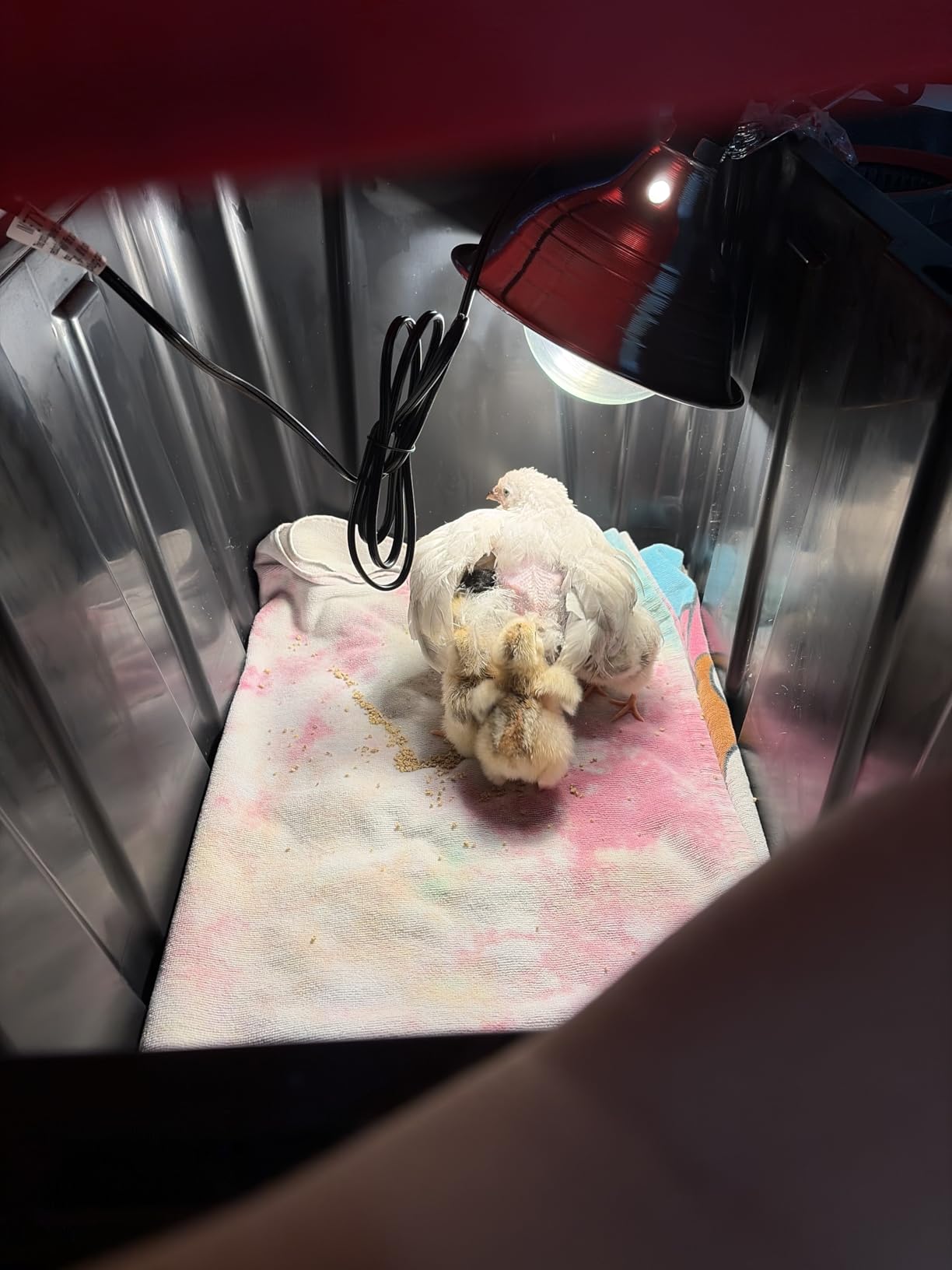
After the hatch: Chicks need about 95°F brooder temperature for their first week, dropping about 5°F per week after that. Plan the brooder before day 14, not after.
What Goes Wrong in a Quail Hatch?
Sticky or shrink-wrapped chicks. Almost always low humidity during the last three days, or a lid opened repeatedly at lockdown. Check your reading with an independent hygrometer, and once you are in lockdown, treat the machine as sealed.
The turner still running at day 16. A common failure we see repeatedly in owner reports. Pipped quail chicks get tumbled by a moving tray, and those chicks rarely survive. Pull the tray or switch the unit to stop-turn the moment you reach lockdown.
Quail eggs loose in the tray. Eggs that are not seated roll to the bottom of the channel and sit in stagnant air. Adjust the roller spacing or divider so each egg stands upright, and check the tray again after the first turn.
Humidity reading that lies. One machine in this set runs about 10% high against a real meter. Run the machine empty for 24 hours with an independent thermometer and hygrometer at egg height, record the offset, and apply it every cycle. Cheap marketplace machines with no humidity display at all need this more than any other.
Mold and odor between hatches. Incomplete cleaning is the usual cause. Wash the tray, base, and cover in hot soapy water, dry fully, and run the unit empty for a day before the next set. Keeping the incubator in use year-round shortens the gap between cleanings.
Hatch rates far below expectations. Reported failures as low as 10% trace back to humidity mismanagement far more often than to the machine. Temperature errors kill embryos early and visibly; humidity errors produce a hatch that looks fine on day 15 and then stalls. If your rate drops, change one variable at a time and change humidity first.
Frequently Asked Questions
What is the best incubator machine for quail eggs?
For most keepers, the best automatic egg incubators for quail are units that hold temperature within a degree, publish a verified quail egg count, and stop turning automatically at lockdown. Our top pick is the HBlife digital unit for its large owner base and simple controls, the CluckRun 25 for programmable incubation days, and the ONKO 40 if you want a tray built for quail rather than adapted to it.
Are automatic egg turners worth it for quail eggs?
Yes, and the value grows with batch size. A turner that rotates eggs every 60 to 180 minutes removes several daily hand-turning steps and keeps the lid closed more often, which protects humidity. The main caution is that some turners keep running into lockdown, so check for an automatic stop or pull the tray yourself on day 14.
How often does an automatic egg turner turn quail eggs?
Most automatic turners on the market rotate quail eggs every 60, 90, 120, or 180 minutes, which works out to roughly three to five turns per day. Selectable intervals are common, and a slower setting such as 180 minutes suits the smallest eggs better. Turning should stop entirely at lockdown on day 14 or 15.
What are the ideal incubator settings for incubating quail eggs?
For Coturnix quail in a forced-air unit, hold 99.5°F (37.5°C) with 45 to 50% humidity on days 1 to 14. Still-air units need 101 to 102°F measured at the top of the egg. At lockdown on day 14 to 15, stop turning and raise humidity to 65 to 70%, then hold steady until hatch on day 17 to 18.
How hot is too hot for incubating quail eggs?
Quail embryos start dying at sustained temperatures above about 102°F, and the damage compounds quickly at 103°F or higher. In a still-air unit the air reading and the egg-top reading differ, so a machine set to 99.5°F can still expose the eggs to 101°F. Verify with an independent thermometer at egg height after a 24-hour empty run.
What are common mistakes in quail egg incubation?
The most common mistakes are running the turner through lockdown, opening the lid repeatedly after day 14, using a chicken tray that leaves quail eggs loose, trusting a humidity display that has not been checked against a real meter, and storing eggs too long before setting. Cleaning between hatches and confirming fertility by candling also move hatch rates noticeably.
Conclusion
The best automatic egg incubators for quail are not the ones with the biggest egg number on the box. Look for a verified quail count, a turner that stops at lockdown, and humidity control you do not have to babysit. The HBlife digital unit is our overall pick on the strength of its owner history and simple controls, the CluckRun 25 adds programmable incubation days, and the ONKO 40 is the pick if quail is all you hatch.
Whichever you choose, run it empty for 24 hours against an independent thermometer and hygrometer before eggs go in, and get the brooder ready before day 14. That preparation does more for your hatch rate than any machine on this list.