
Three weeks of holding your breath, then the sound of a pip. Hatching eggs for the first time is one of those projects where the machine matters more than most buyers expect. We compared ten egg incubators against each other on the only things that decide a first hatch: whether the temperature actually holds, whether humidity can be read rather than guessed, and whether the turner keeps running when you forget about it. The best egg incubators for beginners all share those same three qualities, and the differences between them come down to capacity and how much the machine insists on being involved.
Most beginners do not need the biggest or most expensive unit on the market. A 12-egg chamber with a fan, a digital readout, an external water port and a turner that shuts off on its own before hatch day will outperform a bare-bones box twice its size. The premium tier buys you tighter temperature regulation and longer service life, not a fundamentally different hatch.
What follows is our 2026 roundup, with every pick rated on capacity, automation, noise and the honest downsides that show up in owner reviews. We have also included the setpoints nobody tells you, the mistakes that wreck a first cycle, and a troubleshooting path for when things go quiet on day 19. If you already know your bird type and batch size, skip to the comparison table below.
Table of Contents
Top 3 Best Egg Incubators For Beginners (October 2026)

Harris Farms Nurture Right 360
- 22 chicken eggs
- 360 degree view
- Auto-stop egg turner
- Humidity display
KEBONNIXS 12 Egg Incubator
- Built-in humidity display
- Built-in egg candler
- External water port
- Auto-stop turner

MATICOOPX 20 Egg Incubator
- 20 egg capacity
- External water refilling
- Built-in candler
- 60-minute auto turn
The Best Egg Incubators for Beginners at a Glance in 2026
The table below is the whole list in one place. Every product is rated on the criteria that decide a first hatch rather than on feature count, which tells you very little in this category. Read the features column, then jump to the full review for the honest limitations.
| Product | Specifications | Action |
|---|---|---|
| Harris Farms Nurture Right 360 |
|
Check Latest Price |
| KEBONNIXS 12 Egg Incubator |
|
Check Latest Price |
| MATICOOPX 20 Egg Incubator |
|
Check Latest Price |
 Apdoe 12 Egg Incubator Apdoe 12 Egg Incubator |
|
Check Latest Price |
 Onsju 18 Egg Incubator Onsju 18 Egg Incubator |
|
Check Latest Price |
 QVKHPCL 26-Egg Incubator QVKHPCL 26-Egg Incubator |
|
Check Latest Price |
 TRIOCOTTAGE 12 Egg Incubator TRIOCOTTAGE 12 Egg Incubator |
|
Check Latest Price |
 CluckRun 25 Egg Incubator CluckRun 25 Egg Incubator |
|
Check Latest Price |
 Brinsea Mini II Advance Brinsea Mini II Advance |
|
Check Latest Price |
 CoInceptus 16 Egg Incubator CoInceptus 16 Egg Incubator |
|
Check Latest Price |
1. Harris Farms Nurture Right 360 – Best Overall for First-Time Hatchers
Harris Farms Nurture Right Egg Incubator with Auto Turner, Holds 22 Eggs
22 chicken eggs
360 degree view
Auto-stop turner
Humidity display and knob
Pros
- Large 22-egg capacity suits bigger backyard batches
- Full 360 degree clear view for monitoring eggs and hatches
- Turner stops itself three days before hatch
- Simple humidity display and knob that is easy to read
Cons
- Humidity drift can need a separate humidifier in dry homes
- Older plastic base design with limited control granularity
The Nurture Right 360 is the one that shows up over and over in long-running owner conversations, and the reason is simple: after thousands of cycles it still holds temperature and nobody is talking about replacing it. It holds 22 chicken eggs, or 12 to 18 duck eggs and 22 to 24 pheasant eggs, which makes it one of the few entry machines that does not force a choice between a big first run and a small one.
The dome gives you a full 360 degree view, so on pipping morning you can watch without lifting the lid. That matters more than it sounds, because every lid opening dumps humidity and drops the chamber temperature at exactly the wrong moment.
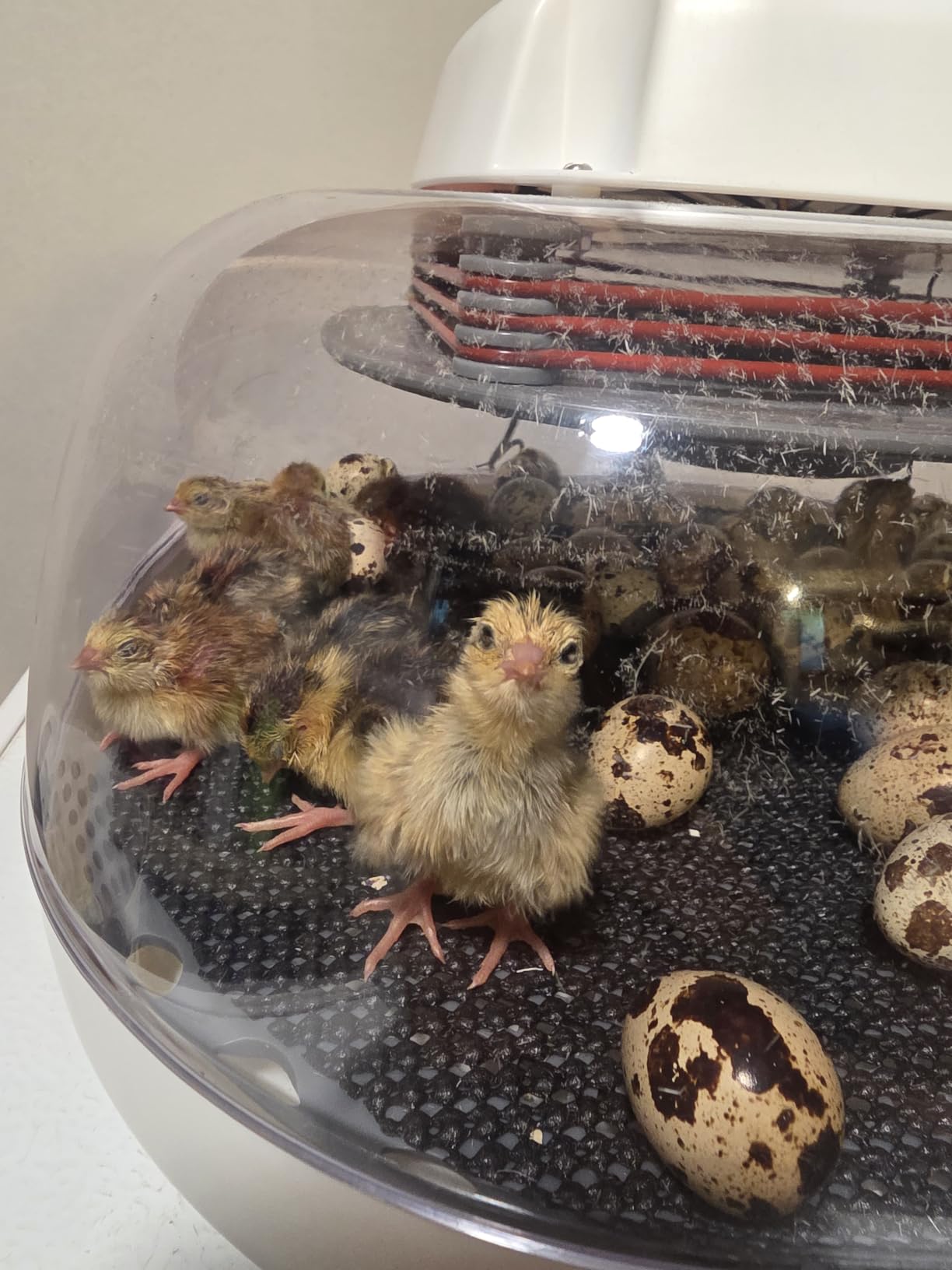
The 360 degree induced airflow spreads heat evenly, and the controls are deliberately plain: a readable humidity display and a single knob. There is no menu tree to learn, which is a genuine advantage on day one when you are managing this alongside everything else.
The automatic turner stops three days before hatch on its own. That single feature removes the most common beginner error, leaving a turner running into lockdown, and it is the reason many first-timers get a clean result without touching the machine after the first week.
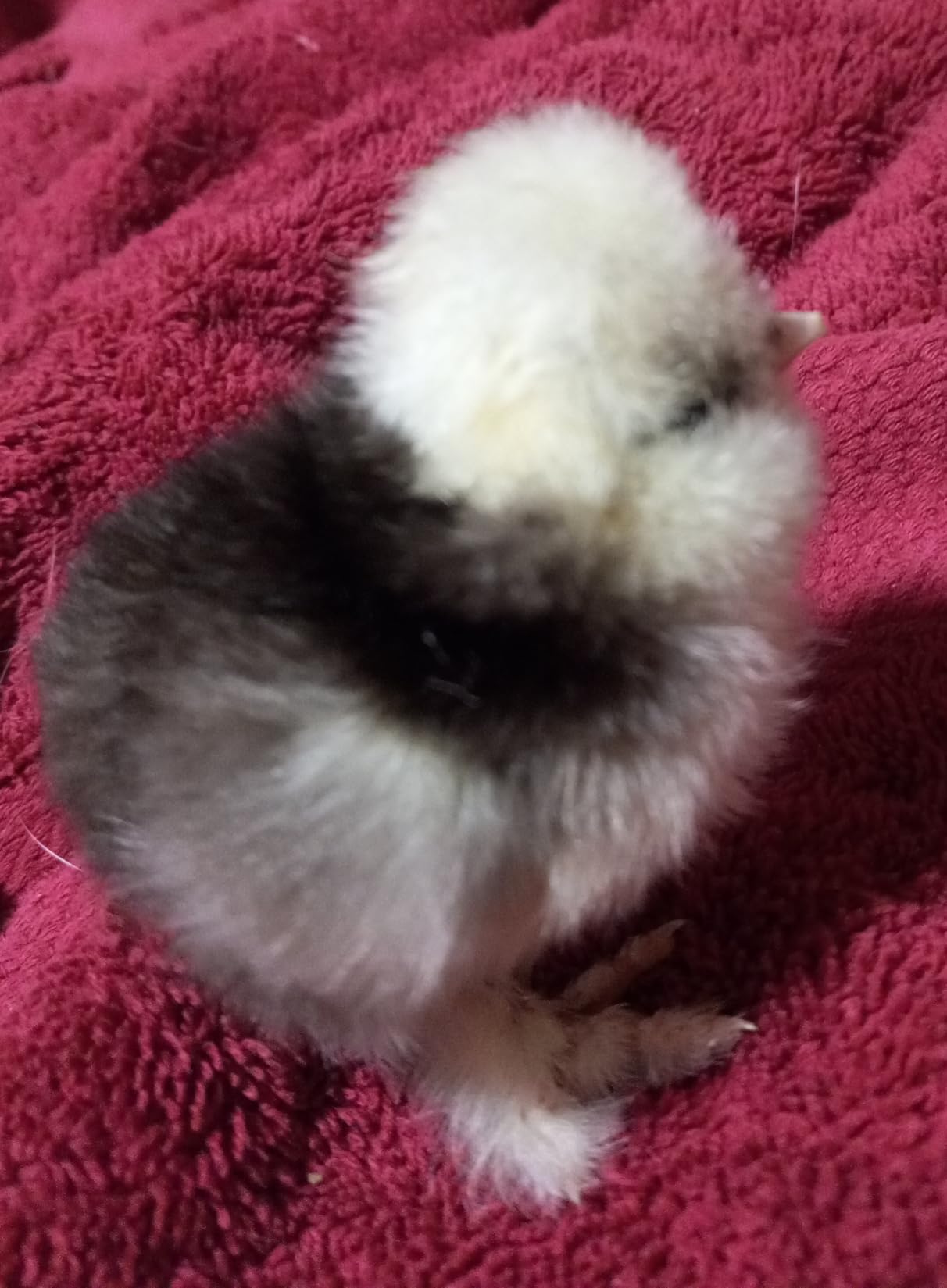
How it holds up in dry climates and long runs?
The one recurring complaint across reviews is humidity drift. Owners in dry homes report that the chamber needs a separate humidifier or very attentive water management to hold the mid-cycle range, while owners in humid regions report no issues at all. If your household runs dry in winter, that is the deciding factor.
The base design is also older and the control granularity is basic compared with newer premium machines. You get temperature and humidity, turning and a stop function, and nothing more, which for a first hatch is genuinely enough.
Who should pass on it?
Skip this if you need programmable species profiles, an audible alarm, or fine humidity increments. It is also not the right machine for a very large flock, because 22 eggs is a household-scale ceiling rather than a hatchery one.
Owners in poultry forums describe the 360 as the best unit they have had at this capacity for consistent temperatures and quiet running, and several report owning two or three of them over the years. That long ownership history is the strongest evidence we found for this pick.
2. KEBONNIXS 12 Egg Incubator – Best Value
KEBONNIXS 12 Egg Incubator with Humidity Display, Egg Candler, Automatic Egg Turner, for Hatching Chickens
12 chicken eggs
Humidity display
Built-in candler
External water port
Pros
- Built-in hygrometer is a major help for first-time hatchers
- Built-in candler removes a separate purchase
- Clear lid shows pipping clearly
- Holds temperature accurately and turner runs reliably
- Large external water reservoir refills from outside
Cons
- No handle on the dome so it is awkward to lift one-handed
- Included turning tray is chicken-sized and quail needs an aftermarket tray
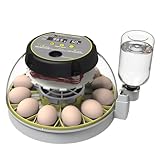
The KEBONNIXS 12 solves the exact problem most first-timers hit: not knowing what the humidity actually is. Almost every budget machine on the market gives you temperature and nothing else, leaving you to guess at water levels. This one puts a humidity readout on the panel, and it holds 12 chicken eggs, or up to 22 jumbo quail eggs with a 3D-printed tray.
The fan-driven induced airflow keeps temperature distribution stable rather than top-hot and bottom-cold, which is the main flaw of still air machines. It measures 11.4 by 10.2 by 6.7 inches and weighs just 3.67 pounds, so it fits a kitchen counter without dominating it.
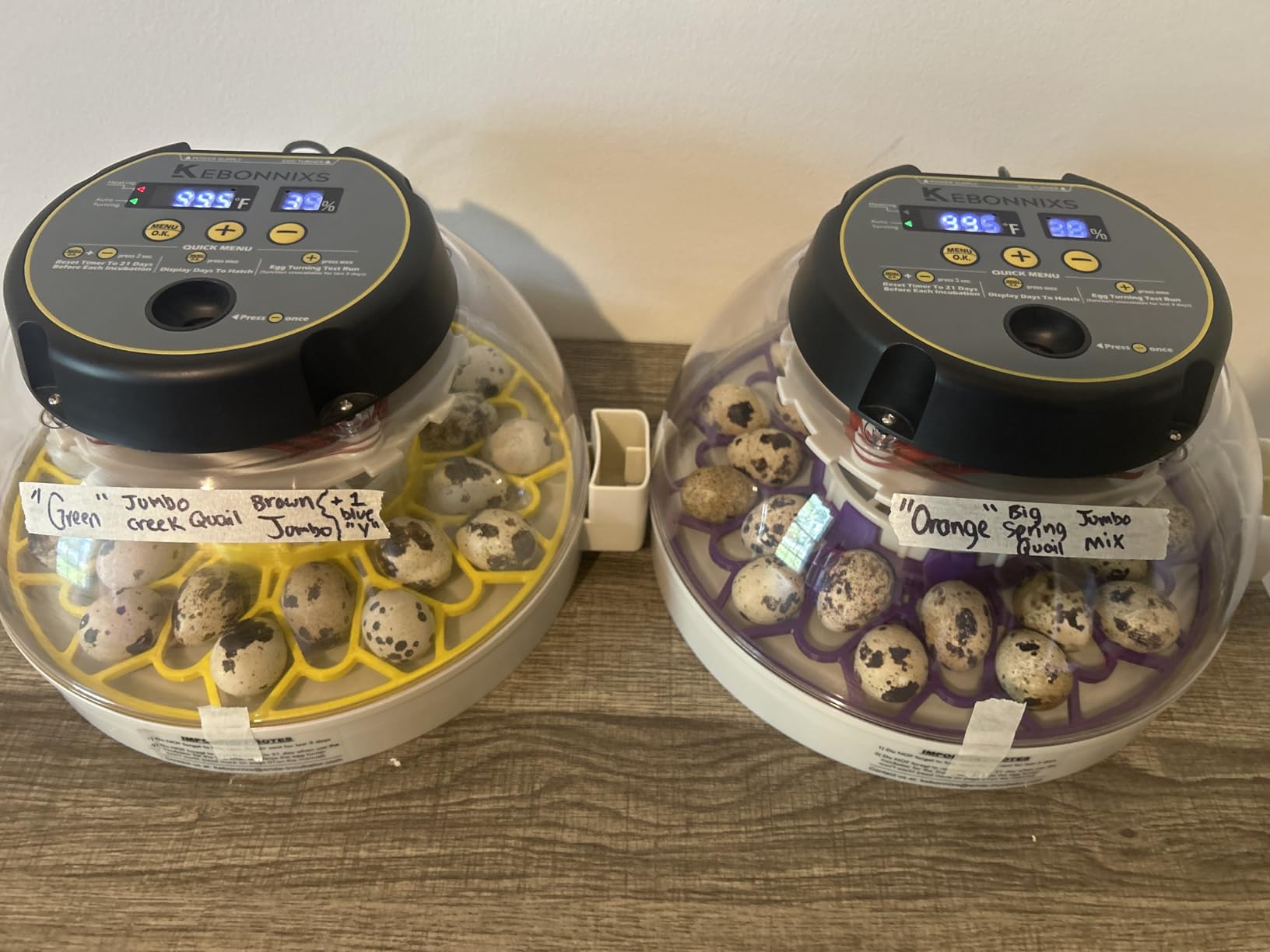
There is a built-in egg candler, so you can check embryo development on day 7 and day 14 without buying a separate light. The external water refill port means you add water without opening the lid, which keeps both temperature and humidity steady during the fill.
With 5456 reviews averaging 4.4 stars, this is the most-reviewed machine in the roundup. Owners report it replacing more expensive units because it is the least expensive one with a real hygrometer and a built-in candler, and the turner is reported to run cycle after cycle without failing.
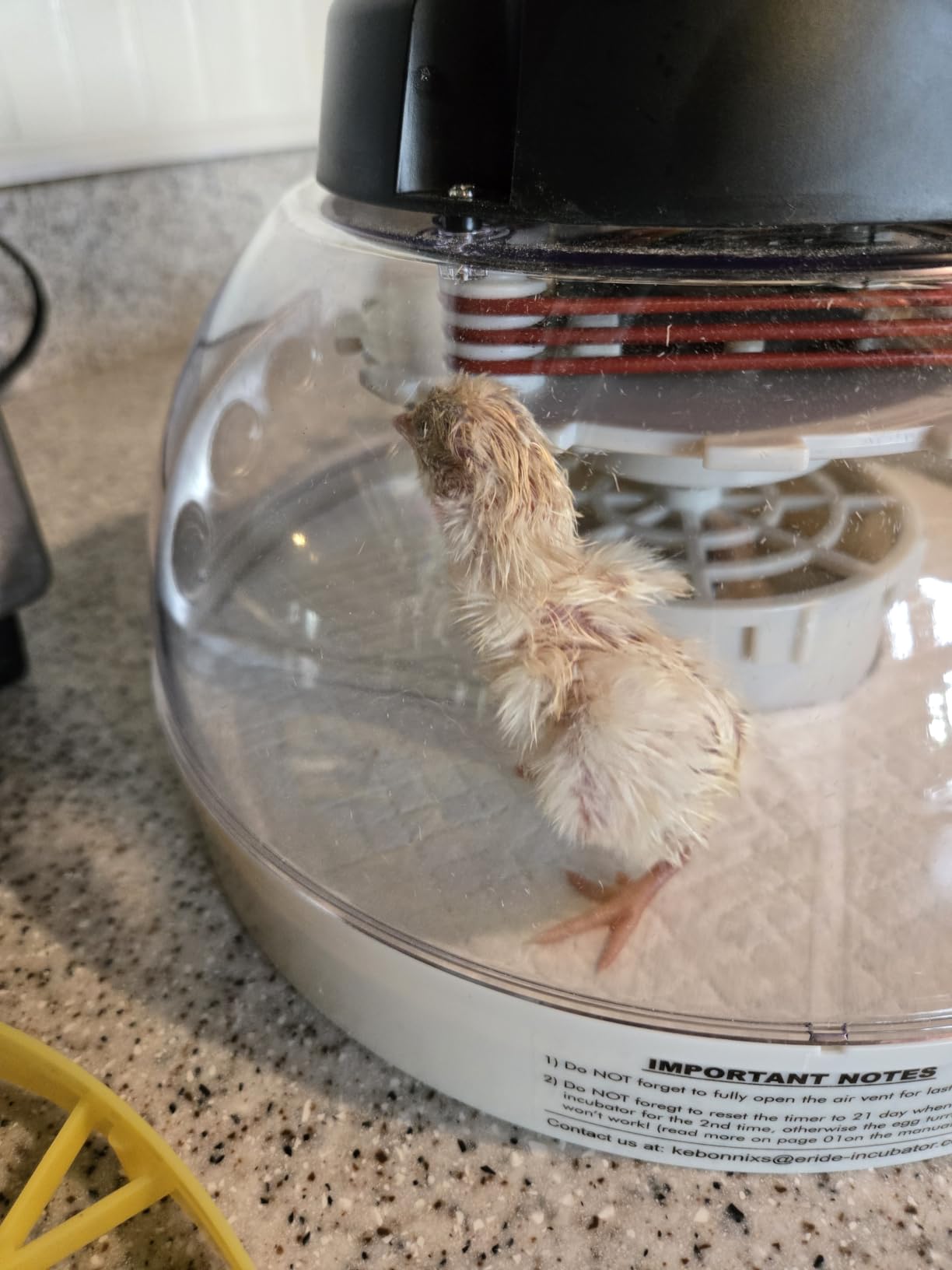
Check the accessories before you order
Two details catch people out. There is no handle on the dome, so lifting it one-handed while holding an egg is awkward, and the supplied turning tray is sized for chicken eggs only, so quail work needs a separate tray.
Reviewers also note that the water reservoir gaps are wide enough for a small chick to slip into, and that exposed metal on the turning mechanism has been reported to rust in the humid environment. Neither is a dealbreaker on a well-ventilated counter, but both are worth knowing before hatch day.
Who should pass on it?
Pass if you need more than 12 chicken eggs per cycle, or if humidity precision matters more than a readout. A user in a backyard poultry forum running Serama quail eggs describes this unit as almost flawless and quiet until the turner rotates, and then went on to buy three more, which is the clearest endorsement this category produces.
For a first hatch of four to twelve chicken eggs with no previous experience, this is the machine we would hand to a friend. If you want a step up in build quality rather than a step up in features, the Brinsea later in this list is the alternative.
3. MATICOOPX 20 Egg Incubator – Best for Bigger First Batches
MATICOOPX 20 Egg Incubator with Humidity Display, Egg Candler, Automatic Egg Turner, for Hatching Chickens
20 egg capacity
External water refill
Built-in candler
60-minute auto turn
Pros
- 4.5 star average across nearly 1000 reviews
- 20-egg capacity is a real step up from 12
- Side-to-side turning is gentler than a roll-type tray
- External refill avoids opening the lid
- Best Sellers rank #3 in Poultry Egg Incubators
Cons
- Tight tray once you add larger duck or goose eggs
- Less long-term owner history than the top budget models
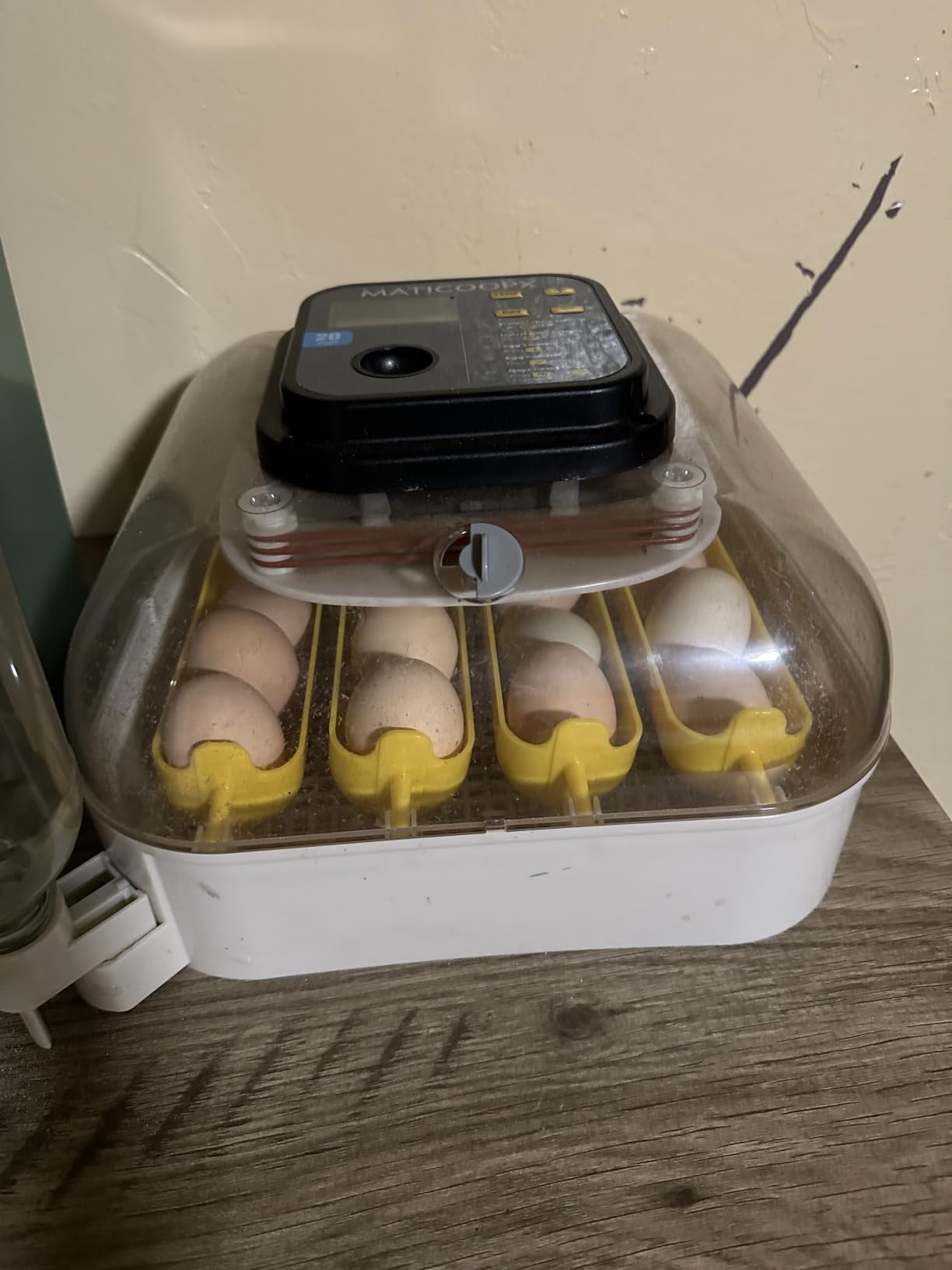
If you want to run a serious first batch rather than a trial run, the 20-egg MATICOOPX is the capacity sweet spot in this list. It holds 20 eggs in a 6.8-pound body, and at 923 reviews with a 4.5 average it has the strongest rating among the established budget machines here.
The turning mechanism moves eggs side to side rather than rolling them, and owners consistently rate that as gentler on the eggs than a roll-type tray. The auto-stop still fires three days before hatch, so the lockdown transition takes care of itself.
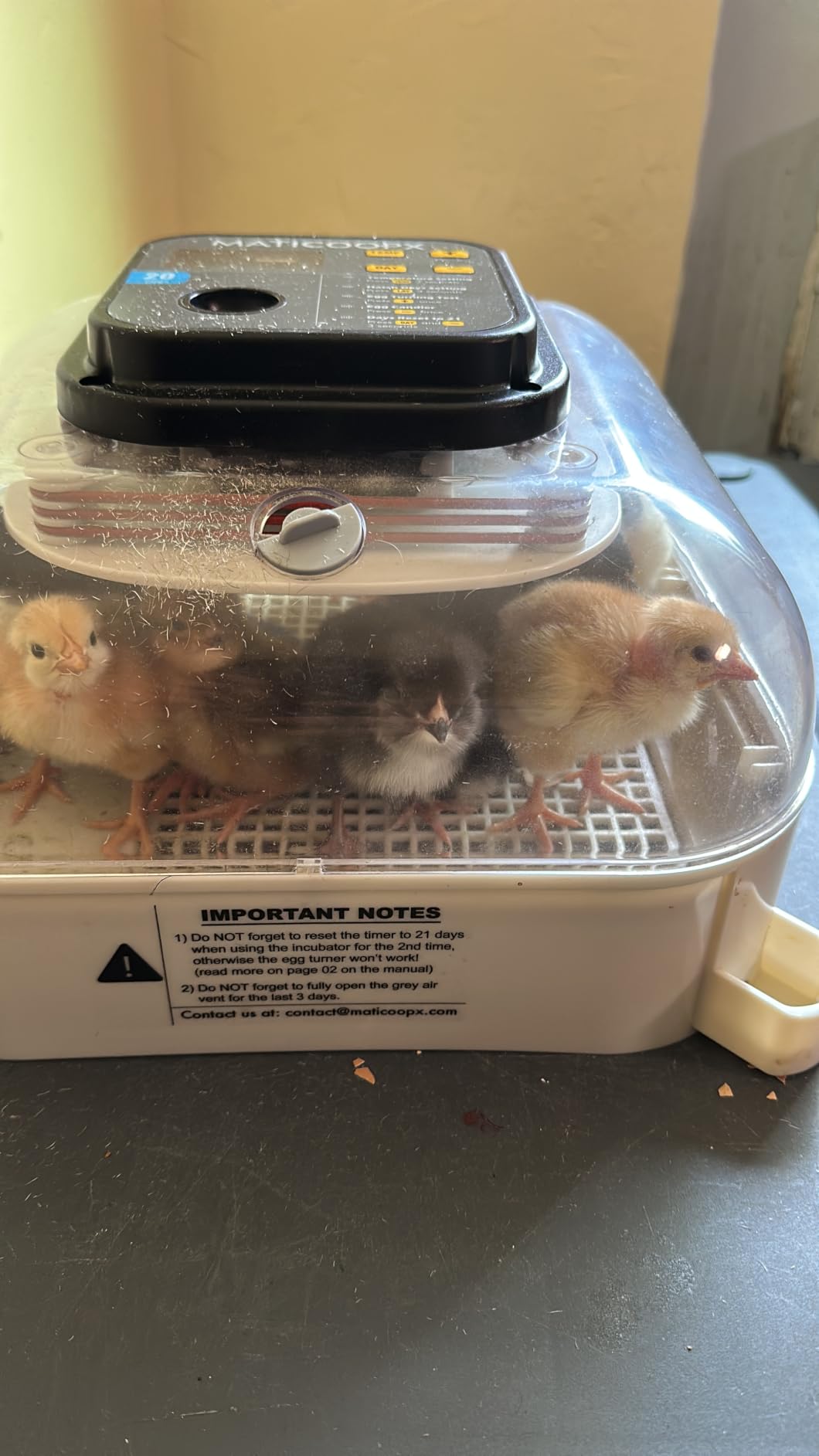
The external water refilling system is the feature reviewers praise most. Toping up without cracking the lid keeps the chamber from dumping heat and moisture, which is the single most common way beginners accidentally ruin a cycle.
A built-in candler covers embryo checks, and the fan-driven circulating airflow is reported to hold temperature steadily. It ranks third in the Poultry Egg Incubators category, which tells you how much demand is sitting behind this listing.
What 20 eggs means for your species?
Capacity is a chicken-egg number, and it does not transfer. Large eggs crowd the tray, so a run of duck or goose eggs loses breathing room and you should step down the count. For standard chicken eggs, 20 is comfortable.
The second limitation is history. With 923 reviews this machine has less long-term owner record than the Nurture Right or the KEBONNIXS, and roughly 80% of its reviews are five-star, which is encouraging but a thinner evidence base.
Who should pass on it?
Pass if your first run is four eggs, because 20 eggs means 20 chances to get fertility, storage and turning right all at once. It also comes with a one year warranty, shorter than the three year cover on some picks here.
If you plan to grow into a larger flock, this is a good first machine and the control panel is simple enough that a second season will not require re-learning anything.
4. Apdoe 12 Egg Incubator – Best for Classrooms and Shared Spaces
APDOE Egg Incubators for Hatching Eggs, Temperature and Humidity Control, Automatic Egg Turning, Egg Candler, External Water Bottle, Air Vent, for Chicken, Duck & Quail Eggs, 12 Eggs
12 eggs with 18 and 25 egg variants
Digital temperature and humidity
External water bottles
Transparent dome
Pros
- Clear instructions and intuitive control panel
- Very easy to clean because no electronics sit in the base
- Foam insert steadies humidity for the full cycle
- Runs quietly and feels sturdier than the price suggests
Cons
- Humidity tracks room conditions and needs active management
- Built-in candler light is dim and the fan housing eats hatch space
The Apdoe is built for a room with more than one person in it. Its 360 degree transparent dome and clear control panel make it easy to show a class what is happening inside, and at 10 by 10 by 5.5 inches it stacks well when you need several on one bench.
Three things stand out for a shared environment. The digital panel shows real-time temperature and humidity, the automatic horizontal rotation runs every two hours with the tray removable for the final three days, and the dual external water bottles need only one or two refills per cycle.
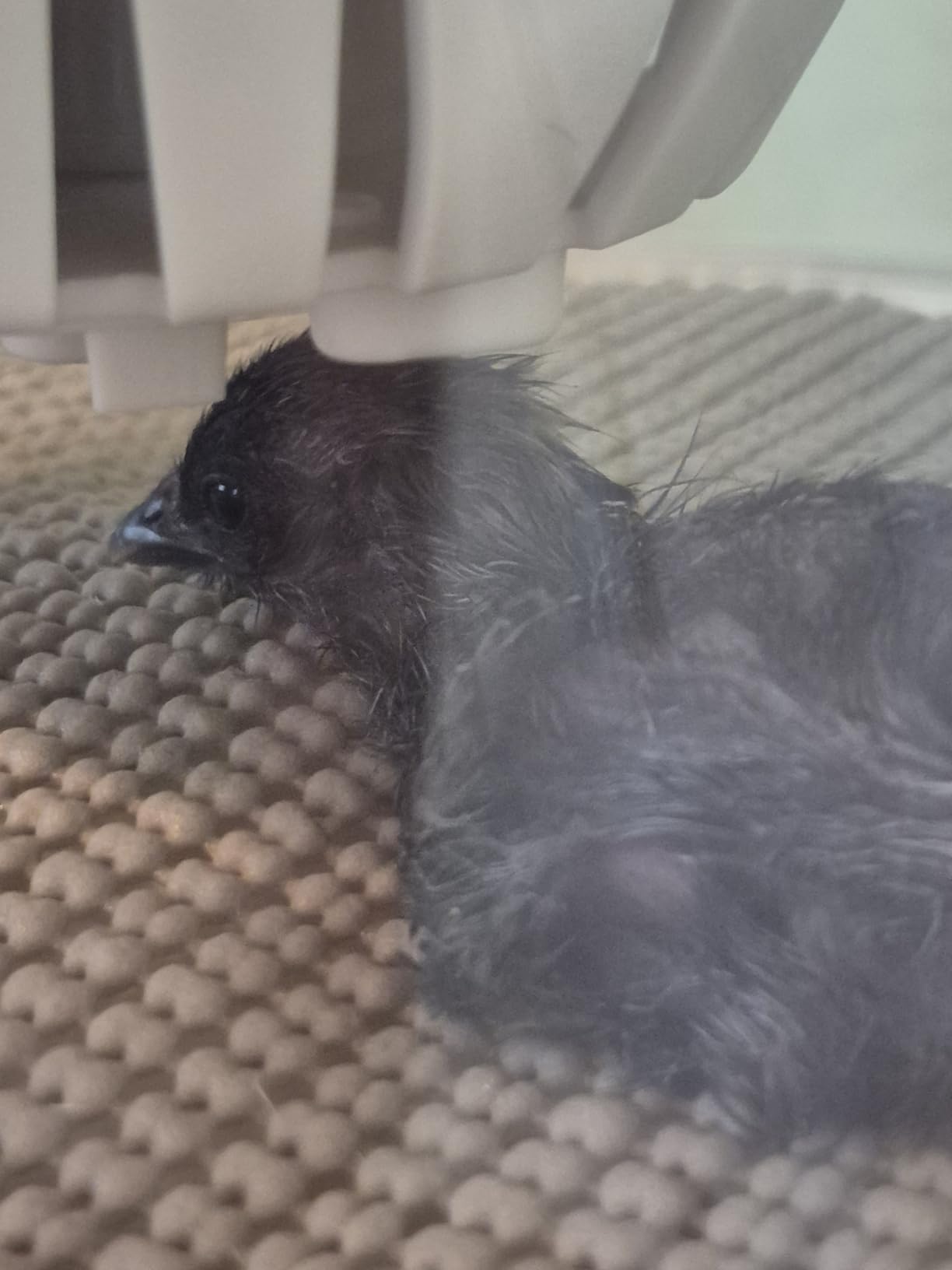
Cleaning is unusually easy because no electronics sit in the base, so the trays detach and rinse without you working around a control board. The included foam insert helps hold humidity steady for the full cycle, which matters in a climate-controlled classroom with dry heating.
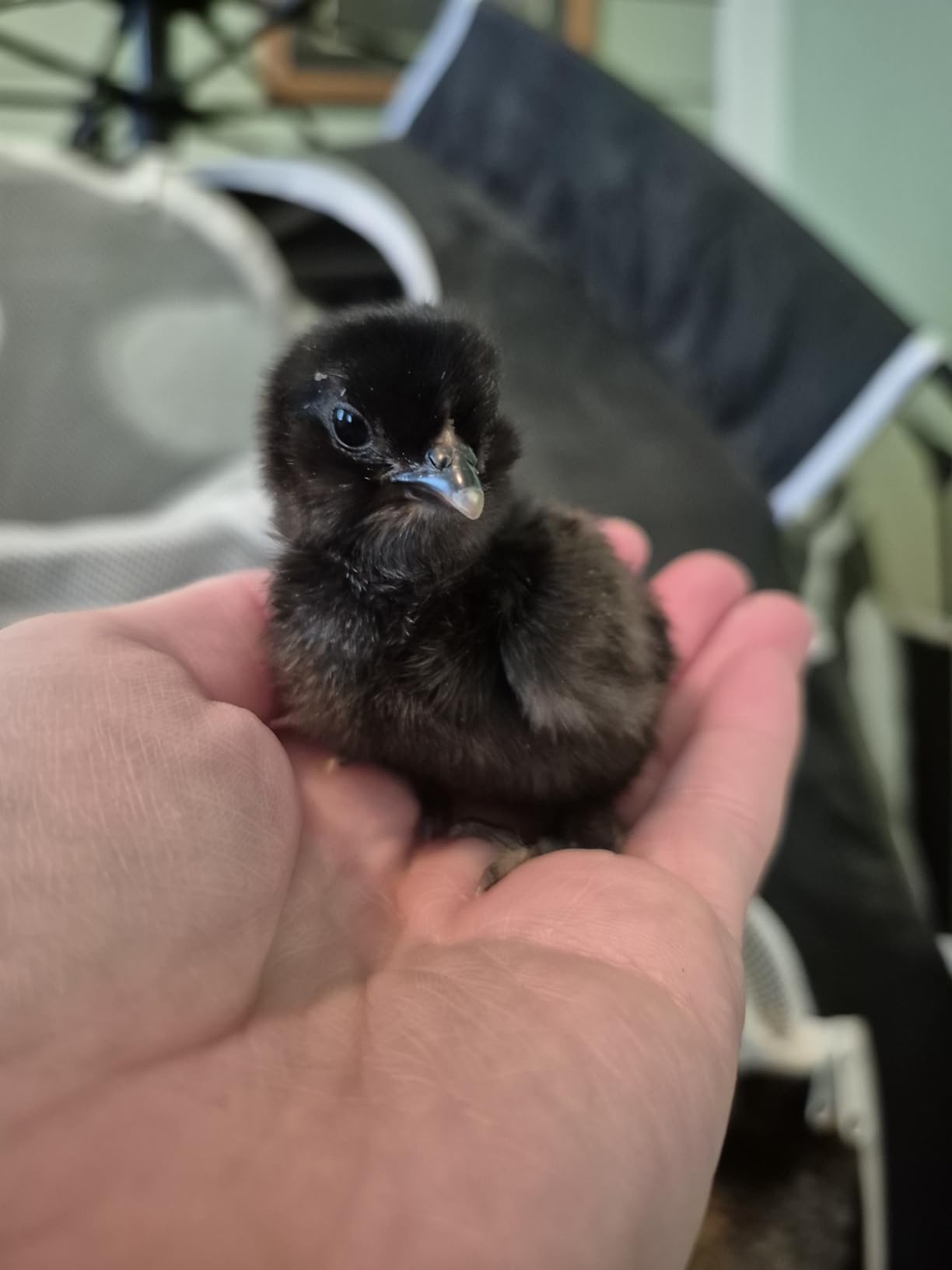
Owners report first-time hatches beating their expectations, including one batch of 12 hatching from 13 eggs the buyer suspected were not viable. Across 1441 reviews at 4.3 stars, 70% are five-star.
Watch the humidity in a heated room
Humidity tracks ambient room conditions closely on this design, so a dry, heated classroom will pull the chamber down faster than a home room would. Plan to check the readout more often than you think you need to.
The built-in candler light is dim compared with a separate flashlight candler, and the fan housing hangs into the hatch area, which reduces space for newly hatched chicks. A few owners also report isolated units shorting out mid-cycle, so keep the unit where you can hear it.
Who should pass on it?
Pass if you are hatching rare breeds and want precise candling, or if you need adjustable turning intervals. Turning is fixed at two-hour intervals here, which is fine for chickens and quail but coarse for some other species.
It is also available in 18-egg and 25-egg variants, so a school buying for thirty students can keep everyone at the same capacity. The adjustable air vent handles multi-stage humidity changes without opening the lid.
5. Onsju 18 Egg Incubator – Best for Quail and Small Birds
18 Egg Incubators for Hatching Eggs, Automatic Egg Turning and Humidity Control Incubator for Hatch Chicken Duck Quail Pigeon Pheasant Partridge Home Classroom Lab-
18 standard or 40 small eggs
Silent fan
Selectable turning intervals
LED candler
Pros
- Widest egg-size flexibility at this price
- Selectable turning intervals from 60 to 180 minutes
- Smart humidity replenishment cuts refilling
- Top ranked in Lab General Purpose Incubators
Cons
- Very new listing with a short owner history
- Manual is required for correct species settings
Most incubators quote chicken-egg capacity and quietly hope you will not check. This one holds 18 standard eggs for chicken and duck work, or 40 smaller eggs for quail, parrot and similar species, and the turning interval is genuinely selectable at 60, 120 or 180 minutes.
That flexibility matters more than it sounds. Quail cycles are shorter and need different intervals than a chicken run, and being able to change the setting instead of accepting a fixed two-hour rotation means one machine can cover several species.
The fan is silent, and the sealed construction with smart replenishment holds humidity without frequent manual topping up. The auto-pause fires 96 hours before hatch, so the lockdown transition is automatic.
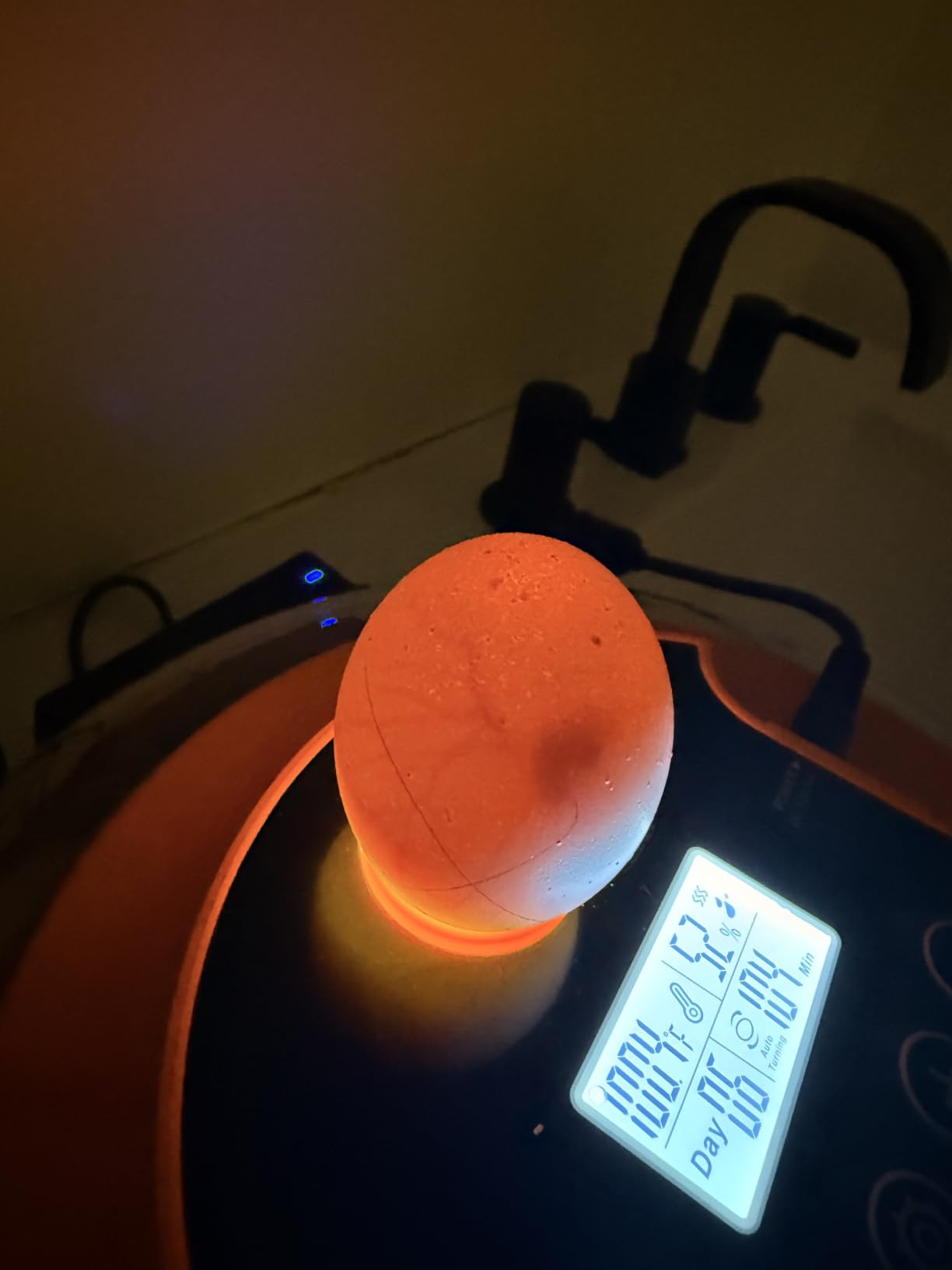
For checking embryos, the high-intensity LED candling light paired with a crystal-clear dome is a genuine upgrade over the dim units at this level. It measures 11.73 by 11.73 by 6.85 inches and weighs 5.43 pounds.
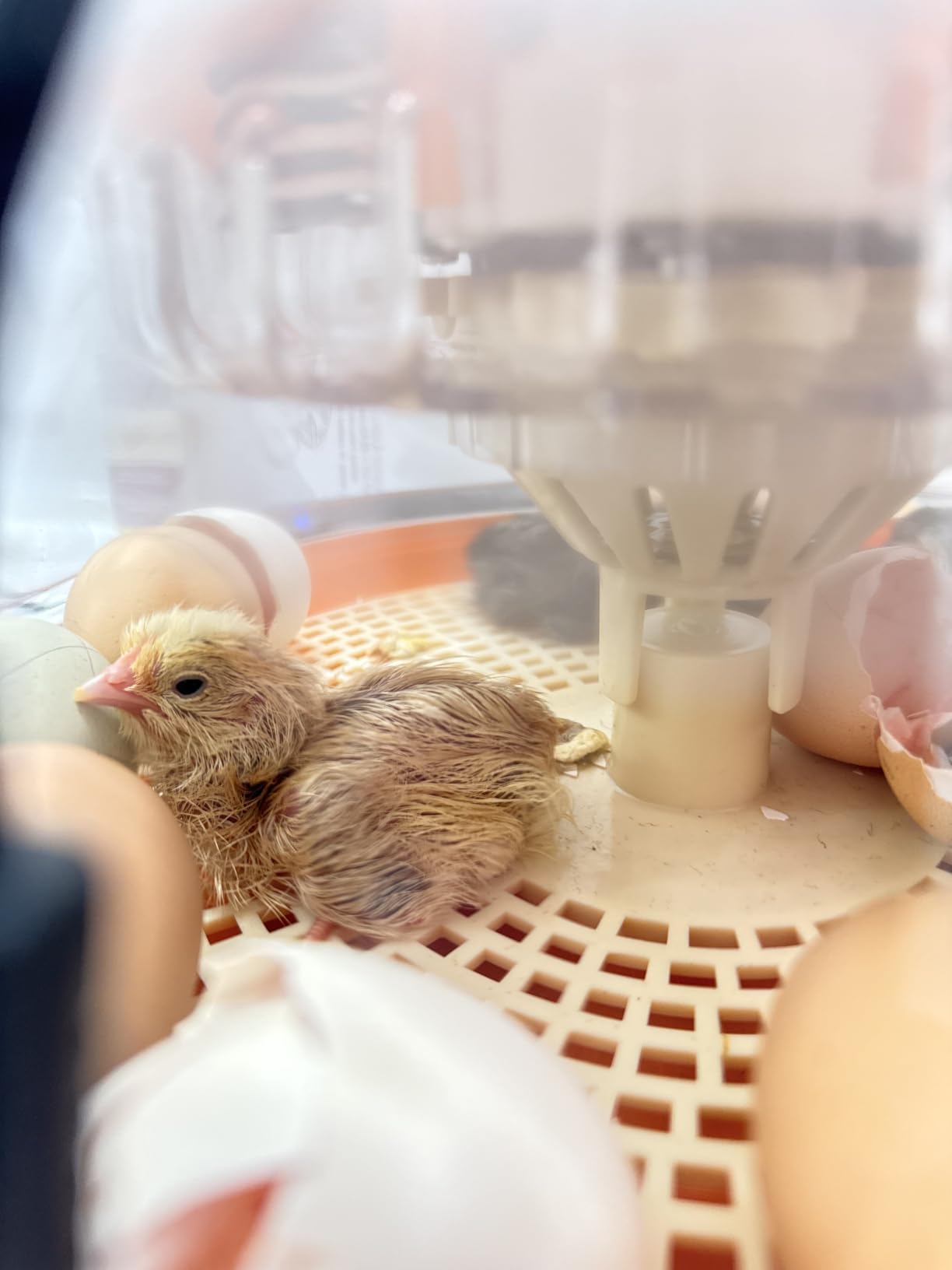
Read the manual before you fill it
This listing only arrived recently and reviewers consistently flag that correct setup depends on the instruction manual, including the species settings. Budget an hour with it before eggs go in, because the turning interval and humidity targets both need to match the bird.
With 404 reviews at 4.3 stars and 74% five-star, the owner history is short. It ranks first in a lab general purpose incubator category, which is a decent signal for institutional duty cycles, but it is not a substitute for years of backyard use.
Who should pass on it?
Pass if you want the most established track record, or if you need a large hatch room for new chicks, since the chamber is optimised for egg capacity rather than chick space. Beginners should also note that silent fan operation does not mean silent turner.
If your plan is quail, or a mixed flock including quail, this is the most flexible machine in the roundup. Our dedicated guide to egg incubators for quail eggs goes deeper on the species settings.
6. QVKHPCL 26-Egg Incubator – Best 3-in-1 Hatch, Brood and Raise Design
26-Egg Incubator for Hatching Eggs, Auto Turning, Temp & Humidity Control
26 chicken eggs or 59 quail eggs
3-in-1 modes
1500mL tank
HD LCD with washable body
Pros
- Highest average rating here at 4.8 stars
- 26 eggs with 3-in-1 brood mode removes a separate brooder
- 1500mL tank holds humidity over 7 days
- Voice control frees you from constant watching
- Detachable washable body simplifies cleaning
Cons
- Newest listing with about 100 reviews to judge by
- Voice commands are limited to a fixed phrase
This is the only machine in the roundup that does three jobs. Its 3-in-1 design covers hatch, brood and raise, and it holds 26 chicken eggs or 59 quail eggs, so you can move straight from a completed hatch into brooding without buying a separate box.
It also carries the largest water tank here at 1500mL, which owners credit with holding stable humidity for more than seven days without opening the lid. For a beginner, fewer refills means fewer chances to disturb the chamber.
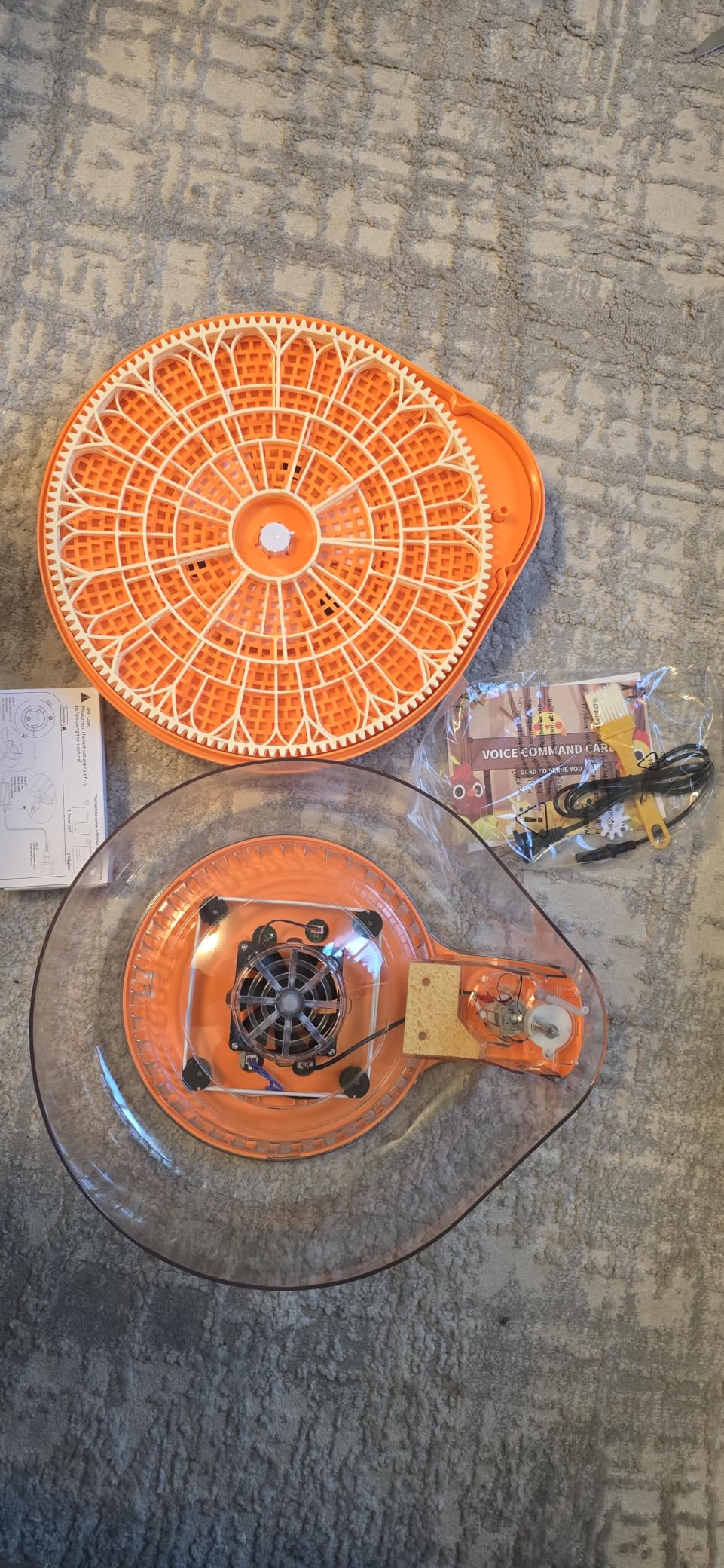
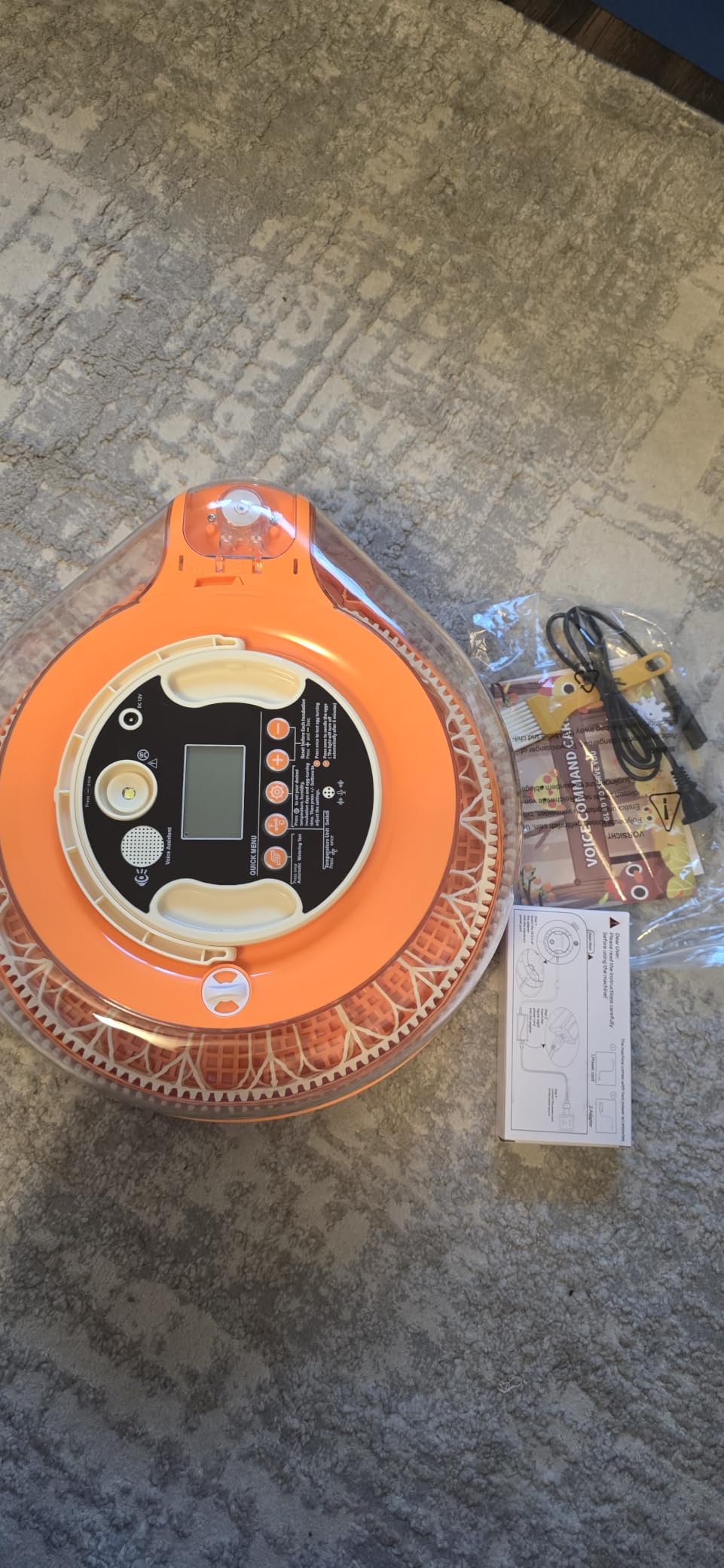
The 360 degree circulating airflow works with high-precision sensors, and the HD LCD display reports temperature, humidity, a turning countdown, turning status, hatch day and low-water alerts in one place. Nine integrated functions cover constant temperature, auto turning with manual pause, an LED candler and ventilation.
Voice control responds to a fixed wake phrase and handles the candler, water pump, temperature, humidity and alarms hands-free. Owners who cannot sit and watch the unit constantly value that more than any other feature here.
Why the 4.8 rating deserves a caveat?
The 4.8 average is the highest in this roundup, with 89% five-star ratings and no 1- or 2-star reviews at all. That is a remarkable profile, but it rests on roughly 100 reviews from a listing that only appeared recently, so there is no long-term durability evidence yet.
It weighs 8.3 pounds and measures 7.5 by 15.61 by 14 inches, which is a wide footprint for a kitchen counter. The detachable washable body is a real help at that size, and the warranty runs one year with lifetime professional support.
Who should pass on it?
Pass if you value a long ownership record over feature breadth, since a three-year-old design has three years of failure data behind it and this one does not. The fixed-phrase voice command is also not general-purpose voice control, which can disappoint anyone expecting to ask it anything.
For a first-timer who also wants to skip the brooder purchase, the combined cost of hatch and brood in one machine is the reason to look here first.
7. TRIOCOTTAGE 12 Egg Incubator – Best for Duck and Turkey Eggs
Incubators for Hatching Eggs 12 Egg Incubator with Automatic Egg Turning and Humidity Control,Egg Candler,Auto Water Replenishment,for Chicken Eggs and Quail Egg M12H
12 chicken eggs or 6 large eggs
Auto water replenishment
Manual turn override
LED display
Pros
- Owners report 7-of-7 duckling and 6-of-6 turkey hatches
- Heavy base survived a cat knocking the lid to the floor
- Bright built-in candler that auto-shuts off
- Compact footprint and a tray that is easy to clean
Cons
- Humidity display reads about 10% higher than actual
- Humidity is hard to fine-tune in very dry or very humid rooms
The TRIOCOTTAGE is the pick for anyone hatching something larger than a chicken egg. It lists 12 chicken eggs, or roughly 6 large turkey or duck eggs with the auto-turner running, and experienced poultry keepers in the reviews report 7-of-7 duckling and 6-of-6 turkey hatches from it.
Automatic water replenishment is the standout feature. You top up less often, and the two water-surface zones plus a ventilation knob let you change humidity without cracking the lid, which is exactly the behaviour that wrecks a hatch on a normal unit.
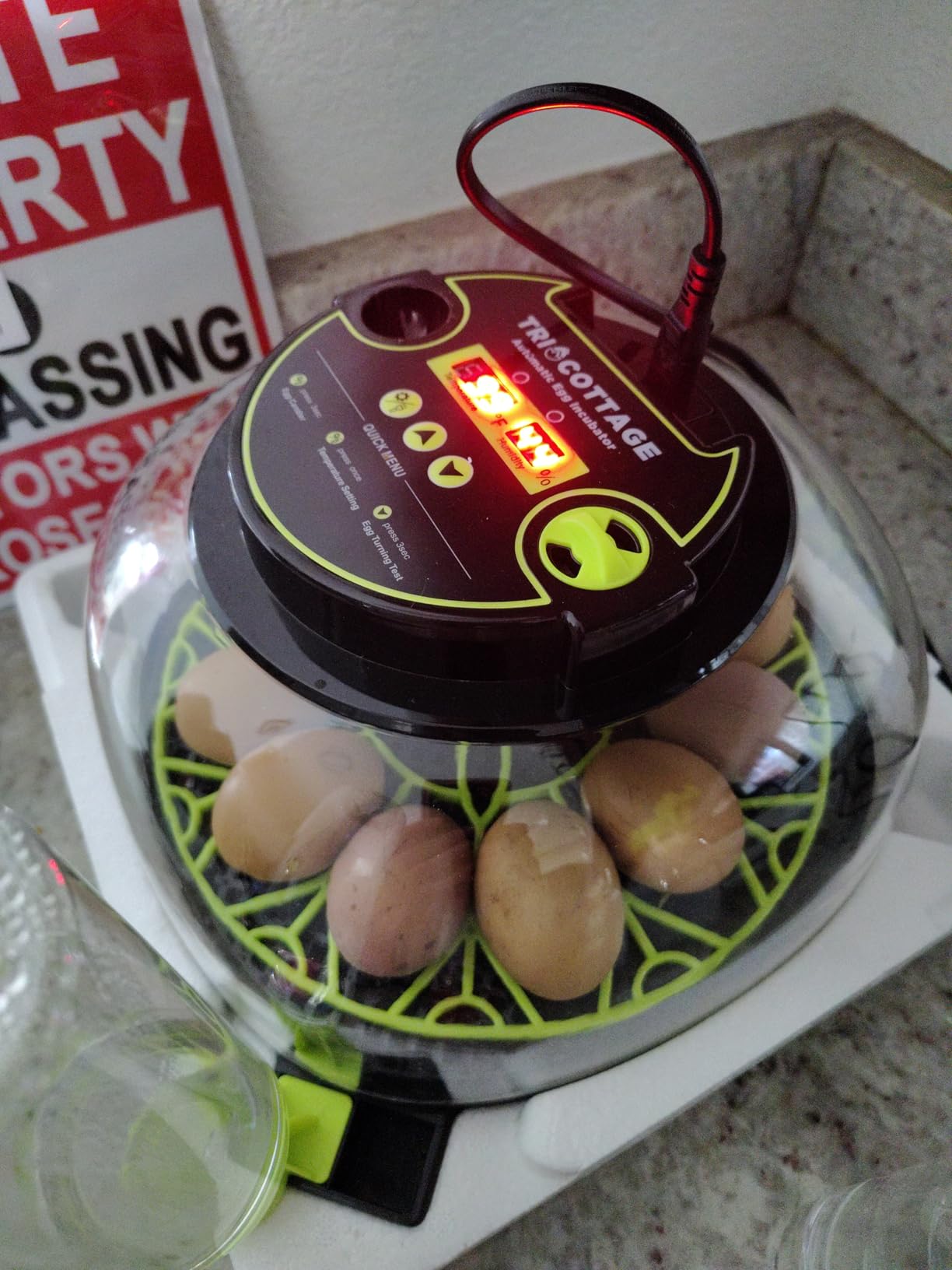
The manual turn override is a small thing that matters: on day 18 you can stop the turner by hand and handle the tray without dismantling anything. The 360 degree transparent cover is curved, which gives newly hatched chicks more usable space than a flat dome.
Build quality comes up repeatedly in reviews. The thick base is reported to have survived a cat knocking the lid to the floor, and at 7.5 by 7.5 by 6.6 inches it is one of the most compact units here while remaining easy to assemble and clean.
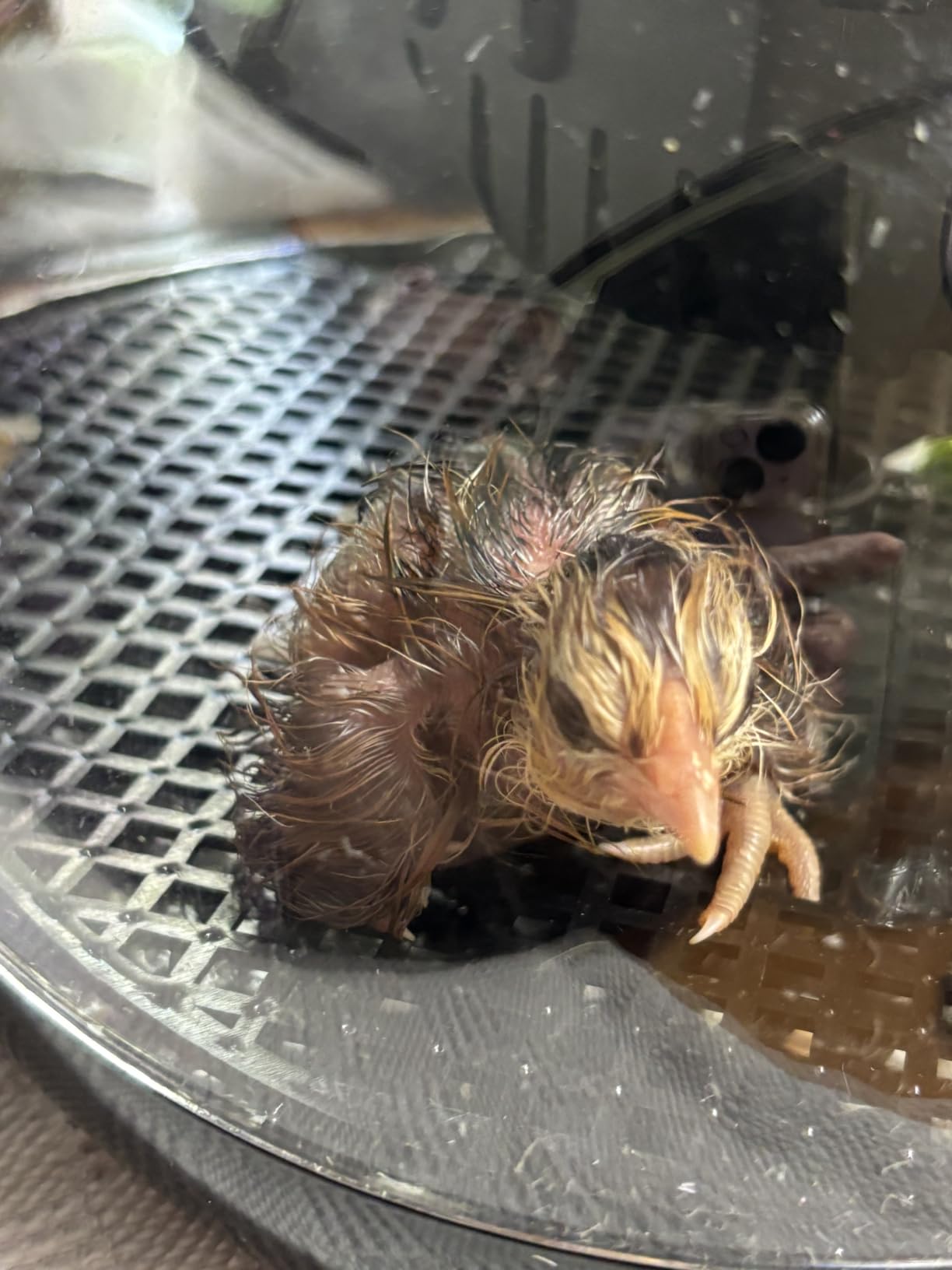
Calibrate the humidity reading before you trust it
The most-cited issue is that the onboard humidity display runs roughly 10% higher than actual when cross-checked with an external hygrometer. Owners work around it by targeting a higher displayed number, which is fine as a learned trick but a poor substitute for accurate measurement.
Humidity is also harder to fine-tune on this model than on a unit with a bigger reservoir, particularly in very dry or very humid rooms. The external insulation layer around the LED temperature display does help in cold spaces.
Who should pass on it?
Pass if humidity accuracy is non-negotiable for your setup, or if you want to load more than six large eggs and still have the turner work. For pure chicken eggs at 12 per cycle, several other machines here give you a better-calibrated readout.
The candling light is among the brightest in this category and shuts off automatically, which makes day 7 and day 14 checks quick. Owners upgrading from styrofoam boxes frequently report this as the step up that made hatching consistent for them.
8. CluckRun 25 Egg Incubator – Best for Quiet Operation and Large Batches
25 Egg Incubators for Hatching Eggs, Auto Turning, Temp & Humidity Control
25 eggs
Programmable turning
Spacious hatch room
Built-in candler
Pros
- Second-highest rating here at 4.6 stars with 82% five-star
- Turning interval and cycle length programmable per species
- Automatic water bottles give steadier humidity
- Sturdy build that fits a normal counter
Cons
- Humidity is the hardest parameter to dial in before lock-down
- Beeps on every button press and the display backlight stays lit
Noise is the complaint that decides purchases in this category, and the CluckRun 25 is the one we would put in a room where a fan hum would be noticed. Reviewers describe quiet operation with even temperature and no hot or cold spots, and it still fits 25 eggs on a normal kitchen counter at 5.7 pounds.
Turning intervals are programmable at 60, 120 or 180 minutes, and the auto-stop fires four days before hatching, which is the earliest stop in this roundup and gives you a longer lockdown. The incubation length itself is also adjustable per species.
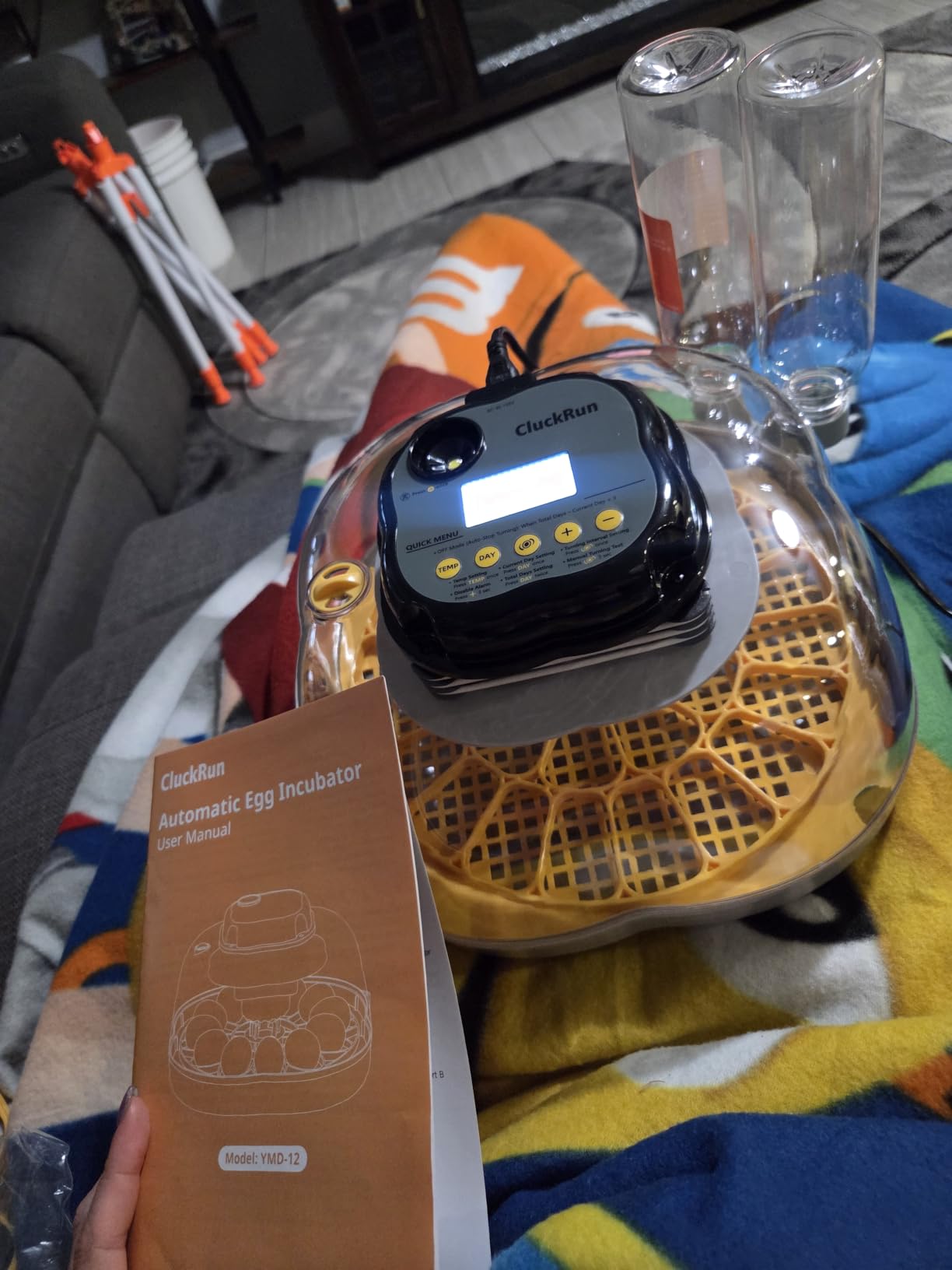
High protective walls and a spacious hatch room give newly hatched chicks room to stand, which is a real improvement on compact 12-egg domes. The display reports incubation days, turning countdown, turning status, temperature and humidity in one place.
Automatic water bottles deliver steadier humidity with far less intervention, and the built-in egg candler is bright enough to be useful. Owners moving up from styrofoam boxes rate the programmability and candler brightness very highly, and first-timers call the instructions especially clear.
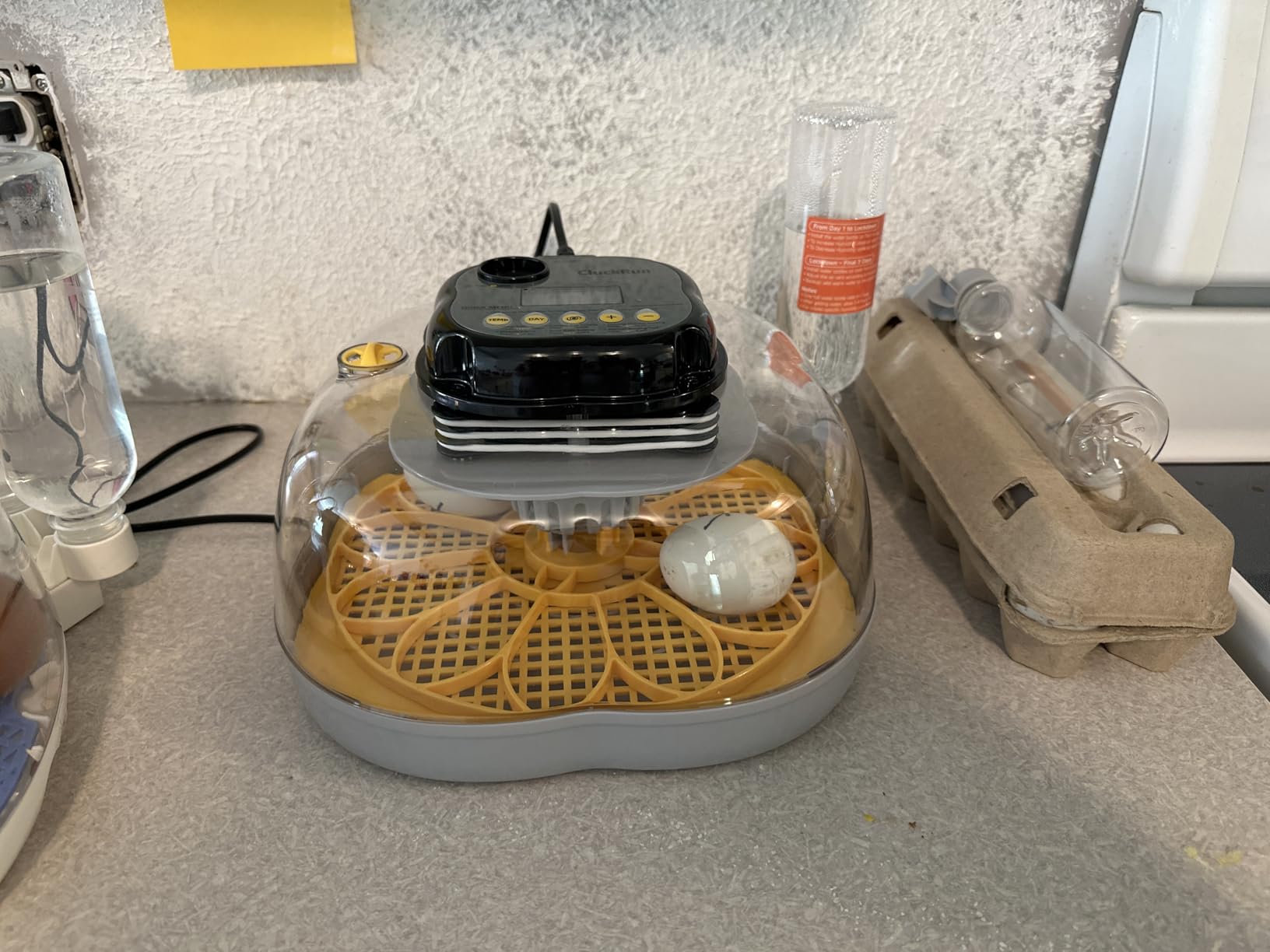
What the 4.6 rating comes with?
300 reviews at 4.6 stars with 82% five-star puts it near the top of this group on customer satisfaction. The build is described as sturdy with a stainless steel material specification, and it comes with water bottles, power supply, hatching guide and a cleaning brush.
It also carries a three year warranty with lifetime after-sales support, which is longer cover than most of the budget machines here, and 12, 18 and 25 egg variants let you size up as your flock grows.
Who should pass on it?
Pass if the machine sits in a bedroom or a home office. It beeps on every button press, the display backlight lights up when you candle in a dark room, and humidity before lock-down is the parameter reviewers find hardest to dial in.
It also runs small once you load it with large duck eggs, so treat 25 as a chicken-egg number. Our guide to egg incubators for hatching chicks covers the batch-sizing side of this decision.
9. Brinsea Mini II Advance – Premium Pick for Long-Term Ownership
Brinsea Mini II Advance Incubator with Automatic Turner for Hatching 7 Eggs
7 chicken eggs or 12 small eggs
Menu-driven controls
Temperature alarms
3 year warranty
Pros
- Most accurate temperature and humidity regulation in this roundup
- Set-and-forget operation for a full 21-day cycle
- Countdown to hatch day and auto-stop turning
- High and low temperature alarms for a long run
- Backed by a 3 year warranty
Cons
- Only 7 eggs limits output to six or seven chicks per cycle
- Turning motor looks too weak for large turkey eggs
- Cardboard hatching disk is too coarse for very small chicks
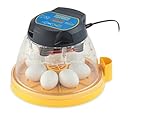
The Brinsea Mini II Advance is the oldest design here, in continuous production since the mid-2010s, and that maturity is exactly what you are buying. Owners with multi-year units report they perform identically to the day they were unboxed, and 566 reviews at 4.5 stars with 80% five-star reflect a product that simply does not fail.
Regulation accuracy is its standout. The menu-driven controls handle temperature, automatic turning with auto-stop and a countdown timer, and the room temperature plus high and low alarms mean a 21-day run does not depend on you checking in.
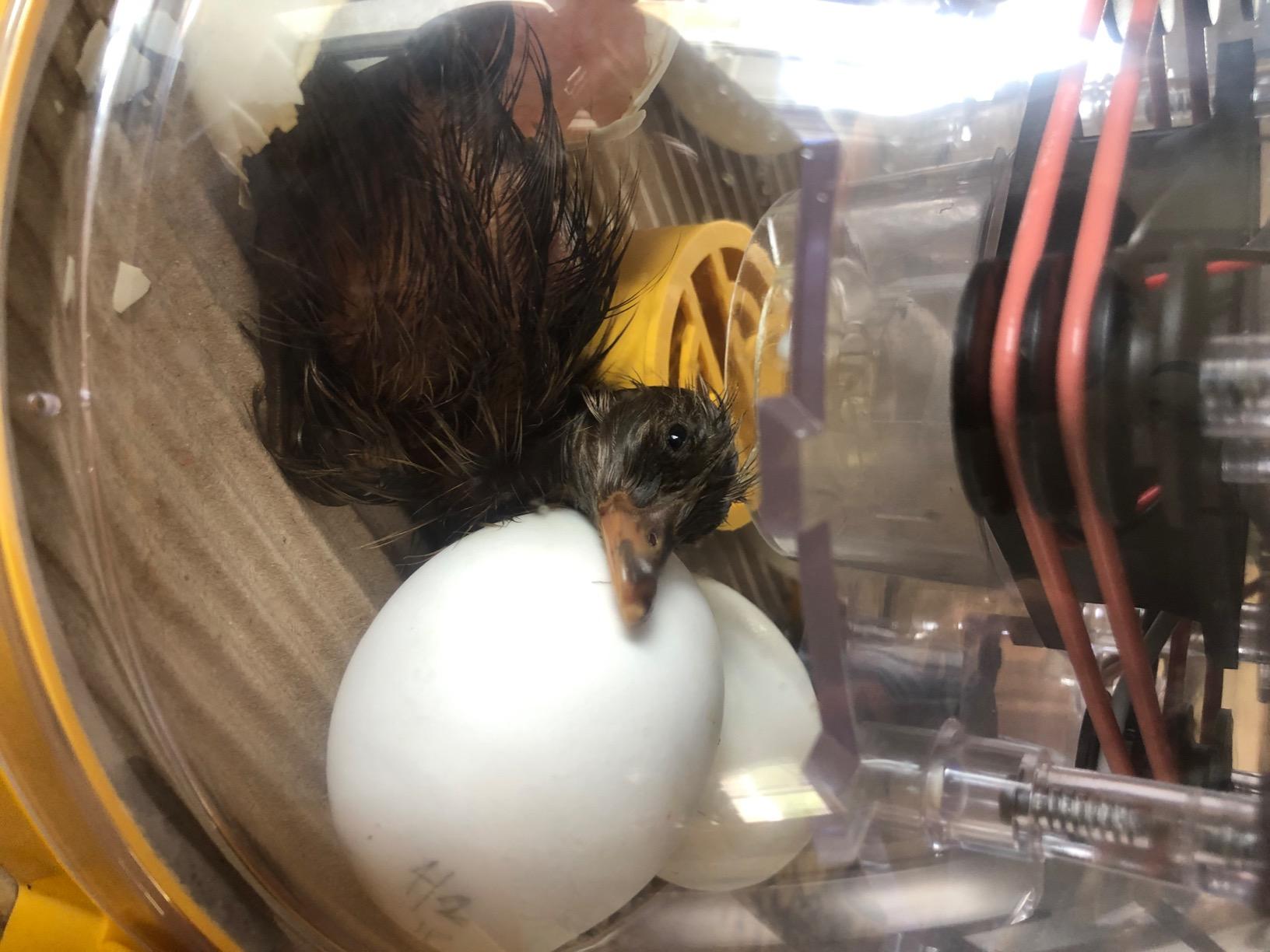
It is genuinely set-and-forget: set the temperature, choose the species programme, and add water through the external top-up port every few days. The Polygiene Biomaster protected plastics wipe clean, and the 3 year warranty is the longest here alongside the CluckRun.
For a beginner, the countdown to hatch day and the auto-stop turning remove two of the most common first-hatch mistakes, which is a bigger practical benefit than any capacity figure.
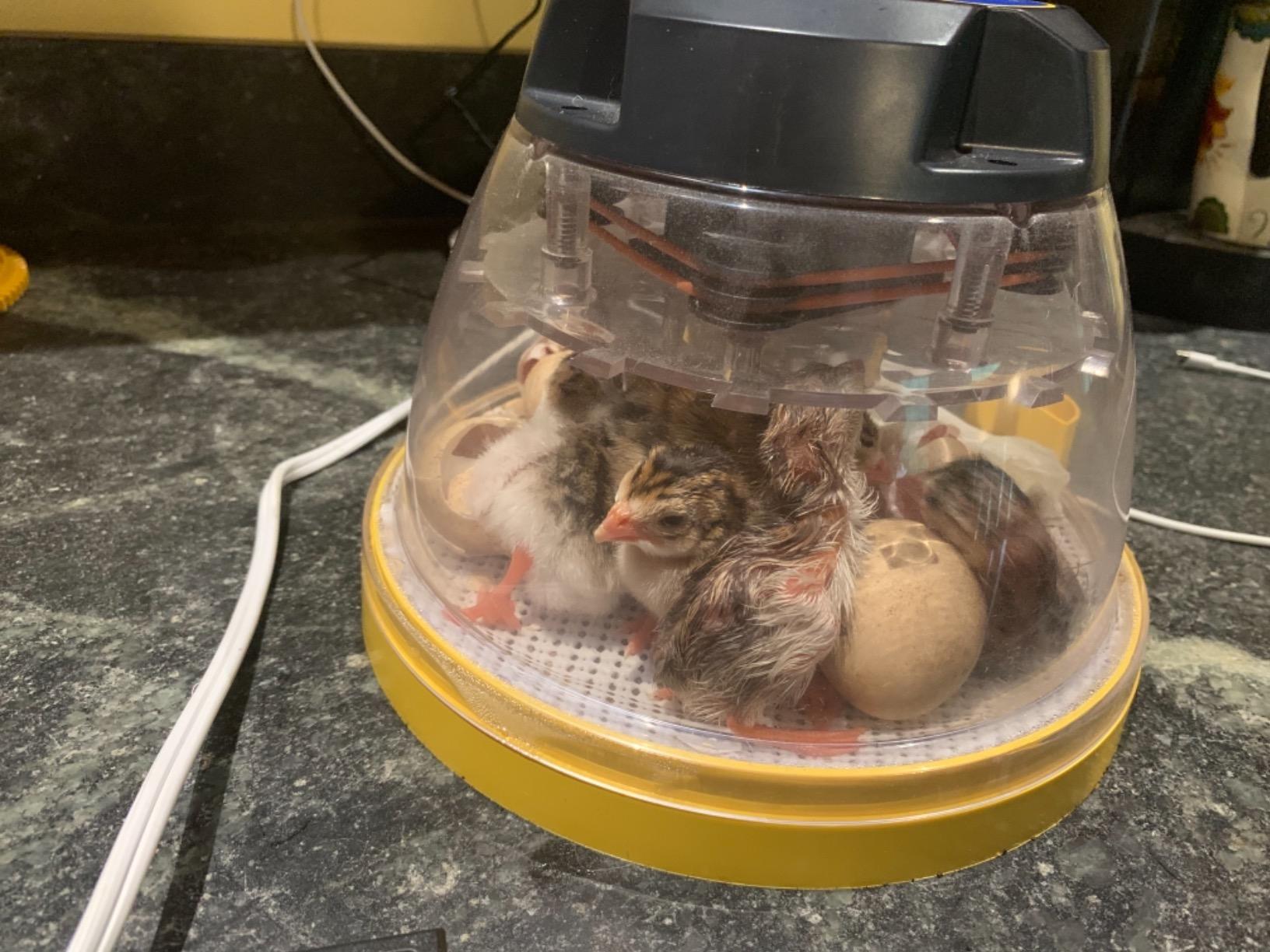
Why 7 eggs is not a limitation?
Seven chicken eggs sounds tiny, and it is, if your goal is volume. What it buys you is a chamber small enough to heat quickly and hold steady, and an optional insert expands it to 12 small eggs for quail and bantam work. It measures 8.5 by 8.5 by 7 inches and weighs 3 pounds.
The turning motor is reported to look too weak for large turkey or oversized chicken eggs, so scale your species down. The included corrugated hatching disk is also too coarse for very small chicks, and many owners replace it with a non-slip shelf liner.
Who should pass on it?
Pass if you need a batch of 12 or more, or if you want a built-in humidity sensor, because this model manages humidity by eye and by adding water. That is a real drawback for a beginner who wants a readout, and it is why the KEBONNIXS is the better entry pick.
Buy it if you intend to keep incubating for years and would rather buy once. Our guide to incubators for hatching eggs covers the long-term ownership angle in more detail.
10. CoInceptus 16 Egg Incubator – Best Entry-Level Starter
CoInceptus 16 Eggs Incubators for Hatching Eggs, Egg Incubator with Automatic Egg Turning and Temperature Control, Chicken Egg Incubators with Egg Candler for Duck Goose Pigeon Quail
16 eggs
Adjustable roller spacing
Auto water base
Turning every 90 minutes
Pros
- Lowest cost in the roundup while still bundling turner and water base
- Adjustable roller spacing fits noticeably different egg sizes
- Reaches set temperature within about an hour
- Dual 110V and 12V clamp wire allows backup power
Cons
- Lowest rating in the group at 4.1 stars with 11% one-star reviews
- No humidity display so humidity cannot be read directly
- Water bottles are sold separately
The CoInceptus 16 is the cheapest way into incubation that still includes the three things that matter: an automatic turner, a built-in candler and automatic water replenishment. Sixteen eggs gives you room to run a batch without committing to a 25 or 26-egg machine.
The adjustable roller spacing is a genuine feature at this level. Instead of a fixed tray, the rails move to fit different egg sizes, which makes it usable across chicken, duck, goose, pigeon and quail work rather than one species only.
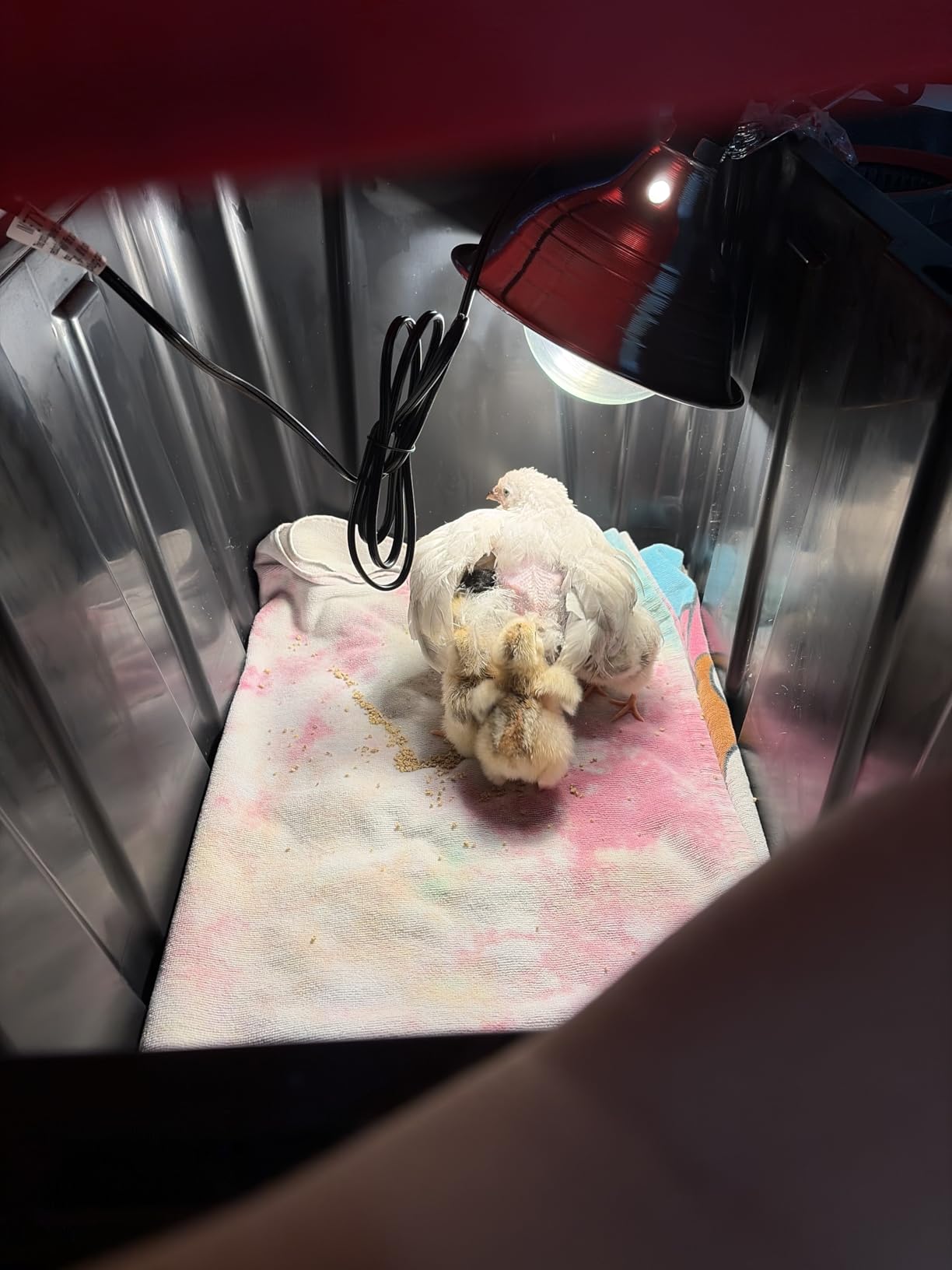
Built-in sensors hold temperature steady anywhere between 68 and 104 F with a deviation alarm, and owners report it reaching set temperature in about an hour. The dual 110V and 12V clamp wire compatibility is a thoughtful touch for anyone running backup power.
It is a recent listing with 294 reviews. Sixty-three percent are five-star, but 11% are one-star, which is a wider spread than any other unit in this roundup and the reason this one sits at the bottom of the list.
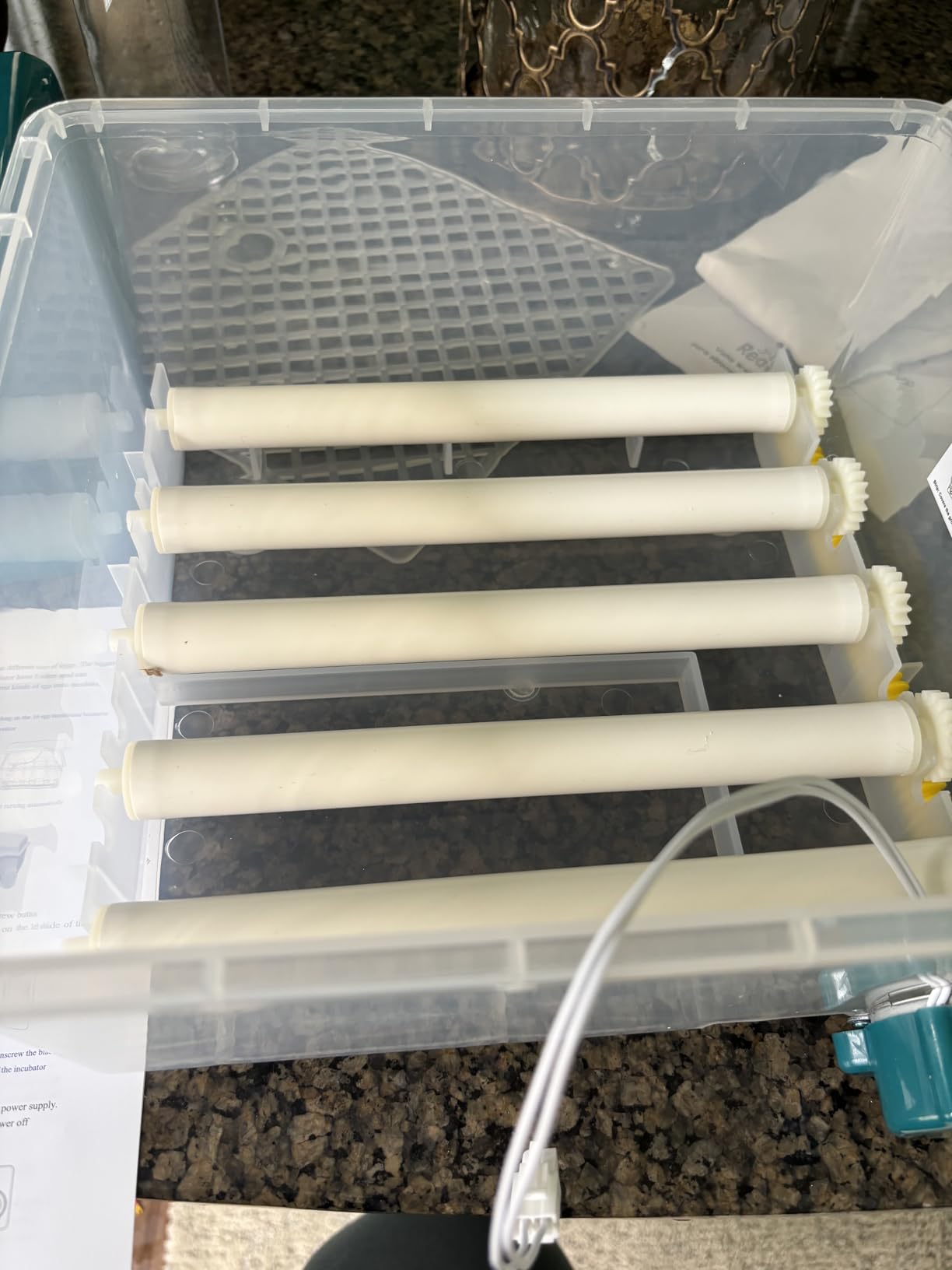
The humidity problem you have to work around
There is no humidity display, so you cannot read or verify the moisture level directly. You will be managing water by eye, which is the single thing that most often causes a first hatch to underperform. If your room is dry, add a separate hygrometer.
Water bottles are also sold separately, so budget for them before day one. The one-star reviews cluster around unit failures and missing accessories arriving in the box, both of which are packaging and quality-control issues rather than design faults.
Who should pass on it?
Pass if humidity control is where you are least confident, because you will have no feedback loop. This is the right pick for someone who wants to learn on a small budget with mixed egg sizes, and the wrong pick for a first hatch you are emotionally invested in.
If you want the same capacity with a humidity readout and a proven owner record, the MATICOOPX 20 is the step up. If you want the cheapest option with a real hygrometer, the KEBONNIXS 12 is the one to buy.
What Size Egg Incubator Do You Need?
Most beginners should start at 12 to 20 chicken eggs. Below 12 you are paying per egg, and above 25 you are committing to a large batch where a single mistake multiplies. Capacity numbers are always chicken-egg numbers: a chamber rated for 20 chicken eggs may hold only 6 large duck eggs, 2 or 3 goose eggs, and 40 to 59 quail eggs.
Buy for the number of eggs you can realistically source as fertile, not the number you want. Fertilization rate on a typical backyard rooster-to-hen ratio runs well below what people expect, and a 20-egg chamber filled with unfertilized store-bought eggs is an expensive way to learn that.
Egg age matters as much as quantity. Eggs hatch best when they are under 7 days old at the start of incubation, and every extra day of storage before setting reduces the odds. If you are collecting over a week, you are already working against yourself.
There is a sizing question people rarely ask: one large machine or several small ones? Experienced hatchers often run two or three compact incubators, add eggs to each on a different day, and move everything into one dedicated hatching-only unit on day 18. Staggering batches that way is how one experienced keeper reports 90%+ hatch rates on small eggs. Our guide to automatic incubators for homesteaders covers that workflow in more depth.
For a household flock, plan on a rough rule: a typical hen lays fewer than two eggs per week, so two dozen eggs a week takes more hens than most people expect. Hatch the number of replacements you actually need rather than the number the tray can hold.
Forced Air vs Still Air: Which Should Beginners Buy?
Buy forced air. That is the short answer, and it is why every fan-driven machine in this roundup outperforms the cheaper still air boxes. Forced air machines move air across the eggs with a fan, so every egg sits in the same conditions and the chamber recovers quickly when you open the lid.
Still air incubators rely on convection alone. They are quieter and cheaper, but the top of the tray runs warmer than the bottom, which produces uneven development and a wider spread of hatch dates. A chick that pips early in a still air chamber often gets the same air as a chick that has not pipped at all.
The temperature difference catches beginners out. Forced air runs at 99 F. Still air runs at 101 F. Never go above 102 F in either case, because embryo development is not linear and a sustained 103 F will cook a batch.
Still air has one real advantage, and it is the one the loudest forum posters mention: a manual-turn still air box is the only genuinely silent option available. Every automatic turner has a motor, and every motor is audible. If noise decides your purchase, that is a trade-off worth making knowingly rather than discovering on hatch day.
A middle path exists. Several machines here, including the KEBONNIXS 12 and the MATICOOPX 20, use a small fan for air circulation and a quiet turner, which gets you most of the forced air benefit without the hum of a large circulation fan.
What to Look for in an Egg Incubator?
A good quality egg incubator for beginners does five things, in this order of importance. First, a fan for even heat. Second, a readable temperature and humidity display, because managing blind is what turns a first hatch into a stressful one. Third, an automatic turner that stops on its own before hatch. Fourth, an external water port so you can refill without opening the lid. Fifth, a transparent dome or window so you can observe without disturbing anything.
Everything below those five is a bonus. Alarms, countdowns, voice control, brooder modes and programmable species profiles add convenience rather than hatch rate, and they are the features where beginners end up paying for capability they will not use in year one.
Noise deserves its own line because no competitor list mentions it. Fan hum, turner clicks and button beeps decide purchases in real households. If the machine will live in a room you use daily, buy the quietest one that meets the five criteria above.
Floor texture is the spec nobody covers. Smooth plastic tray floors are linked to splay leg, where a chick hatches with its legs splayed outward because nothing gave its feet purchase while it pushed out of the shell. Several experienced hatchers add a textured shelf liner on day 18 as a routine step, and it costs almost nothing.
Finally, check what is in the box. Water bottles, cleaning brushes and hatching guides are sometimes sold separately, and discovering that on the morning you set eggs is a bad start. Our general chicken egg incubator guide covers the cleaning and storage routine between hatches.
The 5 Mistakes That Ruin a First Hatch
Most failed hatches are blamed on the incubator, and most of the time the cause was something that happened before the eggs went in. These five account for the large majority of disappointing first cycles.
1. Using eggs that are too old, or unfertilized. Eggs under 7 days old at the start of incubation hatch best, and eggs bought from a store will not hatch at all unless they came from a rooster. Candle on day 7 and remove anything that looks clear. A machine cannot fix this one.
2. Opening the lid to check on things. Every opening drops chamber temperature and dumps humidity, and on day 18 onward it can stop a hatch that was already on track. Use the window, or the candler, and treat the lid as sealed.
3. Running the turner through lockdown. Day 18 is when the chick positions itself to pip, and the movement a turner causes can tear the membrane it is breaking through. Nearly every machine here stops automatically, which is one of the main reasons to buy automatic rather than manual.
4. Chasing humidity without a number. Owners who guess at water levels consistently under-humidify, which dries the membrane and gives the chick a hard time pipping. If your machine has no humidity readout, buy a separate hygrometer before you start.
5. Ignoring room conditions. A still air machine in a cold garage and a fan-driven machine in a warm kitchen will not hold the same setpoint from the same dial. Give the incubator a day in the room where it will live before you trust the reading.
How to Set Up Your Incubator: Temperature, Humidity and the First 21 Days?
Set the target before the eggs go in, and let the chamber stabilise for 12 to 24 hours. Forced air runs at 99 F and still air at 101 F, never above 102 F. Place your eggs with the pointed end down and slightly tilted, big end up, so the air cell sits at the top where it can expand.
Days 1 to 18 are the turning phase. Humidity sits around 50 to 55% relative, the turner runs on its schedule, and you should avoid opening the lid. Candle on day 7 to confirm embryos are developing, and again on day 14 if you want to recheck viability.
Days 18 to 21 are lockdown. Humidity rises to 60 to 65% so the membrane stays flexible when the chick pips, and turning stops completely. This is when a smooth tray floor hurts most, so add a textured shelf liner now if your machine has one. Our hatching chicks guide covers the move to a brooder once chicks are dry.
Chickens take 21 days. Quail finish in about 17 to 18, and ducks and geese run longer, so adjust the cycle length rather than the temperature when you switch species.
On the question of whether 75% humidity is too high: for the first 18 days it is, because that much moisture prevents the egg from losing enough water to develop properly. For the final three days it is not high, it is the target. 60 to 65% is where you want to be, and a brief 75% during a pipping-heavy day will not hurt a hatch.
Once pipping starts, leave it alone. Chicks can spend up to 24 hours working through the shell, and helping by peeling dry membrane usually does more harm than good. Only intervene if a chick has been pipped and chirping for many hours with no progress, in which case humidity is almost always the culprit and the machine, not the chick, is the problem.
What Real Hatchers Say?
The signal that emerged most often across poultry communities is not a specification. It is noise. In a long-running thread on the backyard chickens forum, the opening question was simply whether an incubator existed that was quiet and held 20 or more eggs, and the replies are resigned rather than enthusiastic, because every automatic turner has a motor and every motor is audible. The only silent option anyone identified is a manual-turn unit, which brings the daily hand-turning chore back.
Second, ownership history outranks specifications. Owners repeatedly report running two or three incubators over the years rather than upgrading, which is why the long-established designs in this roundup earn their picks. Hatchers talk in hatch rates, not in feature lists, and the models with thousands of reviews carry the credibility.
Third, the smooth plastic tray floor gets named as the top design complaint, with the day 18 shelving liner as the accepted workaround. Fourth, the staggered-batch workflow is the most advanced advice we found: multiple units on auto-rotation with eggs added daily, everything transferred on day 18 into a single hatching-only machine with textured flooring held at stable humidity, reported by one keeper at 90%+ rates on Serama eggs.
That last point reframes the whole category. A hatch rate is not a machine property, it is a system property, and no amount of automation compensates for eggs that were too old, a fertility problem, or a chamber opened too often.
Frequently Asked Questions
Which egg incubator is of the best quality?
Quality in this category comes down to four things: an even fan-driven airflow, a readable digital temperature and humidity display, an automatic turner that stops on its own before hatch, and a build that survives years of cycles. The Harris Farms Nurture Right 360 is our best overall pick on the strength of 5200 reviews at 4.3 stars and its 22-egg capacity, while the KEBONNIXS 12 is the best value because it adds a real hygrometer and a built-in candler at the entry level.
What is a good quality egg incubator?
A good quality egg incubator for a beginner has five features in this order: a fan for even heat, a readable temperature and humidity display, an automatic egg turner with an auto-stop before hatch, an external water port so you can refill without opening the lid, and a transparent dome or window. Alarms, countdowns, brooder modes and voice control are convenience extras rather than quality markers. Buy the five, and treat everything else as optional.
Which incubator is best for chicken eggs?
For chicken eggs specifically, the Harris Farms Nurture Right 360 leads because it holds 22 chicken eggs, circulates air in all directions, gives you a 360 degree view and stops its turner automatically three days before hatch. The MATICOOPX 20 is the alternative if you want a larger batch, and the KEBONNIXS 12 is the pick if a first run of a dozen eggs is your realistic starting point. All three are forced air, which is what chicken eggs want.
How many chickens do you need to produce 2 dozen eggs a week?
Most backyard hens lay fewer than two eggs per week, and a typical rate sits closer to one. Reaching 24 eggs a week therefore takes well over a dozen productive hens, and more if you are counting on consistent output through winter. Hatching replacements is a separate calculation: plan on incubation capacity of 12 to 20 eggs and a realistic fertility rate well below 100 percent when you decide how many chicks to set.
What common mistakes ruin egg incubation?
The five most common are using eggs that are too old or unfertilized, opening the lid to check on things, running the turner through lockdown on day 18, managing humidity without a readable number, and ignoring room conditions that pull the chamber off setpoint. Four of those five are preventable before you set a single egg, and only one is a genuine machine fault. Candling on day 7 catches the egg problems early.
Is 75% humidity too high for hatching eggs?
For days 1 through 18, yes. That much moisture stops the egg losing the water it needs to develop properly, so aim for 50 to 55% during the turning phase. For the final three days of lockdown the opposite is true: 75% is no longer excessive, and 60 to 65% is the target because it keeps the pipping membrane flexible. A brief spike on a pipping-heavy day will not ruin a hatch.
What are the signs of a failed hatch?
Signs include no pipping by day 22, chicks pipped and chirping but making no progress for many hours, a pip that has dried and crusted over, and a strong ammonia smell when the lid is opened, which means a chick died inside. The most common cause is egg quality rather than machine quality, so candle at day 7 and check that the eggs were under 7 days old and came from a rooster. Damp membranes early on point to low humidity, not a fault.
How long do eggs take to hatch in an incubator?
Chicken eggs take 21 days from the start of incubation, counted from the day they go into the machine rather than the day they were laid. Quail finish in roughly 17 to 18 days, and ducks and geese run longer than 21 days depending on breed. Most incubators here include a countdown to hatch day, but you should still expect hatch to spread across a day or two rather than all at once.
Do I need to turn eggs in an incubator with an auto turner?
No. If the machine turns eggs automatically, that covers the entire turning phase and you should not also turn them by hand. All ten incubators in this roundup stop turning on their own before hatch, usually at day 17 or 18, and that auto-stop is a main reason to buy automatic rather than manual. Hand-turning is only required on a manual unit, three or more times a day, for the first 17 to 18 days.
How do I know if my eggs are fertile?
Candle the eggs on day 7 using the built-in light or a separate candler. A developing embryo shows a network of fine veins spreading from the embryo, and a clear unfertilized egg shows nothing but a clean yolk. A blood ring with no veining usually means an embryo that started and stopped. Store-bought eating eggs will not hatch unless they came from a rooster, and eggs more than 7 days old at the start of incubation hatch poorly.
Final Verdict: The Best Egg Incubators for Beginners in 2026
After comparing all ten, the Harris Farms Nurture Right 360 is still the machine we would start on. Twenty-two eggs, a 360 degree view, induced airflow and a turner that stops itself before hatch are exactly the five things that decide a first cycle, and 5200 reviews at 4.3 stars backed by owners who still run theirs years later is the strongest evidence in the category.
If your budget is tighter, the KEBONNIXS 12 is the smarter buy rather than a compromise. It is the cheapest machine here with a real humidity readout and a built-in candler, and at 5456 reviews it has the largest owner base in the roundup. If your first batch will be 20 eggs, take the MATICOOPX 20 for the external refill and the gentler side-to-side turning.
Whichever you choose, set your numbers before the eggs go in: 99 F forced air, 50 to 55% humidity, then 60 to 65% at lockdown on day 18. Most disappointing first hatches are not machine faults at all, and the setpoints, the egg age rule and the lockdown protocol above will do more for your hatch rate than any feature on the list. That is our 2026 guide to the best egg incubators for beginners, and we hope your first batch gives you a good reason to keep going.