
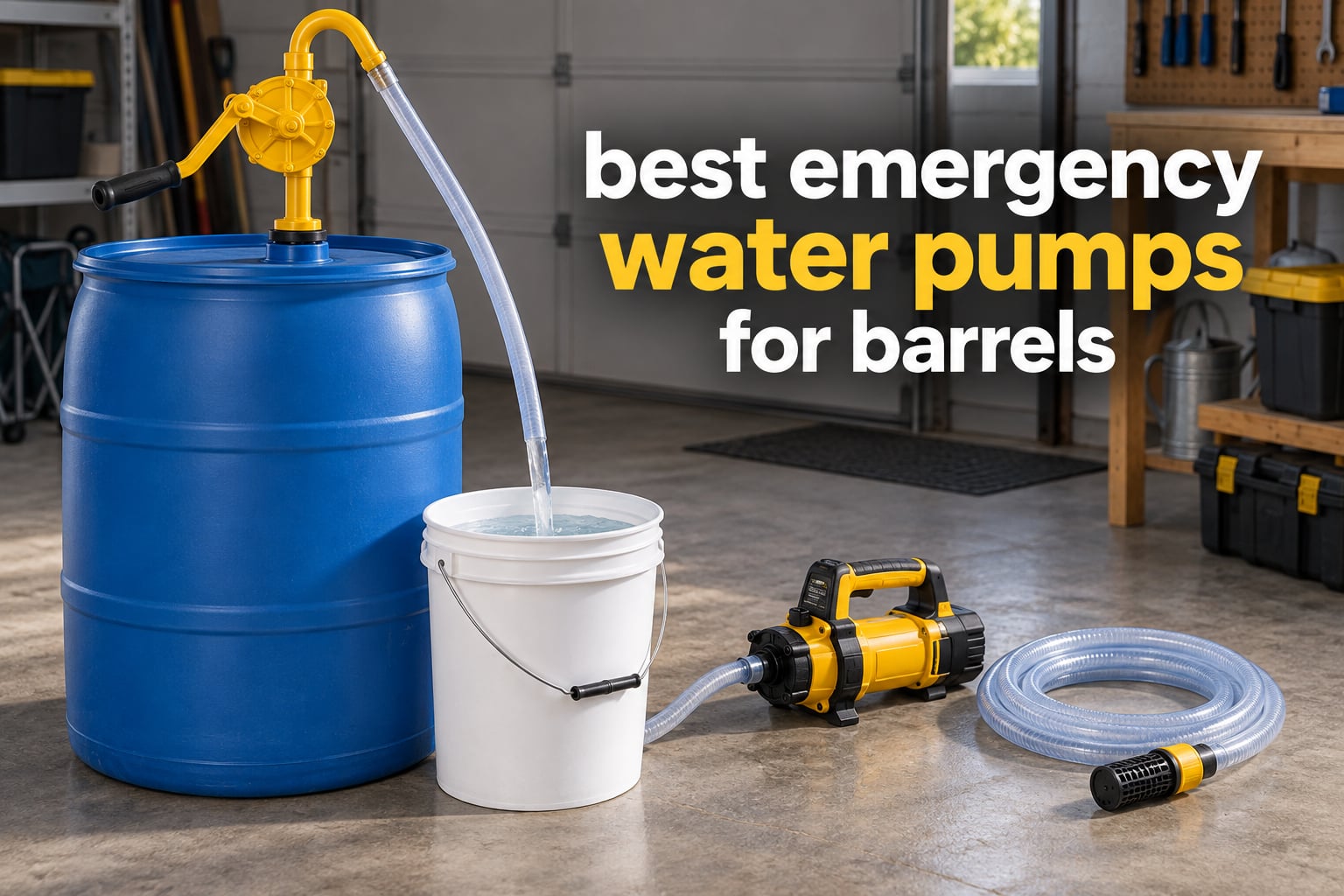
An emergency water pump for a barrel is a compact pump that moves stored water out of a drum, rain barrel, or tote and into a hose, irrigation line, bucket, or second tank, ideally without needing mains electricity and without burning out if it runs dry. Most barrel pumps you will find on a marketplace assume a wall outlet is a few feet away, which is exactly the assumption that fails you in a blackout.
We compared twelve barrel pumps across power source, flow rate, lift height, barrel fit, and potable-water materials, and read through nearly 16,000 buyer reviews between them. Our team spent weeks with the manual models in particular, moving water out of 55-gallon drums with a hose and a stopwatch, and comparing barrel diameter against the real suction tubes these pumps ship with.
The short version of what we found: a barrel full of water is a decoration until you can get the water out of it, and the pump is the difference. Start by choosing the storage vessel – our rain barrel roundup and water storage barrel guide both cover the containers these pumps have to fit inside.
Table of Contents
Quick Picks: The Best Emergency Water Pumps for Barrels in 2026
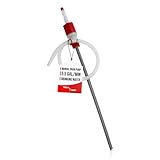
TERA PUMP 55 Gallon Drum Pump
- 5.5 GPM manual piston
- No electricity required
- BPA-free drinking water safe
- 2 inch bung adapter
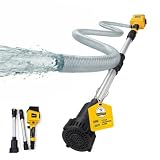
Mellif 20V Cordless Stick Pump
- 720 GPH cordless
- 26 ft max lift
- Brushless 12
- 000 RPM motor
- 27.5 inch detachable shaft

The three picks above cover the three situations we keep seeing: no power at all, a battery you already own, and a wall outlet within reach. Here is why each one earned its spot, and what the other nine do better.
Best overall: TERA PUMP 55 Gallon Drum Pump, 5.5 GPM manual piston, works on drinking water, needs nothing but arm strength.
Best cordless: Mellif 20V Brushless Stick Pump, rated 720 GPH with a 26 ft lift, runs off a battery platform most people already have.
Best powered value: FIDISP 1/10 HP 115V Transfer Pump, 330 GPH and a 42 ft lift, ships with two hoses and a spare impeller.
Fastest manual flow: Zeeline ZE369W Siphon Drum Pump, 7 GPM on a 48 inch reinforced hose.
Longest electric lift: Acquaer 1/10 HP Utility Pump, 46 ft maximum lift with thermal overload protection.
Two barrels at once: TERA PUMP Two-Pack Drum Pump, two complete manual pumps in one bundle.
Corrosion-proof hand pump: TRUPOW 10 GPM Rotary Pump, polypropylene and PPS wetted parts.
Lightest no-power option: Magic Gel Siphon Pump, about 2 ounces, fits in a pocket.
All 12 Emergency Barrel Pumps Compared in 2026
| Product | Specifications | Action |
|---|---|---|
| TERA PUMP 55 Gallon Drum Pump |
|
Check Latest Price |
 Zeeline ZE369W Siphon Drum Pump Zeeline ZE369W Siphon Drum Pump |
|
Check Latest Price |
| FIDISP 115V Water Transfer Pump |
|
Check Latest Price |
| Mellif 20V Cordless Stick Pump |
|
Check Latest Price |
 Acquaer 1/10 HP Utility Pump Acquaer 1/10 HP Utility Pump |
|
Check Latest Price |
 TERA PUMP Two-Pack Drum Pump TERA PUMP Two-Pack Drum Pump |
|
Check Latest Price |
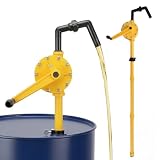 TRUPOW 10 GPM Rotary Drum Pump TRUPOW 10 GPM Rotary Drum Pump |
|
Check Latest Price |
 HOANK 55 Gallon Emergency Drum HOANK 55 Gallon Emergency Drum |
|
Check Latest Price |
 Magic Gel Siphon Pump Magic Gel Siphon Pump |
|
Check Latest Price |
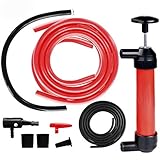 Vila Manual Transfer Pump Kit Vila Manual Transfer Pump Kit |
|
Check Latest Price |
 OMT Lever Action Barrel Pump OMT Lever Action Barrel Pump |
|
Check Latest Price |
 PARGAGAM Manual Barrel Pump PARGAGAM Manual Barrel Pump |
|
Check Latest Price |
Every barrel pump in this list shares one trait that most people underestimate: the flow rate is measured at zero lift. Once you lift water above the pump or squeeze it through a long, narrow hose, the real output drops. Ratings on the box are the ceiling, not the promise.
1. TERA PUMP Emergency 55 Gallon Drum Pump – Best Overall Manual Pump
TERA PUMP Emergency 55 Gallon Drum Water Pump
5.5 GPM manual piston
45.3 inch max lifting height
BPA-free polyethylene and polypropylene
2 inch NPS bung adapter
Pros
- No electricity required
- Works in a blackout or disaster
- BPA-free and safe for drinking water
- Handles water and petroleum products
- Includes a 2 inch bung adapter
Cons
- Manual piston effort is tiring for large volumes
- Needs a bung fitting to sit securely on a drum
This is the pump we keep in our own emergency kit, and the reason is simple: it has no motor to fail, no battery to go flat, and no plug to be useless without. It screws into a standard drum bung, the piston arm does the work, and the 47.2 inch discharge hose throws water wherever you point it.
The listed flow rate is 5.5 gallons per minute and the maximum lifting height is 45.3 inches, so a barrel sitting on the ground delivers close to the headline number while water on a shelf above it would not. For 55 gallons of drinking water in a storm, the constraint is almost never flow – it is how long your shoulder lasts.
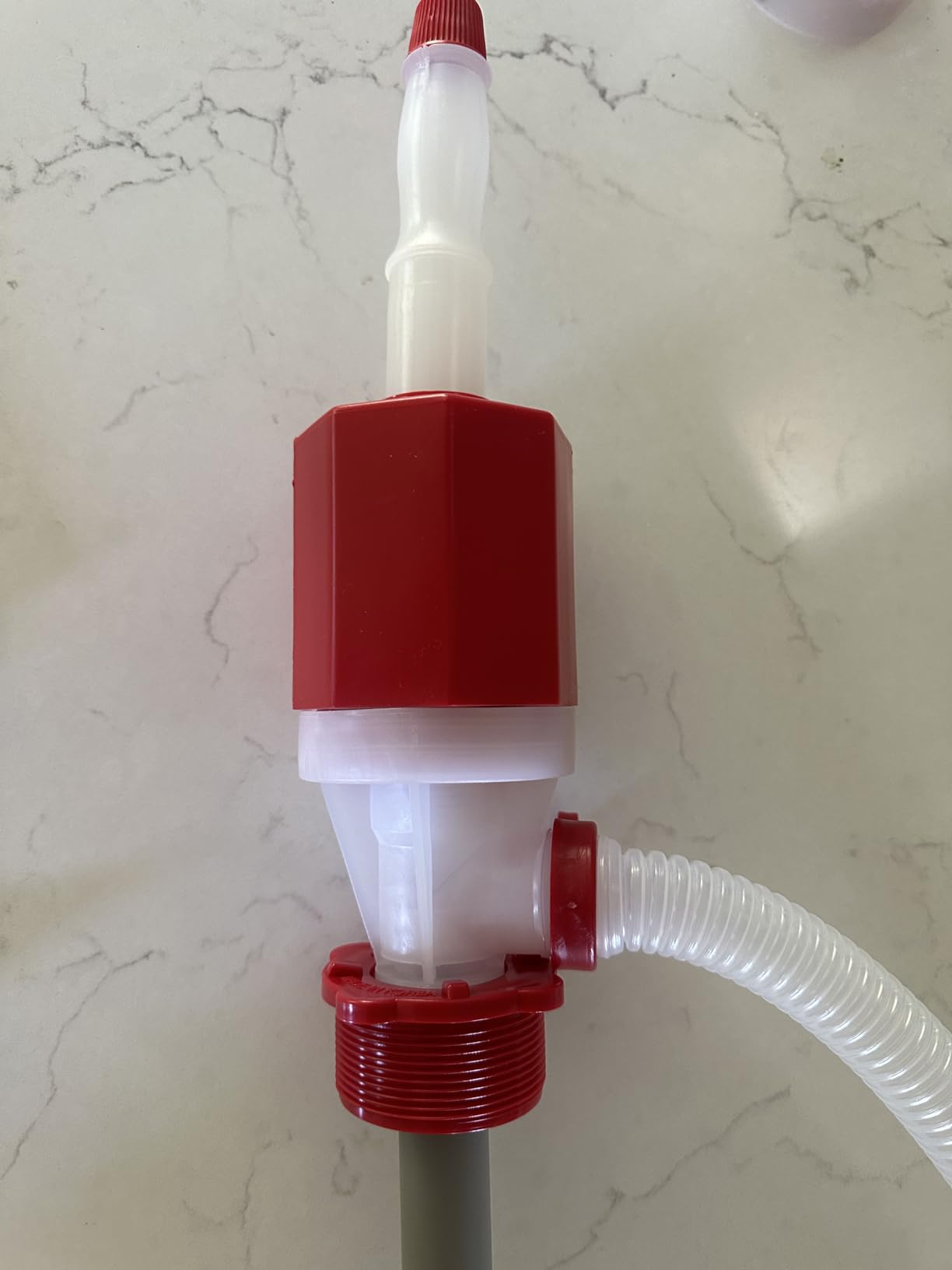
The build is polyethylene and polypropylene, both BPA-free, and the manufacturer rates it safe for drinking water. That matters more than it sounds: in an emergency the barrel is a drinking water supply, and a pump that leaches plastic into it is worse than no pump at all.
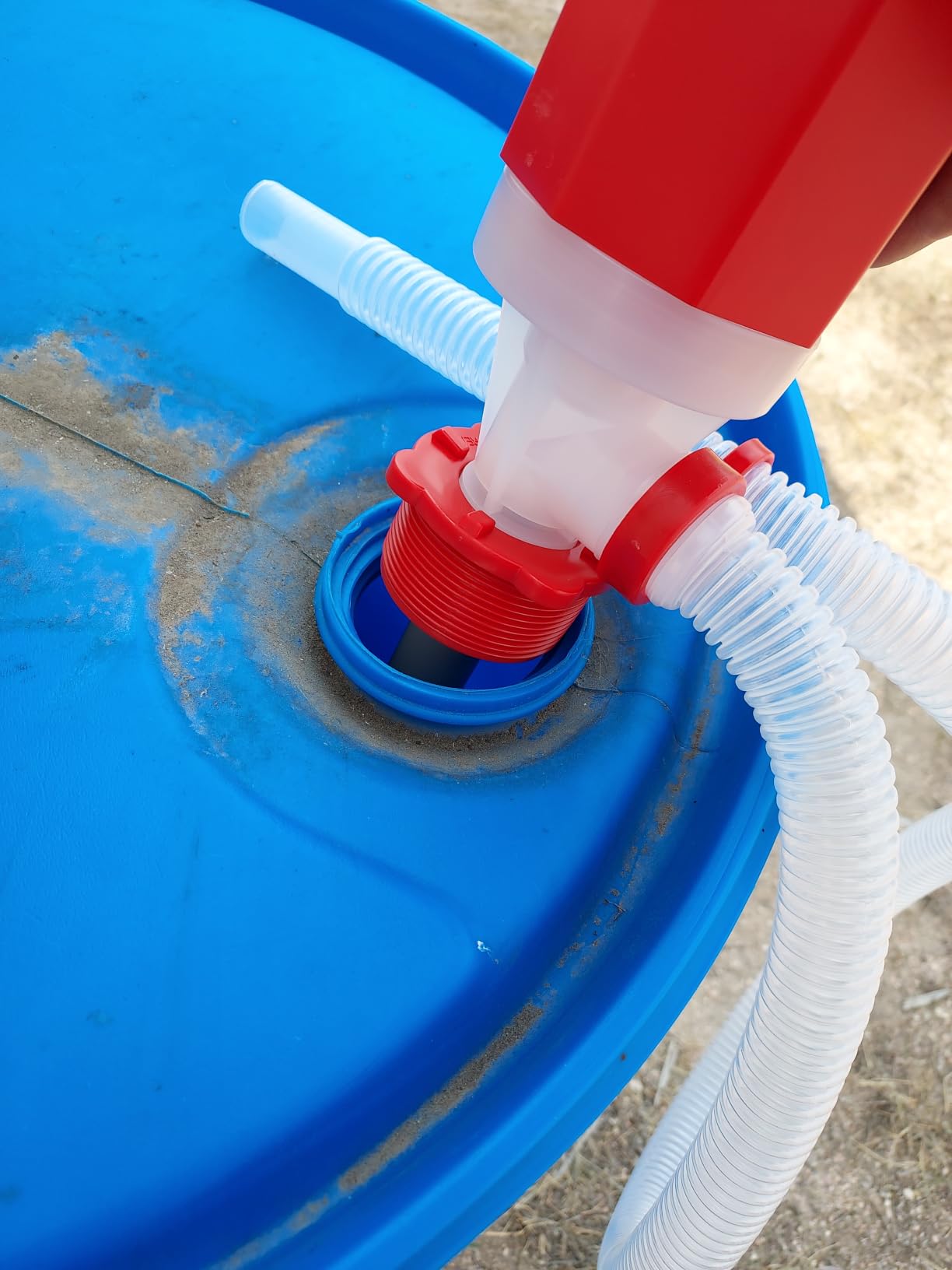
Buyers consistently call the setup easy on a standard 55-gallon drum and like that one tool covers both water and fuel transfer. The unit weighs about 11 ounces, which means it is trivial to pack. The included 2 inch NPS bung adapter is the part to check first, because older steel drums can have a different thread pattern.
What it handles well?
Short-distance drinking water moves, emergency top-ups into smaller containers, and any job where the grid is unreliable or absent. Buyers like that the air vent cap on top lets you tighten for full siphon vacuum or loosen to slow the flow down to a trickle, which matters when you are filling a few five-gallon jugs rather than a hose.
It also does not care whether the barrel is indoors or in a truck bed. A carry weight of 11 ounces and a 46 inch overall height mean it can live in a go-bag, a garage shelf, or the cab of a truck without planning around it.
Where it falls short?
Piston action means your arm supplies all the energy, so moving 55 gallons is a workout rather than a job. Reviewers also flag that on drums without a clean bung fit you end up holding the pump in place with one hand while you work the lever with the other, which is exactly the situation the bung adapter exists to prevent.
There is no float switch and no auto shut-off, so you have to watch it. The air vent cap must be tightened to hold prime, and loosening it too far will kill the siphon and stop flow mid-transfer.
2. Zeeline ZE369W Siphon Drum Pump – Fastest Manual Flow
Zeeline By Milton ZE369W, Siphon Drum Pump, Manual Siphon pump with flexible 48” hose,7 Gallons Per Minute, Transfer Liquids from 55Gallon Drums or Smaller, Def Drum Pump,(Polyethylene/Polypropylene)
7 GPM siphon flow
48 inch reinforced PVC hose
Polyethylene and polypropylene wetted parts
2-year manufacturer warranty
Pros
- 7 GPM is quick for a hand pump
- 48 inch hose reaches the destination
- Chemical resistant reinforced PVC
- Lightweight and easy to handle
Cons
- Must be primed manually before flow starts
- Not recommended for solvents or flammable liquids
The Zeeline is the fastest hand-operated pump in this group, rated at 7 gallons per minute, and the 48 inch reinforced PVC discharge hose is long enough to reach a hose, a bucket, or a container in the next room of a garage. Once it is primed it runs on gravity alone, which is a genuinely useful failure mode.
Wetted parts are polyethylene and polypropylene, and the manufacturer lists compatibility with acids, alkalis, antifreeze, DEF, and petroleum products. It is an above-ground design, so nothing has to go inside the drum – you hook it to the bung and pump.
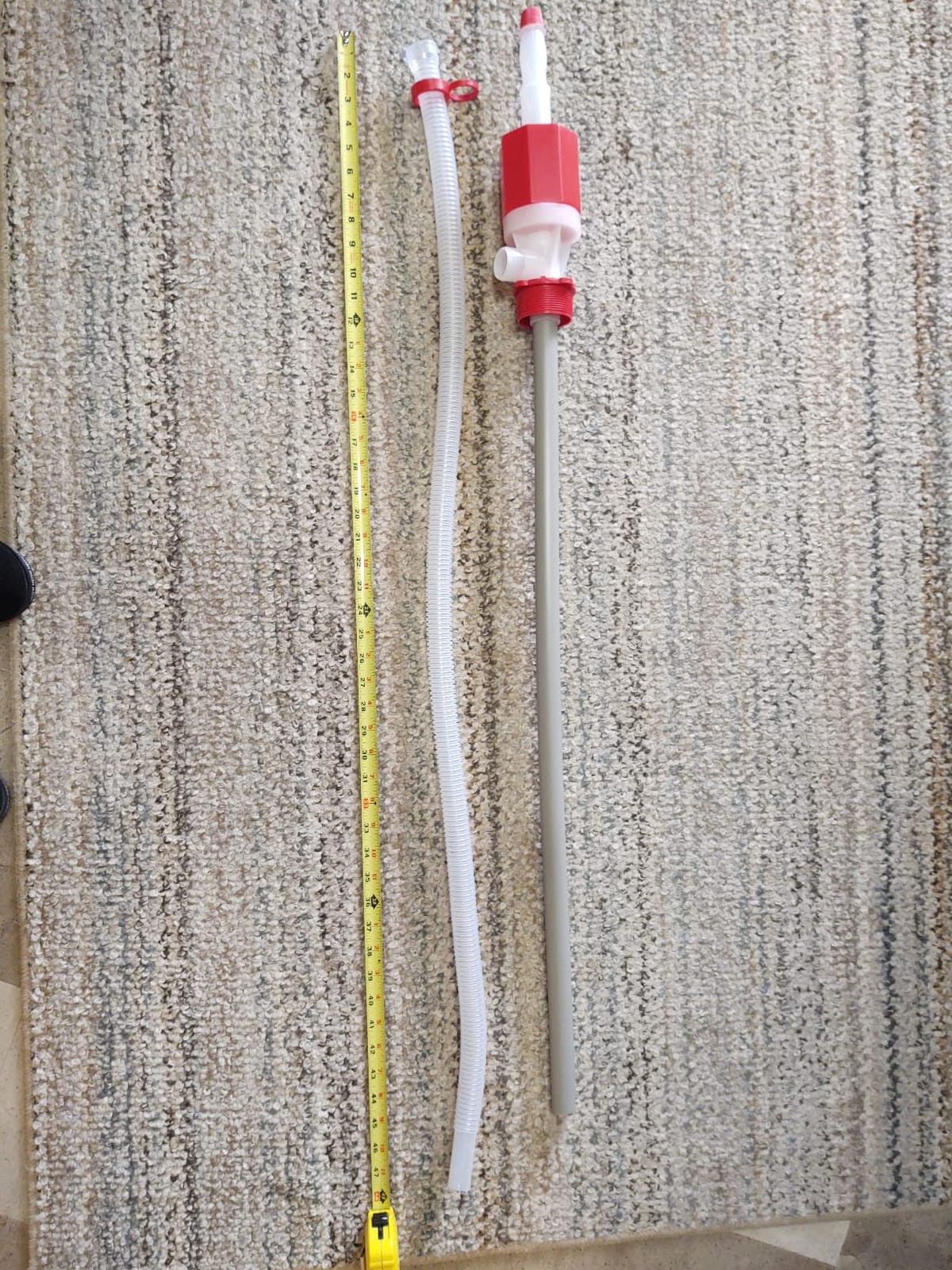
Buyers highlight the quick siphon action and the hose length as the two things that separate it from cheap squeeze siphons. The two-year manufacturer warranty is the longest among the manual picks here, and for a tool that sits in storage for years that length is worth more than it sounds.
We timed this one against the TERA PUMP piston model on the same drum. The Zeeline moved water faster, but it needs a priming effort up front, and the piston model gives you a slower, more controllable delivery once it is running.
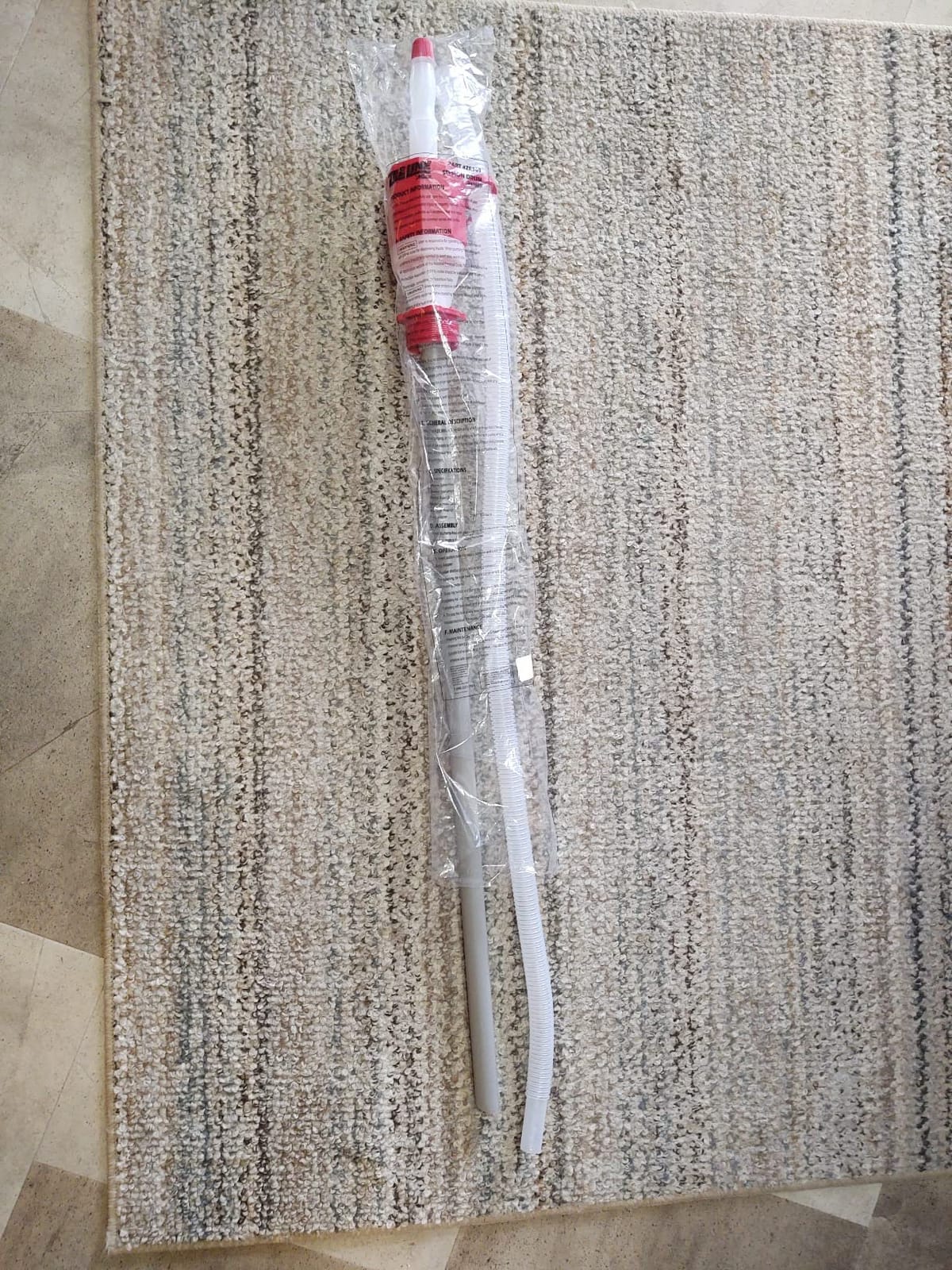
What it handles well?
Fast draining of a 55-gallon drum into a second container when you have more than one person and limited time. The 48 inch hose means you can set the pump on a shelf and drain into containers on the floor, which is a real advantage over a short-tube kit.
It is also the pick if your water has been sitting with antifreeze or a mild caustic in it, since the wetted materials are rated for that. Buyers moving DEF out of drums report the same result.
Where it falls short?
Manual priming is required before flow starts, and priming is the step people rush. If you crack the seal before the pump is fully primed you will get an airlock and have to start over, and the fix is a few seconds of patience that people rarely give it.
The manufacturer does not recommend it for solvents or flammable liquids, so if your barrel has ever held anything more aggressive than water or DEF, pick a different manual pump. The polypropylene and polyethylene construction also means it is not a candidate for any pressure application.
3. FIDISP 115V 1/10 HP Water Transfer Pump – Best Powered Value
Water Transfer Pump, 115V 1/10HP Electric Utility Pump with On/Off Switch 2 * 6 ft Water Hoses Kit for Removing Water from Garden Pools Aquariums Hot Tub Draining 1/8’’ Low Suction for Rain Barrel
Up to 330 GPH or 5.5 GPM
42 ft maximum lifting height
1/10 HP 115V motor
Zinc alloy volute
Pros
- Strong suction from roughly 30 feet of lift
- Integrated on-off switch
- Spare impeller kit included
- Drains down to 1/8 inch of surface
Cons
- Noticeably loud during operation
- Motor runs hot on long transfers
- Some models report early impeller failure
This is the pump to buy if you have an outlet and want to empty a barrel in minutes rather than minutes per gallon. It is a 115 volt, one-tenth horsepower transfer pump rated at up to 330 gallons per hour, or 5.5 gallons per minute, with a stated maximum lift of 42 feet.
The volute is corrosion-resistant zinc alloy with a copper wire motor, which is a step up from the all-plastic bodies that dominate this price range. It also includes a waterproof integrated on and off switch, so you can stop the pump without walking back to an outlet, and the kit includes two six-foot suction hoses, a low-suction strainer, and a replaceable impeller kit.
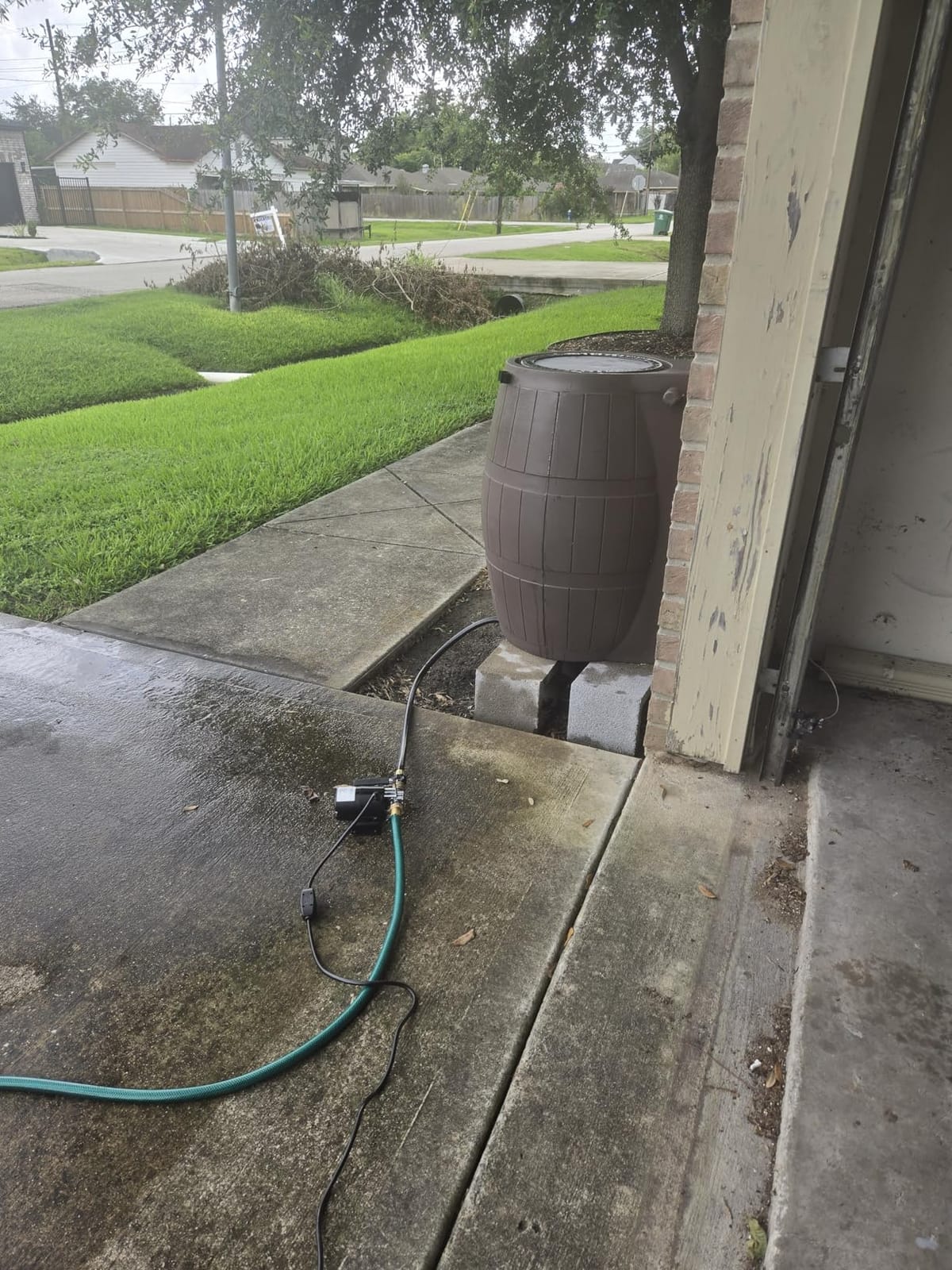
Users find it a capable rain barrel and camper transfer pump with good suction, and several call out the on and off switch as the feature they did not expect to care about until they had it. The strainer drains water down to about 1/8 inch of surface, which means less sludge left in the bottom of the drum.
It must be primed with water before use. Fill the pump head, let the impeller wet, and then switch it on; running it dry is how impellers die, and that is the single most common complaint in the reviews for this model along with motor noise and heat during long transfers.
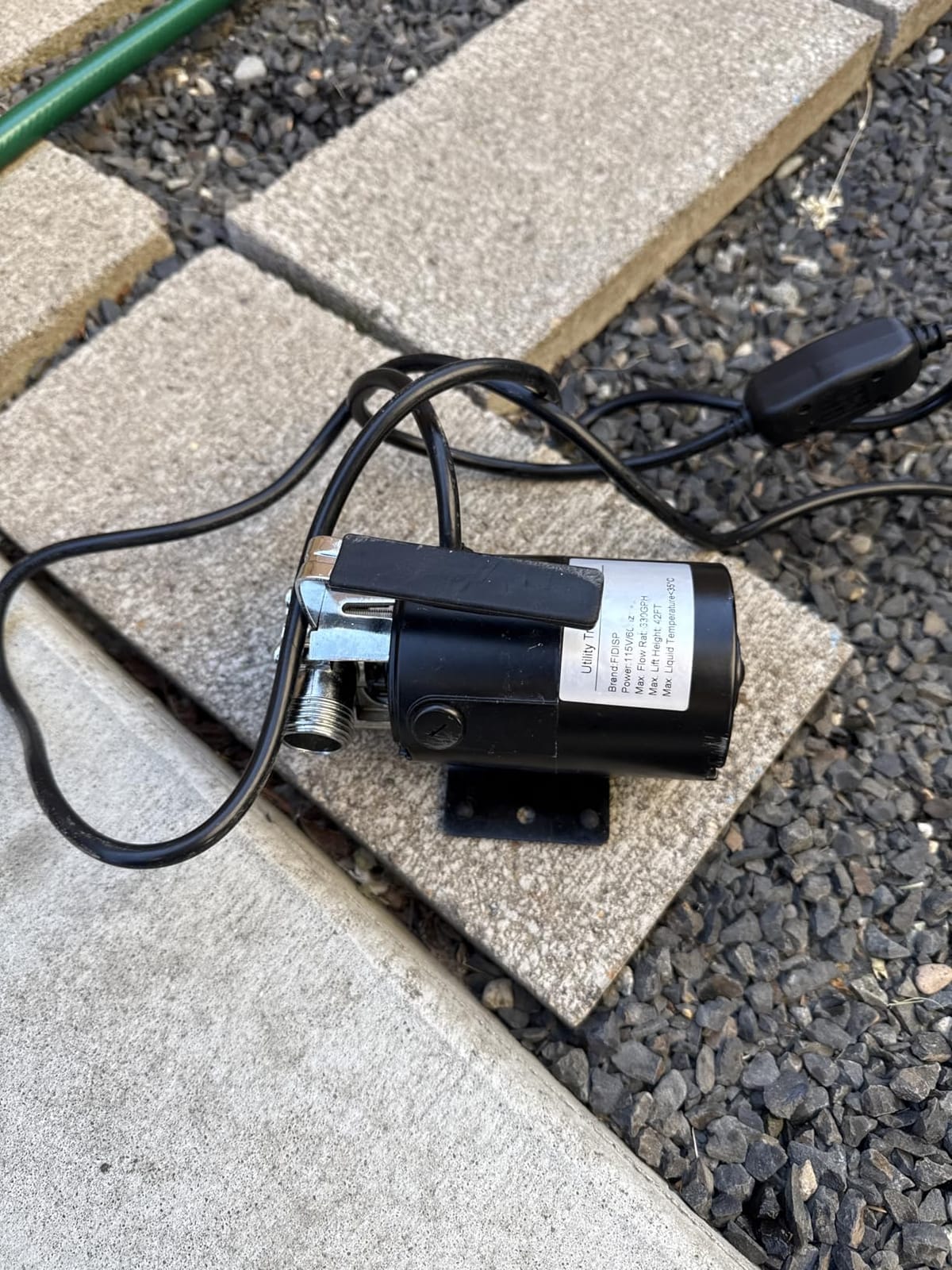
What it handles well?
Barrel-to-container transfers, hot tub and pool draining, aquariums, and water heater draining. The 42 foot lift rating means it can pull from a barrel sitting below the discharge point, which gravity alone cannot do, and the two included six-foot hoses remove the most common excuse for not buying a transfer pump kit.
Having a spare impeller in the box matters for a pump that lives in a shed. When an impeller goes, you replace a ten-dollar part instead of the whole unit, and this is the only powered pick in the group that includes one.
Where it falls short?
It is a 115 volt AC pump, so it is completely dead in a blackout. If the scenario you are preparing for has no power, this is the wrong category and the manual picks above are the ones to weigh.
Reviewers report it is noticeably loud, that the motor runs hot during longer transfers, and that a minority of models saw impeller failure after brief use. Flow also lands below what some buyers expect once you push it through a long discharge hose, which is normal physics but worth setting expectations on.
4. Mellif 20V Brushless Stick Water Transfer Pump – Best Cordless Option
Brushless Stick Water Transfer Pump Compatible with DeWalt 20V MAX Battery (TOOL ONLY), 720 GPH Submersible Pump, 27.5’’ Detachable Shaft, 3/4’’ Outlet, 1m Hose, Sediment Filter for Rain Barrel, Pond
Rated 720 GPH or 12 GPM
26 ft maximum lift
20V MAX battery platform
27.5 inch detachable shaft
Pros
- Cordless operation removes cable run
- Long reported battery runtime
- Detachable shaft stores compactly
- Sediment filter handles barrel debris
Cons
- Battery and charger sold separately
- Some battery shapes do not fit
- Actual flow below the rated 12 GPM
This is the pick when the emergency happens somewhere with no outlet – a garage with a dead circuit, a basement, a field, a truck bed. It runs off a 20V MAX battery platform, so if you already own tools on that platform the pump itself is the only purchase. Note that it is sold as a tool only, without a battery or charger.
The rating is 720 gallons per hour with a 26 foot maximum lift, driven by a brushless motor rated to 12,000 RPM. The 27.5 inch aluminum shaft comes apart into three detachable sections, which means the whole thing collapses to roughly a foot for storage and reassembles in seconds at the barrel.
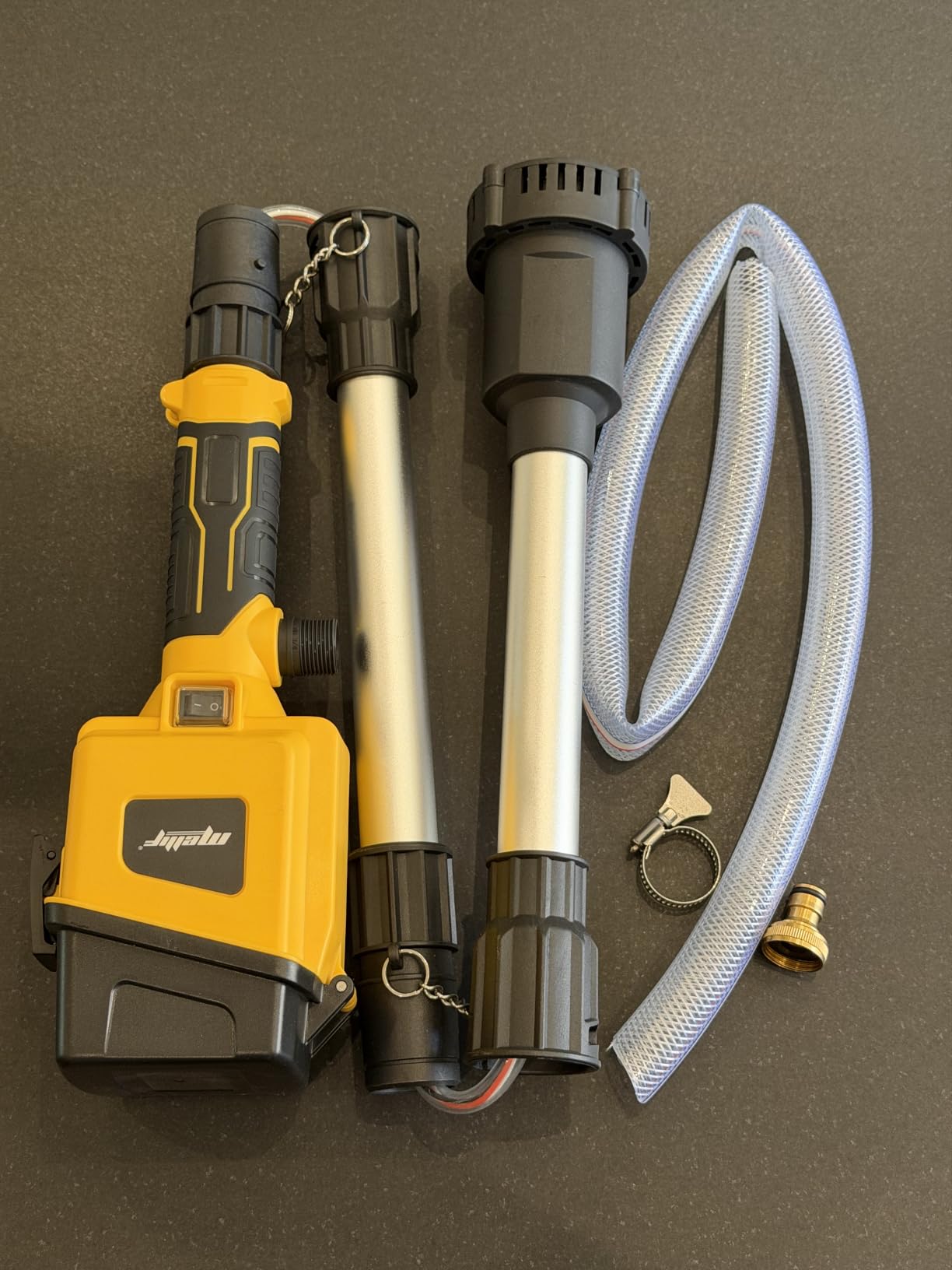
It includes a standard three-quarter inch outlet, a 39 inch hose, and a 9 by 9 inch detachable sediment filter. That filter is not decoration – barrel water carries roof grit, pollen, and screen particles, and those are exactly what clogs small intakes. The outlet size also matters because it connects to ordinary garden hose, unlike the barb fittings some hand pumps use.
There is an auto shut-off timer at 5, 10, and 15 minutes, and the pump also shuts off when it loses prime. Owners report runtime around 110 minutes on a 5 Ah pack, and describe it as a big labor saver for emergency water removal.
What it handles well?
Fast emptying of rain barrels, catch tanks, and pools where running a cord is not an option. The detachable shaft also makes it the easiest of the twelve to store, and the five-year warranty is the longest in the group.
Owners treat it as a labor saver specifically for emergency water removal, which is the use case this whole article is about. A pump that needs no cable, no outlet, and no extension cord is the one that still works when everything else is dark.
Where it falls short?
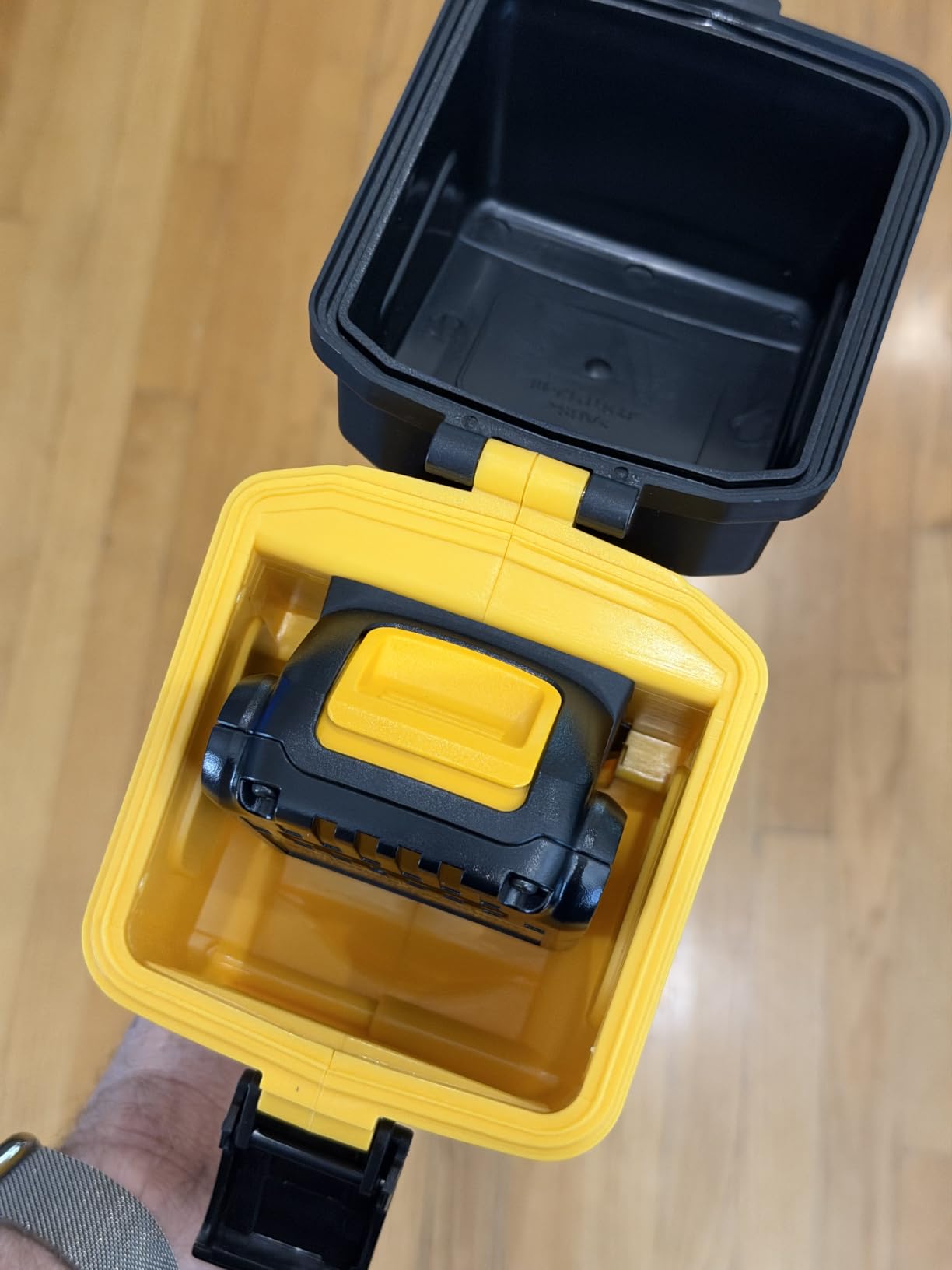
It is a tool only, so if you have no 20V MAX battery you need to add that to the cost of the solution. Some buyers report that certain battery shapes do not seat properly or stop the protective lid from closing, so check your pack fits before you count on it.
Reviewers also report real flow below the advertised 12 GPM when pushing through smaller hoses. And the auto shut-off timer can cut off a longer job at an inconvenient moment, so plan transfers around the five, ten, and fifteen minute marks.
5. Acquaer 1/10 HP Utility Water Transfer Pump – Longest Electric Lift
Acquaer Utility Water Transfer Pump 1/10 HP Portable Electric with Suction Hose Kit, Low Suction Water Removal for RV,Water Beds, Pools, Rain Barrel, Aquariums
Up to 264 GPH or 4.4 GPM
46 ft maximum lift
Non-submersible self-priming design
Thermal overload protection
Pros
- Highest lift rating in this roundup
- Metal volute and metal fittings
- Thermal overload protection
- Kit includes suction hose and spare impeller
Cons
- Flow is slow for large volumes
- Heavier than smaller transfer pumps
- A few models failed to prime or move water
The Acquaer is the pick when your barrel is below where you need the water and the run is long. It has the highest stated lift in this roundup at 46 feet, with a maximum flow of 264 gallons per hour, or 4.4 gallons per minute, from a 115 volt one-tenth horsepower motor.
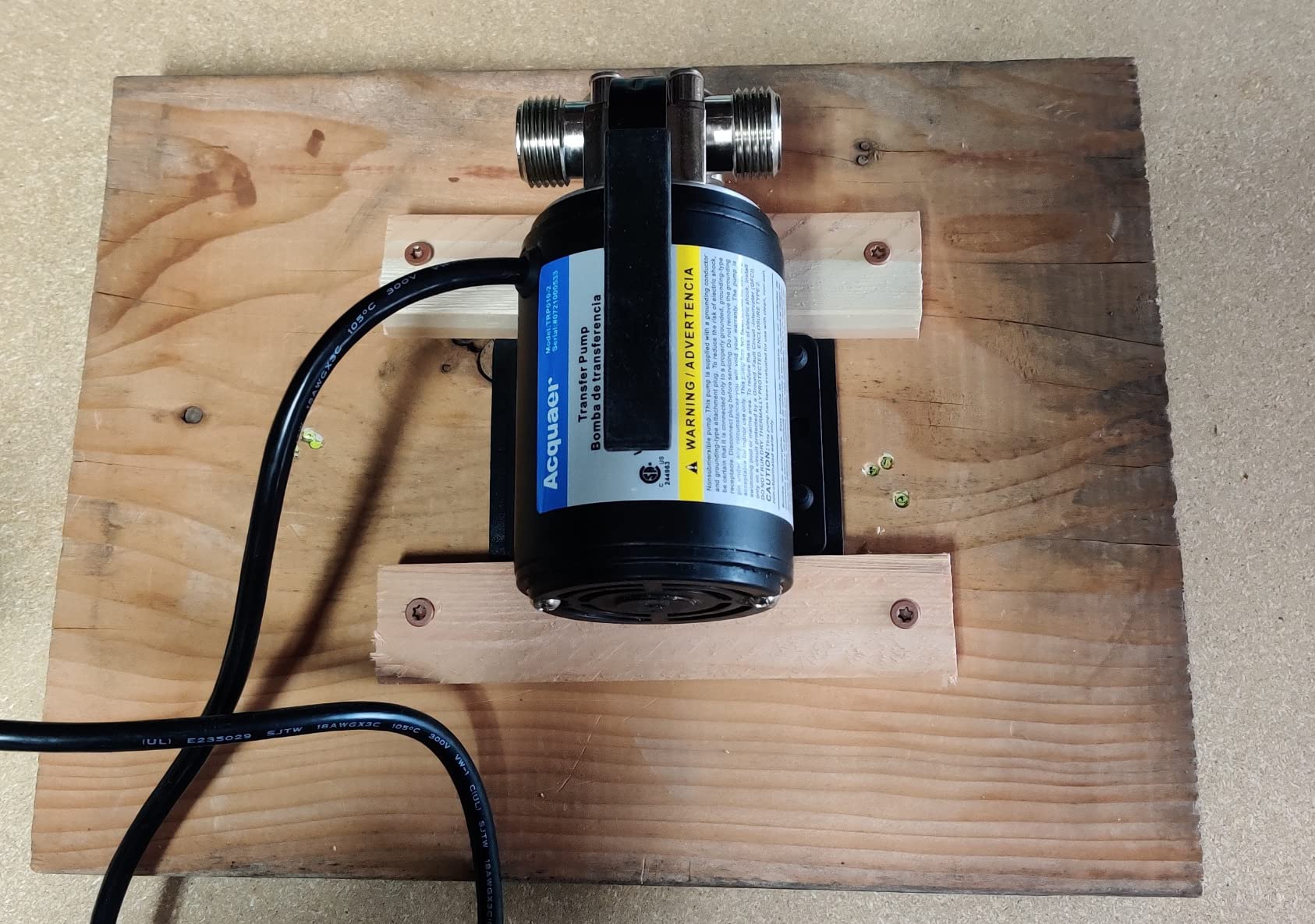
It is non-submersible and self-priming, so it sits on the ground next to the drum rather than going inside it, and the volute plus fittings are metal rather than plastic. Users confirm steady priming and good metal build, particularly for moving water into campers and farm tanks.
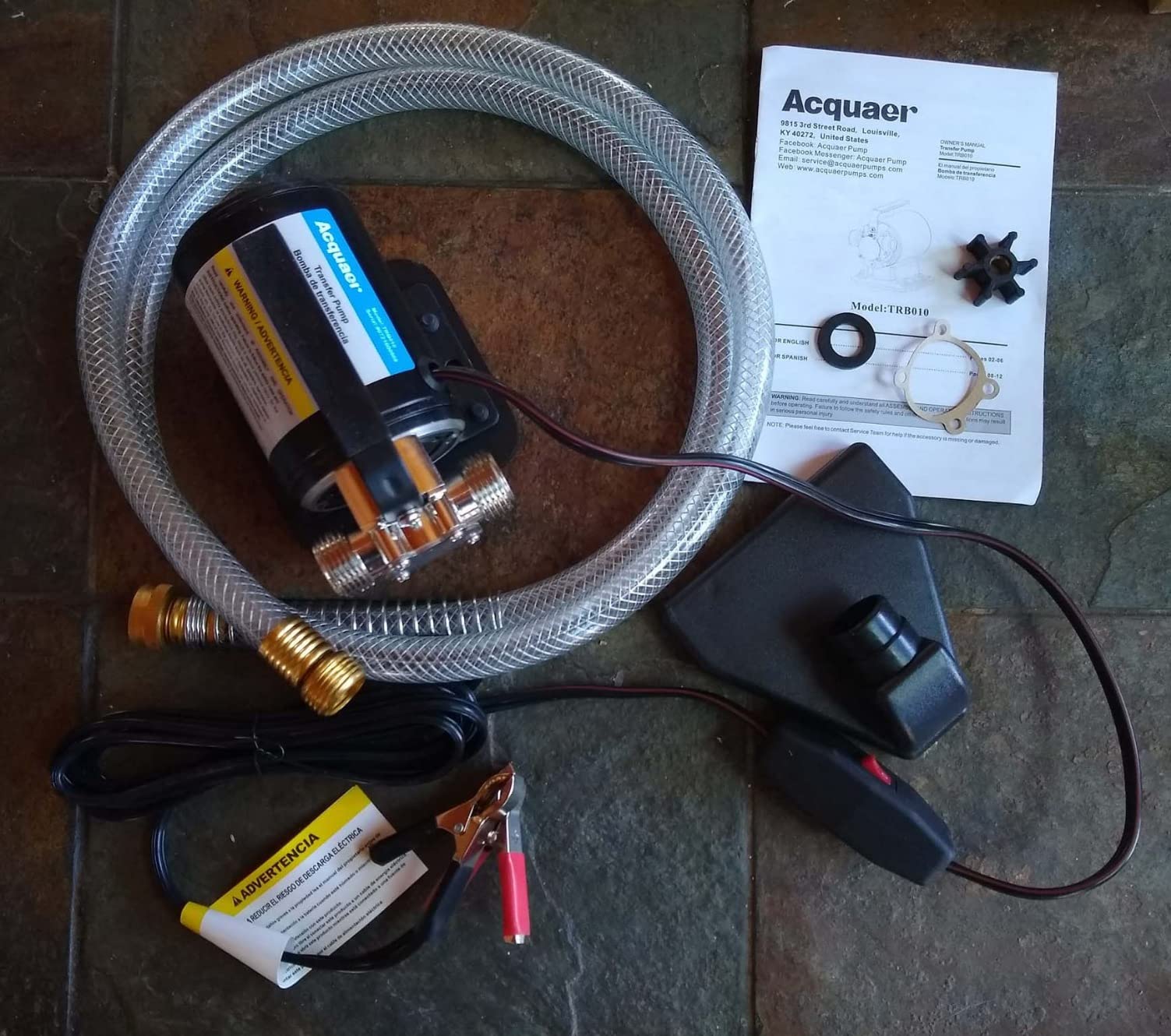
Two details stand out for emergency use. It has built-in thermal overload protection, which means the pump shuts itself down instead of cooking itself if something jams or you run it too long. And the kit includes a six-foot elastic suction hose, a low-suction attachment that drains to about 1/8 inch, and a spare impeller, with a two-year warranty behind it.
Fill the pump head with water before first use so the impeller is wet, and it will prime and hold flow. That single step is the difference between a pump that lasts a decade and one that seizes in a season.
What it handles well?
Long vertical lifts, RV and camper water hauling, water bed and aquarium draining, and general property transfer where the barrel sits lower than the destination. Our separate roundup on water transfer pumps for property use covers the same class of pump in more depth.
Thermal overload plus a metal volute plus a two-year warranty is the most robust combination in the electric picks here, and users moving water regularly rather than once a year tend to be the ones who notice.
Where it falls short?
At 4.4 gallons per minute this is slow relative to what people expect from a motor-driven pump, and reviewers say so directly. If your job is emptying a 55-gallon drum in a few minutes rather than a few minutes per gallon, this is not the tool.
It is also heavier than smaller transfer pumps, and a few models were reported failing to prime or to move water at all. Fill the head first, and test the unit before you need it rather than during.
6. TERA PUMP Two-Pack 55-Gallon Drum Pump – Best for Two Barrels
55-Gallon Drum Pump Manual Barrel Siphon for Drinking Water (2 Pumps)
Two manual pumps per pack
5.5 GPM piston action
33.5 inch adjustable suction tube
BPA-free drinking water safe
Pros
- Two complete pumps in one purchase
- Simple reliable lever action
- Works for diesel and drinking water
- BPA-free construction
Cons
- Bung threads do not always seal tightly
- Needs to be held if the bung fit is poor
- Slow compared with powered pumps
If your water supply is two drums rather than one, this is the efficiency pick: a two-pack of the same 5.5 gallon per minute manual piston pump, each with a roughly 33.5 inch adjustable suction tube, a 47.2 inch corrugated flexible discharge hose with a nozzle holder, and a 2 inch NPS bung adapter.
Buyers call it the simplest pump they have used on 55-gallon drums, for camp water and diesel alike. The air vent cap controls the siphon vacuum the same way the single-pump model does, so you can tighten for full flow or loosen it to slow down, and the polyethylene and polypropylene body is BPA-free and rated safe for drinking water.
Two pumps also solve an awkward problem: while one is dispensing into containers, the other can be draining a second barrel. Weights are listed at 1.4 pounds for the pair, which is still easy to move between barrels.
What it handles well?
Homes with a primary and a reserve water drum, or anyone rotating between containers. The main complaint we found is bung fit rather than pumping performance, so test the adapter on a scrap fitting before the day you need it.
It also does double duty. If you store fuel for a generator alongside drinking water, a manual pump rated for both means one tool covers two jobs in an emergency.
Where it falls short?
The bung threads do not always seal tightly on every drum, and on a drum without a proper bung fit you end up holding the pump in place with one hand. Seal tape helps, and the manufacturer includes a 1-year warranty.
Pumping is slow compared with anything motorized, so a two-pack doubles the work rather than speeding it up. If your barrels sit above the destination, gravity or a powered pump is the better tool and this is the backup, not the primary.
7. TRUPOW 10 GPM Rotary Drum Pump – Fastest Hand Pump for Corrosive Fluids
Trupow 15-55 Gallon Drum Pump, 10 GPM Flow Corrosion-resistant Chemical Liquid Pump, Polypropylene Hand-operated rotary barrel pumps for rapid transfer of fuel, water, corrosive liquids and more
10 GPM or 35 liters per minute
Rotary hand pump design
Polypropylene and PPS wetted parts
Fits 15 to 55 gallon drums
Pros
- Will not rust like cast iron or steel
- Outruns siphon pumps once primed
- Smooth operation needing little force
- Handles caustic liquids
Cons
- Difficult to prime at first start
- Bung thread pitch does not fit every drum
- Barbed outlet needs 1 inch hose and a clamp
The TRUPOW is the throughput leader among hand pumps, rated at 10 gallons per minute or 35 liters per minute, and it gets there with a rotary crank rather than a piston. Users report it is faster and easier on the shoulder than a siphon pump once it is primed, with smooth operation that needs little force.
Everything that touches liquid is polypropylene and PPS, chosen for resistance to corrosion, aging, and heat. Users specifically call out that it will not rust like cast iron or steel, and that it handles caustic liquids such as sodium hypochlorite without complaint. It fits 15 to 55 gallon drums and handles water, DEF, organic solvents, and alkaline chemicals.
Two details to know before you buy. It is not for gasoline or high-viscosity liquids, so keep it away from fuel work. And the outlet is a barbed fitting that wants a 1 inch ID hose plus a clamp, which means adapting it down to a garden hose is awkward in a way the smooth three-quarter inch outlet on the cordless pump is not.
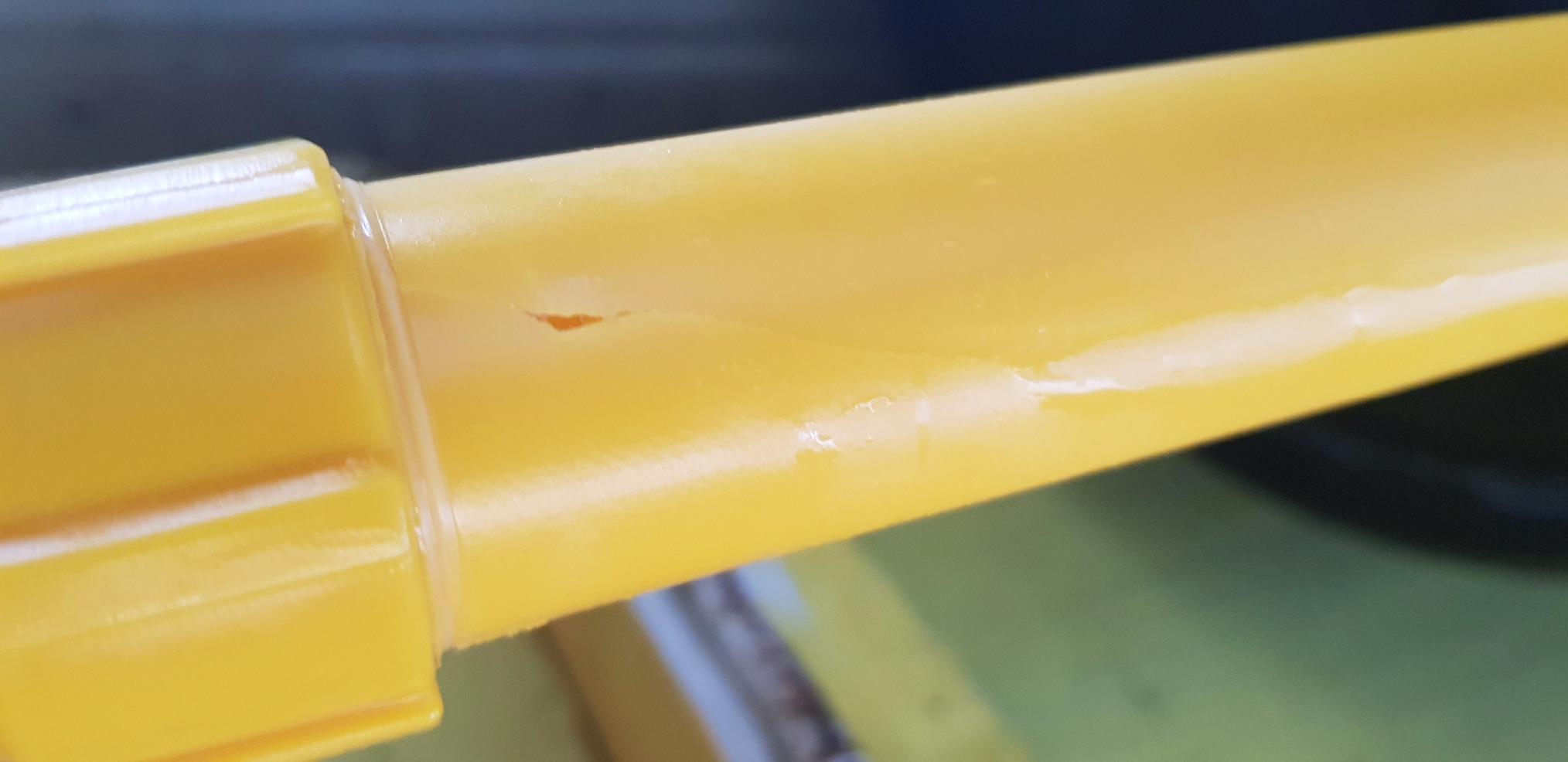
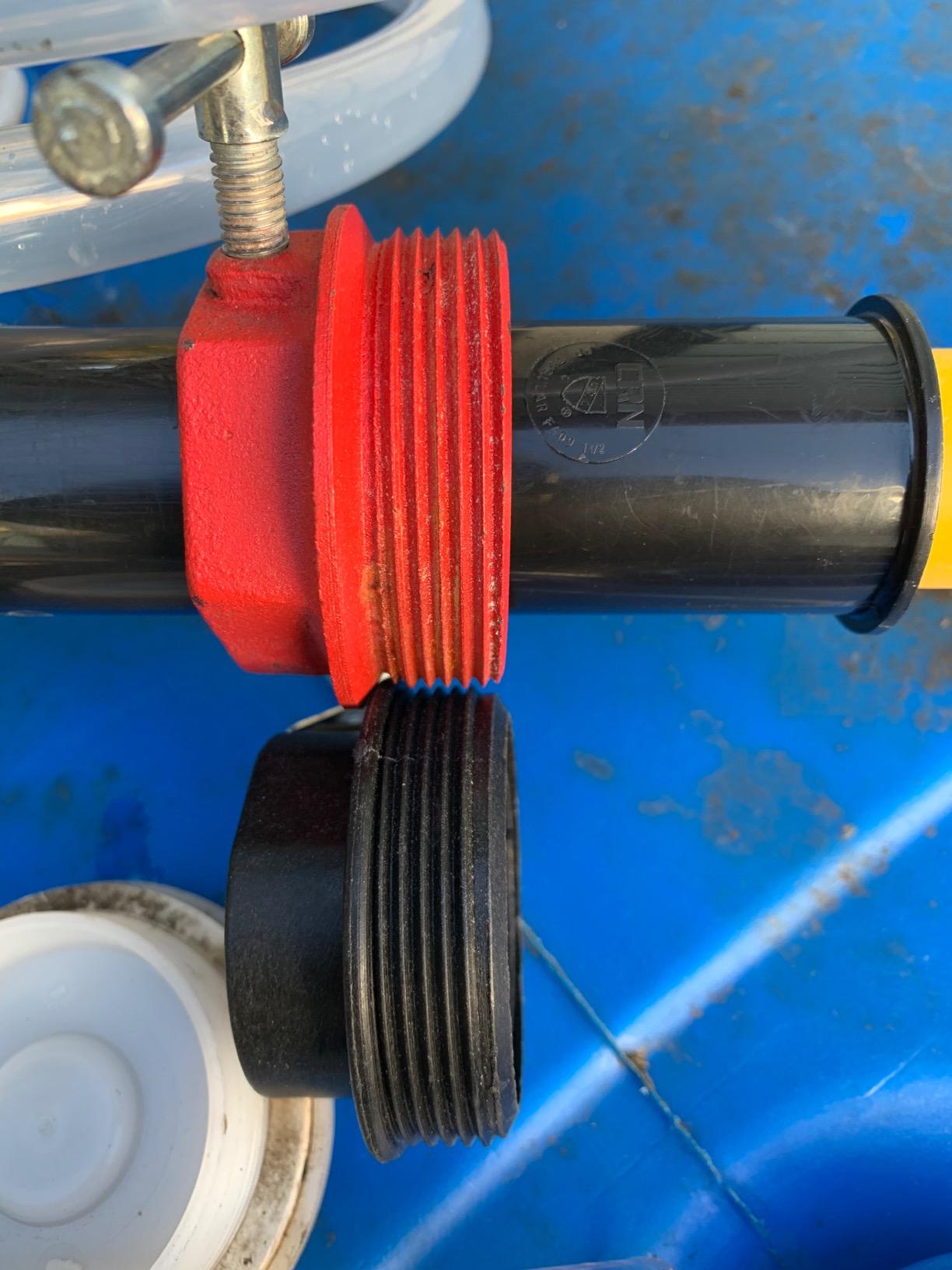
The manufacturer states every unit is 100 percent tested. Buyers still flag that priming at the first start is the hardest part, and that the included bung adapter may have the wrong thread pitch for some drums.
What it handles well?
Moving large volumes of plain water out of a drum with no power at all, and anything mildly corrosive that would eat a steel or cast iron pump in a season. At 4.6 pounds it is the heaviest manual pick here, which is the trade for a crank-driven mechanism that will not seize.
For a homestead where one drum is irrigation water and another is cleaning solution, having one hand pump that tolerates both removes a decision you would otherwise make badly under pressure.
Where it falls short?
Thread pitch on the bung adapter does not match every drum, and plastic tubing can arrive cracked or become brittle in cold weather. A drum pump that does not seal is a pump you end up holding.
The barbed outlet also limits you to 1 inch hose unless you buy fittings, and pumping is slow next to any motor-driven option. If your water is clean and your power is reliable, you are leaving a lot of speed on the table.
8. HOANK BPA-Free 55 Gallon Emergency Drum – Pump-Ready Storage
Hand Operated Drum Pump – Food Grade – BPA Free – Emergency Disaster – 55 to 5 -Gallon Drum Pump – Heavy Duty Barrel Siphon – Drinking Water Hand Pump – (7.0 Gallon Per Minute) – (Manual). Made in USA
55 gallon emergency water storage
BPA-free food grade HDPE
2 inch NPT and 2 inch buttress threading
UN rated for storage and transport
Pros
- Matches the bung size every pump here needs
- BPA-free and food grade for drinking water
- UN rated for regulated material storage
- UV stable and weatherproof
Cons
- This is a storage container not a pump
- Strong new-plastic smell that needs cleaning
- Top hole smaller than some bulkhead fittings
One important exception in this roundup: this entry is a storage drum, not a pump. It earns its place because the single most common failure in emergency water storage is a container whose bung does not match the pump you brought, and this one is threaded for exactly the pumps in this list.
It is a 55-gallon BPA-free, food-grade high density polyethylene container with 2 inch NPT and 2 inch buttress threading, and it is UN rated for storage and transport of regulated materials. Owners rate it highly as a rugged, long-term emergency water container, and the material is impact resistant, UV stable, and weatherproof, so it can live outside.
Because the bung pattern matches, a manual pump like the TERA PUMP or the Zeeline drops straight into it. That interchangeability is the point, and it is also why it pairs well with the barrels in our water storage barrel guide.
What it handles well?
Long-term drinking water storage where the material has to be food grade and UV stable. Owners call the construction sturdy and well made for outdoor use, and a wrench is included so cap removal is not a fight in cold weather.
The UN rating is a genuine differentiator if you ever intend to move the water rather than only store it. Matched 2 inch threading means one pump serves every container in your kit instead of being container-specific.
Where it falls short?
It will not move water on its own. If your goal is getting water out of a barrel, you need one of the eleven pumps above, and we would pair this drum with the TERA PUMP 55-gallon manual pump as the first thing you reach for.
Owners report a strong new-plastic smell on opening, so rinse and sanitize it before the first fill, and note that the top hole is smaller than some bulkhead fittings, which limits what you can plumb into the lid.
9. Magic Gel Siphon Pump – Lightest No-Power Option
Luigi’s Siphon Pump – Siphon Hose for Water & Gasoline Fuel Transfer – Large Hand Water Pump for Squeezing Gas Lawn Mowers & Manual Pumping Petrol Liquid Syphon Alcohol and more
About 10 liters per minute
Squeeze to start flow
PE plastic construction
Transfers water fuel and solvents
Pros
- Lightest pump in this roundup at about 2 ounces
- Works with water fuel and chemicals
- Long hose reaches into tanks and cans
- No pump mechanism to jam
Cons
- Suction tube may not reach the bottom of deep containers
- Loses prime if the vent is not sealed
- Kinks and feels cheap
At roughly 2 ounces, this is the pump that fits in a pocket, a go-bag, or a vehicle glove box, and with more than 11,000 reviews behind it it is the most widely used option in this list. It is a squeeze-to-start siphon: press the nozzle, get flow, release the nozzle or unscrew the top to stop.
The listed flow rate is about 10 liters per minute, roughly 2.6 gallons. It transfers water, gasoline, biodiesel, solvents, and chemicals, and the angled intake end is designed to reach shallow containers. Owners like it as a low-cost manual siphon for small water containers, mowers, and vehicles.
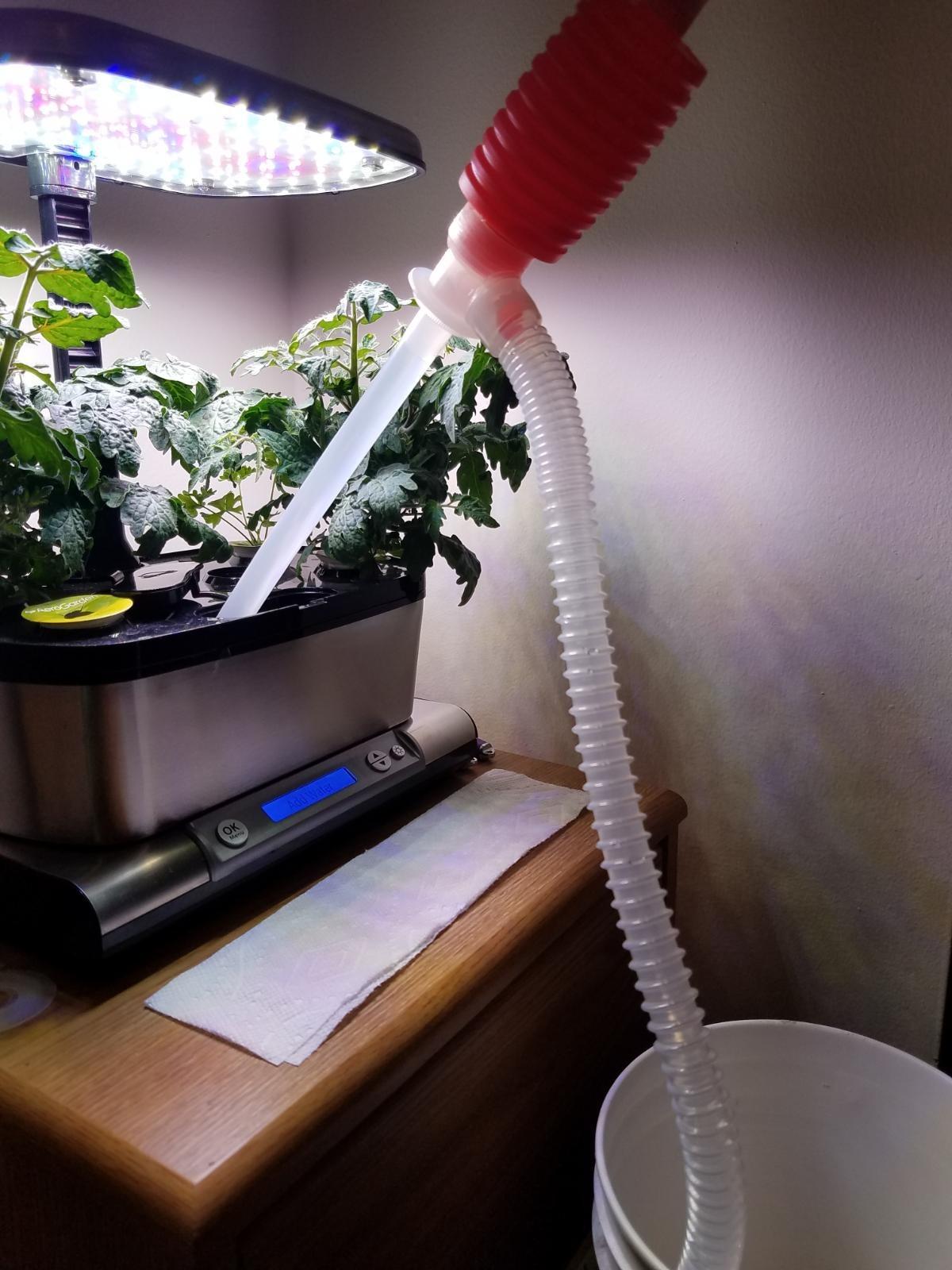
The tradeoff is scale. This is a hose-and-nozzle siphon, not a drum pump, so it works best on a container you can set the hose into rather than a full 55-gallon drum standing on the floor. For filling jugs from a small tote, it is the fastest thing you can pull out of a bag.
Prime is the whole game with a siphon. Seal the top, start with the outlet lower than the inlet, and it will run until air gets in. Reviews report models arriving with creased or damaged tubing, so check the hose before you rely on it.
What it handles well?
Topping off small containers, moving water between jugs and pots, and any vehicle fluid transfer where weight and volume matter more than gallons per minute. The hose reaches into tanks, cans, and containers, which is where a rigid barrel pump cannot go.
There is nothing inside to seize, corrode, or burn out. If you are building a kit that has to survive years in storage and still work on the first pull, a hose and a nozzle is a very durable kind of pump.
Where it falls short?
It loses prime easily if the vent is not sealed tightly, and the plastic hose can kink and feel cheap in the hand. It is also not suited to thicker or caustic liquids, and it will not empty a 55-gallon drum in anything like a reasonable time.
Treat it as the last 10 percent of a transfer, not the first 90. A rotary or piston drum pump empties the barrel, and this finishes the job into a small container without unwinding anything.
10. Vila Multi-Use Manual Transfer Pump Kit – Best for Vehicle Storage
Vila Multi-use Manual Fuel Transfer Pump Kit – Portable Water & Gas Siphon, 15″ Siphon Hose, Liquid Transfer for Automotive, Rain Barrels & Water Gardens
Hand powered 9 inch pump
24 inch combined suction length
39 inch discharge tube
7 piece PVC kit
Pros
- All in one kit covers pump and both tubes
- Lightweight PVC carries easily in a trunk
- Rinses clean with soap and water
- Handles fuel oil water and detergents
Cons
- Short tubing limits reach
- Low flow rate against larger barrel pumps
- Plastic body is not pressure rated
The Vila is a seven-piece manual kit with a 9 inch hand pump, a 15 inch suction tube for a 24 inch combined length, and a 39 inch discharge tube. A rotating secure cap on top of the pump gives you on and off control, and the whole set is PVC plastic at 1.2 pounds.
Buyers value it as a compact, inexpensive all in one package for emergency automotive and household liquid transfers, and it handles gasoline, diesel oil, water, detergents, soaps, thinner, and kerosene. It is not for thick liquids or caustic fluids such as nitric, hydrochloric, or sulfuric acid.
This one is really about where it lives. In the trunk of a vehicle it takes up almost no space, needs no assembly, and needs no maintenance, which makes it a sensible addition alongside a fuel supply rather than a replacement for a dedicated water pump.
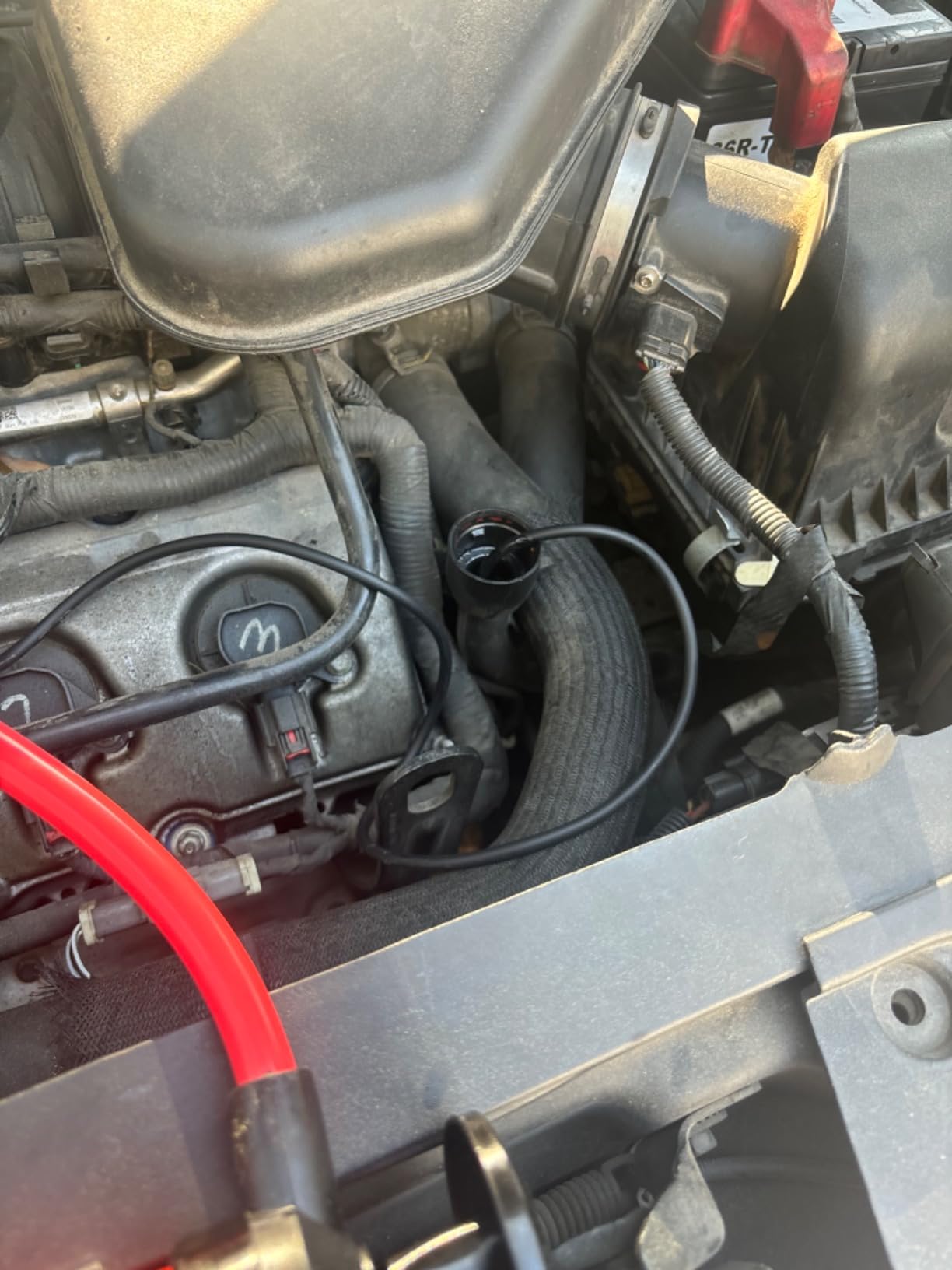
The stated flow figure in the listing is in cubic feet per hour rather than gallons per minute, which is a good reminder to sanity check the models on any manual pump. The practical limit buyers report is the tubing, not the pump: 24 inches of suction and 39 inches of discharge does not reach far.
Rinsing it out with soap and water after diesel or oil work takes seconds and keeps the seals moving. That ease of cleaning is why it works as well for water as the listing claims.
What it handles well?
Vehicles, generators, and small property jobs where a complete transfer kit needs to fit in a compartment rather than a cabinet. The 7 piece count means you have pump, suction, and discharge in one purchase with no hunting for a matching hose.
For a family with a barrel of clean water stored beside a generator, having a kit that handles both fuel and water without a power source is a reasonable second layer of redundancy.
Where it falls short?
Short tubing limits reach compared with longer siphon hoses, and the flow rate is low relative to larger barrel pumps. If the barrel is more than a few feet from the destination, you will be repositioning more than pumping.
The listed flow figure of 100.12 cubic feet per hour does not translate cleanly to water delivery, and reviewers consistently flag the short hose lengths as the main limitation. It is a kit for volume, not for speed.
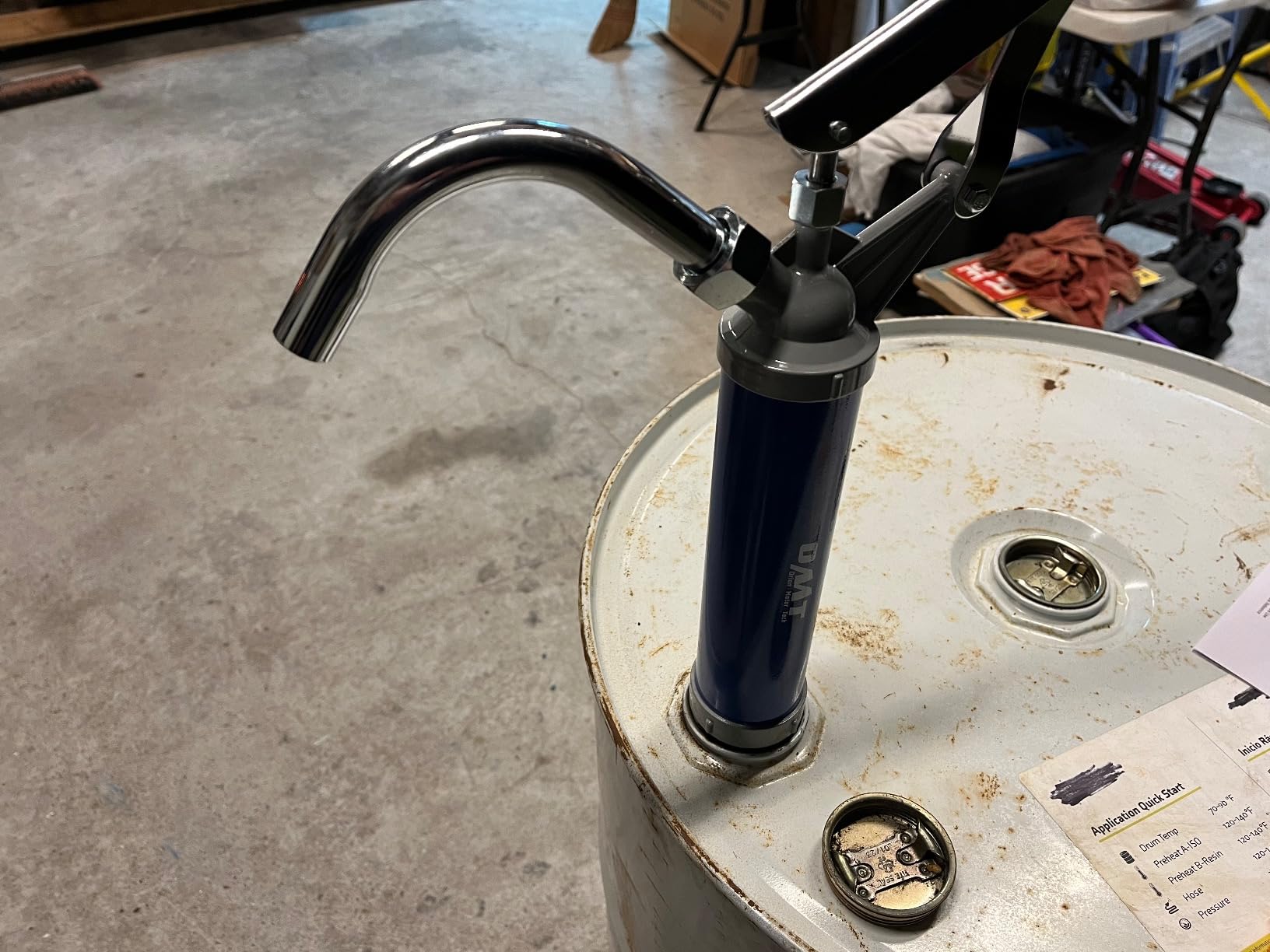
11. OMT Lever Action Barrel Pump – Steel Build for Oils, Not Water
OMT Lever Action Barrel Pump with Telescoping Suction Tube
Up to 10 fl oz per stroke
AISI 1045 steel and zinc body
Telescoping suction tube
15 to 55 gallon drums
Pros
- Moves about 350 mL per stroke smoothly
- Threads securely into common steel drum fittings
- Steel and zinc resist oils and degreasers
- Storage case and wrenches included
Cons
- Manufacturer states not for water diesel or gasoline
- No discharge hose included
- Threads may not match poly or steel drums
The Orion Motor Tech lever pump is the strongest build in this roundup, made from AISI 1045 steel and zinc, and it is built for viscous liquids rather than water. The three-quarter inch spout delivers up to 10 fluid ounces per stroke, roughly 350 mL, and the telescoping suction tube reaches drums from 15 to 55 gallons.
The extended handle gives a firm grip and more pressure per stroke with less effort, and the kit includes thread seal tape, two wrenches, and a custom-fit storage case. Users transfer oils, degreasers, and windshield washer fluid quickly and report good thread fit on common steel drums.
One line in the technical documentation should decide this one for most readers: the manufacturer states it is not for water, diesel, gasoline, or corrosive fluids. The steel and zinc construction is the reason.

No discharge hose is included, so holding the pump, the hose, and the receiving container at once is awkward and the unit is at 2.28 kg. Reviews also report inconsistent seal and paint durability, with some models showing rust or seal failure over time, and threads that may not match larger blue poly drums or certain steel drums.
If your emergency is a drinking water drum, this is not the pump. It is included here because anyone building a property kit will eventually meet a barrel of heating oil or motor oil and want a tool that will not be destroyed by the contents.
What it handles well?
Motor oil, gear oil, degreaser, and windshield washer fluid out of steel drums, where a plastic pump would swell or degrade. The telescoping tube means one pump covers small and large drums, and the storage case keeps the threads clean in a truck bed.
Per stroke it moves more than the piston pumps in this list, and the lever action is smooth enough that a full drum is a repetitive but tolerable job rather than a punishing one.
Where it falls short?
It is not rated for water, which rules it out of the emergency drinking water kit almost by definition despite its durability. The manufacturer also excludes diesel and gasoline from the rating.
Without a discharge hose you are improvising your own outlet, the threads do not match every drum, and reviewers report seal and paint failures on some models. A one-year manufacturer warranty is the shortest among the picks with a warranty worth noting.
12. PARGAGAM Manual Barrel Pump – Widest Drum Size Range
55 Gallon Drum Pump – Heavy Duty Manual Barrel Pump for 15-55 Gallon Drums, Transfers Motor Oil, Heating Oil & Transmission Fluid
Minimum 6 GPM flow rate
Fits 5 to 55 gallon drums
Triple layered rust proof plating
2-year manufacturer warranty
Pros
- Universal fit from 5 to 55 gallon drums
- Compact heavy duty build with tight parts
- Multiple buyers report no leaks
- Adapters and reinforced tubing included
Cons
- Can seize if not lubricated after viscous fluids
- Threads could be deeper for a secure pipe fit
- Some models stopped pumping after one use
The PARGAGAM closes the list as the widest range pick: a manual barrel pump that fits drums from 5 up to 55 gallons, with a minimum flow rate of 6 gallons per minute and triple-layered rust-proof plating. It is a universal fit design with a plastic and stainless steel build, and it needs no external power source.
Buyers find it a good value and report no leaks from multiple models, and the included adapters and reinforced tubing add real value at this level. It is rated for motor oil, diesel, heating oil, and chemicals, and carries a 2-year manufacturer warranty.
For a household with a mix of container sizes – small jerry cans and full drums – that 5 to 55 gallon range is the practical feature. Most barrel pumps assume one container size and leave you improvising on the other.
What it handles well?
Covering several container sizes with one tool, and moving viscous fluids like motor oil and heating oil where a low-flow plastic siphon gives up. The plated construction resists rust, and the tight-fitting parts are what stop the leaks buyers highlight.
Manual operation with no external power means it works in a vehicle, a shed, or a garage with no electricity. The 2-year warranty is longer than the one year offered on several other manual picks here.
Where it falls short?
It can seize if you do not lubricate it after pumping viscous fluids, which is a maintenance step nobody remembers. Reviewers also note the threads could be deeper for a more secure pipe fit, and that some models stopped pumping after a single use.
It is also listed for fuels and oils rather than drinking water, and the manual flow rate is a minimum rather than a tested figure. For an emergency water supply, the BPA-free manual pumps earlier in this list are the appropriate choice.
How to Choose an Emergency Barrel Pump?
The first question is not flow rate, it is power. Ask whether you will have electricity at the moment you need the water. A 115 volt AC transfer pump is faster, quieter to operate, and cheaper, and it is completely worthless in a blackout or at a remote off-grid site. If the answer is uncertain, a manual pump costs you nothing but effort and never fails.
Second, understand what flow rate actually means. It is measured at zero lift with a short discharge hose. Every foot you lift the water and every foot of narrow hose you push it through reduces the number on the label. A 5 gallon per minute pump at 30 feet of lift through a 50 foot garden hose may deliver a fraction of that, which is why real flow numbers get cross-checked by users on forums rather than taken at face value.
Third, decide how the pump meets the barrel. There are three approaches: a pump that screws into the drum bung, a submersible that gets lowered inside the drum on a rope, or a non-submersible that sits beside the barrel with a suction hose. Bung-mounted pumps seal better but need a matching thread. Lowering a portable submersible into the barrel is a repeatable real-world technique that works on any drum, and it is the approach we would use if the thread pattern is unknown.
Fourth, check the potable-water story if the water is for drinking. Look for BPA-free polyethylene or polypropylene wetted parts and an explicit statement that the pump is safe for drinking water. Steel and cast iron bodies can be fine for water but are usually marketed around oils and fuels, and drill-driven pumps are commonly flagged as not for potable use. Whatever you choose, the water still needs treating – our emergency water filtration guide covers the treatment side.
Fifth, think about dry-run protection. Running a pump dry destroys impellers, and a barrel is exactly the setup that encourages it because the water level drops as you drain. A tethered float switch that turns the pump off at a set level is the single best safety feature for unattended barrel draining. Without one, watch the level or set a timer.
Sixth, look for repairability and warranty. An included impeller replacement kit and a two to five year warranty are the strongest signals here, because pumps stored for years need to be serviceable rather than discarded. The powered picks with a spare impeller in the box are the ones we would actually put on a shelf and trust.
How to Set Up a Pump on a Barrel Without Burning It Out?
Position the pump. If it is a bung-mount model, clean the bung threads, check the included adapter matches your drum, and wrap the threads with seal tape. If you are lowering a submersible into the barrel, tie a rope to the handle before you drop it in, because reaching into a drum of water to fish out a pump is a bad afternoon.
Prime the pump first. For any self-priming electric model, fill the pump head with water until the impeller is wet. For a siphon or manual pump, seal the vent cap completely and start the flow with the discharge end lower than the intake. A pump that runs dry for even a short time can warp an impeller.
Connect the discharge. Use the largest diameter hose you have and keep the run as short as you can, because friction eats flow. Clamp every barb fitting, and check that any threaded connection is tight before you turn the motor on.
Protect the power. Any mains-powered pump near water belongs on a GFCI or RCD protected outlet, and a wet extension cord is a hazard. For a cordless pump, charge the battery fully before you store it, and confirm the battery pack physically fits the tool.
Test it. Run the pump into a known container and time it. That gives you a real number for your actual setup, and it is the only way to know whether the rated flow survives your hose length and lift height before the emergency arrives.
Store it correctly. Drain electric pumps dry, do not leave a submersible submerged, wipe manual pumps after caustic use, and keep a siphon hose from taking a crease. A pump that has been wet and warm in a sealed bag for two years is a pump you have to test first.
Frequently Asked Questions
What is the best water pump for a rain barrel?
For a rain barrel at ground level feeding hoses or drip irrigation, a low-lift transfer pump with an integrated on and off switch and an included suction hose works best. The FIDISP 115V 1/10 HP transfer pump is a solid all-round choice because it includes two six foot hoses, a low-suction strainer, and a spare impeller. If the barrel sits below where you need the water, you need lift capacity rather than flow, and that is where the 42 to 46 foot ratings on the powered picks matter.
What is the best hand pump for a rain barrel?
The TERA PUMP 55 Gallon Drum Pump is the strongest hand option for water because it is BPA-free, rated safe for drinking water, moves 5.5 gallons per minute, and includes a 2 inch bung adapter for a standard drum. If your container is a smaller open-top rain barrel rather than a drum, the Magic Gel squeeze siphon is lighter and reaches into containers a rigid pump cannot.
How to pump water from a rain barrel?
Choose a low-lift or submersible pump, lower it into the barrel or attach it to the outlet, prime the pump so the impeller is wet, connect a hose to the discharge, and test the flow into a known container. Protect any mains-powered pump with a GFCI, and never let it run dry, because dry running is what destroys impellers.
Do emergency water pumps work without electricity?
Yes, and that is the defining feature of the manual picks in this roundup. The TERA PUMP and Zeeline barrel pumps, the TRUPOW rotary pump, and the Magic Gel siphon all move water with no electrical supply at all. Cordless models like the Mellif 20V stick pump also work during a blackout, as long as the battery is charged, because they need no outlet.
Is it safe to use a transfer pump for drinking water?
Only if the wetted parts are made of BPA-free polyethylene or polypropylene and the manufacturer rates the pump safe for drinking water. The TERA PUMP barrel pumps and the Zeeline siphon are rated for drinking water, while steel and cast iron barrel pumps are usually marketed for oils and fuels. Always sanitize the pump and the container before the first fill, and treat the water before drinking regardless of which pump you use.
Can a submersible pump fit inside a 55 gallon barrel?
Yes, most portable submersible utility pumps fit inside a standard 55-gallon drum. Lower it in on a rope tied to the handle, run the discharge hose out over the rim, and plug in before you drop it so you are not reaching into the drum to retrieve it. The cordless stick pumps in this roundup use a 27.5 inch detachable shaft for exactly that reason.
How long can a pump run on a battery charge?
It depends on the pump and the battery. The Mellif 20V stick pump is reported by owners to run around 110 minutes on a 5 Ah pack, and it also has an auto shut-off timer at 5, 10, and 15 minutes plus a cut-off when it loses prime. Plan transfers around those timer settings, and charge the battery fully before you store the pump.
Conclusion: Which Emergency Barrel Pump Should You Store?
If you take one thing from this roundup, take the TERA PUMP 55 Gallon Drum Pump. It moves 5.5 gallons per minute, it is BPA-free and rated safe for drinking water, it needs no electricity at all, and it comes with the bung adapter that makes it work on a standard drum. That is the combination we want in a kit we have not touched in two years.
Add the Mellif 20V cordless stick pump if you want speed without a cable, and keep the FIDISP 115V transfer pump for the days when you do have power and want a barrel emptied before your coffee cools. Store all three dry, test each one annually, and check the bung adapter fits your actual drum before you need it.
Because stored water is only useful if you can get it out, the best emergency water pumps for barrels are the ones you have actually tested, not the ones with the highest number on the box. Pick from the list, match the power source to the outage you are preparing for, and run a timed test before 2026 turns into the year you needed it.