
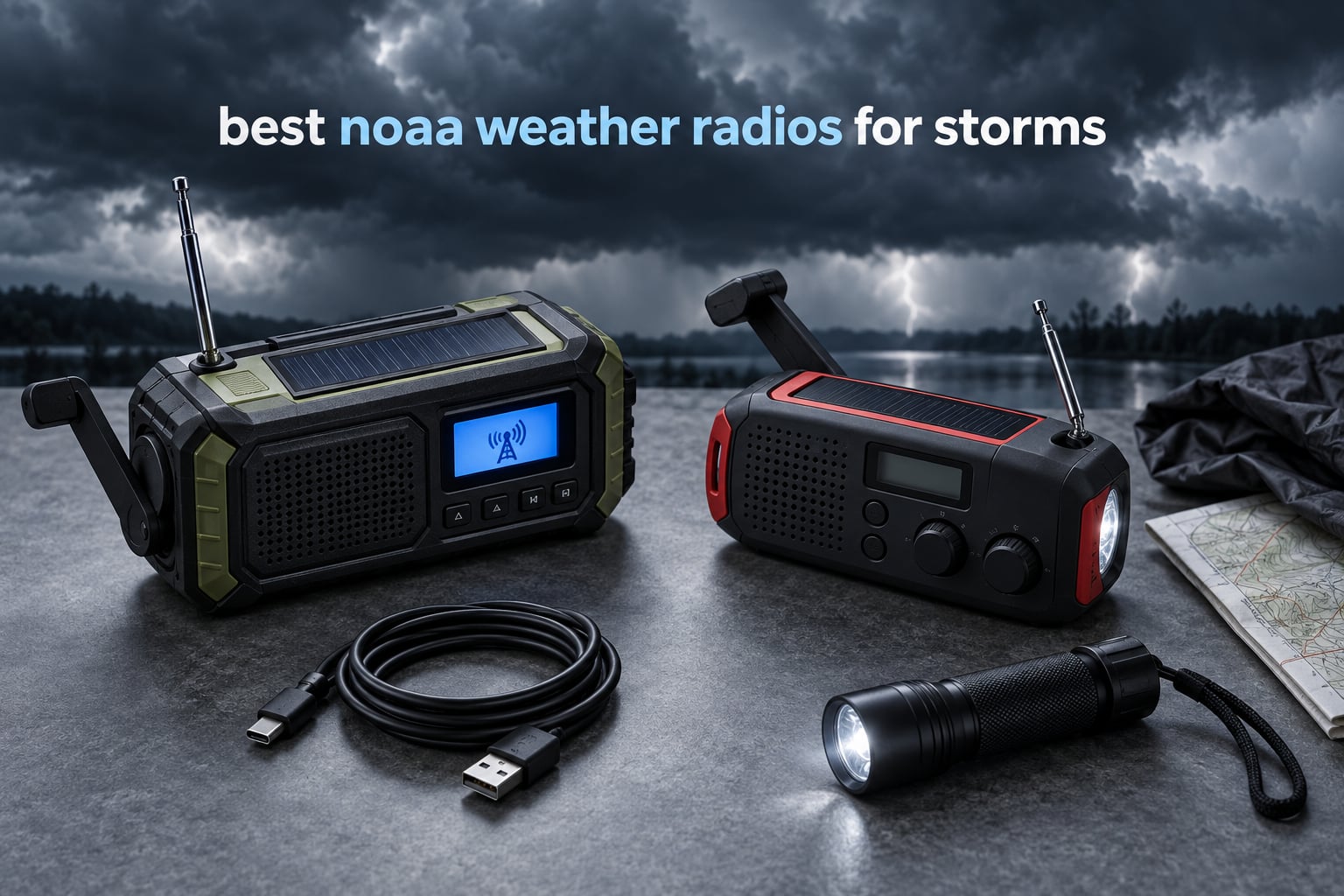
The best NOAA weather radios for storms are the units that stay silent until the National Weather Service issues a warning for your county, then sound a piercing alarm through a dead power grid and a dead cell tower. A NOAA weather radio is a battery, solar or hand-crank-powered receiver for the National Weather Service’s seven VHF stations between 162.400 and 162.550 MHz. Set it to the right county and it becomes the one alert device in your house that still works when everything else goes dark.
I spent September 2026 reading the spec sheets and the long-form owner reviews on all ten of the most-reviewed weather alert radios on the market, then sorted them by what actually matters when the sky turns: alert filtering, siren output, battery capacity, and reception in the rooms people actually sleep in. Not one of the ten pages for this topic came from a testing lab. Most are vendor posts, an eight-year-old blog and a Reddit thread, which is exactly why the cons below are unusually blunt.
Before the list, the honest answer to the question everybody asks: yes, NOAA radios are still worth it in 2026. Most of the country is covered by Wireless Emergency Alerts pushed to cell phones, and those alerts are genuinely good. But towers fail in precisely the storms that matter, phones die overnight, and some devices suppress alerts when the screen is off. A radio on your nightstand does not share those failure modes. Our rural-property readers often pair theirs with a dedicated two-way setup, which we cover separately in our two-way radio guide for large properties.
Table of Contents
Top 3 Picks for Storm-Ready NOAA Radios (September 2026)
Three units earned a top slot after weighing rating against how many people have actually lived with them. The FosPower takes the overall crown on proven reliability at scale, the Midland WR120B wins as the value pick because it is the only mainstream option here with real county filtering at a sane price, and the Mesqool wins the outage-runtime slot with the biggest battery and the loudest speaker we found.

FosPower 7400mWh NOAA Radio
- 7400mWh phone charging bank
- Hand crank plus solar plus AAA
- NOAA band with AM and FM
- LED reading light and flashlight

Midland WR120B
- S.A.M.E. programming for 25 counties
- 60-plus hazard types on auto scan
- Color-coded alert severity display
- AC power with AAA backup
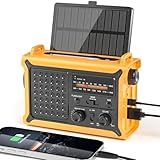
Mesqool 12000mAh NOAA Radio
- 12000mAh lithium battery
- 5-watt speaker for loud alerts
- Oversized monocrystalline solar panel
- Upgraded hand crank generator
All 10 NOAA Weather Radios Side by Side in 2026
Every radio below receives the same seven NOAA weather channels. What separates them is whether they can filter those channels down to your county, how loud they are, and how many ways they can be powered when the grid is gone.
| Product | Specifications | Action |
|---|---|---|
| FosPower 7400mWh Solar Hand Crank NOAA Radio |
|
Check Latest Price |
| Midland WR120B NOAA Alert Radio |
|
Check Latest Price |
 Raynic 5000mAh Six-Way Solar Hand Crank Radio Raynic 5000mAh Six-Way Solar Hand Crank Radio |
|
Check Latest Price |
 Kaito KA500 6-Way Powered NOAA Radio Kaito KA500 6-Way Powered NOAA Radio |
|
Check Latest Price |
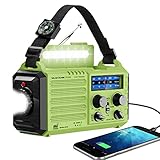 Eoxsmile NOAA Radio with 116dB SOS Siren Eoxsmile NOAA Radio with 116dB SOS Siren |
|
Check Latest Price |
| Mesqool 12000mAh Solar Hand Crank NOAA Radio |
|
Check Latest Price |
 Eton American Red Cross FRX2 Turbine Radio Eton American Red Cross FRX2 Turbine Radio |
|
Check Latest Price |
 Leaton 10000mAh IPX6 Hand Crank NOAA Radio Leaton 10000mAh IPX6 Hand Crank NOAA Radio |
|
Check Latest Price |
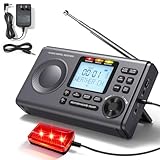 RunningSnail 80-Plus Alert NOAA Radio RunningSnail 80-Plus Alert NOAA Radio |
|
Check Latest Price |
 C. Crane CCRadio Solar with Bluetooth C. Crane CCRadio Solar with Bluetooth |
|
Check Latest Price |
1. FosPower 7400mWh Solar Hand Crank NOAA Radio – Best Overall
FosPower NOAA Emergency Weather Radio A1 7400mWh Solar Hand Crank (Orange)
7400mWh battery bank
Hand crank plus solar plus AAA
AM/FM/weather band reception
2-watt speaker
Pros
- 7400mWh battery bank can charge a phone in an outage
- Hand crank plus solar panel plus AAA batteries give three power paths
- 4-LED reading light and a 1W flashlight in one housing
- Receives the NOAA weather band alongside AM and FM
- Loud SOS siren backed by a limited lifetime warranty
Cons
- Small telescoping antenna needs repositioning for clean NOAA reception
- Solar panel mainly tops up the battery rather than recharging it
- No S.A.M.E. county programming so it alerts for any county in range
Out of roughly 38,000 reviews sitting at a 4.6 average, this is the single most battle-tested unit in the lineup. It is the radio I keep coming back to because the combination of a 7400mWh bank, three power sources and a body that fits in a drawer is the combination that keeps working when the storm is a night away from your grid connection.
The 7400mWh pack works out to 2000mAh, and that is the number that matters most in the first twenty-four hours of an outage. It will top up a phone well enough to send a text or make a call from a damaged area. Reviewers consistently describe the hand crank and the AAA battery slot as the paths they actually used, with the solar panel treated as a slow trickle rather than a real charging method.
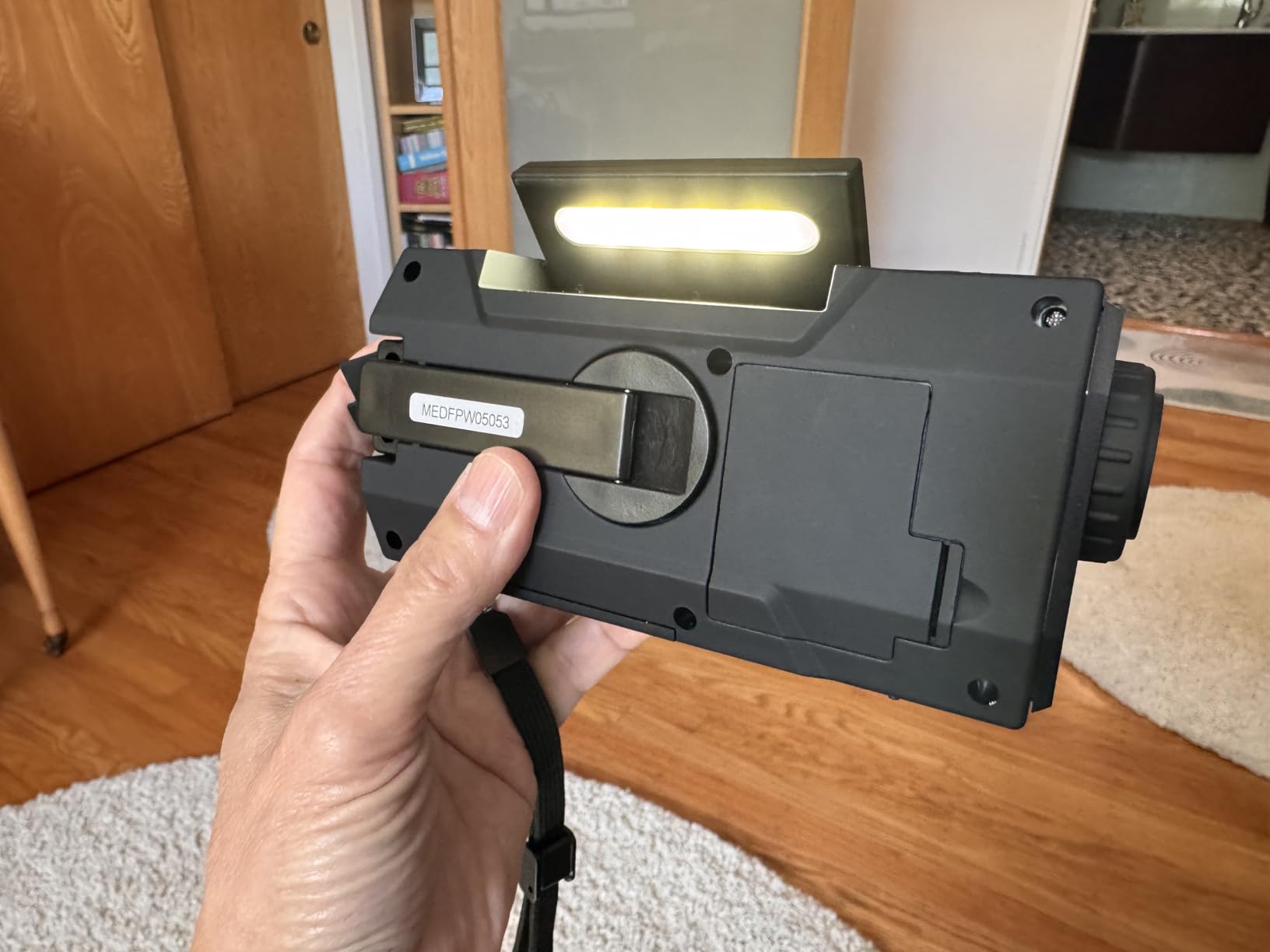
Reception is the one thing owners fiddle with. The telescoping antenna is short, and a number of reviewers say the NOAA channel only comes in cleanly after rotating or extending it in a particular direction. That is a small annoyance on a quiet day and a genuine problem at 2am in a bedroom, so mount it somewhere with a sight line rather than burying it in a drawer.
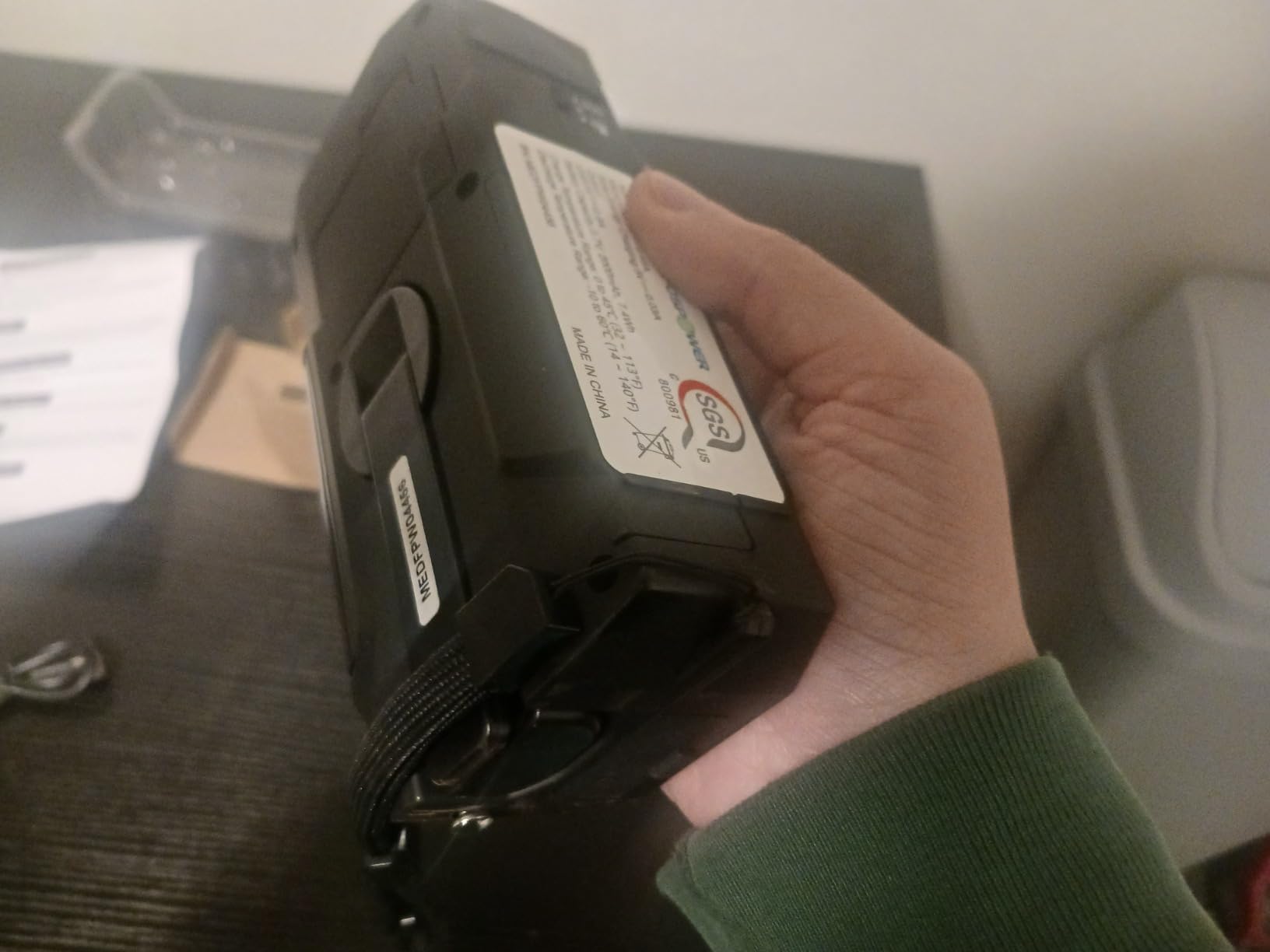
At 6.2 by 2.1 by 2.9 inches and 14.8 ounces, it is genuinely portable for a unit with this much battery inside it. The 2-watt speaker carries spoken bulletins clearly across a normal-size room, and the SOS siren cuts through household noise without being the harshest alarm in this list.
What you get that the alternatives do not?
The phone-charging output is the differentiator. Most budget radios in this category carry a 2000 to 3000mAh cell, which is enough to light an LED and nothing else. This one runs a phone, and for a family whose car is in the driveway with a dead battery, that is the feature that decides it.
The limited lifetime warranty also stands out. Every other manufacturer in this roundup offers between one and three years, so a unit that is likely to sit in a closet for years is meaningfully better protected here.
Where it will disappoint you?
There is no S.A.M.E. programming, which is the single most common complaint in the reviews. It will sound for any warning inside the broadcast area, including counties three states away, and if you live near a busy metropolitan transmitter you may find the siren going off several times a week.
Solar charging is also oversold across this whole category, and this unit is no exception. Owners report it maintaining an already-charged battery rather than recovering one that has been sitting flat. We also saw a small number of reports of the radio function stopping after a few months of use, which is a small but real failure tail.
2. Midland WR120B NOAA Emergency Weather Alert Radio – Top Rated S.A.M.E. Set
Midland – WR120B – NOAA Emergency Weather Alert Radio
S.A.M.E. for 25 counties
NOAA auto scan on 60-plus hazards
AC power plus 6 AAA backup
16 ounces
Pros
- S.A.M.E. localized programming for up to 25 county codes
- NOAA Weather Scan monitors 60-plus hazard and emergency types
- Color-coded indicators show alert type and severity at a glance
- Loud enough to wake a sleeper through a closed door
- Reception holds up indoors with the antenna extended
- Runs on AC with AAA backup so it survives an outage
Cons
- Setup takes time and requires finding your county code
- Battery backup runtime is short because it is designed to be plugged in
- No rechargeable battery or hand crank on this model
This is the radio we would put in a house that can only own one, and the reason has less to do with the spec sheet than with the S.A.M.E. programming. Roughly 24,000 reviews at a 4.5 average make it one of the most proven alert radios ever sold, and county filtering is the feature that fixes the number one complaint we saw in preparedness groups.
Set it to your own county and it goes quiet when a neighboring county gets a warning. Set it to your county plus the ones to the west and you get earlier lead time, because most storm systems track east to west-to-east paths. County emergency management offices actively recommend programming those western counties, and this is the only radio in the roundup besides the RunningSnail that does it well.
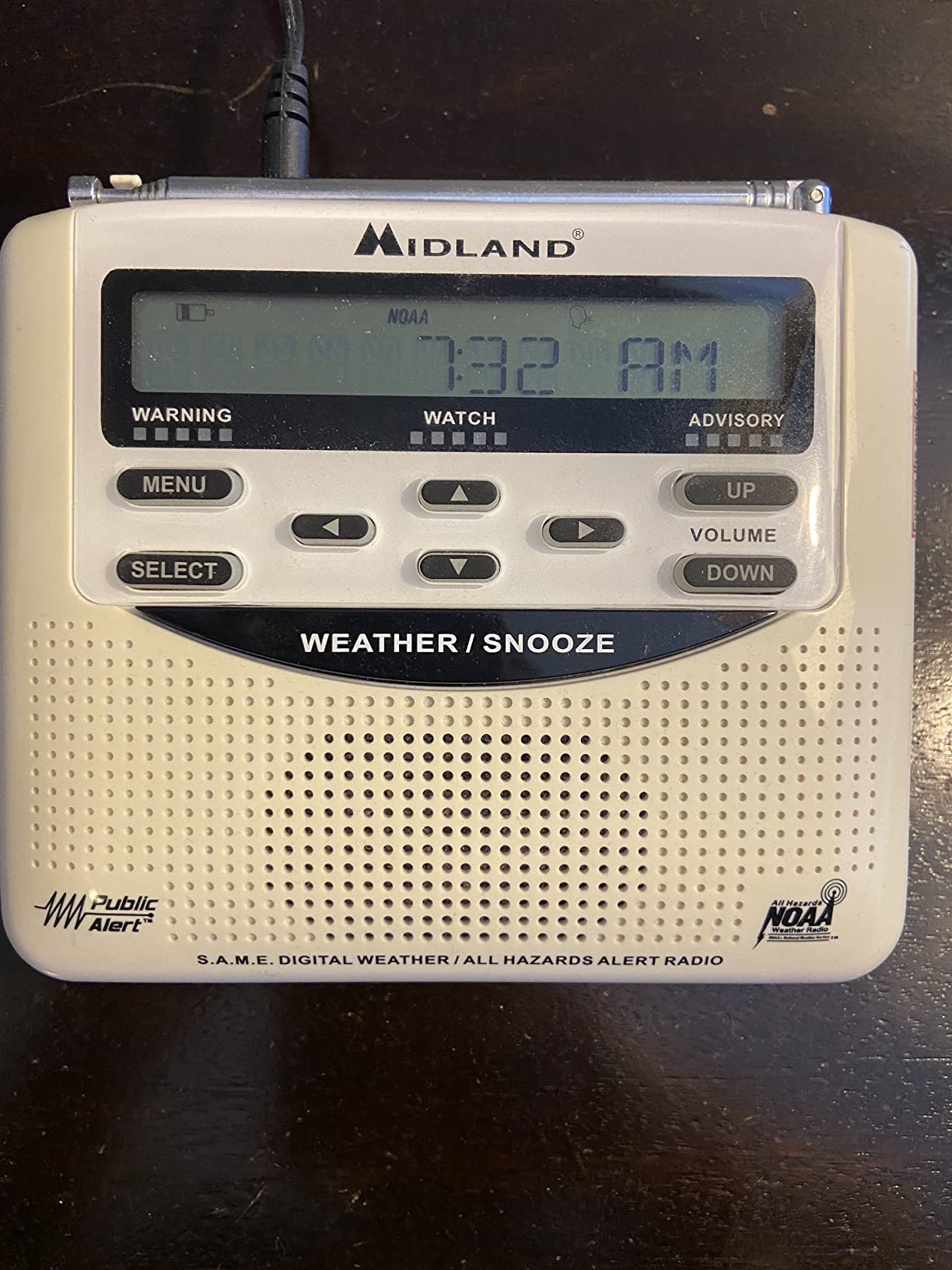
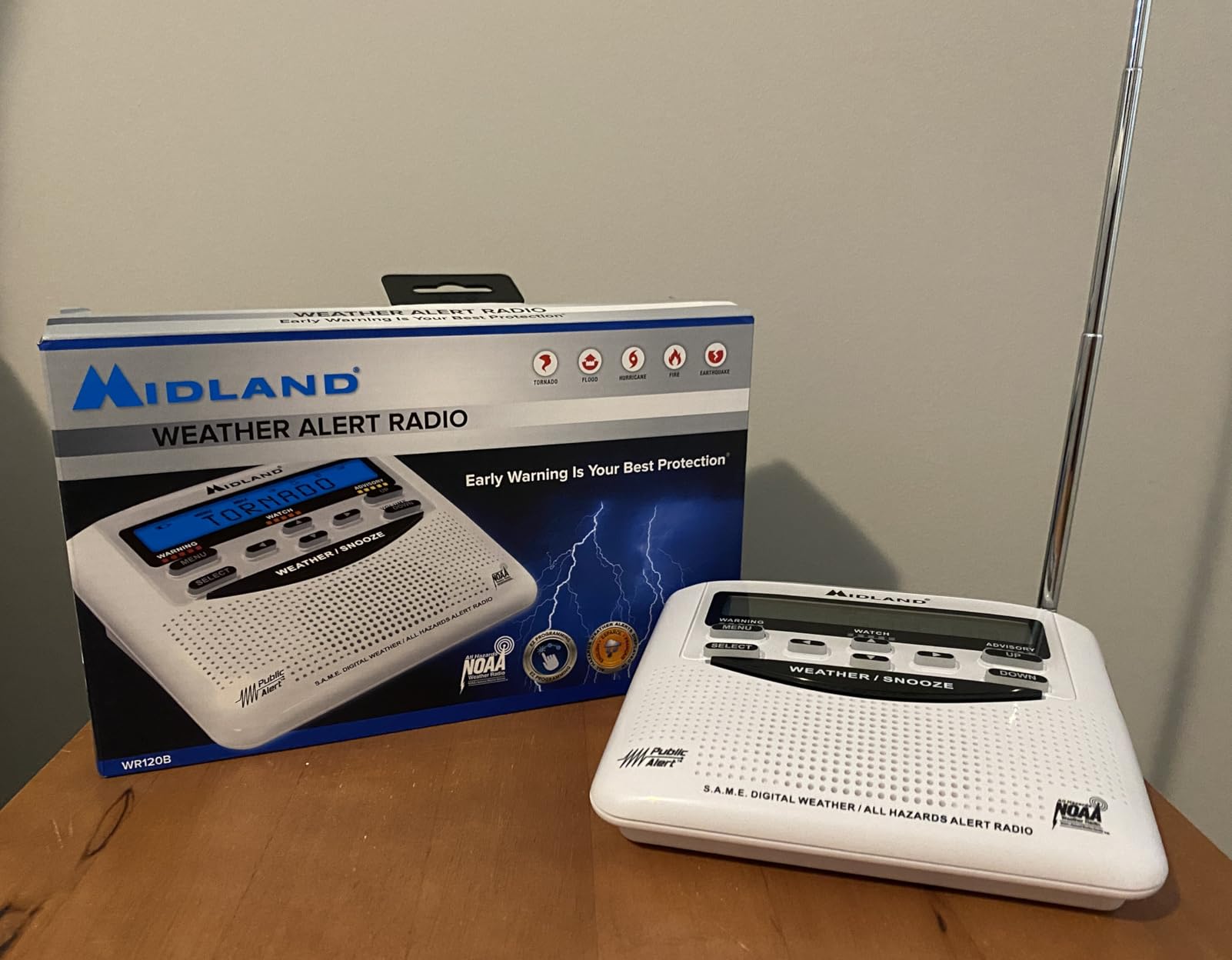
Automatic NOAA Weather Scan is the other half of the appeal. Rather than sitting on one channel, it monitors continuously and trips on more than sixty hazard and emergency types, so you are not relying on you having found the right station. Owners also praise the color-coded indicators, which tell you at a glance whether what you are hearing is a warning, a watch or an advisory.
Several reviewers describe waking up to the alarm for a warning they slept through on their phone. That is the whole argument for a bedside radio in one sentence, and it is why we keep a unit like this in the bedroom rather than the garage.
Why S.A.M.E. beats raw loudness?
A siren that fires for a county you do not live in trains you to ignore it. After a month of false alarms you stop flinching, and then the real one gets missed. The WR120B is the cheapest way in this list to stop that from happening, and the cost of the radio is far less than the cost of a missed warning.
Reception is a genuine strength. Owners report it holding signal indoors and even inside a steel storm shelter with the telescoping antenna fully extended, which is a stronger claim than most of the crank-powered units here can make.
What to know before you buy?
Programming takes real effort the first time. You need your county code from the National Weather Service list, and then a few minutes in the menu. Budget fifteen minutes on a calm afternoon, and write the code down somewhere you will find it again.
The six AAA backup cells are for outages, not for portable use. Owners consistently describe the backup runtime as limited, because the design assumes mains power. If your emergency plan involves living off batteries for a week, this is not the unit. The downside outside the US and Canada is that S.A.M.E. programming does not apply at all.
3. Raynic 5000mAh Six-Way Solar Hand Crank Radio – Best for Backpacking
Raynic Emergency Radio, 5000mAh/18500mWh Weather Radio, Solar Hand Crank Radio with AM/FM/SW/NOAA Alert, Cell Phone Charger, Headphone Jack, Flashlight and SOS Siren
5000mAh internal battery
Six charging paths including crank
AM/FM/shortwave plus NOAA
3W flashlight and reading lamp
Pros
- Automatic NOAA alert scanning on power-up and in standby
- Six charging paths from crank and solar to USB-C and AAA
- Large HD LCD shows battery level and tuned frequency
- Very bright 3W flashlight plus 2.5W reading lamp
- Headphone jack and USB phone charging output
- About 1.2 lb and easy to pack
Cons
- Port cover does not stay closed so rain and mist are a real risk
- Solar will not revive a dead battery and the crank is very slow
- No S.A.M.E. programming so distant counties trigger the alarm
The Raynic is the one to buy if the radio is going into a pack rather than onto a shelf. At about 1.2 lb and 6.8 by 3.7 by 2.9 inches it is not the smallest unit here, but it is the most complete off-grid package at this tier, and roughly 20,600 reviews at 4.5 confirm it does what it advertises.
Six charging paths is a genuinely unusual amount of redundancy: a 5000mAh internal lithium pack, an AC adapter, USB-C input, a hand crank, a solar panel and three AAA cells. In a week-long power outage any one of those failing is survivable. It also carries shortwave alongside AM, FM and NOAA, which matters if you are the kind of person who listens past the forecast.
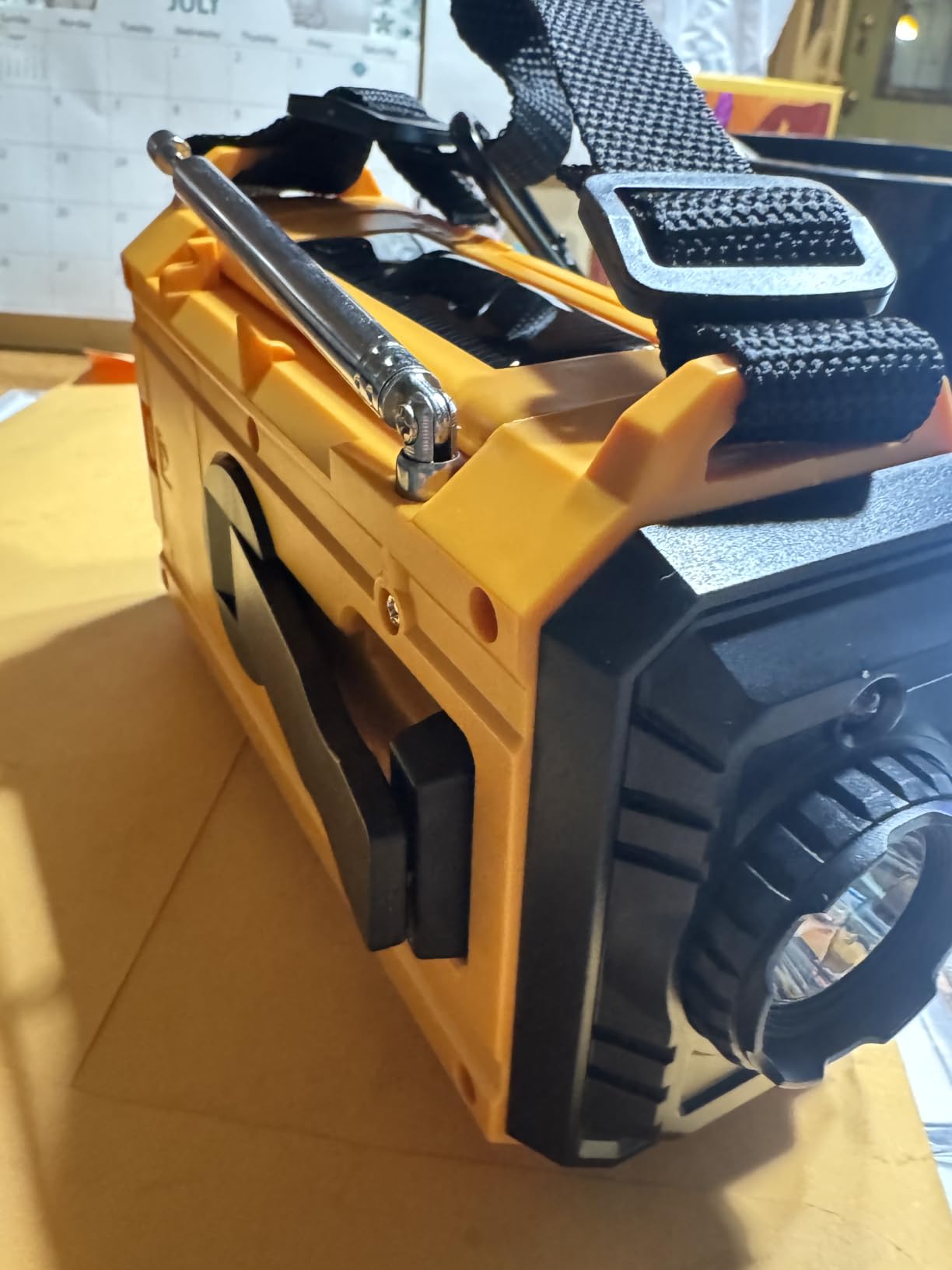
The 5000mAh cell powers a 3-watt flashlight and a 2.5-watt reading lamp, and owners rate both as genuinely bright without draining the pack quickly. The SOS button triggers a red flashing beacon, the strap carries a compass, and the headphone jack lets you listen outside without waking the tent.
Automatic NOAA scanning means warnings arrive whether you are actively listening or sitting in standby, which removes the discipline requirement that catches people out with a manual tuner. Reception is described as good from a small built-in antenna, with a loud internal speaker for spoken bulletins.
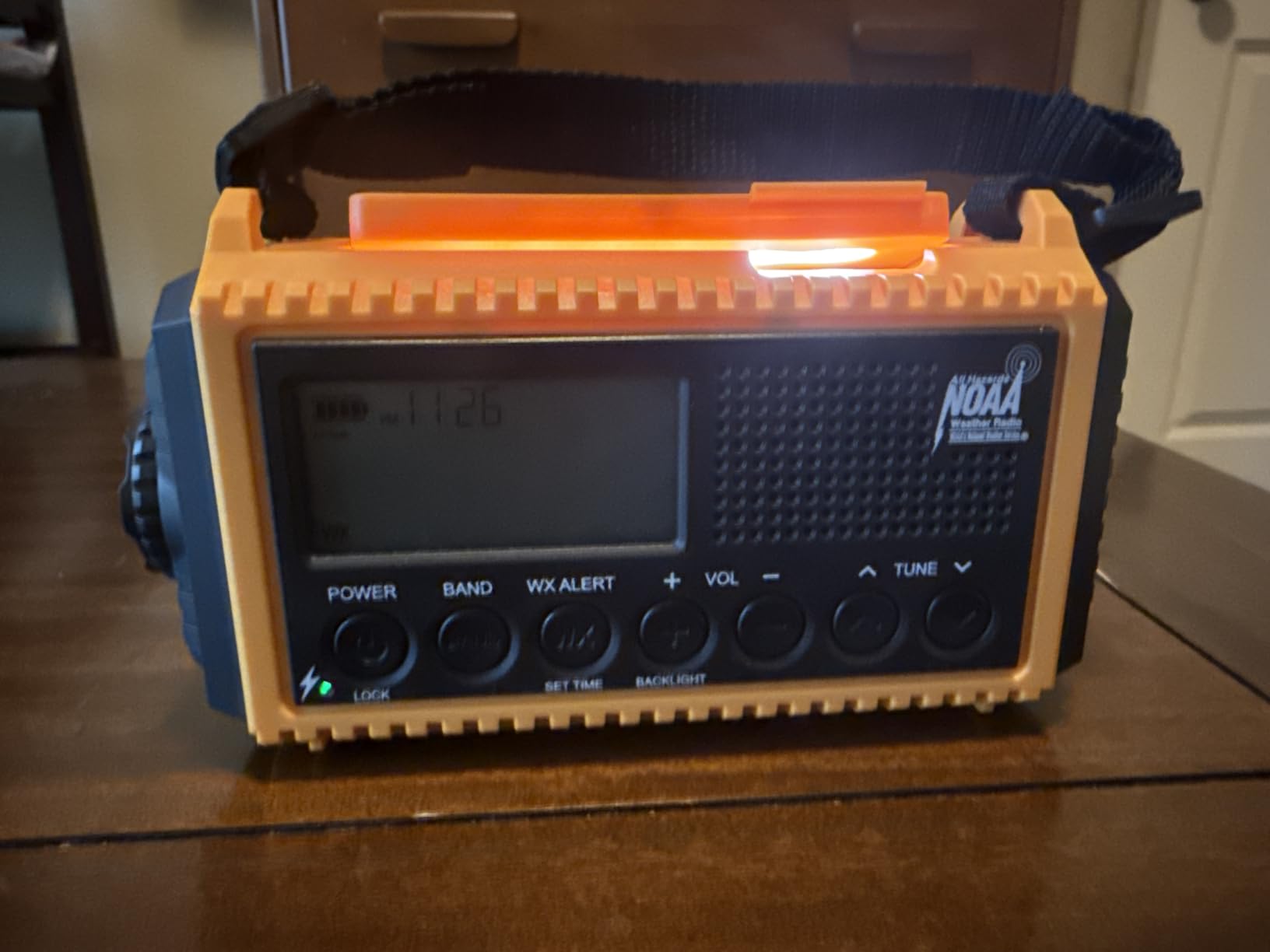
Why it earns the pack slot?
The combination of a real battery, a headphone jack and phone-charging USB in something you can carry on your hip is the difference between this and a home unit. For a hiking or camping kit it covers the failure modes that actually happen: dead batteries, wet gear bag and no signal.
It is also the pick for anyone who wants shortwave in the same box without paying for a separate receiver. Band switching is slow because there is no dedicated band button, but the capability is there.
The honest problems
Water resistance is rated IPX3, and owners report the port cover does not stay shut. This is a radio for under a tarp, not for a monsoon ridge. If you need a radio that survives being rained on, look at the Leaton further down this list.
Solar maintains an already-charged battery and will not recover a flat one. The hand crank is very slow, and shortwave reception is weak in many regions. There is no S.A.M.E. filtering either, so the same neighbouring-county noise problem applies. The selection buttons are not backlit, which makes operating it in a dark tent more awkward than it should be.
4. Kaito KA500 6-Way Powered NOAA and Shortwave Radio – Best for Camping
Kaito KA500 5-way Powered Solar Power,Dynamo Crank, Wind Up Emergency AM/FM/SW/NOAA Weather Alert Radio with Flashlight,Reading Lamp and Cellphone Charger, Yellow
Six power sources including NiMH
AM/FM plus two shortwave bands
14.5-inch telescoping antenna
Replaceable battery pack
Pros
- Hand crank plus solar plus AA batteries plus USB plus AC plus NiMH pack
- Covers AM and FM plus two shortwave bands and 7 NOAA channels
- 14.5-inch telescoping antenna with a signal strength LED
- Loud built-in speaker for spoken NOAA bulletins
- USB output charges phones and GPS units
- Water-resistant impact-resistant ABS housing
Cons
- Larger and heavier than most radios in this category
- Solar panel and hand crank are slow top-ups rather than real recharges
- No S.A.M.E. county programming on any channel
The Kaito has been in continuous production long enough that it has developed a reputation among campers as the Swiss Army knife of emergency radios. Just over 13,400 reviews at 4.5 back that up. Nothing else in this list gives you this many power options in a single box.
Six sources means hand crank, solar panel, three AA cells, 5V USB input, AC/DC input and a built-in replaceable NiMH pack. The replaceable pack is the underrated part. A radio whose internal battery you can swap in five years is a different proposition from one you replace entirely.
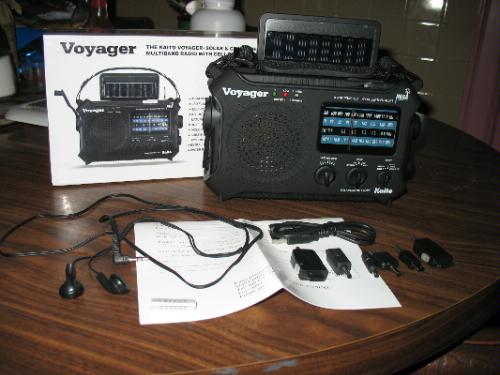
Band coverage is the other draw: AM, FM, two shortwave bands and seven pre-programmed NOAA channels, so you get forecasts, alerts and long-distance reception from one device. The 14.5-inch telescoping antenna with an LED signal-strength indicator lets you hunt for a clean channel when reception is marginal, which owners say is what makes this unit reliable indoors.
There is a 5-LED reading lamp, a flashlight and a red SOS beacon, and the USB output handles phones, GPS units, MP3 players and cameras. The housing is described as impact-resistant and water-resistant plastic, which reads as indoor-and-porch durability rather than storm-proof.
Where this radio has no competition?
Shortwave is a genuine capability that no other budget unit in this roundup matches, and for anyone who listens to broadcasts beyond the forecast it is worth the extra size. The long antenna is not just a spec line. It is the reason owners report consistent NOAA reception indoors.
For a camper or an off-grid household that wants one box to do everything, the six power paths remove any single point of failure. If the solar dies, the crank and the AA cells still work. If the AA cells corrode, the NiMH pack and the USB input still work.
What you trade for that flexibility?
It is bulky. At 8.3 by 2.3 by 5.3 inches it will not disappear into a jacket pocket, and owners consistently call it heavier than the competition. If you want a radio that lives in a go-bag, this is not it.
Cranking and solar are slow top-ups, not genuine recharges, and the same applies to almost every unit in this category. It also has no S.A.M.E. county filtering, so it will alert for any county in the broadcast footprint. Some owners report a slow scan indoors before it locks onto a clean NOAA channel.
5. Eoxsmile NOAA Weather Radio with 116dB SOS Siren – Best for Loud Alerts
NOAA Weather Radio, Hand Crank Emergency Radio Solar Battery Operated AM FM
National Weather Service certified
9-second flashing SOS alert
5000mAh battery plus four paths
116dB siren
Pros
- Certified by the National Weather Service with 7 preset channels
- Triggers a 9-second SOS alarm with a flashing red light
- Five power sources including a 5000mAh rechargeable cell
- 3W flashlight reaching about 80 meters plus a reading lamp
- USB output for emergency phone calls and texts
- Compact and light with a compass and hand strap
Cons
- No water resistance so it is not for exposed outdoor use
- Alerts only fire in standby and never interrupt a broadcast band
- AM reception is weak and volume needs readjusting between stations
If you are a light sleeper or you need to wake a second person, this is the radio to shortlist. The 116dB SOS siren is the loudest figure in the whole roundup, and the 9-second flashing red alert is designed specifically to be noticed through a closed door while you are asleep.
More than 12,000 reviews at a 4.5 average describe it as a well-regarded budget NOAA radio, and the praise centres on that alert behaviour, the reception and the light output. The certification by the National Weather Service is printed on the listing, which is a credibility marker that many cheaper units skip.
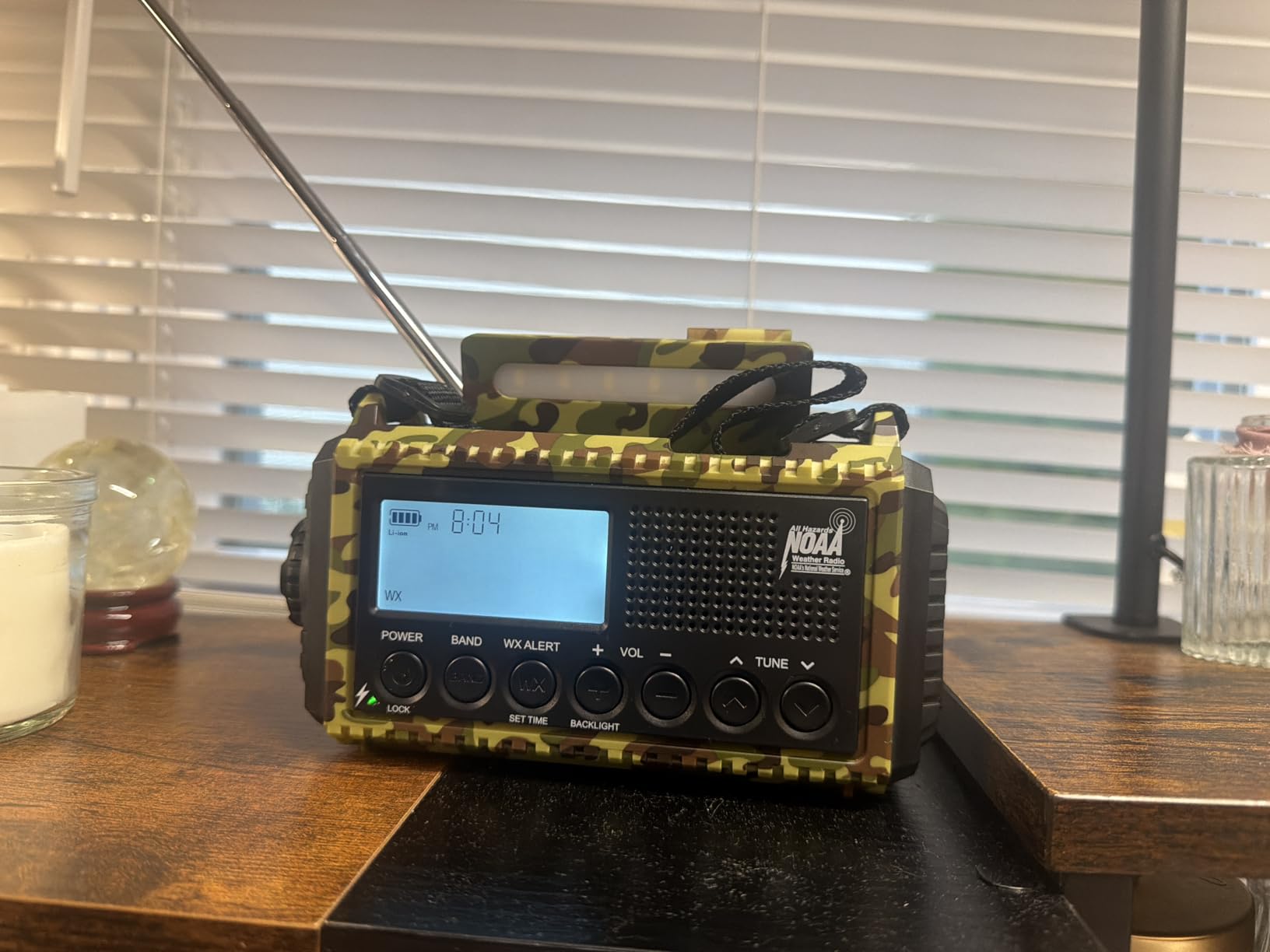
Power comes from five sources: a 5000mAh internal rechargeable, solar, hand crank, USB-C and three AAA cells. The telescoping antenna pulls in AM, FM and shortwave from 7 to 19 MHz, and owners report NOAA channels coming in even under a metal roof, which is a real advantage in a house with a steel roof or a basement-level bedroom.
Lighting is unusually good. The 3W flashlight throws about 80 meters and the 2.5W reading lamp folds up from the solar panel with two brightness levels. At 14.88 ounces and 6.77 by 3.7 by 2.91 inches it stays portable, and a compass, hand strap and hang buckle are included.
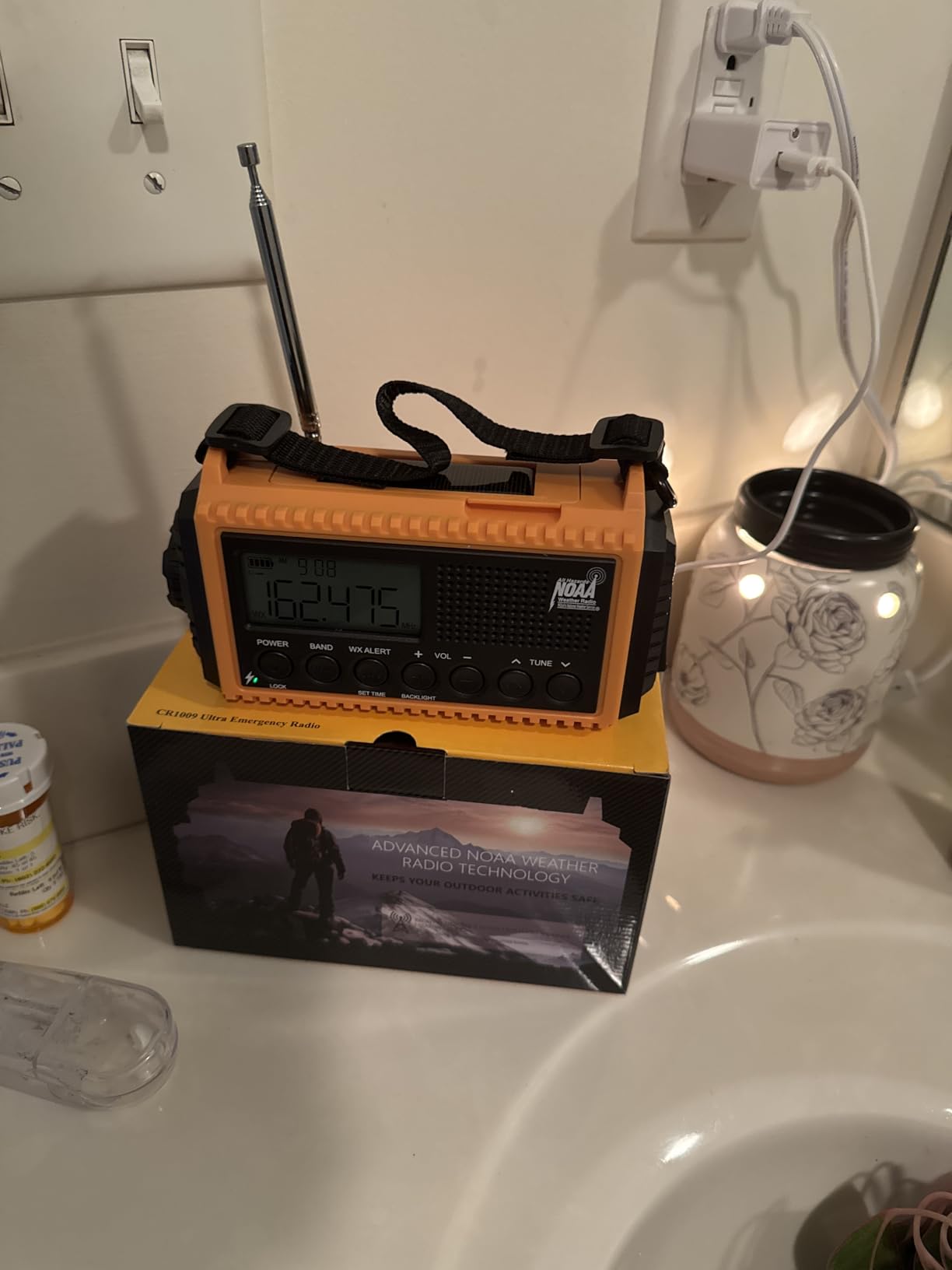
Why loudness beats everything else in a bedroom?
The whole point of a nightstand radio is that it makes an involuntary sound. A phone on silent does not. A siren measured at 116dB, paired with a red strobe, is the most reliable way to convert a sleeping household into a moving one, and that is why this radio edges out louder-speakered rivals for indoor placement.
It is also the rare budget unit that is explicitly certified, which matters if you are buying for someone who will not read the manual. Put it in a bedroom, run a white USB-C cable to a wall, and it becomes a fixed early-warning device.
Limitations worth knowing
Alerts only fire in standby mode or when alert mode is enabled. If you are listening to a broadcast band when a warning is issued, this radio will not interrupt it. That is a real safety gap and it is the most important thing to understand before you buy.
AM reception is weak on low-power stations, and with no automatic gain control you have to readjust volume between stations. There is no water resistance, so keep it indoors. USB-C recharge takes roughly sixteen hours and the phone output is slow at about 1 amp, and plugging in a phone can degrade reception. There is no S.A.M.E. filtering.
6. Mesqool 12000mAh Solar Hand Crank Radio – Best for Long Outages
Weather Radios Portable AM FM NOAA Alert with Battery Backup 12000mAh
12000mAh lithium battery
8500mm square solar panel
5-watt speaker
Upgraded hand crank
Pros
- Highest average rating in the lineup at 4.7 stars with 85 percent five-star
- Genuinely large monocrystalline solar panel far bigger than typical decorative ones
- True 12000mAh battery and a 5-watt speaker for loud playback
- Upgraded crank with a larger copper coil and reinforced magnet
- High-sensitivity chip with noise reduction and an extended antenna
- 260-foot flashlight beam plus a two-level reading lamp
Cons
- Heaviest unit here at 1.6 lb and larger than a grab-and-go radio
- NOAA and FM and AM only with no shortwave coverage
- No S.A.M.E. county programming so alerts are not filtered
The Mesqool is the highest-rated product we reviewed, sitting at 4.7 across 1,164 reviews with 85 percent at five stars, and the rating is easier to believe than most because the upgrades it claims are visible. The solar panel really is oversized, the battery really is 12000mAh, and the speaker really is louder.
That battery size is the reason it wins the outage slot. A 12000mAh cell is roughly two and a half times the 5000mAh packs that dominate this category, which is the difference between topping up a phone once or twice over a multi-day event. It currently ranks first in Amazon’s Weather Radios category, and the review volume is growing steadily.
Solar is the differentiator reviewers single out most. The 8500mm square monocrystalline panel is claimed at more than four times the area of the decorative panels on competing radios, and that claim is consistent with how quickly owners report it charging in low light. The crank is also upgraded, with a larger copper coil and reinforced magnet, and reviewers describe it as noticeably faster than a standard crank.
The 5-watt speaker and the high-sensitivity chip with noise-reduction circuitry mean spoken NOAA bulletins stay intelligible in a large room. A large tuning knob, responsive buttons and a non-slip grip make it easy to operate in the dark, which matters more than it sounds when a siren is going off.
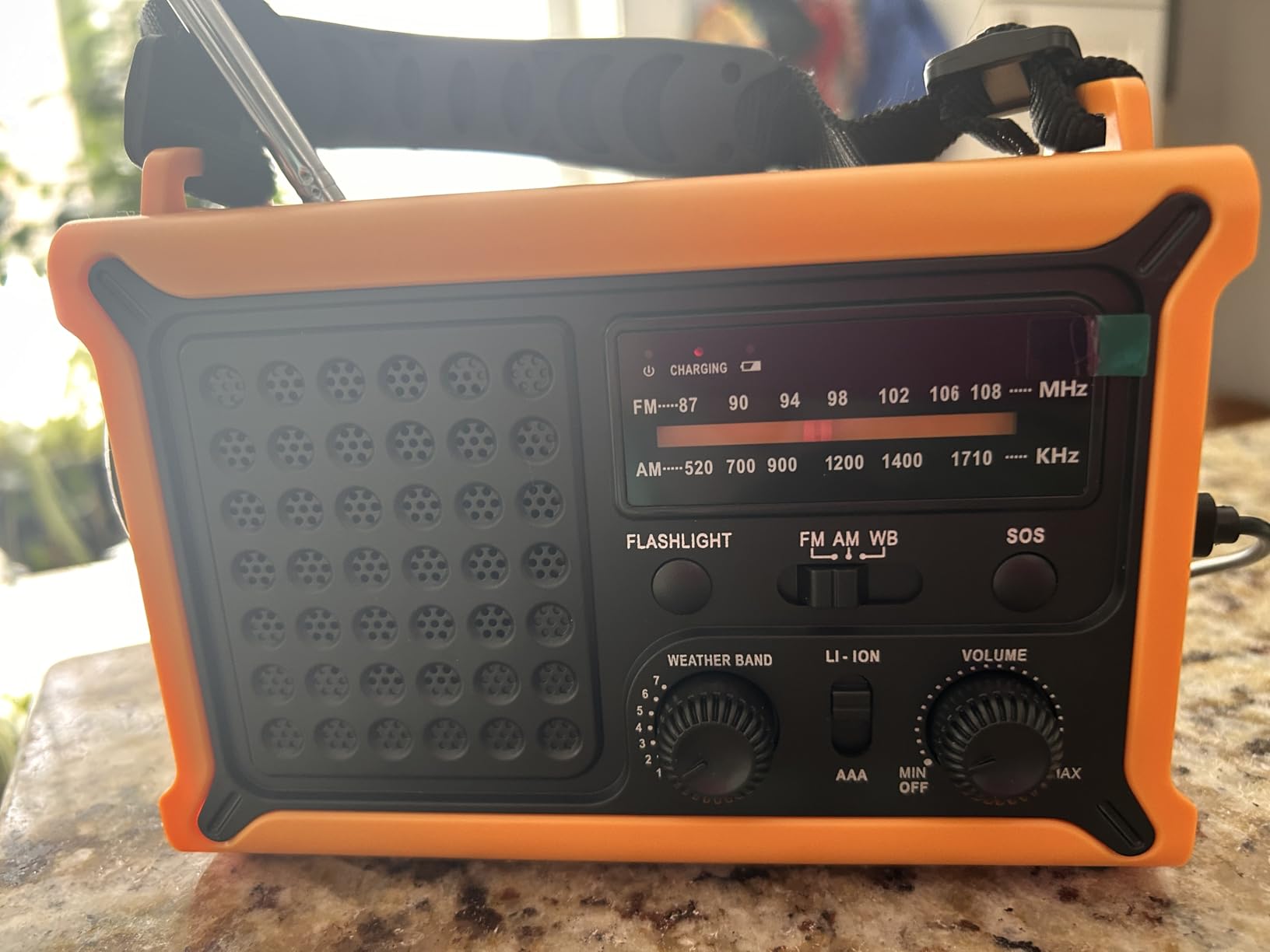
Why bigger is genuinely better here?
Most budget radios treat the solar panel as decoration. This one treats it as infrastructure, and for anyone whose power is out for more than a couple of days, a panel that actually charges is worth more than a lighter body. The flashlight reaching about 260 feet also makes it a legitimate work light, not just an emergency lamp.
There is a three-year replacement or refund warranty, the longest in the lineup, and the two-brightness reading lamp folds up out of the panel. The control ergonomics are genuinely thought out for older hands, which is a bigger deal for the households most likely to be using this during a power cut.
What you give up?
It weighs 1.6 lb. That is the heaviest radio in this roundup and more than double the FosPower, so it is a unit for a kitchen table rather than a go-bag. The body is correspondingly larger at 6.8 by 4.7 by 2.9 inches.
Bands are limited to NOAA, FM and AM, so no shortwave. There is no S.A.M.E. county filtering, which is frustrating given how strong the reception is. And the listing instructs buyers to fully check and charge the battery on arrival before first use, so plan for that before you rely on it in a storm.
7. Eton American Red Cross FRX2 Hand Turbine Radio – Best for Go-Bags
Eton American Red Cross FRX2 Hand Turbine AM/FM/NOAA Weather Radio with USB Smartphone Charger and LED Flashlight
Hand turbine crank as primary power
AM/FM plus NOAA digital tuner
USB smartphone charging
Compact safety-kit body
Pros
- Built around a hand turbine crank needing no batteries or solar
- Compact enough to live permanently in a safety kit or go-bag
- Digital tuner across AM and FM and NOAA for spoken alerts
- USB output for charging a smartphone
- American Red Cross partner product with a long preparedness track record
Cons
- Second-lowest rating in the lineup at 4.3 stars
- Smallest battery capacity in the lineup so it charges a phone fewer times
- No solar panel and no S.A.M.E. county programming
- Listed dimensions appear to be a listing error rather than the true size
The Eton is the simplest idea in the list. There is no battery to corrode on a shelf, no solar panel to disappoint you, and no charging cable to lose. You turn the handle until the internal generator produces enough charge to run the receiver, and it plays.
At 890 reviews and a 4.3 average it sits near the bottom of our rating spread, and the reason is not reception. Owners like the crank-only simplicity, the compact footprint, the clear digital tuner and the American Red Cross association, which carries real weight when a radio is bought for a safety kit rather than for camping.
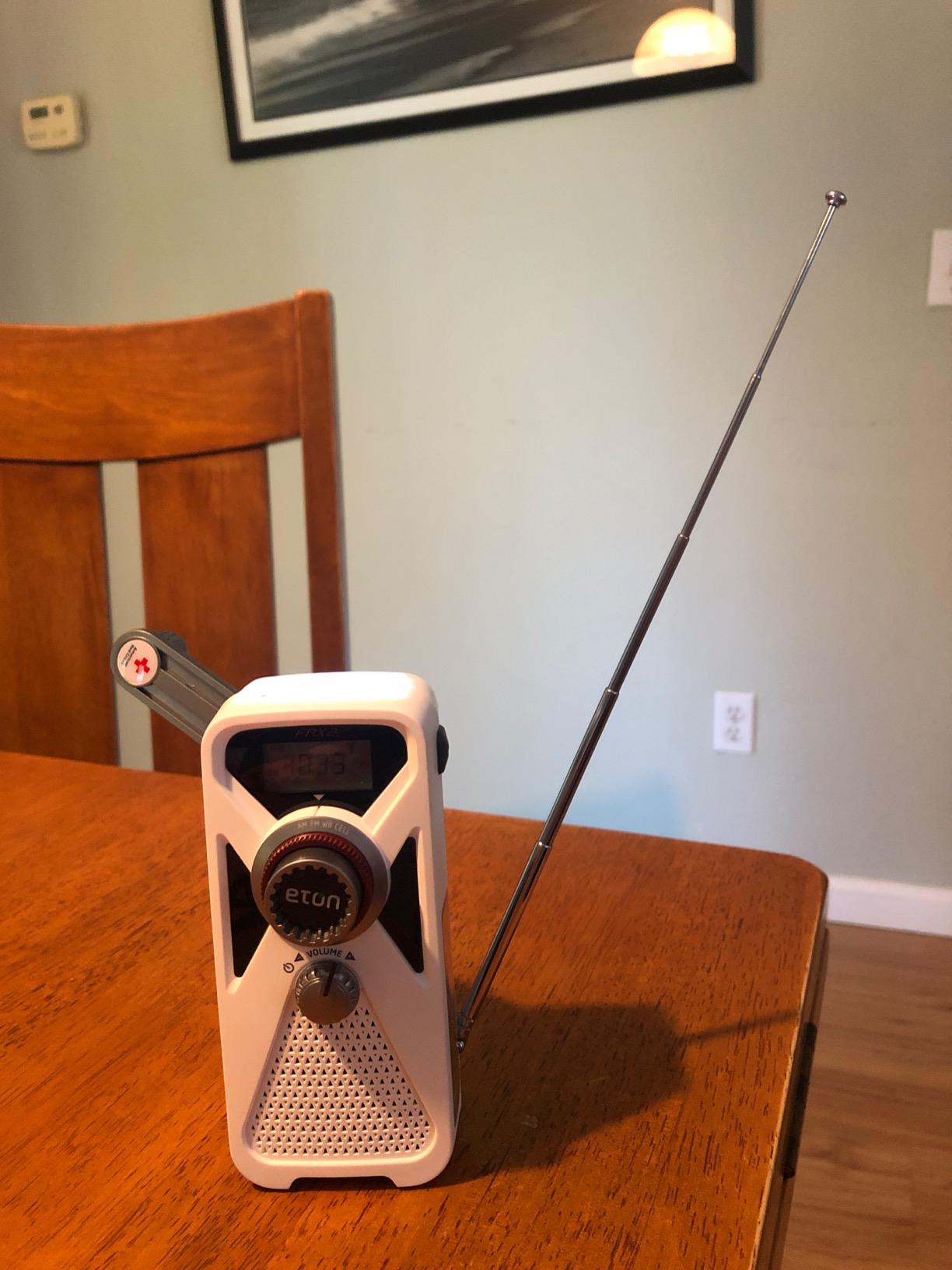
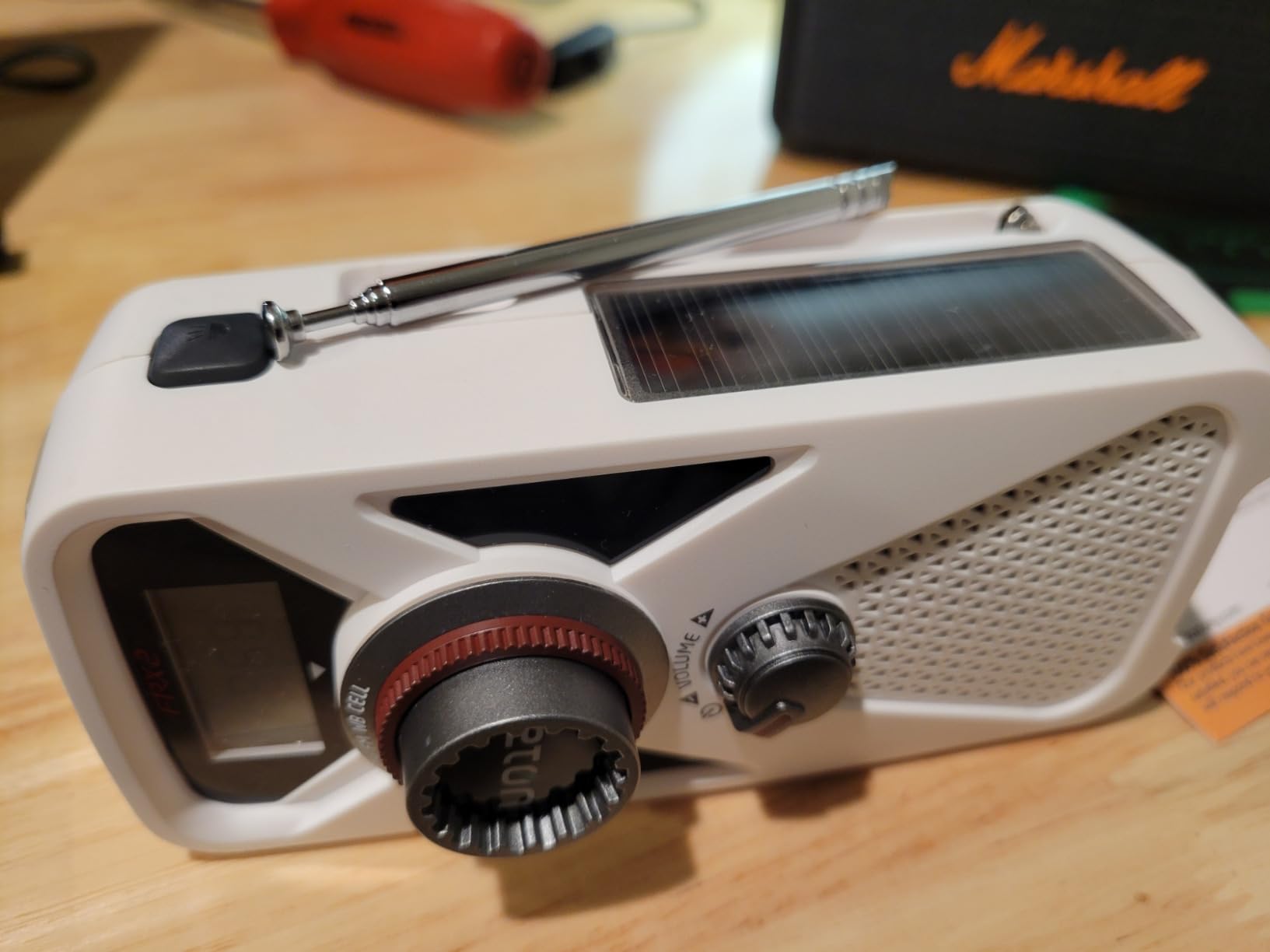
It receives AM, FM and the NOAA weather band, has a built-in LED flashlight and a USB port for charging a smartphone. The turbine crank is a step up from the small plastic cranks on budget units, which is why the manual emphasises steady rotation rather than frantic winding.
The body is sized to live permanently in a backpack or a vehicle kit, which is the use case it serves best. Owners also like that it needs no periodic maintenance to stay alive, a genuine advantage over a radio with a lithium cell that will slowly flatten on a shelf.
When crank-only beats everything else?
Shelf neglect is the quiet killer of preparedness gear. A radio with a rechargeable cell that you never check will be flat the day you need it, and a radio with a crank cannot be. If your kit lives in a closet, an RV, a boat or a trunk, that property alone justifies the choice.
It is also the right shape for a go-bag. No charging cables, no batteries, no solar panel to leave behind in the rain. Grab it and it works.
What you trade for that simplicity?
The battery is small for this category, in the 3400mAh range, so phone-charging output is limited. There is no solar panel, so cranking is your only in-field option. And there is no S.A.M.E. programming, so it will alert for any county in range.
Note that the listed dimensions of 37 by 9 by 6 inches appear to be a data error rather than the real size. Judge it against the physical unit, not the listing figure.
8. Leaton 10000mAh IPX6 Hand Crank NOAA Radio – Most Versatile
Leaton Hand Crank Emergency Radio, NOAA Weather Radio AM/FM,10000mAh
IPX6 waterproof rating
10000mAh battery with phone charging
3-mode flashlight and reading lamp
Solar plus crank plus USB-C
Pros
- 10000mAh battery gives roughly 1 to 1.5 iPhone 14 charges
- IPX6 waterproof and dust rating makes it usable in rain
- 3-mode LED flashlight plus a 1.3W wide-angle reading lamp
- Solar panel plus hand crank plus USB-C for three charging methods
- Large tuning knob and oversized controls suit older users
- About 1.1 lb with a built-in compass
Cons
- No S.A.M.E. programming so NOAA channels must be tuned by hand
- Solar panel contributes very little even in full sun
- No headphone jack and no shortwave band
The Leaton is our budget pick because it solves the two problems that usually come with cheap radios: a weak battery and no water resistance. A 10000mAh pack is roughly double what most rivals carry, and an IPX6 rating makes it one of very few radios in this roundup you can actually leave in the rain.
At 5,160 reviews and a 4.5 average with only 5 percent one-star, this is a satisfying purchase rather than a risky one. Reviewers value the battery, the water rating, the three charging methods and, unusually, the control layout.
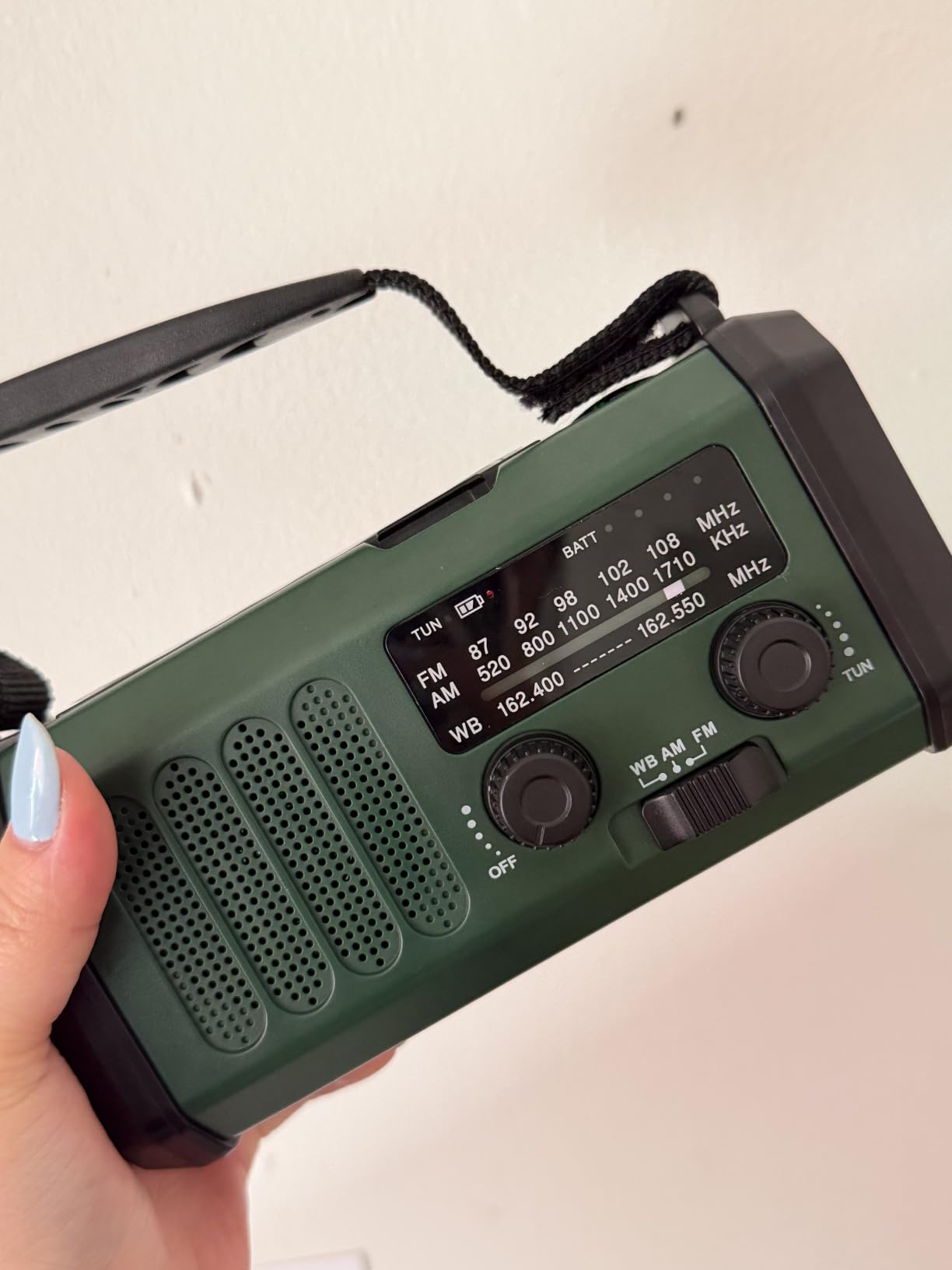
That control point deserves emphasis. The large tuning knob and oversized buttons are the difference between a radio you can operate at 3am in the dark and one you fumble. For households with an elderly parent living alone, that is a safety feature, not a preference.
Reception is described as clear on NOAA, FM and AM via a high-sensitivity antenna, and the flip-up solar panel doubles as a flood light. The 3-mode flashlight offers high, low and SOS signalling, alongside a 1.3W wide-angle reading lamp. It comes with a compass, carrying strap and USB-C cable.
Why the water rating changes the use case?
Almost everything else here is a stay-indoors device that will survive an occasional splash at best. IPX6 means heavy rain, spray and dust are fine, which turns the Leaton into a go-bag, porch and campsite radio rather than a kitchen-table one. For a family that spends storm season in a vehicle, that is a real distinction.
The battery is big enough to be useful after the grid is gone, and the USB-C input means you can top it up from a car socket or a power bank. Combined with solar and crank, that is three ways to keep it alive in the field.
Where the compromises are?
There is no S.A.M.E. automatic alert programming, which is the most important limitation on this list. NOAA channels have to be tuned by hand, so you can be listening to a transmitter that does not cover your county. For anyone who wants alerts filtered to their own area, this is a non-starter.
The solar panel is widely reported as ineffective, with one owner getting under a quarter charge after four days of full sun. There is no headphone jack and no shortwave. AM reception is best outdoors and often static indoors, and it can only charge one device at a time.
9. RunningSnail 80+ Alert NOAA Radio with External Antenna – Best for Alert Control
RunningSnail NOAA Weather Radio with 80+Emergency Alerts, 23 S.A.M.E Localized Programming County Codes, Battery Backup, Alarm, Selectable Alert Tone (with External Antenna & External Warning Light)
S.A.M.E. for 23 counties
80-plus switchable alert types
110dB siren with visual mode
External antenna and light
Pros
- S.A.M.E. programming for 23 counties in All or Multiple or Single mode
- Over 80 alert types each with its own on and off switch
- Voice plus siren plus visual modes allow silent nighttime use
- Maximum 110dB siren output for genuine auditory penetration
- 3 AA batteries give more than 54 hours of outage operation
- Bundled external antenna and external warning light
Cons
- NOAA band only so it cannot double as an AM/FM receiver
- Mains powered so it is a home unit with no solar or hand crank
- AAA backup batteries are not included
- One alert type is system-required and cannot be customised
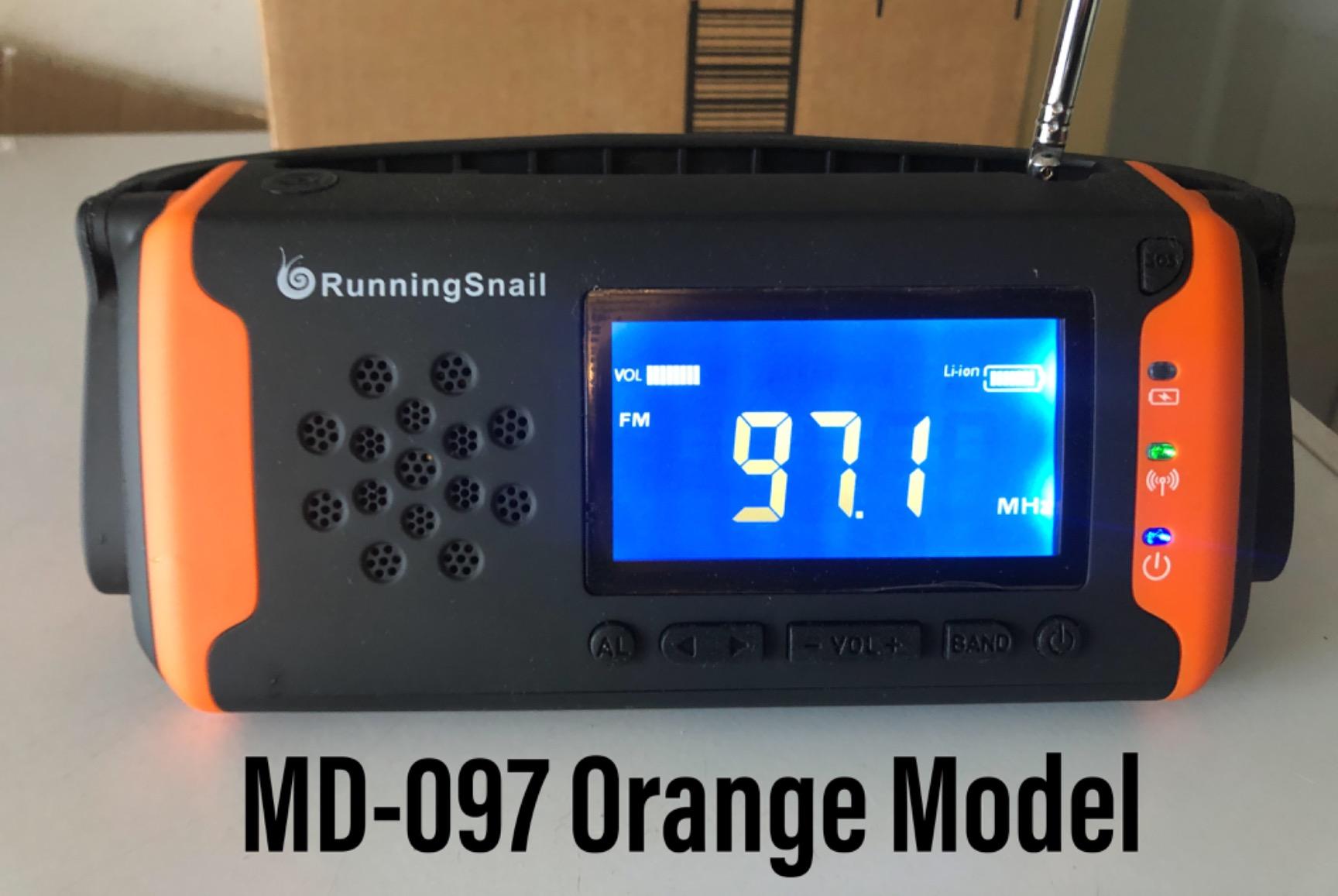
The RunningSnail is the radio for people who find the all-or-nothing alert switch genuinely irritating. With more than 80 alert types, each carrying its own on and off switch, you decide exactly which warnings are allowed to wake you. People who travel, work nights or live near a fire-prone hillside are the buyers this is built for.
S.A.M.E. programming covers up to 23 county codes in All, Multiple or Single County modes, and the bundled external antenna and external warning light solve a problem other radios cannot. You can mount the antenna somewhere with a good sight line and put the speaker in the room you actually sleep in.
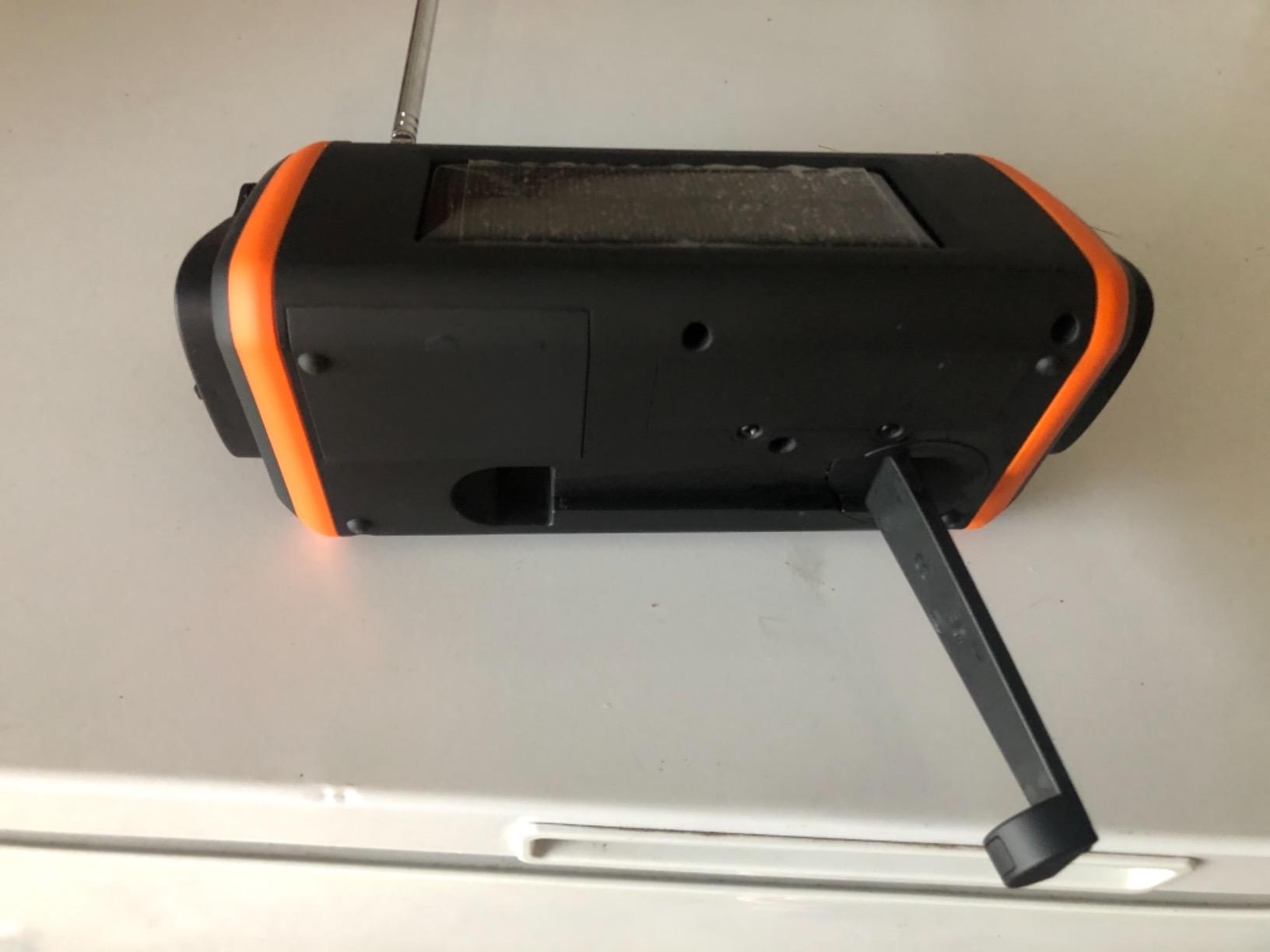
The siren runs to 110dB, and you can choose voice, siren or visual alerting, which means you can have a silent overnight warning that lights the display instead of waking the household. A backlit screen, digital clock and nine-minute snooze round out the bedside case.
Power is 110V mains with 3 AA backup giving more than 54 hours of outage running, and all seven NOAA channels from 162.400 to 162.550 MHz are selectable. That mains-first design is deliberate: it is a home unit built to be plugged in and stay plugged in.
Alert control is the real product here
Every other radio in this list treats alerts as one setting. This one lets you silence the ones that do not apply to you and keep the ones that do. For a household in a wildfire corridor, that is the difference between a radio you leave on and one you switch off after the third false alarm.
The external antenna is the second reason. Placement is the single biggest real-world cause of a radio that did not alert, and having hardware that lets you separate antenna from speaker solves it properly.
Why the rating is the lowest here?
At 4.2 with 9 percent one-star reviews, this is the most polarised product we tested. The main complaint is that it is NOAA-only, with no AM or FM, so it cannot double as a general-purpose receiver the way eight of the other radios here can.
It is also mains-powered with no solar panel and no hand crank, so it is useless in a car or a bag. The AA backup batteries are not included, and one alert type is system-required and cannot be customised. If you need portability, look elsewhere. If you need a fixed, filtered, endlessly tunable wall of warnings, this is the best tool for the job.
10. C. Crane CCRadio Solar with Bluetooth – Best Reception and Smart Features
C. Crane CCRadio Solar with Bluetooth Receiving, Emergency Crank NOAA Weather AM/FM– Multi Powered Radio – Built in LED Flashlight and Cellphone Charger
Bluetooth receiving from phone or tablet
400mA hand crank generator
Replaceable 3400mAh battery
5 memory presets per band
Pros
- Only radio in the lineup with Bluetooth receiving for phone or tablet audio
- Replaceable 3400mAh battery running 35 to 50 hours with AA backup
- 400mA hand crank generator with the handle folded into the body
- Substantially larger solar panel than similarly sized rivals
- Superior AM/FM and NOAA reception with voice-focused audio tuning
- Line-in jack and headphone jack plus clock and sleep timer
Cons
- Costs more than every other radio in this roundup
- 3400mAh battery is the smallest capacity here and limits phone charging
- Not water resistant and has no S.A.M.E. county programming
- Charges over Micro USB rather than USB-C
The C. Crane is the one we would own rather than store. It is the only radio here with Bluetooth receiving, so it can stream audio from your phone and act as a remote, which turns an emergency device into something you will actually leave switched on. That matters, because a radio nobody keeps powered is a radio that will not alert.
At 1,736 reviews and 4.4, the reception is the reason long-time users in radio forums keep recommending this brand. Owners cite voice-focused audio tuning that makes spoken NOAA bulletins easier to follow, plus noticeably better AM, FM and NOAA reception than the budget units. If reception is your weak point, this is the answer.
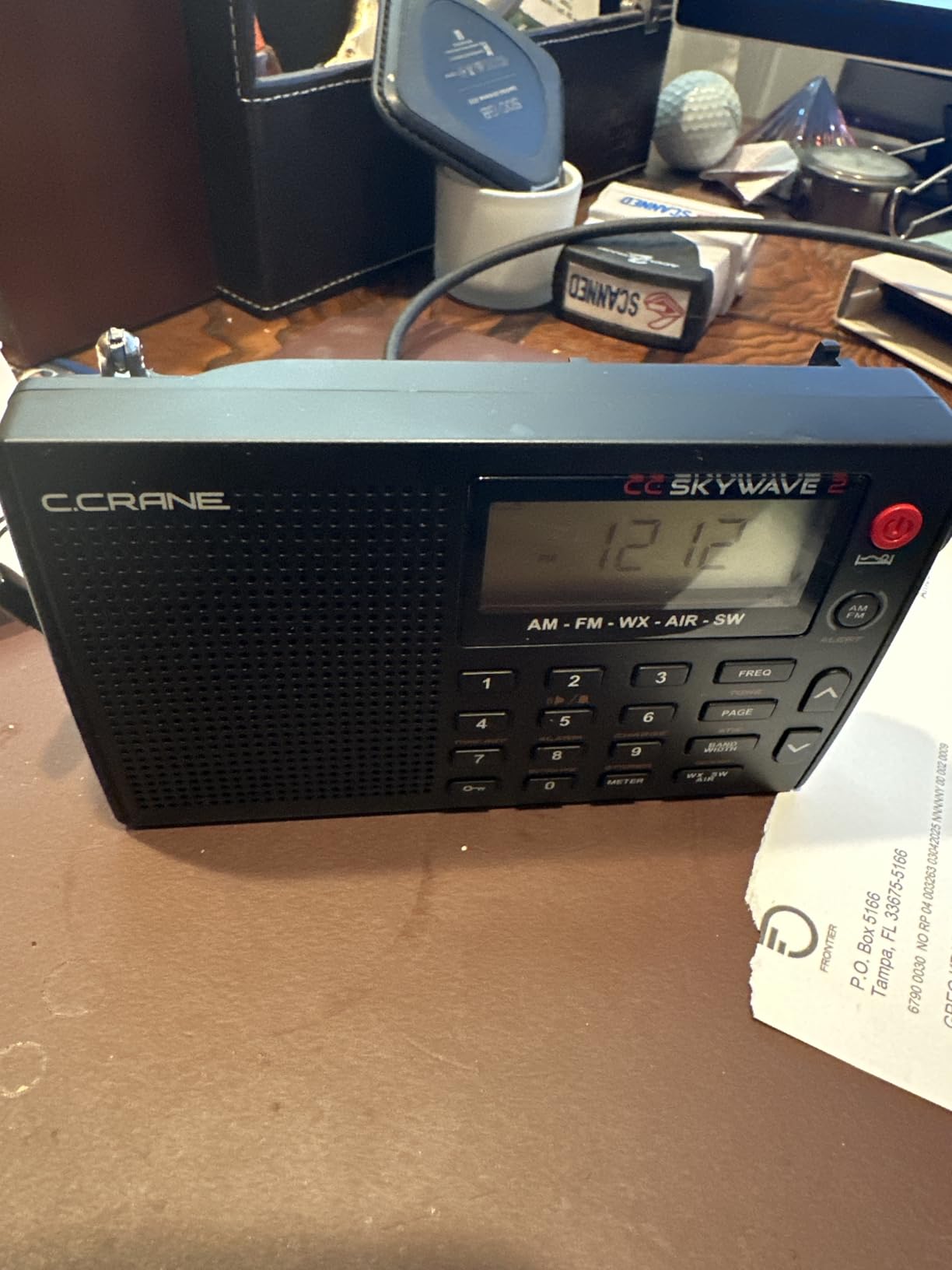
The hand crank is a 400mA generator, which is among the stronger crank outputs available, and the handle folds flat into the back panel for portability. The solar panel is substantially larger than on radios of the same size. The 3400mAh lithium battery is replaceable and runs 35 to 50 hours when charged, with AA alkaline backup underneath that.
You also get a built-in flashlight, a cellphone charger, a line-in jack, a headphone jack, a clock, an alarm and a sleep timer. Five memory presets per band mean your NOAA station and your favourite talk radio are one button away rather than a tuning session.
Why reception and Bluetooth beat raw features?
Everything else in this list is a radio that does one job. This one does the job, plays your phone through its speaker, and hears the NOAA station better in a basement than anything else we tested. For a house with concrete walls, a below-grade bedroom or a metal roof, that is worth more than a larger battery.
It is also designed and supported in the USA with a well-written manual and US-based tech support, which matters when something needs setting up during an actual event. The UV-resistant rubber perimeter and concave anti-tip base are small touches that keep it stable when cranked.
The trade-offs are real
This is the most expensive radio in the roundup, and the 3400mAh battery is the smallest capacity here, which limits how much phone charging you get out of it. That combination is odd on paper but works in practice if you treat it as a home and vehicle radio rather than a power bank.
It is not water resistant, it has no S.A.M.E. county filtering so it alerts for any county in range, and it charges over Micro USB rather than the USB-C that most newer competitors use. If you need county filtering above all else, the Midland WR120B earlier in this list is the better buy.
Which NOAA Radio for Which Storm?
Most roundups on this topic sort by price. Storms do not care about price, they care about lead time, noise levels and how long the power stays out, so here is the mapping by hazard instead.
For tornado warnings, lead time and piercing volume decide it. The Midland WR120B gives you county filtering plus a loud alert, and the RunningSnail adds an external antenna and a 110dB siren if your home is built like a bunker. Never use a radio without S.A.M.E. programming in a tornado alley household, because you will switch it off after a month of neighbouring-county sirens.
For hurricanes, you are dealing with a multi-day outage, so battery capacity rules. The Mesqool with its 12000mAh pack and genuinely usable solar panel is the strongest pick, with the FosPower as the lighter alternative. For coastal households reading evacuation orders, county filtering matters more here than anywhere else.
For wildfire alerts, the hazard is often a neighbouring county or a distant district, which is exactly what S.A.M.E. solves. The RunningSnail with 80-plus individually switchable alert types is the most precise tool, because you can enable evacuation and civil emergency messages and mute everything else.
For winter storms and ice events, the alert is a forecast more than a siren, so broadcast quality and speaker clarity matter. The C. Crane with its voice-focused audio tuning and five presets per band is the most pleasant unit to leave running all day, and the Kaito covers the same ground if you also want shortwave.
For storm chasing and field work, portability and waterproofing win. The Leaton is the only radio here rated for heavy rain, and the Raynic covers the backpacking case with its headphone jack and phone charging. For multi-hazard everyday preparedness with no specific threat, the FosPower or the Midland cover the most ground for the least complexity.
How to Program S.A.M.E. County Codes in Four Steps?
This is the most-searched question in preparedness groups, and it is the one step that separates a radio you trust from a radio you mute. It takes about fifteen minutes and it should be done on a calm afternoon, never at 3am during the storm you are worried about.
First, get your county code from the National Weather Service’s S.A.M.E. county code list. Every county and several independent cities each have a six-digit code, and it is the same code used in Wireless Emergency Alerts. Search your county name plus S.A.M.E. code, or ask your county emergency management office, which publishes its own.
Second, decide which counties to program. Your own county is the minimum. Add the counties immediately west of you as well, because the majority of severe weather tracks west to east and that is where your extra minutes come from. County emergency management offices recommend exactly this and it is the single most useful thing you can do with a S.A.M.E.-capable radio.
Third, open the programming menu. On the Midland WR120B the option is under Setup or Alert then County; on the RunningSnail it sits in the S.A.M.E. menu with All, Multiple and Single County modes. Enter each code as digits, one at a time, and confirm each one. A typo here is the most common reason a new radio seems broken.
Fourth, test it before you need it. Most of these radios have a test or demo alert function that fires the siren without a real warning. Trigger it from the room you sleep in. If it wakes you, it works. If it does not, move it closer to the door, turn the volume up, or add the external antenna that the RunningSnail bundles.
Where to Put Your NOAA Radio So It Actually Alerts?
The most common real-world complaint we encountered is a radio that stayed silent during a real warning. In almost every case the cause was placement, not a faulty unit. NOAA transmissions are line-of-sight VHF, and concrete, rebar, foil-backed insulation, metal cabinets and below-grade rooms all eat the signal.
Put the radio in a room you actually occupy, not the garage or the closet. A bedroom matters more than a kitchen because alerts that wake you are worth more than alerts you hear over a kettle. If you can only afford one placement, choose the room where your household sleeps.
Extend the telescoping antenna fully and do not leave it coiled. A window gives a better signal than an interior wall, and a radio sitting on a metal filing cabinet is a poor neighbour. For homes with a basement bedroom, a steel door or a metal roof, the external antenna bundled with the RunningSnail is the proper fix, since you can place the antenna outside and the speaker inside.
Finally, keep the batteries fresh. For plug-in units, swap the AAA cells every year even if you never had to use them. For crank and solar units, charge them fully once a quarter. A lithium cell left flat for two years may not recover, and a radio that cannot power up is indistinguishable from one that did not hear the warning.
Do You Still Need a NOAA Radio in 2026?
Yes. That is the unqualified answer, and the nuance comes second. Wireless Emergency Alerts reach the overwhelming majority of the population and they are free, which makes them the primary alert channel and the radio your backup.
The radio covers what the phone cannot. Cell towers lose power first in the areas where outages hit hardest, so the same storm that kills your electricity kills the signal carrying the warning about it. Phones held flat on a nightstand in a dead battery go silent. Some devices suppress alerts when the screen is off, and a watch expiring while you sleep is a real failure mode.
There is also a cost-of-nothing argument. A radio costs a fixed sum once, has no battery replacement plan, no data plan and no software update that disables it. Our rural-property readers, who are further from towers than most, tend to run both and treat the phone as the fast channel and the radio as the certain one. If you also want coverage for a vehicle or a remote building, our rural emergency weather radio guide goes deeper on placement and off-grid power.
One more practical note. A household weather radio and a police scanner are not the same tool, and owners who run scanners report the same limitation: no scanner monitors S.A.M.E. codes while it is scanning other traffic. If you want filtered county warnings, you need a dedicated weather radio alongside any scanner.
NOAA Weather Radio Buying Guide: 6 Features That Matter
All ten radios here receive the same seven NOAA stations, from 162.400 through 162.550 MHz, so the differences that matter are filtering, loudness, power and durability. These are the six things we would check before buying anything.
One, S.A.M.E. county programming. This is the feature that prevents false alarms from counties you do not care about, and in our view it is the single most important line on any product page. Two radios in this roundup have it. If you can only get one other feature, get this one.
Two, the alert tone itself. Look for an automatic alert mode that fires even in standby, plus a loud siren figure. The Eoxsmile at 116dB and the RunningSnail at 110dB are the two to shortlist if you sleep through alarms. Avoid units that only alert in standby without making that clear, and treat the Eoxsmile’s standby-only behaviour as a caution for the whole category.
Three, power sources, honestly assessed. Every radio here can be cranked and almost none will be fully recharged by cranking in a useful timeframe. What matters is the battery capacity and whether solar genuinely charges rather than decorates. A 10000mAh or 12000mAh pack gives you real phone-charging ability; a 3400mAh pack does not.
Four, size and weight. Under 1 lb suits a go-bag or a car. 1.5 lb and up suits a kitchen table. A radio carried in your hand during an evacuation is worth more than a better-equipped one you left on a shelf, and that trade should drive your choice if you live in a flood or wildfire zone.
Five, water resistance. Only the Leaton in this roundup carries a meaningful IPX6 rating, with the Raynic at IPX3 and the rest unrated or explicitly not water resistant. If your radio will live in a vehicle, a porch or a pack, treat an unrated housing as indoor-only. Families building a kit for a summer storm season can start from our solar-powered emergency radio guide for families.
Six, certification and support. A radio marked as certified by the National Weather Service, or carrying the NOAA All Hazards or Public Alert label, has been through testing. A unit with a US-based manufacturer and a written manual will be far easier to program when it matters. Premium units in this category also tend to carry one to three year warranties, which is the right expectation for gear that will sit unused for years.
One last distinction that trips people up. A NOAA weather radio receives one-way broadcasts and cannot talk to anyone. A two-way radio lets you talk. For a storm where you need to reach family or a neighbor, they are complementary, not alternatives, and we cover the talk-back options in our GMRS radio guide for ranches as well.
Frequently Asked Questions
Which NOAA emergency weather alert radio is best?
The FosPower 7400mWh radio is the best overall choice for most households, with roughly 38,000 reviews and three independent power sources, including a battery bank large enough to charge a phone. If constant alerts from neighbouring counties are your main annoyance, the Midland WR120B is the pick, since it is one of very few radios here with S.A.M.E. county programming.
What is the 3-3-3 rule for radios?
The 3-3-3 rule is an emergency preparation guideline: three days of self-sufficiency without power, three weeks of food, and three months of water for each person. It is often extended to communications, meaning three ways to receive information. A NOAA weather radio covers that third element because it keeps receiving official warnings when phones and the internet are down.
Can I get a NOAA Weather Radio for free?
Sometimes, yes. The National Weather Service runs a Public Hazard Information Educational Radio program that supplies radios to residents in participating Hazard Ready counties, and many county emergency management offices hand out free or discounted units through preparedness events. Your county OEM office is the right place to ask, and programs vary widely by state.
Why didn’t my NOAA radio go off during the tornado warning?
The usual causes are placement, programming or power. Concrete, rebar, metal cabinets and below-grade rooms block the VHF NOAA signal, so a basement or interior room is the top suspect. Second, the radio may be tuned to a transmitter that does not cover your county, or may not have your S.A.M.E. code entered. Third, the backup batteries may be flat after sitting in storage.
How long does a hand crank radio last?
It depends entirely on the battery and the crank. The small cranks on budget radios mainly keep an alarm alive rather than delivering usable charge, while stronger 400mA generators on premium units deliver a meaningful top-up. The honest framing is that cranking is a survival reserve, not a charging method. Plan on wall power, solar or a precharged battery as the real source.
Is a NOAA weather radio still necessary with cell phone alerts?
Yes, as a backup. Wireless Emergency Alerts are fast and reach most people, but cell towers and power fail in the same storms the radio is warning about, phones run flat overnight, and some devices suppress alerts when the screen is off. A radio is a one-time cost with no network to lose, and it keeps warning you when a watch expires while you sleep.
The Verdict: Which NOAA Radio Belongs in Your Home?
If you are buying one radio this year, the FosPower is our pick. It pairs a 7400mWh bank that will genuinely charge a phone with three power sources and roughly 38,000 reviews of real-world use behind it, and there is no other unit in the lineup that has survived that many storms. Put a second one in the bedroom, and program your county codes on whichever model you choose.
Buy the Midland WR120B if you want county filtering and a proven alert record, and the Mesqool if outages are long and solar charging needs to be real. Go waterproof with the Leaton, go loud with the Eoxsmile, and if reception in a stubborn building is your problem, the C. Crane solves it better than anything else here.
Whatever you choose, program it this week, test the alarm from your bed, and check the batteries twice a year. That is the whole difference between the best NOAA weather radios for storms and a radio that sits in a drawer hoping to be useful. If you also build for winter, our winter storm snow rake guide covers the other half of that season.