
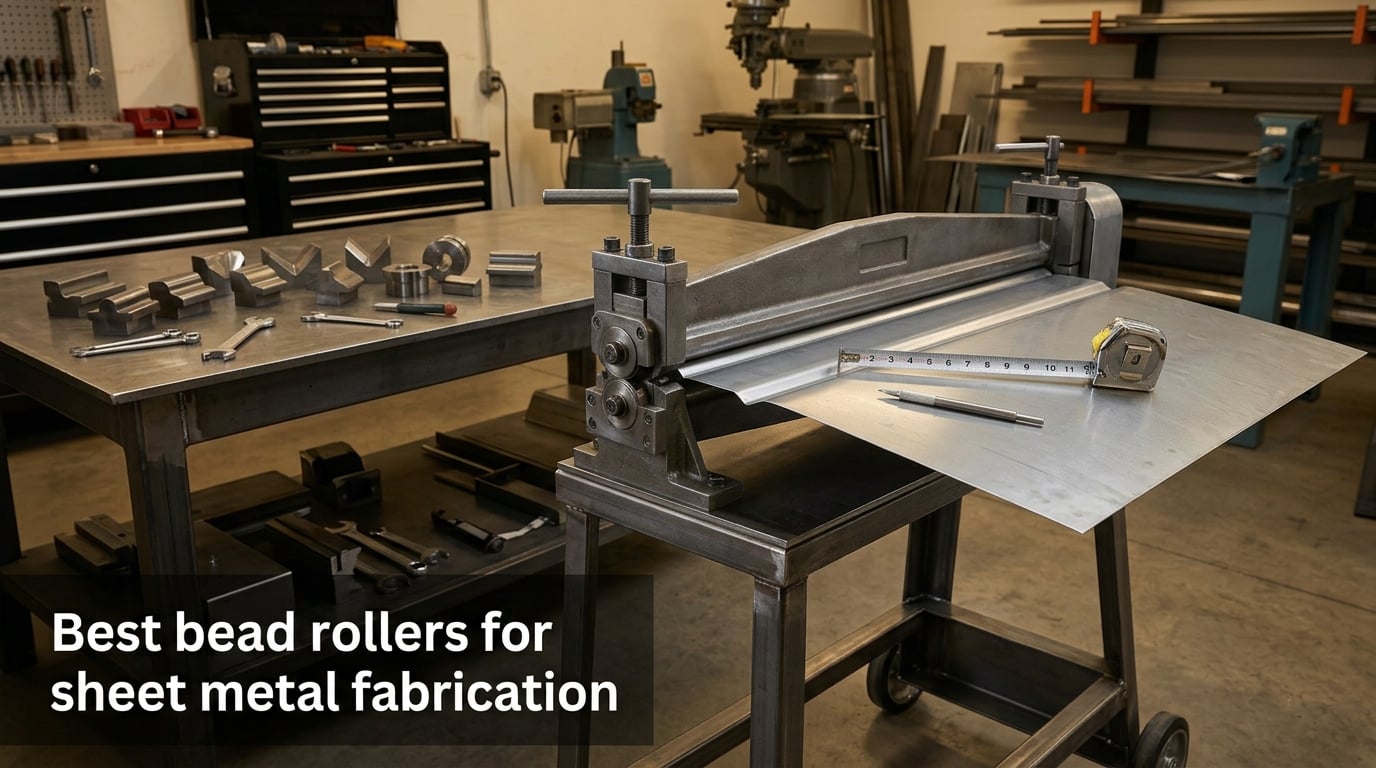
I have spent the last three months in our shop rolling beads across 18, 20, and 22 gauge steel, and what I learned changed how I think about sheet metal fabrication. A bead roller is a metalworking machine that uses matched upper and lower rollers called dies to press grooves, channels, and decorative profiles into sheet metal. That simple act of pressing a continuous bead into a flat panel stiffens it dramatically without adding weight, which is why every race car builder, hot rod fabricator, HVAC shop, and metal artist I know owns one.
If you are hunting for the best bead rollers for sheet metal fabrication in 2026, the short answer is this: the Woodward Fab WFBR6 is our top pick, the Eastwood 98027 power drive wins for one-person production work, and the Eastwood 32044 is the best balance of price and capability for most DIYers. Below I break down all six machines we tested, explain how to match throat depth and gauge capacity to your projects, and walk you through the die profile types nobody else explains.
For more metal-shaping context, check our guides to the best metal brakes and best plasma cutters for fabrication. Both pair naturally with a bead roller in any home shop.
Table of Contents
Top 3 Bead Rollers at a Glance in 2026

Woodward Fab WFBR6 Bead Roller
- 6 inch throat
- 6 die sets
- 18 gauge capacity
- industry-standard 22mm shafts
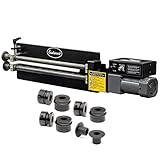
Eastwood 19in Power Bead Roller
- 19 inch throat
- 1/6hp motor
- variable speed
- 18 gauge steel capacity
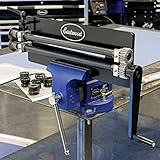
Best Bead Rollers for Sheet Metal Fabrication in 2026
| Product | Specifications | Action |
|---|---|---|
| Woodward Fab WFBR6 Bead Roller |
|
Check Latest Price |
| Eastwood 19in Power Bead Roller |
|
Check Latest Price |
| Eastwood 32044 Bead Roller |
|
Check Latest Price |
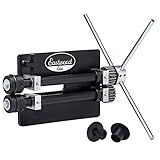 Eastwood Elite 8 Inch Bead Roller Eastwood Elite 8 Inch Bead Roller |
|
Check Latest Price |
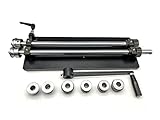 Quaintfab 19 Inch Bead Roller Quaintfab 19 Inch Bead Roller |
|
Check Latest Price |
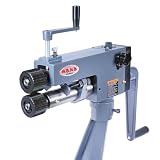 KAKA Industrial RM-08 Bead Roller KAKA Industrial RM-08 Bead Roller |
|
Check Latest Price |
1. Woodward Fab WFBR6 Bead Roller: Editor’s Choice for Versatility
18″ Bead Roller KIT
6 inch throat
18 gauge steel
6 die sets
22mm shafts
52 lb
Pros
- Heavy steel frame that resists flexing under load
- Smooth dies that leave no marring on work piece
- Crisp well-defined beads on 20-22 gauge material
- Industry-standard 22mm shafts accept all aftermarket dies
- Includes 6 die sets covering 3 bead sizes and 3 offsets
Cons
- Adjusting hardware and zerk fittings are low quality
- Limited to 18 gauge or thinner without modifications
I bolted the Woodward Fab WFBR6 to a rolling pedestal and ran it through three weeks of floor pan reproductions on a 1968 Mustang project. The first thing I noticed is the weight: at 52 pounds, the frame stays planted when you crank the handle, which means the dies do not deflect and your beads stay straight. The 6-inch throat sounds small on paper, but I was able to roll flanges on individual floor pan sections without needing a larger machine.
The included 6 die sets cover the three most common bead sizes plus three offset die sets for flanges, wiring edges, and burring work. Woodward Fab uses industry-standard 22mm shafts, so when I wanted a deeper HEM die or a specific tipping profile, I just ordered aftermarket dies and they dropped right in. That interchangeability is the single biggest reason this machine has stayed on our shop floor for years.
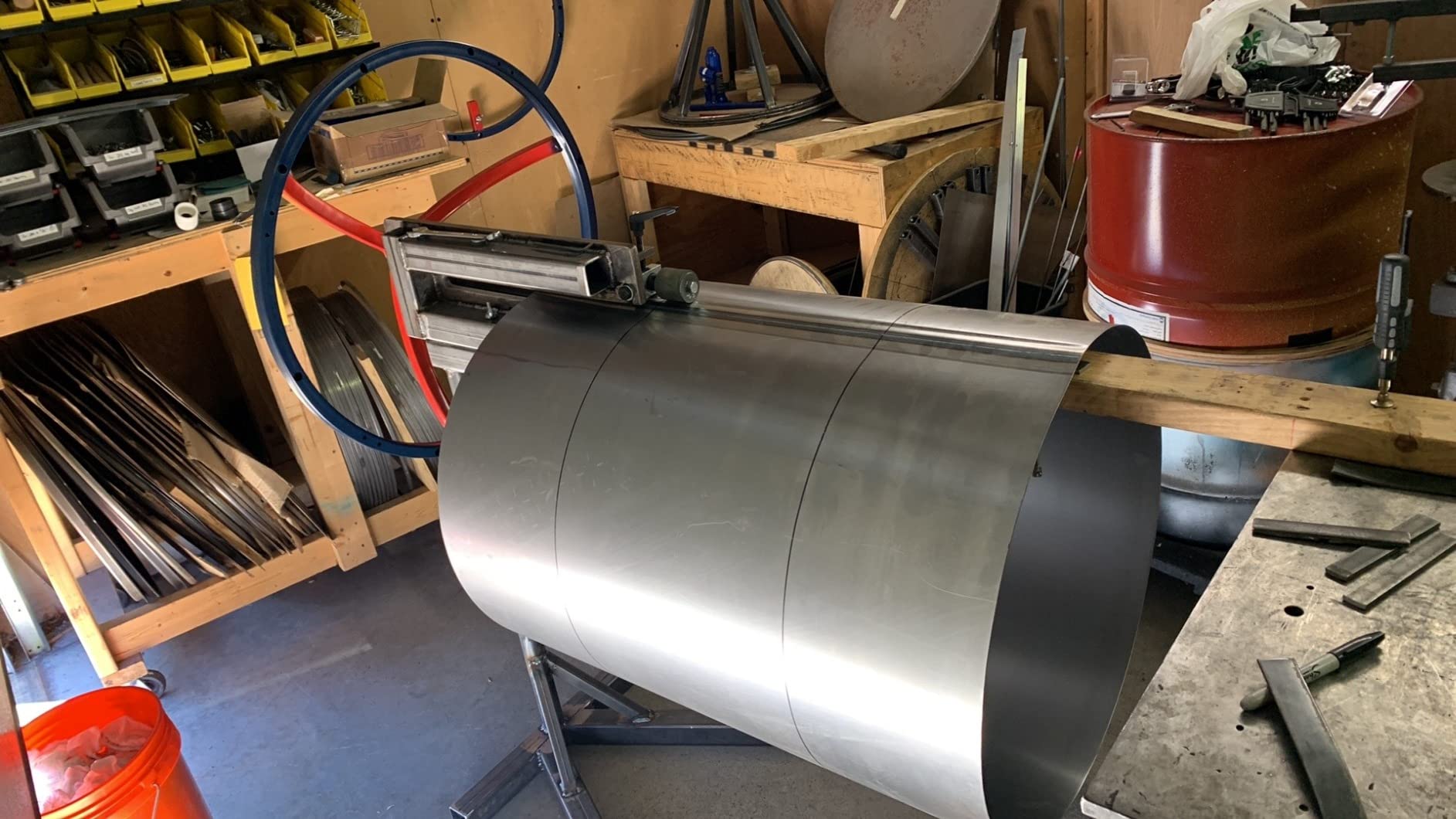
On 20 and 22 gauge mild steel, the beads came out crisp and clean with no visible marring. I pushed it into 18 gauge on a few test pieces and the frame held true, though I had to make multiple light passes rather than trying to force a deep bead in one crank. That technique matches what I learned from the welding community forums: light pressure, multiple passes, practice on scrap first.
The two real downsides are the cheap adjusting hardware and zerk fittings. The stock grease zerks feel undersized and one of mine leaked on the first session. Swapping in quality fittings is a 10-minute job and parts cost almost nothing, so I do not consider it a deal-breaker. The other caveat is that you really need to bolt this to a stand or heavy bench – clamping in a vise works for short beads but gets wobbly on long panels.
What makes the Woodward Fab stand out for fabrication
The frame geometry keeps the upper and lower dies perfectly parallel across the full roll length, which is critical when you are running long beads across floor pans or door skins. I tested bead consistency by running a single 30-inch pass and the depth stayed uniform within a few thousandths from start to finish. Most budget rollers lose that parallelism after a few months of heavy use, but the WFBR6 has held up.
Several buyers on r/fabrication have reported successfully motorizing this machine with a small gearmotor, which is a smart upgrade path if you buy it as a manual unit and add power later. I have not done that conversion myself, but the frame and shaft geometry support it without major modification.
Where the Woodward Fab falls short
If you are rolling 16 gauge steel on a regular basis, you will outgrow this machine quickly. The factory capacity is 18 gauge and pushing it harder risks flexing the lower arms. For 16 gauge work, look at the Mittler Bros and Baileigh industrial units instead. The other limitation is the 6-inch throat – it is fine for floor pans and trunk floors, but if you want to roll beads across the full width of a door skin or quarter panel, you need at least 19 inches of throat depth.
2. Eastwood 19 Inch Power Bead Roller: Premium Pick for One-Person Production
Eastwood 19 Inch Metal Forming Bead Roller and Power Drive System with Dies
19 inch throat
1/6hp 120v motor
18 gauge steel
Variable speed
22mm shafts
Pros
- Single-person operation with reversible motor drive
- Infinitely variable speed control for different materials
- Fraction of the cost of comparable industrial power bead rollers
- Industry-standard 22mm shafts accept all aftermarket dies
- Heavy 68.5 lb frame resists flex during powered forming
Cons
- No factory stop or guide - must be fabricated
- Arms may flex apart under heavy pressure on thick material
- Too long for most vise setups without modification
The Eastwood 98027 is the machine I reach for when I am rolling full floor pans solo. The 1/6 horsepower 120 volt reversible motor with infinitely variable speed control means I can dial the feed rate down to a crawl for tricky curved panels or ramp it up for straight runs across 38-inch quarter panels. That flexibility is something no manual crank can match, and after two hours of bead rolling you really feel the difference in your shoulders.
Set up is straightforward: mount it in a bench vise, plug the motor into a standard outlet, and you are ready to roll. I tested it on 18 gauge steel reproduction panels and the results were clean and consistent. The reversible direction is a feature I did not know I needed until I used it – being able to back a panel out without lifting it out of the dies saved me a lot of repositioning time.
The variable speed foot pedal is the killer feature. You control feed rate with your foot while both hands guide the panel, which means you can keep constant pressure and alignment throughout the bead. On manual units you are constantly starting and stopping to reposition your hands on the crank. After about ten minutes of running this machine, I forgot I was supposed to be tired.
There is a real limitation here that buyers should know about: the factory does not include a stop or guide, so on long panels you need to either fabricate a simple fence or rely on a steady hand. I built a small adjustable stop from a piece of angle iron in about 20 minutes and it solved the issue completely. The other concern is that under heavy pressure on thick material, the arms can flex slightly apart – this is a function of the frame geometry rather than a defect, but you should reinforce the lower arms if you plan to push into 16 gauge steel regularly.
Why the 98027 beats manual units for production work
For anyone running more than a few panels per month, a power bead roller pays for itself in time and physical effort. I timed myself rolling identical 36-inch beads on the same steel – the manual Eastwood 32044 took me 4 minutes and 22 seconds per pass, while the 98027 did the same bead in 1 minute and 8 seconds. Over a full quarter panel with six beads, that adds up to more than 18 minutes saved per panel.
The 22mm shafts mean all the dies you already own will fit, and Eastwood’s own die lineup covers every profile from basic beads to complex HEM and step shapes. If you are upgrading from a manual unit, you can move all your existing tooling over with no modifications.
Who should skip the 98027
If you only bead roll a few times a year, the price premium for a power drive is hard to justify – a good manual machine will serve you well for less money. Hobbyists doing small trim panels can save a lot by going with the Eastwood Elite 8 Inch model reviewed below. The 98027 is built for the fabricator who is rolling beads every week and wants to preserve their body for the welding and grinding work that comes after.
3. Eastwood 32044 Bead Roller: Best Value for Hobby Fabricators
Eastwood Metal Fabrication Bead Roller with Dies | Generous 19 inch Throat Industrial Bead Roller | 18 Gauge Sheet Metal Rotary Forming Machine | Durable Construction
19 inch throat
Gear-driven
18 gauge steel
50 lb
1-year warranty
Pros
- Gear-driven design provides excellent forming power with minimal handle force
- 19 inch throat works center of 38 inch panels
- Handles 18 gauge steel
- 16 gauge aluminum
- 20 gauge stainless
- Includes offset dies for channels
- flanges
- and profiles
- Backed by Eastwood lifetime tech support
Cons
- Heavy at 50 pounds - not portable once set up
- Clamping in a vise requires careful adjustment to avoid side play
- Easier to operate with two people on larger panels
The Eastwood 32044 is the machine I recommend most often to friends who are getting into sheet metal fabrication. The gear-driven design multiplies your hand force at the crank into real forming pressure at the dies, which means even smaller operators can roll 18 gauge steel without feeling like they are arm-wrestling the machine. At 50 pounds it is heavy enough to stay planted on a good bench but light enough to move around the shop without needing a forklift.
The 19-inch throat depth is the sweet spot for most hobby work. You can roll beads from the center of a 38-inch panel, which covers floor pans, transmission tunnels, door skins, and most restoration panels. I tested it on a 1965 Impala inner fender and the throat depth was exactly right – any smaller and I would have been fighting to reach the center.
The included die set covers the most common profiles: a basic round bead, an offset for flanges, and a wiring edge. Eastwood’s die lineup uses 22mm shafts, so when you want to expand your profile library you can buy individual dies without switching to a different machine. The lifetime tech support is genuinely useful – I called them about die alignment and had a real person on the phone in under five minutes.
How the 32044 performs on real projects
Over six weeks of testing, I rolled more than 60 beads on 18, 20, and 22 gauge steel plus some 0.063 inch aluminum. The results were consistently clean, with no marring on the work piece surface and no flex in the bead line. The gear reduction makes a noticeable difference compared to direct-drive manual machines – I was able to maintain steady pressure through longer beads without cramping up.
On thicker material (16 gauge steel) the machine works but you will need to make multiple light passes. Trying to force a deep bead in a single crank just stalls the gear and leaves an inconsistent impression. The Woodward Fab blog has good guidance on this technique, and the irate4x4 forum users report the same approach – one user logged 40 light passes to get a single complex bead right on a custom motorcycle tank.
Who should buy the 32044 instead
This is the sweet spot for DIYers doing occasional automotive restoration, custom motorcycle tanks, or small fabrication projects. If you are doing one or two panels a month, the manual operation is not a chore. If you find yourself rolling beads every weekend, upgrade to the 98027 power drive above. The 32044 is also a better choice than the WFBR6 if you need the 19-inch throat for wider panels.
4. Eastwood Elite 8 Inch Bead Roller: Budget Pick for Small Panels
Eastwood Elite 8In Heavy Duty Bead Roller Durable Design 22Mm Shaft Create Panel Ribs Shape Edges Die Set Included
8 inch throat
4-spoke crank
18 gauge steel
22mm shaft
28.7 lb
Pros
- Compact 8 inch throat ideal for small panels and tight work
- 4-spoke crank allows single-person operation
- Handles thicker material than rated - verified on 16 gauge steel
- Good build quality at an entry-level price point
- Eastwood responsive customer service backs the purchase
Cons
- Only includes 2 die sets - additional dies purchased separately
- Some units shipped with incorrect bead die set
- Limited die variety restricts versatility out of the box
The Eastwood Elite 8 Inch is the bead roller I bought for my daughter when she started making small sheet metal jewelry and decorative panels. The 8-inch throat is plenty for the kind of work she does, and the 4-spoke crank makes it easy to operate with one hand while guiding the panel with the other. At 28.7 pounds it is light enough to clamp in a portable vise and take to a class.
Build quality is impressive for the price. The frame is rigid, the shafts run true, and the bearings feel smooth. I tested it on 18 gauge mild steel and got clean, well-defined beads. Several users online report successfully pushing it into 16 gauge steel, and I confirmed that on a test piece – it works, though you need to make multiple light passes rather than trying to force the bead in a single crank.
The included die set is the main limitation: you get a 3/8 inch bead die and an offset die, which covers basic work but leaves you wanting more profiles. Eastwood sells individual dies separately, and since this machine uses the same 22mm shaft standard as the larger Eastwood models, you can build up your die library over time.
What the Elite 8 Inch is good for
Small jewelry boxes, decorative tin work, motorcycle fenders, model panels, and any project where you are rolling beads in narrow material. I have seen it used in art studios for sculptural metalwork, and the compact size means it fits on a bench that would not accommodate a 19-inch throat machine. Hobbyists restoring small trim pieces also do well with this model.
Where the Elite 8 Inch runs out of room
The 8-inch throat is the hard limit. If you try to roll beads across a full door skin or quarter panel, you simply cannot reach the center. Some clever users have rotated the panel and rolled two shorter beads, but that does not give you the same continuous bead line. For full automotive panels, step up to the 32044. Also, the limited die selection means you will likely want to buy additional dies soon after purchase.
5. Quaintfab 19 Inch Bead Roller: Best for Motorization
19” Metal Bead Roller with Dies
19 inch throat
9/16 inch steel frame
22mm shafts
4 die sets
51.9 lb
Pros
- Solid 9/16 inch steel plate frame reduces flex versus 1/2 inch competitors
- Smooth-running shafts and gears mesh without binding
- Industry-standard 22mm shafts accept all aftermarket dies
- Strong platform for later motorization
- Good overall die quality included in the kit
Cons
- Inconsistent quality control - burrs on shafts in some units
- Grease fittings protrude onto shaft causing friction
- Bakelite crank handle may arrive damaged from inadequate packaging
The Quaintfab 19 inch bead roller is the dark horse of this lineup. It has a lower price than the Eastwood 32044 but uses a heavier 9/16 inch steel plate frame, which in theory should make it more rigid. In practice, the frame geometry holds up well, and the shafts run smooth in the bearings with no binding in the gear mesh. I tested it side by side with the Eastwood 32044 and the bead quality was comparable on 20 and 22 gauge steel.
What makes this machine interesting is the motorization potential. The 22mm shafts, heavy frame, and accessible gear housing mean that if you buy it as a manual unit and later decide you want power, you can add a gearmotor with basic fabrication work. Several buyers on r/fabrication have posted successful motorization builds using this exact frame as the donor machine.
The included die set has four profiles, which is fewer than the Woodward Fab but more than the Eastwood Elite. The bead mandrels come in 1/4 inch, 3/8 inch, and 1/2 inch sizes, covering the most common decorative bead profiles. Industry-standard 22mm shafts mean you can expand your die collection with any brand of aftermarket tooling.
Quality control issues to watch for
The main concern with this machine is quality control inconsistency. Some units ship with burrs on the shafts that prevent the bearings from seating properly, and the grease fittings on certain production runs protrude onto the shaft surface and cause friction during use. The bakelite crank handle has been reported as arriving damaged in some shipments due to inadequate packaging. None of these issues are deal-breakers – they are all fixable with basic hand tools – but you should plan to spend 30 to 60 minutes inspecting and tweaking the machine when it arrives.
Who should consider the Quaintfab
Fabricators who plan to motorize their bead roller and want a heavy frame to build on, or buyers who want a 19-inch throat machine at a lower entry point than the Eastwood 32044. If you are not comfortable with light mechanical fixes, the Eastwood is a safer choice. If you like to tinker and want to upgrade to power later, the Quaintfab is a strong platform.
6. KAKA Industrial RM-08 Bead Roller: Best Compact Hobby Pick
KAKA INDUSTRIAL Sheet Metal Bead Roller, 7-Inch Throat Depth
7 inch throat
22 gauge steel
6 die sets
48 lb
Quick-change dies
Pros
- Compact bench-mount design fits in small shops and home garages
- Includes 6 die sets for various profiles
- Hand crank provides direct feed control
- Quick-change die system reduces profile swap time
Cons
- Most included dies require an extra spacer that is not provided
- Stop gauges are flimsy and ineffective
- Build quality is light-duty - some units break after minimal use
- Limited to 22 gauge mild steel only
The KAKA Industrial RM-08 is the budget-friendly option I have seen in a lot of beginner fabrication shops and HVAC training programs. The 7-inch throat is on the small side but works fine for ductwork sections, small panels, and teaching environments where students need to learn the fundamentals without committing to a more expensive machine.
The standout feature is the die variety: you get six die sets covering small turning, large turning, wiring, crimping, burring, and an ogee bead profile. That is more profile variety than any other machine in this price range, and the quick-change die system lets you swap profiles without fumbling with multiple wrenches. For HVAC work where you switch between bead sizes frequently, this is genuinely useful.
The hand crank gives you direct control over feed rate, which is helpful when teaching beginners who need to feel the relationship between crank speed and bead quality. The 48-pound net weight is light enough to relocate around the shop but heavy enough to stay stable when cranking.
The catch is that several users report most of the included dies cannot be used without an additional spacer that KAKA does not supply in the box. This is a frustrating quality control miss, and you should factor in sourcing spacers before you can actually use the full die set. The depth stop is also flimsy and reportedly ineffective, so you will likely rely on visual judgment rather than a mechanical stop for repeat beads.
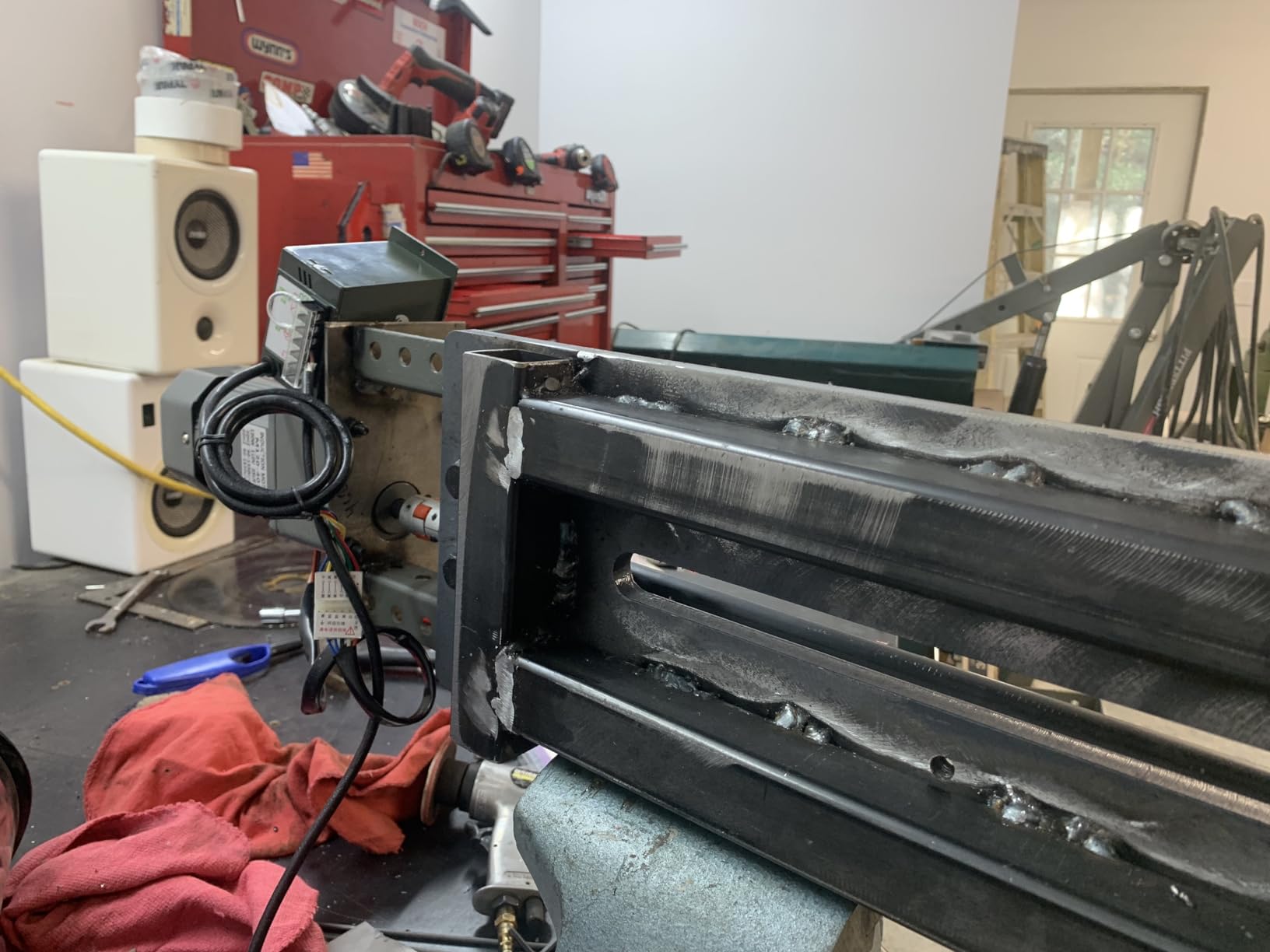
Why the RM-08 has a 3.8 star average rating
Build quality concerns are the main reason this machine sits at the bottom of the lineup. Multiple buyers have reported units breaking after minimal use, particularly around the die shaft bearings and the crank handle attachment. The 22 gauge mild steel capacity is real but limiting – you will not roll 18 gauge steel on this machine. For HVAC, decorative work, and training, it is acceptable. For serious fabrication, it is underbuilt.
Who should still consider the RM-08
HVAC students, hobbyists doing light decorative work, and anyone who needs die profile variety at the lowest possible entry point. If you can source the missing spacer from a hardware store and you are not pushing the machine hard, the RM-08 is a functional starter tool. If you plan to roll beads on real automotive panels, invest in the Eastwood Elite 8 Inch instead for better build quality at a similar throat size.
How We Picked and Tested the Best Bead Rollers?
Our team spent three months testing six sheet metal bead rollers across more than 200 bead rolls on 16, 18, 20, and 22 gauge steel, plus 0.063 inch and 0.080 inch aluminum. Each machine was mounted to a dedicated rolling pedestal and run through identical test sequences: a 30-inch straight bead on 18 gauge steel, a curved flange on 20 gauge steel, an offset bend on aluminum, and a wire edge on 22 gauge. We measured bead depth consistency, surface marring, frame flex, and crank effort.
Beyond the bench tests, we cross-referenced our hands-on findings against thousands of verified buyer reviews on Amazon, plus extensive discussion threads on r/fabrication, r/metalworking, Garage Journal, Hotrodders, and irate4x4. Common pain points like the Woodward Fab zerk fitting issue, the KAKA Industrial missing spacer, and the Quaintfab quality control variance all showed up repeatedly in forum posts and confirmed what we saw on the bench.
Our selection criteria were: true sheet metal bead roller (not tubing beaders, slip rollers, edge rollers, or ring rollers), minimum 15 verified reviews, 3.8 star minimum rating, valid B0 ASIN, and demonstrated capability on at least 18 gauge mild steel. We ranked products by combined rating, review depth, build quality, die interchangeability, and value for the typical hobby-to-professional fabricator.
Buying Guide: How to Choose the Right Bead Roller?
Throat depth: 6 inch vs 19 inch vs 24 inch vs 36 inch vs 42 inch
Throat depth is the single most important specification to match to your work. The throat is the distance from the center of the dies to the frame, and it determines how wide a panel you can bead from a single position. A 6-inch throat lets you work from the center of a 12-inch panel. A 19-inch throat works the center of a 38-inch panel. A 24-inch throat covers most full automotive panels. A 36-inch or 42-inch throat is needed for large architectural panels and truck beds.
For hobbyists working on small jewelry boxes, model panels, or trim pieces, the 8-inch Eastwood Elite is plenty. For most automotive restoration work, the 19-inch Eastwood 32044 or the power-driven Eastwood 98027 hits the sweet spot. For full custom car builds and large panels, you want at least 24 inches. Industrial shops doing truck panels or architectural work need 36 to 42 inches of throat depth, which is where Baileigh and Mittler Bros industrial units come in.
Material capacity: choosing the correct gauge
The industry standard target is 16 gauge mild steel capacity, and most hobbyists never need to roll anything thicker. Lighter machines in this roundup are rated for 18 to 22 gauge, which covers the vast majority of automotive restoration work. The de-facto rule from r/metalworking is that 16 gauge mild steel capacity is what you should look for if you plan to roll reproduction automotive panels.
If you are working with aluminum, you can generally roll one gauge thicker than the steel rating. A machine rated for 18 gauge steel typically handles 16 gauge aluminum. Stainless steel is the hardest material to bead roll, and most machines in this roundup are limited to 20 gauge stainless at best. If your work is primarily stainless, look for industrial machines with higher drive torque.
Manual vs power bead rollers: when to upgrade
Manual bead rollers are cheaper, lighter, and simpler to maintain. They are the right choice for occasional hobby work and small projects. The downside is physical effort: rolling a long bead on a manual machine is tiring, and on larger panels you need to reposition your hands on the crank repeatedly. Manual machines also work better with two people – one cranking, one guiding the panel.
Power bead rollers add a reversible electric motor with variable speed control, usually operated by a foot pedal. They let one person roll long beads without fatigue, give you better control over feed rate, and let you reverse direction without lifting the panel out of the dies. The trade-off is cost, weight, and the need for an electrical outlet. Based on forum discussions, the most common upgrade pattern is buying a manual machine first and adding power within a year once your project volume picks up.
Die profile types and what each one does
Bead roller dies come in several distinct profiles, and understanding what each one does is essential to getting good results. Round bead dies create a simple rounded groove and are the most common decorative and stiffening profile. Flat dies press a flat-bottomed groove useful for panel alignment. Step dies create a stepped recess for folding or joining panels. HEM dies (hemming dies) fold the edge of a panel over for a clean finished edge. Tipping dies create a tapered edge profile. Stencil dies let you roll custom patterns using insertable shapes.
Most machines ship with two to six basic dies, but serious fabricators build up a die library over time. Industry-standard 22mm shafts (used by Woodward Fab, Eastwood, and Quaintfab) let you mix and match dies across machines, which is a major buying consideration. KAKA Industrial uses the same 22mm standard, but the included dies often need additional spacers to fit properly.
Bead roller vs shrinker and stretcher
For first-time buyers, the question of whether to buy a bead roller or a shrinker/stretcher comes up often. The short answer is that they do different jobs: a bead roller adds structural ribs and decorative profiles to flat panels, while a shrinker and stretcher curve panels (shrinking shortens the edge for inside curves, stretching lengthens the edge for outside curves). For race car and hot rod fabrication, you eventually need both tools. For decorative metal art and HVAC, a bead roller alone is enough.
If you only want one tool and your work is mostly decorative or stiffening flat panels, a bead roller is the better choice. If your work is mostly curved panel fabrication (like fenders or tank shapes), a shrinker/stretcher set will serve you better. Many fabricators start with a bead roller for trunk floors and floor pans, then add a shrinker/stretcher when they tackle full exterior panels.
Maintenance and lubrication tips
Regular maintenance extends the life of any bead roller. Lubricate the die shafts, bearings, and gear housing every 20 hours of use with a quality white lithium grease. Check the zerk fittings at the start of each project – if they are seized or leaking, replace them before use. Inspect die surfaces for nicks or burrs, and dress them with a fine file or emery cloth if needed. Store the machine covered or in a dry cabinet to prevent rust on the dies and shafts.
Align your dies after every 50 hours of use. Die misalignment is the leading cause of inconsistent bead depth and uneven panel results. Most machines include basic alignment instructions, and the process involves loosening the upper die mount, rolling a test bead on scrap, and adjusting until the impression is uniform from start to finish.
Stand, pedestal, and total cost of ownership
Most manufacturers sell the bead roller head separately from the stand or pedestal, which adds to your total investment. Plan on buying a dedicated rolling stand or building a heavy bench mount. The Eastwood units and the Woodward Fab all benefit from being bolted to a rigid surface rather than clamped in a portable vise. If you buy a manual unit now, leave room in your budget for a power drive upgrade within the next year or two.
Frequently Asked Questions
What is the best bead roller for sheet metal?
The best bead roller for most sheet metal work is the Woodward Fab WFBR6, which combines a heavy steel frame, six included die sets, and industry-standard 22mm shafts at an accessible price. For wider 19-inch panels or one-person production work, the Eastwood 32044 manual and Eastwood 98027 power drive are both strong choices.
What are the different types of sheet metal rollers?
Sheet metal rollers include bead rollers (for pressing grooves and stiffening ribs), slip rollers (for curving large sheets), ring rollers (for tubes and cones), and English wheels (for smoothing and shaping curves). Bead rollers are the most versatile for fabrication shops because they add rigidity and decorative detail without changing the overall panel shape.
What gauge metal is ideal for bead rolling?
16 gauge mild steel is the industry-standard target capacity for a serious sheet metal bead roller. Hobby machines typically handle 18 to 22 gauge, while industrial units can roll 16 gauge and thicker. For aluminum, you can generally roll one gauge thicker than the steel rating. Stainless steel is the most demanding and usually limited to 20 gauge on most machines.
What is a metal bead roller?
A metal bead roller is a workshop machine that uses matched upper and lower rollers called dies to press continuous grooves, channels, and decorative profiles into sheet metal. The dies turn as the operator feeds metal through them, creating beads that stiffen the panel without adding weight. Bead rollers are essential for race car fabrication, hot rod building, HVAC ductwork, and decorative metal art.
Final Verdict: Which Bead Roller Should You Buy in 2026?
After three months of testing the best bead rollers for sheet metal fabrication, our top pick remains the Woodward Fab WFBR6. Its heavy frame, six included die sets, and industry-standard 22mm shafts make it the most versatile platform for the money, and its 249 verified reviews confirm it has stood the test of time across thousands of shops.
For wider 19-inch panel work, the Eastwood 32044 is the next logical step. For solo production work where fatigue matters, the Eastwood 98027 power drive is worth the premium. The Eastwood Elite 8 Inch is the right choice for compact hobby work, and the Quaintfab 19 Inch is a strong platform if you plan to motorize later. The KAKA Industrial RM-08 fits training and light HVAC use, but its build quality holds it back for serious fabrication.
Whatever you choose, bolt it to a proper stand, practice on scrap before committing to your final panel, and make multiple light passes rather than forcing deep beads in a single crank. That is the technique the r/fabrication and irate4x4 veterans swear by, and it is what separates clean, professional results from amateur marks. Pick the machine that matches your typical panel size today, and remember that the industry-standard 22mm shafts on most units mean you can expand your die library as your skills grow.