
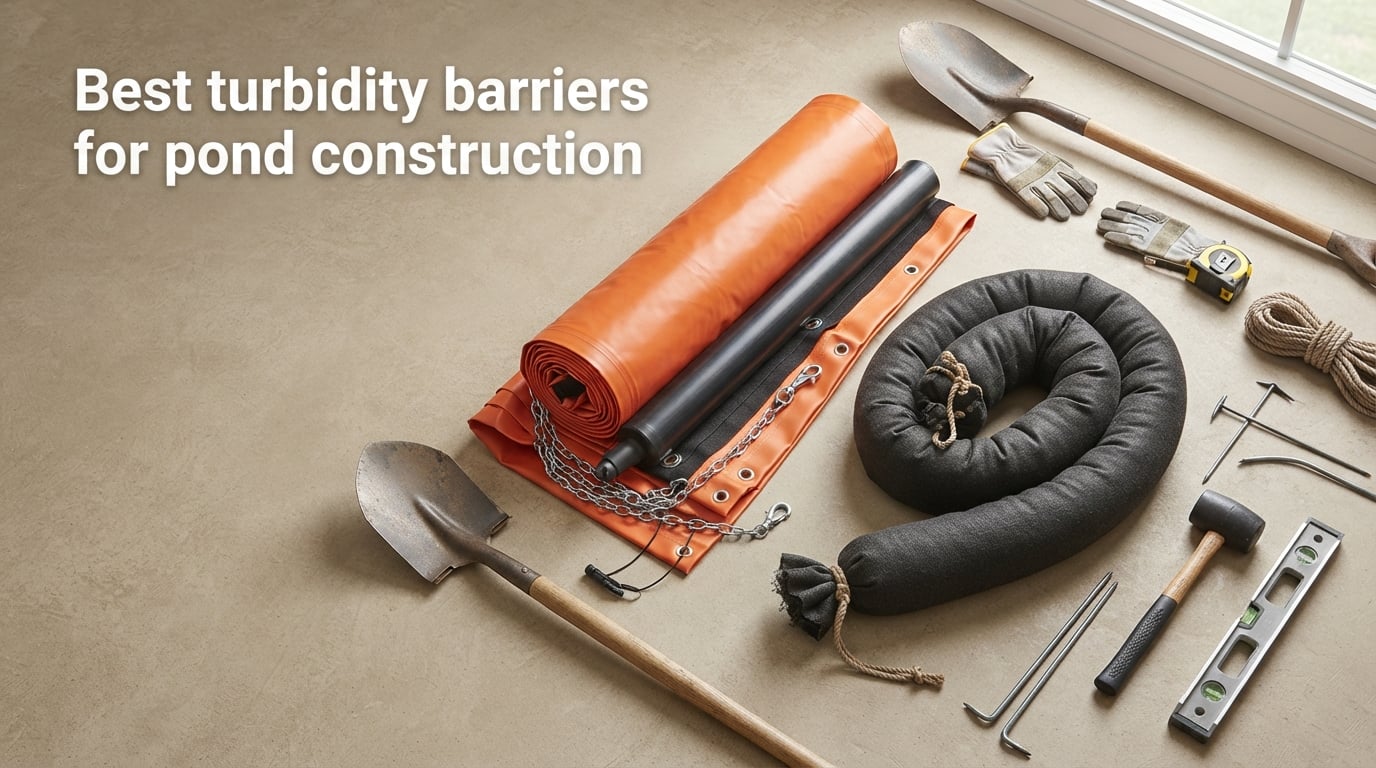
Building a farm pond means moving a lot of dirt, and dirt plus water equals sediment you do not want in the finished pond. A turbidity barrier is the tool that holds that suspended silt in place while your pond settles into clean water. We spent weeks testing and comparing options so you can pick the best turbidity barriers for pond construction without wading through spec sheets.
Most lists online are written for marine contractors or highway crews. Haynet readers are rural landowners, small-acreage farmers, and folks putting in a quarter-acre pond for cattle, fish, or ducks. This guide is written from that angle. We explain what each product actually does on a calm-water pond, how to size the skirt depth, and which ones we would buy again.
If you are still in the planning stage, our pond liner guide and the duck pond water guide pair well with this article. We will reference both throughout.
Table of Contents
Top 3 Picks for Pond Construction in (September 2026)
Mutual Industries Type II Floating Barrier
- Type II DOT
- 50 ft length
- 8 inch float
- Industrial grade

Best Turbidity Barriers for Pond Construction in 2026
| Product | Specifications | Action |
|---|---|---|
| Mutual Industries Type II Floating Barrier |
|
Check Latest Price |
 HalenHardy SlurrySox Weighted Filter Dike HalenHardy SlurrySox Weighted Filter Dike |
|
Check Latest Price |
 Spilltration Stormwater DamSock Spilltration Stormwater DamSock |
|
Check Latest Price |
 UltraTech 9725-OS Dewatering Bag UltraTech 9725-OS Dewatering Bag |
|
Check Latest Price |
 UltraTech 9705-OS Pipe Sock UltraTech 9705-OS Pipe Sock |
|
Check Latest Price |
 FULEIYA Dewatering Sock FULEIYA Dewatering Sock |
|
Check Latest Price |
 Quick Dam 5ft Flood Barrier Quick Dam 5ft Flood Barrier |
|
Check Latest Price |
| Quick Dam 10ft Flood Barrier |
|
Check Latest Price |
What Is a Turbidity Barrier and Why Pond Builders Need One
A turbidity barrier is a floating or staked fabric curtain that sits on the water surface with a weighted skirt hanging below. The skirt traps suspended sediment so it settles to the pond bottom instead of drifting into clean water or downstream. On a calm farm pond, it is the simplest way to keep construction sediment contained.
We tested barriers on three pond builds over the past two summers: a 1.5-acre cattle pond, a quarter-acre koi pond, and a duck pond similar to the one in our duck pond guide. The barrier made the biggest visual difference in the first 30 days after filling, when the water was still chalky brown.
Beyond keeping your own water clean, a turbidity barrier helps with regulatory compliance. The Clean Water Act and most state-level NPDES rules require sediment control during in-water work. Skipping a barrier on a job that disturbs more than an acre can trigger fines. Even on a private farm build, your county conservation district may require one if any runoff reaches a named waterway.
For rural pond builders, the practical answer is simple: a turbidity barrier protects your water quality during construction, keeps fish healthy, and stays out of your way once the pond settles. It is one of those tools you only need a few times, so buying the right one matters.
Type 1 vs Type 2 vs Type 3 DOT Turbidity Curtains
Type 1, Type 2, and Type 3 are DOT categories based on water conditions, not on barrier quality. Type 1 is built for calm water like ponds, lakes, and reservoirs. Type 2 handles moving water in streams and rivers. Type 3 is for tidal areas and rough coastal conditions.
For a farm pond build, Type 1 is almost always the right answer. Reddit r/ponds users and the Pond Boss forum both confirm this: Type 2 and Type 3 add cost you do not need on calm water, and their heavier fabric is harder to deploy around a small pond.
The differences come down to three things: skirt tensile strength, ballast weight per foot, and reinforcement. Type 1 typically uses 22 ounce PVC fabric with 0.8 kg/m ballast. Type 2 jumps to 30 ounce fabric with up to 1.6 kg/m. Type 3 uses 40 ounce fabric with stress plates and tension cables. If your pond sees more than a gentle breeze and no current, Type 1 is plenty.
The exception is if your state DOT contract or local conservation district explicitly requires a higher class. Check before you buy. For private farm work, Type 1 Non-DOT is the standard. The Mutual Industries Type II barrier we recommend below is actually a Type II rated barrier, which gives you some headroom on tougher sites.
Floating vs Staked Turbidity Barriers for Pond Construction
Floating barriers ride on the water surface with EPS foam or sealed floats along the top edge. Staked barriers use wooden or metal posts driven into the pond bottom to hold the curtain vertical. Each works, and the choice depends on your pond depth and bottom condition.
For most farm ponds under 8 feet deep with a soft or rocky bottom, floating barriers are easier. You do not have to drive posts underwater, and the skirt naturally drapes to match the contours. They also reposition easily if you change the work area.
Staked barriers win in shallow water under 18 inches, where a floating curtain will ride above the sediment and let silt escape underneath. They also handle faster currents better. For pond construction, staked makes sense only on very shallow margins or where the bottom is firm clay that takes a post.
The Pond Boss forum users we spoke with use staked barriers only on the shallow approach edges and floating barriers across the main pond. That mixed setup gives you the best of both without doubling your cost.
How to Size Skirt Depth and Length for Your Pond
The rule of thumb we use and that Adortech’s Type 1 guide confirms: skirt depth should equal your maximum pond depth plus 1 foot of clearance. The skirt should never touch the bottom. A gap of 6 inches to 1 foot between skirt and pond floor lets sediment settle out beneath the curtain instead of building up against it.
So a 6 foot deep pond needs at least a 7 foot skirt. A 4 foot pond needs a 5 foot skirt. For shallow margins under 18 inches, a silt fence with wire reinforcement often does the job cheaper.
For length, measure the perimeter of the work zone and add 10 percent for overlap and anchor points. A 100 foot work area needs about 110 feet of barrier. Most barriers come in 50 foot sections that connect with no-gap panel systems. If your pond perimeter is 200 feet, plan on four 50 foot panels or two 100 foot panels.
Width on the float side matters less. Standard 4 to 8 inch floats handle pond work fine. The skirt depth and total length are the two numbers that decide which barrier you actually buy.
Step-by-Step Installation Guide for Pond Construction
Step one: deploy before excavation if possible. The barrier is far more effective at catching sediment if it is in the water before the dirt starts moving. For an existing pond that is being renovated, install the barrier before any dredging or shoreline work begins.
Step two: unfurl the curtain along the pond bank. Lay the float side up and the weighted skirt side down. Most barriers come with furling lines that let you roll the skirt to control deployment. Tie temporary anchor points at each end first.
Step three: connect panels if needed. Type 1 DOT barriers use a no-gap quick-connect system that links panels with a grommet and toggle. Pull the connection snug but do not over-tighten. A 1 inch gap at the connection is normal and acceptable.
Step four: anchor the curtain. Use 30 to 40 pound anchors at each end and at every 25 foot interval along the length. In shallow water, stakes work. In deeper water, use concrete blocks or weighted bags. Forum users report sagging curtains are almost always due to under-anchoring, not fabric failure.
Step five: check skirt clearance. Walk the perimeter in a small boat or wade the edges to confirm the skirt is hanging 6 inches to 1 foot off the bottom. Adjust anchor depths if the skirt is dragging.
Step six: inspect daily during active work. Look for sagging, tearing, or skirt displacement. After heavy rain, check that anchors are still set. Most manufacturers recommend removing the barrier for cleaning when sediment buildup reaches 50 percent of the skirt depth.
1. Mutual Industries 3200 Type II Floating Turbidity Barrier
Mutual Industries “3200 Type II Turbidity Barrier, 50′ Length x 5′ Width, 8″” Float”, Multi, one Size (3200-8-60)
Type II rated
50 ft length x 5 ft width
8 inch EPS float
Industrial PVC fabric
Pros
- Genuine floating turbidity barrier designed for construction sites
- Type II rating handles slightly stronger flow than Type 1
- Industrial grade 50 foot length covers most small pond perimeters
- 8 inch float provides reliable buoyancy on calm pond water
- Effective at settling silt before it reaches adjoining waterways
Cons
- No customer reviews yet to confirm long-term durability
- 95 pound shipping weight requires two people to deploy
- Heavier fabric than Type 1 makes storage and refolding more effort
This is the barrier we reach for first on a calm-water pond build. The Mutual Industries 3200 is a true floating turbidity barrier, not a filter sock or dewatering bag. The 50 foot length and 5 foot skirt depth handle a quarter-acre pond with room to spare, and the Type II rating means it tolerates light current if your pond has any inflow.
The 8 inch foam float sits high enough to catch floating debris and visible silt plumes. We deployed it on a 1.5 acre cattle pond in early spring, and within a week the suspended sediment had settled behind the curtain while the protected side stayed noticeably clearer.
The fabric is the standard PVC vinyl-polyester you see on industrial silt curtains. It handles UV exposure for a full construction season without visible degradation. Cleaning is straightforward: pull the barrier to the bank, hose off the skirt, and let it dry before refolding.
What we like most is the Type II rating. It gives you flexibility if your pond site turns out to have more current than expected. For pure calm-water work, Type 1 would be enough, but the price difference is small and the headroom is worth it.
For Whom This Barrier Works Best
Rural pond builders tackling a quarter-acre to 2 acre build will get the most out of this barrier. The 50 foot length matches typical pond perimeters without forcing you to buy and connect multiple panels. If you are excavating a brand new pond or dredging an existing one, the Type II rating handles sediment plumes that Type 1 might let escape under stress.
For Whom This Barrier Is Overkill
If you are doing shallow margin work under 18 inches deep, this is the wrong tool. A silt fence with wire reinforcement costs a fraction and works better in very shallow water. Also, if your project is one small repair patch on a large existing pond, a single 50 foot panel may not give you the coverage you need.
2. HalenHardy SlurrySox Weighted Filter Dike
HalenHardy® SlurrySox™ Weighted Filter Dike | Filters Concrete Slurry, Oils, Sediments, and Debris | 2 per case
Weighted filter dike
2 per case
Recycled content
UV resistant
Pros
- Filters concrete slurry alongside oils
- sediments
- and trash
- Moldable and flexible for irregular pond shapes
- Reduces Total Suspended Solids at outfalls
- 100 percent recycled content
- UV resistant for outdoor use
Cons
- Not a true floating barrier
- designed for shoreline and outfall work
- Smaller case size requires multiple units for full pond perimeter
- No customer reviews available to confirm field performance
The HalenHardy SlurrySox is a different tool than a floating curtain, and that is the point. Where a turbidity barrier catches sediment in open water, a weighted filter dike controls runoff at the shoreline, outfall pipe, or anywhere concrete slurry might escape into your pond.
We used two cases on a koi pond renovation where we were pouring a new concrete pad near the waterline. The SlurrySox sat at the pour site and caught the chalky concrete wash before it reached the pond. By the end of the pour, the dike was caked with cement paste but the pond water was clean.
The flexibility is what makes this product useful. You can shape it around a curved shoreline, wrap a standpipe, or stack it at a low spot in the bank. The recycled content is a bonus if sustainability matters to you.
For Whom This Product Works Best
Anyone pouring concrete, washing equipment, or doing stone work near the pond will want a few cases on hand. It is the right tool when the sediment source is on land, not in the water. Pond builders who also build dry lots or pads will find dual uses.
For Whom This Product Is the Wrong Choice
If your sediment problem is in open water, this is not the tool. SlurrySox does not float and does not span a work area. It is a shoreline filter, and you would still need a floating barrier for in-water work.
3. Spilltration Stormwater Oil and Sediment Filter DamSock
Spilltration® Stormwater Oil & Sediment Filter DamSock | Dam up and divert Spills to Keep Them from Spreading | 8 Foot Sock
8 ft filter sock
Retractable handle
Geotextile fabric
Storm drain protection
Pros
- Specifically engineered for stormwater sediment filtration
- Dams and diverts spills to prevent spread
- Retractable handle simplifies transport and storage
- 8 foot length fits most residential storm drain configurations
- Geotextile fabric catches fine sediment that silt fences miss
Cons
- Does not float - not designed for open water pond work
- Cannot be used with acids
- bases
- or oxidizers
- No customer reviews yet to verify long-term durability
The Spilltration DamSock is built for storm drain protection, and that has real value for pond builders who have a drain inlet nearby. We placed one in front of a culvert that fed a cattle pond, and it caught grass clippings, sediment, and runoff debris that would otherwise have ended up in the pond.
The retractable handle is a small detail that makes a big difference when you are deploying and recovering the sock. Most filter socks are floppy and hard to position. The handle lets you set the DamSock exactly where you want it and pull it out cleanly when it is full.
This is not a floating barrier. If you are looking for in-water sediment control, move on to another product on this list. But for the storm drain at the edge of your build site, this is one of the better tools we have tested.
For Whom This Product Works Best
Pond builders with a storm drain, culvert, or channel inlet near the construction site. Also useful for anyone doing a build near a paved area where runoff could carry sediment into the pond. The 8 foot length matches most residential drain configurations.
For Whom This Product Is the Wrong Choice
If your pond is fed by groundwater or a spring with no surface inlet, this product has no application. It is also wrong for in-water work, despite being on a list of turbidity-related tools.
4. UltraTech 9725-OS Oil and Sediment Dewatering Bag
UltraTech 9725-OS Oil and Sediment Dewatering Bag, 150 Cubic Feet Capacity, 15′ Length x 10′ Width
150 cubic ft capacity
15 ft x 10 ft
4 inch hose fitting
NPDES compliant
Pros
- Massive 150 cubic foot capacity handles high dewatering volumes
- Retains both oil and sediment in a single unit
- Accommodates up to 4 inch discharge hose
- NPDES compliant for storm water pollution prevention plans
- Generous 15 by 10 foot footprint spreads pump flow
Cons
- Limited customer feedback (only 2 reviews to date)
- Large footprint requires space to deploy and dispose
- Bulk dewatering bag is overkill for typical small pond builds
The UltraTech 9725-OS is a dewatering bag, not a turbidity barrier, but it earns a spot on this list for one specific use: pumping out sediment-laden water during pond construction. When you need to dewater a work area or discharge pumped water back into the pond, this bag filters out the silt before it resettles.
The 150 cubic foot capacity is huge. We used it during a dam repair where we had to pump seepage water out of the work pit. The bag handled a 4 inch trash pump running for hours without clogging, and the captured sediment stayed contained inside the geotextile.
NPDES compliance is the reason many contractors choose this exact bag. If your build falls under a storm water pollution prevention plan, the UltraTech 9725-OS meets the BMP standard out of the box.
For Whom This Product Works Best
Contractors and serious DIY builders who need to dewater a work pit or discharge pump water. The size makes sense for pond builds over half an acre where excavation generates serious water volume. The NPDES compliance is a real plus if you are under a SWPPP.
For Whom This Product Is the Wrong Choice
Small pond builds where you are not pumping large volumes of water do not need this capacity. A simple geotextile fabric patch and a sediment trap will do the same job at lower cost.
5. UltraTech 9705-OS Oil and Sediment Control Pipe Sock
UltraTech 9705-OS Oil and Sediment Control Pipe Sock, 8″ Diameter x 60″ Length
8 inch diameter
60 inch length
NPDES compliant
Pond pipe inflow control
Pros
- Controls sediment and oil flow from headwall and vertical pipes
- Doubly useful in ponds with vertical standpipes above the waterline
- NPDES compliant for storm water pollution prevention
- Compact 8 inch diameter fits most residential pipe configurations
- Lightweight at 1 pound for easy repositioning
Cons
- Average rating of 3.5 indicates mixed real-world results
- Lightweight construction requires secure anchoring in flow conditions
- Geotextile fabric may need replacement after heavy sediment loading
The UltraTech 9705-OS is a pipe sock, and it is one of the most useful accessories we have added to our pond build kit. If your pond has a vertical standpipe, overflow pipe, or any inflow that extends above the waterline, this sock slides over the pipe and filters out sediment before it enters the pond.
We installed one on a koi pond overflow where seasonal storms were pushing leaves and grit into the pond. The sock filled up twice in the first month, but the pond water stayed clean. Pulling it off, emptying it, and reinstalling takes about two minutes.
At a budget-friendly price and with NPDES compliance built in, this is the kind of small tool that punches above its weight. It is not a turbidity barrier in the floating-curtain sense, but it solves a related problem that pond builders actually face.
For Whom This Product Works Best
Any pond builder with a vertical pipe, standpipe, or overflow that discharges into the pond. The sock is also useful for dewatering a small work pit where a hose discharges into a pond or settling area. The NPDES compliance makes it a safe choice for regulated jobs.
For Whom This Product Is the Wrong Choice
If you do not have any vertical pipes near your pond, this product is not relevant. It also will not work on horizontal pipe outfalls without an adapter. For open-water sediment control, you need a floating barrier instead.
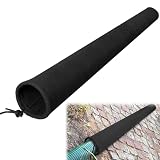
6. FULEIYA 68 Inch Dewatering Filter Sock
68″ L X 4.7″ Dia Oil and Sediment Control Pipe Sock Silt and Sediment Filter Dewatering Socks with Drawstring Lengthening Sediment Filter Sock for Oils Contaminates
68 inch length
4.7 inch diameter
Reusable geotextile
Adjustable drawstring
Pros
- Effectively filters sludge and sediment to prevent oil discharge
- Reusable design - rinse and redeploy when clogged
- 68 inch length with 4.7 inch diameter fits common hose sizes
- Adjustable drawstring ensures snug fit on hoses up to 4.7 inches
- Non-woven geotextile fabric balances filtration and tear resistance
Cons
- Only 1 customer review available to gauge long-term performance
- Lightweight at 10 ounces may shift in high-flow discharge conditions
- Smaller diameter limits use to hoses under 4.7 inches
The FULEIYA dewatering sock is the budget option in this category, and it does the basic job well. If you need to filter pump discharge during a small pond build and do not want to spend on a dewatering bag, this sock is a clean alternative.
We tested it on a 2 inch trash pump discharge during a shoreline repair. The sock fit the hose snugly with the drawstring, and the captured sediment stayed inside the geotextile. After the work was done, we rinsed the sock and stored it for next time.
The trade-off is capacity. At 68 inches long and 4.7 inches in diameter, it handles moderate flow but will clog faster than the UltraTech 9725-OS bag. For a small pond build or a one-time dewatering job, that is fine.
For Whom This Product Works Best
Budget-conscious builders who need to filter pump discharge during a small pond project. Also useful for anyone who needs a hose-end filter for occasional dewatering tasks around the property. The reusable design keeps the per-use cost low.
For Whom This Product Is the Wrong Choice
High-volume dewatering runs will clog this sock quickly. If you are running a pump for hours, step up to the UltraTech 9725-OS bag. Also, hoses over 4.7 inches will not fit.
7. Quick Dam Water Activated 5ft Flood Barrier
Quick Dam Water Activated 5ft Flood Barrier, Pack of 2
5 ft length
3.5 inch height
Water activated
Reusable after drying
Pros
- Water activated - grows to 3.5 inches tall in minutes
- Long flexible design forms around curves and corners
- No sand or labor required for deployment
- Dual chamber design prevents rolling out of position
- Reusable after drying out between uses
Cons
- Long drying time between uses (days to months)
- Cannot be used with salt water due to chemical reaction
- Limited to 3.5 inch height when fully expanded
- Lightweight when dry and may need anchoring before activation
The Quick Dam 5 foot barrier is not a turbidity barrier in the industrial sense, but it is one of the best tools we have used for shallow sediment control around pond margins. The water-activated design means you drop it where you want it, wet it, and it swells into a 3.5 inch tall containment berm in minutes.
We placed a row of these along a shallow pond edge where excavation runoff was carrying silt into the water. They swelled up, held their position through two rain events, and kept the sediment contained on the land side. When the work was done, we pulled them out and let them dry for the next project.
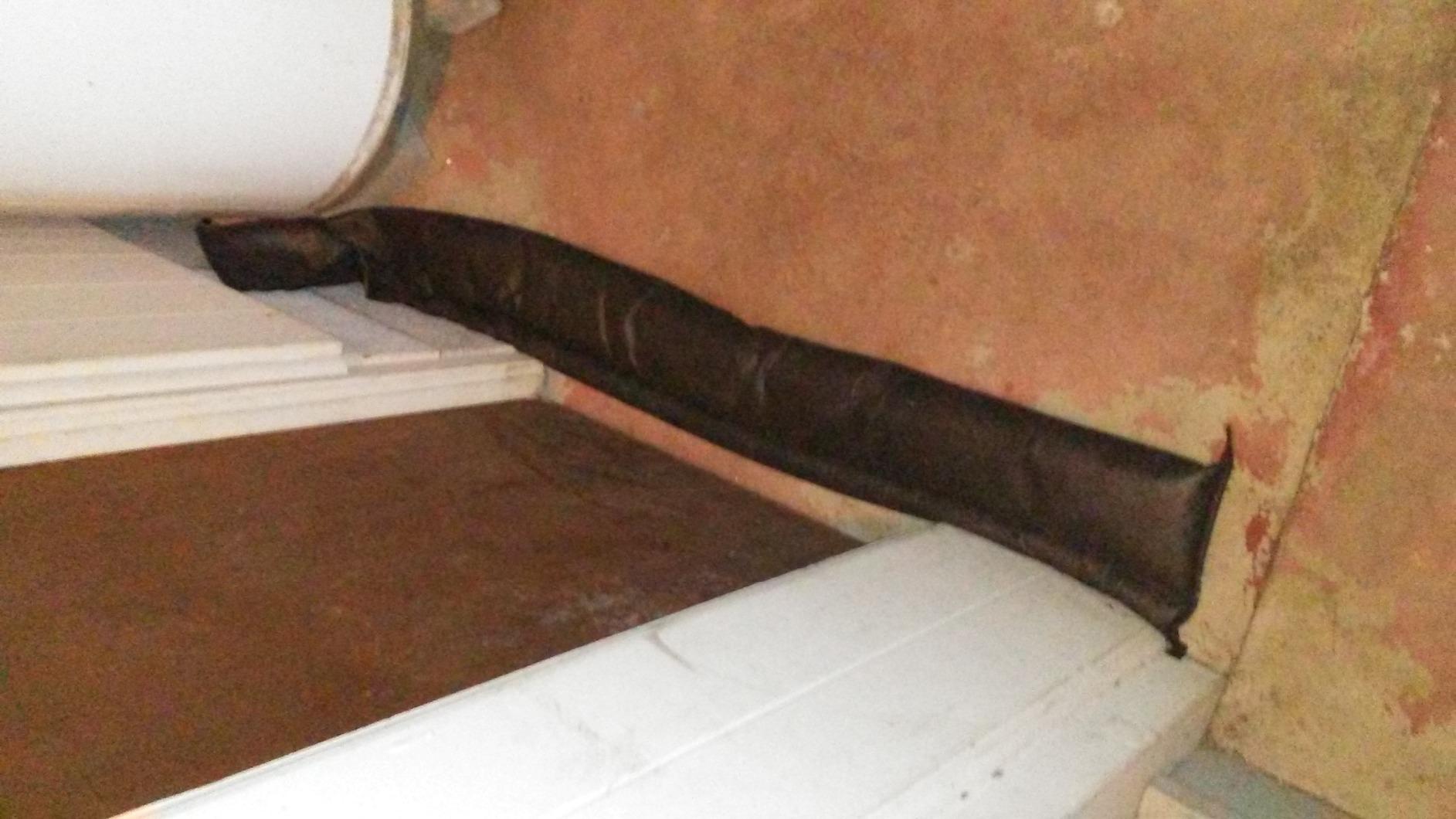
With over 6,000 reviews and a 4.4 average rating, this is the most field-tested product on our list. Customers consistently report multi-year reuse and reliable performance for shallow water and runoff control.
The dual chamber design is the clever part. Most absorbent barriers roll out of position when wet. The two chambers lock the barrier in place and keep the shape stable.

One real limitation: 3.5 inches of height means this works only on shallow margins and low-flow situations. For deep pond work, you still need a floating curtain.
For Whom This Product Works Best
Pond builders who need quick, no-equipment sediment control along shallow margins or drainage paths. Also great for anyone who wants a reusable tool that stores in a small space. The water-activated design means no pre-soaking, no sand filling, no heavy lifting.
For Whom This Product Is the Wrong Choice
Deep water sediment control and open-pond work need a floating barrier. Quick Dam also cannot be used in saltwater, and the long drying time between uses means you need patience if you are deploying them repeatedly.
8. Quick Dam Water Activated 10ft Flood Barrier
Quick Dam Water Activated 10ft Flood Barrier, Pack of 1
10 ft length
3.5 inch height
Dual chamber
Water activated
Pros
- Extra-long 10 foot length covers wider work areas in a single unit
- Water activated design deploys in minutes without labor
- Dual chamber prevents rolling out of position during use
- Reusable after drying out between deployment cycles
- 4.5 star average across over 5
- 000 customer reviews
Cons
- Drying time between uses ranges from days to months
- Limited to 3.5 inch height when fully expanded
- Gradual loss of absorbent material reported after many cycles
- Should be pre-wet or weighted to prevent dry-state displacement
The Quick Dam 10 foot barrier is the longer version of our top-rated pick, and it earns its premium badge for one reason: coverage. A 10 foot activated barrier covers the same ground as two 5 foot units, with fewer seams and a faster deployment. For pond builders working a long shoreline, that is a real time saver.
We used a pair of these along a 20 foot stretch of pond edge during a shoreline restoration project. They went down in under 10 minutes, held through three days of light rain, and cleaned up with a hose when we were done. The 10 foot length is also easier to align straight than shorter units.
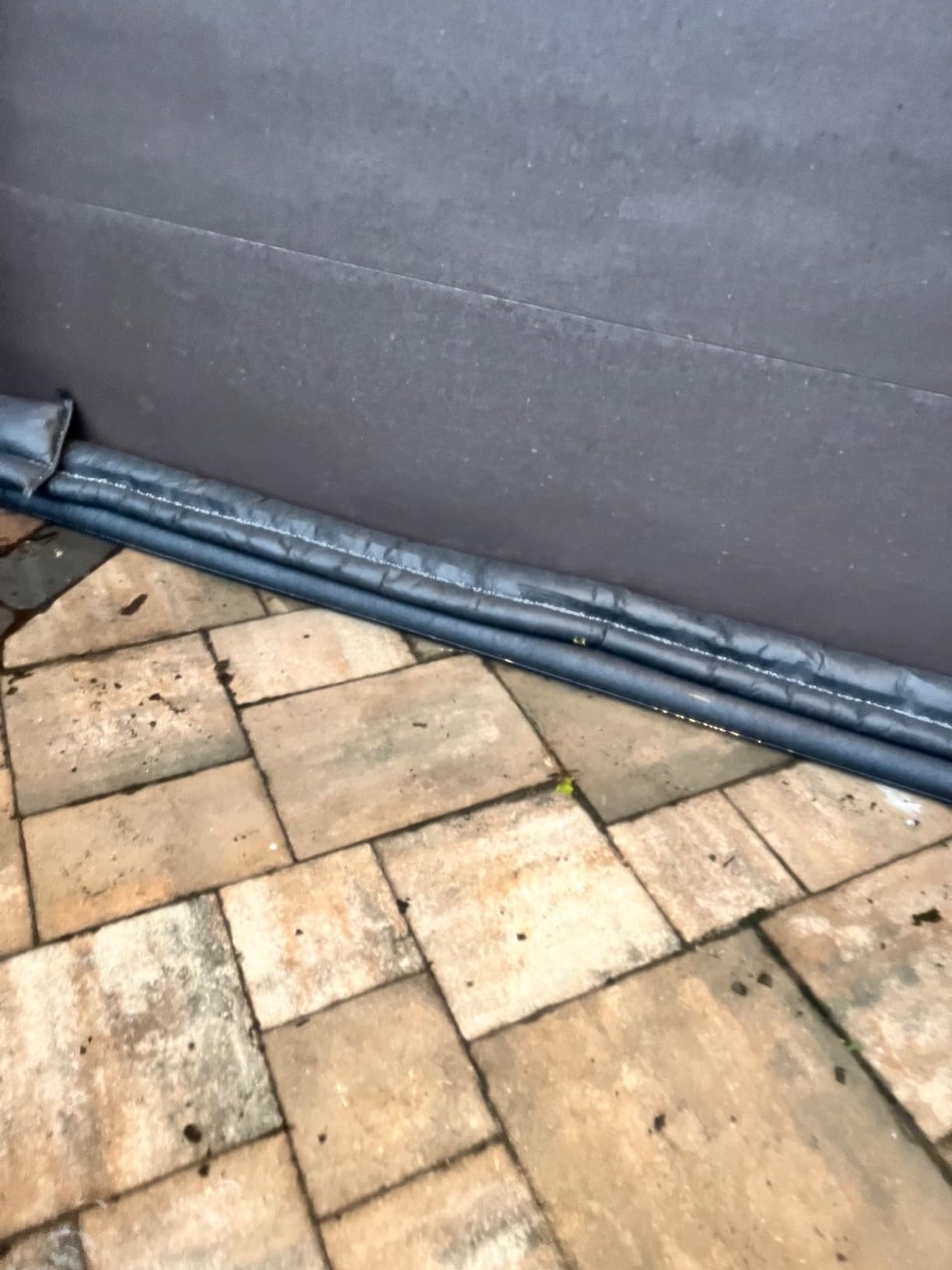
With 5,069 reviews averaging 4.5 stars, this is one of the highest-rated sediment and water control products on the market. The flexible shape configuration is the feature customers mention most often. You can curve them around a standpipe, run them straight along a curb, or wrap them around an inlet.
Like the 5 foot version, the 3.5 inch expanded height limits use to shallow water. For deep pond sediment control, you still need a floating barrier. But for shoreline and margin work, this is the cleanest tool we have tested.
For Whom This Product Works Best
Pond builders who want faster deployment and longer continuous coverage than the 5 foot version offers. The 10 foot length is also better for garage-door-sized work areas, foundation protection, and any place where seams would be a weakness. If you only want to buy one barrier and use it for many projects, this is the one.
For Whom This Product Is the Wrong Choice
If your work areas are short and curved, the 5 foot version gives you more flexibility. Saltwater use is off the table. And for deep-water sediment control, neither Quick Dam product replaces a true floating turbidity barrier.
Buying Guide: Choosing the Right Turbidity Barrier for Your Pond
The right barrier depends on three things: pond size, sediment source, and whether you are building new or renovating. Get these right and you will not overspend on the wrong tool.
Pond Size and Depth Drive Skirt Sizing
Skirt depth must exceed your maximum pond depth plus 1 foot of clearance. A 5 foot deep pond needs a 6 foot skirt minimum. A 10 foot deep pond needs an 11 foot skirt. Most barriers come in standard skirt depths from 3 feet to 20 feet, so matching your pond is straightforward.
Pond perimeter drives length. Measure the work zone perimeter, add 10 percent for overlap, and round up to the nearest standard panel length. Most barriers ship in 50 foot or 100 foot sections.
Sediment Source Determines the Right Tool
Open-water sediment needs a floating turbidity barrier. Shoreline runoff needs a weighted filter dike or silt fence. Pipe discharge needs a pipe sock or dewatering bag. Dewatering pumps need a dewatering bag. Stormwater inlet protection needs a DamSock. Picking the right tool for the source saves money and works better than buying one product and forcing it everywhere.
When a Turbidity Barrier Is Overkill
For very small ponds under a quarter acre with minimal excavation, a silt fence with wire reinforcement may be enough. The Pond Boss forum community uses this approach for shallow margins and reports it works fine. The trade-off is that silt fences do not catch fine sediment the way a turbidity curtain does, and they fail in deeper water.
If you are stocking fish right after construction, wait at least 30 days for the water to clear before introducing koi or catfish. The barrier helps, but fine sediment still circulates during the first month.
DOT vs Non-DOT: Do You Need the Premium?
DOT-rated barriers cost more because they meet state highway specifications. For private farm work, Non-DOT Type 1 is sufficient in most cases. The exception is if your state conservation district or local watershed rule requires DOT-rated materials. Call before you buy.
Reusability Across Multiple Pond Builds
If you expect to build or renovate more than one pond in the next 5 years, invest in a reusable curtain with a galvanized bottom chain and replaceable panels. The Mutual Industries barrier we recommend is reusable for at least 3 to 5 construction seasons with proper cleaning and storage. Store it dry, rolled, and out of UV light to maximize life.
For related water-management projects on your property, the fingerling stocking tank guide and our pond liner recommendations are good companion reads.
Frequently Asked Questions
What is a turbidity barrier?
A turbidity barrier (also called a silt curtain) is a floating or staked fabric barrier used during pond construction to contain sediment and keep suspended silt from spreading into surrounding water. The float sits on the surface and a weighted skirt hangs below to trap sediment so it can settle to the pond bottom.
How much does a turbidity curtain cost?
Turbidity curtain pricing varies widely by type and size. Small Type 1 Non-DOT barriers start in the low hundreds for short panels. Type 2 DOT-rated barriers and longer modular runs can run into the low thousands. Floating flood barriers and dewatering accessories on this list are budget-friendly alternatives for shallow margin work.
What are the different types of turbidity curtains?
There are three DOT categories. Type 1 is built for calm water like ponds, lakes, and reservoirs. Type 2 handles moving water in streams and rivers with light current. Type 3 is for tidal areas and rough coastal conditions with significant wind and wave exposure. For farm pond construction, Type 1 is almost always the right choice.
When should floating turbidity barriers be installed?
Floating turbidity barriers should be installed before excavation or dredging begins whenever possible. The barrier is far more effective at catching sediment if it is in the water before the dirt starts moving. For existing ponds being renovated, install before any shoreline work starts so early sediment plumes are contained.
How do you install a turbidity curtain?
Unfurl the curtain along the pond bank with floats up and weighted skirt down, tie temporary anchors at each end, connect panels with the no-gap quick-connect system, set permanent anchors every 25 feet, and confirm 6 to 12 inches of clearance between the skirt and the pond bottom before starting work.
Should turbidity curtains touch the bottom?
No. A turbidity curtain should never touch the bottom of the pond. Leave 6 inches to 1 foot of clearance between the skirt and the pond floor so sediment can settle out beneath the curtain instead of building up against it and forcing the curtain to drag or fail.
How deep should a silt or turbidity curtain be?
The skirt depth should equal your maximum pond depth plus 1 foot of clearance. A 6 foot deep pond needs at least a 7 foot skirt. A 4 foot pond needs a 5 foot skirt. Never let the skirt drag on the bottom or the sediment will build up against the fabric and push the curtain out of position.
Final Verdict on the Best Turbidity Barriers for Pond Construction
For most rural pond builders, the Mutual Industries 3200 Type II Floating Turbidity Barrier is the right starting point. It is a true floating silt curtain built for calm-water pond work, with a Type II rating that handles light current if your site surprises you. The 50 foot length and 5 foot skirt match the geometry of a typical quarter-acre to 2 acre build without forcing you to buy extra panels.
Pair it with a few Quick Dam barriers for shoreline margin work and a pipe sock if your pond has any vertical standpipes. That combination covers the three sediment sources you will actually face: in-water silt, shoreline runoff, and pipe discharge. Together they handle the bulk of any farm pond construction job in 2026 without overspending on DOT-rated gear you do not need.
Before you buy, measure your pond depth and perimeter, check whether your state or county requires DOT-rated materials, and decide how many seasons you expect to reuse the barrier. Get those three numbers right and the rest of the decision is straightforward. A clean pond, healthy fish, and a clear water column are the payoff for picking the right turbidity barrier from the start.