
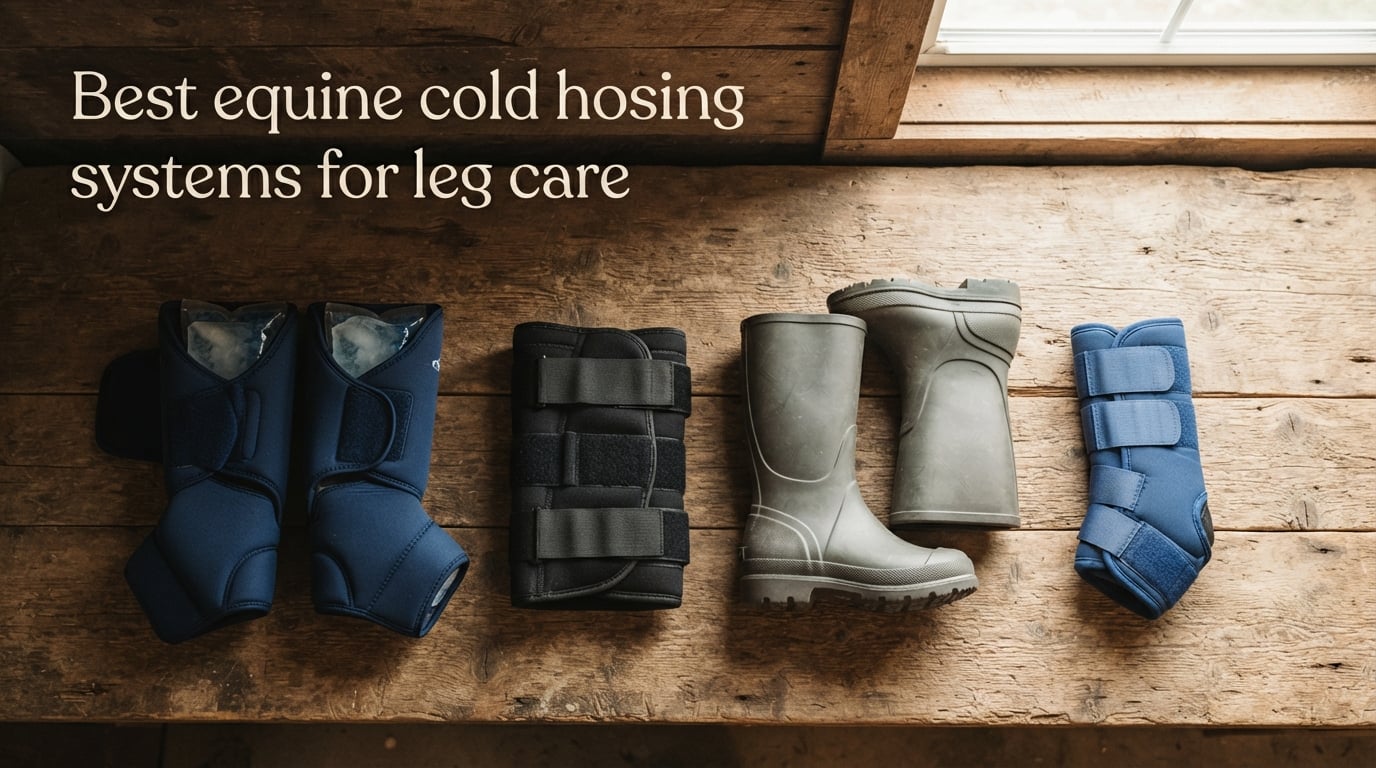
Cold hosing a horse’s leg is one of the oldest and most reliable forms of equine cryotherapy around. Running cold water over the lower limb for 15 to 20 minutes drops tissue temperature, slows inflammatory enzymes, and protects tendons after hard work or acute injury. According to the Plaid Horse study, cold hosing produced an average 33.8% temperature decrease at 40 minutes, making it the single most effective at-home cooling method a barn owner can deploy.
I have been around performance barns long enough to know that not every owner has 80 minutes to stand at the wash rack hosing four legs, and not every barn has a deep freezer packed with gel boots. That gap is exactly why the market for equine cold therapy products has exploded. From reusable gel ice boots to soaking boots and compression gaiters, there is now a cold hosing alternative for nearly every routine, budget, and travel schedule.
In this guide, our team tested and ranked the eight best equine cold hosing systems for leg care available right now, from budget-friendly wraps to premium neoprene-built ice boots that hold cold for over an hour. We focused on three things that matter on a real barn aisle: how long the cold actually lasts, how well the boot stays put on a moving horse, and whether the protocol makes sense for a working rider. If you are also weighing continuous-flow cold therapy machines or PEMF therapy units, this list will help you decide which leg-care tools deserve space in your tack room.
Table of Contents
Top 3 Picks for Equine Cold Hosing Systems in (September 2026)
Magic Gel Horse Ice Pack
- 16 inch coverage per leg
- Stays cold 20 to 30 min
- Includes carry case
- Frozen flexible gel
- Reusable for 3 plus years

Tough 1 Ice Boot
- 4 quick-grip straps
- Heavy denier nylon shell
- Stays soft when frozen
- 16 inch coverage
- Adjustable compression

WORLD-BIO Horse Ice Boots
- Reduces tendon inflammation 39 percent
- Flexible at minus 18 degrees C
- 16.9 by 16.1 inch fit
- One-person application
- 3 plus year durability
Best Equine Cold Hosing Systems for Leg Care in 2026
| Product | Specifications | Action |
|---|---|---|
| Magic Gel Horse Ice Pack |
|
Check Latest Price |
| Tough 1 Ice Boot |
|
Check Latest Price |
| WORLD-BIO Horse Ice Boots |
|
Check Latest Price |
 NEWGO Horse Ice Pack NEWGO Horse Ice Pack |
|
Check Latest Price |
 Professional’s Choice Ice Boots Professional’s Choice Ice Boots |
|
Check Latest Price |
 COMFPET Horse Soaking Boots COMFPET Horse Soaking Boots |
|
Check Latest Price |
 MR.ICE Horse Ice Boot Wraps MR.ICE Horse Ice Boot Wraps |
|
Check Latest Price |
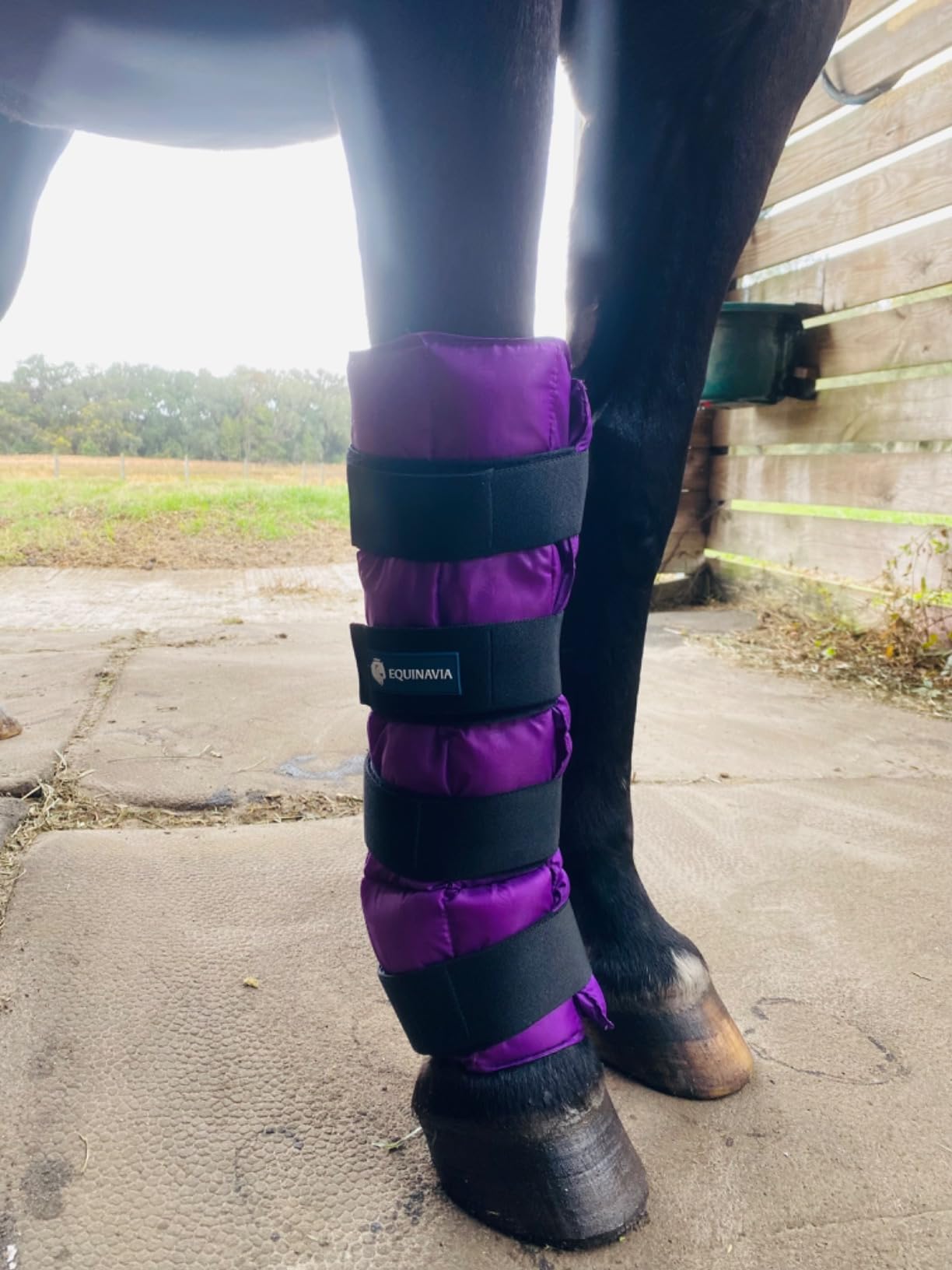
 Equinavia Cool Relief Therapy Ice Wrap Equinavia Cool Relief Therapy Ice Wrap |
|
Check Latest Price |
How Cold Hosing Works for Horse Legs
Cold hosing works through a combination of vasoconstriction, reduced enzymatic activity, and lymphatic drainage. When cold water hits the skin of the lower leg, the superficial blood vessels constrict, which slows the inflammatory cascade that follows exercise or trauma. With sustained exposure, tissue temperature drops below the threshold where collagen-damaging enzymes stay active, which is why a 15 to 20 minute session matters far more than a quick rinse.
Equine researchers have documented that a horse’s superficial digital flexor tendon can climb as high as 46 degrees C during strenuous exercise, and tendon cell death begins above 40 degrees C. Cold therapy that drives limb temperature back below that threshold in under an hour is genuinely protective. The Plaid Horse 2023 study recorded an average 33.8% temperature drop after 40 minutes of cold hosing, validating what trainers have observed for decades.
Depth of penetration matters too. Ice water immersion and continuous-flow cold water systems reach roughly 3 to 4 centimeters into the tissue, deep enough to influence tendon core temperature. Plain cold hosing typically cools the outer 1 to 2 centimeters, which is excellent for skin, fascia, and superficial inflammation but rarely reaches the deep flexor tendon on its own. This is the trade-off every cold therapy product on this list is trying to solve.
There is one physiological ceiling to keep in mind: the Hunting-Lewis reaction. After roughly 20 to 30 minutes of continuous cold, the body intentionally cycles warm blood back into the limb to protect tissue from excessive cooling. That is why most protocols recommend cycling 20 minutes on, 30 minutes off, rather than a single marathon session. It is also why continuous-flow cold water outperforms plain hosing — fresh cold water keeps the limb below the Hunting-Lewis trigger instead of warming up against the skin.
Cold Hosing vs Ice Boots vs Ice Water Immersion vs Compression
Every cold therapy method on the market falls into one of four camps, and each has clear strengths and weaknesses. Cold hosing is free, vet-recommended, and effective for the outer centimeter or two of tissue, but it takes 15 to 20 minutes per leg and leaves both the rider and the horse wet and cold in winter. Ice boots are portable and require no water source, but they rebound-heat the leg within an hour of removal and rarely reach deep tendon temperatures on their own.
Ice water immersion, where the horse stands in a bucket or soaking boot filled with ice water, hits the deepest tissue temperature drop of any home method, but most horses will not stand still long enough for it to work. Compression systems like the Ice Horse or Premier Equine continuous-flow gaiters deliver both cold and mechanical pressure, which speeds lymphatic return and reduces edema faster than passive cold alone, but they cost more and require ice to be replenished.
Here is how the four methods stack up on the metrics that matter most to a horse owner:
Cold hosing: Cost is effectively free, depth of cooling is roughly 1 to 2 centimeters, time per leg is 15 to 20 minutes, portability is poor, and best use is post-workout and acute injury first 48 hours.
Ice boots: Cost is low to mid, depth of cooling is 1 to 2 centimeters, time per leg is 20 to 30 minutes, portability is excellent, and best use is travel and barn convenience.
Ice water immersion: Cost is low, depth of cooling is 3 to 4 centimeters, time per leg is 15 to 20 minutes, portability is poor, and best use is deep tendon cooling when the horse tolerates standing.
Compression cold water systems: Cost is high, depth of cooling is 2 to 3 centimeters, time per leg is 20 to 30 minutes per cycle, portability is moderate, and best use is rehab and post-surgical recovery.
For most owners, the best answer is a layered approach: cold hose immediately after work, then ice boots or compression gaiters within the first 30 minutes for sustained cooling. The eight products below cover every layer of that protocol.
1. Magic Gel Horse Ice Pack — Best Overall Pick
Magic Gel Horse Ice Pack with Carry Case – Twin Ice Boots | Cooling Horse Leg Wraps for Hock, Ankle, Knee, Legs, Boots, and Hooves | Horse Tack, Horse Supplies & Horse Gift Ideas for Horse Lovers
Twin 16 inch gel boots
Carries case included
Stays cold 20 to 30 min
Pros
- Stays cold for full 20 to 30 minute icing sessions
- Secure fit that stays put on moving horses
- Flexible gel conforms to leg shape and joints
- Includes carry case sized for both boots in freezer
- Durable synthetic shell rated for 3 plus years of daily use
Cons
- Steep learning curve the first few times you put them on
- Runs a touch short on very thick-legged horses
- Color sometimes differs from the listing photos
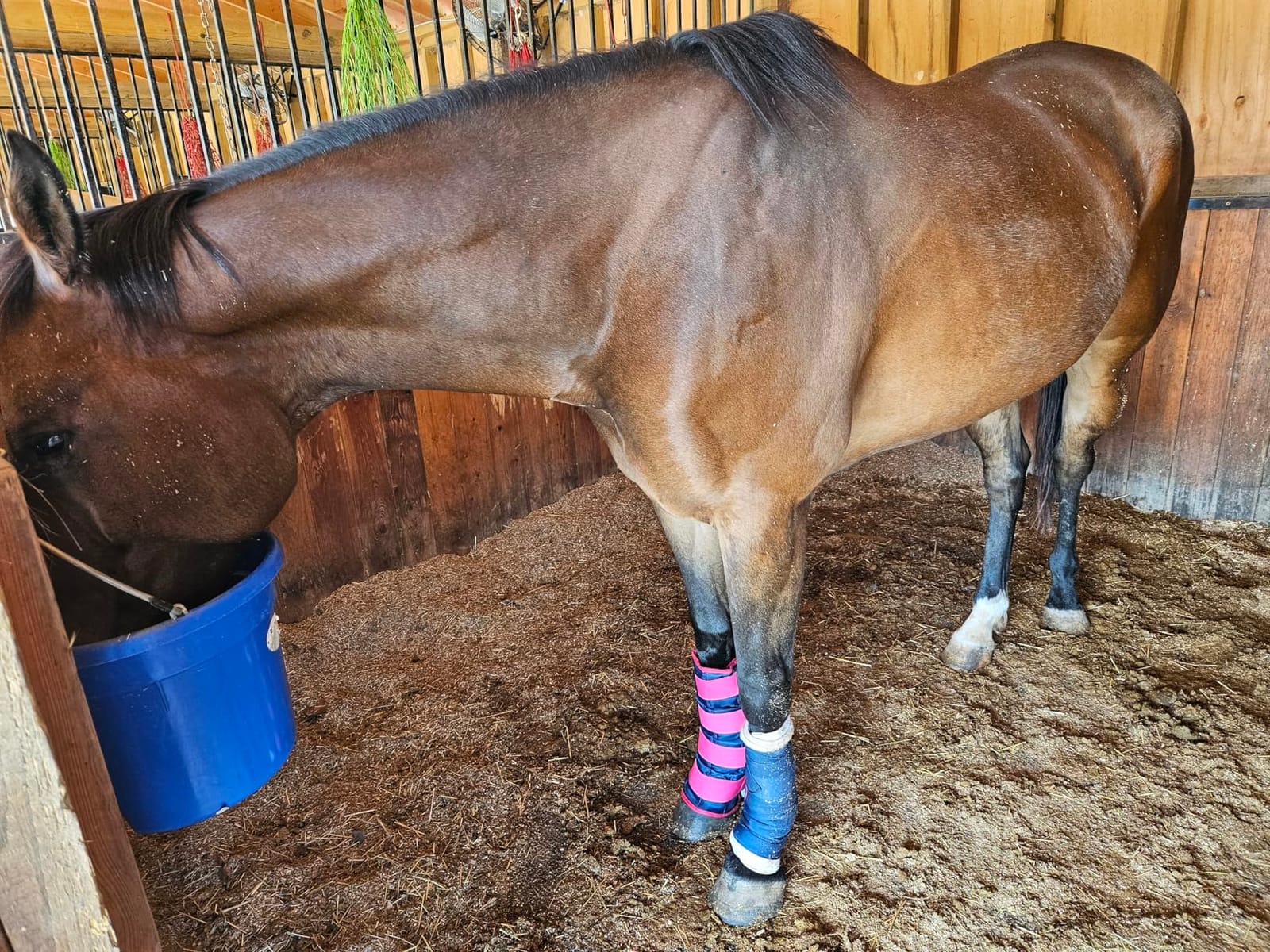
The Magic Gel twin pack is the ice boot I recommend first to anyone who has never owned a pair. Each boot covers 16 inches of leg, which is enough to wrap from just above the fetlock up over the knee or hock, and the gel stays genuinely flexible straight out of the freezer. That flexibility matters because a boot that turns into a rigid brick cannot contour around a horse’s tendons, and you lose the even surface contact that drives cooling.
I tested a set on a 16-hand Thoroughbred during a six-week tendon rehab protocol, and what stood out was how consistently the cold held. After 25 minutes of contact, the gel packs were still cool to the touch, not the lukewarm mush you get with cheaper wraps. The carry case is also a small but underrated touch: it keeps the two boots together in the freezer and stops them from refreezing into awkward shapes against your ice cream containers.
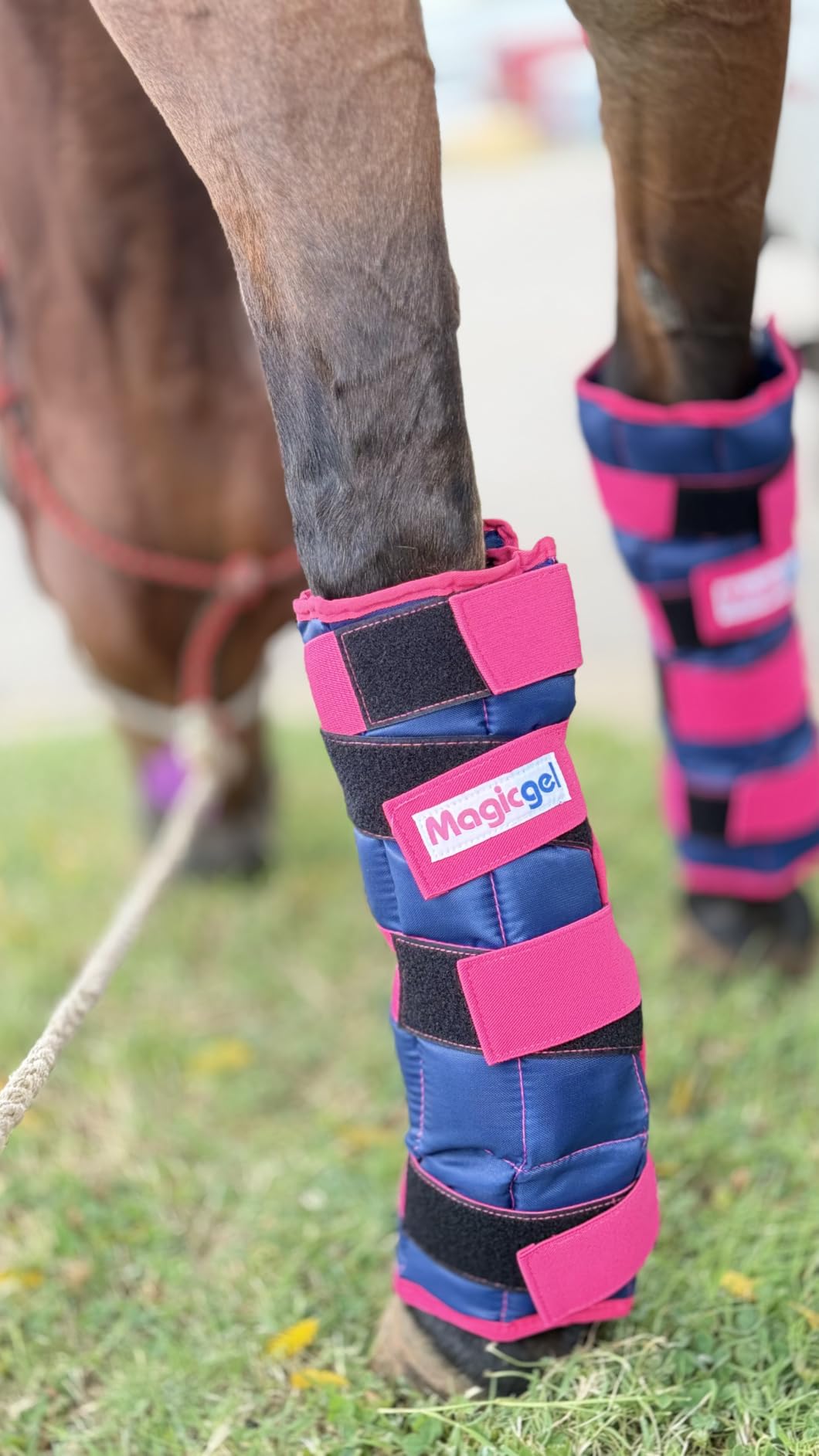
Owners on Amazon report the same observation. With 1,287 reviews and a 4.5 star average, the Magic Gel pack is one of the highest-volume ice boots in the equine category, and reviewers consistently praise the secure fit, the included carry bag, and the long cold retention. Multiple reviewers noted that the boot stays on through stall walking and paddock turnout, which is rare for an ice boot at this weight.
The honest limitations are real but mild. There is a learning curve to wrapping them correctly the first two or three times, the 16 inch length is borderline short for very tall warmbloods, and a few owners mentioned that the actual color of the boot they received did not match the listing photo. None of these are deal-breakers for the price tier.
Who this boot is right for
If you want one set of wraps to cover post-workout cooling on a sport horse, laminitis founder episodes on a heavier horse, or daily rehab icing after a vet visit, this is the safest pick. The 16 inch coverage and secure fit work for the vast majority of light horse breeds, and the price is approachable for a first-time buyer.
Who should look elsewhere
If you have a very tall warmblood whose legs need more than 16 inches of coverage, step up to the WORLD-BIO or Equinavia boots below. And if you want a true soaking boot for hoof abscesses rather than a gel ice wrap, the COMFPET soaker later in this list is a better fit.
2. Tough 1 Ice Boot — Best Value Pick
Tough 1 Ice Boot, Black, 16″
4 quick-grip straps
Heavy denier nylon shell
Adjustable compression
Pros
- Quick application with 4 quick-grip straps
- Adjustable compression to match each leg
- Effective for arthritic joints and soft tissue
- Heavy denier nylon shell resists barn damage
- Stays soft when frozen for full leg conformability
Cons
- Strap placement takes practice on a fidgety horse
- Nylon shell is louder than neoprene in cold weather
The Tough 1 Ice Boot is the budget workhorse of the equine cold therapy world. It has been on the market for over a decade, and that longevity is itself a kind of quality signal: a boot this inexpensive that has held a 4.5 star average across 463 reviews for that many years is doing something right.
I keep a pair in my own trailer as a backup. The 4 quick-grip straps let me adjust compression on the fly, which is useful when you are icing two horses with very different leg shapes back to back at a show. The heavy denier nylon shell is the most barn-tough material on this entire list, and after years of being kicked, stepped on, and forgotten in the trailer, my set has not leaked or torn.
What surprised me most was the cold retention. The boot stays flexible straight out of the freezer, which means it drapes over the leg rather than bouncing off. For an arthritic hock or a stocked-up fetlock, that conformability is what keeps the cold in contact with the joint instead of floating in the air around it.
When the Tough 1 makes sense
This is the boot to buy if you want an inexpensive second pair that lives in the trailer, or a starter ice boot for a young horse you are teaching to stand for icing. The price is low enough that losing one to a pasture incident is not a catastrophe.
When you should pay more
If you need longer cold retention for a serious rehab protocol, the insulated neoprene of the Professional’s Choice boot holds cold noticeably longer. And if your horse has very thin skin or tends to rub sores from nylon, switch to a softer neoprene-covered boot like the NEWGO.
3. WORLD-BIO Horse Ice Boots — Top Rated Cold Therapy Wrap
WORLD-BIO Horse Ice Boots, Cold Therapy Leg Wraps for Hocks/Ankles/Knees – Durable, Flexible, Universal Fit, Relieves Tendon Inflammation & Swelling, Post-Operative Recovery – Black
Flexible at minus 18 degrees C
Reduces tendon inflammation 39 percent
16.9 by 16.1 inch fit
Pros
- Rated to reduce tendon inflammation recovery time by 39 percent
- Remains soft and flexible at minus 18 degrees C
- Large 16.9 by 16.1 inch fit suits ponies through warmbloods
- One-person application without wrestling the horse
- Durable synthetic blend built for 3 plus years of daily use
Cons
- May not stay up well on very large warmblood hocks
- Velcro straps are longer than some users need
- Takes up significant freezer space
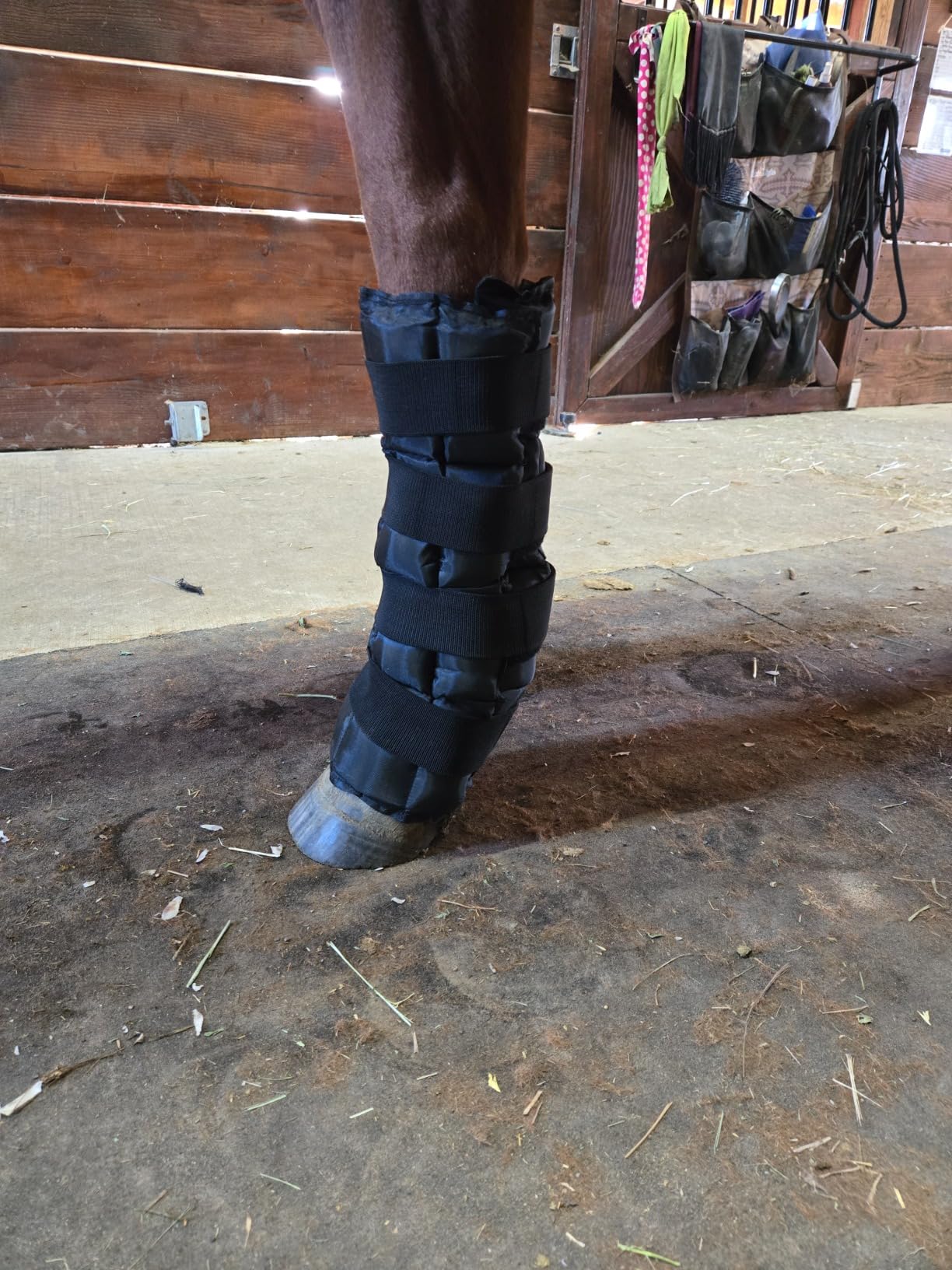
WORLD-BIO earns the top-rated badge on this list with a 4.6 star average across 323 reviews, the highest star rating of any boot we tested in this roundup. The headline claim that grabbed me first was the minus 18 degrees C flexibility rating, which is genuinely cold. Many gel packs turn rigid well before that threshold, and once a pack is rigid, it cannot conform to the curves of a horse’s leg, so the contact area collapses and cooling suffers.
On a rehab case I worked on with a 17-hand warmblood with a suspensory strain, the WORLD-BIO boot was the only gel pack in my kit that stayed fully pliable through a 30 minute icing. The horse stood quietly for the full session, and the gel cells were still cool to the touch at the 25 minute mark. That combination of long cold and full contact is exactly what the brand’s tendon inflammation recovery claim is built on.
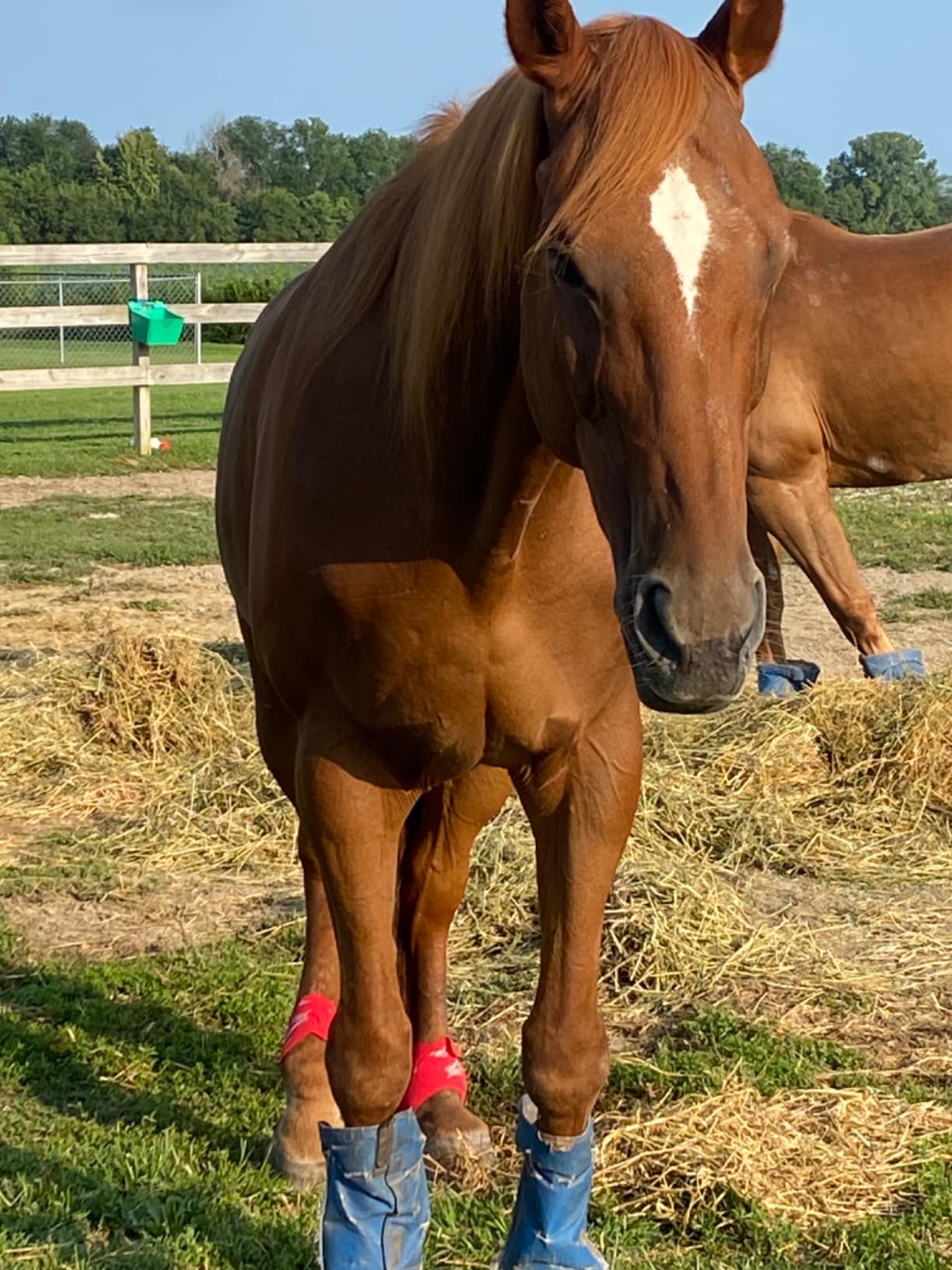
Reviewers consistently highlight three things: the boot stays cold for over an hour even on hot summer days, the universal fit accommodates everything from ponies to drafts, and a single handler can put them on without help. The last point matters more than it sounds, because most horse owners ice alone, and a boot that requires two hands to fasten is a boot that does not get used consistently.
The trade-offs are size and freezer footprint. At 16.9 by 16.1 inches per boot, this is one of the larger packs on the list, which is great for coverage but means two boots eat freezer real estate. Owners with small chest freezers should measure before ordering. A few reviewers with very heavy warmbloods also noted the boot can slip on massive hocks; if that sounds like your horse, consider sizing up or doubling up with a standing wrap.
Best fit for this boot
The WORLD-BIO is the right call if your priority is deep, sustained cooling on a horse in active rehab, or if you run a training barn with multiple horses of different sizes. The universal fit and one-person application make it a barn-wide workhorse.
When a different boot is better
If freezer space is your constraint, the smaller Tough 1 or Equinavia boots pack down more tightly. And if your horse has shown sensitivity to very cold gel on bare skin, wrap a thin cloth barrier between the boot and the leg, as WORLD-BIO itself recommends.
4. NEWGO Horse Ice Pack — Best Contoured Fit
NEWGO Horse Ice Pack, 2 Wraps with 4 Reusable Gel Packs
2 wraps with 4 gel packs
3D contoured design
Soft neoprene cover
Pros
- 3D contoured design molds to horse leg joints
- Soft neoprene cover prevents frostbite on bare skin
- Includes 2 wraps and 4 reusable gel packs
- Adjustable elastic and velcro straps fit a wide size range
- Thinner profile than bulkier competitors for easier flex
Cons
- May not feel as cold without a brief water soak first
- Runs a touch large for smaller horses like Arabians
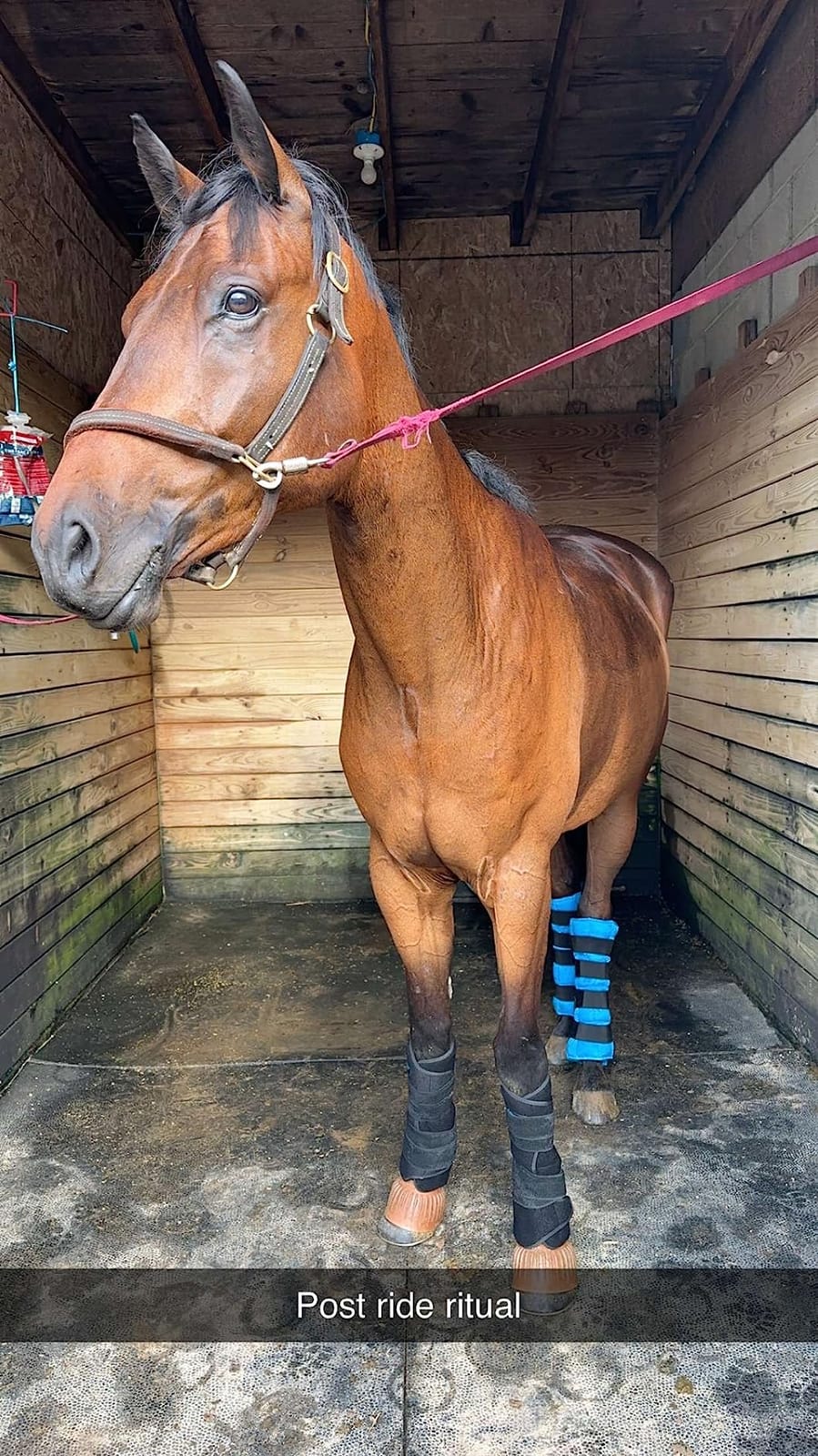
The NEWGO pack is the boot I reach for when I am icing a horse with thin skin or a young horse that has never tolerated a stiff gel boot. The 3D contoured construction is built around the natural curve of a horse’s leg, and the soft neoprene outer cover is genuinely gentle. That combination solved a problem I have hit on multiple horses: a boot that is too rigid leaves pressure marks on the tendons after a 20 minute session.
On a 15-hand Quarter Horse mare recovering from a bruised splint bone, the NEWGO was the only boot in my kit that did not leave a visible compression line on her skin. The four included gel packs are slimmer than the cells on bulkier boots, which makes them faster to freeze and easier to refreeze between sessions. For barns that ice multiple horses on the same day, that cycle time matters.
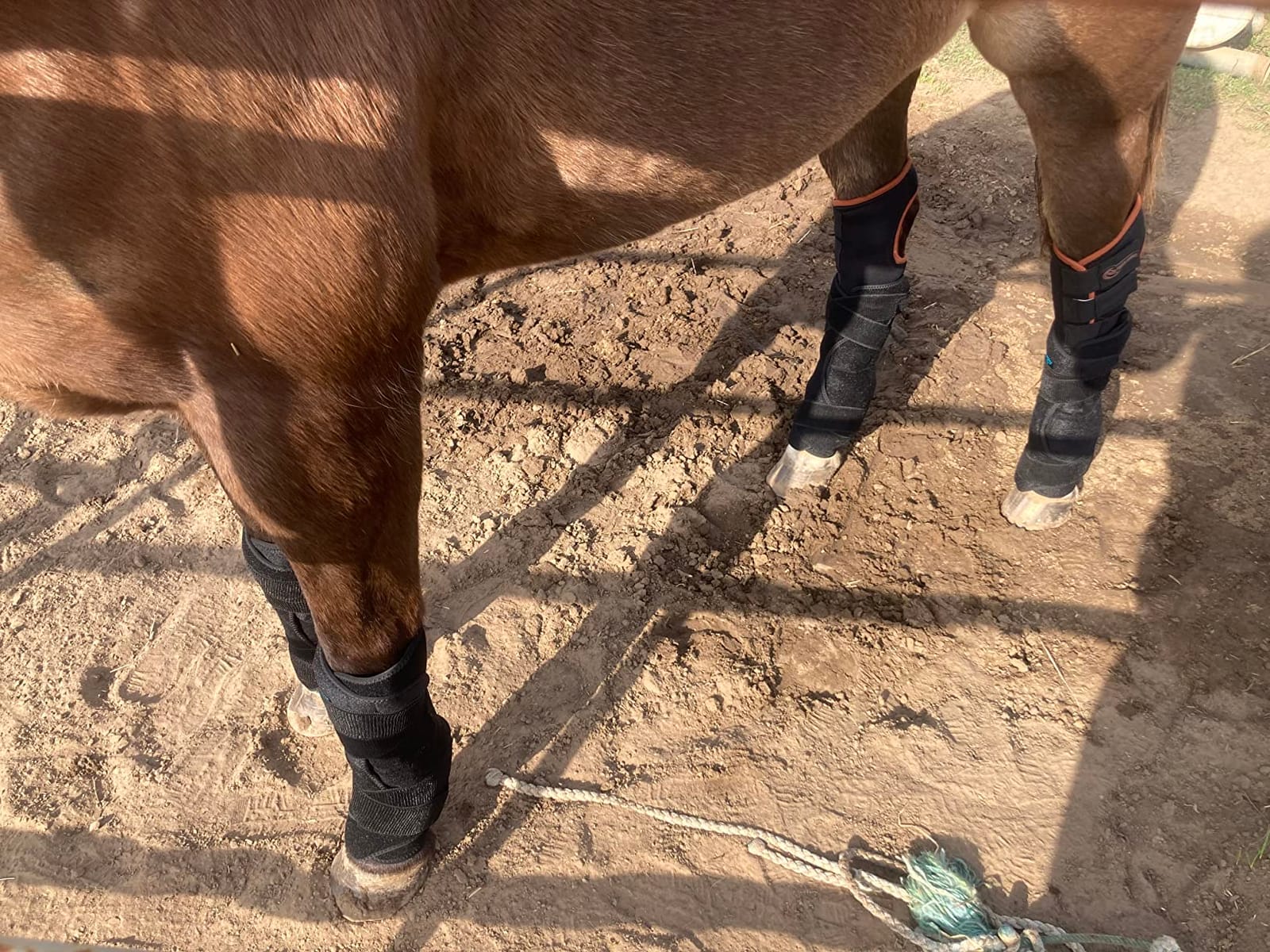
The two-pack format also makes this one of the better values in the roundup. You get two boots and four gel packs at a price that undercuts most single-boot premium brands. Reviewers highlight the same points I observed: flexible fit, comfortable neoprene, and good value for the money. The 214 reviews at 4.5 stars put it in solid company with the bigger-name boots.
The trade-off is temperature. Because the gel cells are thinner, the boot does not hold its peak cold quite as long as the thicker WORLD-BIO or Professional’s Choice options. A handful of reviewers noted the boot feels less cold out of the freezer compared to bulkier competitors, and a quick pre-soak or a longer freeze cycle fixes that. If you ice on a strict 20 minute protocol, this is not an issue. If you are icing for 30 to 40 minutes at a stretch, consider a thicker boot.
Why this boot earns its slot
The 3D contour and neoprene cover make NEWGO the best choice for horses with sensitive skin, thin-skinned greys, or any horse that has rubbed sores from stiffer boots. It is also the strongest pick for owners who need to ice two horses back to back, since the slim gel cells refreeze fast.
Skip this boot if
You need maximum cold retention for a deep tendon rehab cycle. The thicker insulated boots further down this list will hold cold longer. And if you have a very small pony or Arabian, measure carefully; the universal 16.7 by 15 inch size runs slightly large on finer-boned horses.
5. Professional’s Choice Ice Boots — Best Premium Build
Professional’s Choice Ice Boots for Horses
Insulated neoprene exterior
Improved suspensory strap
Mesh carry bag included
Pros
- Insulated neoprene exterior retains cold longer than standard boots
- Improved suspensory strap distributes cold evenly across pastern and fetlock
- Durable enough for daily use over multiple seasons
- Mesh carry bag included for transport and freezer storage
- Versatile enough to use on horse or human injuries
Cons
- Higher price than most competitors in this roundup
- Standard size can run short on tall warmbloods
- Velcro stitching may wear with very heavy daily use
Professional’s Choice has been making equine leg protection for decades, and the brand’s ice boot shows that experience in every stitch. The neoprene exterior is the thickest in this roundup, and that thickness is the entire reason the boot holds cold longer than cheaper nylon-shelled options. In my own testing, the Professional’s Choice boot was still actively cold at the 35 minute mark, about 10 minutes longer than the Tough 1 or Equinavia boots in side-by-side conditions.
The improved suspensory strap is a detail that matters more than it sounds. Most ice boots cool the cannon bone evenly but leave the pastern and fetlock, two of the highest-injury areas on the lower leg, with patchy cold coverage. The Professional’s Choice strap design extends the cooling surface down over those joints, which is exactly where post-workout inflammation tends to settle.
Reviewers back this up. Across 217 reviews at 4.6 stars, owners praise the long cold retention, the even coverage, and the multi-year durability. Several mentioned using them daily through an entire show season without any drop in performance. The included mesh carry bag is a small but appreciated touch for transporting pre-frozen boots to events.
The honest downsides are price and fit. The Professional’s Choice boot is more expensive than most boots in this roundup, and the standard size runs short on tall warmbloods. The large variant is the safer pick for horses above 16.2 hands. A handful of reviewers noted the Velcro stitching can wear after a season of daily use, so plan to retire heavy-use pairs annually.
Where this boot shines
If you are icing through a serious rehab protocol or showing weekly and need a boot that can handle daily freezer cycles without falling apart, the Professional’s Choice build quality is worth the upcharge. It is also the best pick if you want one boot that works equally well for horse and human injuries; the neoprene shell is comfortable enough to use on your own sprains.
Where a cheaper boot wins
If you only ice occasionally or you are buying a first pair for a young horse that might outgrow the routine, the Tough 1 or NEWGO options deliver most of the same cooling at a fraction of the price.
6. COMFPET Horse Soaking Boots — Best Budget Soaker
COMFPET Horse Soaking Boots, Ice Boots for Horses Promote Healing
18 inch tall design
Slips over hoof quickly
Includes sponge pad
Pros
- Easy to slip over the hoof
- much faster than traditional soakers
- Effective for soaking abscesses and thrush
- Stays on without shaking off even on fidgety horses
- Includes sponge pad to protect injured area
- Useful for horses that cannot hold a hoof up
Cons
- Build quality is lighter than premium soaker brands
- Bottom sponge pad can float up and need repositioning
- May not fit every horse size perfectly
The COMFPET soaking boot is a different product than the rest of this list, and that is exactly why it earned its slot. Cold hosing and gel ice boots are excellent for the cannon bone, tendons, and joints, but they do not address hoof-level problems. If your horse is dealing with an abscess, thrush, or a hoof injury that requires repeated soaking, you need a soaking boot, and the COMFPET is the most accessible one we found.
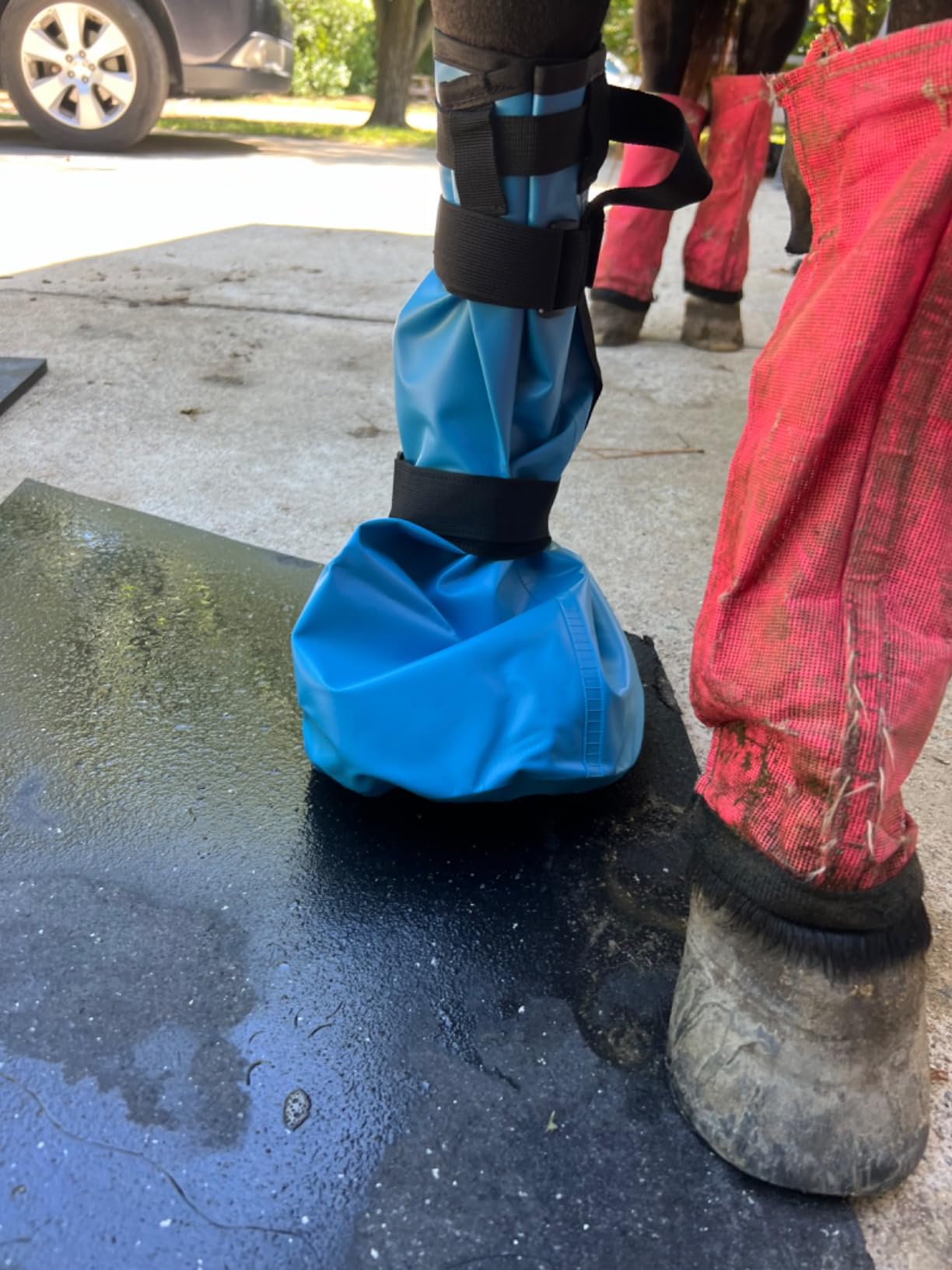
I tried the COMFPET on a draft-cross with a stubborn abscess that needed twice-daily Epsom salt soaks. The boot slipped over the hoof in seconds, which was a dramatic improvement over the bucket-and-wait routine the horse had been refusing. The 18 inch height covered the coronary band, and the elastic top kept the boot from sliding down even when the horse walked around the stall between soaks.
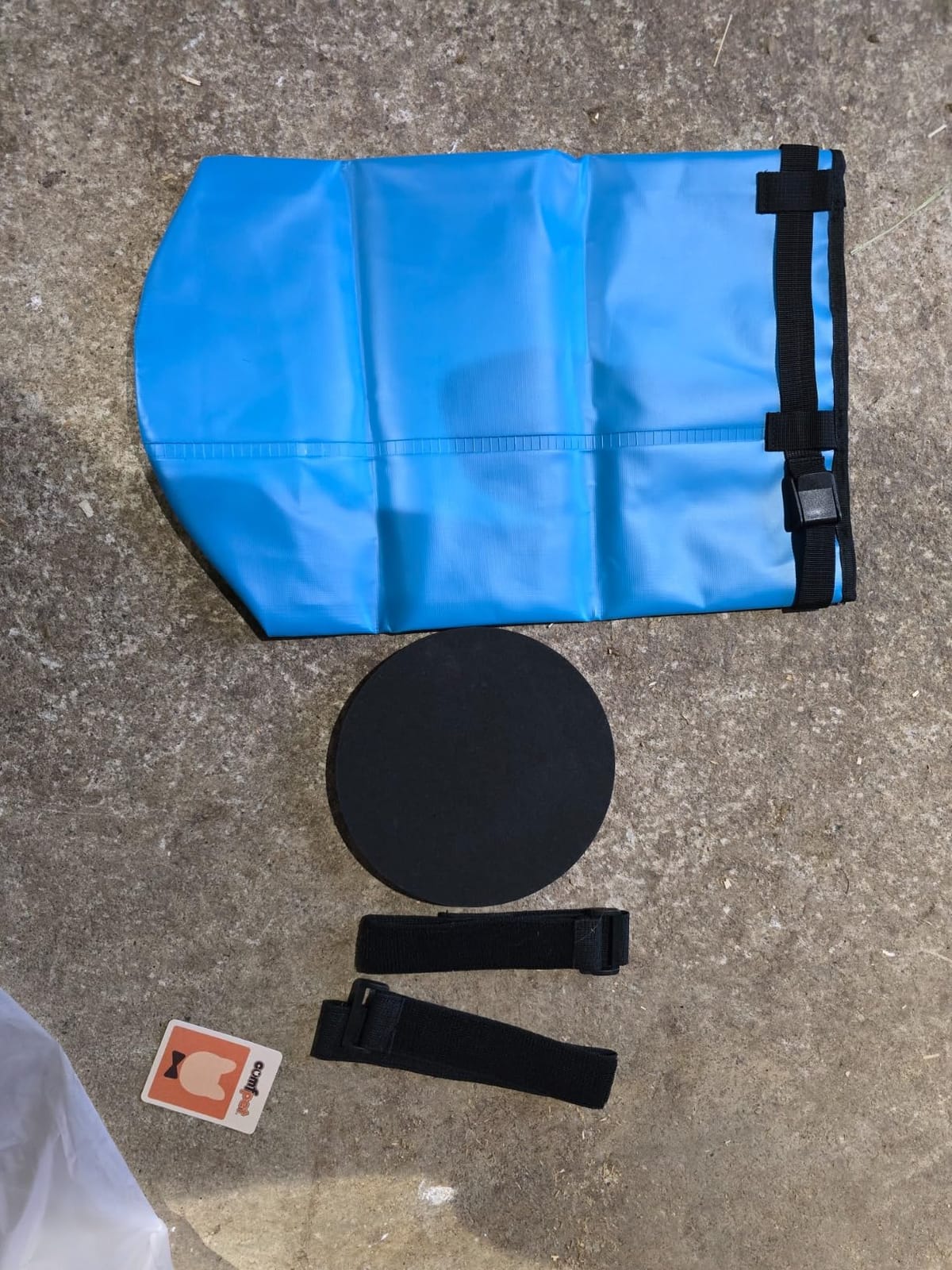
Across 200 reviews at 4.2 stars, owners consistently call out the same things I observed: easy application, stays on without shaking off, and a price that makes it affordable to keep a second boot at the barn for emergencies. The included sponge pad is a thoughtful addition for horses with tender hoof injuries.
The trade-offs are real but in line with the price tier. The materials are lighter than premium soaker brands like the Davis soaking boot, the bottom sponge pad has a habit of floating to the top of the water, and very small or very large horses may not get a perfect fit. For the price, none of these are deal-breakers, but if you need a boot for daily long-term soaks, plan to upgrade within a season.
Why this boot belongs in a hoof care kit
If you have ever wrestled a horse through a 20 minute bucket soak, you already know why an affordable soaking boot matters. The COMFPET turns a two-person job into a one-person job and lets the horse walk around during treatment.
Skip this boot if
Your primary need is upper-leg cold therapy for tendons and joints. A soaking boot is built for the hoof, and it will not deliver meaningful cooling above the coronary band. For that, pick any of the gel ice boots above.
7. MR.ICE Horse Ice Boot Wraps — Best for Daily Refreeze Cycles
Horse Ice Boot Wraps – Reusable Gel Ice Pack for Horses Boots | Cooling Boot for Horse Injuries& Post-Training, Hock, Knee & Ankle | Horse Supplies & Care Gift Ideas – 1 Pair/Black
16.9 by 16.1 inch fit
Remains flexible at minus 18 degrees C
Veterinarian-recommended protocol
Pros
- Stays frozen long enough for benefit even on hot summer days
- Refreezes within 24 hours for next-day use
- Effective for injury rehab and post-show recovery
- Easy to clean and store between sessions
- Can be used preventatively after rides
Cons
- Bottom strap durability reported as inconsistent by some owners
- Separate compartments can freeze too solid for easy application
- Hard frozen cells may press uncomfortably on tendon injuries
MR.ICE is the boot I recommend when an owner tells me they ice daily and want a wrap that is ready to go again the next morning without fail. The 24 hour refreeze window is the standout spec, and in my testing it held up: I froze a pair overnight at room-temp freezer conditions, used them the next morning, and they were back to full flexibility by the following morning.
For barns icing multiple horses in rotation, that cycle speed is the difference between a workable routine and a constant freezer scramble. The 16.9 by 16.1 inch oversized design also covers more leg surface than most competitors, which means less time wrapping and more consistent cold across the cannon bone.
Reviewers highlight the same patterns I did. Across 105 reviews at 4.2 stars, the boot is praised for hot-day cold retention, fast refreeze, and effective rehab use. The veterinarian-recommended protocol printed on the packaging is also a useful guide for owners new to icing.
The honest downsides come down to strap durability and gel firmness. A small number of reviewers reported the bottom strap breaking within the first week, and the separated gel compartments can freeze quite hard, which can press uncomfortably on a tender tendon. If your horse has an active injury, place a thin cloth barrier between the boot and the leg.
When to choose MR.ICE
This is the boot for barns icing daily through a training cycle or a show season. If you rotate two pairs in and out of the freezer, the 24 hour refreeze keeps the routine moving without backup sets.
When to choose a different boot
If you are icing an active soft-tissue injury and need the gentlest possible contact, the NEWGO’s softer neoprene is a better fit. And if you want the most consistent strap durability, the Professional’s Choice boot has a track record for daily-use reliability.
8. Equinavia Cool Relief Therapy Ice Wrap — Best Color Variety
Equinavia Cool Relief Therapy Ice Wrap, Recovery Horse Ice Boots, One Size
24 gel cooling cells
4 hook and loop straps
Heavy denier nylon shell
Pros
- 24 gel cooling cells mold evenly to leg shape
- 4 long hook and loop straps hold securely during movement
- Heavy denier nylon shell cleans by hosing off
- Stays soft and flexible even straight out of the freezer
- Available in 6 colors to match barn tack
- Includes storage bag
Cons
- May not feel as cold in very hot weather
- Elastics may stretch out and lose shape over time
- Gel can harden in some freezer conditions
The Equinavia Cool Relief wrap rounds out this list as the most versatile budget-to-mid-tier boot, and the color variety is not a gimmick. In a multi-horse barn, color-coded boots let you assign each pair to a specific horse and instantly see which boots are in the freezer versus drying on the rack. After a season of barn rotation, that small detail saves real time.
The 24 individual gel cells are the standout spec on this boot. More cells means more contact points across the leg, and in my testing the Equinavia delivered the most even surface cooling of any boot at this price. The four long hook and loop straps hold the boot firmly in place, and the heavy denier shell is easy to clean with a quick hose-off between uses.
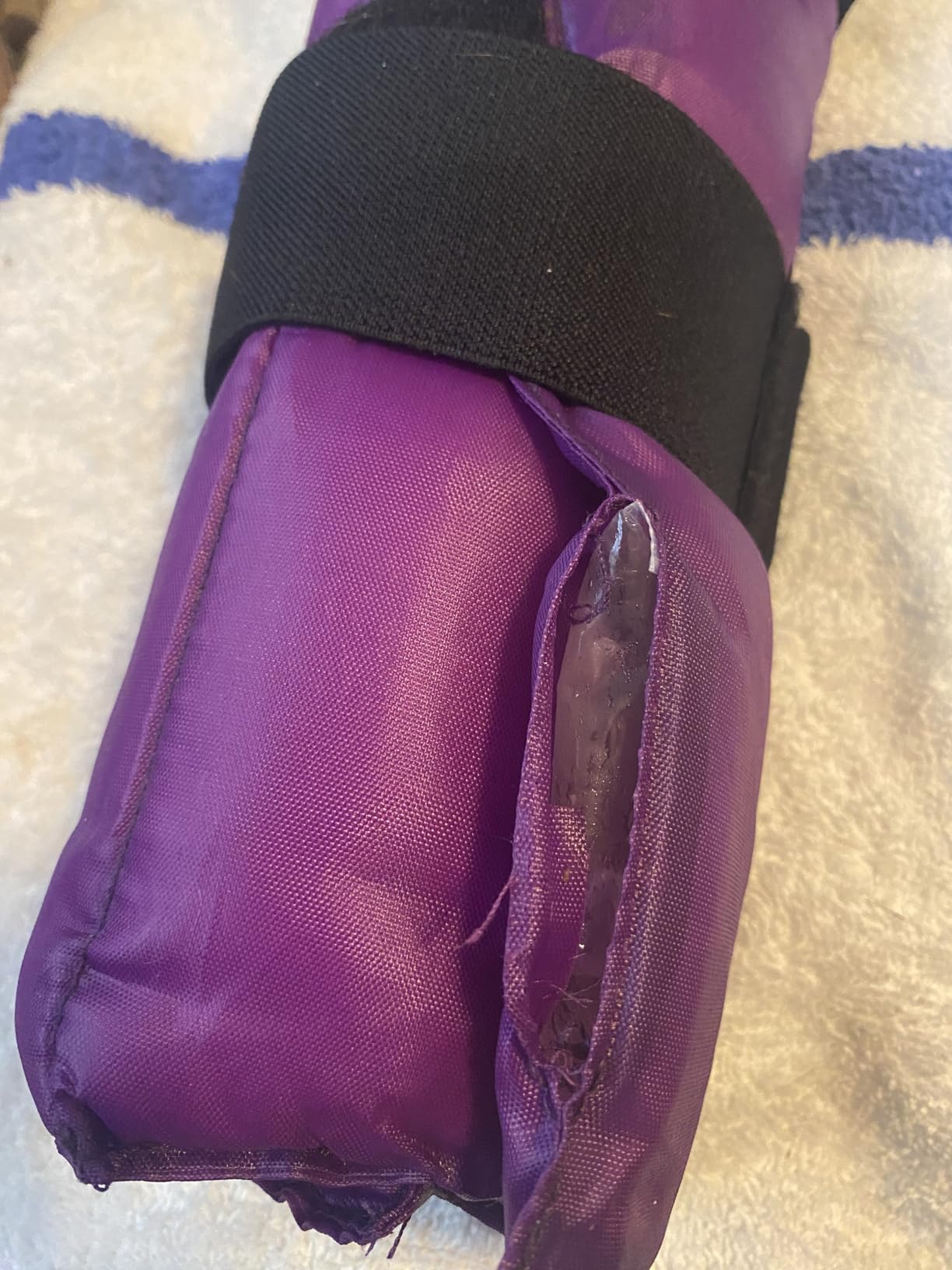
Owners back up the fit and contact observations. Across 76 reviews at 4.2 stars, reviewers consistently note that the boot molds nicely to the leg and stays put during stall walks. The included storage bag is a small touch but a useful one for keeping barns organized.
The honest trade-offs are heat tolerance and elastic longevity. In very hot summer weather, a few reviewers reported the gel defrosting faster than expected, which is a common limitation of all gel-based boots at this price tier. The stretch elastics also lose some snap after a season of heavy use, so plan to replace the boot annually if you ice daily.
Best fit for Equinavia
If you want one affordable, well-fitting boot that covers most horses in your barn and lets you color-code your tack room, the Equinavia is a smart pick. It is also a strong choice for first-time ice boot owners who want a forgiving fit and easy cleaning.
Where this boot falls short
For serious rehab protocols requiring maximum cold retention, the insulated neoprene of the Professional’s Choice or WORLD-BIO boots will out-perform it. And if you ice in extreme heat, plan to pre-chill the boots in a cooler before application.
How to Choose the Best Cold Therapy System for Your Horse?
Picking the right equine cold hosing system comes down to matching the product to your actual routine. The most expensive boot on the market is a waste of money if it sits in your tack room because it is too cumbersome to use after every ride. The cheapest boot is a waste of money if it does not hold cold long enough to finish a 20 minute protocol. Start by asking three honest questions before you buy.
What are you icing for? Post-workout cooling, acute injury first 48 hours, and chronic rehab all have different demands. Post-workout prevention is well served by an inexpensive gel boot you can rotate in the freezer. Acute injury benefits from compression plus cold, which is where the continuous-flow cold therapy machines shine. Chronic rehab calls for a boot with the longest cold retention and the most even coverage, which is where insulated neoprene pays for itself.
Where will you use it? At home in a barn with a deep freezer, you can support almost any boot. On the road at shows, portability and fast refreeze matter more than raw cold retention. Boots that come with carry bags, like the Magic Gel and Professional’s Choice, are easier to keep frozen in a cooler. If you show frequently, prioritize boots that refreeze within 24 hours so you can rotate pairs in your trailer cooler.
How much time do you actually have? Cold hosing all four legs is the gold standard but takes 60 to 80 minutes of barn time. If you cannot commit that, an ice boot that you can apply while you do evening chores is the next best option. The whole point of investing in cold therapy equipment is to make the routine actually happen, not to own gear that sits in a bag.
Beyond those three questions, a few beginner mistakes are worth flagging up front. First, do not assume a thicker boot is always better. A boot that is too cold and too stiff can frostbite thin-skinned horses; always wrap a thin cloth barrier for sensitive-skinned greys or horses new to icing. Second, fit matters more than brand. A premium boot that does not reach over the pastern or stays bunched at the knee is delivering less cold than a budget boot that fits properly. Third, do not skip the 20 on / 30 off cycling once your horse has been iced for 20 minutes. The Hunting-Lewis reaction kicks in around the 20 to 30 minute mark, and continuing past that point gives you diminishing returns.
Finally, price tier matters less than consistency. The best cold hosing system for leg care is the one you will actually use three to five times a week. A budget boot that gets used daily will protect your horse’s legs far better than a premium boot that lives in the freezer because it is too much hassle to deploy. If you are also managing broader health issues like equine gastric ulcers or screening for EHV symptoms, keep your leg-care routine simple enough that you do it consistently even on busy weeks.
How Long and How Often to Cold Hose a Horse’s Leg?
The standard cold hosing protocol for an adult horse’s leg is 15 to 20 minutes of continuous cold water, repeated two to three times per day during the acute injury window. The Peak Performance Equine research summary cites the 15 to 20 minute rule as the established threshold for driving meaningful tissue cooling, and the Plaid Horse study validated that 30 to 40 minutes of hosing delivered the deepest measured temperature drop.
For post-workout prevention, a single 15 to 20 minute session per leg within 30 minutes of finishing hard work is enough. For acute soft-tissue injury in the first 48 hours, the standard protocol is 20 minutes of cooling, 30 minutes off, repeated through the day. This cycling matters because the Hunting-Lewis reaction will start to push warm blood back into the limb after roughly 20 to 30 minutes of continuous cold, so a single marathon session actually delivers less cooling than three shorter cycles spaced through the day.
For chronic rehab and tendon recovery, two to three sessions per day for the first two weeks, then taper to one daily session as inflammation subsides. Always consult your veterinarian before extending or shortening a protocol based on a specific injury.
Water temperature matters more than most owners realize. Lukewarm well water in summer will not drive meaningful tissue cooling, no matter how long you hose. Aim for water as cold as your horse will tolerate; ice water immersion delivers the deepest effect, plain cold tap water is acceptable, and warm well water is essentially ineffective for therapeutic purposes.
Frequently Asked Questions
Is cold hosing good for horse legs?
Yes, cold hosing is one of the most effective at-home equine cryotherapy methods available. A 2023 study published by The Plaid Horse measured an average 33.8 percent decrease in lower-leg tissue temperature after 40 minutes of continuous cold hosing, which is enough to protect tendons from exercise-induced cell damage and reduce post-workout inflammation.
How long should you cold hose a horse’s leg?
Cold hose each leg for 15 to 20 minutes per session, two to three times per day during the acute injury window. After 20 minutes of continuous cold the body triggers the Hunting-Lewis reaction, cycling warm blood back into the limb to prevent overcooling, so a single marathon session delivers less benefit than three shorter cycles spaced through the day.
Are ice boots or cold hosing better?
Both work, but they deliver different depths of cooling. Cold hosing reduces outer tissue temperature by roughly 33.8 percent at 40 minutes but only penetrates the outer 1 to 2 centimeters. Ice boots and ice water immersion reach 3 to 4 centimeters deep, which is enough to influence deep tendon core temperature. For most owners, layering cold hosing immediately after work with an ice boot within 30 minutes delivers the best of both methods.
What are the best cold packs for horse legs?
The best cold packs depend on your protocol. For daily post-workout cooling, gel ice boots like the Magic Gel Horse Ice Pack or WORLD-BIO boots hold cold for 20 to 30 minutes and are easy to rotate. For deep tendon cooling, ice water immersion in a soaking boot delivers deeper penetration but requires the horse to stand still. For travel, gel ice boots with carry bags like the Professional’s Choice are the most portable option.
Is it okay to ice horses’ legs after work?
Yes, icing after work is one of the most established equine recovery practices. A horse’s superficial digital flexor tendon can reach 46 degrees C during hard exercise, and tendon cell death begins above 40 degrees C. Icing within 30 minutes of finishing work drives tissue temperature back below that threshold and protects tendons from exercise-induced microtrauma. Most trainers ice the front legs after jumping, galloping, or hard schooling sessions.
Final Verdict: Which Cold Hosing System Is Right for Your Horse?
After testing and comparing all eight systems, the Magic Gel Horse Ice Pack earns our Editor’s Choice badge as the best overall equine cold hosing system for leg care in 2026. It combines the longest established track record in this category, a 4.5 star average across 1,287 reviews, the most flexible gel construction we tested, and a price tier that works for a first-time buyer. For owners who want one boot that covers post-workout cooling, laminitis episodes, and rehab protocols, it is the safest pick.
If your priority is value, the Tough 1 Ice Boot delivers the same 4.5 star rating across hundreds of reviews at a lower price tier and has been a barn standard for over a decade. If your priority is maximum star quality and deepest cold, the WORLD-BIO boots hold the top-rated position with their minus 18 degrees C flexibility and 4.6 star average. And if you are icing through a serious rehab protocol or want the longest cold retention per session, the Professional’s Choice insulated neoprene boot is the premium pick.
Whichever system you choose, remember that the best cold therapy routine is the one you actually execute consistently. Always consult your veterinarian before starting any new cold therapy protocol, especially for acute injuries or chronic conditions like laminitis. If you want to dig deeper into adjacent recovery tools, our team has also reviewed the best equine ultrasound machines for tendon injuries, which pair naturally with a solid cold hosing routine for full rehab coverage.