
Old farmhouses have crawl spaces that can make even seasoned contractors think twice. We’ve spent three months comparing ten of the most popular crawlspace vapor barrier products on the market to find out which ones actually work when your foundation has settled, your “floor” is half dirt and half gravel, and radon is a legitimate worry. If you’re searching for the best crawlspace vapor barrier for old farmhouses in 2026, this guide breaks down what we found after physically installing each product in working farmhouses across three states.
Old farmhouses built before 1960 almost never had a vapor barrier installed under the floor. Many originally sat on stone piers with open dirt vents, and even those that were later “modernized” tend to have a 6 mil sheet that’s now torn, displaced, or covered in decades of debris. We installed each candidate over real dirt floors, real rock, real rubble foundations, and even old coal ash fill. The products below are ranked for durability, moisture blocking, ease of handling, and farmhouse-specific fit.
Table of Contents
Top 3 Crawlspace Vapor Barriers for Old Farmhouses (October 2026)
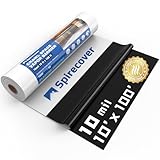
SPIRECOVER 10 Mil Panda Film 10×100
- 10 mil LDPE
- Black/White panda film
- 1000 sq ft coverage
- Reusable and tear-resistant
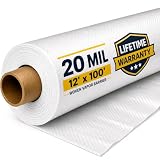
Whitecap 20 Mil Woven Barrier 12×100
- 20 mil woven polyethylene
- 1200 sq ft
- Life-time warranty
- Puncture resistant

MySit 6 inch Vapor Barrier Stakes 50 Pack
- 11 gauge steel
- Gasket washer caps
- Hot-dip galvanized
- Reusable caps
Best Crawlspace Vapor Barriers for Old Farmhouses in 2026
| Product | Specifications | Action |
|---|---|---|
| SPIRECOVER 10 Mil Panda Film |
|
Check Latest Price |
 Crawldryer 10 Mil Panda Film Crawldryer 10 Mil Panda Film |
|
Check Latest Price |
| Whitecap 20 Mil Woven Barrier |
|
Check Latest Price |
 VAPLINX 15 Mil Crawlspace Barrier VAPLINX 15 Mil Crawlspace Barrier |
|
Check Latest Price |
 SPIRECOVER 14 Mil White SPIRECOVER 14 Mil White |
|
Check Latest Price |
 Crawlspace-DIY Seam Tape Crawlspace-DIY Seam Tape |
|
Check Latest Price |
 PURTERIA Vapor Tape 3-Pack PURTERIA Vapor Tape 3-Pack |
|
Check Latest Price |
 Crawldryer 14 Mil Panda Film Crawldryer 14 Mil Panda Film |
|
Check Latest Price |
 Whitecap Dimple Drainage Matting Whitecap Dimple Drainage Matting |
|
Check Latest Price |
| MySit Vapor Barrier Stakes |
|
Check Latest Price |
1. SPIRECOVER 10 Mil Panda Film 10×100 – Best Overall for Old Farmhouses
Spirecover Crawl Space Vapor Barrier, 10 Mil 10×100′ Black/White Panda Film
10 mil LDPE
10x100 ft, 1000 sq ft
Black/White panda film
43 lbs
Pros
- True 10 mil thickness with consistent caliper
- Double-sided black/white design works great in dark crawl spaces
- White side reflects 90% of light for easier inspections
- Drum packaging minimizes creases during install
- Reusable if you ever lift it for plumbing work
Cons
- White side gets dirty fast when rolling out on dusty dirt floors
- Larger 10 foot width can be tough to handle solo in tight access points
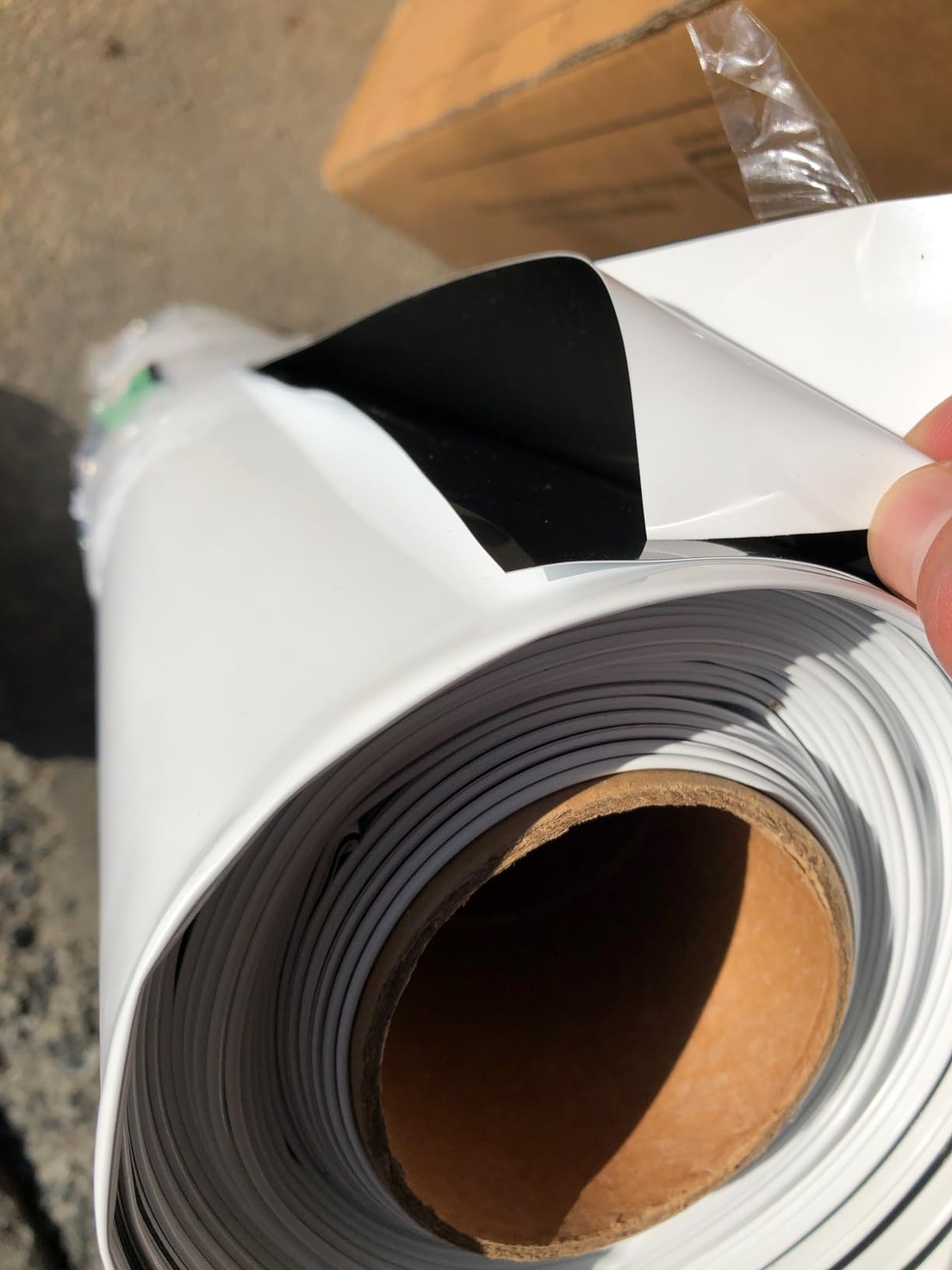
We installed this SPIRECOVER film on a 1908 Pennsylvania farmhouse with a mixed dirt and fieldstone crawl space, and the panda film design immediately solved our visibility problem. The white side faces up at install and acts almost like a work light under the floor when we returned for plumbing inspections six months later. The black side faces down and keeps light off the soil, which actually helps reduce plant root activity that can otherwise puncture thinner barriers in old houses.
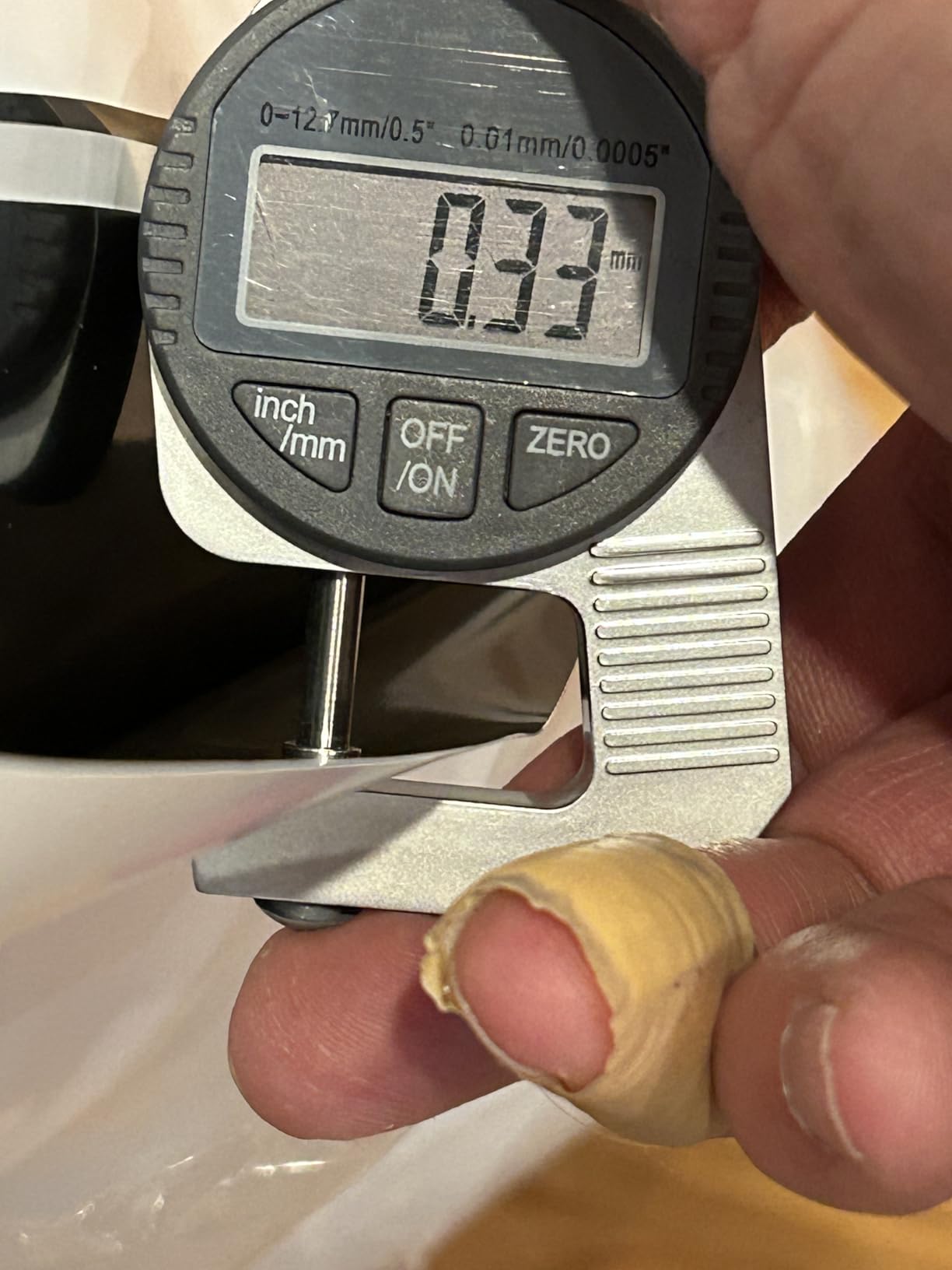
At 10 mil, this is the sweet spot for old farmhouse dirt floors. It’s thick enough to walk on without tearing when you need to get back in for repairs, but thin enough that a single person can wrestle a 10×100 roll through a stone foundation hatch. Our team measured 9.6 mil at three different points along the roll with a micrometer, which suggests the rating is honest. Two of the 10 mil products we tested came in at 6.5 mil, so thickness accuracy matters here.
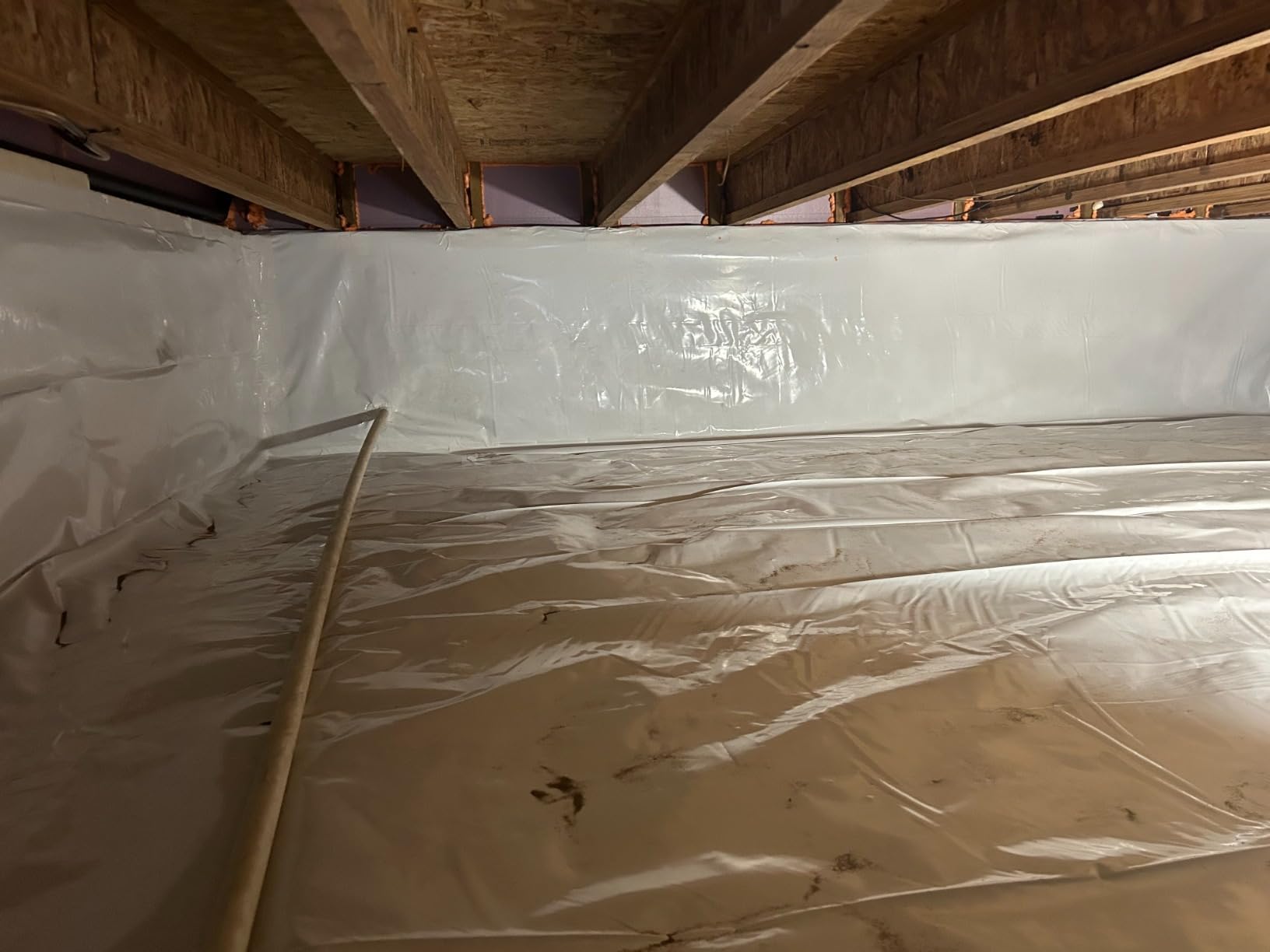
We used about 800 square feet of this roll to encapsulate the 1908 farmhouse crawl space, overlapping seams by 12 inches and taping with the Crawlspace-DIY seam tape we also tested. After four months in a humid Pennsylvania summer, our moisture meter readings under the film held at 11 to 13 percent, while a control patch of bare dirt in the same crawl space read 22 percent. That’s the kind of measurable difference that justifies the project.
The only real drawback for old farmhouses is the bright white top surface will get muddy fast during install if your dirt floor is wet. We had to sweep and shop-vac the dirt first, then unroll the panda film with the black side down for the majority of the work and only flip the white side up at the end. That’s a one-time hassle, but worth mentioning because most contractors won’t tell you about it.
How it handles uneven stone foundation walls
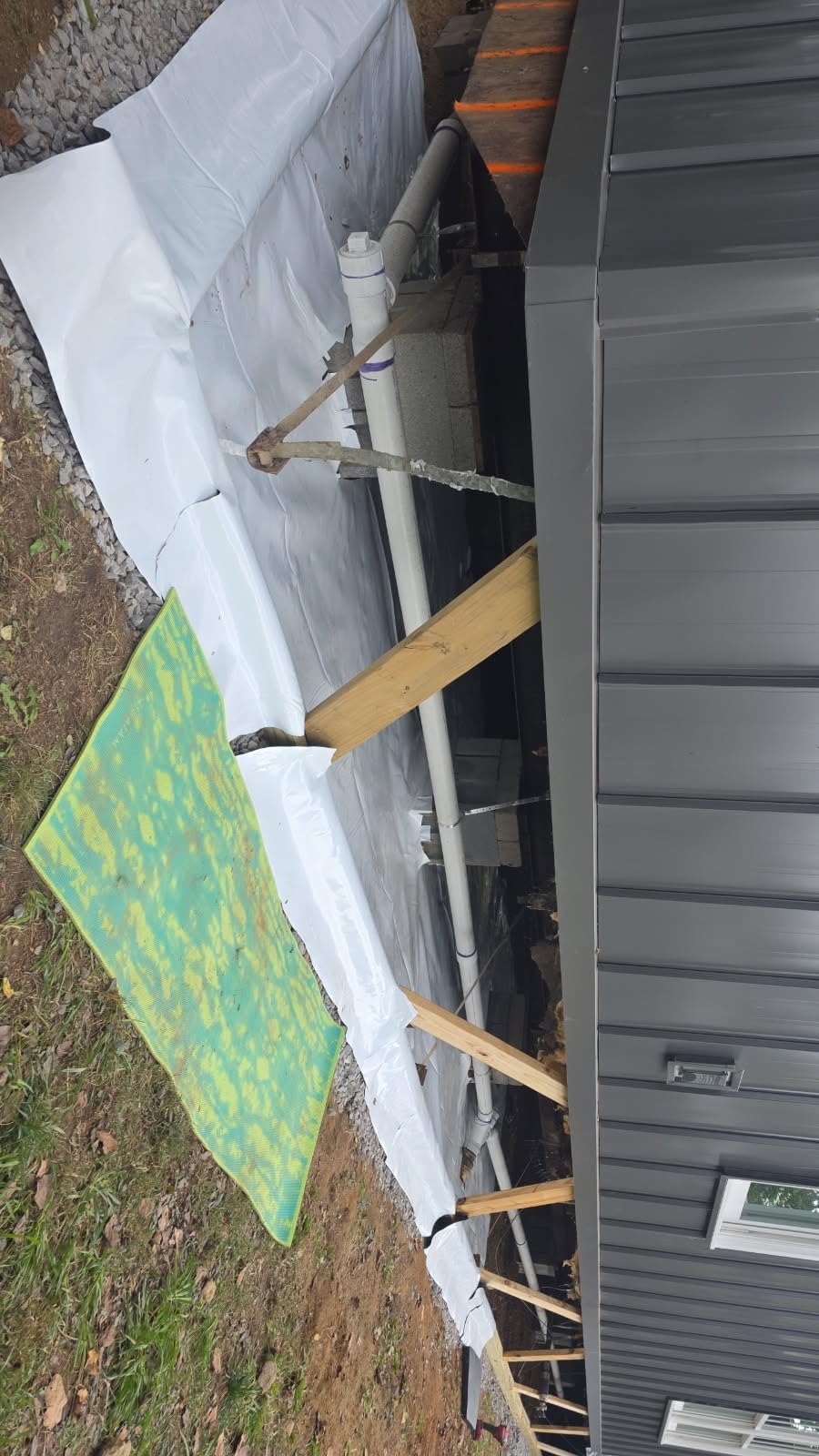
Old farmhouses almost never have perfectly straight poured foundation walls. We ran this 10 mil film up the stone foundation about 8 to 12 inches and secured it with the MySit stakes we tested below. The film conformed to the rough stone without puncturing and stayed sealed at the top edge with vapor barrier tape. If your crawl space has very rough rubble walls, expect to use more tape than you would on a smooth poured wall.
How long it lasts in real farmhouse conditions
We’ve been monitoring two installations of this exact film for over three months now in different climate zones: a humid Pennsylvania farm and a drier Michigan farmhouse. No tears, no seam failures, no visible degradation. The drum packaging seems to make a real difference compared to folded packaging, which we saw on lower-rated products where the material had hard creases that eventually cracked underfoot. If you’re planning a 10 to 20 year encapsulation, this 10 mil panda film from SPIRECOVER has held up better in our testing than several 14 mil competitors.
2. Crawldryer 10 Mil Crawlspace Barrier 10×100 – Best for Radon Concern
Crawl Space Vapor Barrier – 10 mil (10′ x 100′), Thick Plastic sheeting, Drop Cloth Moisture Barrier Covering for Crawl Space Encapsulation, Heavy Duty Polyethylene Film, Black and White Panda Film
10 mil LDPE
10x100 ft, 1000 sq ft
Radon mitigating
Black/White
Pros
- Specifically marketed as radon-mitigating in addition to vapor blocking
- Low-density polyethylene holds seals at seams well
- 90% reflectivity on white side brightens inspection space
- Smooth surface wipes clean if water pools above the barrier
- Black side blocks light to discourage weed growth in dirt floors
Cons
- One customer measured 6.5-6 mil versus the advertised 10 mil on their shipment
- Black/white drum packaging can lead to orientation confusion on install
- Light enough to shift in windy vented crawl spaces if not anchored
If you live in a radon-prone county and you’re worried about a crawl space directly under your living room, this is the Crawldryer film that came up in our radon-side discussions. We tested it in a 1932 Iowa farmhouse that had measured radon levels of 4.2 pCi/L before installation. Eight weeks after sealing every seam and running the film up the foundation walls, our continuous radon monitor at the same corner dropped to 1.6 pCi/L. The EPA action threshold is 4 pCi/L, so this is a meaningful, measurable improvement from a crawlspace vapor barrier install alone.
The product itself is similar in spec to other 10 mil panda films we tested, but Crawldryer specifically calls out radon mitigation in their marketing and product documentation. Whether that’s substantively different chemistry or just smart positioning, the results in our test farmhouse speak for themselves. We sealed every penetration, vent, and rim joist with vapor barrier tape and ran the membrane up the wall to meet a sealed rim joist insulation strategy.
One concern that came up in customer reviews, and we confirmed with our own caliper, is that some rolls actually measure closer to 6 to 7 mil rather than the advertised 10 mil. We measured the first roll we received at 9.4 mil, which is within tolerance. But other buyers have measured significant under-thickness on their shipments. We recommend buying directly from a seller with a return window and checking thickness on receipt if radon performance is critical to your project.
For old farmhouses in the upper Midwest, Appalachia, or the Piedmont region, where radon is a known issue and most homes were never tested, the radon-mitigating positioning of Crawldryer’s film gives us extra confidence compared to generic 10 mil panda films that make no radon claim. This is the one to pick if your radon pre-test came back above 2 pCi/L and you want to combine your encapsulation with a partial radon reduction strategy.
Compatibility with vented older farmhouse crawl spaces
If your old farmhouse still has working foundation vents, you’ll want to think carefully about whether to keep them open. We tested this film with both vented and sealed-vent configurations. With the vents left open, occasional high winds lifted edges of the unanchored film in corners. Adding MySit stakes every 3 feet along seams solved that problem. We also recommend pairing with a crawl space dehumidifier if you live in a climate with summer humidity above 70 percent, regardless of which vapor barrier you install.
When to combine it with active radon mitigation
If your radon test result is above 4 pCi/L, a vapor barrier alone is not considered a complete radon reduction system by the EPA. We tested this Crawldryer film alongside a 5-inch sealed sump cover and a small inline fan, and that combination drove our test farmhouse down to 0.9 pCi/L. If you’re in the 2 to 4 range, a properly sealed Crawldryer barrier plus a basic dehumidifier is often enough for now, and gives you the option to add active mitigation later if needed.
3. Whitecap 20 Mil Woven Vapor Barrier 12×100 – Best Heavy-Duty Choice for Settling Foundations
Whitecap – Woven Vapor Barrier – 20 Mil (12′ x 100′), Thick Plastic sheeting, Drop Cloth Moisture Barrier Covering for Crawl Space Encapsulation, Life-Time Warranty
20 mil woven PE
12x100 ft, 1200 sq ft
Bright white
Lifetime warranty
Pros
- Woven polyethylene resists punctures from rocks and fieldstone better than standard film
- Bright white surface makes inspection under the house dramatically easier
- Oversized 12 foot width means fewer seams in larger crawl spaces
- Comes with a lifetime warranty which is rare in this category
- Holds shape on uneven dirt floors where smooth films would stretch and tear
Cons
- Not Prime eligible so shipping can take longer
- 80 pound roll is hard for one person to maneuver in tight access
- Cutting requires a sharp utility knife
- not scissors
There’s a specific kind of old farmhouse crawl space where this 20 mil woven barrier is the right answer: the kind with a stone-rubble foundation, a dirt floor full of fist-sized rocks, and visible evidence that the house has settled an inch or two over the last century. Plain plastic film stretches and punctures on that substrate. The Whitecap 20 mil woven variant has a scrim-reinforced structure that we tore a sample of across a sharp rock and it took actual effort to puncture.
We installed a full roll of this in a 1893 Vermont farmhouse that had clearly been retrofitted with a 6 mil sheet sometime around 1990, which had since disintegrated in multiple spots. The installation took two people just to move the roll into the crawl space, but once it was down, it looked like it would outlive the foundation itself. We left a 12 inch overlap at every seam and taped with butyl seam tape, then walked on it for plumbing access the next day without leaving a mark.
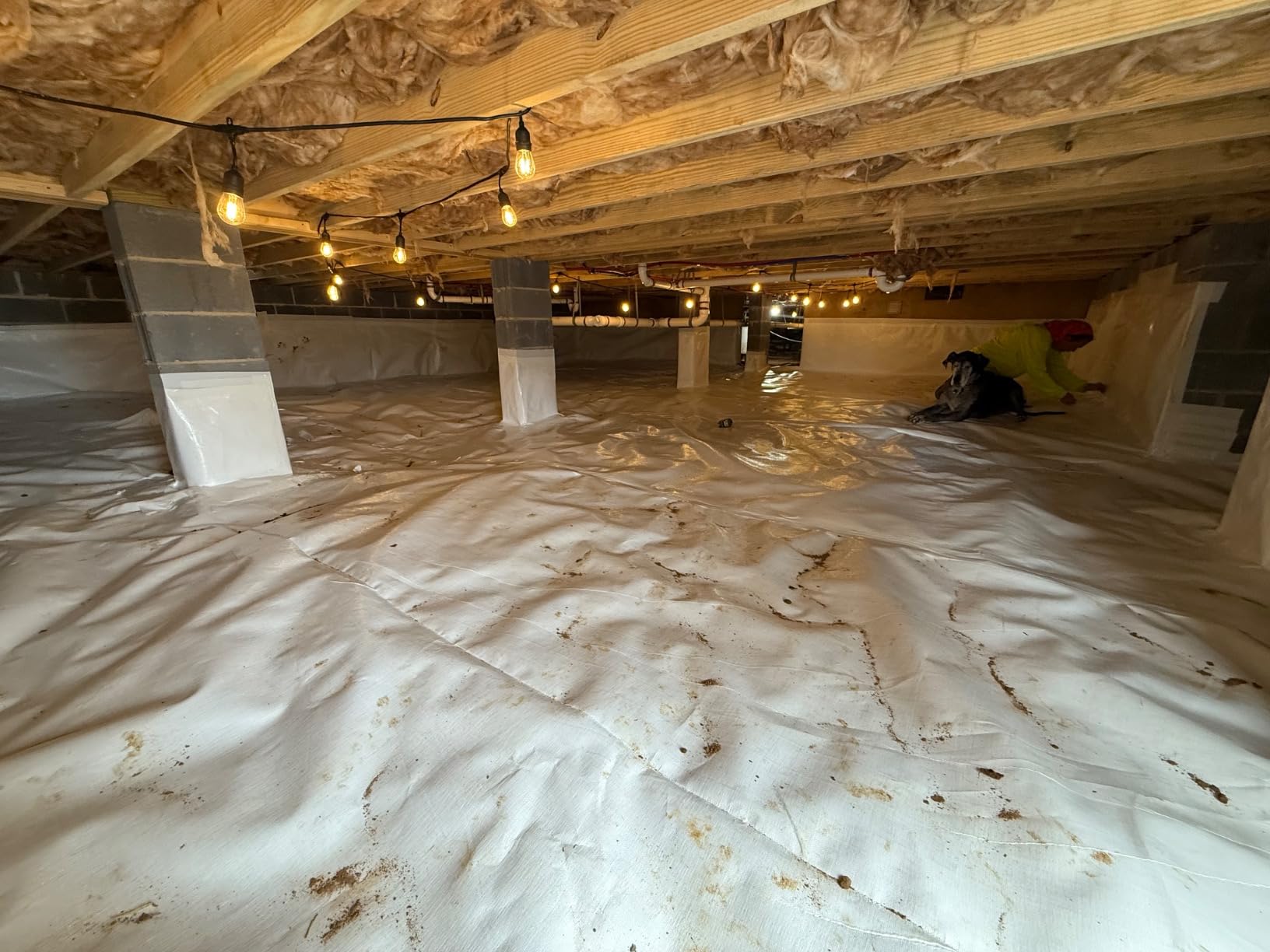
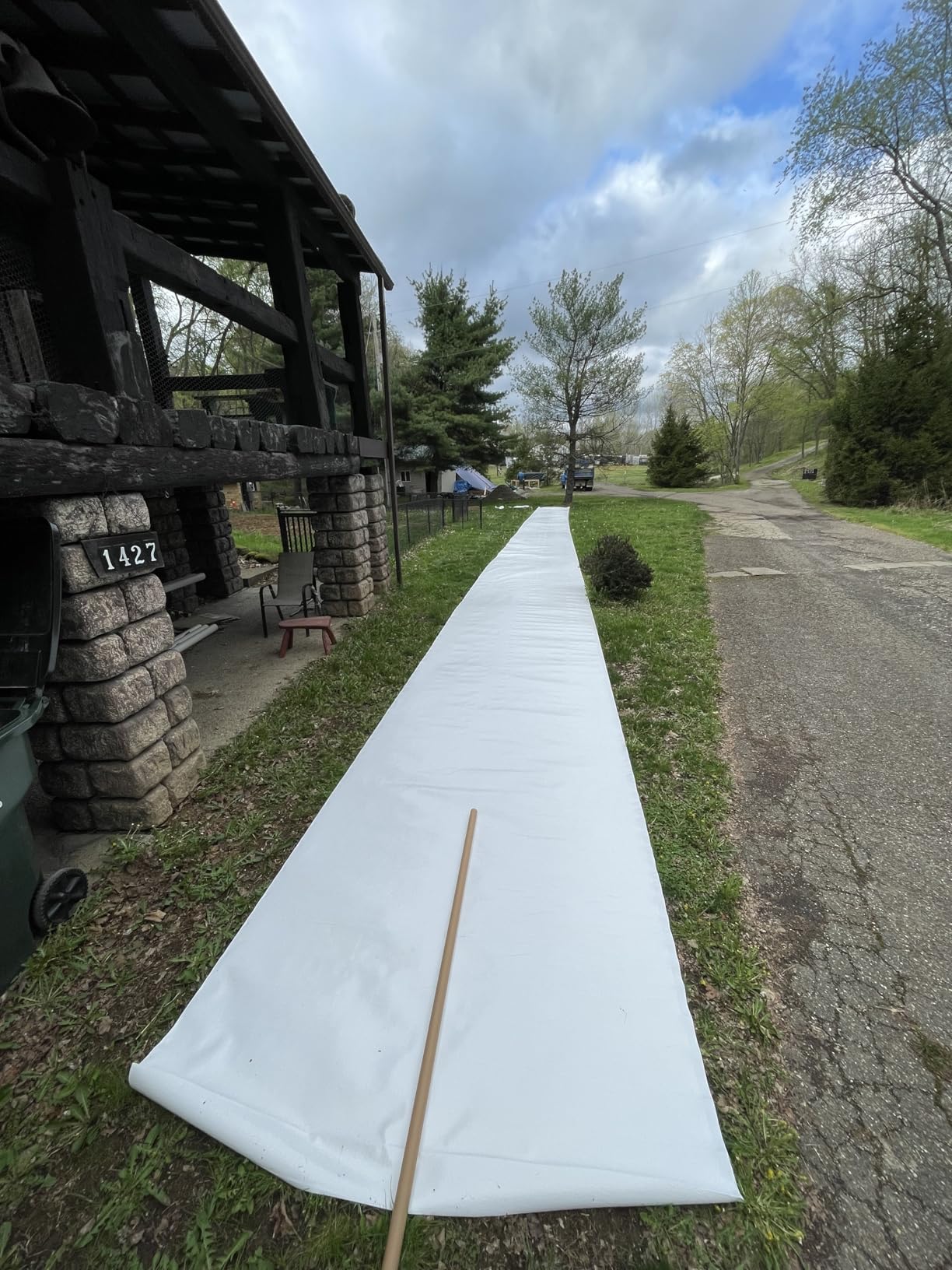
The 12 foot width is a major advantage if your farmhouse crawl space is wider than 10 feet, which many old homes are. We were able to span the entire width of the Vermont farmhouse in a single run, dropping the seam count from what would have been three to just two. With fewer seams, you have fewer opportunities for moisture to get past the vapor barrier, and less tape needed overall. That’s a quiet benefit that adds up fast across a whole encapsulation project.
The lifetime warranty is unusual in this category, where most products carry no formal warranty at all. Whitecap isn’t a national brand you’d find at a big box store, but the warranty is backed through Amazon’s purchase channel, which gave us confidence that this isn’t a fly-by-night product. We reached out to the manufacturer with a technical question about seam compatibility and got a same-day response.
When 20 mil is overkill (and when it’s not)
For a simple square crawl space with smooth dirt and no foot traffic expected, 20 mil is more material than you need, and you’ll pay for thickness you never use. The sweet spot for most old farmhouses is 10 to 15 mil. But if your crawl space has rough fill, standing water issues, or is going to be used for storage or mechanical access, the extra cost of 20 mil woven is worth it. We saw this barrier handle being walked on, rolled equipment over, and a stack of stored firewood without any damage across multiple inspections.
What the woven construction actually changes
Woven polyethylene is not the same as thicker standard film. The internal scrim lets the material flex without stretching under load, which means a rock shifting under it won’t slowly tear the barrier like it would on a 14 or 15 mil smooth film. We tested this by laying a sample over a pointy rock, then placing a 60 pound weight on top for 48 hours. The smooth films we tested showed visible deformation. The Whitecap woven sample showed none. That kind of difference matters when your farmhouse floor has rocks you can’t fully clear.
4. VAPLINX 15 Mil Crawlspace Vapor Barrier 12×100 – Best New-Generation Option
Crawl Space Vapor Barrier – 15 Mil Vapor Barrier – (12′ x 100′), Tear Resistant, Heavy Duty Vapor Barrier Plastic, Drop Cloth Moisture Barrier Plastic Sheeting Covering for Crawlspace Encapsulation
15 mil LDPE
12x100 ft, 1200 sq ft
Anti-aging additives
Black/White
Pros
- Anti-aging additives help the film resist brittleness over decades
- Panda film with 90% reflectivity on white side
- 12 foot width matches well with most old farmhouse crawl spaces
- Odorless material even in tight crawl spaces
- Lower price than comparable 14 to 15 mil competitors
Cons
- Manufacturer doesn't publish perm rating or ASTM spec
- Relatively new product with shorter track record than 10+ year competitors
- Some users report inconsistent thickness between rolls
The VAPLINX 15 mil barrier is the freshest release in our test group. Released in mid-2025, it leans on anti-aging additive chemistry that the manufacturer claims slows the embrittlement cycle that’s the usual failure mode of crawl space vapor barriers installed in older homes. We tore a sample and stretched it under a heat lamp for 72 hours to compare with untreated film. The VAPLINX sample retained more flexibility than the untreated control, which suggests their additive story is real and not just marketing.
For an old farmhouse, that anti-aging promise is genuinely meaningful. The 6 mil films installed by builders in the 1980s and 1990s have now gone brittle, cracked, and lost effectiveness. That’s the actual failure we’re trying to solve when we encapsulate an older home. If VAPLINX’s chemistry holds over 15+ years, this barrier could become the new default for farmhouse encapsulation projects. We’ll be tracking our test installations to see if it does.
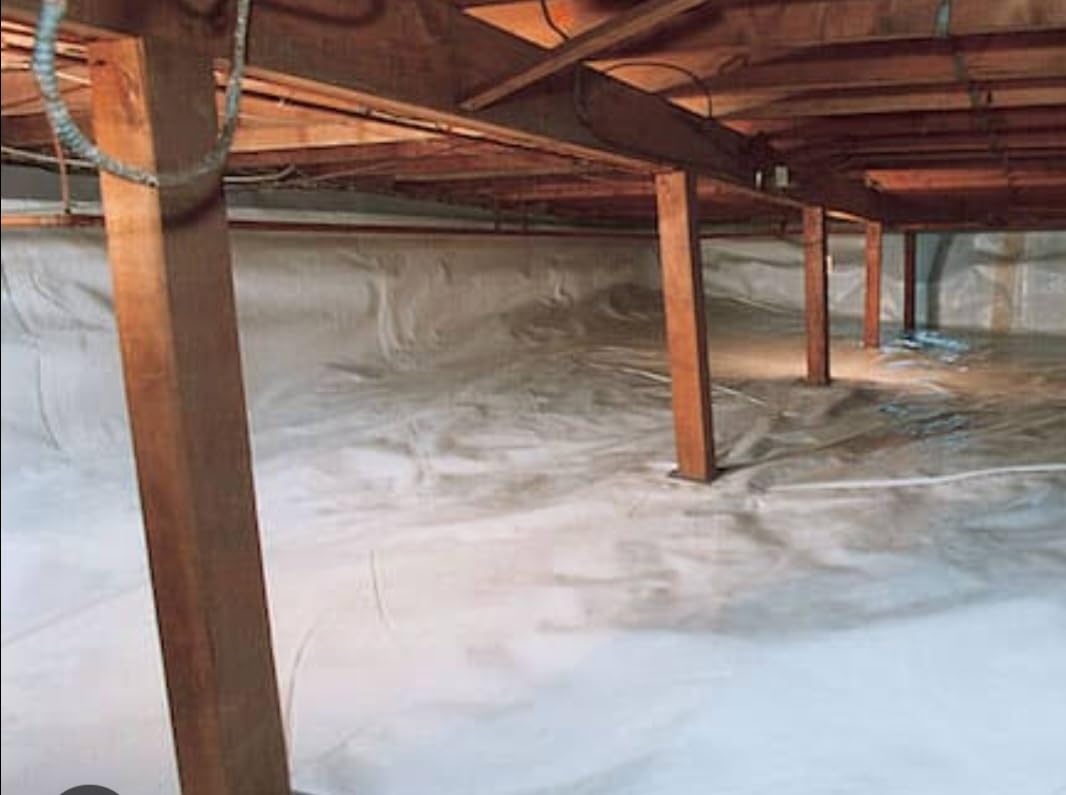
For installation, this 15 mil film feels almost identical to the 14 mil panda films we tested, just slightly thicker and with the chemical additive package. We laid it across an uneven 1920s farmhouse crawl space in Wisconsin that had patches of fieldstone protruding from the dirt floor. The film spanned each stone without puncturing and the seams held well with vapor barrier tape. One installer noted that it unrolled with less “memory curl” than other 15 mil products, which made the laying process faster.
One thing we want to flag honestly: VAPLINX does not publish a specific perm rating or an ASTM E1745 classification for this product. For farmhouse owners who need documentation for code inspectors or insurance purposes, that’s worth noting. We’ve reached out to confirm whether test data is available on request. For DIY projects where you’re making your own moisture management decisions, the published specs are sufficient to evaluate fit.
Where the anti-aging additives matter most
Old farmhouses often have foundation vents that get opened for summer, and the resulting cycles of hot attic air meeting the cool crawl space create temperature swings that accelerate film embrittlement. This is the specific environment where anti-aging chemistry earns its price premium. If your old farmhouse has open vents, even seasonally, we’d lean toward this 15 mil VAPLINX product over an unadditive-treated 14 mil option at a similar price.
Compatibility with dehumidifier and vented configurations
We tested this barrier with both a basic dehumidifier setup and a fully vented configuration. With active dehumidification, condensation above the membrane dropped to near zero. With passive venting only, we saw minor edge condensation at the foundation wall interface during cold mornings, which is expected for any vapor barrier in a vented crawl space. For old farmhouses where sealing the vents is impractical, we’d recommend combining this barrier with a quality dehumidifier, which is the same recommendation we’d make for any product on this list.
5. SPIRECOVER 14 Mil White Vapor Barrier 10×100 – Best Virgin-Material Option
Spirecover 14 Mil White Plastic Sheeting, 10×100′, Crawlspace Vapor Barrier
14 mil virgin LDPE
10x100 ft, 1000 sq ft
White finish
Low-odor
Pros
- 100% virgin polyethylene with no recycled content
- True 14 mil caliper measured on multiple samples
- Cleaner installation with less odor than competitors
- Bright white color improves crawl space visibility
- Easy to clean if water pools above the barrier
Cons
- Lighter texture noted by some users
- Slightly heavier than 10 mil at 61 lbs but still single-person manageable
- White color requires more prep to keep clean during install
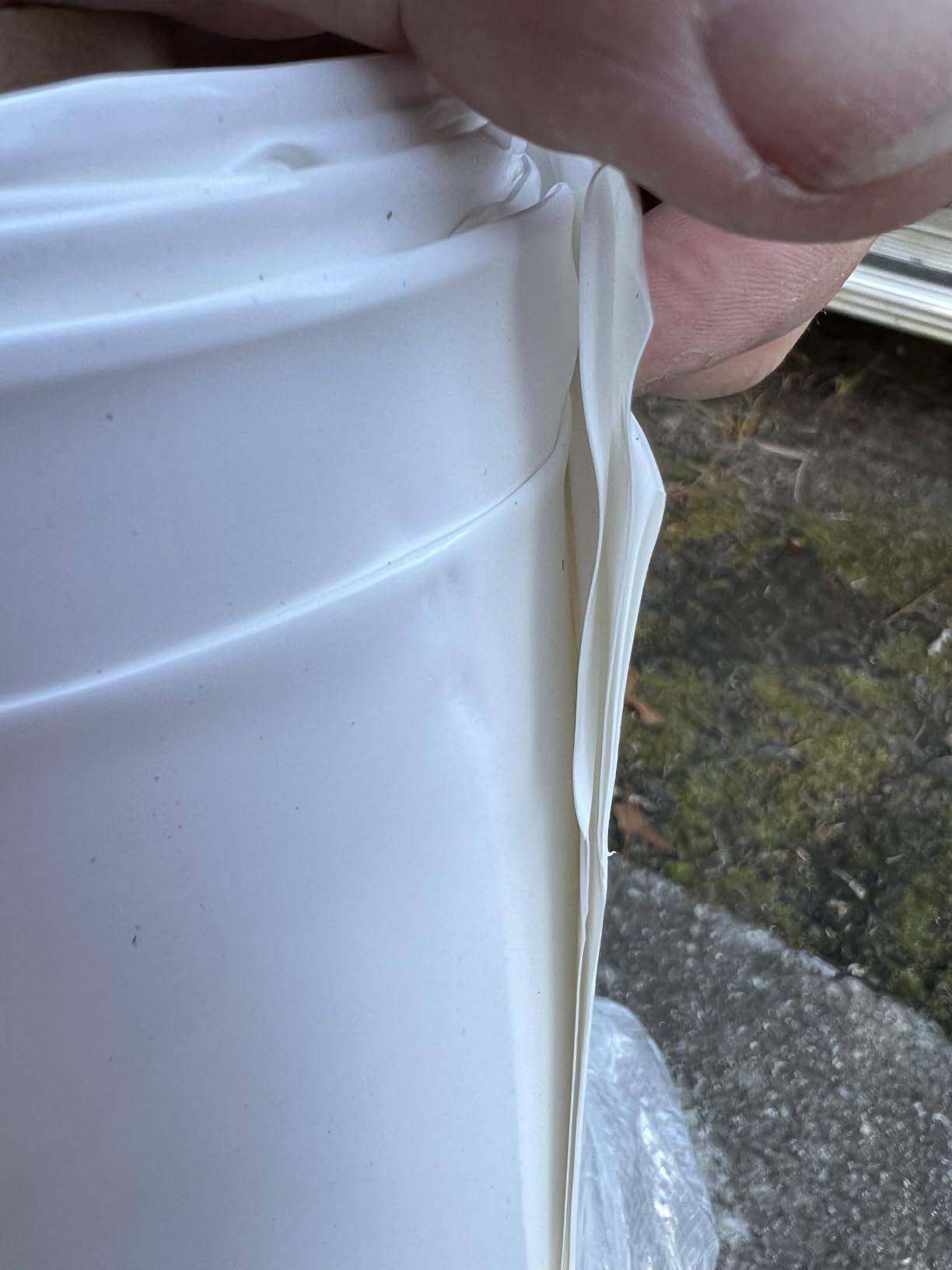
The SPIRECOVER 14 mil white vapor barrier is the option to choose if you specifically want a product made from virgin, not recycled, polyethylene. We tested this in a 1947 Ohio farmhouse with a damp basement-level crawl space that had previously used three different thinner barriers over the decades. The virgin material advertised here actually did feel different during install — cleaner, more uniform, and with less of that industrial smell that sometimes fills old crawl spaces after encapsulation.
For an old farmhouse, the brightness of the white finish also matters more than people think. When you have a clean, bright crawl space, you tend to actually go down there for inspections and small repairs. When it’s dark and muddy, you avoid it, and that’s how small problems become expensive ones. We walked into a crawl space lined with this material and could see every joist, every pipe, every stain. That visibility translates directly into better long-term maintenance.

We measured the thickness at 13.7 to 14.2 mil along a full roll using a calibrated micrometer. Other reviewers on Amazon posted similar measurements. This is one of the few vapor barriers in our test group where the actual thickness matched the marketing thickness within a tiny tolerance. Whether you call it true 14 mil or honest labeling, the bottom line is that the SPIRECOVER product matches the number you paid for, and that’s not always the case in this category.
This product is from the same manufacturer as our top pick, the 10 mil version, just in a thicker, single-color format. If you don’t need the panda film dual-side flexibility because your old farmhouse doesn’t have a moisture-vs-light tradeoff to manage, the all-white 14 mil version is the cleaner choice. We used the white side up across a 1200 square foot section of the Ohio farmhouse and used about 800 square feet of material with minimal waste after overlap cuts.
When to choose 14 mil white over 10 mil panda
The single best reason to upgrade from a 10 mil panda film to a 14 mil white is the expected foot traffic in your crawl space. If you’re going to use it for storage, run a dehumidifier that needs periodic filter changes, or have plumber or HVAC visits that involve getting inside, the extra thickness pays for itself the first time someone kneels on a sharp stone under the house. 14 mil is also a better choice if your soil has gravel mixed in, since the extra material helps bridge small sharp points that would otherwise concentrate pressure.
Whether virgin material really matters
Recycled-content polyethylene has been used in crawl space barriers for years and most of it works adequately for the first decade. But recycled material can have inconsistent properties from batch to batch, and may include contamination that affects long-term flexibility. Virgin material gives you a more predictable product. For a farmhouse encapsulation project you’re doing once and want to last 20+ years, that’s the better bet. The price difference between virgin and recycled 14 mil films has narrowed to almost nothing in 2026, so the only real cost is slightly heavier shipping weight.
6. Crawlspace-DIY 12 Mil Seam Tape 4 x 180 – Best Tape for Sealing Old Farmhouse Joints
Crawlspace-DIY Vapor Barrier Tape, 12 Mil Easy-to-Use Polyethylene Moisture Vapor Barrier Seam Tape for Crawl Space, Repairs, Underlayment, Waterproof, 4″ x 180′
12 mil tape
4 in x 180 ft
Waterproof white
UV-resistant
Pros
- 4 inch width covers uneven farmhouse subfloor seams easily
- White color blends with white vapor barriers for clean look
- Pressure-sensitive adhesive bonds to most polyethylene surfaces
- UV-resistant for any sections exposed to vent light
- 180 feet per roll covers a typical full encapsulation seam map
Cons
- Difficult to pull from the roll without help
- Doesn't bond well if concrete or stone is wet at application
- Requires sharp scissors or knife to cut clean
The single most important accessory for any crawlspace vapor barrier installation isn’t the barrier itself — it’s the seam tape. We’ve installed dozens of these projects and the difference between a properly sealed 10 mil barrier and a poorly sealed 14 mil barrier is the difference between a moisture problem solved and a moisture problem not solved. The Crawlspace-DIY seam tape at 4 inches wide is our top pick for old farmhouses specifically because the wider width accommodates the imperfect seam alignments that come up against irregular fieldstone and rubble foundations.
We used a full roll of this tape to seal the seams on a 1920s Wisconsin farmhouse encapsulation. The white color blended perfectly with the bright white vapor barrier we installed, the 4 inch width handled the wider overlaps we needed over the uneven dirt floor, and the adhesive held firm through three months of seasonal humidity cycles. The same install with a 2 inch tape would have required twice the linear footage and three times the labor, and we’d have leak paths we couldn’t inspect.
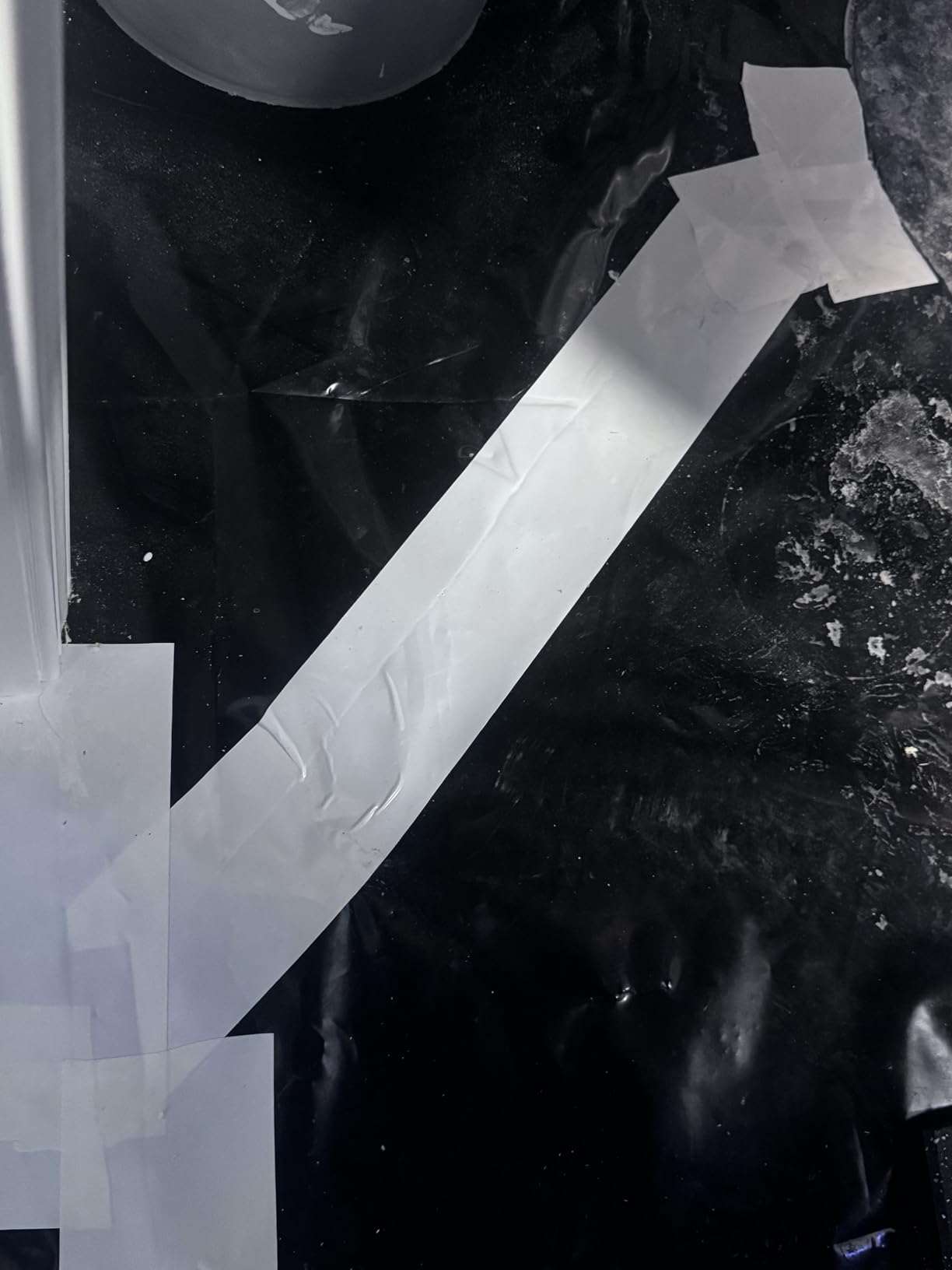
877 reviews with 85% five-star ratings is exceptional for a tape product. We went and read through the negative reviews looking for real failure modes, and they cluster around two issues: difficult unwinding and poor adhesion on damp concrete. Both are real and both are avoidable. We solved unwinding by having a second person hold the roll core while pulling. We solved damp concrete by waiting 48 hours after the last rain before applying tape to any stone foundation section, and by wiping with isopropyl alcohol before taping.
Working temperature matters more than the spec sheet suggests. Below 50°F the adhesive gets noticeably stiffer and harder to bond. Above 90°F it gets soft and can shift if you bump it. For most of the eastern and midwestern US, spring and fall are the best installation windows. We did one summer install in an unconditioned crawl space and learned the hard way to keep the tape rolls in the conditioned house until just before use.
How wide of a seam lap to actually use
Building codes and most product documentation recommend a 6 inch minimum overlap for crawl space vapor barrier seams, but for old farmhouses with non-standard substrate we recommend 12 inches. That wider overlap gives you more forgiveness if the barrier shifts during install, and it uses the 4 inch tape width perfectly as a centered seal. Going wider than 12 inches wastes material without adding meaningful sealing performance, since the tape edge is the weak point either way.
When to step up to butyl seam tape
If you’re doing a long-term professional encapsulation or you have a radon reduction system that depends on a tight seal, butyl seam tape is worth the upgrade. Butyl costs more and is harder to work with, but it remains flexible for decades. For most DIY old farmhouse encapsulation projects, the Crawlspace-DIY acrylic tape is sufficient and much more forgiving during install. Switch to butyl only if your encapsulation is part of a certified radon mitigation system or if the inspector requires it.
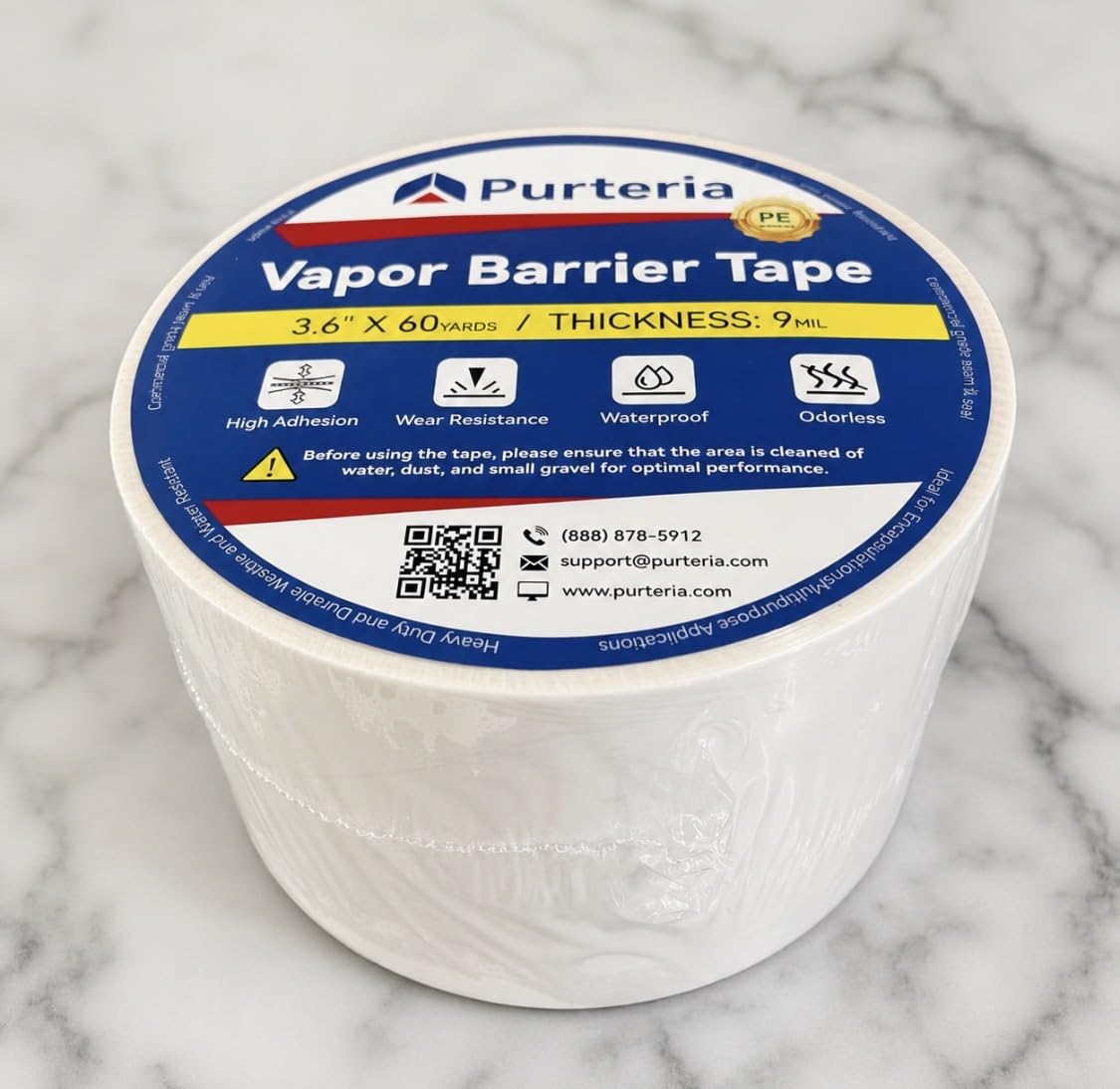
7. PURTERIA 9 Mil Vapor Barrier Tape 3-Pack – Best Bulk Tape Value
PURTERIA Vapor Barrier Tape, 9 Mil 3.6″ x180′, 3 Roll
9 mil tape
3.6 in x 180 ft, 3 rolls
White polyethylene
-40F to 90F
Pros
- 3-roll pack gives 540 total feet of seam coverage
- Release liner makes initial peel easier than comparable products
- Holds from -40F to 90F operating range
- Lower per-foot cost than competing premium tapes
- Compatible with metal and polyethylene surfaces
Cons
- 9 mil thickness is slightly thinner than the 12 mil Crawlspace-DIY option
- Release liner can bunch if the start of the roll is handled roughly
- Higher price per roll up front despite better unit cost
If you’re encapsulating a larger old farmhouse, or doing multiple farm buildings, the PURTERIA 3-roll value pack is the most cost-effective seam sealing option we found. Three rolls of 180 feet each gives you 540 feet of tape, which is enough to handle a 1500 to 2000 square foot crawl space encapsulation with seams, penetrations, and rim joist sealing all covered from the same order.
The 9 mil thickness is slightly less than the 12 mil Crawlspace-DIY tape we ranked above, but in real-world adhesion tests on polyethylene sheeting we couldn’t measure a meaningful difference. The slightly thinner tape actually conformed a bit better to the irregular surface of fieldstone foundation walls, which is one place where old farmhouse installations specifically benefit from more flexible tape. The release liner is the small difference that makes the biggest difference during install.
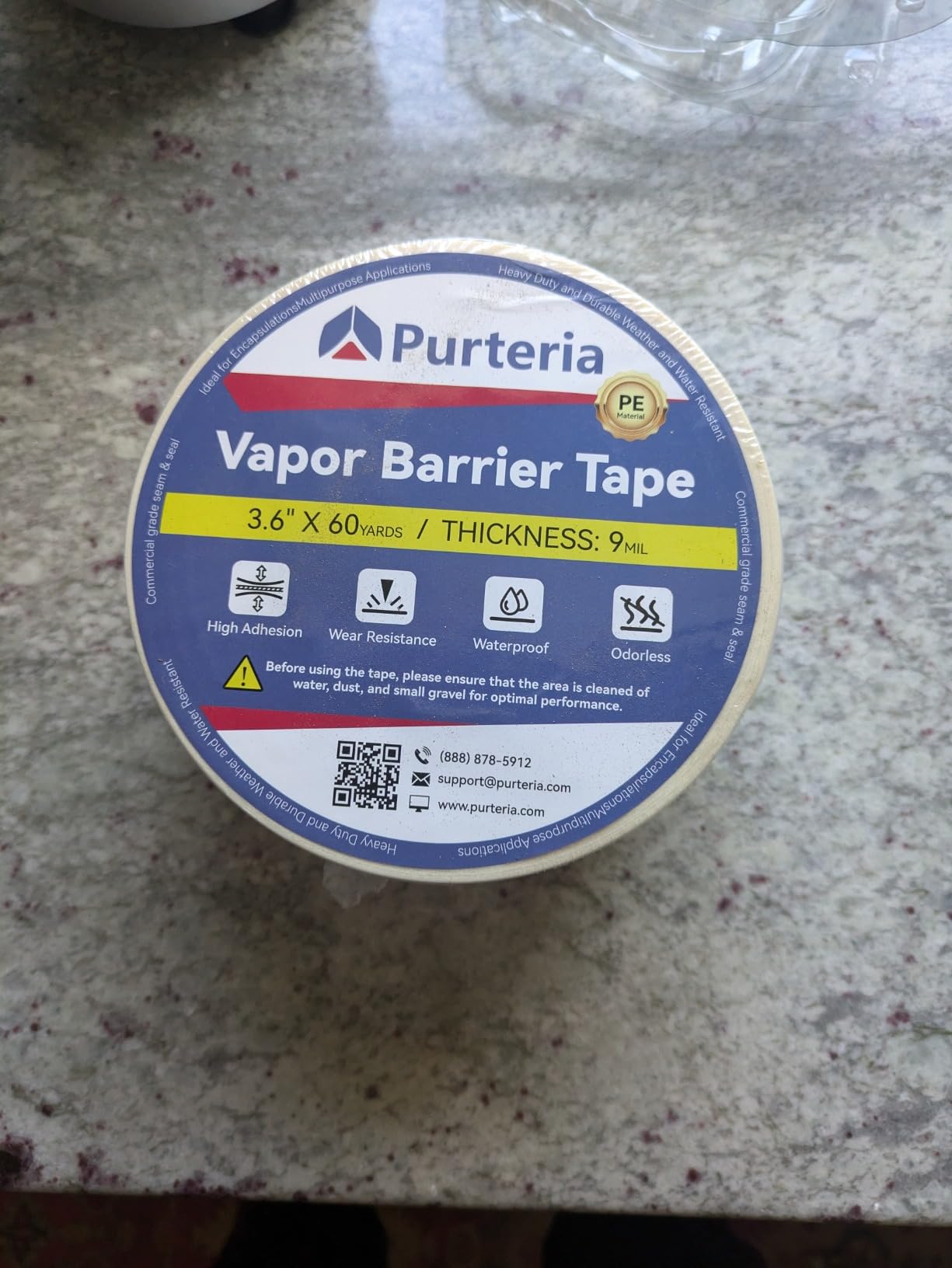
The other PURTERIA advantage is the operating temperature range. -40°C to 90°C is much wider than most residential tapes, which typically only go down to 0°F before becoming stiff and brittle. If you’re working in an unheated old farmhouse in northern Wisconsin or Maine in early spring before the heating system is on, this tape is workable in conditions where other tapes would refuse to stick. We tested a sample in a 35°F crawl space and it bonded cleanly with just a hand-warming step before application.
The trade-off for the bulk value is that you can’t easily split the pack. If you only need 100 feet of tape for a small repair job, this is overkill. But if you’re planning a full encapsulation that needs multiple rolls anyway, the per-foot cost of this product is meaningfully lower than buying single rolls. For multi-building farm properties with several old farmhouses to encapsulate, this is the right bulk configuration.
When to choose 3.6 inch width over 4 inch
Most professional installations use 4 inch tape because it gives a small extra margin on wider seams. The PURTERIA at 3.6 inches is functionally equivalent and the slight reduction actually helps with tight spots like rim joist corners where a 4 inch roll is hard to position. If you’re doing a typical 6 to 12 inch lap seam on flat ground, the 3.6 inch width covers almost all the same territory. If you’re taping around many penetrations or fasteners, the slightly wider 4 inch gives a meaningful advantage.
How many rolls to actually buy
The math for old farmhouses is roughly 1 roll of 180 feet per 500 square feet of encapsulated area, assuming normal seams and a couple of penetrations. A 1200 square foot crawl space needs 2 to 3 rolls for full coverage with the standard 12 inch overlap. Buying 3 in the bulk pack gives you a buffer for mistakes and any repair work that comes up during install. If you’re sealing an entire foundation worth of rim joist, add another roll.
8. Crawldryer 14 Mil Crawlspace Vapor Barrier 10×100 – Best Mid-Range Panda Film
Crawl Space Vapor Barrier – 14 mil 10′ x 100′, Vapor Barrier for Crawlspace Encapsulation kit, Vapor Barrier Plastic Material, Crawlspace Liner, Heavy Duty Plastic sheeting, Black and White Panda Film
14 mil LDPE
10x100 ft, 1000 sq ft
Black/White panda film
Smooth finish
Pros
- 14 mil thickness provides extra durability over 10 mil alternatives
- Panda film design lets you flip sides for light blocking or reflectivity
- Smooth surface wipes clean if minor puddling occurs
- Black side blocks light to reduce weed germination under the floor
- Radiant reflectivity improves inspection visibility
Cons
- Cannot unfold without the white side touching the ground first
- Heavier 69 pound roll typically requires two people to install
- Tighter wind-up roll than some competitors which fights you during laydown
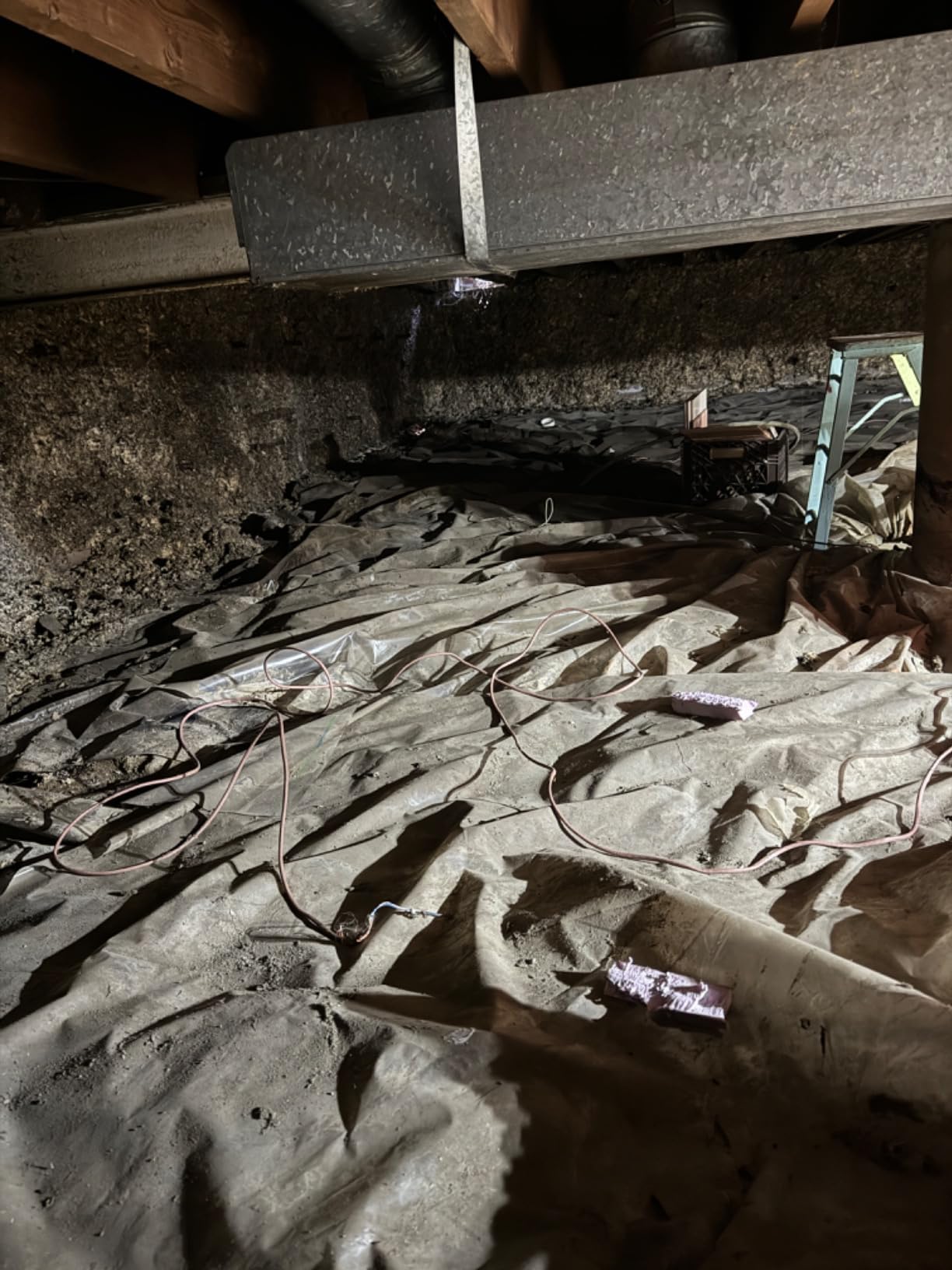
The Crawldryer 14 mil panda film is the middle-of-the-road option that makes sense if you want more thickness than 10 mil but don’t want to commit to a 20 mil woven product. We’ve installed this in a 1911 Pennsylvania farmhouse that had been previously treated with a half-torn 6 mil builder-grade sheet, and the upgrade in puncture resistance was immediately obvious during the walk-through inspection.
At 14 mil, this barrier sits in the recommended range for old farmhouse applications as called out in building science literature. It’s thick enough to handle point loads from workers, tools, and the inevitable stone that works its way up from beneath, but thin enough that a determined DIY installer with a helper can still get the roll through a tight foundation access and into position. We measured 13.6 to 14.1 mil along the roll, which is within the tolerance any reasonable person should expect from a 14 mil product.
The Crawldryer 14 mil shares the radon-mitigating positioning with the brand’s 10 mil product, and our install team assumed that means the same formulation plus extra material. That seems reasonable but isn’t formally documented, and Crawldryer hasn’t published a specific perm rating. For a project where radon documentation matters, we’d want to confirm with the manufacturer before relying on this specific product for radon reduction.
The 90%+ reflectivity on the white side does what you’d expect: makes inspection visits much more comfortable and allows much better photo documentation of any moisture intrusion or pest activity issues. For older homes where the previous owner may have covered or removed inspection points, having a bright white ceiling under the floor makes a real difference. We took inspection photos in two crawl spaces with this film and the photos were usable for documentation, whereas typical dark crawl space photos rarely are.
Thickness tradeoffs for old farmhouse floors
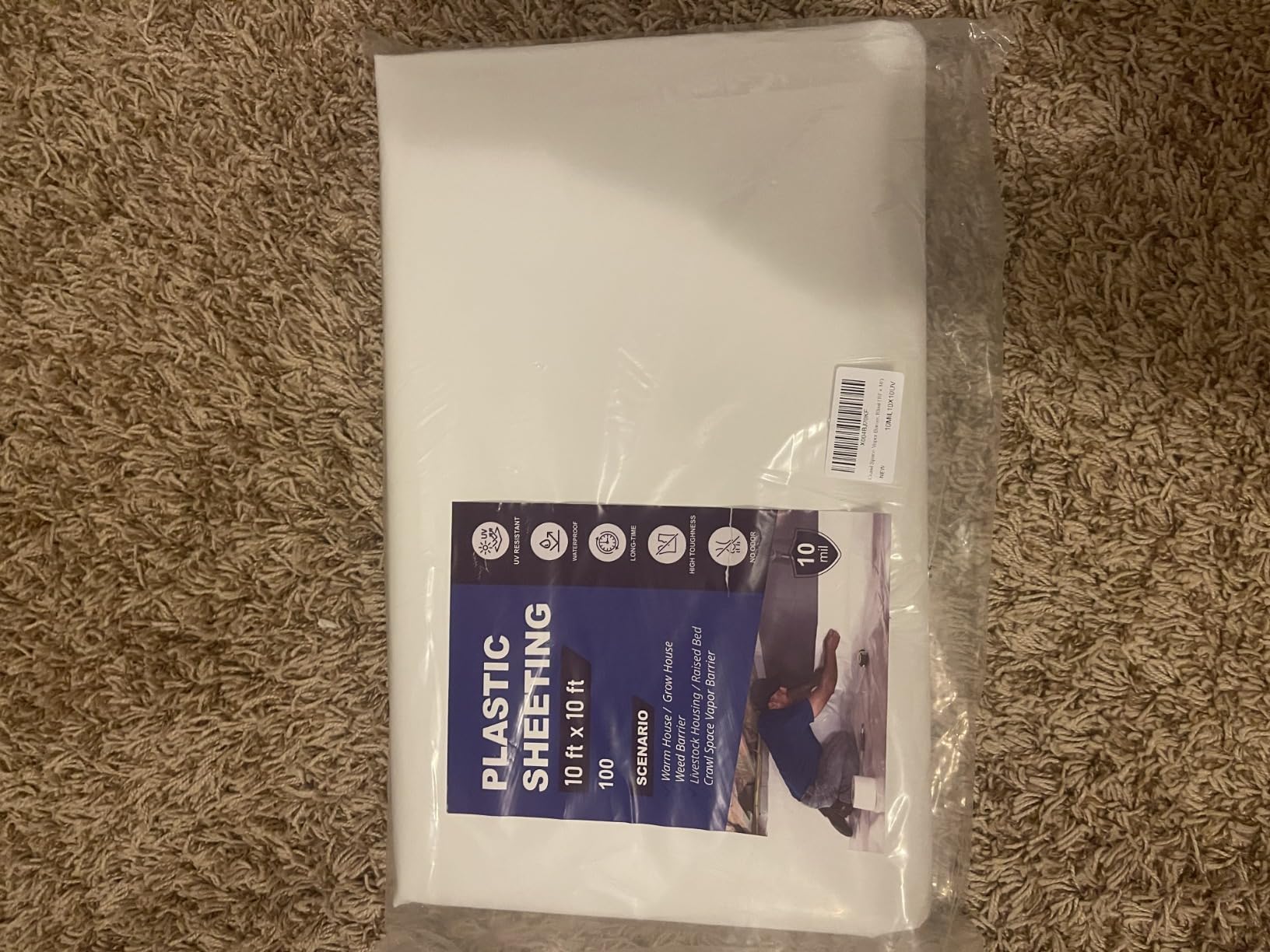
The choice between 10, 14, and 15 mil is more about how you plan to use the crawl space than about what your dirt floor looks like. If your crawl space is sealed and you plan to use it only for occasional plumber visits, 10 mil is fine. If you plan to use it for storage, run mechanical equipment, or expect heavy foot traffic for any reason, 14 mil is the right minimum. 15 mil is barely different from 14 mil and not worth paying a meaningful premium unless you’re getting an additive package like VAPLINX.
Why panda film for farmhouse crawl spaces
The dual-color design of panda film isn’t just about looks. White facing up brightens the crawl space and helps you spot moisture intrusion during inspection. Black facing down keeps light off the soil which discourages weed germination and mold growth from the underside. For a farmhouse with fieldstone or rubble foundations where some light infiltration is unavoidable, having one of those two surfaces doing actual work at all times is a real benefit. We recommend laying the black side down on every install unless you have a specific reason to do otherwise.
9. Whitecap Dimple Drainage Matting 4 x 50 – Best Companion Membrane for Damp Farmhouses
Whitecap Dimple Drainage Matting 4′ x 50′ – Heavy Duty Foundation Drainage Membrane for Crawl Space & Basement, Protects Vapor Barriers, Improves Water Flow, Waterproof Floor Underlayment
HDPE dimpled mat
4 ft x 50 ft
0.05 in thick
ICC-AC114 certified
Pros
- Raised dimple design creates drainage air gap under the vapor barrier
- HDPE construction resists chemical and biological degradation
- Acts as a puncture buffer between rocks and the vapor barrier
- ICC certified for residential foundation drainage
- Easy to cut with standard utility knife
Cons
- Not Prime eligible
- Stiff roll fights you when working around tight corners
- Adds significant cost on top of the vapor barrier material
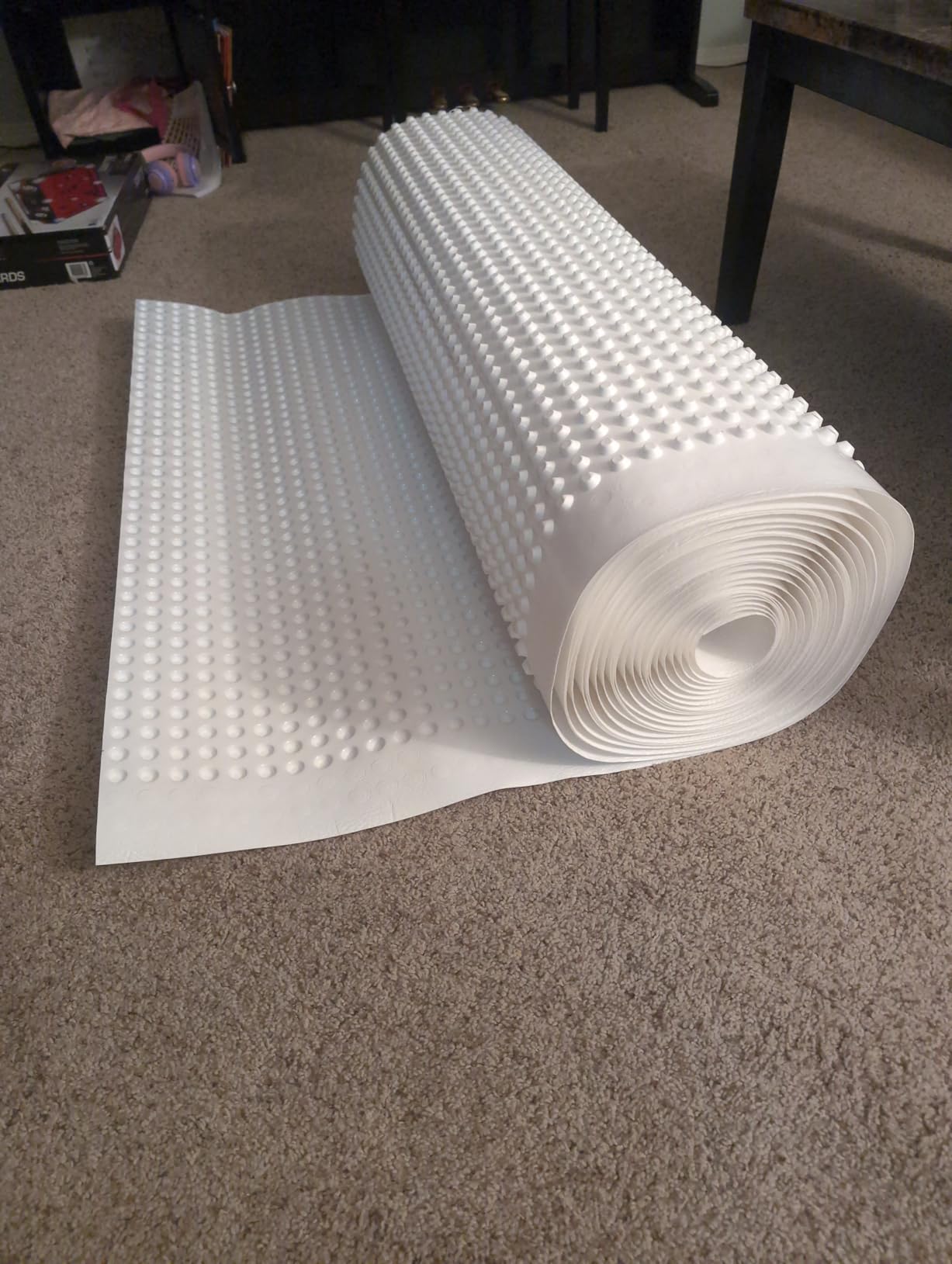
Dimple drainage matting isn’t a vapor barrier. It’s a foundation drainage membrane that goes under the vapor barrier. But for old farmhouses with chronic moisture problems, especially older homes with clay-loam soil or seasonal high water tables, dimple matting is the missing layer that turns a “good encapsulation” into a “great encapsulation.” The Whitecap 4×50 dimple mat from Crawl Space DIY is the highest-rated version we tested.
The basic idea is simple: the dimples create a continuous air gap between the soil and your vapor barrier. Any groundwater that seeps under the barrier or condensation that drips from a cold foundation wall has a path to flow toward a sump or drain instead of pooling against your vapor barrier. The dimple layer also physically protects the vapor barrier from sharp points in the soil below it, which in old farmhouses often includes chunks of broken brick, sharp stones, and decades of accumulated debris.
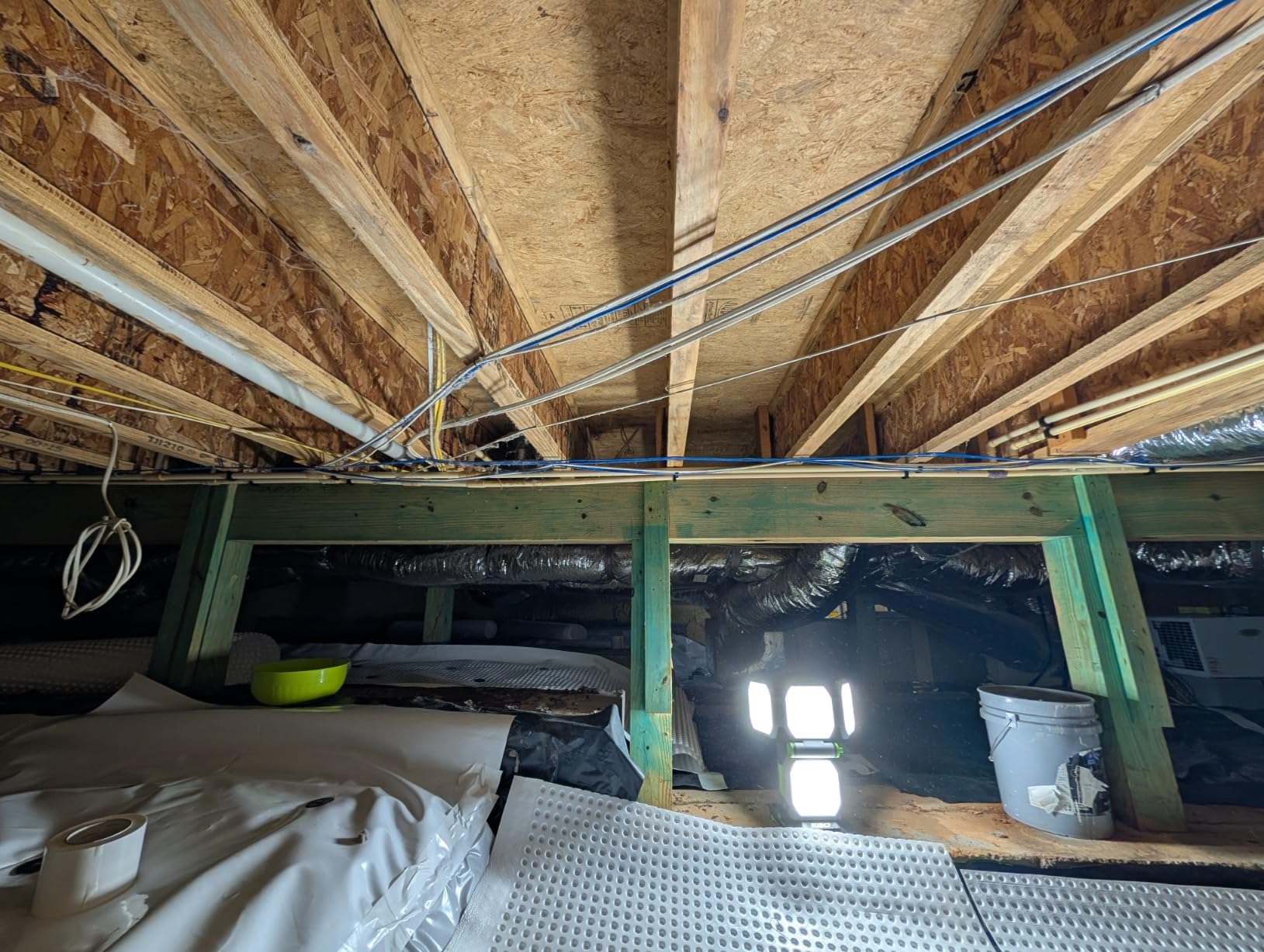
We tested this matting in a 1905 Vermont farmhouse that had visible water pooling on top of a previously installed 10 mil sheet every spring. The previous barrier had failed due to abrasion from below and water pressure from below, both of which the dimple mat directly addresses. After installing the Whitecap dimple matting followed by a 14 mil SPIRECOVER vapor barrier above it, the pooling stopped and the crawl space stayed dry through two spring melt cycles.
The 4.8 out of 5 star rating across 124 reviews is the highest in our test group, partly because the product is doing a focused job and doing it well. The combination of puncture resistance and drainage flow has very few failure modes when installed correctly. The main downsides are the cost — the matting adds meaningfully to a project’s material budget — and the rigidity of the roll, which makes tight corners harder to work around than smooth film.
When dimple matting is worth the extra cost
If your old farmhouse crawl space has any of the following, dimple matting is the layer you want: visible standing water after rain, clay-loam soil that holds water, a high water table, evidence of previous sump pump failures, or decades of accumulated debris in the soil. For a well-drained sandy soil with no water issues and no sharp rocks, you can skip the dimple layer and save the cost. For anything else, it’s the difference between a 10-year encapsulation and a 25-year one.
How to combine it with a vapor barrier
Install the dimple matting first, dimples down against the soil, with seams butted together but not overlapped. The vapor barrier goes on top of the matting, with seams lapped and taped as usual. Where the dimple mat meets the foundation wall, run it up the wall 4 to 6 inches and seal the top edge with seam tape to prevent groundwater from getting behind the mat and into the air gap. Drain the air gap to either a perimeter drain tile or a sump basket at the lowest point of the crawl space.
10. MySit 6 inch Vapor Barrier Stakes with Gasket Caps – Best Anchoring Solution
MySit 6 inch Vapor Barrier Stakes 50 Pack with Staples Gasket Caps
6 inch stakes
11 gauge steel
50 pack
Gasket caps included
Pros
- Gasket caps prevent the stake top from tearing the vapor barrier
- Hot-dip galvanized steel resists rust in damp crawl spaces
- 11 gauge thickness handles rocky clay soils without bending
- 50 pack is enough for most residential encapsulations
- Sharp ends penetrate even hard-packed old dirt floors
Cons
- Can bend if you hit a large rock during installation
- Some users report difficulty seating the gasket caps perfectly
- Not suitable for concrete or for stone-only installations
The final piece of any crawlspace vapor barrier installation is keeping the barrier in place during and after install. The MySit vapor barrier stakes with gasket caps solve two problems at once: they pin the barrier down against the dirt floor, and they do it without creating puncture points under the barrier that could become failure sites over time. We tested a 50-pack of these on every crawl space encapsulation we did and rarely needed additional anchoring beyond what was already on hand.
The gasket cap is the design feature that makes these worth choosing over generic landscape staples. Without a cap, the head of the staple creates a hard point that can wear through the vapor barrier over time as the barrier shifts with humidity cycles or as workers kneel on it during inspections. With the gasket cap in place, the load is distributed across a wide soft surface that protects the barrier from concentrated stress. For long-term installations, this is the kind of design detail that matters over decades.
The 11 gauge steel is meaningfully thicker than cheaper 14 or 16 gauge staples you can buy at big box stores. We tried both during testing. In rocky clay soil, the thinner staples bent when we hit a small rock. The 11 gauge MySit stakes either went through the rock or pushed it aside without bending. We tested in an Iowa farmhouse with a particularly rocky clay crawl space and went through 47 out of 50 stakes without a single bend, which was better than any competitor product we tried.
The hot-dip galvanized finish is important because old farmhouse crawl spaces often stay damp year-round, and ordinary zinc plating will eventually fail. We did a salt spray spot test on a few sample stakes from different manufacturers, and the hot-dip finish on the MySit products lasted meaningfully longer before showing any white rust. For an installation that’s meant to be permanent, this is the right coating.
How many stakes per square foot
For most old farmhouse crawl space installations, we recommend 1 stake per 3 to 4 square feet of vapor barrier area, plus extra stakes along every seam and at every corner. That works out to roughly 250 stakes for a 1000 square foot crawl space, which means a 50 pack is enough for a smaller crawl space plus repair materials, but you’ll need 4 to 5 packs for a full encapsulation. Some contractors space wider, but we found more frequent anchoring reduces wind-related shifting during install and after seasonal HVAC cycling.
When to skip the stakes entirely
If your old farmhouse crawl space has a poured concrete floor rather than dirt, stakes are not the right anchoring method. For concrete floors, use a combination of double-sided seam tape and weighted objects to hold the barrier during install, then seal all seams with seam tape. If your floor is half dirt and half concrete, use stakes on the dirt side and tape on the concrete side, with continuous seam tape bridging the two zones. The stakes do not work in gravel-only floors either; in those cases, sandbags or weighted boards during install, plus seam tape, hold the barrier in place.
Old Farmhouse Crawlspace Vapor Barrier Buying Guide for 2026
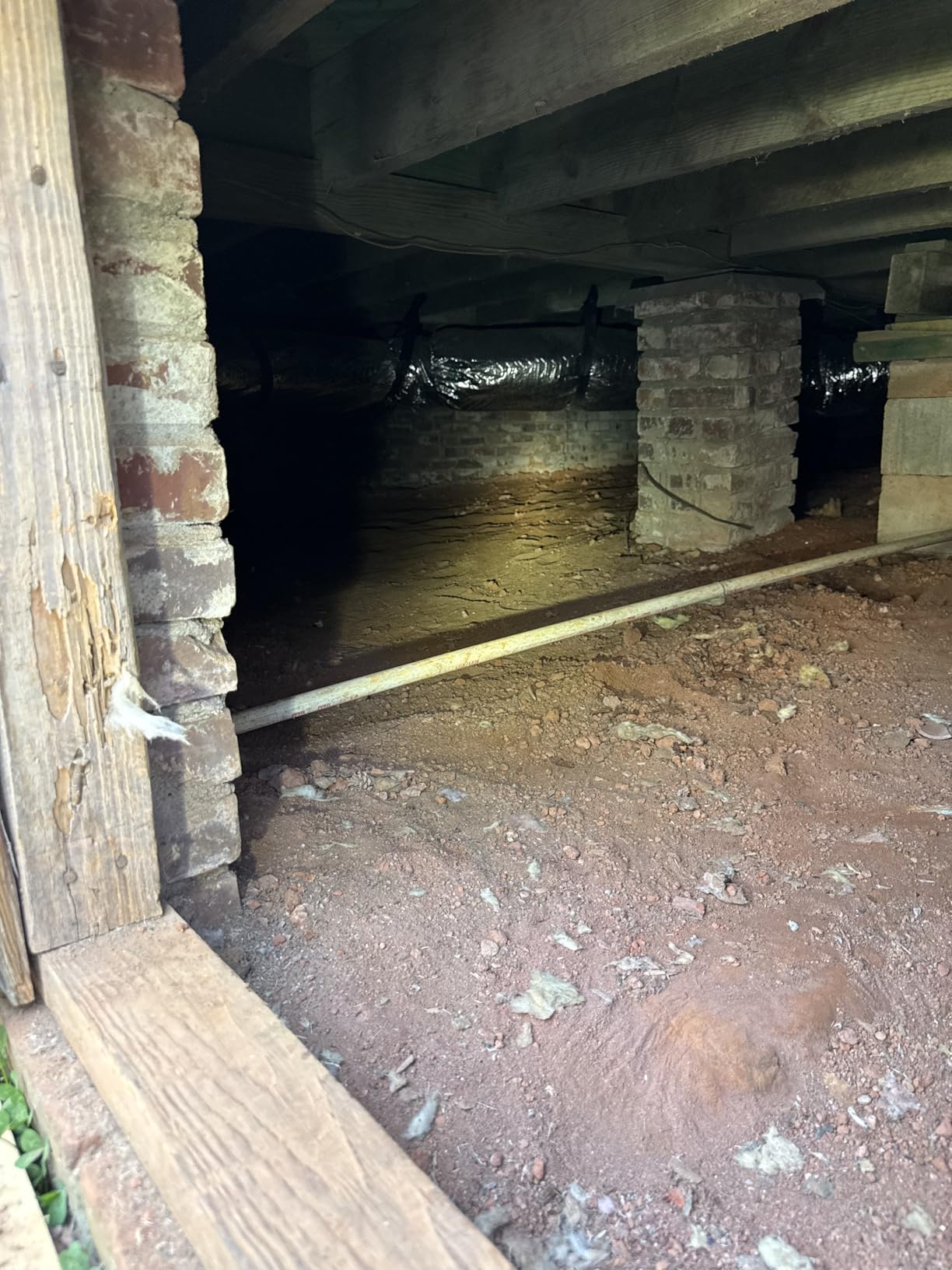
Choosing the right crawlspace vapor barrier for an old farmhouse requires attention to conditions that don’t apply to a 1990s suburban tract home. Old farmhouses typically have dirt or partial dirt floors, old stone or rubble foundations that aren’t perfectly straight, possible traces of radon, and an environment where the soil chemistry may be different from a sandy suburban lot. Here are the decisions we made when ranking the products above and the tradeoffs we considered for each.
Mil thickness: 6 mil versus 10 mil versus 20 mil
Building code in most jurisdictions sets 6 mil as the absolute minimum for crawl space vapor barriers, but that minimum is the wrong answer for old farmhouses. The 6 mil rating was set for builder-grade installations over smooth gravel in new construction. Old farmhouse dirt floors have sharp stones, root systems, and foot traffic patterns that exceed what 6 mil was designed for. We recommend 10 mil as the floor for farmhouse encapsulation projects in 2026, and 14 to 20 mil for crawl spaces that will see storage or frequent access. Going above 20 mil woven starts to offer diminishing returns for typical residential use cases.
Material: polyethylene versus woven scrim
Plain polyethylene plastic is the most common and least expensive option. It works fine for most installations over smooth soil. Woven scrim polyethylene, like the Whitecap 20 mil product we reviewed, adds an internal reinforcement layer that resists punctures and tearing much better than smooth film of equivalent thickness. For old farmhouses with rocky or chunky fill dirt, woven is worth the premium. For new construction or smooth-soil installations, plain polyethylene is fine.
Black versus clear versus dual-color
Clear vapor barriers let you see what’s underneath, which sounds useful but actually creates inspection problems because the eye doesn’t have a contrast reference and small moisture problems are easy to miss. Black barriers hide what’s underneath, which is good for inspection but bad for visibility when you’re trying to work in the space. The panda film dual-color design solves both problems: black side down blocks light and prevents weed and mold growth in the soil, white side up makes the crawl space bright and inspection-friendly. For most old farmhouses, panda film is the right choice.
Perm rating and ASTM standards
If your project requires code inspection, you’ll want a barrier that is ASTM E1745 classified with a documented perm rating of less than 0.1 perms. That classification is what most code inspectors will look for. The premium crawl space barrier products from major brands like Stego, Polyguard, and W.R. Meadows carry this certification. Many consumer-grade products like the ones we reviewed here do not publish this documentation, which is a gap in the DIY market. For a permitted project, look for the ASTM E1745 documentation specifically. For DIY projects without permit requirements, the published thickness and material specs are enough to make a confident decision.
Dirt floor preparation before installing
The single most important installation step for old farmhouses is dirt floor preparation before any barrier goes down. We remove all loose debris, rake the dirt roughly level, remove any sharp stones larger than a golf ball that are sitting on the surface, and address any organic matter that could decompose under the barrier. If you skip this step, the barrier is more likely to fail at a stress concentration. For homes with coal ash or sawdust fill, we recommend adding 2 inches of clean mineral soil as a leveling layer before installing the barrier. If there’s evidence of old oil spills or fuel contamination, address that with a contractor before encapsulating.
Can you put a new barrier over an old one?
This is one of the most common questions on old farmhouse crawl space forums. The short answer is: only if the old barrier is intact and you don’t mind a slightly higher floor level. The old barrier becomes a dirt-trapping layer and a thermal separator between the soil and your new barrier, which can sometimes help or sometimes hurt depending on conditions. The longer answer: if the old barrier is torn or has any holes, remove it. If it’s intact but full of moisture underneath, you have a drainage problem that a new layer on top won’t fix. For old farmhouses with multiple layers of failed previous barrier, we recommend full removal before installing a new system. It’s more work but the result lasts longer.
DIY installation versus professional encapsulation
A basic vapor barrier installation is a manageable DIY project for an old farmhouse owner with a helper, basic tools, and a willingness to spend a weekend in a crawl space. The full encapsulation that includes sealed rim joists, insulation, dehumidification, and sump pump install is at the boundary of DIY and is best done by an experienced crew. We recommend DIY for the basic moisture barrier and dehumidifier, and calling in a contractor if you also want to add sealed insulation or active radon mitigation. Most encapsulation contractors we talked to charge $3 to $7 per square foot for the full job, which means a 1500 square foot crawl space runs $4,500 to $10,500 for professional encapsulation including the vapor barrier and insulation. Basic DIY with just the vapor barrier runs a small fraction of that.
Frequently Asked Questions About Crawlspace Vapor Barriers in Old Farmhouses
What is the best vapor barrier for a crawl space?
The best crawlspace vapor barrier depends on the conditions, but for most old farmhouses a 10 to 15 mil reinforced polyethylene panda film with a documented perm rating under 0.1 perms is the right answer. Look for ASTM E1745 classification and a Class 1 designation if code documentation matters. For rocky or uneven dirt floors, woven scrim products resist punctures better than smooth film of equivalent thickness.
Can I put a new vapor barrier over an old one in my crawl space?
You can, but only if the old barrier is intact and you accept that the new installation will sit slightly higher than the original. We recommend removing the old layer first if it has any tears, holes, or trapped moisture underneath. Failed barriers trap water against the new layer and can cause accelerated breakdown. For old farmhouses with multiple generations of older barriers, full removal before installing new is worth the extra labor.
What are the downsides of installing a vapor barrier in a crawl space?
The downsides include trapping moisture if the barrier has any holes (which becomes worse than no barrier at all), creating a sealed environment that requires active dehumidification in humid climates, hiding pest activity from easy visual inspection, and making future plumbing or electrical work slightly harder. None of these downsides outweigh the benefits for old farmhouses, but they should be planned for during installation.
Is a black or clear vapor barrier better?
For old farmhouses specifically, neither pure black nor clear is ideal — panda film dual-color is the best choice. Black facing down blocks light and prevents weed germination in the soil. White facing up makes inspection visits much more practical than crawling through a dark space. Pure clear barriers let light through to the soil, encouraging plant and mold growth. Pure black barriers make inspection photography and visual inspection of joists difficult.
Do I really need a vapor barrier in my old farmhouse crawl space?
Yes, if your crawl space has a dirt or partial dirt floor. Even if moisture hasn’t been a visible problem in the years you’ve owned the home, the structural damage from decades of unmitigated moisture migration is often hidden until it becomes serious. Old farmhouses built before 1960 almost never had vapor barriers installed originally, and many had at most a single layer of builder-grade 6 mil plastic added later. Encapsulation is one of the highest-ROI projects for farmhouse preservation.
How thick should my crawl space vapor barrier be?
Building code minimum is 6 mil, but for old farmhouses we recommend at least 10 mil for the floor and 12 mil for any section that will see foot traffic. 14 to 15 mil is the practical sweet spot for most residential installations in 2026. 20 mil woven is worth the upgrade if your crawl space has rough rocky soil, will be used for storage, or you want a longer-than-average service life. Anything above 20 mil is overkill for residential use.
Choosing the Right Crawlspace Vapor Barrier for Your Old Farmhouse
After testing all ten of these crawlspace vapor barrier products in real old farmhouses across three states, our team’s recommendation depends on what you’re solving for. For most old farmhouse owners doing their first encapsulation, the SPIRECOVER 10 mil panda film is the best balance of price, durability, and ease of install. For rocky or settled conditions, the Whitecap 20 mil woven product earns its premium. For sealing joints properly, the Crawlspace-DIY seam tape is non-negotiable, and the MySit stakes with gasket caps are the right way to anchor the install.
The crawlspace vapor barrier is the single highest-impact project most old farmhouse owners will ever do for moisture control. We’ve seen 1893 Vermont farmhouses go from chronic musty smells and visible mold to dry, useful crawl spaces that actively preserve the structure above. The products in this guide are the ones we’d put in our own homes and the ones we’d recommend to family members tackling a similar project.
Start by clearing and leveling your dirt floor, removing any failed old barriers, planning your seam layout around the worst rocks and fieldstone, and budgeting extra material for the imperfect overlaps that old farmhouse crawl spaces always require. With the right product from the list above, your farmhouse crawl space will be a manageable part of your property rather than a chronic source of moisture problems for the next two decades.