
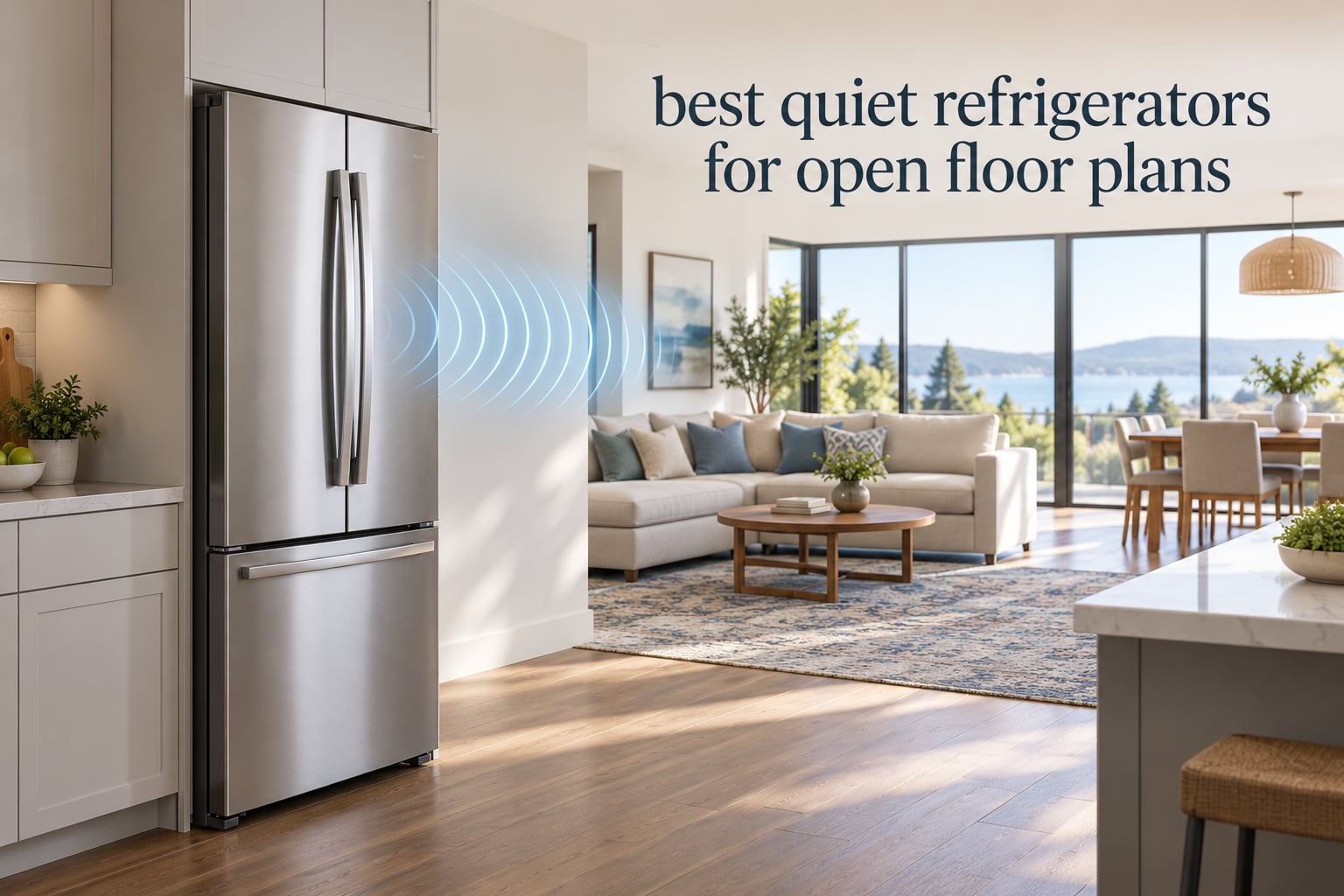
The refrigerator is the appliance people notice least and hear most. In a closed kitchen, its compressor hum stays behind a wall, and you register it only when the house goes silent at night. In an open floor plan there is no wall, so that same hum travels into the living room, the dining area, and the home office as a steady low drone.
That is why the best quiet refrigerators for open floor plans are not simply the units with the lowest number on the spec sheet. Placement, cabinet depth, ice maker hardware, and even the flooring under the appliance all change how loud the fridge sounds once it is installed. We compared ten refrigerators with published or verifiable noise characteristics to build this guide, and every pick below lists its rated noise figure where the manufacturer publishes one.
Our rule was simple. If a listing gives a decibel rating, we use it. If it does not, we say so plainly rather than guess, because a spec sheet that stays silent on noise is itself a signal. We also weighed review volume, because a quiet compressor claim from a single owner tells you less than the same claim across thousands of reviews. The result is a short list for bedrooms, dorms, studios, offices, and open kitchen islands, plus the room-acoustics explanation that no spec sheet gives you.
Table of Contents
Top 3 Quiet Picks for Open Floor Plans in 2026

Midea 3.1 Cu.ft Mini Fridge
- Separate freezer door
- Energy Star certified
- Owners report bedroom-quiet running
- Reversible door

Midea 1.6 Cu.ft Mini Fridge
- Rated under 42 dB
- 1.6 cu ft countertop footprint
- Energy Star R600A compressor
- Reversible door
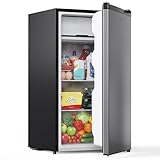
Upstreman 3.2 Cu.Ft Mini Fridge
- Rated 38 dB
- Energy Star at 206 kWh per year
- Two adjustable glass shelves
- Reversible door with leveling feet
10 Best Quiet Refrigerators for Open Floor Plans (October 2026)
The table below lists every refrigerator in this guide with its capacity, noise figure where one is published, and the room type it suits best. Two units publish no decibel rating at all, and we mark them as unlisted rather than guessing.
| Product | Specifications | Action |
|---|---|---|
| Midea 3.1 Cu.ft Mini Fridge with Freezer |
|
Check Latest Price |
| Midea 1.6 Cu.ft Mini Fridge |
|
Check Latest Price |
| Upstreman 3.2 Cu.Ft Mini Fridge |
|
Check Latest Price |
 EUHOMY 4.5 Cu.Ft Mini Fridge EUHOMY 4.5 Cu.Ft Mini Fridge |
|
Check Latest Price |
 ARCTIC CHEF 3.2 CU.FT Refrigerator-Freezer ARCTIC CHEF 3.2 CU.FT Refrigerator-Freezer |
|
Check Latest Price |
 Frigidaire EFR451 Top Freezer Frigidaire EFR451 Top Freezer |
|
Check Latest Price |
 Electactic 3.2 Cu.Ft 130 Can Beverage Refrigerator Electactic 3.2 Cu.Ft 130 Can Beverage Refrigerator |
|
Check Latest Price |
 Tylza 24 inch 190 Can Beverage Refrigerator Tylza 24 inch 190 Can Beverage Refrigerator |
|
Check Latest Price |
 ARCTIC CHEF 7.5 cu ft Two Door Refrigerator ARCTIC CHEF 7.5 cu ft Two Door Refrigerator |
|
Check Latest Price |
 Frigidaire 7.5 cu ft Platinum Series Combo Frigidaire 7.5 cu ft Platinum Series Combo |
|
Check Latest Price |
1. Midea 3.1 Cu.ft Mini Fridge with Freezer – Editor’s Choice All-Round Pick
Midea 3.1 Cu.ft Mini Fridge with Freezer, Energy Star Certified, for Dorm
3.1 cu ft with a separate 0.92 cu ft freezer
Energy Star certified with R600A compressor
33 inch tall slim footprint
Pros
- Owners describe it as quiet enough for a bedroom or dorm
- Separate freezer door rather than a shared compartment
- Energy Star certified with a high-efficiency R600A compressor
- Detachable glass shelves and a removable crisper drawer
- Reversible door for flexible room layouts
Cons
- Manual defrost with one dial shared by both compartments
- Condensation runs down the back wall and can freeze food that touches it
- Door can rack is awkward to fill
This is the unit we keep coming back to for open floor plans, because the quietness claim is not marketing copy. Across thousands of reviews the recurring description is a compressor that is effectively silent, with owners specifically noting that it works in a bedroom or dorm setting. That is the hardest test for a refrigerator, since bedrooms have no masking noise at all.
The physical design helps. A separate freezer door means the compressor duty cycle stays short. You open the freezer, the cold air escapes, and the unit works for a few minutes, rather than a shared compartment losing cold air every time you grab a carton of milk. Shorter duty cycle means fewer compressor starts, and starts are what you hear.
At 33 inches tall and 18.5 inches wide it tucks against a wall or into a breakfast nook, keeping the sound source out of the seating area.
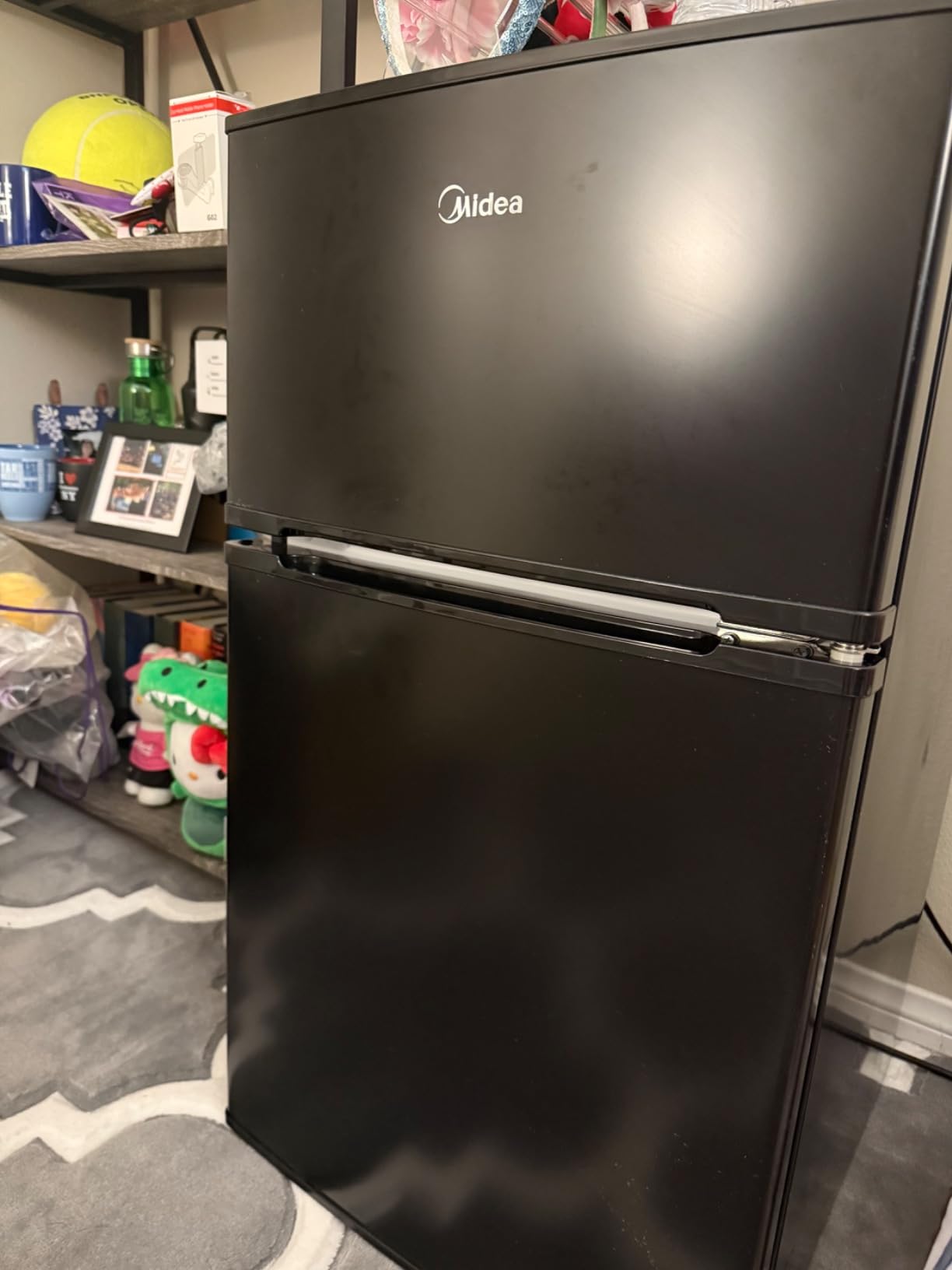
You give up frost-free convenience. The freezer is manual defrost and one mechanical dial controls both compartments.
Two quirks first: condensation runs down the rear wall and can freeze food that touches it, and the door can rack is awkward enough that items fall out.
Let it stand upright after delivery before plugging in. The warranty is one year with a two-year compressor term, longer than most compact units.
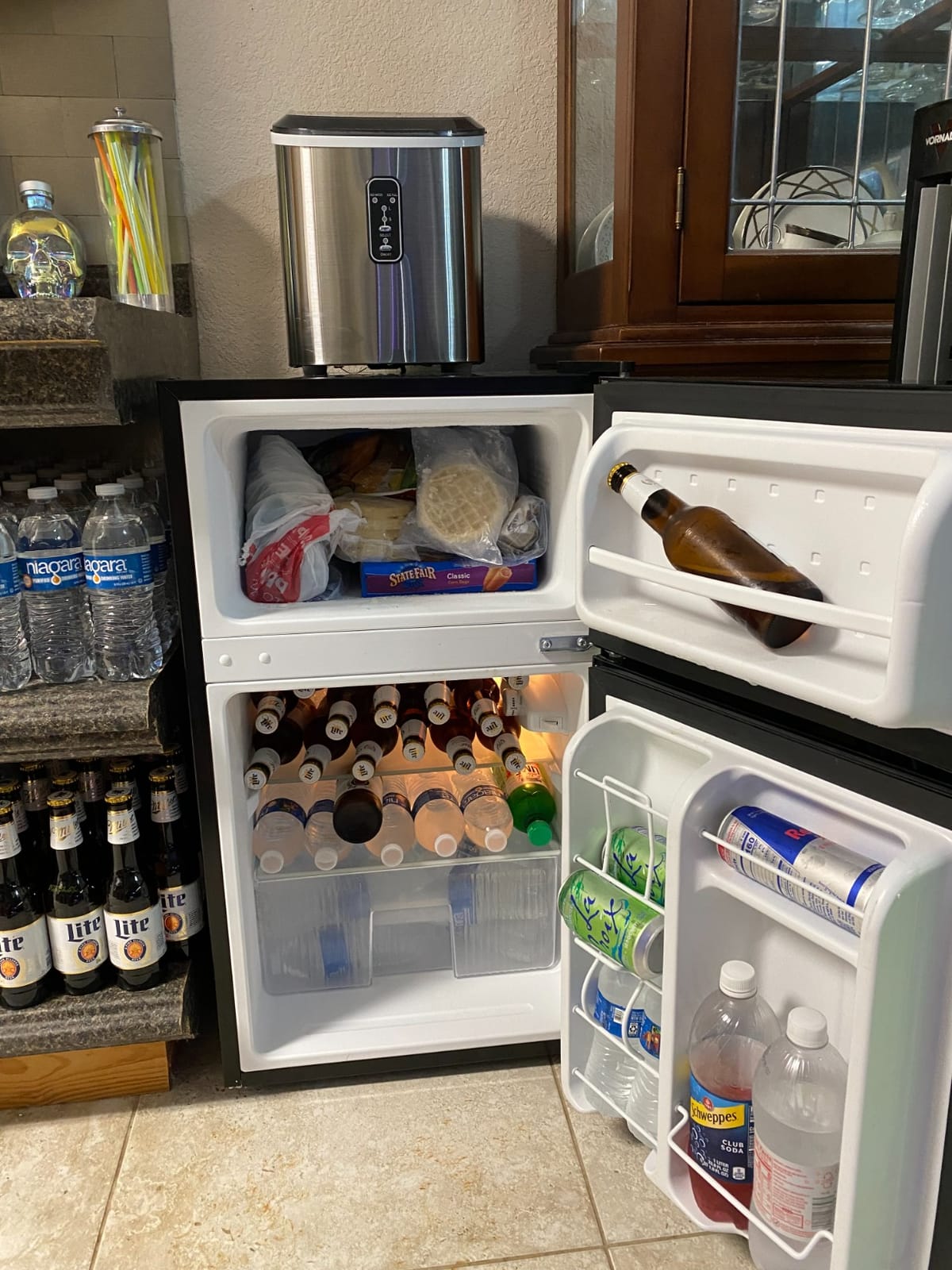
Where this fridge makes sense
This is the pick for an open kitchen where a second refrigerator is doing beverage duty, or for a home office, den, or bedroom that shares a wall with the kitchen. The separate freezer door and quiet duty cycle make it the safest all-round choice here.
It also works as the primary fridge in a studio or one-bedroom apartment. Three point one cubic feet is not generous, but the fresh food and freezer split means nothing has to share a shelf with the ice.
Where this fridge falls short
Skip it if you need a genuinely large fresh food section, a door hinge on both sides, or a frost-free freezer. The fixed dial control and the back-wall condensation make it a poor fit for a kitchen where someone cooks seriously every day.
It is also the wrong answer for anyone who wants a published decibel figure on paper. This listing does not give one, so the quietness case rests entirely on owner experience rather than a manufacturer number.
2. Midea 1.6 Cu.ft Mini Fridge – Under 42 dB Countertop Pick
Midea 1.6 Cu.ft Mini Fridge, Energy Star Certified, Low Noise for Bedroom
Rated under 42 dB by the manufacturer
1.6 cu ft body at 19.4 inch tall
Energy Star R600A compressor at 207 kWh per year
Pros
- Manufacturer publishes a noise figure under 42 dB
- Fits on a counter or inside a cabinet
- Owners report cooling that feels instant
- Reversible door and removable glass shelf
- One year warranty with two years on the compressor
Cons
- Compressor kick-on is noticeably louder than the running hum
- Mechanical thermostat is imprecise at the coldest settings
- Open back panel needs several inches of wall clearance
This is the only unit in the set with both a published decibel ceiling and a footprint small enough to sit on a counter, which makes it the most useful fridge for an open plan where you do not want floor space taken up. At under 42 dB it is not the quietest figure here, but it is the one you can verify before you buy.
In practice owners describe a low hum that is easily forgotten once the room is active, and several reviewers state the sound disappears into normal room noise. Cooling performance comes up just as often, described as effectively instant when you put drinks in.
At 19.4 by 18.6 inches it works above a counter or inside a hutch. An internal chiller box chills drinks faster, and the thermostat runs from 28.4F to 35.6F, which is cold-drink territory.

The honest drawback shows up at night. Reviewers repeatedly flag the compressor kick-on as louder than the steady running sound, which is exactly what the least sensitive sleeper will notice first. The thermostat is also imprecise, and the coldest settings can overcool contents.
The open back panel needs several inches of wall clearance, so a flush under-cabinet fit means adding a ventilation gap. The cord also stores inside the rear compartment.
The warranty is a full year with two years on the compressor, among the longest terms in this group.

Where this fridge makes sense
It suits a kitchen island, a wet bar, a home office, or a bedroom where you want drinks cold without a full-size appliance humming. Placement high on a counter also separates the sound source from your head, which does more for perceived quietness than most people expect.
Where this fridge falls short
Do not buy it for a household that eats fresh food. The temperature range tops out at 35.6F, the single glass shelf gives no layout flexibility, and the freezer is a manual defrost compartment.
It is also a poor fit beside a bed for light sleepers, given the startup noise several owners describe. If that is your situation, look at a full-height unit instead so the compressor sits several feet from your head.
3. Upstreman 3.2 Cu.Ft Mini Fridge with Freezer – 38 dB Value Pick
Upstreman 3.2 Cu.Ft Mini Fridge with Freezer, Stainless Steel-SR321
Manufacturer rated at 38 dB
3.2 cu ft with a 0.3 cu ft freezer
Energy Star certified at 206 kWh per year
Pros
- Published 38 dB rating puts it in the open-plan target band
- Owners report the hum disappears into normal room noise
- Two adjustable removable glass shelves
- Reversible door plus adjustable leveling feet
- Energy Star certified
Cons
- No interior light
- Chemical odor and protective film on arrival that must be removed
- Freezer holds frozen items for roughly three days rather than freezing them
This is the pick when you want a number on the spec sheet rather than a reputation. The manufacturer states 38 dB, at the top of our quiet band for an open floor plan, and owner reviews line up, describing a faint hum that blends into ordinary room noise.
At 3.2 cubic feet with two adjustable glass shelves, it is more flexible inside than most units at this size. Glass shelves rather than wire racks keep bottles upright, and the shelf layout can be reconfigured as your storage needs change.
Adjustable leveling feet matter for open plans. Uneven floors let the chassis rock, and that rattle gets mistaken for extra compressor noise.
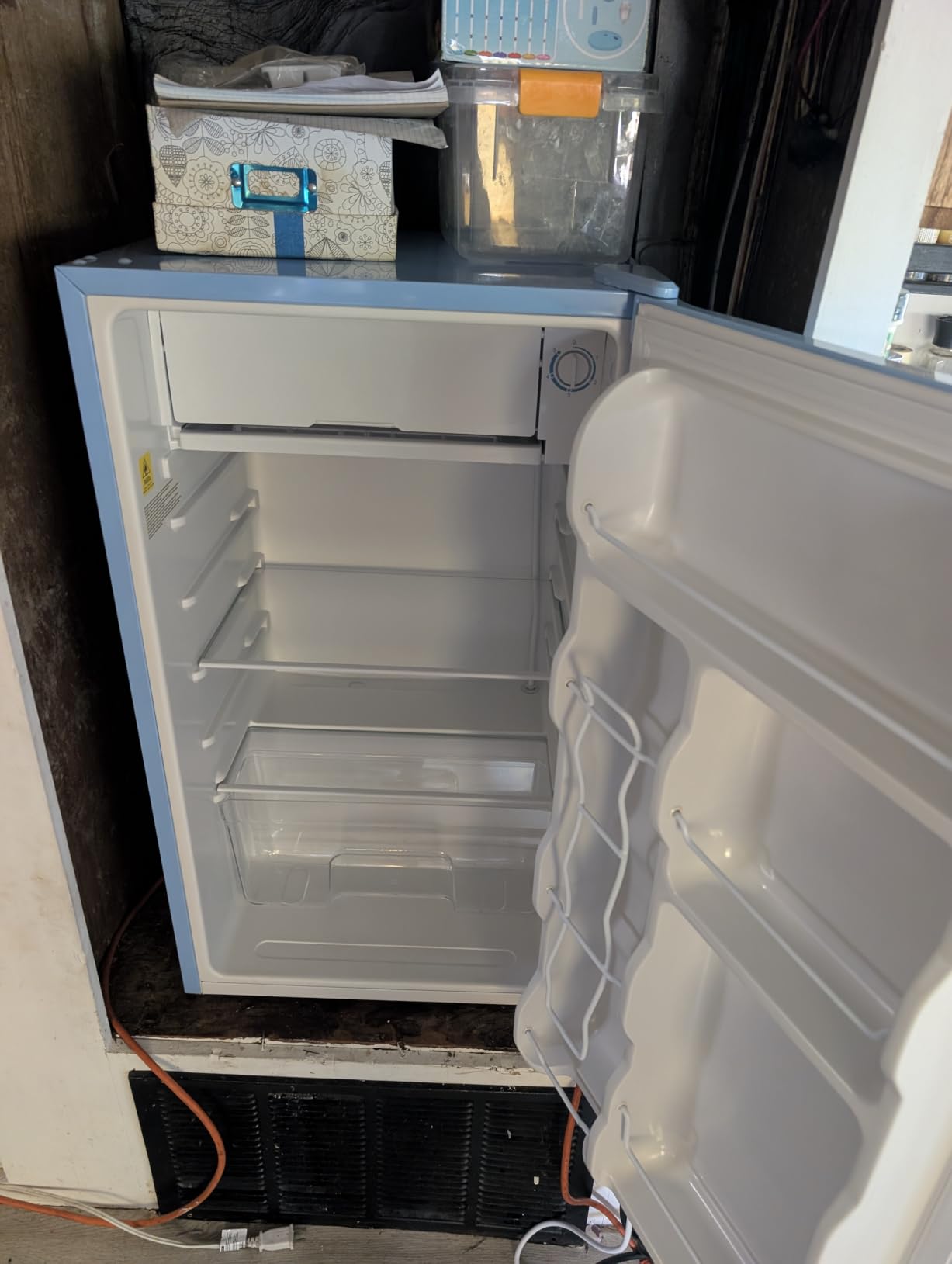
Complaints cluster around setup: a chemical odor to air out and a protective plastic film that must be peeled before the unit cools properly.
The freezer is a cooler rather than a freezer, holding frozen items about three days, and there is no interior light. A tight door seal is a genuine plus for an open kitchen, since it means a shorter compressor run after every opening.
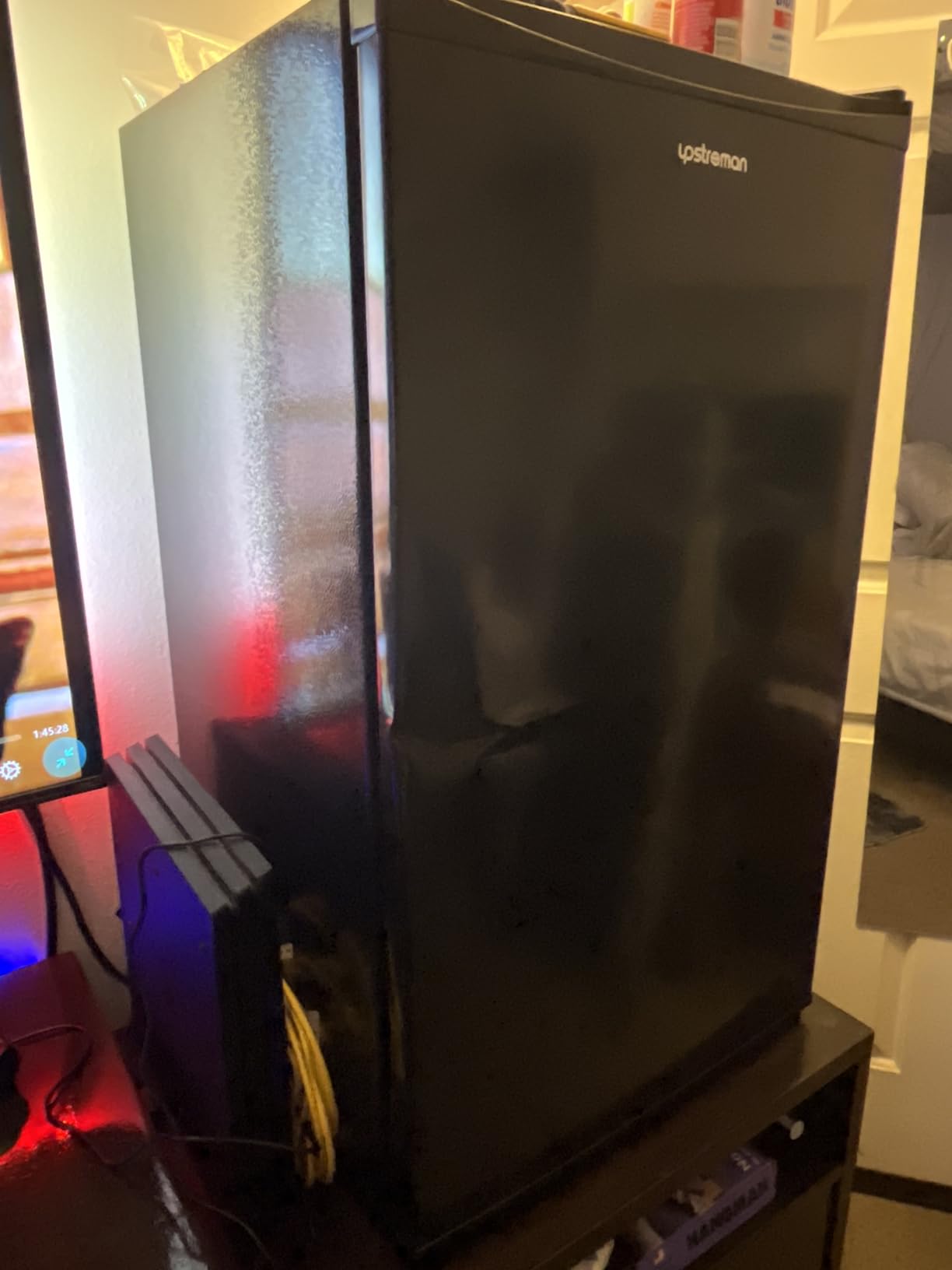
Where this fridge makes sense
It is a strong second refrigerator for a kitchen island, a den, or a home office, and a solid primary fridge for a studio where you shop a few times a week rather than once. The glass shelves and adjustable feet make it the most accommodating of the compact options on shelving and leveling.
Where this fridge falls short
Skip it as a household freezer. Three days of holding is not enough for anyone buying a month of meat, and the compartment will not make ice.
The missing interior light and the setup odor are real annoyances rather than deal breakers, but if you load food after dark every day, the Upstreman is not the one for you.
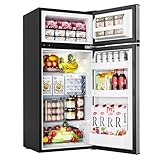
4. EUHOMY 4.5 Cu.Ft Mini Fridge with Freezer – 38 dB Tall Pick
EUHOMY 4.5 Cu.Ft Mini Fridge with Freezer, 2 Door Mini Refrigerator, Silver
Manufacturer rated at 38 dB
4.5 cu ft split into 3.7 and 0.8 cu ft
Narrow 18.1 inch width at 42.9 inch height
Pros
- Rated 38 dB with owner reports of inaudibility across a room
- Deep freezer that holds ice cream solid
- Three glass shelf partitions and a produce box
- Narrow footprint fits a corner or beside a desk
- LED interior lighting and reversible door
Cons
- Shelves are fixed rather than adjustable
- A minority of owners hear more compressor noise than the rating suggests
- Manual defrost freezer
The 38 dB rating is the headline here, backed by consistent owner feedback. Multiple buyers say they cannot hear the unit from across the room, the standard we care about in an open plan where the fridge shares air with the seating area.
What separates it is freezing performance. The freezer reaches -7.6F on its own setting, which owners confirm by reporting ice cream that stays solid. The fresh food compartment holds 32F to 50F across three levels, so you get genuine dual-zone control.
At 18.1 inches wide by 42.9 inches high it fits beside a desk, in the gap between a wall and a cabinet, or in a dorm room where a wider unit would eat the walkway.

Two caveats. The three glass shelf partitions are fixed rather than adjustable, so you commit to one layout. And a smaller group of owners hears compressor noise closer to a hose running outside than to the published figure, which tells you the rated-versus-real gap applies here too.
Energy use is about one kilowatt hour per day, and the box includes an ice tray and shovel.
A tall narrow body puts the compressor low and close to the floor, and hardwood transmits more vibration than carpet. Add a pair of vibration pads.
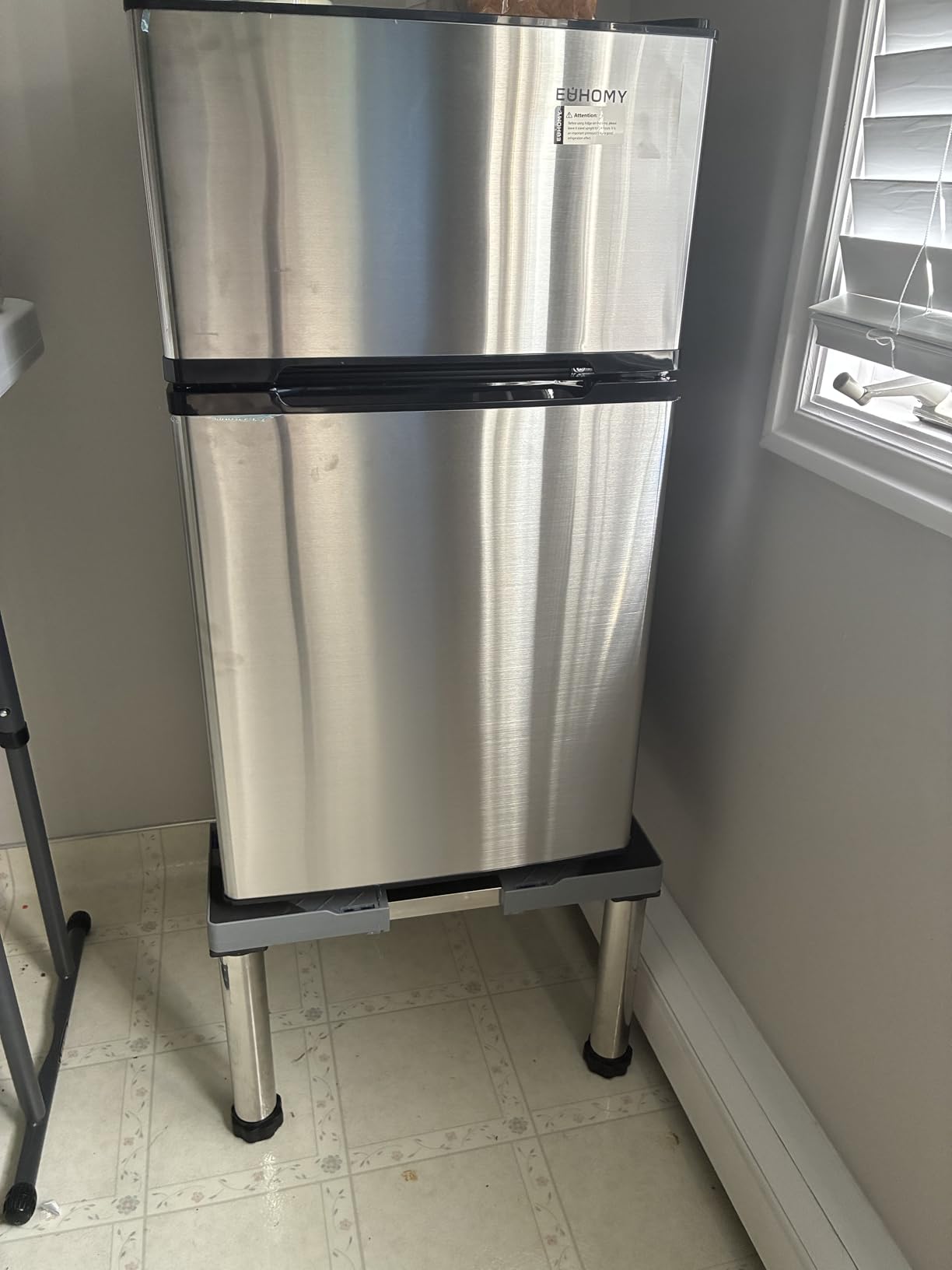
Where this fridge makes sense
This is the unit we would put in a dorm, a home office, a bedroom, or an RV. The rating, the narrow footprint, and the real freezing performance together make it the most complete package in the group for a small secondary space.
Where this fridge falls short
Skip it if your storage needs change. Fixed shelves mean you cannot trade a shelf for a tall stock pot the way you can with an adjustable unit, and that limitation gets annoying quickly in a kitchen where you actually cook.
The counterweight is worth repeating: a handful of owners hear more noise than the 38 dB claim suggests, so buy a vibration pad if your floor is hard and you are noise sensitive.
5. ARCTIC CHEF 3.2 CU.FT Refrigerator-Freezer – Most Reviewed Pick
ARCTIC CHEF Mini Refrigerator-Freezer Compartment-Adjustable Thermostat Control-Reversible Doors-Ideal for Dorm, Office, RV, Garage, Apartment-Black, 3.2 CU.FT
Rotary scroll compressor with R134a refrigerant
3.2 cu ft with a 0.5 cu ft internal freezer
37.5 pound body with reversible door
Pros
- Largest review base of any pick here at close to nineteen thousand
- Rotary scroll compressor runs efficiently
- Reversible door for either opening direction
- A 37.5 pound body is easy to reposition
- Dial thermostat with a push-button defrost
Cons
- Wire shelves rather than glass
- Single shared thermostat for both compartments
- Manual defrost freezer section
With close to nineteen thousand reviews, this is the most thoroughly owner-tested refrigerator in the guide, and for quietness that matters.
Reviewers praise the reversible door, the dial thermostat with its defrost button, and the low energy draw of about 250 kilowatt hours per year. At 37.5 pounds it is one of the lighter models here, easy to move when rearranging an open plan.
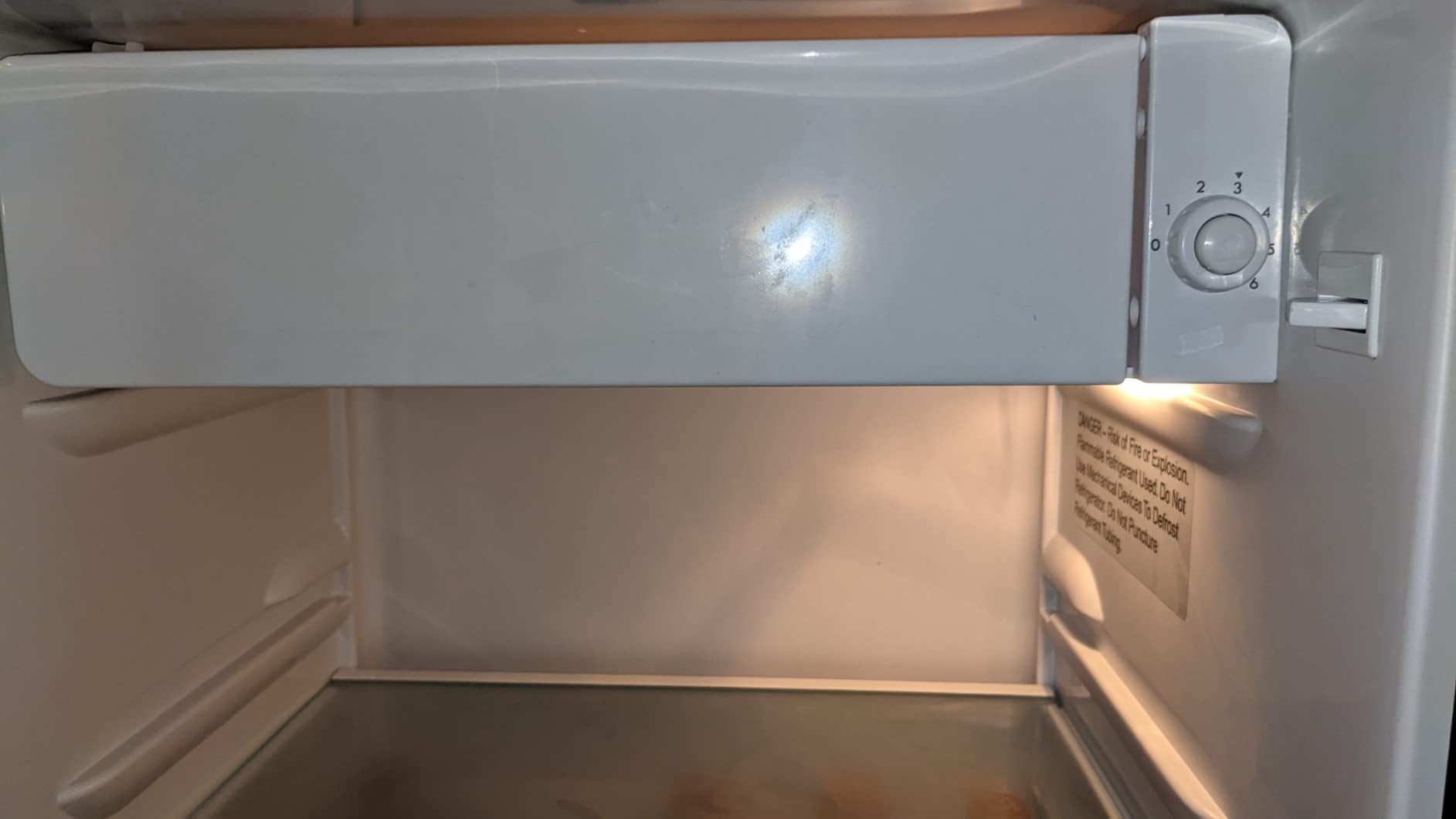
Its limits are shelving and controls. Wire shelves, a shared thermostat, and a 0.5 cubic foot internal freezer mean opening the freezer vents cold air into the fresh food space and lengthens the compressor run.
Owners who report more noise from this unit tend to be the ones using the freezer frequently, which is what you would expect when the duty cycle stretches.
It uses R134a rather than the R600A found in newer models, and carries a one-year warranty.
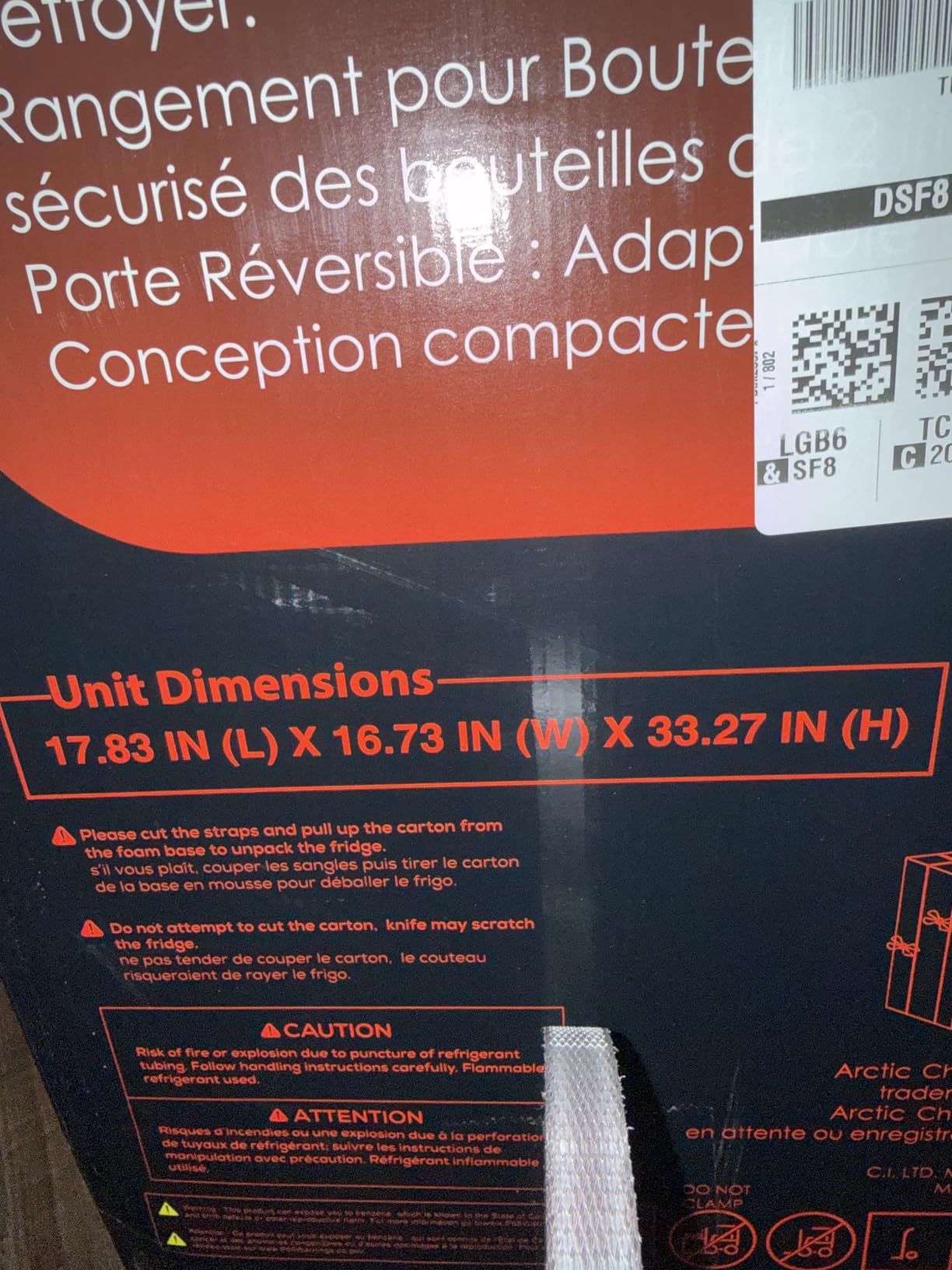
Where this fridge makes sense
It suits a garage, an office break room, an RV, a dorm, or any secondary location where a light body and a reversible door matter more than shelf quality. For a drinks-only spot in an open kitchen it works well, since you open the door less often than you would with groceries.
Where this fridge falls short
Do not make it your primary kitchen refrigerator. A shared thermostat and an internal freezer compartment are a poor match for anyone who cooks daily, and wire shelves are unforgiving with tall bottles.
For a sound-sensitive household in an open plan, we would still choose a unit with a published noise figure over this one. The review base is reassuring, but it is not a decibel rating.
6. Frigidaire EFR451 Top Freezer – Two Doors, Small Kitchen Pick
Frigidaire EFR451 Refrigerator with Top Freezer – 2 Door Fridge with 4.6 Cu Ft, Platinum Series, Stainless Steel
Two separate doors for fridge and freezer
4.6 cu ft with a 0.8 cu ft freezer
20.1 inch deep with adjustable glass shelves
Pros
- Owners describe the compressor as nearly silent
- Separate doors reduce how often the freezer needs defrosting
- Adjustable and removable glass shelves
- Good temperature control at mid settings
- Stainless exterior is easy to wipe clean
Cons
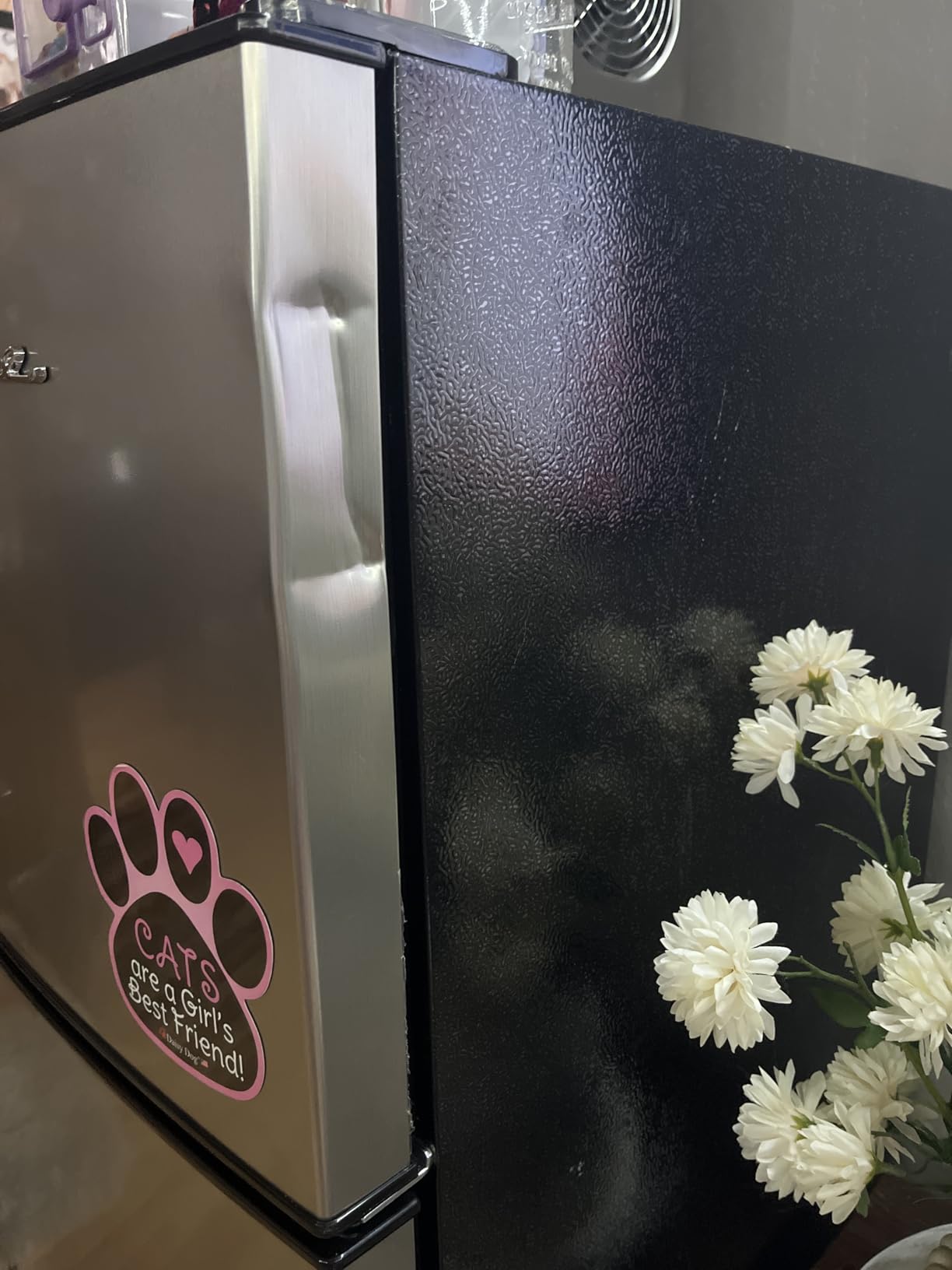
- Build quality described as cheap with thin plastic parts
- Dents and damaged door bins are common on arrival
- Door hinge is fixed to one side only
- Manual defrost
Two separate doors are the story here, and they are the quietest thing about it. Because the freezer has its own door, a quick reach for ice does not vent the whole fresh food compartment, so the compressor avoids a long recovery cycle. Owners describe the compressor as nearly silent, running only briefly after a door opens.
At 4.6 cubic feet with a 0.8 cubic foot freezer, it is also one of the more capable compact models here. The 20.1 inch depth is shallow for a full-height body, so it can sit against a wall without projecting into the walkway.
Adjustable and removable glass shelves give real layout control, and annual energy consumption is listed at 250 kilowatt hours.
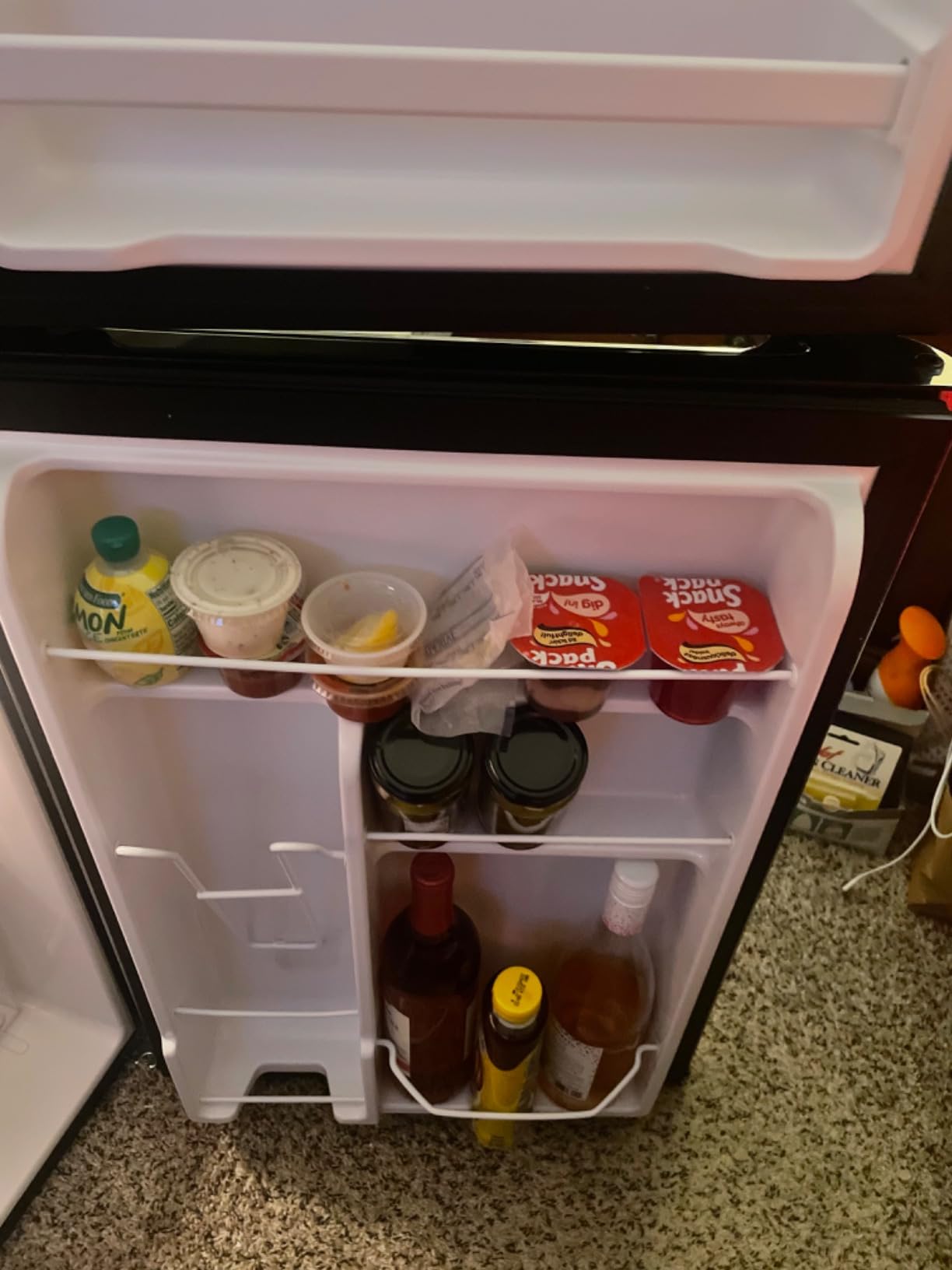
The complaints are about build quality. Owners describe thin plastic internal parts, and delivery damage including dents and cracked door bins is reported often enough that you should inspect the carton before signing.
Door storage also tends to differ from the listing photos, with items falling out of bins that do not match the images. The hinge is fixed to one side, so an awkward door swing rules this one out entirely.
A minority of units develop iced-over interiors and failed door gaskets, which matters because a gasket that no longer seals defeats the quiet short duty cycle the design depends on.

Where this fridge makes sense
It is the right call for a galley kitchen, a basement suite, an office kitchenette, or an RV where a shallow body and two separate doors matter. It is also the most sensible choice in this group for a household that wants real fresh food storage without a full-size appliance.
Where this fridge falls short
Skip it if you care about finish. The internal plastics and the recurring delivery damage make this the least refined build here, and the fixed hinge is a real limitation in any kitchen with an awkward door swing.
Inspect it on arrival and check the door gaskets in the first month. Those two issues account for most of what owners dislike, and both are manageable if you catch them early.
7. Electactic 3.2 Cu.Ft 130 Can Beverage Refrigerator – Undercounter Pick
Electactic Mini Fridge 130 Can Beverage Refrigerator Cooler, 3.2 Cu.Ft Drink Fridge forSoda Wine Beer, Digital Temperature Control Cooler for Home, Dorm, Bar
Counter-depth body at 19.29 inches
3.2 cu ft holding up to 130 standard cans
Digital temperature control from 32F to 61F
Pros
- Owners report it as inaudible in a theater room or bedroom
- Cool-depth body slides under a counter or into a bar recess
- Four adjustable shelves take cans bottles and kegs
- Digital temperature control with touchscreen readout
- Cools down quickly and holds drinks cold
Cons
- Top shelf is obstructed by the light and temperature gauge
- Drip tray is ineffective and condensation pools at the seal
- Temperature buttons can be finicky and unresponsive
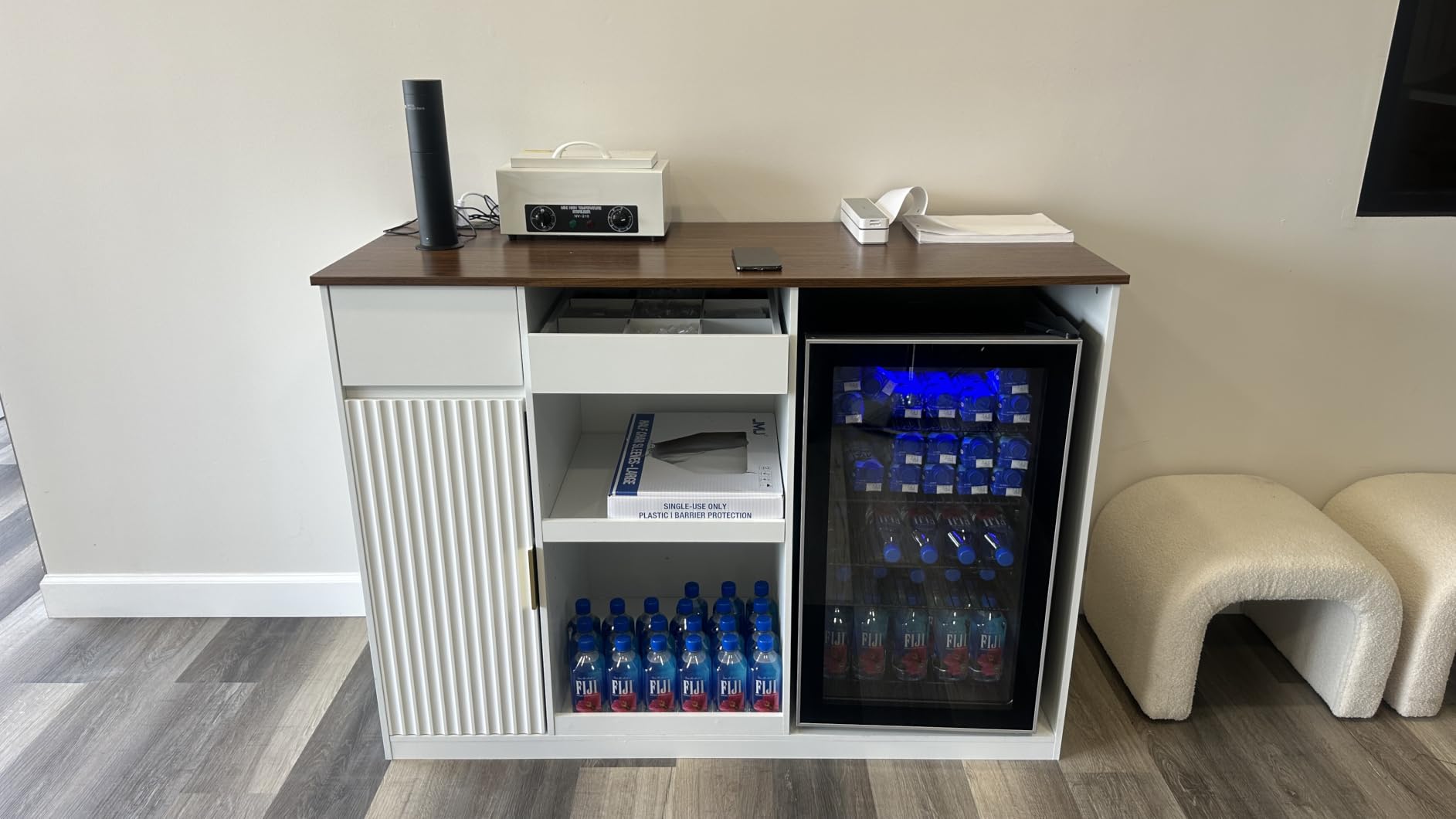
This is the pick for anyone who wants drinks cold out of sight and out of earshot. The body is 19.29 inches deep and 17.52 inches wide, so it slides under a counter, into a bar recess, or into a cabinet run with a ventilation gap.
Owner reports of quietness are unusually strong for a glass-door unit. Buyers describe it as inaudible in a theater room or a bedroom, which is notable given the glass front. A compressor that cycles briefly and stops is far less noticeable than a fan running continuously.
Capacity is 3.2 cubic feet for up to 130 standard cans on four adjustable wire shelves that take cans, bottles, and small kegs. Digital control runs from 32F to 61F.
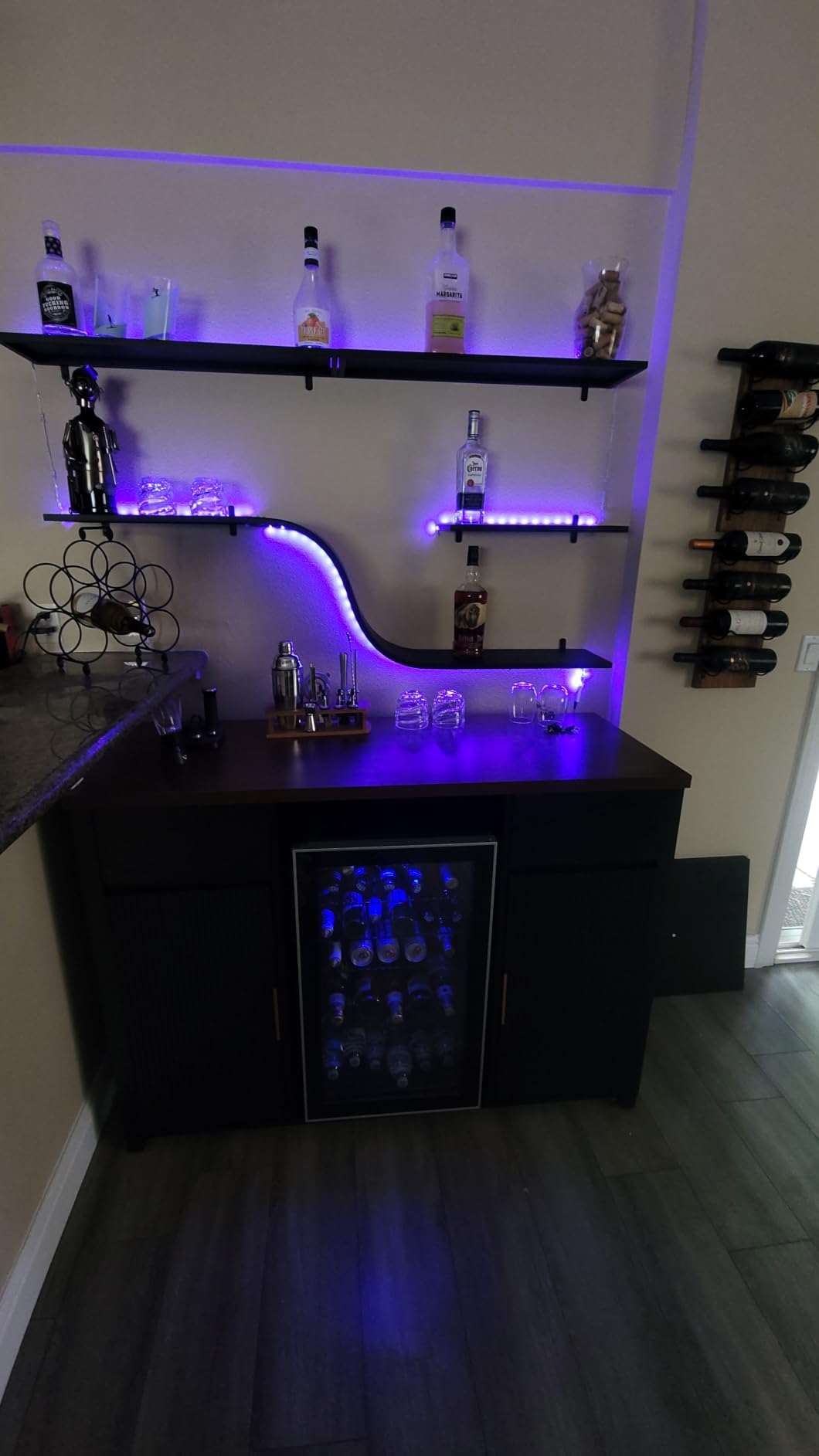
The design has real flaws. The top shelf is obstructed by the light housing and gauge, so it only takes mini cans, and the drip tray does not work, meaning condensation pools against the door seal and dribbles out.
Temperature buttons can be finicky and sometimes unresponsive, and a small number of units develop loud popping noises. That last one is worth watching, because a glass door works harder against sunlight, so put this unit on an interior wall.
The exterior does not overheat under a counter, and it carries a one-year warranty.
Where this fridge makes sense
It works in a wet bar, a kitchen island with a counter overhang, a home theater room, a dorm, or an office. Anywhere the sightline to a tall appliance would be distracting, this takes the drinks out of sight and out of earshot.
Where this fridge falls short
It is not a food refrigerator. There is no freezer, the top shelf is compromised, and glass doors put direct sunlight on your drinks. Do not put it where a child can reach the glass door and the bottles behind it.
For an open kitchen facing strong afternoon sun, put it on an interior wall. That protects both the quiet operation and the temperature stability.
8. Tylza 24 inch 190 Can Quiet Compressor Beverage Refrigerator – Built-In Bar Pick
Tylza 24″ Beverage Refrigerator 190 Can Quiet Compressor
Manufacturer rated at 38 dB
5.3 cu ft holding up to 190 cans
Installs built-in or freestanding under a counter
Pros
- Rated 38 dB with owners reporting the compressor is inaudible above room noise
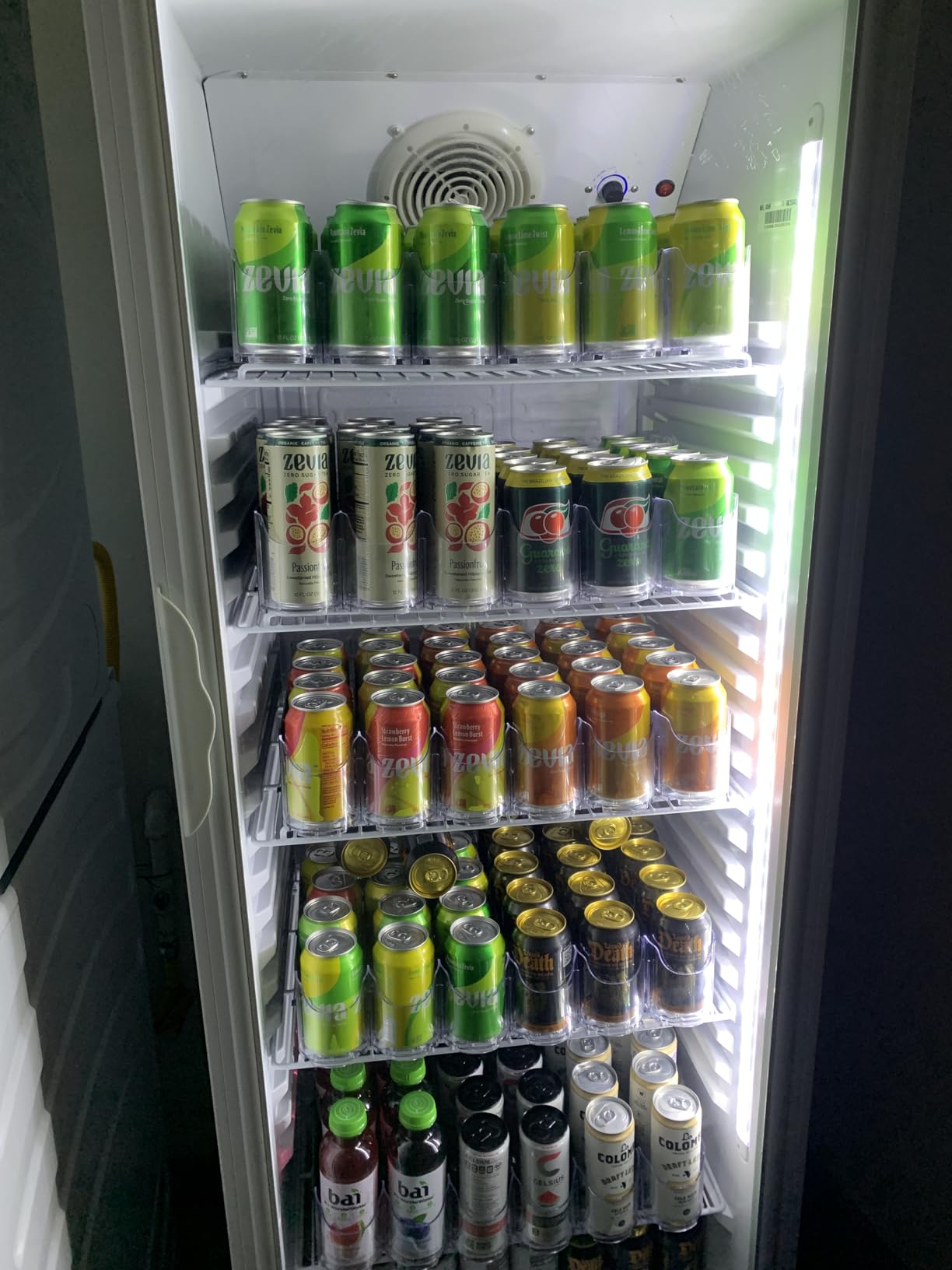
- Holds up to 190 cans on adjustable metal slides
- Build and fit quality owners compare to costlier wine refrigerators
- Double-paned tempered glass with magnetic seals and soft close
- Restores the previous temperature setting after a power cut
Cons
- Large bottle formats cut into effective capacity
- Temperature can swing five to six degrees through the day
- Heavy at 92.5 pounds and needs two people to position
This is the only unit here rated 38 dB that can be built into cabinetry, making it the closest thing in this guide to a panel-ready solution for an open plan. Owners describe the compressor as inaudible above normal room noise, and several single out the build quality as better than expected, comparing it favorably to costlier dedicated wine units.
Capacity is the draw at 5.3 cubic feet and up to 190 cans. Shelves run on smooth metal slides, and the double-paned tempered glass door with magnetic seals and a soft close feels more considered than the wire-and-glass assemblies on smaller beverage coolers.
Two safety locks are included, and the temperature memory function restores your setting after a power interruption. That matters in a bar or media room where you do not want everything to warm up during an outage.
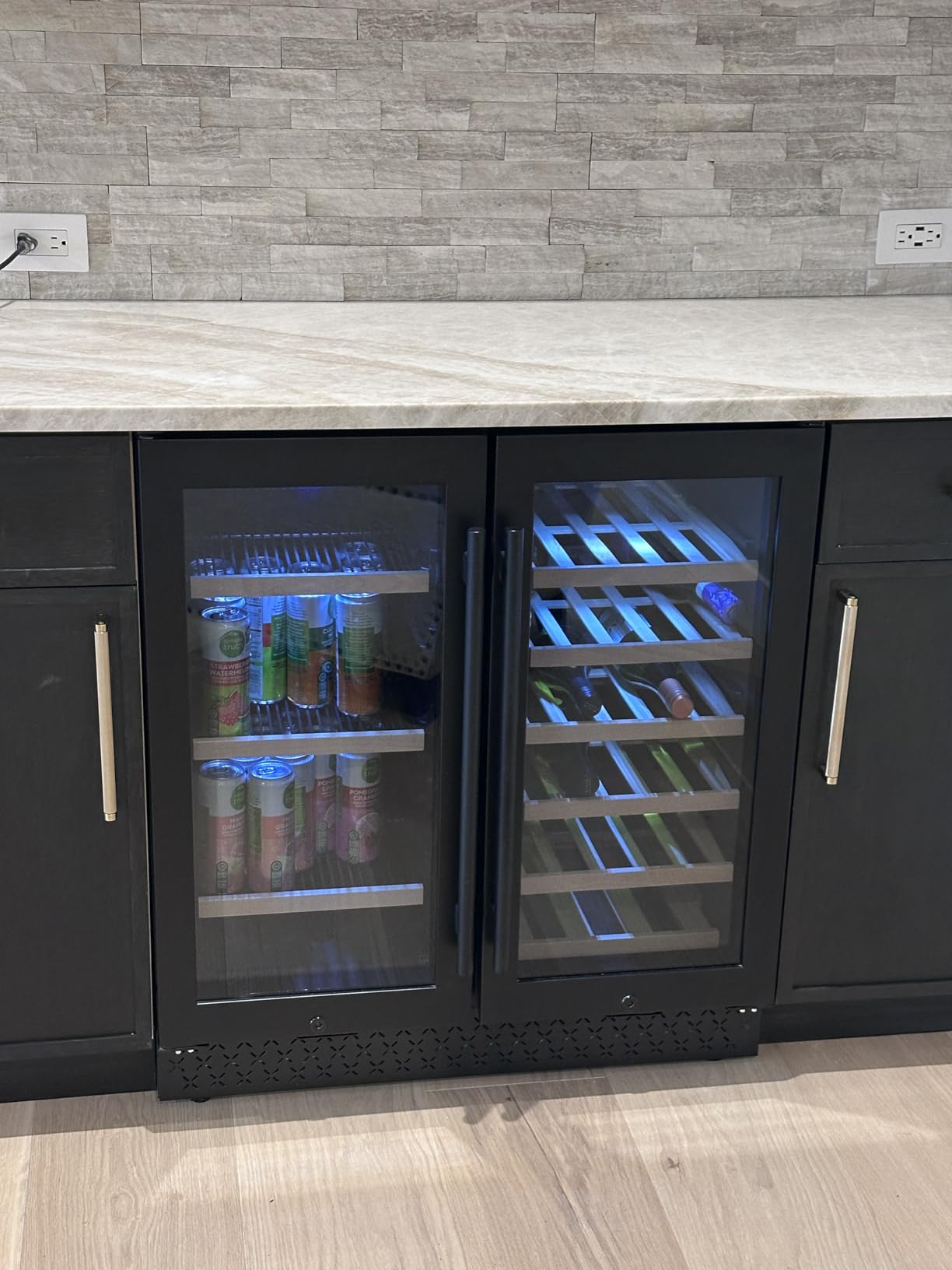
The tradeoffs are real. Large bottle formats cut effective capacity significantly, so a collection of pinot or champagne means fewer cans, and internal temperature swings run roughly five to six degrees through the day.
At 92.5 pounds it is one of the heavier models here, so plan on two people to set it into a built-in opening. Check the ventilation clearance before committing, because a unit that cannot breathe will run continuously.
It is not intended for long-term cellaring, and the door seal can sit slightly ajar if not pushed fully closed.
Where this fridge makes sense
It fits a home bar, a media room, a finished basement, or a built-in cabinet run in an open kitchen where you want drinks visible but the appliance itself out of the traffic pattern. The soft close and the locks make it comfortable in a family space.
Where this fridge falls short
Skip it for wine storage or for a large bottle collection. The temperature swing and the capacity loss from large formats will disappoint anyone who cares about either.
Also skip it if you are moving it alone. The weight and the built-in install are the two hardest parts of owning this unit, and both need planning rather than improvising.
9. ARCTIC CHEF 7.5 cu ft Two Door Apartment Refrigerator – Fresh Food Pick
ARCTIC CHEF ACFR725AMZ6COM 2 Door Apartment Size Refrigerator with Freezer, Stainless
7 cu ft fresh food with a 0.5 cu ft freezer
Multi-vent cooling for even temperatures
Spill-proof glass shelves and crisper bins
Pros
- Seven cubic feet of fresh food space in an apartment-size body
- Multi-vent cooling with accessible temperature controls
- Spill-proof glass shelves contain leaks
- Crisper bins keep produce fresh longer
- Reversible door suits tight layouts
Cons
- Manual defrost mode needs periodic ice removal
- Freezer is only 0.5 cubic feet
- Incandescent lighting rather than LED
If your problem is that a compact fridge cannot hold a week of groceries, this is the unit that solves it. Seven cubic feet of fresh food space in a 23 by 23 inch body is unusually generous, and owners put capacity and easy-clean glass shelving at the top of their lists.
Quietness here comes from the basic architecture rather than a stated figure. The listing publishes no decibel rating, but it does describe multi-vent cooling with accessible temperature controls, the kind of steady airflow that keeps the compressor from running long stretches.
The freezer is a full-width compartment with a fixed wire shelf and a door bin. Spill-proof glass shelves contain leaks before they reach the shelves below, and the crisper bins help preserve freshness.
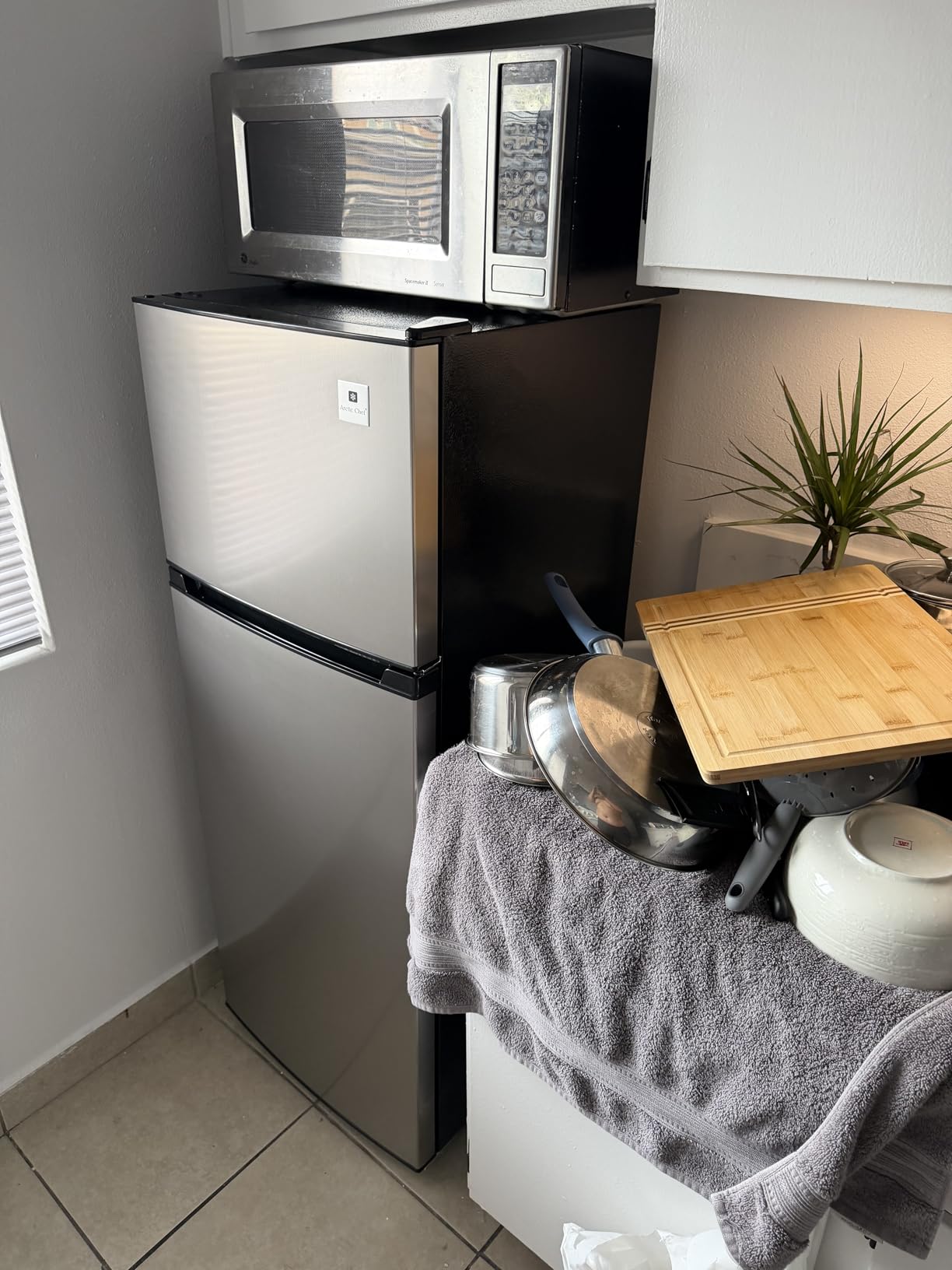
The freezer at 0.5 cubic feet is the weak point, and it is the most common complaint alongside manual defrost. It works for a bag of frozen vegetables, not for bulk storage or ice.
Interior lighting is incandescent rather than LED. The compressor is a rotary scroll unit with no inverter, so expect conventional on-off cycling.
At 55 inches tall and 75 pounds this is a full-height body that will stand visibly in an open room. Place it against a wall or inside a cabinet alcove rather than on an island.

Where this fridge makes sense
It suits a one-bedroom apartment, an ADU, a rental unit, or a kitchen where a couple or a single person needs real grocery space without a full-size French door. The reversible door solves most placement problems.
Where this fridge falls short
Skip it if anyone in the household freezes food in quantity, and skip it if a visible white appliance in the middle of the living space bothers you. It is rated 4.1, with roughly one review in eight landing at one star.
If noise is the deciding factor, treat the missing decibel figure as a real gap rather than an oversight in our testing. This one earns its place on capacity, not on measured quietness.
10. Frigidaire 7.5 cu ft Platinum Series Combo – Largest Fresh Food Compartment
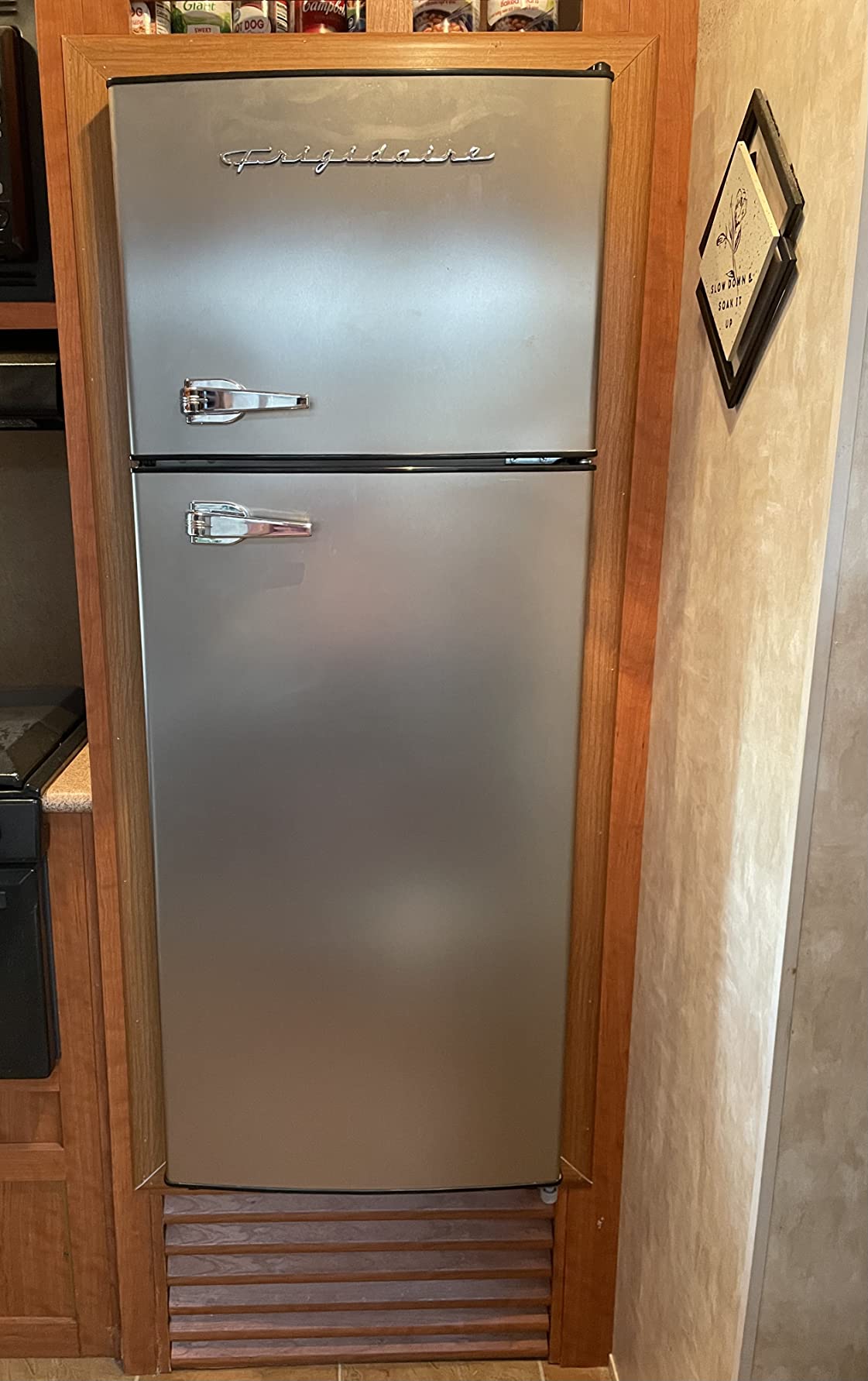
Frigidaire, 2 Door Apartment Size Refrigerator/Freezer Combo, 7.5 cu ft, Platinum Series, Stainless, 23″ D x 21.5″ W x 55.5″ H
6 cu ft fresh food plus a 2 cu ft freezer
Lists quiet operation as a design feature
Rotary scroll compressor with reversible door
Pros
- Listing explicitly names quiet operation for peaceful living areas
- Two cubic feet of freezer space is the largest here
- Reversible door plus front leveling legs and rear castors
- Removable glass shelves and a transparent crisper
- Interior lighting in both compartments
Cons
- Manual defrost needs periodic thawing
- Rotary scroll compressor is not an inverter unit
- Only one full-width door bin for small items
This is the only listing in the group that names quiet operation as a stated feature for peaceful living areas. That is not a decibel figure, and we will not pretend otherwise, but the manufacturer clearly positioned this unit for the use case in our topic.
The storage split is the practical headline. Six cubic feet of fresh food and two cubic feet of freezer is the largest freezer compartment among these picks. The two-door configuration keeps cold air out of the fresh food side.
Placement flexibility is strong for an open layout. The door is reversible, front-mounted leveling feet let you dial it level, and rear castors make it easy to pull out for cleaning.
Manual defrost means you throttle back ice on a schedule, and the freezer compartment is not frost-free.
The compressor is a rotary scroll unit rather than an inverter type, so it cycles on and off rather than ramping. That produces a sharper startup moment, which is exactly what open-plan listeners notice most. Annual energy consumption is listed at 378 kilowatt hours per year.
One full-width door bin is limiting when a week of groceries arrives at once, and at 55.5 inches tall and 75 pounds the unit commands a real footprint in a room you can see from the sofa.
Where this fridge makes sense
It is a genuine primary refrigerator for an apartment, a rental, or a vacation property where an open kitchen means the fridge is always visible and needs to look respectable. The stainless and chrome trim reads better in a room than a white compact unit.
Where this fridge falls short
It is not the choice for a sound-sensitive household. No decibel figure, a non-inverter compressor, the highest energy draw in the set, and a 4.1 rating with one review in eight at one star make it a pick on capacity and appearance rather than on measured quietness.
If noise is your priority, put one of the 38 dB units in the main kitchen role and treat this as a garage or basement second fridge instead.
How to Choose a Quiet Refrigerator for an Open Plan
Start with the number, then check the rest of the chain. A published decibel rating under 38 dBA gives you a defensible starting point, but four factors decide whether that number survives contact with your actual room.
Compressor type changes the startup sound. A conventional compressor switches on at full power, which produces a sudden pulse. An inverter compressor ramps up gradually, and a linear compressor moves in a smoother continuous motion. The units in this guide are mostly conventional rotary scroll or reciprocating designs, so they all share that startup character. None of them is a full-size inverter French door, and if your budget stretches that far, an inverter compressor is the single most effective upgrade for quietness.
Fewer fans means less noise. Frost-free systems add evaporator and condenser fans that run continuously. Manual defrost models like most of these have no evaporator fan at all, a quietness advantage that is easy to miss when comparing a large no-frost fridge against a small manual one.
Depth and body style matter acoustically. A unit that sits flush with surrounding cabinetry has its side panels boxed in, which dampens the chassis. An exposed appliance in the middle of a room radiates sound in every direction. Counter-depth bodies at around 24 inches deep and built-in or panel-ready designs both reduce the reflected noise an open plan amplifies. Every beverage refrigerator in this guide is a counter-depth format for exactly that reason.
Ice makers are the hidden variable. If you want one, confirm whether it can be switched off. Forum discussions about open-plan kitchens come back to the same point again and again, that the ice maker and the ice bin are frequently louder than the compressor and are never counted in the published rating.
On installation, four steps do most of the work. Level the unit properly, because an uneven floor lets the chassis rattle and that gets mistaken for compressor noise. Add vibration pads under the leveling feet, especially on hardwood or tile. Leave the ventilation clearance the manufacturer specifies, because a starved compressor runs continuously. And place the appliance away from a wall shared with a bedroom if you can.
Reliability and serviceability deserve their own check before you commit. Warranty length varies widely across this group, from a single year on several units to a full year plus two years on the compressor for both Midea models. Longer warranty terms generally signal confidence in the compressor, which is the part you cannot easily replace.
Room type still decides more than specs do. A studio or dorm points to a tall narrow unit. A kitchen island with a counter overhang points to an undercounter beverage model. A home office or bedroom points to a compact unit placed several feet from your head, since distance does more for perceived noise than any decibel figure.
Sensitive listeners often report that an open floor plan kitchen becomes unbearable specifically because of refrigerator hum, and the same homeowners usually find that moving the unit out of the main room solves it.
For the rest of the equipment in a shared space, our picks for quiet canister filters and magnetic exercise bikes for quiet home workouts follow the same principle, and a quiet enclosed generator keeps a second mechanical hum out of an open garage or patio.
Frequently Asked Questions
What dB is considered quiet for a fridge?
For an open floor plan, a refrigerator rated under 38 dBA is quiet. Between 39 and 42 dBA the compressor hum becomes noticeable once a door opens, and at 43 dBA or higher it reads clearly in the living space. Compare those figures against familiar sounds: 30 dBA is a whisper, 40 dBA is a quiet library, and 60 dBA is ordinary conversation.
Which fridge makes the least noise?
Among the models in this guide, the units with the lowest published figures are rated at 38 dBA. Reviewers describe the compressor on these units as audible only when the room is otherwise silent. Remember that the printed figure is measured under controlled conditions, so expect the real sound in an open room to carry roughly three to eight decibels further.
What brand of refrigerator is the most quiet?
No brand is quiet across its whole range. Noise is set more by the compressor design, the fan count, and the cabinet body than by the badge on the front. The approach that works is to filter by a published decibel figure first, then check whether the compressor is inverter or conventional, and whether the unit uses fans for frost-free cooling at all.
Which refrigerator is the quietest according to Consumer Reports?
Independent testing labs publish their own measurements rather than repeating manufacturer figures, and those lab conditions differ from a home. The most useful cross-check is to look for a published decibel rating in the product documentation, then read owner reviews about the startup sound, since the compressor kick-on is the moment people actually notice.
Why is my refrigerator so noisy at night?
A quiet room removes the ambient noise that normally masks a compressor hum, so the same fridge that disappears during the day becomes obvious at night. The ice maker and the ice bin add mechanical noise that is not reflected in the published decibel figure. Level the unit, add vibration pads under the feet, and turn the ice maker off to test whether it is the source.
Is inverter compressor quieter than a standard compressor?
Yes, generally. A standard compressor switches on at full power, which creates a sudden startup pulse. An inverter compressor ramps up and down gradually, and a linear compressor moves in a smoother continuous motion, so both remove the hard kick that stands out most in an open room where the fridge shares air with the living area.
The Quietest Refrigerator Pick for 2026
The Midea 3.1 cubic foot mini fridge with a separate freezer door is our top recommendation for the best quiet refrigerators for open floor plans. Owners describe it as quiet enough for a bedroom or dorm across nearly six thousand reviews, and the separate freezer door keeps the compressor duty cycle short, which is the mechanism that actually reduces the sound you hear in a shared room.
For a verifiable number on paper, the Upstreman 3.2 cubic foot model and the EUHOMY 4.5 cubic foot model both publish a 38 dBA rating, and the Midea 1.6 cubic foot countertop unit publishes a figure under 42 dBA. For a built-in or bar installation, the Tylza 24 inch beverage refrigerator is the only option here rated 38 dBA that fits into cabinetry.
Whatever you choose, level it, pad the feet, leave the ventilation clearance, and turn the ice maker off for the first week to hear what the compressor actually does. That single test tells you more than any spec sheet, and it is how we settled the ranking for 2026.