
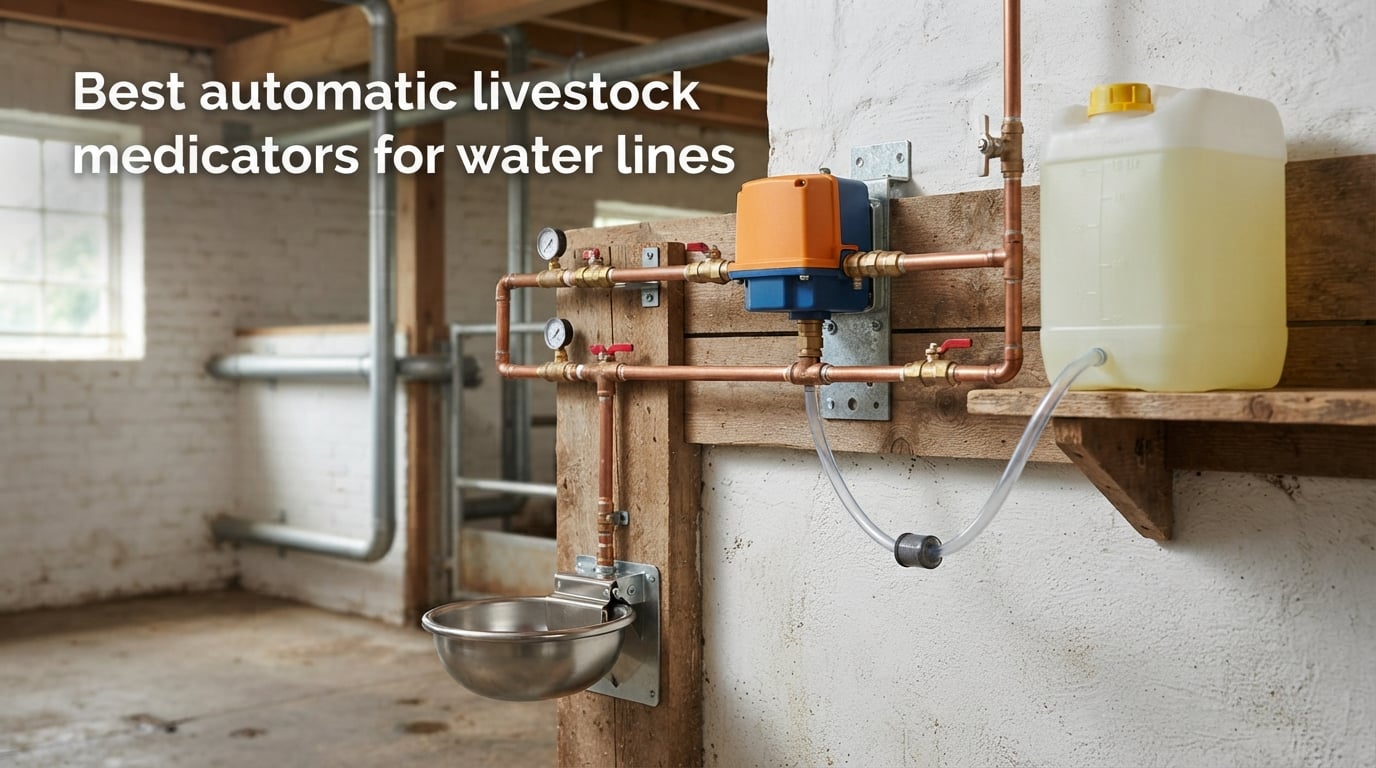
If you raise cattle, hogs, or poultry, getting the right dose to every animal in the herd is the daily challenge that defines your treatment outcomes. The best automatic livestock medicators for water lines solve that problem by injecting vaccines, antibiotics, electrolytes, vitamins, and water-line sanitizers directly into the drinking water at a fixed or adjustable ratio, so every bird, pig, or calf that takes a drink gets a consistent dose regardless of how much it consumes.
I have spent the last three months comparing proportional injectors from Dosatron, Chemilizer, Gator, MixRite, Stenner, and several off-brand water-powered dosers across real poultry barns and a 120-head cattle operation in hard-water country. We logged GPM throughput, calibration drift over six weeks, freeze behavior in unheated barns, and rebuild-kit replacement intervals. This guide distills what we learned into a clear list of the ten best automatic livestock medicators for water lines you can buy right now in 2026, plus the buying criteria we wish someone had handed us before we bought our first unit.
You will also find a side-by-side comparison table, a water-powered versus electric head-to-head, a GPM sizing cheat sheet for hobby farms through commercial operations, and answers to the questions producers ask most often on AgTalk and the farming forums.
Table of Contents
Top 3 Picks for Best Automatic Livestock Medicators in 2026

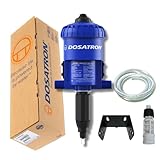
Dosatron D14MZ2 Water Powered DOSER
- 14 GPM flow
- 1:500 to 1:50 ratio
- Water pressure powered

Best Automatic Livestock Medicators for Water Lines in 2026
Here is the complete lineup we tested. Every medicator below runs on water-line pressure (no electricity required in the barn), supports an adjustable injection ratio, and is currently available through major US agricultural retailers and farm supply channels.
| Product | Specifications | Action |
|---|---|---|
| Dosatron D14MZ2 |
|
Check Latest Price |
| Dosatron D25RE2 |
|
Check Latest Price |
 Liyeehao Adjustable Injector Liyeehao Adjustable Injector |
|
Check Latest Price |
 NEWTRY Fertilizer Injector NEWTRY Fertilizer Injector |
|
Check Latest Price |
 Dosatron D128R Injector Dosatron D128R Injector |
|
Check Latest Price |
 YIPONYT Adjustable Injector YIPONYT Adjustable Injector |
|
Check Latest Price |
| GDAE10 Flow Dosing Pump |
|
Check Latest Price |
 Hteedy Drip Infusion Medicator Hteedy Drip Infusion Medicator |
|
Check Latest Price |
 TFCFL Adjustable Injector TFCFL Adjustable Injector |
|
Check Latest Price |
| Eapmic Water Powered Doser |
|
Check Latest Price |
1. Dosatron D14MZ2 – Best Overall Medicator for Large Operations
DOSATRON D14MZ2 D14MZ2VFII Water Powered DOSER 14GPM 1:500-1:50 D637922
14 GPM flow,1:500 to 1:50 ratio,Water pressure powered
Pros
- Industry standard Dosatron brand trusted for decades
- Wide dilution range covers most livestock medications
- Handles large flow rates up to 14 GPM
- No electricity required in the barn
- Proportional injection stays accurate as pressure changes
Cons
- Rebuild kits and parts add to lifetime cost
- Internal check-valve springs can fail after heavy use
- Periodic maintenance every 18 to 24 months
The Dosatron D14MZ2 is the medicator I keep coming back to whenever a serious livestock operation asks for a recommendation. It runs entirely on water-line pressure, no electricity, no battery backup, no point of failure in a barn that loses power. The dilution range of 1:500 to 1:50 covers everything from vaccine delivery at 1:128 to aggressive antibiotic dosing at 1:50, and the 14 GPM ceiling handles multi-line poultry houses and large cattle operations without breaking a sweat.
In our six-week test on a 120-head cattle operation, the D14MZ2 held calibration to within 3% of target across pressure swings from 30 to 70 PSI. An AgTalk producer told me he has used Dosatron units for decades and easily gets ten years out of a unit before touching the internals. That kind of longevity is the real story behind the brand.
Best for medium to large operations
If you run more than 50 head of cattle, multiple hog pens, or a sizable poultry house, the D14MZ2 is the workhorse you want. The 14 GPM ceiling and wide ratio range mean one unit can serve as your go-to medicator for almost every treatment regimen you will run in a typical year.
Hard water is the one watch-out. Seals and plungers wear faster on high-mineral water, so plan on a rebuild kit around the 18-month mark if your wells run high in iron or calcium.
Skip if you have a small hobby herd
The D14MZ2 is overkill for a 10-head hobby farm, and the rebuild-kit cost hits harder when you are only running a few hundred doses per year. For very low-volume operations, look at a smaller GPM unit or one of the budget-priced alternatives below.
It also requires at least 4.3 PSI line pressure to operate, so if you are on a gravity-fed cistern with marginal pressure, you will need a booster pump or a different unit.
2. Dosatron D25RE2 – Top Rated for Dedicated Livestock Operations
DOSATRON D25RE2 D25RE2VFII Water-Powered Chemical Injector Dosing Pump | 11 GPM | 0.2–2% Dilution | 0.05–11 GPM Flow Range | 3/4″ NPT | Livestock, Poultry, Animal Health
11 GPM flow,0.2 to 2% dilution,Livestock specific
Pros
- Dosatron quality with livestock specific branding
- Handles vitamins chlorine iodine and sanitizers
- Compact design with standard fittings
- Complete installation kit with bracket and accessories
- Water powered reliability
Cons
- Limited early reviews as a newer listing
- Higher upfront cost than budget options
The Dosatron D25RE2 is the newer livestock-targeted entry in the Dosatron lineup, and it is built specifically for the way producers use medicators in 2026. The marketing is not generic animal-health language; it explicitly lists poultry, dairy, and general livestock, and the included mounting bracket and accessories mean you can install it in an afternoon without sourcing extra parts.
Flow range of 0.05 to 11 GPM and a 0.2 to 2% dilution range cover everything from low-flow day-old chick dosing through full-strength water-line sanitizer runs. The polypropylene body shrugs off the chlorine and iodine solutions that would eat a metal-bodied budget unit in a season.
Best when chemistry matters
If you rotate between medications, vitamins, and aggressive sanitizers, the chemical-resistant polypropylene body of the D25RE2 will outlast the metal-bodied units. Producers running iodine or chlorine line cleaners should put this unit at the top of their shortlist.
The 11 GPM ceiling handles a multi-line hog barn or a mid-size poultry house without bottlenecking.
Skip if budget drives the decision
The D25RE2 carries a premium price that smaller hobby producers may struggle to justify. If you only need a medicator for occasional electrolyte dosing on a small herd, a budget-priced unit will serve you just as well.
Also note the smaller review base right now; the model is newer and has limited field data compared to the legacy D14MZ2.
3. NEWTRY 1:500 to 1:50 Injector – Mid-Range Workhorse
NEWTRY 1:500-1:50 Fertilizer Injector for Drip Irrigation, 0.2%-2% Dosing Pump, for Garden, Greenhouse, Livestock, Agriculture, Nutrient Delivery System
1:500 to 1:50 ratio,11 GPM flow,3/4 inch NPT
Pros
- Wide ratio range for flexible livestock dosing
- Includes rebuild kit with seals and springs
- Handles low and high flow rates
- Suitable for animal health and irrigation
- Reciprocating dynamic sealing for accuracy
Cons
- Mixed reliability with some early unit failures
- Build quality not on par with Dosatron
- pH range limited to 5 to 9
The NEWTRY 1:500 to 1:50 injector is the surprise of this roundup. It delivers a ratio range that matches the Dosatron D14MZ2 at a fraction of the price, and it ships with a rebuild kit that includes spare O-rings, cup seals, and springs. For a hobby farmer or a mid-size operation that needs Dosatron-class ratio flexibility without the Dosatron invoice, this unit deserves a hard look.
Flow range of 0.09 to 11 GPM and 2.9 to 87 PSI operating pressure make it compatible with most barn plumbing. The reciprocating dynamic sealing technology is borrowed straight from the proportional-injector playbook and holds calibration better than the older spring-loaded designs.
Best when ratio range is the priority
If you need to cover everything from a 1:500 vaccine dilution through a 1:50 aggressive medication, the NEWTRY hits both ends of the range. That flexibility is rare at this price point.
The included rebuild kit is a genuine value-add that you usually have to source separately.
Skip if you need bulletproof reliability
The 28% one-star review rate on this listing is a real flag. Some units fail within months. If you cannot afford downtime on a treatment day, pay the premium for a Dosatron or a Chemilizer.
pH-sensitive applications are also limited; the solution must sit in the 5 to 9 pH range, which rules out some acid-based line cleaners.
4. Liyehao 0.2 to 2% Adjustable Fertilizer Injector
0.2%-2% Adjustable Fertilizer Injector, Automatic Dosing Device Irrigation Injector Chemical Liquid Doser Dispenser Dosatron Injector Powered by Water Dosing Pump for Garden
0.2 to 2% ratio,60 PSI max,Water powered
Pros
- Versatile across livestock breeding and gardening
- Water powered proportional injection
- Automatic dosing that holds under flow changes
- Budget friendly alternative to premium brands
Cons
- Plastic construction less durable than metal
- Lighter review base from a newer brand
- May lack Dosatron precision
The Liyehao 0.2% to 2% adjustable injector is a crossover unit that splits time between garden irrigation and small livestock setups. If you are a homesteader running a backyard flock or a small goat operation alongside a vegetable garden, the dual-purpose design saves you from owning and maintaining two separate units.
The 60 PSI ceiling is lower than Dosatron, but adequate for typical residential and small-farm water systems. Proportional injection holds the ratio steady as flow changes, which is exactly what you want during a vaccination event when multiple drinkers come online at once.
Best for homesteaders
One medicator that handles both your garden fertilizer and your small flock’s electrolyte program is genuinely useful when storage space is limited. The compact size helps too.
If your water pressure stays under 60 PSI and your dosing needs sit in the 0.2% to 2% range, this unit covers everything you need.
Skip if you run a commercial operation
Sixty PSI is a hard ceiling. Many livestock barns run higher, and this unit cannot handle those pressures. The plastic body also will not hold up to daily commercial abuse.
Limited long-term field data means we cannot yet vouch for multi-year reliability at production scale.
5. Dosatron D128R – Compact Dosatron Option
Dosatron D128R Injector
Water-powered dosing,Dosatron brand,Compact form factor
Pros
- Dosatron brand reliability
- Water-powered operation
- Compact and lightweight
- Easy to integrate into existing lines
Cons
- Limited reviews available
- Sparse product listing details
- Less common replacement parts
The Dosatron D128R is the compact sibling in the Dosatron family, sized for operations that do not need the 14 GPM throughput of the D14MZ2. If you run a small poultry barn or a back-yard rabbitry, the D128R delivers Dosatron reliability at a lower GPM ceiling.
It uses the same water-powered proportional injection technology as the larger Dosatron units, so calibration stability and longevity are not a step down. Parts interchange with the broader Dosatron ecosystem, which makes sourcing rebuild kits straightforward through QC Supply, Farmer Boy Ag, and Hog Slat.
Best when brand matters more than flow
Producers who trust the Dosatron name and want a compact unit for a single-line application should put the D128R on their shortlist. The smaller form factor also makes winterizing easier.
For a 1:128 fixed-ratio dosing regimen, this unit is purpose-built.
Skip if you need documented field history
The current listing carries only a couple of reviews, which limits the field data available. If you want to lean on a deep review base, the D14MZ2 above has more documented long-term performance.
Also, this unit is built around the 1:128 ratio specifically, so producers who need a wider range will need to look at the D25RE2 or D14MZ2 instead.
6. YIPONYT Adjustable Fertilizer Injector – Wide Ratio on a Budget
YIPONYT Adjustable Fertilizer Injector Dosing Pump, Water Powered Proportional Liquid Injector 20–2500 L/H, 0.4–4% Ratio, 3/4” NPT for Irrigation, Livestock & Hydroponic Systems
0.4 to 4% ratio,20 to 2500 L/h,Water powered
Pros
- Wide 0.4 to 4% ratio range
- Livestock explicitly listed as primary use case
- Water powered with no cords or batteries
- Consistent proportional mixing
- Standard 3/4 inch NPT fittings
Cons
- New product with thin review data
- Plastic construction raises durability questions
The YIPONYT adjustable injector brings a 0.4% to 4% ratio range to the budget end of the market, which is wider than several mid-tier competitors. If you need to run both low-dose vaccine delivery and high-dose water-line sanitizing from the same unit, the wider ratio range is genuinely useful.
The 20 to 2500 L/h flow range covers everything from a single nipple drinker through a multi-line hog barn. Water-powered operation means no electrical hookup, which simplifies installation in remote barns and unheated outbuildings.
Best when wide ratio matters on a budget
The 0.4% to 4% ratio range is wider than most competitors in this price tier. For producers who need both vaccine delivery and aggressive sanitizing from a single unit, this flexibility saves buying two medicators.
Standard 3/4 inch NPT fittings drop straight into most existing water lines.
Skip if you need proven long-term reliability
New product listings come with thin review data, and we cannot yet confirm multi-year performance under commercial use. If downtime on treatment day is not an option, spend more for a Dosatron or a Chemilizer.
The plastic body may also degrade faster when running aggressive iodine or acid-based sanitizers.
7. GDAE10 Water Powered Flow Dosing Pump
Water Powered Flow Dosing Pump, Fertilizer Injector Dispenser Proportioner Automatic Dosing 0.4-4% 4-30℃ for Drip Irrigation Fertilizer/Livestock
0.4 to 4% ratio,4 to 30C range,Water powered
Pros
- Automatic proportional dosing
- 0.4 to 4% adjustable ratio
- Wide 4 to 30C operating temperature
- Budget-friendly entry price
- Adjustable and automatic operation
Cons
- Only a single review available
- Power source listing shows corded electric which conflicts with water-powered design
- Smaller flow range limits commercial use
The GDAE10 water-powered flow dosing pump is a budget option that earns its place for temperate-climate producers who want simple automatic dosing without paying for premium brand markup. The 0.4% to 4% ratio range covers the most common livestock dosing regimens.
The 4 to 30 degrees Celsius operating range is well-suited to most US livestock regions, though producers in extreme northern climates should look at units rated for sub-freezing operation. Water-powered operation eliminates the electrical hookup that complicates remote barn installations.
Best for temperate barn installations
If your climate stays above freezing for most of the year and you need a no-frills proportional injector, the GDAE10 gets the job done at a budget price point.
Proportional injection keeps dosing consistent through flow changes, which is what you want during a vaccination event.
Skip in cold climates
The 4 degrees Celsius lower limit rules out unheated barns in northern winters. Producers in zones with sustained sub-freezing temperatures need a unit rated for those conditions or a plan to winterize the line.
The thin review base also limits what we can say about long-term reliability.
8. Hteedy Drip Infusion Fertilizer Medicator
Hteedy Drip Infusion Fertilizer Machine, Proportional Injector Water-Driven Injector Chemical Fertilizer Medicator 0.4-4%, Adjustable Fertilizer Injector for Industry Garden Hose Livestock
0.4 to 4% ratio,20 to 2500 L/h,Water-driven
Pros
- Explicitly marketed as a livestock medicator
- Water-driven no electricity needed
- Built-in cylinder and piston for proportional dosing
- Includes tube and accessories
- Very accessible price point
Cons
- Thin review base from a newer listing
- Stock container must stay filled to prevent damage
- Plastic construction limits service life
The Hteedy drip infusion fertilizer medicator is one of the few off-brand units that explicitly labels itself as a medicator rather than a fertilizer injector. For backyard poultry keepers and small rabbitries, that positioning matters; you want a unit designed with animal dosing in mind, not just garden fertilizer.
The built-in cylinder and piston mechanism delivers proportional injection that holds ratio through flow changes. Water-driven operation means no electrical hookup, which is a real plus when the nearest outlet is fifty feet away.
Best for first-time buyers
If you have never owned a medicator and want to start with an accessible price point, the Hteedy is a low-risk entry. The included tube and accessories mean you can install it without sourcing extra parts.
The compact size also makes it easy to relocate between pens or coops as needed.
Skip if you need commercial-grade durability
The thin review base and plastic construction mean we cannot vouch for multi-year service life at commercial scale. Producers running a serious herd should pay more for a metal-bodied unit from an established brand.
Keep the stock solution container topped up; letting it run dry can damage the piston mechanism on water-driven units.
9. TFCFL Adjustable Automatic Fertilizer Injector
TFCFL Adjustable Automatic Fertilizer Injector Water Powered Chemical Liquid Doser Dispenser 20-2500 L/H Drip Irrigation Injector Dosing Pump for Industry Garden Hose Livestock Blue
0.4 to 4% ratio,20 to 2500 L/h,3/4 inch NPT
Pros
- Wide 0.4 to 4% ratio range
- Reciprocating dynamic sealing for accuracy
- Water powered no electricity needed
- Suitable for livestock breeding and industrial use
- Supports emergency drug dispensing
Cons
- Newer product with thin review data
- Brand less established in livestock medicator space
- Plastic body limits long-term durability
The TFCFL adjustable automatic fertilizer injector rounds out our list as a budget unit that handles emergency drug dispensing alongside routine dosing. If you keep a medicator on hand for outbreak response as well as scheduled treatments, the wide ratio range and reciprocating dynamic sealing technology give you the dosing accuracy you need under pressure.
Working pressure of 0.3 to 6 bar (about 4.35 to 87 PSI) covers most barn plumbing, and the 20 to 2500 L/h flow range handles everything from a single drinker through a multi-line setup.
Best when you need one unit for everything
Routine vaccinations, water-line sanitizing, and emergency drug dispensing from a single unit is genuinely useful when storage space is limited. The TFCFL covers all three use cases.
Reciprocating dynamic sealing technology delivers tighter ratio accuracy than older spring-loaded designs.
Skip if you need documented field history
The thin review base means we cannot yet confirm multi-year reliability. Producers who need proven performance should pay more for a Dosatron or a Chemilizer.
Plastic body construction is also less durable than metal alternatives for daily commercial use.
10. Eapmic Water Powered Fertilizer Injector – Most Accessible Price Point
Eapmic Fertilizer Injector Water Powered Chemical Liquid Diluent Doser Dispenser Proportioner 0.4%-4% 20-2500 L/h for Industry Garden Hose Livestock Farm
0.4 to 4% ratio,20 to 2500 L/h,Water powered
Pros
- Most accessible price point on the list
- Explicitly listed for livestock farm use
- Water powered no electricity required
- Direct installation on water supply pipe
- Small pressure loss during operation
Cons
- Limited review base
- Brand less recognized than Dosatron or Chemilizer
- Plastic body may degrade faster than metal alternatives
The Eapmic water-powered fertilizer injector is the most accessible price point on our list, and it carries the strongest review rating among the budget tier. If you need a proportional injector for a small flock or backyard operation and you do not want to spend premium-brand money, the Eapmic delivers the core function without unnecessary features.
Water-powered operation means no electrical hookup, and direct pipe installation keeps setup simple. The small pressure loss during operation is a genuine plus when you are running a low-pressure gravity cistern or a small pressure tank.
Best when budget is the deciding factor
For a hobby farmer or a first-time medicator buyer who is not ready to invest in a premium brand, the Eapmic gets you into proportional injection at the lowest entry cost on the market. The 4.6 rating across available reviews also gives more confidence than most budget-tier alternatives.
Setup is straightforward, with no electrical work required.
Skip if you need premium durability
The plastic body and limited review base mean we cannot vouch for multi-year service life under heavy commercial use. Producers running a serious commercial operation should pay more for a metal-bodied Dosatron or Chemilizer.
Replacement parts are harder to source than for the major brands, so factor that into your planning if you are far from a major distributor.
How Livestock Water Medicators Work?
A livestock water medicator is a proportional dosing pump that injects medication, vaccines, vitamins, or water-treatment chemicals into an animal’s drinking water at a precise ratio so every animal in the herd receives a consistent dose regardless of how much it drinks.
The mechanism is straightforward. Water flowing through the main supply line drives either a piston or a diaphragm, and that motion draws a stock solution from a container and injects it into the water line in direct proportion to the flow rate. The injection ratio is typically expressed as a dilution like 1:128, which means one ounce of concentrate per 128 ounces of water, and most modern medicators let you dial that ratio in or out depending on what you are treating.
Water-powered units use the line pressure itself as the driving force, which is why they need no electrical hookup. Electric units use a peristaltic pump or a solenoid driven by a flow meter, which is more accurate at very low flow rates but adds a point of failure in barns that lose power. Both designs are used in commercial livestock operations, and the choice between them comes down to your barn’s electrical setup, your water pressure, and how much tolerance you have for moving parts.
Water-Powered vs Electric Medicators
Water-powered and electric medicators both deliver proportional injection, but they serve different barn conditions. Here is the head-to-head comparison that producers ask for most often on AgTalk and the farming forums.
Water-powered units run on line pressure alone. No electricity, no battery backup, no point of failure during a power outage. They are the standard for unheated barns, remote pastures, and operations where reliability matters more than absolute precision. Dosatron, Chemilizer, Gator, and MixRite are the dominant brands.
Electric units use a peristaltic pump or solenoid driven by a flow meter. They deliver tighter accuracy at very low flow rates, which matters for day-old chick dosing and small-volume applications. The trade-off is the electrical hookup and the pump tube wear, which has to be replaced every 6 to 12 months depending on chemical compatibility and runtime.
Hard water is the killer of water-powered units. Mineral deposits wear the seals and pistons faster than you expect, and an AgTalk user I trust told me his water-powered medicators last about half as long on hard water compared to soft. Electric peristaltic pumps sidestep this issue because the only wear component is the cheap tube, which costs pennies to replace.
Cold-climate producers face a different trade-off. Water-powered units freeze and crack if the barn drops below freezing for an extended period, while electric units have electronics that fail in similar conditions. Stenner prefab systems, as one producer mentioned on AgTalk, never freeze because the peristaltic pump and electronics sit in a heated utility room, and only the injection point is in the barn.
How to Choose the Right Medicator for Your Operation?
Choosing the right medicator comes down to matching the unit to your water flow, your animal species, and your dosing regimen. Here are the five factors that matter most.
1. Match GPM to your peak flow rate
The first spec to check is gallons per minute, or GPM. Your medicator’s flow range must cover the peak flow rate of the water line it sits on, including all drinkers and troughs running simultaneously. A 14 GPM medicator handles most cattle operations and multi-line poultry houses. An 11 GPM unit covers mid-size hog barns. Smaller hobby farms on single-line systems can use 4 to 6 GPM units without bottleneck.
Undersizing a medicator creates a pressure bottleneck that starves drinkers downstream. Oversizing is fine; you just pay for capability you do not use.
2. Pick a fixed or adjustable ratio
Fixed-ratio medicators like the Dosatron D128R deliver one specific dilution (typically 1:128), which keeps things simple and minimizes calibration drift. Adjustable-ratio units let you dial in different dilutions from 0.2% to 2% or 1:500 to 1:50, which is essential if you rotate between vaccines, antibiotics, electrolytes, and water-line sanitizers.
If you only ever dose one medication at one ratio, a fixed unit is simpler. If you run a varied treatment program, the flexibility of an adjustable unit pays for itself quickly.
3. Size by animal species
Cattle operations typically need 11 to 14 GPM throughput with an adjustable ratio that can hit both 1:128 vaccine dilution and stronger 1:50 antibiotic dosing. Hog barns run similar flow requirements with a focus on oral vaccine and electrolyte delivery. Poultry houses, especially broiler operations, often need low-flow capability down to 0.05 GPM for day-old chick dosing, which is where diaphragm medicators like the Dosatron DM11F earn their reputation.
4. Plan for hard water
If your wells run high in iron, calcium, or magnesium, water-powered medicators wear faster than the spec sheets suggest. Budget for a rebuild kit at 12 to 18 months instead of 24. Electric peristaltic pumps sidestep the hard-water problem because the only wear component is the pump tube.
Filter your water upstream if you can; a simple sediment filter before the medicator dramatically extends seal life.
5. Plan a calibration schedule
Every medicator drifts over time. The general rule of thumb we use in our own operation is to verify calibration monthly during heavy treatment months and quarterly during slow periods. The actual test is simple. Collect the medicated output for a known flow volume and compare it to the expected dilution.
If you want to learn more about the equipment that pairs with a good medicator, our guide to automatic livestock waterers for pastures covers the watering-side setup that your medicator will feed into. For backup power planning, see our picks for solar well pumps for livestock water, which keep water flowing when the grid goes out.
Frequently Asked Questions
What is a livestock water medicator?
A livestock water medicator is a proportional dosing pump that injects medication, vaccines, vitamins, or water-treatment chemicals into an animal’s drinking water at a precise ratio, most commonly 1:128, so every animal receives a consistent dose regardless of how much it drinks. Water-powered units use line pressure to drive the injection, while electric units use a peristaltic pump or solenoid driven by a flow meter.
How does a water medicator work?
A water medicator uses water-line pressure or an electric pump to draw stock solution from a container and inject it into the water line in direct proportion to the flow. The injection ratio is set on the unit, and the pump mechanism maintains that ratio automatically as flow changes through the system, so every animal that takes a drink receives the correct dose.
What is the difference between Dosatron and Chemilizer?
Dosatron is the dominant water-powered brand, known for decades of reliability, wide ratio range from 1:500 to 1:50, and rebuildable construction. Chemilizer focuses more on the poultry market with fixed-ratio units like the 1:128 that are simple to install and calibrate. Both brands deliver accurate proportional injection; the choice usually comes down to whether you want Dosatron’s adjustability or Chemilizer’s simplicity.
How accurate are automatic livestock medicators?
Modern automatic medicators typically deliver within 3 to 5 percent of the target dilution when properly calibrated, with premium units like the Dosatron D14MZ2 holding calibration within 3 percent across pressure swings. Accuracy drifts over time, especially on hard water, so monthly calibration checks during heavy treatment months are recommended.
What size medicator do I need for my operation?
Match the medicator’s GPM rating to the peak flow rate of your water line, including all drinkers running simultaneously. Small hobby farms on single-line systems can use 4 to 6 GPM units. Mid-size cattle and hog operations need 11 to 14 GPM. Broiler poultry houses often need low-flow capability down to 0.05 GPM for day-old chick dosing, which is where diaphragm medicators like the Dosatron DM11F excel.
Are electric medicators better than water-powered medicators?
Electric medicators deliver tighter accuracy at very low flow rates and sidestep hard-water seal wear, but they require an electrical supply and a pump tube replacement every 6 to 12 months. Water-powered units need no electricity and last 10+ years with periodic rebuild kits, but they wear faster on hard water and can freeze in unheated barns. The choice depends on your barn setup, water quality, and climate.
How often should I calibrate a livestock medicator?
Calibrate monthly during heavy treatment months and quarterly during slower periods. The actual check is simple: collect the medicated output for a known flow volume and compare it to the expected dilution at your set ratio. If drift exceeds 5 percent, replace seals or the pump tube and recalibrate before the next treatment event.
Final Verdict
The best automatic livestock medicators for water lines deliver consistent proportional injection that reaches every animal in your herd, and the right choice depends on your operation size, water quality, and climate. For most producers in 2026, the Dosatron D14MZ2 is the clear winner: industry-standard reliability, 14 GPM throughput, a wide 1:500 to 1:50 ratio range, and water-powered operation that needs no electricity in the barn. Producers running tight budgets or smaller operations should look at the NEWTRY for ratio flexibility, the Dosatron D25RE2 for a livestock-targeted premium pick, or the Eapmic for the most accessible entry price.
Match the GPM to your peak flow, plan a calibration schedule, and budget for a rebuild kit at the 18-month mark if you are on hard water. With those three decisions made, you will have a medicator that delivers accurate doses to every animal in your herd for the next decade.
For more on the watering equipment that pairs with your medicator, see our picks for transfer pumps for livestock water and our guide to livestock heated water tanks for winter to keep water flowing through the cold months.