
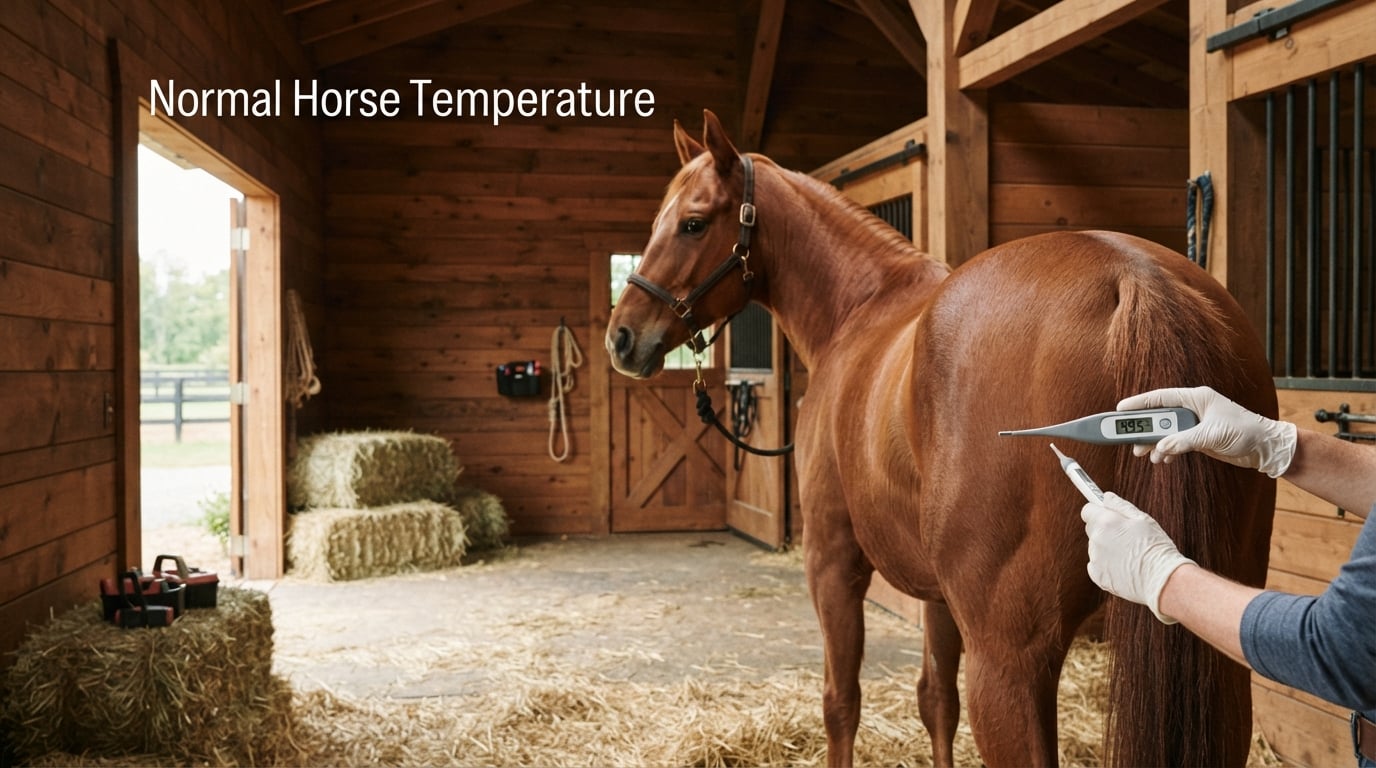
A normal horse temperature sits between 99°F and 101°F (37.2°C to 38.3°C) when the horse is at rest. I’ve spent years tracking temperatures on my own mares, and I can tell you this number is one of the most useful health indicators you’ll ever monitor.
Fever is often the very first sign something is off, sometimes appearing hours or even days before other symptoms show up. Whether you’re a first-time owner or a seasoned rider, knowing how to take an accurate reading and what those numbers actually mean can save your horse’s life.
In this guide, I’ll walk you through the exact temperature ranges, the right way to use a rectal thermometer, the 1-2-3 rule for horses, and exactly when you should be calling the veterinarian.
Table of Contents
What Is a Normal Horse Temperature Range?
The normal horse temperature range is 99°F to 101°F (37.2°C to 38.3°C) in a resting adult horse. Most healthy horses settle right around 100°F.
Your individual horse might run a degree higher or lower on average. I always recommend new owners track their horse’s temperature once a week for the first month so they can establish a personal baseline.
Why Individual Baselines Matter
A temperature of 100.5°F might be perfectly normal for one horse and borderline elevated for another. I’ve seen owners panic over a reading their vet considered totally routine, simply because they didn’t know their horse’s normal.
Record temperatures at the same time each day for the most accurate baseline. Early morning before turnout tends to give the cleanest reading.
How to Take Your Horse’s Temperature Step by Step
Taking a horse’s temperature is one of the easiest health skills you’ll learn. Here’s the exact process I follow with my own horses.
What You’ll Need
- A digital veterinary thermometer (faster, safer than mercury)
- Lubricant such as petroleum jelly or KY jelly
- A halter and lead rope
- A calm helper for your first few tries
Step-by-Step Process
- Approach from the left side and stand close to the horse’s hip, near the tail. Talk calmly so the horse knows you’re there.
- Lift the tail gently with one hand and move it to the side to expose the rectum.
- Lubricate the thermometer tip with a generous coating of petroleum jelly.
- Insert the thermometer at roughly a 45-degree angle, pointing slightly downward. Insert only the metal tip, about 1 to 1.5 inches into the rectum.
- Hold it steady against the rectal wall. Many horses will clamp down, which can pull the thermometer in further or push it out.
- Wait for the beep on a digital thermometer (usually 30-60 seconds) or 3 minutes for a mercury thermometer.
- Remove, read, and record the temperature along with the time of day and any notes about recent exercise or weather.
Safety Tips I Always Share With New Owners
Stand close to the horse’s hip, not directly behind. Horses can kick straight back with surprising force, and an unexpected temperature check is a common trigger.
If your horse is not comfortable with the process, work with a trainer to desensitize them. A stressed horse gives an artificially elevated reading.
Fever Thresholds and the 1 2 3 Rule for Horses
The 1-2-3 rule for horses is a quick reference veterinarians and experienced owners use to interpret temperature readings. It breaks down like this:
- 1 = 101°F — the upper edge of the normal range; worth rechecking in a few hours
- 2 = 102°F — a clear fever; start monitoring twice daily and watch for other symptoms
- 3 = 103°F — a significant fever; call your vet and begin supportive care
A reading of 104°F (40°C) or higher is a medical emergency. At this temperature, organ damage becomes a real risk, and the horse needs veterinary care immediately.
Low-Grade vs High-Grade Fever
Anything above 101.5°F (38.6°C) technically counts as a fever in adult horses. Low-grade fevers often show up with viral infections like equine influenza or mild respiratory bugs.
High fevers above 103°F usually point to more serious issues such as pneumonia, strangles, or serious bacterial infections. I never ignore a low-grade fever, especially if it lasts more than 24 hours.
Persistent low-grade fevers often signal something brewing that hasn’t fully presented yet.
Factors That Affect Horse Temperature Readings
A horse’s temperature isn’t a fixed number. It moves throughout the day and reacts to many external factors. Understanding these helps you tell the difference between a true fever and normal variation.
Time of Day and Activity
Temperatures typically run lowest in the early morning and highest in the late afternoon. Exercise can spike a reading by 1-3°F temporarily.
Always wait at least 30 minutes after work before checking temperature for an accurate resting reading.
Weather and Environment
Hot, humid days push a horse’s natural temperature up. Cold weather generally keeps readings on the lower end.
Sudden weather changes can also trigger stress responses that briefly elevate temperature.
Stress, Pain, and Other Triggers
Transport, new environments, pain from an injury, or even excitement at feeding time can all produce temporary spikes.
This is one reason comparing to a horse’s personal baseline matters so much.
Foal Temperature vs Adult Horse Temperature
Foals run slightly higher than adult horses. A newborn foal’s normal temperature is 99°F to 102°F (37.2°C to 38.9°C), with the first 24 hours often running closer to 102°F.
Foals also have less ability to regulate body temperature, so they are more vulnerable to both chilling and overheating. A foal with a temperature above 102.5°F or below 99°F warrants a call to the vet.
I check newborn foals every 4 hours during the first week. Early detection of even a slight fever gives you a much better chance of successful treatment.
Other Vital Signs to Monitor Alongside Temperature
Temperature alone tells only part of the story. Equine vets look at three core vital signs together, known as TPR: Temperature, Pulse, and Respiration.
Knowing all three helps you give your vet a clear picture if anything goes wrong.
Heart Rate (Pulse)
A normal adult horse resting heart rate is 36 to 40 beats per minute. Foals run higher, around 80-100 BPM at birth, dropping to adult levels by 2-3 weeks.
A rate above 50 BPM in a resting adult signals distress, pain, or fever. To check, find the facial artery under the jaw or the digital artery at the fetlock.
Count beats for 15 seconds and multiply by four.
Respiration
Normal resting respiration is 8 to 15 breaths per minute. Count one rise and fall of the flank as one breath.
Watch from a distance so the horse stands quietly. Rates above 20 in a resting adult can mean pain, fever, or respiratory issues.
A healthy horse generally shows a heartbeat-to-breath ratio of about 4:1. If that ratio skews heavily, take note.
When to Call the Veterinarian for Horse Fever
A few clear red flags mean it’s time to pick up the phone without delay:
- Temperature reaches 104°F (40°C) or higher
- Temperature below 98°F (36.7°C) in an adult at rest
- Fever above 102°F lasting more than 24 hours
- Any fever accompanied by labored breathing, severe depression, or refusal to eat
- A foal with a reading outside the 99°F to 102°F range
- Thick nasal discharge, swelling, or colic symptoms alongside the fever
When you call, have your latest temperature, time of reading, and any other symptoms ready. Two minutes of preparation helps your vet decide whether you need an emergency visit or a watchful waiting period.
Frequently Asked Questions About Horse Temperature
Is 102 a fever for a horse?
Yes, 102°F (38.9°C) is considered a fever in an adult horse at rest. It sits above the normal range of 99-101°F and warrants close monitoring, especially if it persists more than 24 hours or is accompanied by symptoms like lethargy or loss of appetite.
What temperature is unsafe for a horse?
Any temperature above 104°F (40°C) is a medical emergency that risks organ damage. Temperatures below 98°F in a resting adult, or above 102.5°F in a foal, also require immediate veterinary attention.
What is the 1 2 3 rule for horses?
The 1-2-3 rule is a quick reference for interpreting horse temperatures: 1 = 101°F (upper normal edge), 2 = 102°F (clear fever, monitor closely), 3 = 103°F (significant fever, call your vet).
Is 98.6 a normal temperature for a horse?
No, 98.6°F (37°C) is below the normal range for a horse. The normal adult horse temperature range is 99-101°F. A reading near 98.6°F may indicate hypothermia, shock, or a faulty thermometer reading, and should be rechecked.
How do I know if my horse has a fever?
Common fever signs include a temperature above 101.5°F, lethargy, reduced appetite, warm ears or legs, sweating without exertion, shivering, and dull eyes. A quick rectal temperature confirms what you’re seeing.
Key Takeaways on Normal Horse Temperature
Track your horse’s normal horse temperature regularly, treat anything above 101.5°F as a fever, and never wait to call your vet at 104°F or higher. A few minutes of monitoring each week builds the early-warning habit that catches problems before they become emergencies.