
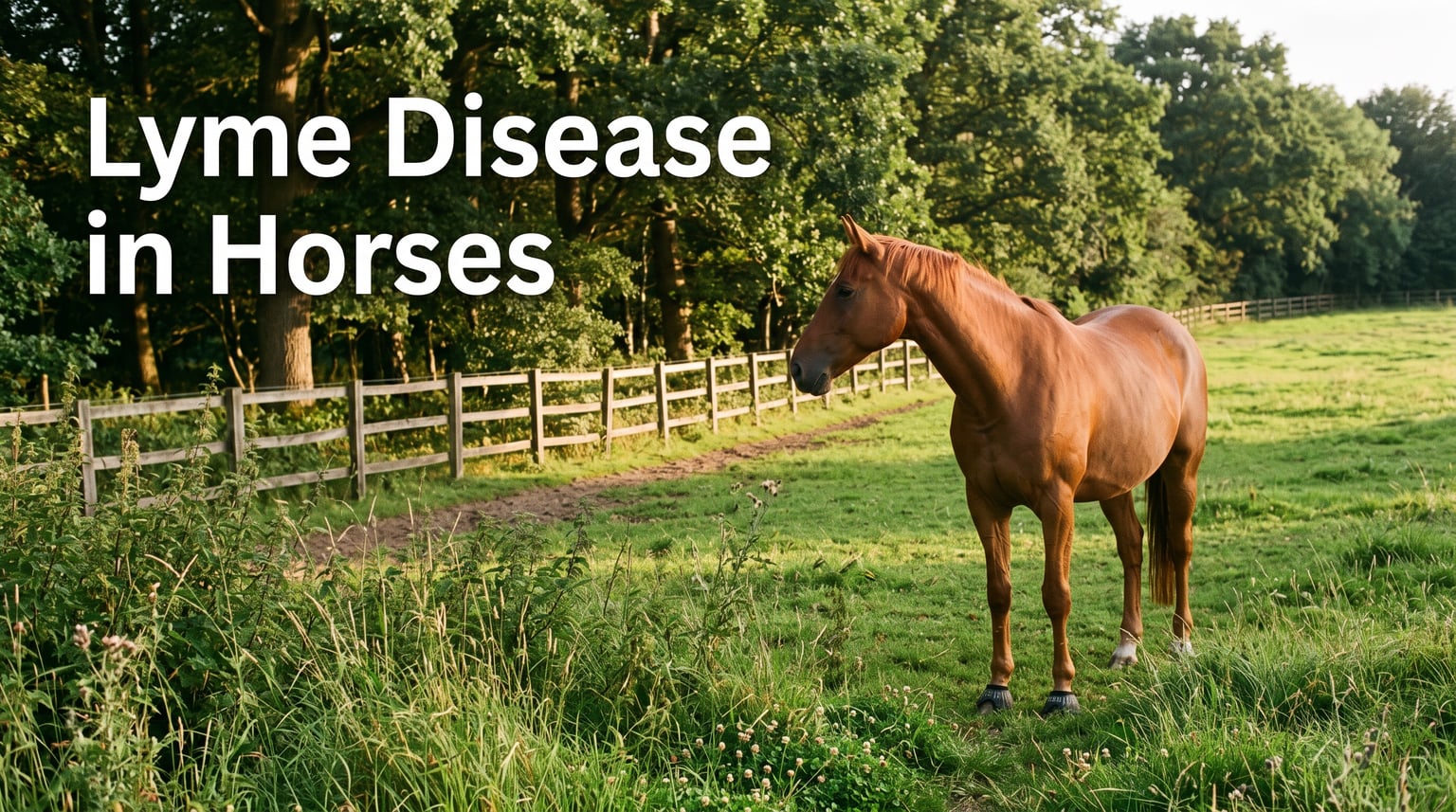
Lyme disease in horses is far more common than most owners realize, and in 2026 the geographic range of infected ticks keeps expanding beyond the traditional hotspots. I’ve spoken with horse owners who had no idea their animals were at risk until a routine blood panel came back positive — and that moment of shock is exactly what this guide is designed to prevent.
Here’s the piece of information that matters most right away: the majority of horses that test positive for Lyme disease never get sick. Being exposed to the bacteria and actually developing clinical disease are two very different things, and understanding that distinction saves an enormous amount of unnecessary worry and treatment.
That said, when Lyme disease does progress to active infection in a horse, the symptoms can range from vague and hard-to-pin-down — like subtle stiffness or a grumpy attitude under saddle — to serious neurological complications that require intensive veterinary care. This guide covers every stage of that spectrum: how horses get Lyme disease, what signs to watch for, how veterinarians test and confirm it, what treatment involves, and most importantly, what you can start doing right now to reduce your horse’s tick exposure.
Table of Contents
What is Lyme Disease in Horses and How Do They Get It?
Lyme disease is caused by Borrelia burgdorferi, a spiral-shaped bacterium (called a spirochete) that lives inside certain tick species. In horses, the primary carriers are Ixodes ticks — specifically Ixodes scapularis (the black-legged tick or deer tick) in the eastern and midwestern United States, and Ixodes pacificus along the Pacific Coast.
Transmission happens when an infected tick attaches to a horse and feeds long enough for the bacteria to migrate from the tick’s gut into the horse’s bloodstream. That window is critically important: the tick typically needs to be attached for at least 12 to 24 hours before Borrelia burgdorferi can transfer. This is why daily tick checks are so effective — find and remove ticks before that window closes and transmission risk drops dramatically.
Horses are considered “incidental hosts” in the Lyme disease cycle. They get bitten by ticks, but they don’t pass the bacteria back into the environment the way rodents do. The white-footed mouse is actually the primary reservoir host, meaning ticks pick up Borrelia burgdorferi by feeding on infected rodents, not horses. This also means a horse cannot directly infect a person, other horses, or other animals.
Where is Horse Lyme Disease Most Common?
Risk is highest in the northeastern United States (from Maine down through Virginia), the upper Midwest (Wisconsin and Minnesota particularly), and parts of the Pacific Coast. But the endemic zone is expanding each year as tick populations spread further south and inland.
Risk factors for horses in any region include:
Living near wooded or brushy areas where ticks rest and breed
Access to tall grass, shrubs, or leaf litter along fence lines and field edges
High deer populations in the surrounding area (deer are the preferred host for adult ticks)
High rodent populations nearby (the reservoir for Borrelia burgdorferi)
Trail riding or turnout in tick-endemic areas during spring, summer, and fall
The Crucial Difference: Infection vs. Clinical Disease
Before we go any further, this distinction deserves its own section because it changes everything about how you interpret test results and decide on treatment.
Studies in tick-endemic regions have found that anywhere from 40% to 75% of horses test positive for Borrelia burgdorferi antibodies. That means the majority of horses in high-risk areas have been exposed to the bacteria. But the overwhelming majority of those horses never develop any clinical signs of disease at all — they’re simply immune-competent enough to control the infection without showing symptoms.
The American Association of Equine Practitioners (AAEP) is explicit about this in their infectious disease guidelines: a positive serological test confirms exposure, not active clinical disease. The AAEP does not recommend routine testing of clinically healthy horses in endemic areas, for exactly this reason.
When a veterinarian diagnoses “Lyme disease,” they mean a horse showing clinical signs that are consistent with active Borrelia infection — not simply a horse that has antibodies in its blood. A horse with antibodies and zero symptoms generally doesn’t need treatment.
Why does this matter? Because unnecessary antibiotic treatment carries real downsides:
Disruption of the gut microbiome (horses have sensitive digestive systems)
Potential for antibiotic-associated colitis or diarrhea
Cost and time burden of a 3-4 week treatment course
Contributing to antibiotic resistance
If your horse tests positive but appears completely healthy, work with your veterinarian to weigh the clinical picture before starting antibiotics. A positive test result alone is not a treatment order.
Signs and Symptoms of Lyme Disease in Horses
The clinical signs of equine Lyme disease are famously nonspecific. They mimic so many other conditions — arthritis, training soreness, eye problems from other causes, even just a “bad week” — that diagnosis requires a detective approach rather than a straightforward checklist. Symptoms can appear weeks to months after the initial tick bite, and individual horses may show very different signs.
Musculoskeletal and Lameness Signs
Problems with movement and joints are the most commonly reported signs in clinical Lyme disease cases. The hallmark finding that should immediately raise suspicion is shifting-leg lameness — lameness that moves between legs without any obvious physical cause like a stone bruise or tendon injury.
Musculoskeletal signs of Lyme disease in horses include:
Shifting-leg lameness — unexplained lameness that moves from one leg to another over days or weeks
Joint swelling and warmth — one or more joints appear puffy and feel warm to the touch
Generalized stiffness — especially pronounced after rest, and worse than what would be expected from the horse’s exercise level
Nuchal bursitis — swelling or tenderness at the poll, the top of the neck near the head
Muscle soreness — hypersensitivity to palpation along the back or hindquarters
Reluctance to work — a sudden drop in willingness to move forward, engage, or perform movements the horse normally handles well
The shifting nature of the lameness is one of the stronger clinical clues. Standard orthopedic lameness typically stays in one location until resolved. When lameness keeps moving around and nerve blocks don’t clearly localize it, Lyme disease should be on the differential list.
Neurological Signs and Neuroborreliosis
In some horses, Borrelia burgdorferi invades the central and peripheral nervous system, causing a syndrome known as neuroborreliosis. This is considered the most serious form of equine Lyme disease, and it carries a more guarded prognosis than the musculoskeletal form.
Neurological signs to watch for include:
Behavioral changes — personality shifts, increased spookiness, or unusual aggression
Hyperesthesia — extreme sensitivity to touch, where the horse reacts dramatically to normal handling or grooming
Difficulty swallowing — the horse drops food, has trouble chewing, or loses weight because eating is uncomfortable
Head tilt or facial nerve issues — one side of the face may droop, or the horse holds their head at an unusual angle
Ataxia — loss of coordination, stumbling, or an unsteady gait particularly in the hindquarters
Muscle wasting — loss of muscle mass along the topline despite normal or increased appetite
General weakness — difficulty rising, reluctance to move, or apparent weakness in the hindend
Neuroborreliosis requires prompt and aggressive treatment. If you notice any of these neurological signs, contact your veterinarian the same day.
Eye Problems: Uveitis and Moon Blindness
Lyme disease can cause inflammation inside the eye — a condition called uveitis, historically known as moon blindness or equine recurrent uveitis (ERU). Uveitis is one of the leading causes of blindness in horses worldwide, and while Lyme disease is just one of many possible triggers, it’s an important one to investigate whenever eye inflammation appears in a horse from a tick-endemic region.
Ocular signs associated with Lyme disease in horses:
Excessive tearing or discharge from one or both eyes
Squinting or holding the eye partially or fully closed
Sensitivity to light (the horse avoids bright areas or turns away from light)
Cloudy, blue, or grey appearance to the cornea
Visible redness of the tissue around the eye
A hazy or “foggy” look inside the eye when examined
Uveitis can progress quickly and cause permanent damage if left untreated. Any eye abnormality in a horse warrants a same-day or next-day call to your veterinarian — don’t adopt a wait-and-see approach with eye symptoms.
Systemic and General Signs
Some horses with Lyme disease show nonspecific whole-body symptoms that can easily be attributed to a dozen other causes:
Low-grade or intermittent fever (rectal temperature above 101.5°F)
Lethargy or general dullness — the horse seems “off” without obvious reason
Decreased appetite or slow eating
Unexplained weight loss despite adequate forage and concentrate
Poor coat condition
Decreased performance with no structural explanation
Irritability or increased sensitivity during grooming and tacking up
These signs are the hardest to tie to Lyme disease specifically, which is one reason diagnosis often gets delayed. When a horse is “just not right” for several weeks and nothing straightforward explains it, Lyme disease should be on the list of conditions to rule out — especially in tick season.
The 5 Early Warning Signs to Watch For
Horse owners in forums and Facebook groups consistently report the same thing: early symptoms were chalked up to an off day, normal training fatigue, or the horse “just being difficult.” By the time Lyme disease was considered, weeks had already passed. Knowing the earliest signs speeds up the path to diagnosis.
The five most commonly reported early warning signs of Lyme disease in horses are:
Shifting-leg lameness with no clear cause — lameness that doesn’t stay in one leg and doesn’t respond to rest or standard treatment
Stiffness out of proportion to exercise — the horse feels far stiffer than their workload warrants, particularly after standing overnight
Behavioral changes under saddle — unusual reluctance to move forward, sudden spookiness, or resentment of the girth where none existed before
Decreased energy and poor performance — a measurable drop in stamina, willingness, or ability to do work the horse previously handled comfortably
Mild persistent fever — a low-grade temperature that lingers without any other infection or obvious cause to explain it
If your horse is showing two or more of these signs simultaneously, and you’re in a tick-endemic area, mention Lyme disease specifically when you call your veterinarian. Don’t wait for symptoms to get worse on their own — early diagnosis leads to faster, more complete recovery.
How Veterinarians Diagnose Lyme Disease in Horses?
Diagnosing equine Lyme disease is genuinely challenging, and it’s important to understand that no single test delivers a definitive yes-or-no answer. Diagnosis requires combining laboratory results with clinical signs, physical examination findings, the horse’s geographic history, and sometimes a trial response to treatment.
Available Diagnostic Tests
ELISA (Enzyme-Linked Immunosorbent Assay) is typically the first-line screening test. It detects the presence of antibodies to Borrelia burgdorferi in the horse’s blood. A positive ELISA confirms the horse has been exposed to the bacteria at some point — it does not confirm active clinical disease.
Western Blot is a more detailed test often run after a positive ELISA to look at which specific antibodies are present. It helps filter out some false positives but still doesn’t tell you whether exposure has progressed to active disease.
Equine Lyme Multiplex Assay (developed at Cornell University College of Veterinary Medicine) is currently considered the most useful diagnostic tool for horses. It measures antibody levels against multiple Borrelia proteins simultaneously, and the pattern of results can help distinguish between:
Recent active infection (antibody levels and profile consistent with current disease)
Past exposure that has resolved
Post-treatment antibody decline (confirming successful treatment)
Off-label vaccine use, which changes the antibody profile in a distinguishable way
This test is considered more specific for equine Lyme than standard human-focused assays, and many equine practitioners now prefer it as their primary diagnostic tool.
Interpreting the Results: What Your Vet Will Consider
Even with a strong test like the Multiplex, your veterinarian will layer the results with other clinical information before recommending treatment:
Are the clinical signs present consistent with Lyme disease, or could another condition explain them equally well?
Has the horse had tick exposure in an endemic area?
Have other causes (joint disease, EPM, metabolic issues) been reasonably ruled out?
What do the specific antibody levels and protein patterns suggest?
In some cases, veterinarians will recommend a short trial of antibiotic therapy. If the horse’s symptoms improve noticeably within 1-2 weeks on doxycycline, that response supports the Lyme diagnosis even if the test results were ambiguous. A lack of response suggests another cause should be investigated more thoroughly.
Treatment Options for Lyme Disease in Horses
When a horse has confirmed or highly suspected clinical Lyme disease, antibiotic therapy is the cornerstone of treatment. The bacteria are susceptible to certain antibiotics, and complete elimination of the infection typically requires several weeks of consistent medication.
Antibiotic Medications Used in Horses
Doxycycline is the most commonly prescribed antibiotic for equine Lyme disease. It’s given orally (in the feed or via syringe) and is effective at reaching the tissues where Borrelia burgdorferi tends to hide. Treatment typically runs 3 to 4 weeks, and sometimes longer for severe or neurological cases. Missing doses can allow bacteria to rebound, so consistency matters.
Minocycline is another tetracycline-class antibiotic used when doxycycline isn’t available or isn’t well-tolerated. It has similar efficacy and is used at a comparable treatment duration. Some practitioners prefer it for certain neurological cases because of how it distributes in body tissues.
Intravenous Oxytetracycline is reserved for more serious cases — particularly neuroborreliosis or severe systemic disease — where higher drug concentrations are needed quickly. IV treatment achieves better tissue penetration than oral medications but requires a veterinarian to administer it, which typically means clinic hospitalization or regular farm visits during the treatment course. This approach is more intensive and more expensive, but it’s the appropriate tool for the most serious presentations.
Anti-Inflammatory and Pain Management
Alongside antibiotics, your veterinarian will likely prescribe NSAIDs to manage the pain and inflammation associated with joint involvement:
Phenylbutazone (bute) is the most commonly used NSAID in horses for musculoskeletal pain
Firocoxib (Equioxx) is another option with a slightly different anti-inflammatory mechanism and may be preferred for longer-term use
Rest and Supportive Care
Rest is a genuine part of treatment, not optional. Pushing a horse through hard training or competition while their joints and muscles are inflamed is counterproductive — it slows recovery and adds unnecessary pain. Most veterinarians recommend reducing workload significantly during the treatment period.
Some horse owners explore complementary care alongside conventional treatment. Acupuncture and chiropractic sessions are sometimes used to manage musculoskeletal discomfort during recovery. These approaches don’t replace antibiotics — the bacteria need to be eliminated medically — but they can support the horse’s comfort during a long treatment course.
Post-Treatment Monitoring
Your veterinarian will likely recommend follow-up Multiplex testing 4-8 weeks after completing antibiotics. Antibody levels take time to decline, so a positive result immediately after treatment doesn’t mean the treatment failed. The trend in antibody levels over time — are they going down? — is more informative than a single post-treatment snapshot.
A Note on Vaccines
There is no FDA-approved Lyme disease vaccine for horses as of 2026. A canine Lyme vaccine is sometimes used off-label in horses at a small number of practices, but this is not standard protocol, has not been formally evaluated for equine efficacy or safety in clinical trials, and is not recommended by the AAEP. Many horse owners ask about vaccination — understandably, given how common it is in dogs — but the honest answer is that tick prevention currently remains the primary strategy for horses.
Recovery and Prognosis: Can Horses Survive Lyme Disease?
Yes — the majority of horses diagnosed with Lyme disease and treated appropriately do recover fully. This is one of the most important things to know if your horse has just been diagnosed: with prompt antibiotic treatment and adequate rest, most horses return to their normal activity levels within a few months.
Prognosis is generally good for horses that:
Show primarily musculoskeletal symptoms (lameness, stiffness, joint swelling)
Are diagnosed before significant neurological involvement develops
Respond well to antibiotics in the first 1-2 weeks of treatment
Receive adequate rest during the recovery period
Prognosis is more guarded for horses with:
Severe or advanced neuroborreliosis
Uveitis that has already caused significant ocular damage before treatment begins
Disease that has progressed for a long time without treatment
Multiple relapses despite antibiotic therapy
Re-infection is possible if tick exposure continues after recovery. A horse that lives in a heavily tick-populated environment and doesn’t have aggressive tick prevention in place can be re-infected and develop clinical disease again. This is why ongoing prevention is just as important as treatment.
Some horses with neuroborreliosis experience lingering neurological signs even after the bacteria have been successfully cleared. Recovery in these cases takes longer and requires patience, consistent supportive care, and realistic expectations discussed with your veterinarian about what “full recovery” will look like for that individual horse.
When to Call Your Veterinarian
One of the most common things I hear from horse owners is that they second-guessed themselves and waited too long before calling. When it comes to Lyme disease, earlier is always better. Here’s a clear breakdown of when to act.
Call your veterinarian the same day if you notice:
Any neurological signs — stumbling, weakness, difficulty swallowing, head tilt, coordination problems
Eye symptoms — squinting, cloudiness, excessive tearing, or sensitivity to light
Sudden severe lameness in multiple legs
High fever (above 103°F) with no other obvious cause
Schedule an appointment within a few days if:
Your horse has unexplained shifting lameness lasting more than a week
Stiffness is persistent and out of proportion to workload
Behavioral changes are sudden, significant, and unexplained
Performance has dropped noticeably without a training or physical cause
You’re finding multiple ticks on your horse regularly and live in an endemic area
What not to panic about immediately:
A positive Lyme test result in a completely healthy horse with zero symptoms — discuss with your vet, but this is not an emergency
Finding a single tick on your horse — remove it promptly and monitor, but one tick removal doesn’t require immediate testing
Mild stiffness after a single hard day of work in a horse that was fully sound the day before
Never start antibiotics without a veterinary consultation and diagnosis. Self-treating with leftover medications can mask symptoms, makes accurate diagnosis harder, stresses the horse’s digestive system without clinical benefit, and contributes to antibiotic resistance in the environment.
How to Prevent Lyme Disease in Horses
Because no approved vaccine exists for horses, preventing Lyme disease comes down entirely to reducing tick exposure. This requires consistent effort throughout tick season — and in warmer climates, effectively year-round — but the strategies work when applied diligently.
Daily Tick Checks
Make tick checks part of your daily grooming routine, not a weekly or occasional task. Ticks need to be attached for at least 12-24 hours to transmit Borrelia burgdorferi, which means a daily check gives you a genuine prevention window.
Pay close attention to these areas where ticks preferentially attach on horses:
Under and along the mane, especially the crest of the neck
Behind and inside the ears
Around the forelock and top of the head
Under the tail and around the tail dock
In the groin and inner thighs
Between the hind legs and in skin folds
Around the lower legs, fetlocks, and pasterns
When you find a tick, remove it properly: use fine-tipped tweezers or a tick removal tool and grasp the tick as close to the skin as possible. Pull straight outward with steady, even pressure — do not twist, squeeze, or crush the tick’s body. Dispose of the tick in rubbing alcohol, a sealed bag, or flush it down the toilet.
Permethrin-Based Repellents
Permethrin sprays and wipe-ons are the most effective chemical repellents available for horses. Permethrin doesn’t just repel ticks — it’s actually toxic to ticks on contact, killing them before they can attach and feed.
Apply to the legs, belly, lower barrel, mane, and tail — the areas where ticks are most likely to climb on. Follow product-specific directions for reapplication frequency, as rain and sweating reduce effectiveness. Check with your veterinarian or your local cooperative extension service for currently recommended products in your region.
One critical safety note: permethrin products formulated for horses are safe for horses but are extremely toxic to cats. If you have barn cats, keep them away from treated horses until the product has fully dried.
Pasture and Environmental Management
Ticks don’t thrive in short, open, well-maintained grass — they live in the transition zones: tall grass edges, brush piles, leaf litter, and the border between open pasture and woodland. Targeting these zones dramatically reduces the tick burden in your horse’s environment.
Effective environmental management includes:
Mow regularly — keep pastures and especially field edges short throughout tick season
Clear brush and debris — remove woody debris, leaf piles, and brush piles from areas where horses graze and spend time
Create a barrier zone — a wood chip, gravel, or mowed buffer strip (at least 3 feet wide) between any wooded areas and horse pastures creates a zone ticks are reluctant to cross
Rotate pastures — allowing some pasture areas to rest and dry out reduces tick survival in those areas
Manage rodent populations — mice and voles are the primary reservoir hosts for Borrelia burgdorferi; reducing nesting sites (piles of hay, clutter in sheds) can lower the local tick infection rate over time
Consider perimeter treatment — acaricide application to the wood edge and tick habitat zones around your property, applied by a licensed pest professional, can significantly reduce the tick population in your immediate environment
Seasonal Awareness
Tick activity in most parts of the United States peaks twice: in spring (May-June, when nymphal ticks are active — tiny and harder to spot) and again in fall (September-November, when adult ticks are seeking their last blood meal before winter). Nymphal ticks are responsible for the majority of disease transmission because they’re so small they’re often missed during checks.
Be especially vigilant during these peak periods, increase your tick check frequency, and consider more frequent permethrin applications during high-risk months. In the mid-Atlantic and southeastern states, ticks can be active during mild winter days as well, so don’t assume you’re safe just because it’s December.
Frequently Asked Questions
Can horses survive Lyme disease?
Yes, most horses with Lyme disease survive and recover fully with appropriate antibiotic treatment. Horses showing musculoskeletal symptoms (lameness, stiffness, joint swelling) that are diagnosed and treated promptly have a good prognosis and typically return to normal activity within a few months. Prognosis is more guarded for horses with severe neuroborreliosis or advanced uveitis, but even many of these cases recover well with intensive treatment and proper supportive care.
What are the signs of Lyme disease in a horse?
Signs of Lyme disease in horses include shifting-leg lameness (lameness that moves between legs), joint swelling, generalized stiffness, nuchal bursitis (swelling at the poll), behavioral changes, hyperesthesia (extreme touch sensitivity), neurological signs like ataxia or difficulty swallowing, eye inflammation (uveitis), low-grade fever, lethargy, and unexplained weight loss. Symptoms are variable and often mimic other conditions, which is why veterinary diagnosis is essential.
What does Lyme disease do to horses?
Lyme disease causes the bacterium Borrelia burgdorferi to spread through the horse’s body via the bloodstream, potentially affecting the joints, nervous system, and eyes. In the joints, it causes inflammation leading to lameness and stiffness. In the nervous system, it can cause neuroborreliosis — a serious condition affecting coordination, behavior, and neurological function. In the eyes, it can trigger uveitis (moon blindness), which can cause permanent vision damage if untreated.
Is Lyme disease in horses curable?
Yes, Lyme disease in horses is treatable and most cases are curable with a full course of appropriate antibiotics (typically doxycycline, minocycline, or intravenous oxytetracycline). Horses that are diagnosed early and treated completely generally make a full recovery. However, horses with advanced neurological disease may have some lasting effects, and re-infection is possible in horses that continue to be exposed to infected ticks.
How long does Lyme disease treatment take in horses?
Lyme disease treatment in horses typically lasts 3 to 4 weeks of antibiotic therapy for standard cases. Severe cases, particularly those involving neurological signs (neuroborreliosis), may require longer treatment or intravenous antibiotics. Post-treatment monitoring with follow-up blood testing is usually recommended 4-8 weeks after completing the antibiotic course to confirm that antibody levels are declining.
Can you ride a horse with Lyme disease?
Generally, it is best to reduce or stop riding during active Lyme disease treatment. Horses with significant lameness, joint inflammation, or neurological signs should not be worked under saddle — pushing an affected horse risks worsening symptoms and slows recovery. Light hand-walking may be acceptable in mild cases, but your veterinarian’s specific guidance should drive any decisions about workload during and after treatment.
Final Thoughts
Lyme disease in horses is a real and growing concern across much of the United States, but it’s a manageable one when you understand the facts and build good prevention habits into your regular horse care routine.
The most important things to remember: tick prevention is your first and best defense, a positive blood test doesn’t automatically mean your horse is sick, and horses that do develop clinical disease typically recover well with the right antibiotic treatment and rest. Don’t let a positive test result send you into a panic — work through the results with your veterinarian, look at the full clinical picture, and make treatment decisions based on real evidence.
Keep up with daily tick checks, manage your pasture edges and brush lines, use permethrin repellents during peak tick season, and build a good relationship with an equine veterinarian who can guide you through the diagnostic process if symptoms appear. Early detection and prompt treatment give your horse the best shot at a full and complete recovery from Lyme disease.