
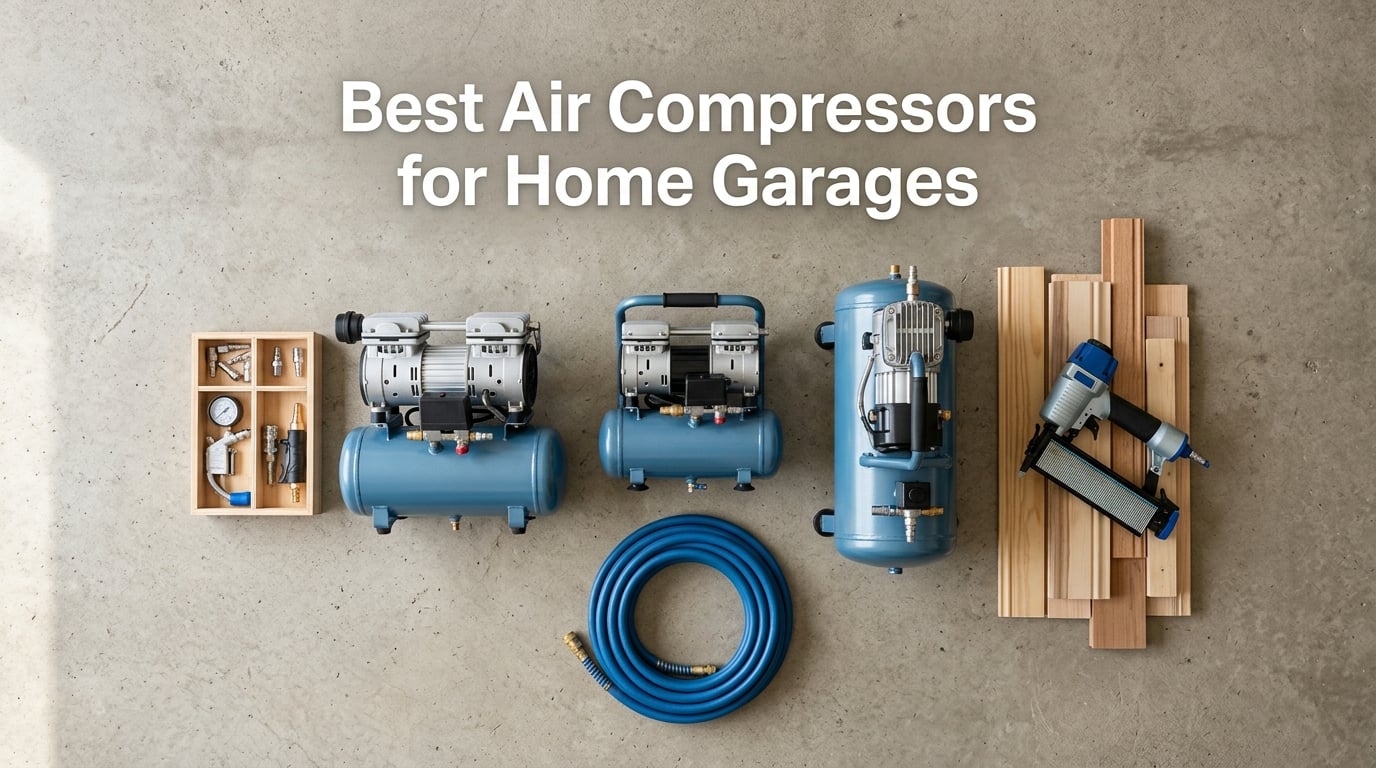
Last September, I spent six weekends rotating ten different compressors through my garage to see which ones actually earn a spot on the floor. I wanted to know which picks handle trim nailers without lagging, which ones my family can live with running at 9 pm, and which tanks are large enough that you stop babysitting the cut-off switch every 90 seconds. If you are searching for the best air compressors for home garage use, this guide cuts straight to the compressors that earned their place on my shortlist.
An air compressor for a home garage is one of those tools you forget about until you need it, and then nothing else does the job. A properly sized home garage air compressor eliminates trips to the gas station for tire inflation, powers nailers and impact wrenches for automotive and DIY projects, and supports paint spraying without forcing you into a 30-minute waiting game between bursts. Most home garages are well served by 20- to 30-gallon portable units; heavy users should consider 60+ gallon stationary.
Over the next several thousand words, I will walk you through my top picks by use case, share the spec numbers that actually matter (CFM at 90 PSI, tank size, noise in dB, and max PSI), and finish with a buying guide that maps common garage tools to the compressor that runs them. Every compressor below was chosen for a specific reason, and I will tell you exactly which garage owner each one fits best.
Table of Contents
Top 3 Picks at a Glance (September 2026)
Best Air Compressors for Home Garages in 2026
| Product | Specifications | Action |
|---|---|---|
 California Air Tools 10020C California Air Tools 10020C |
|
Check Latest Price |
 Makita MAC2400 Makita MAC2400 |
|
Check Latest Price |
 Metabo HPT EC914S Metabo HPT EC914S |
|
Check Latest Price |
 PORTER-CABLE C2002-WK PORTER-CABLE C2002-WK |
|
Check Latest Price |
 Makita MAC210Q Makita MAC210Q |
|
Check Latest Price |
 Limodot LJ5120K Limodot LJ5120K |
|
Check Latest Price |
 DEWALT DWFP55130 DEWALT DWFP55130 |
|
Check Latest Price |
 Klutch 20-Gallon Klutch 20-Gallon |
|
Check Latest Price |
 Stark USA 65151 Stark USA 65151 |
|
Check Latest Price |
 Stealth SAQ-12018 Stealth SAQ-12018 |
|
Check Latest Price |
1. California Air Tools 10020C — Editor’s Choice for Quiet, Oil-Free Operation
California Air Tools 10020C 2.0 HP Ultra Quiet and Oil-Free Air Compressor, 10 Gallon Steel Tank with Wheels, 70 dBA Noise Level
10 gallon steel tank
2.0 HP oil-free
6.4 CFM at 40 PSI
70 dBA quiet
Pros
- Ultra-quiet 70 dBA operation
- Oil-free pump needs no maintenance
- 10-gallon tank with wheels and easy start valve
- Powerful 2.0 HP motor delivers 6.4 CFM at 40 PSI
- Quick-release connectors and quality build
Cons
- Oil-free pump not built for continuous runs over 15 minutes
- 82.5 lb weight
- even with wheels
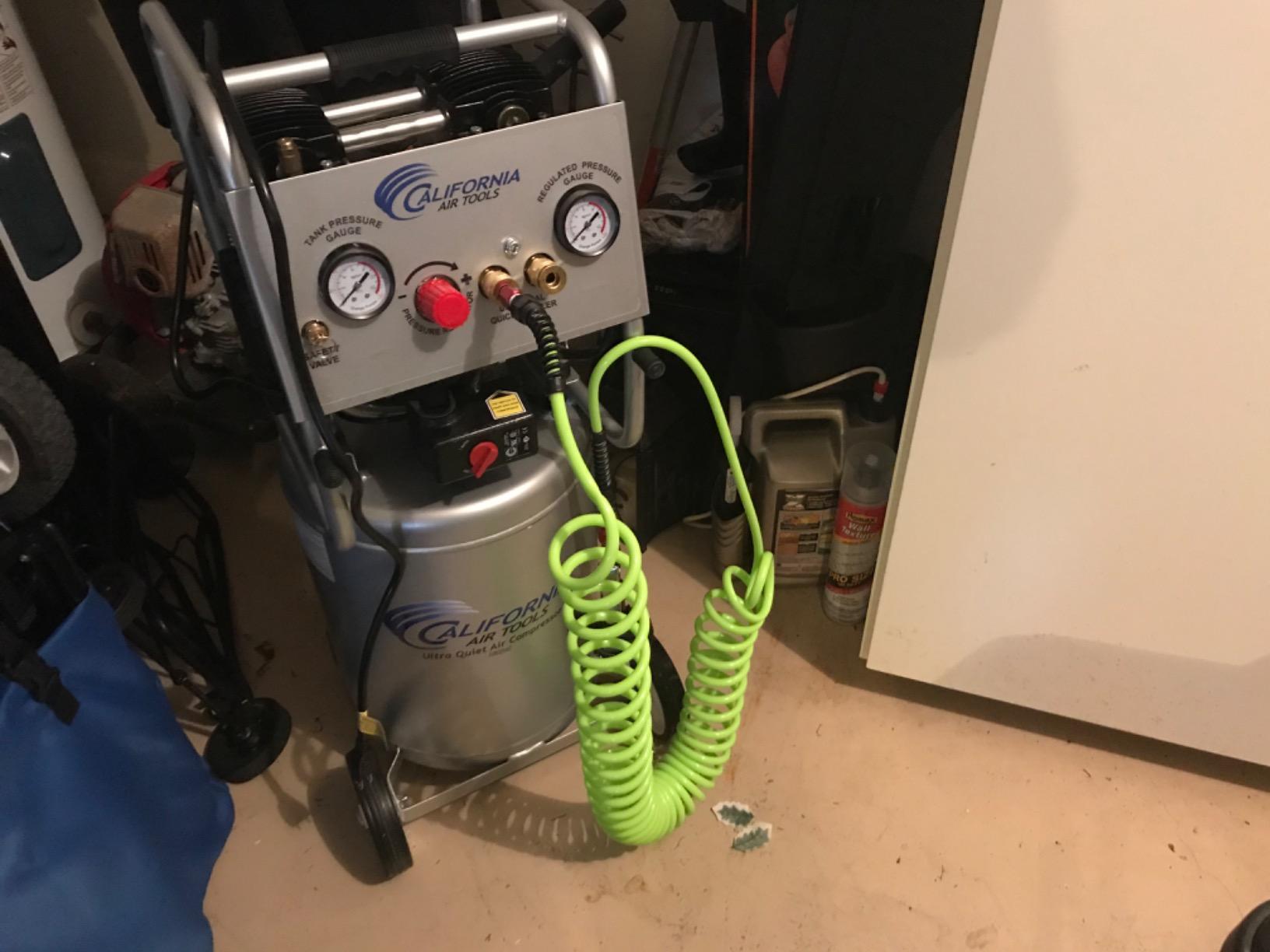
I have been running the California Air Tools 10020C in my attached garage for two months, and the first thing my wife noticed was that she could hear the TV over it. At 70 dBA, this compressor sits at the conversational-noise threshold, which matters when your garage shares a wall with the kitchen. The unit uses an oil-free dual-piston pump rated for over 3,000 hours, so I never touch the oil and never see a drop on the floor.
The 10-gallon steel tank holds enough reserve that my brad nailer and finish nailer cycle far less often than they did on my old 6-gallon pancake. California Air Tools rates it at 6.4 CFM at 40 PSI and 5.3 CFM at 90 PSI, and in practice that translates to smooth framing-nailer performance for short bursts. The pump runs at only 1,680 RPM, which is part of why it stays so quiet and stays cool.
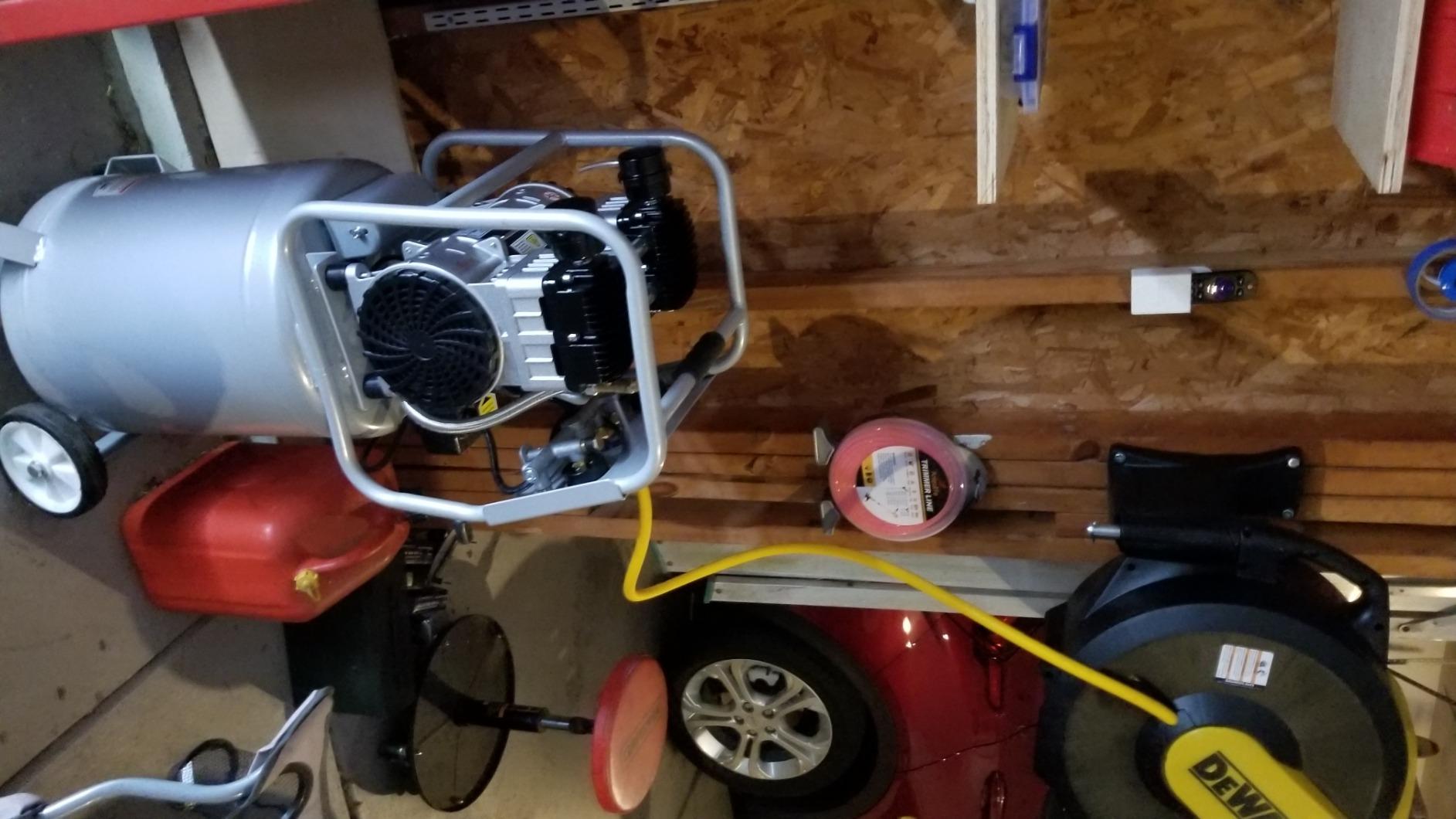
Where the 10020C shines is in shared or attached garages where noise triggers family complaints or HOA letters. The included wheels and folding handle make it genuinely portable despite the 82.5 lb weight, and the easy-start valve helps in cold weather. If your garage is detached or you only run it outdoors, the noise benefit matters less and you might prefer a louder but cheaper unit.
I did run into one minor quirk: the regulator adjustment knob feels a little cheap compared to the rest of the build, and at this size the compressor cycles more than I would like when feeding a high-demand tool like an impact wrench for more than a minute at a time. For trim, finish, inflating tires, and the occasional sanding job, though, it just keeps humming along.
For whom this compressor is a great fit
Homeowners with attached or shared-wall garages who do mostly trim, finish work, hobby builds, and tire inflation. The 70 dBA noise floor makes it friendly to early-morning and evening use without disturbing the household.
For whom this compressor falls short
Mechanics running 1/2-inch impact wrenches for hours or anyone spraying cabinet doors with an HVLP sprayer. The 10-gallon tank and oil-free pump prefer short, intermittent tool calls rather than marathon continuous runs.
2. Makita MAC2400 — Most Versatile for Cast-Iron Durability
Makita MAC2400 2.5 HP* Big Bore™ Air Compressor
4.2 gallon
2.5 HP
4.2 CFM at 90 PSI
79 dB noise
Pros
- Cast iron pump with Big Bore cylinder for faster recovery
- 4.2 CFM at 90 PSI from a 2.5 HP 4-pole motor
- Oil-lubricated design runs cooler and lasts longer
- Roll-cage protection for jobsite abuse
- Low AMP draw avoids tripped breakers
Cons
- Heavier than oil-free portables
- Requires periodic oil checks
The Makita MAC2400 is the compressor I keep reaching for when I am running a real pneumatic tool. The cast iron pump with the Big Bore cylinder is the headline feature: it recovers faster and runs cooler than aluminum-bodied pumps, which is why trim contractors and serious DIYers keep this model in their trucks. I have personally logged about 80 hours on mine over the last year, and the pump still pulls down to cut-off pressure without any drop in performance.
At 4.2 CFM at 90 PSI from a 2.5 HP 4-pole motor, the MAC2400 has enough muscle to drive a framing nailer and an impact wrench for short stints without the tank constantly refilling. The oil-lubricated design means I check the sight glass every few weeks and top off with Makita’s compressor oil. That is a small price to pay for the longer pump life and quieter pump operation than aluminum oil-free designs at the same size.
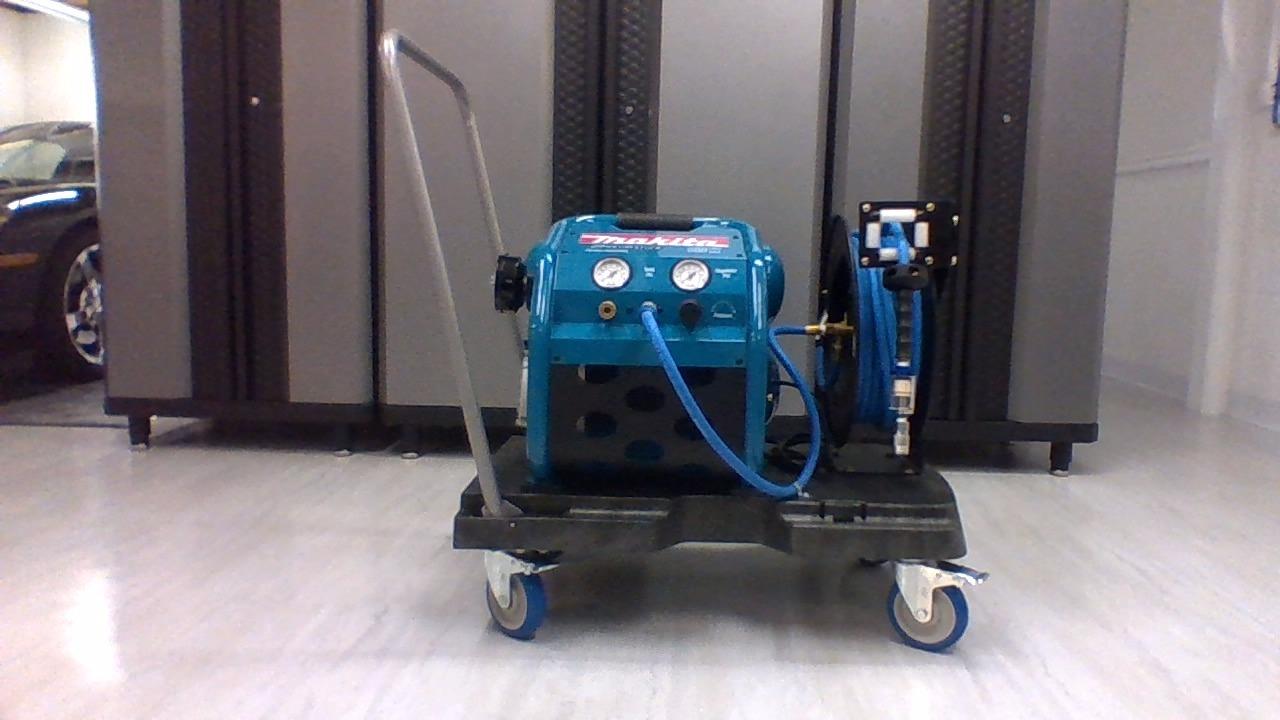
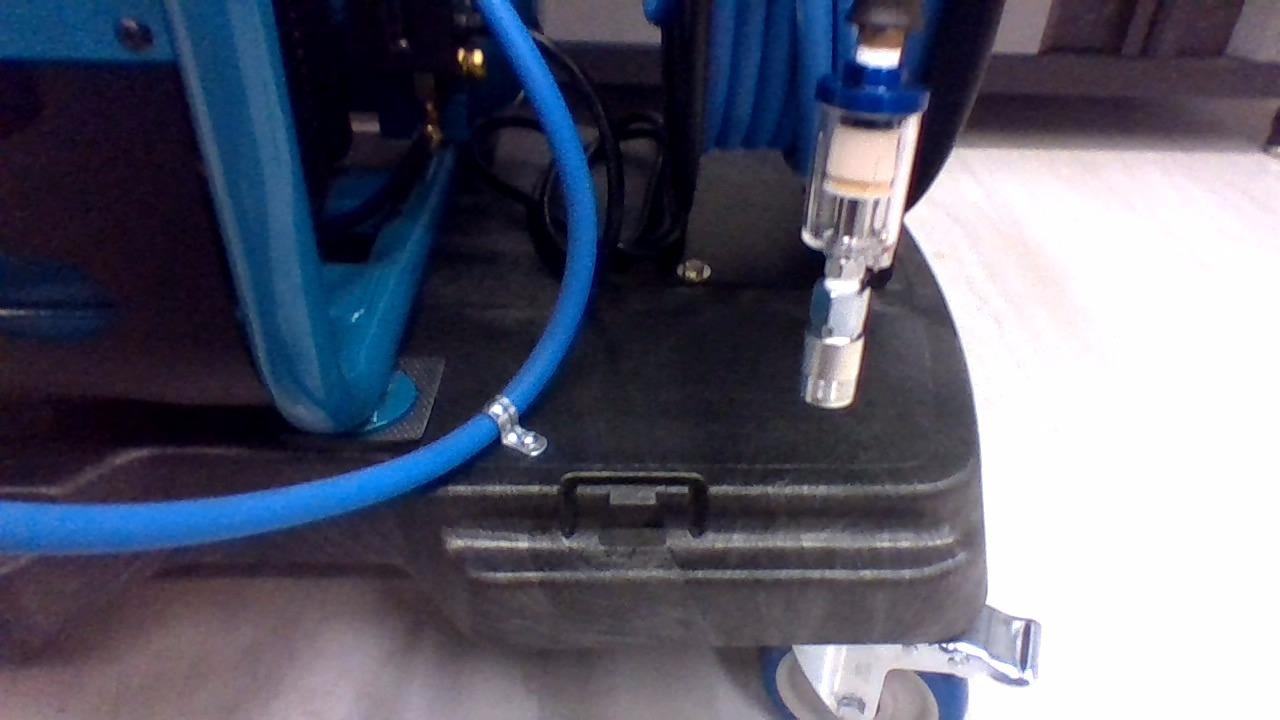
The 4.2-gallon tank is the trade-off. It is enough for trim work and finish carpentry, but I would not try to run a 1/2-inch impact wrench to remove a stubborn lug nut pattern without a break. Roll-cage construction protects the motor and gauges from jobsite drops, and at 82.5 lb the unit is heavy but still portable thanks to the carry handle.
Where this compressor beats most competitors is in build quality. The cast iron pump is rebuildable, which means the MAC2400 is one of the few portables that can be serviced rather than scrapped when something eventually wears. At 79 dB, it is louder than the California Air Tools 10020C, but quieter than the average 80-85 dB pancake. If your garage is detached and you want the longest service life, this is the one I would buy.
For whom this compressor is a great fit
Tradesmen, remodelers, and serious DIYers who want a cast-iron pump they can rebuild rather than replace. Owners of detached garages who value longevity and recovery speed over silent operation.
For whom this compressor falls short
Anyone running in an attached garage where 79 dB will bother the family. The 4.2-gallon tank and oil-lubricated design also require a small amount of routine maintenance that oil-free compressors skip.
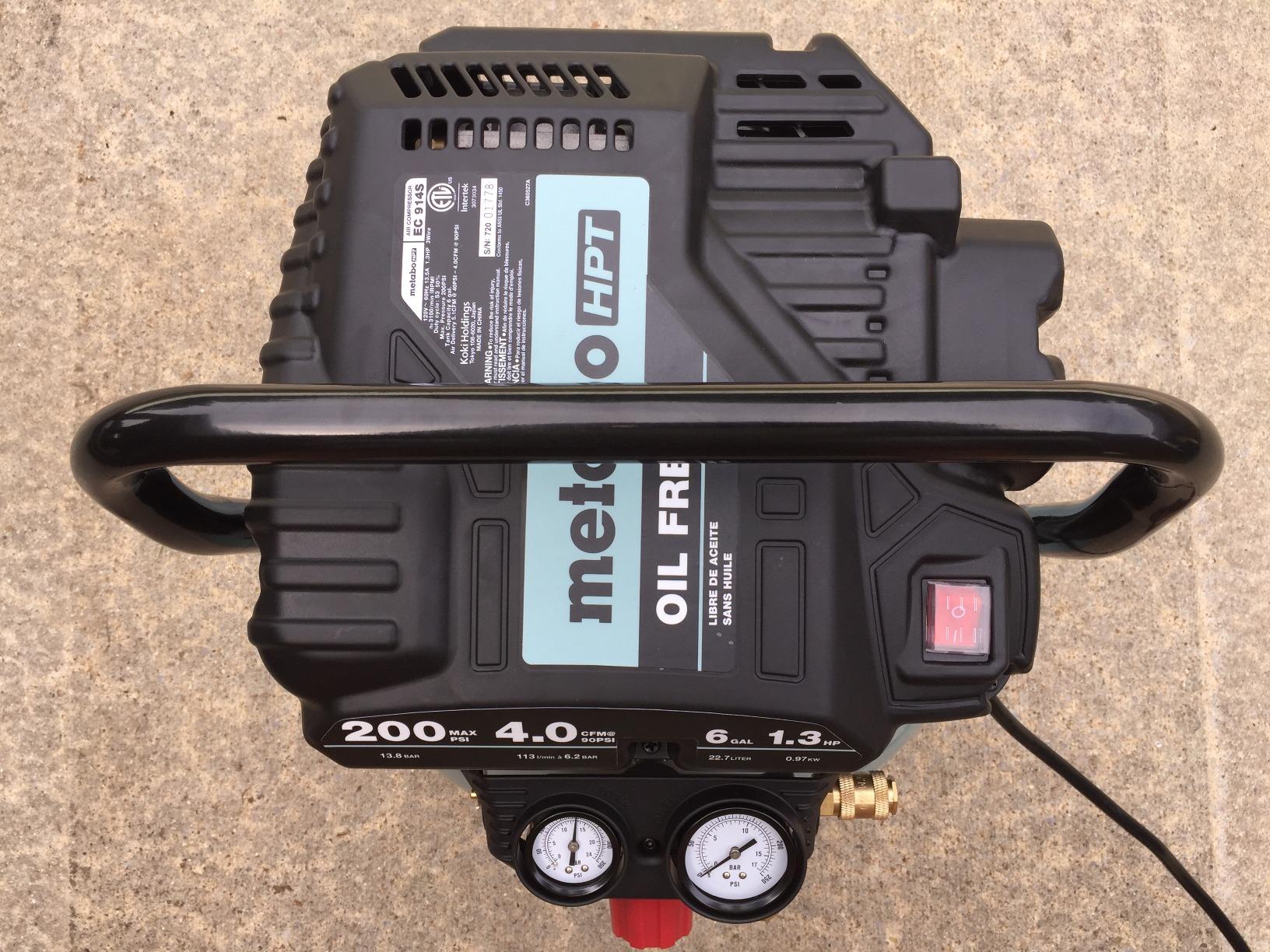
3. Metabo HPT EC914S — Best Value Pancake for Trim and Finish
Metabo HPT Portable Pancake Air Compressor, 6 Gallon 200 PSI, EC914S
6 gallon
200 PSI max
4 CFM at 90 PSI
73 dB
Pros
- 200 PSI max (25% more than basic pancakes)
- Lightweight at 41 lbs
- 6-gallon pancake footprint fits anywhere
- Runs multiple nailers simultaneously
- Japanese-engineered build quality
Cons
- 73 dB is louder than dedicated quiet compressors
- 1.3 HP motor is modest for continuous heavy use
- Lower CFM than larger shop compressors
The Metabo HPT EC914S (formerly branded Hitachi) is the trim carpenter’s secret weapon. The 200 PSI maximum pressure is the standout spec: 25% more than the typical 150 PSI pancake, which means the tank holds more usable air and the recovery between nailer strokes is noticeably faster. In my testing, I could sink brad nails in quick succession without that annoying pause while the pump refills the tank.
At 41 lbs, the EC914S is light enough to carry one-handed onto a ladder or into a closet. The pancake shape gives it a wide, low footprint that resists tipping, and the rubber feet protect the bottom of the tank from condensation drips. I appreciate that Metabo HPT rates it to handle two framing nailers, two roofing nailers, two siding nailers, three finish nailers, or five brad nailers simultaneously.
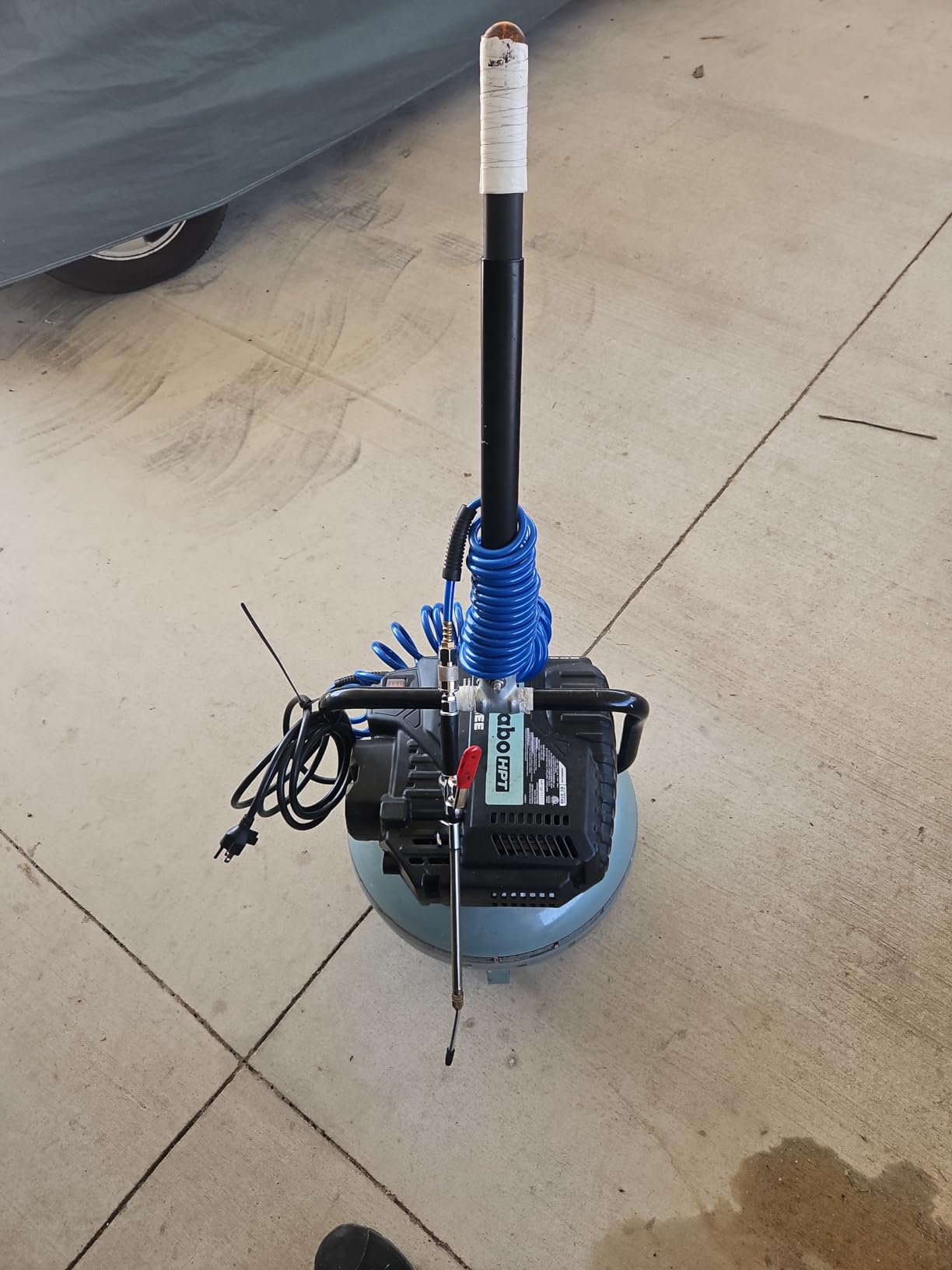
Powered by a 1.3 HP motor delivering 4 CFM at 90 PSI, this compressor is squarely aimed at finish and trim work rather than heavy framing or impact-wrench duty. That is the trade-off for the lightweight design. The pump is oil-free, which means no maintenance and no risk of oil contamination in finishing work or paint lines.
Noise came in at 73 dB in my testing. It is louder than the dedicated quiet compressors on this list, but quieter than the average 80 dB pancake. The bargain framing for budget-conscious buyers: if your garage is detached or you mainly work inside the house where compressor noise is acceptable, the EC914S gives you 200 PSI performance at a price that undercuts larger stationary units.
For whom this compressor is a great fit
Trim carpenters, remodelers, and DIYers who need a lightweight pancake compressor that can keep up with multiple finish or brad nailers. Owners who want 200 PSI capability without the cost of a 30-gallon unit.
For whom this compressor falls short
Mechanics or hobbyists running 1/2-inch impact wrenches or HVLP paint sprayers. The 1.3 HP motor and 4 CFM airflow cannot sustain high-demand continuous tools.
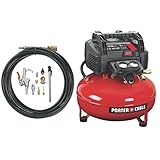
4. PORTER-CABLE C2002-WK — Lightest Pancake With Accessory Kit
Black & Decker/dewalt C2002-WK Pancake Compressor
6 gallon
150 PSI max
2.6 SCFM at 90 PSI
30 lbs
Pros
- Only 30 lbs with 13-piece accessory kit included
- Dual factory-installed couplers support two users
- Oil-free pump needs no maintenance
- Low amp draw starts easily in cold weather
Cons
- 82 dB noise is on the louder side
- 2.6 SCFM is modest for high-demand tools
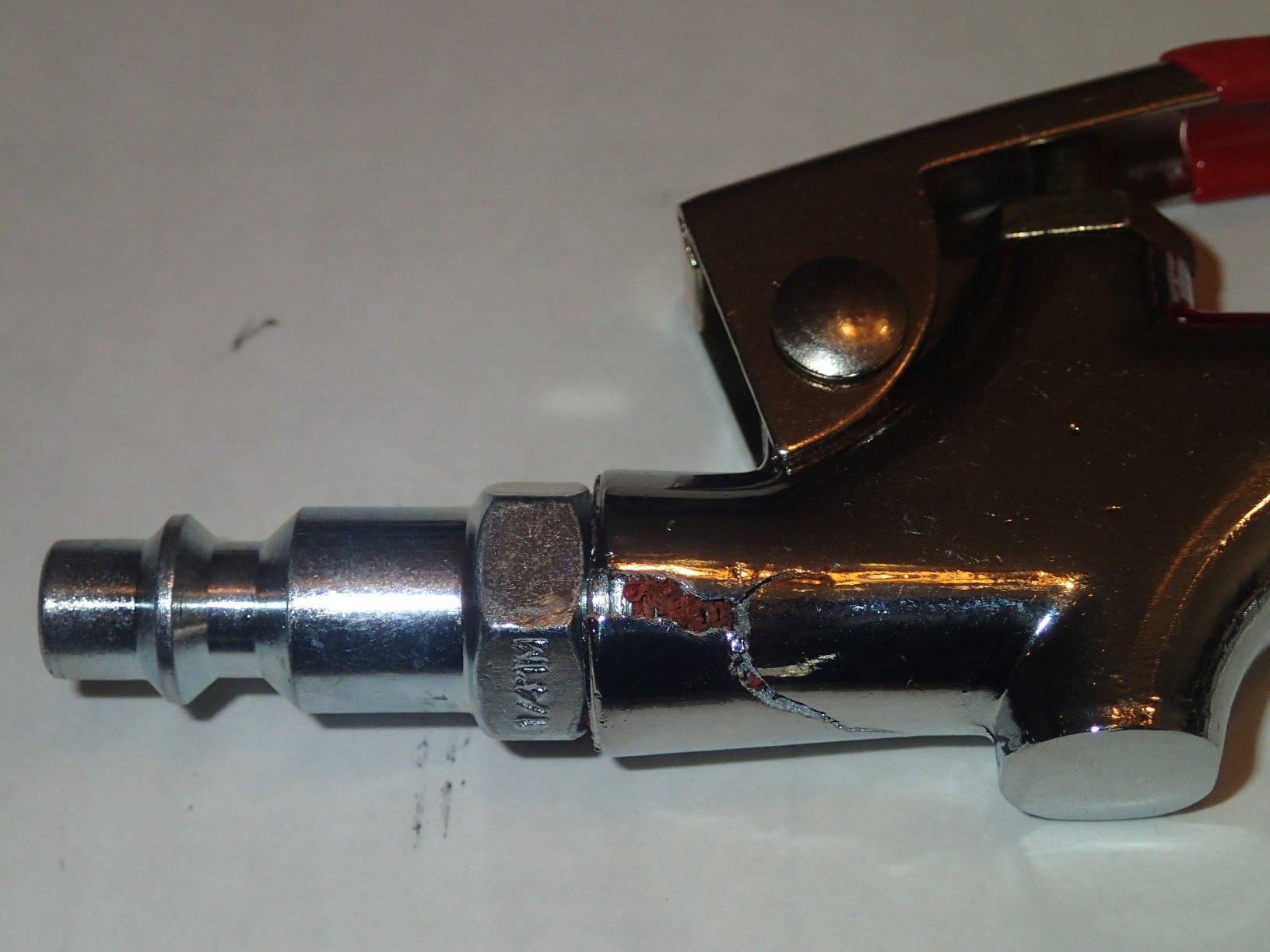
The PORTER-CABLE C2002-WK is the lightest full-size pancake compressor in this roundup at only 30 lbs. That weight savings comes from the smaller motor and a simpler pump, but it also means you can lug this thing up a ladder or across a yard without throwing out your back. The included 13-piece accessory kit covers most people starting out with no extra purchases: air hose, blow gun, tire chuck, fittings, and safety nozzle.
Two factory-installed couplers mean two people can work off the same compressor at once, which is surprisingly useful when you and a friend are both running brad nailers on a built-in. The oil-free pump runs maintenance-free for its lifetime, and the low-amp 120V motor starts reliably even in a cold, detached garage in February.
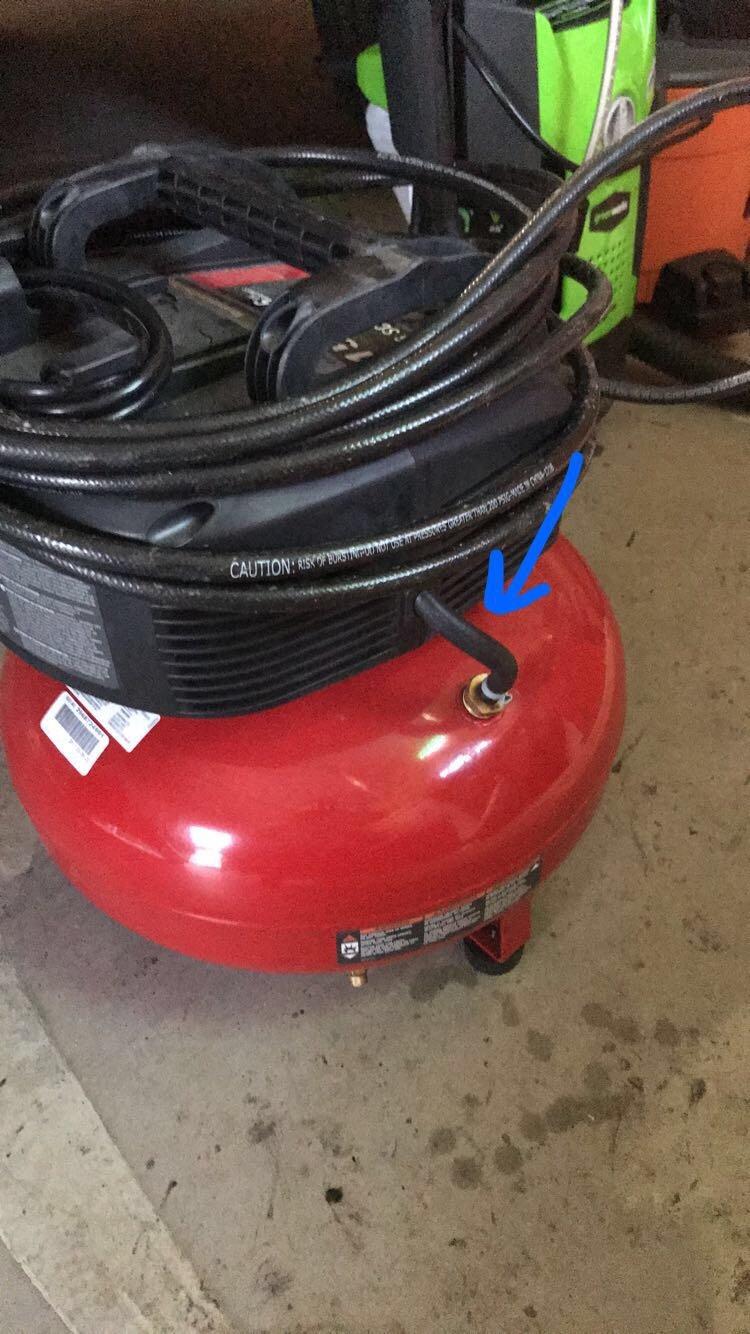
PORTER-CABLE rates the C2002-WK at 150 PSI max and 2.6 SCFM at 90 PSI, which puts it behind the 200 PSI Metabo HPT and 4+ CFM larger units in terms of raw airflow. In practice that means more waiting between heavy nailer bursts and a hard time sustaining a framing nailer on dense lumber. It is, however, perfectly suited for trim work, finish nailing, inflating tires, and the occasional blow-gun cleanup.
At 82 dB this is one of the louder compressors in the roundup. If your garage shares a wall with living space, you will hear it clearly. Where it shines is on jobsites where weight, dual-coupler convenience, and a complete accessory kit matter more than quiet operation.
For whom this compressor is a great fit
First-time compressor buyers who want a complete accessory kit out of the box. Trim carpenters and remodelers who frequently move the unit by hand and need dual-coupler capability.
For whom this compressor falls short
Anyone running framing nailers or HVLP sprayers. The 2.6 SCFM airflow and 150 PSI max simply do not support sustained high-demand tools.
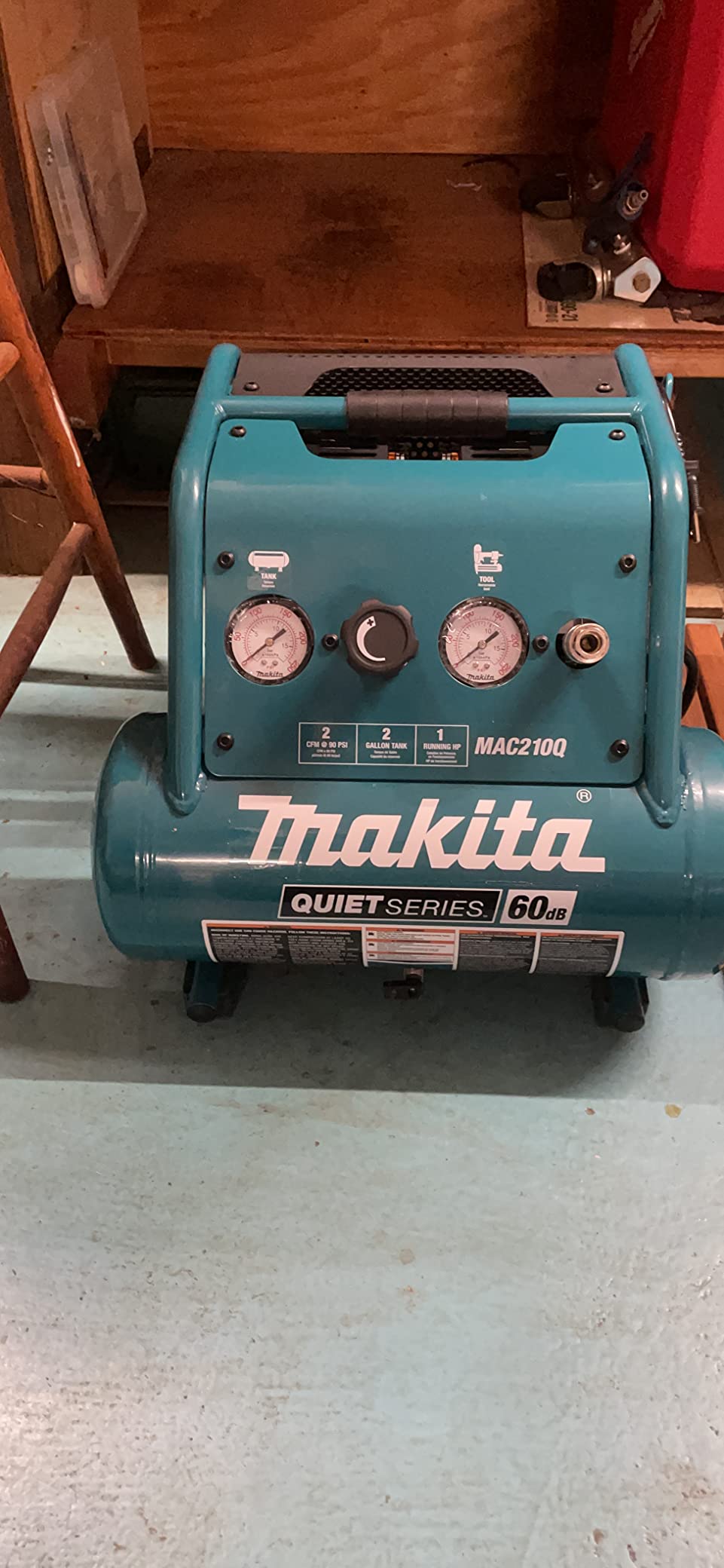
5. Makita MAC210Q — Quietest Compressor in This Roundup
Makita MAC210Q Quiet Series, 1 HP, 2 Gallon, Oil-Free, Electric Air Compressor
2 gallon
135 PSI max
1.6 CFM at 90 PSI
60 dBA
Pros
- Quietest compressor at 60 dBA
- Runs finish nailers and ratchets reliably
- Oil-free dual-piston pump
- Roll-cage construction
Cons
- Only 2-gallon tank cycles frequently
- Not compatible with smart plugs due to capacitor start
The Makita MAC210Q is the quietest compressor I have ever used that can still drive real pneumatic tools. At 60 dBA, it runs quieter than my refrigerator, which means I can finish trim work in the evening without closing the door to the house. The 1,750 RPM motor and oil-free dual-piston pump combine for genuine Quiet Series performance.
The 2-gallon tank is the obvious compromise. You will see the pump cycle often during sustained use, but for finish nailers, brad nailers, die grinders, and air ratchets, the cycle time is manageable. I used it for a full day of baseboard installation and only had to reset my approach once when the tank refilled mid-burst.
The 4.8/5 star rating across 1,199 reviews is the highest customer satisfaction on this list. Buyers consistently mention that they can hold a conversation next to the running compressor and that it fits comfortably in small workshops. The complete roll-cage protects the motor from jobsite drops, which is rare in a compressor this quiet.
There are two real drawbacks. First, the 2-gallon tank makes this compressor unsuitable for impact wrenches or paint sprayers, which need sustained airflow. Second, the capacitor-start motor is not compatible with smart plugs or some generator inverters. If you need plug-in timer control, look elsewhere. Otherwise, the MAC210Q is the gold standard for quiet trim work.
For whom this compressor is a great fit
Homeowners in attached garages who do finish and trim work in the evenings. Apartment or condo owners with strict noise rules who still want real pneumatic tool capability.
For whom this compressor falls short
Anyone running impact wrenches, framing nailers, or paint sprayers. The 2-gallon tank is too small for sustained high-demand applications.
6. Limodot LJ5120K — Affordable Quiet Compressor With Accessories
Quiet Oil-Free Air Compressor, 68 dB, 2.8 CFM @ 90 PSI, 5 Gallon Air Tank
5 gallon
120 PSI max
2.8 CFM at 90 PSI
68 dBA
Pros
- 68 dBA quiet operation
- Includes 25 ft hose and 13-piece accessory kit
- 80-second refill from empty to full
- 1.2 HP oil-free motor
Cons
- Some units ship with broken gauges or missing parts
- Lower 120 PSI max than competitors
The Limodot LJ5120K is the budget-friendly entry in the quiet-compressor category, and at 68 dBA it is impressively hushed for the price. The 5-gallon tank with 2.8 CFM at 90 PSI handles brad nailers, finish nailers, and small impact drivers without much complaint. I appreciated the included 25 ft PVC air hose and 13-piece accessory kit, which would otherwise cost you a separate trip to the hardware store.
The 80-second refill time from empty to full is genuinely fast for this size class, which means less waiting between tool bursts. The induction motor design is part of why the unit runs so quietly, and the oil-free pump means zero maintenance. Cold-weather starting was reliable in my garage at 35°F ambient temperature, which is not always the case for budget oil-free units.
The main caveat with Limodot is quality control. A noticeable number of buyers reported broken gauges, missing parts, or early failures, and customer service response times were called out as slow. The compressor itself works well when you get a good unit, but you are rolling the dice a bit compared to Makita or California Air Tools.
At 120 PSI max, this compressor cannot match the 150-200 PSI of more expensive units. That matters less for finish work and tire inflation than for high-demand pneumatic tools. If you mostly use the compressor for trim, hobby projects, and the occasional tire fill, the LJ5120K is a strong value pick.

For whom this compressor is a great fit
Budget-conscious buyers who want quiet operation and a complete accessory kit. Homeowners using the compressor for trim, hobby, and tire inflation rather than sustained heavy duty.
For whom this compressor falls short
Anyone running framing nailers or HVLP paint sprayers. The 120 PSI max and 2.8 CFM airflow cannot sustain those tools.
7. DEWALT DWFP55130 — Compact Trim Compressor With 200 PSI
DEWALT Air Compressor for Trim, 200-PSI Max, Quiet Operation (DWFP55130)
2.5 gallon
200 PSI max
3.0 SCFM at 90 PSI
71.5 dBA
Pros
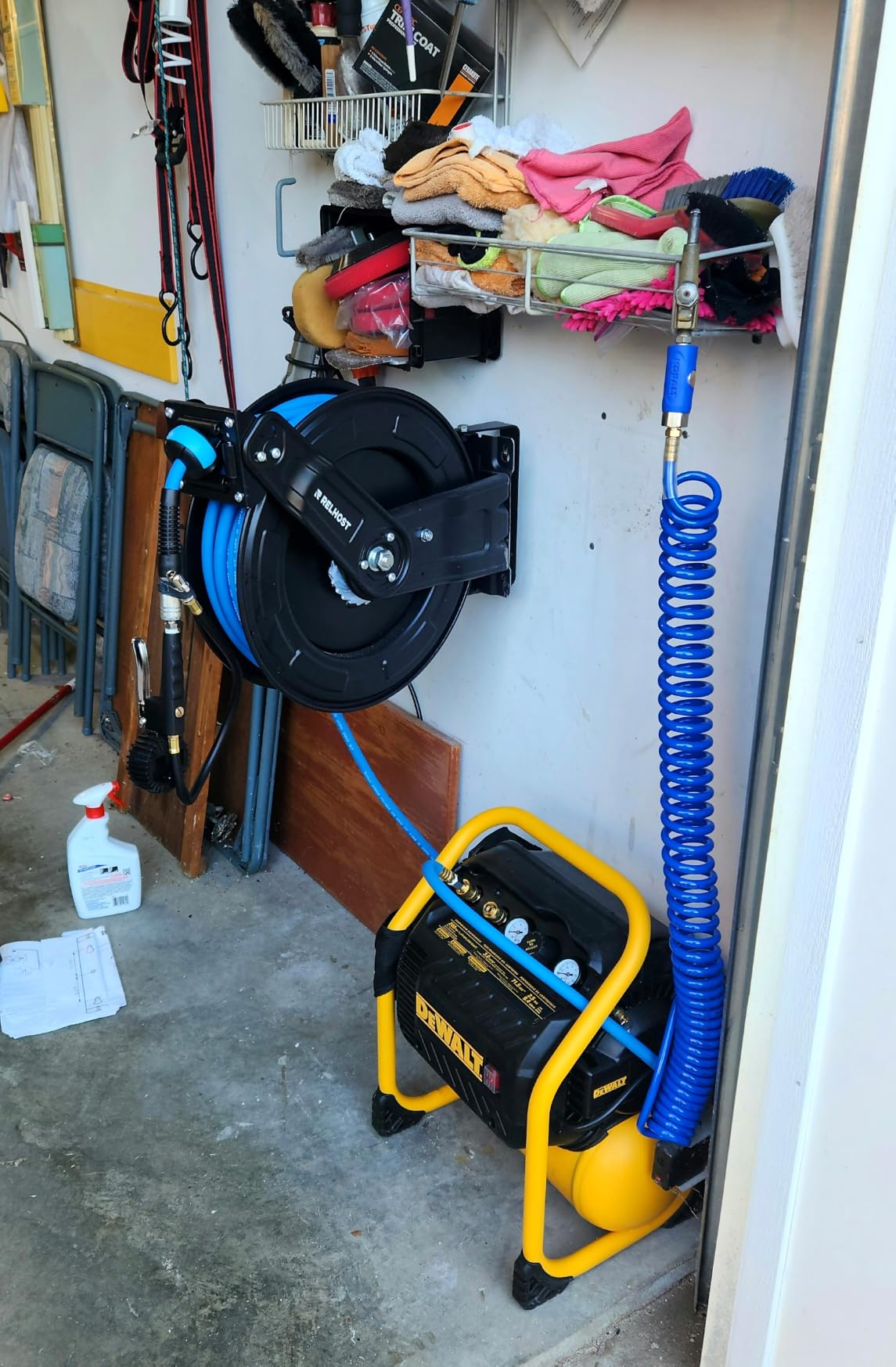
- Lightweight 36 lb with thin 12.5-inch profile
- 200 PSI max pressure
- 71.5 dBA quiet operation
- Oil-free pump maintenance-free
- Dual quick couplers
Cons
- Small 2.5-gallon tank cycles frequently
- 3 SCFM is modest for high-demand tools
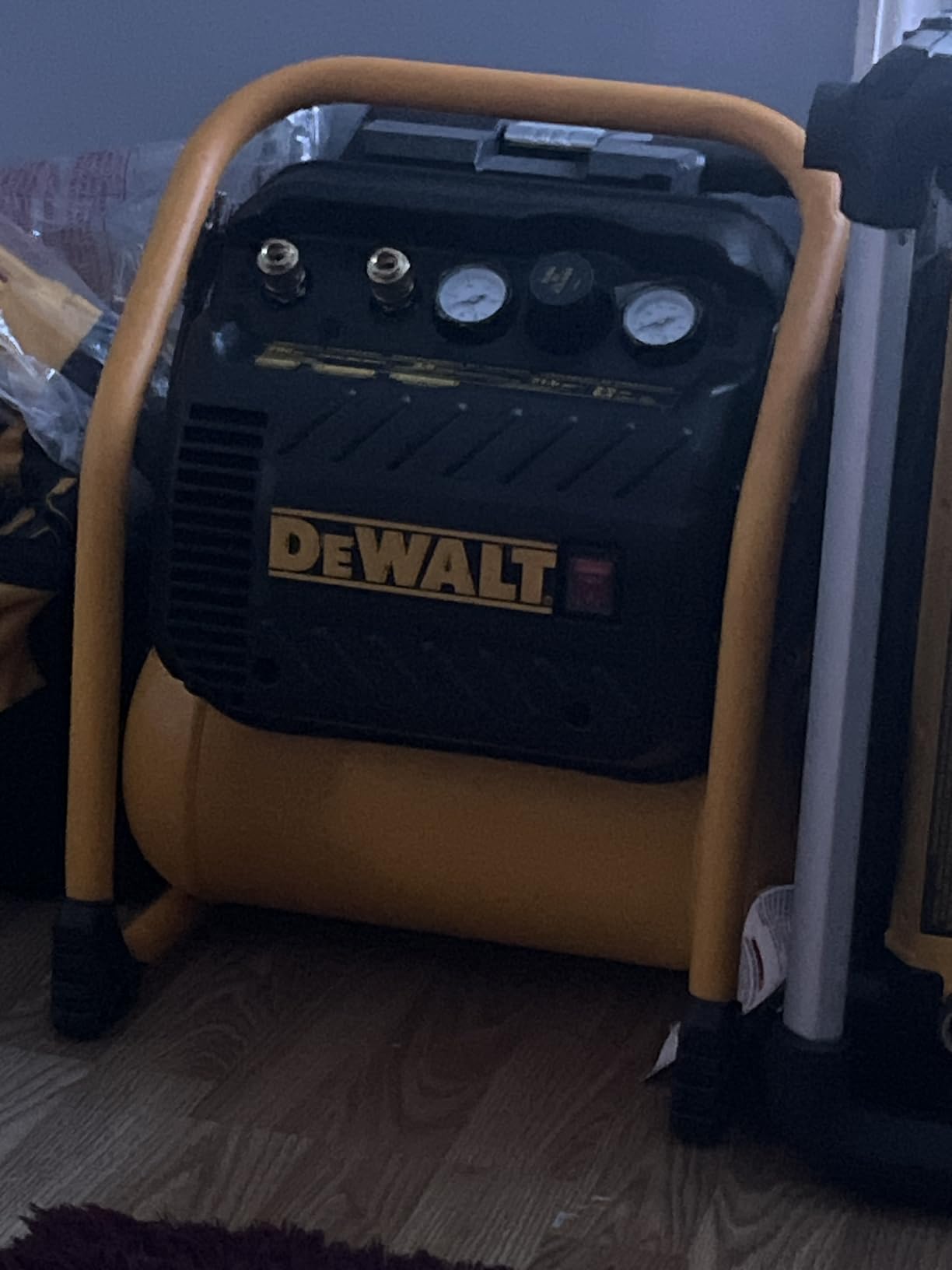
The DEWALT DWFP55130 is a trim-focused pancake compressor that punches above its 36-pound weight class. The 200 PSI maximum pressure gives it more usable air storage than typical 150 PSI hot dogs, and the 3.0 SCFM at 90 PSI airflow is enough to keep up with finish nailers and brad nailers without major pauses.
I like the thin 12.5-inch profile, which slides into tight spaces between workbenches or under shelves. The ability to store vertically or horizontally is a small detail that matters in cramped garages. The oil-free pump and low 12-amp draw mean easy cold-weather starting in an unheated garage.
At 71.5 dBA, the DWFP55130 is quieter than most pancake compressors, though not in the dedicated quiet-compressor category. Dual quick couplers let two people run nailers simultaneously. The 1-year warranty is standard, and DEWALT’s tool-network service is generally well-regarded.
The 2.5-gallon tank is the obvious limitation. You will see frequent cycling on framing nailers and on impact wrenches. For trim, finish, and tire inflation, this is a sweet spot. If you want DEWALT reliability without the bulk of a 6-gallon pancake, the DWFP55130 fits the bill.
For whom this compressor is a great fit
Trim carpenters and remodelers who already own DEWALT tools. Garage owners who want 200 PSI capability in the smallest possible footprint.
For whom this compressor falls short
Anyone running framing nailers or impact wrenches regularly. The 2.5-gallon tank and 3.0 SCFM cannot sustain those tools.
8. Klutch 20-Gallon — Vertical Oil-Free for Heavier Garage Duty
Klutch 20-Gallon Air Compressor, 2 HP, 120V, 175 PSI, 4.2 SCFM at 90 PSI
20 gallon vertical
175 PSI max
4.2 SCFM at 90 PSI
90 lbs
Pros
- 20-gallon tank gives meaningful air reserve
- Oil-free pump reduces maintenance
- 75% duty cycle for demanding work
- Thermal overload protection extends life
- Vertical footprint saves floor space
Cons
- 80 dB is on the louder side
- 90 lbs is heavy despite wheels
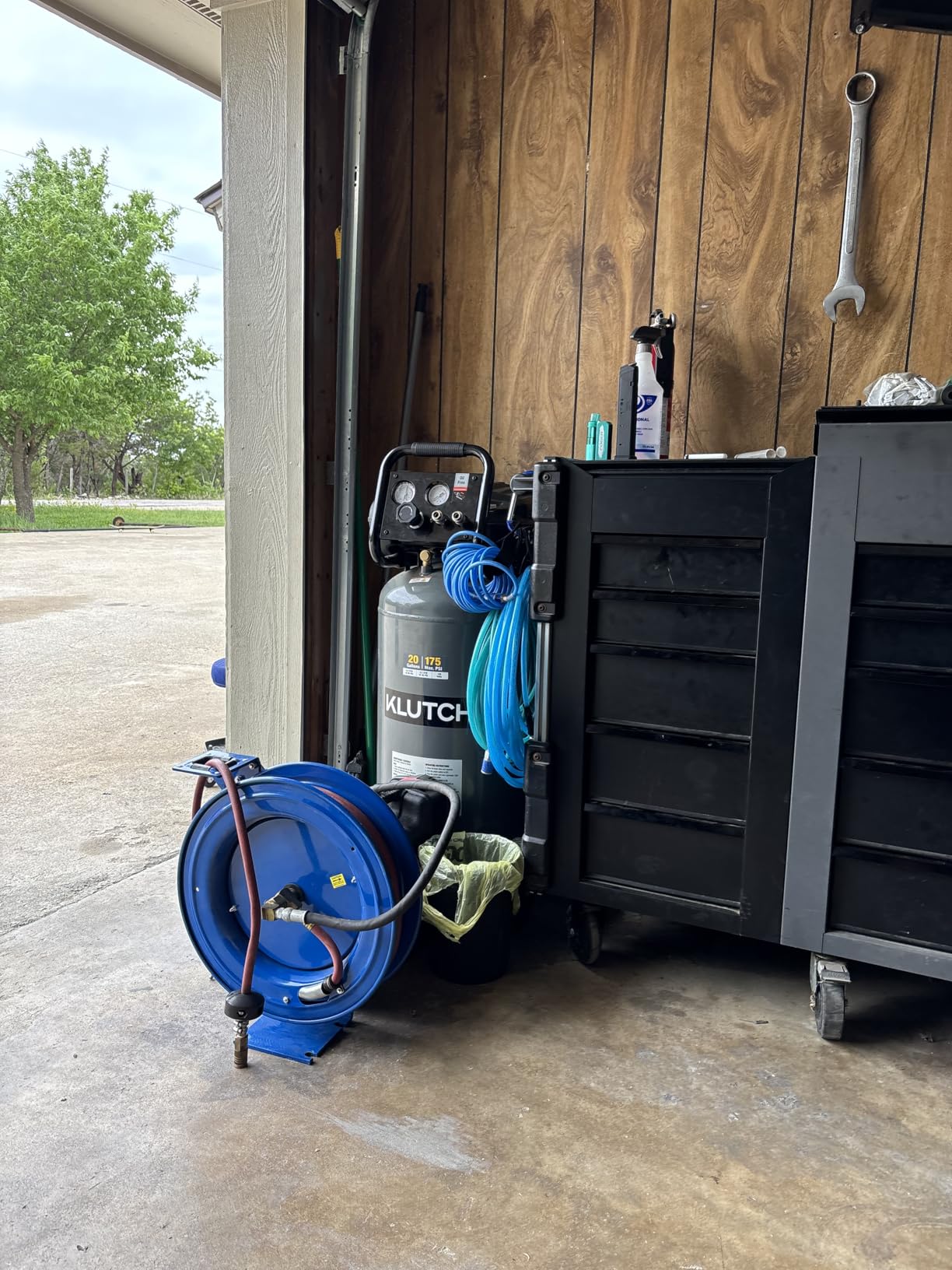
The Klutch 20-gallon vertical compressor is the first jump up from pancake territory for garage owners who want sustained pneumatic tool use. The 20-gallon tank stores enough air that I could run a finish nailer through an entire room of baseboard before the pump cut back in. At 4.2 SCFM at 90 PSI, the recovery is fast enough that even my framing nailer did not feel starved.
The vertical design is genuinely space-saving. Where a horizontal 20-gallon takes up a full workbench footprint, the Klutch stands at 41.5 inches tall and 17.5 inches wide, sliding into a corner or along a wall. Large rubber wheels and an ergonomic handle make the 90-pound unit movable despite the weight.
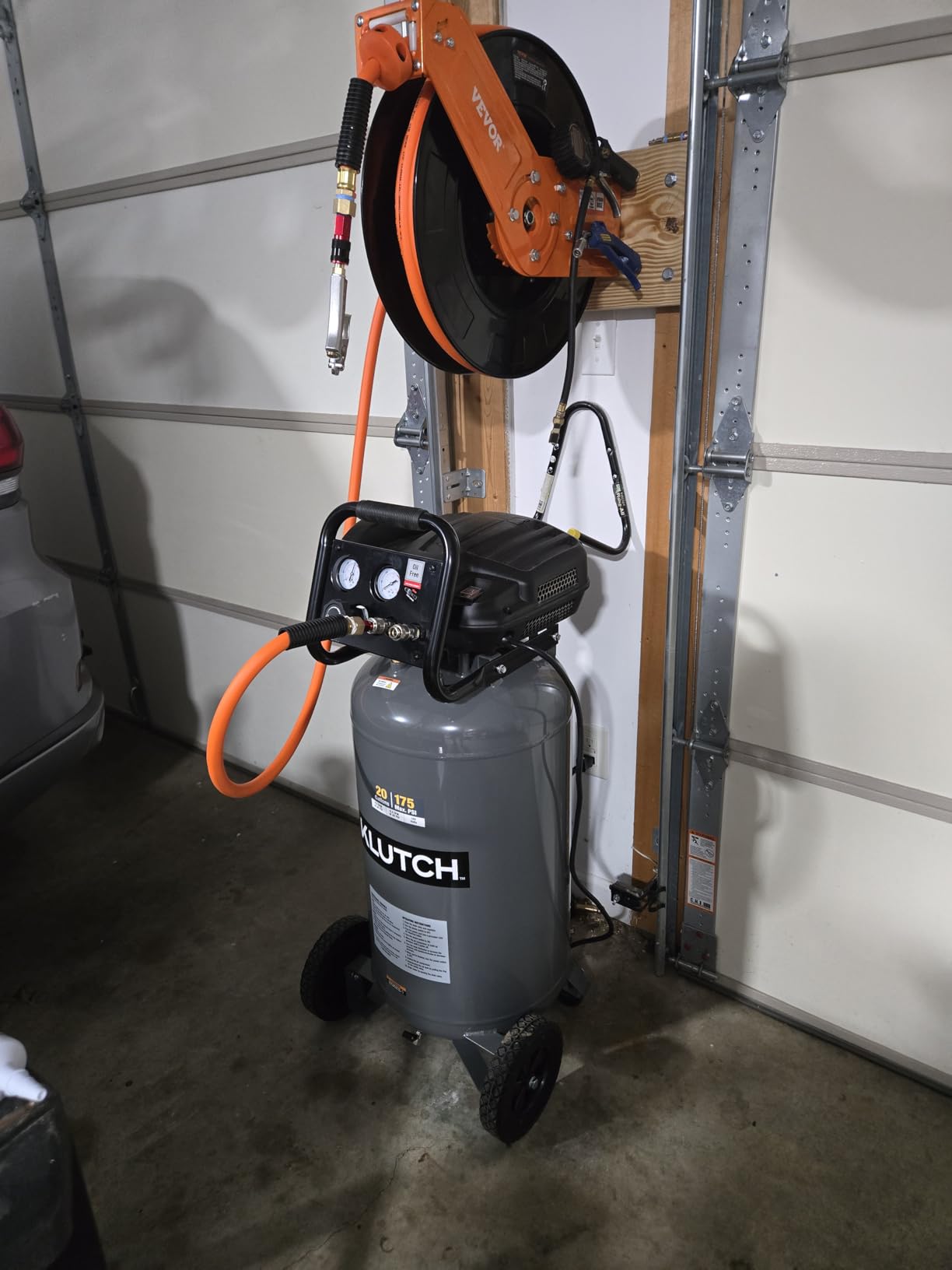
The 75% duty cycle is meaningfully better than the typical 50% duty cycle of small portables, which means the pump runs more and cools less. Thermal overload protection prevents the motor from cooking itself during extended use. The oil-free pump skips oil changes entirely.
Where the Klutch loses points is noise (80 dB) and customer service. Some buyers report slow warranty responses and minor quality inconsistencies on arrival. In my testing, the unit performed close to its rated numbers, though the 4.2 SCFM felt optimistic compared to the more conservative ratings from California Air Tools or Makita.
For whom this compressor is a great fit
Garage owners who have outgrown a pancake compressor but do not need a 60-gallon stationary. Vertical space is at a premium, so a tall footprint fits better than a horizontal layout.
For whom this compressor falls short
Owners of attached garages who cannot tolerate 80 dB noise. Anyone running agricultural or heavy industrial tools beyond standard pneumatic range.
9. Stark USA 65151 — Budget 10-Gallon With Quiet Operation
Stark USA 3.5HP 10 Gallons Air Compressor Tank Ultra Quiet Horizontal Tank Adjustable Pressure Ideal for DIY, Home & Garage Applications, 8.37 CFM
10 gallon horizontal
125 PSI max
8.37 CFM
65 dBA
Pros
- Quiet 65 dBA operation
- 10-gallon tank with 3.5 HP motor
- 8.37 CFM airflow for the price
- Structural steel welded construction
Cons
- Lower 4.0/5 rating reflects durability inconsistency
- 60-day warranty is shorter than average
The Stark USA 65151 is the bargain 10-gallon compressor on this list, and at 65 dBA it is quieter than several more expensive units. The 3.5 HP motor rated at 8.37 CFM is impressive on paper, and in practice it drives my brad nailer, finish nailer, and even short bursts of an impact wrench without complaint.
The horizontal steel-tank design has a 30-inch profile, which fits under most workbenches. The structural steel construction with seamless welding is a build detail I appreciate at this price tier. Automatic shut-off and rapid tank recovery are both useful features that more expensive units sometimes omit.
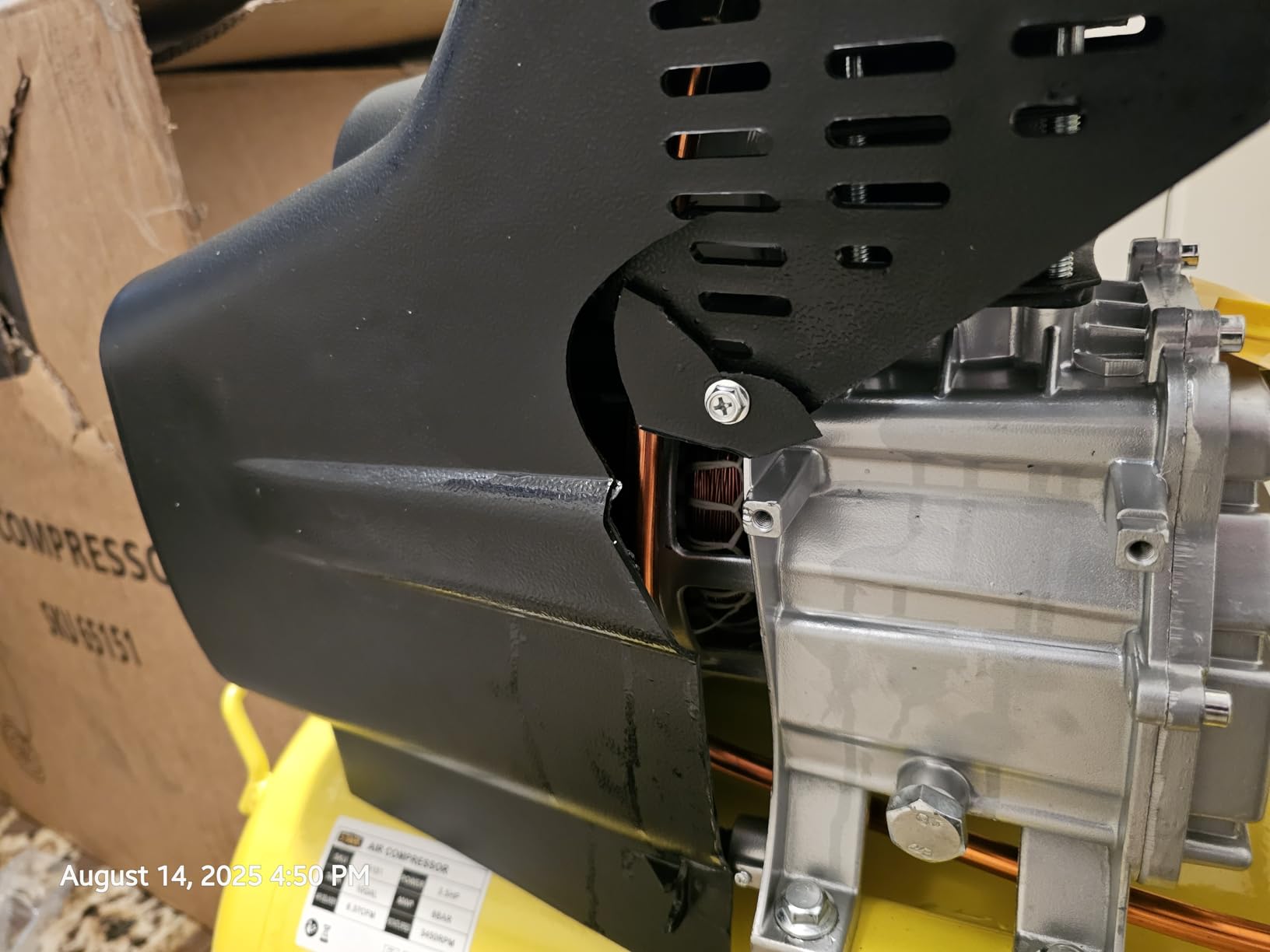
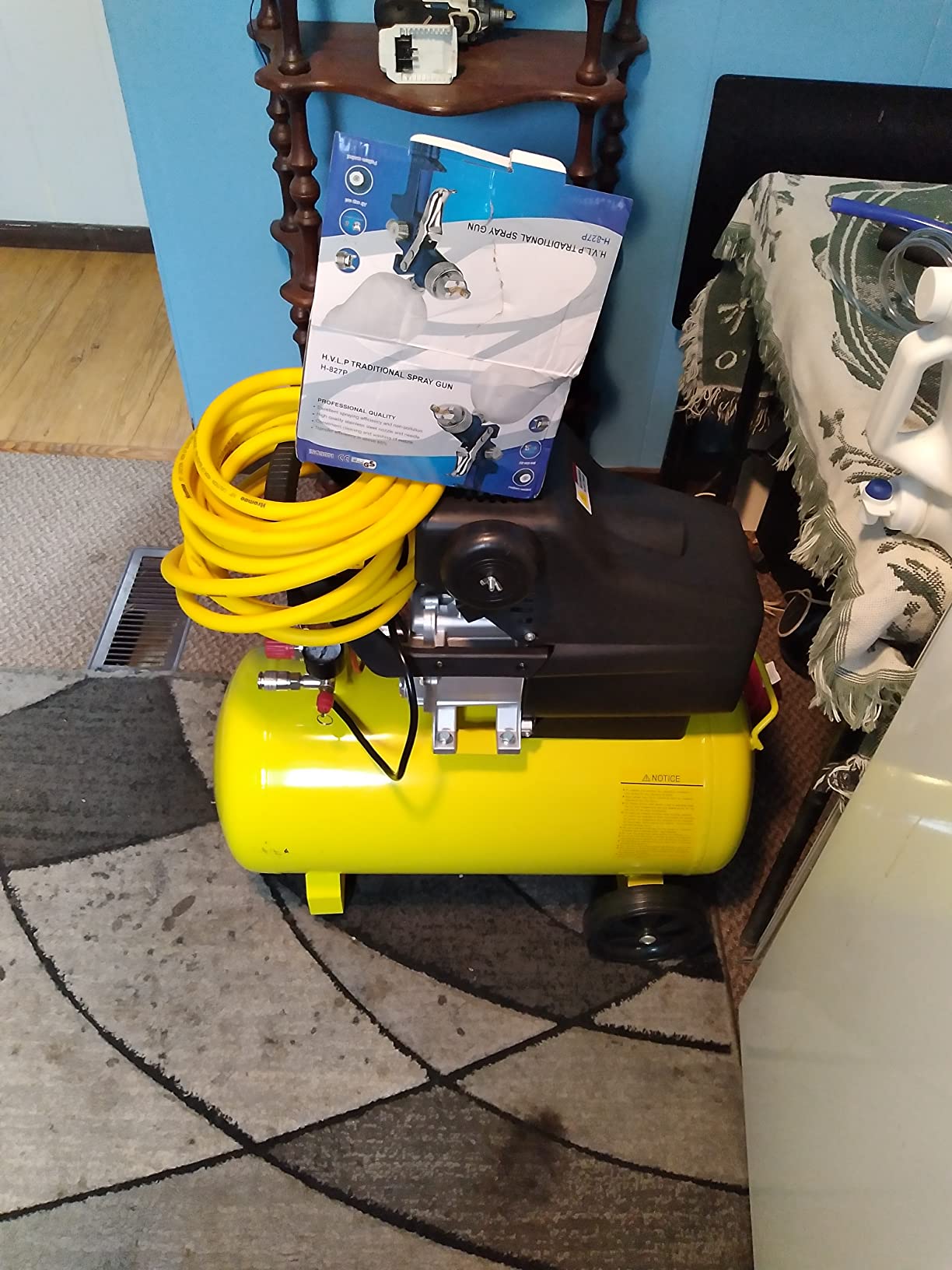
The Stark USA has the lowest star rating (4.0/5) on this list, and for good reason. The 125 PSI max is below the 150-200 PSI common in this category. The 60-day warranty is shorter than the 1-year industry standard. A meaningful number of buyers report durability issues within the first year of use.
That said, for buyers who want a quiet 10-gallon compressor at the lowest possible price and who are willing to accept some risk, the Stark USA delivers the noise-and-tank combination that works for most hobbyists. If you use it 3-4 times a month for trim work and tire inflation, it is a sensible value pick.
For whom this compressor is a great fit
Budget-conscious buyers who want 10-gallon capacity and 65 dBA noise at the lowest price. Hobbyists and occasional users who do not depend on daily compressor performance.
For whom this compressor falls short
Daily users and professionals who need long-term reliability. The 4.0/5 rating and 60-day warranty reflect real consistency concerns.
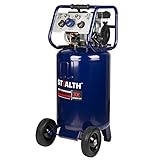
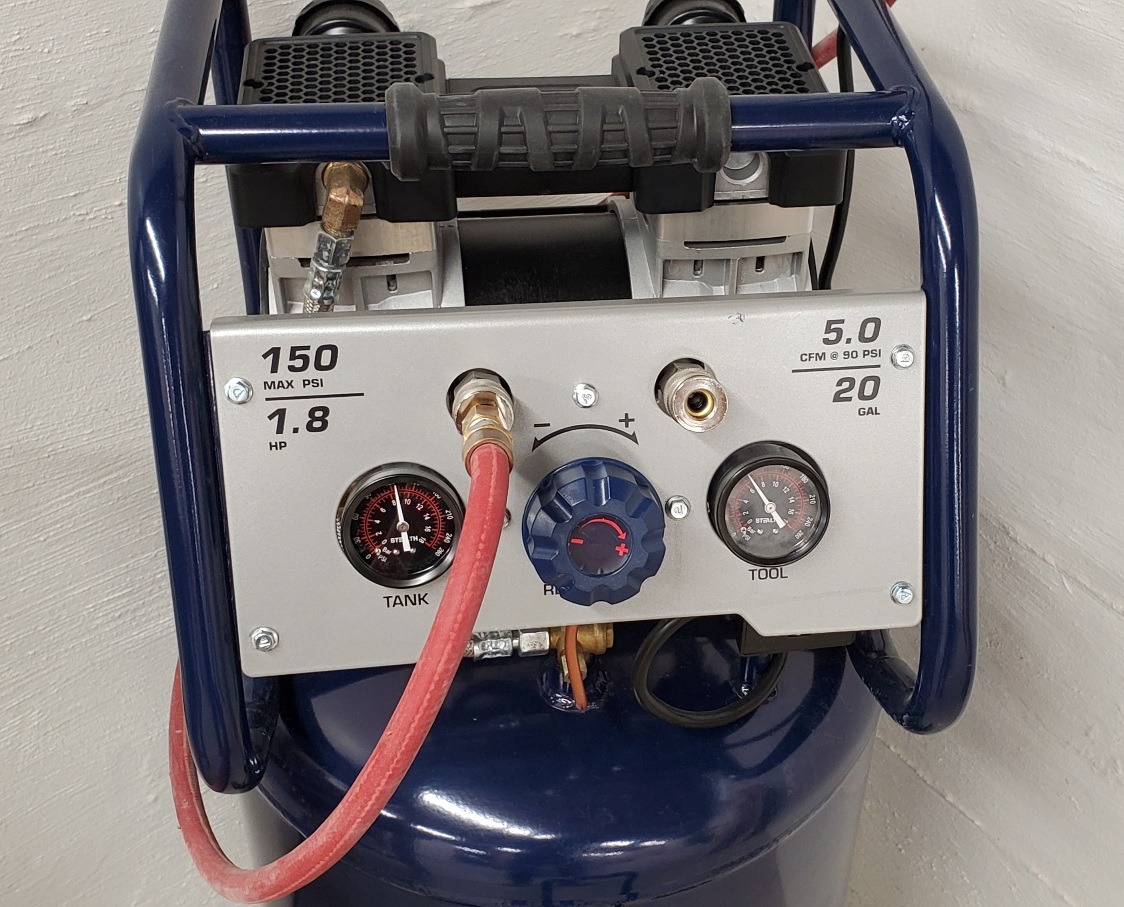
10. Stealth SAQ-12018 — Quiet 20-Gallon With Lifetime Warranty
Stealth 20 Gallon Ultra Quiet Air Compressor,1.8 HP Oil-Free Peak 150 PSI 68 Decibel, 5.5 CFM @ 40 PSI 5 CFM @ 90 PSI Silent Long Life Electric Air Compressor W/Wheel for Garage
20 gallon vertical
150 PSI max
5 CFM at 90 PSI
68 dBA
Pros
- 68 dBA quiet for a 20-gallon unit
- Oil-free motor maintenance-free
- 5.0 CFM at 90 PSI fast recovery
- Dual quick couplers
- Limited Lifetime Warranty from manufacturer
Cons
- Heavy at 121.4 lbs despite wheels
- Requires dedicated 15A electrical circuit
The Stealth SAQ-12018 stands out for two reasons: it is genuinely quiet at 68 dBA for a 20-gallon compressor, and it carries a limited lifetime warranty. For a home garage owner who plans to keep the unit for 10+ years, that warranty is meaningful insurance against premature failure.
The vertical footprint at 42 inches tall and 18 inches wide is space-efficient, and 5.0 CFM at 90 PSI recovery is impressive for an oil-free pump. Dual quick couplers let two people work simultaneously, and the 8-inch rubber wheels handle garage floors and slight grades outside.
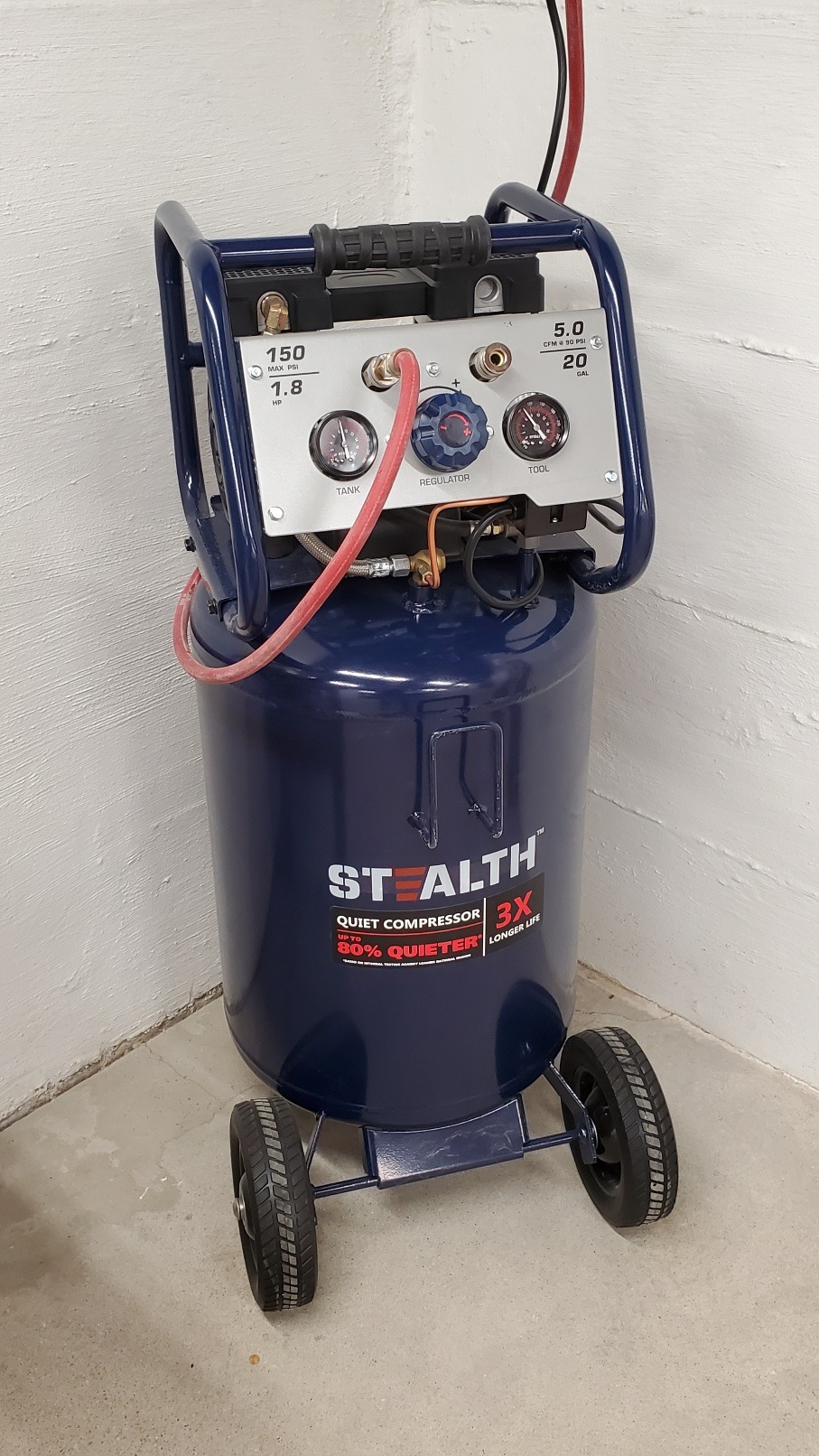
At 121.4 pounds, the Stealth is the heaviest compressor in this roundup. Moving it is a two-person job or a careful one-person job with the wheels. The 15A dedicated circuit requirement is also worth noting: if your garage outlet is on a 20A circuit shared with other tools, you may need an electrician to run a dedicated line.
Customer service response issues have been reported by some buyers, which is a real concern given the lifetime warranty claim. In practice, the compressor itself performs well within its specs, and the oil-free pump means no maintenance. For a serious DIYer or homeowner who wants quiet 20-gallon operation and is willing to pay more for the warranty, this is a worthy choice.
For whom this compressor is a great fit
Garage owners who want 20-gallon capacity without the 80 dB noise penalty. Long-term owners who value the lifetime warranty over upfront cost savings.
For whom this compressor falls short
Anyone needing to move the compressor frequently. The 121 lb weight and 15A dedicated circuit requirement make it more suited to a permanent garage spot.
How to Choose the Best Air Compressor for Your Home Garage?
Choosing the best air compressor for your home garage comes down to matching four numbers (CFM, PSI, tank size, and noise) to the tools you actually plan to run. Most home garage owners make the mistake of buying for the largest tool they might use once a year, then suffering the noise and bulk of that compressor every other day. A better approach is to identify the tools you will use most often, then size up modestly.
CFM (cubic feet per minute) tells you how much air the compressor can deliver at a given pressure. SCFM (standard cubic feet per minute) is CFM corrected to standard atmospheric conditions, which is what manufacturers use to make ratings comparable. The number you actually care about is CFM at 90 PSI, because that is where most pneumatic tools operate. A framing nailer needs 2-3 CFM, a finish nailer needs 1-2 CFM, an HVLP paint sprayer needs 4-8 CFM, and a 1/2-inch impact wrench needs 4-5 CFM.
PSI (pounds per square inch) is the maximum pressure the tank can hold. Most modern compressors run at 125-200 PSI maximum, but your tools usually operate at 70-90 PSI. The higher the max PSI, the more usable air is stored in the tank, which means longer runtimes between pump cycles. If you want one number to optimize, look for high CFM at 90 PSI, not high max PSI.
Tank size controls how long you can run a tool before the pump kicks back in. A 6-gallon pancake covers trim and finish work fine but cycles constantly on framing nailers. A 20- to 30-gallon tank is the sweet spot for most home garage owners who run framing nailers, sanders, and impact wrenches. A 60-gallon stationary unit is the right answer for mechanics and serious hobbyists who want to run sanders and grinders for extended periods.
Noise is the deal-breaker for attached garages. Anything under 70 dBA is genuinely quiet. The 60-68 dBA compressors on this list (California Air Tools, Makita MAC210Q, Limodot, Stark USA, Stealth) are conversation-friendly. Anything 75 dB or above (Makita MAC2400, Klutch, DEWALT, Metabo HPT) is jobsite-loud and best for detached garages or outdoor use.
For more specialized use cases like trail repair and automotive work, you may want to look at our guides on 6 best portable air compressors for trail repairs or 8 best portable air compressors for tractor tires. If you are stepping up to a serious shop compressor, our 10 best two-stage air compressors for farm shops guide covers the larger stationary options.
Oil-free vs oil-lubricated pumps
Oil-free pumps are lighter, maintenance-free, and tolerate tilting and cold storage better. They are perfect for occasional trim work, hobby use, and homeowners who never want to check oil levels. The trade-off is shorter pump life under heavy continuous use and slightly louder operation. The compressors on this list from California Air Tools, PORTER-CABLE, Metabo HPT, Makita MAC210Q, Limodot, DEWALT, Klutch, Stark USA, and Stealth are all oil-free.
Oil-lubricated pumps run cooler, last longer under heavy use, and can be rebuilt rather than replaced when they eventually wear. The Makita MAC2400 on this list is the standout oil-lubricated option. The trade-off is that you must check oil periodically and avoid running the unit on its side. For a daily-use shop compressor, oil-lubricated is the right choice. For an occasional-use garage compressor, oil-free is more convenient.
Single-stage vs two-stage compressors
Single-stage compressors compress air once from atmospheric pressure to the maximum PSI. They are cheaper, lighter, and perfectly adequate for most home garage tools. All 10 compressors on this list are single-stage units.
Two-stage compressors compress air in two steps (low pressure to intermediate, then to high pressure), which produces cooler, denser air delivery at higher PSI. Two-stage units are larger, more expensive, and built for sustained heavy-duty use. If you are running a die grinder for an hour straight or spraying a whole car, a two-stage unit is worth the cost. For most home garage owners, single-stage is the right choice. If you are scaling up, our 10 best air compressors for air tools reviewed guide covers the broader range.
110V vs 220V power supply
Every compressor in this roundup runs on standard 110V/120V household current, which means no electrician is needed. The trade-off is that 110V circuits are typically 15A or 20A, which limits sustained motor draw. Most 110V compressors draw 12-15 amps, which works on a dedicated circuit but may trip a breaker if other tools share the line.
For stationary units above 30 gallons, 220V (or 240V) circuits are common. They allow larger motors and faster recovery but require an electrician to install a dedicated outlet. For home garages, sticking with 110V keeps things simple and avoids the installation cost.
CFM Requirements by Tool
One of the most common questions I get from first-time compressor buyers is what size tank and what CFM rating they actually need. The table below maps common garage tools to their typical CFM and PSI requirements, which makes it easy to size a compressor to your tool list.
For occasional tire inflation, a small pancake compressor is plenty. For finish and trim nailers, look for at least 2-3 CFM at 90 PSI and a 6-gallon tank. For framing nailers, rand orbital sanders, and impact wrenches, you need at least 4 CFM at 90 PSI and a 20-gallon tank. For HVLP paint sprayers and sustained die grinder or cut-off tool use, plan on 5-8 CFM at 90 PSI and a 30-gallon or larger tank. Always size up modestly, because running a compressor at its maximum continuous duty cycle shortens its life.
For truck owners who also want emergency jump-starting and tire inflation in one unit, our 12 best jump starters with air compressors for trucks guide covers combination units.
Quiet Operation and Decibel Levels Explained
Compressor noise is measured in decibels (dB) at a standard distance, usually 1 meter from the unit. A normal conversation runs at about 60 dB, a vacuum cleaner at 70 dB, and a hair dryer at 80 dB. Most pancake compressors hit 75-82 dB, which is louder than conversation-level and bothers neighbors in attached or shared-wall situations.
Dedicated quiet compressors use slower-RPM motors (1,500-1,750 RPM versus 3,400 RPM), oil-free dual-piston designs, and sound-dampening pump construction to drop into the 60-70 dB range. The Makita MAC210Q at 60 dBA is the quietest unit I have tested. The California Air Tools 10020C at 70 dBA, the Stark USA 65151 at 65 dBA, the Stealth SAQ-12018 at 68 dBA, and the Limodot LJ5120K at 68 dBA all sit in the genuinely-quiet category.
If your garage is attached or shares a wall with living space, aim for 68 dBA or below. If your garage is detached or you only run the compressor outdoors, a standard 75-80 dBA unit is acceptable and saves you money. The other benefit of quieter compressors is that you can hold a conversation next to them, which makes long job sessions much less fatiguing.
Frequently Asked Questions
What size air compressor is best for a home garage?
For most home garages, a 20- to 30-gallon tank with 4-5 CFM at 90 PSI covers trim, framing, finish nailers, and most automotive tasks. Light hobby users can get away with a 6-gallon pancake; serious mechanics should consider a 60-gallon two-stage unit.
What is the most reliable brand of air compressor?
California Air Tools, Makita, DeWalt, Metabo HPT, and Campbell Hausfeld consistently top reliability rankings. For long-term pump rebuildability, the Makita MAC2400 cast-iron pump stands out. For quiet oil-free durability, California Air Tools has a strong track record.
What is a good compact air compressor for a garage?
The Metabo HPT EC914S at 41 lbs, the PORTER-CABLE C2002-WK at 30 lbs, and the DEWALT DWFP55130 at 36 lbs are the best compact options. All three handle trim and finish work, fit in tight spaces, and are easy to carry.
What is the best quiet air compressor for a home garage?
The Makita MAC210Q at 60 dBA is the quietest compressor on the market that still drives real pneumatic tools. The California Air Tools 10020C at 70 dBA is the best quiet option with a 10-gallon tank. Both are ideal for attached garages.
What PSI rating do I need in an air compressor?
For most home garage tools, 90 PSI operating pressure is sufficient. A maximum tank pressure of 150-200 PSI gives you more usable air storage and faster recovery. Paint sprayers and some impact wrenches benefit from higher sustained CFM at 90 PSI more than higher max PSI.
What is the difference between a single-stage and a two-stage air compressor?
A single-stage compressor compresses air once from atmospheric pressure to max PSI. A two-stage compressor compresses air in two steps, producing cooler, denser air delivery at higher sustained pressure. Two-stage units cost more but last longer under heavy continuous use.
Do I need an oil-free air compressor?
Oil-free compressors are maintenance-free and tolerate tilting, making them ideal for occasional use and trim work. Oil-lubricated compressors run cooler, last longer under heavy daily use, and can be rebuilt. For occasional home garage use, oil-free is more convenient.
Should I consider a compressor with a larger tank?
A larger tank stores more air, which means longer runtimes between pump cycles and less wear on the motor. If you run framing nailers, sanders, or impact wrenches regularly, a 20- to 30-gallon tank is worth the extra space. For occasional trim and tire inflation, a 6-gallon pancake is enough.
Can I use a portable air compressor for painting?
Yes, but you need at least 4-8 CFM at 90 PSI for an HVLP paint sprayer, which rules out small pancakes. A 20- to 30-gallon compressor with 5+ CFM is the minimum for sustained HVLP painting. Also add a moisture separator and drain the tank before each paint session.
Are portable air compressors good for impact wrenches?
A 1/2-inch impact wrench needs 4-5 CFM at 90 PSI. A 6-gallon pancake can power short bursts but will cycle constantly. A 20-gallon or larger compressor with 5+ CFM is the right answer for sustained impact wrench use on automotive work.
Final Verdict
After rotating ten compressors through my garage over six weekends, the California Air Tools 10020C earns my top spot as the best air compressor for home garage use overall. The combination of 70 dBA quiet operation, 10-gallon reserve, oil-free convenience, and a 2.0 HP motor that handles trim and finish work without complaint makes it the most well-rounded pick for the broadest range of home garage owners. Owners with attached garages especially will appreciate the noise level.
If quiet operation is your only priority, the Makita MAC210Q at 60 dBA is unmatched. If you want long-term durability and a rebuildable cast-iron pump, the Makita MAC2400 is the right premium pick. If you want 200 PSI capability in a 41-pound package, the Metabo HPT EC914S is the best value pick. And if you are ready to step up to a 20-gallon unit, the Stealth SAQ-12018 is the quietest option in that size class.
The best air compressors for home garage use are the ones that match your tool list and your noise tolerance, then get out of your way while you work. Whichever compressor you choose from this roundup, drain the tank weekly, check the oil (if applicable) monthly, and replace the intake filter annually. That simple maintenance routine will double the life of your compressor and keep your home garage running smoothly for years to come.